OCTADE
@octade@soc.octade.net
OCTADE or OCTAD is a retro word that means either an octal digit of three bits, or an octal octet or an eight-bit byte. Thus an octade, depending on its historical use, is either 3 bits or 8 bits.
OCTADE was used to specify eight bits, as opposed to BYTE which is not necessarily eight bits as the word BYTE could signify any of several numbers of bits.
This yields the retro 1337 numbers of 38 and 83. The number 38 is one more than 37 so a bit more elite a bit cooler. Thus it owns cardinally shorter byterz.
83 mod 38 equals 7, the highest octal digit. 838 mod 383 equals 72 or 9 times 8 which is 8 squared plus 8.
8338 mod 3883 equals 572 which is 72 times 8 minus 4 or 71.5 times 8.
8383 mod 3838 equals 707 which is 88 times 8 plus 3.
I prefer the old word OCTADE to the word BYTE. OCTADE sports a Euro-peon dignity and gravitas like an Internet serf ready to surf the worknet like pwnd peons. This is very true when pronouncing OCTADE with a thick Pennsyltucky Dutch or Yinzer accent. The Bostonian pronunciation sounds like bad beginner German or muffled mumbling of 'lactate.'
OCTADE or OCTAD was also used to describe a poem of eight stanzas.
OCTADE was also used to describe a period of eight years, or two leap years.
OCTADECANAL is a pheromone found in butterflies. It is butterfly perfume. I would not wear butterfly cologne. But I would sell it. Who would buy and wear my snobby smell? With wordplay we can call it OCTADE CHANNEL No. 8 . All rights reserved, ye French odor snooties.
Historical references for use of 'octade' or 'octad':
Burroughs B5500 Information Processing Systems REFERENCE MANUAL
https://bitsavers.trailing-edge.com/pdf/burroughs/LargeSystems/B5000_5500_5700/1021326_B5500_RefMan_196705.pdf
Philips Data Systems Product Range - April 1971
https://www.vintage-calculators.nl/Philips%20productoverzicht%201971.pdf
Is there another name for octet that means 8 bits?
https://www.quora.com/Is-there-another-name-for-octet-that-means-8-bits
#octade #octad #binary #byte #jargon #etymology #bytemology #wordplay #wordgames #wordcrimes #history #retro #retronym #retronymous #yinzer #pennsyltucky #humor
@wordplay@lemmy.ml @Vocabulary@lemmy.ml
--
OCTADE | news://alt.flashback | https://soc.octade.net
Name: Byrl Raze Buckbriar (call me Raze).
Likes: Interested in WORK PRODUCT, inspiration, faith, truth, beauty, nature, self-improvement, encouragement, edification, praiseworthy things, how-tos, beautiful things, artwork, fluid poems, and general human kindness and achievement. See my profile hashtags for technical subjects of interest.
Disclaimer: If I follow your account it does not imply agreement with your views.
Academia: https://independent.academia.edu/RazeBuckbriar
Zenodo: https://zenodo.org/search?q=metadata.identifiers:%27octade%27
Site: Cryptography project site. (https://octade.net)
Publications: https://octade.net/publications.html
ORCID: https://orcid.org/0009-0009-5144-3278
Netnews: Find me on #Usenet in #Newsgroup alt.rhubarb.
Git: https://codeberg.org/OCTADE
Keyoxide1: https://keyoxide.org/0CF7084CF97B85F2ABF97010C6663A42C56F5F0E
Keyoxide2: https://keyoxide.org/B9B2A8EC2C4B20D2011CFEAA07E4A7FFF6585E8F
BlueSky: https://bsky.app/profile/octade.bsky.social
HackerNews: https://news.ycombinator.com/user?id=OCTADE
Internet Archive: https://archive.org/details/@buckbriar
What is your second favorite programming language? Mine is the Pascal family for its readability and expressiveness.
@vnikolov That's interesting, another commenter said ksh.
Yes, my view of the Pascal family does include Ada as well as Modula-2 and Oberon.
So they have.
I asked about Ada to understand the outlines of the Pascal family in this context (the other languages mentioned are indisputable members).
To improvise an aviation analogy, Pascal was designed, at least to a significant degree, as a trainer language and Ada was designed as an industrial language, a little like trainer airplanes and large transport (or military) aircraft.
As is well-known, Pascal's capabilities exceed what is needed for a purely trainer language, a little like Soviet designer Polikarpov's U-2, later renamed as Po-2, could be used for more than training student pilots (it was even used as a light night-time bomber during the Second World War).
@vnikolov @amoroso I don't find early Ada especially more capable than its contemporary Wirthian languages. It's slightly later than Modula-2, which is probably the better comparison than Pascal.
Ada definitely took a more industrial bent though, compared to Oberon. And of course, continues to evolve, whereas Wirth is sadly with us no more.
Did someone say Pascal?
My first favorite is Pascal. My second is Bash.
That's my nickel's Wirth.
#hackers IS OUT usenet_reborn is at 1.0.0 !!! 🎉
It now has all the features needed to run as a lite TUI Usenet client. Today I added X-post — forward an article you're reading straight to other newsgroups — which is what it needed to be fully usable for everyday use.
https://crates.io/crates/usenet_reborn
https://sr.ht/~rek2/Usenet_Reborn
#usenet #rustlang #tui #foss #rust #hackerculture #nntp
note: remember also #reticulum as another mesh decentralized network we run now a RRC reticulum relay chat hub
Meet KEMchatka: an experimental, serverless P2P terminal chat over Tor hidden services.
No accounts, no port forwarding, zero disk logging.
Features hybrid post-quantum encryption: X25519 + ML-KEM-1024 (FIPS 203) combined via HKDF-SHA512 to defeat "harvest now, decrypt later" attacks. Simple out-of-band setup.
When privacy is under threat, build tools that protect it.
https://github.com/bashcore/kemchatka
#PostQuantum #Tor #Python #CyberSecurity #Privacy #OpenSource #Cryptography
lazyweb: I'm curious about how to get a list of all of the different "kinds" of things SSH can do. my impression is that there's:
- open a terminal session
- just run one command
- TCP port forwarding
- X11 forwarding
- copy files
and that these all separate "commands" or "protocols" inside SSH. Not sure how to get a list of all of them though.
@b0rk unfortunately SSH is deliberately open-ended, so there's no way at all to be sure you have a _complete_ list – the best you can hope for is a list of all the things people _commonly_ do. So your crowdsourcing approach seems reasonable to me!
"Terminal session" and "just run one command" aren't as different as they sound at the SSH protocol level: both use the same channel type "session", because they share at least some behaviour (such as returning the command / shell's exit code). You can choose independently whether to allocate a pty for the session, and whether to run a named command or just start the user's default shell. Occasionally I want to run a named command _and_ have a terminal device.
File copying is done by asking the SSH client to run a "subsystem", which is not all that different from telling it to run a particular command, except that the subsystem names are supposed to be a bit more standardised. (E.g. different machines might keep their sftp-server binary in /usr/lib or /usr/local/lib or /Library or what have you, but all of them will respond the same if you ask them to run the subsystem "sftp", so you don't have to know where your particular server keeps it.)
The space of subsystems is again open-ended, so anyone can make up new ones. In particular, someone once came up with a subsystem designed to automate the process of adding a key to your ~/.ssh/authorized_keys (although I don't think it caught on – ssh-copy-id doesn't seem to use it).
OpenSSH has a thing similar to TCP forwarding which forwards to/from a Unix domain socket on the server. (PuTTY doesn't currently support it, but I keep wishing it did; now that I've got my security release out of the way, maybe I have time to look into it.)
The facilities in the SSH protocol that implement port forwarding can also be used for one-off connections: ssh to this host and ask it to make a TCP connection to that host+port, via 'ssh foo -W bar:1234'.
I guess you're after "end user" purposes, not bits of SSH designed to help you with other bits of SSH? If the latter, then agent forwarding belongs on your list, and perhaps also built-in functionality to use a one-off TCP forwarding as a 'jump host' to automate a two-hop SSH connection.
@simontatham thanks, this is super helpful! I think what I'm trying to fumble towards is that SSH itself has support for a few specific things, and then there are "subsystems" which could theoretically do literally anything, but I imagine that in practice people only use a very small number of subsystems and I guess I'm curious about
a) what are the "fundamental" things SSH can do
b) what are some common subsystems
I didn't know that OpenSSH can forward a unix domain socket!
@b0rk subsystems are _particularly_ open-ended – more so even than the other extension points in the SSH protocol, like new channel types – because opensshd lets you reconfigure them without even recompiling it. You can just add an extra line to sshd_config saying
Subsystem my-shiny-new-idea /usr/lib/shiny-idea-server
and there you go, now users can run 'ssh that-server -s my-shiny-new-idea'.
But I don't know of any _commonly used_ subsystems other than "sftp".
@simontatham @b0rk is scp another subsystem? I only remember that there is a difference to sftp, even though your tool might be named after one thing, but supports them both
@TheConstructor @b0rk these days, the scp program works by invoking the same "sftp" subsystem that the sftp program uses, which allows general-purpose filesystem access.
There was an older scp _protocol_, limited to doing a single copy operation one way or the other, which scp clients used to use, but I think that's now completely obsolete. I certainly hope so: it was pretty horrible.
The scp protocol never had an SSH-2 subsystem name defined for it – you had to invoke it by running the 'scp' command on the remote machine and hoping it was on PATH. Partly because it was invented in SSH-1 days before subsystems were a thing, but mostly because important parts of the scp protocol happen on the command line you send to the server, like telling it what file you want it to send you!
@simontatham @b0rk I just remember I once had to deal with files where the sftp-subsystem wasn't enabled, but scp worked fine. So it falls into the single-command case?
@TheConstructor @b0rk yes, that's very plausible. PSCP certainly does that – it uses sftp if it can and falls back to the old protocol otherwise. If OpenSSH's scp did the same, that wouldn't be a surprise at all.
A couple of things that were horrible about the scp protocol:
1. Sending pathnames on the command line meant the client had to guess how to escape it on the server, and it didn't always guess right, so you could find things going horribly wrong if you wanted to scp a file with a \ in the name.
2. Wildcard rules weren't specified. If you asked the server to send you a wildcard pattern like *.txt, it would expand the wildcard and send you back a list of filenames it wanted to save to your computer. What if a malicious server sent a file name that didn't match the pattern? You'd want to vet the filenames to make sure they do match – but there's no spec, and servers might disagree.
(My theoretical disaster case of #2 involves VMS. On Unix, the wildcard "[ab]*.txt" matches only filenames that start with a or b and end in .txt. But on VMS, it means any .txt file inside the top-level directory called "ab", so a VMS scp server sending back foo.txt would believe it was being perfectly sensible!)
@TheConstructor @b0rk … although now I think about it there's another disaster case even in the modern world. You ask for [ab]*.txt, and a case-insensitive Mac sends you back BOOM.txt!
> In particular, someone once came up with a subsystem designed to automate the process of adding a key to your ~/.ssh/authorized_keys (although I don't think it caught on – ssh-copy-id doesn't seem to use it).
at least one implementation of this was by Van Dyke in their VShell server / SecureCRT client. iirc, they did provide a patch for OpenSSH as well (at least for the server side) but it was never integrated, which seems like a shame. it's useful for less technical users, or if you use some sort of custom storage for keys.
SSH can use SSHFS to allow access to remote folders natively inside the OS file manager (Caja, Nautilus, PCManFM, Dolphin, etc.) Thus it is easy to mirror file folders or upload encrypted files to the VPS just by dragging with the mouse or doing a copy via CLI.
SSH can be configured to use with a VNC viewer to run a graphical desktop to control a remote machine. The user can set up a VPS as a graphical desktop system and log in to a window manager or desktop environment such as XFCE or FluxBox.
SSH can also be used to pipe remote mail folders to a local mbox folder so that a local email client can read mail without accessing the POP/IMAP server.
I would try to search for:
SSH + VNC X11 Desktop forwarding
SSH + SSHFS local file browser
Rhizome Function Anagram Random Generator
preprint | https://zenodo.org/records/21551292
doi | https://orcid.org/0009-0009-5144-3278
Herein are described principles and a scheme of random number generation styled as, pangrandomonium, or ‘pangrand’. Pangrand is a anagrammatic random number generator that uses rhizome functions as chaotic indexing and shuffling instructions to reorder and sum perfect pangrams. Brief descriptions are given for the principles of pangram summing and rhizome indexing functions, Source code of the random number generator is included herewith. The source code is attached to the PDF file.
Sections:
1. Pangrams (Holoalphabetic arrays) ;
2. Rhizome Functions ;
3. Rhizome Hardness Problems ;
4. Random Generator Methods ;
5. Errata ;
6. Source Code.
#Preprints #Random #Cryptography #RNG #Pangrams #Anagrams #Pascal #Papers #RhizomeFunction #AcademicMastodon #Cryptology #Math #NumberTheory #Papers #Academia #ComputerScience #CompSci #AcademicChatter #OpenScience
From now on I am going to start publicly copying every DM sent to me on this platform, seeing as I explicitly state on my profile that I do not wish to receive direct private messages. If you send me a direct message expect it to be made public.
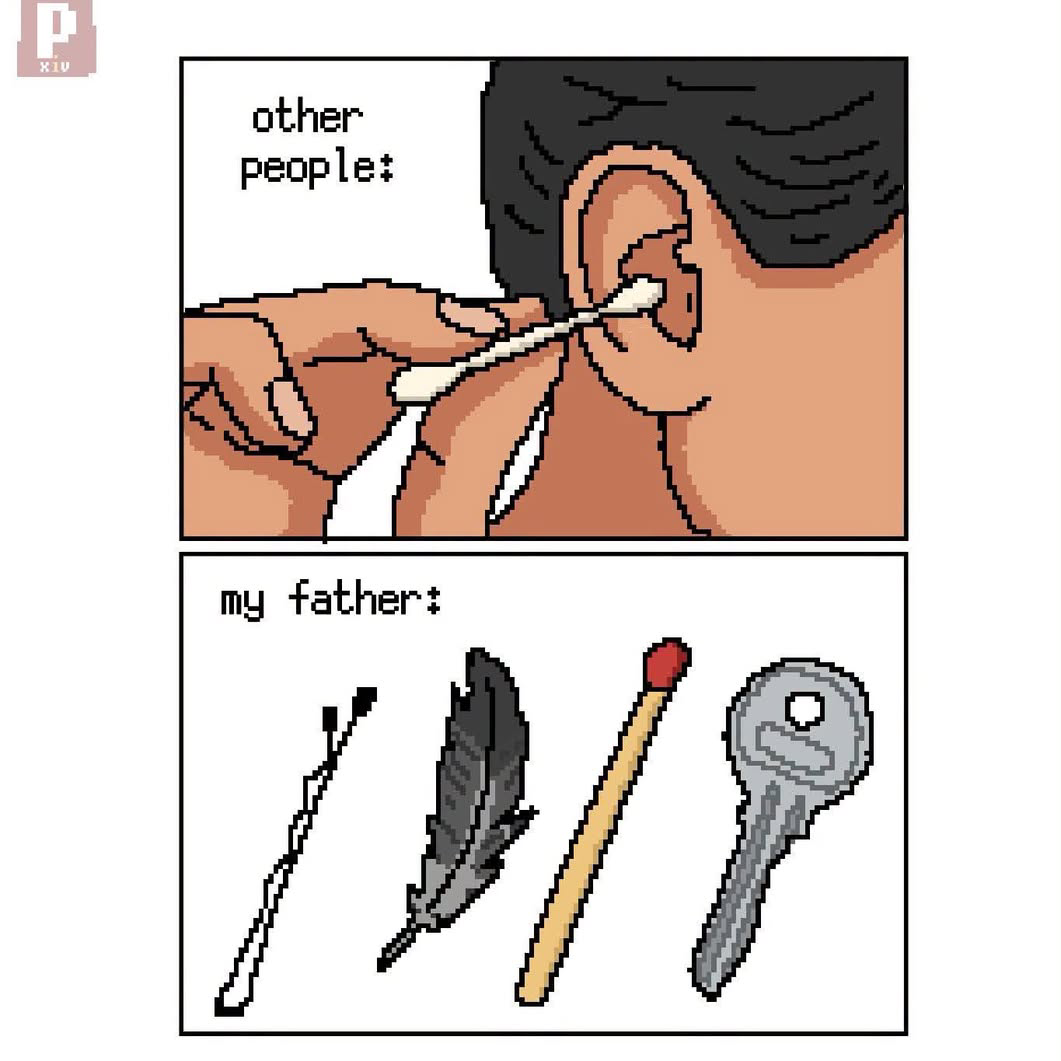
Sharing because i am in the second half of this comic 😂 credit https://www.instagram.com/paralumanxiv/
@nixCraft
My German HNO (Hals-Nasen-Ohrenarzt = Throat-Nose-Ear-Doctor)
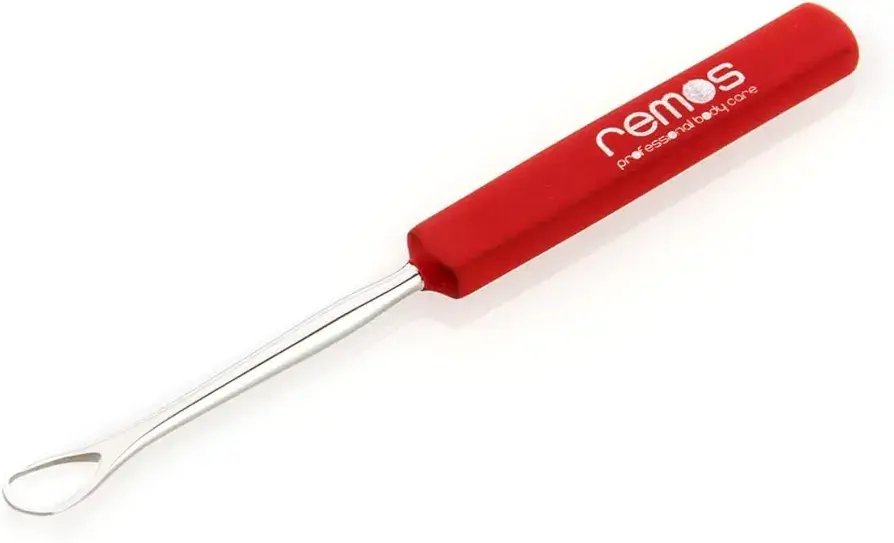
told me to not use earbuds, because you push most of the grease further into your ear channel instead cleaning it out.
He recommended a ear cleaner like that one in the picture
@nixCraft Always used this from manicure set.
Funny thing is, they always told me it was for dosing creams from the jars, turns out I was right all along.
@nixCraft As an engineer, I use a cut down and shaped wire tie, to create an old fashioned ear spoon!
Rhizome Function Anagram Random Generator
preprint | https://zenodo.org/records/21551292
doi | https://orcid.org/0009-0009-5144-3278
Herein are described principles and a scheme of random number generation styled as, pangrandomonium, or ‘pangrand’. Pangrand is a anagrammatic random number generator that uses rhizome functions as chaotic indexing and shuffling instructions to reorder and sum perfect pangrams. Brief descriptions are given for the principles of pangram summing and rhizome indexing functions, Source code of the random number generator is included herewith. The source code is attached to the PDF file.
Sections:
1. Pangrams (Holoalphabetic arrays) ;
2. Rhizome Functions ;
3. Rhizome Hardness Problems ;
4. Random Generator Methods ;
5. Errata ;
6. Source Code.
#Preprints #Random #Cryptography #RNG #Pangrams #Anagrams #Pascal #Papers #RhizomeFunction
@cryptography@soc.octade.net
@cypherpunk@soc.octade.net
@papers@soc.octade.net
@crypto@infosec.pub
@cryptography@fed.dyne.org
@cryptography@lemmy.ml
One thing that really makes me sad when the first line of a repo’s readme has “with help from Claude” is the apparent diligence with “giving credit” to a nonexistent person, as if Anthropic doesn’t have immense disdain and ingratitude for the struggles and meaning of the work they ate.
On top of that, it’s voluntary and free advertising. It’s like going out of your way to put “Made with the help of Microsoft 365” in the header of your documents. I cannot take someone like this seriously, but it crushes my soul all the same.
I feel the urge to make #curl faster and safer. And I feel like blogging about design choices, which I have no expectation of anyone having an interest in.
Also I should invent a test case for a combination a clanker said was not working. Hmmm..
Happy Thursday, everyone!
"... curl ... which I have no expectation of anyone having an interest in."Hold my beer.
cURL is swiss army knife of networky carnage operations!
@icing just asking but at some point the latency and data bandwidth is the limiting factor right? Or do you think curl has still a lot performance gains left?
@melroy Libcurl can be used in many ways. Small requests/large downloads/many/few connections/rate limits…
For large downloads, I think we are in a pretty good place.
i just finished my pbulickl unannoucnd investigation into knight havenstein llp, a "Fraudulent / scammy law firm. they clamed to be hosting a law firm with family law, business law, among other things.
you can view the web page at https://web.archive.org/web/20260509223715/https://knighthavensteinllp.com/
it actually started with an eamil i got from an outlook account i got that told me i have 10.2 milliondolarsi n the bank. man i wante t go by me some pizza s bad with tht money, i could us10 milioon pizzas right now.
in all seriousness, i asked this guy to contact me with an official law firm domain so i can confirm the legitimacy.
and believe it or not, i did actually get a contact from a legitimate domain.
immediately, i dug in.
i decided to look them up on the law society of #ontario #canada , which is a bar association related organization, which all loyers are required to sign up to to become a loyer. and the law society act of canada equires all loyers regardless of practice must be admitted to the bar association.
https://www.ontario.ca/laws/statute/90l08
so i went ahead and checked the bar because they clame to be from "oakvile" (it's actually oakville, get it right) and noticed there was no law firm under that name.
https://lsodirectory.lso.ca/en-US/result-main/?licenceType=both&name=Knight+Havenstein+LLP
so after a bit more research, i contacted #hostinger , told them the situation, and got it taken down 2 days later. of course before that, it was reported to a cupple of security companies like #fortinet , and #alphamountain .
one thing i found of interest.
they clamed "my god, we have 50years of clients" at one point on their website, it was a popup i got. so i investigateed that through ARIN, their existance has only been around since 2025. now you could say "but adison, they're a small law firm" or some shit. well, let's rtake you up on that and let's see dan caplis law. they are a #law #firm in denver, a legitimate lawfirm. their organization is redacted, sure, but their domain has existed since 2005, and in ediionnto that, there are actual verifyable court records from the colorado BAR association.
https://cle.cobar.org/About/Faculty-Authors/Info/CUSTOMERCD/11571
actual court cases you can verify, look into, etc.
i couldn't find any court cases related to this supposidly company. just their frontpage website and a few irrelevent information.
The checklist for a social media post is ever getting longer:
Is it fake?
Is it by a bot?
Is it by a troll?
Is it click bait?
Is it rage bait?
Is it a dogmatical post?
Is it a fanatical post?
Is it a puritanical post?
Is it by a toxic poster?
Or is it posted only to annoy or tease?
(There is an even longer version...)
#EternalSeptember
#InformationAge
#InformationSociety
#LifeInTheInformationAge
#SocialMedia
#SocialPsychology
#UmbertoEco2015
@vnikolov I worry quite a lot about your very long list! While I think the fediverse is plausibly the least affected option in many cases (which make it a desireable victim to the promulgators of grief) - the academic results on how hard it is to recognize fake content now is a big if not intractible problem.
Regarding the first sentence, that makes at least two of us 🙁.
Yes, and yes, "least affected" does not mean "not affected", nor "will never be" 🙁.
And yes, big; but not _quite_ intractable.
For example, if we all pay a little attention, at least the cheapest kinds of fakes will not work, and that will be some win, _because_ there will be fewer fakes, as the more expensive kinds are more difficult to make.
There is the projectile-and-armor cycle, too, but that is a part of the way the world is, to repeat the well-known.
@tux0r At this point fake content pretty clearly means LLM content, though prior to 2018 there was also plenty of deep learning generated fake advertising blogs, I was surprised to learn when I happened across (a long time ago now) a Russian-homed company who had been responsible for some amount of them.
@screwlisp @vnikolov I was thinking about this yesterday. It's happened t o me quite a few times now to pause after starting to read an article and think "hold on, this feels generated". The doubt itself is enough to kill any interest in continuing engaging with the content and just stop there.
Add to this that platforms like YouTube actively promote NN-generated items, and the value of using the web has dropped radically. I don't know if this is the same for others.
Yes, the #EternalSeptember has spilled over into all the netz.
For those asking about the reality of fake content:
The lion's share of Internet content is fake and bot generated.
35 % of content is bots.
50% of website articles are ai-generated.
74% of web pages consist at least partially of ai generated content.
These numbers are taken from recent studies.
I believe that much of the Internet was already AI generated long before the release of open-source AI tools and before most people ever knew AI existed.
Many popular youtube channel comment feeds are mostly ai profiles making ai generated comments.
#DeadInternetTheory is real.
This is all the result of the MockingBorg intelligence agency agenda to destroy all legitimate human interaction among the population, filling everyone's minds with MockingBorg delusions and ideas. It's not a conspiracy theory. It's what they're literally doing.
In the niche spaces where real interaction occurs, live MockingBorg agents spin up profiles to cause dissention, stress, and contention until they can figure out how to spin up an automated replacement in that venue.
History