Search results for tag #bible
![[?]](https://files.mastodon.social/accounts/avatars/116/663/048/183/988/734/original/c51a6d9a325f7aea.png)
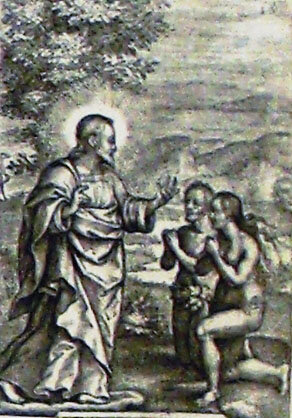
Bowyer Bible print 3542 The temptation to turn stones into bread Matthew 4:1-4 Mortier. Robert Bowyer (d.1834) expanded his copy of the Macklin Bible by inserting over 6200 different prints. The Bowyer Bible is now housed in Bolton Museum. For these prints see https://archive.org/details/bowyer-bible
where Philip De Vere has created flip-books from Phillip Medhurst's photo-collection.
#BoltonMuseum #bible #extraillustration #grangerisation #engraving #Bibleillustration #Bibleart #Christianart #christianartwork
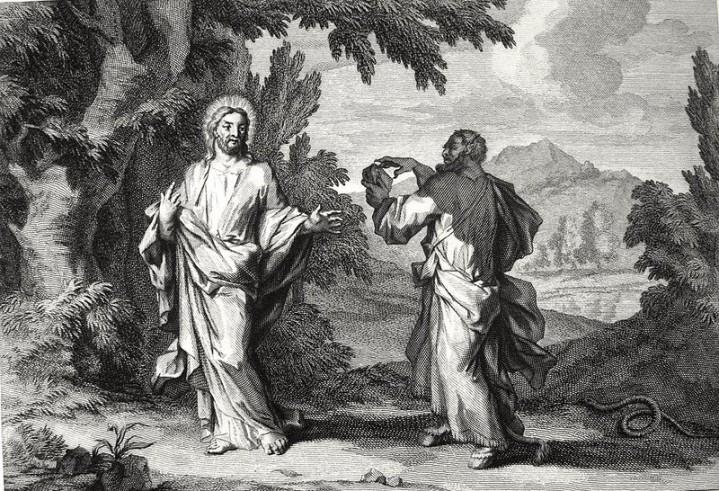
Bowyer Bible print 3345 Virgin and Child after Raphael. Robert Bowyer (d.1834) expanded his copy of the Macklin Bible by inserting over 6200 different prints. The Bowyer Bible is now housed in Bolton Museum. For these prints see https://archive.org/details/bowyer-bible
where Philip De Vere has created flip-books from Phillip Medhurst's photo-collection.
#BoltonMuseum #bible #extraillustration #grangerisation #interleaved #print #engraving #etching #Bibleillustration #Bibleart #Christianart #christianartwork
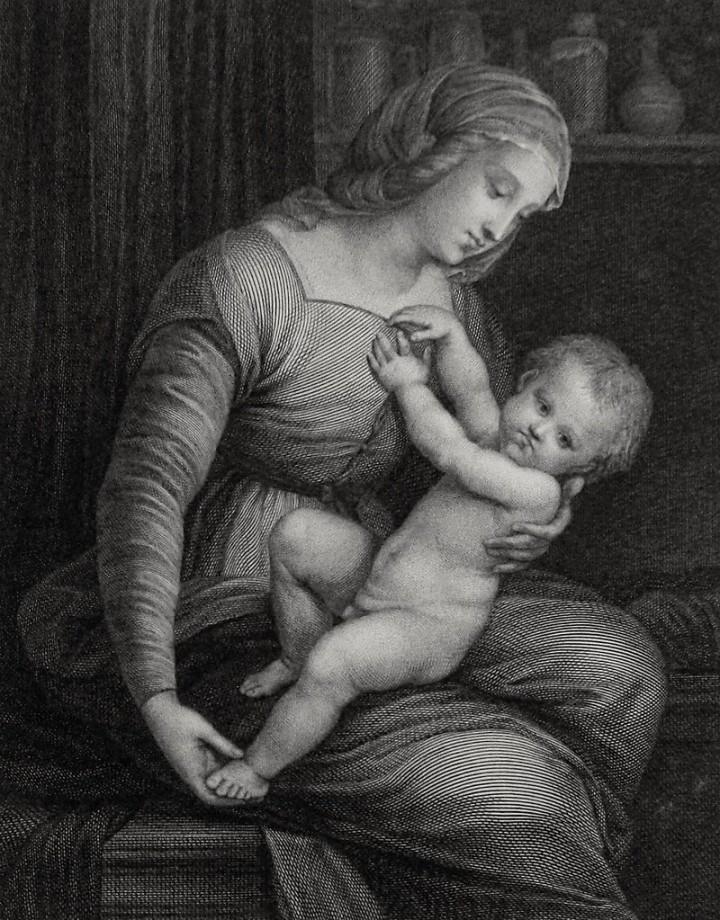
Bowyer Bible print 0422 Destruction of Sodom. Genesis cap 19 v 30. Borcht. Robert Bowyer (d.1834) expanded his copy of the Macklin Bible by inserting over 6200 different prints. The Bowyer Bible is now housed in Bolton Museum. For these prints see https://archive.org/details/bowyer-bible
where Philip De Vere has created flip-books from Phillip Medhurst's photo-collection.
#BoltonMuseum #bible #MacklinBible #interleaved #print #engraving #etching #Bibleillustration #Bibleart #Christianart #christianartwork
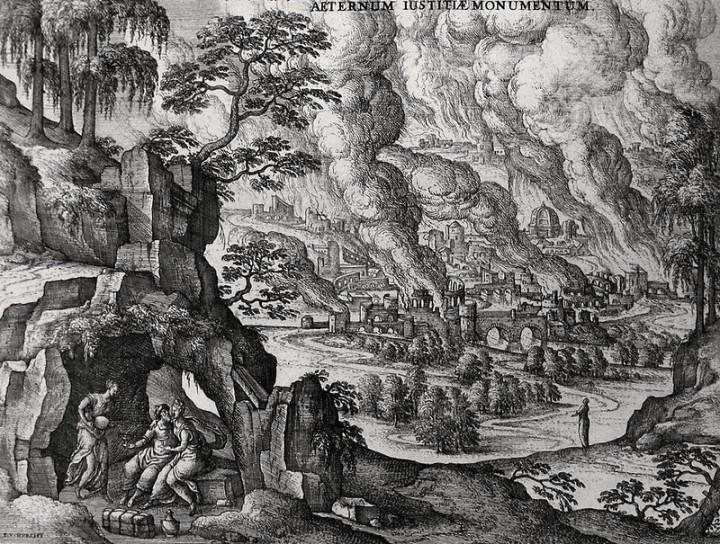
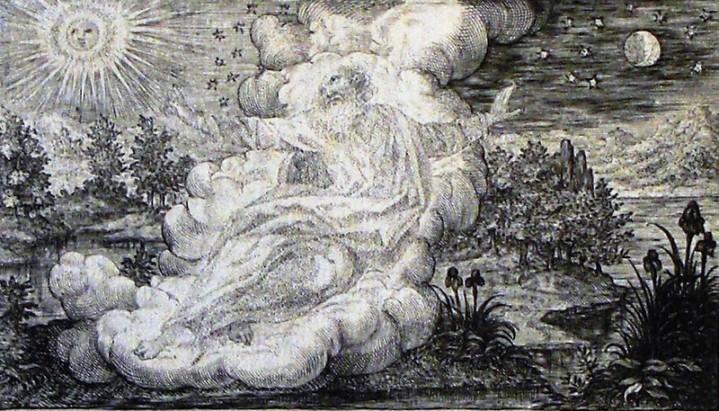
Bowyer Bible print 0073 Sun, Moon & Stars. Genesis 1 v 16-17. Passi. Robert Bowyer (d.1834) expanded his copy of the Macklin Bible by inserting over 6200 different prints. The Bowyer Bible is now housed in Bolton Museum. For these prints see https://archive.org/details/bowyer-bible
where Philip De Vere has created flip-books from Phillip Medhurst's photo-collection.
#BoltonMuseum #bible #extraillustration #grangerisation #MacklinBible #interleaved #print #engraving #etching #Bibleillustration #christianartwork
![[?]](https://i0.wp.com/dailyintheword.blog/wp-content/uploads/2026/05/cropped-blogtitleimage.jpg?fit=512%2C512&ssl=1)
The Prayer That Knows the Father of Glory
A Prayer Inspired by Ephesians 1:15-17 Gracious and eternal Father, the God of our Lord Jesus Christ, the Father of glory, we come before You with humble hearts, filled with gratitude that You have made Yourself known through Your Son and have called us into the fellowship of Your everlasting kingdom. Before the foundations of the world were laid, You purposed to redeem a people for Yourself, and in the fullness of time You revealed Your grace through Jesus Christ, who died and rose again so […] [SENSITIVE CONTENT]

A Prayer Inspired by Ephesians 1:15-17
Gracious and eternal Father, the God of our Lord Jesus Christ, the Father of glory, we come before You with humble hearts, filled with gratitude that You have made Yourself known through Your Son and have called us into the fellowship of Your everlasting kingdom. Before the foundations of the world were laid, You purposed to redeem a people for Yourself, and in the fullness of time You revealed Your grace through Jesus Christ, who died and rose again so that sinners might become sons and daughters by adoption. Every blessing we possess flows from Your sovereign mercy, and every hope we cherish rests securely upon Your unchanging promises.
We worship You because You are infinitely wise, holy, righteous, and good. Your wisdom established the heavens, Your power sustains every star in its place, and Your providence governs every detail of history according to Your perfect will. Nothing escapes Your notice, and nothing can frustrate Your eternal purpose. You are the God who speaks light into darkness, life into death, and hope into despair. Your faithfulness has never failed, and Your covenant love endures forever.
Lord, we thank You for the faith that You have planted in the hearts of Your people through the gospel of Jesus Christ. We praise You that You have drawn us from spiritual blindness into marvelous light and have opened our hearts to trust in the Savior who loved us and gave Himself for us. We thank You that faith is not merely the work of human effort but the gracious gift of Your Spirit, awakening dead hearts to believe and rejoice in the glory of Christ.
We thank You also for the love that You produce among Your saints. Left to ourselves, our hearts are selfish and divided, but by Your transforming grace You teach us to bear one another’s burdens, to forgive as we have been forgiven, and to seek the good of others above ourselves. Thank You for every act of kindness that reflects the character of Christ, for every quiet sacrifice made in obedience to Your Word, and for every unseen work of compassion that glorifies Your name. May the Church continue to be known not merely by its words but by its Christlike love, demonstrating to a broken world that the gospel truly changes lives.
Father, we pray that You would give Your people the Spirit of wisdom and revelation in the knowledge of You. Though we have believed, we confess that we still know You imperfectly. Too often our understanding is shallow, our worship distracted, and our vision clouded by earthly concerns. Draw us deeper into the knowledge of Your holiness and grace. Teach us to treasure Your character above every earthly possession and to delight ourselves in Your presence above every temporary pleasure.
Grant us wisdom that comes from above, pure and peaceable, full of mercy and good fruit. Give us discernment to recognize truth in an age of confusion and courage to stand upon Your Word when the culture rejects it. Keep us from being captivated by empty philosophies or distracted by passing trends that cannot satisfy the soul. Anchor our minds in the truth of Scripture and shape our thinking by the mind of Christ, so that every decision, every ambition, and every relationship may reflect Your kingdom.
Lord, grant us revelation through the illumination of Your Holy Spirit as we open the Scriptures. We ask not for new truth beyond what You have spoken but for clearer sight of the truth You have already revealed. Open the eyes of our hearts to behold the beauty of Christ in every page of Your Word. Let us see His majesty in the promises, His mercy in the sacrifices, His righteousness in the law fulfilled, and His victory in the resurrection. May our understanding move beyond information into transformation, producing lives marked by holiness and joyful obedience.
Teach us to know You personally and intimately. Guard us from reducing Christianity to mere religious habit or intellectual exercise. May our relationship with You grow daily through prayer, worship, repentance, and meditation upon Your Word. Let our hearts become increasingly sensitive to the leading of Your Spirit, eager to obey Your commands and quick to confess our sins when we fall short. May our fellowship with You become our greatest delight and our deepest source of strength.
Strengthen those who are weary in faith today. Some struggle beneath heavy burdens of grief, illness, disappointment, loneliness, or uncertainty. Remind them that You are near to the brokenhearted and that Your grace is sufficient for every weakness. Lift their eyes beyond present circumstances to the eternal inheritance that awaits all who belong to Christ. Let hope arise where despair has lingered, and let confidence return where fear has taken root.
We pray for Your Church throughout the world. Unite believers in truth and love. Protect pastors, elders, missionaries, teachers, and servants of the gospel who labor faithfully in difficult places. Fill them with wisdom from above and sustain them with joy that cannot be extinguished by opposition or hardship. May the proclamation of Christ continue to spread among every nation, tribe, language, and people until the earth is filled with the knowledge of the glory of the Lord.
Father, protect us from spiritual complacency. Do not allow us to settle for shallow faith or comfortable religion. Awaken within us a greater hunger for Your presence and a deeper longing for holiness. May we seek first Your kingdom and Your righteousness, trusting that You will provide everything necessary for life and godliness. Teach us to value eternal treasures above temporary success and to measure our lives not by worldly achievement but by faithful obedience to Christ.
Give us hearts that continually overflow with thanksgiving. In seasons of abundance and in seasons of hardship, remind us that every good gift comes from Your hand. Even when we cannot understand Your providence, help us to trust Your goodness. Even when the path is difficult, help us to remember that You are conforming us to the image of Your beloved Son. Let gratitude replace complaint, worship overcome anxiety, and hope triumph over discouragement.
May our lives become living testimonies of Your grace. Let our speech reflect the gentleness of Christ, our actions display His compassion, and our decisions reveal His wisdom. May our homes become places where Your Word is honored, our churches become communities marked by love and truth, and our daily work become an offering of worship to Your glory.
Above all, deepen our knowledge of You until every lesser affection fades beside the surpassing worth of knowing Christ Jesus our Lord. Let our hearts rest securely in Your sovereign love, our minds be renewed by Your truth, and our souls be satisfied in Your presence until the day when faith becomes sight and we stand before Your throne in everlasting joy.
We ask these things through Jesus Christ our Savior and Lord, who lives and reigns with You and the Holy Spirit, one God forever and ever.
Amen.

Alt...
The Prayer That Knows the Father of Glory
The Voice That Would Not Wear a Crown
A Poem Inspired by John 1:21 They asked him by the river's winding side,Where desert winds through silent cedars sighed,"Art thou the prophet? Art thou heaven's flame?Art thou the one foretold with ancient name?" The waters paused beneath the morning light,The reeds stood still as though they sensed the sight,And all creation seemed to hold its breathBefore the answer born of truth and faith. He wore no jewel upon his weathered brow,No royal garment clothed his shoulders now,No scepter […] [SENSITIVE CONTENT]

A Poem Inspired by John 1:21
They asked him by the river’s winding side,
Where desert winds through silent cedars sighed,
“Art thou the prophet? Art thou heaven’s flame?
Art thou the one foretold with ancient name?”
The waters paused beneath the morning light,
The reeds stood still as though they sensed the sight,
And all creation seemed to hold its breath
Before the answer born of truth and faith.
He wore no jewel upon his weathered brow,
No royal garment clothed his shoulders now,
No scepter gleamed within his calloused hand,
No armies waited at his stern command.
The dust of wilderness adorned his feet,
The stones had heard his lonely prayers repeat,
The stars had watched him through the midnight cold,
Yet none had taught his heart to cherish gold.
He answered not with riddles darkly spun,
Nor sought to hide beneath another sun;
The words were plain as streams that downward run:
“I am not he. The promised One will come.”
How strange the world that hungers after praise,
That builds its towers from another’s gaze,
That crowns itself with leaves that quickly die
And trades the truth to hear the crowd reply.
But he whose soul before his Maker bends
Needs not the applause that swiftly ends;
The humble know what proud hearts seldom see:
The greatest strength is honest clarity.
He would not steal what heaven had not given,
Nor seize the titles written down in heaven;
His glory rested not in what men heard,
But in obedience to the Father’s word.
The eagle need not claim the lion’s throne,
Nor cedar boast of harvest not its own;
The moon reflects a light not born within,
Yet fills the dark with silver over sin.
So stood the herald by the Jordan’s shore,
Content to be no less and nothing more;
A voice that echoed through the barren land,
Preparing hearts by God’s eternal hand.
He knew the Lamb would soon appear at last,
The shadows flee, the ancient waiting past;
Why grasp a crown that time would soon remove,
When greater joy was found in faithful love?
The mountains never envy stars above,
The rivers do not covet soaring doves;
Each finds its purpose where the Maker wills,
Among the valleys or the silent hills.
How many souls have wandered from the way,
Desiring fame that fades like autumn day?
How many hands have reached for borrowed light
And lost the peace that walks with what is right?
The desert preacher teaches still today,
Though centuries have worn his bones away;
His simple answer thunders through the years
To quiet pride and calm ambitious fears.
The world says climb until thy name is known,
Build monuments of polished marble stone;
But heaven whispers through the sacred page,
“Be faithful in thy humble pilgrimage.”
For every prophet has his measured hour,
And every servant has appointed power;
The highest honor granted mortal clay
Is simply to obey from day to day.
The dawn requires the darkness to depart,
Yet first the smallest rays awake the heart;
So every witness pointing toward the Son
Prepares the world until His work is done.
Blessed are those who gladly stand aside
When Christ appears in majesty and pride,
Who find no grief when all eyes turn above,
But rejoice to magnify redeeming love.
The Baptist’s answer lingers like a psalm
Across the restless generations’ storm:
“I am not he,” the faithful still may sing,
And lose themselves to find the coming King.
When all the borrowed honors fade like mist,
When every earthly crown no longer exists,
The truest greatness ever earth shall know
Is found in hearts content to simply show
The path that leads beyond themselves alone,
Beyond the fading kingdoms men have known,
Until the Lamb whom prophets long foretold
Receives the worship worth far more than gold.
Then every voice that pointed toward His face,
However hidden in its little place,
Shall find eternal joy beyond all worth,
For heaven remembers faithful souls on earth.
Not every star is called to rule the night,
Yet every star reflects the Maker’s light;
And every humble witness, true and small,
Has served the Lord who reigns above them all.

Alt...
The Voice That Would Not Wear a Crown
The Name He Would Not Wear
A Short Story Inspired by John 1:21 The email arrived at 5:42 on a rainy Tuesday morning. Ethan Sawyer stared at the subject line for nearly a minute before opening it. WE'D LIKE YOU TO LEAD. He rubbed his eyes, leaned back in his chair, and sighed. Outside his apartment window, traffic crawled through the gray streets while people hurried beneath umbrellas, each carrying invisible burdens. The invitation came from a rapidly growing online ministry that had become famous for charismatic […] [SENSITIVE CONTENT]

A Short Story Inspired by John 1:21
The email arrived at 5:42 on a rainy Tuesday morning.
Ethan Sawyer stared at the subject line for nearly a minute before opening it.
WE’D LIKE YOU TO LEAD.
He rubbed his eyes, leaned back in his chair, and sighed. Outside his apartment window, traffic crawled through the gray streets while people hurried beneath umbrellas, each carrying invisible burdens.
The invitation came from a rapidly growing online ministry that had become famous for charismatic personalities and viral videos. Millions followed its content. Their current host had resigned, and someone had recommended Ethan.
He wasn’t famous. He pastored a small neighborhood church squeezed between a laundromat and a tire shop. Attendance hovered around sixty on a good Sunday. Most of his congregation were elderly, immigrants, recovering addicts, or exhausted parents trying to survive another week.
He loved them.
The ministry’s message was flattering.
You have the authenticity people are looking for. We believe you could become one of the defining Christian voices of your generation.
His phone buzzed almost immediately.
It was from his friend Caleb.
“DID YOU SEE IT?? CALL ME!!”
Within an hour they were sitting in a coffee shop downtown.
Caleb nearly spilled his drink in excitement.
“This is huge! Do you realize what this means? Conferences. Books. Podcasts. Television. Millions of people.”
Ethan smiled politely.
“I know.”
“You’d finally have influence.”
The word lingered in the air.
Influence.
It sounded noble.
Almost holy.
Caleb leaned closer.
“This could change everything.”
Ethan looked through the window where a janitor was sweeping rainwater away from the entrance of the subway station. No one noticed him. He simply kept pushing water toward the drain.
“I wonder,” Ethan quietly said, “whether everything needs changing.”
Caleb laughed.
“You sound like an old monk.”
Maybe he did.
But the conversation haunted him.
That night he reread the Gospel of John before bed.
He reached the passage where religious leaders questioned John the Baptist.
“Are you Elijah?”
“I am not.”
“Are you the Prophet?”
“No.”
John refused every title people tried to place upon him.
He accepted only one description.
A voice.
Not the Messiah.
Not Elijah.
Not the Prophet.
Just a voice pointing somewhere else.
Ethan closed his Bible and turned off the lamp.
Sleep did not come easily.
The following weeks became strangely complicated.
Word leaked out about the invitation.
Church members congratulated him.
Neighbors suddenly wanted coffee.
Old classmates resurfaced online.
Journalists emailed.
A publisher asked whether he had considered writing a book.
His inbox filled faster than he could answer.
People began introducing him differently.
“This is Pastor Ethan. You’ve probably heard of him.”
One evening after Bible study, Mrs. Rodriguez, an eighty-year-old widow with failing eyesight, asked him to walk her home.
She shuffled beside him slowly, leaning on her cane.
Halfway there she asked, “Pastor, are you leaving us?”
He hesitated.
“I don’t know.”
She nodded.
“I’ve been praying.”
“What are you praying?”
“That God won’t let the world steal our shepherd.”
The words landed heavily.
They reached her apartment building.
Before going inside she took his hand.
“When my husband died, you came every Tuesday for months.”
Ethan remembered.
She continued.
“When my son stopped speaking to me, you listened.”
He remembered that too.
“When I had surgery, you sat with me until midnight.”
She smiled.
“You’ve already reached millions.”
He looked confused.
She tapped her chest.
“You reached mine.”
She disappeared into the building.
Ethan stood alone on the sidewalk while rain began falling again.
The next Sunday attendance was unusually low.
A flu virus had spread through the neighborhood.
Only thirty-four people came.
The livestream camera malfunctioned.
The microphone failed halfway through the sermon.
Children cried.
Someone dropped a tray of coffee cups in the fellowship hall.
Nothing looked impressive.
Afterward Ethan helped stack folding chairs.
As he carried the last one into storage, a teenage boy named Marcus approached.
Marcus had spent years bouncing between foster homes before finding stability with his aunt.
He rarely spoke.
That morning he handed Ethan a folded piece of notebook paper.
It simply read:
“I think I believe now.
Thank you for not giving up on me.”
No signature.
No explanation.
Just those words.
Ethan sat alone in the empty sanctuary long after everyone left.
The room was silent except for the hum of the air conditioner.
He looked at the cross above the platform.
Not once in the Gospels did Jesus ask His followers to become celebrities.
He called them servants.
Witnesses.
Lights.
Salt.
Seeds.
Voices.
Always pointing beyond themselves.
Never drawing attention to themselves.
His phone rang.
The ministry director.
He answered.
“We’re excited,” the voice said. “We’ve prepared contracts and announcements. We just need your answer.”
Ethan closed his eyes.
For several seconds neither spoke.
Finally he said, “Thank you for believing in me.”
“We do.”
“But I think you’ve mistaken who I am.”
Silence.
He continued.
“I don’t think I’m supposed to become the message.”
Another pause.
“So you’re declining?”
“Yes.”
“You’d have extraordinary influence.”
“I already have influence.”
“You realize what you’re giving up?”
Ethan smiled.
“I hope so.”
After hanging up he felt unexpectedly peaceful.
Weeks passed.
Life returned to normal.
The leaking roof still leaked.
The copier still jammed every Thursday.
The church sign still flickered because nobody could afford to replace the wiring.
The homeless shelter still needed volunteers.
The youth group still ate too much pizza.
The elderly still needed rides to doctor’s appointments.
The city hardly noticed the little church.
He was content.
Months later Ethan visited the city park one afternoon.
A festival had filled the sidewalks with music and food trucks.
Near the entrance stood a young street musician playing acoustic guitar.
People stopped briefly, listened, smiled, and continued walking.
Behind the musician stood an enormous fountain, sparkling in the sunlight.
Children laughed around it.
Tourists photographed it.
No one photographed the musician.
Yet his melody filled the entire square.
Ethan stood listening for several minutes.
The musician never looked disappointed.
He simply played.
His song pointed everyone toward joy without demanding attention for himself.
Ethan walked away quietly.
For the first time in years he understood that greatness in the kingdom of God often sounds like background music—heard by many, noticed by few, yet changing the atmosphere wherever it is played.
Some people spend their lives trying to become someone extraordinary.
Others discover the deeper miracle of becoming exactly who God intended them to be.
One seeks applause.
The other becomes a faithful voice.
And a faithful voice, though it may never make headlines, can still prepare hearts for the coming of the King.

Alt...
The Name He Would Not Wear
![[?]](https://soc.octade.net/octade/s/3f7f2b5eda4e392867c301c49c2daa16.png)
The trinity is the golden calf at Sinai. When the Israelites came out of Egypt (the new covenant) they brought the trinity of Egypt with them in their hearts and minds.
You can take the Israelite out of Egypt, but you also need to take Egypt out of the Israelite! The trinity is the imaginary god of Egypt. The Christian religion is Egypt.
In order to enter the kingdom of God you must repent of worshiping the trinity. God the Father is not a trinity. Only the Father is God. The Christian doctrine of the trinity is the idol the prophets warned us about.
The Unitarian faith is the faith of the Apostles and the only true God. The Trinitarian faith is a false faith in a false, Greek, metaphyical construct.
The Bible is NOT a book of metaphysics. It uses spiritual examples and parables to describe concrete things. The Greco-Roman 'church fathers' poisoned the well by applying pagan metaphysics to the Bible, creating the cargo cult known as the Nicene Creed and the Athanasian Creed.
God the Father is a spirit. He is not a man. He did not incarnate as a man. He raised up and sent a man to be our sacrifice for sin. Everything the trinitarians teach twists the Bible into a lie.
The Christian religion is Egypt, Babylon, Assyria, Rome, Grecia, etc. The Christian religion is the culmination of the statue in Nebuchadnezzar's dream.
Come out of the religion and find the real Jesus and be free!
The promise of the new covenant is that when the new order came, those who follow God the Father will have no need of any teacher or bishop or hierarchy to tell them to know God. God said we would have no need of a man to be our teachers or spiritual fathers. God promised that all of us will know him directly and not need anyone other than Jesus to lead the way.
The Christian religion impersonates Jesus and stands in the way, usurping his throne, as prophesied.
#Bible #Trinity #Christian #Church #Theology #Unitarian #Repent #Gospel
The Courage to Remain Only a Voice
A Message to Church Leaders from John 1:21 John 1:21 records a remarkable exchange between John the Baptist and those sent to question him: “And they asked him, ‘What then? Are you Elijah?’ He said, ‘I am not.’ ‘Are you the Prophet?’ And he answered, ‘No.’” Few passages in Scripture reveal the heart of faithful ministry more clearly than this simple conversation. John the Baptist stood at the center of one of history’s greatest spiritual awakenings. Crowds traveled […] [SENSITIVE CONTENT]

A Message to Church Leaders from John 1:21
John 1:21 records a remarkable exchange between John the Baptist and those sent to question him: “And they asked him, ‘What then? Are you Elijah?’ He said, ‘I am not.’ ‘Are you the Prophet?’ And he answered, ‘No.’”
Few passages in Scripture reveal the heart of faithful ministry more clearly than this simple conversation. John the Baptist stood at the center of one of history’s greatest spiritual awakenings. Crowds traveled into the wilderness to hear him preach. Religious leaders investigated him. Ordinary people confessed their sins and sought baptism. Yet when questioned about his identity, John refused every title that might elevate himself above the role God had assigned him.
His greatness was found not in what he claimed but in what he denied.
For every pastor, elder, missionary, evangelist, teacher, and ministry leader, John’s answer remains profoundly relevant. Ministry in every generation carries with it the temptation to seek significance through reputation rather than obedience. The world measures influence through visibility, popularity, and recognition. The kingdom of God measures faithfulness by humility, surrender, and steadfast obedience to Christ.
John could have allowed misunderstandings to flourish. He could have accepted the admiration of the crowds. He could have welcomed the speculation that surrounded his ministry. Instead, he consistently redirected every question away from himself and toward the coming Messiah.
Church leaders today must embrace the same posture.
Modern ministry often exists within a culture that prizes personality over character and celebrity over servanthood. Churches can unintentionally build ministries around gifted individuals instead of the glory of Christ. Technology allows messages to spread instantly across the world, but it also creates opportunities for pride, comparison, and self-promotion.
The question is not whether leaders possess gifts. God delights in giving gifts to His church. The question is whether those gifts ultimately point people toward Christ or toward the one exercising them.
John understood that every calling has boundaries established by God Himself. He knew exactly who he was, but perhaps even more importantly, he knew who he was not.
There is remarkable freedom in knowing one’s God-given identity.
Many leaders become exhausted because they are trying to become someone else. They compare themselves with larger churches, more gifted preachers, more successful ministries, or more influential leaders. They feel pressure to become innovators, visionaries, entrepreneurs, celebrities, counselors, administrators, scholars, and public personalities all at once.
Yet God never asks His servants to become someone else.
He calls each servant to faithfulness within the assignment He has given.
John did not need to become Elijah because God had called him to be John.
He did not need to become the Prophet because God had already given him a unique mission.
His contentment rested in obedience rather than comparison.
The same truth liberates church leaders today.
The shepherd of a small rural congregation is no less valuable than the pastor of a large metropolitan church. The missionary laboring quietly among an unreached people is no less significant than the internationally known evangelist. The faithful Sunday school teacher who serves for decades without public recognition is equally precious in the sight of God.
Kingdom value is never measured by public visibility.
It is measured by faithful obedience.
John’s refusal also teaches leaders the importance of theological clarity. He did not allow confusion to linger. He answered plainly and honestly. His “I am not” was as important as his later declaration, “Behold, the Lamb of God.”
Church leaders today live in an age filled with confusion. False doctrine spreads rapidly. Cultural pressures constantly attempt to redefine biblical truth. The temptation exists to soften difficult doctrines in order to gain acceptance or avoid controversy.
But faithful shepherds must speak with clarity.
Truth requires courage.
Humility does not mean uncertainty.
Gentleness does not require compromise.
John’s confidence rested not in himself but in the Word of God. Because he knew God’s truth, he could answer boldly without fear of human opinion.
Leaders must cultivate this same confidence through diligent study of Scripture, continual prayer, and dependence upon the Holy Spirit. Congregations do not primarily need creative personalities or entertaining communicators. They need shepherds who know God’s Word and proclaim it faithfully.
John’s example also exposes the danger of identity becoming attached to ministry success.
Many leaders subconsciously define themselves by attendance numbers, budgets, building projects, social media influence, or denominational recognition. When ministry appears successful, their confidence rises. When difficulties emerge, their sense of worth collapses.
John demonstrates another way.
His identity rested entirely in God’s calling.
Later in his ministry, when crowds began leaving him to follow Jesus, John did not panic. He did not launch a campaign to retain followers. He did not criticize Christ’s growing popularity.
Instead, he declared that Jesus must increase while he himself must decrease.
Such words reveal a heart fully surrendered to God’s purposes.
Healthy leadership rejoices when Christ becomes more visible, even if the leader becomes less visible.
This attitude requires continual surrender.
The human heart naturally desires appreciation and recognition. Pastors often labor tirelessly with little encouragement. Missionaries sacrifice comforts for years without visible fruit. Elders carry burdens that few people understand.
The desire for affirmation is understandable.
Yet ultimate satisfaction must come from the approval of God rather than the applause of people.
When leaders know they are loved by Christ, accepted through grace, and called according to His purposes, they are freed from the exhausting pursuit of human recognition.
John’s ministry further reminds church leaders that preparation is often hidden.
Before the multitudes gathered around him, John spent years in the wilderness.
God shaped his character before expanding his influence.
Modern ministry often reverses this order. Public platforms are built rapidly while private character remains undeveloped. The result can be spiritual collapse under the weight of influence.
God’s kingdom operates differently.
Character precedes credibility.
Holiness precedes usefulness.
Private faithfulness prepares servants for public responsibility.
Church leaders must therefore guard their personal walk with God above every other ministry activity.
Prayer cannot become secondary.
Scripture cannot become merely material for sermons.
Worship cannot become simply preparation for leading others.
The soul of the shepherd must remain nourished by personal communion with Christ.
Otherwise ministry gradually becomes performance rather than worship.
John’s humility also illustrates the necessity of surrendering personal ambition.
Every leader possesses dreams and expectations regarding ministry. Some desire growth, influence, publications, conferences, or expanded opportunities.
There is nothing inherently wrong with large visions when they arise from submission to God.
The danger appears when ambition becomes more important than obedience.
John never sought prominence.
He sought faithfulness.
He did not seek followers.
He sought repentance.
He did not seek personal honor.
He sought God’s glory.
His ministry succeeded precisely because it pointed away from himself.
The church desperately needs this kind of leadership.
Congregations are strengthened when pastors consistently direct attention toward Christ instead of themselves.
Churches flourish when elders lead through servant-hearted humility rather than personal authority.
Ministries become spiritually healthy when leaders celebrate Christ’s kingdom instead of their own accomplishments.
John’s answer also reminds leaders that saying “no” is sometimes an act of faithfulness.
He refused identities that did not belong to him.
Likewise, church leaders must sometimes decline opportunities, expectations, and demands that fall outside God’s calling.
Not every invitation should be accepted.
Not every program should be implemented.
Not every criticism should be answered.
Not every comparison deserves attention.
Discernment often requires the courage to say, “This is not my assignment.”
Healthy boundaries protect long-term ministry.
Leaders who attempt to meet every expectation eventually become ineffective in the work God actually entrusted to them.
John knew his lane.
He remained within it.
His obedience prepared the way for the Savior.
Finally, John 1:21 reminds every church leader that ministry exists for one supreme purpose: to make Christ known.
Every sermon should lead people toward Christ.
Every Bible study should magnify Christ.
Every counseling session should point hearts toward Christ.
Every ministry program should serve Christ’s mission.
Every act of leadership should exalt Christ above all else.
The church has never needed impressive personalities as much as it needs faithful witnesses.
It has never needed celebrity pastors as much as holy shepherds.
It has never needed larger platforms as much as deeper humility.
John stood before the religious authorities and simply confessed who he was not.
His refusal became part of his testimony.
His humility became part of his authority.
His honesty became part of his influence.
May every church leader possess the same quiet confidence.
May every pastor find joy not in titles but in obedience.
May every elder embrace servanthood rather than status.
May every missionary labor without seeking applause.
May every teacher delight in making Christ more visible than themselves.
And may the church once again be led by men and women who understand that the greatest privilege of ministry is not to be admired, but to faithfully point others to the Lamb of God.
For when Christ alone is exalted, His church is strengthened, His gospel advances, and His name receives the glory that belongs to Him alone.

Alt...
The Courage to Remain Only a Voice
Bowyer Bible print 5626 Jesus is taken down from the cross John 19:38 Caspar Luyken. Robert Bowyer (d.1834) expanded his copy of the Macklin Bible by inserting over 6200 different prints. The Bowyer Bible is housed in Bolton Museum. For these prints see https://archive.org/details/bowyer-bible
where Philip De Vere has created flip-books from Phillip Medhurst's photo-collection.
#BoltonMuseum #bible #MacklinBible #interleaved #print #engraving #etching #Bibleillustration #Bibleart #Christianart #christianartwork
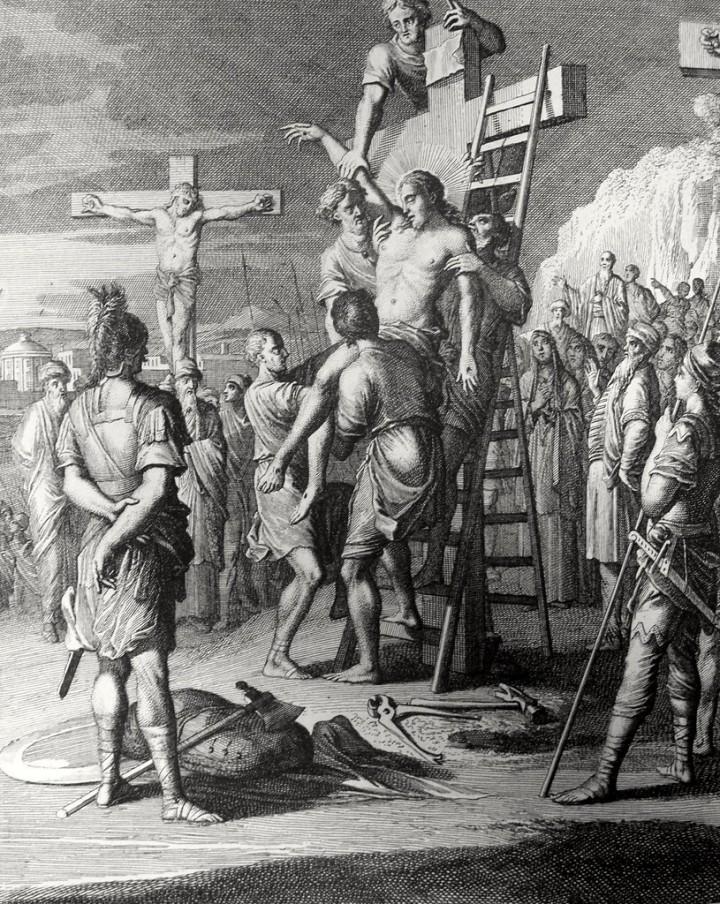
Bowyer Bible print 5516 Christ comforts his disciples John 16:2-3 Moreau. Robert Bowyer (d.1834) expanded his copy of the Macklin Bible by inserting over 6200 different prints. The Bowyer Bible is now housed in Bolton Museum. For these prints see https://archive.org/details/bowyer-bible
where Philip De Vere has created flip-books from Phillip Medhurst's photo-collection.
#BoltonMuseum #bible #extraillustration #grangerisation #interleaved #etching #Bibleillustration #Bibleart #Christianart #christianartwork
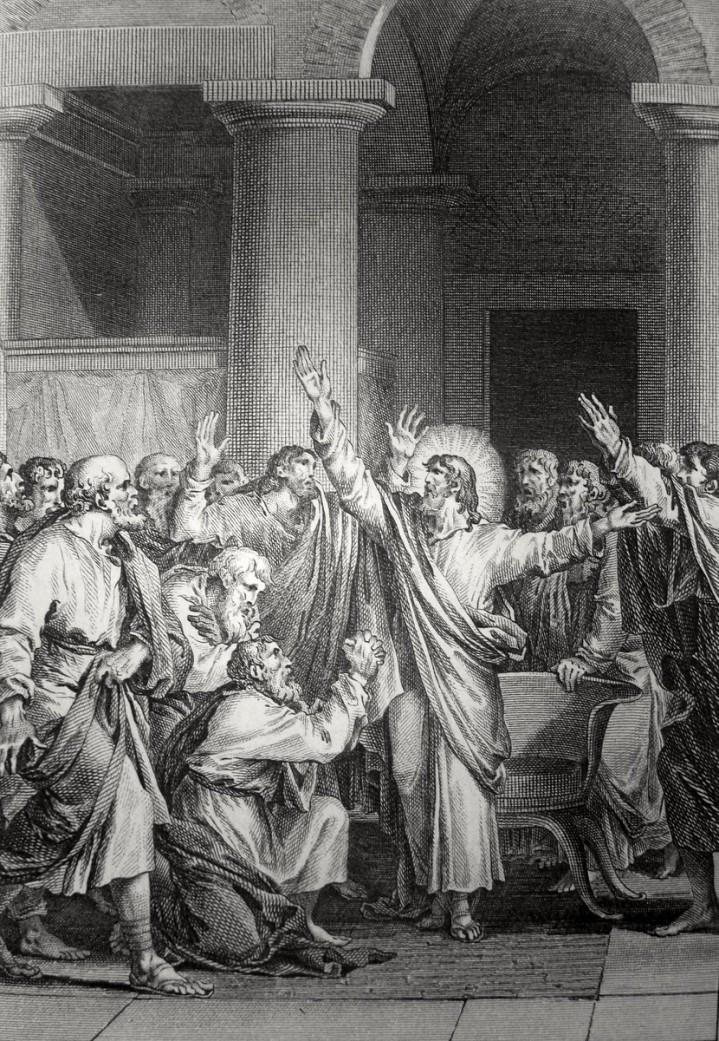
Bowyer Bible print 4391 christ-heals-the-blind-bourdon. Robert Bowyer (d.1834) expanded his copy of the Macklin Bible by inserting over 6200 different prints. The Bowyer Bible is now housed in Bolton Museum. For these prints see https://archive.org/details/bowyer-bible
where Philip De Vere has created flip-books from Phillip Medhurst's photo-collection.
#BoltonMuseum #bible #extraillustration #grangerisation #MacklinBible #interleaved #print #etching #Bibleillustration #Bibleart #Christianart #christianartwork
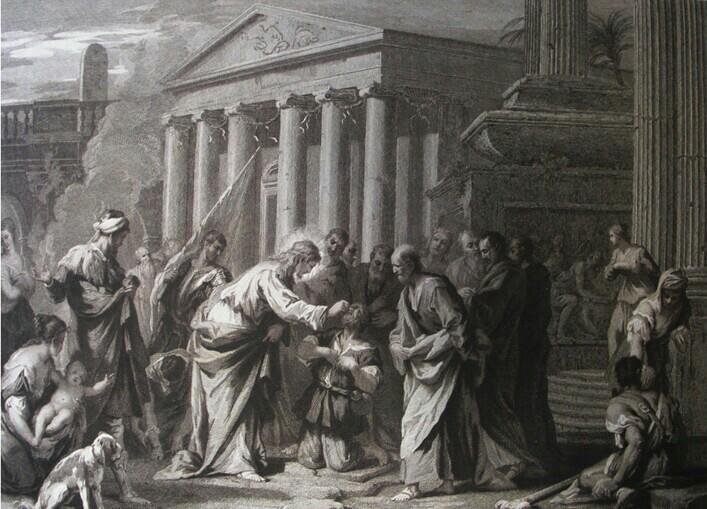
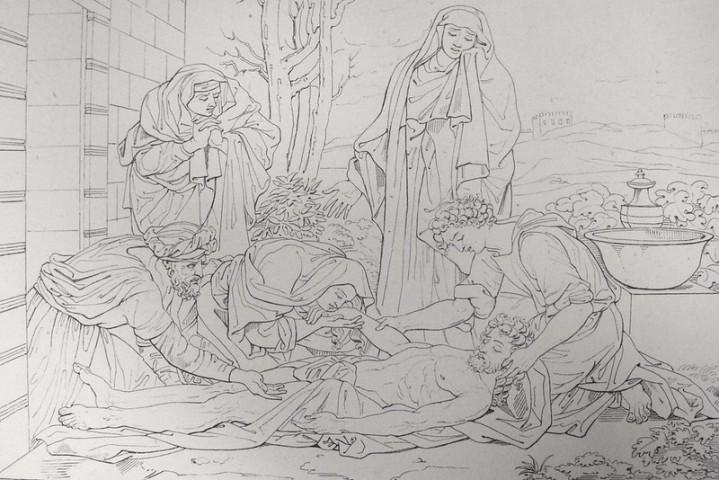
Bowyer Bible print 4108 Joseph of Arimathaea takes the body of Jesus Matthew 27:59-60 after Poussin. Robert Bowyer (d.1834) expanded his copy of the Macklin Bible by inserting over 6200 different prints. The Bowyer Bible is now housed in Bolton Museum. For these prints see https://archive.org/details/bowyer-bible
where Philip De Vere has created flip-books from Phillip Medhurst's photo-collection.
#BoltonMuseum #bible #extraillustration #etching #Bibleillustration #Bibleart #Christianart #christianartwork
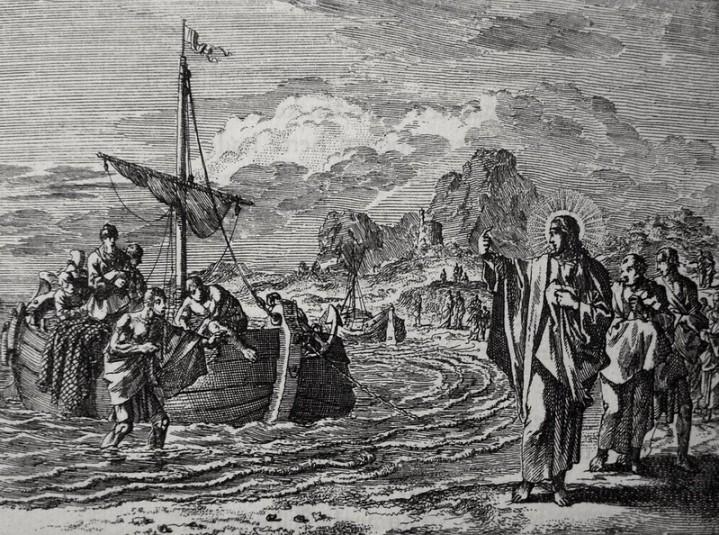
Bowyer Bible print 3541 James and John follow Jesus Matthew 4:21-22 Jan Luyken. Robert Bowyer (d.1834) expanded his copy of the Macklin Bible by inserting over 6200 different prints. The Bowyer Bible is housed in Bolton Museum. For these prints see https://archive.org/details/bowyer-bible
where Philip De Vere has created flip-books from Phillip Medhurst's photo-collection.
#BoltonMuseum #bible #extraillustration #interleaved #print #engraving #etching #Bibleillustration #Bibleart #Christianart #christianartwork
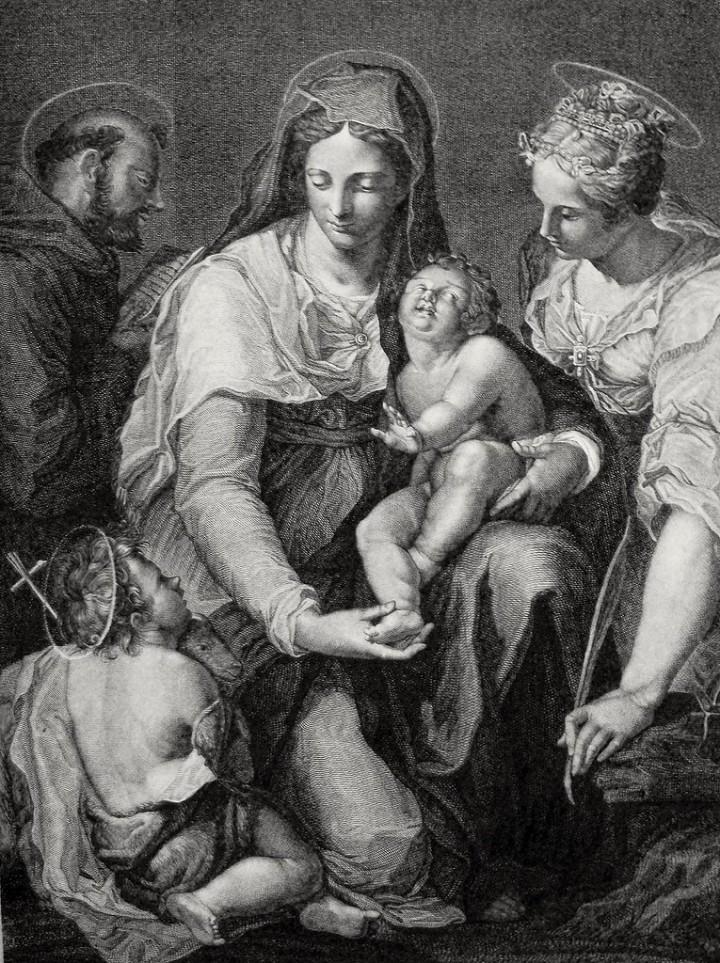
Bowyer Bible print 3344 Virgin and Child with the infant John the Baptist and two saints after Procaccini. Robert Bowyer (d.1834) expanded his copy of the Macklin Bible by inserting over 6200 different prints. The Bowyer Bible is now housed in Bolton Museum. For these prints see https://archive.org/details/bowyer-bible
where Philip De Vere has created flip-books from Phillip Medhurst's photo-collection.
#BoltonMuseum #bible #extraillustration #grangerisation #MacklinBible #interleaved #print #engraving #etching
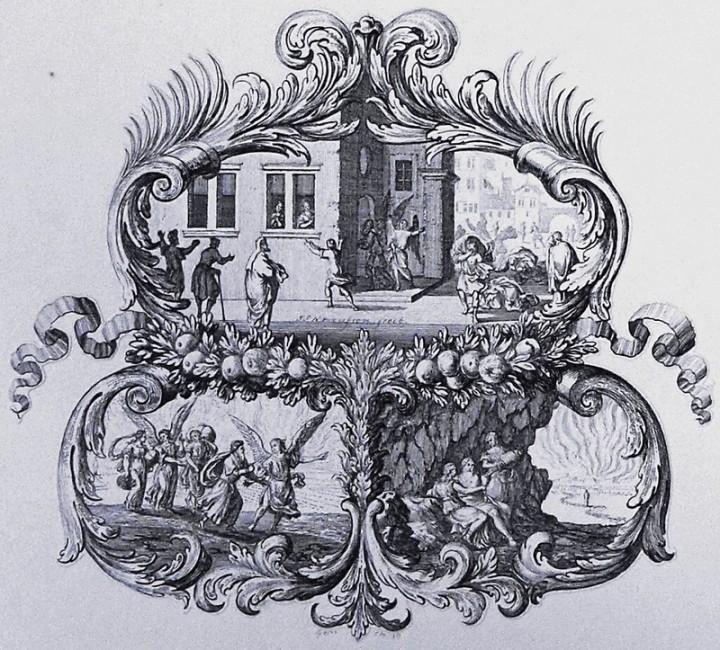
Bowyer Bible print 0420 Destruction of Sodom. Genesis cap 19. Kreussen. Robert Bowyer (d.1834) expanded his copy of the Macklin Bible by inserting over 6200 different prints. The Bowyer Bible is now housed in Bolton Museum. For these prints see https://archive.org/details/bowyer-bible
where Philip De Vere has created flip-books from Phillip Medhurst's photo-collection.
#BoltonMuseum #bible #extraillustration #grangerisation #interleaved #etching #Bibleillustration #Bibleart #Christianart #christianartwork
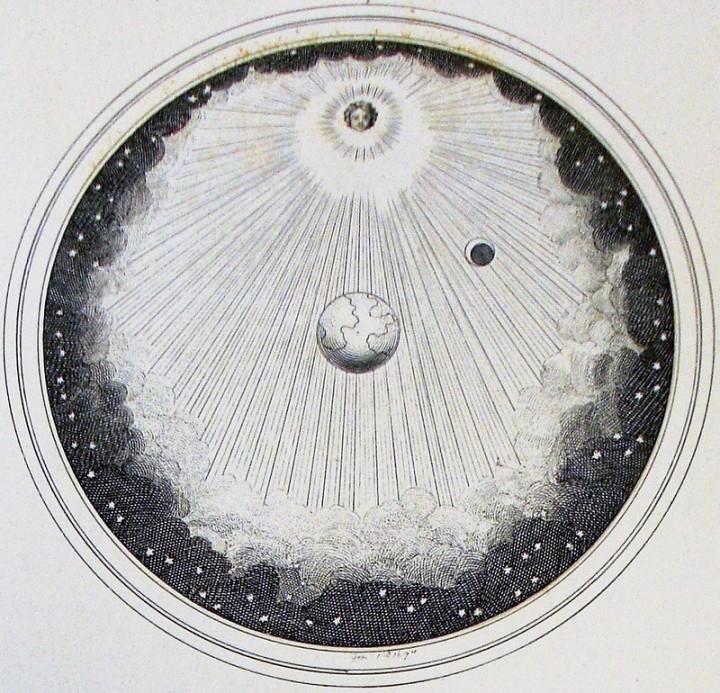
Bowyer Bible print 0072 Sun, Moon & Stars. Genesis cap 1 v 16-17. Anonymous. Robert Bowyer (d.1834) expanded his copy of the Macklin Bible by inserting over 6200 different prints. The Bowyer Bible is now housed in Bolton Museum. For these prints see https://archive.org/details/bowyer-bible
where Philip De Vere has created flip-books from Phillip Medhurst's photo-collection.
#BoltonMuseum #bible #extraillustration #grangerisation #engraving #etching #Bibleillustration #Bibleart #Christianart #christianartwork
The Freedom of Knowing Who We Are
A Sermon Reflecting on John 1:21 John 1:21 says, “And they asked him, ‘What then? Are you Elijah?’ He said, ‘I am not.’ ‘Are you the Prophet?’ And he answered, ‘No.’” There is remarkable power in simple words spoken with complete certainty. When the religious leaders questioned John the Baptist, they were attempting to fit him into categories they already understood. They knew the prophecies concerning Elijah’s return. They anticipated the coming of the great Prophet […] [SENSITIVE CONTENT]

A Sermon Reflecting on John 1:21
John 1:21 says, “And they asked him, ‘What then? Are you Elijah?’ He said, ‘I am not.’ ‘Are you the Prophet?’ And he answered, ‘No.’”
There is remarkable power in simple words spoken with complete certainty. When the religious leaders questioned John the Baptist, they were attempting to fit him into categories they already understood. They knew the prophecies concerning Elijah’s return. They anticipated the coming of the great Prophet like Moses. They expected dramatic figures who would usher in the age of God’s salvation. Standing before them was a man whose ministry was shaking the nation, calling sinners to repentance and preparing hearts for the coming Messiah.
Naturally they wanted to know who he was.
John answered with astonishing simplicity.
“I am not.”
He denied being Elijah in the literal sense they imagined. He denied being the expected Prophet. He refused titles that would have elevated his reputation and increased his influence. Instead, he embraced the role God had actually given him, even if it appeared smaller than the expectations of others.
This brief exchange reveals one of the great spiritual lessons of Scripture. The greatest servants of God are not those who seek greatness for themselves but those who gladly accept the place God has assigned to them.
The world is obsessed with identity. Every generation asks, “Who am I?” People search through careers, relationships, possessions, achievements, popularity, political movements, philosophies, and endless forms of self-expression trying to answer that question. Many spend their entire lives attempting to become someone impressive in the eyes of others.
The kingdom of God offers an entirely different answer.
Identity is not discovered through self-exaltation but through submission to God. Our worth is not established by what others think about us but by what God says about us. Our significance comes not from standing in the spotlight but from faithfully carrying out His purpose.
John understood this.
His ministry was enormously successful by earthly standards. Crowds gathered from every direction. Religious leaders came to investigate him. Ordinary people confessed their sins and were baptized. Soldiers, tax collectors, and citizens alike sought his counsel. His influence spread throughout Judea.
Yet he never confused popularity with purpose.
Many people lose themselves when success arrives. Recognition becomes addictive. Praise becomes necessary. Applause becomes the measure of faithfulness. Pride quietly grows where humility once flourished.
John resisted all of these temptations.
He understood that he was only a voice crying in the wilderness.
He was never the message.
He was never the Savior.
He was never the Light.
He simply pointed to Christ.
This is one of the greatest challenges facing the modern church. There is tremendous pressure to build personalities rather than proclaim Christ. Ministries are often measured by numbers, influence, and visibility rather than faithfulness and holiness. Leaders may become celebrities instead of servants. Churches may seek entertainment instead of repentance.
John’s example stands in sharp contrast to these tendencies.
He did not seek followers for himself.
He sought disciples for Jesus.
He did not gather attention around his own ministry.
He directed every eye toward the Lamb of God.
His greatness was found in his willingness to disappear so that Christ might be seen more clearly.
This is the pattern established throughout Scripture.
The greatest leader in Israel was Moses, yet Moses repeatedly fell on his face before God in humility.
David was Israel’s greatest king, yet he confessed himself to be nothing without the Lord.
The Apostle Paul counted all his accomplishments as loss compared to knowing Christ.
Most importantly, Jesus Himself humbled Himself, taking the form of a servant and becoming obedient unto death, even death on a cross.
The path upward in God’s kingdom is always downward through humility.
John demonstrates that humility is not weakness.
Humility is strength under submission to God.
Only secure people can honestly say, “I am not.”
Insecure people constantly seek affirmation because they fear insignificance.
Secure believers rest in God’s calling and do not need to pretend to be more than they are.
John did not need borrowed titles.
He did not need exaggerated credentials.
He did not need religious prestige.
He simply needed to obey God.
That freedom is available to every believer today.
Many Christians exhaust themselves trying to become someone else. They compare themselves with pastors, teachers, authors, musicians, missionaries, and leaders. Social media intensifies these comparisons until people begin believing that ordinary faithfulness has little value.
But Scripture tells a different story.
God delights in quiet obedience.
The widow who gives two coins pleases Him.
The servant who remains faithful with little receives His reward.
The unknown believer who prays faithfully matters in His kingdom.
The elderly saint who quietly encourages others fulfills an important ministry.
The parent who teaches children about Christ serves an eternal purpose.
The church member who never stands behind a pulpit but faithfully loves others reflects the heart of Christ.
God never asks His children to become someone else.
He asks them to be faithful where He has placed them.
John knew exactly who he was because he knew exactly whose he was.
That certainty gave him remarkable courage.
He could confront kings.
He could rebuke sin.
He could preach repentance without compromise.
He could endure rejection.
He could eventually face imprisonment and death.
His confidence did not come from public opinion but from divine calling.
There is tremendous peace in accepting God’s assignment.
Much anxiety comes from trying to control how others perceive us. We want respect, admiration, influence, and recognition. We fear being overlooked. We fear insignificance. We fear that our lives will not matter.
John’s example reminds us that faithfulness matters more than fame.
God does not evaluate ministry according to popularity.
He evaluates according to obedience.
Many of heaven’s greatest heroes remain unknown on earth.
Many whose names fill history books may receive little reward in eternity.
Jesus Himself warned that those who exalt themselves will be humbled, while those who humble themselves will be exalted.
John lived this truth long before Jesus publicly taught it.
His refusal to claim greatness became the very evidence of his greatness.
His denial of glory became his glory.
His humility became his strength.
There is another lesson hidden within John’s response.
He knew the importance of truth.
He refused to manipulate people’s expectations for personal advantage.
Many could have benefited from allowing the rumors to continue. Claiming to be Elijah or the expected Prophet would have increased his authority overnight.
Instead, he simply answered truthfully.
Integrity always values truth above opportunity.
Followers of Christ are called to the same standard.
We must resist exaggeration.
We must reject false appearances.
We must avoid creating images that are inconsistent with reality.
Authenticity honors God.
Our culture often rewards image over substance, appearance over character, and branding over integrity. Yet God still looks upon the heart.
John’s honest confession points believers back toward sincerity before God.
The Christian life is not about becoming impressive.
It is about becoming holy.
It is not about gaining followers.
It is about following Christ.
It is not about constructing an identity.
It is about receiving one from the Father.
John’s ministry also teaches that every servant has a unique assignment.
He was not Elijah.
He was not the Prophet.
He was not the Messiah.
He was John.
He was God’s appointed messenger.
Nothing more.
Nothing less.
This is enough.
God has never intended every believer to fulfill the same role.
The church is described as a body precisely because every member has a different function. Eyes cannot become hands. Hands cannot become feet. Every member contributes uniquely to the whole.
Problems arise when believers envy someone else’s calling instead of embracing their own.
The enemy delights in comparison because comparison produces discouragement, jealousy, pride, and division.
The Holy Spirit produces gratitude for God’s individual calling.
When we accept the place God has assigned us, joy replaces envy.
Peace replaces striving.
Contentment replaces competition.
The church flourishes when every believer serves faithfully according to God’s design.
John understood that his ministry was temporary.
He came to prepare the way.
His mission would eventually end.
He even declared that Christ must increase while he must decrease.
What remarkable spiritual maturity.
The world teaches us to hold onto influence as long as possible.
John willingly stepped aside when Jesus arrived.
He celebrated becoming smaller because Christ was becoming greater.
This remains the ultimate purpose of every Christian life.
Every sermon should point to Christ.
Every ministry should point to Christ.
Every act of kindness should point to Christ.
Every conversation should point to Christ.
Every spiritual gift should point to Christ.
Our lives become most beautiful when they become signposts directing people toward Jesus rather than mirrors reflecting ourselves.
John 1:21 challenges every believer to examine the heart.
Are we seeking titles or truth?
Recognition or faithfulness?
Promotion or obedience?
Popularity or holiness?
The kingdom of God is filled with ordinary people who perform extraordinary acts of faithfulness through the power of God’s Spirit. They may never become famous. Their names may never appear in books. Their accomplishments may never receive public applause.
Yet heaven knows them.
God sees every hidden act of obedience.
Every unseen sacrifice.
Every quiet prayer.
Every unnoticed kindness.
Every faithful witness.
Every humble servant.
And on the day Christ returns, many who seemed small in this world will shine with eternal glory.
John the Baptist teaches us that true greatness is found not in claiming honor but in surrendering it. True identity is not found by asking the world who we are but by listening to the voice of God. Real freedom comes when we stop trying to become someone impressive and simply become someone faithful.
The church today desperately needs believers who are content to be voices that point beyond themselves. It needs disciples who find joy in making Christ visible rather than making themselves visible. It needs servants who gladly say, “I am not the Savior,” because they know the One who is.
May our lives, like John’s, become faithful witnesses that direct every searching heart to Jesus Christ, the Lamb of God who takes away the sin of the world. And may our greatest ambition never be that people remember our names, but that through our witness they come to know His.

Alt...
The Freedom of Knowing Who We Are
![[?]](https://pxscdn.com/cache/avatars/965947145429498396/avatar_ny2oh2.jpg)
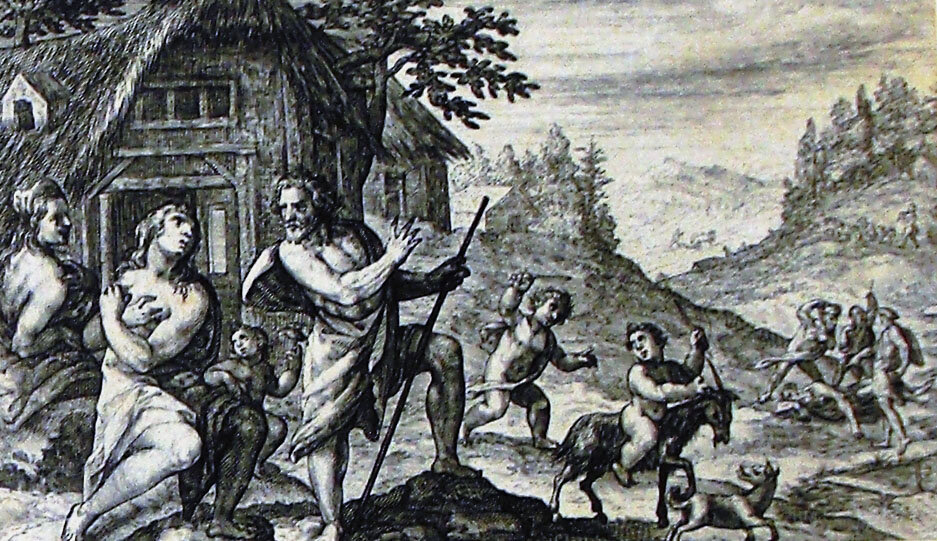
where Philip De Vere has created flip-books from Phillip Medhurst's photo-collection.
#BoltonMuseum #bible #extraillustration #grangerisation #MacklinBible #interleaved #print #engraving #etching #Bibleillustration #Bibleart #Christianart #christianartwork
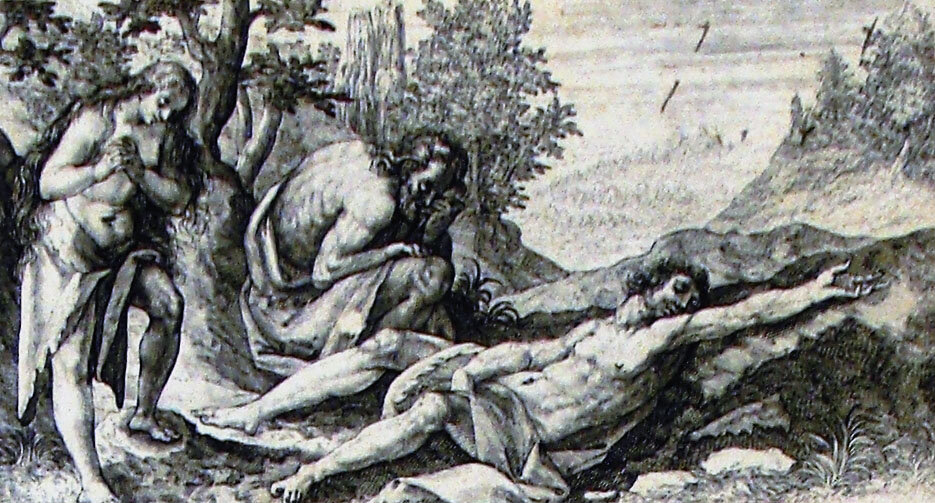
where Philip De Vere has created flip-books from Phillip Medhurst's photo-collection.
#BoltonMuseum #bible #extraillustration #grangerisation #MacklinBible #interleaved #print #engraving #etching #Bibleillustration #Bibleart #Christianart #christianartwork
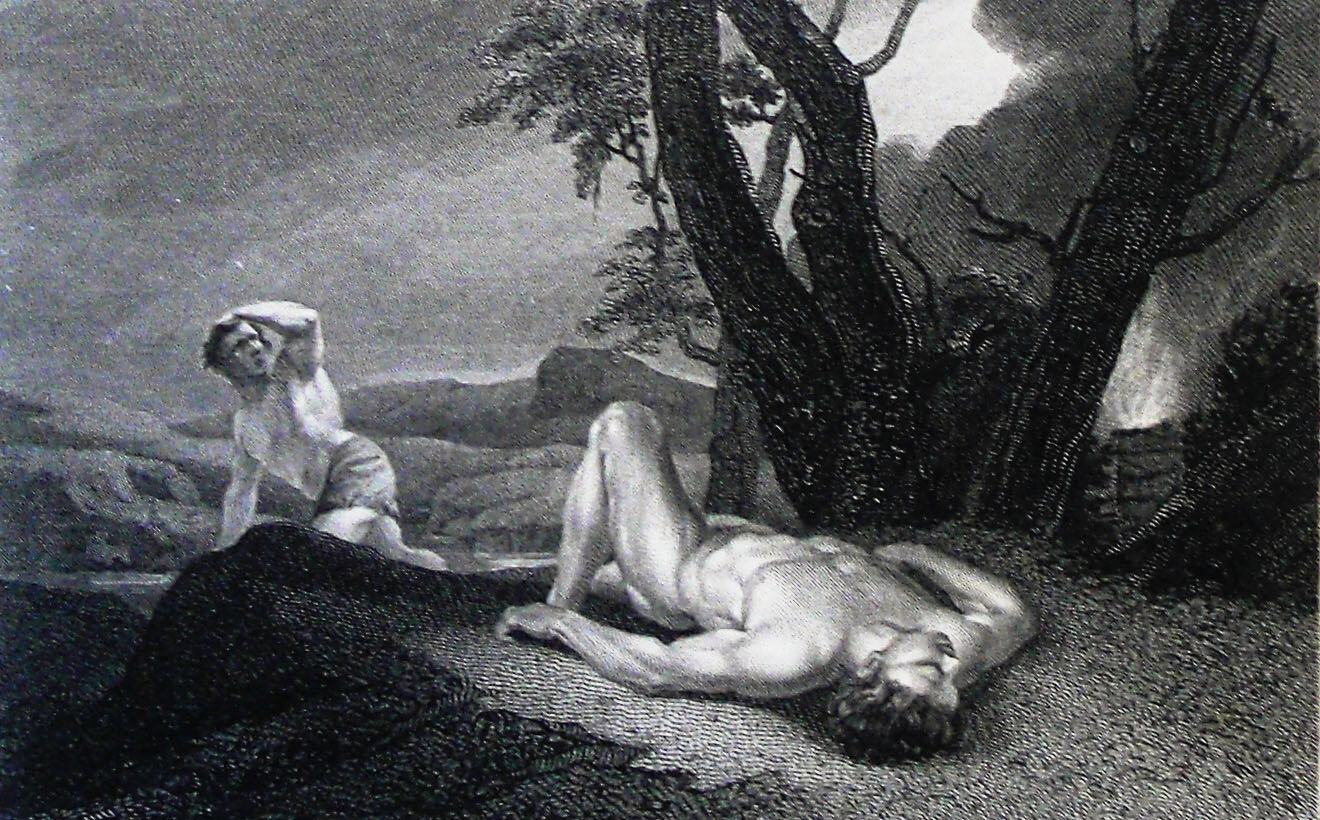
where Philip De Vere has created flip-books from Phillip Medhurst's photo-collection.
#BoltonMuseum #bible #extraillustration #grangerisation #MacklinBible #interleaved #print #engraving #etching #Bibleillustration #Bibleart #Christianart #christianartwork
where Philip De Vere has created flip-books from Phillip Medhurst's photo-collection.
#BoltonMuseum #bible #extraillustration #grangerisation #MacklinBible #interleaved #print #engraving #etching #Bibleillustration #Bibleart #Christianart #christianartwork
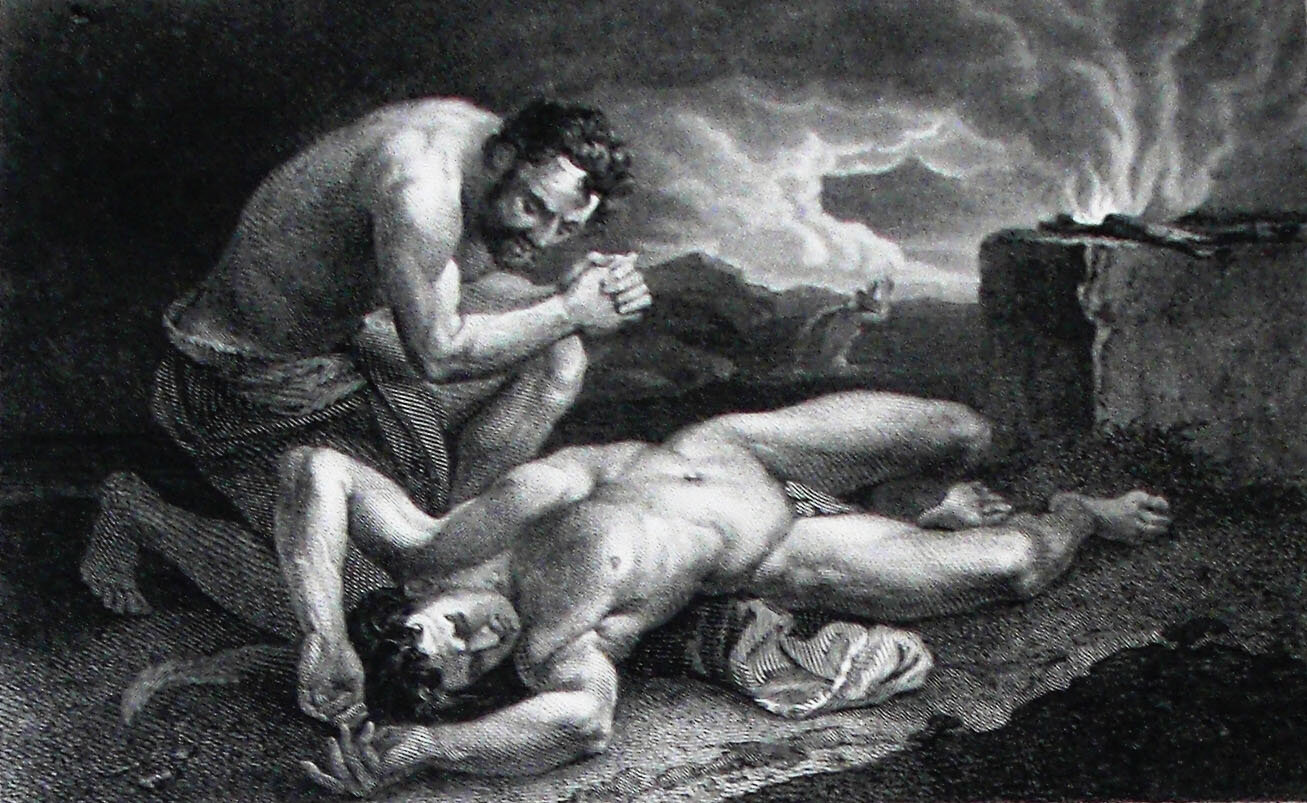
The Question That Clarified the Mission
A Theological Commentary on John 1:21 John 1:21 stands as one of the most fascinating moments in the opening chapter of John's Gospel. The verse reads: "And they asked him, 'What then? Are you Elijah?' He said, 'I am not.' 'Are you the Prophet?' And he answered, 'No.'" Though brief, this exchange reveals profound theological truths concerning messianic expectation, prophetic identity, biblical fulfillment, and the humility of authentic ministry. The verse occurs during the interrogation of […] [SENSITIVE CONTENT]

A Theological Commentary on John 1:21
John 1:21 stands as one of the most fascinating moments in the opening chapter of John’s Gospel. The verse reads:
“And they asked him, ‘What then? Are you Elijah?’ He said, ‘I am not.’ ‘Are you the Prophet?’ And he answered, ‘No.'”
Though brief, this exchange reveals profound theological truths concerning messianic expectation, prophetic identity, biblical fulfillment, and the humility of authentic ministry. The verse occurs during the interrogation of John the Baptist by priests and Levites sent from Jerusalem to determine his identity and authority. Their questions expose the hopes and misunderstandings of first-century Judaism, while John’s answers direct attention away from himself and toward Christ.
This passage is not merely historical dialogue; it is theological proclamation. It demonstrates that God’s redemptive plan unfolds according to divine revelation rather than human expectation. John’s refusal to claim titles that were not his reveals a servant whose entire existence was defined by pointing others to Jesus rather than promoting himself.
The Context of the Inquiry
The Gospel of John opens with an exalted presentation of Christ as the eternal Word who was with God and was God. The majestic prologue culminates in the declaration that the Word became flesh and dwelt among humanity. Before Jesus begins His public ministry, however, the Gospel introduces John the Baptist as the divinely appointed witness.
John 1:6-8 emphasizes that John “was not that Light, but was sent to bear witness of that Light.” This distinction becomes essential throughout the chapter. John’s role is significant but secondary. He occupies a unique position in redemptive history as the final Old Testament prophet and the first herald of the Messiah.
The religious authorities were accustomed to evaluating prophetic claims carefully. Israel had experienced centuries without prophetic voices after Malachi, making John’s appearance in the wilderness especially remarkable. His clothing resembled Elijah’s. His message called for repentance. His baptism attracted enormous crowds. Naturally, many wondered whether he was one of the anticipated eschatological figures.
The questions in verse 21 therefore arise from genuine messianic expectation rooted in Scripture.
Messianic Expectations in First-Century Judaism
The Jewish people anticipated several figures associated with the coming kingdom of God.
First, they awaited the Messiah, the promised son of David who would restore Israel and establish God’s reign.
Second, they expected Elijah to return before the Day of the Lord, based upon the prophecy of Malachi 4:5-6. Elijah’s departure into heaven without experiencing death contributed to the expectation of his literal return.
Third, many anticipated “the Prophet,” based upon Moses’ prophecy in Deuteronomy 18:15 concerning a prophet like himself whom God would raise up.
Some Jewish traditions distinguished these figures from one another, expecting separate individuals who would appear during the final days. Others blended these expectations together in various combinations.
The delegation’s questions therefore reflect serious theological investigation rather than idle curiosity. They seek to determine whether John’s remarkable ministry fulfills one of these ancient promises.
The Question Concerning Elijah
The first question concerns Elijah.
“Are you Elijah?”
The significance of Elijah cannot be overstated. Elijah represented prophetic courage, covenant faithfulness, and divine confrontation against idolatry. His ministry challenged kings, called Israel back to God, and culminated in his mysterious ascension into heaven.
Malachi’s prophecy promised that Elijah would come before the great Day of the Lord. Consequently, many expected the historical Elijah himself to return.
John’s answer appears straightforward.
“I am not.”
At first glance, this creates tension with Jesus’ later statement that John was indeed Elijah who was to come if the people would receive him (Matthew 11:14). Jesus also declared that Elijah had already come, referring to John the Baptist (Matthew 17:12-13).
This apparent contradiction has generated extensive theological discussion.
The resolution lies in understanding that John denied being Elijah literally or personally. He was not the historical prophet returned from heaven. Rather, according to Jesus, he fulfilled Elijah’s prophetic role and ministry.
The angel Gabriel had already explained this before John’s birth, declaring that he would go before the Lord “in the spirit and power of Elijah” (Luke 1:17).
John therefore denies literal identity while Jesus affirms typological fulfillment.
This distinction illustrates an important principle of biblical interpretation. Prophetic fulfillment often transcends literalistic expectation while perfectly accomplishing divine intention. John is Elijah not by reincarnation or physical return but by prophetic office and covenant mission.
The Spirit and Power of Elijah
Luke’s description provides significant theological insight.
The spirit and power of Elijah refers not to personal identity but to prophetic function. John embodies Elijah’s courage, message, and ministry.
Like Elijah, John ministers in the wilderness.
Like Elijah, he confronts corrupt leadership.
Like Elijah, he calls Israel to repentance.
Like Elijah, he prepares the people for divine visitation.
The continuity lies in mission rather than personhood.
This demonstrates God’s pattern of raising faithful servants throughout history who continue previous prophetic traditions without becoming identical to their predecessors. God’s work advances through continuity of revelation and covenant purpose rather than mere repetition.
The Question Concerning the Prophet
The delegation then asks another question.
“Are you the Prophet?”
This reference almost certainly alludes to Deuteronomy 18:15, where Moses prophesied:
“The Lord your God will raise up for you a prophet like me from among your brethren.”
Jewish interpretation often regarded this coming prophet as a distinct eschatological figure.
Again John answers simply:
“No.”
His denial is significant because it preserves the uniqueness of Jesus Christ.
The New Testament repeatedly identifies Jesus Himself as the fulfillment of Moses’ prophecy. Peter explicitly applies Deuteronomy 18 to Christ in Acts 3:22-23. Stephen likewise identifies Jesus as the promised Prophet in Acts 7:37.
John refuses titles that belong exclusively to Christ.
His humility preserves theological truth.
His ministry gains credibility precisely because he declines honors that would obscure the Messiah’s identity.
The Theology of Witness
One of the central themes of John’s Gospel is witness.
The Gospel repeatedly presents testimony from various witnesses:
John the Baptist
The Father
The Scriptures
The miracles
The disciples
The Holy Spirit
Each witness points beyond itself to Jesus Christ.
John the Baptist serves as the first human witness introduced in the Gospel narrative.
Witnesses do not become the subject of their testimony.
Their credibility depends upon directing attention elsewhere.
This theological principle defines authentic Christian ministry.
The preacher points to Christ.
The church points to Christ.
The Scriptures point to Christ.
The Holy Spirit points to Christ.
Whenever ministry becomes self-promoting rather than Christ-exalting, it departs from the pattern established by John the Baptist.
His repeated denials emphasize this truth.
“I am not the Christ.”
“I am not Elijah.”
“I am not the Prophet.”
His greatness consists partly in knowing precisely who he is not.
The Humility of John
John’s humility deserves careful theological reflection.
In a culture that prized honor and recognition, John consistently rejects opportunities for self-exaltation.
Crowds gather around him.
Religious leaders investigate him.
National attention focuses upon him.
Yet he continually redirects attention toward another.
Later he declares:
“He must increase, but I must decrease.”
This humility reflects profound theological understanding.
John recognizes that God’s kingdom centers upon Christ rather than human servants.
The greatest ministry is not one that attracts followers to itself but one that leads people away from itself toward Jesus.
Such humility arises from genuine knowledge of God.
Those who behold divine glory become less concerned with personal status.
John’s self-understanding emerges from his understanding of God’s redemptive plan.
The Identity of the Forerunner
John’s refusals lead naturally to his positive identification in the following verse.
He declares himself to be “the voice of one crying in the wilderness.”
This quotation from Isaiah 40:3 shifts emphasis from identity to function.
He is not primarily someone important.
He is someone sent.
His significance derives entirely from his mission.
This represents a profound biblical theology of vocation.
God calls individuals not primarily to status but to service.
Calling is defined by obedience rather than prominence.
John finds satisfaction in fulfilling God’s assignment rather than acquiring impressive titles.
His identity rests in divine commission.
This remains true for Christian ministry today.
Pastors, teachers, missionaries, and believers derive identity from union with Christ and obedience to His calling rather than ecclesiastical position or public recognition.
Prophetic Fulfillment and Divine Sovereignty
John 1:21 also illustrates the complexity of biblical prophecy.
God’s promises find fulfillment in ways that often exceed human expectation.
Many anticipated Elijah literally.
God provided one who ministered in Elijah’s spirit and power.
Many expected a political deliverer.
God sent a suffering Savior.
Many sought earthly revolution.
God established a spiritual kingdom.
Divine fulfillment proves richer and deeper than literalistic anticipation.
This pattern teaches careful humility in prophetic interpretation.
Scripture remains completely trustworthy.
Its fulfillment, however, often unfolds according to divine wisdom rather than human assumption.
John’s ministry illustrates both continuity and discontinuity between the Old and New Covenants.
He stands at the threshold between promise and fulfillment.
His ministry concludes one era while inaugurating another.
Christological Significance
Although Jesus is not explicitly mentioned in this verse, He remains its theological center.
Every denial by John magnifies Christ.
John is not Elijah literally.
John is not the Prophet.
John is not the Messiah.
The questions eliminate alternatives until attention rests solely upon Jesus.
This negative testimony serves positive Christology.
The uniqueness of Christ emerges more clearly as every competing identity disappears.
Jesus alone fulfills every office completely.
He is the true Prophet greater than Moses.
He is the royal Son of David.
He is the suffering Servant.
He is the eternal Word.
He is the Lamb of God.
He is the Light of the world.
John’s ministry exists to illuminate this uniqueness.
The Ecclesiological Implications
The church likewise exists as witness rather than destination.
Just as John pointed beyond himself, so the church points beyond itself.
Its purpose is not institutional self-preservation but proclamation of Christ.
Its success cannot be measured merely by numbers, influence, or cultural acceptance.
Faithfulness consists in bearing true witness.
Whenever churches cultivate celebrity personalities or organizational self-glorification, they risk repeating the very misunderstandings John rejected.
The Baptist reminds the church that greatness lies in transparency to Christ.
The best witness is one through whom Christ becomes more visible.
The greatest preacher disappears behind the gospel he proclaims.
The greatest theologian magnifies Scripture rather than personal originality.
The greatest servant seeks God’s glory above personal reputation.
Practical Theological Reflections
John 1:21 offers enduring lessons for theological education and ministry.
First, identity must arise from divine calling rather than public expectation. The crowds attempted to define John according to their own categories, but John accepted only God’s definition of his ministry.
Second, humility protects theological integrity. By refusing inappropriate titles, John preserved the uniqueness of Christ.
Third, prophetic ministry requires clarity concerning one’s limitations. John understood both his authority and his boundaries.
Fourth, faithful witness always directs attention toward Jesus rather than the witness.
Finally, God’s kingdom advances through servants who gladly occupy supporting roles while Christ receives center stage.
These principles remain essential for pastors, professors, missionaries, and every believer entrusted with gospel witness.
Conclusion
John 1:21 captures a remarkable moment of theological clarity. Faced with public curiosity and religious investigation, John the Baptist refuses every title that does not belong to him. His answers appear negative, yet they serve the highest positive purpose by preserving the unique identity of Jesus Christ.
His refusal to claim Elijah’s literal identity demonstrates the richness of prophetic fulfillment. His rejection of the title “the Prophet” protects the exclusive messianic role of Christ. His humility models authentic discipleship. His witness establishes the pattern for Christian ministry throughout the ages.
In an age captivated by influence, reputation, and recognition, John the Baptist offers a radically different vision of greatness. The greatest servant is not the one who attracts attention but the one who faithfully directs all attention to Christ. The greatest theologian is not the one who constructs an impressive identity but the one who, like John, knows that every true ministry exists only to prepare the way for the Lord.
Thus John 1:21 is far more than an exchange of questions and answers. It is a theological declaration that every authentic servant of God must decrease so that the glory of the Son of God may increase, for only Christ fulfills every promise, satisfies every expectation, and stands as the sole hope of redemption for the world.

Alt...
The Question That Clarified the Mission
where Philip De Vere has created flip-books from Phillip Medhurst's photo-collection.
#BoltonMuseum #bible #extraillustration #grangerisation #MacklinBible #interleaved #print #engraving #etching #Bibleillustration #Bibleart #Christianart #christianartwork
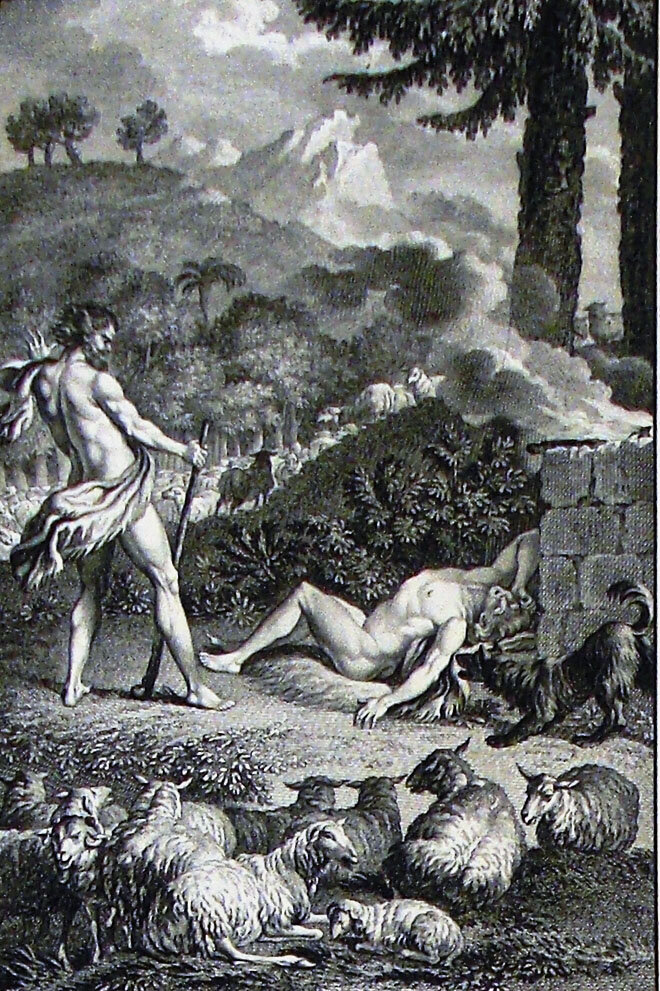
where Philip De Vere has created flip-books from Phillip Medhurst's photo-collection.
#BoltonMuseum #bible #extraillustration #grangerisation #MacklinBible #interleaved #print #engraving #etching #Bibleillustration #Bibleart #Christianart #christianartwork
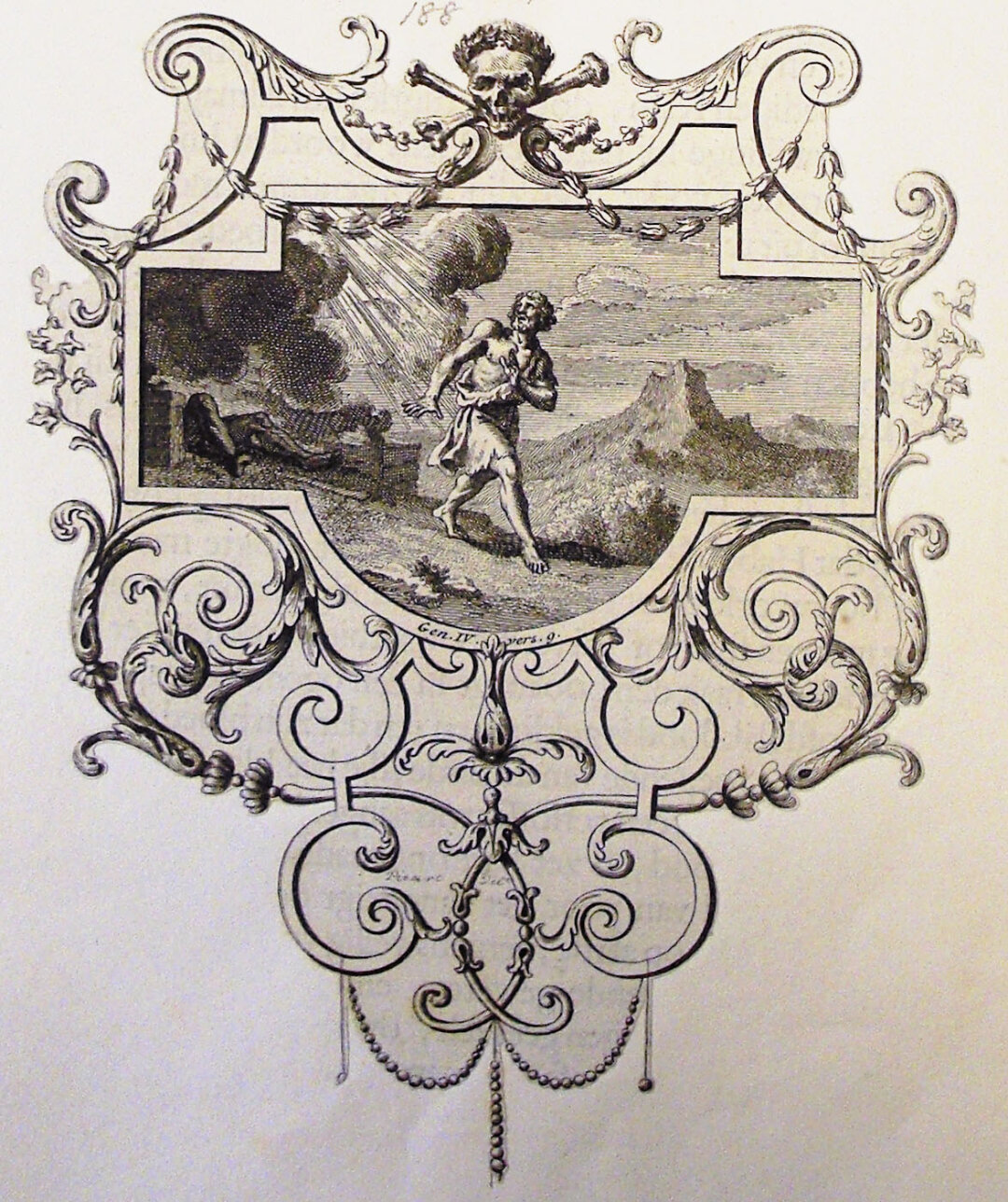
where Philip De Vere has created flip-books from Phillip Medhurst's photo-collection.
#BoltonMuseum #bible #extraillustration #grangerisation #MacklinBible #interleaved #print #engraving #etching #Bibleillustration #Bibleart #Christianart #christianartwork
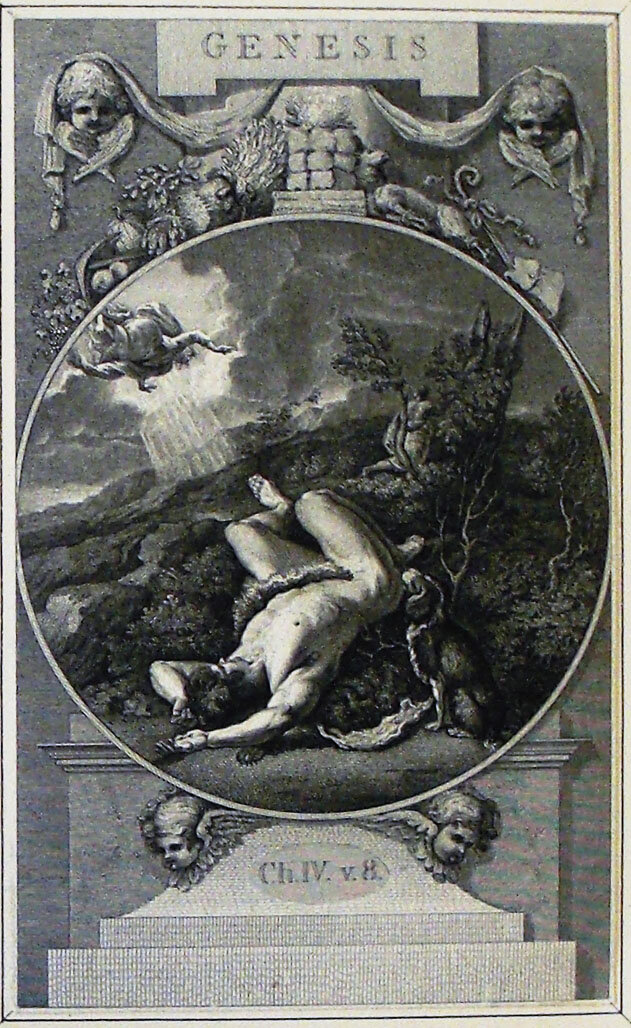
where Philip De Vere has created flip-books from Phillip Medhurst's photo-collection.
#BoltonMuseum #bible #extraillustration #grangerisation #MacklinBible #interleaved #print #engraving #etching #Bibleillustration #Bibleart #Christianart #christianartwork
![[?]](https://s0.wp.com/wp-content/plugins/activitypub/8.3.0/assets/img/wp-logo.png?m=1779103677i) amgbengaezekieloladosu » 🌐
amgbengaezekieloladosu » 🌐
@megafeastamerica-dmgts.wordpress.com@megafeastamerica-dmgts.wordpress.com
” The Structure”
Every day things never be the same as Lorena is working hard to support her family after the death of her husband James. She understood the place of hope and a better day has well, she can't just stop dreaming to see her children Katy and John have good education in the absent of their father. Her working hard makes the kids knows the value of their mother and this gave the kids they same reason too, to support her. Has they also have the knowledge of the absence of their father […] [SENSITIVE CONTENT]
Every day things never be the same as Lorena is working hard to support her family after the death of her husband James. She understood the place of hope and a better day has well, she can’t just stop dreaming to see her children Katy and John have good education in the absent of their father. Her working hard makes the kids knows the value of their mother and this gave the kids they same reason too, to support her. Has they also have the knowledge of the absence of their father James.
Lorena believes of a better day and a better opportunity. As she save to own a house someday to better support her children. Then she start to save every little coins towards a goal of owning a house to move out of a rental apartment.
In the same way, like of every government of every countries depends on structure because every failed governments lack structure for their government and her citizen. That’s while some people believes that democracy had failed them and they will rather look for another system of government like military or communist
Today, some countries leaders are leading their countries in communist disguised system of government because the past administration lack structures to value every citizens toward a developmental goal of their countries.
For a good governance to citizen of every countries there should be adequate structure which supported the interest of citizens
Lorena had a determination toward success in the absent of her husband James and she also makes her children believes they can make it, to move out of a rental apartment to their own house.
People needs a leader who can make them believe even though they don’t want to believe or gives a try for another day of dreaming.
Gbenga Ezekiel Oladosu
American National Award Winning Author
Mega Feast Bestselling Author
Honored as (WordPress “World Famous Author” Receive views from 50+ Different Countries)
where Philip De Vere has created flip-books from Phillip Medhurst's photo-collection.
#BoltonMuseum #bible #extraillustration #grangerisation #MacklinBible #interleaved #print #engraving #etching #Bibleillustration #Bibleart #Christianart #christianartwork
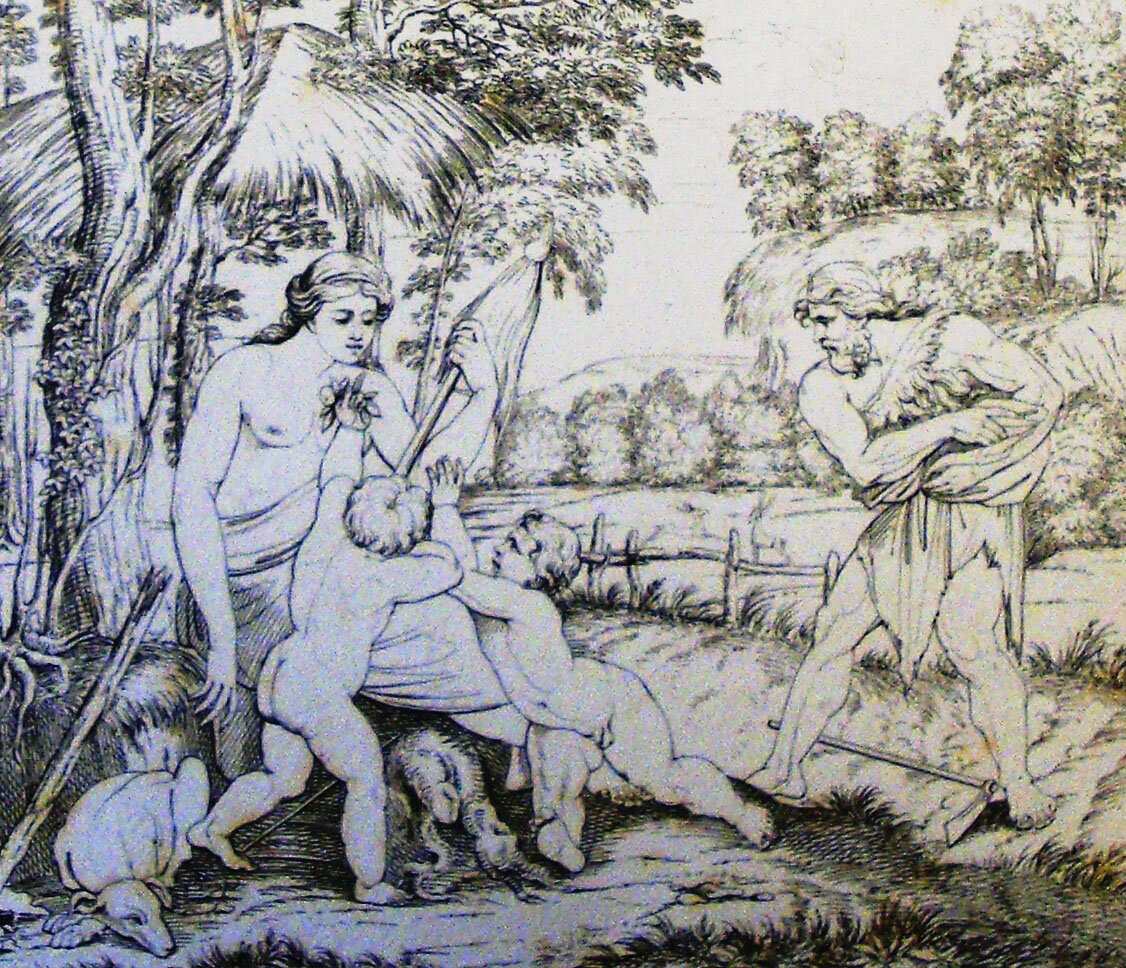
where Philip De Vere has created flip-books from Phillip Medhurst's photo-collection.
#BoltonMuseum #bible #extraillustration #grangerisation #MacklinBible #interleaved #print #engraving #etching #Bibleillustration #Bibleart #Christianart #christianartwork
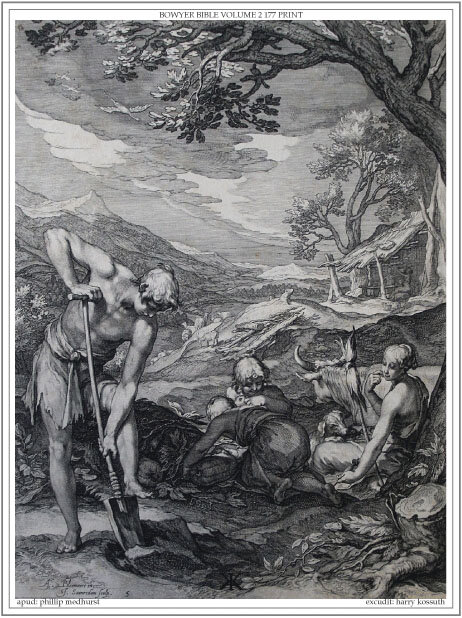
![[?]](https://cdn.mastodon.africa/accounts/avatars/110/342/648/747/727/334/original/b0bff7f9c221179d.jpg)
"What shall I return to the Lord
for all his goodness to me?
I will lift up the cup of salvation
and call on the name of the Lord.
I will fulfil my vows to the Lord
in the presence of all his people."
Psalm 116:12-14 #Bible #thanksgiving
where Philip De Vere has created flip-books from Phillip Medhurst's photo-collection.
#BoltonMuseum #bible #extraillustration #grangerisation #MacklinBible #interleaved #print #engraving #etching #Bibleillustration #Bibleart #Christianart #christianartwork
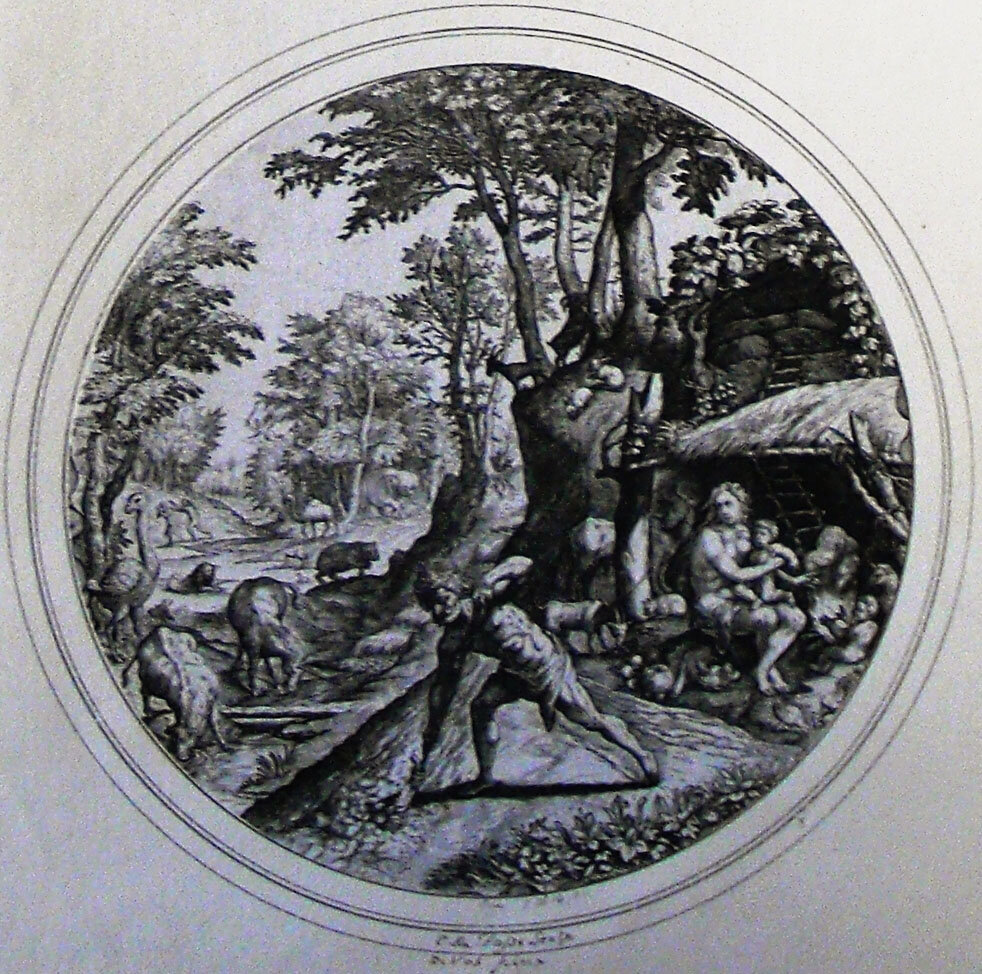
where Philip De Vere has created flip-books from Phillip Medhurst's photo-collection.
#BoltonMuseum #bible #extraillustration #grangerisation #MacklinBible #interleaved #print #engraving #etching #Bibleillustration #Bibleart #Christianart #christianartwork
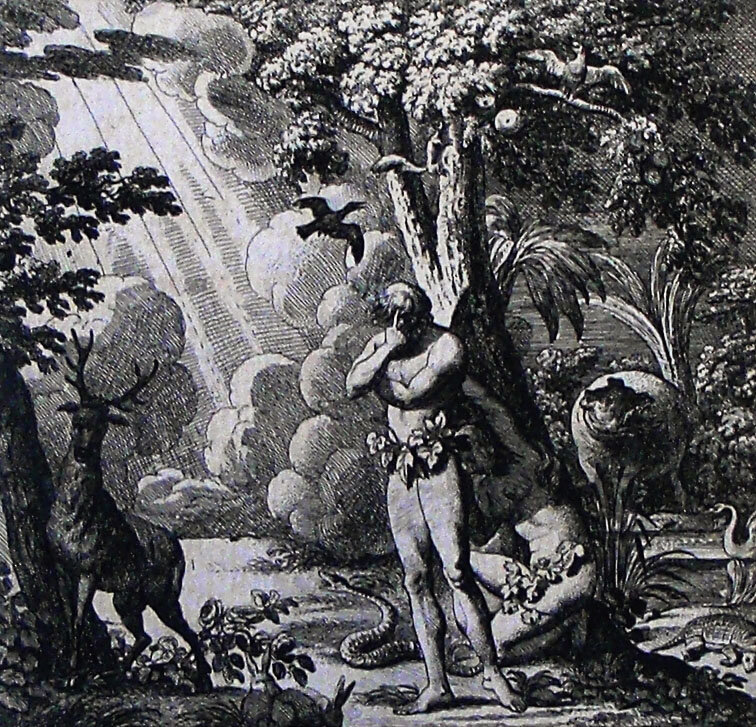
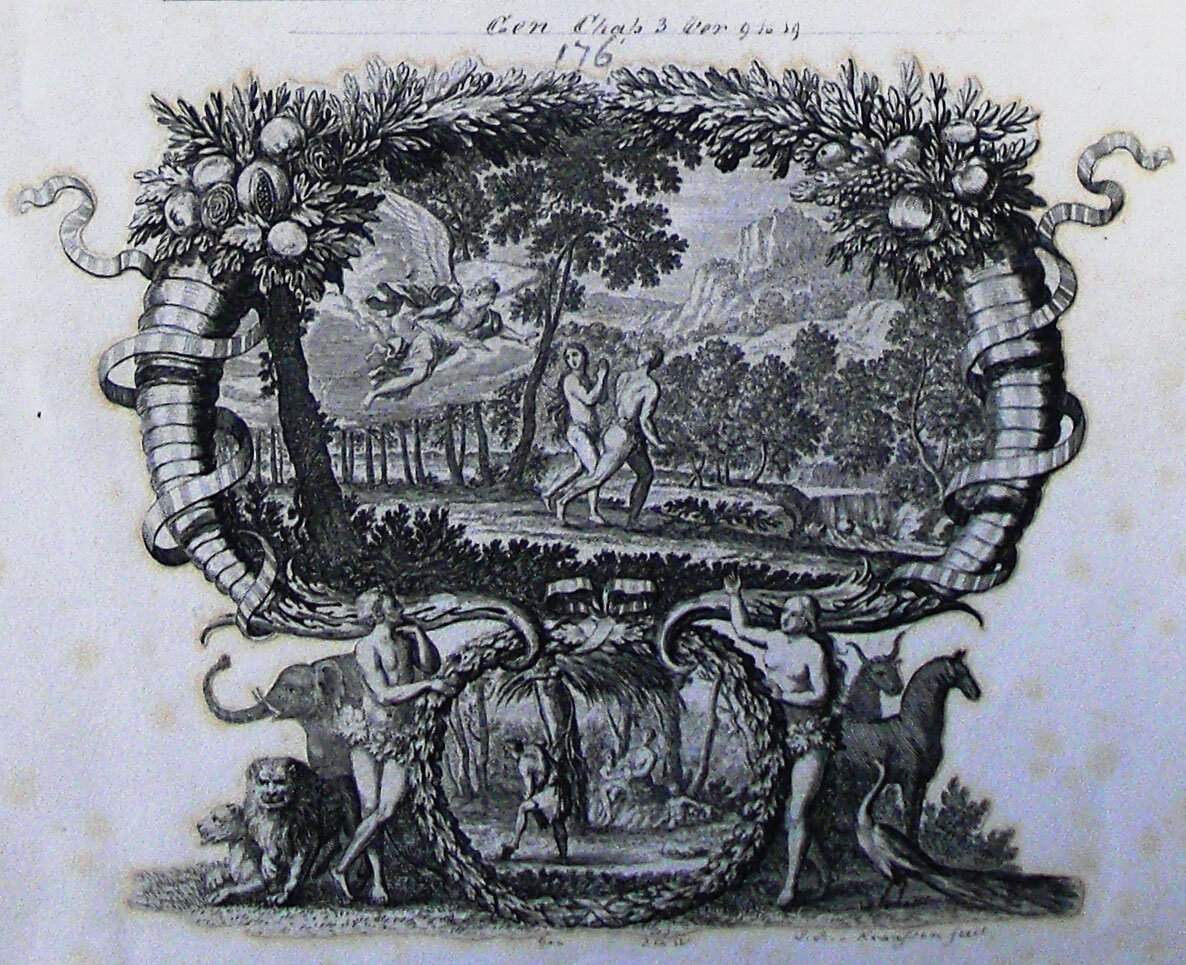
where Philip De Vere has created flip-books from Phillip Medhurst's photo-collection.
#BoltonMuseum #bible #extraillustration #grangerisation #MacklinBible #interleaved #print #engraving #etching #Bibleillustration #Bibleart #Christianart #christianartwork
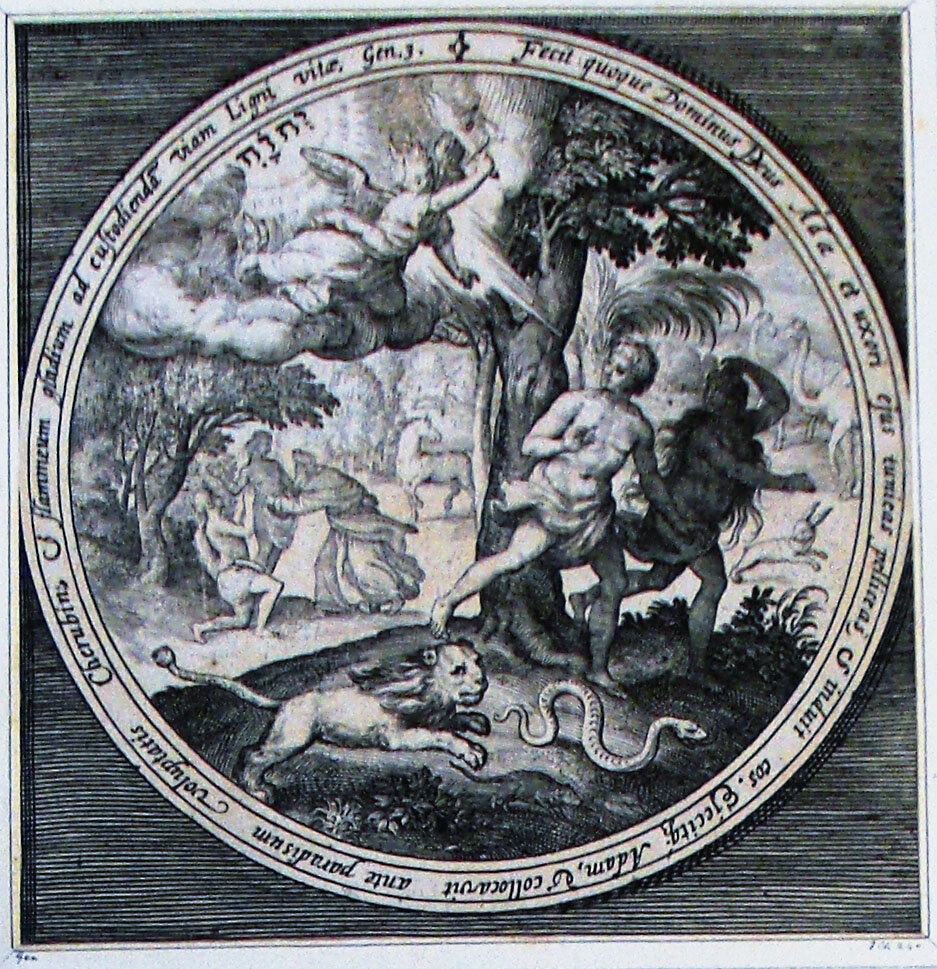
where Philip De Vere has created flip-books from Phillip Medhurst's photo-collection.
#BoltonMuseum #bible #extraillustration #grangerisation #MacklinBible #interleaved #print #engraving #etching #Bibleillustration #Bibleart #Christianart #christianartwork
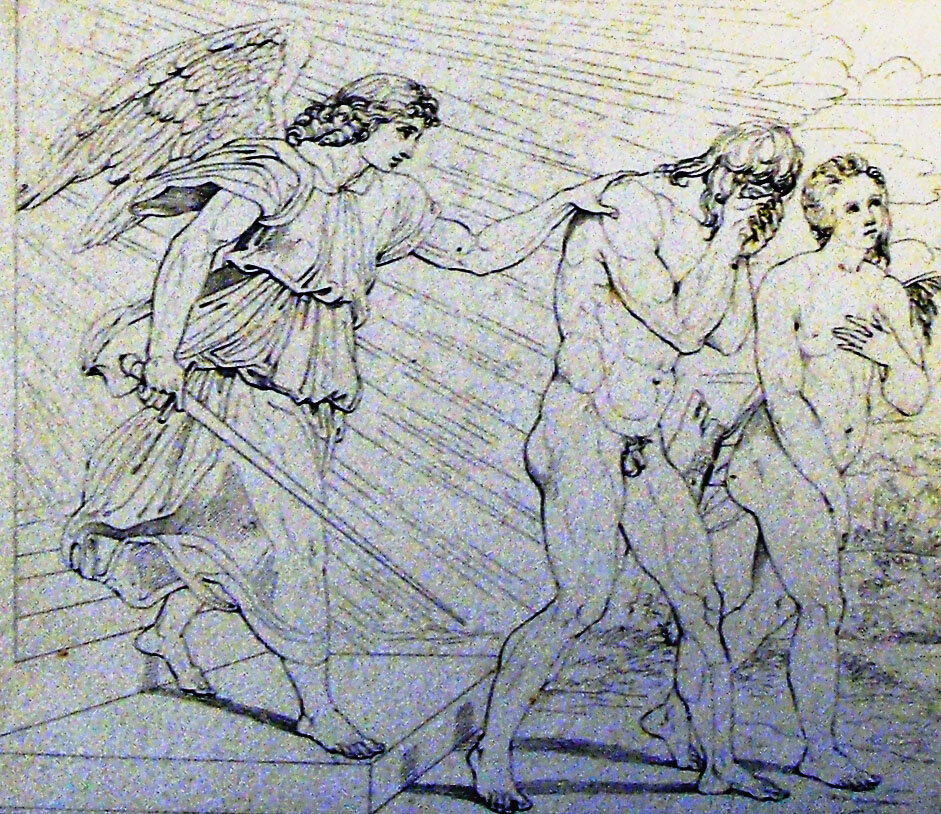
where Philip De Vere has created flip-books from Phillip Medhurst's photo-collection.
#BoltonMuseum #bible #extraillustration #grangerisation #MacklinBible #interleaved #print #engraving #etching #Bibleillustration #Bibleart #Christianart #christianartwork
where Philip De Vere has created flip-books from Phillip Medhurst's photo-collection.
#BoltonMuseum #bible #extraillustration #grangerisation #MacklinBible #interleaved #print #engraving #etching #Bibleillustration #Bibleart #Christianart #christianartwork
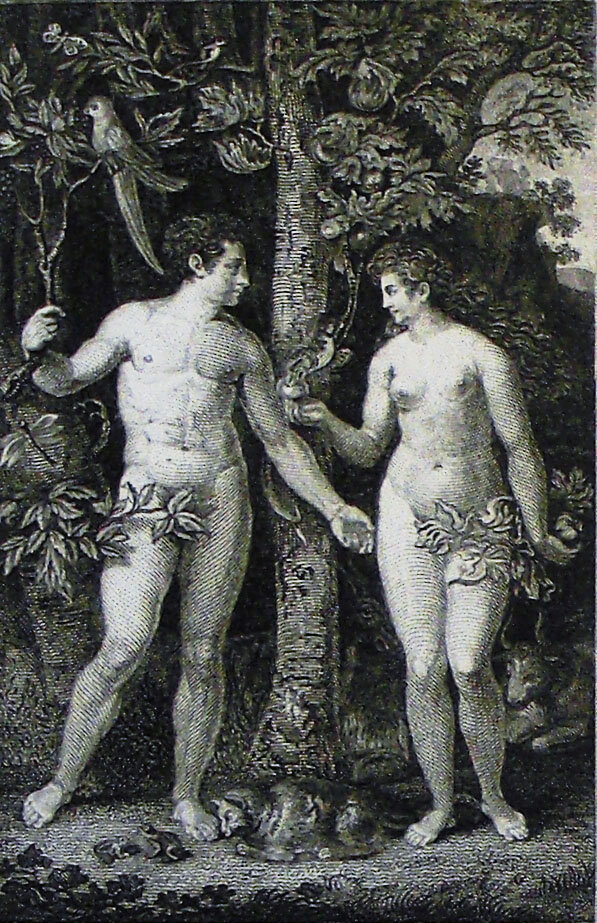
where Philip De Vere has created flip-books from Phillip Medhurst's photo-collection.
#BoltonMuseum #bible #extraillustration #grangerisation #MacklinBible #interleaved #print #engraving #etching #Bibleillustration #Bibleart #Christianart #christianartwork
where Philip De Vere has created flip-books from Phillip Medhurst's photo-collection.
#BoltonMuseum #bible #extraillustration #grangerisation #MacklinBible #interleaved #print #engraving #etching #Bibleillustration #Bibleart #Christianart #christianartwork
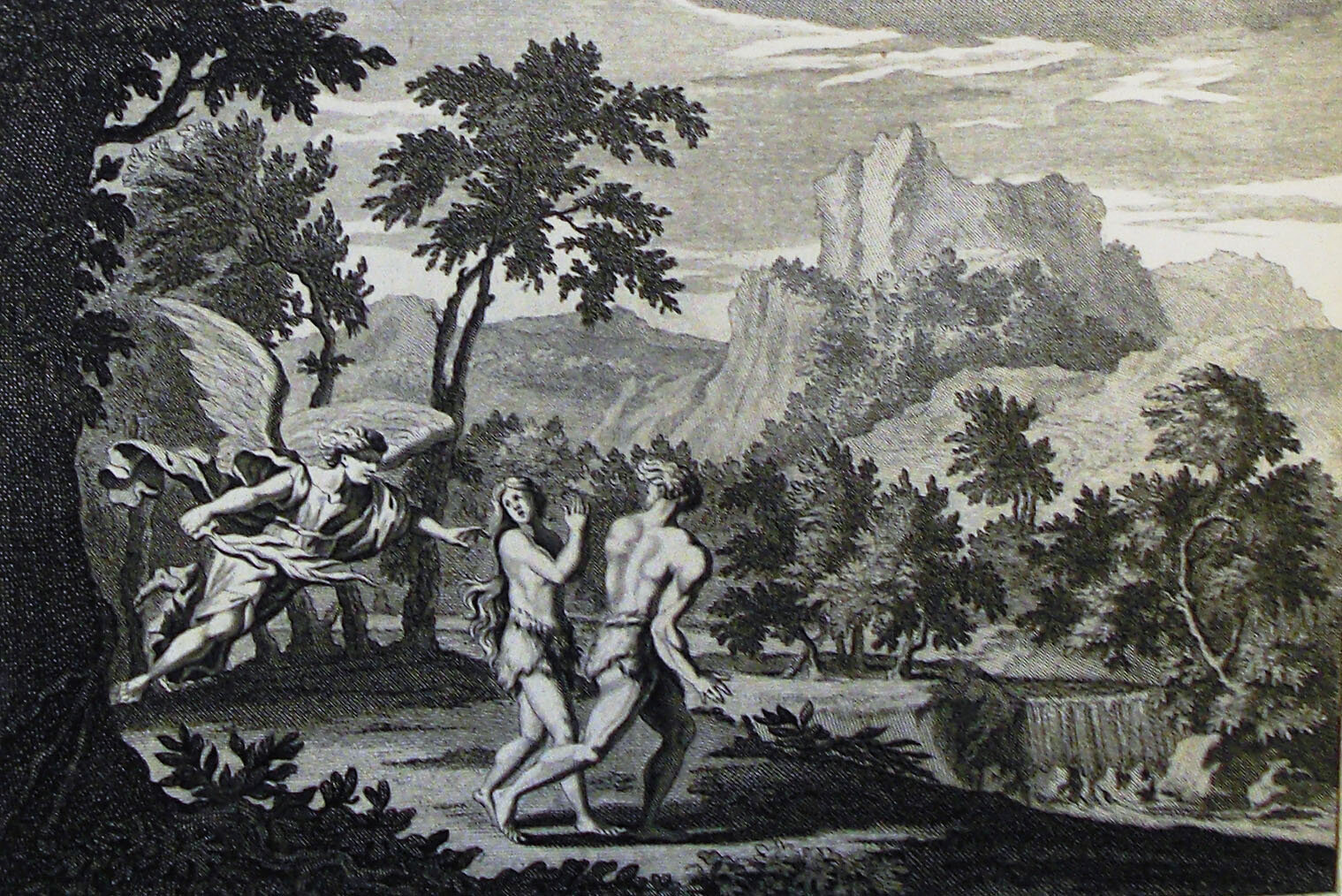
where Philip De Vere has created flip-books from Phillip Medhurst's photo-collection.
#BoltonMuseum #bible #extraillustration #grangerisation #MacklinBible #interleaved #print #engraving #etching #Bibleillustration #Bibleart #Christianart #christianartwork