Search results for tag #softwarefreedom
![[?]](https://files.mastodon.social/accounts/avatars/000/229/697/original/9adca59225e3b706.jpg)
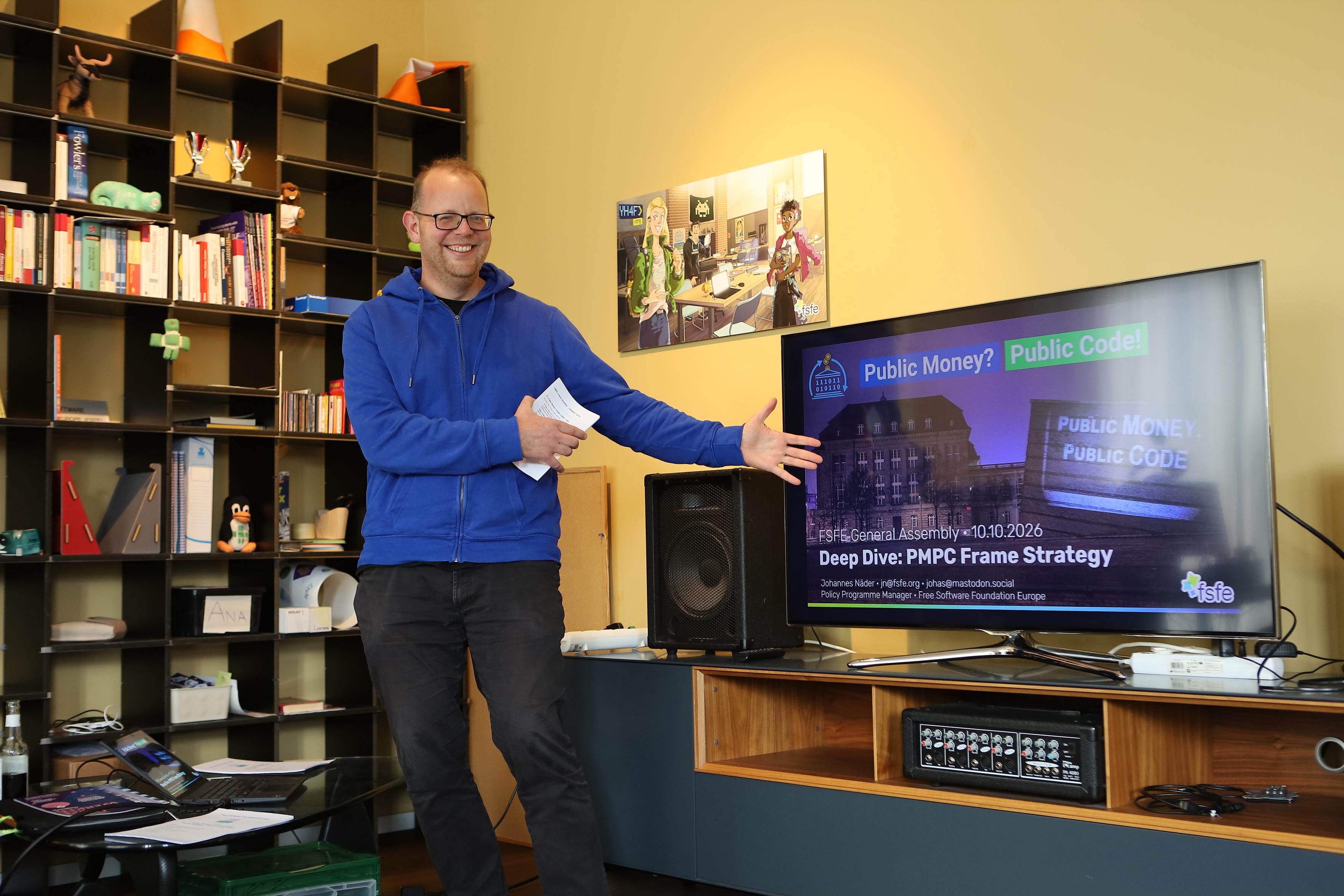
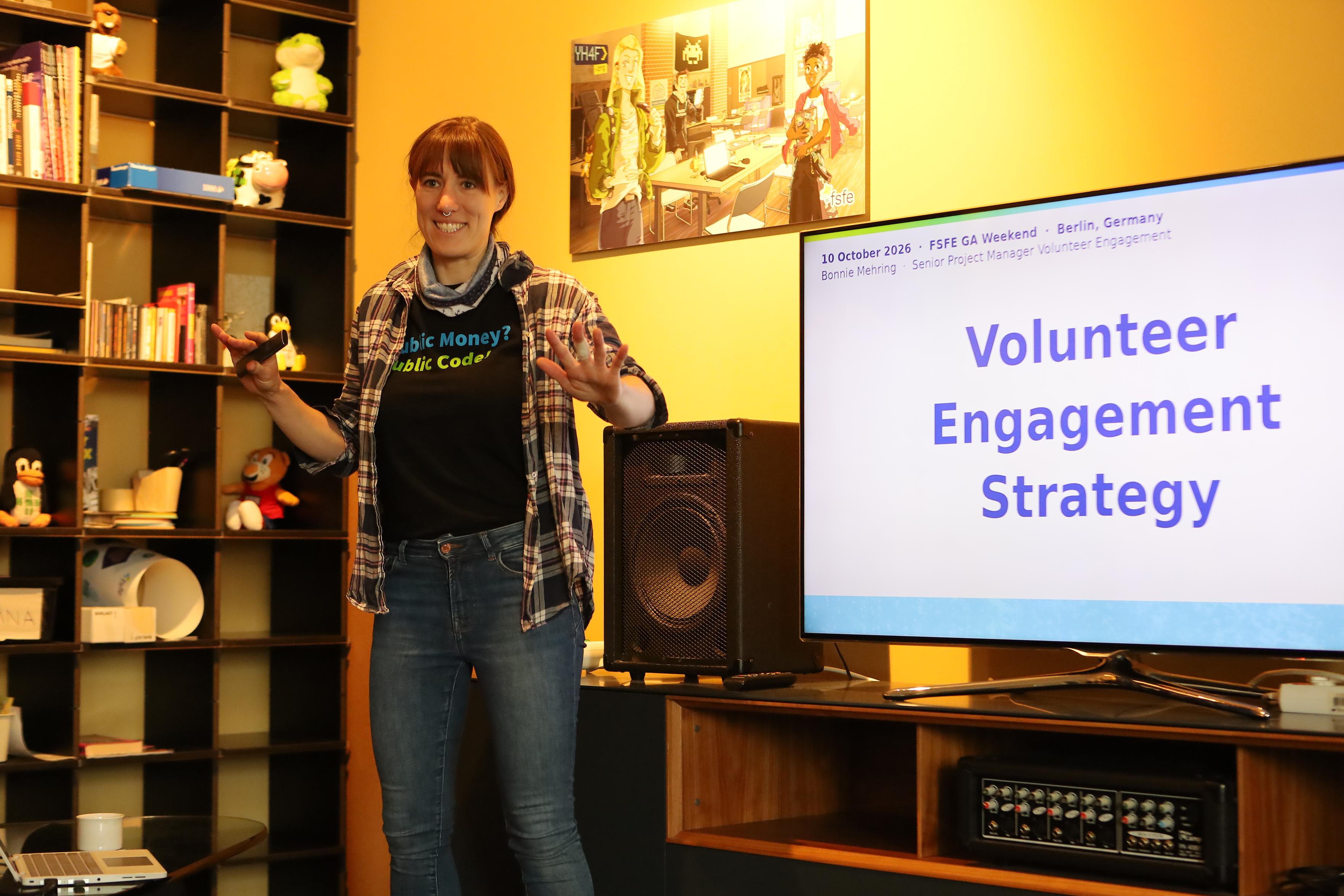
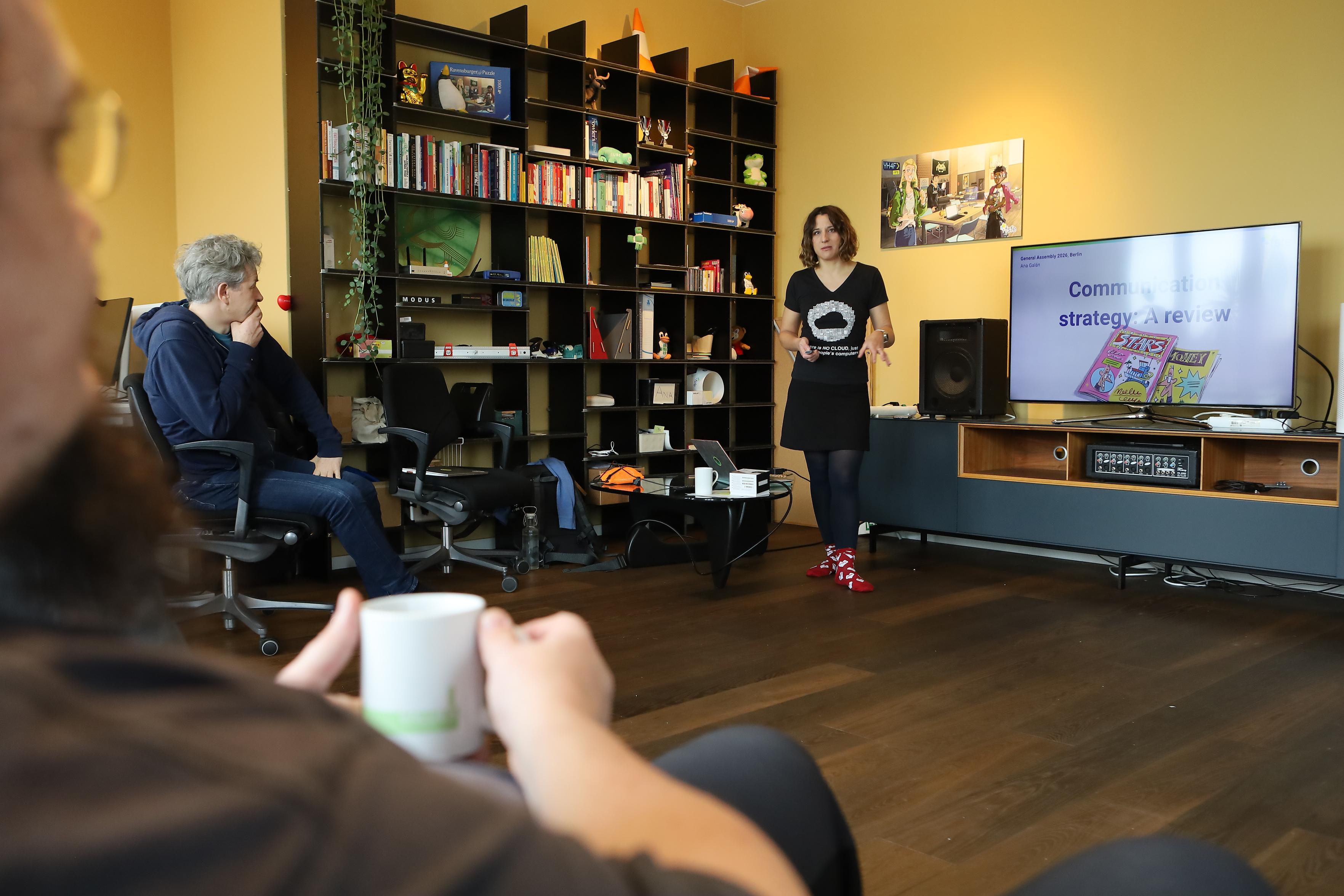
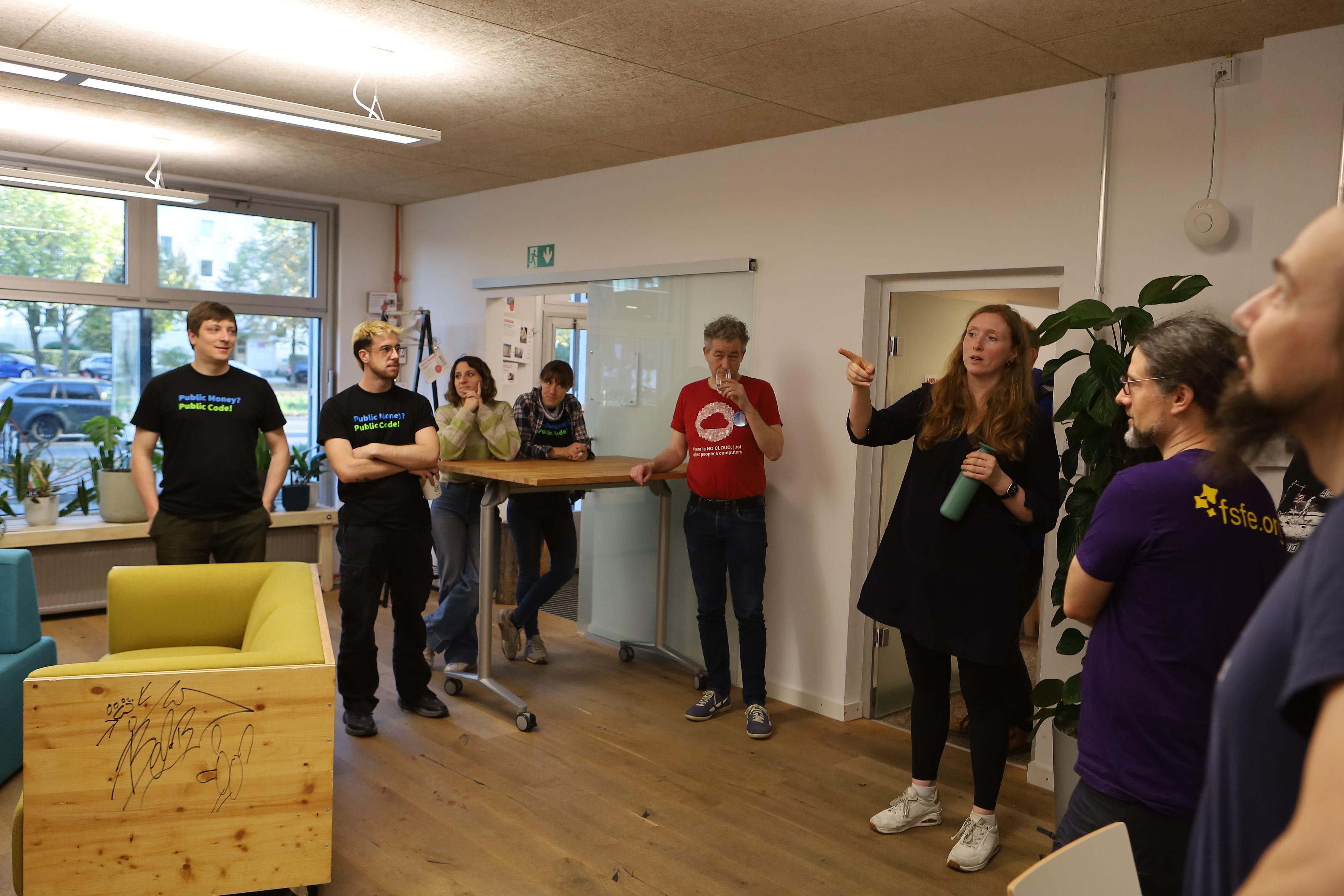
Just received some pictures from @nicorikken from our @fsfe strategy weekend with some sessions about Public Money, #PublicCode, volunteer engagement, communications, a visit at #C2C lab about the relation of #C2C and #softwarefreedom https://c2c-lab.org/ and lots of important discussions. Big thanks to everyone from @fsfe who helped this weekend to ensure we continue to empower users to control technology!
Alt...
One person pointing to a screen which has a slide about "public money? public code!"
Alt...
Person next to screen that says volunteer engagement.
Alt...
Person in room with others listening about communication strategy.
Alt...
Several people in room with C2C products listing to one of the persons.
![[?]](https://hostux.social/system/accounts/avatars/000/194/506/original/49ba2d821222d160.png)
A #ThankGNU! to Antonio Carzaniga and Holger Weisbrodt for helping the FSF to promote #FreeSoftware. To see a longer list of those who have helped us financially in our advocacy for #SoftwareFreedom and awareness, visit: https://u.fsf.org/4ao
Alt...
Image that says 'Thank GNU' with a GNU head by Vijay Kumar Bagavath Singh
A #ThankGNU! to Uday Kale and Wade Cline for helping the FSF to promote #FreeSoftware. To see a longer list of those who have helped us financially in our advocacy for #SoftwareFreedom and awareness, visit: https://u.fsf.org/4ao
Alt...
Image that says 'Thank GNU' with a GNU head by Vijay Kumar Bagavath Singh
A #ThankGNU! to Dwayne Dever, and John Wheeler for helping the FSF to promote #FreeSoftware. To see a longer list of those who have helped us financially in our advocacy for #SoftwareFreedom and awareness, visit: https://u.fsf.org/4ao
Alt...
Image that says 'Thank GNU' with a GNU head by Vijay Kumar Bagavath Singh
A #ThankGNU! to David Combs and David Lecompte for helping the FSF to promote #FreeSoftware. To see a longer list of those who have helped us financially in our advocacy for #SoftwareFreedom and awareness, visit: https://u.fsf.org/4ao
Alt...
Image that says 'Thank GNU' with a GNU head by Vijay Kumar Bagavath Singh
![[?]](https://files.mastodon.social/accounts/avatars/000/377/402/original/19edbd43c05a3fcc.png)
#SFSCON26 programme is out! 🚀
As usual the FSFE  will be there, with diverse talks, workshop and of course, Ada & #Zangemann !
Will we see you there?
#SoftwareFreedom #DigitalSovereignty
| Yes! I will be at SFSCON26: | 5 |
| No, but I hope to attend next time: | 24 |
Closed
🎂 Happy 25 years to us 😉. But specially to all our supporters since 2001.
Every achievement on our timeline happened because someone backed the work.
Take a look at what we have built together: https://fsfe.org/about/timeline/
#SoftwareFreedom
A #ThankGNU! to Andrew Comly and Casper Freksen for helping the FSF to promote #FreeSoftware. To see a longer list of those who have helped us financially in our advocacy for #SoftwareFreedom and awareness, visit: https://u.fsf.org/4ao
Alt...
Image that says 'Thank GNU' with a GNU head by Vijay Kumar Bagavath Singh
Software Freedom in Europe 2026! 🚀
All of you who support the #FSFE, all of you who contribute to #SoftwareFreedom or volunteer with the FSFE, you are amazing and we couldn't have done it without you🎉
In 2026 we celebrated 25 years FSFE, remained engaged in enforcing the #DMA, participated in policy debates like the #CRA to ensure that Free Software is safeguarded in the future, celebrated #ilovefs with 22 local celebrations across Europe...and much, much more
A #ThankGNU! to Christian Sperr and Donald Haase for helping the FSF to promote #FreeSoftware. To see a longer list of those who have helped us financially in our advocacy for #SoftwareFreedom and awareness, visit: https://u.fsf.org/4ao
Alt...
Image that says 'Thank GNU' with a GNU head by Vijay Kumar Bagavath Singh
A #ThankGNU! to Antoine Mercadal and Blue Systems for helping the FSF to promote #FreeSoftware. To see a longer list of those who have helped us financially in our advocacy for #SoftwareFreedom and awareness, visit: https://u.fsf.org/4ao
Alt...
Image that says 'Thank GNU' with a GNU head by Vijay Kumar Bagavath Singh
A #ThankGNU! to Uday Kale and Wade Cline for helping the FSF to promote #FreeSoftware. To see a longer list of those who have helped us financially in our advocacy for #SoftwareFreedom and awareness, visit: https://u.fsf.org/4ao
Alt...
Image that says 'Thank GNU' with a GNU head by Vijay Kumar Bagavath Singh
![[?]](https://star.octade.net/media/63a94df7-40e2-42d2-915d-5c141da33d4e.png)
The GNU license promotes itself as promoting 'free' software.
It positions millions of unpaid devs to work for free improving software that only the billionaire class is positioned to profit from using.
Sure everyone is free to use it. But only the rich or well-connected are free to profit from using it.
Permissive licenses solve this problem. With a permissive license you are not required to donate your code changes to your billionaire competition.
In short, 'free software' copyleft is marketing propaganda that benefits mainly the rich and those with connections. The little guy must give his improvements to the public 'billionaire class' without compensation. The little guy can't make any profitable, proprietary software from copyleft sources. The megacorp with its resources can get around this in sundry ways.
#FreeSoftware #OpenSource #FOSS #CopyLeft #Copyright #SoftwareFreedom
![[?]](https://cdn.fosstodon.org/accounts/avatars/108/998/922/888/845/166/original/4bb3b0980c8fe06a.png)
Congratulations on 43 years to the GNU Project!
#OpenSource #GNUProject #FSF #SoftwareFreedom #FOSS

Alt...
HAPPY BIRTHDAY! GNU Project | Linux Magazine & ADMIN
🎉 Parabéns, @ansol ! 🎂 🎊
25 years working to promote and to encourage the use of #FreeSoftware in Portugal!
Thanks for your great work during this last quarter-century on #SoftwareFreedom. For many more years collaborating together ! ✨
A #ThankGNU! to David Lecompte, Dwayne Dever, and John Wheeler for helping the FSF to promote #FreeSoftware. To see a longer list of those who have helped us financially in our advocacy for #SoftwareFreedom and awareness, visit: https://u.fsf.org/4ao
Alt...
Image that says 'Thank GNU' with a GNU head by Vijay Kumar Bagavath Singh
A #ThankGNU! to Casper Freksen and David Combs for helping the FSF to promote #FreeSoftware. To see a longer list of those who have helped us financially in our advocacy for #SoftwareFreedom and awareness, visit: https://u.fsf.org/4ao
Alt...
Image that says 'Thank GNU' with a GNU head by Vijay Kumar Bagavath Singh
A #ThankGNU! to Alessandro Selli and Andrew Comly for helping the FSF to promote #FreeSoftware. To see a longer list of those who have helped us financially in our advocacy for #SoftwareFreedom and awareness, visit: https://u.fsf.org/4ao
Alt...
Image that says 'Thank GNU' with a GNU head by Vijay Kumar Bagavath Singh
A #ThankGNU! to the 2A Foundation Inc. and the Rich Foundation for helping the FSF to promote #FreeSoftware. To see a longer list of those who have helped us financially in our advocacy for #SoftwareFreedom and awareness, visit: https://u.fsf.org/4ao
Alt...
Image that says 'Thank GNU' with a GNU head by Vijay Kumar Bagavath Singh
A #ThankGNU! to Nikola Knežević and Pete Batard for helping the FSF to promote #FreeSoftware. To see a longer list of those who have helped us financially in our advocacy for #SoftwareFreedom and awareness, visit: https://u.fsf.org/4ao
Alt...
Image that says 'Thank GNU' with a GNU head by Vijay Kumar Bagavath Singh
Today is Podcast Friday! 🎧
Our Software Freedom Podcast episode for September is out!
This time @annabonnie meets with @agger, the FSFE’s Danish Coordinator.
Together, they talk about the #FreeSoftware community in Denmark, digital sovereignty, and the growing interest in #FreeSoftware within the public sector.
A #ThankGNU! to Julie & Gerald Sussman and Michael Reed for helping the FSF to promote #FreeSoftware. To see a longer list of those who have helped us financially in our advocacy for #SoftwareFreedom and awareness, visit: https://u.fsf.org/4ao
Alt...
Image that says 'Thank GNU' with a GNU head by Vijay Kumar Bagavath Singh
A #ThankGNU! to Christian Sperr and Donald Haase for helping the FSF to promote #FreeSoftware. To see a longer list of those who have helped us financially in our advocacy for #SoftwareFreedom and awareness, visit: https://u.fsf.org/4ao
Alt...
Image that says 'Thank GNU' with a GNU head by Vijay Kumar Bagavath Singh
A #ThankGNU! to Antoine Mercadal and Blue Systems for helping the FSF to promote #FreeSoftware. To see a longer list of those who have helped us financially in our advocacy for #SoftwareFreedom and awareness, visit: https://u.fsf.org/4ao
Alt...
Image that says 'Thank GNU' with a GNU head by Vijay Kumar Bagavath Singh
A #ThankGNU! to Uday Kale and Wade Cline for helping the FSF to promote #FreeSoftware. To see a longer list of those who have helped us financially in our advocacy for #SoftwareFreedom and awareness, visit: https://u.fsf.org/4ao
Alt...
Image that says 'Thank GNU' with a GNU head by Vijay Kumar Bagavath Singh
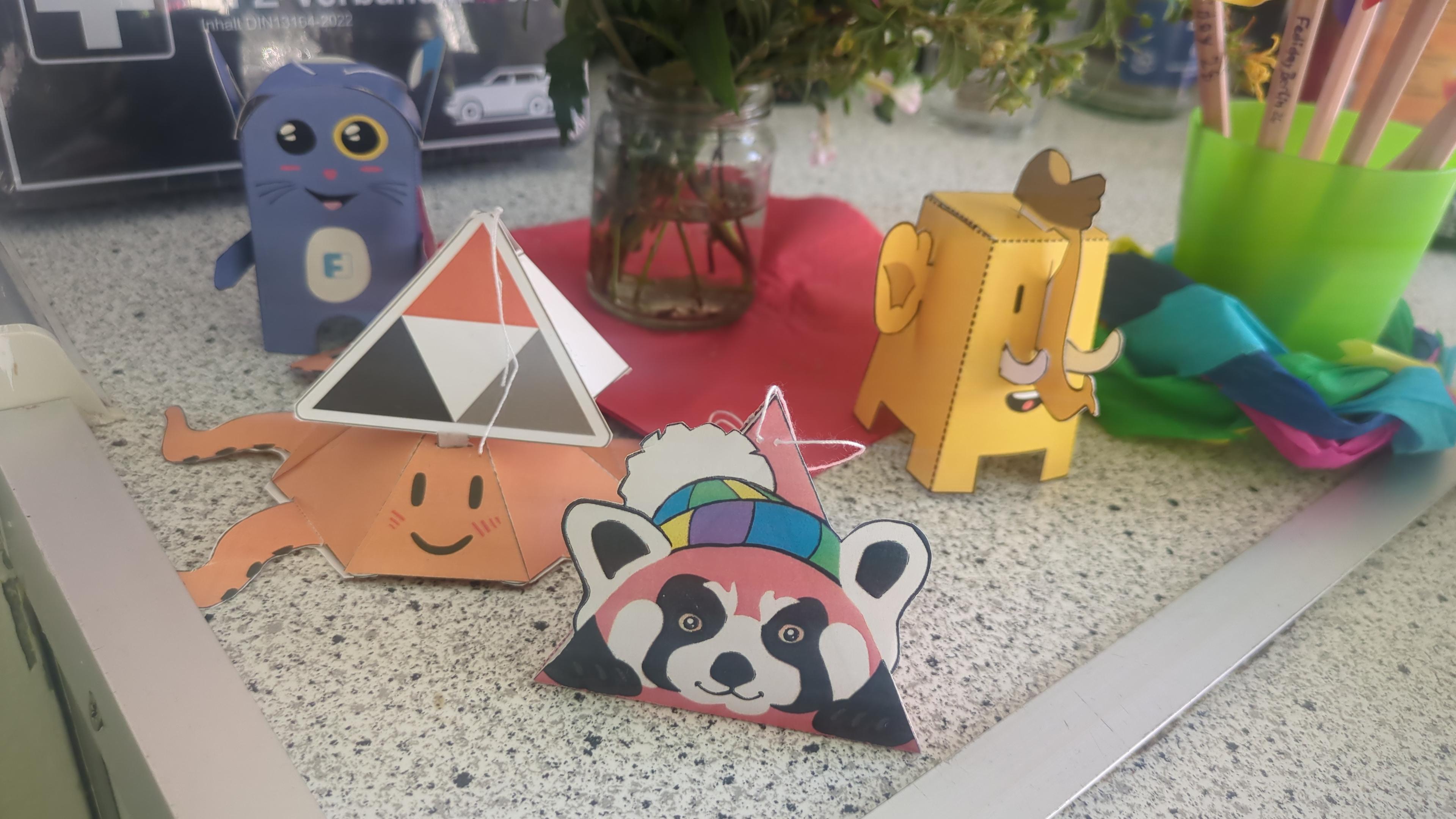
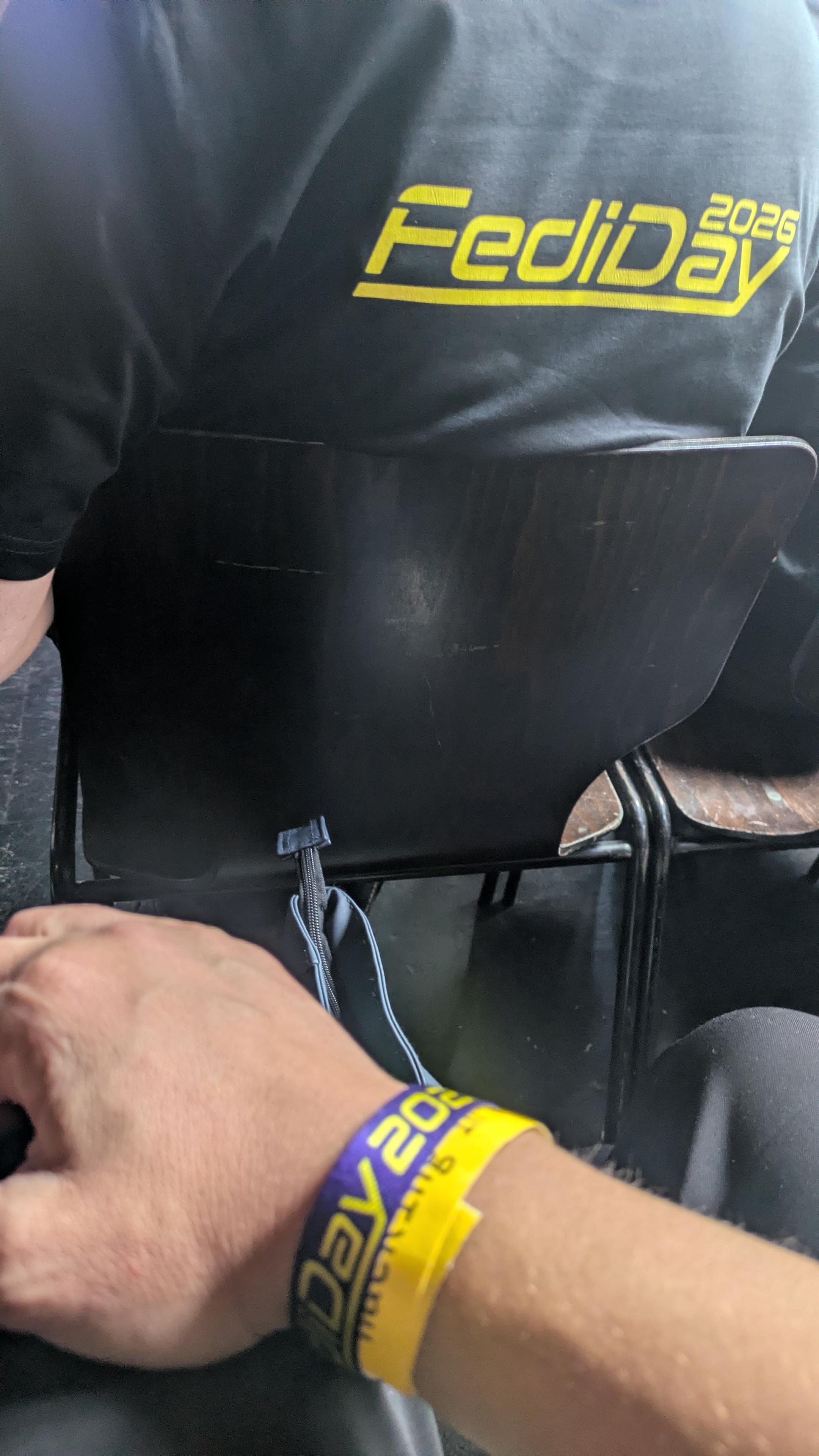
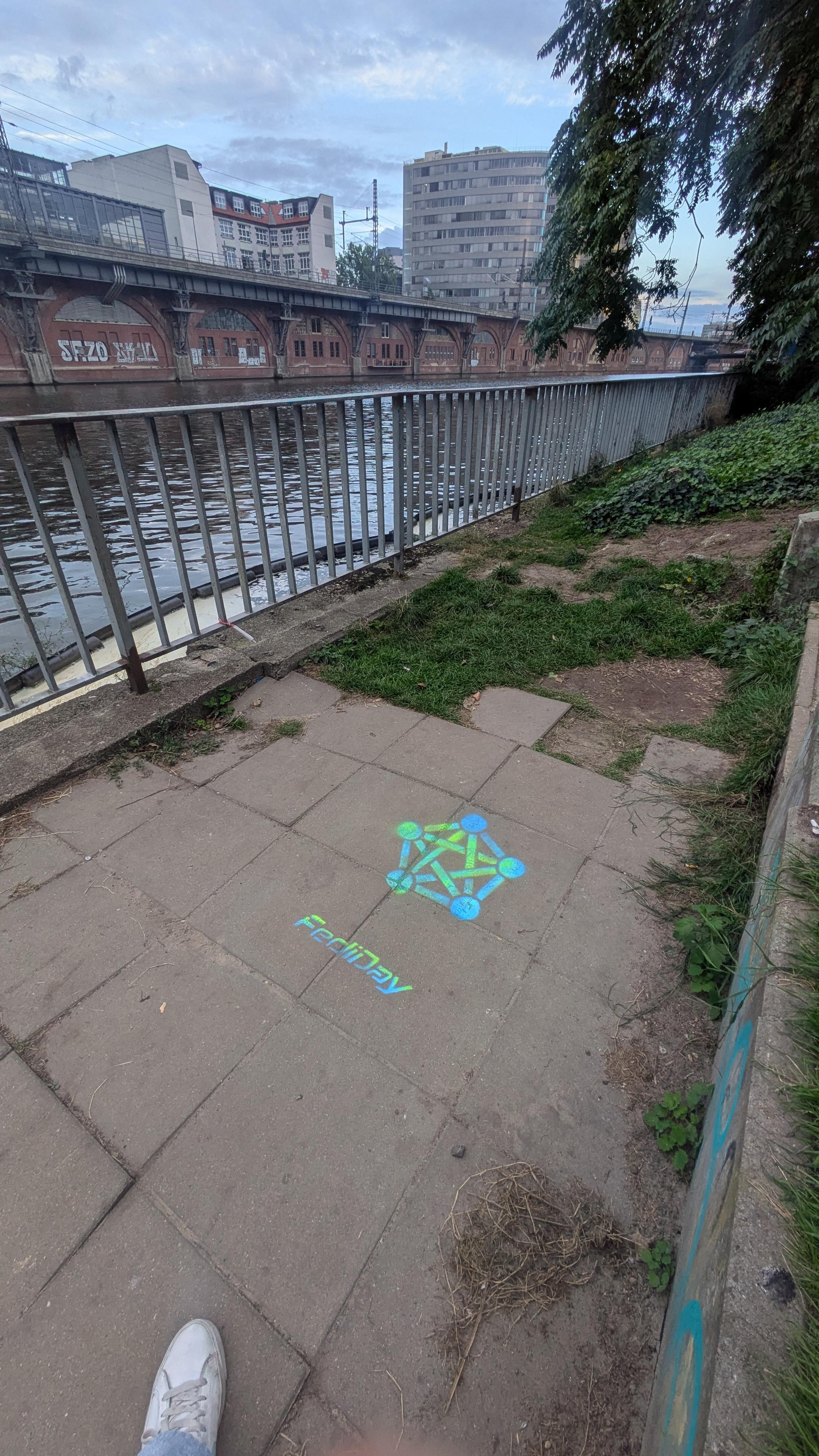
Thank you, #FediDay, for an amazing weekend!
We had a blast being part of it! We met some really interesting people, found out all the latest news about the #Fediverse, and had a great time!🫶
Kudos to all the organisers for a great event!🚀
Did you miss it? We will keep you update once the talk recordings are online 😉
Alt...
Origami fediverse mascots

A #ThankGNU! to David Lecompte, Dwayne Dever, and John Wheeler for helping the FSF to promote #FreeSoftware. To see a longer list of those who have helped us financially in our advocacy for #SoftwareFreedom and awareness, visit: https://u.fsf.org/4ao
Alt...
Image that says 'Thank GNU' with a GNU head by Vijay Kumar Bagavath Singh
A #ThankGNU! to Casper Freksen and David Combs for helping the FSF to promote #FreeSoftware. To see a longer list of those who have helped us financially in our advocacy for #SoftwareFreedom and awareness, visit: https://u.fsf.org/4ao
Alt...
Image that says 'Thank GNU' with a GNU head by Vijay Kumar Bagavath Singh
Fan of "Ada & Zangemann"? We have a 🎁 for you!
Get our #AdaZangemann stickers for Signal!
Download the pack, share it with your friends and let us know which is your favourite
A #ThankGNU! to Alessandro Selli and Andrew Comly for helping the FSF to promote #FreeSoftware. To see a longer list of those who have helped us financially in our advocacy for #SoftwareFreedom and awareness, visit: https://u.fsf.org/4ao
Alt...
Image that says 'Thank GNU' with a GNU head by Vijay Kumar Bagavath Singh
Our September newsletter is here 🗞️
🔸 Listen to our 54 episode of the Software Freedom Podcast where we talk about the the initiative “Keep Android Open”,
🔹 We started a series about each of the different Android distribution alternatives
and more! https://fsfe.org/news/nl/nl-202609.en.html
#FreeSoftware #DeviceNeutrality #FreeYourAnddroid #SoftwareFreedom
For 25 years, we have been working for #SoftwareFreedom so users can control their technology.
Check out what the has done, and help us write the next chapter together: https://fsfe.org/about/timeline/
A heartfelt ❤️ thank you to everyone who has been supporting our work since 2001
#FreeSoftware
A #ThankGNU! to Yon-Seo Kim and Zacchae Us for helping the FSF to promote #FreeSoftware. To see a longer list of those who have helped us financially in our advocacy for #SoftwareFreedom and awareness, visit: https://u.fsf.org/4ao
Alt...
Image that says 'Thank GNU' with a GNU head by Vijay Kumar Bagavath Singh
The EU 🇪🇺 spends ~€264 billion a year on IT, mostly proprietary, cementing exactly the vendor lock-in and dependencies.
Its Tech Sovereignty Package positions #FreeSoftware a "first" principle for the upcoming Cloud and AI Development Act #CADA. Now it needs to be binding, not just a suggestion.
"Redirecting even half of the money spent on proprietary lock-in to Free Software would boost European tech sovereignty"
#publiccode #SoftwareFreedom #DigitalSovereignty
A #ThankGNU! to Richard Zweiler, Steven Morrealle, and the Anonymous Fund of Triangle Community Foundation for helping the FSF to promote #FreeSoftware. To see a longer list of those who have helped us financially in our advocacy for #SoftwareFreedom and awareness, visit: https://u.fsf.org/4ao
Alt...
Image that says 'Thank GNU' with a GNU head by Vijay Kumar Bagavath Singh
A #ThankGNU! to Maks Romih and the Opus Qua Foundation for helping the FSF to promote #FreeSoftware. To see a longer list of those who have helped us financially in our advocacy for #SoftwareFreedom and awareness, visit: https://u.fsf.org/4ao
Alt...
Image that says 'Thank GNU' with a GNU head by Vijay Kumar Bagavath Singh
Is it also making you upset 😡 that the majority of laptops 💻 are only sold with a specific proprietary operating system: Microsoft Windows.
So as user, you must pay for it 💲, even if you do not want to use this OS.
This is unfair and we want to change it! Consumers should be able to buy laptops without any specific OS, and should not have to pay the license price if they don't want to.
Find out more ➡️ https://en.refund4freedom.org/
A #ThankGNU! to Deborah Jackson and Logan Edwards for helping the FSF to promote #FreeSoftware. To see a longer list of those who have helped us financially in our advocacy for #SoftwareFreedom and awareness, visit: https://u.fsf.org/4ao
Alt...
Image that says 'Thank GNU' with a GNU head by Vijay Kumar Bagavath Singh
A #ThankGNU! to Colin Carr and David Potter for helping the FSF to promote #FreeSoftware. To see a longer list of those who have helped us financially in our advocacy for #SoftwareFreedom and awareness, visit: https://u.fsf.org/4ao
Alt...
Image that says 'Thank GNU' with a GNU head by Vijay Kumar Bagavath Singh
A #ThankGNU! to Alain Greppin and Catalin Francu for helping the FSF to promote #FreeSoftware. To see a longer list of those who have helped us financially in our advocacy for #SoftwareFreedom and awareness, visit: https://u.fsf.org/4ao
Alt...
Image that says 'Thank GNU' with a GNU head by Vijay Kumar Bagavath Singh
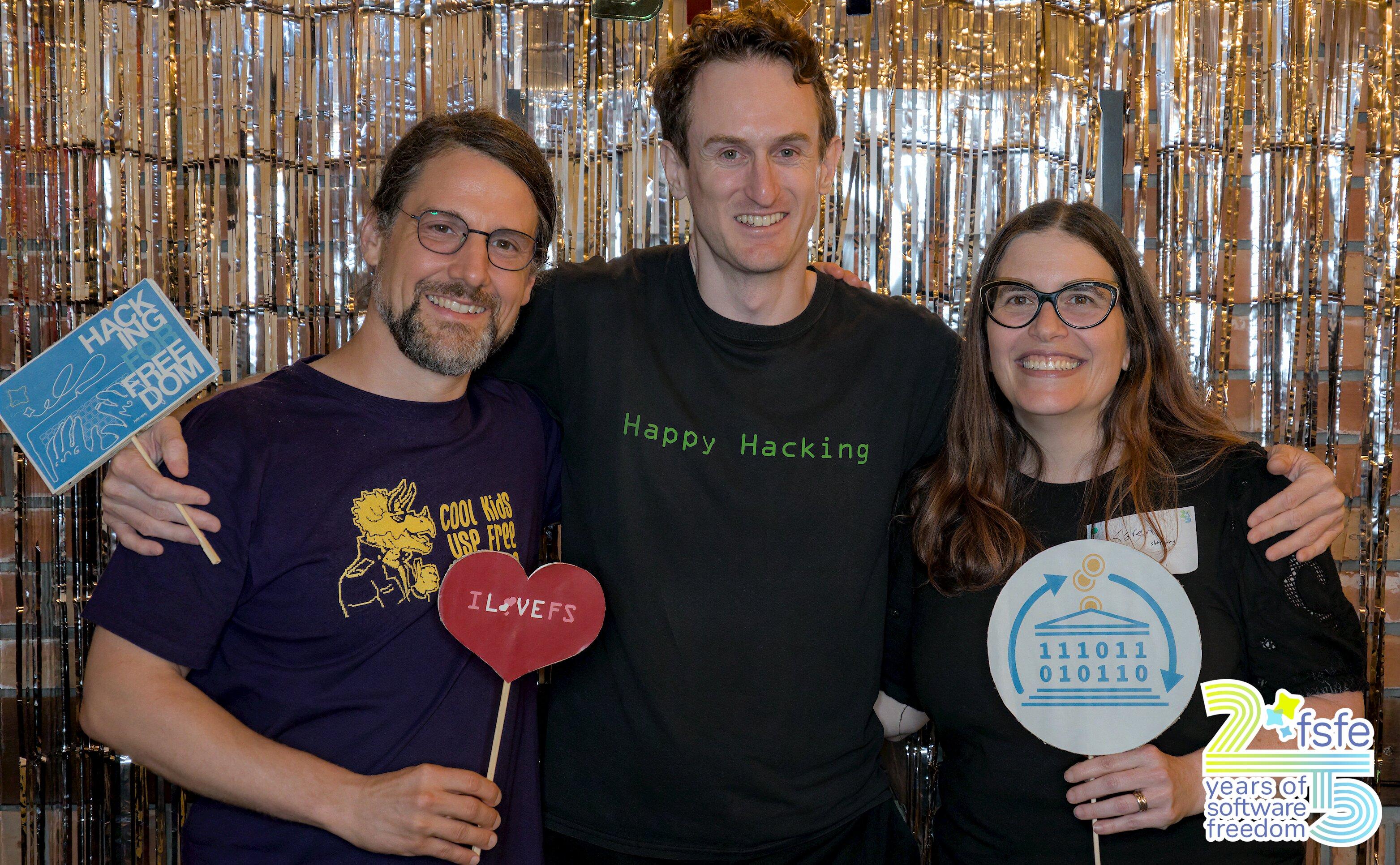
Had the time to check some pictures from #FSFE25 . Love this one from our photo booth with (from the right) @conservancy 's president @karen , @fsf 's president @iank and myself after a long day with presentations about #softwarefreedom. Thanks Karen and Ian for joining the @fsfe's contributors for #FSFE25.
Alt...
Three people with signs about hacking for freedom, ilovefs, pmpc, in front of a golden wall.
To our donors and supporters: THANK YOU. Full stop.
https://fsfe.org/donate/thankgnus-2026.en.html
You make this work possible, and we never take that for granted. Every euro counts.
Thanks to you, the FSFE has been defending #SoftwareFreedom for the past 25 years
With your help, we will keep doing it!
A #ThankGNU! to Michael Reed and FIXME for helping the FSF to promote #FreeSoftware. To see a longer list of those who have helped us financially in our advocacy for #SoftwareFreedom and awareness, visit: https://u.fsf.org/4ao
Alt...
Image that says 'Thank GNU' with a GNU head by Vijay Kumar Bagavath Singh
You should not have to pay for software you don't want. Devices like laptops should be neutral in relation to the software they run:
🔸 Do not restrict users to specific software.
🔹 Transparent pricing. Consumers should have the right to decline pre-installed software.
🔸 Hassle-free refunds. Manufacturers and vendors should clearly publish the steps for requesting and obtaining a refund on their websites.
A #ThankGNU! to Antoine Mercadal and The Rich Foundation for helping the FSF to promote #FreeSoftware. To see a longer list of those who have helped us financially in our advocacy for #SoftwareFreedom and awareness, visit: https://u.fsf.org/4ao
Alt...
Image that says 'Thank GNU' with a GNU head by Vijay Kumar Bagavath Singh
A #ThankGNU! to Blue Systems and Christian Sperr for helping the FSF to promote #FreeSoftware. To see a longer list of those who have helped us financially in our advocacy for #SoftwareFreedom and awareness, visit: https://u.fsf.org/4ao
Alt...
Image that says 'Thank GNU' with a GNU head by Vijay Kumar Bagavath Singh
A #ThankGNU! to Maks Romih and the Opus Qua Foundation for helping the FSF to promote #FreeSoftware. To see a longer list of those who have helped us financially in our advocacy for #SoftwareFreedom and awareness, visit: https://u.fsf.org/4ao
Alt...
Image that says 'Thank GNU' with a GNU head by Vijay Kumar Bagavath Singh
A #ThankGNU! to Julie & Gerald Sussman and Donald Haase for helping the FSF to promote #FreeSoftware. To see a longer list of those who have helped us financially in our advocacy for #SoftwareFreedom and awareness, visit: https://u.fsf.org/4ao
Alt...
Image that says 'Thank GNU' with a GNU head by Vijay Kumar Bagavath Singh
A #ThankGNU! to Nikola Knežević and Pete Batard for helping the FSF to promote #FreeSoftware. To see a longer list of those who have helped us financially in our advocacy for #SoftwareFreedom and awareness, visit: https://u.fsf.org/4ao
Alt...
Image that says 'Thank GNU' with a GNU head by Vijay Kumar Bagavath Singh
A #ThankGNU! to Julie & Gerald Sussman and Donald Haase for helping the FSF to promote #FreeSoftware. To see a longer list of those who have helped us financially in our advocacy for #SoftwareFreedom and awareness, visit: https://u.fsf.org/4ao
Alt...
Image that says 'Thank GNU' with a GNU head by Vijay Kumar Bagavath Singh
A #ThankGNU! to Yon-Seo Kim and Zacchae Us for helping the FSF to promote #FreeSoftware. To see a longer list of those who have helped us financially in our advocacy for #SoftwareFreedom and awareness, visit: https://u.fsf.org/4ao
Alt...
Image that says 'Thank GNU' with a GNU head by Vijay Kumar Bagavath Singh
A #ThankGNU! to Richard Zweiler, Steven Morrealle, and the Anonymous Fund of Triangle Community Foundation for helping the FSF to promote #FreeSoftware. To see a longer list of those who have helped us financially in our advocacy for #SoftwareFreedom and awareness, visit: https://u.fsf.org/4ao
Alt...
Image that says 'Thank GNU' with a GNU head by Vijay Kumar Bagavath Singh
A #ThankGNU! to Maks Romih and the Opus Qua Foundation for helping the FSF to promote #FreeSoftware. To see a longer list of those who have helped us financially in our advocacy for #SoftwareFreedom and awareness, visit: https://u.fsf.org/4ao
Alt...
Image that says 'Thank GNU' with a GNU head by Vijay Kumar Bagavath Singh
A #ThankGNU! to Deborah Jackson and Logan Edwards for helping the FSF to promote #FreeSoftware. To see a longer list of those who have helped us financially in our advocacy for #SoftwareFreedom and awareness, visit: https://u.fsf.org/4ao
Alt...
Image that says 'Thank GNU' with a GNU head by Vijay Kumar Bagavath Singh
A #ThankGNU! to Colin Carr and David Potter for helping the FSF to promote #FreeSoftware. To see a longer list of those who have helped us financially in our advocacy for #SoftwareFreedom and awareness, visit: https://u.fsf.org/4ao
Alt...
Image that says 'Thank GNU' with a GNU head by Vijay Kumar Bagavath Singh
🕰️ 25 years of defending #SoftwareFreedom isn't just a milestone. It's 25 years of real wins: policy changes, court cases, communities empowered to control their own technology....
None of that happened by accident. It happened because people supported our work
Find out what we have achieved since 2001! And help us keep going: https://fsfe.org/about/timeline/
#FreeSoftware
A #ThankGNU! to Alain Greppin and Catalin Francu for helping the FSF to promote #FreeSoftware. To see a longer list of those who have helped us financially in our advocacy for #SoftwareFreedom and awareness, visit: https://u.fsf.org/4ao
Alt...
Image that says 'Thank GNU' with a GNU head by Vijay Kumar Bagavath Singh
A #ThankGNU! to Howard Pan, Reynaldo Cordero, and Ron Hume for helping the FSF to promote #FreeSoftware. To see a longer list of those who have helped us financially in our advocacy for #SoftwareFreedom and awareness, visit: https://u.fsf.org/4ao
Alt...
Image that says 'Thank GNU' with a GNU head by Vijay Kumar Bagavath Singh
A #ThankGNU! to Arthur Gleckler and David Klann for helping the FSF to promote #FreeSoftware. To see a longer list of those who have helped us financially in our advocacy for #SoftwareFreedom and awareness, visit: https://u.fsf.org/4ao
Alt...
Image that says 'Thank GNU' with a GNU head by Vijay Kumar Bagavath Singh
A #ThankGNU! to Yon-Seo Kim and Zacchae Us for helping the FSF to promote #FreeSoftware. To see a longer list of those who have helped us financially in our advocacy for #SoftwareFreedom and awareness, visit: https://u.fsf.org/4ao
Alt...
Image that says 'Thank GNU' with a GNU head by Vijay Kumar Bagavath Singh
A #ThankGNU! to Richard Zweiler, Steven Morrealle, and the Anonymous Fund of Triangle Community Foundation for helping the FSF to promote #FreeSoftware. To see a longer list of those who have helped us financially in our advocacy for #SoftwareFreedom and awareness, visit: https://u.fsf.org/4ao
Alt...
Image that says 'Thank GNU' with a GNU head by Vijay Kumar Bagavath Singh
A #ThankGNU! to Maks Romih and the Opus Qua Foundation for helping the FSF to promote #FreeSoftware. To see a longer list of those who have helped us financially in our advocacy for #SoftwareFreedom and awareness, visit: https://u.fsf.org/4ao
Alt...
Image that says 'Thank GNU' with a GNU head by Vijay Kumar Bagavath Singh
![[?]](https://assets.chaos.social/accounts/avatars/109/111/720/734/303/859/original/0b0d77cf15f1795c.jpeg)
RE: https://slothrop.org/2026/07/20/what-software-freedom-means-today/
Please join me as I casually set fire to some venerable beliefs about software freedom.
Here's my talk from last weekend as a blog post.
A #ThankGNU! to Deborah Jackson and Logan Edwards for helping the FSF to promote #FreeSoftware. To see a longer list of those who have helped us financially in our advocacy for #SoftwareFreedom and awareness, visit: https://u.fsf.org/4ao
Alt...
Image that says 'Thank GNU' with a GNU head by Vijay Kumar Bagavath Singh
A #ThankGNU! to Colin Carr and David Potter for helping the FSF to promote #FreeSoftware. To see a longer list of those who have helped us financially in our advocacy for #SoftwareFreedom and awareness, visit: https://u.fsf.org/4ao
Alt...
Image that says 'Thank GNU' with a GNU head by Vijay Kumar Bagavath Singh
The FSFE turned 25 this year!! Hurrah for a quarter century promoting and defending #SoftwareFreedom 🙌
Check out our timeline with our key achievements since 2001: https://fsfe.org/about/timeline/
A #ThankGNU! to Alain Greppin and Catalin Francu for helping the FSF to promote #FreeSoftware. To see a longer list of those who have helped us financially in our advocacy for #SoftwareFreedom and awareness, visit: https://u.fsf.org/4ao
Alt...
Image that says 'Thank GNU' with a GNU head by Vijay Kumar Bagavath Singh
A #ThankGNU! to Howard Pan, Reynaldo Cordero, and Ron Hume for helping the FSF to promote #FreeSoftware. To see a longer list of those who have helped us financially in our advocacy for #SoftwareFreedom and awareness, visit: https://u.fsf.org/4ao
Alt...
Image that says 'Thank GNU' with a GNU head by Vijay Kumar Bagavath Singh
A #ThankGNU! to Arthur Gleckler and David Klann for helping the FSF to promote #FreeSoftware. To see a longer list of those who have helped us financially in our advocacy for #SoftwareFreedom and awareness, visit: https://u.fsf.org/4ao
Alt...
Image that says 'Thank GNU' with a GNU head by Vijay Kumar Bagavath Singh
Success for #softwarefreedom in @fsfe's intervention against #Apple in front of the European Court of Justice!! Big thank you to @llas who is coordinating the activity, our lawyer Martin Husovec, plus Jithendra, Dario, our interns Ben and Anna Rita, and the rest of the @fsfe team working on this!
A #ThankGNU! to Yon-Seo Kim and Zacchae Us for helping the FSF to promote #FreeSoftware. To see a longer list of those who have helped us financially in our advocacy for #SoftwareFreedom and awareness, visit: https://u.fsf.org/4ao
Alt...
Image that says 'Thank GNU' with a GNU head by Vijay Kumar Bagavath Singh
A #ThankGNU! to Richard Zweiler, Steven Morrealle, and the Anonymous Fund of Triangle Community Foundation for helping the FSF to promote #FreeSoftware. To see a longer list of those who have helped us financially in our advocacy for #SoftwareFreedom and awareness, visit: https://u.fsf.org/4ao
Alt...
Image that says 'Thank GNU' with a GNU head by Vijay Kumar Bagavath Singh
A #ThankGNU! to Maks Romih and the Opus Qua Foundation for helping the FSF to promote #FreeSoftware. To see a longer list of those who have helped us financially in our advocacy for #SoftwareFreedom and awareness, visit: https://u.fsf.org/4ao
Alt...
Image that says 'Thank GNU' with a GNU head by Vijay Kumar Bagavath Singh
A #ThankGNU! to Deborah Jackson and Logan Edwards for helping the FSF to promote #FreeSoftware. To see a longer list of those who have helped us financially in our advocacy for #SoftwareFreedom and awareness, visit: https://u.fsf.org/4ao
Alt...
Image that says 'Thank GNU' with a GNU head by Vijay Kumar Bagavath Singh
A #ThankGNU! to Colin Carr and David Potter for helping the FSF to promote #FreeSoftware. To see a longer list of those who have helped us financially in our advocacy for #SoftwareFreedom and awareness, visit: https://u.fsf.org/4ao
Alt...
Image that says 'Thank GNU' with a GNU head by Vijay Kumar Bagavath Singh
The campaigns team has been focused on the latest threats to #SoftwareFreedom and promoting digital rights around the globe: https://u.fsf.org/4bm #FSF #GNU
A #ThankGNU! to Alain Greppin and Catalin Francu for helping the FSF to promote #FreeSoftware. To see a longer list of those who have helped us financially in our advocacy for #SoftwareFreedom and awareness, visit: https://u.fsf.org/4ao
Alt...
Image that says 'Thank GNU' with a GNU head by Vijay Kumar Bagavath Singh
![[?]](https://social.sfconservancy.org/media/d77daa4d90338de56e46ed309fd51245fecc1dafaa8b50580a3a04c84b89da41.png)
Lodging options include both shared, dorm-style and private suites.
The block is available until End of Day Monday July 5th, Cancelable up to 72 hours before your reservation starts.
https://2026.fossy.ca/travel/
https://2026.fossy.ca/schedule/
#Vancouver #Canada #FOSS #OpenSource #FreeSoftware #SoftwareFreedom #FOSSY
A #ThankGNU! to Norm Gunn, Raffael Stocker, and Ryo Nakamura for helping the FSF to promote #FreeSoftware. To see a longer list of those who have helped us financially in our advocacy for #SoftwareFreedom and awareness, visit: https://u.fsf.org/4ao
Alt...
Image that says 'Thank GNU' with a GNU head by Vijay Kumar Bagavath Singh
A #ThankGNU! to Adam Oberbeck and Edward Flick for helping the FSF to promote #FreeSoftware. To see a longer list of those who have helped us financially in our advocacy for #SoftwareFreedom and awareness, visit: https://u.fsf.org/4ao
Alt...
Image that says 'Thank GNU' with a GNU head by Vijay Kumar Bagavath Singh
A #ThankGNU! to Howard Pan, Reynaldo Cordero, and Ron Hume for helping the FSF to promote #FreeSoftware. To see a longer list of those who have helped us financially in our advocacy for #SoftwareFreedom and awareness, visit: https://u.fsf.org/4ao
Alt...
Image that says 'Thank GNU' with a GNU head by Vijay Kumar Bagavath Singh
A #ThankGNU! to Arthur Gleckler and David Klann for helping the FSF to promote #FreeSoftware. To see a longer list of those who have helped us financially in our advocacy for #SoftwareFreedom and awareness, visit: https://u.fsf.org/4ao
Alt...
Image that says 'Thank GNU' with a GNU head by Vijay Kumar Bagavath Singh
A #ThankGNU! to the Sheila, Dave and Sherry Gold Foundation and Tom Benjamin Radtke for helping the FSF to promote #FreeSoftware. To see a longer list of those who have helped us financially in our advocacy for #SoftwareFreedom and awareness, visit: https://u.fsf.org/4ao
Alt...
Image that says 'Thank GNU' with a GNU head by Vijay Kumar Bagavath Singh
A #ThankGNU! to Norm Gunn, Raffael Stocker, and Ryo Nakamura for helping the FSF to promote #FreeSoftware. To see a longer list of those who have helped us financially in our advocacy for #SoftwareFreedom and awareness, visit: https://u.fsf.org/4ao
Alt...
Image that says 'Thank GNU' with a GNU head by Vijay Kumar Bagavath Singh
A #ThankGNU! to Adam Oberbeck and Edward Flick for helping the FSF to promote #FreeSoftware. To see a longer list of those who have helped us financially in our advocacy for #SoftwareFreedom and awareness, visit: https://u.fsf.org/4ao
Alt...
Image that says 'Thank GNU' with a GNU head by Vijay Kumar Bagavath Singh
A #ThankGNU! to Howard Pan, Reynaldo Cordero, and Ron Hume for helping the FSF to promote #FreeSoftware. To see a longer list of those who have helped us financially in our advocacy for #SoftwareFreedom and awareness, visit: https://u.fsf.org/4ao
Alt...
Image that says 'Thank GNU' with a GNU head by Vijay Kumar Bagavath Singh
A #ThankGNU! to Arthur Gleckler and David Klann for helping the FSF to promote #FreeSoftware. To see a longer list of those who have helped us financially in our advocacy for #SoftwareFreedom and awareness, visit: https://u.fsf.org/4ao
Alt...
Image that says 'Thank GNU' with a GNU head by Vijay Kumar Bagavath Singh
A #ThankGNU! to the Sheila, Dave and Sherry Gold Foundation and Tom Benjamin Radtke for helping the FSF to promote #FreeSoftware. To see a longer list of those who have helped us financially in our advocacy for #SoftwareFreedom and awareness, visit: https://u.fsf.org/4ao
Alt...
Image that says 'Thank GNU' with a GNU head by Vijay Kumar Bagavath Singh
A #ThankGNU! to Norm Gunn, Raffael Stocker, and Ryo Nakamura for helping the FSF to promote #FreeSoftware. To see a longer list of those who have helped us financially in our advocacy for #SoftwareFreedom and awareness, visit: https://u.fsf.org/4ao
Alt...
Image that says 'Thank GNU' with a GNU head by Vijay Kumar Bagavath Singh
A #ThankGNU! to Adam Oberbeck and Edward Flick for helping the FSF to promote #FreeSoftware. To see a longer list of those who have helped us financially in our advocacy for #SoftwareFreedom and awareness, visit: https://u.fsf.org/4ao
Alt...
Image that says 'Thank GNU' with a GNU head by Vijay Kumar Bagavath Singh
⚠️ The FSFE has submitted its position to the @EUCommission's Android interoperability consultation under the #DMA
The FSFE is calling for the following, among other things:
🔹 the right to fully uninstall AI-based features from Android devices,
🔸 and access to interoperability functions for developers free from #Google verification requirements
A #ThankGNU! to Arthur Gleckler and David Klann for helping the FSF to promote #FreeSoftware. To see a longer list of those who have helped us financially in our advocacy for #SoftwareFreedom and awareness, visit: https://u.fsf.org/4ao
Alt...
Image that says 'Thank GNU' with a GNU head by Vijay Kumar Bagavath Singh
A #ThankGNU! to the Sheila, Dave and Sherry Gold Foundation and Tom Benjamin Radtke for helping the FSF to promote #FreeSoftware. To see a longer list of those who have helped us financially in our advocacy for #SoftwareFreedom and awareness, visit: https://u.fsf.org/4ao
Alt...
Image that says 'Thank GNU' with a GNU head by Vijay Kumar Bagavath Singh
A #ThankGNU! to Norm Gunn, Raffael Stocker, and Ryo Nakamura for helping the FSF to promote #FreeSoftware. To see a longer list of those who have helped us financially in our advocacy for #SoftwareFreedom and awareness, visit: https://u.fsf.org/4ao
Alt...
Image that says 'Thank GNU' with a GNU head by Vijay Kumar Bagavath Singh
![[?]](https://soc.octade.net/octade/s/3f7f2b5eda4e392867c301c49c2daa16.png)
[3D Printer Laws aren't about guns]
[copypasta]
California AB 2047: The End of Open Source 3D Printing
California just introduced a bill that doesn't just regulate "ghost guns", it mandates a digital kill switch for every 3D printer sold. California AB 2047 requires "blocking technology" that connects your printer to a government-approved database before every single print. If the system goes down, or your file is flagged, your hardware becomes a paperweight.
This isn't just about firearms. This is the death of Open Source. If this bill passes, it effectively bans Marlin, Klipper, and Orca Slicer, forcing every manufacturer to lock down their firmware. It turns general-purpose computing into a walled garden where you only rent permission to use the hardware you own.
[/copypasta]
#OpenSource #RightToRepair #Privacy #Clippy #California #Monopolies #3dPrinters #3dPrinting #Technology #Government #Firearms #Guns #SoftwareFreedom #Surveillance #Panopticon #Lobbyists
All the donor-funded foundations ought to be fighting against and speaking out against this Orwellian garbage.
@eff@mastodon.social
@fsf@hostux.social
@linuxfoundation@social.lfx.dev
@privacyint@mastodon.xyz
@openssf@social.lfx.dev
@rms@mastodon.xyz
@CCIAnet@techpolicy.social
@WriterOfMinds@sigmoid.social
@SeaGL@mastodon.social
@hopeconf@mastodon.online
@w3c@w3c.social
@ACM@mastodon.acm.org
@irtf@discuss.systems
@osi@opensource.org
"While the [age verification] bill moved through the legislature, the OSI, FSF, Software Freedom Conservancy, and Linux Foundation all sat it out — no testimony, no public analysis, no formal opposition on the record."Are the adults listening?
California's computer age verification law is poison. The new California age verification law is a version of INGSOC's telescreen watching you. And the usual self-proclaimed software freedom fighters are AWOL as this attack on your freedom is executed.
Don't listen to apologists who claim this isn't a big deal. It is a huge deal. This law is not about protecting children. The California law is a ruse for laying the foundation and precedent for mandatory remote control of all operating systems. They are using children as a shield for their true intentions. It's called a 'subterfuge' or a 'pretext' to hide the real rationale. And in politics subterfuge is very common. These politicians don't care about your children. They care about control and information is control. Compliance with California's new law is highly corrosive to free software and deadly to personal privacy.
With the mandatory age verification API in place, legislators can later add more laws mandating retrieval of even more privacy-invasive information just to install and use any operating system. This is Big Brother's telescreen in your living room. And the Linux community is nearly silent on the matter, instead focused on artificial intelligence investment.
Where were the software freedom organizations when California was mandating installation of #spyware in all free and open source operating systems? Did they oppose it? Or did they support it by silence? The California age verification law is the greatest threat to software freedom in recent history., striking right at the root of software installation for all users. Yet (((crickets))).
Is silence really tacit support?
"While the [age verification] bill moved through the legislature, the OSI, FSF, Software Freedom Conservancy, and Linux Foundation all sat it out — no testimony, no public analysis, no formal opposition on the record."[https://boingboing.net/2026/03/02/californias-age-verification-law-could-regulate-every-linux-command.html]
Where were they when this mandatory spyware infrastructure was being shoved down our throats? Where were the self-proclaimed software freedom fighters? Where were the calls to action? I didn't see any.
Is silence golden ... or is gold buying silence?
Let these organizations know that you oppose California's age verification spyware law and that you expect them to rally in defense of true software freedom--freedom from government oversight of your software systems. Parents--and not the spyware state--should protect their children. The government is neither your parent nor your god nor your savior and the people should send a clear message stating that.
California, stay out of my operating system! And stay the hell away from children!
@eff@mastodon.social
@linuxfoundation@social.lfx.dev
@fsf@hostux.social
@osi@opensource.org
@conservancy@sfconservancy.org
#AgeVerification #Linux #EFF #OSI #LinuxFoundation #FSF #Privacy #Cybersecurity #Surveillance #Spyware #OpenSource #OperatingSystems #FreeSoftware #SoftwareFreedom #Panopticon #BigBrother #Government
CC: @laffer1@bsd.network @leo@twit.social @MichaelRoss@social.linux.pizza @rms@mastodon.xyz @thenewoil@mastodon.thenewoil.org @TechDesk@flipboard.social @remixtures@tldr.nettime.org

Alt...
A crowd of sillouettes of people stands in front of a giant telescreen depicting a single giant eye watching them.
Software should empower users. Software should not abuse, spy on, or hobble users. This is SOFTWARE FREEDOM.
Some evil companies design software to wield power over users. This is SOFTWARE BONDAGE. It is analogous to literal bondage because the user is cornered, shackled or caged.
Some evil companies forcibly integrate user systems into the AI cloud panopticon so the system won't install or boot without the user being identified and tracked by the panopticon. This is SOFTWARE SLAVERY. It is analogous to literal slavery in that the user needs constant permission to use the system and can only use the system in a way that chiefly benefits the software slaver.
Some evil companies forcibly harvest user data and force users to store private data in compromising cloud settings where their privacy is violated and subject to even greater risk of violation. This is SOFTWARE RAPE. It is analagous to literal rape and denudes users of the privacy and security of their data.
When an evil company is doing evil with its software or hardware offerings these terms may be used to tell the truth about such evil actions.
#SoftwareFreedom #SoftwareBondage #SoftwareRape #SoftwareSlavery
SkiftOS : https://skiftos.org/
It's not a *NIX!
"skiftOS isn’t POSIX. It’s a fresh API and userland inspired by Plan 9, Haiku, and Fuchsia. Familiar ideas, different contracts."
Problem: the GPL is poison. It has polluted Linux and the Linux userland software so that only large corporations can afford to monetize it. BSD License or MIT License would be much better allowing small players to produce unique work without then being forced to share their source code with the AI hegemony racket.
#SkiftOS #Tech #Linux #OS #Plan9 #Haiku #Fuchsia #Computing #SoftwareFreedom #AIHegemony #GPL #License #BSD #MIT
