Search results for tag #peertopeer
![[?]](https://files.mastodon.social/accounts/avatars/115/967/890/192/375/774/original/79861f67f1d57c00.png)
"Web2 was built on rented infrastructure, and the rent has gone up for thirty years"
- Reality Network @therealitynetwor
https://mastodon.social/@therealitynetwork/117314816416801901
#Computing #Computers #Quote #Quotes #Blockchain #Transactions #Small #Infrastructure #Distributed #P2P #Peer2Peer #PeerToPeer
![[?]](https://media.infosec.exchange/infosec.exchange/accounts/avatars/113/247/756/313/164/165/original/70ea71b3dff2cf65.jpg)

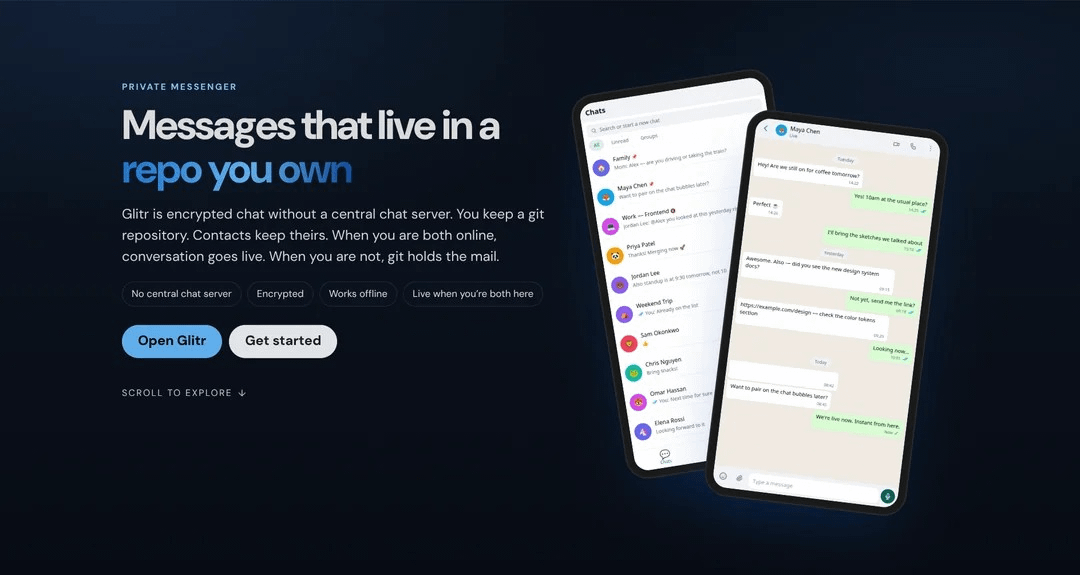
Secure and Private Decentralized P2P Encrypted Messaging over Git and WebRTC
This project demonstates a unique approach to secure messaging. The approach is different enough that it can't be easily compared to Signal or SimpleX.
The core philosophy around secure messaging here is that it can work in a way that avoids installation and registration by enabling users to host their own data.
The project is far from finished, but im putting together some docs for the "how it works". It's pretty outside-the-box thinking (and that doesnt make it a good idea), so it would be great if you could share your thoughts on the approach.
Website: Glitr.io
Features:
WebApp
P2P / WebRTC
Local-first / Local-only
No installation
TURN server
Encrypted-at-rest
Signal protocol
Post Quantum cryptography
Video calls
TOR / anonymous via Git
Serverless over WebRTC
#Privacy #OnlinePrivacy #DataPrivacy #Infosec #CyberSecurity #OpSec #DigitalRights #AntiSurveillance #DataOwnership #E2EE #P2P #PeerToPeer #WebRTC #LocalFirst #LocalOnly #NoCloud #NoRegistration #PWA #SignalProtocol #PostQuantum #Cryptography #SecureMessaging #PrivateChat #EncryptedChat #Decentralized #SelfHosted #BuildInPublic #IndieDev #DevCommunity
Alt...
Glitr.io
Decentralized browser-based P2P E2EE messaging.
The key detail that sets this apart from other messaging apps is the browser-based client-side cryptography philosophy.
No need to install anything. Your ID is crypto-random and so the app doesnt need to rely on any central registration system like phone numbers. Your ID is unguessable and to connect to someone, you have to explicitly share it.
WebRTC has other nuances like being to route through a shared network for secure/faster transfer.
I hope this project has reached a level i can share the following details. I've made a genuine effort towards documentation and transparancy. I dont think it'll ever be enough and so im still concerned it isnt ready to share. While im using AI throughout. This is not a vibecoded project. There is attention throughout for unit tests and formal-verification. With your feedback, id like to make improvements for clarity throughout.
This version of the app demonstrates a fairly unique approach using a browser-based, local-only and webrtc approach. I know it's impossible for any system to be the "world's most secure", but that isnt a reason to not try. By rigorously implementing an exhaustive list of security features and practices, the aim is to get as close as possible.
* [Enkrypted.Chat](https://enkrypted.chat/)
This is intended to demonstrate client-side managed secure cryptography.
* [Introducing Enkrypted Chat](https://positive-intentions.com/blog/introducing-enkrypted-chat)
* [Whitepaper (work-in-progress)](https://positive-intentions.com/docs/technical/whitepaper/complete-whitepaper)
* [Protocol Spec (work-in-progress)](https://positive-intentions.com/docs/technical/whitepaper/complete-protocol-spec)
* [Roadmap](https://positive-intentions.com/docs/technical/p2p-messaging-technical-breakdown/)
I know ive tried to compress a lot of my journey into one post. The project above is going to be tricky to understand. Feel free to reach out for clarity on any of the details.
IMPORTANT: While this is aiming to provide a secure experience, It is [not audited or reviewed](https://www.reddit.com/r/CyberSecurityAdvice/comments/1su8lir/security_audit_feedback_from_radically_open/). **Shared for testing, feedback and demo purposes only.** Please use responsibly.
#Privacy #OnlinePrivacy #DataPrivacy #Infosec #CyberSecurity #OpSec #DigitalRights #AntiSurveillance #DataOwnership #E2EE #P2P #PeerToPeer #WebRTC #LocalFirst #LocalOnly #NoCloud #NoRegistration #PWA #SignalProtocol #PostQuantum #Cryptography #SecureMessaging #PrivateChat #EncryptedChat #Decentralized #OpenSource #SelfHosted #BetaTesting #FeedbackWelcome #TechDemo #ProofOfConcept #BuildInPublic #IndieDev #DevCommunity
Anyone used #RetroShare / @xeres before ?
#P2P #Share #Files #retro #Email #messages directly #PeerToPeer #Encrypted #Decentralised ( etc )
![[?]](https://media.pan.rent/accounts/avatars/109/393/497/952/657/874/original/85e81972a2e5d815.jpeg)
The future of p2p is NOW (and here, with this people)
Aw it’s happening for real
@gwil @adz @cwebber @matthew @dholms.at
Alt...
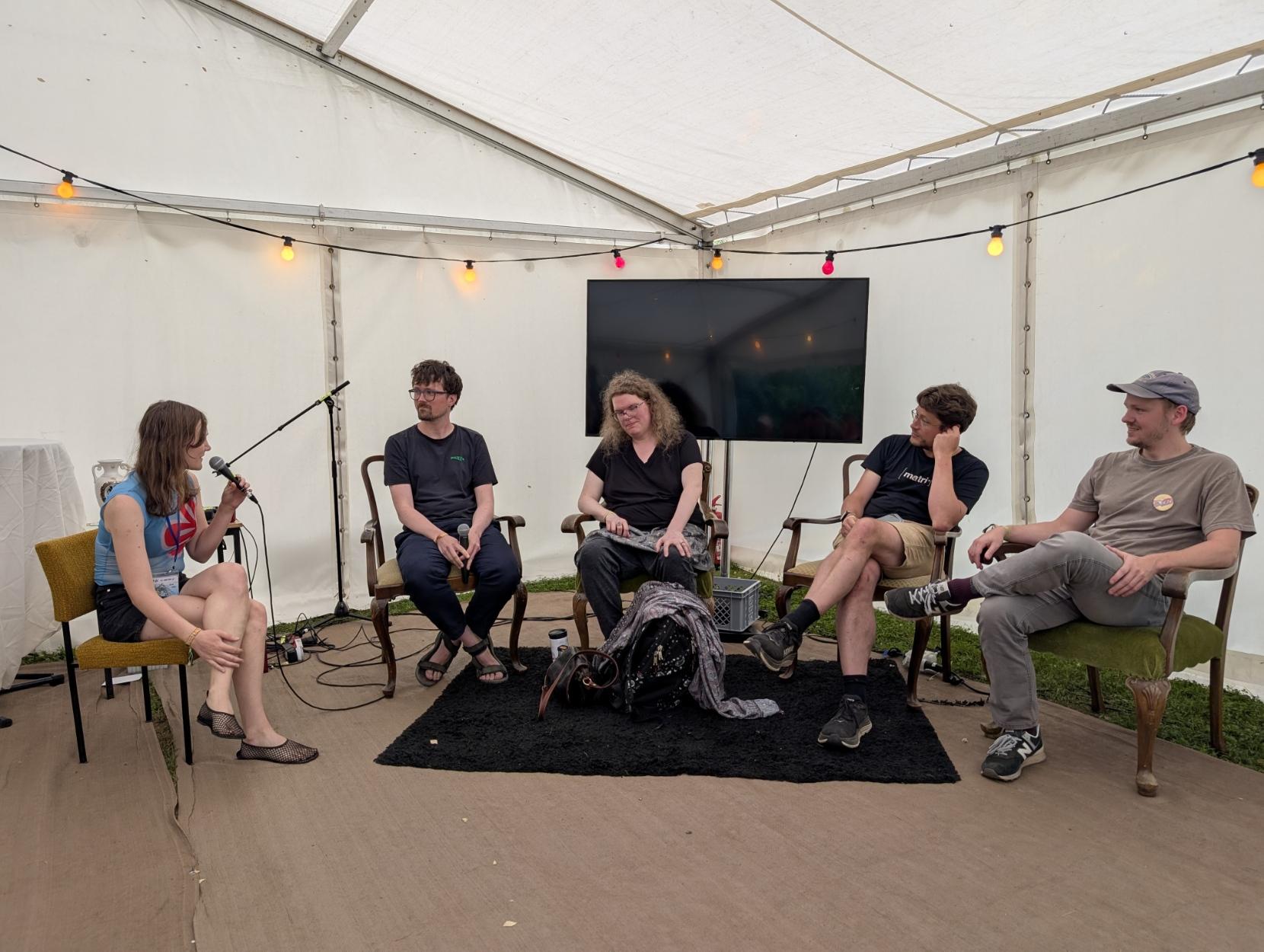
People sitting in a panel. From the left: Sammy, Andreas, Christine, Matthew, Daniel.
I'd like to share the latest version of my project.
It's a a decentralised P2P messaging app. The aim is of course privacy and security.
It demonstrates a fairly unique approach by using browser-based local-only storage with webrtc.
https://www.reddit.com/r/positive_intentions/comments/1tq1u62/introducing_enkrypted_chat
---
#Privacy #OnlinePrivacy #DataPrivacy #Infosec #CyberSecurity #OpSec #DigitalRights #AntiSurveillance #DataOwnership #E2EE #P2P #PeerToPeer #WebRTC #LocalFirst #LocalOnly #NoCloud #NoRegistration #PWA #SignalProtocol #PostQuantum #Cryptography #SecureMessaging #PrivateChat #EncryptedChat #Decentralized #OpenSource #SelfHosted #BetaTesting #FeedbackWelcome #TechDemo #ProofOfConcept #BuildInPublic #IndieDev #DevCommunity
Alt...
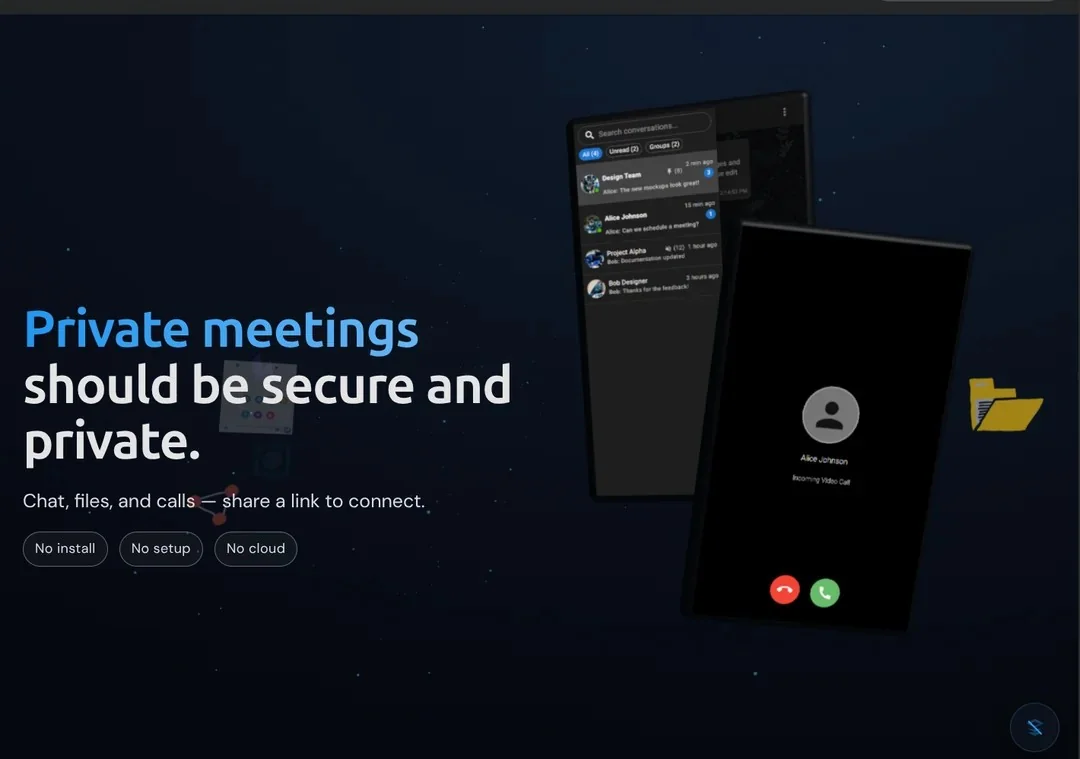
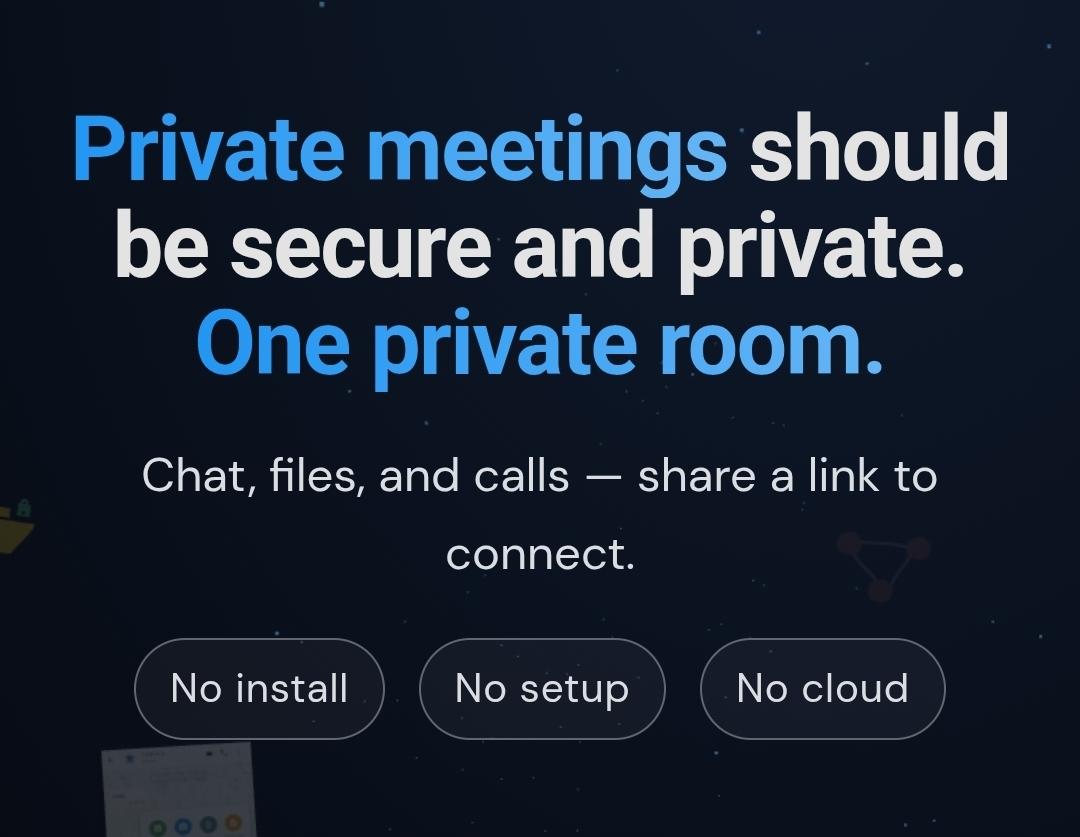
Private meetings should be secure and private.
![[?]](https://social-coop-media.ams3.cdn.digitaloceanspaces.com/accounts/avatars/109/343/918/884/307/788/original/cbfd544945f4e4de.jpg)
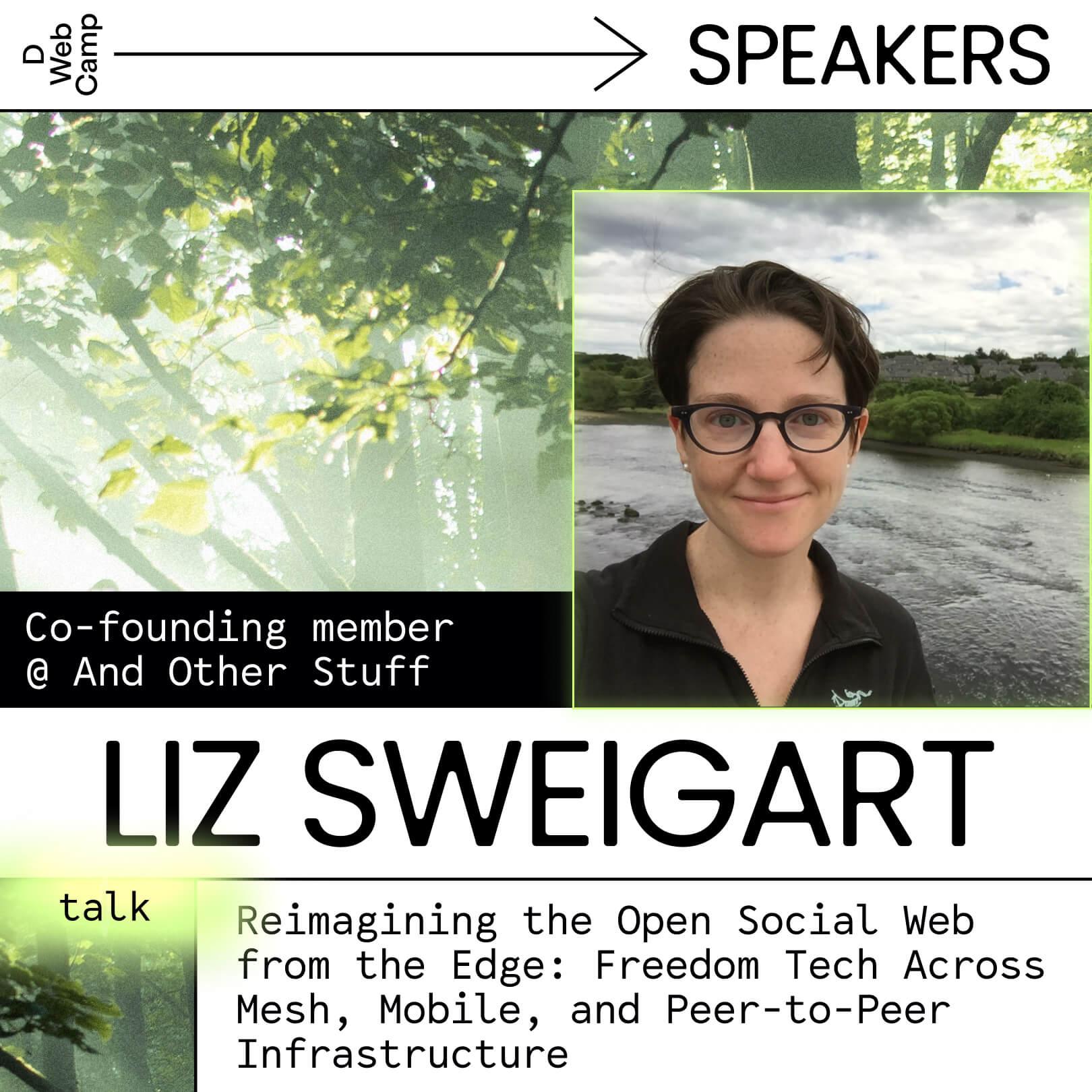
💡 Liz Sweigart is coming to DWeb Camp with a vision: “Reimagining the Open Social Web from the Edge: Freedom Tech Across Mesh, Mobile, and Peer-to-Peer Infrastructure”
https://talx.dod.ngo/dwebcamp-2026/talk/C9YZLT/
➡️ Full schedule here: https://dwebcamp.org/schedule
#DWeb #DWebCamp #talk #p2p #peertopeer #OSW #OpenSocialWeb #infrastructure #meshNetworks #infra #decentralization
Alt...
A graphic with a photo of Liz Sweigart and the title of her talk.
![[?]](https://media.social.qoto.org/accounts/avatars/001/918/718/original/145b9b42d9375783.jpg)
... [SENSITIVE CONTENT]
**First entry into RetroShare: how to find peers**
In RetroShare you don’t “find people” in the usual sense. You don’t search — you agree. This is a fundamental mindset shift; without it, the first launch will always feel empty.
The first thing to accept: there is no global lobby in RetroShare. The emptiness after installation is not a bug, but the honest state of a network without links. Until you have trusted contacts, you literally have no network.
**The basic method — out-of-band contact.**
Peers are found outside RetroShare. These are friends, colleagues, members of thematic communities, people from Matrix, XMPP, IRC, Mastodon, forums — any place where key exchange can happen safely. RetroShare does not start with a “search” button, but with the phrase: “here is my key.”
**The second path — a control peer.**
The most reliable way for first entry is a second instance you control, or a pre-arranged experimental partner. This removes uncertainty: if the connection fails, the issue is technical, not social.
**The third path — thematic islands.**
There are small RetroShare communities built around ideas: privacy, P2P, darknet research, offline activism. They are not widely advertised because the network is not designed for random influx. Entry always starts with dialogue, not a click.
**What does not work.**
Publishing keys into the void. Waiting for someone to add you. Relying on auto-discovery. This is centralized-network thinking applied to a system where it has no meaning.
**How to know you’ve found a peer.**
The contact comes online. The connection stabilizes. Services start working: chat, forums, file exchange. At that point RetroShare stops being an abstraction and becomes an environment for communication.
**Bottom line:**
in RetroShare, people appear first —
and only then does the network emerge.
#RetroShare #P2P #Decentralization #Privacy #MeshNetworks #FOSS #CyberSecurity #DigitalRights #AnonymousNetworks #OfflineCommunication #KeyExchange #FediverseAdjacent #PeerToPeer #SecureComms #InternetArchitecture

![[?]](https://soc.octade.net/octade/s/3f7f2b5eda4e392867c301c49c2daa16.png)
Inform your friends and family about these tools.
#Briar ... https://briarproject.org
"Censorship-resistant peer-to-peer messaging that bypasses centralized servers. Connect via Bluetooth, Wi-Fi or Tor, with privacy built-in."
#Retroshare ... https://retroshare.cc
"Retroshare establish encrypted connections between you and your friends to create a network of computers, and provides various distributed services on top of it: forums, channels, chat, mail... Retroshare is fully decentralized, and designed to provide maximum security and anonymity to its users beyond direct friends. Retroshare is entirely free and open-source software. It is available on #Android, #Linux, #MacOS and #Windows. There are no hidden costs, no ads and no terms of service."
#RicochetRefresh ... https://www.ricochetrefresh.net
"Ricochet Refresh is an open-source project to allow private and anonymous instant messaging."
#OnionShare ... https://onionshare.org
"OnionShare is an open-source tool that lets you securely and anonymously share files, host websites, and chat with friends using the Tor network."
#DeltaChat ... https://delta.chat
"Delta Chat is a decentralized and secure messenger app."
#Bitmessage ... https://bitmessage.org
"Bitmessage is a P2P communications protocol used to send encrypted messages to another person or to many subscribers. It is decentralized and trustless, meaning that you need-not inherently trust any entities like root certificate authorities. It uses strong authentication which means that the sender of a message cannot be spoofed, and it aims to hide "non-content" data, like the sender and receiver of messages, from passive eavesdroppers like those running warrantless wiretapping programs."
#TorBrowser ... https://www.torproject.org/download
"Protect yourself against tracking, surveillance, and censorship."
"The Invisible Internet Project (I2P) is a fully encrypted private network layer. It protects your activity and location. Every day people use the network to connect with people without worry of being tracked or their data being collected. In some cases people rely on the network when they need to be discrete or are doing sensitive work."
#Hyphanet ... https://www.hyphanet.org/
"Hyphanet is peer-to-peer network for censorship-resistant and privacy-respecting publishing and communication. The original Freenet."
#BitChan ... https://github.com/813492291816/BitChan
"BitChan is a decentralized anonymous imageboard inspired by BitBoard and built on top of Bitmessage with Tor, I2P, and GnuPG."
#DarkMX ... https://darkmx.app
"DarkMX is a new decentralized communication app that utilizes Tor hidden services to allow you to easily have an anonymous, reliable, and censorship-resistant presence on the internet. You can chat. You can share files. You can search other people's files. You can keep a contact list and send private messages to your friends. You can create your own custom .onion site, available to anyone with a Tor Browser."
#Decentralized #TOR #AntiSurveillance #Anonymity #Anonymous #Privacy #Filesharing #Networking #Communication #P2P #F2F #PeerToPeer #Censorship #AntiCensorship #FreeSpeech
Building secure peer-to-peer messaging apps is tough, and it's even tougher to get people to switch from what they already use. I've noticed that a great user interface and an intuitive design often matter more to people than terms like cryptography or end-to-end encryption.
That's why I've started building a UI library to tackle this head-on! It's a work in progress, but the goal is to create a more welcoming and seamless experience for new users.
Check out the UI library here: https://ui.positive-intentions.com
And you can see a live demo of the UI in action here: https://glitr.positive-intentions.com
I'd love to hear your thoughts and feedback as I continue to shape it!
#PeerToPeer #SecureMessaging #P2P #UIUX #WebDevelopment #MaterialUI #ModuleFederation #DesignSystem #Cryptography #UI