Search results for tag #patents
![[?]](https://techpolicy-social.s3.bhs.io.cloud.ovh.net/accounts/avatars/109/671/942/557/361/210/original/1b5167789db8edfe.png)
Weak #patents can become powerful tools for abusive litigation. In Kahoot! v. Interstellar, CCIA and fellow trade associations are asking the Supreme Court to hear a case involving the inter partes review system Congress created to improve patent quality. Recent changes at the USPTO threaten to undermine that system and make it harder for innovators to defend against weak patents. 1/2
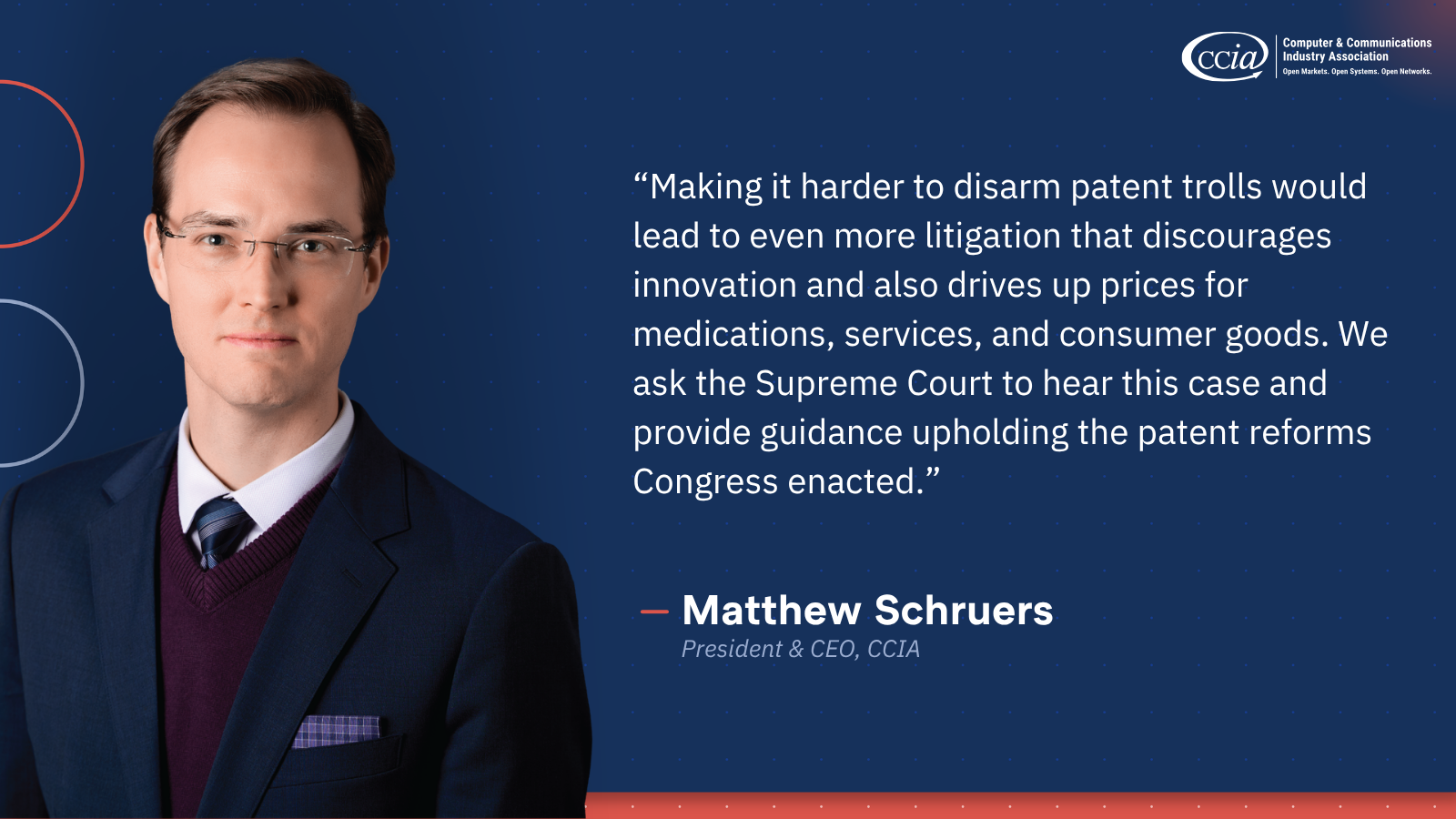
CCIA supports patent quality improvements in the USPTO examination process to encourage high-quality, clear patents and reduce ambiguous patents with overly broad claims. A working #PTAB is also vital to catch anything examiners missed. #Patents #AmericaInvents
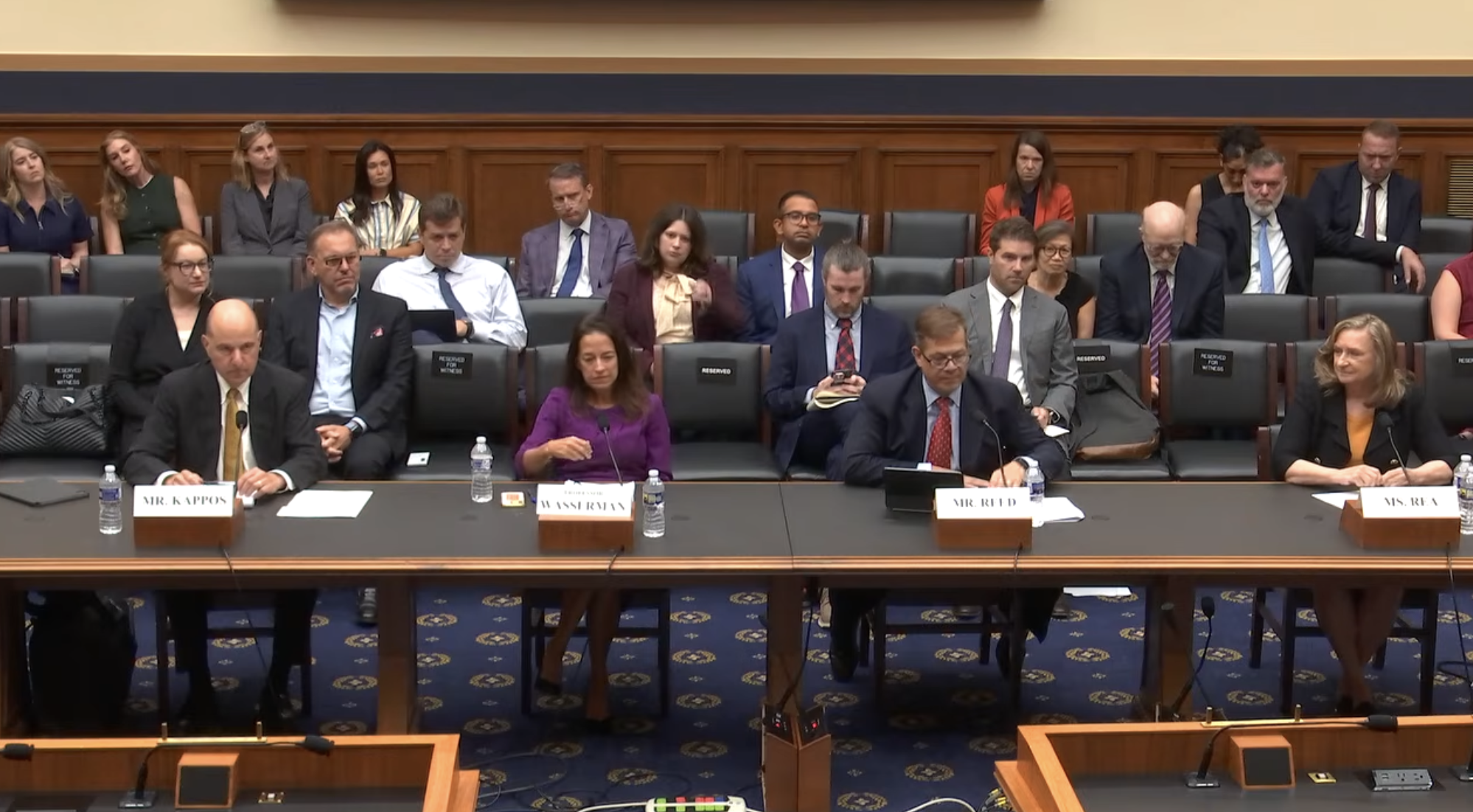
Today, the House Judiciary #IP Subcommittee is holding a hearing on the @USPTO Fee Setting Authority. CCIA supports USPTO accountability, including returning to implementing rather than undermining Congress’ mandates in the #AIA. Read more on CCIA’s view of patent policy: https://ccianet.org/advocacy/patents/ #Patents #AmericaInvents
As the U.S. marks its 250th anniversary, we should build on the institutions that made America the global #innovation leader, not weaken it. The evidence shows that Section 101 is delivering predictable, consistent patent outcomes, while protecting competition and rewarding real innovation. #Patents #America250th #IP
![[?]](https://soc.octade.net/octade/s/3f7f2b5eda4e392867c301c49c2daa16.png)
Short video: https://octade.net/urls/6000_patents.html
In 1998, Stanley Meyer claimed to invent a car that ran on water. Days later, he was dead—and his invention disappeared. But Meyer wasn't the only one. There’s a federal law, still active today, that allows the U.S. government to classify and bury private inventions deemed a “threat.” It's called the Invention Secrecy Act—and it's already been used over 6,000 times.
From Nikola Tesla’s wireless energy to Townsend Brown’s anti-gravity tech to Joseph Papp’s engine that ran on noble gases, history is littered with breakthrough inventors who vanished into obscurity... and whose technologies never made it to the public.
This episode uncovers the case studies, the hidden power of secrecy orders, and the chilling question: What else have they buried?
#patents #USPTO #inventions #inventors #secrecy #laws #Tesla #USGov #Government #NationalSecurity #GagOrders
@academicchatter@a.gup.pe @edutooters@a.gup.pe @infostorm@a.gup.pe