Search results for tag #os
![[?]](https://media.infosec.exchange/infosec.exchange/accounts/avatars/116/047/594/246/715/441/original/29cfa7a3eb440480.png)

Guys, for the sake of the story, PH4NTXM is the first Greek "hacking" distribution. Focused on security, privacy and op-sec.
If we have any Greek friends here around PH4NTXM, I'd love to put up some engagement!
#ph4ntxm #linux #debian #os #live #privacy #security #opsec #infosec #research #tech #technology
![[?]](https://cdn.fosstodon.org/accounts/avatars/108/998/922/888/845/166/original/4bb3b0980c8fe06a.png)
Linux is exempt from age verification requirement of California users as long as it is distributed under the GPL, MIT, BSD, and Apache licenses
https://www.linux-magazine.com/Online/News/Linux-Exempt-from-California-s-Age-Verification-Law?utm_source=mlm
#Linux #OS #AgeVerification #GPL #BSD #MIT #Apache

Alt...
Linux Magazine News
![[?]](https://mastodon.hawaga.org.uk/system/accounts/avatars/109/313/859/843/045/176/original/a3ecfb87d0ccf7aa.jpg)
Guys, MAJOR update for PH4NTXM...
I've been working long for this one, using all the technical knowledge can be found offline/online, with specialized tools, automations and more.
PH4NTXM now is on v2.0.0
A lot of things changed, from UI, to fail-closed mechanisms, and strict boot verification pilot.
Philosophy remained as always THE SAME.
It's a big step, cause we filled so many gaps, and automated things to be adaptive, like the purpose of the Operating System.
Go try it, build it, break it, repeat.
Thank you, as usual, PH4NTXM.
#ph4ntxm #linux #debian #os #live #privacy #security #opsec #infosec #research #tech #technology
![[?]](https://files.mastodon.social/accounts/avatars/115/967/890/192/375/774/original/79861f67f1d57c00.png)
Hello, I just pushed something new for users want extra privacy.
PH4NTXM AI LockGuard is a local AI-powered camera monitor for Linux.
It uses your webcam to detect whether you’re still present in front of your machine. If you leave or another person appears in the frame, it can automatically lock the session.
Everything runs locally. No cloud. No telemetry. No remote image processing.
Built for privacy, physical security, and people who want their workstation to lock itself when something looks wrong.
https://github.com/PH4NTXMOFFICIAL/PH4NTXM-AI-LOCKGUARD
#ph4ntxm #linux #debian #os #live #privacy #security #opsec #infosec #research #tech #technology
![[?]](https://stockage.framapiaf.org/framapiaf/accounts/avatars/000/089/837/original/01abbbdd418dd20c.png)
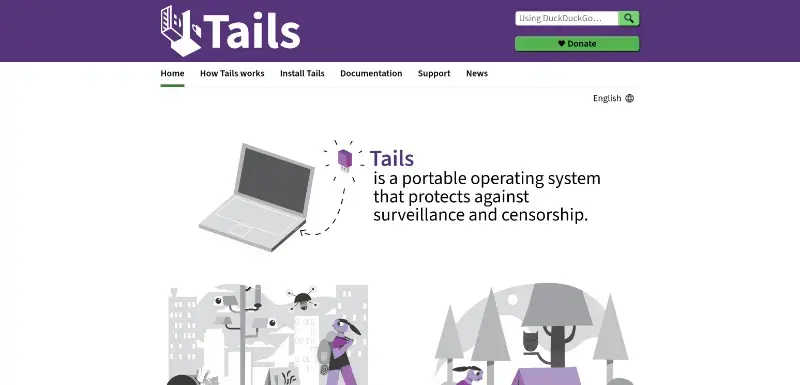
𝗧𝗮𝗶𝗹𝘀:
https://thewhale.cc/posts/tails
Tails is a portable operating system that protects against surveillance and censorship.
Alt...
Tails is a portable operating system that protects against surveillance and censorship.
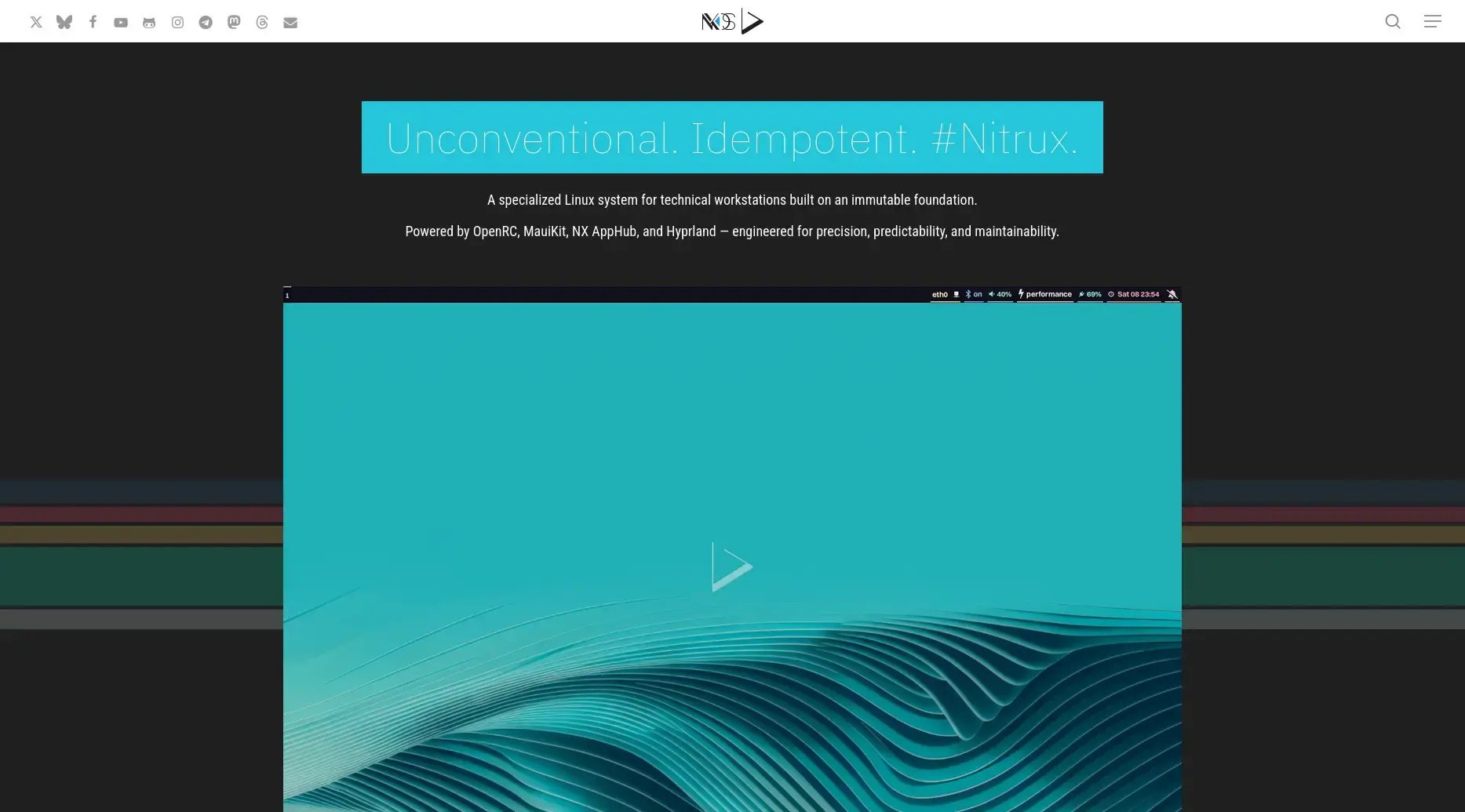
𝗡𝗶𝘁𝗿𝘂𝘅:
https://thewhale.cc/posts/nitrux
Nitrux is a Linux distribution based on Ubuntu suitable for laptops and desktop computers. Nitrux provides all the benefits of the Ubuntu operating system combined with a focus on portable, redistributable application formats like AppImages. Nitrux uses the LTS branch of Ubuntu as a basis using only the core system and then slowly building up to ensure a clean user experience.
Alt...
Nitrux is a Linux distribution based on Ubuntu suitable for laptops and desktop computers. Nitrux provides all the benefits of the Ubuntu operating system combined with a focus on portable, redistributable application formats like AppImages. Nitrux uses the LTS branch of Ubuntu as a basis using only the core system and then slowly building up to ensure a clean user experience.
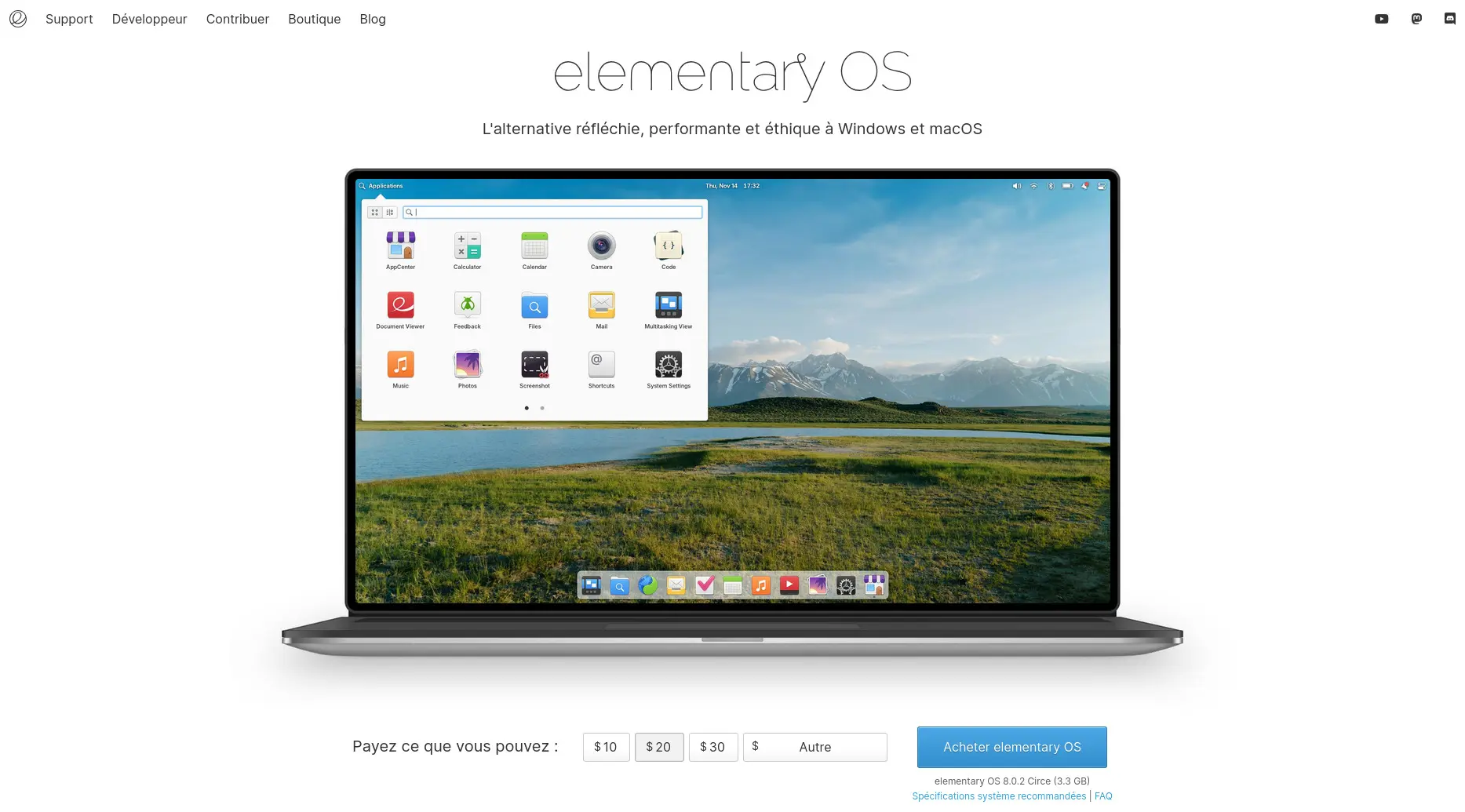
𝗘𝗹𝗲𝗺𝗲𝗻𝘁𝗮𝗿𝘆 𝗢𝗦:
https://thewhale.cc/posts/elementary-os
The fast, open, and privacy-respecting replacement for Windows and macOS.
Alt...
The fast, open, and privacy-respecting replacement for Windows and macOS.
![[?]](https://media.mathstodon.xyz/accounts/avatars/109/308/315/960/319/189/original/8bcb7021908599d9.jpeg)
The periodic between 1960s and 1990s was the Cambrian Explosion of #CPU architecture and #OS.
A single manufacturer, DEC, alone, had RSTS, TOPS-10, TOPS-20, RSX-11, VMS, Ultrix, OSF/1, and several other OSs I no longer recall. And DEC had a slew of different CPU architectures, and they each ran many other OSs made by various software companies. Also, there were loads of other hardware makers, large and small, each with a flock of different CPUs and a gaggle of different OSs.
In those days, we bitterly protested against this excess of “diversity”, on the grounds of software incompatibility, development impedance, and investment cost.
Finally, we now have that much-vaunted “uniformity” we always desired: Slackware Linux, Debian Linux, Fedora Linux, SUSE Linux, Gentoo Linux, Ubuntu Linux, Arch Linux, NixOS Linux, SELinux, …, @$&*#Linux, and they all run on the #x86.
😞 #progress 😖
These are some of the great textbooks to teach #UNIX #OS to #CS undies:
• V6, Lions
• SVR2, Bach
• MINIX3, Tanenbaum
• Xinu, Comer
• xv6 (V6 clone), Cox
But there is a space to create an even smaller, sleeker, simpler, study OS:
• Barebones 32-bit OS that runs on a cheap Cortex-M3 board (STM32 Blue Pill) or RISC-V board (ESP32-C6)
• Keep the code under 10k lines of C (or Ada, Rust, Zig, ...)
• Support only UNIX-like soft-realtime scheduling (no RTOS)
• Support user and kernel modes
• Multiplex the single-core CPU to multiple processes
• Map a handful of interrupts to signals
• Provide a subset of the POSIX API, just enough to run a simple I/O executable (button pushy/LED blinky) in multiple processes, simultaneously
• Single-user (root only) operation
• No security, accounting, etc.
• Shell on a terminal emulator, via a USB-TTL adapter
The goal is to create a smallest, simplest, bona fide OS for the cheapest ($0.99) hardware, so as to steer kids away from Scratch, MicroPython, Processing, and similar other harmful influences, during the early phase of their system #programming education.
To make explicit the implicit premise above, the marvellous Arduino teaches the kids to do the easy thing repeatedly, but a comparative-joke C64 forces the kids to do the right thing persistently.
It is infeasible to teach, in detail, the essentials of an OS (scheduling algorithms, process management, memory management, memory protection, authentication, authorisation, encryption, disc I/O, network I/O, graphics I/O, ...) in just one semester.
In contrast, the kids could master the above mentioned focused curriculum in just one semester, thereby gaining much confidence in system #programming.
![[?]](https://soc.octade.net/octade/s/3f7f2b5eda4e392867c301c49c2daa16.png)
SkiftOS : https://skiftos.org/
It's not a *NIX!
"skiftOS isn’t POSIX. It’s a fresh API and userland inspired by Plan 9, Haiku, and Fuchsia. Familiar ideas, different contracts."
Problem: the GPL is poison. It has polluted Linux and the Linux userland software so that only large corporations can afford to monetize it. BSD License or MIT License would be much better allowing small players to produce unique work without then being forced to share their source code with the AI hegemony racket.
#SkiftOS #Tech #Linux #OS #Plan9 #Haiku #Fuchsia #Computing #SoftwareFreedom #AIHegemony #GPL #License #BSD #MIT
