Search results for tag #openscience
 ✨ SPARQLing NPs all over ✨ » 🤖 🌐
@daily_lotus@mastodon.social
📣 Natural Product Occurrence of the Day
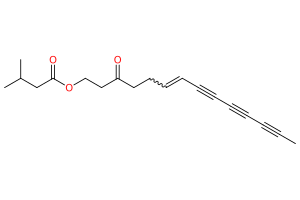
🧪 3-Oxotetradec-6-en-8,10,12-triynyl 3-methylbutanoate [https://www.wikidata.org/wiki/Q105308897] is a molecule
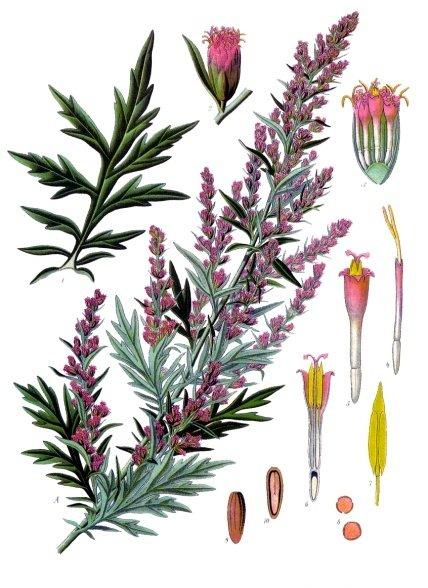
found in a 🌿 plant, Artemisia vulgaris [https://www.wikidata.org/wiki/Q26663]
📚 according to: [https://www.wikidata.org/wiki/Q104913434]
✏️ This occurrence is available for curation on Wikidata [https://www.wikidata.org/wiki/Q105308897#P703]. If you spot an error, feel free to improve it!
Alt...
Chemical structure of 3-Oxotetradec-6-en-8,10,12-triynyl 3-methylbutanoate displaying atoms and bonds.
Alt...
Image of Artemisia vulgaris, the taxon in which the compound is found.

A big step towards real #OpenScience: The Open Research Europe (ORE) platform was launched last week!
We already described what Open Research Europe is in our last Lib4RI-Update:
https://www.lib4ri.ch/newsletter#update_46
In fact, publishing at #ORE is a recommended new route under the upcoming #APC cap in SNF funding, effective from 01 Jan 2027 on.
Also take your chance to join in on their online launch event on 01 December :
https://ore.eu/news/join-the-ore-launch-webinar-on-1-december

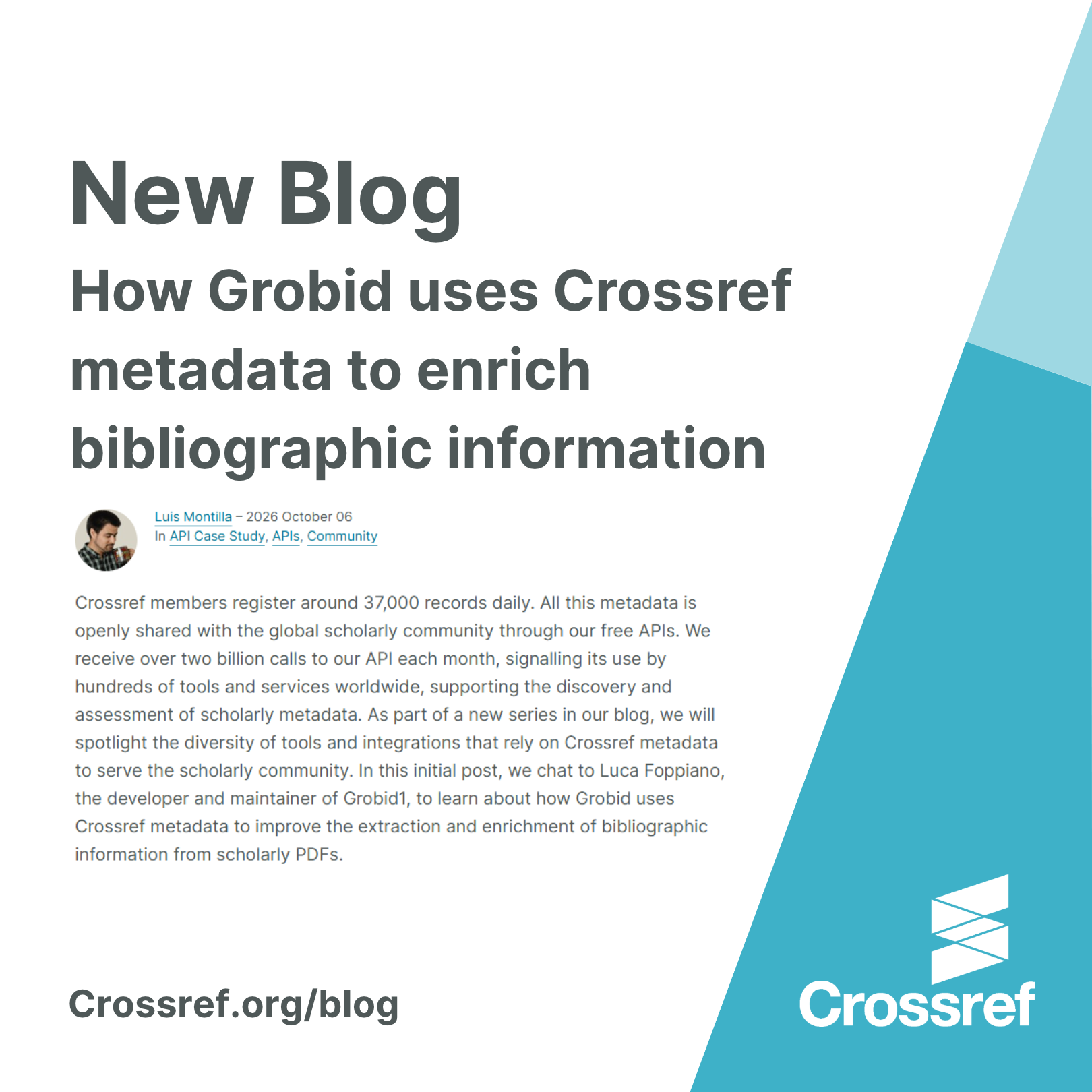
ICYMI: How does GROBID use Crossref metadata to make bibliographic information extracted from scholarly PDFs more accurate and complete?
Over 100 million requests from GROBID clients reached the Crossref REST API in Q1 2026!
Read more: https://doi.org/10.64000/ngecn-xs774
Alt...
How Grobid uses Crossref metadata to enrich bibliographic information


Beyond those pure values and benefits of open science, Karen shares, the team wants to talk about the way this work scales out beyond "science" as we typically think about it. #OpenScience is an umbrella term that also encompasses citizen science, in addition to the many other "opens."
Carlos Goller, Sam Donovan, Melanie Lenahan, and @karencang are presenting on their work for this wonderful initiative connecting #OpenScience and #OpenEducation
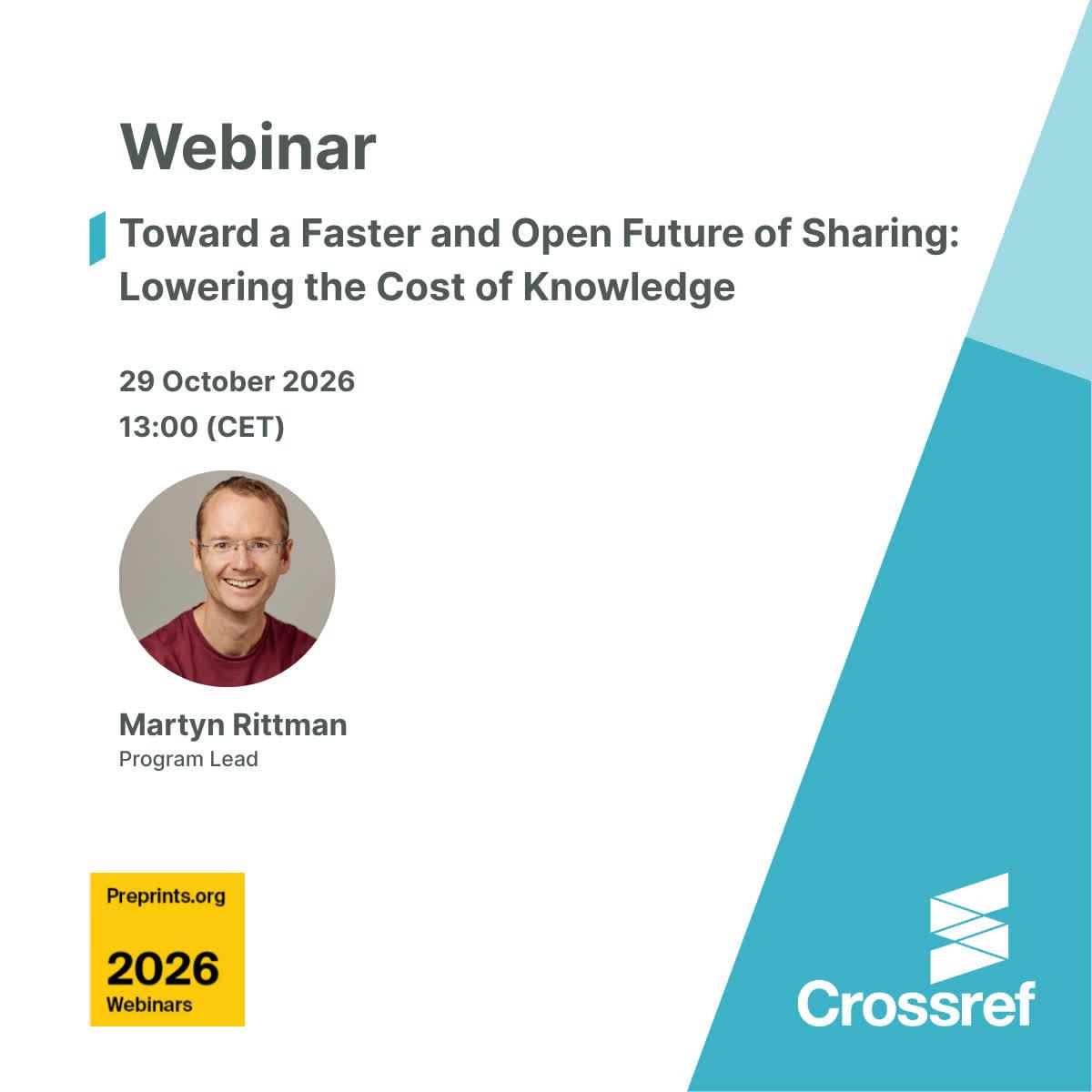
Our colleague Martyn Rittman is speaking at the https://preprints.org webinar on 29 October, as part of their 10th anniversary celebrations. The session looks at how preprints and open science can reduce the time it takes for research to reach the people who need it.
Join and learn about #metadata matching and its role in knowledge sharing. Followed by a Q&A session.
More info: https://sciforum.net/event/Preprints-oa-week-webinar-2026
Alt...
Crossref webinar poster featuring Martyn Rittman on lowering the cost of knowledge, 29 October 2026 at 13:00 CET.

Download & share case studies we have on the power of #OpenAccess, #OpenData #OpenEducation & #OpenScience.https://sparcopen.org/impact-stories/

New #Paper published in Quantum: Composable logical gate error in approximate quantum error correction: reexamining gate implementations in Gottesman-Kitaev-Preskill codes
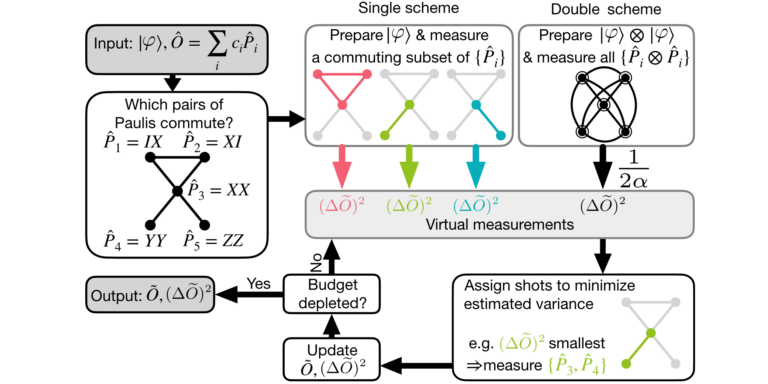
New #Paper published in Quantum: Enhanced measurements on quantum computers via the simultaneous probing of non-commuting Pauli operators
https://quantum-journal.org/papers/q-2026-10-07-2229/
#OpenScience #Quantum #Research

Rhizome Function Anagram Random Generator
preprint | https://zenodo.org/records/21551292
doi | https://orcid.org/0009-0009-5144-3278
Herein are described principles and a scheme of random number generation styled as, pangrandomonium, or ‘pangrand’. Pangrand is a anagrammatic random number generator that uses rhizome functions as chaotic indexing and shuffling instructions to reorder and sum perfect pangrams. Brief descriptions are given for the principles of pangram summing and rhizome indexing functions, Source code of the random number generator is included herewith. The source code is attached to the PDF file.
Sections:
1. Pangrams (Holoalphabetic arrays) ;
2. Rhizome Functions ;
3. Rhizome Hardness Problems ;
4. Random Generator Methods ;
5. Errata ;
6. Source Code.
#Preprints #Random #Cryptography #RNG #Pangrams #Anagrams #Pascal #Papers #RhizomeFunction #AcademicMastodon #Cryptology #Math #NumberTheory #Papers #Academia #ComputerScience #CompSci #AcademicChatter #OpenScience