Search results for tag #math

Problem for October 17th from the 2026 AMS Daily Epsilon of Math Calendar
@DailyEpsilon
#math #maths #mathematics #mathstodon
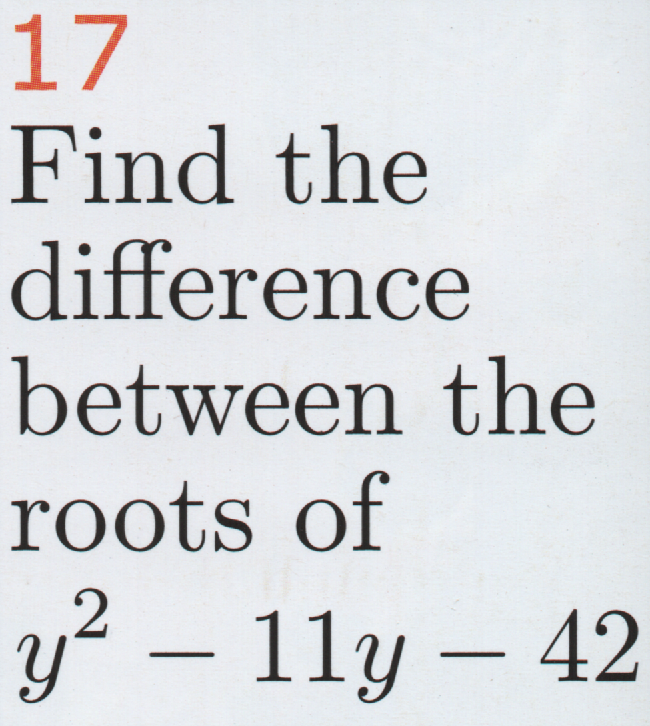

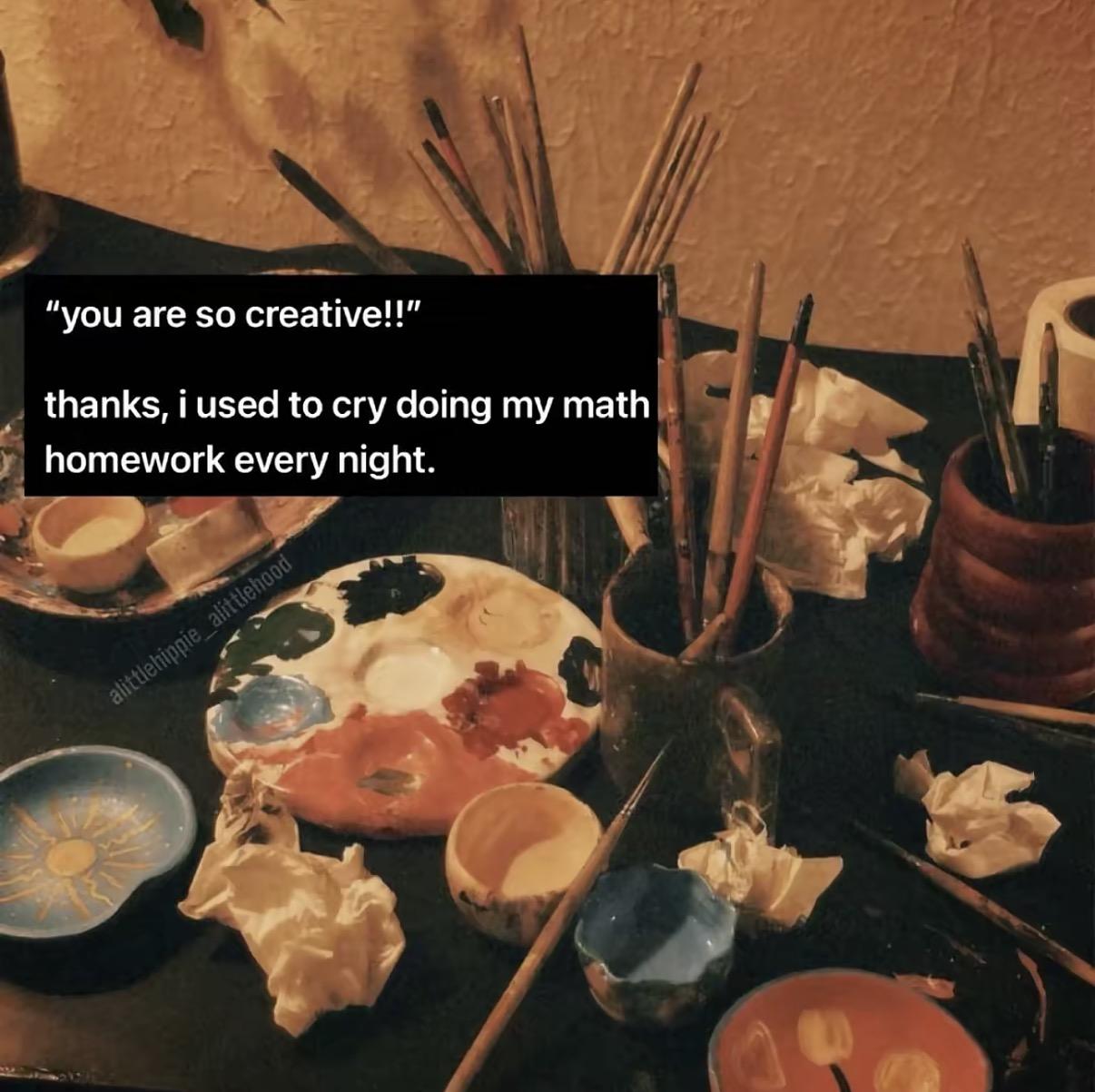


We interrupt your regular scheduled programming for a #ACMCoffeeBreakPuzzle. You might have to take out a pencil and paper for this one. 😉 🔗 here for more: https://www.acm.org/education/coffee-break-puzzles
#computerscience
#puzzle
#math
#graphtheory


“If a human did this, it would be an instant Fields Medal, no questions asked.”
That’s how Alex Kontorovich, chair of the department of mathematics at Rutgers, responded to an A.I.-generated proof that OpenAI, the artificial intelligence giant, released on Tuesday.
https://www.nytimes.com/2026/10/08/science/mathematicians-respond-openai-release.html?unlocked_article_code=1.HFE.kA2t.jZ_2wtJluaxf&smid=nytcore-android-share
#ai #math
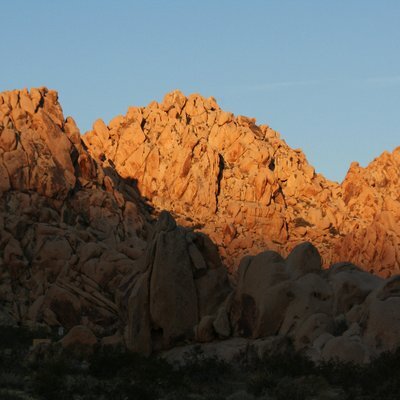

Mathematics is an awesome subject, of course, but in case you needed further proof look no further than the luchador El Matemático (The Mathematician).
You cannot argue with that. I expect all mathematics conferences from now on to require the wearing of lucha libre masks.
Possibly the only commercial implementation of a Mobius strip. (Had to fix this other one). #math #mobiusstrip

Alt...
A tape wound so it continually loops around inside a plastic case
The software development community has a naysayer problem
https://iain.rocks/blog/the-software-development-community-has-a-naysayer-problem
I have some commentary about this article to share. Before you read my commentary you need to understand the meaning of 'marmaluke'. Really.
"... the entire point of the layered encryption is that you make it a lot harder to know when you’ve cracked the first layer."
We've gone over this idea many years in the past. The gatekeeper community ain't havin' it.
"Security via obfuscation in encryption? We’re done here. ..... “Hiding what you’re doing in encryption doesn’t make it any more secure.”" .... I got this response many times. Many people seem to fail to understand that encryption is literally obsfucating the data. You’re changing the data so people can’t understand it, and it can be un-obfuscated, aka decrypted which is the entire point. ..... The number of people who called this concept security via obscurity is shocking. It’s a new concept, but just because it’s a new idea doesn’t mean the point of it is to be obscure."
The author is right and wrong.
This is not the first time anyone has proposed the idea of chunking up encryption and cascading ciphers. He is mistaken about that claim.
However he is right about 'security through obscurity' and I will explain why.
The parrots love to shout about "Kerkchoff's Principle", which they say is a truism that security through obscurity is either bad or is not security at all. And this is a lie. The reason it is a lie is because that is not what Kerkchoff said. They have inverted Kerkchoff's Principle to read: "You must disclose the algorithms, or else you are playing security dice." This is totally false.
If obscurity of the method had no effect on security, then classified secrets would be pointless. Classified weapons would be pointless. Classified operations would be pointless. Hiding your location from a stalker would be pointless. If obscurity did not boost operational security, then every police detective would call the criminals in advance to let them know they are being investigated. The military would publish battle plans in advance on the six o'oclock news since 'security through obscurity' is bad.
Kerckhoff’s Principle states that security should not be dependent on the secrecy of the cipher but rather on the secrecy of the key. It is not a mandate to declare which cipher is being used. That is just stupid. Yet some 'cryptography experts' define it this way because they don't know what the hell they are talking about.
If I use a basket of ciphers, and choose a random cascade of them in a random order, that random choice is part of the key schedule, and obscuring the choice of ciphers DOES increase the mathematical hardness and security of the ciphertext. This is what the amateur author is instinctively grasping, and his detractors are wrong, and criticizing the wrong things for the wrong reasons. Without realizing it they are doing the bidding of gatekeepers who don't want widespread cascade ciphers because they require much more time and resources to crack. Just have a look at the recent drama at the crypto standards group trying to remove fallback ciphers in KEM system standards. The gatekeepers don't want us using baskets of ciphers. They want everyone using the same standard, singular lock model on every treasure chest.
Yes, satan's little helpers love to shoot everyone down to make them fall in line with the gatekeeper agendas. These marmaluke parrots and popinjays have no idea that their 'thought leaders' are nowhere near as competent as they portray themselves. In order to keep the illusion going, they try to put others down to ensure their idols remain higher than and aloft over the crowd. Singular people are smart. Put a whole crowd of smart people in a [chat] room or forum and they all get dumb really quickly. IQ addition is a lossy operation.
Who cares that an amateur is experimenting and learning? What kind of dinkus tries to shout that down? What kind of maroon always has to jump in with unproductive whataboutery instead of playing along and helping improve the game play? An authoritarian marmaluke, that's what kind. It seems a lot of jackasses who over-rate their own knowledge ... want to use negativity and boundary policing to prevent the curious from exploration.
"This is probably the best example of how bad the software community actually is. It was a bunch of naysayers who GCHQ called “Script Kiddie cybersecurity experts” because they were just parroting things they’ve heard about security without truly understanding them."
He gets it. Don't cave to the naysayer marmaluke parrots. I say more power to the curious. Let them try and fail and try and fail as many times as they have the grit to bear. That is how we learn to walk, run ... and fly.
I do think some of the author's conclusions are mistaken, such as GCHQ finding his idea 'new' or 'useful', since they have actually used these kinds of cascades and segmented, fractionated, and 'railfence' ciphers since WW1. But let him figure that out and give him ideas to arrive at the right conclusions instead of parroting wrote social rules and mores that aren't even being correctly described.
If you are an ideological boundary cop, you are an enemy of basic humanity. Go away thought cop. Let the curious thrive, and live, and die as explorers.
#cryptography #cryptology #ciphers #encryption #naysayers #freethinkers #curiosity #marmalukes #gatekeepers #gatekeeping #math #cybersecurity #security


Taco Bell: Answering the question "what possible use is this knowledge for" in the opening session of university-level combinatorics classes since 1966.
The problem with modern computational cryptography is that it has no 'empirical' evidence of security. The fact that no one has publicly broken a cipher is not empirical evidence. It is absence of evidence being used as evidence.
If an adversary breaks a function or cryptosystem, he is not going to tell you. Thus using the lack of a public break as evidence is not scientific method.
The security models are based upon 'educated assumptions' within model A or B or C. Nobody has ever proven that a cryptosystem is secure. They are 'assumed' to be secure. Or, they are assumed to be hard in the average case.
Terry Ritter wrote a piece that explains this problem:
In this old Usenet discussion thread, Terry Ritter debunks a lot of the magical thinking endemic in the 'cryptology community':
https://web.archive.org/web/20240922132730/http://www.ciphersbyritter.com/NEWS5/HERDART.HTM
NP-hardness proof is still an open problem. As far as I know, not a single cryptosystem has actually been proven to be NP-hard. Model assumptions using a supposed NP-hard function and proof are two different things.
As for no existing crypto surviving: Vernam's cipher (OTP) is provably information-theoretic secure if keys are not re-used. That avoids the NP-hard problem altogether as it is a different universe of math.
#crypto #cryptography #cryptology #math #maths #ciphers #cybersecurity #encryption

... [SENSITIVE CONTENT]
https://arxiv.org/pdf/2409.05351
�𝜆𝜖𝛿-Calculus:
A Self Optimizing Language that Seems to Exhibit
Paradoxical Transfinite Cognitive Capabilities


Payback for all those obligatory math classes I had to take! You’re in the same boat with us, we’re all losing our jobs! Hahahaha!
#math #ai
https://www.theguardian.com/science/2026/sep/12/openai-mathematicians-millennium-prize-problem

A quotation from Bill Watterson
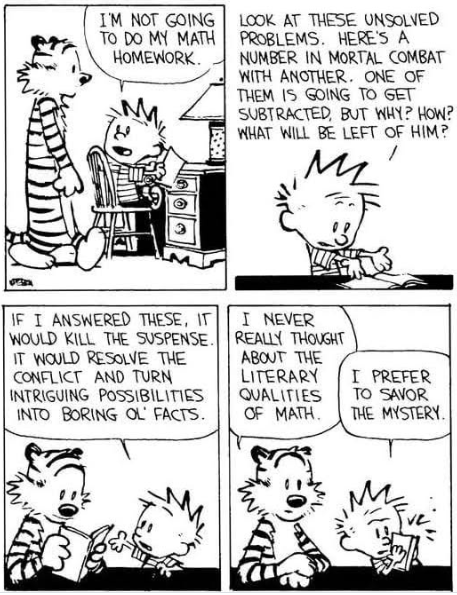
CALVIN: I’m not going to do my math homework. Look at these unsolved problems. Here’s a number in mortal combat with another. One of them is going to get subtracted. But why? How? What will be left of him? If I answered these, it would kill the suspense. It would resolve the conflict and turn intriguing possibilities into boring ol’ facts.
HOBBES: I never really thought about the literary qualities of math.
CALVIN: I prefer to savor the mystery.
Bill Watterson (b. 1958) American cartoonist
Calvin and Hobbes (1992-10-13)
More about this quote: wist.info/watterson-bill/86064…
#quote #quotes #quotation #qotd #billwatterson #calvinandhobbes #drama #homework #literature #math #mathematics #mystery #numbers
Alt...
Calvin and Hobbes (1992-10-13)
The most recent case of the finite time solution of the forced Navier-Stokes equation has been discussed a lot in the recent days, on this network and in the mainstream press,
but I will try to give a perspective on what happened recently.
This is prompted by a friend informing me this morning of two annoying additional stories that taint the recent public success of AI generated proofs and will hopefully lead the mathematical community to address the question of predation and plagiarism.
However, I won't address here the even more important questions posed by AI companies beyond merely quoting some of them:
- its energetic cost;
- its impact on minerals and other natural resources;
- its direct and immediate consequences on the ecosystem (water heating, pollution, land waterproofing, etc.);
- its impact on the work market, in particular those prompted by (actual or alleged) productivity gains;
- its impact on learning, cognition, etc.;
- its impact on the economic structure, tremendous announced gains/losses of companies that look like a Ponzi scheme;
- its impact on the power structure, who owns what, who gives access to what;
- its impact on the political structure, the surveillance capitalism, etc.
These are fundamental issues that should be addressed more clearly in the mainstream medias, and that, in my view, suffice to object to the existence of AI.
Anyway, what does it mean for academic math?
1/n


A simple question: what if we take the classical loop-space Maps(S^1, X), but allow for unions with singleton sets?
Originally motivated by real-world applications (evolution), the story is remarkably rich

Court watch a few weeks ago. I saw this math atrocity:
Judge - "Alice, you say the number is 200"
Judge - "Bob, you say the number is 250"
Judge - "So why don't we take the middle, 240 and figure out the details later"
The judge graveled, and signed "240" into a order as the mid point between 200 and 250 🥴

\[“(1+0)^{1/0}=𝑒” \]
(Lewis Carroll, “Pillow Problems”. p. 67)
https://www.gutenberg.org/cache/epub/79080/pg79080-images.html
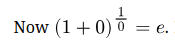
Alt...
Screencap showing that I did not misquote Carroll


Rhizome Function Anagram Random Generator
preprint | https://zenodo.org/records/21551292
doi | https://orcid.org/0009-0009-5144-3278
Herein are described principles and a scheme of random number generation styled as, pangrandomonium, or ‘pangrand’. Pangrand is a anagrammatic random number generator that uses rhizome functions as chaotic indexing and shuffling instructions to reorder and sum perfect pangrams. Brief descriptions are given for the principles of pangram summing and rhizome indexing functions, Source code of the random number generator is included herewith. The source code is attached to the PDF file.
Sections:
1. Pangrams (Holoalphabetic arrays) ;
2. Rhizome Functions ;
3. Rhizome Hardness Problems ;
4. Random Generator Methods ;
5. Errata ;
6. Source Code.
#Preprints #Random #Cryptography #RNG #Pangrams #Anagrams #Pascal #Papers #RhizomeFunction #AcademicMastodon #Cryptology #Math #NumberTheory #Papers #Academia #ComputerScience #CompSci #AcademicChatter #OpenScience
Here's something for the more mathematically inclined:
https://adam-gladstone.pixels.com/featured/intricate-fractal-design-adam-gladstone.html
#mathematics #math #fractal #mandelbrot #mandelbrotset #ayeareforart #buyintoart #fineartmamerica #wallart #homedecor

Mathematicians put AI to work on Fermat’s last theorem.
From @NewScientist (registration may be required): https://flip.it/_V6E9W
The hardest thing in Dylan or any 🫰quote "normal" unquote🫰lang, is writing algebraic math when you're used to RPN or sexpr. Why am I putting one argument before the operator, the other randomly after, and having to figure out which ones happen first? Do people DO MATH like this‽
In theory I could just use +(a, b) (or does it need \+(a, b)? I'd try that in REPL but there isn't one).
Not sure what the lines of code do but I know how the game is played.
You take a deck of cards and remove the royals. This gives you Ace through 10 with Ace = 1.
You deal two cards. If someone can make an equation they slap the table. They say their equation and everyone agrees or disagrees.
If no one can make an equation you deal another card.
part1

i've always been baffled by various paper size symbols, like A0 and A6, assuming they were some arbitrary system like "hands" for horse measurement
it turns out that A0-A8 are all just square roots of 2! to go from A0 to A1, you cut the A0 paper in half. to go from A1 to A2, you cut it in half.
if you're a programmer or a gamer, you've (knowingly or unknowingly) used this mathematical function in binary search partition (bsp) trees to narrow down which polygons to render in a room. e.g. Wolf3d and Doom used bsp trees.
https://en.wikipedia.org/wiki/Paper_size
while i'm here, if you love arbitrary math insanity, enjoy horse hands:
https://en.wikipedia.org/wiki/Hand_(unit)

Alt...
A diagram showing the A paper size algorithm. A0 is the entire sheet of paper. A1 is A0 bisected horizontally. A2 is A1 bisected vertically, and so on, all the way down to the smallest size: A8.
part 1
I have just specced a lisp game in my mind. Should be easy enough for me to write.
The game is MathSlap, invented by @Carl to be played with a deck of playing cards with no royals. (A-10)
Two numbers are placed face up. If you can make an equation from these numbers using any math symbols but no more numbers you slap the table. Then you say your equation and it's evaluated for correctness. If no one can make an equation another card is dealt.



@geethap2007 #Lyrics from #MorningStar - #song by #Geetha:
"#Triangles compressing me once
into #angles, my roundness #squared
#Ray meets #Pi, shadows #death ensnared
[Verse]
I squeeze hard repressing contours
On #love’s path, we oft take #detours
The walk on #circumference lasts
Greater #journey into the vasts
[Chorus]
Morning star, it buds within me
Rising light carries me so free
Into meadows of morrows sighs
Where deep and clean, forgiveness lies