Search results for tag #laws
![[?]](https://climatejustice.social/system/accounts/avatars/109/324/939/669/240/982/original/dd5393a19a623f4e.jpg)
I posted another new essay to my blog this morning, Pretty Rights and Usable Rights.
https://netsettlement.blogspot.com/2026/09/pretty-rights-and-usable-rights.html
#rights #laws #DeclarationOIndependence #philosophy #society #AI #Governance #Authorization #PrettyRights #UsableRights #EmilyHartstone
![[?]](https://cdn.masto.host/theforkiversecom/accounts/avatars/115/874/488/801/031/585/original/b6a015301231206b.jpeg)
Same as the tobacco industry.
The tactics are the same predatory #cronycapitalism that arise from no #laws or regulation.
Some #cryptocurrency has legitimate uses. Others do not.
Buyer beware. Do your research if curious or a collector of limited market quantities.
Supply and demand etc. etc.
I can't blame people for collecting stupid junk.
![[?]](https://stockage.framapiaf.org/framapiaf/accounts/avatars/000/089/837/original/01abbbdd418dd20c.png)
𝗟𝗮𝘄𝘀 𝗼𝗳 𝗨𝗫:
https://thewhale.cc/posts/laws-of-ux
A collection of nineteen key maxims that designers must consider when building user interfaces
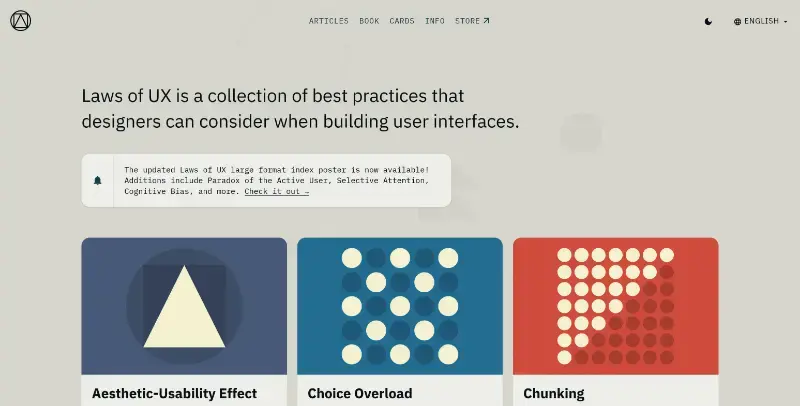
Alt...
A collection of nineteen key maxims that designers must consider when building user interfaces
![[?]](https://files.mastodon.social/accounts/avatars/110/641/555/278/107/926/original/60e39d3280d3b645.png)
RE: https://mastodon.social/@janvlug/116991928856888810
CONTEXT:
privacy laws, including court cases, only recorgnize passwords as part of your right to privacy. so if you lock your phone with biometrics, DHS/TSA/ICE can force you physically to unlock the device. not so with passwords… until now.
prosecutors in Atlanta want to use this case to completely take away the right to privacy with passwords.
this would open EVERYTHING ―including emails, bank accounts, health care records―, to fascist predation.
![[?]](https://soc.octade.net/octade/s/3f7f2b5eda4e392867c301c49c2daa16.png)
Short video: https://octade.net/urls/6000_patents.html
In 1998, Stanley Meyer claimed to invent a car that ran on water. Days later, he was dead—and his invention disappeared. But Meyer wasn't the only one. There’s a federal law, still active today, that allows the U.S. government to classify and bury private inventions deemed a “threat.” It's called the Invention Secrecy Act—and it's already been used over 6,000 times.
From Nikola Tesla’s wireless energy to Townsend Brown’s anti-gravity tech to Joseph Papp’s engine that ran on noble gases, history is littered with breakthrough inventors who vanished into obscurity... and whose technologies never made it to the public.
This episode uncovers the case studies, the hidden power of secrecy orders, and the chilling question: What else have they buried?
#patents #USPTO #inventions #inventors #secrecy #laws #Tesla #USGov #Government #NationalSecurity #GagOrders
@academicchatter@a.gup.pe @edutooters@a.gup.pe @infostorm@a.gup.pe