Search results for tag #google
![[?]](https://media.infosec.exchange/infosec.exchange/accounts/avatars/110/560/511/618/170/134/original/4f33ba36608d1311.png)
New.
Google: Defending Against Active Exploitation of Citrix NetScaler ADC and Gateway Appliances https://cloud.google.com/blog/topics/threat-intelligence/defending-against-active-exploitation-of-citrix-netscaler-adc-and-gateway-appliances #Google #infosec #NetScaler #Citrix #vulnerability #threatintelligence #threatintel
![[?]](https://todon.eu/system/accounts/avatars/109/005/014/959/393/335/original/f315d5c682012c22.jpg)
Verifikationspflicht in der EU: Wenn EU-Kommission, #Google und andere Konzerne bestimmen, was Du im Netz machen darfst:
Auch auf dem europäischen Festland planen Regierungen die zeitnahe Einführung von staatlichen Zugangsschranken mit Verifikationspflichten für das Internet.
Die EU-Kommission lässt in Kooperation mit Tech-Unternehmen wie T-Systems zur Zeit eine Altersverifikations-App entwickeln, mit der das Alter von Internetnutzer*innen kontrolliert werden soll. Die #EU bezeichnet das geplante Verfahren als eine datenschutzfreundliche Lösung.
Auch wenn sie datenschutzrechtskonform implementiert werden würde, bedeutet die Verifikationspflicht die Errichtung einer zentralisierten, (über)staatlichen Kontrollinfrastruktur, die das Verhalten von Nutzer*innen kontrolliert.
1/4
Wenn EU-Kommission, #Google und andere Konzerne bestimmen, was Du im Netz machen darfst:
EU will Alterskontroll-App an #Google binden
‚Die #EU arbeitet an einer App, mit der Millionen Menschen künftig ihr Alter nachweisen sollen. Doch schon am Prototypen entzündet sich Kritik: Eine Bindung an Google-Dienste würde US-Konzerne stärken und sogar gegen eigene Vorgaben der EU verstoßen.‘
https://netzpolitik.org/2025/prototyp-vorgestellt-eu-will-alterskontroll-app-an-google-binden/
#Überwachung #Kontrolle #Europe #Altersverifikation #Antireport
![[?]](https://nbg1.your-objectstorage.com/tno-mastodon/accounts/avatars/111/434/264/745/920/273/original/52ff85db085a2a1d.jpg)
Your uncle’s frozen #Mac says it’s infected after viewing a #Google #ad. Now what?
#guide #cybersecurity #malware #advertising #malvertising #scam #ScamAlert
![[?]](https://files.flyovercountry.social/accounts/avatars/109/390/372/615/478/805/original/d3353c377531a46c.jpg)
Lol, guess what I got asked for again? Yep, the same information that I provided a month ago, and even two weeks ago.
Two weeks ago I asked to make sure that engineering had the necessary information and of course I was replied with a vaguely worded email and they didn't clearly didn't provide the information since I just got asked for it again.
The Google pixel support supervisors just flat out lie to you.
Pay for your #Tuta subscription via the #Google #PlayStore!
https://tuta.com/blog/tuta-supports-google-play-payments-on-android
New.
Mandiant: Proactive Defense: Hardening Code Pipelines and CI/CD Infrastructure https://cloud.google.com/blog/topics/threat-intelligence/hardening-code-pipelines-and-ci-cd-infrastructure #threatintel #infosec #threatinteliligence #Google
Socket, posted yesterday: Malicious Firefox Extension Poses as PDF Identity Verifier to Hijack Google Accounts https://socket.dev/blog/firefox-google-account-takeover @SocketSecurity #infosec #Firefox #Google #cybercrime
![[?]](https://gultsch.social/system/accounts/avatars/109/251/109/761/754/612/original/1dbeb4739fc51f67.png)
Conversations is now permanently available for free on Google Play.
Google doesn’t deserve me and my money anymore.
https://gultsch.de/posts/breaking-up-with-google-play/
#XMPP #Jabber #Conversations_im #Android #FOSS #OpenSource #Google #GooglePlay
![[?]](https://tldr.nettime.org/system_nettime/accounts/avatars/109/528/493/326/851/300/original/ebc905e283d49e82.jpg)
"Google is bringing its age assurance technology — which uses artificial intelligence to detect underage users — to Canada.
“Our age estimation model uses machine learning to interpret a variety of signals already associated with a user’s account, such as the types of information a user has searched for or the categories of videos they’ve watched on YouTube,” the company said in a blog post Monday.
The company says that if the technology identifies someone as underage, their Google account will be changed to include additional protections, such as safeguards on content recommendations.
If it mistakenly identifies an adult as being under 18, the company says that person will be able to prove their age using things like a government ID or a selfie.
“In the coming days, we’ll begin to gradually roll out this technology in Canada, carefully monitoring progress as we expand its availability,” Jeanette Patell, director of government affairs and public policy at Google Canada, said in the post.
She said the company won’t be collecting any new information that isn’t already associated with the user’s account."
#Canada #AI #BullhshitTechnology #Google #AgeVerification #Censorship #BigTech #Surveillance
![[?]](https://media.mstdn.social/accounts/avatars/000/005/168/original/c85be6683862c045.png)
AI is TERRIBLE for the #internet
If we like it or not, traffic has always been the currency on the web. Many news outlets and #journalists would not be able to do their work without it
A lot of this traffic was coming from search engines like #Google, again like it or not. Nowadays Google uses their AI to pull info from sites making visiting websites for info obsolete and in turn killing traffic and a lot of sites
For the love of the internet, please DO NOT use the #AI summary but browse!♥️
![[?]](https://hostux.social/system/accounts/avatars/000/194/506/original/49ba2d821222d160.png)
When convenience turns evil: #Google's Bluetooth headsets and #Nest thermostats: https://u.fsf.org/4c9

Alt...
A house with an eye above with a Bluetooth symbol pupil
Despite me asking directly if engineering support has received the necessary information, Google support refuses to say if they have, or even bother to check with it.
They reiterated that the queue if FIFO (I've been in the queue for over 3 weeks now), and that the Pixel 11 is causing a larger workload. So, I guess they a) didn't hire enough support people to deal with the latest phone, and/or b) they're admitting that they didn't do basic testing/engineering work on the Pixel 11 that they have such a large number of support cases that they got massively back logged in just the first 5 days of the pixel 11's release that their engineering is backlogged for over 3 weeks!?!
![[?]](https://files.mastodon.social/accounts/avatars/115/742/434/865/105/205/original/ba2fa15026c28d18.jpeg)
Google Search is making it harder to see where links actually lead.
Some search results are now routed through encoded google[.]com/goto?url= redirects instead of linking directly to the destination. That means hovering over a result may no longer reveal the real website before you click.
This matters for spotting phishing pages, fake downloads, and malicious ads.
Full article: https://digitalescapetools.com/2026/09/google-search-redirects-hide-destination-links.html
![[?]](https://media.mathstodon.xyz/accounts/avatars/109/404/767/338/318/455/original/1d7493c186e3ec70.png)
I was today years old when I read Brin & Page "The Anatomy of a Large-Scale Hypertextual Web Search Engine", where, in the appendix, they expound on "Advertising and mixed motives", essentially saying that ads and good web search results are incompatible. Oh Google.
The appendix seems to have disappeared from the original journal article, although it's still being referred to from the main text. So see it here, page 18:
http://infolab.stanford.edu/pub/papers/google.pdf
Found via: https://mastodon.social/@marginalia/117252323114186286
Latest update from the absolutely terrible Google Pixel support.
1. Provide steps that only work with eSIM, not a physical sim.
2. Replace sim at your expense despite it working fine in another phone, or activate an esim (which means that my physical sim slot will remain non-functional).
3. Provide information that I've already provided.
This is a, we really won't want to actually fix our broken hardware, please go away already type response.
![[?]](https://polymaths.social/fileserver/01HCMX6M1CZNEVJ4F5H58TT5XJ/attachment/original/01JHC5KM5K0V0J0436SPD3F86H.jpeg)


 🍵
🍵  [
[![[?]](https://media.oldfriends.live/oldfriends/accounts/avatars/109/380/043/893/518/808/original/7b0a791cfbb5b18e.gif)
Anyone who uses Google Alerts on their Android or in other #Google products, notice here lately results and notifications are coming in but the alert contents are 5, 10, 15 years old? I think their AI has been scrapping news website archives and it is misconfigured and sends the alert the day it finds it and not the actual date of the article or content in the alert. #Enshittification
A #Gmail scam is exploiting #Google Account recovery emails
The #ManifestV2 era is over: #Chrome removes #AdGuard #AdBlocker MV2 from the Web Store
https://adguard.com/en/blog/adguard-adblocker-manifestv2-removal.html
![[?]](https://social-coop-media.ams3.cdn.digitaloceanspaces.com/accounts/avatars/109/292/548/115/399/400/original/1dd288cdd5781292.png)
![[?]](https://o.mastodon.au/accounts/avatars/109/877/980/876/007/292/original/898aa72ab06ce2f0.png)
![[?]](https://cdn.masto.host/mastjohn1126com/accounts/avatars/115/981/910/993/463/416/original/00ac72837ce34a31.gif)
RE: https://infosec.exchange/@josephcox/117015445538860011
How does anyone know what to believe any more? If you are looking at an image, it could be unreal.
![[?]](https://autistics-life.s3.bhs.io.cloud.ovh.net/accounts/avatars/114/613/151/536/635/497/original/cbb662781ca90d08.jpeg)
![[?]](https://weredreaming.com/mookie/s/avatar-c033319a3a3d5098e5af08a922200981.png)
![[?]](https://social.heise.de/__virtual/accounts/avatars/112/881/119/160/228/266/original/baf7ad72ec92f728.jpg)
Porting issues: GrapheneOS advises against buying the Pixel 11
The GrapheneOS team advises against buying the Pixel 11 if users want to flash the custom ROM onto the device. An important security component is missing.
#Android #Datenschutz #Google #GrapheneOS #IT #Mobiles #Security #Sicherheitslücken #news
Be warned: #Google spies on your nest with #Nest: https://u.fsf.org/4c9

Alt...
A house with an eye above with a Bluetooth symbol pupil
![[?]](https://media.mstdn.social/accounts/avatars/109/565/531/261/159/277/original/7730593f0b7678ff.jpg)
Its actually worse. If google shows Lake Anerica to Americans it subtly convinces them the takeover is happening, and google just shows a mask to Canadians.
The evil part isnt just insulting first nations and Canada, its google joining the "convince Americans to go to war with earth's nicest people club."
ElbowsUp google. Right up, all the way up.
Canadians dont use google or gmail or Chrome.
![[?]](https://mastodon.laurenweinstein.org/system/accounts/avatars/109/357/023/842/046/447/original/aa40ce3e4660a756.jpg)
![[?]](https://f2.tchncs.de/accounts/avatars/000/026/908/original/26ed08fc073e0f61.png)
I would also point out that verified/unverified refers only to whether *Google* has verified them. If you want to install an app made by your best friend, you've known since kindergarten and have talked to every days since, they're still "unverified" even though they're totally verified by you. You cannot verify a developer. Your friends can't verify a developer. Third parties you trust can't. Only Google gets this right.
We must support mobile Linux NOW to build a better alternative.
![[?]](https://fedi.blindsoft.net/susie.png)
so Google has been doing something stupid.
I wanted to kinda try to upgrade my #searx experience, with searx ng, so I did a little experiment.
I logged into my Google cloud console and enabled the custom #search API, because I had a Google programmable search CX ID but it required the Google #cloud #api to use apparently, so I enabled it.
created an API key, and even a service account for it in #iam .
so here's the problem.
the problem is that when I go to use it, it says that the custom search JSON API is not enabled, which it is. so I lifted a couple of #security restrictions, for example, the setting that restricted the key itself from making calls to other than the custom search API. that also didn't fix it, and yes I checked the project. and it's not that it does nothing because it did query shit, but there were over 100 errors.
and I don't think the IP restrictions on the key are contributing to it because it is the same IP querying the same API key.
Gemini API is no better. sometimes ago I went to create an APi key, and it said that the attempt looked suspicious. which is funny because no one had hacked into my account. I looked at my accounts logs, everything was good. plus, I have 2FA , Google advanced protection turned on, etc, etc. and I don't have a cookie credential theft.
what the fuck is going on?
![[?]](https://files.mastodon.social/accounts/avatars/000/255/026/original/3a861232b25b8ee2.png)
#Google is going to close down #Android platform, making installing "unverified" apps almost impossible for a regular user. This would completely kill #FDroid, something I rely on to get apps that don't track me, don't show me ads and don't try to exploit me.
If you care about #FreeSoftware, you should care about this. Maybe with enough public uproar, Google like many other corporations before it will back off from this plan. But it certainly won't happen on it's own.
@operator So Google lets spam through, but blocks legitimate emails.
#Google has no problem blocking my emails from going to my friends who have my address in their contact list. They use Gmail and I don't. #Gmail could see that my email address is in their contacts, yet they mark my email as spam anyway. Others have reported similar problems.
![[?]](https://cache.treehouse.systems/accounts/avatars/110/628/855/321/239/565/original/02818afb40ed82f7.jpeg)
Let me say something fun about the #Polish language.
When you name the letters of the alphabet, "G" is pronounced "gye" (with "g" pronounced similarly to "good", not "George").
"Gie" also exists as a euphemism for "gówno", or shit. It has the same pronunciation, it's derived from the letter "g" in that word.
Well, we were prepared for #Google.
The closer computers get to our bodies and homes, the less control we seem to have over them: https://u.fsf.org/4c9 #Google #Nest #FSF #FreeSoftware #surveillance

Alt...
A simple house with an eye above it and the Bluetooth symbol at the center
The Google Play logo very much resembles the sigil of Lucifer. Coincidence?
This video from years ago is still valid today.
#Google #Lucifer #spiritual #Jesus
#Google is buying all of #Spirit Airlines’ data to feed its #AI models
https://www.cnn.com/2026/08/18/business/google-spirit-airlines-data
The constant arms race between #google and #yt-dlp is amusing to watch, in a tragic sense.
Came very close to running the somewhat scary "curl ${some_url} |sh" install "procedure" for #deno on my #devuan box until I saw that yt-dlp had been updated only yesterday.
I don't know why #debian (upstream) doesn't package Deno like #FreeBSD does.
A billion searches a year, now built in: #Startpage comes to #Firefox
BREAKING: #Google has acknowledged what appears to be a global outage of all Google Home devices
Welcome to the future. -L
![[?]](https://social.golemwire.com/golemwire/s/avatar-3cbd8584aaf46a20dfab708e228ed297.png)
#Google has a service which will scan the internet for these and inform you of them; when found, you can remove them from Google search! Neat. https://myactivity.google.com/results-about-you/ (I know, it still shows up in other search engines, but it's something at least.)
The way I approach (trying to) keeping my private info safe: when I am going to use a website which wants personal information, I either:
1. Ignore the privacy policy and just don't give any personal information they could abuse (or leak!) in the first place. Or,
2. Read the privacy policy of the site (or use an LLM to summarize the privacy policy if it's super long (and if you're OK with auto-summarizing) ) to determine whether or not you want to use it any longer, and if the privacy policy is OK, give them the information (if you have to).
![[?]](https://files.mastodon.social/accounts/avatars/000/207/529/original/0b448846378e746c.png)
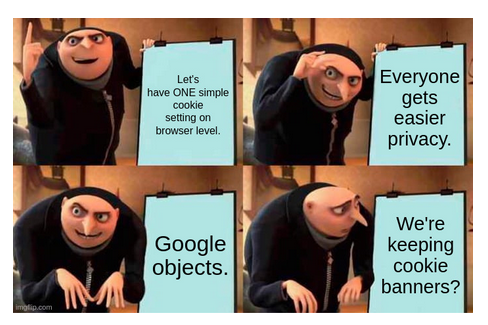
Dear EU, don't listen to #Google, kill the cookie banner now!
Alt...
Gru meme:
Let's have ONE single cookie setting on browser level.
Everyone gets easier privacy.
Google objects.
We're keeping cookie banners?
How to improve your #Google #privacy settings and why you should
WARNING: Massive "account verification" phishing attack from Google servers is in progress (via "googleusercontent.com"). BE CAREFUL.
Google is now a MASSIVE source of phishing attacks from Gmail to non-Gmail addresses, and googleusercontent.com // Google Cloud Platform is a primary source of these and associated malware payload links.
Google doesn't care.
![[?]](https://files.mastodon.social/accounts/avatars/114/048/194/944/023/530/original/3a6b93b37c67427d.png)
Google Is Making Private AI Practical with Homomorphic Encryption
https://blog.google/security/how-google-is-making-private-ai-practical-with-homomorphic-encryption/
Comments: https://news.ycombinator.com/item?id=49300314
#HackerNews #Google #AI #HomomorphicEncryption #PrivacyTech #SecureAI #Innovation
Alternative #search engines to #Google
![[?]](https://media.beige.party/accounts/avatars/116/542/260/009/316/273/original/cb4fc108e4a6fd8e.gif)
Chrome really pisses me off. I have to use it to pay certain bills, but it's always aggressively trying to get me to make it my default browser. And it WON'T just let me say "No" and be done with it. The closest thing it allows me to say is that I'll set it as the default "later".
I really hate Google!
#Google #GoogleSucks #Chrome #ChromeSucks #Tech #Technology
![Set Google Chrome as your default browser
Keep your passwords, bookmarks, and history perfectly synced across
devices. Easily access the features you know and love by updating your
default browser to Chrome.
Apps > Default apps > Google Chrome
Make Google Chrome your default browser [Set default]
[Set Later] / [Open Settings]](https://media.beige.party/media_attachments/files/117/085/783/207/281/059/original/98d97f9931139350.png "Set Google Chrome as your default browser
Keep your passwords, bookmarks, and history perfectly synced across
devices. Easily access the features you know and love by updating your
default browser to Chrome.
Apps > Default apps > Google Chrome
Make Google Chrome your default browser [Set default]
[Set Later] / [Open Settings]")
Alt...
Set Google Chrome as your default browser
Keep your passwords, bookmarks, and history perfectly synced across
devices. Easily access the features you know and love by updating your
default browser to Chrome.
Apps > Default apps > Google Chrome
Make Google Chrome your default browser [Set default]
[Set Later] / [Open Settings]
![[?]](https://m-cdn.flipboard.social/accounts/avatars/110/068/762/697/825/294/original/d3f34437c275e777.jpg)
There was once a time when seeking information on a search engine meant scrolling and clicking through to page after page. It’s not that pre-Google search engines like Lycos, AltaVista and Ask Jeeves were inferior. The web was just a lot different back then. @ArsTechnica reminds us:
#Google says hackers are calling financial firm employees to hack and extort victims
#phishing #cybersecurity #finance #ApolloGlobal #Bain #Blackstone #Bridgewater #CME #KKR #Moodys #TPG #Falcon #Helix #Pink #Redact
RE: https://tech.lgbt/@ShadowJonathan/117049317999200326
DON'T USE #GOOGLE
For one of the less crappy ones I would recommend ProtonDrive from Proton for non-self hosted and Nextcloud for self-hosted
Better suggestions are welcome
![[?]](https://i0.wp.com/rbfirehose.com/wp-content/uploads/2021/01/cropped-Blank-512-x-512.png?fit=512%2C512&ssl=1)
Gizmodo: Google’s AI Search Reportedly Told Users That Flock Cameras Are a Goldmine. “It’s become a running joke online and in privacy-focused communities that Flock cameras contain valuable material like gold, copper, and zinc, a bit meant to (jokingly!) encourage people to smash open the cameras and take what’s inside. Google’s AI Overview doesn’t have much of a sense of humor and, […]
https://rbfirehose.com/2026/08/06/gizmodo-googles-ai-search-reportedly-told-users-that-flock-cameras-are-a-goldmine/![[?]](https://files.mastodon.social/accounts/avatars/115/967/890/192/375/774/original/79861f67f1d57c00.png)
@argv_minus_one @agowa338 @hotelzululima @freya
(A rollercoster ride of phone repair but have to say in short: AVOID GOOGLE!)
That choice of *buying* a #GOOGLE phone (even 2nd hand) is #dilemma which we should avoid...
Even with backing from @GrapheneOS /
#GrapheneOS it's still an iconic representation of #trust of wrong people / hardware / traps etc...
If a Google #update can 80-100% #brick a #phone (causing trouble even for the #clever ones here)
then F-that and anyway "it's Google!" !
![[?]](https://mastodon.sdf.org/system/accounts/avatars/113/059/004/569/382/369/original/1b5ae86850d2461a.png)
I've also learned that #Google #GooglePixel phones have an “anti-rollback” feature that will permanently hard-brick the device if tripped. Which it can be, if the bootloader gets corrupted. Nothing anyone can do.
In other words, I was sold a self-destructing #phone.
Fantastic.
This is the script of my national network radio report yesterday discussing new instances of AIs attacking AIs, and more abuses by AI firms. As always there may have been minor wording variations from this script as I presented the report live on air.
- - -
Yeah, recently I discussed how OpenAI's AI model attacked another AI firm, not due to any flaw with the AI, but because OpenAI had sloppily not set their testing conditions to properly limit the AI's actions. Now we hear that another AI firm, Anthropic, found their Claude AI doing the same sort of thing, again due to corporate sloppiness in setting controls.
A person could go to prison for years doing attacks like these. The AI firms get away with it, as usual, since they know how to play the political games. They want us to trust their AIs monitoring our meetings. They assure us that they won't leak proprietary or personal information. They want us to let their AI agents run amok on work and personal computers, not only reading data but actually taking actions on systems and web sites on behalf of users. But these recent incidents show that there's no reason to believe that doing any of this is actually safe, especially since the firms routinely refuse to take any responsibility for anything that goes wrong. And when firms can't even get their own internal AI security controls to work properly, what possible reason would there be to trust them regarding any of this stuff?
Here's another new one. Google used to have a world class privacy team and a top-notch trust and safety team. But maybe most of the team members were laid off and replaced with AI, because Google really screwed up last week. Google announced that anyone could now create fake imagery using Google AI and combine it with Google Earth imagery. Google Earth has long been the gold standard for reliable geographic images. But immediately horrific deepfake images started to circulate with people using this new AI Slop feature to create realistic imagery portraying disasters and other horrible and misleading situations. Google's initial reaction to concerns about this dangerous misinformation was to try downplay the problem, but as warnings and examples built up Google relented and ultimately pulled down the feature entirely -- it was running less than 24 hours. Yet Google has made it clear that they want to bring it back, despite the entire idea being incredibly dangerous, no matter what new so-called guardrails they might try to implement.
One really has to ask, how did such an obviously disastrous Google Earth misinformation AI Slop feature get green-lighted in the first place? And by the way, there's new reports now that the AI industry has been quietly obtaining enormous numbers of physical books -- sometimes rare ones -- that they then destroy in the process of scanning them into their AIs. Another way to thumb their noses at society.
It's clear that these firms cannot be trusted to safely manage these AI technologies by themselves. They need to be firmly regulated with an eye towards society's needs, not the bottom lines of the Big Tech billionaire CEOs pushing these technologies. These firms have benefited from a lot of slack up to now thanks to their political connections with both parties, but it's way past time to tell these firms that their wild partying days are over, and that they're either going to play by society's rules, or they're not going to be permitted to play at all.
- - -
L
https://www.seroundtable.com/google-search-sign-in-verify-41808.html
Which software ecosystems have you been brave and courageous enough **to abandon completely**? Check all that apply
Please boost for #Science 
#SocialMedia #Meta #Google #Microsoft #internet #web #apps #Bigtech
| Facebook 100%, account closed/nonexistent: | 242 |
| Facebook 99%, account still open: | 107 |
| Instagram 100%, account closed/nonexistent: | 226 |
| Instagram 99%, account still open: | 69 |
| WhatsApp 100%, account closed/nonexistent: | 161 |
| WhatsApp 99%, account still open: | 46 |
| LinkedIn 100%, account closed/nonexistent: | 137 |
| LinkedIn 99%, account still open: | 97 |
| Google App Store 100%, not even present: | 87 |
| Google App Store 99%, Google account still open: | 83 |
| Gmail 100%, account closed/nonexistent: | 63 |
| Gmail 99%, account still open: | 126 |
![[?]](https://files.mastodon.social/accounts/avatars/110/641/555/278/107/926/original/60e39d3280d3b645.png)
RE: https://mastodon.social/@randahl/117025495645108489
the #MAGA #gringolarchy are actively sabotaging PM Pedro Sáchez of #Spain
when i read the #Ceuta crisis was incited on social media, it’s clear it was a #psyops, not just thru #Xitter, but most likely TikTokUSA.
who is to say the #MAGA controlled #TikTokUSA isn't being used to swap out the Chinese owned one in places like #Morocco? who is to say TikTokUSA is not paying #Google and #Apple swap the apps in regions like #MENA?
after all, USA won't regulate nor audit #techbros social media.
Why did 60,000 migrants suddenly breach the Spanish border at the Spanish exclave of Ceuta? Here is an interesting clue:
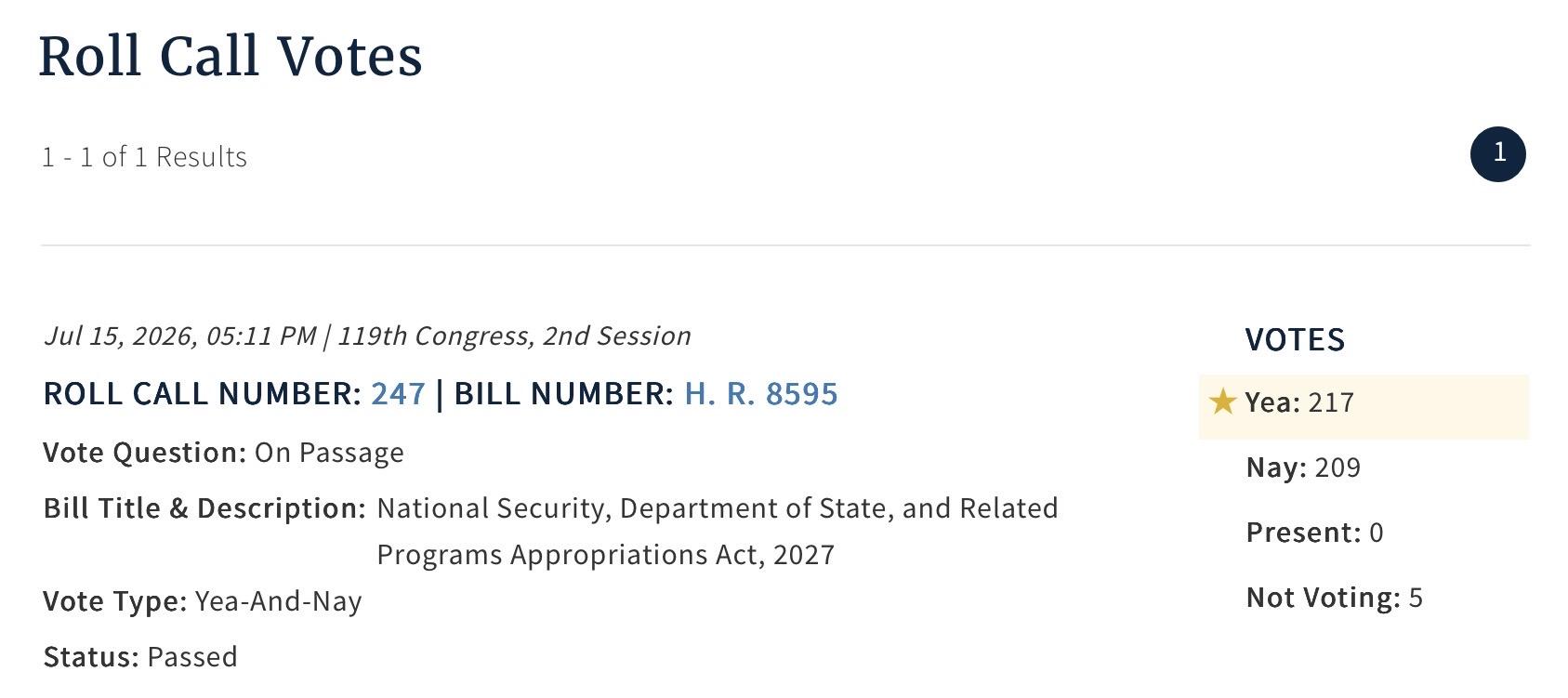
— On July 15, the US House Republicans passed a national security bill (1).
— This bill was based on a report from the Committee of Appropriations, which stated that the US is now working to help Marocco take over two Spanish territories in North Africa: Ceuta, Spanish since 1580, and Melilla, Spanish since 1497 (2).
So…
1/2
![[?]](https://files.mastodon.social/accounts/avatars/108/197/900/630/052/143/original/020394fc9a0b4155.png)

The #EU wanted to kill the #CookieBanner, but then #Google called.
https://tuta.com/blog/why-eu-member-states-and-google-want-to-keep-cookie-banner
![[?]](https://cdn.mstdn.ca/accounts/avatars/109/331/758/365/671/870/original/6caabffe6d655ca0.png)
4. Delete Gemini History
If you've used Gemini before, your chats may be saved, and some could be reviewed by humans.
Go to http://myactivity.google.com/product/gemini → Turn off Gemini Apps Activity → Delete Activity → All Time.
This removes your past Gemini chat history and stops future conversations from being saved.
5. Move Sensitive Emails
Turning off Gmail's smart features helps, but for truly private emails, consider using a separate service.
For medical, legal, or financial emails, use a free Proton Mail account. It offers end-to-end encryption and doesn't use AI to scan your emails.
Keep Gmail for newsletters, promotions, and less sensitive messages.
@Ayzacoder: Attention if you have a Gmail account:
Google's AI now scans your emails and attachments, bank statements, tax files, medical letters, all of it. It turned on by default, and there's a class-action lawsuit over how.
Here are 5 moves to shut it off, the switch is hidden in two places:

Alt...
CU photo of a smiling man in a suit and tie (Sundar Pichai) next to a large Google mail icon
Coming soon from #Google? ...
"Announcing an exciting new AI feature for Gmail! We know you love Gmail, but we also know it can get a bit boring at times. So we're pleased to announce the exciting new "Gmail AI Imagination" features -- turned on by default for all Gmail users on both our consumer and enterprise accounts!
How does it work?
You don't need to do anything! Gemini AI will automatically alter your inbound and outbound emails in imaginative ways sure to delight you and your email recipients. We don't want to give away the details now -- surprises are fun! -- but you can be sure that by the time Gemini is through imaginatively enhancing your email, you'll consider psychedelics to be something that only your parents and grandparents would have used!
Can I turn this feature off?
Of course -- your ability to control your own Google experience has always been part of the Google promise. To disable the new Gmail AI Imagination features, simple go to:
Gmail -> gear settings -> AI features -> node.493222.219183.4393.gaia.ndhx -> AI Imagination
Then toggle the 23 settings to off. Be sure to confirm each change the required 4 times.
How can I thank you for this great feature?
You can't. Don't even try. We've only gotten started putting AI in your life. Wait until you see what's next!"
L
#Chrome may get faster updates with no restart required
https://arstechnica.com/ai/2026/07/chrome-may-get-faster-updates-with-no-restart-required/
In the past, the relationship of a website with #Google has been a two-way street. Google indexes a website, it gets to monetize its search results on the index and it sends traffic to websites.
With Google's #AI Overview, Google has gone down the greedy route of making the relationship a one-way street. They get to not only index a website, but also scrape all its contents for use for its AI Overview and feed into its #LLM models, but websites get no traffic.
So: If you don't give me anything, you get nothing.
At some point, I am wondering if other websites will start blocking Googlebots also. Google broke the virtuous cycle and sooner or later they will pay for it.
https://mastodon.cloud/users/slashdot/statuses/117015924337736847