Search results for tag #fintech
![[?]](https://files.mastodon.social/accounts/avatars/116/751/863/753/392/750/original/be14ea1ddc815e7d.png)
Peer-to-peer lending platforms match borrowers and lenders using extensive credit and behavioral data, which is then retained and sometimes sold.
So what: freeze your credit at Equifax, Experian, and TransUnion. It's free and blocks most new-account fraud and data pulls.
![[?]](https://assets.journa.host/accounts/avatars/109/325/842/935/182/319/original/285189effff00e00.png)
#Russia has circumvented #sanctions and moved $6.9 bln through international banks, with the help of a Kremlin-backed #fintech company operating with forged documents.
This allowed the company to become part of the global financial system.
https://www.ft.com/content/3848a4ad-1426-4352-ba86-ef1279c4ffd1?syn-25a6b1a6=1
![[?]](https://tldr.nettime.org/system_nettime/accounts/avatars/109/528/493/326/851/300/original/ebc905e283d49e82.jpg)
"British fintech Revolut confirmed that it disclosed sensitive customer information to an unauthorized third party after receiving fraudulent requests sent from a legitimate government agency email domain.
The exposed data included customers’ identity and contact details, including their birth date, postal and email addresses, and phone numbers, as well as copies of their identity documents including passports and driver’s licenses, according to a notification emailed to affected customers and reviewed by TechCrunch. The data may have also included verification selfies, account statements, and transaction histories, the firm said in its notification.
A Revolut spokesperson confirmed to TechCrunch that a “limited” number of customers were impacted and said the company had contacted those customers directly. Revolut, however, did not disclose the exact number of impacted individuals. It also did not answer whether the incident was limited to a specific market and declined to disclose the government agency involved."
#CyberSecurity #Revolut #Fintech #SocialEngineering #DataBreach #Privacy
Your 401(k) administrator sees your whole financial picture. Firms like Fidelity and Empower now mine it to target you with affiliated annuities and loans, turning a workplace benefit into a marketing feed you can't opt out of.
![[?]](https://assets.chaos.social/accounts/avatars/000/064/046/original/8b34ae5e2f43d354.png)

![[?]](https://files.mastodon.social/accounts/avatars/115/742/434/865/105/205/original/ba2fa15026c28d18.jpeg)
Lago is a free, open-source billing platform that supports subscription, usage-based, and hybrid pricing models. It includes APIs for metering, invoicing, analytics, and payment integrations, making it a flexible choice for developer-focused services.
More details: https://digitalescapetools.com/tools/tool.html?id=lago
#OpenSource #SaaS #Billing #FinTech #AI #Developers #FOSS
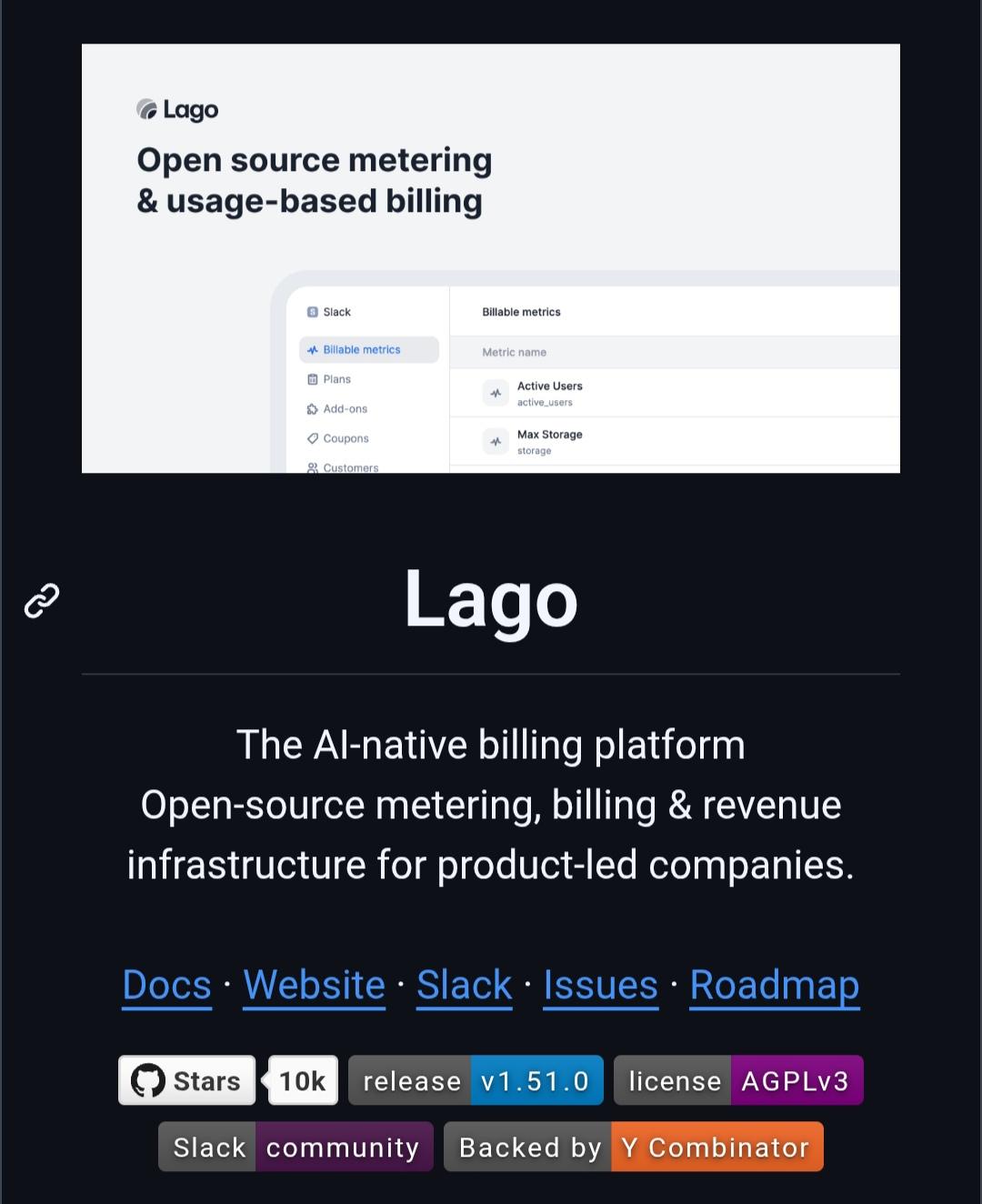
Alt...
Screenshot of the Lago project page showing the tagline "Open source metering & usage-based billing" and describing Lago as an AI-native, open-source billing platform for SaaS with metering, billing, and revenue infrastructure.
Banks have reported cash over $10,000 to FinCEN since 1970 — a threshold never adjusted for inflation. It would be near $80,000 in today's money, so routine transactions now flood a database federal investigators mine at will.
![[?]](https://files.mastodon.social/accounts/avatars/110/641/555/278/107/926/original/60e39d3280d3b645.png)
ohlordhavemercy this story isn't even about #fintech but about Omer Ismail, a guy failing upwards at the intersection of the #finbros and #techbros cabal.
Is America’s next fintech titan… Walmart? https://www.semafor.com/article/07/21/2026/is-americas-next-fintech-titan-walmart
Lenders keep your SSN, pay stubs, and financial statements indefinitely — and that permanent store is a breach target shared with affiliates and brokers. Unlike a password, a leaked SSN is something you can never change.
![[?]](https://files.mastodon.social/accounts/avatars/114/368/991/106/654/640/original/4055052cf2bcf4e8.png)
ChatGPT finance tools now allow some users to link bank and credit card accounts via Plaid for budgeting and spending analysis. 💳
Privacy experts warn conversational AI may increase sensitive financial oversharing despite read-only access and user-controlled disconnect options. 🔐
#TechNews #AI #FinTech #Privacy #CyberSecurity #OpenAI #ChatGPT #Security #Banking #PersonalFinance #Plaid #Consumer #FOSS #MachineLearning
![[?]](https://soc.octade.net/octade/s/3f7f2b5eda4e392867c301c49c2daa16.png)
[copypasta]
Why Are You Paying Just to Pay?
Paying to Pay | How the System Makes Money Moving Your Money
You go to work.
You get paid.
And then — almost immediately — you start paying money…
just to use that money.
In this episode of Plain Meaning, we examine how paying money became something you have to pay for.
We explore:
• What actually happens when you tap your card at a register
• Why your money doesn’t move when you think it does
• How “authorization,” “clearing,” and “settlement” really work
• What the financial system calls the “float” — and who profits from it
• Why banks are using your money long before you spend it
• The 1978 Supreme Court decision that dismantled state interest rate limits
• How federal regulators expanded fees beyond interest
• The role of the 1990s deregulation era in locking the system into place
• How government mandates pushed Americans into card-based payments
• Why faster technology didn’t make payments cheaper — only more profitable
• How countries like Brazil and Poland built systems that move money instantly and at near-zero cost
For decades, the system has been explained in simple terms:
You pay.
They get paid.
But that’s not what happens.
Your money is held.
Delayed and routed through institutions that profit from the time it spends in transit.
The delay has a name.
It’s called the float.
Watch until the end for the deeper question:
If it is now possible to move money instantly —
and at almost no cost —
why are you still paying to use your own money?
#Payments #DigitalPayments #CreditCards #DebitCards #Fintech #CardFees #InterchangeFees #BankingSystem #FinancialRegulation #PlainMeaning #checking #cash