Search results for tag #english
![[?]](https://babka-mastodon.nyc3.cdn.digitaloceanspaces.com/accounts/avatars/110/442/989/214/760/177/original/13b5db783f313d53.png)
"For many #Jews, the morning of #Oct7 remains seared into memory. In #JoannSfar’s case, it was also the day of his birthday party, which included “as many #Muslims as Jews,” he told me. Amidst tragedy, #Sfar felt a profound gratitude for life, which seemed especially precious. It was a day of fear and uncertainty, followed by many more over the following months. For Sfar, drawing was the only way out.
To Life is Sfar’s #illustrated journal of his experience after Oct. 7, a reflection of his fierce peace advocacy coupled with a profound connection to #Israel. It follows several previous #books by Sfar, who is a #French #Jewish #graphicnovelist best known for The Rabbi’s Cat. His works touch on his #Sephardic heritage, highlighting a history of friendship and brotherhood between #Arabs and Jews.
To Life is the #English #translation of Nous Vivrons, which was #published in June 2024 as the first of a three-part series."
https://forward.com/culture/books/840947/graphic-novelist-october-7-to-life-joann-sfar/
![[?]](https://files.mastodon.social/accounts/avatars/115/070/625/860/923/251/original/9629d01039476748.png)
I've long been suspicious of claims of agency – and of psychology more generally. And I'm still unsurprised at how many misunderstand the notion of evolution and the problem of natural selection, not as a process but as a phrase.
👉 https://brywillis634737.substack.com/p/the-bacterium-does-not-want-to-live
Not being a biologist, I decided to look at this through the lens of language.
#philosophy #language #biology #science #evolution #grammar #bacteria #agency #life #purpose #survival #naturalselection #darwin #English

![[?]](https://s3.us-west-1.wasabisys.com/thereslife/accounts/avatars/109/297/497/169/378/689/original/d5a6a68ca48cc93d.png)
Such a wonderful video about English spelling and pronunciation.
https://youtu.be/Im0x7ftV6Mw?si=mIAw71EO73YAoX8W
#English #language #linguistics
![[?]](https://files.mastodon.social/accounts/avatars/115/967/890/192/375/774/original/79861f67f1d57c00.png)
RE: https://social.vivaldi.net/@Kukmetz/117048380057412377
#English version (hopefully #Translated in the link / auto-quoted below)
https://mastodon.social/@Kukmetz@vivaldi.net/117048380321054927
Europe is Europing. 
"#Cyberwell has alerted #X/ #Twitter of a new wave of #antisemitic #conspiracy theories blaming #Jews for #wildfires across #Europe, the #NGO announced in a statement on Monday.
The organization, whose goal is to combat online #antisemitism, identified “nearly identical narratives” regarding recent wildfires in #Norway, #France, and #Spain, reinforcing what Cyberwell describes as a “recurring pattern of event-driven antisemitism, in which major crises are exploited to spread hate toward Jews.”
Posts in #English, #French, and #Spanish claiming that Jewish people deliberately sparked the #fires or orchestrated them for political or financial gain were identified by the organization’s analysts."
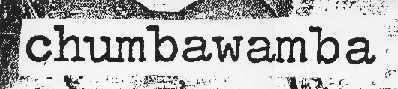
@xinit #Chumbawamba = #English #UK #British #Burnley #Leeds #Folk #Band
I have all #albums :D #discograohy
Precise in #lyrics and as #personal-#political #movement.
Hard to hear sometimes - but always true like a #bookmark of what to remember in each and every #song title.
#Music #talent - one of highest in musical-#social-#movement - not easily seen i n 1 or 2 tracks of loading a video.
#discog list + links here:
https://thepiratebay.org/description.php?id=8361682
#punk #music #political #pop #rock #dance !!!
![[?]](https://cdn.mastodon.africa/accounts/avatars/111/459/247/072/405/861/original/992bacc7a196d30a.jpg)
![[?]](https://o.mastodon.nz/accounts/avatars/109/295/380/914/210/008/original/8440cdd70cebf782.jpg)

On a day when the #NZPol Coalition of Corruption prioritised passing a law that makes the #English language an official language of #Aotearoa #NewZealand over hearing and passing Labour MP Camilla Belich's sexual consent reform legislation, this very engaging, educational and incredibly relevant report from Te Ao with Moana is released.
Moana visits #Ireland and #Wales comparing the treatment of the indigenous #Irish and #Welsh people and #Māori under #UKPol colonisation and the action taken to save their reo and #celtic culture.
“#Egypt is my homeland, the land of my birth. There I grew up and was raised. She is my teacher and the source of my livelihood, the place where I wake and where I sleep. I have no other country to love.”
With these words by the #Cairo-born #Jewish #poet #MouradFarag, #NaglaaAbdelHaq opens her #book, #Jews and #Greeks in #Egypt and Their Economic Role until 1960. Tracing the careers of entrepreneurs from ethnic and religious minorities, the book focuses on the country’s two largest minorities at the time—its #Jewish and #Greek communities.
#Translated from #English and published in #Arabic by #DarAlKarma, the book grew out of a doctoral dissertation for which the #Palestinian-#German researcher received her PhD in #MiddleEastern Studies from #FriedrichAlexanderUniversity #ErlangenNuremberg."
![[?]](https://media.mastodon.scot/accounts/avatars/109/318/532/504/799/614/original/403026568ed524d5.jpeg)
I thought this article might end up just being a somewhat tired regurgitation of the well known habit English speakers have of borrowing words from other languages (and enriching English). But it does bear reading - the delegitimisation of a language, Scots in this case.
#language #Scots #delegitimisation #slang #english
![From the linked article. A man reads part of the Oxford Dictionary of English with the text
How the English dictionary took Scots words and branded them 'slang
THE Oxford English Dictionary (OED) has delegitimised the Scots language by adding several new “Scottish” words.
While English and Scots are sister languages characterised by mutual intelligibility, they are still very much separate languages with their own grammar, syntax and words. But decades of cultural oppression persist and Scots remains reduced to either slang, or, in this case, an offshoot of English.
One of the recently added Scots words is “scaffie”, meaning “raggedy”. But writing as a Scots language author who spent nine years living in England, I never once heard an English-only speaker say scaffie (also spelled as scaffy). The other recent additions to the English dictionary – including “loup” and “gowp” – are even worse.
READ MORE: Bòrd na Gàidhlig invites Reform for talks after attack on Gaelic language
Fiona McPherson, the Scottish executive editor at the OED, said: “It’s always special when I get to work on Scottish words, and those included in this update of the OED are evocative and familiar.
“While new to the OED, [others] have long established histories. Loup and gowp are found as early as the 16th and 18th centuries respectively, meaning ‘of the heart, blood: to beat or pulse rapidly or strongly’. The later sense of ‘to throb or ache with a pulsating pain’ has also been included.”
There are many things wrong with this statement. The most glaring being that the dictionary’s Scottish executive editor chose to describe these words as Scottish and not examples of the Scots language – a year on from Scots receiving legal recognition and protection for the first time in history with the Scottish Languages Act.
This emphasises how far we still have to go when it comes to having Scots recognised as a leid. Especially as it has legal recognition by Unesco since 2009 and the European Charter for Minority Languages since 2001.
According to the OED, for a word to be included, its development needs to be researched using sources including “newspaper archives, online forums, academic studies, magazines, law tracts, recipe books, or social media for published evidence of the word”. But if the new additions are anything to go by, the Scots origins of these words have been ignored and/or reduced.
While languages mix and evolve over time and a lot of words are “loaned” from one leid to another, their origins need to be acknowledged and respected, especially by an institution with as much linguistic respect as the OED.](https://media.mastodon.scot/media_attachments/files/116/928/765/850/405/933/original/8ea3fc222d6c597b.png "From the linked article. A man reads part of the Oxford Dictionary of English with the text
How the English dictionary took Scots words and branded them 'slang
THE Oxford English Dictionary (OED) has delegitimised the Scots language by adding several new “Scottish” words.
While English and Scots are sister languages characterised by mutual intelligibility, they are still very much separate languages with their own grammar, syntax and words. But decades of cultural oppression persist and Scots remains reduced to either slang, or, in this case, an offshoot of English.
One of the recently added Scots words is “scaffie”, meaning “raggedy”. But writing as a Scots language author who spent nine years living in England, I never once heard an English-only speaker say scaffie (also spelled as scaffy). The other recent additions to the English dictionary – including “loup” and “gowp” – are even worse.
READ MORE: Bòrd na Gàidhlig invites Reform for talks after attack on Gaelic language
Fiona McPherson, the Scottish executive editor at the OED, said: “It’s always special when I get to work on Scottish words, and those included in this update of the OED are evocative and familiar.
“While new to the OED, [others] have long established histories. Loup and gowp are found as early as the 16th and 18th centuries respectively, meaning ‘of the heart, blood: to beat or pulse rapidly or strongly’. The later sense of ‘to throb or ache with a pulsating pain’ has also been included.”
There are many things wrong with this statement. The most glaring being that the dictionary’s Scottish executive editor chose to describe these words as Scottish and not examples of the Scots language – a year on from Scots receiving legal recognition and protection for the first time in history with the Scottish Languages Act.
This emphasises how far we still have to go when it comes to having Scots recognised as a leid. Especially as it has legal recognition by Unesco since 2009 and the European Charter for Minority Languages since 2001.
According to the OED, for a word to be included, its development needs to be researched using sources including “newspaper archives, online forums, academic studies, magazines, law tracts, recipe books, or social media for published evidence of the word”. But if the new additions are anything to go by, the Scots origins of these words have been ignored and/or reduced.
While languages mix and evolve over time and a lot of words are “loaned” from one leid to another, their origins need to be acknowledged and respected, especially by an institution with as much linguistic respect as the OED.")
Alt...
From the linked article. A man reads part of the Oxford Dictionary of English with the text
How the English dictionary took Scots words and branded them 'slang
THE Oxford English Dictionary (OED) has delegitimised the Scots language by adding several new “Scottish” words.
While English and Scots are sister languages characterised by mutual intelligibility, they are still very much separate languages with their own grammar, syntax and words. But decades of cultural oppression persist and Scots remains reduced to either slang, or, in this case, an offshoot of English.
One of the recently added Scots words is “scaffie”, meaning “raggedy”. But writing as a Scots language author who spent nine years living in England, I never once heard an English-only speaker say scaffie (also spelled as scaffy). The other recent additions to the English dictionary – including “loup” and “gowp” – are even worse.
READ MORE: Bòrd na Gàidhlig invites Reform for talks after attack on Gaelic language
Fiona McPherson, the Scottish executive editor at the OED, said: “It’s always special when I get to work on Scottish words, and those included in this update of the OED are evocative and familiar.
“While new to the OED, [others] have long established histories. Loup and gowp are found as early as the 16th and 18th centuries respectively, meaning ‘of the heart, blood: to beat or pulse rapidly or strongly’. The later sense of ‘to throb or ache with a pulsating pain’ has also been included.”
There are many things wrong with this statement. The most glaring being that the dictionary’s Scottish executive editor chose to describe these words as Scottish and not examples of the Scots language – a year on from Scots receiving legal recognition and protection for the first time in history with the Scottish Languages Act.
This emphasises how far we still have to go when it comes to having Scots recognised as a leid. Especially as it has legal recognition by Unesco since 2009 and the European Charter for Minority Languages since 2001.
According to the OED, for a word to be included, its development needs to be researched using sources including “newspaper archives, online forums, academic studies, magazines, law tracts, recipe books, or social media for published evidence of the word”. But if the new additions are anything to go by, the Scots origins of these words have been ignored and/or reduced.
While languages mix and evolve over time and a lot of words are “loaned” from one leid to another, their origins need to be acknowledged and respected, especially by an institution with as much linguistic respect as the OED.
I look at patterns in LLM output. The tell is more than simple orthographic tics.
https://philosophics.blog/2026/07/07/ai-language-patterns/?utm_source=masto&utm_medium=social
#philosophy #language #llms #ai #artificialintelligence #patterns #comprehension #writing #training #history #english #learning #blog #video #critique #commentary #spelling #pronunciation #content
This morning I awoke thinking about sex – actually gender – of borrowed Latin words. Get your mind out of the gutter.
👉 https://brywillis634737.substack.com/p/we-still-bury-the-dead
I wrote a piece about it, but I was truly conflicted on my journey, especially as I compared English and French approaches, and a potential feminist rift.
#philosophy #language #sociolinguistics #etymology #english #french #latin #gender #writing #culture #feminism #linguistics #reform #administration
![[?]](https://cache.treehouse.systems/accounts/avatars/110/628/855/321/239/565/original/02818afb40ed82f7.jpeg)
#TIL that "geek" used to mean a carnival freak.
(by watching Nightmare Alley (1947))
![[?]](https://files.mastodon.social/accounts/avatars/000/007/112/original/388649acb2026701.webp)
🆕 blog! “This blog is written in en-GB”
Someone left a comment on my blog recently asking if I'd mind making my language more inclusive. They didn't get some of the cultural references I'd used and suggested it would be easier if I used tropes which were more globally known.
Here's the thing. No.
All my blog posts start with a simple declaration:
<!doctype html>
<html…
👀 Read more: https://shkspr.mobi/blog/2026/07/this-blog-is-written-in-en-gb/
⸻
#blogging #English #language
Les Années Vécues
https://philosophics.blog/2026/07/01/les-annees-vecues/?utm_source=masto&utm_medium=social
I’ve shared a piece of fiction writing meta content and the rôle of LLMs in my writing workflow, in particular, a punch list to track idea instantiation. I don’t, however, discuss my fondness for diacritical marks, especially those with no phonetic function.
#philosophy #writing #fiction #timetravel #LLM #scifi #process #author #time #blof #podcast #language #workflow #frnech #english #shortstory #method #ai #matrix #spreadsheet #google #claude #chatgpt
Rival Patrons in French and English
https://youtu.be/Yp-GxhOU0fc
#language #french #english #satire #patron #boss #restaurants #trivia
It's strange how Americans tend to say pythON and amazON, where we tend to say pythin and amazin, but they tend to say recird while we say recORD (for the noun, I mean. The pronunciation of rhe verb is different again).
This stuff is so interesting to me. How different words are pronounced different ways in different places and how that came about.
![[?]](https://soc.octade.net/octade/s/3f7f2b5eda4e392867c301c49c2daa16.png)
Hexlish Alphabet for English, Constructed Languages and Cryptography: Automatic, Structural Compression with a Phonetic Hexadecimal Alphabet
DOI : https://doi.org/10.5281/zenodo.13139469
Hexlish is a legible, sixteen-letter alphabet for writing the English language and for encoding text as legible base 16 or compressed binary. Texts composed using the alphabet are automatically compressed by exactly fifty percent when converted from Hexlish characters into binary characters. Although technically lossy, this syntactic compression enables recovery of the correct English letters via syntactic reconstruction. The implementer can predict the size of the compressed binary file and the size of the text that will result from decompression. Generally it is intuitive to recognize English alphabet analogues to Hexlish words. This makes Hexlish a legible alternative to the standard hexadecimal alphabet.
#Hexlish #Conlang #Alphabets #English #Hexadecimal #Encoding #Cryptography #Ciphers #Crypto #Encryption #Compression #Papers #Preprints #Orthography #Language #Linguistics #Writing #Glyphs #Alphabetology #Technology
Alt...
Hexlish Alphabet logo. The word HEXLISH in rainbow colors on a black background with a hexagonal dot above the letter I. Beneat the logo in yellow reads the phrase, "English Text Compression & Encoding."