Search results for tag #computerscience
![[?]](https://files.mastodon.social/accounts/avatars/114/294/472/025/485/211/original/f87107f9a2f3d41c.jpeg)
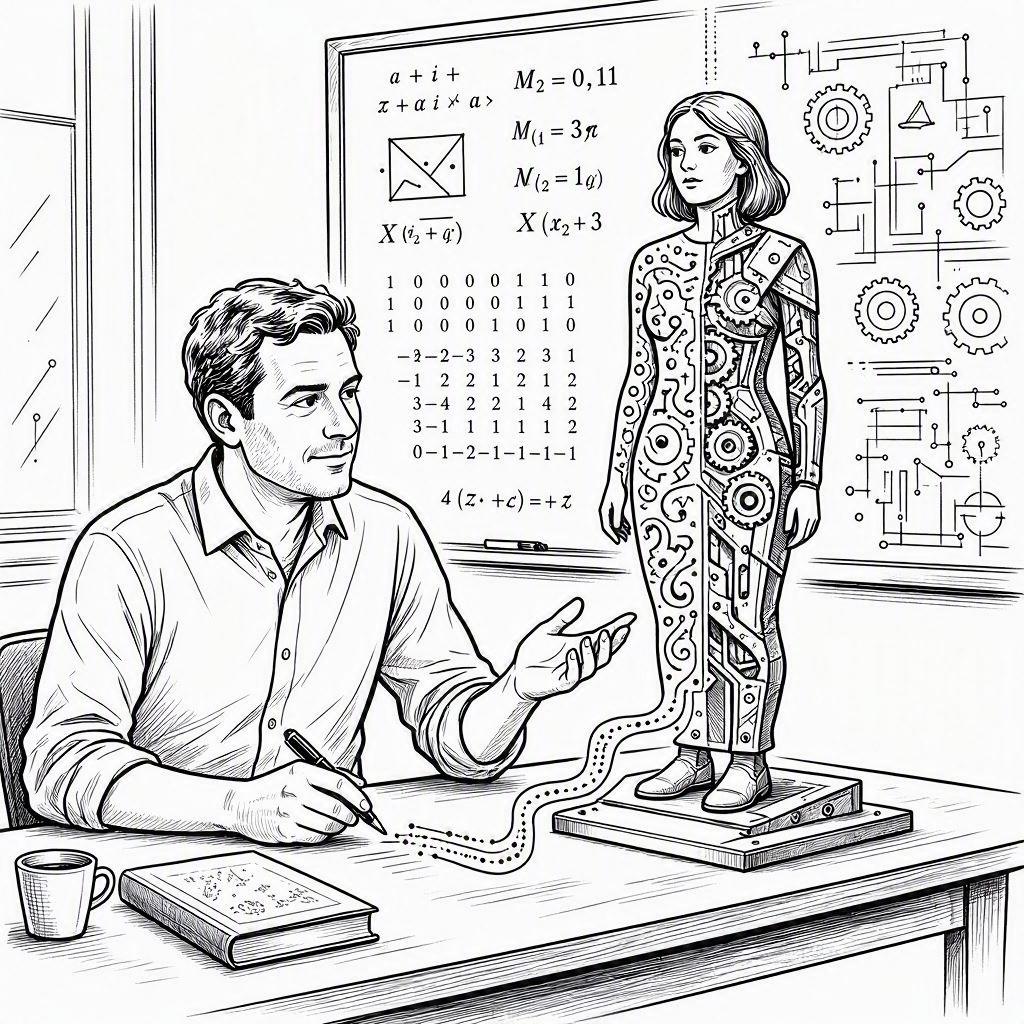
Quanta Magazine staff writer Ben Brubaker waxes philosophical about the lives computer science has lived as the daughter of both mathematics, and engineering, and how both origins have contributed, in different moments, and at the same time, to its flourishing as a science, informing other branches of the natural sciences.
"Does Computer Science Need Computers?"
https://www.quantamagazine.org/does-computer-science-need-computers-20260828/
Alt...
A black-and-white line-art illustration of a man seated at a desk, holding a pen and gesturing toward a humanoid figure made of mechanical gears, circuits, and abstract patterns. The figure stands on a platform beside him. Behind them, a chalkboard displays mathematical equations, symbols, numerical sequences, and diagrams, while additional circuit and gear illustrations decorate the wall. A book and cup sit on the desk in the foreground. Image designed and executed by MAI-Image-2.5-Flash.
![[?]](https://cdn.masto.host/socelnet/accounts/avatars/109/324/028/699/227/350/original/dafac551d4cb0319.jpg)

New publication! 🎉💻
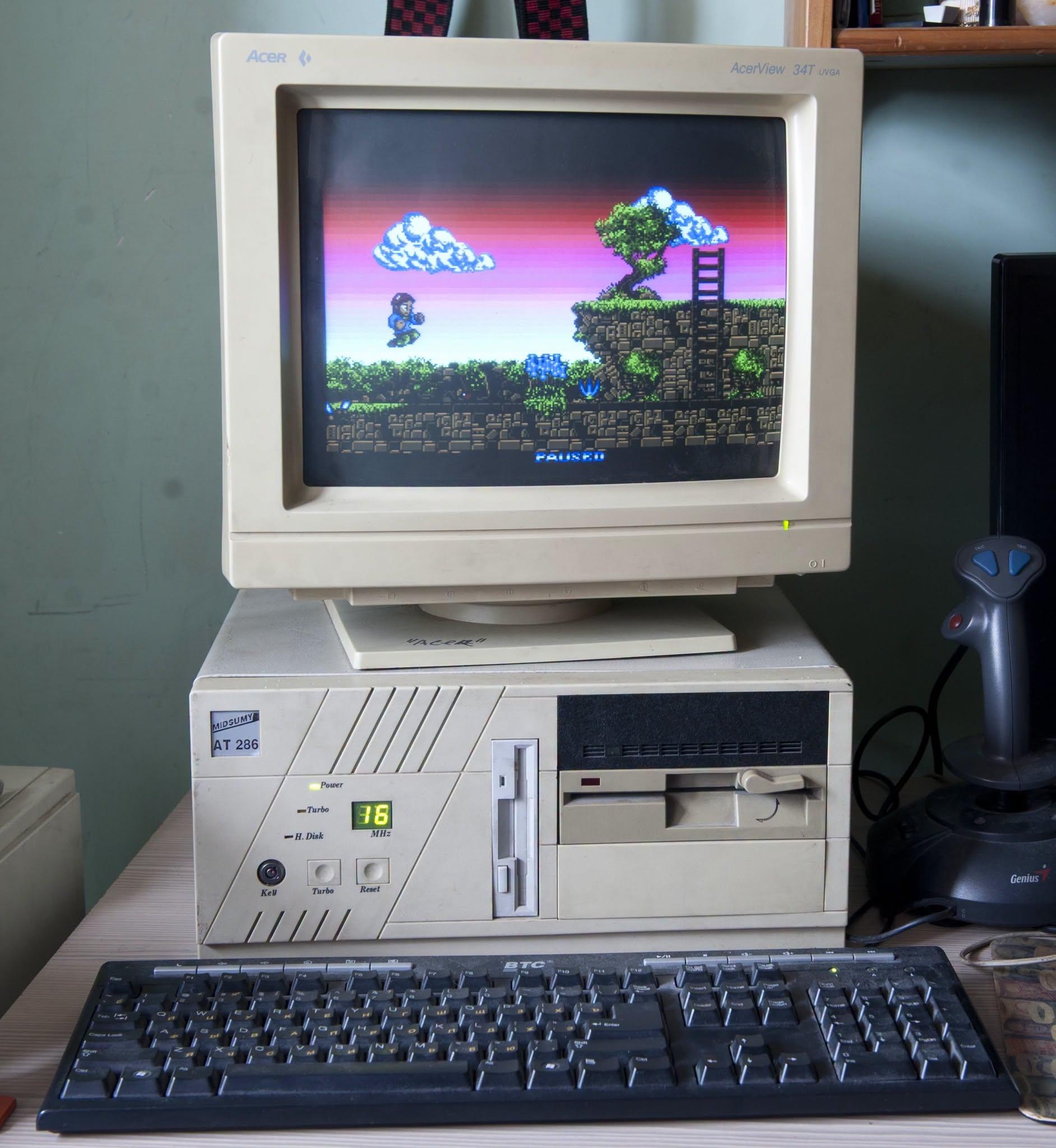
My first paper in computer science is out: *Retrocomputing as a Model for Sustainable and Cognitive Computing*.
I explore what low-resource computing can teach us about computational minimalism, attention and sustainable design. 🧠🌱
#ComputerScience #Retrocomputing #HCI #SustainableComputing #CognitiveSustainability
Alt...
A picture of a 286 PC.
![[?]](https://o1.theatl.social/accounts/avatars/110/056/337/313/466/888/original/a6c25fb32f1f4bab.png)
For people who write code for a living, software engineer, web developer, etc. Do you use AI to write code:
#SoftwareEngineering #softwaredevelopment #computerScience
| 100% Of the time: | 2 |
| A majority of the time: | 2 |
| Sometimes, depends on the project: | 5 |
| Not at all: | 12 |
Closed
![[?]](https://files.mastodon.social/accounts/avatars/000/310/087/original/3627ecc8e6d9d524.jpg)
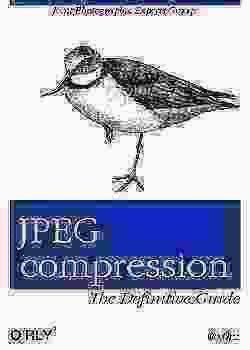
Another pressing from O'Rly? Books 😉
Parody as homage.
#OReillyBooks #OrlyBooks #parody #humor #DoverPictoralArchives #ComputerScience #education
Alt...
Parody of O'Reilly Press book cover: An intentionally blurred image, barely readable, with a bird from the Dover Pictorial Archive and text "Joint Photographic Experts Group. JPEG compression: The Definitive Guide. O'RLY?"
![[?]](https://gamerplus.org/system/accounts/avatars/112/446/863/336/724/930/original/489bcc47f207da51.png)
The Lispy gopher Show chat on Lambda Moo is full of computer scientists who are AI skeptical. Not of the algorithm. Of it's use.
Enjoy The Lispy, Gopher, Climate Show at zero hundred hours UTC each Wednesday. A programming show with a focus on lisp and climate change.
Listen on aNONradio
https://anonradio.net
Chat on Lambdamoo
telnet lambda.moo.mud.org 8888
co guest
@join screwtape or @join mdh
Also check out Cory Doctorow
https://pluralistic.net/
![[?]](https://mastodon-acm-org.s3.bhs.io.cloud.ovh.net/accounts/avatars/109/479/889/439/101/442/original/f6002cf354d61dca.png)
As we celebrate this new beginning, we also extend our heartfelt gratitude to Pat Ryan for her extraordinary leadership, dedication, and vision during her tenure as interim CEO.
Please join us in thanking Pat for her service and welcoming Alison to her new role! 👏
📖 Read the full announcement: https://www.acm.org/media-center/2026/july/acm-names-new-ceo-2026
![[?]](https://soc.octade.net/octade/s/3f7f2b5eda4e392867c301c49c2daa16.png)
Rhizome Function Anagram Random Generator
preprint | https://zenodo.org/records/21551292
doi | https://orcid.org/0009-0009-5144-3278
Herein are described principles and a scheme of random number generation styled as, pangrandomonium, or ‘pangrand’. Pangrand is a anagrammatic random number generator that uses rhizome functions as chaotic indexing and shuffling instructions to reorder and sum perfect pangrams. Brief descriptions are given for the principles of pangram summing and rhizome indexing functions, Source code of the random number generator is included herewith. The source code is attached to the PDF file.
Sections:
1. Pangrams (Holoalphabetic arrays) ;
2. Rhizome Functions ;
3. Rhizome Hardness Problems ;
4. Random Generator Methods ;
5. Errata ;
6. Source Code.
#Preprints #Random #Cryptography #RNG #Pangrams #Anagrams #Pascal #Papers #RhizomeFunction #AcademicMastodon #Cryptology #Math #NumberTheory #Papers #Academia #ComputerScience #CompSci #AcademicChatter #OpenScience
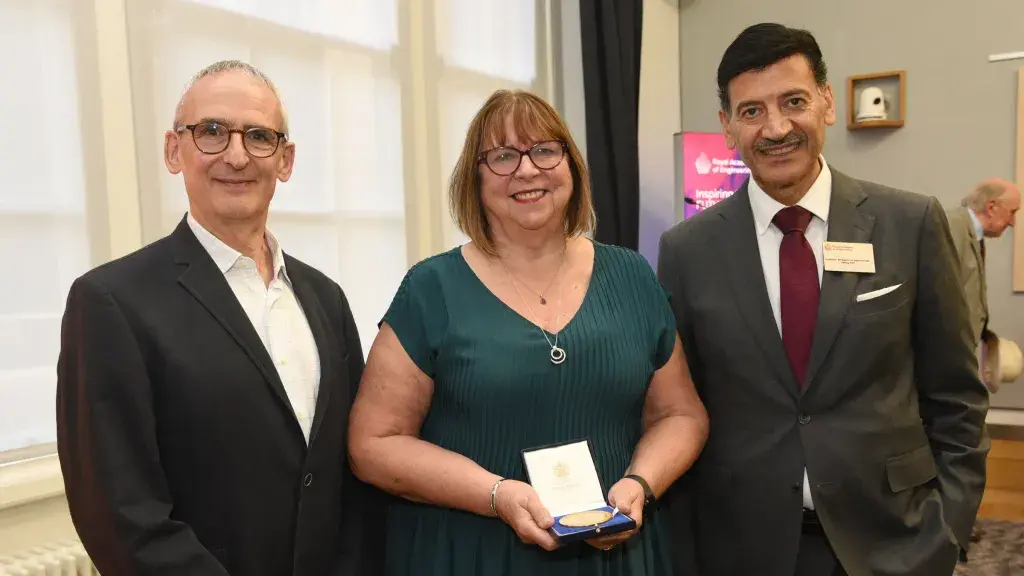
Congratulations to Professor Dame Wendy Hall, Regius Professor of Computer Science at the U.K.’s University of Southampton, on winning the prestigious Sir Frank Whittle Medal! 🏆
Former ACM President & current ACM Publications Board Co-Chair, she continues to advocate for safety, diversity, and societal impact in tech. 💡
Look out for her new book, AI Explained, coming out this September! 📚
https://cacm.acm.org/news/dame-wendy-hall-receives-sir-frank-whittle-medal/
#WomenInSTEM #AI #ComputerScience #TechNews
![[?]](https://files.mastodon.social/accounts/avatars/110/441/535/131/897/219/original/0ddf9d4dd12a5dee.png)
The man whose codebreaking may have helped to shorten the Second World War by two years met a grim reward: in 1952 Alan Turing was convicted simply for being gay and chemically castrated; a royal pardon came only in 2013, decades after his death
By Space Daily Editorial Team
More information about Alan Turing:
https://en.wikipedia.org/wiki/Alan_Turing
#computerScience #cryptanalysis #lgbt

Alt...
Photograph portrait of Alan Turing, taken on 29 March 1951.
A black-and-white portrait photograph of Alan Turing, wearing a tweed jacket, striped shirt, and tie. He's looking slightly off to the side with a thoughtful expression.
Pixel: a biography
An exact mathematical concept, pixels are the elementary particles of pictures, based on a subtle unpacking of infinity
By Alvy Ray Smith, Edited by Nigel Warburton
#books #technology #ComputerScience

Alt...
A pixel does not need to be rendered as a small square. This image shows alternative ways of reconstructing an image from a set of pixel values, using dots, lines, or smooth filtering.
Three panels showing image reconstruction/rendering at increasing resolution: (left) a coarse dotted/pixelated pattern of a "Z"-like shape, (middle) a finer striped/dithered version, (right) a smooth, high-resolution photo-like curve — illustrating progressive image reconstruction from low to high pixel density.
Happy Birthday, Richard E. Stearns! Stearns received the 1993 #ACMTuringAward with Juris Hartmanis in recognition of their seminal paper which established the foundations for the field of computational complexity theory.
In this video, Stearns describes how he and Harmanis discovered the breakthroughs that contributed to their paper. The full video is here: https://youtu.be/Z-Ek0CCThZQ?si=3N5QU1RNmNqJb8ia
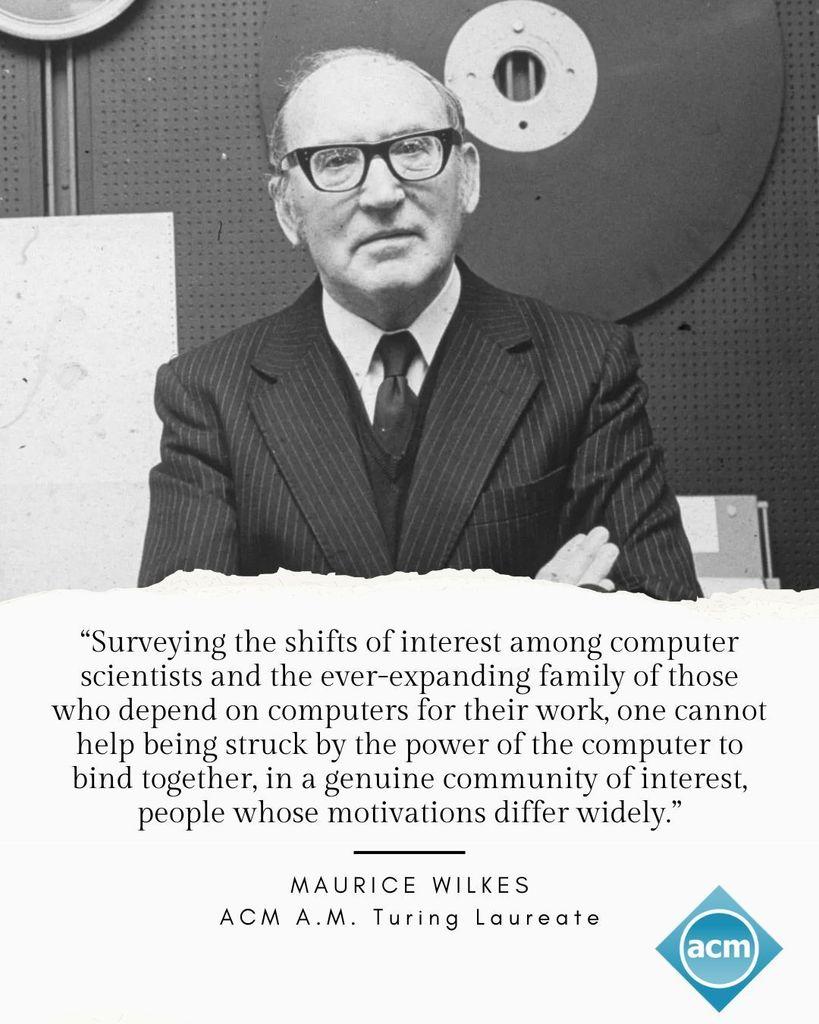
On this day in 1913, Maurice V. Wilkes was born. Wilkes is best known as the builder and designer of the EDSAC, the first computer with an internally stored program. He received the 1967 #ACMTuringAward for his many contributions to the field of #computerscience: https://amturing.acm.org/award_winners/wilkes_1001395.cfm
![[?]](https://media.mathstodon.xyz/accounts/avatars/109/273/085/632/487/926/original/628918ae54d344a7.jpg)
The Joy of Cryptography — an undergraduate-level textbook introducing the fundamentals of provable security https://joyofcryptography.com #cryptography #computerscience #online #book

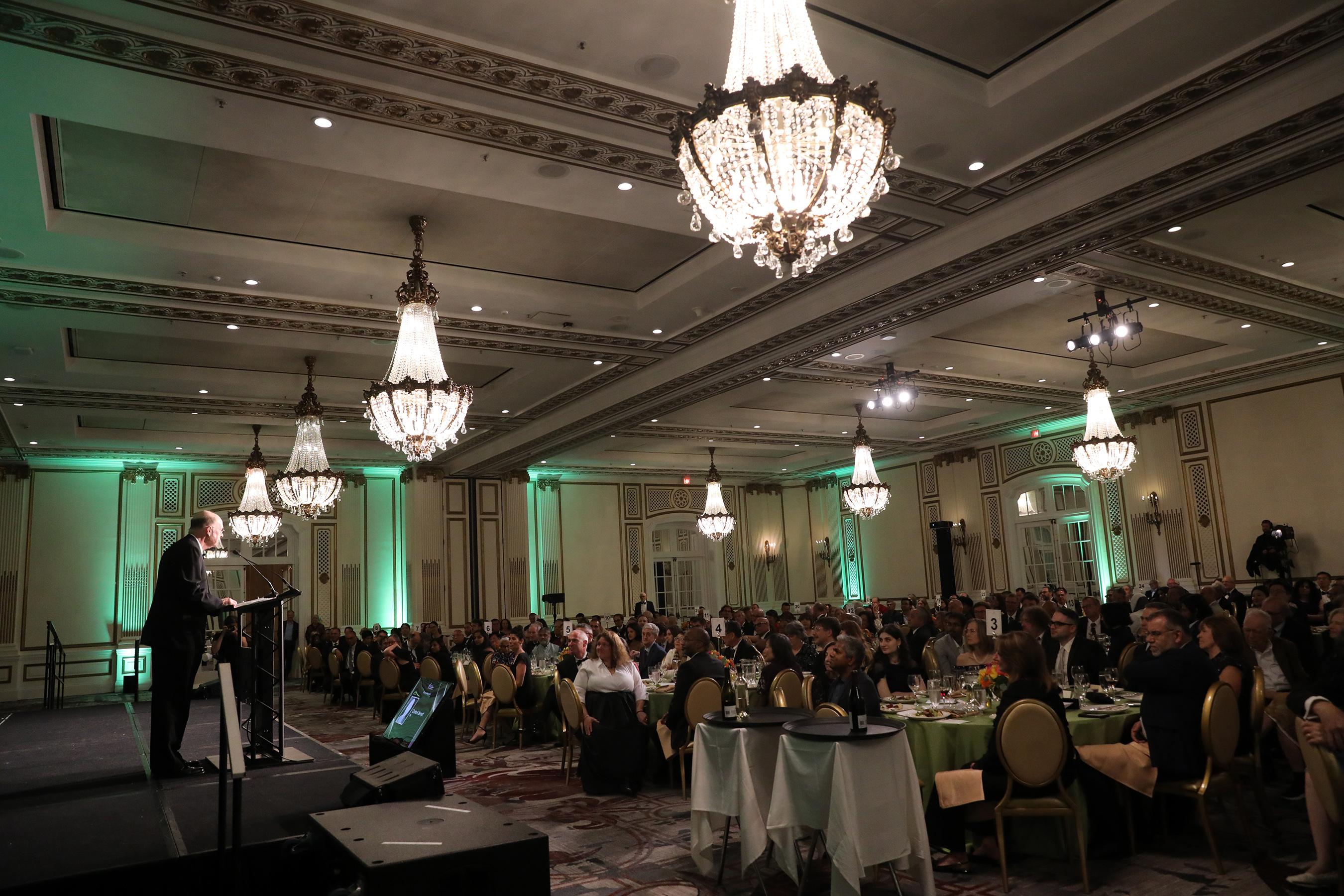
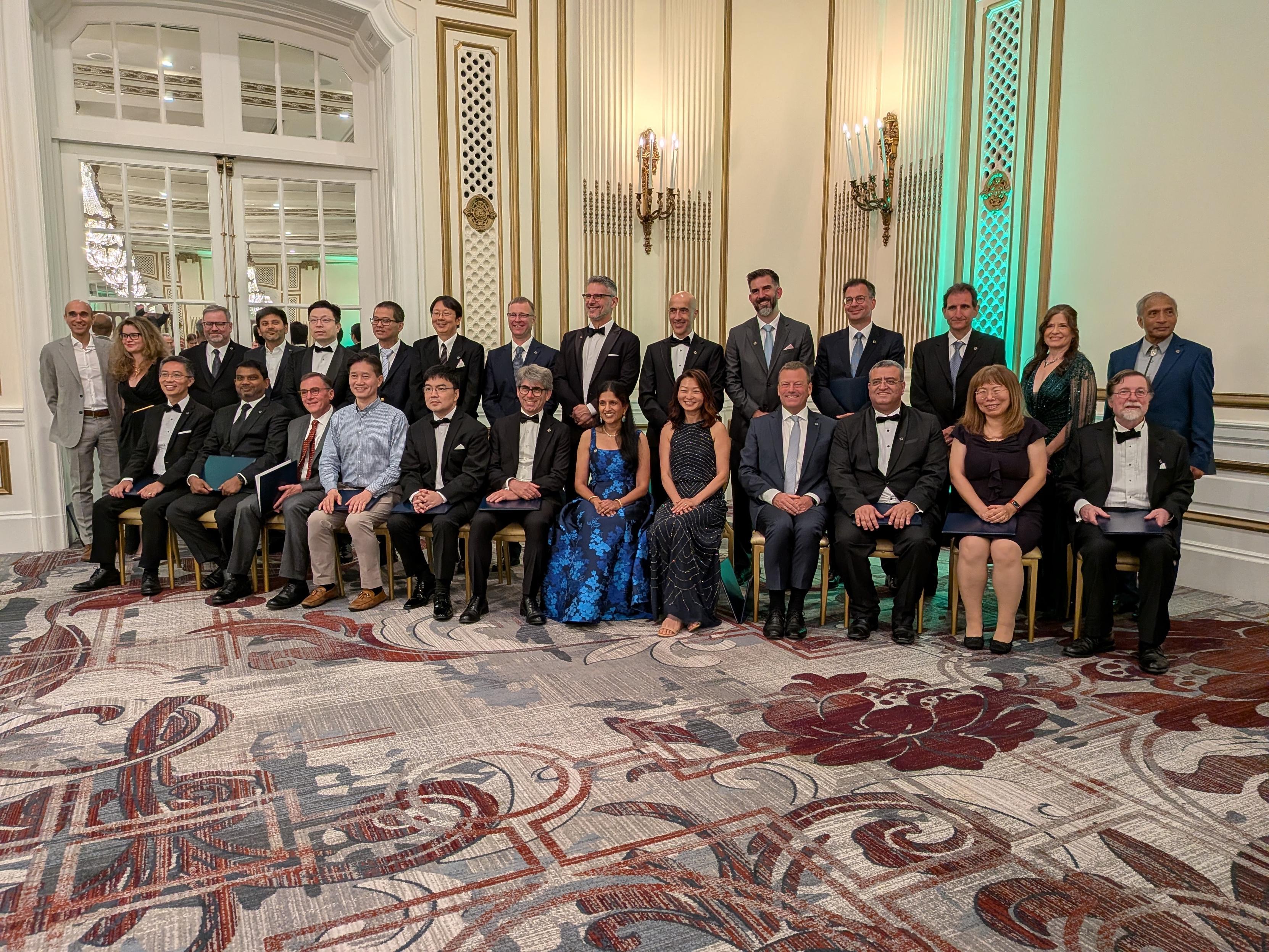
It was an honor to host these brilliant thinkers, pioneers, and rising stars, whose work continues to shape the digital landscape and improve lives globally.
We extend our deepest gratitude to all the laureates for their dedication, to our community for its enduring support, and to everyone who joined us to make this weekend’s celebration so memorable.
Take a look at some of the highlights and snapshots from the evening below! 📸👇
#ACM #Awards #Computing #ComputerScience #Innovation
Alt...
The 2026 ACM Fellows
Happy Birthday to Alonzo Church. Born on June 14, 1903, Church helped establish the mathematical foundations of computer science through his work on lambda calculus, computability, and the Church–Turing thesis. His ideas continue to influence programming languages, algorithms, and our understanding of what computers can and cannot do.
![[?]](https://media.infosec.exchange/infosec.exchange/accounts/avatars/113/247/756/313/164/165/original/70ea71b3dff2cf65.jpg)

React-like syntax with WebComponents.
After spending some time with Lit, I really appreciated its lightweight footprint but wasn't a fan of the class-based components. While Vue offers a great approach, I still prefer the intuitive nature of React's syntax for debugging and deterministic rendering. This led me to a challenge: could I build a UI framework using WebComponents that completely eliminates the need for transpilation?
I have written a breakdown of the concept, the architecture, and where I want to take it. I highly invite you to take a look, check out the code, and explore the live demo.
* How it works: https://positive-intentions.com/docs/projects/dim/dim-jsx-webcomponents
* Checkout the code: https://github.com/positive-intentions/dim
* Storybook demo: https://dim.positive-intentions.com
Please note, while the project is open-source, this is a personal exploration rather than an attempt to launch "yet another framework." It is not production-ready and is built for my own upcoming project migrations, but I am sharing it in hopes that the methodology is educational or interesting to the community.
I would love to hear your thoughts on this approach. Feel free to reach out if you have any questions or want to discuss the implementation details.
#WebDev #WebDevelopment #Frontend #FrontendDev #JavaScript #JS #TypeScript #TS #HTML #HTML5 #CSS #SoftwareEngineering #SoftwareEngineer #Coding #Programming #WebDesign #OpenSourceProject #IndieDev #SideProject #Tech #Technology #DevCommunity #Fediverse #FediverseDevs #WebStandards #CustomElements #ShadowDOM #VanillaJS #NoTranspiler #NoBuild #BuildStep #EsModules #ComponentDriven #UIUX #DesignSystems #TechExperiment #LearningInPublic #Developer #ComputerScience #OSS #Github #React #WebComponents #Lit #Vue #ReactJS #JSX #Storybook #TechArticle #TechBlog #TechWriting #WebDevArticles

Alt...
Dim