Search results for tag #anonymous
![[?]](https://files.mastodon.social/accounts/avatars/115/967/890/192/375/774/original/79861f67f1d57c00.png)
@taufic At the same time, we have to increase #constructive communication and see who / how we can #trust people and then increment with the right people MORE.
I think we can do it online - but we need people to trust and find those strong in themselves like me to talk and #seed a better tree of #communication / #relationship
Even with #anonymous people we have the #logic and #principles that need no #identity attached.
What do you think about that?
@elsua54 (I didn't understand parts of this post but I've tried to answer some).
Either way there is always going to be words (lack of them or more than enough) and the tests in the psychological realm already exist.
I'd prefer to have it clearer, while it doesn't mean having to expose yourself completely.
I still think being #anonymous and #fighting with #words would be fine for most of #design to take the best of what's said without personal attack.
I didn't understand the last line.
@elsua54 I Agree / Accept they might want that when asked.
But near-0 will put effort to construct slowly or sit down with you as a long-term effort to add some progress or for find a way together as a kind of therapy / patch-your-own-problem or fix-the-system-ourselves idea.
Handful from millions.
It's turtle defense & family for most (even that they might feel "I have to" because of blood-relations otherwise they'd cut that too)
People settle for #anonymous blood-sucking $ystem$.
![[?]](https://media.mas.to/accounts/avatars/109/442/454/487/918/952/original/d8a5f7a5f95ae2cb.png)
#Leaked Document Shows the #Surveillance Tech at ICE’s Fingertips
A leaked document shows the spread of surveillance and investigative capabilities that Immigration and #Customs Enforcement (#ICE ) officials have access to agency wide, from location data harvested from #smartphones , to facial recognition apps that can reveal someone’s #identity , to tools that let the agency stay #anonymous online and approach people #undercover. The document covers everything from monitoring social media to tracking the movements of vehicles.
It is rare for the public to see such a large list of ICE’s technology capabilities in a single document. 404 Media has published the whole document, called “ICE Wide Analytical Tools,” below.
#privacy #socialmedia
https://www.404media.co/leaked-document-shows-the-surveillance-tech-at-ices-fingertips/
@elsua54
People staying #anonymous while showing dangers reasonably almost can't be bad, or want focus more clearly more #aesthetic things like names and trained etiquette (though might have their place / can work for some).
Layers on top miss the core problem and bad platform that life is built on- if it's uncaring and if #banks use money for war while you 'save' etc etc.
Maybe there isn't a 1-shot #solution now but agreeing on this is a big step to real #togetherness later.
![[?]](https://cdn.fosstodon.org/accounts/avatars/115/532/410/310/000/993/original/08065bd1d1c34cad.png)
Apple's ‘Hide My Email’ Feature May Reveal Users’ Real Addresses
This vulnerability has been know over a year by now, if you want to be anonymous use ArcaneChat instead!
Keep the family safe 🤗💜✨
#ArcaneChat #privacy #anonymous #anonymity #decentralization #email #encryption #europe #european

![[?]](https://social.undeadnetwork.de/system/accounts/avatars/117/228/850/709/367/880/original/29e5604b4b802052.png)
Forward, and don’t forget! A Cypherpunk’s manifesto
In 1993, a mathematician named Eric Hughes sat down and wrote a declaration of his own.
It was not about a king. It was about privacy, and the machines that were quietly ending it. He called it A Cypherpunk's Manifesto. The core idea was simple and radical: if you want privacy in a digital world, no one is going to grant it to you. You have to build it yourself.
His most famous line is three words long. "Cypherpunks write code." Not petition. Not protest. Not wait for permission. Build the thing that makes the freedom real, then give it away so no one can take it back.
Fifteen years later, Satoshi did exactly that. Bitcoin was not a demand that governments fix the money. It was working code that fixed it, released into the open where no one could recall it.
Here is the lesson that outlived the manifesto. Rights you have to ask for can be revoked. Rights you build into running code are yours to keep.
Independence was never granted. It gets written. Sometimes in ink, sometimes in software.
via https://primal.net/e/nevent1qqs8w3e4lsu8llpfkmsu5ey0kpye9lfn8t4d0pl80v7au48aaf4e78glyhzc3
--------Manifesto here-------->>>>>
https://word.undead-network.de/2026/07/06/forward-and-dont-forget-a-cypherpunks-manifesto/
#anon #anonymous #Cryptography #Cypherpunk #EricHughes #FOSS #freedom #manifesto #oss #resits

Alt...
Eric Hughes
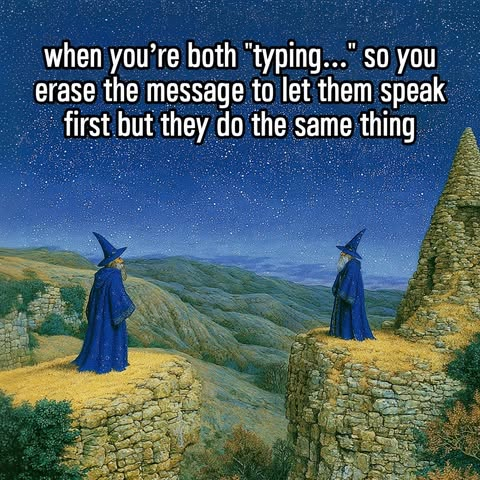
this kind of paradox is avoided with ArcaneChat
just type at your own pace and without the pressure that the other side knowing 🧙♂️
#ArcaneChat #privacy #security #anonymous #opensource #decentralization #e2ee
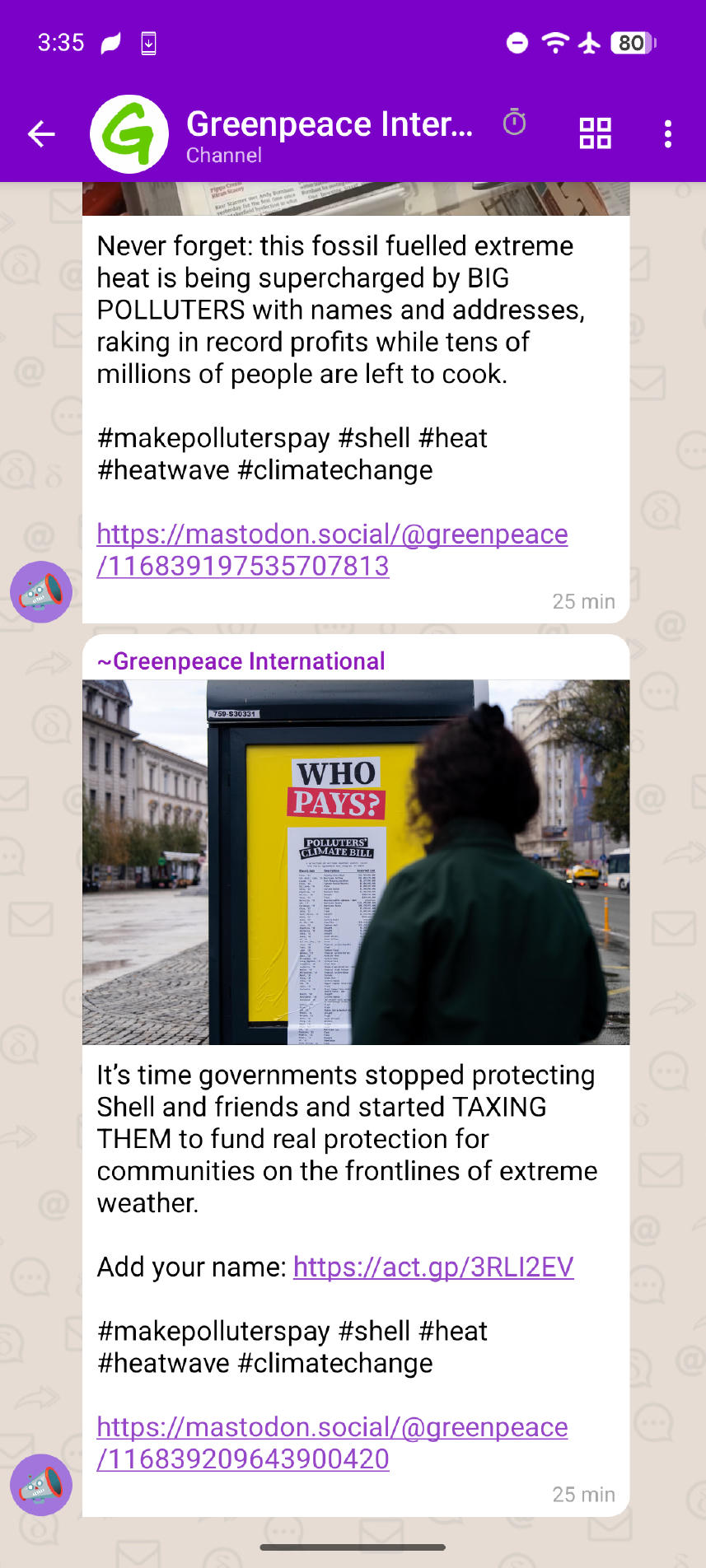
🎉 New channel for #ArcaneChat, #DeltaChat and other #chatmail clients:
Greenpeace International: Greenpeace exists because this fragile Earth deserves a voice. It needs solutions. It needs change. It needs action.
With automated posts from @greenpeace
here is the invite link 👇️️
https://i.delta.chat/#EB87F92DC57303205E7F3ACB6DAA06D8FE761414&v=3&x=OVB2LD5FvbhhrYHzkdBQU50p&j=uxWwBrg1nDUH08i3wgVuw6US&s=hpmcA1sjEKnnc2s71Y7_Bsf4&a=6j2tb0xyz%40arcanechat.me&n=ChannelsBot&b=Greenpeace+International
#politics #activism #ClimateChange #decentralization #encryption #e2ee #privacy #anonymous #security #europe #european
Alt...
an screenshot of the Greenpeace International channel where some recent posts are visible
🔮ArcaneChat Spoilers✨
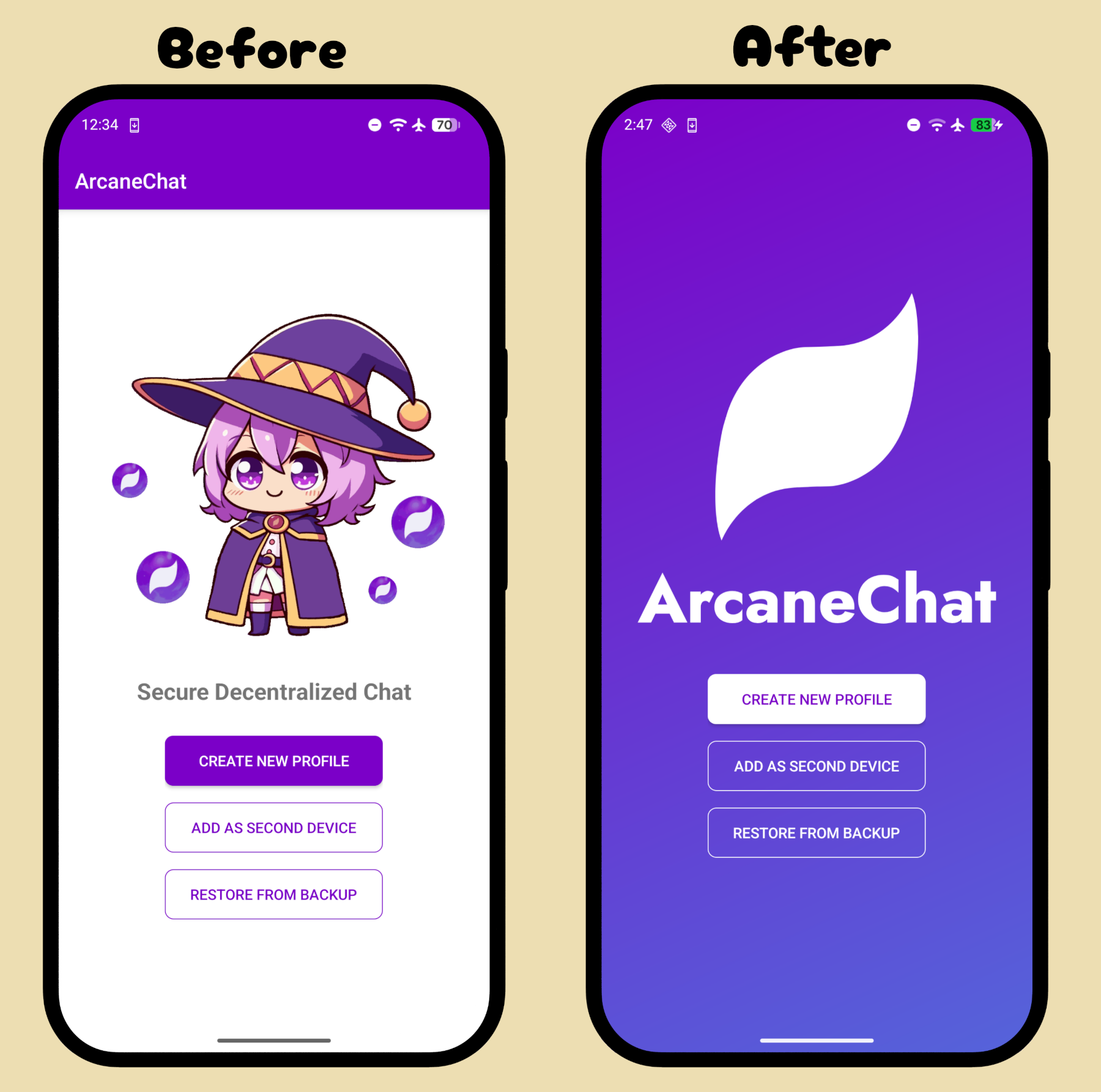
some say first impressions are important, more when you are trying to convince friends and family to join you in ArcaneChat
that is why the next ArcaneChat version comes with a new revamped welcome screen!
bonus: the logo levitates smoothly, to give it that magic touch ✨
#ArcaneChat #ArcaneChatSpoilers #decentralization #opensource #design #UI #privacy #security #encryption #e2ee #android #anonymous #SoftwareDevelopment #androiddev #europe #european #autonomy #diday
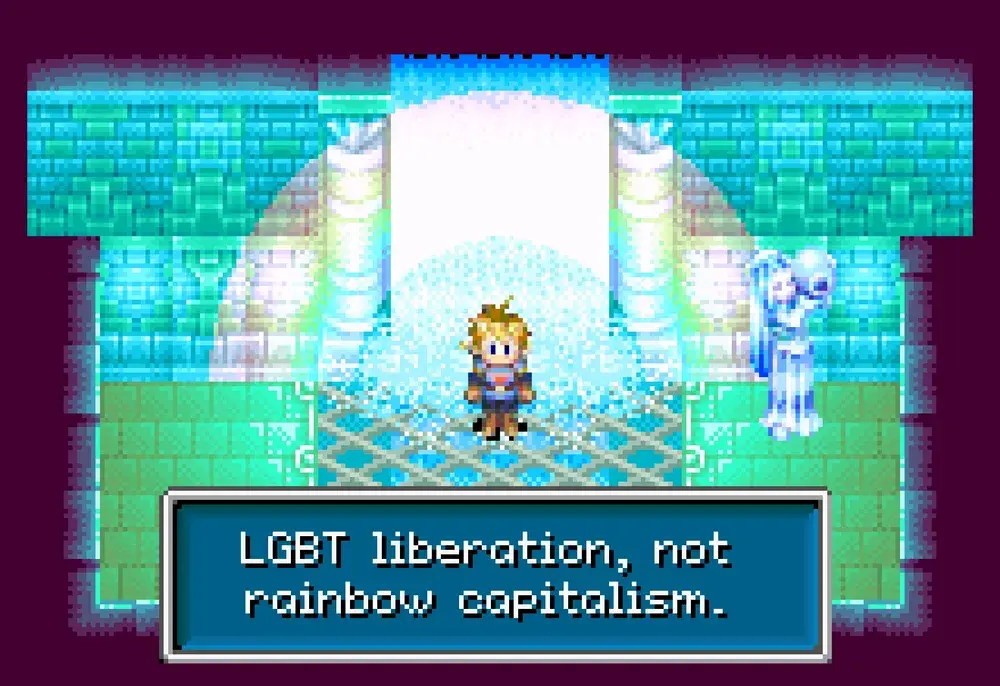
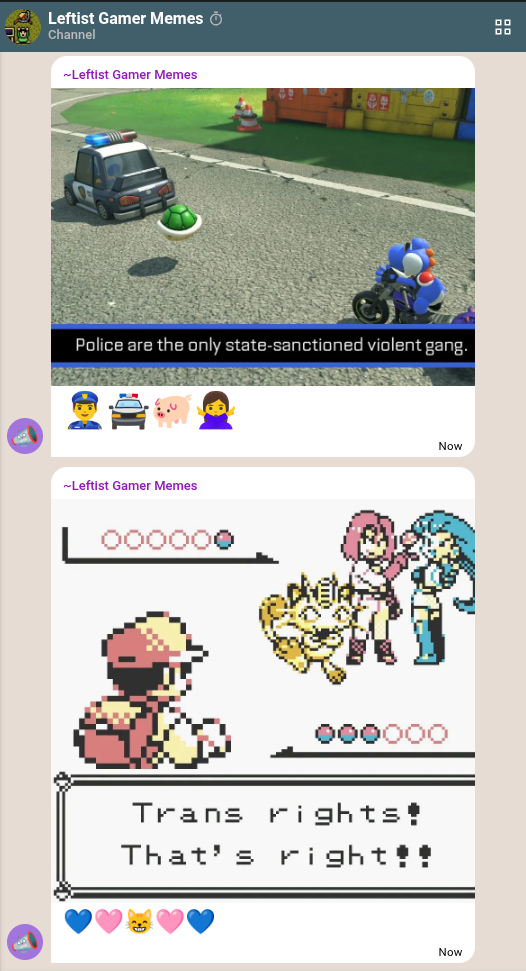
new ArcaneChat channel for you:
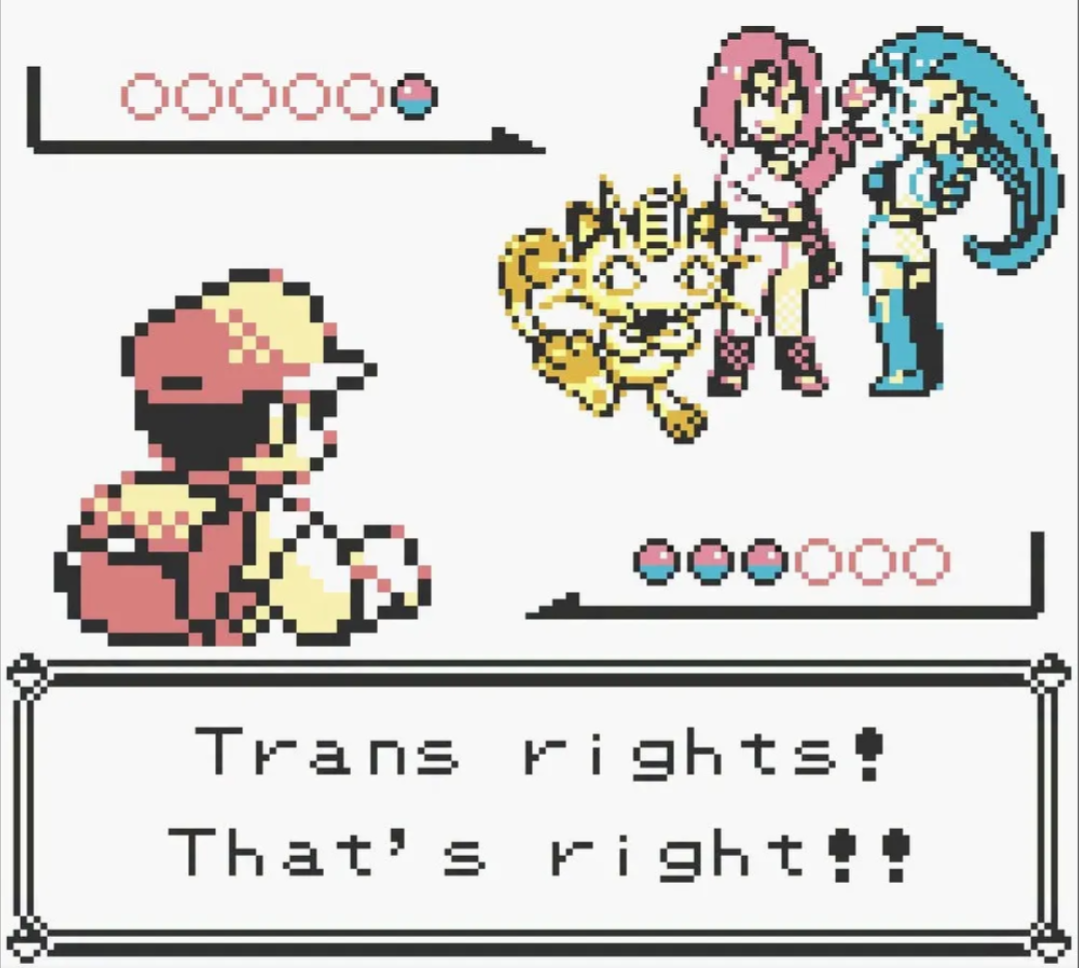
Leftist Gamer Memes: Crafting memes, comrade. ☭ content provided by https://leftistgamermemes.com
here is the invite link!
https://i.delta.chat/#EB87F92DC57303205E7F3ACB6DAA06D8FE761414&v=3&x=-FVyUanRixV_lqFCSrh9ZLmA&j=QY9vRTOyE_A3M7lwOJKO8UBi&s=NmIRaJZpEoPTwepRda5VYAg8&a=6j2tb0xyz%40arcanechat.me&n=ChannelsBot&b=Leftist+Gamer+Memes
#communism #transRights #trans #gay #LGBT #LGBTQ #leftist #leftwing #communist #games #gamer #artist #workersRights #workers #ArcaneChat #decentralization #security #privacy #encryption #european #europe #openSource #autonomy #anonymous #DeltaChat #meme #memes #capitalism #politics
![[?]](https://soc.octade.net/octade/s/3f7f2b5eda4e392867c301c49c2daa16.png)
Inform your friends and family about these tools.
#Briar ... https://briarproject.org
"Censorship-resistant peer-to-peer messaging that bypasses centralized servers. Connect via Bluetooth, Wi-Fi or Tor, with privacy built-in."
#Retroshare ... https://retroshare.cc
"Retroshare establish encrypted connections between you and your friends to create a network of computers, and provides various distributed services on top of it: forums, channels, chat, mail... Retroshare is fully decentralized, and designed to provide maximum security and anonymity to its users beyond direct friends. Retroshare is entirely free and open-source software. It is available on #Android, #Linux, #MacOS and #Windows. There are no hidden costs, no ads and no terms of service."
#RicochetRefresh ... https://www.ricochetrefresh.net
"Ricochet Refresh is an open-source project to allow private and anonymous instant messaging."
#OnionShare ... https://onionshare.org
"OnionShare is an open-source tool that lets you securely and anonymously share files, host websites, and chat with friends using the Tor network."
#DeltaChat ... https://delta.chat
"Delta Chat is a decentralized and secure messenger app."
#Bitmessage ... https://bitmessage.org
"Bitmessage is a P2P communications protocol used to send encrypted messages to another person or to many subscribers. It is decentralized and trustless, meaning that you need-not inherently trust any entities like root certificate authorities. It uses strong authentication which means that the sender of a message cannot be spoofed, and it aims to hide "non-content" data, like the sender and receiver of messages, from passive eavesdroppers like those running warrantless wiretapping programs."
#TorBrowser ... https://www.torproject.org/download
"Protect yourself against tracking, surveillance, and censorship."
"The Invisible Internet Project (I2P) is a fully encrypted private network layer. It protects your activity and location. Every day people use the network to connect with people without worry of being tracked or their data being collected. In some cases people rely on the network when they need to be discrete or are doing sensitive work."
#Hyphanet ... https://www.hyphanet.org/
"Hyphanet is peer-to-peer network for censorship-resistant and privacy-respecting publishing and communication. The original Freenet."
#BitChan ... https://github.com/813492291816/BitChan
"BitChan is a decentralized anonymous imageboard inspired by BitBoard and built on top of Bitmessage with Tor, I2P, and GnuPG."
#DarkMX ... https://darkmx.app
"DarkMX is a new decentralized communication app that utilizes Tor hidden services to allow you to easily have an anonymous, reliable, and censorship-resistant presence on the internet. You can chat. You can share files. You can search other people's files. You can keep a contact list and send private messages to your friends. You can create your own custom .onion site, available to anyone with a Tor Browser."
#Decentralized #TOR #AntiSurveillance #Anonymity #Anonymous #Privacy #Filesharing #Networking #Communication #P2P #F2F #PeerToPeer #Censorship #AntiCensorship #FreeSpeech
Usenet is accessible via TOR and open access servers that don't require registration or identifying information.
The writer can write and discuss using a pseudonym or pen name without fear of retaliation from employers, government, friends, and family. This encourages some people to share their innermost thoughts they would otherwise not express. Of course it also encourages trolls, but there are plenty of trolls everywhere else.
Usenet is text-centric so unlike the fediverse there is not a stream of distracting images.
Even after all these years I still prefer reading and posting Usenet newsgroups over all other forms of so-called, 'social media'.
#Usenet #NewsGroups #NNTP #NetworkNews #NetNews #Anonymous #Anonymity #Writers #Writing
I figured out several ways to run DarkMX on a headless server without GUI. This allows me to install it on a remote server without any desktop environment and run the software as a daemon without the GUI.
First I used the X forwarding feature of SSH to pipe the GUI to a local machine. On that machine I did all the configuration inside the GUI. Then I closed the program.
Then on the remote machine I used 'xvfb' to run DarkMX as a nohup'd daemon with a dummy GUI buffer. That way I don't need to be connected to the GUI from a local machine and the application will still run. It also uses less RAM without the GUI.
There are other ways to do this, such as VNC and xpra. I just chose the quickest, dirtiest method in this case.
Why would I go to all that trouble? Well, I don't need to, but there are some people who might need to publish while maintaining strict anonymity. So they would need tools like DarkMX and TOR. For me it's just fun.
DarkMX operates over the TOR privacy preserving network. As a result the location of my peer is hidden and extremely hard to impossible for an adversary to locate. So when I publish something, such as a letter, or paper, or opinion, anyone can download it since censoring it is not viable. It ensures that my speech remains free and available to the general public. Now when I author essays, papers, homiles and such, I can publish them as file shares, and I can publish them simultaneously as a TOR hidden website with the built-in webserver feature. So readers don't need DarkMX to read my files--they can just fire up TOR Browser or use a TOR proxy with their web browser. If they want to snarf a whole directory they can install DarkMX, or use a script to snarf them via TOR.
If you are inclined to fiddle around with installing this software on a headless server, please share the techniques and tools used that suit you.
(DarkMX download site: https://darkmx.app)
#DarkMX #P2P #FileSharing #Anonymous #SelfHosting #TOR #OnionNetwork #Censorship
@selfhosted@a.gup.pe @infostorm@a.gup.pe @darknet@a.gup.pe infosec@a.gup.pe