Search results for tag #privacy
![[?]](https://files.mastodon.online/accounts/avatars/110/809/364/594/447/020/original/1526096388aa0569.jpg)
EU calls VPNs “a loophole that needs closing” in age verification push
https://cyberinsider.com/eu-calls-vpns-a-loophole-that-needs-closing-in-age-verification-push/
#EU #AgeVerification #idverification #VPN #privacy #surveillance #dystopia #technology #government
![[?]](https://files.mastodon.social/accounts/avatars/114/048/194/944/023/530/original/3a6b93b37c67427d.png)
EU calls VPNs "a loophole that needs closing" in age verification push
https://cyberinsider.com/eu-calls-vpns-a-loophole-that-needs-closing-in-age-verification-push/
#HackerNews #EU #VPNs #AgeVerification #Privacy #CyberSecurity
![[?]](https://cdn.masto.host/privacysafesocial/accounts/avatars/113/579/537/628/293/076/original/8966b43a353b3229.jpg)
🔐 #Privacy news & updates from @privacyguides:
“🚨 This Week In Privacy #52 will be live in 30 minutes, we'll be giving our thoughts on CalyxOS returning with an Android 16 test build and we will also be covering the latest in privacy & security news. 🗞️ Come say hi...”
https://mastodon.neat.computer/@privacyguides/116540848234380637
🤖 via RSS feed. May not reflect our views.
![[?]](https://files.mastodon.social/accounts/avatars/000/007/322/original/b75330fa75e75efd.jpg)
Well done website that shows what information you share , nothing new for me but interesting.
https://sinceyouarrived.world/taken
#privacy
![[?]](https://soc.octade.net/octade/s/3f7f2b5eda4e392867c301c49c2daa16.png)
"... If I sold Google some data cables, and months later sent them an email “btw in 5 business days your cables will start sending all the data going through them to me, even though you specifically told me not to enable this feature, unless you re-disable it”, I would go to jail for hacking."It is [evil hat] hacking, and it is a crime. The government is run by criminals who want Google spying on their behalf, so they allow this surveillance crime spree to continue.
#Surveillance #Panopticon #SpyWare #Google #Gemini #Privacy #Security #Email
![[?]](https://polymaths.social/fileserver/01HCMX6M1CZNEVJ4F5H58TT5XJ/attachment/original/01JHC5KM5K0V0J0436SPD3F86H.jpeg)


 🍵
🍵  [
[#scubrats #privacy #KingOfTheHill #RustyShackleford #AVIF ;)

Alt...
A screenshot of firefox logging into Starbucks ("scubrats") wifi, with the following entries in the text fields:
First name: Rusty
Last name: Shackleford
Email address: me@privacy.org
Zip code: 90210
There's a small floating foot window on the left where I'm running grimshot to save the screenshot
![[?]](https://files.mastodon.social/accounts/avatars/116/140/345/381/171/560/original/3df3aa308e108c44.jpeg)
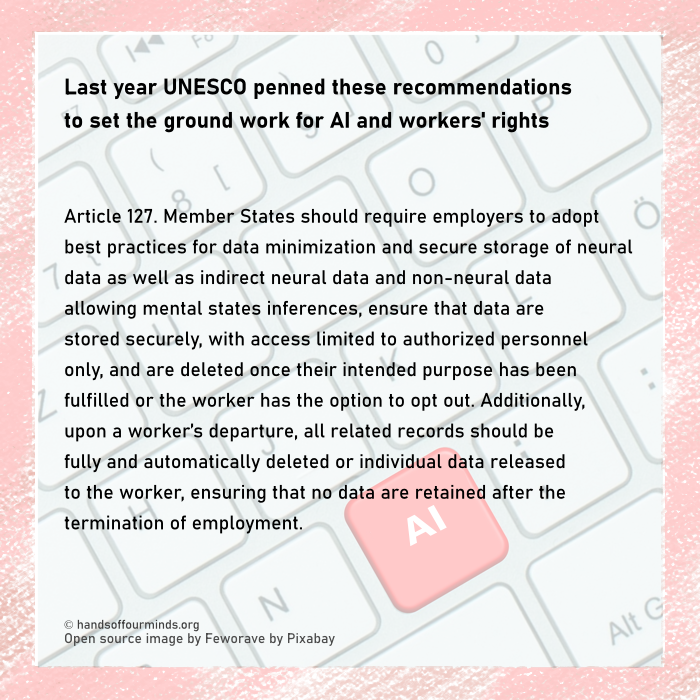
Everyone deserves a fair go, especially the workers. AI-processed biometrics is an invasion of privacy.
#ai #privacy #mentalprivacy #cognitiveliberty #biometrics #workersrights #workers
Alt...
Image describing UNESCO's article 127 setting standards for workers' rights in relation to processing of biometrics and data retention.
![[?]](https://tldr.nettime.org/system_nettime/accounts/avatars/109/528/493/326/851/300/original/ebc905e283d49e82.jpg)
"Given the current state of play, what we’re concerned about is how little we actually know about how these AI tools work and what their long-term impact will be to citizens, especially as governments have access to troves of sensitive personal data in order to further develop and fine tune the technology. How are government AI models storing and processing data about public servants, citizens and/or residents of a country, whether in experimental sandboxes or beyond?
There are merits to streamlining tedious administrative tasks, but there are still big questions that must be answered around data privacy, transparency and automated decision-making if the government is about to promote and embed wide-spread agentic AI use for civil services.
On the data privacy front, several questions arise:
- How will personal data, including sensitive data, be processed and used by the AI tools deployed? What data protection safeguards will be in place to prevent data leakage?
- When involving third-party vendours, what are the contractual safeguards governments and AI companies have around data processing arrangements?
- What are the data protection safeguards governing fine-tuning?
Data protection in the govAI context is especially important when we consider how highly sensitive, and sometimes secret, government data might be that could end up being processed by a black box algorithm - e.g., where an employee or colleague lives, any confidential documents that appear in meeting notes, etc."
https://privacyinternational.org/long-read/5767/big-oil-big-algorithm-public-money-private-models
#AI #BigTech #GenerativeAI #Privacy #DataProtection #Algorithms #BlackBoxes
![[?]](https://s3.amazonaws.com/majortoot/accounts/avatars/109/326/168/175/475/699/original/2e070374e9ce69cc.jpeg)
No more back doors!
Apple Warns Canada's Bill C-22 Could Force Encryption Backdoors
https://www.macrumors.com/2026/05/08/apple-warns-canada-bill-force-encryption-backdoors/
#Apple #Canada #Encryption #Vulnerability #Privacy #Surveillance #Security #Tech

![[?]](https://files.mastodon.social/accounts/avatars/001/097/892/original/0a8075185d53ecad.png) James House-Lantto (He/Him) [(He/Him)] » 🌐
James House-Lantto (He/Him) [(He/Him)] » 🌐
@Theeo123@mastodon.social
https://www.eff.org/deeplinks/2026/05/free-sginal-guide
Free E-book: "Everybody Has Something to Hide: Why and How to Use Signal to Preserve Your Privacy, Security, and Well-Being." This guide is now available as a Free EPUB In Spanish and English.
![[?]](https://noc.social/system/accounts/avatars/109/293/691/370/447/023/original/00c2020abae3ca4b.png)
Privacy Commissioner Investigating Centurion Project. Strongly Worded Letter Could Follow
The lack of any real privacy laws could play a role in the Centurion Project scandal that exposed millions of Alberta voters.
#News #Privacy #Security #Alberta #Canada #CanPol #CenturionProject #DataLeak #JasonKenney #politics #PrivacyCommissioner #PrivacyReform

![[?]](https://androidiani.net/wp-content/uploads/2026/01/cropped-logo-new-square-black-removebg-preview.png)
Chrome per Android ora condivide solo la posizione approssimativa: più privacy nella navigazione web
Google ha aggiunto a Chrome per Android una nuova funzione che rafforza la tutela della privacy degli utenti: d'ora in poi è possibile condividere con i siti web soltanto la posizione approssimativa, invece di quella precisa basata sul GPS. Un'opzione semplice ma con un impatto concreto sulla quantità di dati personali condivisi durante la navigazione quotidiana. Come funziona la nuova impostazione Con l'aggiornamento, Chrome su Android si allinea al comportamento già disponibile a […] [SENSITIVE CONTENT]
Google ha aggiunto a Chrome per Android una nuova funzione che rafforza la tutela della privacy degli utenti: d’ora in poi è possibile condividere con i siti web soltanto la posizione approssimativa, invece di quella precisa basata sul GPS. Un’opzione semplice ma con un impatto concreto sulla quantità di dati personali condivisi durante la navigazione quotidiana.
Come funziona la nuova impostazione
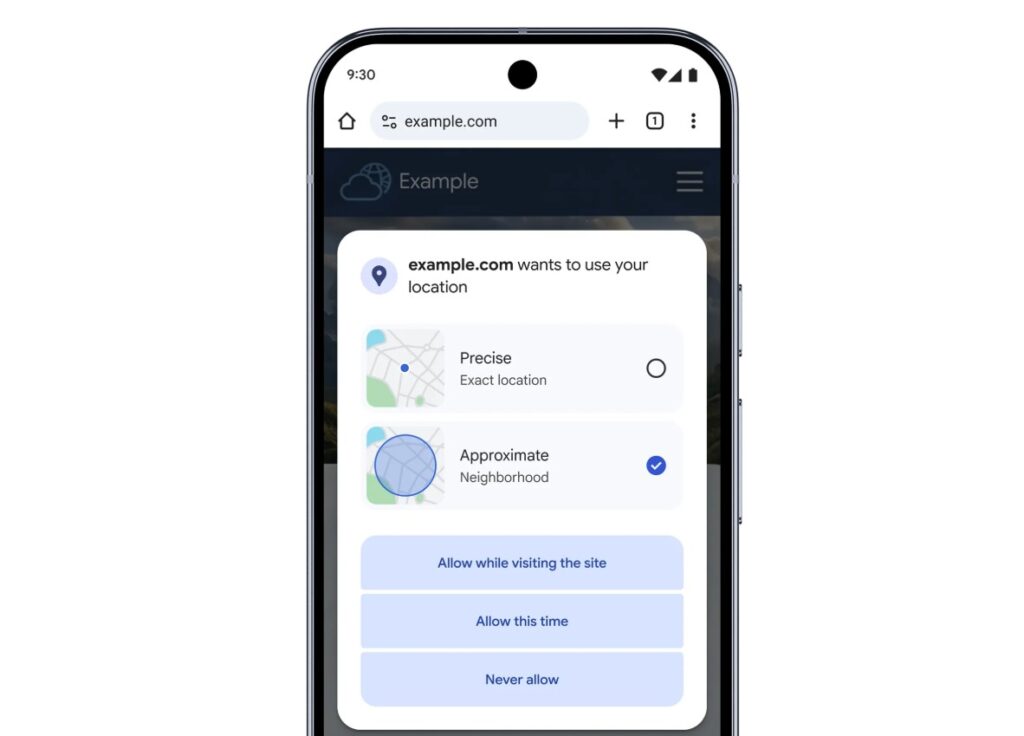
Con l’aggiornamento, Chrome su Android si allinea al comportamento già disponibile a livello di sistema operativo: le app potevano già ricevere una posizione “a grandi linee” (a livello di città o quartiere), e ora lo stesso controllo è disponibile anche per i siti web visitati tramite browser. In pratica, quando un sito chiede l’accesso alla posizione, l’utente potrà scegliere se fornire le coordinate GPS precise oppure un’indicazione geografica generica. Per molti servizi — meteo, notizie locali, ricerca di negozi — questa seconda opzione è più che sufficiente.
Un nuovo API per gli sviluppatori web
Google ha annunciato anche un’API dedicata agli sviluppatori, che permetterà ai siti di dichiarare esplicitamente se necessitano della posizione precisa o se quella approssimativa è sufficiente. In questo modo si riduce il rischio che i portali richiedano sistematicamente più dati di quanti effettivamente ne abbiano bisogno, migliorando la trasparenza e la consapevolezza dell’utente.
Android punta sempre più sulla privacy
Questa novità è parte di una strategia più ampia di Google per rafforzare la privacy su Android e nei propri servizi. Negli ultimi anni il sistema operativo ha introdotto controlli sempre più granulari sui permessi delle app, e ora questo approccio si estende anche alla navigazione web. Non si tratta di un cambiamento rivoluzionario, ma di un passo concreto che rende l’esperienza mobile quotidiana più rispettosa dei dati personali.
Alt...
Chrome per Android ora condivide solo la posizione approssimativa: più privacy nella navigazione web
![[?]](https://files.mastodon.social/accounts/avatars/115/872/467/894/168/268/original/5b0b51223e374c2e.png)
The ACLU sued a landlord for forcing AI surveillance into tenants' homes.
This isn't a dystopia. It's just a Friday.
Your rental is watching you. Here's how to lock them out.
Ep 25 → impracticalprivacy.com
#Surveillance #Privacy #TenantRights #IoT #surveillancecapitalism #privacymatters #rentersrights #smarthome #surveillancestate #lease
![[?]](https://nbg1.your-objectstorage.com/tno-mastodon/accounts/avatars/111/434/264/745/920/273/original/52ff85db085a2a1d.jpg)
You Can Disable #Gemini in #Chrome if It’s Freaking You Out
https://www.wired.com/story/you-can-disable-gemini-in-chrome-if-its-freaking-you-out/
![[?]](data:image/png;base64, iVBORw0KGgoAAAANSUhEUgAAAEAAAABAAQAAAACCEkxzAAAAV0lEQVQoz43RwQ3AMAwCQDZg/y3ZgNqo3+JaedwDOUQBQFHYaTB8wTM6sGl2cMPu+DFzn+ZcgN7wF7ZVihXkfSlWIVzIA6dbQzaygllpNuTXZmmFNlvxADX1+o0cUPMbAAAAAElFTkSuQmCC)
Challenge over Met Police's use of live facial recognition lost
From the Beeb.
Law-abiding citizens have “nothing to fear”
The guy falsely stopped said he will appeal the ruling.
I don’t live in London or even UK but I hate that these systems are becoming unavoidable. At least if you ever leave your house, lol. As London, so eventually Chicago. As Chicago, so eventually every one horse town. We’re building out a world of complete, unavoidable surveilence. Even where you WALK, now.
I hate it. I hate it, and it won’t end well.
I’m glad poor Orwell didn’t live to see his nightmare come true.
![[?]](https://files.mastodon.social/accounts/avatars/115/742/434/865/105/205/original/ba2fa15026c28d18.jpeg)
RE: https://mastodon.social/@Tutanota/116539340806199860
“Privacy features disappear quietly, then become the new normal.”
Instagram is reportedly dropping support for end-to-end encrypted chats starting today.
Meta hasn’t clearly explained why encrypted messaging is being removed, or what happens to existing conversations afterward, raising fresh concerns about privacy, data collection, and surveillance on the platform.
#Privacy #Instagram #Meta #Encryption #CyberSecurity #DigitalMinimalism
Draken BlackKnight boostedMeta just removed end-to-end encryption from Instagram.
Alt...
Insta logo
Alt...
Zuckerberg
![[?]](https://files.mastodon.social/accounts/avatars/000/207/529/original/54f1c149bd7d41f1.jpg)


![[?]](https://media.mas.to/accounts/avatars/000/151/244/original/c0322cd63f1b82b3.png)
 🐦🔥nemo™🐦⬛ 🇺🇦🍉
Mozilla, Mullvad, Proton and other digital-rights groups sign a joint letter urging UK lawmakers to abandon broad online age verification plans, warning they endanger privacy, increase surveillance risk, and fragment the web. Read: https://cyberinsider.com/mozilla-mullvad-proton-sign-letter-opposing-uk-age-verification/ 🔒🛡️ #Privacy #UKTech
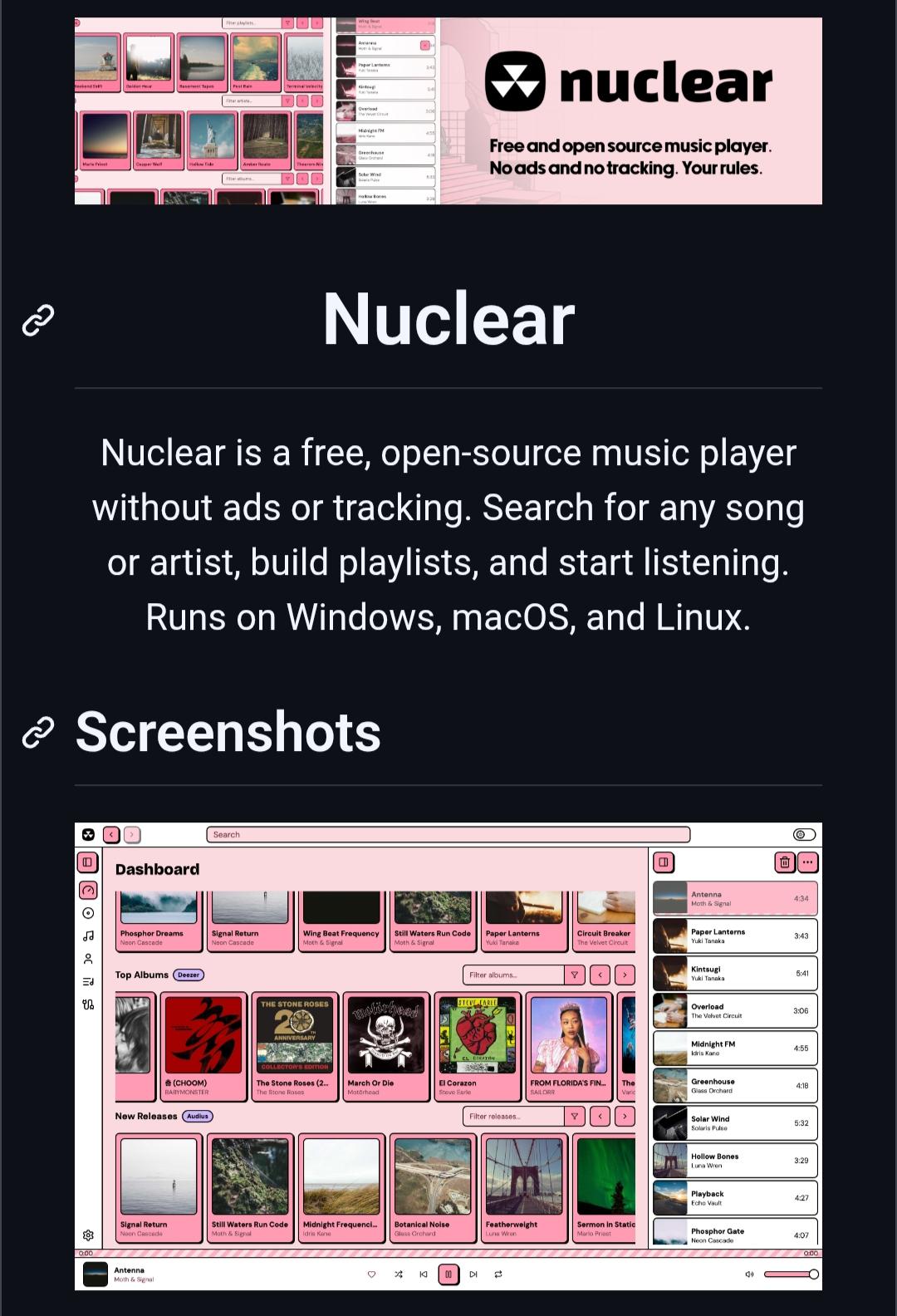
Nuclear is a free, open-source music player built around privacy and customization.
It supports playlists, plugins, themes, and streaming from multiple sources, without ads, tracking, or telemetry.
Runs on Linux, Windows, and macOS with a modern UI and an extensible plugin ecosystem.
👉https://digitalescapetools.com/tools/tool.html?id=nuclear
#OpenSource #Privacy #MusicPlayer #Linux #FOSS #DigitalMinimalism
Alt...
Screenshot of the documentation for Nuclear music player. The header image shows a pink-themed UI mockup and the slogan "Your rules." The description highlights the ability to search for any song or artist and build playlists without tracking. A larger screenshot at the bottom showcases the application's unique aesthetic, featuring a grid of top albums from Deezer, a "New Releases" section from Audius, and a music playback bar at the bottom.
![[?]](https://media.infosec.exchange/infosec.exchange/accounts/avatars/109/536/175/403/932/371/original/6657044a10325439.jpg)
An investigator (with access to very sensitive information) with Switzerland’s Federal Police (+/- equivalent to the FBI), was found to have been working for the mafia.
Meanwhile, the government wants to update the existing surveillance law and significantly expand state surveillance in the country.
what could go wrong ?
![[?]](https://files.techhub.social/accounts/avatars/109/328/015/120/710/800/original/f4b2cf30866fb40c.jpg)
On the note of privacy, especially with the waves that proton is making. I want to stress that they are not your friends and just like any other company, they hand over information to government when asked.
Despite what they spam on their X account dogging on Gmail/Google. We all have to make an assessment on the levels of privacy we actually want.
![[?]](https://files.mastodon.social/accounts/avatars/114/368/991/106/654/640/original/4055052cf2bcf4e8.png)
Meta removed E2EE from Instagram DMs today, May 8, ending private encrypted chats and enabling broader message scanning for abuse detection 📩🔓
The change follows global pressure tied to CSAM enforcement, raising transparency and user-control concerns around private communication 🕵️♂️⚠️
#TechNews #Instagram #Facebook #Meta #E2EE #Privacy #Encryption #Messaging #CyberSecurity #WhatsApp #ChatControl #Surveillance #FOSS #Security #SocialMedia #DataPrivacy
![[?]](https://cdn.fosstodon.org/accounts/avatars/107/297/362/770/635/523/original/3ce6a735f191afe9.jpeg)
Daily Digest | 8 May 2026
Your daily dose of Privacy, Data Protection, AI & Cybersecurity news.
5 stories you should not miss.
Read more: https://www.nicfab.eu/daily-digest/
![[?]](https://files.mastodon.social/accounts/avatars/112/254/133/513/442/738/original/75c4daa7488e1ab5.png)
Apparently, data brokers can't just do what they want.
Two years ago, I filed a complaint against a data broker who was selling my data without telling me. Now, the Austrian data protection authority followed my complaint and ruled that - despite the data broker's numerous claims to the contrary during the proceedings - they have to be transparent and should have given me proper information.
Although I expect them to appeal the decision, this is a win for now!
--
#privacy #DataProtection #GDPR