Search results for tag #space
![[?]](https://media.universeodon.com/accounts/avatars/109/501/736/783/125/826/original/387a622be46bcde9.png)

Molecular Cloud Barnard 68
Credits: FORS Team, 8.2-meter VLT Antu, ESO
#nature #space #astrophotography

Alt...
Molecular Cloud Barnard 68
![[?]](https://cdn.masto.host/mastjohn1126com/accounts/avatars/115/981/910/993/463/416/original/00ac72837ce34a31.gif)
Powerful worldly rulers have branded their people with a flag showing something similar, as in the mostly Muslim nation of Pakistan.
Spiritual clues about the moon god and Venus (called in previous generations Lucifer): http://john1126.com/718
#moon #Venus #Lucifer #spiritual #Pakistan #muslim #islam #space

![[?]](https://cdn.masto.host/mastodongamedevplace/accounts/avatars/109/859/285/072/781/117/original/52b616f54f20c98f.png)
Tardigrade in Moss
Credits: Science Source Images
#nature #space #astrophotography

Alt...
Tardigrade in Moss
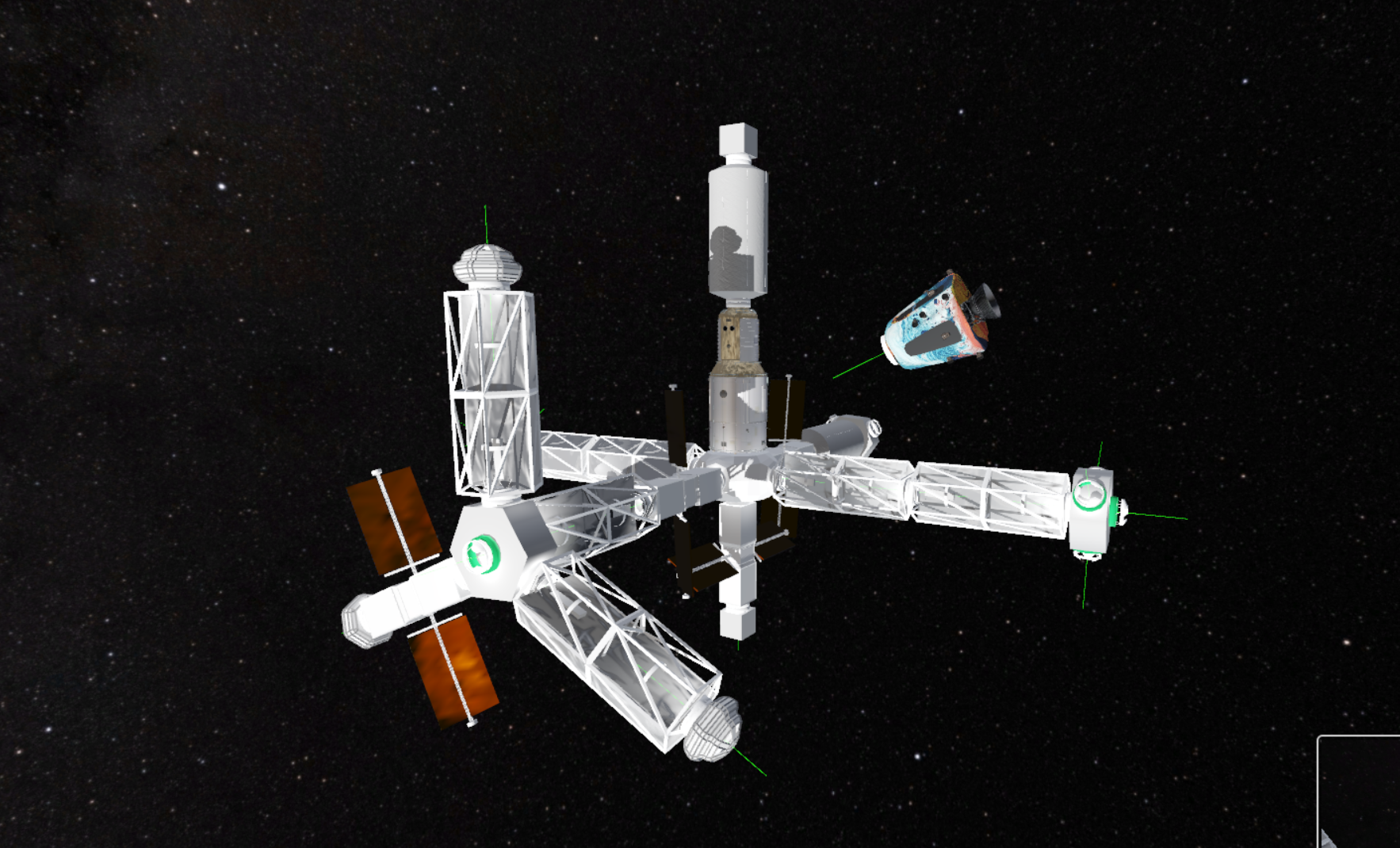
My space station generator is finally working and integrated into the game.
Sensible blue-prints, semi-realistic modules, airtight structure, dockable, Newtonian physics working, player can add or remove modules... people will never know how hard it was to get this working... omg just pain pain pain
#indiedev #space #LEOAdventures #gamedev
Alt...
A modular space station, similar to the International Space Station, from the game Low Earth Orbit Adventures
Globular Cluster M15 from Hubble
Credits: ESA, Hubble, #NASA
#nature #space #astrophotography

Alt...
Globular Cluster M15 from Hubble
![[?]](https://media.mastodon.cloud/accounts/avatars/000/013/805/original/3a4570ba89403d6d.png)
Looking for a beautiful music for your project?
Game, etc..
Space Opera S1
https://solarphasing-sounddesign.bandcamp.com/album/space-opera-s1-royalty-free
#music #bandcamp #royaltyfree #royaltiesfree #assets #electronicmusic #background #scifi #sciencefiction #spaceopera #space #indidev #gamedev #indiegamedev #games
![[?]](https://fediscience.org/system/accounts/avatars/115/216/268/428/504/940/original/0c690457c8e65be1.png)
💁🏻♀️ TIL: 🪐🛠️ For 13 years, #NASA’s #Curiosity #rover has survived #Mars thanks to clever fixes by #JPL engineers, like driving backward to protect wheels from sharp boulders, running #computers on less than 1% of original memory, and saving #energy as its #nuclear power source fades.
👉 https://spectrum.ieee.org/curiosity-rover-jpl-mars-science
#engineering #robotics #space #science #marsrover #planet #technology #tech #solutions
![[?]](https://files.mastodon.social/accounts/avatars/112/887/440/182/889/708/original/b3d8f511ea9381c5.jpg)
The Real Outerspace
https://www.youtube.com/watch?v=5ztfH9VXSBA
#Space, #SpaceHistory, #SpaceExploration, #BibleStudy.

![[?]](https://assets.merveilles.town/accounts/avatars/110/618/037/889/897/311/original/8b9cf9a3e9149756.png)
![[?]](https://cdn.masto.host/appdotnet/accounts/avatars/000/001/724/original/8b70880494ca563d.png)
![[?]](https://soc.octade.net/octade/s/3f7f2b5eda4e392867c301c49c2daa16.png)
The irony ...
"How art thou fallen from heaven, O Lucifer, son of the morning! how art thou cut down to the ground, which didst weaken the nations! For thou hast said in thine heart, I will ascend into heaven, I will exalt my throne above the stars of God: I will sit also upon the mount of the congregation, in the sides of the north: I will ascend above the heights of the clouds; I will be like the most High. Yet thou shalt be brought down to hell, to the sides of the pit."
Artemis (Diana) is Apollo's twin sister. Together the two are 'Lucifer'.
They are chief deities of the solar worship cult.
#NASA #AprilFools #Moon #Artemis #Apollo #Bible #Babylon #Lucifer #Gods #Demons #Worship #Religion #Space
Orion's Belt
Credits: Martin Mutti, Astronomical Image DataArchive
#nature #space #astrophotography

Alt...
Orion's Belt
The billionaires investing in space don't want Star Trek ... they want Dune ... but we got Spaceballs.
#billionaires #space #startrek #dune #spaceballs #memes

Alt...
The billionaires investing in space don't want Star Trek ... they want Dune ... but we got Spaceballs.
![[?]](https://files.defcon.social/dcsocial-s3/accounts/avatars/113/208/344/507/078/943/original/014820ad22daee1c.jpg)
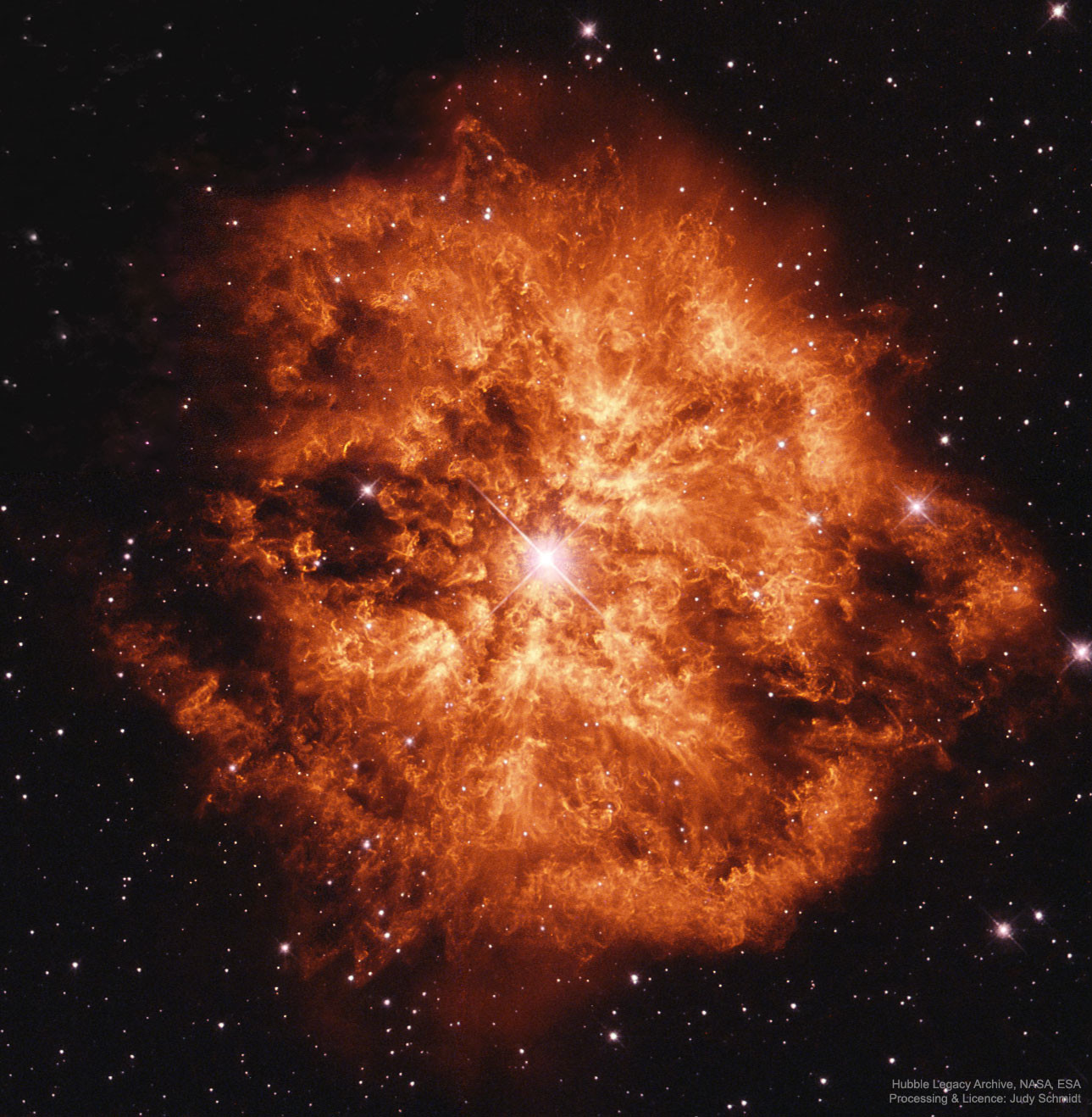
Wolf-Rayet Star 124: Stellar Wind Machine
* Image Credit: Hubble Legacy Archive, NASA, ESA; Processing & License: Judy Schmidt
https://hla.stsci.edu/
https://www.nasa.gov/
https://www.esa.int/
https://www.flickr.com/photos/geckzilla/
Explanation:
Some stars explode in slow motion. Rare, massive Wolf-Rayet stars are so tumultuous and hot that they are slowly disintegrating right before our telescopes. Glowing gas globs each typically over 30 times more massive than the Earth are being expelled by violent stellar winds. Wolf-Rayet star WR 124, visible near the featured image center and spanning six light years across, is thus creating the surrounding nebula known as M1-67. Details of why this star has been slowly blowing itself apart over the past 20,000 years remains a topic of research. WR 124 lies 15,000 light-years away towards the constellation of the Arrow (Sagitta). The fate of any given Wolf-Rayet star likely depends on how massive it is, but many are thought to end their lives with spectacular explosions such as supernovas or gamma-ray bursts.
https://en.wikipedia.org/wiki/Wolf%E2%80%93Rayet_star
https://en.wikipedia.org/wiki/WR_124
https://www.flickr.com/photos/geckzilla/14248502065/
https://www.syfy.com/syfy-wire/a-massive-violent-star-blooms
https://www.youtube.com/watch?v=aysiMbgml5g
https://ui.adsabs.harvard.edu/abs/1985A%26A...145L..13V/abstract
https://science.nasa.gov/universe/gamma-ray-bursts-harvesting-knowledge-from-the-universes-most-powerful-explosions/
http://www.hawastsoc.org/deepsky/sge/
https://chandra.harvard.edu/photo/cosmic_distance.html
https://apod.nasa.gov/apod/ap000318.html
https://spaceplace.nasa.gov/constellations/en/
https://www.universetoday.com/24736/wolf-rayet-star/
https://science.nasa.gov/earth/facts/
https://apod.nasa.gov/apod/ap250203.html
#space #nebula #star #astrophotograhy #NASA #ESA #Hubble #science #nature
Alt...
2025 February 3
A starfield is shown with a large spherical nebula in the center. The nebula shows a great deal of internal structure. Please see the explanation for more detailed information.
Wolf-Rayet Star 124: Stellar Wind Machine
* Image Credit: Hubble Legacy Archive, NASA, ESA; Processing & License: Judy Schmidt
Explanation:
Some stars explode in slow motion. Rare, massive Wolf-Rayet stars are so tumultuous and hot that they are slowly disintegrating right before our telescopes. Glowing gas globs each typically over 30 times more massive than the Earth are being expelled by violent stellar winds. Wolf-Rayet star WR 124, visible near the featured image center and spanning six light years across, is thus creating the surrounding nebula known as M1-67. Details of why this star has been slowly blowing itself apart over the past 20,000 years remains a topic of research. WR 124 lies 15,000 light-years away towards the constellation of the Arrow (Sagitta). The fate of any given Wolf-Rayet star likely depends on how massive it is, but many are thought to end their lives with spectacular explosions such as supernovas or gamma-ray bursts.
Authors & editors: Robert Nemiroff (MTU) & Jerry Bonnell (UMCP)
NASA Official: Amber Straughn Specific rights apply.
NASA Web Privacy, Accessibility, Notices;
A service of: ASD at NASA / GSFC,
NASA Science Activation
& Michigan Tech. U.