Search results for tag #writing
![[?]](https://files.mastodon.social/accounts/avatars/115/070/625/860/923/251/original/9629d01039476748.png)
I look at patterns in LLM output. The tell is more than simple orthographic tics.
https://philosophics.blog/2026/07/07/ai-language-patterns/?utm_source=masto&utm_medium=social
#philosophy #language #llms #ai #artificialintelligence #patterns #comprehension #writing #training #history #english #learning #blog #video #critique #commentary #spelling #pronunciation #content
![[?]](https://s3.eu-central-2.wasabisys.com/mastodonworld/accounts/avatars/109/362/359/610/912/307/original/4854f87af56f0d9a.png)
"The extremely obvious truth (which is barely even veiled) is that at least most of these hustlebros are faking it." —Jason Koebler for 404 Media
![[?]](https://friendica.world/photo/profile/wistquotes.png?ts=1766199542)
SYDNEY: A lot of writers drink. Some drink before they write and some drink after they write. The ones that concern me are the ones who drink instead of writing. Even though a number of people have tried, no on has yet found a way to drink for a living.
Jean Kerr (1922-2003) American author and playwright [b. Bridget Jean Collins]
Poor Richard, Act 1 (1965)
More about this quote: wist.info/kerr-jean/30921/
#quote #quotes #quotation #qotd #jeankerr #alcohol #alcoholism #creativework #drinking #intoxication #job #vocation #work #writers #writing
This morning I awoke thinking about sex – actually gender – of borrowed Latin words. Get your mind out of the gutter.
👉 https://brywillis634737.substack.com/p/we-still-bury-the-dead
I wrote a piece about it, but I was truly conflicted on my journey, especially as I compared English and French approaches, and a potential feminist rift.
#philosophy #language #sociolinguistics #etymology #english #french #latin #gender #writing #culture #feminism #linguistics #reform #administration
![[?]](https://media.mas.to/accounts/avatars/109/297/156/187/901/171/original/0dc580d9c0e488af.jpeg)
Monday blues are true
crime ridden streets laid bare, too
often it is you
#Monday #Blues
#Haiku #Poetry #Writing #WritingCommunity #PoetryCommunity
#MastoPrompt
![[?]](https://cdn.masto.host/kindsocial/accounts/avatars/116/338/029/571/109/138/original/44983ec439ca2408.jpg)
From genre romance living legend, Beverly Jenkins: "Kicking off Jenkins July by raising money for Romancing the Vote. Do you want to strengthen the right to vote, pick my brain, and get two signed BJ classic titles? If the answer is yes, here you go"
At US$300 starting bid, this is an absolute STEAL. Authors, get in on this!
#RomancingTheVote #USPolitics #VotingRights #Midterms #Democracy #Writing
https://www.32auctions.com/organizations/74830/auctions/200913/auction_items/7038229
![[?]](https://files.mastodon.social/accounts/avatars/112/065/643/435/379/420/original/d3981c2e4011c79f.jpg)
🐈🐈⬛*A cat has absolute emotional honesty: human beings, for one reason or another, may hide their feelings, but a cat doesn't🐈⬛🐈
~Hemingway
Novelicious on X: "A cat has absolute emotional honesty: human beings, for one reason or another, may hide their feelings, but a cat doesn't Hemingway #writing https://t.co/9jN66jCKpO" / X
https://x.com/noveliciouss/status/2072906686281441345

"What set of circumstances favored an animal that weighs up to 600 pounds, moves at four miles a day, and takes a quarter of a century to reach sexual maturity?" —Helen Lewis for The Atlantic
#longreads #darwin #evolution #originofspecies #reading #writing
The good news: Claude Fable 5 is back.
The bad: Claude suggests chatting in English.
I was chatting with Claude and suggested either French or English was fine, but it suggested I'd be better off sticking to English because of its training data.
#artificialintelligence #claudeai #llms #training #data #communication #bias #blog #substack #note #français #writing #brainstorming #workflow #analysis
"To call it a speck is generous. At first, I mistake it for a particle of dust. But then, it catches the sun and sparkles undeniably." —Eve Livingston for Dispatch
https://dispatch-media.com/the-brits-panning-for-gold/?src=longreads
Les Années Vécues
https://philosophics.blog/2026/07/01/les-annees-vecues/?utm_source=masto&utm_medium=social
I’ve shared a piece of fiction writing meta content and the rôle of LLMs in my writing workflow, in particular, a punch list to track idea instantiation. I don’t, however, discuss my fondness for diacritical marks, especially those with no phonetic function.
#philosophy #writing #fiction #timetravel #LLM #scifi #process #author #time #blof #podcast #language #workflow #frnech #english #shortstory #method #ai #matrix #spreadsheet #google #claude #chatgpt
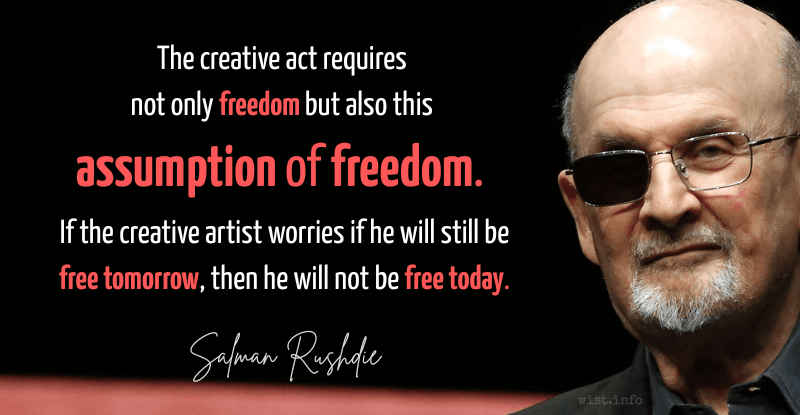
A quotation from Salman Rushdie
The creative act requires not only freedom but also this assumption of freedom. If the creative artist worries if he will still be free tomorrow, then he will not be free today. If he is afraid of the consequences of his choice of subject or of his manner of treatment of it, then his choices will not be determined by his talent, but by fear. If we are not confident of our freedom, then we are not free.
Salman Rushdie (b. 1947) Indian novelist
Speech (2012-05-06), Arthur Miller Freedom to Write Lecture, PEN World Voices Festival, New York City
More about this quote: wist.info/rushdie-salman/84768…
#quote #quotes #quotation #qotd #salmanrushdie #pen #art #artist #censorship #creation #creativity #fear #freedom #selfcensorship #subjectmatter #worry #writer #writing
Alt...
Salman Rushdie quotation
![[?]](https://choosejoyadventure.wordpress.com/wp-content/uploads/2026/07/untitled-design-15.png)
When Life Feels Like a Puzzle
Have you ever dumped a puzzle out onto a table and wondered how all those random pieces could possibly fit together? At first, the pieces seem disconnected. Some are upside down. Some appear insignificant. Others look like they belong somewhere else entirely. Yet the person assembling the puzzle trusts that every piece has a purpose because they have seen the picture on the box. Life often feels the same way. There are seasons when we can only see a handful of pieces. We see the […] [SENSITIVE CONTENT]
Have you ever dumped a puzzle out onto a table and wondered how all those random pieces could possibly fit together?
At first, the pieces seem disconnected. Some are upside down. Some appear insignificant. Others look like they belong somewhere else entirely. Yet the person assembling the puzzle trusts that every piece has a purpose because they have seen the picture on the box.
Life often feels the same way.
There are seasons when we can only see a handful of pieces. We see the heartbreak, the disappointment, the unanswered prayer, the unexpected detour, or the dream that didn’t unfold the way we hoped. Looking at those individual moments, it is difficult to understand what God is doing.
But God sees the finished picture.
What feels random to us is not random to Him. What appears broken is not beyond His ability to restore. What seems out of place is often exactly where it belongs in His greater plan.
Romans 8:28 reminds us:
“And we know that in all things God works for the good of those who love him, who have been called according to his purpose.”
Notice that Scripture does not say all things are good. It says God works through all things for good. Every piece matters.
Some puzzle pieces are beautiful. They represent blessings, victories, answered prayers, and joyful moments. We gladly place those pieces into the picture.
Other pieces are harder to accept. They represent grief, illness, loss, disappointment, and waiting. We may wish we could leave those pieces out altogether. Yet often those difficult pieces become the very places where God’s faithfulness shines brightest.
If you’ve ever worked on a puzzle, you know that the edge pieces usually come first. They create a framework that helps everything else come together. In the same way, God’s Word provides the framework for our lives. When circumstances confuse us, His promises help us understand where the pieces belong.
The truth is, we were never meant to assemble the puzzle alone.
God is the Master Designer. He knows exactly where each piece fits. He knows why certain pieces arrived when they did. He knows why some pieces seem delayed. He knows how today’s confusion will connect to tomorrow’s purpose.
Our responsibility is not to see the entire picture. Our responsibility is to trust the One who does.
Maybe today you’re holding a piece of the puzzle that makes no sense. Perhaps you’re facing a situation that feels unfinished or unresolved. Remember that one piece is not the whole picture.
Don’t judge God’s plan by the piece you’re holding today.
Trust that the Author of your story is still working. Trust that He is placing each piece exactly where it belongs. Trust that one day you will look back and see how His grace, wisdom, and faithfulness were present all along.
The puzzle isn’t finished yet.
And that’s okay.
God is still putting the pieces together.
What piece of your life are you struggling to understand right now, and how can you choose to trust God with the bigger picture?
Proverbs 3:5-6 — “Trust in the Lord with all your heart and lean not on your own understanding; in all your ways submit to him, and he will make your paths straight.”
With love and joy,
Laura

Alt...
When Life Feels Like a Puzzle
I have two trifling ambitions in the theater: to make a lot of people laugh and to make a lot of money.
Jean Kerr (1922-2003) American author and playwright [b. Bridget Jean Collins]
Interview (1955-07), Theatre Arts magazine
More about this quote: wist.info/kerr-jean/84710/
#quote #quotes #quotation #qotd #jeankerr #ambition #amusement #dramatist #entertainment #humor #laughter #makingmoney #money #profit #stage #theater #writing #playwright
"The appeal of dog neuroscience is not limited to understanding their adolescence, indeed it kicks in as soon as you take a new puppy home." —William Davies for The Guardian
#longreads #dogs #dogtraining #sociology #control #reading #writing
I wrote this book a while ago to inspect the nature of time travel.
#philosophy #time #phenomenology #epistemology #writing #reading #fiction #books #blog
![[?]](https://files.hear-me.social/accounts/avatars/110/663/286/708/241/385/original/eb5ae4c05819f336.jpg)
Shel Silverstein on success in creative fields (1975):
"I think if you're a creative person, you should just go about your business, do your work and not care how it's received. I never read reviews because if you believe the good ones you have to believe the bad ones too.
"Not that I don't care about success. I do, but only because it lets me do what I want.... I have an ego, I have ideas, I want to be articulate, to communicate but in my own way. People who say they create only for themselves and don't care if they are published ... I hate to hear talk like that. If it's good, it's too good not to share."
#shelsilverstein #creativity #publishing #writing #success #quote #quotes #quotation
Don’t Put a Period Where God Puts a Comma
Have you ever reached a place in life where it felt like the story was over? The diagnosis came. The relationship ended. The door closed. The dream seemed lost. You looked at the situation and thought, This is the end. But often what looks like a period to us is only a comma to God. Throughout Scripture, we see moments when people believed the story was finished, only to discover that God was still writing. Joseph was sold into slavery...and then God. The Israelites were trapped between […] [SENSITIVE CONTENT]
Have you ever reached a place in life where it felt like the story was over?
The diagnosis came. The relationship ended. The door closed. The dream seemed lost. You looked at the situation and thought, This is the end.
But often what looks like a period to us is only a comma to God.
Throughout Scripture, we see moments when people believed the story was finished, only to discover that God was still writing.
Joseph was sold into slavery…and then God.
The Israelites were trapped between Pharaoh’s army and the Red Sea…and then God.
Lazarus was in the tomb for four days…and then God.
Jesus was crucified and buried…and then God.
God specializes in writing “and then God” moments into stories that appear hopeless.
That doesn’t mean every outcome changes the way we want it to. God’s sovereignty does not guarantee that life will unfold according to our plans. But His sovereignty does guarantee that He remains in control even when circumstances seem out of control.
Yet God’s sovereignty does not negate our responsibility.
Sometimes Christians use God’s sovereignty as an excuse for passivity. We tell ourselves, “If God wants it to happen, it will happen,” and then do nothing. But Scripture consistently calls us to trust God while also taking responsibility for our choices.
You may not be able to control the outcome, but you can control your response.
You may not be able to choose your circumstances, but you can choose faith over fear.
You may not be able to change what happened, but you can choose forgiveness instead of bitterness.
You may not be able to stop the storm, but you can decide where you anchor your heart.
Our responsibility is obedience. God’s responsibility is the outcome.
Many of us spend so much energy trying to control things we cannot control that we neglect the things God has placed within our hands.
One of those things is people.
How often have we exhausted ourselves trying to change someone else’s heart?
A spouse.
A child.
A coworker.
A friend.
The truth is, you can often influence the ending of a situation, but you cannot change another person. Only God can do that.
You can pray.
You can encourage.
You can set healthy boundaries.
You can speak truth in love.
But you cannot force transformation in another human being.
Trying to do so will leave you frustrated, exhausted, and discouraged.
Sometimes the most faithful thing you can do is entrust that person to God and focus on your own obedience.
And while we’re waiting for God to work, we need to remember another important truth: with blessings often come battles.
The enemy rarely fights over territory he already owns.
When God begins opening doors, growing your faith, healing your heart, strengthening your ministry, restoring your family, or leading you into a new season, resistance often follows.
The enemy will attempt to distract, discourage, divide, and derail.
Not because the blessing isn’t from God, but because it is.
The battle doesn’t always mean you’re going the wrong way. Sometimes it is confirmation that you’re moving in the right direction.
Don’t be surprised when opposition appears. Instead, put on the armor of God and keep walking.
And that leads to one final thought.
Don’t get out.
Too many people leave too soon.
They leave the marriage before God finishes His work.
They leave the ministry before the harvest.
They leave the church because of conflict.
They leave the calling because of hardship.
They leave the process because it feels uncomfortable.
Now, there are certainly situations where someone else should leave—when there is abuse, danger, or unrepentant sin. Wisdom and discernment matter.
But many times, the person who is ready to quit is actually standing on the edge of breakthrough.
The enemy whispers, “Get out.”
God whispers, “Hold on.”
The enemy says, “It’s over.”
God says, “I’m not finished.”
The enemy points to the period.
God points to the comma.
If you’re in a difficult season today, remember this:
God’s sovereignty does not eliminate your responsibility.
You may not control the outcome, but you can control your response.
You cannot change another person, but God can.
Blessings often come with battles.
And what feels like the end may simply be the place where God is preparing an “and then God” moment.
So don’t put a period where God puts a comma.
Keep trusting.
Keep praying.
Keep obeying.
Keep believing.
The Author is still writing your story.
With love and joy,
Laura

Alt...
Don’t Put a Period Where God Puts a Comma
![[?]](https://babka-mastodon.nyc3.cdn.digitaloceanspaces.com/accounts/avatars/110/442/989/214/760/177/original/ac89244bf463bb3e.jpg)
"#LeoraFreedman, the #author of four #novels and numerous #shortstories that explore aspects of the #Jewish experience, lives in #Toronto. But back in the day, she was a student at the #University of #Arizona, graduating from the creative #writing program with a Master of Fine Arts in 1985 and winning first place in the Robert Downs #Fiction Contest, among other awards.
[...]
In #Freedman’s new #novel, “#CherryBaum” (KTAV, 2025), a Jewish blogger and mother of four realizes she has the power to heal the sick, communicate telepathically, and soul-travel through time and space. After deciding to go public as a holy woman, she quickly reaches the point where she can’t turn back, despite the fears of her family as their Toronto home fills with Cherry’s grateful followers."
For ridicule shall frequently prevail,
And cut the knot, when graver reasons fail.
[Ridiculum acri
Fortius et melius magnas plerumque secat res.]
Horace (65–8 BC) Roman poet, satirist, soldier, politician [Quintus Horatius Flaccus]
Satires [Saturae, Sermones], Book 1, # 10 “Nempe incomposito,” l. 14ff (1.10.14-15) (35 BC) [tr. Francis (1747)]
More about (and translations of) this quote: wist.info/horace/1955/
#quote #quotes #quotation #qotd #horace #argument #comedy #debate #derision #humor #impact #jest #jibe #jokes #laughter #mockery #rhetoric #ridicule #satire #scorn #wit #witticism #writing #persuasion #influence
![[?]](https://s3-eu-central-1.amazonaws.com/mastodon-aral/accounts/avatars/000/000/001/original/3ce3714f5ac56078.png)
RE: https://infosec.exchange/@darkuncle/116778528340746246
“When writing is hard, it’s often not just because we are tired, underfed, or inefficient but because our mind is trying to tell us crucial things. How many draft texts to colleagues or family members have we all stared at in frustration, wondering why they don’t feel quite right—until we finally realize that they need to be rethought completely, or not sent at all? When a book I was writing became an almost hopeless grind, I tore up 90 percent of the manuscript; it became a far more honest work for having been halted at a conceptual dead end, forcing me to turn back.
AI can’t make that kind of judgment.”
Holds equally for code.
![[?]](https://files.allovertheplace.ca/accounts/avatars/113/978/333/189/657/013/original/82cfa6fe0d32498a.jpg)
New post: Highly Verbal Does Not Mean Words Are Easy
https://lanie.work/advocacy/highly-verbal-does-not-mean-words-are-easy/
#Advocacy #Accessibility #Disability #Neurodivergent #Communication #Writing #Ai #Personal
"But follow an obsession long enough, and the joke changes. Excess becomes craft, even service."
In our new reading list, Dr. Dinesh Kumar Jangra celebrates the fixated:
https://longreads.com/2026/06/18/reading-list-amateur-experts/?utm_source=mastodon&utm_medium=social
![[?]](https://files.mastodon.social/accounts/avatars/115/742/434/865/105/205/original/2e2fbee3d1d7b085.jpeg)
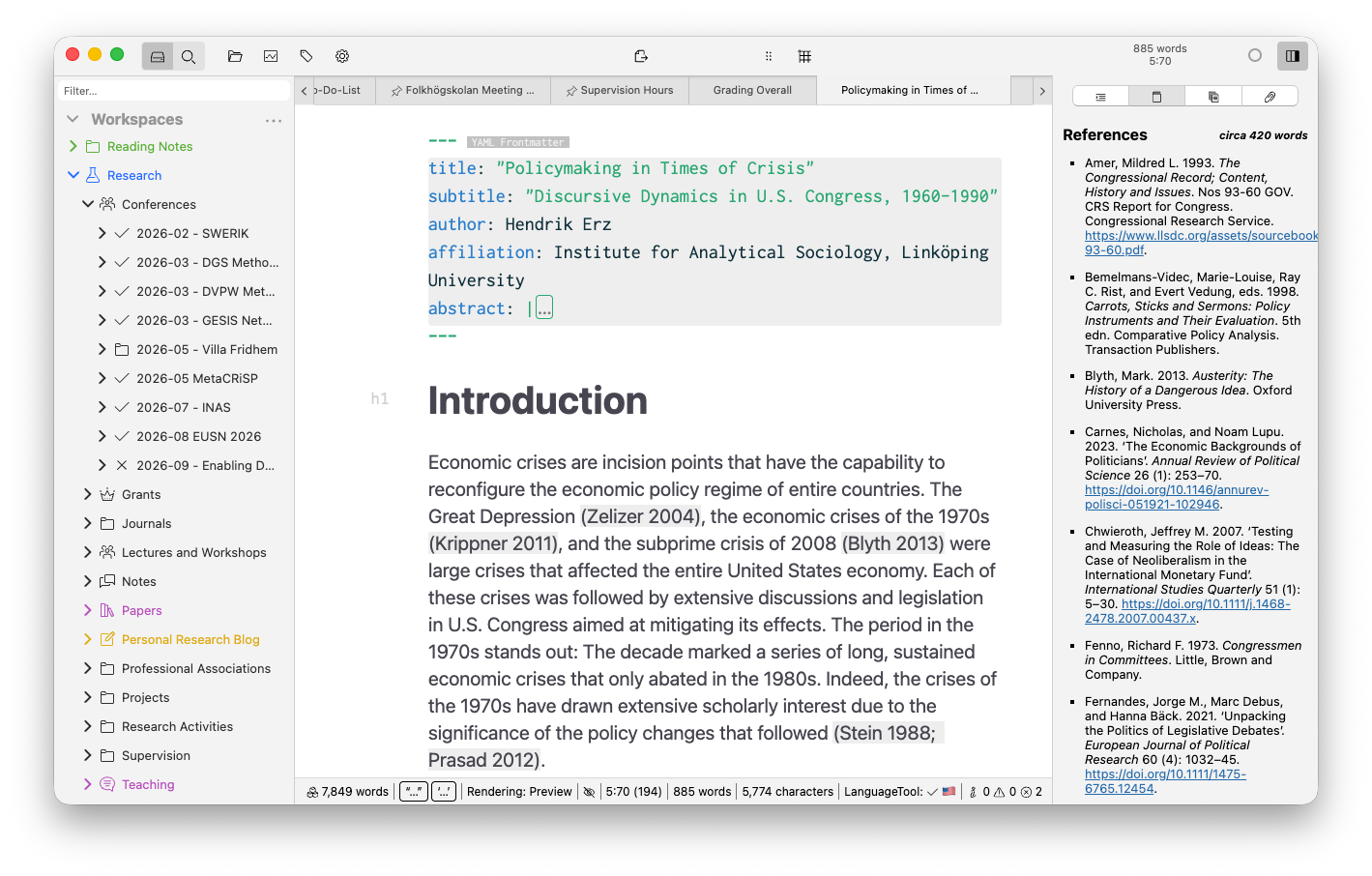
📝 Zettlr is a free and open-source Markdown editor built for researchers, students, writers, and anyone who prefers owning their notes.
It supports citations, Zotero integration, LaTeX exports, full-text search, and Zettelkasten-style knowledge management while working entirely with local files.
A powerful privacy-friendly alternative to cloud-based writing tools.
More details: https://digitalescapetools.com/tools/tool.html?id=zettlr
#OpenSource #Markdown #Writing #Research #Privacy #Zettelkasten #NoteTaking
Alt...
Zettlr logo and project page shown in dark mode. The screenshot highlights Zettlr as a publication workbench with GPLv3 licensing, version information, and passing build and test badges. The interface emphasizes its open-source status and academic writing focus.
Alt...
Screenshot of Zettlr's writing interface on desktop. A research paper is open in Markdown format with a file browser and note organization panel on the left, document editor in the center, and a references sidebar on the right. The layout showcases academic writing features, citation management, and structured note-taking workflows.
Doing More or Becoming More?
The Choice Every Christian Must Make In today's world, we are constantly encouraged to pursue our dreams, follow our passions, and do what makes us happy. While there is nothing inherently wrong with pursuing goals and ambitions, followers of Jesus must ask a deeper question: Am I becoming who God created me to be? There is a significant difference between doing what you want and becoming who God wants you to become. The Christian life requires both. God has given us gifts, talents, […] [SENSITIVE CONTENT]
The Choice Every Christian Must Make
In today’s world, we are constantly encouraged to pursue our dreams, follow our passions, and do what makes us happy. While there is nothing inherently wrong with pursuing goals and ambitions, followers of Jesus must ask a deeper question:
Am I becoming who God created me to be?
There is a significant difference between doing what you want and becoming who God wants you to become. The Christian life requires both. God has given us gifts, talents, desires, and opportunities to steward. But He is far more concerned with our character than our accomplishments.
Too often, we measure success by what we achieve. God measures success by who we are becoming.
The reality is that many people can build successful careers, lead ministries, grow businesses, and accomplish impressive things while neglecting the condition of their hearts. Yet Scripture repeatedly reminds us that character matters.
Your character is not separate from your destiny.
It is your destiny.
The person you are becoming determines how you will handle influence, relationships, challenges, victories, and disappointments. God is not simply preparing a destination for you; He is preparing you for the destination.
This raises another important question:
Are you working to win, or are you working to build your identity?
Many of us spend enormous amounts of energy trying to prove ourselves. We want to win the approval of others, win the promotion, win the recognition, or win the argument. But followers of Christ do not work from a place of insecurity. We work from a place of identity.
Our identity is not something we create.
It is something we receive.
Because of Christ, we are already loved, chosen, forgiven, and accepted. When we truly understand who we are in Him, we stop striving to earn what has already been given through grace.
The goal is no longer to build an identity through performance.
The goal is to live out the identity God has already spoken over us.
This is why what captures our attention matters so much.
Where your attention goes, your energy flows.
Whatever consistently occupies your mind will eventually shape your heart. Whatever shapes your heart will influence your decisions. And your decisions will determine the direction of your life.
If our attention is consumed by social media, comparison, achievement, entertainment, or the opinions of others, our spiritual growth will suffer. But when our attention is fixed on Christ, our hearts begin to reflect His character.
Jesus gave us the picture in John 15 when He described Himself as the vine and His followers as the branches.
A branch does not strain to produce fruit.
It remains connected to the vine.
The fruit is the natural result of the connection.
The same is true for us.
The question is not merely what are you doing for God.
The question is: What are you building into your life to stay connected to Him?
Are you creating space for prayer?
Are you spending time in God’s Word?
Are you worshiping beyond Sunday mornings?
Are you surrounding yourself with people who challenge you to grow spiritually?
Are you creating rhythms that draw you closer to Jesus?
Connection to the vine does not happen accidentally. It happens intentionally.
Every day, we are becoming someone. We are either being shaped by the world around us or transformed by the Spirit within us.
The life God desires for us is not simply about accomplishing more.
It is about becoming more like Christ.
So today, pause and ask yourself:
Am I only doing what I want to do?
Or am I becoming who God created me to become?
Because at the end of the day, success is not measured by what you built, earned, or achieved.
It is measured by whether you faithfully became the person God called you to be.
Stay connected to the Vine.
The fruit will follow.
With love and joy,
Laura

Alt...
Doing More or Becoming More?
Today, I look at the grammar of fitness in 'survival of the fittest'.
I was thinking about this as I was writing on a meta topic, so I felt like sharing it, since I won't be pursuing it further.
#philosophy #language #writing #blog #fitness #grammar #Darwin #substack #podcast #obligatesiblicide #justkiddingabouttheprevioushashtag
![[?]](https://files.mastodon.online/accounts/avatars/109/298/185/928/165/179/original/8ed3da9f519c2f00.jpg)
Cross-writing was a writing technique commonly used during the 18th and 19th centuries to save paper and reduce postage costs.
It involved filling a page normally, then rotating the paper 90 degrees to write directly over the original text.
📹Verse & Sip @_fluxfeeds #globalmuseum #writing #history
Stop Counting
“Some trust in chariots and some in horses, but we trust in the name of the Lord our God.” — Psalm 20:7 We count everything. Calories. Followers. Dollars. Wrinkles. Accomplishments. Failures. Likes on social media. How many people showed up. How many people noticed. How many people didn’t. We count what everyone else has and quietly compare it to what we don’t. And before we know it, our worth becomes attached to numbers. But God never asked us to count those things. He asked […] [SENSITIVE CONTENT]
“Some trust in chariots and some in horses, but we trust in the name of the Lord our God.” — Psalm 20:7
We count everything.
Calories. Followers. Dollars. Wrinkles. Accomplishments. Failures. Likes on social media. How many people showed up. How many people noticed. How many people didn’t.
We count what everyone else has and quietly compare it to what we don’t.
And before we know it, our worth becomes attached to numbers.
But God never asked us to count those things.
He asked us to count on Him.
Psalm 20:7 says, “Some trust in chariots and some in horses, but we trust in the name of the Lord our God.” In Biblical times, chariots and horses represented strength, power, security, and status. Today, our “chariots” may simply look different. We trust in followers, appearance, income, achievements, relationships, recognition, or the approval of others to make us feel valuable.
Yet none of those things can truly hold the weight of our identity.
The world teaches us that more is better. More attention. More influence. More success. More applause. Yet the more we chase those things, the more empty we often feel. Because the human heart was never designed to be filled by comparison. It was designed to be filled by Christ.
Comparison is exhausting because there will always be someone with more. More beauty. More money. More opportunities. More followers. More recognition. If we live by counting what we lack, we will always feel like we are behind.
But God’s Kingdom works differently.
Jesus never measured people by popularity, status, or possessions. He looked at hearts. He valued faithfulness over fame. Obedience over attention. Surrender over success.
The disciples probably didn’t look impressive by the world’s standards. Moses felt inadequate. David was overlooked. Ruth was a widow. Paul carried weakness. Yet God used each one powerfully because they stopped focusing on what they didn’t have and started trusting the One who had everything they needed.
Maybe that’s where peace begins too.
Not in finally getting enough.
But in realizing God already is enough.
What if we stopped counting likes and started counting blessings?
What if we stopped counting flaws and started remembering grace?
What if we stopped counting how far behind we feel and started counting on the God who never leaves us?
Because the truth is, when we constantly compare ourselves to others, we lose sight of the unique story God is writing in us. Someone else’s success does not diminish your value. Someone else’s calling does not cancel your purpose.
God is not asking you to become someone else.
He is asking you to trust Him with who you already are.
The enemy loves distraction through comparison because comparison keeps our eyes horizontally focused on people instead of vertically focused on God. Peter learned this when he walked on water. As long as his eyes were on Jesus, he stayed above the waves. The moment he focused on everything around him, fear took over.
The same is true for us.
We sink when we focus on everyone else’s life instead of God’s faithfulness in our own.
Social media can become dangerous when it quietly convinces us that everyone else is happier, prettier, more successful, more spiritual, or more loved. But remember, people usually post highlights, not struggles. We compare our behind-the-scenes to someone else’s carefully edited moments.
God never intended for us to live chained to comparison.
Galatians 6:4 says, “Pay careful attention to your own work…without comparing yourself to someone else.”
That verse is freedom.
Freedom to stop performing.
Freedom to stop competing.
Freedom to stop striving for approval that only God can truly satisfy.
At the end of the day, God will never ask how many followers you had. He will ask if you followed Him.
He will not ask if everyone applauded you. He will ask if you trusted Him.
He will not ask if you measured up to others. He will ask if you loved Him and loved people well.
So maybe today is the day to stop counting all the wrong things.
Stop counting what you lack.
Stop counting failures.
Stop counting likes.
Stop counting how you compare.
And instead, count on God.
Because when God is enough, you no longer need the world to tell you that you are.
With love and joy,
Laura

Alt...
Stop Counting
Faith Over Fear: Staying Close to Your Stronghold
Fear has a way of making us feel trapped. It whispers lies into our hearts:You’re powerless.You’re not good enough.You’re going to fail.You’ll never make the right decision. And when our decisions are made from fear, we often end up feeling even more lost. Fear clouds our judgment, steals our peace, and keeps us focused on the size of the problem instead of the greatness of God. But God was never meant to be distant from us in our struggles. He is our refuge, our protector, and our […] [SENSITIVE CONTENT]
Fear has a way of making us feel trapped. It whispers lies into our hearts:
You’re powerless.
You’re not good enough.
You’re going to fail.
You’ll never make the right decision.
And when our decisions are made from fear, we often end up feeling even more lost. Fear clouds our judgment, steals our peace, and keeps us focused on the size of the problem instead of the greatness of God.
But God was never meant to be distant from us in our struggles. He is our refuge, our protector, and our stronghold.
“The Lord is my rock, my fortress and my deliverer; my God is my rock, in whom I take refuge.” — Psalm 18:2
The greatest fear we should have is not failure, rejection, or uncertainty. It is separation from the presence of God. Because apart from Him, fear grows louder. Apart from Him, we begin believing the lies of the enemy instead of the truth of our Creator.
The enemy thrives in fear because fear pulls us away from trust. Scripture reminds us:
“There is no fear in love. But perfect love drives out fear.” — 1 John 4:18
So how do we receive that perfect love? How do we move from fear to faith?
We bring our fear honestly before God.
We confess it.
We stop pretending to be strong enough on our own and instead ask:
Lord, who do You say that I am?
What do You want me to do?
And then—we trust what we hear from Him.
God’s voice will never speak shame, hopelessness, or condemnation over your life. He speaks the truth. Identity. Purpose. Peace. He reminds you that you are His.
The enemy says:
You are not enough.
God says:
My grace is sufficient for you.
The enemy says:
You are powerless.
God says:
My power is made perfect in weakness.
The enemy says:
Fear the future.
God says:
Trust Me with it.
Faithful decisions are not always easy decisions, but they are rooted in trust that God is bigger than the situation standing in front of you. Fear asks, “What if everything goes wrong?” Faith asks, “What if God is already making a way?”
Sometimes we think faith means never feeling afraid. But faith is not the absence of fear; it is choosing to move forward while holding tightly to God.
Jesus gives us this beautiful invitation:
“Take my yoke upon you and learn from me, for I am gentle and humble in heart, and you will find rest for your souls.” — Matthew 11:29
What a comfort to know we do not carry life alone. A yoke was designed to distribute weight. Jesus never intended for us to carry every burden, every fear, every uncertainty by ourselves. When we walk with Him, He carries what is too heavy for us.
Peace comes when we stop striving for control and start surrendering to God’s leadership.
If you feel overwhelmed today, pause and ask yourself:
Am I listening to fear, or am I listening to God?
Then bring your fears honestly before Him. Ask Him who He says you are. Ask Him where He is leading you. Trust His answer more than your emotions.
Because when you stay close to your stronghold, fear loses its power.
God is with you.
God is for you.
And His perfect love still casts out fear.
With love and joy,
Laura

Alt...
Faith Over Fear: Staying Close to Your Stronghold
Learning to Listen: What Habakkuk Teaches Us About Hearing God
The Book of Habakkuk is one of the most honest conversations with God found in Scripture. Habakkuk did not approach God with polished prayers or perfect understanding. He came with questions, confusion, frustration, and even disappointment. Yet through his journey, we are given a beautiful picture of how to truly listen to God. Too often, we think listening to God means hearing an audible voice or receiving immediate answers. But Habakkuk shows us that listening begins with bringing our […] [SENSITIVE CONTENT]
The Book of Habakkuk is one of the most honest conversations with God found in Scripture. Habakkuk did not approach God with polished prayers or perfect understanding. He came with questions, confusion, frustration, and even disappointment. Yet through his journey, we are given a beautiful picture of how to truly listen to God.
Too often, we think listening to God means hearing an audible voice or receiving immediate answers. But Habakkuk shows us that listening begins with bringing our hearts honestly before the Lord and positioning ourselves to hear Him.
Habakkuk opens his book with difficult questions:
“How long, Lord, must I call for help, but You do not listen?” (Habakkuk 1:2).
That verse alone is comforting because it reminds us that God is not intimidated by our questions. Habakkuk looked around at injustice, pain, violence, and suffering, and he could not understand why God seemed silent. Instead of walking away from God, he brought his confusion directly to Him.
That is the first lesson in listening to God:
Bring your honest heart before Him.
Many times, we want to clean up our emotions before we pray. We think faith means pretending we are not struggling. But Habakkuk teaches us that genuine faith is willing to wrestle with God while still remaining near Him. God would rather have our honest prayers than distant silence.
After pouring out his concerns, Habakkuk does something powerful. He says:
“I will stand at my watch and station myself on the ramparts; I will look to see what He will say to me…” (Habakkuk 2:1).
Habakkuk intentionally positioned himself to listen.
Listening to God requires stillness and expectation. In a world full of noise, distraction, opinions, notifications, and constant activity, it is difficult to hear the gentle voice of God. Habakkuk teaches us that listening is not passive; it is intentional. He stood watch. He waited. He expected God to speak.
Sometimes we want quick answers, but God often speaks in the waiting.
God’s response to Habakkuk was not necessarily the answer he expected. In fact, some of what God revealed was difficult and challenging. Yet Habakkuk continued listening. This reminds us that listening to God is not just about hearing what comforts us; it is also about trusting what He says, even when we do not fully understand it.
That may be one of the hardest parts of faith.
We often want clarity before obedience, but God frequently asks for trust before understanding. Habakkuk learned that God’s plans were bigger than his perspective. While Habakkuk could only see immediate problems, God saw the full picture.
Isn’t that true in our lives too?
We see delays, disappointments, unanswered prayers, and closed doors. God sees protection, preparation, growth, and purpose. Listening to God means trusting His wisdom above our limited understanding.
One of the most beautiful transformations in Scripture happens within the short three chapters of Habakkuk. The book begins with confusion and questioning, but it ends with worship.
Habakkuk concludes by saying:
“Though the fig tree does not bud and there are no grapes on the vines…yet I will rejoice in the Lord, I will be joyful in God my Savior.” (Habakkuk 3:17-18).
What changed?
Habakkuk’s circumstances had not improved yet. The problems were still there. But through listening to God, Habakkuk’s perspective changed. He moved from fear to faith, from frustration to trust, from questioning to worship.
That is what happens when we truly listen to God.
Listening does not always immediately change our situation, but it changes us. God steadies our hearts. He reminds us of who He is. He gives peace that circumstances cannot provide.
The book of Habakkuk teaches us several important truths about listening to God:
- Bring your honest questions to Him.
- Create space to wait and listen.
- Expect God to speak through His Word, His Spirit, and His timing.
- Trust Him even when His answers are difficult.
- Allow His presence to transform your perspective.
God still speaks today. Often not through dramatic signs, but through Scripture, prayer, quiet moments, conviction, peace, and the gentle leading of the Holy Spirit. The question is not whether God is speaking. The question is whether we are positioning ourselves to listen.
Like Habakkuk, may we become people who stand watch, wait expectantly, and choose trust even before we see the outcome. Because sometimes the greatest miracle is not getting immediate answers, but developing deeper faith while we wait.
With love and joy,
Laura

Alt...
Learning to Listen: What Habakkuk Teaches Us About Hearing God
“I see how stories suffer when a writer attempts to fit the play-by-play of an entire experience into a few thousand words.”
Lavinia Spalding, editor of "The Best Women's Travel Writing," shares what editing the series has taught her:
https://longreads.com/2026/06/11/womens-travel-writing-lavinia-spalding/?utm_source=mastodon&utm_medium=social
#Longreads #Interview #Travel #TravelWriting #Writing #Curation #Place
![[?]](https://gamerplus.org/system/accounts/avatars/114/497/966/782/841/054/original/c3c1b4d840d49021.png)
#dailyWords #writing
+1554 for (4637 / 24000) on my way to my chosen draft-check-in-point. I guess the show took over Wednesday, and on Monday I had that priceless discussion with Kent about https://lispy-gopher-show.itch.io/nicclim and what some of the CLIM things I was saying *implied* it did / I did with it. And I had a bad mood which ate a day. Of the two days this week I wrote per se, I guess one was about 3000 words and the other was about 1500. I am uncountedly filling notebooks, but just of thoughts.
I take a look at the gravitational pull of Modernity and the failure of postmodernity and metamodernity.
#substack #blog #podcast #grammar #philosophy #noexit #modernity #postmodern #metamodern #perspective #writing #change #trap #diagnosis #risk #language
It's Sunday morning in Europe! #archive 8UTC Sunday as always #lispyGopherClimate #podcast since 2022.
https://toobnix.org/w/pU6zu95YDdyGKqsxxRf3Vg #peertube live
#RSS (recent times) https://toobnix.org/feeds/videos.xml?accountId=580185
@vnikolov 's Quality Without A Name toot #AI
As much as I can remember about the #lisp community #architecture and Christopher Alexander https://www.dreamsongs.com/Files/PatternsOfSoftware.pdf https://alexandria.common-lisp.dev/
My NicCLIM #IDE demo and the #DL book I am #writing - loose bibliography and sketch of chapters
Alt...
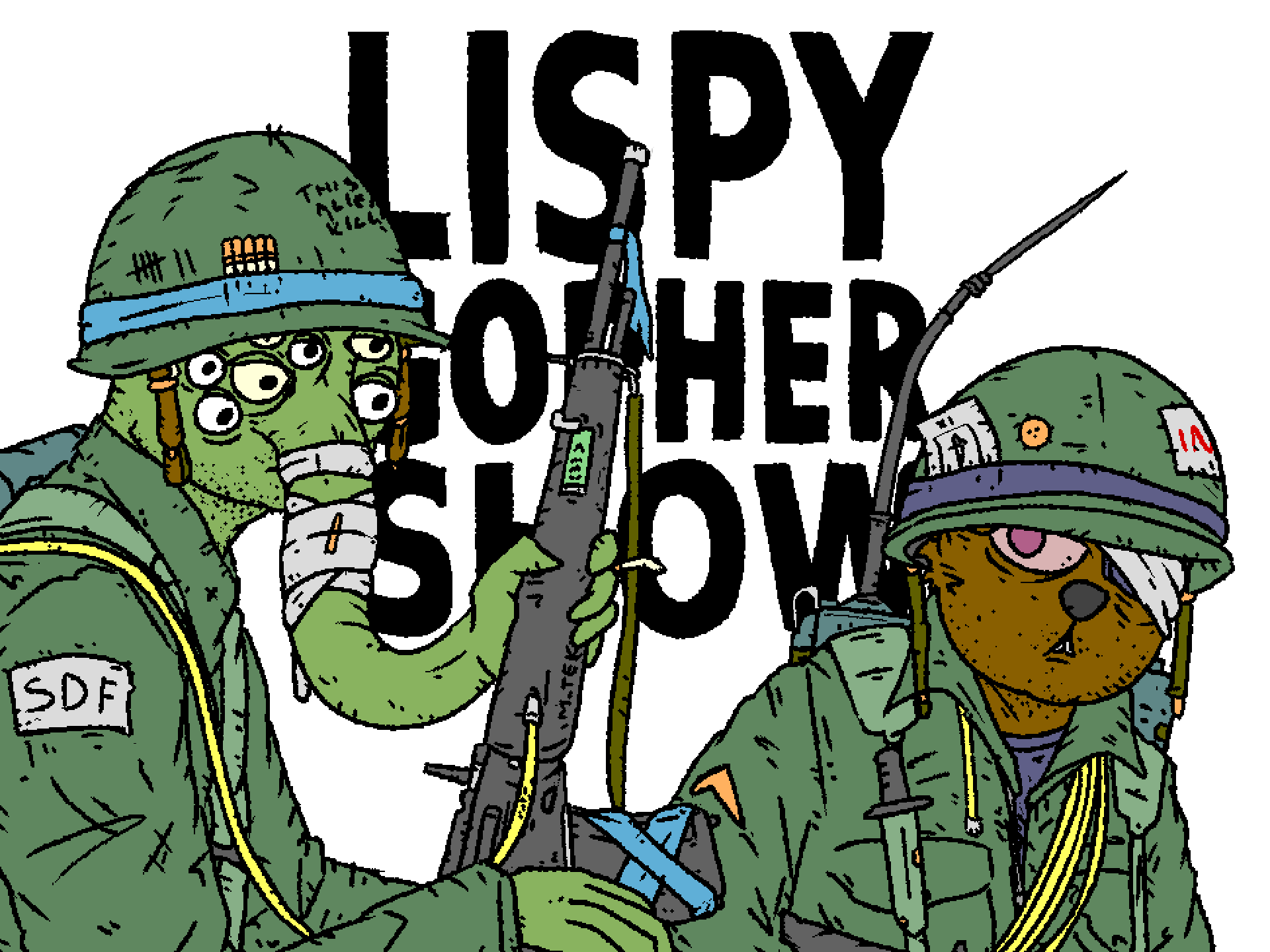
The lisp alien and gopher fighting in the unix_surrealism corpofoss war arc. LISPY GOPHER SHOW
vintage banner recently unearthed.
Psychology is an administrative vocabulary masquerading as a natural science, and the most damning evidence is that the discipline best equipped to rescue it is quietly declining to speak its language. Thoughts?
https://brywillis634737.substack.com/p/the-zombie-factory?r=pvxh5
#philosophy #psychology #zombies #ethics #blog #substack #writing #critique #news #language #society #culture #power #instrumentation #evidence #podcast #thoughts
![[?]](https://soc.octade.net/octade/s/3f7f2b5eda4e392867c301c49c2daa16.png)
[for your address book]
A Fediverse group for sharing your papers and preprints.
https://soc.octade.net/papers/
#Papers #Writing #Preprints #Authors #Research #Reading #groups #fedigroups #fediverse

Alt...
cartoon drawing of a feather quill standing in a inkwell
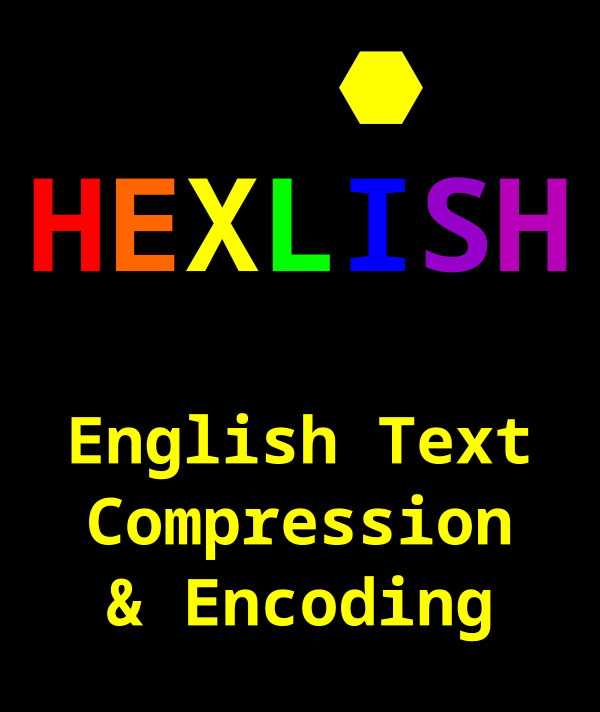
Hexlish Alphabet for English, Constructed Languages and Cryptography: Automatic, Structural Compression with a Phonetic Hexadecimal Alphabet
DOI : https://doi.org/10.5281/zenodo.13139469
Hexlish is a legible, sixteen-letter alphabet for writing the English language and for encoding text as legible base 16 or compressed binary. Texts composed using the alphabet are automatically compressed by exactly fifty percent when converted from Hexlish characters into binary characters. Although technically lossy, this syntactic compression enables recovery of the correct English letters via syntactic reconstruction. The implementer can predict the size of the compressed binary file and the size of the text that will result from decompression. Generally it is intuitive to recognize English alphabet analogues to Hexlish words. This makes Hexlish a legible alternative to the standard hexadecimal alphabet.
#Hexlish #Conlang #Alphabets #English #Hexadecimal #Encoding #Cryptography #Ciphers #Crypto #Encryption #Compression #Papers #Preprints #Orthography #Language #Linguistics #Writing #Glyphs #Alphabetology #Technology
Alt...
Hexlish Alphabet logo. The word HEXLISH in rainbow colors on a black background with a hexagonal dot above the letter I. Beneat the logo in yellow reads the phrase, "English Text Compression & Encoding."
Usenet is accessible via TOR and open access servers that don't require registration or identifying information.
The writer can write and discuss using a pseudonym or pen name without fear of retaliation from employers, government, friends, and family. This encourages some people to share their innermost thoughts they would otherwise not express. Of course it also encourages trolls, but there are plenty of trolls everywhere else.
Usenet is text-centric so unlike the fediverse there is not a stream of distracting images.
Even after all these years I still prefer reading and posting Usenet newsgroups over all other forms of so-called, 'social media'.
#Usenet #NewsGroups #NNTP #NetworkNews #NetNews #Anonymous #Anonymity #Writers #Writing
![[?]](https://s3-toot-io.b-cdn.net/accounts/avatars/109/841/560/707/964/889/original/335f8b4b6c31f58e.jpg)
my lifetime spent on
a painful pilgrimage to
the next place to sit
#dailyhaikuprompt - pilgrimage
#haiku
#poetry
#poetrycommunity
#poem
#writing
#writingcommunity