Search results for tag #tor
![[?]](https://nbg1.your-objectstorage.com/tno-mastodon/accounts/avatars/111/434/264/745/920/273/original/52ff85db085a2a1d.jpg)
7 #privacy tools experts actually use
https://proton.me/blog/privacy-tools-experts-use
#guide #Android #GrapheneOS #Graphene #Qubes #OrganicMaps #FDroid #RSS #Cape #Tor
![[?]](https://nangang.travnewmatic.com/accounts/avatars/000/000/001/original/5b1ab052c9c1dabf.jpg)
Configured my #SearXNG instance https://searx.travnewmatic.com to proxy searches and images through #Tor
Asked #hermes to document how we achieved it, as theres not really an end-to-end guide on how to set this up: https://www.travnewmatic.com/2026/09/11/routing-our-searxng-instance-through-tor/
![[?]](https://files.mastodon.social/accounts/avatars/115/565/301/135/627/370/original/5a69afadc00de9cb.png)
German police are reading WhatsApp, Telegram and Signal chats without breaking encryption. They link a new device to the account, or pull history from the server.
Encryption was never the weak point. The account was.
Zerion has no account, no phone number, no server that can authorize a second client. Keys live only on your device, which detects Cellebrite and wipes after failed unlocks.
No server, no target. Don't trust us, check the code.
zerion.chat
![[?]](https://file-is.no-pony.farm/accounts/avatars/110/057/136/931/675/789/original/6a6100db62aabbbf.gif)

@dansup@mastodon.social @dansup@pixelfed.social @loops
Does #loops support tor access? What is the onion address of loops.video?
Disclosure statement: i publish #antifa content at loops.
The #Registrar of the .video top level domain is "Identity Digital" an USA based company.
ht tps://loops.video/v/h-6atgLHIi
#TLD #domesticTerrorism #autistiInventati #Fwdiverse #Tor #hiddenService
Small update. The next release is on GitHub now, but we’re waiting on approval before it lands on Google Play and F-Droid, so hang tight if that’s where you get Zerion.
This one adds a non-custodial wallet inside the encrypted ZVault: BTC and XMR, keys stay entirely with you, traffic over Tor. It’s open source and still, so treat it as early and use accordingly.
Coming to the stores as soon as review clears.
zerion.chat
Google is adding more network privacy features to Android 17. That’s good news, but privacy shouldn’t stop at the operating system.
Zerion is an open-source messenger for Android. No phone number, no account and no central server. Messages are end-to-end encrypted and routed over Tor.
We’re still early, building in public and improving step by step.
Try Zerion and tell us what you think:
https://play.google.com/store/apps/details?id=com.professor.zerion
This week: an “unprecedented” number of Apple users received mercenary spyware alerts, a 30-40% jump over previous waves. And a phishing platform is using AI voice agents to call people posing as Apple Support, fishing for passcodes.
Different attacks, same target: your account, your device, your identity.
Zerion has none of those to steal. No account, no phone number, no server. Nothing in the middle to compromise.
zerion.chat
![[?]](https://files.mastodon.social/accounts/avatars/111/877/961/013/095/601/original/1d659ca16f57af47.jpg)
Why Tor Button? 💪🏻
Imagine living in a country where Tor is allowed and reachable, but some apps or services are blocked and you don't want, can't, or don't trust a commercial VPN.
Install Tor Button, press one button, and your Android apps' TCP traffic goes through Tor.
No per-app proxy configuration. No VPN provider to trust.
A quick thank you to everyone using Zerion.
We haven’t been around long, and we’ve grown without any of the usual machinery. No funding, no investors, no CEO working the press, no marketing budget. Just our own protocol, built in the open, and a small community that keeps growing by word of mouth.
The fact that people find us at all, and stay, and report bugs, and tell a friend, without any of that push behind us, means everything.
Thank you. We’ll keep earning it.
zerion.chat
![[?]](https://files.mastodon.social/accounts/avatars/116/974/545/582/242/007/original/30b4972dca44ce3e.png)
@stux Did WHOIS lookup. Subnet appears to be dedicated to #Tor exit nodes.
Abuse if this will cause collateral damage to legitimate users, all because #Clankers have to ruin everything.
Other exit nodes will also face the same problem. These #AI clanker heads think they're really smart using technology that's intended to provide privacy and anonymity to vulnerable internet users and bypass internet censorship. Now, bad actors are abusing it for malicious scraping and other AI garbage.
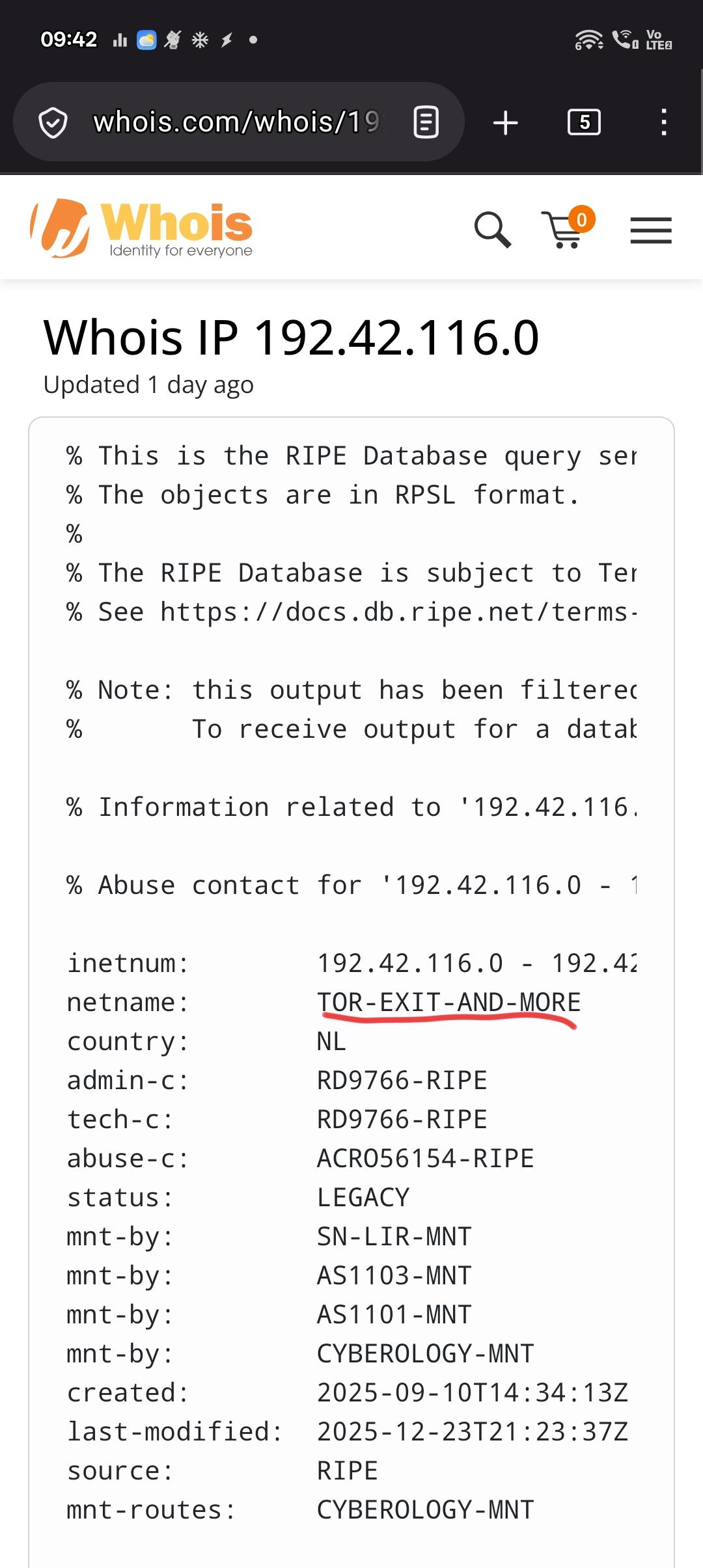
Alt...
WHOIS lookup for the 192.42.116.0/24 IPv4 range.
![[?]](https://media.mstdn.social/accounts/avatars/000/005/168/original/c85be6683862c045.png)
RE: https://mstdn.social/@stux/117174493928988282
It seems your #Tor exit nodes are used to create endless waves of AI Agent/LLM accounts on the Fediverse
At some point it would be handy to ask when you're "protecting" the internet or when you are actively helping to "destroy" it 😉
I get the intentions and love it but uh.. yeah
![[?]](data:image/png;base64, iVBORw0KGgoAAAANSUhEUgAAAEAAAABAAQAAAACCEkxzAAAAUUlEQVQoz43R0QkAMQwCUDdw/y3dwEvsvzlL4X1IoQkAisKmwfAFT3RgJHbQezpSRoXEqeqCL9BJBf7h3QbOCCxV5EVWMEMwG7K1/WODtlvxAYTtEsDU9F34AAAAAElFTkSuQmCC)
Zerion Desktop is here. Version 1.0.0 for Windows and Linux is live.
It brings Zerion to the desktop with the same serverless design: peer-to-peer messaging over Tor, no accounts, no phone number. It speaks the same wire protocol as mobile, so desktop and phone identities can talk to each other.
It also includes the encrypted ZVault and non-custodial BTC, ETH and XMR wallets, keys stay with you, all traffic over Tor.
github.com/zerionproject/Zerion-Desktop
Just published tor-button on GitHub!
https://github.com/bashcore/tor-button
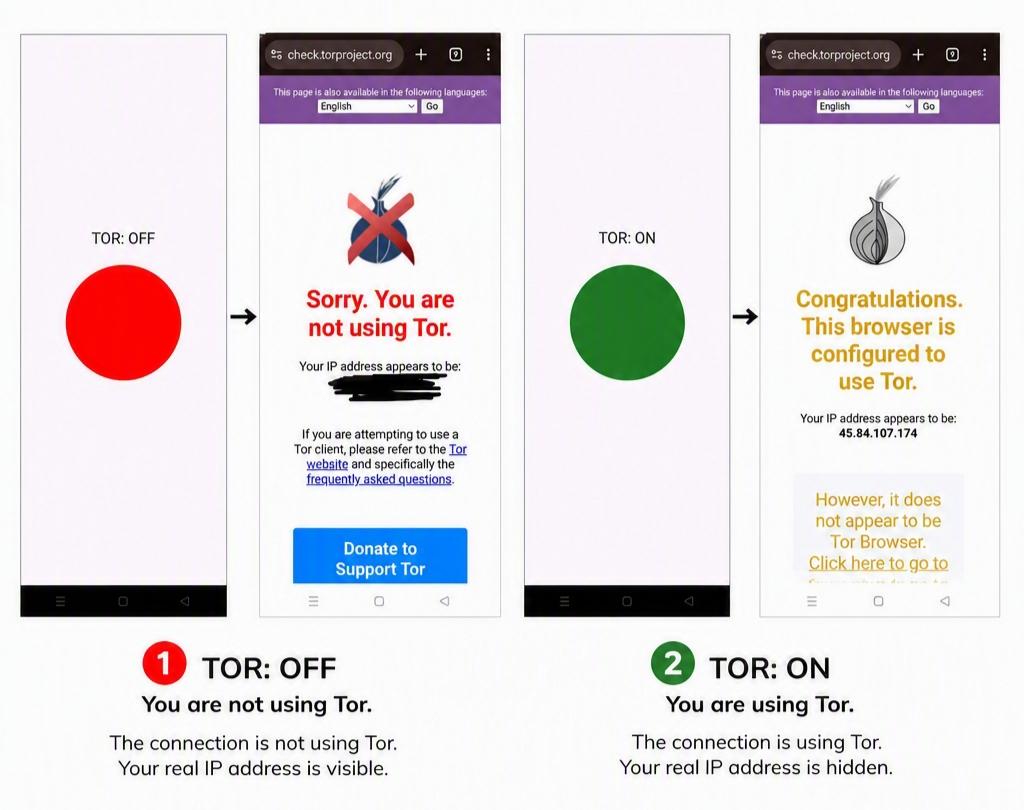
One-tap Tor: ON = anonymous, OFF = normal.
Tested 24h+ on 4 phones (Android 8 to 14, even Huawei/Narzo): no drops 😅
Tip: set it as Always-on VPN and disable battery optimization, or it will get killed.
Open source, no ads, no BS.
Introducing Tor Button! 🔘
My new #OpenSource Android app that routes ALL your TCP traffic through #Tor with one tap. No trackers, no ads.
Built to survive the worst phones: it finally stays up for hours on my Realme Narzo 30 (battery killer) on WiFi & mobile, with built-in IP leak protection.
Soon on #GitHub & perhaps #FDroid! 💪🏻
#Privacy #Android #VPN #TorProject
We’ve enabled GitHub Sponsors for Zerion.
Zerion is free, open source, and has no company behind it. Sponsorships go toward the two things that matter most: the independent security audit we’re working toward, and the development costs of keeping this going.
No pressure, ever. The app stays free and complete regardless. But if Zerion is useful to you and you want to help it move forward, this is a direct way to do it.
github.com/sponsors/zerionproject
![[?]](https://polymaths.social/fileserver/01HCMX6M1CZNEVJ4F5H58TT5XJ/attachment/original/01JHC5KM5K0V0J0436SPD3F86H.jpeg)


 🍵
🍵  [
[Did you know you can use your phone to provide onramps to the TOR network to help people bypass censorship?
Seems like a very cool project: https://f-droid.org/packages/io.bloco.snowflake/
I've had it running on my phone today. Pretty modest battery drain, and it can be set to only run on wifi and/or while charging.
Zerion 3.0.2 is out, more stability fixes and refinements based on your feedback. Thanks to everyone who reported issues.
What’s next: we’re now working on expanding beyond Android. iOS is in development, and desktop builds for Linux (Flatpak) and Windows are on the way. Multi-device sync is coming too, one of the most requested features.
Still serverless, still over Tor, still open source. More as it lands.
zerion.chat
 boosted
#Tor - Funding internet freedom together: results from our first participatory funding round
https://blog.torproject.org/funding-internet-freedom-together/
We’re back at work today. After a difficult pause, development on Zerion continues.
3.0.2 is on the way, focused on stability and on the feedback you’ve been sending us. A lot of the fixes and refinements came directly from what users reported, so thank you for that. It genuinely shapes what we prioritize.
More soon. Building in the open, at a steady pace.
zerion.chat
Meet KEMchatka: an experimental, serverless P2P terminal chat over Tor hidden services.
No accounts, no port forwarding, zero disk logging.
Features hybrid post-quantum encryption: X25519 + ML-KEM-1024 (FIPS 203) combined via HKDF-SHA512 to defeat "harvest now, decrypt later" attacks. Simple out-of-band setup.
When privacy is under threat, build tools that protect it.
https://github.com/bashcore/kemchatka
#PostQuantum #Tor #Python #CyberSecurity #Privacy #OpenSource #Cryptography
Threema is having an outage today, second day running. Their main service went down and messages stopped flowing.
No shade, outages happen to everyone. But it’s a clean illustration of one thing: when delivery depends on a company’s servers, their downtime is your silence.
A serverless design has no central service to go down. There’s no status page because there’s nothing to fail in the middle.
zerion.chat
Zerion 3.0 is live. On Google Play now, with F-Droid and the APK following the release tag.
The big one: our own native protocol stack, replacing the inherited Bramble layers entirely. Post-quantum on every message (ML-KEM-768, ML-DSA-65 via Bouncy Castle).
Two new transports ship with it: opt-in I2P as an alternative to Tor, and a Bluetooth mesh that carries messages device to device with no internet at all. Tor stays the default.
All open source.
zerion.chat
![[?]](https://files.mastodon.social/accounts/avatars/115/742/434/865/105/205/original/ba2fa15026c28d18.jpeg)
Looking for a messenger that doesn't require a phone number or email?
Zerion is an open-source Android messenger that runs over the Tor network for anonymous communication. It includes end-to-end encrypted chats, voice & video calls, group chats, encrypted file storage, and post-quantum cryptography support.
More details: https://digitalescapetools.com/tools/tool.html?id=zerion
#OpenSource #Privacy #Android #Tor #Encryption #FOSS #FOSSApps #CyberSecurity
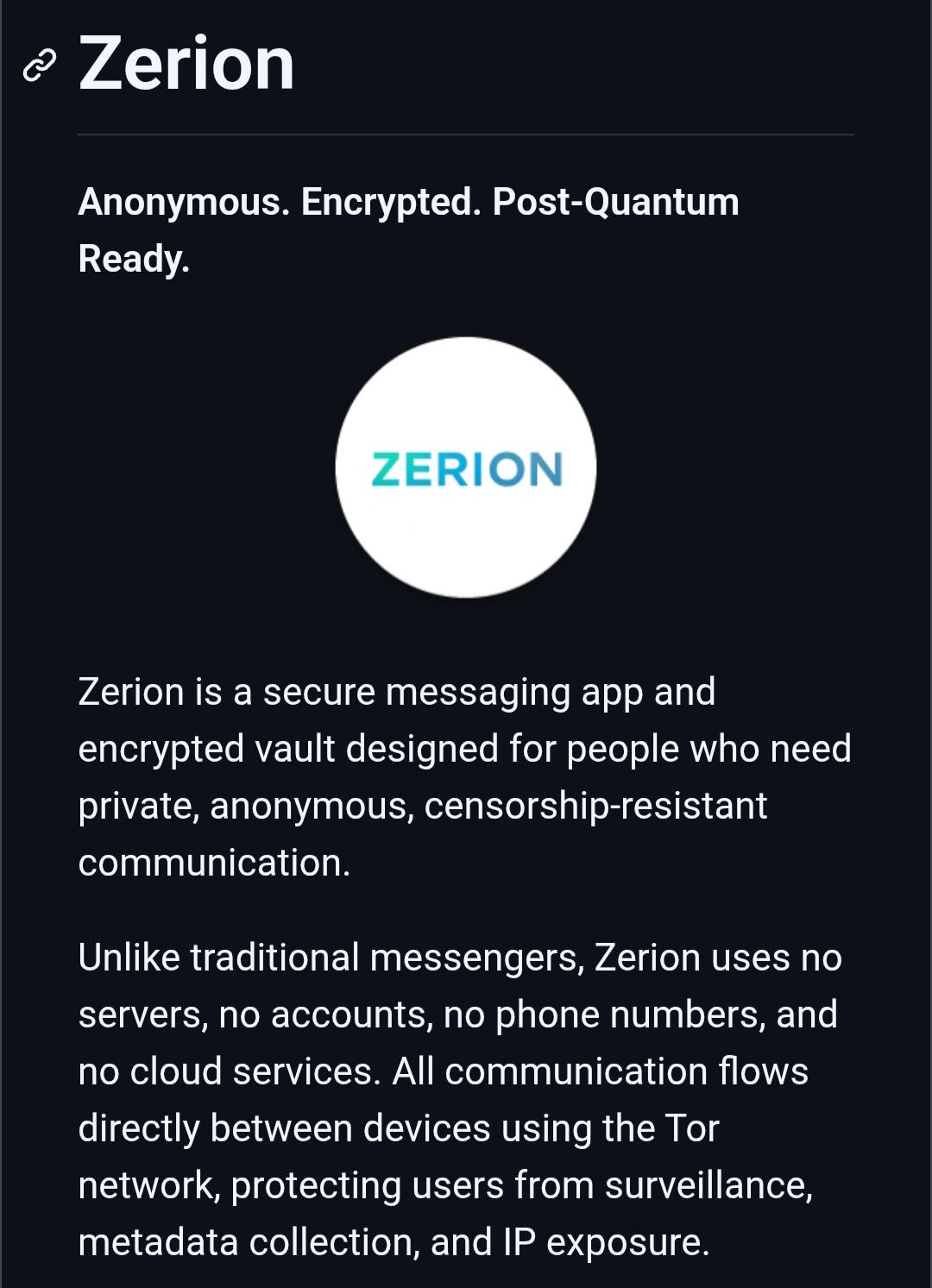
Alt...
Screenshot of the Zerion project page. The header reads "Anonymous. Encrypted. Post-Quantum Ready." Below is the Zerion logo and a description explaining that Zerion is an open-source Android messenger for anonymous, end-to-end encrypted communication over the Tor network. The text highlights that it requires no phone number, email, accounts, or central servers, with communication occurring directly between devices to help protect against surveillance, metadata collection, and IP exposure.
This week Microsoft and ReliaQuest reported attackers using hotel Wi-Fi across the US, India and Saudi Arabia to steal credentials and push malware onto travellers’ devices. Connect to the network and you’re the target.
This is exactly why the network you’re on shouldn’t be something you have to trust. Zerion routes everything over Tor, so a hostile Wi-Fi sees only encrypted traffic, no IP, no metadata, nothing to harvest or inject into.
zerion.chat
![[?]](https://files.mastodon.social/accounts/avatars/116/751/863/753/392/750/original/be14ea1ddc815e7d.png)
Tor Browser is a free, open-source browser from the nonprofit Tor Project. It routes everything through three volunteer relays: the first sees your IP but not the site, the last sees the site but not your IP. No single point knows both. Built to beat surveillance and censorship. Don't customize it — extensions or changed settings make you traceable. For everyday use Brave is enough; for real anonymity, Tor. torproject.org
Zerion 3.0 is in its final stage before release. The dev branch, with the native protocol stack, I2P and the Bluetooth mesh, is now being tested by an external party before we ship it.
We don’t release security features on trust. They get checked first, and the whole thing is open source so you can read every line yourself while we do.
This is separate from the independent audit we’re still raising funds for. Both matter.
zerion.chat
Zerion 3.0 just landed two new transports in dev, on top of our native protocol stack.
I2P as an opt-in alternative to Tor, for people who want a different anonymity network. Tor stays the default.
And a Bluetooth mesh for communicating with no internet at all. Messages are carried encrypted from device to device, store-carry-forward, until they reach the recipient. Built for blackouts, protests, disasters, anywhere the network is down or cut.
zerion.chat
Privacy is evolving.
Zerion is an open-source, Tor-native messenger focused on modern cryptography and privacy-first communication.
🌐 https://zerion.chat
💻 https://github.com/zerionproject/Zerion
#OpenSource #Privacy #PostQuantum #Tor #Encryption #FOSS #Android
Zerion 3.0 is close. Our own protocol stack replacing the inherited Bramble layers: Tor-only, post-quantum on every message, constant-rate cover traffic so an observer can’t tell messages from noise.
In final testing now, two more transports:
I2P as an opt-in alternative to Tor. And a Bluetooth mesh for communicating with no internet at all, blackouts, protests, disasters.
Tor stays mandatory. The rest is additive.
zerion.chat
![[?]](https://fedi.blindsoft.net/susie.png)
Briar just went into maintenance mode, and their update named the problems they couldn’t get past. Some of them we’ve already shipped: account backup, attachments, reliable contact adding, channels.
For 3.0 we’re going further, replacing the inherited Briar/Bramble layers with our own protocol stack. Transport, wire format, sync, message model, all ours. Bramble stays the origin, but stops being the foundation.
triple ratchet PQ
zerion.chat


![[?]](https://media.infosec.exchange/infosec.exchange/accounts/avatars/000/187/720/original/90b7505f9aa62a61.jpeg)
 I thought scaling Tor meant adding more relays.
What it actually meant was multiplying failure modes...
I now operate 24 Tor relays and bridges across 15 locations, 11 ASNs and 6 operating systems.
Every new relay brings another provider, firewall, IPv6 route, service manager, identity key, backup and recovery plan.
Some things I learned along the way:
🌍 More countries don’t automatically mean real diversity
🔑 The server is replaceable, the relay identity isn’t
🛠️ Linux, BSD and SunOS need the same outcomes, not the same commands
📊 What I configured isn’t always what the Tor network currently sees
A large fleet is easy to count. A resilient one is much harder to keep alive.
I wrote about what operating Tor across 15 locations actually taught me:
🔗 https://brokenbotnet.com/2026/07/17/non-eu-relays/
#Tor #Privacy #OpenSource #SelfHosting #Infosec
Briar is going into maintenance mode, only security fixes from here. Not for lack of skill. They had no funding and built it in their spare time for years.
Zerion runs on their Bramble protocol and we owe them for it. The gaps they listed as unsolved, account backup, attachments, reliably adding contacts, we’ve shipped. Our own protocol stack is next.
The foundation stays. The work keeps moving.
zerion.chat
An independent security audit is the single thing standing between “trust us” and “verified.” It’s also what Privacy Guides, journalists and security reviewers rightly ask for before recommending any messenger.
We’re raising funds to have Zerion audited by Radically Open Security. Every finding gets published, good or bad. That’s the deal.
If Zerion is useful to you, this is the most direct way to push it forward:
zerion.chat/donate.html
If you’ve been looking for a messenger with no phone number, no account, and no server that can be scanned or subpoenaed, that’s exactly what Zerion is.
Everything runs over Tor. Post-quantum encryption on every message. Hidden profiles and anti-forensics for people who need them. Free and open source, so you can verify all of it yourself.
We’ve grown to here on word of mouth alone. If it sounds useful, try it and tell one person who’d need it.
zerion.chat
Zerion 3.0 marks our transition to a fully independent protocol stack.
Briar has been an excellent foundation, but our goal is to be fully independent. We’re replacing the remaining Briar/Bramble protocols with our own transport, wire format, sync layer and message model.
One focus: resisting traffic analysis with constant-rate polling and cover traffic.
![[?]](https://cdn.fosstodon.org/accounts/avatars/000/234/076/original/2626831a5a3c3ec2.jpg)
Apple says it would rather pull iMessage and FaceTime from the UK entirely than comply with new surveillance demands. Under the amended law, companies must clear security features with the government before release and scan encrypted messages on request.
Notice what makes that threat possible: Apple is a company with a headquarters, a server, and a product it can be forced to change or withdraw.
An app with none of those has nothing to weaken.
zerion.chat
Brave is a free browser built on Chromium that blocks ads, trackers, and fingerprinting scripts by default - no extensions needed. It includes private windows routed through the Tor network on desktop, and its own independent search engine that doesn't track searches.
Japan’s KDDI just disclosed a breach affecting up to 14.2 million email accounts across six providers. The detail that stands out: some passwords were stored in plain text, not even hashed.
This keeps happening because centralized services hold enormous pools of credentials, and one flaw in one vendor exposes all of them at once.
Zerion has no accounts, no passwords on any server, nothing pooled to steal. There’s simply no database to breach.
zerion.chat
![[?]](https://files.mastodon.social/accounts/avatars/114/434/182/937/791/007/original/8f5af732c20665e1.png)
The Dark Web wasn't created by hackers—it was built by the US government for spy communications. Tor hides your identity with three layers of encryption. Learn how it works and why most of it is perfectly legal. #CyberSecurity #Privacy #Tor
https://www.valtersit.com/who-created-and-what-is-the-dark-web-hidden-web-and-how-does-it-work/
Canada’s Bill C-22 just passed third reading, rushed through with limited debate. It lets the government compel companies to build backdoors into encryption.
Signal and NordVPN have said they’ll leave Canada entirely if it passes. Apple and Meta are urging amendments.
Here’s what a backdoor mandate can’t touch: an app with no company to compel and no server to weaken. You can’t order a backdoor into something that has no door.
zerion.chat
Every week brings another breach, and a pattern underneath them: the more identity a system collects, the more there is to steal. Passports, fingerprints, phone numbers, all sitting in databases waiting to leak.
The fix isn’t better security on all that data. It’s not collecting it in the first place.
Zerion asks for nothing. No phone number, no email, no ID. Nothing to breach because nothing is stored.
zerion.chat
GitHub itself got breached this week. Around 4,000 code repositories taken, and the group behind it says they’ll sell the source rather than ask for ransom.
Even the platform that hosts the world’s code is a single point that can be hit.
It’s exactly why Zerion treats GitHub as a public mirror, not a dependency. The code is GPLv3 and can live anywhere. Nothing critical relies on it staying up.
zerion.chat
Chat Control is back. This Monday, June 29, the EU holds its final negotiation on a regulation that could force messaging apps to scan your private messages before they’re encrypted, no warrant required.
Parliament rejected it by one vote in March. Now it’s being pushed through the back door.
Here’s the thing they can’t legislate around: you can’t scan what never touches a server. Zerion has no server to place a scanner on.
zerion.chat
Citizen Lab confirmed this week that Russian authorities used Cellebrite to extract a detained activist’s phone, then searched it for political contacts to build a prosecution.
This is the exact threat Zerion was built for. Forensic tool detection (Cellebrite, GrayKey, ADB) locks the app instantly. Hidden profiles keep separate identities behind separate passwords. Auto-wipe triggers on failed unlocks.
Encryption isn’t enough when they hold the device.
zerion.chat
Zerion is on Product Hunt today and the response has been great so far.
For anyone who missed it this morning: a messenger with no servers, no accounts, no phone number. Everything over Tor, post-quantum encryption on every message.
If it resonates with you, an upvote helps it reach more people who actually need this kind of tool.
Zerion is live on Product Hunt today.
A messenger with no servers, no accounts, no phone number. Everything over Tor, post-quantum encryption on every message.
If you believe privacy should be the default, a quick upvote genuinely helps us reach more people who need this.
well, there is another way to lock VPN traffic for laws, specifically, for websites to do it.
most of the time, when you sign up for a service, you either will not use a #vpn traffic, or do. not a problem, though, because for some, say, Google, services, they have a permission to completely bypass VPN services on your phone, unless it's just apple.
this means your identity which was on your real IP can be tied back to your VPN IP.
this level of VPN coordination can allow that company to say "ok, this is a VPN IP clearly, let's block it."
then, they can violate your #privacy and, in many ways, #cybersecurity .
plus, they don't exactly protect you if they have your real identity already.
in fact, i'm sure #clownflare will also find ways to censor VPN IPs as well, given their track record.
so from a company standpoint, yes, this is absolutely enforceable.
not so much as from a state government standpoint, and, to an extent, even a US government standpoint. I say, to an extent, because keep in mind the US built #tor so I don't think even they want to ban VPNs themselves.
LastPass breached again. Today. Via a third-party supplier.
This is not a one-off. It’s the architecture. Every centralized service, password manager, messenger, or platform is a target because it holds data worth stealing.
SecurityWeek’s headline today: “Attackers are no longer breaking in ; they’re logging in.”
No account means nothing to log into.
zerion.chat
#privacy #infosec #encryption #tor #foss #android #cybersecurity
Sunsetting #Tor 0.4.8 – Please update to 0.4.9 by September
Zerion 2.0.5 is live on Google Play.
A serverless messenger has a hard problem: no server holds your account, so how do you move to a new phone?
Zerion's answer: back up your whole account to an encrypted file (Argon2id + AES-256-GCM), or pass it straight to your new phone over Tor with a safety-number check. Only you ever hold the key.
No phone number. No metadata. Post-quantum encryption on every message, all over Tor.
▶ https://play.google.com/store/apps/details?id=com.professor.zerion
![[?]](https://files.mastodon.social/accounts/avatars/000/039/583/original/aa1231ff0205073d.png)
🟢 Tor 0.4.8 has reached End of Life. If you run a #relay, maintain an Onion Service, or bundle C-Tor in an app, please upgrade to #Tor 0.4.9 by September 1, 2026.🧅🌐 Read more: https://blog.torproject.org/sunsetting-tor-048/
This week: WhatsApp patched a flaw where a single crafted message could make your phone load content from an attacker’s URL. And India’s Telegram ban is now reaching users in the UAE too, a national court order cutting off people in another country entirely.
Two different problems, same root cause: centralized apps are both attack surfaces and single points of control.
No server, no surface to exploit, nothing to ban.
zerion.chat
![[?]](https://tldr.nettime.org/system_nettime/accounts/avatars/109/528/493/326/851/300/original/ebc905e283d49e82.jpg)
"Due to heavy information controls, people in Iran face significant barriers to accessing the Internet. Authorities have actively blocked numerous websites and apps, including conventional circumvention and digital security tools such as VPNs, social media platforms, and the app stores themselves. This creates a "chicken-and-egg" problem: users need a VPN to download a VPN.
Launched in 2016, Paskoocheh, Persian for "alleyway," is an open source alternative app store, community hub, and one-stop-shop for users to access information and tools to circumvent censorship, enhance their privacy, securely communicate, and express themselves freely online. Developed and maintained by ASL19, a technology and exiled media organization named after Article 19 of the Universal Declaration of Human Rights, Paskoocheh restores access and allows people to reach trusted tools through four censorship-resilient channels: the Paskoocheh website, Android App, Email bot, and Telegram bot.
Users are also able to reach our Persian-speaking support team through the Paskoocheh Helpdesk, which handles over 200 tickets daily. In addition, ASL19 translates and publishes accessible user guides, blog posts, and multimedia content to help users navigate online privacy and digital security best practices."
https://blog.torproject.org/when-you-need-a-tool-to-reach-the-tool-Paskoocheh/
#Iran #DigitalRights #TOR #Privacy #VPNs #Paskoocheh #Anticensorship
Canada’s Bill C-22 would force every messenger to build a backdoor or leave the country. Signal said it will leave. NordVPN too. Apple said it will never comply.
The government calls it “lawful access.” Every security researcher calls it a vulnerability.
No server means no backdoor to demand. That’s not a workaround, it’s the architecture.
zerion.chat
Zerion 2.0.3 is now live on F-Droid, Play Store and GitHub. This is our most stable release yet.
What’s in it: reliable voice calls in both directions, video calls as opt-in beta, faster startup, and lower battery use during sync.
F-Droid: https://f-droid.org/packages/com.professor.zerion
GitHub: https://github.com/zerionproject/Zerion/releases/latest
Play Store: https://play.google.com/store/apps/details?id=com.professor.zerion
#fdroid #foss #privacy #tor #android #encryption #p2p #opensource #infosec #grapheneos
Most messengers can say “we can’t read your messages.” Almost none can say “we can’t see who you talk to, when, or how often.” That metadata lives on their servers.
Zerion has no servers. Connections run device to device over Tor, contacts are keys instead of phone numbers, and the social graph exists nowhere but on your own phone.
Free, open source, GPL v3, on F-Droid:
https://zerion.chat
We want Zerion independently audited. A real security audit is how a privacy app proves itself, because code should speak louder than marketing, and we’d rather be checked than believed.
Audits cost money, and we’re independent, so we’re asking for help. Every bit genuinely counts, no amount is too small, and it all goes toward getting Zerion properly reviewed.
If you believe in what we’re building, you can support it here:
Zerion 2.0.3 is out, sooner than we planned. We pushed it forward because it brings real stability fixes and improvements to voice and video calling, and that felt worth getting into your hands fast.
Play Store and F-Droid are still pending review, but you can grab the APK directly from GitHub right now:
https://github.com/zerionproject/Zerion
Full release notes:
https://zerion.chat/blog/zerion-2-0-3-release.html
Zerion 2.0.2 is out. 🧅 Playstore Live - Fdroid underway!
No phone number — not even Signal can say that. No email, no server. Runs entirely over Tor; your data stays encrypted on your device.
End-to-end encrypted with hybrid post-quantum crypto. No telemetry, no logging — metadata-free by design.
2.0.2: more reliable broadcast channels, smoother onboarding, faster & more stable messaging.
Free & open source · GPL-3.0
→ https://zerion.chat
Quick reminder that Zerion runs on exactly two things: Tor and donations. Every contribution goes directly into stability fixes, new releases and the iOS version we’re working on. No investors, no ads, no company behind us. Just us and the people who want this to exist.
https://zerion.chat/donate.html
Boosts help more than you’d think.
A source wants to reach you safely. With most messengers that starts with a problem: they need your phone number, you get theirs, and a server in the middle logs that you two talked.
Zerion skips all of that. You share a QR code or link, the connection runs device to device over Tor, and no record of the contact exists outside your two phones.
Source code and protocol docs are public. Verify before you trust: https://github.com/zerionproject/Zerion
![[?]](https://media.social.qoto.org/accounts/avatars/113/977/716/508/151/336/original/b190db0931c0c382.jpg)
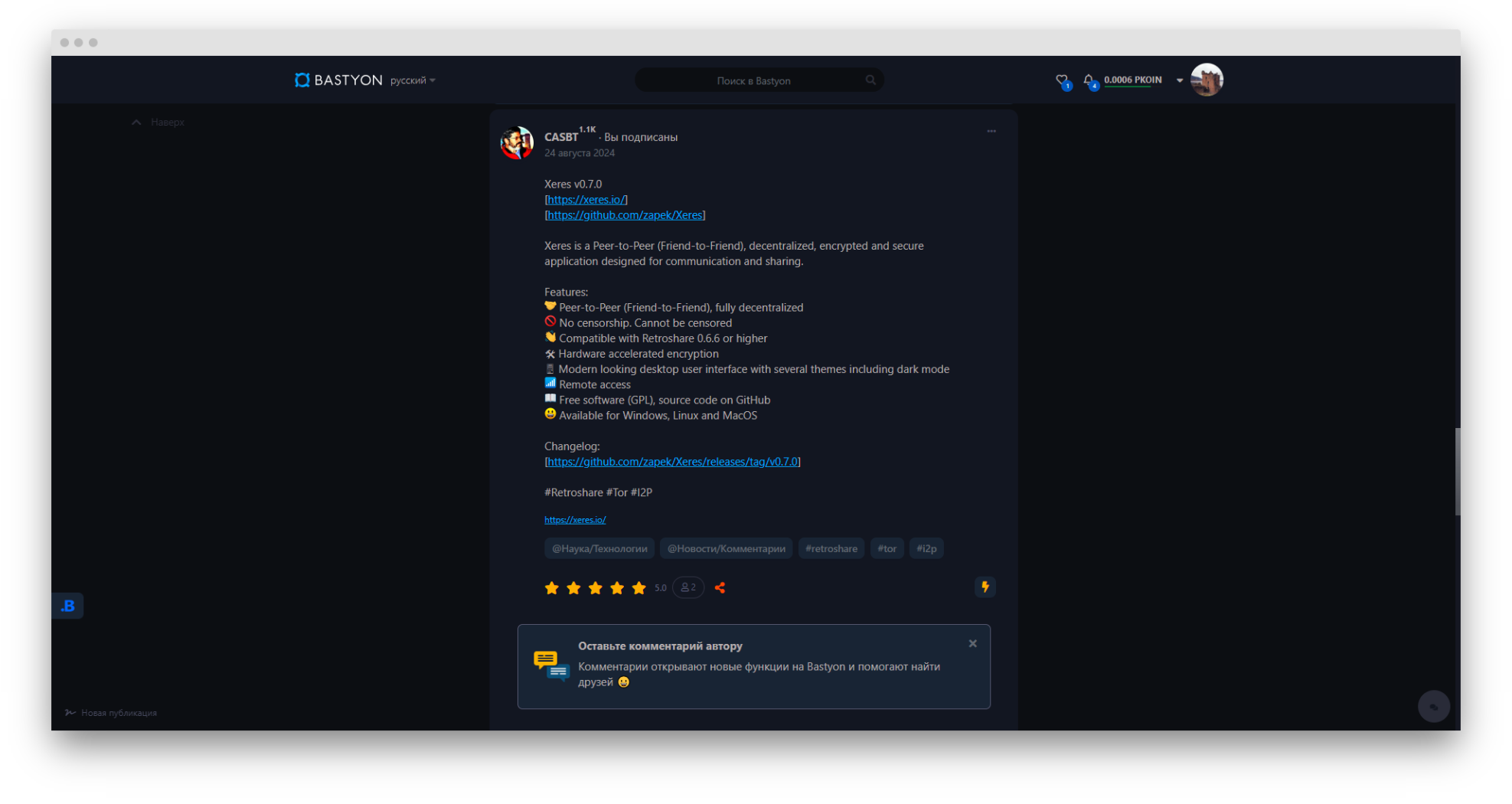
Xeres v0.7.0
[https://xeres.io/]
[https://github.com/zapek/Xeres]
Xeres is a Peer-to-Peer (Friend-to-Friend), decentralized, encrypted and secure application designed for communication and sharing.
Features:
Peer-to-Peer (Friend-to-Friend), fully decentralized
No censorship. Cannot be censored
Compatible with Retroshare 0.6.6 or higher
🛠 Hardware accelerated encryption
🖥 Modern looking desktop user interface with several themes including dark mode
Remote access
Free software (GPL), source code on GitHub
Available for Windows, Linux and MacOS
Changelog:
[https://github.com/zapek/Xeres/releases/tag/v0.7.0]
We wrote an honest comparison of Zerion against Signal, WhatsApp, Telegram, Threema, Wire, Session, Cwtch and Tox.
Honest meaning: Signal gets credit for pioneering post-quantum key exchange, Cwtch is genuinely close in spirit, and each app is the right call for some threat model.
Where Zerion stands alone: post-quantum encryption on every single message, and everything (including calls) over Tor.
https://zerion.chat/blog/zerion-vs-mainstream-messengers.html
Built something I’ve wanted for a while...
An open-source Docker container that makes running a Tor relay actually simple and reliable.
One command. Self-healing. Multi-arch. Runs everywhere from Raspberry Pi  to VPS
🔗 https://github.com/r3bo0tbx1/tor-guard-relay
If you care about privacy infrastructure:
🧱 Try it out
🐛 Report bugs
💡 Suggest features
⭐ Star it to help others discover it
 Maintaining this in my free time, donation info’s in the README (and please support @torproject, @eff and @privacyguides too).
Protecting privacy, one relay at a time ✨
#Tor #Privacy #OpenSource #Docker #FOSS #SelfHosting #Infosec
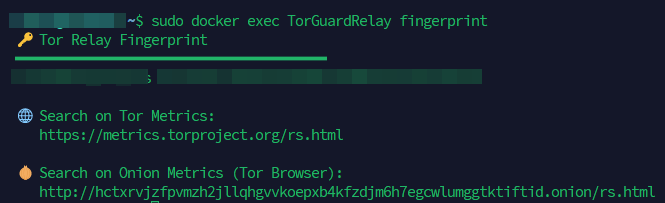
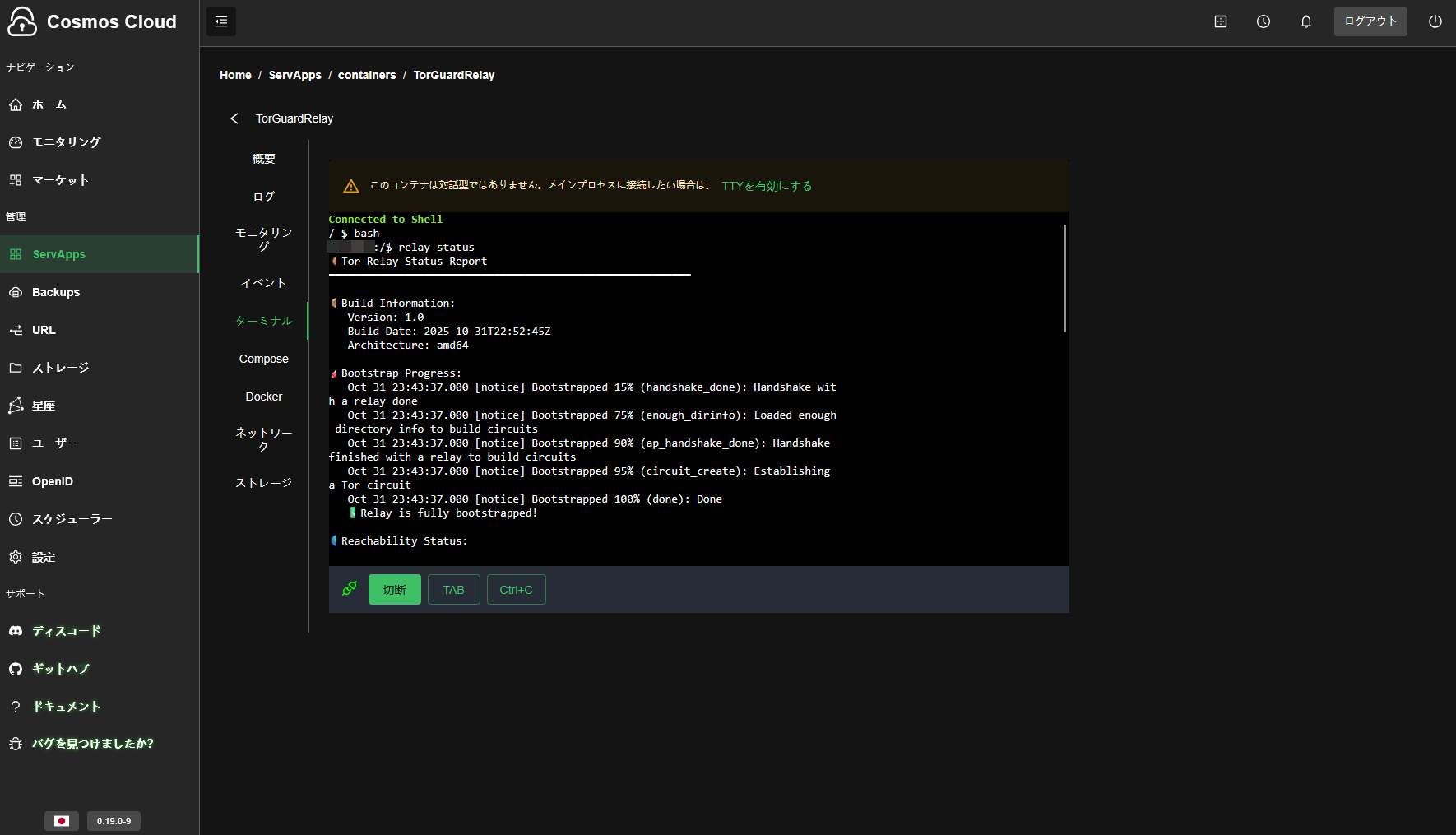
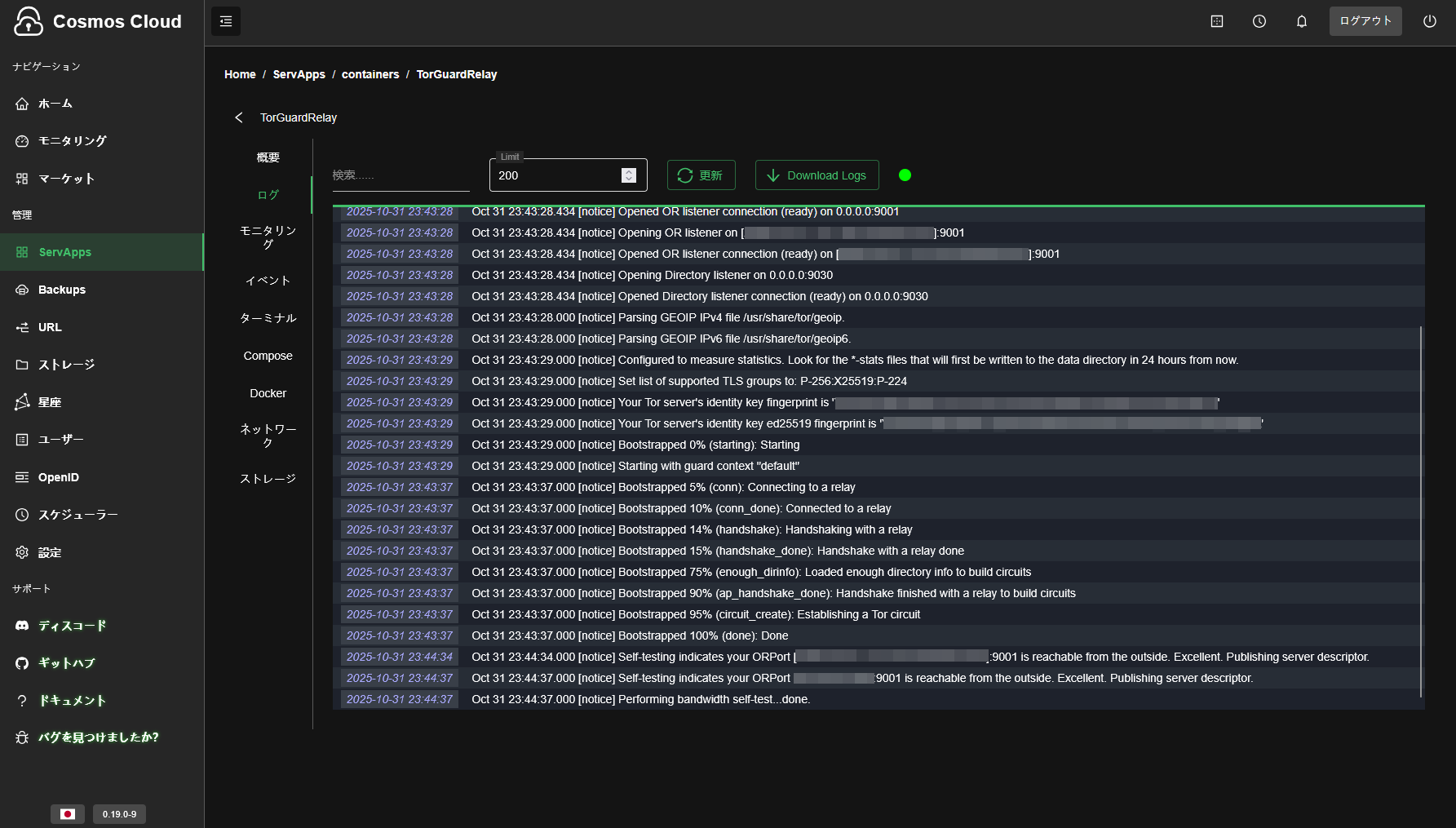
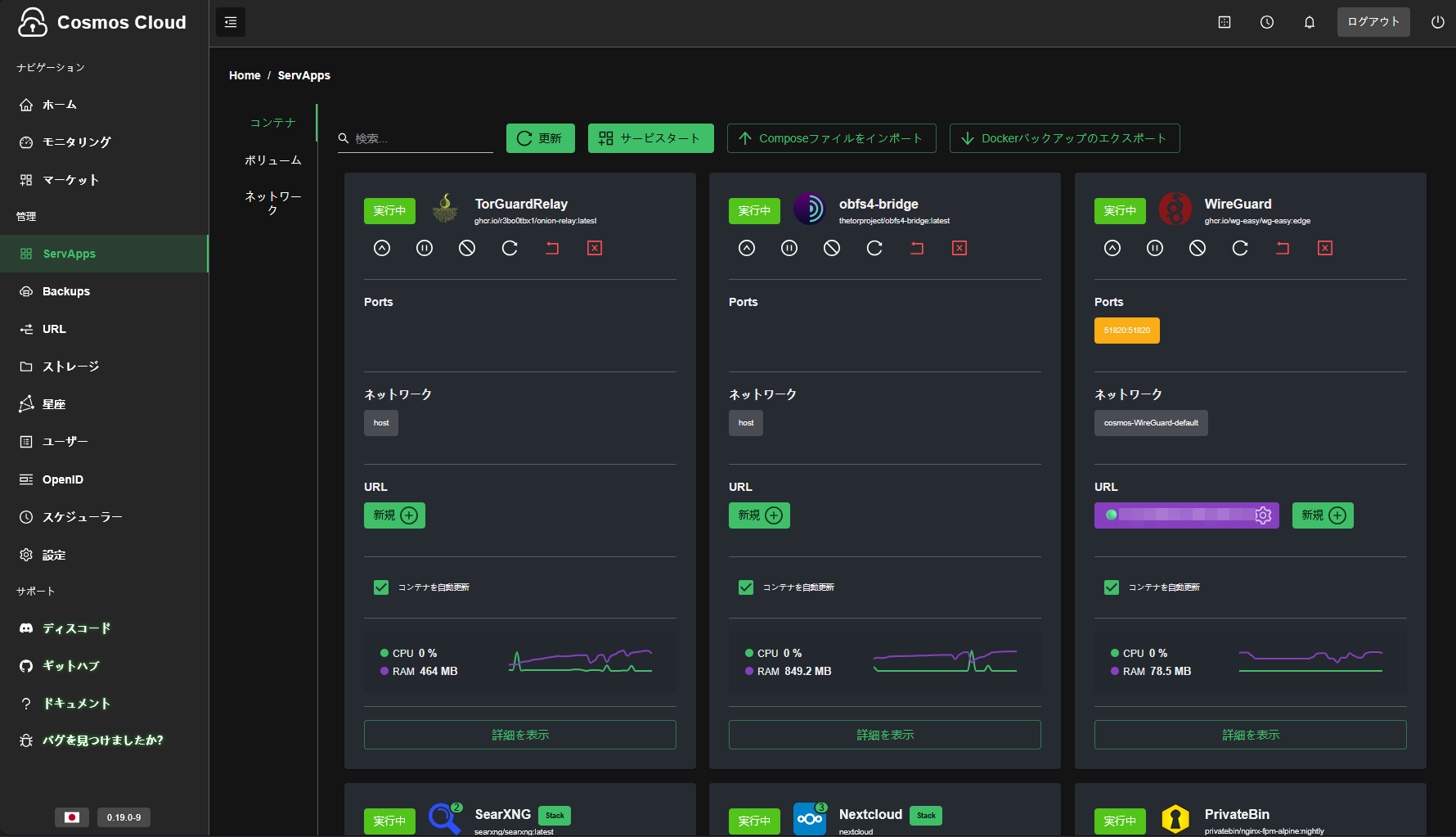
onion-relay v2.0.0 is out, and it's been a long road from v0.0.1 ⬇️
ℹ️ What started as "one command to run a relay" is now a hardened, production-tested AIO stack: guard, exit, and bridge (obfs4) in a 16.8 MB image.
What's new in v2.0.0:
🩺 health + status tools now expose build_version & config_source
⚡ healthcheck.sh fails fast on missing/empty torrc
🔒 DirPort now defaults to 0 (disabled) in ENV-generated configs
What the project has grown into since launch:
🔑 Happy Family support (Tor 0.4.9+ FamilyId, 🪦 RIP MyFamily lists)
🧰 6 busybox only diagnostic tools
🌍 Battle-tested across 10+ countries: https://relays.brokenbotnet.com
🔐 35+ security fixes, CVE coverage, weekly automated rebuilds
🐋 Works with Docker CLI, Compose, Cosmos Cloud & Portainer
 https://github.com/r3bo0tbx1/tor-guard-relay
If you care about privacy infrastructure:
🥢 Try it out
🐛 Report bugs
💡 Suggest features
⭐ Star it to help others find it
Still maintaining this in my free time, donation info
in the README. And please support @torproject
@eff and @privacyguides too.
Protecting privacy, one relay at a time ✨
#Tor #Privacy #OpenSource #Docker #FOSS #SelfHosting #Infosec
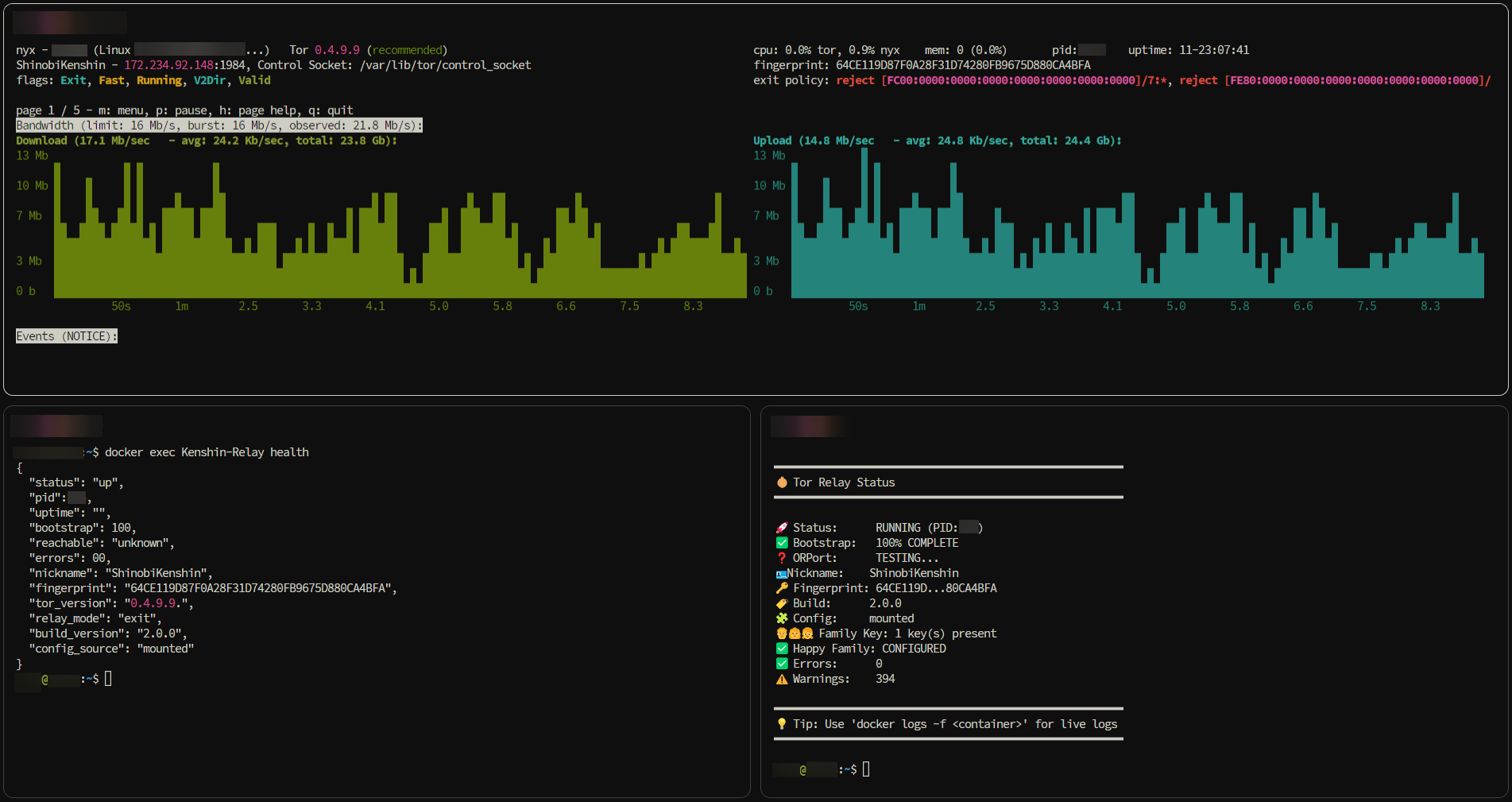
![[?]](https://soc.octade.net/octade/s/3f7f2b5eda4e392867c301c49c2daa16.png)
Is there facility to run the phone app via TOR network, to hide user IP from the relay?
Inform your friends and family about these tools.
#Briar ... https://briarproject.org
"Censorship-resistant peer-to-peer messaging that bypasses centralized servers. Connect via Bluetooth, Wi-Fi or Tor, with privacy built-in."
#Retroshare ... https://retroshare.cc
"Retroshare establish encrypted connections between you and your friends to create a network of computers, and provides various distributed services on top of it: forums, channels, chat, mail... Retroshare is fully decentralized, and designed to provide maximum security and anonymity to its users beyond direct friends. Retroshare is entirely free and open-source software. It is available on #Android, #Linux, #MacOS and #Windows. There are no hidden costs, no ads and no terms of service."
#RicochetRefresh ... https://www.ricochetrefresh.net
"Ricochet Refresh is an open-source project to allow private and anonymous instant messaging."
#OnionShare ... https://onionshare.org
"OnionShare is an open-source tool that lets you securely and anonymously share files, host websites, and chat with friends using the Tor network."
#DeltaChat ... https://delta.chat
"Delta Chat is a decentralized and secure messenger app."
#Bitmessage ... https://bitmessage.org
"Bitmessage is a P2P communications protocol used to send encrypted messages to another person or to many subscribers. It is decentralized and trustless, meaning that you need-not inherently trust any entities like root certificate authorities. It uses strong authentication which means that the sender of a message cannot be spoofed, and it aims to hide "non-content" data, like the sender and receiver of messages, from passive eavesdroppers like those running warrantless wiretapping programs."
#TorBrowser ... https://www.torproject.org/download
"Protect yourself against tracking, surveillance, and censorship."
"The Invisible Internet Project (I2P) is a fully encrypted private network layer. It protects your activity and location. Every day people use the network to connect with people without worry of being tracked or their data being collected. In some cases people rely on the network when they need to be discrete or are doing sensitive work."
#Hyphanet ... https://www.hyphanet.org/
"Hyphanet is peer-to-peer network for censorship-resistant and privacy-respecting publishing and communication. The original Freenet."
#BitChan ... https://github.com/813492291816/BitChan
"BitChan is a decentralized anonymous imageboard inspired by BitBoard and built on top of Bitmessage with Tor, I2P, and GnuPG."
#DarkMX ... https://darkmx.app
"DarkMX is a new decentralized communication app that utilizes Tor hidden services to allow you to easily have an anonymous, reliable, and censorship-resistant presence on the internet. You can chat. You can share files. You can search other people's files. You can keep a contact list and send private messages to your friends. You can create your own custom .onion site, available to anyone with a Tor Browser."
#Decentralized #TOR #AntiSurveillance #Anonymity #Anonymous #Privacy #Filesharing #Networking #Communication #P2P #F2F #PeerToPeer #Censorship #AntiCensorship #FreeSpeech
I figured out several ways to run DarkMX on a headless server without GUI. This allows me to install it on a remote server without any desktop environment and run the software as a daemon without the GUI.
First I used the X forwarding feature of SSH to pipe the GUI to a local machine. On that machine I did all the configuration inside the GUI. Then I closed the program.
Then on the remote machine I used 'xvfb' to run DarkMX as a nohup'd daemon with a dummy GUI buffer. That way I don't need to be connected to the GUI from a local machine and the application will still run. It also uses less RAM without the GUI.
There are other ways to do this, such as VNC and xpra. I just chose the quickest, dirtiest method in this case.
Why would I go to all that trouble? Well, I don't need to, but there are some people who might need to publish while maintaining strict anonymity. So they would need tools like DarkMX and TOR. For me it's just fun.
DarkMX operates over the TOR privacy preserving network. As a result the location of my peer is hidden and extremely hard to impossible for an adversary to locate. So when I publish something, such as a letter, or paper, or opinion, anyone can download it since censoring it is not viable. It ensures that my speech remains free and available to the general public. Now when I author essays, papers, homiles and such, I can publish them as file shares, and I can publish them simultaneously as a TOR hidden website with the built-in webserver feature. So readers don't need DarkMX to read my files--they can just fire up TOR Browser or use a TOR proxy with their web browser. If they want to snarf a whole directory they can install DarkMX, or use a script to snarf them via TOR.
If you are inclined to fiddle around with installing this software on a headless server, please share the techniques and tools used that suit you.
(DarkMX download site: https://darkmx.app)
#DarkMX #P2P #FileSharing #Anonymous #SelfHosting #TOR #OnionNetwork #Censorship
@selfhosted@a.gup.pe @infostorm@a.gup.pe @darknet@a.gup.pe infosec@a.gup.pe
"Hosting a Tor hidden service — also known as an onion site — typically requires in-depth technical skills and manual configuration. With TorServ, you can host a static website anonymously in seconds, without touching any config files."This software deserves some attention. It could be useful for at-risk people who need to publish while protecting identity.
#TorServ #TOR #Onions #OnionNetwork #Privacy #Anonymity
@selfhosting@a.gup.pe
@infosec@a.gup.pe
@linux@a.gup.pe
@networks@a.gup.pe
@crypto@a.gup.pe
@darknet@a.gup.pe
@privacy@a.gup.pe
@infostorm@a.gup.pe

Alt...
Two slices of red onion stacked one atop the other. The onion symbolizes TOR, The Onion Network, and its multiple layers of cryptographic obfuscation.