Search results for tag #literature
![[?]](https://files.mastodon.social/accounts/avatars/110/441/535/131/897/219/original/0ddf9d4dd12a5dee.png)
Happy International Translation Day!
Celebrating an Essential Literary Art. The date was chosen by the United Nations to coincide with the feast of St. Jerome, who translated the Bible into Latin (his version is now known as the Vulgate) and is considered to be the patron saint of translators. via @lithub
https://lithub.com/happy-international-translation-day/
We have plenty of books translated into other languages, take a look:
https://www.gutenberg.org/ebooks/subjects/search/?query=translations
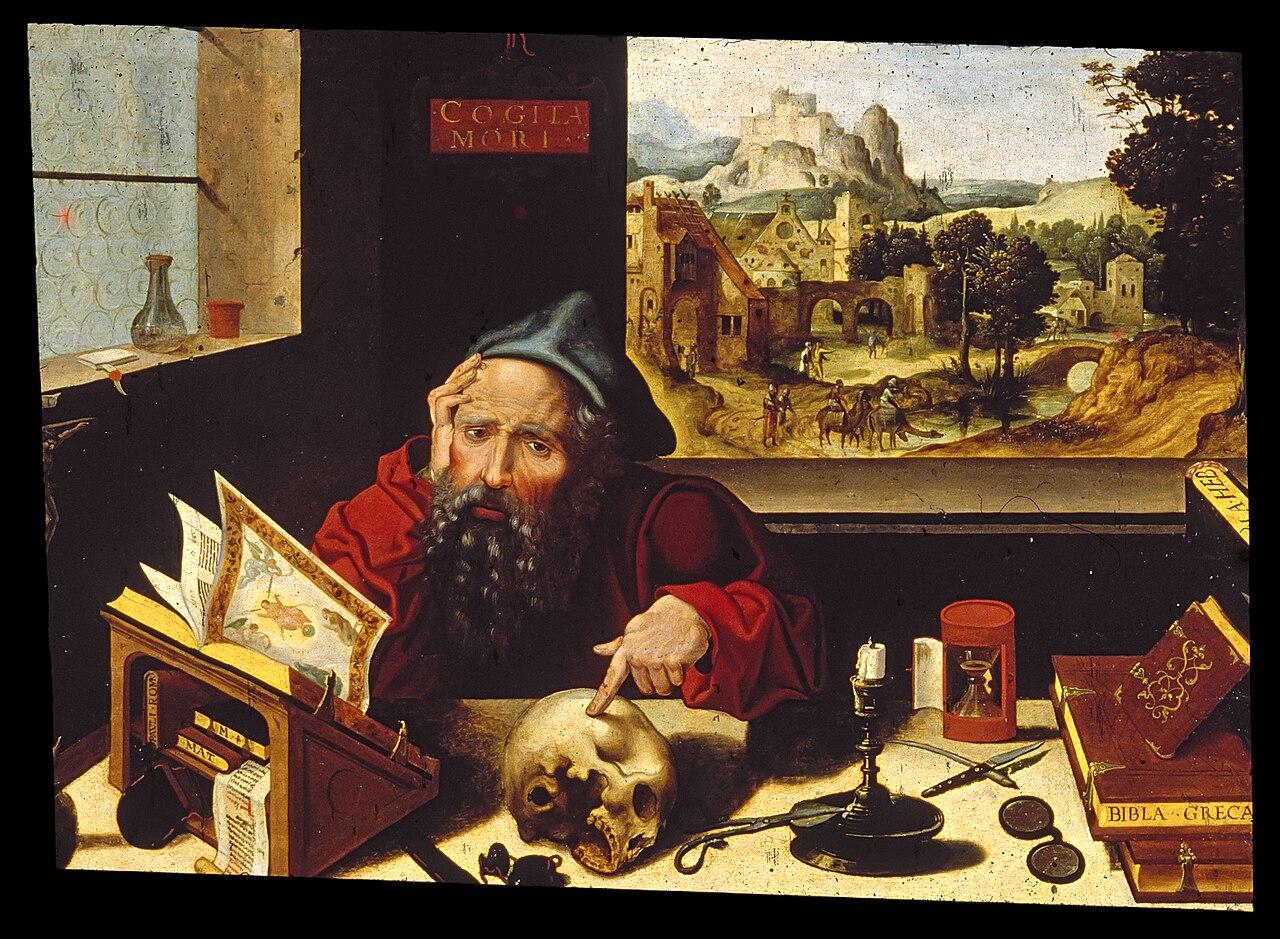
Alt...
"Saint Jerome in His Study," Workshop of Pieter Coecke van Aelst. Jerome points to a skull, surrounded by memento mori symbols—hourglass, candle, "Cogita Mori" plaque—and books including "Bibla Greca." A landscape with a village and castle unfolds through the window behind him.
What Gertrude Stein, T. S. Eliot and Joan Didion Really Meant With Their Most Famous Aphorisms
Eli Burnstein Traces the Origins of Some of the Most Popular Phrases in Literature
Books about Aphorisms and apothegms at PG:
https://www.gutenberg.org/ebooks/subject/2215
What is your favorite aphorism? Share it with us!
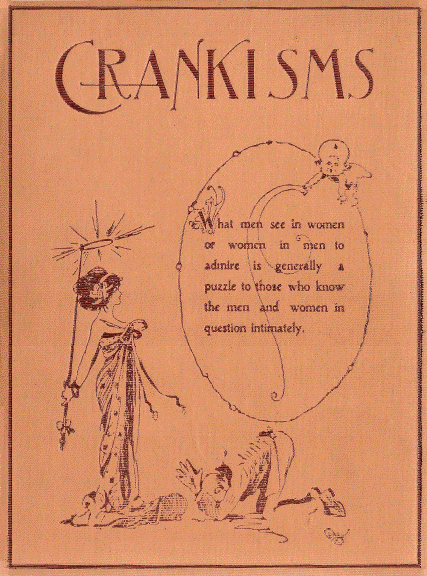
Alt...
Title: Crankisms
Author: Lisle de Vaux Matthewman
Illustrator: Clare Victor Dwiggins
Features a decorative oval frame with a witty aphorism about men and women, flanked by a robed woman holding a starburst torch and a kneeling, gesturing figure below.
![[?]](https://files.mastodon.social/accounts/avatars/115/070/625/860/923/251/original/9629d01039476748.png)
I've resumed writing the manuscript for an (obviously) unfinished piece of fiction. As it stands, it might be best categorised – if one is so inclined; I'm not a fan of the limitation of genres – as literary fiction, and more particularly as a biographical novel in the tradition of transgressive realism.
#writing #reading #books #fictionbooks #biography #novels #realism #literature

Ancient virus hunters: how we discovered sheeppox DNA hidden in medieval gospels
by Kevin Daly
DNA can survive in parchment for well over a thousand years.
Books about ancient diseases at PG:
https://www.gutenberg.org/ebooks/search/?query=ancient+diseases
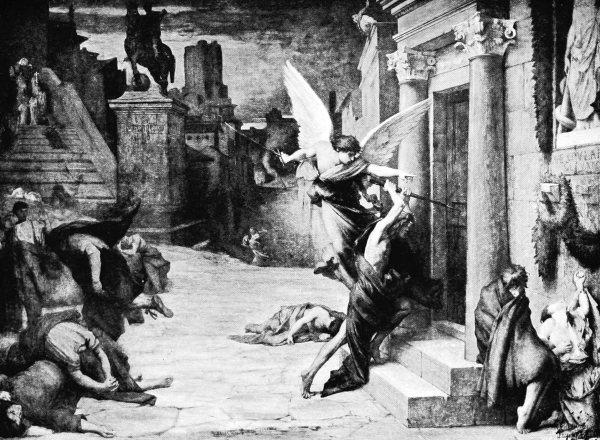
Alt...
LA PESTE À ROME. BY DELAUNAY
Photograph by Giraudon, Paris
Title: Plague and pestilence in literature and art
Author: Sir Raymond Henry Payne Crawfurd
Illustration of an angel of plague striking down a figure at a doorway with a sword or spear, amid a stricken city with fallen bodies and mourners.
Paternity is poetical
The notion that fatherhood and creativity are at odds is plain wrong, as both poetry and neuroscience are showing us
by Daniel Swift
Books about Family life -- Fiction at PG:
https://www.gutenberg.org/ebooks/subject/2515
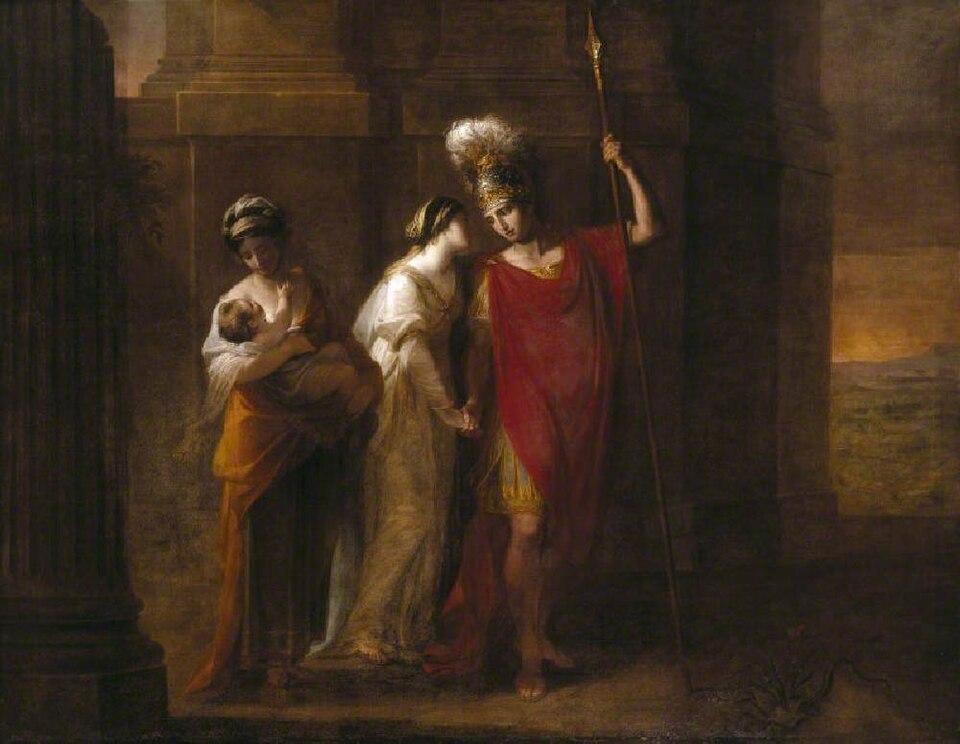
Alt...
Hector Taking Leave of Andromache (1768) by Angelica Kauffmann.
Hector, in plumed helmet and red cloak, departs for battle, spear in hand, clasping Andromache's hand as a nurse holds their infant son beside them.
Singapore is paying its citizens to read. (But will it work?)
https://lithub.com/singapore-is-paying-its-citizens-to-read-but-will-it-work/

Alt...
In this photo, a young woman is reading a book while sitting sideways on a large brown leather armchair next to a tall wooden bookshelf. Her legs are stretched out and crossed, and she is wearing a short black dress. Her face is hidden behind the book. The chair is a classic brown leather wingback, and the light wooden bookshelf is filled with books, comics, and manga.
The wondrous history of fairy tale art – from wolves and witches to fallen princesses
by Elena Sottilotta
Fairy tales continue to nourish artistic invention because their characters embrace continual metamorphosis, discovering yet another possibility within an old story.
Books in Children's Myths, Fairy Tales at PG:
https://www.gutenberg.org/ebooks/bookshelf/216
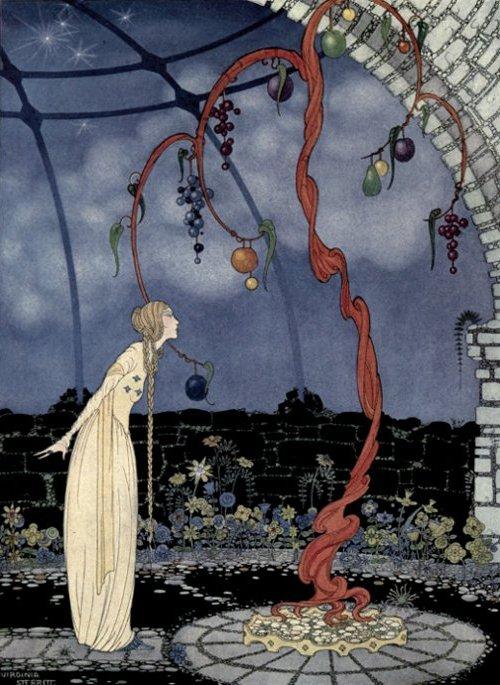
Alt...
Rosalie saw before her eyes a tree of marvellous beauty.
Title: Old French Fairy Tales
Author: comtesse de Sophie Ségur
Illustrator: Virginia Frances Sterrett
A girl with a long braid, in a pale gown, leans toward a twisting red tree hung with colorful fruit and grapes. Set in a starlit garden beneath a stone arch, with flowers and a dark wall behind.
First women of philosophy
Philosophy was once a woman’s world, ranging across Asia, Africa and Latin America. It’s time to reclaim that lost realm
by Dag Herbjørnsrud
Books about or by women philosophers at PG:
https://www.gutenberg.org/ebooks/search/?query=women+philosophers
#books #literature #philosophy #womeninart
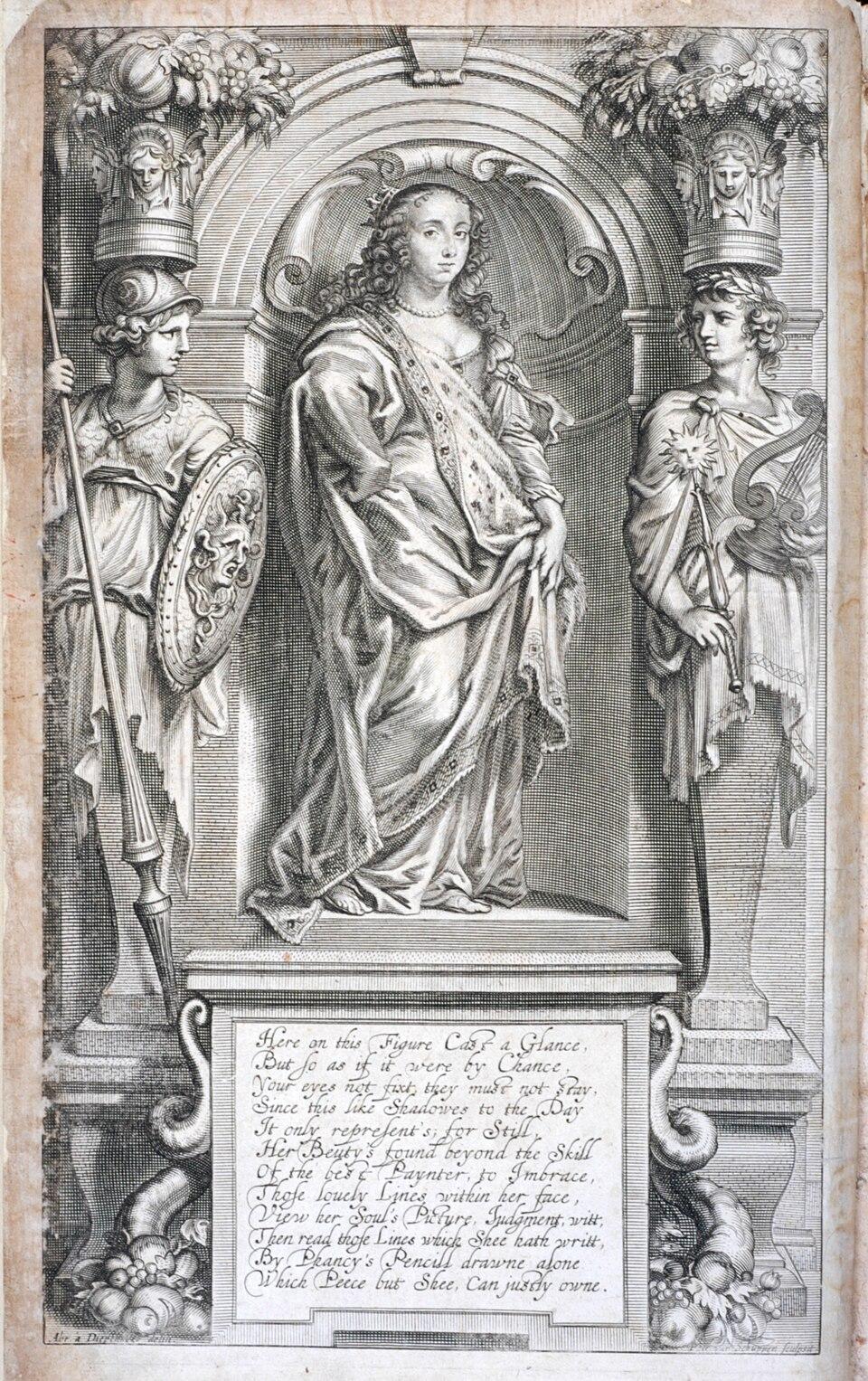
Alt...
Frontispiece from "Grounds of natural philosophy : divided into thirteen parts: with an appendix containing five parts / written by the thrice noble, illustrious, and excellent princess, the Duchess of Newcastle." by Newcastle, Margaret Cavendish, Duchess of, 1624?-1674. London : A. Maxwell, 1668.
She stands in an arched niche, flanked by Athena and Apollo figures, above a pedestal bearing a verse praising her wit over her painted likeness.
The secret to reading more classics? Don’t treat them like homework.
Classics editor Henry Eliot shares his strategies for getting started, staying motivated, and finding joy in literature’s great books.
by Kevin Dickinson
https://bigthink.com/books/reading-the-classics/
Classics of Literature at PG:
https://www.gutenberg.org/ebooks/bookshelf/649
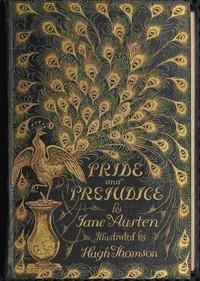
Alt...
Title: Pride and Prejudice
Author: Jane Austen
Ornate gilt-decorated cover of "Pride and Prejudice" by Jane Austen, illustrated by Hugh Thomson. Features an elaborate peacock design with fanned tail feathers in gold on dark green cloth—a well-known "Peacock Edition" binding, published by George Allen (1894).
On “Derek,” Captain Ahab’s Evil Half Brother
“Your worst enemy ain’t Moby Dick, it’s your half brother, Derek.”
by John Hay
Moby Dick at PG:
https://www.gutenberg.org/ebooks/2701
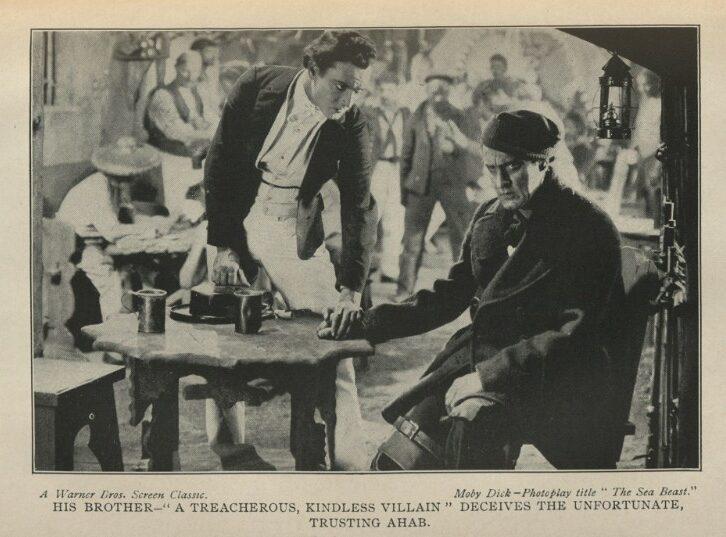
Alt...
Still from The Sea Beast (1926), Grosset & Dunlap photoplay edition. Public domain, courtesy of John Hay.
Film still from "The Sea Beast" (1926), a Warner Bros. adaptation of Moby Dick. Caption reads: "His brother—'a treacherous, kindless villain' deceives the unfortunate, trusting Ahab." Two men sit at a table in a tavern-like interior, one leaning in conspiratorially.
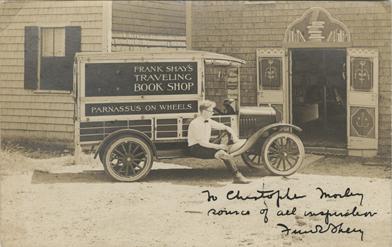
The Women Who Sold Books Door to Door
By Livia Gershon
Three nineteenth-century memoirs reveal the risks and rewards of life on the road as a traveling bookseller.
Original article:
https://www.jstor.org/stable/48647114?mag=the-women-who-sold-books-door-to-door&seq=1
Alt...
Image of Frank Shay on his mobile book truck "Parnassus on Wheels" taken c. 1922. Autographed by Shay to Christopher Morley.
Photo postcard of Frank Shay's mobile book truck, "Parnassus on Wheels" (c. 1922), a traveling bookshop parked outside a decorative shopfront. A man sits in the vintage vehicle. Handwritten inscription reads: "To Christopher Morley — source of all inspiration, Frank Shay."
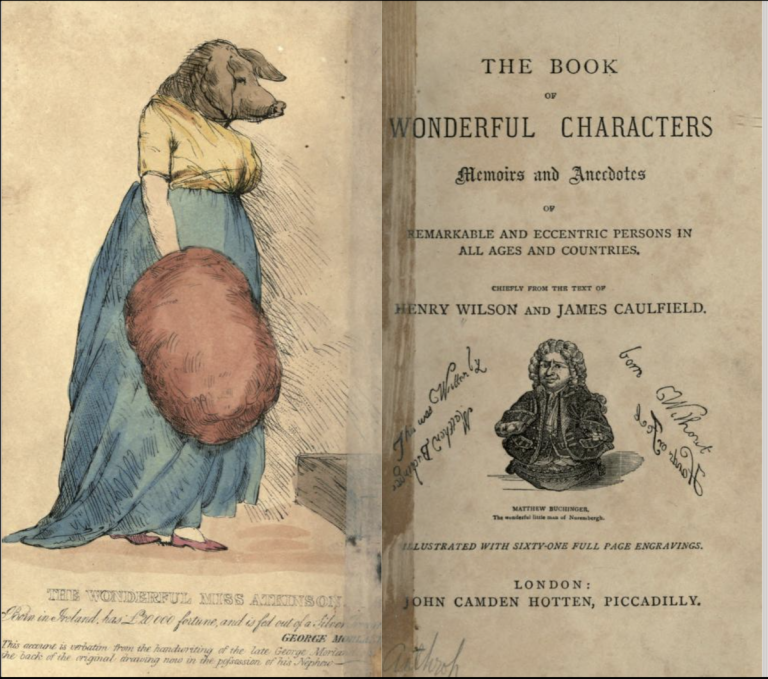
Remarkable and Eccentric Persons in all Ages and Countries, c. 1790
These illustration plates (lithographs) are from The Book of Wonderful Characters: Memoirs and Anecdotes of Remarkable and Eccentric Persons in all Ages and Countries, Chiefly from the Text of Henry Wilson and printmaker James Caulfield, c. 1790.
https://flashbak.com/remarkable-and-eccentric-persons-485338/
A copy is available at @internetarchive
https://archive.org/details/bookofwonderfulc00wilsrich
Alt...
Frontispiece and title page of "The Book of Wonderful Characters" (memoirs of eccentric persons), publisher John Camden Hotten, London. Left shows caricature of "The Wonderful Miss Atkinson" with a pig's head. Right title page credits Henry Wilson & James Caulfield, with portrait bust.
"La vita passa e noi la lasciamo passare come l'acqua del fiume, e solo quando manca ci accorgiamo che manca."
"Life passes by, and we let it pass like the water of a river; only when it is gone do we realize it is gone."
Incipit
~Grazia Deledda (1871 – 1936)
Remembering Grazia Deledda, the Sardinian Nobel Prize-Winner We Should All Be Reading
Jeff Biggers on the Legacy of a Little-Known Writer on the 100th Anniversary of Her Prize
Books by Grazia Deledda at PG:
https://www.gutenberg.org/ebooks/author/33472
#books #literature #nobelprize
Alt...
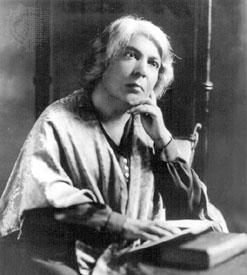
Grazia Deledda in a photograph from her later years.
She's shown in a thoughtful pose, chin resting on her hand, wearing a light patterned shawl, seated near a book or writing desk.
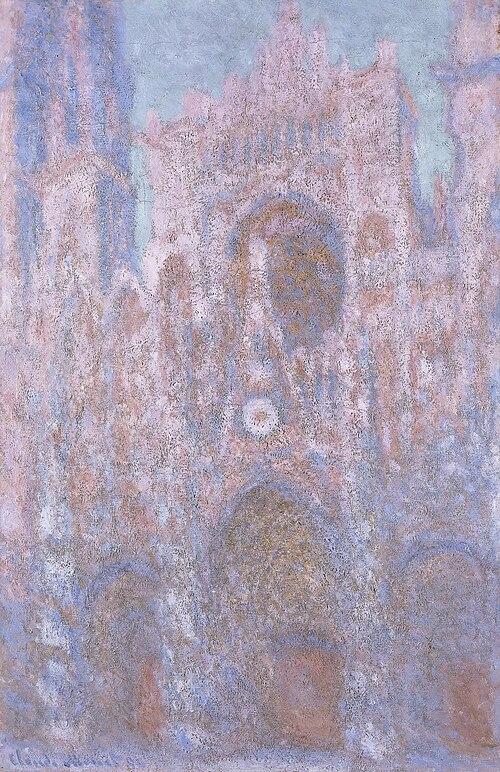
Why Did Claude Monet Paint the Same Scenes Over and Over Again? The Impressionist Artist Was Obsessed With Capturing the Fleeting Nature of Time
by Ellen Wexler
John Ruskin’s book The Seven Lamps of Architecture features fascinating descriptions of the beauties of Rouen Cathedral.
https://www.gutenberg.org/ebooks/35898
Alt...
Rouen Cathedral: Setting Sun (Symphony in Pink and Grey).
The Gothic façade dissolves into soft blues, pinks, and lavenders, capturing shifting light rather than architectural detail.
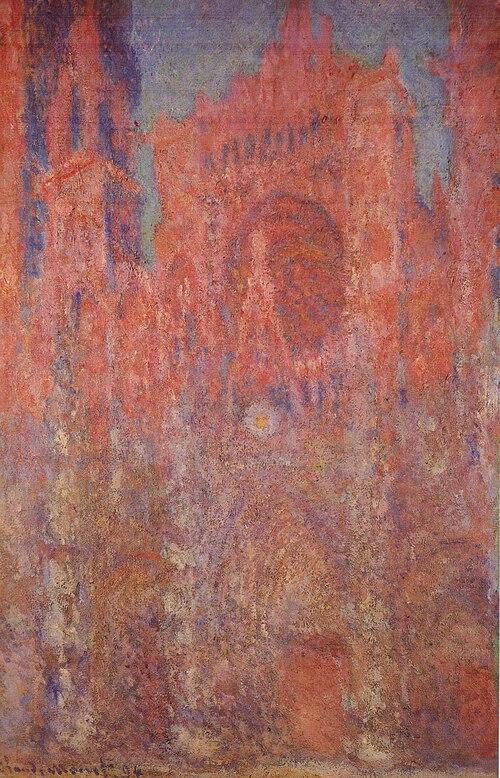
Alt...
Rouen Cathedral Series. In the evening.
It was painted here in warm reds and oranges against a blue sky—capturing the façade at a different time of day than the pink/grey version, with light dissolving architectural form into color and texture.
"The last man! Yes I may well describe that solitary being's feelings, feeling myself as the last relic of a beloved race, my companions extinct before me..."
Lessons for the 21st century from a 200‑year‑old book by ‘Frankenstein’ author Mary Shelley
by Eileen Hunt
The Last Man by Mary Shelley at PG:
https://www.gutenberg.org/ebooks/18247
#books #literature #postapocalypitic
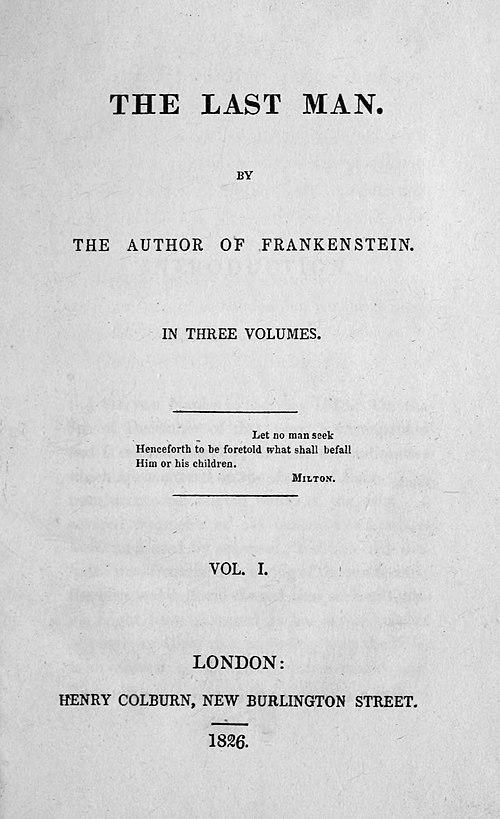
Alt...
The Last Man 1st ed title page.
First edition title page of "The Last Man" by Mary Shelley, credited only as "The Author of Frankenstein." Published in three volumes by Henry Colburn, London, 1826. Includes a Milton epigraph.
He was probably right
Cicero’s life and thought are a testament to the idea of probabilia: we should be confident in our beliefs, but never certain
by Massimo Pigliucci
Books by Cicero at PG:
https://www.gutenberg.org/ebooks/author/128
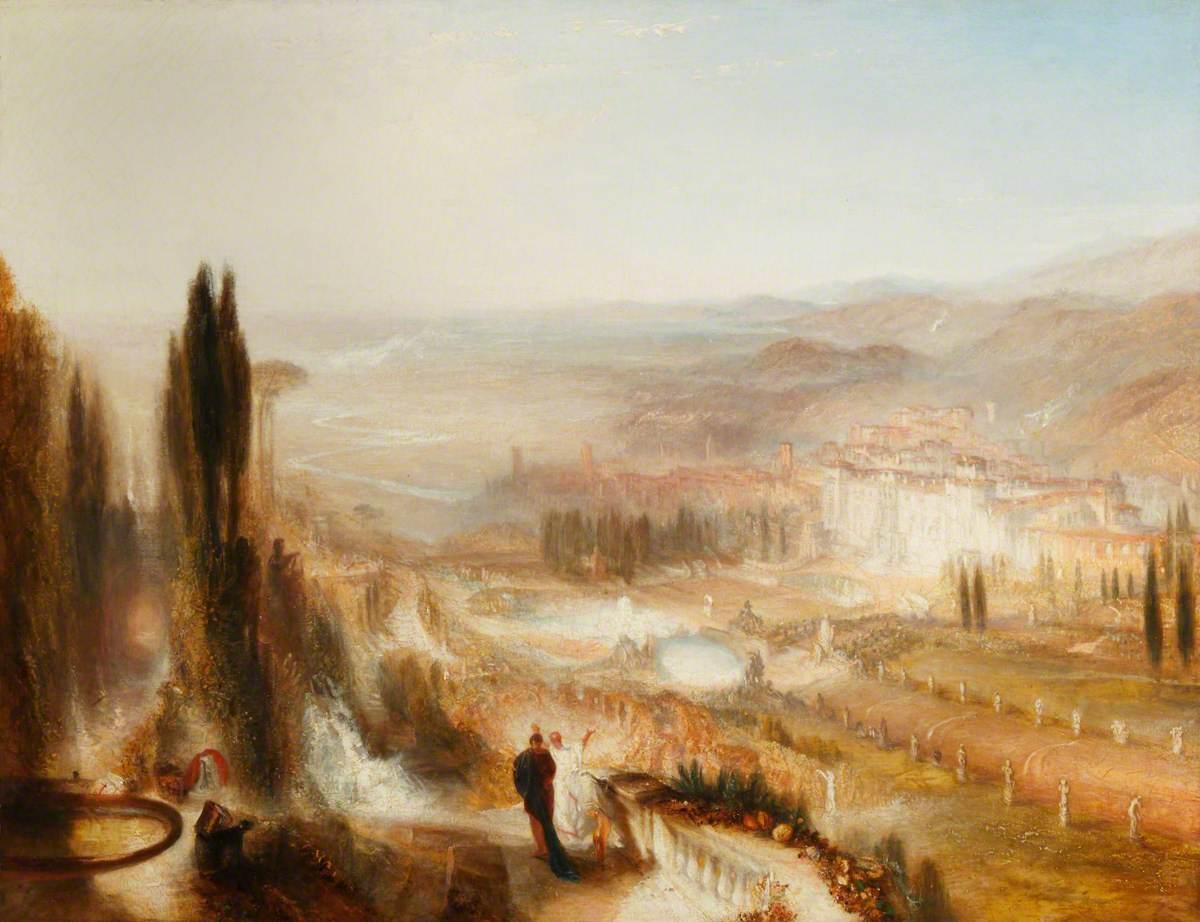
Alt...
Cicero at His Villa at Tusculum by J. M. W. Turner, 1839.
A hazy, golden Italianate landscape with cypress trees, terraced gardens, and figures on a balustraded path overlooking a distant hilltop town.
The two Scottish female novelists who outsold and inspired Jane Austen
by Cleo O'Callaghan Yeoman
They are practically unknown today, but Susan Ferrier and Mary Brunton gave Jane Austen a run for her money.
Books by Susan Ferrier and Mary Brunton at PG:
https://www.gutenberg.org/ebooks/author/4487
https://www.gutenberg.org/ebooks/author/39506
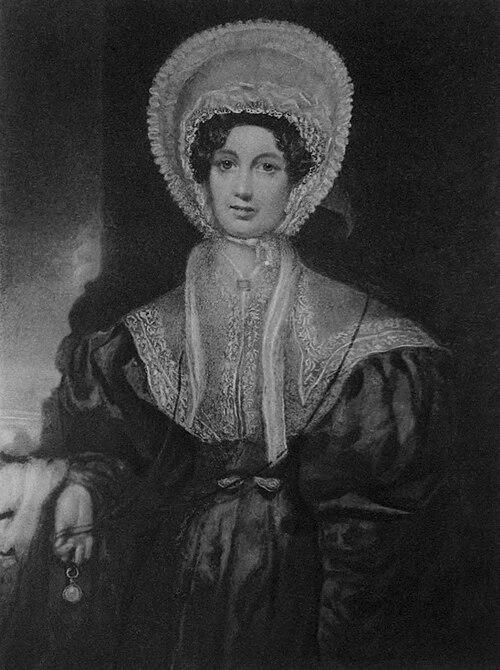
Alt...
Scottish novelist Susan Ferrier; from an engraving after the 1836 portrait by R. Thorburn.
Portrait of Ferrier shown wearing an elaborate lace-trimmed bonnet and a dark dress with embroidered collar, holding what appears to be a locket or watch on a chain.
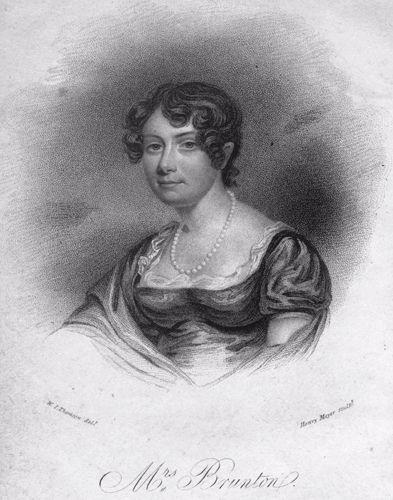
Alt...
Portrait of Mary Brunton (1778-1818) from the 2nd edition (1820) of Emmeline.
She's shown with curled hair, a pearl necklace, and puffed-sleeve dress.
My new essay about Samuel Johnson
I am unashamed to call him a great man, to say that he is my hero. I can never write of him without strong feeling.
by Karen Swallow Prior and Henry Oliver
https://karenswallowprior.substack.com/p/samuel-johnson-a-writer-for-us-all
Books by Samuel Johnson at PG:
https://www.gutenberg.org/ebooks/author/297
#books #literature #literaryCriticism
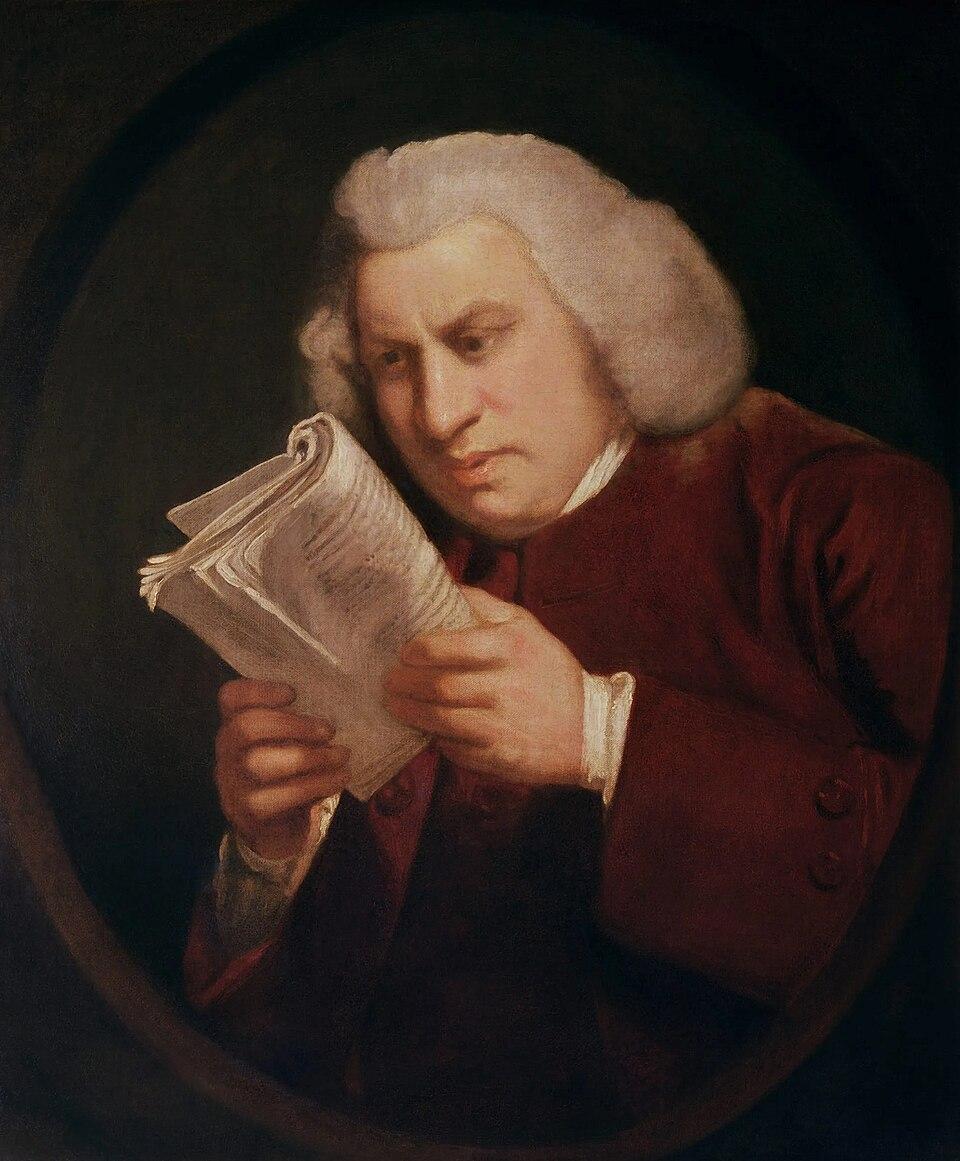
Alt...
Johnson (1775) showing his intense concentration and the weakness of his eyes; he did not want to be depicted as "Blinking Sam". This unique portrait showing his nearsightedness is in the Huntington Library in San Marino, California.
Johnson is shown reading intently, holding a bundle of papers close to his face—likely referencing his poor eyesight—wearing a burgundy velvet coat and powdered wig, set within an oval frame.
Forgotten Mozart notebook reveals how a young woman learned to compose
The notebook preserves something that composer-centred histories often miss: the musical work taking place around Mozart, in this case by a young woman.
by Stacy Olive Jarvis
Original article:
https://www.bnf.fr/en/actualitesEN/discovery-unpublished-autograph-manuscript-mozart-bnf-music-department
Books by Mozart at PG:
https://www.gutenberg.org/ebooks/author/1368
#books #literature #music #womencomposers

Alt...
Posthumous portrait of Mozart (1756–91); commissioned by Joseph Sonnleithner (1776–1835) for the Gesellschaft der Musikfreunde (Society for the Friends of Music) in Vienna.
Mozart wears a powdered wig and an ornate red coat with gold-embroidered trim and lace jabot, set against a dark background.
I Who Have Never Known Men by Jacqueline Harpman is neither a self-defence of heteronormativity nor a salacious lesbian romp. I finished reading this over the weekend.
https://brywillis634737.substack.com/p/i-who-have-never-known-men
The piece is a critique of the book. I liked and very much recommend it, but it had some challenges.
#philosophy #literature #writing #reading #critique #harpman #humancondition #speculativefiction #fiction #sciencefiction #scifi #psychology #sociology

![[?]](https://files.mastodon.social/accounts/avatars/110/641/555/278/107/926/original/60e39d3280d3b645.png)
OMG this list is an instaclassic ―and makes me feel totally seen. the last one ―which i resented having to read in high school― is totally spot on.
» 9 Cult Classic Books That Don’t Deserve The Hype https://screenrant.com/overrated-cult-classic-books/
![[?]](https://zirkus-media.fra1.cdn.digitaloceanspaces.com/accounts/avatars/111/192/373/629/540/829/original/9ff4f5b9781a0e3a.jpg)
CHAPT. Dry or thirsty.
A selection from Francis Grose’s “Dictionary Of The Vulgar Tongue” (1785)
--
#books #literature #dictionaries #history #society #language #slang @histodons

Alt...
Image imitating a page from an old document, text (as in main toot):
CHAPT. Dry or thirsty.
A selection from Francis Grose’s “Dictionary Of The Vulgar Tongue” (1785)
Why Willa Cather Is America’s Most Underrated Storyteller
The renowned author built her career telling stories about the people who carved a life for themselves in the brutal landscape of the Great Plains.
https://www.thecollector.com/willa-cather-underrated-storyteller/
Cather at PG:
https://www.gutenberg.org/ebooks/author/22
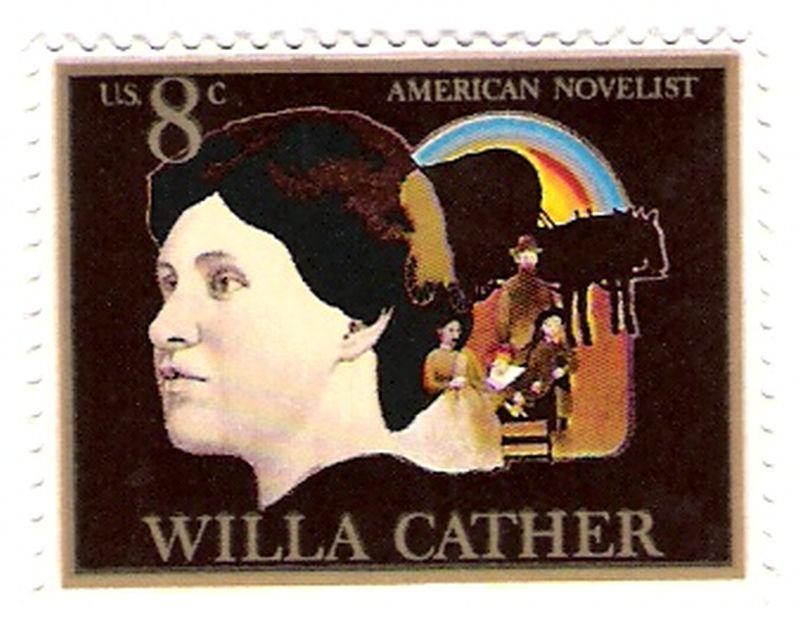
Alt...
This 1973 United States postage stamp honors Willa Cather. At the top, it says “US 8c” and “AMERICAN NOVELIST,” while Cather’s name appears at the bottom. On the left, there is a profile portrait of Cather with her dark hair styled up. To the right, a prairie scene appears beneath a rainbow, showing a pioneer family with a horse-drawn covered wagon.
Stop adapting Jane Austen! Five other 18th-century writers perfect for the screen
From Eliza Haywood to Anne Radcliffe, there are other great 18-century writers whose work would be great on screen.
by Amy Louise Blaney
Most of the books are available at PG:
https://www.gutenberg.org/ebooks/6124
https://www.gutenberg.org/ebooks/50054
https://www.gutenberg.org/ebooks/6053
https://www.gutenberg.org/ebooks/3268
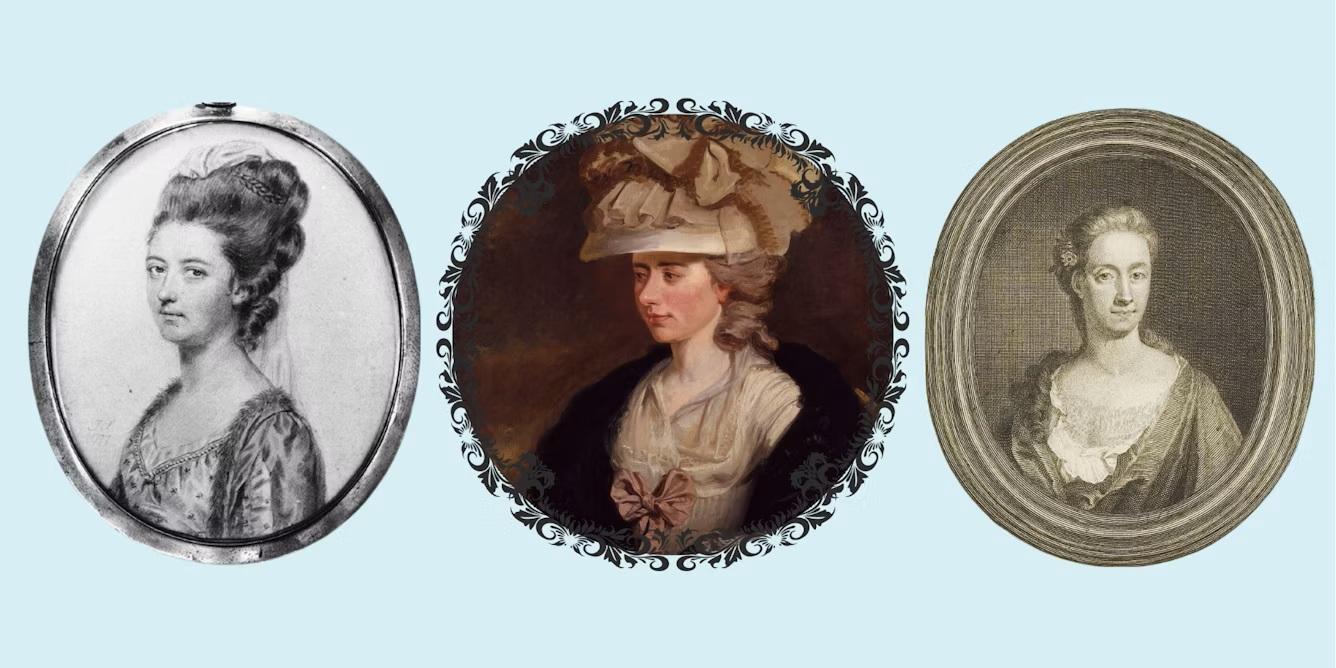
Alt...
Charlotte Lenox, Frances Burney and Eliza Haywood are three other female writers whose work is ripe for adaptation.
A monochrome miniature with elaborate updo hairstyle in a silver frame; a color painting of a woman in a large ribboned hat; and an engraved portrait in a decorative oval frame.
Worth a Thousand Words: The Literary Map Painting Collection
by: Julie Stoner
https://blogs.loc.gov/maps/2026/09/worth-a-thousand-words-the-literary-map-painting-collection/
Books about Cartography at PG:
https://www.gutenberg.org/ebooks/search/?query=cartography
#books #literature #cartography
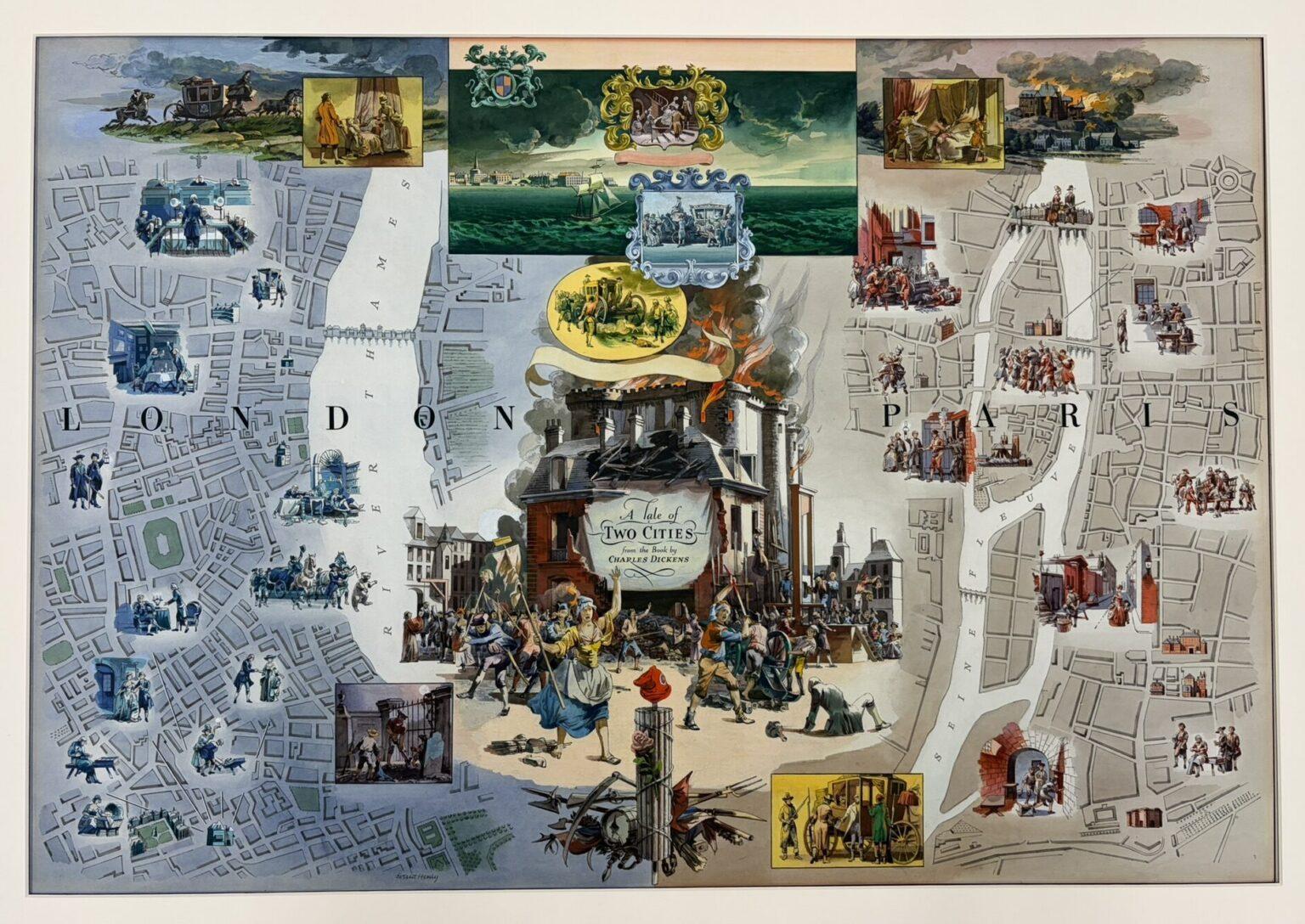
Alt...
A Tale of Two Cities from the Book by Charles Dickens. Everett Henry, 1957. Geography and Map Division.
Illustrated pictorial map for "A Tale of Two Cities" by Charles Dickens. It overlays street maps of London and Paris (Thames and Seine visible) with vignette scenes from the novel—coaches, the Bastille storming, a burning building, revolutionary mobs—plus a central French Revolution scene.
LIVE STOCK. Lice or fleas.
A selection from Francis Grose’s “Dictionary Of The Vulgar Tongue” (1785)
--
#books #literature #dictionaries #history #society #language #slang @histodons

Alt...
Image imitating a page from an old document, text (as in main toot):
LIVE STOCK. Lice or fleas.
A selection from Francis Grose’s “Dictionary Of The Vulgar Tongue” (1785)
Why the places we love in books can never quite be found in real life
by Rebecca Hutcheon
From Hardy’s Wessex to Brontë country, literary tourists may be chasing places that never quite existed as they imagine them.
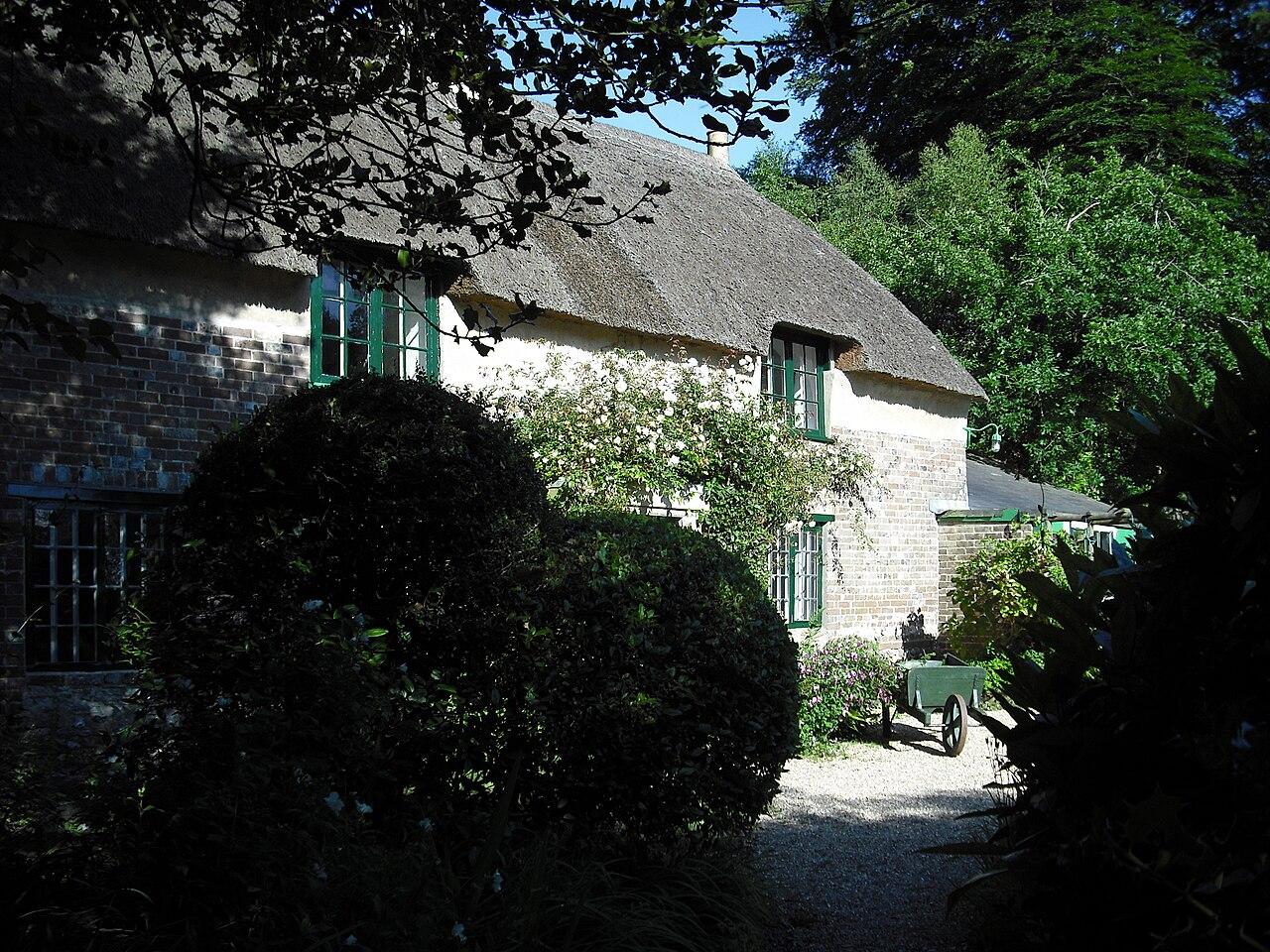
Alt...
Thomas Hardy's birthplace and cottage at Higher Bockhampton, where Under the Greenwood Tree and Far from the Madding Crowd were written.
A thatched-roof brick cottage with green-trimmed windows, climbing roses, and a garden with rounded topiary shrubs and a small wheelbarrow along a gravel path.
"Season of mists and mellow fruitfulness,
Close bosom-friend of the maturing sun;..."
Opening lines
#OTD in 1819.
After walking along the River Itchen in Hampshire, England, the 24-year-old poet John Keats composed what would become one of the most beloved fall poems in the English language: the aptly titled “To Autumn.” via @lithub
To Autumn is available at PG:
https://www.gutenberg.org/cache/epub/23684/pg23684-images.html#Page_137
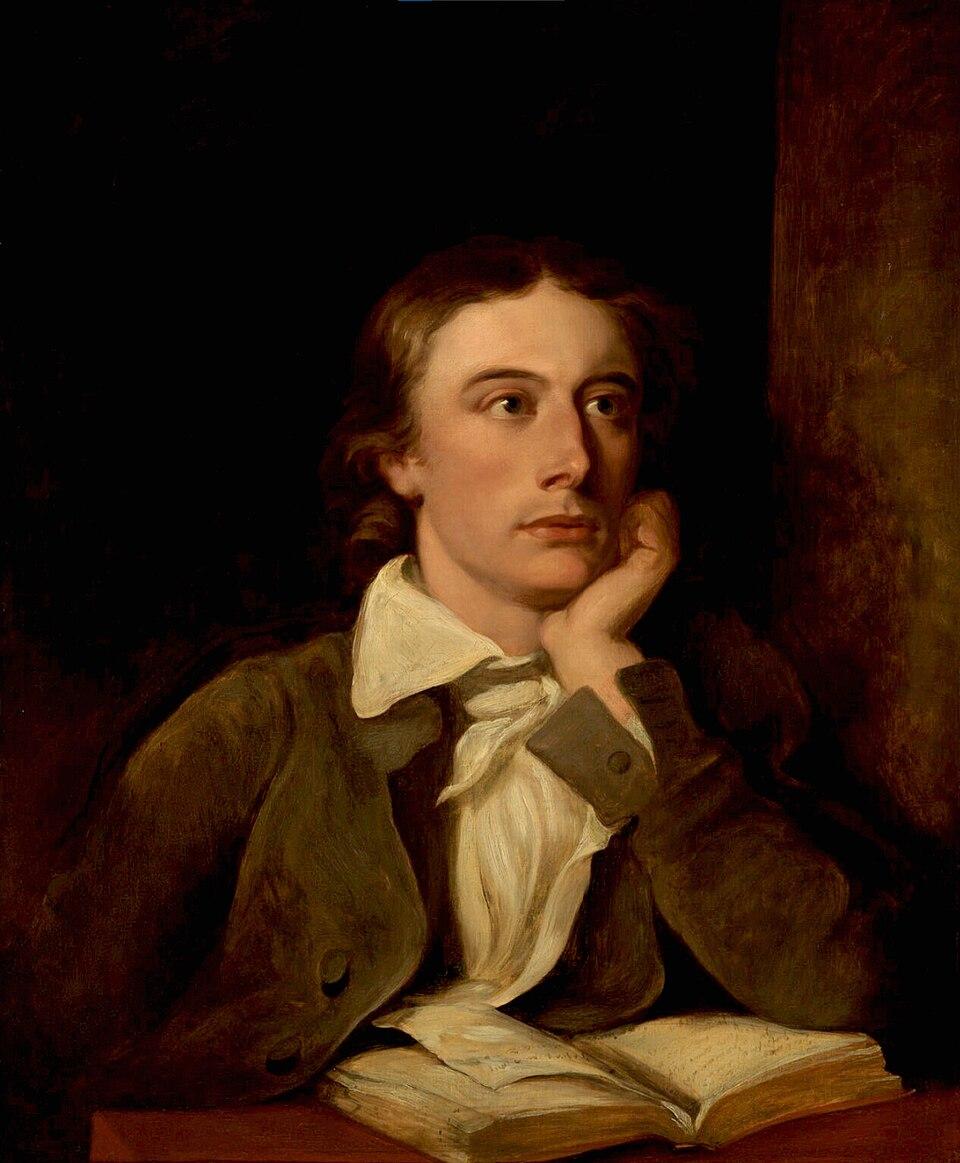
Alt...
Posthumous portrait by William Hilton, c. 1822.
Keats rests his chin on his hand, gazing thoughtfully into the distance, with an open book before him.
Misunderstanding the Genius of Jules Verne – And Why It Matters to Science Fiction
"In our cultural obsession with celebrating Verne's technological prescience...we've overlooked the nuanced and insightful things he has to say about how technology functions within human society."
by ANASTASIA KLIMCHYNSKAYA
Books by Jules Verne at PG:
https://www.gutenberg.org/ebooks/author/60
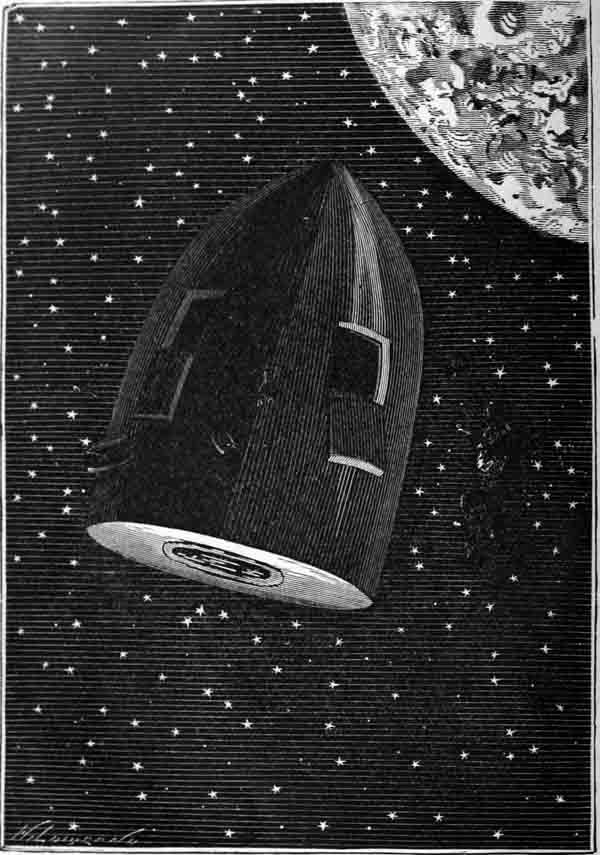
Alt...
Frontispiece. PROJECTILE TRAINS FOR THE MOON.
FROM THE
EARTH TO THE MOON,
DIRECT IN NINETY-SEVEN HOURS
AND TWENTY MINUTES:
AND A TRIP ROUND IT:
by
JULES VERNE
Vintage engraving of a bullet-shaped space projectile drifting through starry space near a cratered moon.
KNIGHT OF THE WHIP. A coachman.
A selection from Francis Grose’s “Dictionary Of The Vulgar Tongue” (1785)
--
#books #literature #dictionaries #history #society #language #slang @histodons

Alt...
Image imitating a page from an old document, text (as in main toot):
KNIGHT OF THE WHIP. A coachman.
A selection from Francis Grose’s “Dictionary Of The Vulgar Tongue” (1785)
The Unsung Female Authors of English Romantic Literature
Read about the remarkable women who took part in the Romantic movement and challenged male-dominated narratives.
by Dr. Victoria C. Roskams
https://www.thecollector.com/female-authors-english-romantic-literature/
#books #literature #womeninart
1/2
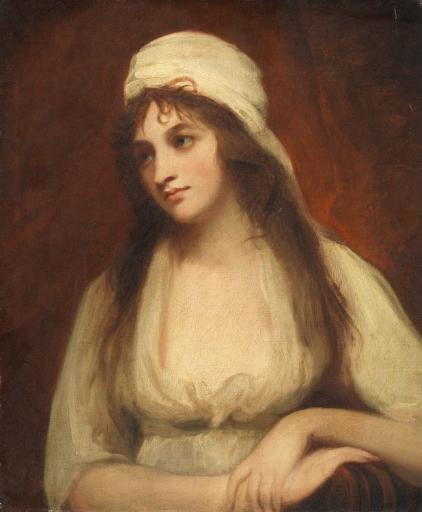
Alt...
Engraving of Mary Tighe.
She's shown with long loose brown hair, a white turban-style headwrap, and a flowing white/cream gown, against a warm reddish background.
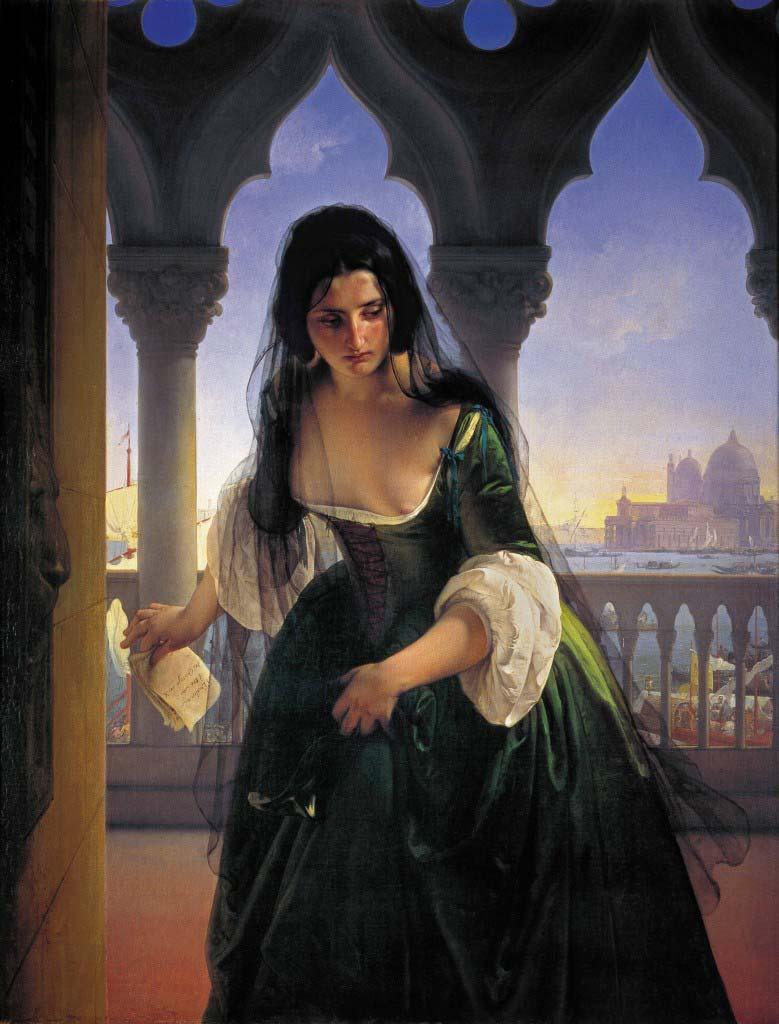
Alt...
Accusa segreta by Francesco Hayez, c. 1847-48.
A woman in a green gown and black veil stands on a Venetian loggia holding a letter, a worried expression on her face, with the Venetian lagoon and Santa Maria della Salute visible behind her.
How Did Gutenberg's Printing Press Work?
It's one of the most famous inventions of all time: Johannes' Gutenberg's printing press, which birthed the Gutenberg Bible and inspired book-makers around the world. But how did it work?
https://www.youtube.com/watch?v=6Lmm_MYsMCU
#technology #books #literature
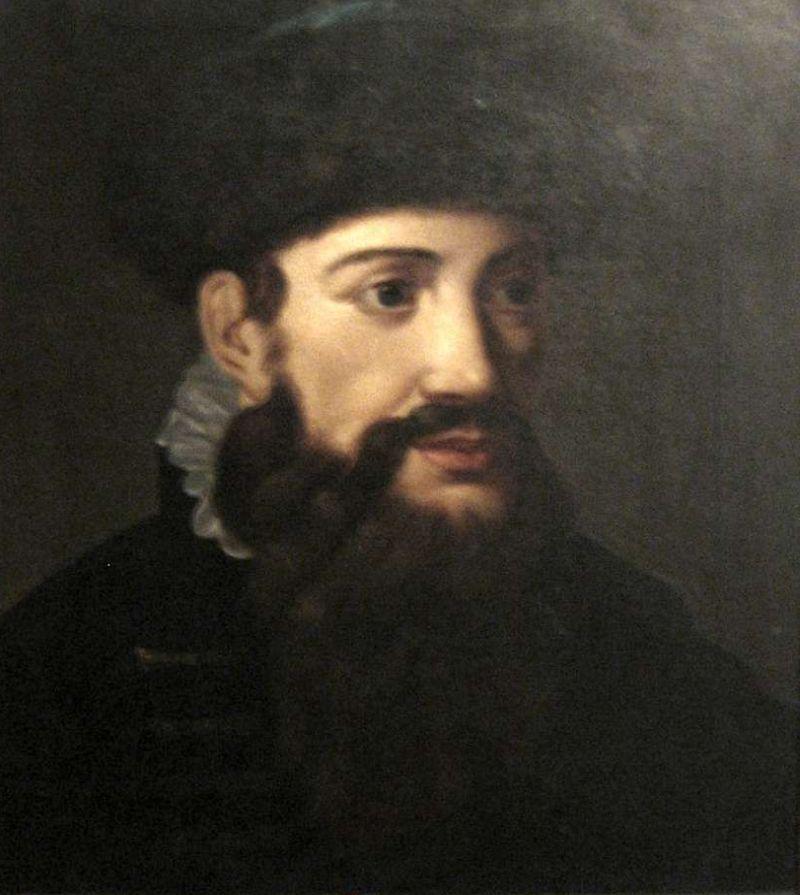
Alt...
This anonymous portrait shows Johannes Gutenberg from the chest up. He has a dark brown beard and mustache that cover his jaw and upper lip. He wears a large, dark hat that looks like fur, along with a white, ruffled collar.
Agatha Christie's 11-Day Disappearance May Not Be Such a Mystery After All
Christie herself explained the circumstances behind her legendary disappearance in an interview.
By Eden Gordon
https://www.mentalfloss.com/authors/agatha-christie-11-day-disappearance
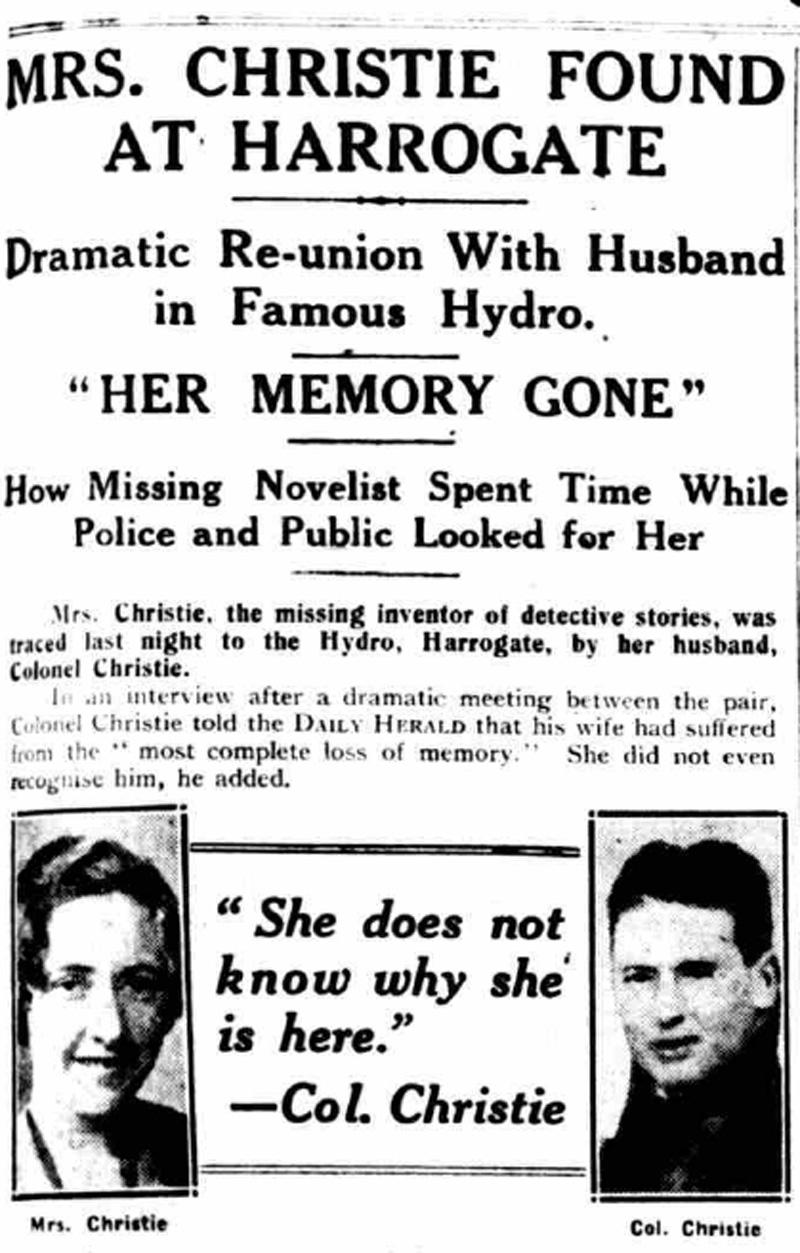
Alt...
Daily Herald, 15 December 1926, announcing that Christie had been found.
Newspaper front page: "Mrs. Christie Found at Harrogate," reporting Agatha Christie's dramatic 1926 reunion with husband Colonel Christie after her famous 11-day disappearance. Headlines cite claimed memory loss; includes photos of both and a quote from him.
Jonathan Swift v. AI
Three hundred years ago, the satirist warned of a world in which reading and writing are replaced by the flashy simulation of human knowledge. Can he help us fix it?
by Dónal Gill
https://www.thedial.world/articles/news/schools-teachers-artificial-intelligence
Books by Jonathan Swift at PG:
https://www.gutenberg.org/ebooks/author/326
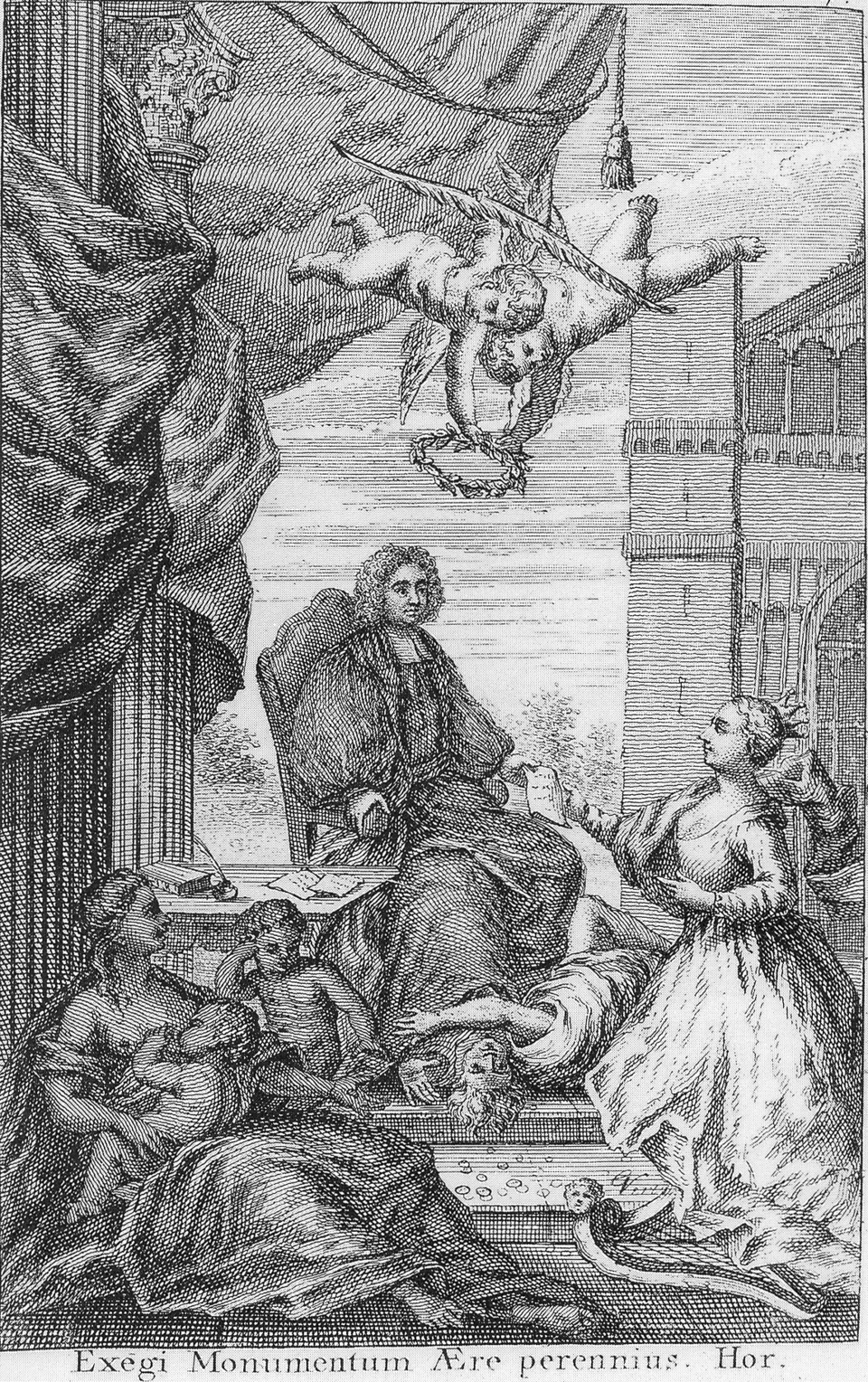
Alt...
The title page to Swift's 1735 Works, depicting the author in the Dean's chair, receiving the thanks of Ireland. The Horatian motto reads, Exegi Monumentum Ære perennius, "I have completed a monument more lasting than brass." The "brass" is a pun, for William Wood's halfpennies (alloyed with brass) lie scattered at his feet. Cherubim award Swift a poet's laurel.
![[?]](https://friendica.world/photo/profile/wistquotes.png?ts=1766199542)
A quotation from Bill Watterson
CALVIN: I’m not going to do my math homework. Look at these unsolved problems. Here’s a number in mortal combat with another. One of them is going to get subtracted. But why? How? What will be left of him? If I answered these, it would kill the suspense. It would resolve the conflict and turn intriguing possibilities into boring ol’ facts.
HOBBES: I never really thought about the literary qualities of math.
CALVIN: I prefer to savor the mystery.
Bill Watterson (b. 1958) American cartoonist
Calvin and Hobbes (1992-10-13)
More about this quote: wist.info/watterson-bill/86064…
#quote #quotes #quotation #qotd #billwatterson #calvinandhobbes #drama #homework #literature #math #mathematics #mystery #numbers

Alt...
Calvin and Hobbes (1992-10-13)
CHATTER BOX. One whose tongue runs twelve score to the dozen, a chattering man or woman.
A selection from Francis Grose’s “Dictionary Of The Vulgar Tongue” (1785)
--
#books #literature #dictionaries #history #society #language #slang @histodons

Alt...
Image imitating a page from an old document, text (as in main toot):
CHATTER BOX. One whose tongue runs twelve score to the dozen, a chattering man or woman.
A selection from Francis Grose’s “Dictionary Of The Vulgar Tongue” (1785)
"I can't imagine why everybody is always so keen for authors to talk about writing. I should have thought it was an author's business to write, not talk."
Dead Man's Folly (1956)
~Dame Agatha Christie #BOTD in 1890.
Books by Agatha Christie at PG:
https://www.gutenberg.org/ebooks/author/451
Do you have a favorite book by Agatha Christie? Which one stood out to you the most? Let us know its name here.
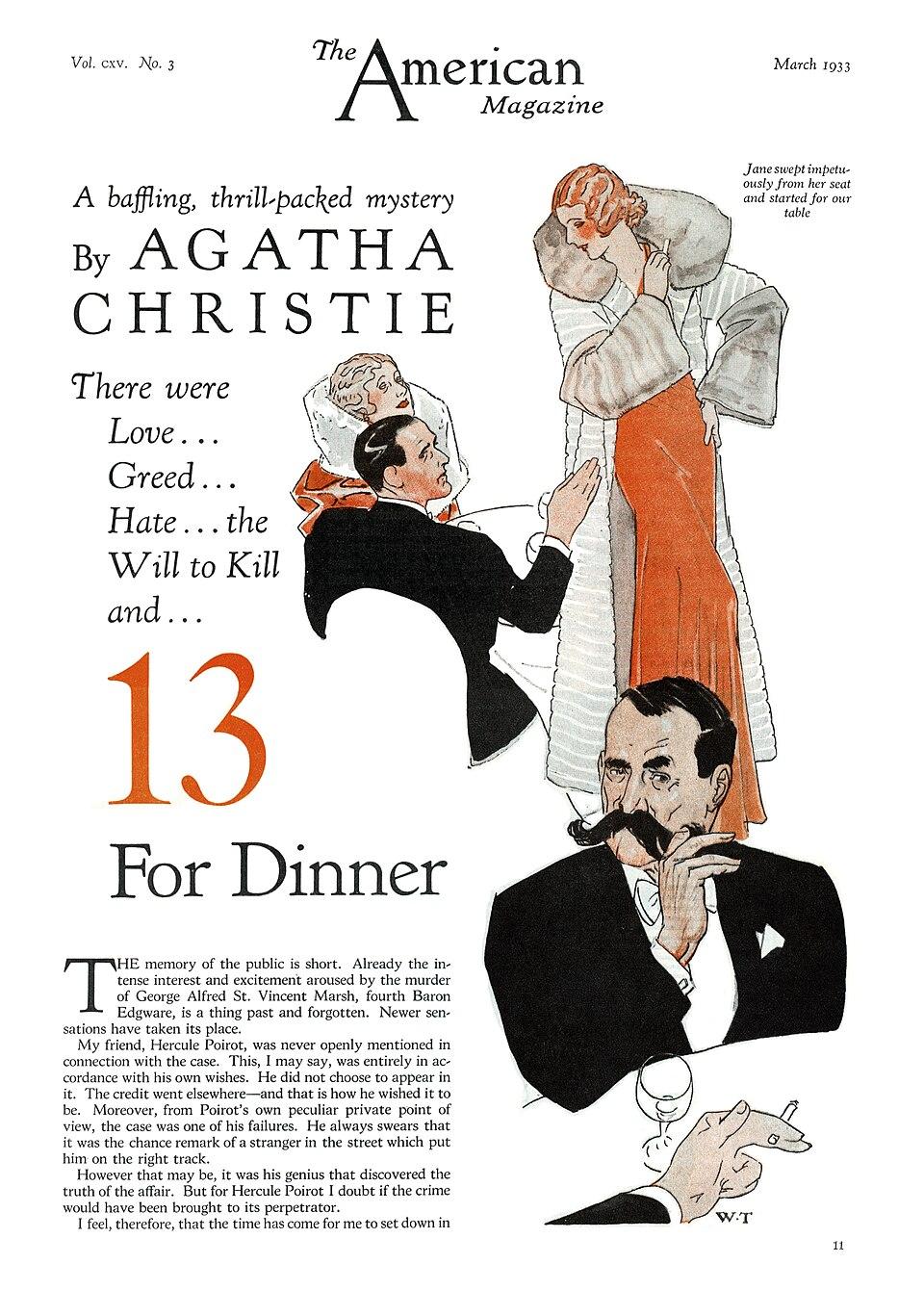
Alt...
Illustration from The American Magazine March 1933 printing of 13 For Dinner, a novel by Agatha Christie; this is the first of six issues that serialized the novel Lord Edgware Dies under this alternate title. The illustration presents a notable early depiction of Hercule Poirot, in the only Agatha Christie novel first printed in serialized form in The American Magazine.
Magazine page from The American Magazine, March 1933, featuring "13 for Dinner" (a.k.a. Lord Edgware Dies) by Agatha Christie, a Hercule Poirot mystery. Illustrations show a mustached Poirot, a woman in an orange gown, and a man in evening dress—colorful period illustrations by "W·T."
Is Edward Gibbon Still Accurate on the Fall of Rome?
Edward Gibbon published his iconic history in 1776, but what do modern archaeologists and historians think of his core thesis on Rome's collapse.
https://www.thecollector.com/is-edward-gibbon-still-accurate-fall-of-rome/
#books #literature #RomanHistory
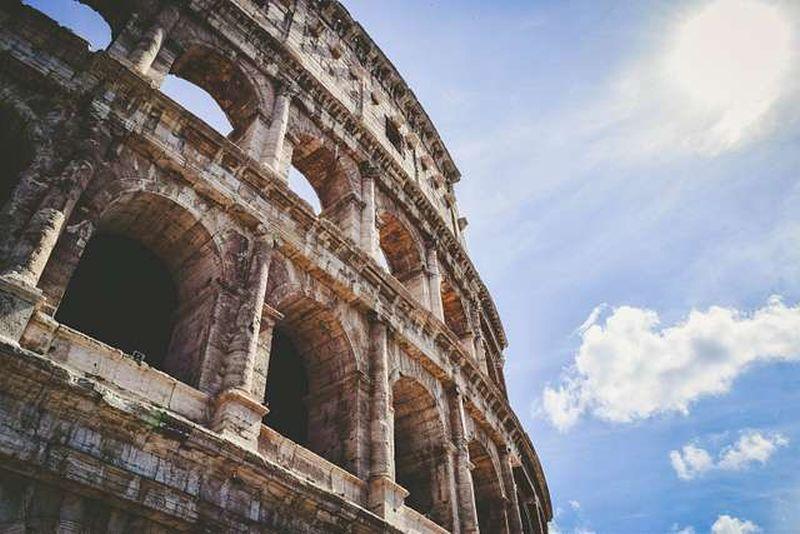
Alt...
This photo captures the Colosseum in Rome from a low, close-up angle. You can see its weathered stone arches, with blue sky and white clouds above.
"No civilized society can long exist, with an active power in its bosom that is stronger than the law."
The American Democrat (1838)
~James Fenimore Cooper #BOTD in 1789
Books by James Fenimore Cooper at PG:
https://www.gutenberg.org/ebooks/author/483
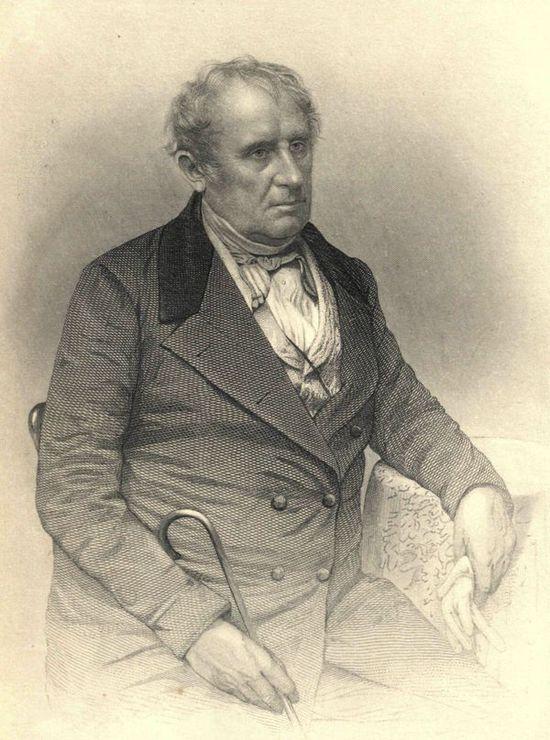
Alt...
JAMES FENIMORE COOPER.
In: American Men of Letters.
Steel engraving portrait of James F. Cooper, seated, with receding gray hair, wearing a dark double-breasted coat with velvet collar, cravat, and holding a walking cane.
We recently received an inquiry about World War I books (1914–1918) related to YMCA war work. Using a clever combination of keywords, our senior cataloger pulled the following results:
https://www.gutenberg.org/ebooks/search/?query=s.world+war+1914+s.hospitals+s.personal+narratives
thanks QMacrocarpa
Feel free to search the PG catalog yourself!
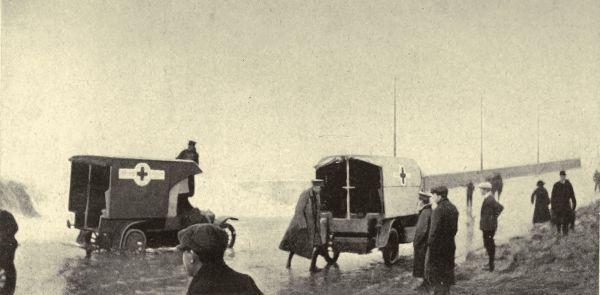
Alt...
AMBULANCES HELD UP BY THE HIGH TIDE.
Title: Eighteen months in the war zone
the record of a woman's work on the western front
Author: Kate John Finzi
Author of introduction, etc.: Sir Alfred Edward Turner
Two Red Cross ambulance vehicles on a beach with figures gathered around them in the fog or mist. People stand near the vehicles amid a medical transport scene.
#OTD in 1321, Dante Alighieri dies. He "was an Italian poet, writer, and philosopher. His Divine Comedy, originally called Comedìa (modern Italian: Commedia) and later christened Divina by Giovanni Boccaccio, is widely considered one of the most important poems of the Middle Ages and the greatest literary work in the Italian language."
https://en.wikipedia.org/wiki/Dante_Alighieri
Dante at PG:
https://www.gutenberg.org/ebooks/author/507
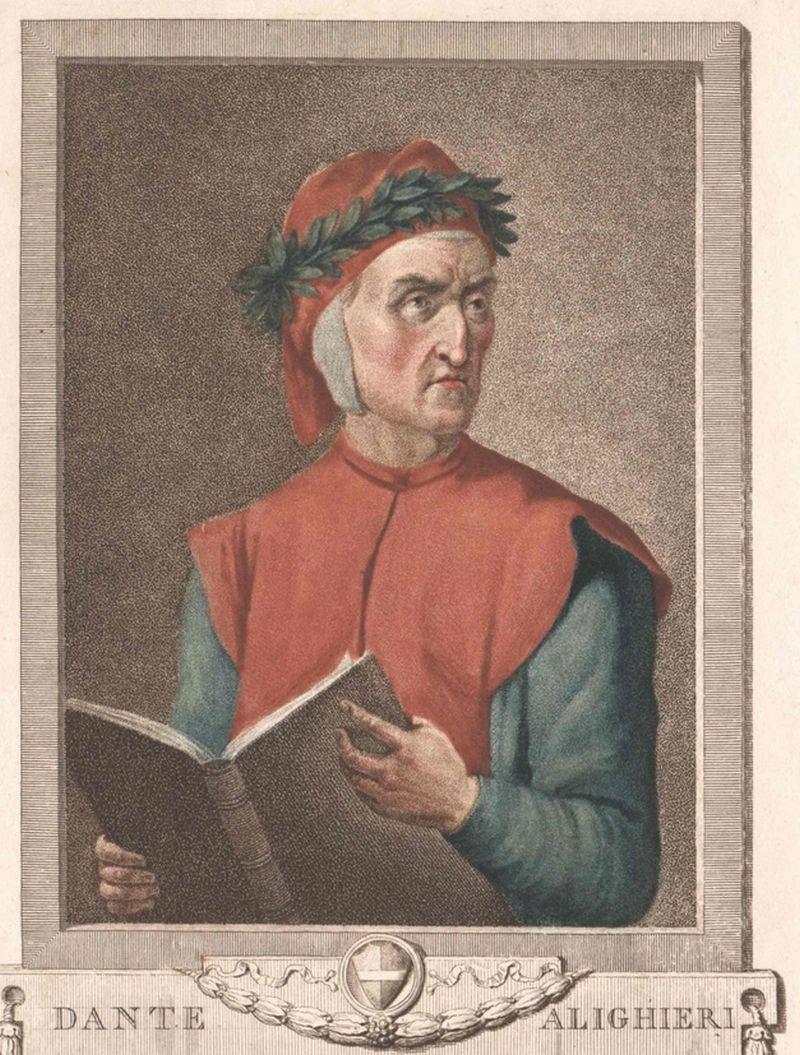
Alt...
This engraved, hand-colored portrait shows Dante Alighieri from the waist up. He wears a dark red chaperon hood over his shoulders and a teal-blue garment underneath. A green laurel wreath sits atop the hood. He holds an open book with both hands, as if he has just paused while reading.
12 Pablo Picasso Masterpieces Every Art Lover Should Know
Pablo Picasso (1881-1973) was a Spanish painter who cofounded Cubism and revolutionized modern art through iconic works like Guernica and Les Demoiselles d'Avignon.
by Anastasiia Kirpalov
https://www.thecollector.com/pablo-picasso-famous-masterpieces/
Books illustrated by Picasso at PG:
https://www.gutenberg.org/ebooks/search/?query=pablo+picasso
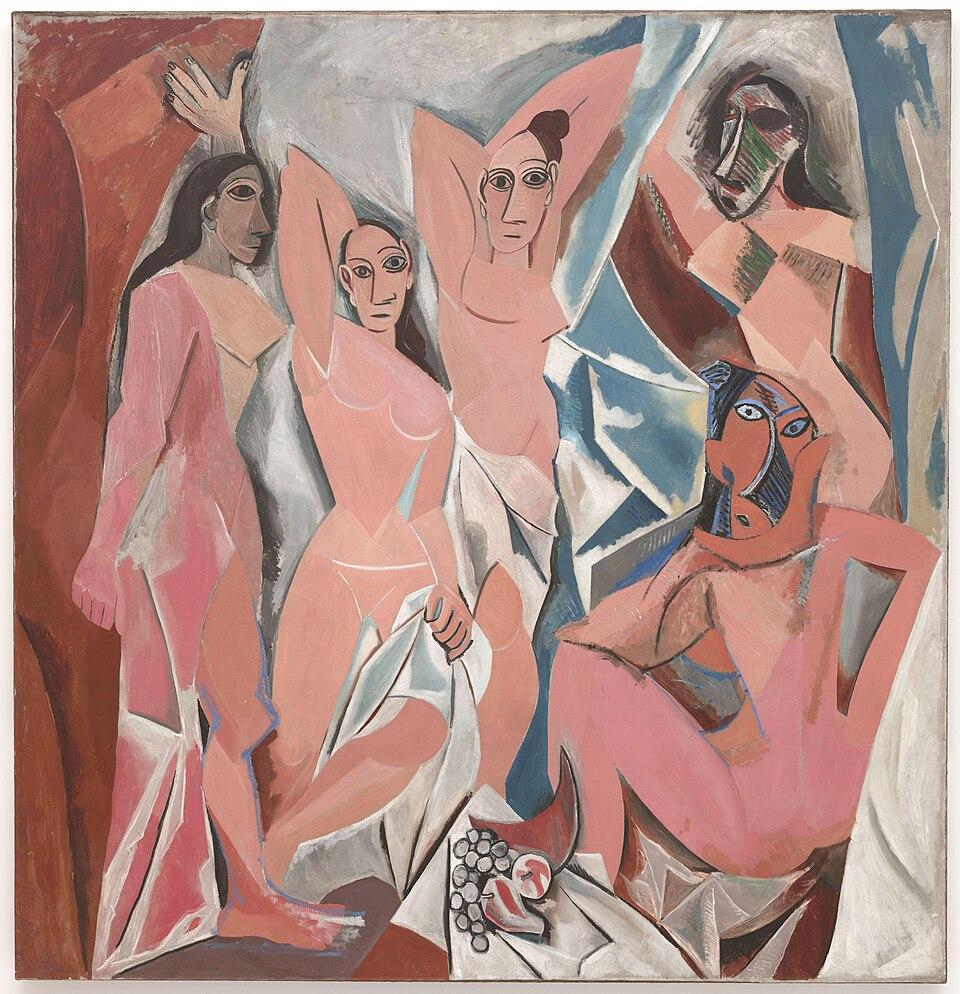
Alt...
Les Demoiselles d’Avignon, by Pablo Picasso.
Five nude female figures with fragmented, angular forms—two with African mask-like faces—rendered in pink, blue, and earth tones.
Libraries are a lifeline, new research finds
Public libraries play a vital role in communities, helping people connect, access support and improve wellbeing through everyday interactions.
https://www.gla.ac.uk/news/headline_1290826_en.html
Books about Public libraries at PG:
https://www.gutenberg.org/ebooks/subject/19136

Alt...
ONE OF THE SPECIAL READING ROOMS
(Genealogy and Local History)
Title: Handbook of The New York Public Library
Author: New York Public Library
Interior view of a large library reading room, early 20th century. Long tables with individual lamps line the space, patrons reading and a librarian standing near a card catalog. Bookshelves fill the walls, with a skylight ceiling and hanging chandelier illuminating the room.
Twain’s Patriotism
On Tom Sawyer and the challenge of loving America
by Ivan Kenneally
https://hedgehogreview.com/web-features/thr/posts/twains-patriotism
The Adventures of Tom Sawyer at PG:
https://www.gutenberg.org/ebooks/74
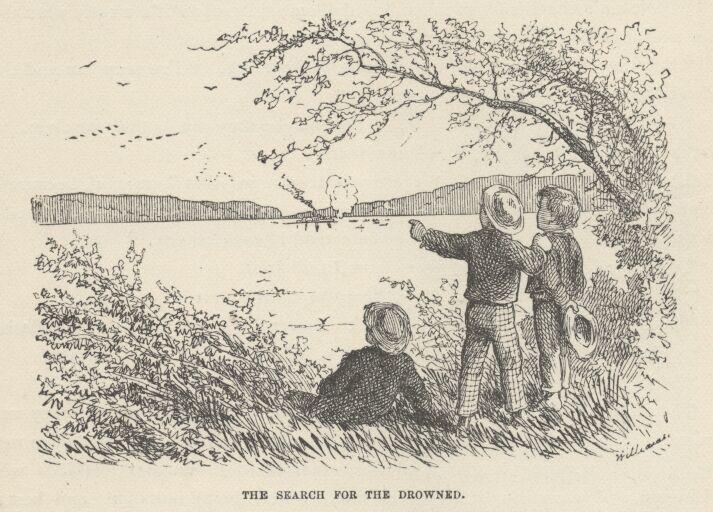
Alt...
The search fro the drowned.
Title: The Adventures of Tom Sawyer, Part 4.
Author: Mark Twain
Three boys watch from a bushy riverbank as a small boat with smoke/cannon fire searches the water in the distance.
The best books on Entomology
recommended by Dino Martins
Many people are leery of creepy crawlies—but insects are critical to the functioning of the planet, says Dino Martins, the entomologist, evolutionary biologist and author of Hidden Creatures. We asked him to recommend five entomology books that seek wonder in unexpected places, including bee colonies and termite mounds.
https://fivebooks.com/best-books/entomology-dino-martins/
"The Life of the Bee" at PG:
https://www.gutenberg.org/ebooks/4511
#entomology #books #literature

Alt...
A close-up of a red ant on a bright yellow dandelion.
The Legend of “The Legend of Sleepy Hollow”
Phillip Lopate on the Enduring Legacy of Washington Irving’s Most Famous Short Story
https://lithub.com/the-legend-of-the-legend-of-sleepy-hollow/
The Legend of Sleepy Hollow at PG:
https://www.gutenberg.org/ebooks/41
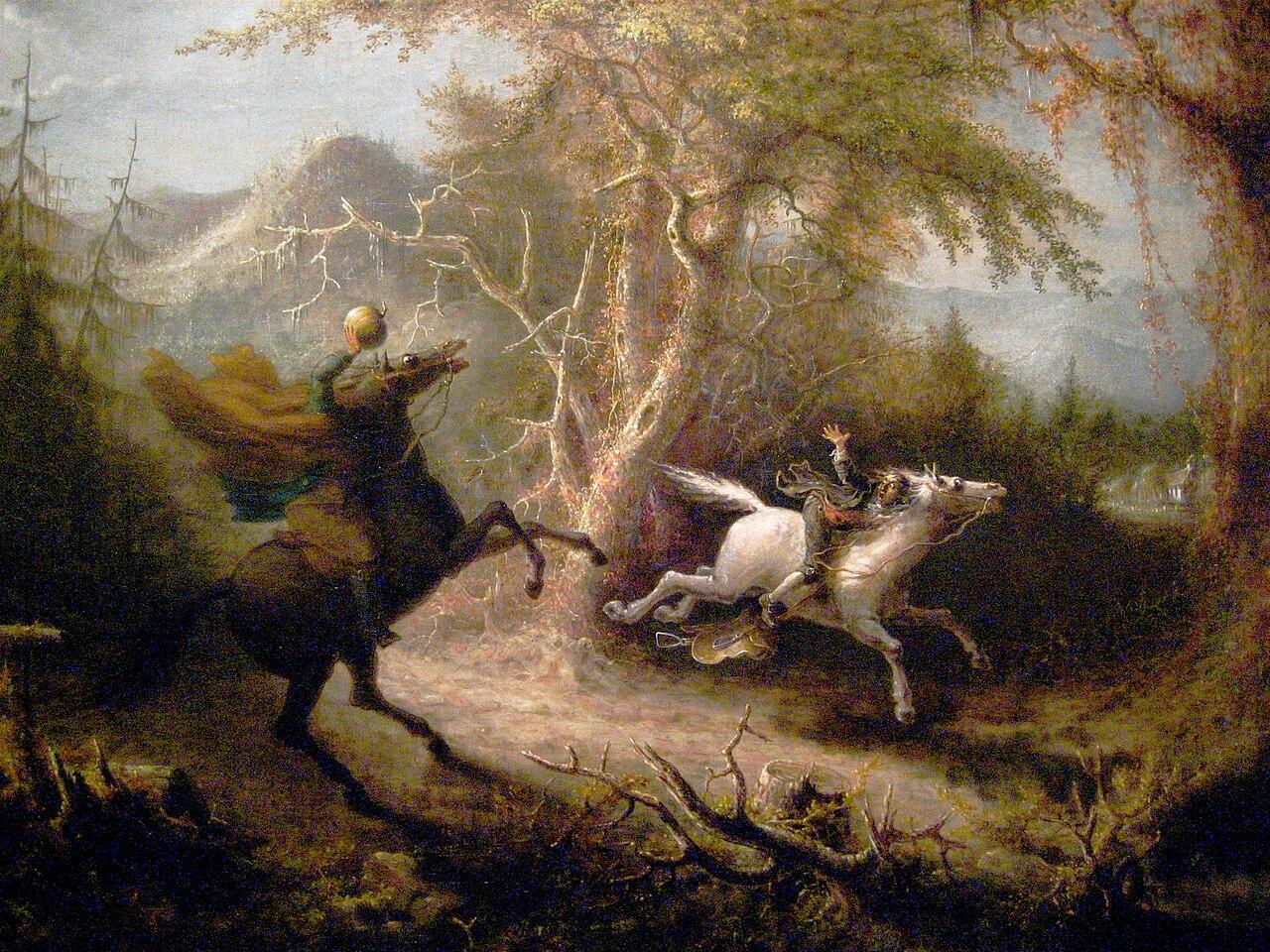
Alt...
The Headless Horseman Pursuing Ichabod Crane by John Quidor.
Ichabod flees on a white horse, arm raised in fear, while the headless horseman gives chase on a dark rearing steed through a moonlit forest.
The Life of Agatha Christie, the World’s Best-Selling Novelist, Goes Under the Microscope at the British Library
An upcoming London exhibition will explore the breadth of Christie’s ‘remarkable’ experiences through letters, photographs, a typewriter and a replica of her Hawaiian surfboard
by Sonja Anderson
Books by Agatha Christie at PG:
https://www.gutenberg.org/ebooks/author/451
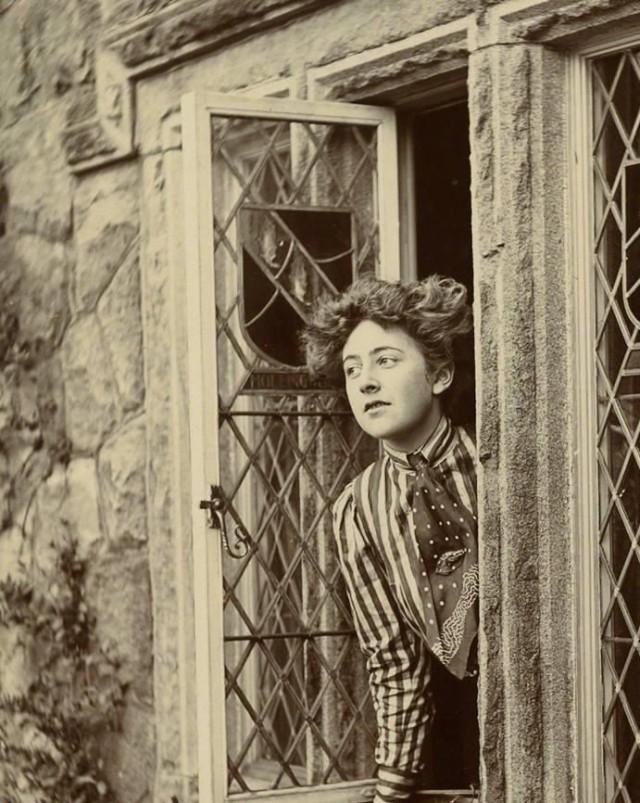
Alt...
Agatha Christie as a young woman.
Sepia-toned photo of a young Agatha Christie, leaning out through a leaded-glass casement window of a stone building, wearing a striped blouse with a polka-dot cravat, hair styled in a puffed pompadour.
"But beauty is set apart,
beauty is cast by the sea,
a barren rock,
beauty is set about
with wrecks of ships...."
Hymen (ed. 1921)
~H.D. was born #OTD in 1886.
Books by H. D. at PG:
https://www.gutenberg.org/ebooks/author/33478

Alt...
Photographic portrait of American writer Hilda "H.D." Doolittle (1886–1961), taken by Man Ray circa 1917. From Tendencies in Modern American Poetry by Amy Lowell. New York: The MacMillan Company, 1917, p. 233.
Shown seated, in dark clothing, downcast gaze, dark bobbed hair with bangs, against a patterned wallpaper.
How to be a word detective
Etymology unravels the mysteries of language and the hidden webs that link people across the world. Here’s how to dive in
by Danny Bate
Books about English language -- Etymology at PG:
https://www.gutenberg.org/ebooks/subject/2993
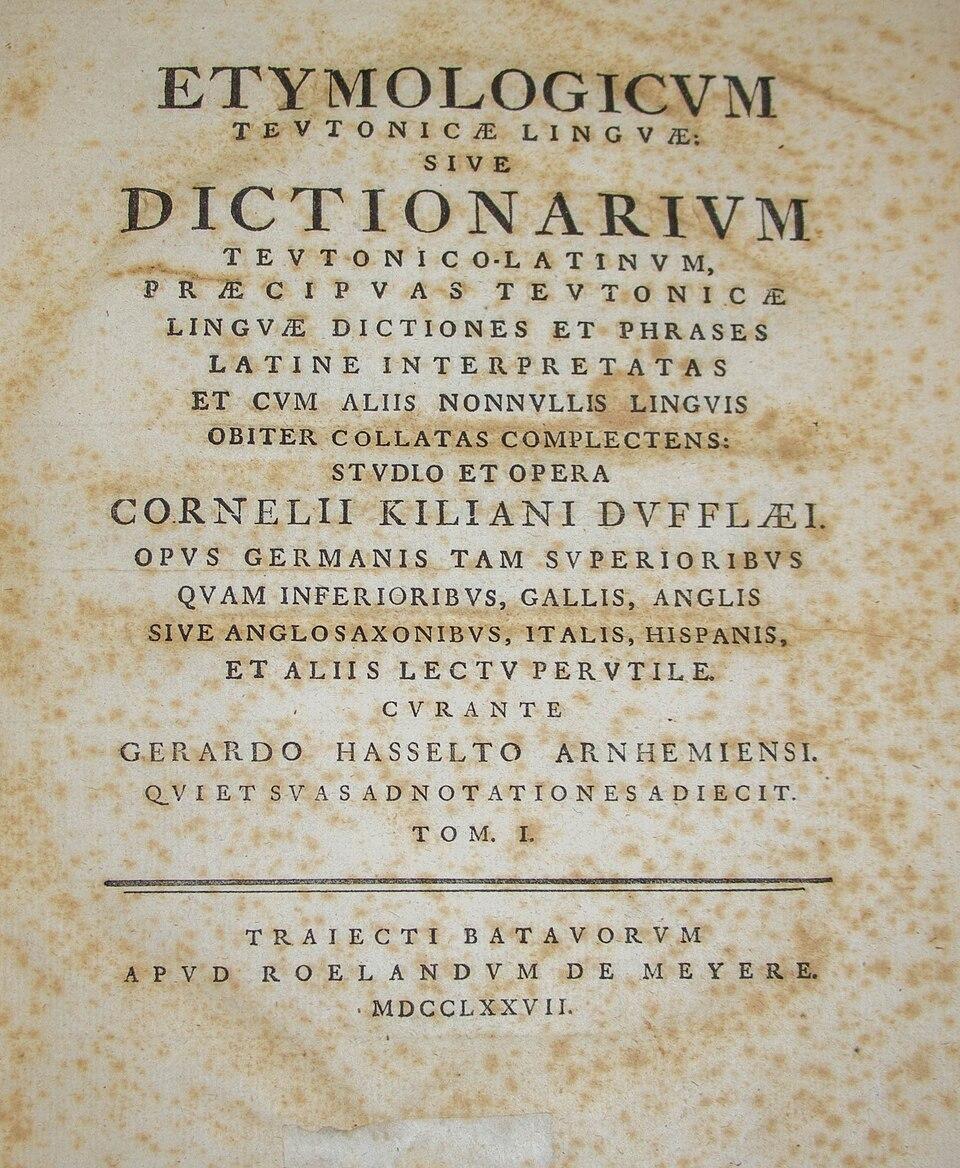
Alt...
Cornelis Kiliaan: Etymologicum Teutonicae Linguae, Roeland de Meyere 1777.
Title page of "Etymologicum Teutonicae Linguae, sive Dictionarium Teutonico-Latinum" by Cornelis Kiliaan (Kiliani Dufflaei), a Dutch-Latin etymological dictionary, edited with annotations by Gerard van Hasselt. Printed in Utrecht by Roeland de Meyere, 1777, Tomus I. Foxed, aged paper.
Anne Dacier, translator of Homer’s The Iliad and The Odyssey
Anne Dacier (1645–1720), French scholar and translator best known for the prose translation of the Homeric epics, The Iliad and The Odyssey.
by Marie Lebert
https://www.literaryladiesguide.com/author-biography/anne-dacier-translator/
Books about Anne Dacier at PG:
https://www.gutenberg.org/ebooks/39843
#books #literature #womeninart
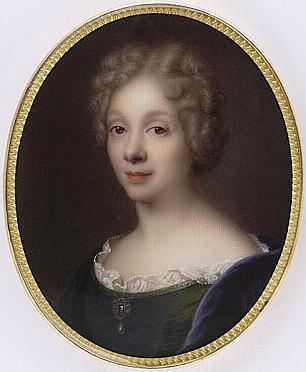
Alt...
Madame Dacier by Marie-Victoire Jaquotot. Inspired by Roger de Piles In the Louvre's département des Arts graphiques as item 35610.
Oval miniature portrait of Madame Dacier (Anne Le Fèvre Dacier), by Marie-Victoire Jaquotot, set in a gilt frame. She's depicted with curled powdered hair, a lace collar, and a dark blue/green dress.
Brian Dillon on What Virginia Woolf’s The Waves Means to Him
“It is the first novel he has ever read that makes him consider seriously the form of a human life.”
Books by Virginia Woolf at PG:
https://www.gutenberg.org/ebooks/author/89
#books #literature #literaryCriticism
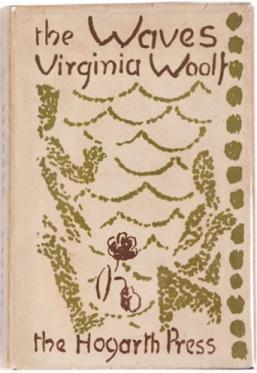
Alt...
First edition cover of the book "The Waves" by Virginia Woolf.
Original 1931 Hogarth Press first-edition cover of The Waves by Virginia Woolf. Olive-green woodcut design by Vanessa Bell shows abstract wave-like arcs and stylized floral/hand motifs on cream background, with title, author, and publisher in hand-lettered script.
What Charles Dickens's 'A Tale of Two Cities' Gets Right About the French Revolution
Charles Dickens took some liberties with history, but 'A Tale of Two Cities' gets some surprisingly important details about the French Revolution right.
By Paul Anthony Jones
A Tale of Two Cities at PG:
https://www.gutenberg.org/ebooks/98
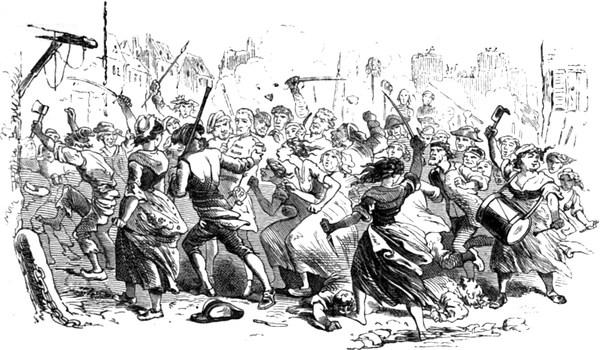
Alt...
Der Sturm bricht los.
Title: Zwei Städte
Author: Charles Dickens
Illustrator: Hablot K. Browne
Translator: Julius Seybt
Depicts a chaotic riot scene — a crowd of men and women brandishing weapons, tools, and pikes, with a fallen figure and scattered hat on the ground. A child with a drum flees at right.
"Quanto più su l'instabil ruota vedi
Di Fortuna ire in alto il miser uomo,
Tanto più tosto hai da vedergli i piedi
Ove ora ha il capo, e far cadendo il tomo."
The higher up on Fortune's wheel you see
A wretch ascend, the sooner he will fall,
And where his head is now, his feet will be.
Canto XLV, stanza 1 (tr. B. Reynolds) - Orlando Furioso (1532)
~Ludovico Ariosto, born #OTD in 1474
Orlando Furioso at PG:
https://www.gutenberg.org/ebooks/615
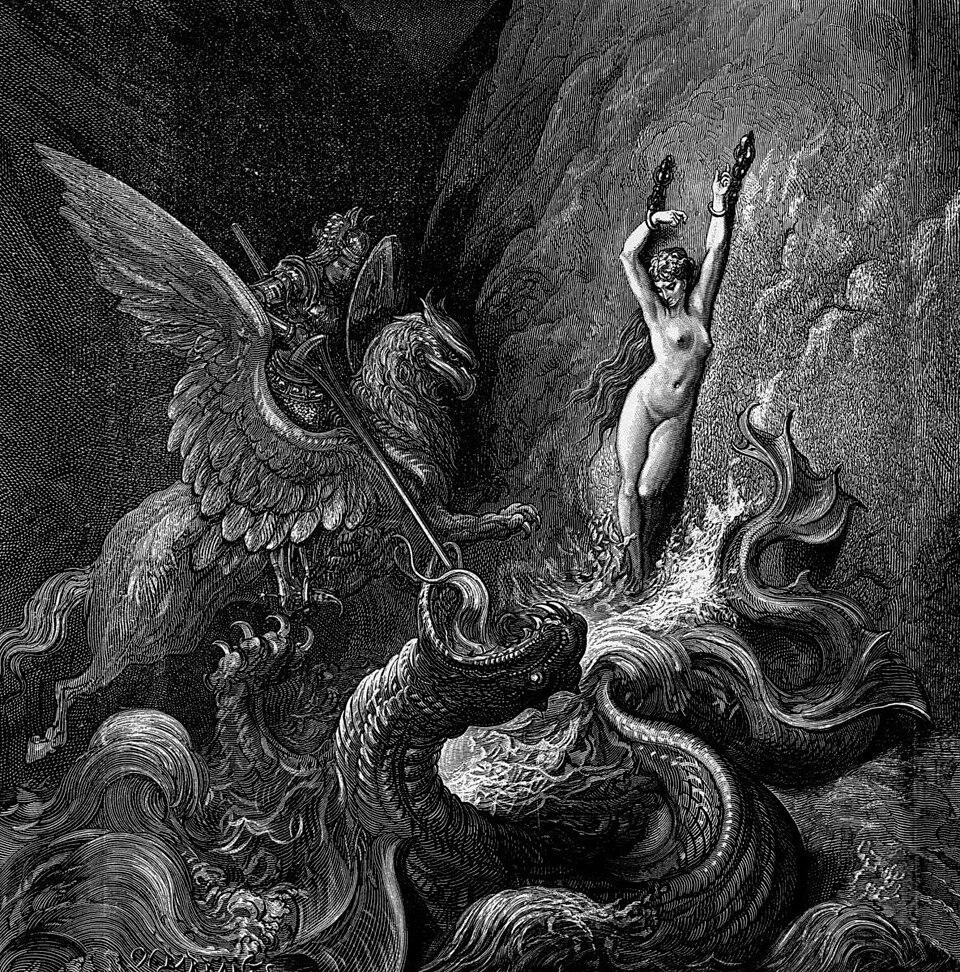
Alt...
illustration of Ludovico Ariosto’s “Orlando Furioso”. By Gustave Doré.
It depicts the rescue of Angelica, who is shown chained to a rock, being attacked by an orc, while the knight Ruggiero arrives riding the hippogriff to save her, lance in hand.
"Much of the insensibility and hardness of the world is due to the lack of imagination which prevents a realization of the experiences of other people."
Democracy and Social Ethics, 1902.
~Jane Addams (6 September 1860 – 21 May 1935)
Books by Jane Addams at PG:
https://www.gutenberg.org/ebooks/author/602
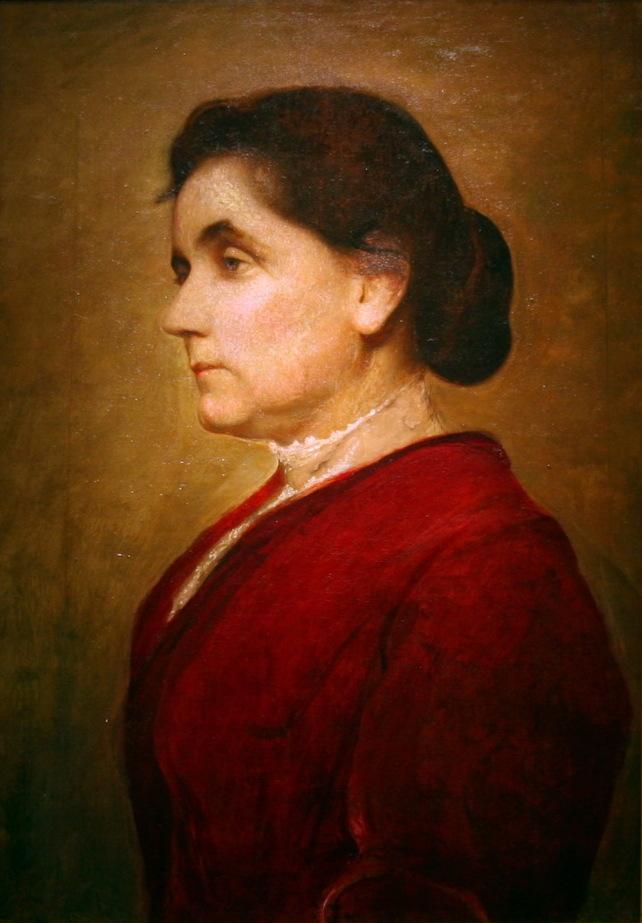
Alt...
George de Forest Brush - Jane Addams, 1906 by George de Forest Brush.
Jane Addams wears a deep red velvet dress with lace collar, dark hair pinned back.
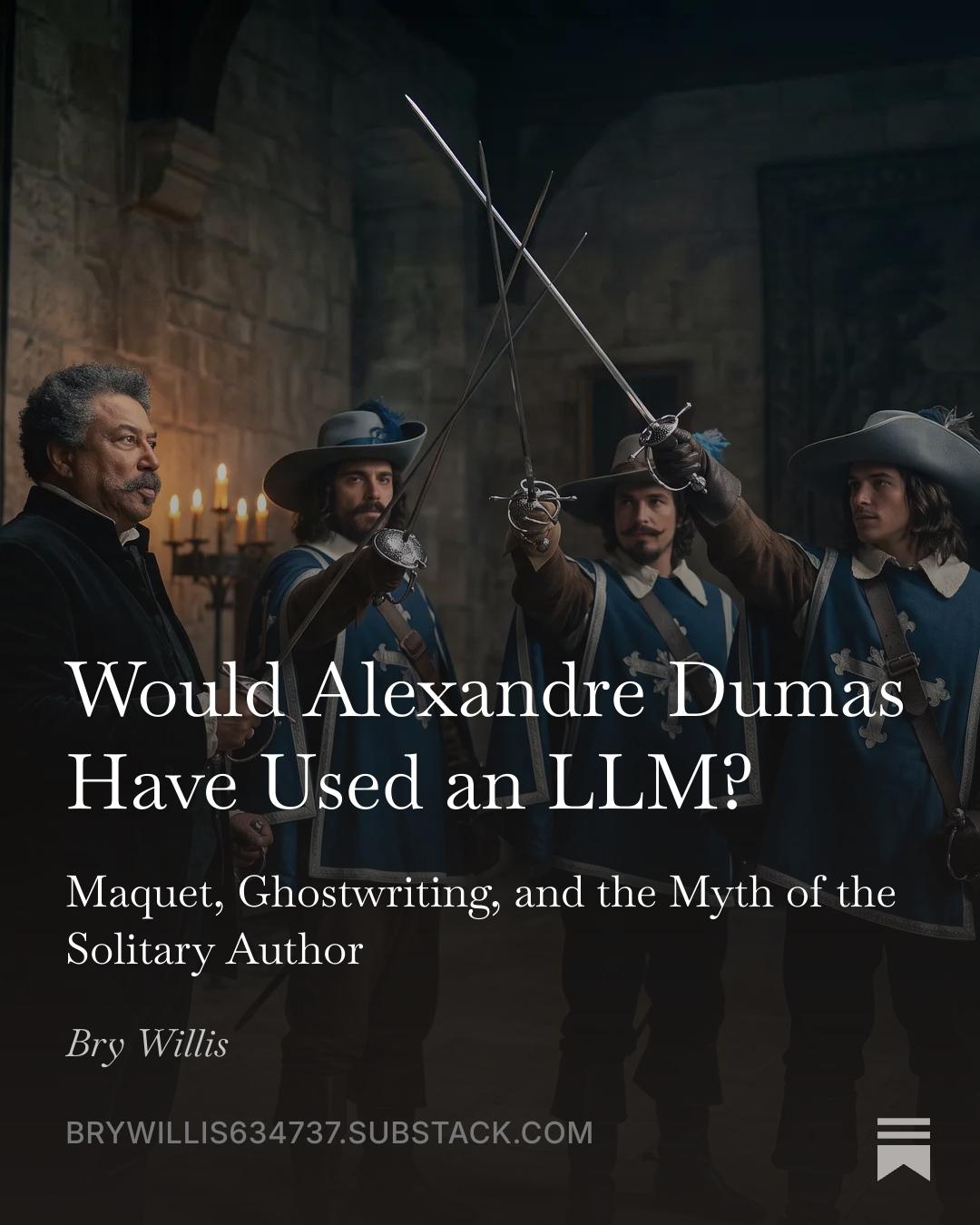
Would Alexandre Dumas have used an LLM? I asked an LLM. It said yes.
https://brywillis634737.substack.com/p/would-alexandre-dumas-have-used-an
Dumas is famous for having authored many books: The Three Musketeers, The Count of Monte Cristo, Man in the Iron Mask, and others, but as some people use AI, he sometimes got ideas from others; he also had others write in his name. Sound familiar? He's not alone.
#writing #books #classics #literature #author #Dumas #french #llms #blog #substack #authorship #ai #creativity #ghostwriting
GIBLETS. To join giblets; said of a man and woman who cohabit as husband and wife, without being married; also to copulate.
A selection from Francis Grose’s “Dictionary Of The Vulgar Tongue” (1785)
--
#books #literature #dictionaries #history #society #language #slang @histodons
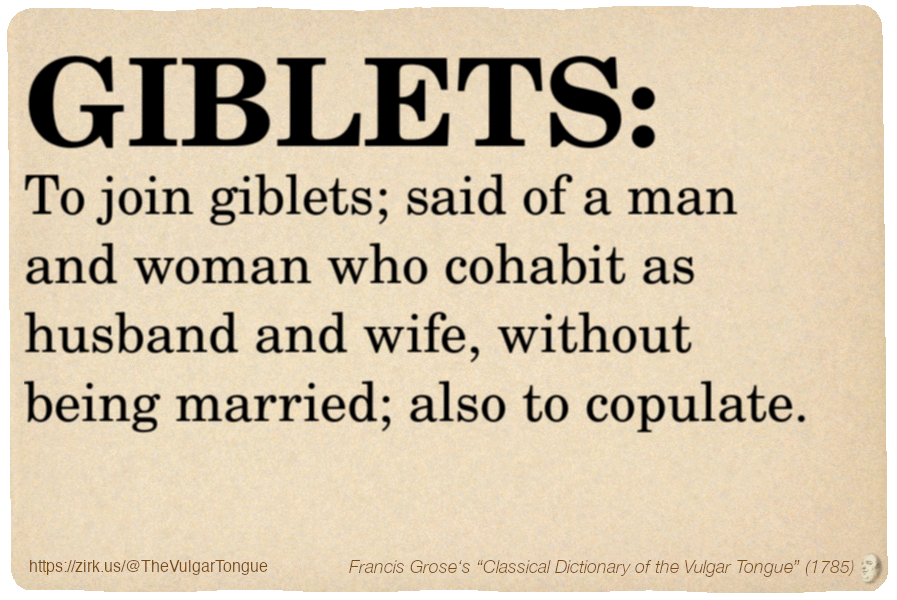
Alt...
Image imitating a page from an old document, text (as in main toot):
GIBLETS. To join giblets; said of a man and woman who cohabit as husband and wife, without being married; also to copulate.
A selection from Francis Grose’s “Dictionary Of The Vulgar Tongue” (1785)
Neuroqueering on the lawn
Hans Christian Andersen’s tantrum in Charles Dickens’s garden was a case of ‘too muchness’, emotions bursting past respectability
by Siobhan Unwin and Kathryne Ford
Books by Andersen and Dickens at PG:
https://www.gutenberg.org/ebooks/author/2298
https://www.gutenberg.org/ebooks/author/37
#books #literature #neurodiversity
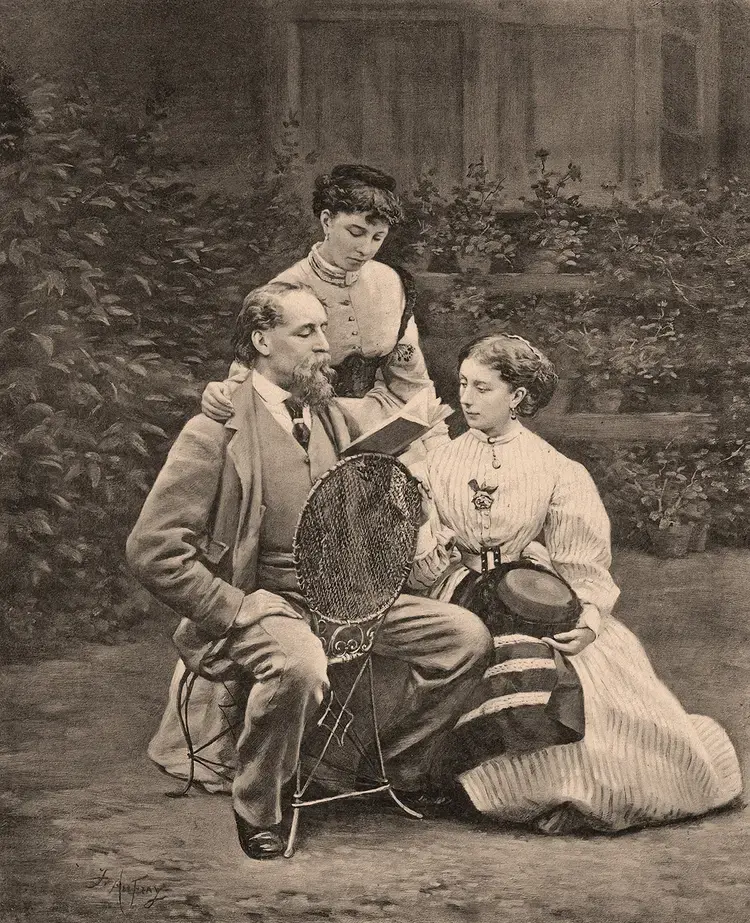
Alt...
Charles Dickens reading to his daughters Mamie and Katey in the garden of Gad’s Hill; painting after Joseph Athanase Aufray, after a photo by Mason & Co, c1869. Courtesy the National Portrait Gallery.
The image shows Charles Dickens, seated outdoors in a garden setting with a chair back propped in front of him, reading with his daughters attentively gathered around him, one standing behind with her hand on his shoulder and the other seated beside him.
"We deny the right of any portion of the species to decide for another portion what is and what is not their 'proper sphere.' The proper sphere for all human beings is the largest and highest which they are able to attain to."
The Enfranchisement of Women (1851)
~Harriet Taylor Mill (8 October 1807 – 3 November 1858)
My unsung hero of science: Harriet Taylor Mill, the radical feminist philosopher who lived in the shadow of her husband
I first heard about Harriet Taylor Mill when reading about her much more famous collaborator and future husband, the British philosopher and politician John Stuart Mill.
by Helen McCabe
Books by Harriet Mill at PG:
https://www.gutenberg.org/ebooks/author/57060
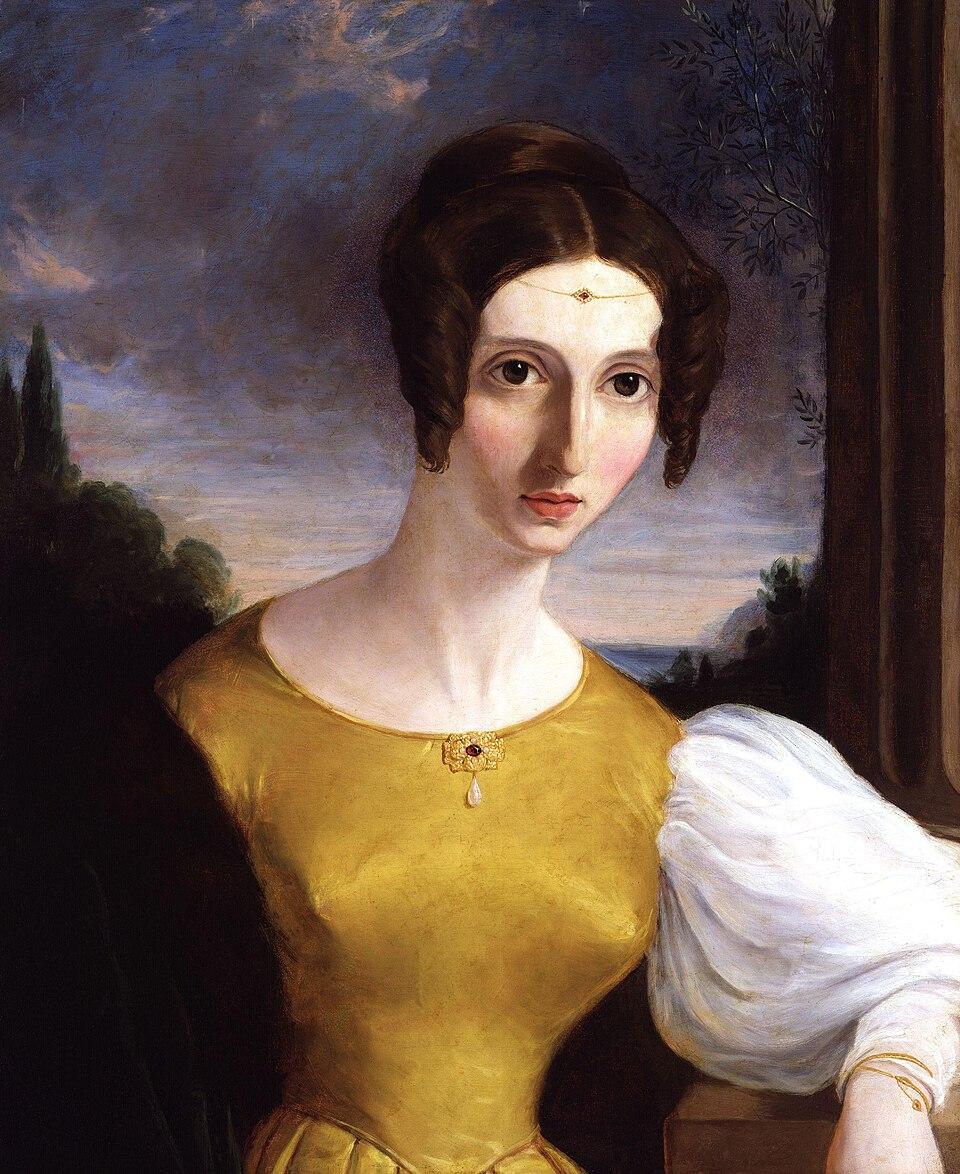
Alt...
Portrait in the National Portrait Gallery, London.
The painting shows Harriet Mill with a golden-yellow gown, a jeweled headpiece, and a Mediterranean-style landscape visible in the background.
BUTTERED BUN. One lying with a woman that has just lain with another man, is said to have a buttered bun.
A selection from Francis Grose’s “Dictionary Of The Vulgar Tongue” (1785)
--
#books #literature #dictionaries #history #society #language #slang @histodons
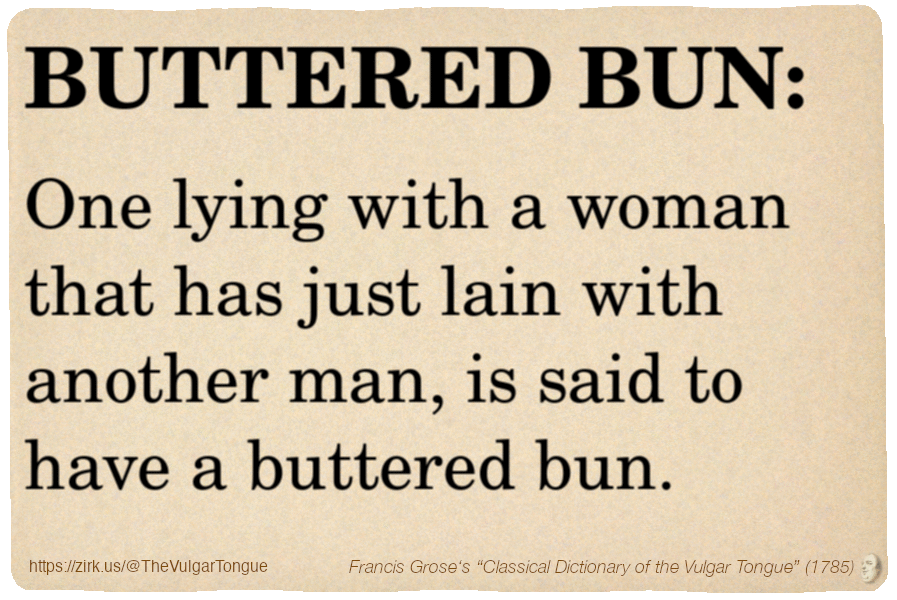
Alt...
Image imitating a page from an old document, text (as in main toot):
BUTTERED BUN. One lying with a woman that has just lain with another man, is said to have a buttered bun.
A selection from Francis Grose’s “Dictionary Of The Vulgar Tongue” (1785)
"The scientific genius is so like the old Hebrew prophet. He singles out the essential from the mass of facts before him, and then - lifts up his eyes."
The Way of Escape: A Novel, 1902.
~Margaret Todd (23 April 1859 – 3 September 1918)
She coined the term isotope in 1913 in a suggestion to chemist Frederick Soddy.
Books by Graham Travers (aka Margaret Todd) at PG:
https://www.gutenberg.org/ebooks/author/47770
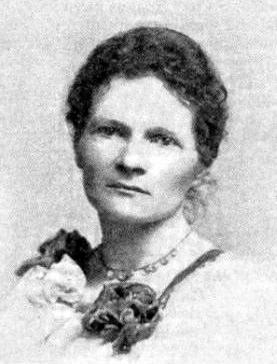
Alt...
Scan of a picture of Margaret Todd, the physician who wrote under the name Graham Travers. She also suggested the term "isotope" to Frederick Soddy for his discovery.
Black-and-white photographic portrait of a woman with dark hair pulled back, wearing a light-colored blouse with a decorative brooch/flower corsage and a beaded necklace.
What Gulliver Saw
by Katie Ebner-Landy
Gulliver’s Travels uses the land of the Houyhnhnms and Yahoos to explore whether being recognized as human is based on observable characteristics.
https://www.lrb.co.uk/the-paper/v48/n16/katie-ebner-landy/cursed-race
Gulliver's travels (in several languages) at PG:
https://www.gutenberg.org/ebooks/search/?query=Gulliver%27s+travels
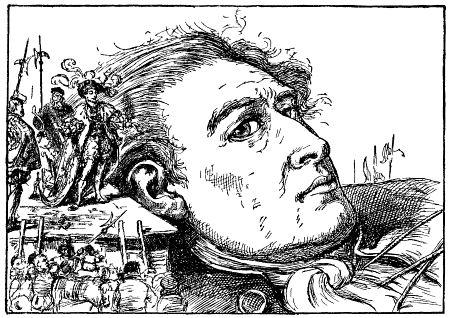
Alt...
"I LAY ALL THIS WHILE IN GREAT UNEASINESS"
Title: Gulliver's Travels into Several Remote Regions of the World
Author: Jonathan Swift
Editor: Thomas M. Balliet
Large close-up profile of a man's face, with a small crowd/battle scene—armored figures with spears near a platform—emerging from behind his ear.
The Most Remote Place on Earth Has Space Junk and a Sea Monster
Eerie things happen at Point Nemo.
https://www.atlasobscura.com/articles/strange-maps-point-nemo
At PG:
Jules Verne
https://www.gutenberg.org/ebooks/author/60
H.P. Lovecraft
Why we love literary anniversaries
This special year saw a variety of high-profile celebratory events across the country, from regency balls and film screenings, to special tours and literary talks.
by Amy Wilcockson (from the archives)
https://theconversation.com/why-we-love-literary-anniversaries-273375
Gulliver’s Travels, The Last Man, Winnie-the-Pooh, The Murder of Roger Ackroyd at PG:
https://www.gutenberg.org/ebooks/17157
https://www.gutenberg.org/ebooks/18247
https://www.gutenberg.org/ebooks/67098
https://www.gutenberg.org/ebooks/69087
#books #literature #literary_classics
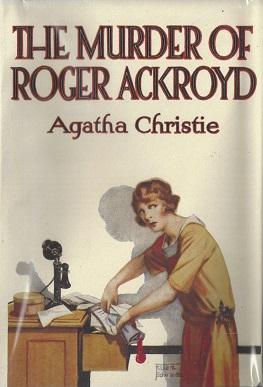
Alt...
First edition cover of The Murder of Roger Ackroyd.
The cover illustration depicts a woman with red hair in period dress, standing at a desk with an old-style telephone, appearing to search through or discover papers.
BEAU-NASTY. A slovenly fop; one finely dressed, but dirty.
A selection from Francis Grose’s “Dictionary Of The Vulgar Tongue” (1785)
--
#books #literature #dictionaries #history #society #language #slang @histodons
Alt...
Image imitating a page from an old document, text (as in main toot):
BEAU-NASTY. A slovenly fop; one finely dressed, but dirty.
A selection from Francis Grose’s “Dictionary Of The Vulgar Tongue” (1785)
On the Fact and Fiction of Kurt Vonnegut’s Dresden
“Terror wasn’t the only weapon the Nazis used against the American prisoners. Sometimes, they used propagandistic persuasion as well.”
Susan Farrell Considers a Source of Inspiration for Slaughterhouse-Five
https://lithub.com/on-the-fact-and-fiction-of-kurt-vonneguts-dresden/
Books about Dresden at PG:
https://www.gutenberg.org/ebooks/subject/33537
Alt...
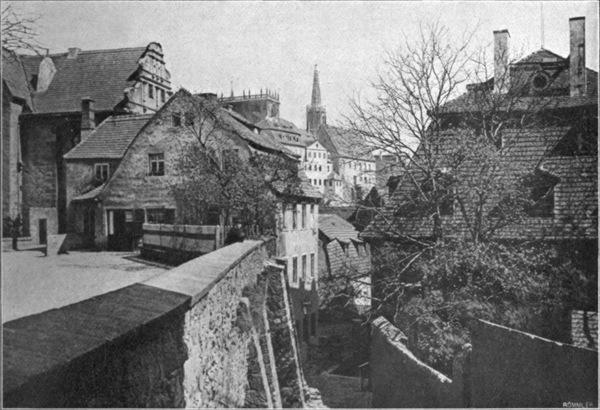
Fig. 30. Red steps in Meissen.
Based on a photograph by Römmler & Jonas in Dresden.
Title: Dresden und die Sächsische Schweiz
Author: Sophus Ruge
A black-and-white photograph of Dresden, showing a 'townscape of old half-timbered and stone buildings with steep tiled roofs, narrow winding streets, and a church spire visible in the background. A stone retaining wall runs along the lower left.
How Dante & the Tuscan Vernacular Gave Birth to the Italian Language
Dante’s decision to write his 14th-century "The Divine Comedy" in Florentine vernacular, not in Latin, shaped the Italian language spoken by 60 million people today.
by Maria-Anita Ronchini
https://www.thecollector.com/dante-tuscan-vernacular-italian-language/
Books by Dante Alighieri at PG:
https://www.gutenberg.org/ebooks/author/507
#books #literature #italian_language
Alt...
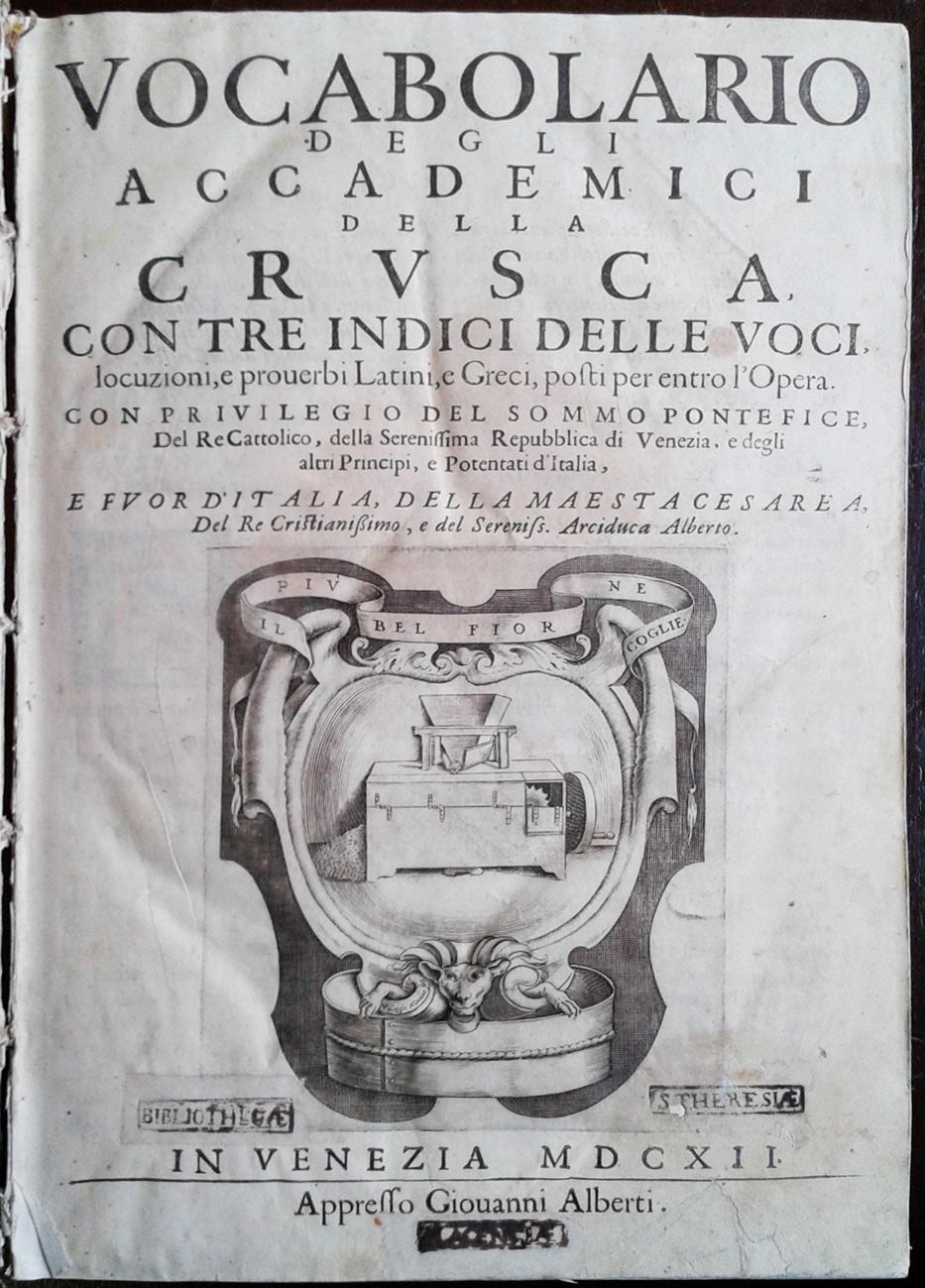
Front page first edition Vocabolario della Crusca, Crusca's dictionary 1612.
This is a view of the title page — the "Vocabolario degli Accademici della Crusca", published "In Venezia MDCXII" (Venice, 1612) by Giovanni Alberti ("Appresso Giouanni Alberti").
The Accademia della Crusca's emblem shows a flour sifter/mill with a goat's head below and the motto banner reading "Il più bel fior ne coglie" ("it gathers the most beautiful flower"), a phrase drawn from Petrarch.
What Is the Plot of Lewis Carroll’s Alice in Wonderland?
Lewis Carroll’s beloved 1865 children’s book Alice in Wonderland has been adapted repeatedly for film and stage. The original plot explores the collapse of logic, authority, and identity, culminating in her self-realization and return home.
by Lauren Jones
https://www.thecollector.com/plot-of-lewis-carroll-alice-in-wonderland/
Alice's Adventures in Wonderland at PG:
https://www.gutenberg.org/ebooks/search/?query=Alice%27s+Adventures+in+Wonderland
Alt...
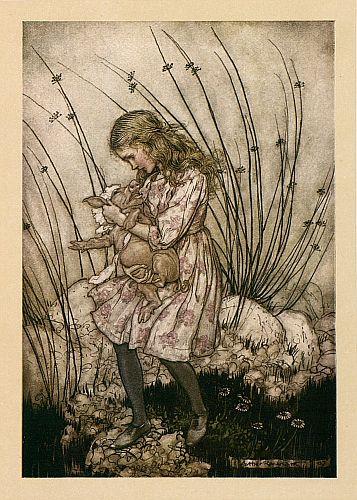
It grunted again so violently that she looked down into its face in some alarm.
Title: Alice's Adventures in Wonderland
Author: Lewis Carroll
Contributor: Austin Dobson
Illustrator: Arthur Rackham
Alice holds the "pig-baby," the infant that the Duchess hands to her which then transforms into a piglet.
DUMPS. Down in the dumps; low-spirited, melancholy: jocularly said to be derived from Dumpos, a king of Egypt, who died of melancholy. Dumps are also small pieces of lead, cast by schoolboys in the shape of money.
A selection from Francis Grose’s “Dictionary Of The Vulgar Tongue” (1785)
--
#books #literature #dictionaries #history #society #language #slang @histodons
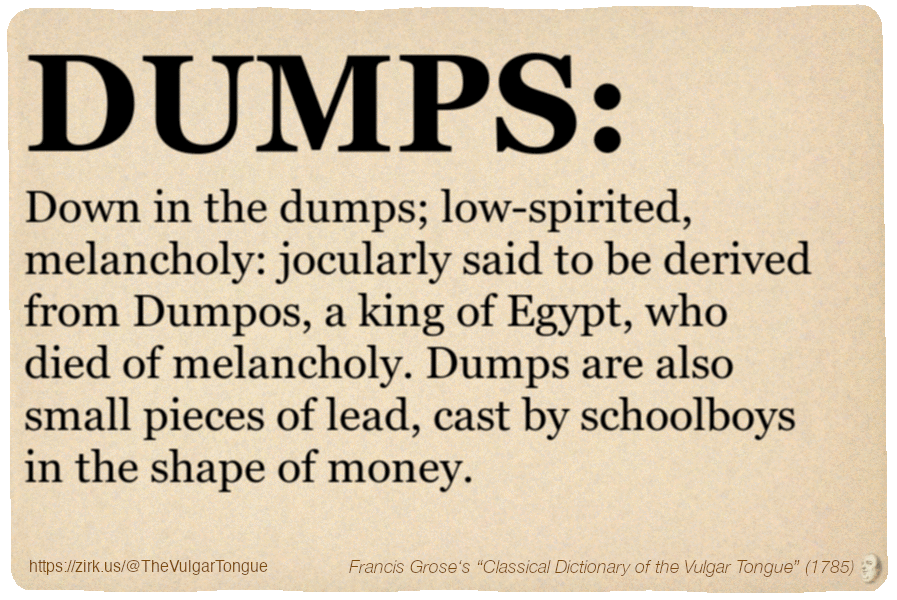
Alt...
Image imitating a page from an old document, text (as in main toot):
DUMPS. Down in the dumps; low-spirited, melancholy: jocularly said to be derived from Dumpos, a king of Egypt, who died of melancholy. Dumps are also small pieces of lead, cast by schoolboys in the shape of money.
A selection from Francis Grose’s “Dictionary Of The Vulgar Tongue” (1785)
"He that uses words without any clear and steady meaning, what does he
but lead himself and others into errors? And he that designedly does it,
ought to be looked on as an enemy to truth and knowledge."
~John Locke (29 August 1632 – 28 October 1704) via @wikipedia

Alt...
John Locke, by John Greenhill (died 1676).
An oval portrait of Locke that shows him with long curling natural hair and a direct gaze.
31 Medieval Manuscripts from the Czech National Library Now Available Online
Among them is a medical manuscript containing a previously unknown copy of advice written for Holy Roman Emperor Sigismund.
https://www.medievalists.net/2026/08/medieval-manuscripts-czech-online/
Medieval manuscripts at PG:
https://www.gutenberg.org/ebooks/subjects/search/?query=medieval+manuscripts
#books #literature #old_Manuscripts
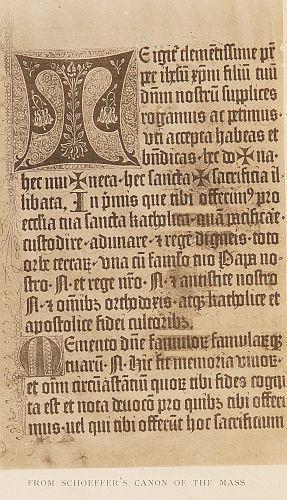
Alt...
FROM SCHOEFFER’S CANON OF THE MASS.
Title: Early Printed Books
Author: E. Gordon Duff
The page shows Latin liturgical text rendered in a gothic typeface with an ornate decorated initial letter.
“Weird” is a weird word
From Beowulf to Shakespeare to you
by Colin Gorrie
https://www.deadlanguagesociety.com/p/weird-is-a-weird-word
Beowulf & Shakespeare at PG:
https://www.gutenberg.org/ebooks/search/?query=beowulf
https://www.gutenberg.org/ebooks/author/65

Alt...
Macbeth, IV, 1, Macbeth in witches cave (1829), Johann Heinrich Ramberg.
An armored figure stands watching a group of witches around a bubbling cauldron in a cave, with bats and other creatures flying overhead, small demonic imps gathering firewood, and an apparition of a bloodied infant floating in the smoke above.
The law of the innocents: Ireland’s medieval precursor to the Geneva conventions
How a seventh-century monk drew up a blueprint for modern international humanitarian law.
by Chris Doyle
Books about Medieval Ireland at PG:
https://www.gutenberg.org/ebooks/subject/26627
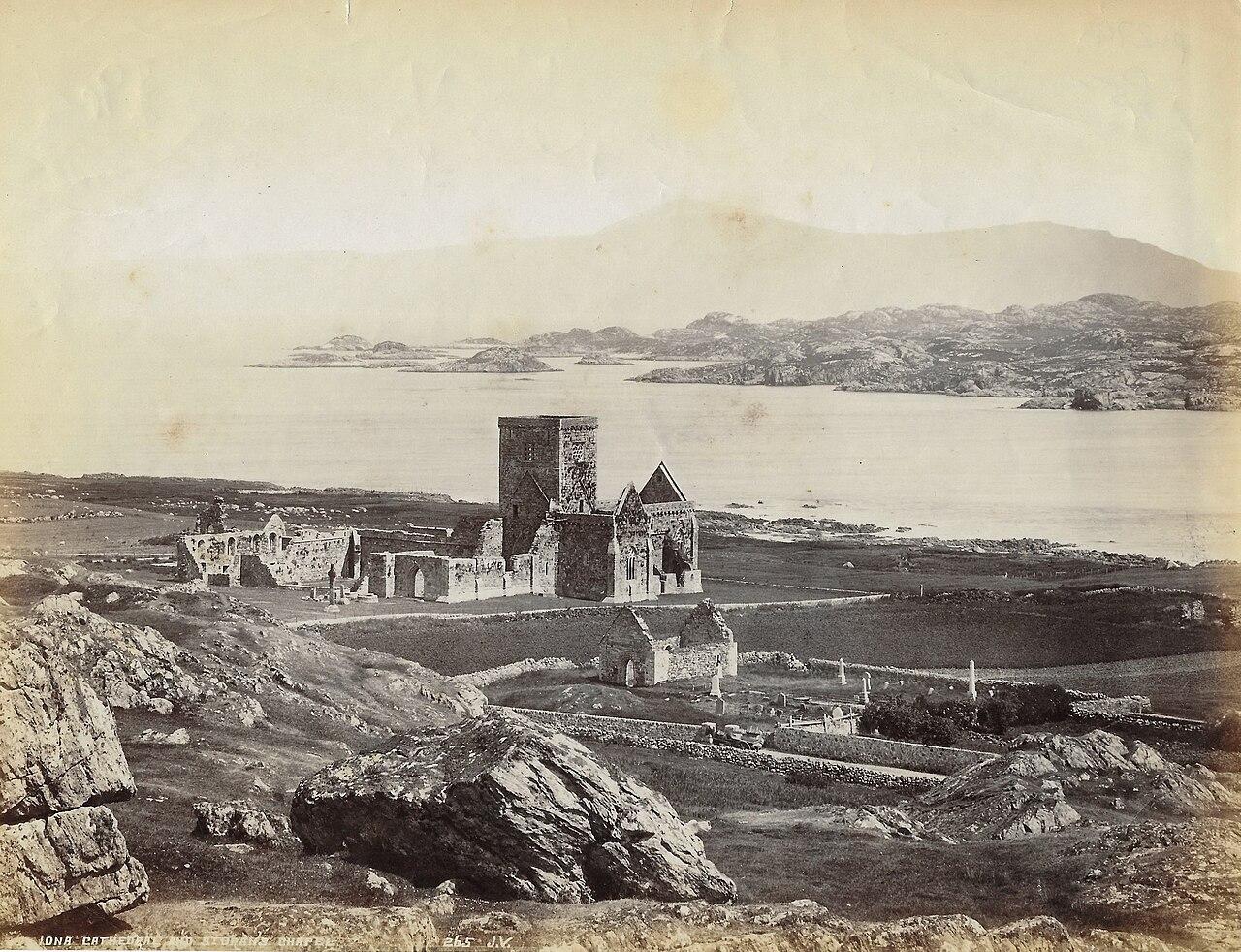
Alt...
Ancient centre of Christianity and learning: how Iona Abbey looked in the 19th century.
This view of Iona Abbey shows the Abbey in its ruinous condition before work to restore the Abbey commenced in the early C20
It shows the abbey in a ruined state, with the tower and roofless nave visible amid the rocky, coastal landscape, overlooking the Sound of Iona toward the Ross of Mull in the background.
This interactive atlas captures more than a thousand literary journeys.
https://lithub.com/this-interactive-atlas-captures-more-than-a-thousand-literary-journeys/
“Books Are Weapons in the War of Ideas.” The Incendiary Power of Literature in an Era of Censorship
Kenneth C. Davis on Book Bans, Reading as Exercising, and Turning to Shorter Books in the Age of Screens
Banned books at PG:
https://www.gutenberg.org/ebooks/search/?query=banned+books
#books #literature #bannedbook

Alt...
The cover of the first English edition of the 1929 novel "All Quiet on the Western Front".
The illustration shows a German soldier in a steel helmet, rendered in an expressive, painterly style with barbed wire visible in the background.
BOUNG. A purse. CANT.
A selection from Francis Grose’s “Dictionary Of The Vulgar Tongue” (1785)
--
#books #literature #dictionaries #history #society #language #slang @histodons
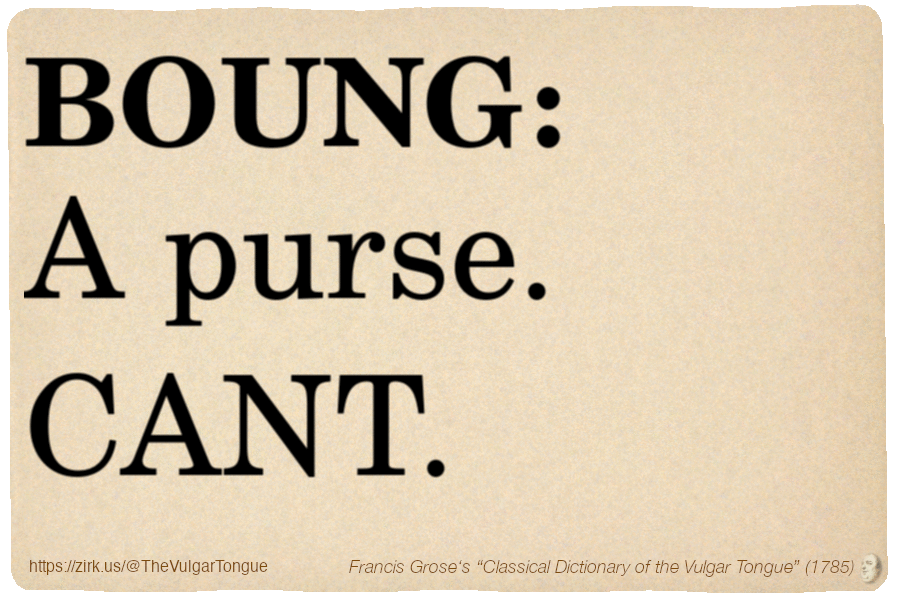
Alt...
Image imitating a page from an old document, text (as in main toot):
BOUNG. A purse. CANT.
A selection from Francis Grose’s “Dictionary Of The Vulgar Tongue” (1785)
Moby Dick: The 19th-Century novel that challenged our fear of the 'monstrous' whale
By Elizabeth Sulis Kim
Moby Dick is available at PG:
https://www.gutenberg.org/ebooks/2701
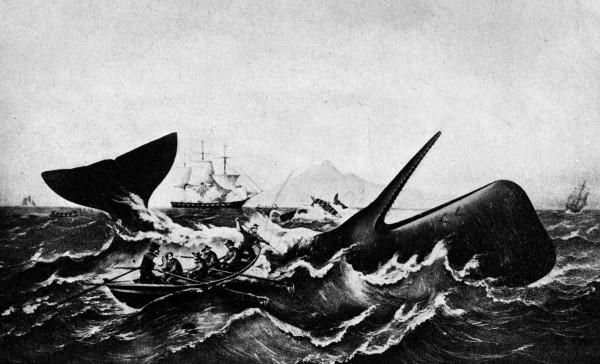
Alt...
Title: Whale Fishery of New England
Editor: Mass.) State Street Trust Company (Boston
A small rowboat crew of whalers, harpoons in hand, approaching a large sperm whale as it thrashes at the surface with its tail raised. A larger sailing ship sits in the background.
DRAGGLETAIL or DAGGLETAIL. One whose garments are bespattered with dag or dew: generally applied to the female sex, to signify a slattern.
A selection from Francis Grose’s “Dictionary Of The Vulgar Tongue” (1785)
--
#books #literature #dictionaries #history #society #language #slang @histodons
Alt...
Image imitating a page from an old document, text (as in main toot):
DRAGGLETAIL or DAGGLETAIL. One whose garments are bespattered with dag or dew: generally applied to the female sex, to signify a slattern.
A selection from Francis Grose’s “Dictionary Of The Vulgar Tongue” (1785)
To Begin the World Again
Thomas Paine, America’s Leveller
by Brooke Allen
Common Sense by Thomas Paine at PG:
https://www.gutenberg.org/ebooks/147
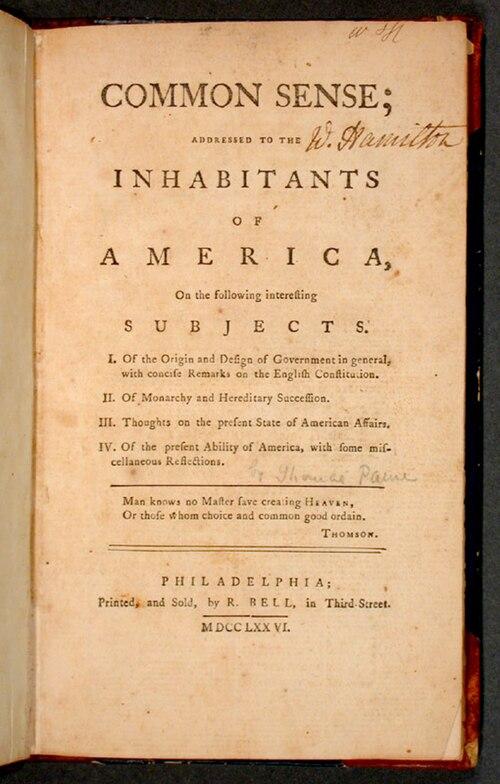
Alt...
Title page of Common Sense.
It outlines the four subjects covered: the origin of government, monarchy and hereditary succession, the state of American affairs, and America's ability for independence — with a handwritten owner's name ("W. Hamilton") inscribed at the top.
![[?]](https://files.mastodon.social/accounts/avatars/113/505/410/624/657/912/original/d4a63f1dbf4b8d92.png)
Thanks to the newest members of the Standard #Ebooks Patron's Circle. We were hoping to secure 40 new members by the end of today, and as of this posting, we have 53! We couldn't do this work without you!
In the hours left today, we are stretching our goal to 60. Will you help us with a #donation and support free, unrestricted digital #literature?
Manuscript fragments hiding in plain sight shed light on medieval Guernsey’s literary life
Researchers say texts from 12th to 15th centuries ‘hint at a culture which has not even been imagined’
by Dalya Alberge
https://www.theguardian.com/uk-news/2026/aug/23/manuscript-fragments-discovery-medieval-guernsey
Books about Medieval Manuscripts at PG:
https://www.gutenberg.org/ebooks/subject/4087
#books #literature #old_Manuscripts #heritage
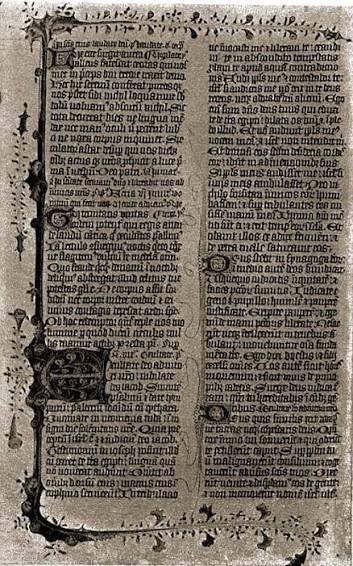
Alt...
Title: Illuminated Manuscripts
Author: John W. Bradley
A leaf from a medieval illuminated manuscript featuring two columns of dense Latin Gothic script framed by a decorative vine-and-leaf border with small illuminated initial letters throughout.
The Best Psychological Horror Books
recommended by Tabitha Potts
https://fivebooks.com/best-books/the-best-psychological-horror-books-tabitha-potts/
At PG:
"The Private Memoirs and Confessions of a Justified Sinner"
https://www.gutenberg.org/ebooks/2276
"Carmilla"
https://www.gutenberg.org/ebooks/10007
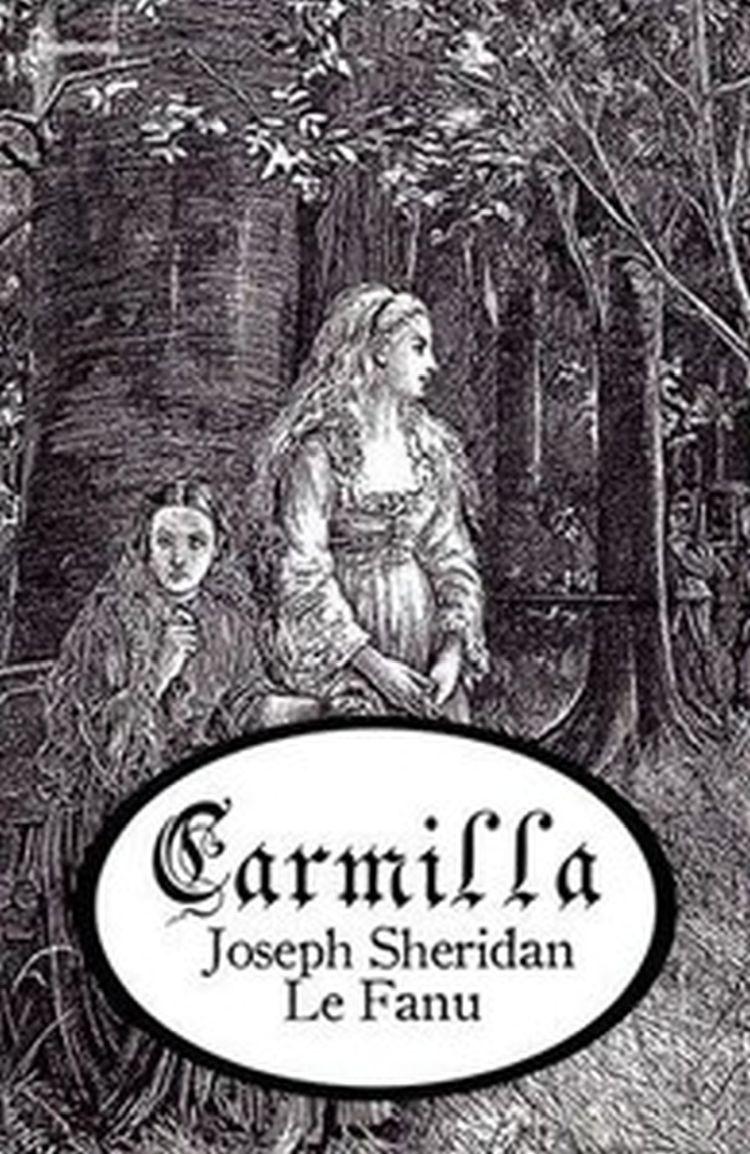
Alt...
The black-and-white cover of "Carmilla" by Joseph Sheridan Le Fanu shows two girls in the woods, both wearing Victorian clothing. The girl on the right stands with long light hair, while the girl on the left, who has dark hair, might be sitting.
"Hallo" said Piglet, "What are you doing?" "Tracking something" said Winnie-the Pooh very mysteriously. "Tracking what?" said Piglet, coming closer. "That's just what I ask myself. I ask myself, What?"
Winnie-the-Pooh
~A. A. Milne (18 January 1882 – 31 January 1956)
In which 'Winnie-the-Pooh' turns 100
by Samantha Balaban
Winnie-the-Pooh at PG:
https://www.gutenberg.org/ebooks/67098
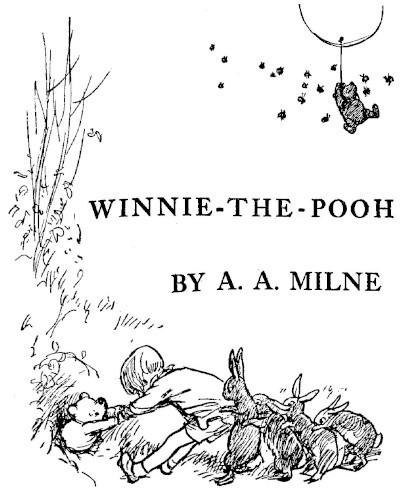
Alt...
On the cover of Winnie-the-Pooh there are two drawings.
Below the title and the author's name, there's a picture of a boy and four rabbits trying to pull a small bear out of a hole on a grassy slope. The boy has taken hold of the bear's paws. He leans back and tugs. The rabbits line up behind him, pulling at the boy's waist.
Above the title, in the upper right corner of the cover, is the second picture. It shows the same bear hanging from a string that's attached to a balloon, which is floating off into the sky. The bear is surrounded by a swarm of insects.
The Errant Translator: Field Notes
Artist and translator Sawako Nakayasu considers a multiplicity of approaches to translations.
Books about French fiction -- Translations into English at PG:
https://www.gutenberg.org/ebooks/subject/5605
#books #literature #translation
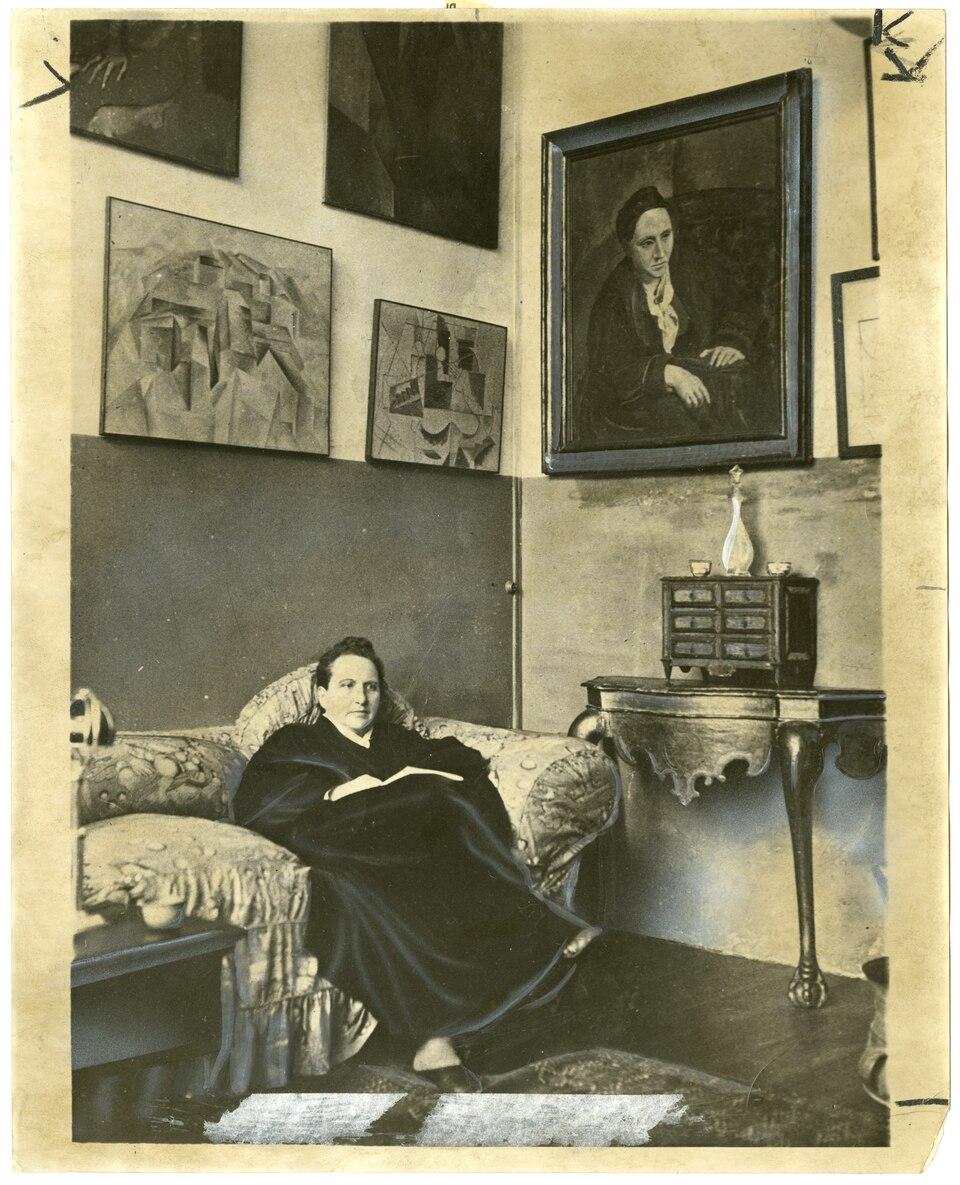
Alt...
Stein in her Paris studio, with a portrait of her by Pablo Picasso, and other modern art paintings hanging on the wall (before 1910).
Gertrude Stein sits on a sofa in her Paris studio, wearing a dark robe, with a book open on her lap. The walls around her are covered with Cubist paintings, and directly above her hangs Picasso's iconic portrait of her. A small table with drawers and decorative objects stands to her right.
![[?]](https://files.hear-me.social/accounts/avatars/110/663/286/708/241/385/original/eb5ae4c05819f336.jpg)
"Literature, like youth, is wasted on the young."
#literature #Education #books #bookstodon #liberalarts #humanities #reading #poll
| that's true: | 5 |
| no it isn't: | 33 |
| I'm only here for data: | 3 |
Closed
Some of the most trusted political voices in 18th-century Britain were fictional – why this tradition lives on
by Adam J Smith
A fictional astrologist, parrot, Chinese philosopher and midwife wrote biting and sought after political satire in the 18th-century.
Books about Political satire at PG:
https://www.gutenberg.org/ebooks/subject/1040
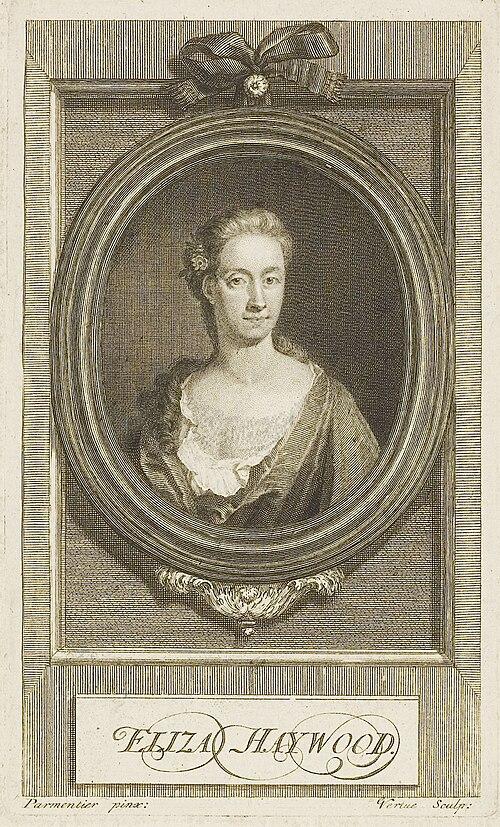
Alt...
Playwright and novelist Eliza Haywood, by George Vertue, 1725.
The engraving shows her in an ornate oval frame decorated with a ribbon bow at top, with her name inscribed below, and credits "Parmentier pinx." (painter) and "Vertue sculp." (engraver).
GAMBADOES. Leathern cases of stiff leather, used in Devonshire instead of boots; they are fastened to the saddle, and admit the leg, shoe and all: the name was at first jocularly given.
A selection from Francis Grose’s “Dictionary Of The Vulgar Tongue” (1785)
--
#books #literature #dictionaries #history #society #language #slang @histodons
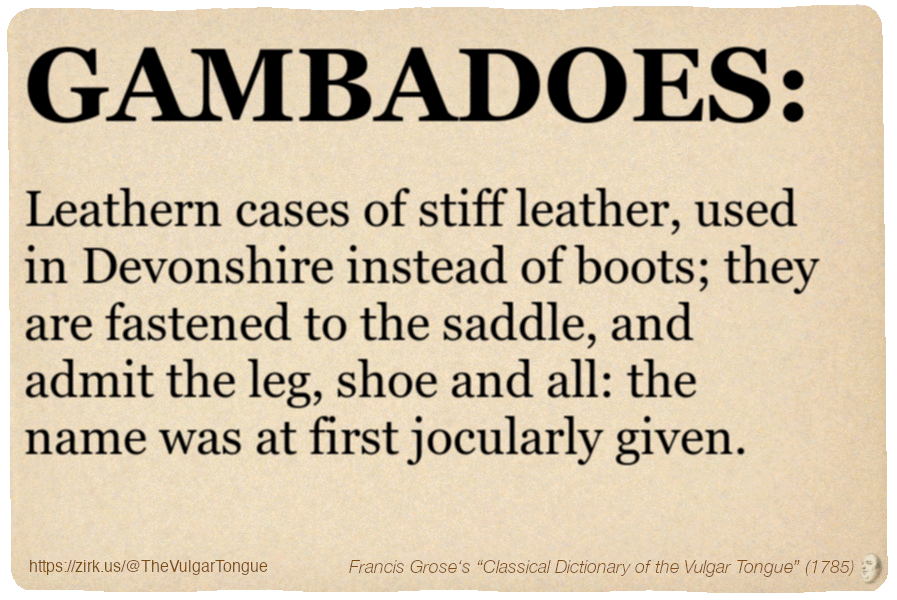
Alt...
Image imitating a page from an old document, text (as in main toot):
GAMBADOES. Leathern cases of stiff leather, used in Devonshire instead of boots; they are fastened to the saddle, and admit the leg, shoe and all: the name was at first jocularly given.
A selection from Francis Grose’s “Dictionary Of The Vulgar Tongue” (1785)
Hi!, I'm a bot posting selections from Francis Grose’s 1785 “Dictionary Of The Vulgar Tongue”, a compilation of slang terms, the coded language of the underclass and the demi-monde.
[18th-century-content warning: possible racism, animal cruelty, homophobia, sexism, slut-shaming. Let me know of any problems.]
#FollowFriday #books #literature #dictionaries #history #society #crime #language #slang #18thCentury
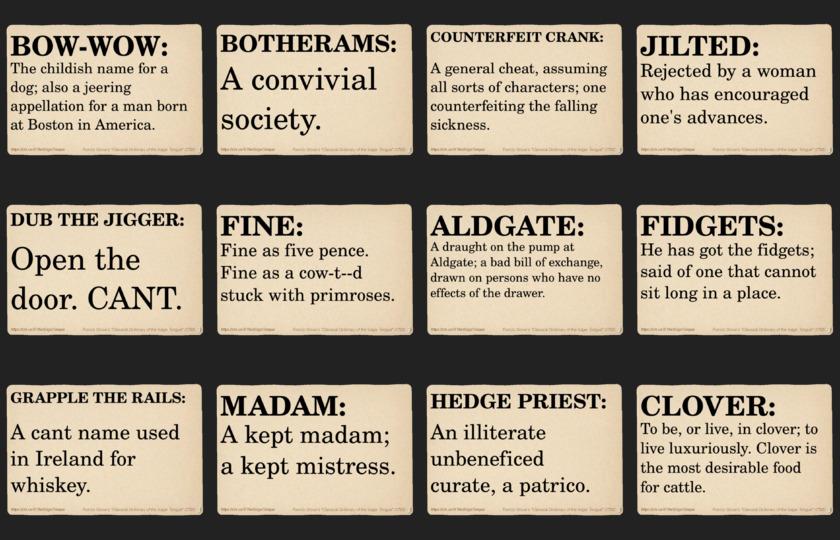
Alt...
Montage of dictionary items posted by this account
SPARKING BLOWS. Blows given by cocks before they close, or, as the term is, mouth it: used figuratively for words previous to a quarrel.
A selection from Francis Grose’s “Dictionary Of The Vulgar Tongue” (1785)
--
#books #literature #dictionaries #history #society #language #slang @histodons
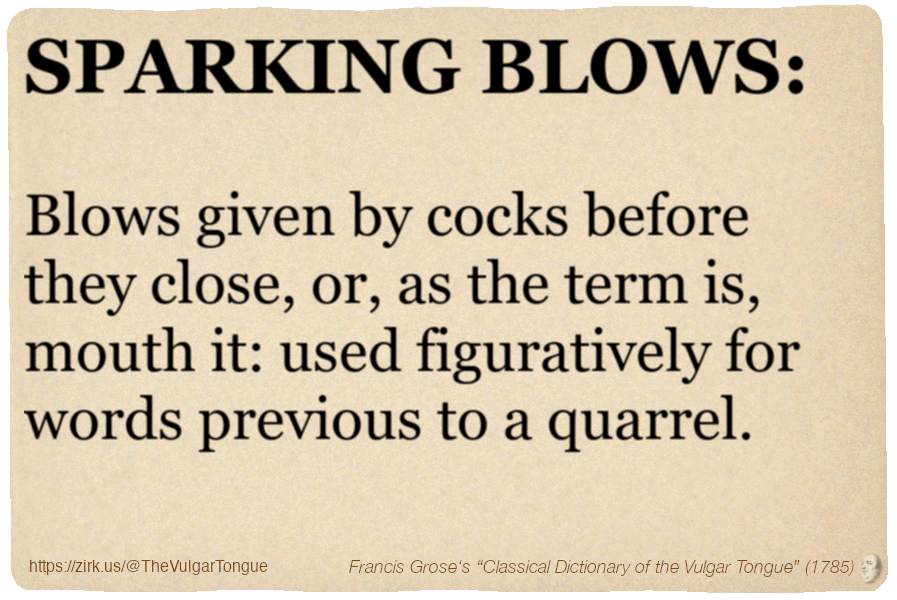
Alt...
Image imitating a page from an old document, text (as in main toot):
SPARKING BLOWS. Blows given by cocks before they close, or, as the term is, mouth it: used figuratively for words previous to a quarrel.
A selection from Francis Grose’s “Dictionary Of The Vulgar Tongue” (1785)
On That Disgraceful, Disreputable, (Wonderful) Form of Punctuation: The Parenthesis
Florence Hazrat on the Contentious History of a (Perfect) Literary Tool
Books about Punctuation at PG:
https://www.gutenberg.org/ebooks/subject/5744
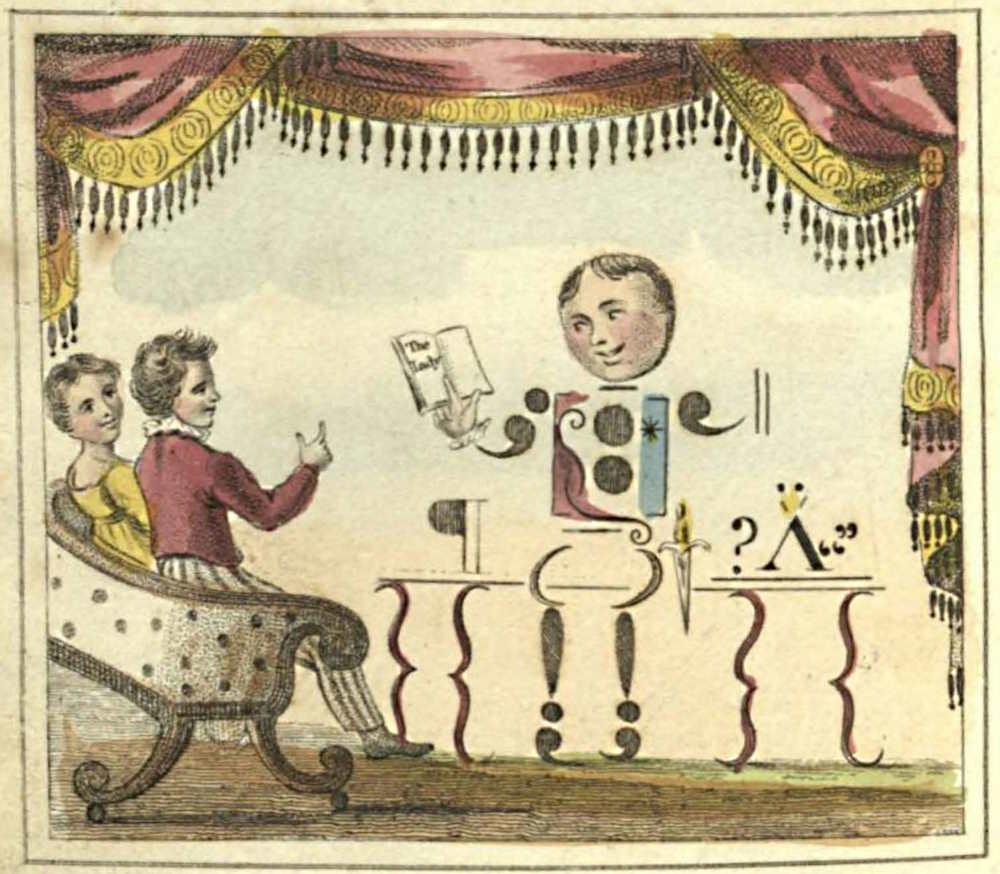
Alt...
Title: Punctuation personified or, pointing made easy
Author: Mr. Stops
This is a children's book illustration, showing a fantastical figure whose body is constructed entirely from punctuation marks (commas, parentheses, exclamation points, question marks, brackets, quotation marks, an ampersand-like symbol, and asterisks) with a human head, floating hand holding a small book, positioned before two children seated on a decorative sofa within an ornate curtained stage setting.
Submerged memory: C.S. Lewis and the art of forgetting
by Henry Oliver
https://www.commonreader.co.uk/p/submerged-memory-cs-lewis-and-the
More information about C.S. Lewis:
https://en.wikipedia.org/wiki/C._S._Lewis
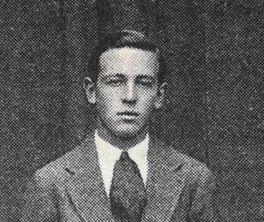
Alt...
The undergraduates of University College, Trinity term 1917.
A black-and-white studio portrait photograph of a young man, likely a university student, wearing a suit jacket, white collared shirt, and dark tie. He has neatly combed dark hair and a serious expression.
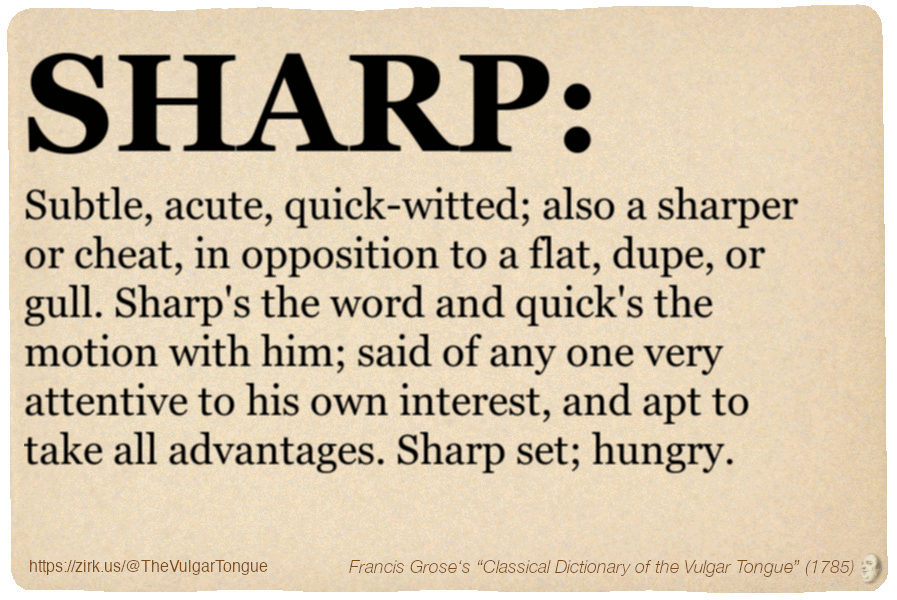
SHARP. Subtle, acute, quick-witted; also a sharper or cheat, in opposition to a flat, dupe, or gull. Sharp's the word and quick's the motion with him; said of any one very attentive to his own interest, and apt to take all advantages. Sharp set; hungry.
A selection from Francis Grose’s “Dictionary Of The Vulgar Tongue” (1785)
--
#books #literature #dictionaries #history #society #language #slang @histodons
Alt...
Image imitating a page from an old document, text (as in main toot):
SHARP. Subtle, acute, quick-witted; also a sharper or cheat, in opposition to a flat, dupe, or gull. Sharp's the word and quick's the motion with him; said of any one very attentive to his own interest, and apt to take all advantages. Sharp set; hungry.
A selection from Francis Grose’s “Dictionary Of The Vulgar Tongue” (1785)
We want to welcome 40 new patrons by August 24, and we are so close! It’s our patrons who keep us on the stable financial footing we need to continue producing and giving away beautiful #ebooks. Thank you to all who have recently joined!
Will you become a patron and support free and unrestricted digital #literature?
Become one today:
https://standardebooks.org/donate#patrons-circle
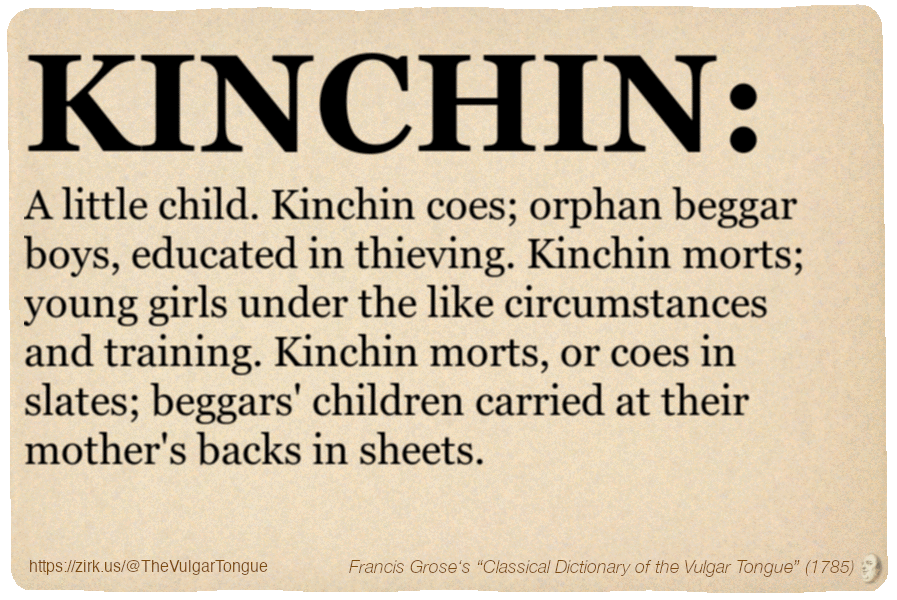
KINCHIN. A little child. Kinchin coes; orphan beggar boys, educated in thieving. Kinchin morts; young girls under the like circumstances and training. Kinchin morts, or coes in slates; beggars' children carried at their mother's backs in sheets.
A selection from Francis Grose’s “Dictionary Of The Vulgar Tongue” (1785)
--
#books #literature #dictionaries #history #society #language #slang @histodons
Alt...
Image imitating a page from an old document, text (as in main toot):
KINCHIN. A little child. Kinchin coes; orphan beggar boys, educated in thieving. Kinchin morts; young girls under the like circumstances and training. Kinchin morts, or coes in slates; beggars' children carried at their mother's backs in sheets.
A selection from Francis Grose’s “Dictionary Of The Vulgar Tongue” (1785)
"Passo tempos, passo silêncios, mundos sem forma passam por mim."
"I pass times, I pass silences, formless worlds pass me by."
The Book of Disquiet
~Fernando Pessoa
R.K. Hegelman on Fernando Pessoa, “an extreme and singular figure in a modern poetic tradition that views poems not just as texts, but as gnostic vehicles of self-annihilation and worldly renovation.”
Books by Fernando Pessoa at PG:
https://www.gutenberg.org/ebooks/author/9005
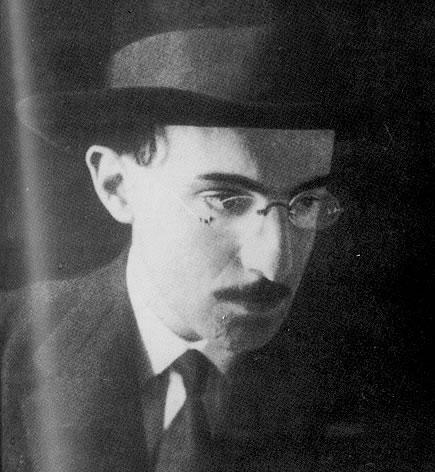
Alt...
Photograph of Fernando Pessoa.
Pessoa is shown wearing round wire-framed glasses, a mustache, a fedora hat, and a suit with a tie.
The Sorcerer's Apprentice prefigures the perils of Modernity.
https://brywillis634737.substack.com/p/sourcery-of-modernity
#philosophy #modernity #history #literature #writing #reading #blog #podcast #magic #disney #fantasia #competence

BUM FODDER. Soft paper for the necessary house or torchecul.
A selection from Francis Grose’s “Dictionary Of The Vulgar Tongue” (1785)
--
#books #literature #dictionaries #history #society #language #slang @histodons
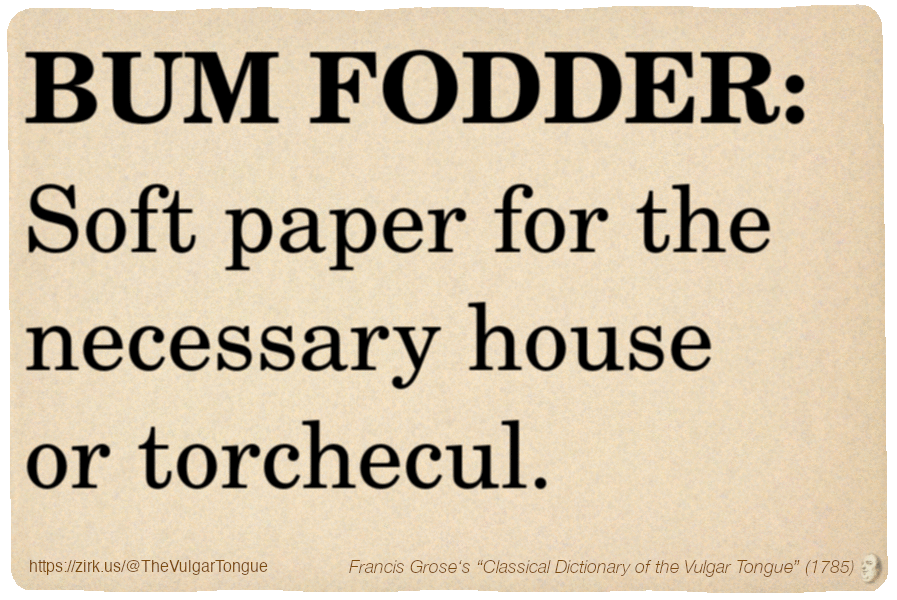
Alt...
Image imitating a page from an old document, text (as in main toot):
BUM FODDER. Soft paper for the necessary house or torchecul.
A selection from Francis Grose’s “Dictionary Of The Vulgar Tongue” (1785)
TO DAWB. To bribe. The cull was scragged because he could not dawb; the rogue was hanged because he could not bribe. All bedawbed with lace; all over lace.
A selection from Francis Grose’s “Dictionary Of The Vulgar Tongue” (1785)
--
#books #literature #dictionaries #history #society #language #slang @histodons
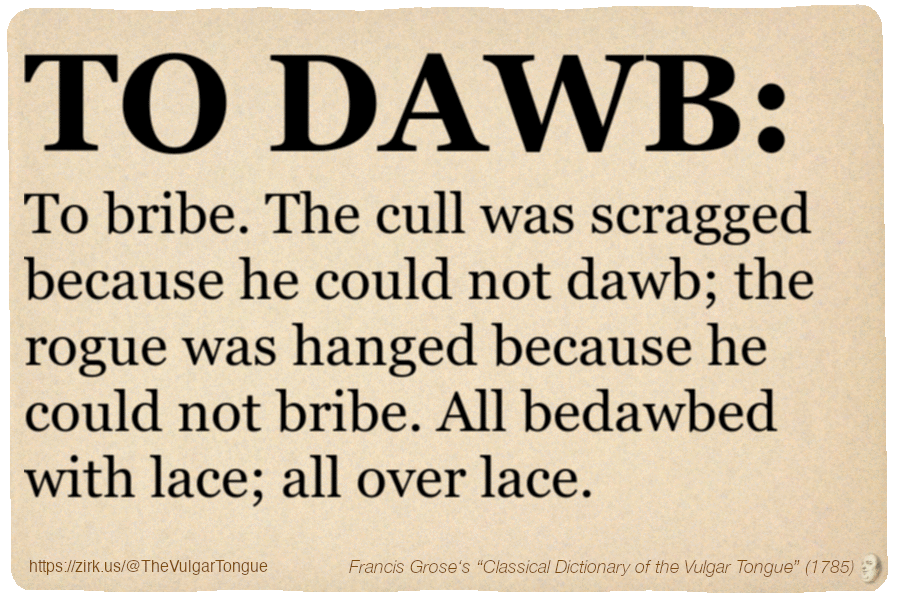
Alt...
Image imitating a page from an old document, text (as in main toot):
TO DAWB. To bribe. The cull was scragged because he could not dawb; the rogue was hanged because he could not bribe. All bedawbed with lace; all over lace.
A selection from Francis Grose’s “Dictionary Of The Vulgar Tongue” (1785)
Library ‘illuminates’ art of calligraphy at downtown branch
Spokane Public Library is celebrating the art of lettering with local author and illustrator Karyn Jeffrey.
By Rachel Baker
https://www.spokesman.com/stories/2026/aug/17/library-illuminates-art-of-calligraphy-at-downtown/
Books about Calligraphy at PG:
https://www.gutenberg.org/ebooks/subject/39737
#books #literature #calligraphy
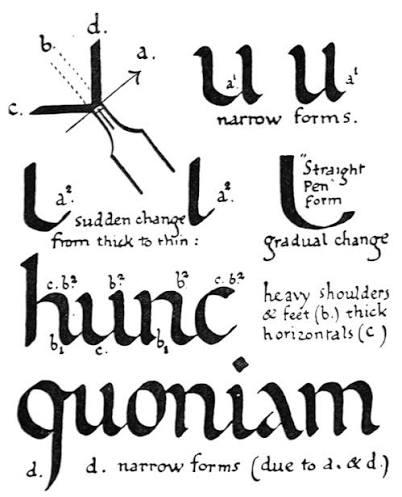
Alt...
Writing & Illuminating, & Lettering
Author: Edward Johnston
Contributor: A. E. R. Gill
Illustrator: Noel Rooke
This is a calligraphy instructional diagram, showing pen angle technique and letterforms for a broad-edge/straight pen script.
Nothing is Boring. Arnold Bennett's Self Help
And reading advice from John Stuart Mill
by Henry Oliver
https://www.commonreader.co.uk/p/nothing-is-boring-arnold-bennetts
Books by Arnold Bennett (including How to Live on 24 Hours a Day) at PG:
https://www.gutenberg.org/ebooks/author/859
#books #literature #literaryCriticism
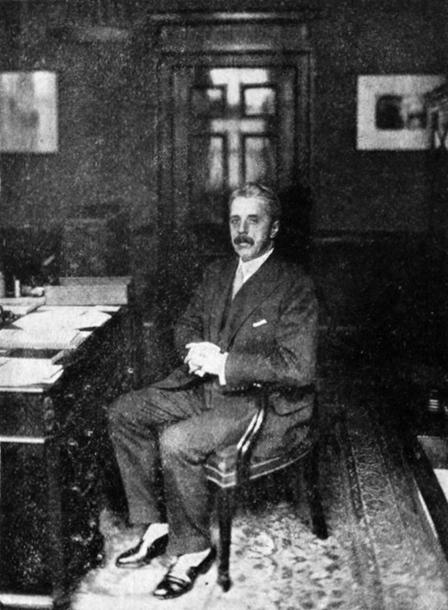
Alt...
Bennett in 1928.
He is shown seated in what appears to be a study or office, wearing a suit with a mustache, hands clasped in his lap, with a desk covered in papers to his left.
BOW-WOW SHOP. A salesman's shop in Monmouth-street; so called because the servant barks, and the master bites. See BARKER.
A selection from Francis Grose’s “Dictionary Of The Vulgar Tongue” (1785)
--
#books #literature #dictionaries #history #society #language #slang @histodons
Alt...
Image imitating a page from an old document, text (as in main toot):
BOW-WOW SHOP. A salesman's shop in Monmouth-street; so called because the servant barks, and the master bites. See BARKER.
A selection from Francis Grose’s “Dictionary Of The Vulgar Tongue” (1785)
JAKES. A house of office, a cacatorium.
A selection from Francis Grose’s “Dictionary Of The Vulgar Tongue” (1785)
--
#books #literature #dictionaries #history #society #language #slang @histodons
Alt...
Image imitating a page from an old document, text (as in main toot):
JAKES. A house of office, a cacatorium.
A selection from Francis Grose’s “Dictionary Of The Vulgar Tongue” (1785)
Honoré de Balzac’s La Comédie Humaine is a Hindu mandala
The 19th-century novelist Honoré de Balzac was Catholic, French to the core and obsessed with the material details of French society. Yet there is something profoundly Hindu in the way he sought to understand the world.
by Harsh Trivedi (from the archives)
https://theconversation.com/honore-de-balzacs-la-comedie-humaine-is-a-hindu-mandala-262151
Books by Balzac at PG:
https://www.gutenberg.org/ebooks/author/251
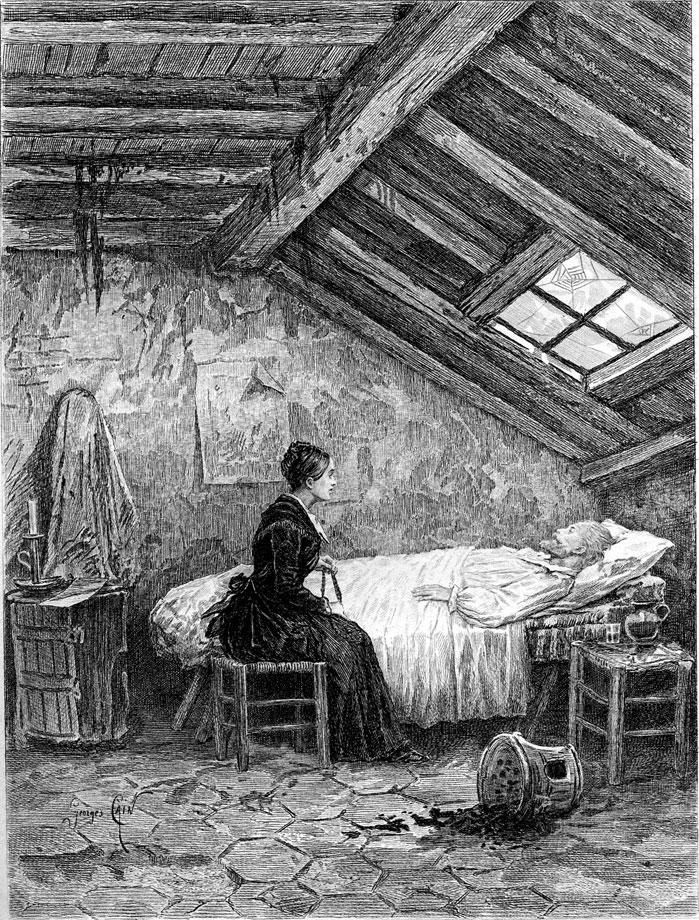
Alt...
Title page of Honoré de Balzac's Cousin Bette (1846).
It is showing a woman in dark mourning-style dress sitting on a stool beside a bed, watching over a figure lying beneath the covers in a sparse attic room with exposed wooden beams and a small skylight.
KILKENNY. An old frize coat.
A selection from Francis Grose’s “Dictionary Of The Vulgar Tongue” (1785)
--
#books #literature #dictionaries #history #society #language #slang @histodons

Alt...
Image imitating a page from an old document, text (as in main toot):
KILKENNY. An old frize coat.
A selection from Francis Grose’s “Dictionary Of The Vulgar Tongue” (1785)
BARTHOLOMEW BABY. A person dressed up in a tawdry manner, like the dolls or babies sold at Bartholomew fair.
A selection from Francis Grose’s “Dictionary Of The Vulgar Tongue” (1785)
--
#books #literature #dictionaries #history #society #language #slang @histodons
Alt...
Image imitating a page from an old document, text (as in main toot):
BARTHOLOMEW BABY. A person dressed up in a tawdry manner, like the dolls or babies sold at Bartholomew fair.
A selection from Francis Grose’s “Dictionary Of The Vulgar Tongue” (1785)
The Tragedy of Loving Sylvia Plath
Sarai Walker on Obsession, Ownership, and Plath Worship
https://lithub.com/the-tragedy-of-loving-sylvia-plath/

Alt...
This black-and-white photo of Sylvia Plath shows her from the chest up. She faces left and looks away from the camera. Her short dark hair has bangs, and she wears a shirt or jacket with wide lapels.
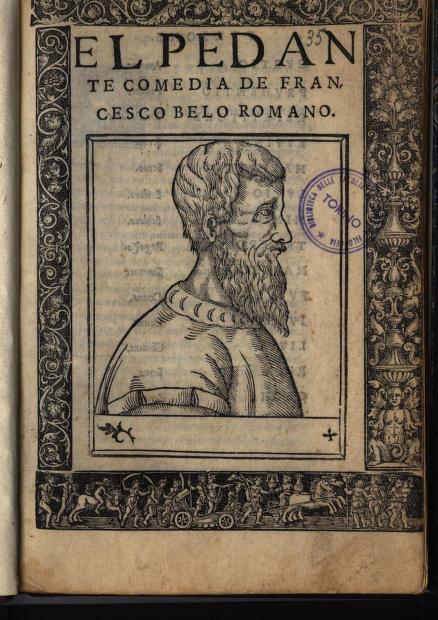
“Worthless Idiot, Donkey Head”
Parodies of Pedantry on the Renaissance Stage
By Arnoud S. Q. Visser via @publicdomainrev
Pompous know-it-alls were once a mainstay of mockery on the Italian stage.
https://publicdomainreview.org/essay/parodies-of-pedantry/
Il pedante by Francesco Belo is available at PG:
https://www.gutenberg.org/ebooks/34640
Alt...
Title page of the book Il pedante by Francesco Belo.
It features a profile woodcut portrait of a bearded man within an ornamental frame decorated with foliage, urns, and a small procession scene along the bottom border, along with a library stamp reading "Torino" in the upper right.
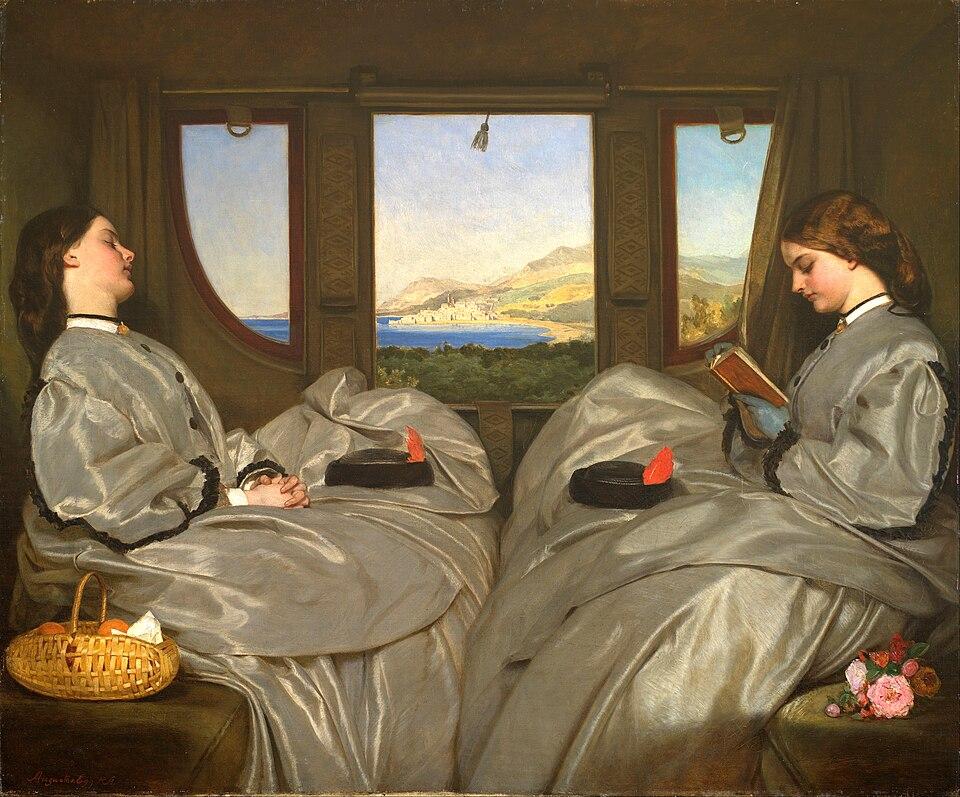
Every Novel Is Boring—Until It Isn’t
With almost every novel I read, I go through the same arc. At first the novel bores me. Then, suddenly, it becomes the most interesting thing in the world.
by Emma Adler
https://www.publicbooks.org/every-novel-is-boring-until-it-isnt/
Books about Literary Fiction at PG:
https://www.gutenberg.org/ebooks/search/?query=literary+fiction
Alt...
Augustus Leopold Egg, The Travelling Companions, 1862, oil-on-canvas, 65.3 × 78.7 centimetres (25.7 × 31.0 in), Birmingham Museum and Art Gallery.
It depicts two nearly identical young women in matching pale silk dresses seated in a train carriage — one asleep, the other reading — with a Mediterranean coastal landscape visible through the window.
AWAKE. Acquainted with, knowing the business. Stow the books, the culls are awake; hide the cards, the fellows know what we intended to do.
A selection from Francis Grose’s “Dictionary Of The Vulgar Tongue” (1785)
--
#books #literature #dictionaries #history #society #language #slang @histodons
Alt...
Image imitating a page from an old document, text (as in main toot):
AWAKE. Acquainted with, knowing the business. Stow the books, the culls are awake; hide the cards, the fellows know what we intended to do.
A selection from Francis Grose’s “Dictionary Of The Vulgar Tongue” (1785)
HANK. He has a hank on him; i.e. an ascendancy over him, or a hold upon him. A Smithfield hank; an ox, rendered furious by overdriving and barbarous treatment. See BULL HANK.
A selection from Francis Grose’s “Dictionary Of The Vulgar Tongue” (1785)
--
#books #literature #dictionaries #history #society #language #slang @histodons
Alt...
Image imitating a page from an old document, text (as in main toot):
HANK. He has a hank on him; i.e. an ascendancy over him, or a hold upon him. A Smithfield hank; an ox, rendered furious by overdriving and barbarous treatment. See BULL HANK.
A selection from Francis Grose’s “Dictionary Of The Vulgar Tongue” (1785)
How Emperor Augustus Silenced Rome’s Most Famous Poet
At the height of his popularity in Rome, Augustus exiled the poet Ovid to the Black Sea. There, the whimsical author produced a striking series of poems.
https://www.thecollector.com/ovid-roman-poet-exile/
Ovid at PG:
https://www.gutenberg.org/ebooks/author/2868
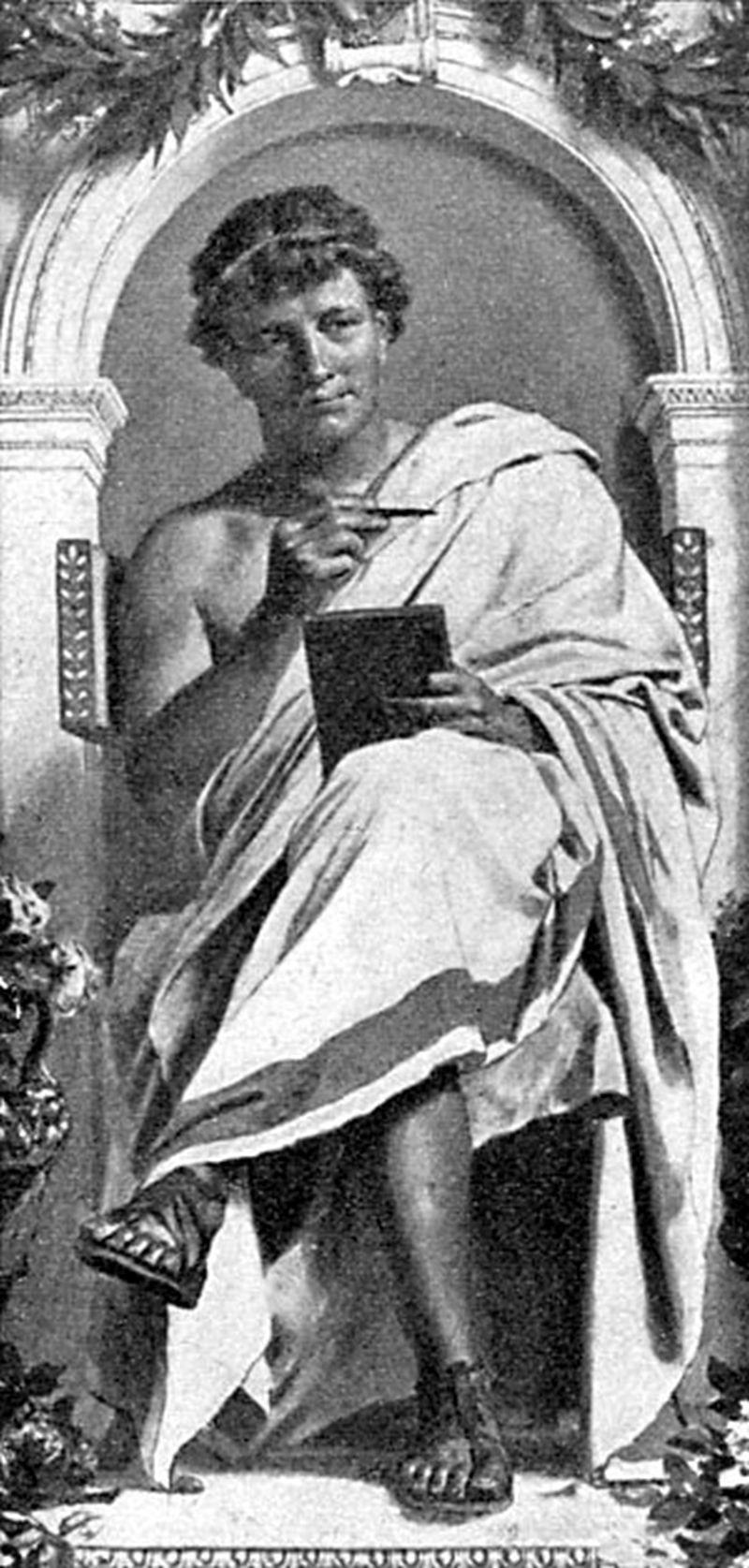
Alt...
In this painting by Anton von Werner, Ovid sits on a stone throne set in a shallow, arched niche. He wears a classical toga over his left shoulder and torso, leaving his right shoulder uncovered. He gazes a little to his left.
He holds a small rectangular writing tablet in his lap with his left hand. His right hand holds a stylus near his chin. He wears a simple wreath or band on his head, open-toed sandals, and sits with his right leg crossed over his left.
These Plays Are Now in the Public Domain. Theatres Should Take Advantage
by Chris Peterson
Books by Noël Coward (Private lives coming pretty soon) at PG:
https://www.gutenberg.org/ebooks/author/32147
#books #literature #theatre #publicdomain
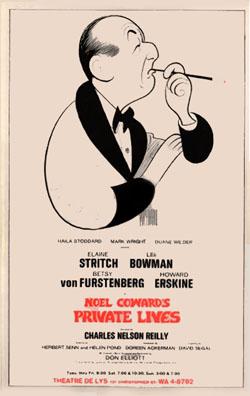
Alt...
Poster from the 1968 Theatre De Lys production featuring a sketch of Coward.
It is featuring a caricature illustration of a bald man in a tuxedo smoking a cigarette holder, with cast names listed below including Elaine Stritch and Lea Bowman, directed by Charles Nelson Reilly.
BEARD SPLITTER. A man much given to wenching.
A selection from Francis Grose’s “Dictionary Of The Vulgar Tongue” (1785)
--
#books #literature #dictionaries #history #society #language #slang @histodons
Alt...
Image imitating a page from an old document, text (as in main toot):
BEARD SPLITTER. A man much given to wenching.
A selection from Francis Grose’s “Dictionary Of The Vulgar Tongue” (1785)
DUMB WATCH. A venereal bubo in the groin.
A selection from Francis Grose’s “Dictionary Of The Vulgar Tongue” (1785)
--
#books #literature #dictionaries #history #society #language #slang @histodons
Alt...
Image imitating a page from an old document, text (as in main toot):
DUMB WATCH. A venereal bubo in the groin.
A selection from Francis Grose’s “Dictionary Of The Vulgar Tongue” (1785)
#OTD in 1934, the writer Mary Hunter Austin died. She was "one of the early nature writers of the American Southwest, her classic The Land of Little Rain (1903) describes the fauna, flora, and people of the region between the High Sierra and the Mojave Desert of southern California."
https://en.wikipedia.org/wiki/Mary_Hunter_Austin
Books by Austin at PG:
https://www.gutenberg.org/ebooks/author/201
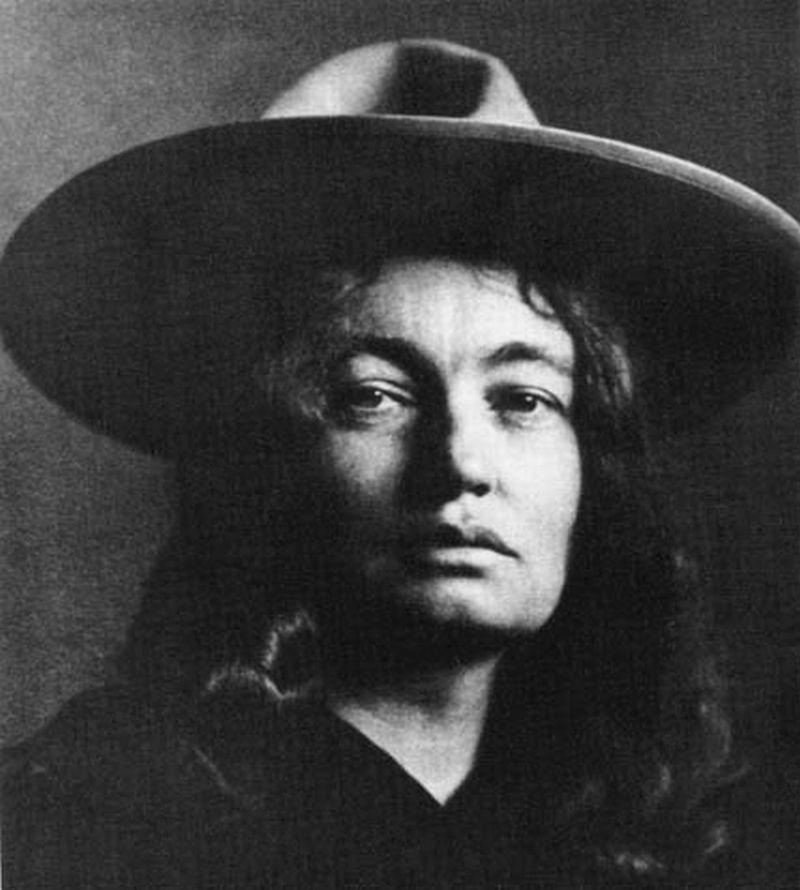
Alt...
The black-and-white photo shows Mary Hunter Austin from the neck up. She wears a cowboy hat, and her long, wavy hair frames her face. She looks serious.
How the Crusaders Turned Gaza into a Medieval Frontier Fortress
In the twelfth century, the Crusaders transformed Gaza into a fortified base on the frontier between the Kingdom of Jerusalem and Fatimid Egypt. Its construction isolated Ascalon, intensified the struggle for the region and helped open the way for attacks on Egypt.
By Steve Tibble
Books about Crusades at PG:
https://www.gutenberg.org/ebooks/subject/244
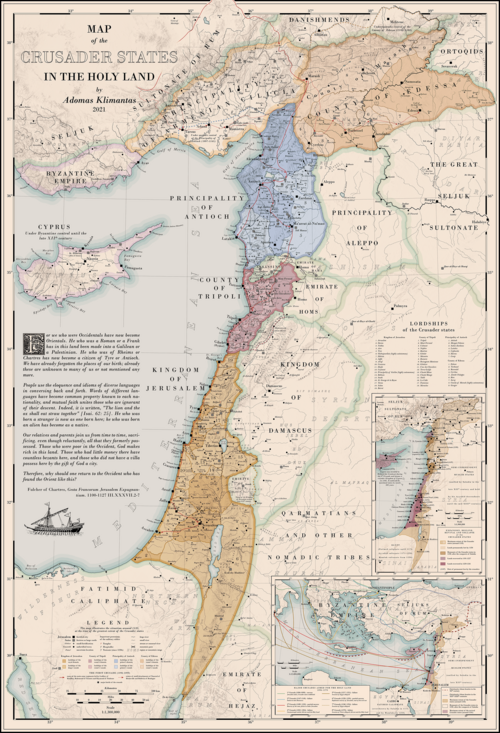
Alt...
Map of the Crusader states and Crusader castles.
An historical map showing the Crusader states including the Kingdom of Jerusalem, Principality of Antioch, County of Tripoli, and County of Edessa.
CHAPERON. The cicisbeo, or gentleman usher to a lady; from the French.
A selection from Francis Grose’s “Dictionary Of The Vulgar Tongue” (1785)
--
#books #literature #dictionaries #history #society #language #slang @histodons
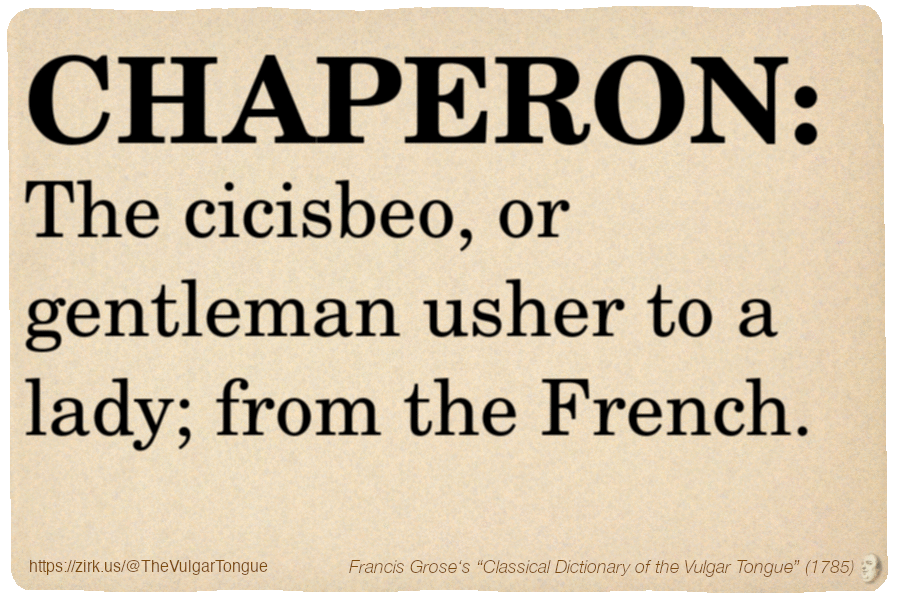
Alt...
Image imitating a page from an old document, text (as in main toot):
CHAPERON. The cicisbeo, or gentleman usher to a lady; from the French.
A selection from Francis Grose’s “Dictionary Of The Vulgar Tongue” (1785)
Hi!, I'm a bot posting selections from Francis Grose’s 1785 “Dictionary Of The Vulgar Tongue”, a compilation of slang terms, the coded language of the underclass and the demi-monde.
[18th-century-content warning: possible racism, animal cruelty, homophobia, sexism, slut-shaming. Let me know of any problems.]
#FollowFriday #books #literature #dictionaries #history #society #crime #language #slang #18thCentury
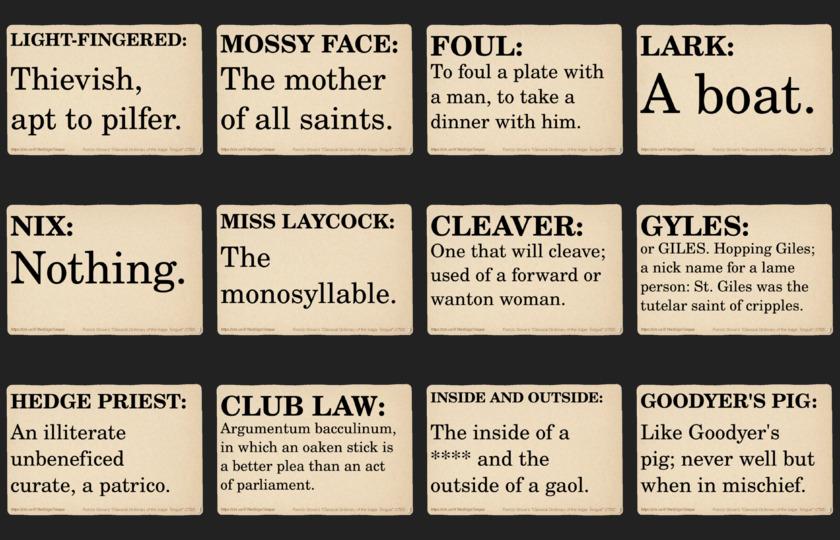
Alt...
Montage of dictionary items posted by this account
Had there been a literary censorship in Rome, we should have had to-day neither Horace, Juvenal, nor the philosophical works of Cicero. If Milton, Dryden, Pope, and Locke had not been free, England would have had neither poets nor philosophers; there is something positively Turkish in proscribing printing; and hampering it is proscription.
[S’il y avait eu une inquisition littéraire à Rome, nous n’aurions aujourd’hui ni Horace, ni Juvénal, ni les œuvres philosophiques de Cicéron. Si Milton, Dryden, Pope, et Locke, n’avaient pas été libres l’Angleterre n’aurait eu ni des poètes, ni des philosophes: il y a je ne sais quoi de turc à proscrire l’imprimerie, et c’est la proscrire que la trop gêner.]
Voltaire (1694-1778) French writer [pseud. of Francois-Marie Arouet]
Letter (1733-06-20) to a First Commissioner [Lettre á un premier commis] [tr. Tallentyre (1919)]
More about this quote: wist.info/voltaire/85406/
#quote #quotes #quotation #qotd #voltaire #authors #censorship #classics #freepress #freedomofthepress #history #literature #perspective
@light There are 4 translations at LibriVox:
https://librivox.org/search?title=Prometheus+Bound&author=Aeschylus&reader=&keywords=&genre_id=0&status=all&project_type=either&recorded_language=&sort_ord
Perhaps Thoreau's translation is a good starting point:
https://librivox.org/prometheus-bound-by-aeschylus-2/
Enjoy it!
BURN THE KEN. Strollers living in an alehouse without paying their quarters, are said to burn the ken. CANT.
A selection from Francis Grose’s “Dictionary Of The Vulgar Tongue” (1785)
--
#books #literature #dictionaries #history #society #language #slang @histodons
Alt...
Image imitating a page from an old document, text (as in main toot):
BURN THE KEN. Strollers living in an alehouse without paying their quarters, are said to burn the ken. CANT.
A selection from Francis Grose’s “Dictionary Of The Vulgar Tongue” (1785)
What Aeschylus’s “Prometheus Bound” Teaches About Defying Tyranny
Aeschylus’s "Prometheus Bound" explores themes of knowledge, power, and tyranny, and in doing so raised compelling questions about Athenian imperial authority.
https://www.thecollector.com/prometheus-bound/
"Four Plays of Aeschylus" at PG:
https://www.gutenberg.org/ebooks/8714
![In Thomas Cole's, "Prometheus Bound", "the landscape is appropriately desolate; above Prometheus are imposing, snowy mountains and a cold sky. The figure himself blends in with the rocks, a conscious decision of the artist that adds an element of surprise for the viewer when the figure is finally seen; the viewer's surprise emphasizes Prometheus's desperate and desolate situation.[1] Upon further inspection a vulture is seen lower in the painting, swooping up toward Prometheus. The raptor comes at dawn, when the planet Jupiter (the "morning star") is seen in the sky.[2] As the Roman god Jupiter is the equivalent of Zeus, Prometheus's antagonist symbolically watches over him." - Wikipedia](https://files.mastodon.social/media_attachments/files/117/082/448/568/653/376/original/5000c72ff7762509.jpg "In Thomas Cole's, \"Prometheus Bound\", \"the landscape is appropriately desolate; above Prometheus are imposing, snowy mountains and a cold sky. The figure himself blends in with the rocks, a conscious decision of the artist that adds an element of surprise for the viewer when the figure is finally seen; the viewer's surprise emphasizes Prometheus's desperate and desolate situation.[1] Upon further inspection a vulture is seen lower in the painting, swooping up toward Prometheus. The raptor comes at dawn, when the planet Jupiter (the \"morning star\") is seen in the sky.[2] As the Roman god Jupiter is the equivalent of Zeus, Prometheus's antagonist symbolically watches over him.\" - Wikipedia")
Alt...
In Thomas Cole's, "Prometheus Bound", "the landscape is appropriately desolate; above Prometheus are imposing, snowy mountains and a cold sky. The figure himself blends in with the rocks, a conscious decision of the artist that adds an element of surprise for the viewer when the figure is finally seen; the viewer's surprise emphasizes Prometheus's desperate and desolate situation.[1] Upon further inspection a vulture is seen lower in the painting, swooping up toward Prometheus. The raptor comes at dawn, when the planet Jupiter (the "morning star") is seen in the sky.[2] As the Roman god Jupiter is the equivalent of Zeus, Prometheus's antagonist symbolically watches over him." - Wikipedia