Search results for tag #language
![[?]](https://babka-mastodon.nyc3.cdn.digitaloceanspaces.com/accounts/avatars/109/554/492/947/534/560/original/cccb05f65e8f3af8.png)

![[?]](https://files.mastodon.social/accounts/avatars/114/048/194/944/023/530/original/3a6b93b37c67427d.png)
What makes Lisp difficult to read?
https://paultm.nl/paren-thesis
Comments: https://news.ycombinator.com/item?id=49879343
#HackerNews #Lisp #Difficulty #Readability #CodeChallenges #Programming #Language
![[?]](https://files.mastodon.social/accounts/avatars/108/131/017/378/560/705/original/45c3c8c8062f7fdf.jpg)
Just for the record, if something is "ineffable " then it's something we don't have the words for. Something we can't speak about no matter how hard we try.
Linguistically, of course, this means that if something is ineffable, then we ***can't eff about it***.
You can verbify anything. Sorry, I don't make the rules.
#language
#grammar
#etymology
#English
#words
#SorryNotSorry
#VerbifyAllTheThings
![[?]](https://zirkus-media.fra1.cdn.digitaloceanspaces.com/accounts/avatars/109/337/190/398/786/609/original/5ba717dd85614529.jpeg)
RE: https://infosec.exchange/@david_chisnall/117325070805383038
Inspired by David, I'd like to know about a word you'd like to upgrade with a better loanword from another language because you like it better.
I vote for Japanese "gomi" to replace English "garbage", because gomi is such a bouncy, joyful word.
What about you?
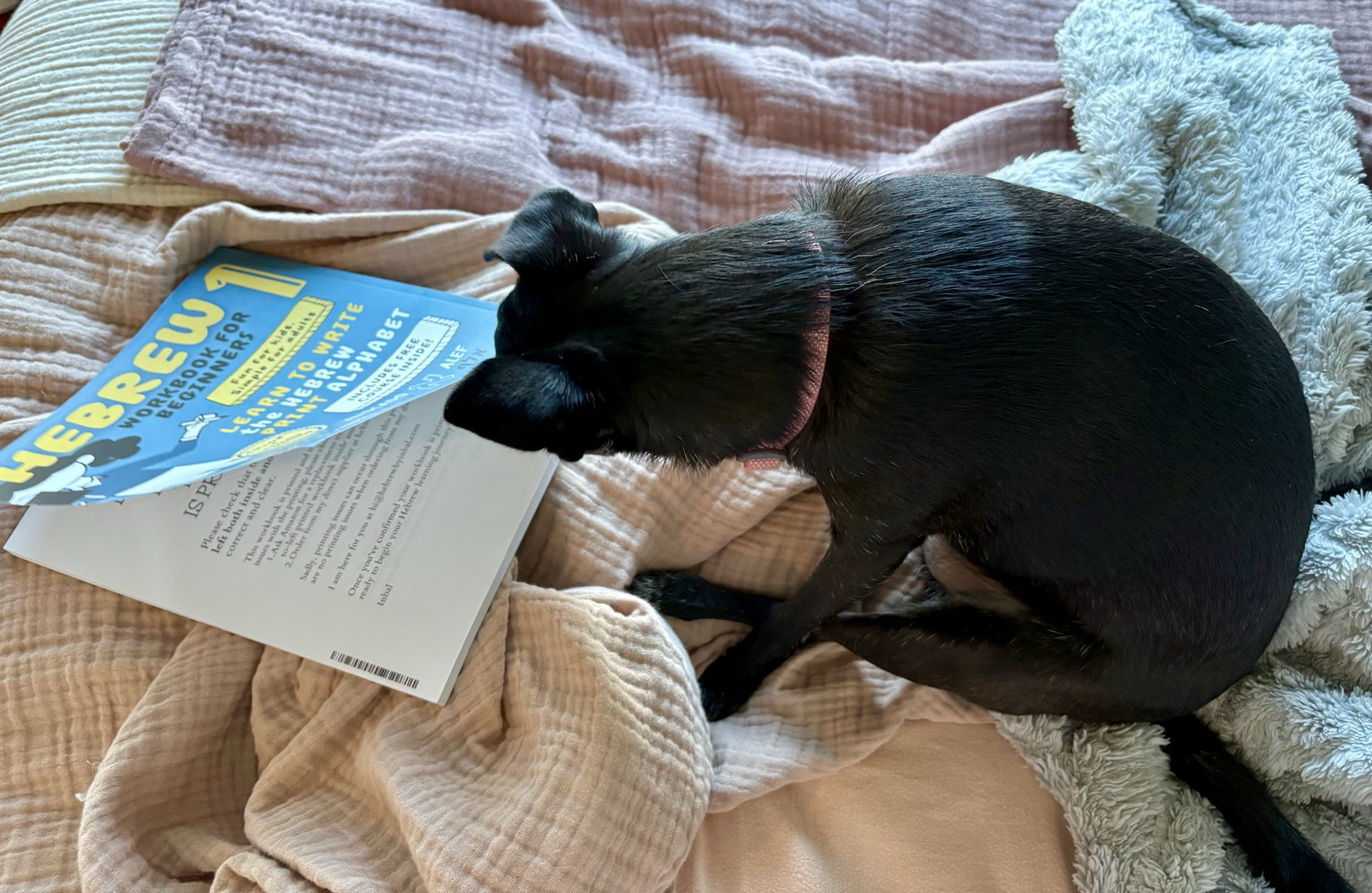
How precious is this picture?! 🧡
“Lucky” is sniffing out the next Hebrew letter in the alephbet.
Thank you Chana for joining the program and sharing this moment with us all.
#Lucky #LearningHebrew #Dogs #Language.
![[?]](https://climatejustice.social/system/accounts/avatars/109/324/939/669/240/982/original/dd5393a19a623f4e.jpg)
I just published another essay on my blog, 'Metaphor Matters.' It talks about the ways metaphors go beyond helping us visualize a topic to influencing how we think about that topic.
https://netsettlement.blogspot.com/2026/09/metaphor-matters.html
![[?]](https://zirkus-media.fra1.cdn.digitaloceanspaces.com/accounts/avatars/111/192/373/629/540/829/original/9ff4f5b9781a0e3a.jpg)
CHAPT. Dry or thirsty.
A selection from Francis Grose’s “Dictionary Of The Vulgar Tongue” (1785)
--
#books #literature #dictionaries #history #society #language #slang @histodons

Alt...
Image imitating a page from an old document, text (as in main toot):
CHAPT. Dry or thirsty.
A selection from Francis Grose’s “Dictionary Of The Vulgar Tongue” (1785)
LIVE STOCK. Lice or fleas.
A selection from Francis Grose’s “Dictionary Of The Vulgar Tongue” (1785)
--
#books #literature #dictionaries #history #society #language #slang @histodons
Alt...
Image imitating a page from an old document, text (as in main toot):
LIVE STOCK. Lice or fleas.
A selection from Francis Grose’s “Dictionary Of The Vulgar Tongue” (1785)
![[?]](https://files.mastodon.social/accounts/avatars/115/070/625/860/923/251/original/9629d01039476748.png)
You know what you mean, right? Of course you do? Or do you?
https://brywillis634737.substack.com/p/i-know-what-i-mean
In this piece, I riff on Alfred Whitehead and Michael Reddy with guest appearances by Thomas Kuhn, Paul Feyerabend, reluctantly Steven Pinker and even a Heidegger cameo.
#philosophy #language #meaning #instrumentality #blog #substack #nature #reading #communication #understanding #podcast

KNIGHT OF THE WHIP. A coachman.
A selection from Francis Grose’s “Dictionary Of The Vulgar Tongue” (1785)
--
#books #literature #dictionaries #history #society #language #slang @histodons

Alt...
Image imitating a page from an old document, text (as in main toot):
KNIGHT OF THE WHIP. A coachman.
A selection from Francis Grose’s “Dictionary Of The Vulgar Tongue” (1785)
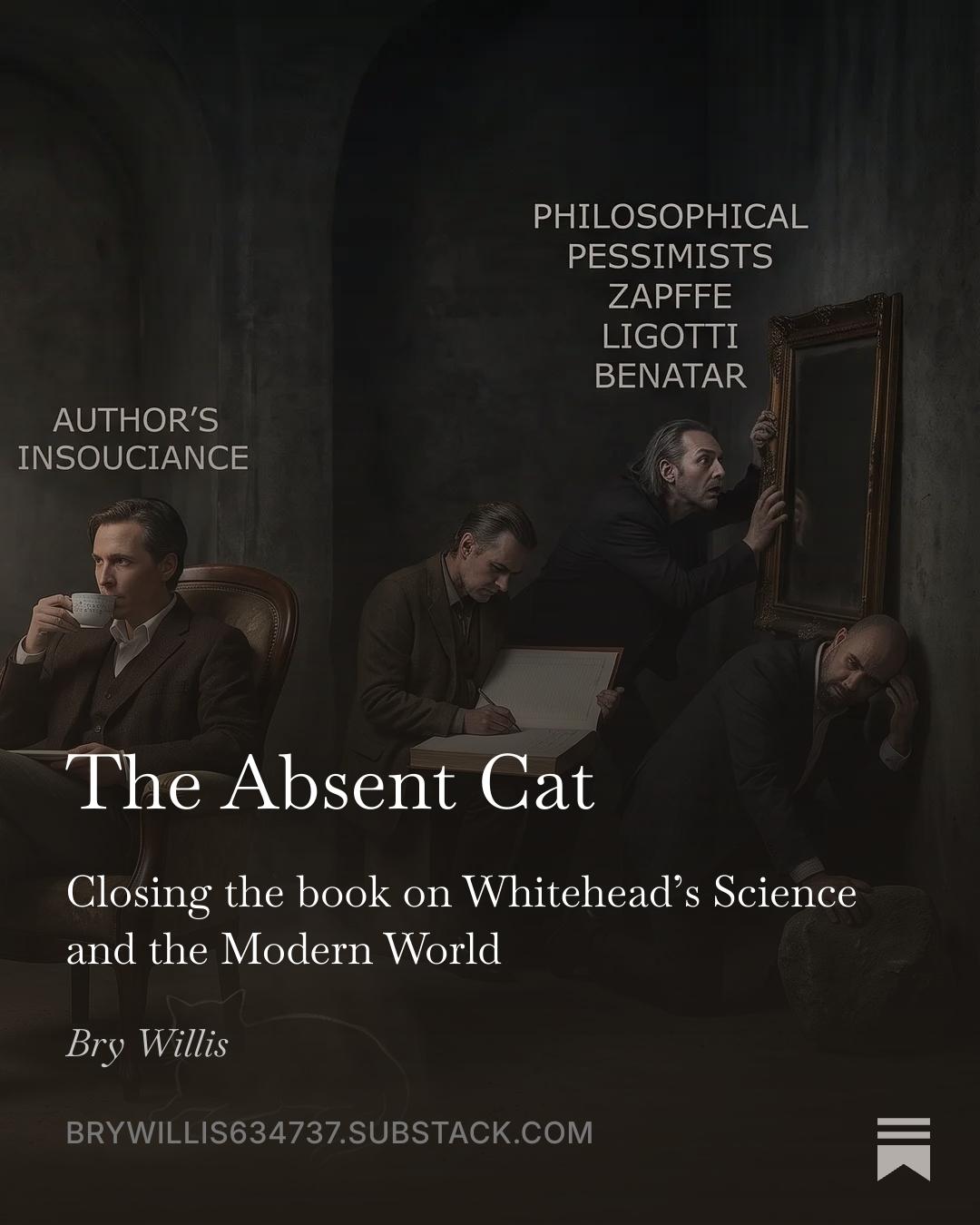
Put Whitehead's Science and the Modern World to bed. It has some good ideas, especially for its placement in time (1925), but he ends up too mired in indefensible metaphysics.
https://open.spotify.com/episode/3Hl38sR9htBKpdwOlT7yD8?si=7yAdqZQ-SGCxiK0rZ_aSxA
I discuss him in the context of other thinkers.
#philosophy #language #reading #writing #blog #substack #whitehouse #benatar #ligotti #zapffe #teleology #optimism #pessimism #metaphysics #cats #existentialism #nihilism #science #podcast
CHATTER BOX. One whose tongue runs twelve score to the dozen, a chattering man or woman.
A selection from Francis Grose’s “Dictionary Of The Vulgar Tongue” (1785)
--
#books #literature #dictionaries #history #society #language #slang @histodons

Alt...
Image imitating a page from an old document, text (as in main toot):
CHATTER BOX. One whose tongue runs twelve score to the dozen, a chattering man or woman.
A selection from Francis Grose’s “Dictionary Of The Vulgar Tongue” (1785)
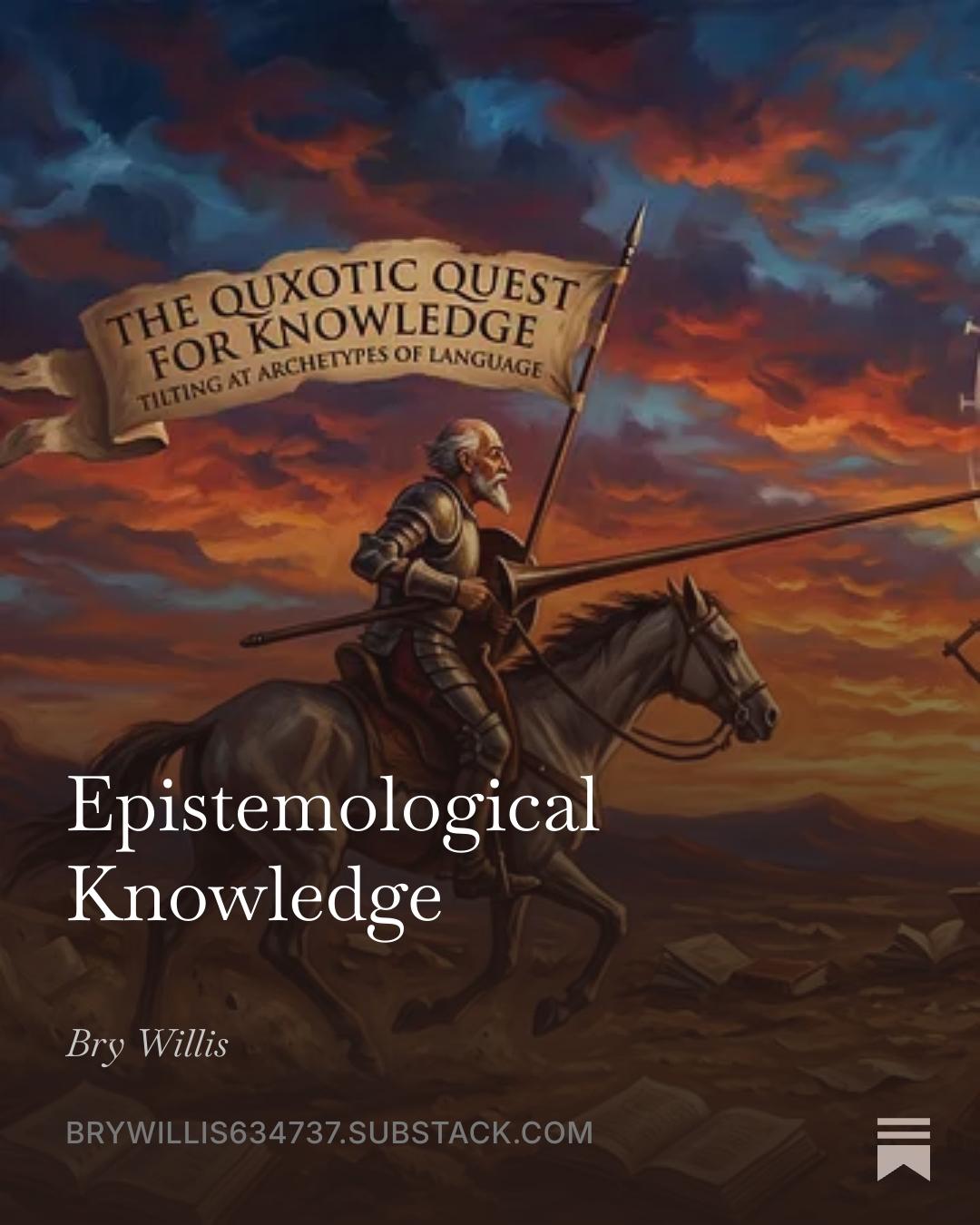
Consider the epistemological problem with knowledge itself. I consider Lakatos and Gettier and problems of belief.
https://brywillis634737.substack.com/p/epistemological-knowledge
#Philosophy #Epistemology #Language #Knowledge #blog #podcast #Belief #Truth #Justification #Gettier #Semantics #CriticalThinking #Meaning #science #AnalyticPhilosophy #LanguageInsufficiencyHypothesis
![[?]](data:image/png;base64, iVBORw0KGgoAAAANSUhEUgAAAEAAAABAAQAAAACCEkxzAAAAUUlEQVQoz43R0QkAMQwCUDdw/y3dwEvsvzlL4X1IoQkAisKmwfAFT3RgJHbQezpSRoXEqeqCL9BJBf7h3QbOCCxV5EVWMEMwG7K1/WODtlvxAYTtEsDU9F34AAAAAElFTkSuQmCC)
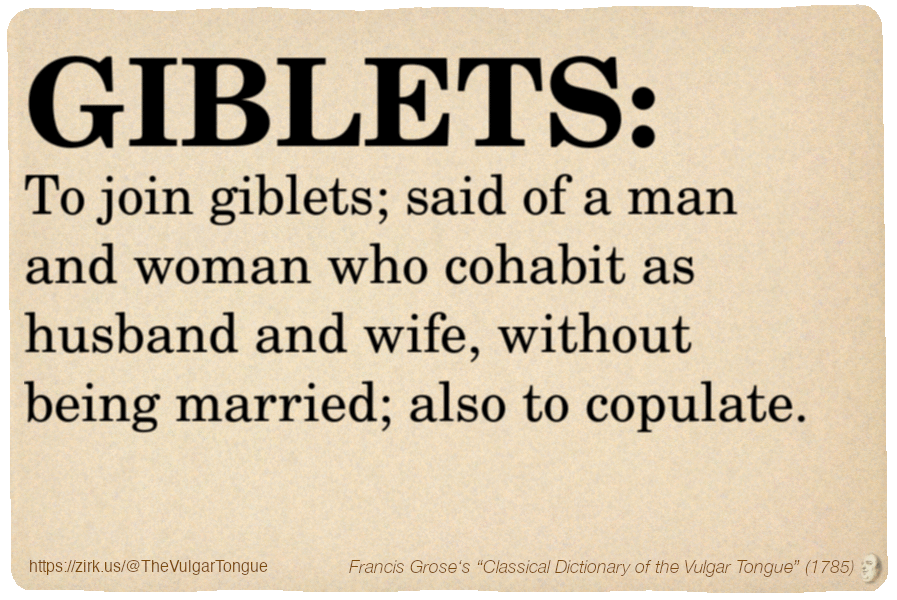
GIBLETS. To join giblets; said of a man and woman who cohabit as husband and wife, without being married; also to copulate.
A selection from Francis Grose’s “Dictionary Of The Vulgar Tongue” (1785)
--
#books #literature #dictionaries #history #society #language #slang @histodons
Alt...
Image imitating a page from an old document, text (as in main toot):
GIBLETS. To join giblets; said of a man and woman who cohabit as husband and wife, without being married; also to copulate.
A selection from Francis Grose’s “Dictionary Of The Vulgar Tongue” (1785)
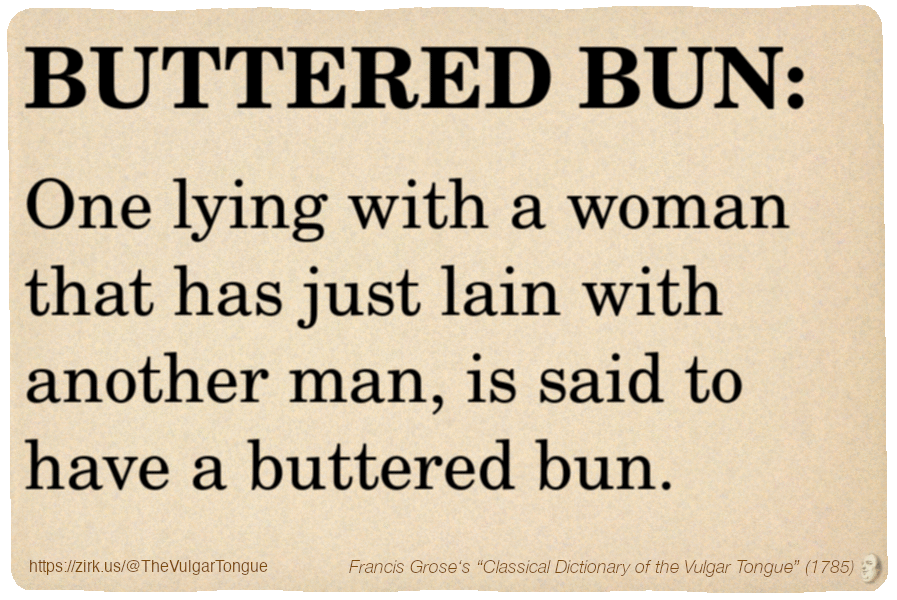
BUTTERED BUN. One lying with a woman that has just lain with another man, is said to have a buttered bun.
A selection from Francis Grose’s “Dictionary Of The Vulgar Tongue” (1785)
--
#books #literature #dictionaries #history #society #language #slang @histodons
Alt...
Image imitating a page from an old document, text (as in main toot):
BUTTERED BUN. One lying with a woman that has just lain with another man, is said to have a buttered bun.
A selection from Francis Grose’s “Dictionary Of The Vulgar Tongue” (1785)
Today, millions of kids walked out the door for the first day of school.
I still remember it. Shoes that had not softened yet. A schoolbag heavier than I was. That mix of nervous and excited that only a first day gives you.
Here is what I know now that I did not know then. That feeling does not belong only to children.
Every adult who sits down to learn something new gets it too. The blank page. The shaky start. The quiet voice asking whether you are too late for this.
You are not.
So to every kid today, and to every one of my students who decided this year is the year:
שנת לימודים מוצלחת
/sh-'nat lee-moo-'deem moots-'la-khat/
A good and successful year of learning.
I am proud of you for beginning again. 💙
#BackToSchool #School #Hebrew #Language #SchoolDays



This is what my husband sends me, a SNAKE in the yard where I walk every morning 🐍
Snake in Hebrew:
נָחָשׁ
(na-'khash)
Snake in my yard: YIKES!
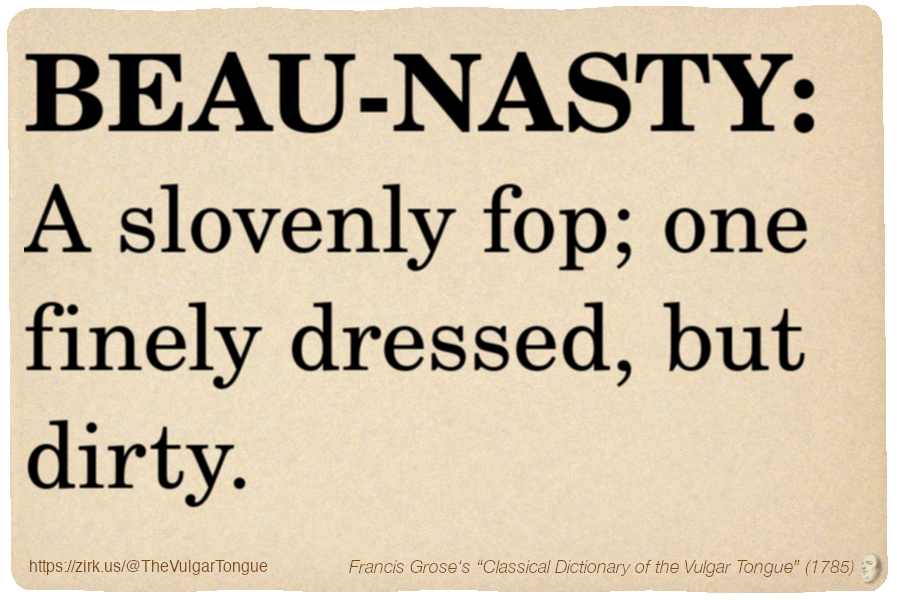
BEAU-NASTY. A slovenly fop; one finely dressed, but dirty.
A selection from Francis Grose’s “Dictionary Of The Vulgar Tongue” (1785)
--
#books #literature #dictionaries #history #society #language #slang @histodons
Alt...
Image imitating a page from an old document, text (as in main toot):
BEAU-NASTY. A slovenly fop; one finely dressed, but dirty.
A selection from Francis Grose’s “Dictionary Of The Vulgar Tongue” (1785)
What is time exactly? I've been mired in time these past few days – and space, truth be known – and I've seen a few notifications by IAI about said same.
⏱️ https://brywillis634737.substack.com/p/is-time-on-my-side
The debate continues.
#time #physics #metaphysics #philosophy #language #maths #iai #measurement #blog #substack #podcast

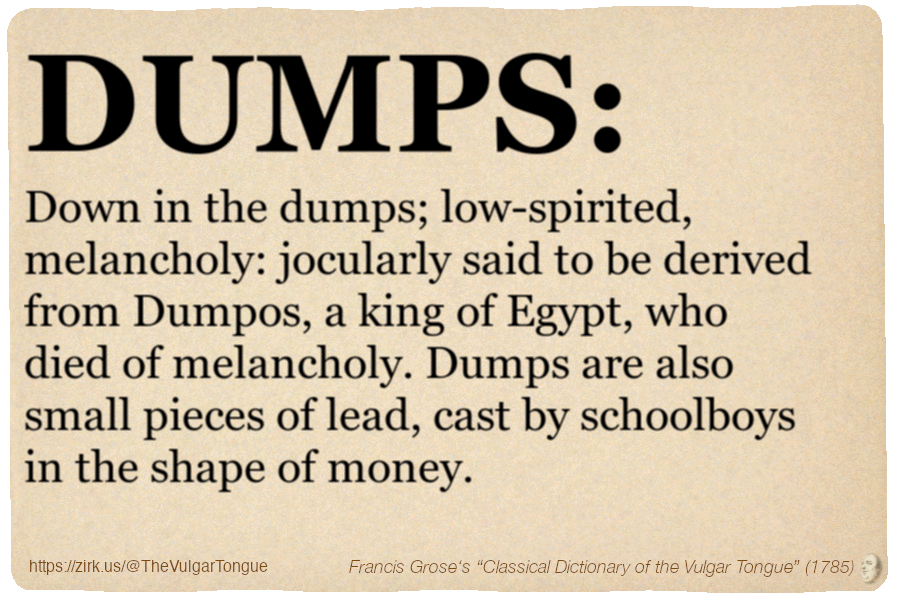
DUMPS. Down in the dumps; low-spirited, melancholy: jocularly said to be derived from Dumpos, a king of Egypt, who died of melancholy. Dumps are also small pieces of lead, cast by schoolboys in the shape of money.
A selection from Francis Grose’s “Dictionary Of The Vulgar Tongue” (1785)
--
#books #literature #dictionaries #history #society #language #slang @histodons
Alt...
Image imitating a page from an old document, text (as in main toot):
DUMPS. Down in the dumps; low-spirited, melancholy: jocularly said to be derived from Dumpos, a king of Egypt, who died of melancholy. Dumps are also small pieces of lead, cast by schoolboys in the shape of money.
A selection from Francis Grose’s “Dictionary Of The Vulgar Tongue” (1785)
![[?]](https://files.mastodon.social/accounts/avatars/110/441/535/131/897/219/original/0ddf9d4dd12a5dee.png)
“Weird” is a weird word
From Beowulf to Shakespeare to you
by Colin Gorrie
https://www.deadlanguagesociety.com/p/weird-is-a-weird-word
Beowulf & Shakespeare at PG:
https://www.gutenberg.org/ebooks/search/?query=beowulf
https://www.gutenberg.org/ebooks/author/65

Alt...
Macbeth, IV, 1, Macbeth in witches cave (1829), Johann Heinrich Ramberg.
An armored figure stands watching a group of witches around a bubbling cauldron in a cave, with bats and other creatures flying overhead, small demonic imps gathering firewood, and an apparition of a bloodied infant floating in the smoke above.
BOUNG. A purse. CANT.
A selection from Francis Grose’s “Dictionary Of The Vulgar Tongue” (1785)
--
#books #literature #dictionaries #history #society #language #slang @histodons
Alt...
Image imitating a page from an old document, text (as in main toot):
BOUNG. A purse. CANT.
A selection from Francis Grose’s “Dictionary Of The Vulgar Tongue” (1785)
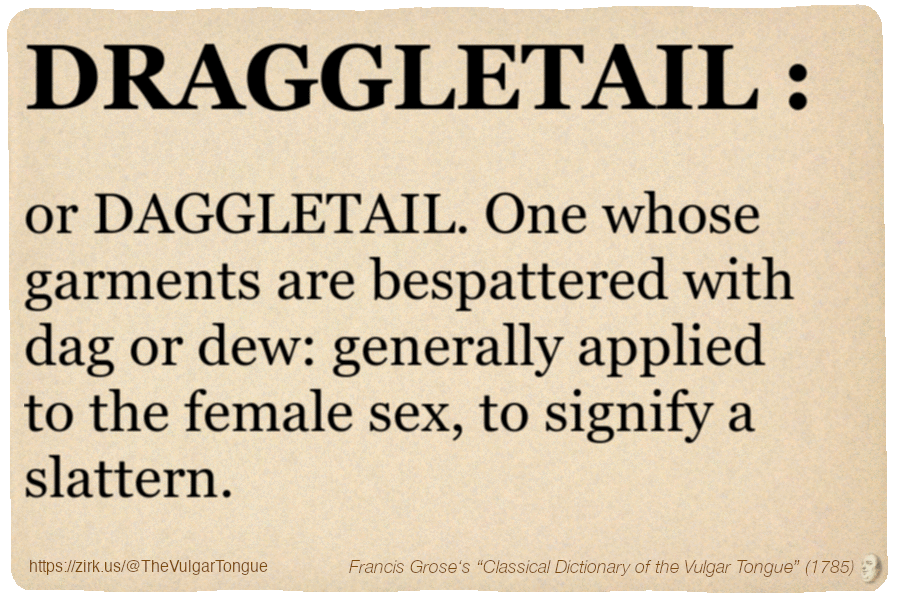
DRAGGLETAIL or DAGGLETAIL. One whose garments are bespattered with dag or dew: generally applied to the female sex, to signify a slattern.
A selection from Francis Grose’s “Dictionary Of The Vulgar Tongue” (1785)
--
#books #literature #dictionaries #history #society #language #slang @histodons
Alt...
Image imitating a page from an old document, text (as in main toot):
DRAGGLETAIL or DAGGLETAIL. One whose garments are bespattered with dag or dew: generally applied to the female sex, to signify a slattern.
A selection from Francis Grose’s “Dictionary Of The Vulgar Tongue” (1785)
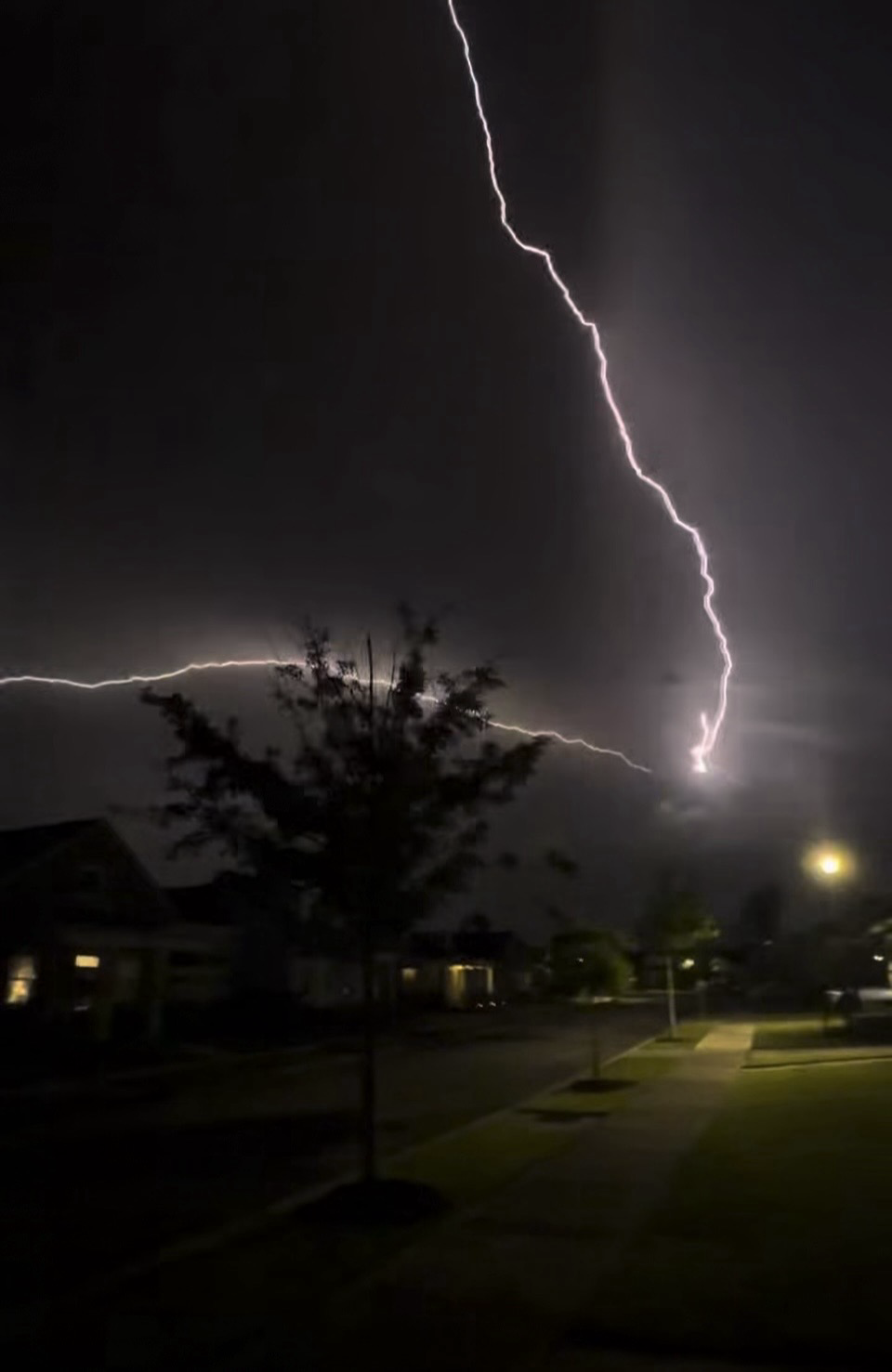
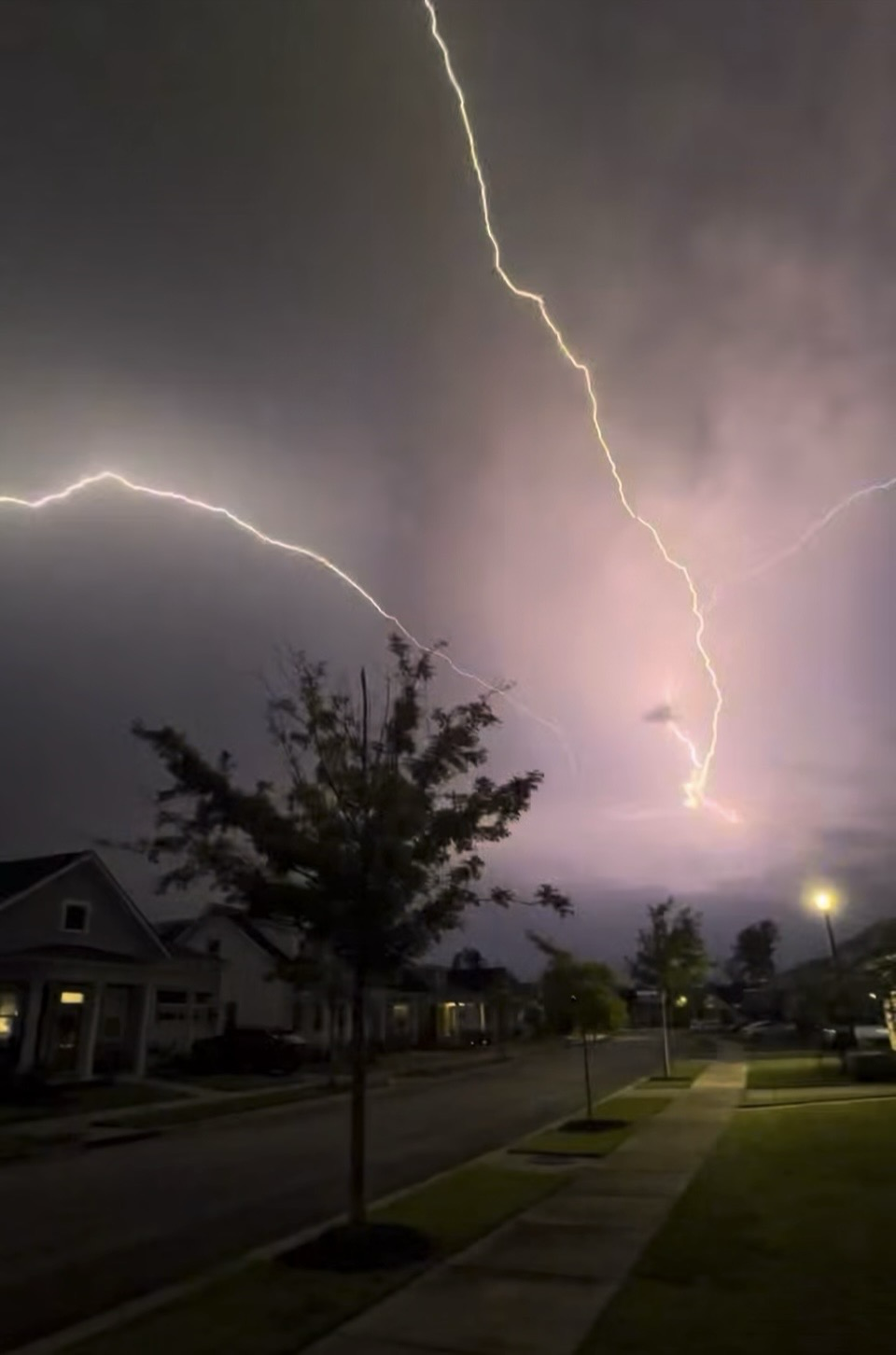
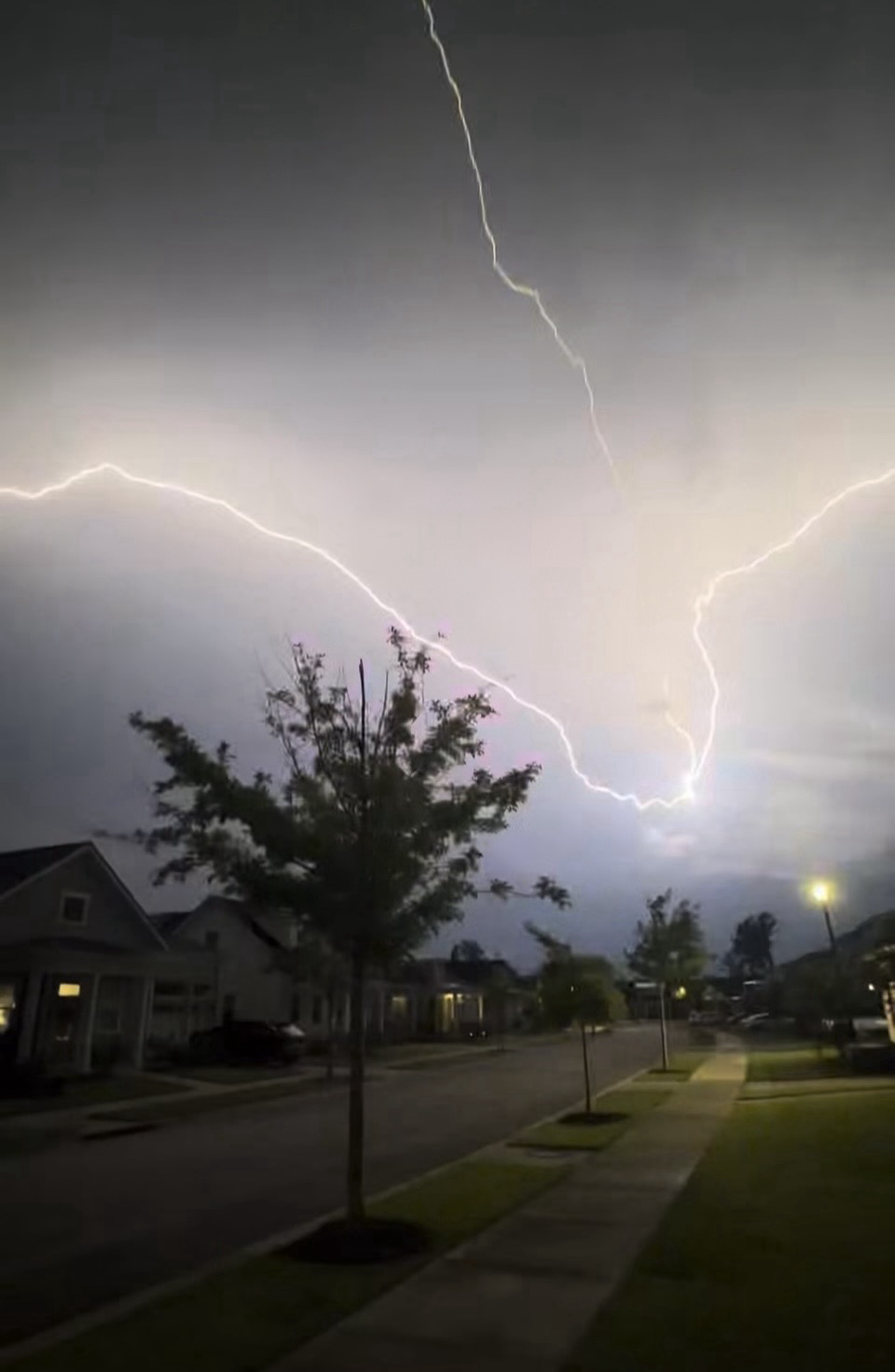
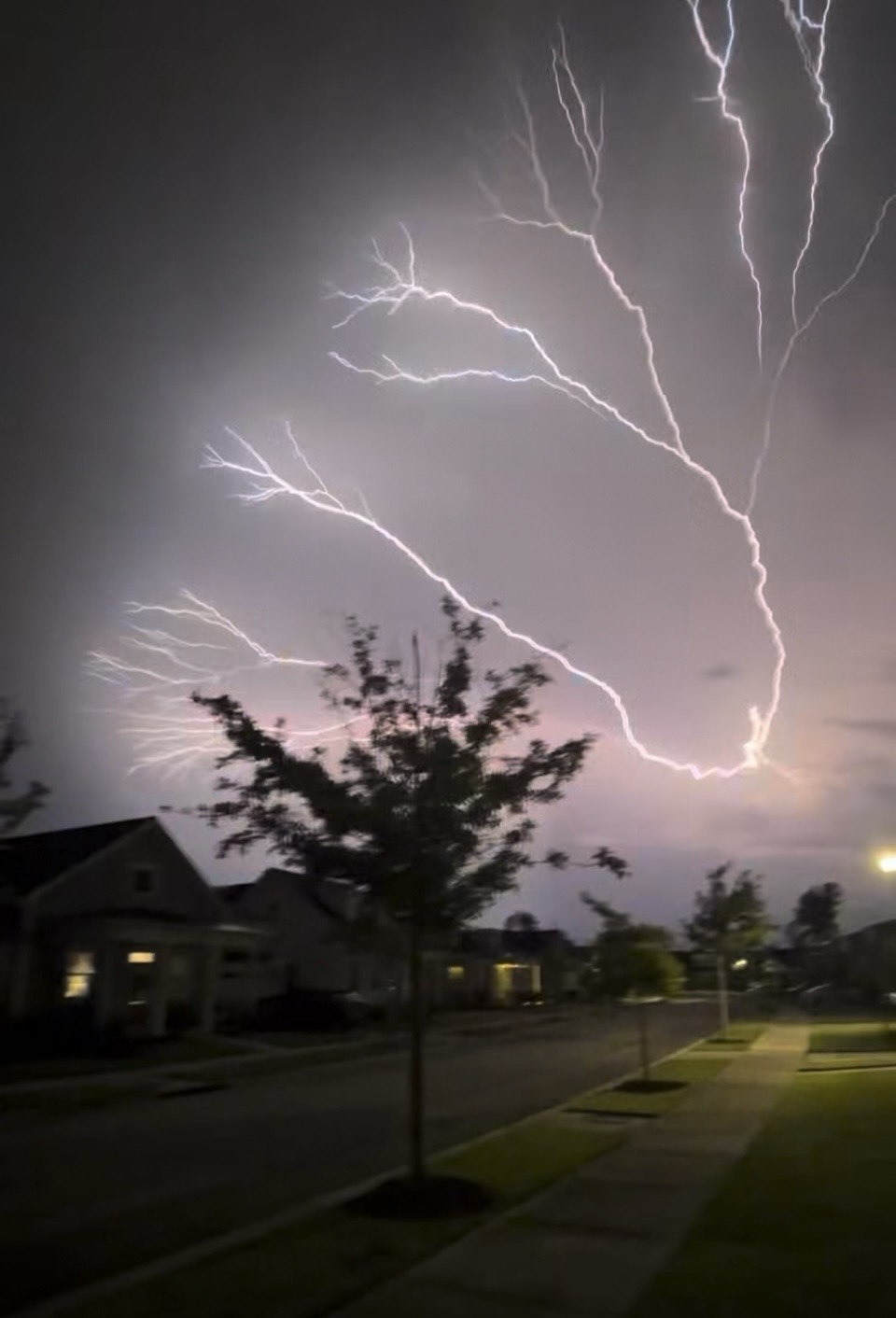
We went for a walk and got caught in a pop up lightning show!
Amazing raw power of nature and a little scary.
“Lightning Storm” in Hebrew is:
סוּפַת בְּרָקִים
/soo-'fat b-ra-'keem/
#lightningstorm #lightningphotography #Hebrew #Language #Nature
RE: https://mastodon.social/@medieval_illuminations/117148721021531224
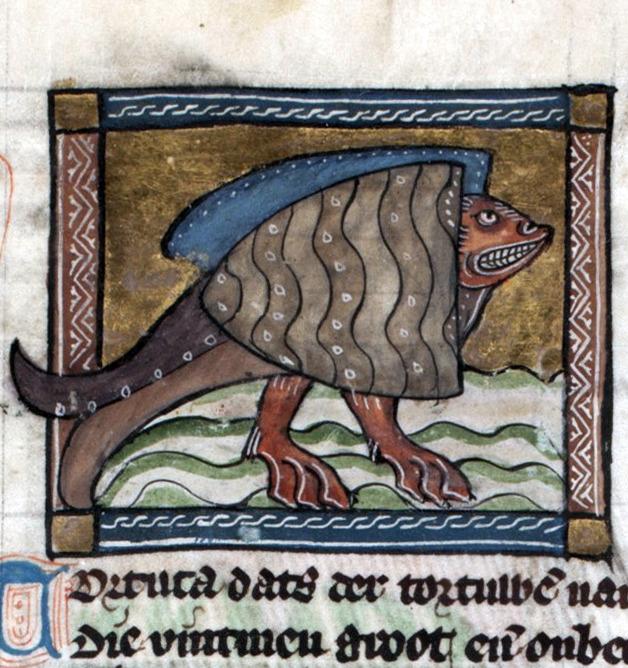
In German, a turtle is a "Schildkröte": a "shield toad."
In Dutch, apparently, a turtle is also a "shield toad": "schildpad."
Jacob literally drew a toad with shields protecting it.
Also with tails.
#etymology
#language
#ILoveLanguage
#Dutch
#German
Sea turtle. Jacob van Maerlant, Der Naturen Bloeme, Utrecht, ca. 1340-1350. Den Haag, Koninklijke Bibliotheek, KA 16, fol. 110v.
#medieval #MedievalArt
Alt...
Sea turtle. Jacob van Maerlant, Der Naturen Bloeme, Utrecht, ca. 1340-1350. Den Haag, Koninklijke Bibliotheek, KA 16, fol. 110v. #medieval #MedievalArt
![[?]](https://files.mastodon.social/accounts/avatars/111/014/458/979/366/278/original/2530113e13e61690.jpg)
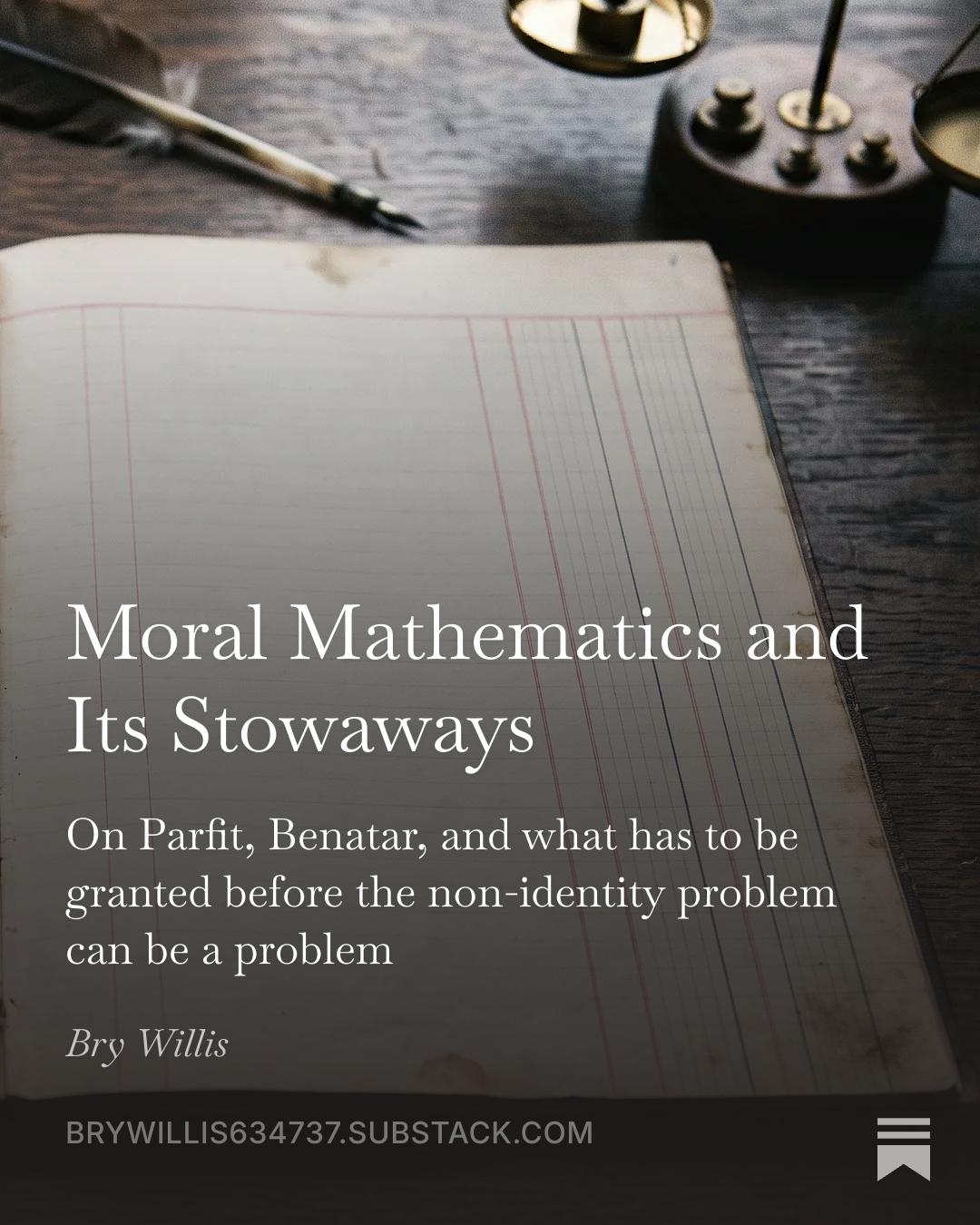
People get uncomfortable when they hear someone say that human life has no inherent value. All value is extrinsically assigned but is ostensibly unearned.
https://brywillis634737.substack.com/p/moral-mathematics-and-its-stowaways
#philosophy #morals #ethics #nihilism #parfit #morality #maths #language #value #economics #identity #benatar #paradox #antinatalism #metaphysics
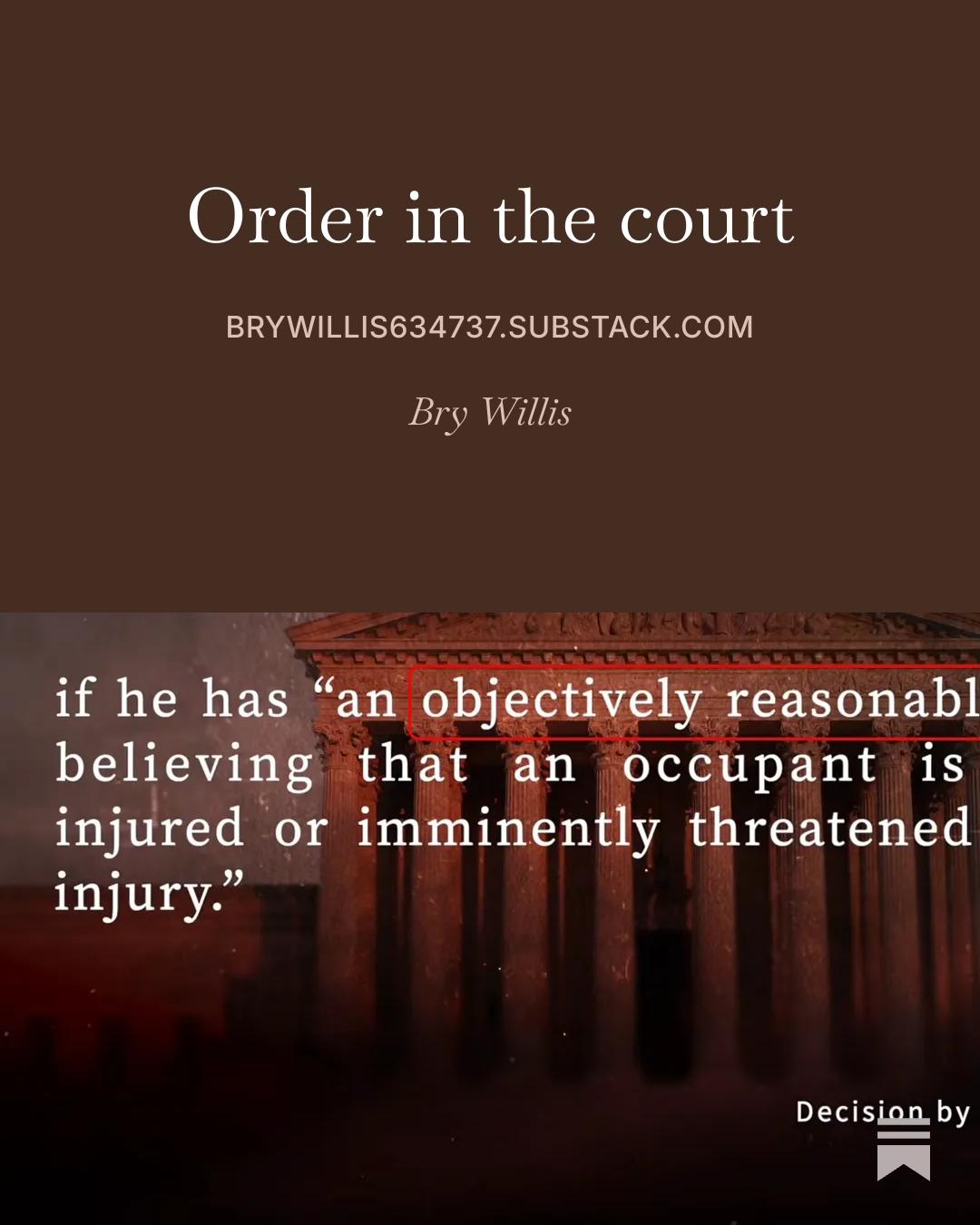
« We repeat today what we have held before: An officer may enter a home without a warrant if he has “an objectively reasonable basis for believing that an occupant is seriously injured or imminently threatened with such injury.” »
What's wrong with this statement – and I don't mean the morality of it.
#Philosophy #law #scotus #language #objectivity #law #justice #harm #injury #threat #jurisprudence #reason #belief #SadPanda #blog #substack
![[?]](https://m-cdn.flipboard.social/accounts/avatars/110/068/762/697/825/294/original/d3f34437c275e777.jpg)
"Silicon Valley has long had its own dialect. But lately, tech vernacular has taken a peculiar turn — people have started describing themselves as if they were chatbots."
@TheAtlantic explores the trend wherein people describe themselves as if they were large language models.
![[?]](https://stockroom.wandering.shop/accounts/avatars/109/318/900/855/315/456/original/d715bbbb7ff2d44a.png)
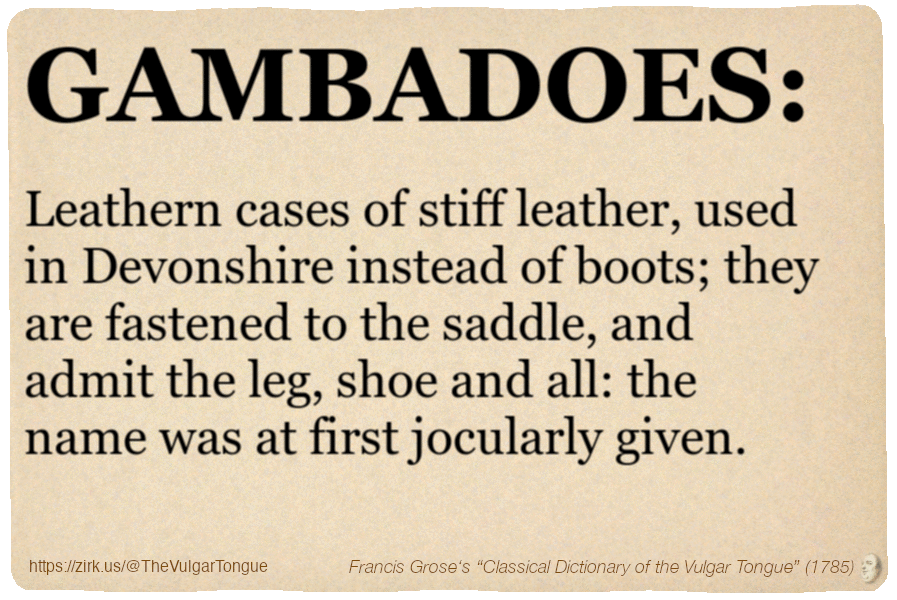
GAMBADOES. Leathern cases of stiff leather, used in Devonshire instead of boots; they are fastened to the saddle, and admit the leg, shoe and all: the name was at first jocularly given.
A selection from Francis Grose’s “Dictionary Of The Vulgar Tongue” (1785)
--
#books #literature #dictionaries #history #society #language #slang @histodons
Alt...
Image imitating a page from an old document, text (as in main toot):
GAMBADOES. Leathern cases of stiff leather, used in Devonshire instead of boots; they are fastened to the saddle, and admit the leg, shoe and all: the name was at first jocularly given.
A selection from Francis Grose’s “Dictionary Of The Vulgar Tongue” (1785)
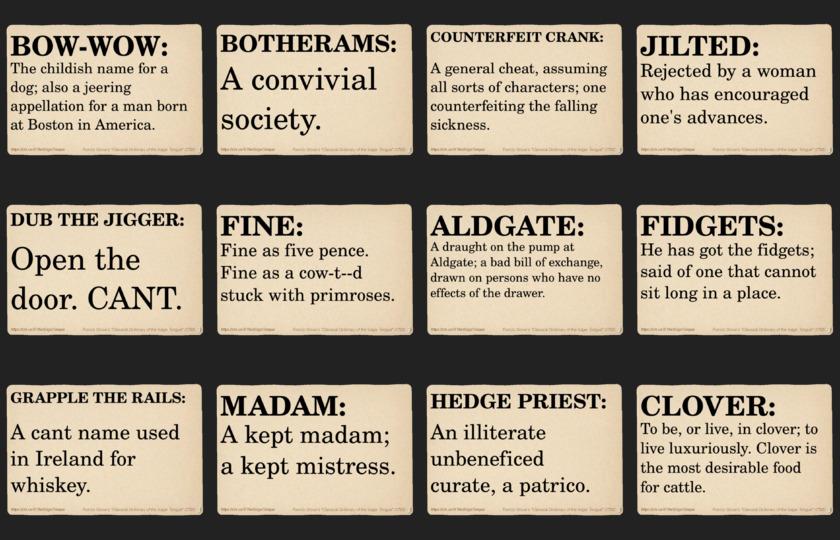
Hi!, I'm a bot posting selections from Francis Grose’s 1785 “Dictionary Of The Vulgar Tongue”, a compilation of slang terms, the coded language of the underclass and the demi-monde.
[18th-century-content warning: possible racism, animal cruelty, homophobia, sexism, slut-shaming. Let me know of any problems.]
#FollowFriday #books #literature #dictionaries #history #society #crime #language #slang #18thCentury
Alt...
Montage of dictionary items posted by this account
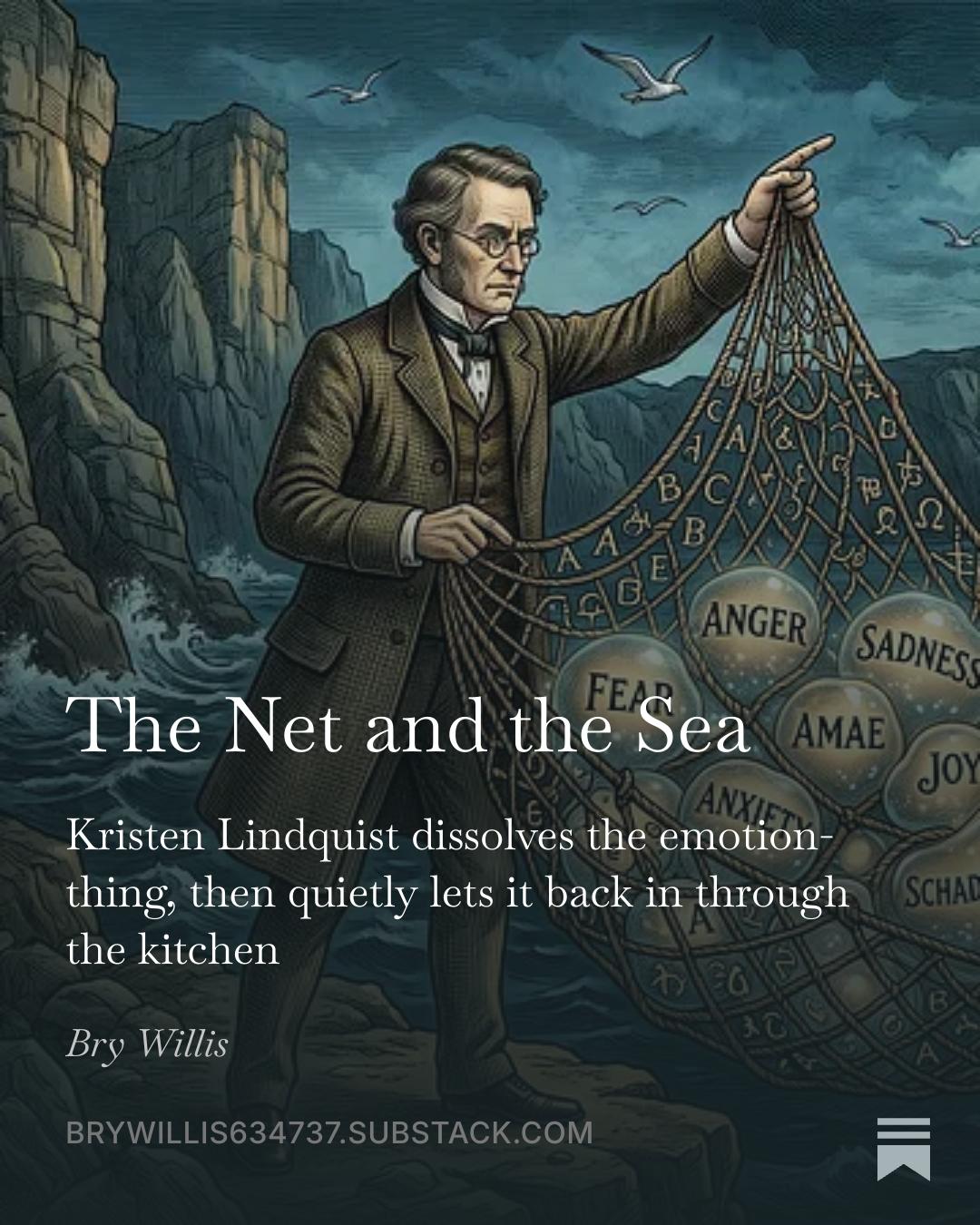
I discuss a podcast by Kristen Lindquist, who does a fantastic job dismantling some misunderstandings of the relationship between emotions and the brain, but her reconstructions are equally suspect.
https://brywillis634737.substack.com/p/the-net-and-the-sea
Link to source podcast on Substack.
#philosophy #psychology #language #metaphysics #constructivism #substack #blog #podcast #emotions #cognitivescience #cognition #determinism #phenomena #amnesia #brain #anger #fear
SPARKING BLOWS. Blows given by cocks before they close, or, as the term is, mouth it: used figuratively for words previous to a quarrel.
A selection from Francis Grose’s “Dictionary Of The Vulgar Tongue” (1785)
--
#books #literature #dictionaries #history #society #language #slang @histodons
Alt...
Image imitating a page from an old document, text (as in main toot):
SPARKING BLOWS. Blows given by cocks before they close, or, as the term is, mouth it: used figuratively for words previous to a quarrel.
A selection from Francis Grose’s “Dictionary Of The Vulgar Tongue” (1785)
![[?]](https://media.mas.to/accounts/avatars/112/170/221/330/719/403/original/8a8a992078704499.jpg)
Mamdani releases blooper reel after accusations his foreign language video was AI
https://www.youtube.com/watch?v=5G2xDe-h-H0 #NYC #Language #USpol #FuckAI
Therefore, I submit the following as a synonym for "to totter":
TO TORKLE.
Example sentence: Courtney got up in the middle of the night and torkled blearily to the bathroom.
This actually happened last night, which is what brought on this wild language ride first thing this morning. You're welcome. 😁💜✌️🤘🖖
2/2
#language
#etymology
#linguistics
#GermanLanguage
#EnglishLanguage
#Latin
#ILoveLanguage
SHARP. Subtle, acute, quick-witted; also a sharper or cheat, in opposition to a flat, dupe, or gull. Sharp's the word and quick's the motion with him; said of any one very attentive to his own interest, and apt to take all advantages. Sharp set; hungry.
A selection from Francis Grose’s “Dictionary Of The Vulgar Tongue” (1785)
--
#books #literature #dictionaries #history #society #language #slang @histodons
Alt...
Image imitating a page from an old document, text (as in main toot):
SHARP. Subtle, acute, quick-witted; also a sharper or cheat, in opposition to a flat, dupe, or gull. Sharp's the word and quick's the motion with him; said of any one very attentive to his own interest, and apt to take all advantages. Sharp set; hungry.
A selection from Francis Grose’s “Dictionary Of The Vulgar Tongue” (1785)
Elections are approaching in Israel.
Follow along as I take you behind the scenes on the voting experience in Hebrew!
Click or Comment below if you’d like to receive the full link.
KINCHIN. A little child. Kinchin coes; orphan beggar boys, educated in thieving. Kinchin morts; young girls under the like circumstances and training. Kinchin morts, or coes in slates; beggars' children carried at their mother's backs in sheets.
A selection from Francis Grose’s “Dictionary Of The Vulgar Tongue” (1785)
--
#books #literature #dictionaries #history #society #language #slang @histodons
Alt...
Image imitating a page from an old document, text (as in main toot):
KINCHIN. A little child. Kinchin coes; orphan beggar boys, educated in thieving. Kinchin morts; young girls under the like circumstances and training. Kinchin morts, or coes in slates; beggars' children carried at their mother's backs in sheets.
A selection from Francis Grose’s “Dictionary Of The Vulgar Tongue” (1785)
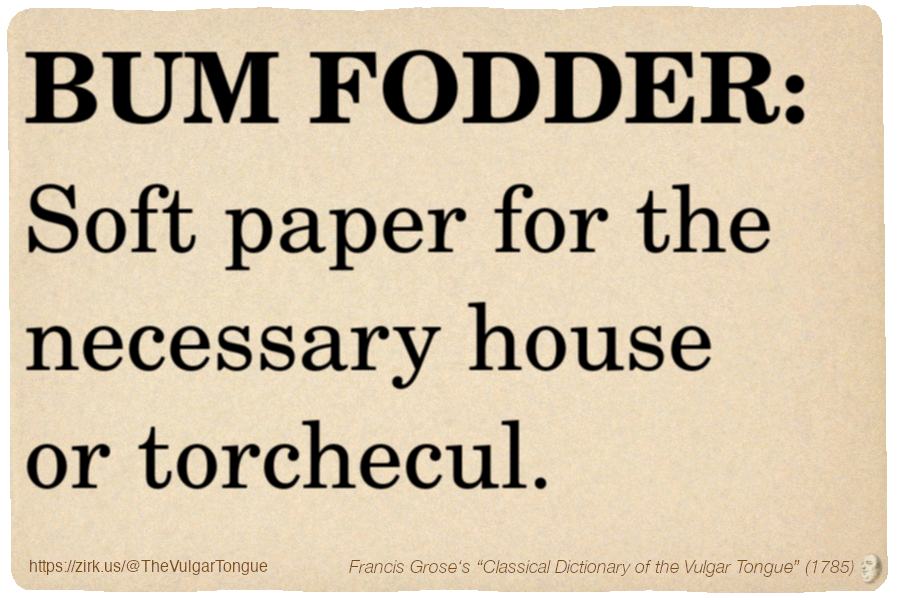
BUM FODDER. Soft paper for the necessary house or torchecul.
A selection from Francis Grose’s “Dictionary Of The Vulgar Tongue” (1785)
--
#books #literature #dictionaries #history #society #language #slang @histodons
Alt...
Image imitating a page from an old document, text (as in main toot):
BUM FODDER. Soft paper for the necessary house or torchecul.
A selection from Francis Grose’s “Dictionary Of The Vulgar Tongue” (1785)

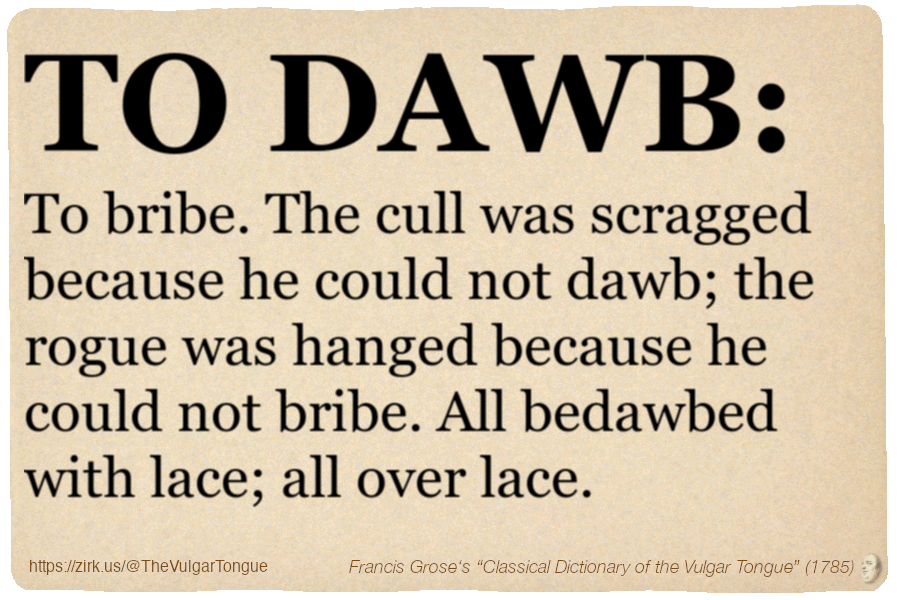
TO DAWB. To bribe. The cull was scragged because he could not dawb; the rogue was hanged because he could not bribe. All bedawbed with lace; all over lace.
A selection from Francis Grose’s “Dictionary Of The Vulgar Tongue” (1785)
--
#books #literature #dictionaries #history #society #language #slang @histodons
Alt...
Image imitating a page from an old document, text (as in main toot):
TO DAWB. To bribe. The cull was scragged because he could not dawb; the rogue was hanged because he could not bribe. All bedawbed with lace; all over lace.
A selection from Francis Grose’s “Dictionary Of The Vulgar Tongue” (1785)
Don't read Cioran to fall asleep. Most who know me know that I don't support Democracy (or Republics for the pedants out there) as a political system.
https://brywillis634737.substack.com/p/put-a-face-on-it
This distrust of Democracy predates Trump by decades, in case you might be wondering.
#philosophy #politics #language #democracy #tyranny #enlightenment #Plato #Cioran #republics #fantasy #blog #substack #podcast
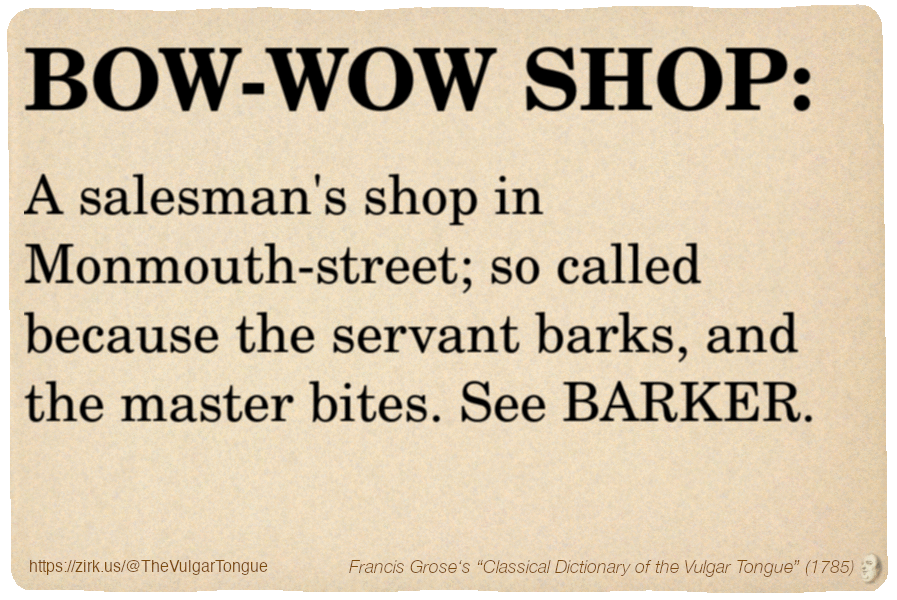
BOW-WOW SHOP. A salesman's shop in Monmouth-street; so called because the servant barks, and the master bites. See BARKER.
A selection from Francis Grose’s “Dictionary Of The Vulgar Tongue” (1785)
--
#books #literature #dictionaries #history #society #language #slang @histodons
Alt...
Image imitating a page from an old document, text (as in main toot):
BOW-WOW SHOP. A salesman's shop in Monmouth-street; so called because the servant barks, and the master bites. See BARKER.
A selection from Francis Grose’s “Dictionary Of The Vulgar Tongue” (1785)
Elections are approaching in Israel.
Follow along as I take you behind the scenes on the voting experience in Hebrew!
Click 👇🏻👇🏻
JAKES. A house of office, a cacatorium.
A selection from Francis Grose’s “Dictionary Of The Vulgar Tongue” (1785)
--
#books #literature #dictionaries #history #society #language #slang @histodons
Alt...
Image imitating a page from an old document, text (as in main toot):
JAKES. A house of office, a cacatorium.
A selection from Francis Grose’s “Dictionary Of The Vulgar Tongue” (1785)
KILKENNY. An old frize coat.
A selection from Francis Grose’s “Dictionary Of The Vulgar Tongue” (1785)
--
#books #literature #dictionaries #history #society #language #slang @histodons
Alt...
Image imitating a page from an old document, text (as in main toot):
KILKENNY. An old frize coat.
A selection from Francis Grose’s “Dictionary Of The Vulgar Tongue” (1785)
Elections are approaching in Israel.
Follow along as I take you behind the scenes on the voting experience in Hebrew!
Click or Comment below if you’d like to receive the full link.
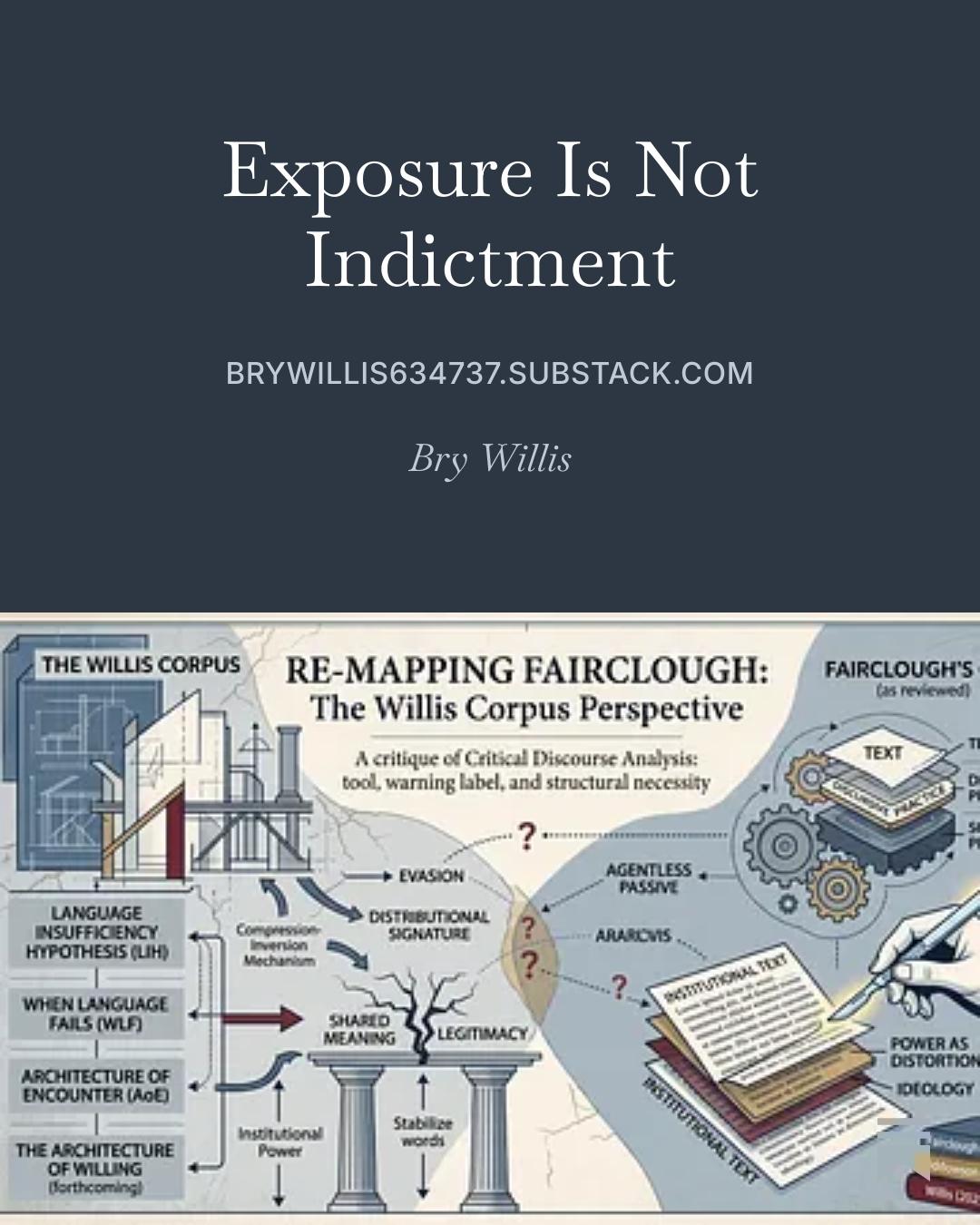
I came to Norman Fairclough late, and by accident. A Language Insufficiency Hypothesis was printed without a single reference to critical discourse analysis, which in retrospect looks less like restraint than like a gap in my reading.
https://brywillis634737.substack.com/p/exposure-is-not-indictment
#philosophy #language #linguistics #languageInsufficiencyHypothesis #criticaldiscourseanalysis #analysis #discourse #critique #substack #blog #podcast
BARTHOLOMEW BABY. A person dressed up in a tawdry manner, like the dolls or babies sold at Bartholomew fair.
A selection from Francis Grose’s “Dictionary Of The Vulgar Tongue” (1785)
--
#books #literature #dictionaries #history #society #language #slang @histodons
Alt...
Image imitating a page from an old document, text (as in main toot):
BARTHOLOMEW BABY. A person dressed up in a tawdry manner, like the dolls or babies sold at Bartholomew fair.
A selection from Francis Grose’s “Dictionary Of The Vulgar Tongue” (1785)
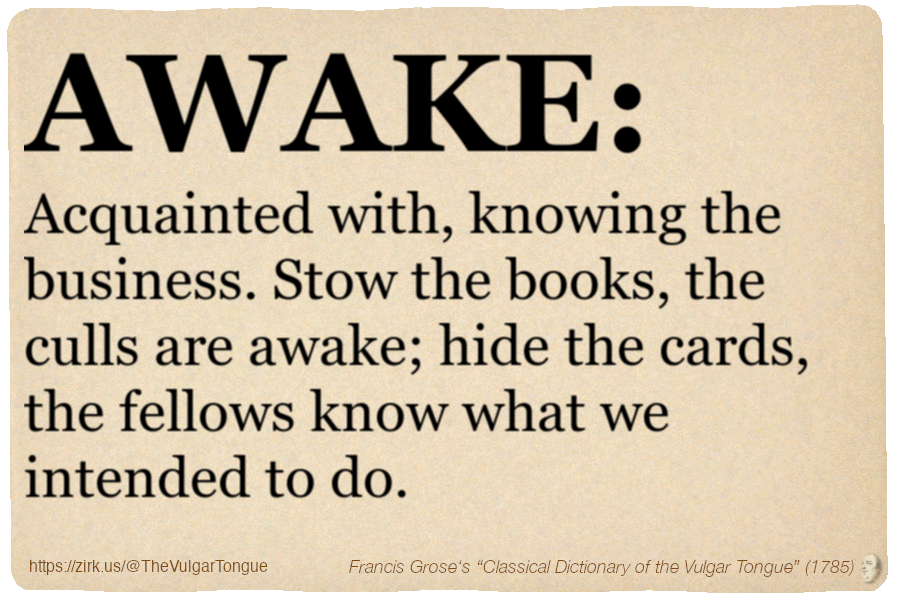
AWAKE. Acquainted with, knowing the business. Stow the books, the culls are awake; hide the cards, the fellows know what we intended to do.
A selection from Francis Grose’s “Dictionary Of The Vulgar Tongue” (1785)
--
#books #literature #dictionaries #history #society #language #slang @histodons
Alt...
Image imitating a page from an old document, text (as in main toot):
AWAKE. Acquainted with, knowing the business. Stow the books, the culls are awake; hide the cards, the fellows know what we intended to do.
A selection from Francis Grose’s “Dictionary Of The Vulgar Tongue” (1785)
Elections are approaching in Israel.
Follow along as I take you behind the scenes on the voting experience in Hebrew!
Click or Comment below if you’d like to receive the full link.
Is truth the most dangerous fantasy ever invented? I find myself on Manuel Delaflor’s side of the argument.
https://brywillis634737.substack.com/p/the-certificate-and-the-cliff
#philosophy #language #truth #reality #buddhism #deflationism #epistemology #metaphysics #blog #podcast #substack
I've long been suspicious of claims of agency – and of psychology more generally. And I'm still unsurprised at how many misunderstand the notion of evolution and the problem of natural selection, not as a process but as a phrase.
👉 https://brywillis634737.substack.com/p/the-bacterium-does-not-want-to-live
Not being a biologist, I decided to look at this through the lens of language.
#philosophy #language #biology #science #evolution #grammar #bacteria #agency #life #purpose #survival #naturalselection #darwin #English

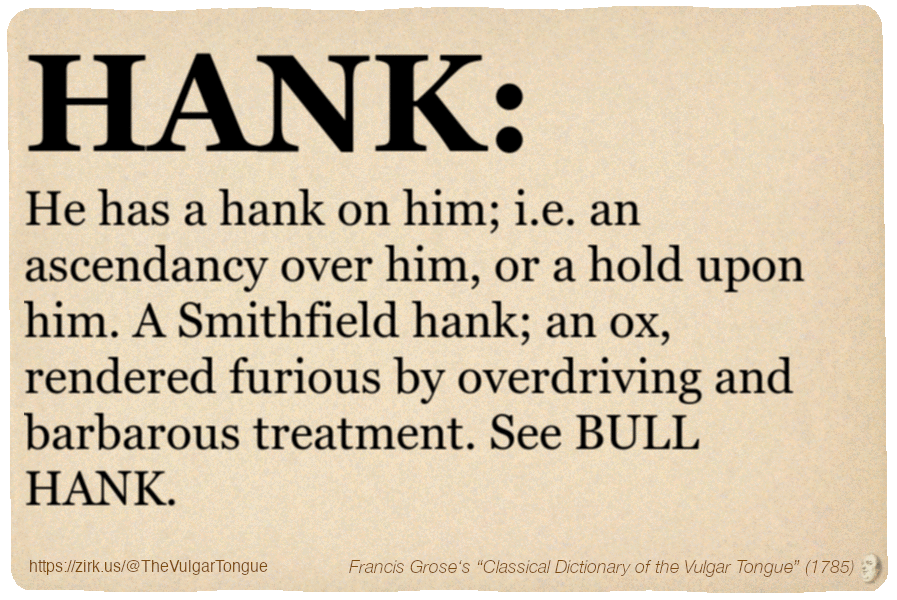
HANK. He has a hank on him; i.e. an ascendancy over him, or a hold upon him. A Smithfield hank; an ox, rendered furious by overdriving and barbarous treatment. See BULL HANK.
A selection from Francis Grose’s “Dictionary Of The Vulgar Tongue” (1785)
--
#books #literature #dictionaries #history #society #language #slang @histodons
Alt...
Image imitating a page from an old document, text (as in main toot):
HANK. He has a hank on him; i.e. an ascendancy over him, or a hold upon him. A Smithfield hank; an ox, rendered furious by overdriving and barbarous treatment. See BULL HANK.
A selection from Francis Grose’s “Dictionary Of The Vulgar Tongue” (1785)
Elvish, Klingon and Pig Latin: what can invented languages teach us about the human brain?
From pidgins to Tolkien and Esperanto, humans have created entirely new languages for many different reasons.
By Inka Romero-Ortells Labrada, Jon Andoni Duñabeitia and Manuel Perea
#books #language #neuroscience
Alt...
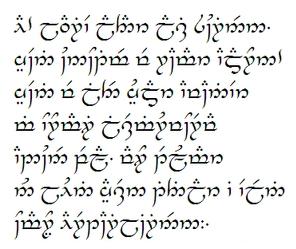
The first stanza of Tolkien's Quenya poem "Namárië", written in his Tengwar script.
This shows the first stanza of "Namárië" written in Tengwar, the elvish script created by J.R.R. Tolkien for his Middle-earth languages .
![[?]](https://s3.us-west-1.wasabisys.com/thereslife/accounts/avatars/109/297/497/169/378/689/original/d5a6a68ca48cc93d.png)
Such a wonderful video about English spelling and pronunciation.
https://youtu.be/Im0x7ftV6Mw?si=mIAw71EO73YAoX8W
#English #language #linguistics
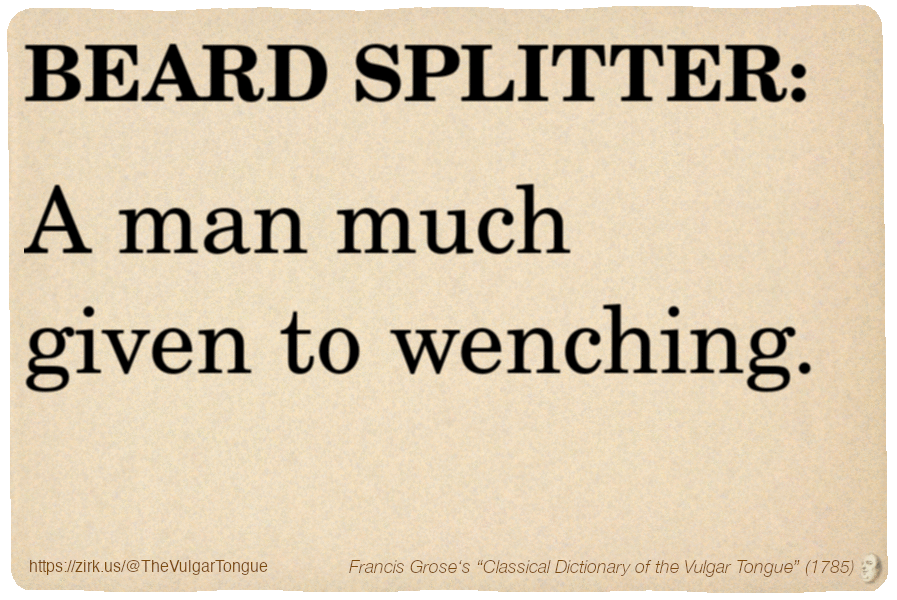
BEARD SPLITTER. A man much given to wenching.
A selection from Francis Grose’s “Dictionary Of The Vulgar Tongue” (1785)
--
#books #literature #dictionaries #history #society #language #slang @histodons
Alt...
Image imitating a page from an old document, text (as in main toot):
BEARD SPLITTER. A man much given to wenching.
A selection from Francis Grose’s “Dictionary Of The Vulgar Tongue” (1785)
Elections are approaching in Israel.
Follow along as I take you behind the scenes on the voting experience in Hebrew!
Comment below if you’d like to receive the full link.
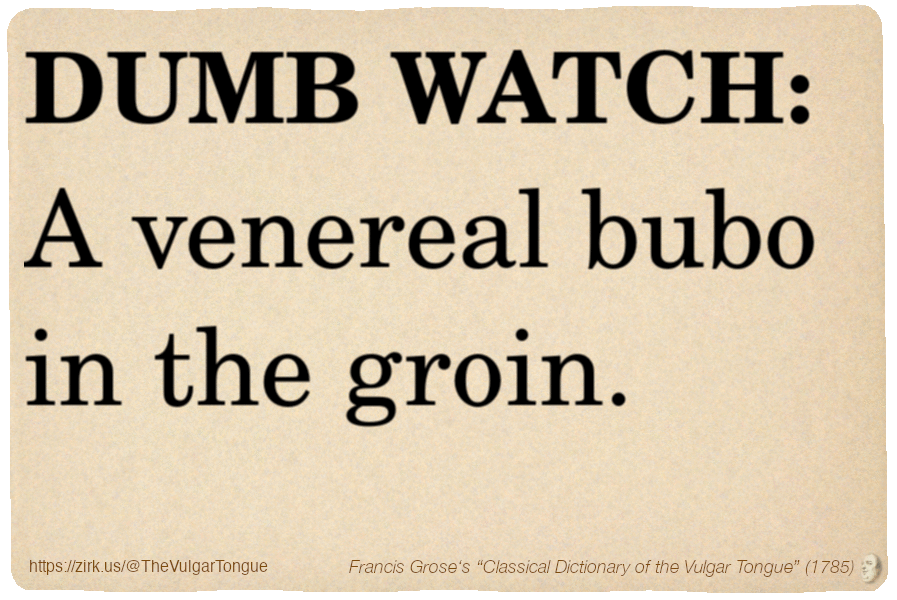
DUMB WATCH. A venereal bubo in the groin.
A selection from Francis Grose’s “Dictionary Of The Vulgar Tongue” (1785)
--
#books #literature #dictionaries #history #society #language #slang @histodons
Alt...
Image imitating a page from an old document, text (as in main toot):
DUMB WATCH. A venereal bubo in the groin.
A selection from Francis Grose’s “Dictionary Of The Vulgar Tongue” (1785)
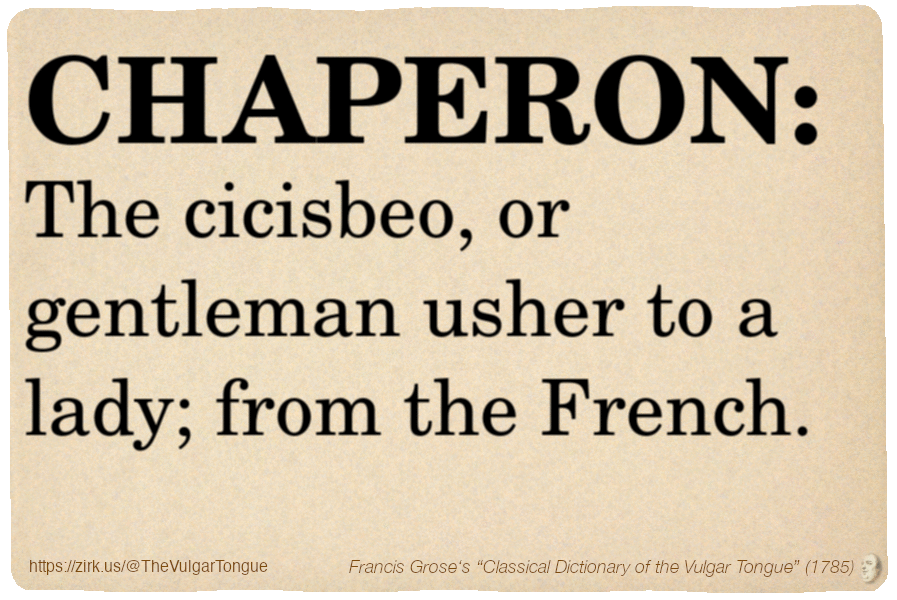
CHAPERON. The cicisbeo, or gentleman usher to a lady; from the French.
A selection from Francis Grose’s “Dictionary Of The Vulgar Tongue” (1785)
--
#books #literature #dictionaries #history #society #language #slang @histodons
Alt...
Image imitating a page from an old document, text (as in main toot):
CHAPERON. The cicisbeo, or gentleman usher to a lady; from the French.
A selection from Francis Grose’s “Dictionary Of The Vulgar Tongue” (1785)
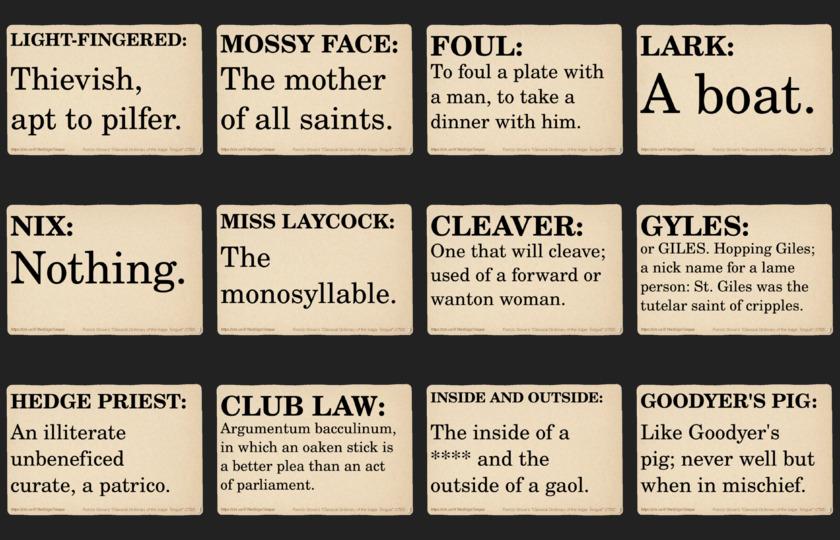
Hi!, I'm a bot posting selections from Francis Grose’s 1785 “Dictionary Of The Vulgar Tongue”, a compilation of slang terms, the coded language of the underclass and the demi-monde.
[18th-century-content warning: possible racism, animal cruelty, homophobia, sexism, slut-shaming. Let me know of any problems.]
#FollowFriday #books #literature #dictionaries #history #society #crime #language #slang #18thCentury
Alt...
Montage of dictionary items posted by this account
Elections are approaching in Israel.
Follow along as I take you behind the scenes on the voting experience in Hebrew!
Comment below if you’d like to receive the full link.
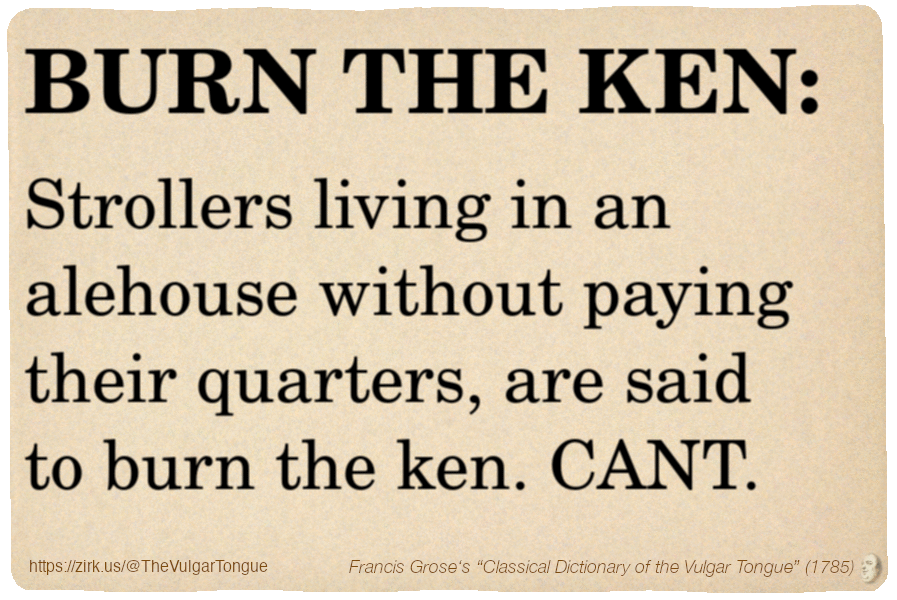
BURN THE KEN. Strollers living in an alehouse without paying their quarters, are said to burn the ken. CANT.
A selection from Francis Grose’s “Dictionary Of The Vulgar Tongue” (1785)
--
#books #literature #dictionaries #history #society #language #slang @histodons
Alt...
Image imitating a page from an old document, text (as in main toot):
BURN THE KEN. Strollers living in an alehouse without paying their quarters, are said to burn the ken. CANT.
A selection from Francis Grose’s “Dictionary Of The Vulgar Tongue” (1785)
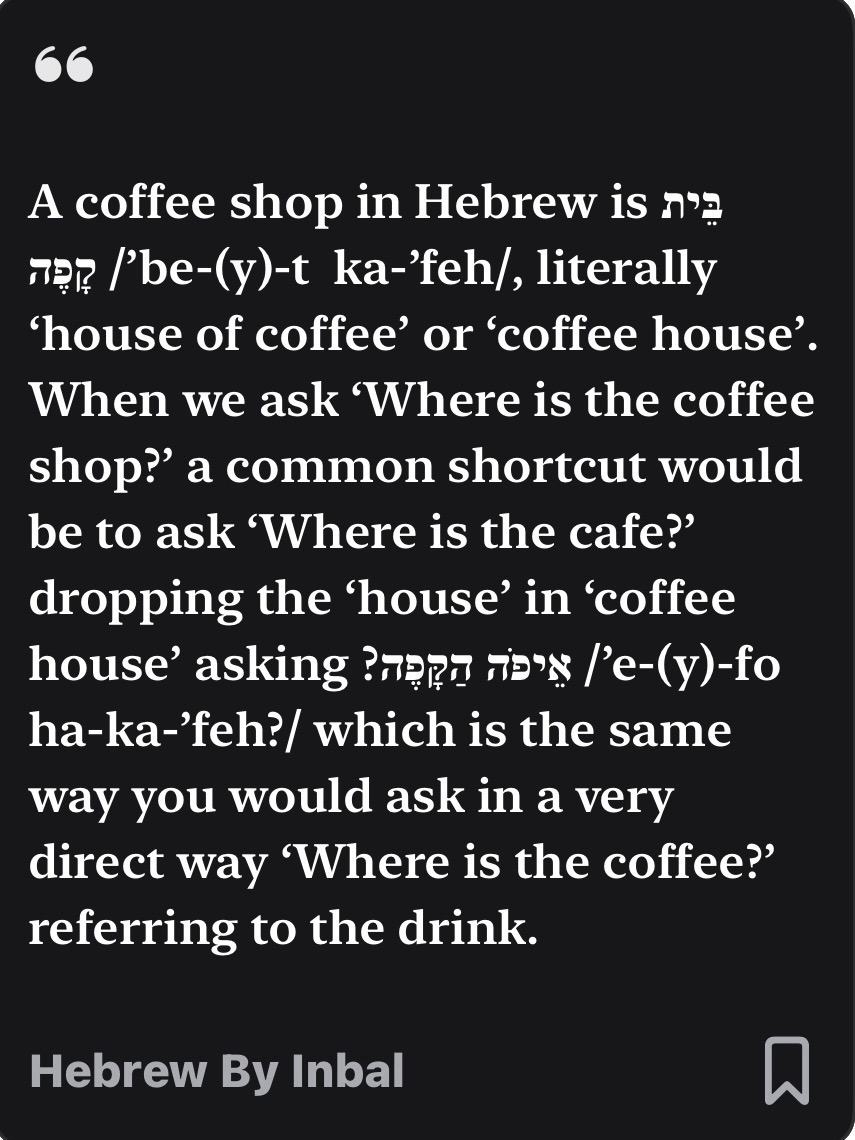
Boker Tov Friends!
Time to order your morning coffee ☕️
#CoffeeLovers #MorningCoffee #Language #Hebrew #BokerTov
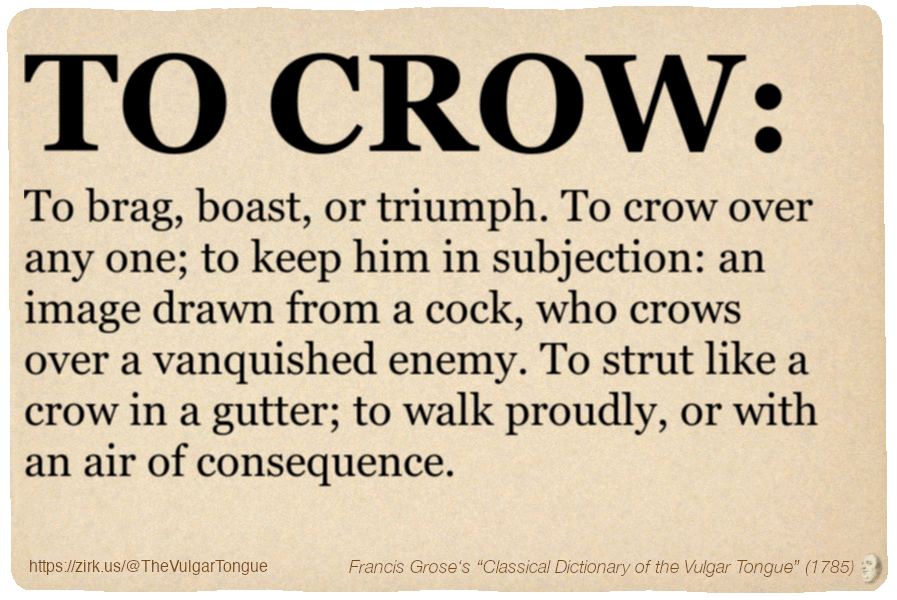
TO CROW. To brag, boast, or triumph. To crow over any one; to keep him in subjection: an image drawn from a cock, who crows over a vanquished enemy. To strut like a crow in a gutter; to walk proudly, or with an air of consequence.
A selection from Francis Grose’s “Dictionary Of The Vulgar Tongue” (1785)
--
#books #literature #dictionaries #history #society #language #slang @histodons
Alt...
Image imitating a page from an old document, text (as in main toot):
TO CROW. To brag, boast, or triumph. To crow over any one; to keep him in subjection: an image drawn from a cock, who crows over a vanquished enemy. To strut like a crow in a gutter; to walk proudly, or with an air of consequence.
A selection from Francis Grose’s “Dictionary Of The Vulgar Tongue” (1785)
![[?]](https://files.mastodon.social/accounts/avatars/000/034/380/original/c4398fad142099bc.jpg)
This has been bugging me for a while, because Dad used to say dinner, and I was confused when he meant lunch, and he'd say supper for dinner. Max Miller just brought it up talking about K-Rations so let's resolve this. Please comment on any regional or cultural/etymological details you know of pls! It may just come down to the fact there used to be four meals for farm workers causing all this confusion... breakfast, lunch, dinner, and finally supper. (?) #Culture #Etymology #Language
| For me dinner is a mid-day meal.: | 1 |
| For me dinner is the last meal of the day.: | 22 |
| For me supper is a mid-day meal.: | 1 |
| For me supper is the last meal of the day.: | 7 |
Closed
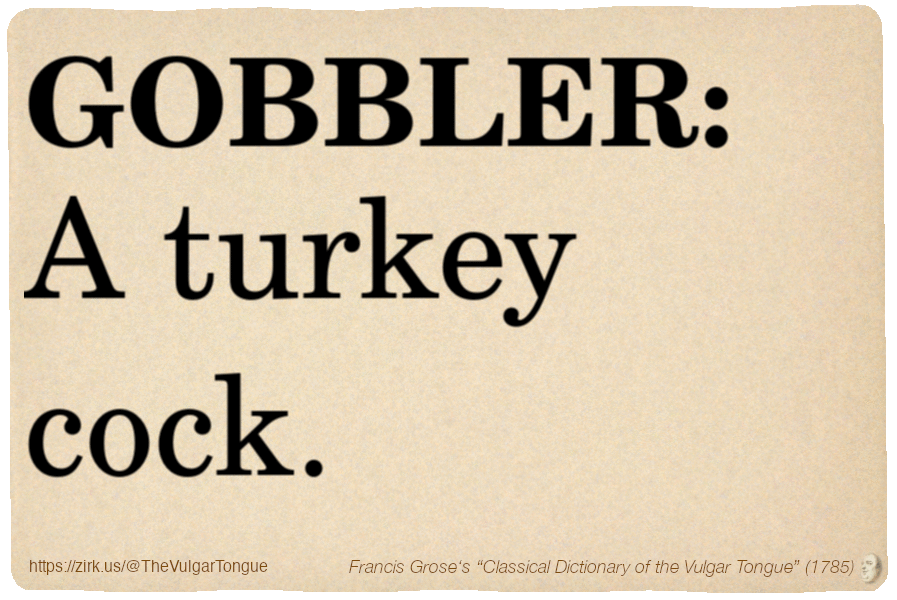
GOBBLER. A turkey cock.
A selection from Francis Grose’s “Dictionary Of The Vulgar Tongue” (1785)
--
#books #literature #dictionaries #history #society #language #slang @histodons
Alt...
Image imitating a page from an old document, text (as in main toot):
GOBBLER. A turkey cock.
A selection from Francis Grose’s “Dictionary Of The Vulgar Tongue” (1785)
GAMON AND PATTER. Common place talk of any profession; as the gamon and patter of a horse-dealer, sailor, &c.
A selection from Francis Grose’s “Dictionary Of The Vulgar Tongue” (1785)
--
#books #literature #dictionaries #history #society #language #slang @histodons
Alt...
Image imitating a page from an old document, text (as in main toot):
GAMON AND PATTER. Common place talk of any profession; as the gamon and patter of a horse-dealer, sailor, &c.
A selection from Francis Grose’s “Dictionary Of The Vulgar Tongue” (1785)
HERE AND THEREIAN. One who has no settled place of residence.
A selection from Francis Grose’s “Dictionary Of The Vulgar Tongue” (1785)
--
#books #literature #dictionaries #history #society #language #slang @histodons
Alt...
Image imitating a page from an old document, text (as in main toot):
HERE AND THEREIAN. One who has no settled place of residence.
A selection from Francis Grose’s “Dictionary Of The Vulgar Tongue” (1785)
HUMP. To hump; once a fashionable word for copulation.
A selection from Francis Grose’s “Dictionary Of The Vulgar Tongue” (1785)
--
#books #literature #dictionaries #history #society #language #slang @histodons
Alt...
Image imitating a page from an old document, text (as in main toot):
HUMP. To hump; once a fashionable word for copulation.
A selection from Francis Grose’s “Dictionary Of The Vulgar Tongue” (1785)
TO HUFF. To reprove, or scold at any one; also to bluster, bounce, ding, or swagger. A captain huff; a noted bully. To stand the huff; to be answerable for the reckoning in a public house.
A selection from Francis Grose’s “Dictionary Of The Vulgar Tongue” (1785)
--
#books #literature #dictionaries #history #society #language #slang @histodons
Alt...
Image imitating a page from an old document, text (as in main toot):
TO HUFF. To reprove, or scold at any one; also to bluster, bounce, ding, or swagger. A captain huff; a noted bully. To stand the huff; to be answerable for the reckoning in a public house.
A selection from Francis Grose’s “Dictionary Of The Vulgar Tongue” (1785)
MAGGOTTY. Whimsical, capricious.
A selection from Francis Grose’s “Dictionary Of The Vulgar Tongue” (1785)
--
#books #literature #dictionaries #history #society #language #slang @histodons
Alt...
Image imitating a page from an old document, text (as in main toot):
MAGGOTTY. Whimsical, capricious.
A selection from Francis Grose’s “Dictionary Of The Vulgar Tongue” (1785)

HORN COLIC. A temporary priapism.
A selection from Francis Grose’s “Dictionary Of The Vulgar Tongue” (1785)
--
#books #literature #dictionaries #history #society #language #slang @histodons
Alt...
Image imitating a page from an old document, text (as in main toot):
HORN COLIC. A temporary priapism.
A selection from Francis Grose’s “Dictionary Of The Vulgar Tongue” (1785)
How a change in demographic is seeing a decline of the Welsh language
https://www.youtube.com/watch?v=aw1-d6WAJYQ #Wales #Language
VALENTINE. The first woman seen by a man, or man seen by a woman, on St. Valentine's day, the 14th of February, when it is said every bird chuses his mate for the ensuing year.
A selection from Francis Grose’s “Dictionary Of The Vulgar Tongue” (1785)
--
#books #literature #dictionaries #history #society #language #slang @histodons
Alt...
Image imitating a page from an old document, text (as in main toot):
VALENTINE. The first woman seen by a man, or man seen by a woman, on St. Valentine's day, the 14th of February, when it is said every bird chuses his mate for the ensuing year.
A selection from Francis Grose’s “Dictionary Of The Vulgar Tongue” (1785)
CURE ARSE. A dyachilon plaister, applied to the parts galled by riding.
A selection from Francis Grose’s “Dictionary Of The Vulgar Tongue” (1785)
--
#books #literature #dictionaries #history #society #language #slang @histodons
Alt...
Image imitating a page from an old document, text (as in main toot):
CURE ARSE. A dyachilon plaister, applied to the parts galled by riding.
A selection from Francis Grose’s “Dictionary Of The Vulgar Tongue” (1785)
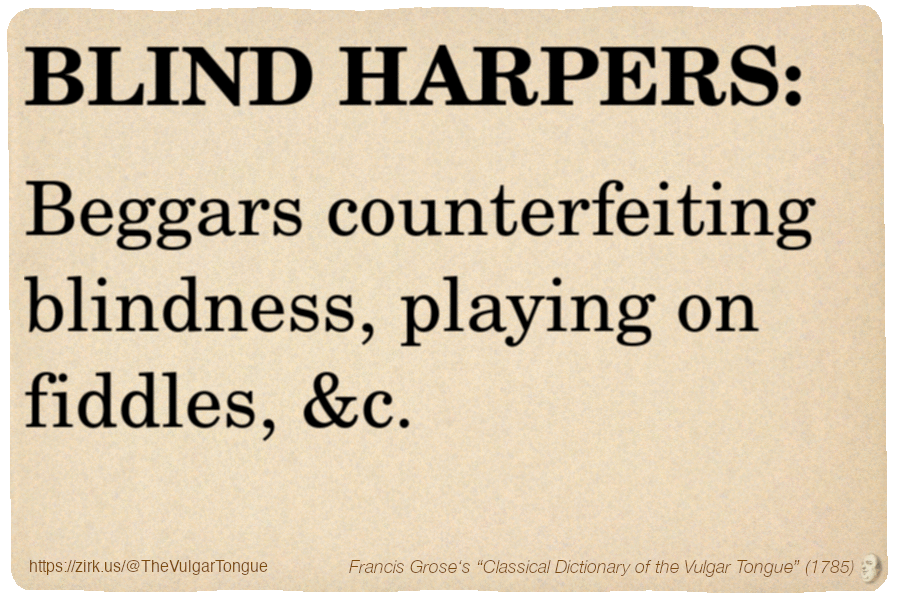
BLIND HARPERS. Beggars counterfeiting blindness, playing on fiddles, &c.
A selection from Francis Grose’s “Dictionary Of The Vulgar Tongue” (1785)
--
#books #literature #dictionaries #history #society #language #slang @histodons
Alt...
Image imitating a page from an old document, text (as in main toot):
BLIND HARPERS. Beggars counterfeiting blindness, playing on fiddles, &c.
A selection from Francis Grose’s “Dictionary Of The Vulgar Tongue” (1785)
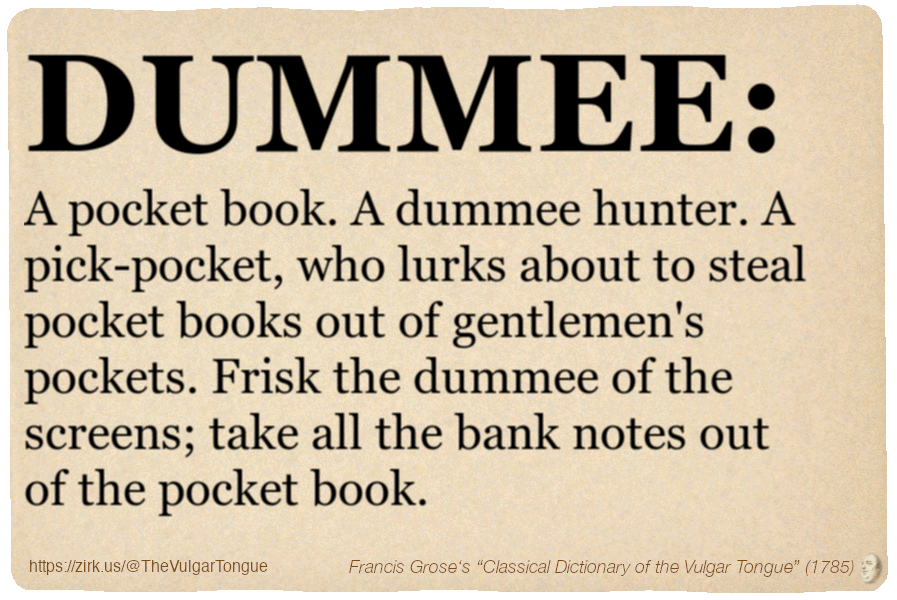
DUMMEE. A pocket book. A dummee hunter. A pick-pocket, who lurks about to steal pocket books out of gentlemen's pockets. Frisk the dummee of the screens; take all the bank notes out of the pocket book.
A selection from Francis Grose’s “Dictionary Of The Vulgar Tongue” (1785)
--
#books #literature #dictionaries #history #society #language #slang @histodons
Alt...
Image imitating a page from an old document, text (as in main toot):
DUMMEE. A pocket book. A dummee hunter. A pick-pocket, who lurks about to steal pocket books out of gentlemen's pockets. Frisk the dummee of the screens; take all the bank notes out of the pocket book.
A selection from Francis Grose’s “Dictionary Of The Vulgar Tongue” (1785)
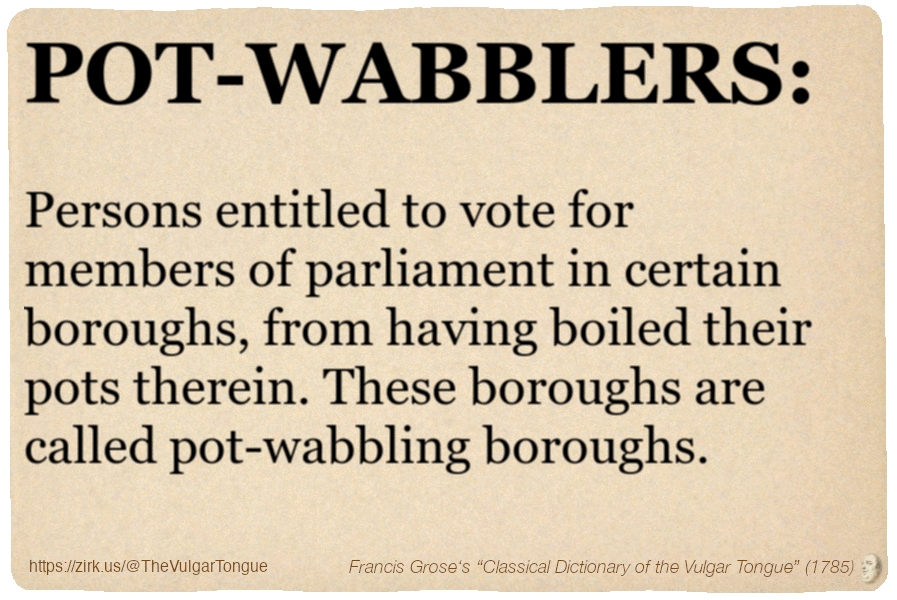
POT-WABBLERS. Persons entitled to vote for members of parliament in certain boroughs, from having boiled their pots therein. These boroughs are called pot-wabbling boroughs.
A selection from Francis Grose’s “Dictionary Of The Vulgar Tongue” (1785)
--
#books #literature #dictionaries #history #society #language #slang @histodons
Alt...
Image imitating a page from an old document, text (as in main toot):
POT-WABBLERS. Persons entitled to vote for members of parliament in certain boroughs, from having boiled their pots therein. These boroughs are called pot-wabbling boroughs.
A selection from Francis Grose’s “Dictionary Of The Vulgar Tongue” (1785)
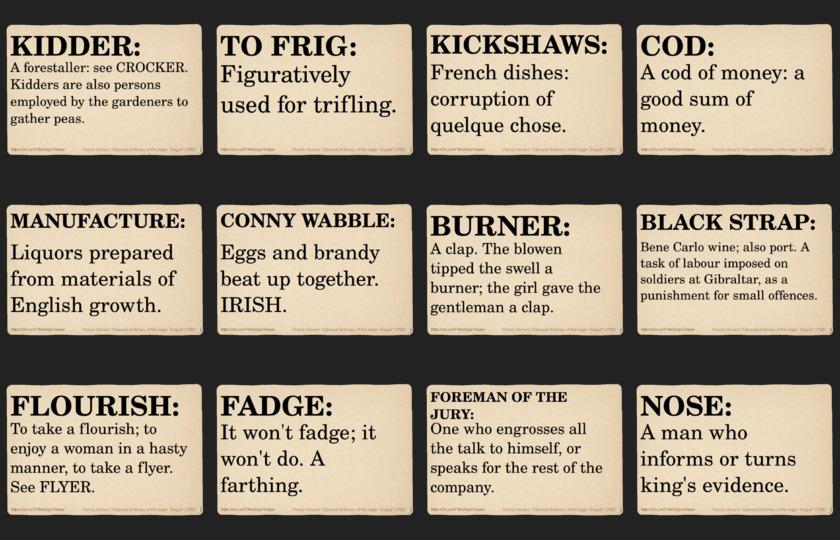
Hi!, I'm a bot posting selections from Francis Grose’s 1785 “Dictionary Of The Vulgar Tongue”, a compilation of slang terms, the coded language of the underclass and the demi-monde.
[18th-century-content warning: possible racism, animal cruelty, homophobia, sexism, slut-shaming. Let me know of any problems.]
#FollowFriday #books #literature #dictionaries #history #society #crime #language #slang #18thCentury
Alt...
Montage of dictionary items posted by this account
![[?]](https://friendica.world/photo/profile/wistquotes.png?ts=1766199542)
A quotation from Anthony Burgess
Languages never stand still. Modern spelling crystallizes lost pronunciations: the visual never quite catches up with the aural.
Anthony Burgess (1917-1993) English novelist
A Mouthful of Air: Language, Languages … Especially English, ch. 21 “Sounds from the Past” (1992)
More about this quote: wist.info/burgess-anthony/7114…
#quote #quotes #quotation #qotd #burgess #anthonyburgess #artifact #evolution #language #linguistics #orthography #passageoftime #pronunciation #spelling #timelag
MUMMER. The mouth.
A selection from Francis Grose’s “Dictionary Of The Vulgar Tongue” (1785)
--
#books #literature #dictionaries #history #society #language #slang @histodons
Alt...
Image imitating a page from an old document, text (as in main toot):
MUMMER. The mouth.
A selection from Francis Grose’s “Dictionary Of The Vulgar Tongue” (1785)
GOLD DROPPERS. Who drop a piece of gold, which they pick up in the presence of some unexperienced person, this they pretend to have found, and they invite him to a public house to partake of it: when there, comrades drop in, and propose cards, or some other game.
A selection from Francis Grose’s “Dictionary Of The Vulgar Tongue” (1785)
--
#books #literature #dictionaries #history #society #language #slang @histodons
Alt...
Image imitating a page from an old document, text (as in main toot):
GOLD DROPPERS. Who drop a piece of gold, which they pick up in the presence of some unexperienced person, this they pretend to have found, and they invite him to a public house to partake of it: when there, comrades drop in, and propose cards, or some other game.
A selection from Francis Grose’s “Dictionary Of The Vulgar Tongue” (1785)
SNOOZING KEN. A brothel. The swell was spiced in a snoozing ken of his screens; the gentleman was robbed of his bank notes in a brothel.
A selection from Francis Grose’s “Dictionary Of The Vulgar Tongue” (1785)
--
#books #literature #dictionaries #history #society #language #slang @histodons
Alt...
Image imitating a page from an old document, text (as in main toot):
SNOOZING KEN. A brothel. The swell was spiced in a snoozing ken of his screens; the gentleman was robbed of his bank notes in a brothel.
A selection from Francis Grose’s “Dictionary Of The Vulgar Tongue” (1785)
Let’s journey together through Hebrew Colors 💛🩷🩵💜🧡
Read my latest article and discover a unique biblical connection.
Click the link 👇🏻
#Colors #LearnHebrew #Language #Bible

RING. A circle formed for boxers, wrestlers, and cudgel-players, by a man styled Vinegar; who goes round the circle, striking at random with his whip to prevent the populace from crowding in.
A selection from Francis Grose’s “Dictionary Of The Vulgar Tongue” (1785)
--
#books #literature #dictionaries #history #society #language #slang @histodons
Alt...
Image imitating a page from an old document, text (as in main toot):
RING. A circle formed for boxers, wrestlers, and cudgel-players, by a man styled Vinegar; who goes round the circle, striking at random with his whip to prevent the populace from crowding in.
A selection from Francis Grose’s “Dictionary Of The Vulgar Tongue” (1785)
Language is overrated. In this Substack piece, I scrutinise language and the fact that much of language is extraneous. As for spoken language, many utterances are not strictly necessary, though they are functional.
https://brywillis634737.substack.com/p/pass-the-salt
I shake hands with #Austin, #Derrida, #Searle, #Wittgenstein, #Nietzsche, and #Barthes on this journey – even a bout with #Pinker.
#philosophy #language #languageinsufficiency #salt #justice #blog #podcast #artificialintelligence #robots #parsing
CRANK. Gin and water; also, brisk, pert.
A selection from Francis Grose’s “Dictionary Of The Vulgar Tongue” (1785)
--
#books #literature #dictionaries #history #society #language #slang @histodons
Alt...
Image imitating a page from an old document, text (as in main toot):
CRANK. Gin and water; also, brisk, pert.
A selection from Francis Grose’s “Dictionary Of The Vulgar Tongue” (1785)
BEVER. An afternoon's luncheon; also a fine hat; beaver's fur making the best hats.
A selection from Francis Grose’s “Dictionary Of The Vulgar Tongue” (1785)
--
#books #literature #dictionaries #history #society #language #slang @histodons
Alt...
Image imitating a page from an old document, text (as in main toot):
BEVER. An afternoon's luncheon; also a fine hat; beaver's fur making the best hats.
A selection from Francis Grose’s “Dictionary Of The Vulgar Tongue” (1785)
BEGGAR MAKER. A publican, or ale-house keeper.
A selection from Francis Grose’s “Dictionary Of The Vulgar Tongue” (1785)
--
#books #literature #dictionaries #history #society #language #slang @histodons
Alt...
Image imitating a page from an old document, text (as in main toot):
BEGGAR MAKER. A publican, or ale-house keeper.
A selection from Francis Grose’s “Dictionary Of The Vulgar Tongue” (1785)
CHIMNEY CHOPS. An abusive appellation for a negro.
A selection from Francis Grose’s “Dictionary Of The Vulgar Tongue” (1785)
--
#books #literature #dictionaries #history #society #language #slang @histodons
Alt...
Image imitating a page from an old document, text (as in main toot):
CHIMNEY CHOPS. An abusive appellation for a negro.
A selection from Francis Grose’s “Dictionary Of The Vulgar Tongue” (1785)
I am trying something new on Substack.
I’ve been working on an essay about understanding.
The premise is simple enough: LLMs are routinely described as subhuman because, among other alleged deficiencies, they lack consciousness and don’t understand.
#philosophy #language #understanding #linguistics #llms #aidebate #artificialintelligence #blog #podcast #substack #essay #preview #criticalanalysis #consciousness #meaning

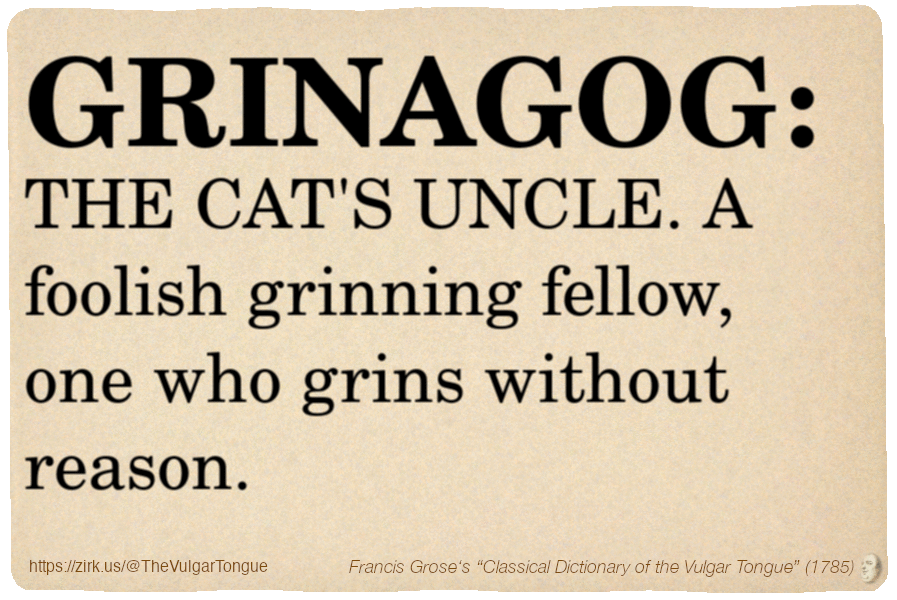
GRINAGOG, THE CAT'S UNCLE. A foolish grinning fellow, one who grins without reason.
A selection from Francis Grose’s “Dictionary Of The Vulgar Tongue” (1785)
--
#books #literature #dictionaries #history #society #language #slang @histodons
Alt...
Image imitating a page from an old document, text (as in main toot):
GRINAGOG, THE CAT'S UNCLE. A foolish grinning fellow, one who grins without reason.
A selection from Francis Grose’s “Dictionary Of The Vulgar Tongue” (1785)
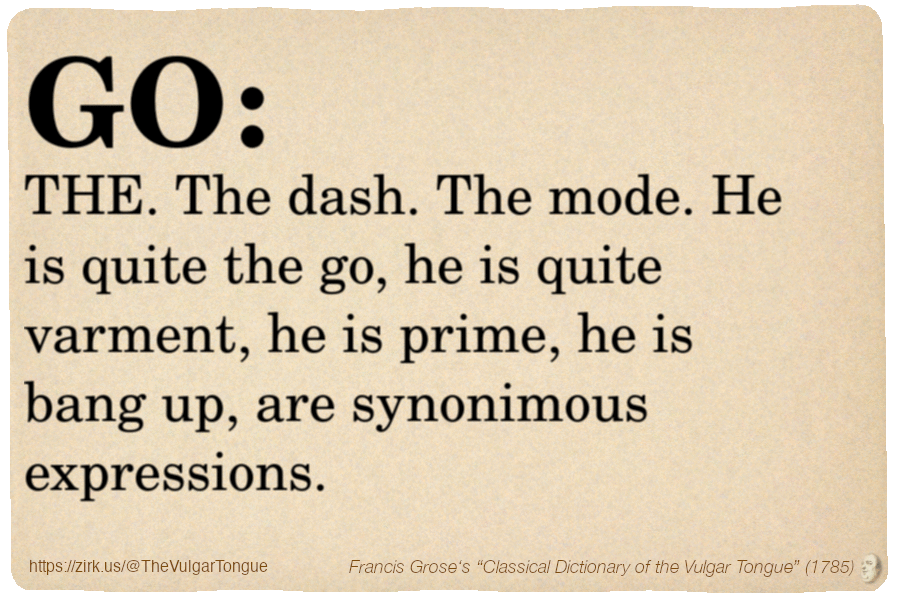
GO, THE. The dash. The mode. He is quite the go, he is quite varment, he is prime, he is bang up, are synonimous expressions.
A selection from Francis Grose’s “Dictionary Of The Vulgar Tongue” (1785)
--
#books #literature #dictionaries #history #society #language #slang @histodons
Alt...
Image imitating a page from an old document, text (as in main toot):
GO, THE. The dash. The mode. He is quite the go, he is quite varment, he is prime, he is bang up, are synonimous expressions.
A selection from Francis Grose’s “Dictionary Of The Vulgar Tongue” (1785)
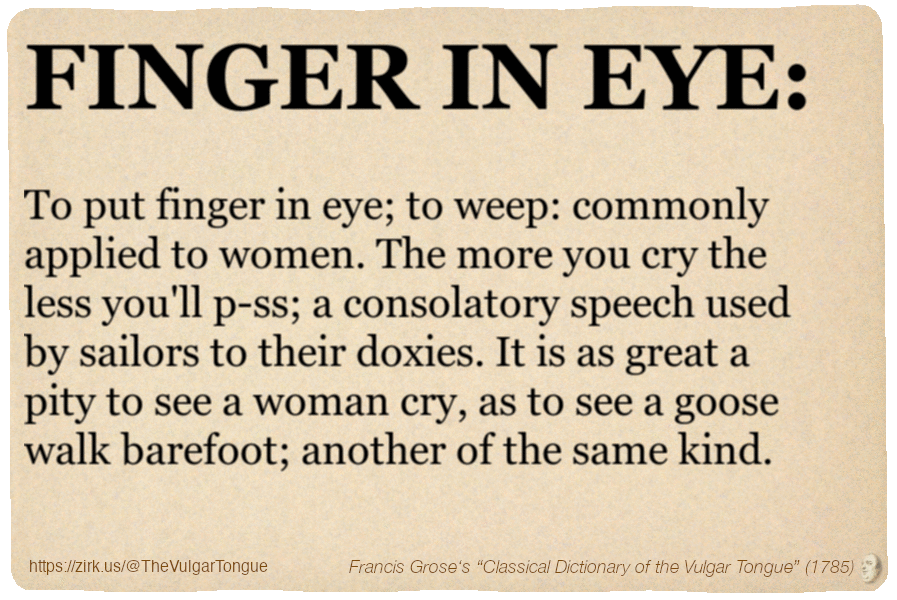
FINGER IN EYE. To put finger in eye; to weep: commonly applied to women. The more you cry the less you'll p-ss; a consolatory speech used by sailors to their doxies. It is as great a pity to see a woman cry, as to see a goose walk barefoot; another of the same kind.
A selection from Francis Grose’s “Dictionary Of The Vulgar Tongue” (1785)
--
#books #literature #dictionaries #history #society #language #slang @histodons
Alt...
Image imitating a page from an old document, text (as in main toot):
FINGER IN EYE. To put finger in eye; to weep: commonly applied to women. The more you cry the less you'll p-ss; a consolatory speech used by sailors to their doxies. It is as great a pity to see a woman cry, as to see a goose walk barefoot; another of the same kind.
A selection from Francis Grose’s “Dictionary Of The Vulgar Tongue” (1785)
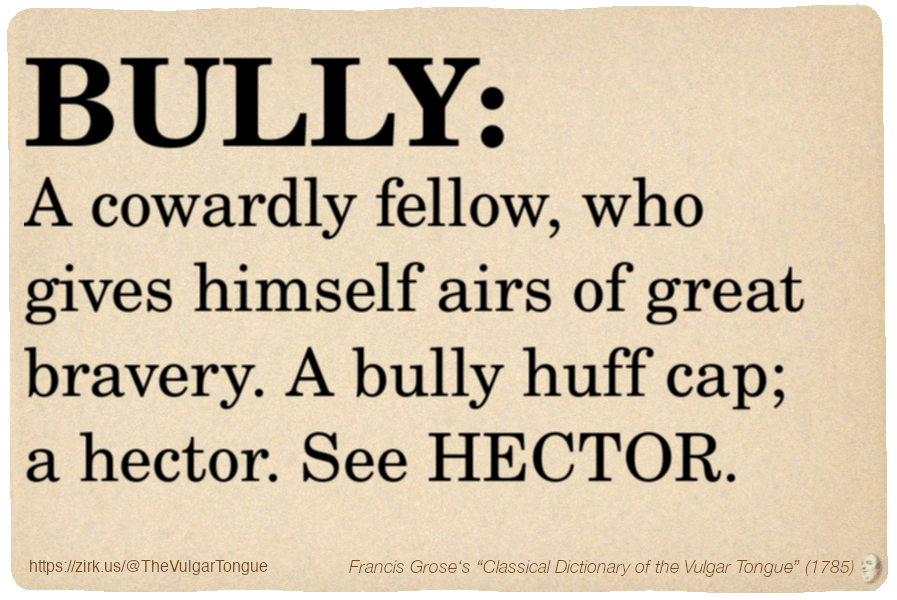
BULLY. A cowardly fellow, who gives himself airs of great bravery. A bully huff cap; a hector. See HECTOR.
A selection from Francis Grose’s “Dictionary Of The Vulgar Tongue” (1785)
--
#books #literature #dictionaries #history #society #language #slang @histodons
Alt...
Image imitating a page from an old document, text (as in main toot):
BULLY. A cowardly fellow, who gives himself airs of great bravery. A bully huff cap; a hector. See HECTOR.
A selection from Francis Grose’s “Dictionary Of The Vulgar Tongue” (1785)
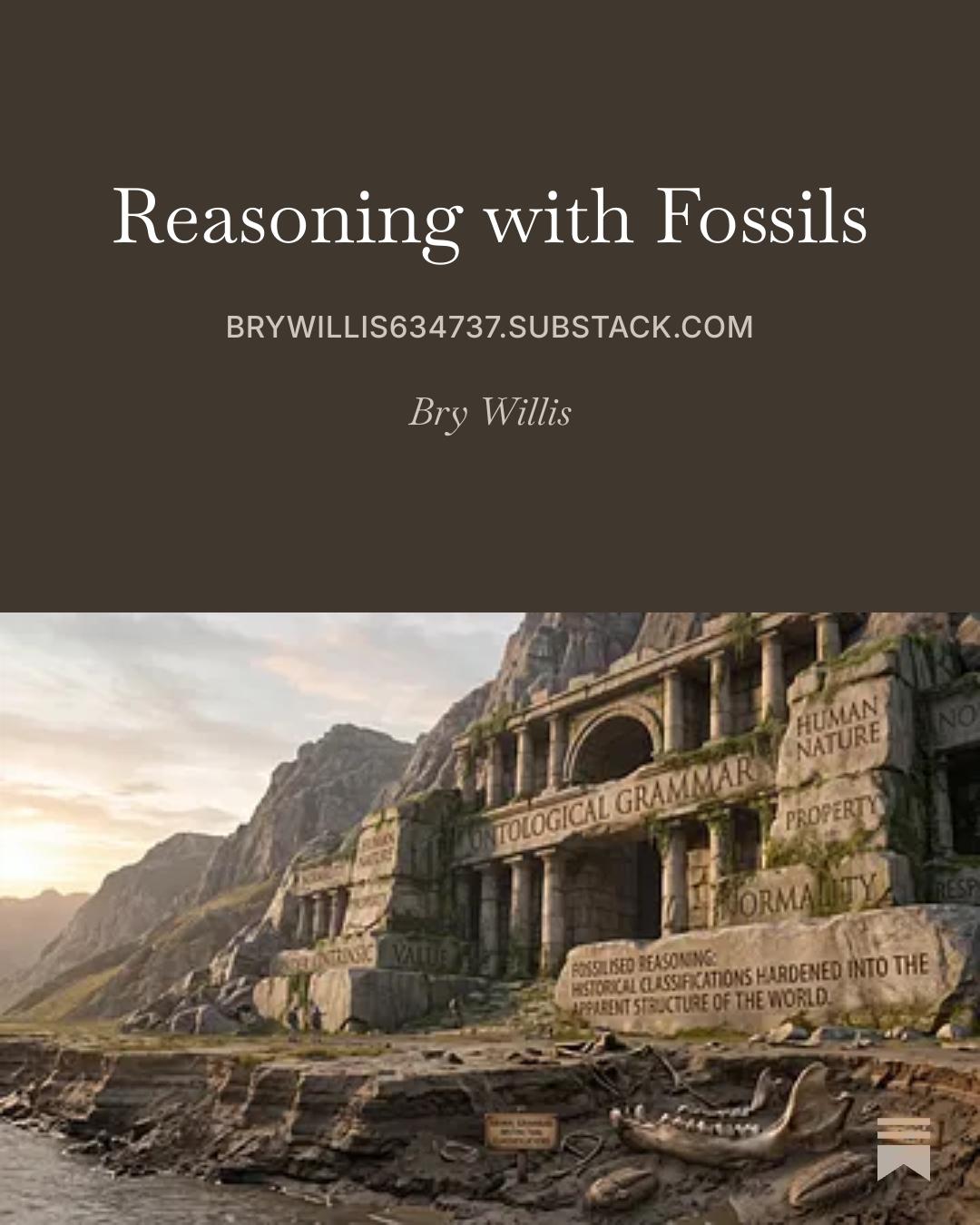
I've long been fascinated with the notions of LOGIC and REASON, especially where they fall woefully short. I realise that not everyone is a philosopher or a trained critical thinker.
https://brywillis634737.substack.com/p/reasoning-with-fossils?utm_source=masto&utm_medium=social
#philosophy #language #reason #logic #argument #debate #video #podcast #blog #history #enlightenment #foundations #fossils
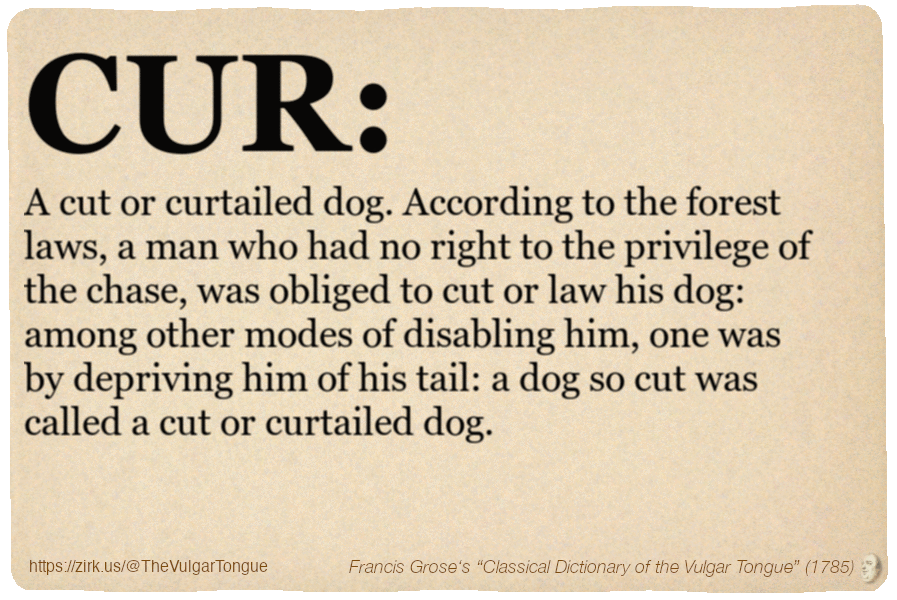
CUR. A cut or curtailed dog. According to the forest laws, a man who had no right to the privilege of the chase, was obliged to cut or law his dog: among other modes of disabling him, one was by depriving him of his tail: a dog so cut was called a cut or curtailed dog.
A selection from Francis Grose’s “Dictionary Of The Vulgar Tongue” (1785)
--
#books #literature #dictionaries #history #society #language #slang @histodons
Alt...
Image imitating a page from an old document, text (as in main toot):
CUR. A cut or curtailed dog. According to the forest laws, a man who had no right to the privilege of the chase, was obliged to cut or law his dog: among other modes of disabling him, one was by depriving him of his tail: a dog so cut was called a cut or curtailed dog.
A selection from Francis Grose’s “Dictionary Of The Vulgar Tongue” (1785)
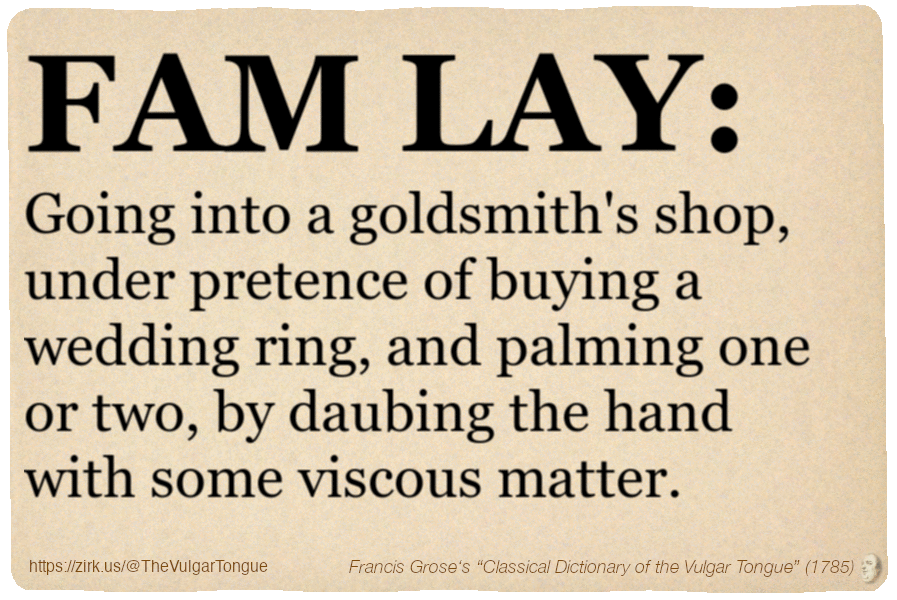
FAM LAY. Going into a goldsmith's shop, under pretence of buying a wedding ring, and palming one or two, by daubing the hand with some viscous matter.
A selection from Francis Grose’s “Dictionary Of The Vulgar Tongue” (1785)
--
#books #literature #dictionaries #history #society #language #slang @histodons
Alt...
Image imitating a page from an old document, text (as in main toot):
FAM LAY. Going into a goldsmith's shop, under pretence of buying a wedding ring, and palming one or two, by daubing the hand with some viscous matter.
A selection from Francis Grose’s “Dictionary Of The Vulgar Tongue” (1785)
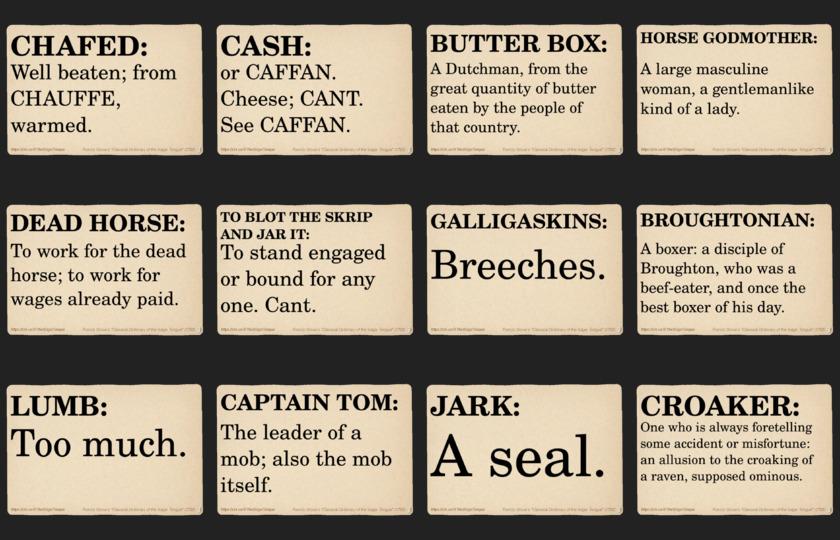
Hi!, I'm a bot posting selections from Francis Grose’s 1785 “Dictionary Of The Vulgar Tongue”, a compilation of slang terms, the coded language of the underclass and the demi-monde.
[18th-century-content warning: possible racism, animal cruelty, homophobia, sexism, slut-shaming. Let me know of any problems.]
#FollowFriday #books #literature #dictionaries #history #society #crime #language #slang #18thCentury
Alt...
Montage of dictionary items posted by this account
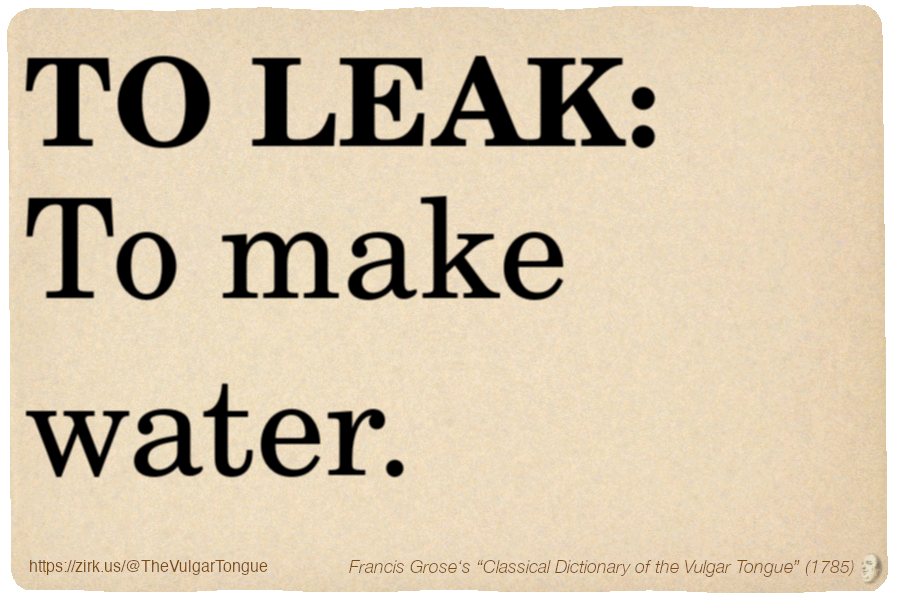
TO LEAK. To make water.
A selection from Francis Grose’s “Dictionary Of The Vulgar Tongue” (1785)
--
#books #literature #dictionaries #history #society #language #slang @histodons
Alt...
Image imitating a page from an old document, text (as in main toot):
TO LEAK. To make water.
A selection from Francis Grose’s “Dictionary Of The Vulgar Tongue” (1785)