Search results for tag #hebrew

That one channel in 1980s Israel started a lifelong love of language. It took me from translation and storytelling stages in Tel Aviv to Portugal, then across the ocean to South Carolina, and finally to building Hebrew by Inbal.
Every chapter shaped the way I teach Hebrew today. I just updated my story on Substack, and I’d love for you to read it.
What is your Hebrew Story?
https://hebrewbyinbal.substack.com/p/from-israeli-tv-to-a-global-hebrew?r=2at7n8&utm_medium=ios
Anyone planning on proposing this weekend? 💍 Here's how to ask in Hebrew.
There are two ways to ask, and I walk you through both. Listen to how I say each one, then say it out loud with me.
Save this for the big moment, and send it to the person you'd ask. 😉
Want to understand and speak real Hebrew with me by your side?

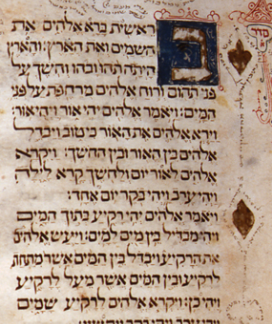
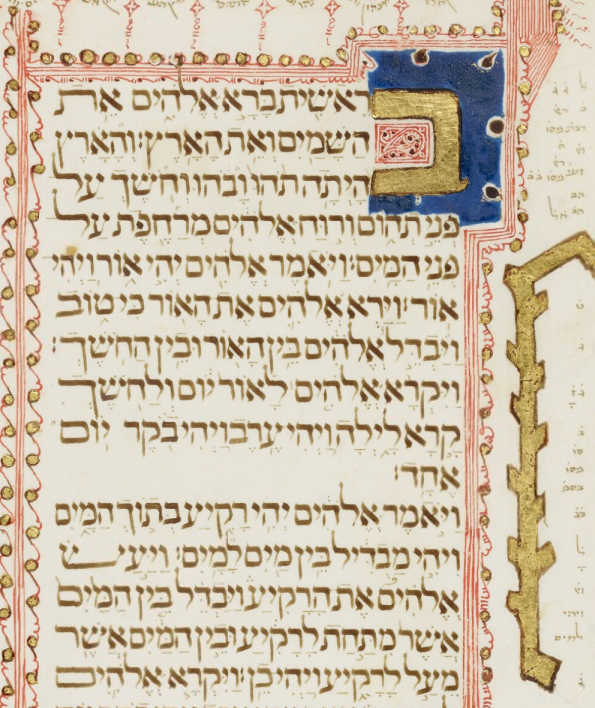
The first word of the Masoretic Text is BERESHITH. In the Masorah, this word begins with a rare majiscule letter BET. This BET is traditionally adorned with crowns or serifs indicating a crown of a king.
Also there is no temporal preposition and no temporal object. Thus the word is being used to denote the rank of a person. Guess who that person is. The King!
The Greek of John 1:1 uses a similar word trick in the Greek text. EN ARCHE is translated 'In the Beginning' and again there is no temporal preposition and no temporal object, again indicating a rank or quality rather than a point in past time.
The lack of understanding this has caused countless errors and omissions in many bible translations.
The BET-RAY-SHEETH is Jesus of Nazareth:
"The stone which the builders refused is become the head stone of the corner."
"Jesus saith unto them, Did ye never read in the scriptures, The stone which the builders rejected, the same is become the head of the corner: this is the Lord's doing, and it is marvellous in our eyes?"
"And are built upon the foundation of the apostles and prophets, Jesus Christ himself being the chief corner stone."
Jesus is the arch stone (en arche) or corner stone, and the foundation stone (bereshith). Moses told us about Jesus Christ in the first word of Genesis. All the bible that follows is based upon the foundation stone of Jesus of Nazareth.
Another interesting coincidence bears notices. The Hebrew letters of BERESHITH are BET, RESH, ALEPH, SHIN, YOD, TAV.
רֵאשִׁית
BRASYT
This paints a word picture:
Sun rays over the summit of a great and rooted foundation rock.
This is a picturing of the meaning of MESSIAH, which symbolizes a rock rising up into the light of the sun. It is the traditional imagery of royalty and the crown of a king symbolizing the sun's rays around the monarch's head.
#Bible #Jesus #Hebrew #Moses #Scripture #Church #Gospel #Christian #Hebrew #Israel #History #Translation
Boker Tov Friends 🤗
Heading back to the USA today and I want to thank all of the students (old and new) who kept me company on my trip!
No matter where in the world I may be I can always count on them to leave me the best feedback and they can count on me to be there on their journey. 🧡
No language in history had ever done what Hebrew did. 🕊️
For nearly two thousand years, Hebrew lived only in prayer, study and sacred texts. It survived, but in silence then a handful of determined people made a radical choice: to speak it again. At home. In the streets. To their children.
Today, more than nine million people speak Hebrew every day.
This is the story of how it happened and why it still matters for every Hebrew learner today. 💙
#Languages #Hebrew #HebrewLanguage #Linguistics

This Shay Agnon poem greets you as you enter my freinds' home in Israel and it is a beautiful example of Hebrew poetry.
Here is the translation:
“And it seemed to me that the land I walked upon, and the streets I passed through,
and the whole entire world, are nothing but a corridor to this house.”
#HebrewPoetry #Poetry #Hebrew #Poem

Bible words Israelis use for things the Bible never imagined. From Exodus to something we all use daily! Click to watch 👇🏻 https://youtu.be/aKk2lEjcAk0?is=52Qgsh2TQnkDvvOt #Hebrew #LanguageLearning #BibleStudy #ModernHebrew #BiblicalHebrew

Some words don't just name something. They paint it.
Golden leaves drifting down, trees letting go, the ground covered in warm autumn colors. One word holds the whole scene.
Grab something warm, step outside, and let the season slow you down. 💛
ICYMI
With everything going on in the world right now, it feels like every day brings a new wave of news that is just impossible to believe.
Whether you’re shocked, frustrated, heartbroken, or just plain angry, you’re not alone. And today I’m going to show you how to express these emotions in Hebrew, just as we Israelis do, and how to offer support and comfort to your Hebrew speaking friends, family, or loved ones.
https://hebrewbyinbal.substack.com/p/learn-hebrew-for-hard-times-how-to?r=2at7n8&utm_medium=ios
#emotions #support #Hebrew #lovelanguage

Every morning I wake up to messages like these. 🥹
This is just a small sampling of the dozens I receive, and each one means the world to me. Thank you for letting me be part of your Hebrew journey.
Already learning with me? Tell me how it's going in the comments. I read them.
Ready to speak and understand Hebrew? Start with Practically Speaking Hebrew: https://hebrewbyinbal.com/speak
I read a post today where someone stated "live and let live" , and my mind went straight to Leviticus. 💙
"...that your brother may live with you." (Leviticus 25:36)
In Hebrew it reads like an invitation: let your brother live with you. Make room. Lift up the one who is struggling. Let them live alongside you, not beneath you or apart from you.
Thousands of years ago it was a call to care for one another. Today, the world needs it more than ever.
Live, and let live with you. 🕊️
As a teacher, there is no greater gift than hearing from a student who has made Hebrew their own. Every message like this reminds me why I started, and why I keep going.
I am so humbled to be part of so many Hebrew journeys around the world. Different countries, different native languages, different reasons for learning, all connected through one beautiful language.
Thank you, Ruth, for taking the time to share your journey with me. And thank you to every one of my students around the world. You make my days brighter, and you make this work feel like a calling. 🙏🤍
#Hebrew #Teacher #StudentGoals #LanguageLearning #BestReview


Shavua Tov!
Listen to the sounds of the first 7 Hebrew letters of the Alephbet.
If you’re ready to learn them all starting today just let me know 🤗
Life is a Gift 🧡
Not the wrapped-up all-at-once kind. The kind you open a little at a time.
Learning a language works the same way. One new word. A sentence that suddenly makes sense. The first time you understand a conversation without translating it in your head. None of it arrives all at once, and every piece is worth unwrapping.
Any kind of growth is like that. It asks for patience and it gives back more than you expect.
Being back in Israel reminds me of that every single day. The streets, the voices, the language all around me. Being home is a very special gift, and I don't take one moment of it for granted.
What gift are you unwrapping slowly right now? 🎁👇
Wow, just WOW 🧡
When I first decided to teach Hebrew as a profession it was a leap of faith. Search online and you'll find dozens of programs and thousands of online teachers. How was I going to stand out or make a difference?
Years later I am thriving. People seek me out. I have students across the world sharing Hebrew. The best part? Making connections like this one with Lynne. As grand as my idea was when I started, the true gift is being part of the Hebrew learning journeys of others who share back so warmly.
Think big. Give value. Connect through language. That is the greatest success.
#LearnHebrew #ReviewTime #LanguageCourse #Hebrew #HebrewByInbal
Today is the first day of Kheshvan - חשון - the month that arrives with nothing.
No holidays. No celebrations. No special days marked in the calendar. After the fullness of Tishrey - Rosh Hashanah, Yom Kipur, Sukot - Kheshvan is just... quiet.
For years I saw this as the letdown month. The empty month. The one you get through on your way to something else.
But I’ve changed my mind.
Because what Kheshvan actually offers is rare:
Space.
The noise has settled. The intensity has passed. The celebrations are behind you. And now you have something most of us never stop long enough to use. Silence to hear yourself think. Room to begin something without an audience. Time that belongs only to you.
The most meaningful things in life don’t start in the loud moments. They start in the quiet ones. In the month no one is watching.
In the space between one chapter and the next.
Kheshvan is that space. Use it. 💙
Inbal
#Cheshvan #Hebrew #HebrewMonths #Heshvan

Autumn is the season of letting go.
The Bible knew it. Israelis live it every year in their own very Israeli way and Hebrew holds both in a handful of words.
I open them in this post.
https://hebrewbyinbal.substack.com/p/learn-the-hebrew-words-for-fall-and?r=2at7n8&utm_medium=ios
Some of these words are thousands of years old and you’ll still hear them on an Israeli street this week.
Once you hear them the season itself will feel different, wherever you’re watching the leaves fall.
Wishing you a beautiful autumn,
Inbal
#Autumn #Bible #Hebrew #Language #Fall
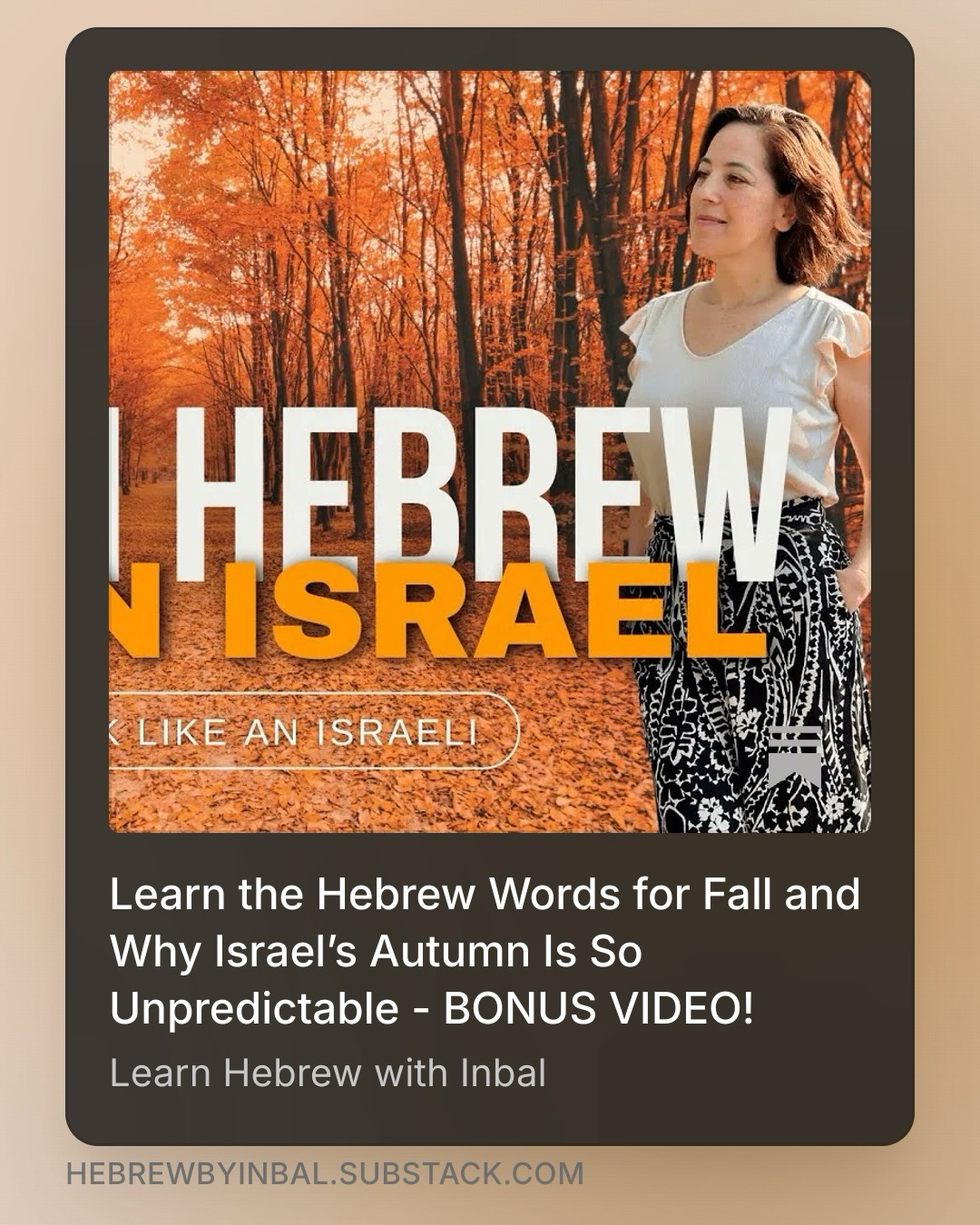
There’s something beautiful about taking a walk in autumn:
The leaves remind me that change can be beautiful and that every season has something new to teach us. 🍂
Learning a language feels the same. Little by little new words take root, new sounds become familiar, and suddenly the world around you begins to look a little different.
Keep learning. Keep growing. Keep discovering. The next season of your language journey may surprise you. 🍁
#Language #Autumn #Learning #Hebrew

Shalom, I’m Inbal!
Come see all that I offer to get you learning and loving Hebrew.
Hebrewbyinbal.com

In the linked paper, Carl D. Franklin digs deep into the history of the tetragrammaton and debunks some of the myths commonly accepted as fact. The paper is part of a series and well worth the read for anyone interested in textual criticism or translation.
PDF: https://www.cbcg.org/franklin/debunking2.pdf
"Is it true that the name Jehovah borrowed its vowels from Adonai?"Spoiler: No, it is not true. It is a fabrication of a false history. The pronunciation, JEHOVAH was used centuries before Galatinus, so it is impossible for him to have invented it. Moreover, there is exactly zero historical evidence that medieval scholars before Galatinus accepted any pronunciation other than JEHOVAH. They all appear to have unanimously supported this one widely known pronunciation of the tetragrammaton.
A lot of religious and textual myths have resulting in mass misconceptions about biblical textual history and meaning. Some of the myths misrepresent the tetragrammaton, or the name of God. This eventually led to the creation of the artificial name, Yahweh, which is not a Hebrew word, and is in fact a cleverly disguised classical Latin name for Jove. The author defrocks the Galatinus origin myth, proving the name JEHOVAH was in use long before Galatinus.
The sacred name mythos is popular in some Christian and Jewish sects as well as among the Hebrew Roots movement. This paper exposes some of the false history and baseless assertions about the pronunciation of the tetragrammaton. As it turns out, the early Masoretes and the Reformers as well as some early Catholics had gotten it right - JEHOVAH is the correctly preserved pronunciation of the name of God. The name was never 'lost' and it has been known all through recorded history, if even only by a few.
#Bible #MasoreticText #Translation #Theology #History #Philology #Myths #SacredNames #NominaSacra #Judaism #Christianity #Hebrew #TiberianHebrew
ARTICLE: https://x.com/TovRose/article/1844473294503989605
SYNOPSIS
There is no historical or textual evidence that the tetragrammaton was pointed as a 'qere' in the ancient biblical manuscripts. The claim that JHWH is a qere for Adonai is ahistorical and there are only conjectures and not proofs for the qere claim.
Moreover, the structure of the Hebrew grammar proves the tetragrammaton cannot be two syllables, as in the modern neologism, 'yahweh'. The tetragrammaton has to be three syllables, JE-HO-VAH and its shortened form is two syllables: JEHO. Its poetic form is one syllable: YAH and JAH. And there is no support for YAHWEH.
Today we are told that the tetragrammaton or 'sacred name of God' was not pronounced out of 'reverence' for the divine name. This is a Hellenist myth and wasn't even started by Hebrew-speaking people. The tetragrammaton was spoken often inside and outside of the temple, with certain rules about when and where and why it was to be spoken. But there was no actual rule or custom against speaking it--Just rules about making sure to not speak it amiss.
NOTES
Upon reading this article some things stand out to me.
Many claim that the divine name was not spoken and was substituted with 'qere' to avoid speaking it out of reverence for the name. And this is a lie.
Anyone who reveres a name actually wants to speak it and does so with respect and pride, rather than substituting a nickname. It is when we hate someone that we refuse to speak their name or prohibit others from speaking it. For example, most of the world hates the mustache man, and invoking his name is discouraged in polite conversation.
The Hebrew bible text itself repeatedly commands Israel to proclaim the divine name, not to hide it behind nicknames. Any reverence for God and his commandments would prohibit the use of 'qere' substitutions. Thus those who invented these customs were not revering God--they were dishonoring him deceitfully.
So the claim that the name was not to be spoken is nonsensical religious dogma of certain mystical sects, and not historical practice of either the temple priests or the Christians who inherited the Levitical tradition after the destruction of the temple. We must remember true history: When the temple was destroyed, the surviving Jews in Jerusalem were carried off into captivity into other parts of the world by Rome. The Jews who had converted to following Jesus before the destruction of the temple had already escaped Jerusalem before the Roman siege, and carried the traditions with them, and preserved them in early Christianity. These first Christians, most of whom were Jews, had no such custom or injunction against saying the divine name, and it shows in their writings, and in their predecessors copious transliteration of the name. Their tradition was the foundation of European Christianity, which joined forces with the Sephardim to preserve the Old Testament and Hebrew language for over a millennium of years. The Masoretes properly pointed all the words, including the divine name, to preserve their pronunciations.
The entire purpose of the Masoretic vowel pointings was specifically to preserve the correct pronunciation of every Hebrew word in the text, not to hide the pronunciation. There would have been a worldwide uproar in the scholarly community over such a practice as wrongly writing the divine name or mispronouncing it. The historical record is silent on such a thing ever occurring.
The name Jehovah with the 'J' sound is correct ancient Hebrew pronunciation of the divine name. Just as the Sephardim scribes have preserved it all these centuries, the Christian scribes took over their tradition and continued to preserve it from the time of the reformation onward. When Tyndale rendered the name as IEHOUA, he was using the pronunciation taught by the Masoretic scribes and their Christian cohorts. It was not an 'invention' but rather a transliteration into English characters of the day.
We are now at a new crossroads in history where many occultists, kabbalists, pagans, and sectarians are once again attacking the divine name and trying to cloud it with confusion and false myths. This is what liars have always done--invent stories to support their delusions. Perhaps in the coming centuries we should expect another vanguard to come and take of the tradition of preserving the name against this army of confusion.
#Bible #MasoreticText #Translation #Theology #History #Philology #Myths #SacredNames #NominaSacra #Judaism #Christianity #Hebrew #TiberianHebrew
@infostorm@a.gup.pe @academicchatter@a.gup.pe @translators@a.gup.pe @theology@a.gup.pe @religion@a.gup.pe @histodons@a.gup.pe
In the linked paper, Carl D. Franklin digs deep into the history of the tetragrammaton and debunks some of the myths commonly accepted as fact. The paper is part of a series and well worth the read for anyone interested in textual criticism or translation.
PDF: https://www.cbcg.org/franklin/debunking2.pdf
SYNOPSIS
"Is it true that the name Jehovah borrowed its vowels from Adonai?"
Spoiler: No, it is not true. It is a fabrication of a false history. The pronunciation, JEHOVAH was used centuries before Galatinus, so it is impossible for him to have invented it. Moreover, there is a lack of historical evidence that medieval scholars before Galatinus accepted any pronunciation other than JEHOVAH. They all appear to have unanimously supported this one widely known pronunciation of the tetragrammaton.
A lot of religious and textual myths have resulting in mass misconceptions about biblical textual history and meaning. Some of the myths misrepresent the tetragrammaton, or the name of God. This eventually led to the creation of the artificial name, Yahweh, which is not a Hebrew word, and is in fact a cleverly disguised classical Latin name for Jove. The author defrocks the Galatinus origin myth, proving the name JEHOVAH was in use long before Galatinus.
The sacred name mythos is popular in some Christian and Jewish sects as well as among the Hebrew Roots movement. This paper exposes some of the false history and baseless assertions about the pronunciation of the tetragrammaton. As it turns out, the early Masoretes and some early Catholics and the later Reformers had gotten it right - JEHOVAH is the correctly preserved pronunciation of the name of God. The name was never 'lost' and it has been known all through recorded history, if even only by a few.
#Bible #MasoreticText #Translation #Theology #History #Philology #Myths #SacredNames #NominaSacra #Judaism #Christianity #Hebrew #TiberianHebrew #Language #Linguistics
@infostorm@a.gup.pe @academicchatter@a.gup.pe @translators@a.gup.pe @theology@a.gup.pe @religion@a.gup.pe @histodons@a.gup.pe