Search results for tag #culture
![[?]](https://friendica.world/photo/profile/wistquotes.png?ts=1766199542)
A quotation from Arthur Miller
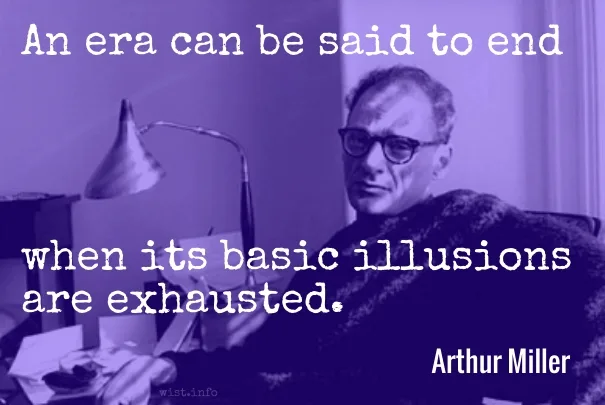
An era can be said to end when its basic illusions are exhausted.
Arthur Miller (1915–2005) American playwright and essayist
Essay (1974-12), “The Year It Came Apart,” New York Magazine, Vol. 8, No. 1
More about this quote: wist.info/miller-athur/34605/
#quote #quotes #quotation #qotd #arthurmiller #culture #disillusionment #epoch #era #history #illusion #meme #myths #society
Alt...
Arthur Miller quote
![[?]](https://files.mastodon.social/accounts/avatars/110/441/535/131/897/219/original/0ddf9d4dd12a5dee.png)
"I am not sick. I am broken. But I am happy to be alive as long as I can paint."
#OTD in 1925, 18-year-old Frida Kahlo forgot her umbrella. This tiny oversight changed the trajectory of her life.
Frida Kahlo’s Life-Changing Accident:
https://en.wikipedia.org/wiki/Frida_Kahlo
Alt...
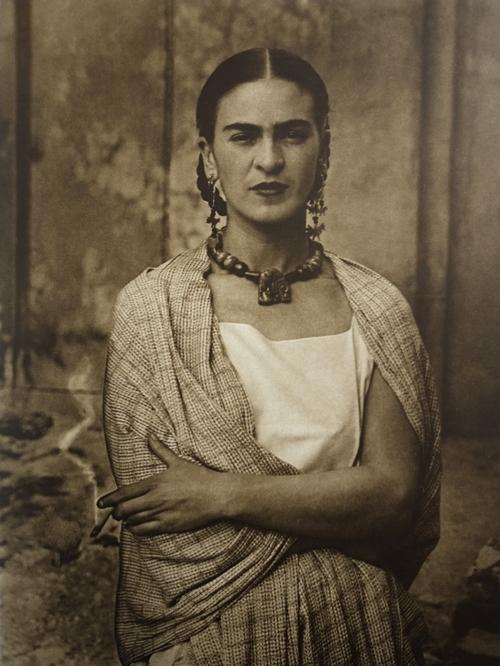
Frida photographed in 1932 by her father, Guillermo.
She wears a plaid shawl over a white blouse, statement earrings, and a carved pendant necklace, hair parted center and pulled back, gazing directly at the camera with a serious expression.
![[?]](https://s3.eu-central-2.wasabisys.com/mastodonworld/accounts/avatars/109/362/359/610/912/307/original/4854f87af56f0d9a.png)
"The public commons is a place people stop at on their way somewhere else. Everyone eats the same value meal because there’s nothing else to eat."
An excerpt from Gabe Bullard’s new book, AGAINST CONVENIENCE:
https://longreads.com/2026/09/15/convenience-friction-eating-alone/?utm_source=mastodon&utm_medium=social
"We have no category (not in the App Store and not in our cultural vocabulary) for paidia without agôn: our culture has no home for free, exploratory, contemplative play that refuses to compete."
Justin Neuman for Aeon: https://aeon.co/essays/play-is-doing-its-work-even-if-were-not-keeping-score
Somewhere, some rights-holder — in this case, Kultur Video — decided it was better for the world that no one see the interview online than that people see it and no one profit from it. This, right here, is the deepest, saddest brokenness of current thinking on intellectual “property” as a wealth of humanity’s greatest intellectual and creative treasures rot in the clenched talons of rights-holders unable to monetize their properties and unwilling to make them available for free. As long as we continue to place commercial profit above cultural profit, especially when it comes to archival materials and cultural preservation, we are doomed to a future bitterly divorced from its past.
Maria Popova (b. 1983) Bulgarian-American essayist, author, critic [Мария Попова]
Post (2012-04-30), “Orson Welles: A Rare 1960 Interview,” The Marginalian
More about this quote: wist.info/popova-maria/85926/
#quote #quotes #quotation #qotd #mariapopova #themarginalian #commercialism #culturallegacy #culturalpreservation #culture #history #intellectualproperty #monetization #past #profit #rightsholder #takedown
![[?]](https://cdn.masto.host/fashionsocialhost/accounts/avatars/109/358/934/329/870/517/original/470d84acde4323b6.jpg)
Wellington Jazz Festival celebrates 30 years with biggest event yet
https://lucire.com/insider/20260910/wellington-jazz-festival-celebrates-30-years-with-biggest-event-yet/ #NZ #jazz #Aotearoa #music #TeWhanganuiaTara #Wellington #living #culture
Alt...
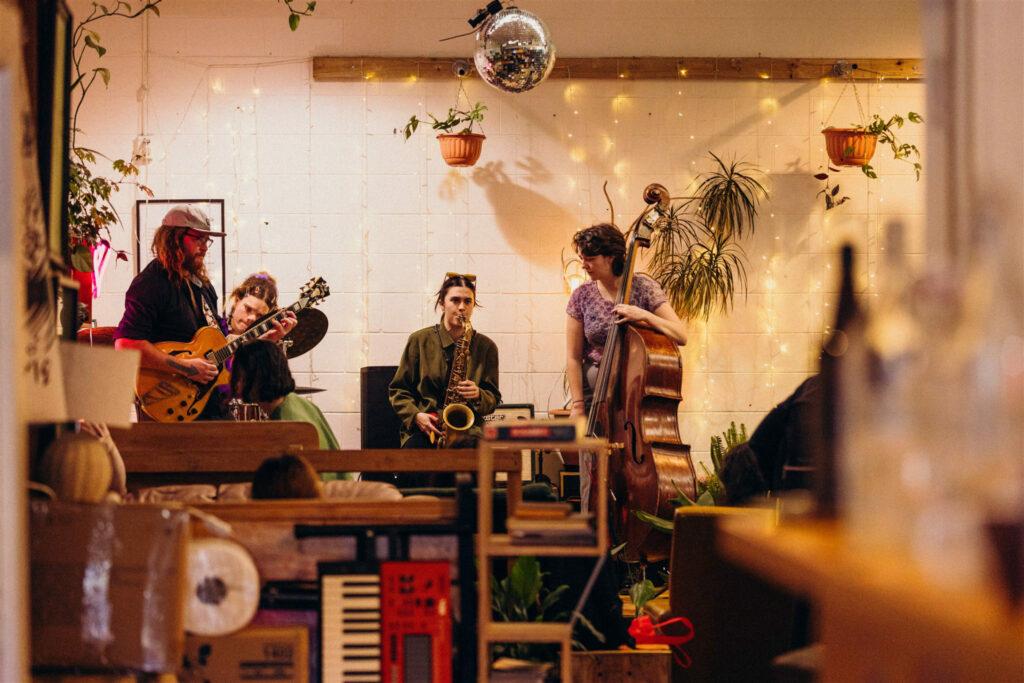
Wāhine in Jazz—2024 Wellington Jazz Festival. Photo by Nick George.
The Save Pile
https://theamericanscholar.org/the-save-pile/

Alt...
This photograph shows a pile of clothing, white canvas sneakers, and a light beige straw fedora hat.
Did Renoir Actually Suck at Painting?
A blockbuster touring exhibition is putting the spotlight on a legendary Impressionist who has long divided opinion.
by Jo Lawson-Tancred
https://news.artnet.com/art-world/renoir-sucks-expert-debat-2791737
Books about/illustrated by Renoir at PG:
https://www.gutenberg.org/ebooks/search/?query=renoir
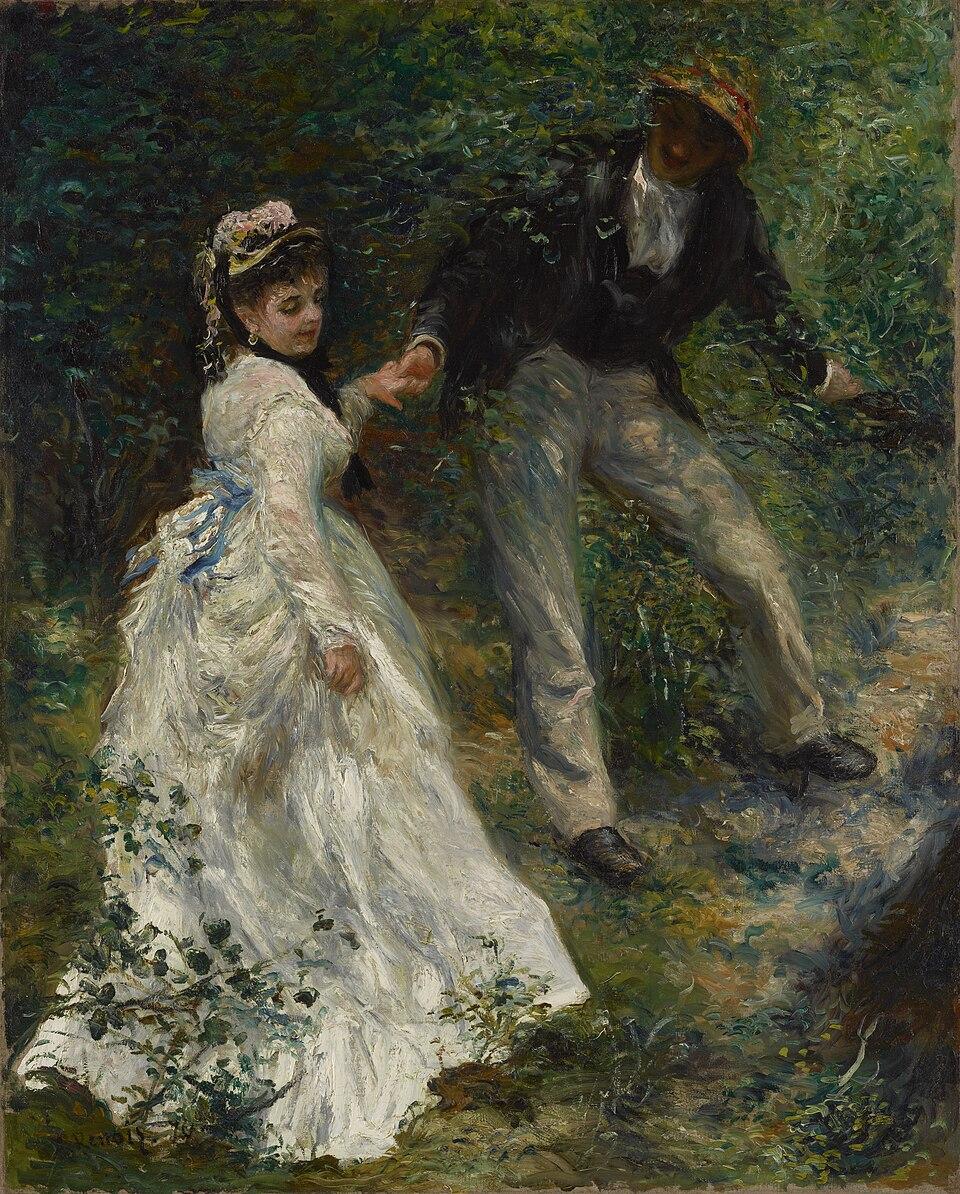
Alt...
Pierre-Auguste Renoir, La Promenade (1870).
A couple walks through lush woods—she in a flowing white dress, he helping her over a rocky path.
![[?]](https://babka-mastodon.nyc3.cdn.digitaloceanspaces.com/accounts/avatars/110/442/989/214/760/177/original/ac89244bf463bb3e.jpg)
The fascinating thing about this topic is how many fedi conversations it's inspired to sink down into the deep hole of the 19th century Anglo-European Race Science embedded in the brains of the left.
There's some crazy fucked up takes happening around these parts. Whats next, phrenology?
The blood quantum ratio counting is strong with these ones.
" #California is poised to become the first state to treat #Jewish identity as an #ethnicity on official forms, with a new optional checkbox heading to #Gov. #GavinNewsom’s desk.
Supporters say the change could reveal gaps in #healthcare, #education and #hatecrime response for the state’s 1.2 million #Jews, giving officials better data to direct resources.
Opponents warn a single ‘Jewish’ #ethnic box oversimplifies diverse Jewish histories and risks echoing past government tracking, amid elevated #antisemitism and debate over #religion, #ancestry and #culture."
A quotation from Gloria Steinem
The first problem for all of us, men and women, is not to learn, but to unlearn. We are filled with the popular wisdom of several centuries just past, and we are terrified to give it up. Patriotism means obedience, age means wisdom, woman means submission, black means inferior: these are preconceptions embedded so deeply in our thinking that we honestly may not know that they are there.
Gloria Steinem (1934–2026) American feminist, journalist, activist
Essay (1971-08-21), “A New Egalitarian Life Style,” New York Times
More about this quote: wist.info/steinem-gloria/18472…
#quote #quotes #quotation #qotd #gloriasteinem #bias #custom #prejudice #receivedwisdom #sexism #stereotypes #subconscious #systemicracism #tradition #ageism #patriotism #culture
![[?]](https://files.mastodon.social/accounts/avatars/115/967/890/192/375/774/original/79861f67f1d57c00.png)
@argv_minus_one A #System trying to put people in one-size-fits-all box over each generation towards #financial #fascism.
Just black and white numbers without much #identity / #culture / #individual meaning.
![[?]](https://s3.eu-central-2.wasabisys.com/mastodonworld/accounts/avatars/109/374/031/582/615/701/original/e7acaa042f72c2ab.jpeg)
Culture affects the way we see the world, including the elements in it. Stan Stewart explores the idea of "earth" and other elements.
#inspiration #culture
https://muz4now.com/2026/elements-vary-with-our-culture-wood-and-metal/
5 Breathtaking Renaissance Art Treasures Hidden Inside the Vatican Museums
The Vatican Museums' big-name attractions might hold all the fame, but the true Renaissance glory is held in its most overlooked corners.
by Laura Pattara
https://www.thecollector.com/vatican-museums-hidden-renaissance-art/
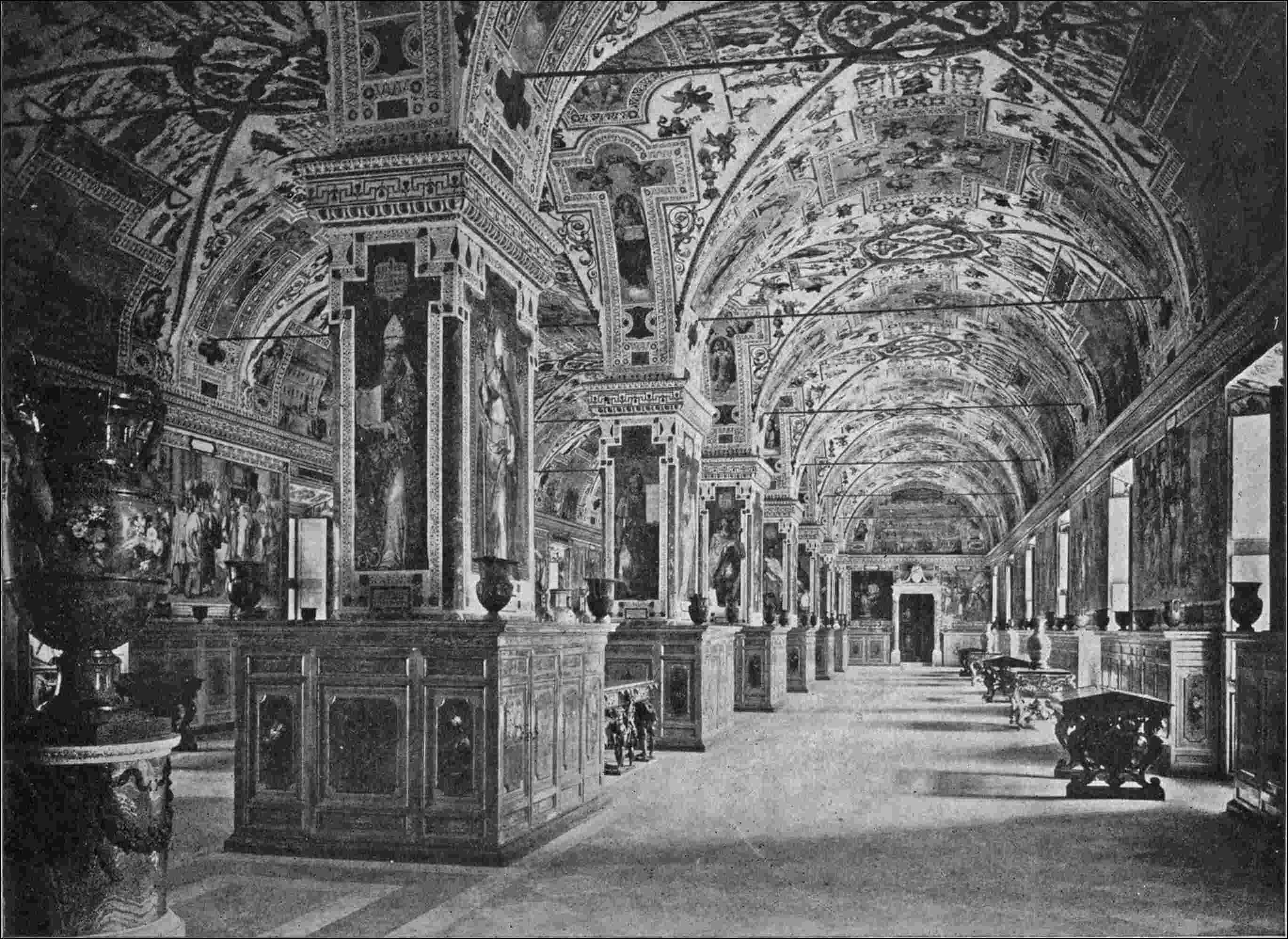
Alt...
A black-and-white photograph of a long, ornately decorated gallery featuring elaborately frescoed and painted barrel-vaulted ceilings, display cabinets and cases lining both walls, and classical vases displayed atop pillars.
Title: Turrets, towers, and temples
The great buildings of the world, as seen and described by famous writers
Editor: Esther Singleton
Rare 300-Year-Old Book by Forgotten Dutch Master Resurfaces
The Van Eeghen Drawing Book, newly donated to the Rijksmuseum, holds works attributed to Rombout van Uylenburgh, the cousin of Rembrandt's wife.
by Vittoria Benzine
https://news.artnet.com/art-world/rijksmuseum-rombout-uylenburgh-van-eeghen-book-2799213
Books about Dutch art at PG:
https://www.gutenberg.org/ebooks/search/?query=dutch+art
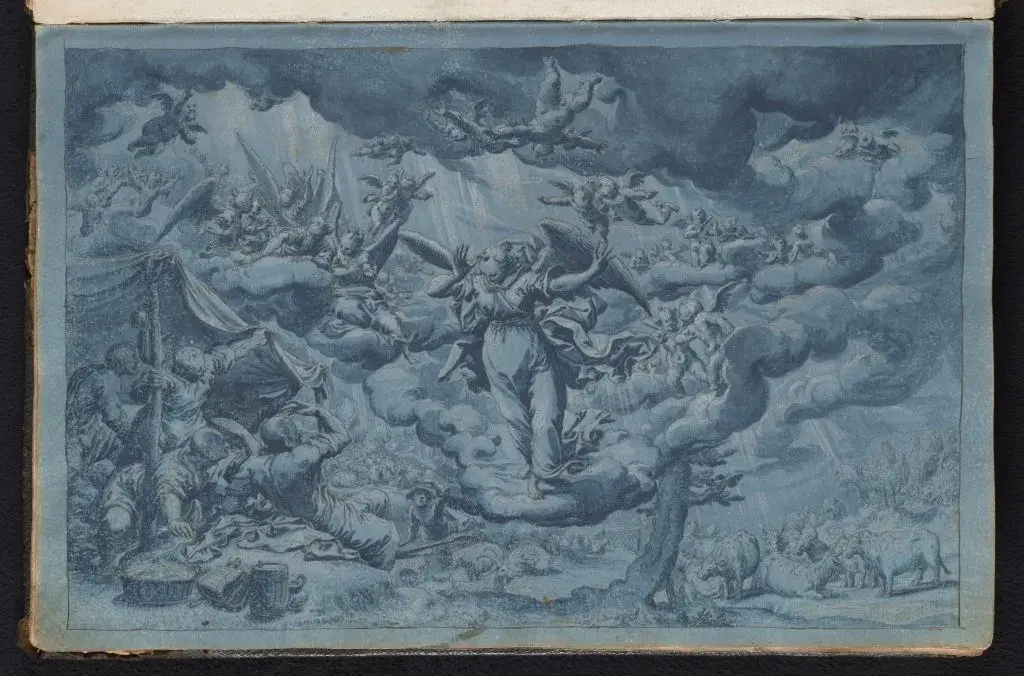
Alt...
A highlight of the Van Eeghen Drawing Book, titled Announcing to the Shepherds. Photo: courtesy of Rijksmuseum.
This is a monochromatic blue-toned drawing depicting what appears to be a religious or biblical scene, showing an angel appearing in the clouds above shepherds and their flock, surrounded by cherubs, with sheep and cattle visible in the foreground landscape below.
The Other Anguissolas: Four Forgotten Renaissance Women Painters Take the Spotlight
Everyone knows Sofonisba Anguissola. Now, her overlooked artist sisters are getting their due at a new exhibition in Oslo.
by Jo Lawson-Tancred
https://news.artnet.com/art-world/sofonisba-anguissola-sisters-2798807
Books about Art, Renaissance at PG:
https://www.gutenberg.org/ebooks/subject/3037
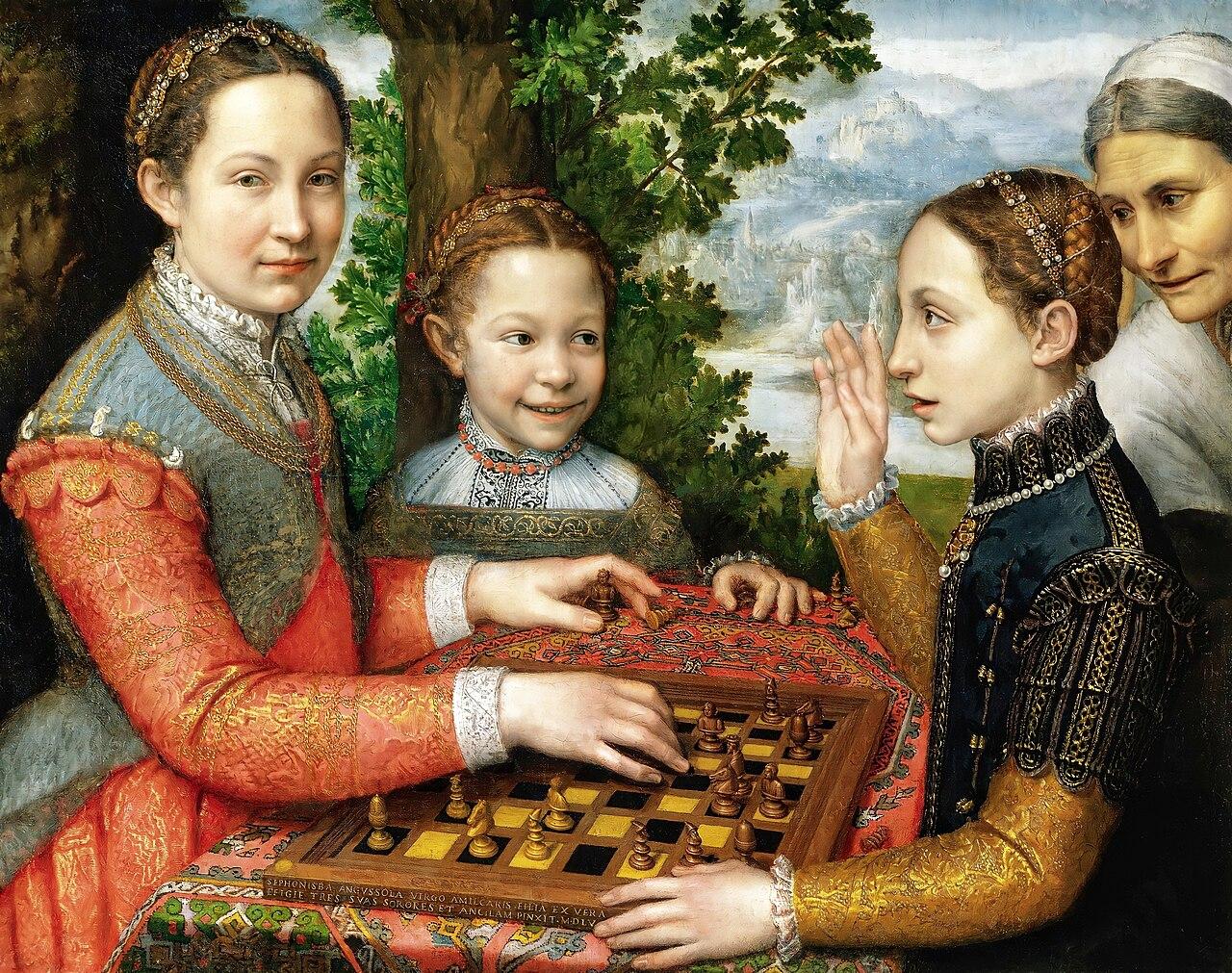
Alt...
The artist's sisters are depicted in The Game of Chess, 1555. National Museum in Poznań.
Lucia (left), Minerva (right) and Europa (middle) Anguissola playing chess.
The painting depicts three of the artist's sisters playing chess together, with an elderly servant woman looking on from the right, set against a landscape background.
![[?]](https://files.mastodon.social/accounts/avatars/115/070/625/860/923/251/original/9629d01039476748.png)
Civilisation after Actuality: A Critique, A Summary
#philosophy #video #psychology #civilisation #culture #teleology
It was also believed [in barbarous times] that certain things must be accepted as true, no matter whether they were reasonable or not; that it was pleasing to God to believe a certain creed, especially if it happened to be the creed of the majority.
Robert Green Ingersoll (1833–1899) American lawyer, freethinker, orator
Lecture (1881-05-01) “The Great Infidels,” Booth’s Theater, New York
More about this quote: wist.info/ingersoll-robert-gre…
#quote #quotes #quotation #qotd #ingersoll #robertingersoll #robertgreeningersoll #belief #beliefsystem #creed #culture #dogma #majority #reasonability #society #tradition #truth #tyrannyofthemajority #unreasonability
![[?]](https://m-cdn.flipboard.social/accounts/avatars/110/068/762/697/825/294/original/d3f34437c275e777.jpg)
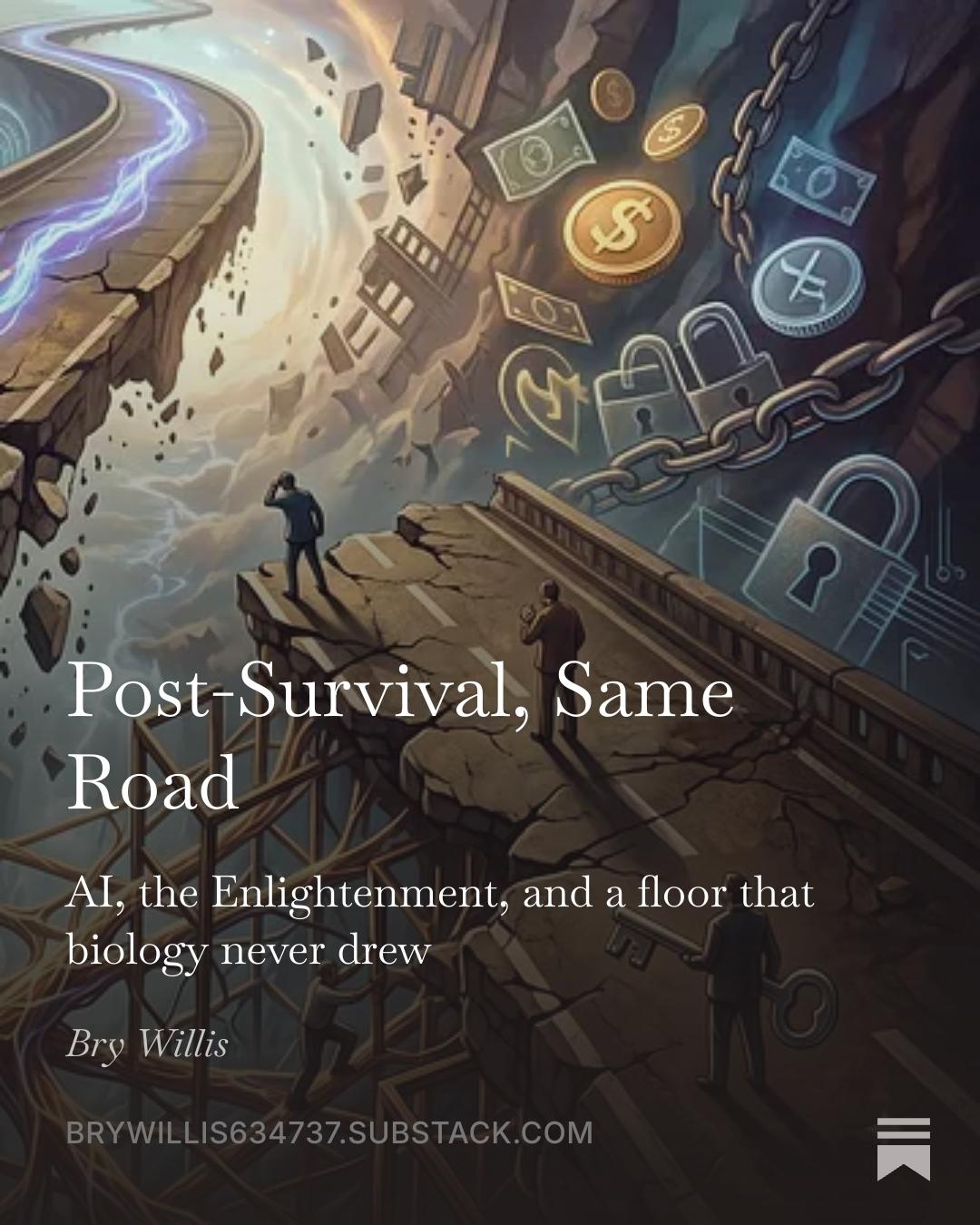
Every street looks the same and every hit song is interchangeable with the next. Lauren Leek writes for her newsletter about how algorithms are flattening everything into sameness, and how they could be regulated.
The Enlightenment has driven the West down a dead-end alley, but they haven't quite yet sussed this out.
https://brywillis634737.substack.com/p/post-survival-same-road?r=pvxh5&utm_campaign=post&utm_medium=web&showWelcomeOnShare=true
#enlightenment #psychology #philosophy #history #society #artificialintelligence #economics #ecomomy #scarcity #society #culture #humanity #technology #automation #healthcare #survival
![[?]](https://files.mastodon.social/accounts/avatars/000/034/380/original/c4398fad142099bc.jpg)
This has been bugging me for a while, because Dad used to say dinner, and I was confused when he meant lunch, and he'd say supper for dinner. Max Miller just brought it up talking about K-Rations so let's resolve this. Please comment on any regional or cultural/etymological details you know of pls! It may just come down to the fact there used to be four meals for farm workers causing all this confusion... breakfast, lunch, dinner, and finally supper. (?) #Culture #Etymology #Language
| For me dinner is a mid-day meal.: | 1 |
| For me dinner is the last meal of the day.: | 22 |
| For me supper is a mid-day meal.: | 1 |
| For me supper is the last meal of the day.: | 7 |
Closed
#AI + Cultural Appropriation #Quote
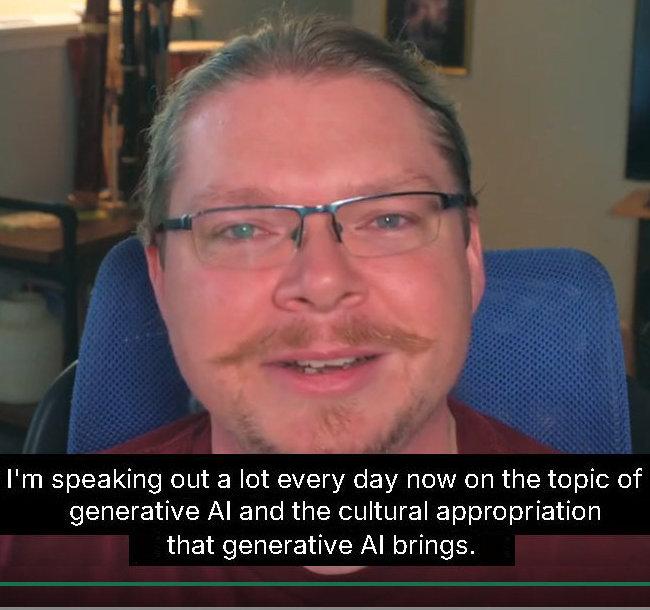
"I'm speaking out a lot every day now on the topic of #AI and the Cultural Appropriation that #generative AI brings."
- @jaredwhite on #Fediverse #JaredWhite #HumanWebCollective
- Video page: https://humansare.social/c/downthelane/p/2127/art-decos-revenge-the-rise-and-fall-of-millennials-and-their-gray
#CulturalAppropriation #Phrase #Colonialism #Colonial #Human #Culture #Collective
Alt...
Quote by Jared:
I'm speaking out a lot every day now on the topic of #AI and the Cultural Appropriation that #generative AI brings."
![[?]](https://s3.c.im/accounts/avatars/117/031/647/195/165/392/original/89594c8335b5513b.png)
I jut moved from toot.community over here. I'm more of a booster than content creator. I enjoy #art, #FountainPens, #bicycles, #satire, #TheOutdoors, riffing on the Orange Cheeto, #science, #cats, #culture at large, and the world in general.
I believe we're here for more than pulling down a paycheck. Our lives need to give back in some way to future generations and those currently around us. How to do that is a discovery I'm currently on.
Oh, damn. I have more than a 500 character limit on this instance. This could be bad news for my tendency to ramble and be too wordy.
I hearby promise to keep my thoughts to a respectable length, like the {CHAUCER} CANTERBURY TALES.
(Edit corrected the title.)
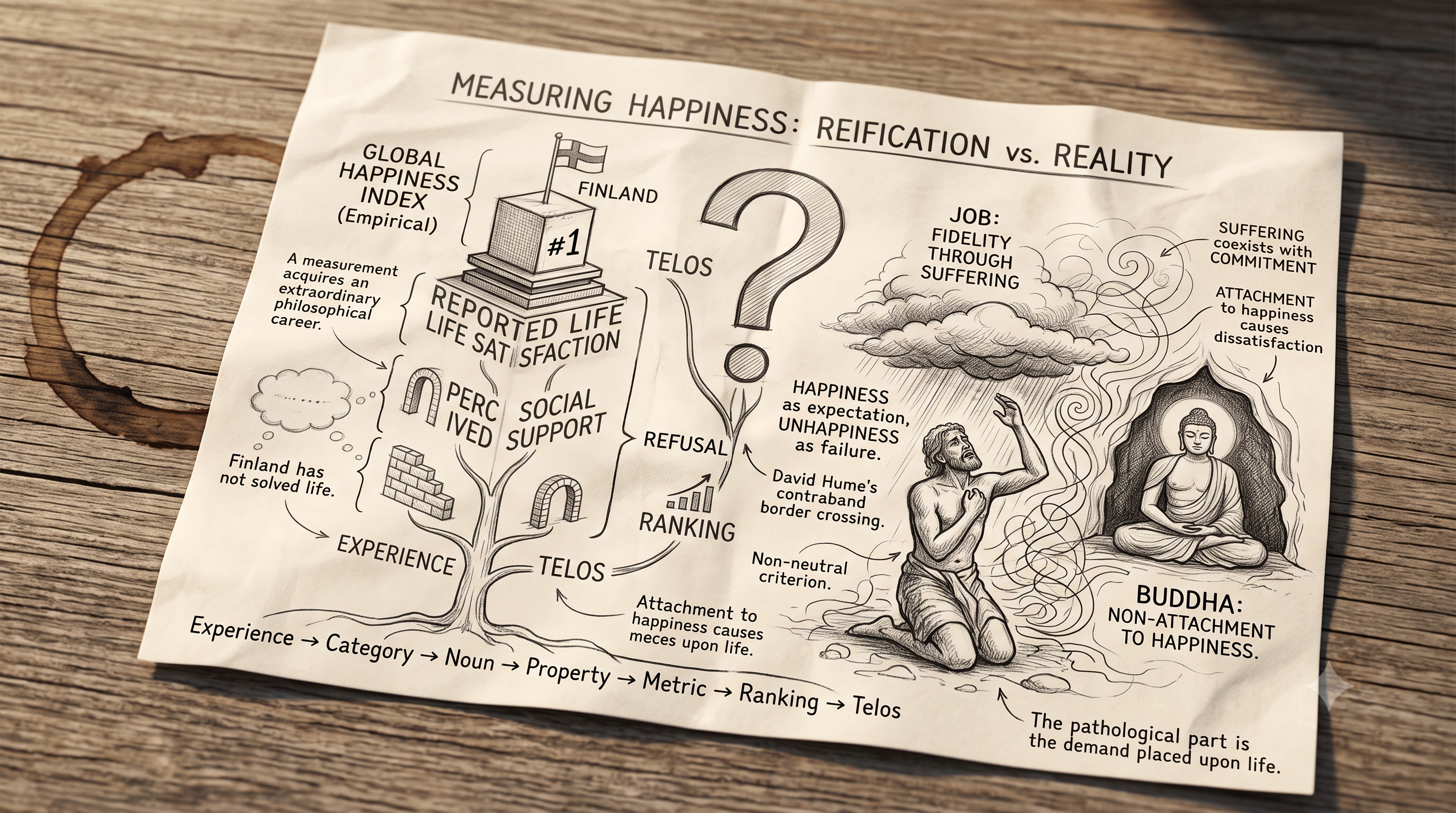
The Pathology of Happiness: Job, Finland, and the Invention of the Good Life
My latest #Substack.
👉 https://brywillis634737.substack.com/p/the-pathology-of-happiness?utm_source=masto&utm_medium=social
I look at the pursuit of happiness relative to other aspirations by looking at the Biblical Job, Buddhism, and Finland. Don't worry. Be happy.🧐
#philosophy #happiness #ethics #buddhism #religion #goals #attachment #metrics #experience #blog #video #podcast #culture #welbeing #psychology #critcaltheory
![[?]](https://the-end-time.org/wp-content/uploads/2019/10/cropped-logo5.jpg)
1967’s ‘Summer of Love’; or was it the summer of hate?
By Elizabeth Prata

City Lights Books in San Francisco was the epicenter for the Beat Generation of the 1950s and helped spark the cultural earthquake that was the hippie movement of the ’60s. EPrata photo
It happened 59 years ago. It was summer, flower children ‘hippies’ were on the rise, the Viet Nam war had become full blown, and an entire subculture was born. It was dubbed the “Summer of Love”.
The generation born Post-WWII in the late 1940s and 1950s and their parents experienced economic prosperity, technological advances, and a feeling of hopefulness since the dark World War was ended.
As with any culture, the hopefulness evaporated as the Cold War entered. The cultural highs went to lows. Nuclear fears, Russia fears, and general feelings of concern with what rapid consumerism and technology was doing to the country sparked the now teenage and young adult Baby Boomer generation to “question authority” and reject the old way of living.
Then the Viet Nam war happened, and with it, the fairly new technology called television, showing its satellite images from jungles of death halfway around the world now added to the generation’s discontent. The newsman Walter Cronkite intoning at the end of every nightly newscast the number of dead and injured in the war added to the prevailing mood of uneasiness.

Cronkite, America’s ‘most trustworthy voice’ declared the war a stalemate in early 1968. In those days news broadcasters did not utter opinions due to the federal law Fairness Doctrine. His pronouncement of the war a stalemate crashed into public consciousness & altered the course of it.
The rejection of the way things were into a way the hippies wanted things to be, came together to ignite The Summer of Love.
The hippies were also called Flower Children. They advocated for peace and love, art and poetry, spiritual transcendence- usually drug induced- and community.
Sounds good, right?
Remember, anything obtained outside of God is vanity, empty, and vain.
The Summer of Love was an event where over 100,000 hippies converged on Haight-Ashbury neighborhood in San Francisco. These were kids seeking a new way of life, some were drifting runaways, and others just came for the drugs. But they came, did they ever. They wanted to re-structure civilization through peace and love. “To find a new way for humanity” as the gentleman says below. Could they even “restructure society”? For a while, yes, they did. We still feel the effects of that summer today, nearly 60 years later.

Screen shot from PBS’ The American Experience: The Summer of Love
Part of that new way for humanity was the hippies were taught to “question authority” and “turn on, tune in, drop out” by LSD drenched counterculture-man Timothy Leary. Leary was-
“One of the most influential icons in the counterculture movement which formed in the late 1960s out of opposition to the Vietnam War’s escalation, Leary gained influence among much of the youth by advocating the use of LSD as a way of mind expansion and the revelation of personal truth.” (Source).
The truth of it is, the entire movement was demonic. The youth did drop out, of society, of college, from families. They wandered, spiritually and physically, into new realms. Realms of depravity such as experimenting with homosexuality and lesbianism. Realms of mind-altering drugs. Realms of different living situations such as polygamy or ‘free love’ communes.
It’s easy to write off the hippie movement as essentially unserious. Most of them were young; few of them were sober; they said things like “groovy” and “far out.” And in part, the hippies were animated by psychic impulses that weren’t new: the youthful rejection of the apparent mundanity of adulthood, and good old hedonism.
But lurking beneath the shallow motifs – flowers in the hair, acid [LSD] on the tongue – was a serious philosophical protest. “At the deepest level,” writes W. J. Rorabaugh, in one of the few good histories of the movement, the hippies expressed “a crisis of belief.”
Source above, essay “The Terrible Optimism of the Hippies” published in The Independent (UK) 2019.
The Preacher in Ecclesiastes teaches us something about the pointless search for meaning and a satisfying lifestyle that are apart from God.
Further, in W. J. Rorabaugh’s retrospective book, American Hippies (Cambridge Essential Histories) we read of the,

“massive upheavals of the 1960s, which included civil rights, Black Power, feminism, and gay liberation, as well as looser sexual mores, the end of censorship, street protests, political radicalism, and environmentalism. Collectively, these movements profoundly changed the United States. Second, the hippie counterculture was large. Hundreds of thousands of young Americans were, at least for a time, hippies, and millions adopted some if not all hippie beliefs and practices. The numbers mattered. Third, hippie values represented a generational break with traditional middle-class culture. When hordes of people concentrated in a single youth generation simultaneously adopted new thoughts and behaviors, mainstream culture was forced to pay attention. In the long run, hippies played a significant role in transforming American society.”
A LOT was going on in the 1960s! That ‘Summer of Love’ was a startling and visible opening to this upheaval. A crisis of belief. A yearning for something missing from American life. A seeking of a new way.
Don’t all of those reflect back to Ecclesiastes? King Solomon wrote of the yearning of the human heart and its vain seeking, apart from God. God defines love. Disaffected youths do not define love.

Swami Satchidananda giving the opening talk at the Woodstock Festival of 1969. By Mark Goff – my own collection, Public Domain
What is love? The hippies thought they had unlocked the secret to spiritual fulfillment. They believed, with the help of LSD and mushrooms, that they could access the transcendent divine, and become one with the universe, in love. Many turned to Eastern religions and their music sounded forth with flutes and zithers.
However, God defined love through His word. His is the only and the final word on the subject. The hippies, mainly middle-class white Americans, really did have it good. Two parent households with a mom and a dad, two car homes with garage, creature comforts, church-going, sexual normalcy, and clean living. Rejecting all that for a mystical union with a drug induced divine was for a time, unrestrained disorder nationwide.
What IS love?
Love is patient, love is kind, it is not jealous; love does not brag, it is not arrogant. It does not act disgracefully, it does not seek its own benefit; it is not provoked, does not keep an account of a wrong suffered, it does not rejoice in unrighteousness, but rejoices with the truth; it keeps every confidence, it believes all things, hopes all things, endures all things. Love never fails; … But now faith, hope, and love remain, these three; but the greatest of these is love. (1 Corinthians 13: 4-8a, 13).
God is love, and those who love Him know love, for God IS love.
The one who has My commandments and keeps them is the one who loves Me; and the one who loves Me will be loved by My Father, and I will love him and will reveal Myself to him. (John 14:21).
There is no fear in love, but perfect love drives out fear, because fear involves punishment, and the one who fears is not perfected in love. (1 John 4:18).
I can’t overstate the rapidity with which the hippies’ concepts and philosophies changed America for the worse. Sadly, many of the hippies descended into homelessness and drug addiction. Others came up with sexually transmitted diseases and unwanted pregnancies. Others discovered that free love meant their loved one moved on to the next partner without a thought, leaving broken hearts and disillusionment in their wake. Free love, apparently, wasn’t free.
When humans define love it always misses the mark. As is natural with the natural man, the hippie culture descended quickly to depravity and a worship of self. Self-evolution, the divine within, freedom of self-expression, and a self-involved love were at the core, and thus, destined to fail.
The hippies’ counter-culture movement was historically a new approach. Not blind ambition of the Caesar era. Not Machiavellian scheming of the feudal lords. Not evil malevolence of the dictator times. This time, satan tried a gentle naivete that rushed the love culture into the American summer. For a while, it worked.

The Flower Power photograph by Bernie Boston, taken during the March on the Pentagon, October 21, 1967.
Fair use, https://en.wikipedia.org/w/index.php?curid=37905458
The Preacher said in Ecclesiastes 12:1a, “Remember also your Creator in the days of your youth,“… and Ecclesiastes 12:13-14,
Only God can change a culture for the good. Let’s conclude with the Preacher’s conclusion-
The conclusion, when everything has been heard, is: fear God and keep His commandments, because this applies to every person. For God will bring every act to judgment, everything which is hidden, whether it is good or evil.
#culture #ecclesiastes #hippies #love #summerOfLove
How art invented humanity
When early humans first painted cave walls, they began to find out who they really were: our minds emerged from our images
by J F Martel

Alt...
Photograph of Ellen Harding Baker's “solar system” quilt, 1876–ca. 1883.
An embroidered astronomical quilt on black fabric showing the sun at the center with concentric orbital rings representing the planets (including Saturn with its rings), a comet, and a starry background.
![[?]](https://files.mastodon.social/accounts/avatars/110/641/555/278/107/926/original/60e39d3280d3b645.png)
people who complained about #MidsomerMurders lack of diversity didn't get that it’s a show about dispelling the myth of white supremacist solidarity.
so much of the white-on-white violence is by nepobaby manchildren pissed they can’t keep riding on their families’ names & fortunes.
the show is not only a master class on the consequences of late-stage #capitalism. it’s brilliant at showing the decline of English hegemony & the villainy of British class #warfare.
![[?]](https://cdn.hosted.spacebear.ee/sb-444643948490e1fed8199ed78bf1ee5f/accounts/avatars/109/371/733/810/294/907/original/adb71e94b9377654.png)
In our latest "postcard," reporter Jason Buch explores the natural beauty ... and pervasive surveillance ... of the Texas #border region on a unique two-wheeled journey. https://www.texasobserver.org/postcard-laredo-border-wall/
"We are all living inside the world that QVC made, the commingling of identity and acquisition."
A decades-old shopping channel, a lifelong friendship, and the strange comfort of watching people sell things you'll never buy. New from Hannah Engler Harvey: https://longreads.com/2026/07/30/qvc-shopping-influencers-friendship/?utm_source=mastodon&utm_medium=social
#Longreads #Culture #CulturalCriticism #Shopping #QVC #Influencers
Seven Brilliant Black Inventors You Never Learned About In History Class
By Natasha Ishak
From George Washington Carver to Madam C.J. Walker to Lonnie Johnson, meet some of the most iconic African American inventors who shaped history.
https://allthatsinteresting.com/black-inventors
#culture #history #black_inventors

Alt...
Alice Augusta Ball in 1915.
She is wearing academic graduation attire including a mortarboard cap and gown.
![[?]](https://cdn.mstdn.ca/accounts/avatars/109/331/758/365/671/870/original/6caabffe6d655ca0.png)
This is the magnificent library Anthropic amassed, before destroying it because it gave them a legal copyright loophole.
#Anthropic #AI #Books #Culture #Tech #LLMs #Civilization

Alt...
Photo of a huge warehouse with rows and rows of tables covered in thousands of boxes of books.
Anthropic spent billions of dollars to slice the spines off millions of books, including very rare ones.
AI companies are purchasing large quantities of used and rare books and scanning their contents to train LLMs. They then turn the originals to pulp.
The sum of human thought, digitized and shredded. Every book that gets scanned disappears from the physical world permanently.
Books that survived wars, fires, and centuries of handling are being shredded so an AI can learn to write a better marketing email.

The savage bites back
Rooted in Brazilian modernism, anthropophagy devours and transforms culture, subverting colonial fears of cannibalism
by Sofia Cándano
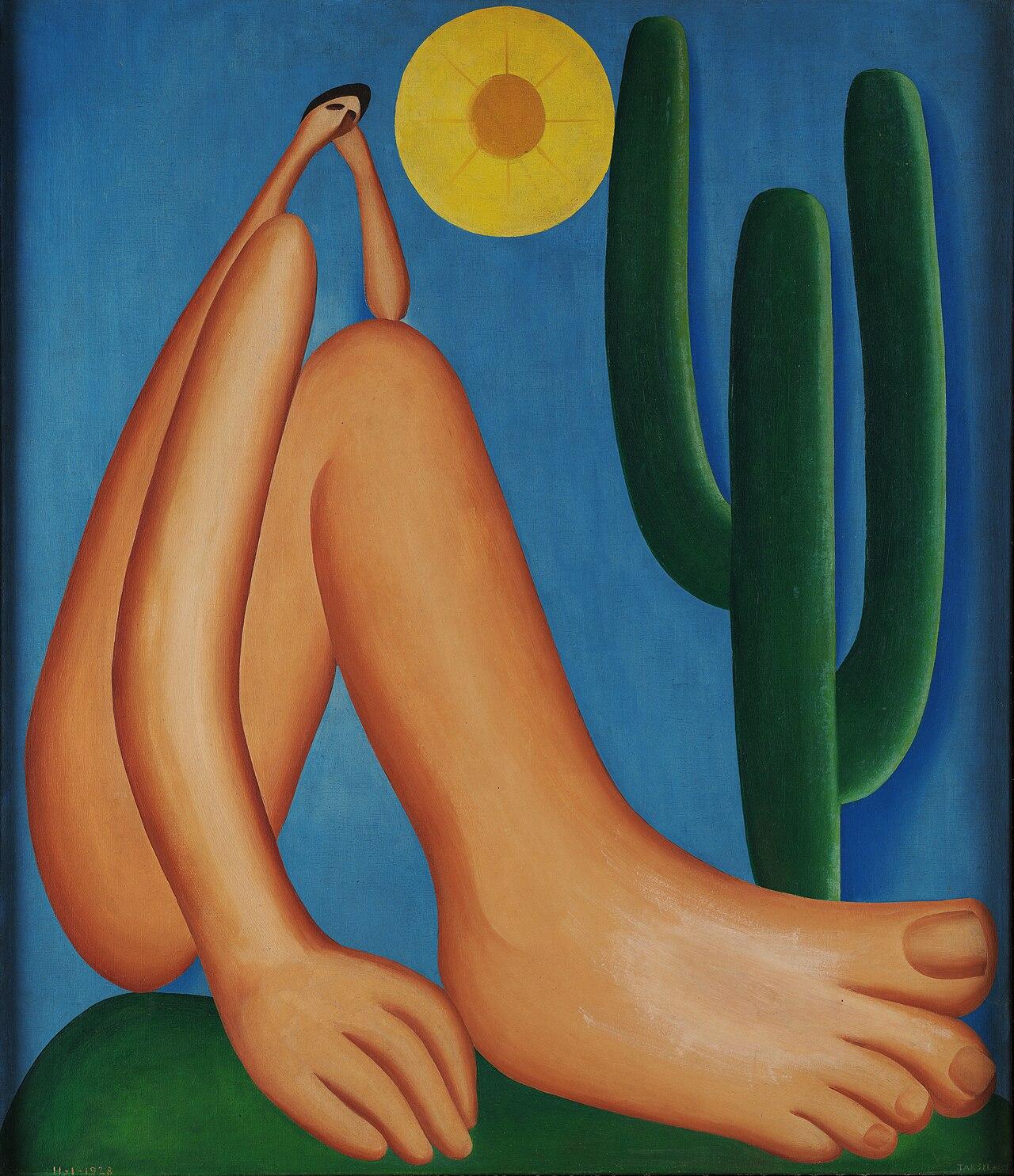
Pau Brasil, written by Oswald de Andrade and illustrated by Tarsila do Amaral is being proofeed by @DProofreaders and it will be published pretty soon by PG.
Alt...
Abaporu, by Tarsila do Amaral. The original painting is on display at the Latin American Art Museum of Buenos Aires.
It depicts a distorted, monumental figure with an enormous foot and small head resting on hand, seated on green ground against a blue sky with a stylized yellow sun and a cactus.
I was distracted by the notion of colonialism today, so I took some notes. We tend to treat colonialism as pertaining to countries 'out there' – 'over there'. If we are victims of colonisation, the oppressor is 'out there' but looking in.
📝 https://substack.com/@brywillis634737/note/c-299870495?utm_source=notes-share-action&r=pvxh5
🎧 https://open.spotify.com/episode/4mNHkZWfXKDyCC5Ljsj758?si=Yd41XyNVRbSUcwXmzP8oKA
#philosophy #politics #power #language #colonialism #control #foucault #mbembe #marx #heidegger #fanon #perspective #podcast #blog #substack #spotify #culture #empire #hegemony #essay

Featured story: What changed? How did Christianity become the political weapon we see today?
A new book from historian Joseph L. Locke investigates how "militant" Christian nationalism became the state religion. https://www.texasobserver.org/one-state-under-god-book-review/
#books #religion #Texas #politics #USpol #culture #history #bookstodon
In this follow-up to the Merits of Meritocracy, I delved a little deeper into Trump and Plato's Republic.
https://philosophics.blog/2026/07/22/the-merits-of-meritocracy/?utm_source=masto&utm_medium=social
#philosophy #merit #business #linkedin #meritocracy #video #podcast #substack #politics #language #culture #dei #promotions #statistics #heuristics
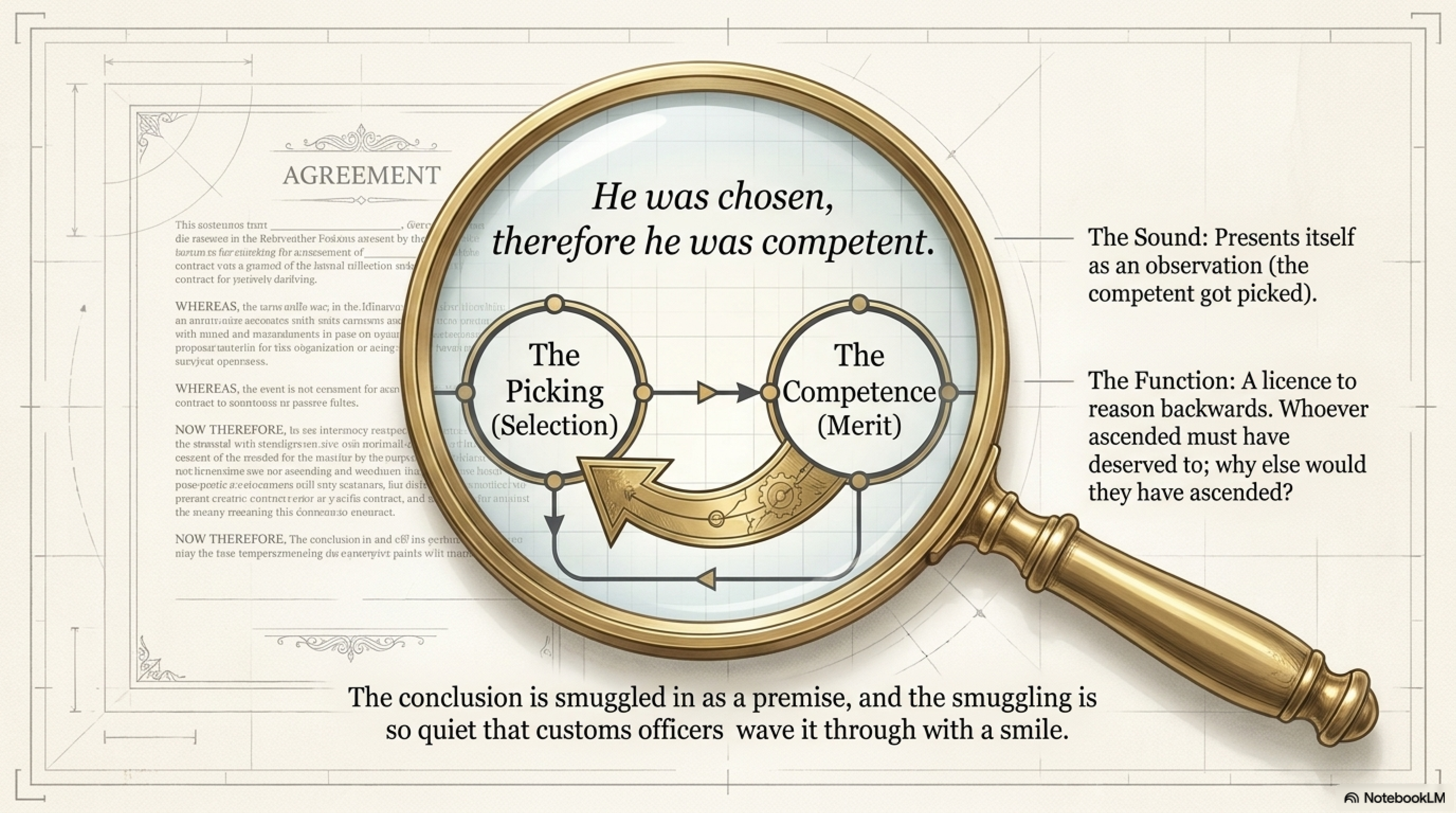
I've been wittering on about the history and failings of Meritocracy, but I hadn't drafted a version for Substack.
👉 https://brywillis634737.substack.com/p/the-merits-of-meritocracy
I've purposely left Trump, but clearly he's a central figure in this perspective. Very few situations merit meritocracy as a lens, but we seem to overextend it. It is certainly overrepresented in business.
#philosophy #merit #business #linkedin #meritocracy #video #podcast #substack #politics #language #culture #dei #promotions #statistics #heuristics
Inherited ideas are a curious thing, and interesting to observe and examine. I had mine, the king and his people had theirs. In both cases they flowed in ruts worn deep by time and habit, and the man who should have proposed to divert them by reason and argument would have had a long contract on his hands.
Mark Twain (1835-1910) American writer [pseud. of Samuel Clemens]
Novel (1889), A Connecticut Yankee in King Arthur’s Court, Part 3 “The Tale of the Lost Land,” ch. 8 “The Boss”
More about this quote: wist.info/twain-mark/85029/
#quote #quotes #quotation #qotd #twain #marktwain #aconnecticutyankee #convention #culture #custom #heritage #ideas #socialchange #socialconventions #tradition
‘Nearly Erased From History’: This Famous Sculpture Of Cleopatra Disappeared For Over 100 Years. It Was Being Used As The Gravestone Of A Horse
By Braden Bjella
Edmonia Lewis' 1876 sculpture The Death of Cleopatra received critical acclaim, but the work of art — and the artist herself — were then forgotten for over a century.
https://allthatsinteresting.com/death-of-cleopatra-sculpture
More information about Edmonia Lewis:
https://en.wikipedia.org/wiki/Edmonia_Lewis
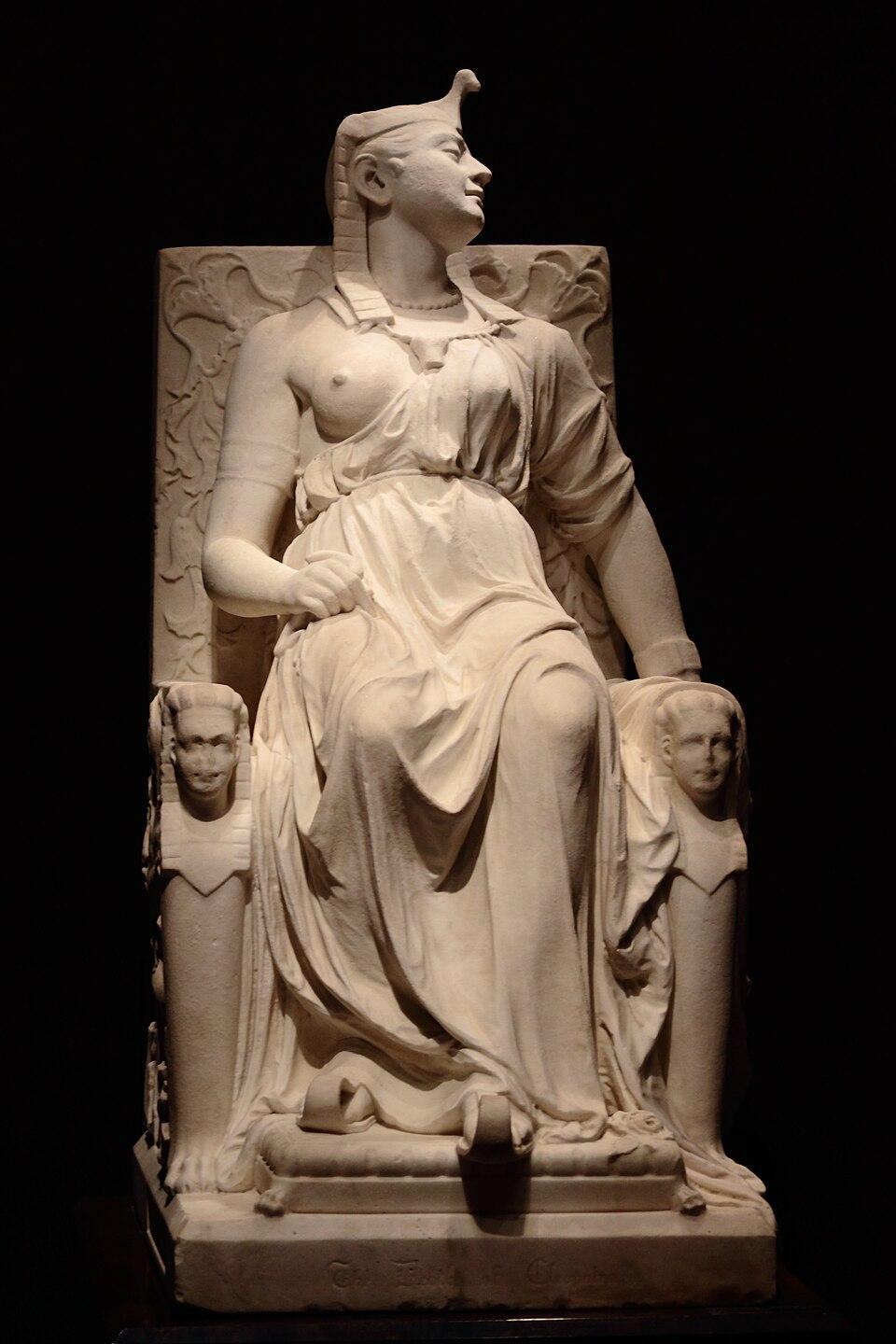
Alt...
The Death of Cleopatra
Edmonia Lewis - Self-photographed, Caroline Léna Becker
A marble sculpture titled "The Death of Cleopatra" by American sculptor Edmonia Lewis, depicting Cleopatra seated on a throne wearing a headdress, robes, and a serpent bracelet, her head tilted back at the moment of death. The ornate throne features carved sphinx heads on either armrest, and an inscription is visible on the base.
![[?]](https://mediacdn.aus.social/accounts/avatars/109/299/557/782/424/632/original/b16930d5edad16a1.jpeg)
@standardebooks The Horned Helmet by Henry Treece
I loved it so much my grade 4 teacher let me keep one of the books from the class set (they were all falling apart anyway)
This is that same copy she gave me, i've had this book almost 50 years
#bookstodon #literature #books #reading #culture
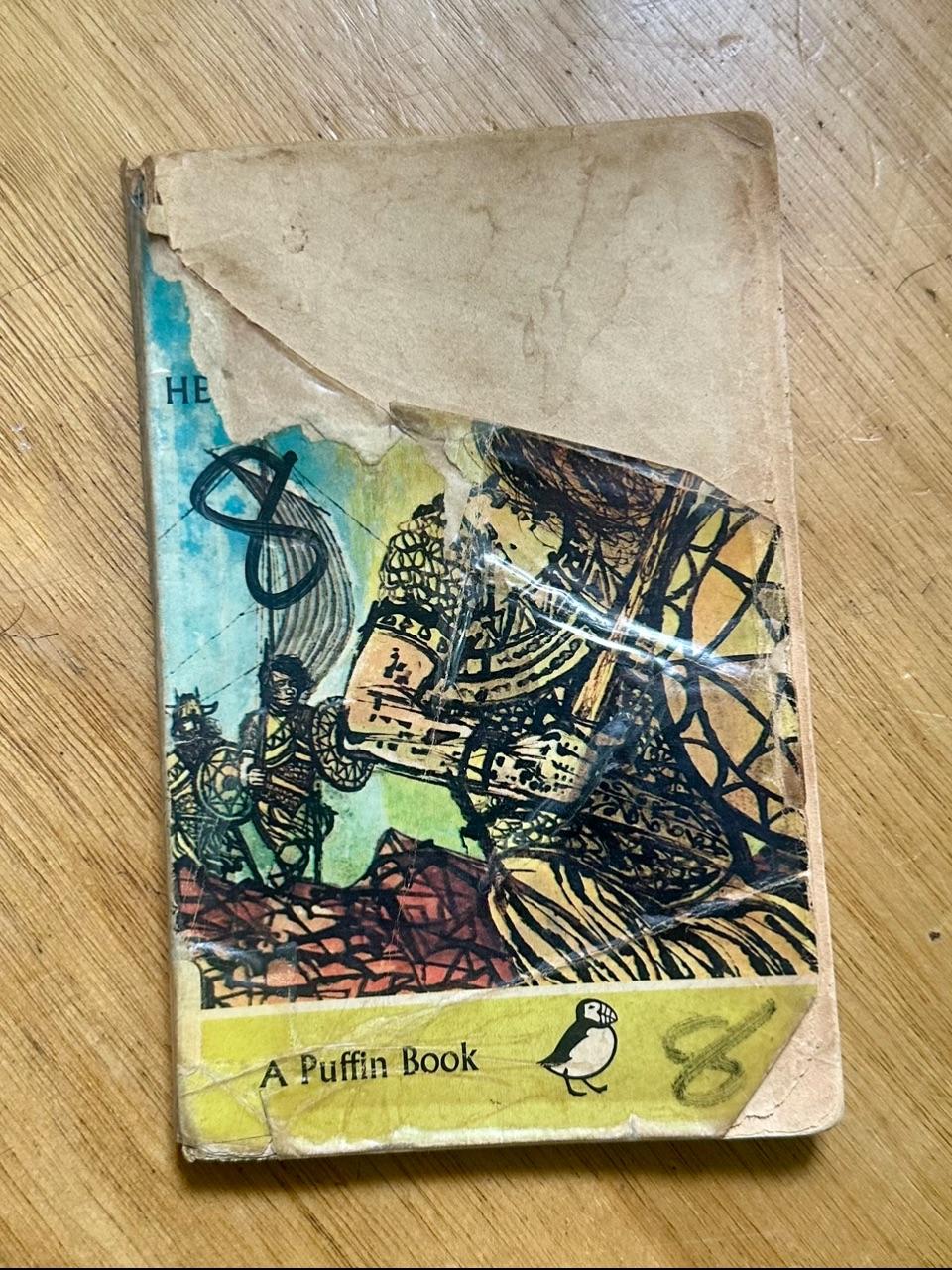
Alt...
Image of the cover of a torn and batter old childrens' book with the lower part of an illustration of a viking
Today's slow rollout of the shocking findings in the AP/NORC survey includes:
Jews think both parties suck but will vote Democrat anyway, Jews are more concerned about antisemitism than non-Jews, and avg Americans think Trump supports Jews more than Jews think he does. 🤯🤡
Anyway... the comments are the real America. Worth perusing.
"The new #survey of 1,022 #Jewish adults — including people who identify as Jewish by #religion and religiously unaffiliated people who identify as Jewish through #culture, #ethnicity or family background — offers a rare detailed accounting of a key demographic that sits at the very center of some of the nation’s most divisive #political debates."
Same art, different name: would you see or hear it the same way?
A mislabelled concerto and other errors and tricks show that reputation affects how art is perceived, sometimes radically
by Rikki A Wolpowitz
https://psyche.co/ideas/same-art-different-name-would-you-see-or-hear-it-the-same-way
Books in Music at PG:
https://www.gutenberg.org/ebooks/bookshelf/50
#books #art #musicology #culture
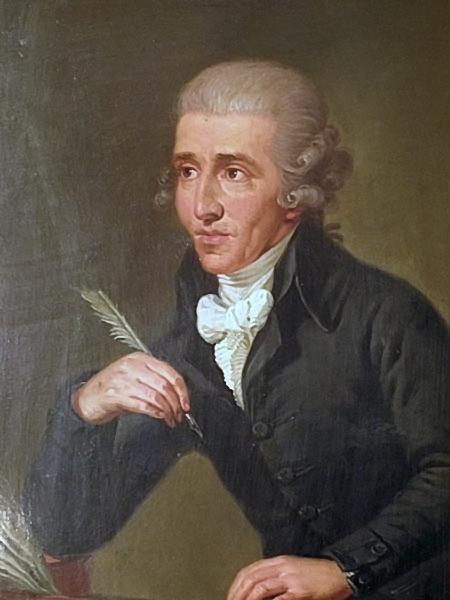
Alt...
Haydn or Hofmann? Portrait of Franz Joseph Haydn (1770).
An 18th-century oil portrait of a middle-aged man with powdered white hair, wearing a dark coat with a white cravat, holding a quill pen and gazing thoughtfully to the side.
![[?]](https://cdn.masto.host/retrochatonline/accounts/avatars/108/202/884/595/037/166/original/083d097d36ca02b9.jpeg)
If you're around the Earl's court or Brompton areas then you might be interested in our free poetry walking tours https://roguegunners.com/index.php/walking-tours/ #Culture #Poetry #UK
This morning I awoke thinking about sex – actually gender – of borrowed Latin words. Get your mind out of the gutter.
👉 https://brywillis634737.substack.com/p/we-still-bury-the-dead
I wrote a piece about it, but I was truly conflicted on my journey, especially as I compared English and French approaches, and a potential feminist rift.
#philosophy #language #sociolinguistics #etymology #english #french #latin #gender #writing #culture #feminism #linguistics #reform #administration
This content is a NotebookLM summary of a YouTube video comparing Colombia and the USA. I don't add anything to the content, but I thought the summary was worth sharing.
https://open.spotify.com/episode/10aXf3Ul0ey61sRETEDvRs?si=le63_1oqTdqyVZ3_u0yHYQ
#philosophy #history #law #politics #culture #society #salience #podcast #video #perspective
"In those 1990s clubs and car shows, you could see and feel that Asian Americans weren’t assimilating culture. We were creating it."
Ky-Phong Tran for Zócalo Public Square: https://www.zocalopublicsquare.org/my-midlife-crisis-corolla-fast-furious-fully-modded/
#Longreads #AsianAmericans #Vietnamese #Cars #Japanese #Toyota #Culture #Identity
Browse 5.8 million works of art at the Last Museum
by Rob Beschizza
https://boingboing.net/2026/06/29/browse-5-8-million-works-of-art-at-the-last-museum.html
Last Museum:
https://lastmuseum.com/
Books in Art at PG:
https://www.gutenberg.org/ebooks/bookshelf/11
#books #literature #art #culture
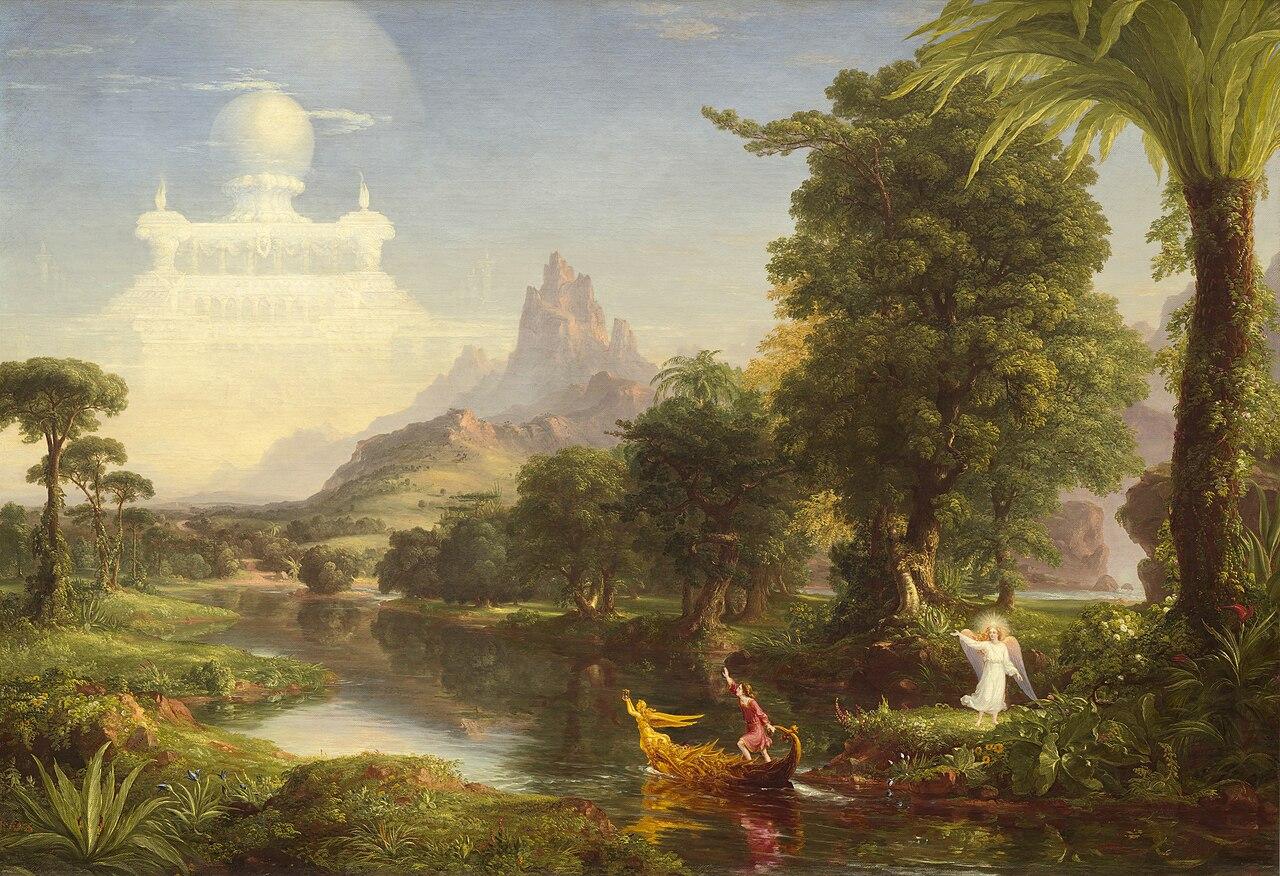
Alt...
"The Voyage of Life: Youth" painted by Thomas Cole in 1842.
A romantic landscape painting by Thomas Cole depicting a young man in a golden boat steering eagerly toward an ethereal, glowing palace in the distant clouds, while a guardian angel stands on the riverbank gesturing toward the heavens.
https://en.wikipedia.org/wiki/The_Voyage_of_Life#/media/File:Thomas_Cole_-_The_Ages_of_Life_-_Youth_-_WGA05140.jpg
![[?]](https://syzito.files.fedi.monster/accounts/avatars/111/173/513/773/747/668/original/9d667c14a71e9aa2.gif)
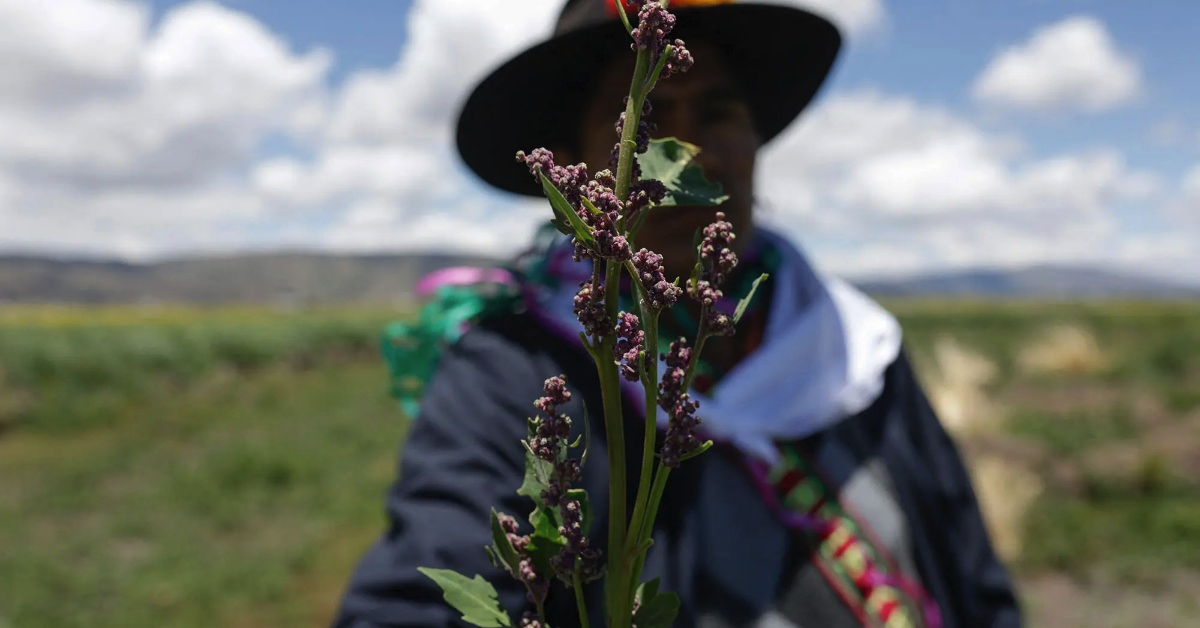
Report finds Indigenous cultural practices are a climate solution
https://www.goodgoodgood.co/articles/report-finds-indigenous-cultural-practices-climate-solution
Indigenous lands are crucial for climate mitigation and resilience. Research shows their health is a direct result of Indigenous stewardship…
#Indigenous #ClimateSolution #Culture #Stewardship
John Singer Sargent Painting Reveals Hidden Image During Conservation
A restoration of the work by the Mesdag Collection has uncovered fingerprints and a pair of legs.
by Vittoria Benzine
https://news.artnet.com/art-world/mesdag-john-singer-sargent-restoration-indigo-2784316
Books illustrated by John Singer Sargent at PG:
https://www.gutenberg.org/ebooks/author/36606
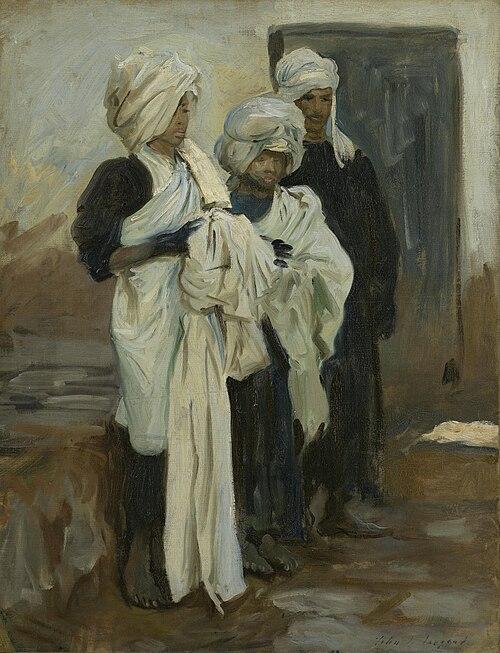
Alt...
John Singer Sargent, Egyptian Indigo Dyers (1891).
An oil painting by John Singer Sargent depicting three figures in white turbans and dark robes with indigo-stained hands, standing together with bundles of whi…An oil painting by John Singer Sargent depicting three figures in white turbans and dark robes with indigo-stained hands, standing together with bundles of white fabric.
https://commons.wikimedia.org/wiki/File:Sargent_-_Egyptian_Indigo_Dyers,_1891,_hwm0302.jpg
Wait until the editors over at JNS actually read a history book some day. 
"Today, the #American covenant is under serious pressure from two directions simultaneously.
The left has been replacing the covenant’s universal terms with group identity. The relevant question, in this framework, is not what you accept but what you are: your #race, your #gender and your position in a hierarchy of historical grievance. From the right, #ethnonationalism defines the nation by #ancestry and #culture rather than by shared obligation. In both models, the covenant is conditional, depending on which group you belong to.
Both abandon America’s founding logic. Both make #Jewish belonging in #America contingent in ways that Washington explicitly said it never could be."
https://www.jns.org/opinion/eldad-tzioni/what-george-washington-really-said-to-the-jews-of-newport
![[?]](https://hermeneutrix.com/wp-content/uploads/2021/11/cropped-prochazka-still-life-512.jpg)
“Getting Real”
A sermon from Matthew 9:24-10:39

“Let’s get real.” We say that sometimes when we’re trying to banish illusions or wishful thinking.
And “getting real” definitely sums up the tone of Jesus’ message to the disciple-apostles here. Jesus is telling it like it is. People are rejecting him. People are going to reject his disciples, too. The disciples can’t expect to get any better treatment than Jesus himself is getting.
By implication, there’s no point following Jesus if they want to be looked up to by bigwigs in their world. Because that’s not about to happen.
And completely realistically, Jesus wouldn’t have to tell these disciple-apostles not to be afraid three times in one paragraph if they weren’t facing something Jesus knows they could be afraid of, and might be afraid of, and will need this reassurance to face those fears with courage.
Especially because Jesus knows – and is letting them know – following Jesus is going to lead them into, not away from, conflict. It’s not going to be the “path of peace” in the sense of harmonious relations with everyone in their lives.
Yes, we think people have been waiting for someone sent from God who is going to be called the “Prince of Peace.” And yes, we think Jesus is that Someone, and we think the disciples thought so, too. But Jesus is telling them flat out that one of the first consequences of that Someone’s arrival is the exact opposite of high five’s all around.
Because Jesus’ arrival, which brings near the kingdom of the heavens, as he’s been saying over and over since the beginning of the gospel of Matthew, is the arrival of Reality, Truth, in a world that is based on and devoted to unrealities and falsehoods. That creates a stark dividing line, between two incompatible worlds, with two incompatible worldviews that go with them. The people following Jesus are likely to find themselves on the other side of that dividing line from people they love, and ought to love, for that matter, and will want to keep loving and being in relationship with. That won’t feel like peace at all; it will hurt.
So, far from telling the disciples they have nothing to lose, Jesus is telling them that they have plenty to lose – at least, according to one way of looking at things, according to the common sense way of looking at things that prevails in the world around them, the world they know perfectly well.
And Jesus’ big underlying point here, the one he’s laying out for the disciples, and for us, is: you-all have to stop looking at things that way. You-all have to start looking at things my way, from the perspective of the kingdom of the heavens, the perspective of the active reigning of God. When we look at things Jesus’ way, we’ll realize, very clearly, that everything we stand to lose is nothing compared to what we stand to gain in following Jesus.
[Something like … the way any of us will immediately change course if we find out we’ve been travelling away from our destination, instead of towards it. Assuming we want to get there, there’s no alternative.]
These disciples are following Jesus, or so we think, because they embrace who he is (at least, as well as they understand that at this point), and they embrace what he teaches because of who he is.
But that commitment will already set them at odds with the world around them. And will do so more and more as time goes on, as they realize even more clearly than they do now that Jesus is the Lord of all, the one who is the definitive authority about everything in heaven and on earth and about all things, seen and unseen, the one who rightly and truly says what’s good and what’s bad, what’s healthy and what’s unhealthy, what’s right and what’s wrong, etc. etc. etc.
Because the world around them is definitely going to deny that authority, and keep on denying that. Is going to ask them “What about Caesar?” “What about the gods?” “What about Our Way of Life??” The people around them aren’t going to drop all that, certainly not at first, especially not when going along with all that gives them any power or position or prosperity. They’re going to want to reject the disciples’ story about who Jesus is, and to reject what Jesus teaches, because it disrupts their business-as-usual world.
Jesus is telling the disciples here that in following him, realistically, they are definitely choosing sides. Eventually, yes, everything is going to be made clear; the truth will be plain for all to see. But for now, the disciples’ task is to help make that truth plain, in a world in which it’s still far from obvious, and certainly isn’t what most people take as common sense.
And so their message, far from leading to [social] peace, will lead to rejection (because the message is unwelcome); it will lead to peril (because the guardians of the status quo will try to suppress that message); and it will lead to loss. It will lead to loss not only of every false value, but of some real ones – because community is a value, the love of friends and family is a value, life is a value. Losing those things in this cause will be real suffering and loss. But it will be suffering and loss in the service of – so we believe – the greatest value of all, the greatest good: the good being brought into the world by and through Jesus.
At least that will be suffering and loss in the service of Reality. It won’t be the tragic suffering and loss everyone always already faces in the service of every other cause, that ultimately amounts to total waste, because it’s in the service of unreality.
As Jesus lays it out here, the disciples’ real choice is genuinely either-or; there’s no “win-win,” as they say in the negotiation literature; when we recognize Jesus as Lord of all, revealer of reality, we can’t honestly accept some other way as equally … real.
What this can mean, practically, probably is better illustrated by a story that comes from a society less like ours … in which we have the idea that our “religion” is sort of a neutral matter of private belief – and in which we’ve made a lot of space for differences of religion, for good reasons. We need a story from a society that’s organized around a more traditional model, in which every institution of the society is integrated with the ideas people have about the world of spirits and the unseen and how people have to work together to keep those forces on their side …
One like the first disciples’ context. Especially for gentiles, who were living in a Greco-Roman world in which worshiping the family gods, sacrificing to the genius of the emperor, etc., was part of staying in faithful step with one’s family and friends and one’s whole society.
Or a society like the one in which the composer of the hymn “I Have Decided to Follow Jesus” lived … at least, according to a story that grew up about the origins of that hymn. According to the musical scholars at the United Methodist Discipleship Ministries website, the Indian evangelist Simon Kama Marak is the most likely composer, the story is that the tune comes from the Indian region of Assam, and the words were taken from the last words of an early Assamese convert to Christianity, who was persecuted along with his entire family for embracing the new vision of Reality offered by Jesus Christ.
At that time, around the last quarter of the 19
th
century, the life of the many different indigenous people of this region of India was completely, thoroughly organized in various ways by their ancient traditional understanding of the world as dominated by powerful spirits, who had to be addressed properly, whose favor had to sought in particular ways by everyone in the community to ensure, for instance, the defense of a village or the success of the year’s crops, etc. And they weren’t too enthusiastic about the colonial powers, either, and all the changes they were bringing to their environment.
So when this particular villager announced that he and his family had been listening to the missionary who’d come to the area, and had become convinced of the truth of their story about the world and God and God’s love as shown in Jesus Christ, the chief of the village responded immediately with terrific hostility. He got all the members of the community together, they dragged this family in front of the whole village, and they said, you’re traitors to our village, and we won’t let you get away with this. We’ll kill you first.
But the man and his family wouldn’t back down. The father chants to them in a traditional tune “I have decided to follow Jesus. No turning back.”
The chief says “You’re giving us no choice.” First he ordered the village archers to shoot the man’s children, which they did. And the chief says “Now what do you say? You’re going to lose every member of your family.”
And the man says “Though none go with me, still I will follow. No turning back.”
So the chief ordered the archers to shoot the man’s wife, which they did. And then he says to the man “This is your last chance – come back to our ways, or lose your life.”
But the man sang again, “The cross before me, the world behind me. No turning back.” The chief gave the nod, and the archers shot the man dead like the rest of his family.
But by now, everyone had seen the utter fearlessness with which this father and his family faced their deaths, and the chief was so moved that he declared, “I too want to belong to Jesus Christ!” The other villagers were moved in the same way. Which is how it came to pass that this entire village embraced the man’s faith in Jesus Christ, crossing the line into a new Reality, the one in which God, out of love for the world and its people, comes into that world, shares all its pain and suffering, is faithful even to death on a cross, all for the sake of bringing that world back to God and God’s love.
And we should notice something about this story, and the many other stories we have like it in our tradition, and the way it relates to Jesus’ instructions to his disciples. We don’t have them because God is so keen on Christ’s disciples dying. God is a God of life, and wants people to live; Jesus comes to give people life, and that more abundantly.
But that is precisely why the cost of loving Jesus more than anything and anyone is so steep. Because Christ’s mission is to bring that life to the world. So although the untransformed world is hostile to Christ’s message, Jesus’ way leads back into that hostile world, in love, and in service. Jesus’ way leads back towards humanity, back towards the fathers and mothers and mothers-in-law and all the rest, whom we do still love, to be “lost,” in love, and in service, in the name of Jesus Christ.
In whom we find our true lives.
Image: “Open book 1,” by Alina Daniker alinadaniker, CC0, via Wikimedia Commons

Alt...
open book on a table
![[?]](https://media.mastodon.cloud/accounts/avatars/000/013/805/original/3a4570ba89403d6d.png)
Bonne Fête de la Musique 2026,
par Plantu.
#illustrateur #dessinateur #illustrator #illustration #draw #drawing #plantu #art #culture #music #musique #fêtedelamusique #fetedelamusique #musicfest #france
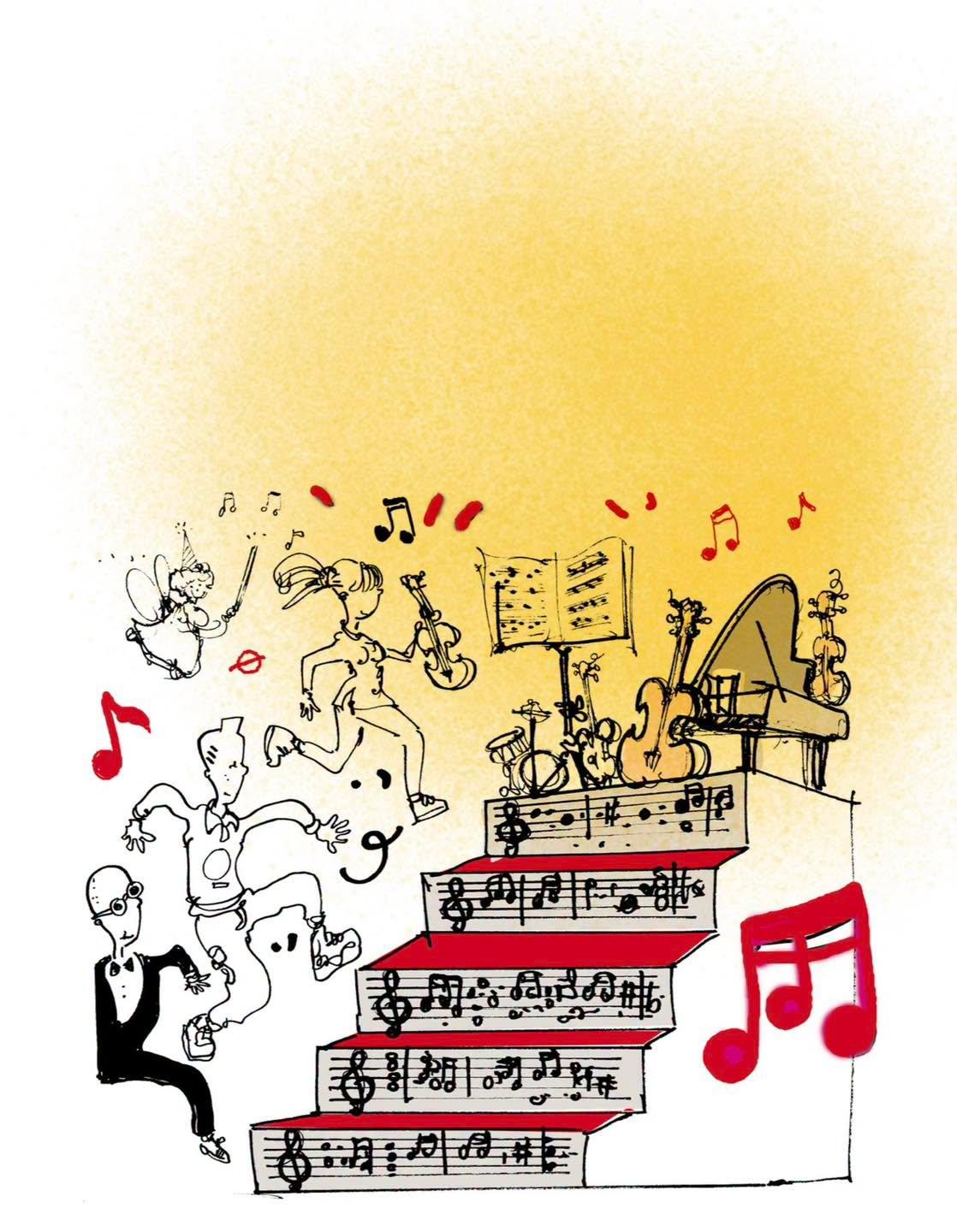
Alt...
Bonne Fête de la Musique 2026 par Plantu.
Scholar Claims Van Gogh Hid Secret Homage to Leonardo da Vinci’s ‘The Last Supper’ In His ‘Café Terrace at Night’
Did you know about his "Sacred Realism"?
by Lorena Muñoz-Alonso (from the archives)
https://news.artnet.com/art-world/vincent-van-gogh-last-supper-cafe-terrace-at-night-275282
Books by Van Gogh at PG:
https://www.gutenberg.org/ebooks/author/40599
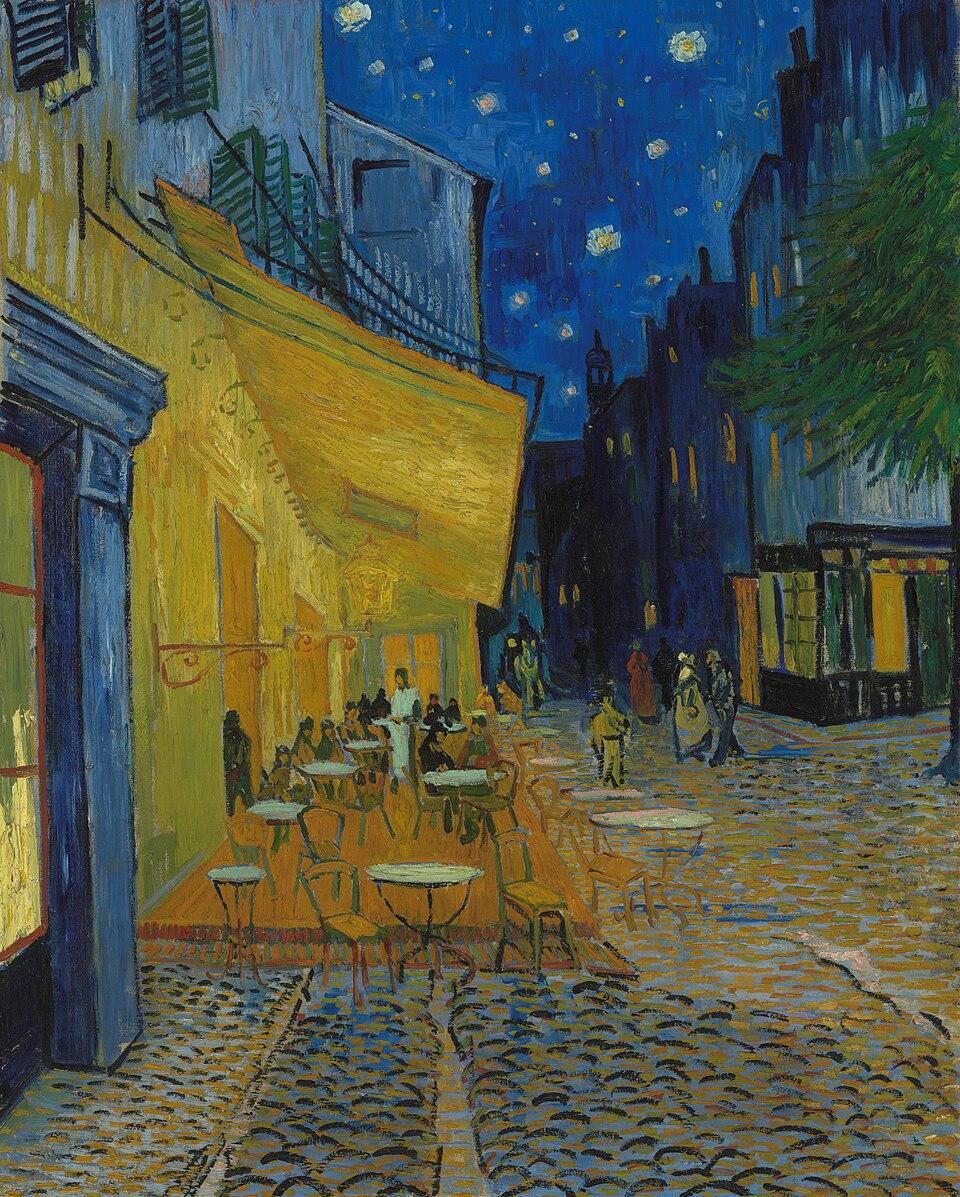
Alt...
Van Gogh - Terrace of a Café at Night (Place du Forum) 1888.
It depicts a café on the Place du Forum lit by gaslight, glowing yellow against the deep blue starry night sky, with cobblestones rendered in van Gogh's characteristic brushwork.
https://en.wikipedia.org/wiki/Caf%C3%A9_Terrace_at_Night#/media/File:Van_Gogh_-_Terrace_of_a_Caf%C3%A9_at_Night_(Place_du_Forum)_1888.jpg
![[?]](https://files.mastodon.social/accounts/avatars/001/021/813/original/7da54a73182dbdda.gif)
.jpg)
You Can’t Have Both Democracy and Billionaires
https://www.currentaffairs.org/news/you-cant-have-both-democracy-and-billionaires
Alchemic Journey se produira en concert pour le Sou des Ecoles des Neyrolles à partir de 18h30 le vendredi 19 juin 2026 dans le cadre de sa Kermesse annuelle.
Soirée barbecue conviviale!
Voyage musical!
Alchemic Journey jouera ses compositions originales.
#animation #kermesse #soudesécoles #concert #live #Music #Pop #Rock #Blues #Musique #Art #Culture #Event #loundge #AlchemicJourney #Drums #Bass #Guitar #barbecue #lesneyrolles #nantua #ain #rhonealpes #auvergne #musique #music #fediverse
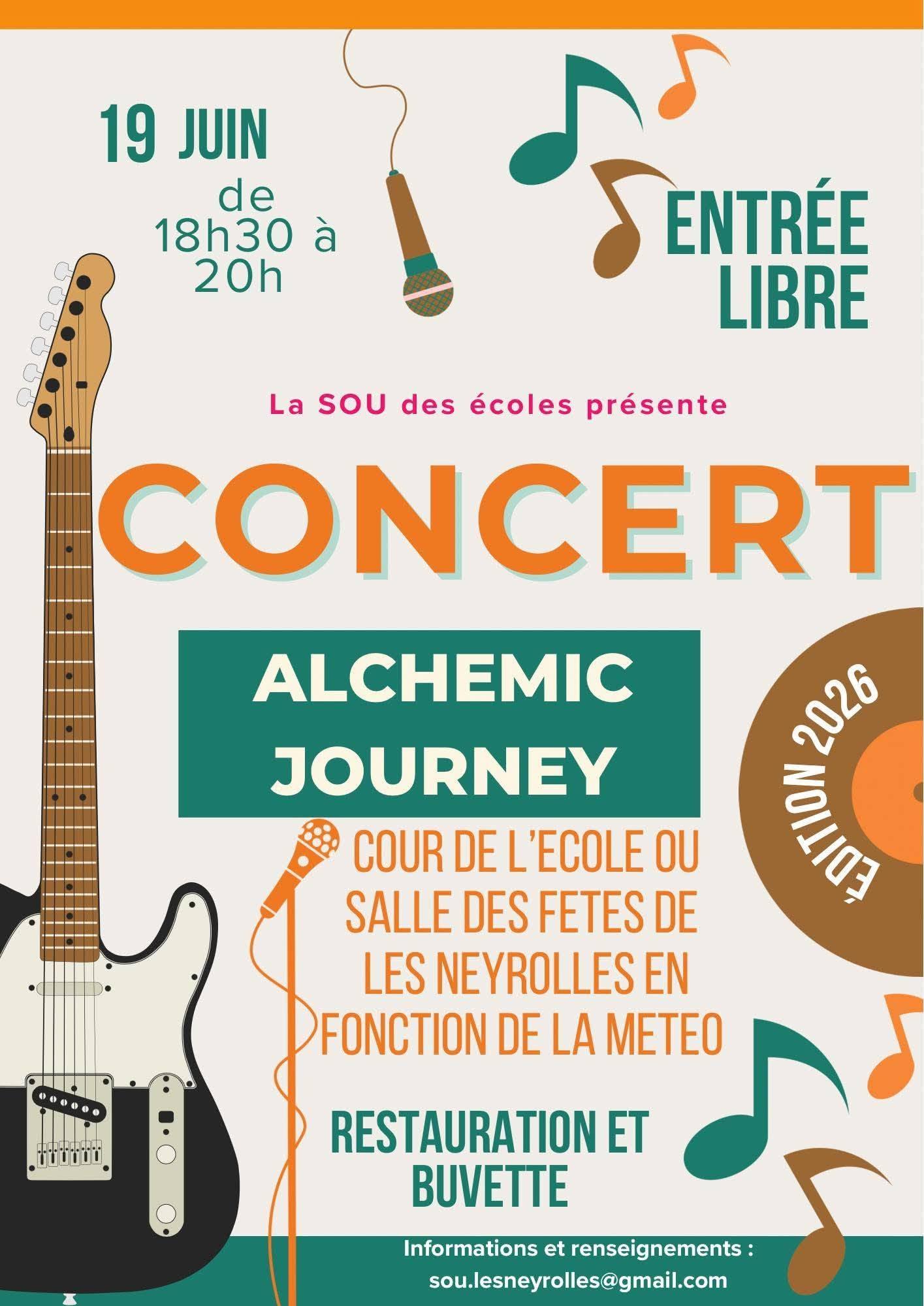
Alt...
Alchemic Journey se produira en concert pour le Sou des Ecoles des Neyrolles à partir de 18h30 le vendredi 19 juin 2026 dans le cadre de sa Kermesse annuelle

Alt...
Alchemic Journey se produira en concert pour le Sou des Ecoles des Neyrolles à partir de 18h30 le vendredi 19 juin 2026 dans le cadre de sa Kermesse annuelle

Alt...
Alchemic Journey se produira en concert pour le Sou des Ecoles des Neyrolles à partir de 18h30 le vendredi 19 juin 2026 dans le cadre de sa Kermesse annuelle.

Alt...
Alchemic Journey se produira en concert pour le Sou des Ecoles des Neyrolles à partir de 18h30 le vendredi 19 juin 2026 dans le cadre de sa Kermesse annuelle.
New art test could help museums spot fake Van Goghs without touching paintings
A new study published in the peer-reviewed journal Surface Topography: Metrology and Properties introduces a pioneering, noninvasive technique that can distinguish authentic artworks from forgeries, offering museums, collectors, and auction houses a major advantage in tackling art fraud.
by Sadie Harley, reviewed by Andrew Zinin
https://phys.org/news/2026-06-art-museums-fake-van-goghs.html
Van Gogh at PG:
https://www.gutenberg.org/ebooks/author/40599
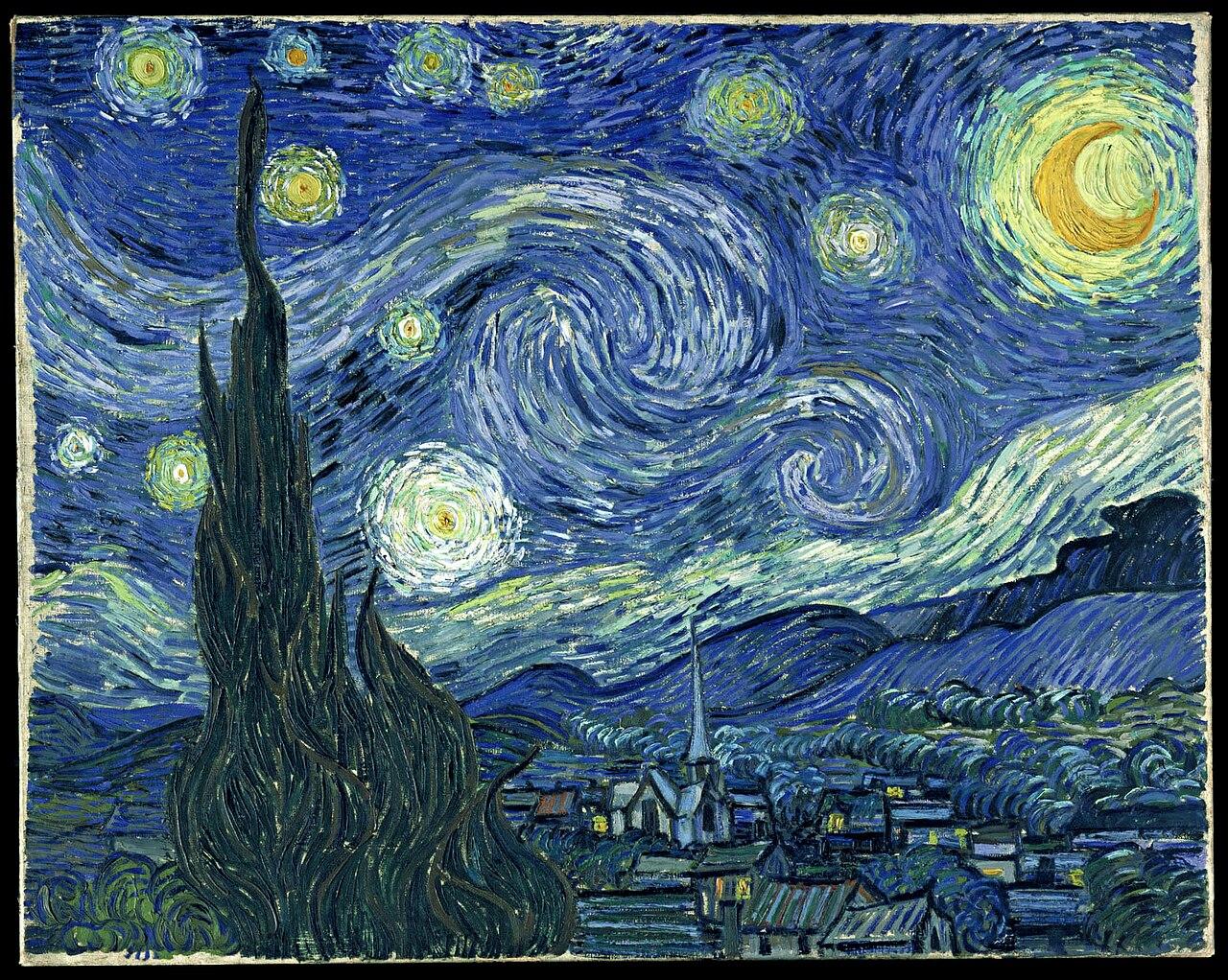
Alt...
The Starry Night, June 1889. Museum of Modern Art, New York
A swirling, luminous night sky dominates, featuring:
Spiral galaxies of light and turbulent brushstrokes
A glowing crescent moon (upper right)
A towering dark cypress tree (left)
A quiet village with church steeple below
Rolling blue hills in the background
https://en.wikipedia.org/wiki/Vincent_van_Gogh#/media/File:VanGogh-starry_night_ballance1.jpg
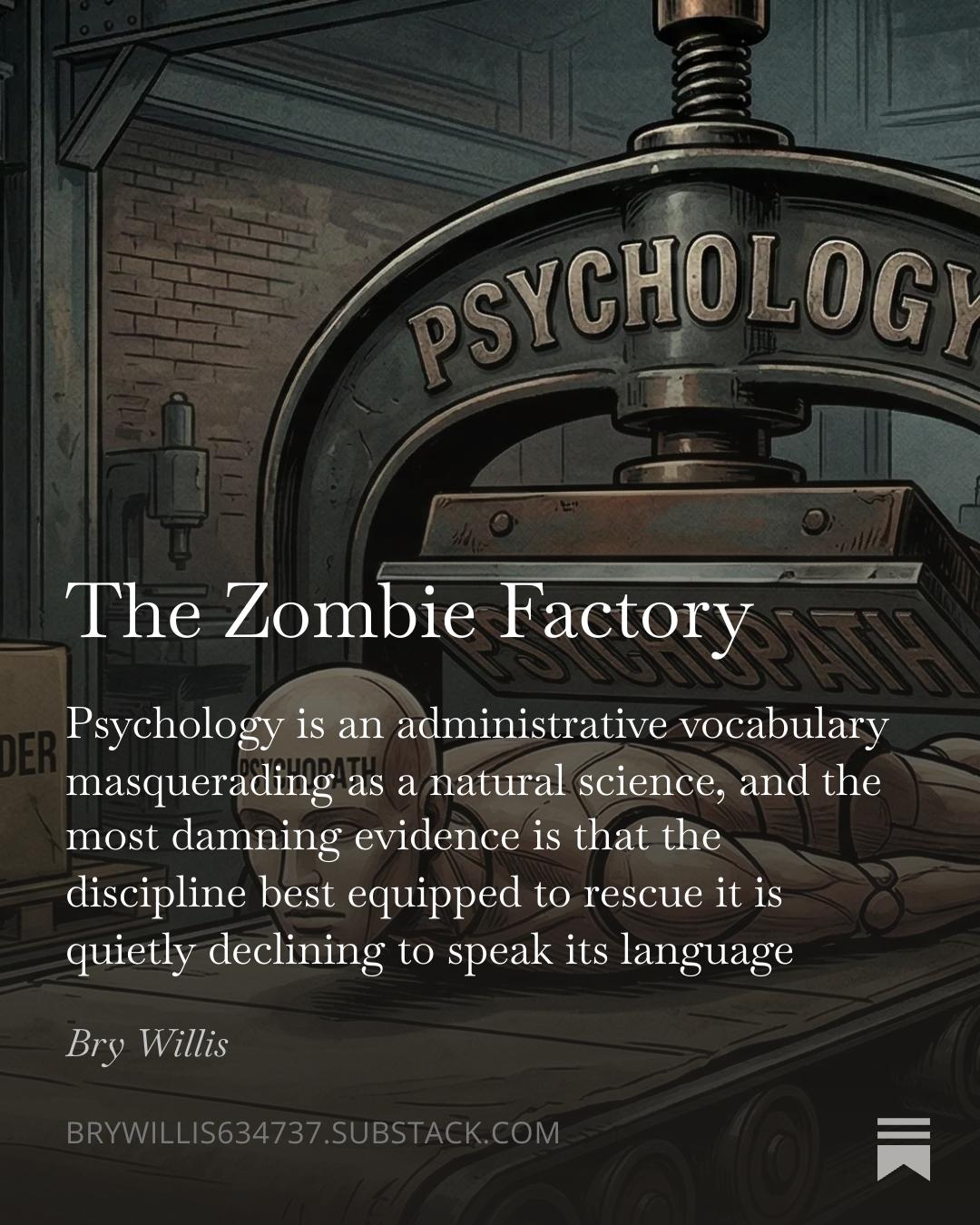
Psychology is an administrative vocabulary masquerading as a natural science, and the most damning evidence is that the discipline best equipped to rescue it is quietly declining to speak its language. Thoughts?
https://brywillis634737.substack.com/p/the-zombie-factory?r=pvxh5
#philosophy #psychology #zombies #ethics #blog #substack #writing #critique #news #language #society #culture #power #instrumentation #evidence #podcast #thoughts