Search results for tag #christianity
![[?]](https://files.faithtree.social/accounts/avatars/109/762/503/392/984/571/original/3f58a809494a1dc3.jpg)
Please join us for the online community prayer walk -- it's begun and will be running all day! https://faithtreecf.org/prayerWalk/
![[?]](https://files.faithtree.social/accounts/avatars/109/792/287/774/403/176/original/d5ec857943522385.png)
In his latest, Dennis E. Powell says, "One would never have guessed the power of just zooming the camera back. In late spring, as I've written, our beloved local priest, Father Mark, died of esophageal #cancer at age 49. The grief-stricken congregation was oddly denied admission to the parish #church for his funeral." https://ofb.biz/safari/article/1469.html #LatinMass #Christianity
![[?]](https://friendica.world/photo/profile/wistquotes.png?ts=1766199542)
A quotation from Robert Louis Stevenson
Them that havenae dipped their hands in any little difficulty, should be very mindful of the case of them that have. And that is the good Christianity.
Robert Louis Stevenson (1850–1894) Scottish essayist, novelist, poet
Novel (1886), Kidnapped, ch. 18 “I Talk with Alan in the Wood of Lettermore” (Alan)
More about this quote: wist.info/stevenson-robert-lou…
#quote #quotes #quotation #qotd #robertlouisstevenson #kidnapped #Christianity #compassion #difficulty #loveyourneighbor #misfortune #sympathy #trouble #unfortunate
![[?]](https://files.mastodon.social/accounts/avatars/109/520/189/049/138/124/original/0c9be3813b59c410.jpeg)
In today's installment of That Beautiful Stream, things will get a little personal. Since it's Pride Week here in Honolulu, we're going to discuss how one might reconcile their Christian faith and Queer identities. I'm going to talk a bit about my own journey from bigotry to reconciliation, what things the Lord used to open my eyes and change my heart.
We go live at 3:30 Hawai'i time!
#Anglican #Episcopal #Christianity #Bible #theology #spirituality #Pride
![[?]](https://files.mastodon.social/accounts/avatars/116/374/382/279/644/562/original/362b29fef04189ab.png)
Many scholars agree that the historical evidence for Jesus is compelling. Textual analysis of ancient manuscripts, archaeological findings, and writings from contemporaries provide a strong foundation for his existence. The impact of his teachings continues to shape cultures worldwide. #History #Jesus #Christianity #Evidence #Faith
![[?]](https://rssfeed.media/system/accounts/avatars/112/288/948/437/524/659/original/d27d2b384722f16a.png)
Yes, the music is lovely, but cathedrals are crumbling | Letter
By Guardian Staff
They are some of our oldest and most historically significant buildings, yet they receive no secure state funding, writes Dr Coco Parkinson-Huggins
https://www.theguardian.com/world/2026/oct/13/yes-the-music-is-lovely-but-cathedrals-are-crumbling
#Anglicanism #Christianity #Religion #Architecture #Music #Culture #TheGuardian #GuardianStaff
![[?]](https://mstdn.games/system/accounts/avatars/116/151/119/562/632/987/original/546e76f55b220add.png)
CW: Religion - Christianity [SENSITIVE CONTENT]
I wrote a short-ish blog post on my WriteFreely blog about Zechariah 7:8-13. https://paper.wf/mdmrn/bzechariah-7-8-13-b
If interested, by all means check it out!
If not, that's cool too. And I get it.
I find that sharing a Bible verse daily helps me stay focused and grounded in my faith throughout the day. It’s a simple way to find strength and guidance.
#Bible #Faith #Verses #Christianity #Scripture
![[?]](https://media.mstdn.social/accounts/avatars/109/337/976/009/238/597/original/b9cc4f37aa93a923.png)

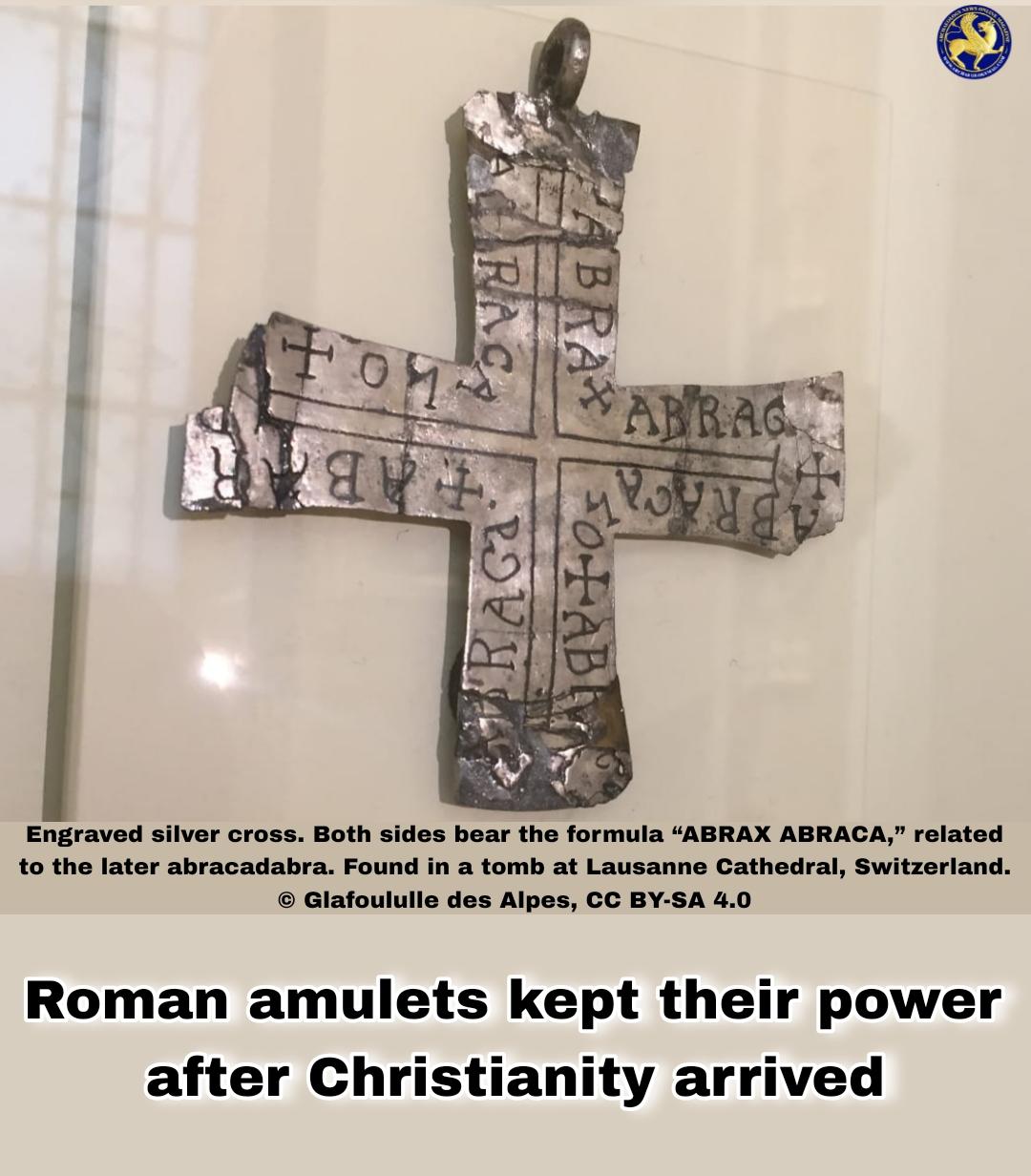
Roman amulets kept their power after Christianity arrived
Romans wore amulets, hung them on doors, and buried them near fields. The habit lasted from 100 BCE to 600 CE. It didn’t die when Christianity arrived. New research from PhD candidate Patricia Kret shows the practice simply changed clothes...
More information: https://archaeologymag.com/2026/09/roman-amulets-kept-their-power-after-christianity-arrived/
Follow @archaeology
#archaeology #archeology #archaeologynews #christianity #romanempire
Alt...
Roman amulets kept their power after Christianity arrived
Romans wore amulets, hung them on doors, and buried them near fields. The habit lasted from 100 BCE to 600 CE. It didn’t die when Christianity arrived. New research from PhD candidate Patricia Kret shows the practice simply changed clothes.
A quotation from Robert Ingersoll
If there is a God who will damn his children forever, I would rather go to hell than to go to heaven and keep the society of such an infamous tyrant. I make my choice now. I despise that doctrine. It has covered the cheeks of this world with tears. It has polluted the hearts of children, and poisoned the imaginations of men.
Robert Green Ingersoll (1833–1899) American lawyer, freethinker, orator
Lecture (1877-01-31) “The Liberty of Man, Woman, and Child,” Case Hall, Boston
More about this quote: wist.info/ingersoll-robert-gre…
#quote #quotes #quotation #qotd #robertingersoll #robertgreeningersoll #afterlife #Christianity #damnation #divinejustice #divinepunishment #divinewrath #eternalpunishment #fearmongering #God #hell #originalsin #toxicity #tyranny
I find biblical morality fascinating—it sets clear guidelines rooted in love, justice, and truth, shaping ethical behavior across cultures and generations.
#Bible #Morality #Ethics #Faith #Christianity

Apologetics is essential for understanding and defending the Christian faith. It equips believers to address questions and challenges about their beliefs, fostering deeper faith and engagement with others. Engaging in apologetics can strengthen both personal faith and community dialogue. #Faith #Apologetics #Christianity #Debate #Truth
Biblical morality offers timeless principles that guide ethical behavior based on teachings found in Scripture, impacting personal decisions and societal values.
#BiblicalMorality #Ethics #Christianity #Scripture #Faith
Today on That Beautiful Stream we'll be taking a look at angels: what they are and how they're spoken of in our liturgy.
#Angels #Anglican #Episcopal #Christianity #liturgy #Bible #spirituality #theology
I find that sharing Bible verses daily helps me stay grounded and encourages others to reflect on their faith and values. It’s a simple but powerful practice.
#BibleVerse #Faith #Scripture #Inspiration #Christianity
![[?]](https://star.octade.net/media/63a94df7-40e2-42d2-915d-5c141da33d4e.png)
Amish preacher calls me just to tell me that I am going to hell.
https://youtu.be/SGXHy8QIHsg?si=Fnm3fFWnGd6zDzMH
Many people think the Amish are 'good people' with a anitiquated 'faith'.
Some former Amish will tell you it is quite different than many perceive. The Amish are imprisoned in a insular and clannish religious system rather than liberated by faith in the promises of God to all peoples. Like many other Christians, it is common in the Amish community for people to worship the authority of the Church and Bishopric rather than the Creator God.
Like other organized religions, some Amish dictate that loyalty to the institution and pastorate is what saves, and that disloyalty damns you to hell. Of course this is found nowhere in the Bible, a book which shows God destroying religious institutions over and over again for this very attitude!
I have no problem with people organizing as a group and taking care of each other. But when their rulers say you will burn in hell or be damned for disobeying the group rulers, that is blasphemy!
#Cults #CultAwareness #Amish #Anabaptist #Christian #Christianity #Christ #Bible #Gospel #Church #Theology #Religion #Faith #Jesus #Hell #Hellfire
The historical evidence for Jesus' existence is supported by multiple sources, including Roman historians and biblical texts, confirming he was a real person.
#Jesus #History #Bible #Faith #Christianity
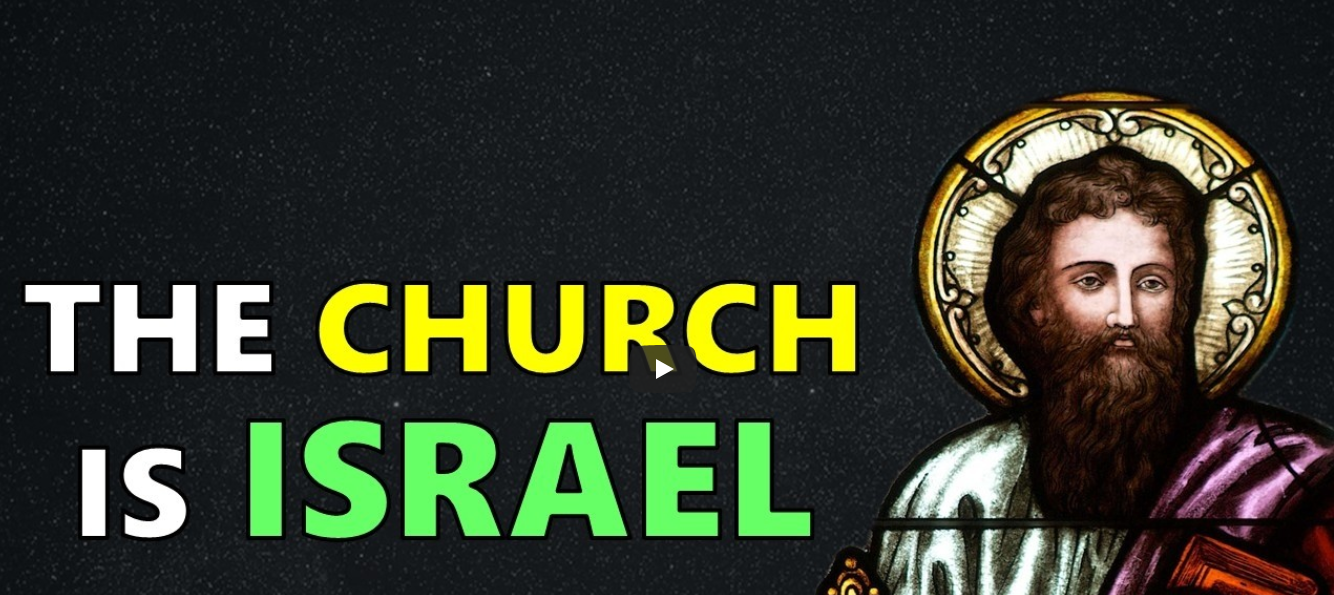
THE CHURCH IS ISRAEL
_
Dispensationalism is virtually the state religion of the U.S. government, especially among the right. The author of this video does a fine job of shredding the satanic and anti-christ doctrine of Dispensationalism. Millions of American Christians are deluded by this war-mongering false gospel.
_
Dispensationalism Refuted by EVERY Book of the Bible
_
"Contrary to what some may believe, the fundamental doctrines of Protestant and Reformed theology were not inventions of the Protestant Reformers. Rather, these doctrines find their origins in the Bible itself, and afterwards, in the writings of the early church fathers. Knowing what these men of God taught provides Protestants a great assurance, a clear conscience, and a genuine appreciation for the faith we share with our Christian forefathers."
[LINK] https://youtu.be/sbFQ0Z6y_dM
#Church #Israel #Gospel #Dispensationalism #Jews #Judaism #Christ #Christian #Christianity #Bible #Theology #Religion
I find it compelling how historical documents and eyewitness accounts from different sources support the existence and impact of Jesus as a real person in history.
#Jesus #History #Faith #Christianity #Evidence
CW: Religion - Christianity [SENSITIVE CONTENT]
New post on my blog.
I have seen a lot of folks, especially in Evangelical circles, misuse 2 Timothy 3 to try to make claims about the Bible.
Context matters.
If interested, check out my stats here: https://paper.wf/mdmrn/b2-timothy-3-14-17-b
"I Know the Blasphemy of the Synagogue of Satan" - Jesus
[LINK] https://youtu.be/o_7c82i0E70
"Jesus called them "the synagogue of Satan." But who were they, and what had they done?"
"The phrase appears only twice in the Bible, in the letters to Smyrna and Philadelphia in Revelation 2:9 and 3:9. Today it gets quoted everywhere, and people build some very large conclusions on it. In this video, we investigate the phrase using the CAAP method (Context, Author, Audience, Purpose), digging into first-century Smyrna, Rome's imperial cult, the Greek words behind the text, and the martyrdom of Polycarp, to find out who Jesus was actually talking about and what's been done with his words since."
Some 'crusaders' mis-use the Bible as a way to bludgeon Israel and Jews by calling them the 'Synagogue of Satan'.
This track debunks popular heresies and shows just who this synagogue of satan really is. IMHO the talking sheep head does a great job of succinctly touching on the right points. This information is useful ammunition for shooting down the screeds and credos of cranks who spread their false and hateful interpretations of the Bible.
#Race #Racism #AntiSemitism #Israel #Palestine #Gaza #Jews #Judaism #Prophecy #Religion #Christian #Christ #Christianity #Church #Synagogue #Faith #Jesus #Bible #Theology #SerpentSeed #SynagogueOfSatan #Revelation #ChristianIdentity #YouTube #Video #Podcast #BibleTalk #Heresy #Blasphemy #Crusaderism #Crusaders #Hate #NowPlaying
I rely on historical documents and testimonies from various sources to understand and prove the existence of Jesus beyond doubt.
#Jesus #History #Faith #Christianity #Evidence

I've found that apologetics strengthens faith by providing reasoned answers to challenging questions, making beliefs not just felt but also understood.
#Apologetics #Faith #Reason #Christianity #Belief

Been a minute! Today is the last installment of our series on obligations. In this one we ask the question: can one be obligated to love?
Join us live at 3:30 Hawai'i time (or whenever after)
#Jesus #Episcopal #Anglican #Church #Christianity #Spirituality #theology #bible
Apologetics is an essential field that defends the Christian faith through reasoned arguments and evidence. It helps believers articulate their faith and address doubts. Engaging with different worldviews can strengthen our understanding and conviction. #Faith #Reason #Christianity #Philosophy #Apologetics
Biblical morality serves as a foundation for ethical behavior in many cultures. It emphasizes principles such as love, justice, and forgiveness, which are central to the teachings found in the scriptures. Understanding these values can guide us in our daily lives and interactions. #Faith #BibleStudy #Ethics #MoralValues #Christianity
Historical records outside the Bible confirm Jesus existed as a real person, showing the impact he had beyond religious texts.
#Jesus #History #Faith #Christianity #Evidence

Apologetics is a disciplined, respectful defense of faith. It invites curiosity, weighs evidence, and clarifies why we believe. It emphasizes truth, hope, and honest discussion over winning arguments.
#Apologetics #Christianity #FaithAndReason #BiblicalWorldview #DefendTheFaith
https://www.chrissbiblenewsletter.org/p/does-truth-change-based-on-who-believes
CW: Religion - Christianity [SENSITIVE CONTENT]
So, I had been discussing doing this for a while, but since I made an actual blog, I decided to post up my thoughts on Acts 19:21-41.
You can check them out here: https://paper.wf/mdmrn/bacts-19-21-41-b
I'm not saying this blog is going to be all religion, all the time. I'm not even sure what else I'll do with it, but I wanted to share this one.
I find it fascinating how some interpret the Bible to harmonize with evolution, seeing God's hand in the process of life developing over time.
#BiblicalStudies #Evolution #Christianity #FaithAndScience #Theology

Apologetics equips us to provide thoughtful, reasoned defenses of faith, helping clarify misunderstandings and strengthen conviction in today’s world.
#Apologetics #Faith #Reason #Christianity #Belief
The various codes which were presented to you at Crossgates — religious, moral, social, and intellectual — contradicted one another of you worked out their implications. The essential conflict was between the tradition of nineteenth-century asceticism and the actually existing luxury and snobbery of the pre-1914 age. On the one side were low-church Bible Christianity, sex puritanism, insistence on hard work, respect for academic distinction, disapproval of self-indulgence: on the other, contempt for “braininess” and worship of games, contempt for foreigners and the working class, an almost neurotic dread of poverty, and, above all, the assumption not only that money and privilege are the things that matter, but that it is better to inherit them than to have to work for them. Broadly, you were bidden to be at once a Christian and a social success, which is impossible.
George Orwell (1903–1950) English journalist, essayist, writer [pseud. of Eric Arthur Blair]
Essay (1948-06), “‘Such, Such Were the Joys …’,” sec. 5, Partisan Review (1952-09)
More about this quote: wist.info/orwell-george/86130/
#quote #quotes #quotation #qotd #orwell #georgeorwell #asceticism #Christianity #luxury #money #moralcode #privilege #school #snobbery #socialconventions #socialladder #society #success
I explore historical and biblical evidence to prove Jesus existed, including eyewitness accounts, early manuscripts, and archaeological findings supporting his life and teachings.
#Jesus #History #BiblicalEvidence #Faith #Christianity
New blog post. This one is about land "development" and how we can learn about worship from watching the trees.
https://catecheticconverter.com/theres-no-such-thing-as-undeveloped-land
#theology #ecology #environment #nature #Episcopal #Anglican #Christianity #Jesus
I find it interesting how some interpret the Bible to accommodate the concept of evolution, blending faith with science in unique ways.
#BiblicalStudies #Evolution #FaithAndScience #Theology #Christianity
Please join me as we think of the Comfort Food of Grace tonight in 2 Corinthians 1... https://youtube.com/live/phFSvcHbAWs
Apologetics is the discipline of defending religious doctrines through systematic argumentation and discourse. It plays a crucial role in helping believers articulate their faith and address doubts. Engaging with challenging questions can strengthen one's understanding and conviction. #Faith #Apologetics #Christianity #Philosophy #Theology
I find the historical evidence for Jesus compelling. Multiple sources outside the Bible mention him, confirming his existence and impact beyond scripture.
#Jesus #History #Christianity #Faith #BiblicalStudies
I explore historical records and eyewitness accounts to understand the evidence supporting the existence and impact of Jesus in history.
#Jesus #History #Christianity #Faith #Evidence
Christians have placed upon the throne of the universe a God of eternal hate. I cannot worship a being whose vengeance is boundless, whose cruelty is shoreless, and whose malice is increased by the agonies he inflicts.
Robert Green Ingersoll (1833–1899) American lawyer, freethinker, orator
Lecture (1881-05-01) “The Great Infidels,” Booth’s Theater, New York
More about this quote: wist.info/ingersoll-robert-gre…
#quote #quotes #quotation #qotd #robertingersoll #robertgreeningersoll #afterlife #Christianity #damnation #divineanger #divinejudgment #divinepunishment #divinewrath #eternalpunishment #eternity #God #hell
Is This Satan's Little Season? The Truth About the Rest of the Dead
You are being tested. Satan the Devil is your exam proctor. Will you pass or fail?
This video is interesting. I will add a few things to consider:
People are finally starting to get it. The lake of fire and brimstone is a metaphor.
This era is the age of the lake of fire and brimstone.
YOU are in the lake of fire and brimstone. Now. Today. It is not somewhere you go when you die a bad boy. You have already been a bad boy or girl and you have already died and gone to hell.
YOU are the dead. You are dead and in hell. Now. Today.
This world age is the hell of the Holy Bible. To escape hell is to escape the blindness and wickedness of this age and all its filthy fake history, fake religion, and fake politics.
The whole world has been deceived. History is fake. Religion is fake. Science is fake. Everything is fake. It's all a pile of half truths and lies.
The only way to see through the fog of lies is to look toward the Savior, Jesus of Nazareth.
#Podcast #Video #Youtube #Documentary #Christian #Christianity #Christ #Religion #Church #Faith #Jesus #Savior #Resurrection #Salvation #Gospel #Devil #Matrix #Simulation #Deception #Bible #Hell #Scripture #Theology #History #Politics #Satan #Saints #Tartaria
Apologetics is the discipline of defending religious doctrines through systematic argumentation and discourse. It plays a crucial role in addressing doubts and misconceptions about faith. Engaging in apologetics can strengthen one's belief and provide clarity in discussions with skeptics. #Faith #Apologetics #Christianity #Reason #Belief
End times prophecy is a significant part of biblical teachings, describing events that signal the world's eventual transformation and the return of Christ.
#EndTimes #Prophecy #Bible #Faith #Christianity

![[?]](https://s3.us-west-1.wasabisys.com/thereslife/accounts/avatars/109/297/497/169/378/689/original/d5a6a68ca48cc93d.png)
I’ve found apologetics to be essential for understanding and confidently explaining the core principles of faith, especially when engaging with diverse viewpoints.
#Apologetics #Faith #Reason #Christianity #Belief

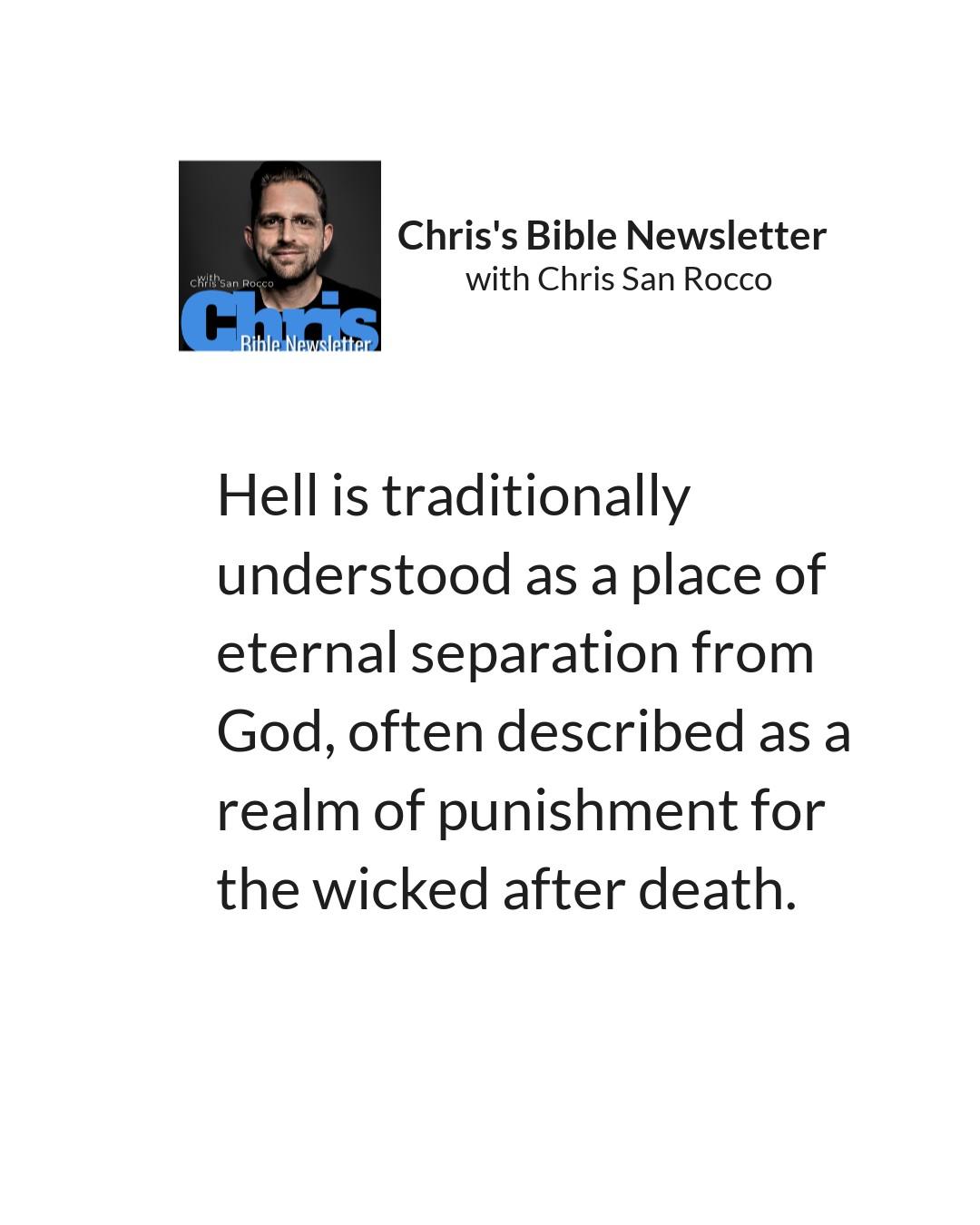
Hell is traditionally understood as a place of eternal separation from God, often described as a realm of punishment for the wicked after death.
#Hell #EternalPunishment #Afterlife #Theology #Christianity
![[?]](https://files.mastodon.green/accounts/avatars/109/258/048/381/846/891/original/97290ecebc04985d.png)
Good theological takes on how US Christian Nationalists are constructing a new #heresy:
They’re writing American history into the bible. They’re replacing the new covenant of Jesus with nationalism.
No-tab Pete Hegseth’s #Pentagon is funding it, integrating these heretical readings of the bible into new course materials, behind closed doors.
I’m not even christian, but this is bad, people. Bad. Really bad. 🥵
A quotation from Robert Ingersoll
When we take into consideration the fact that a belief in the Trinity is absolutely essential to salvation, how unfortunate it was for the world that this doctrine was not established until the year 1274. Think of the millions that dropped into hell while these questions were being discussed.
Robert Green Ingersoll (1833–1899) American lawyer, freethinker, orator
Lecture (1881-05-01) “The Great Infidels,” Booth’s Theater, New York
More about this quote: wist.info/ingersoll-robert-gre…
#quote #quotes #quotation #qotd #robertingersoll #robertgreeningersoll #ingersoll #Christianity #damnation #doctrine #dogma #God #orthodoxy #revelation #salvation #trinity #eternaltruth
Bible prophecy reveals insights about future events and God's plan for humanity, showing the unfolding of history through divine guidance.
#BibleProphecy #Scripture #Faith #Christianity #Future

Apologetics is the discipline that defends a position through the systematic use of information. It plays a crucial role in addressing doubts and questions about faith. Engaging in apologetics can strengthen one's beliefs and provide clarity in discussions about spirituality. #Faith #Reason #Christianity #Debate #Apologetics
![[?]](https://gemsofknowledge.com/wp-content/uploads/2025/09/cropped-gemsofknowledge.png)
When Everything Still Isn’t Enough
We live in a world constantly telling us we need more to be happy and we are often left unsatisfied. But God offers us something completely different then the world - He offers us Him! “But seek ye first the kingdom of God, and his righteousness; and all these things shall be added unto you.” — Matthew 6:33 There's nothing wrong with enjoying the blessings God gives us on earth. We just need to be careful we don't rely on them for our fulfillment and instead seek God. He is our ultimate fulfillment, joy and peace. Seek first His Kingdom. Be content with Him. And trust Him with everything else. 💎 ✨Click to read the full devotional [SENSITIVE CONTENT]
Today’s One Year Bible Verses: Ecclesiastes 1:1–3:22, 2 Corinthians 6:1–13, Psalm 46:1–11, Proverbs 22:15
Seek First His Kingdom
Have you ever gotten something you really wanted, only to discover it didn’t satisfy you for very long?
Maybe it was something you bought, a goal you finally reached, a change you thought would make life better, or even the approval of someone you wanted. For a little while, it felt good. Then eventually, you found yourself wanting something else.
We live in a world constantly telling us we need more to be happy.
More money. More success. A nicer house. A better car. More recognition. More followers. More experiences. More comfort.
But God offers us something completely different.
Today He said to me in this Gem of Knowledge,
“Be content with Me. Shift your desires to Kingdom things instead of worldly things and your life will begin to change in miraculous ways.”
That immediately brought to my mind the words of Jesus:
“But seek ye first the kingdom of God, and his righteousness; and all these things shall be added unto you.” — Matthew 6:33
There is an order to that verse that I think we sometimes overlook.
Seek Him first.
Then let Him take care of everything else.
Today’s reading in Ecclesiastes couldn’t fit this message any better. Solomon had access to almost everything a person could possibly want. He had wealth, possessions, pleasure, accomplishments, wisdom, influence, servants, homes, gardens, entertainment—if something on earth could satisfy him, he had the ability to pursue it.
And he did.
Yet after chasing everything this world had to offer, he repeatedly came to the same conclusion:
“Everything is meaningless.” (Ecclesiastes 1:2 NLT)
That doesn’t mean life itself is meaningless. Solomon was discovering that nothing created can fill the place meant for God.
That’s still true today.
There’s nothing wrong with enjoying the blessings God gives us. We can enjoy our homes, vacations, accomplishments, hobbies, good food, beautiful things, and the people God has placed in our lives. Yesterday, we even talked about slowing down enough to enjoy the beauty God created.
The problem comes when we begin expecting those things to give us what only God can.
That’s where contentment with Him changes everything.
When God becomes enough, our desires begin to shift.
Instead of constantly asking, What else can I get? we begin asking, Lord, what can I do for Your Kingdom?
Instead of needing people to notice us, we become more interested in whether God is pleased with us.
Instead of measuring our lives by what we own, accomplish, or experience, we begin measuring them by things that have eternal value—loving people, serving others, obeying God, growing closer to Him, sharing Jesus, using what He’s given us for His purposes.
And something interesting happens when our priorities begin to change – Our lives begin to change too.
Jesus didn’t say, “Seek My Kingdom first and you’ll never have anything else.” He was saying to seek His Kingdom first and trust your Father with the rest.
That doesn’t mean Matthew 6:33 is a promise that God will give us every worldly thing we want. In context, Jesus was talking about our needs and telling us not to live consumed by worry about them. Our Father already knows what we need.
Our job is to seek Him and trust Him – His job is to take care of us.
Psalm 46 gives us another beautiful reminder in today’s reading:
“Be still, and know that I am God!” (Psalm 46:10 NLT)
Sometimes we need to become still long enough to ask ourselves what we’ve really been chasing. What occupies our thoughts? What are we constantly wishing we had? What do we believe would finally make us happy?
There may be nothing wrong with those desires. But perhaps God is inviting us to loosen our grip on some of them and discover something better.
Him.
Because when our greatest desire becomes God, we don’t have to spend our lives desperately chasing everything else.
We can enjoy what He gives us without depending on it to fulfill us. We can trust Him with what we don’t have. We can stop comparing our lives with everyone else’s. And we can begin investing ourselves in things that will matter long after everything else is gone.
Maybe that’s where the “miraculous ways” begin.
Not simply with God changing everything around us, but with God changing what we desire, what we value, what we pursue, and how we see our lives.
Seek first His Kingdom.
Be content with Him.
And trust Him with everything else. 💎
Action (5 Minutes with God)
Take time to be with the Lord today, even if its only 5 minutes. Ask Him:
- “Lord, what do You want me to know about this personally?”
- Journal what He gives you through His Holy Spirit.
- Then ask, “What do You want me to do?”
- Journal what He reveals – then do it!
Let God show you what to hold on to and what to let go. Let Him change you for good – your heart, your mind, your perspective, your desires.
Prayer
My beloved Lord, I want to be content with You. Help me recognize the things of this world that I have been looking to for fulfillment and teach me to desire the things of Your Kingdom more. Change my priorities, my thoughts, and my desires until what matters to You matters deeply to me. Help me seek You first and trust You with everything else. I believe You know what I need, and I trust You to take care of me as I follow You. In Your mighty name I pray, Jesus, amen.
To read more 5 Minutes with God devotionals click here.
If Gems of Knowledge has blessed your walk with Christ, please subscribe or consider partnering with us today. Your gift helps keep these devotionals free for everyone and carries God’s Word to more hearts. Every seed matters—thank you for sowing into this work! 💛
Test everything by the Word and the Spirit (John 16:13)

Alt...
A successful man sitting discouraged among money, luxury possessions, awards, electronics, and expensive belongings while Jesus stands in a bright doorway inviting him toward something greater.
![[?]](https://s3.us-west-1.wasabisys.com/thereslife/accounts/avatars/113/483/449/915/421/635/original/bc3a4db9a538bd99.jpg)
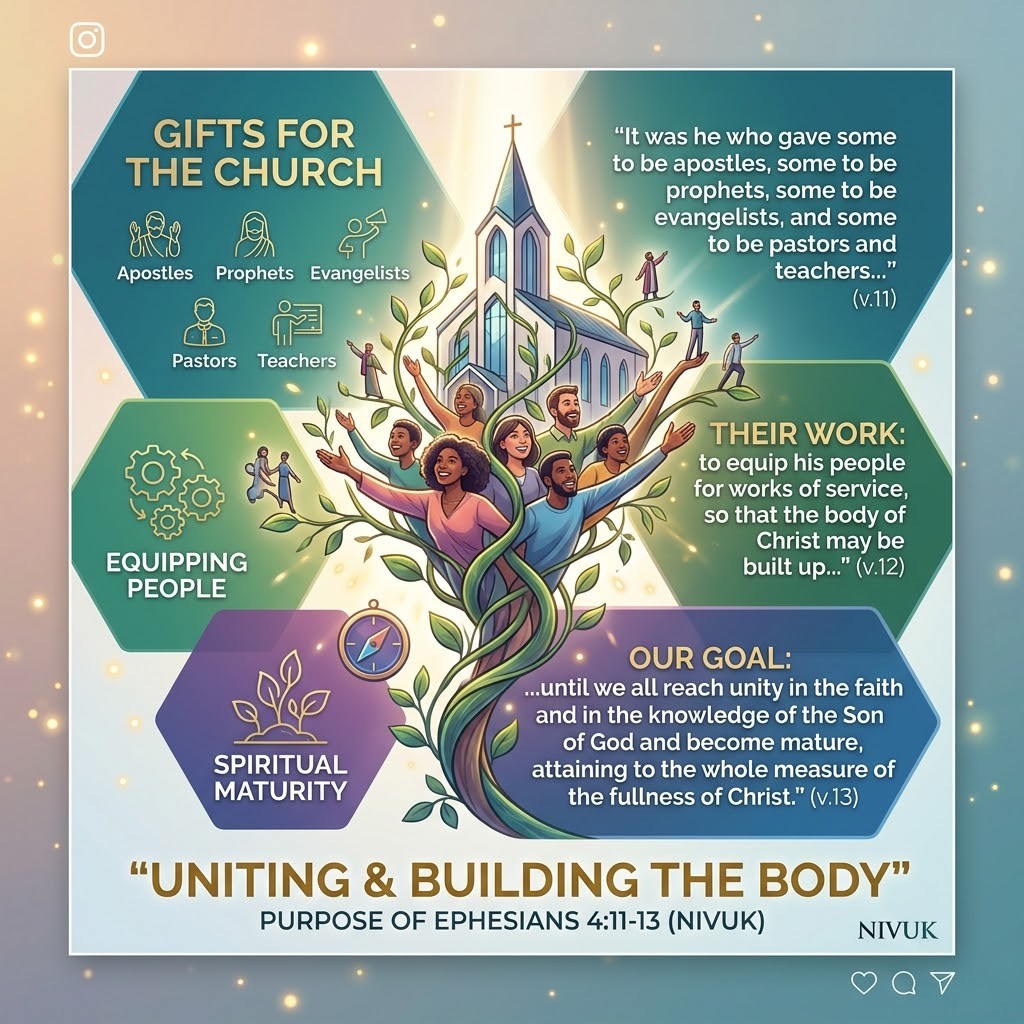
Do you want to grow as a Christian?
Find out how you can do it in my latest blog, free of charge 👇
https://downiefamily.wixsite.com/wherebreadisfound/post/building-the-body-study-13-maturity-in-the-body
#SpiritualGrowth #Christianity #BibleBlog
Apologetics is the discipline of defending a position, often in religion. It involves providing reasons and evidence for beliefs, particularly in Christianity. Engaging in apologetics can strengthen one's faith and help others understand the rationale behind belief systems. #Faith #Reason #Christianity #Philosophy #Apologetics
Beauty All Around
There is beauty all around. But we usually don't notice it. . Life gets busy, our minds get distracted, and sometimes we become so focused on our problems that we stop seeing the good around us. Look again today. God has filled His creation—and your life—with beautiful things to enjoy. You just gotta look. 💎 ✨Click to read the full devotional [SENSITIVE CONTENT]
Today’s One Year Bible Verses: Job 40:1–42:17, 2 Corinthians 5:11–21, Psalm 45:1–17, Proverbs 22:14
You Just Gotta Look
Have you ever been so busy that you drove somewhere and barely remembered the drive?
We can do that with life too.
We get focused on where we’re going, what needs to be done, what’s wrong, or what we wish would change. Meanwhile, we pass right by a beautiful sunset, flowers blooming along the road, birds singing outside the window, or someone we love laughing in the next room.
The beauty was there.
We just didn’t notice it.
Today the Holy Spirit reminded me in this Gem of Knowledge,
“There is beauty all around you. I created the earth and sky to be beautiful for you to enjoy. Take time to see the beauty in your life. It’s everywhere. You just gotta look. Amen.”
I love how simple that is: You just gotta look.
God didn’t have to make this world beautiful.
Think about that for a minute. A tree could have served its purpose without changing colors in the fall. The sky didn’t have to turn brilliant shades of pink, orange, and purple when the sun goes down. Flowers didn’t need thousands of different colors and shapes. Mountains didn’t need to take our breath away. Birds didn’t need beautiful songs.
God could have made everything purely functional.
But He didn’t.
Ecclesiastes 3:11 says that God “has made everything beautiful for its own time” (NLT). Beauty wasn’t an accident. It was part of His creation. He created a beautiful world, and then He gave us the ability to recognize and enjoy it.
In today’s reading from Job, God continues pointing to the incredible details of His creation—the mighty Behemoth, the mountains where wild animals play, lotus plants growing beside the river, and the strength and beauty found throughout the natural world. God draws Job’s attention to things that were already around him, reminding him of just how much there was to see beyond his own circumstances.
Job had spent chapter after chapter looking at everything that had gone wrong in his life. And understandably so. He had experienced tremendous loss and suffering.
But then God began showing him something bigger.
There was still a whole world beyond Job’s pain.
That doesn’t mean Job’s suffering didn’t matter. God wasn’t telling him to pretend everything was wonderful. In fact, by the end of today’s reading, God restores Job and brings beauty back into his life.
Maybe there’s something for us in that.
We can acknowledge what is hard and still notice what is beautiful.
Sometimes we think we need a perfect life before we can really enjoy it. Once this problem is solved, once we have more money, once the schedule calms down, once the relationship gets better, then we’ll be happy.
But while we’re waiting for everything to be perfect, we’re missing pieces of beauty God has placed right in the middle of today.
It might be your morning coffee while the house is still quiet. A breeze through an open window. Your grandchild reaching for your hand. A favorite song coming on at exactly the right moment. Clouds rolling across the sky. Someone making you laugh when you needed it.
Those things may seem small, but small doesn’t mean insignificant.
Sometimes they’re little reminders:
God is here. Life is still beautiful. There is still good to be found.
Paul says in today’s reading that when we belong to Christ, we become a new person: “The old life is gone; a new life has begun!” (2 Corinthians 5:17, NLT).
Maybe part of living that new life is learning to see differently—to stop rushing past everything God has given us and actually enjoy some of it.
You don’t have to travel somewhere beautiful to find beauty.
You don’t need a perfect day.
You don’t even need everything in your life to be going well.
Just slow down long enough to notice what’s already there.
Because God says it’s everywhere.
You just gotta look. 💎
Action (5 Minutes with God)
Take time to be with the Lord today, even if its only 5 minutes. Ask Him:
- “Lord, what do You want me to know about this personally?”
- Journal what He gives you through His Holy Spirit.
- Then ask, “What do You want me to do?”
- Journal what He reveals – then do it!
Today, intentionally look for the beauty in your life and be grateful.
Prayer
Dear Father, thank You for filling this world and my life with beauty. Thank You for Your beautiful Son and all the beautiful gifts He brings me. Forgive me for the times I’ve been so focused on what’s wrong or what needs to be done that I’ve missed what You’ve placed right in front of me. Help me slow down and notice Your goodness in the big things and the little things. Open my eyes today, Lord. I don’t want to miss the beauty You’ve given me to enjoy. In Jesus’ beautiful name I pray, amen.
To read more 5 Minutes with God devotionals click here.
If Gems of Knowledge has blessed your walk with Christ, please subscribe or consider partnering with us today. Your gift helps keep these devotionals free for everyone and carries God’s Word to more hearts. Every seed matters—thank you for sowing into this work! 💛
Test everything by the Word and the Spirit (John 16:13)

Alt...
A man and woman hiking through a beautiful mountain landscape filled with colorful wildflowers, birds, butterflies, a lake, and golden sunlight as the man points out the scenery around them.
Learning to Walk in the Spirit
We hear the phrase “walk in the Spirit”, but has anyone ever actually taught you how to do that? We know how to pray. We know how to read our Bible. We know how to go to church and worship God. But the Bible tells us there is also a spiritual way of living—learning to recognize God's presence, hear His leading, and become aware of things beyond what our natural senses can perceive. We live most of our lives paying attention to the physical world - what we see, hear, touch, and feel. But there is more happening than what we can physically see. We just need to learn how to see it and God wants to teach us... We just need to give Him our time. The One we're trying to find is also the One who will teach us how to find Him. 💎 ✨Click to read the full devotional [SENSITIVE CONTENT]
Today’s One Year Bible Verses: Job 37:1–39:30, 2 Corinthians 4:13–5:10, Psalm 44:9–26, Proverbs 22:13
Deeper Intimacy With God
We hear the phrase “walk in the Spirit”, but has anyone ever actually taught you how to do that?
For many of us, the answer is probably no.
We know how to pray. We know how to read our Bible. We know how to go to church and worship God. But the Bible tells us there is also a spiritual way of living—learning to recognize God’s presence, hear His leading, and become aware of things beyond what our natural senses can perceive.
And maybe we don’t experience more of that simply because we’ve never learned how.
Today the Lord says,
“Put off your fleshly ways to find Me in the Spirit. Learn to walk more fully in the Spirit to find a deeper intimacy with Me. That is where you will find Me. Amen.”
Notice He says learn.
That means we aren’t necessarily expected to already know how.
God can teach us.
But learning requires spending time with the Teacher.
We live most of our lives paying attention to the physical world. We respond to what we see, hear, touch, and feel. Our phones are buzzing, people need us, work needs to be done, and our minds are constantly processing what’s happening around us.
Then we sit down with God for five minutes and wonder why it’s difficult to become spiritually aware of Him.
It takes time to become still.
It takes time to learn to listen.
That’s why worship, prayer, meditation on God and His Word, and simply sitting quietly in His presence are so important. We’re not performing religious activities to earn something from Him. We’re intentionally turning down the noise of the physical world so we can give our attention to God.
Paul says in today’s reading that we don’t focus only on what can be seen, because what we see around us is temporary. There are also eternal realities that we cannot see with our natural eyes (2 Corinthians 4:18).
There is more happening than what we can physically see.
But we have to allow God to teach us how to recognize it.
Maybe that begins very simply.
Put on worship music and focus completely on Him. Sit quietly afterward instead of immediately moving on. Pray, but don’t do all the talking. Meditate on a Scripture and allow the Holy Spirit to bring understanding. Ask Him questions and give Him time to answer. When you sense His peace, a gentle correction, a thought that draws you toward Him, or His prompting to do something, pay attention.
And then keep practicing.
Over time, we begin recognizing Him more easily because we’re becoming familiar with Him.
It’s really no different than any close relationship. The more time you spend with someone, the more easily you recognize their voice, their ways, and even the little things others might miss.
God wants that kind of intimacy with us.
Walking in the Spirit isn’t reserved for pastors, prophets, or a handful of unusually spiritual people. God gave His Spirit to His children.
We just have to be willing to learn how to walk with Him there.
And the beautiful thing is, we don’t have to figure it out by ourselves.
The One we’re trying to find is also the One who will teach us how to find Him. 💎
Action (5 Minutes with God)
Set aside some uninterrupted time with God today, even if its only 5 minutes. Ask Him:
- “Lord, what do You want me to know about this personally?”
- Journal what He gives you through His Holy Spirit.
- Then ask, “What do You want me to do?”
- Journal what He reveals – then do it!
Let today be a day of learning from Him. Worship. Pray. Meditate on His Word. Then become still and watch how He moves.
Prayer
Dear Lord, I want to know You beyond simply knowing things about You. Teach me how to walk in the Spirit and become more aware of Your presence. Help me quiet the distractions of my flesh and the world around me so I can recognize You more clearly. As I worship, pray, meditate, and spend time quietly with You, teach me how to listen, recognize Your leading, and follow You. I want deeper intimacy with You. Holy Spirit, teach me how to walk with You. In Jesus’ name, amen.
To read more 5 Minutes with God devotionals click here.
If Gems of Knowledge has blessed your walk with Christ, please subscribe or consider partnering with us today. Your gift helps keep these devotionals free for everyone and carries God’s Word to more hearts. Every seed matters—thank you for sowing into this work! 💛
Test everything by the Word and the Spirit (John 16:13)

Alt...
A woman spending quiet time with Jesus as her ordinary living room opens into a beautiful heavenly spiritual realm.
Walk Boldly
Sometimes we need to hear the same truth over and over again before we can really start believing it for ourselves. Not because we didn't believe God the first time, but because life has a way of making us doubt or forget. People may hurt us. Plans may fall apart. We may get bad news, face opposition, lose something we wanted, or suddenly find ourselves dealing with a situation we never saw coming. But something coming against us doesn't mean it's going to defeat us. Whatever happens today, tomorrow, or years from now, there will never be a moment when you have to face it without the Lord. "But in that coming day no weapon turned against you will succeed. You will silence every voice raised up to accuse you. These benefits are enjoyed by the servants of the Lord; their vindication will come from me. I, the Lord, have spoken!" -Isaiah 54:17 NLT Believe what He told you and walk boldly with Him. 💎 ✨Click to read the full devotional [SENSITIVE CONTENT]
Today’s One Year Bible Verses: Job 34:1–36:33, 2 Corinthians 4:1–12, Psalm 44:1–8, Proverbs 22:10–12
No Weapon Formed Against You Will Prosper
Sometimes we need to hear the same truth over and over again before we can really start believing it for ourselves.
Not because we didn’t believe God the first time, but because life has a way of making us doubt or forget. A new problem comes. Someone comes against us. Something we thought was settled suddenly isn’t. Fear creeps in, and before long, what God told us yesterday can feel a lot less certain today.
That’s why I love today’s Gem”
“No weapon formed against you will prosper. No enemy will prevail. Believe Me. Believe these words. Remind yourself daily if necessary. Walk boldly with Me. I am with you till the end of time and beyond.”
Notice He doesn’t say a weapon will never form.
Sometimes it will.
People may hurt us. Plans may fall apart. We may get bad news, face opposition, lose something we wanted, or suddenly find ourselves dealing with a situation we never saw coming.
But something coming against us doesn’t mean it’s going to defeat us.
Paul understood that. In today’s reading from 2 Corinthians 4, he talks about experiencing trouble from every direction. There were times when he didn’t know what to do. He was opposed, mistreated, and knocked down.
Yet through all of it, God kept him.
That’s the difference.
We often see the problem forming and immediately start worrying about where it’s going to lead. One difficult conversation happens and we’re already imagining the relationship falling apart. Something changes at work and we’re wondering if we’re going to lose our job. A door closes and suddenly we’re afraid everything we’ve been working toward is over.
Our minds can take one problem and run ten miles down the road with it.
But God is saying, Believe Me instead.
Psalm 44 also reminds us that God’s people didn’t win their battles simply because they were strong enough. They looked back and recognized that God was the One who had brought them through before.
We can do the same thing.
Think about the things you were once afraid wouldn’t work out. Think about situations you didn’t know how you were going to get through.
Yet here you are.
God was with you then, and He’s with you now.
Walking boldly doesn’t mean you’ll never feel afraid. It means fear doesn’t get to decide how you live and walk with God.
Sometimes that means waking up and reminding yourself, God is with me.
And then reminding yourself again at lunch.
And maybe once more before bed. 😂
That’s not a lack of faith. Sometimes that’s exactly how we use our faith. We keep bringing our thoughts back to what God has said instead of letting fear tell us how the story is going to end.
I especially love the final words of today’s Gem:
“I am with you till the end of time and beyond.”
Whatever happens today, tomorrow, or years from now, there will never be a moment when you have to face it without Him.
So don’t spend all your time staring at what has formed against you.
Take God’s hand.
Believe what He told you.
And walk boldly with Him. 💎
“But in that coming day no weapon turned against you will succeed. You will silence every voice raised up to accuse you. These benefits are enjoyed by the servants of the Lord; their vindication will come from me. I, the Lord, have spoken!” -Isaiah 54:17 NLT
Action (5 Minutes with God)
Take at least 5 minutes to be with the Lord today. Ask Him:
- “Lord, what do You want me to know about this personally?”
- Journal what He gives you through His Holy Spirit.
- Then ask, “What do You want me to do?”
- Journal what He reveals – then do it!
What situation have you been worrying about? Every time your thoughts start running ahead into fear, bring them back and remind yourself: God is with me. I don’t know how this will turn out, but I know I won’t face it without Him.
Prayer
Father, help me believe You more than I believe my fears. When my mind starts imagining everything that could go wrong, bring me back to what You have said. You are with me, and I don’t have to be afraid of what comes against me. Help me take Your hand and walk boldly with You today. In Jesus’ mighty name I pray, amen.
To read more 5 Minutes with God devotionals click here.
If Gems of Knowledge has blessed your walk with Christ, please subscribe or consider partnering with us today. Your gift helps keep these devotionals free for everyone and carries God’s Word to more hearts. Every seed matters—thank you for sowing into this work! 💛
Test everything by the Word and the Spirit (John 16:13)
Alt...
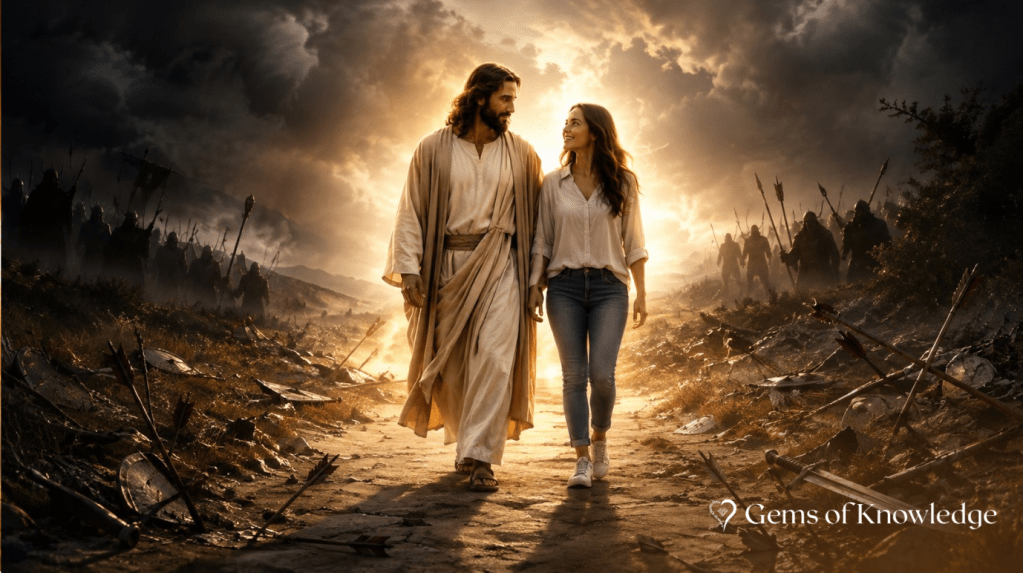
Jesus and a modern woman walking boldly together through a battlefield scattered with broken weapons as light shines around them.
Apologetics is the discipline of defending religious doctrines through systematic argumentation and discourse, providing reasoned explanations to support faith.
#Apologetics #Faith #Christianity #Theology #Religion
Historical documents and eyewitness accounts offer substantial evidence supporting the existence and impact of Jesus as a real figure in history.
#Jesus #History #Faith #Christianity #Evidence
More Precious Than Gold
Have you ever felt small or worthless? Overlooked, rejected, or like you just don’t measure up? The world may fail to see your value, but God never does. ❤️ You are precious to Him—worth more than silver, gold, or rubies. He knew everything about you and chooses you. Our greatest treasure isn't something God can give us. It's God Himself. You are His treasure. And He is yours. 💎 ✨Click to read the full devotional [SENSITIVE CONTENT]
Today’s One Year Bible Verses: Job 31:1–33:33, 2 Corinthians 3:1–18, Psalm 43:1–5, Proverbs 22:8–9
You Are Precious to God
Have you ever felt small?
Maybe someone overlooked you, rejected you, criticized you, or made you feel like you didn’t matter very much. Maybe you’ve looked around at other people’s lives and wondered what they have that you don’t. Or maybe no one had to say anything at all—you’ve simply struggled to see much value in yourself.
The world has a funny way of making us feel like we have to prove our worth.
Be successful enough. Pretty enough. Smart enough. Talented enough. Accomplish something important. Have enough money. Get enough attention. Make people like you.
And if we aren’t careful, we start believing our value rises and falls depending on how well we’re doing at all of those things.
But God doesn’t see us that way.
Today He whispered this tender Gem of Knowledge to me,
“You are precious to Me. Even if the world makes you feel like you are small or worthless, to Me your worth exceeds that of rubies. No treasures on earth can compare to you. You are more precious than silver or gold. You make Me rich. You make My sacrifice worthwhile. You are My reward and I am yours. I will give you all that I have. I will withhold nothing from you. All that I am and all that I have is yours if you will be Mine. Amen.”
I love the thought of God saying, “You are My reward.”
We usually think about what we get because of Jesus. We get forgiveness. We get eternal life. We get His Spirit and His presence. We get to belong to Him forever.
But have you ever stopped to think about what Jesus gets?
He gets us.
Hebrews 12:2 says that Jesus endured the cross because of the joy that was waiting for Him on the other side. He knew exactly what He was doing when He went to that cross. He knew what it would cost Him, and He did it anyway.
Because He wanted us back…He wanted you.
That doesn’t mean we’ve somehow earned His love or that we’re perfect enough to deserve what He did. We aren’t. That’s what makes His love so incredible.
He knew everything about us and still chose us.
He knew our weaknesses. He knew the mistakes we’d make. He knew the messes we’d get ourselves into. He knew the times we’d doubt Him, ignore Him, run from Him, and need His forgiveness all over again.
And still, He said we were worth coming for.
Today’s reading in 2 Corinthians says something I think many of us need to remember:
“It is not that we think we are qualified to do anything on our own. Our qualification comes from God.” (2 Corinthians 3:5, NLT)
In other words, you don’t have to be enough all by yourself.
God is enough.
When we constantly look at ourselves, we can always find something we wish were different. Someone else will always seem better at something. Someone will have more money, more followers, more talent, more education, more confidence, or a life that looks a whole lot more put together from the outside.
But God isn’t comparing you to them.
He’s looking at you.
And when you belong to Him, He doesn’t leave you where He found you either. A few verses later, Paul says that as we spend time with the Lord, He changes us little by little to become more like Him (2 Corinthians 3:18).
That’s something we’ve been talking about a lot lately: time with Him changes us.
We don’t become valuable because we’ve finally gotten everything right. We are loved by God right where we are, and because He loves us, He keeps shaping us into who He created us to be.
So maybe today you need to stop looking at yourself through everyone else’s eyes.
Maybe somebody didn’t recognize your worth.
Maybe somebody didn’t choose you.
Maybe you haven’t accomplished what you thought you would by now.
Maybe you look in the mirror and mostly notice your flaws.
None of those things change what God sees.
Gold cannot love Him.
Silver cannot worship Him.
Rubies cannot know Him.
But you can.
And I think that’s what makes the last part of today’s Gem so beautiful:
“You are My reward and I am yours… All that I am and all that I have is yours if you will be Mine.”
He’s not asking you to impress Him.
He’s asking you to be His.
And maybe that’s what we need to remember today. Our greatest treasure isn’t something God can give us.
It’s God Himself.
And somehow, amazingly, the God who owns everything looks back at us and says:
“You are precious to Me.” 💎
Action (5 Minutes with God)
Take time to be with the Lord today, even if its only 5 minutes. Ask Him:
- “Lord, what do You want me to know about this personally?”
- Journal what He gives you through His Holy Spirit.
- Then ask, “What do You want me to do?”
- Journal what He reveals – then do it!
If you’ve been feeling small, overlooked, inadequate, or not enough, take those thoughts to God today. Instead of measuring yourself by the world, ponder on what you mean to God. Let it penetrate and permeate your heart, mind, and spirit. Let His love change the way you see yourself.
Prayer
Father, thank You for reminding me that my worth isn’t determined by the world around me. When I feel small or overlooked, help me remember how precious I am to You. Thank You for knowing everything about me and loving me still. I don’t want to spend my life trying to prove that I’m enough. I want to belong to You and allow You to keep changing me into who You created me to be. You are my treasure, Lord. I am Yours, and You are mine. In Jesus’ name, amen.
To read more 5 Minutes with God devotionals click here.
If Gems of Knowledge has blessed your walk with Christ, please subscribe or consider partnering with us today. Your gift helps keep these devotionals free for everyone and carries God’s Word to more hearts. Every seed matters—thank you for sowing into this work! 💛
Test everything by the Word and the Spirit (John 16:13)

Alt...
A woman standing on one side of a heavenly balance scale opposite gold, silver, jewels, crowns, and earthly treasures as Jesus stands beside her.
Biblical ethics provide a moral framework based on Scripture, guiding behavior through principles like love, honesty, and justice.
#BiblicalEthics #Christianity #Morality #Faith #Scripture
Historical records and eyewitness testimonies provide strong evidence for Jesus' existence and impact on history. This evidence shapes faith and understanding to this day.
#Jesus #History #Christianity #Faith #Evidence
To Know Him More
We can spend a lot of time doing things for God without spending time simply being with Him. I have felt a sense of distance lately, even in my duties. I faithfully show us to serve Him every day, but do I faithfully show up to just love Him and spend time getting to know Him better? Today the Lord reminded me, “Do all things unto the Lord. Take time to be with Me in the Spirit and you will know Me more. Amen.” There are really two invitations here, and they belong together. The first is to do all things unto the Lord. The second is we need time with Him. “As the deer longs for streams of water, so I long for you, O God. I thirst for God, the living God.” (Psalm 42:1–2, NLT) May we set aside time each day to draw near unto Him and he will draw near unto us. 💎 ✨Click to read the full devotional [SENSITIVE CONTENT]
Today’s One Year Bible Verses: Job 28:1–30:31, 2 Corinthians 2:12–17, Psalm 42:1–11, Proverbs 22:7
Take Time In The Spirit
We can spend a lot of time doing things for God without spending time simply being with Him.
We serve, work, pray over, study Scripture, help people, fulfill responsibilities, and try to live faithfully. All of those things can honor Him. But if we’re not careful, our relationship with God can slowly become centered around what we’re doing rather than the One we’re doing it for.
I have felt a sense of distance lately, even in my duties. I faithfully show us to serve Him every day, but do I faithfully show up to just love Him and spend time getting to know Him better?
Today the Lord reminded me,
“Do all things unto the Lord. Take time to be with Me in the Spirit and you will know Me more. Amen.”
There are really two invitations here, and they belong together.
The first is to do all things unto the Lord. Scripture tells us, “Work willingly at whatever you do, as though you were working for the Lord rather than for people” (Colossians 3:23, NLT).
That means our ordinary lives can become worship. We don’t have to separate our time into “God things” and “everything else.” Cooking dinner, going to work, caring for our families, running errands, serving someone, writing, cleaning, creating—whatever is before us can be offered to Him when our heart says, Lord, I’m doing this with You and for You.
But there is another part of relationship that cannot be replaced by service.
We need time with Him.
Psalm 42 gives us one of the most beautiful pictures of this longing:
“As the deer longs for streams of water, so I long for you, O God. I thirst for God, the living God.” (Psalm 42:1–2, NLT)
Notice what the psalmist thirsts for. He doesn’t say, I thirst for answers. I thirst for blessing. I thirst for direction.
“I thirst for God.”
There is a difference between seeking God because we need something from Him and seeking Him because we want Him.
Of course, He invites us to bring Him our needs. He wants us to ask for wisdom, direction, provision, healing, and help. But imagine a relationship where someone only came to you when they needed something. You might love them deeply, but they would never really get to know you.
Knowing someone requires time together.
And that may be why the Lord specifically says, “Take time to be with Me in the Spirit and you will know Me more.”
Job wrestles with the question of knowing God in today’s reading as well. Job 28 describes mankind’s extraordinary ability to search out hidden treasures. People dig deep into the earth for silver and gold, uncovering things concealed in darkness. Yet Job asks, “But do people know where to find wisdom? Where can they find understanding?” (Job 28:12, NLT).
His conclusion is that true wisdom belongs to God.
We can search the world for understanding, but there are things about God that can only be discovered by drawing near to God Himself.
And the more time we spend with Him, the more familiar His presence becomes. We begin recognizing His character, His ways, His correction, His peace, and His leading—not because we’ve mastered some spiritual formula, but because we’ve developed relationship.
Think about someone you have loved for many years. Sometimes they don’t have to explain what they’re thinking. You recognize their expressions, their tone, their habits, and what matters to them because you’ve spent enough time together to know them.
Relationship with God develops through time too.
So yes, do everything unto the Lord. Invite Him into your work, responsibilities, conversations, creativity, and ordinary moments today.
But don’t let doing things for God replace simply being with God.
Set aside some time when you aren’t asking Him to fix anything, explain anything, or give you anything. Worship Him. Sit quietly before Him. Turn your attention toward Him and simply enjoy His presence.
The psalmist said it best:
“I thirst for God, the living God.”
May that become the desire of our hearts—not merely to know more about Him, but to know Him more. 💎
Action (5 Minutes with God)
Take time to be with the Lord today, even if its only 5 minutes. Ask Him:
- “Lord, what do You want me to know about this personally?”
- Journal what He gives you through His Holy Spirit.
- Then ask, “What do You want me to do?”
- Journal what He reveals – then do it!
Put away distractions, worship Him, quiet your thoughts, and turn your attention toward Him. Don’t make the time about getting anything. Simply be with Him and taste of His goodness.
Prayer
Dear Lord, I don’t want to become so busy doing things for You that I neglect simply being with You. I thirst for Your presence and I want to make time for You. Help me to do that each day. Help me grow so close with You that You seamlessly become part of the ordinary parts of my day. I want to be with You and do everything as unto You. As I spend time with You in the Spirit, let me know Your heart, See You more clearly, understand Your ways, and grow closer to You. I want You, Lord, more than what You can give me. I draw near unto You Lord. Please draw near unto me. In Jesus’ beautiful name I pray, amen.
To read more 5 Minutes with God devotionals click here.
If Gems of Knowledge has blessed your walk with Christ, please subscribe or consider partnering with us today. Your gift helps keep these devotionals free for everyone and carries God’s Word to more hearts. Every seed matters—thank you for sowing into this work! 💛
Test everything by the Word and the Spirit (John 16:13)

Alt...
Jesus and a woman sitting together beside a beautiful heavenly stream while a deer drinks from the water nearby.
Biblical morality is based on teachings from the Bible, emphasizing principles like love, justice, honesty, and respect for others as guides for ethical behavior.
#BiblicalMorality #Ethics #Christianity #Bible #Morality
Historical documents and eyewitness accounts provide substantial evidence supporting the existence and deeds of Jesus of Nazareth.
#Jesus #History #Faith #Christianity #Evidence
Proving the existence of Jesus involves historical documentation beyond the Bible. Ancient historians like Josephus and Tacitus provide non-Christian accounts that affirm his life and crucifixion. This evidence is crucial for understanding his impact on history. #History #Jesus #Evidence #Christianity #Apologetics
Don’t Rush the Delivery
Waiting on God can be a lot like pregnancy. You know something is coming, but you cannot force it to arrive before it is ready. Much of the most important development happens where you cannot see it. Stay faithful, keep preparing, and trust God with the timing. Don’t rush the delivery...just wait upon the Lord. 💎 ✨Click to read the full devotional [SENSITIVE CONTENT]
Today’s One Year Bible Verses: Job 23:1–27:23, 2 Corinthians 1:12–2:11, Psalm 41:1–13, Proverbs 22:5–6
Wait Upon The Lord
Waiting can be one of the hardest expressions of faith. It makes me think of pregnancy.
Once a woman knows she is pregnant, she knows something is coming. She may not be able to see her baby yet, hold it, or know exactly what life will look like once it arrives, but something very real is developing within her. And no matter how excited—or uncomfortable—she becomes, she cannot simply decide she’s tired of waiting and make the baby come before it is ready. There is a process that must take place.
Today the Lord whispered this Gem of Knowledge to me,
“All good things come to those who wait. Wait upon the Lord. Stay faithful and diligent. Stay consistent and hopeful. You can’t force anything. Instead, you create or persuade with your faithfulness.”
Waiting doesn’t mean nothing is happening. Something may be developing that simply isn’t ready to be delivered yet.
A pregnant woman doesn’t spend those months doing nothing. She takes care of what she’s carrying. She nourishes and protects it, prepares her home, learns what she needs to learn, and begins making decisions today based upon what she knows is coming tomorrow. She cannot control the development taking place within her, but she can faithfully participate in it.
There are seasons with God that work much the same way.
Maybe God has given you a promise, a calling, a dream, or someone you’ve been faithfully praying for. You believe God is working, but you cannot yet see the finished result. The longer you wait, the easier it becomes to wonder whether you should do something to move things along.
That’s where we have to be careful. Faithfulness and force are not the same thing.
We can pray, prepare, obey, work, love, and remain consistent with what God has asked us to do. But there are things only He can bring forth, and trying to force them before their proper time won’t make them mature any faster.
Job understood the frustration of being in the middle of something he couldn’t see or understand. In today’s reading, he searches for God everywhere:
“I go east, but he is not there. I go west, but I cannot find him. I do not see him in the north, for he is hidden. I look to the south, but he is concealed.” (Job 23:8–9, NLT)
Yet Job follows those words with an incredible declaration of faith:
“But he knows where I am going. And when he tests me, I will come out as pure as gold.” (Job 23:10, NLT)
Job couldn’t see God, but God could see Job. Job didn’t understand the process he was going through, but he trusted that something was being produced through it.
The same can be true during our seasons of waiting. We can become so focused on the thing we are waiting for God to bring forth that we miss what He is developing within us along the way. Our patience grows. Our faith is exercised. Our character is strengthened. We learn to depend upon God rather than constantly trying to control our circumstances.
Perhaps that is part of what the Lord means when He says, “Instead, you create or persuade with your faithfulness.” We cannot force another person’s heart to change, but faithful love can influence them. We cannot manufacture God’s promise, but our continued obedience can prepare us to receive it. We cannot dictate the outcome, but we can create an environment where what God is doing has room to grow.
Paul touches on this in today’s reading when he explains that he wasn’t trying to dominate the Corinthians’ faith but wanted to work together with them (2 Corinthians 1:24). He could teach, encourage, correct, and love them, but he couldn’t force spiritual maturity upon them. That work ultimately belonged to God.
So if you’re waiting today, don’t assume nothing is happening simply because you cannot see it.
Think again about pregnancy. Much of the most important development happens completely hidden from view. The mother’s responsibility isn’t to rush the baby into existence. It’s to faithfully care for what she’s carrying while allowing the process to reach maturity.
Maybe that’s what God is asking of you right now.
Care for what He’s given you. Stay faithful. Stay diligent. Remain hopeful. Prepare for what you believe He’s doing—but don’t try to force the delivery.
God knows what He’s developing, and He knows when it will be ready.
Wait upon the Lord. 💎
Action (5 Minutes with God)
Take time to be with the Lord today, even if its only 5 minutes. Ask Him:
- “Lord, what do You want me to know about this personally?”
- Journal what He gives you through His Holy Spirit.
- Then ask, “What do You want me to do?”
- Journal what He reveals – then do it!
Consider what you’ve been waiting on God for. Have you been faithfully tending it, or have you begun trying to make the outcome happen yourself? Ponder with the Lord what faithfulness in waiting looks like when waiting. Then focus on what He gives you to do today and leave the timing with Him.
Prayer
Dear Father, teach me to wait well. When I cannot see what You are doing, remind me that unseen does not mean inactive. Help me remain faithful, diligent, consistent, and hopeful without trying to force what belongs in Your hands. Show me how to care for what You have entrusted to me and allow this season to develop me as well. I trust Your process, Your timing, and what You are bringing forth. I give you all the praise and glory in Jesus’ mighty name, amen.
To read more 5 Minutes with God devotionals click here.
If Gems of Knowledge has blessed your walk with Christ, please subscribe or consider partnering with us today. Your gift helps keep these devotionals free for everyone and carries God’s Word to more hearts. Every seed matters—thank you for sowing into this work! 💛
Test everything by the Word and the Spirit (John 16:13)

Alt...
Expectant husband and pregnant wife standing together in a prepared nursery at sunrise as they faithfully wait for their baby.
The millennial kingdom is a future 1,000-year reign of Christ on Earth, described in Revelation 20, where peace and righteousness will prevail.
#MillennialKingdom #BibleStudy #Eschatology #Christianity #Prophecy

The millennial kingdom refers to a future thousand-year reign of Christ on earth, described in biblical prophecy as a time of peace and righteousness.
#MillennialKingdom #BibleProphecy #Christ #EndTimes #Christianity
On today's installment of That Beautiful Stream, we'll be continuing our discussion on Christian Obligations by looking at Liturgical Obligations. Not only are there obligations in how and what we do when we worship, but there are obligations for us in preparation for that worship.
Join us at 3:30 Hawai'i time!
#Jesus #Episcopal #Anglican #Christianity #Spirituality #theology
![[?]](https://babka-mastodon.nyc3.cdn.digitaloceanspaces.com/accounts/avatars/109/554/492/947/534/560/original/cccb05f65e8f3af8.png)
My husband took this picture of the “Chapel of the Holy Cross”. Built right into the red rock cliffs in Sedona, AZ.
In Hebrew we would call it:
Kapela קַפֶּלָּה /ka-’pe-lah/
Here is what I love about this one. It is not an ancient Hebrew word at all. Modern Hebrew borrowed it from Latin, and it arrived through European languages, which is why it sounds so familiar to an English ear the moment you hear it. Hebrew has been quietly collecting words like this for a very long time.
But if you want the older, fully Hebrew way to say it, there is one:
House of prayer בֵּית תְּפִלָּה /’be-(y)-t t-fee-’lah/
Two words for one small building. One that traveled across a continent to get here, and one that was already home. Both are correct. That is usually how it goes with living languages. 💙
Looking at it reminds me of Israel. The rock, faith, and beauty. I also love sharing in and respecting my Christian husband’s beliefs 💙🙏🏻
#Chapel #Sedona #Faith #Christianity #Hebrew

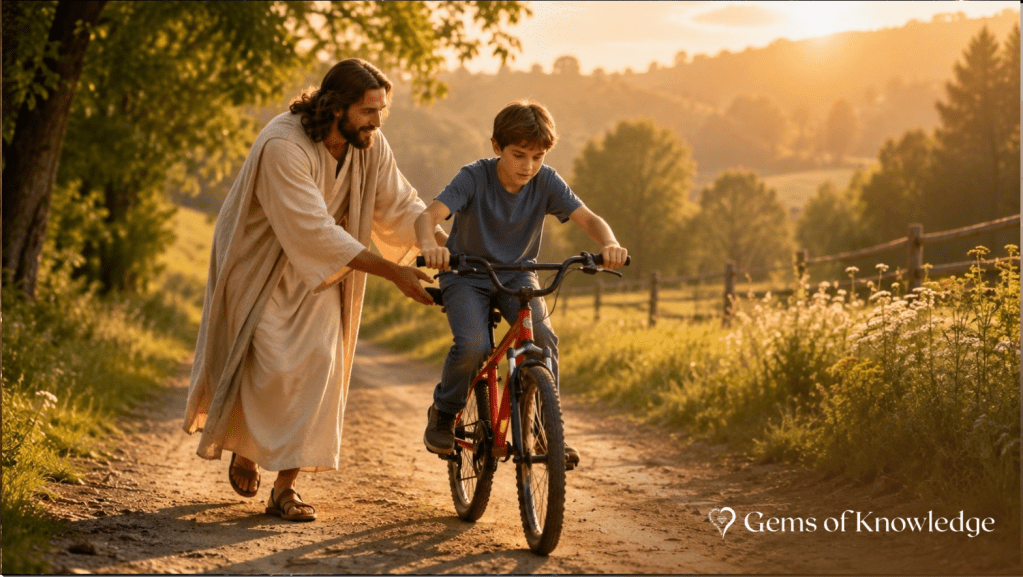
Faith Is Like Riding a Bike
Faith is a lot like learning to ride a bike. The Father gives us the gift, teaches us how to use it, holds us steady while we learn, and encourages us when we fall. Little by little, we learn to trust Him—and things that once seemed impossible begin to look possible. Do you want to learn how to ride? 💎 ✨Click to read the full devotional [SENSITIVE CONTENT]
Today’s One Year Bible Verses: Job 20:1–22:30, 2 Corinthians 1:1–11, Psalm 40:11–17, Proverbs 22:2–4
Today’s devotional is a little different. Last night during my time with the Lord, He gave me an analogy about faith that I want to share with you just as He gave it to me by His Holy Spirit.
“Faith is like riding a bike.
First, you have to want to learn how to ride.
Then you ask the Father for it.
Then you ask Him to teach you how.
He will supply the bike—the gift—and then, in His time and love, He will teach you.
At first, He will hold you up. Then, once you begin to get the hang of it, He gets you up to a speed that will help you stay up, and then He will let go so you can try on your own.
But He is still watching, never far away.
He shouts words of encouragement, and when you crash, He is there to help you up, clean you off, bandage your wounds, and encourage you to try again.
Until one day, you are riding on your own.
You will be able to ride as fast as you want, wherever the bike can take you. You will get better and better at riding until you are able to jump curbs and perform other stunts—until you are so skilled that nothing seems impossible.
The Father never leaves you, even if He can’t be seen or doesn’t feel near. Just like a good, loving father, He is always there when you need Him and will bring you home to His loving care.
The bike is the tool to do what you desire and go where you want to go.
This is faith—the gift God gives you to do what you desire and go where you want to go within His Kingdom, until nothing seems impossible to you.
So tell Me…
Do you want to learn how to ride?“
Faith is a gift:
“For it is by grace you have been saved, through faith—and this is not from yourselves, it is the gift of God”— Ephesians 2:8 NIV
Ask:
“Therefore I tell you, whatever you ask for in prayer, believe that you have received it, and it will be yours.” — Mark 11:24 NIV
Faith is tested and strengthened:
“These trials will show that your faith is genuine. It is being tested as fire tests and purifies gold…” — 1 Peter 1:7 NLT
He holds us up:
“For I hold you by your right hand—I, the Lord your God. And I say to you, ‘Don’t be afraid. I am here to help you.’” — Isaiah 41:13 NLT
He encourages us & stays close:
“Be strong and courageous. Do not be afraid; do not be discouraged, for the Lord your God will be with you wherever you go.”— Joshua 1:9 NIV
He trains us:
“Instead, train yourself to be godly. “Physical training is good, but training for godliness is much better, promising benefits in this life and in the life to come.”— 1 Timothy 4:7-8 NLT
He is always watching:
“The Lord is watching everywhere, keeping his eye on both the evil and the good.” — Proverbs 15:3 NLT
He never leaves us:
“So be strong and courageous! Do not be afraid and do not panic before them. For the Lord your God will personally go ahead of you. He will neither fail you nor abandon you.” — Deuteronomy 31:6 NLT
Everything is possible:
“‘If you can’?” said Jesus. “Everything is possible for one who believes.” — Mark 9:23 NIV
Live by faith:
“For we live by believing and not by seeing.” — 2 Corinthians 5:7 NLT
One Final Gem
“Faith is line by line, little by little. It takes practice to use it because you need to believe in you having it for yourself through Me, instead of doubting yourself and thinking those things are only for Me or the elect. I offer it to everyone freely. Amen.” -Holy Spirit
Faith isn’t reserved for a special few. God offers it freely, but like learning to ride that bike, we have to begin using what He has given us. Little by little, experience by experience, we learn to trust Him. Job was in the middle of a journey he didn’t yet understand, while 2 Corinthians 1:9 reminds us that even our hardships teach us to rely on God rather than ourselves.
Like learning to ride a bike, faith grows as we trust our Father. We may wobble. We may fall. We may even have moments when we wonder if we’re capable of riding at all. But He is there—teaching, encouraging, helping us back up, and showing us what becomes possible when we believe.
So tell me…
Do you want to learn how to ride? 💎
Action (5 Minutes with God)
Where are you in learning to use your faith? Maybe you’re still asking God for the bike. Maybe you’re wobbling while He holds you steady. Maybe you’ve fallen and need to get back up. Or maybe He’s encouraging you to try something you never thought you could do. Take at least 5 minutes to be with the Father today. Ask Him:
- “Father, what do You want me to know about this personally?”
- Journal what He gives you through His Holy Spirit.
- Then ask, “What do You want me to do?”
- Journal what He reveals – then do it!
Let today be a day of seeking faith and allowing the Father to lead you —line by line, little by little.
Prayer
Dear Father, thank You for the gift of faith. Forgive me for the times I have doubted what You can do through me or believed that greater faith was only for someone else. Teach me how to use what You have freely given me. Hold me steady while I learn, encourage me when I stumble, and help me get back up when I fall. I want to grow in faith until the things that once seemed impossible become possible because I have learned to believe and trust in You. Father, teach me how to ride. In Jesus’ mighty name I pray, amen. ❤️
To read more 5 Minutes with God devotionals click here.
If Gems of Knowledge has blessed your walk with Christ, please subscribe or consider partnering with us today. Your gift helps keep these devotionals free for everyone and carries God’s Word to more hearts. Every seed matters—thank you for sowing into this work! 💛
Test everything by the Word and the Spirit (John 16:13)
Alt...
Jesus lovingly steadies a young boy learning to ride a bicycle along a peaceful country path in warm golden sunlight.
Bible prophecy reveals insights that continue to resonate today, offering hope and understanding of future events grounded in ancient wisdom.
#Bible #Prophecy #Faith #Scripture #Christianity
Biblical ethics guide believers by grounding morality in the teachings of Scripture, emphasizing love, justice, and integrity as central to a righteous life.
#BiblicalEthics #Christianity #MoralValues #BibleStudy #Faith
Historical evidence and eyewitness accounts provide strong support for the existence of Jesus and the impact of his teachings on history and culture.
#Jesus #History #Christianity #Faith #Evidence
You Don’t Have to Understand Yet
Sometimes God doesn’t give us all the answers because we don’t need them yet. Job couldn’t see what was happening behind the scenes—and neither can we. We don’t have to understand everything to trust God. Be faithful with what He has already shown you, and trust Him with what you cannot yet see. You may not know why, but you know Who and that's enough.💎 ✨Click to read the full devotional [SENSITIVE CONTENT]
Today’s One Year Bible Verses: Job 16:1–19:29, 1 Corinthians 16:10–24, Psalm 40:1–10, Proverbs 22:1
Just Trust God
Yesterday’s Gem left me with questions.
The Lord warned, “Something is coming like you’ve never seen before, and you must be anchored in Me to stay strong.”Naturally, I wanted to know: What is coming? What does this mean?
So I took those questions back to Him in prayer, and today’s Gem was His response:
“Why worry about things that you don’t understand? All things will become clear over time. Truth is always revealed and understanding given when you are faithful. Amen.”
Well…there was my answer.
Not an explanation of what is coming, but a reminder that I don’t need one yet.
Yesterday, God told us what we need to do: stay anchored in Him, remain close, and trust that whatever comes, He is more powerful. Today, He reminds us not to become consumed trying to understand what He hasn’t revealed.
There is freedom in realizing that we don’t have to know everything in order to trust God.
Job certainly understood what it was like to desperately want answers. His life had been devastated, his body was suffering, and now his friends were offering explanations that Job knew didn’t accurately represent what was happening.
But Job didn’t know what was happening.
We do.
As readers, we have been allowed to see the conversation in heaven recorded at the beginning of Job. We know there is an entire reality surrounding Job’s circumstances that Job himself couldn’t see.
Job is trying to understand his life using only the information available to him, while something much bigger is happening beyond his awareness.
How often might that be true for us?
We see what is right in front of us but still try to understand everything. We wonder why something happened, what God is doing, what comes next, or why He hasn’t answered a particular question. But we are trying to assemble the story while holding only a few of the pieces.
God sees the whole picture.
That doesn’t mean we shouldn’t ask Him questions. In fact, bringing our questions to Him is exactly what we should do. But there is a difference between seeking God for understanding and allowing our need for understanding to steal our peace.
Sometimes His answer may simply be, You don’t need to know that yet. Trust Me.
And Job gives us one of the most beautiful examples of that kind of faith. In the middle of circumstances he cannot explain, he declares:
“But as for me, I know that my Redeemer lives, and he will stand upon the earth at last” (Job 19:25, NLT).
Job didn’t know why, but he knew Who.
He didn’t have the explanation, but he still had his Redeemer.
Psalm 40 carries that same message of trusting God while we wait. David writes, “I waited patiently for the Lord to help me, and he turned to me and heard my cry” (Psalm 40:1, NLT). God eventually lifted David from the mud and mire and placed his feet on solid ground, but there was a period when David simply had to wait.
Sometimes understanding comes afterward.
We may look back and suddenly recognize what God was doing, why He led us a certain way, what He was protecting us from, or how circumstances we couldn’t understand became part of something much larger.
And sometimes we may never receive every answer we want on this side of eternity.
Either way, our responsibility remains the same: be faithful with what God has already revealed and trust Him with what He hasn’t.
We don’t have to figure everything out. We don’t have to speculate ourselves into fear or try to fill in the blanks God has intentionally left empty.
We can simply keep seeking Him, listening to Him, obeying what He tells us, and trusting that if there is something we need to know, He will make it clear when the time is right.
Until then, we know enough.
Our Redeemer lives. ❤️
Action (5 Minutes with God)
Take time to be with the Lord today, even if its only 5 minutes. Ask Him:
- “Lord, what do You want me to know about this personally?”
- Journal what He gives you through His Holy Spirit.
- Then ask, “What do You want me to do?”
- Journal what He reveals – then do it!
Is there something you’ve been trying desperately to figure out? Bring it to God today and ask Him for understanding. Then give yourself permission to leave the question with Him. Focus instead on what He has already made clear and be faithful with that today.
Prayer
Lord, I don’t understand everything happening in my life, and sometimes not knowing makes me anxious. Help me trust that You see the parts of the story I cannot. Give me understanding when I need it and patience when I need to wait. Keep me faithful with what You have already shown me, and don’t let unanswered questions steal my peace. Like Job, may I know that my Redeemer lives even when I don’t know why things are happening. I trust You with what I cannot yet understand. In Jesus’ name, amen.
To read more 5 Minutes with God devotionals click here.
If Gems of Knowledge has blessed your walk with Christ, please subscribe or consider partnering with us today. Your gift helps keep these devotionals free for everyone and carries God’s Word to more hearts. Every seed matters—thank you for sowing into this work! 💛
Test everything by the Word and the Spirit (John 16:13)

Alt...
A modern woman walking beside Jesus along a mountain path that disappears into thick golden fog ahead.
Something Is Coming
There are times when God warns us without telling us exactly what is coming. We may not know what is coming, and perhaps there is wisdom in that. If we knew, we might prepare according to our own understanding instead of looking to God as our source. Whatever lies ahead, our greatest preparation is to stay anchored in Him, know His voice, and follow as He directs. We may encounter frightening circumstances, cultural upheaval, confusion, pressure, or things we have never experienced before, but we have a God who has overcome it all and He will be our shelter in the storm. So, choose Him and stay close. 💎 ✨Click to read the full devotional [SENSITIVE CONTENT]
Today’s One Year Bible Verses: Job 12:1–15:35, 1 Corinthians 15:29–58, Psalm 39:1–13, Proverbs 21:30–31
Stay Close To God
There are times when God warns us without telling us exactly what is coming.
Perhaps there is wisdom in that. If we knew every detail, we might immediately begin preparing in the ways we think are best—making plans, gathering resources, and relying on our own understanding. Before long, our confidence could shift from God to our own preparation.
Today’s Gem of Knowledge carries that kind of warning:
“Something is coming like you’ve never seen before, and you must be anchored in me to stay strong. It is powerful, but I am more powerful. I will take care of my people, but they must choose me and stay close or they will be deceived. Amen.”
What could this possibly be?
I don’t know.
And I don’t want to put words in God’s mouth by trying to name something He didn’t name. But I do know what He told us to do about it: be anchored in Him.
That makes today’s words from Paul especially powerful: “So, my dear brothers and sisters, be strong and immovable” (1 Corinthians 15:58, NLT).
Strong and immovable.
An anchor doesn’t prevent the storm from coming. It keeps the vessel from being carried away by it. In the same way, being anchored in Christ doesn’t mean we will never encounter frightening circumstances, cultural upheaval, confusion, pressure, or things we have never experienced before. It means those things do not have to determine where we end up.
Our security is not found in knowing what’s coming. Our security is found in knowing the One who will still be God when it gets here.
Job understood what it was like to face suffering unlike anything he had ever seen or experienced before. His life had changed almost overnight, and he had no explanation for what was happening. Yet in the middle of his questions, he still recognized where true wisdom and power were found: “But true wisdom and power are found in God; counsel and understanding are his” (Job 12:13, NLT).
Job didn’t understand what was happening behind the scenes, but he knew God possessed the wisdom, power, and understanding he lacked. When we face what we have never faced before, we need to remain anchored to the One who already understands and knows what to do.
That matters when deception is involved.
Deception rarely announces itself as deception. If it did, nobody would fall for it. It often sounds reasonable, looks convincing, appeals to our emotions, or contains enough truth to make the lie difficult to recognize. That is why simply being intelligent, informed, or even familiar with Scripture isn’t enough if we are not remaining close to the Holy Spirit.
We need to know God’s voice.
We need to know His Word.
And we need to remain close enough to Him that when something doesn’t sound like our Shepherd, we recognize it.
Jesus said, “My sheep listen to my voice; I know them, and they follow me” (John 10:27, NLT). Staying close to Him isn’t something we should wait to do when trouble arrives. We build that relationship now—in prayer, worship, Scripture, obedience, and the ordinary daily habit of seeking His counsel.
Today’s Proverbs gives us another important perspective: “No human wisdom or understanding or plan can stand against the Lord” (Proverbs 21:30, NLT).
Whatever this Gem ultimately refers to, God is not intimidated by it.
Something may be powerful, but it is not more powerful than Him. Something may deceive many, but it cannot deceive God. Something may shake the world around us, but it cannot shake His throne.
And the next verse says, “The horse is prepared for the day of battle, but the victory belongs to the Lord” (Proverbs 21:31, NLT).
There is wisdom in preparation, but our confidence must never shift from God to our preparation. He will prepare us in the ways that will be best for us. We don’t need to become consumed with figuring out every possible scenario or afraid of what might happen. Fear itself can pull our attention away from Him.
So perhaps the most important question isn’t, “What is coming?”
It is, “Am I anchored?”
If the answer is yes, keep drawing closer. Keep learning His voice. Keep seeking His counsel. Keep choosing Him.
And if the answer makes you uncomfortable, that’s not a reason to panic. It’s an invitation to come closer now.
Whatever comes, He is more powerful.
Stay anchored. 💎
Action (5 Minutes with God)
Take 5 minutes to draw closer to the Lord today. Ask Him:
- “Lord, what do You want me to know about this personally?”
- Journal what He gives you through His Holy Spirit.
- Then ask, “What do You want me to do?”
- Journal what He reveals – then do it!
Spend time in His Word and ask the Holy Spirit to help you recognize His voice and truth more clearly. Don’t prepare through fear—prepare through closeness.
Prayer
Dear Lord, I don’t know what lies ahead, but I know You. Anchor me so deeply in You that I will not be moved by fear, confusion, pressure, or deception. Help me know Your Word, recognize Your voice, and seek Your counsel in everything. Give me discernment to recognize what is false and courage to stand firmly in what is true. Whatever comes, remind me that You are greater, You are more powerful, and victory belongs to You. Keep me close to You, Lord. In Jesus’ mighty name I pray, amen.
To read more 5 Minutes with God devotionals click here.
If Gems of Knowledge has blessed your walk with Christ, please subscribe or consider partnering with us today. Your gift helps keep these devotionals free for everyone and carries God’s Word to more hearts. Every seed matters—thank you for sowing into this work! 💛
Test everything by the Word and the Spirit (John 16:13)

Alt...
A small boat tossed by enormous waves during a violent storm while its anchor remains firmly secured to a massive rock beneath the water.
Trust the One Who Loves Perfectly
Sometimes trusting God with ourselves is easier than trusting Him with the people we love. We may be able to surrender our own lives but when it comes to our children, spouses, family, or friends—especially when they are struggling—we can find ourselves reaching back for what we already placed in His hands. We worry about what might happen. We wonder whether they will make the right choices or whether God will intervene the way we hope He will. Yet today’s Gem of Knowledge reminds us: “Believe in the One who loves perfectly, Me. Believe I will do all I can for all My children. Believe I will take care of you and them. Amen.” Believe in the One who loves perfectly and find rest. ❤️ [SENSITIVE CONTENT]
Today’s One Year Bible Verses: Job 8:1–11:20, 1 Corinthians 15:1–28, Psalm 38:1–22, Proverbs 21:28–29
Rest in Him
Sometimes trusting God with ourselves is easier than trusting Him with the people we love. We may be able to surrender our own lives and say, “Lord, Your will be done,” but when it comes to our children, spouses, family, or friends—especially when they are struggling—we can find ourselves reaching back for what we already placed in His hands.
I know I’m guilty.
We worry about what might happen. We wonder whether they will make the right choices or whether God will intervene the way we hope He will. Yet today’s Gem of Knowledge reminds us:
“Believe in the One who loves perfectly, Me. Believe I will do all I can for all My children. Believe I will take care of you and them. Amen.”
What a beautiful continuation of yesterday’s reminder to stop trying to fix or save the people we love and instead love them, pray for them, and give them to God. Because surrender requires trust. If we are going to place someone into God’s hands, we have to believe His hands are a safe place to leave them.
And who could possibly love them better than the One who is love?
Our love, no matter how sincere, is still imperfect. It can become tangled with fear, worry, expectations, and our own ideas about what someone’s life should look like. We see what is happening right now and desperately want to protect the people we love from pain. But God sees what we cannot.
That truth becomes especially important as we continue through Job. Job’s friends looked at his terrible circumstances and tried to explain what God must be doing. Bildad and Zophar were convinced there had to be a simple explanation for Job’s suffering and began telling him what they believed was wrong.
The problem was, they didn’t know what was happening behind the scenes.
Neither did Job—and neither do we.
There will be times when we look at someone we love and wonder, God, where are You in this? Why aren’t You doing something? Yet our inability to see God working does not mean He isn’t working. We are seeing one small piece of a much larger story.
That is why our faith cannot rest solely on what we can see.
Today’s reading in 1 Corinthians 15 brings us back to the very foundation of our faith: the death and resurrection of Jesus. Paul writes, “But in fact, Christ has been raised from the dead. He is the first of a great harvest of all who have died” (1 Corinthians 15:20, NLT).
The resurrection reminds us that God can bring life where we see death, hope where we see hopelessness, and possibilities where we see none. If God has power over death itself, surely He is capable of caring for the people and circumstances we cannot control.
That doesn’t mean everything will happen exactly the way we want it to. Trusting God isn’t believing He will always do what we think is best. It is believing that His love is perfect, His wisdom exceeds ours, and He sees things we simply cannot see.
David models this kind of trust in Psalm 38. He is hurting and overwhelmed, yet he says, “For I am waiting for you, O Lord. You must answer for me, O Lord my God” (Psalm 38:15, NLT).
There are times when that is exactly what faith looks like. We have prayed, surrendered, and done what God has asked us to do, and now we wait. We continue loving, praying, and listening for His direction without constantly reaching back into His hands to take control again.
God loves you perfectly, and He loves the people you are concerned about perfectly too. You may not understand what He is doing right now, but you can trust the heart of the One who does.
Believe in the One who loves perfectly and find rest. ❤️
Action (5 Minutes with God)
Take 5 minutes to be with God today. Ask Him:
- “Lord, what do You want me to know about this personally?”
- Journal what He gives you through His Holy Spirit.
- Then ask, “What do You want me to do?”
- Journal what He reveals – then do it!
Think about someone or something you have surrendered to God but keep finding yourself worrying about. Give it back to Him today and trust Him to do what no-one else can – love perfectly.
Prayer
Dear Lord, You love perfectly, and I choose to trust You. When I become afraid for the people I love, remind me that You see what I cannot and that Your wisdom is greater than mine. Help me stop reaching back for what I have already placed in Your hands. Give me faith to trust that You are working even when I cannot see it, and help me rest in Your perfect love. In Jesus’ mighty name I pray, amen.
To read more 5 Minutes with God devotionals click here.
If Gems of Knowledge has blessed your walk with Christ, please subscribe or consider partnering with us today. Your gift helps keep these devotionals free for everyone and carries God’s Word to more hearts. Every seed matters—thank you for sowing into this work! 💛
Test everything by the Word and the Spirit (John 16:13)

Alt...
Jesus sits on His throne holding an adult woman safely in His arms while another woman bows before Him in worship and gratitude.
Apologetics isn't just about defending faith; it's about understanding beliefs deeply and engaging thoughtfully in today's world. How do you approach tough questions?
#Apologetics #Faith #Philosophy #Christianity #Belief

The millennial kingdom is a fascinating Biblical prophecy describing 1,000 years of Christ's reign on Earth. What could this mean for our world's future?
#MillennialKingdom #BibleProphecy #Christianity #EndTimes #JesusReign

Stop Carrying What Belongs to God
When someone we love is struggling, our natural instinct is often to help. We want to solve the problem, change their thinking, convince them to make better choices, or somehow rescue them from whatever they are facing. And when someone we love is making choices that hurt us, the temptation can be even stronger. We may think, If I could just get them to understand… If they would only listen… If I could somehow change this… But some burdens were never ours to carry. Give them to God and Let Him take of you both. 💎 ✨Click to read the full devotional [SENSITIVE CONTENT]
Today’s One Year Bible Verses: Job 4:1–7:21, 1 Corinthians 14:18–40, Psalm 37:30–40, Proverbs 21:27
Give Them To God
When someone we love is struggling, our natural instinct is often to help. We want to solve the problem, change their thinking, convince them to make better choices, or somehow rescue them from whatever they are facing.
And when someone we love is making choices that hurt us, the temptation can be even stronger. We may think, If I could just get them to understand… If they would only listen… If I could somehow change this…
But some burdens were never ours to carry.
The Lord reminds us in today’s Gem of Knowledge:
“Don’t worry about others. Just give them to Me. Do not try and fix or save them. Just love them and pray for them. If they hurt you, give that to Me too. I will take it and comfort you. Amen.”
There is freedom in recognizing the difference between loving someone and taking responsibility for them.
We can encourage. We can speak truth when God directs us. We can help when help is appropriate. But ultimately, we cannot change another person’s heart. We cannot make their decisions for them, heal every wound they carry, or become their savior.
They already have One.
Today’s reading in Job gives us an interesting picture of what can happen when we try too hard to explain or fix someone else’s pain. Job is devastated and crying out in anguish when his friend Eliphaz begins offering his assessment of the situation. He reminds Job, “Your words have supported those who were falling; you encouraged those with shaky knees”(Job 4:4, NLT).
That part was true. Job had helped others.
But Eliphaz didn’t stop there. He began trying to explain Job’s suffering, assuming there must be a reason for it that he understood. Instead of simply sitting beside his hurting friend, he began diagnosing him.
Sometimes love needs fewer answers and more compassion.
We don’t always know what God is doing in someone else’s life. We don’t know every conversation He is having with them, every lesson He is teaching them, or how He may be working in circumstances we desperately want to change.
That’s where surrender comes in.
Psalm 37 says, “The godly offer good counsel; they teach right from wrong. They have made God’s law their own, so they will never slip from his path” (Psalm 37:30–31, NLT). There is absolutely a place for godly counsel. But counsel is different from control. We can lovingly offer truth while still leaving the outcome in God’s hands.
And sometimes the person we’re worried about isn’t simply struggling—they’ve hurt us.
That’s when surrender becomes even more personal.
We can spend enormous amounts of emotional energy replaying conversations, trying to understand motives, imagining what we should have said, or hoping the other person will finally recognize what they’ve done. But God doesn’t ask us to carry the wound indefinitely either.
He says, Give that to Me too.
Giving the hurt to God doesn’t mean pretending it didn’t happen or allowing someone to continue harming us. Forgiveness and healthy boundaries can exist together. It simply means we stop allowing the wound to become something we continually carry, nurture, and relive.
We give God the person.
We give Him the situation.
And we give Him what it did to our heart.
Then we let Him do what only He can do.
First Corinthians 14 reminds us that what we do should strengthen others. Paul says, “Everything that is done must strengthen all of you” (1 Corinthians 14:26, NLT). Sometimes the most loving thing we can do is pray, encourage when God gives us something to say, and then step back enough to let Him work.
You don’t have to save everyone you love.
You don’t have to fix every problem.
And you don’t have to carry every hurt.
Love them. Pray for them. Give them to Jesus.
Then let Him comfort and carry you, too. 💎
Action (5 Minutes with God)
Give God at least 5 minutes of your time today. Ask Him:
- “Lord, what do You want me to know about this personally?”
- Journal what He gives you through His Holy Spirit.
- Then ask, “What do You want me to do?”
- Journal what He reveals – then do it!
Let today be a day of release with the Lord. If you are worrying about someone or they have hurt you, give it to God and trust Him to take care of them and you.
Prayer
Dear Lord, help me love people without trying to take Your place in their lives. Show me when to speak, when to help, when to pray, and when to simply step back and trust You. I give You the people I worry about and the situations I cannot fix. And Lord, I also give You the hurts I have carried because of them. Heal and comfort my heart as I release them into Your hands. I trust You to do what I cannot. In Jesus’ mighty name I pray, amen.
To read more 5 Minutes with God devotionals click here.
If Gems of Knowledge has blessed your walk with Christ, please subscribe or consider partnering with us today. Your gift helps keep these devotionals free for everyone and carries God’s Word to more hearts. Every seed matters—thank you for sowing into this work! 💛
Test everything by the Word and the Spirit (John 16:13)

Alt...
A woman carrying another adult woman in her arms and offering her to Jesus seated on His throne in brilliant heavenly light.
Strange! that a world cursed by God, filled with temptations and thick with fiends, should be the only place where hope exists, the only place where man can repent, the only place where reform is possible! Strange! that heaven, filled with angels and presided over by God, is the only place where reformation is utterly impossible! Yet these are the teachings of all the believers in the eternity of punishment.
Robert Green Ingersoll (1833–1899) American lawyer, freethinker, orator
Lecture (1881-05-01) “The Great Infidels,” Booth’s Theater, New York City
More about this quote: wist.info/ingersoll-robert-gre…
#quote #quotes #quotation #qotd #ingersoll #robertingersoll #robertgreeningersoll #Christianity #damnation #earth #eternalpunishment #God #heaven #hope #lastchance #penitence #reforming #repentance #salvation #sin #temptation #world
![[?]](https://s3.us-west-1.wasabisys.com/thereslife/accounts/avatars/117/044/547/169/314/265/original/80d496120c5b4d76.png)
This weekend my wife and I will have our journey into Anglicanism made official as we are received into the Church by our #bishop .
Some have asked me why I would do this, that it seems a step backwards. I would note that yes, it is a step back… a step back into the ancient stream of #Christianity as the earliest #Christians would have recognized it.
In the words of Ignatius of Antioch [written in A.D. 110 - roughly 10 years after John the Apostle died]:
“Take care to do all things in harmony with God, with the bishop presiding in the place of God, and with the presbyters in the place of the council of the apostles, and with the deacons, who are most dear to me, entrusted with the business of Jesus Christ, who was with the Father from the beginning and is at last made manifest” (“Letter to the Magnesians,” 6:1).
Lost letter from Pope links 1066 Norman Conquest to a wider Church conflict
The Norman Conquest of England in 1066 has long centered on a fight for the English crown. New research argues Rome also played a major part in the story...
More information: https://archaeologymag.com/2026/08/lost-letter-from-pope-1066-norman-conquest/
Follow @archaeology
#archaeology #archeology #archaeologynews #christianity #normanconquest #medieval

Alt...
Lost letter from Pope links 1066 Norman Conquest to a wider Church conflict
The Norman Conquest of England in 1066 has long centered on a fight for the English crown. New research argues Rome also played a major part in the story.
The Pain Is Too Great, Lord
Struggles have a way of revealing where our hearts turn. Job grieved, questioned, and hurt deeply—but he kept bringing his pain to God. A righteous heart isn’t one that never struggles. Sometimes it’s simply a heart that, even in the struggle, still chooses God. 💎 [SENSITIVE CONTENT]
Today’s One Year Bible Verses: Job 1:1–3:26, 1 Corinthians 14:1–17, Psalm 37:12–29, Proverbs 21:25–26
Keep Turning Toward God
Struggles reveal things about us that comfortable seasons often cannot.
It is easy to say we trust God when life is going well. But when something hurts, disappoints us, frightens us, or simply makes no sense, something deeper is exposed: Our Heart.
Where will we turn?
That is exactly what the Lord asks in today’s Gem of Knowledge:
“What will you do in your struggles? Will you turn toward Me or away? This is what determines a righteous heart. Amen.”
And what incredible timing as we begin the book of Job.
Scripture introduces Job as “a man of complete integrity. He feared God and stayed away from evil” (Job 1:1, NLT). But before the first chapter is over, Job’s life has been devastated. His possessions are gone. His servants are killed. Worst of all, every one of his children dies.
Then Job receives one devastating report after another.
What does he do?
“Job stood up and tore his robe in grief. Then he shaved his head and fell to the ground to worship” (Job 1:20, NLT).
I think that verse is incredibly important because Job grieved. Turning toward God did not mean pretending he wasn’t hurting. He tore his clothes. He mourned. Later, in chapter 3, Job pours out anguish so deep that he wishes he had never been born.
Yet in the middle of unimaginable pain, Job still turned toward God.
That is a righteous heart.
Righteousness does not mean we never struggle, question, cry, become angry, or have moments when we simply do not understand what God is doing. It means that in those moments, we keep bringing ourselves back to Him.
We struggle with God rather than away from God.
Psalm 37 speaks beautifully into this. David writes, “The Lord directs the steps of the godly. He delights in every detail of their lives. Though they stumble, they will never fall, for the Lord holds them by the hand” (Psalm 37:23–24, NLT).
Notice that Scripture doesn’t say the godly never stumble.
It says God holds their hand when they do.
There may be seasons when your faith feels strong and others when you’re barely hanging on. There may be prayers filled with confidence and others that sound more like, Lord, I don’t understand this at all.
Bring Him both.
Even 1 Corinthians 14 reminds us that our spiritual lives should continually draw us toward God and strengthen our relationship with Him. Paul says, “Let love be your highest goal!” (1 Corinthians 14:1, NLT). Our relationship with God isn’t meant to exist only when life feels good. Love stays. Love seeks. Love keeps turning toward the One it belongs to…the source of love itself.
The enemy would love for your struggle to convince you that God has abandoned you, doesn’t care, or cannot be trusted.
But your struggle can become the very place where your roots grow deeper.
So when life hurts, you don’t have to have all the right words. You don’t have to pretend you’re okay. You don’t even have to understand.
Cry if you need to. Ask the hard questions. Tell God exactly how you feel.
Just keep turning toward Him.
Because sometimes the clearest evidence of a righteous heart isn’t that you never struggle.
It’s that even when you do, you still choose God. 💎
Action (5 Minutes with God)
Give God at least 5 intentional minutes of your time today. Ask Him:
- “Lord, what do You want me to know about this personally?”
- Journal what He gives you through His Holy Spirit.
- Then ask, “What do You want me to do?”
- Journal what He reveals – then do it!
Think about a struggle you are facing right now and honestly ask yourself: Is this drawing me toward God or causing me to pull away? Whatever you are feeling, bring it to Him today without trying to clean it up first. Let Him meet you right where you are.
Prayer
Lord, when life hurts and I don’t understand what You are doing, help me turn toward You instead of away. Teach me that I can bring You my grief, questions, disappointment, and even my anger without hiding any of it. Hold my hand when I stumble and keep my heart anchored in You. Whatever I face, I want my struggles to draw me closer to You, not farther away. Help me keep choosing You. In Jesus’ name I pray, amen.
To read more 5 Minutes with God devotionals click here.
If Gems of Knowledge has blessed your walk with Christ, please subscribe or consider partnering with us today. Your gift helps keep these devotionals free for everyone and carries God’s Word to more hearts. Every seed matters—thank you for sowing into this work! 💛
Test everything by the Word and the Spirit (John 16:13)
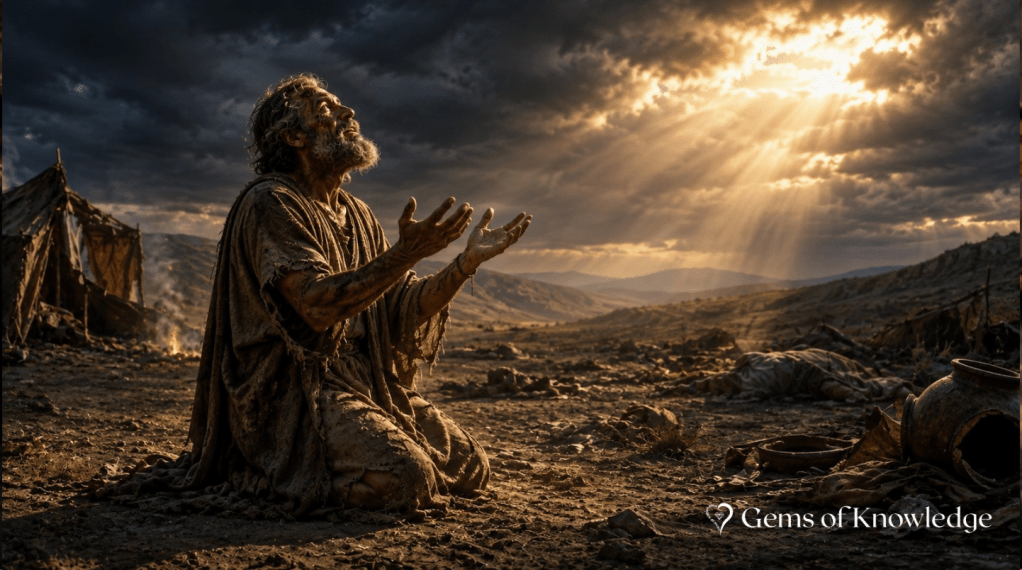
Alt...
Job kneeling among the ruins of his life and looking toward golden light breaking through dark storm clouds.
![[?]](https://files.mastodon.social/accounts/avatars/110/540/252/708/905/804/original/2589fba324f877a2.jpeg)
Have you ever received a cold, short response from someone for no apparent reason? How do we engage such people? Click or tap the link to read more.
#afaithfulsower #christianity #Bible #Jesus #dailydevotional
https://afaithfulsower.org/be-an-engaging-witness-for-christ/
The Millennial Kingdom is often seen as a future era of peace and justice lasting a thousand years, as described in biblical prophecy. What do you think this period means for modern society?
#MillennialKingdom #BiblicalProphecy #EndTimes #KingdomOfGod #Christianity

Being Mindful of God
We don't know the blessings God will unfold before us if we are faithful and intentional. Its not just about the time we set aside for Him. It’s remembering Him throughout our day, seeking His guidance before we act, and caring enough about what He thinks to ask, “Lord, what would You have me do?” Use today for good - walk faithfully and intentionally today—and watch what God unfolds. 💎 [SENSITIVE CONTENT]
Today’s One Year Bible Verses: Esther 8:1–10:3, 1 Corinthians 12:27–13:13, Psalm 37:1–11, Proverbs 21:23–24
Walk Faithful and Intentional
It’s easy to think the significant moments of our lives will be obvious—the big decision, the open door, the moment when God asks us to do something extraordinary. But much of the life God calls us to is built in ordinary days through seemingly ordinary choices.
Today is one of those days.
The Lord reminds us in today’s Gem of Knowledge:
“Use today for good. Find ways to walk in holiness before me and do my will as I direct you. If you will do this, you will see great blessings unfold before your very eyes. Walk faithful and intentional today.”
Walking intentionally with God means caring about Him enough to be mindful of Him throughout your day. It’s remembering Him in the ordinary moments and seeking His guidance before we act—not making our decisions and then asking Him to bless them.
When God is on our minds, we naturally begin to ask, Lord, what would You have me do? Then, as He directs us, we choose to follow. That is what it means to walk faithfully and intentionally with Him.
Today’s reading in Esther shows us what can unfold through that kind of obedience. Esther had already risked her life by approaching the king and exposing Haman’s plot. Now, in chapters 8–10, everything begins to turn. The decree meant to destroy God’s people is countered, Mordecai is elevated, and sorrow becomes celebration.
Scripture says, “The Jews were filled with joy and gladness and were honored everywhere” (Esther 8:16, NLT).
Esther couldn’t have known how everything would unfold when she first chose to obey. She simply did what God placed before her—and eventually she saw the fruit of that faithfulness with her own eyes.
Psalm 37 gives us similar instruction: “Trust in the Lord and do good. Then you will live safely in the land and prosper”(Psalm 37:3, NLT).
Trust in the Lord and do good.
Don’t become distracted by what others are doing or discouraged when someone else seems to be getting ahead. Keep your eyes on God and intentionally choose what is right before Him.
And what does that look like practically?
First Corinthians 13 gives us a beautiful answer: “Love is patient and kind. Love is not jealous or boastful or proud or rude” (1 Corinthians 13:4–5, NLT).
Sometimes we make holiness complicated when God gives us opportunities to practice it all day long. Be patient with the person who tests your patience. Speak kindly when you could be sharp. Refuse gossip. Celebrate someone else’s blessing. Put another person’s needs ahead of your convenience.
Even Proverbs 21:23 reminds us, “Watch your tongue and keep your mouth shut, and you will stay out of trouble” (NLT). Sometimes holiness is as simple—and as difficult!—as knowing when not to say something. 😂
God isn’t asking you to figure out everything He has planned for your future today. He’s asking you to faithfully walk with Him today.
Esther couldn’t see chapters 8, 9, and 10 while she was living chapter 4.
Neither can we.
We don’t always know what God is building through our obedience or what blessing may eventually unfold from it. Our responsibility is simply to follow Him through the part of the story we’re living now.
So today, look for opportunities to do good. Listen for His direction. Choose love, integrity, holiness, and obedience.
Use today for good – walk faithfully and intentionally today—and watch what God unfolds. 💎
Action (5 Minutes with God)
Give God at least 5 intentional minutes of your time today. Ask Him:
- “Lord, what do You want me to know about this personally?”
- Journal what He gives you through His Holy Spirit.
- Then ask, “What do You want me to do?”
- Journal what He reveals – then do it!
Pay attention today. Look for God moments – the opportunities He gives you to love, serve, encourage, forgive, or obey. One small act of obedience may matter far more than you realize.
Prayer
Lord, help me walk faithfully and intentionally with You today. Open my eyes to opportunities to do good, love others, and choose what pleases You. Help me hear Your direction and obey even in the small things. I trust that You see the whole story when I can only see what is in front of me. May my choices honor You and prepare the way for whatever You desire to unfold. In Jesus’ mighty name I pray, amen.
To read more 5 Minutes with God devotionals click here.
If Gems of Knowledge has blessed your walk with Christ, please subscribe or consider partnering with us today. Your gift helps keep these devotionals free for everyone and carries God’s Word to more hearts. Every seed matters—thank you for sowing into this work! 💛
Test everything by the Word and the Spirit (John 16:13)
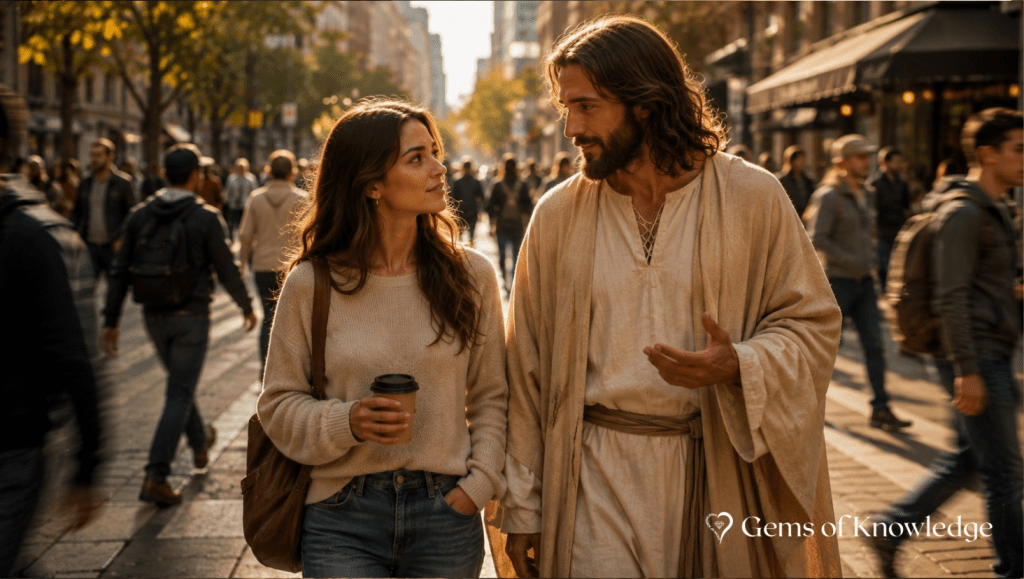
Alt...
A modern woman walking with Jesus through a busy city street, listening attentively to Him as people hurry around them.
How can we prove the existence of Jesus in modern times? From historical texts to archaeological findings, the evidence sparks meaningful conversations today. What do you think?
#Jesus #History #Faith #Evidence #Christianity

Join us on That Beautiful Stream for our second installment of our series on Obligations. This time, we're taking a look at what obligations we have when it comes not only to the Bible itself, but to the teachings contained within.
We go live at 3:30 pm Hawai'i time!
#Christianity #Anglican #Episcopal #Church #spirituality #theology #bible
The Secret to Drawing Closer to God
Sometimes we come to God because we need answers, direction, or help. But when was the last time you came to Him simply because you wanted Him? No agenda. No prayer list. No distractions. Just time to love Him, worship Him, and enjoy His presence. Don’t only seek what God can give you. Seek Him for Him. ❤️ [SENSITIVE CONTENT]
Today’s One Year Bible Verses: Esther 4:1–7:10, 1 Corinthians 12:1–26, Psalm 36:1–12, Proverbs 21:21–22
Seek Him For Him
There are many reasons we come to God. We need direction, healing, provision, answers, protection, wisdom, or help with something we simply cannot handle on our own. And God welcomes us when we come with our needs. He is our Father, and He wants us to depend upon Him.
But there is another kind of seeking that draws us into a deeper relationship with Him—the kind where we come because we simply want Him.
The Lord explains it beautifully in today’s Gem of Knowledge:
“By giving Me time every day, your undivided attention and worship, with no other motives than to love Me and be with Me, this is how you will find Me.”
There is something deeply intimate about spending time with someone when you want nothing from them.
You aren’t there because you need a favor. You aren’t trying to accomplish something. You simply love them and want to be near them.
God desires that kind of relationship with us too.
In Esther 4, Esther suddenly finds herself facing something far greater than herself. Haman has arranged for the destruction of her people, and Mordecai challenges Esther to recognize that perhaps God has positioned her in the palace “for just such a time as this” (Esther 4:14, NLT).
But Esther doesn’t immediately rush into action.
She first calls everyone to fast.
“Go and gather together all the Jews of Susa and fast for me. Do not eat or drink for three days, night or day. My maids and I will do the same” (Esther 4:16, NLT).
Before Esther approached the king, she sought God.
Before the strategy came the surrender. Before the action came the time set apart.
And after those days of fasting, Esther walked forward with remarkable wisdom. She didn’t panic or impulsively accuse Haman. She waited. She prepared a banquet. Then another. She moved carefully until the right moment came, and God used her obedience to expose what had been hidden.
Perhaps some of the wisdom we are asking God for is found in the time we haven’t yet given Him.
Psalm 36 gives us a beautiful picture of what happens when we draw near to God. David says, “You feed them from the abundance of your own house, letting them drink from your river of delights. For you are the fountain of life, the light by which we see” (Psalm 36:8–9, NLT).
I love that.
The light by which we see.
We often come to God asking Him to show us what to do, where to go, or how something will work out. But sometimes the answer isn’t found by concentrating harder on the problem. It comes by drawing closer to the One who gives us light to see.
First Corinthians 12 reminds us that God has also given each of us His Spirit and placed us within the body of Christ according to His design. “God has put each part just where he wants it” (1 Corinthians 12:18, NLT). We don’t have to manufacture our place, our gifting, or our purpose. As we know Him, we begin to recognize how He has made us and where He is leading us.
But relationship must come before usefulness.
God doesn’t only want the part of your day where you bring Him your prayer list. He wants your heart. Your attention. Your affection. Your worship. He wants moments when you close the door on everything else and say, Lord, I don’t need anything from You right now. I just want to be with You.
That kind of time can feel difficult in a world constantly competing for our attention. Phones buzz. Responsibilities call. Thoughts wander. Even our quiet time can become another task to accomplish.
But love makes room.
And perhaps that is the invitation today—not simply to find more time for God, but to give Him time that belongs completely to Him.
No agenda.
No multitasking.
No ulterior motive.
Just love.
Because when we stop seeking only what God can give us and begin seeking God Himself, we discover something far greater than the answer we came looking for.
We find Him. 💎
Action (5 Minutes with God)
Set aside a few minutes today that belong completely to God. Put away your phone and anything else competing for your attention. Don’t begin with your list of needs. Worship Him, talk with Him, sit quietly with Him, or simply tell Him what you love about Him. Give Him your undivided attention for no other reason than this: you love Him and want to be with Him.
Prayer
Lord, I don’t want to seek You only when I need something from You. I want to know You because I love You. Teach me to quiet the distractions around me and give You my undivided attention. Help me make room for You every day—not out of obligation, but because being with You becomes the desire of my heart. Thank You for welcoming me into Your presence and for being the fountain of life and the light by which I see. More than answers, blessings, or direction, Lord, I want You. Draw me closer and help me know You more. In Jesus’ name, amen.
To read more 5 Minutes with God devotionals click here.
If Gems of Knowledge has blessed your walk with Christ, please subscribe or consider partnering with us today. Your gift helps keep these devotionals free for everyone and carries God’s Word to more hearts. Every seed matters—thank you for sowing into this work! 💛
Test everything by the Word and the Spirit (John 16:13)

Alt...
Esther sitting quietly in prayer beside an open palace balcony with her crown set aside as warm golden light fills the room.
Moldable for His Purpose
We ask God to use us—but are we willing to let Him change us first? Esther didn’t know what God was preparing her for. She simply remained teachable, willing, and obedient. And all along, God was shaping her for a purpose she couldn’t yet see. Maybe the stretching you’re experiencing isn’t meant to break you. Maybe the Potter is preparing you. Stay moldable in His hands. You may be in preparation for such a time as this. ❤️ [SENSITIVE CONTENT]
Today’s One Year Bible Verses: Esther 1:1–3:15, 1 Corinthians 11:17–34, Psalm 35:17–28, Proverbs 21:19–20
God Is Shaping You for More
We often ask God to use us, bless us, increase our wisdom, deepen our faith, and lead us into His purpose for our lives. But sometimes we forget that becoming who God created us to be requires being willing to change.
And what perfect timing as we begin the book of Esther today.
The Lord reminds us in today’s Gem of Knowledge,
“Be moldable, willing and able to change to my bending. I want to make you more than you are now. Wiser, happier, holier. But you must allow it. Amen.”
God sees more in us than what we are today. He knows what He created us to become, where He intends to position us, and what will be required of us when we get there. But becoming that person often means allowing Him to shape things within us first.
Esther is such a beautiful example.
When Esther was brought into the king’s palace, she entered a season of preparation. She was given beauty treatments, instruction, guidance, and time to become ready for what was ahead. But what stands out about Esther is her willingness to receive direction. Scripture tells us, “Esther had not told anyone of her nationality and family background, because Mordecai had directed her not to do so” (Esther 2:10, NLT).
She listened.
Later, when it was her turn to go before the king, Esther again demonstrated a teachable spirit. Rather than insisting on what she thought would make her impressive, “she accepted the advice of Hegai, the eunuch in charge of the harem”(Esther 2:15, NLT).
And what happened? “Esther was admired by everyone who saw her” (Esther 2:15, NLT).
Esther did not yet know the magnitude of what God was preparing her for. She could not see Haman’s plot coming or know that one day the lives of her people would depend upon her willingness to step into the position she was being prepared to occupy.
But God knew.
That is something worth remembering when God begins bending and shaping areas of our own lives.
We may not understand why He is challenging an attitude, changing a habit, teaching us patience, asking us to forgive, stretching our faith, or making us uncomfortable with something we once accepted. We may simply feel the pressure of being changed.
But God sees what comes next.
He isn’t shaping us simply for the sake of changing us. He is making us more—wiser, happier, holier, and increasingly prepared to carry what He has entrusted to us.
First Corinthians 11 gives us another side of this truth. Paul tells believers to examine themselves before coming to the Lord’s Table: “That is why you should examine yourself before eating the bread and drinking the cup” (1 Corinthians 11:28, NLT). A moldable heart is willing to let God show us what needs to change instead of immediately defending what is already there.
That can be uncomfortable. Sometimes we would much rather ask God to change our circumstances than allow Him to change us.
But there is freedom in becoming teachable before Him.
Psalm 35:28 says, “Then I will proclaim your justice, and I will praise you all day long” (NLT). As God shapes us, our lives increasingly become a reflection of Him. Our responses change. Our wisdom grows. Our priorities shift. Holiness becomes less about following rules and more about becoming like the One we love.
And just like Esther, we may not understand today what God is preparing us for tomorrow.
The correction you receive today may become the wisdom you need later. The patience He is developing may prepare you to lead someone. The humility He is teaching may protect you when He gives you influence. The faith He is stretching may be exactly what you need when your moment comes to stand courageously.
So don’t resist the Potter’s hands simply because the shaping feels unfamiliar.
Stay soft. Stay teachable. Stay willing.
God sees who you are now—but He also sees everything you can become when you allow Him to shape you.
You may just be in preparation for such a time as this. 💎
Action (5 Minutes with God)
Be willing to give God at least 5 minutes of your time today. Ask Him:
- “Lord, what do You want me to know about this personally?”
- Journal what He gives you through His Holy Spirit.
- Then ask, “What do You want me to do?”
- Journal what He reveals – then do it!
Instead of immediately resisting something that feels uncomfortable, consider whether God may be using it to develop wisdom, holiness, patience, courage, or another quality you will need for what He has ahead. Give Him permission to change you.
Prayer
Lord, I want to be moldable in Your hands. Help me not to resist You when You challenge me, correct me, or lead me beyond what is comfortable and familiar. You know who You created me to become and what You are preparing me for. Give me a teachable heart like Esther—willing to listen, learn, grow, and follow Your direction. Make me wiser, happier, holier, and increasingly like You. Shape me today for the purpose You already see ahead. In Jesus’ name I pray, amen.
To read more 5 Minutes with God devotionals click here.
If Gems of Knowledge has blessed your walk with Christ, please subscribe or consider partnering with us today. Your gift helps keep these devotionals free for everyone and carries God’s Word to more hearts. Every seed matters—thank you for sowing into this work! 💛
Test everything by the Word and the Spirit (John 16:13)
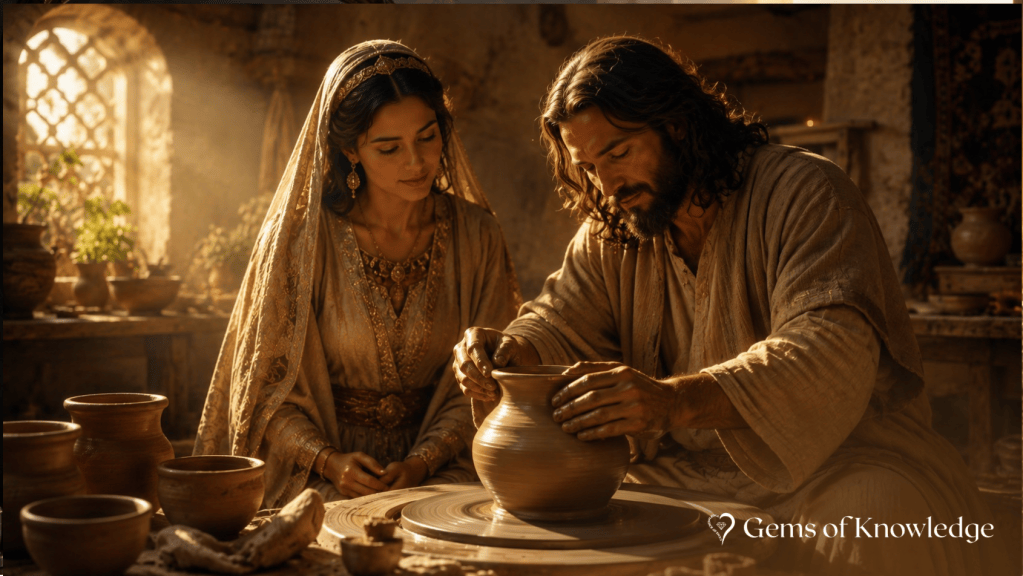
Alt...
Jesus shaping a clay vessel on a potter’s wheel as Esther watches beside Him in a warm, sunlit workshop.
Episode 20: She Wasn’t Expected to Live—But God Had Other Plans | EP 20 Heather’s Story
What does faith look like when healing doesn’t come the way you hoped? Heather was born with a congenital heart defect and wasn’t expected to live. Through multiple heart surgeries, breast cancer, chronic illness, and ongoing physical challenges, God has continued to meet her again and again. In this powerful episode, Heather shares how her struggles have deepened her faith and given her a purpose—to bring hope to others walking through chronic and invisible illness. Sometimes testimony doesn’t say, “Everything is perfect now.” Sometimes it says, “Jesus is still here.” ❤️ [SENSITIVE CONTENT]
https://www.youtube.com/watch?v=6CBjB5Lh68Y&t=20s
How do you keep your faith when your life has been a fight from the very beginning?
Heather was born with a congenital heart defect and wasn’t expected to survive. After multiple heart surgeries, breast cancer, fibromyalgia, chronic pain, and ongoing physical challenges, she has every reason to ask, “God, why?”
And she has.
In this episode of the Gems of Knowledge Podcast, Heather shares how Jesus has continued to meet her in the pain—and how God is now using her story to bring hope, community, and purpose to others living with chronic and invisible illness.
Sometimes testimony doesn’t say, “Look, everything is perfect now.”
Sometimes it says, “Look—Jesus is still here.” ❤️🙏💎
Listen now! ✨
Listen & Subscribe On:


Heather Perron
Heather Perron is an author, Certified Wellness Coach, podcast host, and invisible disability advocate who is passionate about helping others feel seen, heard, and understood. Living with her own invisible disabilities has given Heather a unique perspective on the challenges so many face behind closed doors.
Through her writing, advocacy, and podcast, Living Beyond the Invisible: A Walk With Heather, she shares encouragement, hope, faith, and the reminder that our circumstances do not define who we are.
Connect with Heather
🎙️ Podcast: Living Beyond the Invisible: A Walk with Heather
🌐 https://walkingwithheather.com
Facebook & TikTok: @walkingwithheather
Instagram: @walkingwithheather1
To watch more episodes click here.
If Gems of Knowledge has blessed your walk with Christ, please subscribe or consider partnering with us today. Your gift helps keep these devotionals free for everyone and carries God’s Word to more hearts. Every seed matters—thank you for sowing into this work! 💛
Test everything by the Word and the Spirit (John 16:13)

Alt...
Episode 20: She Wasn’t Expected to Live—But God Had Other Plans | EP 20 Heather’s Story

Alt...
Episode 20: She Wasn’t Expected to Live—But God Had Other Plans | EP 20 Heather’s Story
Why does apologetics matter today? It's about engaging faith with reason and addressing doubts with grace. How do you bridge belief and inquiry in your life?
#Faith #Reason #Christianity #Belief #Philosophy

CW: Religion - Christianity [SENSITIVE CONTENT]
I don't hide the fact that I'm a Christian here. It is right in my bio and I mention on a routine basis going to church.
But, I don't talk too in depth about my faith that often on Fedi. I mentioned it on my old account that I wanted to start doing so more frequently. So, I may start.
I take a lot of notes when I am in church as I Have a LOT of thoughts about my faith.
As a person who reads the Gospel and takes from it that you need to be radically compassionate, radically loving, radically caring of all people and to come to the Lord as you are at this very moment, seeing folks who use my faith to wrap themselves in Trumpism, homophobia, transphobia, or any form of hate hurts me to my core. It happens often in the United States.
People take the message of hope and love from a brown Jewish carpenter living in occupied land and twist it to fit their own narrative.
Progressive, socialist Christians need to fight to reclaim Jesus in today's world where Christianity is wrongly tied to conservative capitalism.
Expect more from me on this, behind a content warning, of course.
Stop Looking at Yourself
One of the hardest battles we face is the battle within. The enemy tells us we aren't enough, qualified, strong, or capable—but God says, “You got this because I got you.” Stop looking at yourself and look at Him. 💎 ✨Click to read the full devotional [SENSITIVE CONTENT]
Today’s One Year Bible Verses: Nehemiah 12:27–13:31, 1 Corinthians 11:1–16, Psalm 35:1–16, Proverbs 21:17–18
Look To God
I think one of the hardest battles we face is the battle within. The enemy tries to tear us down with lies about who we are in an effort to thwart us from accomplishing our calling and purpose in God.
I believe these lies plague us all in one form or another. You’re not good enough. You’re not qualified. You’re too weak. You don’t have what it takes. Someone else could do it better. Who do you think you are?
And if the enemy can get us to believe those lies, he doesn’t necessarily have to stop us himself. We may stop ourselves.
We begin examining our weaknesses, comparing ourselves to others, and taking inventory of everything we think we lack. Eventually, we can become so focused on our own inadequacies that we lose sight of the One who called us in the first place.
But today’s Gem of Knowledge turns our attention away from ourselves and back to the One we should have been looking at all along:
“Everyone lacks without Me. I make you whole. And because I am with you always, that means you do not lack anything. You are enough because I make you enough. You are whole because I make you whole. You are capable because I make you capable. You got this because I got you. Stop looking at yourself and look at Me. Amen.”
There is so much freedom in those words. God isn’t asking us to convince ourselves that we’re independently strong, capable, or sufficient. He is our sufficiency.
Of course we will find weaknesses when we look at ourselves—we’re human. There will always be something we don’t know, something we haven’t mastered, or someone who appears more qualified. But God never intended for us to accomplish His purposes apart from Him.
In today’s reading, Nehemiah returns to Jerusalem and discovers that things have once again fallen into disorder. Responsibilities have been neglected, provisions for the Levites haven’t been maintained, the Sabbath isn’t being honored, and compromise has crept back in.
Nehemiah could have become overwhelmed by everything that was wrong. Instead, he addressed each problem and continued the work God had given him. His ability to fulfill his assignment wasn’t dependent upon perfect circumstances or having an easy task. He continued moving forward with God.
Psalm 35 gives us another picture of that dependence:
“O LORD, oppose those who oppose me. Fight those who fight against me.”
— Psalm 35:1 NLT
David understood that some battles were bigger than he was. His answer wasn’t to become bigger—it was to call upon God.
The same is true when the battle is happening inside our own minds.
When the enemy says, You’re not enough, we don’t have to argue that we are enough on our own. We can answer, God makes me enough.
When he says, You’re not capable, our answer is, God makes me capable.
When he points out what we’re lacking, we can stop staring at ourselves and remember Who makes us whole.
God knew every weakness you would have when He called you. He knew your personality, your limitations, your past, what you would struggle with, and everything you would still need to learn. None of it surprised Him.
And He still called you.
“You got this because I got you.”
That is where our confidence belongs—not in believing we can do anything, but in knowing that with God, we can do whatever He has called us to do.
So stop allowing the enemy to make you stare at yourself.
Look to God. 💎
Action (5 Minutes with God)
Take 5 minutes looking to God today. Ask Him:
- “Lord, what do You want me to know about this personally?”
- Journal what He gives you through His Holy Spirit.
- Then ask, “What do You want me to do?”
- Journal what He reveals – then do it!
Ask Him to show you what is true when He is added to the equation.
Prayer
Dear Lord, help me recognize the lies that cause me to doubt who You created and called me to be. Forgive me for focusing on my weaknesses instead of Your strength. When I feel inadequate, teach me to look at You. You are my strength, wisdom, and help, and I trust You to make me capable of everything You call me to do. Thank You for making me whole and for reminding me that I don’t have to do any of this without You. In Jesus’ mighty name I pray, amen.
To read more 5 Minutes with God devotionals click here.
If Gems of Knowledge has blessed your walk with Christ, please subscribe or consider partnering with us today. Your gift helps keep these devotionals free for everyone and carries God’s Word to more hearts. Every seed matters—thank you for sowing into this work! 💛
Test everything by the Word and the Spirit (John 16:13)
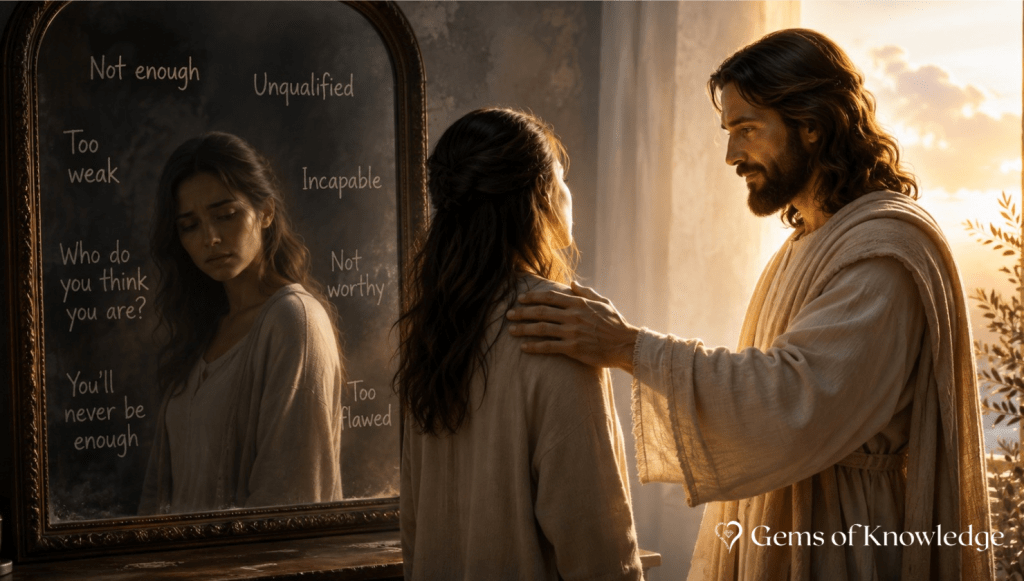
Alt...
A discouraged woman sees words like “not enough,” “unqualified,” “too weak,” and “incapable” in a mirror while Jesus gently turns her away from the lies and toward Him.
![[?]](https://s3.us-west-1.wasabisys.com/thereslife/accounts/avatars/117/028/616/790/462/152/original/ebe45cd82b0b58de.jpeg)
We baptize by triple immersion. This is what it looks like!
#baptism #christianity #orthodox
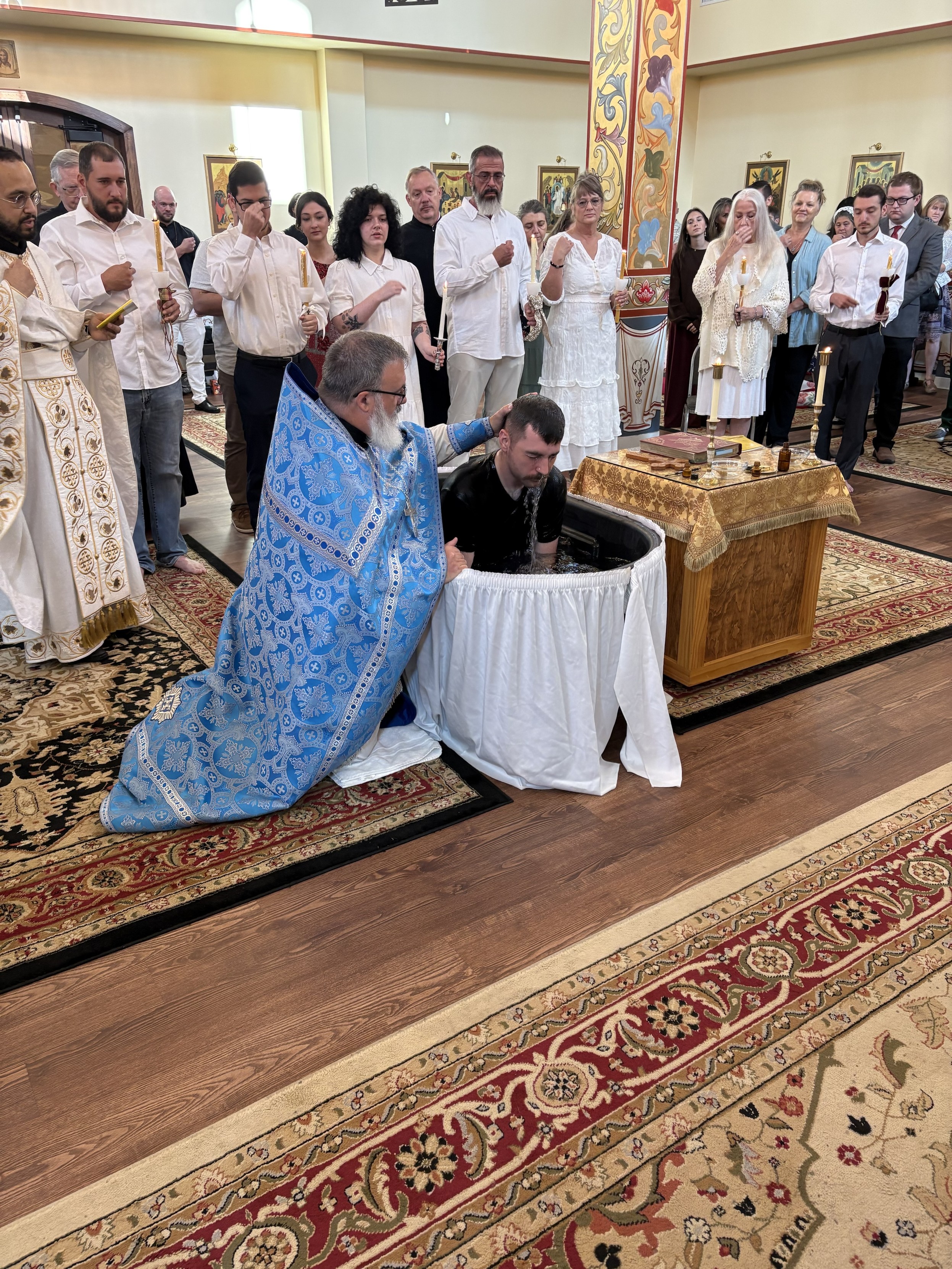
Alt...
A priest vested in blue kneels with his hand on the neck of a man who has just come up from a baptismal “dunk” in a plastic horse trough.
Come Closer
Have you ever tried to tell someone something quietly in a crowded room? You don't shout it across the room for everyone to hear. You motion for them to come closer. I think there are things God wants to speak to us that require that same kind of closeness. Today’s Gem of Knowledge says: “There are secrets I want to reveal to you. Come closer so I can show you. Amen.” There is a difference between knowing someone from across the room and sitting with them at the table. Closeness changes everything. Come closer to Him to hear what He wants to reveal to you. 💎 [SENSITIVE CONTENT]
Today’s One Year Bible Verses: Nehemiah 11:1–12:26, 1 Corinthians 10:14–33, Psalm 34:11–22, Proverbs 21:14–16
Draw Close To Hear Him
Have you ever tried to tell someone something quietly in a crowded room? You don’t shout it across the room for everyone to hear. You motion for them to come closer. Maybe you lean toward them and lower your voice because what you’re about to say is meant only for that person that came close enough to hear it.
I think there are things God wants to speak to us that require that same kind of closeness.
Today’s Gem of Knowledge says:
“There are secrets I want to reveal to you. Come closer so I can show you. Amen.”
What a beautiful invitation. God isn’t saying, Figure Me out. He isn’t asking us to search harder for some hidden code or chase mysterious knowledge. He is simply saying, Come closer.
In today’s reading, Paul speaks about communion and what it means to participate in the Lord’s Supper:
“When we bless the cup at the Lord’s Table, aren’t we sharing in the blood of Christ? And when we break the bread, aren’t we sharing in the body of Christ?” — 1 Corinthians 10:16 NLT
God doesn’t merely want us to know about Him; He invites us into fellowship with Him.
There is a difference between knowing someone from across the room and sitting with them at the table. Closeness changes what we hear, what we notice, and eventually how well we know their heart.
Our relationship with God works much the same way. There are things we begin to understand only as we spend time with Him. Scripture comes alive differently. His direction becomes easier to recognize. We begin noticing His fingerprints in places we might once have overlooked.
Not because we’ve become spiritually elite, but because we’ve drawn near enough to listen.
In Nehemiah 11, sacred lots were cast to choose who would live in Jerusalem, near the Temple and the presence of God. What a beautiful picture alongside today’s Gem: God was calling people closer. And through Jesus, that invitation is now extended to us—come closer.
Psalm 34 contains another invitation that fits God’s heart for us:
“Come, my children, and listen to me, and I will teach you to fear the LORD.” — Psalm 34:11 NLT
Notice the progression: Come. Listen. Learn.
Sometimes we want God to reveal mysteries but don’t want to take the time to come close to HIm. We want answers about tomorrow, direction for our decisions, understanding about what He’s doing, or deeper revelation from His Word. Yet sometimes His answer may simply be, Come sit with Me.
And the “secrets” God wants to reveal aren’t necessarily spectacular mysteries about the future. Sometimes the treasure He wants to show us is something about His heart. He may illuminate a Scripture we’ve read many times before, expose something in our own heart that needs changing, give us wisdom for a situation, reveal how He is working behind the scenes, or help us see another person through His eyes.
The revelation comes through personal, intimate relationship.
Psalm 34:18 tells us, “The LORD is close to the brokenhearted; he rescues those whose spirits are crushed.” God isn’t distant from His children. He draws near, and He invites us to draw near to Him.
Perhaps you’ve been asking God for answers and haven’t received them yet. Instead of striving harder to figure everything out, consider His invitation today.
Come closer.
Turn off the noise for a little while. Open His Word without rushing. Sit quietly with Him. Worship. Ask Him what He wants you to know instead of only telling Him what you need Him to do.
There are things the Lord wants to show us—not because we’ve earned access to secret information, but because intimacy with God naturally produces a deeper understanding of His heart.
You don’t have to shout across the room.
Your Father is inviting you to His table.
Come closer and listen. 💎
Action (5 Minutes with God)
Take at least 5 minutes to be with the Lord today. Ask Him:
- “Lord, what do You want me to know about this personally?”
- Journal what He gives you through His Holy Spirit.
- Then ask, “What do You want me to do?”
- Journal what He reveals – then do it!
Give God intentional, uninterrupted time today. Put away distractions, open your Bible, and simply ask, “Lord, what do You want to show me?” Don’t force an answer. Spend time with Him and listen. Write down anything He brings to your attention, and test what you hear against His Word.
Prayer
Father, thank You for inviting me closer. I don’t want to be satisfied with simply knowing about You; I want to know Your heart. Quiet the distractions around me and within me so I can recognize Your voice. Teach me through Your Word, give me wisdom and discernment, and reveal whatever You want me to understand. Draw me closer to You every day and help me treasure time in Your presence. I am listening, Lord. In Jesus’ name, amen.
To read more 5 Minutes with God devotionals click here.
If Gems of Knowledge has blessed your walk with Christ, please subscribe or consider partnering with us today. Your gift helps keep these devotionals free for everyone and carries God’s Word to more hearts. Every seed matters—thank you for sowing into this work! 💛
Test everything by the Word and the Spirit (John 16:13)

Alt...
Jesus cups His hand and whispers to a woman seated beside Him at a large table filled with others, illustrating God’s invitation to come closer and hear what He wants to reveal.
“What we can believe is that one who stood in so intimate a relationship with the incarnate Son of God on earth must, of all the human race, have the place of highest honor in the eternal life of God. A paraphrase of an ancient Greek hymn expresses this belief in very familiar words: “O higher than the cherubim, more glorious than the seraphim, lead their praises, alleluia.”
- Lesser Feasts and Fasts
#theotokos #mary #feast #christianity
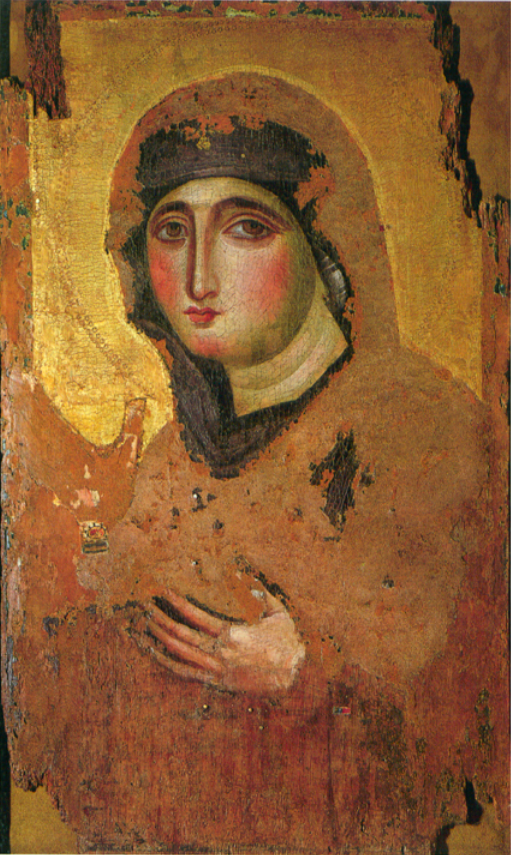
Exploring the evidence and historical foundations that support the truths found in the Bible reveals a compelling story of faith and fact.
#BibleEvidence #Faith #BibleStudy #Christianity #Scripture
Don’t Become a Casualty of War
The battle is real—and complacency is not neutral. We don’t have to deliberately walk away from God to drift from Him. Sometimes we simply get comfortable, distracted, and stop intentionally choosing Him. Stay awake. Guard your heart. Resist complacency. Keep choosing Jesus. ❤️ “If you think you are standing strong, be careful not to fall.” — 1 Corinthians 10:12 NLT💎 ✨Click to read the full devotional [SENSITIVE CONTENT]
Today’s One Year Bible Verses: Nehemiah 9:22–10:39, 1 Corinthians 9:19–10:13, Psalm 34:1–10, Proverbs 21:13
Complacency = Condemnation
There is a dangerous place in any battle that can feel deceptively safe—the place where we decide not to engage. We may not intentionally surrender to the enemy or consciously walk away from God. We simply become comfortable, distracted, or indifferent until eventually, we stop deliberately choosing at all.
But in a spiritual battle, refusing to choose is still a choice.
The Lord gave me a sobering warning in today’s Gem of Knowledge:
“Don’t be a casualty of war because you didn’t choose. Complacency = Condemnation. Don’t let it take you over or it will win. Cast it out, rebuke it, guard yourself against its future attacks. I don’t want to lose you. Amen.”
Those final words reveal the heart behind the warning: “I don’t want to lose you.”
God isn’t looking for an opportunity to condemn us. He is warning His children because He knows there is a real enemy who would love to lull us into complacency. The danger is becoming too comfortable.
Paul gives the Corinthians a similar warning in today’s reading. He reminds them of the Israelites who experienced incredible things with God. They were delivered from Egypt, passed through the sea, ate supernatural food, drank supernatural water, and witnessed God’s power firsthand. Yet many eventually turned away from Him.
Paul tells us why their story was recorded:
“These things happened as a warning to us, so that we would not crave evil things as they did.”
— 1 Corinthians 10:6 NLT
We can know God, experience His goodness, and still become distracted if we stop guarding our relationship with Him. Complacency usually doesn’t happen overnight. Prayer gradually becomes less important, God’s Word gets pushed aside, conviction becomes easier to ignore, and before we realize it, we’ve drifted.
That is why Paul warns:
“If you think you are standing strong, be careful not to fall.”
— 1 Corinthians 10:12 NLT
Nehemiah 9 shows the same pattern. God had continually provided for Israel, protected them, instructed them, forgiven them, and shown them mercy. Yet when they became comfortable, they repeatedly turned away.
After looking honestly at their history, the people made a different choice. They renewed their covenant and committed themselves to following God.
That is the opposite of complacency.
Following Jesus isn’t merely a decision we made years ago. Every day we choose whose voice we will follow, what we will pursue, and where we will place our trust.
When complacency begins creeping in, the Lord tells us what to do: “Cast it out, rebuke it, guard yourself against its future attacks.” Return to prayer. Open His Word. Obey what He has already told you. Remove whatever is pulling your heart away from Him and deliberately turn your attention back toward Jesus.
And remember, you aren’t fighting alone:
“God is faithful. He will not allow the temptation to be more than you can stand. When you are tempted, he will show you a way out so that you can endure.”
— 1 Corinthians 10:13 NLT
As this end-times series of Gems comes to a close, perhaps this is the question God is leaving with us: Have you chosen, and are you continuing to choose Him?
God doesn’t want us frightened by what is happening around us. He wants us awake, close to Him, and able to recognize the spiritual battle without becoming casualties of it.
“I don’t want to lose you.”
So stay close. Guard your heart. Resist complacency, and keep choosing Jesus. 💎
Action (5 Minutes with God)
Take at least 5 minutes to be with God today. Ask Him:
- “Lord, what do You want me to know about this personally?”
- Journal what He gives you through His Holy Spirit.
- Then ask, “What do You want me to do?”
- Journal what He reveals – then do it!
Let today be a day of action with the Lord.
Prayer
Father, thank You for loving me enough to warn me. Forgive me for the places where I have become complacent or distracted. Awaken anything in me that has fallen asleep and help me recognize the enemy’s attacks before they take root. I choose You, Jesus. Help me stay close, obey Your voice, and remain faithful. You are my refuge and my strength. Guard my heart and keep it firmly fixed on You. In Jesus’ name I pray, amen.
To read more 5 Minutes with God devotionals click here.
If Gems of Knowledge has blessed your walk with Christ, please subscribe or consider partnering with us today. Your gift helps keep these devotionals free for everyone and carries God’s Word to more hearts. Every seed matters—thank you for sowing into this work! 💛
Test everything by the Word and the Spirit (John 16:13)

Alt...
A complacent man reclines in a chair looking at his phone while a spiritual battle between an army of light and an army of darkness surrounds him, illustrating the danger of spiritual complacency.
Exploring apologetics sharpens our understanding and equips us to thoughtfully engage with diverse beliefs and questions about faith.
#Apologetics #Faith #Reason #Christianity #Philosophy

The Time of Sifting and Burning
God's refining process isn't always comfortable, but it has a purpose. Sifting separates. Fire purifies. And sometimes God allows both to expose what doesn't belong and strengthen what does. Paul said, “I run with purpose in every step. I am not just shadowboxing.” (1 Corinthians 9:26, NLT) He wasn't faking it or merely going through the motions. His faith was real, and so was his determination to follow Christ. If this is a season of sifting and refining, we don't have to be afraid of what will remain. Jesus already won.💎 [SENSITIVE CONTENT]
Today’s One Year Bible Verses: Nehemiah 7:73b–9:21, 1 Corinthians 9:1–18, Psalm 33:12–22, Proverbs 21:11–12
Jesus Has Already Won
After yesterday’s Gem about standing and fighting with the Lord, I felt a little worried about how it might make people feel. After all, end times and spiritual warfare can feel scary or intimidating and I think because of this the Lord chose to give us reassurance in the middle of the warning with this Gem of Knowledge:
“Don’t worry about what will happen. I already won. Now is the time of sifting and burning.”
That changes how we look at everything.
Yes, there is a spiritual battle. Yes, Scripture tells us difficult times will come. And yes, God is clearly calling His people to prepare. But we aren’t fighting to determine who ultimately wins.
Jesus already won.
Through His death and resurrection, Christ defeated the power of sin and death. Whatever happens in this world, the final outcome isn’t hanging in the balance. That means we can prepare without panic, fight without fear, and watch what is happening around us without losing our peace.
But then comes the second part of the Gem: “Now is the time of sifting and burning.”
Those words made me think about what both processes accomplish. Sifting separates. Burning purifies. One reveals what belongs and what doesn’t; the other consumes what cannot remain.
Perhaps that is part of what God is doing right now—not only in the world, but in us.
Today’s reading in Nehemiah gives us a beautiful picture of this. God’s people gathered together and listened as the Book of the Law was read aloud. As they heard God’s Word, they began to understand how far they had wandered. They wept, confessed their sins, worshiped, and remembered God’s faithfulness throughout their history.
The Word exposed what needed to change, but God wasn’t exposing them simply to condemn them. He was bringing His people back to Himself.
That’s an important distinction.
When God sifts us, things become visible. Motives are revealed. Compromise becomes harder to justify. Things we’ve depended upon may suddenly prove unreliable. And when He allows the heat to increase, what is genuine becomes increasingly distinguishable from what is not.
That can be uncomfortable, but it can also be merciful.
Fire is used throughout Scripture as an image of testing and purification. It burns away what doesn’t belong so that what remains can be made stronger and purer. If God is preparing His people for what lies ahead, perhaps we shouldn’t be surprised when He begins removing things that would keep us from standing when the pressure increases.
Paul’s words in 1 Corinthians 9 fit beautifully here. He describes the discipline of an athlete who trains with purpose. “So I run with purpose in every step. I am not just shadowboxing” (1 Corinthians 9:26, NLT). Paul wasn’t pretending or merely going through the motions. His faith was real, and so was his determination to follow Christ. He understood that following Jesus required intentionality, discipline, and perseverance. He wasn’t casually drifting through his faith and hoping he’d be ready when difficulty came.
Neither should we.
This season isn’t a reason to obsess over every headline or try to identify every prophetic event. It is a reason to ask God, “What are You doing in me?”
What is being sifted out?
What needs to be burned away?
Where has comfort replaced obedience? Where has fear become stronger than faith? Where have we relied on the world for security instead of trusting God?
And when that examination feels intimidating, today’s Psalm brings us right back to peace:
“We put our hope in the LORD. He is our help and our shield.” — Psalm 33:20 (NLT)
Our hope isn’t in our ability to predict what happens next. It isn’t even in our ability to perfectly prepare ourselves.
Our hope is in Him.
So don’t be afraid of the sifting. Don’t run from the refining. Let God remove whatever cannot go where He is taking you.
The battle has already been decided.
Now He is preparing His people to stand in the victory He has already won. 💎
Action (5 Minutes with God)
Take time to be with the Lord today, even if its just 5 minutes. Ask Him:
- “Lord, what do You want me to know about this personally?”
- Journal what He gives you through His Holy Spirit.
- Then ask, “What do You want me to do?”
- Journal what He reveals – then do it!
Let today be a day of surrender to God. Ask Him to remove anything that weakens your faith and strengthen everything that will help you remain faithful to Jesus.
Prayer
Dear Lord, thank You that I don’t have to fear what is coming because Jesus has already won. When You sift and refine me, help me trust Your purpose instead of resisting the process. Expose anything in my heart that doesn’t belong and burn away whatever would keep me from following You completely. Give me wisdom to recognize what You are doing and courage to cooperate with You. My hope is not in this world or in my own strength. You are my help and my shield. Prepare me to stand firmly in the victory Jesus has already won. In Your name I pray, amen.
To read more 5 Minutes with God devotionals click here.
If Gems of Knowledge has blessed your walk with Christ, please subscribe or consider partnering with us today. Your gift helps keep these devotionals free for everyone and carries God’s Word to more hearts. Every seed matters—thank you for sowing into this work! 💛
Test everything by the Word and the Spirit (John 16:13)

Alt...
Jesus sifts wheat as a man watches beside a refining fire at sunset, while a glowing cross shines on the horizon, symbolizing God's sifting, purification, and Christ's finished victory.
"The more a believer wishes to live the absolute call of God, the more he or she has to insert that absolute into human misery."
- Brother Roger Schutz(founder of Taizé Community)
Have you ever experienced failure? The Apostle Peter experienced a significant failure, but God had a plan. Click or tap the link to read more.
#afaithfulsower #christianity #Jesus #Bible #dailydevotional
https://afaithfulsower.org/we-see-failure-god-sees-potential/
I've FINALLY posted something new on the blog! In this one I talk about some insights I had from the book of Ecclesiastes and why "all is vanity" is actually good news.
(Plus, I'm super proud of my meme work in this!)
#Christianity #Bible #Theology #Anglican #Episcopal #Spirituality
Will You Stand Up And Fight With Me?
Spiritual warfare is real—but people are not the enemy. We fight differently. We pray. We intercede. We stand on truth. We resist darkness. We forgive when bitterness tries to enslave us, obey when compromise would be easier, and exercise the authority Jesus has given us. And we don't need to be afraid. Because we aren't fighting alone. “But now I prayed, ‘Now strengthen my hands.’” — Nehemiah 6:9 (NLT) The enemy may approach with armies... but look Who is standing beside you. 💎⚔️🙏 [SENSITIVE CONTENT]
Today’s One Year Bible Verses: Nehemiah 5:14–7:73a, 1 Corinthians 8:1–13, Psalm 33:1–11, Proverbs 21:8–10
The Unseen Battle
Well, the Lord is obviously trying to get our attention as He continues to show us what is to come. Today, the Holy Spirit whispered this urgent and sobering Gem of Knowledge to me:
“The enemy quickly approaches with their hordes of armies. What side will you be on? Will you slip into slavery of war, or will you stand up and fight with Me?”
Ooof…Those words stopped me.
There has been a clear progression in what He’s been telling us over the last few days: seek Him → come into His safety → know Him so your allegiance is settled → now, stand with Him.
There is a real battle taking place, and Scripture has never hidden that from us. But before we picture earthly armies or begin viewing people around us as enemies, we need to remember what Paul teaches elsewhere: “For we are not fighting against flesh-and-blood enemies, but against evil rulers and authorities of the unseen world, against mighty powers in this dark world, and against evil spirits in the heavenly places.” (Ephesians 6:12, NLT). Our battle is spiritual.
People are not the enemy – The enemy is evil in the unseen realm.
And one of their greatest strategies has always been to bring God’s people into bondage—through sin, fear, deception, compromise, division, distraction, and anything else that pulls us away from the freedom Christ purchased for us.
That makes the Lord’s question especially powerful: Will you slip into slavery, or will you stand and fight with Me?
Today’s reading in Nehemiah gives us an incredible picture of people who chose to stand. The wall had been rebuilt, but the opposition hadn’t disappeared. Nehemiah’s enemies tried intimidation, deception, false accusations, and even attempted to lure him away from the work God had given him.
Nehemiah refused to move.
When they tried to frighten him, he prayed, “But now I prayed, ‘Now strengthen my hands’” (Nehemiah 6:9, NLT).
I love that response. He didn’t pray for the enemy to disappear so he wouldn’t have to face opposition. He asked God to make him stronger so he could keep doing what he had been called to do.
Perhaps that is part of what God is asking of us now.
We cannot afford to surrender every time following Jesus becomes difficult. We cannot allow fear to dictate our choices, deception to determine what we believe, or the pressure of the world to slowly pull us away from the One we know.
But fighting with Jesus doesn’t look like the world’s version of fighting.
We don’t fight hatred with hatred or darkness with more darkness. First Corinthians 8 reminds us that even when we possess knowledge, our actions must still be governed by love. Paul says, “While knowledge makes us feel important, it is love that strengthens the church” (1 Corinthians 8:1, NLT).
That matters enormously.
If our spiritual warfare makes us hateful toward people, we’ve misunderstood the battle. We fight by standing in truth while loving people. We pray when the enemy wants us consumed with fear. We forgive when bitterness tries to enslave us. We obey when compromise would be easier. We speak truth when deception spreads, and we love even when the world tells us to hate.
There are different ways we can fight in the spirit—through intercession, through exercising the authority Jesus gives us to resist and silence the enemy, and through bringing our petitions before God’s heavenly court, trusting in the finished work and authority of Jesus Christ. We don’t have to be afraid of spiritual warfare when we know Who gives us the victory.
Most importantly, we fight with Him.
God isn’t sending His children onto a battlefield while He watches safely from a distance. The invitation in today’s Gem is, “stand up and fight with Me.”
Psalm 33 reminds us why we can:
“The LORD merely spoke, and the heavens were created. He breathed the word, and all the stars were born.” — Psalm 33:6 (NLT)
That’s Who stands beside us.
The God who created the heavens isn’t intimidated by the enemy’s armies. Whatever darkness may be approaching, it is not greater than our God.
So we don’t need to live terrified of what may come. But neither should we sleep through a battle that is already taking place.
Yesterday’s question was, “Where does your allegiance lie?”
Today’s question is what we will do about it.
If we belong to Jesus, then let’s stand beside Him. Let’s know His Word, recognize His voice, put on the armor of God, pray, love courageously, resist deception, and refuse to surrender the freedom Christ has given us.
The enemy may approach with armies.
But look Who is standing beside you! 💎
Action (5 Minutes with God)
Take 5 minutes to be with the Lord today. Ask Him:
- “Lord, what do You want me to know about this personally?”
- Journal what He gives you through His Holy Spirit.
- Then ask, “What do You want me to do?”
- Journal what He reveals – then do it!
Today, allow Him to show you what obedience looks like in your life and what battles He wants to win with you then take your stand!
Prayer
Father God, open my eyes to the spiritual battle around me without allowing fear to enter my heart. Help me remember that people are not my enemy and teach me to fight Your way—with truth, prayer, faith, obedience, and love. Show me where I have surrendered ground through fear, compromise, or deception, and strengthen my hands to stand firm. I choose Jesus as My Lord, Savior, Captain and Defender. I choose You and Your Kingdom. And whatever lies ahead, I don’t want to retreat into bondage. Teach me to stand and fight with You. In Jesus’ mighty name I pray, amen.
To read more 5 Minutes with God devotionals click here.
If Gems of Knowledge has blessed your walk with Christ, please subscribe or consider partnering with us today. Your gift helps keep these devotionals free for everyone and carries God’s Word to more hearts. Every seed matters—thank you for sowing into this work! 💛
Test everything by the Word and the Spirit (John 16:13)

Alt...
A man kneels in his home praying over an open Bible while the unseen spiritual realm above him reveals Jesus leading angelic forces against an approaching army of darkness.
What will your earthy deeds reflect about you? How will you be remembered? Click or tap the link to read more.
#afaithfulsower #christianity #Bible #Jesus #dailydevotional
![[?]](https://s0.wp.com/wp-content/plugins/activitypub/green/assets/img/wp-logo.png?m=1784797036i) amgbengaezekieloladosu » 🌐
amgbengaezekieloladosu » 🌐
@megafeastamerica-dmgts.wordpress.com@megafeastamerica-dmgts.wordpress.com
“Been” Poem
Life is not yours as she is fragile to hold and long to care for. I can imagine how beautiful she would be, having her by my side by the river bank on a lowly mountain to see the awesome movement of waves from the coast to coast of the ocean. I don't know to say the stories of how I found you, but all I know in my heart is I never get tired of loving you is this so real. Sweetheart only heaven could help me out as all I know is "Am BEEN" there to love you.Gbenga Ezekiel OladosuAmerican […] [SENSITIVE CONTENT]
Life is not yours as she is fragile to hold and long to care for. I can imagine how beautiful she would be, having her by my side by the river bank on a lowly mountain to see the awesome movement of waves from the coast to coast of the ocean. I don’t know to say the stories of how I found you, but all I know in my heart is I never get tired of loving you is this so real. Sweetheart only heaven could help me out as all I know is “Am BEEN” there to love you.
Gbenga Ezekiel Oladosu
American National Award Winning Author
Mega Feast Bestselling Author
Honored as(WordPress “World Famous Author” Receive views from 50+ Different Countries)
We're back! And we have a name: That Beautiful Stream (a play on a somewhat obscure hymn title)! We kick off a new series on Christian Obligations.
We go live at 2:30 pm Hawai'i time (but can be viewed whenever after).
#Episcopal #Anglican #Church #Christianity #spirituality #theology #faith
![[?]](https://the-end-time.org/wp-content/uploads/2019/10/cropped-logo5.jpg)
Adventurer gone wrong? Or a committed missionary?
By Elizabeth Prata
I wrote about John Allen Chau in 2018 when his apparent death at the hands of an unreached island tribe in the Bay of Bengal was reported. My essay is below.
Meanwhile, this week Stacie, host of her channel “Adventures Gone Wrong” produced a video about Chau. She covered his upbringing and early life, his growing obsession with the Sentinel Island tribe he’d heard was unreached, and explained all his preparations prior to his attempts to reaching them. She included previous attempts in history to meet with and learn about the tribe, from the unwise contact in the 1800s, through to the NatGeo attempts in the 1970s.
The North Sentinel Island is part of a chain of islands in the Bay of Bengal where the unreached tribe living on this small speck has fiercely rejected outside contact- to the point death to those who try. In modern times, two shipwrecked sailors washed up on the shores and were summarily speared and hung as scarecrows to ward off subsequent attempts. It is this island that the young man Chau was drawn to.
Questions remain in my mind. Chau didn’t seem to belong to a church or have oversight of any pastor. He did train for brief period with All Nations International, which says they “train leaders to ignite church planting movements among the neglected peoples of the earth.” Stacie covers other preparations CHau made to reach these people.
Should missionaries operate under jurisdiction and oversight from a church or closely-tied church organization? Or are those men who say they are ‘called’ to certain peoples working under the Bible’s Great Commission in Matthew 28, under the Highest Power there is? Should there be support and oversight? Or was Chau’s willingness to give up his own life something individually but supernaturally instilled? Or was he just an adventurer, unwise but sincere?
Stacie did a good job of being fair in presenting a balanced and complete picture of this extraordinary incident that for a short time, captured the world. My essay is below the Youtube from Adventures Gone Wrong. I encourage you to watch.
https://youtu.be/bthMFgwdVqw?si=V5CA0QRQbLOUIpnh
The End Time essay:
Finishing my missionary series, we end with a modern day missionary, or as some call Chau, a rogue adventurer. Either way, he did what he did, and his death caused a brief global conversation about unreached peoples and the cause for Christ.

In fact, a few months ago a National Geographic documentary was issued about the life of John Allen Chau, again, depicting Chau as an unmindful adventure seeker, whereupon Voice of the Martyrs’ Tom Nettleton considers him a hero. Nettleton had rebutted this perspective, after having “conducted extensive research for an in-depth backstory. Nettleton found in Chau’s journals and other primary sources that Chau underwent an intentional and intense training process to make first contact in order to obey Jesus’ command to “go into all the world and make disciples.” More here
https://youtu.be/hNksqCzMKkk?si=JuBqm7xo9Q4FtSfz
So, what happened?
John Allen Chau, a 27-year-old American, was killed in November 2018 on Sentinel Island, part of a series of islands owned by India in the middle of the Bay of Bengal. They are restricted islands, due to the natives’ demonstrated hostility and their continued isolation with all the lack of immunity toward modern diseases. There was a buffer zone that even local fisherman were not allowed to penetrate.
An isolated tribe dwells there with whom very few people have made successful contact over the last hundreds of years. Chau, desiring to contact the tribe for the purpose of telling them about Jesus, (as his notes and journal state), was appeared to have been speared on the beach by arrows. The same fate had awaited nearly all of the visitors to the island since written records first mentioned the place. [Photo above source]
It’s interesting to read and watch India news outlets on this story. Some there, believe Chau to have been a rogue adventurer out to get more likes on his social media. Others believe him to have been a passionate missionary desiring to share the name of Jesus. He hadn’t been trained by a missionary organization, or involved in any long-term way with a supporting church. He seemed pretty much a lone guy concerned that this isolated and unreached tribe didn’t know Jesus. Whether this was a black mark against him or a white mark for him, history will tell.
Chau’s arrival wasn’t the first visit to the island by Chau, who had gone to or near the Sentinelese at least 5 times previously. He had brought gifts such as safety pins, a football, and other trinkets in hopes of proving his friendliness. This had been hard to do, as the first recorded contact in 1880 by British Officer Maurice Vidal Portman ended badly and all subsequent contact since has demonstrated only hostility by the natives.
Portman was stationed at Port Blair on nearby South Andaman Island (the port from which Chau had departed on his ill-fated trip). Portman was fascinated with the tribe, who were painfully timid, he wrote, and ate roots and turtles. He absconded with two elderly tribe members and four children, bringing them back to his house on the nearby island for observation, where the elderly members promptly died, having been exposed to diseases against which they had no immunity. Portman returned the children to North Sentinel Island and called the foray a failure.
In more recent times, a NatGeo group attempted to land on the island to film the tribe in the 1970s, but they were repelled in a hail of arrows, one of them striking the director in the leg. Sadly, in 2006 two local fishermen were stranded there after their boat engine failed, and were also immediately killed. Their bodies were impaled and erected like scarecrows on the beach, perhaps as a warning to others who might want to venture near.
Chau had stated that he was motivated by a missionary zeal. This is commendable. However, I strongly caution all of us to be discerning about those who go forth to proclaim Jesus to the nations. Just because someone claims to be a missionary, doesn’t mean they have a firm grasp of who Jesus is. Some Mormons, Jehovah’s Witnesses, Jesuits and other Catholics call themselves missionaries, yet they do not know Jesus. Chau also graduated from Oral Roberts University, which is not known for teaching the most solid of doctrine. We don’t know Chau’s doctrine. We don’t know which Jesus he was proclaiming. One hopes and prays that he was a true believer, laying down his life for his friends.
“The poor Heathen knew not that they had slain their best friends” ~John G. Paton
But moving on from that caution, Chau was motivated by a strong urge to proclaim Jesus to an unreached tribe. His writings demonstrate this.
His joy turned to sorrow as he was killed on the beach. Fishermen observed the natives dragging Chau’s body and burying it in the sand. Some still held out hope that Chau is alive, that the arrows did not slay him. This is not likely, however.
There are many facts and circumstances around the death of John Allen Chau that aren’t known yet. Some may never be known. However, I am satisfied that this death has captured the world’s attention. The lost do not know why Christians are willing to die in order to proclaim Jesus. Though there are Christian missionary deaths every day, sometimes in large groups at once, the fact that this death, a young man, solo, on the beach, with an unknown stone age tribe hostile to outsiders, captured the world’s attention for over a week and is still going strong. A week is a long time in the minute by minute news cycle.

Google Earth
Because of this, people now know of the tribe and are praying. Additionally, it’s sparked a discussion about dying for the Gospel. It has baptized the ground for Jesus and for perhaps an awakening to come.
People made many comparisons of Chau’s death to the 5 Ecuadorean martyrs in 1956 (Jim Elliot, Nate Saint, Ed McCully, Peter Fleming, and Roger Youderian) but I see the comparison more toward the missionaries to the New Hebrides Islands in the 1800s. This is an excerpt from missionary to the New Hebrides, John Paton’s book, Thirty Years among the South Sea Cannibals-
Glance backwards over the story of the Gospel in the New Hebrides may help to bring my readers into touch with the events that are to follow. The ever-famous names of Williams and Harris are associated with the earliest efforts to introduce Christianity amongst this group of islands in the South Pacific Seas. John Williams and his young Missionary companion Harris, under the auspices of the London Missionary Society, landed on Erromanga on the 30th of November 1839. Alas, within a few minutes of their touching land, both were clubbed to death; and the savages proceeded to cook and feast upon their bodies. Thus were the New Hebrides baptized with the blood of Martyrs; and Christ thereby told the whole Christian world that He claimed these Islands as His own. His cross must yet be lifted up, where the blood of His saints has been poured forth in His name! The poor Heathen knew not that they had slain their best friends; but tears and prayers ascended for them from all Christian souls, wherever the story of the martyrdom on Erromanga was read or heard.
When these Missionaries “came to this Island, there were no Christians there; when they left it, there were no Heathens.”
Time will tell of the results of Chau’s death. I do have a fear that we still do not know his doctrine, thus, ‘which Jesus’ (Acts 1:11) Chau proclaimed, but the Lord will take the global conversations, the worldwide shock, and the questions about these ‘strange Christians’, and open many hearts, I am sure. The slumbering world, immune to knowledge of the wrath to come, was awakened by one man’s lone act, his death ‘for Jesus’ both angering and perplexing it.
Below are some resources regarding the John Allen Chau issue and missions in general.
Denny Burk:
Mission agency clears away some false assumptions about John Chau’s missionary work
Interview via Quick to Listen/Christianity Today with the director of All Nations missionary organization Mary Ho about John Allen Chau
What John Allen Chau’s Missions Agency Wants You to Know
All Nations missionary organization issues letter regarding John Allen Chau
Segment 1: The morality of global missions: How should those in the developed world look at hunter-gatherer tribes?
Segment 2: Motivation vs. methodology: What the modern missions movement has taught us about how to most effectively reach the unreached.
Garrett Kell: Was murdered missionary John Chau and arrogant fool?
End of the Spear: Movie about Operation Auca and the five missionary deaths in 1956
Gladys Aylward: The Little Woman autobiography of first woman missionary to inland China
Rethinking the viability of short term mission trips
Why short term missions is really long-term missions
Incomprehensible Evangelicals and the Death of John Allen Chau
#christianity #johnAllenChau #martyr #missions
Alt...
chau1

Alt...
Clipboard01
![[?]](https://files.allovertheplace.ca/accounts/avatars/113/978/333/189/657/013/original/82cfa6fe0d32498a.jpg)
New post: Inaccessible to the People They're Trying to Reach
https://lanie.work/faith/inaccessible-to-the-people-theyre-trying-to-reach/
#Disability #Faith #Christianity #Chronic-Illness #Accessibility #Advocacy
Where Does Your Allegiance Lie?
There's a difference between believing in Jesus and knowing Jesus. When the apostles faced persecution, they weren't defending an idea they hoped was true. They had walked with Jesus. They had heard Him, watched Him, experienced Him—and encountered Him alive after His resurrection. They knew Him. If a time is coming when our allegiance will be tested, then now is the time to build the relationship that will anchor us when it happens. “The LORD says, ‘I will guide you along the best pathway for your life. I will advise you and watch over you.’” — Psalm 32:8 (NLT) Don't just know about Jesus. Know Him. 💜 [SENSITIVE CONTENT]
Today’s One Year Bible Verses: Nehemiah 3:15–5:13, 1 Corinthians 7:25–40, Psalm 32:1–11, Proverbs 21:5–7
Knowing The One You Follow
Over the last few days, the Lord’s message has been unfolding one piece at a time. First came the urgency to seek Him. Then He warned that destruction is coming and called His people closer so He can prepare us and bring us into His safety and care. Today’s Gem of Knowledge take us another step forward:
“The time is coming when all will need to decide where their allegiance lies—with Me or with others.”
But here’s what I think we sometimes miss: we will only have that kind of conviction if we truly know Him.
It’s one thing to believe God exists. It’s another to hope everything we’ve been taught about Him is true. But when you have spent time with Him, learned to recognize His voice, experienced His faithfulness, watched Him answer prayers, been corrected by Him, comforted by Him, and walked with Him through the hardest seasons of your life, something changes.
You don’t just believe anymore.
You know Him.
And knowing someone takes time and effort. Relationships aren’t built through an occasional conversation when we need something. They develop as we spend time together. The same is true with God. We come to know Him through His Word, prayer, worship, obedience, listening to the Holy Spirit, and simply walking with Him day after day.
Think about the apostles. Their willingness to suffer for Jesus didn’t come from knowing about Him. They had walked with Him. They had eaten with Him, listened to Him teach, watched Him heal the sick and raise the dead, seen Him crucified, and encountered Him alive after His resurrection. When persecution came, they weren’t being asked to defend an idea they hoped was true.
They knew Jesus.
That kind of conviction is difficult for the world to shake.
And I believe that’s why today’s Gem carries such urgency. If a time is coming when our allegiance will be challenged, now is the time to develop the relationship that will anchor us when it happens.
We see a picture of allegiance in Nehemiah. As the people rebuilt Jerusalem’s walls, some of God’s own people began exploiting their fellow Jews for financial gain. Nehemiah confronted them because their actions didn’t reflect the God they claimed to serve. Their allegiance to Him had to become more important than their personal advantage, and they responded by returning what they had taken.
Paul gives us a similar perspective in today’s reading when he reminds the Corinthians that “this world as we know it will soon pass away” (1 Corinthians 7:31, NLT). Our relationships, responsibilities, possessions, and plans matter, but none of them can take the place that belongs to God.
If the day comes when the world demands something from us that contradicts what Jesus asks of us, that probably isn’t the best time to begin figuring out who He is.
We need to know Him before that day comes.
Psalm 32 gives us a beautiful picture of the relationship God desires:
“The LORD says, ‘I will guide you along the best pathway for your life. I will advise you and watch over you.’” — Psalm 32:8 (NLT)
That’s relationship. He speaks. We listen. He guides. We follow. And through years of walking together, we learn that He can be trusted.
So perhaps the question today isn’t merely, “Where does my allegiance lie?”
Maybe we should also ask:
“Do I know Jesus well enough that no one could convince me to leave Him?”
Don’t wait until your faith is tested to build your relationship with Him. Seek Him now. Spend time with Him now. Learn His voice now. Walk with Him now.
Because when you know the One you’re following, allegiance becomes more than a decision.
It becomes unquestionable devotion. 💎
Action (5 Minutes with God)
Take at least 5 minutes to be with God today. Ask Him:
- “Lord, what do You want me to know about this personally?”
- Journal what He gives you through His Holy Spirit.
- Then ask, “What do You want me to do?”
- Journal what He reveals – then do it!
Allow the Holy Spirit to help you know Him more deeply—not simply know more about Him.
Prayer
Dear Lord, I don’t want to simply know about You; I want to know You. Draw me into a deeper relationship with You and teach me to recognize Your voice, trust Your character, and follow You even when it costs me something. Build such a deep conviction within me that when my allegiance is tested, my heart is already settled. Whatever the future holds, I want to be able to say with certainty: I know Him. I belong to Him. And I will follow Him. In Your beautiful and mighty name of Jesus I pray. Amen.
To read more 5 Minutes with God devotionals click here.
If Gems of Knowledge has blessed your walk with Christ, please subscribe or consider partnering with us today. Your gift helps keep these devotionals free for everyone and carries God’s Word to more hearts. Every seed matters—thank you for sowing into this work! 💛
Test everything by the Word and the Spirit (John 16:13)
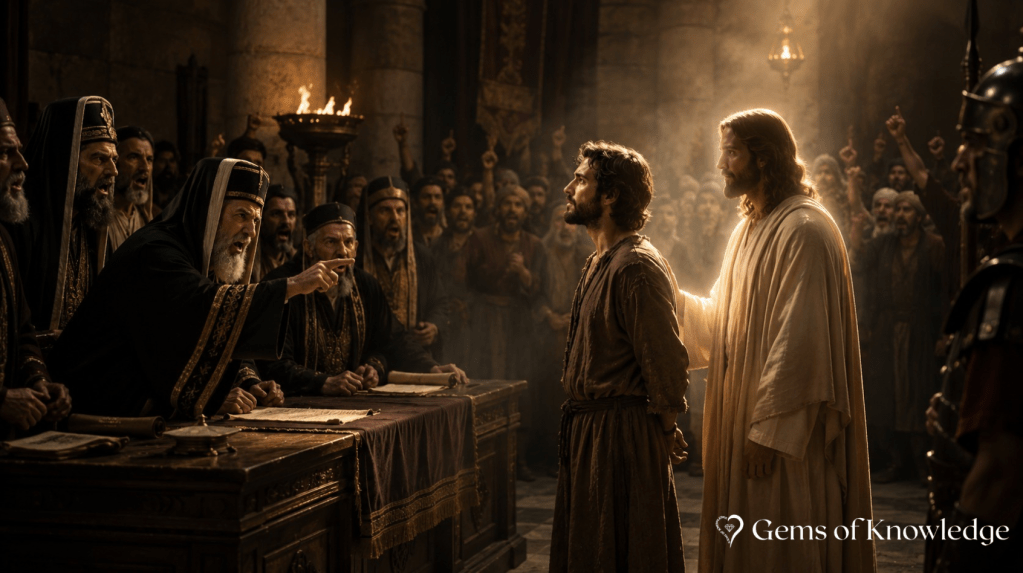
Alt...
A faithful man stands before hostile authorities and an angry crowd while Jesus stands peacefully beside him with a reassuring hand on his shoulder, symbolizing the courage that comes from truly knowing Christ.
Have you ever asked yourself, "How can I better care for others in a Christ-like manner?" What does the Bible say? Click or tap the link to read more.
#afaithfulsower #christianity #Bible #Jesus #dailydevotional
Preparing For What Lies Ahead
The Lord give us sober warning of what will come. But, there is a difference between fear and preparation. Fear causes us to panic over what might happen; preparation draws us closer to the One who already knows what will happen. Like Nehemiah rebuilding Jerusalem's broken walls, perhaps it's time to ask God where our own spiritual walls need strengthening. Whatever lies ahead, our Father is calling us closer so He can prepare us, lead us, and hold us securely in His care. [SENSITIVE CONTENT]
Today’s One Year Bible Verses: Nehemiah 1:1–3:14, 1 Corinthians 7:1–24, Psalm 31:19–24, Proverbs 21:4
Come Into His Safety
Yesterday, the Lord’s message carried a sense of urgency: “Now is the time to seek the Lord. Don’t let it wait any longer.” Today, I feel He is showing us a little more of why that invitation is so urgent.
This morning the Holy Spirit whispered in they gem of Knowledge,
“Destruction is coming and I need My people prepared. Come to Me and allow Me to bring you into My safety and care.”
Those are sobering words. I don’t believe they are meant to make us afraid, but I do believe we should take them seriously.
There is a difference between fear and preparation. Fear causes us to panic over what might happen. Preparation causes us to draw close to the One who already knows what will happen. God isn’t telling us to figure out every detail of the future. He is telling us where to run for protection: to Him.
That is exactly what we see in Nehemiah today. He received devastating news about Jerusalem: “The wall of Jerusalem has been torn down, and the gates have been destroyed by fire” (Nehemiah 1:3, NLT). The city was exposed and its people were vulnerable.
Nehemiah didn’t ignore the danger, but neither did he panic. His first response was to seek God. He mourned, fasted, prayed, confessed sin, and then, when the time came, acted. God gave him favor with the king, and Nehemiah went to Jerusalem to begin rebuilding what had been destroyed.
When he arrived, he didn’t merely warn the people about danger. He began rebuilding the walls. Gaps had to be closed and broken places restored.
Perhaps the Holy Spirit is asking us to examine our own spiritual walls. Have we allowed compromise, distraction, unforgiveness, pride, or the cares of this world to create openings that shouldn’t be there? Preparing for what lies ahead may have less to do with understanding every prophetic timeline and much more to do with making sure our hearts are fully surrendered to Jesus.
Paul reminds the Corinthians of that same spiritual priority. Life circumstances change, and the things of this world are temporary. Our families, work, possessions, plans, and responsibilities matter, but none of them should become more important than belonging completely to Christ.
Then today’s Psalm we see the beautiful results of someone who prepared their hearts with the Lord:
“How great is the goodness you have stored up for those who fear you. You lavish it on those who come to you for protection, blessing them before the watching world” — Psalm 31:19 (NLT)
There it is: “Come to Me.”
In Him, we find goodness, protection, and safety—regardless of what is happening in the world around us.
The same God who warns His children about what is ahead is the God who offers them refuge. His desire isn’t simply that we know destruction is coming. He wants us safely near Him.
That doesn’t mean believers are promised exemption from every hardship. God’s safety is much deeper than a promise that nothing difficult will ever touch us. It is the assurance that when we belong to Christ, nothing can ultimately separate us from Him. He will guide us, strengthen us, give us wisdom, and carry us through whatever lies ahead.
So we don’t need to become obsessed with headlines or consumed with predicting exactly how everything will unfold.
We need to know Jesus. Personally. Intimately. Deeply.
We need to recognize His voice, respond when He speaks, and follow where He leads. If there are broken places in our spiritual walls, now is the time to repair them. If we’ve wandered, now is the time to return.
Yesterday He said, “Seek Me.”
Today He says, “Come to Me.”
Whatever lies ahead, our Father is calling us closer so He can prepare us, lead us, and hold us securely in His care.
Action (5 Minutes with God)
Take time to be with the Lord today, even if its just 5 minutes. Ask Him:
- “Lord, what do You want me to know about this personally?”
- Journal what He gives you through His Holy Spirit.
- Then ask, “What do You want me to do?”
- Journal what He reveals – then do it!
Let today be a day of examination and rebuilding with the Lord.
Prayer
Dear Father, thank You for loving me enough to prepare me for what lies ahead. I don’t want to live in fear or unaware. Draw me closer to You and show me anything in my life that needs to be strengthened. Teach me to recognize Your voice and respond when You speak. Whatever lies ahead, help me remain faithful, courageous, and safely within Your care. In Jesus’ beautiful name I pray, amen.
To read more 5 Minutes with God devotionals click here.
If Gems of Knowledge has blessed your walk with Christ, please subscribe or consider partnering with us today. Your gift helps keep these devotionals free for everyone and carries God’s Word to more hearts. Every seed matters—thank you for sowing into this work! 💛
Test everything by the Word and the Spirit (John 16:13)

Alt...
Jesus and a man rebuild a broken stone wall overlooking Jerusalem as dark storm clouds approach in the distance, symbolizing God's call to prepare spiritually and come into His safety and care.
![[?]](https://files.mastodon.social/accounts/avatars/115/967/890/192/375/774/original/79861f67f1d57c00.png)
@ashwin #Marriage between people should be a more shared and dedicated #love to other people *at the same time*. #Christianity or any #ism in the modern day perhaps finds that hard to do / break though.
A #Society of Love - Doesn't need to be sex mostly or just 'my #family first and last'.
#Marriages that add more #love to society as they go.
#AltText = Hands holding in circle that is half in another circle, to represent an overlapping #cooperative Society of Love / #Help / #etc

Alt...
Hands holding in circle that is half in another circle, to represent a #cooperative Society of Love / #Help / #etc
![[?]](https://fsmandfsmwo.blog/wp-content/uploads/2012/07/cropped-cropped-us-flag-1.jpg)
Sunday Sermon Series “Overwhelmed” 8/09/2026
OOPS, forgot to hit the publish button twice yesterday 🙃

.
“Deliver me out of the mire, and let me not sink.”
COMMENTS
I may be wrong (it happens now and then 😇🤣), but I think Christians are the least likely to admit to being overwhelmed. We have this distorted sense that once saved, everything should be easy and awesome. That is fantasy land, not real-world Christianity. I don’t care how many times you say I am blessed while greeting others or name and claim a smooth life; God is in control, and He is under no obligation to release us from the mire of daily life. We are here for His glory; He is not here for our pleasure.
But is that the way God expects us to live? Are we to trudge along and just put up with it, do nothing? I would argue no. The following quote reminds me that we are not an island in the midst of turmoil:
You can tell the size of your God by looking at the size of your worry list. The longer your list, the smaller your God.
—AnonymousBible Truth Behind the Quote:
“Do not be anxious about anything, but in everything by prayer and supplication with thanksgiving let your requests be made known to God. And the peace of God, which surpasses all understanding, will guard your hearts and your minds in Christ Jesus”
(Philippians 4:6-7).
Ron Rhodes, 1001 Unforgettable Quotes About God, Faith, and the Bible (Eugene, OR: Harvest House Publishers, 2011).
So what do we do about the turmoil in our lives? Just suck it up, and that is it? The apostle Paul, in writing to the church at Thessalonica, exhorts them to pray without ceasing.
Yet how many times do we share our feelings with others in the church or our Pastor? We have enough trouble communicating basic stuff effectively with our spouses and coworkers, let alone sharing our deepest concerns with others. Is it Biblical to share our worries with others? I would assert absolutely. Read Romans 12:15, Galatians 6:2, 1 Thessalonians 5:11, and James 5:1, and see if you do not agree.
In today’s sermon, Spurgeon speaks of a specific kind of mire: persecution. But his points apply to anyone overwhelmed by any of life’s daily grind.
STUDY
ŌVERWHELM´, v. t. To overspread or crush beneath something violent and weighty, that covers or encompasses the whole; as, to overwhelm with waves. 2. To immerse and bear down; in a figurative sense; as, to be overwhelmed with cares, afflictions, or business. To overlook gloomily. Shak. To put over. [Not used.] O´VERWHELM, n. The act of overwhelming. Young. ŌVERWHELM´ING, ppr. Crushing with weight or numbers. ŌVERWHELM´INGLY, adv. In a manner to overwhelm.
Noah Webster, Noah Webster’s First Edition of An American Dictionary of the English Language. (Anaheim, CA: Foundation for American Christian Education, 2006).
The word “overwhelm” encompasses multiple dimensions of impact: it can mean to submerge or bury completely, to flood someone with emotional intensity, or to defeat through superior force.12 Historically, the term described both physical submersion—such as being engulfed by waves—and metaphorical situations where one becomes immersed in abstract burdens like cares or responsibilities.3
Contemporary usage extends beyond these definitions into the psychological and existential realm. Modern life generates overwhelming circumstances that range from professional crises like job loss to personal traumas including grief, health emergencies, and financial strain.4 What distinguishes these experiences is not merely their severity but their capacity to dominate one’s mental and emotional landscape. When circumstances command constant attention, they create a state of being overwhelmed.4
The distinction between being overwhelmed and overcoming it hinges on perspective. The fundamental choice lies between surrendering to overwhelming conditions or actively working to transcend them.4 Shifting focus away from difficult circumstances toward larger purposes—particularly spiritual ones—can catalyze meaningful change in how one experiences adversity.4 This reframing doesn’t deny the reality of hardship; rather, it repositions one’s relationship to difficulty, transforming passive victimization into active agency. The word “overwhelm” thus captures both a condition one can experience and a threshold one can choose to cross.
- 1COLLINS ENGLISH DICTIONARY. [See here.]
- 2Catherine Soanes and Angus Stevenson, eds., in Concise Oxford English Dictionary (Oxford: Oxford University Press, 2004). [See here, here.]
- 3Noah Webster, in Noah Webster’s First Edition of An American Dictionary of the English Language. (Anaheim, CA: Foundation for American Christian Education, 2006). [See here, here.]
- 4Perry Noble, The Perry Noble Collection: Unleash! / Overwhelmed (Carol Stream, IL: Tyndale Momentum, 2016). [See here, here, here, here.]
LOGOS AI SUMMARY
Ver. 14. Deliver me out of the mire, and let me not sink, &c.] In which he was sinking, ver. 2 and accordingly he was delivered out of it, Psal. 40:2. even out of all the mire of sin, the sins of his people that were upon him, from which he was justified when raised from the dead; and so will appear without sin, when he comes a second time: let me be delivered from them that hate me, and out of the deep waters; these phrases design the same, even the enemies of Christ; such that hated him, compared to deep waters: these are the floods of the ungodly, and the many waters out of which he was drawn and delivered, Psal. 18:4, 16, 17.
John Gill, An Exposition of the Old Testament, vol. 3, The Baptist Commentary Series (London: Mathews and Leigh, 1810), 811.
Ver. 14. Deliver me from the mire, that I may not sink. The Psalmist repeats the same similitude which he had used before, but in a different manner. He had previously said that he was sunk in the mire, and now he prays that he may not sink in it. In short, he now prays that those things may not now befall him which he had formerly complained of as having befallen him. But it is very easy to reconcile this diversity of statement; for in the opening of the psalm he spake according to his actual feeling and experience; but now, looking to the issue, although living in the midst of death, he cherishes the hope of deliverance. This is expressed still more clearly in the last clause of the 15th verse, where he prays, Let not the pit close its mouth upon me; which is as if he had said, Let not the great multitude and weight of my afflictions overwhelm me, and let not sorrow swallow me up.
John Calvin and James Anderson, Commentary on the Book of Psalms, vol. 3 (Bellingham, WA: Logos Bible Software, 2010), 61–62.
What history shaped Psalm 69:14?
Psalm 69 – The King’s Sufferings and Joy
This is one of the three most frequently quoted psalms in the New Testament, the others being Psalms 22 and 110. Besides the direct quotations (see John 2:17; 15:25; Acts 1:16, 20; Romans 11:9–10; 15:3) there are striking parallels between David’s situation and that experienced by our Lord (compare Psalm 69:12, 21 with Matthew 27:29, 34, 48; John 19:28–29). In addition, echoes from the psalm of God’s wrath being poured out (verse 24) and of names being blotted out of the book of life (verse 28) are found in Revelation 16:1 and 21:27.
As the Second Book draws to a close we may wonder why the three following psalms (Psalms 69–71) return to the theme of suffering that characterised earlier psalms in the collection. There has been a rising crescendo of universal praise to the God of Israel in the immediately preceding psalms (Psalms 65–68) and Psalm 72 will bring the collection to a close with all nations acknowledging the king of David’s line. Why spoil this thread by introducing once more pleas for deliverance from the enemy’s cruel threats? It is a reminder to us that the end is not yet (Mark. 13:7–13). The Messiah suffers for his people (1 Corinthians 15:3) and with his people (Acts 9:5). Like the pain a woman in labour suffers while giving birth, so the glory of Messiah’s kingdom comes through trials and tribulation.
Besides the familiar heading ‘To the Chief Musician’ this psalm ‘of David’ (see Acts 1:16, 20; Romans 11:9), like Psalm 45, was ‘Set to “The Lilies” ’. As Calvin observed there are close resemblances between this psalm and Psalm 22. It also bears a number of resemblances to Psalm 40 which is interesting in view of the fact that the following psalm (Psalm 70) is almost identical with Psalm 40:13–17. David is a type of Christ but he also speaks for all God’s people in their sufferings.
As in Psalm 22 the psalm divides into two uneven sections, with the longer section (verses 1–29) alternating between prayer and lament and the shorter one (verses 30–35) given over to praise and trust. There is a striking correspondence within the first section between verses 1–12 and 13–29 (similar to what we find in Psalm 22:1–11 and 12–21) reinforcing the intensity of the distress and cries for help. Interestingly, it is the call for divine vengeance in verses 22–28 that finds no parallel in the initial twelve verses.
Philip Eveson, The Book of Psalms: From Suffering to Glory, vol. 1, Welwyn Commentary Series (Welwyn Garden City, UK: EP, 2014–2015), 419–420.
SERMON
The Believer Sinking in the Mire
Metropolitan Tabernacle, Newington
#TheBelieverSinkingInTheMire #Bible #Biblical #Burdens #CHSpurgeon #Christ #ChristianLiving #ChristianWorldview #Christianity #CultureSociety #DailyGrind #Faith #God #Grace #knowledge #LikeMinded #LOGOSAI #Mire #Overwhelmed #Prayer #Psalm69 #Psalm6914 #Sharing #SundaySermonSeries #SundaySermonSeriesOverwhelmed06202026 #Theology #Turmoil #WisdomNow Is the Time
Some things can wait until tomorrow. Seeking God isn't one of them. We don't know how much time we have, and Jesus never told us to fear His return—He told us to be ready. If you've drifted, come back. If God has been calling you deeper, answer Him. If you've never surrendered your life to Jesus, don't keep waiting for a "better" time. "Now is the time to seek the Lord. Don't let it wait any longer." The proper response to the return of Jesus isn't panic. It's drawing closer to Him. 💎 [SENSITIVE CONTENT]
Today’s One Year Bible Verses: Ezra 10:1–44, 1 Corinthians 6:1–20, Psalm 31:9–18, Proverbs 21:3
Are You Ready For Jesus?
There are some things in life we can put off until tomorrow. The laundry will probably still be there. The closet can wait another day. Even some of the things that feel urgent right now aren’t nearly as important as we make them out to be.
But there is one thing we should never keep putting off: seeking God.
This morning the Lord spoke a simple but urgent Gem to me:
“Now is the time to seek the Lord. Don’t let it wait any longer.”
There is something about those words that feels different to me. They aren’t frightening, but they are serious. There is an urgency in them that says this isn’t something to keep pushing to the bottom of our list while we assume we’ll have plenty of time later.
We often think of seeking God as something people need to do before they’re saved, but I don’t believe this message is only for those who don’t know Him. It’s for His people too. We can belong to Jesus and still become distracted. We can read our Bibles, go to church, pray over meals, and slowly allow the cares and comforts of this world to take up more of our attention than He does.
That’s why today’s reading in Ezra is so striking. When Ezra confronted the people with how far they had strayed from God’s commands, they didn’t simply acknowledge it and continue living the same way. There was grief, confession, and then action. Ezra told them, “Confess your sin to the LORD, the God of your ancestors, and do what he demands” (Ezra 10:11, NLT).
They couldn’t change yesterday, but they could respond to God today.
Paul gives the Corinthians a similarly direct message. Their culture was filled with sexual immorality and practices contrary to God’s ways, and some of those influences had entered the church. Paul didn’t tell them that belonging to Christ meant it no longer mattered how they lived. He reminded them of something incredibly important: they belonged to God.
“You do not belong to yourself, for God bought you with a high price. So you must honor God with your body.” (1 Corinthians 6:19–20, NLT)
Jesus paid too great a price for us to treat our relationship with Him casually.
Maybe that’s part of what the Lord is reminding us of today. Seeking Him isn’t simply believing He exists or calling on Him when life falls apart. It is continually turning our hearts toward Him, allowing the Holy Spirit to reveal what doesn’t belong, and being willing to change when He does.
And perhaps there is an even greater urgency to that invitation right now.
Jesus repeatedly told His followers to be watchful and ready for His return. We don’t know when that day will come, and Scripture doesn’t give us permission to set dates or live in fear. But it does give us every reason to live ready. The proper response to the reality of Christ’s return isn’t panic or obsession with predicting when—it is drawing closer to Him.
What He wants is relationship.
Psalm 31 gives us such a beautiful picture of where our hearts can rest as we do:
“I am trusting you, O LORD, saying, ‘You are my God!’ My future is in your hands.” (Psalm 31:14–15, NLT)
That’s the posture I want.
Not afraid.
Not distracted.
Not assuming there will always be another tomorrow to get serious about God.
Just close to Jesus, trusting Him with my future and faithfully doing what He’s asking me to do today.
If there is something between you and the Lord, don’t wait to deal with it. If you’ve drifted, come back. If you’ve been meaning to spend more time with Him, begin today. And if you’ve never truly surrendered your life to Jesus, there is no reason to keep postponing the most important decision you’ll ever make.
Now is the time to seek the Lord.
He is worth it. 💎
Action (5 Minutes with God)
Take time to be with the Lord today, even if its just 5 minutes. Ask Him:
- “Lord, what do You want me to know about this personally?”
- Journal what He gives you through His Holy Spirit.
- Then ask, “What do You want me to do?”
- Journal what He reveals – then do it!
Don’t put it off. Seek and Respond to Him today.
Prayer
Dear Lord, I don’t want to take my relationship with You for granted or assume there will always be another day to seek You more deeply. Search my heart and show me anything that has distracted me, pulled me away, or taken a place that belongs to You. Help me respond quickly when You speak and live with my heart turned toward You. I don’t want fear about the future; I want confidence that comes from knowing I am walking closely with You. My future is in Your hands. Teach me to seek You today and every day until I see You face to face. In Jesus’ mighty name I pray, amen.
To read more 5 Minutes with God devotionals click here.
If Gems of Knowledge has blessed your walk with Christ, please subscribe or consider partnering with us today. Your gift helps keep these devotionals free for everyone and carries God’s Word to more hearts. Every seed matters—thank you for sowing into this work! 💛
Test everything by the Word and the Spirit (John 16:13)
Alt...
A man runs toward a waiting steam train as Jesus stands in the open doorway reaching out His hand. A large station clock and glowing evening light symbolize the urgency of seeking the Lord while there is still time.
When people surround themselves with others who lack integrity, it can negatively influence their own integrity. What does the Bible teach in this case? Click or tap the link to read more.
#afaithfulsower #christianity #Bible #Jesus #dailydevotional
Being a ‘Crunchy’ Christian and avoiding New Age Influences
By Elizabeth Prata

Doreen “Dee” Virtue is a former New Age adherent who used to write books about angel spirituality. She converted to Christianity 9 years ago and with the scales having fallen from her eyes, now is a Christian. Virtue has renounced all her New Age beliefs, books, and practices, and is happily and unashamedly a Christian. She has a Youtube channel, here.
Ashley Sheatz, wife to Trevor and his ministry On the Mount, mom to 3, has several social media accounts. Facebook, Instagram, On the Mount ‘s Youtube.
Angela Mitchell’s ministry is called Raising Apologists. She is a married stay-at-home-mom, who writes on Instagram, Facebook, and her blog called Raising Apologists, on the topics of discernment, homeschooling, and encouraging mothers and women.
These three ladies, well versed in a biblical worldview and walking uprightly in Jesus, discussed “Crunchy Christians Avoiding New Age Deception“. They talked about what is crunchy Christianity, discerning good wellness advice vs. unhealthy advice, and how New Age ideas can seep into even the most well-meaning mother’s worldview, corrupting it with syncretism.

Doreen Virtue has a knack for asking insightful questions, illustrating her skill to deeply listen then follow up with a question that elicits even more information. Her choice of guests is also wise. The two ladies here explain themselves so well I decided to transcribe portions of the discussion that impacted me, and interspersed with my own thoughts. I urge you to listen to the entire conversation. It will be even more impactful when you hear it in context.
In this first quote, I loved what was being said. Social media has risen to levels that greatly affect us. People with large followings are even called “influencers”. The influence is to entice listeners to buy their product, read their book, heed their advice. Many times their books or advice is good. But sometimes the advice is unfounded, unscientific, or unChristian. We must learn to research widely, and confirm what we hear or see from social media from credible sources.
For example, many people know of Dr. Josh Axe. He usually places the honorific in front of his name. People use the honorific when speaking of him. But he is not a Doctor of Medicine. He cannot diagnose or treat medical conditions or prescribe pharmaceutical drugs. He holds a Dr. of Chiropractic degree, a Dr. of Natural medicine and is a certified nutritionist. But not a medical doctor. Some people don’t research, see the ‘Dr.’ and believe all his advice is trustworthy. It isn’t.
Many social media accounts either purposely or unintentionally add other spiritualities into their advice. Even practicing Christians do this.
2020 was hard on us all, and we lost our trust in the medical profession. Ashley and Angela both speak to this. Nature abhors a vacuum, so the hole has to be filled with something else. Hence, the rise of social media medical advice from people who may or may not be credentialed professionals, or even credible.

ASHLEY SHEATZ:
My warning is don’t get all of your health advice from Instagram because you’re probably going to be led astray. You need to back it up with also your own research and googling stuff and verifying it. There’s a lot of false information on Instagram. But I think one of the key takeaways if you are on Instagram and you are getting a lot of good health knowledge- because there is a lot of it out there- is sticking to accounts that are focusing on just whole foods or more ingredient focused rather than bringing their spirituality into it. So I think that’s a good way to guard your mind is to not even as a Christian to not even follow accounts that are talking about a false spirituality or are saying things that contradict the Bible.
There are so many great Instagram accounts that are just very health food focused. And if you are a Christian, there are also great biblical Christians who are in the health world and who do bring their faith in to the word of God. We just have to be really cautious with following people who are saying they’re spiritual, right?
If you’re married, talk to your husband with what you’re reading about and what you’re ingesting because God has placed your husband as your spiritual head to protect you. And if you’re just on your phone and you’re researching all these things and you don’t ever talk to him about it, I feel like there’s already like an open door for the devil and demons, honestly, to attack you there if you’re not open with your husband.
It’s hard for some people to let go of the teacher/advice/books etc from a favored teacher or influencer if told they aren’t the healthiest for your soul. They have invested and do not want to let go. They invest time, money, or reputation in this teacher or influencer and they don’t want to hear they have been deceived. Deception by investment has a powerful pull.
Often I’ll hear back that “But this teacher is good because his method worked… But my prayer came true… But my thing resolved…”

ANGELA MITCHELL
They’ve really put some trust in this method and they’ll say, “But it works.” And my push back to that is always we’re not pragmatists, which means we don’t just do something because it works. We’re Christians. We have to ask why. We have to ask, ‘Is this ‘glorifying the Lord?’ ‘Is this changing my worldview?’ And so, a lot of the times what I’m seeing is women is, their worldviews are changing.
There’s syncretism. Now syncretism is when you take parts of one religion and you’re mixing it with Christianity. But we know in Deuteronomy and Exodus that the Lord specifically warns against syncretism. I mean we see in Exodus where Aaron creates a golden calf and says, “We’re going to use this to worship God.” And God says absolutely not. This is disobedience. It’s the same thing when we go to something for help that isn’t of God. It’s idolatry.
I see some rigid perfectionism in this crunchy movement. Women become involved with it, then absorbed in it, then myopic about it, having tunnel vision. That’s ground ripe for Legalism. A rigid adherence to a protocol, tradition, or method that the person thinks will save them, or gain ‘points’ with Jesus (or her church).
I understand the ‘crunchy’ movement is wide, with varying levels of commitment or a variety of applications. But sometimes I hear women adhering to a rigid method and thinking that if they achieve it 100% this will somehow put them in better standing with Jesus.

DOREEN VIRTUE:
How do we guard against taking our eyes off the cross and instead thinking that if we just make everything in our house and our diet 100% perfect that that will somehow save us.
ASHLEY SHEATZ:
So as the unbeliever, they are searching and seeking to control all aspects of their life. This is the only life to them and they want to make it long and healthy. But I mean even if you are doing all the right things, some of the most healthy people in the world still get cancer. I mean even you could do all the healthy things in the world and still die in a car crash tomorrow. So there’s certain things that are just completely out of our control. And God has also given us blessings to enjoy in this life. Like if you enjoy going to Chipotle. I use Chipotle because I love Chipotle.
If you enjoy those things and you can sit down and enjoy that meal with joy…how we guard against perfectionism is realizing we’ll literally never be perfect in this life and the reason why you want to have good health and pursue good and healthy foods is to feel good today so you can serve the Lord later. It’s not about preserving your life. Our days are already numbered.
That rigidness rears its head. I’ve heard of women who won’t attend a dinner at someone’s house because their food is served from plastic containers, or their eggs are from a store. That’s perfectionism again, where your preference for something interferes with your ‘one another’.
ANGELA MITCHELL:
I think keeping in mind what stewardship looks like per family is going to be different. And now I’ve had people say that it’s more biblical to raise your own meat, to live on a farm. Kind of like a tradlife culture. Like, ‘you need to not buy eggs from the store’. I can’t do that. I live with an HOA. They won’t allow chickens. So we have to be really careful what we say is biblical and what we say is God-glorifying because we all have different circumstances.
The key word here is “preference”. Desiring to eat or feed your family farm fresh eggs, for example, or locally butchered meat, is a preference. Nothing in the New Testament commands you one way or another on that level of specificity of food or lifestyle.
ANGELA MITCHELL:
There there’s things with hospitality that we have to think- are my preferences ruling out love? I’m seeing a rise in eating disorders because of crunchy culture because it can just take over your mind. Everything becomes about what you’re putting in your body, and that can lead to idolatry. And anytime we create a disordered thinking where we’re thinking about all the time. It’s controlling our thoughts. It’s controlling our behaviors. It’s controlling our speech. We’ve created a functional God. And I would really caution women in crunchy culture to not do that to each other and to not do that to themselves.
Doreen asked about women who may be listening or watching to the video who are going through a health challenge and is becoming desperate. Many times when we go through an unexpected illness or health issue and prayer, patience, and standard medicine is not working, we become desperate. That is a risky time, because our decision making is clouded.
ANGELA MITCHELL:
I would also encourage women, if you have a woman in your life that’s suffering, she needs your prayers. She needs your friendship. She needs you to point her to God’s word before giving her crunchy advice.
I would say what do we believe about God? Do we believe that he actually means to do us good and not harm? Do we believe he’s in control? Do we believe we can trust him? Is he a good God?
I do like to ask questions. What is your desire for being crunchy? Is it a fear of death? Are do you think that you control can control getting cancer? Do you think you can control not getting disease? Do you think your good choices is going to somehow sway the hand of God even though he says you can’t add one hour to your life? I think sometimes we can have a real fear of death and crunchy culture kind of pacifies us with that. But as believers, we know where we’re going. We’re going to be with our God. To be absent from the body is to be present with the Lord. And to live is gain and to die is gain. And I just want my sisters in Christ to remember that that God loves you and he cares for you and he cares for your health.
It was a great conversation. I encourage you all to take a listen here Crunchy Christians Avoiding New Age Deception“. All three women are a good follow. They are consistent with encouragement and advice from a biblical worldview.
#christianity #crunchy #faith #newAge #syncretismMissing The Mark
We all miss the mark sometimes. The enemy wants us to believe that means we've failed. Jesus reminds us that it means we're still learning. His goal isn't perfection overnight—it's transformation over time. Don't quit because you missed yesterday. Let the Master Archer help you aim again today.💎 [SENSITIVE CONTENT]
Today’s One Year Bible Verses: Ezra 4:24–6:22, 1 Corinthians 3:5–23, Psalm 29:1–11, Proverbs 20:26–27
Aim For His Glory
They say the word sin literally means “to miss the mark.”
I think every one of us knows exactly what that feels like. But what is the “mark” are we shooting for anyway?Well, Paul writes in Romans 3:23,
“For everyone has sinned; we all fall short of God’s glorious standard.” (NLT)
So I would have to say the “mark” is the glory of God!
Notice he didn’t say some people…He said everyone. That means every one of us has moments when we miss the mark.
And sometimes I get discouraged when I realize I have fallen behind or messed up again. But that is the glory of what the holy spirit whispered to me today in the Gem:
“It’s okay. No one is perfect. Just keep trying. It’s a process of learning and growing.”
Wow! What an awesome God.
He isn’t hovering over us just waiting to point out all our mistakes, He is cheering for us to keep going.
That doesn’t mean He excuses sin or wants us to stay where we are. Quite the opposite. He loves us too much to leave us unchanged. But He also knows that becoming more like Christ isn’t accomplished in a single day. It’s the work of a lifetime.
Paul reminds us of this in today’s reading:
“I planted the seed in your hearts, and Apollos watered it, but it was God who made it grow.” (1 Corinthians 3:6, NLT)
Think about that for a moment.
Growth is a process.
Seeds don’t become mighty oak trees overnight. They grow little by little, often in ways we can’t even see. The same is true in our spiritual lives. Every act of obedience, every time we choose forgiveness over bitterness, every moment we surrender instead of insisting on our own way, God is growing something within us.
We see this in Ezra as well. The rebuilding of the Temple faced delays, opposition, and discouragement. Yet God’s work wasn’t abandoned. What had been interrupted eventually continued until the Temple was complete. God’s purposes weren’t canceled because progress was slower than expected.
Maybe you’ve been discouraged because you know you missed the mark. Friend, don’t mistake being in process for being a failure. If your heart is still seeking Jesus, He’s still shaping you.
Every day you choose Him, you’re becoming a little more like Him. So don’t quit because you missed the mark yesterday.
Aim again today.
The Master Teacher is patient, and He’s committed to finishing the work He began in you. 💎
Action (5 Minutes with God)
Take time to be with the Lord today, even if its just 5 minutes. Ask Him:
- “Lord, what do You want me to know about this personally?”
- Journal what He gives you through His Holy Spirit.
- Then ask, “What do You want me to do?”
- Journal what He reveals – then do it!
Instead of dwelling on an area where you feel you’ve fallen short, thank God for one way He has already changed your heart. Then ask Him to continue growing you, trusting that each step of obedience is part of the process.
Prayer
Father, thank You for Your incredible patience with me. Thank You that when I miss the mark, You don’t give up on me. Help me not to become discouraged by my imperfections, but to keep my eyes fixed on Jesus as You continue shaping me into His likeness. Thank You that growth is Your work, and that You faithfully complete what You begin. Teach me to keep trying, keep trusting, and keep growing every day. In Jesus’ name I pray, amen.
To read more 5 Minutes with God devotionals click here.
If Gems of Knowledge has blessed your walk with Christ, please subscribe or consider partnering with us today. Your gift helps keep these devotionals free for everyone and carries God’s Word to more hearts. Every seed matters—thank you for sowing into this work! 💛
Test everything by the Word and the Spirit (John 16:13)

Alt...
Jesus lovingly teaches a young archer how to aim a bow toward a glowing target in the distance. With a gentle smile, He guides her hands, symbolizing God's patient instruction and the lifelong process of spiritual growth.
More Than Meets the Eye
Sometimes we're so focused on what we can see that we forget there's an unseen Kingdom at work all around us. God is always moving—opening doors, softening hearts, arranging divine appointments, and accomplishing His purposes in ways we can't yet perceive. Don't let what you can see become the limit of your faith. "Faith shows the reality of what we hope for; it is the evidence of things we cannot see." — Hebrews 11:1 (NLT) Ask God today to open the eyes of your heart and help you see life from His perspective. 💎 [SENSITIVE CONTENT]
Today’s One Year Bible Verses: Ezra 3:1–4:23, 1 Corinthians 2:6–3:4, Psalm 28:1–9, Proverbs 20:24–25
Seeing The Unseen
Have you ever wished you could see life from God’s perspective?
Sometimes I think we become so consumed by what is happening right in front of us that we forget there is an unseen Kingdom at work all around us. We focus on the bills that need to be paid, the doctor’s report, the difficult relationship, or the unanswered prayer. Before long, what we can see begins to shape what we believe, and our circumstances become louder than God’s promises.
Recently, the Lord spoke something to my heart that completely changed the way I looked at this. He said,
“There is so much more to this life than what you see. If you will seek Me and My Kingdom, I will show you so much more than you could imagine.”
What a beautiful invitation.
God isn’t asking us to ignore reality or pretend our struggles don’t exist. Instead, He’s inviting us to lift our eyes beyond them. There is an eternal story unfolding behind every circumstance, and while we often only see a single page, God already sees the entire book.
Paul explains this beautifully in today’s reading. He writes, “No eye has seen, no ear has heard, and no mind has imagined what God has prepared for those who love Him” (1 Corinthians 2:9, NLT). At first glance, it almost sounds as though God’s plans are forever beyond our reach. But Paul immediately adds that God has revealed these things to us by His Spirit (1 Corinthians 2:10, NLT). In other words, God delights in opening our eyes as we grow closer to Him. He doesn’t want us to live only by what our physical eyes can see. He wants us to learn to recognize His hand, His wisdom, and His purposes in the middle of everyday life.
We see that very thing happening in Ezra. The Israelites thought they were rebuilding a temple after years of exile. Their enemies saw construction and did everything they could to stop the work. But God saw something much greater. He was restoring His people, fulfilling promises He had made generations before, and preparing the way for His glory to dwell among them once again. The people could only see the stones they were laying one by one. God saw the finished work before the first stone was ever placed.
How often is that true in our own lives?
We see a delay, but God sees preparation.
We see an interruption, but God sees protection.
We see a closed door, while God is opening another we haven’t even discovered yet.
When we begin seeking His Kingdom first, our perspective changes. Instead of asking, “Why is this happening to me?”we begin asking, “Lord, what are You doing that I haven’t seen yet?” That one question opens our hearts to the possibility that God has been working all along in ways we never imagined.
There truly is more to this life than what we can see.
The Holy Spirit is constantly at work. Hearts are being softened. Doors are being opened and closed. Divine appointments are being arranged. Answers to prayers are already in motion long before we recognize them.
Friend, don’t allow the visible world to become the limit of your faith. Ask the Lord to help you see through His eyes. As you seek Him and His Kingdom above all else, you’ll begin to discover that His plans are always bigger, wiser, and more beautiful than anything you could have imagined.
Action
Think of one situation that has been weighing heavily on your heart. Instead of asking God to simply change it, ask Him to show you what He is accomplishing through it. Spend a few quiet moments listening and invite the Holy Spirit to give you His perspective.
Prayer
Heavenly Father, thank You that Your plans are so much greater than what I can see with my natural eyes. Forgive me for becoming so focused on my circumstances that I lose sight of Your Kingdom and Your purposes. Open the eyes of my heart and teach me to recognize Your hand at work, even when I don’t understand what You’re doing. Help me trust that You are always fulfilling Your perfect plan and drawing me closer to You. Give me faith to walk by what You have promised rather than by what I can see. In Jesus’ name, amen.

Alt...
A young woman gazes upward as Jesus stands beside her with His hand on her shoulder. Her eyes reflect heaven, Scripture, creation, galaxies, and God's unseen Kingdom, symbolizing spiritual understanding revealed by the Holy Spirit.
Trust is the Hard Part
Well, I did it again. I got carried away worrying about things I have absolutely no control over! I guess it's pretty easy to do—especially when something immediately triggers an emotional response, sending us into a tailspin that wasn't meant for us. But as I write this, I remember that things aren't always as they seem. As I lay awake early this morning because I was worrying, the Holy Spirit whispered this to me: "Stop worrying about things you can't control. Trust Me to take care of it. I'm working all around you, and I'm working for your good. Amen." God will not abandoned you. He is working all around you, often in ways you cannot see. His plans are greater than your understanding, and His heart toward you is good. You can rest. He's already at work.💎 [SENSITIVE CONTENT]
Today’s One Year Bible Verses: Ezra 7:1–8:20, 1 Corinthians 4:1–21, Psalm 30:1–12, Proverbs 20:28–30
We Must Believe Him
Well, I did it again.
I got carried away worrying about things I have absolutely no control over! I guess it’s pretty easy to do—especially when something immediately triggers an emotional response, sending us into a tailspin that wasn’t meant for us.
But as I write this, I remember that things aren’t always as they seem.
As I lay awake early this morning because I was worrying, the Holy Spirit whispered this to me:
“Stop worrying about things you can’t control. Trust Me to take care of it. I’m working all around you, and I’m working for your good. Amen.”
That simple reminder immediately brought me peace, and I realized how silly I was being…again.
I actually laughed a little and thought, “Here I go again.”
How quickly I had forgotten how much God loves me and will take care of it for my sake. I truly believe this because I believe Him and His promises.
How much time do we spend carrying burdens that were never ours to carry?
In today’s reading, Ezra prepared for a dangerous journey back to Jerusalem. He was transporting silver, gold, and valuable temple treasures across hundreds of miles of wilderness where thieves and enemies were a very real threat. Yet instead of requesting an armed escort from the king, Ezra humbled himself before God and proclaimed a fast, trusting the Lord to protect them because he had already testified that “the gracious hand of our God is on all who seek Him” (Ezra 8:22-23, NLT).
Ezra wasn’t pretending there was no danger.
He simply believed God and His promises. he knew God was greater then any threat or obstacle he would face along the way.
Paul echoes that same confidence in 1 Corinthians. He reminds us that our ultimate accountability is to God, not to the opinions of other people. How freeing it is to realize that we don’t have to control what everyone thinks about us or spend our lives chasing approval. Our responsibility is simply to remain faithful with what God has entrusted to us…and He will take care of the rest.
Then David declares in today’s Psalm,
“You have turned my mourning into joyful dancing. You have taken away my clothes of mourning and clothed me with joy.” (Psalm 30:11, NLT)
Only God can do that.
Only God can take circumstances we never would have chosen and use them for our good and His glory.
So why do we spend so much time and energy worrying about things we can’t control?
Worry doesn’t make God work harder.
It only robs us of the peace He offers.
That doesn’t mean we ignore problems or neglect our responsibilities. Ezra still prepared for the journey. Paul still faithfully served. David still cried out to the Lord. Trust isn’t passive—it simply recognizes where our responsibility ends and God’s begins.
Friend, if something is keeping you awake at night, ask yourself this question:
Do I trust God?
If the answer is no, then perhaps it’s time to know Him better so He can prove His faithfulness and unfailing love to you.
God will not abandoned you. He is working all around you, often in ways you cannot see. His plans are greater than your understanding, and His heart toward you is good.
You can rest.
He’s already at work.💎
Action (5 Minutes with God)
Take time to be with the Lord today, even if its just 5 minutes. Ask Him:
- “Lord, what do You want me to know about this personally?”
- Journal what He gives you through His Holy Spirit.
- Then ask, “What do You want me to do?”
- Journal what He reveals – then do it!
Let today be a day of peace and rest as you learn to trust Him deeper. Abide in His love.
Prayer
Dear Lord, forgive me for slipping into worry again instead of trusting You with it all. Thank You that You are working all around me, even when I cannot see it. Help me trust You with the things I cannot control, give me wisdom to faithfully do the things You have placed in my hands, and help me to know the difference. Fill my heart with Your peace, knowing that You are always working for my good and for Your glory. I choose today to rest in Your faithfulness and unfailing love. In Jesus mighty name I pray, amen.
To read more 5 Minutes with God devotionals click here.
If Gems of Knowledge has blessed your walk with Christ, please subscribe or consider partnering with us today. Your gift helps keep these devotionals free for everyone and carries God’s Word to more hearts. Every seed matters—thank you for sowing into this work! 💛
Test everything by the Word and the Spirit (John 16:13)
Alt...
A breathtaking scene of Jesus towering above a vast chessboard where people stand in place of chess pieces. His hand hovers over the board as He carefully directs events, symbolizing God's sovereign guidance and His ability to see every move long before we do.
![[?]](https://social.woefdram.nl/photo/profile/l/3?rev=1758525903)
Dogmas are always problematic for me, and I tend to see religion as mostly a set of dogmas.
I've always seen faith and religion as two separate things. Faith is personal ...
WARNING: this reply to https://mastodon.nl/@voorstad/117055607776743115 grew unexpectedly long while writing 😄
I'm posting it here so that it also reaches non-ActivityPub platforms.
View article
View summary
@Eelco Mulder :mastodon: 🇪🇺 Dogmas are always problematic for me, and I tend to see religion as mostly a set of dogmas.
Faith and religion
I've always seen faith and religion as two separate things. Faith is personal conviction, religion is someone else's convictions that are forced upon you.
If you haven't seen the (Dutch) film Simon, you should. Other than being a really, really good film, it also has the main character give us this wisdom:
Every form of organized religion is wrong.
I agree. Faith is fine, religion is (mostly) not. Let everybody think for themselves: a "moral compass" should be in your head, not in random ancient texts.
But if the gist of your holy scripture is to be nice to each other, to help those in need and to see all human beings as equal, several serious questions and doubts should pop up in your mind if an openly racist misogynist with a long list of convictions for crimes that also go against the Ten Commandments, says he is a true christian. Is he? And if so, are you?
What would Jesus do?
Again, I'm an atheist, but I have absolutely no problem with telling people that face a moral question, to ask themselves "what would Jesus do?"
For me, Jesus wasn't an immortal deity who could walk on water, but simply someone who pointed out the same societal problems we see today: inequality, poverty, greed, abuse of power, hypocrisy... He wasn't the first or the last to do that either.
Creeds on greed
Jesus was crystal clear about greed; this article, "What did Jesus say about greed?", explains it exactly like I see it.
That's pretty much the same as what Buddha teaches us, only the goal to reach is not a god or heaven, but enlightenment.
I like to see myself as a socialist, a concept that is based on the same ideas as those preached by Jesus and Buddha: help each other, and share. Capitalism is the opposite of that: grab what you can.
A true Christian can never also be a capitalist, at least not without an unhealthy dose of hypocrisy.
#USpol #MAGA #christianity #Bible #dogma #christofascism #atheism #buddhism #socialism #hypocrisy #NSGOP #greed #capitalism #AgentOrange #OrangeDefiler #RichFool #GoodSamaritan
A quotation from Robert Ingersoll
Infinite punishment is infinite cruelty, endless injustice, immortal meanness. To worship an eternal gaoler hardens, debases, and pollutes even the vilest soul. While there is one sad and breaking heart in the universe, no good being can be perfectly happy.
Robert Green Ingersoll (1833-1899) American lawyer, freethinker, orator
Lecture (1881-05-01) “The Great Infidels,” Booth’s Theater, New York
More about this quote: wist.info/ingersoll-robert-gre…
#quote #quotes #quotation #qotd #robertingersoll #robertgreeningersoll #afterlife #Christianity #cruelty #divinejudgment #divinejustice #divinepunishment #eternalpunishment #eternity #heaven #hell #injustice #punishment
It is a commonplace that the Christian Heaven, as usually portrayed, would attract nobody. Almost all Christian writers dealing with Heaven either say frankly that it is indescribable or conjure up a vague picture of gold, precious stones, and the endless singing of hymns. This has, it is true, inspired some of the best poems in the world […] but what it could not do was to describe a condition in which the ordinary human being actively wanted to be.
George Orwell (1903-1950) English journalist, essayist, writer [pseud. of Eric Arthur Blair]
Essay (1943-12-20), “Can Socialists Be Happy?” Tribune Newspaper [as John Freeman]
More about this quote: wist.info/orwell-george/85331/
#quote #quotes #quotation #qotd #orwell #georgeorwell #afterlife #Christianity #heaven #paradise