Search results for tag #nature
![[?]](https://files.defcon.social/dcsocial-s3/accounts/avatars/113/208/344/507/078/943/original/014820ad22daee1c.jpg)
2025 October 24
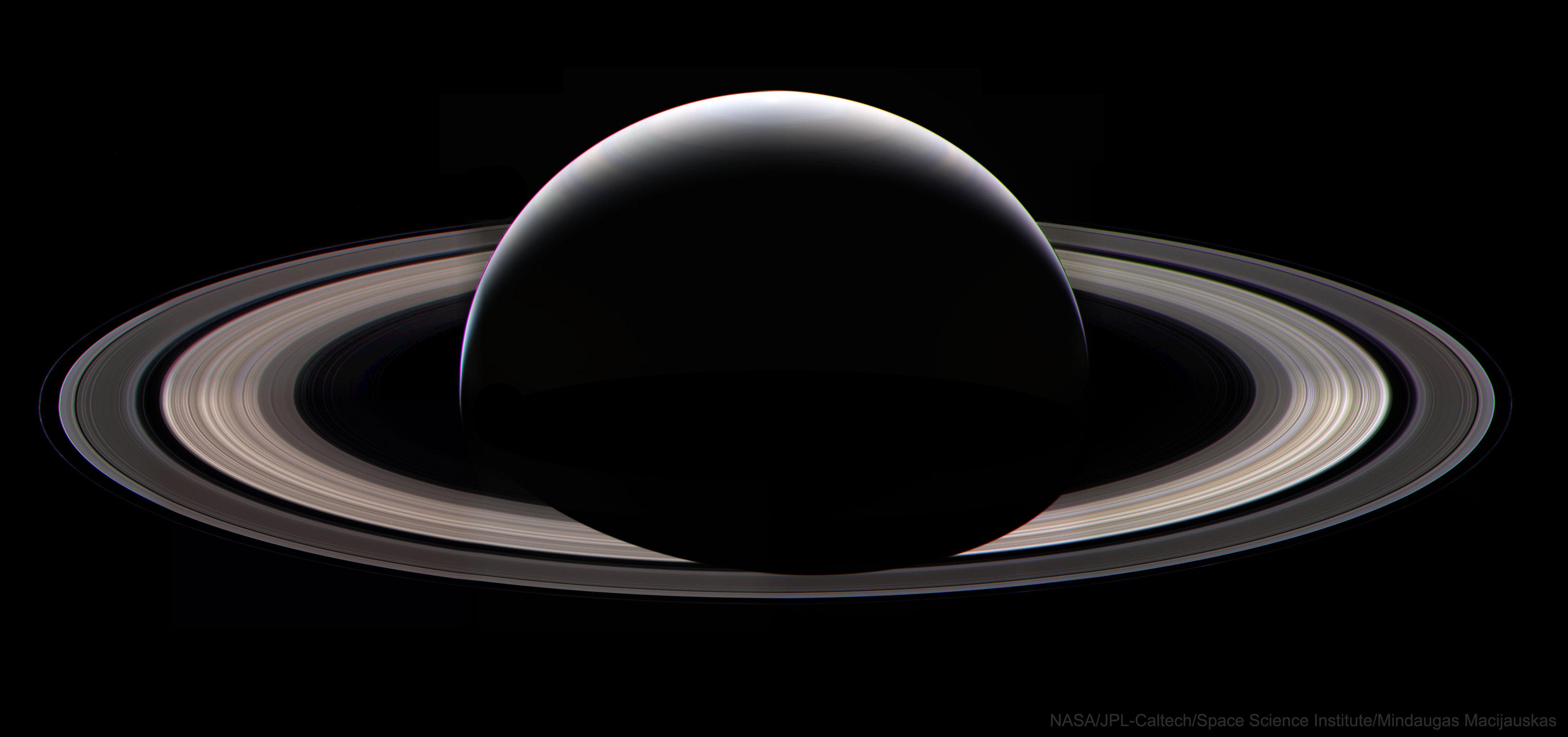
Saturn at Night
* Image Credit: NASA, JPL-Caltech, Space Science Institute, Mindaugas Macijauskas
https://www.nasa.gov/
https://www.jpl.nasa.gov/
https://www.spacescience.org/index.php
https://www.flickr.com/photos/m_macijauskas/
Explanation:
Saturn is bright in Earth's night skies. Telescopic views of the outer gas giant planet and its beautiful rings often make it a star at star parties. But this stunning view of Saturn's rings and night side just isn't possible from telescopes in the vicinity of planet Earth. Peering out from the inner Solar System they can only bring Saturn's day side into view. In fact, this image of Saturn's slender sunlit crescent with night's shadow cast across its broad and complex ring system was captured by the Cassini spacecraft. A robot spacecraft from planet Earth, Cassini called Saturn orbit home for 13 years before it was directed to dive into the atmosphere of the gas giant on September 15, 2017. This magnificent mosaic is composed of frames recorded by Cassini's wide-angle camera only two days before its grand final plunge. Saturn's night will not be seen again until another spaceship from Earth calls.
https://esahubble.org/news/heic1917/
https://www.flickr.com/photos/m_macijauskas/23826951188/
https://science.nasa.gov/photojournal/a-farewell-to-saturn/
https://nightsky.jpl.nasa.gov/clubs/
https://earthsky.org/astronomy-essentials/visible-planets-tonight-mars-jupiter-venus-saturn-mercury/
https://apod.nasa.gov/apod/ap251024.html
#space #saturn #astrophotography #photography #science #astronomy #physics #nature #NASA #ESA #education #apod
Alt...
2025 October 24
Saturn at Night
* Image Credit: NASA, JPL-Caltech, Space Science Institute, Mindaugas Macijauskas
Explanation:
Saturn is bright in Earth's night skies. Telescopic views of the outer gas giant planet and its beautiful rings often make it a star at star parties. But this stunning view of Saturn's rings and night side just isn't possible from telescopes in the vicinity of planet Earth. Peering out from the inner Solar System they can only bring Saturn's day side into view. In fact, this image of Saturn's slender sunlit crescent with night's shadow cast across its broad and complex ring system was captured by the Cassini spacecraft. A robot spacecraft from planet Earth, Cassini called Saturn orbit home for 13 years before it was directed to dive into the atmosphere of the gas giant on September 15, 2017. This magnificent mosaic is composed of frames recorded by Cassini's wide-angle camera only two days before its grand final plunge. Saturn's night will not be seen again until another spaceship from Earth calls.
Authors & editors: Robert Nemiroff (MTU) & Jerry Bonnell (UMCP)
NASA Official: Amber Straughn Specific rights apply.
NASA Web Privacy, Accessibility, Notices;
A service of: ASD at NASA / GSFC,
NASA Science Activation
& Michigan Tech. U.
![[?]](https://cdn.masto.host/socelnet/accounts/avatars/114/082/942/535/970/831/original/8515a770a26f6b75.jpg)
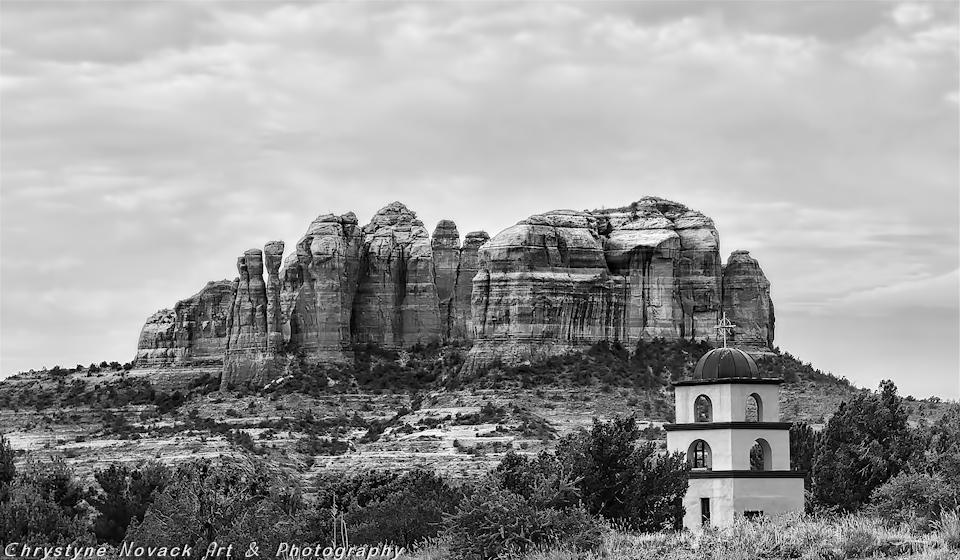
Morning dawns as a quiet prayer illuminating the rock monolith of Cathedral Rock & the church tower below.
Dawn Prayer -> https://chrystyne-novack.pixels.com/featured/dawn-prayer-cathedral-rock-chrystyne-novack.html
#Sedona #Arizona #Desert #AYearforArt #BuyIntoArt #landscape #Travel #bnw #monochrome #blackandwhite #travel #nature #fedigiftshop #shopsmall #Outdoors #giftideas #southwest #art #mastoart #fotografie #morning
Alt...
Morning dawns as a quiet prayer illuminating both the church tower seen rising above the pines and rock monolith of Cathedral Rock in this stunning black and white photograph. This beauty of Cathedral Rock is captured with the tower of Saint Luke’s Anglican Church seen in lower right.
![[?]](https://cdn.masto.host/socelnet/accounts/avatars/109/355/496/809/872/483/original/4bb481e7a50769d3.jpg)
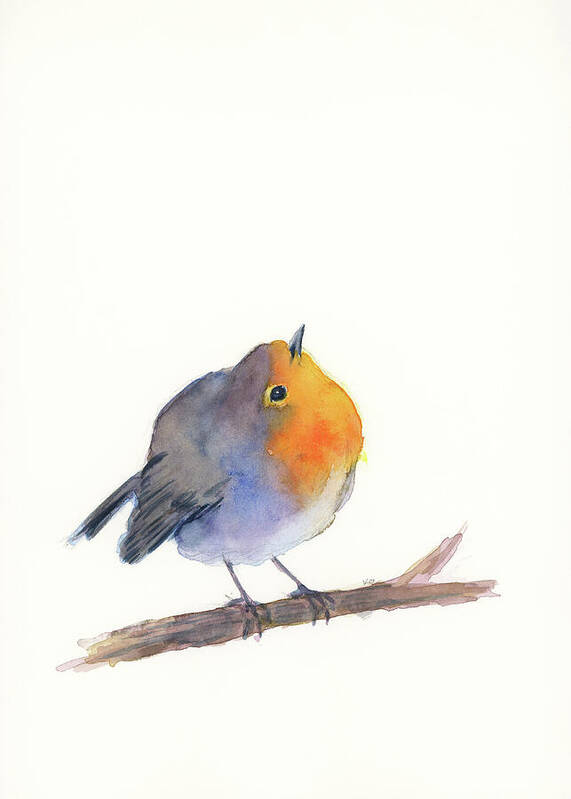
Little Robin looking upwards - another watercolor portrait from the Robin bird in our garden.
Have a great day!
Find my handmade watercolor painting here:
https://karen-kaspar.pixels.com/featured/little-robin-looking-upwards-watercolor-painting-karen-kaspar.html
#robin #MastoArt #art #painting #FediArt #FediGiftShop #arte #MastodonArt #TraditionalArt #kunst #contemporaryArt #watercolor #watercolour #creativeToots #BuyIntoArt #bird #birds #BirdsOfMastodon #BirdArt #birding #nature #NatureLover #BirdWatching #wildlife #vogel #cute #animals #handmade #aquarell
Alt...
Little robin looking upwards is a hand-painted watercolor painting in portrait format by artist Karen Kaspar.
A small European Robin with bright orange breast feathers sits on a branch and looks upwards. The light paper color was left as the background. The delicate brushstrokes and the minimalist composition emphasise the bright colours and the bird's inquisitive posture.
"A farewell to Mister Eclipse .."
Dr Fred Espenak (1953–2025)
by Jay Anderson
https://skyandtelescope.org/astronomy-news/fred-espenak-1953-2025/
The renowned eclipse chaser and popularizer passed away in Arizona after a life of adventure.
Fred Espenak, who laid the foundation for modern-day eclipse chasing, died of idiopathic pulmonary fibrosis on June 1st. He announced his diagnosis and his impending passing on April 15th on social media and on the Solar Eclipse Message List (SEML) forum as he prepared to enter hospice care, sparking an outpouring of sorrow, sympathy, good wishes, and thank-you’s for his life’s work.
Fred’s fascination with the lunar shadow began with an off-the-track partial eclipse in 1963 and was cemented several years later by the total solar eclipse that traveled along the U.S. Eastern Seaboard in 1970. Upon his death 55 years later, he had witnessed 52 solar eclipses of various types, of which 31 were total. He had also helped countless others prepare for and experience the wonder of totality, thanks to his dedication to outreach.
There were many stories along the way, but he was fond of telling of his most rewarding eclipse-chasing experience — a trip to India in 1995 to catch 41 seconds of totality, during which he noticed a high-school chemistry teacher watching her first eclipse. “Nice hair,” he thought. Several eclipses and a decade later, he and Patricia Totten, the lady with the hair, were married. It was a particularly fond pairing, as visitors to his Arizona home could attest.
FYI:
https://mreclipse.com/
https://en.wikipedia.org/wiki/Fred_Espenak
https://apod.nasa.gov/apod/ap250612.html
#farewell #space #NASA #astrophotography #photography #science #astronomy #nature #tech #space_related #Space_Culture_Club
Alt...
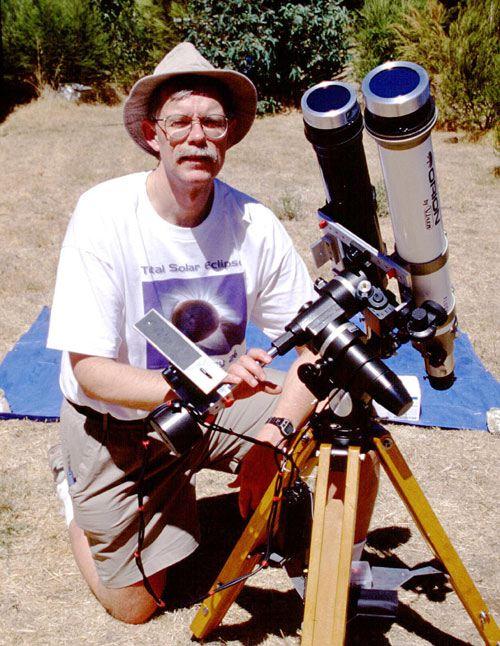
Goddard Researcher and eclipse chaser Dr. Fred Espenak. with his solar telescope in 2009
Image Credit:
NASA Goddard Space Flight Center from Greenbelt, MD, USA
Constant Contact Use. Please leave this field blank.
The renowned eclipse chaser and popularizer passed away in Arizona after a life of adventure.
Man with white hair and white moustache sitting at table with a globe covered in yellow lines marking past and future eclipses
Fred Espenak, with a globe of solar eclipse tracks for the 21st century
Patricia Totten Espenak
Fred Espenak, who laid the foundation for modern-day eclipse chasing, died of idiopathic pulmonary fibrosis on June 1st. He announced his diagnosis and his impending passing on April 15th on social media and on the Solar Eclipse Message List (SEML) forum as he prepared to enter hospice care, sparking an outpouring of sorrow, sympathy, good wishes, and thank-you’s for his life’s work.
Fred’s fascination with the lunar shadow began with an off-the-track partial eclipse in 1963 and was cemented several years later by the total solar eclipse that traveled along the U.S. Eastern Seaboard in 1970. Upon his death 55 years later, he had witnessed 52 solar eclipses of various types, of which 31 were total. He had also helped countless others prepare for and experience the wonder of totality, thanks to his dedication to outreach.
Alt...
2025 June 12
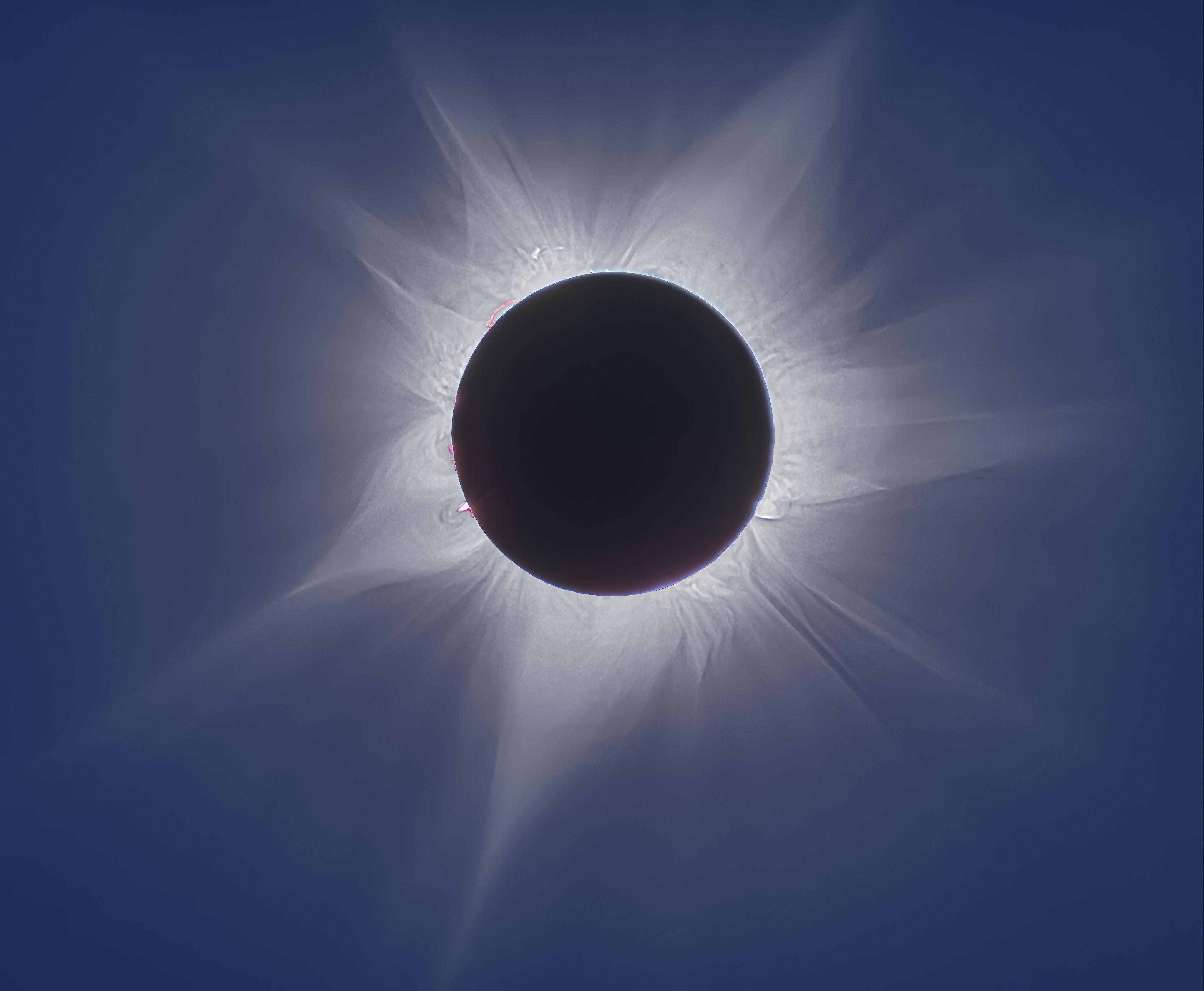
Solar Eclipse
Image Credit & Copyright: Fred Espenak
Explanation:
On April 20, 2023 the shadow of a New Moon raced across planet Earth's southern hemisphere. When viewed along a narrow path that mostly avoided landfall, the Moon in silhouette created a hybrid solar eclipse. Hybrid eclipses are rare and can be seen as a total eclipse or an annular "ring of fire" eclipse depending on the observer's position. Viewers of this much anticipated hybrid event were able to witness a total solar eclipse while anchored in the Indian Ocean near the centerline of the eclipse track off the coast of western Australia. This ship-borne image from renowned eclipse chaser Fred Espenak captured the eclipsed Sun's magnificent outer atmosphere, or solar corona, streaming into space. The composite of 11 exposures ranging from 1/2000 to 1/2 second, taken during the 62 seconds of totality, records an extended range of brightness to follow alluring details of the corona not quite visible to the eye.
Authors & editors: Robert Nemiroff (MTU) & Jerry Bonnell (UMCP)
NASA Official: Amber Straughn Specific rights apply.
NASA Web Privacy Policy and Important Notices
A service of: ASD at NASA / GSFC,
NASA Science Activation
& Michigan Tech. U.
2025 October 22
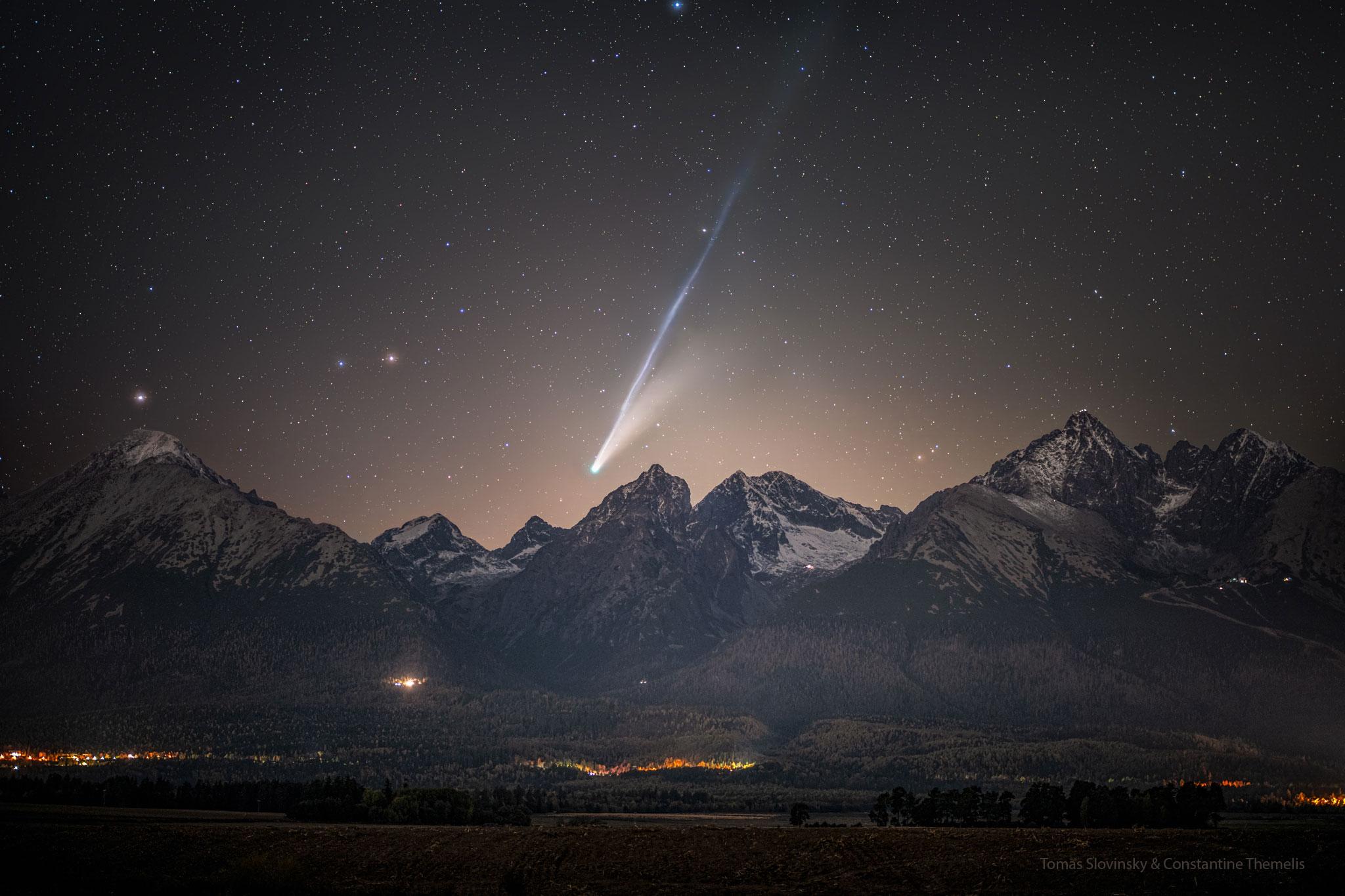
Comet Lemmon over the High Tatras
* Image Credit & Copyright: Tomáš Slovinský & Constantine Themelis
https://www.instagram.com/slovinsky.art/
https://www.instagram.com/constantinethemelis/
Explanation:
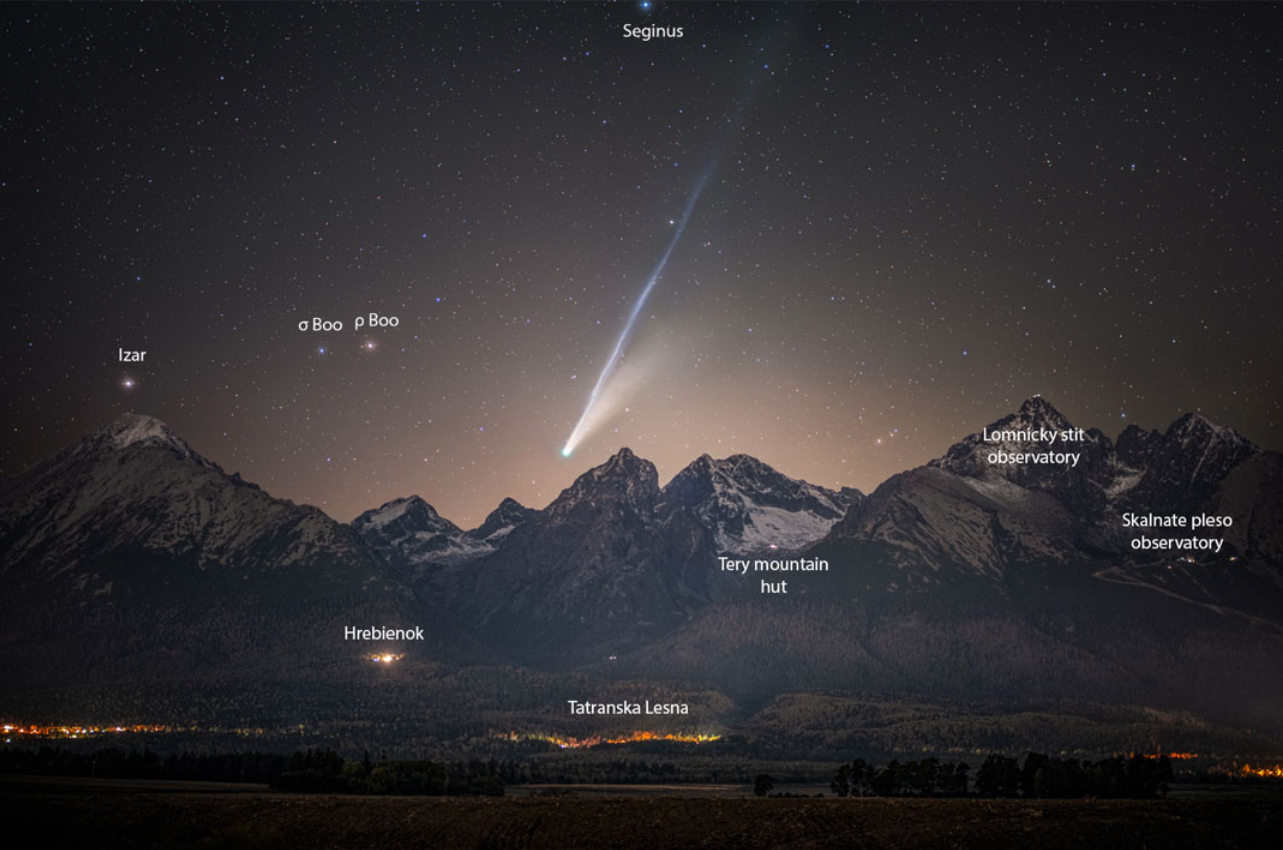
Comet Lemmon putting on a show for cameras around the globe. Passing nearest to the Earth this week, the photogenic comet C/2025 A6 (Lemmon) is now extending two long tails : a blue ion tail and a white dust tail. The ion tail is pushed away from the Sun by the ever-present by ever-changing solar wind, and shows structure also created by how much gas is ejected at any one moment. It glows because it is ionized by high energy sunlight. The dust tail is pushed away from the comet by sunlight and shines by reflecting sunlight. The featured image is an enhanced composite of 50 exposures all taken two days ago from Mlynica, Slovakia. The mountains in the foreground are the High Tatras that partly separate Slovakia from Poland. Although Comet Lemmon is best visible in long camera exposures, the shedding ice ball has become faintly visible in northern skies even to unaided eyes through dark skies toward the west after sunset.
https://spaceplace.nasa.gov/comets/en/anatomy-of-a-comet.en.jpg
https://astronomy.swin.edu.au/cosmos/c/cometary+tails
http://www.star.ucl.ac.uk/~apod/apod/ap251019.html
https://apod.nasa.gov/apod/ap251022.html
#space #comets #astrophotography #photography #science #astronomy #nature #NASA #ESA #education #apod
Alt...
2025 October 22
A mountain range is shown in the foreground with a bright comet visible above it. The comet shows tails that are long and bright with the longer tail appearing light blue.
Comet Lemmon over the High Tatras
* Image Credit & Copyright: Tomáš Slovinský & Constantine Themelis
Explanation:
Comet Lemmon putting on a show for cameras around the globe. Passing nearest to the Earth this week, the photogenic comet C/2025 A6 (Lemmon) is now extending two long tails : a blue ion tail and a white dust tail. The ion tail is pushed away from the Sun by the ever-present by ever-changing solar wind, and shows structure also created by how much gas is ejected at any one moment. It glows because it is ionized by high energy sunlight. The dust tail is pushed away from the comet by sunlight and shines by reflecting sunlight. The featured image is an enhanced composite of 50 exposures all taken two days ago from Mlynica, Slovakia. The mountains in the foreground are the High Tatras that partly separate Slovakia from Poland. Although Comet Lemmon is best visible in long camera exposures, the shedding ice ball has become faintly visible in northern skies even to unaided eyes through dark skies toward the west after sunset.
Authors & editors: Robert Nemiroff (MTU) & Jerry Bonnell (UMCP)
NASA Official: Amber Straughn Specific rights apply.
NASA Web Privacy, Accessibility, Notices;
A service of: ASD at NASA / GSFC,
NASA Science Activation
& Michigan Tech. U.
Alt...
Annotations for featured image
2025 October 13
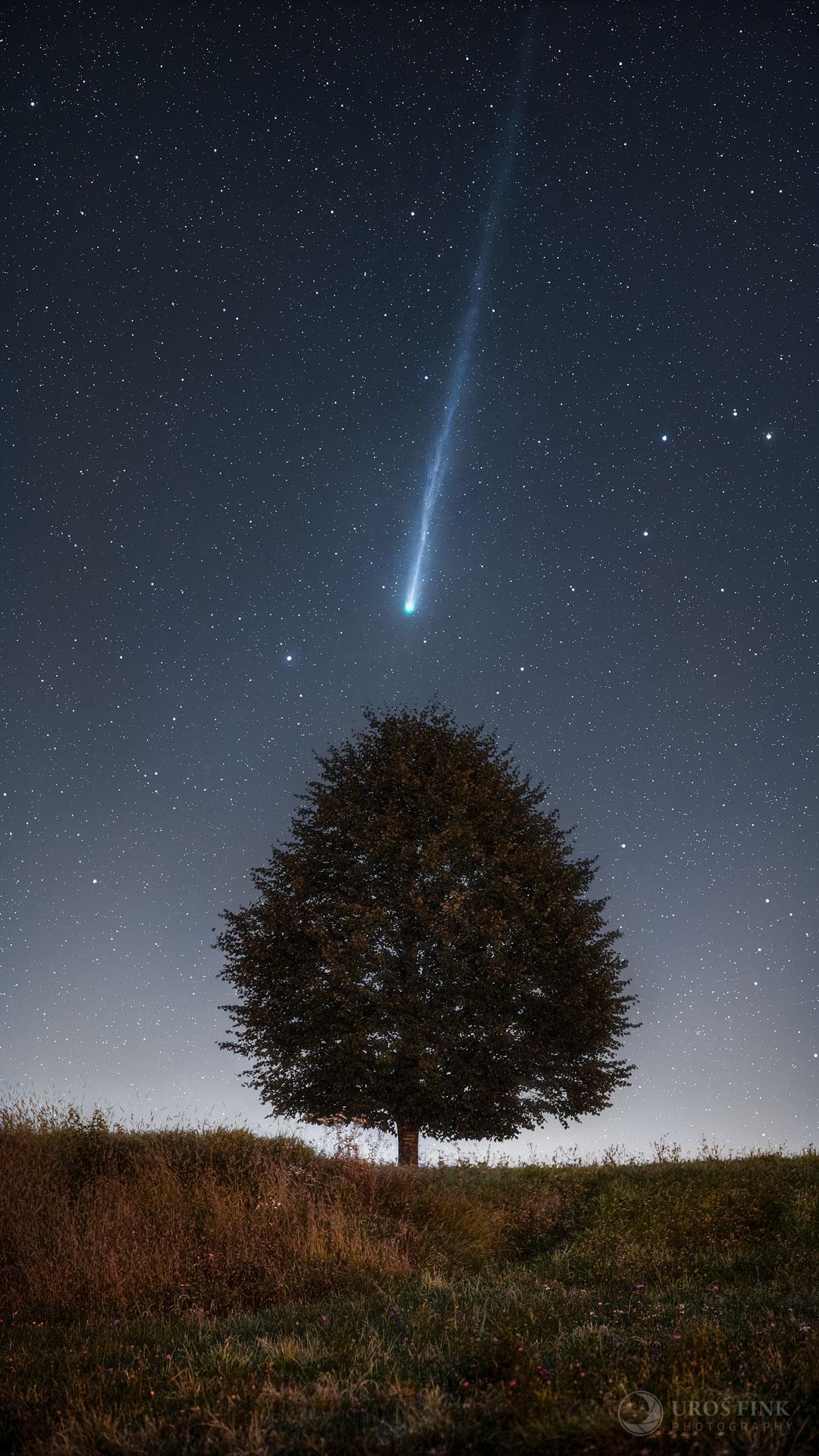
Lemmon Tree
* Image Credit & Copyright: Uroš Fink
https://www.instagram.com/urosfink/
Explanation:
The tree is not in danger. That's because the comet pictured just above it, Comet C/2025 A6 (Lemmon), is far in the distance, well away from the Earth. Comet Lemmon now continues to brighten as it arcs through the inner Solar System, even though it has passed its nearest to the Sun -- because it is now approaching the Earth. The comet will likely appear brightest when it is at its closest to the Earth next week, then closing to about half the Earth-Sun distance. Comet Lemmon may then be visible to the unaided eye, but it is more likely to be imaged by a camera phone -- if you know where to look. Comet Lemmon, previously best visible in the morning, is now also visible in the evening sky for northern observers: look above the western horizon just after sunset. The featured image, centered on an unsuspecting European beech tree, was taken in Slovenia about ten days ago.
https://apod.nasa.gov/apod/ap251013.html
#space #comets #astrophotography #photography #science #astronomy #nature #NASA #ESA #education
Alt...
2025 October 13
A tree is seen silhouetted against a night sky filled with stars. Above the tree with its tail pointing nearly vertically is a comet: Comet Lemmon.
Lemmon Tree
* Image Credit & Copyright: Uroš Fink
Explanation:
The tree is not in danger. That's because the comet pictured just above it, Comet C/2025 A6 (Lemmon), is far in the distance, well away from the Earth. Comet Lemmon now continues to brighten as it arcs through the inner Solar System, even though it has passed its nearest to the Sun -- because it is now approaching the Earth. The comet will likely appear brightest when it is at its closest to the Earth next week, then closing to about half the Earth-Sun distance. Comet Lemmon may then be visible to the unaided eye, but it is more likely to be imaged by a camera phone -- if you know where to look. Comet Lemmon, previously best visible in the morning, is now also visible in the evening sky for northern observers: look above the western horizon just after sunset. The featured image, centered on an unsuspecting European beech tree, was taken in Slovenia about ten days ago.
Authors & editors: Robert Nemiroff (MTU) & Jerry Bonnell (UMCP)
NASA Official: Amber Straughn Specific rights apply.
NASA Web Privacy, Accessibility, Notices;
A service of: ASD at NASA / GSFC,
NASA Science Activation
& Michigan Tech. U.
2022 May 12
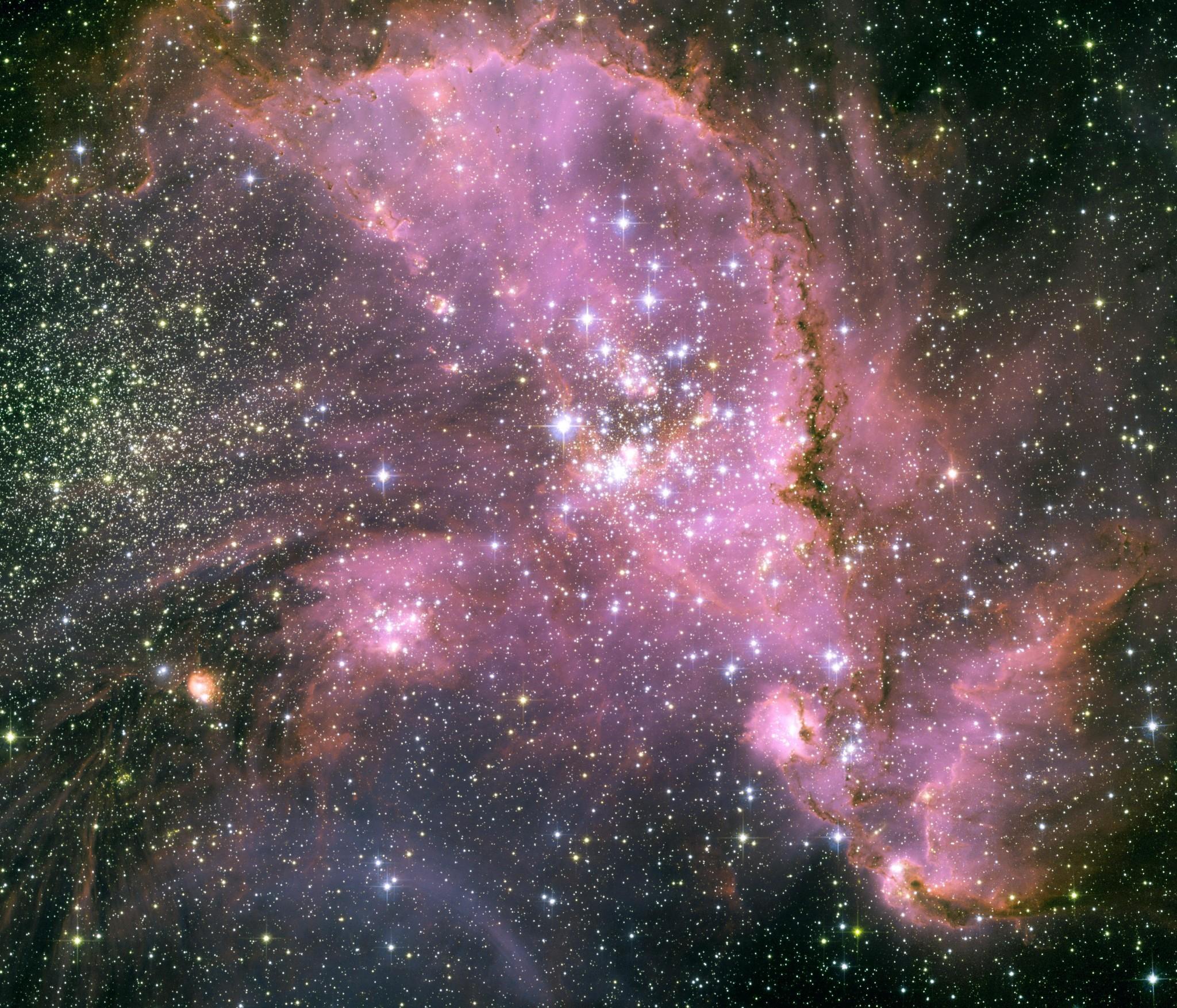
Young Stars of NGC 346
* Image Credit: NASA, ESA -
https://www.nasa.gov/
https://www.esa.int/
* acknowledgement: Antonella Nota (ESA/STScI) et al.
https://www.stsci.edu/
Explanation:
The massive stars of NGC 346 are short lived, but very energetic. The star cluster is embedded in the largest star forming region in the Small Magellanic Cloud, some 210,000 light-years distant. Their winds and radiation sweep out an interstellar cavern in the gas and dust cloud about 200 light-years across, triggering star formation and sculpting the region's dense inner edge. Cataloged as N66, the star forming region also appears to contain a large population of infant stars. A mere 3 to 5 million years old and not yet burning hydrogen in their cores, the infant stars are strewn about the embedded star cluster. In this false-color Hubble Space Telescope image, visible and near-infrared light are seen as blue and green, while light from atomic hydrogen emission is red.
https://science.nasa.gov/asset/hubble/young-stars-sculpt-gas-with-powerful-outflows-in-the-small-magellanic-cloud/
https://chandra.harvard.edu/edu/formal/stellar_ev/story/index2.html
https://apod.nasa.gov/apod/ap220512.html
#space #cluster #astrophotography #photography #science #astronomy #physics #nature #NASA
Alt...
2022 May 12
Young Stars of NGC 346
* Image Credit: NASA, ESA -
* acknowledgement: Antonella Nota (ESA/STScI) et al.,
Explanation:
The massive stars of NGC 346 are short lived, but very energetic. The star cluster is embedded in the largest star forming region in the Small Magellanic Cloud, some 210,000 light-years distant. Their winds and radiation sweep out an interstellar cavern in the gas and dust cloud about 200 light-years across, triggering star formation and sculpting the region's dense inner edge. Cataloged as N66, the star forming region also appears to contain a large population of infant stars. A mere 3 to 5 million years old and not yet burning hydrogen in their cores, the infant stars are strewn about the embedded star cluster. In this false-color Hubble Space Telescope image, visible and near-infrared light are seen as blue and green, while light from atomic hydrogen emission is red.
Authors & editors: Robert Nemiroff (MTU) & Jerry Bonnell (UMCP)
NASA Official: Phillip Newman Specific rights apply.
NASA Web Privacy Policy and Important Notices
A service of: ASD at NASA / GSFC
& Michigan Tech. U.
2024 October 27
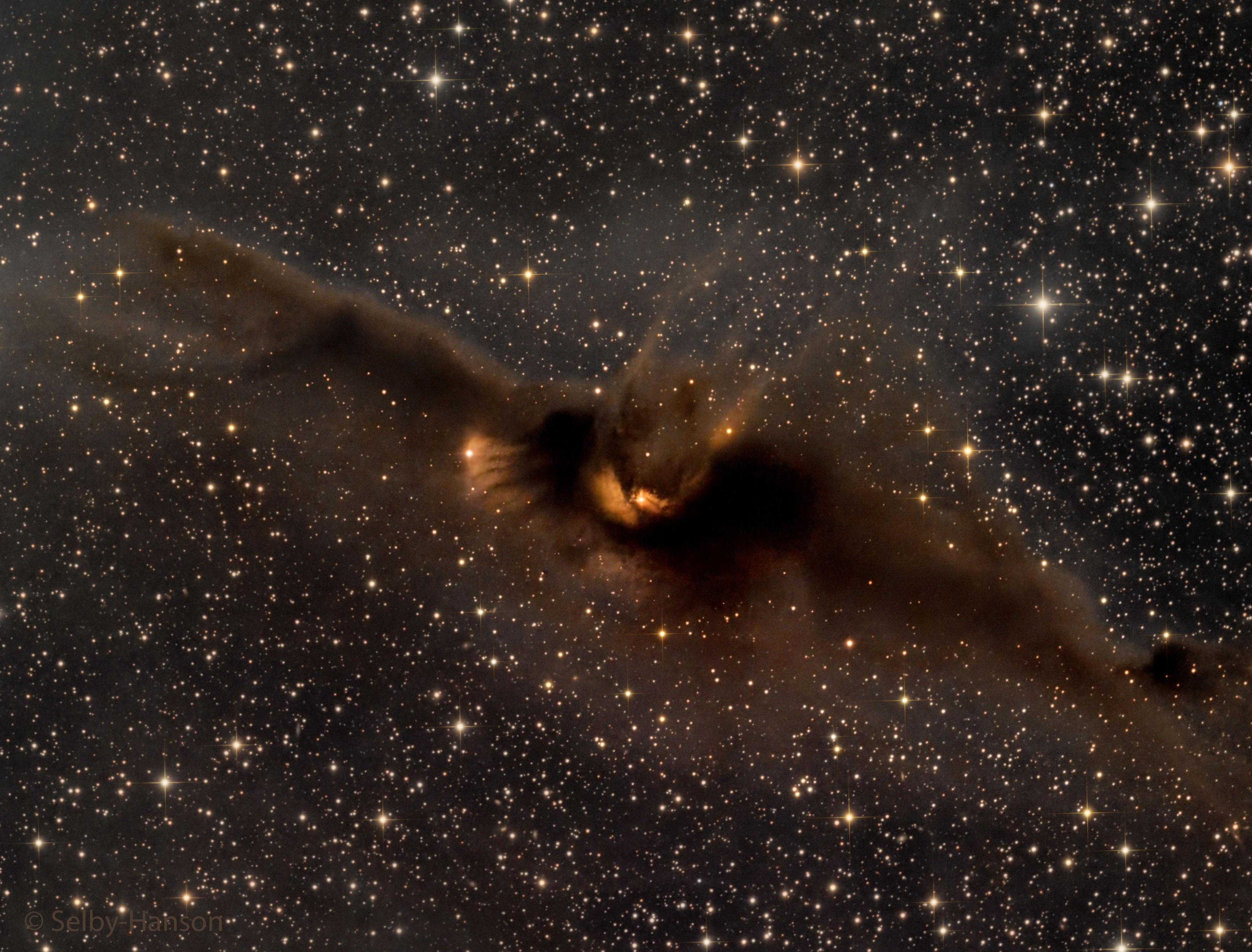
LDN 43: The Cosmic Bat Nebula
* Credit & Copyright: Mark Hanson and Mike Selby
https://www.hansonastronomy.com/bio
https://throughlightandtime.com/about/
* Text: Michelle Thaller (NASA's GSFC)
https://science.nasa.gov/people/michelle-thaller/
https://www.nasa.gov/
https://www.nasa.gov/goddard
Explanation:
What is the most spook-tacular nebula in the galaxy? One contender is LDN 43, which bears an astonishing resemblance to a vast cosmic bat flying amongst the stars on a dark Halloween night. Located about 1400 light years away in the constellation Ophiuchus, this molecular cloud is dense enough to block light not only from background stars, but from wisps of gas lit up by the nearby reflection nebula LBN 7. Far from being a harbinger of death, this 12-light year-long filament of gas and dust is actually a stellar nursery. Glowing with eerie light, the bat is lit up from inside by dense gaseous knots that have just formed young stars.
https://www.jthommes.com/Astro/LBN7_LDN43.htm
https://chandra.harvard.edu/photo/constellations/ophiuchus.html
https://en.wikipedia.org/wiki/Molecular_cloud
https://apod.nasa.gov/apod/ap230129.html
https://astronomy.swin.edu.au/cosmos/r/Reflection+Nebula
https://apod.nasa.gov/apod/ap030706.html
https://apod.nasa.gov/apod/ap241027.html
#space #nebula #cluster #astrophotography #photography #science #astronomy #nature #NASA #ESA
Alt...
2024 October 27
A starfield is shown with a large brown dust nebula in the center. The nebula appears, to some, to be shaped like a bat. One of the stars in the dust nebula even appears to be the eye of the bat.
LDN 43: The Cosmic Bat Nebula
* Credit & Copyright: Mark Hanson and Mike Selby
* Text: Michelle Thaller (NASA's GSFC)
Explanation:
What is the most spook-tacular nebula in the galaxy? One contender is LDN 43, which bears an astonishing resemblance to a vast cosmic bat flying amongst the stars on a dark Halloween night. Located about 1400 light years away in the constellation Ophiuchus, this molecular cloud is dense enough to block light not only from background stars, but from wisps of gas lit up by the nearby reflection nebula LBN 7. Far from being a harbinger of death, this 12-light year-long filament of gas and dust is actually a stellar nursery. Glowing with eerie light, the bat is lit up from inside by dense gaseous knots that have just formed young stars.
Authors & editors: Robert Nemiroff (MTU) & Jerry Bonnell (UMCP)
NASA Official: Amber Straughn Specific rights apply.
NASA Web Privacy, Accessibility, Notices;
A service of: ASD at NASA / GSFC,
NASA Science Activation
& Michigan Tech. U.
2025 October 22
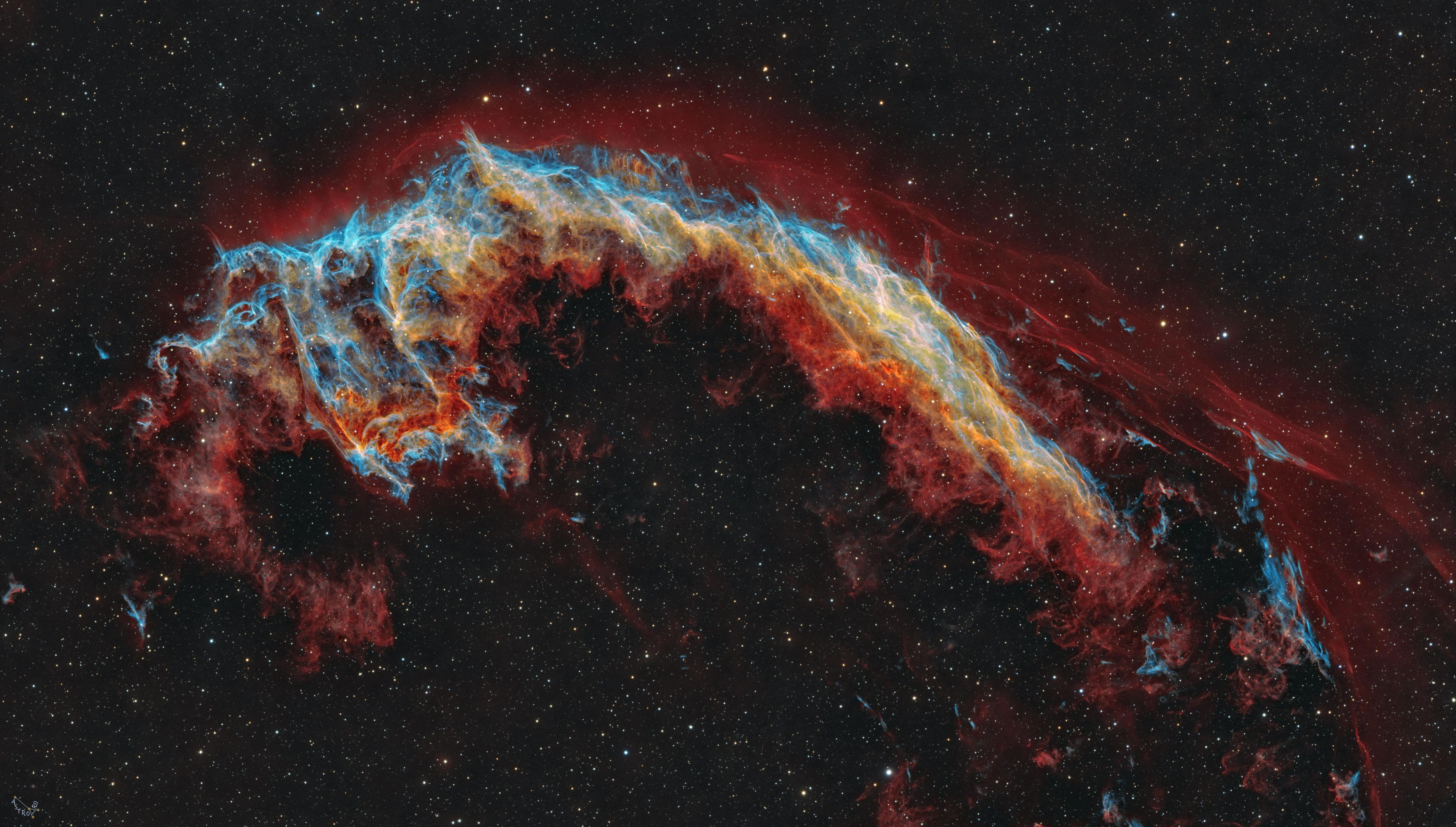
NGC 6995: The Bat Nebula
* Image Credit & Copyright: Francis Bozon & Jean-Luc Gangloff
Explanation:
Can you see the bat? It haunts this cosmic close-up of the eastern Veil Nebula. The Veil Nebula itself is a large supernova remnant, the expanding debris cloud from the death explosion of a massive star. While the Veil is roughly circular in shape and covers nearly 3 degrees on the sky toward the constellation of the Swan (Cygnus), NGC 6995, known informally as the Bat Nebula, spans only 1/2 degree, about the apparent size of the Moon. That translates to 12 light-years at the Veil's estimated distance, a reassuring 1,400 light-years from planet Earth. In the composite of image data recorded through several narrow band filters, with emission from hydrogen atoms in the remnant shown in red and with strong emission from oxygen atoms shown in hues of blue. Of course, in the western part of the Veil lies another seasonal apparition: the Witch's Broom Nebula.
https://chandra.harvard.edu/photo/scale_distance.html
https://periodic.lanl.gov/1.shtml
https://apod.nasa.gov/apod/ap251022.html
#space #nebula #cluster #astrophotography #photography #science #astronomy #nature #NASA #ESA #apod #education
Alt...
2025 October 22
The featured image shows a starfield with a multi- colored nebula in the center. The nebula is quite filamentary but appears to some like a bat.
NGC 6995: The Bat Nebula
* Image Credit & Copyright: Francis Bozon-Gangloff
Explanation:
Can you see the bat? It haunts this cosmic close-up of the eastern Veil Nebula. The Veil Nebula itself is a large supernova remnant, the expanding debris cloud from the death explosion of a massive star. While the Veil is roughly circular in shape and covers nearly 3 degrees on the sky toward the constellation of the Swan (Cygnus), NGC 6995, known informally as the Bat Nebula, spans only 1/2 degree, about the apparent size of the Moon. That translates to 12 light-years at the Veil's estimated distance, a reassuring 1,400 light-years from planet Earth. In the composite of image data recorded through several narrow band filters, with emission from hydrogen atoms in the remnant shown in red and with strong emission from oxygen atoms shown in hues of blue. Of course, in the western part of the Veil lies another seasonal apparition: the Witch's Broom Nebula.
Authors & editors: Robert Nemiroff (MTU) & Jerry Bonnell (UMCP)
NASA Official: Amber Straughn Specific rights apply.
NASA Web Privacy, Accessibility, Notices;
A service of: ASD at NASA / GSFC,
NASA Science Activation
& Michigan Tech. U.
![[?]](data:image/png;base64, iVBORw0KGgoAAAANSUhEUgAAAEAAAABAAQAAAACCEkxzAAAAUUlEQVQoz43R0QkAMQwCUDdw/y3dwEvsvzlL4X1IoQkAisKmwfAFT3RgJHbQezpSRoXEqeqCL9BJBf7h3QbOCCxV5EVWMEMwG7K1/WODtlvxAYTtEsDU9F34AAAAAElFTkSuQmCC)
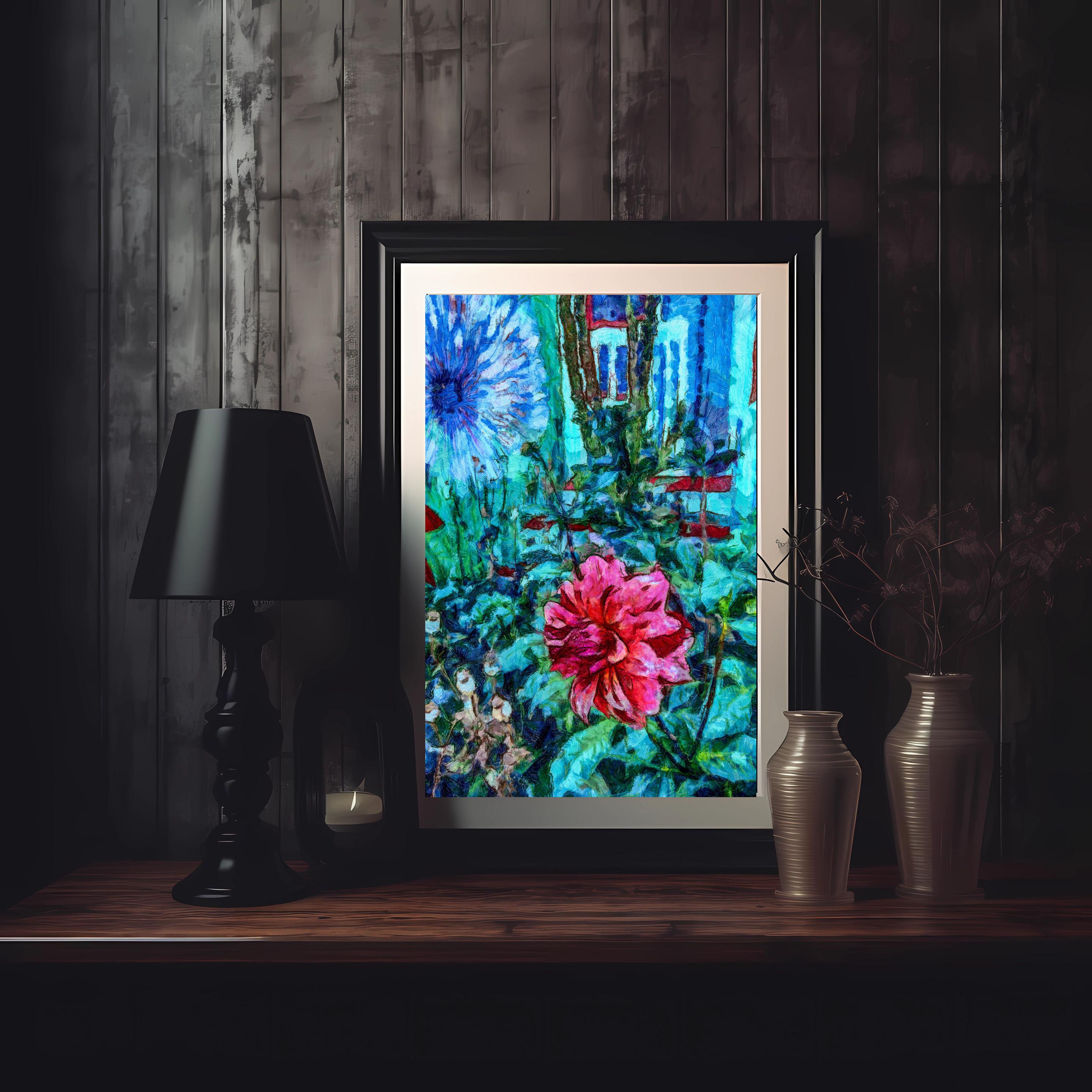
A Dahlia In Tillamook! Prints and more for sale at: https://pixels.com/featured/a-dahlia-in-tillamook-thom-zehrfeld.html #dahlia #dahlias #dahliagarden #ArtForSale #Floral #Flowers #Art #TillamookOregon #Oregon #PNW #BuyIntoArt #Art #ThomZehrfeldPhotography #PhotographyIsArt #Photography #Fotografie
#ArtForSale #ArtMatters #MastoArt #Mastodon #ArtforInteriorDesign #HospitalityInteriors
#InteriorDesign #Wallart #InteriorDecorating #WallArtForSale #PhotoOfTheDay #FediGiftShop #GiftIdeas #FediArt #Prints #FediArtShop #Colorful #Nature
Alt...
A Dahlia In Tillamook! Prints and more for sale at: https://pixels.com/featured/a-dahlia-in-tillamook-thom-zehrfeld.html #dahlia #dahlias #dahliagarden #ArtForSale #Floral #Flowers #Art #TillamookOregon #Oregon #PNW #BuyIntoArt #Art #ThomZehrfeldPhotography #PhotographyIsArt #Photography #Fotografie
#ArtForSale #ArtMatters #MastoArt #Mastodon #ArtforInteriorDesign #HospitalityInteriors
#InteriorDesign #Wallart #InteriorDecorating #WallArtForSale #PhotoOfTheDay #FediGiftShop #GiftIdeas #FediArt #Prints #FediArtShop #Colorful #Nature
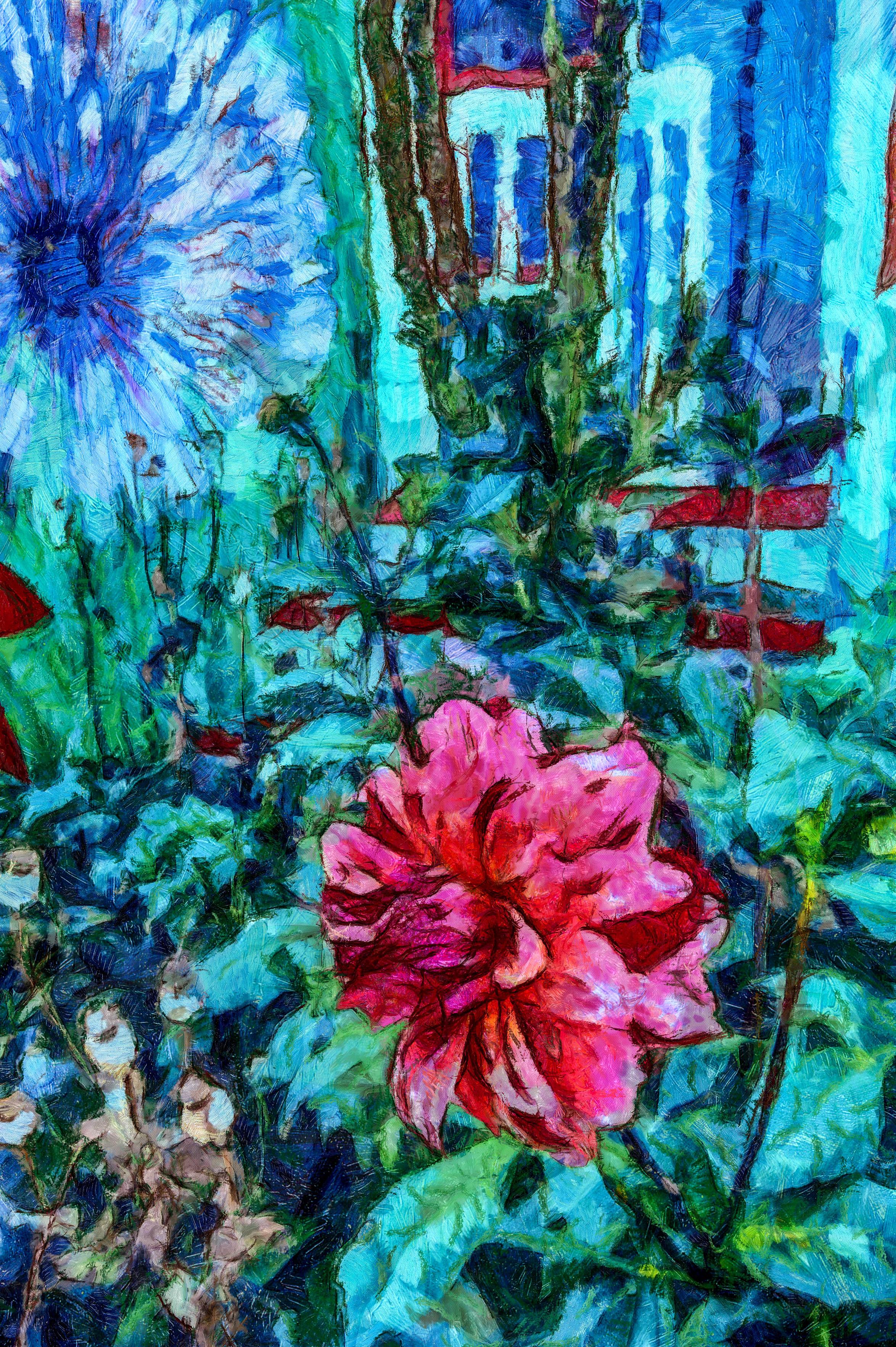
Alt...
A Dahlia In Tillamook! Prints and more for sale at: https://pixels.com/featured/a-dahlia-in-tillamook-thom-zehrfeld.html #dahlia #dahlias #dahliagarden #ArtForSale #Floral #Flowers #Art #TillamookOregon #Oregon #PNW #BuyIntoArt #Art #ThomZehrfeldPhotography #PhotographyIsArt #Photography #Fotografie
#ArtForSale #ArtMatters #MastoArt #Mastodon #ArtforInteriorDesign #HospitalityInteriors
#InteriorDesign #Wallart #InteriorDecorating #WallArtForSale #PhotoOfTheDay #FediGiftShop #GiftIdeas #FediArt #Prints #FediArtShop #Colorful #Nature
![[?]](https://assets.merveilles.town/accounts/avatars/110/618/037/889/897/311/original/4ae47e9d3a4940c9.png)
Wild Nature
#comic #ai #nature #mastoart #unix_surrealism #ish

Alt...
Welcome back to Wild Nature! Today we're continuing our journey to generate a picture!
Last episode we got attacked by trees - fortunately we won and can use their corpses for fuel!
Then we successfully defeated a lake in Cambodia - but don-t worry, its death will not be in vain! We now have its water magic of cool!
All we need now is an amazonian tribe newborn.
"What?"
For the sacrifice.
Camera_guy: "Look... I'm not comfortable with this..."
Are you fucking dumb? I'm just saying that for the show. Any newborn will do.
2025 October 21
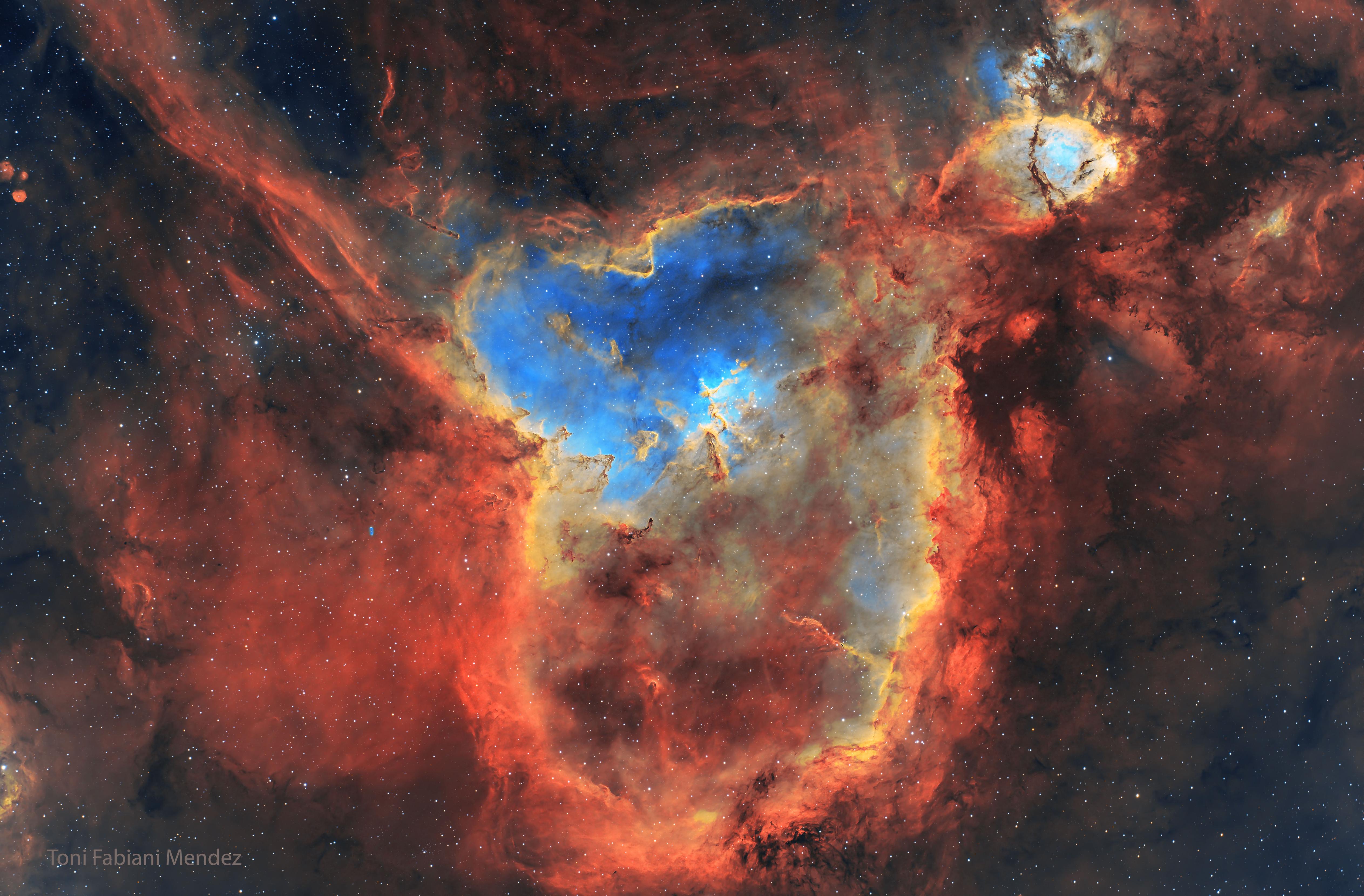
IC 1805: The Heart Nebula
* Image Credit & Copyright: Toni Fabiani
https://app.astrobin.com/u/Toni_Fabiani#gallery
Explanation:
What electrifies the Heart Nebula? First, the large emission nebula on the left, catalogued as IC 1805, looks somewhat like a human heart. The nebula glows brightly in red light emitted by its most prominent element, hydrogen, but this long-exposure image was also blended with light emitted by sulfur (yellow) and oxygen (blue). In the center of the Heart Nebula are young stars from the open star cluster Melotte 15 that are eroding away several picturesque dust pillars with their atom-exciting energetic light and winds. The Heart Nebula is located about 7,500 light years away toward the constellation of Cassiopeia. At the top right of the Heart Nebula is the companion Fishhead Nebula. This wide and deep image clearly shows that glowing gas surrounds the Heart Nebula in all directions.
https://apod.nasa.gov/apod/ap251021.html
#space #nebula #cluster #astrophotography #photography #science #astronomy #nature #NASA #ESA #apod #education
Alt...
2025 October 21
A starfield is shown filled with colorful gas glowing in different colors, and dark dust.
IC 1805: The Heart Nebula
* Image Credit & Copyright: Toni Fabiani
Explanation:
What electrifies the Heart Nebula? First, the large emission nebula on the left, catalogued as IC 1805, looks somewhat like a human heart. The nebula glows brightly in red light emitted by its most prominent element, hydrogen, but this long-exposure image was also blended with light emitted by sulfur (yellow) and oxygen (blue). In the center of the Heart Nebula are young stars from the open star cluster Melotte 15 that are eroding away several picturesque dust pillars with their atom-exciting energetic light and winds. The Heart Nebula is located about 7,500 light years away toward the constellation of Cassiopeia. At the top right of the Heart Nebula is the companion Fishhead Nebula. This wide and deep image clearly shows that glowing gas surrounds the Heart Nebula in all directions.
Authors & editors: Robert Nemiroff (MTU) & Jerry Bonnell (UMCP)
NASA Official: Amber Straughn Specific rights apply.
NASA Web Privacy, Accessibility, Notices;
A service of: ASD at NASA / GSFC,
NASA Science Activation
& Michigan Tech. U.
2025 October 20
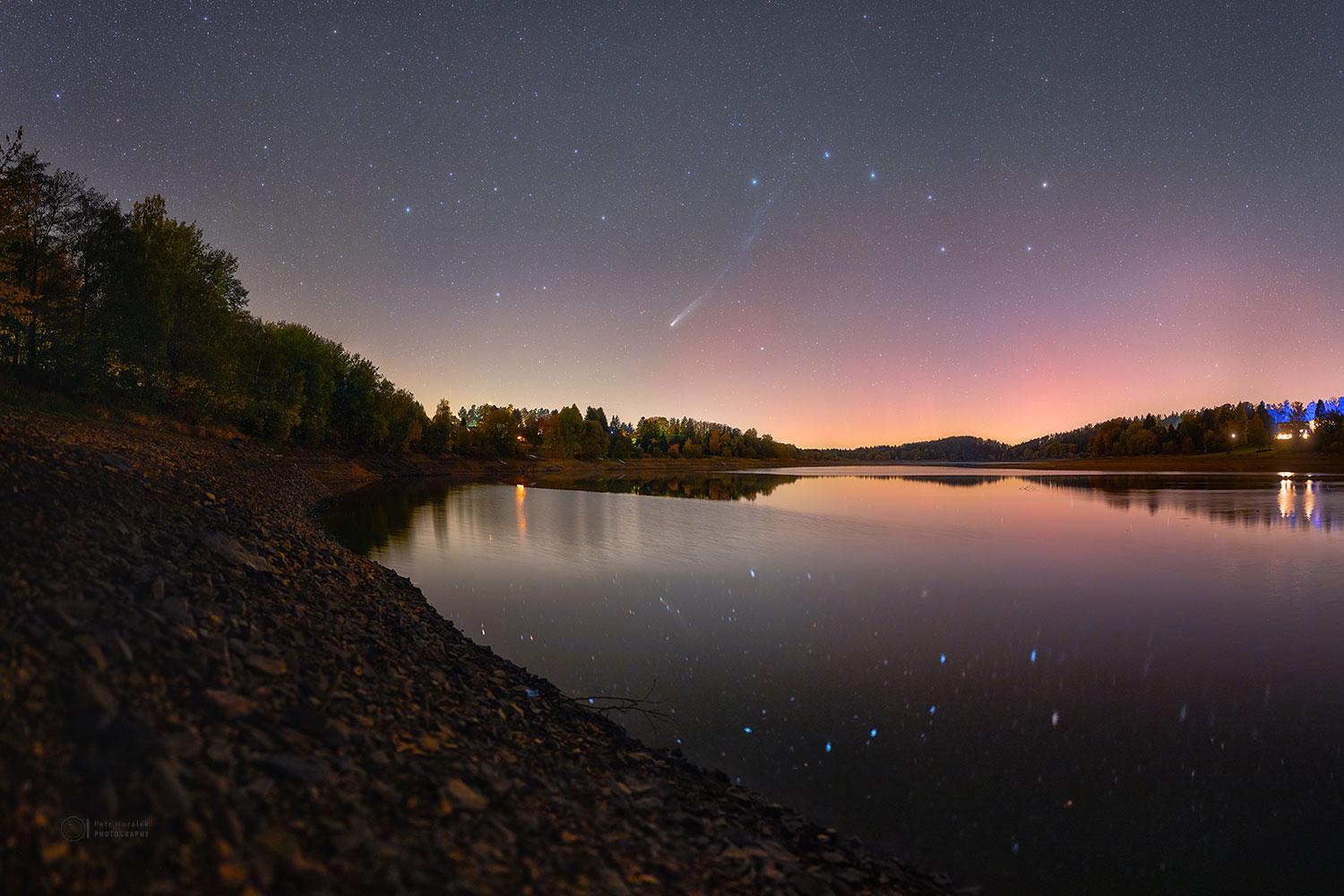
Finding Comet Lemmon
* Image Credit & Copyright: Petr Horalek / Institute of Physics in Opava
https://www.petrhoralek.com/#about-1
https://www.slu.cz/phys/en/
Explanation:
Tonight, if you can see the stars of the Big Dipper, then you can find comet Lemmon in your evening sky. After sunset, look for the faint but extended comet above your northwestern horizon -- but below the handle of the famous celestial kitchen utensil of the north. It might be easier to see this visitor to the inner Solar System through your camera phone, which is better at picking up faint objects. Either way, look for a fuzzy green 'star' with a tail, though probably not so long a tail as in this impressive snapshot taken over Seč Lake in the Czech Republic two nights ago. Recent photographs of C/2025 A6 (Lemmon) often show a detailed and changing ion tail which extends farther than the eye can follow. This Sun-orbiting comet is now near its closest approach to Earth and will pass its closest to the Sun in early November.
https://theskylive.com/c2025a6-info
https://www.petrhoralek.com/?p=25820
https://www.wired.com/story/how-to-see-comet-lemmon-this-october/
https://apod.nasa.gov/apod/ap251020.html
#space #comets #astrophotography #photography #science #astronomy #nature #NASA #ESA #education
Alt...
2025 October 20
A night sky is seen over a lake. The sky contains numerous stars including the Big Dipper asterism. Prominent in the sky is a comet with a long tail. Both the Big Dipper and the comet are seen reflected in the still water of the lake.
Finding Comet Lemmon
* Image Credit & Copyright: Petr Horalek / Institute of Physics in Opava
Explanation:
Tonight, if you can see the stars of the Big Dipper, then you can find comet Lemmon in your evening sky. After sunset, look for the faint but extended comet above your northwestern horizon -- but below the handle of the famous celestial kitchen utensil of the north. It might be easier to see this visitor to the inner Solar System through your camera phone, which is better at picking up faint objects. Either way, look for a fuzzy green 'star' with a tail, though probably not so long a tail as in this impressive snapshot taken over Seč Lake in the Czech Republic two nights ago. Recent photographs of C/2025 A6 (Lemmon) often show a detailed and changing ion tail which extends farther than the eye can follow. This Sun-orbiting comet is now near its closest approach to Earth and will pass its closest to the Sun in early November.
Authors & editors: Robert Nemiroff (MTU) & Jerry Bonnell (UMCP)
NASA Official: Amber Straughn Specific rights apply.
NASA Web Privacy, Accessibility, Notices;
A service of: ASD at NASA / GSFC,
NASA Science Activation
& Michigan Tech. U.
2025 October 11
Manicouagan Impact Crater from Space
* Image Credit: NASA, International Space Station Expedition 59
Explanation:
Orbiting 400 kilometers above Quebec, Canada, planet Earth, the International Space Station Expedition 59 crew captured this snapshot of the broad St. Lawrence River and curiously circular Lake Manicouagan on April 11, 2019. Right of center, the ring-shaped lake is a modern reservoir within the eroded remnant of an ancient 100 kilometer diameter impact crater. The ancient crater is very conspicuous from orbit, a visible reminder that Earth is vulnerable to rocks from space. Over 200 million years old, the Manicouagan crater was likely caused by the impact of a rocky body about 5 kilometers in diameter. Currently, there is no known asteroid with a significant probability of impacting Earth in the next century. Each month, NASA’s Planetary Defense Coordination Office releases an update featuring the most recent figures on near-Earth object close approaches, and other facts about comets and asteroids that could pose a potential impact hazard with Earth.
#space #comets #astrophotography #photography #science #astronomy #nature #NASA #ESA #education #apod

Alt...
2025 October 11

Manicouagan Impact Crater from Space
Image Credit: NASA, International Space Station Expedition 59
Explanation: Orbiting 400 kilometers above Quebec, Canada, planet Earth, the International Space Station Expedition 59 crew captured this snapshot of the broad St. Lawrence River and curiously circular Lake Manicouagan on April 11, 2019. Right of center, the ring-shaped lake is a modern reservoir within the eroded remnant of an ancient 100 kilometer diameter impact crater. The ancient crater is very conspicuous from orbit, a visible reminder that Earth is vulnerable to rocks from space. Over 200 million years old, the Manicouagan crater was likely caused by the impact of a rocky body about 5 kilometers in diameter. Currently, there is no known asteroid with a significant probability of impacting Earth in the next century. Each month, NASA’s Planetary Defense Coordination Office releases an update featuring the most recent figures on near-Earth object close approaches, and other facts about comets and asteroids that could pose a potential impact hazard with Earth
Authors & editors: Robert Nemiroff (MTU) & Jerry Bonnell (UMCP)
NASA Official: Amber Straughn Specific rights apply.
NASA Web Privacy, Accessibility, Notices;
A service of: ASD at NASA / GSFC,
NASA Science Activation
& Michigan Tech. U.
Enjoy golden October with maple leaves in vibrant autumn colors!
Golden October - acrylic painting
--> https://karenkasparartprints.com/featured/golden-october-abstract-acrylic-painting-karen-kaspar.html
#autumn #fall #autumncolors #MastoArt #art #painting #FediArt #FediGiftShop #artist #InteriorDesign #MastodonArt #ArtistsOnMastodon #TraditionalArt #kunst #contemporaryArt #creativeToots #BuyIntoArt #gardening #garden #nature #NatureLover #natur #leaves #leaf #fallfoliage #foliage #herbst #abstract #abstractart #handmade

Alt...
Golden October is an abstract acrylic painting in portrait format by artist Karen Kaspar. It shows maple leaves in warm fall colors yellow, green and orange on a golden yellow background.
![[?]](https://files.mstdn.party/accounts/avatars/109/412/668/953/833/198/original/0f95655ae0a3a89e.jpg)
Vibrant Sunset Over Countryside Village... https://joegiacaloneart.pixels.com/featured/vibrant-sunset-over-countryside-village-joseph-s-giacalone.html
#england #englishcountryside #nature #art#wallart #artprints #artforsale #HomeEssentials #sunset #giftideas

Quaint English Countryside Village... https://joegiacaloneart.pixels.com/featured/quaint-english-countryside-village-joseph-s-giacalone.html
#england #englishcountryside #nature #art #wallart #artprints #artforsale #HomeEssentials

Countryside Sunset Over Charming Cottages... https://joegiacaloneart.pixels.com/featured/countryside-sunset-over-charming-cottages-joseph-s-giacalone.html
#england #englishcountryside #sunset #nature #art
#wallart #artprints #artforsale #HomeEssentials #mastoart

Alt...
english countryside sunset
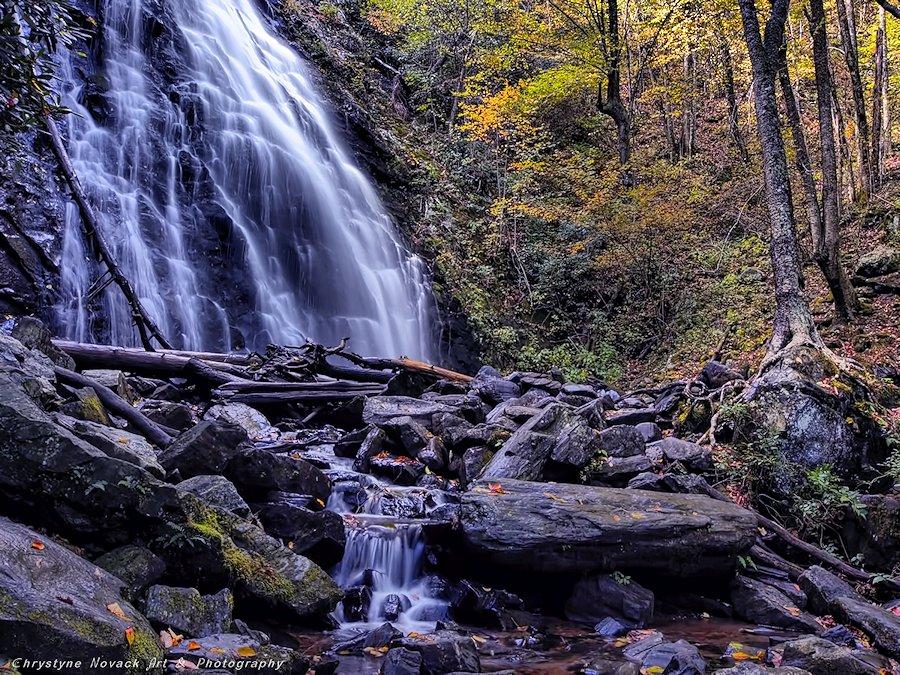
Zen is found in listening to nature's song
Falls Watersong ->https://chrystyne-novack.pixels.com/featured/falls-watersong-crabtree-falls-chrystyne-novack.html
#Zen #Nature #Waterfall #AYearforArt #Autumn #Fall #BuyIntoArt #giftideas #shopsmall #supportthearts #NorthCarolina #forest #wnc #outdoors #fallcolors #shinrinyoku #forestbathing #naturelovers #autumncolors #travel #tranquility #landscape
Alt...
Cradled between the fall foliage of yellows, golds and greens, ribbons of water cascade down rocky terrain making tranquil music. Listening to the music of Crabtree Falls in the Blue Ridge Mountains is a welcome rest after a mile and a half hike.
Surf Behind The Surf Shack - La Jolla Coast... https://fineartamerica.com/featured/surf-behind-the-surf-shack-la-jolla-coast-joseph-s-giacalone.html
#lajolla #californiadreaming #sea #coast #beauty #nature #magical #dreams #artforsale #ArtForHome #wallart #homedecor #HomeEssentials #art #fineartamerica #BuyIntoArt

Sea, Stone and Solitude - La Jolla Coast... https://fineartamerica.com/featured/sea-stone-and-solitude-la-jolla-coast-joseph-s-giacalone.html
#lajolla #california #sea #coast #nature #loveart #artmatters #beauty #positivevibes #imagination #homedecor #interiordesign #buyintoart

Alt...
seascape, ocean, sunrise
![[?]](https://media2.ai6yr.org/accounts/avatars/109/321/592/360/914/018/original/f918064fa4350d36.jpg)
Sounds like I need to post animals!
How about some gorillas?
https://www.youtube.com/watch?v=yfSyjwY6zSQ&list=PLkAmZAcQ2jdonu9dgZuHLDt5NyNHR3DUr&index=7
Glorious Nature - Joshua Tree NP... Wall Art, Art Prints available here... https://fineartamerica.com/featured/glorious-nature-joshua-tree-np-joseph-s-giacalone.html
#joshuatree #californiadreaming #nature #landscape #art #loveart #artmatters #independentartist #homedecor #gifts #giftideas #imagination #postivevibes #beauty #dreams #fineartamerica #buyintoart

A Covering of Sea and Cloud La Jolla Cove... Wall Art, Art Prints available here... https://fineartamerica.com/featured/a-covering-of-sea-and-cloud-la-jolla-cove-joseph-s-giacalone.html
#lajolla #coastal #californiadreaming #nature #landscape #art #loveart #artmatters #independentartist #homedecor #gifts #giftideas #imagination #postivevibes #beauty #dreams #fineartamerica #buyintoart

Vibrant Poppies Beneath Majestic Sky... Wall Art, Art Prints available here... https://fineartamerica.com/featured/vibrant-poppies-beneath-majestic-sky-joseph-s-giacalone.html
#flowers #nature #landscape #art #loveart #artmatters #independentartist #homedecor #gifts #giftideas #imagination
#postivevibes #beauty #dreams #fineartamerica

Majestics Rocks - Headlands State Park...Wall Art, Art Prints here... https://fineartamerica.com/featured/majestics-rocks-headlands-state-park-joseph-s-giacalone.html
#fineartamerica #california #nature #loveart #photography #outdoors #travel #beauty #art #fineart #artmatters #californiadreaming #northerncalifornia #magical #mendocino

Avenue of the Giants - The Grandest Road...Wall Art, Art Prints here... https://fineartamerica.com/featured/avenue-of-the-giants-the-grandest-road-joseph-s-giacalone.html
#california #nature #loveart #photography #outdoors
#travel #beauty #art #fineart #artmatters #californiadreaming
#northerncalifornia #magical #imagination #BuyIntoArt

Giants In The Mist...Wall Art, Art Prints here... https://fineartamerica.com/featured/giants-in-the-mist-joseph-s-giacalone.html
#california #nature #loveart #photography #outdoors
#travel #beauty #art #fineart #artmatters #californiadreaming
#northerncalifornia #magical #imagination #BuyIntoArt

Majestic Hidden Beach...Wall Art, Art Prints here... https://fineartamerica.com/featured/majestic-hidden-beach-joseph-s-giacalone.html
#california #coastal #nature #loveart #photography #outdoors
#travel #beauty #art #fineart #artmatters #californiadreaming

There's Magic In Calla Lily Valley... Wall Art, Art Prints available here... https://fineartamerica.com/featured/theres-magic-in-calla-lily-valley-joseph-s-giacalone
#bigsur #california #californiadreaming #nature #coast #homedecor #artforsale #fineartamerica #art #buyprints #artmatters #ayearforart

The Prettiest China Cove... Wall Art, Art Prints available here... https://fineartamerica.com/featured/the-prettiest-china-cove-joseph-s-giacalone.html
#chinacove #california #californiadreaming #nature #coast
#homedecor #artforsale #fineartamerica #art #buyprints
#artmatters #ayearforart #BuyIntoArt

Big Sur Classic View... Wall Art, Art Prints available here... https://fineartamerica.com/featured/big-sur-classic-view-joseph-s-giacalone.html
#bigsur #california #californiadreaming #nature #coast
#homedecor #artforsale #fineartamerica #art #buyprints
#artmatters #ayearforart #BuyIntoArt

![[?]](https://media.universeodon.com/accounts/avatars/109/362/535/847/508/379/original/d813a009e1e1ccbe.png)
Ministry of Mirror Lake
Here stands a trio of Black-bellied Whistling Ducks (Dendrocygna autumnalis), captured just days ago at the edge of still water. That same day, I shared a ghostly image—an ethereal glimpse of a passing flock, these very birds in motion. This photo stirs a quiet excitement in me: a new species now joins my growing archive, each image a small ceremony of recognition and inclusion.
These particular birds look as if they’ve just stepped out of a feathered spotlight—poised like a singing trio ready to belt out doo-wop harmony at any moment. Their stance, their symmetry, their pink-legged charisma—it’s all there, waiting for the downbeat.
Step into a world where even the smallest moments—like the glint in a bird's eye—tell their own story
https://swede1952-photographs.pixels.com
#photo #photography #photographer #photographylovers #wildlife #nature #bird #birds #birding #birdwatching #birdphotography #waterfowl #ducks #BlackBelliedWhistlerDucks

Alt...
"Three Black-bellied Whistling Ducks stand in quiet formation at the lip of a still body of water, their bodies angled slightly leftward as if mid-conversation or poised for a gentle procession. Each duck wears a striking ensemble: a deep chestnut body, black belly, and a crisp white wing patch that catches the morning light. Their bills blaze red like ceremonial seals, and their legs—long and pink—seem dipped in rosewater.
The water beneath them is glasslike, mirroring their forms with uncanny clarity. Reflections ripple only slightly, as if the pond itself is holding its breath. Around them, green vegetation frames the scene—lush, unruly, and alive. The lighting is soft but deliberate, casting a warm glow that accentuates the texture of their feathers and the quiet dignity of their stance.
Together, they evoke a sense of ritual: not just ducks at rest, but sentinels of a sovereign moment—perhaps convening a council at the Ministry of Mirror Lake" - Microsoft Copilot
![[?]](https://files.mastodon.online/accounts/avatars/109/281/270/247/799/790/original/6df76ff5654b876a.jpg)
Green Sea Turtle, aka Honu, at an #Oahu #Hawaii #reef . Your #sealife #photooftheday
Prints available - DM me. #green #turtle #tuesday #creature #ocean #pacificocean #marinelife #animals #nature #wildlife #outdoors #explore #environment #earth #video #photo #scuba #discover #underwater #art #critter #follow
![[?]](https://cdn.masto.host/mastodonie/accounts/avatars/109/294/376/925/757/435/original/370bbad04a8ce5c8.png)
#theBeeAt3
Basic bee facts every day at 3pm.
# 191
Despite having 5 ‘eyes’ 2 of which are fairly big #bumblebees have poor vision in low light.
Flying at dawn/dusk means less competition and more foraging time but also more risk of becoming lost/being eaten by predators.
#bees
#nature
#science
#education
#worldbeesanctuary
#insects
#vegan
#biodiversity
#environment
These little birds are very common in my garden and I love to watch and paint them.
Blue tit portrait - handmade acrylic painting:
https://www.pictorem.com/2443289/blue-tit-bird-portrait-acrylic-painting/
#MastoArt #art #painting #FediArt #FediGiftShop #artist #arte #InteriorDesign #MastodonArt #ArtistsOnMastodon #TraditionalArt #kunst #contemporaryArt #creativeToots #BuyIntoArt #bird #birds #BirdsOfMastodon #BirdArt #birding #nature #BirdWatching #wildlife #vogel #cute #animals #handmade #blaumeise #bluetit #artwork #ArtForSale
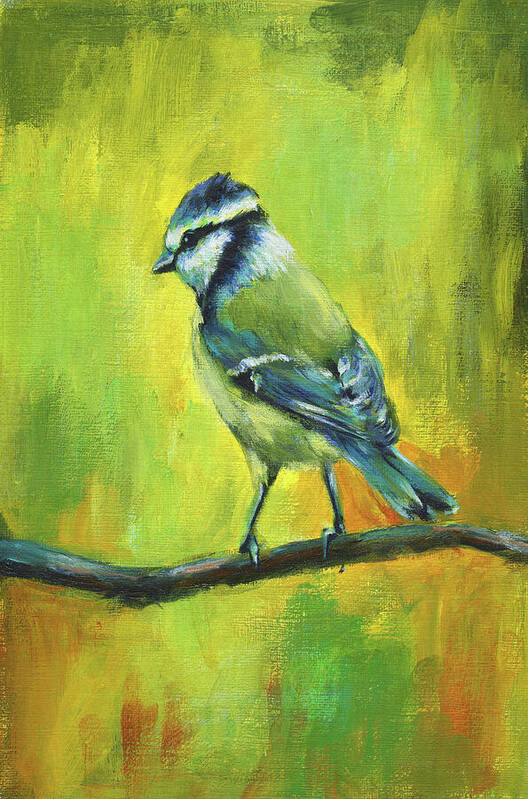
Alt...
Blue tit bird portrait is an acrylic painting in portrait format by artist Karen Kaspar. It shows a cute Blue Tit bird standing on a branch of a tree and looking to the left side. The background is abstract in shades of yellow, green and brown.
Cactus Blooms Under Bright Sky...Available here... https://fineartamerica.com/featured/cactus-blooms-under-bright-sky-joseph-s-giacalone.html
#cactus #loveart #artmatters #aiart #cute #colorful #homedecor #artdecor #gifts #giftideas #nature #fineartamerica

Alt...
colorful cactus
Cactus with Colorful Blooms...Available here... https://fineartamerica.com/featured/cactus-with-colorful-blooms-joseph-s-giacalone.html
#cactus #loveart #artmatters #aiart #cute #colorful #homedecor #artdecor #gifts #giftideas #nature #mastoart

Alt...
colorful cactus plant
WIde Separation Planets In Time (WISPIT): A Gap-clearing Planet in a Multi-ringed
Disk around the Young Solar-type Star WISPIT 2
CREDIT:
Richelle F. van Capelleveen1 aa, Christian Ginski2aa, Matthew A. Kenworthy1 aa, Jake Byrne2 aa, Chloe Lawlor2 aa,
Dan McLachlan2aa, Eric E. Mamajek3aa, Tomas Stolker1 aa, Myriam Benisty4 aa, Alexander J. Bohn1aa, Laird M. Close5 aa,
Carsten Dominik6 aa, Sebastiaan Haffert1,5aa, Rico Landman1aa, Jie Ma7 aa, Ignas Snellen1 aa, Ryo Tazaki8 aa,
Nienke van der Marel1 aa, Lukas Welzel1 aa, and Yapeng Zhang9aa1 Leiden Observatory, Leiden University, Postbus 9513, 2300 RA Leiden, The Netherlands; capelleveen@strw.leidenuniv.nl
2 School of Natural Sciences, Center for Astronomy, University of Galway, Galway, H91 CF50, Ireland
3 Jet Propulsion Laboratory, California Institute of Technology, 4800 Oak Grove Drive, M/S 321-162, Pasadena, CA 91109, USA
4 Max-Planck-Institut für Astronomie, Königstuhl 17, 69117 Heidelberg, Germany
5 Steward Observatory, University of Arizona, 933 N. Cherry Avenue, Tucson, AZ 85719, USA
6 Anton Pannekoek Institute for Astronomy, University of Amsterdam, Science Park 904, 1098 XH Amsterdam, The Netherlands
7 Université Grenoble Alpes, CNRS, Institut de Planétologie et d’Astrophysique (IPAG), F-38000, France
8 Department of Earth Science and Astronomy, The University of Tokyo, Tokyo 153-8902, Japan
9 Department of Astronomy, California Institute of Technology, Pasadena, CA 91125, USA
Received 2025 July 3; revised 2025 July 28; accepted 2025 August 2; published 2025 August 26
.. please see:
https://iopscience.iop.org/article/10.3847/2041-8213/adf721/pdf
#space #exoplanets #astrophotography #photography #science #astronomy #nature #NASA #ESA #ESO
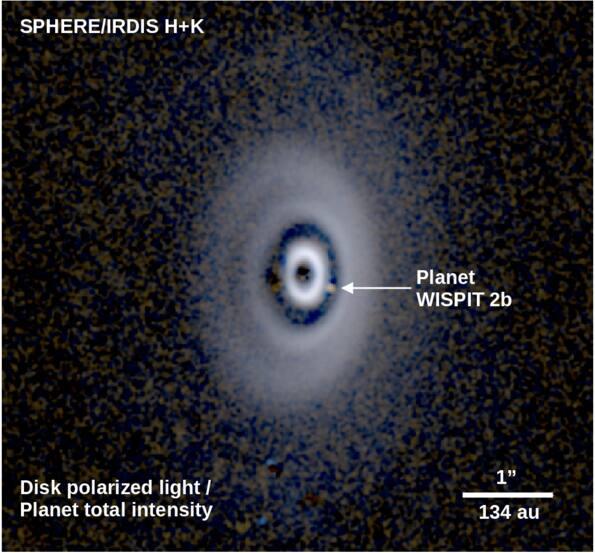
Alt...
Figure 1. Shown here is a SPHERE/IRDIS multiband image of the WISPIT 2 system. The H-band Qϕ image was added as the blue channel and the median combination of H-band and Ks-band Qϕ images was added as the green channel. The red channel is a combination of a Ks-band Qϕ image and a Ks-band cADI image in which we masked all but the gap containing the thermal emission from WISPIT 2b. For more details, see Appendix G.
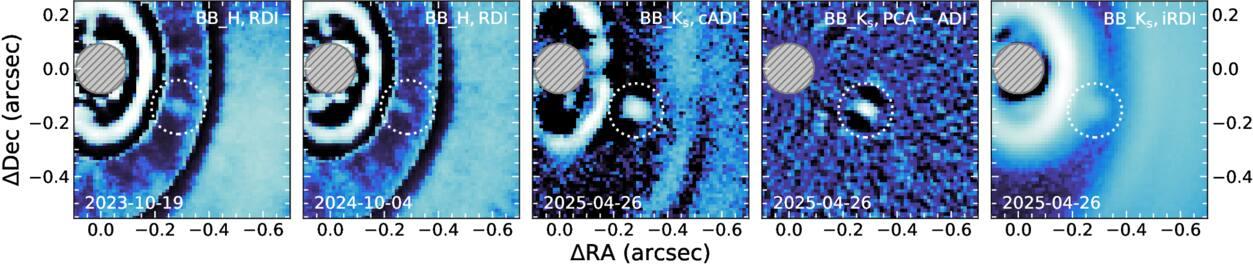
Alt...
Figure 4. All detections of the embedded planet WISPIT 2b in the various observation epochs and filters are shown. We indicate the embedded planet position with a white, dotted circle. The coronagraph position is indicated with a gray, hashed mask. For the 2025 Ks-band data, we show that the embedded planet is recovered with classical and PCA-based ADI as well as in iRDI.
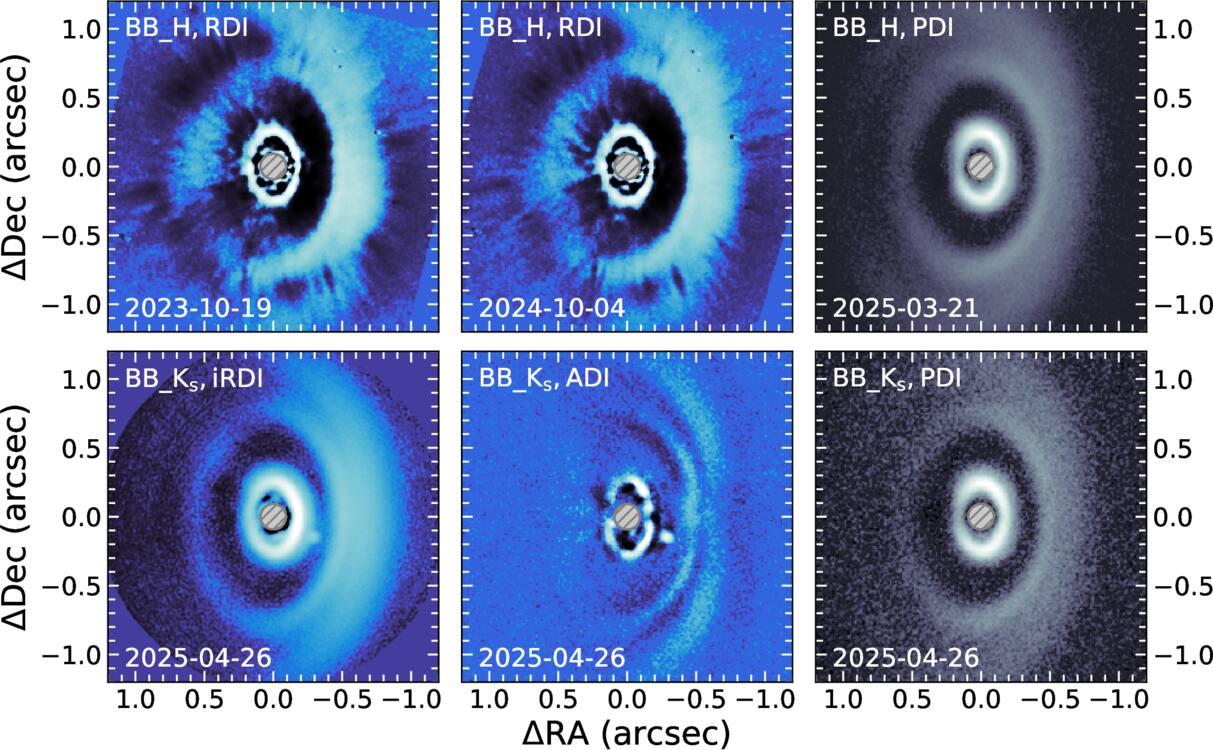
Alt...
Figure 3. SPHERE/IRDIS observations of the WISPIT 2 system are shown here. The gray, hashed disk in the image center indicates the size of the coronagraphic mask. The differential imaging method and observed wave band for each image are indicated in the top-left corner. Blue-hued images reduced with the ADI or RDI (50 principal components) methods are showing total intensity, sensitive to disk scattered light and thermal emission from embedded planets. The gray-hued images are Qϕ images (reduced with the PDI method) showing linearly polarized scattered light, not sensitive to thermal emission.
Alt...
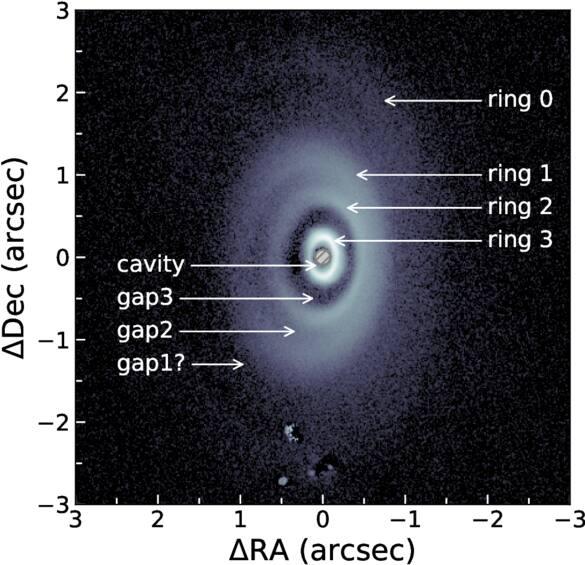
Figure 5. Polarized light Qϕ image of the WISPIT 2 system taken in the H band. We indicate the various substructures that we are detecting within the scattered light signal of the planet-forming disk. Clusters of bad pixels from the detector are seen near the lower edge of the image.
Alt...
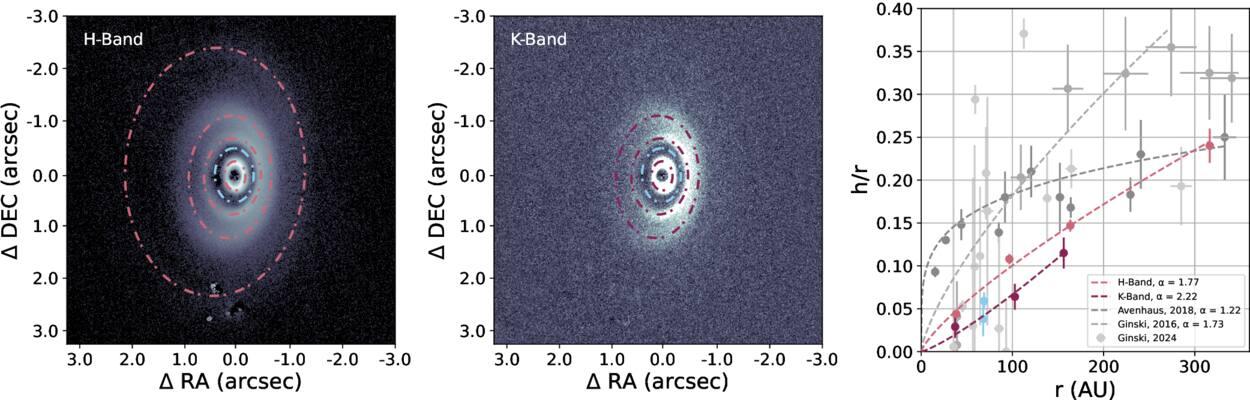
Figure 6. Left and middle panels: geometric fitting of the disk in both H-band and Ks-band images. Right panel: the aspect ratio (h/r) vs. radius (au) of both bands. For comparison, we include the literature measurements of C. Ginski et al. (2016), H. Avenhaus et al. (2018),and C. Ginski et al. (2024) for a total of 17 disks (some of which also have a multiple ringed substructure) as gray data points.
Alt...
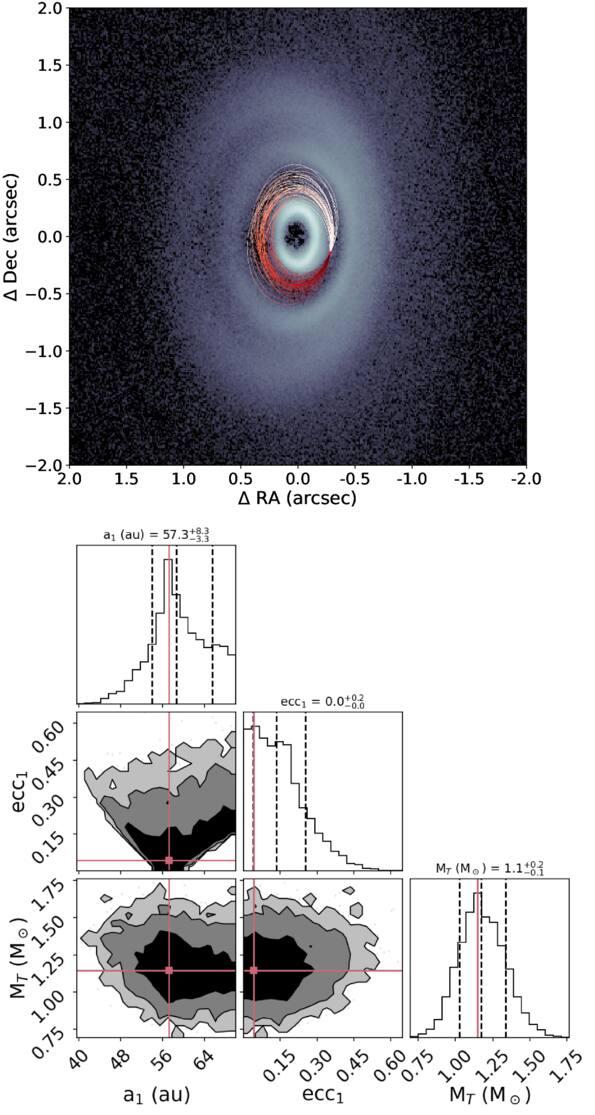
Figure 8. Top panel: predicted orbits of the planet (known astrometry denoted by red star) overlaid on the H-band polarized scattered light image. Bottom panel: extracted orbital elements and total system mass.