Search results for tag #nature
![[?]](https://files.mstdn.party/accounts/avatars/109/412/668/953/833/198/original/0f95655ae0a3a89e.jpg)
Sunflowers Bursting Beauty | Wall Art
https://fineartamerica.com/featured/sunflowers-bursting-beauty-joseph-s-giacalone.html
#sunflowers #flowers #nature #beauty
#wallart #fineartamerica #art #prints #BuyIntoArt

Nostalgic Beauty - Sunflowers Sepia | Wall Art
https://fineartamerica.com/featured/nostalgic-beauty-sunflowers-sepia-joseph-s-giacalone.html
#sunflowers #flowers #nature #sepia #beauty #wallart #fineartamerica #art #prints #BuyIntoArt

![[?]](https://cdn.masto.host/mastodonie/accounts/avatars/109/294/376/925/757/435/original/370bbad04a8ce5c8.png)
Kestrel kestrelling by the sea.
They drag me off-sanctuary once in a while. Sometimes it’s worth it.😂
Observed this amazing creature hunting along the sea-shore recently.
A study in the majesty and engineering of nature.
How perfectly still the head remains…
#kestrel #birds #nature
#seas #wildlife #raptors #biodiversity #environment
![[?]](https://media.social.qoto.org/accounts/avatars/000/536/037/original/586c7abcda18ed45.jpg)
"Negative frames don’t win." #Quote [SENSITIVE CONTENT]
"... George Lakoff is an authority on the #nature and #power of
#frames – the worldviews that we activate...
..the #words and #metaphors we choose. As he has documented over
many decades, we are unlikely to win a #debate if we try to do
so while still using our opponent’s #frames.
The title of his book, Don’t Think of an Elephant, makes this
very point because it immediately makes you think of a you know
what."
- Excerpt written by Kate Raeworth about #Degrowth as a word and
#GeorgeLakoff #cognitive #scientist
"Negative frames don’t win." #Quote
https://web.archive.org/web/20210310004836/http://oxfamblogs.org
/fp2p/why-degrowth-has-out-grown-its-own-name-guest-post-by-
kate-raworth/
#FreeSchool #Quotes #KateRaeworth #Degrowth
#Fascism #Fascist #Trump #Musk + #AltText

Alt...
Test says
Unnecessary NonProductive Negative
on a red no entry / not allowed style sign
![[?]](https://cdn.masto.host/mastodonart/accounts/avatars/109/338/112/278/950/618/original/2f56892f7a046cf7.jpg)
Milkweed Seedpod Explosion
https://www.pictorem.com/2479462/milkweed-pod-explosion/
#wildflower #milkweed #macro #photography #IrisRichardsonArt #art #artist #smallbusiness #artshop #artstore #ayearforart #buyintoart #fallforart #gardening #nature #Life #wallart #artpring #homedecor #ArtistSunday
#supportthearts

Alt...
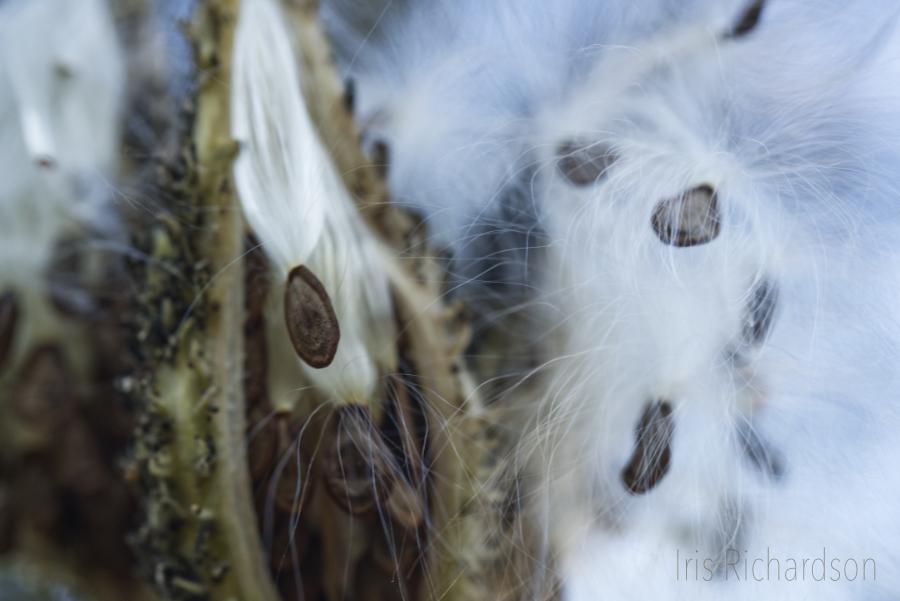
Milkweed seedpod exploding macro photograph
Milkweed Seedpod Split Open
https://www.pictorem.com/2479489/milkweed-seedpod-split-open/
#milkweed #wildflowers #seeds #macro #photography #IrisRichardsonArt #art #artist #smallbusiness #ayearforart #buyintoart #fallforart #wallart #artprint #giftideas #artistsunday #nature #supportthearts
Alt...
Milkweed Seedpod Split Open macro photograph
![[?]](https://files.defcon.social/dcsocial-s3/accounts/avatars/113/208/344/507/078/943/original/014820ad22daee1c.jpg)
2025 October 29
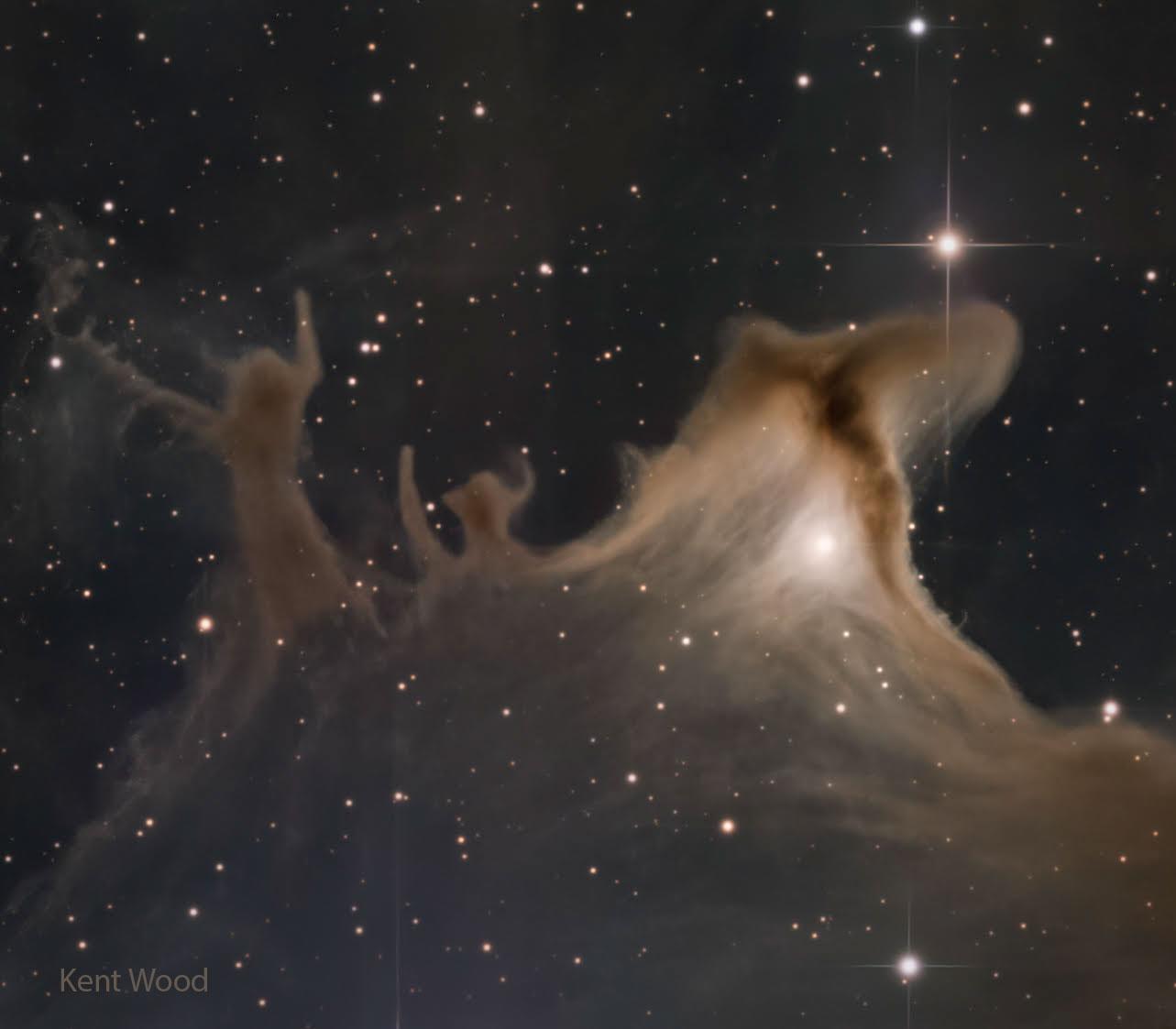
Dust Shapes of the Ghost Nebula
* Image Credit & Copyright: Kent Wood
https://ssr.app.astrobin.com/u/kvwood#gallery
Explanation:
Do any shapes seem to jump out at you from this interstellar field of stars and dust? The jeweled expanse, filled with faint, starlight-reflecting clouds, drifts through the night in the royal constellation of Cepheus. Far from your own neighborhood on planet Earth, these ghostly apparitions lurk along the plane of the Milky Way at the edge of the Cepheus Flare molecular cloud complex some 1,200 light-years away. Over two light-years across and brighter than the other spooky chimeras, VdB 141 or Sh2-136 is also known as the Ghost Nebula, seen across the middle of the featured image. Within the reflection nebula are the telltale signs of dense cores collapsing in the early stages of star formation.
https://www.flickr.com/photos/kvwood/54828050686/in/dateposted-public/
https://en.wikipedia.org/wiki/Cepheus_(constellation)
https://en.wikipedia.org/wiki/Ghost_Nebula
https://noirlab.edu/public/images/noao-vdb141/
https://en.wikipedia.org/wiki/Reflection_nebula
https://arxiv.org/abs/0809.4761
https://ui.adsabs.harvard.edu/abs/2009ApJS..185..451K/abstract
https://www.jpl.nasa.gov/news/a-ghostly-trio-from-nasas-spitzer-space-telescope/
https://en.wikipedia.org/wiki/Chimera_(mythology)
👻 https://i.pinimg.com/736x/eb/62/1a/eb621ac58b9948269119f140ca2f8feb.jpg
https://apod.nasa.gov/apod/ap251029.html
#space #astronomy #science #astrophotography #photography #nature #nebula #NASA #apod
Alt...
2025 October 29
A dark star field surrounds an unusual clump of brown dust. To some, the dust clumps appear as shapes of people or monsters. Please see the explanation for more detailed information.
Dust Shapes of the Ghost Nebula
* Image Credit & Copyright: Kent Wood
Explanation:
Do any shapes seem to jump out at you from this interstellar field of stars and dust? The jeweled expanse, filled with faint, starlight-reflecting clouds, drifts through the night in the royal constellation of Cepheus. Far from your own neighborhood on planet Earth, these ghostly apparitions lurk along the plane of the Milky Way at the edge of the Cepheus Flare molecular cloud complex some 1,200 light-years away. Over two light-years across and brighter than the other spooky chimeras, VdB 141 or Sh2-136 is also known as the Ghost Nebula, seen across the middle of the featured image. Within the reflection nebula are the telltale signs of dense cores collapsing in the early stages of star formation.
Authors & editors: Robert Nemiroff (MTU) & Jerry Bonnell (UMCP)
NASA Official: Amber Straughn Specific rights apply.
NASA Web Privacy, Accessibility, Notices;
A service of: ASD at NASA / GSFC,
NASA Science Activation
& Michigan Tech. U.
![[?]](https://cdn.masto.host/swisssocial/accounts/avatars/109/610/582/883/537/207/original/0e6a86a6c0df06cc.jpg)

#wandern #hiking #natur #nature #dogs #DogsOfFedi #dogsOfPixelFed #dogsofmastodon
Alt...
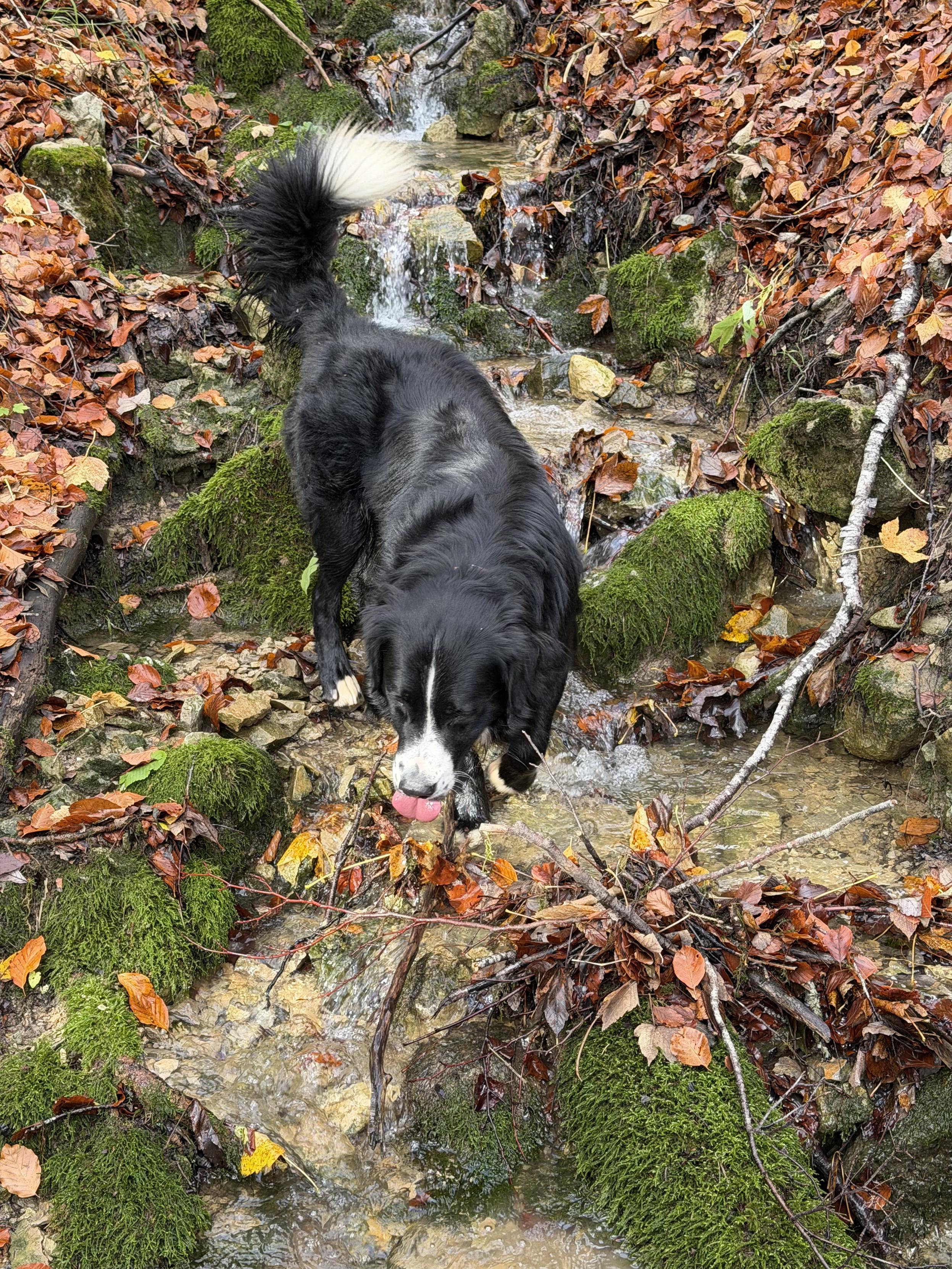
Sanchoz, schwarzweisser Mischlingshund, geniesst das spielen im Bach
Sanchoz, a black and white mixed-breed dog, enjoys playing in the stream

Alt...
Shiro, rehbrauner Jagdhund, geniesst die Wanderung mit Herbstlaub
Shiro, a fawn-colored hunting dog, enjoys the hike with autumn leaves

Alt...
Shiro, rehbrauner Jagdhund geniesst das spielen im Bach
Shiro, a fawn-colored hunting dog, enjoys playing in the stream
#wandern #hiking #nature #natur

Alt...
Ein kleiner Bach im Wald, rundherum Herbstlaub, grüne Waldpflanzen und Felsen
A small stream in the forest, surrounded by autumn leaves, green forest plants, and rocks

Alt...
Ein kleiner Bach im Wald, rundherum Herbstlaub, Felsen und Moos
A small stream in the forest, surrounded by autumn leaves, rocks, and moss.
Alt...
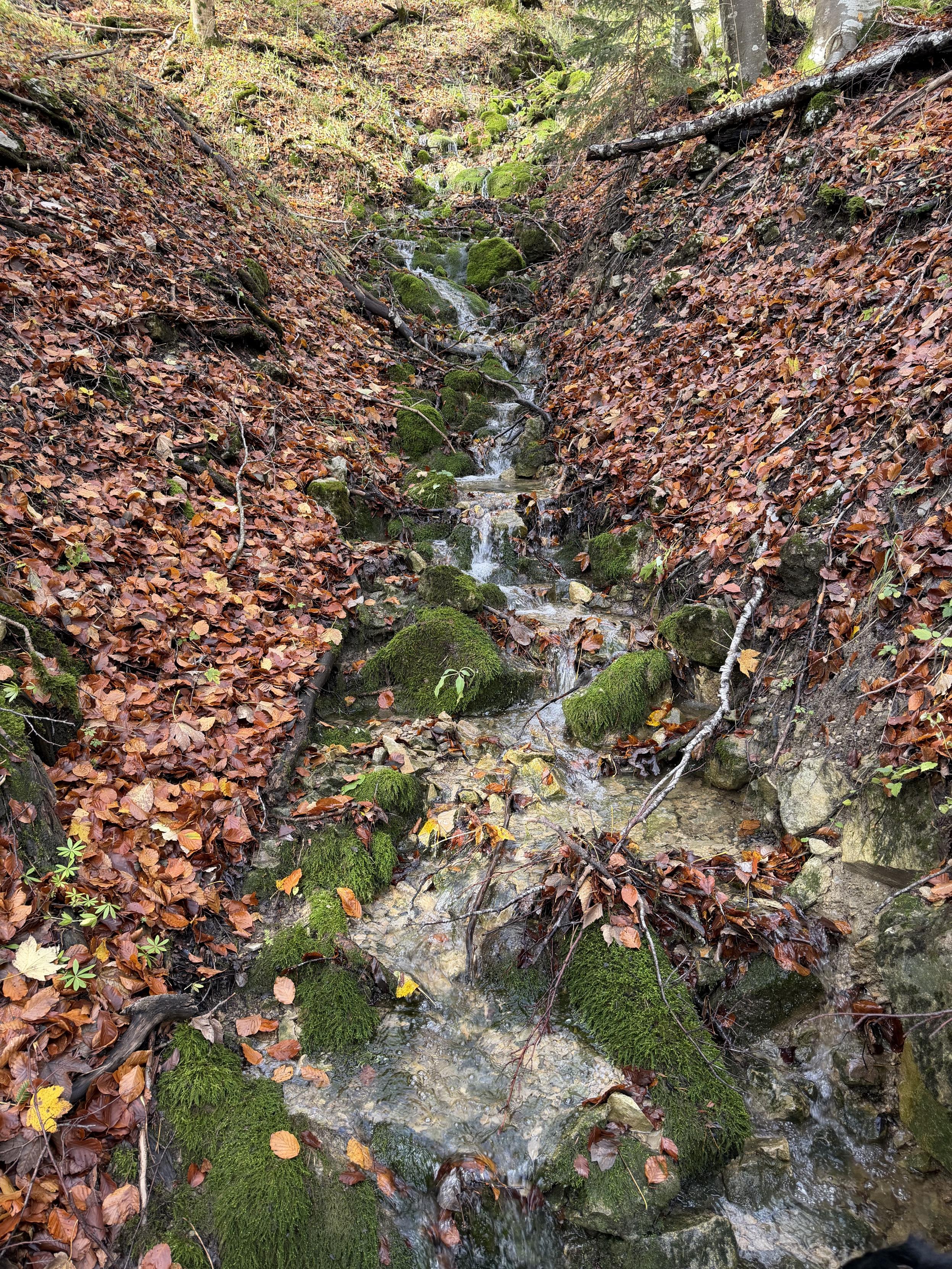
Ein kleiner Bach im Wald, rundherum Herbstlaub, Felsen und Moos
A small stream in the forest, surrounded by autumn leaves, rocks, and moss.
#wandern #hiking #landscape #landschaft #natur #nature
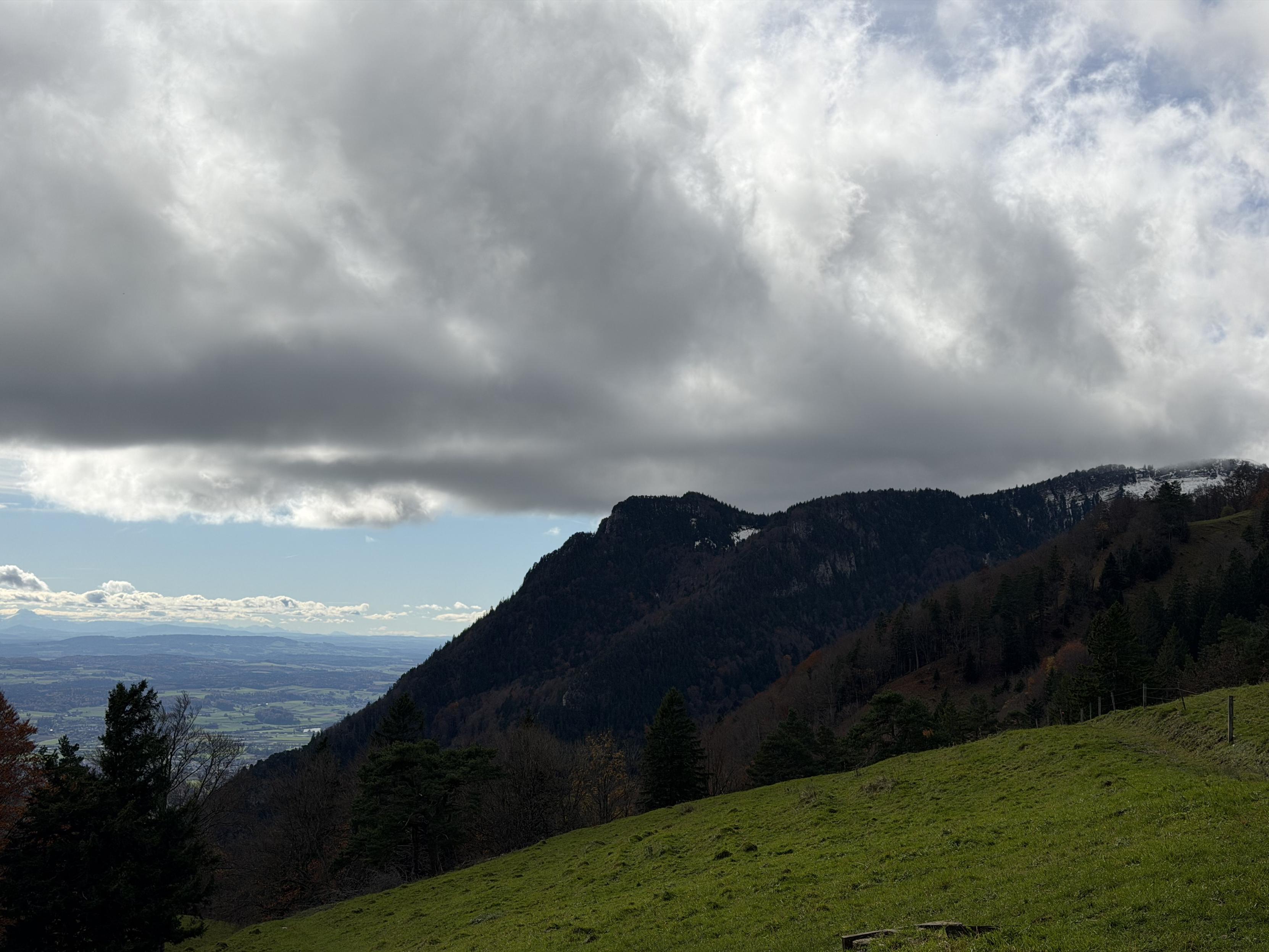
Alt...
Graue Wolken mit etwas blauen Himmel, in der Mitte Berge welche leicht mit Schnee bedeckt sind, links die Sicht ins Tal. vorne Bäume und Wiese
Grey clouds with some blue sky, mountains lightly covered with snow in the middle of the picture, view of the valley to the left. Trees and meadow in the foreground.
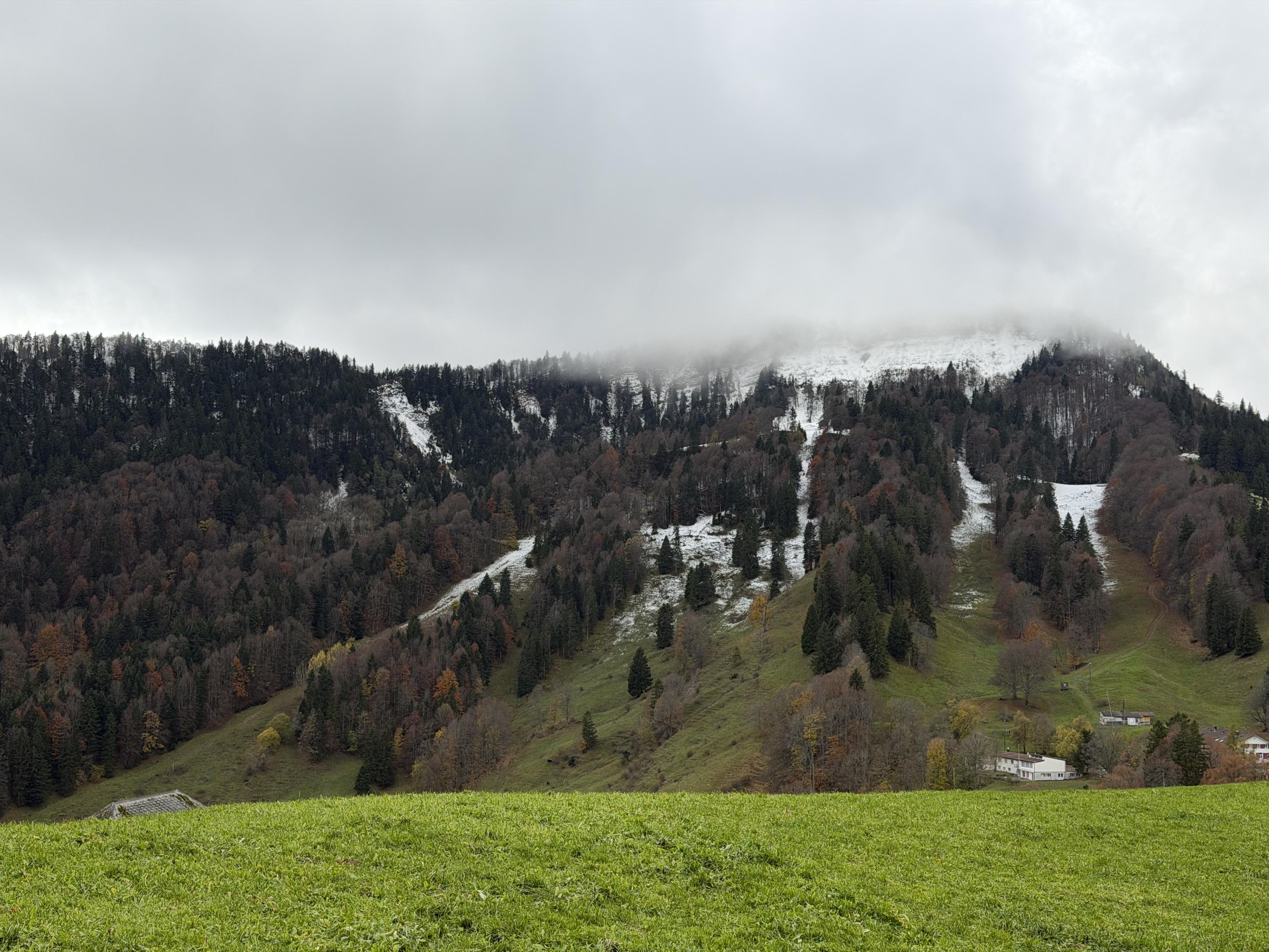
Alt...
Graue Wolken, in der Mitte Berge welche leicht mit Schnee bedeckt sind, vorne Wiese
Grey clouds, mountains lightly covered with snow in the middle of the picture, meadow in the foreground.
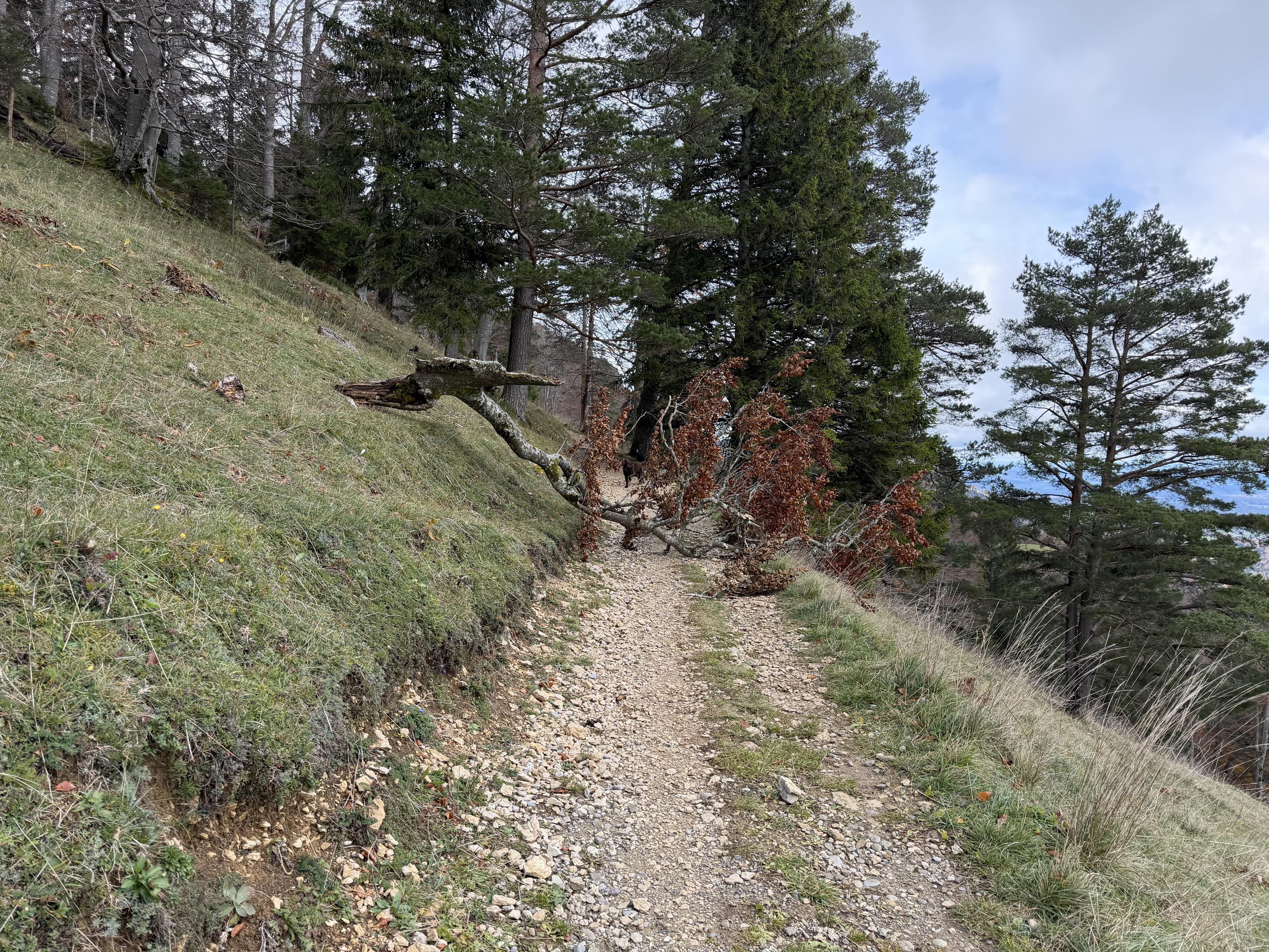
Alt...
Ein grosser Ast liegt [ber den Wanderweg, links und rechts Wiese und Bäume
A large branch lies across the hiking trail, meadow and trees to the left and right.

Alt...
Eine ältere Baumstamm bedeckt mit Moos, rundherum liegt Herbstlaub
An old tree trunk covered with moss, surrounded by autumn leaves.
Roses Are Love - Painterly Style | Wall Art
https://fineartamerica.com/featured/roses-are-love-painterly-style-joseph-s-giacalone.html
#flowers #wallart #artforsale #nature #beauty #BuyIntoArt

Dainty Daisies - So Serene | Wall Art
https://fineartamerica.com/featured/dainty-daisies-so-serene-joseph-s-giacalone.html
#flowers #wallart #artforsale #nature #beauty #BuyIntoArt

Tulips - Saturated With Beauty | Wall Art
https://fineartamerica.com/featured/tulips-saturated-with-beauty-joseph-s-giacalone.html
#flowers #wallart #artforsale #nature #beauty #BuyIntoArt

Lotus Flower Glow | Wall Art
https://fineartamerica.com/featured/lotus-flower-glow-joseph-s-giacalone.html
#flowers #wallart #artforsale #nature #beauty #BuyIntoArt

Tulips Becoming A Dream | Wall Art
https://fineartamerica.com/featured/tulips-becoming-a-dream-joseph-s-giacalone.html
#flowers #wallart #artforsale #nature #beauty #BuyIntoArt

2025 October 28
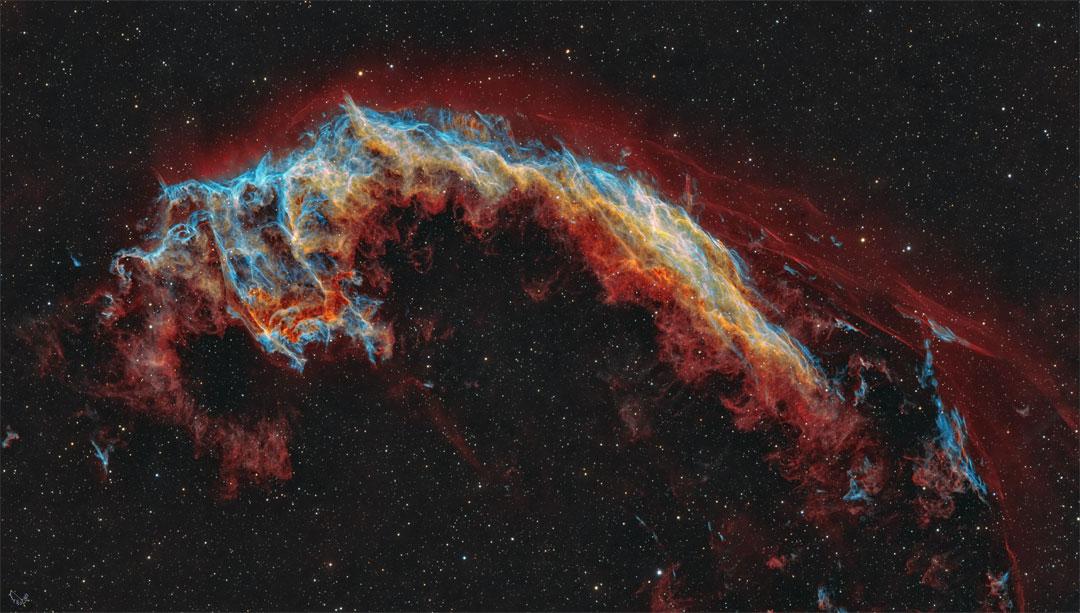
NGC 6995: The Bat Nebula
* Image Credit & Copyright: Francis Bozon & Jean-Luc Gangloff
Explanation:
Can you see the bat? It haunts this cosmic close-up of the eastern Veil Nebula. The Veil Nebula itself is a large supernova remnant, the expanding debris cloud from the death explosion of a massive star. While the Veil is roughly circular in shape and covers nearly 3 degrees on the sky toward the constellation of the Swan (Cygnus), NGC 6995, known informally as the Bat Nebula, spans only 1/2 degree, about the apparent size of the Moon. That translates to 12 light-years at the Veil's estimated distance, a reassuring 1,400 light-years from planet Earth. In the composite of image data recorded through several narrow band filters, with emission from hydrogen atoms in the remnant shown in red and with strong emission from oxygen atoms shown in hues of blue. Of course, in the western part of the Veil lies another seasonal apparition: the Witch's Broom Nebula.
https://chandra.harvard.edu/photo/scale_distance.html
https://periodic.lanl.gov/1.shtml
https://apod.nasa.gov/apod/ap251022.html
#space #nebula #cluster #astrophotography #photography #science #astronomy #nature #NASA #ESA #apod #education
Alt...
2025 October 22
NGC 6995: The Bat Nebula
* Image Credit & Copyright: Francis Bozon & Jean-Luc Gangloff
Explanation:
Can you see the bat? It haunts this cosmic close-up of the eastern Veil Nebula. The Veil Nebula itself is a large supernova remnant, the expanding debris cloud from the death explosion of a massive star. While the Veil is roughly circular in shape and covers nearly 3 degrees on the sky toward the constellation of the Swan (Cygnus), NGC 6995, known informally as the Bat Nebula, spans only 1/2 degree, about the apparent size of the Moon. That translates to 12 light-years at the Veil's estimated distance, a reassuring 1,400 light-years from planet Earth. In the composite of image data recorded through several narrow band filters, with emission from hydrogen atoms in the remnant shown in red and with strong emission from oxygen atoms shown in hues of blue. Of course, in the western part of the Veil lies another seasonal apparition: the Witch's Broom Nebula.
![[?]](data:image/png;base64, iVBORw0KGgoAAAANSUhEUgAAAEAAAABAAQAAAACCEkxzAAAAUUlEQVQoz43R0QkAMQwCUDdw/y3dwEvsvzlL4X1IoQkAisKmwfAFT3RgJHbQezpSRoXEqeqCL9BJBf7h3QbOCCxV5EVWMEMwG7K1/WODtlvxAYTtEsDU9F34AAAAAElFTkSuQmCC)
Thank you to the buyer from Bellevue, WA who purchased a print of "Kayaks"! Link: https://pixels.com/featured/kayaks-thom-zehrfeld.html #kayak #nature #kayaklife #travel
#kayakingadventures #BuyIntoArt #Art #ThomZehrfeldPhotography #PhotographyIsArt #Photography #Fotografie
#ArtForSale #ArtMatters #MastoArt #Mastodon #ArtforInteriorDesign #HospitalityInteriors
#InteriorDesign #Wallart #InteriorDecorating #WallArtForSale #PhotoOfTheDay #FediGiftShop #GiftIdeas #FediArt #Prints #FediArtShop #Colorful

Alt...
Thank you to the buyer from Bellevue, WA who purchased a print of "Kayaks"! Link: https://pixels.com/featured/kayaks-thom-zehrfeld.html #kayak #nature #kayaklife #travel
#kayakingadventures #BuyIntoArt #Art
![[?]](https://cdn.masto.host/socelnet/accounts/avatars/109/355/496/809/872/483/original/4bb481e7a50769d3.jpg)
Ich wünsche euch einen schönen Tag - trotz Regen!
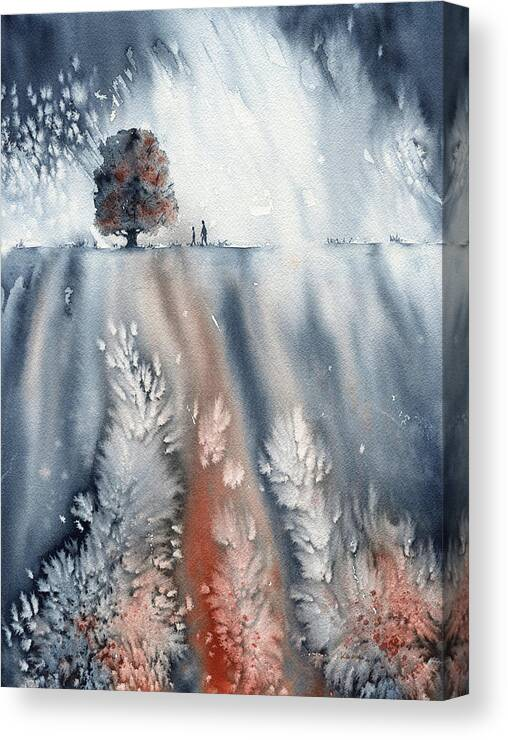
Novemberspaziergang - handgemaltes Aquarellgemälde
https://www.artheroes.de/de/motiv/Novemberspaziergang-Aquarellgemaelde/1185581/132
#art #painting #watercolour #landscape #nature #aquarell #baum #november
Alt...
Novemberspaziergang ist ein Aquarellgemälde im Hochformat der Künstlerin Karen Kaspar. Es zeigt eine abstrahierte Landschaft mit einem einsamen Baum und der Silhouette zweier gehender Menschen. Der Himmel ist dunkel und Schneeflocken tanzen. Das Gemälde ist nur mit zwei Farben gemalt: Indigoblau und Sienabraun sowie dem Weiß des Papiers.
Es war ein trüber, bewölkter Novembertag, als wir unseren Sonntagsspaziergang begannen. Niemand war in der Nähe, alles war ruhig und friedlich, als wir entlang kahler Felder und einsamer Bäume gingen. Plötzlich zogen dunkle Wolken auf und es begann zu schneien. Es war fast wie ein kleiner Schneesturm und als wir endlich unser Auto erreichten, sahen wir aus wie kleine Schneemänner, weil wir überall mit Schnee bedeckt waren. Dieses wundervolle Erlebnis inspirierte mich, dieses abstrakte Landschaftsgemälde in Aquarellfarben zu malen.
2025 October 27
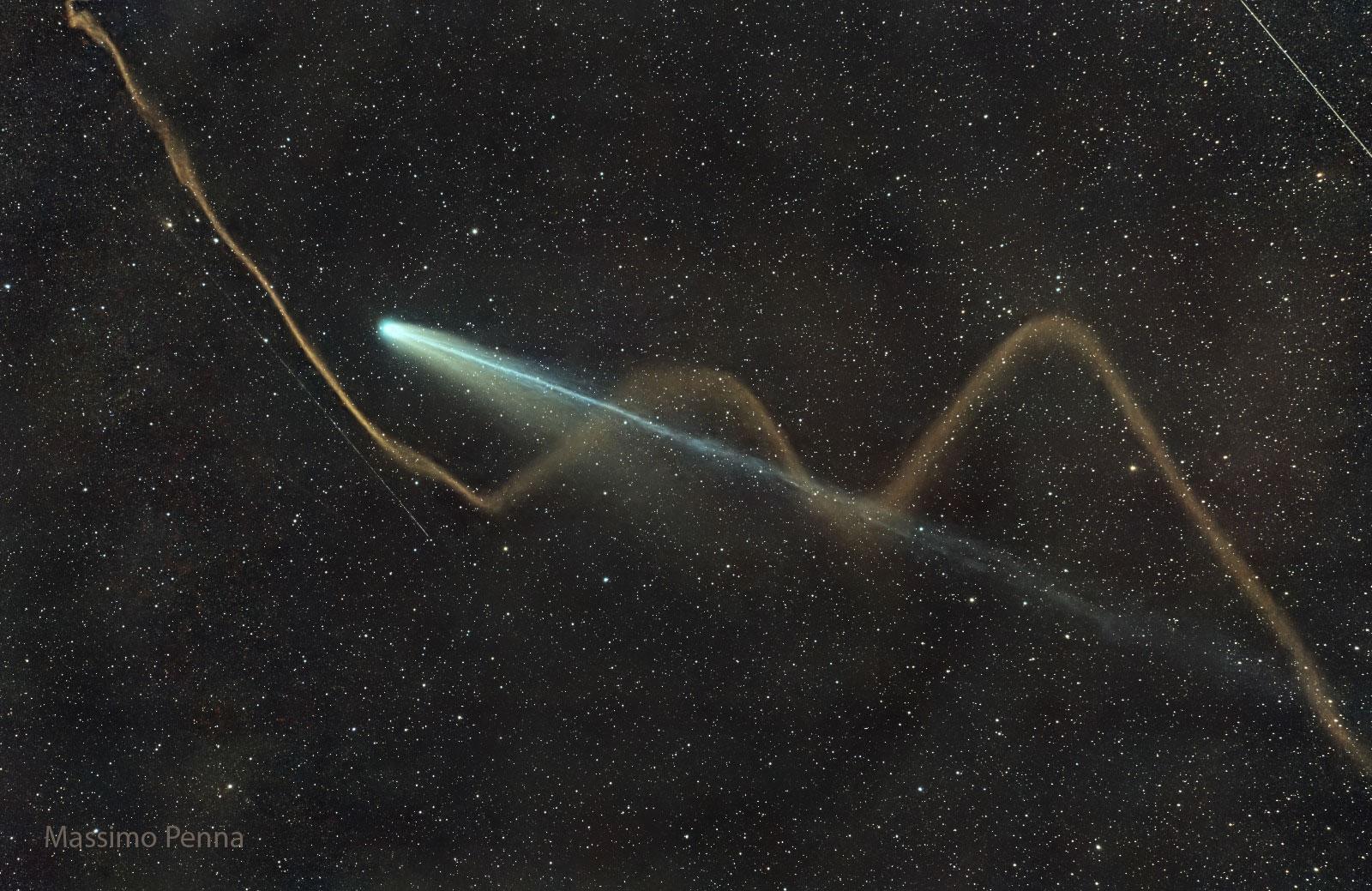
Two Tails of Comet Lemmon
* Image Credit: Massimo Penna
Explanation:
How many bright tails does Comet Lemmon have? Two. In the featured image it appears to have three, but why? The reason is that the zigzagging brown filament is a persistent meteor train that by luck appeared in front of the distant comet C/2025 A6 (Lemmon). A meteor train is the hot gas and fine dust that remains in the Earth's atmosphere and disperses in the seconds after a bright meteor flashes by. The two bright tails are the blue ion tail stretching across the image, and the white dust tail nearer the green coma on the upper left. All real comet tails originate from the nucleus of the comet inside the coma. The image was captured a few days ago from Manciano, Italy. This week, from mid-northern locations, Comet Lemmon will remain faintly visible in the northwest sky after sunset.
https://apod.nasa.gov/apod/fap/ap251027.html
https://www.virtualtelescope.eu/2025/10/26/comet-c-2025-a6-lemmon-and-a-meteor-red-afterglow-an-epic-image-24-oct-2025/
https://en.wikipedia.org/wiki/Coma_(comet)
https://en.wikipedia.org/wiki/Comet_tail
https://www.space.com/stargazing/see-comet-lemmon-cross-paths-with-a-cosmic-serpent-this-weekend
https://apod.nasa.gov/apod/ap251027.html
#space #comets #astrophotography #photography #science #astronomy #nature #NASA #ESA #education #apod
Alt...
2025 October 27
A dark sky shows bright comet with its tails extending diagonally from the lower left. Two tails are visible for the comet -- a long blue tail and a shorter wider white tail. Oddly, a wiggly tan stream appears to be a third tail -- but is actually the dust from a dissipated meteor. Please see the explanation for more detailed information.
Two Tails of Comet Lemmon
* Image Credit: Massimo Penna
Explanation:
How many bright tails does Comet Lemmon have? Two. In the featured image it appears to have three, but why? The reason is that the zigzagging brown filament is a persistent meteor train that by luck appeared in front of the distant comet C/2025 A6 (Lemmon). A meteor train is the hot gas and fine dust that remains in the Earth's atmosphere and disperses in the seconds after a bright meteor flashes by. The two bright tails are the blue ion tail stretching across the image, and the white dust tail nearer the green coma on the upper left. All real comet tails originate from the nucleus of the comet inside the coma. The image was captured a few days ago from Manciano, Italy. This week, from mid-northern locations, Comet Lemmon will remain faintly visible in the northwest sky after sunset.
Authors & editors: Robert Nemiroff (MTU) & Jerry Bonnell (UMCP)
NASA Official: Amber Straughn Specific rights apply.
NASA Web Privacy, Accessibility, Notices;
A service of: ASD at NASA / GSFC,
NASA Science Activation
& Michigan Tech. U.
2025 October 23
SWAN, Swan, Eagle
* Image Credit & Copyright: Adam Block
https://www.adamblockphotos.com/
Explanation:
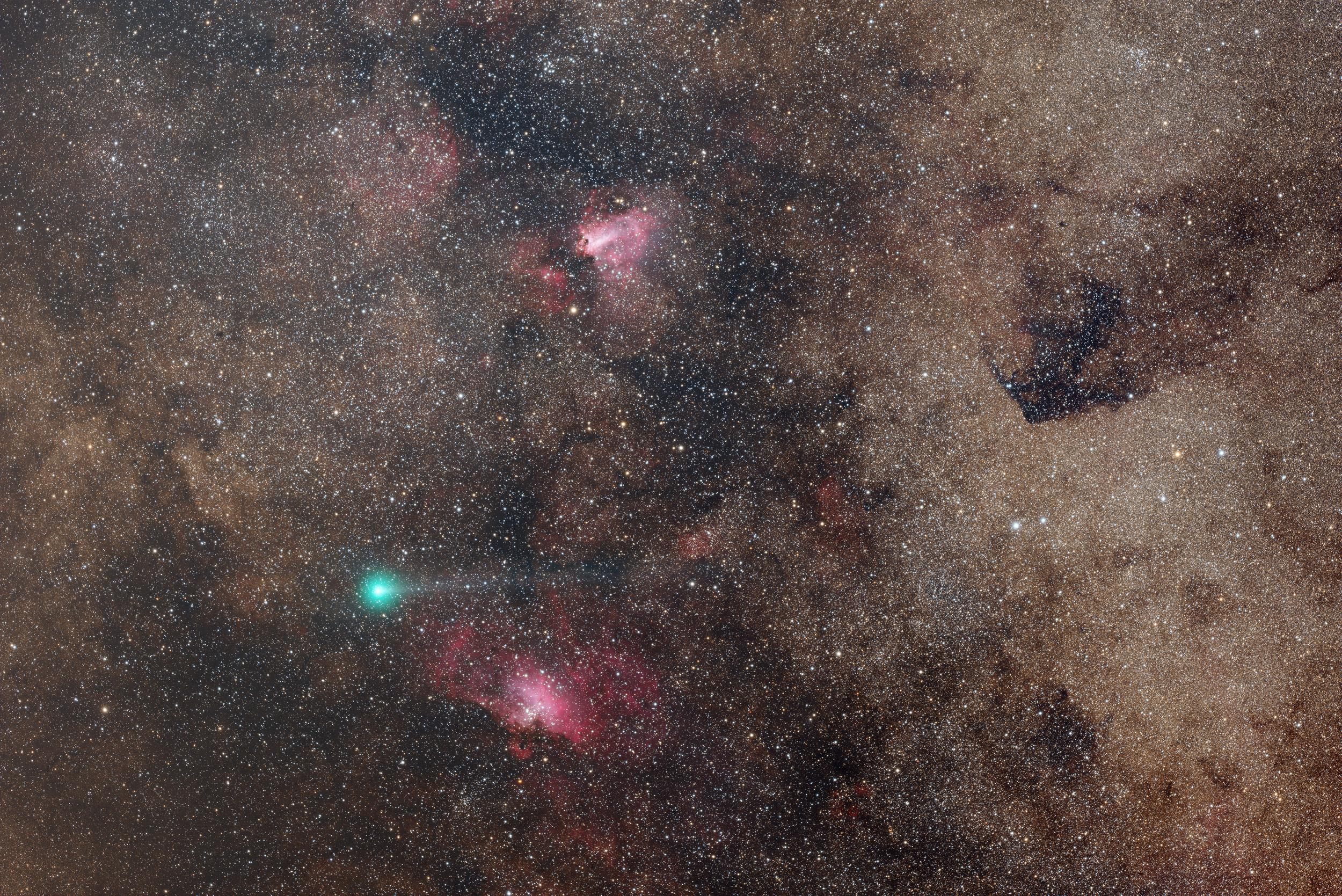
Comet C/2025 R2 (SWAN) sports a greenish coma and fainter tail, seen against congeries of stars and dusty interstellar clouds in this 7 degree wide telescopic field of view from October 17. On that date, the new visitor to the inner Solar System obligingly posed with two other celestial birds seen toward the center of our Milky Way. Messier 16, near the bottom of the frame, and Messier 17 are also known to deep skywatchers as the Eagle and the Swan nebulae. While the comet coma's greenish glow recorded in the image is due to diatomic carbon gas fluorescing in sunlight, reddish hues seen in the nebulae, star forming regions some 5,000 light-years distant, are characteristic of ionized hydrogen gas. Comet SWAN is outbound now but still a good comet for binoculars and small telescopes that can look close to the southern horizon in the northern hemisphere's early evening skies. C/2025 R2 (SWAN) was closest to our fair planet on October 20, a mere 2.2 light-minutes away.
https://app.astrobin.com/i/rkicdu
https://en.wikipedia.org/wiki/Sidereus_Nuncius#Stars
https://earthsky.org/astronomy-essentials/visible-planets-tonight-mars-jupiter-venus-saturn-mercury/
https://apod.nasa.gov/apod/ap251023.html
#space #comets #astrophotography #photography #science #astronomy #nature #NASA #ESA #education #apod
Alt...
2025 October 23
SWAN, Swan, Eagle
* Image Credit & Copyright: Adam Block
Explanation:
Comet C/2025 R2 (SWAN) sports a greenish coma and fainter tail, seen against congeries of stars and dusty interstellar clouds in this 7 degree wide telescopic field of view from October 17. On that date, the new visitor to the inner Solar System obligingly posed with two other celestial birds seen toward the center of our Milky Way. Messier 16, near the bottom of the frame, and Messier 17 are also known to deep skywatchers as the Eagle and the Swan nebulae. While the comet coma's greenish glow recorded in the image is due to diatomic carbon gas fluorescing in sunlight, reddish hues seen in the nebulae, star forming regions some 5,000 light-years distant, are characteristic of ionized hydrogen gas. Comet SWAN is outbound now but still a good comet for binoculars and small telescopes that can look close to the southern horizon in the northern hemisphere's early evening skies. C/2025 R2 (SWAN) was closest to our fair planet on October 20, a mere 2.2 light-minutes away.
Authors & editors: Robert Nemiroff (MTU) & Jerry Bonnell (UMCP)
NASA Official: Amber Straughn Specific rights apply.
NASA Web Privacy, Accessibility, Notices;
A service of: ASD at NASA / GSFC,
NASA Science Activation
& Michigan Tech. U.
Morning dreaming from Hospital's Reef in La Jolla, California.
Enjoy and have a great day.
Artist website:
https://www.josephsgiacalonephoto.com
#coast #nature #sunrise
#photography #MastoArt

2025 Shuttober 26
Halloween and the Ghost Head Nebula
* Image Credit: NASA, ESA, Mohammad Heydari-Malayeri (Observatoire de Paris) et al.,
https://www.nasa.gov/
https://www.esa.int/
https://www.iau.org/Iau/Shared_Content/Contacts/ContactLayouts/Obituary.aspx?ID=29332
https://www.observatoiredeparis.psl.eu/
Explanation:
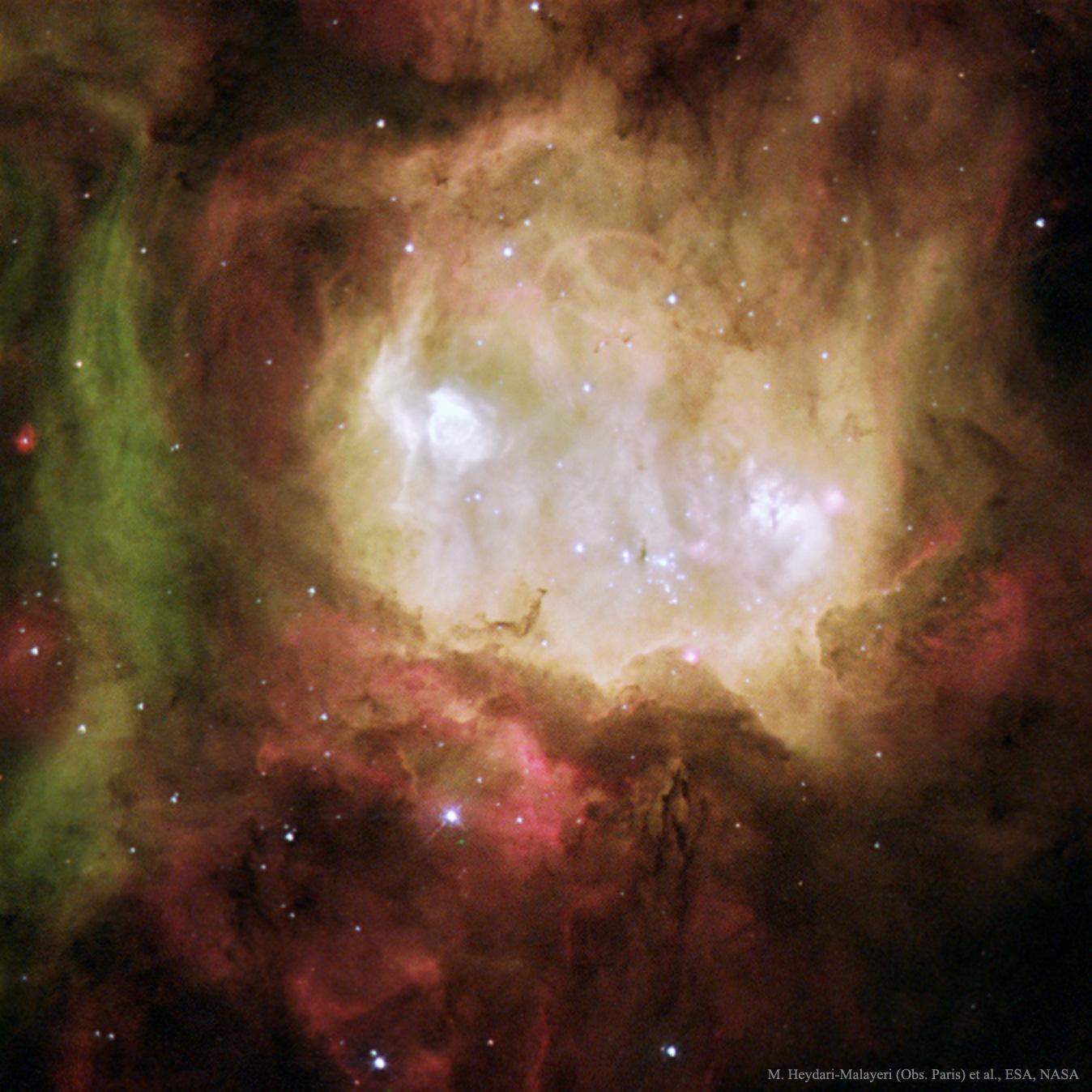
Halloween's origin is ancient and astronomical. Since the fifth century BC, Halloween has been celebrated as a cross-quarter day, a day halfway between an equinox (equal day / equal night) and a solstice (minimum day / maximum night in the northern hemisphere). With a modern calendar however, even though Halloween later this week, the real cross-quarter day will occur the next week. Another cross-quarter day is Groundhog Day. Halloween's modern celebration retains historic roots in dressing to scare away the spirits of the dead. Perhaps a fitting tribute to this ancient holiday is this view of the Ghost Head Nebula taken with the Hubble Space Telescope. Similar to the icon of a fictional ghost, NGC 2080 is actually a star forming region in the Large Magellanic Cloud, a satellite galaxy of our own Milky Way Galaxy. The Ghost Head Nebula (NGC 2080) spans about 50 light-years and is shown in representative colors.
https://science.nasa.gov/photojournal/pj-ghost-head-nebula/
https://en.wikipedia.org/wiki/NGC_2080
https://en.wikipedia.org/wiki/Halloween
https://www.neopagan.net/Halloween-Origins.html
👻 https://en.wikipedia.org/wiki/Casper_the_Friendly_Ghost
https://earthsky.org/astronomy-essentials/halloween-derived-from-ancient-celtic-cross-quarter-day/
https://www.webexhibits.org//calendars/year-countries.html
https://en.wikipedia.org/wiki/Quarter_days
https://en.wikipedia.org/wiki/Groundhog_Day
🎃 https://www.boredpanda.com/blog/wp-content/uploads/2016/10/halloween-cat-costumes-19-57f75fe01d15b__605.jpg
https://apod.nasa.gov/apod/fap/ap251026.html
#space #astronomy #science #astrophotography #photography #nature #nebula #NASA #Webb #apod
Alt...
2025 October 26
A white nebula appears in a colorful star field. To some, the nebula appears like a ghost. Please see the explanation for more detailed information.
Halloween and the Ghost Head Nebula
* Image Credit: NASA, ESA, Mohammad Heydari-Malayeri (Observatoire de Paris) et al.,
Explanation:
Halloween's origin is ancient and astronomical. Since the fifth century BC, Halloween has been celebrated as a cross-quarter day, a day halfway between an equinox (equal day / equal night) and a solstice (minimum day / maximum night in the northern hemisphere). With a modern calendar however, even though Halloween later this week, the real cross-quarter day will occur the next week. Another cross-quarter day is Groundhog Day. Halloween's modern celebration retains historic roots in dressing to scare away the spirits of the dead. Perhaps a fitting tribute to this ancient holiday is this view of the Ghost Head Nebula taken with the Hubble Space Telescope. Similar to the icon of a fictional ghost, NGC 2080 is actually a star forming region in the Large Magellanic Cloud, a satellite galaxy of our own Milky Way Galaxy. The Ghost Head Nebula (NGC 2080) spans about 50 light-years and is shown in representative colors.
Authors & editors: Robert Nemiroff (MTU) & Jerry Bonnell (UMCP)
NASA Official: Amber Straughn Specific rights apply.
NASA Web Privacy, Accessibility, Notices;
A service of: ASD at NASA / GSFC,
NASA Science Activation
& Michigan Tech. U.
"I want to wish you a nice Hallowwen time! May all ghosts and spirits on your ways be kind .. (Better keep some candies along ..)"
If you are fortunate enough to be able to do this, you may want to allow [the following website] to continue.
https://earthsky.org/astronomy-essentials/halloween-derived-from-ancient-celtic-cross-quarter-day/
Video Credit:
Written and produced by Kelly Kizer Whitt
https://earthsky.org/author/kellywhitt/
EarthSky.org:
https://earthsky.org/
Subscribe:
https://subscribe.earthsky.org/
Store:
https://earthskystore.org/
Team and About:
https://earthsky.org/about/
#space #astronomy #science #astrophotography #photography #nature #nebula #NASA #Webb #apod
Arch Flows - Sunset Cliffs | Wall Art and more... https://fineartamerica.com/featured/arch-flows-sunset-cliffs-joseph-s-giacalone.html
#fineartamerica #wallart #homedecor #coast #nature #sea
#sandiego #california #magical #wonder #positivevibes #BuyIntoArt

The Hand Of Coastal Grace | Wall Art and more... https://fineartamerica.com/featured/the-hand-of-coastal-grace-joseph-s-giacalone.html
#fineartamerica #wallart #homedecor #coast #nature #sea
#sandiego #california #magical #wonder #positivevibes #BuyIntoArt

![[?]](https://assets.toot.cafe/accounts/avatars/000/003/681/original/65a3633062de133e.jpg)
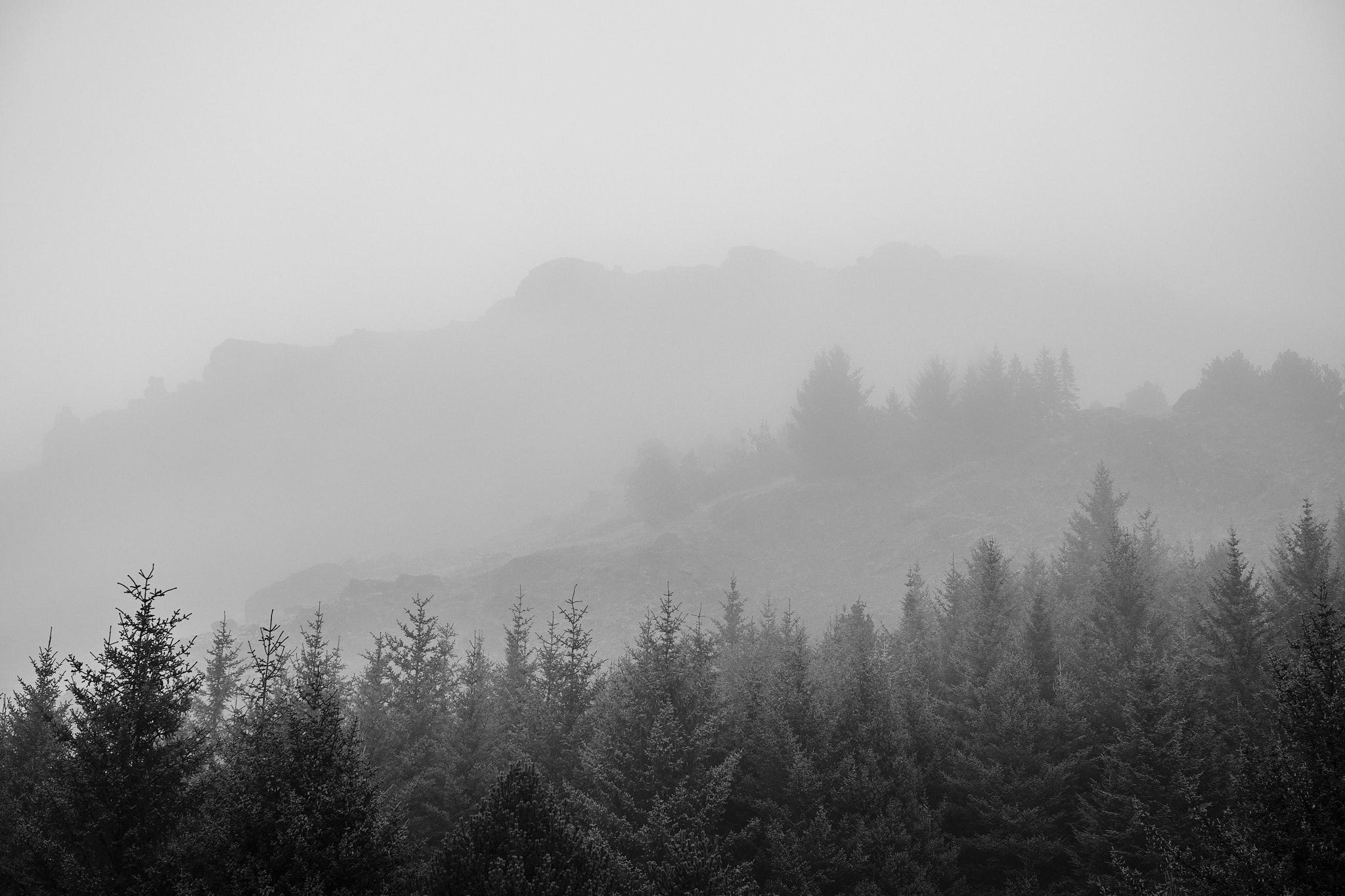
Last of the recent foggy photos #landscape #nature
Alt...
A black and white photo of a foggy landscape. The mist creates three distinct layers in the picture: foreground trees, background trees, and faded mountain
Zoom in to Rho Ophiuchi !
Travel to the Rho Ophiuchi cloud complex. The journey begins with a ground-based image by astrophotographer Akira Fujii, then transitions into a plate from the Digitized Sky Survey. Next a two-color image from the now-retired infrared NASA Spitzer Space Telescope appears, and then finally the video arrives at the James Webb Space Telescope’s image of the star-forming region.
The star-forming region captured in Webb’s image is small and not particularly active compared to other well-known star-forming regions. It is the region’s proximity to Earth (390 light-years) that allows Webb to capture it in such detail, emphasizing the structure of jets bursting from young solar-mass stars, and a dusty “cave” of glowing polycyclic aromatic hydrocarbons.
Credit
Animation: NASA, ESA, CSA, Alyssa Pagan (STScI); Acknowledgment: Caltech/IPAC, Caltech, DSS, Akira Fujii
#space #astronomy #science #astrophotography #photography #nature #nebula #NASA #Webb #apod
2025 October 25
Webb's Rho Ophiuchi
* Image Credit: NASA, ESA, CSA, STScI, Klaus Pontoppidan (STScI),
https://www.nasa.gov/
https://www.esa.int/
https://www.asc-csa.gc.ca/eng/
https://www.stsci.edu/
Explanation:
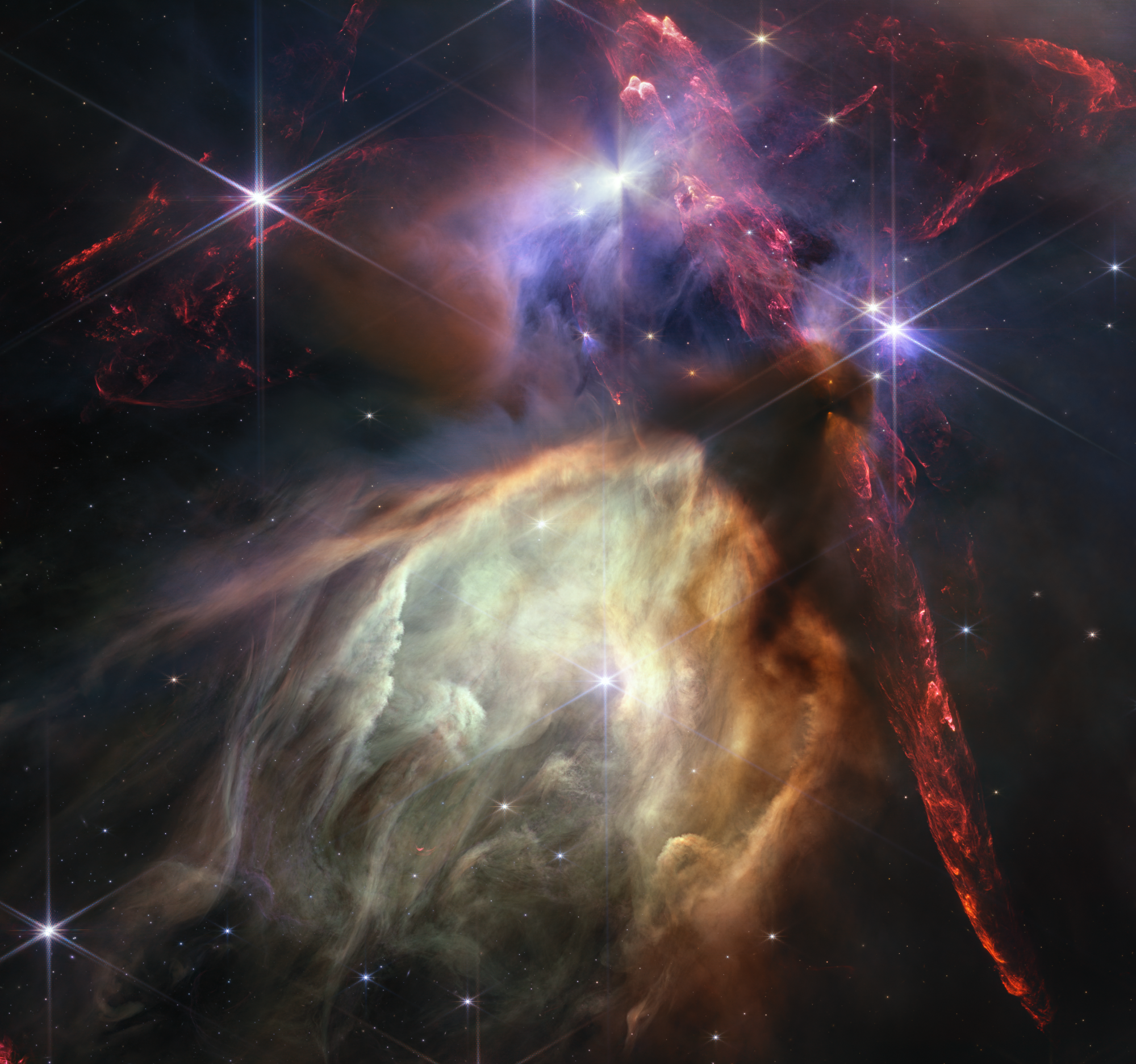
A mere 390 light-years away, Sun-like stars and future planetary systems are forming in the Rho Ophiuchi molecular cloud complex, the closest star-forming region to our fair planet. The James Webb Space Telescope's NIRCam peered into the nearby natal chaos to capture this infrared image at an inspiring scale. The frame spans less than a light-year across the Rho Ophiuchi region and contains about 50 young stars. Brighter stars clearly show Webb's characteristic pattern of diffraction spikes. Huge jets of shocked molecular hydrogen blasting from newborn stars are red in the image, with the large, yellowish dusty cavity carved out by the energetic young star near its center. Near some stars in the stunning image are shadows cast by their protoplanetary disks. The spectacular cosmic snapshot was released in 2023 to celebrate the successful first year of Webb's exploration of the Universe.
https://science.nasa.gov/missions/webb/webb-celebrates-first-year-of-science-with-close-up-on-birth-of-sun-like-stars/
https://science.nasa.gov/asset/webb/rho-ophiuchi-nircam-compass-image/
https://science.nasa.gov/asset/webb/rho-ophiuchi-video-tour/
https://ui.adsabs.harvard.edu/abs/1996A%26A...314..477B/abstract
https://science.nasa.gov/mission/webb/
https://en.wikipedia.org/wiki/James_E._Webb
https://apod.nasa.gov/apod/fap/ap251025.html
#space #astronomy #science #astrophotography #photography #nature #nebula #NASA #education #apod
Alt...
2025 October 25
Webb's Rho Ophiuchi
* Image Credit: NASA, ESA, CSA, STScI, Klaus Pontoppidan (STScI),
Explanation:
A mere 390 light-years away, Sun-like stars and future planetary systems are forming in the Rho Ophiuchi molecular cloud complex, the closest star-forming region to our fair planet. The James Webb Space Telescope's NIRCam peered into the nearby natal chaos to capture this infrared image at an inspiring scale. The frame spans less than a light-year across the Rho Ophiuchi region and contains about 50 young stars. Brighter stars clearly show Webb's characteristic pattern of diffraction spikes. Huge jets of shocked molecular hydrogen blasting from newborn stars are red in the image, with the large, yellowish dusty cavity carved out by the energetic young star near its center. Near some stars in the stunning image are shadows cast by their protoplanetary disks. The spectacular cosmic snapshot was released in 2023 to celebrate the successful first year of Webb's exploration of the Universe.
Authors & editors: Robert Nemiroff (MTU) & Jerry Bonnell (UMCP)
NASA Official: Amber Straughn Specific rights apply.
NASA Web Privacy, Accessibility, Notices;
A service of: ASD at NASA / GSFC,
NASA Science Activation
& Michigan Tech. U.
TOPIC>
In The Neighbourhood
NGC 6366 vs 47 Ophiuchi
* Image Credit & Copyright: Massimo Di Fusco
https://app.astrobin.com/u/massimo.difusco#gallery
https://www.astronomy.com/picture-of-the-day/photo/cloak-of-the-owl/
https://www.optolong.com/cms/document/detail/id/418.html
https://www.optolong.com/cms/document/detail/id/431.html
Explanation:
Most globular star clusters roam the halo of our Milky Way galaxy, but globular cluster NGC 6366 lies close to the galactic plane. About 12,000 light-years away toward the constellation Ophiuchus, the cluster's starlight is dimmed and reddened by the Milky Way's interstellar dust when viewed from planet Earth. As a result, the stars of NGC 6366 look almost golden in this telescopic scene, especially when seen next to relatively bright, bluish, and nearby star 47 Ophiuchi. Compared to the hundred thousand stars or so gravitationally bound in distant NGC 6366, 47 Oph itself is a binary star system a mere 100 light-years away. Still, the co-orbiting stars of 47 Oph are too close together to be individually distinguished in the image.
https://ui.adsabs.harvard.edu/abs/2015A%26A...584A..59S/abstract
https://ui.adsabs.harvard.edu/abs/2015AJ....149..110W/abstract
https://science.nasa.gov/universe/star-clusters-inside-the-universes-stellar-collections/#hds-sidebar-nav-1
https://apod.nasa.gov/apod/ap250512.html
https://app.astrobin.com/u/massimo.difusco#gallery
https://spaceplace.nasa.gov/satellite-galaxies/en/
https://apod.nasa.gov/apod/ap250523.html
#space #cluster #milkyway #astrophotography #photography #science #nature #NASA #education

Alt...
2025 May 23
NGC 6366 vs 47 Ophiuchi
* Image Credit & Copyright: Massimo Di Fusco
Explanation:
Most globular star clusters roam the halo of our Milky Way galaxy, but globular cluster NGC 6366 lies close to the galactic plane. About 12,000 light-years away toward the constellation Ophiuchus, the cluster's starlight is dimmed and reddened by the Milky Way's interstellar dust when viewed from planet Earth. As a result, the stars of NGC 6366 look almost golden in this telescopic scene, especially when seen next to relatively bright, bluish, and nearby star 47 Ophiuchi. Compared to the hundred thousand stars or so gravitationally bound in distant NGC 6366, 47 Oph itself is a binary star system a mere 100 light-years away. Still, the co-orbiting stars of 47 Oph are too close together to be individually distinguished in the image.
Authors & editors: Robert Nemiroff (MTU) & Jerry Bonnell (UMCP)
NASA Official: Amber Straughn Specific rights apply.
NASA Web Privacy Policy and Important Notices
A service of: ASD at NASA / GSFC,
NASA Science Activation
& Michigan Tech. U.

Alt...
NGC 6366 is a globular cluster 11700 light years away from Earth in the constellation Ophiuchus that is reddened due to extinction by dust in the galactic plane. Therefore, it looks almost golden and forms a beautiful color contrast against the blue foreground star HD 157950. It is designated as XI in the Shapley–Sawyer Concentration Class and was discovered by the German astronomer Friedrich August Theodor Winnecke on 12 April 1860. NGC 6366 is similar in composition to M 71 or NGC 6342. It is metal-rich for a globular cluster, and all of its stars appears to have formed in the same epoch.
* Image credit
Massimo Di Fusco
Rho Ophiuchi (ρ Ophiuchi)
From Wikipedia, the free encyclopedia
* Image Credit:
Adam Block/Steward Observatory/University of Arizona
https://www.adamblockphotos.com/about.html see ©-notes in Alt-Text
Rho Ophiuchi is a multiple star system in the constellation Ophiuchus. The central system has an apparent magnitude of 4.63. Based on the central system's parallax, it is located about 450 light-years distant. The other stars in the system are slightly farther away.
The central system is known as Rho Ophiuchi AB. It consists of three blue-colored subgiants or main-sequence stars, designated Rho Ophiuchi Aa, Ab and B, respectively. Rho Ophiuchi Aa-Ab is a spectroscopic binary with an orbital period of 88 days and an orbital period of 1.1 astronomical units. Farther away is the B companion, a visual binary whose sky-projected distance from the inner pair appears to be 3.1″, corresponding to a separation of at least 344 AU. However, the actual separation is larger, and the two take about 2,400 years to complete an orbit. The two stars dominate the radiation field around the Rho Ophiuchi cloud complex.
Rho Ophiuchi A emits X-rays, and exhibits strong variability in emission over periods of about 1.2 days, corresponding to its rotation period. The X-ray variability is due to the strong magnetic field of the secondary companion, Rho Ophiuchi Ab, whose dipole strength is 4 kG.
Several other stars are located close to Rho Ophiuchi AB. HD 147932 is located 2.5 arcminutes away (at least 17,000 AU), and is known as Rho Ophiuchi C. HD 147888 is located 2.82 arcminutes away (at least 19,000 AU), and is known as Rho Ophiuchi DE.[11] Stars C and D are both B-type main-sequence stars, and D itself is another binary with an orbital period of around 680 years.
https://en.wikipedia.org/wiki/Rho_Ophiuchi
#space #astronomy #science #astrophotography #photography #nature #nebula
Alt...
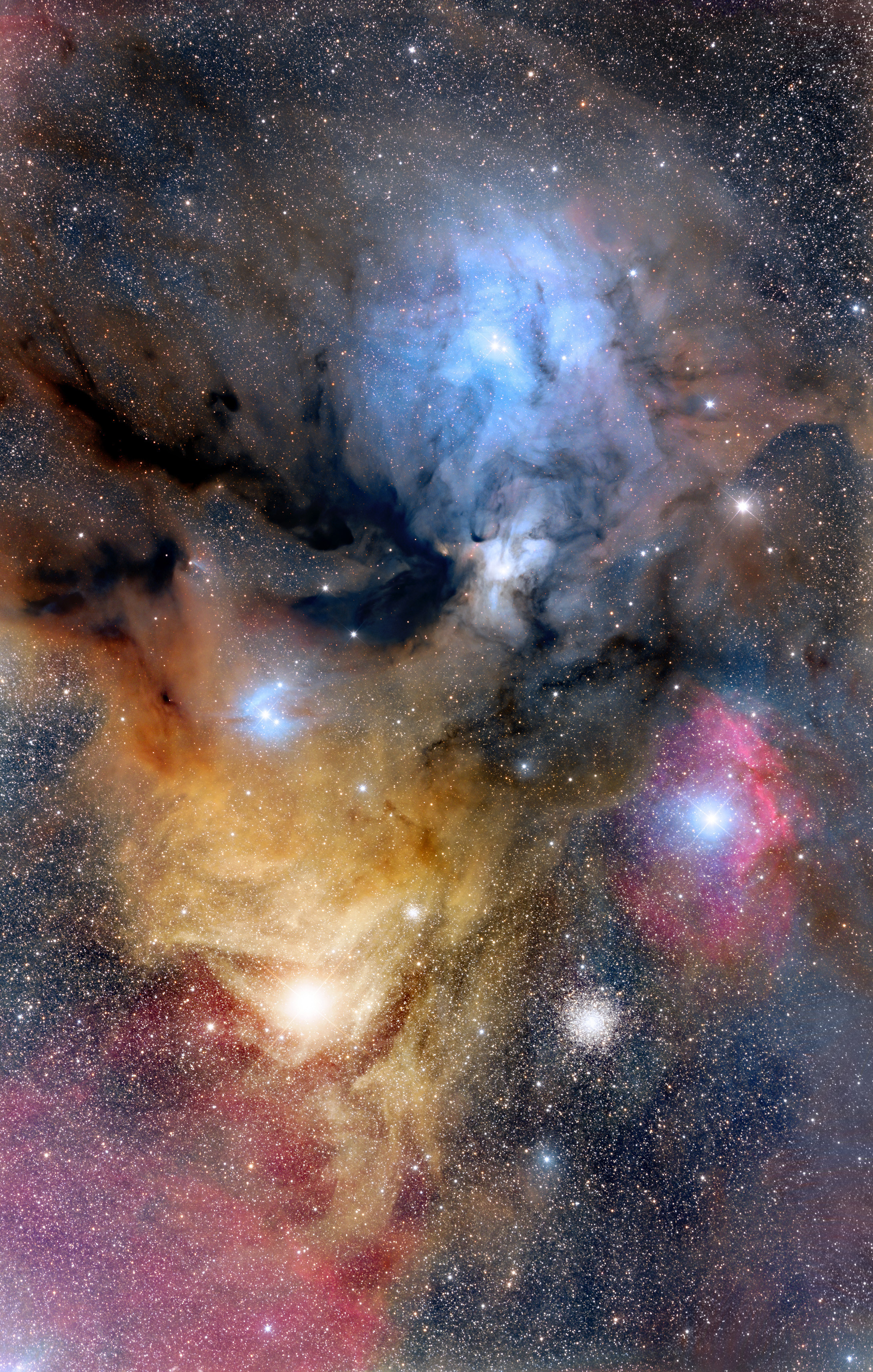
Nebulae in emission, reflection and absorption (dark clouds of dust) are included in this widefield image.
Rho Ophiuchi cloud complex (N is up): Antares is the bright star that looks yellow in this image, σ Scorpii is in the red nebula (Sh2-9), and the globular cluster M4 is in between. Rho Ophiuchi is the small group of stars in the blue nebulosity (IC 4604).
Rho Ophiuchi is the namesake of the Rho Ophiuchi cloud complex. It is a nebula of gas and dust, which the Rho Ophiuchi system is embedded in. It is one of the easiest star forming regions to observe, as it is one of the nearest, and it is visible from both hemispheres.
The interstellar extinction (AV) of Rho Ophiuchi is measured to be 1.45 magnitudes, meaning the dust and gas in front of Rho Ophiuchi absorbs light from the system, making it appear 1.45 magnitudes dimmer than it would be if there were no dust or gas. Additionally, gas and dust also scatters more higher-frequency light, leaving the light appearing more reddish. The interstellar reddening (EB−V) of Rho Ophiuchi has been measured to be 0.47 magnitudes.
From Wikipedia, the free encyclopedia
* Image Credit:
Adam Block/Steward Observatory/University of Arizona
©-notes:
The image found on this page (only) is licensed under a Creative Commons Attribution-ShareAlike 3.0 United States License. Although larger versions of this image are available and can be found elsewhere, they are NOT to be used without the express permission of Adam Block.
Alt...
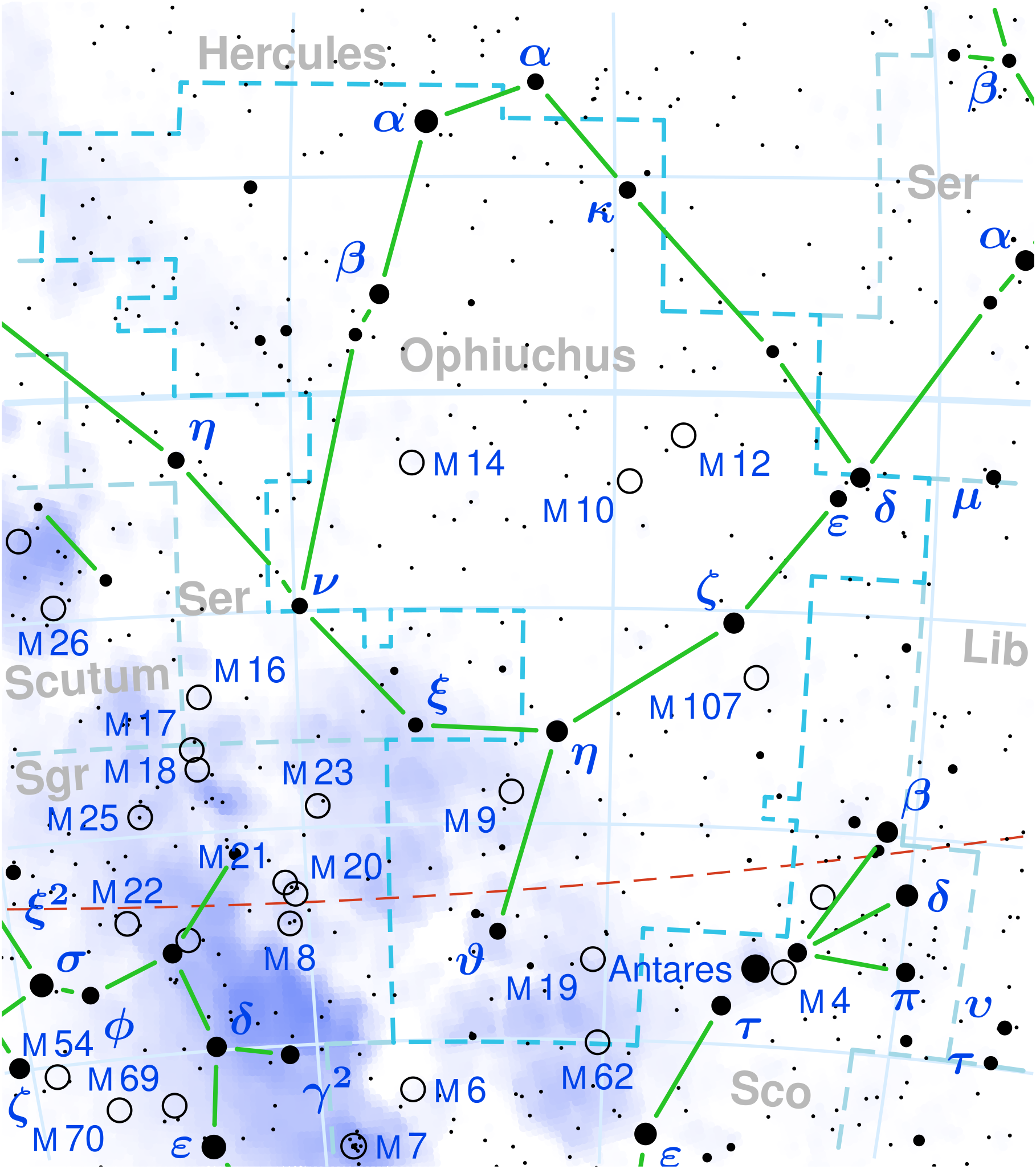
This is a celestial map of the constellation Ophiuchus, the Serpent Holder.
Copyright © 2003 Torsten Bronger.
It was created by Torsten Bronger using the program PP3 on 2003/08/18. At PP3's homepage, you also get the input scripts necessary for re-compiling the map.
The yellow dashed lines are constellation boundaries, the red dashed line is the ecliptic, and the shades of blue show Milky Way areas of different brightness. The map contains all Messier objects, except for colliding ones. The underlying database contains all stars brighter than 6.5. All coordinates refer to equinox 2000.0.
The map is calculated with the equidistant azimuthal projection (the zenith being in the center of the image). The north pole is to the top. The (horizontal) lines of equal declination are drawn for 0°, ±10°, ±20° etc. The lines of equal rectascension are drawn for all 24 hours. Towards the rim there is a very slight magnification (and distortion).
From Wikipedia, the free encyclopedia
NGC 6366
NGC 6366 is a globular cluster located in the constellation Ophiuchus. It is designated as XI in the Shapley–Sawyer Concentration Class and was discovered by the German astronomer Friedrich August Theodor Winnecke on 12 April 1860. It is at a distance of 11,700 light years away from Earth.
NGC 6366 is similar in composition to M 71 or NGC 6342. It is metal-rich for a globular cluster, and all of its stars appears to have formed in the same epoch.
Color rendering is done by Aladin-software (2000A&AS..143...33B.)
Based on observations made with the NASA/ESA Hubble Space Telescope, and obtained from the Hubble Legacy Archive, which is a collaboration between the Space Telescope Science Institute (STScI/NASA), the Space Telescope European Coordinating Facility (ST-ECF/ESA) and the Canadian Astronomy Data Centre (CADC/NRC/CSA).
FYI: https://iopscience.iop.org/article/10.1088/0004-6256/137/1/246
#space #cluster #milkyway #astrophotography #photography #science #nature #NASA #ESA #hubble #education

Alt...
NGC 6366 is a globular cluster located in the constellation Ophiuchus. It is designated as XI in the Shapley–Sawyer Concentration Class and was discovered by the German astronomer Friedrich August Theodor Winnecke on 12 April 1860. It is at a distance of 11,700 light years away from Earth.
NGC 6366 is similar in composition to M 71 or NGC 6342. It is metal-rich for a globular cluster, and all of its stars appears to have formed in the same epoch.
Color rendering is done by Aladin-software (2000A&AS..143...33B.)
Based on observations made with the NASA/ESA Hubble Space Telescope, and obtained from the Hubble Legacy Archive, which is a collaboration between the Space Telescope Science Institute (STScI/NASA), the Space Telescope European Coordinating Facility (ST-ECF/ESA) and the Canadian Astronomy Data Centre (CADC/NRC/CSA).
The Rho Ophiuchi cloud complex, a small star forming region, is located 390 light years away. The closest star forming region to Earth. A chaotic scene resembling explosions frozen in time, this new image from NASA's James Webb Space Telescope displays a field of about 50 young stars, many of them similar in mass to our sun.
A region that would look black in visible light is revealed in the infrared with Webb sensitive instruments. The detail in Webb's portrait of starbirth is unprecedented. The scene is dominated by a giant cavity that has been carved by a single star. That star, S1, is more massive than our sun and emits ultraviolet photons that have carved out a bubble.
The yellow orange color comes from tiny sooty grains that astronomers call polycyclic aromatic hydrocarbons. Streamers of gas and dust form structures and textures unlike anything we have seen before. The striking large red vertical band is a protostellar outflow, twin powerful Jets of material that occurred during the early stages of star formation.
The projecting cone is the result of material that's been ejected through the jet. The entire structure glows red due to molecular hydrogen being energized as material from the jets collides with interstellar gas.
Like most young stars young solar systems also form in multiples. And we can see several brand new solar systems making their way into the universe via the very same processes that shaped our own cosmic home. Planet forming disks block the star's light casting telltale shadows across space.
* Video Credits:
NASA, ESA, CSA, Greg Bacon (STScI)
#space #astronomy #science #astrophotography #photography #nature #nebula
NASA's James Webb Space Telescope continues to wow with an action-packed image belying a relatively quiet star-forming region.
July 12, 2023
Leah Ramsay - Space Telescope Science Institute, Baltimore
Christine Pulliam - Space Telescope Science Institute, Baltimore
NASA’s James Webb Space Telescope caps a successful first year of science, and stunning imagery, with a detailed view of the closest star-forming region to Earth, the Rho Ophiuchi cloud complex, resulting in a dynamic image that belies the region’s relative quiet – and practically begs for explanation of what exactly we are looking at. While dual jets have been seen
blasting out of new stars before, the texture that Webb’s NIRCam instrument reveals in the multiple jets crisscrossing the image is unprecedented. In striking contrast, the lower half of the image is dominated by a glowing cave of dust being lit up and eroded by the most massive star in the scene. Its stellar neighbors are the mass of our Sun or smaller, with some displaying the telltale shadows of protoplanetary disks—meaning we are looking at planetary systems potentially similar to our own in their earliest stages.
>> Full Press Release:
https://webbtelescope.org/contents/news-releases/2023/news-2023-128#heading-full-article
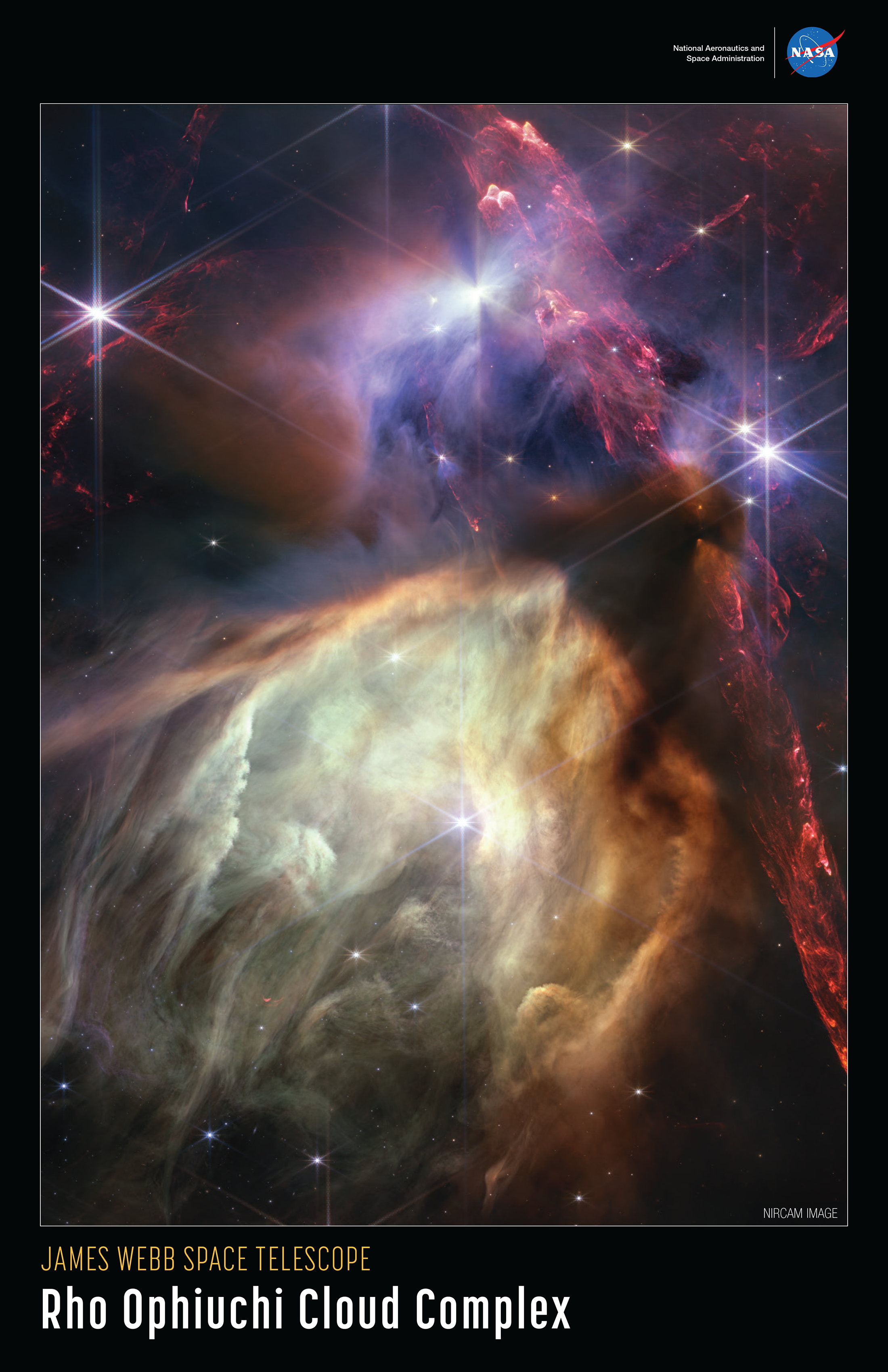
Download and print a poster featuring the Rho Ophiuchi Cloud Complex captured by NASA's James Webb Space Telescope to post at home, school, work, or around your neighborhood!
The poster is available single or double-sided, in several print-ready sizes. The double-sided versions include the image on the front and a description in English and Spanish on the back.
Downloads:
>> https://webbtelescope.org/contents/media/products/01HK5C5QY2A6NKMDGXA25WZ9QA
#space #nebula #astronomy #science #astrophotography #photography #nature
Alt...
Download and print a poster featuring the Rho Ophiuchi Cloud Complex captured by NASA's James Webb Space Telescope to post at home, school, work, or around your neighborhood!
The poster is available single or double-sided, in several print-ready sizes. The double-sided versions include the image on the front and a description in English and Spanish on the back.
For a full description of the image and Webb's observations of the Rho Ophiuchi Cloud Complex, read the complete
* Image Credits: NASA, ESA, CSA, STScI
* Design: Elizabeth Wheatley (STScI)
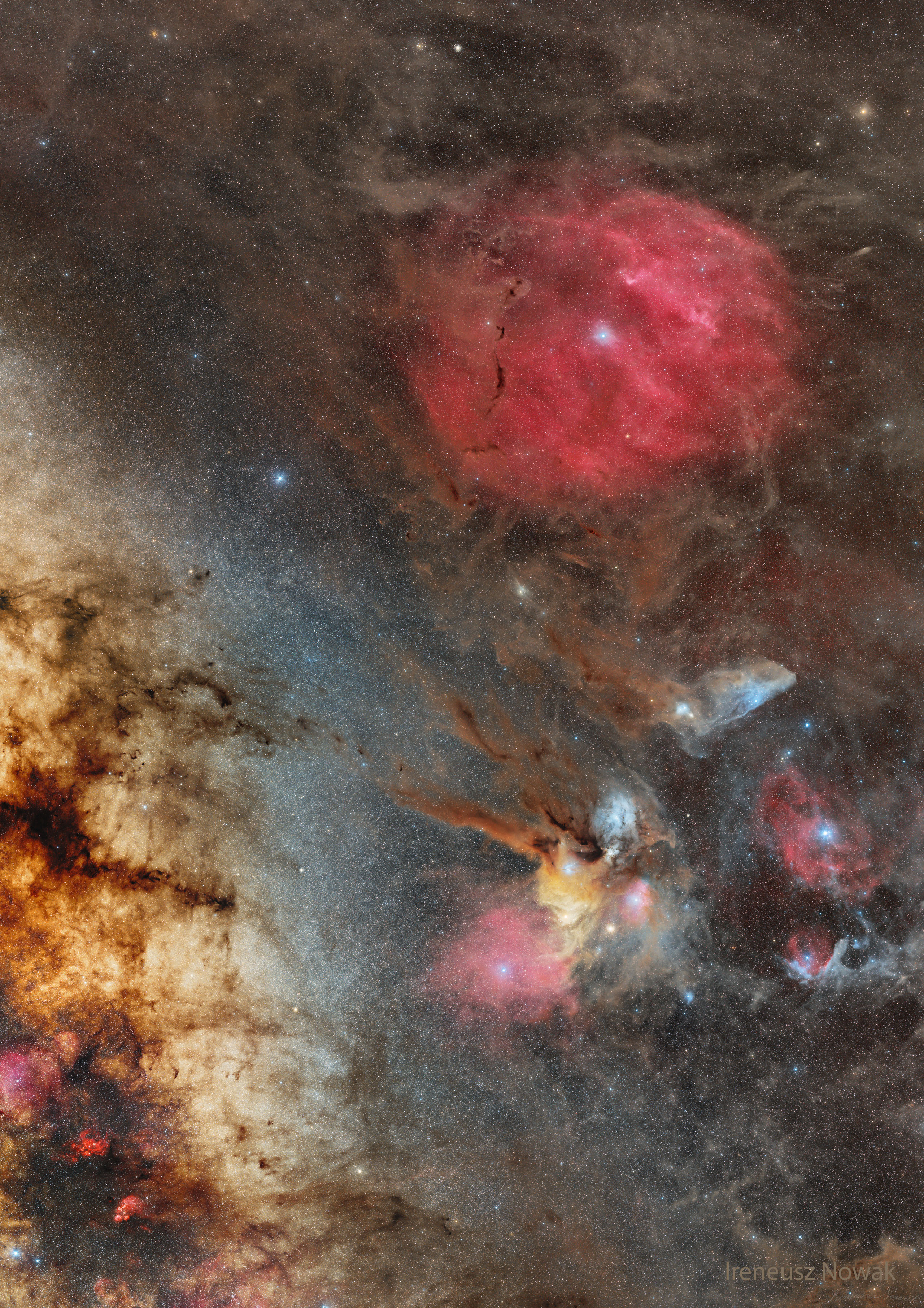
Zeta and Rho Ophiuchi with Milky Way
* Image Credit & Copyright: Ireneusz Nowak
https://app.astrobin.com/u/iro#gallery
Explanation:
Behold one of the most photogenic regions of the night sky, captured impressively. Featured, the band of our Milky Way Galaxy runs diagonally along the bottom-left corner, while the colorful Rho Ophiuchi cloud complex is visible just right of center and the large red circular Zeta Ophiuchi Nebula appears near the top. In general, red emanates from nebulas glowing in the light of excited hydrogen gas, while blue marks interstellar dust preferentially reflecting the light of bright young stars. Thick dust usually appears dark brown. Many iconic objects of the night sky appear, including (can you find them?) the bright star Antares, the globular star cluster M4, and the Blue Horsehead nebula. This wide field composite, taken over 17 hours, was captured from South Africa last June.
https://app.astrobin.com/i/i40hmc
https://apod.nasa.gov/apod/ap240104.html
https://apod.nasa.gov/apod/ap220126.html
https://apod.nasa.gov/apod/ap230129.html
https://apod.nasa.gov/apod/ap250527.html
#space #nebula #astrophotography #photography #science #nature #NASA
Alt...
2025 May 27
A very colorful sky field is shown featuring many stars and nebulas that appear red, yellow, blue, and brown. Please see the explanation for more detailed information.
Zeta and Rho Ophiuchi with Milky Way
* Image Credit & Copyright: Ireneusz Nowak
Explanation:
Behold one of the most photogenic regions of the night sky, captured impressively. Featured, the band of our Milky Way Galaxy runs diagonally along the bottom-left corner, while the colorful Rho Ophiuchi cloud complex is visible just right of center and the large red circular Zeta Ophiuchi Nebula appears near the top. In general, red emanates from nebulas glowing in the light of excited hydrogen gas, while blue marks interstellar dust preferentially reflecting the light of bright young stars. Thick dust usually appears dark brown. Many iconic objects of the night sky appear, including (can you find them?) the bright star Antares, the globular star cluster M4, and the Blue Horsehead nebula. This wide field composite, taken over 17 hours, was captured from South Africa last June.
Authors & editors: Robert Nemiroff (MTU) & Jerry Bonnell (UMCP)
NASA Official: Amber Straughn Specific rights apply.
NASA Web Privacy, Accessibility, Notices;
A service of: ASD at NASA / GSFC,
NASA Science Activation
& Michigan Tech. U.
2023 January 29
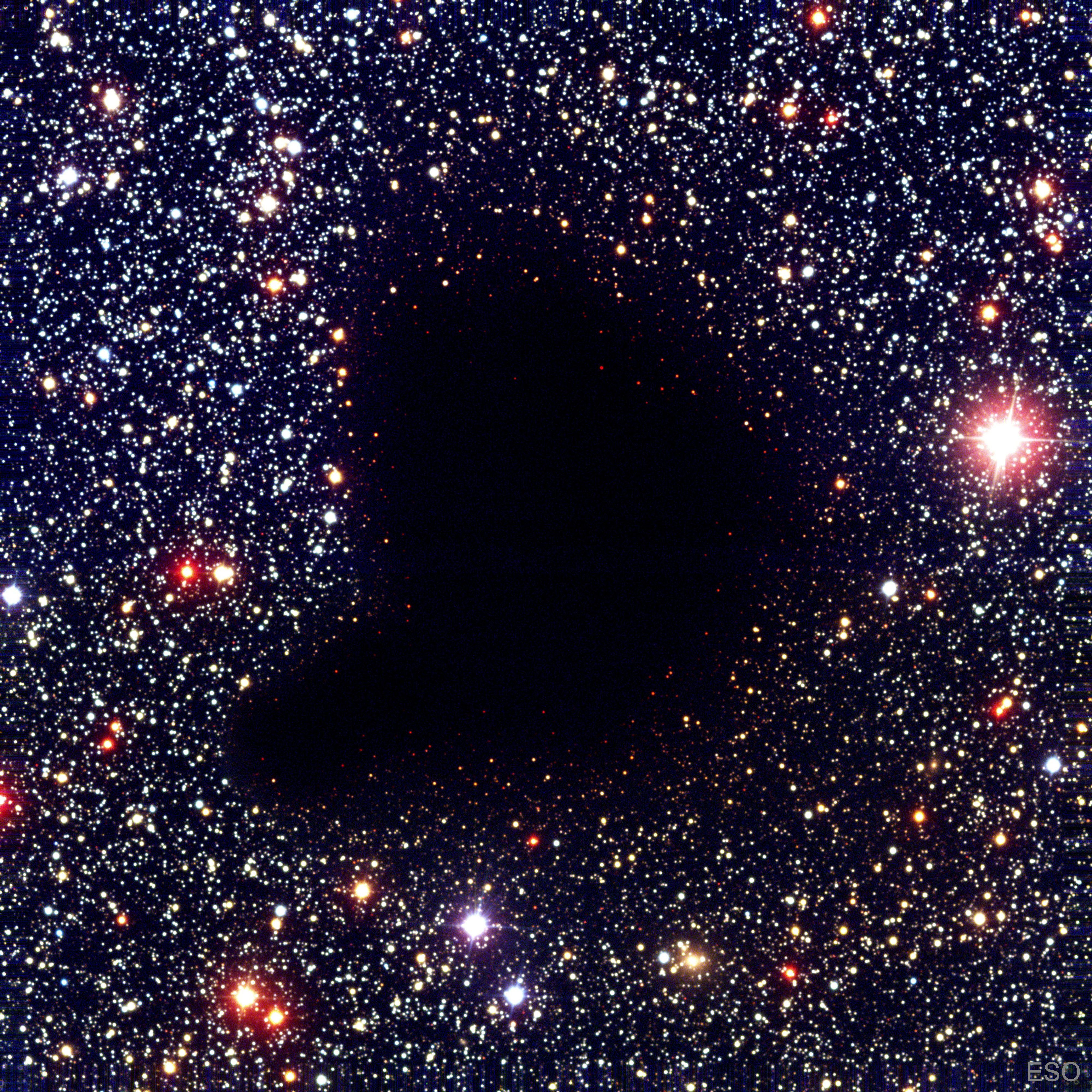
Barnard 68: Dark Molecular Cloud
* Image Credit: FORS Team, 8.2-meter VLT Antu, ESO
https://www.eso.org/projects/vlt/
https://www.eso.org/sci/facilities/paranal/instruments/fors.html
https://www.eso.org/public/
Explanation:
Where did all the stars go? What used to be considered a hole in the sky is now known to astronomers as a dark molecular cloud. Here, a high concentration of dust and molecular gas absorb practically all the visible light emitted from background stars. The eerily dark surroundings help make the interiors of molecular clouds some of the coldest and most isolated places in the universe. One of the most notable of these dark absorption nebulae is a cloud toward the constellation Ophiuchus known as Barnard 68, pictured here. That no stars are visible in the center indicates that Barnard 68 is relatively nearby, with measurements placing it about 500 light-years away and half a light-year across. It is not known exactly how molecular clouds like Barnard 68 form, but it is known that these clouds are themselves likely places for new stars to form. In fact, Barnard 68 itself has been found likely to collapse and form a new star system. It is possible to look right through the cloud in infrared light.
https://www.eso.org/public/news/eso0102/
https://en.wikipedia.org/wiki/Barnard_68
https://en.wikipedia.org/wiki/Molecule
https://apod.nasa.gov/apod/ap030706.html
https://apod.nasa.gov/apod/ap970430.html
https://ui.adsabs.harvard.edu/abs/2009ApJ...695.1308B/abstract
https://www.eso.org/public/videos/eso9934a/
https://www.eso.org/public/news/eso9934/
https://astronomy.swin.edu.au/cosmos/m/Molecular+Cloud
https://apod.nasa.gov/apod/ap201206.html
https://apod.nasa.gov/apod/ap221020.html
https://science.nasa.gov/universe/stars/
https://starchild.gsfc.nasa.gov/docs/StarChild/questions/question19.html
https://apod.nasa.gov/apod/dark_nebulae.html
https://en.wikipedia.org/wiki/Ophiuchus
https://science.nasa.gov/ems/07_infraredwaves/
https://apod.nasa.gov/apod/ap230129.html
#space #cluster #cloud #nebula #astrophotography #photography #science #astronomy #physics #nature #NASA #education
Alt...
2023 January 29
A dark comma-shaped cloud appears in the middle of a dense field of stars. No stars are visible through the center of the cloud.
Barnard 68: Dark Molecular Cloud
* Image Credit: FORS Team, 8.2-meter VLT Antu, ESO
Explanation:
Where did all the stars go? What used to be considered a hole in the sky is now known to astronomers as a dark molecular cloud. Here, a high concentration of dust and molecular gas absorb practically all the visible light emitted from background stars. The eerily dark surroundings help make the interiors of molecular clouds some of the coldest and most isolated places in the universe. One of the most notable of these dark absorption nebulae is a cloud toward the constellation Ophiuchus known as Barnard 68, pictured here. That no stars are visible in the center indicates that Barnard 68 is relatively nearby, with measurements placing it about 500 light-years away and half a light-year across. It is not known exactly how molecular clouds like Barnard 68 form, but it is known that these clouds are themselves likely places for new stars to form. In fact, Barnard 68 itself has been found likely to collapse and form a new star system. It is possible to look right through the cloud in infrared light.
Authors & editors: Robert Nemiroff (MTU) & Jerry Bonnell (UMCP)
NASA Official: Phillip Newman Specific rights apply.
NASA Web Privacy Policy and Important Notices
A service of: ASD at NASA / GSFC,
NASA Science Activation
& Michigan Tech. U.
"Welcome back to
TOPIC> 'In The Neighbourhood'
with this stunning image. Please also read how much time and effort it took to create it and you will agree with me that this is astronomy with real passion."
2009 September 25
Gigagalaxy Zoom: Galactic Center
* Credit: ESO / Stéphane Guisard - Copyright: Stéphane Guisard
http://sguisard.astrosurf.com/
Explanation:
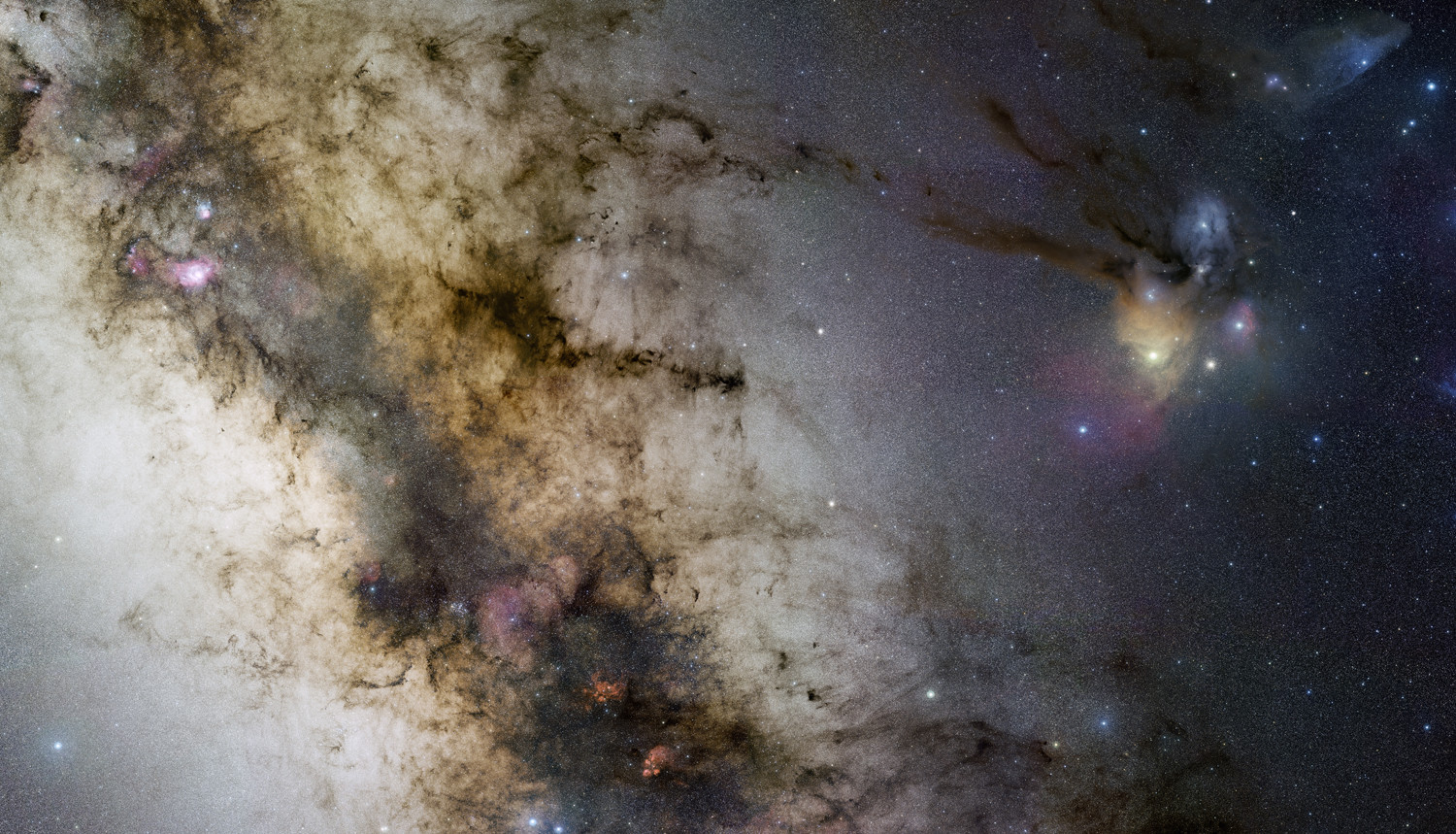
From Sagittarius to Scorpius, the central Milky Way is a truly beautiful part of planet Earth's night sky. The gorgeous region is captured here, an expansive gigapixel mosaic of 52 fields spanning 34 by 20 degrees in 1200 individual images and 200 hours of exposure time. Part of ESO's Gigagalaxy Zoom Project, the images were collected over 29 nights with a small telescope under the exceptionally clear, dark skies of the ESO Paranal Observatory in Chile. The breathtaking cosmic vista shows off intricate dust lanes, bright nebulae, and star clusters scattered through our galaxy's rich central starfields. Starting on the left, look for the Lagoon and Trifid nebulae, the Cat's Paw, the Pipe dark nebula, and the colorful clouds of Rho Ophiuchi and Antares (right).
https://apod.nasa.gov/apod/ap090925.html
#space #galaxy #milkyway #astrophotography #photography #science #astronomy #nature #NASA #ESO
Alt...
2009 September 25
Gigagalaxy Zoom: Galactic Center
* Credit: ESO / Stéphane Guisard - Copyright: Stéphane Guisard
Explanation:
From Sagittarius to Scorpius, the central Milky Way is a truly beautiful part of planet Earth's night sky. The gorgeous region is captured here, an expansive gigapixel mosaic of 52 fields spanning 34 by 20 degrees in 1200 individual images and 200 hours of exposure time. Part of ESO's Gigagalaxy Zoom Project, the images were collected over 29 nights with a small telescope under the exceptionally clear, dark skies of the ESO Paranal Observatory in Chile. The breathtaking cosmic vista shows off intricate dust lanes, bright nebulae, and star clusters scattered through our galaxy's rich central starfields. Starting on the left, look for the Lagoon and Trifid nebulae, the Cat's Paw, the Pipe dark nebula, and the colorful clouds of Rho Ophiuchi and Antares (right).
Authors & editors: Robert Nemiroff (MTU) & Jerry Bonnell (UMCP)
NASA Official: Phillip Newman Specific rights apply.
NASA Web Privacy Policy and Important Notices
A service of: ASD at NASA / GSFC
& Michigan Tech. U.
2014 May 4
A Scorpius Sky Spectacular
* Image Credit & Copyright: Stéphane Guisard, TWAN
http://sguisard.astrosurf.com/
http://sguisard.astrosurf.com/Pagim/Scorpius_constellation-LHRVB-50mm.html#Top
Explanation:
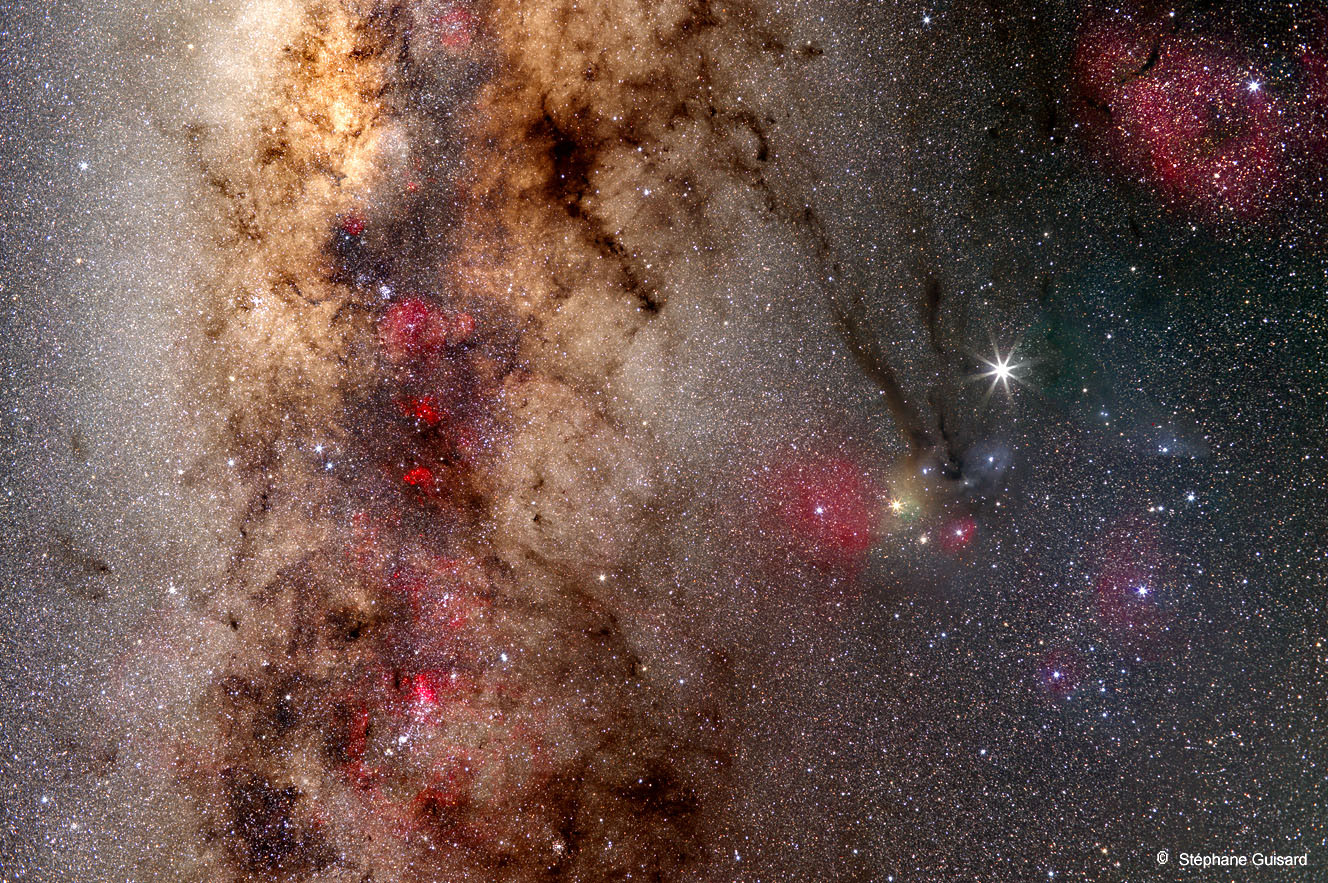
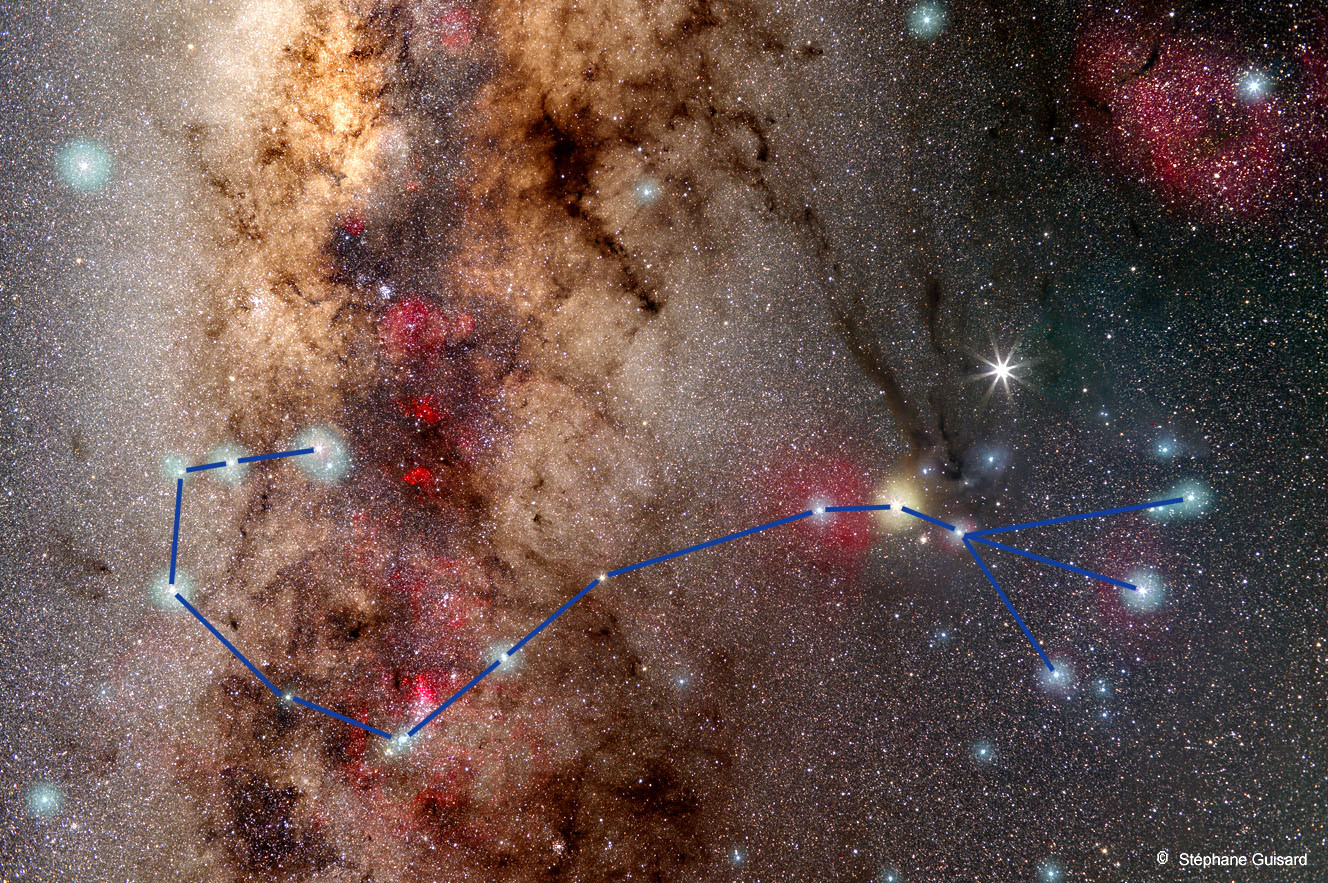
If Scorpius looked this good to the unaided eye, humans might remember it better. Scorpius more typically appears as a few bright stars in a well-known but rarely pointed out zodiacal constellation. To get a spectacular image like this, though, one needs a good camera, color filters, and a digital image processor. To bring out detail, the above image not only involved long duration exposures taken in several colors, but one exposure in a very specific red color emitted by hydrogen. The resulting image shows many breathtaking features. Vertically across the image left is part of the plane of our Milky Way Galaxy. Visible there are vast clouds of bright stars and long filaments of dark dust. Jutting out diagonally from the Milky Way in the image center are dark dust bands known as the Dark River. This river connects to several bright stars on the right that are part of Scorpius' head and claws, and include the bright star Antares. Above and right of Antares is an even brighter planet Jupiter. Numerous red emission nebulas and blue reflection nebulas are visible throughout the image. Scorpius appears prominently in southern skies after sunset during the middle of the year.
https://www.allthesky.com/constellations/scorpius/
https://apod.nasa.gov/apod/ap140504.html
#space #astronomy #science #astrophotography #photography #nature #nebula
Alt...
2014 May 4
A Scorpius Sky Spectacular
* Image Credit & Copyright: Stéphane Guisard, TWAN
Explanation:
If Scorpius looked this good to the unaided eye, humans might remember it better. Scorpius more typically appears as a few bright stars in a well-known but rarely pointed out zodiacal constellation. To get a spectacular image like this, though, one needs a good camera, color filters, and a digital image processor. To bring out detail, the above image not only involved long duration exposures taken in several colors, but one exposure in a very specific red color emitted by hydrogen. The resulting image shows many breathtaking features. Vertically across the image left is part of the plane of our Milky Way Galaxy. Visible there are vast clouds of bright stars and long filaments of dark dust. Jutting out diagonally from the Milky Way in the image center are dark dust bands known as the Dark River. This river connects to several bright stars on the right that are part of Scorpius' head and claws, and include the bright star Antares. Above and right of Antares is an even brighter planet Jupiter. Numerous red emission nebulas and blue reflection nebulas are visible throughout the image. Scorpius appears prominently in southern skies after sunset during the middle of the year.
Authors & editors: Robert Nemiroff (MTU) & Jerry Bonnell (UMCP)
NASA Official: Phillip Newman Specific rights apply.
Alt...
Image with Scorpius constellation drawn
2025 August 10
Zodiacal Road
* Image Credit & Copyright: Ruslan Merzlyakov (astrorms)
https://iceland-photo-tours.com/articles/photographer-interviews/interview-with-ruslan-merzlyakov
Explanation:
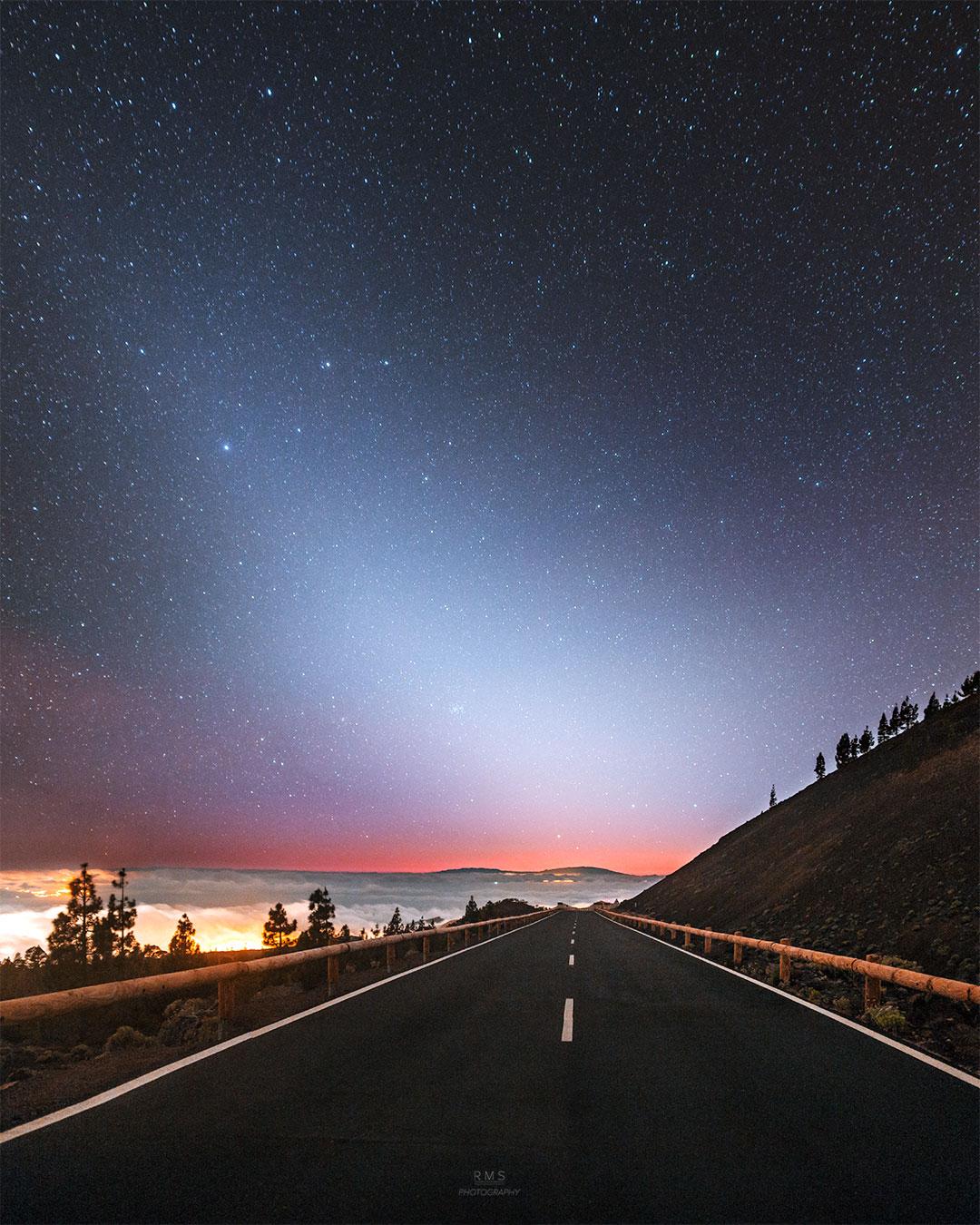
What's that strange light down the road? Dust orbiting the Sun. At certain times of the year, a band of sun-reflecting dust from the inner Solar System appears prominently just after sunset -- or just before sunrise -- and is called zodiacal light. Although the origin of this dust is still being researched, a leading hypothesis holds that zodiacal dust originates mostly from faint Jupiter-family comets and slowly spirals into the Sun. Recent analysis of dust emitted by Comet 67P, visited by ESA's robotic Rosetta spacecraft, bolsters this hypothesis. Pictured when climbing a road up to Teide National Park in the Canary Islands of Spain, a bright triangle of zodiacal light appeared in the distance soon after sunset. Captured on June 21, 2019, the scene includes bright Regulus, the alpha star of the constellation Leo, standing above center toward the left. The Beehive Star Cluster (M44) can be spotted below center, closer to the horizon and also immersed in the zodiacal glow.
+ Phenomenon
https://en.wikipedia.org/wiki/Zodiacal_light#Origin
+ Origin
https://science.nasa.gov/solar-system/
https://astronomy.swin.edu.au/cosmos/J/Jupiter-family+Comets
https://apod.nasa.gov/apod/ap010813.html
https://apod.nasa.gov/apod/ap151118.html
https://www.esa.int/Science_Exploration/Space_Science/Rosetta/Europe_s_comet_chaser
https://en.wikipedia.org/wiki/Regulus
+ Education
https://www.scienceabc.com/nature/universe/how-are-so-many-stars-named-and-identified.html
https://apod.nasa.gov/apod/ap250810.html
#space #earth #dust #zodiacal_glow #astrophotography #photography #science #astronomy #physics #nature #nebula
Alt...
2025 August 10
A night sky is shown above a road going off into the distance. An unusual area of brightened sky that does not block background stars appears diagonally from the lower right across the sky.
Zodiacal Road
* Image Credit & Copyright: Ruslan Merzlyakov (astrorms)
Explanation:
What's that strange light down the road? Dust orbiting the Sun. At certain times of the year, a band of sun-reflecting dust from the inner Solar System appears prominently just after sunset -- or just before sunrise -- and is called zodiacal light. Although the origin of this dust is still being researched, a leading hypothesis holds that zodiacal dust originates mostly from faint Jupiter-family comets and slowly spirals into the Sun. Recent analysis of dust emitted by Comet 67P, visited by ESA's robotic Rosetta spacecraft, bolsters this hypothesis. Pictured when climbing a road up to Teide National Park in the Canary Islands of Spain, a bright triangle of zodiacal light appeared in the distance soon after sunset. Captured on June 21, 2019, the scene includes bright Regulus, the alpha star of the constellation Leo, standing above center toward the left. The Beehive Star Cluster (M44) can be spotted below center, closer to the horizon and also immersed in the zodiacal glow.
Authors & editors: Robert Nemiroff (MTU) & Jerry Bonnell (UMCP)
NASA Official: Amber Straughn Specific rights apply.
2025 August 29
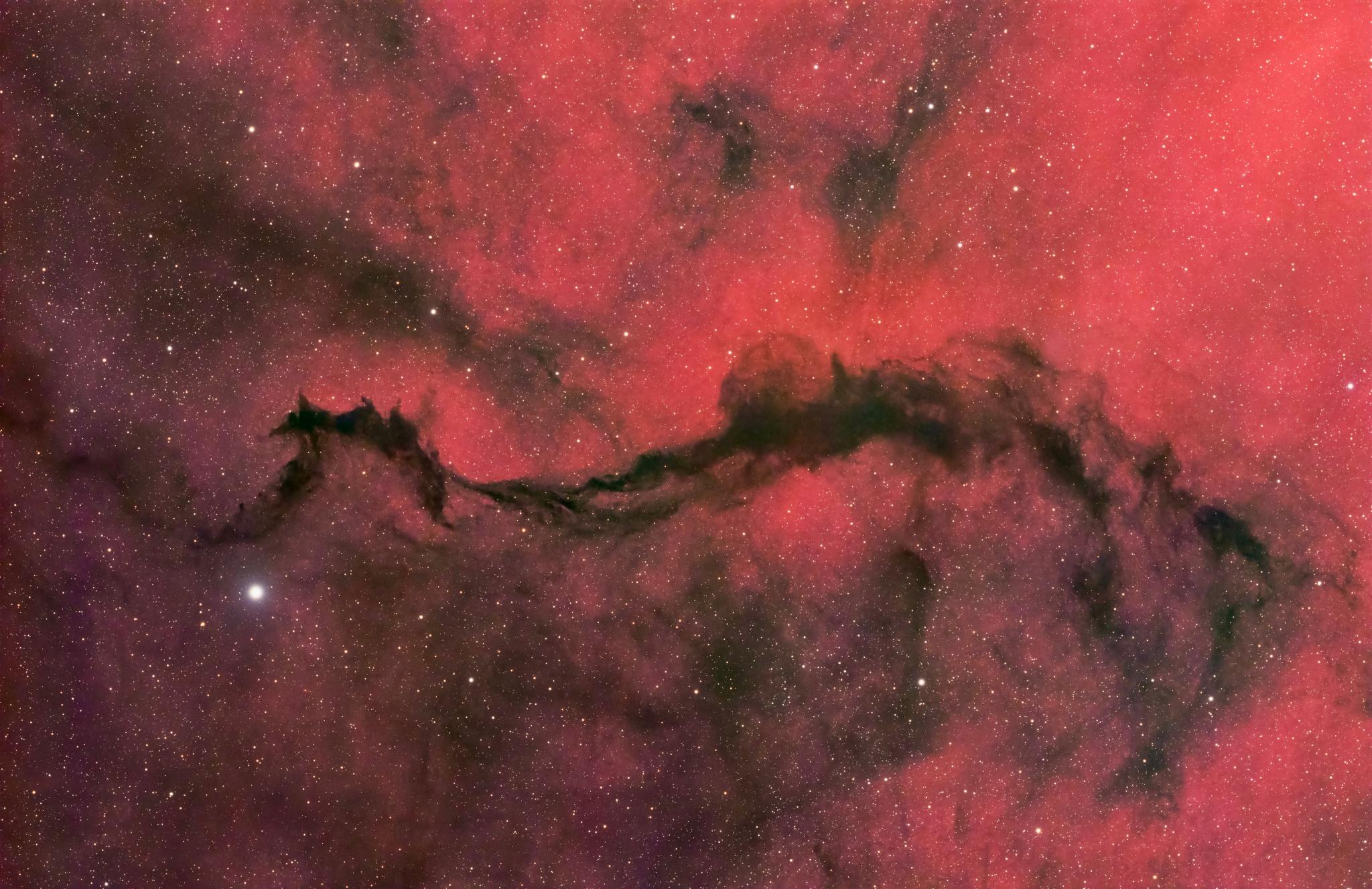
A Dark Veil in Ophiuchus
* Image Credit & Copyright: Katelyn Beecroft
https://app.astrobin.com/u/kates.universe#gallery
Explanation:
The diffuse hydrogen-alpha glow of emission region Sh2-27 fills this cosmic scene. The field of view spans nearly 3 degrees across the nebula-rich constellation Ophiuchus toward the central Milky Way. A Dark Veil of wispy interstellar dust clouds draped across the foreground is chiefly identified as LDN 234 and LDN 204 from the 1962 Catalog of Dark Nebulae by American astronomer Beverly Lynds. Sh2-27 itself is the large but faint HII region surrounding runaway O-type star Zeta Ophiuchi. Along with the Zeta Oph HII region, LDN 234 and LDN 204 are likely 500 or so light-years away. At that distance, this telescopic frame would be about 25 light-years wide.
https://ui.adsabs.harvard.edu/abs/2015ApJ...800..132C/abstract
https://skyandtelescope.org/astronomy-news/beverly-turner-lynds-1929-2024/
https://apod.nasa.gov/apod/ap250829.html
#space #astronomy #science #astrophotography #photography #nature #nebula
Alt...
2025 August 29
A Dark Veil in Ophiuchus
* Image Credit & Copyright: Katelyn Beecroft
Explanation:
The diffuse hydrogen-alpha glow of emission region Sh2-27 fills this cosmic scene. The field of view spans nearly 3 degrees across the nebula-rich constellation Ophiuchus toward the central Milky Way. A Dark Veil of wispy interstellar dust clouds draped across the foreground is chiefly identified as LDN 234 and LDN 204 from the 1962 Catalog of Dark Nebulae by American astronomer Beverly Lynds. Sh2-27 itself is the large but faint HII region surrounding runaway O-type star Zeta Ophiuchi. Along with the Zeta Oph HII region, LDN 234 and LDN 204 are likely 500 or so light-years away. At that distance, this telescopic frame would be about 25 light-years wide.
Authors & editors: Robert Nemiroff (MTU) & Jerry Bonnell (UMCP)
NASA Official: Amber Straughn Specific rights apply.
NASA Web Privacy, Accessibility, Notices;
A service of: ASD at NASA / GSFC,
NASA Science Activation
& Michigan Tech. U.
First Light! A scene in Bandon, Oregon! Prints and more for sale at: https://pixels.com/featured/first-light-thom-zehrfeld.html #BandonOregon #OregonCoast #PNW #FishingBoats #BuyIntoArt #Art #NauticalDecor #Sunrise #DockSide #ThomZehrfeldPhotography #PhotographyIsArt #Photography #Fotografie
#ArtForSale #ArtMatters #MastoArt #Mastodon #ArtforInteriorDesign #HospitalityInteriors
#InteriorDesign #Wallart #InteriorDecorating #WallArtForSale #PhotoOfTheDay #FediGiftShop #GiftIdeas #FediArt #Prints #FediArtShop #Colorful #Nature

Alt...
First Light! A scene in Bandon, Oregon! Prints and more for sale at: https://pixels.com/featured/first-light-thom-zehrfeld.html #BandonOregon #OregonCoast #PNW #FishingBoats #BuyIntoArt #Art #NauticalDecor #Sunrise #DockSide #ThomZehrfeldPhotography #PhotographyIsArt #Photography #Fotografie
#ArtForSale #ArtMatters #MastoArt #Mastodon #ArtforInteriorDesign #HospitalityInteriors
#InteriorDesign #Wallart #InteriorDecorating #WallArtForSale #PhotoOfTheDay #FediGiftShop #GiftIdeas #FediArt #Prints #FediArtShop #Colorful #Nature
![[?]](https://files.mastodon.social/accounts/avatars/000/043/341/original/a6e5037105b9ec35.jpeg)

October 24th, Normandy 🍂🍁
#photography #nature #forest

Alt...
A dirt road curves through a forest. The trees on the left are mostly green, while the trees on the right display yellow and orange autumn foliage under a blue sky with white clouds.

Alt...
A view of a dense forest with autumn colors. The foreground is filled with dry, reddish-brown ferns, leading back to a mix of green pine trees and deciduous trees with red, orange, and yellow leaves under a cloudy sky.

Alt...
A close-up, high-angle view of a forest floor covered in dry brown leaves, small rocks, and twigs. A Red Admiral butterfly rests on a leaf in the lower right.

Alt...
A low-angle view looking up through a sunlit forest. Bright light filters through the tall trees, creating lens flare, while branches with orange and yellow autumn leaves and reddish-brown ferns fill the foreground.
A Farewell to Saturn ..
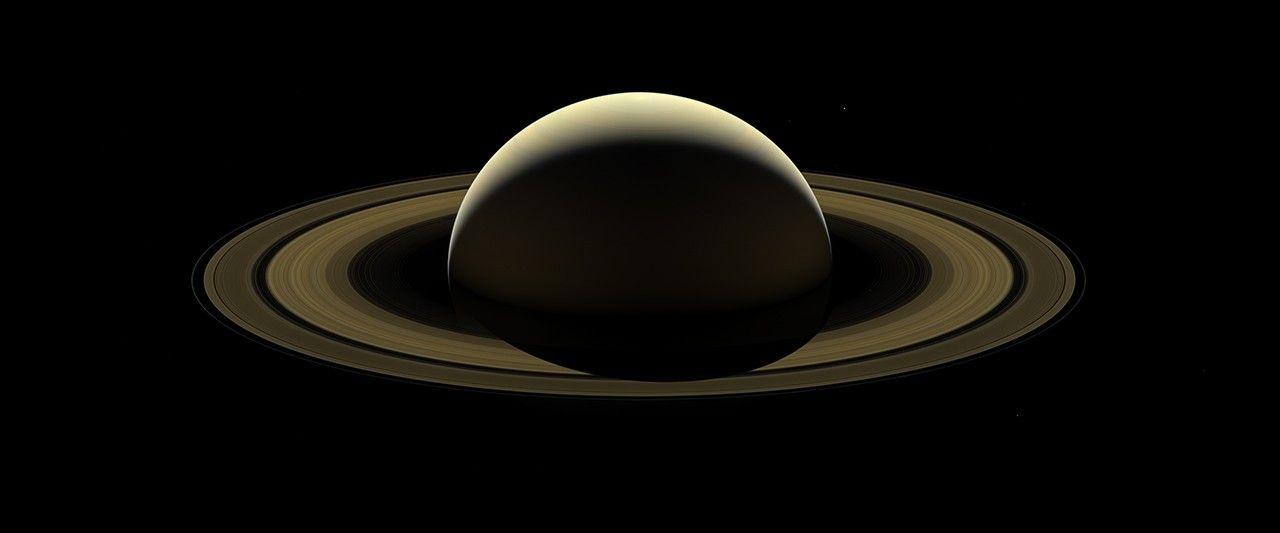
After more than 13 years at Saturn, and with its fate sealed, NASA's Cassini spacecraft bid farewell to the Saturnian system by firing the shutters of its wide-angle camera and capturing this last, full mosaic of Saturn and its rings two days before the spacecraft's dramatic plunge into the planet's atmosphere.
[...] *
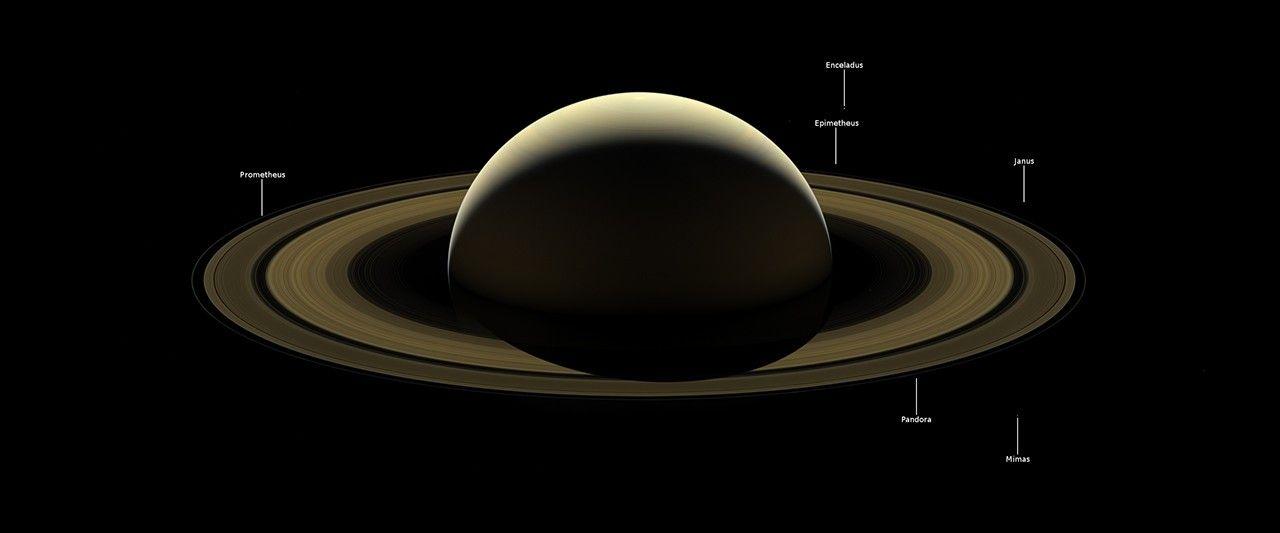
Six of Saturn's moons -- Enceladus, Epimetheus, Janus, Mimas, Pandora and Prometheus -- make a faint appearance in this image. (Numerous stars are also visible in the background.)
A second version of the mosaic is provided in which the planet and its rings have been brightened, with the fainter regions brightened by a greater amount. (The moons and stars have also been brightened by a factor of 15 in this version.)
The ice-covered moon Enceladus -- home to a global subsurface ocean that erupts into space -- can be seen at the 1 o'clock position. Directly below Enceladus, just outside the F ring (the thin, farthest ring from the planet seen in this image) lies the small moon Epimetheus. Following the F ring clock-wise from Epimetheus, the next moon seen is Janus. At about the 4:30 position and outward from the F ring is Mimas. Inward of Mimas and still at about the 4:30 position is the F-ring-disrupting moon, Pandora. Moving around to the 10 o'clock position, just inside of the F ring, is the moon Prometheus.
[...] *
Credits:
NASA/JPL-Caltech/Space Science Institute
* More Information about the images in ALT-Text
https://science.nasa.gov/photojournal/a-farewell-to-saturn/
> Movie about Casini's "Grand Finale":
https://defcon.social/@grobi/115319525500258829
#space #saturn #astrophotography #photography #science #astronomy #physics #nature #NASA #ESA #education #apod
Alt...
A Farewell to Saturn
(Brightened Version)
During the observation, a total of 80 wide-angle images were acquired in just over two hours. This view is constructed from 42 of those wide-angle shots, taken using the red, green and blue spectral filters, combined and mosaicked together to create a natural-color view.
This view looks toward the sunlit side of the rings from about 15 degrees above the ring plane. Cassini was approximately 698,000 miles (1.1 million kilometers) from Saturn, on its final approach to the planet, when the images in this mosaic were taken. Image scale on Saturn is about 42 miles (67 kilometers) per pixel. The image scale on the moons varies from 37 to 50 miles (59 to 80 kilometers) pixel. The phase angle (the Sun-planet-spacecraft angle) is 138 degrees.
Credits:
NASA/JPL-Caltech/Space Science Institute
Alt...
A Farewell to Saturn
(Annotated Version)
Six of Saturn's moons -- Enceladus, Epimetheus, Janus, Mimas, Pandora and Prometheus -- make a faint appearance in this image. (Numerous stars are also visible in the background.)
This view looks toward the sunlit side of the rings from about 15 degrees above the ring plane. Cassini was approximately 698,000 miles (1.1 million kilometers) from Saturn, on its final approach to the planet, when the images in this mosaic were taken. Image scale on Saturn is about 42 miles (67 kilometers) per pixel. The image scale on the moons varies from 37 to 50 miles (59 to 80 kilometers) pixel. The phase angle (the Sun-planet-spacecraft angle) is 138 degrees.
Credits:
NASA/JPL-Caltech/Space Science Institute