Search results for tag #astronomy
![[?]](https://cdn.mastodon.org.uk/accounts/avatars/000/015/811/original/a6b767961483103c.jpeg)
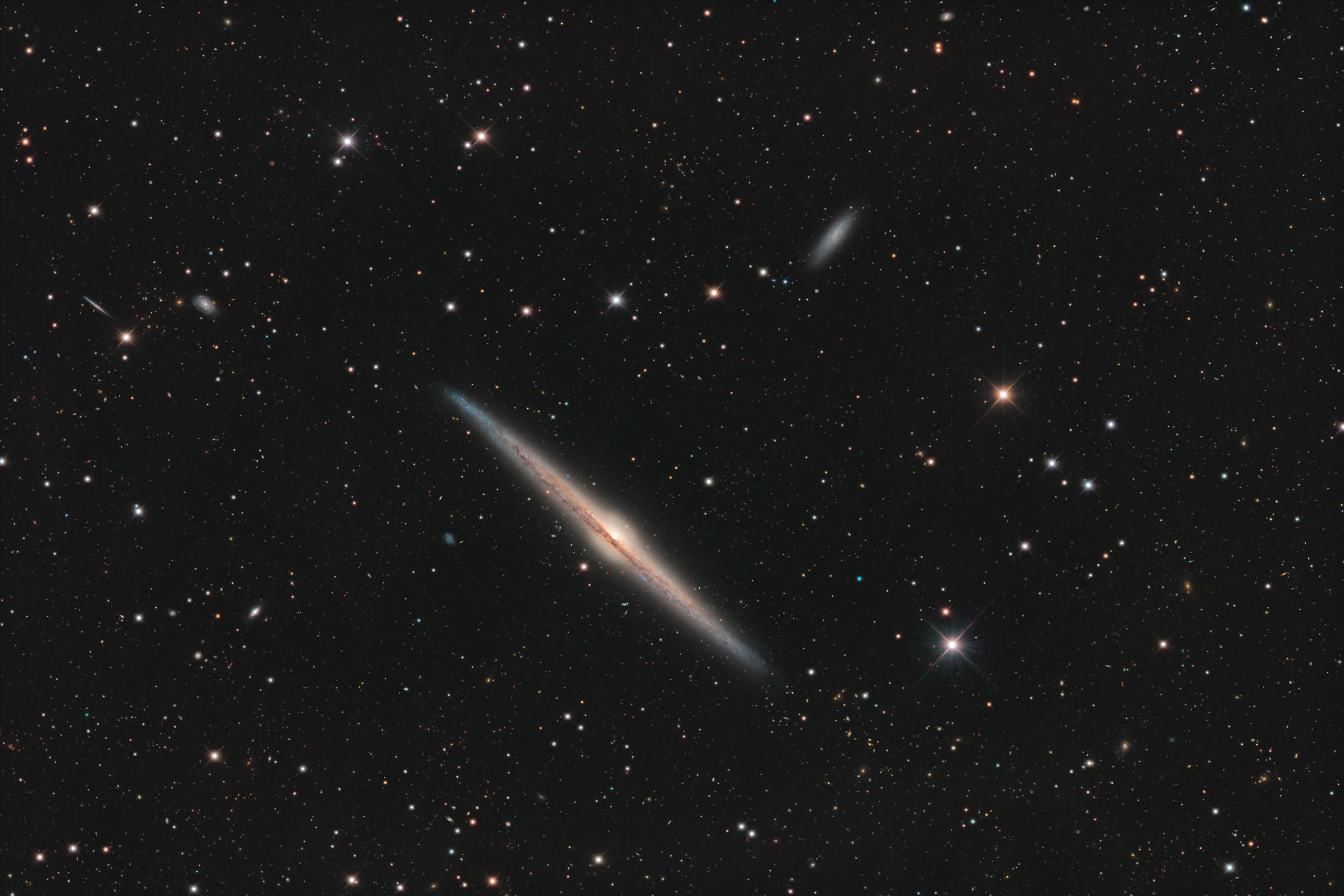
#NGC4565: #Galaxy on Edge
#Astronomy #Picture of the Day
https://apod.nasa.gov/apod/ap250904.html
Alt...
Galaxy seen edge on.
![[?]](https://files.defcon.social/dcsocial-s3/accounts/avatars/113/208/344/507/078/943/original/014820ad22daee1c.jpg)
2025 September 3
Cir X-1: Jets in the Africa Nebula
* Image Credit: J. English (U. Manitoba) & K. Gasealahwe (U. Cape Town), SARAO, MeerKAT, ThunderKAT
http://www2.physics.umanitoba.ca/u/english/
https://umanitoba.ca/science/physics-and-astronomy
https://www.researchgate.net/profile/Kelebogile-Gasealahwe
https://science.uct.ac.za/departments/astronomy
https://www.sarao.ac.za/
https://www.sarao.ac.za/science/meerkat/
* Science: K. Gasealahwe, K. Savard (U. Oxford) et al.
https://www.physics.ox.ac.uk/our-people/savard
https://www.physics.ox.ac.uk/
https://arxiv.org/abs/2507.22998
* Text: J. English & K. Savard
Explanation:
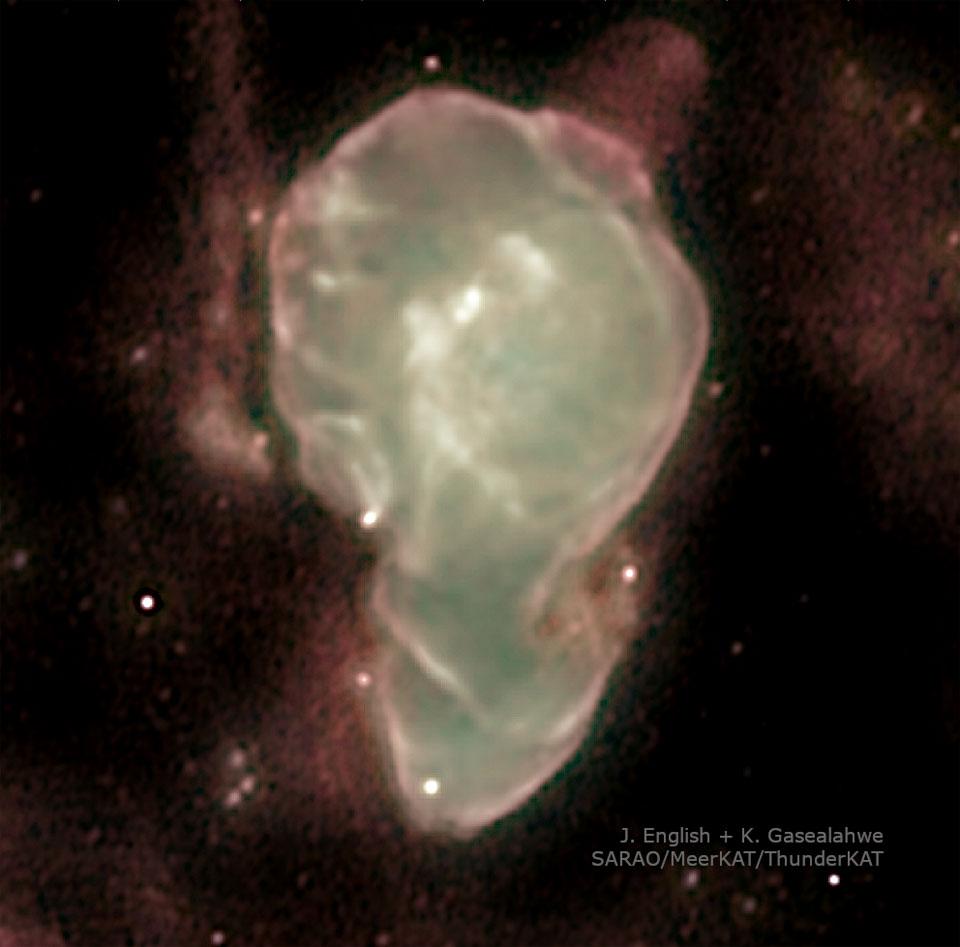
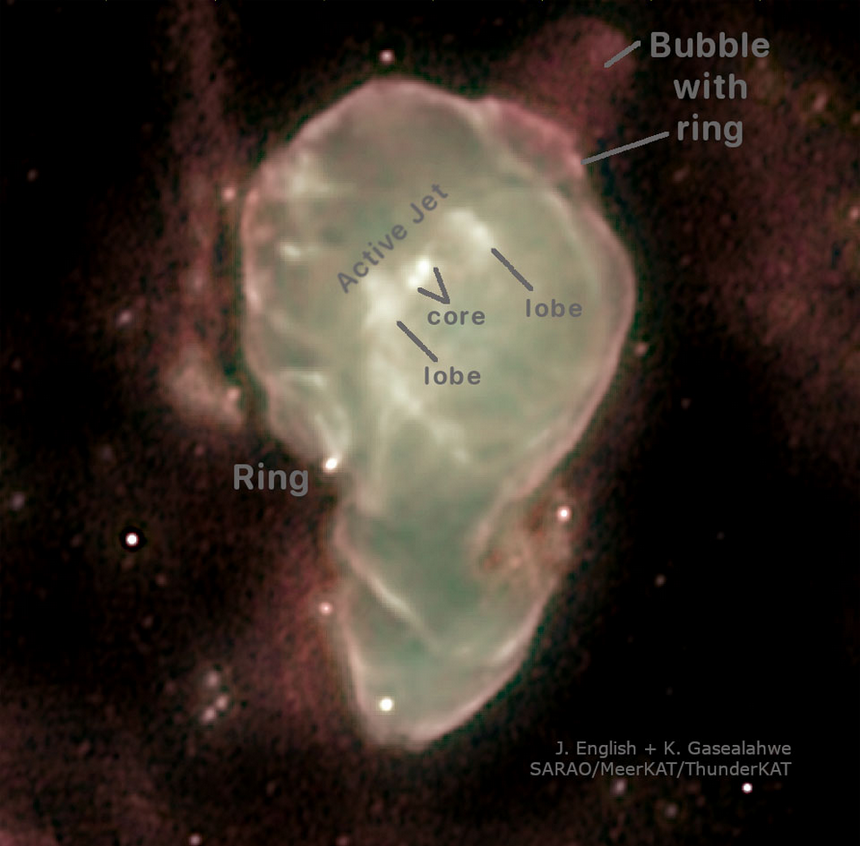
How soon do jets form when a supernova gives birth to a neutron star? The Africa Nebula provides clues. This supernova remnant surrounds Circinus X-1, an X-ray emitting neutron star and the companion star it orbits. The image, from the ThunderKAT collaboration on the MeerKAT radio telescope situated in South Africa, shows the bright core-and-lobe structure of Cir X-1’s currently active jets inside the nebula. A mere 4600 years old, Cir X-1 could be the "Little Sister" of microquasar SS 433*. However, the newly discovered bubble exiting from a ring-like hole in the upper right of the nebula, along with a ring to the bottom left, demonstrate that other jets previously existed. Computer simulations indicate those jets formed within 100 years of the explosion and lasted up to 1000 years. Surprisingly, to create the observed bubble, the jets need to be more powerful than young neutron stars were previously thought to produce.
https://en.wikipedia.org/wiki/Circinus_X-1
https://science.nasa.gov/universe/neutron-stars-are-weird/
https://apod.nasa.gov/apod/ap250903.html
#space #nebula #astrophotography #photography #science #astronomy #physics #nature #NASA #ESA
Alt...
2025 September 3
A nebula is shown that appears roughly the shape of Africa. The complex radio image shows rings and jets.
Cir X-1: Jets in the Africa Nebula
* Image Credit: J. English (U. Manitoba) & K. Gasealahwe (U. Cape Town), SARAO, MeerKAT, ThunderKAT
* Science: K. Gasealahwe, K. Savard (U. Oxford) et al.
* Text: J. English & K. Savard
Explanation:
How soon do jets form when a supernova gives birth to a neutron star? The Africa Nebula provides clues. This supernova remnant surrounds Circinus X-1, an X-ray emitting neutron star and the companion star it orbits. The image, from the ThunderKAT collaboration on the MeerKAT radio telescope situated in South Africa, shows the bright core-and-lobe structure of Cir X-1’s currently active jets inside the nebula. A mere 4600 years old, Cir X-1 could be the "Little Sister" of microquasar SS 433*. However, the newly discovered bubble exiting from a ring-like hole in the upper right of the nebula, along with a ring to the bottom left, demonstrate that other jets previously existed. Computer simulations indicate those jets formed within 100 years of the explosion and lasted up to 1000 years. Surprisingly, to create the observed bubble, the jets need to be more powerful than young neutron stars were previously thought to produce.
Authors & editors: Robert Nemiroff (MTU) & Jerry Bonnell (UMCP)
NASA Official: Amber Straughn Specific rights apply.
Alt...
Image with annotaions
![[?]](https://mediacdn.aus.social/accounts/avatars/108/195/275/365/745/786/original/9ab6d9f064dd1960.jpg)
There are currently a couple of astronomy flavoured job opportunities in my neck of the woods.
Head of Programs at Australian Astronomical Optics (AAO), Macquarie University. This person will oversee our program of (mostly) astronomical instrumentation projects, & lead the project management group.
Senior Software Engineer - Australian SKA Regional Centre (AusSRC). This one is for a software engineer with some scientific computing experience who wants to work on tooling for radio astronomy data from the Square Kilometre Array. The job will be based at CSIRO Marsfield, but will also involve working with the Data Central team at AAO.
2025 September 2
The Horsehead and Flame Nebulas
* Image Credit & Copyright: Daniel Stern
https://www.instagram.com/messierchaser/
Explanation:
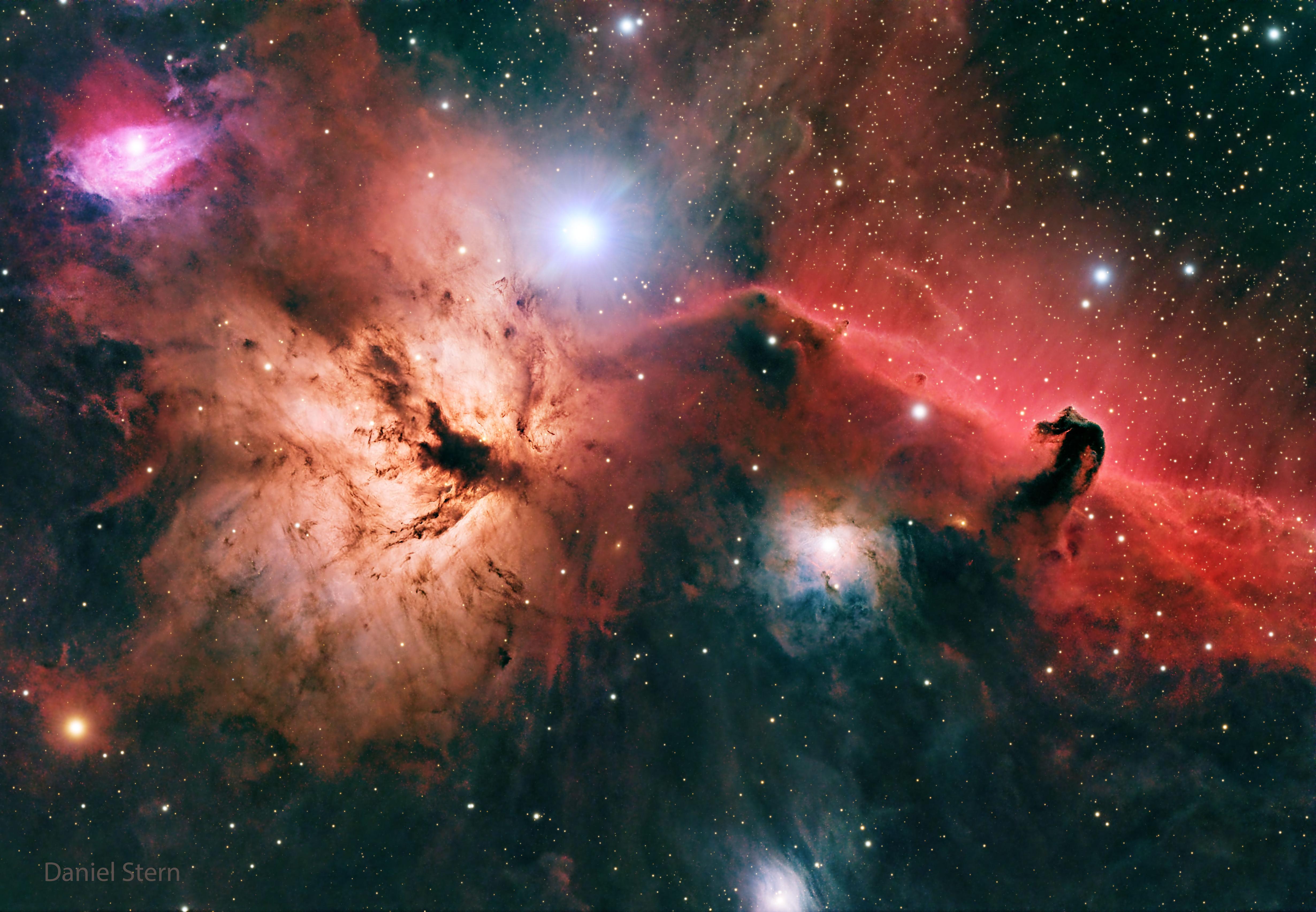
The Horsehead Nebula is one of the most famous nebulae on the sky. It is visible as the dark indentation to the orange emission nebula at the far right of the featured picture. The horse-head feature is dark because it is really an opaque dust cloud that lies in front of the bright emission nebula. Like clouds in Earth's atmosphere, this cosmic cloud has assumed a recognizable shape by chance. After many thousands of years, the internal motions of the cloud will surely alter its appearance. The emission nebula's orange color is caused by electrons recombining with protons to form hydrogen atoms. Toward the lower left of the image is the Flame Nebula, an orange-tinged nebula that also contains intricate filaments of dark dust.
https://en.wikipedia.org/wiki/Horsehead_Nebula
https://en.wikipedia.org/wiki/Emission_nebula
https://astronomy.swin.edu.au/cosmos/E/emission+nebula
https://home.cern/news/news/physics/proton-century
https://periodic.lanl.gov/1.shtml
https://history.aip.org/exhibits/electron/
https://apod.nasa.gov/apod/ap030706.html
https://www.nasa.gov/image-article/earths-atmospheric-layers-3/
https://apod.nasa.gov/apod/ap250902.html
#space #nebula #astrophotography #photography #science #astronomy #nature #NASA
Alt...
2025 September 2
A starfield is shown with bright and dark nebulae of different shapes and colors.
The Horsehead and Flame Nebulas
* Image Credit & Copyright: Daniel Stern
Explanation:
The Horsehead Nebula is one of the most famous nebulae on the sky. It is visible as the dark indentation to the orange emission nebula at the far right of the featured picture. The horse-head feature is dark because it is really an opaque dust cloud that lies in front of the bright emission nebula. Like clouds in Earth's atmosphere, this cosmic cloud has assumed a recognizable shape by chance. After many thousands of years, the internal motions of the cloud will surely alter its appearance. The emission nebula's orange color is caused by electrons recombining with protons to form hydrogen atoms. Toward the lower left of the image is the Flame Nebula, an orange-tinged nebula that also contains intricate filaments of dark dust.
Authors & editors: Robert Nemiroff (MTU) & Jerry Bonnell (UMCP)
NASA Official: Amber Straughn Specific rights apply.
NASA Web Privacy, Accessibility, Notices;
A service of: ASD at NASA / GSFC,
NASA Science Activation
& Michigan Tech. U.
List of TOPICS> No2
will be editet soon .. see TOPIC> List No. 1, which contains all currently available TOPICs please.
© folks who #resist
https://www.youtube.com/watch?v=EXg8MOqbZNI
#space #astrophotography #photography #sience #astronomy #nature #fediverse #mastodon #NASA #ESA #nobot #noai #list #buchstabensuppe
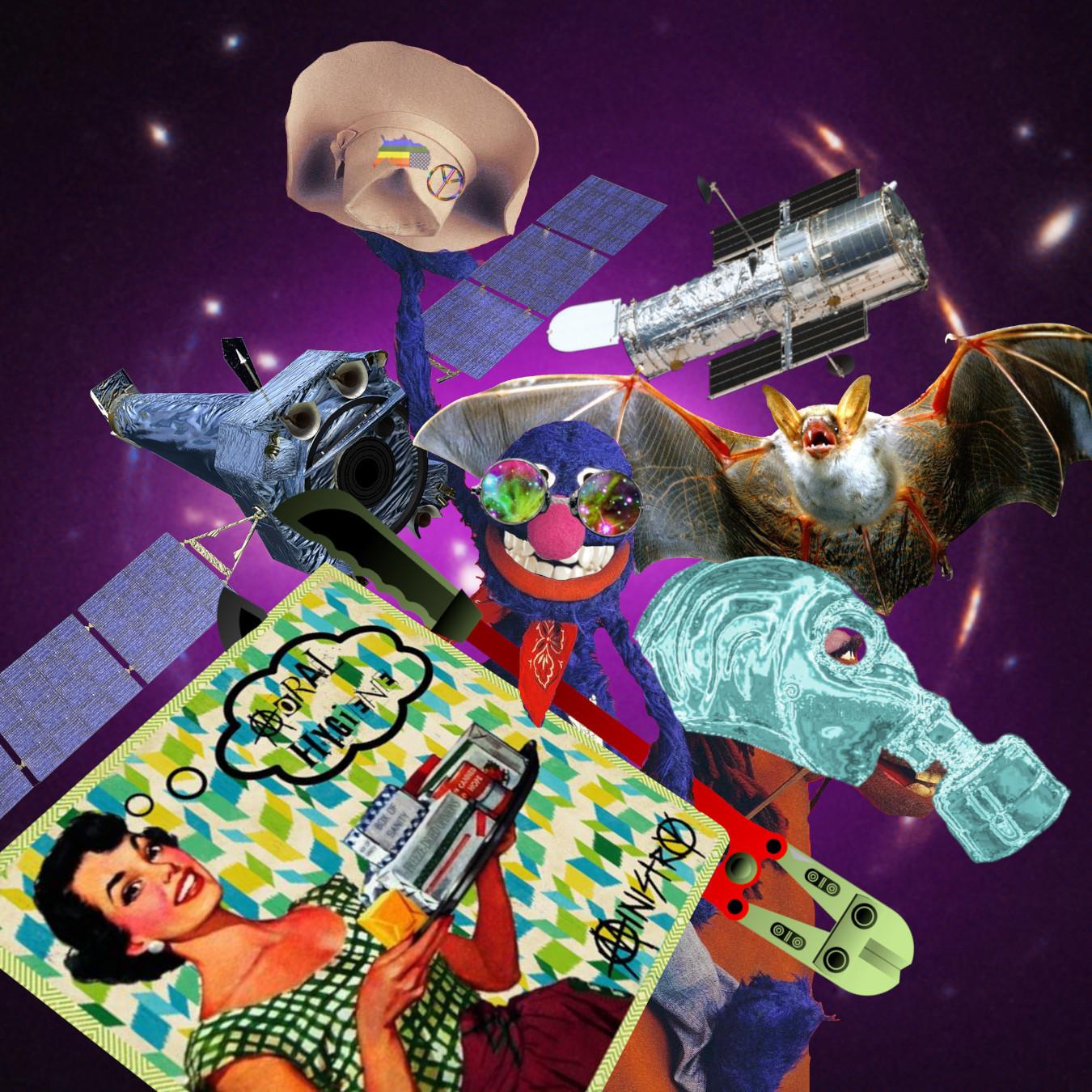
Alt...
grobi presents the protest song "Sabotage Is Sex" by Ministry feat. Jello Biafra. He rides through time and space sitting the wrong way around on his horse and has a bolt cutter ready, while his friend, the horse, is already wearing a gas mask, because you never know for sure... like two scouts "always ready to help" with open eyes, hearts and cheerful cheers, they have backup from "Graviti's Grin" or flippantly called the "Cheshire Cat Galaxy Group" grobi also wears glasses with "Gravity Lenses" made of "Dark Matter", with which he sees through the enemies of freedom and humanity.
© folks who #resist