Search results for tag #nature
![[?]](https://files.defcon.social/dcsocial-s3/accounts/avatars/113/208/344/507/078/943/original/014820ad22daee1c.jpg)
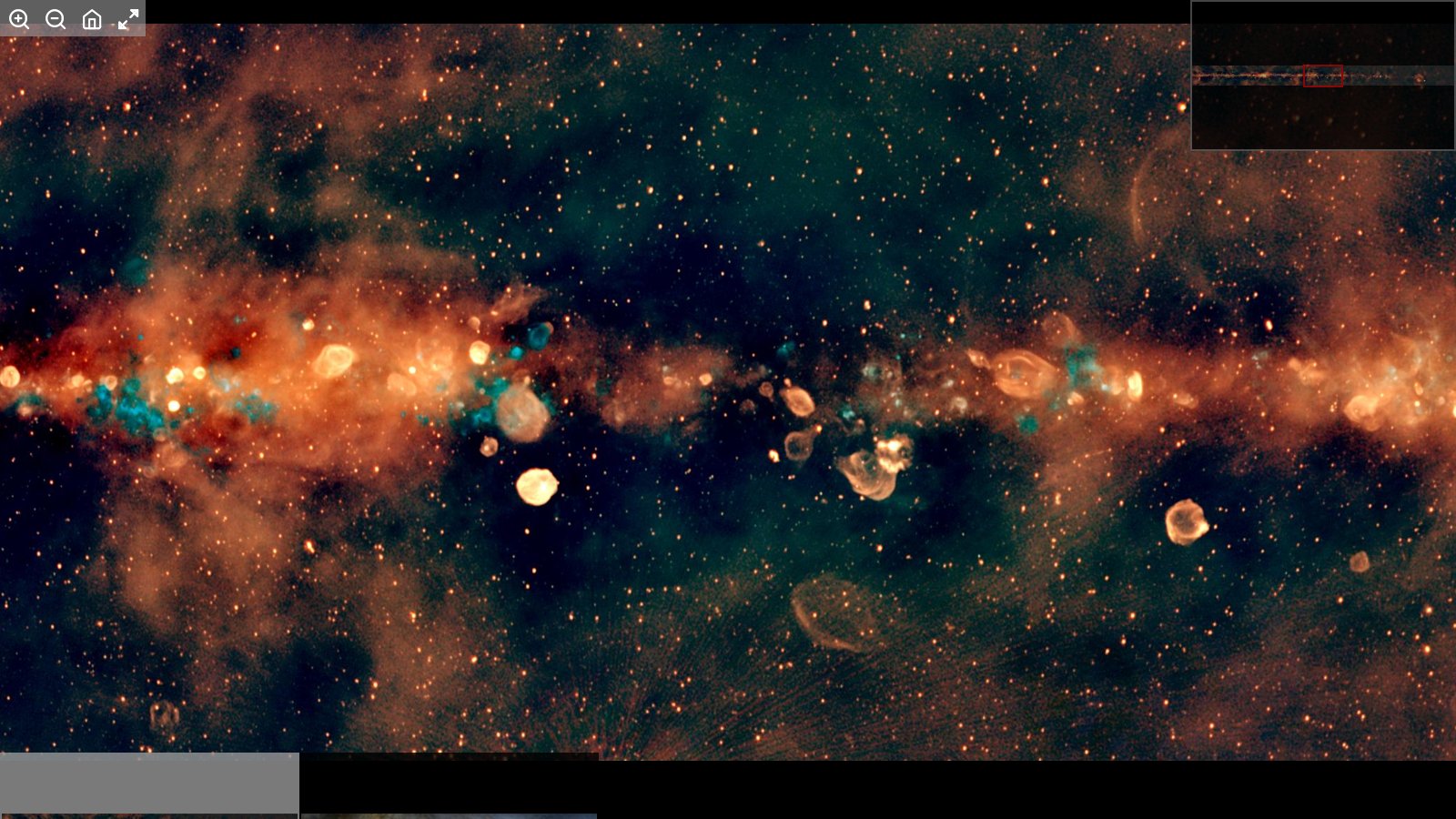
Explore and compare the Milky Way band in Visible Light and Radio Light with GLEAMX-deepzoom:
https://gleamx-deepzoom.pages.dev/
CREDIT
International Centre for Radio Astronomy Research (ICRAR)
#space #galaxy #milkyway #astrophotography #photography #science #astronomy #nature #NASA #apod
Alt...
Screenshot of the GLEAMX-deepzoom webpage
CREDIT
International Centre for Radio Astronomy Research (ICRAR)
2025 November 18
The Galactic Plane: Radio Versus Visible
* Image Credit: Radio: S. Mantovanini & the GLEAM team
https://www.researchgate.net/profile/Silvia_Mantovanini
https://www.mwatelescope.org/science/galactic-science/gleam/
* Visible: Axel Mellinger (milkywaysky.com)
https://milkywaysky.com/contact.html
Explanation:
What does the Milky Way look like in radio waves? To better find out, GLEAM surveyed the central band of our galaxy in high resolution radio light as imaged by the Murchison Widefield Array in Australia. As the featured video slowly scrolls, radio light (71 - 231 MHz) is seen on the left and visible light -- from the same field -- on the right. Differences are so great because most objects glow differently in radio and visible light, and because visible light is stopped by nearby interstellar dust. These differences are particularly apparent in the direction toward the center of our galaxy, seen about a third of the way through. Among the many features that appear in the radio, bright red patches are usually supernova remnants of exploded stars, while areas colored blue are stellar nurseries filled with bright young stars.
https://www.mwatelescope.org/science/galactic-science/gleam/
https://www.mwatelescope.org/
https://www.icrar.org/gleam-x-galactic-plane/
https://www.curtin.edu.au/news/media-release/a-new-expansive-view-of-the-milky-way-reveals-our-galaxy-in-unprecedented-radio-colour/
https://science.nasa.gov/ems/05_radiowaves/
https://science.nasa.gov/ems/09_visiblelight/
https://apod.nasa.gov/apod/ap250209.html
https://apod.nasa.gov/apod/ap241124.html
https://apod.nasa.gov/apod/ap250708.html
https://apod.nasa.gov/apod/ap100831.html
https://apod.nasa.gov/apod/ap250414.html
https://en.wikipedia.org/wiki/Supernova_remnant
https://apod.nasa.gov/apod/ap251118.html
#space #galaxy #milkyway #astrophotography #photography #science #astronomy #nature #NASA #apod
![[?]](https://cdn.masto.host/socelnet/accounts/avatars/109/355/496/809/872/483/original/4bb481e7a50769d3.jpg)
Enjoy the colorful wildflowers on a dreary November day!
Red poppies watercolor painting:
https://karen-kaspar.pixels.com/featured/red-poppies-karen-kaspar.html
#wildflowers #MastoArt #art #painting #FediArt #FediGiftShop #artist #arte #InteriorDesign #MastodonArt #ArtistsOnMastodon #TraditionalArt #kunst #contemporaryArt #watercolor #watercolour #creativeToots #poppy #poppies #red #flowers #gardening #garden #floral #nature #NatureLover #natur #aquarell #aquarelle #flowerpower #handmade #bloomscrolling #BuyIntoArt #artwork #plants #color

Alt...
Red poppies is a handmade watercolor painting in contemporary square format by artist Karen Kaspar.
Poppy flowers in vibrant red are dancing on a sunny yellow background.
![[?]](https://files.mastodon.social/accounts/avatars/114/099/607/485/812/959/original/d946f4c830bbc501.jpg)
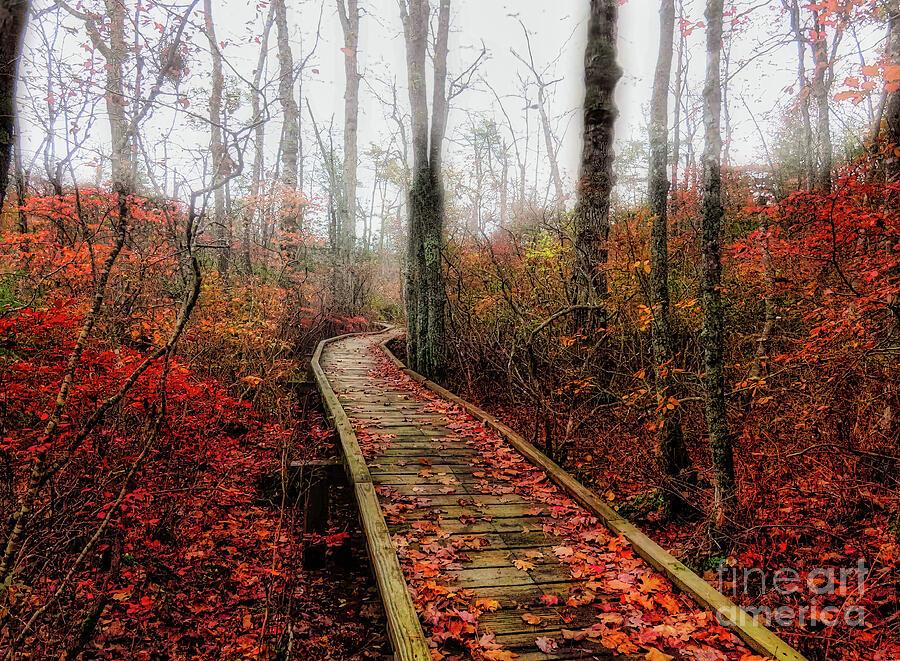
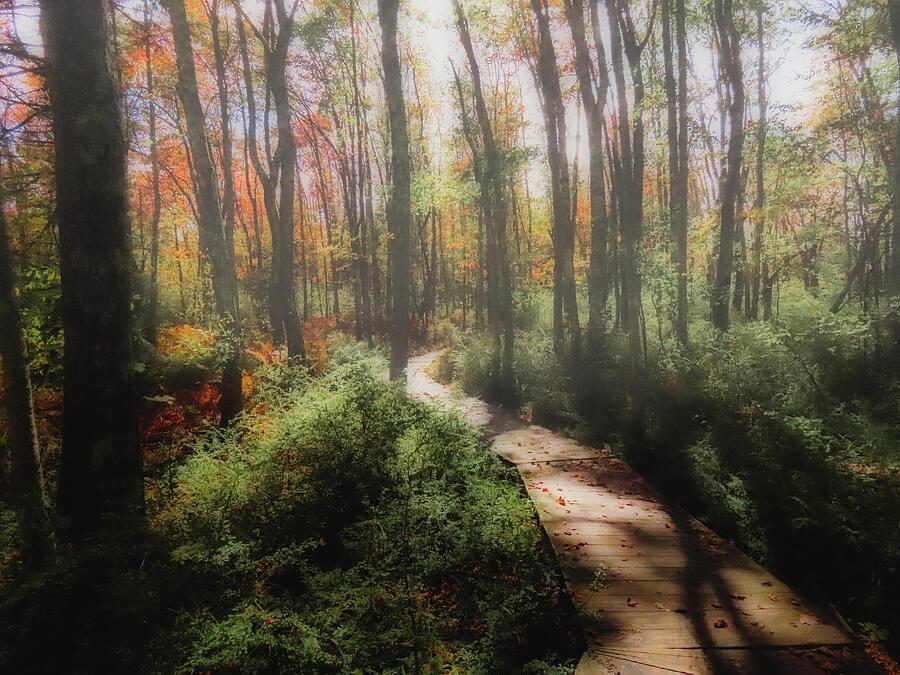
"Beautiful Walks Collection"
By Scott Loring Davis, Fine Art Photography https://pixels.com/profiles/scottloringdavis
This beautiful collection of Beautiful Walks prints offers a calming, serene and relaxing feel to any room or public location where a calming effect is beneficial.
FULL COLLECTION - https://pixels.com/profiles/scottloringdavis/collections/beautiful+walks
#buyintoart #ScottLoringDavis #mastoart #giftideas #art #artist #artwork #wallart #homedecor #interiordesign #artforsale #photography #travel #fineartprints #Nature #trail #path #boardwalk #arte


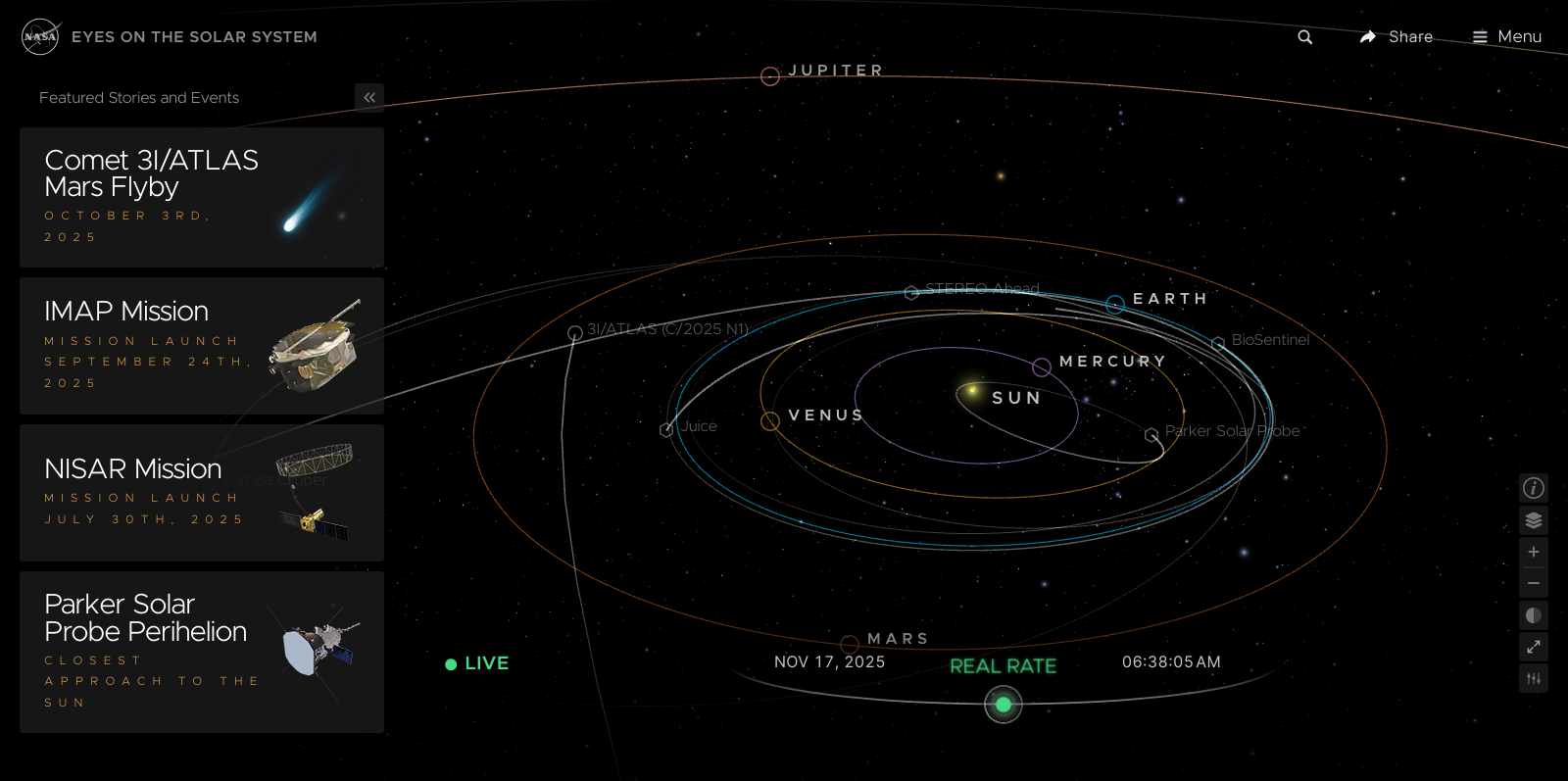
Watch the watchers of 3I/ATLAS live in this solar-system 3D api and read more about their missions:
https://eyes.nasa.gov/apps/solar-system/#/home
#comets #astrophotography #photography #science #astronomy #nature #NASA #ESA
Alt...
Image of 3I/ATLAS live in this solar-system 3D api
url provided in main text.
3I/ATLAS has its closest approach to Mars on Oct. 3, 2025. Several Mars missions will attempt to study the comet as it flies by.
The comet may be detectable by various Mars spacecraft, including Mars Reconnaissance Orbiter, MAVEN, Trace Gas Orbiter and Mars Express, as well as the Mars rovers Perseverance and Curiosity.
Watch its approach live with this interactive 3D simulation api:
https://eyes.nasa.gov/apps/solar-system/#/c_2025_n1/events/mars_flyby?rate=3000&time=2025-10-03T03:59:09.564+00:00
#comets #astrophotography #photography #science #astronomy #nature #NASA #ESA
2025 November 17
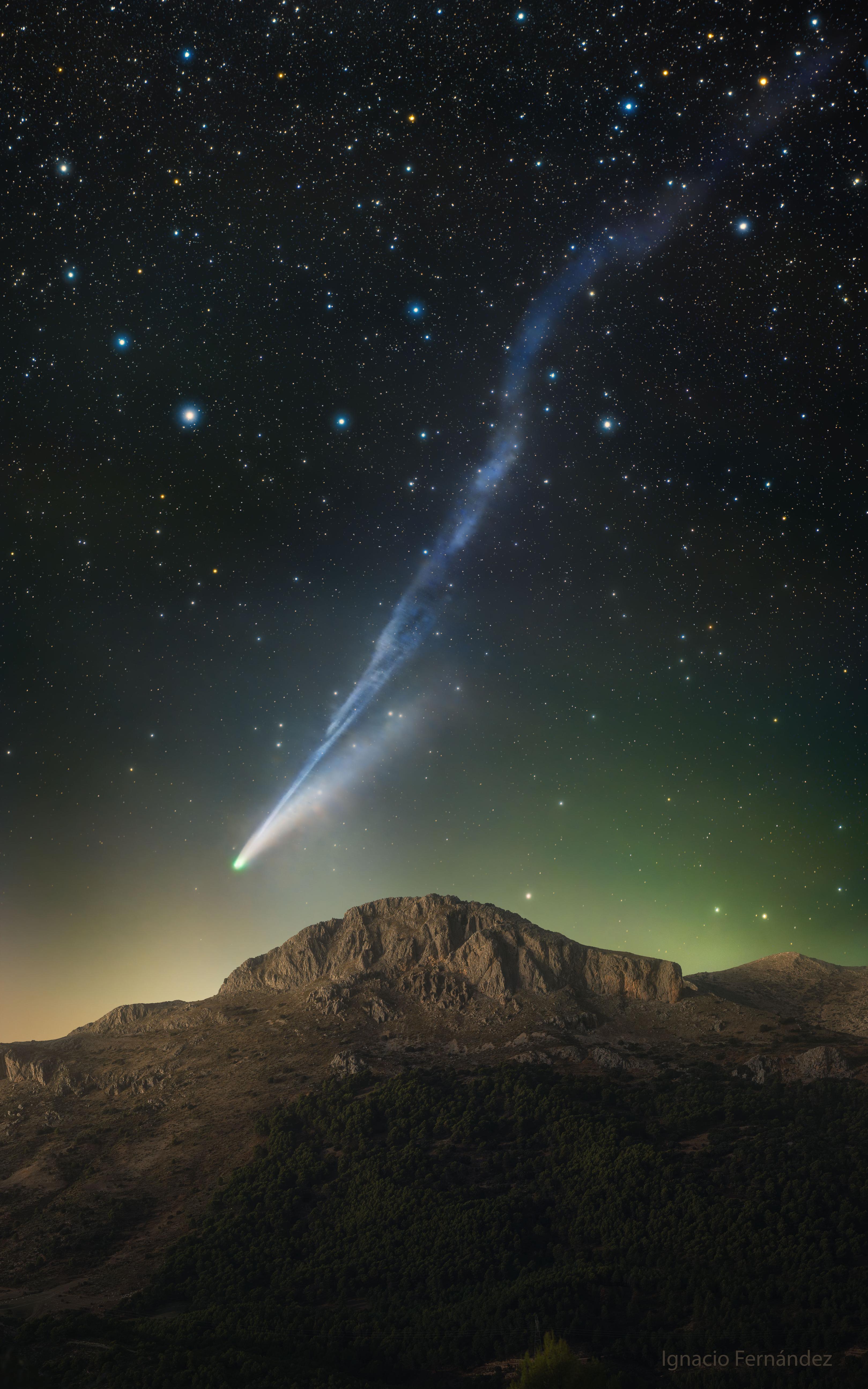
Comet Lemmon's Wandering Tail
* Image Credit: Ignacio Fernández
https://www.instagram.com/igneis.nightscapes/
Explanation:
What has happened to Comet Lemmon's tail? The answer is blowing in the wind — the wind from the Sun in this case. This continuous outflow of charged particles from the Sun has been quite variable of late, as the Sun emits bursts of energy, CMEs, that push out and deflect charged particles emitted by the comet itself. The result is a blue hued ion tail for Comet C/2025 A6 (Lemmon) that is not only impressively intricate but takes some unusual turns. This long-duration composite image taken from Alfacar, Spain last month captured this inner Solar System ionic tumult. Comet Lemmon is now fading as it heads out away from the Earth and Sun and back into the outer Solar System.
https://en.wikipedia.org/wiki/C/2025_A6_(Lemmon)
https://apod.nasa.gov/apod/ap220125.html
https://theskylive.com/c2025a6-info
https://science.nasa.gov/sun/what-is-the-solar-wind/
https://apod.nasa.gov/apod/ap240818.html
https://science.nasa.gov/science-research/heliophysics/nasa-noaa-sun-reaches-maximum-phase-in-11-year-solar-cycle/
https://www.jpl.nasa.gov/nmp/st5/SCIENCE/cme.html
https://science.nasa.gov/earth/facts/
https://apod.nasa.gov/apod/fap/ap251117.html
#space #comets #astrophotography #photography #science #astronomy #nature #NASA #ESA #education #apod
Alt...
2025 November 17
A starfield is shown above a mountain peak. Just above the mountain and extending up toward the upper right is a blue-tinted tail of a comet. The comet's head is just to the left of the peak.
Comet Lemmon's Wandering Tail
* Image Credit: Ignacio Fernández
Explanation:
What has happened to Comet Lemmon's tail? The answer is blowing in the wind — the wind from the Sun in this case. This continuous outflow of charged particles from the Sun has been quite variable of late, as the Sun emits bursts of energy, CMEs, that push out and deflect charged particles emitted by the comet itself. The result is a blue hued ion tail for Comet C/2025 A6 (Lemmon) that is not only impressively intricate but takes some unusual turns. This long-duration composite image taken from Alfacar, Spain last month captured this inner Solar System ionic tumult. Comet Lemmon is now fading as it heads out away from the Earth and Sun and back into the outer Solar System.
Authors & editors: Robert Nemiroff (MTU) & Jerry Bonnell (UMCP)
NASA Official: Amber Straughn Specific rights apply.
NASA Web Privacy, Accessibility, Notices;
A service of: ASD at NASA / GSFC,
NASA Science Activation
& Michigan Tech. U.
The Great Crossing
(Saturn's rings on the edge)
This movie sequence captures Saturn's rings during a ring plane crossing from the Cassini spacecraft's point of view. The movie begins with a view of the sunlit side of the rings. As the spacecraft speeds from south to north, the rings appear to tilt downward and collapse to a thin plane, and then open again to reveal the un-illuminated side of the ring plane, where sunlight filters through only dimly. The movie consists of 34 images taken over the course of 12 hours as Cassini pierced the ring plane. Six moons careen through the field of view during the sequence. The first large one is Enceladus, whose slanted motion from the upper left to center right nicely illustrates the inclination of its orbit with respect to the rings. The second large one, seen in the second half of the movie, is Mimas, going from right to left.
Saturn's rings are about 175,000 miles (282,000 km) across, but only about 3,200 feet (~1 km) thick. If you had a model of Saturn that wasCRED a meter stick wide (3 feet), its rings would be about 10,000 times thinner than a razor blade! Saturn and its rings would just fit in the distance between Earth and the Moon.
Saturn's rings probably formed when objects like comets, asteroids, or even moons broke up in orbit around Saturn due to Saturn's very strong gravity. The pieces of these objects kept colliding with each other and broke into even smaller pieces. These pieces gradually spread around Saturn to form its rings. The rings are thought to be short-lived compared to the age of the Solar System, meaning that if we lived at a very different time, we may not have seen rings around Saturn.
Saturn's rings are made of billions of pieces of ice, dust and rocks. (more in ALT-text)
CREDIT
NASA Jet Propulsion Laboratory,
https://coolcosmos.ipac.caltech.edu/ask/108-How-large-are-Saturn-s-rings-
#space #saturn #astrophotography #photography #science #astronomy #physics #nature #NASA #ESA #education #apod
2025 November 16
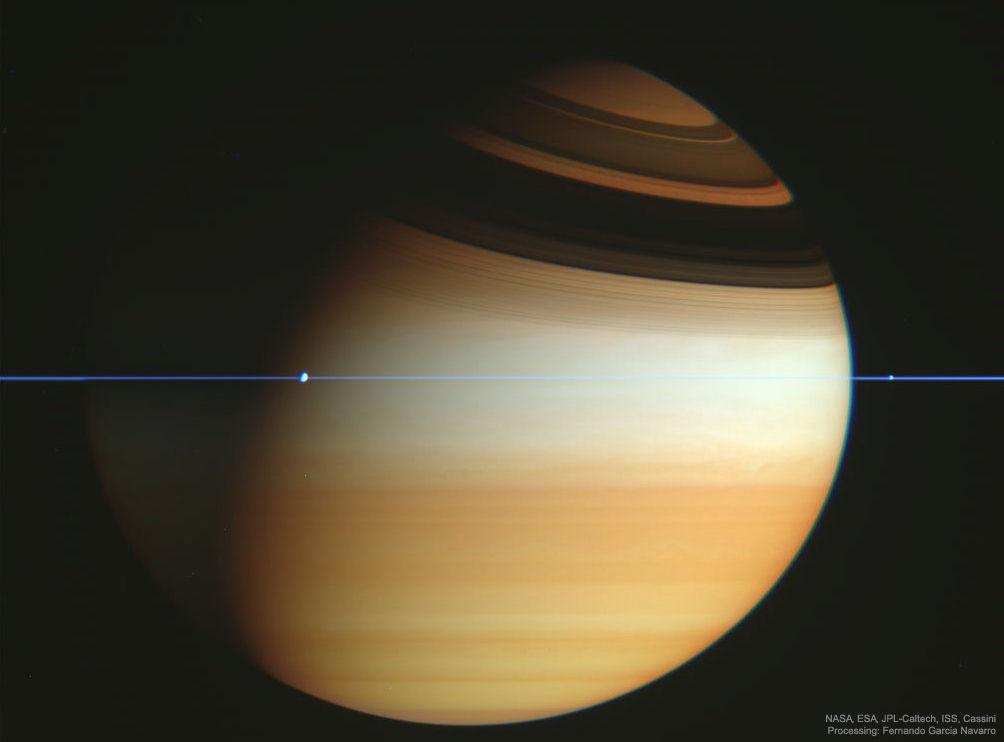
Crossing Saturn's Ring Plane
* Image Credit: NASA, ESA, JPL, ISS, Cassini Imaging Team
https://www.nasa.gov/
https://www.esa.int/
https://www.jpl.nasa.gov/
http://ciclops.org/iss/iss.php
http://ciclops.org/
* Processing: Fernando Garcia Navarro
Explanation:
If this is Saturn, where are the rings? When Saturn's "appendages" disappeared in 1612, Galileo did not understand why. Later that century, it became understood that Saturn's unusual protrusions were rings and that when the Earth crosses the ring plane, the edge-on rings will appear to disappear. This is because Saturn's rings are confined to a plane many times thinner, in proportion, than a razor blade. In modern times, the robotic Cassini spacecraft that orbited Saturn frequently crossed Saturn's ring plane during its mission to Saturn, from 2004 to 2017. A series of plane crossing images from 2005 February was dug out of the vast online Cassini raw image archive by interested Spanish amateur Fernando Garcia Navarro. Pictured here, digitally cropped and set in representative colors, is the striking result. Saturn's thin ring plane appears in blue, bands and clouds in Saturn's upper atmosphere appear in gold. Details of Saturn's rings can be seen in high dark shadows. The moons Dione and Enceladus appear as bumps in the rings.
https://asterisk.apod.com/viewtopic.php?f=9&t=18340&p=230228#p230227
https://slate.com/technology/2005/06/saturns-thin-blue-line.html
https://coolcosmos.ipac.caltech.edu/ask/108-How-large-are-Saturn-s-rings-
https://solarsystem.nasa.gov/cassini-raw-images/
https://science.nasa.gov/mission/cassini/
https://science.nasa.gov/mission/cassini/spacecraft/cassini-orbiter/
https://science.nasa.gov/mission/cassini/spacecraft/cassini-orbiter/
https://science.nasa.gov/saturn/moons/dione/
https://science.gsfc.nasa.gov/attic/huygensgcms/Shistory.htm
https://en.wikipedia.org/wiki/Galileo_Galilei
https://apod.nasa.gov/apod/ap251116.html
#space #saturn #astrophotography #photography #science #astronomy #physics #nature #NASA #ESA #education #apod
Alt...
2025 November 16
The planet Saturn is shown as an orange orb with bands. A blue line with bumps runs across the middle -- which is the rings seen sideways. The bumps are small moons.
Crossing Saturn's Ring Plane
* Image Credit: NASA, ESA, JPL, ISS, Cassini Imaging Team
* Processing: Fernando Garcia Navarro
Explanation:
If this is Saturn, where are the rings? When Saturn's "appendages" disappeared in 1612, Galileo did not understand why. Later that century, it became understood that Saturn's unusual protrusions were rings and that when the Earth crosses the ring plane, the edge-on rings will appear to disappear. This is because Saturn's rings are confined to a plane many times thinner, in proportion, than a razor blade. In modern times, the robotic Cassini spacecraft that orbited Saturn frequently crossed Saturn's ring plane during its mission to Saturn, from 2004 to 2017. A series of plane crossing images from 2005 February was dug out of the vast online Cassini raw image archive by interested Spanish amateur Fernando Garcia Navarro. Pictured here, digitally cropped and set in representative colors, is the striking result. Saturn's thin ring plane appears in blue, bands and clouds in Saturn's upper atmosphere appear in gold. Details of Saturn's rings can be seen in high dark shadows. The moons Dione and Enceladus appear as bumps in the rings.
Authors & editors: Robert Nemiroff (MTU) & Jerry Bonnell (UMCP)
NASA Official: Amber Straughn Specific rights apply.
![[?]](https://cdn.masto.host/mastodonart/accounts/avatars/107/457/830/354/834/135/original/48254bba15a075c1.jpg)
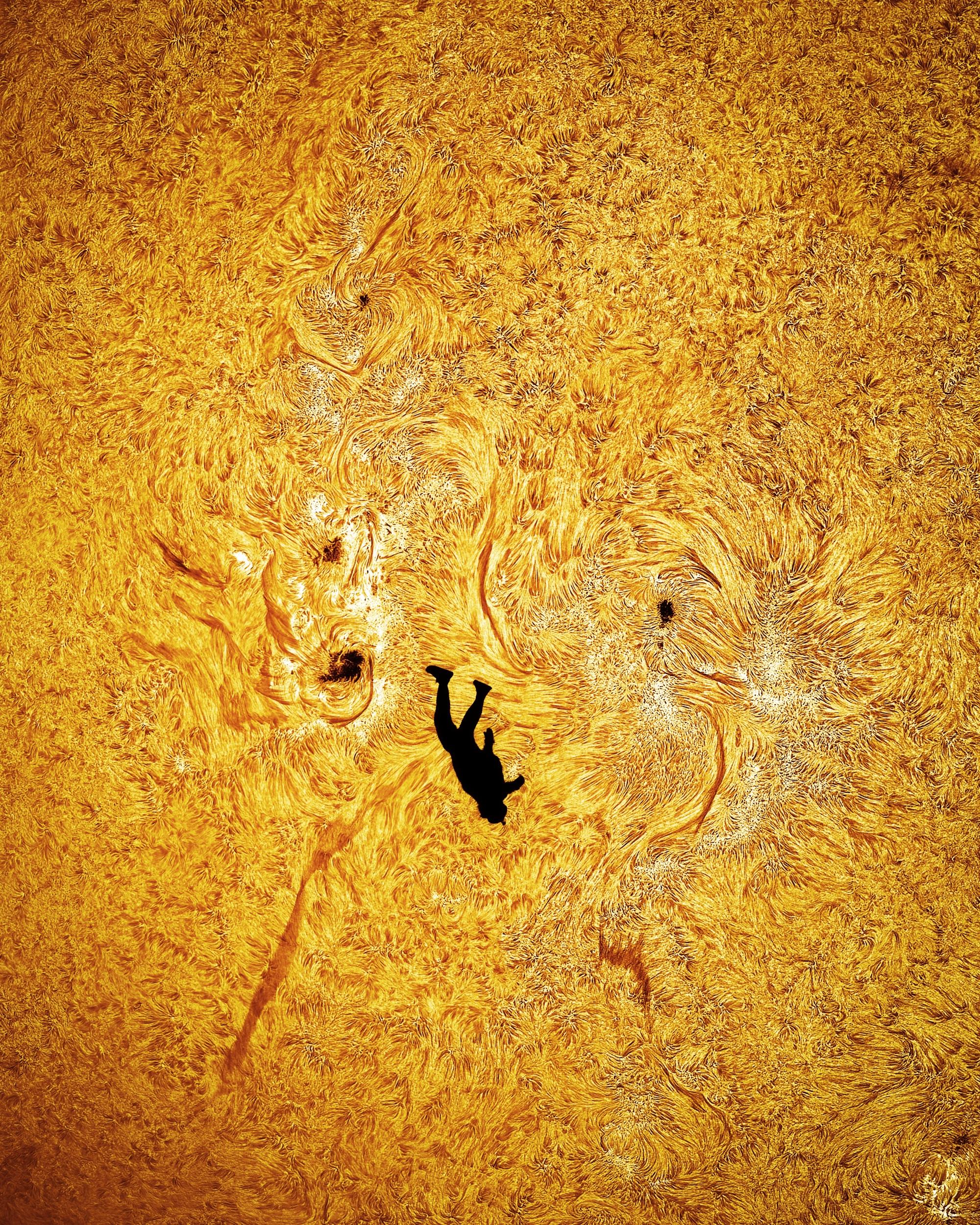
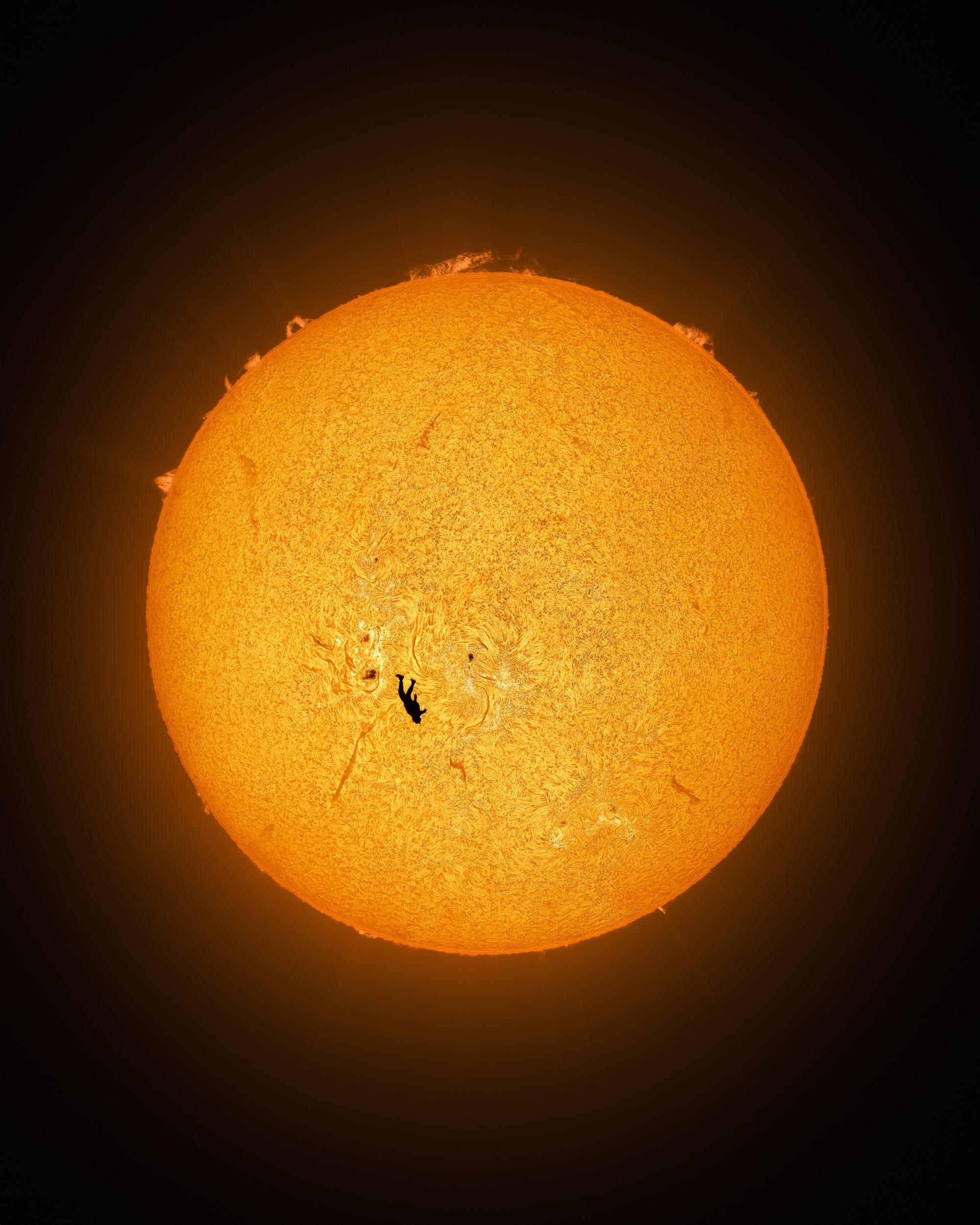
After six momentous leaps from a small aircraft, skydiver Gabriel C. Brown completed his mission. He and his photographer friend Andrew McCarthy created this stunning image that shows the adventurous subject falling in front of the sun.
https://www.thisiscolossal.com/2025/11/andrew-mccarthy-skydiver-sun-image/
Alt...
a detail image by Andrew McCarthy of a skydiver falling in front of the sun
Alt...
an image by Andrew McCarthy of a skydiver falling in front of the sun
![[?]](https://cdn.masto.host/swisssocial/accounts/avatars/109/610/582/883/537/207/original/0e6a86a6c0df06cc.jpg)

#Biologie #Biology #wissen #knowledge #science #wissenschaft #natur #nature
Rätsel um 360-Grad-Blick der Chamäleons gelöst
Sehnerven von Chamäleons sind aufgerollt und dehnbar wie Telefonkabel 🤓
https://www.scinexx.de/news/biowissen/raetsel-um-360-grad-blick-der-chamaeleons-gelueftet/
Trapezium Zoom
Messier 42 (The Orion Nebula)
+ Distance: 1,500 light-years
+ Apparent Magnitude: 4.0
+ Constellation: Orion
+ Object Type: Nebula
+ Release Date: August 24, 2000
+ Science Release: Hubble Spies Brown Dwarfs in Nearby Stellar Nursery
Credit
Bryan Preston (STScI AVL)
https://science.nasa.gov/missions/hubble/hubble-spies-brown-dwarfs-in-nearby-stellar-nursery/
#space #nebula #astronomy #science #astrophotography #photography #nature #nebula #NASA #ESA
Messier 42 (The Orion Nebula)
* by Andrea Gianopoulos
You can spot Messier 42, better known as the Orion Nebula, with the unaided eye from a dark sky site.
Believed to be the cosmic fire of creation by the Maya of Mesoamerica, M42 blazes brightly in the constellation Orion. Popularly called the Orion Nebula, this stellar nursery has been known to many different cultures throughout human history. The nebula is only 1,500 light-years away, making it the closest large star-forming region to Earth and giving it a relatively bright apparent magnitude of 4. Because of its brightness and prominent location just below Orion’s belt, M42 can be spotted with the naked eye, while offering an excellent peek at stellar birth for those with telescopes. It is best observed during January.
The Mayan culture’s likening of the Orion Nebula to a cosmic fire of creation is very apt. The nebula is an enormous cloud of dust and gas where vast numbers of new stars are being forged. Its bright, central region is the home of four massive, young stars that shape the nebula. The four hefty stars are called the Trapezium because they are arranged in a trapezoidal pattern. Ultraviolet light unleashed by these stars is carving a cavity in the nebula and disrupting the growth of hundreds of smaller stars.
This stunning Hubble image offers the sharpest view of the Orion Nebula ever obtained. Created using 520 different Hubble exposures taken in multiple wavelengths of light, this mosaic contains over one billion pixels. Hubble imaged most of the nebula, but ground-based images were used to fill in the gaps in its observations. The orange color in the image can be attributed to hydrogen, green represents oxygen, and the red represents both sulfur and observations made in infrared light.
FYI:
https://science.nasa.gov/missions/hubble/hubble-panoramic-view-of-orion-nebula-reveals-thousands-of-stars/
https://science.nasa.gov/missions/hubble/hubble-discovery-of-runaway-star-yields-clues-to-breakup-of-multiple-star-system/
#space #nebula #astronomy #science #astrophotography #photography #nature #nebula #NASA #ESA

Alt...
This stunning Hubble image offers the sharpest view of the Orion Nebula ever obtained. Created using 520 different Hubble exposures taken in multiple wavelengths of light, this mosaic contains over one billion pixels. Hubble imaged most of the nebula, but ground-based images were used to fill in the gaps in its observations. The orange color in the image can be attributed to hydrogen, green represents oxygen, and the red represents both sulfur and observations made in infrared light.
Credit
NASA, ESA, M. Robberto (Space Telescope Science Institute/ESA) and the Hubble Space Telescope Orion Treasury Project Team

Alt...
Appearing like glistening precious stones, M42’s Trapezium cluster, named for the trapezoidal arrangement of its central massive stars, is seen in this infrared Hubble image. All of the members of the Trapezium were born together in this hotbed of star formation.
CREDIT
K.L. Luhman (Harvard-Smithsonian Center for Astrophysics, Cambridge, Mass.); and G. Schneider, E. Young, G. Rieke, A. Cotera, H. Chen, M. Rieke, R. Thompson (Steward Observatory, University of Arizona, Tucson, Ariz.) and NASA/ESA

Alt...
Resembling an interstellar Frisbee, the dark feature in these two Hubble images is a protoplanetary disk of dust seen edge-on around a newborn star in M42. The two images show the disk through two different sets of filters: one to probe the disk’s chemical composition (left) and another to reduce the brightness of the nebula, revealing brighter regions above and below the disk that betray the presence of the star (right). Because the disk is edge-on, its star is largely hidden, but the disk may be an embryonic planetary system in the making. Our solar system probably formed out of such a disk 4.5 billion years ago.
CREDIT
Mark McCaughrean (Max-Planck-Institute for Astronomy), C. Robert O'Dell (Rice University) and NASA
Hubble Spies Brown Dwarfs in Nearby Stellar Nursery
[...]
Appearing like glistening precious stones surrounding a setting of sparkling diamonds, more than 300 fledgling stars and brown dwarfs surround the brightest, most massive stars [center of picture] in Hubble's view of the Trapezium cluster's central region. All of the celestial objects in the Trapezium were born together in this hotbed of star formation. The cluster is named for the trapezoidal alignment of those central massive stars.
Brown dwarfs are gaseous objects with masses so low their cores never become hot enough to fuse hydrogen, the thermonuclear fuel stars like the Sun need to shine steadily. Instead, these gaseous objects fade and cool as they grow older. [...]
This finding, along with observations from ground-based telescopes, is further evidence that brown dwarfs, once considered exotic objects, are nearly as abundant as stars. The image and results appear in the Sept. 20 issue of the Astrophysical Journal.
The brown dwarfs are too dim to be seen in a visible-light image taken by the Hubble telescope's Wide Field and Planetary Camera 2 [picture at left]. This view also doesn't show the assemblage of infant stars seen in the near-infrared image. That's because the young stars are embedded in dense clouds of dust and gas. The Hubble telescope's near-infrared camera, the Near Infrared Camera and Multi-Object Spectrometer, penetrated those clouds to capture a view of those objects. The brown dwarfs are the faintest objects in the image. Surveying the cluster's central region, the Hubble telescope spied brown dwarfs with masses equaling 10 to 80 Jupiters. Researchers think there may be less massive brown dwarfs that are beyond the limits of Hubble's vision.
[...] (see more in ALT-text)
#space #nebula #astronomy #science #astrophot ography #photography #nature #nebula #NASA #ESA
![Probing deep within a neighborhood stellar nursery, NASA's Hubble Space Telescope uncovered a swarm of newborn brown dwarfs. The orbiting observatory's near-infrared camera revealed about 50 of these objects throughout the Orion Nebula's Trapezium cluster [image at right], about 1,500 light-years from Earth. Appearing like glistening precious stones surrounding a setting of sparkling diamonds, more than 300 fledgling stars and brown dwarfs surround the brightest, most massive stars [center of picture] in Hubble's view of the Trapezium cluster's central region. The brown dwarfs are too dim to be seen in an image taken by the Hubble telescope's visible-light camera [picture at left].
[...]
The near-infrared image was taken Jan. 17, 1998. Two near-infrared filters were used to obtain information on the colors of the stars at two wavelengths (1.1 and 1.6 microns). The Trapezium picture is 1 light-year across. This composite image was made from a "mosaic" of nine separate, but adjoining images. In this false-color image, blue corresponds to warmer, more massive stars, and red to cooler, less massive stars and brown dwarfs, and stars that are heavily obscured by dust.
The visible-light data were taken in 1994 and 1995.
Credit
* Near-infrared image: NASA; K.L. Luhman and G. Schneider, E. Young, G. Rieke, A. Cotera, H. Chen, M. Rieke, R. Thompson
* Visible-light image: NASA, C.R. O'Dell and S.K. Wong (Rice University)](https://files.defcon.social/dcsocial-s3/media_attachments/files/115/552/556/134/768/487/original/5241229082ac1174.jpg "Probing deep within a neighborhood stellar nursery, NASA's Hubble Space Telescope uncovered a swarm of newborn brown dwarfs. The orbiting observatory's near-infrared camera revealed about 50 of these objects throughout the Orion Nebula's Trapezium cluster [image at right], about 1,500 light-years from Earth. Appearing like glistening precious stones surrounding a setting of sparkling diamonds, more than 300 fledgling stars and brown dwarfs surround the brightest, most massive stars [center of picture] in Hubble's view of the Trapezium cluster's central region. The brown dwarfs are too dim to be seen in an image taken by the Hubble telescope's visible-light camera [picture at left].
[...]
The near-infrared image was taken Jan. 17, 1998. Two near-infrared filters were used to obtain information on the colors of the stars at two wavelengths (1.1 and 1.6 microns). The Trapezium picture is 1 light-year across. This composite image was made from a \"mosaic\" of nine separate, but adjoining images. In this false-color image, blue corresponds to warmer, more massive stars, and red to cooler, less massive stars and brown dwarfs, and stars that are heavily obscured by dust.
The visible-light data were taken in 1994 and 1995.
Credit
* Near-infrared image: NASA; K.L. Luhman and G. Schneider, E. Young, G. Rieke, A. Cotera, H. Chen, M. Rieke, R. Thompson
* Visible-light image: NASA, C.R. O'Dell and S.K. Wong (Rice University)")
Alt...
Probing deep within a neighborhood stellar nursery, NASA's Hubble Space Telescope uncovered a swarm of newborn brown dwarfs. The orbiting observatory's near-infrared camera revealed about 50 of these objects throughout the Orion Nebula's Trapezium cluster [image at right], about 1,500 light-years from Earth. Appearing like glistening precious stones surrounding a setting of sparkling diamonds, more than 300 fledgling stars and brown dwarfs surround the brightest, most massive stars [center of picture] in Hubble's view of the Trapezium cluster's central region. The brown dwarfs are too dim to be seen in an image taken by the Hubble telescope's visible-light camera [picture at left].
[...]
The near-infrared image was taken Jan. 17, 1998. Two near-infrared filters were used to obtain information on the colors of the stars at two wavelengths (1.1 and 1.6 microns). The Trapezium picture is 1 light-year across. This composite image was made from a "mosaic" of nine separate, but adjoining images. In this false-color image, blue corresponds to warmer, more massive stars, and red to cooler, less massive stars and brown dwarfs, and stars that are heavily obscured by dust.
The visible-light data were taken in 1994 and 1995.
Credit
* Near-infrared image: NASA; K.L. Luhman and G. Schneider, E. Young, G. Rieke, A. Cotera, H. Chen, M. Rieke, R. Thompson
* Visible-light image: NASA, C.R. O'Dell and S.K. Wong (Rice University)
Orion Nebula proplyd atlas
This atlas features 30 proplyds, or protoplanetary discs, that were recently discovered in the majestic Orion Nebula. Using the wide field channel on Hubble’s Advanced Camera for Surveys (ACS), astronomers discovered a total of 42 new discs that could be the seeds of planetary systems to come. Within the awe-inspiring, gaseous folds of Orion, researchers have identified two different types of discs around young and forming stars: those that lie close to the brightest star in the cluster (Theta 1 Orionis C) and those farther away from it. The bright star heats up the gas in the nearby discs, causing them to shine brightly. The discs that are farther away do not receive enough of the energetic radiation from the star to set the gas ablaze; thus, they can only be detected as dark silhouettes against the background of the bright nebula, as the dust that surrounds these discs absorbs background visible light. By studying these silhouetted discs, astronomers are better able to characterize the properties of the dust grains that are thought to bind together and possibly form planets like our own. In the brighter discs the excited material produces many glowing cusps, which all face the bright star, but from our point of view are randomly oriented through the nebula, so we see some edge on, and others face on, for instance. Other interesting features enhance the look of these captivating objects, such as emerging jets of matter and shock waves. The dramatic shock waves are formed when the stellar wind from the nearby massive star collides with the gas in the nebula, sculpting boomerang shapes or arrows or even, in the case of 181-825, a space jellyfish! [...] (see ALT-text)
Image Credit:
NASA, ESA, and L. Ricci (ESO)
https://science.nasa.gov/image-detail/orion-nebula-proplyd-atlas/
#space #nebula #astronomy #science #astrophotography #photography #nature #nebula #NASA #ESA
![Orion Nebula proplyd atlas
This atlas features 30 proplyds, or protoplanetary discs, that were recently discovered in the majestic Orion Nebula.
Image Credit:
NASA, ESA, and L. Ricci (ESO)
[...]
It is relatively rare to see visible images of proplyds, but the high resolution and sensitivity of Hubble and the Orion Nebula’s proximity to Earth allow for precise views of these potential planetary systems. This proplyd atlas is the first scientific outcome from the HST Treasury Program on the Orion Nebula.](https://files.defcon.social/dcsocial-s3/media_attachments/files/115/552/466/597/260/016/original/5e9edbed868bda03.jpg "Orion Nebula proplyd atlas
This atlas features 30 proplyds, or protoplanetary discs, that were recently discovered in the majestic Orion Nebula.
Image Credit:
NASA, ESA, and L. Ricci (ESO)
[...]
It is relatively rare to see visible images of proplyds, but the high resolution and sensitivity of Hubble and the Orion Nebula’s proximity to Earth allow for precise views of these potential planetary systems. This proplyd atlas is the first scientific outcome from the HST Treasury Program on the Orion Nebula.")
Alt...
Orion Nebula proplyd atlas
This atlas features 30 proplyds, or protoplanetary discs, that were recently discovered in the majestic Orion Nebula.
Image Credit:
NASA, ESA, and L. Ricci (ESO)
[...]
It is relatively rare to see visible images of proplyds, but the high resolution and sensitivity of Hubble and the Orion Nebula’s proximity to Earth allow for precise views of these potential planetary systems. This proplyd atlas is the first scientific outcome from the HST Treasury Program on the Orion Nebula.
2025 November 15
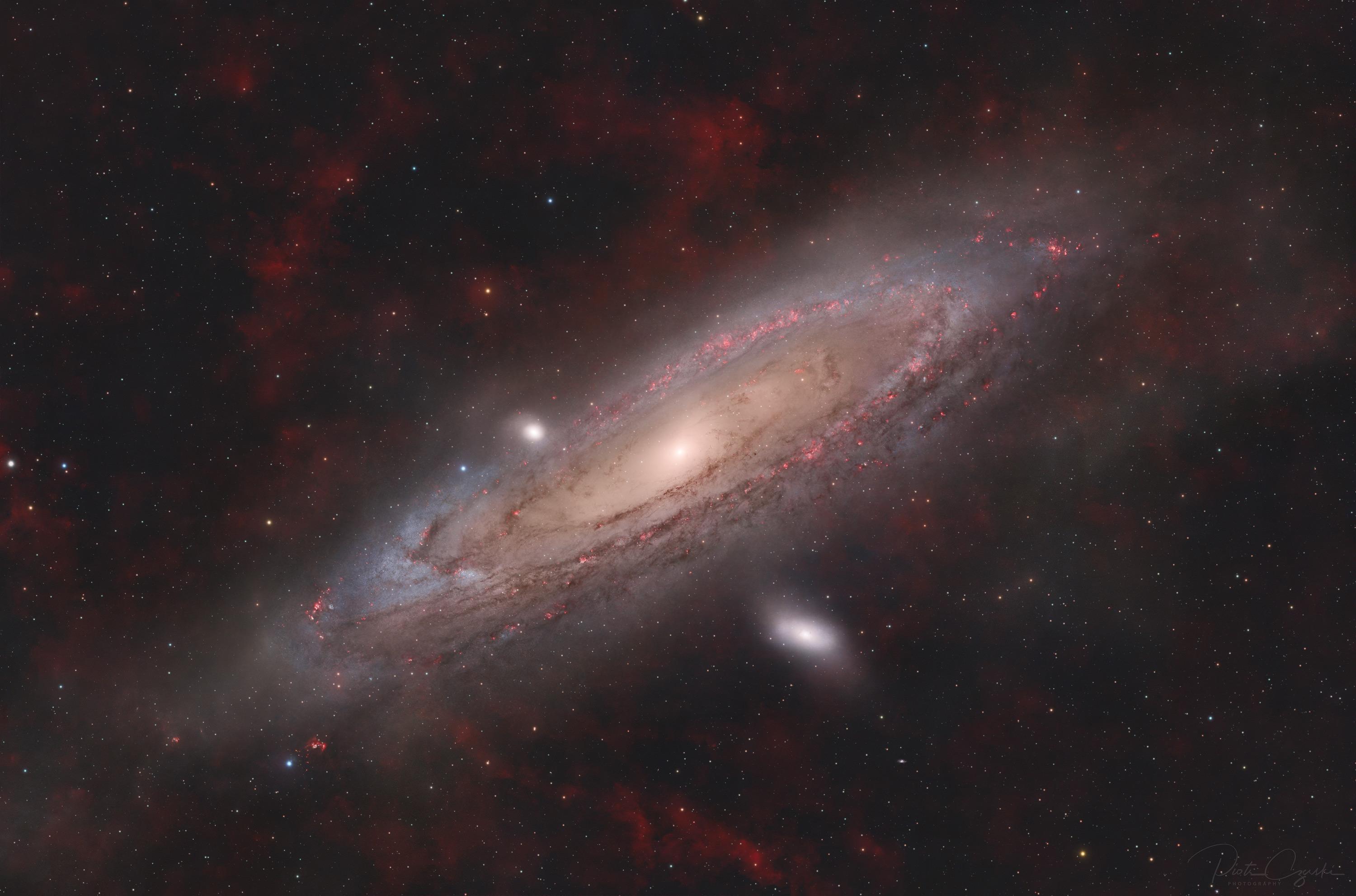
Andromeda and Friends
* Image Credit & Copyright: Piotr Czerski
https://app.astrobin.com/u/PiotrC#gallery
Explanation:
This magnificent extragalactic skyscape looks toward the Andromeda Galaxy, the closest large spiral galaxy to the Milky Way. It also accomplishes a Messier catalog trifecta by including Andromeda, cataloged as Messier 31 (M31), along with Messier 32 (M32), and Messier 110 (M110) in the same telescopic field of view. In this frame, M32 is just left of the Andromeda Galaxy's bright core with M110 below and to the right. M32 and M110 are both elliptical galaxies themselves and satellites of the larger spiral Andromeda. By combining 60 hours of broadband and narrowband image data, the deep telescopic view also reveals tantalizing details of dust lanes, young star clusters, and star-forming regions along Andromeda's spiral arms, and faint, foreground clouds of glowing hydrogen gas. For now, Andromeda and friends are some 2.5 million light-years from our own large spiral Milky Way.
https://app.astrobin.com/u/PiotrC?i=1y6644#gallery
https://science.nasa.gov/mission/hubble/science/explore-the-night-sky/hubble-messier-catalog/messier-31/
https://science.nasa.gov/mission/hubble/science/explore-the-night-sky/hubble-messier-catalog/messier-32/
https://science.nasa.gov/mission/hubble/science/explore-the-night-sky/hubble-messier-catalog/messier-110/
https://apod.nasa.gov/apod/fap/ap251115.html
#space #galaxy #astrophotography #photography #science #astronomy #nature #NASA #ESA #apod
Alt...
2025 November 15
Andromeda and Friends
* Image Credit & Copyright: Piotr Czerski
Explanation:
This magnificent extragalactic skyscape looks toward the Andromeda Galaxy, the closest large spiral galaxy to the Milky Way. It also accomplishes a Messier catalog trifecta by including Andromeda, cataloged as Messier 31 (M31), along with Messier 32 (M32), and Messier 110 (M110) in the same telescopic field of view. In this frame, M32 is just left of the Andromeda Galaxy's bright core with M110 below and to the right. M32 and M110 are both elliptical galaxies themselves and satellites of the larger spiral Andromeda. By combining 60 hours of broadband and narrowband image data, the deep telescopic view also reveals tantalizing details of dust lanes, young star clusters, and star-forming regions along Andromeda's spiral arms, and faint, foreground clouds of glowing hydrogen gas. For now, Andromeda and friends are some 2.5 million light-years from our own large spiral Milky Way.
Authors & editors: Robert Nemiroff (MTU) & Jerry Bonnell (UMCP)
NASA Official: Amber Straughn Specific rights apply.
NASA Web Privacy, Accessibility, Notices;
A service of: ASD at NASA / GSFC,
NASA Science Activation
& Michigan Tech. U.
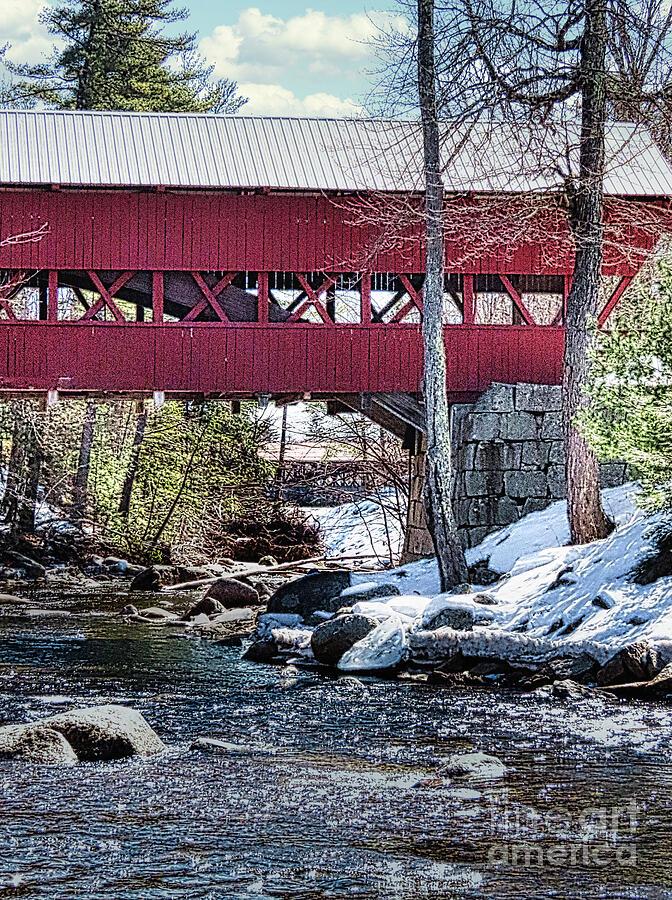
"Two Covered Bridges in One Image"
By Scott Loring Davis, Fine Art Photography
https://pixels.com/profiles/scottloringdavis
This beautiful print offers a calming, serene and relaxing feel to any room or public location
where a calming effect is beneficial. FULL DESCRPTION - https://pixels.com/featured/two-covered-bridges-in-one-image-scott-loring-davis.html
#buyintoart #ScottLoringDavis #mastoart #giftideas #art #coveredbridge #artprints #wallart #homedecor #interiordesign #artforsale #photography #travel #fineartprints #Maine #Nature #printsforsale #artforsale #arte
2025 November 14
Florida Northern Lights
* Image Credit & Copyright: Samil Cabrera
https://www.instagram.com/astronycc/
Explanation:
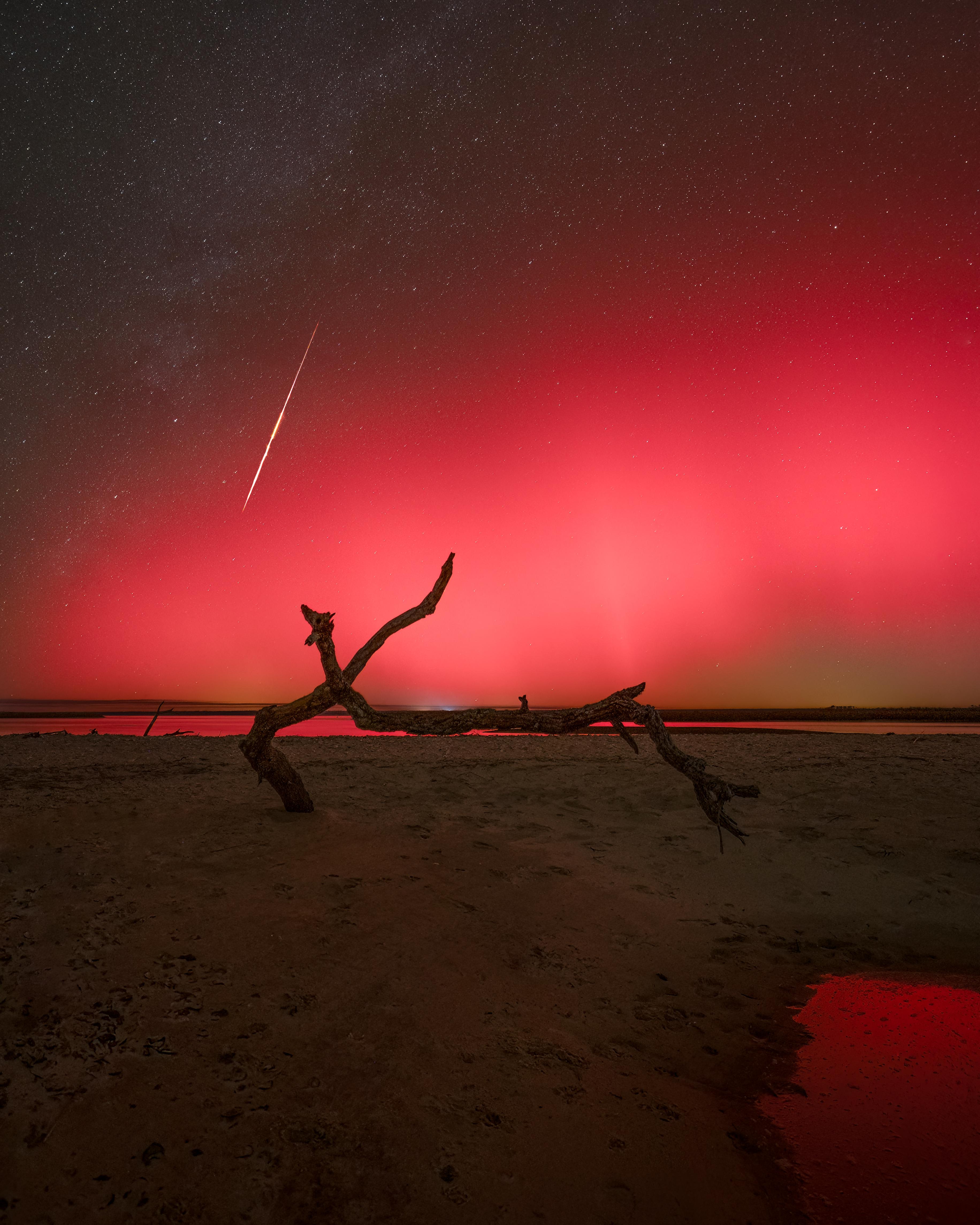
Northern lights have come to Florida skies. In fact, the brilliant streak of a Northern Taurid meteor flashes through the starry night sky above the beach in this sea and skyscape, captured from Shired Island, Florida on November 11. Meteors from the annual Northern Taurid meteor shower are expected this time of year. But the digital camera exposure also records the shimmering glow of aurora, a phenomenon more often seen from our fair planet's higher geographical latitudes. Also known as aurora borealis, these northern lights are part of recent, wide spread auroral activity caused by strong geomagnetic storms. In the last few days, stormy spaceweather has been triggered by multiple Earth impacting coronal mass ejections and intense solar activity.
https://spaceweathergallery2.com/indiv_upload.php?upload_id=228413
https://www.swpc.noaa.gov/news/g3-strong-geomagnetic-storming-continues-g4-severe-still-expected
https://earthsky.org/astronomy-essentials/taurid-meteors-all-you-need-to-know/
https://earthsky.org/sun/sun-news-activity-solar-flare-cme-aurora-updates/
https://apod.nasa.gov/apod/ap251114.html
#space #earth #aurora #astrophotography #photography #NASA #science #physics #nature #education #4sAur #apod
Alt...
2025 November 14
Florida Northern Lights
* Image Credit & Copyright: Samil Cabrera
Explanation:
Northern lights have come to Florida skies. In fact, the brilliant streak of a Northern Taurid meteor flashes through the starry night sky above the beach in this sea and skyscape, captured from Shired Island, Florida on November 11. Meteors from the annual Northern Taurid meteor shower are expected this time of year. But the digital camera exposure also records the shimmering glow of aurora, a phenomenon more often seen from our fair planet's higher geographical latitudes. Also known as aurora borealis, these northern lights are part of recent, wide spread auroral activity caused by strong geomagnetic storms. In the last few days, stormy spaceweather has been triggered by multiple Earth impacting coronal mass ejections and intense solar activity.
Authors & editors: Robert Nemiroff (MTU) & Jerry Bonnell (UMCP)
NASA Official: Amber Straughn Specific rights apply.
NASA Web Privacy, Accessibility, Notices;
A service of: ASD at NASA / GSFC,
NASA Science Activation
& Michigan Tech. U.
2011 March 25
Auroral Substorm over Yellowknife
* Image Credit & Copyright: Kwon, O Chul
https://twanight.org/profile/kwon-o-chul/
Explanation:
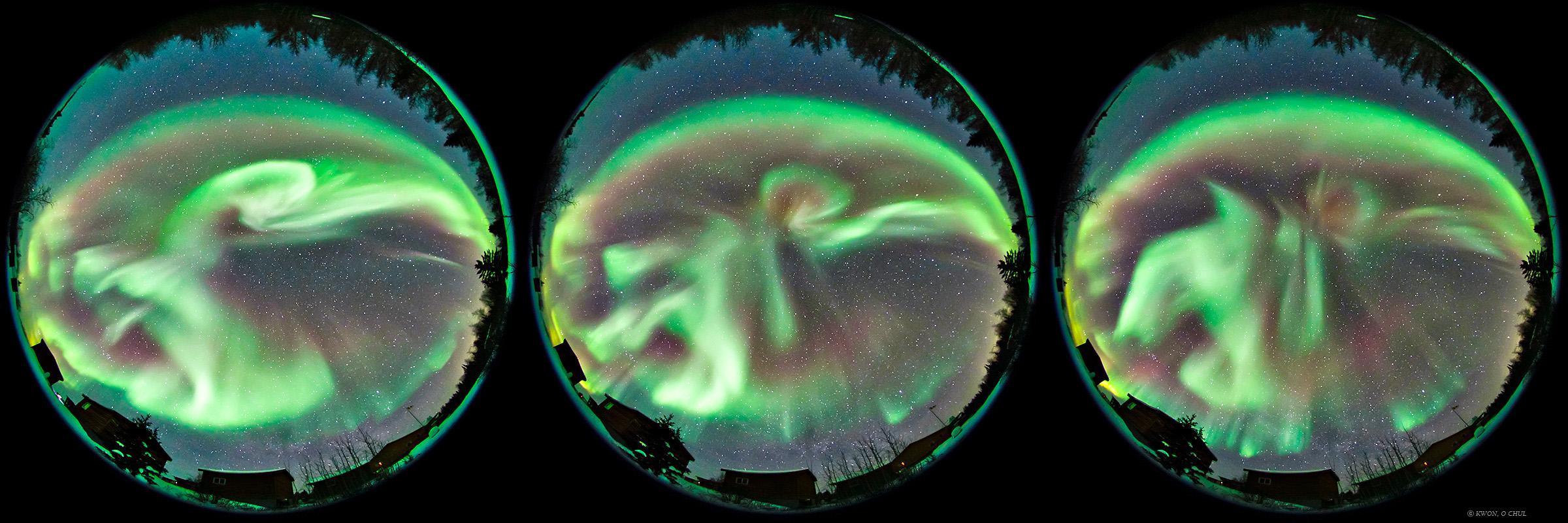
Intense auroral activity flooded the night with shimmering colors on February 24, captured here from a lodge near the city of Yellowknife in northern Canada. The stunning sequence (left to right) of three all-sky exposures, taken at 30 second intervals, shows rapid changes in dancing curtains of northern lights against a starry background. What makes the northern lights dance? Measurements by NASA's fleet of THEMIS spacecraft indicate that these explosions of auroral activity are driven by sudden releases of energy in the Earth's magnetosphere called magnetic reconnection events. The reconnection events release energy when magnetic field lines snap like rubber bands, driving charged particles into the upper atmosphere. Stretching into space, these reconnection events occur in the magnetosphere on the Earth's night side at a distance about 1/3 of the way to the Moon.
https://apod.nasa.gov/apod/ap110325.html
#space #earth #aurora #astrophotography #photography #NASA #science #physics #nature #education #4sAur
Alt...
2011 March 25
Auroral Substorm over Yellowknife
* Image Credit & Copyright: Kwon, O Chul (TWAN)
Explanation:
Intense auroral activity flooded the night with shimmering colors on February 24, captured here from a lodge near the city of Yellowknife in northern Canada. The stunning sequence (left to right) of three all-sky exposures, taken at 30 second intervals, shows rapid changes in dancing curtains of northern lights against a starry background. What makes the northern lights dance? Measurements by NASA's fleet of THEMIS spacecraft indicate that these explosions of auroral activity are driven by sudden releases of energy in the Earth's magnetosphere called magnetic reconnection events. The reconnection events release energy when magnetic field lines snap like rubber bands, driving charged particles into the upper atmosphere. Stretching into space, these reconnection events occur in the magnetosphere on the Earth's night side at a distance about 1/3 of the way to the Moon.
Authors & editors: Robert Nemiroff (MTU) & Jerry Bonnell (UMCP)
NASA Official: Phillip Newman Specific rights apply.
NASA Web Privacy Policy and Important Notices
A service of: ASD at NASA / GSFC
& Michigan Tech. U.
![[?]](https://files.mastodon.social/accounts/avatars/110/776/036/825/678/565/original/6cc3ba3927a0614b.jpg)
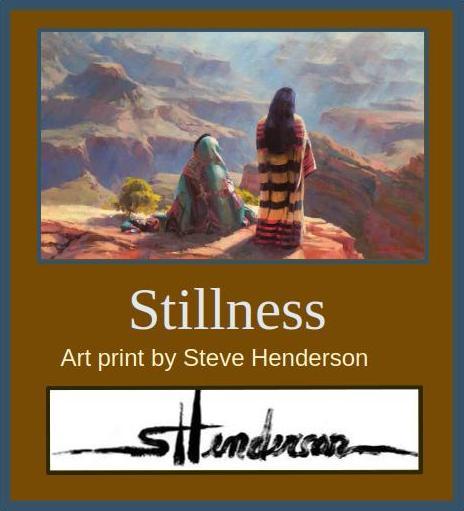
I send thanks to the buyer from Texas who purchased an art print of
Stillness -- https://stevehendersonart.com/featured/stillness-steve-henderson.html?product=art-print
May the artwork take you to a place of sublime calm.
#art #artwork #mastoart #fediart #buyintoart #fedigiftshop #arizona #ayearforart #peace #nature #grandcanyon #southwest #painting #landscape #decor #homedecor #women #thinking #calm #view #vista #sale #artist #notAI #noAI
Alt...
Two women standing looking at the Grand Canyon.
![[?]](https://o.mastodon.nz/accounts/avatars/108/197/915/853/492/332/original/7bdebafbba3cfe4f.jpg)

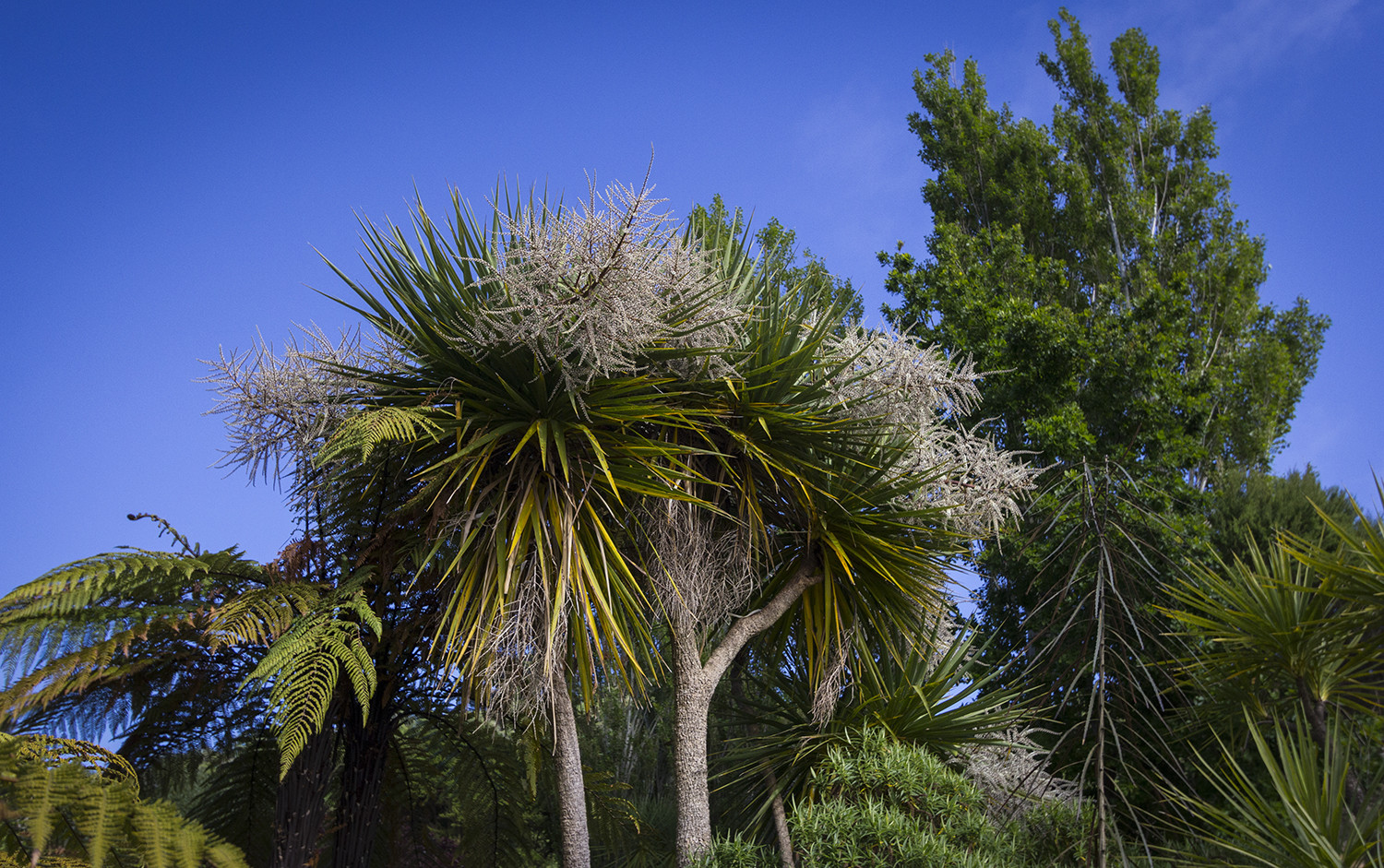
The flowers on my cabbage trees (Cordyline australis / Māori: tī kōuka) are really going off this year. Not only are they more profuse than usual, they're huge. It's going to be a highly perfumed start to summer.
#CabbageTree #Dunedin #Climate #MyPhoto #Nature
Alt...
A couple of cabbage trees against a blue sky. They're covered in large, white, spindly flowers which are going to smell divine in a few weeks. There are various trees in the background including a little lancewood at the bottom right. This is my back yard.
![[?]](https://cdn.masto.host/socelnet/accounts/avatars/109/331/216/096/518/560/original/c61d0053547c5a81.jpg)
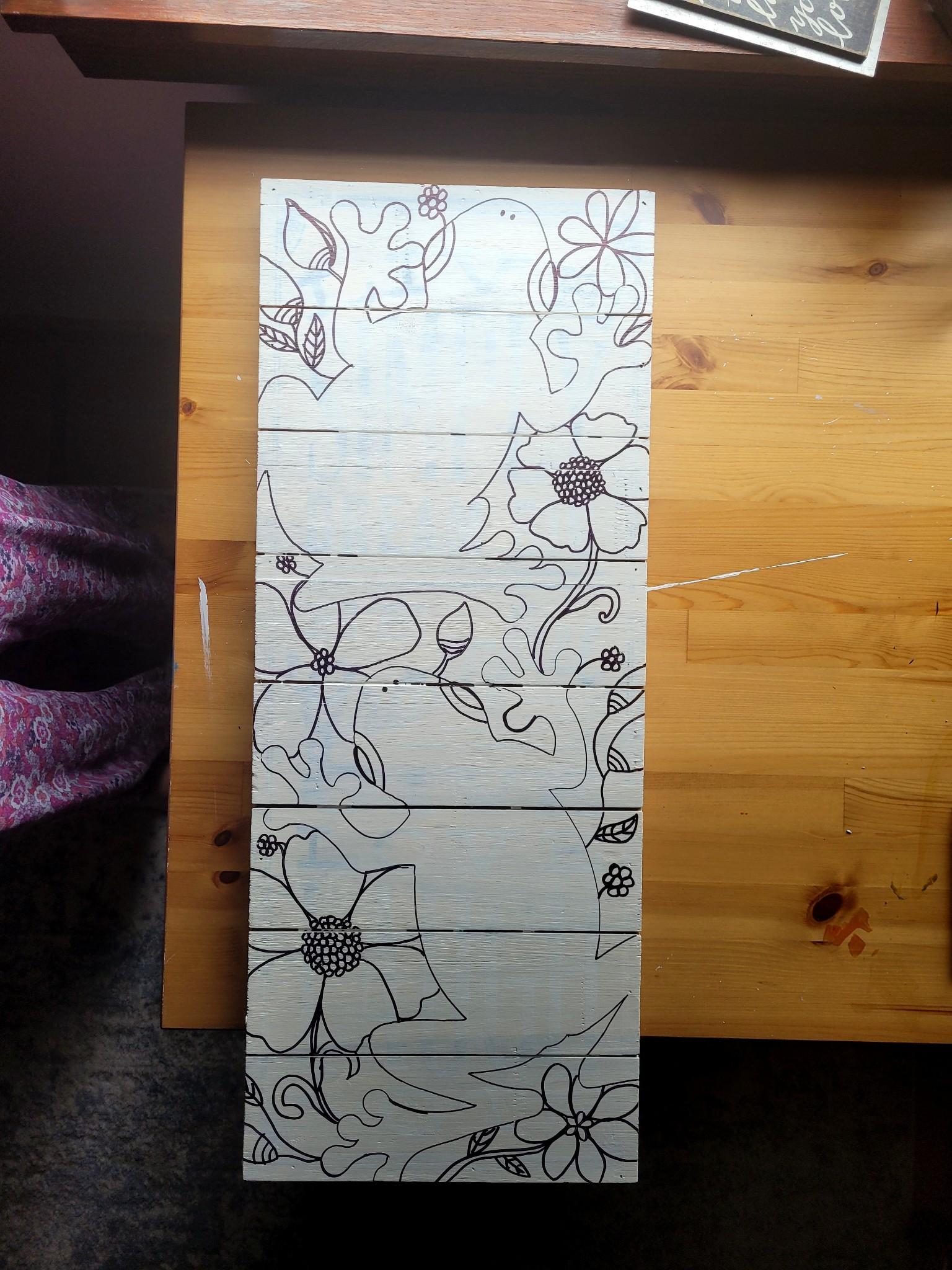
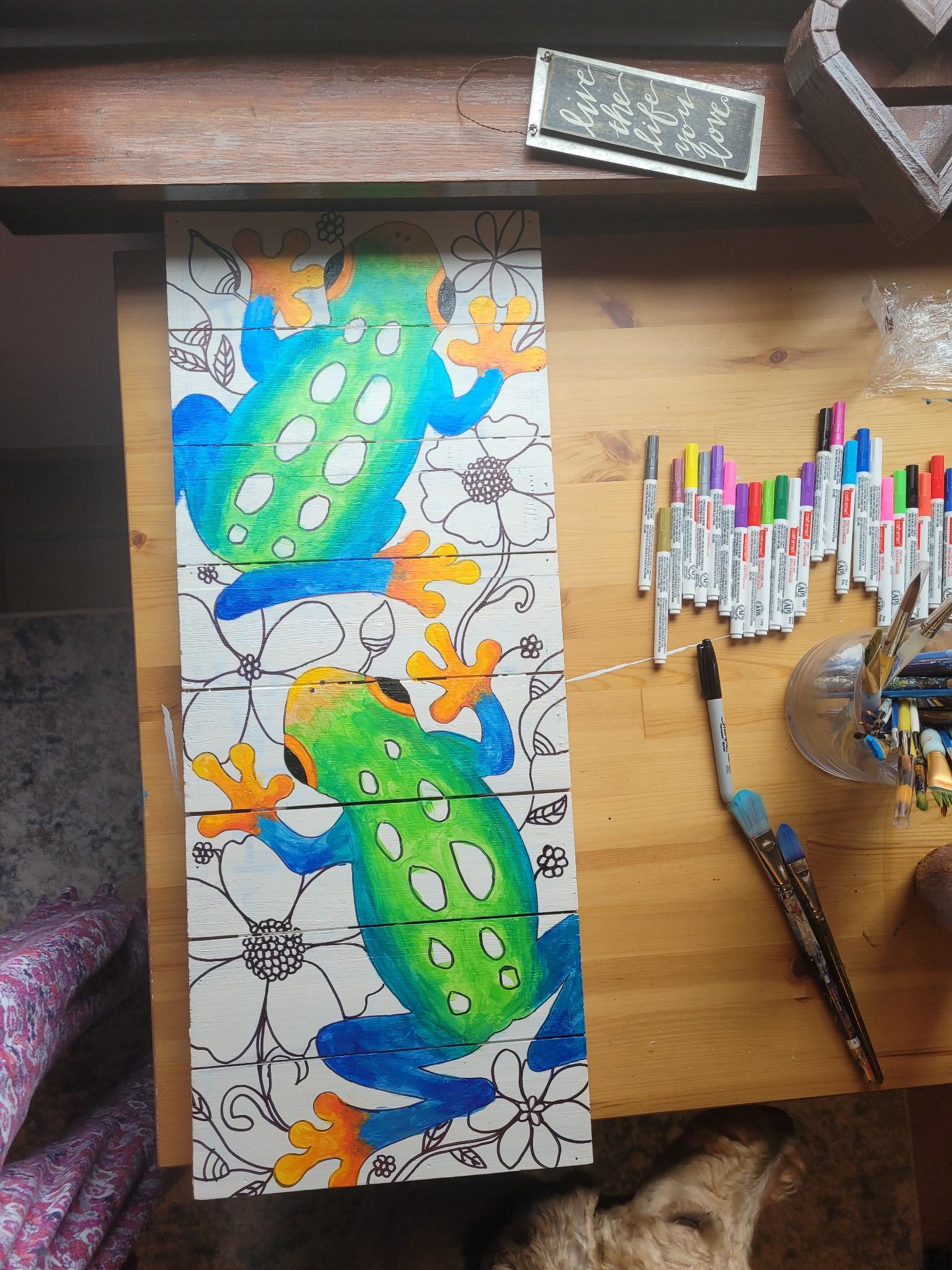
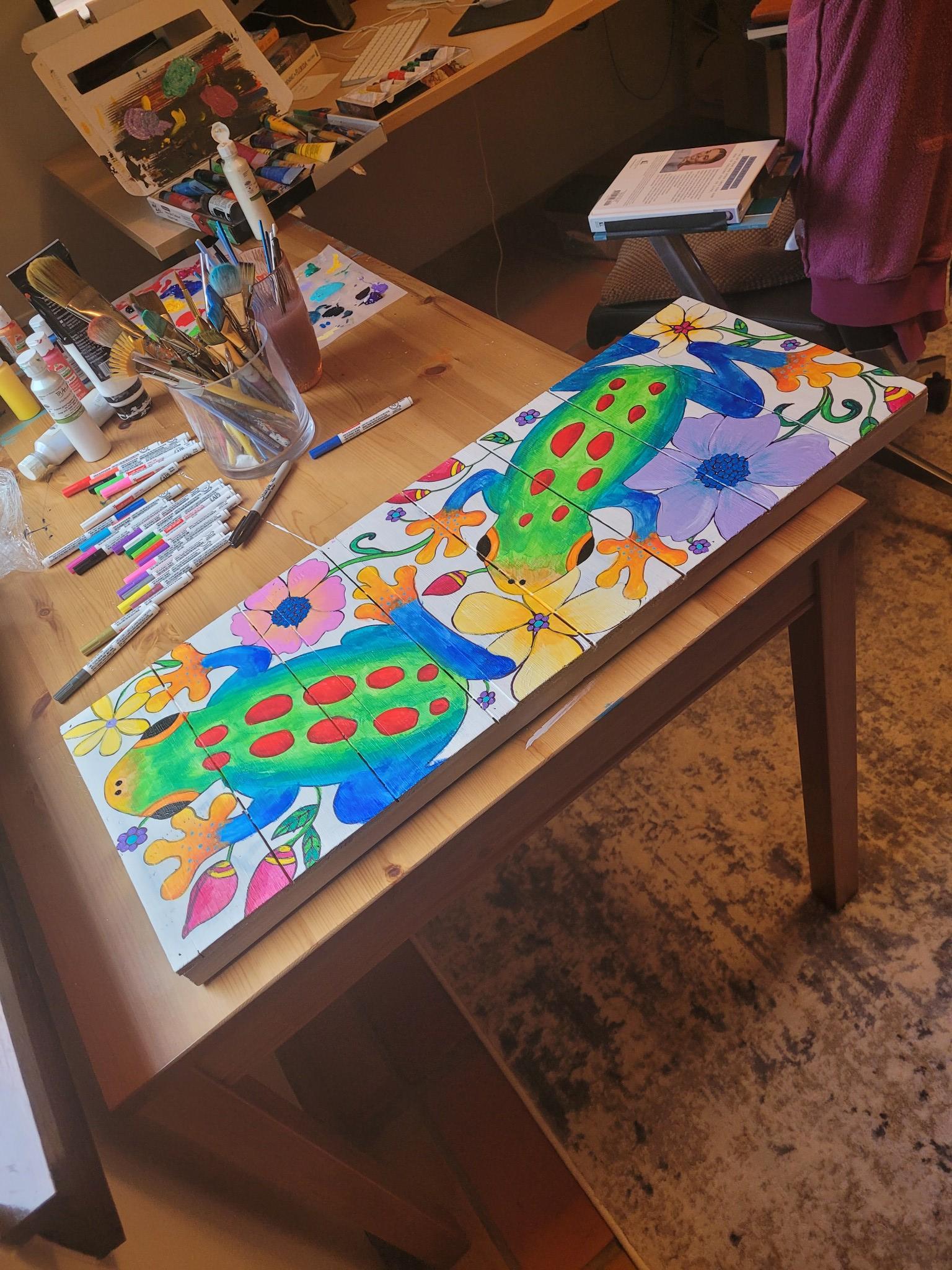
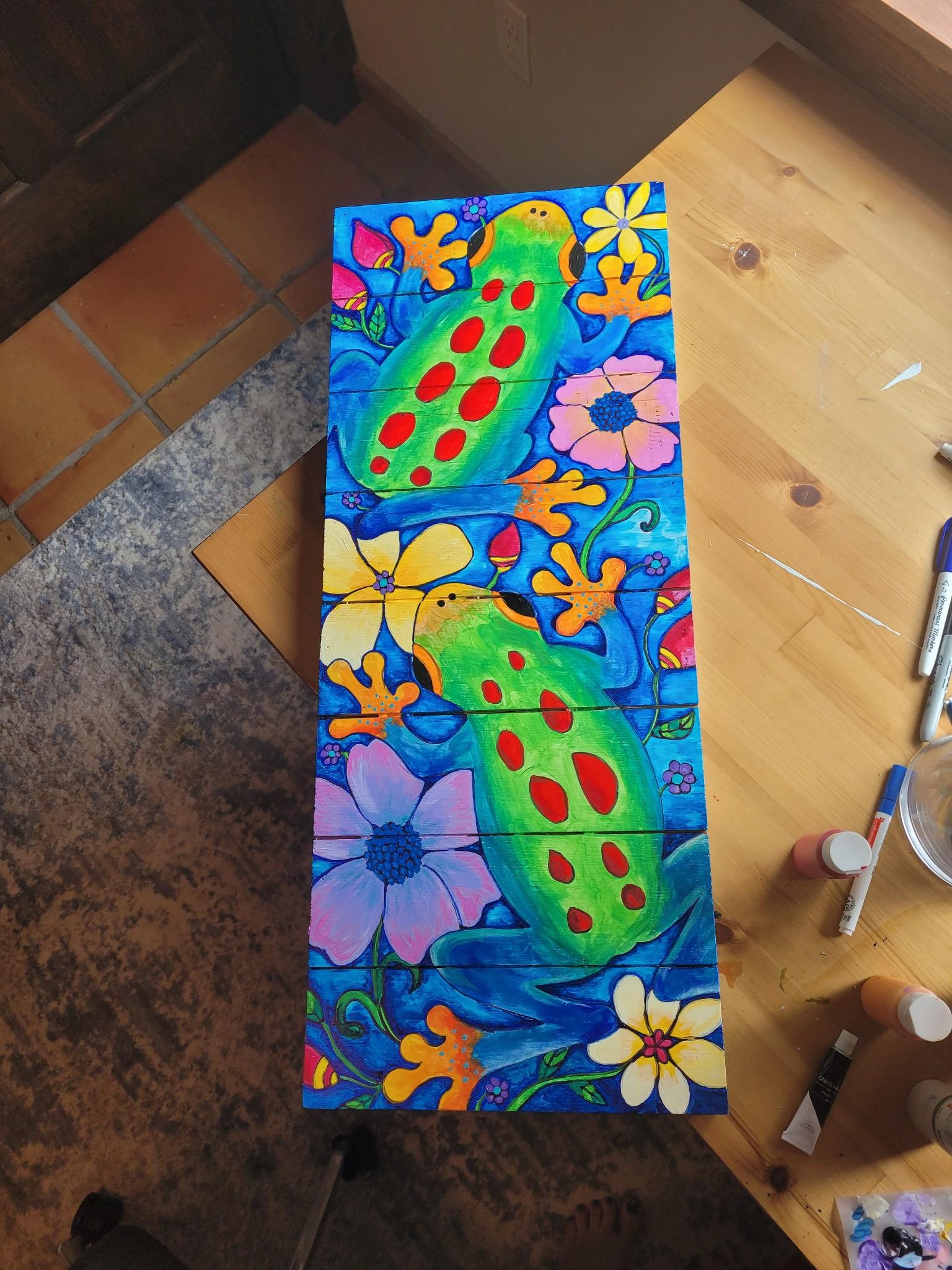
Just back from vacation. I saw some colorful frogs at a store and they inspired me to create a painting! I had so much fun! I am keeping the original. Prints below!
ART
https://fineartamerica.com/featured/frogs-of-fancy-floral-art-sharon-cummings.html
#frog #frogs #treefrogs #colorful #colorfulart #art #artwork #artist #fediart #mastoart #handmade #handmadeart #fedigiftshop #tropical #beach #beachy #beachlife #rainforest #animals #gifts #gift #giftidea #giftideas #SharonCummingsArt #nature #flower #flowers #floral #garden #gardening #gardener
Alt...
Drawing of frogs and flowers by artist Sharon Cummings.
Alt...
Work in progress of frogs and flowers by artist Sharon Cummings.
Alt...
Work in progress of frogs and flowers by artist Sharon Cummings.
Alt...
Finished painting of frogs and flowers by artist Sharon Cummings.
2025 November 13
Orion and the Running Man
* Image Credit & Copyright: R. Jay Gabany
https://www.cosmotography.com/index.html
Explanation:
Few cosmic vistas can excite the imagination like The Great Nebula in Orion. Visible as a faint, bland celestial smudge to the naked-eye, the nearest large star-forming region sprawls across this sharp colorful telescopic image. Designated M42 in the Messier Catalog, the Orion Nebula's glowing gas and dust surrounds hot, young stars. About 40 light-years across, M42 is at the edge of an immense interstellar molecular cloud only 1,500 light-years away that lies within the same spiral arm of our Milky Way galaxy as the Sun. Including dusty bluish reflection nebula NGC 1977, also known as the Running Man nebula at left in the frame, the natal nebulae represent only a small fraction of our galactic neighborhood's wealth of star-forming material. Within the well-studied stellar nursery, astronomers have also identified what appear to be numerous infant solar systems.
https://cosmotography.com/images/small_gabany_M42_2025.html
https://science.nasa.gov/asset/hubble/the-orion-nebulas-trapezium-cluster/
https://science.nasa.gov/mission/hubble/science/explore-the-night-sky/hubble-messier-catalog/messier-42/
https://en.wikipedia.org/wiki/Orion_molecular_cloud_complex
https://science.nasa.gov/image-detail/orion-nebula-proplyd-atlas/
https://science.nasa.gov/universe/
https://apod.nasa.gov/apod/ap251113.html
#space #nebula #astronomy #science #astrophotography #photography #nature #nebula #NASA #apod

Alt...
2025 November 13
Orion and the Running Man
* Image Credit & Copyright: R. Jay Gabany
Explanation:
Few cosmic vistas can excite the imagination like The Great Nebula in Orion. Visible as a faint, bland celestial smudge to the naked-eye, the nearest large star-forming region sprawls across this sharp colorful telescopic image. Designated M42 in the Messier Catalog, the Orion Nebula's glowing gas and dust surrounds hot, young stars. About 40 light-years across, M42 is at the edge of an immense interstellar molecular cloud only 1,500 light-years away that lies within the same spiral arm of our Milky Way galaxy as the Sun. Including dusty bluish reflection nebula NGC 1977, also known as the Running Man nebula at left in the frame, the natal nebulae represent only a small fraction of our galactic neighborhood's wealth of star-forming material. Within the well-studied stellar nursery, astronomers have also identified what appear to be numerous infant solar systems.
Authors & editors: Robert Nemiroff (MTU) & Jerry Bonnell (UMCP)
NASA Official: Amber Straughn Specific rights apply.
NASA Web Privacy, Accessibility, Notices;
A service of: ASD at NASA / GSFC,
NASA Science Activation
& Michigan Tech. U.
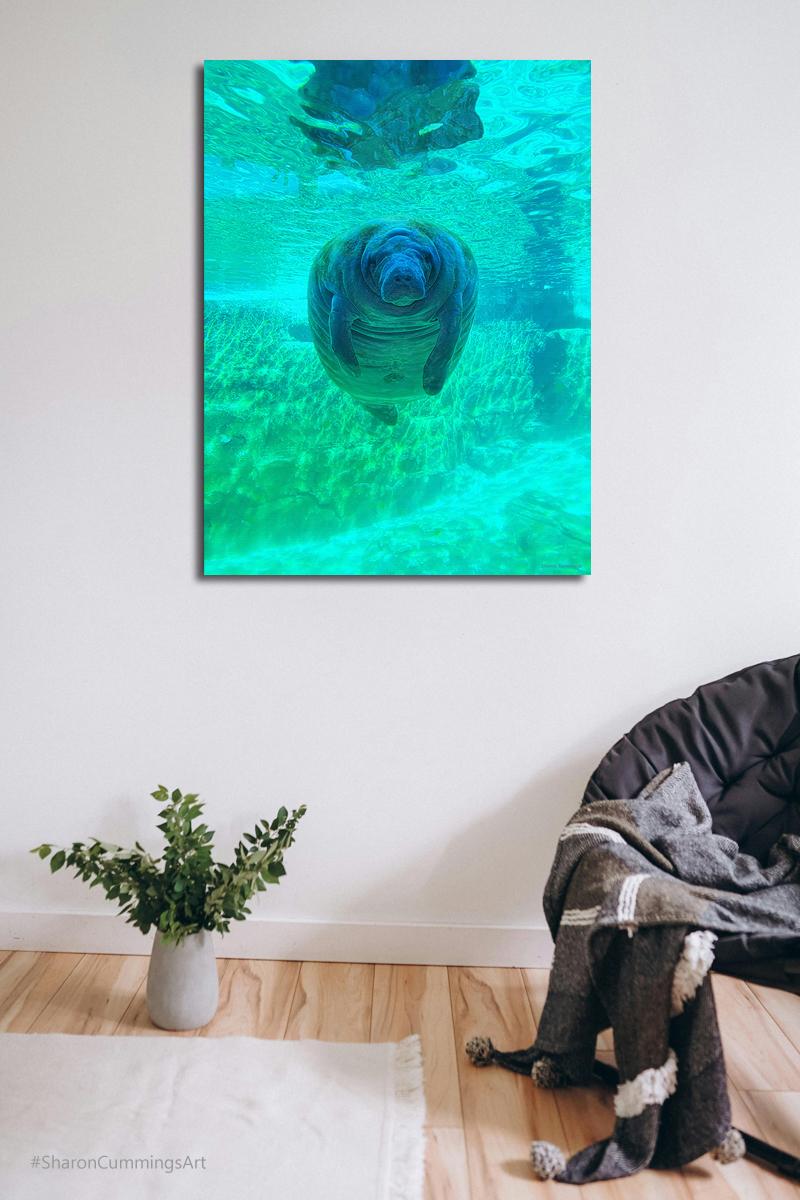
We got to see these mysterious creatures up close and personal. Watching them move seemed to calm my vagus nerve. Peaceful....They are mostly in the rivers, but sometimes they show up at the beach!
ART
https://fineartamerica.com/featured/dreamy-manatee-art-sharon-cummings.html
#art #artwork #manatee #manatees #florida #floridalife #nature #naturelover #naturephotography #photo #photography #animal #animals #aquatic #river #rivers #crystalriver #travel #vacation #SharonCummingsArt #buyintoart #peace #peaceful #beach #beaches #beachy
Alt...
Blue floating manatee animal in the water by artist Sharon Cummings. In a furniture setting.
![[?]](data:image/png;base64, iVBORw0KGgoAAAANSUhEUgAAAEAAAABAAQAAAACCEkxzAAAAUUlEQVQoz43R0QkAMQwCUDdw/y3dwEvsvzlL4X1IoQkAisKmwfAFT3RgJHbQezpSRoXEqeqCL9BJBf7h3QbOCCxV5EVWMEMwG7K1/WODtlvxAYTtEsDU9F34AAAAAElFTkSuQmCC)
"Depoe Bay" World's Smallest Harbor! Purchase options: https://1-thom-zehrfeld.pixels.com/featured/depoe-bay-thom-zehrfeld.html
#harbor #sea #boat #port #boats #DepoeBay #Oregon #OregonCoast #PNW #Photography #BuyIntoArt #Art #ThomZehrfeldPhotography #PhotographyIsArt #Photography #Fotografie
#ArtForSale #ArtMatters #MastoArt #Mastodon #ArtforInteriorDesign #HospitalityInteriors
#InteriorDesign #Wallart #InteriorDecorating #WallArtForSale #PhotoOfTheDay #FediGiftShop #GiftIdeas #FediArt #Prints #FediArtShop #Colorful #Nature #ShopEarly

Alt...
"Depoe Bay" World's Smallest Harbor! Purchase options: https://1-thom-zehrfeld.pixels.com/featured/depoe-bay-thom-zehrfeld.html
#harbor #sea #boat #port #boats #DepoeBay #Oregon #OregonCoast #PNW #Photography #BuyIntoArt #Art #ThomZehrfeldPhotography #PhotographyIsArt #Photography #Fotografie
#ArtForSale #ArtMatters #MastoArt #Mastodon #ArtforInteriorDesign #HospitalityInteriors
#InteriorDesign #Wallart #InteriorDecorating #WallArtForSale #PhotoOfTheDay #FediGiftShop #GiftIdeas #FediArt #Prints #FediArtShop #Colorful #Nature #ShopEarly
A Resting Place In Depoe Bay! Prints, Mugs, Jigsaw Puzzle and much more for sale at: https://pixels.com/featured/a-resting-place-in-depoe-bay-thom-zehrfeld.html #ocean #beach #sea #Nature #DepoeBayOregon #OregonCoast #PNW #PacificOcean #BuyIntoArt #Art #ThomZehrfeldPhotography #PhotographyIsArt #Photography #Fotografie
#ArtForSale #ArtMatters #MastoArt #Mastodon #ArtforInteriorDesign #HospitalityInteriors
#InteriorDesign #Wallart #InteriorDecorating #WallArtForSale #PhotoOfTheDay #FediGiftShop #GiftIdeas #FediArt #Prints #FediArtShop

Alt...
A Resting Place In Depoe Bay! Prints, Mugs, Jigsaw Puzzle and much more for sale at: https://pixels.com/featured/a-resting-place-in-depoe-bay-thom-zehrfeld.html #ocean #beach #sea #Nature #DepoeBayOregon #OregonCoast #PNW #PacificOcean #BuyIntoArt #Art #ThomZehrfeldPhotography #PhotographyIsArt #Photography #Fotografie
#ArtForSale #ArtMatters #MastoArt #Mastodon #ArtforInteriorDesign #HospitalityInteriors
#InteriorDesign #Wallart #InteriorDecorating #WallArtForSale #PhotoOfTheDay #FediGiftShop #GiftIdeas #FediArt #Prints #FediArtShop
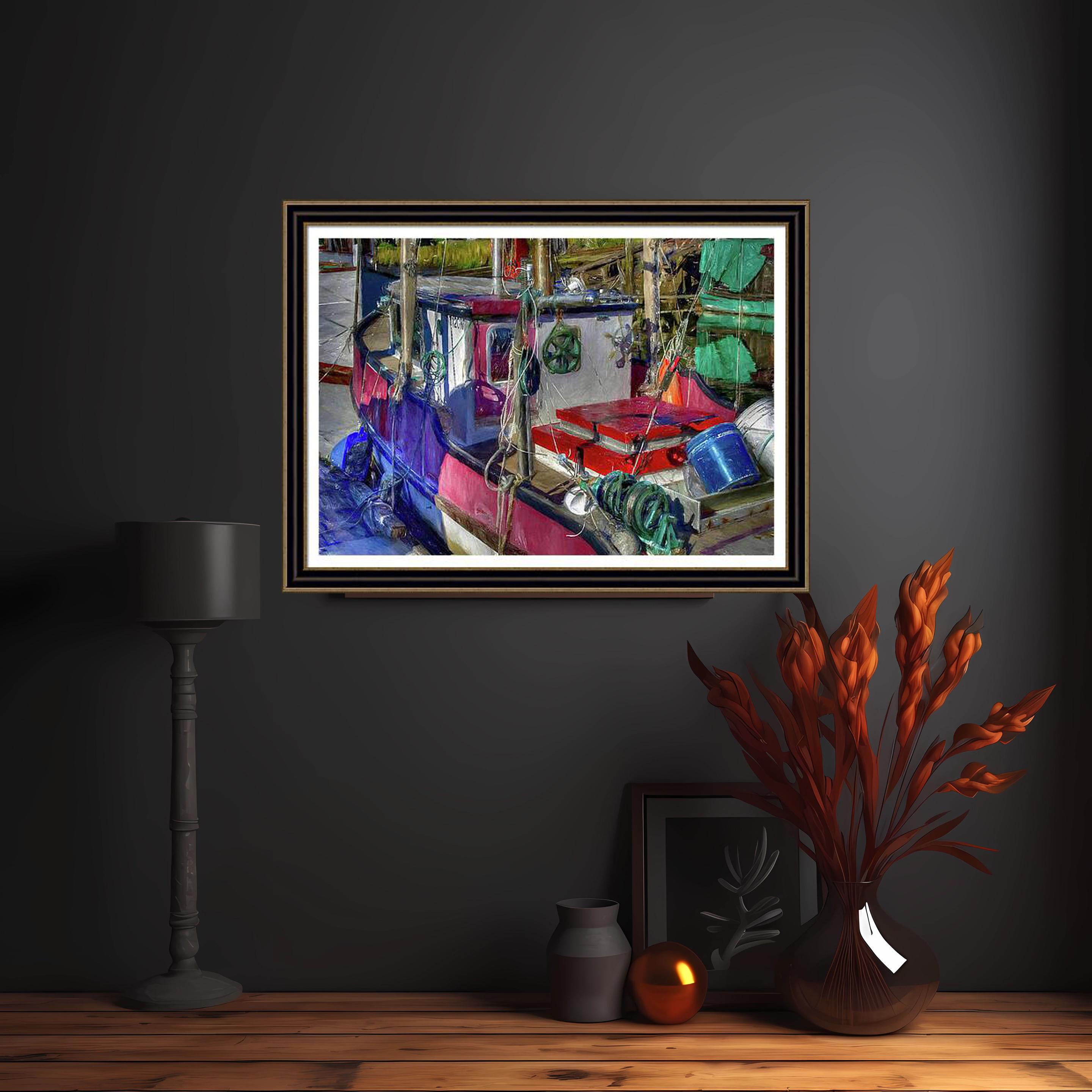
Salty! A fishing vessel in Yaquina Bay! Prints and more for sale at: https://pixels.com/featured/salty-thom-zehrfeld.html #FishingVessel #FishingBoat #Vessel #OceanFishing #NewportOregon #OregonCoast #PNW #BuyIntoArt #Art #ThomZehrfeldPhotography #PhotographyIsArt #Photography #Fotografie
#ArtForSale #ArtMatters #MastoArt #Mastodon #ArtforInteriorDesign #HospitalityInteriors
#InteriorDesign #Wallart #InteriorDecorating #WallArtForSale #PhotoOfTheDay #FediGiftShop #GiftIdeas #FediArt #Prints #FediArtShop #Colorful #Nature
Alt...
Salty! A fishing vessel in Yaquina Bay! Prints and more for sale at: https://pixels.com/featured/salty-thom-zehrfeld.html #FishingVessel #FishingBoat #Vessel #OceanFishing #NewportOregon #OregonCoast #PNW #BuyIntoArt #Art #ThomZehrfeldPhotography #PhotographyIsArt #Photography #Fotografie
#ArtForSale #ArtMatters #MastoArt #Mastodon #ArtforInteriorDesign #HospitalityInteriors
#InteriorDesign #Wallart #InteriorDecorating #WallArtForSale #PhotoOfTheDay #FediGiftShop #GiftIdeas #FediArt #Prints #FediArtShop #Colorful #Natur

Alt...
Salty! A fishing vessel in Yaquina Bay! Prints and more for sale at: https://pixels.com/featured/salty-thom-zehrfeld.html #FishingVessel #FishingBoat #Vessel #OceanFishing #NewportOregon #OregonCoast #PNW #BuyIntoArt #Art #ThomZehrfeldPhotography #PhotographyIsArt #Photography #Fotografie
#ArtForSale #ArtMatters #MastoArt #Mastodon #ArtforInteriorDesign #HospitalityInteriors
#InteriorDesign #Wallart #InteriorDecorating #WallArtForSale #PhotoOfTheDay #FediGiftShop #GiftIdeas #FediArt #Prints #FediArtShop #Colorful #Natur
![[?]](https://cdn.masto.host/swisssocial/accounts/avatars/109/325/229/208/758/640/original/f1235f8bafe9f258.jpeg)
Nordlichter über der #Schweiz 🤩
#NorthernLights #Northernlight #nordlicht #nordlichter #Switzerland #nature #ilike #Aurora
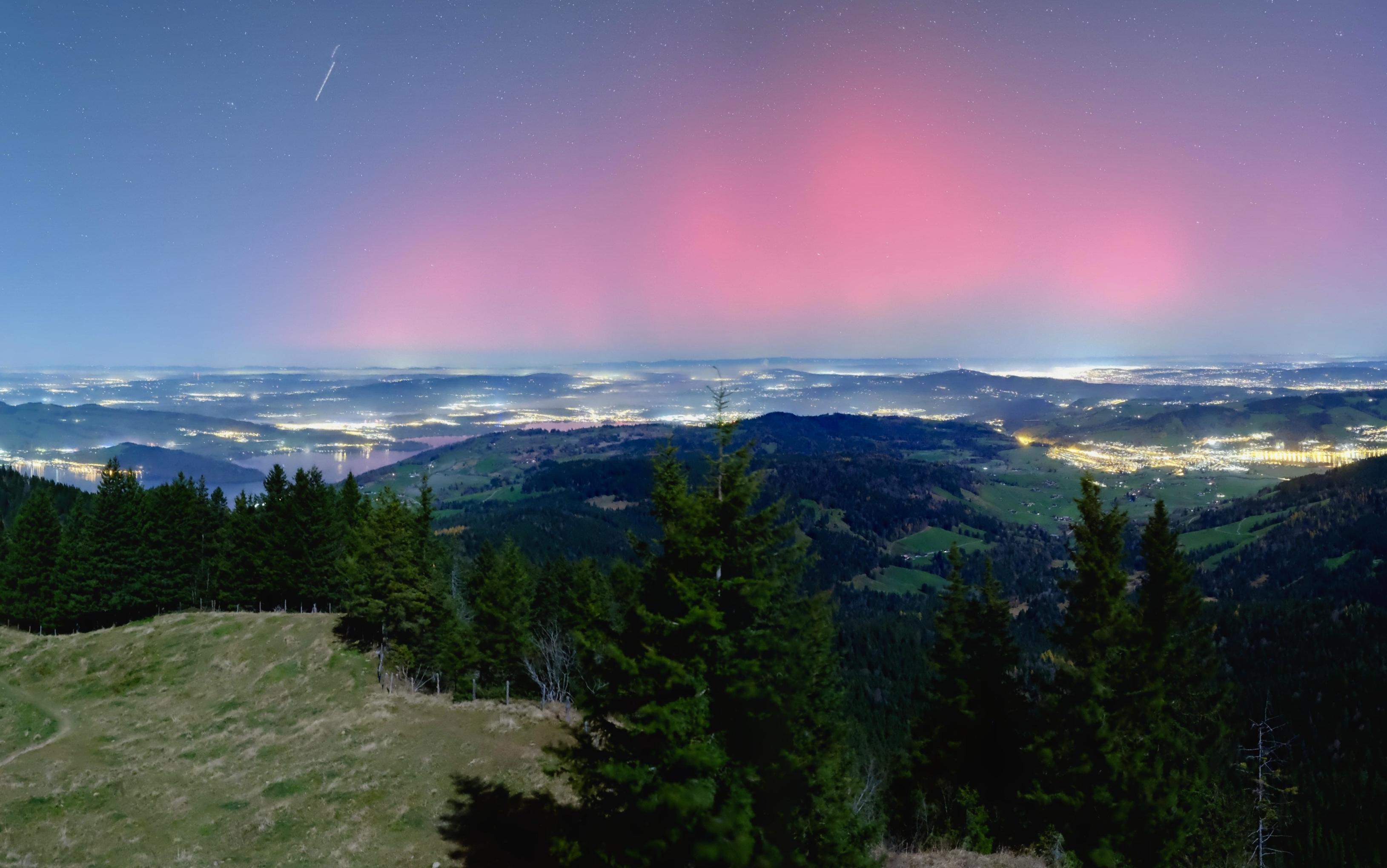
Alt...
Webcam Wildspitz
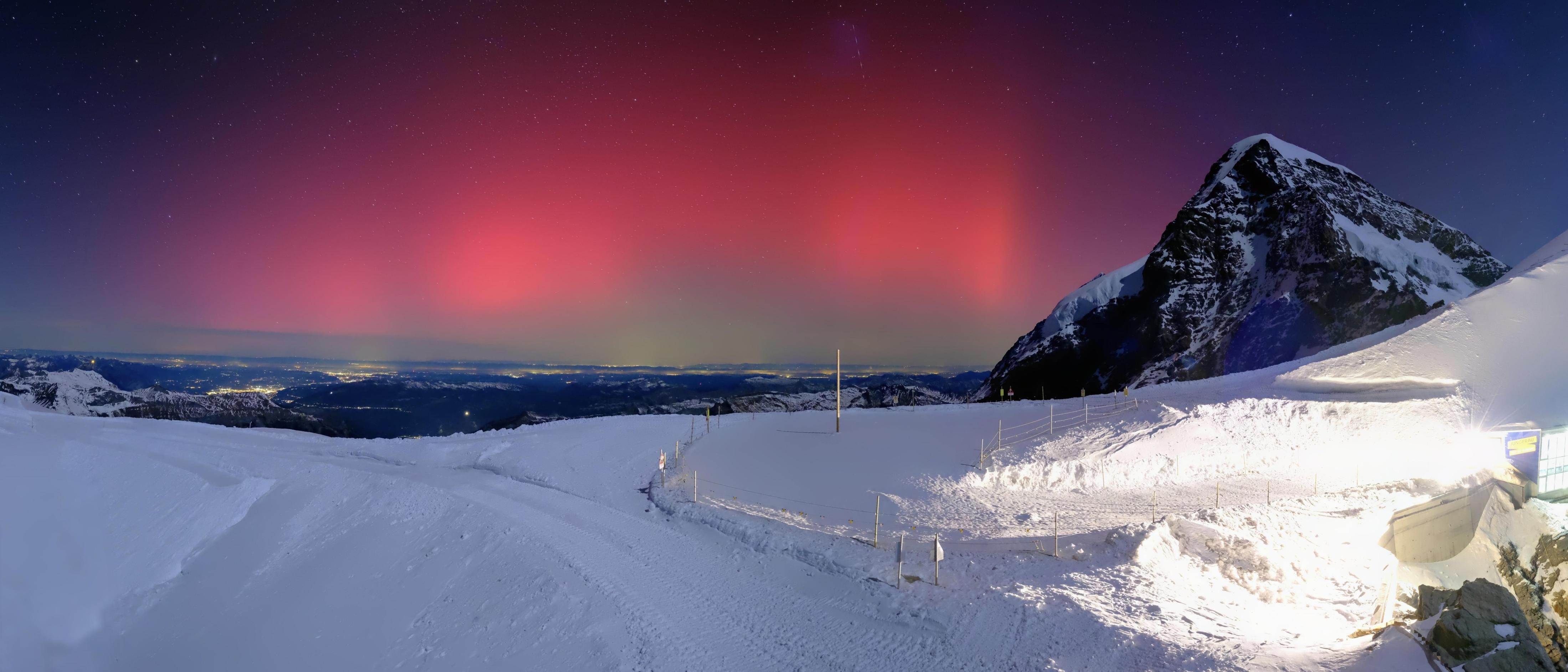
Alt...
Webcam Jungfraujoch
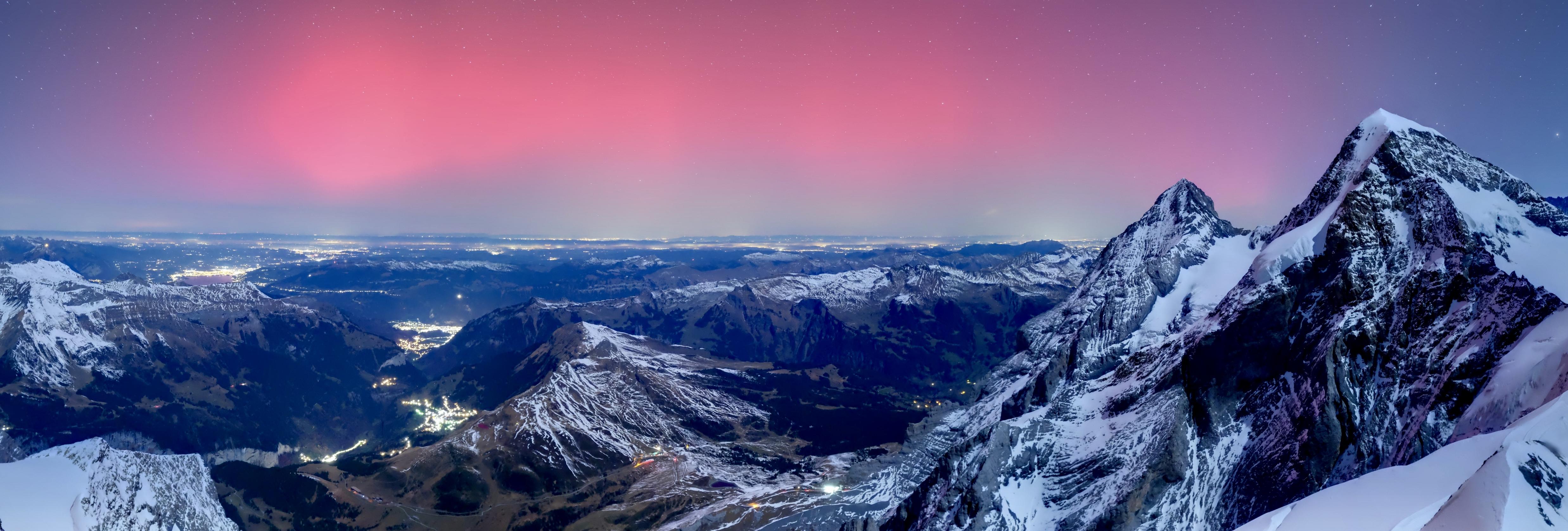
Alt...
Webcam Jungfrau Ostgrat
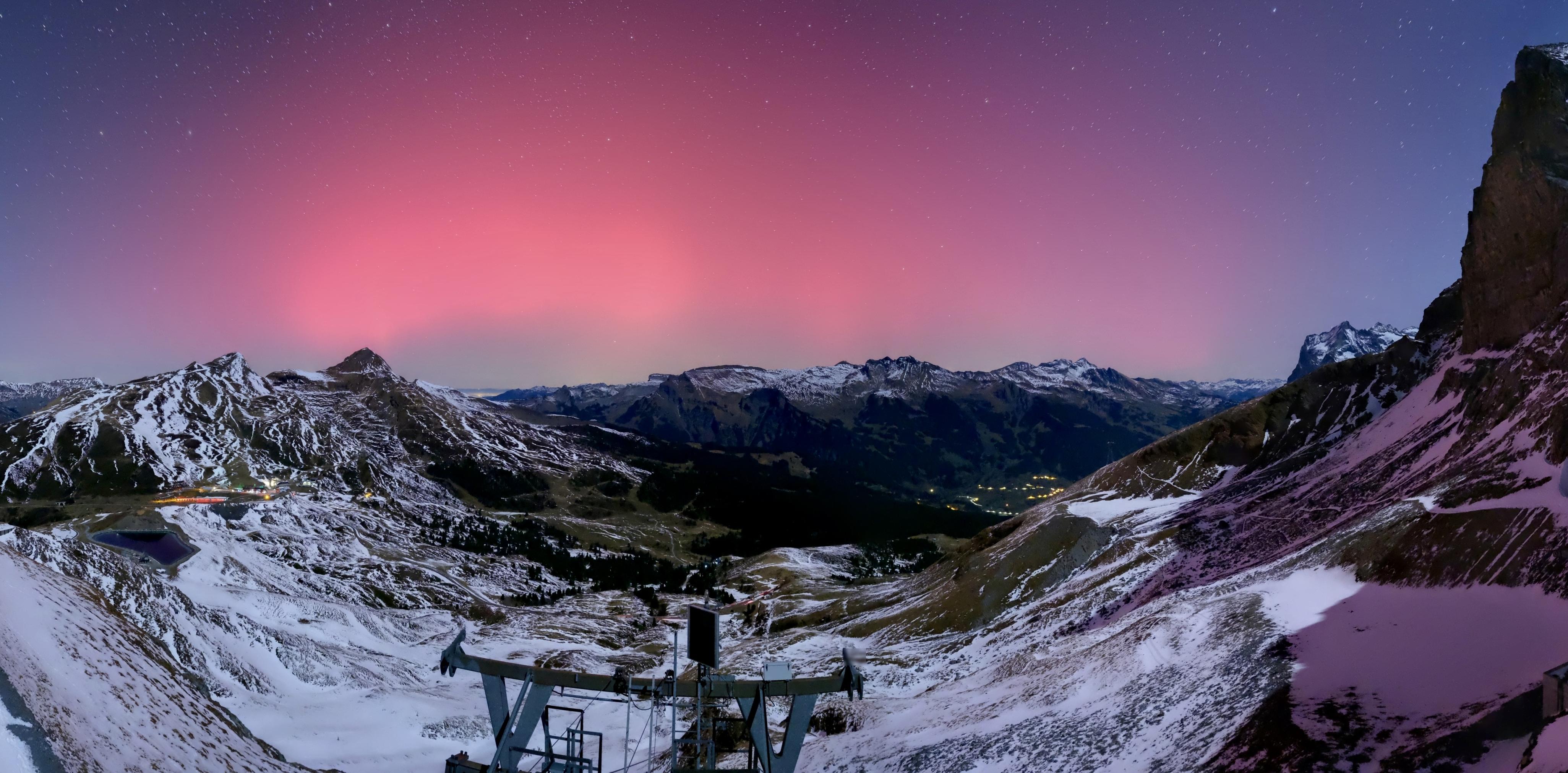
Alt...
Webcam Eigergletscher
2025 November 12
A Super Lunar Corona
* Image Credit & Copyright: Eric Houck
https://www.instagram.com/a_guy_named_eric/
Explanation:
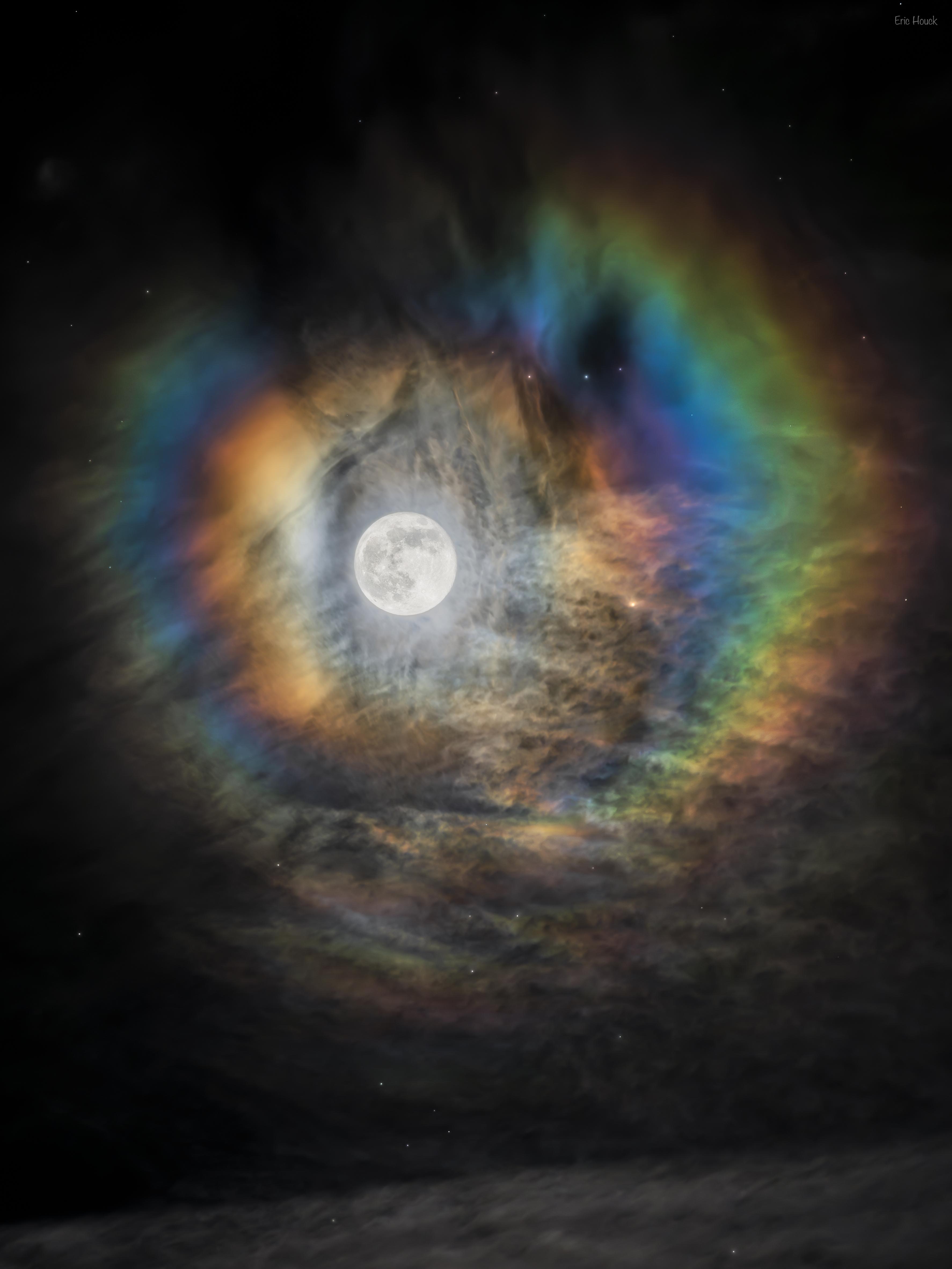
What are those colorful rings around the Moon? A corona. Rings like this will sometimes appear when the Moon is seen through thin clouds. The effect is created by the diffraction of light around individual, similarly-sized water droplets in an intervening but mostly transparent cloud. Since light of different colors has different wavelengths, each color diffracts differently. Lunar coronae are one of the few color diffraction effects that can be easily seen with the unaided eye. The featured image of a lunar corona was captured around last week's full Super Moon from near Knight's Ferry, California, USA. To the right of the full Moon is the giant orange star Botein. Similar coronae that form around the Sun are typically harder to see because of the Sun's great brightness.
https://en.wikipedia.org/wiki/Corona_(optical_phenomenon)
https://www.atoptics.co.uk/blog/corona-formation/
https://en.wikipedia.org/wiki/Diffraction
https://www.youtube.com/shorts/-zSIty9q73E
https://science.nasa.gov/moon/
https://science.nasa.gov/ems/01_intro/
https://defcon.social/@grobi/114964072917217796
https://en.wikipedia.org/wiki/Delta_Arietis
https://apod.nasa.gov/apod/ap251112.html
#space #earth #moon #astrophotography #photography #science #astronomy #physics #nature #NASA #apod
Alt...
2025 November 12
The Moon is pictured in the center. ARound the Moon are colorful rings. The rings are nearly circular but have gaps. This but structured clouds are seen around the scene and at the bottom of the frame.
A Super Lunar Corona
* Image Credit & Copyright: Eric Houck
Explanation:
What are those colorful rings around the Moon? A corona. Rings like this will sometimes appear when the Moon is seen through thin clouds. The effect is created by the diffraction of light around individual, similarly-sized water droplets in an intervening but mostly transparent cloud. Since light of different colors has different wavelengths, each color diffracts differently. Lunar coronae are one of the few color diffraction effects that can be easily seen with the unaided eye. The featured image of a lunar corona was captured around last week's full Super Moon from near Knight's Ferry, California, USA. To the right of the full Moon is the giant orange star Botein. Similar coronae that form around the Sun are typically harder to see because of the Sun's great brightness.
Authors & editors: Robert Nemiroff (MTU) & Jerry Bonnell (UMCP)
NASA Official: Amber Straughn Specific rights apply.
NASA Web Privacy, Accessibility, Notices;
A service of: ASD at NASA / GSFC,
NASA Science Activation
& Michigan Tech. U.
I send thanks to the buyer from Indiana who purchased a throw pillow of
By Moonlight -- https://stevehendersonart.com/featured/by-moonlight-steve-henderson.html?product=throw-pillow
May the artwork on the pillow, and the pillow itself, inspire sweet dreams and rest.
#art #artwork #mastoart #fediart #buyintoart #ayearforart #fedigiftshop #ocean #nature #travel #oregon #sea #beach #moon #moonlight #blue #night #peace #sale #decor #homedecor #gift #giftidea

Alt...
Throw pillow of an original oil painting depicting a moonlit night over the ocean.
Yesterday I showed you some work-in-progress shots, here is now the finished painting - enjoy!
Robin with Holly and red winter berries handmade acrylic painting
--> https://karenkasparartprints.com/featured/robin-with-holly-and-red-winter-berries-karen-kaspar.html
--> https://www.pictorem.com/2487715/robin-with-holly-and-winterberries-acrylic-painting/
#art #painting #Christmas #winter #TraditionalArt #kunst #contemporaryArt #birds #BirdsOfMastodon #BirdArt #birding #nature #BirdWatching #wildlife #vogel #cute #animals #handmade #robin #MastoArt #FediArt #FediGiftShop #artist #arte #InteriorDesign #BuyIntoArt #giftideas

Alt...
Robin with holly and red winter berries is a hand-painted acrylic painting in landscape format by artist Karen Kaspar.
A European Robin sits on snow-covered holly branches, surrounded by leaves in vibrant shades of green with bright red winter berries in between, and looks towards the viewer with interest. The bright orange breast of the songbird stands out against the background in soft shades of pink and blue. The snow trickles softly from the sky in small snowflakes.
The wintry motif radiates a calm and peaceful atmosphere.
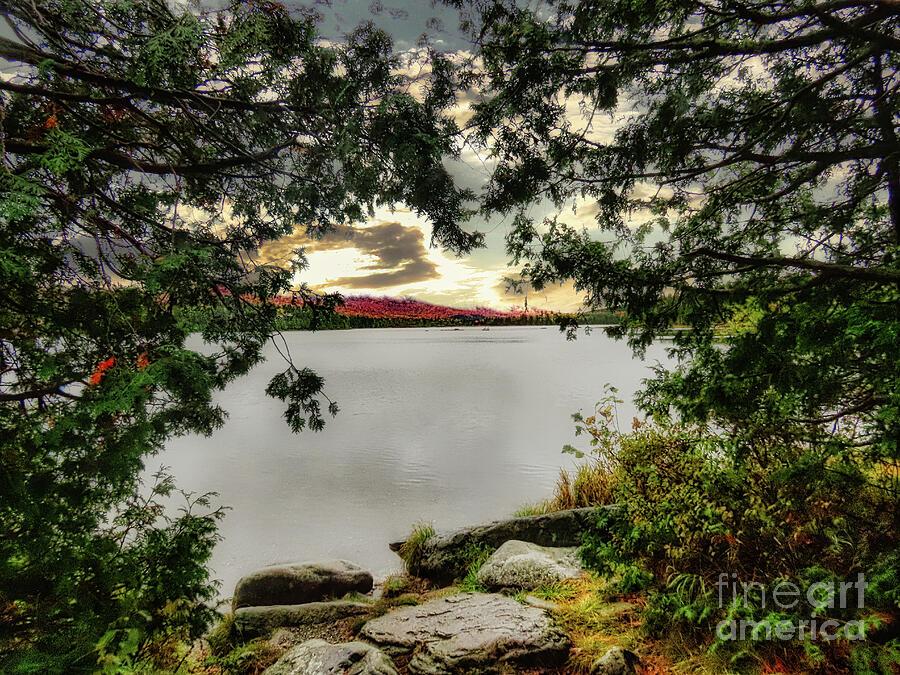
"Serene Lake at Dusk"
By Scott Loring Davis, Fine Art Photography
https://pixels.com/profiles/scottloringdavis
This beautiful print offers a calming, serene and relaxing feel to any room or public location where a calming effect is beneficial. FULL DESCRPTION - https://pixels.com/featured/serene-lake-at-dusk-scott-loring-davis.html
#buyintoart #ScottLoringDavis #mastoart #giftideas #art #artist #artwork #artprints #wallart #homedecor #interiordesign #artforsale #photography #travel #fineartprints #Maine #Nature #printsforsale #autumn #foliage #artforsale
2025 November 11
Jupiter in Ultraviolet from Hubble
* Image Credit: NASA, ESA, Hubble
https://www.nasa.gov/
https://www.esa.int/
https://science.nasa.gov/mission/hubble/
Processing & License: Judy Schmidt
https://science.nasa.gov/people-of-nasa/meet-a-citizen-scientist-judy-schmidt/
Explanation:
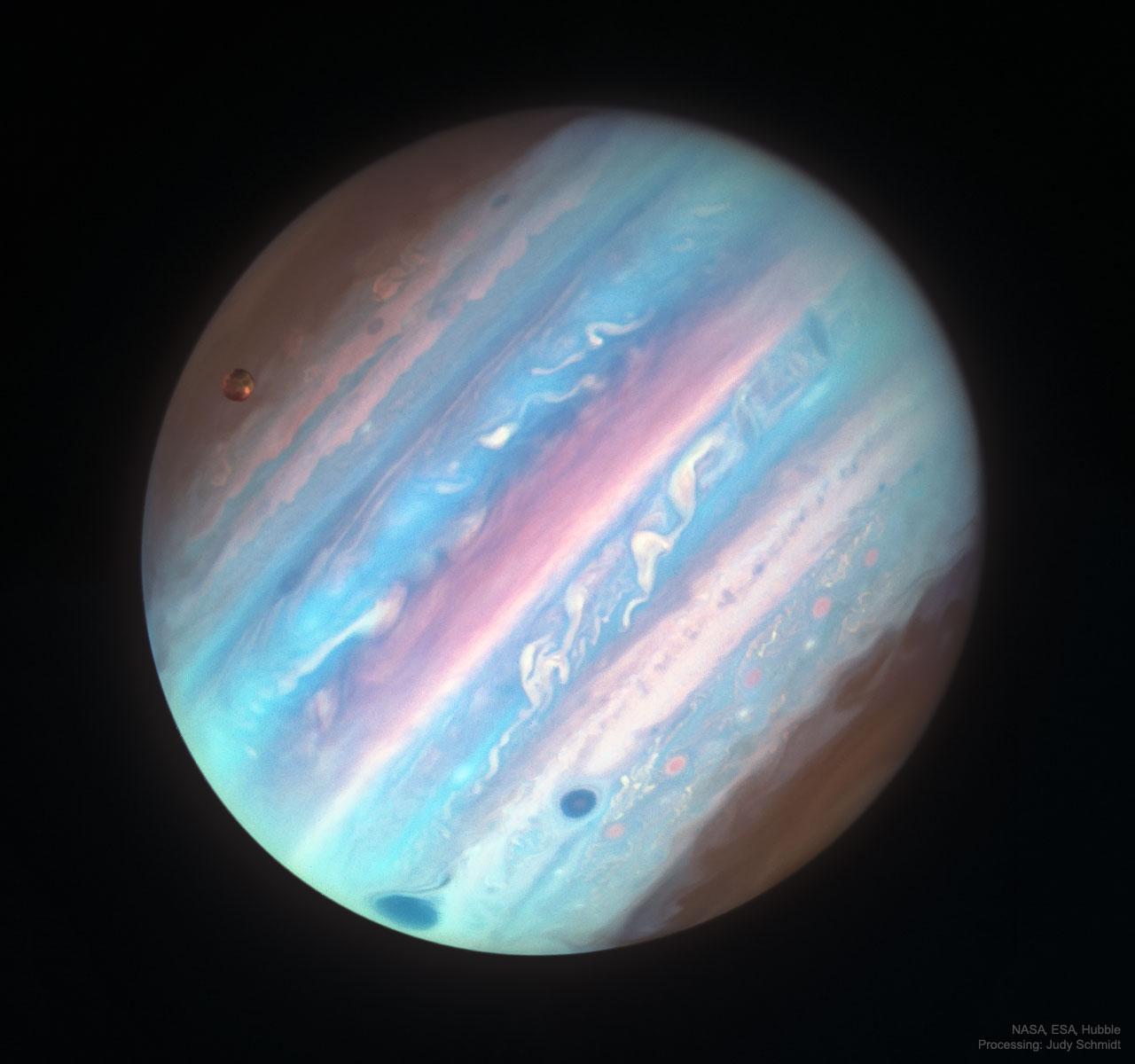
Jupiter looks a bit different in ultraviolet light. To better interpret Jupiter's cloud motions and to help NASA's robotic Juno spacecraft understand the planetary context of the small fields that it sees, the Hubble Space Telescope was being directed to regularly image the entire Jovian giant. The colors of Jupiter being monitored go beyond the normal human visual range to include both ultraviolet and (not pictured) infrared light. Featured from 2017, Jupiter appears different in near ultraviolet light, partly because the amount of sunlight reflected back is distinct, giving differing cloud heights and latitudes discrepant brightnesses. In the near UV, Jupiter's poles appear relatively dark, as does its Great Red Spot and a smaller (optically) white oval to the right. The String of Pearl storms farther to the right, however, are brightest in near ultraviolet, and so here appear (false-color) pink. Jupiter's largest moon Ganymede appears on the upper left. Juno continues on a looping 33-day orbit around Jupiter, while Earth-orbiting Hubble is aging and now relies on a single stabilizing gyroscope.
https://www.flickr.com/photos/geckzilla/39448899094/in/photostream/
https://science.nasa.gov/resource/jupiter-in-blue-ultraviolet-and-near-infrared/
https://www.nasa.gov/image-article/hubble-provides-unique-ultraviolet-view-of-jupiter/
https://science.nasa.gov/ems/10_ultravioletwaves/
https://archive.stsci.edu/proposal_search.php?mission=hst&id=14661
https://astronomynow.com/2017/06/26/jupiters-string-of-pearls/
https://www.nasa.gov/centers-and-facilities/jpl/nasas-juno-mission-expands-into-the-future/
https://science.nasa.gov/jupiter/
https://science.nasa.gov/mission/juno/
https://science.nasa.gov/jupiter/jupiter-moons/ganymede/
https://science.nasa.gov/mission/hubble/observatory/design/hubble-one-gyro-mode/
https://science.nasa.gov/mission/hubble/overview/about-hubble/
https://apod.nasa.gov/apod/ap251111.html
#space #jupiter #atmosphere #astrophotography #photography #science #nature #NASA #ESA #Hubble #apod
Alt...
2025 November 11
The planet Jupiter appears full frame in apparent colors of a variety of blues and some pink bands. The Great Red Spot is visible on the lower left as a dark spot.
Jupiter in Ultraviolet from Hubble
* Image Credit: NASA, ESA, Hubble; Processing & License: Judy Schmidt
Explanation:
Jupiter looks a bit different in ultraviolet light. To better interpret Jupiter's cloud motions and to help NASA's robotic Juno spacecraft understand the planetary context of the small fields that it sees, the Hubble Space Telescope was being directed to regularly image the entire Jovian giant. The colors of Jupiter being monitored go beyond the normal human visual range to include both ultraviolet and (not pictured) infrared light. Featured from 2017, Jupiter appears different in near ultraviolet light, partly because the amount of sunlight reflected back is distinct, giving differing cloud heights and latitudes discrepant brightnesses. In the near UV, Jupiter's poles appear relatively dark, as does its Great Red Spot and a smaller (optically) white oval to the right. The String of Pearl storms farther to the right, however, are brightest in near ultraviolet, and so here appear (false-color) pink. Jupiter's largest moon Ganymede appears on the upper left. Juno continues on a looping 33-day orbit around Jupiter, while Earth-orbiting Hubble is aging and now relies on a single stabilizing gyroscope.
Authors & editors: Robert Nemiroff (MTU) & Jerry Bonnell (UMCP)
TOPIC> Jupiter
Jupiter’s Great Red Spot Getting Taller as it Shrinks.
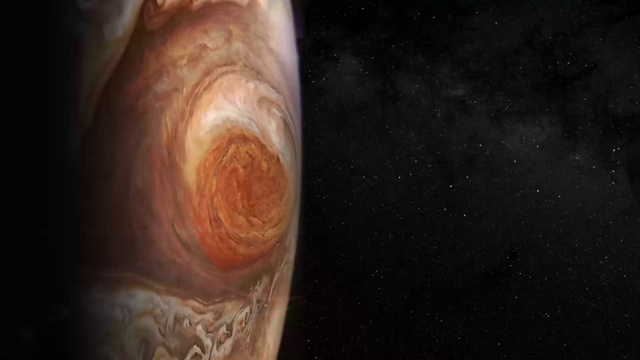
Though once big enough to swallow three Earths with room to spare, Jupiter’s Great Red Spot has been shrinking for a century and a half. Nobody is sure how long the storm will continue to contract or whether it will disappear altogether.
A new study suggests that it hasn’t all been downhill, though. The storm seems to have increased in area at least once along the way, and it’s growing taller as it gets smaller.
“Storms are dynamic, and that’s what we see with the Great Red Spot. It’s constantly changing in size and shape, and its winds shift, as well,” said Amy Simon, an expert in planetary atmospheres at NASA’s Goddard Space Flight Center in Greenbelt, Maryland, and lead author of the new paper, published in the Astronomical Journal.
Observations of Jupiter date back centuries, but the first confirmed sighting of the Great Red Spot was in 1831. (Researchers aren’t certain whether earlier observers who saw a red spot on Jupiter were looking at the same storm.)
Keen observers have long been able to measure the size and drift of the Great Red Spot by fitting their telescopes with an eyepiece scored with crosshairs. A continuous record of at least one observation of this kind per year dates back to 1878.
Simon and her colleagues drew on this rich archive of historical observations and combined them with data from NASA spacecraft, starting with the two Voyager missions in 1979. In particular, the group relied on a series of annual observations of Jupiter that team members have been conducting with NASA’s Hubble Space Telescope as part of the Outer Planets Atmospheres Legacy, or OPAL, project. The OPAL team scientists are based at Goddard, the University of California at Berkeley, and NASA’s Jet Propulsion Laboratory in Pasadena, California. ...
read more >>> https://science.nasa.gov/missions/hubble/jupiters-great-red-spot-getting-taller-as-it-shrinks-nasa-team-finds/
* Editor: NASA Hubble Mission
#space #jupiter #astrophotography #photography #science #nature #NASA
Alt...
Scientists have noticed that Jupiter's Great Red Spot has been getting smaller over time. Now, there's evidence the storm is actually growing taller as it shrinks. - This video is public domain and can be downloaded from NASA's Scientific Visualization Studio.
NASA's Goddard Space Flight Center
Pia26595 Juno Sees Turbulence In Jupiters Atmosphere | NASA Jet Propulsion Laboratory (JPL)
Jet Propulsion Laboratory https://www.jpl.nasa.gov/
1–2 minutes
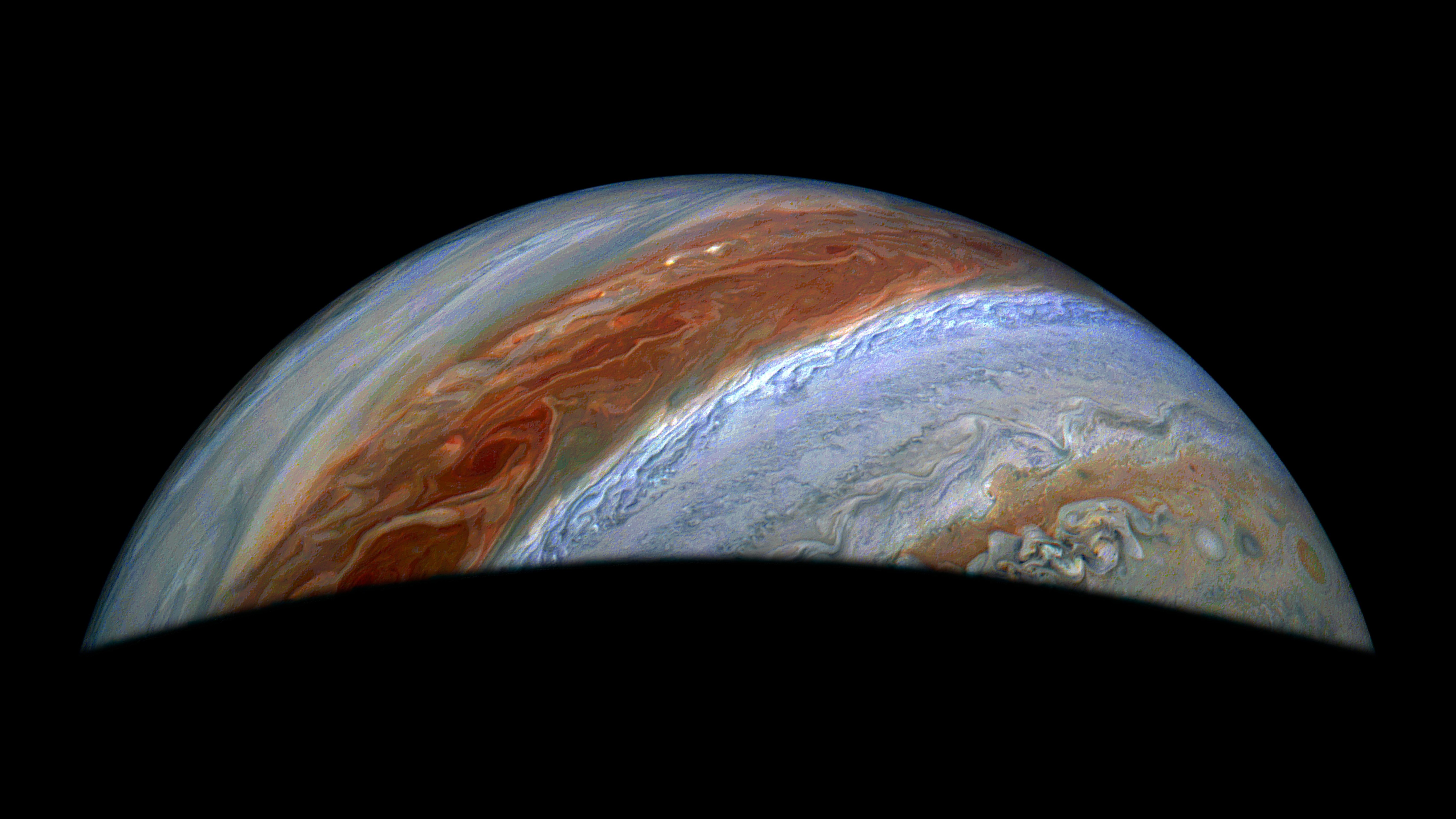
JunoCam, the visible light imager aboard NASA's Juno, captured this view of Jupiter's northern high latitudes during the spacecraft's 69th flyby of the giant planet on Jan. 28, 2025. Jupiter's belts and zones stand out in this enhanced color rendition, along with the turbulence along their edges caused by winds going in different directions.
The original JunoCam image used to produce this view was taken from an altitude of about 36,000 miles (58,000 kilometers) above Jupiter's cloud tops. Citizen scientist Jackie Branc processed the image.
JunoCam's raw images are available for the public to peruse and process into image products at https://missionjuno.swri.edu/junocam/processing. More information about NASA citizen science can be found at https://science.nasa.gov/citizen-science.
More information about Juno is at https://science.nasa.gov/mission/juno/ and https://missionjuno.swri.edu.
#space #jupiter #astrophotography #photography #science #nature #NASA
Alt...
Pia26595 Juno Sees Turbulence In Jupiters Atmosphere | NASA Jet Propulsion Laboratory (JPL)
Pia25730 Nasas Juno Mission Captures Close Ups Of Polar Storms On Jupiter | NASA Jet Propulsion Laboratory (JPL)
Jet Propulsion Laboratory https://www.jpl.nasa.gov/
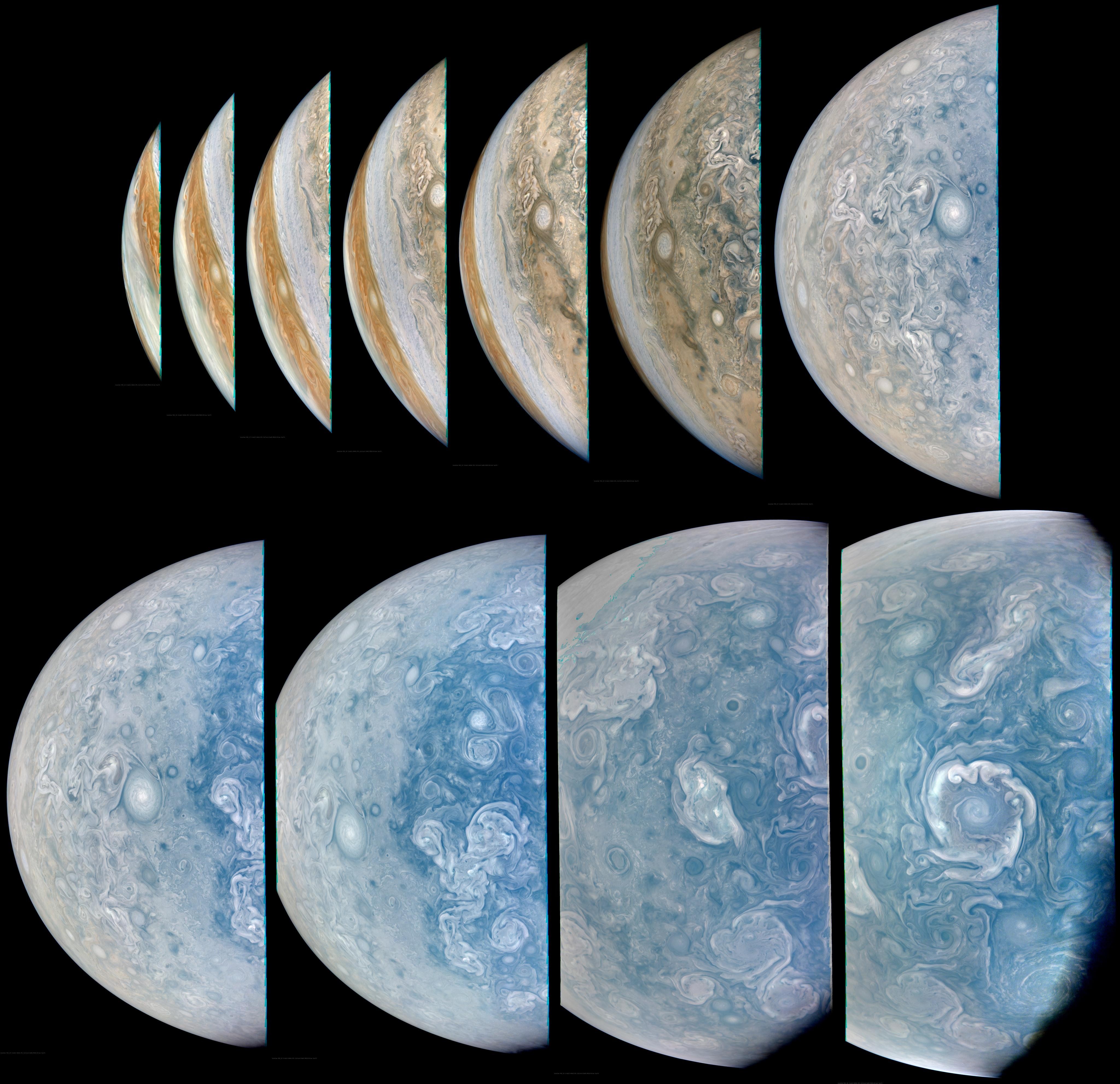
During its 65th close flyby of Jupiter on Sept. 20, 2024, NASA's Juno spacecraft captured this series of images as it approached the giant planet and swung low over its north polar region.
Juno's recent orbits have provided exceptionally clear views of Jupiter's circumpolar cyclones. At closest approach in this series of images, the Juno spacecraft was about 6,800 miles (11,000 kilometers) above the cloud tops, at a latitude of 82 degrees north of the equator.
Citizen scientist Brian Swift made this image using raw data from the JunoCam instrument, applying digital processing techniques to enhance color and clarity.
JunoCam's raw images are available for the public to peruse and process into image products at https://missionjuno.swri.edu/junocam/processing. More information about NASA citizen science can be found at https://science.nasa.gov/citizenscience and https://www.nasa.gov/solve/opportunities/citizenscience.
More information about Juno is at https://www.nasa.gov/juno and https://missionjuno.swri.edu. For more about this finding and other science results, see https://www.missionjuno.swri.edu/science-findings.
#space #jupiter #astrophotography #photography #science #nature #NASANASA's Juno Mission Captures
Alt...
Close-Ups of Polar Storms on Jupiter
Jan. 27, 2025
Pia25729 Nasas Juno Mission Captures The Colorful And Chaotic Clouds Of Jupiter | NASA Jet Propulsion Laboratory (JPL)
Jet Propulsion Laboratory https://www.jpl.nasa.gov/
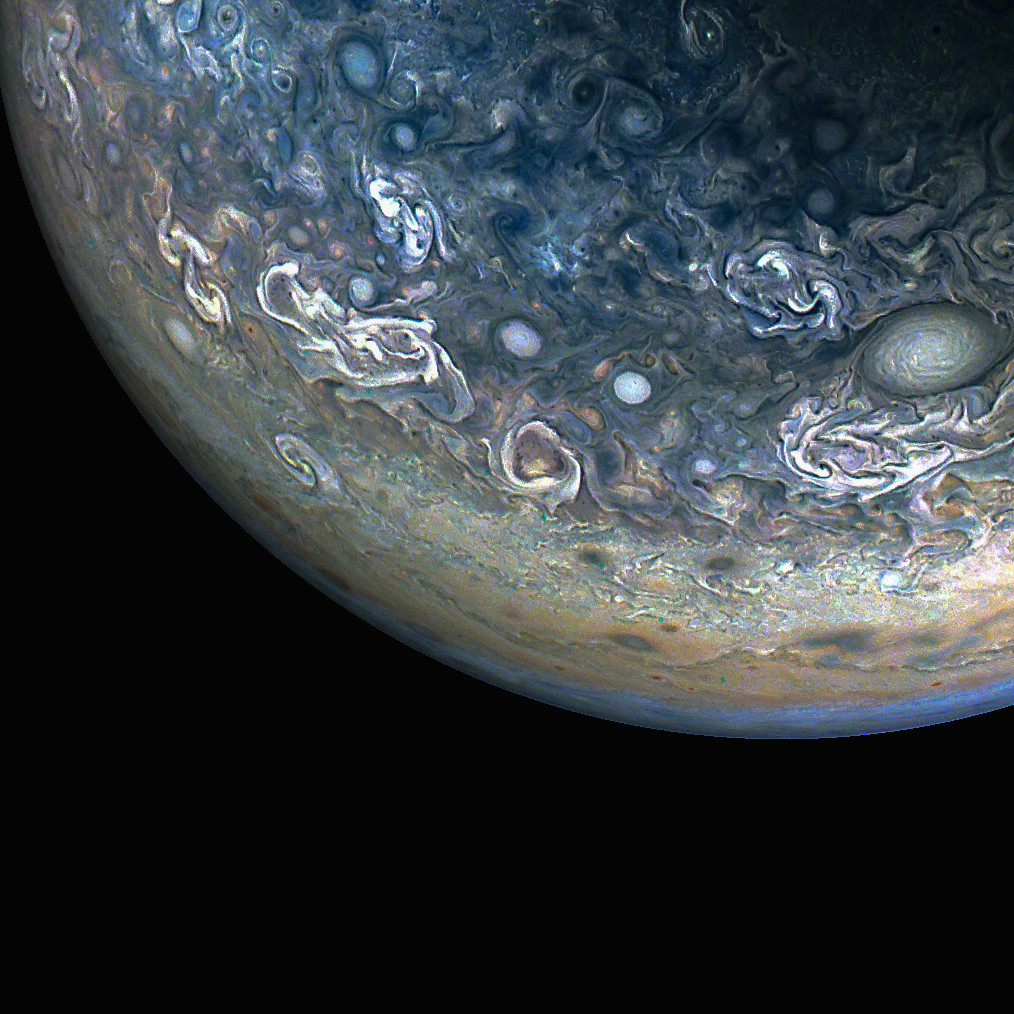
During its 61st close flyby of Jupiter on May 12, 2024, NASA's Juno spacecraft captured this color-enhanced view of the giant planet's northern hemisphere. It provides a detailed view of chaotic clouds and cyclonic storms in an area known to scientists as a folded filamentary region. In these regions, the zonal jets that create the familiar banded patterns in Jupiter's clouds break down, leading to turbulent patterns and cloud structures that rapidly evolve over the course of only a few days.
Citizen scientist Gary Eason made this image using raw data from the JunoCam instrument, applying digital processing techniques to enhance color and clarity.
At the time the raw image was taken, the Juno spacecraft was about 18,000 miles (29,000 kilometers) above Jupiter's cloud tops, at a latitude of about 68 degrees north of the equator.
JunoCam's raw images are available for the public to peruse and process into image products at https://missionjuno.swri.edu/junocam/processing. More information about NASA citizen science can be found at https://science.nasa.gov/citizenscience and https://www.nasa.gov/solve/opportunities/citizenscience.
More information about Juno is at https://www.nasa.gov/juno and https://missionjuno.swri.edu. For more about this finding and other science results, see https://www.missionjuno.swri.edu/science-findings.
#space #jupiter #astrophotography #photography #science #nature #NASA
Alt...
NASA’s Juno Mission Captures the Colorful and Chaotic Clouds of Jupiter
July 19, 2024
During its 61st close flyby of Jupiter on May 12, 2024, NASA's Juno spacecraft captured this color-enhanced view of the giant planet's northern hemisphere. It provides a detailed view of chaotic clouds and cyclonic storms in an area known to scientists as a folded filamentary region. In these regions, the zonal jets that create the familiar banded patterns in Jupiter's clouds break down, leading to turbulent patterns and cloud structures that rapidly evolve over the course of only a few days.
Pia26295 Nasas Juno Catches 3 Waves Of Jupiters Polar Cyclones | NASA Jet Propulsion Laboratory (JPL)
https://www.jpl.nasa.gov/
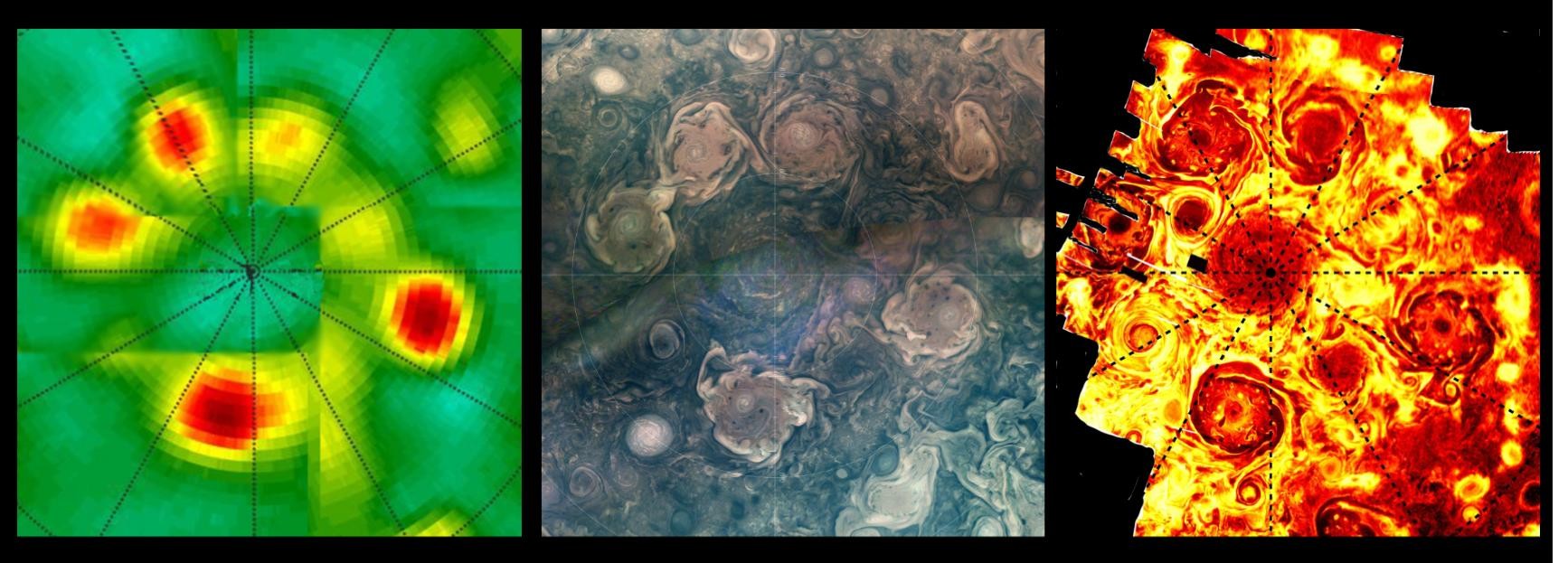
This composite shows views of Jupiter's northern polar cyclones in three different wavelengths of light – microwave, visible, and ultraviolet – as captured by NASA's Juno mission. These differing perspectives allowed Juno scientists to deduce that all Jovian polar cyclones are not created equal.
The infrared image, on the far right, was derived from data collected by the spacecraft's Jovian Infrared Auroral Mapper (JIRAM) instrument. The composite image at center was collected by the JunoCam visible-light imager. Though taken with separate instruments that record different wavelengths of light, both images depict Jupiter's northern polar storms as well defined and of similar size.
The data on the left, collected by Juno's Microwave Radiometer (MWR), shows the polar storms in another light. MWR enables Juno to see deep into Jupiter by recording the planet's microwave emissions. In the MWR graphic, the polar storms at the 4 and 6 o'clock positions have bright microwave signatures, indicating they extend well beneath the cloud tops, at least 62 miles (100 kilometers) below. The size of those two storms is comparable to what's found in the visible light and infrared light images, but the other storms, as seen through MWR, have a notably reduced emissions intensity.
Another disparity in the MWR graphic versus visible light and infrared can be seen in how the central cyclone is depicted by the data. ...
read more >>
https://www.jpl.nasa.gov/images/pia26295-nasas-juno-catches-3-waves-of-jupiters-polar-cyclones/
More information about Juno is at https://www.nasa.gov/juno and https://missionjuno.swri.edu. For more about this finding and other science results, see https://www.missionjuno.swri.edu/science-findings.
#space #jupiter #astrophotography #photography #science #nature #NASA
Alt...
Another disparity in the MWR graphic versus visible light and infrared can be seen in how the central cyclone is depicted by the data. In the infrared and visible light images, the central cyclone is evident; with MWR data, it all but disappears. This disparity indicates that the central cyclone's subsurface structure must be very different from the surrounding storms.
JIRAM "sees" in infrared light not visible to the human eye. It captures the infrared glow from the heat of Jupiter's upper atmosphere, probing the top of the weather layer, and gaps in the clouds allow glimpses as deep as 30 to 45 miles (50 to 70 kilometers) below Jupiter's cloud tops.
JunoCam's visible light images catch reflected sunlight, with a view that is very similar to what a human eye would see if a person could ride along with Juno. JunoCam's raw images are available for the public to peruse and process into image products at https://missionjuno.swri.edu/junocam/processing.
Like JIRAM, the MWR instrument records the glow of Jupiter's atmosphere, but the brightness results from the temperature at depths below anything achievable with previous spacecraft or Earth-based observations. The MWR's six radio channels peer progressively deeper below the visible cloud tops, with a range from the top of the clouds (for the highest frequency channel) to 200 miles (320 kilometers) or more below (for the lowest frequency channel).
Pia25728 Nasas Juno Mission Spots Jupiters Tiny Moon Amalthea | NASA Jet Propulsion Laboratory (JPL)
https://www.jpl.nasa.gov/
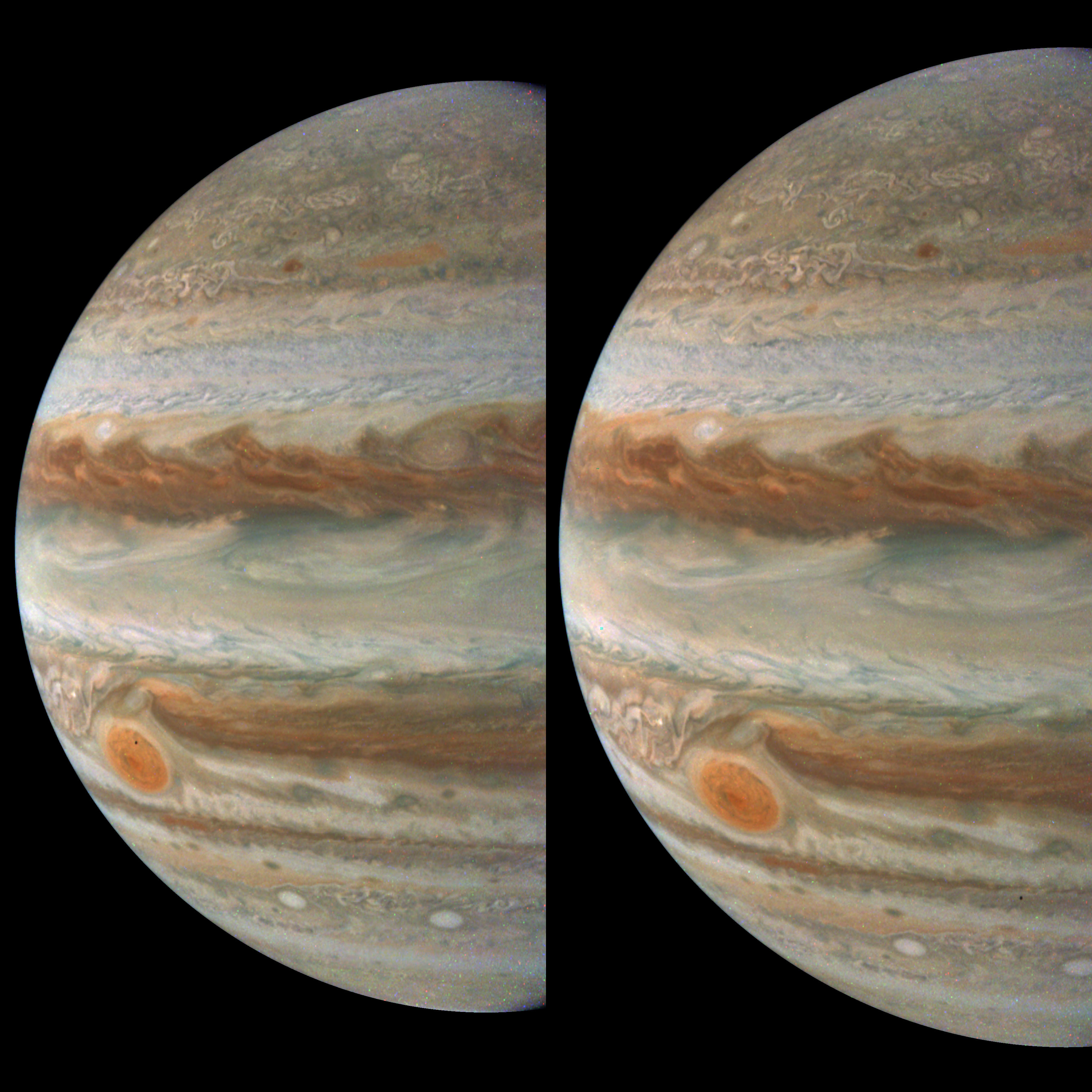
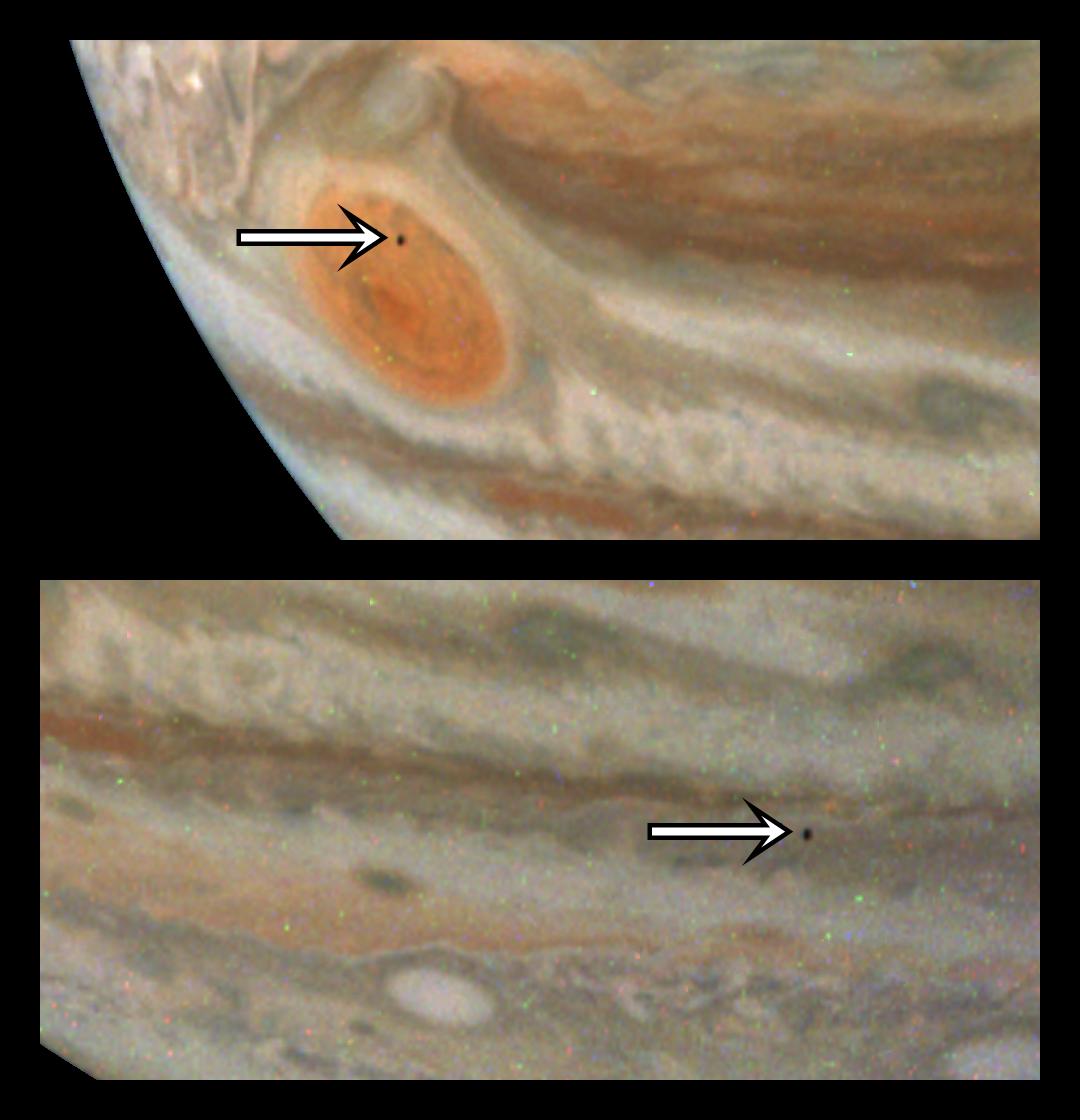
NASA’s Juno mission captured these views of Jupiter during its 59th close flyby of the giant planet on March 7, 2024. They provide a good look at Jupiter’s colorful belts and swirling storms, including the Great Red Spot. Close examination reveals something more: two glimpses of the tiny moon Amalthea (see Figure B below).
Figure B
With a radius of just 52 miles (84 kilometers), Amalthea has a potato-like shape, lacking the mass to pull itself into a sphere. In 2000, NASA’s Galileo spacecraft revealed some surface features, including impact craters, hills, and valleys. Amalthea circles Jupiter inside Io's orbit, which is the innermost of the planet’s four largest moons, taking 0.498 Earth days to complete one orbit.
Amalthea is the reddest object in the solar system, and observations indicate it gives out more heat than it receives from the Sun. This may be because, as it orbits within Jupiter's powerful magnetic field, electric currents are induced in the moon's core. Alternatively, the heat could be from tidal stresses caused by Jupiter’s gravity.
At the time that the first of these two images was taken, the Juno spacecraft was about 165,000 miles (265,000 kilometers) above Jupiter’s cloud tops, at a latitude of about 5 degrees north of the equator.
Citizen scientist Gerald Eichstädt made these images using raw data from the JunoCam instrument, applying processing techniques to enhance the clarity of the images.
JunoCam's raw images are available for the public to peruse and process into image products at https://missionjuno.swri.edu/junocam/processing. More information about NASA citizen science can be found at https://science.nasa.gov/citizenscience and https://www.nasa.gov/solve/opportunities/citizenscience.
#space #jupiter #astrophotography #photography #science #nature #NASA
Alt...
NASA’s Juno mission captured these views of Jupiter during its 59th close flyby of the giant planet on March 7, 2024. They provide a good look at Jupiter’s colorful belts and swirling storms, including the Great Red Spot. Close examination reveals something more: two glimpses of the tiny moon Amalthea (see Figure B right).
Alt...
NASA’s Juno mission captured these views of Jupiter during its 59th close flyby of the giant planet on March 7, 2024. They provide a good look at Jupiter’s colorful belts and swirling storms, including the Great Red Spot. Close examination reveals something more: two glimpses of the tiny moon Amalthea.
Credit: Image data: NASA/JPL-Caltech/SwRI/MSSS. Image processing by Gerald Eichstädt