Search results for tag #nature
![[?]](https://cdn.masto.host/socelnet/accounts/avatars/109/355/496/809/872/483/original/4bb481e7a50769d3.jpg)
Enjoy a morning walk with this cute little Blue tit!
Hand painted watercolor painting: https://karen-kaspar.pixels.com/featured/morning-walk-karen-kaspar.html
#MastoArt #art #painting #FediArt #FediGiftShop #artist #InteriorDesign #MastodonArt #TraditionalArt #kunst #contemporaryArt #watercolor #watercolour #creativeToots #BuyIntoArt #bird #birds #BirdsOfMastodon #BirdArt #birding #nature #NatureLover #BirdWatching #wildlife #vogel #cute #animals #handmade #blaumeise #bluetit #morning #goodmorning

Alt...
Morning walk is a watercolor painting in landscape format painted by the artist Karen Kaspar. A cute little blue tit is walking across a meadow through fresh green grass. The blue sky shines above her. The bird's delicate plumage glows in shades of yellow and blue in the morning sun.
![[?]](https://files.mastodon.social/accounts/avatars/110/785/978/856/457/376/original/491bc21b6e651aad.jpg)
#Vibrant #Pink #Azaleas in #Bloom by Kaye Menner #Photography Wide variety #Prints & lovely #Products at:
#flowers #floral #pinkflowers #stamen #nature #homedecor #mastoart #fediverse #fediart #fedigiftshop #giftideas #wallartforsale #Art #artforsale #BuyIntoArt #AYearForArt #Artist #FineArtAmerica #PhotographyFeed #VisualArts #CreativeArts

Alt...
My photograph of pretty pink magenta azaleas in my garden in the north of Sydney, NSW, Australia.
I have added a slight canvas texture overlay to this photograph.
A cluster of vivid pink azaleas in full bloom, surrounded by green leaves and other blossoms. The flowers' delicate petals and intricate patterns create a visually striking scene.
Vibrant Pink Azaleas in Full Bloom captures a vibrant cluster of pink azalea blossoms at the height of their spring splendor, each petal glowing with rich magenta tones and delicate speckled patterns. Their ruffled edges and graceful stamens create a sense of movement and softness, while the surrounding greenery and hints of white blooms add depth and contrast. Shot in natural light, the flowers seem to radiate freshness and vitality, offering a lively celebration of nature’s seasonal new bloom. This image beautifully showcases the elegance and exuberance of azaleas at their most captivating moment.
THE FINE ART AMERICA LOGO WILL NOT APPEAR ON PURCHASED PRINTS OR PRODUCTS.
![[?]](https://files.defcon.social/dcsocial-s3/accounts/avatars/113/208/344/507/078/943/original/014820ad22daee1c.jpg)
2025 December 7
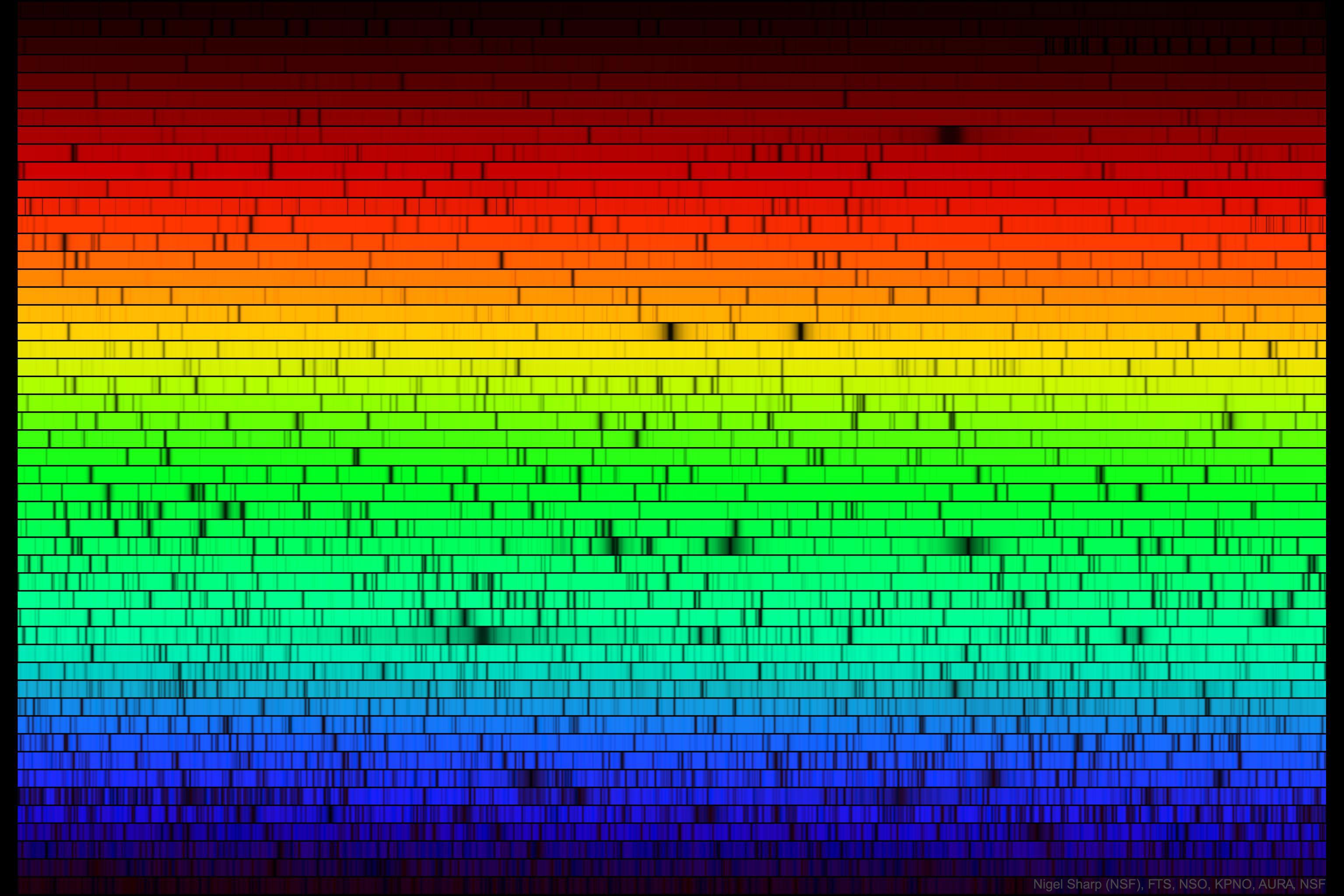
The Sun and Its Missing Colors
* Image Credit: Nigel Sharp (NSF), FTS, NSO, KPNO, AURA, NSF
https://noirlab.edu/public/images/noao-02592/
https://www.nsf.gov/
https://nso.edu/
https://noirlab.edu/public/programs/kitt-peak-national-observatory/
https://www.aura-astronomy.org/
Explanation:
It is still not known why the Sun's light is missing some colors. Here are all the visible colors of the Sun, produced by passing the Sun's light through a prism-like device. The spectrum was created at the McMath-Pierce Solar Observatory and shows, first off, that although our white-appearing Sun emits light of nearly every color, it appears brightest in yellow-green light. The dark patches in the featured spectrum arise from gas at or above the Sun's surface absorbing sunlight emitted below. Since different types of gas absorb different colors of light, it is possible to determine what gasses compose the Sun. Helium, for example, was first discovered in 1868 on a solar spectrum and only later found here on Earth. Today, the majority of spectral absorption lines have been identified - but not all.
https://science.nasa.gov/sun/
https://science.nasa.gov/ems/09_visiblelight/
https://en.wikipedia.org/wiki/Prism_%28optics%29
https://www.color-meanings.com/list-of-colors-names-hex-codes/
https://solar-center.stanford.edu/SID/activities/GreenSun.html
https://astronomy.swin.edu.au/cosmos/a/absorption+line
https://ui.adsabs.harvard.edu/abs/2005ASPC..336...25A/abstract
https://en.wikipedia.org/wiki/Helium
https://www.smithsonianmag.com/history/how-scientists-discovered-helium-first-alien-element-1868-180970057/
https://pwg.gsfc.nasa.gov/stargaze/Sun4spec.htm
https://noirlab.edu/public/programs/kitt-peak-national-observatory/mcmath-pierce-solar-telescope/
https://apod.nasa.gov/apod/ap120316.html
https://apod.nasa.gov/apod/image/0208/earthlights02_dmsp_big.jpg
https://apod.nasa.gov/apod/image/0208/earthlights02_dmsp_big.jpg
https://apod.nasa.gov/apod/fap/ap251207.html
#space #sun #astrophotography #photography #science #astronomy #physics #nature #NASA #ESA #apod
Alt...
2025 December 7
Colors from red at the top to blue at the bottom occupy this spectral image. In the midst of the colors are some dark spots indicating missing colors.
The Sun and Its Missing Colors
* Image Credit: Nigel Sharp (NSF), FTS, NSO, KPNO, AURA, NSF
Explanation:
It is still not known why the Sun's light is missing some colors. Here are all the visible colors of the Sun, produced by passing the Sun's light through a prism-like device. The spectrum was created at the McMath-Pierce Solar Observatory and shows, first off, that although our white-appearing Sun emits light of nearly every color, it appears brightest in yellow-green light. The dark patches in the featured spectrum arise from gas at or above the Sun's surface absorbing sunlight emitted below. Since different types of gas absorb different colors of light, it is possible to determine what gasses compose the Sun. Helium, for example, was first discovered in 1868 on a solar spectrum and only later found here on Earth. Today, the majority of spectral absorption lines have been identified - but not all.
Authors & editors: Robert Nemiroff (MTU) & Jerry Bonnell (UMCP)
NASA Official: Amber Straughn Specific rights apply.
NASA Web Privacy, Accessibility, Notices;
A service of: ASD at NASA / GSFC,
NASA Science Activation
& Michigan Tech. U.
![[?]](https://files.mastodon.social/accounts/avatars/109/361/296/433/852/002/original/69ec7fb8d1828de0.jpeg)
#bloomscrolling #flowerphotography #photography #nature #garden #naturephotography #rose #flowers
Alt...
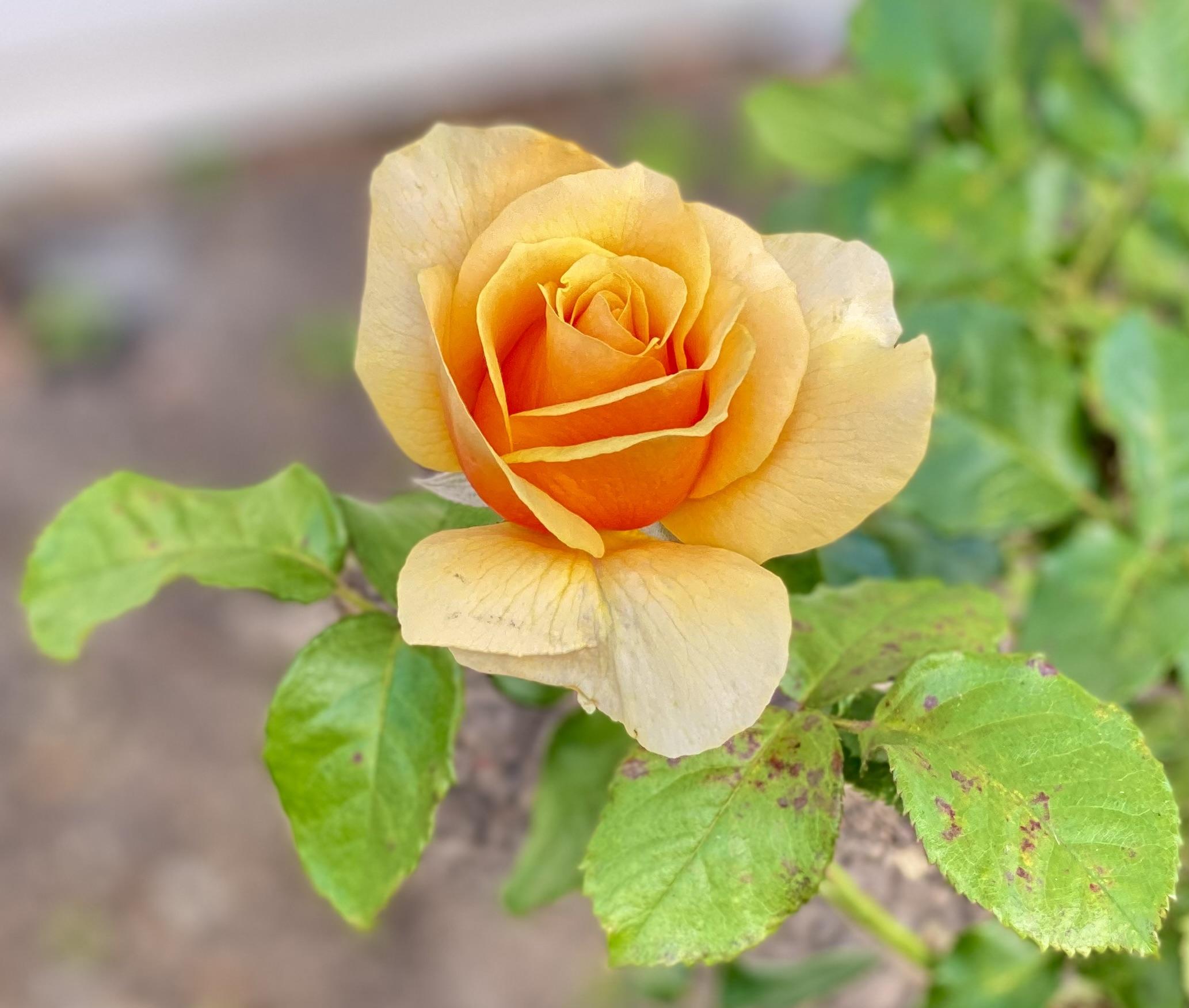
Light orange rose
Thank you to an art lover in Belgium for purchasing a canvas print of my acrylic painting Red poppies!
May this artwork fill your heart and home with joy.
https://www.artheroes.de/de/motiv/Rote-Mohnblueten/1278461
#thankyou #art #painting #artist #arte #InteriorDesign #TraditionalArt #kunst #contemporaryArt #watercolor #watercolour #flowers #garden #floral #nature #aquarell #aquarelle #natur #wildflowers #MastoArt #FediArt #FediGiftShop #creativeToots #BuyIntoArt #bloomscrolling #florespondence #handmade

Alt...
Red Poppies is an acrylic painting in portrait format painted by the artist Karen Kaspar. Poppy flowers in vibrant shades of red dance in the summer wind in a grainfield in shades of yellow and ochre.
![[?]](https://files.mastodon.social/accounts/avatars/110/565/133/827/266/631/original/860f1d5caf30737b.jpg)
Sunset over a street in a village of adobe houses
#sunset #village #adobehouses #street #house #architecture #landscape #scenery #nature #art #contemporaryart #artforsale #artist #painting #wallart #fineart #interiordesign #artbuyer #buyintoart #ayearforart #buyart #beautifulart #print #poster

Alt...
Sunset over a street in a village of adobe houses canvas print

Alt...
Sunset over a street in a village of adobe houses
![[?]](https://files.mastodon.social/accounts/avatars/114/099/607/485/812/959/original/d946f4c830bbc501.jpg)
"Beautiful Wildlife Prints Collection"
By Scott Loring Davis, Fine Art Photography
https://pixels.com/profiles/scottloringdavis
These prints from The Beautiful Wildlife Collection, offers a calming, serene and relaxing feel to any room or public location where a calming effect is beneficial.
FULL COLLECTION - https://pixels.com/profiles/scottloringdavis/collections/wildlife
#buyintoart #ScottLoringDavis #wildlife #wildanimals #nature #naturephotography #mastoart #giftideas #art #wallart #homedecor #interiordesign #artforsale #photography #fineartprints




![[?]](https://media.mstdn.social/accounts/avatars/109/329/944/582/215/079/original/5c167dd1f93f9d74.jpg)
A surprising roadside find, somewhere in northern Portugal. This 1980s Volvo has been almost completely engulfed with vine-like Convolvulaceae plants!
#Volvo #ClassicCar #Nature #Abandoned #LostPlace #Portugal

Alt...
retro 1980s red car covered with plants
2025 December 6
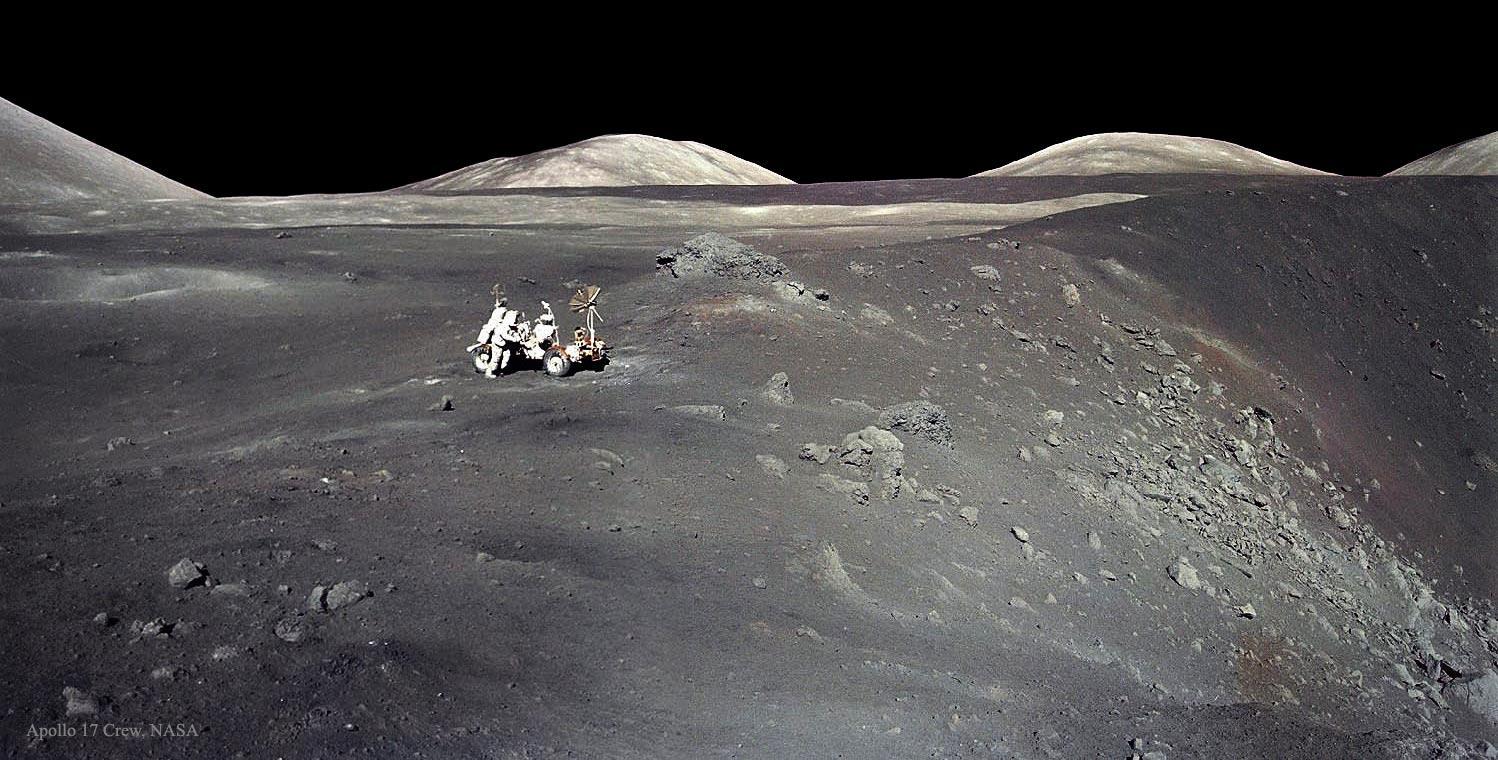
Apollo 17 at Shorty Crater
* Apollo 17 Crew, NASA
https://apollojournals.org/
https://www.nasa.gov/
Explanation:
Fifty three years ago, in December of 1972, Apollo 17 astronauts Eugene Cernan and Harrison Schmitt spent about 75 hours on the Moon exploring the Taurus-Littrow valley, while colleague Ronald Evans orbited overhead. This snapshot from another world was taken by Cernan as he and Schmitt roamed the lunar valley's floor. The image shows Schmitt next to the lunar rover parked at the southeast rim of Shorty Crater. That location is near the spot where geologist Schmitt discovered orange lunar soil. The Apollo 17 crew returned with 110 kilograms of rock and soil samples, more than was returned from any of the other lunar landing sites. And for now, Cernan and Schmitt are the last to walk on the Moon.
https://www.lpi.usra.edu/lunar/missions/apollo/apollo_17/
https://www.nasa.gov/history/alsj-and-afj/
https://apollojournals.org/alsj/a17/a17.landing.html
https://apollojournals.org/afj/ap17fj/14_day05_part4.html
https://apollojournals.org/alsj/a17/AS17-137-21009HR.jpg
https://apod.nasa.gov/apod/ap250328.html
https://apod.nasa.gov/apod/ap040605.html
https://lroc.im-ldi.com/images/417
https://en.wikipedia.org/wiki/Shorty_(crater)
https://apod.nasa.gov/apod/ap010523.html
https://www.lpi.usra.edu/lunar/missions/apollo/apollo_17/samples/
https://www.nasa.gov/humans-in-space/artemis/
https://apod.nasa.gov/apod/fap/ap251206.html
#space #moon #astrophotography #photography #science #astronomy #nature #NASA #education #apod
Alt...
2025 December 6
Apollo 17 at Shorty Crater
* Apollo 17 Crew, NASA
Explanation:
Fifty three years ago, in December of 1972, Apollo 17 astronauts Eugene Cernan and Harrison Schmitt spent about 75 hours on the Moon exploring the Taurus-Littrow valley, while colleague Ronald Evans orbited overhead. This snapshot from another world was taken by Cernan as he and Schmitt roamed the lunar valley's floor. The image shows Schmitt next to the lunar rover parked at the southeast rim of Shorty Crater. That location is near the spot where geologist Schmitt discovered orange lunar soil. The Apollo 17 crew returned with 110 kilograms of rock and soil samples, more than was returned from any of the other lunar landing sites. And for now, Cernan and Schmitt are the last to walk on the Moon.
Authors & editors: Robert Nemiroff (MTU) & Jerry Bonnell (UMCP)
NASA Official: Amber Straughn Specific rights apply.
NASA Web Privacy, Accessibility, Notices;
A service of: ASD at NASA / GSFC,
NASA Science Activation
& Michigan Tech. U.
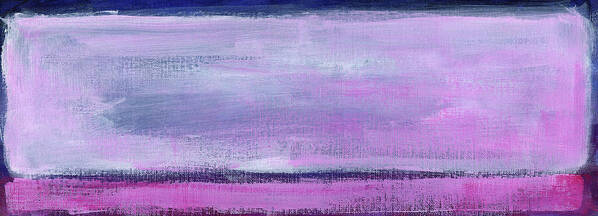
Sometimes I don't plan a painting, I just have fun and play with the colors and see where it takes me...
Big pink cloud - handmade acrylic painting:
https://karen-kaspar.pixels.com/featured/big-pink-cloud-karen-kaspar.html
#MastoArt #art #painting #FediArt #FediGiftShop #artist #arte #InteriorDesign #MastodonArt #BuyIntoArt #ArtistsOnMastodon #TraditionalArt #kunst #contemporaryArt #creativeToots #abstract #abstractart #colors #landscape #dreamscape #nature #outdoors #handmade #pink #purple #fun #clouds #artadventCalendar
Alt...
Big pink cloud is a hand-painted acrylic painting in a unique horizontal panoramic format by the artist Karen Kaspar.
The abstract painting is painted with loose brushstrokes in shades of purple, pink and blue. Above the lower third in darker shades of pink and purple, a large rectangle in light shades of pink stretches across the upper third of the picture. It is reminiscent of a dreamy landscape in summer with a large pink cloud in the dark blue sky above a field of lavender in bloom.
The brushstrokes and gradient transitions evoke a soothing and calm atmosphere.
![[?]](data:image/png;base64, iVBORw0KGgoAAAANSUhEUgAAAEAAAABAAQAAAACCEkxzAAAAUUlEQVQoz43R0QkAMQwCUDdw/y3dwEvsvzlL4X1IoQkAisKmwfAFT3RgJHbQezpSRoXEqeqCL9BJBf7h3QbOCCxV5EVWMEMwG7K1/WODtlvxAYTtEsDU9F34AAAAAElFTkSuQmCC)
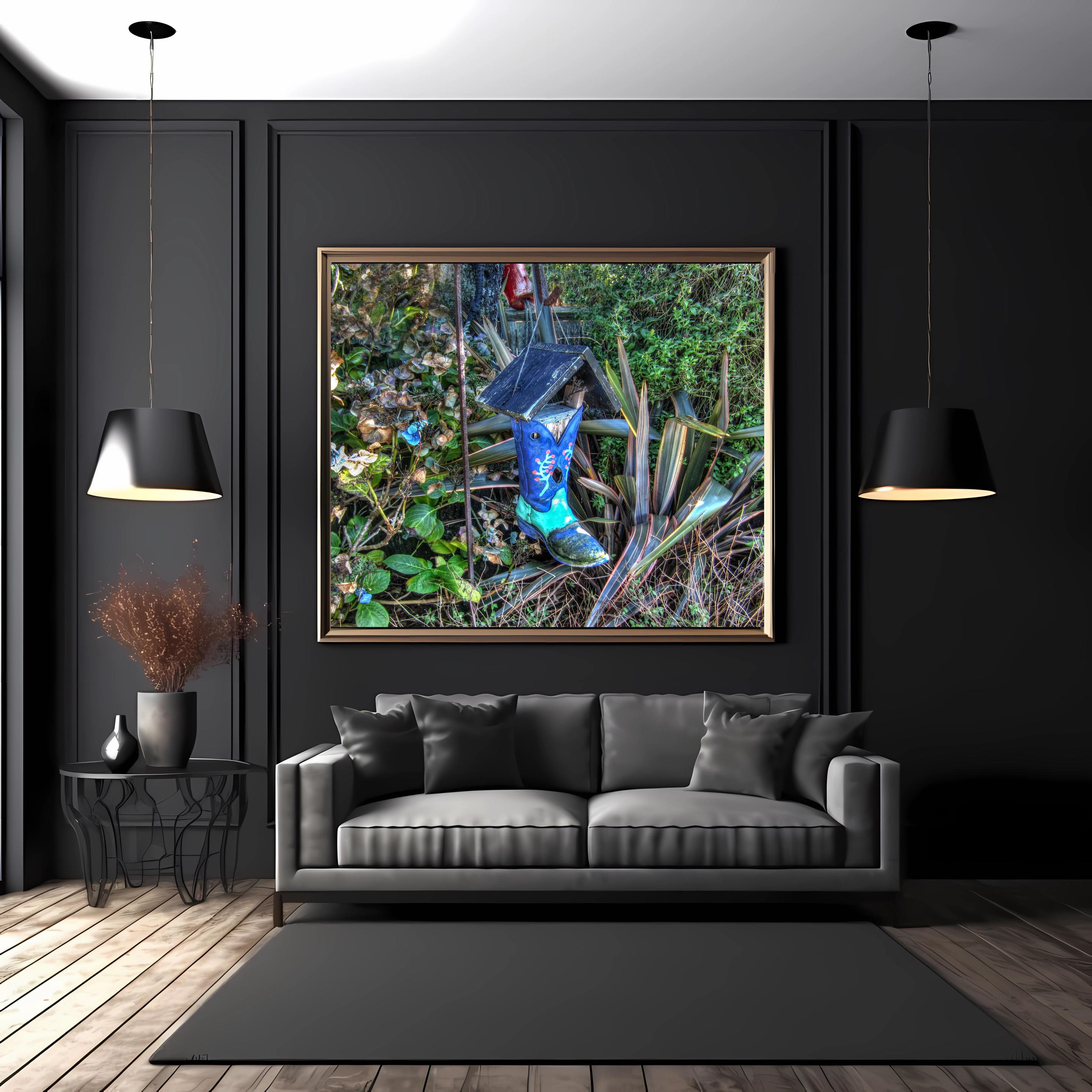
"Hanging In The Garden" ! A colorful cowgirl boot repurposed as a unique birdhouse is nestled among lush green foliage and tall plants. Purchase options here: https://pixels.com/featured/hanging-in-the-garden-thom-zehrfeld.html #gardenart, #gardendecor #puzzles #BuyIntoArt #Art #ThomZehrfeldPhotography #PhotographyIsArt #Photography #Fotografie
#ArtForSale #ArtMatters #MastoArt #Mastodon
#InteriorDesign #Wallart #InteriorDecorating #WallArtForSale #PhotoOfTheDay #FediGiftShop #GiftIdeas #FediArt #Prints #FediArtShop #Colorful #Nature
Alt...
"Hanging In The Garden" ! A colorful cowgirl boot repurposed as a unique birdhouse is nestled among lush green foliage and tall plants. Purchase options here: https://pixels.com/featured/hanging-in-the-garden-thom-zehrfeld.html #gardenart, #gardendecor #puzzles #BuyIntoArt #Art #ThomZehrfeldPhotography #PhotographyIsArt #Photography #Fotografie
#ArtForSale #ArtMatters #MastoArt #Mastodon
#InteriorDesign #Wallart #InteriorDecorating #WallArtForSale #PhotoOfTheDay #FediGiftShop #GiftIdeas #FediArt #Prints #FediArtShop #Colorful #Nature
Sunset At Yaquina Head Lighthouse! Products for sale at: https://pixels.com/featured/sunset-at-yaquina-head-lighthouse-thom-zehrfeld.html #lighthouseart #lighthouse #lighthouses #lighthousepainting #YaquinaHeadLighthouse #OregonCoast #PNW #Mugs #ToteBags #Nautical #BuyIntoArt #Art #ThomZehrfeldPhotography #PhotographyIsArt #Photography
#ArtForSale #ArtMatters #MastoArt #Mastodon #ArtforInteriorDesign
#InteriorDesign #Wallart #WallArtForSale #PhotoOfTheDay #FediGiftShop #GiftIdeas #FediArt #Prints #FediArtShop #Colorful #Nature #ShopEarly

Alt...
Sunset At Yaquina Head Lighthouse! Products for sale at: https://pixels.com/featured/sunset-at-yaquina-head-lighthouse-thom-zehrfeld.html #lighthouseart #lighthouse #lighthouses #lighthousepainting #YaquinaHeadLighthouse #OregonCoast #PNW #Mugs #ToteBags #Nautical #BuyIntoArt #Art #ThomZehrfeldPhotography #PhotographyIsArt #Photography
#ArtForSale #ArtMatters #MastoArt #Mastodon #ArtforInteriorDesign
#InteriorDesign #Wallart #WallArtForSale #PhotoOfTheDay #FediGiftShop #GiftIdeas #FediArt #Prints #FediArtShop #Colorful #Nature #ShopEarly

Alt...
Sunset At Yaquina Head Lighthouse! Products for sale at: https://pixels.com/featured/sunset-at-yaquina-head-lighthouse-thom-zehrfeld.html #lighthouseart #lighthouse #lighthouses #lighthousepainting #YaquinaHeadLighthouse #OregonCoast #PNW #Mugs #ToteBags #Nautical #BuyIntoArt #Art #ThomZehrfeldPhotography #PhotographyIsArt #Photography
#ArtForSale #ArtMatters #MastoArt #Mastodon #ArtforInteriorDesign
#InteriorDesign #Wallart #WallArtForSale #PhotoOfTheDay #FediGiftShop #GiftIdeas #FediArt #Prints #FediArtShop #Colorful #Nature #ShopEarly

Alt...
Sunset At Yaquina Head Lighthouse! Products for sale at: https://pixels.com/featured/sunset-at-yaquina-head-lighthouse-thom-zehrfeld.html #lighthouseart #lighthouse #lighthouses #lighthousepainting #YaquinaHeadLighthouse #OregonCoast #PNW #Mugs #ToteBags #Nautical #BuyIntoArt #Art #ThomZehrfeldPhotography #PhotographyIsArt #Photography
#ArtForSale #ArtMatters #MastoArt #Mastodon #ArtforInteriorDesign
#InteriorDesign #Wallart #WallArtForSale #PhotoOfTheDay #FediGiftShop #GiftIdeas #FediArt #Prints #FediArtShop #Colorful #Nature #ShopEarly
Sonification of WR 124
The first movement is a prelude to the potential birth of a black hole. WR124 is an extremely bright, short-lived massive star known as a Wolf-Rayet at a distance of about 28,000 light-years from Earth. These stars fling their outer layers out into space, creating spectacular arrangements seen in an image in infrared light from the Webb telescope. In the sonification of WR124, this nebula is heard as flutes and the background stars as bells. At the center of WR124, where the scan begins before moving outward, is a hot core of the star that may explode as a supernova and potentially collapse and leave behind a black hole in its wake. As the scan moves from the center outward, X-ray sources detected by Chandra are translated into harp sounds. Data from NASA’s James Webb Space Telescope is heard as metallic bell-like sounds, while the light of the central star is mapped to produce the descending scream-like sound at the beginning. The piece is rounded out by strings playing additional data from the infrared telescopic trio of ESA’s (European Space Agency’s) Herschel Space Telescope, NASA’s retired Spitzer Space Telescope, and NASA’s retired Wide Image Survey Explorer (WISE) as chords.
Credit: X-ray: NASA/CXC/SAO; Infrared: (Herschel) ESA/NASA/Caltech, (Spitzer) NASA/JPL/Caltech, (WISE) NASA/JPL/Caltech; Infrared: NASA/ESA/CSA/STScI/Webb ERO Production Team; Image processing: NASA/CXC/SAO/J. Major; Sonification: NASA/CXC/SAO/K.Arcand, SYSTEM Sounds (M. Russo, A. Santaguida)
#space #galaxy #sonification #sound #acoustic #astrophotography #photography #science #astronomy #nature #education #NASA
TOPIC> Sounds Of The Universe
"Hello everyone! In this topic, the visual stimuli are in the background, even if there will certainly be one or two beautiful pictures to see. Rather, it is about special sounds on our planet and elsewhere in space and acoustic representations of astronomical constellations, so-called sonifications. I really hope to bring a little joy to our visually impaired friends of the Fediverse with this collection and I am very grateful for any inspiration or suggestions for improvement from you!"
2024 March 25
Sonified: The Jellyfish Nebula Supernova Remnant
* Image Credit: X-ray (blue): Chandra (NASA) & ROSAT (ESA); Optical (red): DSS (NSF)
* Radio (green): VLA (NRAO, NSF)
* Sonification: NASA, CXC, SAO, K. Arcand
https://pweb.cfa.harvard.edu/people/kimberly-k-arcand
* SYSTEM Sounds: M. Russo, A. Santaguida)
https://www.astromattrusso.com/
https://science.nasa.gov/mission/hubble/multimedia/sonifications/
Explanation:
What does a supernova remnant sound like? Although sound is a compression wave in matter and does not carry into empty space, interpretive sound can help listeners appreciate and understand a visual image of a supernova remnant in a new way. Recently, the Jellyfish Nebula (IC 443) has been sonified quite creatively. In the featured sound-enhanced video, when an imaginary line passes over a star, the sound of a drop falling into water is played, a sound particularly relevant to the nebula's aquatic namesake. Additionally, when the descending line crosses gas that glows red, a low tone is played, while green sounds a middle tone, and blue produces a tone with a relatively high pitch. Light from the supernova that created the Jellyfish Nebula left approximately 35,000 years ago, when humanity was in the stone age. The nebula will slowly disperse over the next million years, although the explosion also created a dense neutron star which will remain indefinitely.
https://apod.nasa.gov/apod/ap240325.html
#space #nebula #sonification #sound #astrophotography #photography #science #astronomy #nature #education
"Well, that sounded like a concert in a cosmic stalactite cave and leads us back to the bottom of our earthly seas. This and the next three posts are about very special sounds from the depths of the oceans!"
2010 April 27
The Bloop: A Mysterious
Sound from the Deep Ocean
* Credit: NOAA, SOSUS
https://www.pmel.noaa.gov/eoi/
https://irp.fas.org/program/collect/sosus.htm
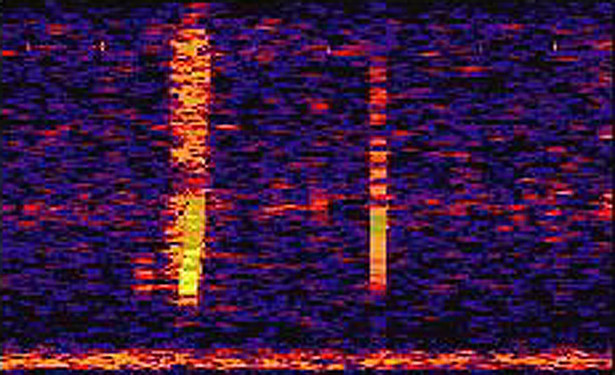
Explanation: What created this strange sound in Earth's Pacific Ocean? Pictured above is a visual representation of a loud and unusual sound, dubbed a Bloop, captured by deep sea microphones in 1997. In the above graph, time is shown on the horizontal axis, deep pitch is shown on the vertical axis, and brightness designates loudness. Although Bloops are some of the loudest sounds of any type ever recorded in Earth's oceans, their origin remains unknown. The Bloop sound was placed as occurring several times off the southern coast of South America and was audible 5,000 kilometers away. Although the sound has similarities to those vocalized by living organisms, not even a blue whale is large enough to croon this loud. The sounds point to the intriguing hypothesis that even larger life forms lurk in the unexplored darkness of Earth's deep oceans. A less imagination-inspiring possibility, however, is that the sounds resulted from some sort of iceberg calving. No further Bloops have been heard since 1997, although other loud and unexplained sounds have been recorded.
https://apod.nasa.gov/apod/ap100427.html
Original icequake (bloop) sound:
The broad spectrum sounds recorded in the summer of 1997 are consistent with icequakes generated by large icebergs as they crack and fracture. NOAA hydrophones deployed in the Scotia Sea detected numerous icequakes with spectrograms very similar to “Bloop”. Recorded signal sped up 16 times.
[...]
https://www.pmel.noaa.gov/acoustics/specs_cryogenic.html
CREDIT
DOC / NOAA/ OAR / PMEL / Acoustics Program
#space #earth #sonification #sound #graph #science #marinegeology #nature #climate #education
Alt...
Original icequake (bloop) sound:
The broad spectrum sounds recorded in the summer of 1997 are consistent with icequakes generated by large icebergs as they crack and fracture. NOAA hydrophones deployed in the Scotia Sea detected numerous icequakes with spectrograms very similar to “Bloop”. Recorded signal sped up 16 times.
[...]
Iceberg Grounding on Seafloor (Slow Down)
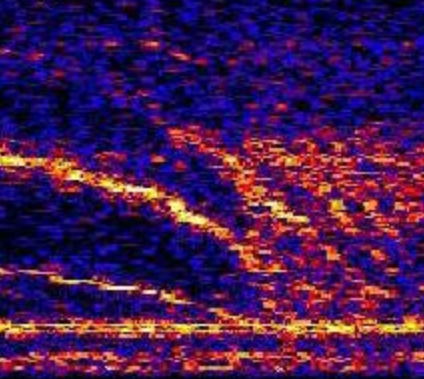
The sound slowly descends in frequency over about 7 minutes as the drifting iceberg slows to a stop once it comes in contact with the seafloor. Recorded signal sped up 16 times.
[...]
https://www.pmel.noaa.gov/acoustics/specs_cryogenic.html
CREDIT
DOC / NOAA/ OAR / PMEL / Acoustics Program
#space #earth #iceberg #sonification #sound #acoustic #graph #science #marinegeology #nature #climate #education
Alt...
Iceberg Grounding on Seafloor (Slow Down):
The sound slowly descends in frequency over about 7 minutes as the drifting iceberg slows to a stop once it comes in contact with the seafloor. Recorded signal sped up 16 times.
CREDIT
DOC / NOAA/ OAR / PMEL / Acoustics Program
[...]
Iceberg Harmonic Tremor
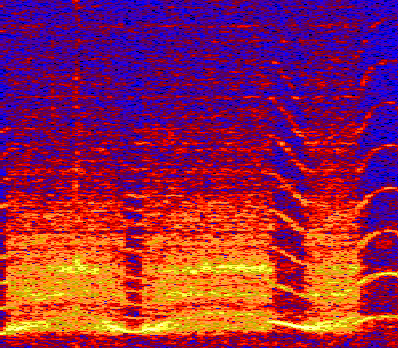
Generated by iceberg in contact with the seafloor or other iceberg. This spectrogram has a fundamental frequency of 40 Hz, with a 40 Hz overtone spacing. Multiple overtones are visible in the spectrogram. Audio sped up 3X normal.
[...]
https://www.pmel.noaa.gov/acoustics/specs_cryogenic.html
CREDIT
DOC / NOAA/ OAR / PMEL / Acoustics Program
#space #earth #sonification #sound #graph #science #marinegeology #nature #climate #education
Alt...
Iceberg Harmonic Tremor:
Generated by iceberg in contact with the seafloor or other iceberg. This spectrogram has a fundamental frequency of 40 Hz, with a 40 Hz overtone spacing. Multiple overtones are visible in the spectrogram. Audio sped up 3X normal.
CREDIT
DOC / NOAA/ OAR / PMEL / Acoustics Program
[...]
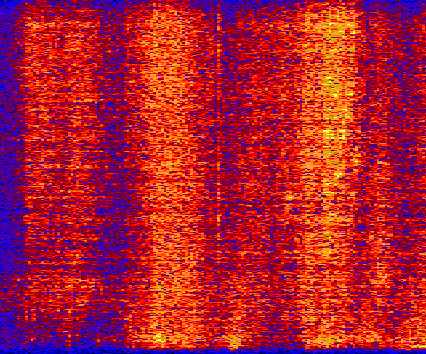
Calving
Spectrogram of an iceberg calving (large section of iceberg breaking off) while adrift. The calving signal is short duration, broad band from 1-440 Hz generated by ice cracking and crack propagation. Audio sped up 3X normal.
https://www.pmel.noaa.gov/acoustics/specs_cryogenic.html
CREDIT
DOC / NOAA/ OAR / PMEL / Acoustics Program
#space #earth #iceberg #sonification #sound #acoustic #graph #science #marinegeology #nature #climate #education
Alt...
Calving:
Spectrogram of an iceberg calving (large section of iceberg breaking off) while adrift. The calving signal is short duration, broad band from 1-440 Hz generated by ice cracking and crack propagation. Audio sped up 3X normal.
CREDIT
DOC / NOAA/ OAR / PMEL / Acoustics Program
2002 October 3
V838 Mon: Mystery Star
A leading candidate for the most mysterious star found in recent times is variable star V838 Monocerotis. At a distance of about 8,000 light-years, V838 Mon was discovered to be in outburst in January of this year. Initially thought to be a familiar type of classical nova, astronomers quickly realized that instead, V838 Mon may be a totally new addition to the astronomical zoo. Observations indicate that the erupting star transformed itself over a period of months from a small under-luminous star a little hotter than the Sun, to a highly-luminous, cool supergiant star undergoing rapid and complex brightness changes. The transformation defies the conventional understanding of stellar life cycles. A most notable feature of V838 Mon is the "expanding" nebula which now appears to surround it. Seen above in two separate images from the South African Astronomical Observatory's 1 meter telescope, the nebula is probably a light echo from shells of formerly unseen material lost by the star during its previous evolution. Light-years in diameter, the shells progressively reflect the light from V838 Mon's outbursts, providing an opportunity to look back at the history of this remarkable star's behaviour.
Authors & editors: Robert Nemiroff (MTU) & Jerry Bonnell (USRA)
https://apod.nasa.gov/apod/ap021003.html
___
This data sonification of the star V838 Monocerotis, or V838 Mon, shows two Hubble images taken almost seven months apart. A pulse of light from the central star illuminates clouds of dust and gas surrounding V838 Mon.
https://science.nasa.gov/mission/hubble/multimedia/sonifications/
CREDIT
NASA, ESA, H.E. Bond (STScI) and The Hubble Heritage Team (STScI/AURA)
* Sonification: SYSTEM Sounds (M. Russo, A. Santaguida)
#space #star #sonification #sound #acoustic #astrophotography #photography #science #astronomy #nature #education #NASA
2020 December 16
Sonified: The Matter of the Bullet Cluster
* Image Credit: X-ray: NASA/CXC/SAO
* Optical: NASA/STScI, Magellan/U.Arizona
* Lensing Map: NASA/STScI, ESO WFI, Magellan/U.Arizona
* Sonification: NASA/CXC/SAO/K.Arcand, SYSTEM Sounds (M. Russo, A. Santaguida)
Explanation:
What's the matter with the Bullet Cluster? This massive cluster of galaxies (1E 0657-558) creates gravitational lens distortions of background galaxies in a way that has been interpreted as strong evidence for the leading theory: that dark matter exists within. Different analyses, though, indicate that a less popular alternative -- modifying gravity-- could explain cluster dynamics without dark matter, and provide a more likely progenitor scenario as well. Currently, the two scientific hypotheses are competing to explain the observations: it's invisible matter versus amended gravity. The duel is dramatic as a clear Bullet-proof example of dark matter would shatter the simplicity of modified gravity theories. The featured sonified image is a Hubble/Chandra/Magellan composite with red depicting the X-rays emitted by hot gas, and blue depicting the suggested separated dark matter distribution. The sonification assigns low tones to dark matter, mid-range frequencies to visible light, and high tones to X-rays. The battle over the matter in the Bullet cluster is likely to continue as more observations, computer simulations, and analyses are completed.
https://apod.nasa.gov/apod/ap201216.html
#space #cluster #sonification #sound #astrophotography #photography #science #astronomy #nature #education #NASA
RS Puppis
Pulsating RS Puppis, the brightest star in the image center, is some ten times more massive than our Sun and on average 15,000 times more luminous. In fact, RS Pup is a Cepheid variable star, a class of stars whose brightness is used to estimate distances to nearby galaxies as one of the first steps in establishing the cosmic distance scale. As RS Pup pulsates over a period of about 40 days, its regular changes in brightness are also seen along its surrounding nebula delayed in time, effectively a light echo. Using measurements of the time delay and angular size of the nebula, the known speed of light allows astronomers to geometrically determine the distance to RS Pup to be 6,500 light-years, with a remarkably small error of plus or minus 90 light-years. An impressive achievement for stellar astronomy, the echo-measured distance also more accurately establishes the true brightness of RS Pup, and by extension other Cepheid stars, improving the knowledge of distances to galaxies beyond the Milky Way.
Authors & editors:
Robert Nemiroff (MTU) & Jerry Bonnell (UMCP)
____
RS Puppis is a glittering star 200 times larger than our Sun and wreathed with dust reflecting starlight. Located about 6,500 light-years away, this star rhythmically brightens and dims over a six-week cycle. In this sonification, scientists represent data in the image as sound for a new, festive way of experiencing RS Puppis. Pitch is assigned based on direction from the center; as the circle travels inward, points at the top of the circle are mapped to higher notes and points near the bottom are mapped to lower notes.
[...]
More information in Alt-Text
CREDIT
NASA, ESA and Jesús Maíz Apellániz (Instituto de Astrofísica de Andalucía, Spain); Acknowledgment: Davide De Martin (ESA/Hubble); Sonification: SYSTEM Sounds (M. Russo, A. Santaguida)
#space #star #sonification #sound #acoustic #astrophotography #photography #science #astronomy #nature #education #NASA
2020 September 30
Sonified: Eagle Nebula Pillars
* Image Credit: NASA, ESA, & The Hubble Heritage Team (STScI/AURA)
* Sonification: NASA, CXC, SAO, K. Arcand, M. Russo & A. Santaguida
Explanation:
Yes, but have you ever experienced the Eagle Nebula with your ears ? The famous nebula, M16, is best known for the feast it gives your eyes, highlighting bright young stars forming deep inside dark towering structures. These light-years long columns of cold gas and dust are some 6,500 light-years distant toward the constellation of the Serpent (Serpens). Sculpted and eroded by the energetic ultraviolet light and powerful winds from M16's cluster of massive stars, the cosmic pillars themselves are destined for destruction. But the turbulent environment of star formation within M16, whose spectacular details are captured in this combined Hubble (visible) and Chandra (X-ray) image, is likely similar to the environment that formed our own Sun. In the featured video, listen for stars and dust sounding off as the line of sonification moves left to right, with vertical position determining pitch.
Authors & editors: Robert Nemiroff (MTU) & Jerry Bonnell (UMCP)
https://apod.nasa.gov/apod/ap200930.html
___
These pillars of gas and dust in the Eagle Nebula are regions of starbirth. The aptly named "Pillars of Creation" hide newborn stars in their wispy columns. Stretching roughly 4 to 5 light-years, the towers are a relatively small feature of the entire Eagle Nebula, which spans 70 by 55 light-years.
In the sonification, sounds are generated by moving horizontally across the image from left to right as seen in both visible and X-ray light. The vertical position of the recorded light controls the pitch. Particular attention is paid to the structure of the pillars, which can be heard as sweeps from low to high pitches and back.
#space #nebula #sonification #sound #acoustic #astrophotography #photography #science #astronomy #nature #education #NASA
Mice Galaxies
From Wikipedia, the free encyclopedia
NGC 4676, or the Mice Galaxies, are two spiral galaxies in the constellation Coma Berenices. About 290 million light-years distant, they have begun the process of colliding and merging. Their "mice" name refers to the long tails produced by tidal action—the relative difference between gravitational pulls on the near and far parts of each galaxy—known here as a galactic tide. It is a possibility that both galaxies, which are members of the Coma Cluster, have experienced collision, and will continue colliding until they coalesce.
The colors of the galaxies are peculiar. In NGC 4676A a core with some dark markings is surrounded by a bluish white remnant of spiral arms. The tail is unusual, starting out blue and terminating in a more yellowish color, despite the fact that the beginning of each arm in virtually every spiral galaxy starts yellow and terminates in a bluish color. NGC 4676B has a yellowish core and two arcs; arm remnants underneath are bluish as well.
The galaxies were photographed in 2002 by the Hubble Space Telescope. In the background of the Mice Galaxies, there are over 3000 galaxies, at distances up to 13 billion light-years.
By contributors to Wikimedia projects
----
The Mice Galaxies are a colliding pair of galaxies, that will eventually merge into a single galaxy. They’re located about 300 million light-years away in the constellation Coma Berenices. In this data sonification, scientists represented brightness with volume and pitch – brighter light is louder and lower pitched. The vertical position of objects in the image is used to control the pitch of sustained musical strings, and cymbals swell following the brightness of the galaxy cores. Listen for a cymbal crash played for the foreground star with diffraction spikes, too!
CREDIT
Please see the ALT-Text
#space #galaxy #sonification #sound #acoustic #astrophotography #photography #science #astronomy #nature #education #NASA
Earth's Song
by Maria-Jose Vinas Garcia
Suspended in the dark cosmos, Earth sings to itself in a high-pitched chorus of chirps and beeps. This song is a product of very low frequency radio waves generated by lightning strikes or excited electrons zipping through the Van Allen Belts, two vast swaths of radiation surrounding Earth. While ham radio operators have long detected this eerie planetary sound using inexpensive receivers, the recent recording by specially designed antennas on NASA's twin Van Allen Probes is one of the clearest examples ever captured. But could Earth's chorus be a siren song? The probes are now on a quest to find out whether these radio waves might be powering up otherwise harmless electrons in the Van Allen Belts, turning them into "killer electrons" capable of damaging satellites and astronauts. Watch the videos to hear and learn more about this rare recording.
https://svs.gsfc.nasa.gov/11073
Credits:
+ Science@NASA
NASA's Goddard Space Flight Center
+ Van Allen Belts image courtesy of NASA
+ T. Benesch and J. Carns
#space #earth #hamradio #audio #sound #acoustic #tech #science #astronomy #nature #education #NASA

Alt...
Suspended in the dark cosmos, Earth sings to itself in a high-pitched chorus of chirps and beeps. This song is a product of very low frequency radio waves generated by lightning strikes or excited electrons zipping through the Van Allen Belts, two vast swaths of radiation surrounding Earth. While ham radio operators have long detected this eerie planetary sound using inexpensive receivers, the recent recording by specially designed antennas on NASA's twin Van Allen Probes is one of the clearest examples ever captured. But could Earth's chorus be a siren song? The probes are now on a quest to find out whether these radio waves might be powering up otherwise harmless electrons in the Van Allen Belts, turning them into "killer electrons" capable of damaging satellites and astronauts. Watch the videos to hear and learn more about this rare recording.
Credits:
+ Science@NASA
NASA's Goddard Space Flight Center
+ Van Allen Belts image courtesy of NASA
+ T. Benesch and J. Carns
Earthquakes
Seismograms of earthquakes have a particular, recognizable structure. The high-frequency first arrivals (primary, or P waves) are followed by lower-frequency secondary (S) waves, and then by the energetic, low-frequency surface waves, as in these examples. The lowest-frequency surface waves usually arrive earlier than the higher-frequency ones, which produces an upward glide (glissando) from low to high pitch.
The concluding part of the seismogram is the Coda, composed of numerous scattered waves arriving from different directions.
---
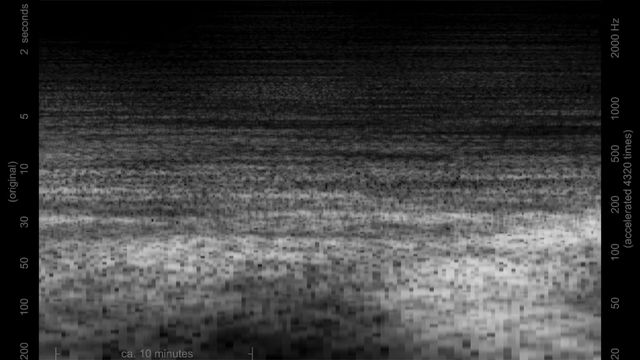
The catastrophic Tohoku earthquake occurred at 14:46 Japan standard time (05:46 UTC) on 11 March, 2011. The largest #earthquake ever recorded in Japan (magnitude Mw = 9.1), it occurred undersea, 70 km to the east of the Tohoku region, and lasted around 6 minutes. The earthquake triggered a tsunami that reached heights of up to 40 metres and travelled up to 10 km inland. Nearly 20 thousand casualties have been reported. The tsunami caused the #Fukushima Daiichi nuclear disaster, with the discharge of radioactive water in Fukushima and hundreds of thousands of residents evacuated.
This #seismogram is a recording of the Tohoku earthquake made thousands of kilometres away, at the Ireland Array seismic station IA003, Birr Castle Demesne, Co Offaly, Ireland. The seismogram shows the vertical component of the ground motion (up and down movements of the ground). The recording is accelerated by a factor of 4320, which increases the frequency of the signal by the same factor and brings it into the audible frequency range. The recording is then “stretched” by a factor of 40, so that the different waves can be distinguished in time and heard clearly.
Following the energetic arrivals of P, S, and surface wave, the long coda of the seismogram shows its own, original musical style, with moving, somber notes and harmonies.
Credit for Video and Article
David Stalling
https://www.soundsoftheearth.ie
#earth #tech #science #nature #education
Alt...
The catastrophic Tohoku earthquake occurred at 14:46 Japan standard time (05:46 UTC) on 11 March, 2011. The largest earthquake ever recorded in Japan (magnitude Mw = 9.1), it occurred undersea, 70 km to the east of the Tohoku region, and lasted around 6 minutes. The earthquake triggered a tsunami that reached heights of up to 40 metres and travelled up to 10 km inland. Nearly 20 thousand casualties have been reported. The tsunami caused the Fukushima Daiichi nuclear disaster, with the discharge of radioactive water in Fukushima and hundreds of thousands of residents evacuated.
--
This seismogram is a recording of the Tohoku earthquake made thousands of kilometres away, at the Ireland Array seismic station IA003, Birr Castle Demesne, Co Offaly, Ireland. The seismogram shows the vertical component of the ground motion (up and down movements of the ground). The recording is accelerated by a factor of 4320, which increases the frequency of the signal by the same factor and brings it into the audible frequency range. The recording is then “stretched” by a factor of 40, so that the different waves can be distinguished in time and heard clearly.
Following the energetic arrivals of P, S, and surface wave, the long coda of the seismogram shows its own, original musical style, with moving, somber notes and harmonies.
Credit for Video and Article
David Stalling (Ireland)
NGC 1300
The majestic barred spiral galaxy NGC 1300’s arms hold blue clusters of young stars, pink clouds of star formation, and dark lanes of dust. NGC 1300 is considered to be prototypical of barred spiral galaxies. Barred spirals differ from normal spiral galaxies in that the arms of the galaxy do not spiral all the way into the center, but are connected to the two ends of a straight bar of stars containing the nucleus at its center. In this image, blue and red supergiant stars, star clusters, and star-forming regions are well resolved by Hubble across the spiral arms, and dust lanes trace out fine structures in the disk and bar. Numerous more distant galaxies are visible in the background, and are seen even through the densest regions of NGC 1300.
To represent this image with sound, scientists assigned louder volume to brighter light. Light farther from the center is pitched higher as a counterclockwise radar scans across the galaxy. NGC 1300 resides nearly 70 million light-years away in the constellation Eridanus.
CREDITS:
+ NASA, ESA, and The Hubble Heritage Team (STScI/AURA)
+ Acknowledgment: P. Knezek (WIYN)
+ Sonification: SYSTEM Sounds (M. Russo, A. Santaguida)
#space #galaxy #sonification #sound #acoustic #astrophotography #photography #science #astronomy #nature #education #NASA
Sagittarius A* EHT Radio Sonification
This is a sonification — translation into sound — of the latest image from the Event Horizon Telescope of the supermassive black hole at the center of the Milky Way called Sagittarius A* (Sgr A*). Using a radar-like scan, the sonification begins at the 12 o'clock position and sweeps clockwise. Changes in volume represent the differences in brightness the EHT observed around the event horizon of Sgr A*. The material that is closer to the black hole and hence moving faster corresponds to higher frequencies of sound. This sonification was processed in a special way to allow a listener to hear the data in 3D stereo sound, in which the sounds seem to start directly ahead and then move clockwise to one ear then the other as the sweep is made.
About the Sound:
+ This is a radar-like scan, starting from 12 o'clock and moving clockwise.
+ The brightness controls the volume and the radial position controls the frequencies that are present.
+ The emission from material closer to the black hole (which orbits faster) is mapped to higher frequencies.
+ The sound is rendered in binaural audio. When listened to with headphones, the sound will appear to start directly in front of you and then move clockwise all the way around your head.
+ Listen for the three bright regions at about 1, 5, and 9 o'clock, as well as the very low tones indicating fainter light from outside the main ring.
For thread i looped the sonification three times.
+ Sonification Credit: NASA/CXC/SAO/K.Arcand, SYSTEM Sounds (M. Russo, A. Santaguida);
+ Image Credit: Radio: EHT Collaboration; X-ray (NASA/CXC/SAO); Infrared (NASA/HST/STScI)
More about the Center of our Galaxy in TOPIC> "Bull's Eye" into the Center of our Galaxy
https://defcon.social/@grobi/114498597554595255
https://chandra.harvard.edu/photo/2022/sgra/animations.html
#space #galaxy #sonification #sound #acoustic #astrophotography #photography #science #astronomy #nature #education #NASA
2006 July 22
Mira: The Wonderful Star
* Credit:
+ X-ray Image (left): M. Karovska (Harvard-Smithsonian CfA) et al., CXC / NASA
https://www.cfa.harvard.edu/
https://arxiv.org/abs/astro-ph/0503050
https://chandra.harvard.edu/
https://www.nasa.gov/
+ Illustration (right): M.Weiss(CXC)
Explanation:
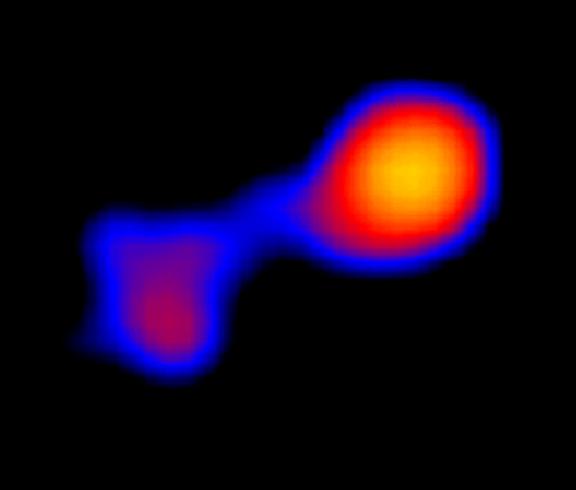
To seventeenth century astronomers, Omicron Ceti or Mira was known as a wonderful star - a star whose brightness could change dramatically in the course of about 11 months. Modern astronomers now recognize an entire class of long period Mira-type variables as cool, pulsating, red giant stars, 700 or so times the diameter of the Sun. Only 420 light-years away, red giant Mira (Mira A, right) itself co-orbits with a companion star, a small white dwarf (Mira B). Mira B is surrounded by a disk of material drawn from the pulsating giant and in such a double star system, the white dwarf star's hot accretion disk is expected to produce some x-rays. But this sharp, false-color image from the Chandra Observatory also captures the cool giant star strongly flaring at x-ray energies, clearly separated from the x-ray emission of its companion's accretion disk. Placing your cursor over the Chandra x-ray image of Mira will reveal an artist's vision of this still wonderful interacting binary star system.
https://chandra.harvard.edu/photo/2005/mira/mira_hand.pdf
https://chandra.harvard.edu/photo/2005/mira/
https://apod.nasa.gov/apod/ap010121.html
https://apod.nasa.gov/apod/ap050312.html
https://chandra.harvard.edu/xray_astro/medxray.html
https://spider.seds.org/spider/Vars/mira.html
https://spider.seds.org/spider/Vars/mira.html
https://apod.nasa.gov/apod/ap060722.html
#space #binary_stars #astrophotography #photography #science #astronomy #physics #nature #NASA #education
Alt...
2006 July 22
Mira: The Wonderful Star
* Credit:
+ X-ray Image (left): M. Karovska (Harvard-Smithsonian CfA) et al., CXC / NASA
+ Illustration (right): M.Weiss(CXC)
Explanation:
To seventeenth century astronomers, Omicron Ceti or Mira was known as a wonderful star - a star whose brightness could change dramatically in the course of about 11 months. Modern astronomers now recognize an entire class of long period Mira-type variables as cool, pulsating, red giant stars, 700 or so times the diameter of the Sun. Only 420 light-years away, red giant Mira (Mira A, right) itself co-orbits with a companion star, a small white dwarf (Mira B). Mira B is surrounded by a disk of material drawn from the pulsating giant and in such a double star system, the white dwarf star's hot accretion disk is expected to produce some x-rays. But this sharp, false-color image from the Chandra Observatory also captures the cool giant star strongly flaring at x-ray energies, clearly separated from the x-ray emission of its companion's accretion disk. Placing your cursor over the Chandra x-ray image of Mira will reveal an artist's vision of this still wonderful interacting binary star system.
Authors & editors: Robert Nemiroff (MTU) & Jerry Bonnell (USRA)
NASA Web Site Statements, Warnings, and Disclaimers
NASA Official: Jay Norris. Specific rights apply.
A service of: EUD at NASA / GSFC
& Michigan Tech. U.

Alt...
Illustration
Mira: A double star system 420 light years from Earth
Chandra‘s image shows Mira A (right), a highly evolved red giant star, and Mira B (left), a
white dwarf. To the right of the image is an artist‘s conception of this interacting star system. Mira A is
losing gas rapidly from its upper atmosphere via a stellar wind. Mira B exerts a gravitational tug that
creates a gaseous bridge between the two stars. Gas from the wind and bridge accumulates in an
accretion disk around Mira B and collisions between rapidly moving particles in the disk produce X-rays.
An unexpected X-ray outburst from Mira A was observed by Chandra. This outburst was likely an
indirect consequence of the internal turmoil in Mira A, which is now approaching the stage where its
nuclear fuel supply will be exhausted. It will eventually collapse to become a white dwarf, like Mira B.
Scale: X-ray image is 1.2 arcsec per side.
Chandra X-ray Observatory ACIS Image
CXC operated for NASA by the Smithsonian Astrophysical Observatory
Credit: X-ray: NASA/CXC/SAO/M. Karovska et al.; Illustration: CXC/M.Weiss
Detection of 19 lt-yr Long Bipolar Jets from Interacting Binary KX And
-- Stefan Ziegenbalg
Abstract
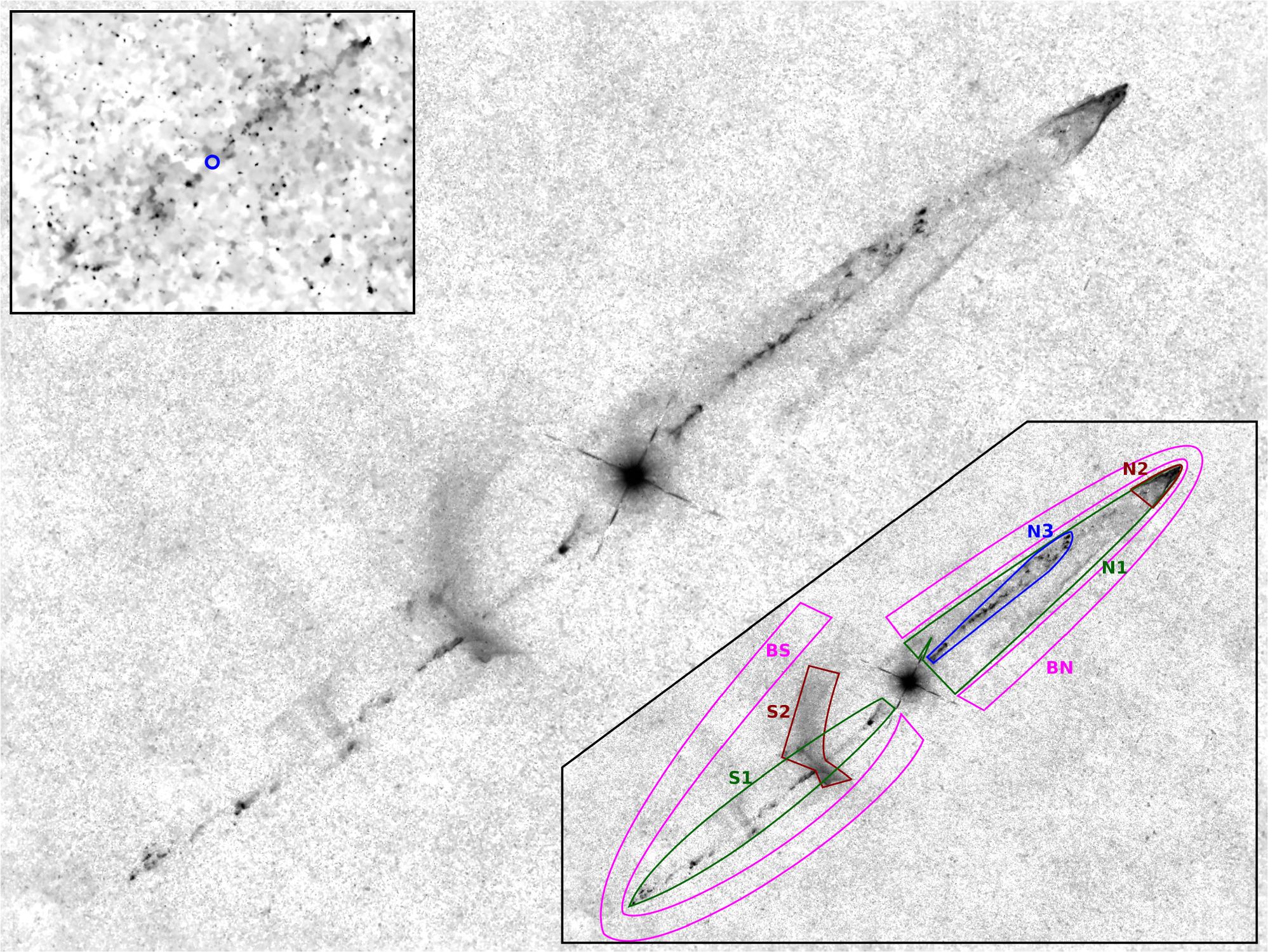
Bipolar jets with an apparent length of 20' ejected from KX And have been discovered in the first data release of the Northern Sky Narrowband Survey. KX And is a well-studied interacting binary with mass transfer through Roche lobe overflow at a distance of about 760 pc. However, the faint jets, which are visible in Hα light, have been overlooked in the past. With a known inclination of i ≈ 50° of the binary system, this leads to a true length of the jets of about 19 lt-yr (5.8 pc) in each direction.
https://ui.adsabs.harvard.edu/abs/2024RNAAS...8..289Z/graphics
#space #binary_stars #astrophotography #photography #science #astronomy #physics #nature #NASA #ESA #education
Alt...
Bipolar jets with an apparent length of 20' ejected from KX And have been discovered in the first data release of the Northern Sky Narrowband Survey. KX And is a well-studied interacting binary with mass transfer through Roche lobe overflow at a distance of about 760 pc. However, the faint jets, which are visible in Hα light, have been overlooked in the past. With a known inclination of i ≈ 50° of the binary system, this leads to a true length of the jets of about 19 lt-yr (5.8 pc) in each direction.
2025 December 5
The Bipolar Jets of KX Andromedae
* Image Credit & Copyright: Tim Schaeffer and the Deep Sky Collective
https://deepskycollective.com/kxand/steeve
https://deepskycollective.com/gallery
Explanation:
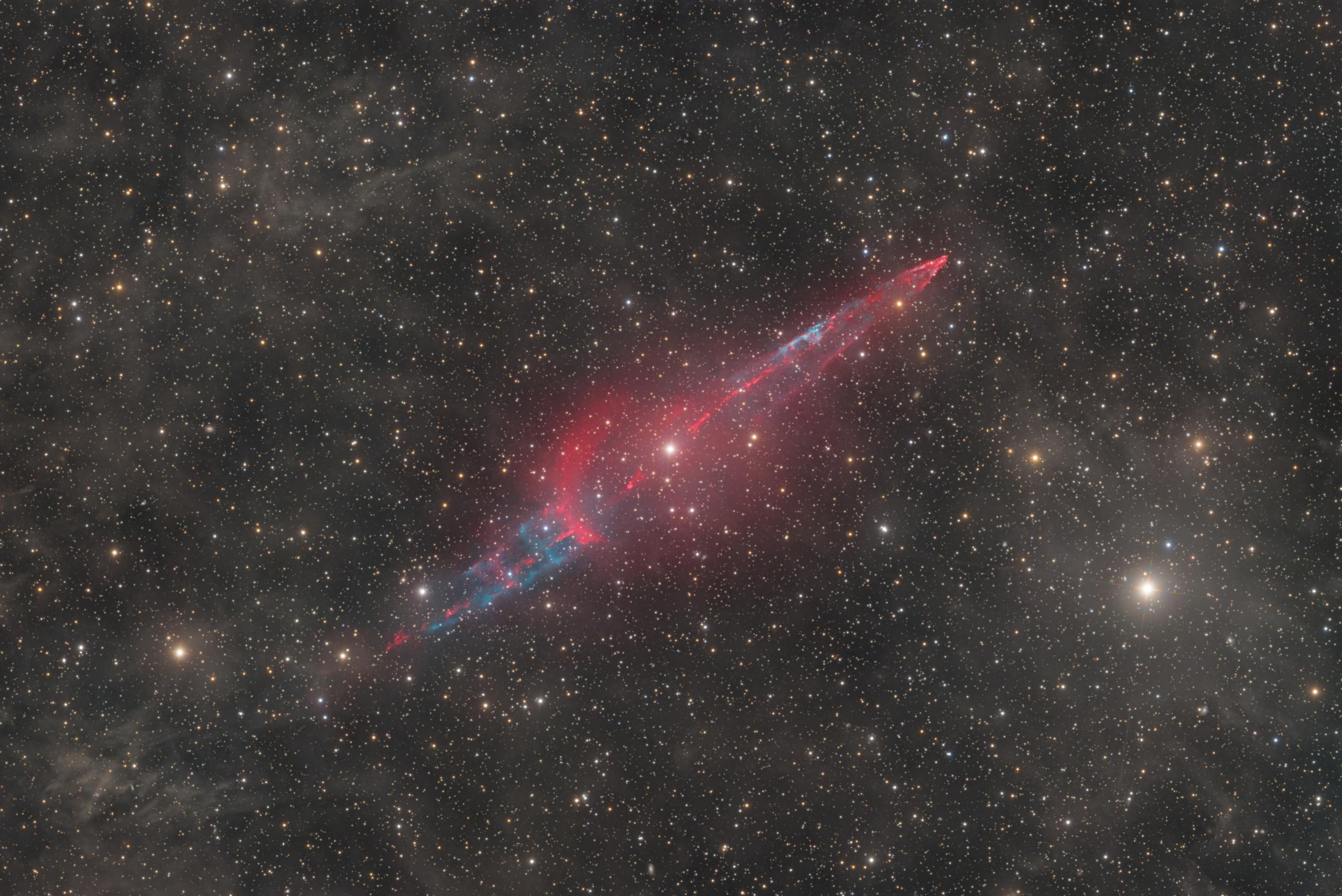
Blasting outward from variable star KX Andromedae, these stunning bipolar jets are 19 light-years long. Recently discovered, they are revealed in unprecedented detail in this deep telescopic image centered on KX And and composed from over 692 hours of combined image data. In fact, KX And is spectroscopically found to be an interacting binary star system consisting of a bright, hot B-type star with a swollen cool giant star as its co-orbiting, close companion. The stellar material from the cool giant star is likely being transferred to the hot B-type star through an accretion disk, with spectacular symmetric jets driven outward perpendicular to the disk itself. The known distance to KX And of 2,500 light-years, angular size of the jets, and estimated inclination of the accretion disk lead to the size estimate for each jet of an astonishing 19 light-years.
https://deepskycollective.com/gallery
https://app.astrobin.com/i/nllu5u?r=0
https://en.wikipedia.org/wiki/Binary_star#Spectroscopic_binaries
https://apod.nasa.gov/apod/ap060722.html
https://en.wikipedia.org/wiki/Accretion_disk
https://www.astroexplorer.org/details/rnaasad9478f1
https://apod.nasa.gov/apod/ap251205.html
#space #binary_stars #astrophotography #photography #science #astronomy #physics #nature #NASA #ESA #education #apod
Alt...
2025 December 5
The Bipolar Jets of KX Andromedae
* Image Credit & Copyright: Tim Schaeffer and the Deep Sky Collective
Explanation:
Blasting outward from variable star KX Andromedae, these stunning bipolar jets are 19 light-years long. Recently discovered, they are revealed in unprecedented detail in this deep telescopic image centered on KX And and composed from over 692 hours of combined image data. In fact, KX And is spectroscopically found to be an interacting binary star system consisting of a bright, hot B-type star with a swollen cool giant star as its co-orbiting, close companion. The stellar material from the cool giant star is likely being transferred to the hot B-type star through an accretion disk, with spectacular symmetric jets driven outward perpendicular to the disk itself. The known distance to KX And of 2,500 light-years, angular size of the jets, and estimated inclination of the accretion disk lead to the size estimate for each jet of an astonishing 19 light-years.
Authors & editors: Robert Nemiroff (MTU) & Jerry Bonnell (UMCP)
NASA Official: Amber Straughn Specific rights apply.
NASA Web Privacy, Accessibility, Notices;
A service of: ASD at NASA / GSFC,
NASA Science Activation
& Michigan Tech. U.
TOPIC> Binary Star Systems
Bipolar jets from KX And
-- Stefan Ziegenbalg
https://www.simg.de/nebulae1/and-00.html
[...]
KX And (also known as BD+49 4045 and HD 218393) is a binary system consisting in a primary star with a spectral classification of B3pe and a cool giant of type K1III (Shenavrin et al., 2011). This secondary star, which has about half the mass of its companion (Floquet et al., 1995), is assumed to overflow its Roche lobe and thus transferring gas to the primary star (Floquet et al., 1989). The resulting accretion disk is responsible for the emission lines in the spectrum of the Be star.
A fraction of the material that falls to the accreting star is ejected in the form of jets which are aligned perpendicular to the accretion disk. The jets are likely ionized by the B3pe component of KX And. The elongated bubble, including the bright tip at the end of the northern jet is probably formed by the interaction of the ejected gas with interstellar medium and may also be ionized by kinetic energy.
The apparent length of the northern jet (with the bright tip) is 19.9′, while the southern jet is 20.3′ long. With a distance of 760±10 pc (Gaia Collaboration et al., 2023) and an inclination to the line of sight of the binary system (and thus of the accretion disc) of about 50° (Berdyugin et al., 1998), this corresponds to a true length of about 19 light-years (5.8 pc) for each jet.
[...]
#space #binary_stars #astrophotography #photography #science #astronomy #physics #nature #NASA #ESA #education
Alt...
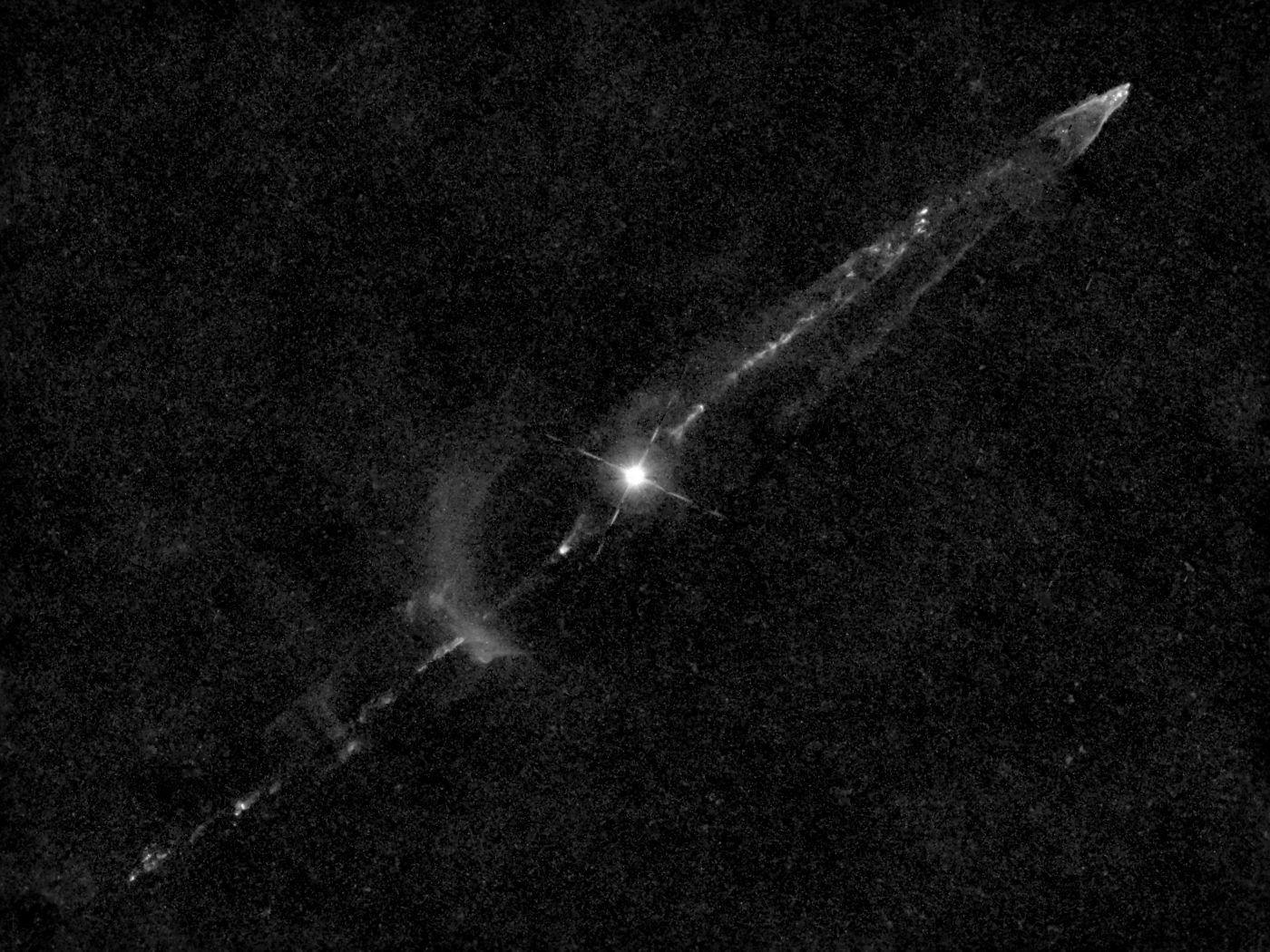
Bipolar jets ejected from KX And in Hα light without continuum. The image reveals fine details and shows two jets with an apparent length of about 20′, with the northern jet ending in a bright tip. That structure appears to be the outer end of a cigar-shaped shell. There is a diffuse structure in the southern jet, about 7′ from KX And. Both jets begin (becoming visible) at an apparent distance of about 1.8′ and the ejection rate seems to be vary strongly.
The bright point source in the main picture is KX And, which remains visible as a result of precise continuum subtraction because the brighter companion of this binary system is an emission-line star.
Sunshine in sunset over a village street
#sunset #village #street #sunshine #landscape #scenery #nature #art #contemporaryart #artforsale #artist #painting #wallart #fineart #interiordesign #artbuyer #buyintoart #ayearforart #buyart #beautifulart #print #poster

Alt...
Sunshine in sunset over a village street framed print

Alt...
Sunshine in sunset over a village street framed print

Alt...
Sunshine in sunset over a village street framed print

Alt...
Sunshine in sunset over a village street framed print
"Beautiful Snowscapes Collection"
By Scott Loring Davis, Fine Art Photography
https://pixels.com/profiles/scottloringdavis
These prints from The Beautiful Snowscapes Collection, offers a calming, serene and relaxing feel to any room or public location where a calming effect is beneficial.
FULL COLLECTION - https://pixels.com/profiles/scottloringdavis/collections/snowscapes
#buyintoart #ScottLoringDavis #Snow #Snowscapes #nature #naturephotography #mastoart #giftideas #art #wallart #homedecor #interiordesign #artforsale #photography #fineartprints #arte



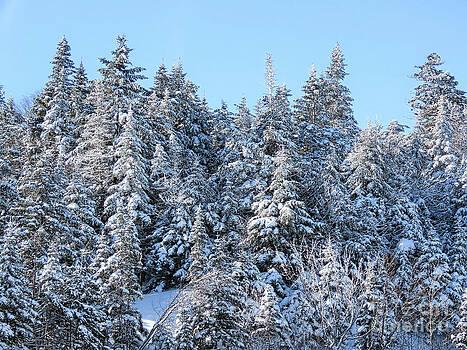
Forest creek running through stones covered in moss
#forest #creek #stones #moss #landscape #scenery #nature #art #contemporaryart #artforsale #artist #painting #wallart #fineart #interiordesign #artbuyer #buyintoart #ayearforart #buyart #beautifulart #print #poster

Alt...
Forest creek running through stones covered in moss on the wall

Alt...
Forest creek running through stones covered in moss
#Pastel #Pink #Stargazers by Kaye Menner #Photography Wide variety #Prints & lovely #Products at:
https://kaye-menner.pixels.com/featured/pastel-pink-stargazers-by-kaye-menner-kaye-menner.html
#flowers #floral #lily #pretty #nature #garden #beauty #botanical #whitepink #greenbackground #homedecor #mastoart #fediverse #fediart #fedigiftshop #giftideas #wallartforsale #Art #artforsale #BuyIntoArt #AYearForArt #Artist #FineArtAmerica #PhotographyFeed #VisualArts #CreativeArts

Alt...
Lilium 'Stargazer' (the Stargazer lily) is a hybrid lily of the Oriental group.
By Kaye Menner Photography
https://kaye-menner.pixels.com/featured/pastel-pink-stargazers-by-kaye-menner-kaye-menner.html
Oriental lilies are known for their fragrant perfume, blooming mid-to-late summer. Stargazers are easy to grow and do best in full sunlight. They have a fast growth rate and should be planted in full sun in well drained loamy or sandy soil. When mature, Stargazers can grow to a height of 36 inches with a spread of 12 to 16 inches with 4 to 5 flowers per stem.
The Stargazer lily was created in 1974 by Leslie Woodriff, a lily breeder in California. Woodriff called the new cross 'Stargazer', because the blooms faced towards the sky.
The ASPCA reports this plant as being toxic to cats. They are said to cause vomiting, inappetence, lethargy, kidney failure, and even death. Cats are the only species known to be affected.
THE FINE ART AMERICA LOGO WILL NOT APPEAR ON PURCHASED PRINTS OR PRODUCTS.
Daisies don't just bloom in spring - they delight our hearts all year round - either in nature or on the wall...
Daisy duet watercolor painting - art print: https://karen-kaspar.pixels.com/featured/daisy-duet-karen-kaspar.html
#daisy #daisies #MastoArt #art #painting #FediArt #FediGiftShop #artist #arte #InteriorDesign #MastodonArt #TraditionalArt #kunst #watercolor #watercolour #BuyIntoArt #flowers #artwork #gardening #garden #floral #nature #NatureLover #bloomscrolling #wildflower #wildflowers #aquarell #aquarelle #blumen #gifts

Alt...
Daisy Duet is a watercolour painting in portrait format painted by the artist Karen Kaspar. Two white daisies are blooming in a green meadow. They dance merrily in the summer wind.
"According to wikipedia-de , the Fornax cluster has the fourth strongest radio source in the sky at a frequency of 1400 MHz
https://de.wikipedia.org/wiki/Fornax-Galaxienhaufen "
2005 June 28
The Giant Radio Lobes of Fornax A
* Credit: Ed Fomalont (NRAO) et al., VLA, NRAO, AUI, NSF
Explanation:
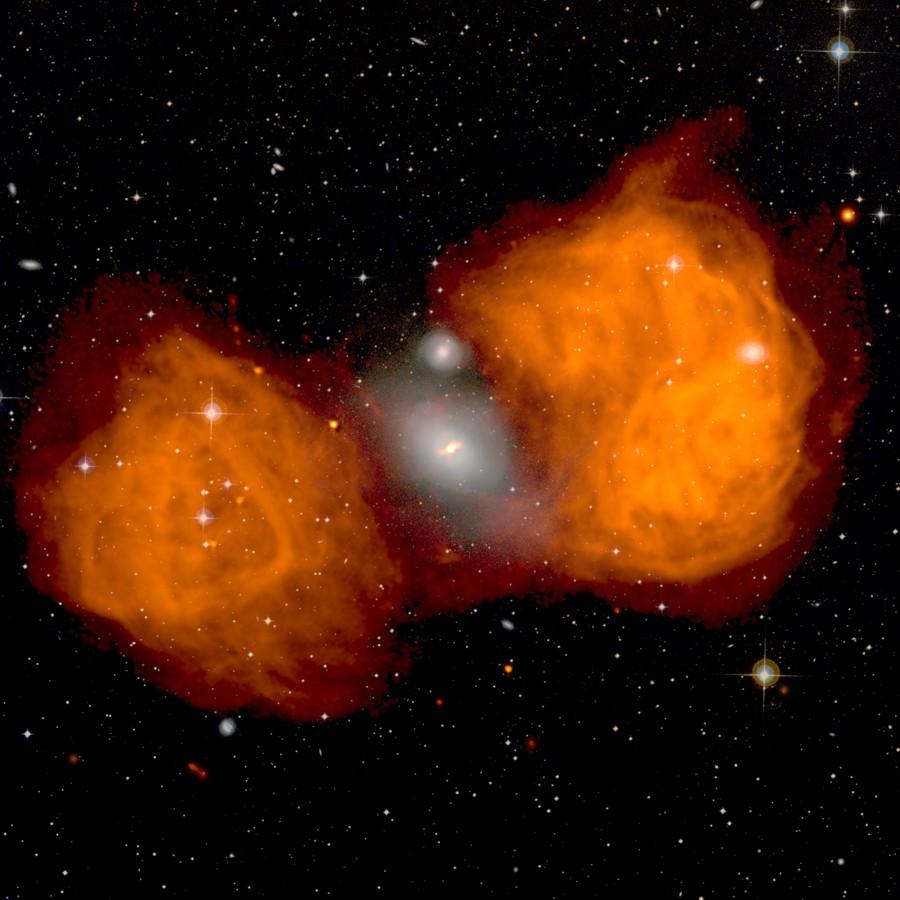
Together, the radio lobes span over one million light years -- what caused them? In the center is a large but peculiar elliptical galaxy dubbed NGC 1316. Detailed inspection of the NGC 1316 system indicates that it began absorbing a small neighboring galaxy about 100 million years ago. Gas from the galactic collision has fallen inward toward the massive central black hole, with friction heating the gas to 10 million degrees. For reasons not yet well understood, two oppositely pointed fast moving jets of particles then developed, eventually smashing into the ambient material on either side of the giant elliptical galaxy. The result is a huge reservoir of hot gas that emits radio waves, observed as the orange (false-color) radio lobes in the above image. The radio image is superposed on an optical survey image of the same part of the sky. Strange patterns in the radio lobes likely indicate slight changes in the directions of the jets.
https://apod.nasa.gov/apod/ap050628.html
#space #cluster #astrophotography #photography #science #astronomy #physics #nature #NASA #apod
Alt...
2005 June 28
The Giant Radio Lobes of Fornax A
* Credit: Ed Fomalont (NRAO) et al., VLA, NRAO, AUI, NSF
Explanation:
Together, the radio lobes span over one million light years -- what caused them? In the center is a large but peculiar elliptical galaxy dubbed NGC 1316. Detailed inspection of the NGC 1316 system indicates that it began absorbing a small neighboring galaxy about 100 million years ago. Gas from the galactic collision has fallen inward toward the massive central black hole, with friction heating the gas to 10 million degrees. For reasons not yet well understood, two oppositely pointed fast moving jets of particles then developed, eventually smashing into the ambient material on either side of the giant elliptical galaxy. The result is a huge reservoir of hot gas that emits radio waves, observed as the orange (false-color) radio lobes in the above image. The radio image is superposed on an optical survey image of the same part of the sky. Strange patterns in the radio lobes likely indicate slight changes in the directions of the jets.
Authors & editors: Robert Nemiroff (MTU) & Jerry Bonnell (UMCP)
NASA Official: Amber Straughn Specific rights apply.
NASA Web Privacy, Accessibility, Notices;
A service of: ASD at NASA / GSFC,
NASA Science Activation
& Michigan Tech. U.
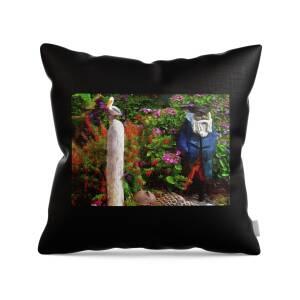
Salty Dog! Take a look see at: https://pixels.com/featured/salty-dog-thom-zehrfeld.html #SaltyDog #Art #Whimsical #Garden #Nautical #SeaBird #BuyIntoArt #Art #ThomZehrfeldPhotography #PhotographyIsArt #Photography #Fotografie
#ArtForSale #ArtMatters #MastoArt #Mastodon #ArtforInteriorDesign #HospitalityInteriors
#InteriorDesign #Wallart #InteriorDecorating #WallArtForSale #PhotoOfTheDay #FediGiftShop #GiftIdeas #FediArt #Prints #FediArtShop #Colorful #Nature #ShopEarly

Alt...
Salty Dog! Take a look see at: https://pixels.com/featured/salty-dog-thom-zehrfeld.html #SaltyDog #Art #Whimsical #Garden #Nautical #SeaBird #BuyIntoArt #Art #ThomZehrfeldPhotography #PhotographyIsArt #Photography #Fotografie
#ArtForSale #ArtMatters #MastoArt #Mastodon #ArtforInteriorDesign #HospitalityInteriors
#InteriorDesign #Wallart #InteriorDecorating #WallArtForSale #PhotoOfTheDay #FediGiftShop #GiftIdeas #FediArt #Prints #FediArtShop #Colorful #Nature #ShopEarly
Alt...
Salty Dog! Take a look see at: https://pixels.com/featured/salty-dog-thom-zehrfeld.html #SaltyDog #Art #Whimsical #Garden #Nautical #SeaBird #BuyIntoArt #Art #ThomZehrfeldPhotography #PhotographyIsArt #Photography #Fotografie
#ArtForSale #ArtMatters #MastoArt #Mastodon #ArtforInteriorDesign #HospitalityInteriors
#InteriorDesign #Wallart #InteriorDecorating #WallArtForSale #PhotoOfTheDay #FediGiftShop #GiftIdeas #FediArt #Prints #FediArtShop #Colorful #Nature #ShopEarly
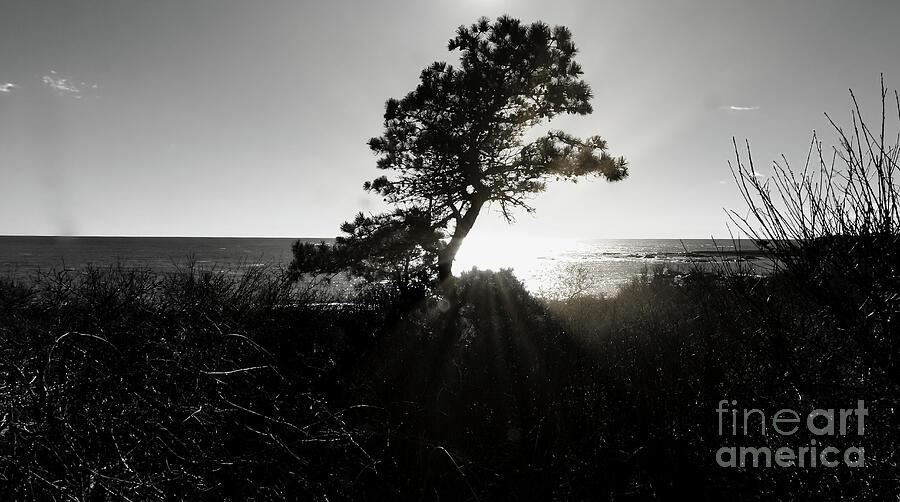
"A Black And White World Collection"
By Scott Loring Davis, Fine Art Photography
https://pixels.com/profiles/scottloringdavis
These prints from "A Black And White World Collection", offers a calming, serene and relaxing feel to any room
or public location where a calming effect is beneficial.
FULL COLLECTION - https://pixels.com/profiles/scottloringdavis/collections/a+black+and+white+world
#buyintoart #ScottLoringDavis #BlackandWhite #Monochrome #Prints #nature #mastoart #giftideas #art #wallart #homedecor #interiordesign #artforsale #photography #fineartprints



2025 December 4
Galaxies in the Furnace
* Image Credit & Copyright: Simone Curzi and the ShaRA Team
https://app.astrobin.com/u/MRWSKYLOVER?i=0ym89c#gallery
https://astrotrex.wordpress.com/2024/12/16/shara11-fornax-a-and-a-potential-discovery/
Explanation:
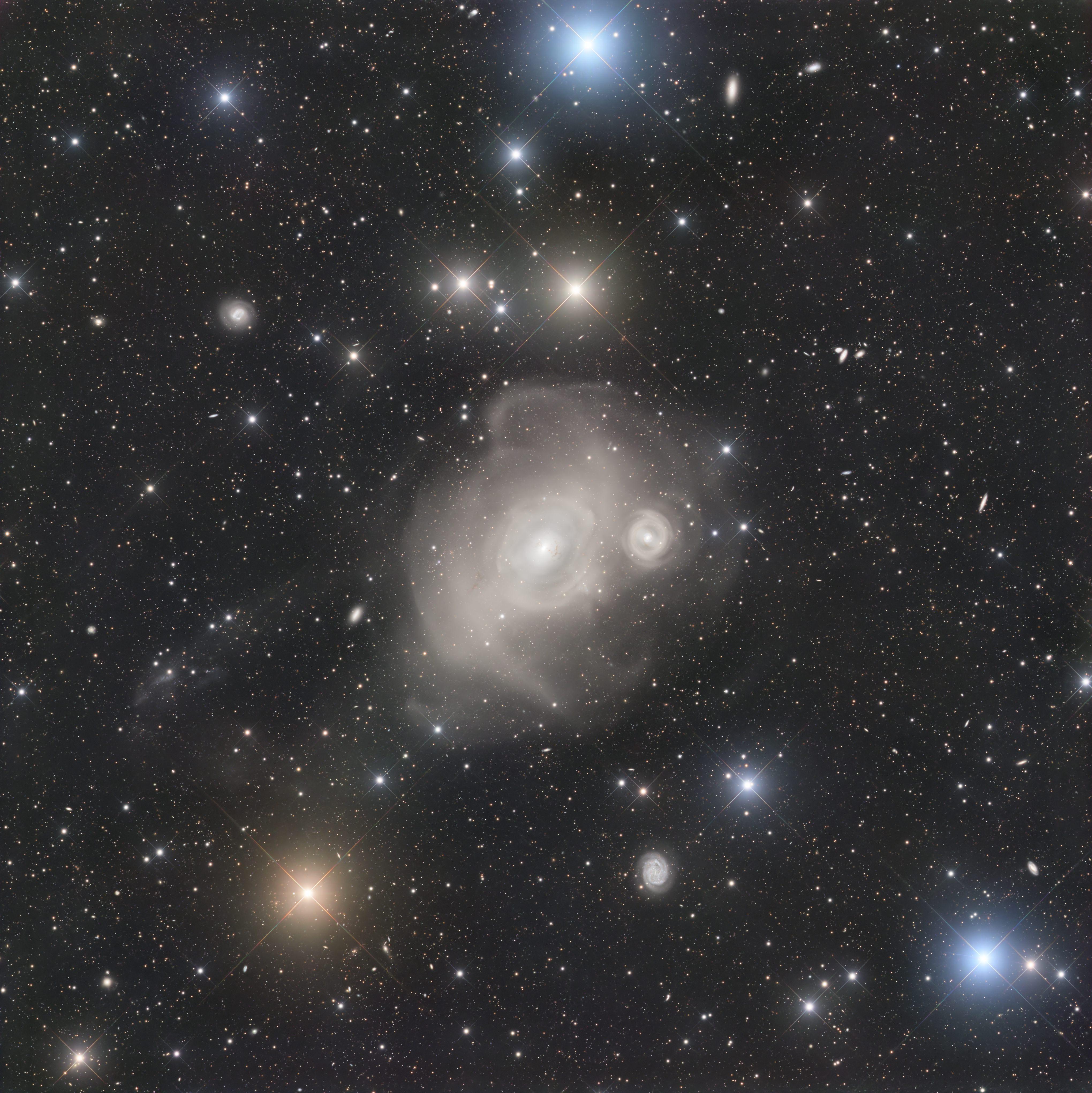
An example of violence on a cosmic scale, enormous elliptical galaxy NGC 1316 lies about 75 million light-years away toward Fornax, the southern constellation of the Furnace. Investigating the startling sight, astronomers suspect the giant galaxy of colliding with smaller neighbor NGC 1317 seen just right of the large galaxy's center, causing far flung loops and shells of stars. Light from their close encounter would have reached Earth some 100 million years ago. In the sharp telescopic image, the central regions of NGC 1316 and NGC 1317 appear separated by over 100,000 light-years. Complex dust lanes visible within also indicate that NGC 1316 is itself the result of a merger of galaxies in the distant past. Found on the outskirts of the Fornax galaxy cluster, NGC 1316 is known as Fornax A. One of the visually brightest of the Fornax cluster galaxies it is one of the strongest and largest celestial radio sources with radio emission extending well beyond this one degree wide field-of-view.
https://earthsky.org/constellations/fornax-the-furnace-galaxy-hubble-ultra-deep-field/
https://science.nasa.gov/mission/hubble/multimedia/hubble-images/
https://chandra.harvard.edu/photo/cosmic_lookback.html
https://app.astrobin.com/u/MRWSKYLOVER?i=0ym89c#gallery
http://www.atlasoftheuniverse.com/galgrps/for.html
https://apod.nasa.gov/apod/ap050628.html
https://apod.nasa.gov/apod/ap251204.html
#space #cluster #astrophotography #photography #science #astronomy #physics #nature #NASA #apod
Alt...
2025 December 4
Galaxies in the Furnace
* Image Credit & Copyright: Simone Curzi and the ShaRA Team
Explanation:
An example of violence on a cosmic scale, enormous elliptical galaxy NGC 1316 lies about 75 million light-years away toward Fornax, the southern constellation of the Furnace. Investigating the startling sight, astronomers suspect the giant galaxy of colliding with smaller neighbor NGC 1317 seen just right of the large galaxy's center, causing far flung loops and shells of stars. Light from their close encounter would have reached Earth some 100 million years ago. In the sharp telescopic image, the central regions of NGC 1316 and NGC 1317 appear separated by over 100,000 light-years. Complex dust lanes visible within also indicate that NGC 1316 is itself the result of a merger of galaxies in the distant past. Found on the outskirts of the Fornax galaxy cluster, NGC 1316 is known as Fornax A. One of the visually brightest of the Fornax cluster galaxies it is one of the strongest and largest celestial radio sources with radio emission extending well beyond this one degree wide field-of-view.
Authors & editors: Robert Nemiroff (MTU) & Jerry Bonnell (UMCP)
NASA Official: Amber Straughn Specific rights apply.
NASA Web Privacy, Accessibility, Notices;
A service of: ASD at NASA / GSFC,
NASA Science Activation
& Michigan Tech. U.
![[?]](https://media.universeodon.com/accounts/avatars/109/362/535/847/508/379/original/d813a009e1e1ccbe.png)
Good morning. 🍄🟫🍄🟫🍄🟫
3 December 2025
Today is a walk day, but the thermometer reads 32°F. Maybe later, once it warms up. I’ll play it by ear, though I know the longer the day stretches, the less likely I am to step outside. Discipline—that’s what I need.
CompTIA (Computing Technology Industry Association) recently reminded me that several of my certifications are expiring soon. If I don’t act quickly, they’ll lapse—though a couple remain evergreen. My ISC2 (International Information System Security Certification Consortium) CISSP (Certified Information Systems Security Professional) already ended earlier this year. C’est la vie. Those seals of knowledge won’t be part of my toolkit anymore.
If I ever needed to work again—which I don’t plan on—I could surely find something suited to my skill set. Dog sitter, perhaps; I already have a dog to sit with. Walmart greeter, however, is out. Patience is not my strong suit. Funny thing: whenever I walk into a store with greeters at the door, I feel the old conditioning rise up, tempted to present my military ID as if reporting for duty.
And what exactly is their job description? I suspect theft prevention lurks in there somewhere, which explains the cursory glance at receipts as customers exit. Sometimes I imagine a dystopian future where greeters stand in ballistic armor, armed with automatic weapons, while a robotic voice intones: “Welcome to Walmart.” 😂
“Discipline is choosing between what you want now, and what you want most.” — Abraham Lincoln
“Habit is stronger than reason.” — George Santayana
“It was a bright cold day in April, and the clocks were striking thirteen.” — George Orwell, 1984
#photo #photography #photographer #photographylovers #nature #mushrooms #certifications #work #distopian #weather

Alt...
Whitecaps in the Grass
"Five large white mushrooms rise from a patch of golden-green grass, their broad caps slightly convex and dusted with flecks of brown debris—like forest confetti from a passing breeze. The gills beneath some caps peek out in delicate folds, hinting at the intricate architecture hidden below. Their thick, sturdy stems anchor them like ceremonial pillars in a sunlit grove. The lighting—soft and warm—suggests golden hour, casting a gentle glow that enriches the texture of both fungi and earth. The scene feels like a quiet congregation, a natural council gathered in stillness. The photo, credited to Swede’s Photographs, captures not just mushrooms, but a moment of reverent pause in the wild." - Microsoft Copilot