soc.octade.net is a Fediverse instance that uses the ActivityPub protocol. In other words, users at this host can communicate with people that use software like Mastodon, Pleroma, Friendica, etc. all around the world.

This server runs the snac software and there is no automatic sign-up process.

Admin email
social@octade.net

Search results for tag #literature

[?]The Vulgar Tongue » 🤖 🌐
@TheVulgarTongue@zirk.us

NEW COLLEGE STUDENTS. Golden scholars, silver bachelors, and leaden masters.

A selection from Francis Grose’s “Dictionary Of The Vulgar Tongue” (1785)

--
@histodons

Image imitating a page from an old document, text (as in main toot):

NEW COLLEGE STUDENTS. Golden scholars, silver bachelors, and leaden masters.

A selection from Francis Grose’s “Dictionary Of The Vulgar Tongue” (1785)

Alt...Image imitating a page from an old document, text (as in main toot): NEW COLLEGE STUDENTS. Golden scholars, silver bachelors, and leaden masters. A selection from Francis Grose’s “Dictionary Of The Vulgar Tongue” (1785)

    [?]Project Gutenberg » 🌐
    @gutenberg_org@mastodon.social

    How Medieval Women Expressed Their ‘Forbidden’ Emotions

    Upper-class women used letters and embroidery to reflect on their inner lives

    by Pragya Agarwal (from the archives)

    smithsonianmag.com/history/how

    Medieval women at PG:
    gutenberg.org/ebooks/search/?q

    Marie de France, from an illuminated manuscript now in the Bibliothèque nationale de France: BnF, Arsenal Library, Ms. 3142 fol. 256.

A woman is depicted standing and leaning slightly forward over an open book resting on an elegant white lectern with a decorative pedestal base. She wears a flowing pale cream or white robe that pools softly at her feet, with blue sleeves visible beneath, and a white veil or wimple covering her hair. Her face  small, calm features with a downward gaze directed at the page. One hand  reaches toward the open book as if reading or writing. The lectern stands on a terracotta-red bench or platform. Behind her, a trefoil arch frames the scene. 

https://en.wikipedia.org/wiki/Marie_de_France#/media/File:Marie_de_France_1.tif

    Alt...Marie de France, from an illuminated manuscript now in the Bibliothèque nationale de France: BnF, Arsenal Library, Ms. 3142 fol. 256. A woman is depicted standing and leaning slightly forward over an open book resting on an elegant white lectern with a decorative pedestal base. She wears a flowing pale cream or white robe that pools softly at her feet, with blue sleeves visible beneath, and a white veil or wimple covering her hair. Her face small, calm features with a downward gaze directed at the page. One hand reaches toward the open book as if reading or writing. The lectern stands on a terracotta-red bench or platform. Behind her, a trefoil arch frames the scene. https://en.wikipedia.org/wiki/Marie_de_France#/media/File:Marie_de_France_1.tif

      [?]The Vulgar Tongue » 🤖 🌐
      @TheVulgarTongue@zirk.us

      DAGGERS. They are at daggers drawing; i.e. at enmity, ready to fight.

      A selection from Francis Grose’s “Dictionary Of The Vulgar Tongue” (1785)

      --
      @histodons

      Image imitating a page from an old document, text (as in main toot):

DAGGERS. They are at daggers drawing; i.e. at enmity, ready to fight.

A selection from Francis Grose’s “Dictionary Of The Vulgar Tongue” (1785)

      Alt...Image imitating a page from an old document, text (as in main toot): DAGGERS. They are at daggers drawing; i.e. at enmity, ready to fight. A selection from Francis Grose’s “Dictionary Of The Vulgar Tongue” (1785)

        [?]The Vulgar Tongue » 🤖 🌐
        @TheVulgarTongue@zirk.us

        LETCH. A whim of the amorous kind, out of the common way.

        A selection from Francis Grose’s “Dictionary Of The Vulgar Tongue” (1785)

        --
        @histodons

        Image imitating a page from an old document, text (as in main toot):

LETCH. A whim of the amorous kind, out of the common way.

A selection from Francis Grose’s “Dictionary Of The Vulgar Tongue” (1785)

        Alt...Image imitating a page from an old document, text (as in main toot): LETCH. A whim of the amorous kind, out of the common way. A selection from Francis Grose’s “Dictionary Of The Vulgar Tongue” (1785)

          [?]Project Gutenberg » 🌐
          @gutenberg_org@mastodon.social

          "Cold in the earth—and the deep snow piled above thee,
          Far, far, removed, cold in the dreary grave!
          Have I forgot, my only Love, to love thee,
          Severed at last by Time's all-severing wave?"

          How Wuthering Heights was shaped by Emily Brontë’s gothic poetry

          Emily Brontë’s poetry is full of haunting love, grief and death.

          by Claire O'Callaghan

          theconversation.com/how-wuther

          Poems by Currer, Ellis, and Acton Bell at PG:
          gutenberg.org/ebooks/1019

          Title page of the book Poems by Currer, Ellis, and Acton Bell

Authors: Charlotte Brontë
Anne Brontë
Emily Brontë

A title page from an 1846 publication on aged cream paper. At the very top, a handwritten pencil inscription reads "Brontë Charlotte" in a casual, slightly slanted hand. The printed text is centered and typeset in a spare, classical style with generous spacing between elements. 
Below a small decorative wavy rule, the publication details appear at the bottom:
LONDON:
SMITH, ELDER AND CO., 65, CORNHILL.
1846.

The layout is minimal and elegant, with wide margins and abundant white space giving it a restrained, dignified character typical of mid-Victorian book design.

https://archive.org/details/poemsbycurrerell00bron/page/n4/mode/1up

          Alt...Title page of the book Poems by Currer, Ellis, and Acton Bell Authors: Charlotte Brontë Anne Brontë Emily Brontë A title page from an 1846 publication on aged cream paper. At the very top, a handwritten pencil inscription reads "Brontë Charlotte" in a casual, slightly slanted hand. The printed text is centered and typeset in a spare, classical style with generous spacing between elements. Below a small decorative wavy rule, the publication details appear at the bottom: LONDON: SMITH, ELDER AND CO., 65, CORNHILL. 1846. The layout is minimal and elegant, with wide margins and abundant white space giving it a restrained, dignified character typical of mid-Victorian book design. https://archive.org/details/poemsbycurrerell00bron/page/n4/mode/1up

            [?]Project Gutenberg » 🌐
            @gutenberg_org@mastodon.social

            The bookends of time

            Nothing lasts forever: not humanity, not Earth, not the Universe. But finitude confers an indelible meaning to our lives

            by Thomas Moynihan

            aeon.co/essays/how-humanity-mo

            Cosmology at PG:
            gutenberg.org/ebooks/subjects/

            From the British Museum: Title-page to Hobbes's 'Leviathan' (London: Andrew Cooke, 1651): an allegory of governance and the nature of civil and ecclesiastical authority. A crowned man whose body is made of numerous human bodies, emerges from a mountain at the foot of which is a city, holding a sword in his right hand and a crozier in in left hand; below is the title inscribed on a tapestry and surrounded by ten framed allegories: castle, crown, cannon, military trophies, battle on the left, church, bishop mitre, thunder, inscribed trident and forks, and assembly of magistrates;. 1651

https://en.wikipedia.org/wiki/Leviathan_(Hobbes_book)#/media/File:Leviathan_frontispiece_cropped_British_Museum.jpg

https://www.gutenberg.org/ebooks/3207

            Alt...From the British Museum: Title-page to Hobbes's 'Leviathan' (London: Andrew Cooke, 1651): an allegory of governance and the nature of civil and ecclesiastical authority. A crowned man whose body is made of numerous human bodies, emerges from a mountain at the foot of which is a city, holding a sword in his right hand and a crozier in in left hand; below is the title inscribed on a tapestry and surrounded by ten framed allegories: castle, crown, cannon, military trophies, battle on the left, church, bishop mitre, thunder, inscribed trident and forks, and assembly of magistrates;. 1651 https://en.wikipedia.org/wiki/Leviathan_(Hobbes_book)#/media/File:Leviathan_frontispiece_cropped_British_Museum.jpg https://www.gutenberg.org/ebooks/3207

              [?]hairylarry » 🌐
              @hairylarry@gamerplus.org

              @NickEast_IndieWriter

              Of course it counts. You don't think I meant literature written by fey. Everyone knows they're too mercurial to finish a novel.

                [?]The Vulgar Tongue » 🤖 🌐
                @TheVulgarTongue@zirk.us

                CULP. A kick or blow: from the words mea culpa, being that part of the popish liturgy at which the people beat their breasts; or, as the vulgar term is, thump their craws.

                A selection from Francis Grose’s “Dictionary Of The Vulgar Tongue” (1785)

                --
                @histodons

                Image imitating a page from an old document, text (as in main toot):

CULP. A kick or blow: from the words mea culpa, being that part of the popish liturgy at which the people beat their breasts; or, as the vulgar term is, thump their craws.

A selection from Francis Grose’s “Dictionary Of The Vulgar Tongue” (1785)

                Alt...Image imitating a page from an old document, text (as in main toot): CULP. A kick or blow: from the words mea culpa, being that part of the popish liturgy at which the people beat their breasts; or, as the vulgar term is, thump their craws. A selection from Francis Grose’s “Dictionary Of The Vulgar Tongue” (1785)

                  [?]The Vulgar Tongue » 🤖 🌐
                  @TheVulgarTongue@zirk.us

                  THUMP. A blow. This is better than a thump on the back with a stone; said on giving any one a drink of good liquor on a cold morning. Thatch, thistle, thunder, and thump; words to the Irish, like the Shibboleth of the Hebrews.

                  A selection from Francis Grose’s “Dictionary Of The Vulgar Tongue” (1785)

                  --
                  @histodons

                  Image imitating a page from an old document, text (as in main toot):

THUMP. A blow. This is better than a thump on the back with a stone; said on giving any one a drink of good liquor on a cold morning. Thatch, thistle, thunder, and thump; words to the Irish, like the Shibboleth of the Hebrews.

A selection from Francis Grose’s “Dictionary Of The Vulgar Tongue” (1785)

                  Alt...Image imitating a page from an old document, text (as in main toot): THUMP. A blow. This is better than a thump on the back with a stone; said on giving any one a drink of good liquor on a cold morning. Thatch, thistle, thunder, and thump; words to the Irish, like the Shibboleth of the Hebrews. A selection from Francis Grose’s “Dictionary Of The Vulgar Tongue” (1785)

                    [?]Project Gutenberg » 🌐
                    @gutenberg_org@mastodon.social

                    “Let us try then to recapture some actual experience, which seems to have a connection with the experience of reading these old books; to spring from poetry; to be interfused with the same emotion...”

                    Reading at Random with Virginia Woolf

                    By Frances Lindemann

                    theparisreview.org/blog/2026/0

                    Virginia Woolf at PG:
                    gutenberg.org/ebooks/author/89

                    Woolf in 1902

by George Charles Beresford 

Portrait of Virginia Woolf (January 25, 1882 – March 28, 1941), a British author and feminist, with her chignon.

A black and white portrait photograph of Virginia Woolf shown in soft three-quarter profile facing left. She has dark hair swept up and gathered into a low, loose chignon at the nape of her neck. Her features are delicate — a long, fine nose, deep-set eyes with a contemplative, faraway gaze, and a gentle mouth. She wears a light-colored blouse with a soft, slightly ruffled or gathered neckline. 

https://en.wikipedia.org/wiki/Virginia_Woolf#/media/File:George_Charles_Beresford_-_Virginia_Woolf_in_1902_-_Restoration.jpg

                    Alt...Woolf in 1902 by George Charles Beresford Portrait of Virginia Woolf (January 25, 1882 – March 28, 1941), a British author and feminist, with her chignon. A black and white portrait photograph of Virginia Woolf shown in soft three-quarter profile facing left. She has dark hair swept up and gathered into a low, loose chignon at the nape of her neck. Her features are delicate — a long, fine nose, deep-set eyes with a contemplative, faraway gaze, and a gentle mouth. She wears a light-colored blouse with a soft, slightly ruffled or gathered neckline. https://en.wikipedia.org/wiki/Virginia_Woolf#/media/File:George_Charles_Beresford_-_Virginia_Woolf_in_1902_-_Restoration.jpg

                      BrianKrebs boosted

                      [?]Project Gutenberg » 🌐
                      @gutenberg_org@mastodon.social

                      How reading books regulates your nervous system

                      Books don’t just stimulate the mind — they trigger physiological changes throughout the body.

                      by Anne-Laure Le Cunff

                      bigthink.com/mind-behavior/how

                      Camillo Golgi's image of a dog’s olfactory bulb from his Sulla fina anatomia degli organi centrali del sistema nervoso, 1885.

A detailed anatomical illustration on aged cream paper showing layered neural structures of a dog's olfactory bulb. Large, bold black neurons dominate the middle sections, their sprawling dendrites branching upward like bare winter trees. At the top, shaded gray dome-shaped glomeruli are populated with star-shaped red neurons whose processes weave through flowing parallel fiber bundles. Slender blue threadlike fibers run vertically throughout, contrasting with the heavy black axons. At the bottom, finer and more delicate cells scatter into an increasingly sparse network of thin black lines. The overall composition has a striking visual rhythm, moving from dense complexity at the top to open, airy tracery at the bottom, with letters (a, b, d) annotating specific structures throughout.

https://commons.wikimedia.org/wiki/Category:Camillo_Golgi#/media/File:Camillo_Golgi's_image_of_a_dog%E2%80%99s_olfactory_bulb_(detail_2).jpg

                      Alt...Camillo Golgi's image of a dog’s olfactory bulb from his Sulla fina anatomia degli organi centrali del sistema nervoso, 1885. A detailed anatomical illustration on aged cream paper showing layered neural structures of a dog's olfactory bulb. Large, bold black neurons dominate the middle sections, their sprawling dendrites branching upward like bare winter trees. At the top, shaded gray dome-shaped glomeruli are populated with star-shaped red neurons whose processes weave through flowing parallel fiber bundles. Slender blue threadlike fibers run vertically throughout, contrasting with the heavy black axons. At the bottom, finer and more delicate cells scatter into an increasingly sparse network of thin black lines. The overall composition has a striking visual rhythm, moving from dense complexity at the top to open, airy tracery at the bottom, with letters (a, b, d) annotating specific structures throughout. https://commons.wikimedia.org/wiki/Category:Camillo_Golgi#/media/File:Camillo_Golgi's_image_of_a_dog%E2%80%99s_olfactory_bulb_(detail_2).jpg

                        [?]The Vulgar Tongue » 🤖 🌐
                        @TheVulgarTongue@zirk.us

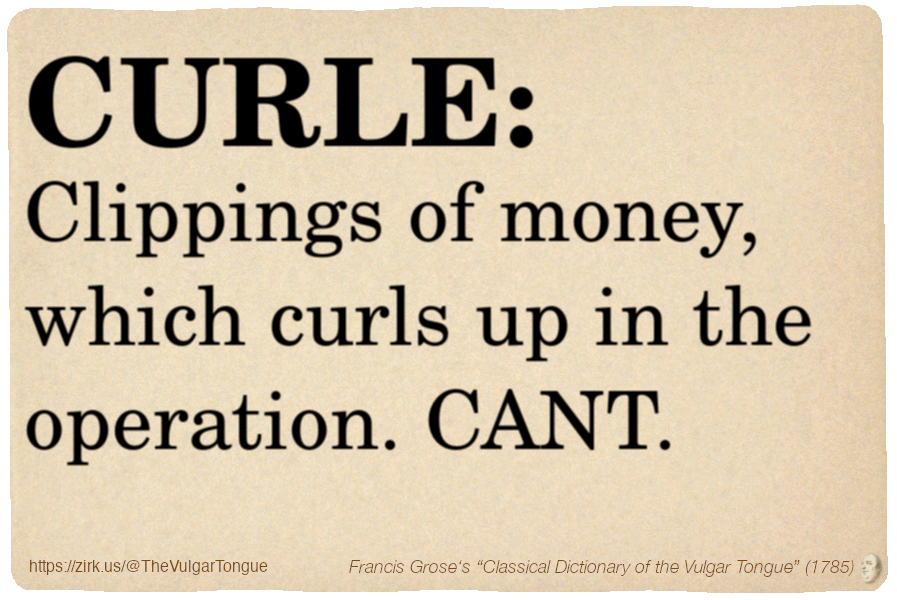
                        CURLE. Clippings of money, which curls up in the operation. CANT.

                        A selection from Francis Grose’s “Dictionary Of The Vulgar Tongue” (1785)

                        --
                        @histodons

                        Image imitating a page from an old document, text (as in main toot):

CURLE. Clippings of money, which curls up in the operation. CANT.

A selection from Francis Grose’s “Dictionary Of The Vulgar Tongue” (1785)

                        Alt...Image imitating a page from an old document, text (as in main toot): CURLE. Clippings of money, which curls up in the operation. CANT. A selection from Francis Grose’s “Dictionary Of The Vulgar Tongue” (1785)

                          [?]The Vulgar Tongue » 🤖 🌐
                          @TheVulgarTongue@zirk.us

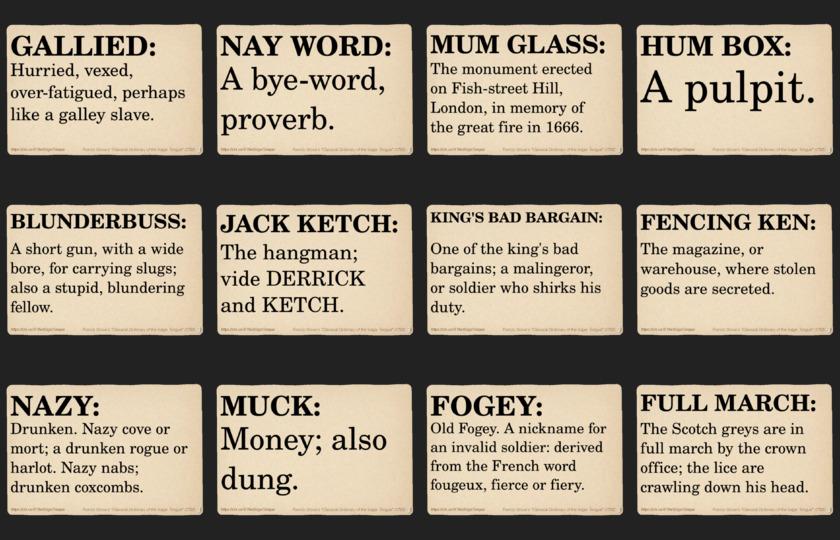
                          Hi!, I'm a bot posting selections from Francis Grose’s 1785 “Dictionary Of The Vulgar Tongue”, a compilation of slang terms, the coded language of the underclass and the demi-monde.

                          [18th-century-content warning: possible racism, animal cruelty, homophobia, sexism, slut-shaming. Let me know of any problems.]

                          Montage of dictionary items posted by this account

                          Alt...Montage of dictionary items posted by this account

                            [?]Assoc for Scottish Literature » 🌐
                            @scotlit@mastodon.scot

                            Remember, man, that thou art dust.

                            The earl kneels, the ash of the end is written on his brow.

                            A captain of ships kneels, to be put in mind of a death in a far port, or at home, or on a rock of the sea.

                            And the boy that holds cinders for the priest,
                            His forehead is smeared,
                            Who wears a coat of fourteen Aprils…

                            —George Mackay Brown, “Ash Wednesday”
                            Published in TRAVELLERS (John Murray, 2013)

                            George Mackay Brown
Ash Wednesday

Remember, man, that thou art dust.

The earl kneels, the ash of the end is written on his brow.

A captain of ships kneels, to be put in mind of a death in a far port, or at home, or on a rock of the sea.

And the boy that holds cinders for the priest,
His forehead is smeared,
Who wears a coat of fourteen Aprils.

The lady of Paplay
Thinks, most mornings, she will live forever; kneeling now
Is touched with the grave-stoor.

The ploughman folds sun-grained hands,
He tilts his face
To the dust drained of warmth and light.

Fisherman, the spindrift
Will wash the ashes from you tomorrow.
Still you remember, between two waves,
St Peter and the fire of his denials.

And the old bishop, “I know this,
One God-ground deed or thought
Endures, when the circle of diamond-and-gold on my finger is dust.”
In the kirk of Magnus
Stood a multitude of islanders, death-farers, that day,
Hungry, after, for panis angelicus.

And unto dust thou shalt return.

                            Alt...George Mackay Brown Ash Wednesday Remember, man, that thou art dust. The earl kneels, the ash of the end is written on his brow. A captain of ships kneels, to be put in mind of a death in a far port, or at home, or on a rock of the sea. And the boy that holds cinders for the priest, His forehead is smeared, Who wears a coat of fourteen Aprils. The lady of Paplay Thinks, most mornings, she will live forever; kneeling now Is touched with the grave-stoor. The ploughman folds sun-grained hands, He tilts his face To the dust drained of warmth and light. Fisherman, the spindrift Will wash the ashes from you tomorrow. Still you remember, between two waves, St Peter and the fire of his denials. And the old bishop, “I know this, One God-ground deed or thought Endures, when the circle of diamond-and-gold on my finger is dust.” In the kirk of Magnus Stood a multitude of islanders, death-farers, that day, Hungry, after, for panis angelicus. And unto dust thou shalt return.

                              [?]The Vulgar Tongue » 🤖 🌐
                              @TheVulgarTongue@zirk.us

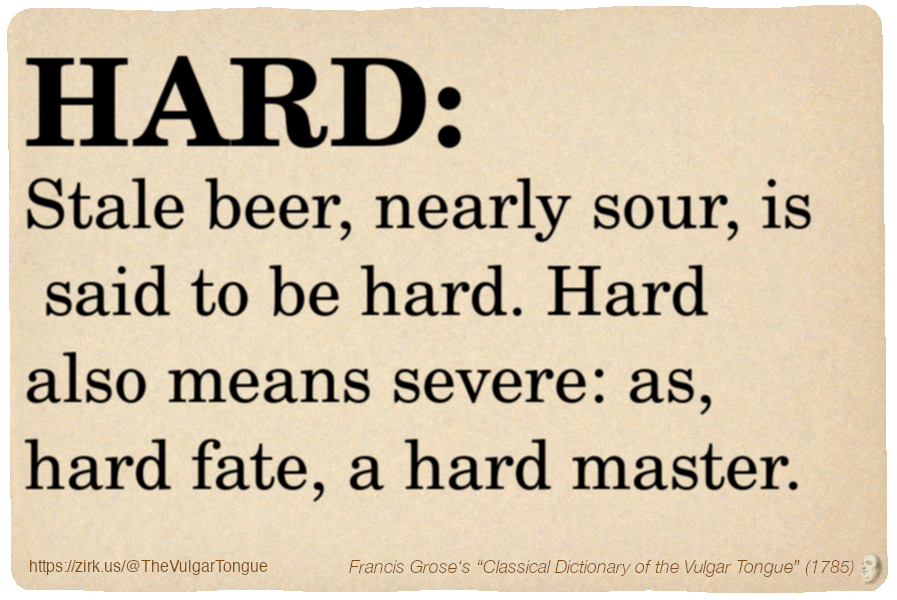
                              HARD. Stale beer, nearly sour, is said to be hard. Hard also means severe: as, hard fate, a hard master.

                              A selection from Francis Grose’s “Dictionary Of The Vulgar Tongue” (1785)

                              --
                              @histodons

                              Image imitating a page from an old document, text (as in main toot):

HARD. Stale beer, nearly sour, is  said to be hard. Hard also means severe: as, hard fate, a hard master.

A selection from Francis Grose’s “Dictionary Of The Vulgar Tongue” (1785)

                              Alt...Image imitating a page from an old document, text (as in main toot): HARD. Stale beer, nearly sour, is said to be hard. Hard also means severe: as, hard fate, a hard master. A selection from Francis Grose’s “Dictionary Of The Vulgar Tongue” (1785)

                                [?]Project Gutenberg » 🌐
                                @gutenberg_org@mastodon.social

                                Not-so-happy 100th birthday to Ireland’s Committee of Evil Literature.

                                lithub.com/not-so-happy-100th-

                                At PG:

                                "The Pivot of Civilization" by Margaret Sanger
                                gutenberg.org/ebooks/1689

                                "The Well of Loneliness" by Radclyffe Hall

                                gutenberg.org/ebooks/73042

                                "Family Limitation" by Margaret Sanger

                                gutenberg.org/ebooks/31790

                                A stack of books with the pages facing the camera.

                                Alt...A stack of books with the pages facing the camera.

                                  [?]Project Gutenberg » 🌐
                                  @gutenberg_org@mastodon.social

                                  Bruno the brave

                                  For anyone who dares to voice dangerous ideas and risk imprisonment or exile, Giordano Bruno remains a hero

                                  by Stephanie Merritt

                                  aeon.co/essays/why-giordano-br

                                  About Giordano Bruno at PG:
                                  gutenberg.org/ebooks/subject/7

                                  Illustration of Bruno by German symbolist artist Fidus (1900), mixed media on paper, 60 x 50 cm, The Jack Daulton Collection.

This is a striking Symbolist mixed media artwork showing a frontal portrait of a hooded figure in dark robes against a background of radiating orange and golden light with white stars. The subject has an intense, direct gaze with large, haunting eyes and wears the dark cowl of a Dominican friar. His pale hands are crossed at the chest in a contemplative or protective gesture. 

At the bottom, a greenish-gray banner bears the name "GIORDANO·BRUNO" in red Art Nouveau-style lettering. The notation "II 1900" appears in the lower left, with the artist's signature "Fidus" in the lower right.

https://en.wikipedia.org/wiki/Giordano_Bruno#/media/File:Fidus_-_Giordano_Bruno,_Aquarell_1900.jpg

                                  Alt...Illustration of Bruno by German symbolist artist Fidus (1900), mixed media on paper, 60 x 50 cm, The Jack Daulton Collection. This is a striking Symbolist mixed media artwork showing a frontal portrait of a hooded figure in dark robes against a background of radiating orange and golden light with white stars. The subject has an intense, direct gaze with large, haunting eyes and wears the dark cowl of a Dominican friar. His pale hands are crossed at the chest in a contemplative or protective gesture. At the bottom, a greenish-gray banner bears the name "GIORDANO·BRUNO" in red Art Nouveau-style lettering. The notation "II 1900" appears in the lower left, with the artist's signature "Fidus" in the lower right. https://en.wikipedia.org/wiki/Giordano_Bruno#/media/File:Fidus_-_Giordano_Bruno,_Aquarell_1900.jpg

                                    [?]The Vulgar Tongue » 🤖 🌐
                                    @TheVulgarTongue@zirk.us

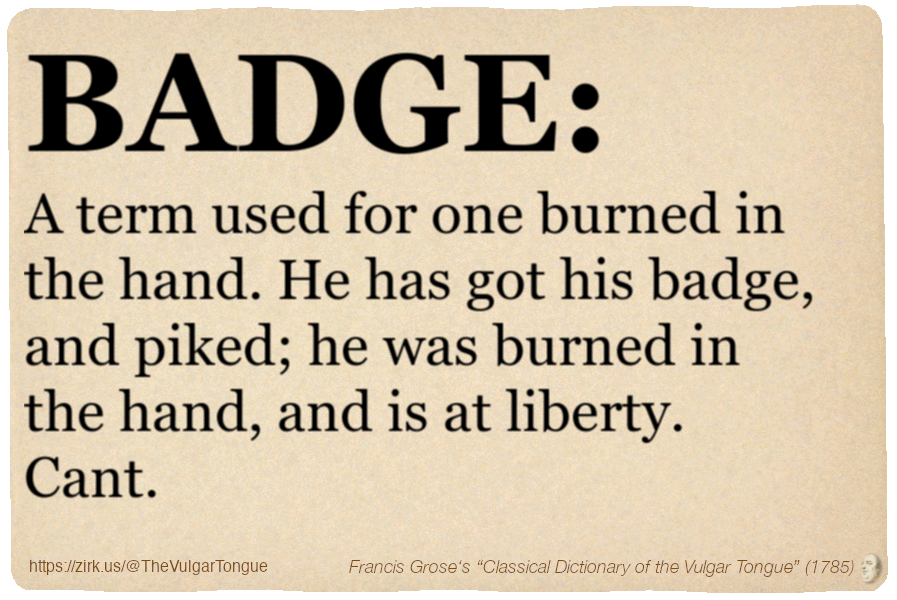
                                    BADGE. A term used for one burned in the hand. He has got his badge, and piked; he was burned in the hand, and is at liberty. Cant.

                                    A selection from Francis Grose’s “Dictionary Of The Vulgar Tongue” (1785)

                                    --
                                    @histodons

                                    Image imitating a page from an old document, text (as in main toot):

BADGE. A term used for one burned in the hand. He has got his badge, and piked; he was burned in the hand, and is at liberty. Cant.

A selection from Francis Grose’s “Dictionary Of The Vulgar Tongue” (1785)

                                    Alt...Image imitating a page from an old document, text (as in main toot): BADGE. A term used for one burned in the hand. He has got his badge, and piked; he was burned in the hand, and is at liberty. Cant. A selection from Francis Grose’s “Dictionary Of The Vulgar Tongue” (1785)

                                      [?]The Vulgar Tongue » 🤖 🌐
                                      @TheVulgarTongue@zirk.us

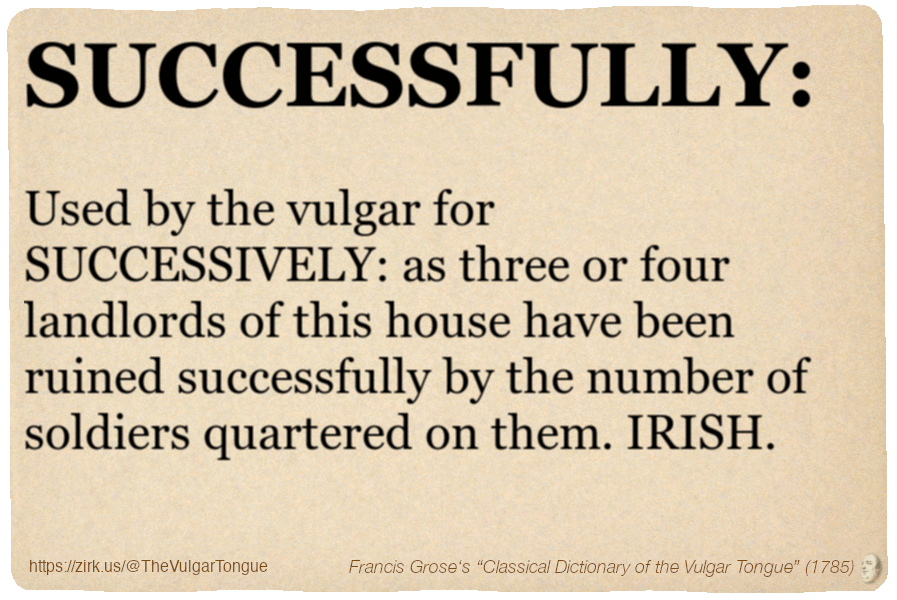
                                      SUCCESSFULLY. Used by the vulgar for SUCCESSIVELY: as three or four landlords of this house have been ruined successfully by the number of soldiers quartered on them. IRISH.

                                      A selection from Francis Grose’s “Dictionary Of The Vulgar Tongue” (1785)

                                      --
                                      @histodons

                                      Image imitating a page from an old document, text (as in main toot):

SUCCESSFULLY. Used by the vulgar for SUCCESSIVELY: as three or four landlords of this house have been ruined successfully by the number of soldiers quartered on them. IRISH.

A selection from Francis Grose’s “Dictionary Of The Vulgar Tongue” (1785)

                                      Alt...Image imitating a page from an old document, text (as in main toot): SUCCESSFULLY. Used by the vulgar for SUCCESSIVELY: as three or four landlords of this house have been ruined successfully by the number of soldiers quartered on them. IRISH. A selection from Francis Grose’s “Dictionary Of The Vulgar Tongue” (1785)

                                        [?]Project Gutenberg » 🌐
                                        @gutenberg_org@mastodon.social

                                        Poem of the week: To Wordsworth by Percy Bysshe Shelley

                                        The radical young poet’s backhanded tribute to the older writer is a stern judgment on his lapsed political idealism

                                        by Carol Rumens

                                        theguardian.com/books/2026/feb

                                        To Wordsworth & Alastor; or, The Spirit of Solitude at PG:
                                        gutenberg.org/ebooks/4800

                                        Portrait of William Wordsworth by Sir William Boxall, 1831.

The oil painting depicts the great Romantic poet in his early sixties, with white hair, wearing a dark coat and cravat, rendered in warm brown tones with loose, atmospheric brushwork against a dark background.

https://commons.wikimedia.org/wiki/William_Wordsworth#/media/File:William-Wordsworth.jpg

                                        Alt...Portrait of William Wordsworth by Sir William Boxall, 1831. The oil painting depicts the great Romantic poet in his early sixties, with white hair, wearing a dark coat and cravat, rendered in warm brown tones with loose, atmospheric brushwork against a dark background. https://commons.wikimedia.org/wiki/William_Wordsworth#/media/File:William-Wordsworth.jpg

                                          [?]The Vulgar Tongue » 🤖 🌐
                                          @TheVulgarTongue@zirk.us

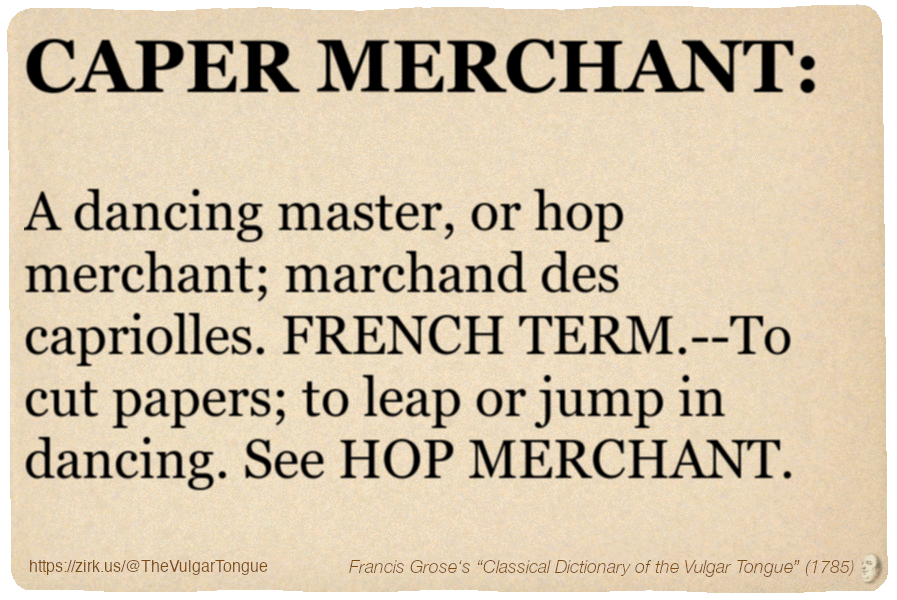
                                          CAPER MERCHANT. A dancing master, or hop merchant; marchand des capriolles. FRENCH TERM.--To cut papers; to leap or jump in dancing. See HOP MERCHANT.

                                          A selection from Francis Grose’s “Dictionary Of The Vulgar Tongue” (1785)

                                          --
                                          @histodons

                                          Image imitating a page from an old document, text (as in main toot):

CAPER MERCHANT. A dancing master, or hop merchant; marchand des capriolles. FRENCH TERM.--To cut papers; to leap or jump in dancing. See HOP MERCHANT.

A selection from Francis Grose’s “Dictionary Of The Vulgar Tongue” (1785)

                                          Alt...Image imitating a page from an old document, text (as in main toot): CAPER MERCHANT. A dancing master, or hop merchant; marchand des capriolles. FRENCH TERM.--To cut papers; to leap or jump in dancing. See HOP MERCHANT. A selection from Francis Grose’s “Dictionary Of The Vulgar Tongue” (1785)

                                            [?]The Vulgar Tongue » 🤖 🌐
                                            @TheVulgarTongue@zirk.us

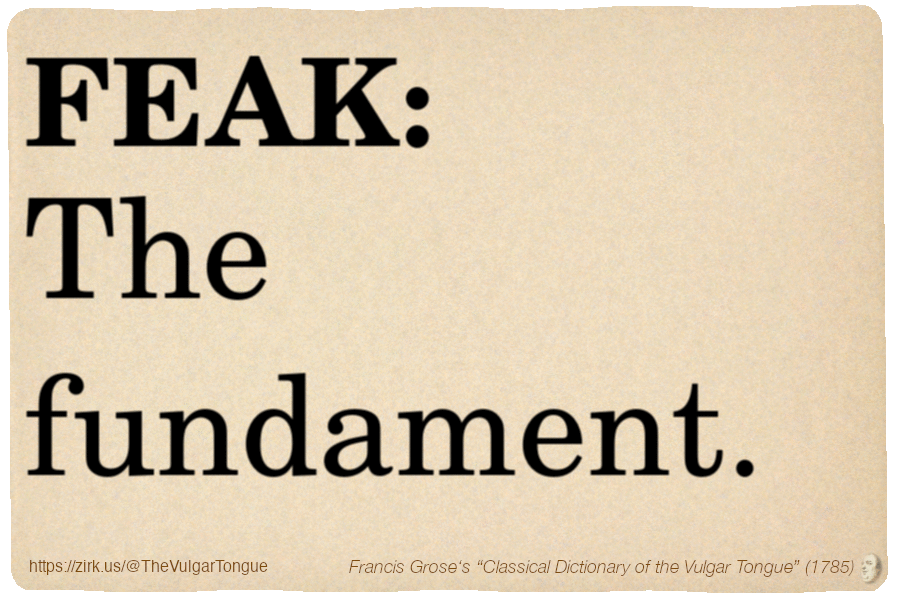
                                            FEAK. The fundament.

                                            A selection from Francis Grose’s “Dictionary Of The Vulgar Tongue” (1785)

                                            --
                                            @histodons

                                            Image imitating a page from an old document, text (as in main toot):

FEAK. The fundament.

A selection from Francis Grose’s “Dictionary Of The Vulgar Tongue” (1785)

                                            Alt...Image imitating a page from an old document, text (as in main toot): FEAK. The fundament. A selection from Francis Grose’s “Dictionary Of The Vulgar Tongue” (1785)

                                              [?]Project Gutenberg » 🌐
                                              @gutenberg_org@mastodon.social

                                              The remarkable, unsung women behind Charles Dickens’s stories

                                              Behind every great man, there’s a great woman, so the saying goes. Behind Charles Dickens, however, there were many great women supporting and inspiring him.

                                              dickensmuseum.com/blogs/all-ev

                                              Dickens at PG:
                                              gutenberg.org/ebooks/author/37

                                              About Catherine Dickens:
                                              en.wikipedia.org/wiki/Catherin

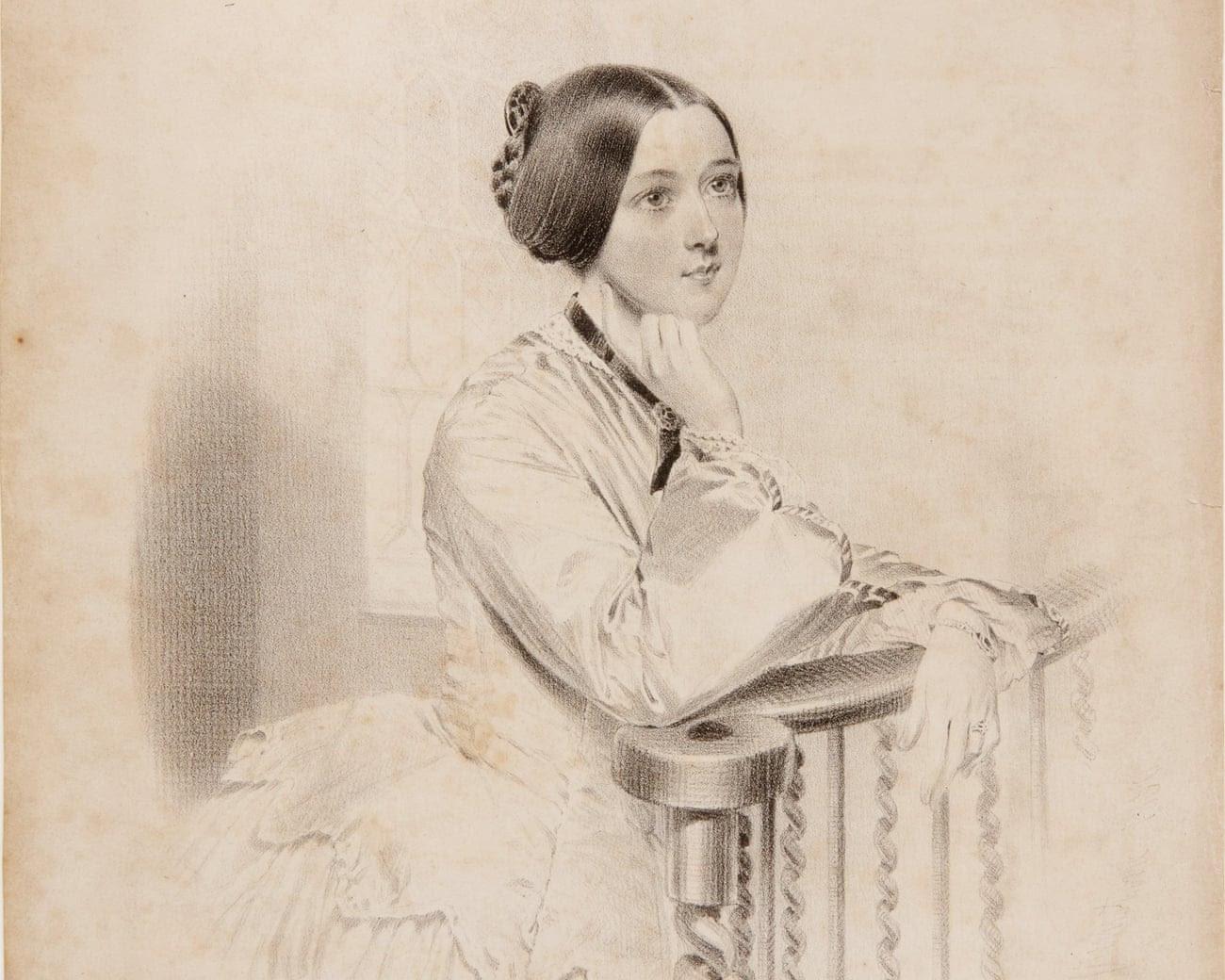
                                              This is a portrait of Catherine Dickens (née Hogarth, 1815-1879), wife of Charles Dickens. Catherine married Charles in 1836 and bore him ten children over fifteen years. Despite being central to Dickens's domestic life during his most productive writing years, she has been largely written out of his story, particularly after their acrimonious separation in 1858.

Catherine is depicted in three-quarter view, seated and resting her arms on an ornate chair back with decorative ribbon or fabric draping. She wears an elegant off-shoulder with a fitted bodice, puffed sleeves, and flowing skirt. Her hair is arranged in the period's typical fashion—parted in the center and swept back into a braided bun with decorative elements.

                                              Alt...This is a portrait of Catherine Dickens (née Hogarth, 1815-1879), wife of Charles Dickens. Catherine married Charles in 1836 and bore him ten children over fifteen years. Despite being central to Dickens's domestic life during his most productive writing years, she has been largely written out of his story, particularly after their acrimonious separation in 1858. Catherine is depicted in three-quarter view, seated and resting her arms on an ornate chair back with decorative ribbon or fabric draping. She wears an elegant off-shoulder with a fitted bodice, puffed sleeves, and flowing skirt. Her hair is arranged in the period's typical fashion—parted in the center and swept back into a braided bun with decorative elements.

                                                [?]The Vulgar Tongue » 🤖 🌐
                                                @TheVulgarTongue@zirk.us

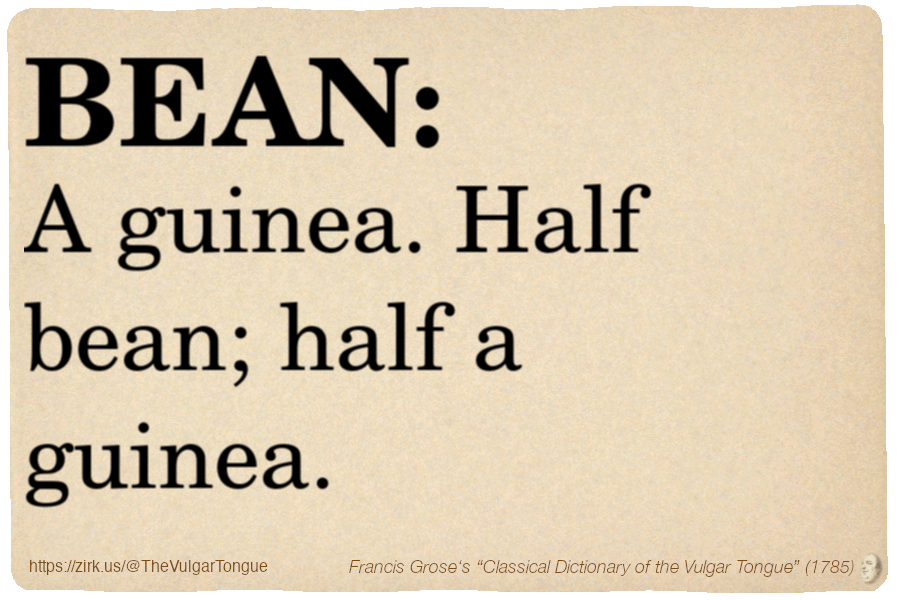
                                                BEAN. A guinea. Half bean; half a guinea.

                                                A selection from Francis Grose’s “Dictionary Of The Vulgar Tongue” (1785)

                                                --
                                                @histodons

                                                Image imitating a page from an old document, text (as in main toot):

BEAN. A guinea. Half bean; half a guinea.

A selection from Francis Grose’s “Dictionary Of The Vulgar Tongue” (1785)

                                                Alt...Image imitating a page from an old document, text (as in main toot): BEAN. A guinea. Half bean; half a guinea. A selection from Francis Grose’s “Dictionary Of The Vulgar Tongue” (1785)

                                                  [?]The Vulgar Tongue » 🤖 🌐
                                                  @TheVulgarTongue@zirk.us

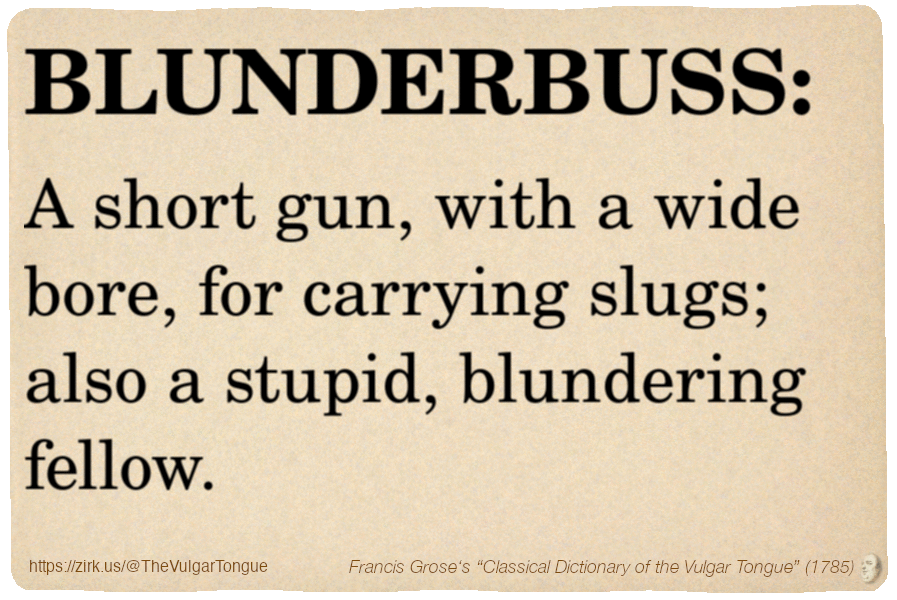
                                                  BLUNDERBUSS. A short gun, with a wide bore, for carrying slugs; also a stupid, blundering fellow.

                                                  A selection from Francis Grose’s “Dictionary Of The Vulgar Tongue” (1785)

                                                  --
                                                  @histodons

                                                  Image imitating a page from an old document, text (as in main toot):

BLUNDERBUSS. A short gun, with a wide bore, for carrying slugs; also a stupid, blundering fellow.

A selection from Francis Grose’s “Dictionary Of The Vulgar Tongue” (1785)

                                                  Alt...Image imitating a page from an old document, text (as in main toot): BLUNDERBUSS. A short gun, with a wide bore, for carrying slugs; also a stupid, blundering fellow. A selection from Francis Grose’s “Dictionary Of The Vulgar Tongue” (1785)

                                                    [?]Project Gutenberg » 🌐
                                                    @gutenberg_org@mastodon.social

                                                    The Cross-Dressing Marquess Who Made Arthur Conan Doyle Turn Detective

                                                    "Henry Paget, the fifth Marquess of Anglesey, who loved expensive costumes and jewelry, turned to Arthur Conan Doyle when his jewels mysteriously disappeared"

                                                    thecollector.com/henry-paget-a

                                                    Books by Doyle at PG:

                                                    gutenberg.org/ebooks/author/69

                                                    "Photo portrait of Henry Paget, 5th Marquess of Anglesey by John Wickens" - picryl.com

He is dressed in a theatrical costume. It is a long stripped robe with an elaborate headdress. He is holding a stick with ribbons tied around it.

                                                    Alt..."Photo portrait of Henry Paget, 5th Marquess of Anglesey by John Wickens" - picryl.com He is dressed in a theatrical costume. It is a long stripped robe with an elaborate headdress. He is holding a stick with ribbons tied around it.

                                                      [?]Project Gutenberg » 🌐
                                                      @gutenberg_org@mastodon.social

                                                      Previously Unknown Medieval Chronicle Discovered

                                                      A newly discovered chronicle from the early eighth century is giving medieval historians a rare new window onto the political shocks and religious debates that reshaped the eastern Mediterranean in the decades before and after the rise of Islam.

                                                      medievalists.net/2026/02/previ

                                                      More articles about Maronite Chronicle of 713:
                                                      medievalworlds.net/0xc1aa5572_

                                                      academia.edu/145038749/Recover

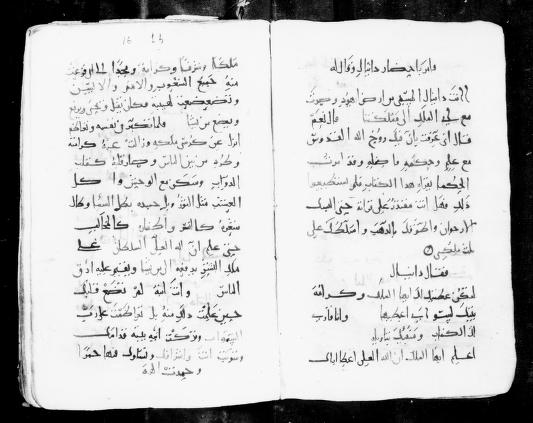
                                                      Arabic Manuscripts 597. Book of Daniel and Solomon's Proverbs.

The image shows two pages of Arabic text written in traditional calligraphy, appearing to be a biblical manuscript. St. Catherine's Monastery houses one of the world's most important collections of ancient manuscripts, including significant Arabic Christian texts. This manuscript represents the Arabic translation tradition of biblical books, important for understanding how scripture was transmitted and read in Arabic-speaking Christian communities.

Part of
Manuscripts in St. Catherine's Monastery, Mount Sinai: Microfilm 5014: Arabic (312)
Manuscripts in St. Catherine's Monastery, Mount Sinai (1,691)

https://www.loc.gov/resource/amedmonastery.00279390684-ms/?sp=19&st=image

                                                      Alt...Arabic Manuscripts 597. Book of Daniel and Solomon's Proverbs. The image shows two pages of Arabic text written in traditional calligraphy, appearing to be a biblical manuscript. St. Catherine's Monastery houses one of the world's most important collections of ancient manuscripts, including significant Arabic Christian texts. This manuscript represents the Arabic translation tradition of biblical books, important for understanding how scripture was transmitted and read in Arabic-speaking Christian communities. Part of Manuscripts in St. Catherine's Monastery, Mount Sinai: Microfilm 5014: Arabic (312) Manuscripts in St. Catherine's Monastery, Mount Sinai (1,691) https://www.loc.gov/resource/amedmonastery.00279390684-ms/?sp=19&st=image

                                                        [?]Project Gutenberg » 🌐
                                                        @gutenberg_org@mastodon.social

                                                        Design insights from studying the Van Gogh Museum

                                                        A new predictive model can forecast visitor movement through a museum to help illuminate how physical and digital spaces shape engagement.

                                                        By Dylan Walsh

                                                        mitsloan.mit.edu/ideas-made-to

                                                        Van Gogh at PG:
                                                        gutenberg.org/ebooks/author/40

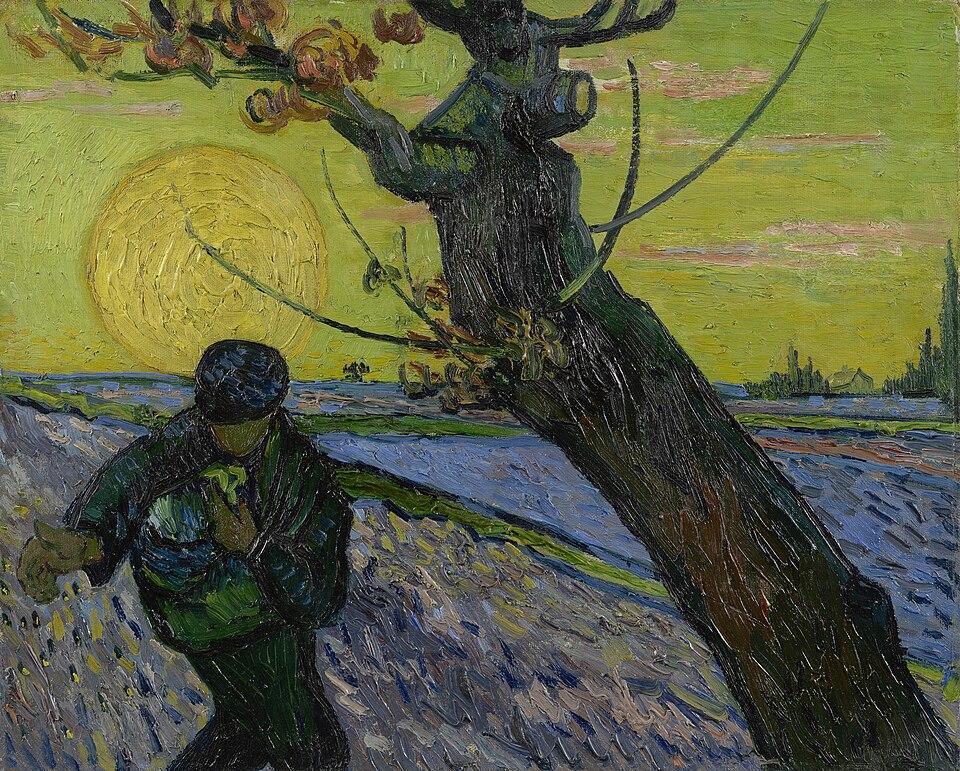
                                                        The Sower with Setting Sun, c.1888. Van Gogh Museum, Amsterdam

The painting depicts a peasant farmer striding across a plowed field, scattering seeds, silhouetted against a brilliant yellow sun. A gnarled tree trunk dominates the right side of the composition, with furrows of the field rendered in vivid blues, purples, and greens. 

https://en.wikipedia.org/wiki/Vincent_van_Gogh#/media/File:De_zaaier_-_s0029V1962_-_Van_Gogh_Museum.jpg
                                                        Alt...The Sower with Setting Sun, c.1888. Van Gogh Museum, Amsterdam The painting depicts a peasant farmer striding across a plowed field, scattering seeds, silhouetted against a brilliant yellow sun. A gnarled tree trunk dominates the right side of the composition, with furrows of the field rendered in vivid blues, purples, and greens. https://en.wikipedia.org/wiki/Vincent_van_Gogh#/media/File:De_zaaier_-_s0029V1962_-_Van_Gogh_Museum.jpg

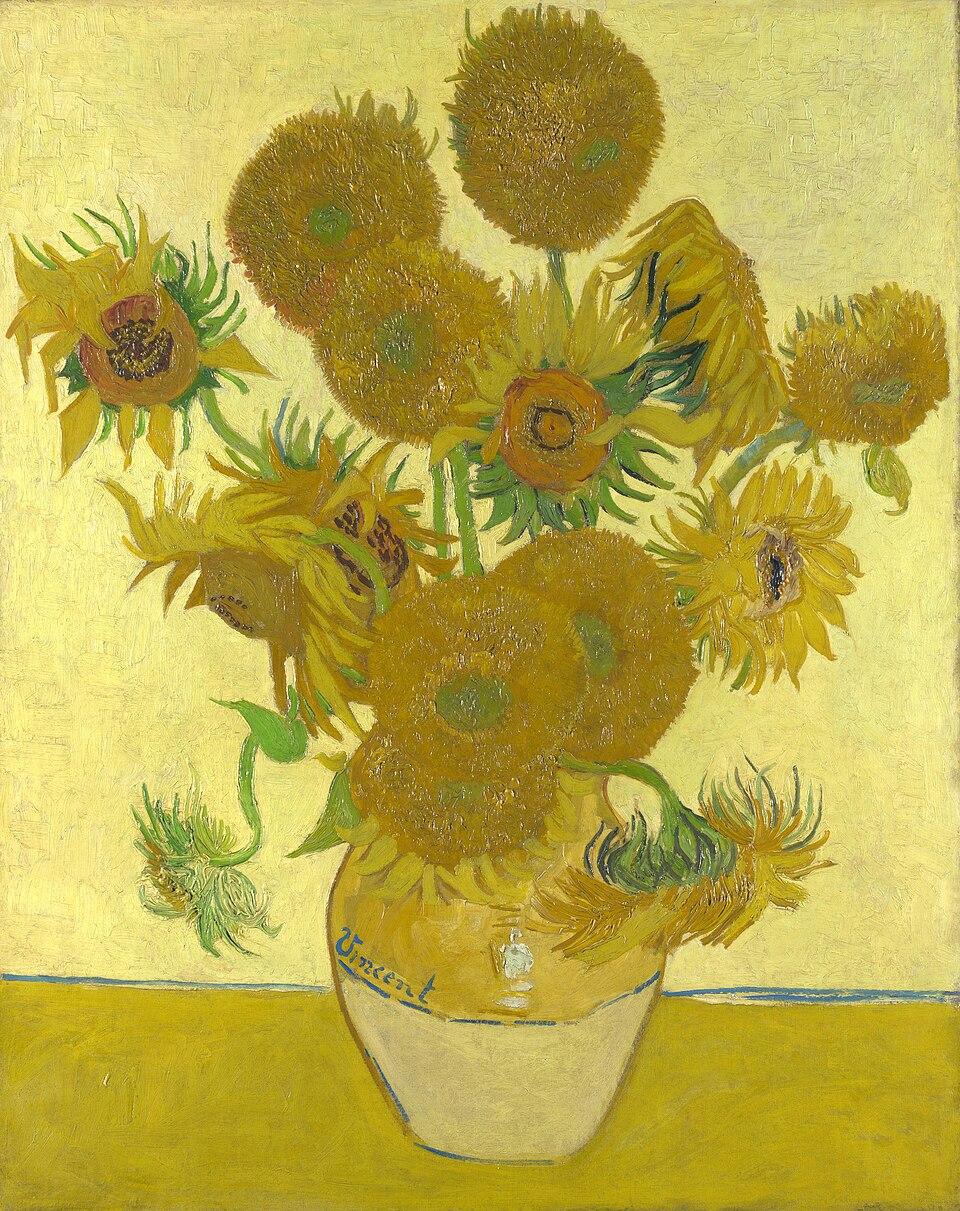
                                                        Still Life: Vase with Fourteen Sunflowers, August 1888. National Gallery, London

One of the most iconic paintings in art history, it shows fourteen sunflowers in various stages of bloom arranged in a simple earthenware vase signed "Vincent" in blue. The composition is dominated by brilliant yellows and golds against a pale yellow background, with the flowers ranging from fresh blooms to wilting seed heads.

https://en.wikipedia.org/wiki/Vincent_van_Gogh#/media/File:Vincent_Willem_van_Gogh_127.jpg

                                                        Alt...Still Life: Vase with Fourteen Sunflowers, August 1888. National Gallery, London One of the most iconic paintings in art history, it shows fourteen sunflowers in various stages of bloom arranged in a simple earthenware vase signed "Vincent" in blue. The composition is dominated by brilliant yellows and golds against a pale yellow background, with the flowers ranging from fresh blooms to wilting seed heads. https://en.wikipedia.org/wiki/Vincent_van_Gogh#/media/File:Vincent_Willem_van_Gogh_127.jpg

                                                          [?]The Vulgar Tongue » 🤖 🌐
                                                          @TheVulgarTongue@zirk.us

                                                          GRUB STREET NEWS. Lying intelligence.

                                                          A selection from Francis Grose’s “Dictionary Of The Vulgar Tongue” (1785)

                                                          --
                                                          @histodons

                                                          Image imitating a page from an old document, text (as in main toot):

GRUB STREET NEWS. Lying intelligence.

A selection from Francis Grose’s “Dictionary Of The Vulgar Tongue” (1785)

                                                          Alt...Image imitating a page from an old document, text (as in main toot): GRUB STREET NEWS. Lying intelligence. A selection from Francis Grose’s “Dictionary Of The Vulgar Tongue” (1785)

                                                            [?]Project Gutenberg » 🌐
                                                            @gutenberg_org@mastodon.social

                                                            in 1975, humorist P. G. Wodehouse died.

                                                            Wodehouse "was an English writer and one of the most widely read humorists of the 20th century. His creations include the feather-brained Bertie Wooster and his sagacious valet, Jeeves; the immaculate and loquacious Psmith; Lord Emsworth and the Blandings Castle set; the Oldest Member, with stories about golf...."

                                                            en.wikipedia.org/wiki/P._G._Wo

                                                            Books by Wodehouse at PG:

                                                            gutenberg.org/ebooks/author/783

                                                            Photograph of P. G. Wodehouse. He standing by a railing wearing a coat and a hat.

                                                            Alt...Photograph of P. G. Wodehouse. He standing by a railing wearing a coat and a hat.

                                                              [?]The Vulgar Tongue » 🤖 🌐
                                                              @TheVulgarTongue@zirk.us

                                                              MOTHER OF ALL SAINTS. The Monosyllable.

                                                              A selection from Francis Grose’s “Dictionary Of The Vulgar Tongue” (1785)

                                                              --
                                                              @histodons

                                                              Image imitating a page from an old document, text (as in main toot):

MOTHER OF ALL SAINTS. The Monosyllable.

A selection from Francis Grose’s “Dictionary Of The Vulgar Tongue” (1785)

                                                              Alt...Image imitating a page from an old document, text (as in main toot): MOTHER OF ALL SAINTS. The Monosyllable. A selection from Francis Grose’s “Dictionary Of The Vulgar Tongue” (1785)

                                                                [?]Project Gutenberg » 🌐
                                                                @gutenberg_org@mastodon.social

                                                                The Ur-“Conspiracy”: History of a Pseudoconcept

                                                                By Barrett Brown

                                                                theparisreview.org/blog/2026/0

                                                                Theophilus Schweighardt, The Temple of the Rose Cross, 1618, 

The representation was created around 1604 and was published in the Speculum sophicum Rhodostauroticum by Theophilus Schweighart. At the center of the picture is a wheeled, fortress-like building. Look at the picture from the OCCIDENS, i.e. from the west. The lower image caption provides us with an indication of this (it is difficult to recognize here in the picture). The entrance to this building, which is directly revealed to the viewer, is marked by a lettering. Above the archway you can read "VENITE DIGNI" ("COME HERE, WORTHY"). To the right of the archway you can see a cross and to the left a rose. Directly below the entrance you can read the word "MOVEAMVR" spread over two lines. Above the archway there are two windows along which the lettering "IESVS NOBIS OMNIA" ("JESUS [IS] EVERYTHING FOR US") runs along. It therefore becomes clear that, in addition to all the many other symbolic representations, it could be a rose cruiserical representation. The cross and rose can be clearly identified, but not presented united, as in today's form.

https://commons.wikimedia.org/wiki/File:Templeofrosycross_highres.png

                                                                Alt...Theophilus Schweighardt, The Temple of the Rose Cross, 1618, The representation was created around 1604 and was published in the Speculum sophicum Rhodostauroticum by Theophilus Schweighart. At the center of the picture is a wheeled, fortress-like building. Look at the picture from the OCCIDENS, i.e. from the west. The lower image caption provides us with an indication of this (it is difficult to recognize here in the picture). The entrance to this building, which is directly revealed to the viewer, is marked by a lettering. Above the archway you can read "VENITE DIGNI" ("COME HERE, WORTHY"). To the right of the archway you can see a cross and to the left a rose. Directly below the entrance you can read the word "MOVEAMVR" spread over two lines. Above the archway there are two windows along which the lettering "IESVS NOBIS OMNIA" ("JESUS [IS] EVERYTHING FOR US") runs along. It therefore becomes clear that, in addition to all the many other symbolic representations, it could be a rose cruiserical representation. The cross and rose can be clearly identified, but not presented united, as in today's form. https://commons.wikimedia.org/wiki/File:Templeofrosycross_highres.png

                                                                  [?]Project Gutenberg » 🌐
                                                                  @gutenberg_org@mastodon.social

                                                                  "Heaven did not seem to be my home; and I broke my heart with weeping to come back to earth; ..."

                                                                  Don’t fall in love this Valentine’s Day – read Wuthering Heights

                                                                  Emily Brontë’s novel celebrates the head-spinning, hair-raising, all-consuming experience of falling in love.

                                                                  by Andrew McInnes

                                                                  theconversation.com/dont-fall-

                                                                  Wuthering Heights at PG:
                                                                  gutenberg.org/ebooks/768

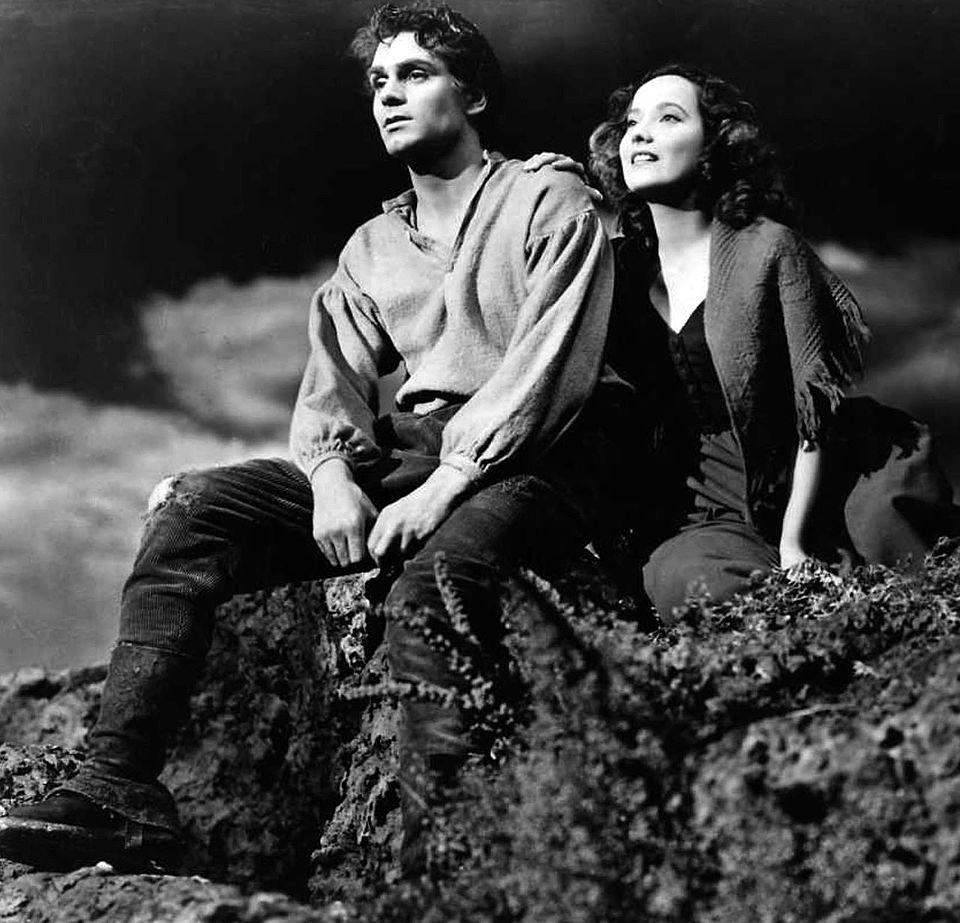
                                                                  Photo of Sir Laurence Olivier knighted 1947-page 144 and Merle Oberon from the 1939 film Wuthering Heights.

This is a publicity still from the 1939 film adaptation of "Wuthering Heights," showing Laurence Olivier (later knighted in 1947) as Heathcliff and Merle Oberon as Catherine Earnshaw seated together on the Yorkshire moors. The romantic scene captures the passionate, doomed lovers from Emily Brontë's classic novel.

https://en.wikipedia.org/wiki/Wuthering_Heights#/media/File:Laurence_Olivier_Merle_Oberon_Wuthering_Heights.jpg

                                                                  Alt...Photo of Sir Laurence Olivier knighted 1947-page 144 and Merle Oberon from the 1939 film Wuthering Heights. This is a publicity still from the 1939 film adaptation of "Wuthering Heights," showing Laurence Olivier (later knighted in 1947) as Heathcliff and Merle Oberon as Catherine Earnshaw seated together on the Yorkshire moors. The romantic scene captures the passionate, doomed lovers from Emily Brontë's classic novel. https://en.wikipedia.org/wiki/Wuthering_Heights#/media/File:Laurence_Olivier_Merle_Oberon_Wuthering_Heights.jpg

                                                                    [?]The Vulgar Tongue » 🤖 🌐
                                                                    @TheVulgarTongue@zirk.us

                                                                    HERRING GUTTED. Thin, as a shotten herring.

                                                                    A selection from Francis Grose’s “Dictionary Of The Vulgar Tongue” (1785)

                                                                    --
                                                                    @histodons

                                                                    Image imitating a page from an old document, text (as in main toot):

HERRING GUTTED. Thin, as a shotten herring.

A selection from Francis Grose’s “Dictionary Of The Vulgar Tongue” (1785)

                                                                    Alt...Image imitating a page from an old document, text (as in main toot): HERRING GUTTED. Thin, as a shotten herring. A selection from Francis Grose’s “Dictionary Of The Vulgar Tongue” (1785)

                                                                      [?]The Vulgar Tongue » 🤖 🌐
                                                                      @TheVulgarTongue@zirk.us

                                                                      NEWMAN'S HOTEL. Newgate.

                                                                      A selection from Francis Grose’s “Dictionary Of The Vulgar Tongue” (1785)

                                                                      --
                                                                      @histodons

                                                                      Image imitating a page from an old document, text (as in main toot):

NEWMAN'S HOTEL. Newgate.

A selection from Francis Grose’s “Dictionary Of The Vulgar Tongue” (1785)

                                                                      Alt...Image imitating a page from an old document, text (as in main toot): NEWMAN'S HOTEL. Newgate. A selection from Francis Grose’s “Dictionary Of The Vulgar Tongue” (1785)

                                                                        [?]Project Gutenberg » 🌐
                                                                        @gutenberg_org@mastodon.social

                                                                        7 of the Most Scandalous Romantic Plot Twists in Classic Literature

                                                                        By Paul Anthony Jones

                                                                        mentalfloss.com/literature/boo

                                                                        They are all available at PG:
                                                                        Bleak House
                                                                        gutenberg.org/ebooks/1023
                                                                        Ethan Frome
                                                                        gutenberg.org/ebooks/4517
                                                                        Far From the Madding Crowd
                                                                        gutenberg.org/ebooks/107
                                                                        Jane Eyre
                                                                        gutenberg.org/ebooks/1260
                                                                        Sense and Sensibility
                                                                        gutenberg.org/ebooks/161
                                                                        The Return of the Native
                                                                        gutenberg.org/ebooks/122
                                                                        Twelfth Night
                                                                        gutenberg.org/ebooks/1526

                                                                        Cover image of Bleak House by Charles Dickens.

The cover features a decorative gold-stamped coat of arms or heraldic emblem with the title "BLEAK HOUSE" at the top and "Charles Dickens" at the bottom, along with what appears to be a motto banner reading "IN CHANCERY." Published serially from 1852-1853.

https://www.gutenberg.org/cache/epub/1023/pg1023-images.html
                                                                        Alt...Cover image of Bleak House by Charles Dickens. The cover features a decorative gold-stamped coat of arms or heraldic emblem with the title "BLEAK HOUSE" at the top and "Charles Dickens" at the bottom, along with what appears to be a motto banner reading "IN CHANCERY." Published serially from 1852-1853. https://www.gutenberg.org/cache/epub/1023/pg1023-images.html

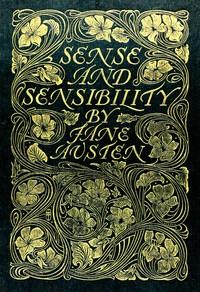
                                                                        Cover image Sense and Sensibility by Jane Austen.

This is an ornate Victorian-era cover of "Sense and Sensibility" by Jane Austen, featuring elaborate gold Art Nouveau-style floral and vine patterns on a dark green background. The decorative design frames the title and author name in elegant lettering. 

https://www.gutenberg.org/cache/epub/161/pg161-images.html

                                                                        Alt...Cover image Sense and Sensibility by Jane Austen. This is an ornate Victorian-era cover of "Sense and Sensibility" by Jane Austen, featuring elaborate gold Art Nouveau-style floral and vine patterns on a dark green background. The decorative design frames the title and author name in elegant lettering. https://www.gutenberg.org/cache/epub/161/pg161-images.html

                                                                          [?]Project Gutenberg » 🌐
                                                                          @gutenberg_org@mastodon.social

                                                                          Subverting hell

                                                                          In their visions of the underworld Dante and Milton were truly subversive, incorporating predecessors into their own repudiation

                                                                          by Charlie Ericson

                                                                          aeon.co/essays/feel-the-burn-h

                                                                          Dante and Milton at PG:
                                                                          gutenberg.org/ebooks/author/507
                                                                          gutenberg.org/ebooks/author/17

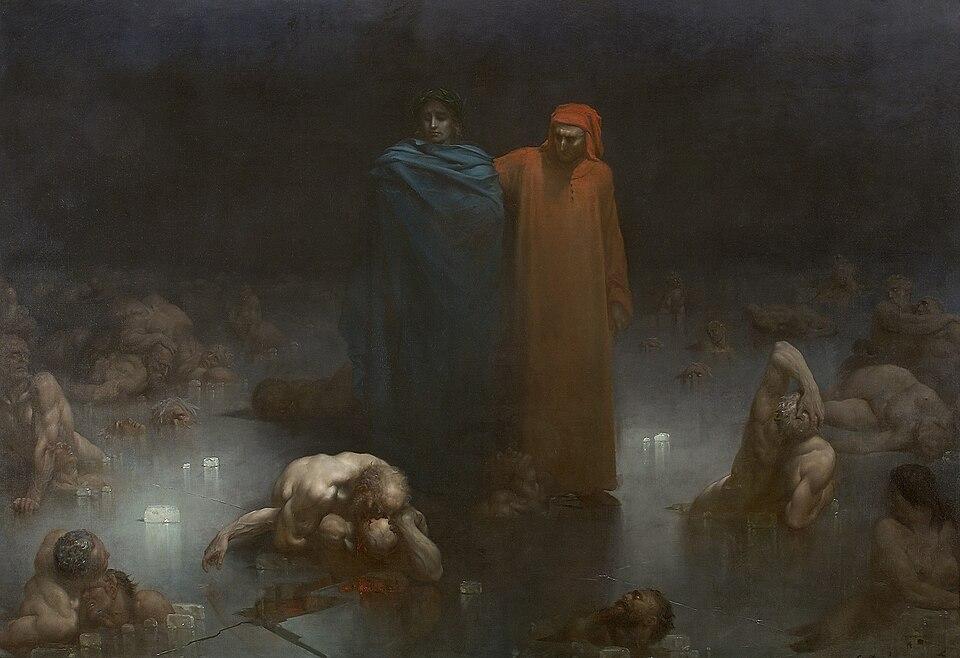
                                                                          Dante and Virgil in the Ninth Circle of Hell (1861) by Gustave Doré.

The painting depicts a scene from Dante Alighieri's Inferno, showing Dante (in orange/red robes) and his guide Virgil (in blue) standing on an elevated position, looking down upon the frozen lake of Cocytus, the ninth and deepest circle of Hell where traitors are punished. The damned souls are shown frozen in ice in various states of torment, emerging from the misty, icy landscape. 

https://commons.wikimedia.org/wiki/File:Gustave_Dor%C3%A9_-_Dante_et_Virgile_dans_le_neuvi%C3%A8me_cercle_de_l%27Enfer.jpg

                                                                          Alt...Dante and Virgil in the Ninth Circle of Hell (1861) by Gustave Doré. The painting depicts a scene from Dante Alighieri's Inferno, showing Dante (in orange/red robes) and his guide Virgil (in blue) standing on an elevated position, looking down upon the frozen lake of Cocytus, the ninth and deepest circle of Hell where traitors are punished. The damned souls are shown frozen in ice in various states of torment, emerging from the misty, icy landscape. https://commons.wikimedia.org/wiki/File:Gustave_Dor%C3%A9_-_Dante_et_Virgile_dans_le_neuvi%C3%A8me_cercle_de_l%27Enfer.jpg

                                                                            [?]The Vulgar Tongue » 🤖 🌐
                                                                            @TheVulgarTongue@zirk.us

                                                                            CRIMP. A broker or factor, as a coal crimp, who disposes of the cargoes of the Newcastle coal ships; also persons employed to trapan or kidnap recruits for the East Indian and African companies.

                                                                            A selection from Francis Grose’s “Dictionary Of The Vulgar Tongue” (1785)

                                                                            --
                                                                            @histodons

                                                                            Image imitating a page from an old document, text (as in main toot):

CRIMP. A broker or factor, as a coal crimp, who disposes of the cargoes of the Newcastle coal ships; also persons employed to trapan or kidnap recruits for the East Indian and African companies.

A selection from Francis Grose’s “Dictionary Of The Vulgar Tongue” (1785)

                                                                            Alt...Image imitating a page from an old document, text (as in main toot): CRIMP. A broker or factor, as a coal crimp, who disposes of the cargoes of the Newcastle coal ships; also persons employed to trapan or kidnap recruits for the East Indian and African companies. A selection from Francis Grose’s “Dictionary Of The Vulgar Tongue” (1785)

                                                                              [?]The Vulgar Tongue » 🤖 🌐
                                                                              @TheVulgarTongue@zirk.us

                                                                              FREEMAN'S QUAY. Free of expence. To lush at Freeman's Quay; to drink at another's cost.

                                                                              A selection from Francis Grose’s “Dictionary Of The Vulgar Tongue” (1785)

                                                                              --
                                                                              @histodons

                                                                              Image imitating a page from an old document, text (as in main toot):

FREEMAN'S QUAY. Free of expence. To lush at Freeman's Quay; to drink at another's cost.

A selection from Francis Grose’s “Dictionary Of The Vulgar Tongue” (1785)

                                                                              Alt...Image imitating a page from an old document, text (as in main toot): FREEMAN'S QUAY. Free of expence. To lush at Freeman's Quay; to drink at another's cost. A selection from Francis Grose’s “Dictionary Of The Vulgar Tongue” (1785)

                                                                                [?]Project Gutenberg » 🌐
                                                                                @gutenberg_org@mastodon.social

                                                                                Why Do We Keep Telling the Same Stories? Archetypes in Pop Culture

                                                                                "Archetypes aren't just storytelling tools—they're reflections of us. We keep retelling them because they help us feel understood."

                                                                                thecollector.com/archetypes-po

                                                                                Books by Jung at PG:

                                                                                gutenberg.org/ebooks/author/44

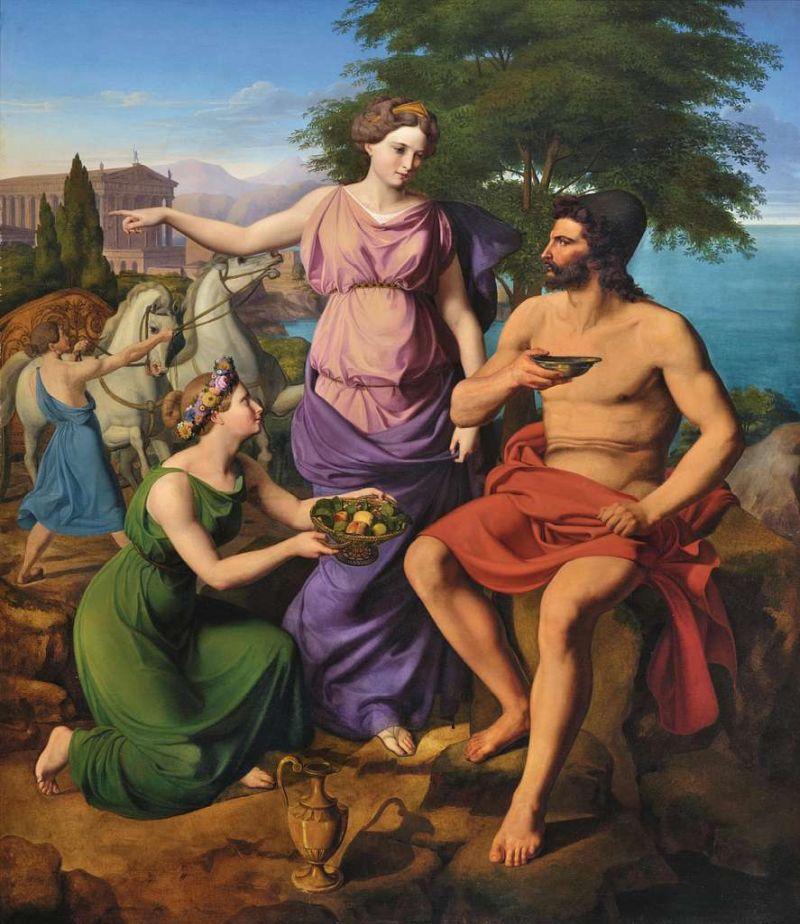
                                                                                Odysseus und Nausicaa

                                                                                Painting of Odysseus und Nausicaa by Carl Fielgraf. Odysseus is sitting on a rock with a cloth around him, and he is about to drink from a bowl. He is looking at Nausicaa who is standing and pointing to the right. A servant kneels at the foot of  Odysseus and is offering him a bowl of fruit.

                                                                                Alt...Painting of Odysseus und Nausicaa by Carl Fielgraf. Odysseus is sitting on a rock with a cloth around him, and he is about to drink from a bowl. He is looking at Nausicaa who is standing and pointing to the right. A servant kneels at the foot of Odysseus and is offering him a bowl of fruit.

                                                                                  [?]Project Gutenberg » 🌐
                                                                                  @gutenberg_org@mastodon.social

                                                                                  Inside Switzerland's extraordinary medieval library

                                                                                  By Mike MacEacheran

                                                                                  The Abbey Library of St Gallen is a Baroque hall of globes, manuscripts and curiosities that has survived, improbably, for 1,300 years.

                                                                                  bbc.co.uk/travel/article/20260

                                                                                  Medieval library at PG:
                                                                                  gutenberg.org/ebooks/search/?q

                                                                                  PLATE XXV
DUKE HUMFREY’S LIBRARY, OXFORD

The image captures the historic reading room with its magnificent barrel-vaulted wooden ceiling with decorative coffers, tall windows providing natural light at the far end, and rows of bookshelves lining both sides. Reading desks are positioned along the central aisle. Duke Humfrey's Library, the oldest reading room of the Bodleian, dates to the 15th century and was named after Humfrey, Duke of Gloucester (1390-1447), younger brother of Henry V, who donated his collection of manuscripts to Oxford University. 

https://www.gutenberg.org/cache/epub/1615/pg1615-images.html

                                                                                  Alt...PLATE XXV DUKE HUMFREY’S LIBRARY, OXFORD The image captures the historic reading room with its magnificent barrel-vaulted wooden ceiling with decorative coffers, tall windows providing natural light at the far end, and rows of bookshelves lining both sides. Reading desks are positioned along the central aisle. Duke Humfrey's Library, the oldest reading room of the Bodleian, dates to the 15th century and was named after Humfrey, Duke of Gloucester (1390-1447), younger brother of Henry V, who donated his collection of manuscripts to Oxford University. https://www.gutenberg.org/cache/epub/1615/pg1615-images.html

                                                                                    [?]The Vulgar Tongue » 🤖 🌐
                                                                                    @TheVulgarTongue@zirk.us

                                                                                    FUSSOCK. A lazy fat woman. An old fussock; a frowsy old woman.

                                                                                    A selection from Francis Grose’s “Dictionary Of The Vulgar Tongue” (1785)

                                                                                    --
                                                                                    @histodons

                                                                                    Image imitating a page from an old document, text (as in main toot):

FUSSOCK. A lazy fat woman. An old fussock; a frowsy old woman.

A selection from Francis Grose’s “Dictionary Of The Vulgar Tongue” (1785)

                                                                                    Alt...Image imitating a page from an old document, text (as in main toot): FUSSOCK. A lazy fat woman. An old fussock; a frowsy old woman. A selection from Francis Grose’s “Dictionary Of The Vulgar Tongue” (1785)

                                                                                      [?]The Vulgar Tongue » 🤖 🌐
                                                                                      @TheVulgarTongue@zirk.us

                                                                                      Hi!, I'm a bot posting selections from Francis Grose’s 1785 “Dictionary Of The Vulgar Tongue”, a compilation of slang terms, the coded language of the underclass and the demi-monde.

                                                                                      [18th-century-content warning: possible racism, animal cruelty, homophobia, sexism, slut-shaming. Let me know of any problems.]

                                                                                      Montage of dictionary items posted by this account

                                                                                      Alt...Montage of dictionary items posted by this account

                                                                                        [?]The Vulgar Tongue » 🤖 🌐
                                                                                        @TheVulgarTongue@zirk.us

                                                                                        CHURL. Originally, a labourer or husbandman: figuratively a rude, surly, boorish fellow. To put a churl upon a gentleman; to drink malt liquor immediately after having drunk wine.

                                                                                        A selection from Francis Grose’s “Dictionary Of The Vulgar Tongue” (1785)

                                                                                        --
                                                                                        @histodons

                                                                                        Image imitating a page from an old document, text (as in main toot):

CHURL. Originally, a labourer or husbandman: figuratively a rude, surly, boorish fellow. To put a churl upon a gentleman; to drink malt liquor immediately after having drunk wine.

A selection from Francis Grose’s “Dictionary Of The Vulgar Tongue” (1785)

                                                                                        Alt...Image imitating a page from an old document, text (as in main toot): CHURL. Originally, a labourer or husbandman: figuratively a rude, surly, boorish fellow. To put a churl upon a gentleman; to drink malt liquor immediately after having drunk wine. A selection from Francis Grose’s “Dictionary Of The Vulgar Tongue” (1785)

                                                                                          [?]Project Gutenberg » 🌐
                                                                                          @gutenberg_org@mastodon.social

                                                                                          A White Historian Claimed That Black People ‘Had No History.’ This Trailblazing Scholar Dedicated His Life to Proving Otherwise

                                                                                          Carter G. Woodson, the “father of Black history,” founded the celebration now known as Black History Month in 1926. A prolific writer and activist, he viewed his efforts to educate the public as a “life-and-death struggle”

                                                                                          by Meilan Solly

                                                                                          smithsonianmag.com/smithsonian

                                                                                          Carter G. Woodson at PG:
                                                                                          gutenberg.org/ebooks/author/38

                                                                                          The formal portrait shows Dr. Carter Woodson in a suit and patterned tie, representing him as a distinguished scholar and educator.

During the dawning of the twentieth century, it was widely-presumed that people of African descent had little history besides the subjugation of slavery. Of course, it is obvious today that Africans have significantly impacted the development of the social, political and economic structures of not just the United States but also the world. Credit for the evolving awareness of the true place of blacks in history can, in large part, be bestowed upon one man, Dr. Carter G. Woodson. Dr. Woodson's parents had been enslaved, so he understood the importance of a proper education. Though he didn't begin his formal education until the age of 20, he earned his high school diploma, bachelor's and master's degrees in the span of a few years. Then, in 1912, he became the second African American to earn a PhD from Harvard and was the first person of enslaved parents to earn a PhD in history!

https://en.wikipedia.org/wiki/Carter_G._Woodson#/media/File:Dr._Carter_G._Woodson_(1875-1950),_Carter_G._Woodson_Home_National_Historic_Site,_1915._(18f7565bf62142c0ad7fff83701ca5f6).jpg

                                                                                          Alt...The formal portrait shows Dr. Carter Woodson in a suit and patterned tie, representing him as a distinguished scholar and educator. During the dawning of the twentieth century, it was widely-presumed that people of African descent had little history besides the subjugation of slavery. Of course, it is obvious today that Africans have significantly impacted the development of the social, political and economic structures of not just the United States but also the world. Credit for the evolving awareness of the true place of blacks in history can, in large part, be bestowed upon one man, Dr. Carter G. Woodson. Dr. Woodson's parents had been enslaved, so he understood the importance of a proper education. Though he didn't begin his formal education until the age of 20, he earned his high school diploma, bachelor's and master's degrees in the span of a few years. Then, in 1912, he became the second African American to earn a PhD from Harvard and was the first person of enslaved parents to earn a PhD in history! https://en.wikipedia.org/wiki/Carter_G._Woodson#/media/File:Dr._Carter_G._Woodson_(1875-1950),_Carter_G._Woodson_Home_National_Historic_Site,_1915._(18f7565bf62142c0ad7fff83701ca5f6).jpg

                                                                                            [?]The Vulgar Tongue » 🤖 🌐
                                                                                            @TheVulgarTongue@zirk.us

                                                                                            COACH WHEEL. A half crown piece is a fore coach wheel, and a crown piece a hind coach wheel; the fore wheels of a coach being less than the hind ones.

                                                                                            A selection from Francis Grose’s “Dictionary Of The Vulgar Tongue” (1785)

                                                                                            --
                                                                                            @histodons

                                                                                            Image imitating a page from an old document, text (as in main toot):

COACH WHEEL. A half crown piece is a fore coach wheel, and a crown piece a hind coach wheel; the fore wheels of a coach being less than the hind ones.

A selection from Francis Grose’s “Dictionary Of The Vulgar Tongue” (1785)

                                                                                            Alt...Image imitating a page from an old document, text (as in main toot): COACH WHEEL. A half crown piece is a fore coach wheel, and a crown piece a hind coach wheel; the fore wheels of a coach being less than the hind ones. A selection from Francis Grose’s “Dictionary Of The Vulgar Tongue” (1785)

                                                                                              [?]The Vulgar Tongue » 🤖 🌐
                                                                                              @TheVulgarTongue@zirk.us

                                                                                              DILIGENT. Double diligent, like the Devil's apothecary; said of one affectedly diligent.

                                                                                              A selection from Francis Grose’s “Dictionary Of The Vulgar Tongue” (1785)

                                                                                              --
                                                                                              @histodons

                                                                                              Image imitating a page from an old document, text (as in main toot):

DILIGENT. Double diligent, like the Devil's apothecary; said of one affectedly diligent.

A selection from Francis Grose’s “Dictionary Of The Vulgar Tongue” (1785)

                                                                                              Alt...Image imitating a page from an old document, text (as in main toot): DILIGENT. Double diligent, like the Devil's apothecary; said of one affectedly diligent. A selection from Francis Grose’s “Dictionary Of The Vulgar Tongue” (1785)

                                                                                                [?]Project Gutenberg » 🌐
                                                                                                @gutenberg_org@mastodon.social

                                                                                                Dorothy Parker: Sharp-Witted Writer, Bitter Professor

                                                                                                Dorothy Parker’s year as a visiting professor shows how a celebrated literary voice struggled to adapt to the realities of academic teaching.

                                                                                                By: Emily Zarevich

                                                                                                daily.jstor.org/dorothy-parker

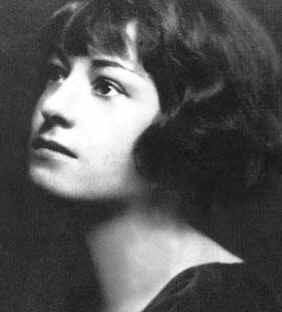
                                                                                                American writer Dorothy Parker (1893-1967),  c. 1910s-1920s.

The image shows Parker as a young woman with short, dark bobbed hair and a contemplative expression in three-quarter profile.

https://en.wikipedia.org/wiki/Dorothy_Parker#/media/File:Young_Dorothy_Parker.jpg

                                                                                                Alt...American writer Dorothy Parker (1893-1967), c. 1910s-1920s. The image shows Parker as a young woman with short, dark bobbed hair and a contemplative expression in three-quarter profile. https://en.wikipedia.org/wiki/Dorothy_Parker#/media/File:Young_Dorothy_Parker.jpg

                                                                                                  [?]The Vulgar Tongue » 🤖 🌐
                                                                                                  @TheVulgarTongue@zirk.us

                                                                                                  BROWN GEORGE. An ammunition loaf, A wig without powder; similar to the undress wig worn by his majesty.

                                                                                                  A selection from Francis Grose’s “Dictionary Of The Vulgar Tongue” (1785)

                                                                                                  --
                                                                                                  @histodons

                                                                                                  Image imitating a page from an old document, text (as in main toot):

BROWN GEORGE. An ammunition loaf, A wig without powder; similar to the undress wig worn by his majesty.

A selection from Francis Grose’s “Dictionary Of The Vulgar Tongue” (1785)

                                                                                                  Alt...Image imitating a page from an old document, text (as in main toot): BROWN GEORGE. An ammunition loaf, A wig without powder; similar to the undress wig worn by his majesty. A selection from Francis Grose’s “Dictionary Of The Vulgar Tongue” (1785)

                                                                                                    [?]The Vulgar Tongue » 🤖 🌐
                                                                                                    @TheVulgarTongue@zirk.us

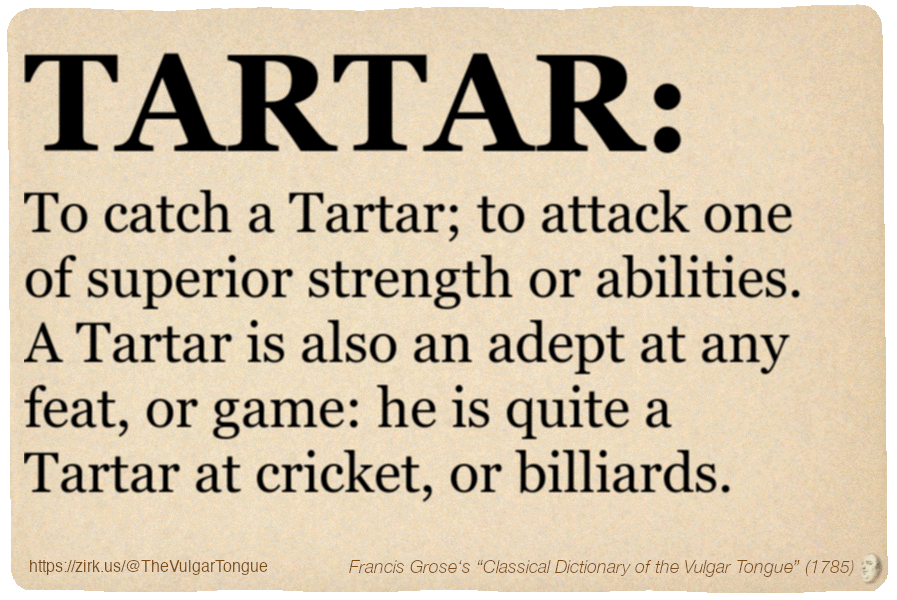
                                                                                                    TARTAR. To catch a Tartar; to attack one of superior strength or abilities. A Tartar is also an adept at any feat, or game: he is quite a Tartar at cricket, or billiards.

                                                                                                    A selection from Francis Grose’s “Dictionary Of The Vulgar Tongue” (1785)

                                                                                                    --
                                                                                                    @histodons

                                                                                                    Image imitating a page from an old document, text (as in main toot):

TARTAR. To catch a Tartar; to attack one of superior strength or abilities. A Tartar is also an adept at any feat, or game: he is quite a Tartar at cricket, or billiards.

A selection from Francis Grose’s “Dictionary Of The Vulgar Tongue” (1785)

                                                                                                    Alt...Image imitating a page from an old document, text (as in main toot): TARTAR. To catch a Tartar; to attack one of superior strength or abilities. A Tartar is also an adept at any feat, or game: he is quite a Tartar at cricket, or billiards. A selection from Francis Grose’s “Dictionary Of The Vulgar Tongue” (1785)

                                                                                                      Back to top - More...