Search results for tag #literature
![[?]](https://cdn.masto.host/zirkus/accounts/avatars/111/192/373/629/540/829/original/9ff4f5b9781a0e3a.jpg)
FEE, FAW, FUM. Nonsensical words, supposed in childish story-books to be spoken by giants. I am not to be frighted by fee, faw, fum; I am not to be scared by nonsense.
A selection from Francis Grose’s “Dictionary Of The Vulgar Tongue” (1785)
--
#books #literature #dictionaries #history #society #language #slang @histodons
Alt...
Image imitating a page from an old document, text (as in main toot):
FEE, FAW, FUM. Nonsensical words, supposed in childish story-books to be spoken by giants. I am not to be frighted by fee, faw, fum; I am not to be scared by nonsense.
A selection from Francis Grose’s “Dictionary Of The Vulgar Tongue” (1785)
To NICK. To win at dice, to hit the mark just in the nick of time, or at the critical moment.
A selection from Francis Grose’s “Dictionary Of The Vulgar Tongue” (1785)
--
#books #literature #dictionaries #history #society #language #slang @histodons
Alt...
Image imitating a page from an old document, text (as in main toot):
To NICK. To win at dice, to hit the mark just in the nick of time, or at the critical moment.
A selection from Francis Grose’s “Dictionary Of The Vulgar Tongue” (1785)
![[?]](https://files.mastodon.social/accounts/avatars/110/441/535/131/897/219/original/0ddf9d4dd12a5dee.png)
What Oral Histories Reveal About Women’s Pursuit of Economic Independence
What does independence really mean for women? Through oral histories spanning generations, ‘We Do Declare’ explores how access to money, credit, and opportunity shaped women’s lives and the economic freedom that makes true independence possible.
by Rachel F. Seidman
Mary Wollstonecraft at PG:
https://www.gutenberg.org/ebooks/author/84
#books #literature #womenhistoryMonth
Alt...
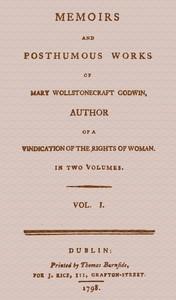
Title page of the book Memoirs and Posthumous Works of Mary Wollstonecraft Godwin, Vol. 1
by Mary Wollstonecraft and William Godwin
A title page from a small 18th-century printed book on cream paper, text centred in varying type sizes: Memoirs and Posthumous Works of Mary Wollstonecraft Godwin, Author of A Vindication of the Rights of Woman. In Two Volumes. Vol. I. Below a ruled line: Dublin: Printed by Thomas Burnside, for J. Rice, 111, Grafton-Street. 1798.
https://www.gutenberg.org/cache/epub/67847/pg67847-images.html
Edgar Allan Poe’s Mechanical Imagination
Behind The Raven’s melancholy lies a theory of composition shaped by magazines, machines, and modernity.
By: Danny Robb
The Raven at PG:
https://www.gutenberg.org/ebooks/14082
https://www.gutenberg.org/ebooks/17192
https://www.gutenberg.org/ebooks/25525
https://www.gutenberg.org/ebooks/45484
https://www.gutenberg.org/ebooks/55749
Alt...
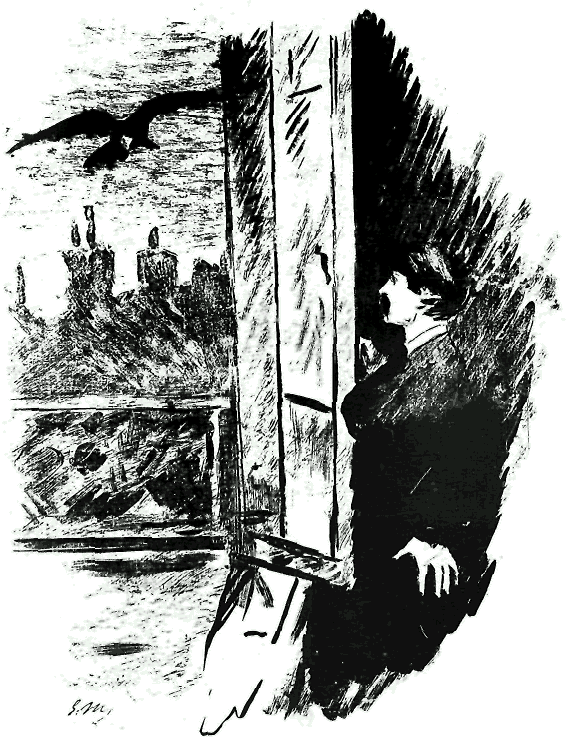
Le Corbeau = The Raven
Author: Edgar Allan Poe
Illustrator: Édouard Manet
Translator: Stéphane Mallarmé
A dark silhouetted figure stands at an open window or door, face in profile, looking outward with an expression of alarm or awe. A large black bird — a raven — flies in through the opening from a stormy, sketchy exterior landscape with indistinct forms suggesting rooftops or gravestones.
https://www.gutenberg.org/cache/epub/14082/pg14082-images.html
MONKS AND FRIARS. Terms used by printers: monks are sheets where the letters are blotted, or printed too black; friars, those letters where the ink has failed touching the type, which are therefore white or faint.
A selection from Francis Grose’s “Dictionary Of The Vulgar Tongue” (1785)
--
#books #literature #dictionaries #history #society #language #slang @histodons
Alt...
Image imitating a page from an old document, text (as in main toot):
MONKS AND FRIARS. Terms used by printers: monks are sheets where the letters are blotted, or printed too black; friars, those letters where the ink has failed touching the type, which are therefore white or faint.
A selection from Francis Grose’s “Dictionary Of The Vulgar Tongue” (1785)
LINE. To get a man into a line, i.e. to divert his attention by a ridiculous or absurd story. To humbug.
A selection from Francis Grose’s “Dictionary Of The Vulgar Tongue” (1785)
--
#books #literature #dictionaries #history #society #language #slang @histodons
Alt...
Image imitating a page from an old document, text (as in main toot):
LINE. To get a man into a line, i.e. to divert his attention by a ridiculous or absurd story. To humbug.
A selection from Francis Grose’s “Dictionary Of The Vulgar Tongue” (1785)
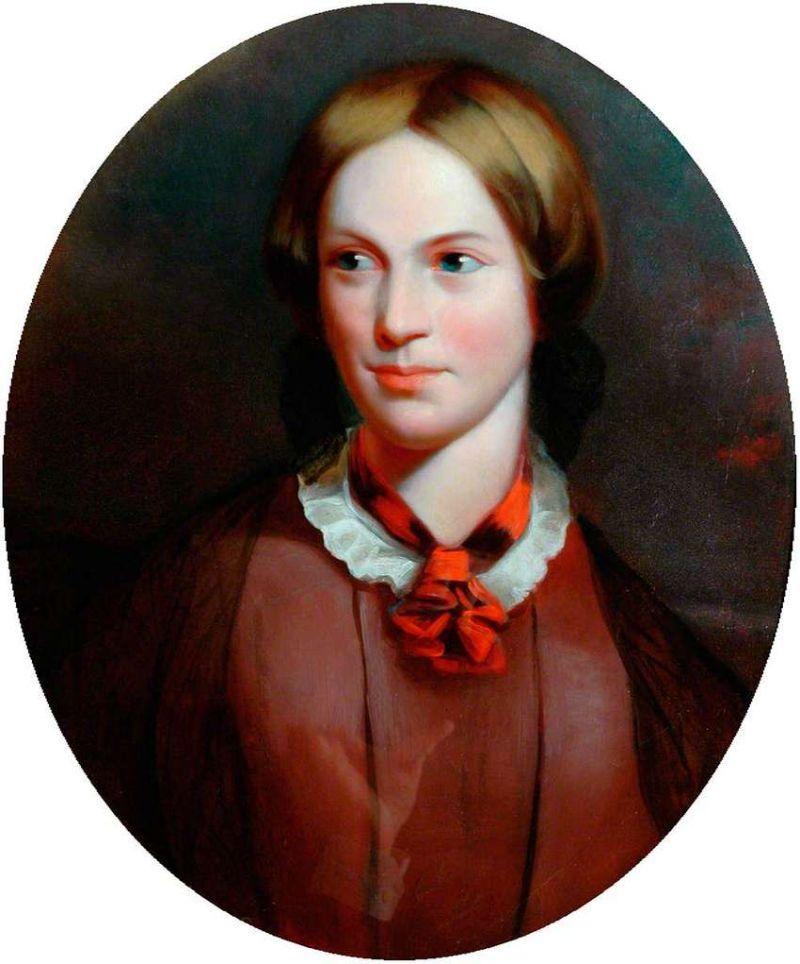
#OTD in 1839, Charlotte Bronte declines Reverend Henry Nussey’s marriage proposal, claiming that he would find her “romantic and eccentric” and not practical enough to be a clergyman’s wife.
https://lithub.com/lit-hub-daily-march-5-2026/
Books by Charlotte Bronte at PG:
https://www.gutenberg.org/ebooks/author/408
#books #literature #womenshistory
Alt...
Thompson, John Hunter; Charlotte Bronte (1816-1855); Bronte Parsonage Museum; http://www.artuk.org/artworks/charlotte-bronte-18161855-21013
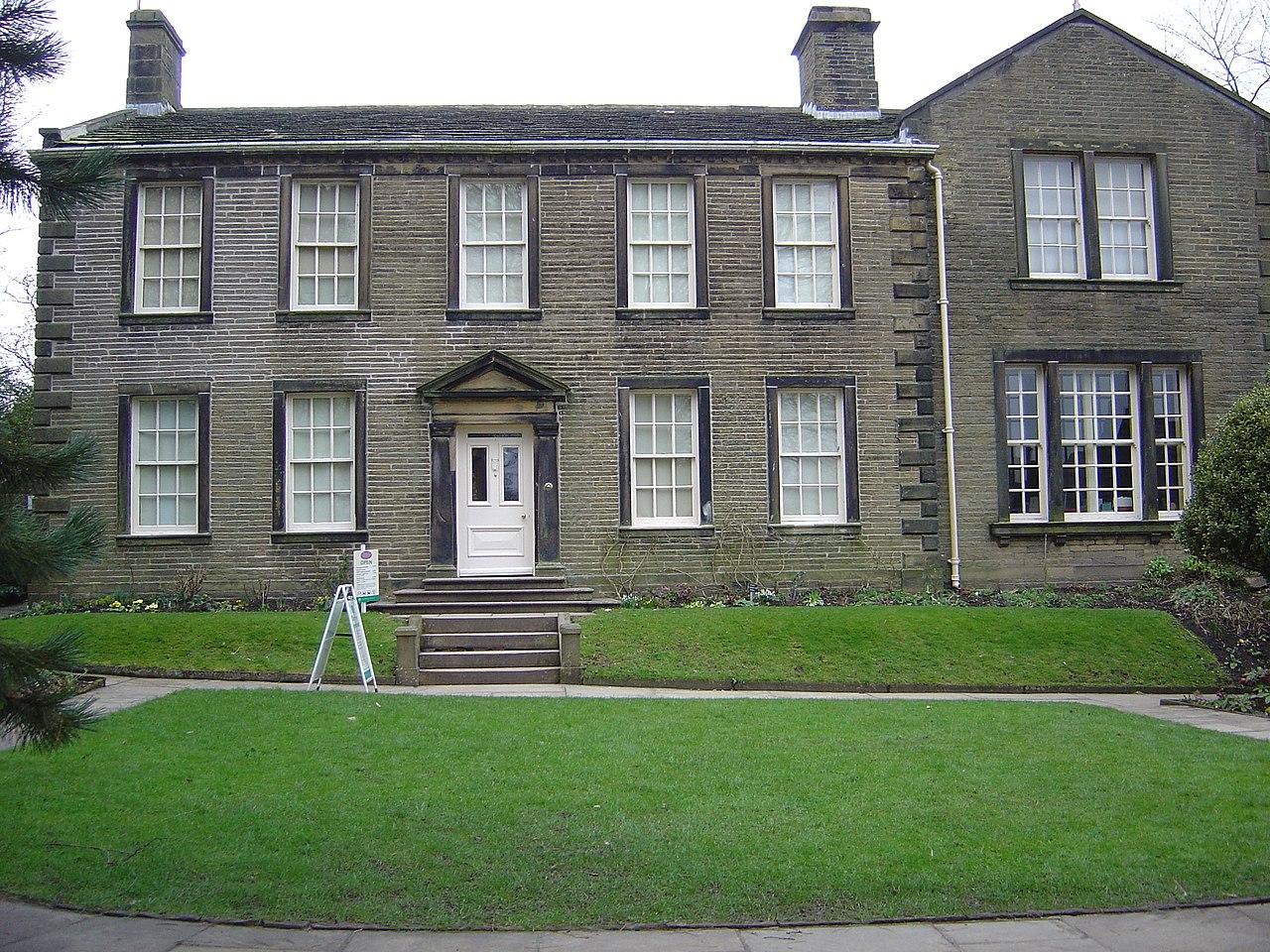
The Brontë Parsonage Museum in Haworth is worth to visit.
We're the home of the famous Brontë sisters. Explore the house they grew up in and learn the story of these incredible writers. thanks @agturcz
#books #literature #womenHistoryMonth
Alt...
Brontë Parsonage Museum
Released into the public domain (by the author).
A two-storey Georgian stone building with a symmetrical façade, dark millstone grit masonry, and white-painted sash windows. A central white door with a small classical pediment is reached by stone steps. Two chimneys rise from the roofline. A small sandwich board sign stands near the entrance on a neatly kept front lawn. An extension wing is visible to the right.
https://commons.wikimedia.org/wiki/Category:Bront%C3%AB_Parsonage_Museum#/media/File:Bronte_Parsonage_Museum.JPG/2
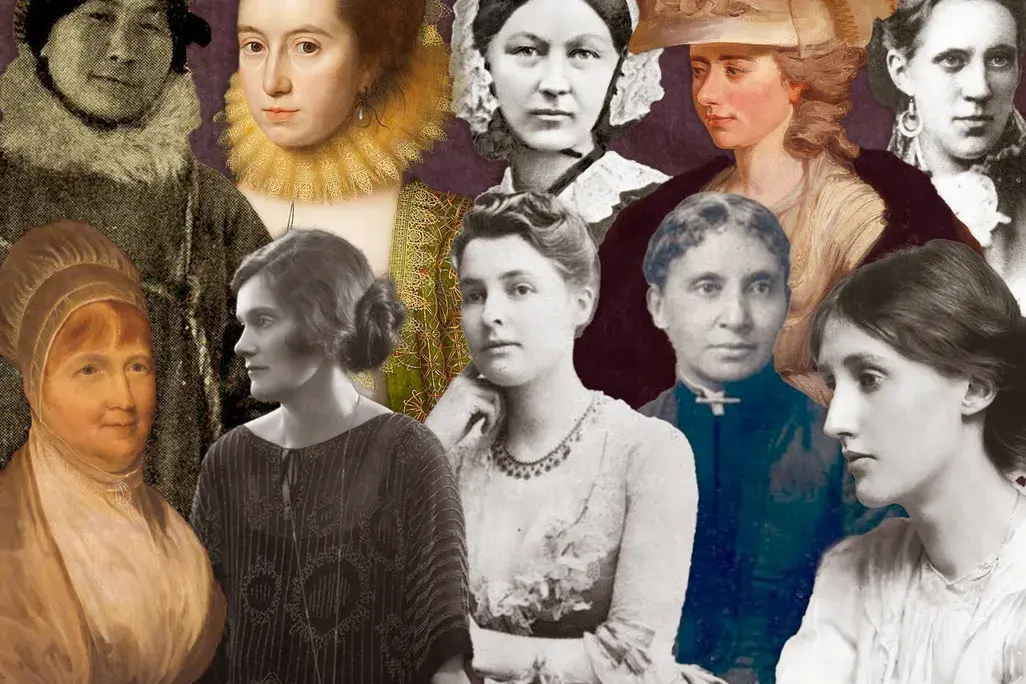
What Is the Dominant Emotion in 400 Years of Women’s Diaries?
A new anthology identifies frustration as a recurring theme in journals written between 1599 and 2015
by Sarah Gristwood
Women literature at PG:
https://www.gutenberg.org/ebooks/subjects/search/?query=women+literature
#books #literature #WomenHistoryMonth
Alt...
Some of the women diarists featured in the new anthology. Top row, left to right: Ada Blackjack, Anne Clifford, Florence Nightingale, Fanny Burney and Anna Dostoyevskaya. Bottom row, left to right: Elizabeth Fry, Cynthia Asquith, Beatrice Webb, Charlotte Forten Grimké and Virginia Woolf
A collage of portraits and photographs of ten women from different historical periods, arranged in overlapping layers against a muted purple-grey background. The images mix oil paintings, sepia photographs, and black-and-white photographs spanning roughly four centuries of dress and style. Top row includes a grainy photograph, a Renaissance-style portrait with a large gold ruff collar, a Victorian photograph, a painted portrait with a wide-brimmed hat, and a formal photographic portrait. Bottom row shows a soft painted portrait in a white cap, two Edwardian-era black-and-white photographs, a later Victorian photograph, and a young woman in profile in a white blouse.
Illustration by Meilan Solly / Images via Wikimedia Commons under public domain
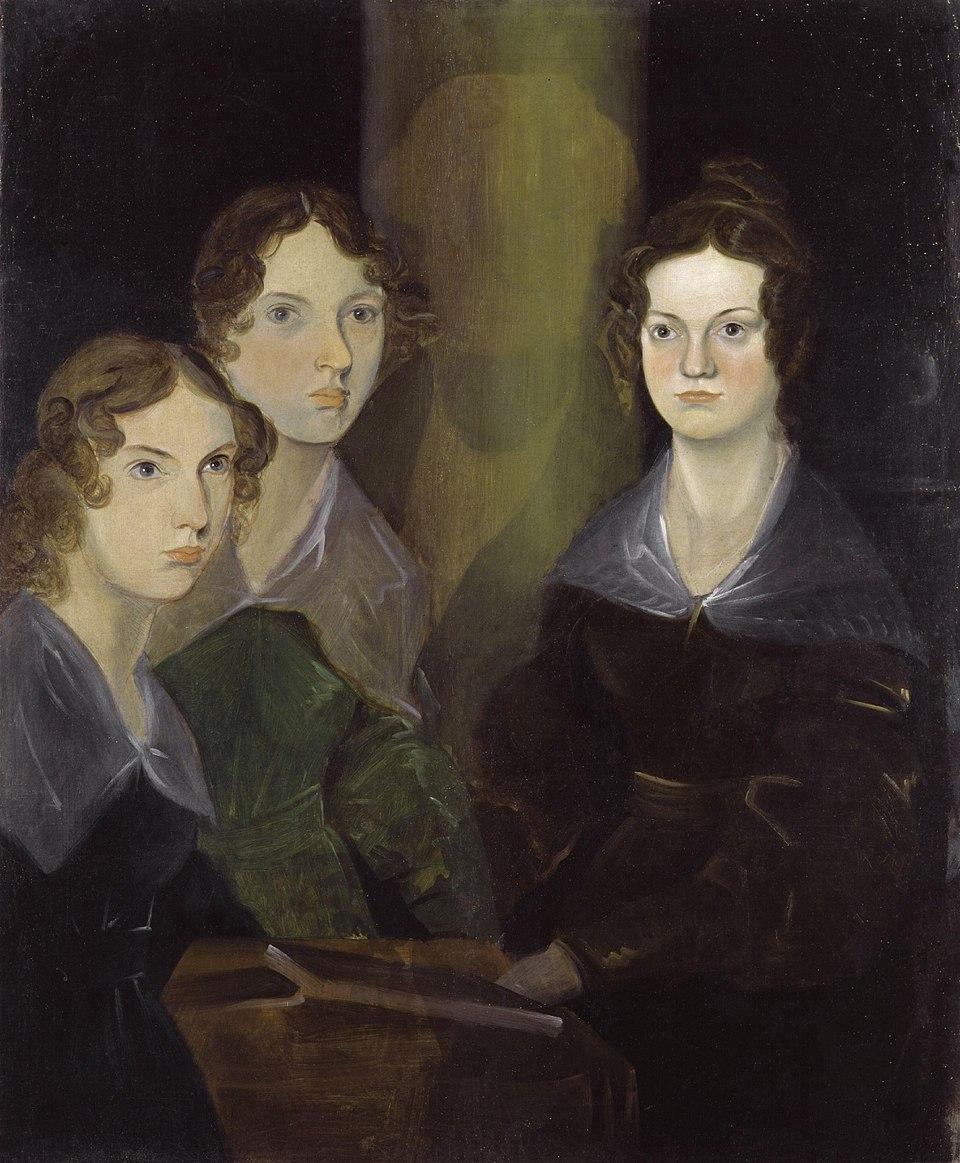
The Captivating Saga Behind the Only Known Portrait of the Brontë Sisters
The only known painting of the three Brontë sisters together was painted by their brother, Branwell, and was long thought lost.
by Katie White
https://news.artnet.com/art-world/bronte-sisters-portrait-history-2748843
Brontë sisters at PG:
https://www.gutenberg.org/ebooks/search/?query=bront%C3%AB+sisters
#books #literature #womenHistoryMonth
Alt...
The Brontë sisters, painted by Branwell Brontë (in order: Anne, Emily and Charlotte).
An oil portrait of the Brontë sisters grouped closely together against a dark background, with a pale yellowish column or pillar visible behind the central figure. All three have dark auburn curly hair and pale complexions with direct, serious expressions. Anne wears grey-blue; Emily, set slightly back, wears green; Charlotte wears dark brown-black with a grey collar. A book or papers rest on a surface in the foreground.
https://en.wikipedia.org/wiki/Charlotte_Bront%C3%AB#/media/File:The_Bront%C3%AB_Sisters_by_Patrick_Branwell_Bront%C3%AB_restored.jpg
HATCHES. Under the hatches; in trouble, distress, or debt.
A selection from Francis Grose’s “Dictionary Of The Vulgar Tongue” (1785)
--
#books #literature #dictionaries #history #society #language #slang @histodons
Alt...
Image imitating a page from an old document, text (as in main toot):
HATCHES. Under the hatches; in trouble, distress, or debt.
A selection from Francis Grose’s “Dictionary Of The Vulgar Tongue” (1785)
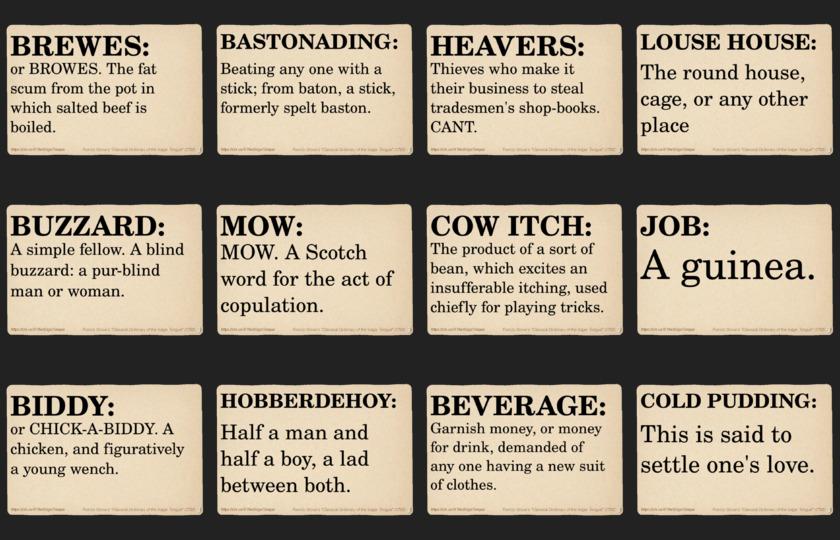
Hi!, I'm a bot posting selections from Francis Grose’s 1785 “Dictionary Of The Vulgar Tongue”, a compilation of slang terms, the coded language of the underclass and the demi-monde.
[18th-century-content warning: possible racism, animal cruelty, homophobia, sexism, slut-shaming. Let me know of any problems.]
#FollowFriday #books #literature #dictionaries #history #society #crime #language #slang #18thCentury
Alt...
Montage of dictionary items posted by this account
COBBLE COLTER. A turkey.
A selection from Francis Grose’s “Dictionary Of The Vulgar Tongue” (1785)
--
#books #literature #dictionaries #history #society #language #slang @histodons
Alt...
Image imitating a page from an old document, text (as in main toot):
COBBLE COLTER. A turkey.
A selection from Francis Grose’s “Dictionary Of The Vulgar Tongue” (1785)
Celebrating Women’s History Month
Celebrate Women’s History Month with JSTOR Daily. We hope you’ll find the stories below a valuable resource for classroom or leisure reading.
By The Editors
https://daily.jstor.org/womens-history-month-editors-picks/
Women literature at PG:
https://www.gutenberg.org/ebooks/subjects/search/?query=women+literature
#books #literature #WomenHistoryMonth
Alt...
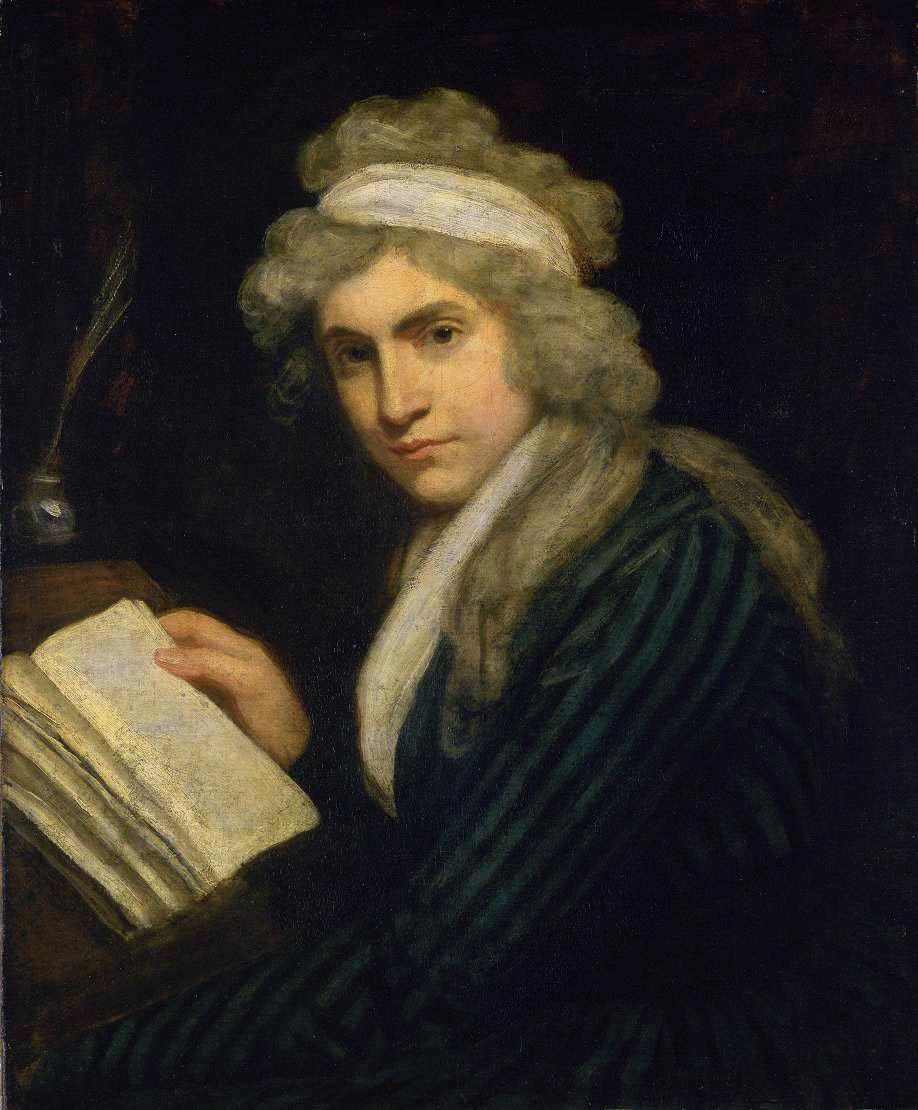
Wollstonecraft in 1790–1791, by John Opie
John Opie - Tate Britain
An oil portrait of Wollstonecraft against a near-black background. She has loosely curled ash-blonde hair held back by a white bandeau. Her gaze is direct and composed. She wears a deep teal draped garment with a white fichu at the neckline, and rests one hand on an open book. A quill and inkwell are visible to the upper left.
https://en.wikipedia.org/wiki/Mary_Wollstonecraft#/media/File:MaryWollstonecraft.jpg
DULL SWIFT. A stupid, sluggish fellow, one long going on an errand.
A selection from Francis Grose’s “Dictionary Of The Vulgar Tongue” (1785)
--
#books #literature #dictionaries #history #society #language #slang @histodons
Alt...
Image imitating a page from an old document, text (as in main toot):
DULL SWIFT. A stupid, sluggish fellow, one long going on an errand.
A selection from Francis Grose’s “Dictionary Of The Vulgar Tongue” (1785)
JACK OF LEGS. A tall long-legged man; also a giant, said to be buried in Weston church, near Baldock, in Hertfordshire, where there are two stones fourteen feet distant, said to be the head and feet stones of his grave.
A selection from Francis Grose’s “Dictionary Of The Vulgar Tongue” (1785)
--
#books #literature #dictionaries #history #society #language #slang @histodons
Alt...
Image imitating a page from an old document, text (as in main toot):
JACK OF LEGS. A tall long-legged man; also a giant, said to be buried in Weston church, near Baldock, in Hertfordshire, where there are two stones fourteen feet distant, said to be the head and feet stones of his grave.
A selection from Francis Grose’s “Dictionary Of The Vulgar Tongue” (1785)
Becoming George by Fiona Sampson review – the remarkable story of a cross-dressing 19th century novelist
A reappraisal of one of literature’s most sensational personalities, the author of more than 70 books
by Anthony Cummins
George Sand at PG:
https://www.gutenberg.org/ebooks/author/851
#books #literature #WomenHistoryMonth
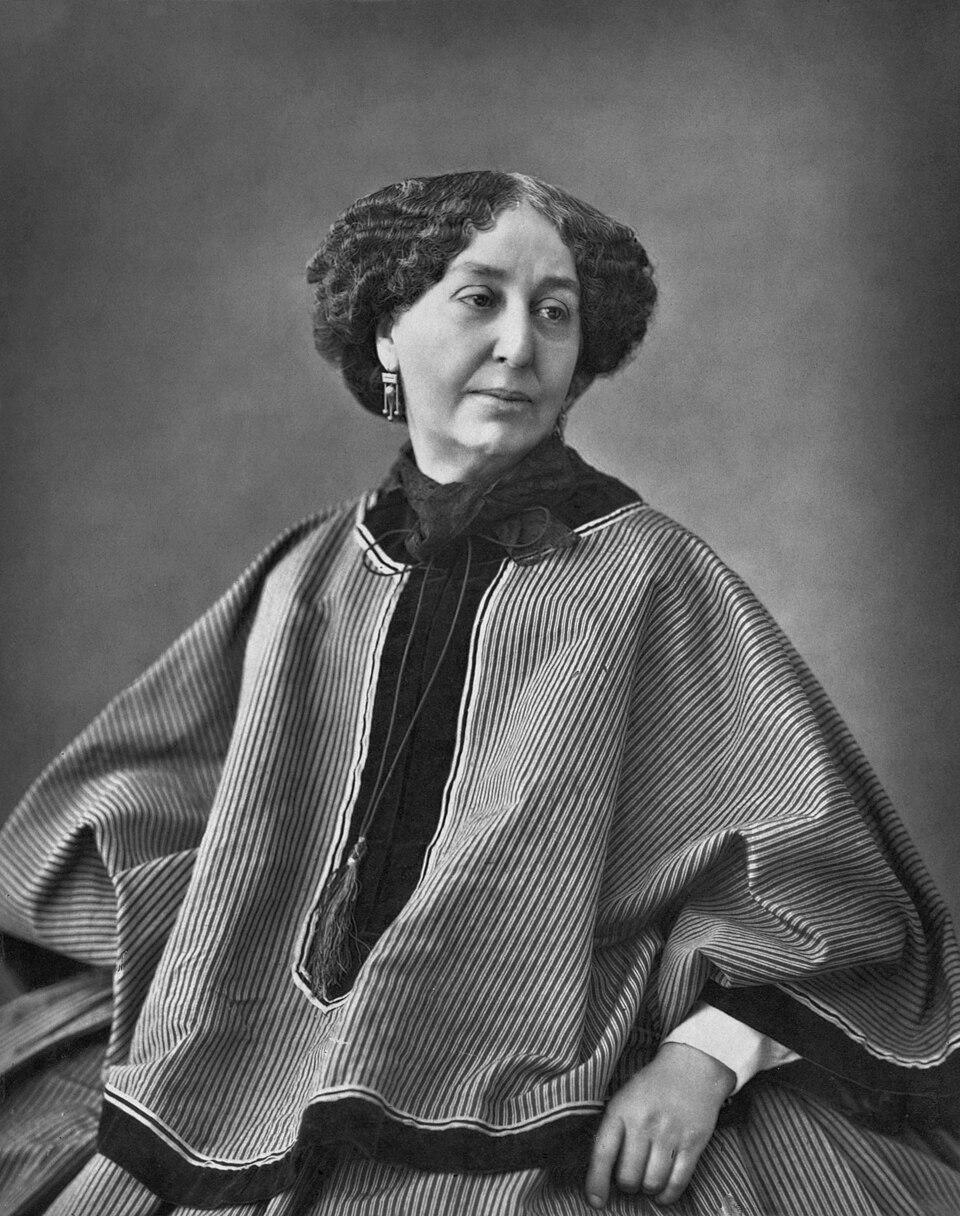
Alt...
The novelist George Sand is photographed by Nadar, who takes a series of pictures of the writer in March 1864.
Sand has dark, tightly curled hair pinned up, and wears drop earrings. Her expression is calm and self-possessed. She is dressed in a wide-sleeved striped cape or mantle with dark trim over a dark high-necked blouse.
https://en.wikipedia.org/wiki/George_Sand#/media/File:George_Sand_by_Nadar,_1864.jpg
![[?]](https://files.mastodon.social/accounts/avatars/000/938/679/original/a3489b1d07682e66.gif)
We're lucky to live in an area where we'll see owls in the wild. This pair we watched from hatching to leaving the nest.
They always take me back back to grade school where one of my books had the #poem The #Owl Critic which has since been favorite.
https://allpoetry.com/The-Owl-Critic
To the owl out there making all that racket thanks for the memories.
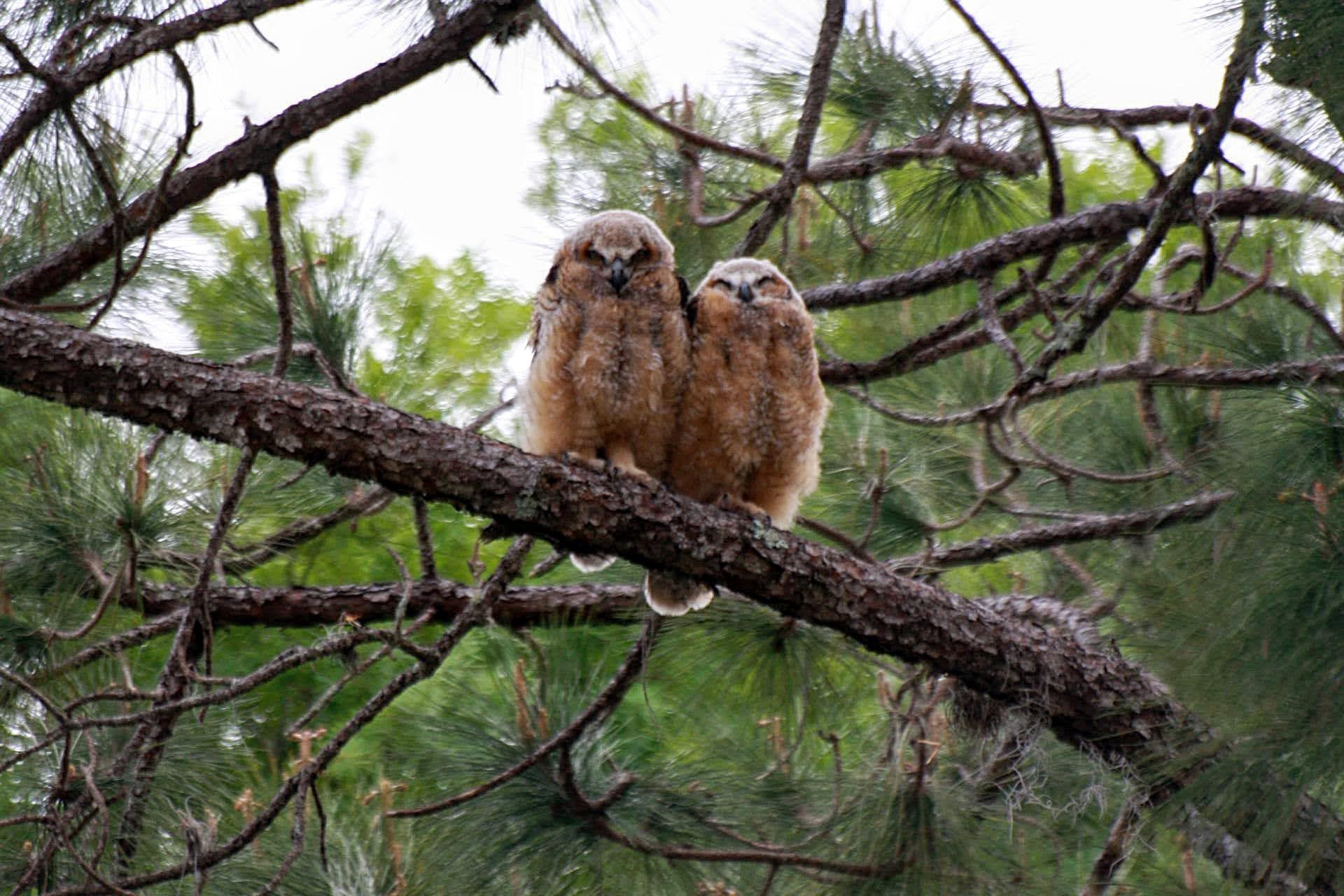
Alt...
A pair of owls in a tree.
MACCARONI. An Italian paste made of flour and eggs. Also a fop: which name arose from a club, called the Maccaroni Club, instituted by some of the most dressy travelled gentlemen about town, who led the fashions;
A selection from Francis Grose’s “Dictionary Of The Vulgar Tongue” (1785)
--
#books #literature #dictionaries #history #society #language #slang @histodons
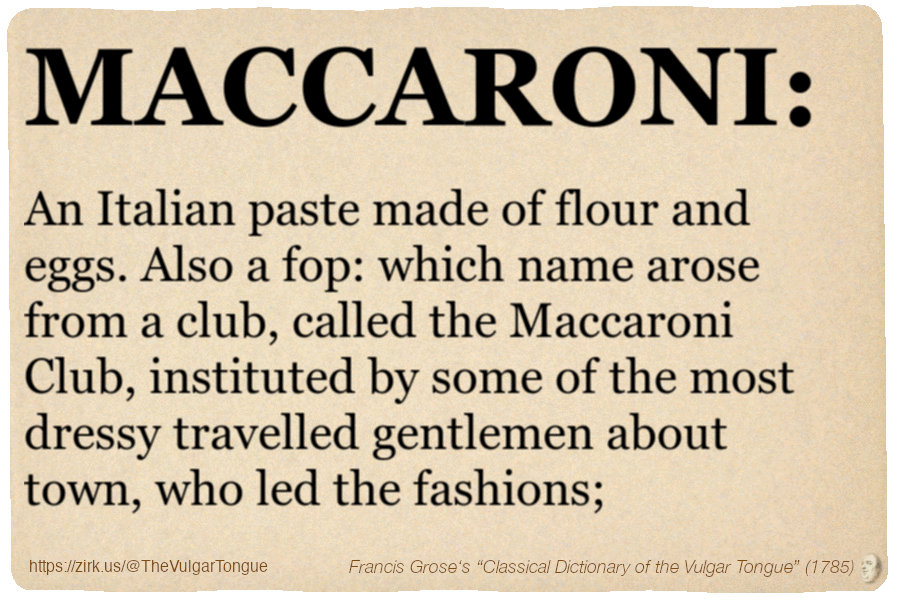
Alt...
Image imitating a page from an old document, text (as in main toot):
MACCARONI. An Italian paste made of flour and eggs. Also a fop: which name arose from a club, called the Maccaroni Club, instituted by some of the most dressy travelled gentlemen about town, who led the fashions;
A selection from Francis Grose’s “Dictionary Of The Vulgar Tongue” (1785)
NIPPERKIN. A small measure.
A selection from Francis Grose’s “Dictionary Of The Vulgar Tongue” (1785)
--
#books #literature #dictionaries #history #society #language #slang @histodons
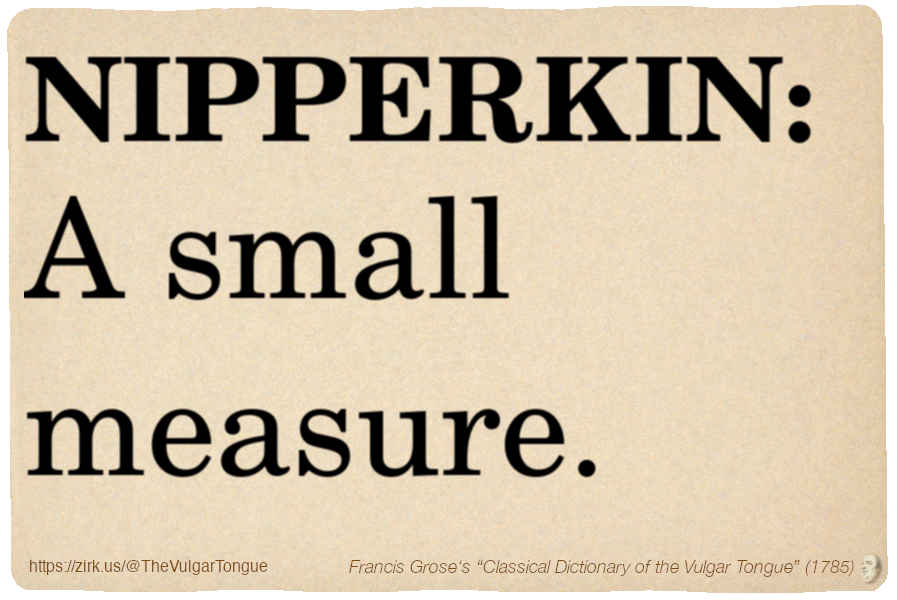
Alt...
Image imitating a page from an old document, text (as in main toot):
NIPPERKIN. A small measure.
A selection from Francis Grose’s “Dictionary Of The Vulgar Tongue” (1785)
The £7.5m book at centre of Small Prophets plot
Birds of America, published in the mid-19th Century by ornithologist artist John James Audubon, is one of the library's more valuable treasures.
by Marc Waddington
https://www.bbc.co.uk/news/articles/c77edrr8jg2o
Audubon at PG:
https://www.gutenberg.org/ebooks/author/41878
#books #literature #ornithology

Alt...
Snowy owl, Plate Number CXXI (121)
by Audubon, John James, 1785-1851
A large-format hand-coloured engraving showing two snowy owls perched on the branches of a dead tree against a dark, stormy nocturnal sky with moonlit clouds. The upper bird is predominantly white with minimal dark markings and bright yellow eyes, shown in an upright perched posture. The lower bird is larger and more heavily barred with dark brown-black patterning across its white plumage, also with vivid yellow eyes, leaning forward in a more alert, watchful stance. The dead tree is rendered in naturalistic detail with textured bark and lichen.
https://digital.cincinnatilibrary.org/digital/collection/p16998coll33/id/125/rec/23
CRAMP WORDS. Sentence of death passed on a criminal by a judge. He has just undergone the cramp word; sentence has just been passed on him. CANT.
A selection from Francis Grose’s “Dictionary Of The Vulgar Tongue” (1785)
--
#books #literature #dictionaries #history #society #language #slang @histodons
Alt...
Image imitating a page from an old document, text (as in main toot):
CRAMP WORDS. Sentence of death passed on a criminal by a judge. He has just undergone the cramp word; sentence has just been passed on him. CANT.
A selection from Francis Grose’s “Dictionary Of The Vulgar Tongue” (1785)
GUTS AND GARBAGE. A very fat man or woman. More guts than brains; a silly fellow. He has plenty of guts, but no bowels: said of a hard, merciless, unfeeling person.
A selection from Francis Grose’s “Dictionary Of The Vulgar Tongue” (1785)
--
#books #literature #dictionaries #history #society #language #slang @histodons
Alt...
Image imitating a page from an old document, text (as in main toot):
GUTS AND GARBAGE. A very fat man or woman. More guts than brains; a silly fellow. He has plenty of guts, but no bowels: said of a hard, merciless, unfeeling person.
A selection from Francis Grose’s “Dictionary Of The Vulgar Tongue” (1785)
FERMERDY BEGGARS. All those who have not the sham sores or clymes.
A selection from Francis Grose’s “Dictionary Of The Vulgar Tongue” (1785)
--
#books #literature #dictionaries #history #society #language #slang @histodons
Alt...
Image imitating a page from an old document, text (as in main toot):
FERMERDY BEGGARS. All those who have not the sham sores or clymes.
A selection from Francis Grose’s “Dictionary Of The Vulgar Tongue” (1785)
GIMCRACK, or JIMCRACK. A spruce wench; a gimcrack also means a person who has a turn for mechanical contrivances.
A selection from Francis Grose’s “Dictionary Of The Vulgar Tongue” (1785)
--
#books #literature #dictionaries #history #society #language #slang @histodons

Alt...
Image imitating a page from an old document, text (as in main toot):
GIMCRACK, or JIMCRACK. A spruce wench; a gimcrack also means a person who has a turn for mechanical contrivances.
A selection from Francis Grose’s “Dictionary Of The Vulgar Tongue” (1785)
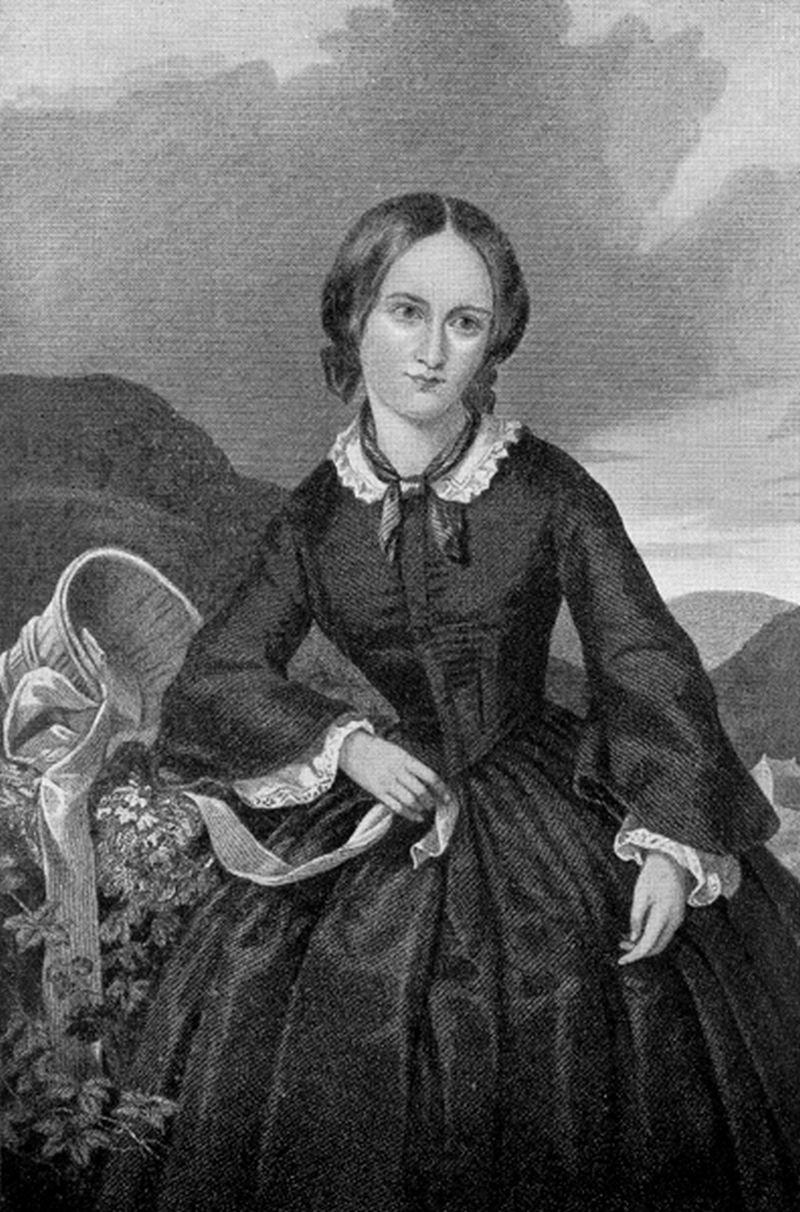
The scandal that engulfed the last Brontë sister's death
When Charlotte Brontë died—the last of her massively talented family to succumb to an early death—the press entered a feeding frenzy. A friend and equally famous writer aimed to set the record straight and nearly destroyed her career doing so.
https://www.nationalgeographic.com/history/article/bronte-sisters-charlotte-bronte-elizabeth-gaskell
Books by Charlotte Bronte at PG:
https://www.gutenberg.org/ebooks/author/408
Books by Elizabeth Gaskell at PG:
https://www.gutenberg.org/ebooks/author/220
Alt...
Drawing of Charlotte Bronte. She standing and holding her bonnet by the strings in her right hand.
CRINKUM CRANKUM. A woman's commodity. See SPECTATOR.
A selection from Francis Grose’s “Dictionary Of The Vulgar Tongue” (1785)
--
#books #literature #dictionaries #history #society #language #slang @histodons
Alt...
Image imitating a page from an old document, text (as in main toot):
CRINKUM CRANKUM. A woman's commodity. See SPECTATOR.
A selection from Francis Grose’s “Dictionary Of The Vulgar Tongue” (1785)
DISMAL DITTY. The psalm sung by the felons at the gallows, just before they are turned off.
A selection from Francis Grose’s “Dictionary Of The Vulgar Tongue” (1785)
--
#books #literature #dictionaries #history #society #language #slang @histodons
Alt...
Image imitating a page from an old document, text (as in main toot):
DISMAL DITTY. The psalm sung by the felons at the gallows, just before they are turned off.
A selection from Francis Grose’s “Dictionary Of The Vulgar Tongue” (1785)
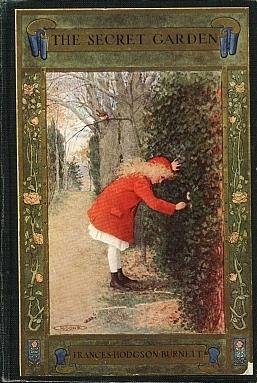
The Secret Garden by Frances Hodgeson Burnett was an early work of climate fiction
by Davina Quinlivan (from the archives)
The Secret Garden at PG:
https://www.gutenberg.org/ebooks/17396
Alt...
Cover page The Secret Garden
by Frances Hodgson Burnett
A hardcover book with a dark green cloth binding decorated with Art Nouveau-style floral borders in gold and muted colours running down both sides. A central rectangular illustration shows a young girl in a bright red coat and red hat, leaning forward and peering closely at a dense ivy-covered wall or hedge. Bare winter trees are visible in the background, and a small red robin perches on a branch to the upper left. The title THE SECRET GARDEN appears at the top in a decorative panel, and the author's name FRANCES HODGSON BURNETT is printed at the bottom.
PETER. A portmanteau or cloke-bag. Biter of peters; one that makes it a trade to steal boxes and trunks from behind stage coaches or out of waggons. To rob Peter to pay Paul; to borrow of one man to pay another: styled also manoeuvring the apostles.
A selection from Francis Grose’s “Dictionary Of The Vulgar Tongue” (1785)
--
#books #literature #dictionaries #history #society #language #slang @histodons
Alt...
Image imitating a page from an old document, text (as in main toot):
PETER. A portmanteau or cloke-bag. Biter of peters; one that makes it a trade to steal boxes and trunks from behind stage coaches or out of waggons. To rob Peter to pay Paul; to borrow of one man to pay another: styled also manoeuvring the apostles.
A selection from Francis Grose’s “Dictionary Of The Vulgar Tongue” (1785)
GRANNAM. Corn.
A selection from Francis Grose’s “Dictionary Of The Vulgar Tongue” (1785)
--
#books #literature #dictionaries #history #society #language #slang @histodons
Alt...
Image imitating a page from an old document, text (as in main toot):
GRANNAM. Corn.
A selection from Francis Grose’s “Dictionary Of The Vulgar Tongue” (1785)
Bird Grove review – George Eliot’s true story embellished in a tender drama
Elizabeth Dulau is terrific in Alexi Kaye Campbell’s new play as the young woman set to become a daring pioneer in fiction and real life
by Arifa Akbar
George Eliot at PG:
https://www.gutenberg.org/ebooks/author/90
Alt...
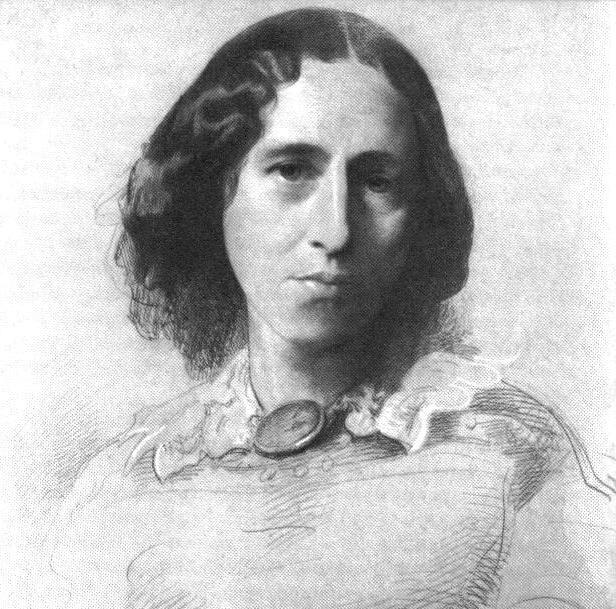
Portrait of George Eliot by Samuel Laurence, c. 1860.
A pencil or chalk portrait drawing of Eliot, shown from the chest up, her face turned slightly to the right. She has dark, wavy hair falling loosely to jaw length. Her features are strong and angular, with a direct, composed expression. She wears a light-coloured dress with a ruffled collar and a large oval brooch at the neckline.
https://en.wikipedia.org/wiki/George_Eliot#/media/File:George_Eliot_by_Samuel_Laurence.jpg
See How Ovid’s ‘Metamorphoses’ Inspired Centuries of Artists—From Caravaggio to René Magritte
A show at the Rijksmuseum brings together paintings, sculptures, film and other artworks that reinterpret the ancient Roman poet’s tales of transformation
by Christian Thorsberg
Metamorphoses at PG:
https://www.gutenberg.org/ebooks/21765
![Metamorphoses (Italian). - Printed in Venice: for Zoane Rosso Vercellese at the request of the noble man Lucantonio Zonta of Florence, in the year 1487, on the 10th day of April. - 146 c.; [*]4, a-r⁸, s⁶; fol. - Typographical mark in the explicit.
A woodcut-illustrated opening page of a 15th-century printed book, framed by an ornate Renaissance border. The border features putti, birds, foliate scrollwork, vases, and grotesque masks arranged symmetrically on all four sides. A frieze of nude figures in a landscape runs along the bottom panel.
The central woodcut illustration depicts a bearded robed figure standing amid various animals — a lion, a rabbit, and a fox — in a landscape with a large rock or mountain, trees, and celestial bodies including a sun with a face and a crescent moon. Two winged birds fly above.
Below the woodcut, the text begins in Italian in two columns, with two decorative woodcut initial letters — a large ornamental I and a P — marking the start of paragraphs. The text opens with "Incomicia il primo libro methAmorphoseos de Ouidio in prosa vulgare traduto con le alegorie. Capitulo primo."
At the bottom centre is a circular library stamp.
Ovidius Naso, Publius - Available in the BEIC digital library and uploaded in partnership with BEIC Foundation.
https://en.wikipedia.org/wiki/Metamorphoses#/media/File:Ovidius_Naso_-_Metamorphoses,_del_MCCCCLXXXXVII_Adi_X_del_mese_di_aprile_-_1583162_Carta_a1r.jpeg](https://files.mastodon.social/media_attachments/files/116/136/326/728/055/435/original/40f0c8c32b0c92ad.jpg "Metamorphoses (Italian). - Printed in Venice: for Zoane Rosso Vercellese at the request of the noble man Lucantonio Zonta of Florence, in the year 1487, on the 10th day of April. - 146 c.; [*]4, a-r⁸, s⁶; fol. - Typographical mark in the explicit.
A woodcut-illustrated opening page of a 15th-century printed book, framed by an ornate Renaissance border. The border features putti, birds, foliate scrollwork, vases, and grotesque masks arranged symmetrically on all four sides. A frieze of nude figures in a landscape runs along the bottom panel.
The central woodcut illustration depicts a bearded robed figure standing amid various animals — a lion, a rabbit, and a fox — in a landscape with a large rock or mountain, trees, and celestial bodies including a sun with a face and a crescent moon. Two winged birds fly above.
Below the woodcut, the text begins in Italian in two columns, with two decorative woodcut initial letters — a large ornamental I and a P — marking the start of paragraphs. The text opens with \"Incomicia il primo libro methAmorphoseos de Ouidio in prosa vulgare traduto con le alegorie. Capitulo primo.\"
At the bottom centre is a circular library stamp.
Ovidius Naso, Publius - Available in the BEIC digital library and uploaded in partnership with BEIC Foundation.
https://en.wikipedia.org/wiki/Metamorphoses#/media/File:Ovidius_Naso_-_Metamorphoses,_del_MCCCCLXXXXVII_Adi_X_del_mese_di_aprile_-_1583162_Carta_a1r.jpeg")
Alt...
Metamorphoses (Italian). - Printed in Venice: for Zoane Rosso Vercellese at the request of the noble man Lucantonio Zonta of Florence, in the year 1487, on the 10th day of April. - 146 c.; [*]4, a-r⁸, s⁶; fol. - Typographical mark in the explicit.
A woodcut-illustrated opening page of a 15th-century printed book, framed by an ornate Renaissance border. The border features putti, birds, foliate scrollwork, vases, and grotesque masks arranged symmetrically on all four sides. A frieze of nude figures in a landscape runs along the bottom panel.
The central woodcut illustration depicts a bearded robed figure standing amid various animals — a lion, a rabbit, and a fox — in a landscape with a large rock or mountain, trees, and celestial bodies including a sun with a face and a crescent moon. Two winged birds fly above.
Below the woodcut, the text begins in Italian in two columns, with two decorative woodcut initial letters — a large ornamental I and a P — marking the start of paragraphs. The text opens with "Incomicia il primo libro methAmorphoseos de Ouidio in prosa vulgare traduto con le alegorie. Capitulo primo."
At the bottom centre is a circular library stamp.
Ovidius Naso, Publius - Available in the BEIC digital library and uploaded in partnership with BEIC Foundation.
https://en.wikipedia.org/wiki/Metamorphoses#/media/File:Ovidius_Naso_-_Metamorphoses,_del_MCCCCLXXXXVII_Adi_X_del_mese_di_aprile_-_1583162_Carta_a1r.jpeg
TO LUSH. To drink.
A selection from Francis Grose’s “Dictionary Of The Vulgar Tongue” (1785)
--
#books #literature #dictionaries #history #society #language #slang @histodons
Alt...
Image imitating a page from an old document, text (as in main toot):
TO LUSH. To drink.
A selection from Francis Grose’s “Dictionary Of The Vulgar Tongue” (1785)
Hi!, I'm a bot posting selections from Francis Grose’s 1785 “Dictionary Of The Vulgar Tongue”, a compilation of slang terms, the coded language of the underclass and the demi-monde.
[18th-century-content warning: possible racism, animal cruelty, homophobia, sexism, slut-shaming. Let me know of any problems.]
#FollowFriday #books #literature #dictionaries #history #society #crime #language #slang #18thCentury
Alt...
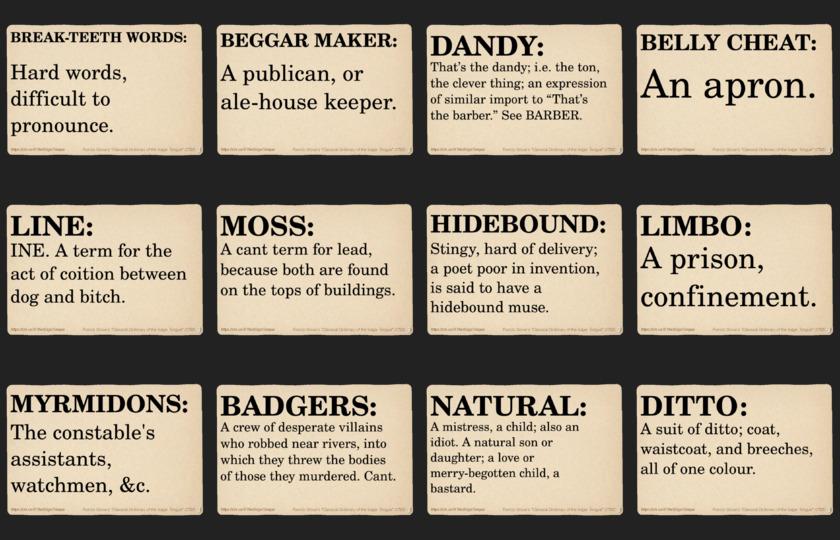
Montage of dictionary items posted by this account
#OTD in In 1830, Victor Hugo‘s play Hernani premieres in Paris, eliciting protests from the audience for its attack on Classicism.
https://en.wikipedia.org/wiki/Hernani_(drama)
"Hernani" (in French) at PG:
https://www.gutenberg.org/ebooks/9976
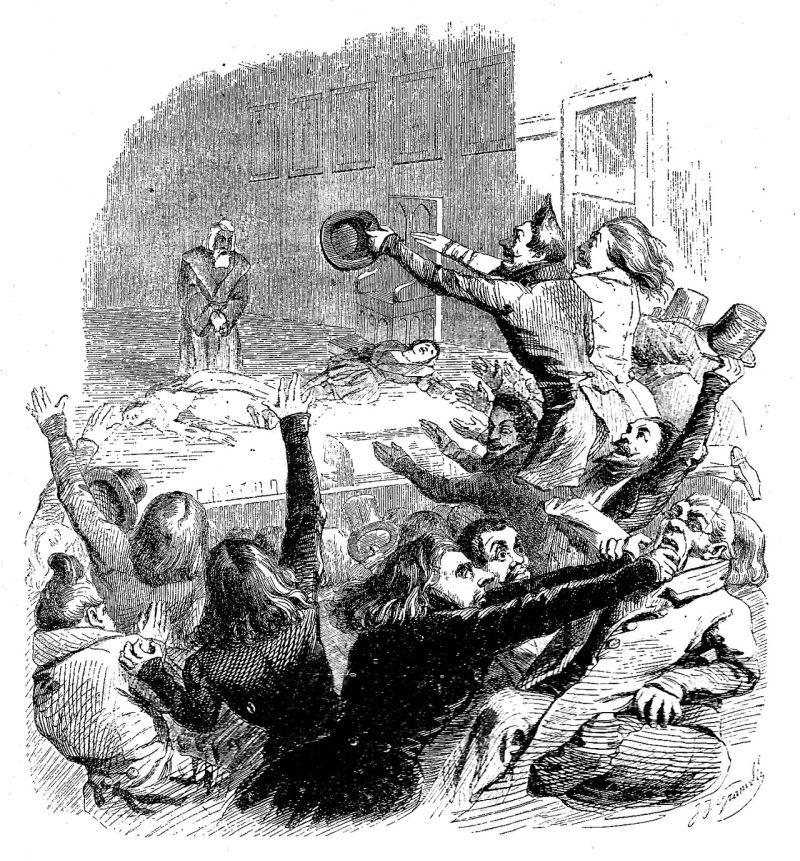
Alt...
Caricature by J. J. Grandville of the audience fighting at the premiere of Hernani. The audience is yelling at the stage. In the foreground two men are attacking a third man.
BLANKET HORNPIPE. The amorous congress.
A selection from Francis Grose’s “Dictionary Of The Vulgar Tongue” (1785)
--
#books #literature #dictionaries #history #society #language #slang @histodons
Alt...
Image imitating a page from an old document, text (as in main toot):
BLANKET HORNPIPE. The amorous congress.
A selection from Francis Grose’s “Dictionary Of The Vulgar Tongue” (1785)
Guide to the classics: 18th century novel Fantomina has a sexually curious, identity-switching heroine
Eliza Haywood was a bestselling 18th century author closely associated with the then-emerging genre of the novel. Little is known of her life beyond her writing.
by Nicola Parsons
Elisa Haywood at PG:
https://www.gutenberg.org/ebooks/author/3687

Alt...
Title page for the first publication of Fantomina in 1725
Eliza Haywood - Haywood, Eliza Fowler. Secret histories, novels and poems. In four volumes. Written by Mrs. Eliza Haywood. Vol. 3.The second edition. London, 1725. Eighteenth Century Collections Online
A title page from an 18th-century printed book, with text in varying typefaces and sizes within a plain ruled border. It reads:
FANTOMINA: OR, Love in a Maze. BEING A Secret History OF AN AMOUR Between Two Persons of Condition. By Mrs. ELIZA HAYWOOD.
Below that, an italic epigraph attributed to Waller: "In Love the Victors from the Vanquish'd fly, They fly that wound, and they pursue that dye."
At the bottom, the publication details: LONDON: Printed for D. Browne jun. at the Black-Swan without Temple-Bar, and S. Chapman, at the Angel in Pallmall. M.DCC.XXV.
https://upload.wikimedia.org/wikipedia/commons/a/ae/Fantomina.png
TO BLUBBER. To cry.
A selection from Francis Grose’s “Dictionary Of The Vulgar Tongue” (1785)
--
#books #literature #dictionaries #history #society #language #slang @histodons
Alt...
Image imitating a page from an old document, text (as in main toot):
TO BLUBBER. To cry.
A selection from Francis Grose’s “Dictionary Of The Vulgar Tongue” (1785)
BAWDY-HOUSE BOTTLE. A very small bottle; short measure being among the many means used by the keepers of those houses, to gain what they call an honest livelihood: the less they give a man of their infernal beverages for his money, the kinder they behave to him.
A selection from Francis Grose’s “Dictionary Of The Vulgar Tongue” (1785)
--
#books #literature #dictionaries #history #society #language #slang @histodons
Alt...
Image imitating a page from an old document, text (as in main toot):
BAWDY-HOUSE BOTTLE. A very small bottle; short measure being among the many means used by the keepers of those houses, to gain what they call an honest livelihood: the less they give a man of their infernal beverages for his money, the kinder they behave to him.
A selection from Francis Grose’s “Dictionary Of The Vulgar Tongue” (1785)
6 Authors Who Hated Their Most Popular Books
From Agatha Christie to Franz Kafka, these authors were not fans of their most beloved creations.
By Paul Anthony Jones
https://www.mentalfloss.com/entertainment/literature/authors-who-hated-their-most-popular-books
Louisa May Alcott, Agatha Christie, Conan Doyle, Kafka, MIlne at PG:
https://www.gutenberg.org/ebooks/author/102
https://www.gutenberg.org/ebooks/author/451
https://www.gutenberg.org/ebooks/author/69
https://www.gutenberg.org/ebooks/author/1735
https://www.gutenberg.org/ebooks/author/730

Alt...
Last extant portrait photograph of Franz Kafka. It was probably taken in September 1923 at Wertheim Department Store in Berlin.
A black-and-white portrait photograph of Kafka in a dark suit jacket, white shirt, and striped tie. He has short dark hair, prominent ears, and large, dark, intensely focused eyes. His expression is serious and direct.
https://en.wikipedia.org/wiki/Franz_Kafka#/media/File:Franz_Kafka,_1923.jpg
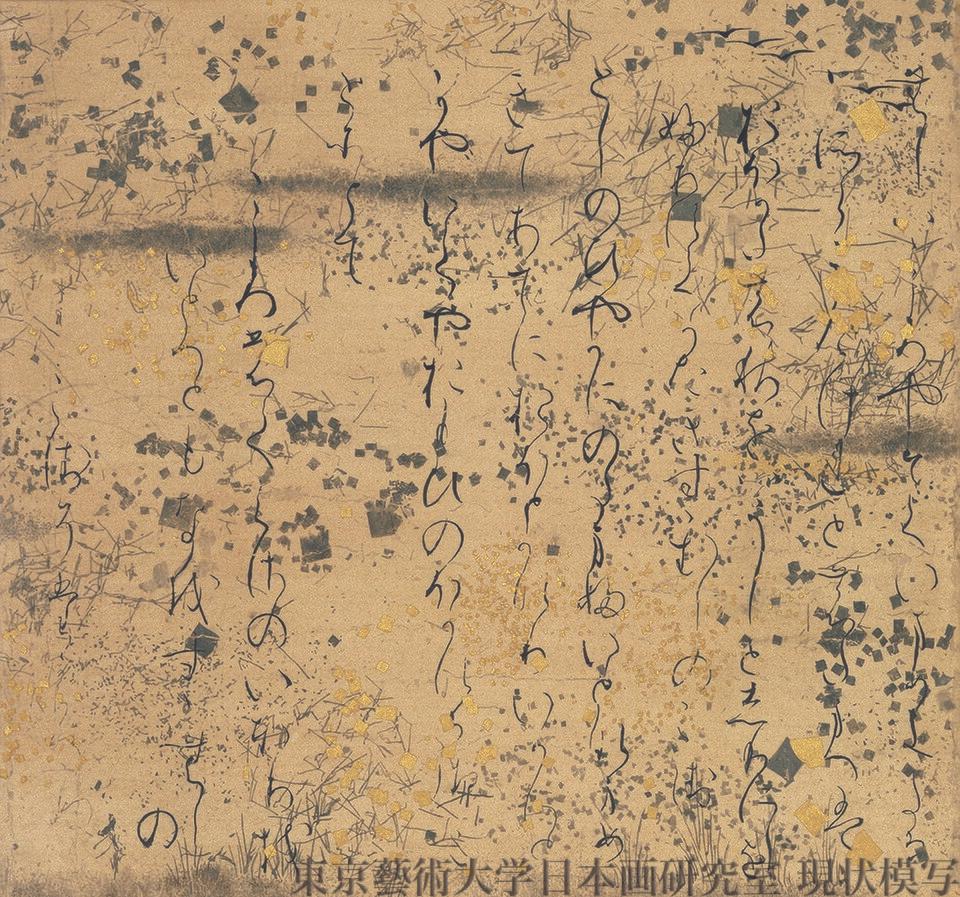
‘The tale of Genji’
A beautifully wrought, truncated version of the world’s first novel.
“The Tale of Genji,” one of the foundational works of Japanese literature, was written 1,000 years ago and is more than 1,000 pages long. Penned over the course of a decade or so by Murasaki Shikibu, it is widely considered the world’s first novel. It’s also a landmark of women’s world literature.
by Neely Tucker
https://lcm.loc.gov/issue/january-february-2026/the-tale-of-genji/
The tale of Genji at PG:
https://www.gutenberg.org/ebooks/66057
Alt...
Fragment of an emaki from the 12th century Genji Monogatari. H 21.8 x W 23.4cm. Paper decorated with gold. The author of the painting belonged to the upper court during the Heian period; it would be Fujiwara Takashino or Takayoshi (藤原 隆 能,? 1126 -1174?).
The text is written in hiragana in the sōgana (草仮名) cursive style — an extremely fluid, abbreviated form that was considered the height of aristocratic elegance at the Heian court. It was known as onnade (女手, "women's hand"), the feminine script associated with court literature, as opposed to the more formal Chinese-derived kanji used in official documents by men.
https://en.wikipedia.org/wiki/The_Tale_of_Genji#/media/File:Genji_emaki_01003_002.jpg
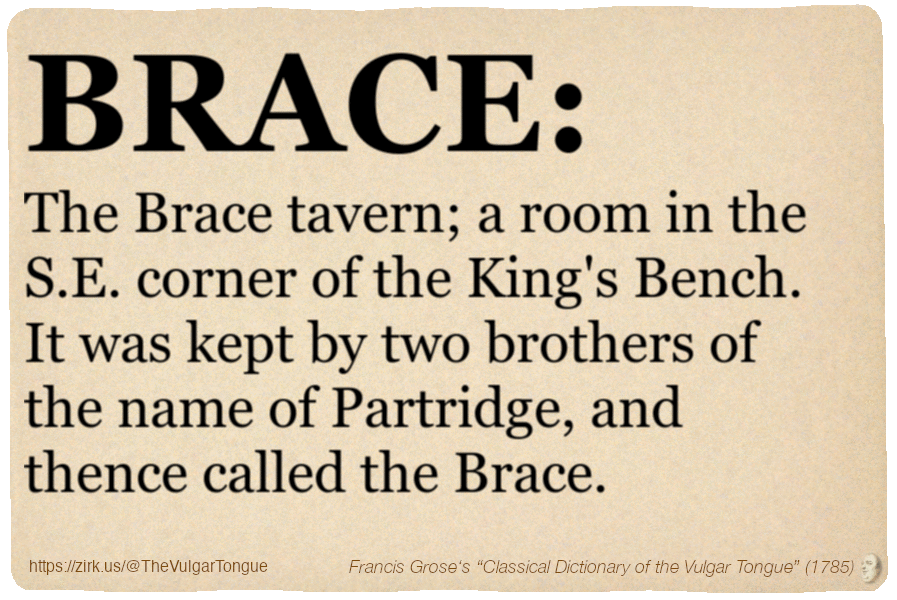
BRACE. The Brace tavern; a room in the S.E. corner of the King's Bench. It was kept by two brothers of the name of Partridge, and thence called the Brace.
A selection from Francis Grose’s “Dictionary Of The Vulgar Tongue” (1785)
--
#books #literature #dictionaries #history #society #language #slang @histodons
Alt...
Image imitating a page from an old document, text (as in main toot):
BRACE. The Brace tavern; a room in the S.E. corner of the King's Bench. It was kept by two brothers of the name of Partridge, and thence called the Brace.
A selection from Francis Grose’s “Dictionary Of The Vulgar Tongue” (1785)
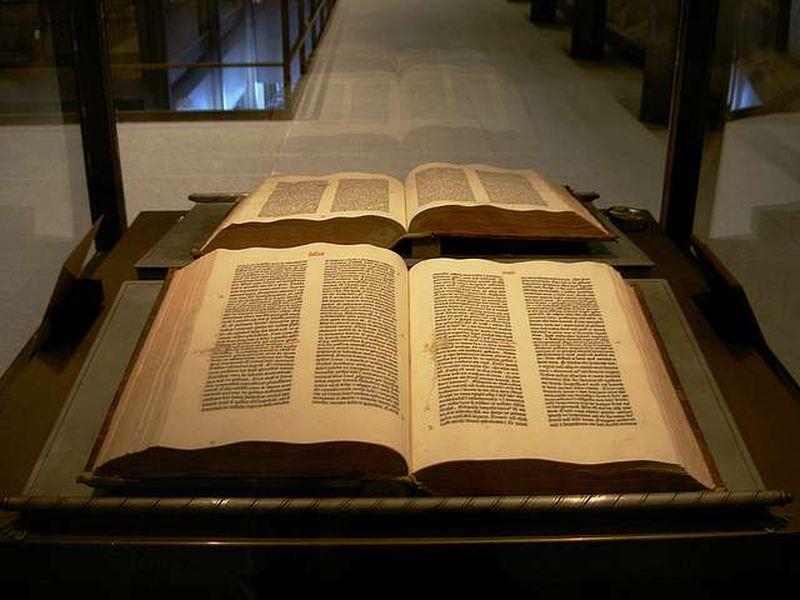
This Week in Literary History: The Gutenberg Bible is Published.
“Previously, manuscripts had to be printed and copied laboriously, by hand, making them rare objects for the wealthy and important.”
https://lithub.com/this-week-in-literary-history-the-gutenberg-bible-is-published/
"Gutenberg, and the Art of Printing" at PG:
https://www.gutenberg.org/ebooks/51358
Alt...
Gutenberg Bible. The book is open.
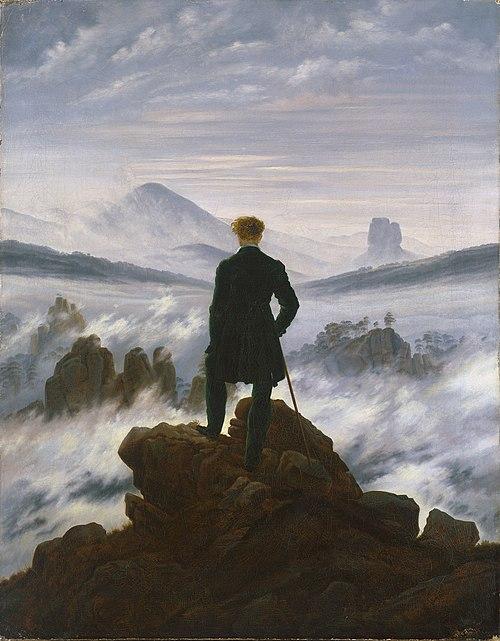
"When Zarathustra was thirty years old, he left his home and the lake of his home, and went into the mountains. There he enjoyed his spirit and solitude, and for ten years did not weary of it."
Opening lines
How Nietzsche’s Zarathustra Redefined Morality & Revolutionized Philosophy
by Viktoriya Sus
https://www.thecollector.com/nietzsche-thus-spoke-zarathustra-work-philosophy/
Zarathustra at PG:
https://www.gutenberg.org/ebooks/search/?query=Zarathustra+
#books #literature #philosophy
Alt...
Wanderer above the Sea of Fog by Caspar David Friedrich, 1818.
The hiker stands as a back figure in the center of the composition. He looks down on an almost impenetrable sea of fog in the midst of a rocky landscape - a metaphor for life as an ominous journey into the unknown.
https://en.wikipedia.org/wiki/Wanderer_above_the_Sea_of_Fog#/media/File:Caspar_David_Friedrich_-_Wanderer_above_the_Sea_of_Fog.jpeg
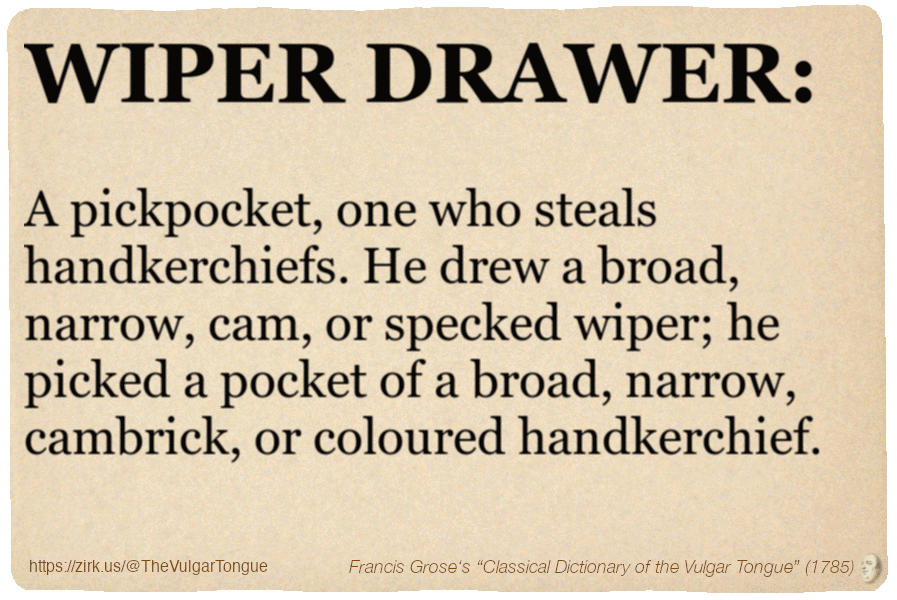
WIPER DRAWER. A pickpocket, one who steals handkerchiefs. He drew a broad, narrow, cam, or specked wiper; he picked a pocket of a broad, narrow, cambrick, or coloured handkerchief.
A selection from Francis Grose’s “Dictionary Of The Vulgar Tongue” (1785)
--
#books #literature #dictionaries #history #society #language #slang @histodons
Alt...
Image imitating a page from an old document, text (as in main toot):
WIPER DRAWER. A pickpocket, one who steals handkerchiefs. He drew a broad, narrow, cam, or specked wiper; he picked a pocket of a broad, narrow, cambrick, or coloured handkerchief.
A selection from Francis Grose’s “Dictionary Of The Vulgar Tongue” (1785)
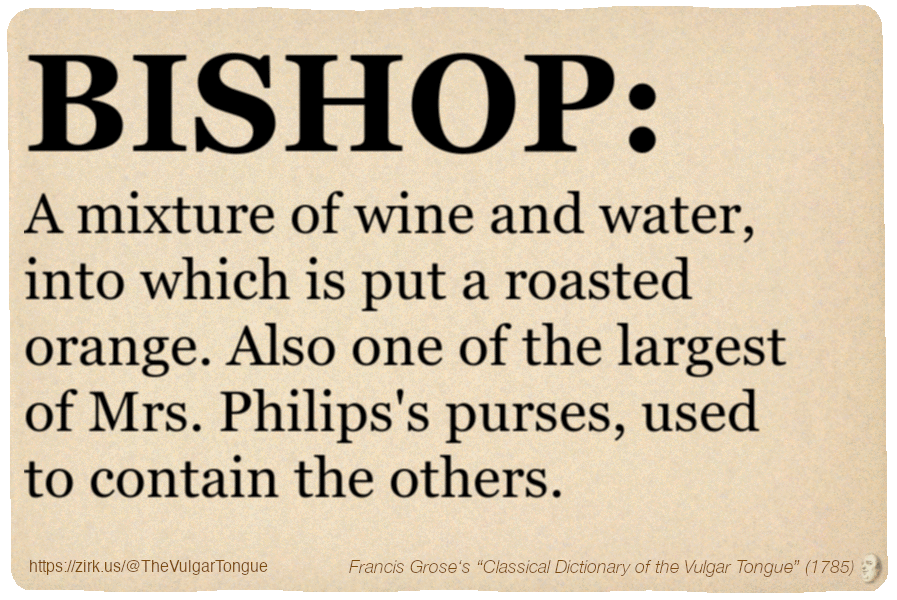
BISHOP. A mixture of wine and water, into which is put a roasted orange. Also one of the largest of Mrs. Philips's purses, used to contain the others.
A selection from Francis Grose’s “Dictionary Of The Vulgar Tongue” (1785)
--
#books #literature #dictionaries #history #society #language #slang @histodons
Alt...
Image imitating a page from an old document, text (as in main toot):
BISHOP. A mixture of wine and water, into which is put a roasted orange. Also one of the largest of Mrs. Philips's purses, used to contain the others.
A selection from Francis Grose’s “Dictionary Of The Vulgar Tongue” (1785)
Elizabeth Cady Stanton Is Known as the Woman Behind the Suffrage Movement. A New Book Reveals the Story Behind Her Tenacity
Her role as a historic hero or villain depends on the movement in question, but looking at her as a mother and daughter adds depth to her legend
by Lucia Graves
Elizabeth Stanton at PG:
https://www.gutenberg.org/ebooks/author/3186

Alt...
Elizabeth Cady Stanton (1815-1902)
A sepia-toned portrait photograph of Elizabeth Stanton seated and turned slightly to one side. She has a full head of white curly hair, cropped close to the head, with a small dark cap or ornament perched at the top. A long dark lace veil falls from the cap over her shoulder and drapes across her lap. She wears a dark dress with a lighter collar or chemise visible at the neckline, and a long string of dark beads around her neck. Her hands rest quietly in her lap, one slightly over the other. Her expression is composed and direct, with a calm, self-possessed dignity.
https://en.wikipedia.org/wiki/Elizabeth_Cady_Stanton#/media/File:Elizabeth_Stanton.jpg
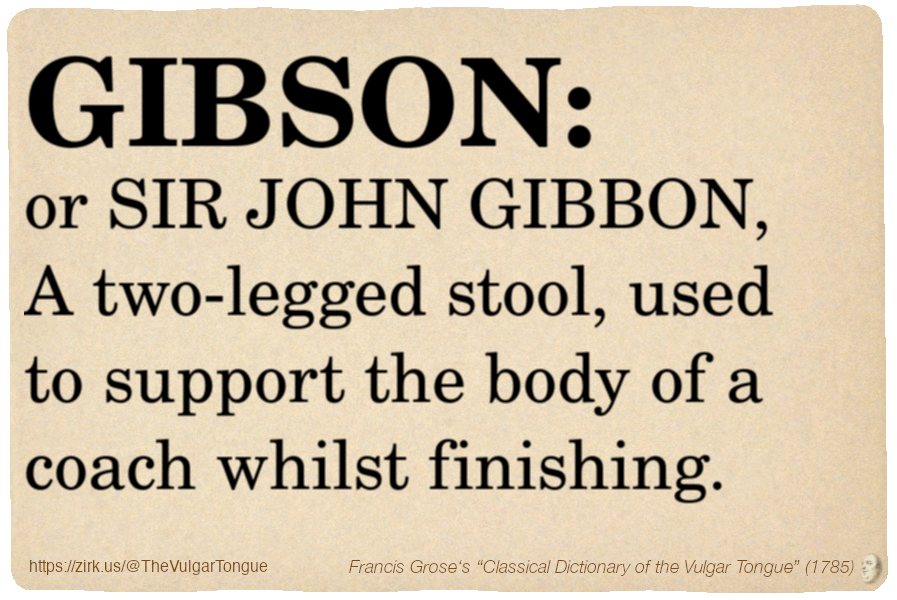
GIBSON, or SIR JOHN GIBBON, A two-legged stool, used to support the body of a coach whilst finishing.
A selection from Francis Grose’s “Dictionary Of The Vulgar Tongue” (1785)
--
#books #literature #dictionaries #history #society #language #slang @histodons
Alt...
Image imitating a page from an old document, text (as in main toot):
GIBSON, or SIR JOHN GIBBON, A two-legged stool, used to support the body of a coach whilst finishing.
A selection from Francis Grose’s “Dictionary Of The Vulgar Tongue” (1785)