Search results for tag #space
![[?]](https://cdn.masto.host/appdotnet/accounts/avatars/000/001/724/original/8b70880494ca563d.png)
![[?]](https://files.techhub.social/accounts/avatars/115/321/136/132/964/233/original/db1afda53aac9c0f.png)
NASA Adds Mission to Artemis Lunar Program, Updates Architecture
https://www.nasa.gov/news-release/nasa-adds-mission-to-artemis-lunar-program-updates-architecture/
![[?]](https://media2.ai6yr.org/accounts/avatars/109/321/592/360/914/018/original/f918064fa4350d36.jpg)
![[?]](https://sbonline.nyc3.digitaloceanspaces.com/accounts/avatars/109/694/346/929/844/617/original/f4847180e4e3ef0e.jpg)
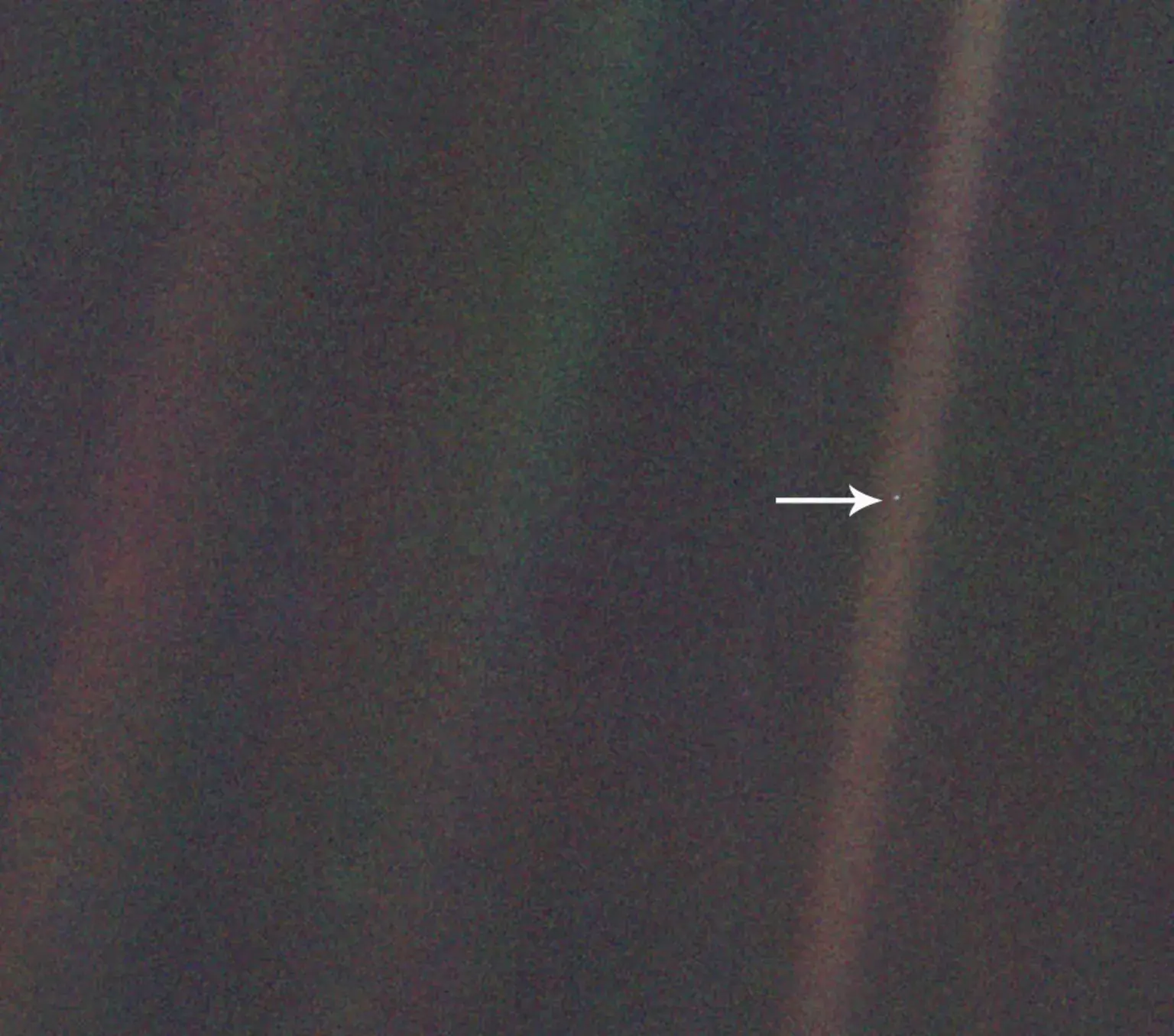
On this day in 1990, the Voyager 1 space probe took a photo of our planet from approximately 6 billion kilometers (3.7 billion miles) away.
"Commissioned by NASA and resulting from the advocacy of astronomer and author Carl Sagan, the photograph was interpreted in Sagan's 1994 book, Pale Blue Dot, as representing humanity's minuscule and ephemeral place amidst the cosmos."
https://en.wikipedia.org/wiki/Pale_Blue_Dot
Image via https://www.bbc.com/news/science-environment-51491471
#OnThisDay #OTD #history #space #science #nasa #PaleBlueDot #humanity
Alt...
A grainy, low resolution image of space, with faint bright-colored streaks. An arrow points to a small dot, our very own planet Earth.
![[?]](https://files.mstdn.party/accounts/avatars/109/412/668/953/833/198/original/0f95655ae0a3a89e.jpg)
Dark and Stormy Jupiter
Art available here: https://fineartamerica.com/featured/1-dark-and-stormy-jupiter-nasa.html
#space #nasa #wallart #homedecor #fineartamerica

Churning Texture in Jupiter's Atmosphere
Art available here: https://fineartamerica.com/featured/churning-texture-in-jupiters-atmosphere-nasa-jpl.html
#space #nasa #wallart #homedecor #fineartamerica

Orion Nebula in Infrared
Art available here: https://fineartamerica.com/featured/orion-nebula-in-infrared-esa-nasa-jpl.html
#space #nasa #wallart #homedecor #fineartamerica

Hubble Captures Spectacular Landscape in the Carina Nebula
Art available here: https://fineartamerica.com/featured/hubble-captures-spectacular-landscape-in-the-carina-nebula-joseph-s-giacalone.html
#space #nasa #wallart #homedecor #art

James Webb Space Telescope - Crab Nebula - NIRCam and MIRI Image
Art available here: https://fineartamerica.com/featured/james-webb-space-telescope-crab-nebula-nircam-and-miri-image-joseph-s-giacalone.html
#space #nasa #wallart #homedecor #art

NGC 604 - NIRCam Image
Bring the majesty of outer space to your indoor space.
Art available here: https://fineartamerica.com/featured/ngc-604-nircam-image-joseph-s-giacalone.html
#space #nasa #art #wallart #homedecor

Serpens North Aligned Outflows Crop
Bring the majesty of outer space to your indoor space.
Art available here: https://fineartamerica.com/featured/serpens-north-aligned-outflows-crop-joseph-s-giacalone.html
#space #nasa #art #wallart #homedecor

Rho Ophiuchi Composite
Bring the majesty of outer space to your indoor space.
Art available here: https://fineartamerica.com/featured/rho-ophiuchi-composite-joseph-s-giacalone.html
#space #nasa #art #wallart #homedecor

Observatories Combine to Crack Open the Crab Nebula
Bring the majesty of outer space to your indoor space.
Art available here: https://fineartamerica.com/featured/observatories-combine-to-crack-open-the-crab-nebula-joseph-s-giacalone.html
#space #nasa #art #wallart #homedecor #mastoart

The Stars My Destination
Bring the majesty of outer space to your indoor space.
Art available here: https://fineartamerica.com/featured/the-stars-my-destination-joseph-s-giacalone.html
#space #nasa #art #wallart #homedecor

Cosmic Wonders - Pismis 24.
Bring the majesty of outer space to your indoor space.
Art available here: https://fineartamerica.com/featured/cosmic-wonders-pismis-24-joseph-s-giacalone.html
#space #nasa #art #wallart #homedecor

![[?]](https://files.mastodon.social/accounts/avatars/108/199/369/635/905/314/original/c1e859b9fa6a0178.jpg)
My nomination for today's #SuperbOwl.
The Cosmic Owl is two galaxies that crashed into each other, creating overlapping ring-shaped splashes of stars. It measures 150,000 light years from side to side, or about 10^20 times the size of a Great Grey Owl on Earth.
https://arxiv.org/abs/2506.10058 #space #science #nature #sports

Alt...
The "Cosmic Owl," as photographed by the James Webb Space Telescope. Each "eye" is an active galactic nucleus, and the "beak" is a nursery of stars. (Image credit: Li et al.)
![[?]](https://techpolicy-social.s3.bhs.io.cloud.ovh.net/accounts/avatars/109/671/942/557/361/210/original/1b5167789db8edfe.png)
The latest FAA licensing framework for #space launches is needlessly complex and opaque, and often leads to longer processing times than the framework it replaced. Meanwhile, overly restrictive export controls prevent U.S. companies from working with close allies who are developing their own commercial launch capabilities. Updating regulations to match the pace of the space industry would benefit all. https://ccianet.org/news/2026/02/new-report-identifies-major-barriers-to-launching-a-robust-space-economy/

![[?]](https://s3.eu-central-2.wasabisys.com/mastodonworld/accounts/avatars/109/362/359/610/912/307/original/4854f87af56f0d9a.png)
"Apollo 8 saved 1968. Artemis II may work similar magic today."
Jeffrey Kluger for TIME: https://time.com/7346146/artemis-ii-launch-nasa-astronauts-moon-mission/
#Longreads #Space #Moon #NASA #Astronaut #Lunar #OuterSpace #Artemis
![[?]](https://files.mastodon.social/accounts/avatars/108/194/517/328/875/592/original/23e08b8ecac44c68.gif)
Enter the Dragon 🐉🥋
Here it is – my new JWST image of the young protostellar outflow system in Cassiopeia called HH288, aka The Dragon Jet.
We discovered it in the 1990s & the NASA/ESA/CSA JWST reveals stunning new detail, including several new jets crossing the main dragon 🙂👍
This is a 4K version – you can view & download the full 12K image here: https://www.flickr.com/gp/markmccaughrean/944q5814f8
For more coverage, see this by @DrCarpineti at: https://www.iflscience.com/dragon-jet-erupts-from-baby-stars-in-stunning-new-jwst-image-82374
#Space #SpaceScience #Astronomy #Photography

Alt...
An image of a young protostellar outflow called HH288 in space, as seen with JWST. Much of the background is dark black and blue, with many stars sprinkled across with different colours and brightnesses, many showing the classic eight-pointed shape that comes from the JWST optics. The Dragon Jet itself is a swath of red, orange, and yellow emission spread horizontally across the image, with at least two crossing flows. The main flow resembles a Chinese dragon, hence the name.
"We have already ceded our rockets and space stations to men with messiah complexes—and our wombs may be next."
Darshana Narayanan for Pioneer Works Broadcast: https://pioneerworks.org/broadcast/baby-making-on-mars-darshana-narayanan
#Longreads #Space #Mars #NASA #Science #Biology #Research #Pregnancy
![[?]](https://cdn.masto.host/mastodongamedevplace/accounts/avatars/109/859/285/072/781/117/original/52b616f54f20c98f.png)
Going around the Moon is as far as humans have ever been from Earth, so these astronauts are doing something pretty amazing next month.
![[?]](https://todon.nl/system/accounts/avatars/113/848/639/719/282/857/original/42ce9c1eedd78918.jpg)
![[?]](https://m-cdn.flipboard.social/accounts/avatars/110/068/762/697/825/294/original/d3f34437c275e777.jpg)
Blue Origin is looking at late February for the third launch of its New Glenn mega-rocket. But it won’t be heading to the moon, as the company had previously hinted. Read more from @Techcrunch:
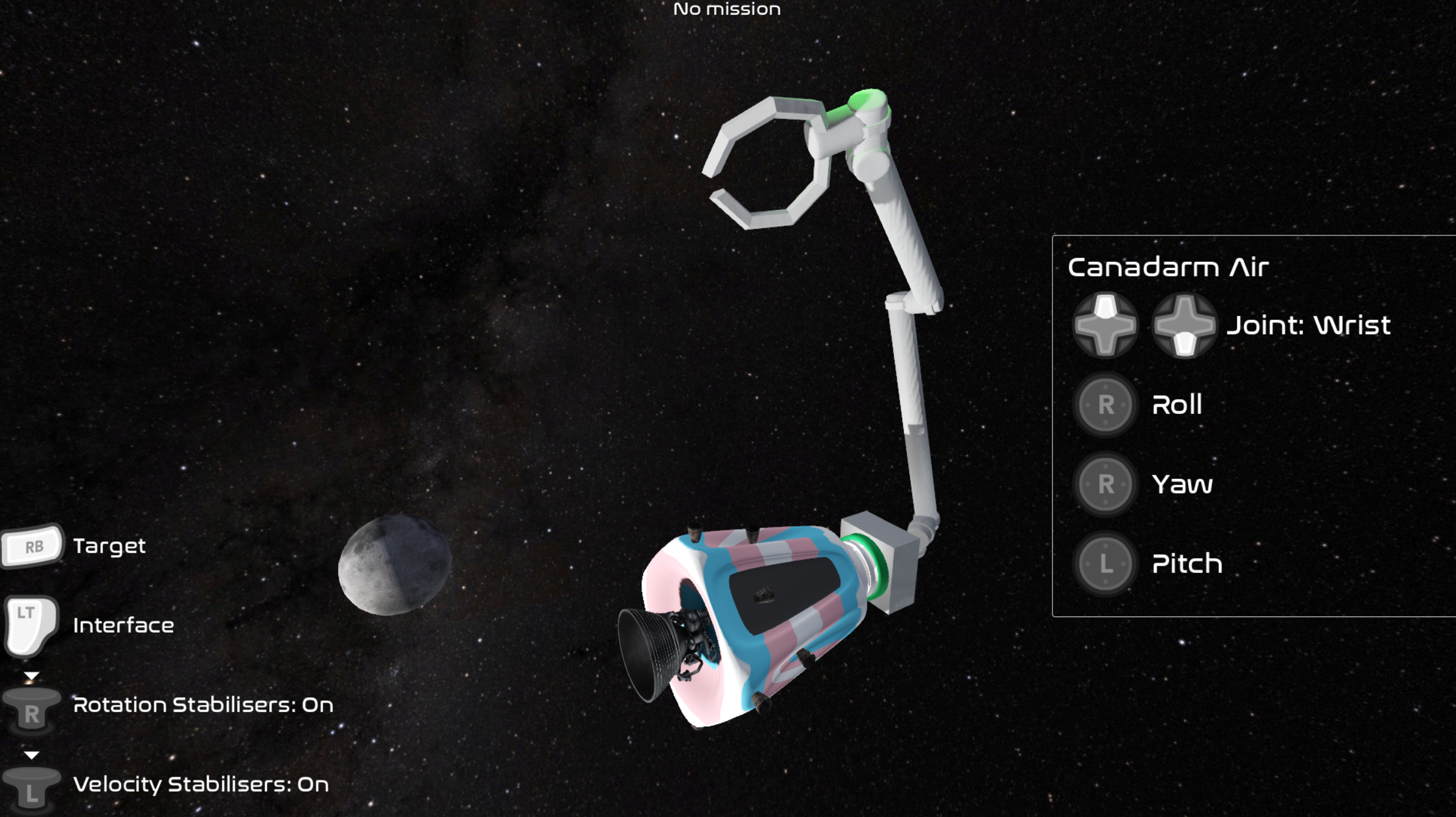
I need a name for this asteroid. Like, a serious one.
Its background in Low Earth Orbit Adventures is that a company brought it closer to Earth to mine it but its orbit needs constant maintenance.
It needs a proper scientific name (I'm thinking 2039-MF1?) but also a colloquial, poetic name if anyone has suggestions (no guarantees I'll use it though!)
Nailing the realism
#LEOAdventures #space #Canadarm
Alt...
A screenshot from Low Earth Orbit Adventures showing the player's space capsule painted in the trans flag colours, with a robot canadarm-like instrument attached. The arm has a large claw at the end which is a bit comically large and primitive compared to the real Canadarm
Dragon undocks from ISS:
https://www.nasa.gov/blogs/spacestation/2026/01/14/dragon-undocks-from-station-heads-for-splashdown/
Video in 4 hours.
#space
Modernizing #Satellite regulations and fostering investment in #Space was a highlight of today’s #FCC Oversight Hearing. Our Space & Spectrum Policy Center will continue working with the agency on these efforts. Learn more about the Center here: https://ccianet.org/hub/space-spectrum-policy-center/

In Low Earth Orbit Adventures you pilot a little space tug that's the Swiss Army Knife of spaceships... and now you can graffiti it 😁 🚀 🖌️
"Even if the Voyagers go dark tomorrow, they will long testify to the reach of America’s scientific imagination, and the daring of its engineers. NASA’s exploration of the solar system may be what most recommends our civilization to the future." —Ross Andersen for The Atlantic https://www.theatlantic.com/magazine/2026/02/trump-nasa-budget-american-space-program/685332?src=longreads #space #nasa #science #longreads
![[?]](https://files.defcon.social/dcsocial-s3/accounts/avatars/113/208/344/507/078/943/original/014820ad22daee1c.jpg)
2026 January 4
The Einstein Cross Gravitational Lens
* Image Credit & License: NSF, NOIRLab, AURA, WIYN
https://www.nsf.gov/
https://noirlab.edu/
https://www.aura-astronomy.org/
https://www.wiyn.org/
* Processing: J. Rhoads (Arizona State U.) et al.
https://search.asu.edu/profile/858089
https://sese.asu.edu/
Explanation:
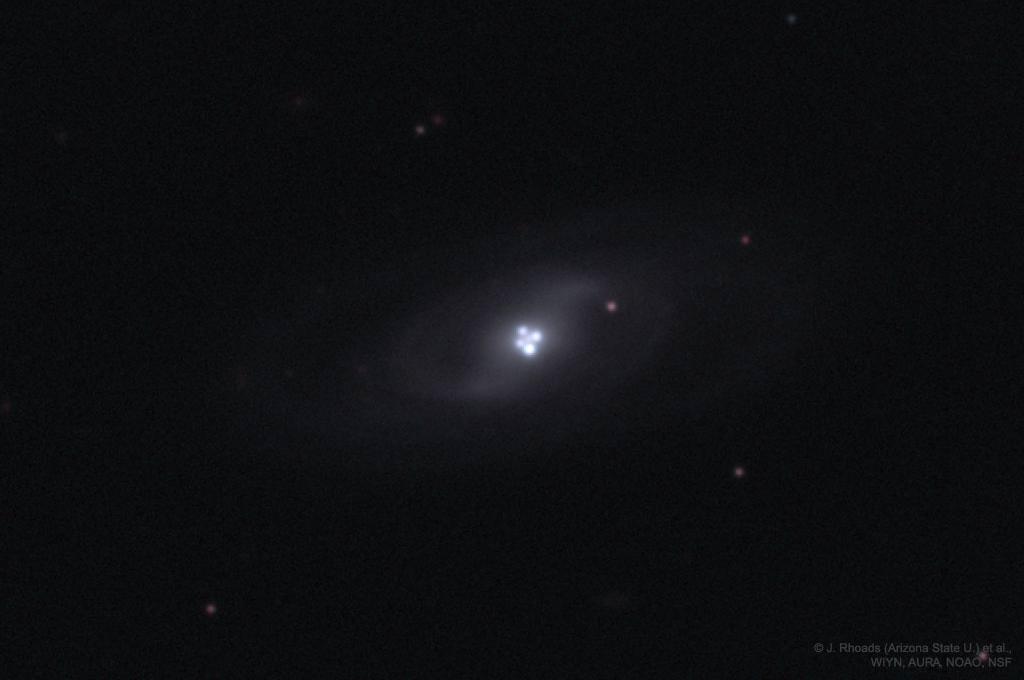
Most galaxies have a single nucleus -- does this galaxy have four? The strange answer leads astronomers to conclude that the nucleus of the surrounding galaxy is not even visible in this image. The central cloverleaf is rather light emitted from a background quasar. The gravitational field of the visible foreground galaxy breaks light from this distant quasar into four distinct images. The quasar must be properly aligned behind the center of a massive galaxy for a mirage like this to be evident. The general effect is known as gravitational lensing, and this specific case is known as the Einstein Cross. Stranger still, the images of the Einstein Cross vary in relative brightness, enhanced occasionally by the additional gravitational microlensing effect of specific stars in the foreground galaxy.
https://aas.org/careers/career-in-astronomy
https://noirlab.edu/public/images/noao-q2237/
https://en.wikipedia.org/wiki/Four-leaf_clover
https://en.wikipedia.org/wiki/Quasar
https://spaceplace.nasa.gov/what-is-gravity/en/https://science.nasa.gov/wp-content/uploads/2024/09/gravitational-lens-diagram-simple.jpg
https://science.nasa.gov/mission/hubble/science/science-behind-the-discoveries/hubble-quasars/
https://apod.nasa.gov/apod/ap220222.html
https://apod.nasa.gov/apod/ap990331.html
https://science.nasa.gov/mission/hubble/science/science-behind-the-discoveries/hubble-gravitational-lenses/
https://pages.astronomy.ua.edu/keel/agn/qso2237.html
https://apod.nasa.gov/apod/ap961215.html
https://en.wikipedia.org/wiki/Gravitational_microlensing
https://apod.nasa.gov/apod/ap260104.html
#space #gravitational_lensing #astrophotography #photography #science #physics #future #nature #NASA #ESA #apod
Alt...
2026 January 4
A faint galaxy near the center of the image shows four bright spots near its center.
The Einstein Cross Gravitational Lens
* Image Credit & License: NSF, NOIRLab, AURA, WIYN
* Processing: J. Rhoads (Arizona State U.) et al.
Explanation:
Most galaxies have a single nucleus -- does this galaxy have four? The strange answer leads astronomers to conclude that the nucleus of the surrounding galaxy is not even visible in this image. The central cloverleaf is rather light emitted from a background quasar. The gravitational field of the visible foreground galaxy breaks light from this distant quasar into four distinct images. The quasar must be properly aligned behind the center of a massive galaxy for a mirage like this to be evident. The general effect is known as gravitational lensing, and this specific case is known as the Einstein Cross. Stranger still, the images of the Einstein Cross vary in relative brightness, enhanced occasionally by the additional gravitational microlensing effect of specific stars in the foreground galaxy.
Authors & editors: Robert Nemiroff (MTU) & Jerry Bonnell (UMCP)
NASA Official: Amber Straughn Specific rights apply.
NASA Web Privacy, Accessibility, Notices;
A service of: ASD at NASA / GSFC,
NASA Science Activation
When will we discover that the nature of dark matter and the application of gravitational lensing allow us to look far into the past as well as far into the future? What pre-existing prerequisites for this have we overlooked and what would we have to recognize beforehand so that we do not overlook them? Why could this be important? Anyone who sees the future gets the chance to influence it positively ..
This is the ancient, present, and ultimately future hope of truly human science ..
https://journals.aps.org/prd/abstract/10.1103/6h6r-46cd
https://premierscience.com/pjs-25-872/
https://arxiv.org/pdf/2511.15797
https://arxiv.org/pdf/2502.04472
#space #gravitational_lensing #astrophotography #photography #science #physics #future #nature #NASA #ESA
2026 January 3
Full Moonlight
* Image Credit & Copyright: Zhengjie Wu and Jeff Dai
https://twanight.org/profile/jeff-dai/
Explanation:
The Full Moon is the brightest lunar phase, and tonight you can stand in the light of the first Full Moon of 2026. In fact, the Moon's full phase occurs on January 3 at 10:03 UTC, while only about 7 hours later planet Earth reaches its 2026 perihelion, the closest point in its elliptical orbit around the Sun, at 17:16 UTC. January's Full Moon was also not far from its own perigee, or closest approach to planet Earth. For this lunation the Moon's perigee was on January 1 at 21:44 UTC. You can also spot planet Jupiter, near its brightest for 2026 and close on the sky to the Full Moon tonight. But while you're out skygazing don't forget to look for rare, bright fireballs from the Quadrantid meteor shower.
https://apod.nasa.gov/apod/ap211118.html
https://earthsky.org/earth/rare-alignment-of-earth-moon-and-sun-january-1-2-3-2026/
https://earthsky.org/tonight/january-full-moon-is-the-wolf-moon/
https://moon.nasa.gov/moon-observation/daily-moon-guide/?intent=011
https://www.amsmeteors.org/2025/12/viewing-the-2026-quadrantid-meteor-shower/
https://apod.nasa.gov/apod/fap/ap260103.html
#space #earth #moon #astrophotography #photography #science #astronomy #physics #nature #NASA #apod
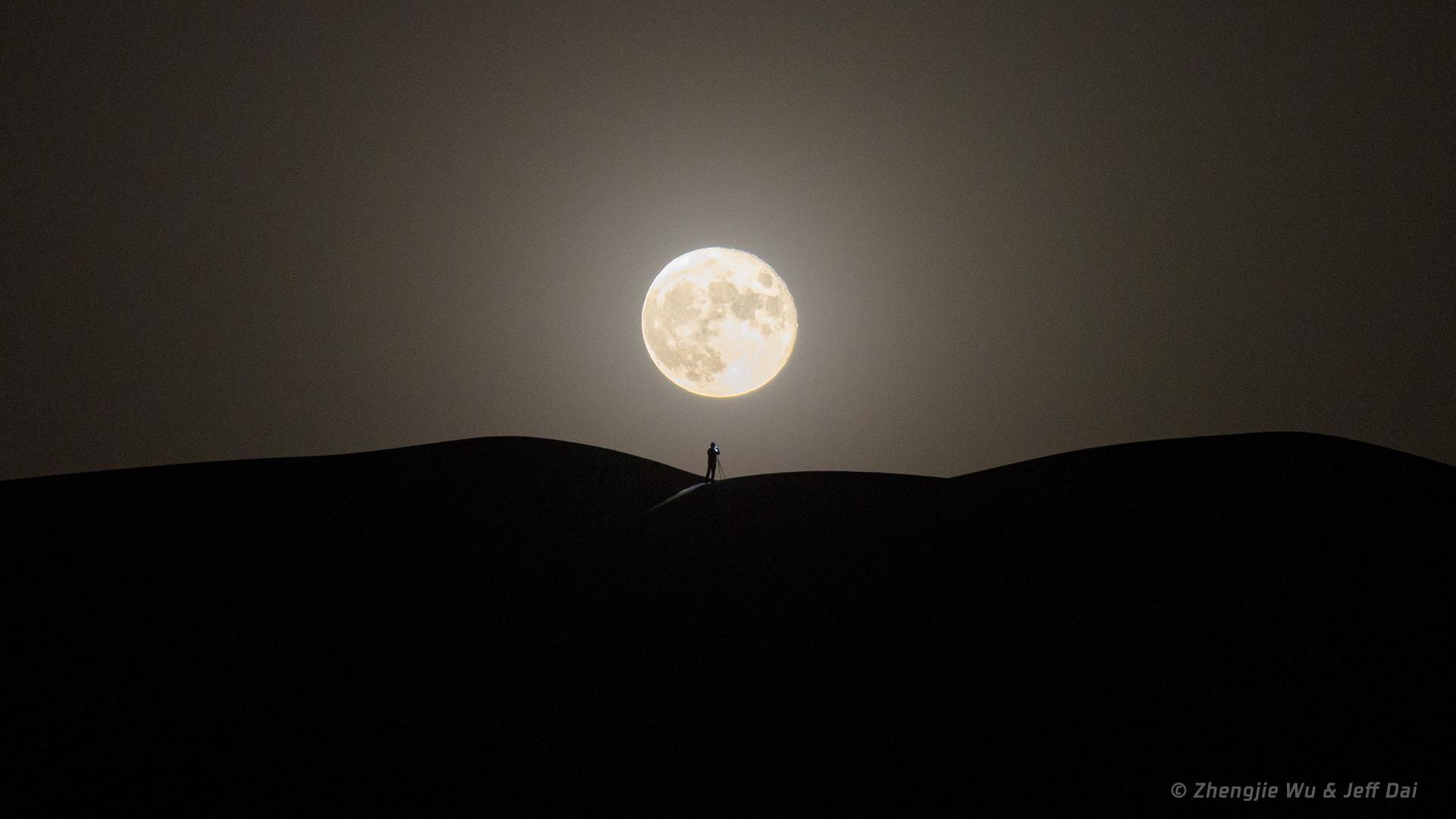
Alt...
2026 January 3
Full Moonlight
* Image Credit & Copyright: Zhengjie Wu and Jeff Dai (TWAN)
Explanation:
The Full Moon is the brightest lunar phase, and tonight you can stand in the light of the first Full Moon of 2026. In fact, the Moon's full phase occurs on January 3 at 10:03 UTC, while only about 7 hours later planet Earth reaches its 2026 perihelion, the closest point in its elliptical orbit around the Sun, at 17:16 UTC. January's Full Moon was also not far from its own perigee, or closest approach to planet Earth. For this lunation the Moon's perigee was on January 1 at 21:44 UTC. You can also spot planet Jupiter, near its brightest for 2026 and close on the sky to the Full Moon tonight. But while you're out skygazing don't forget to look for rare, bright fireballs from the Quadrantid meteor shower.
Authors & editors: Robert Nemiroff (MTU) & Jerry Bonnell (UMCP)
NASA Official: Amber Straughn Specific rights apply.
NASA Web Privacy, Accessibility, Notices;
A service of: ASD at NASA / GSFC,
NASA Science Activation
& Michigan Tech. U.
Topic> Spacecrafts
2026 January 2
NanoSail-D2
* Image Credit & Copyright: Ralf Vandebergh
https://satellite-imaging.jouwweb.nl/selected-project-samples-best-works
Explanation:
In 2011, on January 20, NASA's NanoSail-D2 unfurled a very thin and very reflective 10 square meter sail becoming the first solar sail spacecraft in low Earth orbit. Often considered the stuff of science fiction, sailing through space was suggested 400 years ago by astronomer Johannes Kepler, who had observed comet tails blown by the solar wind. But modern solar sail spacecraft designs, like NanoSail-D2, Japan's interplanetary spacecraft IKAROS, or the Planetary Society's Lightsail A, rely on the small but continuous pressure from sunlight itself for thrust. Glinting in the sunlight as it circled planet Earth, NanoSail-D2's solar sail was periodically bright and visible to the eye. These remarkably detailed images were captured by manually tracking the orbiting solar sail spacecraft with a small telescope.
https://en.wikipedia.org/wiki/NanoSail-D2
https://en.wikipedia.org/wiki/Sunjammer
https://apod.nasa.gov/apod/ap040821.html
https://en.wikipedia.org/wiki/Solar_sail
https://global.jaxa.jp/countdown/f17/overview/ikaros_e.html
https://apod.nasa.gov/apod/ap150619.html
http://www.phy6.org/stargaze/Solsail.htm
https://apod.nasa.gov/apod/ap260101.html
#space #earth #spacecraft #astrophotography #photography #NASA #science #physics #tech #education #apod
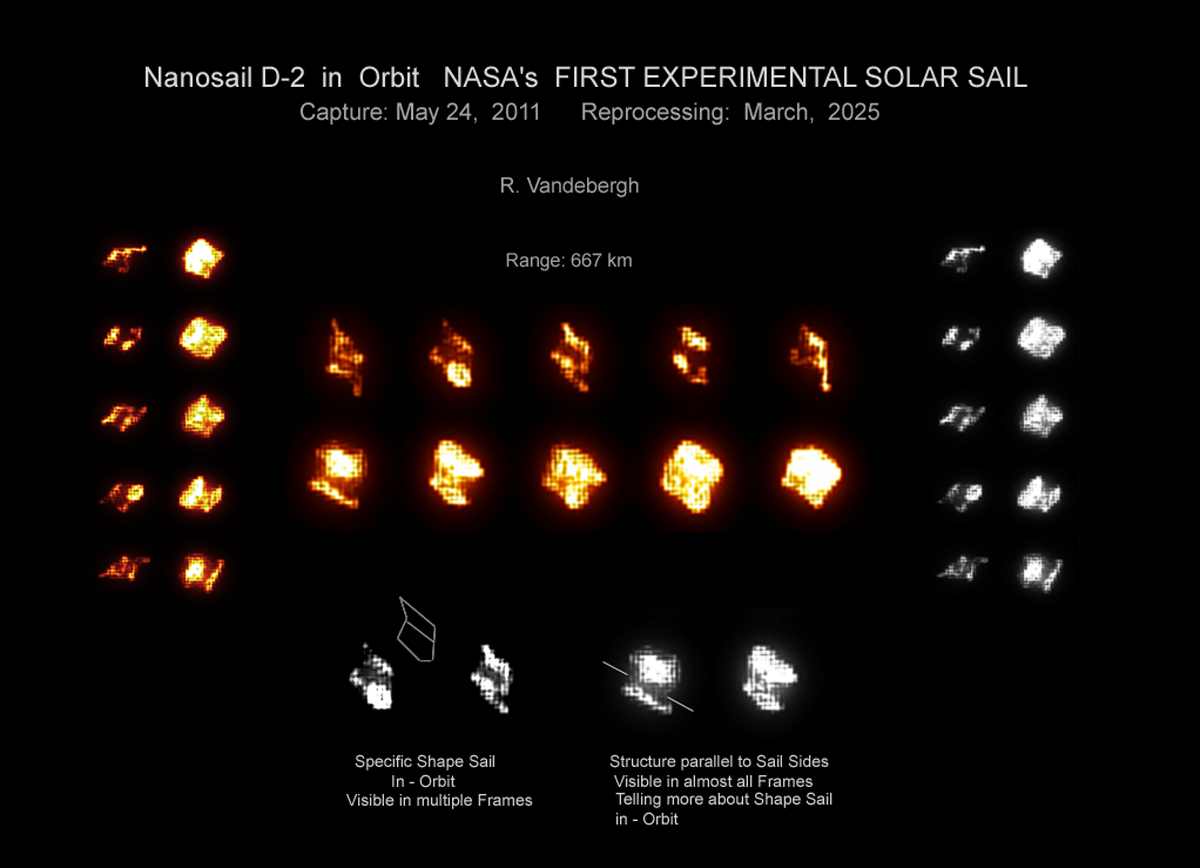
Alt...
2026 January 2
NanoSail-D2
* Image Credit & Copyright: Ralf Vandebergh
Explanation:
In 2011, on January 20, NASA's NanoSail-D2 unfurled a very thin and very reflective 10 square meter sail becoming the first solar sail spacecraft in low Earth orbit. Often considered the stuff of science fiction, sailing through space was suggested 400 years ago by astronomer Johannes Kepler, who had observed comet tails blown by the solar wind. But modern solar sail spacecraft designs, like NanoSail-D2, Japan's interplanetary spacecraft IKAROS, or the Planetary Society's Lightsail A, rely on the small but continuous pressure from sunlight itself for thrust. Glinting in the sunlight as it circled planet Earth, NanoSail-D2's solar sail was periodically bright and visible to the eye. These remarkably detailed images were captured by manually tracking the orbiting solar sail spacecraft with a small telescope.
Authors & editors: Robert Nemiroff (MTU) & Jerry Bonnell (UMCP)
NASA Official: Amber Straughn Specific rights apply.
NASA Web Privacy, Accessibility, Notices;
A service of: ASD at NASA / GSFC,
NASA Science Activation
& Michigan Tech. U.
So cool. If you zoom in on the upper right, you see a little crescent. That's the Martian moon Phobos.
Zoom in again and you'll see a star next to Phobos. That's Earth! That's home.
Seen from Mars by NASA's Curiosity rover.
https://science.nasa.gov/photojournal/curiosity-views-earth-setting-phobos-rising/ #science #space #astronomy

Alt...
NASA's Curiosity Mars rover used its Mast Camera, or Mastcam, to capture this view of Earth setting while Phobos, one of Mars' two moons, is rising. It's the first time an image of the two celestial bodies have been captured together from the surface of Mars.
![[?]](https://cdn.masto.host/mastodongamedevplace/accounts/avatars/112/268/270/848/450/942/original/3a4a94a4bcb1f46c.jpg)
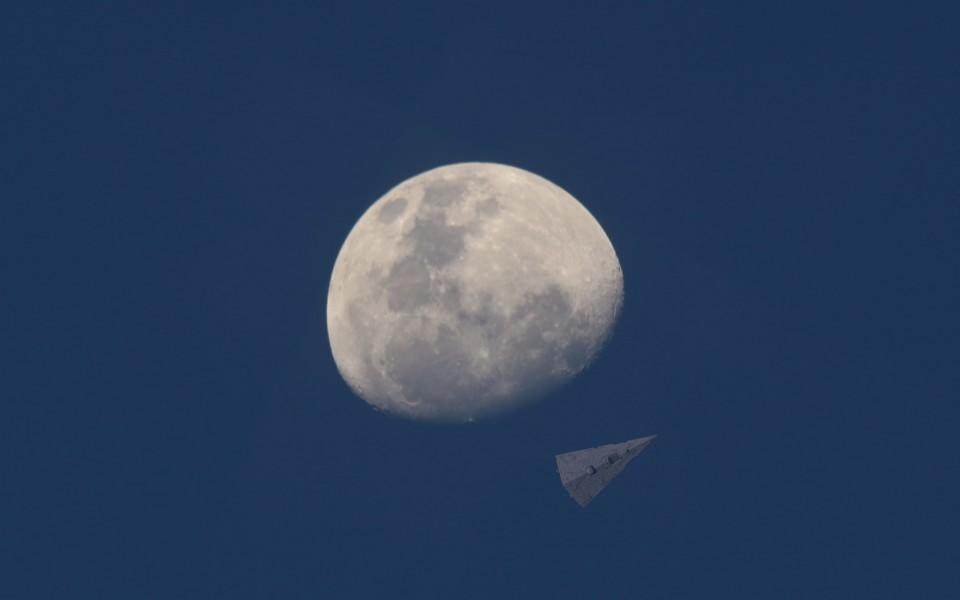
Seeing an image of Imperial Star Destroyers in the sky over Hoth in Star Wars Battlefront 2015 had me thinking that these seem way too low, being deep down in the atmosphere where non-landing space ships have no business to be, and they are needlessly exposed to ground artillery and airspeeder attacks.
So I had to find out how big a Star Destroyer at a reasonable Low-Earth-Orbit of 500 km would look like in the sky. 😅
This is actually still massive.
#StarWars #meganerd #space #scifi
Alt...
Illustration of an Imperial Star Destroyer next to the moon, scaled to how large it would look at an altitude of 500 km above the Earth's surface.
Three ways of looking at the iconic Christmas Tree Cluster, 2700 light years from Earth.
What the universe looks like depends on how we look at it. These views highlight infrared (left), x-rays (middle), and red emission from hydrogen gas. Beautiful in three different ways. #space #science #art

Alt...
Three views of the Christmas Tree Cluster, highlighting infrared (left), x-rays (middle), and H-alpha (right).