Search results for tag #nature
![[?]](https://cdn.masto.host/mastodonart/accounts/avatars/114/046/890/995/156/319/original/b3245043f6598358.jpg)
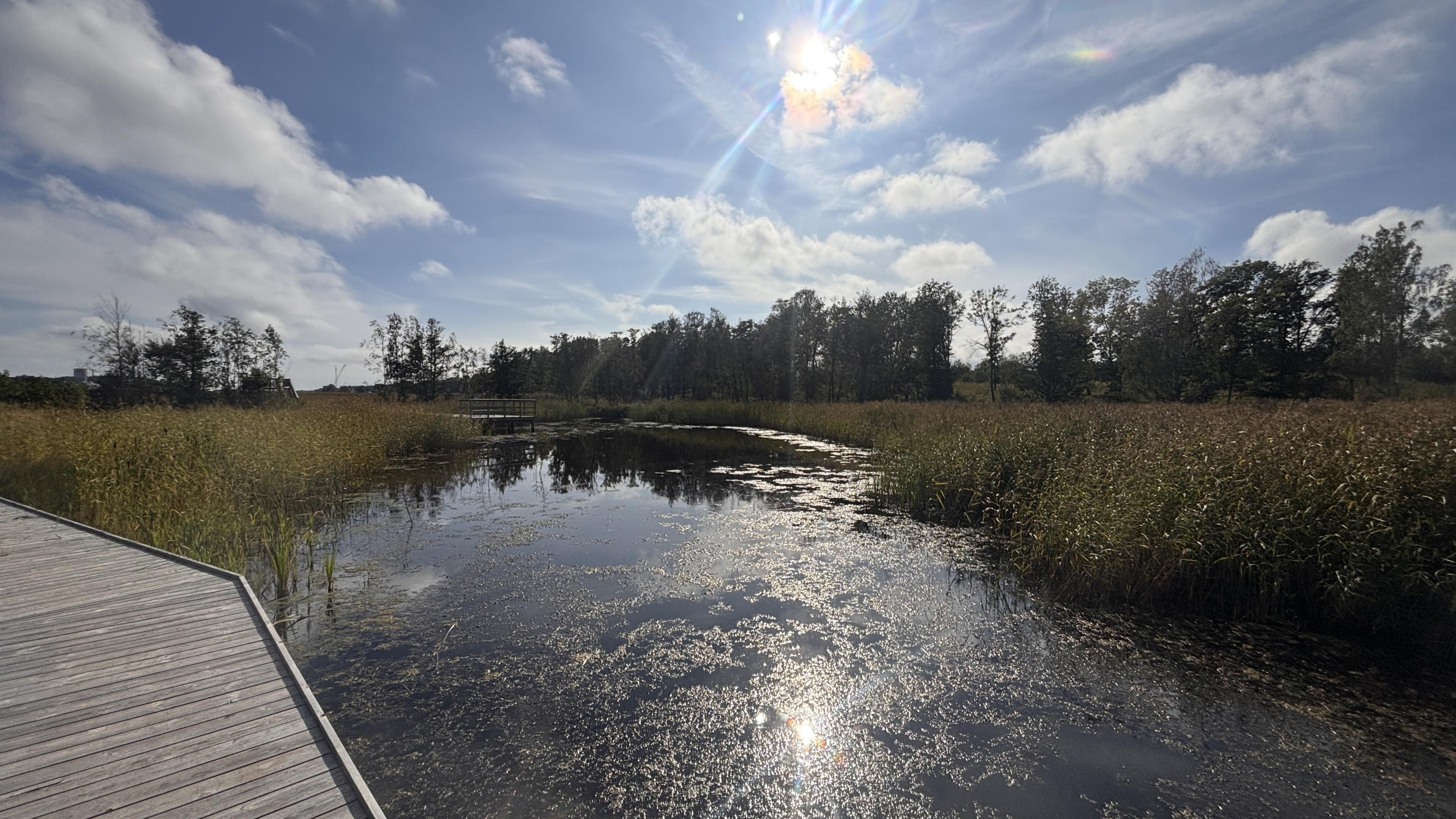
Pretty good start of September after a summer of really weird weather... 🤔
@nature @photography @geography @ecology @hiking
#TuesdayTrek #Tuesday #Trek
#NaturePhotography #Nature #Photography
#September #Southern #Finland #Archipelago #Åland #Eckerö
#Hiking #InMy #Autumn #Wonderland
Alt...
Sunny picture of the restored wetland near my apartment.
![[?]](https://cdn.toad.social/accounts/avatars/109/401/523/107/949/244/original/7f9645092d1fdd20.png)

![[?]](https://files.defcon.social/dcsocial-s3/accounts/avatars/113/208/344/507/078/943/original/014820ad22daee1c.jpg)
2025 September 2
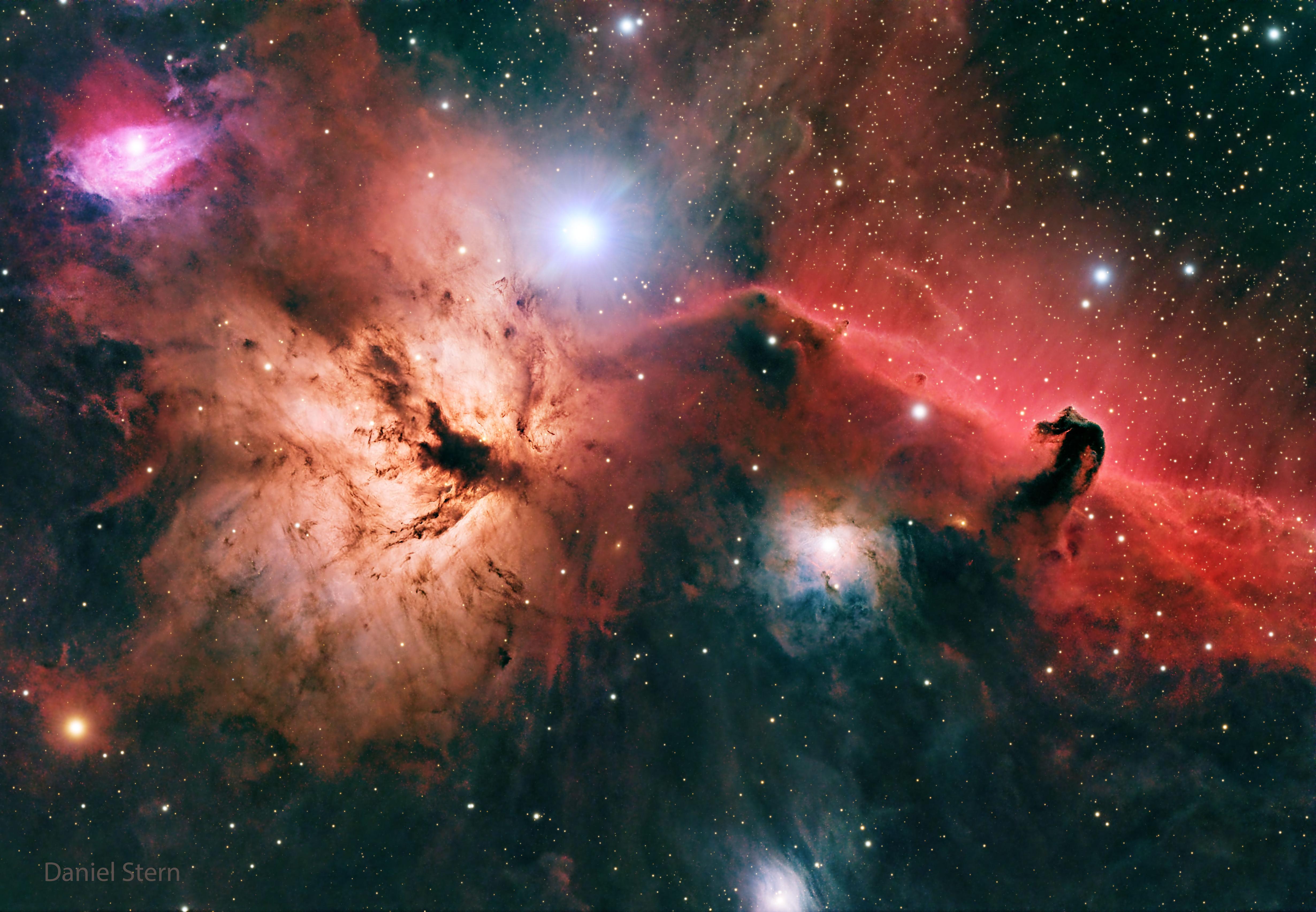
The Horsehead and Flame Nebulas
* Image Credit & Copyright: Daniel Stern
https://www.instagram.com/messierchaser/
Explanation:
The Horsehead Nebula is one of the most famous nebulae on the sky. It is visible as the dark indentation to the orange emission nebula at the far right of the featured picture. The horse-head feature is dark because it is really an opaque dust cloud that lies in front of the bright emission nebula. Like clouds in Earth's atmosphere, this cosmic cloud has assumed a recognizable shape by chance. After many thousands of years, the internal motions of the cloud will surely alter its appearance. The emission nebula's orange color is caused by electrons recombining with protons to form hydrogen atoms. Toward the lower left of the image is the Flame Nebula, an orange-tinged nebula that also contains intricate filaments of dark dust.
https://en.wikipedia.org/wiki/Horsehead_Nebula
https://en.wikipedia.org/wiki/Emission_nebula
https://astronomy.swin.edu.au/cosmos/E/emission+nebula
https://home.cern/news/news/physics/proton-century
https://periodic.lanl.gov/1.shtml
https://history.aip.org/exhibits/electron/
https://apod.nasa.gov/apod/ap030706.html
https://www.nasa.gov/image-article/earths-atmospheric-layers-3/
https://apod.nasa.gov/apod/ap250902.html
#space #nebula #astrophotography #photography #science #astronomy #nature #NASA
Alt...
2025 September 2
A starfield is shown with bright and dark nebulae of different shapes and colors.
The Horsehead and Flame Nebulas
* Image Credit & Copyright: Daniel Stern
Explanation:
The Horsehead Nebula is one of the most famous nebulae on the sky. It is visible as the dark indentation to the orange emission nebula at the far right of the featured picture. The horse-head feature is dark because it is really an opaque dust cloud that lies in front of the bright emission nebula. Like clouds in Earth's atmosphere, this cosmic cloud has assumed a recognizable shape by chance. After many thousands of years, the internal motions of the cloud will surely alter its appearance. The emission nebula's orange color is caused by electrons recombining with protons to form hydrogen atoms. Toward the lower left of the image is the Flame Nebula, an orange-tinged nebula that also contains intricate filaments of dark dust.
Authors & editors: Robert Nemiroff (MTU) & Jerry Bonnell (UMCP)
NASA Official: Amber Straughn Specific rights apply.
NASA Web Privacy, Accessibility, Notices;
A service of: ASD at NASA / GSFC,
NASA Science Activation
& Michigan Tech. U.
![[?]](https://cdn.masto.host/socelnet/accounts/avatars/109/331/216/096/518/560/original/c61d0053547c5a81.jpg)
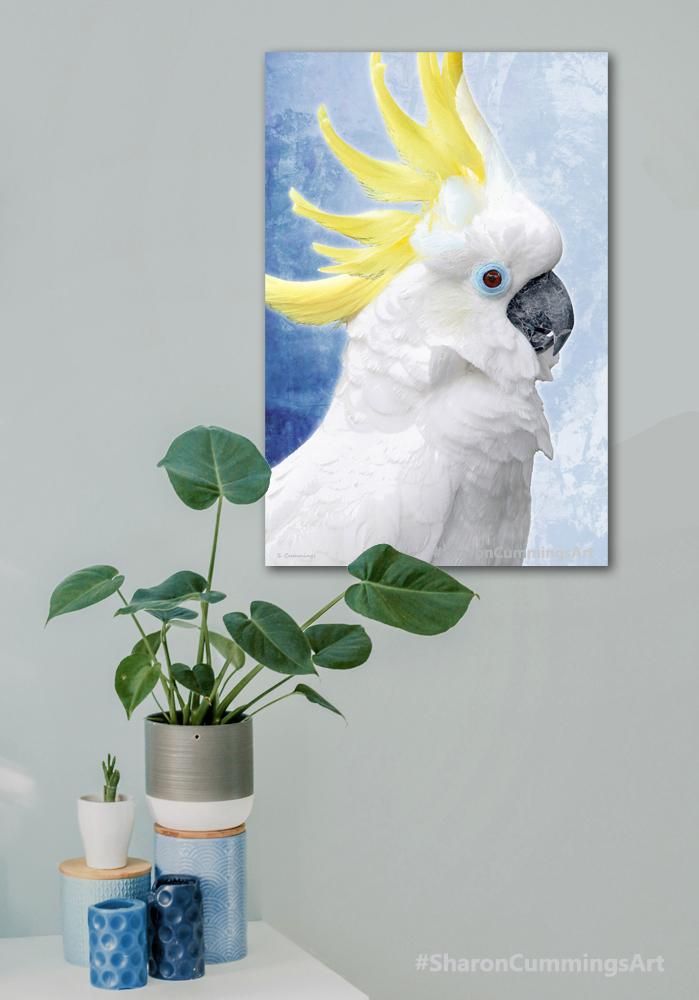
I've been on a bird kick after talking with the Sarasota Audubon Society about some of my bird art. :)
ART
https://fineartamerica.com/featured/soft-white-cockatoo-bird-art-sharon-cummings.html
#art #artwork #artist #artists #Florida #Floridalife #bird #birds #birdart #birding #birdwatching #australia #australian #cockatoos #cockatoo #parrot #parrots #pets #animals #tropical #beach #beachy #coastal #coastalliving #rainforest #SharonCummingsArt #Sarasota #fun #whimsical #cute #buyintoart #nature #naturelovers #birdlovers #homedecor
Alt...
White cockatoo bird on blue watercolor by artist Sharon Cummings.
![[?]](https://s3.eu-central-2.wasabisys.com/mastodonworld/accounts/avatars/110/005/124/230/745/197/original/4b8ad1f405a1fe5c.jpg)
Autumn Reflections 2: https://1-lisas-baker.pixels.com/featured/autumn-reflections-2-lisa-s-baker.html
#autumn #fall #landscape #lake #pond #water #pinetrees #autumntrees #rustic #art #arte #artwork #wallart #homedecor #artforhome #artforsale #buyintoart #mastoart #fediverse #fediart #artprints #canvasprints #puzzles #nature #outdoors #leaves #rust #green #painting

Alt...
Autumn Reflections / Landscape Art by Lisa S Baker. The serene landscape showcases vibrant autumn foliage with a single tree standing boldly by the water's edge. Its reflection in the still water is beautifully mirrored alongside lush grasses and evergreen trees. The composition captures the peaceful essence of a quiet, fall afternoon.
List of TOPICS> No2
will be editet soon .. see TOPIC> List No. 1, which contains all currently available TOPICs please.
© folks who #resist
https://www.youtube.com/watch?v=EXg8MOqbZNI
#space #astrophotography #photography #sience #astronomy #nature #fediverse #mastodon #NASA #ESA #nobot #noai #list #buchstabensuppe
Alt...
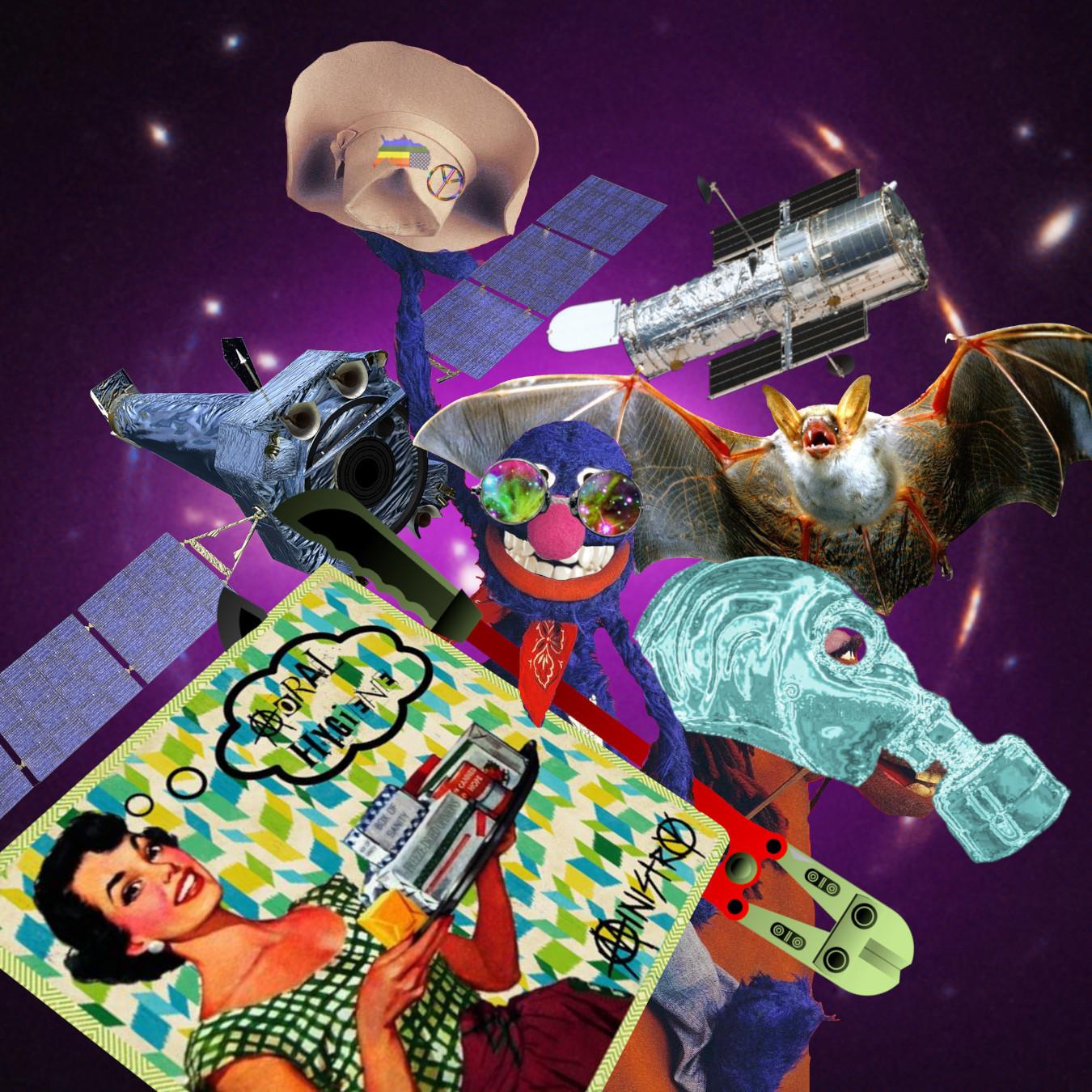
grobi presents the protest song "Sabotage Is Sex" by Ministry feat. Jello Biafra. He rides through time and space sitting the wrong way around on his horse and has a bolt cutter ready, while his friend, the horse, is already wearing a gas mask, because you never know for sure... like two scouts "always ready to help" with open eyes, hearts and cheerful cheers, they have backup from "Graviti's Grin" or flippantly called the "Cheshire Cat Galaxy Group" grobi also wears glasses with "Gravity Lenses" made of "Dark Matter", with which he sees through the enemies of freedom and humanity.
© folks who #resist
Wolf-Rayet Star 124: Stellar Wind Machine
* Image Credit: Hubble Legacy Archive, NASA, ESA; Processing & License: Judy Schmidt
https://hla.stsci.edu/
https://www.nasa.gov/
https://www.esa.int/
https://www.flickr.com/photos/geckzilla/
Explanation:
Some stars explode in slow motion. Rare, massive Wolf-Rayet stars are so tumultuous and hot that they are slowly disintegrating right before our telescopes. Glowing gas globs each typically over 30 times more massive than the Earth are being expelled by violent stellar winds. Wolf-Rayet star WR 124, visible near the featured image center and spanning six light years across, is thus creating the surrounding nebula known as M1-67. Details of why this star has been slowly blowing itself apart over the past 20,000 years remains a topic of research. WR 124 lies 15,000 light-years away towards the constellation of the Arrow (Sagitta). The fate of any given Wolf-Rayet star likely depends on how massive it is, but many are thought to end their lives with spectacular explosions such as supernovas or gamma-ray bursts.
https://en.wikipedia.org/wiki/Wolf%E2%80%93Rayet_star
https://en.wikipedia.org/wiki/WR_124
https://www.flickr.com/photos/geckzilla/14248502065/
https://www.syfy.com/syfy-wire/a-massive-violent-star-blooms
https://www.youtube.com/watch?v=aysiMbgml5g
https://ui.adsabs.harvard.edu/abs/1985A%26A...145L..13V/abstract
https://science.nasa.gov/universe/gamma-ray-bursts-harvesting-knowledge-from-the-universes-most-powerful-explosions/
http://www.hawastsoc.org/deepsky/sge/
https://chandra.harvard.edu/photo/cosmic_distance.html
https://apod.nasa.gov/apod/ap000318.html
https://spaceplace.nasa.gov/constellations/en/
https://www.universetoday.com/24736/wolf-rayet-star/
https://science.nasa.gov/earth/facts/
https://apod.nasa.gov/apod/ap250203.html
#space #nebula #star #astrophotograhy #NASA #ESA #Hubble #science #nature
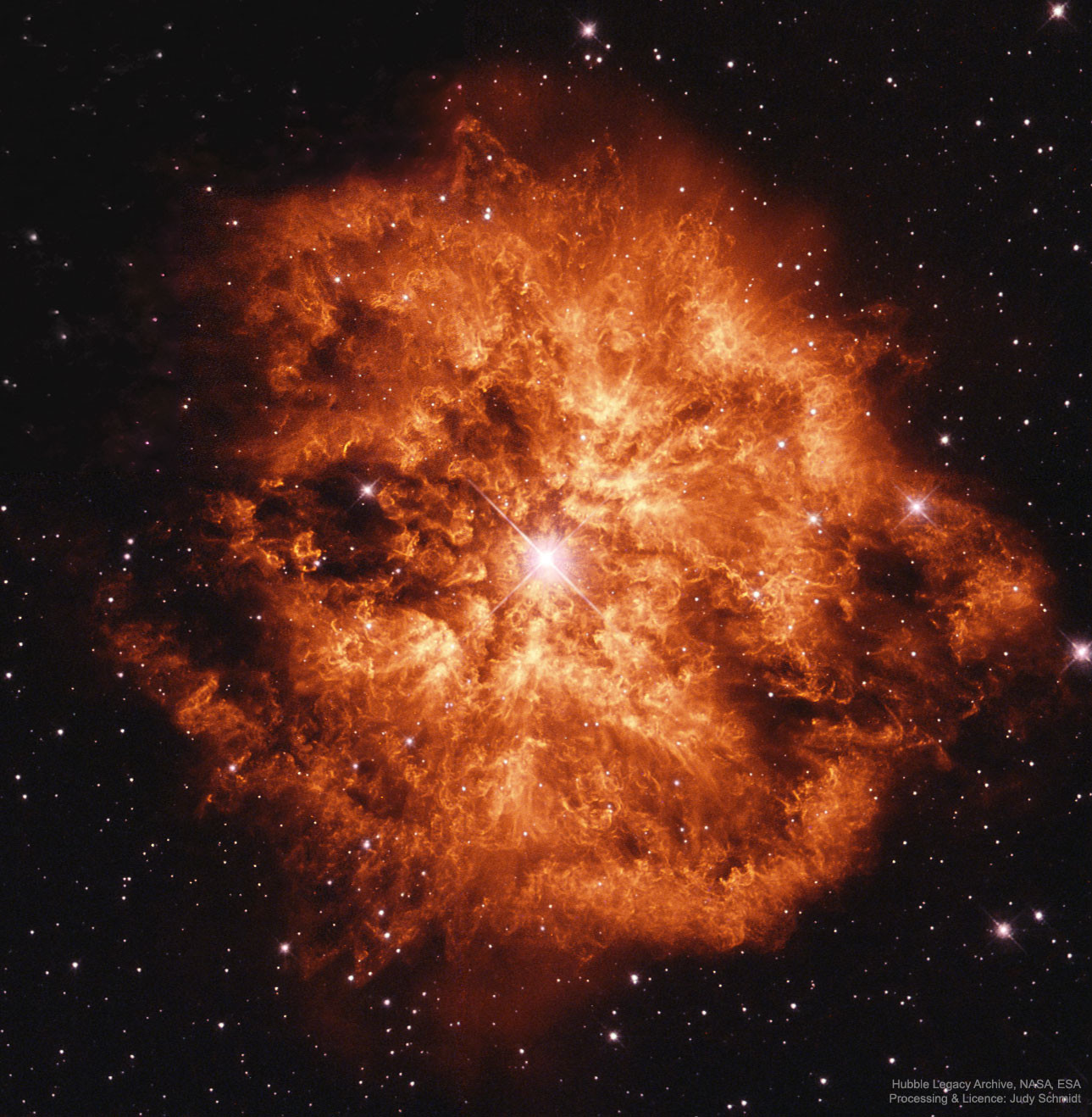
Alt...
2025 February 3
A starfield is shown with a large spherical nebula in the center. The nebula shows a great deal of internal structure. Please see the explanation for more detailed information.
Wolf-Rayet Star 124: Stellar Wind Machine
* Image Credit: Hubble Legacy Archive, NASA, ESA; Processing & License: Judy Schmidt
Explanation:
Some stars explode in slow motion. Rare, massive Wolf-Rayet stars are so tumultuous and hot that they are slowly disintegrating right before our telescopes. Glowing gas globs each typically over 30 times more massive than the Earth are being expelled by violent stellar winds. Wolf-Rayet star WR 124, visible near the featured image center and spanning six light years across, is thus creating the surrounding nebula known as M1-67. Details of why this star has been slowly blowing itself apart over the past 20,000 years remains a topic of research. WR 124 lies 15,000 light-years away towards the constellation of the Arrow (Sagitta). The fate of any given Wolf-Rayet star likely depends on how massive it is, but many are thought to end their lives with spectacular explosions such as supernovas or gamma-ray bursts.
Authors & editors: Robert Nemiroff (MTU) & Jerry Bonnell (UMCP)
NASA Official: Amber Straughn Specific rights apply.
NASA Web Privacy, Accessibility, Notices;
A service of: ASD at NASA / GSFC,
NASA Science Activation
& Michigan Tech. U.