Search results for tag #nasa
![[?]](https://files.mstdn.party/accounts/avatars/109/412/668/953/833/198/original/0f95655ae0a3a89e.jpg)
Cosmic Wonders - Pismis 24.
Bring the majesty of outer space to your indoor space.
Art available here: https://fineartamerica.com/featured/cosmic-wonders-pismis-24-joseph-s-giacalone.html
#space #nasa #art #wallart #homedecor

![[?]](https://s3.eu-central-2.wasabisys.com/mastodonworld/accounts/avatars/109/362/359/610/912/307/original/4854f87af56f0d9a.png)
"Apollo 8 saved 1968. Artemis II may work similar magic today."
Jeffrey Kluger for TIME: https://time.com/7346146/artemis-ii-launch-nasa-astronauts-moon-mission/
#Longreads #Space #Moon #NASA #Astronaut #Lunar #OuterSpace #Artemis
![[?]](https://polymaths.social/fileserver/01HCMX6M1CZNEVJ4F5H58TT5XJ/attachment/original/01JHC5KM5K0V0J0436SPD3F86H.jpeg)


 🍵
🍵  [
[Today's #APOD's a looker ;)
Date: 2026 February 02
URL: https://apod.nasa.gov/apod/ap260202.html
Title: Orion: The Running Man Nebula
"We have already ceded our rockets and space stations to men with messiah complexes—and our wombs may be next."
Darshana Narayanan for Pioneer Works Broadcast: https://pioneerworks.org/broadcast/baby-making-on-mars-darshana-narayanan
#Longreads #Space #Mars #NASA #Science #Biology #Research #Pregnancy
"Even if the Voyagers go dark tomorrow, they will long testify to the reach of America’s scientific imagination, and the daring of its engineers. NASA’s exploration of the solar system may be what most recommends our civilization to the future." —Ross Andersen for The Atlantic https://www.theatlantic.com/magazine/2026/02/trump-nasa-budget-american-space-program/685332?src=longreads #space #nasa #science #longreads
![[?]](https://cdn.masto.host/mastodongamedevplace/accounts/avatars/109/859/285/072/781/117/original/52b616f54f20c98f.png)
Going to the source (the 1976 NASA Graphics Standard Manual) for the UI colour palette of Low Earth Orbit Adventures
#LEOAdventures #NASA #StarCops

Alt...
A page from the 1976 NASA Graphics Standard Manual showing the colours and logo placement of various NASA elements, such as jackets, science coats and overalls.
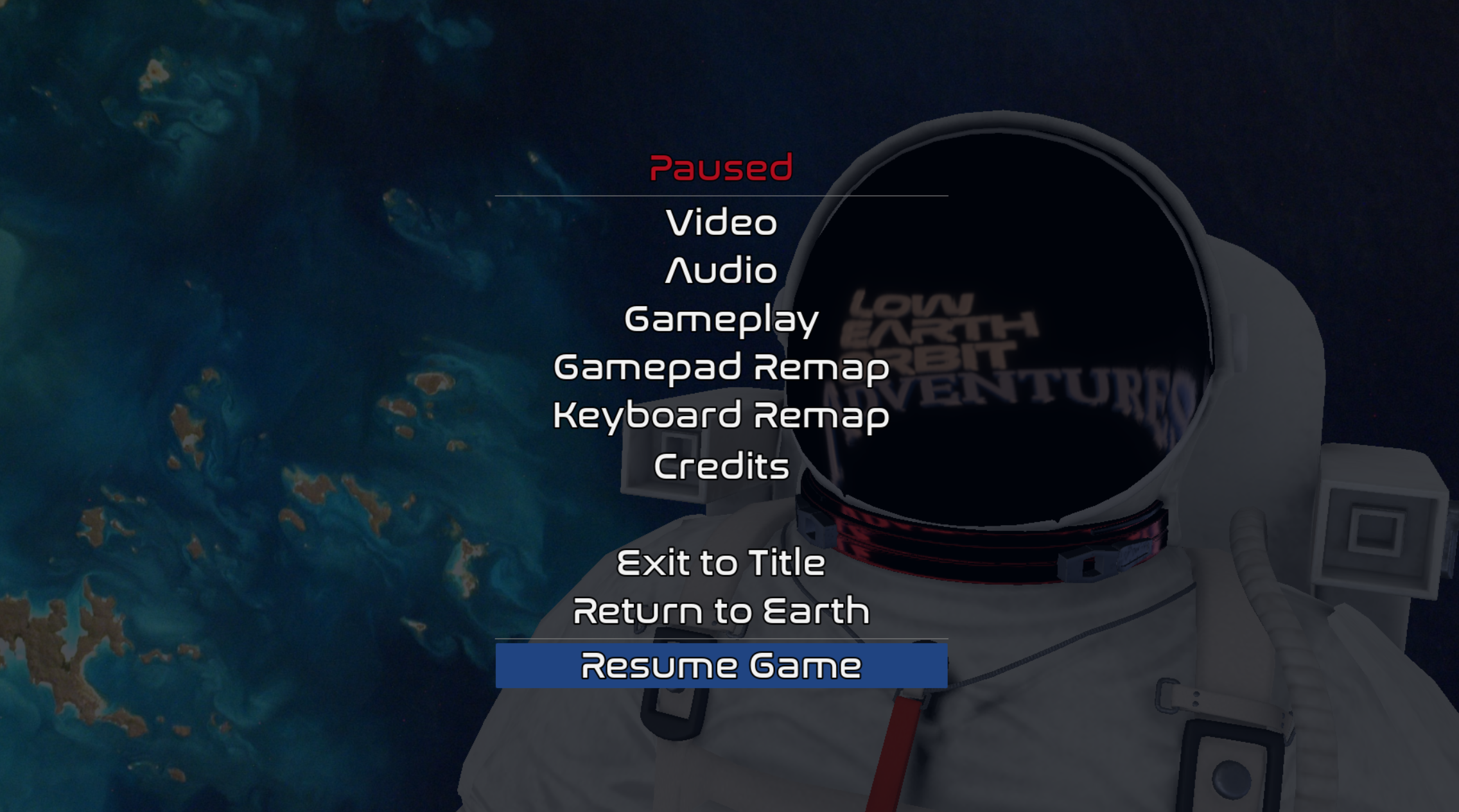
Alt...
A game menu with the heading "paused" and options such as "Video Settings" and "Resume Game". It is in the same bright and dark and smooth colours as the NASA uniforms from the 1970s. An astronaut from the game hovers in the background.
Useful #shell (#ksh/#bash) #function du-jour:
function apod {
    #Today's NASA Astronomy Picture of the Day info-fetcher
    curl -sL 'https://apod.nasa.gov/apod/archivepix.html' \
        |grep -m1 "[0-9][0-9]:" \
        |sed 's/^/Date: /;
            s|: *<a href="|\nURL: https://apod.nasa.gov/apod/|;
            s/">/\nTitle: /; s/<.*$//'
}

~ $ apod
Date: 2026 January 05
URL: https://apod.nasa.gov/apod/ap260105.html
Title: The Red Rectangle Nebula from Hubble
~ $
![[?]](https://files.defcon.social/dcsocial-s3/accounts/avatars/113/208/344/507/078/943/original/014820ad22daee1c.jpg)
2026 January 4
The Einstein Cross Gravitational Lens
* Image Credit & License: NSF, NOIRLab, AURA, WIYN
https://www.nsf.gov/
https://noirlab.edu/
https://www.aura-astronomy.org/
https://www.wiyn.org/
* Processing: J. Rhoads (Arizona State U.) et al.
https://search.asu.edu/profile/858089
https://sese.asu.edu/
Explanation:
Most galaxies have a single nucleus -- does this galaxy have four? The strange answer leads astronomers to conclude that the nucleus of the surrounding galaxy is not even visible in this image. The central cloverleaf is rather light emitted from a background quasar. The gravitational field of the visible foreground galaxy breaks light from this distant quasar into four distinct images. The quasar must be properly aligned behind the center of a massive galaxy for a mirage like this to be evident. The general effect is known as gravitational lensing, and this specific case is known as the Einstein Cross. Stranger still, the images of the Einstein Cross vary in relative brightness, enhanced occasionally by the additional gravitational microlensing effect of specific stars in the foreground galaxy.
https://aas.org/careers/career-in-astronomy
https://noirlab.edu/public/images/noao-q2237/
https://en.wikipedia.org/wiki/Four-leaf_clover
https://en.wikipedia.org/wiki/Quasar
https://spaceplace.nasa.gov/what-is-gravity/en/https://science.nasa.gov/wp-content/uploads/2024/09/gravitational-lens-diagram-simple.jpg
https://science.nasa.gov/mission/hubble/science/science-behind-the-discoveries/hubble-quasars/
https://apod.nasa.gov/apod/ap220222.html
https://apod.nasa.gov/apod/ap990331.html
https://science.nasa.gov/mission/hubble/science/science-behind-the-discoveries/hubble-gravitational-lenses/
https://pages.astronomy.ua.edu/keel/agn/qso2237.html
https://apod.nasa.gov/apod/ap961215.html
https://en.wikipedia.org/wiki/Gravitational_microlensing
https://apod.nasa.gov/apod/ap260104.html
#space #gravitational_lensing #astrophotography #photography #science #physics #future #nature #NASA #ESA #apod
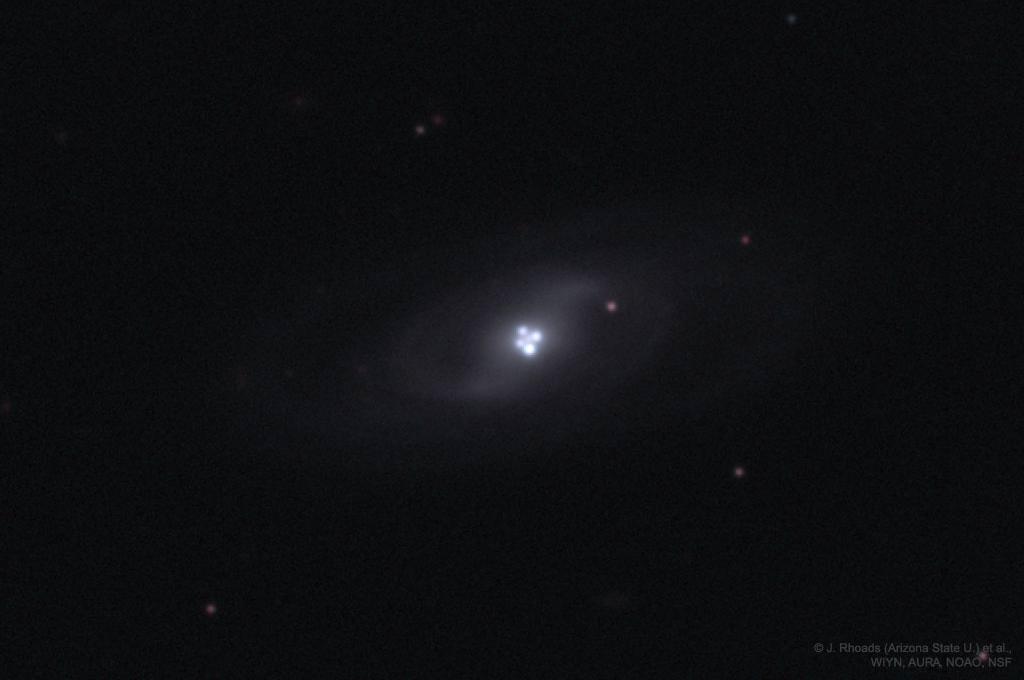
Alt...
2026 January 4
A faint galaxy near the center of the image shows four bright spots near its center.
The Einstein Cross Gravitational Lens
* Image Credit & License: NSF, NOIRLab, AURA, WIYN
* Processing: J. Rhoads (Arizona State U.) et al.
Explanation:
Most galaxies have a single nucleus -- does this galaxy have four? The strange answer leads astronomers to conclude that the nucleus of the surrounding galaxy is not even visible in this image. The central cloverleaf is rather light emitted from a background quasar. The gravitational field of the visible foreground galaxy breaks light from this distant quasar into four distinct images. The quasar must be properly aligned behind the center of a massive galaxy for a mirage like this to be evident. The general effect is known as gravitational lensing, and this specific case is known as the Einstein Cross. Stranger still, the images of the Einstein Cross vary in relative brightness, enhanced occasionally by the additional gravitational microlensing effect of specific stars in the foreground galaxy.
Authors & editors: Robert Nemiroff (MTU) & Jerry Bonnell (UMCP)
NASA Official: Amber Straughn Specific rights apply.
NASA Web Privacy, Accessibility, Notices;
A service of: ASD at NASA / GSFC,
NASA Science Activation
When will we discover that the nature of dark matter and the application of gravitational lensing allow us to look far into the past as well as far into the future? What pre-existing prerequisites for this have we overlooked and what would we have to recognize beforehand so that we do not overlook them? Why could this be important? Anyone who sees the future gets the chance to influence it positively ..
This is the ancient, present, and ultimately future hope of truly human science ..
https://journals.aps.org/prd/abstract/10.1103/6h6r-46cd
https://premierscience.com/pjs-25-872/
https://arxiv.org/pdf/2511.15797
https://arxiv.org/pdf/2502.04472
#space #gravitational_lensing #astrophotography #photography #science #physics #future #nature #NASA #ESA
2026 January 3
Full Moonlight
* Image Credit & Copyright: Zhengjie Wu and Jeff Dai
https://twanight.org/profile/jeff-dai/
Explanation:
The Full Moon is the brightest lunar phase, and tonight you can stand in the light of the first Full Moon of 2026. In fact, the Moon's full phase occurs on January 3 at 10:03 UTC, while only about 7 hours later planet Earth reaches its 2026 perihelion, the closest point in its elliptical orbit around the Sun, at 17:16 UTC. January's Full Moon was also not far from its own perigee, or closest approach to planet Earth. For this lunation the Moon's perigee was on January 1 at 21:44 UTC. You can also spot planet Jupiter, near its brightest for 2026 and close on the sky to the Full Moon tonight. But while you're out skygazing don't forget to look for rare, bright fireballs from the Quadrantid meteor shower.
https://apod.nasa.gov/apod/ap211118.html
https://earthsky.org/earth/rare-alignment-of-earth-moon-and-sun-january-1-2-3-2026/
https://earthsky.org/tonight/january-full-moon-is-the-wolf-moon/
https://moon.nasa.gov/moon-observation/daily-moon-guide/?intent=011
https://www.amsmeteors.org/2025/12/viewing-the-2026-quadrantid-meteor-shower/
https://apod.nasa.gov/apod/fap/ap260103.html
#space #earth #moon #astrophotography #photography #science #astronomy #physics #nature #NASA #apod
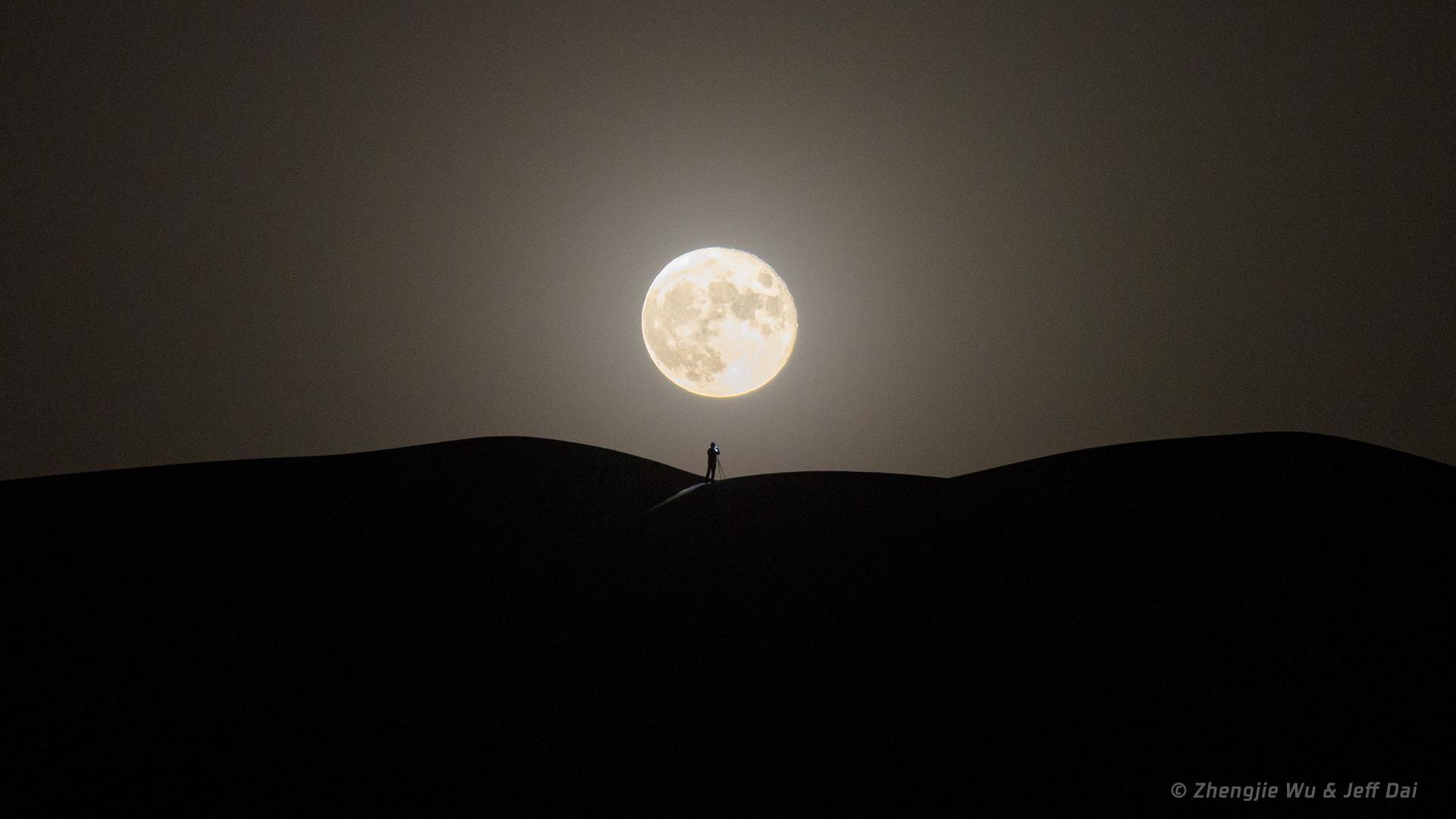
Alt...
2026 January 3
Full Moonlight
* Image Credit & Copyright: Zhengjie Wu and Jeff Dai (TWAN)
Explanation:
The Full Moon is the brightest lunar phase, and tonight you can stand in the light of the first Full Moon of 2026. In fact, the Moon's full phase occurs on January 3 at 10:03 UTC, while only about 7 hours later planet Earth reaches its 2026 perihelion, the closest point in its elliptical orbit around the Sun, at 17:16 UTC. January's Full Moon was also not far from its own perigee, or closest approach to planet Earth. For this lunation the Moon's perigee was on January 1 at 21:44 UTC. You can also spot planet Jupiter, near its brightest for 2026 and close on the sky to the Full Moon tonight. But while you're out skygazing don't forget to look for rare, bright fireballs from the Quadrantid meteor shower.
Authors & editors: Robert Nemiroff (MTU) & Jerry Bonnell (UMCP)
NASA Official: Amber Straughn Specific rights apply.
NASA Web Privacy, Accessibility, Notices;
A service of: ASD at NASA / GSFC,
NASA Science Activation
& Michigan Tech. U.
Topic> Spacecrafts
2026 January 2
NanoSail-D2
* Image Credit & Copyright: Ralf Vandebergh
https://satellite-imaging.jouwweb.nl/selected-project-samples-best-works
Explanation:
In 2011, on January 20, NASA's NanoSail-D2 unfurled a very thin and very reflective 10 square meter sail becoming the first solar sail spacecraft in low Earth orbit. Often considered the stuff of science fiction, sailing through space was suggested 400 years ago by astronomer Johannes Kepler, who had observed comet tails blown by the solar wind. But modern solar sail spacecraft designs, like NanoSail-D2, Japan's interplanetary spacecraft IKAROS, or the Planetary Society's Lightsail A, rely on the small but continuous pressure from sunlight itself for thrust. Glinting in the sunlight as it circled planet Earth, NanoSail-D2's solar sail was periodically bright and visible to the eye. These remarkably detailed images were captured by manually tracking the orbiting solar sail spacecraft with a small telescope.
https://en.wikipedia.org/wiki/NanoSail-D2
https://en.wikipedia.org/wiki/Sunjammer
https://apod.nasa.gov/apod/ap040821.html
https://en.wikipedia.org/wiki/Solar_sail
https://global.jaxa.jp/countdown/f17/overview/ikaros_e.html
https://apod.nasa.gov/apod/ap150619.html
http://www.phy6.org/stargaze/Solsail.htm
https://apod.nasa.gov/apod/ap260101.html
#space #earth #spacecraft #astrophotography #photography #NASA #science #physics #tech #education #apod
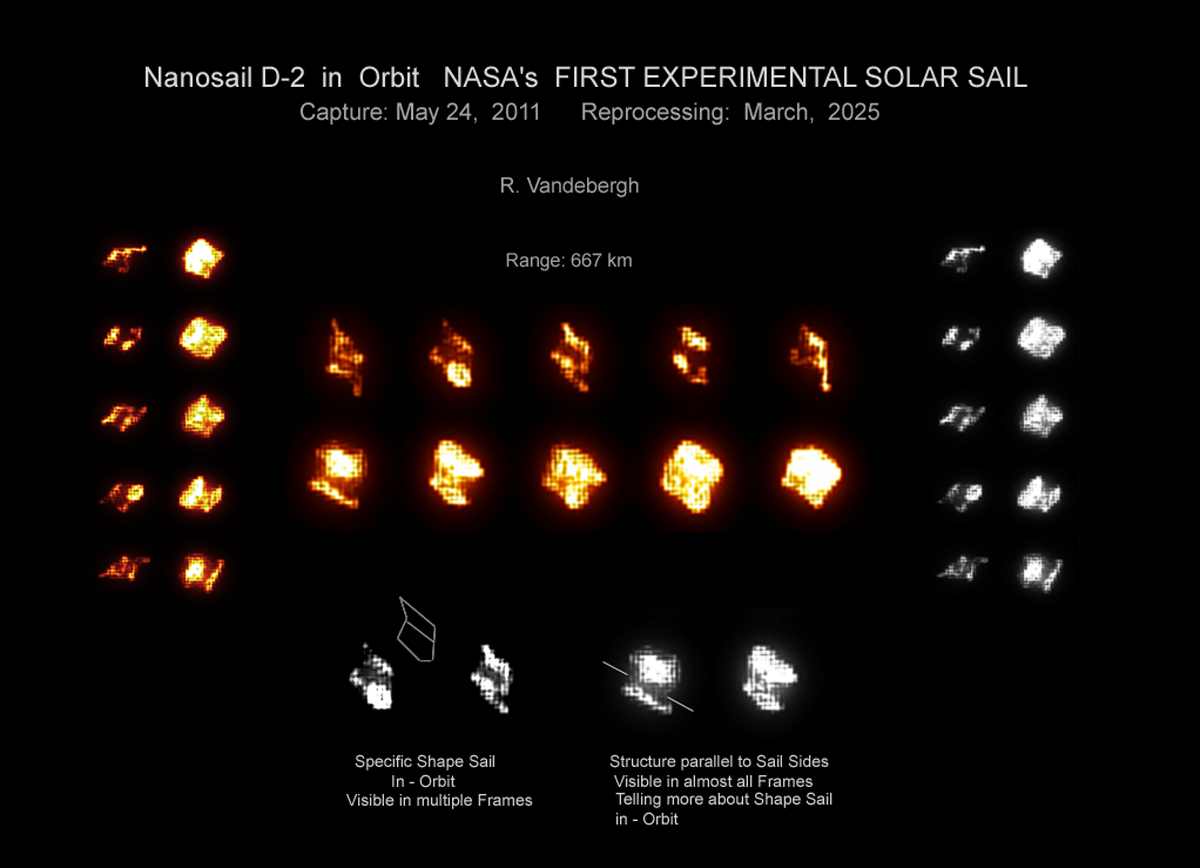
Alt...
2026 January 2
NanoSail-D2
* Image Credit & Copyright: Ralf Vandebergh
Explanation:
In 2011, on January 20, NASA's NanoSail-D2 unfurled a very thin and very reflective 10 square meter sail becoming the first solar sail spacecraft in low Earth orbit. Often considered the stuff of science fiction, sailing through space was suggested 400 years ago by astronomer Johannes Kepler, who had observed comet tails blown by the solar wind. But modern solar sail spacecraft designs, like NanoSail-D2, Japan's interplanetary spacecraft IKAROS, or the Planetary Society's Lightsail A, rely on the small but continuous pressure from sunlight itself for thrust. Glinting in the sunlight as it circled planet Earth, NanoSail-D2's solar sail was periodically bright and visible to the eye. These remarkably detailed images were captured by manually tracking the orbiting solar sail spacecraft with a small telescope.
Authors & editors: Robert Nemiroff (MTU) & Jerry Bonnell (UMCP)
NASA Official: Amber Straughn Specific rights apply.
NASA Web Privacy, Accessibility, Notices;
A service of: ASD at NASA / GSFC,
NASA Science Activation
& Michigan Tech. U.
![[?]](https://files.mastodon.social/accounts/avatars/109/258/636/566/275/551/original/1b9ca26377a774d5.jpg)
*Fascinating and Frightning: Towards a #CromwellianFuture*
(1/n)
If tried by court-martial, senator accused of ‘seditious behavior’ would be deprived of several constitutional rights
#JoshuaKastenberg, University of New Mexico
The Department of Defense [#DoD] in late November 2025 announced that it would investigate U.S. Sen. #MarkKelly, a retired #Navy captain and #NASA astronaut, for what Secretary of Defense...
Today's #APOD: I think God's trying to give us his email address
https://apod.nasa.gov/apod/ap251212.html
"Northern Fox Fires"
2025 December 12
Northern Fox Fires
* Image Credit & Copyright: Dennis Lehtonen
https://denniina.com/
Explanation:
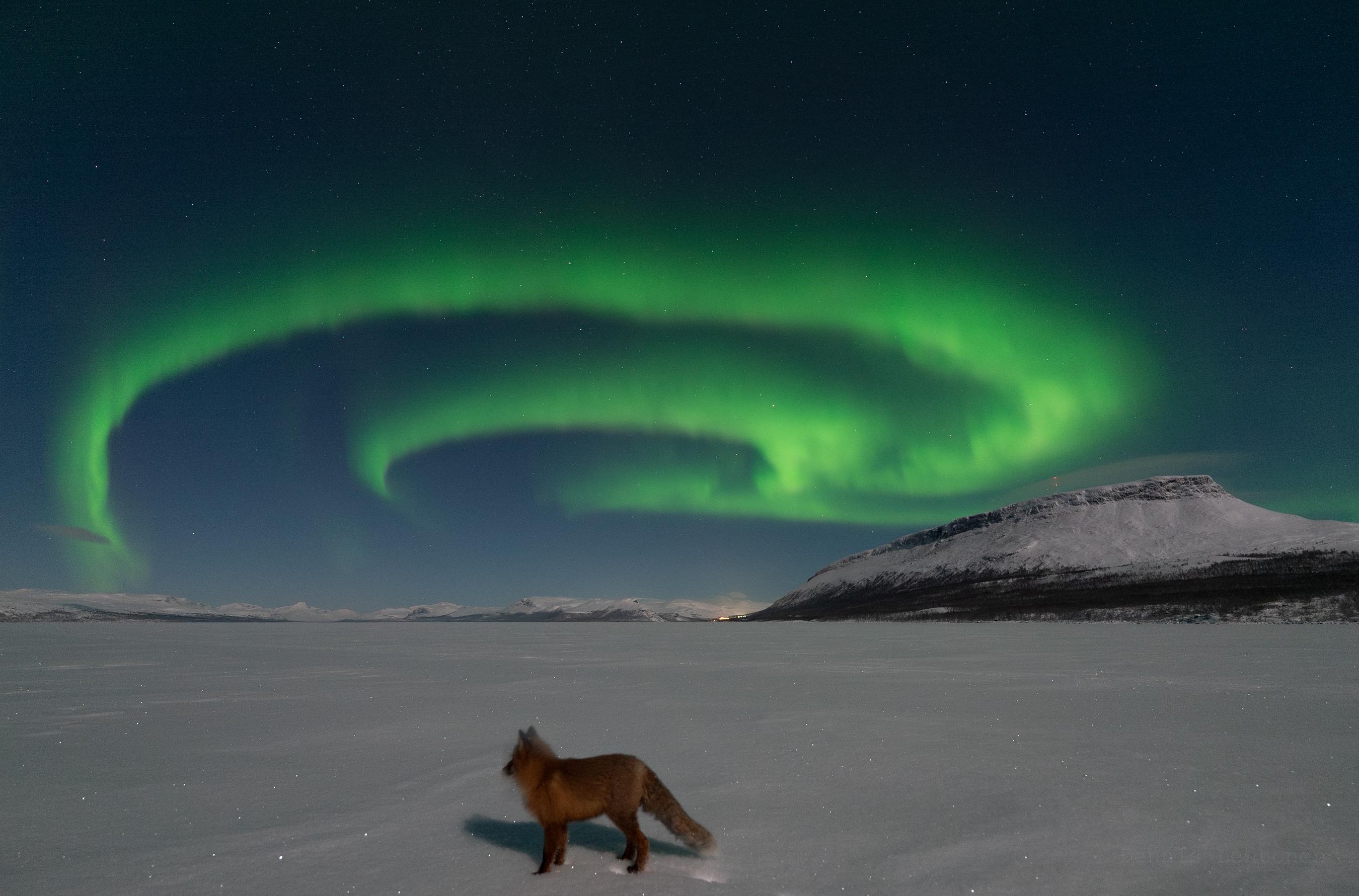
In a Finnish myth, when an arctic fox runs so fast that its bushy tail brushes the mountains, flaming sparks are cast into the heavens creating the northern lights. In fact the Finnish word "revontulet", a name for the aurora borealis or northern lights, can be translated as fire fox. So that evocative myth took on a special significance for the photographer of this northern night skyscape from Finnish Lapland near Kilpisjarvi Lake. The snowy scene is illuminated by moonlight. Saana, an iconic fell or mountain of Lapland, rises at the right in the background. But as the beautiful nothern lights danced overhead, the wild fire fox in the foreground enthusiastically ran around the photographer and his equipment, making it difficult to capture in this lucky single shot.
https://aurora-nights.co.uk/aurora-academy/what-are-the-northern-lights/sami-view-of-the-northern-lights/
https://science.nasa.gov/sun/auroras/
https://apod.nasa.gov/apod/ap251212.html
#space #earth #aurora #astrophotography #photography #NASA #science #physics #nature #education #4sAur #apod
Alt...
2025 December 12
Northern Fox Fires
* Image Credit & Copyright: Dennis Lehtonen
Explanation:
In a Finnish myth, when an arctic fox runs so fast that its bushy tail brushes the mountains, flaming sparks are cast into the heavens creating the northern lights. In fact the Finnish word "revontulet", a name for the aurora borealis or northern lights, can be translated as fire fox. So that evocative myth took on a special significance for the photographer of this northern night skyscape from Finnish Lapland near Kilpisjarvi Lake. The snowy scene is illuminated by moonlight. Saana, an iconic fell or mountain of Lapland, rises at the right in the background. But as the beautiful nothern lights danced overhead, the wild fire fox in the foreground enthusiastically ran around the photographer and his equipment, making it difficult to capture in this lucky single shot.
Authors & editors: Robert Nemiroff (MTU) & Jerry Bonnell (UMCP)
NASA Official: Amber Straughn Specific rights apply.
NASA Web Privacy, Accessibility, Notices;
A service of: ASD at NASA / GSFC,
NASA Science Activation
& Michigan Tech. U.
2023 November 17
Nightlights in Qeqertaq
* Image Credit & Copyright: Dennis Lehtonen
https://denniina.com/
Explanation:
Light pollution is usually not a problem in Qeqertaq. In western Greenland the remote coastal village boasted a population of 114 in 2020. Lights still shine in its dark skies though. During planet Earth's recent intense geomagnetic storm, on November 6 these beautiful curtains of aurora borealis fell over the arctic realm. On the eve of the coming weeks of polar night at 70 degrees north latitude, the inspiring display of northern lights is reflected in the waters of Disko Bay. In this view from the isolated settlement a lone iceberg is illuminated by shore lights as it drifts across the icy sea.
https://denniina.com/gallery/23-24
https://www.instagram.com/p/CzVRGZlMyu_/
https://www.timeanddate.com/astronomy/polar-night.html
https://science.nasa.gov/earth/earth-observatory/thinning-of-the-northeast-greenland-ice-stream-150801/
https://apod.nasa.gov/apod/fap/ap251212.html
#space #earth #aurora #astrophotography #photography #NASA #science #physics #nature #education #4sAur

Alt...
2023 November 17
Nightlights in Qeqertaq
* Image Credit & Copyright: Dennis Lehtonen
Explanation:
Light pollution is usually not a problem in Qeqertaq. In western Greenland the remote coastal village boasted a population of 114 in 2020. Lights still shine in its dark skies though. During planet Earth's recent intense geomagnetic storm, on November 6 these beautiful curtains of aurora borealis fell over the arctic realm. On the eve of the coming weeks of polar night at 70 degrees north latitude, the inspiring display of northern lights is reflected in the waters of Disko Bay. In this view from the isolated settlement a lone iceberg is illuminated by shore lights as it drifts across the icy sea.
Authors & editors: Robert Nemiroff (MTU) & Jerry Bonnell (UMCP)
NASA Official: Amber Straughn Specific rights apply.
NASA Web Privacy, Accessibility, Notices;
A service of: ASD at NASA / GSFC,
NASA Science Activation
& Michigan Tech. U.
"Hey,
may i take you on a ride through the twilight into the night sky?? OK, buckle up and off we go .. if you dare to!"
2025 December 8
Flying Over the Earth at Night
* Video Credit: Gateway to Astronaut Photography, NASA
https://eol.jsc.nasa.gov/
http://www.nasa.gov/
* Compilation: David Peterson https://www.youtube.com/user/Bitmeizer
* Music: Freedom Fighters (Two Steps from Hell)
https://en.wikipedia.org/wiki/Two_Steps_from_Hell
Explanation:
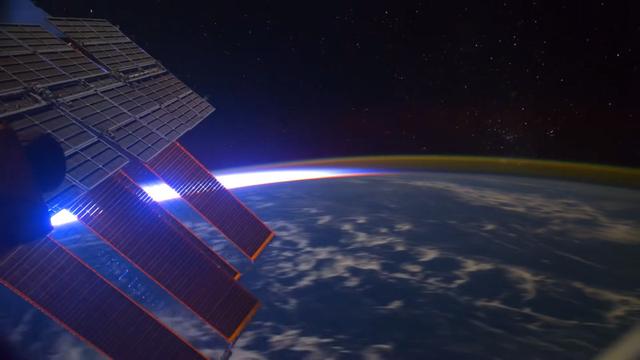
Many wonders are visible when flying over the Earth at night. A compilation of such visual spectacles was captured recently from the International Space Station (ISS) and set to rousing music. Passing below are white clouds, orange city lights, lightning flashes in thunderstorms, and dark blue seas. On the horizon is the golden haze of Earth's thin atmosphere, frequently decorated by dancing auroras as the video progresses. The green parts of auroras typically remain below the space station, but the station flies right through the red and purple auroral peaks. Solar panels of the ISS are seen around the frame edges. The ominous wave of approaching brightness at the end of each sequence is just the dawn of the sunlit half of Earth, a dawn that occurs every 90 minutes.
https://apod.nasa.gov/apod/ap251208.html
#space #earth #aurora #iss #astrophotography #photography #NASA #science #physics #nature #education #apod
Alt...
2025 December 8
Flying Over the Earth at Night
* Video Credit: Gateway to Astronaut Photography, NASA
* Compilation: David Peterson (YouTube)
* Music: Freedom Fighters (Two Steps from Hell)
Explanation:
Many wonders are visible when flying over the Earth at night. A compilation of such visual spectacles was captured recently from the International Space Station (ISS) and set to rousing music. Passing below are white clouds, orange city lights, lightning flashes in thunderstorms, and dark blue seas. On the horizon is the golden haze of Earth's thin atmosphere, frequently decorated by dancing auroras as the video progresses. The green parts of auroras typically remain below the space station, but the station flies right through the red and purple auroral peaks. Solar panels of the ISS are seen around the frame edges. The ominous wave of approaching brightness at the end of each sequence is just the dawn of the sunlit half of Earth, a dawn that occurs every 90 minutes.
Authors & editors: Robert Nemiroff (MTU) & Jerry Bonnell (UMCP)
NASA Official: Phillip Newman Specific rights apply.
NASA Web Privacy Policy and Important Notices
A service of: ASD at NASA / GSFC
& Michigan Tech. U.
2025 December 7
The Sun and Its Missing Colors
* Image Credit: Nigel Sharp (NSF), FTS, NSO, KPNO, AURA, NSF
https://noirlab.edu/public/images/noao-02592/
https://www.nsf.gov/
https://nso.edu/
https://noirlab.edu/public/programs/kitt-peak-national-observatory/
https://www.aura-astronomy.org/
Explanation:
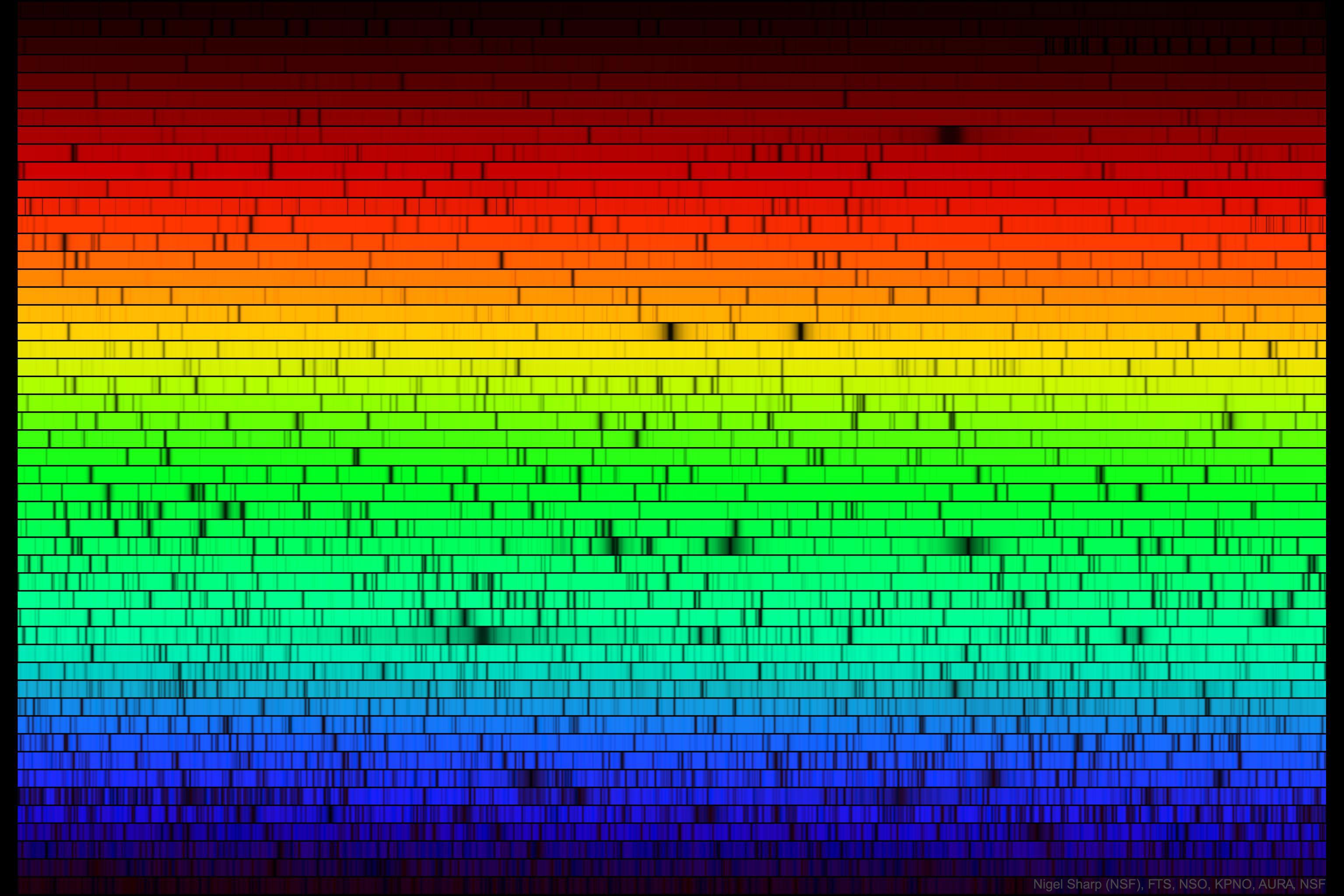
It is still not known why the Sun's light is missing some colors. Here are all the visible colors of the Sun, produced by passing the Sun's light through a prism-like device. The spectrum was created at the McMath-Pierce Solar Observatory and shows, first off, that although our white-appearing Sun emits light of nearly every color, it appears brightest in yellow-green light. The dark patches in the featured spectrum arise from gas at or above the Sun's surface absorbing sunlight emitted below. Since different types of gas absorb different colors of light, it is possible to determine what gasses compose the Sun. Helium, for example, was first discovered in 1868 on a solar spectrum and only later found here on Earth. Today, the majority of spectral absorption lines have been identified - but not all.
https://science.nasa.gov/sun/
https://science.nasa.gov/ems/09_visiblelight/
https://en.wikipedia.org/wiki/Prism_%28optics%29
https://www.color-meanings.com/list-of-colors-names-hex-codes/
https://solar-center.stanford.edu/SID/activities/GreenSun.html
https://astronomy.swin.edu.au/cosmos/a/absorption+line
https://ui.adsabs.harvard.edu/abs/2005ASPC..336...25A/abstract
https://en.wikipedia.org/wiki/Helium
https://www.smithsonianmag.com/history/how-scientists-discovered-helium-first-alien-element-1868-180970057/
https://pwg.gsfc.nasa.gov/stargaze/Sun4spec.htm
https://noirlab.edu/public/programs/kitt-peak-national-observatory/mcmath-pierce-solar-telescope/
https://apod.nasa.gov/apod/ap120316.html
https://apod.nasa.gov/apod/image/0208/earthlights02_dmsp_big.jpg
https://apod.nasa.gov/apod/image/0208/earthlights02_dmsp_big.jpg
https://apod.nasa.gov/apod/fap/ap251207.html
#space #sun #astrophotography #photography #science #astronomy #physics #nature #NASA #ESA #apod
Alt...
2025 December 7
Colors from red at the top to blue at the bottom occupy this spectral image. In the midst of the colors are some dark spots indicating missing colors.
The Sun and Its Missing Colors
* Image Credit: Nigel Sharp (NSF), FTS, NSO, KPNO, AURA, NSF
Explanation:
It is still not known why the Sun's light is missing some colors. Here are all the visible colors of the Sun, produced by passing the Sun's light through a prism-like device. The spectrum was created at the McMath-Pierce Solar Observatory and shows, first off, that although our white-appearing Sun emits light of nearly every color, it appears brightest in yellow-green light. The dark patches in the featured spectrum arise from gas at or above the Sun's surface absorbing sunlight emitted below. Since different types of gas absorb different colors of light, it is possible to determine what gasses compose the Sun. Helium, for example, was first discovered in 1868 on a solar spectrum and only later found here on Earth. Today, the majority of spectral absorption lines have been identified - but not all.
Authors & editors: Robert Nemiroff (MTU) & Jerry Bonnell (UMCP)
NASA Official: Amber Straughn Specific rights apply.
NASA Web Privacy, Accessibility, Notices;
A service of: ASD at NASA / GSFC,
NASA Science Activation
& Michigan Tech. U.
2025 December 6
Apollo 17 at Shorty Crater
* Apollo 17 Crew, NASA
https://apollojournals.org/
https://www.nasa.gov/
Explanation:
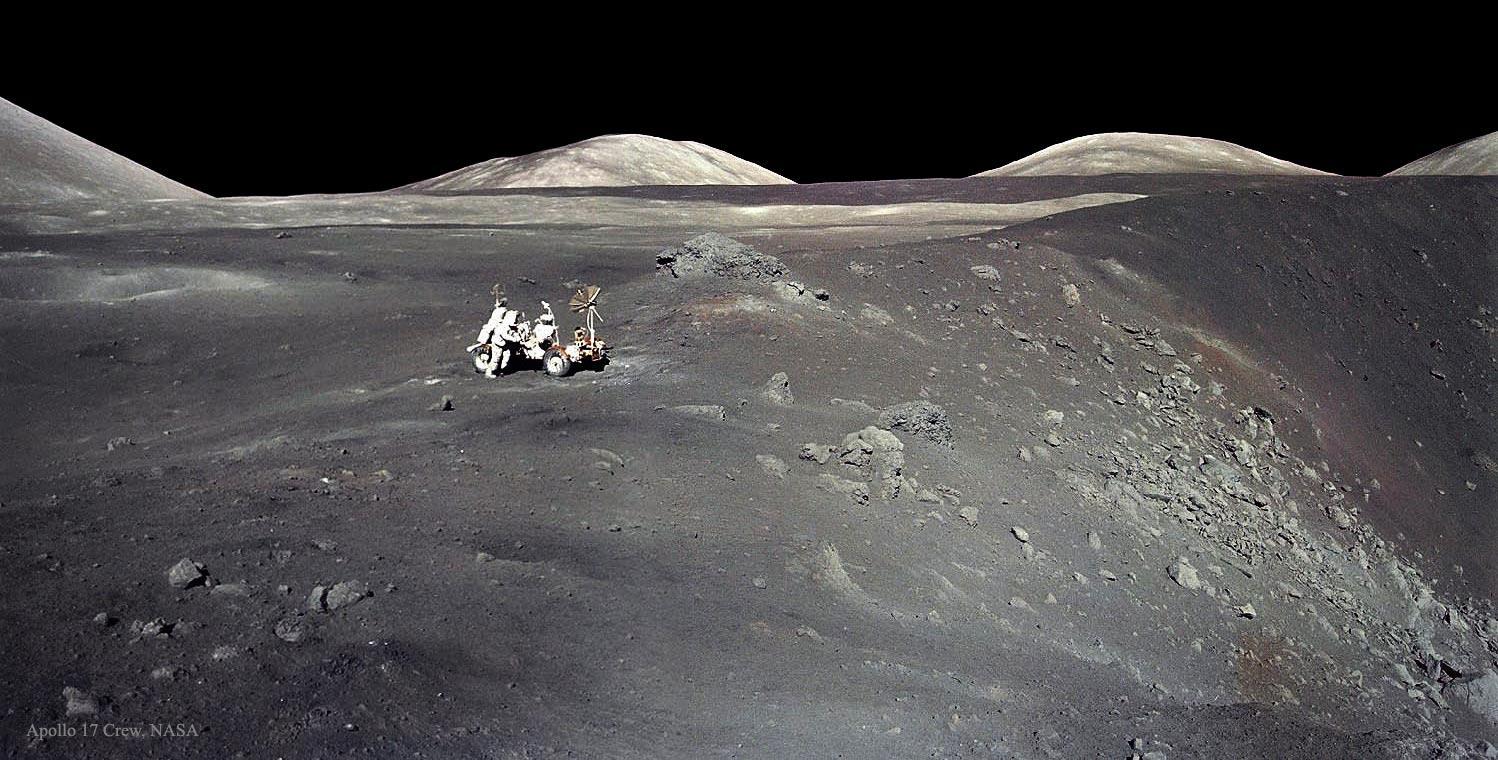
Fifty three years ago, in December of 1972, Apollo 17 astronauts Eugene Cernan and Harrison Schmitt spent about 75 hours on the Moon exploring the Taurus-Littrow valley, while colleague Ronald Evans orbited overhead. This snapshot from another world was taken by Cernan as he and Schmitt roamed the lunar valley's floor. The image shows Schmitt next to the lunar rover parked at the southeast rim of Shorty Crater. That location is near the spot where geologist Schmitt discovered orange lunar soil. The Apollo 17 crew returned with 110 kilograms of rock and soil samples, more than was returned from any of the other lunar landing sites. And for now, Cernan and Schmitt are the last to walk on the Moon.
https://www.lpi.usra.edu/lunar/missions/apollo/apollo_17/
https://www.nasa.gov/history/alsj-and-afj/
https://apollojournals.org/alsj/a17/a17.landing.html
https://apollojournals.org/afj/ap17fj/14_day05_part4.html
https://apollojournals.org/alsj/a17/AS17-137-21009HR.jpg
https://apod.nasa.gov/apod/ap250328.html
https://apod.nasa.gov/apod/ap040605.html
https://lroc.im-ldi.com/images/417
https://en.wikipedia.org/wiki/Shorty_(crater)
https://apod.nasa.gov/apod/ap010523.html
https://www.lpi.usra.edu/lunar/missions/apollo/apollo_17/samples/
https://www.nasa.gov/humans-in-space/artemis/
https://apod.nasa.gov/apod/fap/ap251206.html
#space #moon #astrophotography #photography #science #astronomy #nature #NASA #education #apod
Alt...
2025 December 6
Apollo 17 at Shorty Crater
* Apollo 17 Crew, NASA
Explanation:
Fifty three years ago, in December of 1972, Apollo 17 astronauts Eugene Cernan and Harrison Schmitt spent about 75 hours on the Moon exploring the Taurus-Littrow valley, while colleague Ronald Evans orbited overhead. This snapshot from another world was taken by Cernan as he and Schmitt roamed the lunar valley's floor. The image shows Schmitt next to the lunar rover parked at the southeast rim of Shorty Crater. That location is near the spot where geologist Schmitt discovered orange lunar soil. The Apollo 17 crew returned with 110 kilograms of rock and soil samples, more than was returned from any of the other lunar landing sites. And for now, Cernan and Schmitt are the last to walk on the Moon.
Authors & editors: Robert Nemiroff (MTU) & Jerry Bonnell (UMCP)
NASA Official: Amber Straughn Specific rights apply.
NASA Web Privacy, Accessibility, Notices;
A service of: ASD at NASA / GSFC,
NASA Science Activation
& Michigan Tech. U.
Sonification of WR 124
The first movement is a prelude to the potential birth of a black hole. WR124 is an extremely bright, short-lived massive star known as a Wolf-Rayet at a distance of about 28,000 light-years from Earth. These stars fling their outer layers out into space, creating spectacular arrangements seen in an image in infrared light from the Webb telescope. In the sonification of WR124, this nebula is heard as flutes and the background stars as bells. At the center of WR124, where the scan begins before moving outward, is a hot core of the star that may explode as a supernova and potentially collapse and leave behind a black hole in its wake. As the scan moves from the center outward, X-ray sources detected by Chandra are translated into harp sounds. Data from NASA’s James Webb Space Telescope is heard as metallic bell-like sounds, while the light of the central star is mapped to produce the descending scream-like sound at the beginning. The piece is rounded out by strings playing additional data from the infrared telescopic trio of ESA’s (European Space Agency’s) Herschel Space Telescope, NASA’s retired Spitzer Space Telescope, and NASA’s retired Wide Image Survey Explorer (WISE) as chords.
Credit: X-ray: NASA/CXC/SAO; Infrared: (Herschel) ESA/NASA/Caltech, (Spitzer) NASA/JPL/Caltech, (WISE) NASA/JPL/Caltech; Infrared: NASA/ESA/CSA/STScI/Webb ERO Production Team; Image processing: NASA/CXC/SAO/J. Major; Sonification: NASA/CXC/SAO/K.Arcand, SYSTEM Sounds (M. Russo, A. Santaguida)
#space #galaxy #sonification #sound #acoustic #astrophotography #photography #science #astronomy #nature #education #NASA
2002 October 3
V838 Mon: Mystery Star
A leading candidate for the most mysterious star found in recent times is variable star V838 Monocerotis. At a distance of about 8,000 light-years, V838 Mon was discovered to be in outburst in January of this year. Initially thought to be a familiar type of classical nova, astronomers quickly realized that instead, V838 Mon may be a totally new addition to the astronomical zoo. Observations indicate that the erupting star transformed itself over a period of months from a small under-luminous star a little hotter than the Sun, to a highly-luminous, cool supergiant star undergoing rapid and complex brightness changes. The transformation defies the conventional understanding of stellar life cycles. A most notable feature of V838 Mon is the "expanding" nebula which now appears to surround it. Seen above in two separate images from the South African Astronomical Observatory's 1 meter telescope, the nebula is probably a light echo from shells of formerly unseen material lost by the star during its previous evolution. Light-years in diameter, the shells progressively reflect the light from V838 Mon's outbursts, providing an opportunity to look back at the history of this remarkable star's behaviour.
Authors & editors: Robert Nemiroff (MTU) & Jerry Bonnell (USRA)
https://apod.nasa.gov/apod/ap021003.html
___
This data sonification of the star V838 Monocerotis, or V838 Mon, shows two Hubble images taken almost seven months apart. A pulse of light from the central star illuminates clouds of dust and gas surrounding V838 Mon.
https://science.nasa.gov/mission/hubble/multimedia/sonifications/
CREDIT
NASA, ESA, H.E. Bond (STScI) and The Hubble Heritage Team (STScI/AURA)
* Sonification: SYSTEM Sounds (M. Russo, A. Santaguida)
#space #star #sonification #sound #acoustic #astrophotography #photography #science #astronomy #nature #education #NASA
2020 December 16
Sonified: The Matter of the Bullet Cluster
* Image Credit: X-ray: NASA/CXC/SAO
* Optical: NASA/STScI, Magellan/U.Arizona
* Lensing Map: NASA/STScI, ESO WFI, Magellan/U.Arizona
* Sonification: NASA/CXC/SAO/K.Arcand, SYSTEM Sounds (M. Russo, A. Santaguida)
Explanation:
What's the matter with the Bullet Cluster? This massive cluster of galaxies (1E 0657-558) creates gravitational lens distortions of background galaxies in a way that has been interpreted as strong evidence for the leading theory: that dark matter exists within. Different analyses, though, indicate that a less popular alternative -- modifying gravity-- could explain cluster dynamics without dark matter, and provide a more likely progenitor scenario as well. Currently, the two scientific hypotheses are competing to explain the observations: it's invisible matter versus amended gravity. The duel is dramatic as a clear Bullet-proof example of dark matter would shatter the simplicity of modified gravity theories. The featured sonified image is a Hubble/Chandra/Magellan composite with red depicting the X-rays emitted by hot gas, and blue depicting the suggested separated dark matter distribution. The sonification assigns low tones to dark matter, mid-range frequencies to visible light, and high tones to X-rays. The battle over the matter in the Bullet cluster is likely to continue as more observations, computer simulations, and analyses are completed.
https://apod.nasa.gov/apod/ap201216.html
#space #cluster #sonification #sound #astrophotography #photography #science #astronomy #nature #education #NASA
RS Puppis
Pulsating RS Puppis, the brightest star in the image center, is some ten times more massive than our Sun and on average 15,000 times more luminous. In fact, RS Pup is a Cepheid variable star, a class of stars whose brightness is used to estimate distances to nearby galaxies as one of the first steps in establishing the cosmic distance scale. As RS Pup pulsates over a period of about 40 days, its regular changes in brightness are also seen along its surrounding nebula delayed in time, effectively a light echo. Using measurements of the time delay and angular size of the nebula, the known speed of light allows astronomers to geometrically determine the distance to RS Pup to be 6,500 light-years, with a remarkably small error of plus or minus 90 light-years. An impressive achievement for stellar astronomy, the echo-measured distance also more accurately establishes the true brightness of RS Pup, and by extension other Cepheid stars, improving the knowledge of distances to galaxies beyond the Milky Way.
Authors & editors:
Robert Nemiroff (MTU) & Jerry Bonnell (UMCP)
____
RS Puppis is a glittering star 200 times larger than our Sun and wreathed with dust reflecting starlight. Located about 6,500 light-years away, this star rhythmically brightens and dims over a six-week cycle. In this sonification, scientists represent data in the image as sound for a new, festive way of experiencing RS Puppis. Pitch is assigned based on direction from the center; as the circle travels inward, points at the top of the circle are mapped to higher notes and points near the bottom are mapped to lower notes.
[...]
More information in Alt-Text
CREDIT
NASA, ESA and Jesús Maíz Apellániz (Instituto de Astrofísica de Andalucía, Spain); Acknowledgment: Davide De Martin (ESA/Hubble); Sonification: SYSTEM Sounds (M. Russo, A. Santaguida)
#space #star #sonification #sound #acoustic #astrophotography #photography #science #astronomy #nature #education #NASA
2020 September 30
Sonified: Eagle Nebula Pillars
* Image Credit: NASA, ESA, & The Hubble Heritage Team (STScI/AURA)
* Sonification: NASA, CXC, SAO, K. Arcand, M. Russo & A. Santaguida
Explanation:
Yes, but have you ever experienced the Eagle Nebula with your ears ? The famous nebula, M16, is best known for the feast it gives your eyes, highlighting bright young stars forming deep inside dark towering structures. These light-years long columns of cold gas and dust are some 6,500 light-years distant toward the constellation of the Serpent (Serpens). Sculpted and eroded by the energetic ultraviolet light and powerful winds from M16's cluster of massive stars, the cosmic pillars themselves are destined for destruction. But the turbulent environment of star formation within M16, whose spectacular details are captured in this combined Hubble (visible) and Chandra (X-ray) image, is likely similar to the environment that formed our own Sun. In the featured video, listen for stars and dust sounding off as the line of sonification moves left to right, with vertical position determining pitch.
Authors & editors: Robert Nemiroff (MTU) & Jerry Bonnell (UMCP)
https://apod.nasa.gov/apod/ap200930.html
___
These pillars of gas and dust in the Eagle Nebula are regions of starbirth. The aptly named "Pillars of Creation" hide newborn stars in their wispy columns. Stretching roughly 4 to 5 light-years, the towers are a relatively small feature of the entire Eagle Nebula, which spans 70 by 55 light-years.
In the sonification, sounds are generated by moving horizontally across the image from left to right as seen in both visible and X-ray light. The vertical position of the recorded light controls the pitch. Particular attention is paid to the structure of the pillars, which can be heard as sweeps from low to high pitches and back.
#space #nebula #sonification #sound #acoustic #astrophotography #photography #science #astronomy #nature #education #NASA
Mice Galaxies
From Wikipedia, the free encyclopedia
NGC 4676, or the Mice Galaxies, are two spiral galaxies in the constellation Coma Berenices. About 290 million light-years distant, they have begun the process of colliding and merging. Their "mice" name refers to the long tails produced by tidal action—the relative difference between gravitational pulls on the near and far parts of each galaxy—known here as a galactic tide. It is a possibility that both galaxies, which are members of the Coma Cluster, have experienced collision, and will continue colliding until they coalesce.
The colors of the galaxies are peculiar. In NGC 4676A a core with some dark markings is surrounded by a bluish white remnant of spiral arms. The tail is unusual, starting out blue and terminating in a more yellowish color, despite the fact that the beginning of each arm in virtually every spiral galaxy starts yellow and terminates in a bluish color. NGC 4676B has a yellowish core and two arcs; arm remnants underneath are bluish as well.
The galaxies were photographed in 2002 by the Hubble Space Telescope. In the background of the Mice Galaxies, there are over 3000 galaxies, at distances up to 13 billion light-years.
By contributors to Wikimedia projects
----
The Mice Galaxies are a colliding pair of galaxies, that will eventually merge into a single galaxy. They’re located about 300 million light-years away in the constellation Coma Berenices. In this data sonification, scientists represented brightness with volume and pitch – brighter light is louder and lower pitched. The vertical position of objects in the image is used to control the pitch of sustained musical strings, and cymbals swell following the brightness of the galaxy cores. Listen for a cymbal crash played for the foreground star with diffraction spikes, too!
CREDIT
Please see the ALT-Text
#space #galaxy #sonification #sound #acoustic #astrophotography #photography #science #astronomy #nature #education #NASA
Earth's Song
by Maria-Jose Vinas Garcia
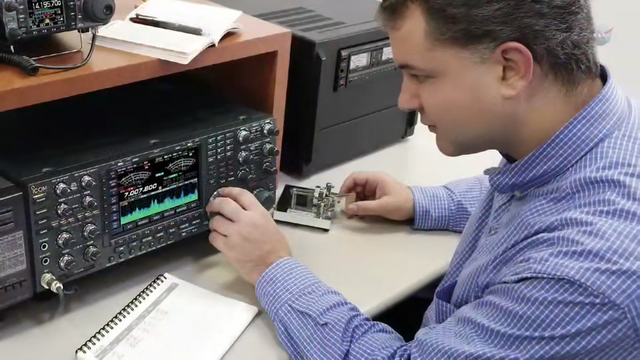
Suspended in the dark cosmos, Earth sings to itself in a high-pitched chorus of chirps and beeps. This song is a product of very low frequency radio waves generated by lightning strikes or excited electrons zipping through the Van Allen Belts, two vast swaths of radiation surrounding Earth. While ham radio operators have long detected this eerie planetary sound using inexpensive receivers, the recent recording by specially designed antennas on NASA's twin Van Allen Probes is one of the clearest examples ever captured. But could Earth's chorus be a siren song? The probes are now on a quest to find out whether these radio waves might be powering up otherwise harmless electrons in the Van Allen Belts, turning them into "killer electrons" capable of damaging satellites and astronauts. Watch the videos to hear and learn more about this rare recording.
https://svs.gsfc.nasa.gov/11073
Credits:
+ Science@NASA
NASA's Goddard Space Flight Center
+ Van Allen Belts image courtesy of NASA
+ T. Benesch and J. Carns
#space #earth #hamradio #audio #sound #acoustic #tech #science #astronomy #nature #education #NASA
Alt...
Suspended in the dark cosmos, Earth sings to itself in a high-pitched chorus of chirps and beeps. This song is a product of very low frequency radio waves generated by lightning strikes or excited electrons zipping through the Van Allen Belts, two vast swaths of radiation surrounding Earth. While ham radio operators have long detected this eerie planetary sound using inexpensive receivers, the recent recording by specially designed antennas on NASA's twin Van Allen Probes is one of the clearest examples ever captured. But could Earth's chorus be a siren song? The probes are now on a quest to find out whether these radio waves might be powering up otherwise harmless electrons in the Van Allen Belts, turning them into "killer electrons" capable of damaging satellites and astronauts. Watch the videos to hear and learn more about this rare recording.
Credits:
+ Science@NASA
NASA's Goddard Space Flight Center
+ Van Allen Belts image courtesy of NASA
+ T. Benesch and J. Carns
NGC 1300
The majestic barred spiral galaxy NGC 1300’s arms hold blue clusters of young stars, pink clouds of star formation, and dark lanes of dust. NGC 1300 is considered to be prototypical of barred spiral galaxies. Barred spirals differ from normal spiral galaxies in that the arms of the galaxy do not spiral all the way into the center, but are connected to the two ends of a straight bar of stars containing the nucleus at its center. In this image, blue and red supergiant stars, star clusters, and star-forming regions are well resolved by Hubble across the spiral arms, and dust lanes trace out fine structures in the disk and bar. Numerous more distant galaxies are visible in the background, and are seen even through the densest regions of NGC 1300.
To represent this image with sound, scientists assigned louder volume to brighter light. Light farther from the center is pitched higher as a counterclockwise radar scans across the galaxy. NGC 1300 resides nearly 70 million light-years away in the constellation Eridanus.
CREDITS:
+ NASA, ESA, and The Hubble Heritage Team (STScI/AURA)
+ Acknowledgment: P. Knezek (WIYN)
+ Sonification: SYSTEM Sounds (M. Russo, A. Santaguida)
#space #galaxy #sonification #sound #acoustic #astrophotography #photography #science #astronomy #nature #education #NASA
Sagittarius A* EHT Radio Sonification
This is a sonification — translation into sound — of the latest image from the Event Horizon Telescope of the supermassive black hole at the center of the Milky Way called Sagittarius A* (Sgr A*). Using a radar-like scan, the sonification begins at the 12 o'clock position and sweeps clockwise. Changes in volume represent the differences in brightness the EHT observed around the event horizon of Sgr A*. The material that is closer to the black hole and hence moving faster corresponds to higher frequencies of sound. This sonification was processed in a special way to allow a listener to hear the data in 3D stereo sound, in which the sounds seem to start directly ahead and then move clockwise to one ear then the other as the sweep is made.
About the Sound:
+ This is a radar-like scan, starting from 12 o'clock and moving clockwise.
+ The brightness controls the volume and the radial position controls the frequencies that are present.
+ The emission from material closer to the black hole (which orbits faster) is mapped to higher frequencies.
+ The sound is rendered in binaural audio. When listened to with headphones, the sound will appear to start directly in front of you and then move clockwise all the way around your head.
+ Listen for the three bright regions at about 1, 5, and 9 o'clock, as well as the very low tones indicating fainter light from outside the main ring.
For thread i looped the sonification three times.
+ Sonification Credit: NASA/CXC/SAO/K.Arcand, SYSTEM Sounds (M. Russo, A. Santaguida);
+ Image Credit: Radio: EHT Collaboration; X-ray (NASA/CXC/SAO); Infrared (NASA/HST/STScI)
More about the Center of our Galaxy in TOPIC> "Bull's Eye" into the Center of our Galaxy
https://defcon.social/@grobi/114498597554595255
https://chandra.harvard.edu/photo/2022/sgra/animations.html
#space #galaxy #sonification #sound #acoustic #astrophotography #photography #science #astronomy #nature #education #NASA
2006 July 22
Mira: The Wonderful Star
* Credit:
+ X-ray Image (left): M. Karovska (Harvard-Smithsonian CfA) et al., CXC / NASA
https://www.cfa.harvard.edu/
https://arxiv.org/abs/astro-ph/0503050
https://chandra.harvard.edu/
https://www.nasa.gov/
+ Illustration (right): M.Weiss(CXC)
Explanation:
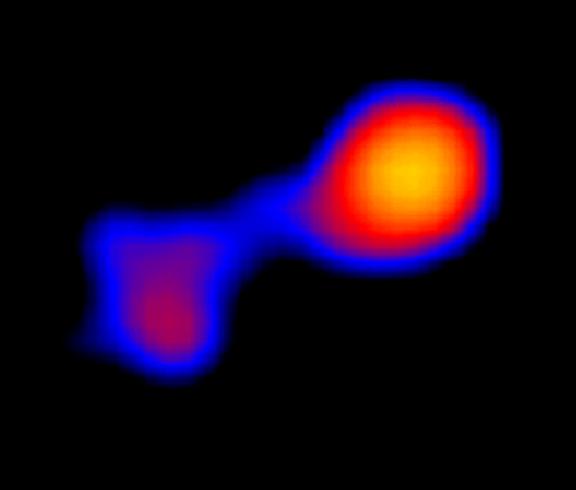
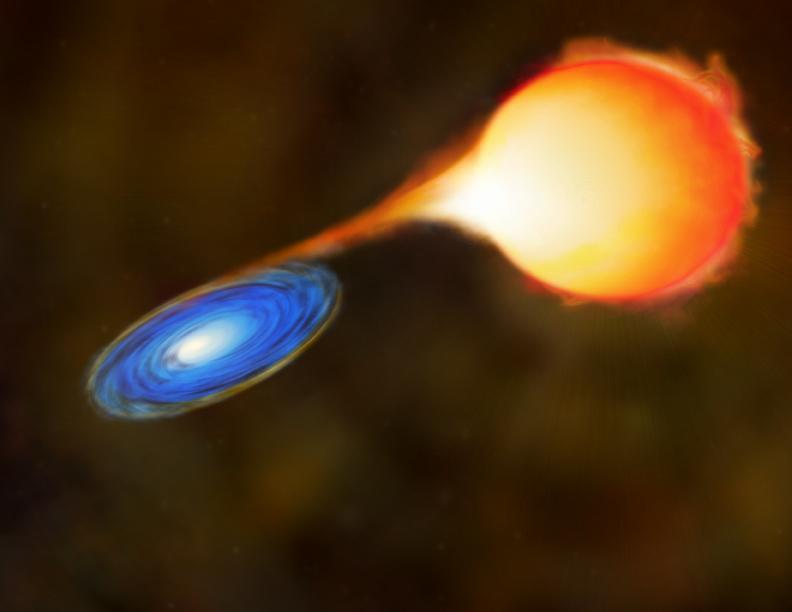
To seventeenth century astronomers, Omicron Ceti or Mira was known as a wonderful star - a star whose brightness could change dramatically in the course of about 11 months. Modern astronomers now recognize an entire class of long period Mira-type variables as cool, pulsating, red giant stars, 700 or so times the diameter of the Sun. Only 420 light-years away, red giant Mira (Mira A, right) itself co-orbits with a companion star, a small white dwarf (Mira B). Mira B is surrounded by a disk of material drawn from the pulsating giant and in such a double star system, the white dwarf star's hot accretion disk is expected to produce some x-rays. But this sharp, false-color image from the Chandra Observatory also captures the cool giant star strongly flaring at x-ray energies, clearly separated from the x-ray emission of its companion's accretion disk. Placing your cursor over the Chandra x-ray image of Mira will reveal an artist's vision of this still wonderful interacting binary star system.
https://chandra.harvard.edu/photo/2005/mira/mira_hand.pdf
https://chandra.harvard.edu/photo/2005/mira/
https://apod.nasa.gov/apod/ap010121.html
https://apod.nasa.gov/apod/ap050312.html
https://chandra.harvard.edu/xray_astro/medxray.html
https://spider.seds.org/spider/Vars/mira.html
https://spider.seds.org/spider/Vars/mira.html
https://apod.nasa.gov/apod/ap060722.html
#space #binary_stars #astrophotography #photography #science #astronomy #physics #nature #NASA #education
Alt...
2006 July 22
Mira: The Wonderful Star
* Credit:
+ X-ray Image (left): M. Karovska (Harvard-Smithsonian CfA) et al., CXC / NASA
+ Illustration (right): M.Weiss(CXC)
Explanation:
To seventeenth century astronomers, Omicron Ceti or Mira was known as a wonderful star - a star whose brightness could change dramatically in the course of about 11 months. Modern astronomers now recognize an entire class of long period Mira-type variables as cool, pulsating, red giant stars, 700 or so times the diameter of the Sun. Only 420 light-years away, red giant Mira (Mira A, right) itself co-orbits with a companion star, a small white dwarf (Mira B). Mira B is surrounded by a disk of material drawn from the pulsating giant and in such a double star system, the white dwarf star's hot accretion disk is expected to produce some x-rays. But this sharp, false-color image from the Chandra Observatory also captures the cool giant star strongly flaring at x-ray energies, clearly separated from the x-ray emission of its companion's accretion disk. Placing your cursor over the Chandra x-ray image of Mira will reveal an artist's vision of this still wonderful interacting binary star system.
Authors & editors: Robert Nemiroff (MTU) & Jerry Bonnell (USRA)
NASA Web Site Statements, Warnings, and Disclaimers
NASA Official: Jay Norris. Specific rights apply.
A service of: EUD at NASA / GSFC
& Michigan Tech. U.
Alt...
Illustration
Mira: A double star system 420 light years from Earth
Chandra‘s image shows Mira A (right), a highly evolved red giant star, and Mira B (left), a
white dwarf. To the right of the image is an artist‘s conception of this interacting star system. Mira A is
losing gas rapidly from its upper atmosphere via a stellar wind. Mira B exerts a gravitational tug that
creates a gaseous bridge between the two stars. Gas from the wind and bridge accumulates in an
accretion disk around Mira B and collisions between rapidly moving particles in the disk produce X-rays.
An unexpected X-ray outburst from Mira A was observed by Chandra. This outburst was likely an
indirect consequence of the internal turmoil in Mira A, which is now approaching the stage where its
nuclear fuel supply will be exhausted. It will eventually collapse to become a white dwarf, like Mira B.
Scale: X-ray image is 1.2 arcsec per side.
Chandra X-ray Observatory ACIS Image
CXC operated for NASA by the Smithsonian Astrophysical Observatory
Credit: X-ray: NASA/CXC/SAO/M. Karovska et al.; Illustration: CXC/M.Weiss
Detection of 19 lt-yr Long Bipolar Jets from Interacting Binary KX And
-- Stefan Ziegenbalg
Abstract
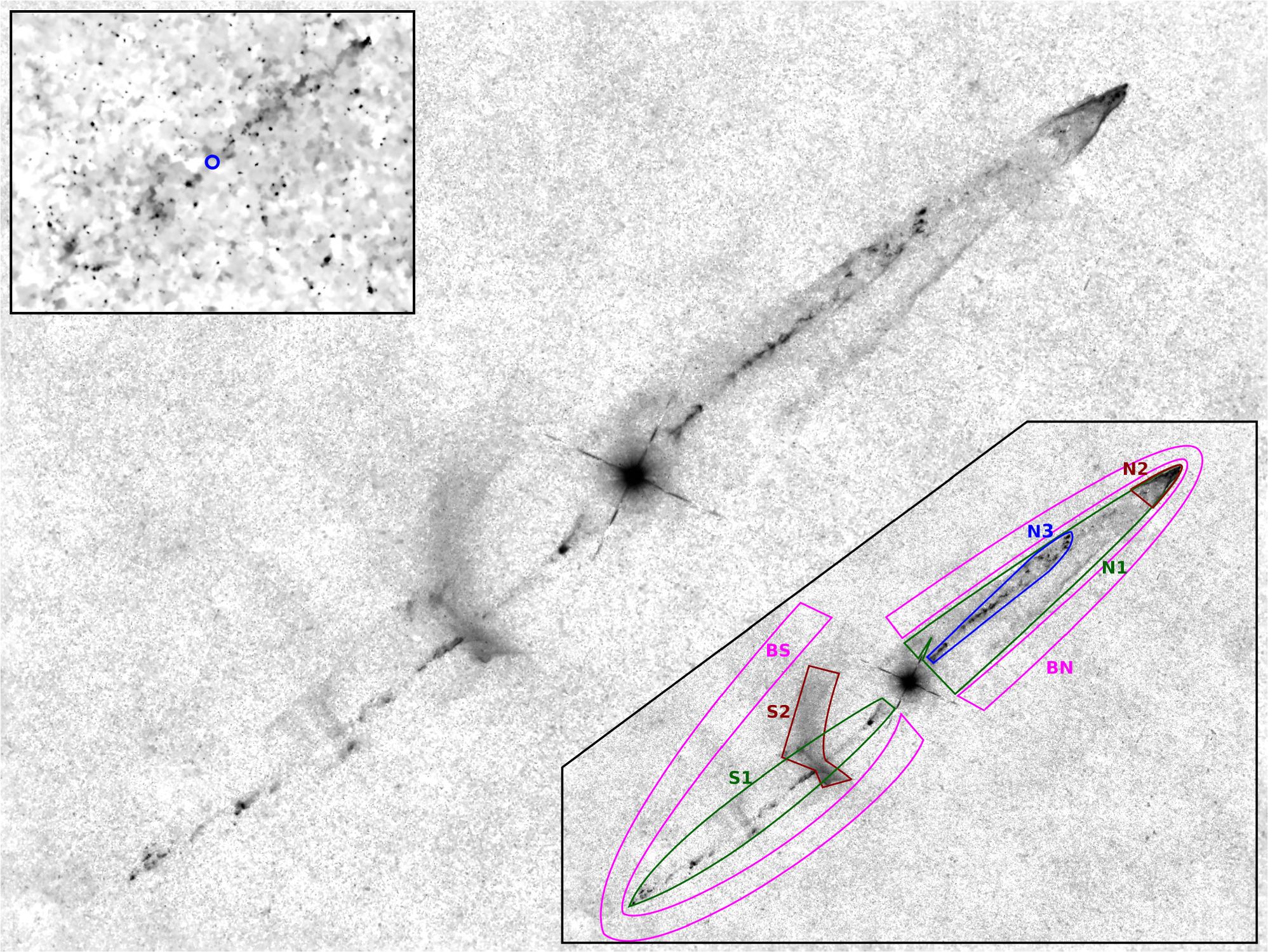
Bipolar jets with an apparent length of 20' ejected from KX And have been discovered in the first data release of the Northern Sky Narrowband Survey. KX And is a well-studied interacting binary with mass transfer through Roche lobe overflow at a distance of about 760 pc. However, the faint jets, which are visible in Hα light, have been overlooked in the past. With a known inclination of i ≈ 50° of the binary system, this leads to a true length of the jets of about 19 lt-yr (5.8 pc) in each direction.
https://ui.adsabs.harvard.edu/abs/2024RNAAS...8..289Z/graphics
#space #binary_stars #astrophotography #photography #science #astronomy #physics #nature #NASA #ESA #education
Alt...
Bipolar jets with an apparent length of 20' ejected from KX And have been discovered in the first data release of the Northern Sky Narrowband Survey. KX And is a well-studied interacting binary with mass transfer through Roche lobe overflow at a distance of about 760 pc. However, the faint jets, which are visible in Hα light, have been overlooked in the past. With a known inclination of i ≈ 50° of the binary system, this leads to a true length of the jets of about 19 lt-yr (5.8 pc) in each direction.
2025 December 5
The Bipolar Jets of KX Andromedae
* Image Credit & Copyright: Tim Schaeffer and the Deep Sky Collective
https://deepskycollective.com/kxand/steeve
https://deepskycollective.com/gallery
Explanation:
Blasting outward from variable star KX Andromedae, these stunning bipolar jets are 19 light-years long. Recently discovered, they are revealed in unprecedented detail in this deep telescopic image centered on KX And and composed from over 692 hours of combined image data. In fact, KX And is spectroscopically found to be an interacting binary star system consisting of a bright, hot B-type star with a swollen cool giant star as its co-orbiting, close companion. The stellar material from the cool giant star is likely being transferred to the hot B-type star through an accretion disk, with spectacular symmetric jets driven outward perpendicular to the disk itself. The known distance to KX And of 2,500 light-years, angular size of the jets, and estimated inclination of the accretion disk lead to the size estimate for each jet of an astonishing 19 light-years.
https://deepskycollective.com/gallery
https://app.astrobin.com/i/nllu5u?r=0
https://en.wikipedia.org/wiki/Binary_star#Spectroscopic_binaries
https://apod.nasa.gov/apod/ap060722.html
https://en.wikipedia.org/wiki/Accretion_disk
https://www.astroexplorer.org/details/rnaasad9478f1
https://apod.nasa.gov/apod/ap251205.html
#space #binary_stars #astrophotography #photography #science #astronomy #physics #nature #NASA #ESA #education #apod
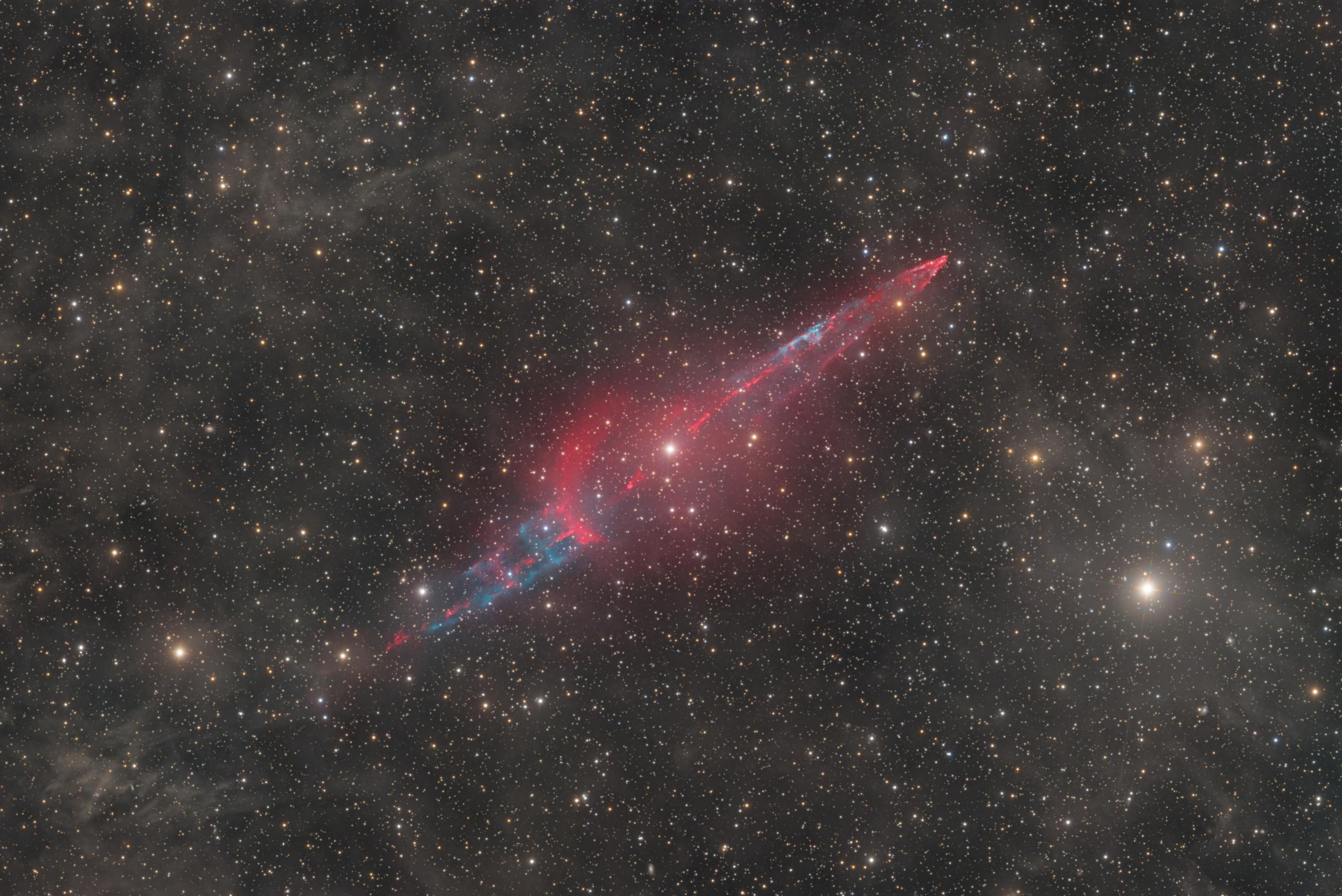
Alt...
2025 December 5
The Bipolar Jets of KX Andromedae
* Image Credit & Copyright: Tim Schaeffer and the Deep Sky Collective
Explanation:
Blasting outward from variable star KX Andromedae, these stunning bipolar jets are 19 light-years long. Recently discovered, they are revealed in unprecedented detail in this deep telescopic image centered on KX And and composed from over 692 hours of combined image data. In fact, KX And is spectroscopically found to be an interacting binary star system consisting of a bright, hot B-type star with a swollen cool giant star as its co-orbiting, close companion. The stellar material from the cool giant star is likely being transferred to the hot B-type star through an accretion disk, with spectacular symmetric jets driven outward perpendicular to the disk itself. The known distance to KX And of 2,500 light-years, angular size of the jets, and estimated inclination of the accretion disk lead to the size estimate for each jet of an astonishing 19 light-years.
Authors & editors: Robert Nemiroff (MTU) & Jerry Bonnell (UMCP)
NASA Official: Amber Straughn Specific rights apply.
NASA Web Privacy, Accessibility, Notices;
A service of: ASD at NASA / GSFC,
NASA Science Activation
& Michigan Tech. U.
TOPIC> Binary Star Systems
Bipolar jets from KX And
-- Stefan Ziegenbalg
https://www.simg.de/nebulae1/and-00.html
[...]
KX And (also known as BD+49 4045 and HD 218393) is a binary system consisting in a primary star with a spectral classification of B3pe and a cool giant of type K1III (Shenavrin et al., 2011). This secondary star, which has about half the mass of its companion (Floquet et al., 1995), is assumed to overflow its Roche lobe and thus transferring gas to the primary star (Floquet et al., 1989). The resulting accretion disk is responsible for the emission lines in the spectrum of the Be star.
A fraction of the material that falls to the accreting star is ejected in the form of jets which are aligned perpendicular to the accretion disk. The jets are likely ionized by the B3pe component of KX And. The elongated bubble, including the bright tip at the end of the northern jet is probably formed by the interaction of the ejected gas with interstellar medium and may also be ionized by kinetic energy.
The apparent length of the northern jet (with the bright tip) is 19.9′, while the southern jet is 20.3′ long. With a distance of 760±10 pc (Gaia Collaboration et al., 2023) and an inclination to the line of sight of the binary system (and thus of the accretion disc) of about 50° (Berdyugin et al., 1998), this corresponds to a true length of about 19 light-years (5.8 pc) for each jet.
[...]
#space #binary_stars #astrophotography #photography #science #astronomy #physics #nature #NASA #ESA #education
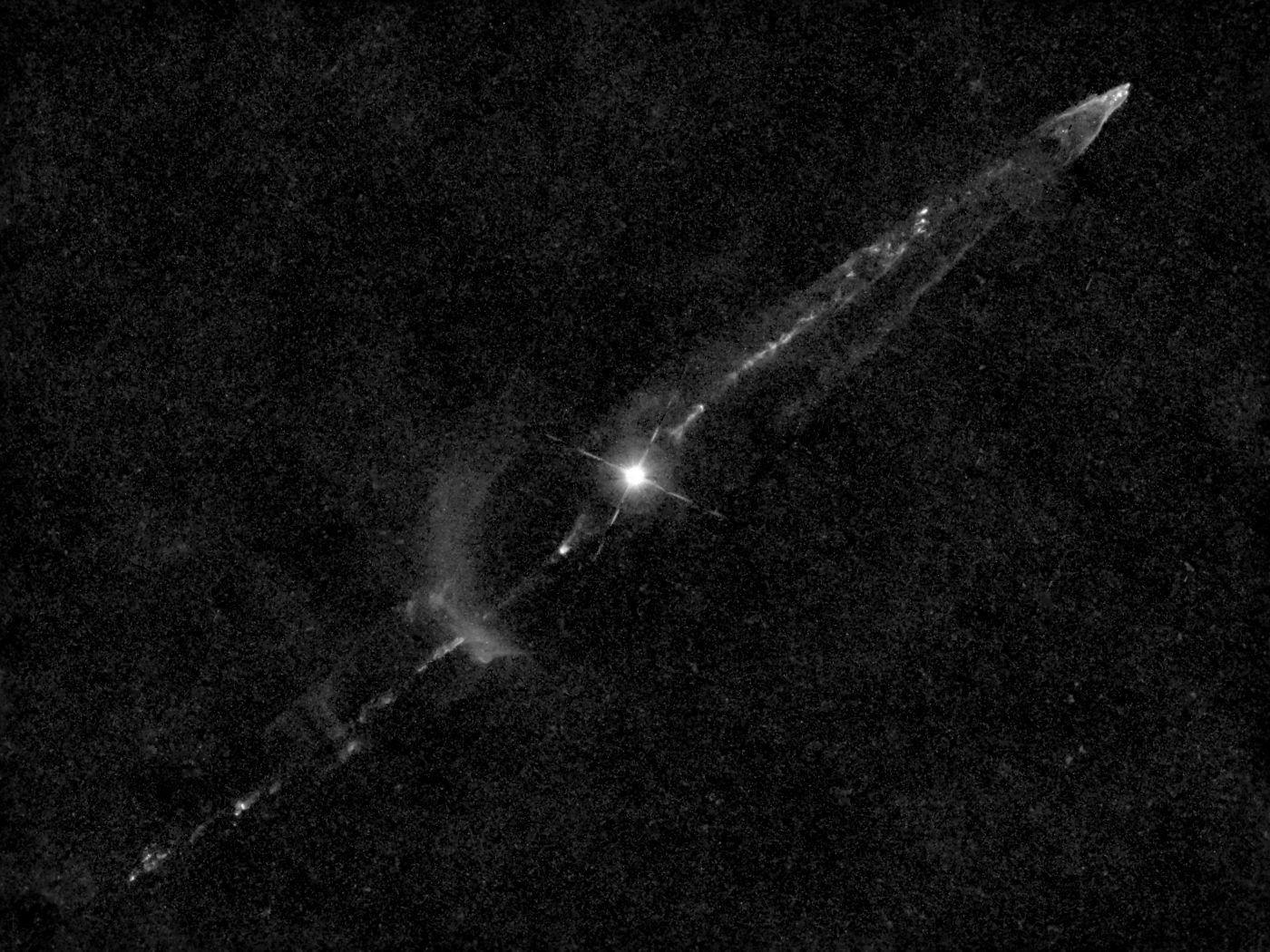
Alt...
Bipolar jets ejected from KX And in Hα light without continuum. The image reveals fine details and shows two jets with an apparent length of about 20′, with the northern jet ending in a bright tip. That structure appears to be the outer end of a cigar-shaped shell. There is a diffuse structure in the southern jet, about 7′ from KX And. Both jets begin (becoming visible) at an apparent distance of about 1.8′ and the ejection rate seems to be vary strongly.
The bright point source in the main picture is KX And, which remains visible as a result of precise continuum subtraction because the brighter companion of this binary system is an emission-line star.
"According to wikipedia-de , the Fornax cluster has the fourth strongest radio source in the sky at a frequency of 1400 MHz
https://de.wikipedia.org/wiki/Fornax-Galaxienhaufen "
2005 June 28
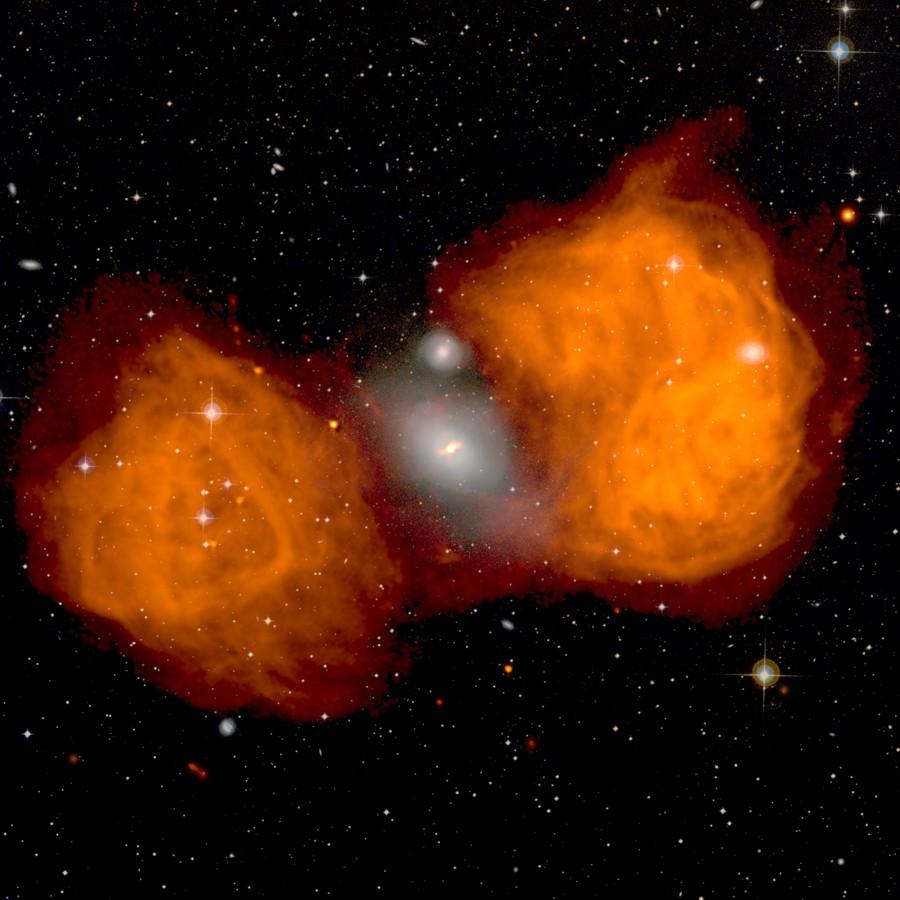
The Giant Radio Lobes of Fornax A
* Credit: Ed Fomalont (NRAO) et al., VLA, NRAO, AUI, NSF
Explanation:
Together, the radio lobes span over one million light years -- what caused them? In the center is a large but peculiar elliptical galaxy dubbed NGC 1316. Detailed inspection of the NGC 1316 system indicates that it began absorbing a small neighboring galaxy about 100 million years ago. Gas from the galactic collision has fallen inward toward the massive central black hole, with friction heating the gas to 10 million degrees. For reasons not yet well understood, two oppositely pointed fast moving jets of particles then developed, eventually smashing into the ambient material on either side of the giant elliptical galaxy. The result is a huge reservoir of hot gas that emits radio waves, observed as the orange (false-color) radio lobes in the above image. The radio image is superposed on an optical survey image of the same part of the sky. Strange patterns in the radio lobes likely indicate slight changes in the directions of the jets.
https://apod.nasa.gov/apod/ap050628.html
#space #cluster #astrophotography #photography #science #astronomy #physics #nature #NASA #apod
Alt...
2005 June 28
The Giant Radio Lobes of Fornax A
* Credit: Ed Fomalont (NRAO) et al., VLA, NRAO, AUI, NSF
Explanation:
Together, the radio lobes span over one million light years -- what caused them? In the center is a large but peculiar elliptical galaxy dubbed NGC 1316. Detailed inspection of the NGC 1316 system indicates that it began absorbing a small neighboring galaxy about 100 million years ago. Gas from the galactic collision has fallen inward toward the massive central black hole, with friction heating the gas to 10 million degrees. For reasons not yet well understood, two oppositely pointed fast moving jets of particles then developed, eventually smashing into the ambient material on either side of the giant elliptical galaxy. The result is a huge reservoir of hot gas that emits radio waves, observed as the orange (false-color) radio lobes in the above image. The radio image is superposed on an optical survey image of the same part of the sky. Strange patterns in the radio lobes likely indicate slight changes in the directions of the jets.
Authors & editors: Robert Nemiroff (MTU) & Jerry Bonnell (UMCP)
NASA Official: Amber Straughn Specific rights apply.
NASA Web Privacy, Accessibility, Notices;
A service of: ASD at NASA / GSFC,
NASA Science Activation
& Michigan Tech. U.
2025 December 4
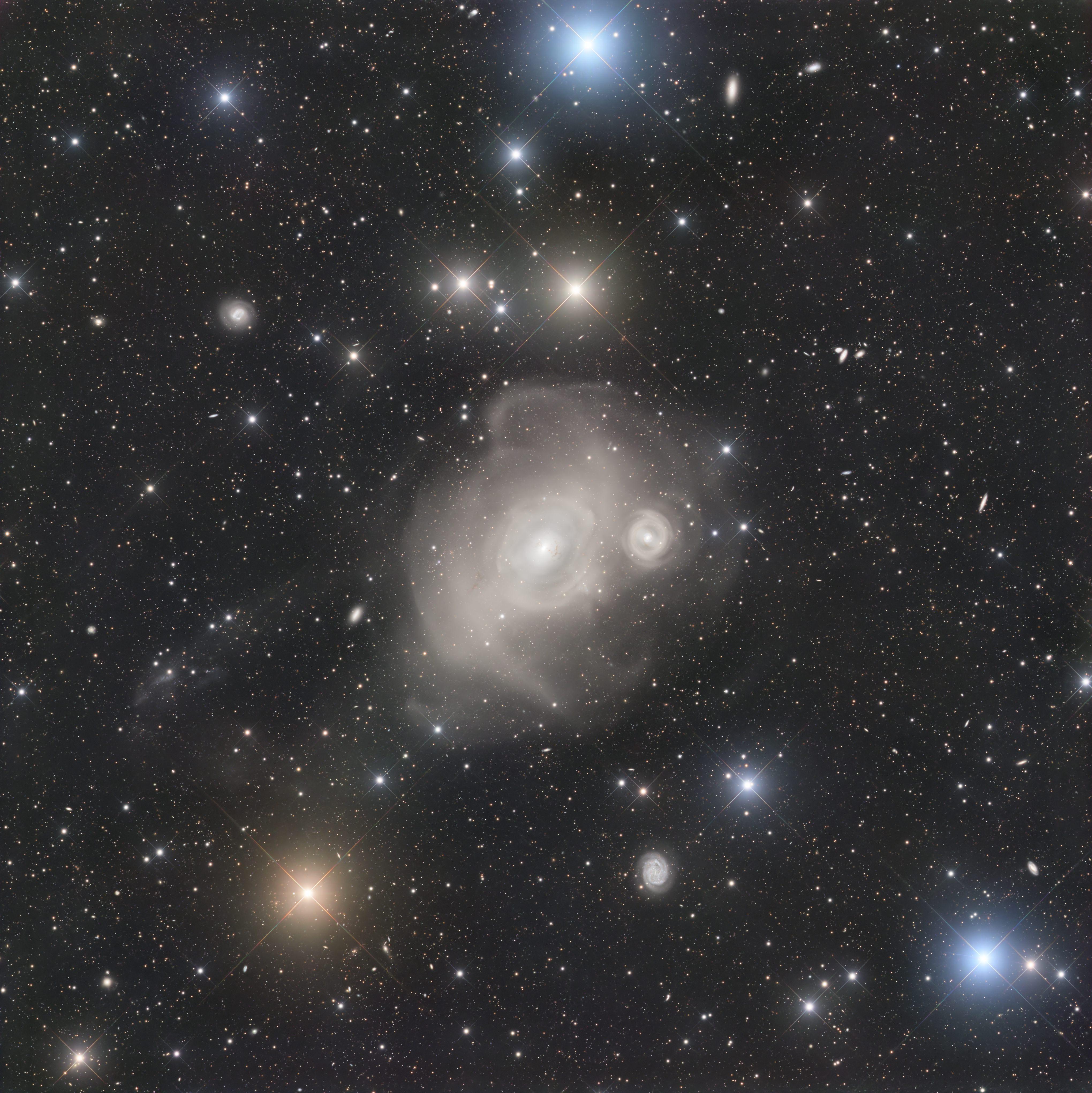
Galaxies in the Furnace
* Image Credit & Copyright: Simone Curzi and the ShaRA Team
https://app.astrobin.com/u/MRWSKYLOVER?i=0ym89c#gallery
https://astrotrex.wordpress.com/2024/12/16/shara11-fornax-a-and-a-potential-discovery/
Explanation:
An example of violence on a cosmic scale, enormous elliptical galaxy NGC 1316 lies about 75 million light-years away toward Fornax, the southern constellation of the Furnace. Investigating the startling sight, astronomers suspect the giant galaxy of colliding with smaller neighbor NGC 1317 seen just right of the large galaxy's center, causing far flung loops and shells of stars. Light from their close encounter would have reached Earth some 100 million years ago. In the sharp telescopic image, the central regions of NGC 1316 and NGC 1317 appear separated by over 100,000 light-years. Complex dust lanes visible within also indicate that NGC 1316 is itself the result of a merger of galaxies in the distant past. Found on the outskirts of the Fornax galaxy cluster, NGC 1316 is known as Fornax A. One of the visually brightest of the Fornax cluster galaxies it is one of the strongest and largest celestial radio sources with radio emission extending well beyond this one degree wide field-of-view.
https://earthsky.org/constellations/fornax-the-furnace-galaxy-hubble-ultra-deep-field/
https://science.nasa.gov/mission/hubble/multimedia/hubble-images/
https://chandra.harvard.edu/photo/cosmic_lookback.html
https://app.astrobin.com/u/MRWSKYLOVER?i=0ym89c#gallery
http://www.atlasoftheuniverse.com/galgrps/for.html
https://apod.nasa.gov/apod/ap050628.html
https://apod.nasa.gov/apod/ap251204.html
#space #cluster #astrophotography #photography #science #astronomy #physics #nature #NASA #apod
Alt...
2025 December 4
Galaxies in the Furnace
* Image Credit & Copyright: Simone Curzi and the ShaRA Team
Explanation:
An example of violence on a cosmic scale, enormous elliptical galaxy NGC 1316 lies about 75 million light-years away toward Fornax, the southern constellation of the Furnace. Investigating the startling sight, astronomers suspect the giant galaxy of colliding with smaller neighbor NGC 1317 seen just right of the large galaxy's center, causing far flung loops and shells of stars. Light from their close encounter would have reached Earth some 100 million years ago. In the sharp telescopic image, the central regions of NGC 1316 and NGC 1317 appear separated by over 100,000 light-years. Complex dust lanes visible within also indicate that NGC 1316 is itself the result of a merger of galaxies in the distant past. Found on the outskirts of the Fornax galaxy cluster, NGC 1316 is known as Fornax A. One of the visually brightest of the Fornax cluster galaxies it is one of the strongest and largest celestial radio sources with radio emission extending well beyond this one degree wide field-of-view.
Authors & editors: Robert Nemiroff (MTU) & Jerry Bonnell (UMCP)
NASA Official: Amber Straughn Specific rights apply.
NASA Web Privacy, Accessibility, Notices;
A service of: ASD at NASA / GSFC,
NASA Science Activation
& Michigan Tech. U.
2025 December 3
Visualization: Near a Black Hole and Disk
* Illustration Credit: NASA's GSFC, J. Schnittman & B. Powell
https://www.nasa.gov/
https://www.nasa.gov/goddard/
https://science.gsfc.nasa.gov/sci/bio/jeremy.d.schnittman
https://science.gsfc.nasa.gov/sci/bio/brian.p.powell
* Text: Francis Reddy (U. Maryland, NASA's GSFC)
https://sedvme.gsfc.nasa.gov/sci/bio/francis.j.reddy
https://www.astro.umd.edu/
https://www.nasa.gov/goddard/
Explanation:
What would it look like to plunge into a monster black hole? This image from a supercomputer visualization shows the entire sky as seen from a simulated camera plunging toward a 4-million-solar-mass black hole, similar to the one at the center of our galaxy. The camera lies about 16 million kilometers from the black hole’s event horizon and is moving inward at 62% the speed of light. Thanks to gravity’s funhouse effects, the starry band of the Milky Way appears both as a compact loop at the top of this view and as a secondary image stretching across the bottom. Move the cursor over the image for additional explanations. Visualizations like this allow astronomers to explore black holes in ways not otherwise possible.
https://youtu.be/chhcwk4-esM
https://svs.gsfc.nasa.gov/14585/
https://apod.nasa.gov/apod/fap/ap220513.html
https://en.wikipedia.org/wiki/Event_horizon
https://www.grc.nasa.gov/www/k-12/Numbers/Math/Mathematical_Thinking/how_fast_is_the_speed.htm
https://apod.nasa.gov/apod/fap/ap101207.html
https://apod.nasa.gov/apod/fap/ap250702.html
https://science.nasa.gov/resource/the-milky-way-galaxy/https://apod.nasa.gov/htmltest/rjn_bht.html
https://science.nasa.gov/universe/black-holes/
https://apod.nasa.gov/apod/ap251203.html
#space #blackhole #astrophysics #astrophotography #photography #astronomy #science #nature #NASA #ESA #education #apod
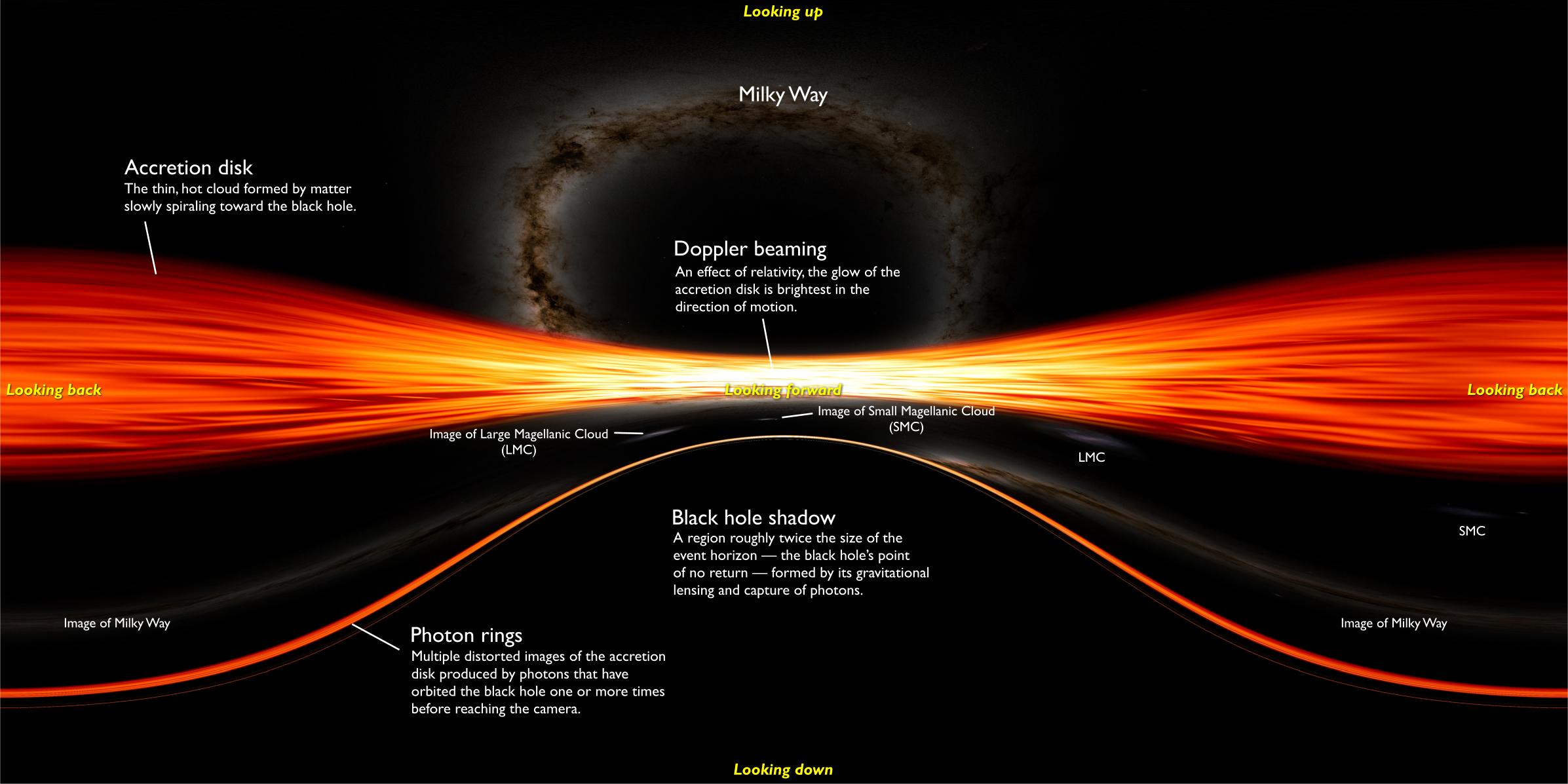
Alt...
2025 December 3
The illustration shows a structured orange band stretching horizontally across the imager. Connected in the middle is the Milky Way Galaxy curving up to the top of the frame. A second image of the orange band runs like a sine wave across the lower half of the frame, while a second image of the Milky Way galaxy appears just above it.
Visualization: Near a Black Hole and Disk
* Illustration Credit: NASA's GSFC, J. Schnittman & B. Powell;
* Text: Francis Reddy (U. Maryland, NASA's GSFC)
Explanation:
What would it look like to plunge into a monster black hole? This image from a supercomputer visualization shows the entire sky as seen from a simulated camera plunging toward a 4-million-solar-mass black hole, similar to the one at the center of our galaxy. The camera lies about 16 million kilometers from the black hole’s event horizon and is moving inward at 62% the speed of light. Thanks to gravity’s funhouse effects, the starry band of the Milky Way appears both as a compact loop at the top of this view and as a secondary image stretching across the bottom. Move the cursor over the image for additional explanations. Visualizations like this allow astronomers to explore black holes in ways not otherwise possible.
Authors & editors: Robert Nemiroff (MTU) & Jerry Bonnell (UMCP)
NASA Official: Amber Straughn Specific rights apply.
NASA Web Privacy, Accessibility, Notices;
A service of: ASD at NASA / GSFC,
NASA Science Activation
& Michigan Tech. U.
2025 December 2
M77: Spiral Galaxy with an Active Center
* Image Credit: Hubble, NASA, ESA, L. C. Ho, D. Thilker
https://hla.stsci.edu/
https://www.nasa.gov/
https://www.esa.int/
http://kavli.pku.edu.cn/people/luis-c-ho
https://physics-astronomy.jhu.edu/directory/david-thilker/
Explanation:
What's happening in the center of nearby spiral galaxy M77? The face-on galaxy lies a mere 47 million light-years away toward the constellation of the Sea Monster (Cetus). At that estimated distance, this gorgeous island universe is about 100 thousand light-years across. Also known as NGC 1068, its compact and very bright core is well studied by astronomers exploring the mysteries of supermassive black holes in active Seyfert galaxies. M77's active core glows bright at x-ray, ultraviolet, visible, infrared, and radio wavelengths. The featured sharp image of M77 was taken by the Hubble Space Telescope. The image shows details of the spiral's winding spiral arms as traced by obscuring red dust clouds and blue star clusters, all circling the galaxy's bright white luminous center.
https://en.wikipedia.org/wiki/Messier_77
https://esahubble.org/images/potw2515a/
https://en.wikipedia.org/wiki/Active_galactic_nucleus
https://en.wikipedia.org/wiki/Seyfert_galaxy
https://apod.nasa.gov/apod/ap250504.html
https://en.wikipedia.org/wiki/Cetus_(constellation)
https://chandra.harvard.edu/photo/cosmic_distance.html
https://ned.ipac.caltech.edu/level5/March02/Gordon/Gordon2.html
https://science.nasa.gov/mission/hubble/science/universe-uncovered/hubble-star-clusters/
https://science.nasa.gov/mission/hubble/overview/about-hubble/
https://science.nasa.gov/ems/11_xrays/
https://science.nasa.gov/ems/10_ultravioletwaves/
https://science.nasa.gov/ems/07_infraredwaves/
https://science.nasa.gov/ems/09_visiblelight/
https://science.nasa.gov/ems/07_infraredwaves/
https://science.nasa.gov/ems/05_radiowaves/
https://chandra.harvard.edu/photo/cosmic_distance.html
https://apod.nasa.gov/apod/ap130831.html
https://apod.nasa.gov/apod/ap161109.html
https://apod.nasa.gov/apod/ap251202.html
#space #galaxy #astrophotography #photography #science #astronomy #nature #NASA #ESA #apod
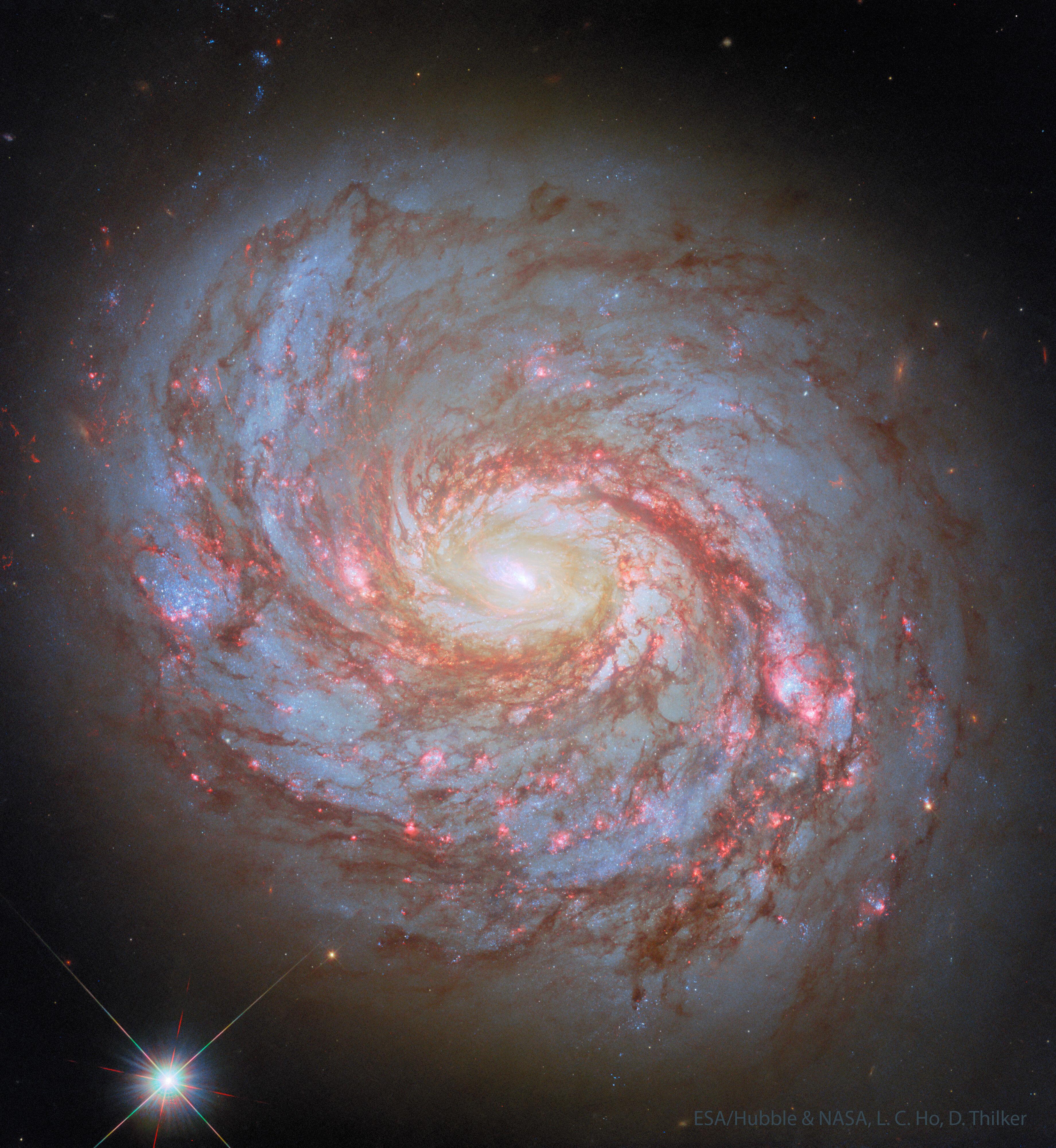
Alt...
2025 December 2
A big beautiful sprawling spiral galaxy is shown. The galaxy has well defined spiral arms with bright blue star clusters and dark red dust. The center is a bright white.
M77: Spiral Galaxy with an Active Center
* Image Credit: Hubble, NASA, ESA, L. C. Ho, D. Thilker
Explanation:
What's happening in the center of nearby spiral galaxy M77? The face-on galaxy lies a mere 47 million light-years away toward the constellation of the Sea Monster (Cetus). At that estimated distance, this gorgeous island universe is about 100 thousand light-years across. Also known as NGC 1068, its compact and very bright core is well studied by astronomers exploring the mysteries of supermassive black holes in active Seyfert galaxies. M77's active core glows bright at x-ray, ultraviolet, visible, infrared, and radio wavelengths. The featured sharp image of M77 was taken by the Hubble Space Telescope. The image shows details of the spiral's winding spiral arms as traced by obscuring red dust clouds and blue star clusters, all circling the galaxy's bright white luminous center.
Authors & editors: Robert Nemiroff (MTU) & Jerry Bonnell (UMCP)
NASA Official: Amber Straughn Specific rights apply.
NASA Web Privacy, Accessibility, Notices;
A service of: ASD at NASA / GSFC,
NASA Science Activation
& Michigan Tech. U.
2025 December 1
3I ATLAS: Tails of an Interstellar Comet
* Image Credit & Copyright: Victor Sabet & Julien De Winter
https://www.instagram.com/dwj85/
https://app.astrobin.com/i/jtmq82
Explanation:
How typical is our Solar System? Studying 3I/ATLAS, a comet just passing through, is providing clues. Confirmed previous interstellar visitors include an asteroid, a comet, a meteor, and a gas wind dominated by hydrogen and helium. Comet 3I/ATLAS appears relatively normal when compared to Solar System comets, therefore providing more evidence that our Solar System is a somewhat typical star system. For example, Comet 3I/ATLAS has a broadly similar chemical composition and ejected dust. The featured image was captured last week from Texas and shows a green coma, a wandering blue-tinted ion tail likely deflected by our Sun's wind, and a slight anti-tail, all typical cometary attributes. The comet, visible with a telescope, passed its closest to the Sun in late October and will pass its closest to the Earth in mid-December, after which it will return to interstellar space and never return.
https://en.wikipedia.org/wiki/3I/ATLAS
https://www.skyatnightmagazine.com/news/3i-atlas-not-aliens
https://science.nasa.gov/blogs/planetary-defense/2025/07/02/nasa-discovers-interstellar-comet-moving-through-solar-system/
https://www.npr.org/2022/04/14/1092869771/interstellar-meteor-hit-earth-in-2014
https://en.wikipedia.org/wiki/1I/%CA%BBOumuamua
https://science.nasa.gov/solar-system/solar-system-facts/
https://sci.esa.int/web/ulysses/-/35853-the-flow-of-interstellar-helium-in-the-solar-system
https://apod.nasa.gov/apod/ap241222.html
https://astronomy.swin.edu.au/cosmos/c/Cometary+Gas+Tail
https://www.science.org/content/article/why-do-some-comets-glow-green
https://en.wikipedia.org/wiki/Comet_tail#Anti-tail
https://science.nasa.gov/sun/what-is-the-solar-wind/
https://apod.nasa.gov/apod/ap220305.html
https://apod.nasa.gov/apod/ap090207.html
https://apod.nasa.gov/apod/ap200606.html
https://apod.nasa.gov/apod/ap231020.html
https://apod.nasa.gov/apod/ap231126.html
https://apod.nasa.gov/apod/ap251201.html
#space #comets #astrophotography #photography #science #astronomy #nature #NASA #ESA #apod
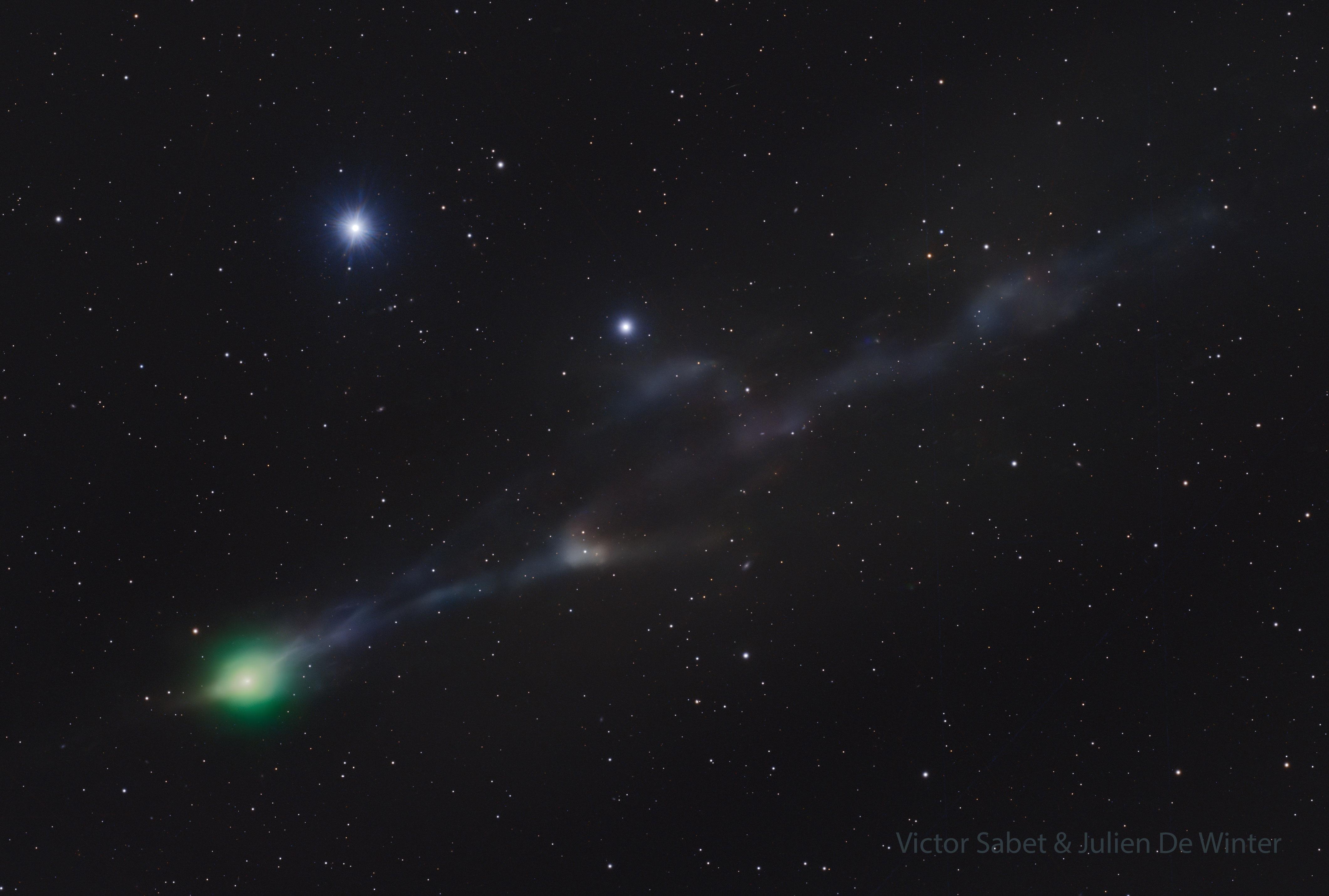
Alt...
2025 December 1
A starfield is shown around a comet. The green coma of the comet is on the lower left. A meandering blue-tinted tail goes off to the upper right. A slight anti-tail is seen from the coma toward the lower left.
3I ATLAS: Tails of an Interstellar Comet
* Image Credit & Copyright: Victor Sabet & Julien De Winter
Explanation:
How typical is our Solar System? Studying 3I/ATLAS, a comet just passing through, is providing clues. Confirmed previous interstellar visitors include an asteroid, a comet, a meteor, and a gas wind dominated by hydrogen and helium. Comet 3I/ATLAS appears relatively normal when compared to Solar System comets, therefore providing more evidence that our Solar System is a somewhat typical star system. For example, Comet 3I/ATLAS has a broadly similar chemical composition and ejected dust. The featured image was captured last week from Texas and shows a green coma, a wandering blue-tinted ion tail likely deflected by our Sun's wind, and a slight anti-tail, all typical cometary attributes. The comet, visible with a telescope, passed its closest to the Sun in late October and will pass its closest to the Earth in mid-December, after which it will return to interstellar space and never return.
Authors & editors: Robert Nemiroff (MTU) & Jerry Bonnell (UMCP)
NASA Official: Amber Straughn Specific rights apply.
NASA Web Privacy, Accessibility, Notices;
A service of: ASD at NASA / GSFC,
NASA Science Activation
& Michigan Tech. U.
2013 December 20
Titan's Land of Lakes
* Image Credit: Cassini Radar Mapper, JPL, USGS, ESA, NASA
http://saturn.jpl.nasa.gov/spacecraft/cassiniorbiterinstruments/instrumentscassiniradar/
http://www.jpl.nasa.gov/
http://astrogeology.usgs.gov/
http://www.esa.int/
http://www.nasa.gov/
Explanation:
Saturn's large moon Titan would be unique in our solar system, the only world with stable liquid lakes and seas on its surface ... except for planet Earth of course. Centered on the north pole, this colorized map shows Titan's bodies of methane and ethane in blue and black, still liquid at frigid surface temperatures of -180 degrees C (-292 degrees F). The map is based on data from the Cassini spacecraft's radar, taken during flybys between 2004 and 2013. Roughly heart-shaped, the lake above and right of the pole is Ligeia Mare, the second largest known body of liquid on Titan and larger than Lake Superior on Earth. Just below the north pole is Punga Mare. The sprawling sea below and right of Punga is the (hopefully sleeping) Kraken Mare, Titan's largest known sea. Above and left of the pole, the moon's surface is dotted with smalle
https://science.nasa.gov/photojournal/titans-north/
https://science.nasa.gov/solar-system/planets/
https://www.spacedaily.com/reports/Life_Without_Water_And_The_Habitable_Zone_999.html
https://apod.nasa.gov/apod/ap120515.html
https://apod.nasa.gov/apod/ap110401.html
https://science.nasa.gov/science-missions/
https://science.nasa.gov/photojournal/
https://www.planetary.org/articles/20130527-the-shores-of-the-kraken-sea
https://apod.nasa.gov/apod/ap050117.html
https://apod.nasa.gov/apod/ap131220.html
#space #moon #Enceladus #saturn #astrophotography #photography #science #astronomy #nature #NASA #ESA
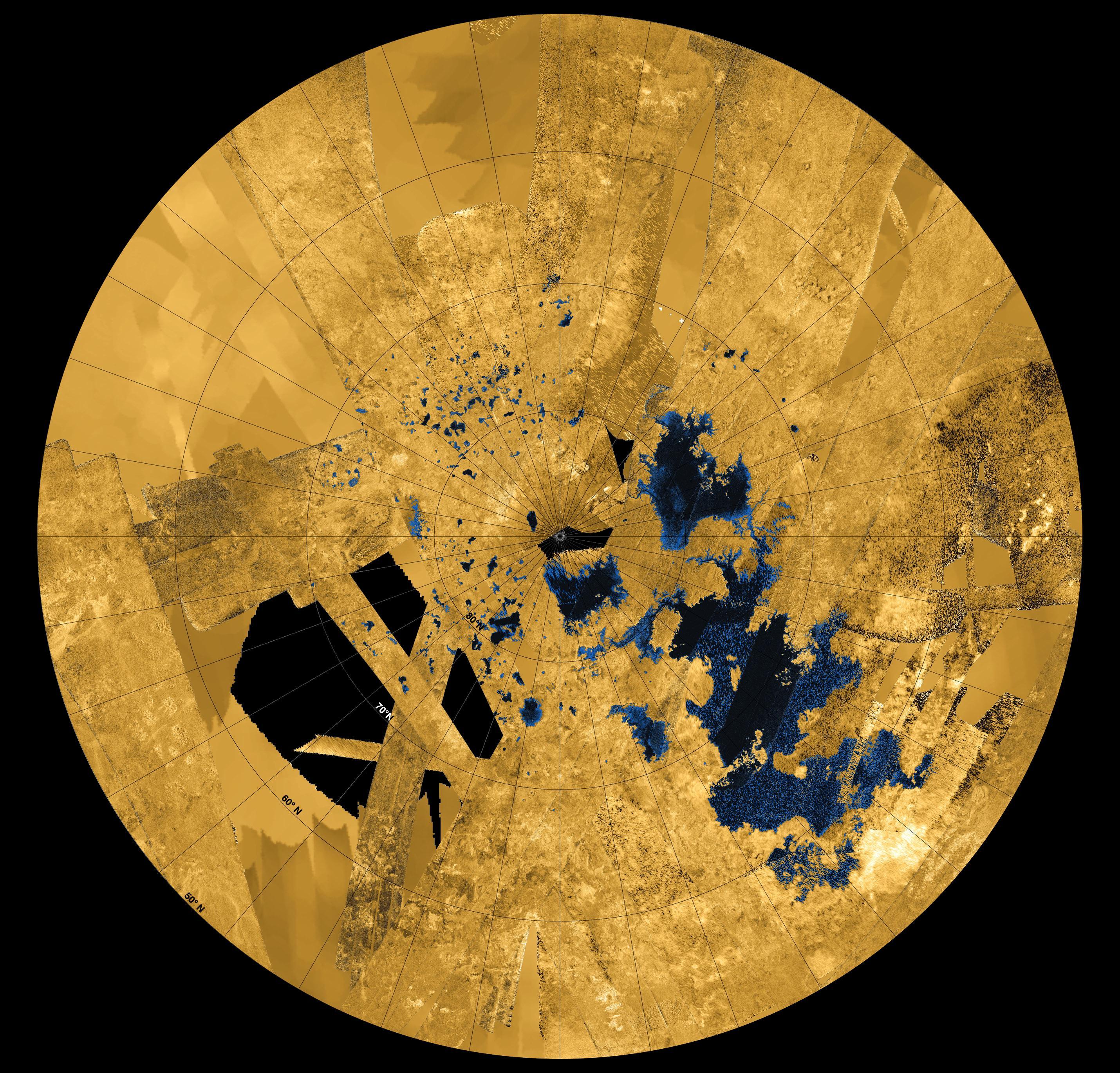
Alt...
2013 December 20
Titan's Land of Lakes
* Image Credit: Cassini Radar Mapper, JPL, USGS, ESA, NASA
Explanation:
Saturn's large moon Titan would be unique in our solar system, the only world with stable liquid lakes and seas on its surface ... except for planet Earth of course. Centered on the north pole, this colorized map shows Titan's bodies of methane and ethane in blue and black, still liquid at frigid surface temperatures of -180 degrees C (-292 degrees F). The map is based on data from the Cassini spacecraft's radar, taken during flybys between 2004 and 2013. Roughly heart-shaped, the lake above and right of the pole is Ligeia Mare, the second largest known body of liquid on Titan and larger than Lake Superior on Earth. Just below the north pole is Punga Mare. The sprawling sea below and right of Punga is the (hopefully sleeping) Kraken Mare, Titan's largest known sea. Above and left of the pole, the moon's surface is dotted with smaller lakes that range up to 50 kilometers across.
Authors & editors: Robert Nemiroff (MTU) & Jerry Bonnell (UMCP)
NASA Official: Phillip Newman Specific rights apply.
NASA Web Privacy Policy and Important Notices
A service of: ASD at NASA / GSFC
& Michigan Tech. U.
Titan Touchdown: Huygens Descent Movie
* Video Credit: ESA, NASA, JPL, U. Arizona, E. Karkoschka
https://www.esa.int/
https://www.nasa.gov/
https://www.jpl.nasa.gov/
https://www.lpl.arizona.edu/missions/cassini
https://www.lpl.arizona.edu/research-scientists/erich-karkoschka
Explanation:
What would it look like to land on Saturn's moon Titan? The European Space Agency's Huygens probe set down on the Solar System's cloudiest moon in 2005, and a time-lapse video of its descent images was created. Huygens separated from the robotic Cassini spacecraft soon after it achieved orbit around Saturn in late 2004 and began approaching Titan. For two hours after arriving, Huygens plummeted toward Titan's surface, recording at first only the shrouded moon's opaque atmosphere. The computerized truck-tire sized probe soon deployed a parachute to slow its descent, pierced the thick clouds, and began transmitting images of a strange surface far below never before seen in visible light. Landing in a dried sea and surviving for 90 minutes, Huygen's returned unique images of a strange plain of dark sandy soil strewn with smooth, bright, fist-sized rocks of ice.
https://en.wikipedia.org/wiki/Huygens_%28spacecraft%29
https://www.esa.int/Science_Exploration/Space_Science/Cassini-Huygens/Huygens_spacecraft
https://apod.nasa.gov/apod/ap050117.html
https://apod.nasa.gov/apod/ap041028.html
https://apod.nasa.gov/apod/ap250119.html
#space #moon #Titan #saturn #astrophotography #photography #science #astronomy #nature #NASA #ESA
TOPIC> Moons Of Saturn
Titan: Moon over Saturn
* Image Credit: NASA, JPL-Caltech, Space Science Institute
https://www.spacescience.org/index.php
https://www.jpl.nasa.gov/
https://www.nasa.gov/
Explanation:
Like Earth's moon, Saturn's largest moon Titan is locked in synchronous rotation with its planet. This mosaic of images recorded by the Cassini spacecraft in May of 2012 shows its anti-Saturn side, the side always facing away from the ringed gas giant. The only moon in the solar system with a dense atmosphere, Titan is the only solar system world besides Earth known to have standing bodies of liquid on its surface and an earthlike cycle of liquid rain and evaporation. Its high altitude layer of atmospheric haze is evident in the Cassini view of the 5,000 kilometer diameter moon over Saturn's rings and cloud tops. Near center is the dark dune-filled region known as Shangri-La. The Cassini-delivered Huygens probe rests below and left of center, after the most distant landing for a spacecraft from Earth.
https://photojournal.jpl.nasa.gov/catalog/PIA19642
https://science.nasa.gov/saturn/moons/titan/facts/
https://apod.nasa.gov/apod/ap141124.html
https://photojournal.jpl.nasa.gov/catalog/PIA20713
https://apod.nasa.gov/apod/ap150116.html
https://apod.nasa.gov/apod/ap161230.html
https://spaceplace.nasa.gov/all-about-saturn/en/
https://spaceplace.nasa.gov/search/Moons/
https://spaceplace.nasa.gov/craters/en/
>> see more in thread >>
#space #moon #titan #saturn #astrophotography #photography #science #nature #NASA #education

Alt...
2025 May 3
Titan: Moon over Saturn
* Image Credit: NASA, JPL-Caltech, Space Science Institute
Explanation:
Like Earth's moon, Saturn's largest moon Titan is locked in synchronous rotation with its planet. This mosaic of images recorded by the Cassini spacecraft in May of 2012 shows its anti-Saturn side, the side always facing away from the ringed gas giant. The only moon in the solar system with a dense atmosphere, Titan is the only solar system world besides Earth known to have standing bodies of liquid on its surface and an earthlike cycle of liquid rain and evaporation. Its high altitude layer of atmospheric haze is evident in the Cassini view of the 5,000 kilometer diameter moon over Saturn's rings and cloud tops. Near center is the dark dune-filled region known as Shangri-La. The Cassini-delivered Huygens probe rests below and left of center, after the most distant landing for a spacecraft from Earth.
Authors & editors: Robert Nemiroff (MTU) & Jerry Bonnell (UMCP)
NASA Official: Amber Straughn Specific rights apply.
NASA Web Privacy Policy and Important Notices
A service of: ASD at NASA / GSFC,
NASA Science Activation
& Michigan Tech. U.
Titan Facts
Titan is Saturn's largest moon, and the only moon in our solar system known to have a substantial atmosphere. Titan is the only place besides Earth known to have liquids on its surface. It has clouds, rain, rivers, lakes and seas of liquid hydrocarbons like methane and ethane.
Introduction
Saturn's largest moon, Titan, is an icy world whose surface is completely obscured by a golden hazy atmosphere. Titan is the second largest moon in our solar system. Only Jupiter's moon Ganymede is larger, by just 2 percent. Titan is bigger than Earth's moon, and larger than even the planet Mercury.
This mammoth moon is the only moon in the solar system with a dense atmosphere, and it’s the only world besides Earth that has standing bodies of liquid, including rivers, lakes and seas, on its surface. Like Earth, Titan’s atmosphere is primarily nitrogen, plus a small amount of methane. It is the sole other place in the solar system known to have an earthlike cycle of liquids raining from clouds, flowing across its surface, filling lakes and seas, and evaporating back into the sky (akin to Earth’s water cycle). Titan is also thought to have a subsurface ocean of water.
Namesake
Dutch astronomer Christiaan Huygens discovered Titan on March 25, 1655.
https://en.wikipedia.org/wiki/Christiaan_Huygens
Huygens called his discovery "Luna Saturni," which is Latin for Saturn moon. The name Titan came from John Herschel, son of astronomer William Herschel. Titans are from Greek mythology.
>> there is more >>
https://science.nasa.gov/saturn/moons/titan/facts/
#space #moon #titan #astrophotography #astronomy #science #NASA

Alt...
Titan passes in front of Saturn in this image from NASA's Cassini spacecraft.
The colorful globe of Saturn's largest moon, Titan, passes in front of the planet and its rings in this true color snapshot from NASA's Cassini spacecraft.
NASA/JPL-Caltech/Space Science Institute
Titan Facts
Titan is Saturn's largest moon, and the only moon in our solar system known to have a substantial atmosphere. Titan is the only place besides Earth known to have liquids on its surface. It has clouds, rain, rivers, lakes and seas of liquid hydrocarbons like methane and ethane.
It's Raining on Titan
Illustration Credit & Copyright: David A. Hardy (AstroArt)
Explanation:
It's been raining on Titan. In fact, it's likely been raining methane on Titan and that's not an April Fools' joke. The almost familiar scene depicted in this artist's vision of the surface of Saturn's largest moon looks across an eroding landscape into a stormy sky. That scenario is consistent with seasonal rain storms temporarily darkening Titan's surface along the moon's equatorial regions, as seen by instruments onboard the Cassini spacecraft. Of course on frigid Titan, with surface temperatures of about -290 degrees F (-180 degrees C), the cycle of evaporation, cloud formation, and rain involves liquid methane instead of water. Lightning could also be possible in Titan's thick, nitrogen-rich atmosphere.
https://apod.nasa.gov/apod/ap050117.html
https://en.wikipedia.org/wiki/Nitrogen
https://en.wikipedia.org/wiki/Methane
https://apod.nasa.gov/apod/ap110401.html
#space #moon #titan #astroart #astrophotography #photography #science #NASA
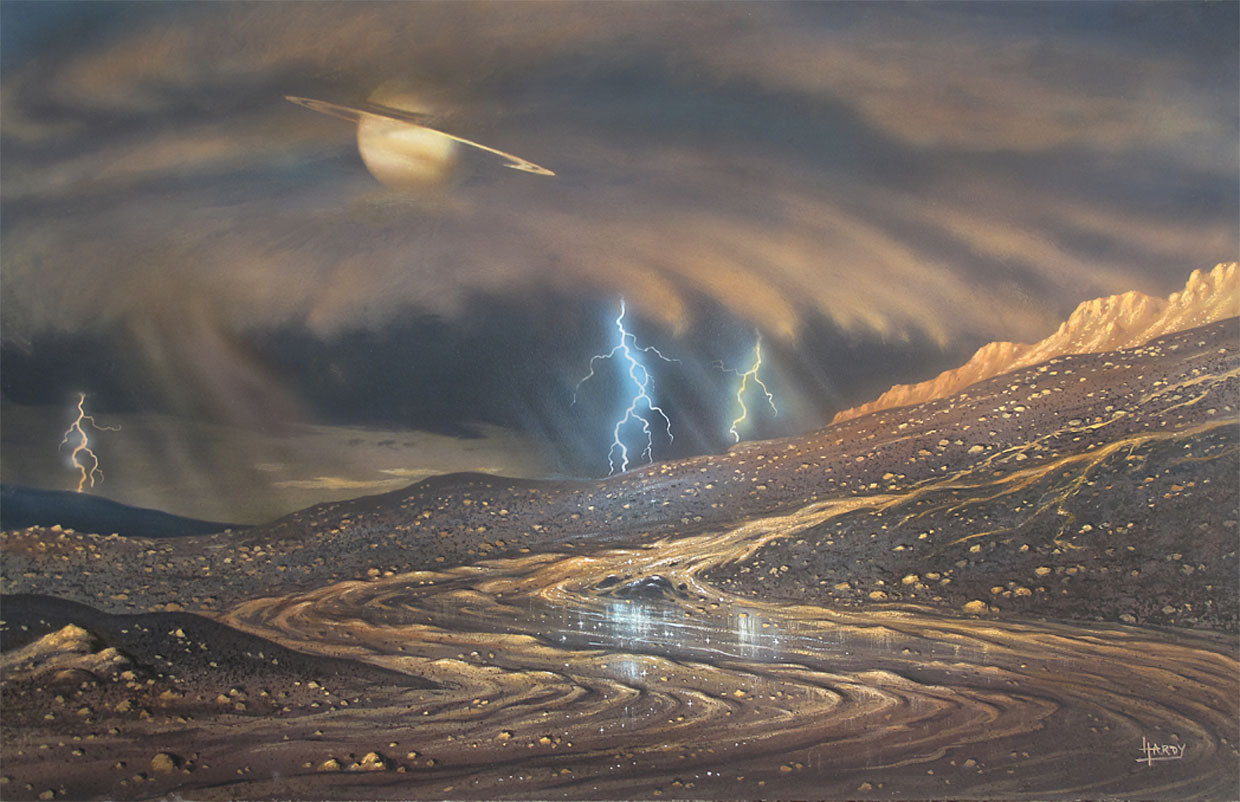
Alt...
2011 April 1
It's Raining on Titan
Illustration Credit & Copyright: David A. Hardy (AstroArt)
Explanation:
It's been raining on Titan. In fact, it's likely been raining methane on Titan and that's not an April Fools' joke. The almost familiar scene depicted in this artist's vision of the surface of Saturn's largest moon looks across an eroding landscape into a stormy sky. That scenario is consistent with seasonal rain storms temporarily darkening Titan's surface along the moon's equatorial regions, as seen by instruments onboard the Cassini spacecraft. Of course on frigid Titan, with surface temperatures of about -290 degrees F (-180 degrees C), the cycle of evaporation, cloud formation, and rain involves liquid methane instead of water. Lightning could also be possible in Titan's thick, nitrogen-rich atmosphere.
Authors & editors: Robert Nemiroff (MTU) & Jerry Bonnell (UMCP)
NASA Official: Phillip Newman Specific rights apply.
NASA Web Privacy Policy and Important Notices
A service of: ASD at NASA / GSFC
& Michigan Tech. U.
Huygens Lands on Titan
* Image Credit: ESA / NASA / JPL / University of Arizona
Explanation:
Delivered by Saturn-bound Cassini, ESA's Huygens probe touched down on the ringed planet's largest moon Titan, ten years ago on January 14, 2005. These panels show fisheye images made during its slow descent by parachute through Titan's dense atmosphere. Taken by the probe's descent imager/spectral radiometer instrument they range in altitude from 6 kilometers (upper left) to 0.2 kilometers (lower right) above the moon's surprisingly Earth-like surface of dark channels, floodplains, and bright ridges. But at temperatures near -290 degrees F (-180 degrees C), the liquids flowing across Titan's surface are methane and ethane, hydrocarbons rather than water. After making the most distant landing for a spacecraft from Earth, Huygens transmitted data for more than an hour. The Huygens data and a decade of exploration by Cassini have shown Titan to be a tantalizing world hosting a complex chemistry of organic compounds, dynamic landforms, lakes, seas, and a possible subsurface ocean of liquid water.
#space #moon #titan #astrophotography #photography #science #nature #NASA
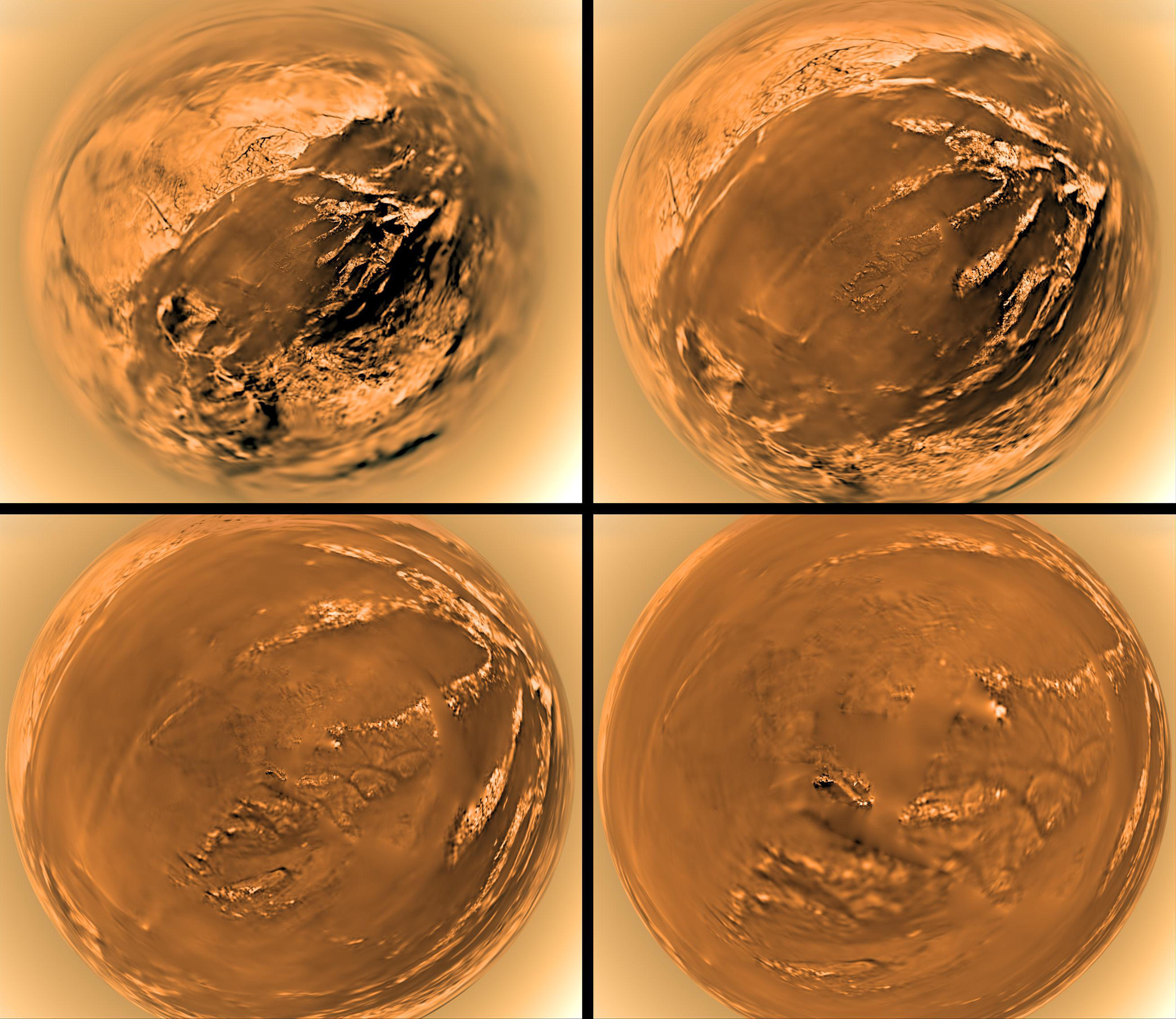
Alt...
2015 January 16
.
Huygens Lands on Titan
* Image Credit: ESA / NASA / JPL / University of Arizona
Explanation:
Delivered by Saturn-bound Cassini, ESA's Huygens probe touched down on the ringed planet's largest moon Titan, ten years ago on January 14, 2005. These panels show fisheye images made during its slow descent by parachute through Titan's dense atmosphere. Taken by the probe's descent imager/spectral radiometer instrument they range in altitude from 6 kilometers (upper left) to 0.2 kilometers (lower right) above the moon's surprisingly Earth-like surface of dark channels, floodplains, and bright ridges. But at temperatures near -290 degrees F (-180 degrees C), the liquids flowing across Titan's surface are methane and ethane, hydrocarbons rather than water. After making the most distant landing for a spacecraft from Earth, Huygens transmitted data for more than an hour. The Huygens data and a decade of exploration by Cassini have shown Titan to be a tantalizing world hosting a complex chemistry of organic compounds, dynamic landforms, lakes, seas, and a possible subsurface ocean of liquid water.
Authors & editors: Robert Nemiroff (MTU) & Jerry Bonnell (UMCP)
NASA Official: Phillip Newman Specific rights apply.
NASA Web Privacy Policy and Important Notices
A service of: ASD at NASA / GSFC
& Michigan Tech. U.