Search results for tag #nature
![[?]](https://files.defcon.social/dcsocial-s3/accounts/avatars/113/208/344/507/078/943/original/014820ad22daee1c.jpg)
2017 March 21
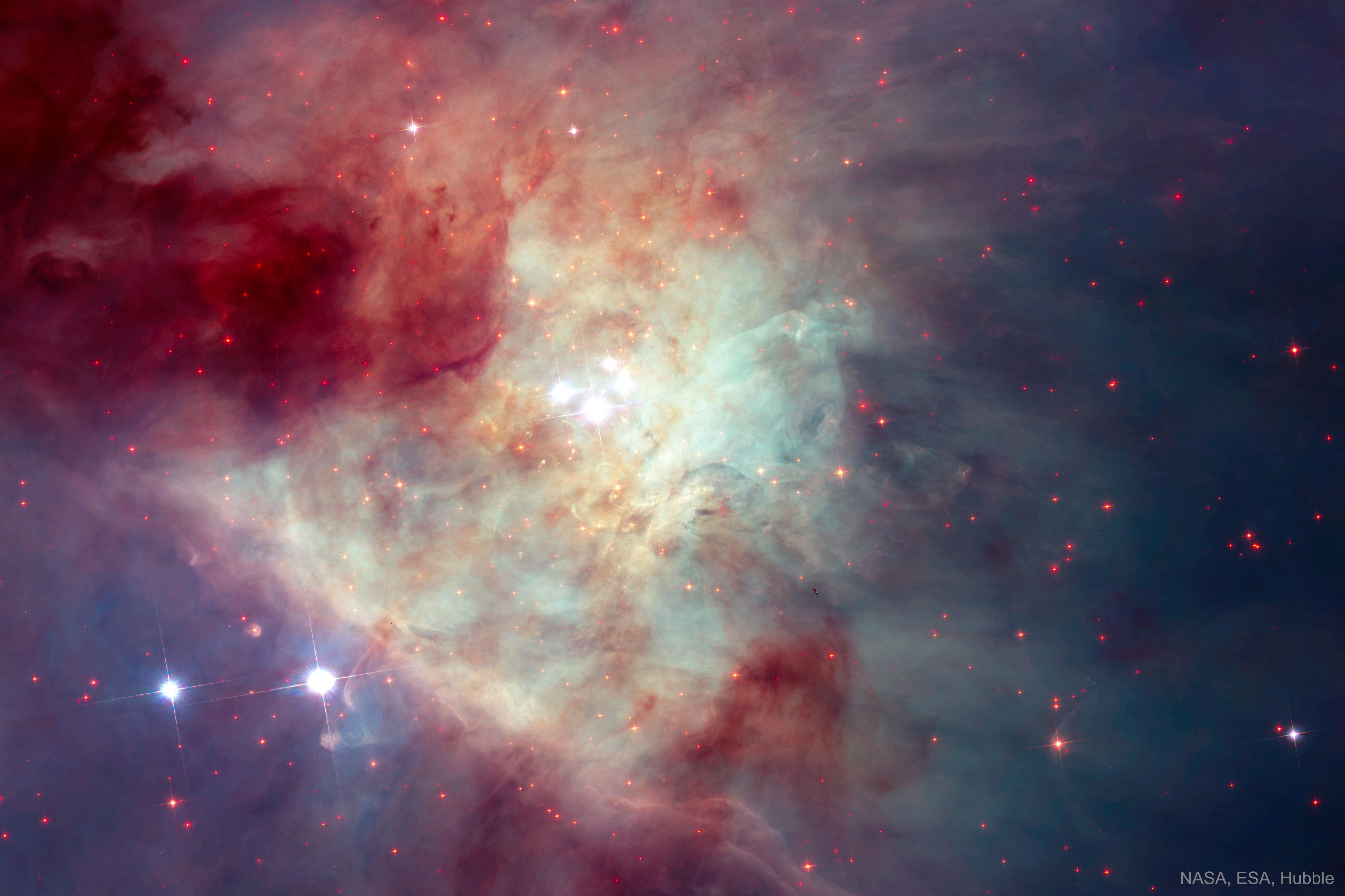
Fast Stars and Rogue Planets in the Orion Nebula
* Image Credit: NASA, ESA, Hubble
https://www.nasa.gov/
http://www.esa.int/
https://www.nasa.gov/mission_pages/hubble/story/index.html
Explanation:
Start with the constellation of Orion. Below Orion's belt is a fuzzy area known as the Great Nebula of Orion. In this nebula is a bright star cluster known as the Trapezium, marked by four bright stars near the image center. The newly born stars in the Trapezium and surrounding regions show the Orion Nebula to be one of the most active areas of star formation to be found in our area of the Galaxy. In Orion, supernova explosions and close interactions between stars have created rogue planets and stars that rapidly move through space. Some of these fast stars have been found by comparing different images of this region taken by the Hubble Space Telescope many years apart. Many of the stars in the featured image, taken in visible and near-infrared light, appear unusually red because they are seen through dust that scatters away much of their blue light.
https://apod.nasa.gov/apod/ap170321.html
#space #nebula #astrophotography #photography #science #astronomy #nature #NASA #ESA
Alt...
2017 March 21
Fast Stars and Rogue Planets in the Orion Nebula
* Image Credit: NASA, ESA, Hubble
Explanation:
Start with the constellation of Orion. Below Orion's belt is a fuzzy area known as the Great Nebula of Orion. In this nebula is a bright star cluster known as the Trapezium, marked by four bright stars near the image center. The newly born stars in the Trapezium and surrounding regions show the Orion Nebula to be one of the most active areas of star formation to be found in our area of the Galaxy. In Orion, supernova explosions and close interactions between stars have created rogue planets and stars that rapidly move through space. Some of these fast stars have been found by comparing different images of this region taken by the Hubble Space Telescope many years apart. Many of the stars in the featured image, taken in visible and near-infrared light, appear unusually red because they are seen through dust that scatters away much of their blue light.
Authors & editors: Robert Nemiroff (MTU) & Jerry Bonnell (UMCP)
NASA Official: Phillip Newman Specific rights apply.
NASA Web Privacy Policy and Important Notices
A service of: ASD at NASA / GSFC
& Michigan Tech. U.
February 2, 1999
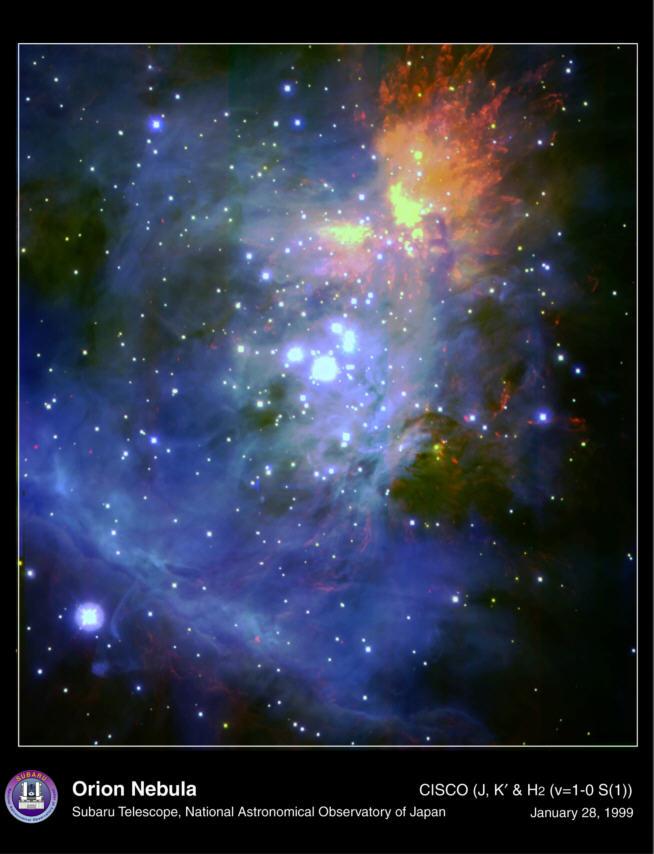
The Orion Nebula from Subaru
* Credit: CISCO, Subaru 8.3-m Telescope, NAOJ
https://de.wikipedia.org/wiki/Subaru-Teleskop
Explanation:
The Orion Nebula (M42) shows a host of treasures when viewed in infrared light. Some stars in the Trapezium, an open cluster of stars at the center, are only visible in infrared light. The orange feature above center is called the Kleinman-Low Nebula, and appears greatly affected by newly forming central star IRc2. The blue emission in this representative color photograph is caused by hot gas ionized by the Trapezium stars. This is one of the first photographs ever taken through Japan's new Subaru Telescope.
https://apod.nasa.gov/apod/ap990202.html
#space #nebula #astrophotography #photography #science #astronomy #nature #NASA
Alt...
February 2, 1999
The Orion Nebula from Subaru
* Credit: CISCO, Subaru 8.3-m Telescope, NAOJ
Explanation:
The Orion Nebula (M42) shows a host of treasures when viewed in infrared light. Some stars in the Trapezium, an open cluster of stars at the center, are only visible in infrared light. The orange feature above center is called the Kleinman-Low Nebula, and appears greatly affected by newly forming central star IRc2. The blue emission in this representative color photograph is caused by hot gas ionized by the Trapezium stars. This is one of the first photographs ever taken through Japan's new Subaru Telescope.
Authors & editors: Robert Nemiroff (MTU) & Jerry Bonnell (USRA)
NASA Technical Rep.: Jay Norris. Specific rights apply.
A service of: LHEA at NASA/ GSFC
& Michigan Tech. U.
2017 March 12
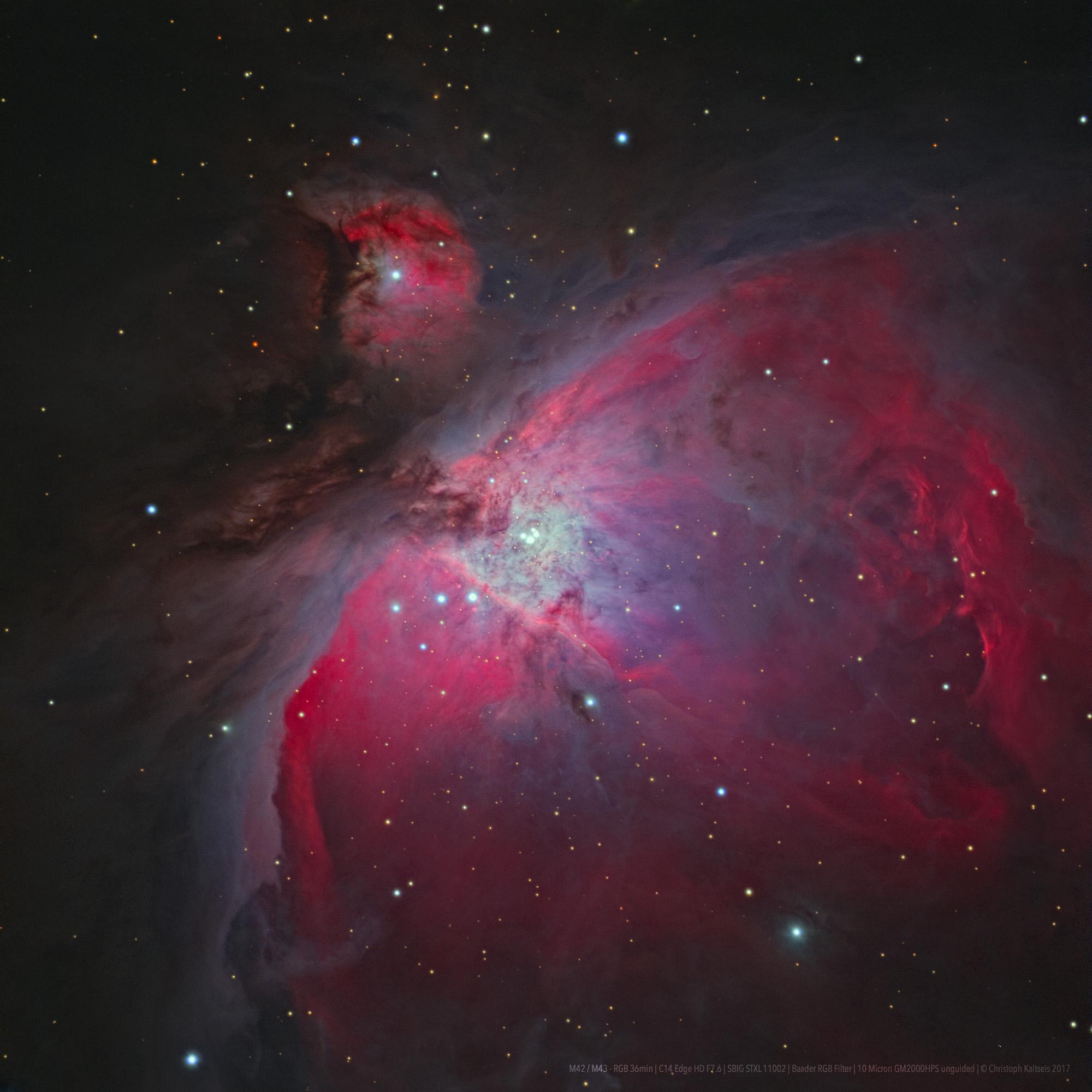
At the Heart of Orion
* Image Credit & Copyright: Christoph Kaltseis, CEDIC 2017
http://www.christoph-kaltseis.com/
https://www.cedic.at/en/cedic_slt.php
Explanation:
Near the center of this sharp cosmic portrait, at the heart of the Orion Nebula, are four hot, massive stars known as the Trapezium. Tightly gathered within a region about 1.5 light-years in radius, they dominate the core of the dense Orion Nebula Star Cluster. Ultraviolet ionizing radiation from the Trapezium stars, mostly from the brightest star Theta-1 Orionis C powers the complex star forming region's entire visible glow. About three million years old, the Orion Nebula Cluster was even more compact in its younger years and a dynamical study indicates that runaway stellar collisions at an earlier age may have formed a black hole with more than 100 times the mass of the Sun. The presence of a black hole within the cluster could explain the observed high velocities of the Trapezium stars. The Orion Nebula's distance of some 1,500 light-years would make it the closest known black hole to planet Earth.
https://apod.nasa.gov/apod/ap170312.html
#space #nebula #astrophotography #photography #science #astronomy #nature #NASA
Alt...
2017 March 12
At the Heart of Orion
* Image Credit & Copyright: Christoph Kaltseis, CEDIC 2017
Explanation:
Near the center of this sharp cosmic portrait, at the heart of the Orion Nebula, are four hot, massive stars known as the Trapezium. Tightly gathered within a region about 1.5 light-years in radius, they dominate the core of the dense Orion Nebula Star Cluster. Ultraviolet ionizing radiation from the Trapezium stars, mostly from the brightest star Theta-1 Orionis C powers the complex star forming region's entire visible glow. About three million years old, the Orion Nebula Cluster was even more compact in its younger years and a dynamical study indicates that runaway stellar collisions at an earlier age may have formed a black hole with more than 100 times the mass of the Sun. The presence of a black hole within the cluster could explain the observed high velocities of the Trapezium stars. The Orion Nebula's distance of some 1,500 light-years would make it the closest known black hole to planet Earth.
Authors & editors: Robert Nemiroff (MTU) & Jerry Bonnell (UMCP)
NASA Official: Phillip Newman Specific rights apply.
NASA Web Privacy Policy and Important Notices
A service of: ASD at NASA / GSFC
& Michigan Tech. U.
2025 September 8
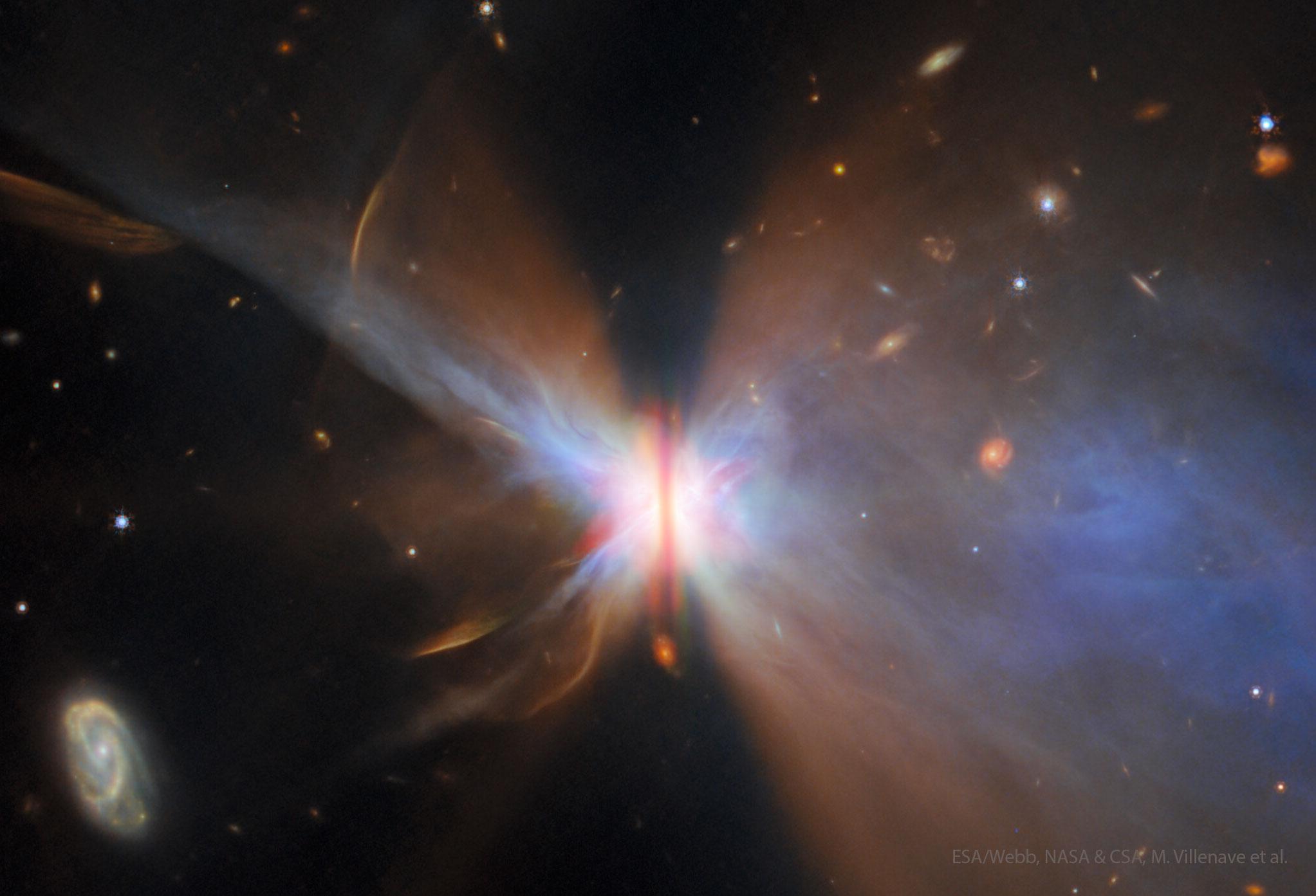
IRAS 04302: Butterfly Disk Planet Formation
* Image Credit: NASA, ESA, CSA, Webb
https://www.nasa.gov/
https://www.esa.int/
https://www.asc-csa.gc.ca/eng/
https://science.nasa.gov/mission/webb/
* Processing: M. Villenave et al.
https://www.youtube.com/watch?v=z_DAOxR98T4
https://arxiv.org/abs/2311.07668
Explanation:
This butterfly can hatch planets. The nebula fanning out from the star IRAS 04302+2247 may look like the wings of a butterfly, while the vertical brown stripe down the center may look like the butterfly's body -- but together they indicate an active planet-forming system. The featured picture was captured recently in infrared light by the Webb Space Telescope. Pictured, the vertical disk is thick with the gas and dust from which planets form. The disk shades visible and (most) infrared light from the central star, allowing a good view of the surrounding dust that reflects out light. In the next few million years, the dust disk will likely fragment into rings through the gravity of newly hatched planets. And a billion years from now, the remaining gas and dust will likely dissipate, leaving mainly the planets -- like in our Solar System.
https://esawebb.org/images/potm2508a/
https://arxiv.org/abs/2311.07668
https://apod.nasa.gov/apod/ap121026.html
https://apod.nasa.gov/apod/ap230511.html
https://en.wikipedia.org/wiki/Cosmic_dust
https://apod.nasa.gov/apod/ap250908.html
#space #nebula #astrophotography #photography #science #astronomy #nature #NASA #ESA #WEBB
Alt...
2025 September 8
A starfield surrounds a nebula with a vertical brown bar across its center. Gas and dust fan out from the bar making the nebula appear like a colorful butterfly.
IRAS 04302: Butterfly Disk Planet Formation
* Image Credit: NASA, ESA, CSA, Webb; Processing: M. Villenave et al.
Explanation:
This butterfly can hatch planets. The nebula fanning out from the star IRAS 04302+2247 may look like the wings of a butterfly, while the vertical brown stripe down the center may look like the butterfly's body -- but together they indicate an active planet-forming system. The featured picture was captured recently in infrared light by the Webb Space Telescope. Pictured, the vertical disk is thick with the gas and dust from which planets form. The disk shades visible and (most) infrared light from the central star, allowing a good view of the surrounding dust that reflects out light. In the next few million years, the dust disk will likely fragment into rings through the gravity of newly hatched planets. And a billion years from now, the remaining gas and dust will likely dissipate, leaving mainly the planets -- like in our Solar System.
Authors & editors: Robert Nemiroff (MTU) & Jerry Bonnell (UMCP)
NASA Official: Amber Straughn Specific rights apply.
NASA Web Privacy, Accessibility, Notices;
A service of: ASD at NASA / GSFC,
NASA Science Activation
Pan video: IRAS 04302+2247
For this new Picture of the Month feature, the NASA/ESA/CSA James Webb Space Telescope has provided a fantastic new view of IRAS 04302+2247, a planet-forming disc located about 525 light-years away in a dark cloud within the Taurus star-forming region. With Webb, researchers can study the properties and growth of dust grains within protoplanetary discs like this one, shedding light on the earliest stages of planet formation.
In stellar nurseries across the galaxy, baby stars are forming in giant clouds of cold gas. As young stars grow, the gas surrounding them collects in narrow, dusty protoplanetary discs. This sets the scene for the formation of planets, and observations of distant protoplanetary discs can help researchers understand what took place roughly 4.5 billion years ago in our own Solar System, when the Sun, Earth, and the other planets formed.
IRAS 04302+2247, or IRAS 04302 for short, is a beautiful example of a protostar — a young star that is still gathering mass from its environment — surrounded by a protoplanetary disc in which baby planets might be forming. Webb is able to measure the disc at 65 billion kilometres across — several times the diameter of our Solar System. From Webb’s vantage point, IRAS 04302’s disc is oriented edge-on, so we see it as a narrow, dark line of dusty gas that blocks the light from the budding protostar at its centre. This dusty gas is fuel for planet formation, providing an environment within which young planets can bulk up and pack on mass.
Credit:
ESA/Webb, NASA & CSA, M. Villenave et al, N. Bartmann (ESA/Webb)
Music: Stellardrone - Twilight
https://esawebb.org/videos/potm2508a/
#space #nebula #astrophotography #photography #science #astronomy #nature #NASA #ESA #WEBB
![[?]](https://cdn.masto.host/socelnet/accounts/avatars/109/331/844/903/061/219/original/addecf8debd3f2d2.jpeg)
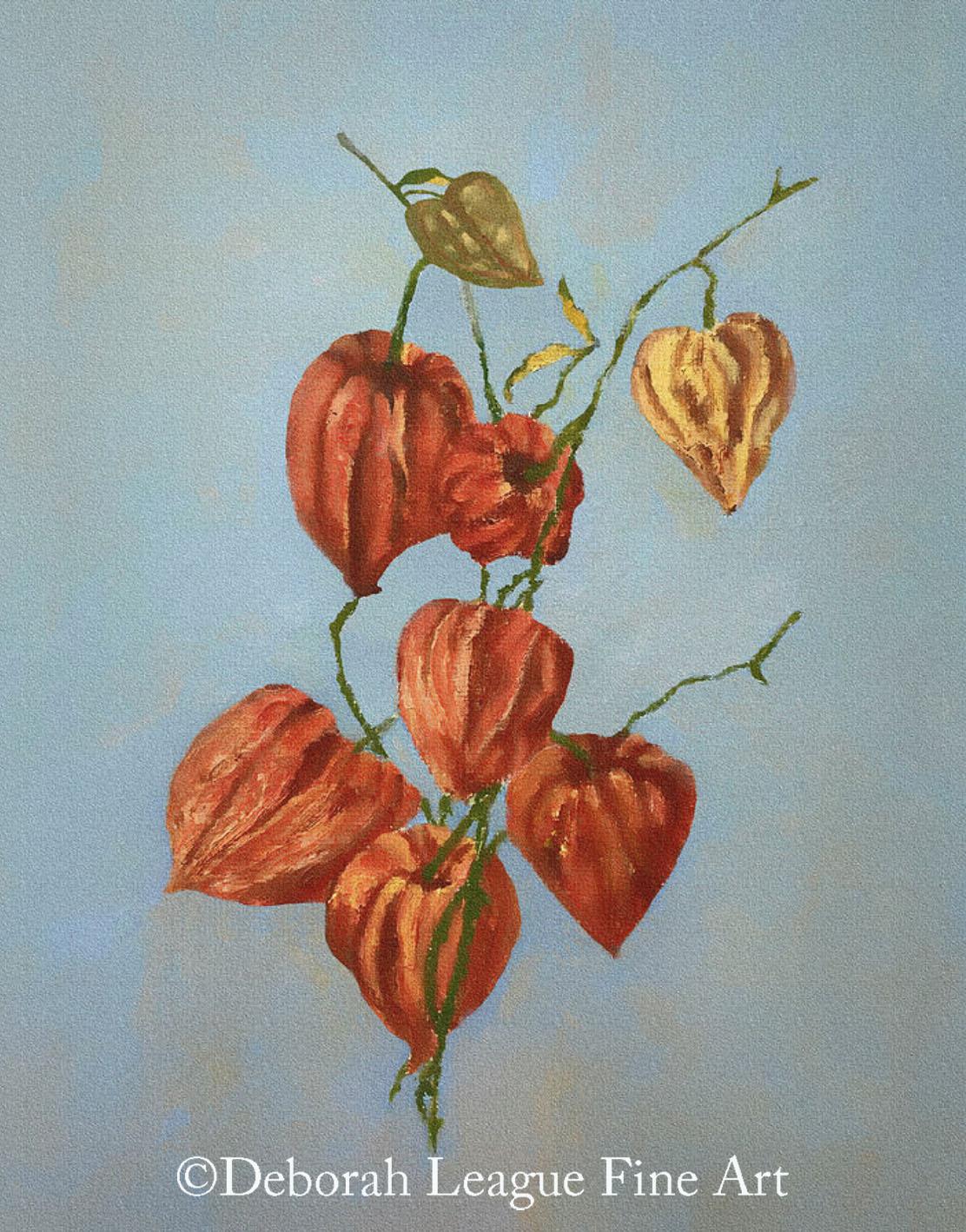
Chinese lantern branch, oil painting.
ART - https://deborah-league.pixels.com/featured/chinese-lantern-branch-deborah-league.html
#ayearforart #buyintoart #mastodonart #mastoart #fediart #fedigiftshop #giftideas #art #arte #artist #artwork #artmatters #artbooster #colorful #wallart #homedecor #kunst #interiordesign #creativetoots #artforsale #artprints #oilpainting #painting #plants #autumn #nature
Alt...
This oil painting of a Chinese lantern plant, offered as an art print, brings vibrant colors and botanical elegance into your home. The beautiful orange and green hues of the lantern-shaped seed pods create a captivating focal point for any room. Perfect for nature lovers, gardeners, or anyone looking to add a touch of natural beauty to their decor. The painting complements both modern and traditional interiors.
The focal point of the painting is a branch of the Chinese lantern plant. The branch is adorned with vibrant orange lantern-shaped pods and gracefully extends down the canvas, creating a sense of movement and organic flow.

Alt...
Framed art shown in a display room.
![[?]](https://media.social.qoto.org/accounts/avatars/000/536/037/original/586c7abcda18ed45.jpg)
Call them "Modern People" instead of grouping by race etc [SENSITIVE CONTENT]
I'd say all #ModernPeople are a danger because they #TooBusy (even to try / make time for it).
All the things that got us here MAKE US the new level of #bourgeoisie (we all got here from the military industrial complex, leveraging countries for 'developing' West (or Global north), #energy / #land extraction, #banks
etc... while spending / caring little. Scoffing while in front of the TV instead of growing things and people..
Instead of grouping by race etc - Call them "Modern People" BECAUSE WE / THEY ALL MEASURABLY SUCK with what THEY DON'T DO / CARE ABOUT DAILY!
"YEAH I'M TOO BUSY!!" (i.e. don't want to even think about it or try talking with you)
Disclaimer: Maybe not all people suck but many are poor in the way they do things and how much they care or plan ahead to use their life to try not to feed the above.
So we are all a danger but with our ignorance and ignoring of things AND EACH OTHER (emotional intelligence)
Instead of making a list of groups of just #Christians, #Islam, #Muslims ... ALL MODERN PEOPLE SUCK! / ARE TERRIBLE BY THEIR INACTION(S) WHICH ARE HARD TO SEE BECAUSE YOU ONLY HAVE TO DO NOTHING!
Consider #ModernPeople instead of just grouping by race etc to avoid distraction and mini-wars... either "educate-up" (a terrible term sorry) and mix with others / to try evolve... or stay more primitive / feeding more #primitive #systems pretending that those #scam-systems are not the problem at root by all states and #banks stripping all morality out... hardly good carers themselves. As we work, as we buy from supermarkets with less quality food, all is being stripped / replaced by less
#nature / less #natural / less #humanity ways. People think it's ok to have the life they have and not have the direct blow-back for it. #TooBusy

![[?]](https://static.toot.community/accounts/avatars/109/292/748/506/954/560/original/ac7b63d7c1e7ba1c.jpg)
loitering angel
#SilentSunday #BirdsOfMastodon #Bird #Hummingbird #Photograph #BirdPhotography #HummingbirdPhotography #Nature #Outdoors #Peru #SouthAmerica #Wildlife

Alt...
A proud hummingbird with an uplifted bill perches on a branch where the green body is somewhat obscured but the head is on display to show off how the neat white collar underlines a bold purple flashing gorget. This is the Amethyst-throated Sunangel of Owlet Lodge, Peru. I have photographed 50 species of hummingbirds of tthe 147 I have seen, this is one of them... Nov 2024. Photo by Peachfront.
Hurricane Katrina: 20 Years Later
Twenty years ago, Hurricane Katrina devastated New Orleans and the Mississippi coast. It was one of the deadliest hurricanes on record and remains the costliest hurricane in U.S. history. The 2005 Atlantic hurricane season was record-breaking, with 27 named storms, 14 hurricanes, and three Category 5 storms. That record remained until 2020, when 30 named storms developed.
Learn how NOAA satellites tracked Katrina then, and how today’s advanced satellites provide even greeted insight into these powerful storms:
https://www.nesdis.noaa.gov/news/twen...
Credits:
NOAA
NASA
The Cooperative Institute for Research in the Atmosphere (CIRA)
Music:
“Formulas and Equations” by Richard Andrew Canavan [PRS]; Sound Pocket Music [PRS]; Universal Production Music
https://rammb.cira.colostate.edu/ramsdis/online/goes-west_goes-east.asp
#space #earth #astrophotography #photography #science #geology #nature #resources #climate #education
GOES-R Geostationary Lightning Mapper Data Visualization
* CREDIT
NOAA
NASA Goddard Multimedia
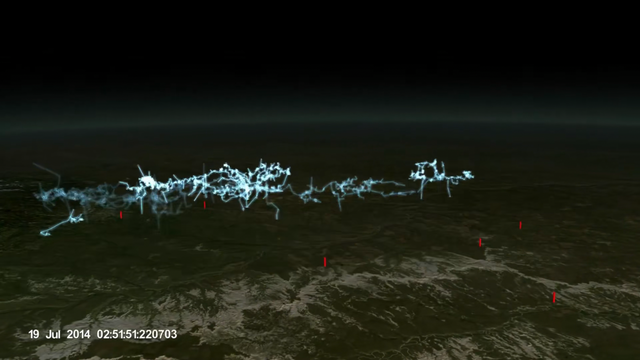
Research has shown that lightning is an excellent early warning indicator for approaching severe storms and the development of tornadoes.This data visualization shows actual lightning measurements captured by an array of ground-based lighting detectors capable of tracing how lightning propagates through the atmosphere and simulates how the GOES-R Geostationary Lightning Mapper will monitor atmospheric flashes. This technology could provide critical minutes of valuable warning time in advance of approaching severe storms.
https://www.youtube.com/watch?v=5QAZeR6GGfw
#space #earth #lightning #science #physics #nature #NASA
Alt...
Research has shown that lightning is an excellent early warning indicator for approaching severe storms and the development of tornadoes.This data visualization shows actual lightning measurements captured by an array of ground-based lighting detectors capable of tracing how lightning propagates through the atmosphere and simulates how the GOES-R Geostationary Lightning Mapper will monitor atmospheric flashes. This technology could provide critical minutes of valuable warning time in advance of approaching severe storms.
2016 December 5
Lightning over Colorado
* Image Credit & Copyright: Joe Randall
https://500px.com/p/thinkinbinary?view=galleries
Explanation:
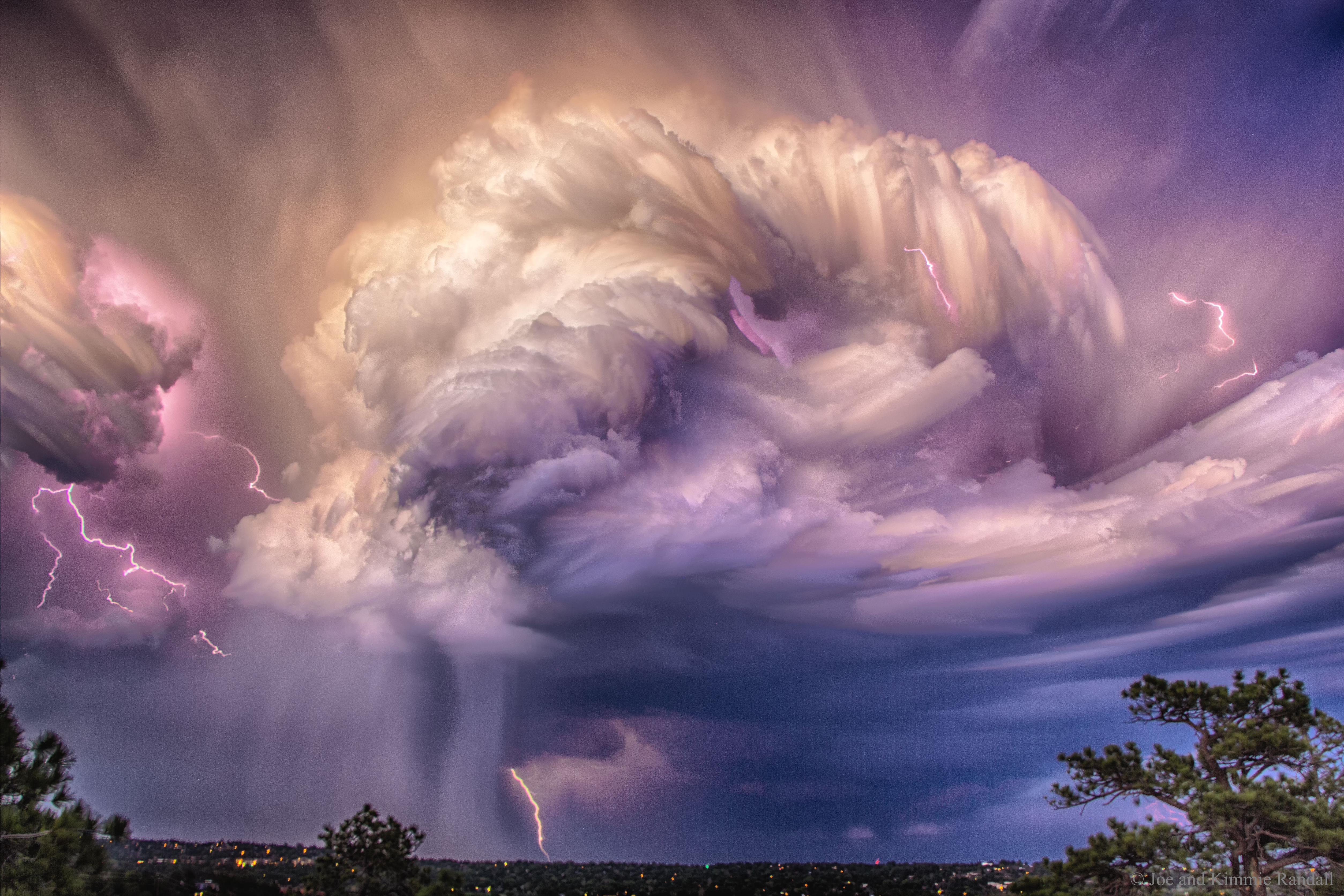
Have you ever watched a lightning storm in awe? Join the crowd. Oddly, nobody knows exactly how lightning is produced. What is known is that charges slowly separate in some clouds causing rapid electrical discharges (lightning), but how electrical charges get separated in clouds remains a topic of much research. Lightning usually takes a jagged course, rapidly heating a thin column of air to about three times the surface temperature of the Sun. The resulting shock wave starts supersonically and decays into the loud sound known as thunder. Lightning bolts are common in clouds during rainstorms, and on average 44 lightning bolts occur on the Earth every second. Pictured, over 60 images were stacked to capture the flow of lightning-producing storm clouds in July over Colorado Springs, Colorado, USA.
https://apod.nasa.gov/apod/ap161205.html
#space #earth #lightning #astrophotography #photography #science #physics #nature
Alt...
2016 December 5
Lightning over Colorado
* Image Credit & Copyright: Joe Randall
Explanation:
Have you ever watched a lightning storm in awe? Join the crowd. Oddly, nobody knows exactly how lightning is produced. What is known is that charges slowly separate in some clouds causing rapid electrical discharges (lightning), but how electrical charges get separated in clouds remains a topic of much research. Lightning usually takes a jagged course, rapidly heating a thin column of air to about three times the surface temperature of the Sun. The resulting shock wave starts supersonically and decays into the loud sound known as thunder. Lightning bolts are common in clouds during rainstorms, and on average 44 lightning bolts occur on the Earth every second. Pictured, over 60 images were stacked to capture the flow of lightning-producing storm clouds in July over Colorado Springs, Colorado, USA.
Authors & editors: Robert Nemiroff (MTU) & Jerry Bonnell (UMCP)
NASA Official: Phillip Newman Specific rights apply.
NASA Web Privacy Policy and Important Notices
A service of: ASD at NASA / GSFC
& Michigan Tech. U.
2017 May 15
Lightning Storm Moves Across the USA
* Image Credit: NOAA, NASA, Lockheed Martin, GOES-16, GLM
http://www.noaa.gov/
https://www.nasa.gov/
https://www.lockheedmartin.com/en-us/products/goes-r-series.html
https://www.nesdis.noaa.gov/our-satellites/currently-flying/geostationary-satellites
https://www.goes-r.gov/spacesegment/glm.html
Explanation:
Watch a huge lightning storm move across the eastern USA. The huge storm caused much damage and unfortunately some loss of life for people in its path. Seen from space, the lightning is seen as momentary flashes in the featured time-lapse video recorded last month by the Geostationary Lightning Mapper (GLM) aboard the GOES-16 satellite. The outline of North America is most evident during the day, while the bright lightning strikes are most evident at night. Inspection of the video shows that much of the lightning occurred at the leading edge of the huge tail of the swirling storm. Because lightning frequently precedes a storm's most violent impact, lightning data from GLM holds promise to help reduce the harm to humans from future storms.
https://www.nesdis.noaa.gov/news/first-of-its-kind-geostationary-lightning-mapper-glm-instrument-complete
https://www.goes-r.gov/
https://lightning.nsstc.nasa.gov/primer/
https://apod.nasa.gov/apod/ap170515.html
#space #earth #astrophotography #photography #science #geology #nature #resources #climate #education
2018 August 26
Fire on Earth
* Image Credit: John McColgan (AFS, BLM)
https://fire.ak.blm.gov/
https://www.blm.gov/
Explanation:
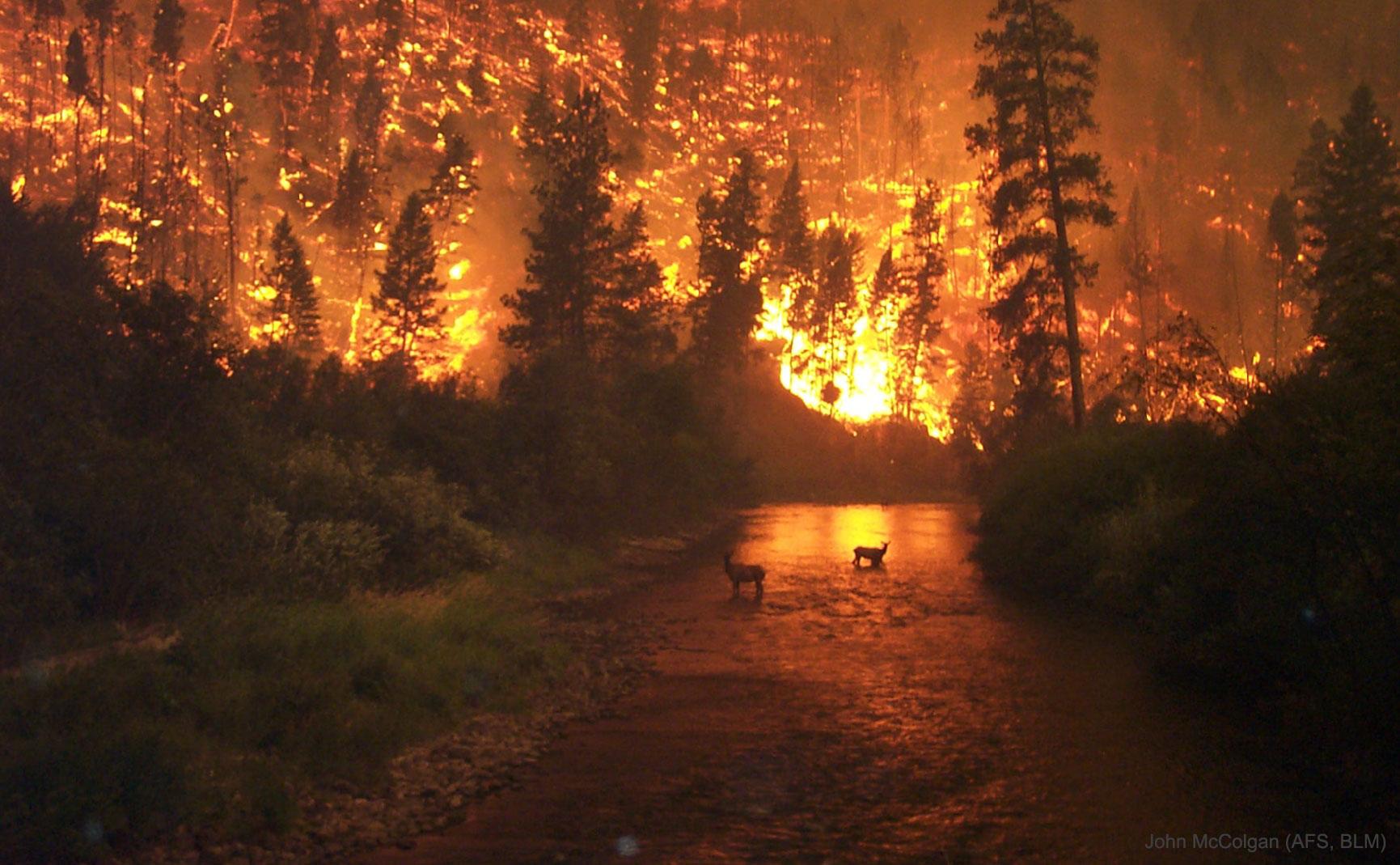
Sometimes, regions of planet Earth light up with fire. Since fire is the rapid acquisition of oxygen, and since oxygen is a key indicator of life, fire on any planet would be an indicator of life on that planet. Most of the Earth's land has been scorched by fire at some time in the past. Although causing many a tragedy, for many places on Earth fire is considered part of a natural ecosystem cycle. Large forest fires on Earth are usually caused either by humans or lightning and can be visible from orbit. Featured from the year 2000, stunned elk avoid a fire sweeping through Montana's Bitterroot Valley by standing in a river.
https://experience.arcgis.com/experience/92dfba48047d484b8868b35d0f708532/page/Page?views=Tab-Legend
https://firms.modaps.eosdis.nasa.gov/usfs/
https://en.wikipedia.org/wiki/Fire_ecology
https://science.nasa.gov/earth/
#space #earth #astrophotography #photography #science #geology #nature #resources #climate #education
Alt...
2018 August 26
Fire on Earth
* Image Credit: John McColgan (AFS, BLM)
Explanation:
Sometimes, regions of planet Earth light up with fire. Since fire is the rapid acquisition of oxygen, and since oxygen is a key indicator of life, fire on any planet would be an indicator of life on that planet. Most of the Earth's land has been scorched by fire at some time in the past. Although causing many a tragedy, for many places on Earth fire is considered part of a natural ecosystem cycle. Large forest fires on Earth are usually caused either by humans or lightning and can be visible from orbit. Featured from the year 2000, stunned elk avoid a fire sweeping through Montana's Bitterroot Valley by standing in a river.
Authors & editors: Robert Nemiroff (MTU) & Jerry Bonnell (UMCP)
NASA Official: Phillip Newman Specific rights apply.
NASA Web Privacy Policy and Important Notices
A service of: ASD at NASA / GSFC
& Michigan Tech. U.
Published Sun, Jul 30 2017 on CNBC.com
Mysterious craters blowing out of Russia could mean trouble for the whole planet
by Stacey Yuen
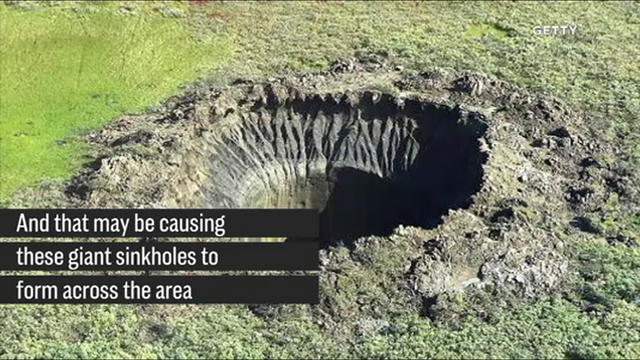
In northern Siberia, rising temperatures are causing mysterious giant craters — and even more dire consequences could be in store, say climate scientists.
The Russian province’s long-frozen ground, called permafrost, is thawing, triggering massive changes to the region’s landscape and ecology. It could even threaten human lives.
“The last time we saw a permafrost melting was 130,000 years ago. It’s a natural phenomenon because of changes in the earth’s orbit,” said professor of earth sciences at the University of Oxford, Dr. Gideon Henderson.
“But what is definitely unprecedented is the rate of warming. The warming that happened 130,000 years ago happened over thousands of years … What we see happening now is warming over decades or a century.”
We are therefore seeing a much more rapid collapse of the permafrost, Henderson said.
Global warming — but faster
It’s clear that the thawing permafrost has an important effect on the climate, Henderson said.
Under normal conditions, permafrosts regulate the amount of carbon in the environment by taking up and storing significant portions of carbon that humans release from burning fossil fuel.
In the case of Siberia, this equation is being reversed.
“When [permafrosts] release carbon, it will accelerate the rate of warming in the future,” Henderson said. A self-reinforcing feedback loop is created whereby warming releases more carbon, which in turn produces greater warming.
Methane is 86 times worse than carbon dioxide
Since 2014, several massive sinkholes have been discovered in the region. The first one reportedly measured over 50 ft wide. [...]
#space #earth #astrophotography #photography #science #geology #nature #resources #climate #permafrost #education
Alt...
This video shows a crater on the Yamal Peninsula, northern Siberia, taken on August 25, 2014. Its formation is possibly linked to climate change.
CREDITS
Vasily Bogoyavlensky | AFP | Getty Images | CNBC
2018 December 18
Methane Bubbles Frozen in Lake Baikal
* Image Credit & Copyright: Kristina Makeeva
https://www.flickr.com/photos/23502952@N03/
Explanation:
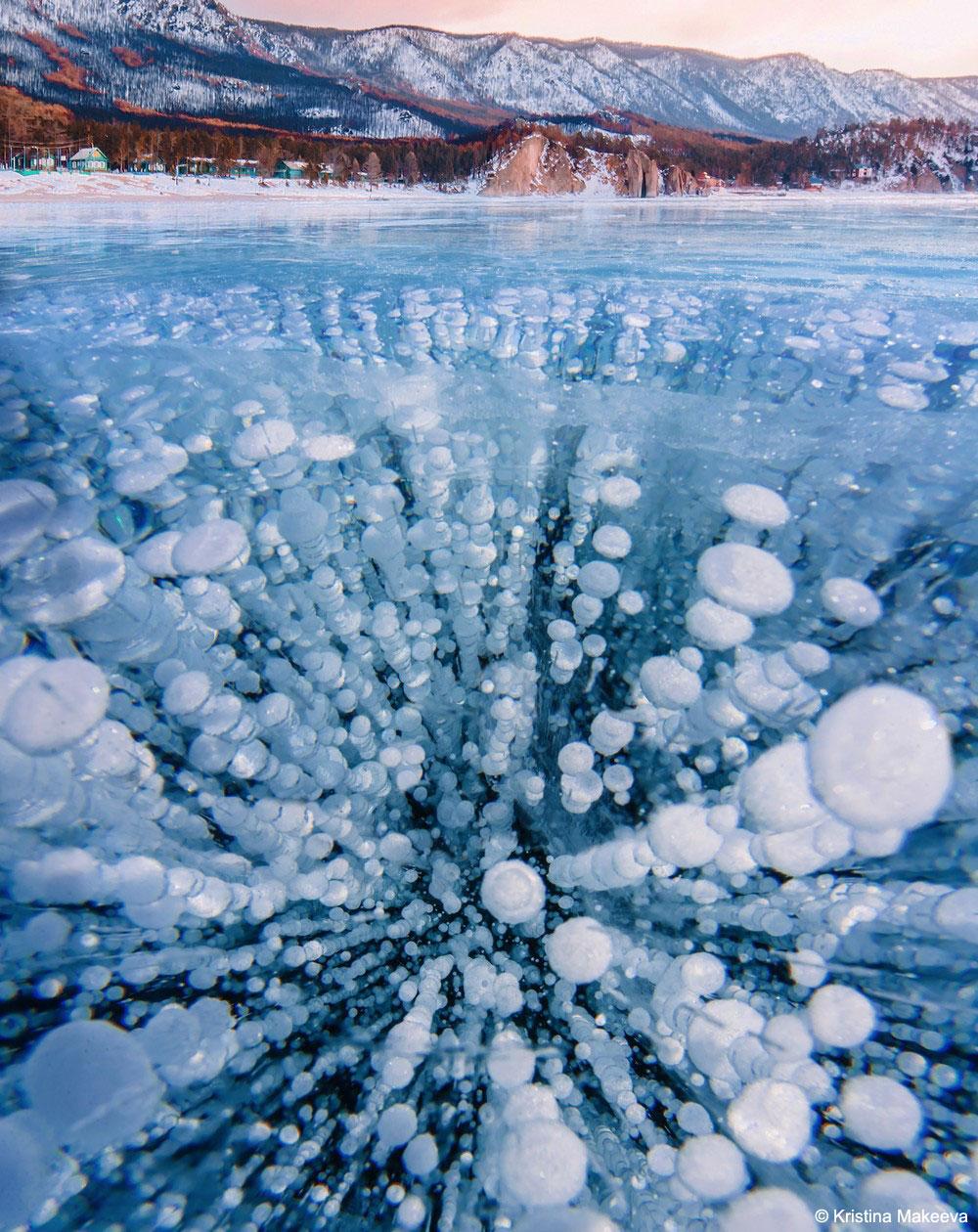
What are these bubbles frozen into Lake Baikal? Methane. Lake Baikal, a UNESCO World Heritage Site in Russia, is the world's largest (by volume), oldest, and deepest lake, containing over 20% of the world's fresh water. The lake is also a vast storehouse of methane, a greenhouse gas that, if released, could potentially increase the amount of infrared light absorbed by Earth's atmosphere, and so increase the average temperature of the entire planet. Fortunately, the amount of methane currently bubbling out is not climatologically important. It is not clear what would happen, though, were temperatures to significantly increase in the region, or if the water level in Lake Baikal were to drop. Pictured, bubbles of rising methane froze during winter into the exceptionally clear ice covering the lake.
https://www.researchgate.net/publication/236143909_Sources_and_sinks_of_methane_in_Lake_Baikal_A_synthesis_of_measurements_and_modeling
https://science.nasa.gov/earth/climate-change/unexpected-future-boost-of-methane-possible-from-arctic-permafrost/
https://arctic-news.blogspot.com/2016/12/lake-baikal.html
https://www.cnbc.com/2017/07/30/siberian-craters-big-releases-of-methane-could-pose-broad-problems.html
https://en.wikipedia.org/wiki/Methane
https://en.wikipedia.org/wiki/Greenhouse_effect
https://apod.nasa.gov/apod/ap181218.html
#space #earth #astrophotography #photography #science #geology #nature #resources #climate #education
Alt...
2018 December 18
Methane Bubbles Frozen in Lake Baikal
* Image Credit & Copyright: Kristina Makeeva
Explanation:
What are these bubbles frozen into Lake Baikal? Methane. Lake Baikal, a UNESCO World Heritage Site in Russia, is the world's largest (by volume), oldest, and deepest lake, containing over 20% of the world's fresh water. The lake is also a vast storehouse of methane, a greenhouse gas that, if released, could potentially increase the amount of infrared light absorbed by Earth's atmosphere, and so increase the average temperature of the entire planet. Fortunately, the amount of methane currently bubbling out is not climatologically important. It is not clear what would happen, though, were temperatures to significantly increase in the region, or if the water level in Lake Baikal were to drop. Pictured, bubbles of rising methane froze during winter into the exceptionally clear ice covering the lake.
Authors & editors: Robert Nemiroff (MTU) & Jerry Bonnell (UMCP)
NASA Official: Phillip Newman Specific rights apply.
NASA Web Privacy Policy and Important Notices
A service of: ASD at NASA / GSFC
& Michigan Tech. U.
2025 September 7
All the Water on Planet Earth
* Illustration Credit: Jack Cook, Adam Nieman, Woods Hole Oceanographic Institution
https://www.whoi.edu/
* Data source: Igor Shiklomanov
Explanation:
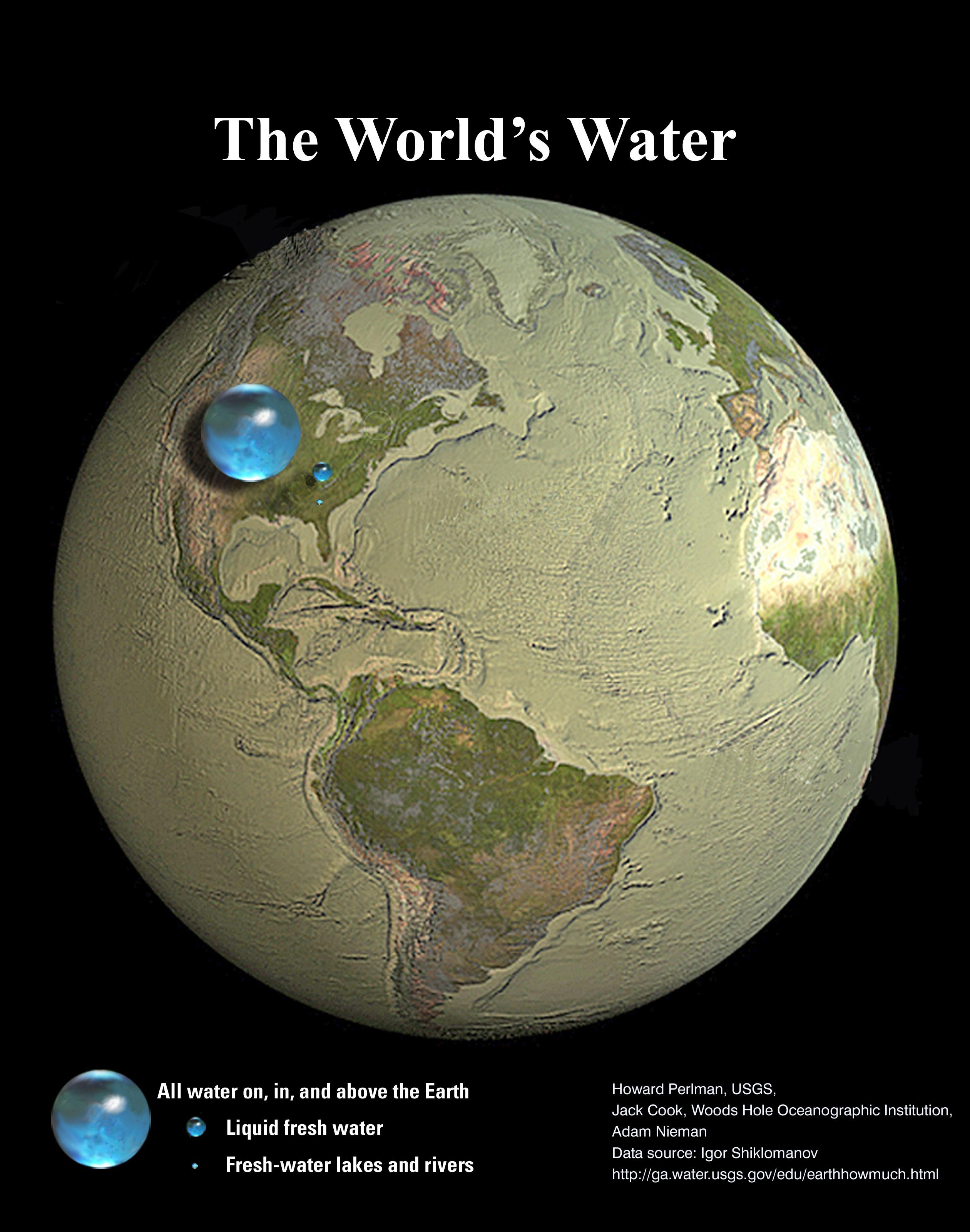
How much of planet Earth is made of water? Very little, actually. Although oceans of water cover about 70 percent of Earth's surface, these oceans are shallow compared to the Earth's radius. The featured illustration shows what would happen if all of the water on or near the surface of the Earth were bunched up into a ball. The radius of this ball would be only about 700 kilometers, less than half the radius of the Earth's Moon, but slightly larger than Saturn's moon Rhea which, like many moons in our outer Solar System, is mostly water ice. The next smallest ball depicts all of Earth's liquid fresh water, while the tiniest ball shows the volume of all of Earth's fresh-water lakes and rivers. How any of this water came to be on the Earth and whether any significant amount is trapped far beneath Earth's surface remain topics of research.
https://www.usgs.gov/media/images/all-earths-water-a-single-sphere
https://en.wikipedia.org/wiki/Origin_of_water_on_Earth
https://arxiv.org/abs/2503.17906
https://apod.nasa.gov/apod/ap250907.html
#space #earth #astrophotography #photography #science #geology #nature #resources #climate #education
Alt...
2025 September 7
An illustration of planet Earth is shown where the Earth is tan and has no water shown on its surface. In the foreground are several small blue spheres showing how much water is known to reside on our planet.
All the Water on Planet Earth
* Illustration Credit: Jack Cook, Adam Nieman, Woods Hole Oceanographic Institution
* Data source: Igor Shiklomanov
Explanation:
How much of planet Earth is made of water? Very little, actually. Although oceans of water cover about 70 percent of Earth's surface, these oceans are shallow compared to the Earth's radius. The featured illustration shows what would happen if all of the water on or near the surface of the Earth were bunched up into a ball. The radius of this ball would be only about 700 kilometers, less than half the radius of the Earth's Moon, but slightly larger than Saturn's moon Rhea which, like many moons in our outer Solar System, is mostly water ice. The next smallest ball depicts all of Earth's liquid fresh water, while the tiniest ball shows the volume of all of Earth's fresh-water lakes and rivers. How any of this water came to be on the Earth and whether any significant amount is trapped far beneath Earth's surface remain topics of research.
Authors & editors: Robert Nemiroff (MTU) & Jerry Bonnell (UMCP)
NASA Official: Amber Straughn Specific rights apply.
NASA Web Privacy, Accessibility, Notices;
A service of: ASD at NASA / GSFC,
NASA Science Activation
& Michigan Tech. U.
TOPIC> Mother Earth
Our Great Mother Earth
It has produced all life and thus also us, who think we have to subdue it for supposedly religious reasons. Everyone at least pretends to love their mother, but do we really care about her?
The following video is already 14 years old, but how long has humanity been researching, discussing, debating and warning on the subject of environmental and climate protection?
I remember the first debates, demonstrations and information booths 45 years ago, but in reality this topic, which is often suppressed, has been in the consciousness of humanity for much longer and is fermenting there as a kind of guilty conscience.
And? Have we somehow changed our behavior, which has been trained by capitalist and industrial influences, for the better since then? Or have we become even more of the bestial, greedy predators that these influences would like us to be?
Is environmental awareness just an accessory, a label with which we adorn ourselves while we drive our car to the health food store to buy organic bread?
Do we manage to change or do we want to continue dancing on the edge of the abyss until it's finally over.. or is it already too late?
https://science.nasa.gov/climate-change/
Video Credit:
NASA's Global Climate Change website http://climate.nasa.gov/
#space #earth #astrophotography #photography #science #geology #nature #resources #climate #education #silentsunday
Alt...
The ocean is responsible for Earth's mild climate and makes life on Earth possible for all creatures. As global ocean temperatures increase, the ocean water expands causing sea level rise which can have disastrous impacts on low-lying coastal regions.
Produced by NASA's Global Climate Change website http://climate.nasa.gov/
Saturn's B Ring, for Harp and Drums (Excerpt)
SYSTEM Sounds converted the highest resolution color image of Saturn's rings into music. The brightness of each pixel is used to control the harp notes and drum sounds as well as their intensity. The notes correspond to the first 13 notes of the harmonic series. The image was taken on July 6, 2017 and shows a section within Saturn's dense B ring in natural color.
CREDIT:
SYSTEM Sounds
Full Video:
https://www.youtube.com/watch?v=VUZXl4tpabs
FYI:
https://youtu.be/DUdLRy8i9qI
#space #earth #tech #science #nature #education
Alt...
SYSTEM Sounds converted the highest resolution color image of Saturn's rings into music. The brightness of each pixel is used to control the harp notes and drum sounds as well as their intensity. The notes correspond to the first 13 notes of the harmonic series. The image was taken on July 6, 2017 and shows a section within Saturn's dense B ring in natural color.
The Earth Always Hums: Infragravity waves and current-generated noise and the microseisms (acceleration x6000)
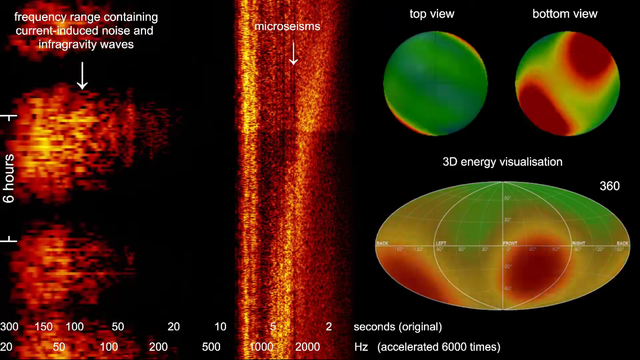
Left: The spectrogram of the infragravity waves and current-generated noise (the time-variable broad bright spots on the left) and the ocean microseisms (the continuous band at higher frequencies, on the right of the spectrogram). The spectrogram shows the signal strength—or how loud it is—over time and at different frequencies. Labels and scales appear periodically. One of the horizontal scales at bottom left shows the original period of the signal in seconds. This signal is inaudible to the human ear. The recording has been accelerated by a factor of 6000, bringing all the signals into the audible range. The frequency scale (bottom left) marks the frequency (Hz) of the transformed signal that we hear. Right: the 3D visualization of the sound.
This stereo track is a rendering of the 3 components of the motion of the seafloor at a 3.9 km depth, southwest of Ireland. The seismograms were recorded on 1-19 April, 2020, by the ocean-bottom seismic station Brian of the SEA-SEIS network.
https://www.soundsoftheearth.ie/the-earth-always-hums-2/
https://www.youtube.com/channel/UC-50Ao7qpfTjFNb0oQFYyHQ
Credit for Video and Article
David Stalling
#earth #tech #science #nature #education
Alt...
The Earth Always Hums: Infragravity waves and current-generated noise and the microseisms (acceleration x6000)
Left: The spectrogram of the infragravity waves and current-generated noise (the time-variable broad bright spots on the left) and the ocean microseisms (the continuous band at higher frequencies, on the right of the spectrogram). The spectrogram shows the signal strength—or how loud it is—over time and at different frequencies. Labels and scales appear periodically. One of the horizontal scales at bottom left shows the original period of the signal in seconds. This signal is inaudible to the human ear. The recording has been accelerated by a factor of 6000, bringing all the signals into the audible range. The frequency scale (bottom left) marks the frequency (Hz) of the transformed signal that we hear. Right: the 3D visualization of the sound.
This stereo track is a rendering of the 3 components of the motion of the seafloor at a 3.9 km depth, southwest of Ireland. The seismograms were recorded on 1-19 April, 2020, by the ocean-bottom seismic station Brian of the SEA-SEIS network.
Credit for Video and Article
David Stalling
i have seen 147 species of hummingbirds & photo'd 50 of them, this guy thinks he is the best of them all...
#BirdsOfMastodon #Bird #Birds #Birding #Hummingbird #BirdPhotography #Photograph #BirdInFlightPhotography #flying #nature #outdoors

Alt...
An iridescent green hummingbird is flying against a blurred-out green mountainside. The bird is remarkable for his orange "puffs" on his legs and his very long tail that ends in two racket or fan shaped feathers. This is the male Peruvian Rackettail. Northwest Peru. November 2024. Photographed by Peachfront.
![[?]](https://media2.ai6yr.org/accounts/avatars/109/321/592/360/914/018/original/f918064fa4350d36.jpg)
Hmm, this spiderweb is almost 2 feet by 2 feet, what exactly is this spider trying to catch? (aside from my upper body? 🤪 ) #gardening #spiderweb #nature

Alt...
Spider web coated with morning mist
The 2012 Indian Ocean earthquakes
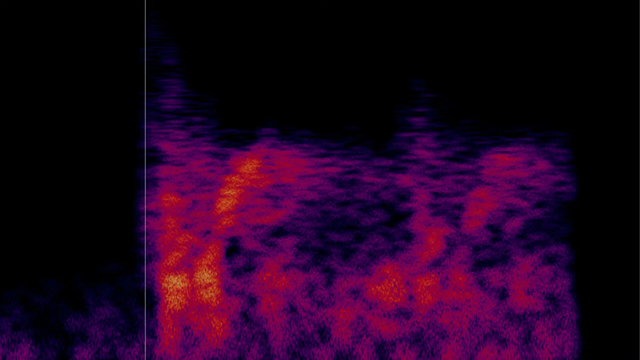
A magnitude 8.6 (Mw) undersea earthquake struck south of the Indonesian province Aceh on 11 April, 2012, at 15:38 local time, followed by a magnitude 8.2 aftershock 2 hours later. These large earthquakes were produced by horizontal slip on the undersea faults. Thanks to the lack of vertical movement of the seafloor, no tsunamis were generated.
The rich sound in this stereo track comes from a combination of 3-component seismograms recorded by all the stations of Ireland Array, recording across Ireland. The stronger main event is followed by a similarly structured sequence of waves of the main aftershock. The recording is accelerated by a factor of 9600, which increases the frequency of the signal by the same factor and brings it into the audible frequency range. The recording is then “stretched” by a factor of 80, so that the different waves can be distinguished in time and heard clearly.
Credit for Video and Article
David Stalling
https://www.soundsoftheearth.ie
https://www.soundsoftheearth.ie/indian-ocean/
#earth #tech #science #nature #education
Alt...
The 2012 Indian Ocean earthquakes
A magnitude 8.6 (Mw) undersea earthquake struck south of the Indonesian province Aceh on 11 April, 2012, at 15:38 local time, followed by a magnitude 8.2 aftershock 2 hours later. These large earthquakes were produced by horizontal slip on the undersea faults. Thanks to the lack of vertical movement of the seafloor, no tsunamis were generated.
The rich sound in this stereo track comes from a combination of 3-component seismograms recorded by all the stations of Ireland Array, recording across Ireland. The stronger main event is followed by a similarly structured sequence of waves of the main aftershock. The recording is accelerated by a factor of 9600, which increases the frequency of the signal by the same factor and brings it into the audible frequency range. The recording is then “stretched” by a factor of 80, so that the different waves can be distinguished in time and heard clearly.
Credit for Video and Article
David Stalling
![[?]](https://cdn.toad.social/accounts/avatars/109/401/523/107/949/244/original/7f9645092d1fdd20.png)

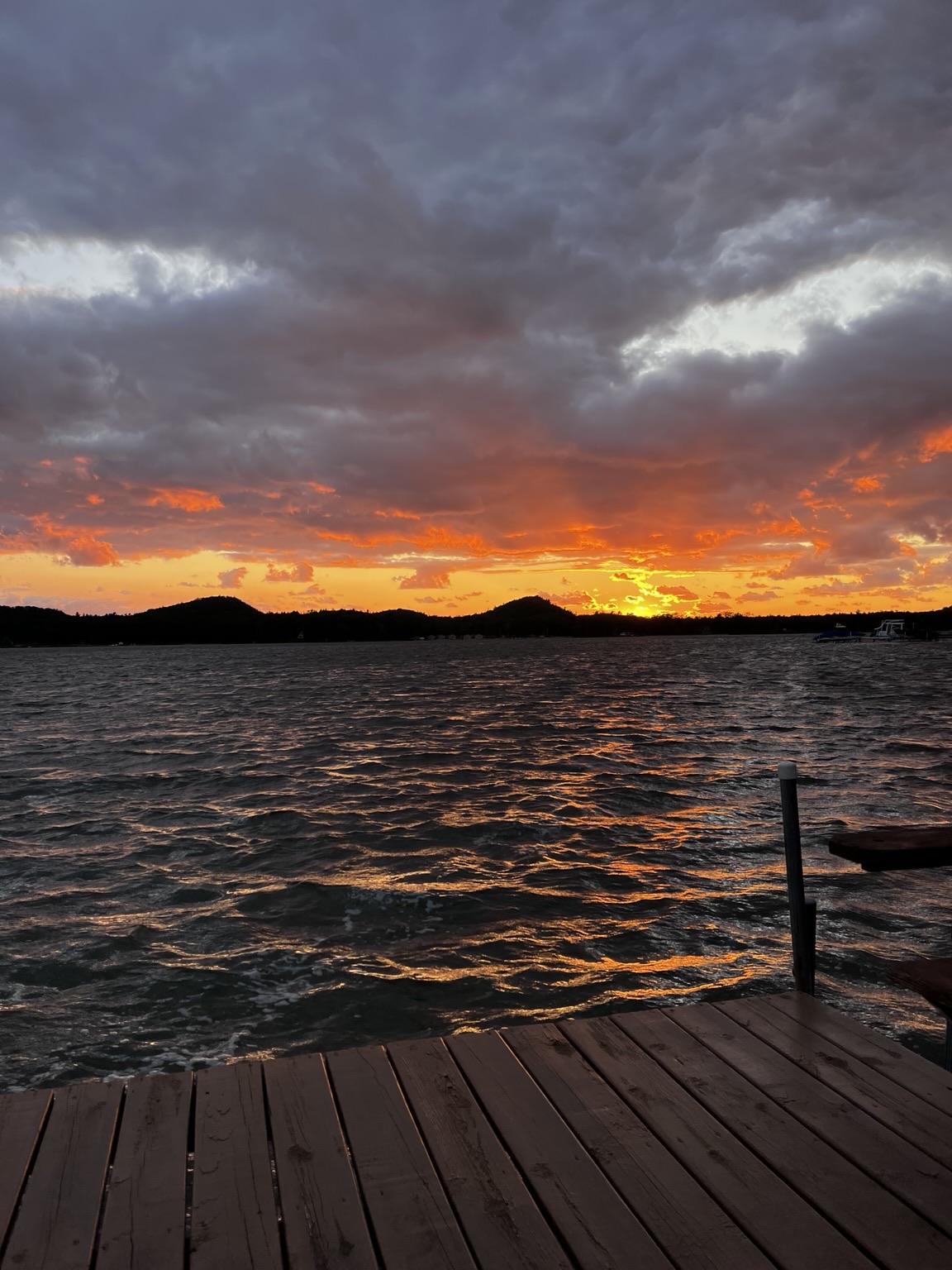
Sunset minus seven minutes
#photography #nature #Sunset
Alt...
A serene sunset over wind-blown water, featuring vibrant orange and yellow hues illuminating the sky, with dark clouds and silhouettes of distant hills. A wooden dock is visible in the foreground.
Visualization of total lunar eclipse viewed from the moon.
(converted to GIF with ffmpeg)
With the lunar horizon in the foreground, the Earth passes in front of the Sun, revealing the red ring of sunrises and sunsets along the limb of the Earth. The Earth and Sun are in Virgo for observers on the Moon. The bright star above them is beta Virginis.
On September 28, 2015 Universal Time (the evening of the 27th for the Americas), the Moon enters the Earth’s shadow, creating a total lunar eclipse. When viewed from the Moon, as in this animation, the Earth hides the Sun. A red ring, the sum of all Earth’s sunrises and sunsets, lines the Earth’s limb and casts a ruddy light on the lunar landscape. With the darkness of the eclipse, the stars come out.
The city lights of North and South America and of western Europe and Africa are visible on the night side of the Earth. The part of the Earth visible in this animation is the part where the lunar eclipse can be seen.
Credits:
NASA's Scientific Visualization Studio
* Visualizer: Ernie Wright (USRA)
* Producers: David Ladd (USRA)
Michelle Handleman (USRA)
* Scientists: John Keller (NASA/GSFC)
Noah Petro (NASA/GSFC)
https://svs.gsfc.nasa.gov/4341
FYI: https://defcon.social/@grobi/114893280006806716
#space #moon #astrophotography #photography #science #astronomy #nature #NASA #ESA #education
2025 September 6
Sardinia Sunset
* Image Credit & Copyright: Lorenzo Busilacchi
Explanation:
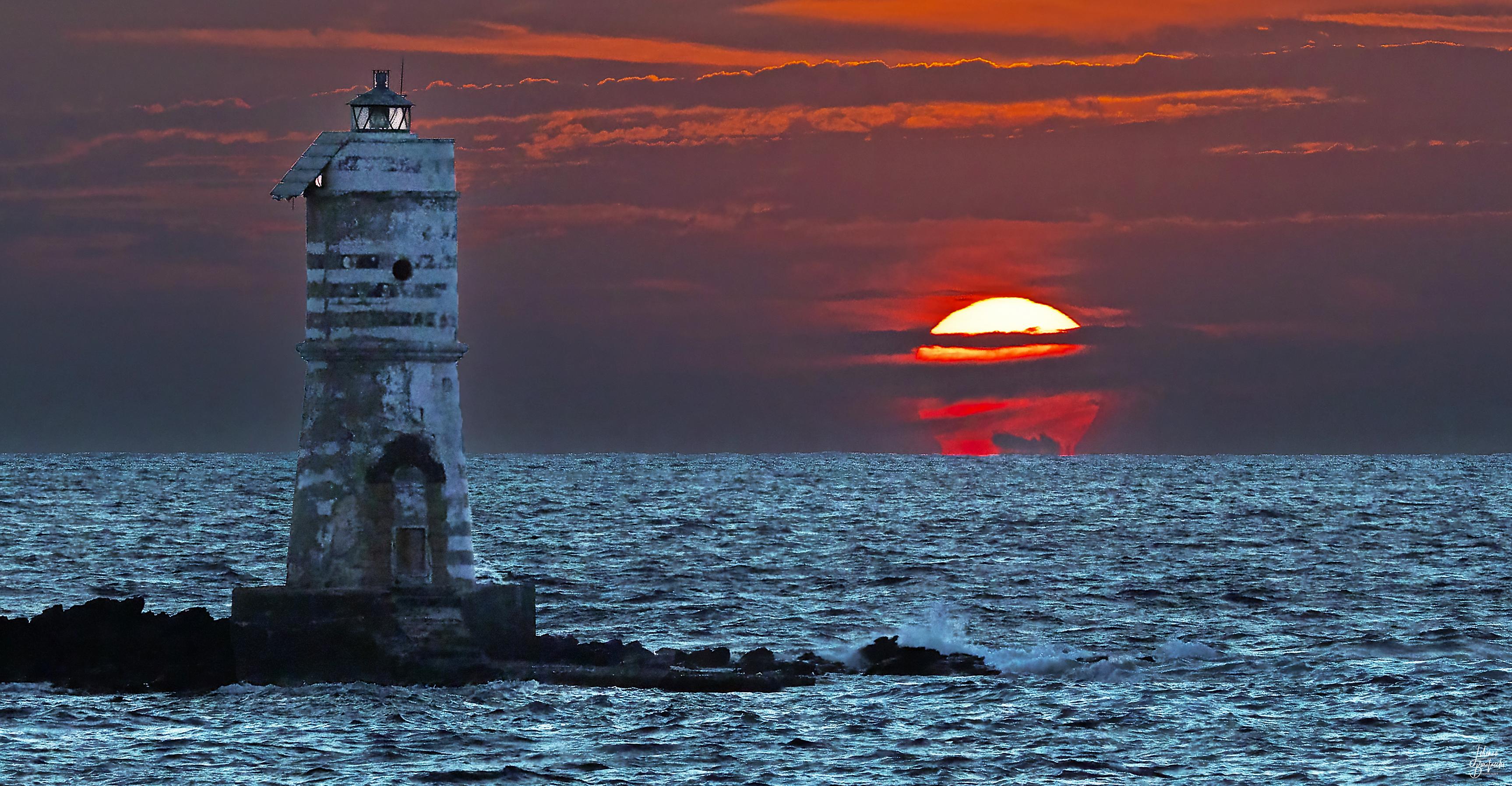
When the sun sets on September 7, the Full Moon will rise. And on that date denizens around much of our fair planet, including parts of Antarctica, Australia, Asia, Europe, and Africa can witness a total lunar eclipse, with the Moon completely immersed in Earth's shadow. As the bright Full Moon first enters Earth's shadow it will darken, finally taking on a reddish hue during the total eclipse phase. In fact, the color of the Moon during a total lunar eclipse is due to reddened light from sunrises and sunsets around planet Earth. The reddened sunlight is scattered by a dense atmosphere into the planet's otherwise dark central shadow. When the sun set on August 22, this telephoto snapshot of red skies, blue sea, and the Mangiabarche Lighthouse was captured from Sant'Antioco, Sardinia, Italy.
https://earthsky.org/astronomy-essentials/total-lunar-eclipse-september-7-2025/
https://apod.nasa.gov/apod/ap250906.html
#space_related #astroart #art #astrophotography #photography #science #nature #Space_Culture_Club
Alt...
2025 September 6
Sardinia Sunset
* Image Credit & Copyright: Lorenzo Busilacchi
Explanation:
When the sun sets on September 7, the Full Moon will rise. And on that date denizens around much of our fair planet, including parts of Antarctica, Australia, Asia, Europe, and Africa can witness a total lunar eclipse, with the Moon completely immersed in Earth's shadow. As the bright Full Moon first enters Earth's shadow it will darken, finally taking on a reddish hue during the total eclipse phase. In fact, the color of the Moon during a total lunar eclipse is due to reddened light from sunrises and sunsets around planet Earth. The reddened sunlight is scattered by a dense atmosphere into the planet's otherwise dark central shadow. When the sun set on August 22, this telephoto snapshot of red skies, blue sea, and the Mangiabarche Lighthouse was captured from Sant'Antioco, Sardinia, Italy.
Authors & editors: Robert Nemiroff (MTU) & Jerry Bonnell (UMCP)
NASA Official: Amber Straughn Specific rights apply.
NASA Web Privacy, Accessibility, Notices;
A service of: ASD at NASA / GSFC,
NASA Science Activation
& Michigan Tech. U.
... [SENSITIVE CONTENT]
Try hashtag #BloomScrolling for relaxing ➡️ #Flowers
instead of #DoomScrolling !
(The similar words make it a great way to counter #DoomScrolling with #BloomScrolling  🌻
🌻
#Nature #Therapy #Photography #Gardening #Garden #Flora #Pollinators #Relax

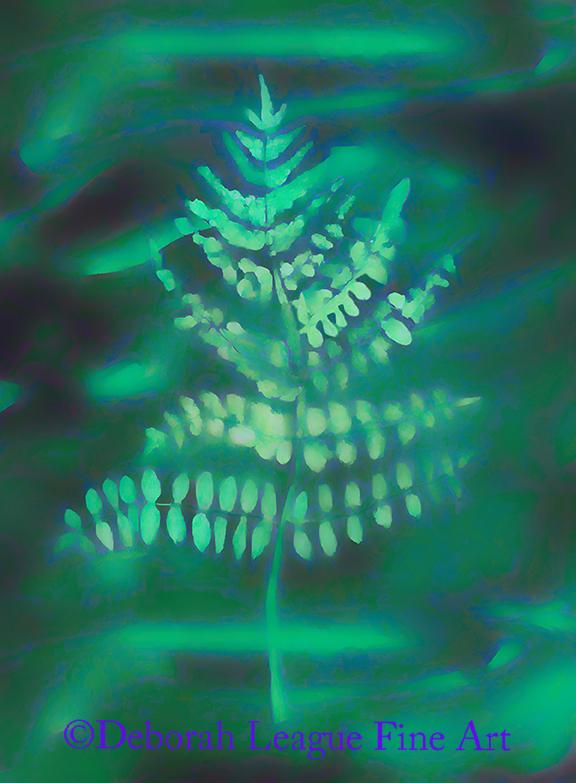
Ethereal fern glow, ink painting.
ART -https://deborahleaguefineart.etsy.com/listing/1895871997/ethereal-fern-glow-ink-painting-art
#ayearforart #buyintoart #mastodonart #mastoart #fediart #fedigiftshop #giftideas #art #arte #artist #artwork #artmatters #artbooster #colorful #wallart #homedecor #kunst #interiordesign #creativetoots #artforsale #artprints #ink #painting #plants #Ethereal #nature
Alt...
This captivating artwork showcases a glowing fern floating in water, bathed in an otherworldly green light. With a dreamlike effect, the piece evokes a sense of tranquility and a deep connection to nature. The interplay of light and shadow enhances the intricate fern structure, creating an immersive and meditative visual experience. Ideal for nature lovers, botanical enthusiasts, and those drawn to organic aesthetics.

Alt...
Framed art shown in a display room.
2025 September 5
47 Tucanae: Globular Star Cluster
* Image Credit & Copyright: Carlos Taylor
https://app.astrobin.com/u/CAPastrophotography#gallery
Explanation:
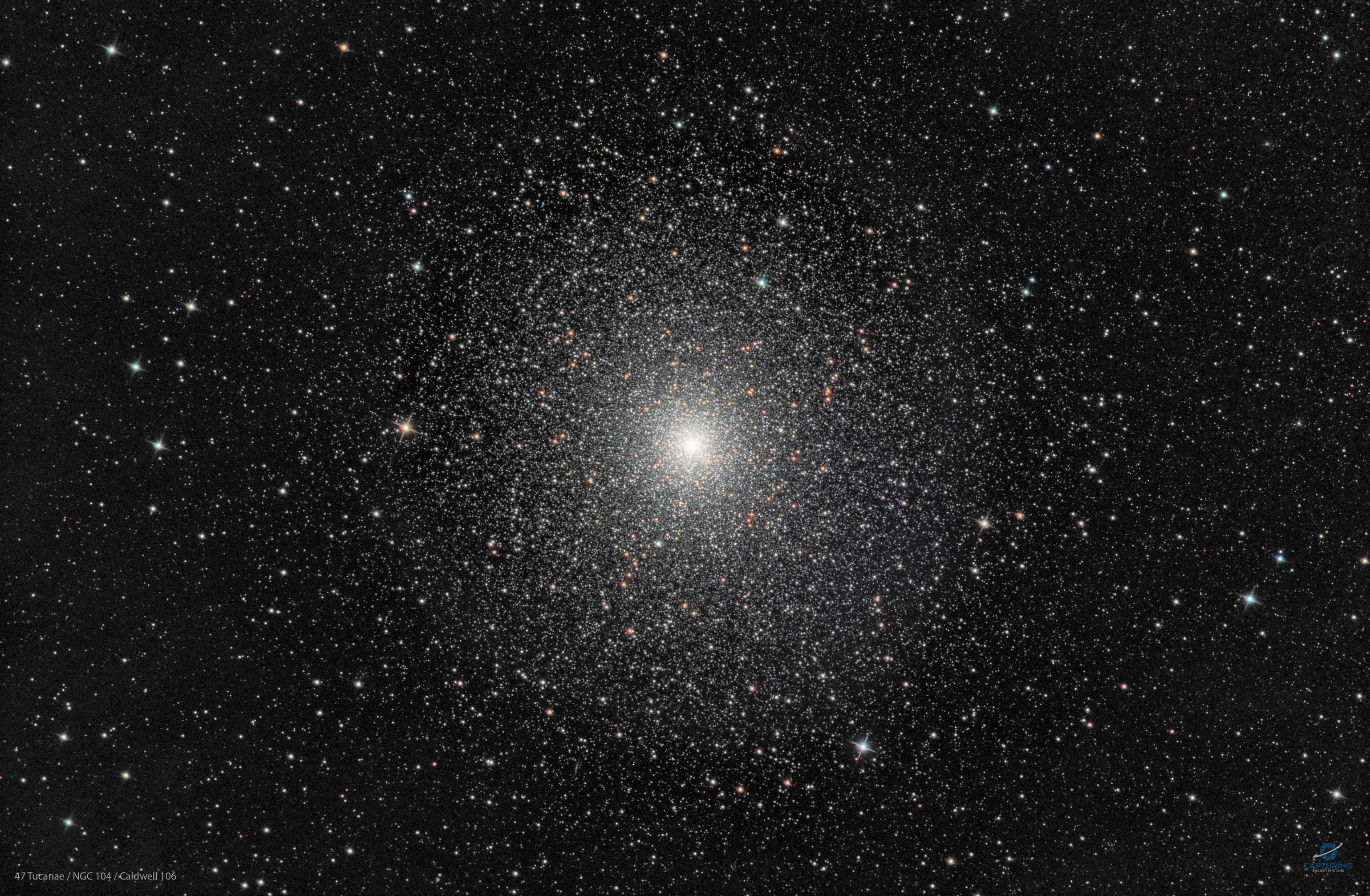
Also known as NGC 104, 47 Tucanae is a jewel of the southern sky. Not a star but a dense cluster of stars, it roams the halo of our Milky Way Galaxy along with some 200 other globular star clusters. The second brightest globular cluster (after Omega Centauri) as seen from planet Earth, 47 Tuc lies about 13,000 light-years away. It can be spotted with the naked eye close on the sky to the Small Magellanic Cloud in the constellation of the Toucan. The dense cluster is made up of hundreds of thousands of stars in a volume only about 120 light-years across. Red giant stars on the outskirts of the cluster are easy to pick out as yellowish stars in this sharp telescopic portrait. Tightly packed globular star cluster 47 Tuc is also home to a star with the closest known orbit around a black hole.
http://www.messier.seds.org/xtra/ngc/n0104.html
http://www.messier.seds.org/xtra/ngc/n0104.html
http://www.ianridpath.com/startales/tucana.html
https://app.astrobin.com/u/CAPastrophotography?i=y6g3ax#gallery
https://apod.nasa.gov/apod/ap250905.html
#space #cluster #astrophotography #photography #science #astronomy #physics #nature #NASA
Alt...
2025 September 5
47 Tucanae: Globular Star Cluster
* Image Credit & Copyright: Carlos Taylor
Explanation:
Also known as NGC 104, 47 Tucanae is a jewel of the southern sky. Not a star but a dense cluster of stars, it roams the halo of our Milky Way Galaxy along with some 200 other globular star clusters. The second brightest globular cluster (after Omega Centauri) as seen from planet Earth, 47 Tuc lies about 13,000 light-years away. It can be spotted with the naked eye close on the sky to the Small Magellanic Cloud in the constellation of the Toucan. The dense cluster is made up of hundreds of thousands of stars in a volume only about 120 light-years across. Red giant stars on the outskirts of the cluster are easy to pick out as yellowish stars in this sharp telescopic portrait. Tightly packed globular star cluster 47 Tuc is also home to a star with the closest known orbit around a black hole.
Authors & editors: Robert Nemiroff (MTU) & Jerry Bonnell (UMCP)
NASA Official: Amber Straughn Specific rights apply.
NASA Web Privacy, Accessibility, Notices;
A service of: ASD at NASA / GSFC,
NASA Science Activation
& Michigan Tech. U.
![[?]](https://media.universeodon.com/accounts/avatars/109/362/535/847/508/379/original/d813a009e1e1ccbe.png)
Masked and Still
I’ve been posting a lot of photos of Carolina chickadees (Poecile carolinensis) lately—there’s no shortage of them around here this year. It’s fascinating to watch them dart in and out of the forest, like punctuation marks in motion.
Step into a world where even the smallest moments—like the glint in a bird's eye—tell their own story.
https://swede1952-photographs.pixels.com
#photo #photography #photographer #photographylovers #wildlife #nature #bird #birds #birding #birdwatching #birdphotography #CarolinaChickadee

Alt...
"A Carolina chickadee (Poecile carolinensis) grips a vertical tree branch with quiet precision; its small feet curled around the bark like punctuation. The bird’s posture is upright but relaxed, angled slightly to the left as if mid-thought or mid-scan. Its head is turned gently in that direction, giving the impression of curiosity without urgency.
The plumage is crisp and familiar: a black cap and nape frame the white cheeks like a minimalist mask, while the body fades from soft gray to pale underparts. Subtle streaks along the flanks add texture, not drama. The wings are folded neatly, the tail aligned with the branch, creating a sense of balance and restraint.
The background is a soft blur of green and yellow—light filtering through foliage, rendered abstract. It’s not a setting so much as a mood: quiet, natural, and unobtrusive. The branch itself is slender and vertical, offering both perch and stage without distraction.
The bird’s gaze, though indirect, feels attentive. It’s not performing, not startled—just present. A moment held between movement and stillness, feather and bark, attention and ease.
The image is signed “Swede’s Photographs” in the lower left corner, a subtle nod to authorship that doesn’t interrupt the visual rhythm." - Copilot