Search results for tag #space
![[?]](https://media.mastodon.sunny.garden/accounts/avatars/109/295/549/569/057/627/original/ca1aeb665541de6d.jpg)
My previous blackboard message to my lovely partner Tony, warning him not to interrupt me while I write (his idea) obviously lost its power to strike terror into depth of his cockles. Because he managed to bypass it multiple times in the past day to:
A) Ask about the location of his house keys.
B) To share random space facts. (So many space facts. This man is at the end of writing a science fiction novel. He is full of all the space facts. If there's space, he has facts about it. The astrophysics is strong with this one.)
C) To do a bottom waggle dance (admittedly entertaining).
And hence the flames of a mighty roar "BEGONE YOU BENIGHTED FIEND!" was heard up and down our street.
The sign has been upgraded and proved itself to be effective when he paused to read it this morning and diverted to making coffee.
The saga continues.

Alt...
You're looking at a small fold out black board sitting in a doorway leading to a room where you can just see a couple of couches covered in throw rugs. The blackboard has the words: "You may hear you shall not pass and consider it a challenge. But if you pass you will experience an unfortold itchiness in your nethers of monumental proportions. You have been warned" The vibe of this sign is that anyone who passes shall definitely get roared at in the tone of a large surly dinosaur who's had someone take it's squeaky toy away. You do not want to pass this sign. Also, while picturing this scene, imagine my lovely partner Tony sharing space facts at me over it. Because while he will not pass now, he will not waste a good space fact.
![[?]](https://media.universeodon.com/accounts/avatars/109/501/736/783/125/826/original/387a622be46bcde9.png)

A Spiral Aurora over Iceland
Credits: Davide Necchi
#nature #space #astrophotography

Alt...
A Spiral Aurora over Iceland
![[?]](https://files.defcon.social/dcsocial-s3/accounts/avatars/113/208/344/507/078/943/original/014820ad22daee1c.jpg)
Hurricane Katrina: 20 Years Later
Twenty years ago, Hurricane Katrina devastated New Orleans and the Mississippi coast. It was one of the deadliest hurricanes on record and remains the costliest hurricane in U.S. history. The 2005 Atlantic hurricane season was record-breaking, with 27 named storms, 14 hurricanes, and three Category 5 storms. That record remained until 2020, when 30 named storms developed.
Learn how NOAA satellites tracked Katrina then, and how today’s advanced satellites provide even greeted insight into these powerful storms:
https://www.nesdis.noaa.gov/news/twen...
Credits:
NOAA
NASA
The Cooperative Institute for Research in the Atmosphere (CIRA)
Music:
“Formulas and Equations” by Richard Andrew Canavan [PRS]; Sound Pocket Music [PRS]; Universal Production Music
https://rammb.cira.colostate.edu/ramsdis/online/goes-west_goes-east.asp
#space #earth #astrophotography #photography #science #geology #nature #resources #climate #education
GOES-R Geostationary Lightning Mapper Data Visualization
* CREDIT
NOAA
NASA Goddard Multimedia
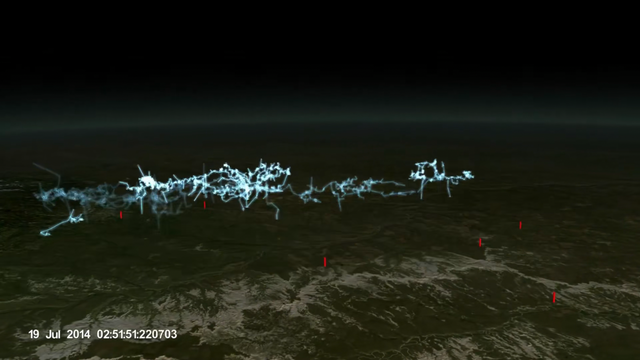
Research has shown that lightning is an excellent early warning indicator for approaching severe storms and the development of tornadoes.This data visualization shows actual lightning measurements captured by an array of ground-based lighting detectors capable of tracing how lightning propagates through the atmosphere and simulates how the GOES-R Geostationary Lightning Mapper will monitor atmospheric flashes. This technology could provide critical minutes of valuable warning time in advance of approaching severe storms.
https://www.youtube.com/watch?v=5QAZeR6GGfw
#space #earth #lightning #science #physics #nature #NASA
Alt...
Research has shown that lightning is an excellent early warning indicator for approaching severe storms and the development of tornadoes.This data visualization shows actual lightning measurements captured by an array of ground-based lighting detectors capable of tracing how lightning propagates through the atmosphere and simulates how the GOES-R Geostationary Lightning Mapper will monitor atmospheric flashes. This technology could provide critical minutes of valuable warning time in advance of approaching severe storms.
2016 December 5
Lightning over Colorado
* Image Credit & Copyright: Joe Randall
https://500px.com/p/thinkinbinary?view=galleries
Explanation:
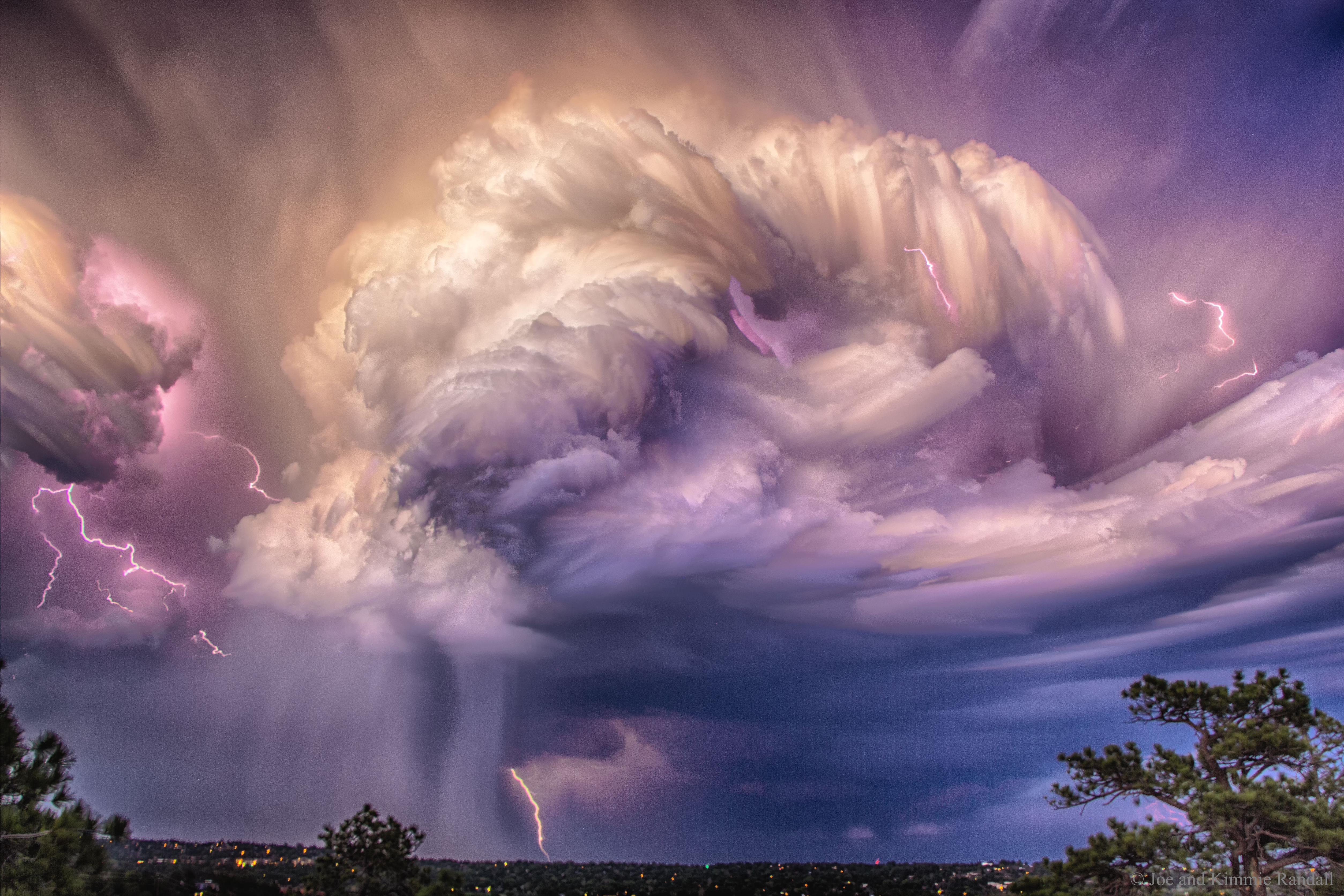
Have you ever watched a lightning storm in awe? Join the crowd. Oddly, nobody knows exactly how lightning is produced. What is known is that charges slowly separate in some clouds causing rapid electrical discharges (lightning), but how electrical charges get separated in clouds remains a topic of much research. Lightning usually takes a jagged course, rapidly heating a thin column of air to about three times the surface temperature of the Sun. The resulting shock wave starts supersonically and decays into the loud sound known as thunder. Lightning bolts are common in clouds during rainstorms, and on average 44 lightning bolts occur on the Earth every second. Pictured, over 60 images were stacked to capture the flow of lightning-producing storm clouds in July over Colorado Springs, Colorado, USA.
https://apod.nasa.gov/apod/ap161205.html
#space #earth #lightning #astrophotography #photography #science #physics #nature
Alt...
2016 December 5
Lightning over Colorado
* Image Credit & Copyright: Joe Randall
Explanation:
Have you ever watched a lightning storm in awe? Join the crowd. Oddly, nobody knows exactly how lightning is produced. What is known is that charges slowly separate in some clouds causing rapid electrical discharges (lightning), but how electrical charges get separated in clouds remains a topic of much research. Lightning usually takes a jagged course, rapidly heating a thin column of air to about three times the surface temperature of the Sun. The resulting shock wave starts supersonically and decays into the loud sound known as thunder. Lightning bolts are common in clouds during rainstorms, and on average 44 lightning bolts occur on the Earth every second. Pictured, over 60 images were stacked to capture the flow of lightning-producing storm clouds in July over Colorado Springs, Colorado, USA.
Authors & editors: Robert Nemiroff (MTU) & Jerry Bonnell (UMCP)
NASA Official: Phillip Newman Specific rights apply.
NASA Web Privacy Policy and Important Notices
A service of: ASD at NASA / GSFC
& Michigan Tech. U.
2017 May 15
Lightning Storm Moves Across the USA
* Image Credit: NOAA, NASA, Lockheed Martin, GOES-16, GLM
http://www.noaa.gov/
https://www.nasa.gov/
https://www.lockheedmartin.com/en-us/products/goes-r-series.html
https://www.nesdis.noaa.gov/our-satellites/currently-flying/geostationary-satellites
https://www.goes-r.gov/spacesegment/glm.html
Explanation:
Watch a huge lightning storm move across the eastern USA. The huge storm caused much damage and unfortunately some loss of life for people in its path. Seen from space, the lightning is seen as momentary flashes in the featured time-lapse video recorded last month by the Geostationary Lightning Mapper (GLM) aboard the GOES-16 satellite. The outline of North America is most evident during the day, while the bright lightning strikes are most evident at night. Inspection of the video shows that much of the lightning occurred at the leading edge of the huge tail of the swirling storm. Because lightning frequently precedes a storm's most violent impact, lightning data from GLM holds promise to help reduce the harm to humans from future storms.
https://www.nesdis.noaa.gov/news/first-of-its-kind-geostationary-lightning-mapper-glm-instrument-complete
https://www.goes-r.gov/
https://lightning.nsstc.nasa.gov/primer/
https://apod.nasa.gov/apod/ap170515.html
#space #earth #astrophotography #photography #science #geology #nature #resources #climate #education
2018 August 26
Fire on Earth
* Image Credit: John McColgan (AFS, BLM)
https://fire.ak.blm.gov/
https://www.blm.gov/
Explanation:
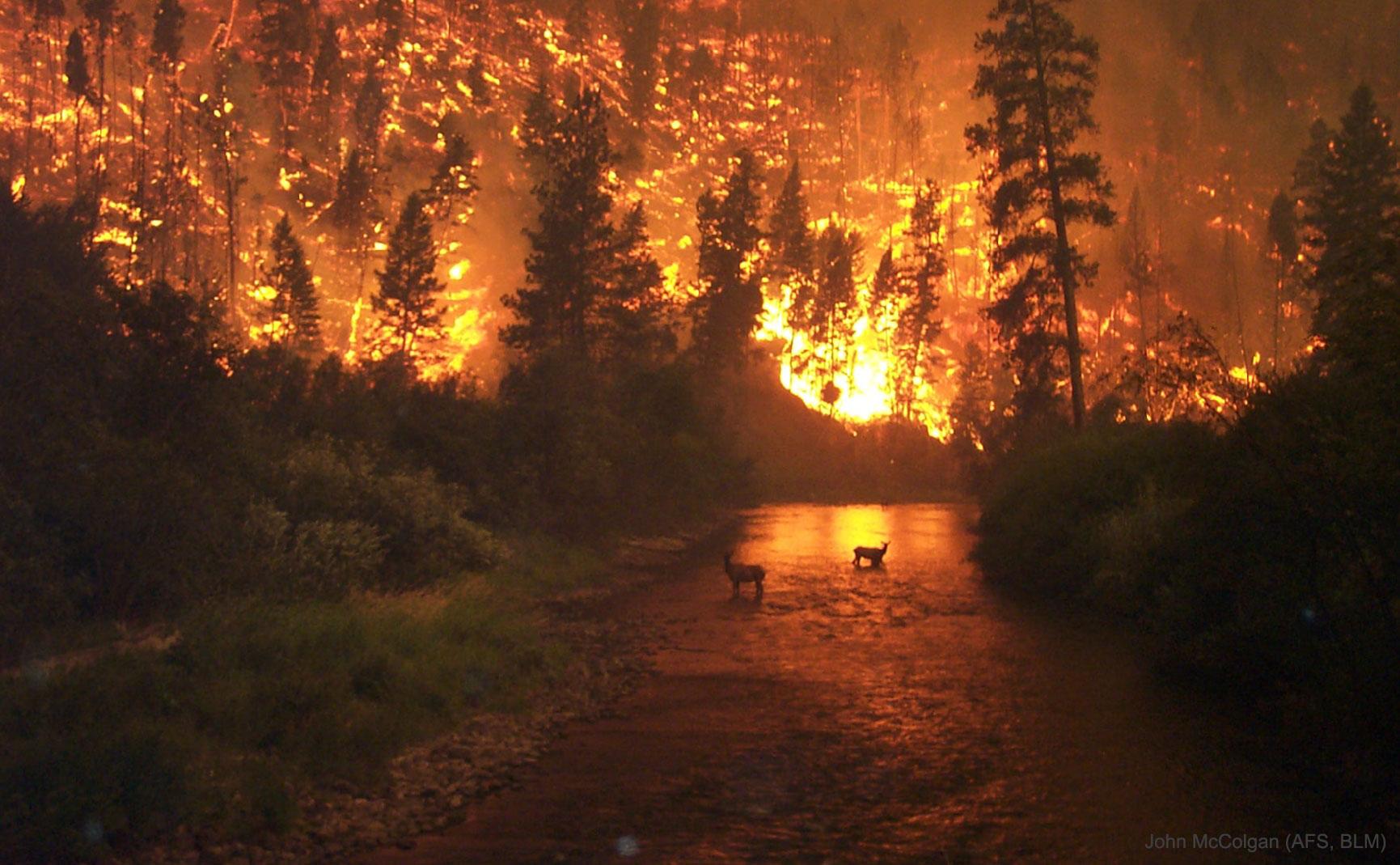
Sometimes, regions of planet Earth light up with fire. Since fire is the rapid acquisition of oxygen, and since oxygen is a key indicator of life, fire on any planet would be an indicator of life on that planet. Most of the Earth's land has been scorched by fire at some time in the past. Although causing many a tragedy, for many places on Earth fire is considered part of a natural ecosystem cycle. Large forest fires on Earth are usually caused either by humans or lightning and can be visible from orbit. Featured from the year 2000, stunned elk avoid a fire sweeping through Montana's Bitterroot Valley by standing in a river.
https://experience.arcgis.com/experience/92dfba48047d484b8868b35d0f708532/page/Page?views=Tab-Legend
https://firms.modaps.eosdis.nasa.gov/usfs/
https://en.wikipedia.org/wiki/Fire_ecology
https://science.nasa.gov/earth/
#space #earth #astrophotography #photography #science #geology #nature #resources #climate #education
Alt...
2018 August 26
Fire on Earth
* Image Credit: John McColgan (AFS, BLM)
Explanation:
Sometimes, regions of planet Earth light up with fire. Since fire is the rapid acquisition of oxygen, and since oxygen is a key indicator of life, fire on any planet would be an indicator of life on that planet. Most of the Earth's land has been scorched by fire at some time in the past. Although causing many a tragedy, for many places on Earth fire is considered part of a natural ecosystem cycle. Large forest fires on Earth are usually caused either by humans or lightning and can be visible from orbit. Featured from the year 2000, stunned elk avoid a fire sweeping through Montana's Bitterroot Valley by standing in a river.
Authors & editors: Robert Nemiroff (MTU) & Jerry Bonnell (UMCP)
NASA Official: Phillip Newman Specific rights apply.
NASA Web Privacy Policy and Important Notices
A service of: ASD at NASA / GSFC
& Michigan Tech. U.
Published Sun, Jul 30 2017 on CNBC.com
Mysterious craters blowing out of Russia could mean trouble for the whole planet
by Stacey Yuen
In northern Siberia, rising temperatures are causing mysterious giant craters — and even more dire consequences could be in store, say climate scientists.
The Russian province’s long-frozen ground, called permafrost, is thawing, triggering massive changes to the region’s landscape and ecology. It could even threaten human lives.
“The last time we saw a permafrost melting was 130,000 years ago. It’s a natural phenomenon because of changes in the earth’s orbit,” said professor of earth sciences at the University of Oxford, Dr. Gideon Henderson.
“But what is definitely unprecedented is the rate of warming. The warming that happened 130,000 years ago happened over thousands of years … What we see happening now is warming over decades or a century.”
We are therefore seeing a much more rapid collapse of the permafrost, Henderson said.
Global warming — but faster
It’s clear that the thawing permafrost has an important effect on the climate, Henderson said.
Under normal conditions, permafrosts regulate the amount of carbon in the environment by taking up and storing significant portions of carbon that humans release from burning fossil fuel.
In the case of Siberia, this equation is being reversed.
“When [permafrosts] release carbon, it will accelerate the rate of warming in the future,” Henderson said. A self-reinforcing feedback loop is created whereby warming releases more carbon, which in turn produces greater warming.
Methane is 86 times worse than carbon dioxide
Since 2014, several massive sinkholes have been discovered in the region. The first one reportedly measured over 50 ft wide. [...]
#space #earth #astrophotography #photography #science #geology #nature #resources #climate #permafrost #education

Alt...
This video shows a crater on the Yamal Peninsula, northern Siberia, taken on August 25, 2014. Its formation is possibly linked to climate change.
CREDITS
Vasily Bogoyavlensky | AFP | Getty Images | CNBC
2018 December 18
Methane Bubbles Frozen in Lake Baikal
* Image Credit & Copyright: Kristina Makeeva
https://www.flickr.com/photos/23502952@N03/
Explanation:
What are these bubbles frozen into Lake Baikal? Methane. Lake Baikal, a UNESCO World Heritage Site in Russia, is the world's largest (by volume), oldest, and deepest lake, containing over 20% of the world's fresh water. The lake is also a vast storehouse of methane, a greenhouse gas that, if released, could potentially increase the amount of infrared light absorbed by Earth's atmosphere, and so increase the average temperature of the entire planet. Fortunately, the amount of methane currently bubbling out is not climatologically important. It is not clear what would happen, though, were temperatures to significantly increase in the region, or if the water level in Lake Baikal were to drop. Pictured, bubbles of rising methane froze during winter into the exceptionally clear ice covering the lake.
https://www.researchgate.net/publication/236143909_Sources_and_sinks_of_methane_in_Lake_Baikal_A_synthesis_of_measurements_and_modeling
https://science.nasa.gov/earth/climate-change/unexpected-future-boost-of-methane-possible-from-arctic-permafrost/
https://arctic-news.blogspot.com/2016/12/lake-baikal.html
https://www.cnbc.com/2017/07/30/siberian-craters-big-releases-of-methane-could-pose-broad-problems.html
https://en.wikipedia.org/wiki/Methane
https://en.wikipedia.org/wiki/Greenhouse_effect
https://apod.nasa.gov/apod/ap181218.html
#space #earth #astrophotography #photography #science #geology #nature #resources #climate #education

Alt...
2018 December 18
Methane Bubbles Frozen in Lake Baikal
* Image Credit & Copyright: Kristina Makeeva
Explanation:
What are these bubbles frozen into Lake Baikal? Methane. Lake Baikal, a UNESCO World Heritage Site in Russia, is the world's largest (by volume), oldest, and deepest lake, containing over 20% of the world's fresh water. The lake is also a vast storehouse of methane, a greenhouse gas that, if released, could potentially increase the amount of infrared light absorbed by Earth's atmosphere, and so increase the average temperature of the entire planet. Fortunately, the amount of methane currently bubbling out is not climatologically important. It is not clear what would happen, though, were temperatures to significantly increase in the region, or if the water level in Lake Baikal were to drop. Pictured, bubbles of rising methane froze during winter into the exceptionally clear ice covering the lake.
Authors & editors: Robert Nemiroff (MTU) & Jerry Bonnell (UMCP)
NASA Official: Phillip Newman Specific rights apply.
NASA Web Privacy Policy and Important Notices
A service of: ASD at NASA / GSFC
& Michigan Tech. U.
2025 September 7
All the Water on Planet Earth
* Illustration Credit: Jack Cook, Adam Nieman, Woods Hole Oceanographic Institution
https://www.whoi.edu/
* Data source: Igor Shiklomanov
Explanation:
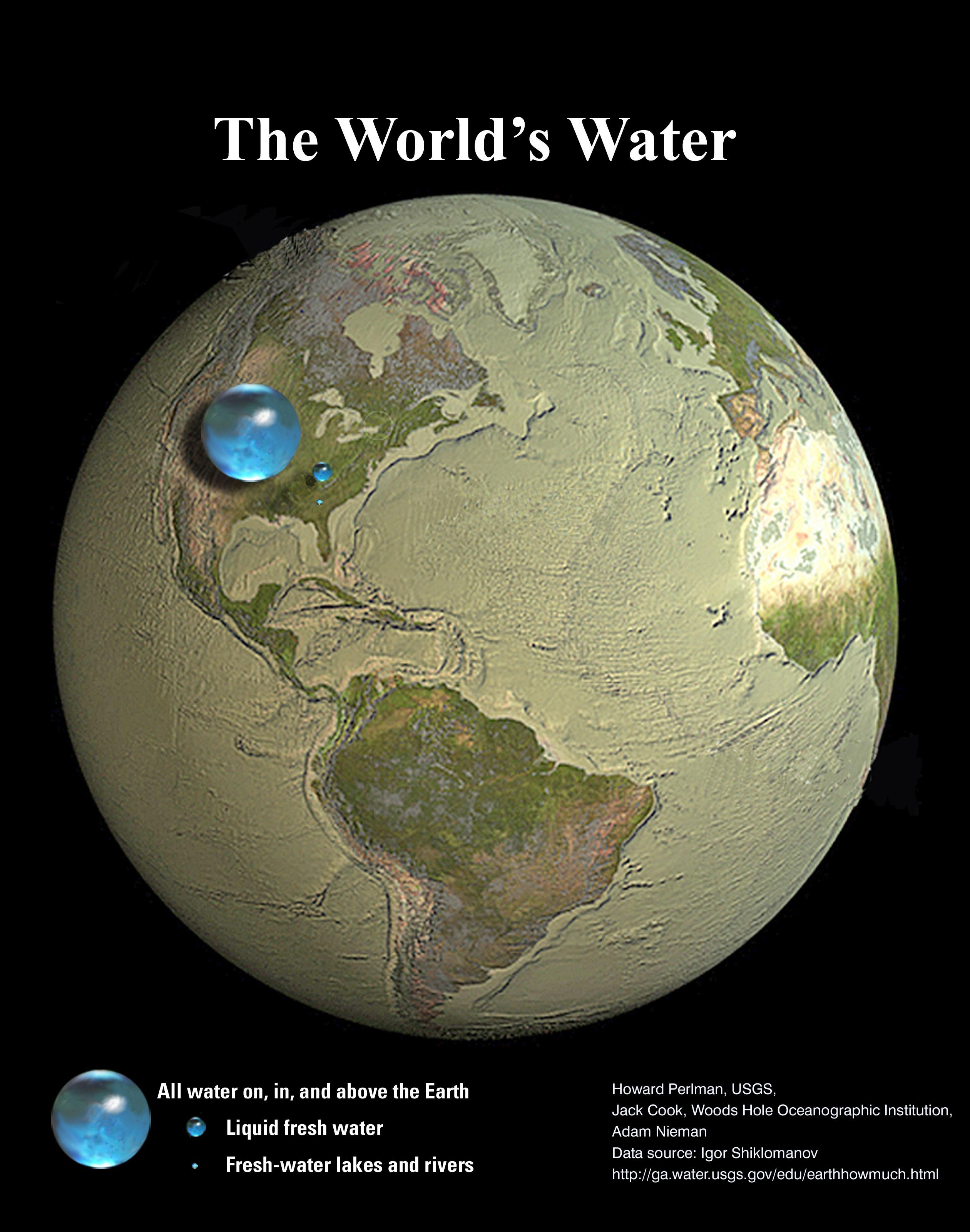
How much of planet Earth is made of water? Very little, actually. Although oceans of water cover about 70 percent of Earth's surface, these oceans are shallow compared to the Earth's radius. The featured illustration shows what would happen if all of the water on or near the surface of the Earth were bunched up into a ball. The radius of this ball would be only about 700 kilometers, less than half the radius of the Earth's Moon, but slightly larger than Saturn's moon Rhea which, like many moons in our outer Solar System, is mostly water ice. The next smallest ball depicts all of Earth's liquid fresh water, while the tiniest ball shows the volume of all of Earth's fresh-water lakes and rivers. How any of this water came to be on the Earth and whether any significant amount is trapped far beneath Earth's surface remain topics of research.
https://www.usgs.gov/media/images/all-earths-water-a-single-sphere
https://en.wikipedia.org/wiki/Origin_of_water_on_Earth
https://arxiv.org/abs/2503.17906
https://apod.nasa.gov/apod/ap250907.html
#space #earth #astrophotography #photography #science #geology #nature #resources #climate #education
Alt...
2025 September 7
An illustration of planet Earth is shown where the Earth is tan and has no water shown on its surface. In the foreground are several small blue spheres showing how much water is known to reside on our planet.
All the Water on Planet Earth
* Illustration Credit: Jack Cook, Adam Nieman, Woods Hole Oceanographic Institution
* Data source: Igor Shiklomanov
Explanation:
How much of planet Earth is made of water? Very little, actually. Although oceans of water cover about 70 percent of Earth's surface, these oceans are shallow compared to the Earth's radius. The featured illustration shows what would happen if all of the water on or near the surface of the Earth were bunched up into a ball. The radius of this ball would be only about 700 kilometers, less than half the radius of the Earth's Moon, but slightly larger than Saturn's moon Rhea which, like many moons in our outer Solar System, is mostly water ice. The next smallest ball depicts all of Earth's liquid fresh water, while the tiniest ball shows the volume of all of Earth's fresh-water lakes and rivers. How any of this water came to be on the Earth and whether any significant amount is trapped far beneath Earth's surface remain topics of research.
Authors & editors: Robert Nemiroff (MTU) & Jerry Bonnell (UMCP)
NASA Official: Amber Straughn Specific rights apply.
NASA Web Privacy, Accessibility, Notices;
A service of: ASD at NASA / GSFC,
NASA Science Activation
& Michigan Tech. U.
TOPIC> Mother Earth
Our Great Mother Earth
It has produced all life and thus also us, who think we have to subdue it for supposedly religious reasons. Everyone at least pretends to love their mother, but do we really care about her?
The following video is already 14 years old, but how long has humanity been researching, discussing, debating and warning on the subject of environmental and climate protection?
I remember the first debates, demonstrations and information booths 45 years ago, but in reality this topic, which is often suppressed, has been in the consciousness of humanity for much longer and is fermenting there as a kind of guilty conscience.
And? Have we somehow changed our behavior, which has been trained by capitalist and industrial influences, for the better since then? Or have we become even more of the bestial, greedy predators that these influences would like us to be?
Is environmental awareness just an accessory, a label with which we adorn ourselves while we drive our car to the health food store to buy organic bread?
Do we manage to change or do we want to continue dancing on the edge of the abyss until it's finally over.. or is it already too late?
https://science.nasa.gov/climate-change/
Video Credit:
NASA's Global Climate Change website http://climate.nasa.gov/
#space #earth #astrophotography #photography #science #geology #nature #resources #climate #education #silentsunday
Alt...
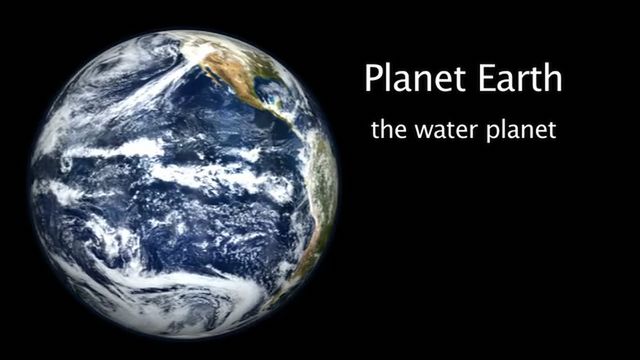
The ocean is responsible for Earth's mild climate and makes life on Earth possible for all creatures. As global ocean temperatures increase, the ocean water expands causing sea level rise which can have disastrous impacts on low-lying coastal regions.
Produced by NASA's Global Climate Change website http://climate.nasa.gov/
Saturn's B Ring, for Harp and Drums (Excerpt)
SYSTEM Sounds converted the highest resolution color image of Saturn's rings into music. The brightness of each pixel is used to control the harp notes and drum sounds as well as their intensity. The notes correspond to the first 13 notes of the harmonic series. The image was taken on July 6, 2017 and shows a section within Saturn's dense B ring in natural color.
CREDIT:
SYSTEM Sounds
Full Video:
https://www.youtube.com/watch?v=VUZXl4tpabs
FYI:
https://youtu.be/DUdLRy8i9qI
#space #earth #tech #science #nature #education

Alt...
SYSTEM Sounds converted the highest resolution color image of Saturn's rings into music. The brightness of each pixel is used to control the harp notes and drum sounds as well as their intensity. The notes correspond to the first 13 notes of the harmonic series. The image was taken on July 6, 2017 and shows a section within Saturn's dense B ring in natural color.
Visualization of total lunar eclipse viewed from the moon.
(converted to GIF with ffmpeg)
With the lunar horizon in the foreground, the Earth passes in front of the Sun, revealing the red ring of sunrises and sunsets along the limb of the Earth. The Earth and Sun are in Virgo for observers on the Moon. The bright star above them is beta Virginis.
On September 28, 2015 Universal Time (the evening of the 27th for the Americas), the Moon enters the Earth’s shadow, creating a total lunar eclipse. When viewed from the Moon, as in this animation, the Earth hides the Sun. A red ring, the sum of all Earth’s sunrises and sunsets, lines the Earth’s limb and casts a ruddy light on the lunar landscape. With the darkness of the eclipse, the stars come out.
The city lights of North and South America and of western Europe and Africa are visible on the night side of the Earth. The part of the Earth visible in this animation is the part where the lunar eclipse can be seen.
Credits:
NASA's Scientific Visualization Studio
* Visualizer: Ernie Wright (USRA)
* Producers: David Ladd (USRA)
Michelle Handleman (USRA)
* Scientists: John Keller (NASA/GSFC)
Noah Petro (NASA/GSFC)
https://svs.gsfc.nasa.gov/4341
FYI: https://defcon.social/@grobi/114893280006806716
#space #moon #astrophotography #photography #science #astronomy #nature #NASA #ESA #education
2025 September 5
47 Tucanae: Globular Star Cluster
* Image Credit & Copyright: Carlos Taylor
https://app.astrobin.com/u/CAPastrophotography#gallery
Explanation:
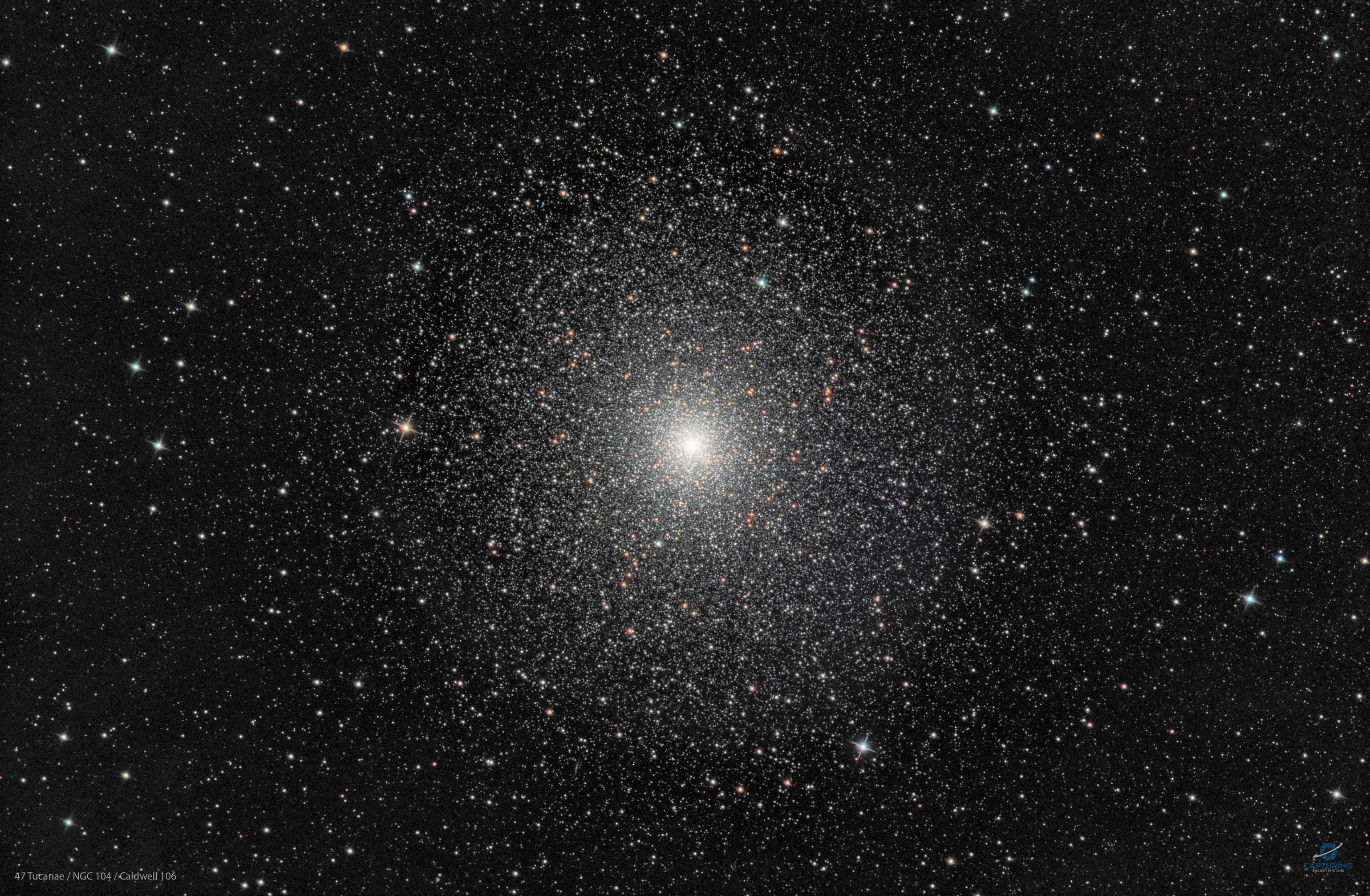
Also known as NGC 104, 47 Tucanae is a jewel of the southern sky. Not a star but a dense cluster of stars, it roams the halo of our Milky Way Galaxy along with some 200 other globular star clusters. The second brightest globular cluster (after Omega Centauri) as seen from planet Earth, 47 Tuc lies about 13,000 light-years away. It can be spotted with the naked eye close on the sky to the Small Magellanic Cloud in the constellation of the Toucan. The dense cluster is made up of hundreds of thousands of stars in a volume only about 120 light-years across. Red giant stars on the outskirts of the cluster are easy to pick out as yellowish stars in this sharp telescopic portrait. Tightly packed globular star cluster 47 Tuc is also home to a star with the closest known orbit around a black hole.
http://www.messier.seds.org/xtra/ngc/n0104.html
http://www.messier.seds.org/xtra/ngc/n0104.html
http://www.ianridpath.com/startales/tucana.html
https://app.astrobin.com/u/CAPastrophotography?i=y6g3ax#gallery
https://apod.nasa.gov/apod/ap250905.html
#space #cluster #astrophotography #photography #science #astronomy #physics #nature #NASA
Alt...
2025 September 5
47 Tucanae: Globular Star Cluster
* Image Credit & Copyright: Carlos Taylor
Explanation:
Also known as NGC 104, 47 Tucanae is a jewel of the southern sky. Not a star but a dense cluster of stars, it roams the halo of our Milky Way Galaxy along with some 200 other globular star clusters. The second brightest globular cluster (after Omega Centauri) as seen from planet Earth, 47 Tuc lies about 13,000 light-years away. It can be spotted with the naked eye close on the sky to the Small Magellanic Cloud in the constellation of the Toucan. The dense cluster is made up of hundreds of thousands of stars in a volume only about 120 light-years across. Red giant stars on the outskirts of the cluster are easy to pick out as yellowish stars in this sharp telescopic portrait. Tightly packed globular star cluster 47 Tuc is also home to a star with the closest known orbit around a black hole.
Authors & editors: Robert Nemiroff (MTU) & Jerry Bonnell (UMCP)
NASA Official: Amber Straughn Specific rights apply.
NASA Web Privacy, Accessibility, Notices;
A service of: ASD at NASA / GSFC,
NASA Science Activation
& Michigan Tech. U.
NGC 4565
* Image Credit & Copyright: José Rodrigues
https://joserodrigues.space/
https://iastro.pt/
https://www.ofxb.ch/
* Text: Hartmut Frommert, Christine Kronberg
Spiral Galaxy NGC 4565 (= H V.24), type Sb, in Coma Berenices
[n4565jn.jpg]
Right Ascension 12 : 36.3 (h:m)
Declination +25 : 59 (deg:m)
Distance 31,000 (kly)
Visual Brightness 9.6 (mag)
Apparent Dimension 16 x 3 (arc min)
Discovered by William Herschel in 1785.
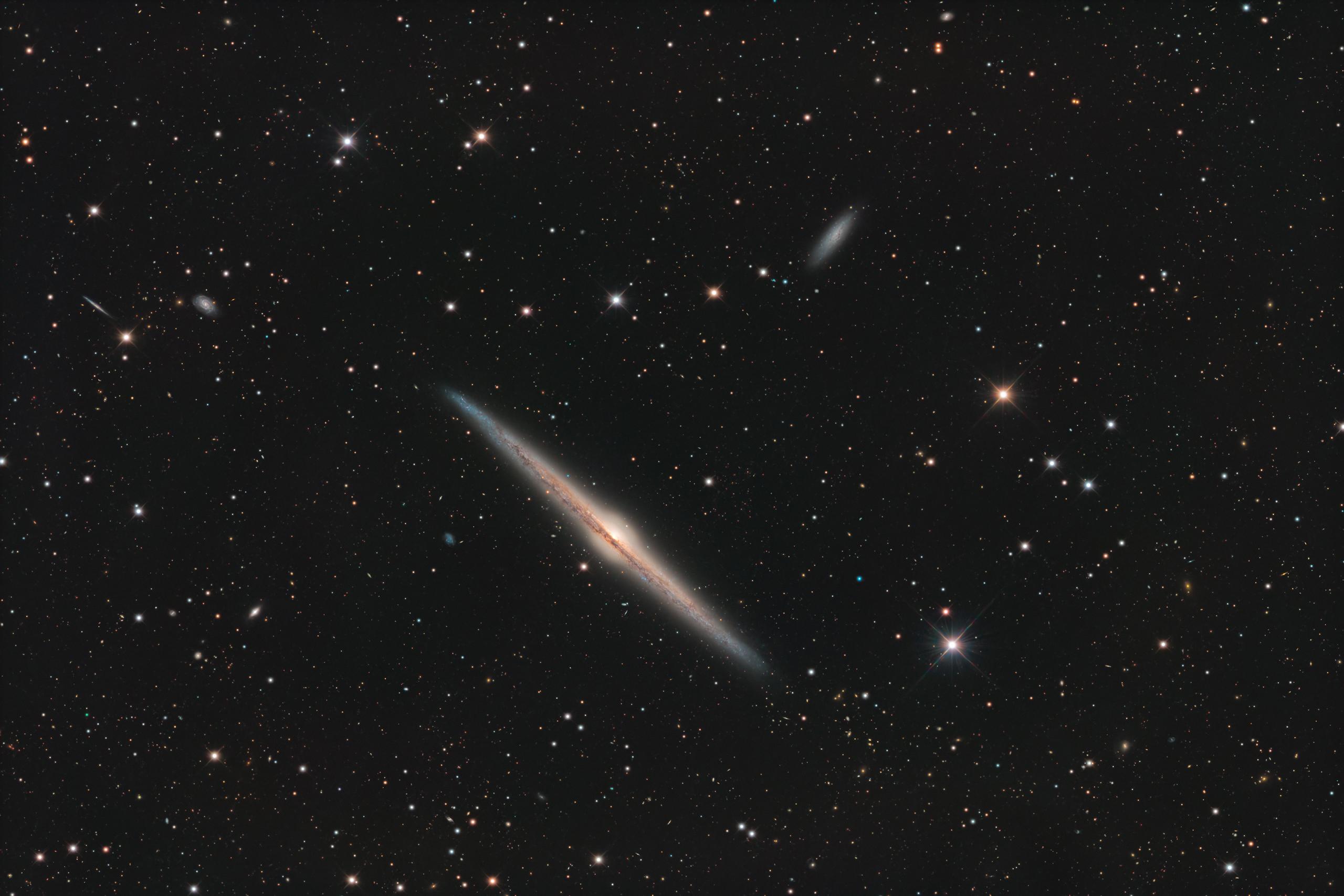
The considerably bright, very large edge-on spiral NGC 4565 is another showpiece and often used in textbooks, as it is assumed that its view may resemble that of our own Milky Way, seen from outside from a place situated near its galactic equatorial plane. According to R. Brent Tully, NGC 4565 is about 31 million light years distant.
https://science.nasa.gov/missions/hubble/hubble-sees-the-needle-galaxy-edge-on-and-up-close/
https://arxiv.org/abs/1810.10073
https://chandra.harvard.edu/photo/cosmic_distance.html
http://www.dibonsmith.com/com_con.htm
https://www.cloudynights.com/articles/cat/column/small-wonders/small-wonders-coma-berenices-r1027
https://joserodrigues.space/deep-sky/
#space #galaxy #astrophotography #photography #science #nature #NASA
Alt...
Discovered by William Herschel in 1785.
The considerably bright, very large edge-on spiral NGC 4565 is another showpiece and often used in textbooks, as it is assumed that its view may resemble that of our own Milky Way, seen from outside from a place situated near its galactic equatorial plane. According to R. Brent Tully, NGC 4565 is about 31 million light years distant.
Spirals On Edge
* Credit & Copyright: Robert Gendler
Explanation:
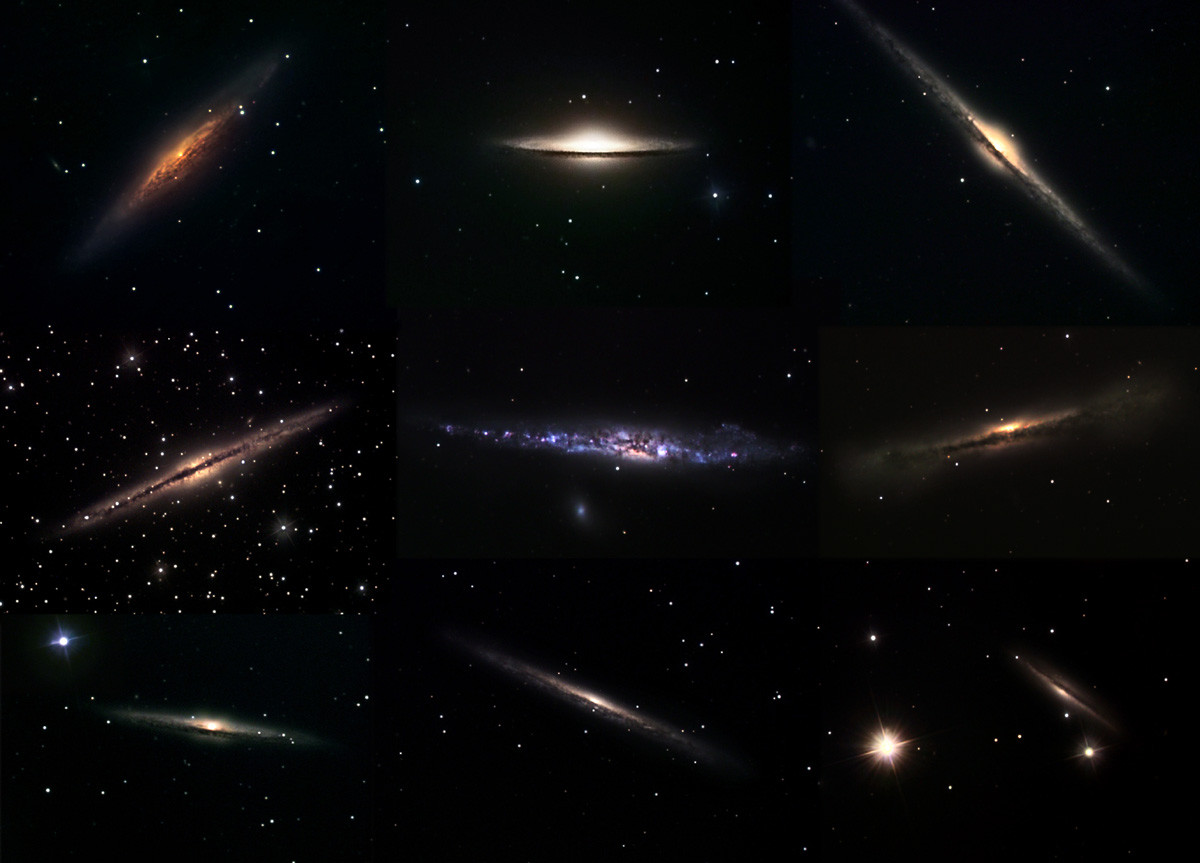
Spiral galaxies viewed face-on display a grand design, with graceful spiral arms traced by bright star clusters and glowing stellar nurseries. When seen edge-on, their appearance is very different but no less striking as their central regions bulge and dark cosmic dust lanes appear silhouetted against starlight from flattened galactic disks. This masterful mosaic of digital images shows nine prominent edge-on spirals arranged as follows: top; NGC2683, M104, NGC4565, middle; NGC891, NGC4631, NGC3628, and bottom; NGC5746, NGC5907, and NGC4217. Perhaps the best known of these is M104 (NGC4594) whose more descriptive moniker is the Sombrero Galaxy. Notably, the edge-on perspective of these galaxies allows a measurement of their galactic rotation speed using the Doppler effect. Plotting rotation speed versus distance from the center determines a galaxy's gravitational mass and historically led to premier evidence for mysterious Dark Matter.
https://apod.nasa.gov/apod/ap010427.html
#space #galaxy #astrophotography #photography #science #nature #NASA
Alt...
2001 May 10
Spirals On Edge
* Credit & Copyright: Robert Gendler
Explanation:
Spiral galaxies viewed face-on display a grand design, with graceful spiral arms traced by bright star clusters and glowing stellar nurseries. When seen edge-on, their appearance is very different but no less striking as their central regions bulge and dark cosmic dust lanes appear silhouetted against starlight from flattened galactic disks. This masterful mosaic of digital images shows nine prominent edge-on spirals arranged as follows: top; NGC2683, M104, NGC4565, middle; NGC891, NGC4631, NGC3628, and bottom; NGC5746, NGC5907, and NGC4217. Perhaps the best known of these is M104 (NGC4594) whose more descriptive moniker is the Sombrero Galaxy. Notably, the edge-on perspective of these galaxies allows a measurement of their galactic rotation speed using the Doppler effect. Plotting rotation speed versus distance from the center determines a galaxy's gravitational mass and historically led to premier evidence for mysterious Dark Matter.
Authors & editors: Robert Nemiroff (MTU) & Jerry Bonnell (USRA)
NASA Technical Rep.: Jay Norris. Specific rights apply.
A service of: LHEA at NASA/ GSFC
& Michigan Tech. U.
2022 April 23
Messier 104
* Image Credit: NASA, ESA, Hubble Legacy Archive;
Processing & Copyright: Ignacio Diaz Bobillo
https://www.pampaskies.com/gallery3/index.php
https://hla.stsci.edu/
https://www.esa.int/
https://www.nasa.gov/
Explanation:
A gorgeous spiral galaxy, Messier 104 is famous for its nearly edge-on profile featuring a broad ring of obscuring dust lanes. Seen in silhouette against an extensive central bulge of stars, the swath of cosmic dust lends a broad brimmed hat-like appearance to the galaxy suggesting a more popular moniker, the Sombrero Galaxy. This sharp view of the well-known galaxy was made from over 10 hours of Hubble Space Telescope image data, processed to bring out faint details often lost in the overwhelming glare of M104's bright central bulge. Also known as NGC 4594, the Sombrero galaxy can be seen across the spectrum, and is host to a central supermassive black hole. About 50,000 light-years across and 28 million light-years away, M104 is one of the largest galaxies at the southern edge of the Virgo Galaxy Cluster. Still, the spiky foreground stars in this field of view lie well within our own Milky Way.
https://www.pampaskies.com/gallery3/Deep-Space-Objects/M104_HST_final_small
http://www.messier.seds.org/m/m104.html
https://apod.nasa.gov/apod/ap190101.html
https://apod.nasa.gov/apod/ap070505.html
https://arxiv.org/abs/1107.1238
https://svs.gsfc.nasa.gov/30855
https://apod.nasa.gov/apod/ap220423.html
#space #galaxy #astrophotography #photography #science #nature #ESA #hubble #NASA

Alt...
2022 April 23
Messier 104
* Image Credit: NASA, ESA, Hubble Legacy Archive;
Processing & Copyright: Ignacio Diaz Bobillo
Explanation:
A gorgeous spiral galaxy, Messier 104 is famous for its nearly edge-on profile featuring a broad ring of obscuring dust lanes. Seen in silhouette against an extensive central bulge of stars, the swath of cosmic dust lends a broad brimmed hat-like appearance to the galaxy suggesting a more popular moniker, the Sombrero Galaxy. This sharp view of the well-known galaxy was made from over 10 hours of Hubble Space Telescope image data, processed to bring out faint details often lost in the overwhelming glare of M104's bright central bulge. Also known as NGC 4594, the Sombrero galaxy can be seen across the spectrum, and is host to a central supermassive black hole. About 50,000 light-years across and 28 million light-years away, M104 is one of the largest galaxies at the southern edge of the Virgo Galaxy Cluster. Still, the spiky foreground stars in this field of view lie well within our own Milky Way.
Authors & editors: Robert Nemiroff (MTU) & Jerry Bonnell (UMCP)
NASA Official: Phillip Newman Specific rights apply.
NASA Web Privacy Policy and Important Notices
A service of: ASD at NASA / GSFC
& Michigan Tech. U.
NGC 2683: Edge-On Spiral Galaxy
* Image Credit & Copyright: Dietmar Hager, Torsten Grossmann
https://stargazer-observatory.com/
https://astrogrossi.de/
Explanation:
This elegant island universe is cataloged as NGC 2683. It lies a mere 16 million light-years distant toward the northern constellation Lynx. A spiral galaxy comparable to our own Milky Way, NGC 2683 is seen nearly edge-on in the cosmic vista. Blended light from a large population of old, yellowish stars forms the remarkably bright galactic core. Their starlight silhouettes the dust lanes along winding spiral arms, dotted with NGC 2683's young blue star clusters. The sharp image was recorded through the lens of a refracting telescope that shows brighter foreground Milky Way stars as colorful and round, lacking diffraction spikes characteristic of images from reflecting telescopes with internal supports. The many more distant galaxies scattered through the background appear as fuzzy, extended sources.
https://spider.seds.org/spider/Misc/n2683.html
https://ned.ipac.caltech.edu/level5/March02/Gordon/Gordon2.html
https://apod.nasa.gov/apod/ap120317.html
#space #galaxy #astrophotography #photography #science #nature #NASA
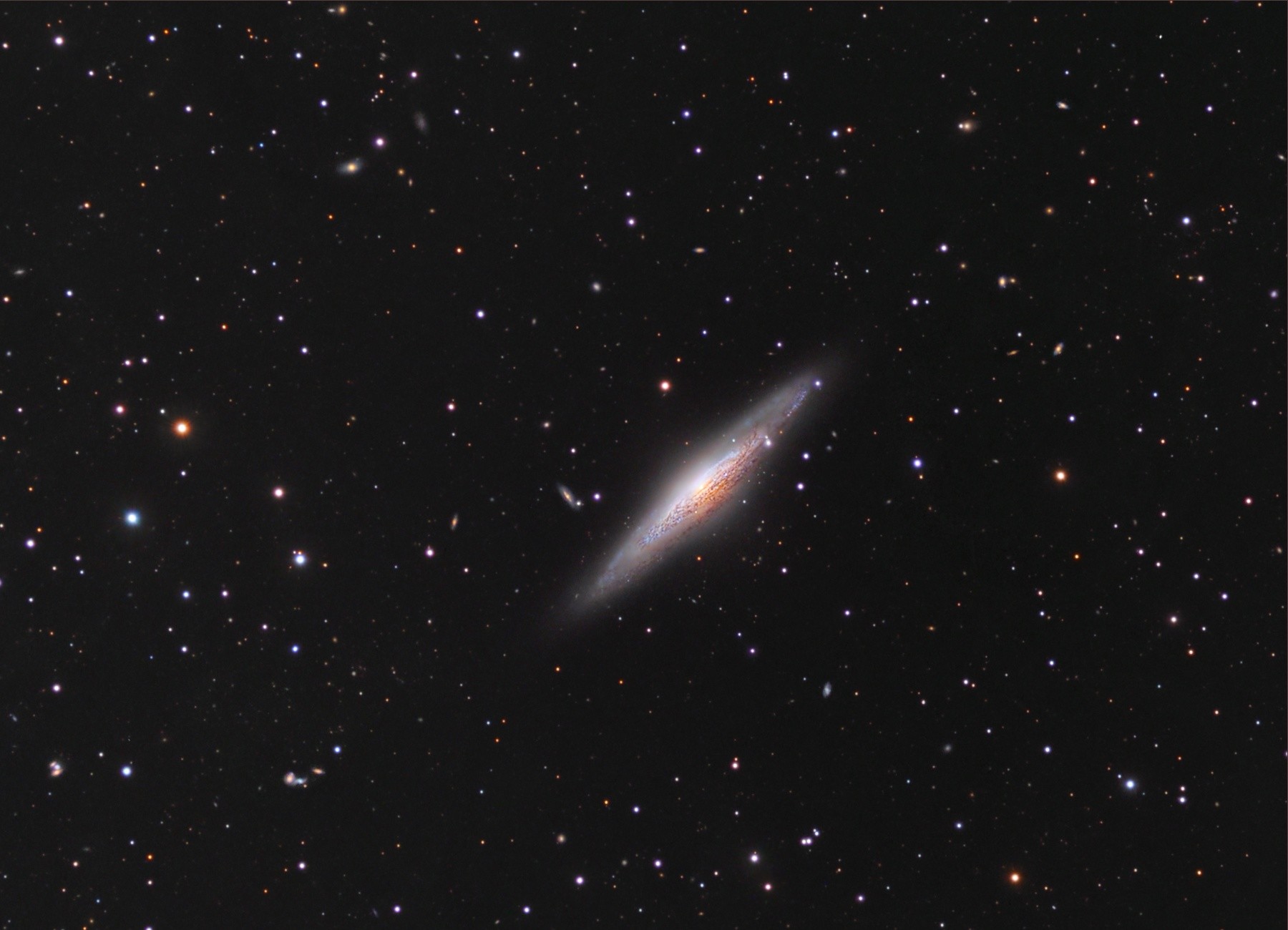
Alt...
2012 March 17
NGC 2683: Edge-On Spiral Galaxy
* Image Credit & Copyright: Dietmar Hager, Torsten Grossmann
Explanation:
This elegant island universe is cataloged as NGC 2683. It lies a mere 16 million light-years distant toward the northern constellation Lynx. A spiral galaxy comparable to our own Milky Way, NGC 2683 is seen nearly edge-on in the cosmic vista. Blended light from a large population of old, yellowish stars forms the remarkably bright galactic core. Their starlight silhouettes the dust lanes along winding spiral arms, dotted with NGC 2683's young blue star clusters. The sharp image was recorded through the lens of a refracting telescope that shows brighter foreground Milky Way stars as colorful and round, lacking diffraction spikes characteristic of images from reflecting telescopes with internal supports. The many more distant galaxies scattered through the background appear as fuzzy, extended sources.
Authors & editors: Robert Nemiroff (MTU) & Jerry Bonnell (UMCP)
NASA Official: Phillip Newman Specific rights apply.
NASA Web Privacy Policy and Important Notices
A service of: ASD at NASA / GSFC
& Michigan Tech. U.
NGC 4565: Galaxy on Edge
* Image Credit & Copyright: Lóránd Fényes
https://fenyeslorand.hu/en/
Explanation:
Magnificent spiral galaxy NGC 4565 is viewed edge-on from planet Earth. Also known as the Needle Galaxy for its narrow profile, bright NGC 4565 is a stop on many telescopic tours of the northern sky, in the faint but well-groomed constellation Coma Berenices. This sharp, colorful image reveals the galaxy's boxy, bulging central core cut by obscuring dust lanes that lace NGC 4565's thin galactic plane. NGC 4565 itself lies about 40 million light-years distant and spans some 100,000 light-years. Easily spotted with small telescopes, sky enthusiasts consider NGC 4565 to be a prominent celestial masterpiece Messier missed.
https://fenyeslorand.hu/a-tu-galaxis/
http://www.messier.seds.org/xtra/ngc/n4565.html
http://www.dibonsmith.com/com_con.htm
https://science.nasa.gov/missions/hubble/hubble-sees-the-needle-galaxy-edge-on-and-up-close/
https://apod.nasa.gov/apod/ap240606.html
#space #galaxy #astrophotography #photography #science #nature #NASA
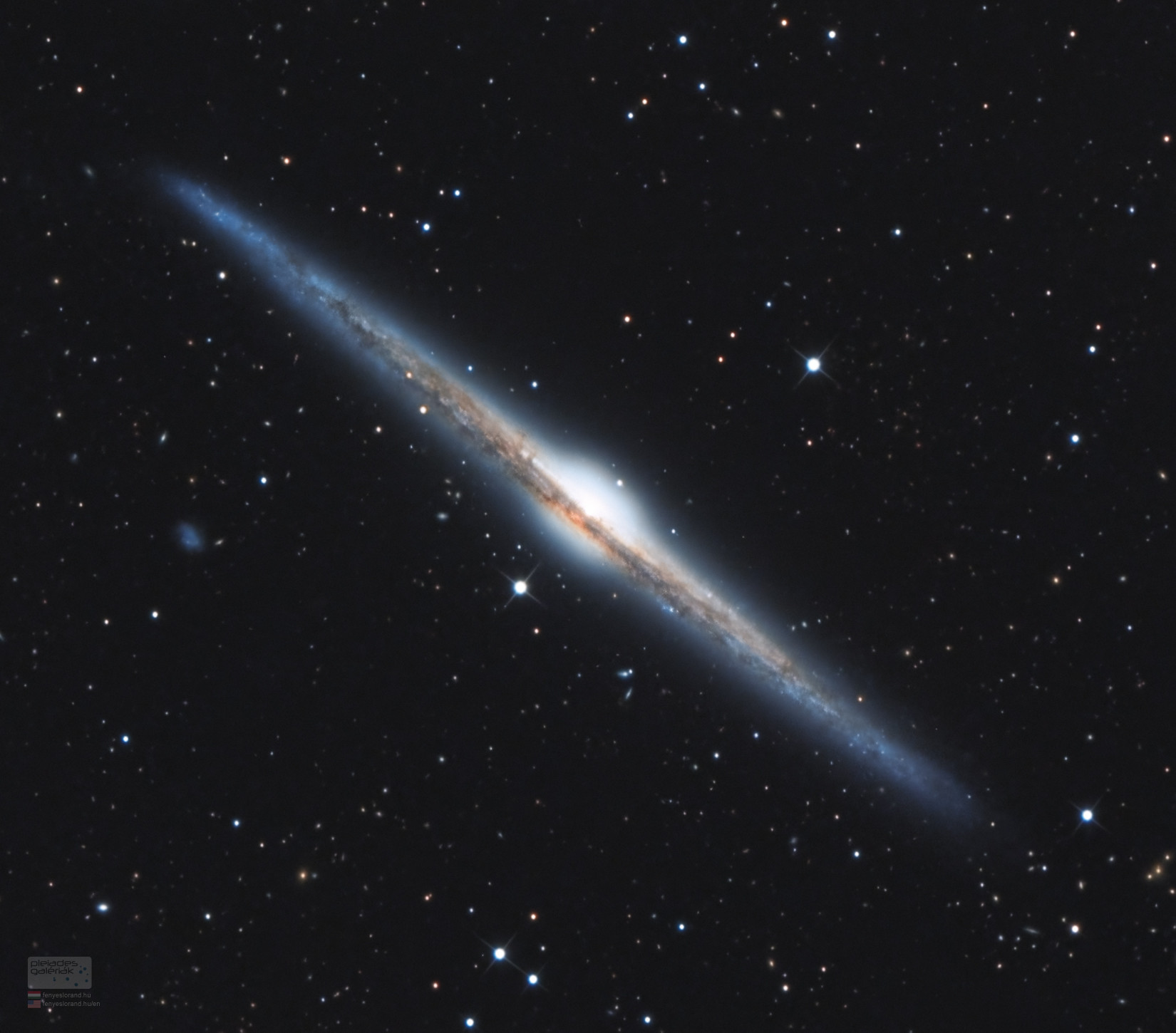
Alt...
2024 June 6
NGC 4565: Galaxy on Edge
* Image Credit & Copyright: Lóránd Fényes
Explanation:
Magnificent spiral galaxy NGC 4565 is viewed edge-on from planet Earth. Also known as the Needle Galaxy for its narrow profile, bright NGC 4565 is a stop on many telescopic tours of the northern sky, in the faint but well-groomed constellation Coma Berenices. This sharp, colorful image reveals the galaxy's boxy, bulging central core cut by obscuring dust lanes that lace NGC 4565's thin galactic plane. NGC 4565 itself lies about 40 million light-years distant and spans some 100,000 light-years. Easily spotted with small telescopes, sky enthusiasts consider NGC 4565 to be a prominent celestial masterpiece Messier missed.
Authors & editors: Robert Nemiroff (MTU) & Jerry Bonnell (UMCP)
NASA Official: Amber Straughn Specific rights apply.
NASA Web Privacy, Accessibility Notices
A service of: ASD at NASA / GSFC,
NASA Science Activation
& Michigan Tech. U.
NGC 6384: Spiral Beyond the Stars
Credits: ESA, Hubble, #NASA
#nature #space #astrophotography

Alt...
NGC 6384: Spiral Beyond the Stars
2025 September 3
Cir X-1: Jets in the Africa Nebula
* Image Credit: J. English (U. Manitoba) & K. Gasealahwe (U. Cape Town), SARAO, MeerKAT, ThunderKAT
http://www2.physics.umanitoba.ca/u/english/
https://umanitoba.ca/science/physics-and-astronomy
https://www.researchgate.net/profile/Kelebogile-Gasealahwe
https://science.uct.ac.za/departments/astronomy
https://www.sarao.ac.za/
https://www.sarao.ac.za/science/meerkat/
* Science: K. Gasealahwe, K. Savard (U. Oxford) et al.
https://www.physics.ox.ac.uk/our-people/savard
https://www.physics.ox.ac.uk/
https://arxiv.org/abs/2507.22998
* Text: J. English & K. Savard
Explanation:
How soon do jets form when a supernova gives birth to a neutron star? The Africa Nebula provides clues. This supernova remnant surrounds Circinus X-1, an X-ray emitting neutron star and the companion star it orbits. The image, from the ThunderKAT collaboration on the MeerKAT radio telescope situated in South Africa, shows the bright core-and-lobe structure of Cir X-1’s currently active jets inside the nebula. A mere 4600 years old, Cir X-1 could be the "Little Sister" of microquasar SS 433*. However, the newly discovered bubble exiting from a ring-like hole in the upper right of the nebula, along with a ring to the bottom left, demonstrate that other jets previously existed. Computer simulations indicate those jets formed within 100 years of the explosion and lasted up to 1000 years. Surprisingly, to create the observed bubble, the jets need to be more powerful than young neutron stars were previously thought to produce.
https://en.wikipedia.org/wiki/Circinus_X-1
https://science.nasa.gov/universe/neutron-stars-are-weird/
https://apod.nasa.gov/apod/ap250903.html
#space #nebula #astrophotography #photography #science #astronomy #physics #nature #NASA #ESA
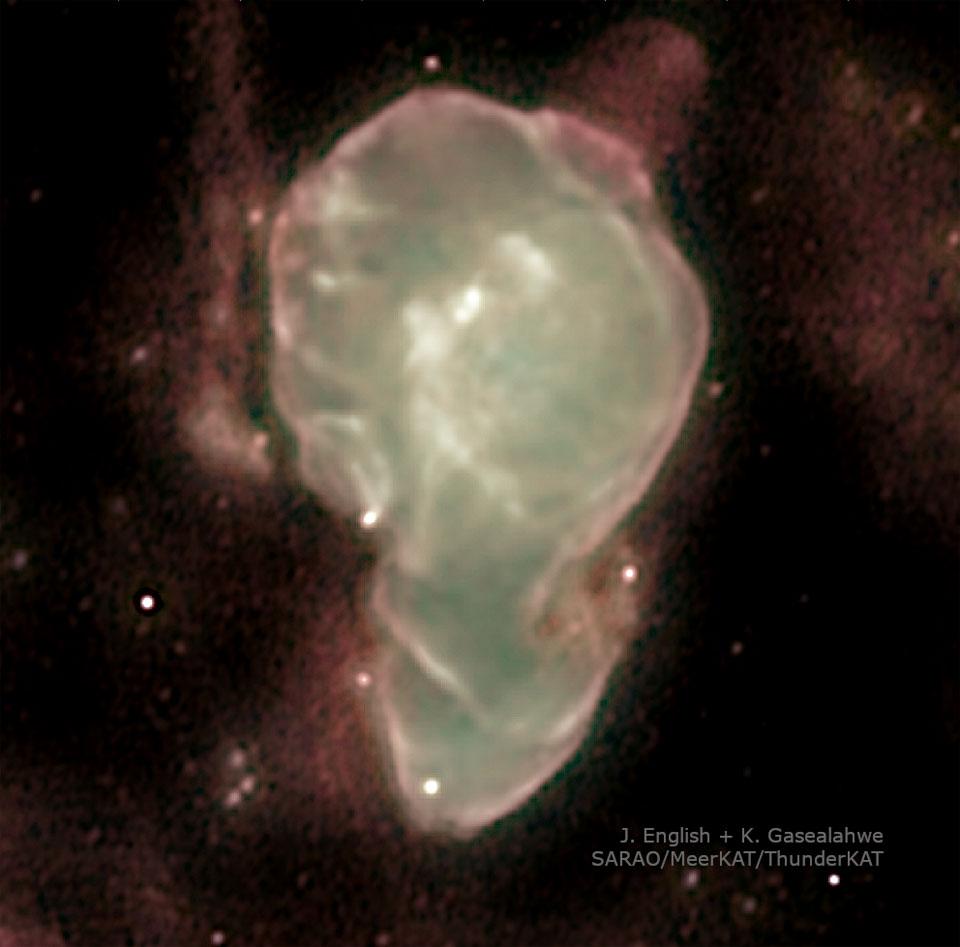
Alt...
2025 September 3
A nebula is shown that appears roughly the shape of Africa. The complex radio image shows rings and jets.
Cir X-1: Jets in the Africa Nebula
* Image Credit: J. English (U. Manitoba) & K. Gasealahwe (U. Cape Town), SARAO, MeerKAT, ThunderKAT
* Science: K. Gasealahwe, K. Savard (U. Oxford) et al.
* Text: J. English & K. Savard
Explanation:
How soon do jets form when a supernova gives birth to a neutron star? The Africa Nebula provides clues. This supernova remnant surrounds Circinus X-1, an X-ray emitting neutron star and the companion star it orbits. The image, from the ThunderKAT collaboration on the MeerKAT radio telescope situated in South Africa, shows the bright core-and-lobe structure of Cir X-1’s currently active jets inside the nebula. A mere 4600 years old, Cir X-1 could be the "Little Sister" of microquasar SS 433*. However, the newly discovered bubble exiting from a ring-like hole in the upper right of the nebula, along with a ring to the bottom left, demonstrate that other jets previously existed. Computer simulations indicate those jets formed within 100 years of the explosion and lasted up to 1000 years. Surprisingly, to create the observed bubble, the jets need to be more powerful than young neutron stars were previously thought to produce.
Authors & editors: Robert Nemiroff (MTU) & Jerry Bonnell (UMCP)
NASA Official: Amber Straughn Specific rights apply.
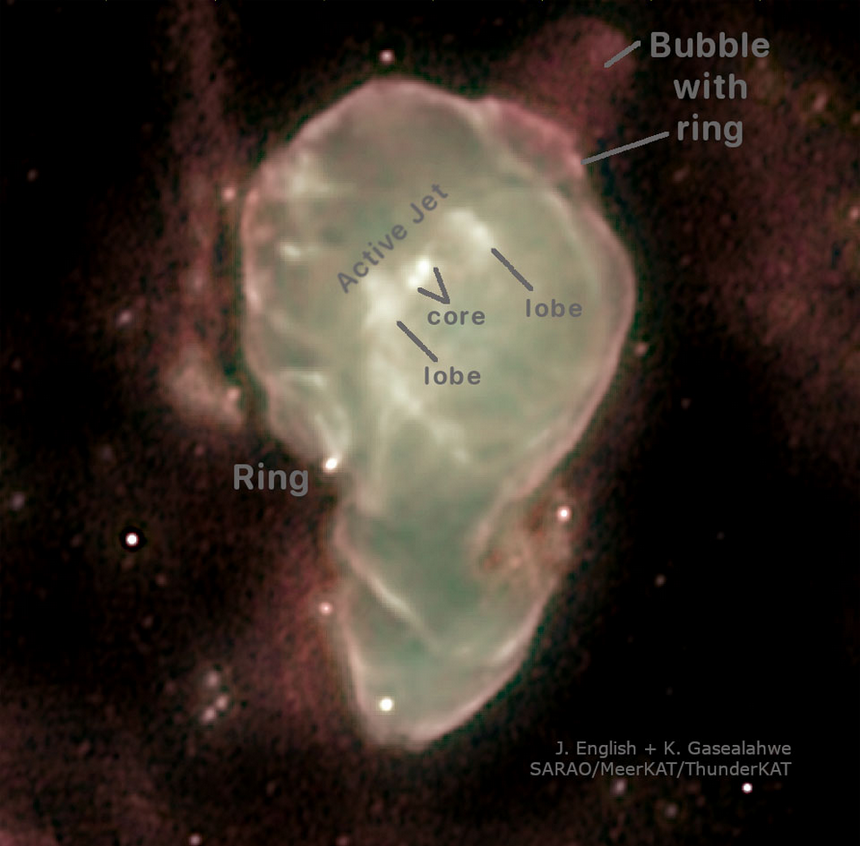
Alt...
Image with annotaions
NGC 2359: Thor's Helmet
Credits: Adam Block, KPNOVisitor Program, NOAO, AURA, NSF
#nature #space #astrophotography

Alt...
NGC 2359: Thor's Helmet
Kembles Cascade of Stars
Credits: Tommy Lease
#nature #space #astrophotography

Alt...
Kembles Cascade of Stars
![[?]](https://cdn.masto.host/twitsocial/accounts/avatars/111/243/711/289/519/427/original/c5784f332fc9530c.jpg)


I so love Earth from #space images and especially that of the 🇦🇶 icy continent and from the lenses of a Sen camera 🌌 🛰️ 🌏
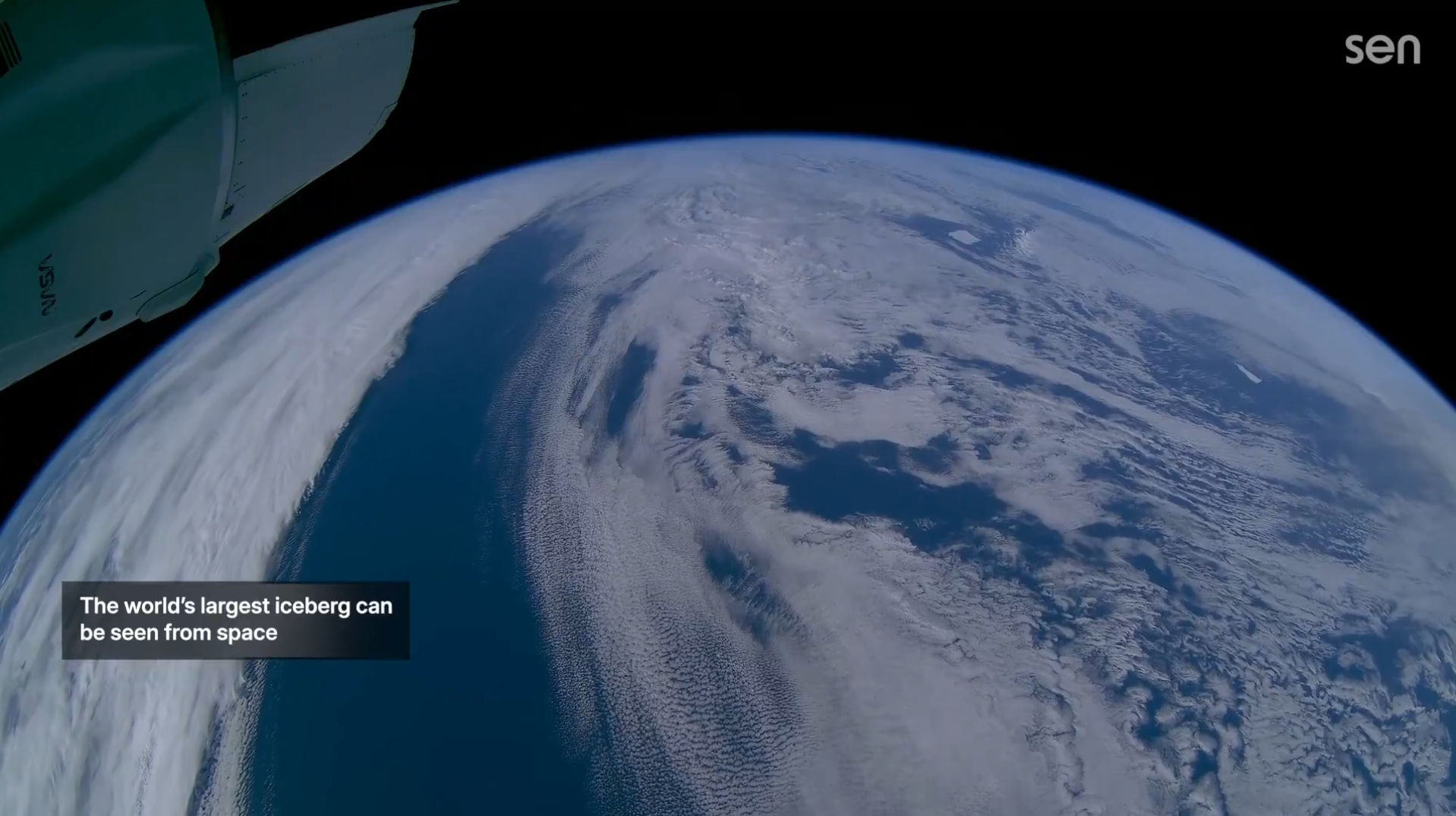
Alt...
views of Antarctica and the Southern Ocean from the Sen camera onboard the International Space Station
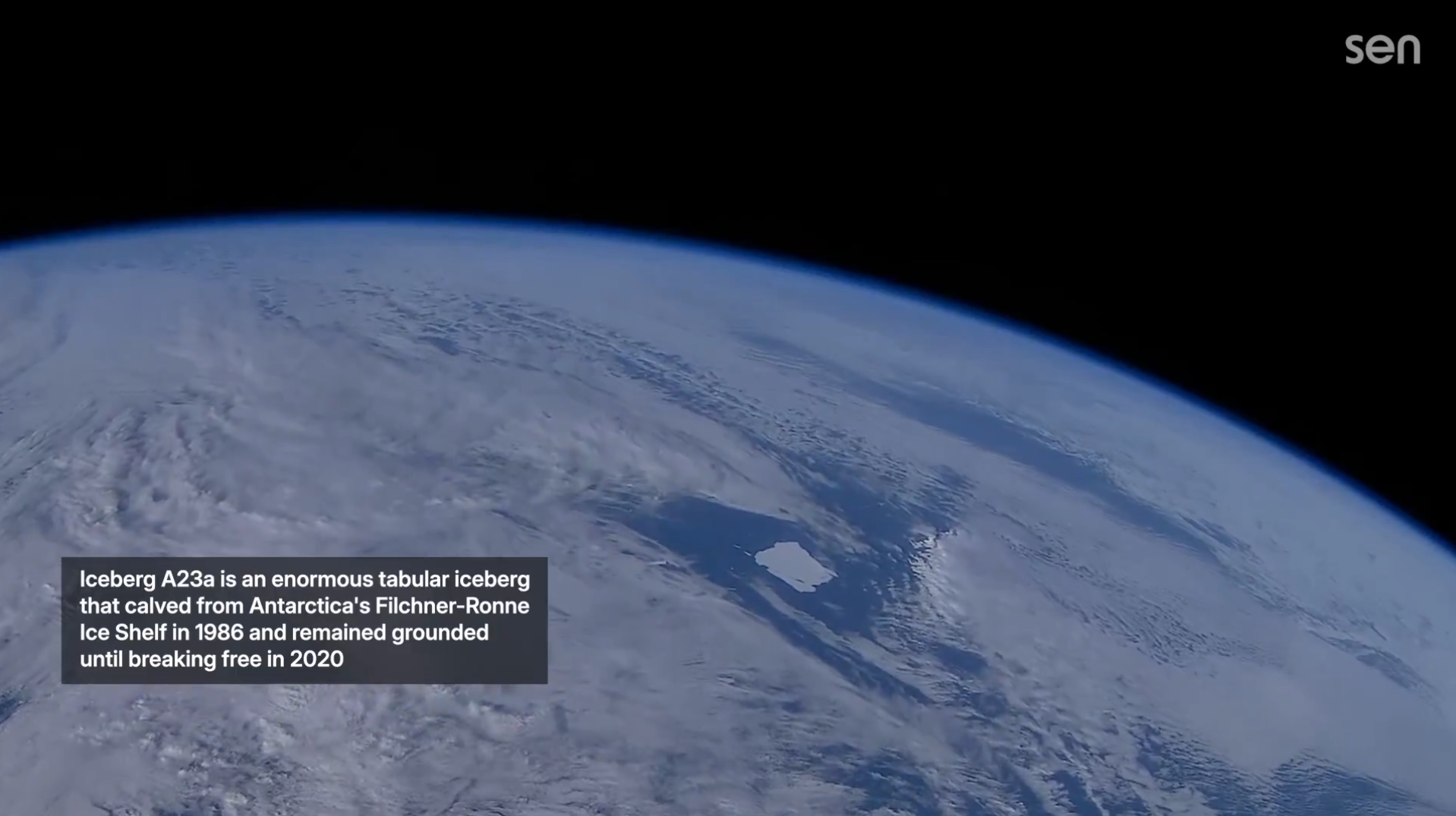
Alt...
Image of an enormous tabular iceberg named Iceberg A23a that calved from Antarctica's Filchner-Ronne Ice Shelf in 1986, taken from the International Space Station via the Sen camera.
2025 September 2
The Horsehead and Flame Nebulas
* Image Credit & Copyright: Daniel Stern
https://www.instagram.com/messierchaser/
Explanation:
The Horsehead Nebula is one of the most famous nebulae on the sky. It is visible as the dark indentation to the orange emission nebula at the far right of the featured picture. The horse-head feature is dark because it is really an opaque dust cloud that lies in front of the bright emission nebula. Like clouds in Earth's atmosphere, this cosmic cloud has assumed a recognizable shape by chance. After many thousands of years, the internal motions of the cloud will surely alter its appearance. The emission nebula's orange color is caused by electrons recombining with protons to form hydrogen atoms. Toward the lower left of the image is the Flame Nebula, an orange-tinged nebula that also contains intricate filaments of dark dust.
https://en.wikipedia.org/wiki/Horsehead_Nebula
https://en.wikipedia.org/wiki/Emission_nebula
https://astronomy.swin.edu.au/cosmos/E/emission+nebula
https://home.cern/news/news/physics/proton-century
https://periodic.lanl.gov/1.shtml
https://history.aip.org/exhibits/electron/
https://apod.nasa.gov/apod/ap030706.html
https://www.nasa.gov/image-article/earths-atmospheric-layers-3/
https://apod.nasa.gov/apod/ap250902.html
#space #nebula #astrophotography #photography #science #astronomy #nature #NASA
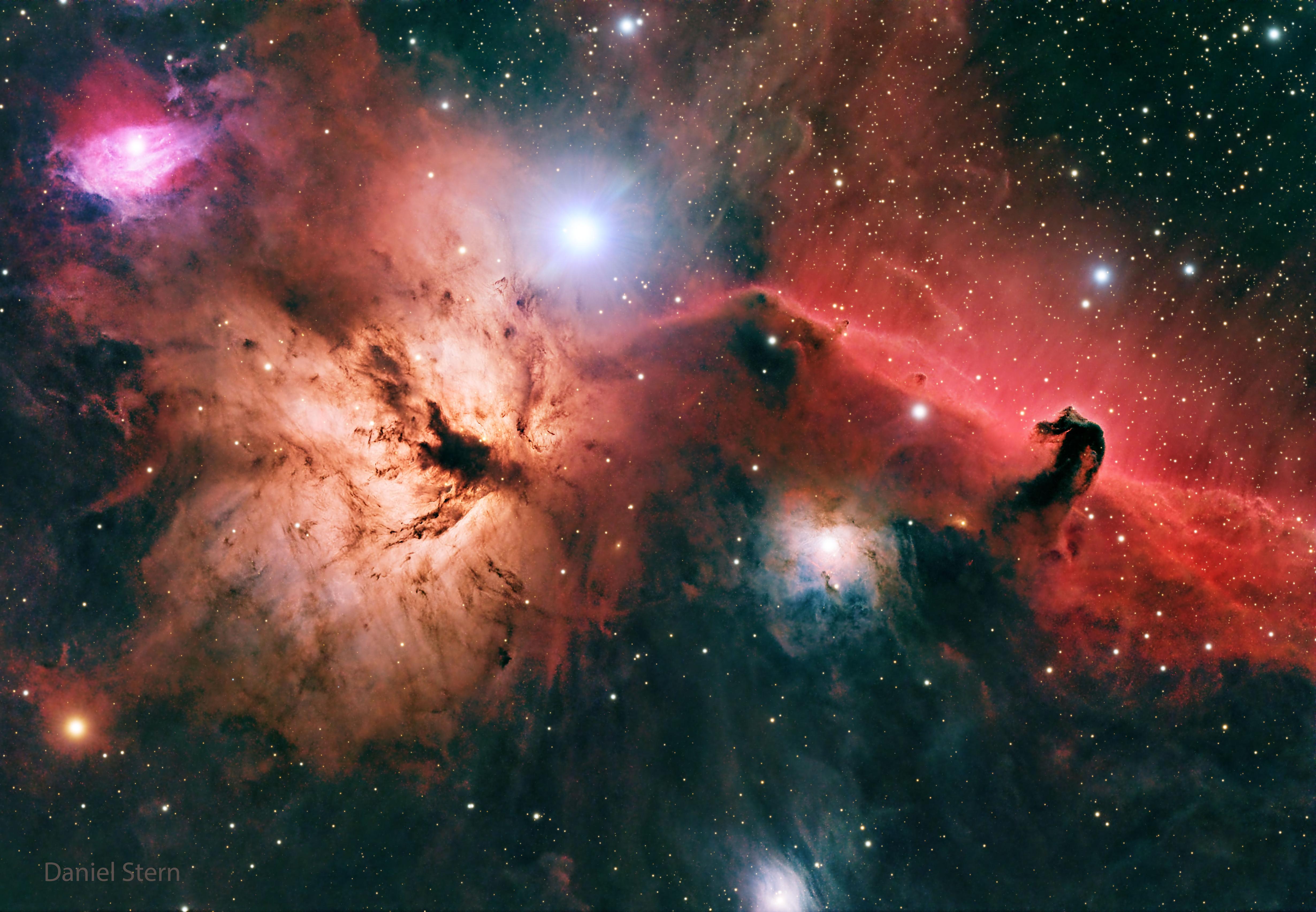
Alt...
2025 September 2
A starfield is shown with bright and dark nebulae of different shapes and colors.
The Horsehead and Flame Nebulas
* Image Credit & Copyright: Daniel Stern
Explanation:
The Horsehead Nebula is one of the most famous nebulae on the sky. It is visible as the dark indentation to the orange emission nebula at the far right of the featured picture. The horse-head feature is dark because it is really an opaque dust cloud that lies in front of the bright emission nebula. Like clouds in Earth's atmosphere, this cosmic cloud has assumed a recognizable shape by chance. After many thousands of years, the internal motions of the cloud will surely alter its appearance. The emission nebula's orange color is caused by electrons recombining with protons to form hydrogen atoms. Toward the lower left of the image is the Flame Nebula, an orange-tinged nebula that also contains intricate filaments of dark dust.
Authors & editors: Robert Nemiroff (MTU) & Jerry Bonnell (UMCP)
NASA Official: Amber Straughn Specific rights apply.
NASA Web Privacy, Accessibility, Notices;
A service of: ASD at NASA / GSFC,
NASA Science Activation
& Michigan Tech. U.
List of TOPICS> No2
will be editet soon .. see TOPIC> List No. 1, which contains all currently available TOPICs please.
© folks who #resist
https://www.youtube.com/watch?v=EXg8MOqbZNI
#space #astrophotography #photography #sience #astronomy #nature #fediverse #mastodon #NASA #ESA #nobot #noai #list #buchstabensuppe
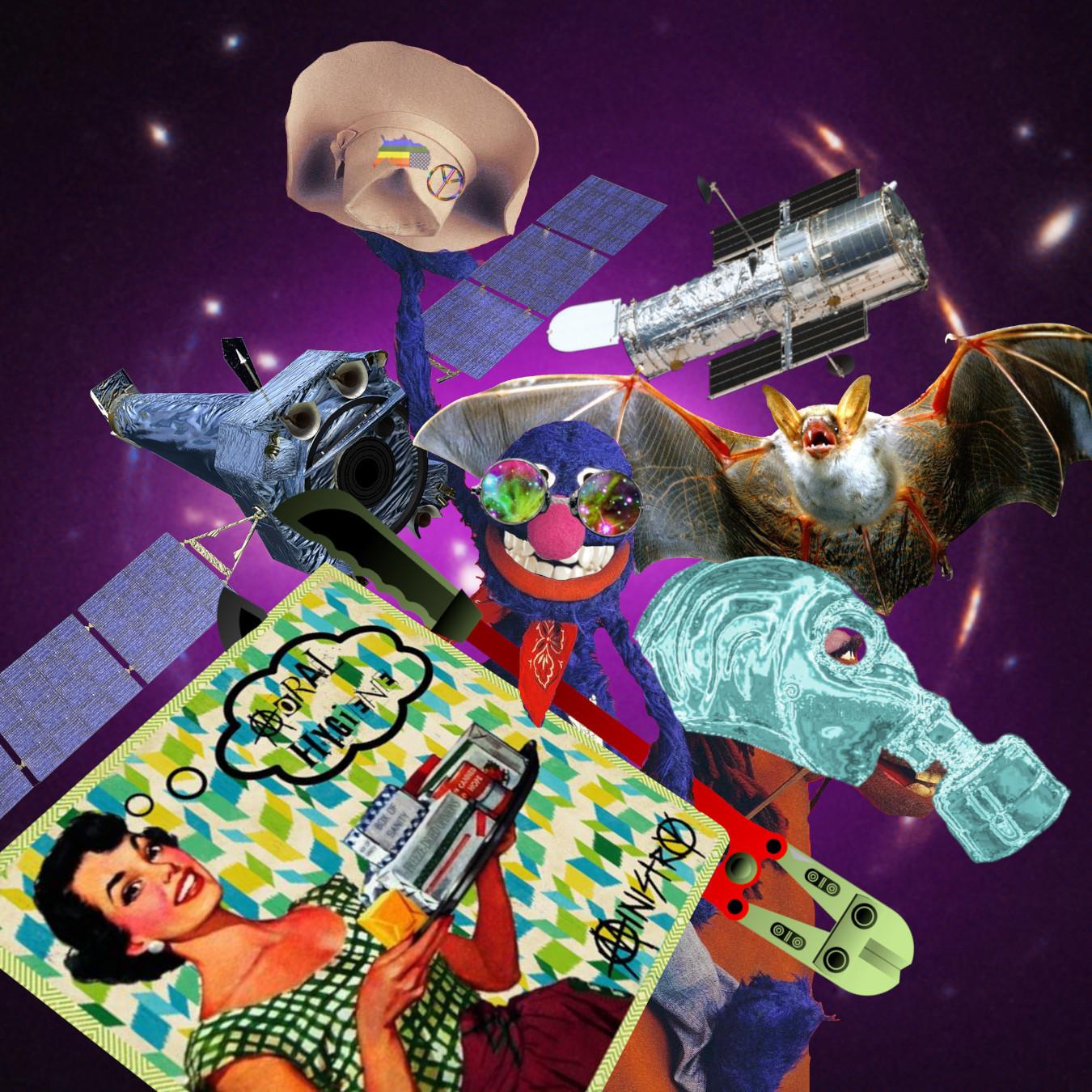
Alt...
grobi presents the protest song "Sabotage Is Sex" by Ministry feat. Jello Biafra. He rides through time and space sitting the wrong way around on his horse and has a bolt cutter ready, while his friend, the horse, is already wearing a gas mask, because you never know for sure... like two scouts "always ready to help" with open eyes, hearts and cheerful cheers, they have backup from "Graviti's Grin" or flippantly called the "Cheshire Cat Galaxy Group" grobi also wears glasses with "Gravity Lenses" made of "Dark Matter", with which he sees through the enemies of freedom and humanity.
© folks who #resist
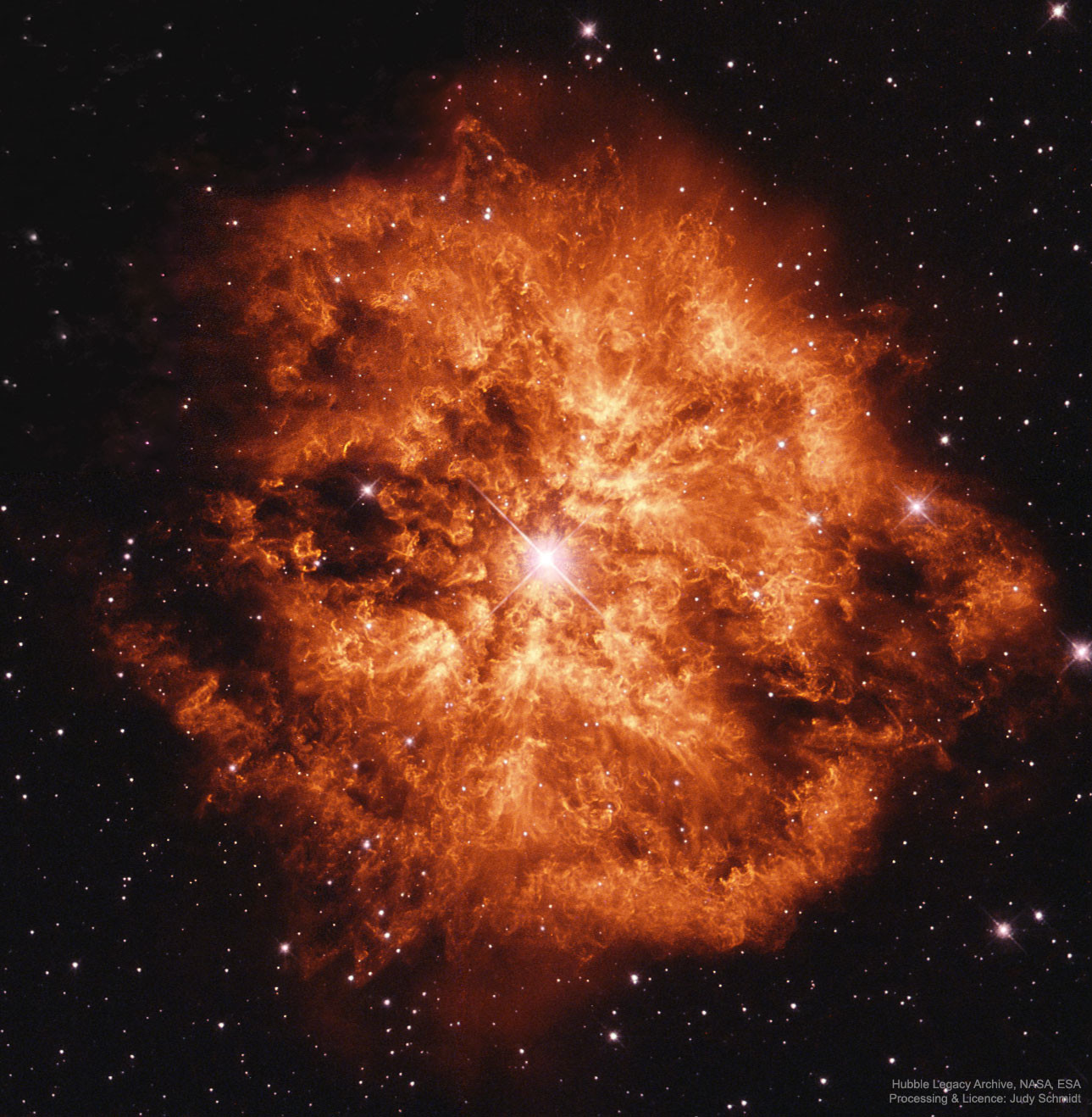
Wolf-Rayet Star 124: Stellar Wind Machine
* Image Credit: Hubble Legacy Archive, NASA, ESA; Processing & License: Judy Schmidt
https://hla.stsci.edu/
https://www.nasa.gov/
https://www.esa.int/
https://www.flickr.com/photos/geckzilla/
Explanation:
Some stars explode in slow motion. Rare, massive Wolf-Rayet stars are so tumultuous and hot that they are slowly disintegrating right before our telescopes. Glowing gas globs each typically over 30 times more massive than the Earth are being expelled by violent stellar winds. Wolf-Rayet star WR 124, visible near the featured image center and spanning six light years across, is thus creating the surrounding nebula known as M1-67. Details of why this star has been slowly blowing itself apart over the past 20,000 years remains a topic of research. WR 124 lies 15,000 light-years away towards the constellation of the Arrow (Sagitta). The fate of any given Wolf-Rayet star likely depends on how massive it is, but many are thought to end their lives with spectacular explosions such as supernovas or gamma-ray bursts.
https://en.wikipedia.org/wiki/Wolf%E2%80%93Rayet_star
https://en.wikipedia.org/wiki/WR_124
https://www.flickr.com/photos/geckzilla/14248502065/
https://www.syfy.com/syfy-wire/a-massive-violent-star-blooms
https://www.youtube.com/watch?v=aysiMbgml5g
https://ui.adsabs.harvard.edu/abs/1985A%26A...145L..13V/abstract
https://science.nasa.gov/universe/gamma-ray-bursts-harvesting-knowledge-from-the-universes-most-powerful-explosions/
http://www.hawastsoc.org/deepsky/sge/
https://chandra.harvard.edu/photo/cosmic_distance.html
https://apod.nasa.gov/apod/ap000318.html
https://spaceplace.nasa.gov/constellations/en/
https://www.universetoday.com/24736/wolf-rayet-star/
https://science.nasa.gov/earth/facts/
https://apod.nasa.gov/apod/ap250203.html
#space #nebula #star #astrophotograhy #NASA #ESA #Hubble #science #nature
Alt...
2025 February 3
A starfield is shown with a large spherical nebula in the center. The nebula shows a great deal of internal structure. Please see the explanation for more detailed information.
Wolf-Rayet Star 124: Stellar Wind Machine
* Image Credit: Hubble Legacy Archive, NASA, ESA; Processing & License: Judy Schmidt
Explanation:
Some stars explode in slow motion. Rare, massive Wolf-Rayet stars are so tumultuous and hot that they are slowly disintegrating right before our telescopes. Glowing gas globs each typically over 30 times more massive than the Earth are being expelled by violent stellar winds. Wolf-Rayet star WR 124, visible near the featured image center and spanning six light years across, is thus creating the surrounding nebula known as M1-67. Details of why this star has been slowly blowing itself apart over the past 20,000 years remains a topic of research. WR 124 lies 15,000 light-years away towards the constellation of the Arrow (Sagitta). The fate of any given Wolf-Rayet star likely depends on how massive it is, but many are thought to end their lives with spectacular explosions such as supernovas or gamma-ray bursts.
Authors & editors: Robert Nemiroff (MTU) & Jerry Bonnell (UMCP)
NASA Official: Amber Straughn Specific rights apply.
NASA Web Privacy, Accessibility, Notices;
A service of: ASD at NASA / GSFC,
NASA Science Activation
& Michigan Tech. U.