Search results for tag #debian
![[?]](https://files.mastodon.social/accounts/avatars/114/368/991/106/654/640/original/4055052cf2bcf4e8.png)
Wayland is replacing X11 as Linux’s display protocol, offering lower latency, simpler design, and stronger security. 🖥️
By restricting app access to input and screen data, it reduces long-standing privacy risks. 🔐
Gains are clear, but compatibility and tooling still slow full adoption. ⚖️
🔗 https://hintnal.com/the-great-display-revolution-how-wayland-is-reshaping-linuxs-graphical-future/
#TechNews #Linux #OpenSource #Privacy #Security #Software #Developers #Freedom #Technology #Computing #Wayland #X11 #Debian #Fedora #Ubuntu #Arch #FOSS #OS
![[?]](https://hubzil.la/photo/profile/andrey.jpeg?ts=1686772560)
Последние пару месяцев экспериментировал с настройками и решил сделать небольшую перестройку в домашней сети
OpenWRT служил хорошо, но за последнее время всё чаще стал ощущать, что он ограничивает возможности. Особенно когда нужно что-то нестандартное - например, подключить сторонние сервисы, настроить сложные правила фильтрации или использовать какие-то новые средства ;) . Поэтому решил перейти на Debian 12. Пока всё работает стабильно, и есть ощущение, что теперь можно будет гибче подходить к задачам.
Также поменял железо: BananaPi BPI-R3 ушёл в запас (надо будет выставить на продажу). На его место пришёл NanoPI R5S. Почему он? потому что 3 порта и лёгкость в установке
Wi-Fi теперь раздаётся отдельным устройством — TP-Link Archer C7, который стоит в более удобном месте. Покрытие квартиры стала равномернее, почти нет зон с плохим сигналом.
![[?]](https://stockage.framapiaf.org/framapiaf/accounts/avatars/000/207/151/original/f64bb1e0a97142da.png)
As we welcome a new year we have more Debian events lined up for 2026, and we’re happy to announce another MiniDebConf in India. MiniDebConf Kanpur 2026 will be held at Indian Institute of Technology, Kanpur on 14th and 15th March 2026. https://lists.debian.org/debian-devel-announce/2026/01/msg00000.html #debian #DebianIndia #MiniDebConf #MiniDebConfKanpur #01
![[?]](https://polymaths.social/fileserver/01HCMX6M1CZNEVJ4F5H58TT5XJ/attachment/original/01JHC5KM5K0V0J0436SPD3F86H.jpeg)


 🍵
🍵  [
[![[?]](https://assets.growers.social/accounts/avatars/111/020/532/060/811/975/original/e282b2b6ba9f6a6c.jpeg)
I would like for this to be the accurate take on #Arduino developments this year. As much as I've already kinda moved on myself (#Teensy is the centre of most projects these days, but I'm studying up on FPGAs cause the stuff I'm thinking about, such as ADAT Lightpipe audio, is pretty exotic...), this says the thing runs #Debian, and includes presumably-easy-to-use models for object recognition and such, and one of my high priority tech projects is a few cameras to notify us when the dogs are in places they should or should not be (backdoor = let them in, kitchen = get them out), and it's handling that dog recognition on local hardware that I'm still stumbling over.
Unrelated to this, I'm pissed off right now cause Nvidia has dropped support for the generation of video cards that is our newest model here, I have no idea if this means I'm not gonna be able to do any sort of Machine Learning or what, but it sure smacks of "we need to sell more cards and we don't care if yours still works well enough for you".
Been a #Debian fan since 2.2/Potato.
It's a bummer when the best example of documentation we have in Linux is the arch wiki, which, while helpful, falls drastically short of anything like a handbook.
![[?]](https://media.bsd.cafe/bsdmmedia01/accounts/avatars/114/439/967/181/871/365/original/9c94f4a4076e444d.jpg)
@rl_dane I empathize completely. #Documentation is one area where #Linux falls behind #FreeBSD by several orders of magnitude.
I love #Debian. It's my favorite OS but oh my gods the documentation is, at best, an afterthought. And yes, other distros are not that much better.
It's actually *the* reason why I've been using FreeBSD more and taking the time to learn it.
![[?]](https://media.mstdn.social/accounts/avatars/109/197/908/539/057/893/original/aaccd7e755384328.png)
Heya! I've been daily-driving it for nearly a month on my main at-home laptop (Thinkpad X260).
It's pretty great! ZFS is darn near bulletproof, and after some initial challenges of getting wifi and GUI configured, it was pretty "boring"... until I tried upgrading to 15.0, lol
Figured out how to roll back to 14.3, and I'm now waiting for 15.1 before I try again (although I believe the issues I had have now been resolved, but I'm still going to wait ;)
Package availability is amazing (better than Debian in some cases!), and most things compile without any issues, although some things that don't have very well-written Makefiles are iffy and I got stuck.
Been having fun with Dosbox-X, playing games I loved 20-30 years ago. I couldn't get the Linux version of Kerbal Space Program to run under compat_linux, but I didn't really expect it to.
#OpenBSD definitely gets my vote for noob-friendly #BSD, since it has X11 in the base install, and it configures itself, but I now have sway (Wayland) running under #FreeBSD just as if I were still on Linux, so as long as someone is willing to skim through the pertinent parts of the handbook, it's a great OS.
The only downsides to #FreeBSD vs. Linux is that S3 resume takes a little longer (8 seconds instead of 1-3 seconds), and I have occasional hiccups, which I'm sometimes not able to recover from. Loading some websites in Firefox will make everything hang for several seconds at times (even though I'm launching Firefox via nice (1)), and there are some times that sway never quite recovers from S3 suspend, although that's rare. The good thing is that sometimes it will catch the power button and shut down cleanly, and even when it doesn't, #ZFS is so bulletproof that it just takes it all in stride.
There are occasional Linuxisms that feel a bit odd, like some of my packages (the swaync notification system and the duckstation console emulator are notable examples) require #pulseaudio of all things, which sometimes eats up my CPU. That's... really weird to me. I liked how minimal sndio on OpenBSD is.
Both major BSDs have very sane syntax for the config file that governs Wifi access points, and that's very refreshing to me after using a TUI to join networks on #Debian (although it's definitely possible to uninstall #NetworkManager on Debian and use the native interface config files, but they're not as nice/simple as the BSDs').
One really fun (if a bit cartoonish) way of comparing the BSD philosophy to the Linux philosophy is to look at doas vs sudo, specifically man doas.conf, then man sudoers.
The manpage for the sudoers file is pretty long and convoluted, as is the syntax for the file itself. doas.conf is super brief and to-the-point, and its manpage is pretty concise.
I think once they add the setup tool for GUIs to the FreeBSD setup wizard, that will be a real game-changer.
P.S., I haven't really daily-driven OpenBSD in a while, but I'm planning on getting an adapter so I can power my OpenBSD Thinkpad X200t off of a power bank, instead of the very dodgy third-party battery, so I can experiment with OpenBSD some more. I know the latest version has fixed the problems I was having with Emoji support, so I think that OS deserves another look. With the little bit of experimentation I've done in the last week, I've been pleasantly surprised with even Firefox' performance on that little Core 2 Duo. The only bummer about OpenBSD to me is the lack of ZFS or any other modern filesystem, so the occasional power losses or hang-ups become much more dangerous.
Edit: minor clarifications
![[?]](https://mastodon.derg.nz/system/accounts/avatars/109/259/098/898/567/697/original/0e750feca4895c2c.png)
I just ran into an issue with Debian 13 vs 12 in my zfs backup script: suddenly, it wanted me to enter my sudo password again
The reason? In Debian 13 they've started to enforce 'UsrMerge', and while there's a symlink for zfs in /usr/bin, the actual binary lives in /usr/sbin.
So if you run into weirdness with sudo rules after doing major version upgrades (also goes for other distros), check if the binary you're trying to whitelist isn't actually a symlink.
The two-day MiniDebConf Navi Mumbai 2025, organized by the Debian India community in collaboration with Mumbai Foss community, will take place on 13 and 14 December. On Saturday, a dozen talks will be presented, followed the next day by two workshops. You can find the schedule here: https://wiki.debian.org/DebianEvents/in/2025/MiniDebConfNaviMumbai #debian #miniDebConfMumbai #DebianIndia #12
I had a summer romance with #NixOS but it's back to good ol' #Debian for this boy.
If I was a little bit more programmer than I am, or if I was better at taking and keeping notes, I might have pushed through, because there's definitely a fairly doable way of making whatever you need to happen, happen, and I do have enough of a programmer mindset that it was mostly fun.
But, I already know how to do all that stuff on just about any normal Linux system, and I got a bit tired of needing to figure out the Nix way when I just wanna install this thing with a quirk or two and use it.
Respectfully, also, the community seems to still have a fairly debilitating Nazi problem. The old wiki with its entries on "the woke invasion" and such turns up far too often in search engines and I didn't get that straight for quite a bit longer than it should've taken for me to get the message.
The package search, likewise, is an absolute mess, frequently having many different packages with competing names, and no sense of which one is the one that you, an ignorant punter, should install, if you just want the basic thing so you can write or spreadsheet or whatever
In a sense, when #FreeBSD folks talk about loving the opinionated nature of it, and likewise disliking the anarchic nature of Linux, NixOS is more or less the perfect illustration of what they're talking about.
I know nothing about the actual dev team, and I know a fairly bad thing about their governing board, so I'm not sure if there's a way to get NixOS into more mainstream use.
I'm setting my music studio up again after a very long time not using it right now cause I've got some tunes to record over winter, and I will probably keep using NixOS, or possibly just Nix on Debian, for the studio's computer. This kind of thing is where Nix probably has a bright future, because of how you can muck around with the system as much as you want, and if you hose it you can just boot to the previous generation. That's exactly what you need on a multimedia application.
 boosted
The year didn't even end and we have some great news for 2026! MiniDebConf Hamburg will be held from May 4th 2026 to May 11th 2026 at dock europe, the Call For Proposals and registrations are already open: https://lists.debian.org/debconf-mini-hamburg/2025/12/msg00000.html #debian #debconf #miniDebConfHamburg #12
LOOK EVERYBODY,
It's a #sassy #hellthread that I took NO PART IN!
IT HAPPENS!!! SOMETIMES!?!?
https://mastodon.social/@murena/115656237852149287
P.S., slightly tempted to jump in, but now I can't because I wrote this. lol
#deltachat #xmpp #murena #debian #freebsd #SassyGrumpyPeople #NotMyFault
Ok so hey #SelfHosting
I want a #SelfHosted web-type Office Suite ala Google Sheets/Docs and I don't want it to be part of some gigantic resource-chewing albatross like #NextCloud
I would like to do all my Word Processing and Spreadsheeting and so forth through a web interface, which is served from my #Debian server (docker is fine) and saves the documents as normal files in a defined directory.
Does such a thing exist? I do NOT need feature-rich, I do not need it to save MSOffice docs that I can send to a printing shop with all bugs intact, I just want to stop losing shit to hard drive wipes, which I'm sorry but nuking my hard drive is a lifestyle choice at this point and I don't care what you think about it.
I have had the thought that maybe #LibreOffice has some sort of plugin or something which could store files in an Object Storage type thingy that I could self-host instead, cause I've been planning to get some sort of bucket online since forever...
![[?]](https://assets.merveilles.town/accounts/avatars/110/618/037/889/897/311/original/4ae47e9d3a4940c9.png)
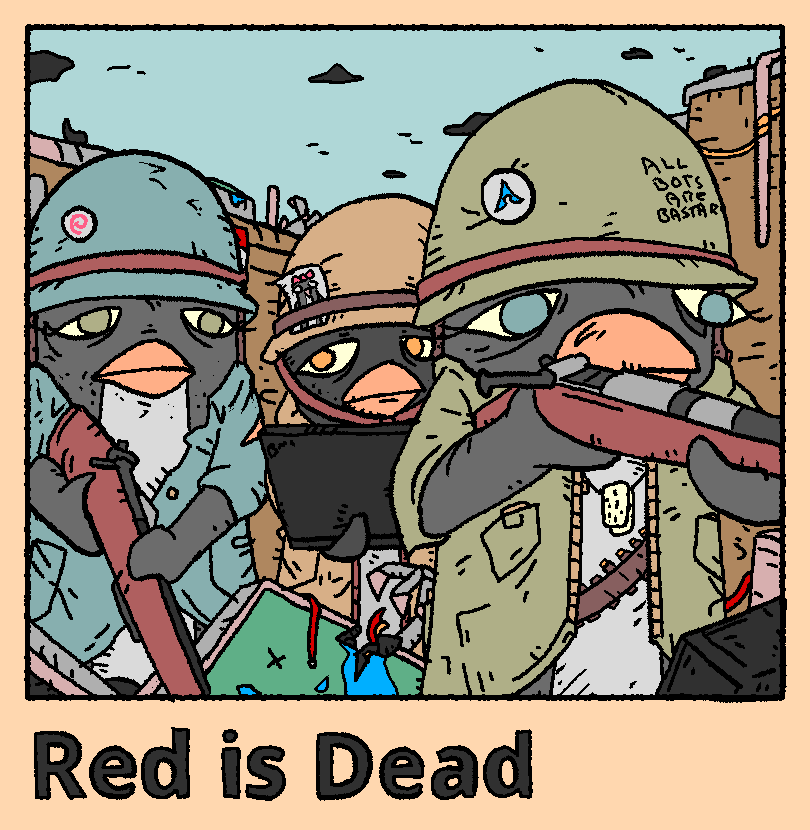
Red is Dead, 4K Anniversary Remaster Director's Cut
https://www.redbubble.com/shop/ap/176437648
(consider supporting my work pls https://analognowhere.com/support )
#unix_surrealism #analognowhere #redisdead #penguin #linux #arch #debian
Alt...
Red is Dead poster featuring 3 penguins with weapons and computers in a trench during the Corpo-Foss war.
![[?]](https://sfo3.digitaloceanspaces.com/veganism-space/accounts/avatars/113/793/819/237/828/375/original/81a152846701caf2.png)
getting some kind of #gradle error when trying to build #helloworld #cordova #android #app in #proot #debian in #termux 😐
why???
![[...]
FAILURE: Build failed with an exception.
* What went wrong:
Execution failed for task ':app:processDebugResources'.
> Could not resolve all files for configuration ':app:debugRuntimeClasspath'.
> Failed to transform appcompat-1.7.0.aar (androidx.appcompat:appcompat:1.7.0) to match attributes {artifactType=android-compiled-dependencies-resources, org.gradle.category=library, org.gradle.dependency.bundling=external, org.gradle.libraryelements=aar, org.gradle.status=release, org.gradle.usage=java-runtime}.
> Execution failed for AarResourcesCompilerTransform: /root/.gradle/caches/8.13/transforms/459cb14f885dfe9984b3b738a7946fbf/transformed/appcompat-1.7.0.
> AAPT2 aapt2-8.7.3-12006047-linux Daemon #1: Daemon startup failed
This should not happen under normal circumstances, please file an issue if it does.
[...]
Deprecated Gradle features were used in this build, making it incompatible with Gradle 9.0.
You can use '--warning-mode all' to show the individual deprecation warnings and determine if they come from your own scripts or plugins.
For more on this, please refer to https://docs.gradle.org/8.13/userguide/command_line_interface.html#sec:command_line_warnings in the Gradle documentation.
BUILD FAILED in 1m 32s
27 actionable tasks: 27 executed
Command failed with exit code 1: /root/hello/platforms/android/tools/gradlew cdvBuildDebug](https://sfo3.digitaloceanspaces.com/veganism-space/media_attachments/files/115/622/655/452/040/485/original/24aa17f80de6ccc3.png "[...]
FAILURE: Build failed with an exception.
* What went wrong:
Execution failed for task ':app:processDebugResources'.
> Could not resolve all files for configuration ':app:debugRuntimeClasspath'.
> Failed to transform appcompat-1.7.0.aar (androidx.appcompat:appcompat:1.7.0) to match attributes {artifactType=android-compiled-dependencies-resources, org.gradle.category=library, org.gradle.dependency.bundling=external, org.gradle.libraryelements=aar, org.gradle.status=release, org.gradle.usage=java-runtime}.
> Execution failed for AarResourcesCompilerTransform: /root/.gradle/caches/8.13/transforms/459cb14f885dfe9984b3b738a7946fbf/transformed/appcompat-1.7.0.
> AAPT2 aapt2-8.7.3-12006047-linux Daemon #1: Daemon startup failed
This should not happen under normal circumstances, please file an issue if it does.
[...]
Deprecated Gradle features were used in this build, making it incompatible with Gradle 9.0.
You can use '--warning-mode all' to show the individual deprecation warnings and determine if they come from your own scripts or plugins.
For more on this, please refer to https://docs.gradle.org/8.13/userguide/command_line_interface.html#sec:command_line_warnings in the Gradle documentation.
BUILD FAILED in 1m 32s
27 actionable tasks: 27 executed
Command failed with exit code 1: /root/hello/platforms/android/tools/gradlew cdvBuildDebug")
Alt...
[...]
FAILURE: Build failed with an exception.
* What went wrong:
Execution failed for task ':app:processDebugResources'.
> Could not resolve all files for configuration ':app:debugRuntimeClasspath'.
> Failed to transform appcompat-1.7.0.aar (androidx.appcompat:appcompat:1.7.0) to match attributes {artifactType=android-compiled-dependencies-resources, org.gradle.category=library, org.gradle.dependency.bundling=external, org.gradle.libraryelements=aar, org.gradle.status=release, org.gradle.usage=java-runtime}.
> Execution failed for AarResourcesCompilerTransform: /root/.gradle/caches/8.13/transforms/459cb14f885dfe9984b3b738a7946fbf/transformed/appcompat-1.7.0.
> AAPT2 aapt2-8.7.3-12006047-linux Daemon #1: Daemon startup failed
This should not happen under normal circumstances, please file an issue if it does.
[...]
Deprecated Gradle features were used in this build, making it incompatible with Gradle 9.0.
You can use '--warning-mode all' to show the individual deprecation warnings and determine if they come from your own scripts or plugins.
For more on this, please refer to https://docs.gradle.org/8.13/userguide/command_line_interface.html#sec:command_line_warnings in the Gradle documentation.
BUILD FAILED in 1m 32s
27 actionable tasks: 27 executed
Command failed with exit code 1: /root/hello/platforms/android/tools/gradlew cdvBuildDebug
![[?]](https://techiegirl.social/system/accounts/avatars/115/617/458/016/782/924/original/505fb66880661876.png)
#Introduction time 😊
Long time maker/nerd girl who loves to learn... and can't get enough
Designing my own #pcbs with #Kicad often around #IoT and #HomeAutomation, but you never know what 🤔 Huge fan of #HomeAssistant
Been #3Dprinting for several years
Started with DOS 3.3 but now run #Linux and #Ubuntu and #Debian . ❤️ Love #retrocomputing
Very much enjoy my #HomeLab and learning
In my "spare" time may be out hiking, fixing or fixing retro systems
#Debian's been my long-term home, but I was having weird networking problems with Debian 13, and felt like trying something different and more unixy.
I never really got into Cinnamon, but Fedora's nice. That and Kubuntu have become my go-to n00b friendly distros, and I think Fedora has the edge now.
Right now, I'm running (in various places):
@jase @AnachronistJohn @BrodieOnLinux @jpaskaruk @mirabilos
I think the central issue is who and why. And let me disclaim everything by saying that I'm just a dingbat who likes playing with unix and I haven't worked in IT in a dozen years. Not a programmer, not a sysadmin anymore, just an enjoyer of random nerdy pursuits. XD
I think there are two extremes in the community management spectrum, and counter-intuitively, the extremes are somehow more tolerable than the "happy middle."
On one extreme, you have projects like OpenBSD, where the ethos is very much along the lines of, "This is what we have created for our own enjoyment. If you like it, too, then great. If you don't like it, uhh... find something you do like. Don't tell us what to do with it." The attitude is upfront and direct, if a bit bracing, and you always know what you're getting and where you stand.
On the other end of the spectrum, you have the hypothetical democratically-run FOSS project, where the community is a huge part of the everyday decision making and trajectory of the project. I don't actually know of a FOSS project that really exemplifies this. I think #Perl may come close. Possibly #sqlite, although probably with a much narrower definition of "community." Also, perhaps #Debian on a good day, but they're not all good days.
Everyone loves a big, open, community-driven project. They're amazing. And most folks can begrudgingly respect a BDFL-driven or very small project that does what it does and doesn't give a fig about anyone else's opinions — so long as there's no surprise about it.
It's the weird medium that I think we're finding ourselves in. Like, what the heck is Linux, actually? I've been using it for a quarter century, and I'm still struggling to put that into words. You know, words other than "lol Linux just a kernel, d00d," which is the singularly least helpful statement on the topic.
And who the hell is Lennart Poettering? And why is Microsnot* paying his salary? What are they hoping to get out of that? What is the structure of governance for "Linux" (whatever that actually is)?
The state of things makes me scratch my head.
So as far as stuff like the adoption of Rust, yeah I think I get it. I think the loss of some architectures are unfortunate (some more than others), but I can appreciate moving tooling to a modern, memory-safe language to be an important progression, at least for argument's sake.
But some of the other changes, the constant re-tooling of the linux userspace, things changing so fast that two-year-old HOWTO articles are now useless?
That's effed up. XD
I'm not saying we should be so stodgy as to keep things exactly as they were 20 or even necessarily 10 years ago. But there's something to be said of a platform that is somewhat stable and stolid vs. a constantly moving target.
*I suppose I should be more professional in my diction, but a) I'm not a professional (in this context, at least), and b) I've got nearly 35 years of experience taking the piss out of Redmond. Old habits. 😄
As it is, I'm unable to troubleshoot the weird networking issues I'm having with #Debian 13. On all my Debian 13 boxes, reverse name lookups are b0rken (even after installing the silly systemd-named, although it did improve a little), and this is across 2-3 different debian machines and on 2 different WLANs.
On this machine (which I'm planning to switch to #FreeBSD), I get very odd and random timeouts. Some websites load fine, many just hang. I'm scratching my head and not sure where to even start with that.
I just need to sit down with a proper Linux networking book and learn things from the ground up.
But of course, since the integral structure of Linux userspace is hardwired to Lennart Poettering's right butt cheek, no book is worth anything after about two weeks.
This is a very frustrating, silly, and utterly avoidable situation.
Foxtrot-foxtrot-sierra.
#Debian's even fatter:
$ ls -ld {,/usr}/{,s}bin
lrwxrwxrwx 1 root root       7 Dec 10  2023 /bin -> usr/bin
lrwxrwxrwx 1 root root       8 Dec 10  2023 /sbin -> usr/sbin
drwxr-xr-x 2 root root 135,168 Nov 15 16:42 /usr/bin
drwxr-xr-x 2 root root  36,864 Nov 15 16:42 /usr/sbin
Number of files in #Debian 13 /etc: 2727
Number of files in #ChimeraLinux live environment /etc/: 289
Yeah, I think we're gonna get along. 😂
I don't know if it's just me being clueless, but something seems b0rken with networking on #Debian 13.
Specifically, LAN reverse hostname resolution via mDNS (ip to name) is totally broken using the normal utilities (like host and nslookup).
I don't know if it's something to do with not using systemd-resolved, but I didn't have any problems on Debian 12, and all my Debian 13 machines have the same problem (even from-scratch VMs), except for my raspi (and I'm not sure how Rasbperry Pi OS 13 is configured).
I'm thinking of migrating everything to #Fedora for a while.
![[?]](data:image/png;base64, iVBORw0KGgoAAAANSUhEUgAAAEAAAABAAQAAAACCEkxzAAAAUUlEQVQoz43R0QkAMQwCUDdw/y3dwEvsvzlL4X1IoQkAisKmwfAFT3RgJHbQezpSRoXEqeqCL9BJBf7h3QbOCCxV5EVWMEMwG7K1/WODtlvxAYTtEsDU9F34AAAAAElFTkSuQmCC)
Much discussion in my feeds around the rustc problem/bug generating bad code to do with SSE2;
https://lists.debian.org/debian-release/2024/11/msg00459.html
Can't say I understand what is the root case there, but rust is not making friends in the vintage/retro computing world.
Nor the folks maintaining old kit for customers.
![[?]](https://hub.azkware.net/photo/profile/csolisr.jpeg?ts=1754582308)
Yeah, especially for work machines.
I want to convert* my Debian work machine to Fedora, too, but I can't figure out how to get the iscan package for Fedora (probably just too old?) to support our old sheet-feeding scanner, so I'm going to stay put for now.
* I'm having some networking problems with Debian 13. Specifically, it doesn't do reverse-hostname resolution on the LAN. Might have something to do with not using systemd-resolved, although installing that package only helps somewhat. I've got the same issue on multiple machines and in more than one location, so I think it's a #Debian thing, not a me-thing, AFAICT. Somehow the mdns/zeroconf hostnames don't make it into the normal host/nslookup utilities.
![[?]](https://m.f-h.co/cosocial-ca/accounts/avatars/110/629/522/146/222/410/original/4d688b81e15ea669.png)
![[?]](https://social-cdn.vivaldi.net/system/accounts/avatars/109/348/426/982/556/505/original/df39745f82da5936.jpeg)
![[?]](https://cdn.masto.host/lsnglus/accounts/avatars/000/000/002/original/487cae6a93e9ba55.jpeg)
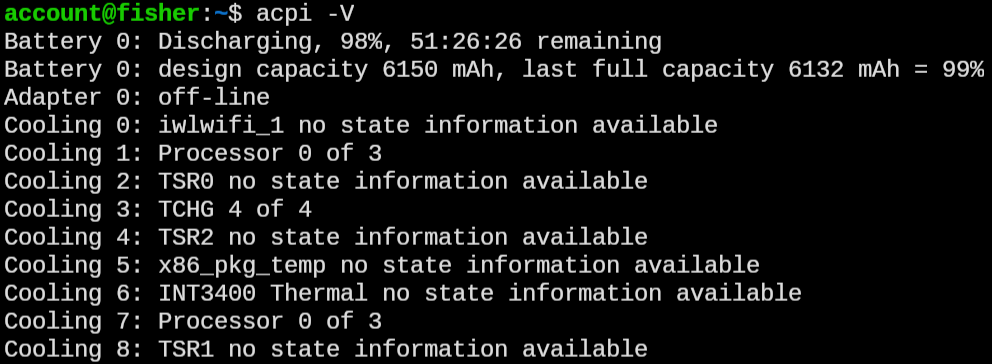
Celeron N3350 #chromebook running #debian on battery, with one core disabled and the other throttled to 800mhz. Running the one internal #wifi interface and a second on USB. 51h of battery? I'll take it.
![[?]](https://cdn.masto.host/amastodonuk/accounts/avatars/109/302/273/728/389/967/original/5c2b387e0b1edfb1.png)
I'm really looking forward to the release of #Debian #Trixie (Debian 13). Going to be simplifying my setup by moving all our computers (2 Geekom mini pc's, 1 laptop and various #RaspberryPi ) to the same OS. The only exception will be the RaspberryPi5 running #HomeAssistant which runs it's own Linux.
![[?]](https://cdn.mstdn.ca/accounts/avatars/109/394/737/741/980/508/original/7b7c412e3d7cc3c1.png)
A few months ago, I bought one of those weird little mini-PC things from Aliexpress. It's surprisingly good, but just a tad too small. Took a bit of tweaking with udev to get everything working right, but it's pretty good now!
That being said, I still think the sweet spot is ~12" like my antique ThinkPad X201.
#blog #minipc #minipcs #debian #linux #badcomputer #hack #sysadmin #blogpost