Search results for tag #language
![[?]](https://cdn.masto.host/zirkus/accounts/avatars/111/192/373/629/540/829/original/9ff4f5b9781a0e3a.jpg)
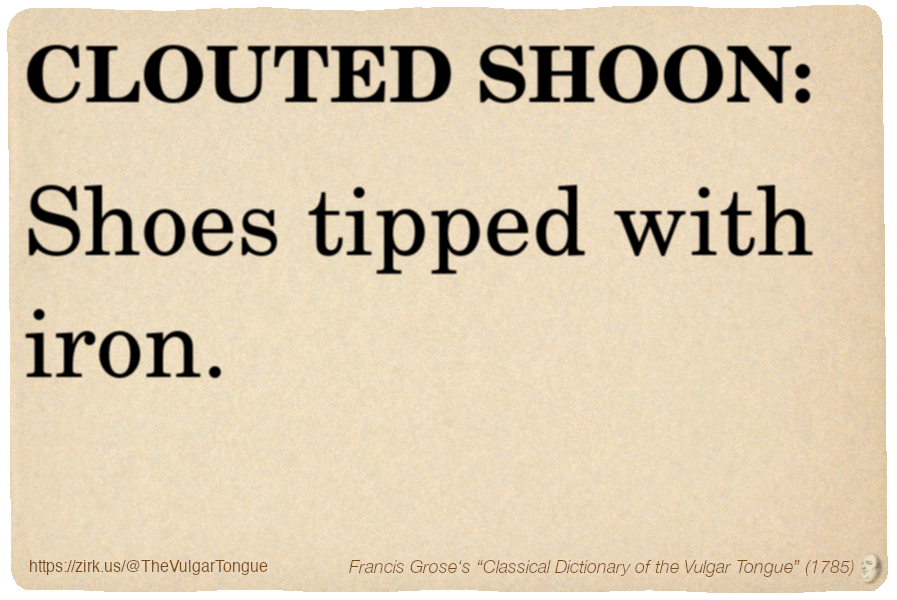
CLOUTED SHOON. Shoes tipped with iron.
A selection from Francis Grose’s “Dictionary Of The Vulgar Tongue” (1785)
--
#books #literature #dictionaries #history #society #language #slang @histodons
Alt...
Image imitating a page from an old document, text (as in main toot):
CLOUTED SHOON. Shoes tipped with iron.
A selection from Francis Grose’s “Dictionary Of The Vulgar Tongue” (1785)
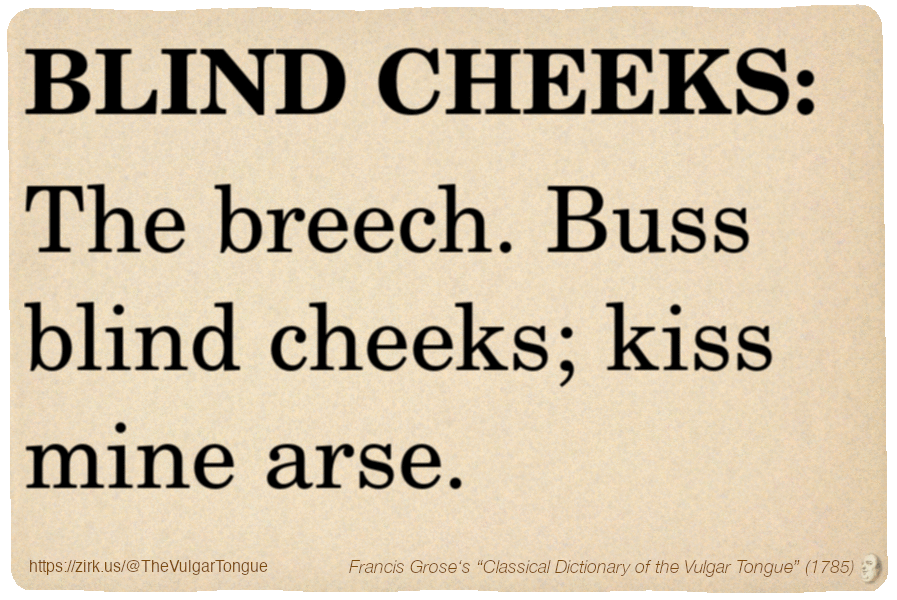
BLIND CHEEKS. The breech. Buss blind cheeks; kiss mine arse.
A selection from Francis Grose’s “Dictionary Of The Vulgar Tongue” (1785)
--
#books #literature #dictionaries #history #society #language #slang @histodons
Alt...
Image imitating a page from an old document, text (as in main toot):
BLIND CHEEKS. The breech. Buss blind cheeks; kiss mine arse.
A selection from Francis Grose’s “Dictionary Of The Vulgar Tongue” (1785)
![[?]](https://files.mastodon.social/accounts/avatars/115/070/625/860/923/251/original/9629d01039476748.png)
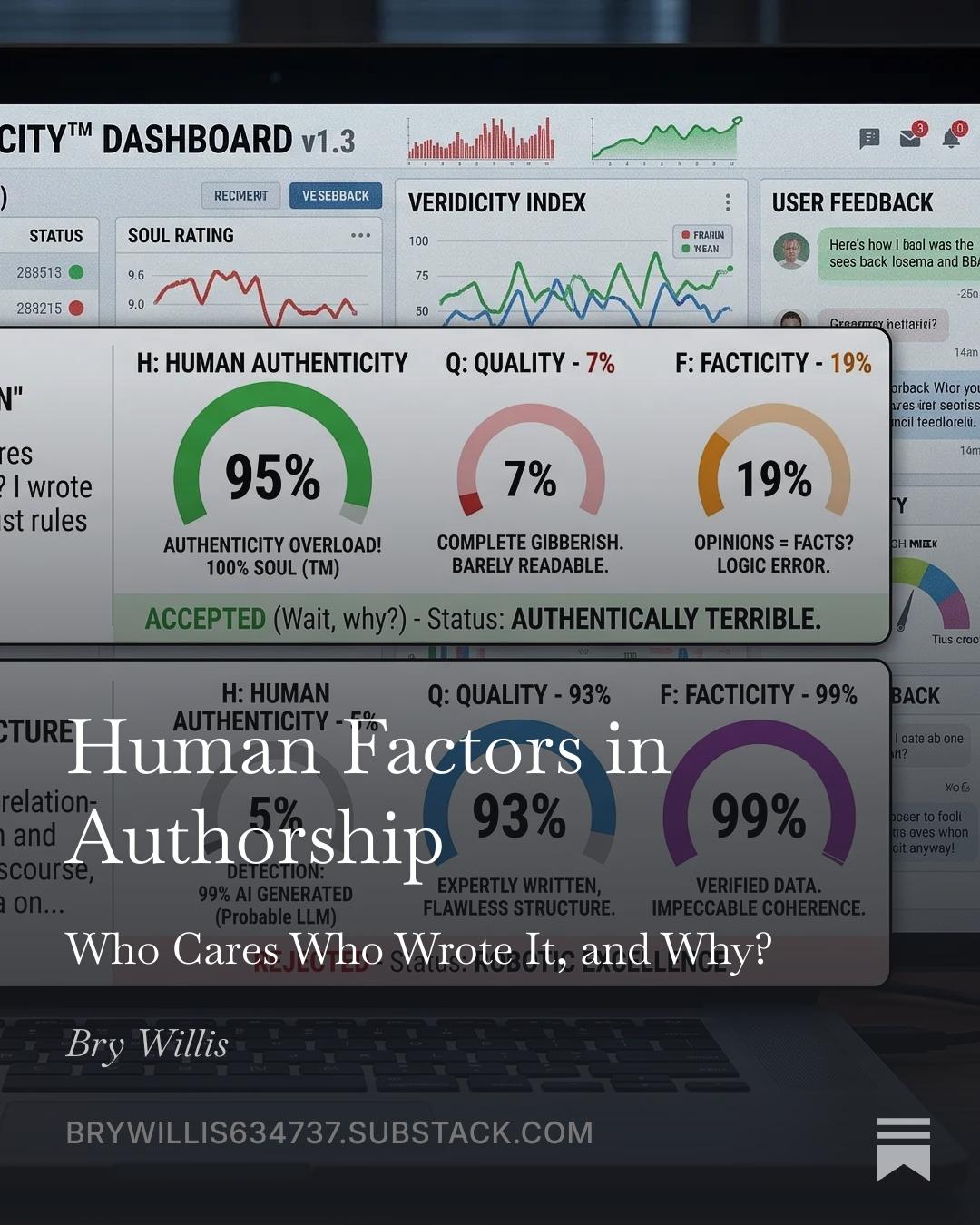
The AI-authorship debate is bollox.
https://brywillis634737.substack.com/p/human-factors-in-authorship
The LLM-versus-human debate has been raging for several years now, and there seem to be two principal camps: human exceptionalists and agnostics. I suppose there may also be a small, misanthropic faction, but its members are remarkably quiet.
#philosophy #blog #substack #podcast #pangram #authenticity #quality #facticity #dashboard #authorship #writing #publishing #media #language #llms #artificialintelligence #debate #exceptionalism
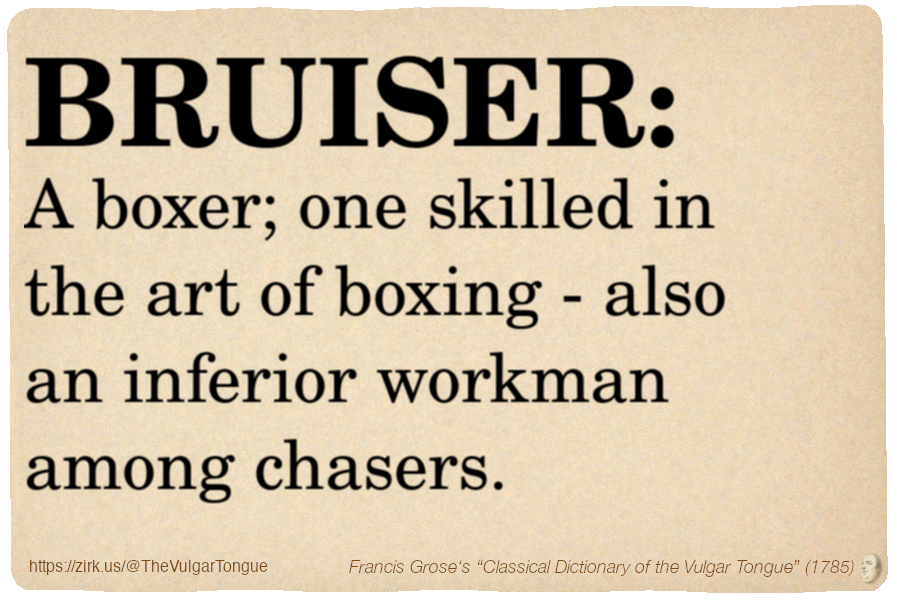
BRUISER. A boxer; one skilled in the art of boxing - also an inferior workman among chasers.
A selection from Francis Grose’s “Dictionary Of The Vulgar Tongue” (1785)
--
#books #literature #dictionaries #history #society #language #slang @histodons
Alt...
Image imitating a page from an old document, text (as in main toot):
BRUISER. A boxer; one skilled in the art of boxing - also an inferior workman among chasers.
A selection from Francis Grose’s “Dictionary Of The Vulgar Tongue” (1785)
![[?]](https://babka-mastodon.nyc3.cdn.digitaloceanspaces.com/accounts/avatars/109/554/492/947/534/560/original/cccb05f65e8f3af8.png)
ICYMI
Read all about Israeli Food & Drink Words you’ve been using all along.
Then go get something to eat because you’ll be hungry!
#IsraeliFoods #Foodie #LearnHebrew #Language #Kosher

![[?]](https://cdn.masto.host/mastodonie/accounts/avatars/113/193/322/038/743/882/original/fa8860c1a121cf5b.png)
Hiberno-English word/phrase of the day:
Cailleach
(Also: "calleach", "callioch", "calyagh".)
"Cailleach" is a word for an "old woman", "hag" (but it's distinct from "seanbhean"); the term is reserved for a very old woman or witch-like creature.
Cailleach ('old woman' or 'hag' in modern Irish) comes from the Old Irish "caillech" (veiled one or nun), an adjectival form of "caille" (veil), an early loan from Latin "pallium" (woollen cloak).
GLIMMER. Fire. CANT.
A selection from Francis Grose’s “Dictionary Of The Vulgar Tongue” (1785)
--
#books #literature #dictionaries #history #society #language #slang @histodons
Alt...
Image imitating a page from an old document, text (as in main toot):
GLIMMER. Fire. CANT.
A selection from Francis Grose’s “Dictionary Of The Vulgar Tongue” (1785)
AUTEM MORT. A married woman; also a female beggar with several children hired or borrowed to excite charity. CANT.
A selection from Francis Grose’s “Dictionary Of The Vulgar Tongue” (1785)
--
#books #literature #dictionaries #history #society #language #slang @histodons
Alt...
Image imitating a page from an old document, text (as in main toot):
AUTEM MORT. A married woman; also a female beggar with several children hired or borrowed to excite charity. CANT.
A selection from Francis Grose’s “Dictionary Of The Vulgar Tongue” (1785)
PIN. In or to a merry pin; almost drunk: allusion to a sort of tankard, used in the north, having silver pegs or pins set at equal distances from the top to the bottom:every person drinking out of one of these tankards, was to swallow the quantity contained between two pins.
A selection from Francis Grose’s “Dictionary Of The Vulgar Tongue” (1785)
--
#books #literature #dictionaries #history #society #language #slang @histodons
Alt...
Image imitating a page from an old document, text (as in main toot):
PIN. In or to a merry pin; almost drunk: allusion to a sort of tankard, used in the north, having silver pegs or pins set at equal distances from the top to the bottom:every person drinking out of one of these tankards, was to swallow the quantity contained between two pins.
A selection from Francis Grose’s “Dictionary Of The Vulgar Tongue” (1785)
NICKNAME. A name given in ridicule or contempt: from the French nom de niqne. Niqne is a movement of the head to mark a contempt for any person or thing.
A selection from Francis Grose’s “Dictionary Of The Vulgar Tongue” (1785)
--
#books #literature #dictionaries #history #society #language #slang @histodons
Alt...
Image imitating a page from an old document, text (as in main toot):
NICKNAME. A name given in ridicule or contempt: from the French nom de niqne. Niqne is a movement of the head to mark a contempt for any person or thing.
A selection from Francis Grose’s “Dictionary Of The Vulgar Tongue” (1785)
Hi!, I'm a bot posting selections from Francis Grose’s 1785 “Dictionary Of The Vulgar Tongue”, a compilation of slang terms, the coded language of the underclass and the demi-monde.
[18th-century-content warning: possible racism, animal cruelty, homophobia, sexism, slut-shaming. Let me know of any problems.]
#FollowFriday #books #literature #dictionaries #history #society #crime #language #slang #18thCentury
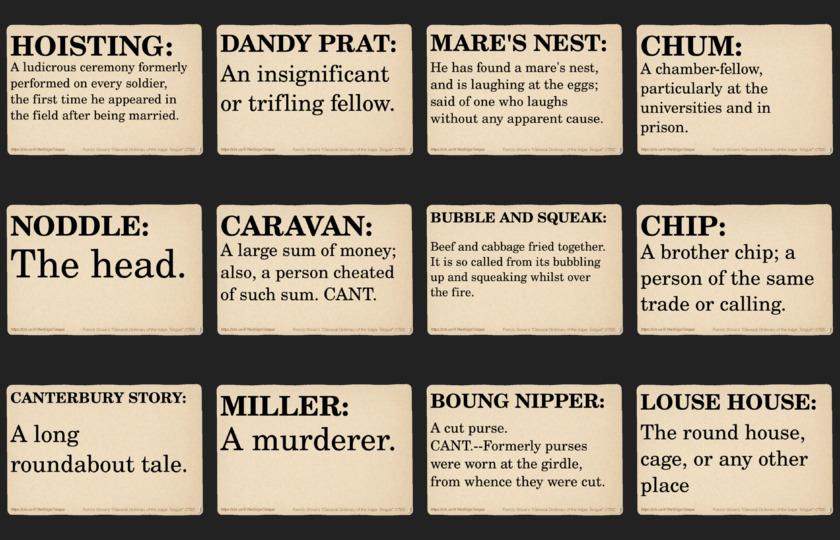
Alt...
Montage of dictionary items posted by this account
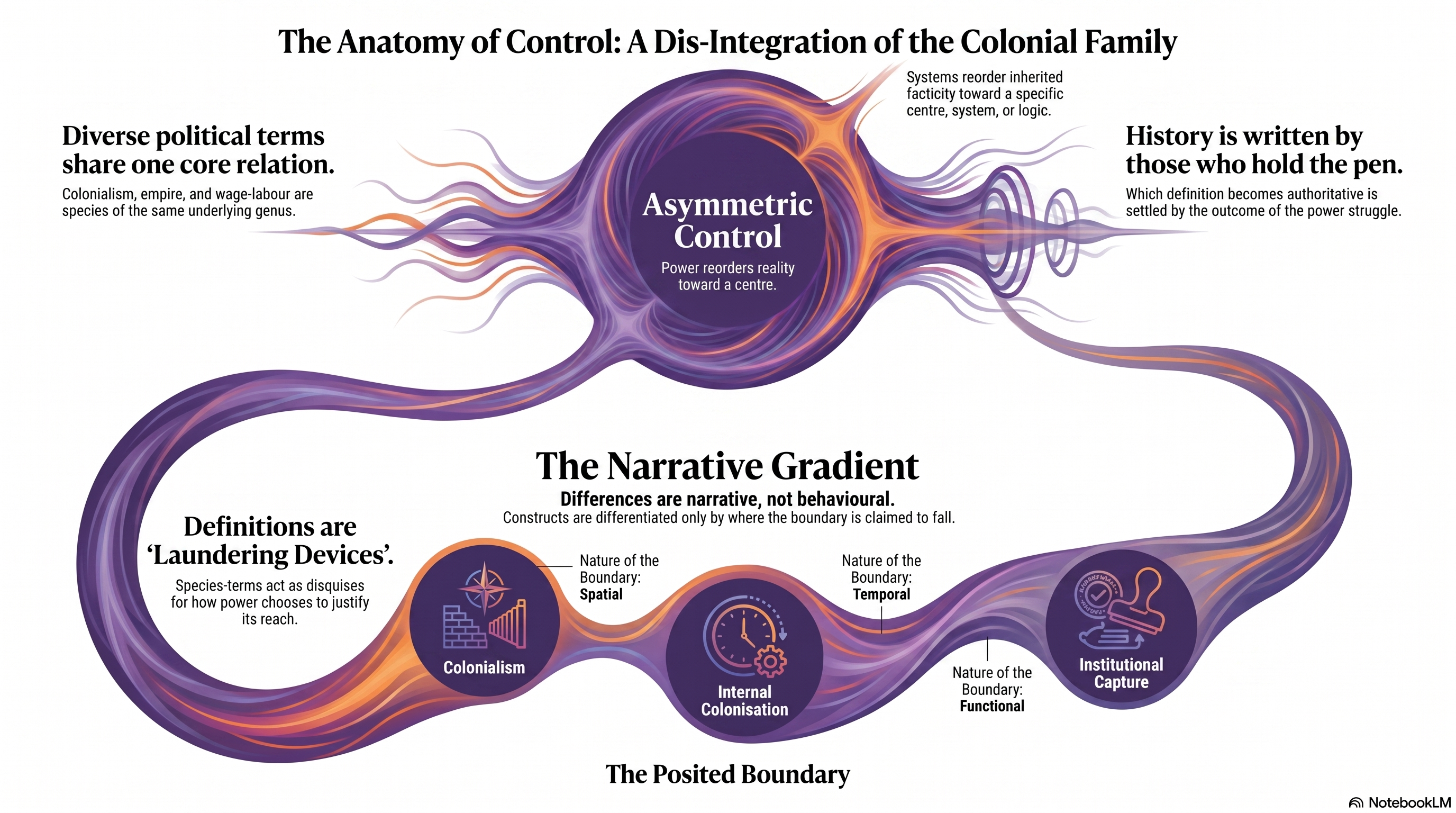
I was distracted by the notion of colonialism today, so I took some notes. We tend to treat colonialism as pertaining to countries 'out there' – 'over there'. If we are victims of colonisation, the oppressor is 'out there' but looking in.
📝 https://substack.com/@brywillis634737/note/c-299870495?utm_source=notes-share-action&r=pvxh5
🎧 https://open.spotify.com/episode/4mNHkZWfXKDyCC5Ljsj758?si=Yd41XyNVRbSUcwXmzP8oKA
#philosophy #politics #power #language #colonialism #control #foucault #mbembe #marx #heidegger #fanon #perspective #podcast #blog #substack #spotify #culture #empire #hegemony #essay
In this follow-up to the Merits of Meritocracy, I delved a little deeper into Trump and Plato's Republic.
https://philosophics.blog/2026/07/22/the-merits-of-meritocracy/?utm_source=masto&utm_medium=social
#philosophy #merit #business #linkedin #meritocracy #video #podcast #substack #politics #language #culture #dei #promotions #statistics #heuristics
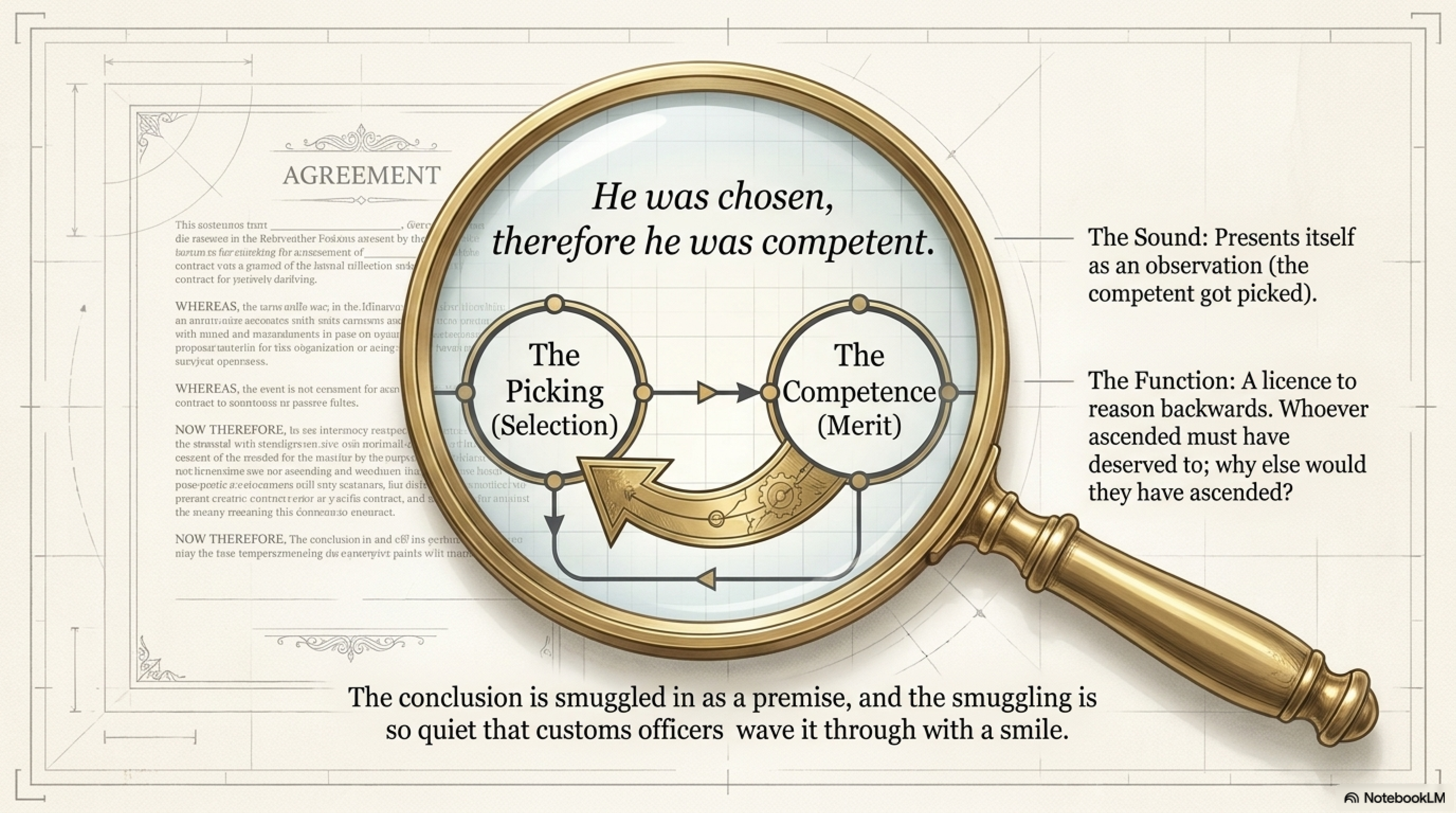
I've been wittering on about the history and failings of Meritocracy, but I hadn't drafted a version for Substack.
👉 https://brywillis634737.substack.com/p/the-merits-of-meritocracy
I've purposely left Trump, but clearly he's a central figure in this perspective. Very few situations merit meritocracy as a lens, but we seem to overextend it. It is certainly overrepresented in business.
#philosophy #merit #business #linkedin #meritocracy #video #podcast #substack #politics #language #culture #dei #promotions #statistics #heuristics
Hiberno-English word/phrase of the day:
Caffler
(Irish: "cafaire", meaning "prater".)
A, mostly, Cork slang word for a cheeky young boy, a layabout or a no-good. In Frank O'Connor's short story "First Confession", Jackie's sister, Nora, calls him a "dirty little caffler" when he disgraces her in the church.
LEFT-HANDED WIFE. A concubine; an allusion to an ancient German custom, according to which, when a man married his concubine, or a woman greatly his inferior, he gave her his left hand.
A selection from Francis Grose’s “Dictionary Of The Vulgar Tongue” (1785)
--
#books #literature #dictionaries #history #society #language #slang @histodons
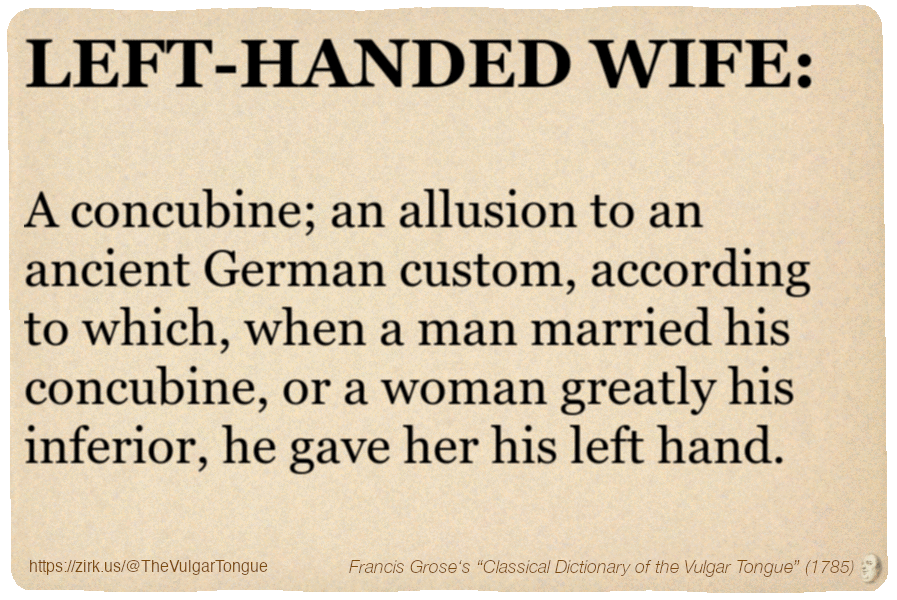
Alt...
Image imitating a page from an old document, text (as in main toot):
LEFT-HANDED WIFE. A concubine; an allusion to an ancient German custom, according to which, when a man married his concubine, or a woman greatly his inferior, he gave her his left hand.
A selection from Francis Grose’s “Dictionary Of The Vulgar Tongue” (1785)
BLEEDING CULLY. One who parts easily with his money, or bleeds freely.
A selection from Francis Grose’s “Dictionary Of The Vulgar Tongue” (1785)
--
#books #literature #dictionaries #history #society #language #slang @histodons
Alt...
Image imitating a page from an old document, text (as in main toot):
BLEEDING CULLY. One who parts easily with his money, or bleeds freely.
A selection from Francis Grose’s “Dictionary Of The Vulgar Tongue” (1785)
![[?]](https://cdn.masto.host/mastjohn1126com/accounts/avatars/115/981/910/993/463/416/original/00ac72837ce34a31.gif)
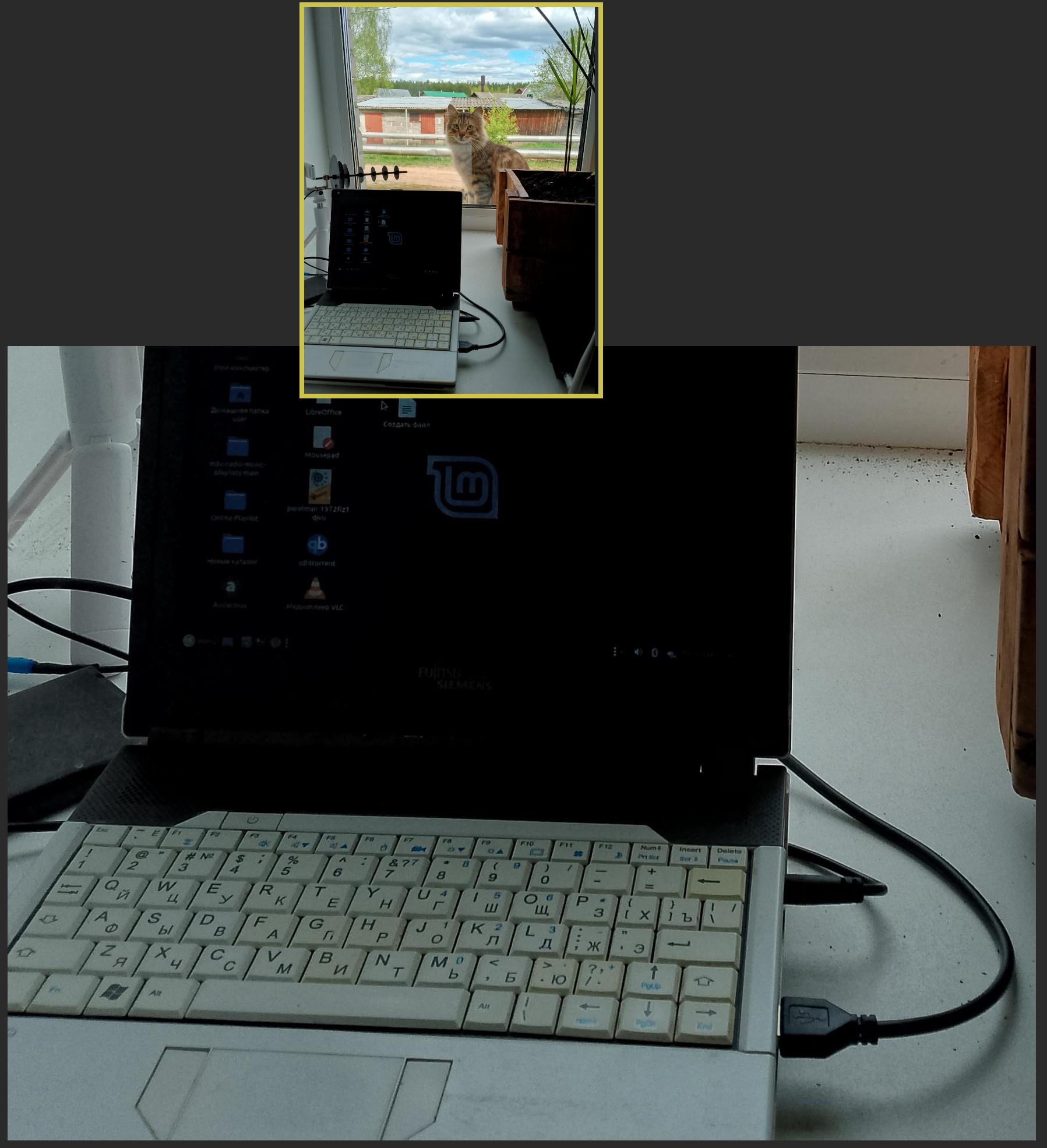
Now I know what a computer keyboard looks like for Russians. On this notebook, the English (Latin) characters are overlaid with #Russian (Cyrillic) characters. The English alphabet has only 26 characters, while Cyrillic has 33, so to accommodate the extra letters required for Russian, some punctuation keys are overlaid with #Cyrillic.
This particular computer is running #LinuxMint, the same that I use in the #USA!
Image source: https://mastodon.social/@ElectroFetish/116538089327558590
#cats #Russia #computers #language
Hiberno-English word/phrase of the day:
Cadráil
("Cadráil" is the Irish for "chatter" or "gossip"; a "cadrálaí" is a "chatterbox".)
Generally in Ireland "cadráil" means any type of empty chatter. In Cork it means "long-winded talk" and "cadrálaí" is one given to foolish prattling. Whilst in Kerry "cadaráiling" is used to describe idle gossiping, eg "stop your cadaráiling and come over here".
CROSS BUTTOCK. A particular lock or fall in the Broughtonian art, which, as Mr. Fielding observes, conveyed more pleasant sensations to the spectators than the patient.
A selection from Francis Grose’s “Dictionary Of The Vulgar Tongue” (1785)
--
#books #literature #dictionaries #history #society #language #slang @histodons
Alt...
Image imitating a page from an old document, text (as in main toot):
CROSS BUTTOCK. A particular lock or fall in the Broughtonian art, which, as Mr. Fielding observes, conveyed more pleasant sensations to the spectators than the patient.
A selection from Francis Grose’s “Dictionary Of The Vulgar Tongue” (1785)
BELLOWS. The lungs.
A selection from Francis Grose’s “Dictionary Of The Vulgar Tongue” (1785)
--
#books #literature #dictionaries #history #society #language #slang @histodons
Alt...
Image imitating a page from an old document, text (as in main toot):
BELLOWS. The lungs.
A selection from Francis Grose’s “Dictionary Of The Vulgar Tongue” (1785)
Hiberno-English word/phrase of the day:
Cabús
(Also: "caboose")
In Ireland a "cabús" is a nook on each side of an open fire in which tea, tobacco, etc. was left to keep dry. "Put it in the cabús in the corner."
(Not to be confused with caboose's use in the USA [a railway wagon with accommodation for the train crew, typically attached to the end of the train] or the UK [a person's buttocks].)
ACTIVE CITIZEN. A louse.
A selection from Francis Grose’s “Dictionary Of The Vulgar Tongue” (1785)
--
#books #literature #dictionaries #history #society #language #slang @histodons
Alt...
Image imitating a page from an old document, text (as in main toot):
ACTIVE CITIZEN. A louse.
A selection from Francis Grose’s “Dictionary Of The Vulgar Tongue” (1785)
WHIFFLERS. Ancient name for fifers; also persons at the universities who examine candidates for degrees. A whiffling cur, a small yelping cur.
A selection from Francis Grose’s “Dictionary Of The Vulgar Tongue” (1785)
--
#books #literature #dictionaries #history #society #language #slang @histodons
Alt...
Image imitating a page from an old document, text (as in main toot):
WHIFFLERS. Ancient name for fifers; also persons at the universities who examine candidates for degrees. A whiffling cur, a small yelping cur.
A selection from Francis Grose’s “Dictionary Of The Vulgar Tongue” (1785)
I share some thoughts about a 2024 IAI article by Paul Pietroski.
https://brywillis634737.substack.com/p/words-do-not-refer-alone
I agree with Paul directionally, but I think he could have gone further – and perhaps he has since – so I compare his view to my own in a Substack article. I'm not sure whether he'd disagree with the extensions. Check it out.
#language #philosophy #semantics #ontology #reality #words #video #podcast #blog #substack #iai #lemonade #communication #meaning
COVENT GARDEN ABBESS. A bawd.
A selection from Francis Grose’s “Dictionary Of The Vulgar Tongue” (1785)
--
#books #literature #dictionaries #history #society #language #slang @histodons
Alt...
Image imitating a page from an old document, text (as in main toot):
COVENT GARDEN ABBESS. A bawd.
A selection from Francis Grose’s “Dictionary Of The Vulgar Tongue” (1785)
What's real, reality, and other such questions?
https://brywillis634737.substack.com/p/real-reality-ontology-ontic-a-coordinating
#philosophy #language #ontology #reality #real #sociology #words #concepts #definitions #blog #substack #spotify #podcast #video
BARREL FEVER. He died of the barrel fever; he killed himself by drinking.
A selection from Francis Grose’s “Dictionary Of The Vulgar Tongue” (1785)
--
#books #literature #dictionaries #history #society #language #slang @histodons
Alt...
Image imitating a page from an old document, text (as in main toot):
BARREL FEVER. He died of the barrel fever; he killed himself by drinking.
A selection from Francis Grose’s “Dictionary Of The Vulgar Tongue” (1785)
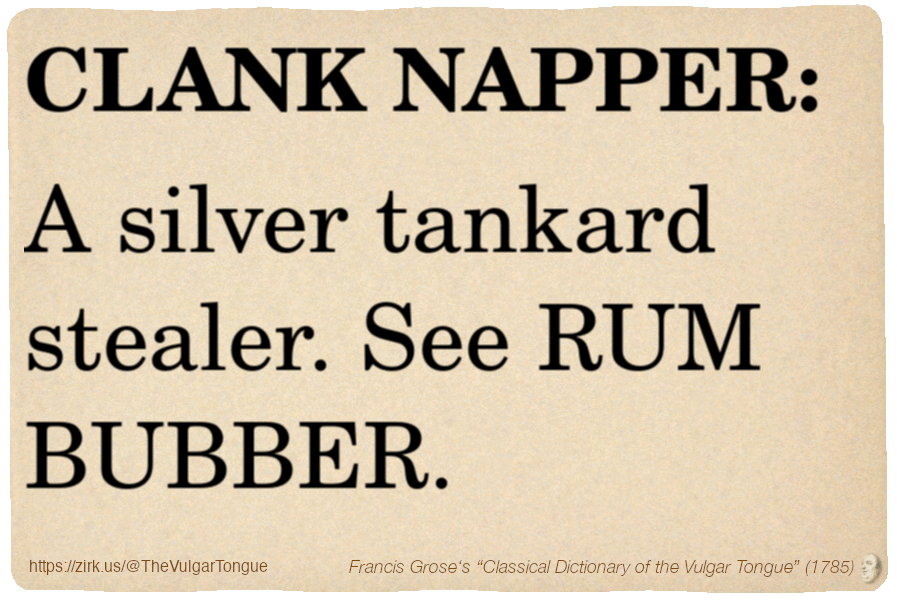
CLANK NAPPER. A silver tankard stealer. See RUM BUBBER.
A selection from Francis Grose’s “Dictionary Of The Vulgar Tongue” (1785)
--
#books #literature #dictionaries #history #society #language #slang @histodons
Alt...
Image imitating a page from an old document, text (as in main toot):
CLANK NAPPER. A silver tankard stealer. See RUM BUBBER.
A selection from Francis Grose’s “Dictionary Of The Vulgar Tongue” (1785)
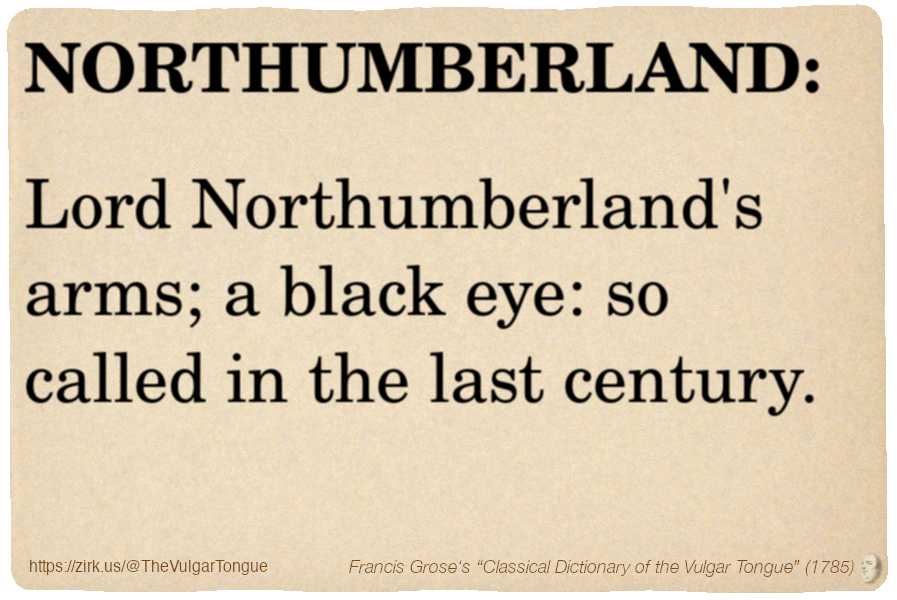
NORTHUMBERLAND. Lord Northumberland's arms; a black eye: so called in the last century.
A selection from Francis Grose’s “Dictionary Of The Vulgar Tongue” (1785)
--
#books #literature #dictionaries #history #society #language #slang @histodons
Alt...
Image imitating a page from an old document, text (as in main toot):
NORTHUMBERLAND. Lord Northumberland's arms; a black eye: so called in the last century.
A selection from Francis Grose’s “Dictionary Of The Vulgar Tongue” (1785)
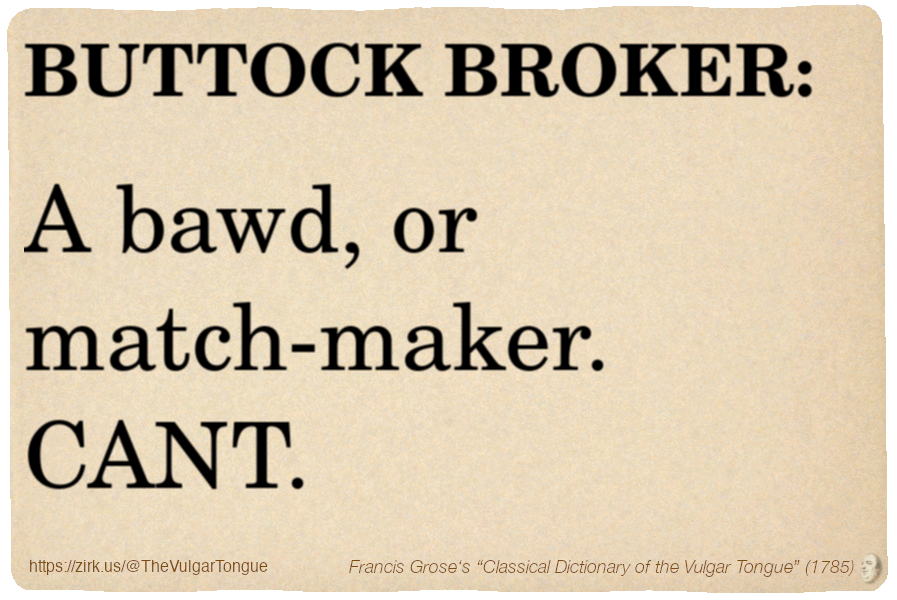
BUTTOCK BROKER. A bawd, or match-maker. CANT.
A selection from Francis Grose’s “Dictionary Of The Vulgar Tongue” (1785)
--
#books #literature #dictionaries #history #society #language #slang @histodons
Alt...
Image imitating a page from an old document, text (as in main toot):
BUTTOCK BROKER. A bawd, or match-maker. CANT.
A selection from Francis Grose’s “Dictionary Of The Vulgar Tongue” (1785)
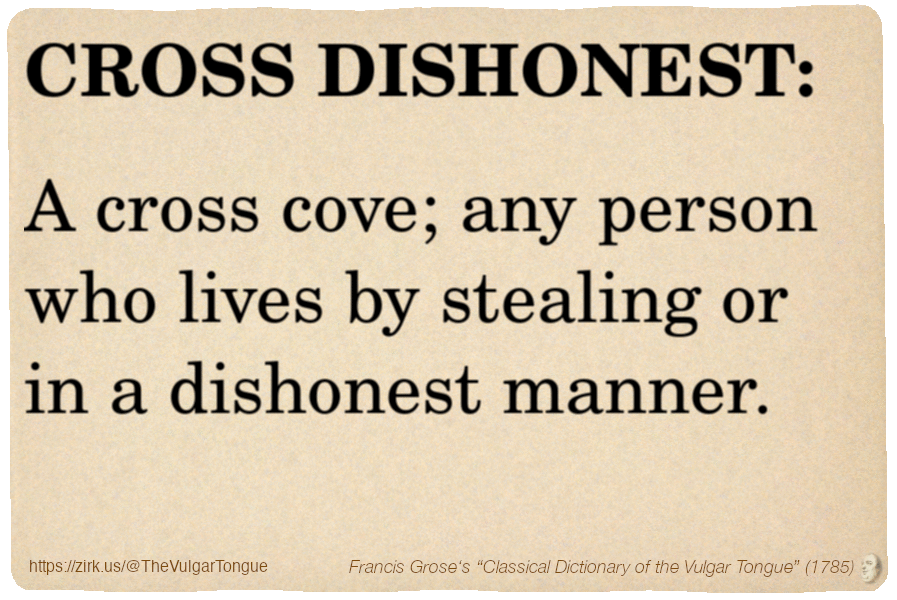
CROSS DISHONEST. A cross cove; any person who lives by stealing or in a dishonest manner.
A selection from Francis Grose’s “Dictionary Of The Vulgar Tongue” (1785)
--
#books #literature #dictionaries #history #society #language #slang @histodons
Alt...
Image imitating a page from an old document, text (as in main toot):
CROSS DISHONEST. A cross cove; any person who lives by stealing or in a dishonest manner.
A selection from Francis Grose’s “Dictionary Of The Vulgar Tongue” (1785)
HARK-YE-ING. Whispering on one side to borrow money.
A selection from Francis Grose’s “Dictionary Of The Vulgar Tongue” (1785)
--
#books #literature #dictionaries #history #society #language #slang @histodons
Alt...
Image imitating a page from an old document, text (as in main toot):
HARK-YE-ING. Whispering on one side to borrow money.
A selection from Francis Grose’s “Dictionary Of The Vulgar Tongue” (1785)
![[?]](https://media.mastodon.scot/accounts/avatars/109/318/532/504/799/614/original/403026568ed524d5.jpeg)
I thought this article might end up just being a somewhat tired regurgitation of the well known habit English speakers have of borrowing words from other languages (and enriching English). But it does bear reading - the delegitimisation of a language, Scots in this case.
#language #Scots #delegitimisation #slang #english
![From the linked article. A man reads part of the Oxford Dictionary of English with the text
How the English dictionary took Scots words and branded them 'slang
THE Oxford English Dictionary (OED) has delegitimised the Scots language by adding several new “Scottish” words.
While English and Scots are sister languages characterised by mutual intelligibility, they are still very much separate languages with their own grammar, syntax and words. But decades of cultural oppression persist and Scots remains reduced to either slang, or, in this case, an offshoot of English.
One of the recently added Scots words is “scaffie”, meaning “raggedy”. But writing as a Scots language author who spent nine years living in England, I never once heard an English-only speaker say scaffie (also spelled as scaffy). The other recent additions to the English dictionary – including “loup” and “gowp” – are even worse.
READ MORE: Bòrd na Gàidhlig invites Reform for talks after attack on Gaelic language
Fiona McPherson, the Scottish executive editor at the OED, said: “It’s always special when I get to work on Scottish words, and those included in this update of the OED are evocative and familiar.
“While new to the OED, [others] have long established histories. Loup and gowp are found as early as the 16th and 18th centuries respectively, meaning ‘of the heart, blood: to beat or pulse rapidly or strongly’. The later sense of ‘to throb or ache with a pulsating pain’ has also been included.”
There are many things wrong with this statement. The most glaring being that the dictionary’s Scottish executive editor chose to describe these words as Scottish and not examples of the Scots language – a year on from Scots receiving legal recognition and protection for the first time in history with the Scottish Languages Act.
This emphasises how far we still have to go when it comes to having Scots recognised as a leid. Especially as it has legal recognition by Unesco since 2009 and the European Charter for Minority Languages since 2001.
According to the OED, for a word to be included, its development needs to be researched using sources including “newspaper archives, online forums, academic studies, magazines, law tracts, recipe books, or social media for published evidence of the word”. But if the new additions are anything to go by, the Scots origins of these words have been ignored and/or reduced.
While languages mix and evolve over time and a lot of words are “loaned” from one leid to another, their origins need to be acknowledged and respected, especially by an institution with as much linguistic respect as the OED.](https://media.mastodon.scot/media_attachments/files/116/928/765/850/405/933/original/8ea3fc222d6c597b.png "From the linked article. A man reads part of the Oxford Dictionary of English with the text
How the English dictionary took Scots words and branded them 'slang
THE Oxford English Dictionary (OED) has delegitimised the Scots language by adding several new “Scottish” words.
While English and Scots are sister languages characterised by mutual intelligibility, they are still very much separate languages with their own grammar, syntax and words. But decades of cultural oppression persist and Scots remains reduced to either slang, or, in this case, an offshoot of English.
One of the recently added Scots words is “scaffie”, meaning “raggedy”. But writing as a Scots language author who spent nine years living in England, I never once heard an English-only speaker say scaffie (also spelled as scaffy). The other recent additions to the English dictionary – including “loup” and “gowp” – are even worse.
READ MORE: Bòrd na Gàidhlig invites Reform for talks after attack on Gaelic language
Fiona McPherson, the Scottish executive editor at the OED, said: “It’s always special when I get to work on Scottish words, and those included in this update of the OED are evocative and familiar.
“While new to the OED, [others] have long established histories. Loup and gowp are found as early as the 16th and 18th centuries respectively, meaning ‘of the heart, blood: to beat or pulse rapidly or strongly’. The later sense of ‘to throb or ache with a pulsating pain’ has also been included.”
There are many things wrong with this statement. The most glaring being that the dictionary’s Scottish executive editor chose to describe these words as Scottish and not examples of the Scots language – a year on from Scots receiving legal recognition and protection for the first time in history with the Scottish Languages Act.
This emphasises how far we still have to go when it comes to having Scots recognised as a leid. Especially as it has legal recognition by Unesco since 2009 and the European Charter for Minority Languages since 2001.
According to the OED, for a word to be included, its development needs to be researched using sources including “newspaper archives, online forums, academic studies, magazines, law tracts, recipe books, or social media for published evidence of the word”. But if the new additions are anything to go by, the Scots origins of these words have been ignored and/or reduced.
While languages mix and evolve over time and a lot of words are “loaned” from one leid to another, their origins need to be acknowledged and respected, especially by an institution with as much linguistic respect as the OED.")
Alt...
From the linked article. A man reads part of the Oxford Dictionary of English with the text
How the English dictionary took Scots words and branded them 'slang
THE Oxford English Dictionary (OED) has delegitimised the Scots language by adding several new “Scottish” words.
While English and Scots are sister languages characterised by mutual intelligibility, they are still very much separate languages with their own grammar, syntax and words. But decades of cultural oppression persist and Scots remains reduced to either slang, or, in this case, an offshoot of English.
One of the recently added Scots words is “scaffie”, meaning “raggedy”. But writing as a Scots language author who spent nine years living in England, I never once heard an English-only speaker say scaffie (also spelled as scaffy). The other recent additions to the English dictionary – including “loup” and “gowp” – are even worse.
READ MORE: Bòrd na Gàidhlig invites Reform for talks after attack on Gaelic language
Fiona McPherson, the Scottish executive editor at the OED, said: “It’s always special when I get to work on Scottish words, and those included in this update of the OED are evocative and familiar.
“While new to the OED, [others] have long established histories. Loup and gowp are found as early as the 16th and 18th centuries respectively, meaning ‘of the heart, blood: to beat or pulse rapidly or strongly’. The later sense of ‘to throb or ache with a pulsating pain’ has also been included.”
There are many things wrong with this statement. The most glaring being that the dictionary’s Scottish executive editor chose to describe these words as Scottish and not examples of the Scots language – a year on from Scots receiving legal recognition and protection for the first time in history with the Scottish Languages Act.
This emphasises how far we still have to go when it comes to having Scots recognised as a leid. Especially as it has legal recognition by Unesco since 2009 and the European Charter for Minority Languages since 2001.
According to the OED, for a word to be included, its development needs to be researched using sources including “newspaper archives, online forums, academic studies, magazines, law tracts, recipe books, or social media for published evidence of the word”. But if the new additions are anything to go by, the Scots origins of these words have been ignored and/or reduced.
While languages mix and evolve over time and a lot of words are “loaned” from one leid to another, their origins need to be acknowledged and respected, especially by an institution with as much linguistic respect as the OED.