Search results for tag #bible
![[?]](https://i0.wp.com/dailyintheword.blog/wp-content/uploads/2026/05/cropped-blogtitleimage.jpg?fit=512%2C512&ssl=1)
When Calamity Knocks at the Door
A Devotional Meditation on Job 1:13-15 Job 1:13-15 records the beginning of one of the most sobering moments in all of Scripture: “Now there was a day when his sons and daughters were eating and drinking wine in their oldest brother's house: and there came a messenger unto Job, and said, The oxen were plowing, and the asses feeding beside them: and the Sabeans fell upon them, and took them away; yea, they have slain the servants with the edge of the sword; and I only am escaped alone to […] [SENSITIVE CONTENT]

A Devotional Meditation on Job 1:13-15
Job 1:13-15 records the beginning of one of the most sobering moments in all of Scripture:
“Now there was a day when his sons and daughters were eating and drinking wine in their oldest brother’s house: and there came a messenger unto Job, and said, The oxen were plowing, and the asses feeding beside them: and the Sabeans fell upon them, and took them away; yea, they have slain the servants with the edge of the sword; and I only am escaped alone to tell thee.”
The passage opens with words that seem ordinary and harmless: “Now there was a day.” The simplicity of that phrase is striking. Nothing appears unusual. No warning is given. No visible sign announces that disaster is approaching. Life is unfolding according to its familiar rhythm. Job’s children are gathered together. The animals are working in the fields. Servants are carrying out their responsibilities. Everything appears normal.
Yet within a matter of moments, the course of Job’s earthly life changes dramatically.
This passage reminds us that human beings live within a world marked by uncertainty. We often imagine that tomorrow will resemble today. We build plans, establish routines, and make assumptions about what lies ahead. Yet Scripture continually teaches that our lives are dependent upon God and not upon circumstances. The illusion of control can vanish in an instant.
Job knew nothing of the heavenly conversation recorded earlier in the chapter. He did not know that Satan had challenged the sincerity of his faith. He did not know that God had permitted a severe test. He saw only the earthly events unfolding before him.
This is one of the great theological themes of the book. God’s people often experience events whose ultimate purposes remain hidden from them. While readers of Job are allowed to see behind the curtain, Job himself is not. His suffering unfolds without explanation.
The reality of God’s hidden providence is both humbling and comforting. It is humbling because it reminds us that we do not possess complete knowledge. We are not given access to all of God’s purposes. There are dimensions of His work that remain beyond human sight.
At the same time, it is comforting because the absence of understanding does not mean the absence of divine purpose. God is always accomplishing more than His people can see.
The tragedy described in these verses begins with the loss of property and the death of servants. The oxen and donkeys represented significant wealth in the ancient world. These were not merely possessions but essential resources for agriculture, transportation, and livelihood. Their loss carried enormous economic consequences.
Yet the report extends beyond financial devastation. Human lives have been taken. Servants have been killed by the sword. Behind the statistics lies profound grief. Families lost loved ones. Relationships were severed. Sorrow entered the lives of many people simultaneously.
Scripture never minimizes the reality of suffering. Sometimes believers can be tempted to speak of hardship in ways that diminish its weight. The Bible does not do this. The losses Job experiences are real losses. The pain is genuine pain. The grief is authentic grief.
Christian faith is not built upon denying sorrow but upon trusting God in the midst of sorrow.
One of the most important observations in this passage is that the Sabeans are identified as the immediate cause of the disaster. They attack. They steal. They kill.
From a human perspective, their actions explain what happened.
Yet readers know there is another dimension to the story. Satan is active behind the scenes. Furthermore, God remains sovereign over all that occurs. The event therefore operates on multiple levels simultaneously.
This teaches a profound truth about biblical theology. Scripture often presents events as having both human causes and divine purposes.
The Sabeans acted freely and wickedly. They are morally responsible for their violence. Satan acted maliciously. He sought to destroy Job’s faith. Yet above these realities stands the sovereign God who permits only what serves His ultimate purposes.
This does not mean evil becomes good. Evil remains evil. Violence remains violence. Sin remains sin.
However, it does mean that evil never escapes God’s control.
Throughout Scripture, this pattern appears repeatedly. The betrayal of Joseph by his brothers was evil, yet God used it for preservation. The crucifixion of Christ was humanity’s greatest crime, yet it became the means of humanity’s redemption. What sinful people intend for destruction, God can employ for His wise and holy purposes.
Job could not see this immediately. The meaning of suffering is rarely clear in the moment of suffering.
Faith often walks through darkness before understanding arrives.
Another striking feature of this passage is the suddenness of the catastrophe. There is no gradual decline. There is no extended warning period. One messenger arrives with devastating news.
Life can change quickly.
Health can change quickly.
Relationships can change quickly.
Financial security can change quickly.
Entire seasons of life can be altered by a single phone call, conversation, diagnosis, accident, or event.
The fragility of earthly things is one of the recurring lessons of Scripture. Human beings naturally place confidence in possessions, achievements, and stability. Yet these things are temporary by nature.
The book of Job exposes the danger of anchoring hope in anything that can be lost.
Job possessed extraordinary wealth, but his security was never meant to rest in wealth.
His security was meant to rest in God.
This distinction becomes critically important. Anything that can be taken away cannot serve as the foundation of ultimate hope.
Only God remains constant when everything else changes.
The passage also reveals the reality of spiritual warfare. Although invisible to Job, a spiritual conflict surrounds the events of his life. This truth extends beyond Job’s experience.
Scripture teaches that believers live within a spiritual battlefield. The enemy opposes God’s people and seeks to undermine their faith. Yet Satan is never portrayed as an equal rival to God. He remains a creature, limited and restrained by divine authority.
Job 1 demonstrates that Satan cannot act independently of God’s permission.
This truth offers deep encouragement. Believers do not face a universe divided between competing powers. They live under the reign of one sovereign Lord whose authority is absolute.
The enemy may attack.
Trials may come.
Suffering may arise.
But none of these realities occur outside the knowledge and authority of God.
This does not eliminate pain, but it transforms its meaning.
The believer suffers within the hands of a faithful Father rather than within a universe governed by chaos.
The messenger’s final statement carries a haunting note: “I only am escaped alone to tell thee.”
The words emphasize the completeness of the disaster. One survivor remains to report the tragedy.
Yet even this detail reflects God’s providence.
The messenger survives so that the event can be known. God preserves a witness.
Throughout Scripture, God often preserves remnants. He preserves Noah during the flood. He preserves Israel through exile. He preserves Elijah when he believes himself to be alone. He preserves a faithful remnant according to His grace.
The survival of this messenger reminds us that God’s preserving hand continues to operate even amid judgment and loss.
There is another lesson hidden within this narrative. Job’s suffering begins while his children are gathered together in apparent celebration and joy. This detail highlights the unpredictability of earthly life.
Moments of happiness do not guarantee immunity from future sorrow.
Yet neither do moments of sorrow eliminate the possibility of future joy.
The rhythms of life move through seasons of blessing and seasons of trial.
Ecclesiastes teaches that there is a time for weeping and a time for laughter. The believer’s hope does not depend upon remaining permanently in one season but upon the presence of God through every season.
Perhaps the greatest theological truth shining through this passage is the sovereignty of God amid unexplained suffering.
Job cannot see the full picture.
The servants cannot see the full picture.
The Sabeans certainly cannot see the full picture.
Only God sees the whole story.
The same remains true today.
Human knowledge is fragmentary. We perceive only portions of reality. God alone sees the beginning, the middle, and the end. He understands every connection, every consequence, and every purpose.
Therefore faith is not merely believing that God exists.
Faith is trusting God’s character when His purposes remain hidden.
It is believing that His wisdom exceeds our understanding.
It is resting in His goodness when circumstances appear confusing.
It is affirming His sovereignty when events seem out of control.
Job 1:13-15 invites believers to remember that sudden calamity does not overthrow God’s throne. Unexpected suffering does not interrupt His plans. Human tragedy does not diminish His authority.
The God who ruled before the messenger arrived remained the same God after the messenger spoke.
The God who blessed Job remained God when Job suffered.
The God who was present in prosperity remained present in loss.
And the same Lord remains faithful today.
When calamity knocks unexpectedly at the door, when explanations are absent, and when grief seems overwhelming, believers may cling to this enduring truth: God is still sovereign, still wise, still good, and still worthy of trust.
The storms of life may arrive without warning, but they never arrive without His knowledge. The trials of His people may be painful beyond words, but they never fall outside His providential care. The path may be dark, but the Shepherd remains present.
The opening waves of Job’s suffering therefore point beyond themselves to the unshakable reality that God’s rule endures even when human understanding fails. And because His rule endures, His people may continue to trust Him, not because they understand every circumstance, but because they know the One who holds every circumstance in His hands.

Alt...
When Calamity Knocks at the Door
![[?]](https://s0.wp.com/wp-content/plugins/activitypub/8.3.0/assets/img/wp-logo.png?m=1779103677i) amgbengaezekieloladosu » 🌐
amgbengaezekieloladosu » 🌐
@megafeastamerica-dmgts.wordpress.com@megafeastamerica-dmgts.wordpress.com
“The Source”
She was excited about the weekend after the work schedule of the week days. Looking forward to host her husband family and friends for a launch this weekend has Doris and Morgan her husband and the kids are busy cleaning the house before the launch time when their visitors will arrived. After the cleaning of the house, Doris looks ahead of going to shopping for the things she needs to prepare the meal for their visitor and friends. In this regards, life is about our preparation toward […] [SENSITIVE CONTENT]
She was excited about the weekend after the work schedule of the week days. Looking forward to host her husband family and friends for a launch this weekend has Doris and Morgan her husband and the kids are busy cleaning the house before the launch time when their visitors will arrived. After the cleaning of the house, Doris looks ahead of going to shopping for the things she needs to prepare the meal for their visitor and friends.
In this regards, life is about our preparation toward certain goal and the way we value to the same goal ahead of us, tells us the other side of the stories either good or bad.
Our job creates the source our income value, likewise countries are depend on a resources that generate the source of income for the growth of the nation. As a leader, leading the economy of the nation, the focus should be how to generate the source of income to growth nation economy that will gives value to every common citizen of the nation. A servant leader should be able to know the added value resource to move the country ahead.
God who created every human being both in different colors and race knows what work best for us.
Our greedy heart makes us neglect the value we have as human created in God’s image and likeness matters.
Gbenga Ezekiel Oladosu
American National Award Winning Author
Mega Feast Bestselling Author
Honored as (WordPress Globetrotter Receive views from 50+ different Countries)
![[?]](https://files.mastodon.social/accounts/avatars/116/663/048/183/988/734/original/c51a6d9a325f7aea.png)
Bowyer Bible print 0068 God creates rhe heavenly bodies Genesis 1 v 16 Pozzi. Robert Bowyer (d.1834) expanded his copy of the Macklin Bible by inserting over 6200 different prints. The Bowyer Bible is now housed in Bolton Museum. For these prints see https://archive.org/details/bowyer-bible
where Philip De Vere has created flip-books from Phillip Medhurst's photo-collection.
#BoltonMuseum #bible #extraillustration #grangerisation #MacklinBible #interleaved #print #engraving #Bibleillustration #christianartwork

Bowyer Bible print 5278 The Divine Word Perelle. Robert Bowyer (d.1834) expanded his copy of the Macklin Bible by inserting over 6200 different prints. The Bowyer Bible is housed in Bolton Museum. For these prints see https://archive.org/details/bowyer-bible
where Philip De Vere has created flip-books from Phillip Medhurst's photo-collection.
#BoltonMuseum #bible #extraillustration #grangerisation #MacklinBible #interleaved #print #engraving #etching #Bibleillustration #Bibleart #Christianart #christianartwork
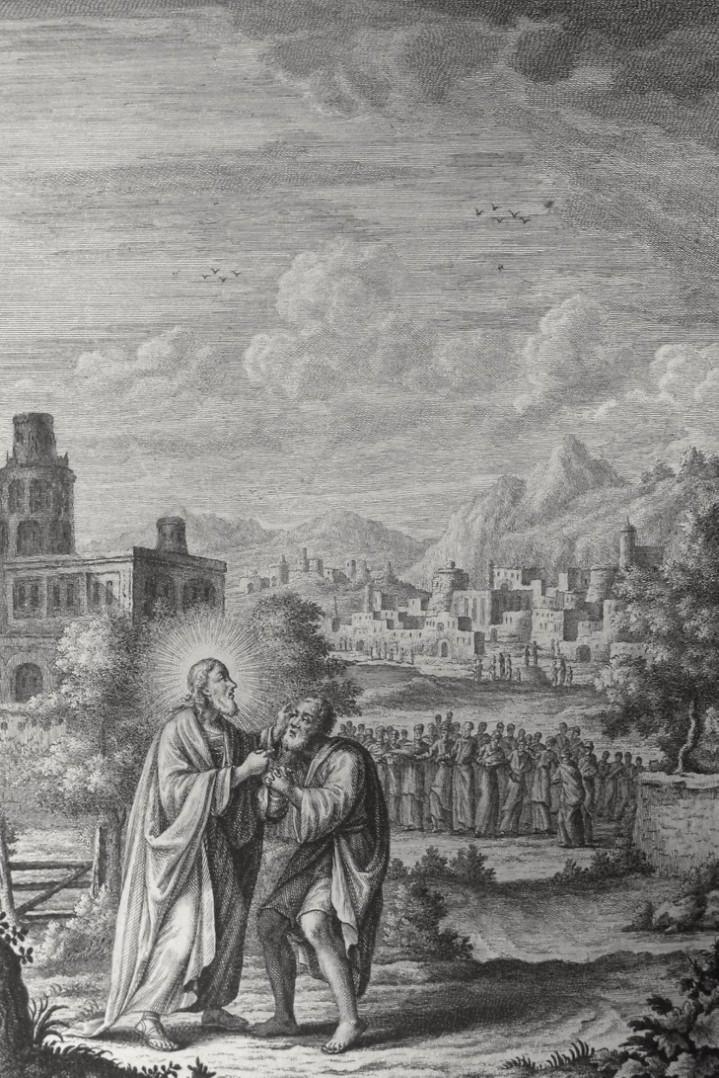
Bowyer Bible print 4387 Christ heals the blind Mark 7:32-35 Füssli engraved by Pintz. Robert Bowyer (d.1834) expanded his copy of the Macklin Bible by inserting over 6200 different prints. The Bowyer Bible is now housed in Bolton Museum. For these prints see https://archive.org/details/bowyer-bible
where Philip De Vere has created flip-books from Phillip Medhurst's photo-collection.
#BoltonMuseum #bible #extraillustration #grangerisation #MacklinBible #interleaved #print #engraving #etching #christianartwork
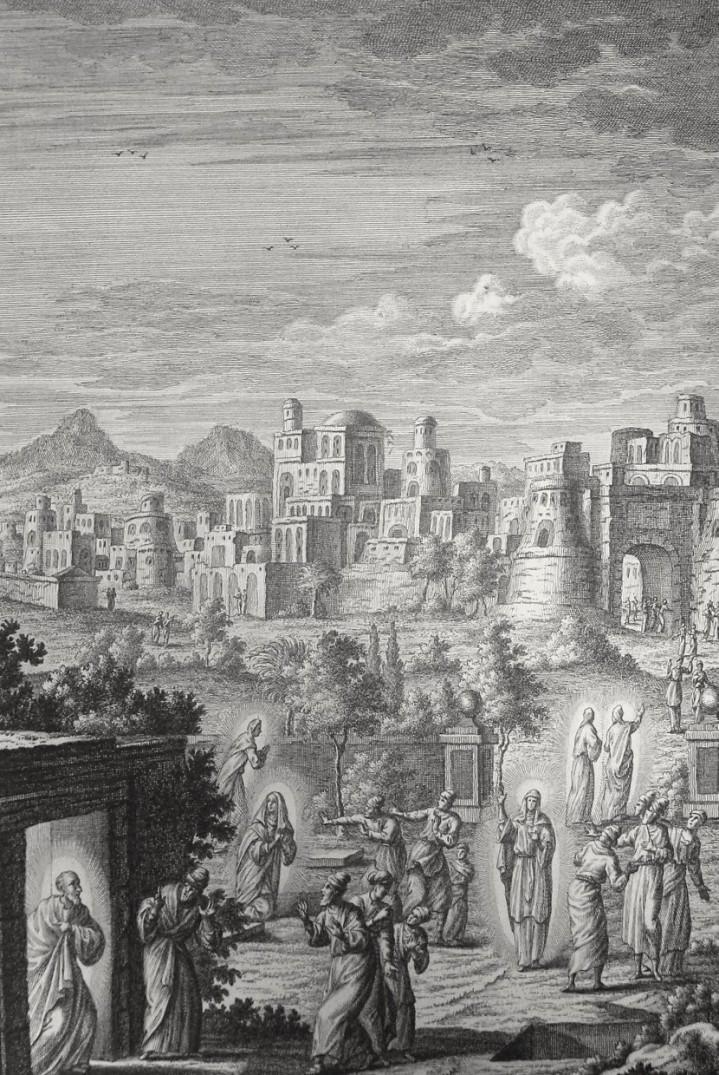
Bowyer Bible print 4089 Holy ones are raised up Matthew 27:52-53 Füssli engraved by Pintz. Robert Bowyer (d.1834) expanded his copy of the Macklin Bible by inserting over 6200 prints. The Bowyer Bible is now housed in Bolton Museum. For these prints see https://archive.org/details/bowyer-bible
where Philip De Vere has created flip-books from Phillip Medhurst's photo-collection.
#BoltonMuseum #bible #extraillustration #grangerisation #MacklinBible #Bibleillustration #Bibleart #Christianart #christianartwork
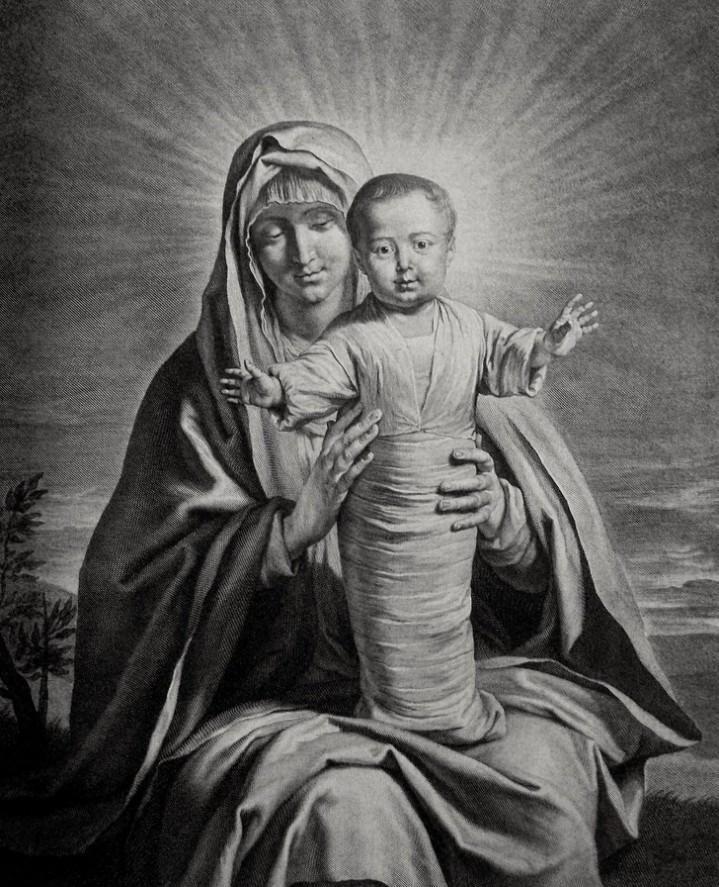
Bowyer Bible print 3340 Virgin and Child after De Prilly. Robert Bowyer (d.1834) expanded his copy of the Macklin Bible by inserting over 6200 different prints. The Bowyer Bible is now housed in Bolton Museum. For these prints see https://archive.org/details/bowyer-bible
where Philip De Vere has created flip-books from Phillip Medhurst's photo-collection.
#BoltonMuseum #bible #extraillustration #grangerisation #MacklinBible #print #engraving #etching #Bibleillustration #Bibleart #Christianart #christianartwork
![[?]](https://pxscdn.com/cache/avatars/965947145429498396/avatar_ny2oh2.jpg)
where Philip De Vere has created flip-books from Phillip Medhurst's photo-collection.
#BoltonMuseum #bible #extraillustration #grangerisation #MacklinBible #interleaved #print #engraving #etching #Bibleillustration #Bibleart #Christianart #christianartwork
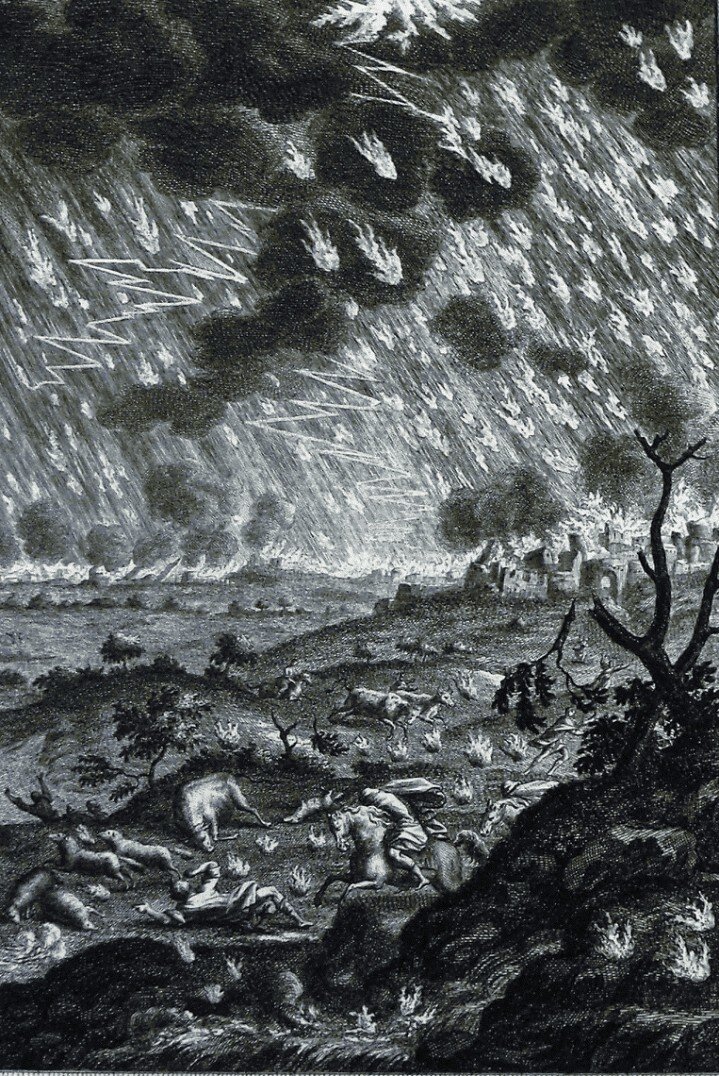
Bowyer Bible print 5279 The testimony of John the Baptist John 1:19-28 Kraussen. Robert Bowyer (d1834) expanded his copy of the Macklin Bible by inserting over 6200 different prints. The Bowyer Bible is now housed in Bolton Museum. For these prints see https://archive.org/details/bowyer-bible
where Philip De Vere has created flip-books from Phillip Medhurst's photo-collection.
#BoltonMuseum #bible #extraillustration #grangerisation #engraving #etching #Bibleillustration #Bibleart #Christianart #christianartwork
The God Who Remains Sovereign in Sudden Loss
A Prayer Inspired by Job 1:13-15 Gracious and Almighty Father, We come before You with humble hearts, acknowledging that You are the Creator of heaven and earth, the One who rules over all things with wisdom, power, and perfect justice. You are the God who sees the beginning and the end, who knows every hidden detail of our lives, and whose purposes stand forever. Though our understanding is limited and our vision is clouded by the weakness of our humanity, Your knowledge is infinite, Your […] [SENSITIVE CONTENT]

A Prayer Inspired by Job 1:13-15
Gracious and Almighty Father,
We come before You with humble hearts, acknowledging that You are the Creator of heaven and earth, the One who rules over all things with wisdom, power, and perfect justice. You are the God who sees the beginning and the end, who knows every hidden detail of our lives, and whose purposes stand forever. Though our understanding is limited and our vision is clouded by the weakness of our humanity, Your knowledge is infinite, Your judgment is righteous, and Your ways are always good.
Today we reflect upon the painful events that unfolded in the life of Your servant Job, when disaster came suddenly and without warning. In a single day, joy was interrupted by sorrow, security was shaken, and peace gave way to grief. What had seemed stable and secure was suddenly swept away. The ordinary rhythms of life were broken by devastating news. As we consider these events, we are reminded how fragile life can be and how quickly circumstances can change.
Lord, we confess that we often build our confidence upon things that appear permanent. We trust in our plans, our resources, our health, our possessions, and the routines that bring order to our days. Yet Your Word continually reminds us that all earthly things are temporary. Every blessing we enjoy is ultimately a gift from Your hand. Every good thing we possess has been entrusted to us by Your grace. Apart from You, we have nothing. Without Your sustaining power, nothing endures.
When unexpected hardship enters our lives, our hearts are tempted to fear. We wonder why suffering has come. We search for explanations. We wrestle with questions that seem to have no immediate answers. We long to understand what You may be doing in the midst of our pain. Yet the story of Job reminds us that there are realities beyond what human eyes can see. There are purposes at work that are hidden from us. There are dimensions of Your providence that surpass our ability to comprehend.
Teach us, O Lord, to trust You even when we cannot trace Your hand.
Grant us the faith to believe that Your throne remains secure when our world feels unstable. Help us remember that no tragedy catches You by surprise, no sorrow escapes Your notice, and no circumstance falls outside the boundaries of Your sovereign authority. Even when evil appears to triumph, You remain the King of kings and the Lord of all creation.
We pray for those who have recently received painful news. Comfort those whose hearts have been pierced by loss. Strengthen those whose lives have been disrupted by circumstances they never expected. Draw near to those who are grieving, confused, fearful, or overwhelmed. Let them know that they are not abandoned. Remind them that Your presence is not measured by the ease of their circumstances but by the certainty of Your promises.
Lord Jesus, You are the Man of Sorrows who is acquainted with grief. You entered into the suffering of this fallen world and carried our burdens upon Yourself. Because You suffered, You understand our suffering. Because You wept, You understand our tears. Because You endured the cross, we know that You are present with us in our darkest valleys. Help us to fix our eyes upon You when storms rage around us.
We pray for steadfast hearts. In moments of sudden loss, guard us from bitterness. Protect us from despair. Keep us from the temptation to accuse You of wrongdoing or to doubt Your goodness. Instead, plant deep within us a faith that endures. Give us grace to cling to Your character when circumstances seem difficult to reconcile with Your promises. Teach us to rest not in what we see but in who You are.
Father, we acknowledge that this world is broken by sin. Violence, suffering, injustice, disease, and death remind us daily that creation groans under the weight of the Fall. Yet we also rejoice that Your redemptive plan is moving forward. Nothing can hinder Your purposes. Nothing can overturn Your kingdom. Nothing can separate Your people from Your love.
Help us to live with an eternal perspective. When earthly treasures are lost, remind us of the inheritance that can never perish, spoil, or fade. When temporary blessings are taken away, direct our hearts toward the eternal riches found in Christ. When we are tempted to cling tightly to the things of this world, teach us to hold them loosely and to treasure You above all else.
We pray for the church throughout the world. Strengthen believers who are enduring trials, persecution, hardship, and uncertainty. May they stand firm in faith, knowing that You are working even through their suffering. Let their testimony shine brightly in the darkness. May their trust in You point others toward the hope of the gospel.
Lord, give wisdom to pastors, elders, and spiritual leaders as they minister to those who suffer. Grant them compassionate hearts, patient spirits, and words seasoned with grace. Help them to reflect the tenderness of Christ as they walk alongside those who are hurting.
We thank You that our hope is not rooted in earthly circumstances but in Your unchanging nature. You are the same yesterday, today, and forever. Your love never fails. Your mercy never runs dry. Your faithfulness reaches to the heavens. Even when everything around us seems uncertain, You remain our refuge and strength.
As we face the unknown days ahead, teach us to walk by faith. Give us courage for every trial, wisdom for every decision, and peace for every anxious thought. Let us remember that our lives are held securely in Your hands. Though we may encounter hardship along the journey, we are never outside Your care.
We praise You because You are worthy of our trust. We worship You because You are worthy of our devotion. We rest in You because You alone are our sure foundation. May our hearts continually declare that You are good, that You are faithful, and that You are sovereign over all things.
We offer this prayer with confidence in Your perfect wisdom and unfailing love, through Jesus Christ our Lord and Savior.
Amen.

Alt...
The God Who Remains Sovereign in Sudden Loss
The Blueprint in the Rain
A Short Story Inspired by 1 Chronicles 28:20-21 The rain had been falling for three straight days when Caleb Morgan stood alone inside the unfinished community center. The roof was only half complete. Plastic tarps stretched over exposed beams, flapping and snapping in the wind. Water dripped into buckets scattered across the concrete floor. The smell of wet lumber filled the vast, hollow space. Caleb rubbed his tired eyes and looked around. Six months earlier, the project had felt like a […] [SENSITIVE CONTENT]

A Short Story Inspired by 1 Chronicles 28:20-21
The rain had been falling for three straight days when Caleb Morgan stood alone inside the unfinished community center.
The roof was only half complete. Plastic tarps stretched over exposed beams, flapping and snapping in the wind. Water dripped into buckets scattered across the concrete floor. The smell of wet lumber filled the vast, hollow space.
Caleb rubbed his tired eyes and looked around.
Six months earlier, the project had felt like a miracle. A group of churches had partnered together to transform an abandoned warehouse into a place where families could gather, students could study, and homeless neighbors could find support.
Everyone had been excited at first.
Now the money was running low.
Several volunteers had stopped showing up.
Unexpected repairs had doubled the cost.
And this morning, two contractors had called to say they were taking other jobs.
Caleb stared at the half-finished structure and wondered if everyone else had been right.
Maybe they had dreamed too big.
His phone buzzed.
A text message appeared from his friend Marcus.
How’s the palace coming?
Caleb laughed despite himself.
Marcus always called the project “the palace.”
Not because it was impressive.
Because years earlier they had studied the story of King David and Solomon together. Marcus loved reminding him that some of God’s greatest works looked impossible before they were completed.
Caleb typed back.
More like a sinking ship.
A moment later his phone rang.
“You sound defeated,” Marcus said.
“I think we’re finished.”
“No, you’re tired.”
“I’m serious. The budget is a disaster. People are leaving. Everything keeps going wrong.”
Marcus was quiet for a moment.
Then he said, “Do you remember what David told Solomon before the temple was built?”
Caleb sighed.
“You know I do.”
“Then say it.”
Caleb leaned against a stack of plywood.
“‘Be strong and courageous. Do the work.'”
“Exactly.”
“That’s easy to quote when you’re not standing in a building that’s falling apart.”
Marcus chuckled.
“The temple wasn’t exactly easy either.”
Caleb looked upward at the exposed beams.
“I don’t know if I have enough strength left.”
“Maybe that’s the wrong question.”
“What do you mean?”
“David didn’t tell Solomon to trust his own strength. He told him that God would be with him.”
The words lingered in the silence.
Outside, thunder rolled across the gray sky.
Finally Marcus spoke again.
“You’re carrying this project like it depends entirely on you.”
“Doesn’t it?”
“No.”
Caleb knew Marcus was right.
But knowing and believing were two different things.
After they ended the call, he walked through the building.
He passed the future classrooms.
The unfinished kitchen.
The gathering hall.
The counseling offices.
Every room represented a promise.
Every room represented a problem.
Near the back wall, he noticed something he had never seen before.
An old metal cabinet remained tucked into a corner that had escaped demolition.
Curious, he opened it.
Inside sat a dusty cardboard tube.
Caleb pulled it out and removed the cap.
Rolled blueprints slid into his hands.
The original plans for the warehouse.
The paper was yellow with age.
Names and signatures covered the margins.
Engineers.
Architects.
Builders.
People he had never met.
People who had worked decades before.
People who had finished a project that once existed only on paper.
He spread the blueprints across a worktable.
As he studied them, something caught his attention.
Near the bottom was a handwritten note.
The ink had faded, but it was still readable.
No one person builds this alone.
Caleb stared at the sentence.
Simple.
Ordinary.
Yet somehow exactly what he needed to hear.
For months he had been acting as though the entire burden rested on his shoulders.
But the warehouse had not been built by one person.
Neither would the community center.
Neither had the temple.
God had always worked through people together.
The next morning, Caleb arrived before sunrise.
The rain had finally stopped.
Golden light stretched across the city.
He unlocked the building and walked inside.
For the first time in weeks, he felt peace.
Not certainty.
Not confidence in the circumstances.
Peace.
There was a difference.
By eight o’clock, volunteers began arriving.
Then more arrived.
And then more.
An elderly woman named Ruth showed up carrying trays of homemade cinnamon rolls.
A retired electrician named Frank offered to donate two weeks of labor.
A local business owner stopped by with a check.
A church youth group arrived unexpectedly and spent the day hauling supplies.
None of it solved every problem.
But it was enough for that day.
And the next day brought its own provisions.
Weeks passed.
The building slowly changed.
Walls went up.
Windows were installed.
Paint covered bare surfaces.
The sound of hammers gave way to laughter and conversation.
People who had never met before became friends.
Some became family.
One afternoon Marcus visited the site.
He stood beside Caleb in the completed gathering hall.
Sunlight streamed through tall windows.
Children’s artwork already decorated one wall.
A piano waited near a small stage.
The room felt alive.
Marcus smiled.
“Not bad for a sinking ship.”
Caleb laughed.
“You know, there were moments I almost quit.”
“I know.”
“I thought everything depended on me.”
Marcus nodded.
“Most leaders eventually believe that lie.”
Caleb looked around the room.
Parents were talking near the entrance.
Volunteers arranged tables.
A group of students worked on homework in the corner.
The building was doing exactly what they had hoped it would do.
Perhaps even more.
“I finally realized something,” Caleb said.
“What’s that?”
“The work was never mine to carry alone.”
Marcus smiled.
“Now you’re learning.”
A few months later, the center hosted its official dedication.
Hundreds of people filled the building.
Some remembered the abandoned warehouse that had once stood there.
Others had helped build it.
Many would benefit from it for years to come.
Caleb stood near the back as local leaders shared stories and thanked volunteers.
He did not step onto the stage.
He did not need to.
As he watched families gather and children play, his attention drifted toward the exposed ceiling beams overhead.
The same beams that had once dripped rainwater.
The same beams beneath which he had nearly given up.
He remembered standing alone in the storm, convinced the project would fail.
Yet the storm had not been the end of the story.
It had only been part of it.
The final speaker quoted words from Scripture that Caleb knew by heart:
“Be strong and courageous, and do it. Do not be afraid, nor be dismayed: for the LORD God, even my God, is with thee.”
The room grew quiet.
Caleb felt emotion rise in his chest.
Not because the building was finished.
But because the words were true.
The real miracle was not the structure around him.
The real miracle was the faithfulness of God throughout the journey.
God had provided strength when strength was gone.
Courage when fear was loud.
Helpers when the work seemed overwhelming.
Hope when circumstances looked impossible.
As the crowd applauded, Caleb glanced once more at the bustling room.
The work had been completed.
Not because one man was strong enough.
But because God had been present every step of the way.
And that, he realized, had been the blueprint all along.

Alt...
The Blueprint in the Rain
Strong and Courageous in the Work of the Lord
A Message to Church Leaders Reflecting on 1 Chronicles 28:20–21 “David also said to Solomon his son, Be strong and of good courage, and do it: fear not, nor be dismayed: for the LORD God, even my God, will be with thee; he will not fail thee, nor forsake thee, until thou hast finished all the work for the service of the house of the LORD. And, behold, the courses of the priests and the Levites, even they shall be with thee for all the service of the house of God: and there shall be with […] [SENSITIVE CONTENT]

A Message to Church Leaders Reflecting on 1 Chronicles 28:20–21
“David also said to Solomon his son, Be strong and of good courage, and do it: fear not, nor be dismayed: for the LORD God, even my God, will be with thee; he will not fail thee, nor forsake thee, until thou hast finished all the work for the service of the house of the LORD. And, behold, the courses of the priests and the Levites, even they shall be with thee for all the service of the house of God: and there shall be with thee for all manner of workmanship every willing skilful man, for any manner of service: also the princes and all the people will be wholly at thy commandment.” (1 Chronicles 28:20–21)
Church leadership is a sacred calling that carries both great privilege and tremendous responsibility. Those who shepherd God’s people often discover that leadership is filled with moments of joy, encouragement, and spiritual fruitfulness, but it is also accompanied by seasons of difficulty, uncertainty, opposition, and weariness. Every generation of leaders faces the challenge of remaining faithful to God’s calling while navigating the realities of ministry in a fallen world.
The words David spoke to Solomon in 1 Chronicles 28:20–21 provide profound encouragement for those entrusted with leadership in the church. Though David’s immediate concern was the construction of the temple, the principles found in this passage reach far beyond an ancient building project. They reveal enduring truths about God’s presence, God’s faithfulness, God’s provision, and God’s purposes for those who serve Him.
As David approached the end of his life, he gathered Israel’s leaders and publicly entrusted Solomon with the responsibility of building the house of the Lord. This was no small assignment. The temple would become the center of Israel’s worship and a visible testimony to God’s covenant relationship with His people. The task was enormous. Solomon was young. The responsibility was overwhelming. The expectations were significant.
David understood that Solomon would need more than architectural plans, financial resources, or organizational support. He would need spiritual strength. Therefore, David’s first words were not about strategy or administration. They were words of encouragement rooted in the character of God.
“Be strong and of good courage, and do it.”
These words remind church leaders that courage is not optional in the work of God. Every generation requires leaders who are willing to move forward in faith despite challenges. Ministry often presents situations that provoke fear. There are difficult decisions to make, conflicts to address, cultural pressures to navigate, and spiritual battles to fight. Leaders may feel inadequate for the responsibilities placed before them.
Yet Scripture consistently calls God’s servants to courage.
Courage does not mean the absence of fear. Courage means obedience despite fear. It means moving forward because God has spoken. It means trusting His promises more than our emotions. It means believing that His strength is sufficient when our own strength is exhausted.
Many leaders spend too much time looking at their limitations and too little time looking at God’s sufficiency. Moses felt inadequate. Jeremiah felt too young. Gideon felt insignificant. Timothy struggled with timidity. Yet God repeatedly demonstrated that His power is perfected through human weakness.
Church leaders today must remember that the success of ministry ultimately depends not upon human ability but upon divine enablement. The Lord never calls His servants to rely upon themselves. He calls them to rely upon Him.
David not only tells Solomon to be strong and courageous; he also says, “and do it.”
These two simple words carry tremendous significance. Courage must be accompanied by action. Vision without obedience accomplishes nothing. Plans without execution remain dreams. Good intentions without faithful labor produce little fruit.
Many leaders spend years preparing, discussing, evaluating, and strategizing. While careful planning has an important place, there comes a moment when faithful leaders must simply obey God and move forward.
The kingdom of God advances through faithful action. Churches are strengthened when leaders pray and then act. Disciples are made when leaders teach and serve. Communities are impacted when churches move beyond discussion into ministry.
There will never be a perfect time to begin every task God assigns. There will never be complete certainty regarding every outcome. There will always be risks, challenges, and unanswered questions. Yet the call remains the same: “Do it.”
Faith expresses itself through obedience.
David continues by saying, “Fear not, nor be dismayed.”
These words acknowledge a reality familiar to every church leader. There are moments when discouragement threatens to overwhelm the soul. There are seasons when ministry appears fruitless. There are times when criticism wounds deeply. There are circumstances that seem beyond our ability to overcome.
Discouragement is one of the enemy’s most effective weapons against spiritual leaders.
A discouraged leader may lose vision. A discouraged leader may withdraw from ministry opportunities. A discouraged leader may become focused on problems rather than promises.
David addresses this danger directly. He tells Solomon not to be afraid and not to be dismayed.
Why?
Because fear and discouragement distort perspective. They magnify obstacles while minimizing God’s power. They focus attention on circumstances rather than on the Lord who rules over circumstances.
Throughout Scripture, God repeatedly calls His servants to reject fear because fear often arises when people forget who God is.
The church does not belong to its leaders. It belongs to Christ.
The mission does not originate with church leaders. It originates with God.
The future does not rest upon human wisdom. It rests upon divine sovereignty.
Leaders who remember these truths can persevere even during difficult seasons.
David then provides the foundation for courage: “For the LORD God, even my God, will be with thee.”
This statement reveals one of the greatest sources of encouragement available to church leaders.
God’s presence accompanies His servants.
Notice David’s language. He does not merely speak about God in abstract theological terms. He says, “my God.”
David had experienced God’s faithfulness personally. He knew God as shepherd, protector, provider, deliverer, and king. Now he points Solomon to the same covenant God who had sustained him throughout his own life.
Church leaders need more than knowledge about God. They need a living relationship with Him.
Programs cannot replace God’s presence.
Strategies cannot substitute for communion with God.
Leadership skills cannot compensate for spiritual emptiness.
The most effective leaders throughout church history have been men and women who cultivated deep fellowship with God. Their ministries flowed from their relationship with Him.
The promise of God’s presence changes everything.
When challenges arise, God is present.
When opposition comes, God is present.
When burdens increase, God is present.
When resources seem insufficient, God is present.
When leaders feel alone, God is present.
The Lord never abandons His servants.
David reinforces this promise with even greater clarity: “He will not fail thee, nor forsake thee.”
What an extraordinary assurance.
Human leaders sometimes fail.
Friends may disappoint.
Supporters may leave.
Plans may unravel.
Circumstances may change unexpectedly.
But God remains faithful.
The church leader who builds confidence upon human approval will eventually be disappointed. The leader who builds confidence upon God’s faithfulness possesses an unshakable foundation.
God’s faithfulness does not guarantee an easy ministry. It guarantees His sustaining presence throughout ministry.
His faithfulness does not eliminate hardship. It enables endurance through hardship.
His faithfulness does not remove every obstacle. It provides strength to overcome obstacles.
The promise that God will neither fail nor forsake His people echoes throughout Scripture. It appears in various forms from Genesis to Revelation. It reveals a fundamental truth about God’s character.
He is trustworthy.
Church leaders can move forward with confidence because God’s commitment to His people never changes.
David also says that God will remain with Solomon “until thou hast finished all the work for the service of the house of the LORD.”
This reminds leaders that God is committed to completing His purposes.
The work of ministry often unfolds over many years. Significant kingdom impact rarely occurs overnight. Spiritual growth is usually gradual. Discipleship requires patience. Church development takes time.
Leaders sometimes become discouraged because they expect immediate results.
Yet God frequently works through long seasons of faithful labor.
Noah built the ark over many years.
Moses spent decades leading Israel through the wilderness.
Nehemiah faced opposition while rebuilding Jerusalem’s walls.
Paul endured countless hardships throughout his missionary journeys.
The pattern is clear. God calls His servants to faithfulness rather than immediate success.
Leaders are responsible for obedience.
God is responsible for results.
The promise of this passage assures leaders that God remains committed to His work from beginning to end.
The God who initiates His purposes also sustains them.
The God who calls leaders also equips them.
The God who begins a good work is faithful to bring it to completion.
The final verse provides another important lesson. David points Solomon to the people God has provided for the task.
The priests, Levites, skilled workers, princes, and people would all participate in the work.
This highlights an essential principle of church leadership.
God never intended leaders to carry ministry alone.
One of the greatest mistakes leaders make is attempting to do everything themselves.
Healthy ministry is always shared ministry.
The New Testament repeatedly emphasizes the importance of the body of Christ functioning together. Every believer has gifts. Every believer has a role. Every believer can contribute to the work of God’s kingdom.
Wise leaders recognize, develop, and empower others.
They equip the saints for ministry.
They encourage participation.
They cultivate teamwork.
They build environments where people can serve according to their God-given abilities.
Leadership is not about performing all the work. Leadership is about helping God’s people engage in the work.
David reminds Solomon that skilled and willing people are available.
This remains true today.
God continues to raise up gifted servants for His church.
The responsibility of leaders is not to monopolize ministry but to mobilize ministry.
Strong churches are not built upon one gifted leader. They are built upon many faithful servants working together under the lordship of Christ.
As church leaders reflect upon this passage, several truths emerge with remarkable clarity.
First, God’s work requires courage.
Second, God’s calling demands action.
Third, God’s presence sustains His servants.
Fourth, God’s faithfulness guarantees His support.
Fifth, God’s purposes will ultimately prevail.
Sixth, God’s people are called to serve together.
The challenges facing churches today are significant. Cultural pressures continue to increase. Moral confusion grows more widespread. Biblical truth is often questioned or rejected. Many communities experience spiritual apathy.
Yet the answer to these challenges is not fear.
The answer is faithful leadership rooted in confidence in God.
Church leaders must remember that they serve the same God who strengthened Solomon, guided Moses, sustained David, empowered Paul, and built His church through countless generations of faithful servants.
He has not changed.
His promises remain true.
His presence remains real.
His power remains sufficient.
His mission continues.
Therefore, leaders must stand firm. They must lead courageously. They must serve faithfully. They must trust deeply.
The work may be demanding, but God is present.
The task may be large, but God is greater.
The road may be difficult, but God is faithful.
The future may seem uncertain, but God remains sovereign.
Like Solomon, church leaders are called to undertake work that ultimately belongs to God. The church is His. The mission is His. The glory is His.
And because it is His work, leaders can move forward with confidence, hearing anew the timeless words spoken by David:
“Be strong and of good courage, and do it: fear not, nor be dismayed: for the LORD God, even my God, will be with thee; he will not fail thee, nor forsake thee.”
May every church leader embrace that promise, persevere in that confidence, and labor faithfully until the work God has entrusted to them is complete.

Alt...
Strong and Courageous in the Work of the Lord
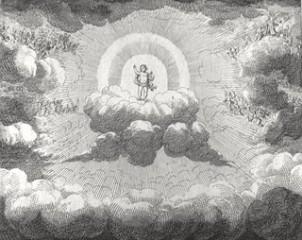
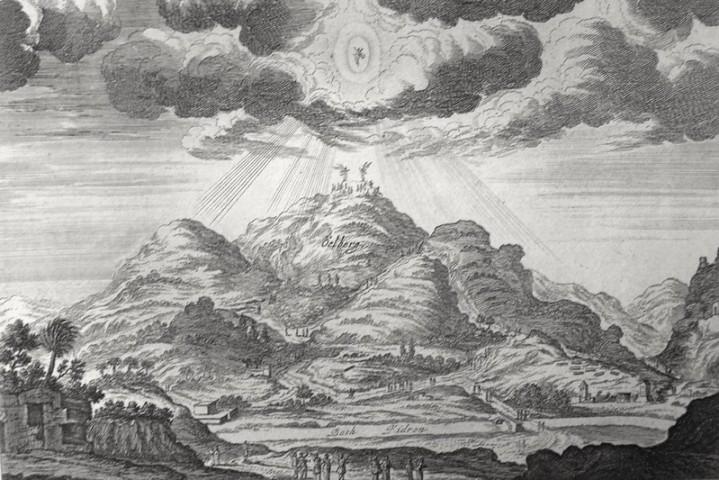
Bowyer Bible print 5514 The Ascension Acts 1:9-10 Perelle. Robert Bowyer (d.1834) expanded his copy of the Macklin Bible by inserting over 6200 different prints. The Bowyer Bible is now housed in Bolton Museum. For these prints see https://archive.org/details/bowyer-bible
where Philip De Vere has created flip-books from Phillip Medhurst's photo-collection.
#BoltonMuseum #bible #extraillustration #grangerisation #MacklinBible #interleaved #print #engraving #etching #Bibleart #Christianart #christianartwork
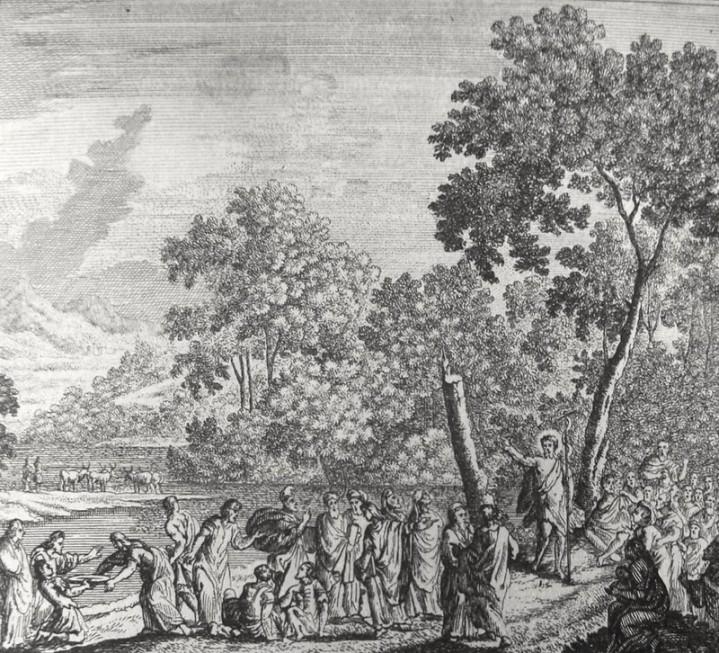
Bowyer Bible print 5515 Christ appears to Thomas and confers the Holy Spirit John 20:19 Perelle. Robert Bowyer (d.1834) expanded his copy of the Macklin Bible by inserting over 6200 prints. The Bowyer Bible is now housed in Bolton Museum. For these prints see https://archive.org/details/bowyer-bible
where Philip De Vere has created flip-books from Phillip Medhurst's photo-collection.
#BoltonMuseum #bible #extraillustration #grangerisation #etching #Bibleillustration #Bibleart #Christianart #christianartwork
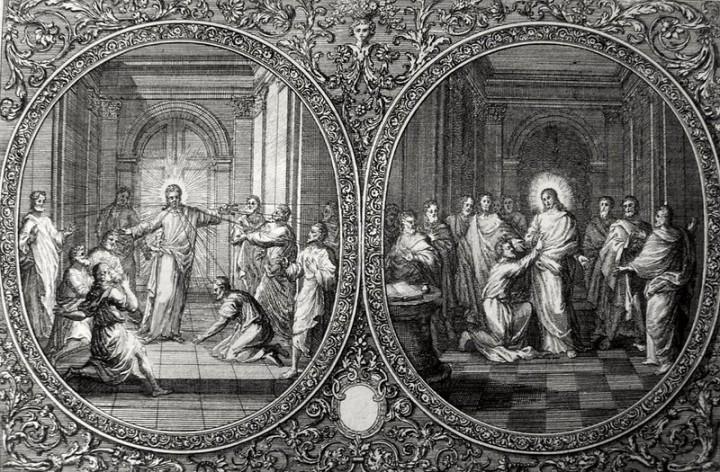
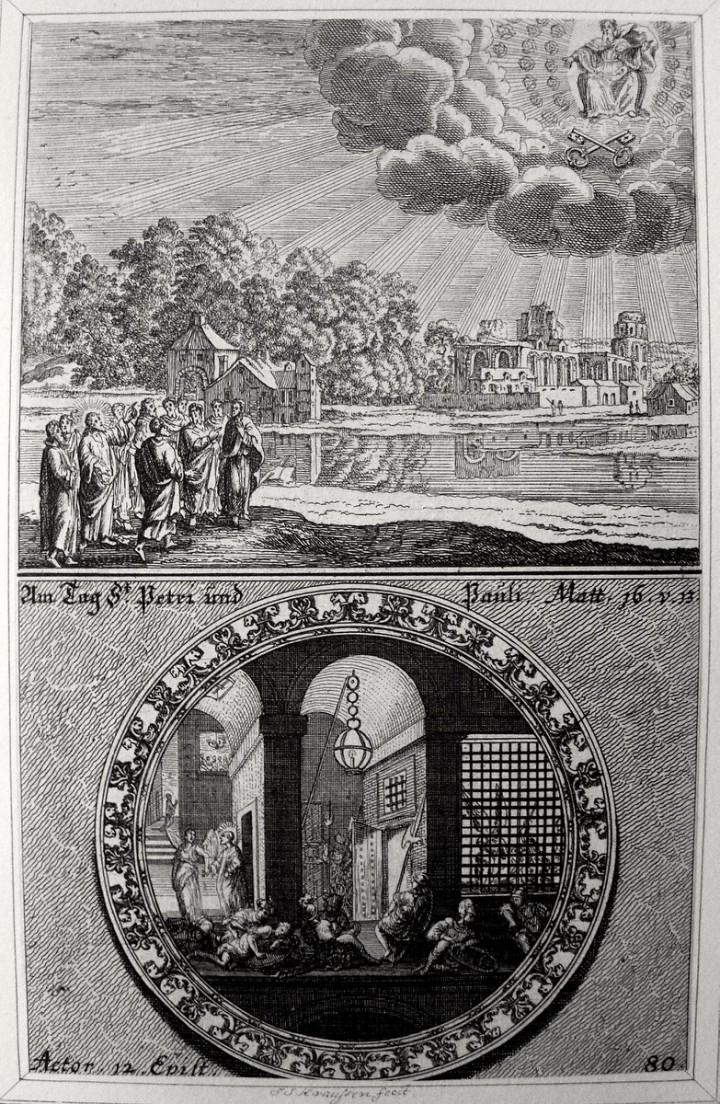
Bowyer Bible print 3745 Peter receives the keys of the kingdom Matthew 16:13 He is delivered from prison Acts 12:9 Kraus. Robert Bowyer (d.1834) expanded his copy of the Macklin Bible by inserting over 6200 different prints. The Bowyer Bible is now housed in Bolton Museum. For these prints see https://archive.org/details/bowyer-bible
where Philip De Vere has created flip-books from Phillip Medhurst's photo-collection.
#BoltonMuseum #bible #etching #Bibleillustration #Bibleart #Christianart #christianartwork
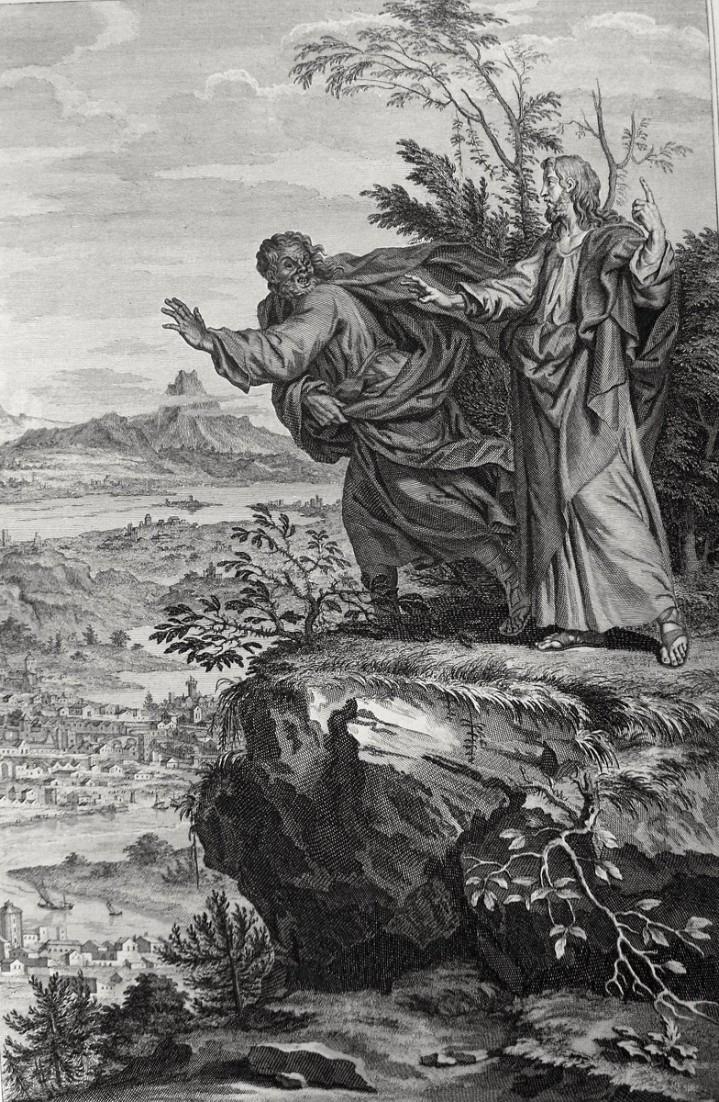
Bowyer Bible print 3536 Jesus rejects Satan Matthew 4:1-11 Picart. Robert Bowyer (d.1834) expanded his copy of the Macklin Bible by inserting over 6200 prints. The Bowyer Bible is now housed in Bolton Museum. For these prints see https://archive.org/details/bowyer-bible
where Philip De Vere has created flip-books from Phillip Medhurst's photo-collection.
#BoltonMuseum #bible #extraillustration #grangerisation #MacklinBible #interleaved #print #engraving #etching #Bibleillustration #Bibleart #Christianart
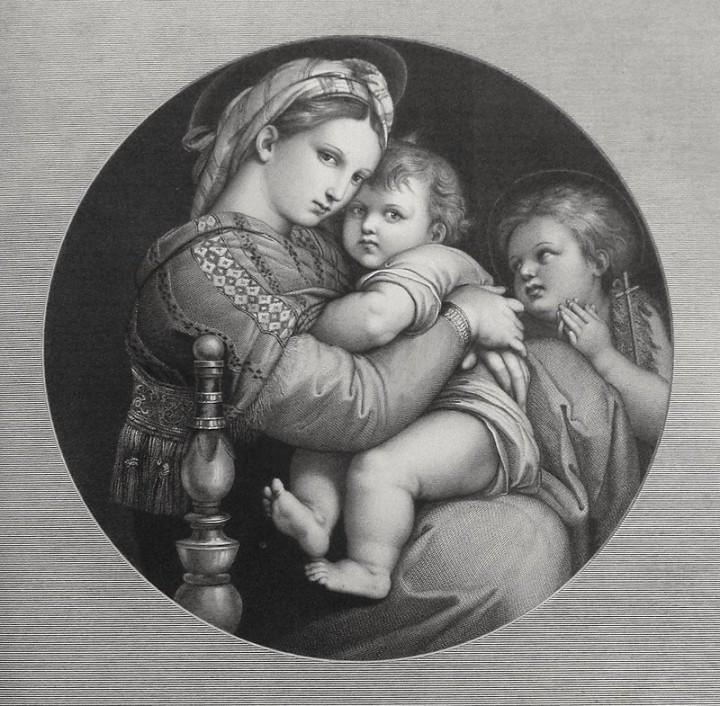
Bowyer Bible print 3339 Virgin and Child with John the Baptist after Raphael. Robert Bowyer (d.1834) expanded his copy of the Macklin Bible by inserting over 6200 different prints. The Bowyer Bible is now housed in Bolton Museum. For these prints see https://archive.org/details/bowyer-bible
where Philip De Vere has created flip-books from Phillip Medhurst's photo-collection.
#BoltonMuseum #bible #extraillustration #grangerisation #MacklinBible #interleaved #print #engraving #etching #Bibleillustration #Bibleart
The Builder’s Charge
A Poem Inspired by 1 Chronicles 28:20-21 When evening gold adorned the fading skyAnd long the shadows stretched through Judah’s land,An aged king, whose years had wandered byBeneath the guidance of Jehovah’s hand,Called forth his son and spoke with solemn grace,Entrusting him the labor yet undone;A holy task no earthly throne could placeAbove the work appointed to his son. The temple still was but a sacred dream,A vision resting in the Father's will;No cedar beam yet caught the morning […] [SENSITIVE CONTENT]

A Poem Inspired by 1 Chronicles 28:20-21
When evening gold adorned the fading sky
And long the shadows stretched through Judah’s land,
An aged king, whose years had wandered by
Beneath the guidance of Jehovah’s hand,
Called forth his son and spoke with solemn grace,
Entrusting him the labor yet undone;
A holy task no earthly throne could place
Above the work appointed to his son.
The temple still was but a sacred dream,
A vision resting in the Father’s will;
No cedar beam yet caught the morning gleam,
No sacred courts adorned Mount Zion’s hill.
Yet God had chosen, and His word stood fast;
The work awaited faithful hearts and hands.
The future rose before them vast,
Like distant mountains crowned with brightened lands.
Then David spoke with wisdom born of years,
Of battles fought and mercies freely shown,
Of countless triumphs mingled with his tears,
And lessons learned before the heavenly throne.
His voice was steady as the evening star
That shines when daylight slowly fades away:
“Be strong, my son, wherever duties are,
And do the work appointed for your day.
“Do not be frightened by the task ahead,
Nor let your heart surrender unto fear.
The God who guides the stars above your head
Will never leave nor cease to draw you near.
The Lord who walked beside me through the night,
Who raised me from the shepherd’s humble field,
Will be your strength, your wisdom, and your light;
To Him alone let every burden yield.
“He shall not fail you in the darkest hour,
Nor turn away before the work is done.
His everlasting love and sovereign power
Shall rest upon you as the years shall run.
Though storms may gather and though trials arise,
Though many doubts may cloud the path you tread,
The Lord who reigns beyond the vaulted skies
Will keep His faithful promises,” he said.
How precious is that ancient royal charge,
Still echoing through every passing age.
For every calling, humble, small, or large,
Finds strength within this sacred, timeless page.
The God who called the builders long ago
Remains the same through centuries untold;
His faithfulness continues yet to flow
More precious than the finest gems or gold.
How often hearts grow weary in the way,
How often burdens seem too great to bear.
The road grows steep beneath the heat of day,
And disappointment whispers dark despair.
Yet heaven’s answer has not changed at all;
The Lord still speaks as once He spoke before.
When trembling servants hear His gentle call,
He bids them trust His strength forevermore.
For none are called to labor by themselves,
Nor left abandoned in the field alone.
The Lord of earth and heaven Himself dwells
Among His people as His chosen own.
His presence walks beside the weakest saint,
His hand upholds the soul inclined to fall.
His mercy answers every cry and plaint,
And His sufficient grace sustains them all.
The temple builders gathered at the king’s command,
Each skilled according to the gift bestowed.
Some shaped the stone; some worked with careful hand
To craft the treasures destined for God’s abode.
No labor stood unnoticed in His sight,
No willing servant vanished from His care.
Each offered strength beneath the sacred light,
Each found a holy purpose waiting there.
So too the kingdom of the Lord today
Is built through countless acts of faithful love.
Some preach the Word and point the wandering way;
Some lift their prayers unto the courts above.
Some teach the young, some comfort those who grieve,
Some serve unseen where only heaven knows.
Yet all who trust and faithfully believe
Help build the kingdom as God’s purpose grows.
No task performed for Christ is ever small,
No sacrifice is wasted in His sight.
The Lord who numbers sparrows one and all
Records each deed accomplished in His light.
The cup of water given in His name,
The word of hope spoken to the distressed,
The quiet service free from earthly fame—
These offerings by heaven are richly blessed.
Yet greater still than labor is the truth
That God Himself completes what He begins.
He strengthens age and energizes youth;
His grace proves stronger than humanity’s sins.
The temple Solomon would one day raise
Was built beneath the oversight of God.
Its splendor stood as testimony and praise
To Him whose people walked the paths He trod.
And every faithful work through every age
Depends not on the wisdom of mankind.
The scholar’s knowledge, prophet’s noble page,
Or ruler’s strength alone cannot suffice.
Unless the Lord sustains the work we do,
Our finest efforts crumble into dust.
But when His Spirit guides and leads us through,
Our labor flourishes because of trust.
Therefore let courage rise within the soul
That faces duties waiting yet today.
The God who holds creation as a whole
Will surely guide His children on their way.
Though challenges may tower high and grim,
Though doubts may seek to darken faith’s bright flame,
The servant’s confidence is found in Him
Who calls His own and knows them each by name.
Let fear not rule where faith has been bestowed.
Let anxious thoughts not steal the heart’s deep peace.
The Lord Himself walks every rugged road
And grants His weary pilgrims sweet release.
His promises are pillars strong and sure,
Unmoved by time or shifting earthly powers.
His covenant forever shall endure,
A refuge through life’s darkest, hardest hours.
One day the work entrusted here below
Will reach completion by the Master’s hand.
The seeds in tears and faithfulness we sow
Will bloom within His everlasting land.
The scaffolds of our labor shall come down,
The tools be laid aside forevermore,
And Christ shall give His servants glory’s crown
Upon the bright and everlasting shore.
Until that day, let every heart take heed
Of David’s charge that still resounds today:
Be strong and brave in every noble deed,
And faithfully pursue God’s chosen way.
For He who calls is faithful, wise, and true;
His presence shall accompany His own.
The work He gives, He shall enable too,
Until His kingdom’s fullness shall be known.
Then let the builders lift their eyes above,
Beyond the dust and burdens of the years.
The God who calls them walks with steadfast love,
And gently wipes away their hidden tears.
His purpose stands; His promises endure;
His power remains unchanged through every age.
And those who trust His faithfulness are sure
To find their strength within His sacred charge.

Alt...
The Builder’s Charge
![[?]](https://uploads.deacon.social/accounts/avatars/109/379/828/422/893/349/original/a2da39060f6bd2f0.jpeg)
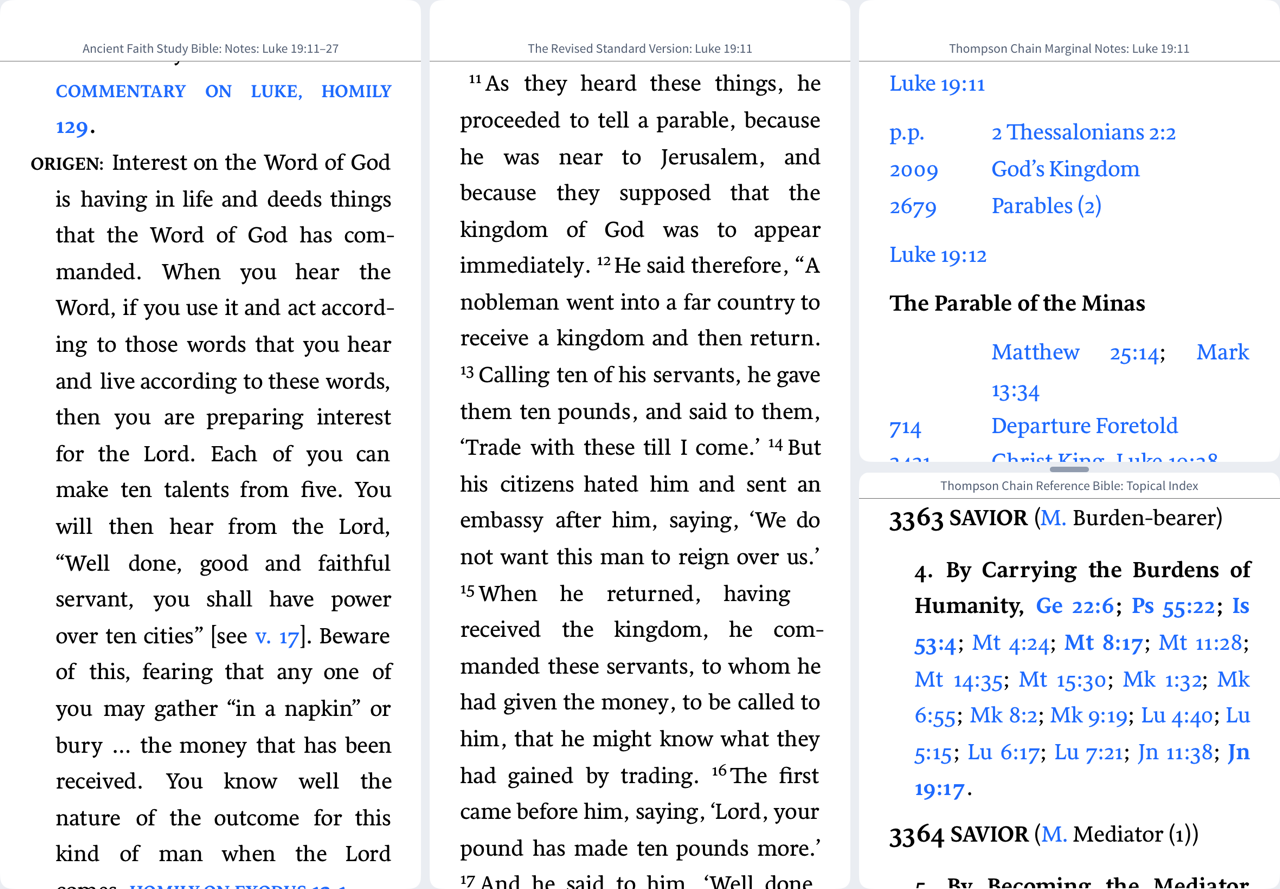
One of my favorite things about Logos Bible Software is that I can build my own “unicorn” study Bible. Below is an example of one such build. In no world will I ever find the RSV, the CSB Ancient Faith Study Bible, and the Thompson Chain Reference bound together as a single physical Bible, but Logos lets me link them all together! I will always be a physical book person, but tech does have its strengths.
Prayer for Strength and Faithful Service
A Prayer Inspired by 1 Chronicles 28:20-21 Gracious and Sovereign Lord, We come before You with humble hearts, acknowledging that You alone are God, the Creator of heaven and earth, the King whose throne is established forever, and the faithful Shepherd of Your people. We praise You because Your wisdom is perfect, Your power is without limit, and Your purposes stand through every generation. Before You all earthly kingdoms rise and fall, yet Your kingdom endures forever. Before You all […] [SENSITIVE CONTENT]

A Prayer Inspired by 1 Chronicles 28:20-21
Gracious and Sovereign Lord,
We come before You with humble hearts, acknowledging that You alone are God, the Creator of heaven and earth, the King whose throne is established forever, and the faithful Shepherd of Your people. We praise You because Your wisdom is perfect, Your power is without limit, and Your purposes stand through every generation. Before You all earthly kingdoms rise and fall, yet Your kingdom endures forever. Before You all human strength fades, yet Your strength never fails. You are the God who calls, equips, sustains, and accomplishes all that You have ordained.
Today we remember the words spoken to Solomon: “Be strong and courageous, and do it. Do not be afraid or discouraged, for the Lord God, my God, is with you.” We thank You that these words reveal not merely a command but a promise. You never call Your servants into a task without also promising Your presence. You never assign a burden without providing grace sufficient to bear it. You never send Your people into the work of Your kingdom alone.
Father, we confess that fear often finds its way into our hearts. We become overwhelmed by the size of the task before us. We see our limitations more clearly than we see Your power. We focus on obstacles instead of Your faithfulness. Forgive us for the times we have allowed anxiety to silence obedience, hesitation to delay faithfulness, or discouragement to weaken our trust. Renew our confidence not in ourselves but in You, for our sufficiency has never been found in human ability but in Your unfailing grace.
Grant us the courage that comes from knowing You are with us. Strengthen pastors who faithfully proclaim Your Word week after week. Encourage elders and church leaders who carry the responsibilities of shepherding Your people. Uphold missionaries who labor in distant places, often unseen and unrecognized. Strengthen teachers, volunteers, servants, and every believer who seeks to build up the body of Christ. Let none grow weary in doing good. Let none lose heart when progress seems slow. Remind them that the work belongs to You and that Your purposes cannot fail.
Lord, when we face challenges that seem larger than our strength, remind us that You are greater still. When we encounter opposition, teach us to stand firm in truth and love. When disappointment comes, help us trust that Your plans are unfolding even when we cannot see the outcome. When we experience seasons of waiting, give us patience to remain faithful. Let us be a people who walk by faith rather than by sight, trusting that You are at work even in hidden ways.
We thank You that the promise given to Solomon reflects a deeper truth fulfilled in Christ. Through Jesus, we know that Your presence is not distant but near. Through the gift of the Holy Spirit, You dwell within Your people. Through the cross, we have been reconciled to You. Through the resurrection, we have been given living hope. Through Your Spirit, we are empowered to serve, endure, and persevere. Thank You that the same God who strengthened Solomon continues to strengthen Your people today.
We pray for Your Church throughout the world. Make us courageous in proclaiming the gospel. Make us steadfast in preserving biblical truth. Make us compassionate toward the hurting, generous toward those in need, and faithful in every good work. Protect us from pride, self-reliance, and the temptation to seek success according to worldly standards. Teach us instead to seek faithfulness, knowing that You see every act of obedience and every sacrifice made for Your name.
Lord, we pray for those who are weary today. Some carry burdens of grief. Some struggle with illness. Some face uncertainty about the future. Some are discouraged by circumstances they cannot change. Some feel inadequate for the responsibilities before them. Speak Your comfort into every troubled heart. Remind them that You do not abandon the work of Your hands. Let them hear Your gentle assurance that You are present, that You are working, and that You will not fail them.
We pray also for the next generation. Raise up men and women who love You wholeheartedly. Call young believers into lives of faithful service. Give them courage to stand for truth in a world that often opposes Your ways. Fill them with wisdom, conviction, humility, and joy. May they know that the God who called Your servants throughout history continues to call and equip His people today.
Father, help us to remember that every task You assign is ultimately part of Your greater redemptive purpose. Whether our work seems large or small, public or hidden, may we perform it for Your glory alone. Keep our eyes fixed on Christ, the Author and Perfecter of our faith. Let every ministry, every act of service, every prayer, every word of encouragement, and every labor of love be offered as worship to You.
We thank You that You are faithful to complete what You begin. You are the God who finishes what You start. You never abandon Your promises. You never leave Your people unfinished. The work of Your kingdom will continue until the day when Christ returns in glory and all things are made new. Until that day, help us to be strong and courageous. Help us to serve with confidence, labor with perseverance, and trust with unwavering faith.
May our lives proclaim that our hope rests not in human strength but in the presence of the living God. May our hearts remain steadfast because You are steadfast. May our service remain faithful because You are faithful. And may all glory, honor, praise, and worship belong to You alone, now and forever.
In the mighty and precious name of Jesus Christ our Lord we pray.
Amen.

Alt...
Prayer for Strength and Faithful Service
Strong and Courageous in God’s Calling
A Devotional Meditation on 1 Chronicles 28:20-21 “David also said to Solomon his son, Be strong and of good courage, and do it: fear not, nor be dismayed: for the Lord God, even my God, will be with thee…” (1 Chronicles 28:20) There are moments in life when God places a task before us that feels larger than our strength. The responsibility may seem overwhelming, the obstacles intimidating, and the path uncertain. Solomon faced such a moment. He had been chosen to build the temple of […] [SENSITIVE CONTENT]

A Devotional Meditation on 1 Chronicles 28:20-21
“David also said to Solomon his son, Be strong and of good courage, and do it: fear not, nor be dismayed: for the Lord God, even my God, will be with thee…” (1 Chronicles 28:20)
There are moments in life when God places a task before us that feels larger than our strength. The responsibility may seem overwhelming, the obstacles intimidating, and the path uncertain. Solomon faced such a moment. He had been chosen to build the temple of the Lord, a work far greater than anything he had attempted before.
David’s counsel to his son was simple yet profound: “Be strong and of good courage, and do it.” Solomon’s confidence was not to be found in his own abilities but in the presence of God. David reminded him that the Lord would be with him, would not fail him, and would not forsake him until the work was complete.
The same truth encourages believers today. God never calls His people to a task and then abandons them to accomplish it alone. Every assignment He gives is accompanied by His presence, wisdom, strength, and provision. When fear whispers that we are inadequate, faith answers that God is sufficient. When challenges arise, we can remember that the Lord who calls us is also the Lord who sustains us.
Whether the task before you is serving your family, ministering to others, facing a difficult trial, or stepping into a new season of obedience, take courage. God is not merely sending you; He is going with you. His faithfulness is greater than your weakness, and His power is more than enough for every challenge.
Prayer:
Heavenly Father, thank You for Your faithful presence in every calling You place before me. When I feel weak or afraid, help me to trust in Your strength and not my own. Give me courage to obey, confidence in Your promises, and perseverance to complete the work You have entrusted to me. Amen.

Alt...
Strong and Courageous in God’s Calling
Strength for the Work of God
A Bible Study Reflecting on 1 Chronicles 28:20-21 1 Chronicles 28:20–21 records some of the final words King David spoke to his son Solomon before the construction of the temple. The passage reads: “And David said to Solomon his son, Be strong and of good courage, and do it: fear not, nor be dismayed: for the LORD God, even my God, will be with thee; he will not fail thee, nor forsake thee, until thou hast finished all the work for the service of the house of the LORD. And, behold, the […] [SENSITIVE CONTENT]

A Bible Study Reflecting on 1 Chronicles 28:20-21
1 Chronicles 28:20–21 records some of the final words King David spoke to his son Solomon before the construction of the temple. The passage reads: “And David said to Solomon his son, Be strong and of good courage, and do it: fear not, nor be dismayed: for the LORD God, even my God, will be with thee; he will not fail thee, nor forsake thee, until thou hast finished all the work for the service of the house of the LORD. And, behold, the courses of the priests and the Levites, even they shall be with thee for all the service of the house of God: and there shall be with thee for all manner of workmanship every willing skilful man, for any manner of service: also the princes and all the people will be wholly at thy commandment.”
These verses stand at a significant moment in redemptive history. David, the warrior king, is nearing the end of his life. Though he desired to build the temple, God had appointed Solomon for that task. David’s role was preparation; Solomon’s role would be completion. In these final instructions, David passes more than architectural plans to his son. He passes spiritual wisdom, covenant confidence, and a vision for faithful service. The passage reveals profound truths about God’s calling, God’s presence, God’s provision, and God’s people.
The first truth that emerges is that God’s work requires strength and courage. David begins with a direct command: “Be strong and of good courage, and do it.” These words echo throughout Scripture. Moses spoke similarly to Joshua before Israel entered the Promised Land. God Himself repeatedly told Joshua to be strong and courageous. The repetition of this command reveals a fundamental reality: obedience to God often requires courage.
The temple project was enormous. Solomon was young and inexperienced. The task before him involved immense responsibility, tremendous expense, and national significance. Any leader facing such a challenge could easily become overwhelmed. David understood that fear would be one of Solomon’s greatest enemies.
Fear often arises whenever God’s people face significant assignments. The call to serve God frequently places believers beyond the boundaries of personal comfort and natural ability. God regularly entrusts His people with responsibilities that expose their weakness so that they might learn dependence upon His strength.
Biblical courage is not the absence of fear. Rather, it is the determination to obey God despite fear. Courage grows from confidence in God’s character rather than confidence in human capability. David does not tell Solomon to trust his intelligence, wealth, or leadership skills. Instead, he directs him toward God.
The command to “do it” is equally important. Many people admire God’s plans without ever participating in them. They appreciate the vision but never engage in the work. They understand what should be done but remain paralyzed by hesitation, uncertainty, or fear. David’s words contain practical urgency. The temple would not build itself. Plans alone could not accomplish the task. Obedience required action.
This principle remains relevant for believers today. Faith is not merely intellectual agreement with God’s truth. Genuine faith produces action. The Christian life involves moving forward in obedience, even when every detail is not yet visible. Spiritual growth requires more than good intentions. It requires faithful action grounded in trust.
The second major truth is that God’s presence empowers God’s servants. David declares, “Fear not, nor be dismayed: for the LORD God, even my God, will be with thee.”
This statement forms the heart of the passage. The reason Solomon can be courageous is not because the task will be easy. The reason he can move forward is because God will accompany him.
Throughout Scripture, God’s presence is presented as the ultimate source of confidence. The Lord assured Moses of His presence. He promised Joshua that He would never leave him. Jesus later gave His disciples a similar promise, declaring that He would be with them always, even unto the end of the age.
The presence of God is more than divine awareness. It is His active involvement, sustaining power, guiding wisdom, and covenant faithfulness. When God promises His presence, He promises Himself.
David’s wording is especially significant. He says, “the LORD God, even my God, will be with thee.” David speaks from personal experience. He knew what it meant to face giants, enemies, betrayal, warfare, and suffering. Through every season, God had remained faithful. David’s confidence regarding Solomon’s future rested upon his own experience of God’s unchanging character.
This illustrates an important theological reality. The faithfulness of God in the past provides confidence for the future. God’s character does not change. The God who sustained David would sustain Solomon. The God who fulfilled His promises before would continue fulfilling them.
Believers today serve the same unchanging God. Circumstances vary across generations, but God’s nature remains constant. His power has not diminished. His wisdom has not weakened. His promises have not expired. Therefore, courage rests not upon changing circumstances but upon the enduring character of God.
The third truth revealed in this passage is God’s unwavering faithfulness. David declares that God “will not fail thee, nor forsake thee.”
These words communicate remarkable assurance. Human relationships often disappoint. Leaders sometimes fail. Friends occasionally abandon. Resources can disappear. Strength can diminish. Yet God’s faithfulness remains absolute.
The phrase “will not fail thee” speaks of God’s reliability. Every promise He makes is trustworthy. Every purpose He establishes will ultimately be accomplished. Every assignment He gives comes with sufficient grace for its completion.
The phrase “nor forsake thee” speaks of God’s steadfast commitment. He does not abandon His people when difficulties arise. He does not withdraw when obstacles appear. He does not leave His servants midway through the journey.
The promise extends “until thou hast finished all the work.” God’s faithfulness encompasses the entire assignment. He is present at the beginning, sustaining in the middle, and victorious at the end.
This truth offers profound encouragement for every believer. Spiritual life often involves seasons of challenge, uncertainty, and endurance. There are moments when progress seems slow and burdens seem heavy. Yet God’s commitment to His people remains unchanged.
The New Testament echoes this same confidence. The God who begins a good work in His people is faithful to complete it. Divine faithfulness undergirds every aspect of Christian perseverance. Believers endure not because their strength is unlimited but because God’s faithfulness is inexhaustible.
The fourth truth concerns God’s provision for His work. David not only points Solomon toward God’s presence but also toward God’s practical provision.
Verse 21 describes the priests, Levites, skilled craftsmen, princes, and people who would assist in the temple project. God was not calling Solomon to accomplish the task alone. He was surrounding him with resources, workers, and support.
This reveals an important principle about divine calling. When God assigns work, He also provides what is necessary for its fulfillment. His provision often comes through people.
The priests and Levites would oversee worship and spiritual ministry. Skilled craftsmen would contribute technical expertise. Leaders would provide organizational support. The people would participate willingly in the mission.
God’s provision was comprehensive. Every aspect of the project had been considered. Every necessary role would be filled. Every essential skill would be supplied.
This principle remains true within the life of the church. God never intended believers to serve in isolation. Spiritual ministry flourishes within community. The body of Christ consists of many members, each contributing unique gifts and abilities.
The New Testament emphasizes this repeatedly. Spiritual gifts differ, but all are given by the same Spirit. Some teach. Others serve. Some lead. Others encourage. Each contribution plays a significant role in the larger mission of God’s kingdom.
The tendency toward self-sufficiency often obscures this truth. Many people attempt to carry responsibilities alone, forgetting that God frequently supplies help through fellow believers. Healthy ministry recognizes both divine dependence and mutual cooperation.
The fifth truth concerns willing service. David specifically mentions “every willing skilful man.” This combination of willingness and skill is noteworthy.
God values willing hearts. Throughout Scripture, willingness is central to faithful service. The temple itself was funded largely through voluntary offerings. People gave because their hearts were moved toward God’s purposes.
Yet willingness alone was not enough. The craftsmen also possessed skill. God had gifted individuals with abilities that would contribute to the temple’s construction.
This demonstrates that spiritual service involves both character and competence. God works through hearts surrendered to Him, but He also uses developed gifts and cultivated abilities.
The biblical view of vocation recognizes that skills can become instruments of worship. Craftsmanship, leadership, administration, teaching, music, and countless other abilities can be employed for God’s glory. The temple required artisans as well as priests. God’s work often advances through diverse forms of service.
Modern believers sometimes create an unnecessary divide between sacred and practical work. Scripture consistently rejects such separation. Any gift dedicated to God’s purposes becomes part of His kingdom work. Whether through preaching, administration, craftsmanship, hospitality, or leadership, faithful service honors the Lord.
Another significant aspect of the passage is the emphasis upon unity. David notes that the princes and people would be “wholly at thy commandment.” The temple project would require cooperation throughout the nation.
Unity has always been essential for accomplishing God’s purposes. Division weakens ministry. Self-interest hinders progress. Competition disrupts mission. By contrast, shared commitment strengthens God’s people.
This does not mean uniformity. The individuals involved in the temple project possessed different responsibilities and abilities. Their unity emerged not from sameness but from shared devotion to God’s purpose.
The church reflects this same principle. Believers come from diverse backgrounds, possess varied gifts, and fulfill different roles. Yet they are united through their common relationship with Christ and shared participation in God’s mission.
True unity grows when God’s purposes become more important than personal preferences. It flourishes when believers recognize that they serve a greater kingdom rather than individual agendas.
The passage also highlights the continuity of God’s redemptive plan. David would not build the temple, but Solomon would. One generation prepared; another completed.
This reminds believers that God’s work often extends beyond a single lifetime. Faithful service sometimes involves preparation rather than completion. David gathered materials, organized resources, and established plans. Solomon would execute the vision.
God’s kingdom advances through generations of faithful obedience. Each generation receives a stewardship from those who came before and passes it to those who follow. The work belongs ultimately to God, not to any individual servant.
This perspective cultivates humility. No servant stands at the center of God’s plan. God remains the central figure. Human leaders come and go, but His purposes continue.
The church today benefits from the labor of previous generations who prayed, taught, sacrificed, built, and served. Likewise, present believers are called to invest faithfully in future generations. Kingdom work often involves planting seeds whose full harvest may not be seen immediately.
Ultimately, this passage points beyond Solomon’s temple to a greater reality. The temple represented God’s dwelling among His people. Yet Scripture reveals that the temple itself anticipated something greater.
Jesus Christ identified Himself as the true temple. In Him, God’s presence dwells perfectly among humanity. Through His death and resurrection, access to God’s presence is opened for all who believe. Furthermore, believers collectively become God’s spiritual temple, indwelt by the Holy Spirit.
Therefore, the encouragement given to Solomon finds its fullest expression in Christ. God’s people today can be strong and courageous because Christ is present with them. They can move forward confidently because God will never fail or forsake them. They can serve faithfully because He supplies every necessary resource. They can labor together because they belong to one spiritual body.
The work of God’s kingdom remains vast. Challenges remain real. Obstacles still arise. Yet the foundation of confidence remains unchanged. The God who called Solomon to build His house continues to call His people to faithful service. His presence still empowers. His faithfulness still sustains. His provision still equips. His purposes still prevail.
First Chronicles 28:20–21 therefore stands as a timeless call to courageous obedience. It reminds believers that God’s work is never accomplished through human strength alone. Rather, it advances through people who trust His promises, depend upon His presence, embrace His provision, and commit themselves wholeheartedly to His purposes. The same God who guided Solomon remains sovereign today, faithfully accomplishing His redemptive plan through all who are willing to be strong, courageous, and obedient in His service.

Alt...
Strength for the Work of God
Strong and Courageous in the Work of God
A Sermon Reflecting on 1 Chronicles 28:20-21 The final words of a faithful leader often carry a special weight. They are not casual observations or passing thoughts. They are the distilled wisdom of a lifetime. In 1 Chronicles 28:20-21, King David stands at such a moment. His reign is drawing toward its close. The mantle of leadership is passing to his son Solomon. The great task of building the temple lies ahead. David cannot complete the work himself, but he can encourage the one who […] [SENSITIVE CONTENT]

A Sermon Reflecting on 1 Chronicles 28:20-21
The final words of a faithful leader often carry a special weight. They are not casual observations or passing thoughts. They are the distilled wisdom of a lifetime. In 1 Chronicles 28:20-21, King David stands at such a moment. His reign is drawing toward its close. The mantle of leadership is passing to his son Solomon. The great task of building the temple lies ahead. David cannot complete the work himself, but he can encourage the one who will.
The passage says:
“And David said to Solomon his son, ‘Be strong and of good courage, and do it. Fear not, nor be dismayed: for the LORD God, even my God, will be with thee; he will not fail thee, nor forsake thee, until thou hast finished all the work for the service of the house of the LORD. And, behold, the courses of the priests and the Levites, even they shall be with thee for all the service of the house of God: and there shall be with thee for all manner of workmanship every willing skilful man, for any manner of service: also the princes and all the people will be wholly at thy commandment.” (KJV)
These words speak far beyond the construction of an ancient temple. They reveal timeless truths about God’s calling, God’s presence, God’s provision, and God’s faithfulness. They remind believers in every generation that when God assigns a task, He also provides everything necessary to accomplish it.
The scene itself is deeply moving. David has spent years preparing for a work he will never personally complete. God had informed him that Solomon would build the temple instead. David could have become bitter. He could have resented the limitations placed upon him. He could have focused on what he was not allowed to do. Instead, he devoted himself to preparing for the success of the next generation.
This reflects a profound spiritual maturity. Faithfulness is not measured merely by completing a task personally. Sometimes faithfulness means preparing the way for others to continue the work. David understood that the temple ultimately belonged to God. The kingdom belonged to God. The mission belonged to God. Therefore, David’s greatest concern was not his own legacy but God’s glory.
This perspective challenges a culture often obsessed with personal achievement and recognition. The kingdom of God advances through generations of faithful servants. One plants, another waters, and God gives the increase. The work is larger than any individual life. Every believer is called to participate in God’s unfolding purposes, knowing that some seeds planted today may not bear visible fruit until years later.
David begins his charge with a command: “Be strong and of good courage.”
Solomon needed these words because the assignment before him was enormous. Building the temple would require vast resources, extraordinary leadership, careful administration, and unwavering devotion. Humanly speaking, the responsibility could have seemed overwhelming.
God’s servants often face similar moments. The calling of God frequently leads people beyond the boundaries of their own strength. Parents raising children in a challenging world may feel inadequate. Church leaders may feel burdened by responsibilities they never anticipated. Believers seeking to live faithfully amid cultural pressures may wonder if they are strong enough.
The command to be strong and courageous does not imply self-confidence. Scripture consistently points believers away from confidence in themselves and toward confidence in God. Biblical courage is not the absence of fear. It is the determination to obey God despite fear.
The courage David describes is rooted in faith. It is the courage that trusts God’s promises more than visible circumstances. It is the strength that arises from dependence upon God rather than personal ability.
Throughout Scripture, God repeatedly tells His people to be strong and courageous. He told Joshua these words as Israel prepared to enter the Promised Land. He encouraged His servants with these words whenever they faced impossible situations. The reason is simple: God’s work cannot be accomplished through human strength alone.
The command continues with remarkable simplicity: “Do it.”
Those two words carry tremendous power.
Many people spend their lives preparing, planning, discussing, and dreaming, yet never act. Solomon could not merely admire the architectural plans. He could not simply appreciate David’s preparations. The temple would not build itself.
Eventually, obedience requires action.
There comes a moment when faith must move from intention to implementation. There comes a moment when prayer must lead to obedience. There comes a moment when preparation must give way to participation.
God often calls His people to take the next step before revealing every detail of the journey ahead. Abraham left his homeland without knowing his destination. Moses confronted Pharaoh despite numerous uncertainties. The disciples followed Jesus without fully understanding where the path would lead.
The Christian life is not merely about knowing God’s will. It is about doing God’s will.
For many believers, the greatest obstacle is not ignorance but hesitation. Fear of failure, fear of criticism, fear of inadequacy, and fear of uncertainty can create paralysis. Yet David’s command remains relevant: “Do it.”
Act upon what God has revealed. Serve where He has called. Obey what He has commanded. Trust Him with the outcome.
David then addresses the deepest obstacle to faithful service: fear.
“Fear not, nor be dismayed.”
Fear has accompanied humanity since the fall. It enters hearts whenever people focus more on obstacles than on God. Fear magnifies difficulties and minimizes divine power. It causes people to retreat from opportunities for obedience and growth.
Dismay is closely related. It is the discouragement that arises when circumstances appear overwhelming. It is the loss of heart that occurs when challenges seem larger than resources.
Solomon would undoubtedly encounter moments of discouragement. Delays would arise. Problems would emerge. Critics would appear. Unexpected difficulties would surface.
The same reality confronts believers today. Every significant work for God encounters opposition, setbacks, and moments of uncertainty. Ministry is not always easy. Faithfulness is not always celebrated. Obedience does not guarantee smooth circumstances.
Yet David offers a reason why fear and discouragement need not prevail.
“The LORD God, even my God, will be with thee.”
This statement forms the heart of the passage.
The greatest promise God gives His people is not success, prosperity, comfort, or influence. The greatest promise is His presence.
David does not simply speak about God in abstract terms. He says, “my God.” This reflects personal experience. David had walked with God through triumphs and failures, victories and sorrows, battles and betrayals. He knew God’s faithfulness firsthand.
Now he testifies to Solomon that the God who had sustained him would also sustain his son.
The presence of God transforms everything.
Moses understood this when he declared that God’s presence distinguished Israel from every other nation. The psalmists celebrated God’s nearness as their refuge and strength. Jesus promised His disciples that He would be with them always, even to the end of the age.
The Christian faith is fundamentally relational. Believers do not merely follow principles. They walk with a living God.
When God’s presence is understood, courage becomes possible. Circumstances may remain difficult, but they no longer define reality. Challenges may persist, but they no longer determine ultimate outcomes.
The believer never walks alone.
David continues with one of Scripture’s most comforting assurances: “He will not fail thee, nor forsake thee.”
Human beings fail one another. Leaders disappoint. Friends sometimes leave. Institutions change. Circumstances shift. Earthly securities prove unreliable.
God alone remains perfectly faithful.
The promise that God will neither fail nor forsake His people echoes throughout Scripture. It appears in the experience of Joshua. It reappears in the encouragement given to believers in the New Testament. It reflects the unchanging character of God Himself.
God’s faithfulness is not dependent upon circumstances. It is rooted in His nature.
When God makes a promise, He keeps it.
When God begins a work, He completes it.
When God calls His people, He remains with them.
This does not mean believers will never face hardship. David himself endured many trials. It does mean that hardship never has the final word. God’s presence remains constant even in the darkest valleys.
David further assures Solomon that God will remain with him “until thou hast finished all the work.”
This phrase highlights God’s commitment to completion.
God is not merely interested in beginnings. He is committed to endings. He does not abandon His purposes halfway through. He does not initiate a work only to leave it unfinished.
The temple project would require years of labor. Perseverance would be essential. Initial enthusiasm alone would not suffice.
Similarly, the Christian life requires endurance. Spiritual growth unfolds over time. Ministry develops through seasons. Faithfulness often involves long obedience in the same direction.
God’s sustaining grace is available not only for the first step but also for every step thereafter.
This truth provides immense encouragement. The same God who calls believers also sustains them. The same God who opens doors also provides strength to walk through them. The same God who begins good work in His people remains committed to bringing that work to completion.
David then shifts attention to God’s provision through people.
The priests and Levites would serve alongside Solomon. Skilled craftsmen would contribute their abilities. Leaders would offer support. The people would participate willingly.
This reminds us that God often accomplishes His purposes through community.
No one builds God’s kingdom alone.
One of the enemy’s most effective strategies is convincing believers that they must carry every burden by themselves. Yet Scripture consistently presents the people of God as a body with many members. Each person contributes unique gifts and abilities. Each serves a necessary role.
The temple required architects, craftsmen, laborers, priests, administrators, and leaders. Every contribution mattered.
The same remains true within the church. Some preach. Some teach. Some encourage. Some serve quietly behind the scenes. Some lead. Some give. Some pray. Some offer hospitality.
God’s work advances through the faithful cooperation of His people.
This should inspire both humility and gratitude. Humility recognizes that no individual possesses every gift. Gratitude celebrates the diverse ways God equips His people for service.
Notice also David’s emphasis on willingness. He speaks of “every willing skilful man.”
Willingness is essential in God’s service.
Skill matters, but willingness comes first. God delights in hearts that are eager to serve. Throughout Scripture, willing obedience is highly valued. God seeks servants whose hearts are devoted to Him.
When willingness and giftedness unite under God’s direction, remarkable things happen.
The temple eventually became one of the most magnificent structures in the ancient world. Yet its true significance was not architectural. It symbolized God’s dwelling among His people. It pointed forward to greater realities that would ultimately find fulfillment in Christ.
Jesus described Himself as the true temple. Through His death and resurrection, He established a new and living way into God’s presence. Believers themselves are now described as God’s temple, indwelt by His Spirit.
Therefore, the principles of this passage extend beyond physical construction projects. Every believer participates in God’s ongoing work of building His kingdom.
The church is being built. Lives are being transformed. The gospel is advancing. God’s redemptive purposes continue unfolding throughout the world.
In this great work, the same encouragement David gave Solomon remains relevant.
Be strong and courageous.
Do not allow fear to determine your response to God’s calling.
Do not become dismayed when challenges arise.
Trust in the presence of God.
Rely upon His unfailing faithfulness.
Persevere until the work entrusted to you is complete.
Serve alongside God’s people.
Offer your gifts willingly.
Remember that the God who calls also equips.
As the years passed, Solomon would discover that David’s words were true. God did provide. God did sustain. God did remain faithful. The temple was completed according to God’s purpose.
The same faithful God reigns today.
His character has not changed. His promises remain sure. His presence continues to strengthen His people. His grace continues to sustain His servants.
Every generation faces new challenges, yet the source of strength remains the same. Every believer encounters moments of uncertainty, yet the promise remains unchanged. Every calling appears larger than human ability, yet God’s provision remains sufficient.
Therefore, let the church move forward with confidence. Let believers embrace God’s calling with courage. Let fear yield to faith. Let discouragement yield to hope. Let hesitation yield to obedience.
For the Lord God is with His people.
He will not fail them.
He will not forsake them.
And He will faithfully accomplish all that He has purposed for His glory and for the good of those who trust in Him.
Amen.

Alt...
Strong and Courageous in the Work of God
![[?]](https://choosejoyadventure.wordpress.com/wp-content/uploads/2025/11/cropped-choose-joy-6.png)
Stop Counting
“Some trust in chariots and some in horses, but we trust in the name of the Lord our God.” — Psalm 20:7 We count everything. Calories. Followers. Dollars. Wrinkles. Accomplishments. Failures. Likes on social media. How many people showed up. How many people noticed. How many people didn’t. We count what everyone else has and quietly compare it to what we don’t. And before we know it, our worth becomes attached to numbers. But God never asked us to count those things. He asked […] [SENSITIVE CONTENT]
“Some trust in chariots and some in horses, but we trust in the name of the Lord our God.” — Psalm 20:7
We count everything.
Calories. Followers. Dollars. Wrinkles. Accomplishments. Failures. Likes on social media. How many people showed up. How many people noticed. How many people didn’t.
We count what everyone else has and quietly compare it to what we don’t.
And before we know it, our worth becomes attached to numbers.
But God never asked us to count those things.
He asked us to count on Him.
Psalm 20:7 says, “Some trust in chariots and some in horses, but we trust in the name of the Lord our God.” In Biblical times, chariots and horses represented strength, power, security, and status. Today, our “chariots” may simply look different. We trust in followers, appearance, income, achievements, relationships, recognition, or the approval of others to make us feel valuable.
Yet none of those things can truly hold the weight of our identity.
The world teaches us that more is better. More attention. More influence. More success. More applause. Yet the more we chase those things, the more empty we often feel. Because the human heart was never designed to be filled by comparison. It was designed to be filled by Christ.
Comparison is exhausting because there will always be someone with more. More beauty. More money. More opportunities. More followers. More recognition. If we live by counting what we lack, we will always feel like we are behind.
But God’s Kingdom works differently.
Jesus never measured people by popularity, status, or possessions. He looked at hearts. He valued faithfulness over fame. Obedience over attention. Surrender over success.
The disciples probably didn’t look impressive by the world’s standards. Moses felt inadequate. David was overlooked. Ruth was a widow. Paul carried weakness. Yet God used each one powerfully because they stopped focusing on what they didn’t have and started trusting the One who had everything they needed.
Maybe that’s where peace begins too.
Not in finally getting enough.
But in realizing God already is enough.
What if we stopped counting likes and started counting blessings?
What if we stopped counting flaws and started remembering grace?
What if we stopped counting how far behind we feel and started counting on the God who never leaves us?
Because the truth is, when we constantly compare ourselves to others, we lose sight of the unique story God is writing in us. Someone else’s success does not diminish your value. Someone else’s calling does not cancel your purpose.
God is not asking you to become someone else.
He is asking you to trust Him with who you already are.
The enemy loves distraction through comparison because comparison keeps our eyes horizontally focused on people instead of vertically focused on God. Peter learned this when he walked on water. As long as his eyes were on Jesus, he stayed above the waves. The moment he focused on everything around him, fear took over.
The same is true for us.
We sink when we focus on everyone else’s life instead of God’s faithfulness in our own.
Social media can become dangerous when it quietly convinces us that everyone else is happier, prettier, more successful, more spiritual, or more loved. But remember, people usually post highlights, not struggles. We compare our behind-the-scenes to someone else’s carefully edited moments.
God never intended for us to live chained to comparison.
Galatians 6:4 says, “Pay careful attention to your own work…without comparing yourself to someone else.”
That verse is freedom.
Freedom to stop performing.
Freedom to stop competing.
Freedom to stop striving for approval that only God can truly satisfy.
At the end of the day, God will never ask how many followers you had. He will ask if you followed Him.
He will not ask if everyone applauded you. He will ask if you trusted Him.
He will not ask if you measured up to others. He will ask if you loved Him and loved people well.
So maybe today is the day to stop counting all the wrong things.
Stop counting what you lack.
Stop counting failures.
Stop counting likes.
Stop counting how you compare.
And instead, count on God.
Because when God is enough, you no longer need the world to tell you that you are.
With love and joy,
Laura

Alt...
Stop Counting
Faith Over Fear: Staying Close to Your Stronghold
Fear has a way of making us feel trapped. It whispers lies into our hearts:You’re powerless.You’re not good enough.You’re going to fail.You’ll never make the right decision. And when our decisions are made from fear, we often end up feeling even more lost. Fear clouds our judgment, steals our peace, and keeps us focused on the size of the problem instead of the greatness of God. But God was never meant to be distant from us in our struggles. He is our refuge, our protector, and our […] [SENSITIVE CONTENT]
Fear has a way of making us feel trapped. It whispers lies into our hearts:
You’re powerless.
You’re not good enough.
You’re going to fail.
You’ll never make the right decision.
And when our decisions are made from fear, we often end up feeling even more lost. Fear clouds our judgment, steals our peace, and keeps us focused on the size of the problem instead of the greatness of God.
But God was never meant to be distant from us in our struggles. He is our refuge, our protector, and our stronghold.
“The Lord is my rock, my fortress and my deliverer; my God is my rock, in whom I take refuge.” — Psalm 18:2
The greatest fear we should have is not failure, rejection, or uncertainty. It is separation from the presence of God. Because apart from Him, fear grows louder. Apart from Him, we begin believing the lies of the enemy instead of the truth of our Creator.
The enemy thrives in fear because fear pulls us away from trust. Scripture reminds us:
“There is no fear in love. But perfect love drives out fear.” — 1 John 4:18
So how do we receive that perfect love? How do we move from fear to faith?
We bring our fear honestly before God.
We confess it.
We stop pretending to be strong enough on our own and instead ask:
Lord, who do You say that I am?
What do You want me to do?
And then—we trust what we hear from Him.
God’s voice will never speak shame, hopelessness, or condemnation over your life. He speaks the truth. Identity. Purpose. Peace. He reminds you that you are His.
The enemy says:
You are not enough.
God says:
My grace is sufficient for you.
The enemy says:
You are powerless.
God says:
My power is made perfect in weakness.
The enemy says:
Fear the future.
God says:
Trust Me with it.
Faithful decisions are not always easy decisions, but they are rooted in trust that God is bigger than the situation standing in front of you. Fear asks, “What if everything goes wrong?” Faith asks, “What if God is already making a way?”
Sometimes we think faith means never feeling afraid. But faith is not the absence of fear; it is choosing to move forward while holding tightly to God.
Jesus gives us this beautiful invitation:
“Take my yoke upon you and learn from me, for I am gentle and humble in heart, and you will find rest for your souls.” — Matthew 11:29
What a comfort to know we do not carry life alone. A yoke was designed to distribute weight. Jesus never intended for us to carry every burden, every fear, every uncertainty by ourselves. When we walk with Him, He carries what is too heavy for us.
Peace comes when we stop striving for control and start surrendering to God’s leadership.
If you feel overwhelmed today, pause and ask yourself:
Am I listening to fear, or am I listening to God?
Then bring your fears honestly before Him. Ask Him who He says you are. Ask Him where He is leading you. Trust His answer more than your emotions.
Because when you stay close to your stronghold, fear loses its power.
God is with you.
God is for you.
And His perfect love still casts out fear.
With love and joy,
Laura

Alt...
Faith Over Fear: Staying Close to Your Stronghold
Learning to Listen: What Habakkuk Teaches Us About Hearing God
The Book of Habakkuk is one of the most honest conversations with God found in Scripture. Habakkuk did not approach God with polished prayers or perfect understanding. He came with questions, confusion, frustration, and even disappointment. Yet through his journey, we are given a beautiful picture of how to truly listen to God. Too often, we think listening to God means hearing an audible voice or receiving immediate answers. But Habakkuk shows us that listening begins with bringing our […] [SENSITIVE CONTENT]
The Book of Habakkuk is one of the most honest conversations with God found in Scripture. Habakkuk did not approach God with polished prayers or perfect understanding. He came with questions, confusion, frustration, and even disappointment. Yet through his journey, we are given a beautiful picture of how to truly listen to God.
Too often, we think listening to God means hearing an audible voice or receiving immediate answers. But Habakkuk shows us that listening begins with bringing our hearts honestly before the Lord and positioning ourselves to hear Him.
Habakkuk opens his book with difficult questions:
“How long, Lord, must I call for help, but You do not listen?” (Habakkuk 1:2).
That verse alone is comforting because it reminds us that God is not intimidated by our questions. Habakkuk looked around at injustice, pain, violence, and suffering, and he could not understand why God seemed silent. Instead of walking away from God, he brought his confusion directly to Him.
That is the first lesson in listening to God:
Bring your honest heart before Him.
Many times, we want to clean up our emotions before we pray. We think faith means pretending we are not struggling. But Habakkuk teaches us that genuine faith is willing to wrestle with God while still remaining near Him. God would rather have our honest prayers than distant silence.
After pouring out his concerns, Habakkuk does something powerful. He says:
“I will stand at my watch and station myself on the ramparts; I will look to see what He will say to me…” (Habakkuk 2:1).
Habakkuk intentionally positioned himself to listen.
Listening to God requires stillness and expectation. In a world full of noise, distraction, opinions, notifications, and constant activity, it is difficult to hear the gentle voice of God. Habakkuk teaches us that listening is not passive; it is intentional. He stood watch. He waited. He expected God to speak.
Sometimes we want quick answers, but God often speaks in the waiting.
God’s response to Habakkuk was not necessarily the answer he expected. In fact, some of what God revealed was difficult and challenging. Yet Habakkuk continued listening. This reminds us that listening to God is not just about hearing what comforts us; it is also about trusting what He says, even when we do not fully understand it.
That may be one of the hardest parts of faith.
We often want clarity before obedience, but God frequently asks for trust before understanding. Habakkuk learned that God’s plans were bigger than his perspective. While Habakkuk could only see immediate problems, God saw the full picture.
Isn’t that true in our lives too?
We see delays, disappointments, unanswered prayers, and closed doors. God sees protection, preparation, growth, and purpose. Listening to God means trusting His wisdom above our limited understanding.
One of the most beautiful transformations in Scripture happens within the short three chapters of Habakkuk. The book begins with confusion and questioning, but it ends with worship.
Habakkuk concludes by saying:
“Though the fig tree does not bud and there are no grapes on the vines…yet I will rejoice in the Lord, I will be joyful in God my Savior.” (Habakkuk 3:17-18).
What changed?
Habakkuk’s circumstances had not improved yet. The problems were still there. But through listening to God, Habakkuk’s perspective changed. He moved from fear to faith, from frustration to trust, from questioning to worship.
That is what happens when we truly listen to God.
Listening does not always immediately change our situation, but it changes us. God steadies our hearts. He reminds us of who He is. He gives peace that circumstances cannot provide.
The book of Habakkuk teaches us several important truths about listening to God:
- Bring your honest questions to Him.
- Create space to wait and listen.
- Expect God to speak through His Word, His Spirit, and His timing.
- Trust Him even when His answers are difficult.
- Allow His presence to transform your perspective.
God still speaks today. Often not through dramatic signs, but through Scripture, prayer, quiet moments, conviction, peace, and the gentle leading of the Holy Spirit. The question is not whether God is speaking. The question is whether we are positioning ourselves to listen.
Like Habakkuk, may we become people who stand watch, wait expectantly, and choose trust even before we see the outcome. Because sometimes the greatest miracle is not getting immediate answers, but developing deeper faith while we wait.
With love and joy,
Laura

Alt...
Learning to Listen: What Habakkuk Teaches Us About Hearing God
![[?]](https://gemsofknowledge.com/wp-content/uploads/2025/09/cropped-gemsofknowledge.png)
Finding God in the Silence
What if God is waiting for you in the silence? We spend so much time surrounded by noise that we've forgotten the beauty of being still. Yet peace, clarity, wisdom, and direction are often found when we simply sit with Him. 💎 "It is in the silence you will find Me. I am always there waiting." Maybe it's time to turn down the noise and listen. ❤️ [SENSITIVE CONTENT]
Today’s One Year Bible Verses: 1 Kings 7:1–51, Acts 7:30–50, Psalm 128:1–6, Proverbs 16:31–33
Silent Lucidity
This morning during worship, I heard the words “silent lucidity.”
Hmmm… wasn’t that a song from the 90s? I thought.
But then I wondered, What does that mean, Lord?
So I looked up the definition of lucidity. It essentially means clarity, understanding, or illumination. Merriam-Webster even includes, “a presumed capacity to perceive the truth directly and instantaneously.”
Wow.
But even after reading the definition, I still didn’t fully understand what the Lord was trying to show me.
So after worship, I asked Him, “Lord, what do You want me to know about that?”
And this is what the Holy Spirit whispered:
“It is in the silence you will find Me. I am always there waiting. Find your silent lucidity by coming to Me. Peace, clarity, illumination all come when you spend time with Me in the silence. Amen.”
We live in a noisy world.
Everywhere we turn, there is something competing for our attention—televisions, phones, social media, music, podcasts, notifications, conversations, and endless distractions.
I see it even with my grandchildren. They seem to want constant noise and stimulation and often cannot stand the silence. If the television isn’t on, a device is playing. If a device isn’t playing, music is. Silence feels uncomfortable.
The truth is, many of us have become the same way.
Noise has become expected, welcomed, and even desired. We have become so accustomed to filling every quiet moment that we rarely stop long enough to simply be still. It almost seems as though the beauty of silence is being snuffed out altogether.
Yet throughout Scripture, God repeatedly draws His people away from the noise so they can hear Him.
In today’s reading, Stephen recounts the story of Moses and his encounter with God at the burning bush. Moses had spent forty years tending sheep in the wilderness before God spoke to him. There were no crowds, no notifications, no endless distractions. It was in the quietness of the desert that Moses noticed the burning bush and heard the voice of God.
Had Moses been distracted, hurried, or focused on a hundred other things, he might have missed the moment entirely.
Sometimes God speaks loudly through miracles, but often He speaks gently to hearts that have become still enough to listen.
We see another beautiful picture of this in the construction of the Temple. First Kings describes the magnificent craftsmanship, detail, and beauty that went into creating a dwelling place dedicated to God. Every piece was carefully fashioned for His glory.
In many ways, God desires to do the same work within us.
He shapes our hearts, refines our thoughts, and reveals His wisdom, but this often happens in the quiet places. Just as a master craftsman works carefully and deliberately, God does some of His finest work when we slow down enough to sit with Him.
The Psalmist reminds us of the blessings that come from walking closely with the Lord:
“How joyful are those who fear the Lord—all who follow his ways!” (Psalm 128:1, NLT)
Following God’s ways requires more than simply hearing His voice. It requires recognizing it. And recognizing His voice becomes easier when we regularly spend time in His presence.
Many of us seek peace, clarity, direction, and understanding. We ask God for answers while surrounding ourselves with constant noise. Yet today’s Gem reminds us that these things are often found in the silence.
When we quiet our hearts before Him, our perspective changes.
Anxiety begins to loosen its grip.
Confusion turns to clarity.
Fear gives way to trust.
Distractions fade, and His presence becomes more apparent.
Even Proverbs reminds us that what seems random to us is not random to God:
“We may throw the dice, but the Lord determines how they fall.” (Proverbs 16:33, NLT)
When we sit quietly before Him, we remember that He is still in control. We do not have to carry every burden or solve every problem. We can rest in the confidence that He sees what we cannot.
God is not hiding from you.
He is waiting for you.
And often, it is in the stillness that you will discover He has been there all along.
Action (5 Minutes with God)
Take 5 minutes of silence today to be with the King. Ask Him:
- “Lord, what do You want me to know about this personally?”
- Journal what He gives you through His Holy Spirit.
- Then ask, “What do You want me to do?”
- Journal what He reveals – then do it!
Put away your phone, turn off the television, and simply sit quietly with the Lord. Let Him bring you silent lucidity this day.
Prayer
Father, thank You for always being near. Forgive me for allowing the noise of life to distract me from Your presence. Help me to quiet my heart and make space for You each day. Teach me to recognize Your voice and trust Your guidance. Fill me with Your peace, clarity, and wisdom as I spend time with You in the silence. Let Your presence become more real to me than the distractions around me. In Jesus’ name I pray, Amen.
To read more 5 Minutes with God devotionals click here.
If Gems of Knowledge has blessed your walk with Christ, please subscribe or consider partnering with us today. Your gift helps keep these devotionals free for everyone and carries God’s Word to more hearts. Every seed matters—thank you for sowing into this work! 💛
Test everything by the Word and the Spirit (John 16:13)

Alt...
Huram, the master craftsman commissioned by Solomon, pours molten bronze into molds while creating furnishings for God's Temple.
Kindness That Changes Lives
What if the person you're struggling to love is the very person God is trying to reach? 💎 *"Be kind and courageous in your faith. Love the unlovable."* After all, weren't we all unlovable at some point? Click here to read the full devotional✨ [SENSITIVE CONTENT]
Today’s One Year Bible Verses: 1 Kings 8:1–66, Acts 7:51–8:13, Psalm 129:1–8, Proverbs 17:1
Loving The Unlovable
People often ask me where these Gems of Knowledge come from.
Simply put, I ask the Lord questions and listen for His answer.
Anyone can do that.
The challenge is that God’s answers are not always easy to follow. Sometimes they require us to grow, forgive, trust, or love beyond what feels natural or easy.
Today’s Gem was one of those moments:
“Be kind and courageous in your faith. Love the unlovable. I will help you if you don’t know how. Kindness is a beautiful tool of healing and hope. Amen.”
In a world that celebrates strength, influence, and being heard, kindness can sometimes seem small by comparison. Yet throughout Scripture, we see that God uses simple acts of love and compassion to accomplish extraordinary things.
Today’s reading gives us a striking contrast between hardened hearts and hearts transformed by God.
As Stephen stood before the religious leaders, he demonstrated both courage and kindness. He courageously proclaimed the truth, knowing it would not be welcomed. Yet even as he faced rejection, persecution, and death, he responded with the kindness of Christ, praying for those who were killing him. Stephen shows us that courage and kindness are not opposites. In God’s Kingdom, they often walk hand in hand.
Kindness is not weakness. Sometimes it requires more courage to respond with love than it does to respond in anger.
One detail in today’s reading is easy to overlook. As Stephen was being stoned, a young man named Saul stood nearby approving of what was happening.
Saul was not lovable in that moment.
He was persecuting believers, opposing the gospel, and helping spread fear throughout the early church.
Yet God was not finished with him.
While others saw an enemy, God saw a future apostle.
While others saw someone beyond hope, God saw a man He would transform and use to carry the gospel throughout the world.
How grateful we should be that God does not judge people solely by who they are today.
How many times has He looked at us and seen what we could become rather than what we currently were?
This is why kindness matters.
We never know what God is doing in someone’s heart. The difficult coworker, the rude cashier, the angry neighbor, the rebellious child, the person who seems furthest from God—each one is someone God loves.
That does not mean we ignore sin or compromise truth. Stephen certainly did not. He boldly spoke the truth while remaining faithful to God.
Kindness and courage are not opposites. In God’s Kingdom, they often work together.
King Solomon understood this as well. As he dedicated the Temple, he recognized that God’s presence and blessing were not something Israel had earned. Everything they had was the result of God’s faithfulness and mercy.
The same is true for us.
We have received mercy, grace, forgiveness, and hope. Because God has been kind to us, we can extend kindness to others.
Proverbs reminds us:
“A dry crust eaten in peace is better than a house filled with feasting—and conflict.” (Proverbs 17:1, NLT)
Peace, kindness, and love are treasures that cannot be measured by earthly standards.
Sometimes the greatest ministry you will ever have is simply being kind when everyone else chooses not to be.
A kind word can restore hope.
A kind gesture can soften a hardened heart.
A kind response can open a door that anger never could.
And when loving someone feels impossible, remember God’s promise in today’s Gem:
“I will help you if you don’t know how.” 💎
Action (5 Minutes with God)
Take 5 minutes to be with the Lord today. Ask Him:
- “Lord, what do You want me to know about this personally?”
- Journal what He gives you through His Holy Spirit.
- Then ask, “What do You want me to do?”
- Journal what He reveals – then do it!
Allow the Lord to help you love better and walk with boldness and courage in your faith – no matter what comes your way.
Prayer
Father, thank You for Your incredible kindness toward me. Thank You for loving me when I was lost and for seeing who I could become through Christ. Help me to be both courageous in my faith and kind in my actions. Show me how to love difficult people and give me the strength to respond with grace when it is hard. Use my words and actions to bring healing, hope, and encouragement to those around me. Let Your kindness flow through me so others may see You. In Jesus’ precious name I pray, Amen.
To read more 5 Minutes with God devotionals click here.
If Gems of Knowledge has blessed your walk with Christ, please subscribe or consider partnering with us today. Your gift helps keep these devotionals free for everyone and carries God’s Word to more hearts. Every seed matters—thank you for sowing into this work! 💛
Test everything by the Word and the Spirit (John 16:13)

Alt...
A woman offers food and kindness to a homeless man sitting on a city bench, demonstrating Christlike compassion and hope.
Becoming Who God Created You to Be
"Be All You Can Be" has been a famous slogan for decades. But what if God said it first? Not through human strength, training, or determination, but through His power working within us. The truth is, God sees far more in us than we see in ourselves. Click here to read the full devotional ✨ [SENSITIVE CONTENT]
Today’s One Year Bible Verses: 1 Kings 9:1–10:29, Acts 8:14–40, Psalm 130:1–8, Proverbs 17:2–3
Be All You Can Be
Many of us have heard the U.S. Army slogan, “Be All You Can Be.”
The idea is simple: with the right training, discipline, and leadership, they can help you become more than you thought possible.
But as I was reading today’s Scriptures, I couldn’t help but think:
If people can help us become more than we imagined, how much more can God?
The One who created us knows our gifts, purpose, and potential better than we ever will. He sees not only who we are today, but who we can become through Him and the Holy Spirit reminded me of that this morning when He whispered this Gem of Knowledge to me:
“Be all that you can be through Me. My power to fill you and build you up will make you greater than you could ever imagine. Allow Me to show you who you really are. Amen.”
The Bible is filled with examples of God working in and through ordinary people to accomplish extraordinary things.
We see that today in Acts 8, when Philip was simply being obedient. He followed the leading of the Holy Spirit down a desert road without knowing why. There he encountered an Ethiopian official searching for truth in the Scriptures.
Philip could not have known that one conversation would impact an entire nation.
Yet because he was willing to follow God’s leading, he became part of a story much bigger than himself.
God often works this way.
He does not reveal our entire purpose all at once. Instead, He invites us to trust Him one step at a time. As we obey, He shapes us, strengthens us, and reveals more of who He created us to be.
We see another picture of this in Solomon. God blessed him with wisdom, influence, wealth, and favor beyond anything he could have imagined. Even the Queen of Sheba traveled great distances just to witness the wisdom God had given him.
Yet Solomon’s greatness was not something he manufactured on his own.
It flowed from God’s blessing upon his life.
The same is true for us.
The goal is not to become great in our own strength. The goal is to become everything God created us to be through His strength.
Psalm 130 reminds us where that journey begins:
“I am counting on the Lord; yes, I am counting on him. I have put my hope in his word.” (Psalm 130:5, NLT)
Growth requires trust in the One who created it all and transformation requires our surrender to Him.
We cannot become who God created us to be while clinging to who we think we are.
Often times we see ourselves through the lens of our failures, weaknesses, fears, or limitations. God sees something entirely different. He sees the person He created. He sees the gifts He placed within us. He sees the potential that can only be unlocked through His power.
Proverbs tells us:
“Fire tests the purity of silver and gold, but the Lord tests the heart.” (Proverbs 17:3, NLT)
God is continually refining us. Not to diminish us, but to reveal the beauty He placed within us from the beginning.
You may feel ordinary today. So did Philip.
You may feel inadequate today. So did many of the men and women God used throughout Scripture.But God specializes in taking ordinary people, filling them with His Spirit, and accomplishing extraordinary things through them.
When we allow Him to build us up, strengthen us, and guide our steps, we will become far more than we could have ever imagined—not for our glory, but for His. 💎
Action (5 Minutes with God)
Take 5 simple minutes to be with the Creator today. Ask Him:
- “Lord, what do You want me to know about this personally?”
- Journal what He gives you through His Holy Spirit.
- Then ask, “What do You want me to do?”
- Journal what He reveals – then do it!
Allow Him to show you who you really are and what you can really become.
Prayer
Father, thank You for creating me with purpose and intention. Forgive me for the times I have allowed fear, doubt, or insecurity to define who I am. Help me to see myself the way You see me. Fill me with Your strength, wisdom, and Spirit. Continue refining my heart and building me into the person You created me to be. Teach me to trust You one step at a time and to walk confidently in the calling You have placed on my life. In Jesus’ mighty name I pray, Amen.
To read more 5 Minutes with God devotionals click here.
If Gems of Knowledge has blessed your walk with Christ, please subscribe or consider partnering with us today. Your gift helps keep these devotionals free for everyone and carries God’s Word to more hearts. Every seed matters—thank you for sowing into this work! 💛
Test everything by the Word and the Spirit (John 16:13)
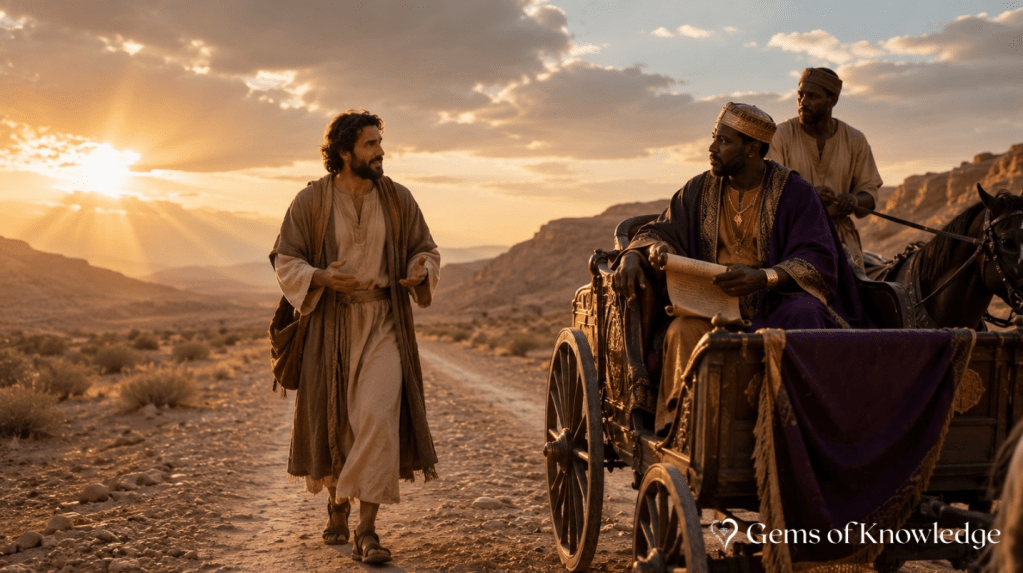
Alt...
Philip walks beside the Ethiopian official's chariot on a desert road, explaining the Scriptures as the Holy Spirit leads their encounter.
![[?]](https://fsmandfsmwo.blog/wp-content/uploads/2012/07/cropped-cropped-us-flag-1.jpg)
Devotion – “A Forgotten Key to Reading Scripture About Christ” – 04/22/2026

COMMENTS
Have you ever heard someone say, ” Oh, the King James Bible is too hard to read.” Maybe it was something like, “I don’t need to read my Bible; the Holy Spirit guides me.” It seems folks will manufacture any excuse to avoid being in the Word. So let’s take a quick look at these two excuses to see if they have any Biblical basis.
Is the KJV really too hard to understand? My opinion (which does not matter) is no, it is not. Yes, it is full of archaic language; some of the words have different meanings today, and we must be willing to study to read it. The fact is, every version of the Bible requires that we make a real effort to understand it.
Paul said,
“We must study or give due diligence
to be an approved workman…”
that makes the number two excuse invalid. How do we study so we might be approved by God? We rely not on our own skills or strength, but on those of the Holy Spirit (John 14:26):
But the Helper (Comforter, Advocate, Intercessor—Counselor, Strengthener, Standby), the Holy Spirit, whom the Father will send in My name [in My place, to represent Me and act on My behalf], He will teach you all things. And He will help you remember everything that I have told you.
That makes the first excuse invalid. especially in the modern world we live in today.
With technology so abundant and free, there is little excuse for anyone not to be in the world daily. One of the best, easy-to-use (navigate) sites, again in my opinion, is Bible Hub
The study of the Bible is known as Hermeneutics. Biblical hermeneutics is the study of the principles and methods of interpreting the text of the Bible. Second Timothy 2:15 commands believers to be involved in hermeneutics: “Do your best to present yourself to God as one approved, a worker who . . . correctly handles the word of truth.” The purpose of biblical hermeneutics is to help us to know how to properly interpret, understand, and apply the Bible.
Hermeneutics is concerned with the big picture, topics like salvation, sin, sovereignty, etc.
The category of study alongside Hermeneutics is Exegesis.
Biblical exegesis involves a detailed, methodical study of Scripture to draw out the intended meaning of each text. The English term “exegesis” comes from a Greek word meaning “to guide or lead out.” The process requires careful analysis of language, history, culture, and context to discern what the author originally intended and how the audience first understood the message. As 2 Timothy 2:15 advises, “Make every effort to present yourself approved to God, an unashamed workman who accurately handles the word of truth.”
Within Exegesis, there is a sub-topic of Parative Exegesis:
Partitive exegesis is a hermeneutical (interpretive) method used in Christian theology—especially in reading passages about Jesus—to distinguish between the divine and human natures of Christ while maintaining their unity in His person.
Core Idea: The practice “parts” or separates biblical statements about Christ into their appropriate nature—either divine or human—without splitting the one person of the Son. It affirms that Jesus is both fully God and fully man, united in person but distinct in nature, without confusion, change, division, or separation.
Purpose: Partitive exegesis arose in the early church to resolve the tension between Christ’s divine attributes (e.g., omnipotence, eternity) and His human experiences (e.g., hunger, death, suffering). It ensures that:
Divine titles and attributes are applied to His divine nature.
Human qualities are applied to His human nature.
Both natures are preserved in the one person of Christ Patheos.
Biblical and Theological Basis: The method is rooted in Scripture’s own way of describing Christ, which sometimes attributes divine titles to human actions (e.g., “the first and the last” in Revelation 1:17–18) or human experiences to divine persons (e.g., “Son of Man ascending to where He was before” in John 6:62).
Early church figures like Origen, Athanasius, the Cappadocians, Cyril of Alexandria, and especially Gregory of Nazianzus developed and defended partitive exegesis. Gregory’s “partitive rule” explicitly assigns sublime, transcendent expressions to the divine nature and more earthly or lowly ones to the human nature, while keeping the one person in view http://www.centerforbaptistrenewal.com.
Example: Divine nature: “Before Abraham was, I am” (John 8:58) — eternal, self-existent God.
Human nature: “I thirst” (John 19:28) — human experience of thirst.
Both natures: “Redeemer” or “King” — titles that apply to both Founders Ministries.
Summary: Partitive exegesis is a disciplined, Scripture-based approach to reading about Christ that preserves the distinction between His divine and human natures while affirming their unity. It is a safeguard against heresy and a way to interpret the incarnation faithfully.
The real-world application of this is not to make everyone a Biblical Scholar, a theologian, or a preacher/teacher. It is, however, commanded by God that we be able to defend our faith ( 1 Peter 3:15
What is biblical hermeneutics?
Daily Devotional – Couch Potato Christian – Faithful Steward Ministries and FSM Women’s Outreach
DEVOTION
What Is Partitive Exegesis? How the Church Has Read Scripture on Christ

“You just had to be there!”
We fall back on this excuse when words fail to capture the precise reality of an experience—often a comedic interaction or visual beauty. The reality is that reality itself is often hard to describe. We do our best to describe it with words, but we’ve all experienced the frustration of falling short.
This is especially true when we use our words to describe God. Herman Bavinck asks, “The moment we dare to speak about God, the question arises: How can we?”[1] The same question can be asked of the person of Christ: When we dare to speak about the One who is both infinite God and finite man, how can we?
Scripture tells us Jesus slept, ate, walked, and learned new things. But it also tells us He created the universe, sustains it, and is omniscient. You can see the dilemma—how do we accurately describe Jesus when He has these seemingly contradictory categories?
We can navigate this difficulty through a practice known as partitive exegesis. Partitive exegesis presupposes that Christ’s two natures are unified in His person without confusion, change, division, or separation. Therefore, we must recognize and maintain the distinction between Christ’s two natures when we read the Bible.[2] While that may sound complicated, this practice arises from Scripture itself—it is an inspired way of describing the reality of the incarnation…
Continued via link above
- What is biblical hermeneutics? | GotQuestions.org ↩︎
- What is Biblical Exegesis? ↩︎
- Google Copilot AI-generated response. ↩︎
![[?]](https://files.mastodon.social/accounts/avatars/113/720/515/024/889/997/original/bc0d4f8246686484.png)
“and he (Jesus) began to teach them. He said:
…
Blessed are the peacemakers, for they will be called children of God.”
…
Matthew 5:2, 9 NIVUK
#bible
“and he (Jesus) began to teach them. He said:
…
“Blessed are those who are persecuted because of righteousness, for theirs is the kingdom of heaven.”
…
Matthew 5:2, 10 NIVUK
#bible
![[?]](https://the-end-time.org/wp-content/uploads/2019/10/cropped-logo5.jpg)
Does a movie about discovery of alien life threaten Christianity? A Response to Disclosure Day
By Elizabeth Prata
SYNOPSIS: Using Steven Spielberg’s anticipated film Disclosure Day as a springboard, this article examines claims about extraterrestrial life through a biblical lens, arguing that Christian faith remains secure amid speculation, government disclosures, and Hollywood’s exploration of humanity’s place in the universe.
“Why would He create such a vast universe and save it only for us?” asks Disclosure Day screenwriter on behalf of producer-director Steven Spielberg. This film is expected to be a massive summer blockbuster released on June 12. Early reports from critics given pre-screening credentials is that it’s Spielberg’s best movie in years. This is the same director who made Schindler’s List, Close Encounters of the Third Kind, Jurassic Park, Saving Private Ryan, E.T. The Extra-Terrestrial and many other well-regarded films.

movie poster
Spielberg, who turns 80 this year, according to critics and pre-release audiences, still has the magic. It’s going to be BIG, they say.
So, What is Disclosure Day About?
It’s billed as a story that follows “two ordinary people who suddenly manifest unexplained psychic abilities. They uncover a massive government conspiracy keeping extraterrestrial contact a secret and race against time to reveal the truth to humanity before they are stopped,” says the synopsis.
Early buzz is that critics are raving about the film, and audiences praise it as deeply impactful, emotional, and thought-provoking.
Spielberg stated that this movie was made from his own belief system. As such, he believes there are aliens ‘out there’ and that the government is keeping that ‘truth’ from the population. His premise is, if the ‘truth’ was proved and globally known, how would we react?
AF Post reported after Spielberg was interviewed on June 8, that “the day aliens’ existence is “disclosed”, will have people questioning their faith.
Will it? More on that in a minute.
Spielberg inserted many religious symbols and concepts into the film. It is no accident that two hands touch with glowing light behind them, evoking Michaelangelo’s Creation of Man in the Sistine Chapel. A crucifix is seen in a close up. A nun wonders why only humans were created and saved…and other religious symbolism, all designed to come across as sincerely seeking truth.
Spielberg said he’d researched deeply into all the reported ‘abductions’ since the first widely reported (alleged) abduction of Betty and Barney Hill in 1961. Spielberg said that there is a consistency in all the reports of abductions since that time. When creating aliens he didn’t want to imagine a ‘new’ alien but present what had been consistently reported for decades. He stated that he believes there is overwhelming evidence that we are not alone in the universe.
The film centers not so much on action, thought there is some, but an “emotional texture” of how humanity would respond when we learn we’re not alone in the universe. The film shows humanity reimagining their entire being, place in the universe, and of course, ideas about God.
He said he was raised as an Orthodox Jew and after a period in his youth, Spielberg returned to the religion as an older adult. Asked many times over the years, especially after making the holocaust movie Schindler’s List, that yes, he believes God exists. But a belief in the God of the Bible? It’s obvious he does not.
Spielberg’s fascination with the universe and aliens started as a child when his dad took him to a dark night spot to view the Perseid Meteor Shower. Spielberg’s searching began there and in my view, has continued all his life. His explorations of the mysteries of the universe, vividly expressed in his movies, grope toward the Light of Jesus Christ, but never have reached it. (Isaiah 59:10).
World Leaders intimate aliens may exist
No longer the subject of whispered conspiracy theorists or crackpots, the subject of aliens, UFOs, and other life besides human seems to touch every strata of earthly society. Pope Francis famously said “that he would be willing to baptise aliens if they came to the Vatican, asking “who are we to close doors” to anyone – even Martians.” The prior Pope to Francis, Benedict XVI, said the same.
Fox News reported recently of President Trump’s Administration,
“The Department of War released 17 pages of new, never-before-seen Unidentified Anomalous Phenomena (UAP) files as part of the Presidential Unsealing and Reporting System for UAP Encounters (PURSUE), a major government transparency initiative. … The Pentagon on Friday released transcripts and photos from two NASA Apollo missions as part of a broader disclosure of dozens of photos and documents detailing UFO sightings it has documented since the 1950s.”
A prevailing attitude that we are told we will feel is captured by the following comment from Facebook-
John Heaton said,
“If aliens are real, Christians will have to accept that humanity isn’t the pinnacle of creation, that earth isn’t the center of the universe, that aliens are more intelligent than they are, and that the universe may contain forms of life, intelligence, history, and purpose that were never contemplated by the biblical writers. That would raise difficult problems. And aliens may have their own theories or opinions about the origin of the universe that would conflict with the standard creationist model. I’m pretty sure the Christian world would freak out, demonize the aliens and try to destroy them.”
No. On all counts.
Q&A
Disclosure Day is intended to provoke such discussions. As such, discussions of the movie will probably extend beyond the usual watercooler talk such as “Did you see it?” and delve toward deeper dialogues along the above themes. It’s a Christian’s opportunity to focus on Jesus. It’s also our responsibility to “have an answer”.
but sanctify Christ as Lord in your hearts, always being ready to make a defense to everyone who asks you to give an account for the hope that is in you, but with gentleness and respect; (1 Peter 3:15)
Not only to answer, but to initiate. There are already many discussions about the alien issue given the Trump Administration’s release of classified documents related to it. Now the discussions are ramping up in advance of Spielberg’s movie. We have an opportunity.
In that vein, here are some questions:
Do aliens exist?
Well, first of all, aliens DO exist. Before God made Adam then Eve, He made angels. (Job 38:4-7). Angels are off-Earth living beings. They possess personal will, powers, and a higher intellect than humans. They take various forms or no form. They visit earth at times, making themselves known, or they visit us unawares. Some minister to us in friendly capacity and others are at war with us and mean to do us harm (these are the fallen angels AKA demons). So, according to the commonly understood definition of ‘alien,’ we are not alone.
Can the fallen angels – or aliens like little green men – be saved? No. Jesus incarnated as a human, not as a spirit being (which angels are). He took on flesh of the human race as a Man, lived, died, resurrected, and ascended as a Man-God. Not as an angel nor as an alien in flesh. His atonement for sin is called substitutionary. Substitute for whom? Humans.
Hebrews 1:14 says of angels, “Are they not all ministering spirits, sent out to provide service for the sake of those who will inherit salvation?”
There is a separation in the verse, indicating that the angels serve and humans inherit salvation.
Why did God create the universe but only create humans to inhabit it? Isn’t that self-centered to think we’re the only ones?

The Helix Nebula, dubbed “Eye of God”
People always underestimate the power of glory. God created the universe as a display of His own power, glory and creative abilities. The Universe is a testament to God’s glorious display of power and creativity.
The heavens tell of the glory of God; And their expanse declares the work of His hands. (Psalm 19:1).
Further, Psalm 174:4 says,
He counts the number of the stars; He gives names to all of them.
We think of Adam naming the animals of the ground and the birds of the sky, (Genesis 2:19) as a big deal. We know there are billions upon billions of stars, yet God created them AND named them all! The universe isn’t for the human race, it’s for God’s glory.
God created the universe to be inhabited says Isaiah 45:18. But in the specificity of the creation week’s itemization, where does it list other beings? He made the angels, planets, moon, sun, plants, animals, birds, marine life, Adam, Eve, but left out the listing of alien lives on other planets? He didn’t. Oher beings aren’t listed because He didn’t create them.
The heavens are the heavens of the LORD, But the earth He has given to the sons of mankind. (Psalm 115:16).
Remember all the past deceptions, remember the future deceptions too!
Every time science seems to find something that ‘contradicts’ the truth of the Bible, we later discover it was fake. The Piltdown Man of 1912 was supposed to have proved evolution. Someone took bone fragments from a then-modern human cranium and an orangutan jawbone and deliberately stained them to alter their appearance to look more ancient. It was hailed as ‘the missing link’ between apes’ evolution and man’s. It was thoroughly debunked in 1953.
As technology has increased it has both become easier to make fake bones and harder to spot them. Chinese farmers have discovered how lucrative it is to make them and they have a thriving industry going in faked fossil bones:
Remember the buzz that fossils seemed to confirm that dinosaurs evolved into birds? The seminal Archaeoraptor fossil issue was found to be a hoax. Even National Geographic recanted on that one. (Source).
“The farmers do not believe this is wrong, they look at it as restoring an art object to make it more marketable. The whole commercial market for fossils has gotten riddled with fakery.”
Source Jeff Hecht, “F is for fake”, New Scientist 165(2226):12, Feb. 19, 2000; and Answers in Genesis.
In 1993 an experiment claimed to have successfully found a link between male homosexuality and a specific area on the X chromosome called Xq28. This was the much hailed “gay gene”. It was found to be false and is now totally debunked.
Don’t worry, the hype around Disclosure Day is just that, hype. It will eventually die down and fade away.
The Bible tells us that there will be many future deceptions as well. We can see glimmers of that potentiality now with how true to life AI is, holograms, and other technological innovations. Videos put words into people’s mouth they never said, but seem so real. This is an era of heightened sin, so don’t forget that people deliberately lie and try to combat Christianity with fakery designed to knock us off the Rock.
Romans 1:21-25 speaks of how the foolish who reject the obviousness of God’s existence become futile in their thinking. Then they will believe anything- except the truth.
There will be deceitful spirits in the end times, says 1 Timothy 4:1. The coming Antichrist will be “in accord with the activity of Satan, with all power and false signs and wonders”, says 2 Thessalonians 2:9.
People who experience the unexplainable, the unmeasurable, are actually experiencing the supernatural. Their minds are futile so they refuse to believe in God, good angels, demons, and interheavenly warfare, so they try to explain the best they can in their finite, secular minds.
“I don’t believe there is anything more to UFOs than manifestations of supernatural powers by Satan himself.” John MacArthur, Q&A, 1976.

movie poster
We have never needed science to confirm the Bible. Ever. God is outside of science, transcendent and holy. His truth is the only truth. We should never be shaken by anything that man devises, presents, or produces, that SEEMS to be at odds with the Bible.
We don’t receive our theology from movies and we don’t change our theology because of movies. Remember, Spielberg is not a Christian. He has the futile mind of Romans 1. We can appreciate his creative abilities in making movies, but he has nothing to say to us about God, faith, and belief.
We don’t place our theological trust in governments, either. Even though God set up government, and we submit to its laws and its representatives, we don’t blindly trust everything it says to us. Government is made up of people, and people are sinners.
Be on the alert. Stand firm in the faith. Be men of courage. Be strong. (1 Corinthians 16:13).
In that way, be have prayed up and checked our own selves so we can be firm in the faith. We should have scripture like the ones above at the ready.
When I was seeking answers, I asked a women who attended the local Baptist church about fossils. I do not remember any detail about what she said, but I remember vividly her confidence in her answer. She replied just as Peter said to, with an answer at the ready in full, settled faith, but with love and respect. Even if you don’t have all the answers ready (and who does?), being faithful with confidence in the Lord and His truth will be perceived and remembered.
Further Resources
Alien Life: Answers in Genesis. The link is a compendium of essays from AIG on the topic of extraterrestrial life.

amgbengaezekieloladosu » 🌐
@megafeastamerica-dmgts.wordpress.com@megafeastamerica-dmgts.wordpress.com
Poem Title: “Light”
Tripping like a candle stick in the dark, love I see myself in dark world without hope of someone to lean on. I should have run the race without looking back. I will run the race without looking back to another day.Tripping like a candle stick without light, with emptiness to shine her light. Sweetheart, to see you there with a stick of lighter to light my candle stick in the dark world. I will run the race without looking back. I will run the race of seen hope of lighting another […] [SENSITIVE CONTENT]
Tripping like a candle stick in the dark, love I see myself in dark world without hope of someone to lean on. I should have run the race without looking back. I will run the race without looking back to another day.Tripping like a candle stick without light, with emptiness to shine her light.
Sweetheart, to see you there with a stick of lighter to light my candle stick in the dark world. I will run the race without looking back. I will run the race of seen hope of lighting another day.
The silence of the loneliness, and the emptiness of been love and committed to love makes me to see the reason to run a race for another time and another season.
Can I say
You stand as the light and as well I stand as candle stick
As you are the catalyst which runs through my chemical equation to form perfect solution bonding. Will I say it was a mistake in committed to love, can I say let our love making scene never end till eternity?
I will run the race without looking back, I will run the race of see hope of lighting the dark stories of loneliness.
Gbenga Ezekiel Oladosu
American National Award Winning Author
Mega Feast Bestselling Author
amgbengaezekieloladosu » 🌐
@megafeastamerica-dmgts.wordpress.com@megafeastamerica-dmgts.wordpress.com
“The Born”
The social influence of our day can never be wrong in some perspective of human decision making process. Leaders are born and some are trained leaders which makes the product of their kind different in the spheres of influence. The act of every leadership exercise is like when a baby is learning to crawl and not even learning to walk or talk in other to incorporate into the society. Learning is part of every process to growth in any given opportunity been given or available to us. The better […] [SENSITIVE CONTENT]
The social influence of our day can never be wrong in some perspective of human decision making process. Leaders are born and some are trained leaders which makes the product of their kind different in the spheres of influence. The act of every leadership exercise is like when a baby is learning to crawl and not even learning to walk or talk in other to incorporate into the society.
Learning is part of every process to growth in any given opportunity been given or available to us. The better understanding about leadership role of opportunity is that we can’t do way with learning process either from the people ahead of us to lead or in a classroom phase of life.
We cannot afford the vocational training of been a leader as in the idea to life, every given leader that’s born to lead has better opportunity of showcase more ability than a trained leader. That’s while we can’t afford the vocational training of been a leader either by standing on a mentorship role of becoming a leader. Countries are crying out today for a good governance because of the role of their past leadership which is not aspect from their citizens. The good knowledge of a leader who is born to lead is by acquiring the knowledge of mentorship
Gbenga Ezekiel Oladosu
American National Award Winning Author
Mega Feast Bestselling Author
Honored as (WordPress Globetrotter Receive views from 50+ Different Countries)
amgbengaezekieloladosu » 🌐
@megafeastamerica-dmgts.wordpress.com@megafeastamerica-dmgts.wordpress.com
“The Tray”
People group in different races and cultures rare with their believe system. People long for good life and good leadership ability to lead them in the sphere of influence. The anti government in different form of expression as opposition to the government either democracy, military system of government in some countries is beyond expression of human believe. From a look of thing, for example, when you are in a restaurant , I mean a good to look at or a club house for a wine or food. The food […] [SENSITIVE CONTENT]
People group in different races and cultures rare with their believe system. People long for good life and good leadership ability to lead them in the sphere of influence. The anti government in different form of expression as opposition to the government either democracy, military system of government in some countries is beyond expression of human believe.
From a look of thing, for example, when you are in a restaurant , I mean a good to look at or a club house for a wine or food. The food or the wine be placed on a tray to make their customer look welcome and come for another day toward the services given to them.
This days, some countries prepared to be governed by Military government than democracy government. While is do, is that some leaders abused the role of democracy that’s established to protect the right of people but their rather abuse and over power the right of the people who voted for them. This makes them regret democracy than rather to choose the military government. To them they can see better understanding with the military government than democracy.
We all long to have the right to self-will and not to abused our will power in the name of democracy. This day democracy is like a nightmare to some countries.
While Military government is like a God serving to people, economic growth of some countries that they will love to remain with them.
Gbenga Ezekiel Oladosu
American National Award Winning Author
Mega Feast Bestselling Author
Honored as (WordPress Globetrotter Receive views from 50+ Different Countries)
amgbengaezekieloladosu » 🌐
@megafeastamerica-dmgts.wordpress.com@megafeastamerica-dmgts.wordpress.com
“Liberty”
Dream and hope is based on the power within your liberty to dream in hoping for a better day ahead of time. In anticipating for who God has created you to be . Though you need a space of liberty to operate without boundaries or border that create opportunity for freedom. In as much, we can compare freedom and liberty together as they different functional purposes. They functions differently. But they work in hands in hands toward a goal. A goal that countries, people group build upon for a […] [SENSITIVE CONTENT]
Dream and hope is based on the power within your liberty to dream in hoping for a better day ahead of time. In anticipating for who God has created you to be . Though you need a space of liberty to operate without boundaries or border that create opportunity for freedom. In as much, we can compare freedom and liberty together as they different functional purposes. They functions differently.
But they work in hands in hands toward a goal. A goal that countries, people group build upon for a good day. People long for freedom has well liberty to do whatever they like. Liberty control limit and border while freedom control act of service of expression without limit
Countries leaders sometime takes liberty for freedom denied their own citizen the ability to create opportunity to dream and hope for the batter day to grow as a citizen. They makes the law and they don’t live by the law of their own countries to the extend that they force their own citizens to live under the law they don’t obey or followed.
Then limitation to liberty set in and some countries choose to live under Military leader and while some countries as well choose to live under respected democracy that makes people live and respect their law because their own countries leaders lead by good example as a leader born to leader and not a trained leader.
Liberty is what created dream to freedom without fears of associating and willing to try and not afraid of mistakes because their is a law guiding everybody under the spheres of influence.
Gbenga Ezekiel Oladosu
American National Award Winning Author
Mega Feast Bestselling Author
Honored as (WordPress Globetrotter Receive views from 50+ Different Countries)
![[?]](https://files.mastodon.social/accounts/avatars/110/540/252/708/905/804/original/2589fba324f877a2.jpeg)
What caused such a long-running decline in Christianity across the United States? Could the poor track record of certain organized religions and leaders be the contributing factor? Have we turned the corner? Click or tap the link to read more.
#christianity #Bible #Jesus #dailydevotional
https://afaithfulsower.org/2026/06/09/be-cautious-of-the-ever-shifting-sands-of-culture/
Why do we need a Savior, and what is the significance of the church's rapture? Click or tap the link to read more.
#afaithfulsower #Christianity #Bible #Salvation
https://afaithfulsower.org/2026/06/11/what-is-the-significance-of-salvation-and-the-rapture/
How do we approach serving as salt and light in such a dark, hostile world? Click or tap the link to read more.
#afaithfulsower #christianity #Bible #dailydevotional #FreeWill
https://afaithfulsower.org/2026/06/12/be-of-good-character-2/