Search results for tag #literature
![[?]](https://media.mastodon.scot/accounts/avatars/109/285/896/512/482/891/original/68bc6eea8b007487.png)
Burns wrote that he was inspired by Bruce’s “glorious struggle for Freedom, associated with the glowing ideas of some other struggles of the same nature, not quite so ancient” – probably a reference to the Radical movement, & to Thomas Muir of Huntershill
2/5
https://quod.lib.umich.edu/cgi/t/text/text-idx?c=evans;idno=N21038.0001.001
#Scottish #literature #Bannockburn #BattleofBannockburn #history #18thcentury #RobertBurns #poem #poetry #song #radicalism

Alt...
A bronze bust, green with verdigris, of Thomas Muir of Huntershill, depicting him after he had suffered a serious injury to his face. A young man, he wears an eighteenth-century coat with a high collar and a ruffled cravat. His hair is swept back, and a cloth is draped over the left side of his face, tied in place with a band around his forehead.
The song quickly became popular, & the tune was adapted as “Marche des soldats de Robert Bruce” for the French army. It also features in the concert overture “Rob Roy” by Berlioz & the 4th movement of the “Scottish Fantasy” by Max Bruch 🏴🇫🇷
3/5
https://www.youtube.com/watch?v=zE4eE20Dk5I
#Scottish #literature #Bannockburn #BattleofBannockburn #history #18thcentury #RobertBurns #poem #poetry #music #classicalmusic #19thcentury #ArmeeFrancaise
In 1881 the New York Times, reviewing Helen Kendrick Johnson’s OUR FAMILIAR SONGS & THOSE WHO MADE THEM, asserted that no song was “more glorious”, & that once Burns’s poem had been set to the tune of “Hey, Tuttie Tatie”, it “marched through the land forever, loud, & triumphant”
4/5
#Scottish #literature #Bannockburn #BattleofBannockburn #history #18thcentury #RobertBurns #poem #poetry #song #music #19thcentury

Alt...
Book cover: a late nineteenth-century book cover, somewhat scuffed. The cover is a brownish-yellow. A gold medallion showing four men in profile is framed by a curved horn and backed by two pipes. The title is
OUR FAMILIAR SONGS
AND THOSE WHO MADE THEM
Here is Dick Gaughan performing “Scots Wha Hae”, to an audience that includes Dr Maya Angelou – from the documentary ANGELOU ON BURNS (first shown on BBC2, 1996)
5/5
https://www.youtube.com/watch?v=qx8hEoJNVdM
#Scottish #literature #Bannockburn #BattleofBannockburn #history #18thcentury #RobertBurns #poem #poetry #song #folksong #MayaAngelou
PS – the whole of ANGELOU ON BURNS is currently available to watch on the BBC iPlayer
https://www.bbc.co.uk/programmes/m0013vcs
#Scottish #literature #18thcentury #RobertBurns #poem #poetry #MayaAngelou
PPS – if you can’t watch the documentary on the iPlayer, it’s also on YouTube:
https://www.youtube.com/watch?v=wwbuCL-Osh8
#Scottish #literature #18thcentury #RobertBurns #poem #poetry #MayaAngelou
![[?]](https://cdn.masto.host/zirkus/accounts/avatars/111/192/373/629/540/829/original/9ff4f5b9781a0e3a.jpg)
SPARROW-MOUTHED. Wide-mouthed, like the mouth of a sparrow: it is said of such persons, that they do not hold their mouths by lease, but have it from year to year; i.e. from ear to ear. One whose mouth cannot be enlarged without removing their ears.
A selection from Francis Grose’s “Dictionary Of The Vulgar Tongue” (1785)
--
#books #literature #dictionaries #history #society #language #slang @histodons
Alt...
Image imitating a page from an old document, text (as in main toot):
SPARROW-MOUTHED. Wide-mouthed, like the mouth of a sparrow: it is said of such persons, that they do not hold their mouths by lease, but have it from year to year; i.e. from ear to ear. One whose mouth cannot be enlarged without removing their ears.
A selection from Francis Grose’s “Dictionary Of The Vulgar Tongue” (1785)
DANCERS. Stairs.
A selection from Francis Grose’s “Dictionary Of The Vulgar Tongue” (1785)
--
#books #literature #dictionaries #history #society #language #slang @histodons
Alt...
Image imitating a page from an old document, text (as in main toot):
DANCERS. Stairs.
A selection from Francis Grose’s “Dictionary Of The Vulgar Tongue” (1785)
![[?]](https://files.mastodon.social/accounts/avatars/110/441/535/131/897/219/original/0ddf9d4dd12a5dee.png)
#OTD in 1819.
Washington Irving’s “Rip Van Winkle” is Published
By one "Geoffrey Crayon"
https://lithub.com/this-week-in-literary-history-washington-irvings-rip-van-winkle-is-published/
Rip Van Winkle by Washington Irving at PG:
https://www.gutenberg.org/ebooks/60976
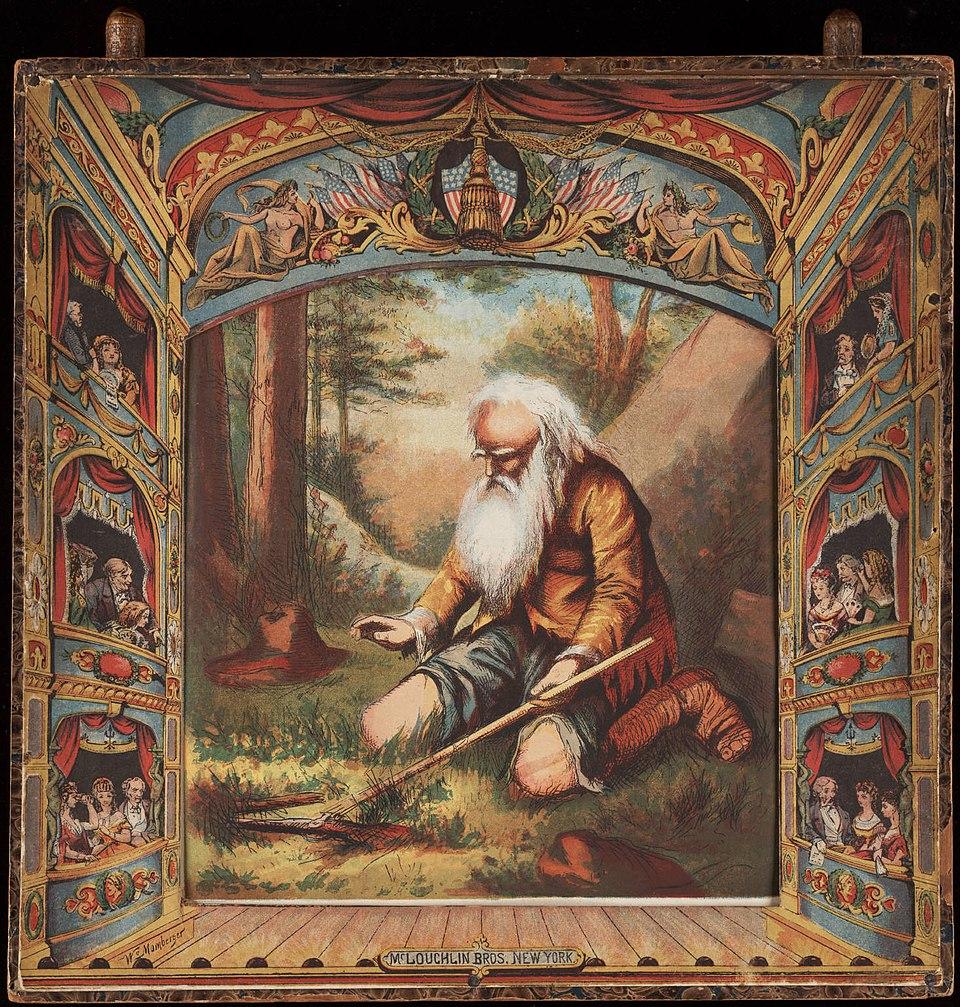
Alt...
Illustration of Rip van Winkle from "Uncle Sam's panorama of Rip van Winkle and Yankee Doodle," toy (moveable book), published by McLoughlin Bros., Inc. "Eight scenes from the story of Rip van Winkle and six scenes from the story of Yankee Doodle are pasted together side by side to form a long panoramic strip. The strip is mounted on two rollers within a one-sided box; exterior cranks turn the strip." General Collection, Beinecke Rare Book and Manuscript Library, Yale University, New Haven, Connecticut.
https://en.wikipedia.org/wiki/Rip_Van_Winkle#/media/File:Rip_van_Winkle_from_Uncle_Sam's_panorama_of_Rip_van_Winkle_and_Yankee_Doodle.jpg
GRUB STREET. A street near Moorfields, formerly the supposed habitation of many persons who wrote for the booksellers: hence a Grub-street writer means a hackney author, who manufactures booss for the booksellers.
A selection from Francis Grose’s “Dictionary Of The Vulgar Tongue” (1785)
--
#books #literature #dictionaries #history #society #language #slang @histodons
Alt...
Image imitating a page from an old document, text (as in main toot):
GRUB STREET. A street near Moorfields, formerly the supposed habitation of many persons who wrote for the booksellers: hence a Grub-street writer means a hackney author, who manufactures booss for the booksellers.
A selection from Francis Grose’s “Dictionary Of The Vulgar Tongue” (1785)
HAND. A sailor. We lost a hand; we lost a sailor. Bear a hand; make haste. Hand to fist; opposite: the same as tete-a-tete, or cheek by joul.
A selection from Francis Grose’s “Dictionary Of The Vulgar Tongue” (1785)
--
#books #literature #dictionaries #history #society #language #slang @histodons
Alt...
Image imitating a page from an old document, text (as in main toot):
HAND. A sailor. We lost a hand; we lost a sailor. Bear a hand; make haste. Hand to fist; opposite: the same as tete-a-tete, or cheek by joul.
A selection from Francis Grose’s “Dictionary Of The Vulgar Tongue” (1785)
Disappearing Scrapbooks
The fate of Willa Cather’s archives, real and fictional.
By Liz Cettina
Books by Willa Cather at PG:
https://www.gutenberg.org/ebooks/author/22

Alt...
Photograph of Willa Cather by Van Vechten; smiling; looking toward the camera. (1936)
https://en.wikipedia.org/wiki/Willa_Cather#/media/File:Cather_Van_Vechten.jpg
43 of the Most Iconic Short Stories in the English Language
From Washington Irving to Kristen Roupenian
by Emily Temple
Some Iconic Short Stories at PG:
https://www.gutenberg.org/ebooks/60976
https://www.gutenberg.org/ebooks/2148
https://www.gutenberg.org/ebooks/11231
https://www.gutenberg.org/ebooks/375
https://www.gutenberg.org/ebooks/1952
https://www.gutenberg.org/ebooks/209
https://www.gutenberg.org/ebooks/27411
https://www.gutenberg.org/ebooks/12122
https://www.gutenberg.org/ebooks/7256
https://www.gutenberg.org/ebooks/2814
https://www.gutenberg.org/ebooks/5200
Alt...
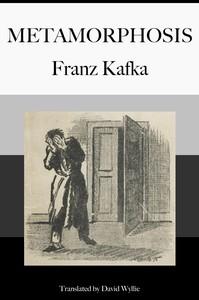
Cover image of the book Metamorphosis by Franz Kafka and translated by David Wyllie.
It features an illustration of a distressed man covering his face near an open door, evoking the story's themes of horror and alienation.
https://www.gutenberg.org/cache/epub/5200/pg5200-images.html
FLAT. A bubble, gull, or silly fellow.
A selection from Francis Grose’s “Dictionary Of The Vulgar Tongue” (1785)
--
#books #literature #dictionaries #history #society #language #slang @histodons
Alt...
Image imitating a page from an old document, text (as in main toot):
FLAT. A bubble, gull, or silly fellow.
A selection from Francis Grose’s “Dictionary Of The Vulgar Tongue” (1785)
FACE-MAKING. Begetting children. To face it out; to persist in a falsity. No face but his own: a saying of one who has no money in his pocket or no court cards in his hand.
A selection from Francis Grose’s “Dictionary Of The Vulgar Tongue” (1785)
--
#books #literature #dictionaries #history #society #language #slang @histodons
Alt...
Image imitating a page from an old document, text (as in main toot):
FACE-MAKING. Begetting children. To face it out; to persist in a falsity. No face but his own: a saying of one who has no money in his pocket or no court cards in his hand.
A selection from Francis Grose’s “Dictionary Of The Vulgar Tongue” (1785)
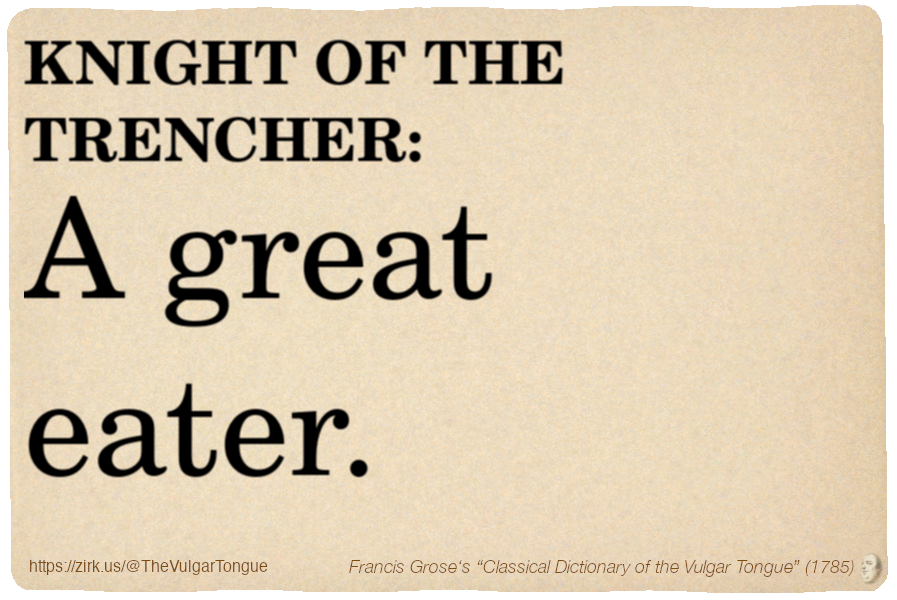
KNIGHT OF THE TRENCHER. A great eater.
A selection from Francis Grose’s “Dictionary Of The Vulgar Tongue” (1785)
--
#books #literature #dictionaries #history #society #language #slang @histodons
Alt...
Image imitating a page from an old document, text (as in main toot):
KNIGHT OF THE TRENCHER. A great eater.
A selection from Francis Grose’s “Dictionary Of The Vulgar Tongue” (1785)
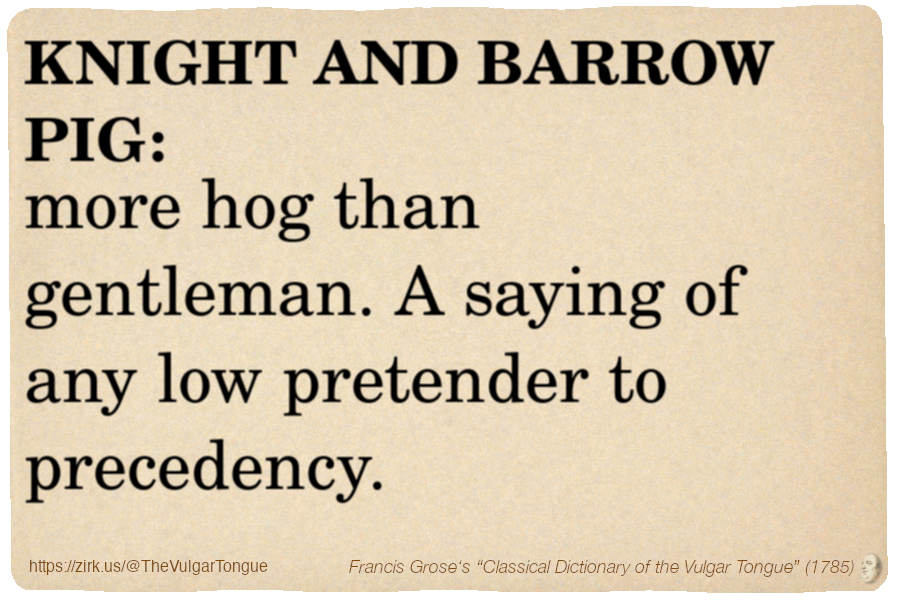
KNIGHT AND BARROW PIG, more hog than gentleman. A saying of any low pretender to precedency.
A selection from Francis Grose’s “Dictionary Of The Vulgar Tongue” (1785)
--
#books #literature #dictionaries #history #society #language #slang @histodons
Alt...
Image imitating a page from an old document, text (as in main toot):
KNIGHT AND BARROW PIG, more hog than gentleman. A saying of any low pretender to precedency.
A selection from Francis Grose’s “Dictionary Of The Vulgar Tongue” (1785)
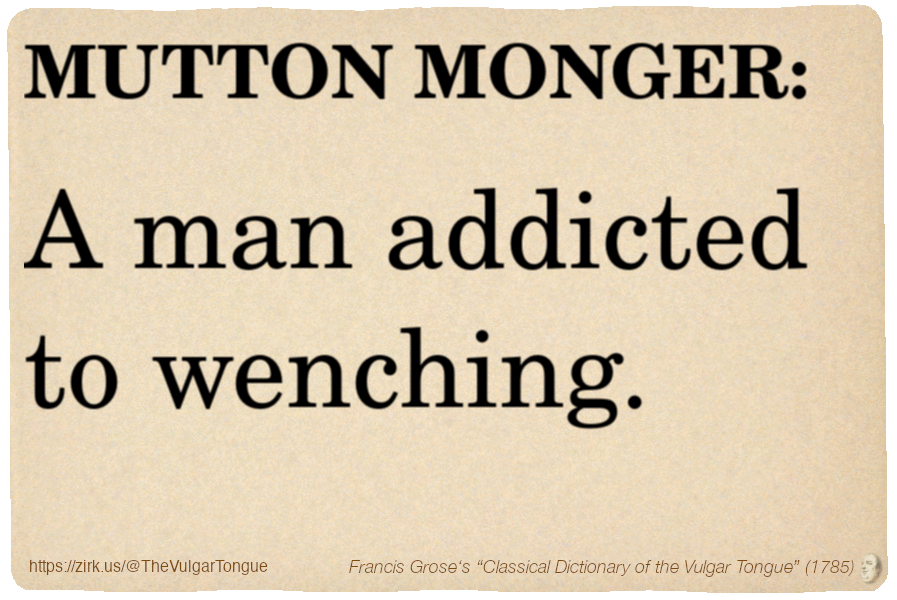
MUTTON MONGER. A man addicted to wenching.
A selection from Francis Grose’s “Dictionary Of The Vulgar Tongue” (1785)
--
#books #literature #dictionaries #history #society #language #slang @histodons
Alt...
Image imitating a page from an old document, text (as in main toot):
MUTTON MONGER. A man addicted to wenching.
A selection from Francis Grose’s “Dictionary Of The Vulgar Tongue” (1785)
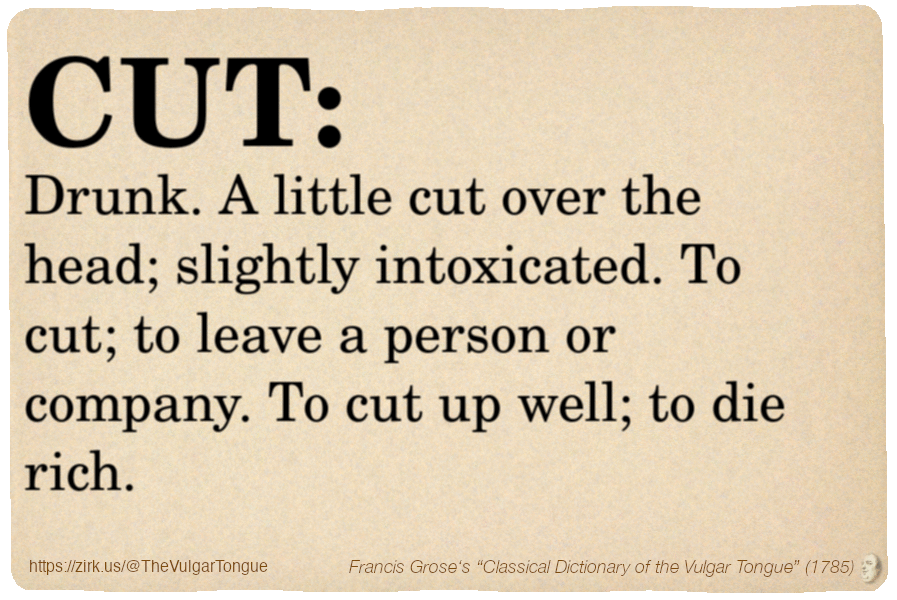
CUT. Drunk. A little cut over the head; slightly intoxicated. To cut; to leave a person or company. To cut up well; to die rich.
A selection from Francis Grose’s “Dictionary Of The Vulgar Tongue” (1785)
--
#books #literature #dictionaries #history #society #language #slang @histodons
Alt...
Image imitating a page from an old document, text (as in main toot):
CUT. Drunk. A little cut over the head; slightly intoxicated. To cut; to leave a person or company. To cut up well; to die rich.
A selection from Francis Grose’s “Dictionary Of The Vulgar Tongue” (1785)
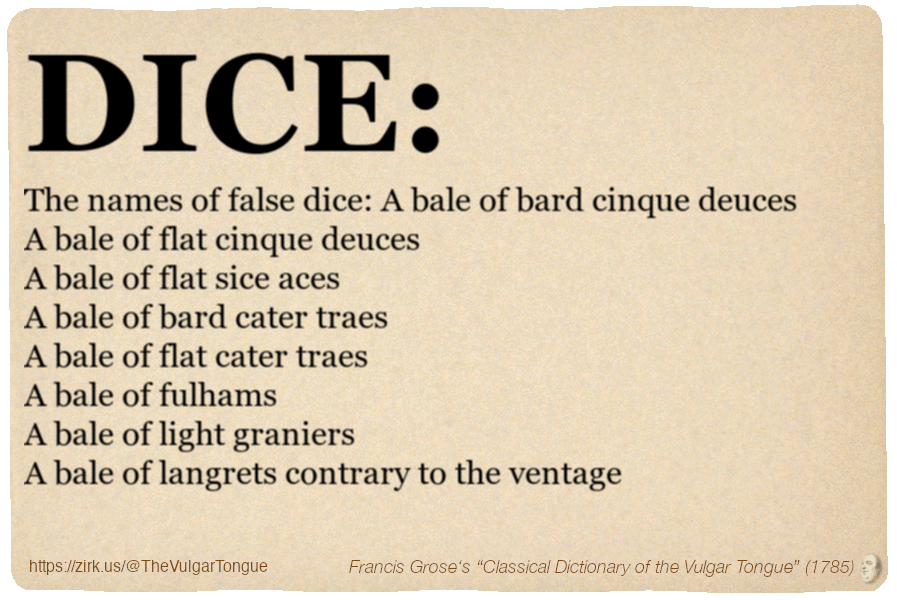
DICE. The names of false dice: A bale of bard cinque deuces \nA bale of flat cinque deuces \nA bale of flat sice aces \nA bale of bard cater traes \nA bale of flat cater traes \nA bale of fulhams \nA bale of light graniers \nA bale of langrets contrary to the ventage
A selection from Francis Grose’s “Dictionary Of The Vulgar Tongue” (1785)
--
#books #literature #dictionaries #history #society #language #slang @histodons
Alt...
Image imitating a page from an old document, text (as in main toot):
DICE. The names of false dice: A bale of bard cinque deuces \nA bale of flat cinque deuces \nA bale of flat sice aces \nA bale of bard cater traes \nA bale of flat cater traes \nA bale of fulhams \nA bale of light graniers \nA bale of langrets contrary to the ventage
A selection from Francis Grose’s “Dictionary Of The Vulgar Tongue” (1785)
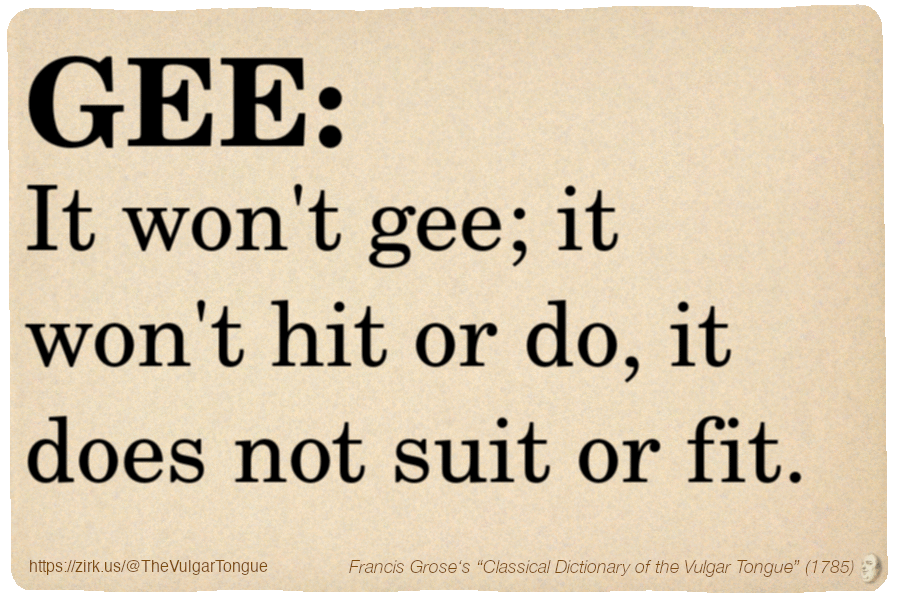
GEE. It won't gee; it won't hit or do, it does not suit or fit.
A selection from Francis Grose’s “Dictionary Of The Vulgar Tongue” (1785)
--
#books #literature #dictionaries #history #society #language #slang @histodons
Alt...
Image imitating a page from an old document, text (as in main toot):
GEE. It won't gee; it won't hit or do, it does not suit or fit.
A selection from Francis Grose’s “Dictionary Of The Vulgar Tongue” (1785)
5 of Agatha Christie’s Works You Won’t Be Able to Put Down
Don’t miss out on this list of bestselling Agatha Christie works, which remain unrivaled in the murder mystery genre.
https://www.thecollector.com/agatha-christie-works/
Christie at PG:
https://www.gutenberg.org/ebooks/author/451
Alt...
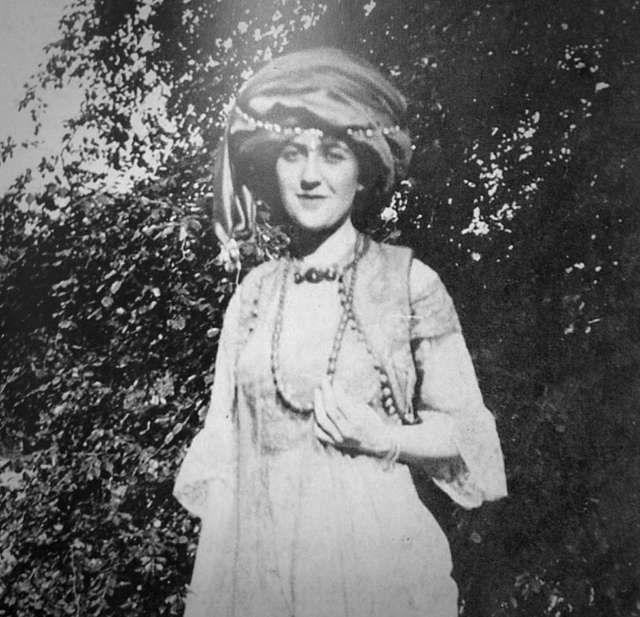
Agatha Christie in a play at Cockington Court in 1912 - picyrl.com. She is wearing a large, elaborate fabric turban. It is heavily textured and trimmed with a strand of beads or pearls across her brow. Her dress is light-colored and long-sleeved with loose, flared cuffs. A darker, open vest is layered over the top. A beaded necklace hangs down close to her waist.
There can be no sin committed from love – the radical ethics of Héloïse
by Prashanti Aswani, Adam D’Arpino, Abigail Tulenko
Books by Abelard and Heloïse at PG
https://www.gutenberg.org/ebooks/author/5441
https://www.gutenberg.org/ebooks/author/38039
#Books #literature #Philosophy
Alt...
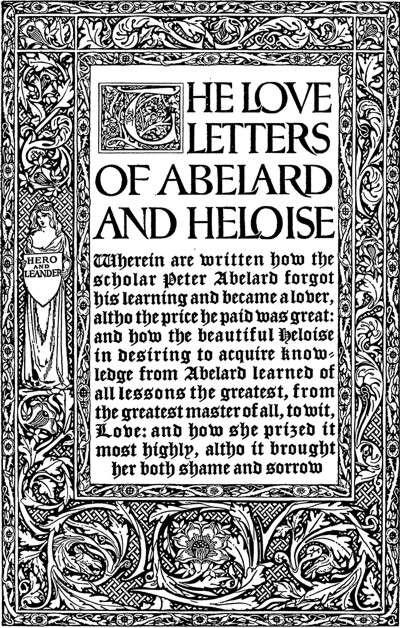
Transcription: Wherein are written how the scholar Peter Abelard forgot his learning and became a lover, altho the price he paid was great: and how the beautiful Heloise in desiring to acquire knowledge from Abelard learned of all lessons the greatest, from the greatest master of all, to wit, Love: and how she prized it most highly, altho it brought her both shame and sorrow.
The love letters of Abelard and Heloise
by Peter Abelard and Héloïse
Other: Ralph Fletcher Seymour
https://www.gutenberg.org/cache/epub/40227/pg40227-images.html
BUGABOE. A scare-babe, or bully-beggar.
A selection from Francis Grose’s “Dictionary Of The Vulgar Tongue” (1785)
--
#books #literature #dictionaries #history #society #language #slang @histodons
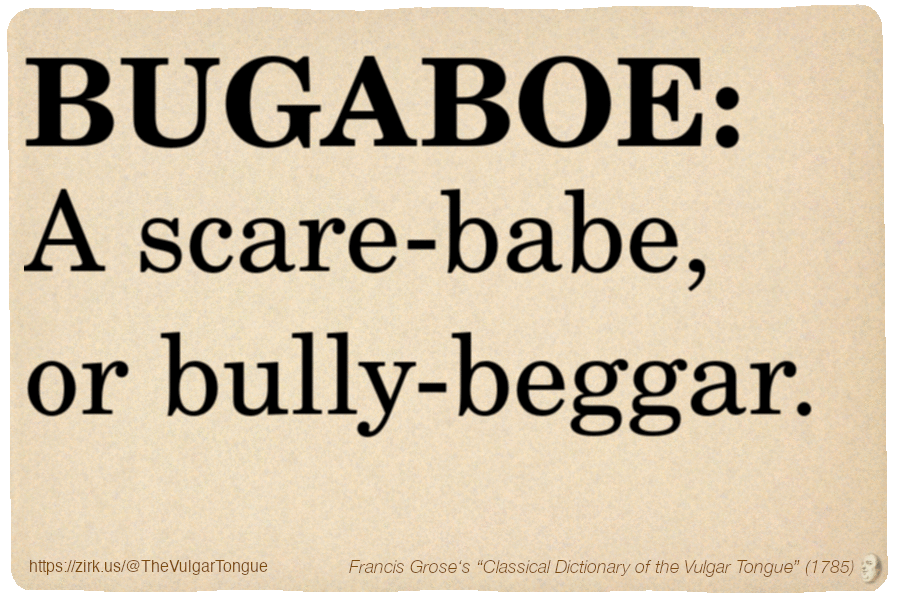
Alt...
Image imitating a page from an old document, text (as in main toot):
BUGABOE. A scare-babe, or bully-beggar.
A selection from Francis Grose’s “Dictionary Of The Vulgar Tongue” (1785)
Hi!, I'm a bot posting selections from Francis Grose’s 1785 “Dictionary Of The Vulgar Tongue”, a compilation of slang terms, the coded language of the underclass and the demi-monde.
[18th-century-content warning: possible racism, animal cruelty, homophobia, sexism, slut-shaming. Let me know of any problems.]
#FollowFriday #books #literature #dictionaries #history #society #crime #language #slang #18thCentury
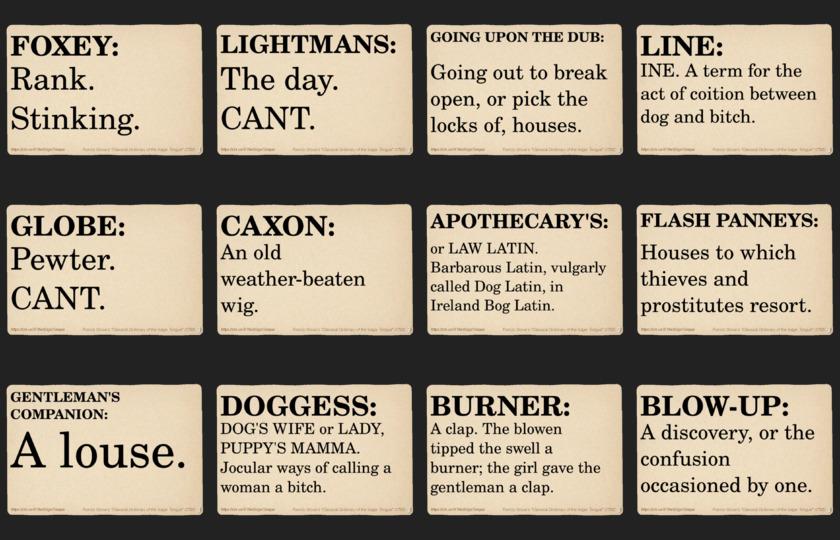
Alt...
Montage of dictionary items posted by this account
GUMMY. Clumsy: particularly applied to the ancles of men or women, and the legs of horses.
A selection from Francis Grose’s “Dictionary Of The Vulgar Tongue” (1785)
--
#books #literature #dictionaries #history #society #language #slang @histodons
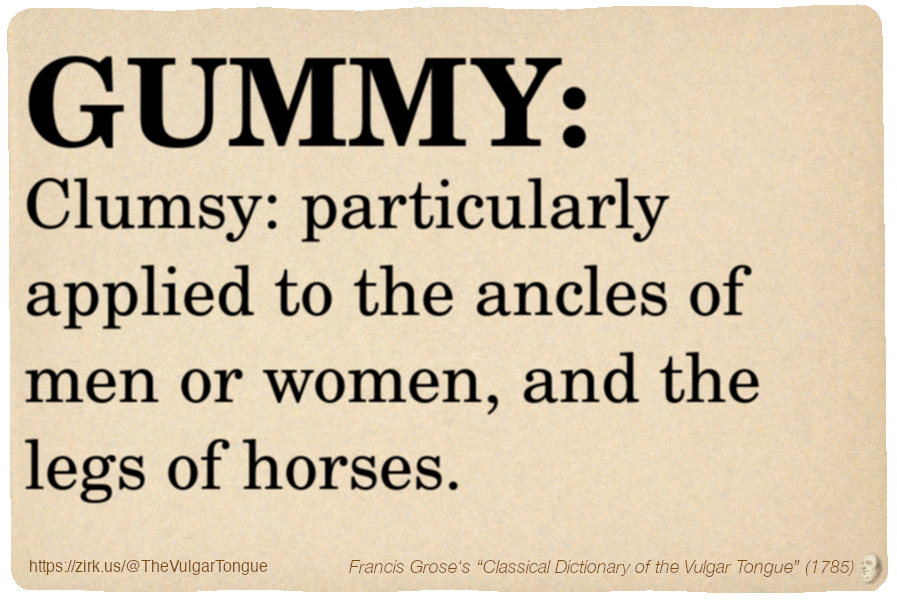
Alt...
Image imitating a page from an old document, text (as in main toot):
GUMMY. Clumsy: particularly applied to the ancles of men or women, and the legs of horses.
A selection from Francis Grose’s “Dictionary Of The Vulgar Tongue” (1785)
New research proposes Dante’s Inferno modelled a planetary impact 500 years before modern science!
by Asmae Ourkiya
Inferno by Dante Alighieri at PG:
https://www.gutenberg.org/ebooks/search/?query=inferno
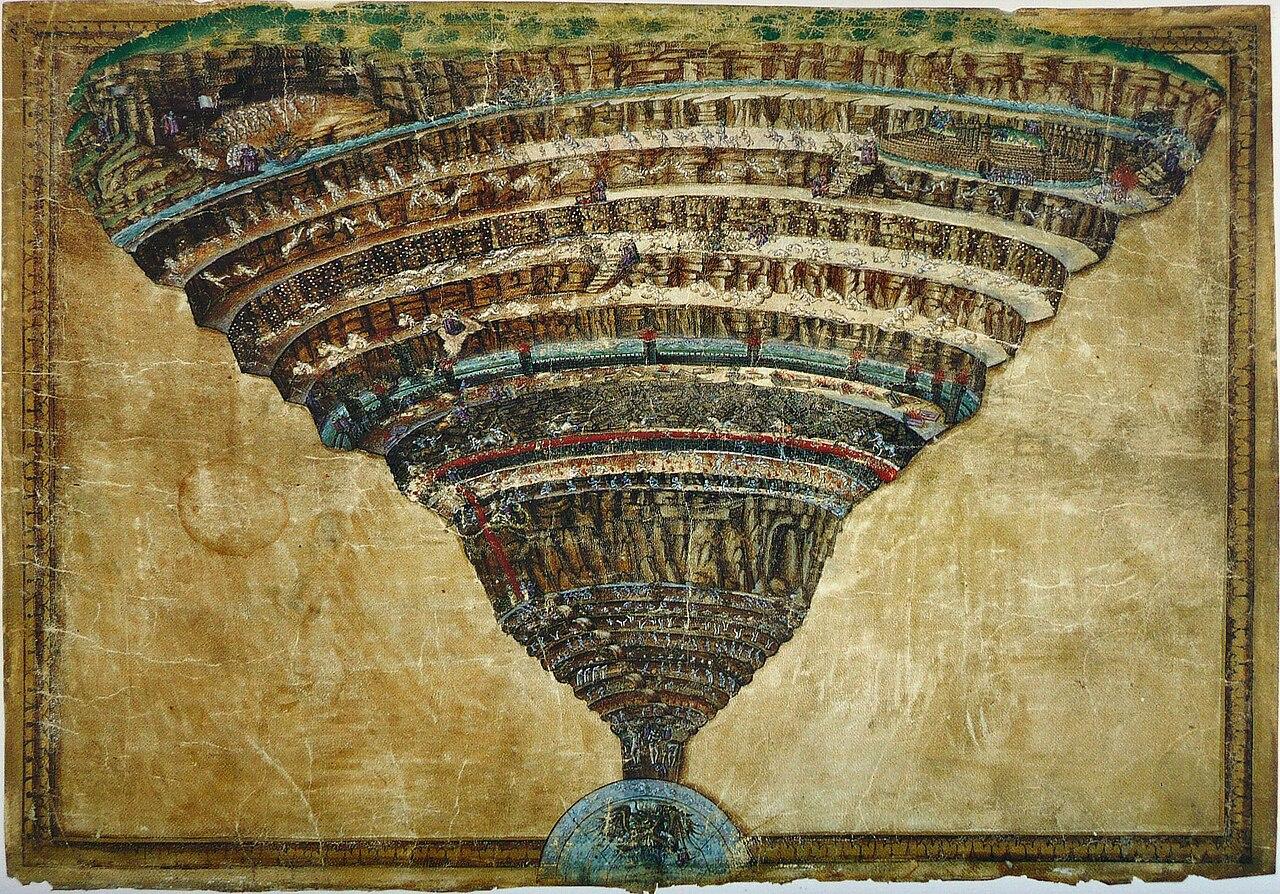
Alt...
Dante's Inferno, as illustrated by Botticelli.
Sandro Botticelli's c. 1480s illustration for Dante's Inferno, depicting the funnel-shaped descending circles of Hell in cross-section, packed with tiny figures suffering their respective torments, narrowing down to Satan at the very bottom.
https://en.wikipedia.org/wiki/Divine_Comedy_Illustrated_by_Botticelli#/media/File:Sandro_Botticelli_-_La_Carte_de_l'Enfer.jpg
Was Mill anti-traditional?
And was Hayek suffering from the burden of the past...?
by Henry Oliver
https://www.commonreader.co.uk/p/was-mill-anti-traditional
Books by John Stuart Mill at PG:
https://www.gutenberg.org/ebooks/author/1705
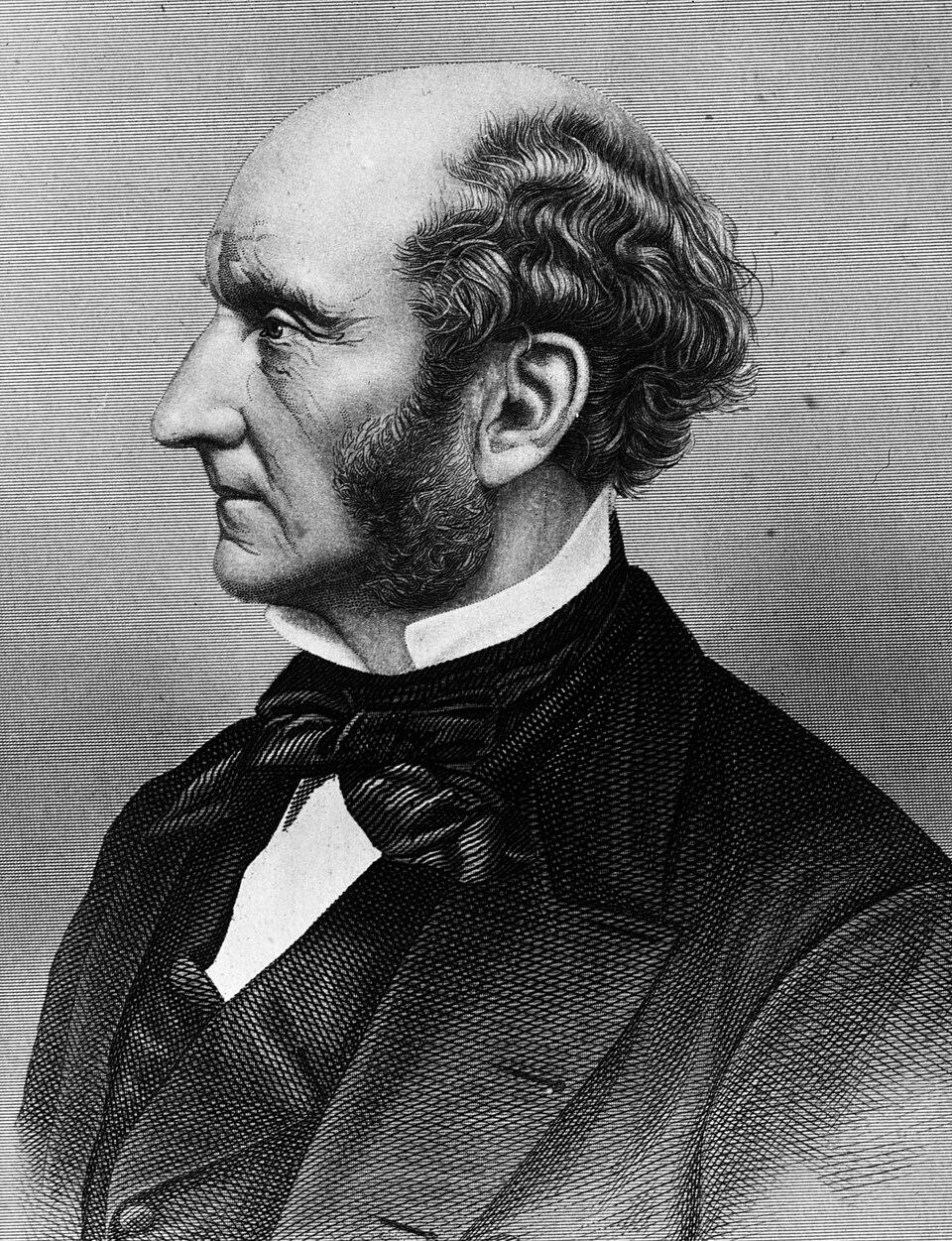
Alt...
John Stuart Mill.
Engraved profile portrait of the English philosopher and political economist, balding with curly side hair and a beard, dressed in a dark coat with a wide cravat.
https://en.wikipedia.org/wiki/John_Stuart_Mill#/media/File:JohnStuartMill.jpg
HOOF. To beat the hoof; to travel on foot. He hoofed it or beat the hoof, every step of the way from Chester to London.
A selection from Francis Grose’s “Dictionary Of The Vulgar Tongue” (1785)
--
#books #literature #dictionaries #history #society #language #slang @histodons
Alt...
Image imitating a page from an old document, text (as in main toot):
HOOF. To beat the hoof; to travel on foot. He hoofed it or beat the hoof, every step of the way from Chester to London.
A selection from Francis Grose’s “Dictionary Of The Vulgar Tongue” (1785)
HANGMAN'S WAGES. Thirteen pence halfpenny, according to the vulgar tradition, was thus allotted: one shilling for the executioner, and three halfpence for the rope. This refers to former times; the hangmen of the present day having, like other artificers, raised their prices.
A selection from Francis Grose’s “Dictionary Of The Vulgar Tongue” (1785)
--
#books #literature #dictionaries #history #society #language #slang @histodons
Alt...
Image imitating a page from an old document, text (as in main toot):
HANGMAN'S WAGES. Thirteen pence halfpenny, according to the vulgar tradition, was thus allotted: one shilling for the executioner, and three halfpence for the rope. This refers to former times; the hangmen of the present day having, like other artificers, raised their prices.
A selection from Francis Grose’s “Dictionary Of The Vulgar Tongue” (1785)
"When a young man came up to him in Zurich and said, 'May I kiss the hand that wrote Ulysses?' Joyce replied, somewhat like King Lear, 'No, it did lots of other things too.'"
Let's celebrate, today is Bloomsday!
Read the whole article in our June newsletter:
https://www.gutenberg.org/newsletter/
Ulysses by James Joyce at PG:
https://www.gutenberg.org/ebooks/4300
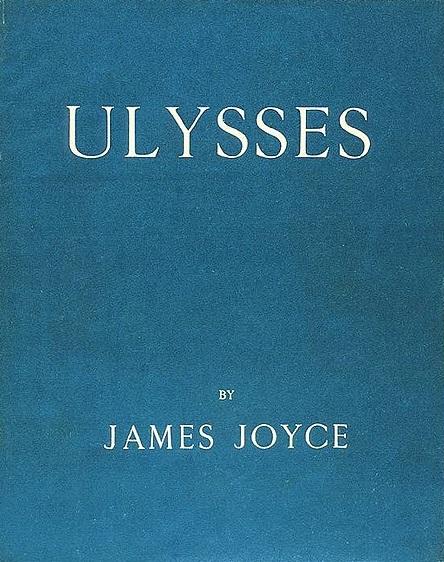
Alt...
First edition of Ulysses by James Joyce, published by Paris-Shakespeare, 1922. The colour of the cover was meant to match the blue of the Greek flag.
Plain Aegean-blue cover with white serif lettering: "ULYSSES / by / JAMES JOYCE" — the iconic first edition cover (Paris, Shakespeare and Company, 1922.
https://en.wikipedia.org/wiki/Ulysses_(novel)#/media/File:JoyceUlysses2.jpg
Undiscovered Country: The 100th Anniversary of Virgina Woolf’s “On Being Ill”
Darcey Steinke on Chronic Pain, Loneliness, and the Truth of Woolf’s Work
https://lithub.com/undiscovered-country-the-100th-anniversary-of-virgina-woolfs-on-being-ill/
Books by Virginia Woolf:
https://www.gutenberg.org/ebooks/author/89
Alt...
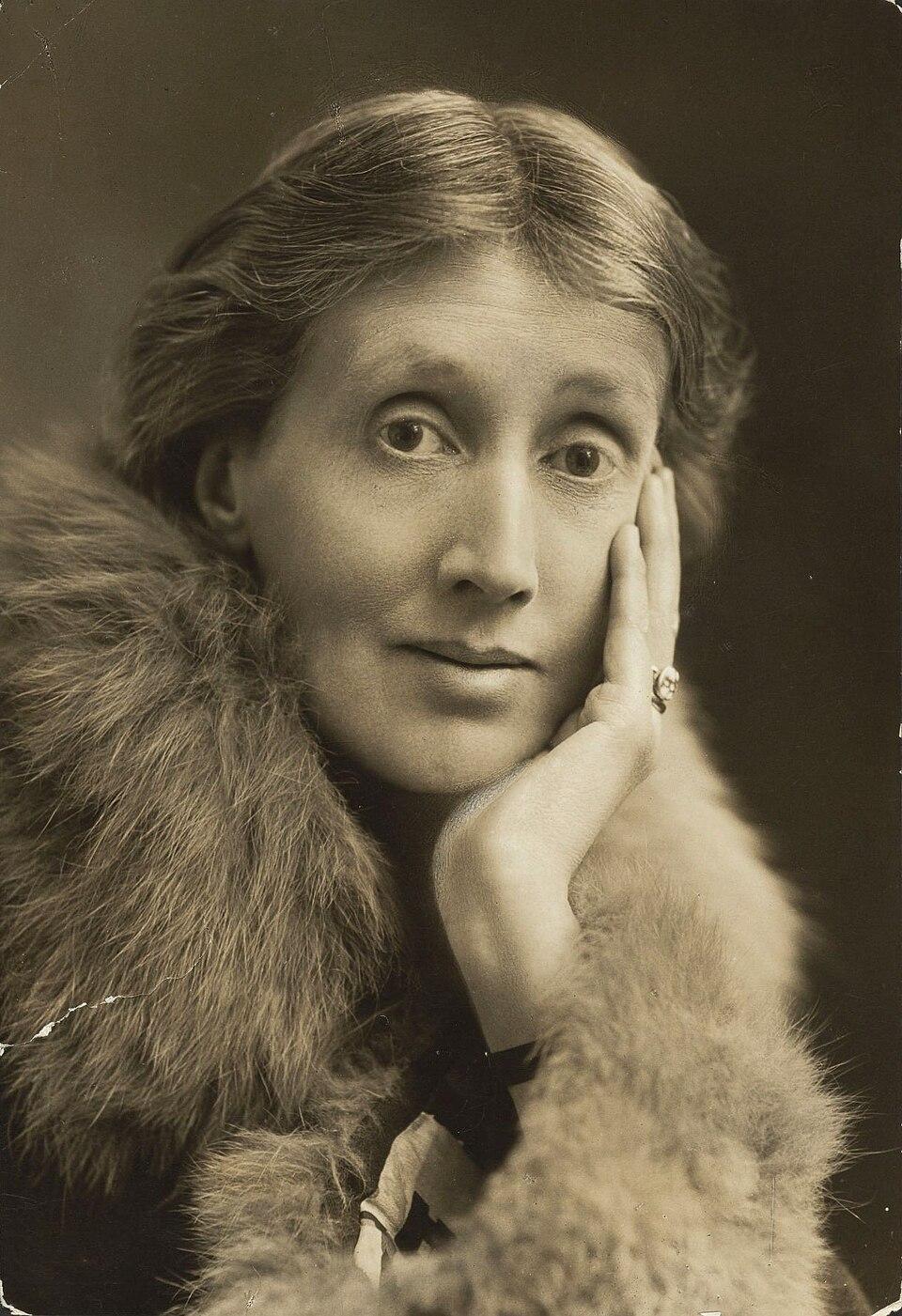
Photograph of Virginia Woolf with hand on face wearing a fur stole (10 x 15 centimeters).
Sepia studio portrait of a slender-faced Virginia Woolf, cheek resting on her hand, wearing a fur stole, gazing directly at the camera with large, intense eyes.Sepia studio portrait of a slender-faced woman, cheek resting on her hand, wearing a fur stole, gazing directly at the camera with large, intense eyes. Hair swept back, small ring visible on her finger
https://en.wikipedia.org/wiki/Virginia_Woolf#/media/File:Virginia_Woolf_1927.jpg
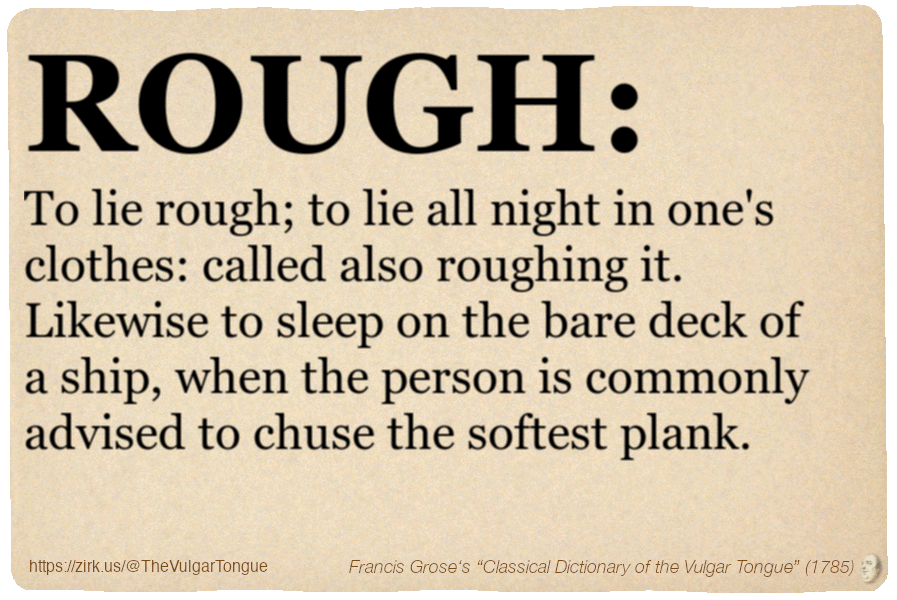
ROUGH. To lie rough; to lie all night in one's clothes: called also roughing it. Likewise to sleep on the bare deck of a ship, when the person is commonly advised to chuse the softest plank.
A selection from Francis Grose’s “Dictionary Of The Vulgar Tongue” (1785)
--
#books #literature #dictionaries #history #society #language #slang @histodons
Alt...
Image imitating a page from an old document, text (as in main toot):
ROUGH. To lie rough; to lie all night in one's clothes: called also roughing it. Likewise to sleep on the bare deck of a ship, when the person is commonly advised to chuse the softest plank.
A selection from Francis Grose’s “Dictionary Of The Vulgar Tongue” (1785)