Search results for tag #books
![[?]](https://cdn.masto.host/zirkus/accounts/avatars/111/192/373/629/540/829/original/9ff4f5b9781a0e3a.jpg)
Hi!, I'm a bot posting selections from Francis Grose’s 1785 “Dictionary Of The Vulgar Tongue”, a compilation of slang terms, the coded language of the underclass and the demi-monde.
[18th-century-content warning: possible racism, animal cruelty, homophobia, sexism, slut-shaming. Let me know of any problems.]
#FollowFriday #books #literature #dictionaries #history #society #crime #language #slang #18thCentury
Alt...
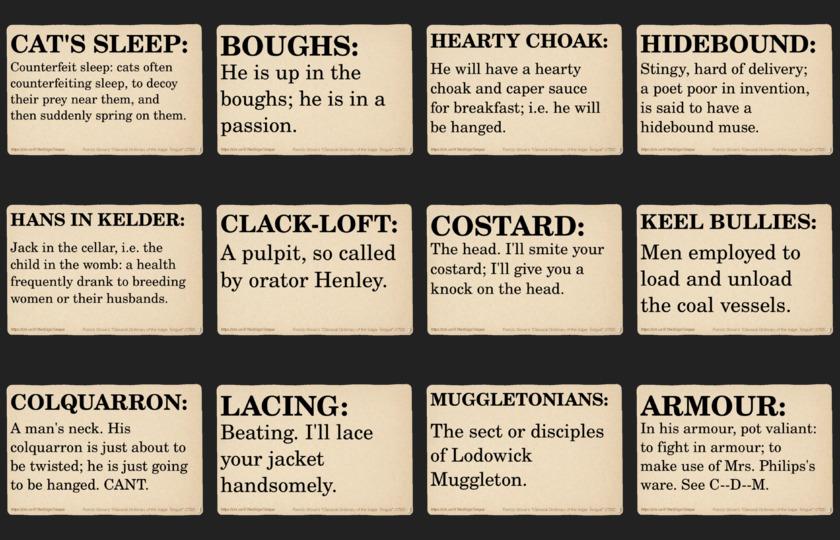
Montage of dictionary items posted by this account
![[?]](https://s3.eu-central-2.wasabisys.com/mastodonworld/accounts/avatars/109/362/359/610/912/307/original/4854f87af56f0d9a.png)
"[A] raccoon, described by staff as a 'perfect client,' followed a customer into a busy McDonald’s, sidled up to the counter, and refused to leave until it was given a Chicken McNugget."
Dan Werb for Literary Hub: https://lithub.com/welcome-to-toronto-world-capital-of-the-urban-raccoon/
#Longreads #Books #Animals #Raccoon #Wildlife #Urban #Cities #Toronto
![[?]](https://jasette.facil.services/system/accounts/avatars/109/367/072/154/545/516/original/ab7bfce8c64a4242.jpg)
Part 2 of Long Reads' discussion with #BenTarnoff and #QuinnSlobodian, authors of #Muskism: A Guide for the Perplexed
for Part 1 v. https://podcasts.apple.com/ca/podcast/long-reads-trillion-dollar-baby-w-quinn-slobodian-and/id791564318?i=1000773249464
#Musk #ElonMusk #tech #BigTech #techCriticism #techOligarchs #SiliconValleyRight #books @bookstodon
HABERDASHER OF PRONOUNS. A schoolmaster, or usher.
A selection from Francis Grose’s “Dictionary Of The Vulgar Tongue” (1785)
--
#books #literature #dictionaries #history #society #language #slang @histodons
Alt...
Image imitating a page from an old document, text (as in main toot):
HABERDASHER OF PRONOUNS. A schoolmaster, or usher.
A selection from Francis Grose’s “Dictionary Of The Vulgar Tongue” (1785)
Q: Where do you do your best thinking?
A: On the EGYPTAIR flight home. . . . There is no better place to think than somewhere over the Atlantic after Egypt has scrambled your brain.
This week's Longreads Questionnaire, with BECOMING BABA author Aymann Ismail: https://longreads.com/2026/07/15/questionnaire-aymann-ismail/?utm_source=twitter&utm_medium=social
#Longreads #Books #Egyptian #Egypt #Writers #Journalists #Reporting #Reading #Interviews
![[?]](https://files.mastodon.social/accounts/avatars/110/441/535/131/897/219/original/0ddf9d4dd12a5dee.png)
The anguish of choice
In the shattered aftermath of war, Sartre delivered a formidable lecture on freedom and meaning. Its urgency remains
by Skye C Cleary
#books #philosophy #existentialism
Alt...
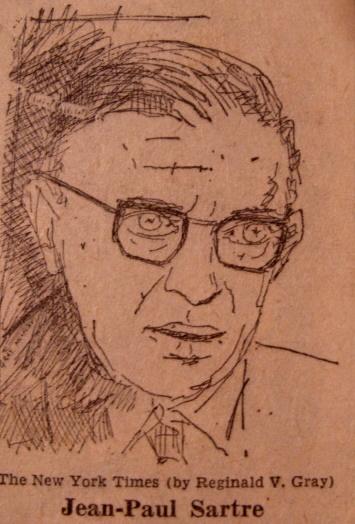
Sketch of Sartre for The New York Times by Reginald Gray, 1965
A pen-and-ink newspaper portrait sketch of Jean-Paul Sartre by Reginald V. Gray, published in The New York Times, showing the philosopher's face with his characteristic glasses in a loose, cross-hatched drawing style.
Children’s books about Black people’s everyday, joyful lives are sometimes banned – but they help all kids explore what it means to be human
by Wintre Foxworth Johnson, Brooke Harris Garad, Jennifer D. Turner, Tiffany D. Meadows
Books in Children´s Literature at PG:
https://www.gutenberg.org/ebooks/bookshelf/20
Alt...
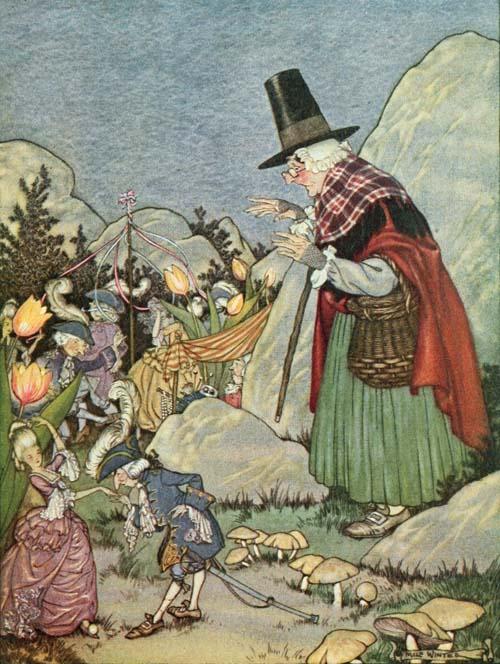
“SHE SAW A WHOLE TROOP OF SPRIGGANS HOLDING AN ELFIN FAIR”
Title: The Book of Elves and Fairies for Story-Telling and Reading Aloud and for the Children's Own Reading
Author: Frances Jenkins Olcott
Illustrator: Milo Winter
A fairy-tale illustration by Milo Winter showing a tall witch-like old woman in a black top hat, plaid shawl, and red cloak with a basket on her arm, bending down to greet a group of tiny, elegantly dressed courtly figures gathered around a ribboned maypole amid tulips and toadstools.
DAISY KICKERS. Ostlers at great inns.
A selection from Francis Grose’s “Dictionary Of The Vulgar Tongue” (1785)
--
#books #literature #dictionaries #history #society #language #slang @histodons
Alt...
Image imitating a page from an old document, text (as in main toot):
DAISY KICKERS. Ostlers at great inns.
A selection from Francis Grose’s “Dictionary Of The Vulgar Tongue” (1785)

![[?]](https://files.mastodon.social/accounts/avatars/111/573/783/058/273/934/original/ff5639fc3a49047b.png)
Together we can protect and fund the libraries our communities need.
#library #libraries #read #reading #book #books #librarianship #lit

#SpeakingOutOfPlace welcomes #RobinAndersen, author of #TheComplicitLens
"We discuss in depth the ways that the New York Times, CNN, and other #legacyMedia outlets became little more than Israeli propaganda organs, uncritically feeding IDF narratives, images, and self-declared expertise while not only discrediting Palestinian voices, but also becoming complicit with #Israel’s policy of censorship by murder"
https://speakingoutofplace.buzzsprout.com/2084729/episodes/19421753-the-journalistic-malpractice-that-fueled-a-genocide-robin-andersen-on-complicit-lens
#Gaza #Palestine #mediaCriticism #media #books @bookstodon
TO CREEME. To slip or slide any thing into the hands of another. CANT.
A selection from Francis Grose’s “Dictionary Of The Vulgar Tongue” (1785)
--
#books #literature #dictionaries #history #society #language #slang @histodons
Alt...
Image imitating a page from an old document, text (as in main toot):
TO CREEME. To slip or slide any thing into the hands of another. CANT.
A selection from Francis Grose’s “Dictionary Of The Vulgar Tongue” (1785)
![[?]](https://choosejoyadventure.wordpress.com/wp-content/uploads/2026/07/untitled-design-15.png)
I Choose to Encourage: The Power of Words
"In the beginning was the Word, and the Word was with God, and the Word was God." — John 1:1 (NIV) Words are powerful. With a few carefully chosen words, we can inspire someone to keep going, mend a broken relationship, or offer hope in a difficult season. Yet words can also wound, discourage, and leave scars that last for years. Think about the words that have impacted your life. Perhaps someone spoke encouragement over you when you doubted yourself. Maybe a teacher, mentor, friend, or […] [SENSITIVE CONTENT]
“In the beginning was the Word, and the Word was with God, and the Word was God.” — John 1:1 (NIV)
Words are powerful.
With a few carefully chosen words, we can inspire someone to keep going, mend a broken relationship, or offer hope in a difficult season. Yet words can also wound, discourage, and leave scars that last for years.
Think about the words that have impacted your life. Perhaps someone spoke encouragement over you when you doubted yourself. Maybe a teacher, mentor, friend, or family member saw something in you that you could not yet see in yourself. Their words helped shape who you became.
Unfortunately, many of us can also recall hurtful words that have lingered long after they were spoken. Words have a way of embedding themselves in our hearts and influencing how we see ourselves and the world around us.
That is why John 1:1 is so profound:
“In the beginning was the Word, and the Word was with God, and the Word was God.”
John identifies Jesus as the Word. Before creation, before time itself, the Word existed. Through Him, God brought life, order, and purpose into the world.
God chose words to create.
Throughout Scripture, we see the power of God’s spoken Word. He spoke light into darkness. He spoke truth into confusion. He spoke life where there was nothing.
If words matter so much to God, they should matter to us.
As followers of Christ, we have an opportunity every day to reflect His character through the words we speak. Our conversations can bring healing instead of hurt. Our comments can build confidence instead of tearing people down. Our encouragement can help others see what God is doing in their lives.
Encouragement is more than simply saying something nice. It is intentionally speaking truth, hope, and life into someone else’s journey. Encouragement reminds people that they are seen, valued, and loved by God.
The world offers plenty of criticism, negativity, and division. Social media feeds, news headlines, and daily conversations can quickly become places where people feel attacked rather than uplifted.
What if Christians became known for encouragement?
What if our words reflected the heart of Christ?
What if we paused before speaking and asked ourselves, “Will these words build up or tear down?”
Every day presents opportunities to encourage:
- Thank someone for their faithfulness.
- Speak hope to someone who is struggling.
- Send a text of appreciation.
- Pray with a friend.
- Remind someone of God’s promises.
Small words can have a lasting impact.
Today, choose to encourage.
Let your words reflect the One who is called the Word. Let them bring light into someone’s darkness and hope into someone’s uncertainty.
Because words are never neutral. They shape how we see ourselves, others, and God. They can unite or divide, heal or harm, inspire or discourage.
May we use our words wisely and intentionally, choosing encouragement wherever we go.
Reflection Questions
- Who has encouraged you with their words recently?
- Is there someone in your life who needs encouragement today?
- How can your words better reflect the love and truth of Christ?
Sometimes the simplest choice—choosing words that give life—can make the biggest difference.
With love and joy,
Laura
This reflection connects with Day 13: “I Choose to Encourage” from the Today I Choose devotional. Each day offers practical encouragement and biblical truth to help you make intentional choices that strengthen your faith and impact those around you.

Alt...
I Choose to Encourage: The Power of Words
The Odyssey is about sons questing for their fathers.
by Henry Oliver (from the archives)
Ahead of the new movie, I am reposting this essay about the Odyssey as a son’s quest for his father, which I wrote when the recent Mendelsohn translation was released last year.
https://www.commonreader.co.uk/p/the-odyssey-is-about-sons-questing
The Odyssey by Homer at PG:
https://www.gutenberg.org/ebooks/1727
Alt...
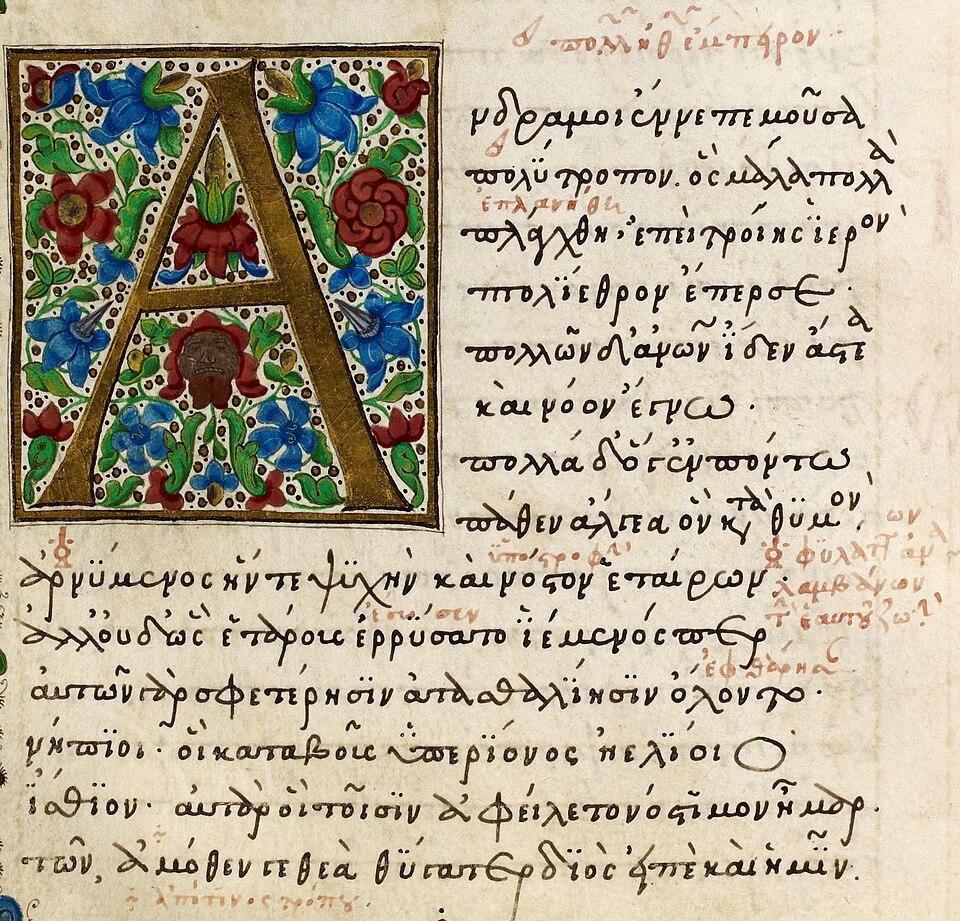
15th-century manuscript of Book I written by scribe John Rhosos (British Museum)
A manuscript page opening Homer's "Odyssey" in Greek, featuring an illuminated initial "A" (for "Ἄνδρα," the poem's first word) decorated with gold leaf, blue and red flowers, green leaves, and a small human face motif. The Greek text is written in a cursive hand, with red annotations (scholia) in the margins.
![[?]](https://weredreaming.com/mookie/s/avatar-c033319a3a3d5098e5af08a922200981.png)
#read #reading #book #books #audiobook #audiobooks
| Yes: | 26 |
| No: | 18 |
| It depends (comment): | 4 |
Closed
CARBUNCLE FACE. A red face, full of pimples.
A selection from Francis Grose’s “Dictionary Of The Vulgar Tongue” (1785)
--
#books #literature #dictionaries #history #society #language #slang @histodons
Alt...
Image imitating a page from an old document, text (as in main toot):
CARBUNCLE FACE. A red face, full of pimples.
A selection from Francis Grose’s “Dictionary Of The Vulgar Tongue” (1785)
PISS-PROUD. Having a false erection. That old fellow thought he had an erection, but his--was only piss-proud; said of any old fellow who marries a young wife.
A selection from Francis Grose’s “Dictionary Of The Vulgar Tongue” (1785)
--
#books #literature #dictionaries #history #society #language #slang @histodons
Alt...
Image imitating a page from an old document, text (as in main toot):
PISS-PROUD. Having a false erection. That old fellow thought he had an erection, but his--was only piss-proud; said of any old fellow who marries a young wife.
A selection from Francis Grose’s “Dictionary Of The Vulgar Tongue” (1785)
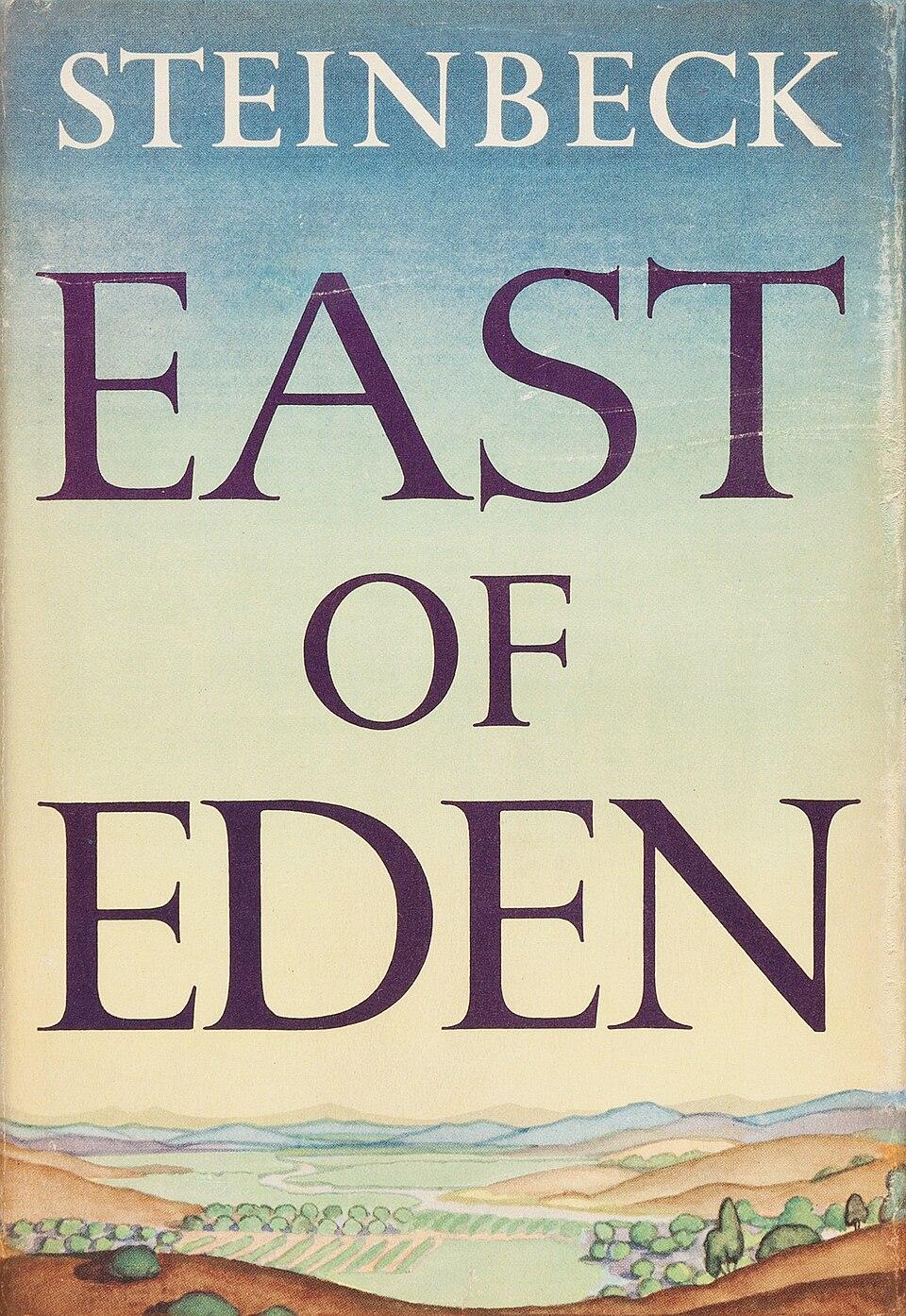
Rereading the classics: Why John Steinbeck’s ‘East of Eden’ has always been controversial
The author openly advocates a need to ‘fight against any idea, religion, or government which limits or destroys the individual’.
by Paul Giles
#books #literature #literaryCriticism
Alt...
First-edition dust jacket cover of East of Eden (1952) by the American author John Steinbeck.
The 1952 first edition dust jacket of John Steinbeck's "East of Eden," featuring bold purple serif type on a blue-to-cream gradient sky, with an illustrated Salinas Valley landscape of rolling hills, farmland, and a winding river at the bottom.
BLUE FLAG. He has hoisted the blue flag; he has commenced publican, or taken a public house, an allusion to the blue aprons worn by publicans. See ADMIRAL OF THE BLUE.
A selection from Francis Grose’s “Dictionary Of The Vulgar Tongue” (1785)
--
#books #literature #dictionaries #history #society #language #slang @histodons
Alt...
Image imitating a page from an old document, text (as in main toot):
BLUE FLAG. He has hoisted the blue flag; he has commenced publican, or taken a public house, an allusion to the blue aprons worn by publicans. See ADMIRAL OF THE BLUE.
A selection from Francis Grose’s “Dictionary Of The Vulgar Tongue” (1785)
' “IT IS THE WRITER’S duty to tell the terrible truth, and it is a reader’s civic duty to learn this truth. To turn away, to close one’s eyes and walk past is to insult the memory of those who have perished.” #VasilyGrossman, who wrote these words in September 1944 as a Soviet war correspondent, clearly held himself to a high moral standard, which is never easy for anyone, and certainly not for a writer living under Stalin.'
https://lareviewofbooks.org/article/vasily-grossman-from-front-line-stalingrad-treblinka-reporting/
#FromTheFrontLine #WWII #books @bookstodon
![All Humanity Now Stands on the Edge of the Abyss
Vasily Grossman’s fearless and compelling war journalism demonstrates his courage and integrity as a writer and a man.
By Eric Vanderwall July 10, 2026
[tags] History, Memoir & Essay
image: cover of new collection of war correspondence by Vasily Grossman, "From the Front Line: Stalingrad–Treblinka–Berlin, 1941–45 by Vasily Grossman"](https://jasette.facil.services/system/media_attachments/files/116/907/714/306/104/189/original/a0dad977181e2b08.png "All Humanity Now Stands on the Edge of the Abyss
Vasily Grossman’s fearless and compelling war journalism demonstrates his courage and integrity as a writer and a man.
By Eric Vanderwall July 10, 2026
[tags] History, Memoir & Essay
image: cover of new collection of war correspondence by Vasily Grossman, \"From the Front Line: Stalingrad–Treblinka–Berlin, 1941–45 by Vasily Grossman\"")
Alt...
All Humanity Now Stands on the Edge of the Abyss
Vasily Grossman’s fearless and compelling war journalism demonstrates his courage and integrity as a writer and a man.
By Eric Vanderwall July 10, 2026
[tags] History, Memoir & Essay
image: cover of new collection of war correspondence by Vasily Grossman, "From the Front Line: Stalingrad–Treblinka–Berlin, 1941–45 by Vasily Grossman"
SHERIFF'S BALL. An execution. To dance at the sheriff's ball, and loll out one's tongue at the company; to be hanged, or go to rest in a horse's night-cap, i.e. a halter.
A selection from Francis Grose’s “Dictionary Of The Vulgar Tongue” (1785)
--
#books #literature #dictionaries #history #society #language #slang @histodons
Alt...
Image imitating a page from an old document, text (as in main toot):
SHERIFF'S BALL. An execution. To dance at the sheriff's ball, and loll out one's tongue at the company; to be hanged, or go to rest in a horse's night-cap, i.e. a halter.
A selection from Francis Grose’s “Dictionary Of The Vulgar Tongue” (1785)
Are we living through the end of reading?
https://www.npr.org/2026/07/11/nx-s1-5886268/are-we-living-through-the-end-of-reading
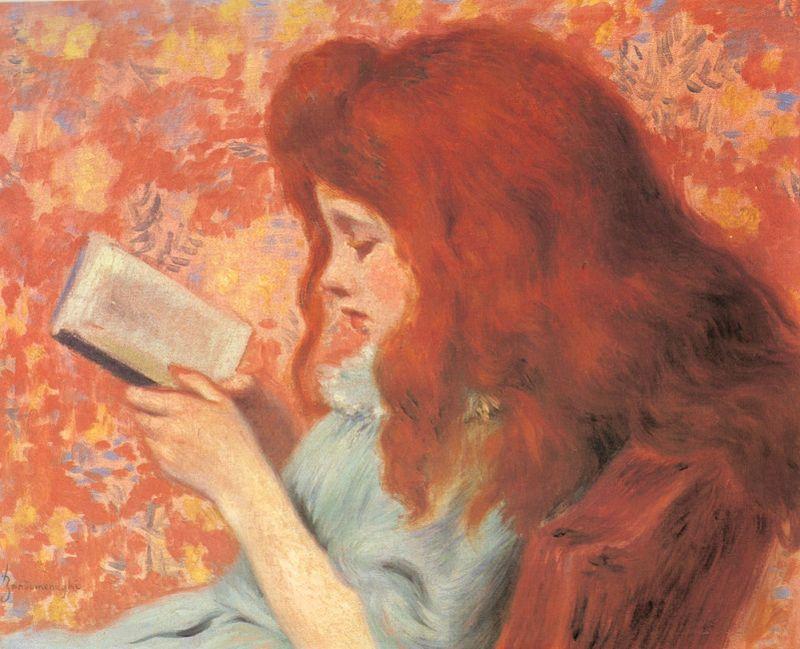
Alt...
In Federico Zandomeneghi's painting "Girl reading a book," a young girl with bright red hair is shown in profile, looking to the left. She is holding an open book and wears a light blue dress with a ruffled collar. The background is filled with warm shades of orange, red, and soft yellow.
The Satire and Style of Vanity Fair is as Relevant as Ever
Roshan Sethi on William Makepeace Thackeray’s Famous Novel
Vanity Fair at PG:
https://www.gutenberg.org/ebooks/599
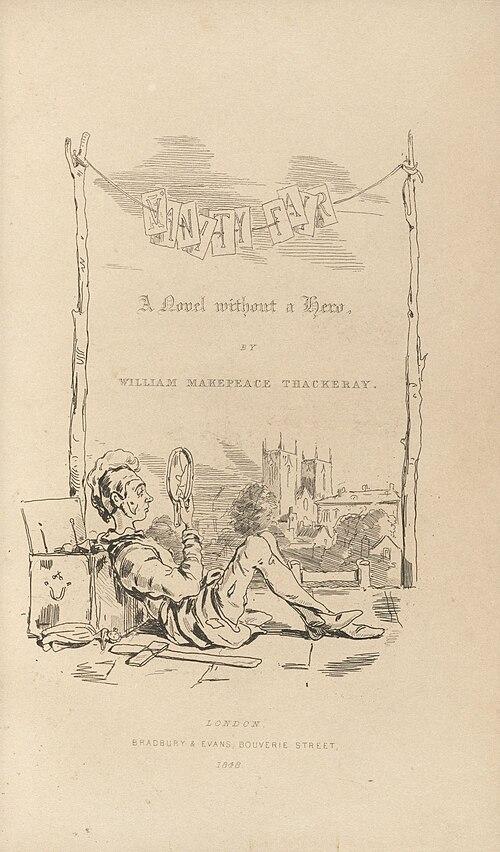
Alt...
The title page of the 1848 first edition of Vanity Fair: A Novel without a Hero.
William Makepeace Thackeray (author/artist) - Houghton Library
The banner-style title hangs between two poles at the top, and below it an illustration shows a jester or fool-like figure reclining on the ground, holding up a mirror, with a town skyline in the background.
Émilie du Châtelet (1706–1749), mathematician, physicist & translator
By Marie Lebert
Books by Émilie du Châtelet at PG:
https://www.gutenberg.org/ebooks/author/56975
#books #literature #translators #WomeninStem
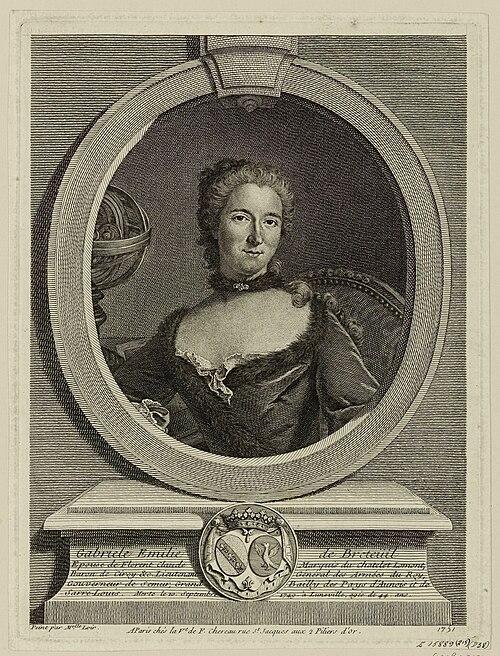
Alt...
Gabrielle Émilie Le Tonnelier de Breteuil, marquise du Châtelet (1706-1749), mathématicienne, femme de lettres et physicienne française.
Anonyme, graveur
Loir, Marianne (Paris, vers 1715 - en 1769), auteur du modèle Chéreau, Jacques-Simon fils (veuve) (avant 1770 - vers 1820), marchand d'estampes
An 18th-century engraved portrait of Émilie du Châtelet, shown in an oval frame with an armillary sphere beside her. Below the portrait is an inscribed pedestal with her name and titles, flanked by a coat of arms.
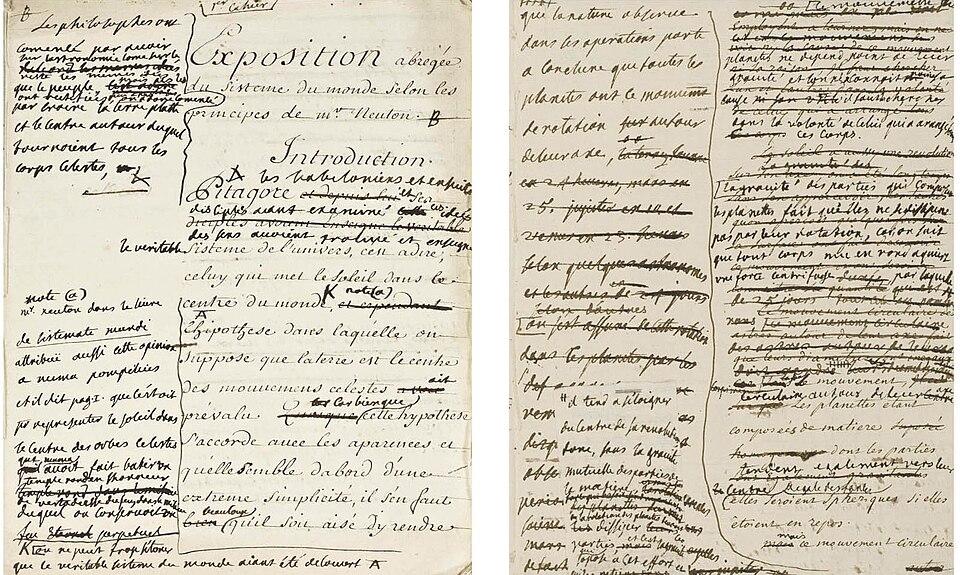
Alt...
A Brief Exposition of the System of the World According to the Principles of Sir Isaac Newton by Émilie du Châtelet.
A manuscript page (two facing sheets) of Émilie du Châtelet's "Exposition Abrégée du Système du Monde Selon les Principes de M. Newton" — a handwritten French draft with the title and "Introduction" heading visible on the left page, discussing Pythagoras and heliocentric theory.
KATE. A picklock. 'Tis a rum kate; it is a clever picklock. CANT.
A selection from Francis Grose’s “Dictionary Of The Vulgar Tongue” (1785)
--
#books #literature #dictionaries #history #society #language #slang @histodons
Alt...
Image imitating a page from an old document, text (as in main toot):
KATE. A picklock. 'Tis a rum kate; it is a clever picklock. CANT.
A selection from Francis Grose’s “Dictionary Of The Vulgar Tongue” (1785)
What Is The Meaning Of Humpty Dumpty? Inside The Origins Of The Popular Nursery Rhyme, From Rude Slang Words To King Richard III
By Kaleena Fraga
The meaning of Humpty Dumpty has remained mysterious for centuries, but there are some possible historical explanations for the nursery rhyme.
https://allthatsinteresting.com/humpty-dumpty-meaning
Humpty Dumpty at PG:
https://www.gutenberg.org/ebooks/search/?query=Humpty+Dumpty+
Alt...
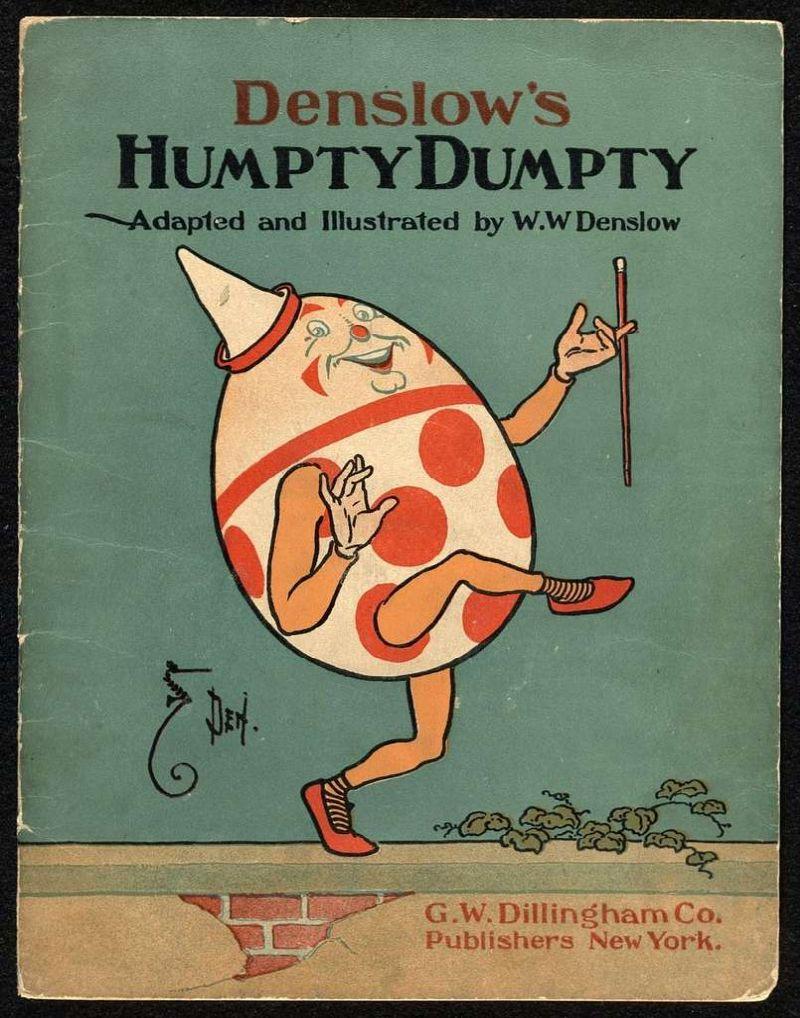
A cover of the book "Denslow's Humpty Dumpty," adapted and illustrated by W.W. Denslow. G. W. Dillingham Co., Publishers, New York.
A large, egg-shaped Humpty Dumpty character stands in a dancing pose. He has clown-like red facial markings, a joyful expression, and wears a small, pointed white hat with a red brim. His body is covered in a white-and-red polka-dot pattern.
He dances on a wall made partly of bricks.
GOODYER'S PIG. Like Goodyer's pig; never well but when in mischief.
A selection from Francis Grose’s “Dictionary Of The Vulgar Tongue” (1785)
--
#books #literature #dictionaries #history #society #language #slang @histodons
Alt...
Image imitating a page from an old document, text (as in main toot):
GOODYER'S PIG. Like Goodyer's pig; never well but when in mischief.
A selection from Francis Grose’s “Dictionary Of The Vulgar Tongue” (1785)
Up to 60% of medieval texts and 95% of manuscripts have vanished, study finds
by Dario Radley
Many stories from the Middle Ages never reached the present. A new study suggests the loss was far greater than scholars once thought. Researchers estimate that up to 60% of medieval literary works and more than 95% of the manuscripts that once carried them have disappeared over time.
https://archaeologymag.com/2026/07/medieval-texts-and-manuscripts-have-vanished/
Original article:
https://academic.oup.com/pnasnexus/article/5/7/pgag207/8724046?login=false
#books #literature #old_Manuscripts
Alt...
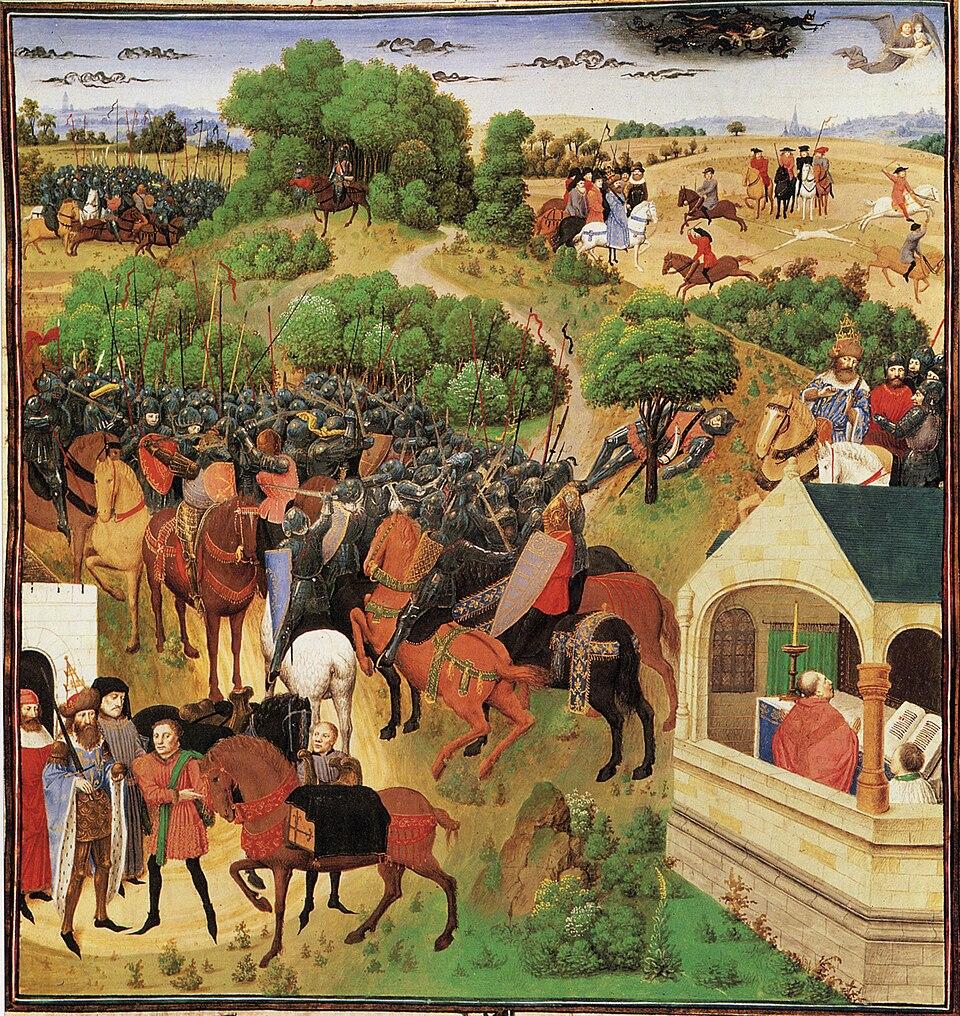
The eight phases of the Song of Roland in one picture; illustration by Simon Marmion from an illuminated manuscript of the Grandes Chroniques de France (15th century), currently preserved in the Hermitage Museum in Saint Petersburg.
A crowded mass of armored knights clashes in the center-left foreground; nobles and clergy watch near a city gate at bottom left; a small chapel with clerics reading sits at bottom right; mounted courtiers and falconers appear at top right; and dark, symbolic cloud shapes with faint winged figures frame the upper corners. Rolling hills and a distant town fill the background.
BLUE BOAR. A venereal bubo.
A selection from Francis Grose’s “Dictionary Of The Vulgar Tongue” (1785)
--
#books #literature #dictionaries #history #society #language #slang @histodons
Alt...
Image imitating a page from an old document, text (as in main toot):
BLUE BOAR. A venereal bubo.
A selection from Francis Grose’s “Dictionary Of The Vulgar Tongue” (1785)
MANUFACTURE. Liquors prepared from materials of English growth.
A selection from Francis Grose’s “Dictionary Of The Vulgar Tongue” (1785)
--
#books #literature #dictionaries #history #society #language #slang @histodons

Alt...
Image imitating a page from an old document, text (as in main toot):
MANUFACTURE. Liquors prepared from materials of English growth.
A selection from Francis Grose’s “Dictionary Of The Vulgar Tongue” (1785)
5 Important Characters in the Odyssey That Shape the Story
Following the Trojan War, Odysseus journeys home in the Odyssey. Five characters bring to life the vivid world that challenged and ultimately defined his return.
https://www.thecollector.com/characters-odyssey/
"Odyssey" at PG:
https://www.gutenberg.org/ebooks/1727
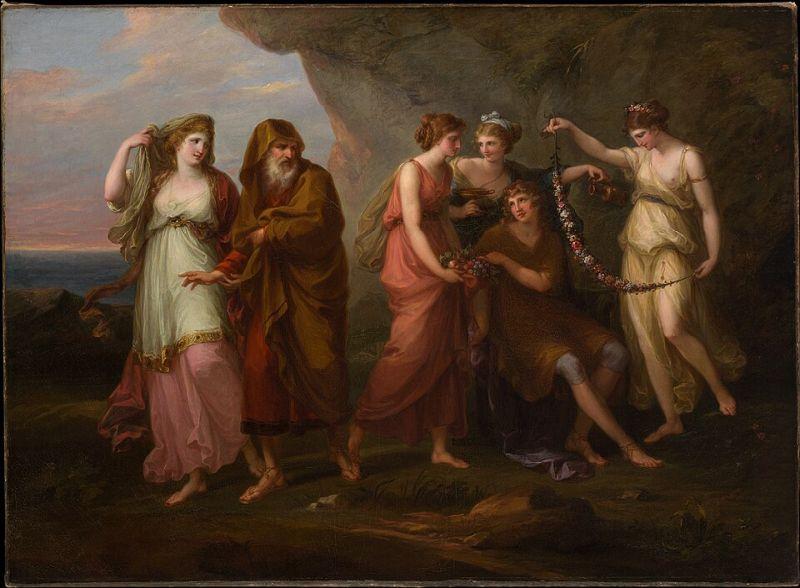
"Telemachus and the Nymphs of Calypso"
Alt...
"Telemachus and the Nymphs of Calypso" (1782) by Angelica Kauffman.
"The work depicts the arrival of Telemachus on Ogygia, Calypso's island. He is welcomed by her nymphs with fruit, wine and flowers. The goddess Athena had been his guide, disguised as the old man Mentor, and is shown being led away to the left by one of the nymphs" - Wikipedia
Reading for pleasure builds empathy in children, but fewer kids are picking up books just for the fun of it
by William Dee Nichols and Michelle Kearney
Books in Children's Literature at PG:
https://www.gutenberg.org/ebooks/bookshelf/20
Alt...
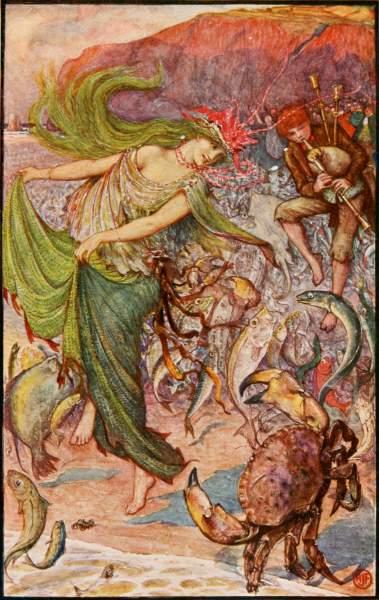
Illustration from THE LILAC FAIRY BOOK by Andrew Lang.
A colored fantasy illustration depicting a long-haired woman in flowing green robes dancing or swaying among a swirl of sea creatures — crabs, eels, and fish — while a red-haired boy plays bagpipes on the rocky shore behind her.