Search results for tag #bible
![[?]](https://the-end-time.org/wp-content/uploads/2019/10/cropped-logo5.jpg)
Oh, those Old Testament names and measurements!
By Elizabeth Prata
It’s high summer here in the US, and where I live (in the South). It gets very hot in July. We are predicted to have a “heat dome” next week for the 4th of July, which won’t be fun for the poor marching bands participating in the parades. I am looking forward to the festivities that are planned for our country’s 250th birthday! It’s hard to think of how fast June flew by!

I’m in 1st and 2nd Chronicles right now for my daily Bible reading. I have so many questions. When the Bible says the word of God transforms the mind, it really does. (Romans 12:2). Ask questions of the Word. It’s living and active after all. As you read, ask, what does this mean? Why is this word here? What is The Millo? How far is that town from Jerusalem? Ask, and then seek the answer. Research. It is one way we ‘seek the Lord’. We pray, certainly, speaking with Him directly. But we also inquire from His word. More about that at the bottom.
Below are a few of the questions I was wondering about as I read this week.
As Stephen was giving his speech, in Acts 7:42, he mentioned that ‘God gave them over.’ We may be familiar with that phrase from Romans 1:24, 26, 28. It means the same thing here.
And “God gave them over to a depraved mind” (v. 28). This translates a Greek word that means “not passing the test.” It was often used to describe useless, worthless metals, discarded because they contained too much impurity. God has tested man’s minds and found them worthless and useless (Jer 6:30). John MacArthur Daily Bible, June 25.

Wouldn’t that be the worst? Abandoned by God?
I was wondering as I read, how many kids did David have? In 1 Chronicles 14:3 we read that ‘David took many wives.’ He became the father of many sons and daughters. When I think of David I think of Bathsheba, of course, and Michal. Abigail. But there were several more that were named, and many unnamed wives- and concubines. Ahinoam, Maakah, Haggith, Abital, and Eglah are named. I tend to forget how prolific he was. David had over 10 named children. Solomon is famously one of them, so was Absalom. Tamar’s tragedy is recounted in the Bible. 1 Chronicles 3 lists them, and 2 Samuel 3.
His firstborn was Amnon, then Chileab, Absalom, Adonijah, Shephatiah, Ithream. Those were born in Hebron. 1 Chron 3:5-9 lists those born in Jerusalem-
These were the children born to him in Jerusalem: Shimea, Shobab, Nathan, and Solomon, four by Bath-shua the daughter of Ammiel; 6and Ibhar, Elishama, Eliphelet, 7Nogah, Nepheg, Japhia, 8Elishama, Eliada, and Eliphelet, nine. 9All of these were the sons of David, besides the sons of the concubines; and Tamar was their sister.

The Meeting of David and Abigail
Artist Guido Reni (Italian, 1575-1642)
And I was also thinking as I went from the OT to the NT passage in the daily reading, I am so glad that names have gotten more ‘normal’! In Acts we read names such as Matthew, Levi, Peter, Paul… Lol, I guess I don’t only ask questions of the text, but I obviously have opinions too!
In the OT we read a lot about the Kohathites. I’m not clear on who they were. So, who were they? Easton’s Bible Dictionary answered that one for me pretty quickly-
KORAHITES—that portion of the Kohathites that descended from Korah. (1.) They were an important branch of the singers of the Kohathite division (2 Chr. 20:19). There are eleven psalms (42–49; 84; 85; 87; 88) dedicated to the sons of Korah.
(2.) Some of the sons of Korah also were “porters” of the temple (1 Chr. 9:17–19); one of them was over “things that were made in the pans” (31), i.e., the baking in pans for the meat-offering (Lev. 2:5).
Easton, M. G. (1893). In Illustrated Bible Dictionary and Treasury of Biblical History, Biography, Geography, Doctrine, and Literature (p. 412).
In 1 Chronicles 11:23 we read this interesting factoid, which the Holy Spirit wanted included:
And he killed an Egyptian, a man of great stature five cubits tall. Now in the Egyptian’s hand was a spear like a weaver’s beam, but he went down to him with a club and snatched the spear from the Egyptian’s hand and killed him with his own spear.
Soooo, how tall is “5 cubits”? Using the measurements conversion table in my Bible, this guy was 7 1/2 to 8 feet tall! Reminds me of Goliath.
Soooo… how big is a ‘weaver’s beam’? Apparently, a weaver’s beam was the heavy wooden cylinder on a loom that held the warp threads. This link explains with photos.
The same is mentioned when describing Goliath, too. The Old Testament folks would have been quite familiar with looms and weaving, since they had to make all their own clothes. The estimates for the size of the spear is 5′ tall and 2 1/2 inches around. Proportionally, an 8 foot guy would need a spear of that size and length.
Uriah…Sorting out the names in the Old Testament is hard. Reading along, I ask, “Who is Uriah? Is this Uriah the same Uriah I read about in the other chapter? Herbert Lockyer answers. His book All the Men of the Bible shows there were 6 different men named Uriah. OK, no wonder I got confused. The Lockyer book is available at Amazon in hard copy and Kindle format.
Asking questions of the text is a good approach. I ask myself things for physical reasons, like how far, how long, how big, who are they? But also for spiritual reasons, for illumination, understanding, and application.
HB Charles wrote this essay 5 Questions to Ask of the Text.
It is time to study the word of God. You pray for illumination (Psalm 119:18). You select a passage of scripture to study. You then… This is where many people get stumped. Every time. They come to the text with good intentions. But they do not have a clear process for properly understanding the text. To get the right answers in your study of scripture, you must ask the right questions. This is called inductive Bible study. Here are five fundamental questions to ask as you study a passage of scripture.
Mr. Charles continues with explaining the 5 questions in short order. It isn’t technical. It is worth reading.
I admit the genealogies are a challenge for me to read, they are a bit boring. And the names are hard to pronounce in my mind as I read. But all scripture is profitable, for sure. How do you approach reading some of the less well known parts of the Old Testament?
#bible #christian #faith #inductive #oldTestament
![[?]](https://files.mastodon.social/accounts/avatars/113/457/650/659/369/407/original/22a92e67207c10a2.jpg)
Absalom's massive betrayal collapsed into battlefield failure when his escape was cut short by Joab, despite David's order to spare the young man who "had raised his hand against the king" (20:21 NKJV).
#Christian #Christianmemes #Biblememes
https://ko-fi.com/veggietalesgang
https://www.patreon.com/cw/veggietalesgang
https://linktr.ee/veggietalesgang
https://discord.gg/Knk4bCXKwG
https://youtube.com/shorts/Q4vhSS1Z2fw?feature=share
![[?]](https://cdn.mastodon.africa/accounts/avatars/110/342/648/747/727/334/original/b0bff7f9c221179d.jpg)
![[?]](https://files.mastodon.social/accounts/avatars/113/720/515/024/889/997/original/bc0d4f8246686484.png)
![[?]](https://gemsofknowledge.com/wp-content/uploads/2025/09/cropped-gemsofknowledge.png)
Stay the Course
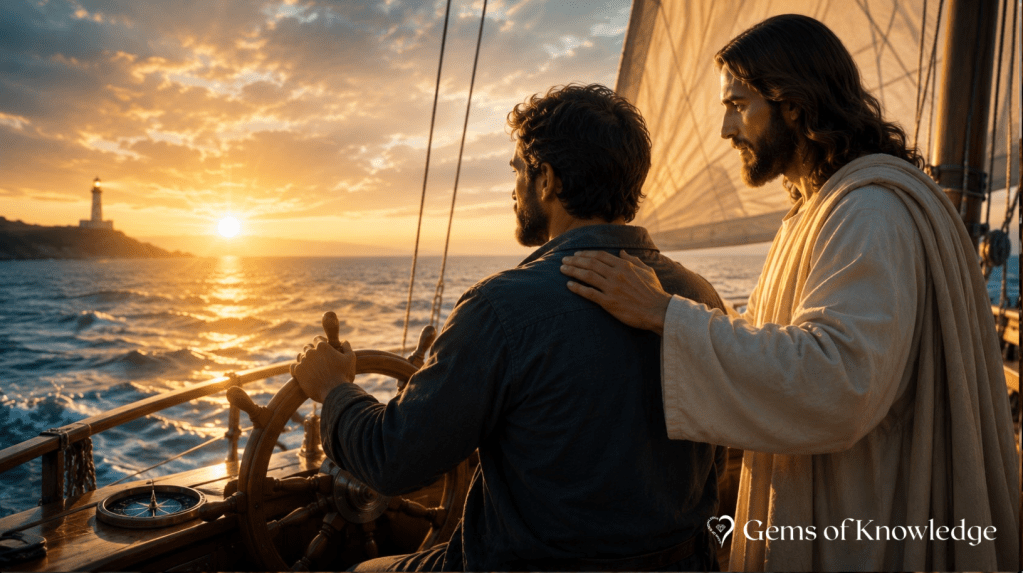
Most ships don't get lost because of one wrong turn. They drift. A few degrees off course may not seem like much at first, but over time it can take you far from your destination. The same is true in our walk with God. 💎 "Stay the course. Walk it with Me. Don't waver or get distracted. Keep Me close and counsel with Me often. I will help you. Amen." ✨Click to read the full devotional. [SENSITIVE CONTENT]
Today’s One Year Bible Verses: 2 Kings 8:1–9:13, Acts 16:16–40, Psalm 143:1–12, Proverbs 17:26
Staying Close to God
About a year and a half ago, I felt convicted by the Lord to worship Him every morning and every evening. The pattern reminded me of the daily sacrifices that were offered before the Lord in the Old Testament. It wasn’t about ritual; it was about relationship. It was about intentionally beginning and ending each day in His presence.
For a while, I did fairly well. Every morning I would worship, read His Word, pray, and spend time with Him. Every evening I would return again, quiet my heart, and spend time in His presence before the day ended.
But this morning, the Lord reminded me of something.
Somewhere along the way, my evening worship had disappeared.
Not because I stopped loving Him. Not because I consciously chose to walk away from it. Life simply became busy. Responsibilities piled up, work demanded attention, and before I realized it, what had once been an important part of my relationship with God had quietly slipped away.
As I thought about it this morning, I was surprised to realize I hadn’t done my evening worship in months.
Months.
What startled me most was that I knew the fruit it produced. I knew how much peace, clarity, and intimacy with God came from those moments. Yet somehow, I had drifted far enough that it was no longer part of my routine.
As I prayed about it, I heard the Holy Spirit whisper this Gem of Knowledge to my heart:
“Stay the course. Walk it with Me. Don’t waver or get distracted. Keep Me close and counsel with Me often. I will help you. Amen.”
Those words reminded me that spiritual drift rarely happens all at once. Most people don’t wake up one morning and decide to abandon what God has called them to do. Instead, distractions slowly take priority and good things gradually crowd out the best things.
The same thing can happen in our walk with God. We begin with clear direction and strong conviction, but over time unexpected challenges, delays, disappointments, and responsibilities compete for our attention. Before long, we can find ourselves focusing more on our circumstances than on the One who called us.
That is why today’s Gem is so important. God does not simply tell us to stay the course. He tells us to stay the course with Him.
In Acts 16, Paul and Silas found themselves imprisoned for doing exactly what God had called them to do. They had obeyed Him, served Him faithfully, and yet found themselves beaten and locked in a prison cell. Many people would have questioned whether they had taken a wrong turn. Instead, they prayed and worshiped God in the middle of their circumstances. Their confidence was not rooted in what they could see but in the One who was walking with them through it. What appeared to be a setback ultimately became part of God’s plan to bring salvation to the jailer and his household.
Psalm 143 reveals a similar heart in David. Surrounded by difficulties, he cried out to God, saying,
“Show me where to walk, for I give myself to You.” (Psalm 143:8, NLT)
David wasn’t merely asking for rescue. He was asking for direction. He wanted God’s counsel, God’s presence, and God’s help.
That is exactly what the Lord is inviting us to do.
When we keep Him close and counsel with Him often, we do not have to navigate life’s twists and turns alone and we will not drift or get lost. We have access to the wisdom of the One who sees the end from the beginning. The answer to distractions, discouragement, and uncertainty is not to abandon the journey. It is to draw closer to the Guide.
God is not asking us to figure everything out ourselves or walk it out perfectly. He is asking us to just walk with Him and stay close. And when we do, we can move forward with confidence knowing that even when we cannot see the destination, He can. 💎
Action (5 Minutes with God)
Take 5 minutes to get close to the Lord today. Ask Him:
- “Lord, what do You want me to know about this personally?”
- Journal what He gives you through His Holy Spirit.
- Then ask, “What do You want me to do?”
- Journal what He reveals – then do it!
Let today be a day of intentionally walking closely with Him and allow Him to lead the way.
Prayer
Father, thank You for never asking me to walk alone. Help me stay the course You have set before me. Guard my heart from distractions, discouragement, and doubt. Teach me to seek Your counsel often and to keep You close in every decision I make. When the road becomes difficult, remind me that You are with me and that Your plans are good. Lead me, guide me, and help me trust You every step of the way. In Jesus’ mighty name I pray, Amen.
To read more 5 Minutes with God devotionals click here.
If Gems of Knowledge has blessed your walk with Christ, please subscribe or consider partnering with us today. Your gift helps keep these devotionals free for everyone and carries God’s Word to more hearts. Every seed matters—thank you for sowing into this work! 💛
Test everything by the Word and the Spirit (John 16:13)
Alt...
A sailor steers a ship at sunrise while Jesus stands beside him with a reassuring hand on his shoulder, guiding him toward a lighthouse on the horizon.
Paul's tactical escapes from hostile cities show that a strategic retreat can preserve a divine mission, famously seen when his companions "let him down through the wall in a large basket" (Acts 9:25 NKJV).
https://ko-fi.com/veggietalesgang
https://www.patreon.com/cw/veggietalesgang
https://linktr.ee/veggietalesgang
https://discord.gg/Knk4bCXKwG
https://youtube.com/shorts/HKRfbZsYcPA?feature=share
![[?]](https://files.mastodon.social/accounts/avatars/109/248/152/768/065/493/original/5eefc02493e094b2.png)
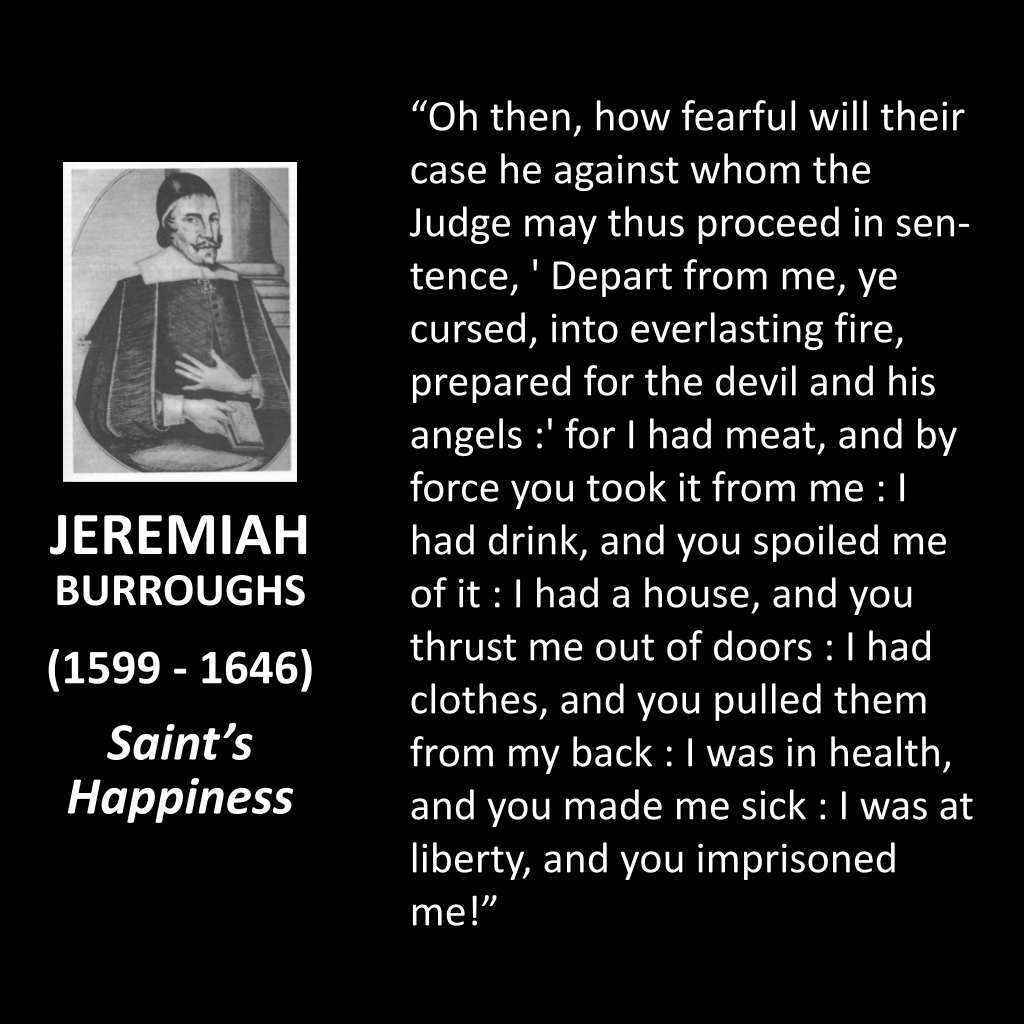
Burroughs—Puritan, inveighing against oppressors who seize from the poor, citing an Archbishop who took a widow’s cow—reworks the Last Judgment passage. He intensifies it: not failing to feed the hungry, but actively seizing meat, house, clothing; causing sickness and imprisonment. Active wrongs, not omissions. One wonders whether modern Puritan scholarship applies this warning to equivalent crimes today.
Whom can you feed and clothe today?
Alt...
Black graphic with a portrait of Jeremiah Burroughs (1599–1646) beside a quote from *Saint's Happiness*: "Oh then, how fearful will their case he against whom the Judge may thus proceed in sentence, 'Depart from me, ye cursed, into everlasting fire, prepared for the devil and his angels:' for I had meat, and by force you took it from me: I had drink, and you spoiled me of it: I had a house, and you thrust me out of doors: I had clothes, and you pulled them from my back: I wased in health, and you made me sick: I was at liberty, and you imprisoned me!"
![[?]](https://files.mastodon.social/accounts/avatars/116/663/048/183/988/734/original/c51a6d9a325f7aea.png)
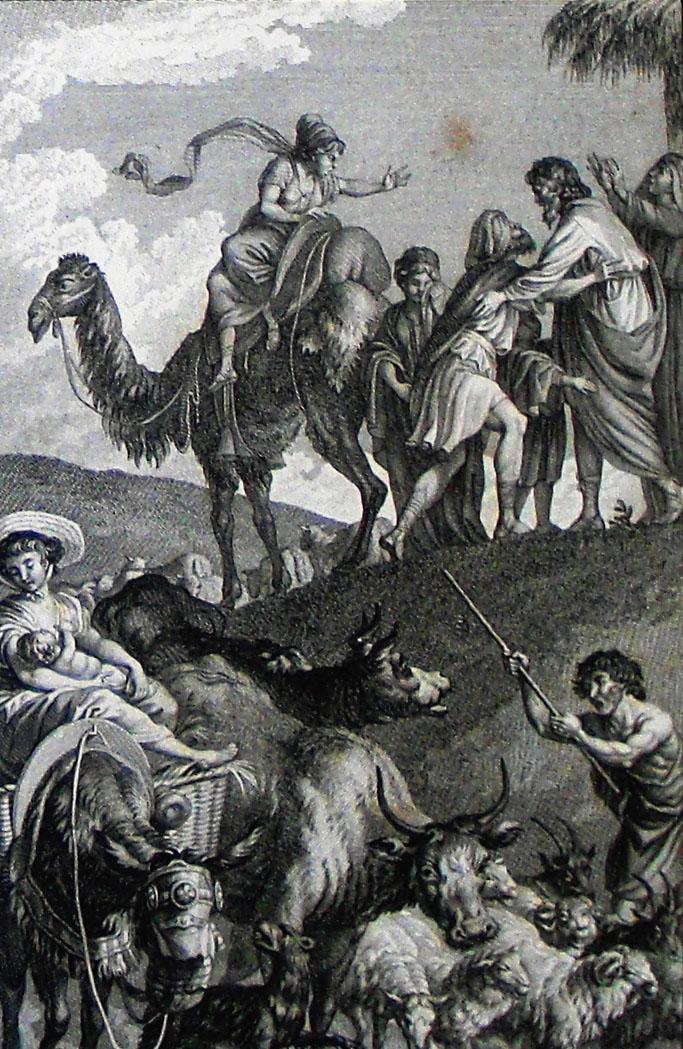
Bowyer Bible print 0317 Lot & Abraham departing. Genesis cap 13 v 11. Marillier. Robert Bowyer (d1834) expanded his copy of the Macklin Bible by inserting over 6200 different prints. The Bowyer Bible is now housed in Bolton Museum. For these prints see https://archive.org/details/bowyer-bible
where Philip De Vere has created flip-books from Phillip Medhurst's photo-collection.
#BoltonMuseum #bible #extraillustration #grangerisation #engraving #etching #Bibleillustration #Bibleart #Christianart #christianartwork
![[?]](https://fsmandfsmwo.blog/wp-content/uploads/2012/07/cropped-cropped-us-flag-1.jpg)
“Christian Mythology”-06/24/2026

For as long as I can remember, even before my redemption by the Blood of Christ, I heard folks say, Christianity is based upon pagan or some other ancient beliefs. Why is that? What drives folks to have such an unbelief
Like most “experts,” they seem to ignore the obvious. Why are so many of the myths Christianity supposedly copied from alike? Of course, they also fail to investigate any facts that could and would prove the Bible and Christianity true.
Below are two articles on this subject, along with some bonus study materials.
MAIN ARTICLES
.

The Myths of Christian History
By: John Stonestreet and Dr. Timothy D. Padgett

Did the Bible Copy Other Religious Myths and Legends?
Unbelief—A Marvel by J. C. Ryle
Why Men Cannot Believe in Christ – by Charles Spurgeon
How do I know the Bible is not just mythology? | GotQuestions.org
This Link leads to 88 resources on MYTHS
Do the Gospels Borrow from Pagan Myths?
Page by Dr Timothy Jones
“Can We Trust the Bible?”: The Bible is Full of Myths and Contradictions. It’s just a Fairy Tale by R C Sproul
“So the churches were strengthened in the faith and grew daily in numbers.”
Acts 16:5 NIVUK
#bible
Looking in the Mirror
Most of us spend far too much time focusing on the actions of others and not enough time examining our own hearts. But ultimately, we won't stand before God and answer for everyone else's choices. We'll answer for our own. Today's devotional is a reminder to release others into God's hands and focus on the work He is doing in us. ✨Click to read the full devotional. [SENSITIVE CONTENT]
Today’s One Year Bible Verses: 2 Kings 6:1–7:20, Acts 15:36–16:15, Psalm 142:1–7, Proverbs 17:24–25
Accountable Before God
After worship this morning I asked the Lord, “Is there anything you would like tot ell me today?” and this is what I heard the Holy Spirit whisper:
“Always stay accountable for your own actions with Me. Ultimately, that’s all that will matter. Amen.”
This is an excellent reminder and powerful Gem of Knowledge. It made me think about how much time we spend thinking about other people’s actions compared to our own.
It is incredibly easy to become focused on what someone else should have done differently. We notice their mistakes, question their motives, analyze their decisions, and sometimes even allow their actions to affect our peace. Before long, we can become so consumed with evaluating others that we neglect examining our own hearts.
Yet when I reflected on the Lord’s words, I realized something important. One day, when I stand before God, I will not answer for anyone else’s choices.
I will answer for mine.
That truth is woven throughout today’s Bible readings.
In Acts 15, Paul and Barnabas found themselves in a sharp disagreement over whether John Mark should accompany them on their next missionary journey. Both men loved God. Both wanted to serve Him faithfully. Yet they saw the situation differently. Scripture does not record a long battle over who was right. Instead, each man continued pursuing the ministry God had placed before him.
As I read that account, I couldn’t help but wonder how often we waste energy trying to manage someone else’s relationship with God rather than focusing on our own obedience.
The same thought came to mind when reading about the four lepers in 2 Kings 7. Their city was suffering through a devastating famine. They could have spent their days criticizing the king, blaming military leaders, or complaining about their circumstances. Instead, they made a decision to move forward with the small amount of responsibility they had been given. In doing so, they discovered the miracle God had already prepared.
Their breakthrough began when they stopped focusing on everything around them and acted on what was in front of them.
I think many of us struggle here.
When life becomes difficult, we often become experts at identifying what everyone else is doing wrong. We can easily explain why a family member should change, why a friend should act differently, or why someone else’s choices are causing problems. Yet God continually brings us back to the same place:
“What about your heart?”
That can be uncomfortable because personal accountability requires humility. It is much easier to focus on someone else’s shortcomings than to allow God to search our own.
David demonstrates this beautifully in Psalm 142. Surrounded by difficulties and feeling overwhelmed, he poured out his complaints—not to people—but to God. He brought his concerns before the One who could actually help him. Rather than becoming consumed with what others were doing, he focused on maintaining his relationship with the Lord.
Perhaps that is the wisdom hidden in today’s Gem.
God has not called us to carry responsibility for everyone else’s obedience. He has called us to walk faithfully in our own.
The enemy would love to keep us distracted by other people’s actions, offenses, and failures. God, however, continually invites us back to the mirror.
Back to our own hearts.
Back to our own relationship with Him.
Because when all is said and done, today’s Gem remains true:
“Always stay accountable for your own actions with Me. Ultimately, that’s all that will matter.”
There is tremendous freedom in that truth. We can release others into God’s hands, trust Him to work in their lives, and focus our energy on becoming the person He is calling us to be. 💎
Action (5 Minutes with God)
Will you take 5 minutes to be with God today? If so, ask Him:
- “Lord, what do You want me to know about this personally?”
- Journal what He gives you through His Holy Spirit.
- Then ask, “What do You want me to do?”
- Journal what He reveals – then do it!
Let today be a Psalm 139:23-24 day, “Search me, O God, and know my heart; test me and know my anxious thoughts. Point out anything in me that offends you, and lead me along the path of everlasting life”
Prayer
Dear Lord, thank You for Your patience and mercy toward me. Help me to keep my eyes on You and my heart open to Your correction. Forgive me for the times I have focused more on the actions of others than on my own relationship with You. Teach me to walk in humility, accountability, and obedience. Help me trust You with the people around me while remaining faithful to the responsibilities You have given me. In Your mighty name I pray, Amen.
To read more 5 Minutes with God devotionals click here.
If Gems of Knowledge has blessed your walk with Christ, please subscribe or consider partnering with us today. Your gift helps keep these devotionals free for everyone and carries God’s Word to more hearts. Every seed matters—thank you for sowing into this work! 💛
Test everything by the Word and the Spirit (John 16:13)
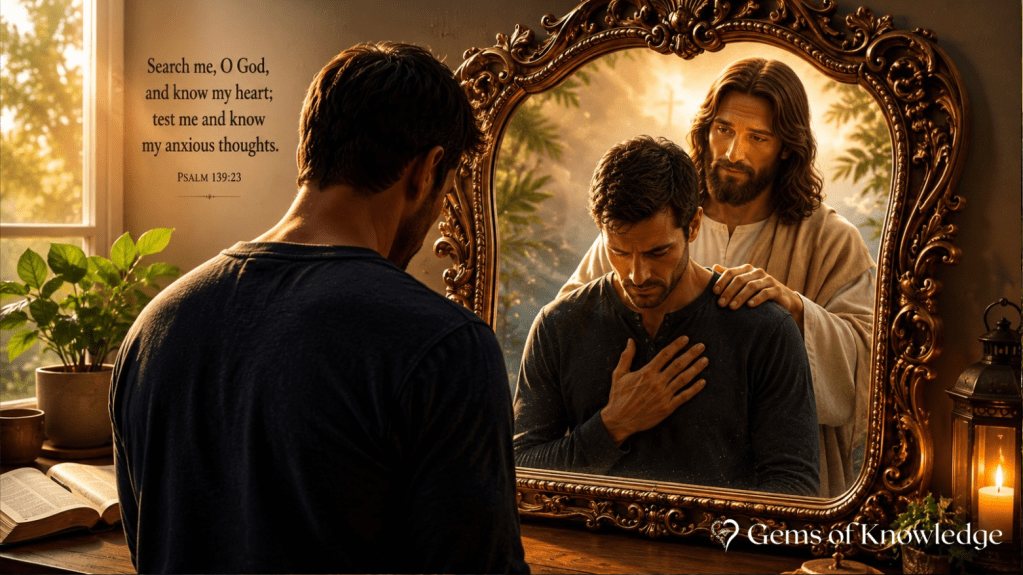
Alt...
A man stands before an ornate mirror where the reflection reveals Jesus standing behind him, symbolizing personal accountability, self-examination, and spiritual growth before God.
Hushai successfully dismantled a rebellion from the inside by using masterclass strategy, illustrating the moment when "the Lord had purposed to defeat the good counsel of Ahithophel" (2 Samuel 17:14 NKJV).
https://ko-fi.com/veggietalesgang
https://www.patreon.com/cw/veggietalesgang
https://linktr.ee/veggietalesgang
https://discord.gg/Knk4bCXKwG
https://youtube.com/shorts/Mu0_SrbS6Tc?feature=share
Baugher reads Luke 16 with irritation: the rich man, condemned to hell, still tries ordering Lazarus about, as though nothing changed but his location. His heart stayed the same—still despising Moses. Today that charge gets redirected at those who suggest the rich should behave differently. The original target evades it entirely.
#lutheranchurchmissourisynod #lutheran #bible #lazarus #serviceeconomy #gospel #gettysburgseminary
![Black graphic with a portrait of Henry Louis Baugher (1804–1868) beside a quote from *Annotations on the Gospel according to Luke*: "'Send Lazarus'. It is noticeable that he [the rich man] still imagines himself able to direct Lazarus, whom he had all his life lightly esteemed, Even so does he afterwards despise Moses also (ver. 30). Only his external condition, what surrounds him, is altered, but not his individuality. [quoting van Oost]"](https://files.mastodon.social/media_attachments/files/116/804/628/726/987/466/original/1e13052dd4b9d273.png "Black graphic with a portrait of Henry Louis Baugher (1804–1868) beside a quote from *Annotations on the Gospel according to Luke*: \"'Send Lazarus'. It is noticeable that he [the rich man] still imagines himself able to direct Lazarus, whom he had all his life lightly esteemed, Even so does he afterwards despise Moses also (ver. 30). Only his external condition, what surrounds him, is altered, but not his individuality. [quoting van Oost]\"")
Alt...
Black graphic with a portrait of Henry Louis Baugher (1804–1868) beside a quote from *Annotations on the Gospel according to Luke*: "'Send Lazarus'. It is noticeable that he [the rich man] still imagines himself able to direct Lazarus, whom he had all his life lightly esteemed, Even so does he afterwards despise Moses also (ver. 30). Only his external condition, what surrounds him, is altered, but not his individuality. [quoting van Oost]"
![[?]](https://pxscdn.com/cache/avatars/965947145429498396/avatar_ny2oh2.jpg)
where Philip De Vere has created flip-books from Phillip Medhurst's photo-collection.
#BoltonMuseum #bible #extraillustration #grangerisation #MacklinBible #interleaved #print #engraving #etching #Bibleillustration #Bibleart #Christianart #christianartwork
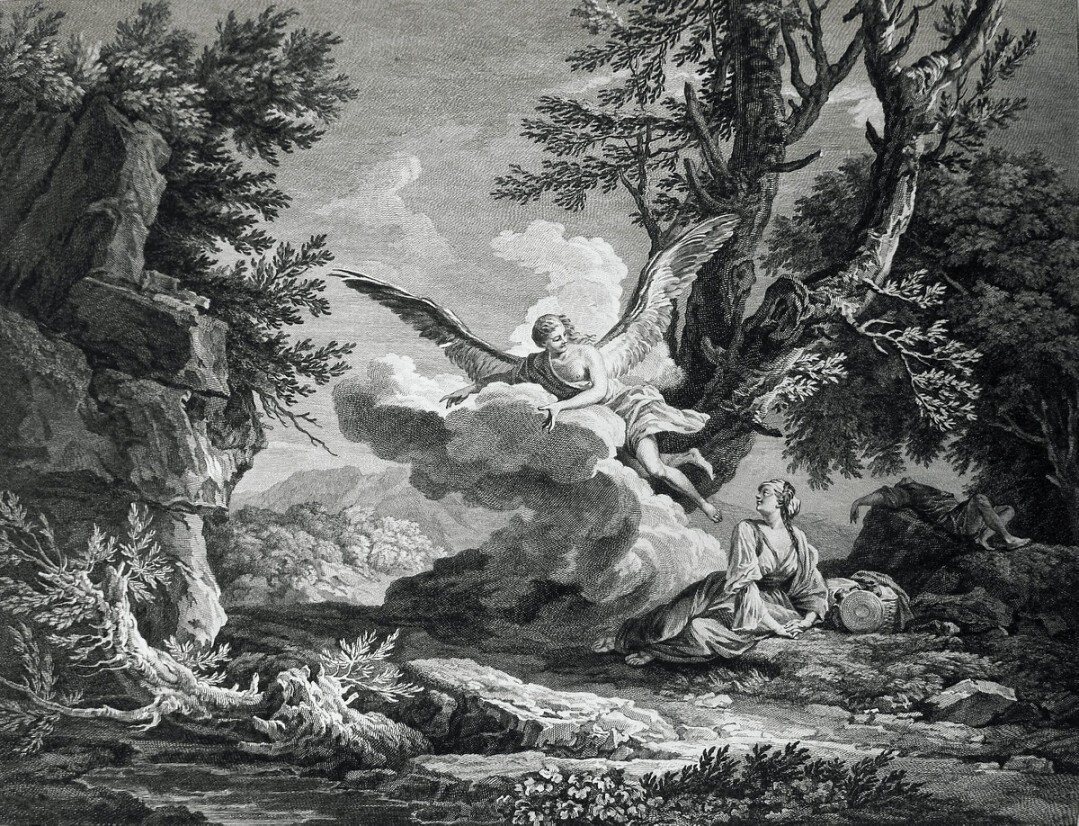
Bowyer Bible print 0316 Abraham going to Canaan. Genesis cap 12 vv 5, 8. Marillier. Robert Bowyer (d.1834) expanded his copy of the Macklin Bible by inserting 6200+ different prints. The Bowyer Bible is now housed in Bolton Museum. For these prints see https://archive.org/details/bowyer-bible
where Philip De Vere has created flip-books from Phillip Medhurst's photo-collection.
#BoltonMuseum #bible #MacklinBible #interleaved #print #engraving #etching #Bibleillustration #Bibleart #Christianart #christianartwork
![[?]](https://christopherakong.wordpress.com/wp-content/uploads/2026/05/cropped-20240718_161518.jpg)
The Hardest Bridge to Cross in Life: The Bridge of Poverty
One of the most difficult journeys in life is not crossing an ocean, climbing a mountain, or traveling across continents. The most difficult bridge many people will ever attempt to cross is the bridge of poverty. Poverty is a silent prison. It limits opportunities, weakens confidence, steals dreams, and often determines how society treats an individual. For many people, poverty is not a temporary condition but a family inheritance passed from one generation to another. If you are born into […] [SENSITIVE CONTENT]

One of the most difficult journeys in life is not crossing an ocean, climbing a mountain, or traveling across continents. The most difficult bridge many people will ever attempt to cross is the bridge of poverty.
Poverty is a silent prison. It limits opportunities, weakens confidence, steals dreams, and often determines how society treats an individual. For many people, poverty is not a temporary condition but a family inheritance passed from one generation to another.
If you are born into a poor family, there is a possibility that you may remain poor for the rest of your life unless you intentionally develop strategies, acquire knowledge, and make decisions that break the cycle. Poverty does not disappear by wishful thinking. It requires wisdom, discipline, planning, and persistent effort.
As the African proverb says, “A child who is not taught how to fish may spend a lifetime waiting for someone to feed him.”
The good news is that while poverty may be inherited, it is not permanent. The bridge can be crossed.
Understanding the Nature of Poverty
Poverty is more than the absence of money. It is often the absence of opportunities, information, networks, education, and access to resources.
A poor person wakes up every day thinking about survival. The wealthy often think about investments, while the poor are forced to think about immediate needs.
This reality explains why poverty can be contagious. Children born into poverty often inherit the same environment, same limitations, same fears, and sometimes the same mindset that kept previous generations poor.
When a family has experienced poverty for decades, it becomes normalized. People begin to believe that suffering is their destiny.
However, destiny can be rewritten.
Biblical Perspective on Poverty and Wisdom
The Bible repeatedly emphasizes the importance of wisdom, diligence, and planning.
Proverbs 21:5 says:
“The plans of the diligent lead surely to abundance, but everyone who is hasty comes only to poverty.”
Notice that Scripture does not merely speak about hard work; it speaks about planning. Many people work hard, but not everyone works wisely.
The story of Joseph in Egypt is a perfect example. Joseph did not merely interpret Pharaoh’s dream; he developed a strategy to survive seven years of famine. Wisdom and planning transformed an entire nation.
God often blesses people through wisdom, discipline, and stewardship rather than miracles alone.
Faith without strategy can leave a person stranded on the wrong side of the bridge.
Poverty Can Be Passed from Generation to Generation
Many families have remained poor for decades because each generation repeats the mistakes of the previous one.
A father who never valued education may raise children who do not value education.
A mother who never learned financial discipline may unknowingly pass the same habits to her children.
Children often inherit behaviors before they inherit wealth.
As the saying goes, “When there is no change in thinking, there is rarely a change in living.”
Breaking generational poverty begins with breaking generational thinking.
Someone in the family must decide that the cycle ends with them.
Why Crossing the Bridge of Poverty Is Difficult
1. Lack of Information
Many poor people do not lack intelligence; they lack access to information.
Opportunities often come disguised as knowledge.
A person may remain poor simply because they do not know what they need to know.
2. Lack of Capital
Starting a business, pursuing education, or acquiring skills often requires resources that poor people do not have.
This creates a painful cycle where poverty produces more poverty.
3. Negative Environment
If everyone around you believes success is impossible, it becomes difficult to think differently.
The environment either pushes people forward or pulls them backward.
4. Fear of Taking Risks
Many poor people are afraid to take calculated risks because failure could have devastating consequences.
Yet every successful person has crossed a bridge of uncertainty at some point.
Extra Sense Is Required
To escape poverty, ordinary effort is often not enough.
A poor person must develop what many call “extra sense”—the ability to think beyond immediate circumstances.
This means:
- Learning continuously.
- Acquiring valuable skills.
- Building relationships with successful people.
- Managing money wisely.
- Looking for opportunities where others see problems.
- Thinking long-term rather than day-to-day.
The philosopher Aristotle taught that excellence is not an act but a habit. Success is rarely achieved through one big decision; it is usually the result of many small wise decisions repeated over time.
Practical Strategies for Crossing the Bridge of Poverty
Invest in Knowledge
Education remains one of the strongest weapons against poverty.
Not everyone will earn a university degree, but everyone can learn.
Read books.
Listen to educational content.
Learn profitable skills.
Develop yourself continuously.
Knowledge creates opportunities that money alone cannot buy.
Develop Multiple Sources of Income
Depending on a single income source can be dangerous.
Look for additional ways to earn.
Learn a trade.
Start a side business.
Sell a service.
Invest in a skill that people are willing to pay for.
Avoid Lifestyle Inflation
One of the biggest mistakes people make is increasing expenses whenever income increases.
Wealth is not determined by how much you earn but by how much you keep and invest.
Build Meaningful Relationships
Many opportunities come through people.
Surround yourself with individuals who challenge you to grow.
A wise friend is worth more than a bag of gold.
Think Generationally
Don’t think only about your survival.
Think about your children and grandchildren.
Plant trees whose shade you may never sit under.
That is how generational wealth is created.
Theological Reflection: God Wants Growth
The Parable of the Talents teaches an important principle.
The servants who multiplied their resources were rewarded.
The servant who buried his talent out of fear remained stagnant.
God’s design for humanity includes growth, development, productivity, and stewardship.
While wealth is not the ultimate purpose of life, responsible stewardship is a divine responsibility.
God expects people to maximize what they have, regardless of how little it may seem.
Real-Life Lessons
History is filled with individuals who were born poor but refused to die poor.
They were not necessarily the most talented.
They were not always the most educated.
They simply refused to allow their circumstances to become their destiny.
Every successful person has crossed a bridge.
Some crossed quickly.
Others crossed slowly.
But they kept moving.
As the proverb says, “Little by little, the bird builds its nest.”
Conclusion
The bridge of poverty is perhaps the hardest bridge to cross in life. It demands sacrifice, patience, wisdom, courage, discipline, and long-term thinking.
Poverty can be inherited, but it does not have to be permanent.
You may have been born poor, but you do not have to remain poor.
You may have inherited limitations, but you can create opportunities.
You may have started at the bottom, but you are not required to stay there.
The bridge is difficult, but it is crossable.
Have a plan.
Acquire knowledge.
Develop skills.
Manage resources wisely.
Trust God.
Remain persistent.
One generation entered poverty; let your generation be the one that exits it.
Remember: poverty may be your starting point, but it does not have to be your final destination.
Bro. Christopher Akong
where Philip De Vere has created flip-books from Phillip Medhurst's photo-collection.
#BoltonMuseum #bible #extraillustration #grangerisation #MacklinBible #interleaved #print #engraving #etching #Bibleillustration #Bibleart #Christianart #christianartwork
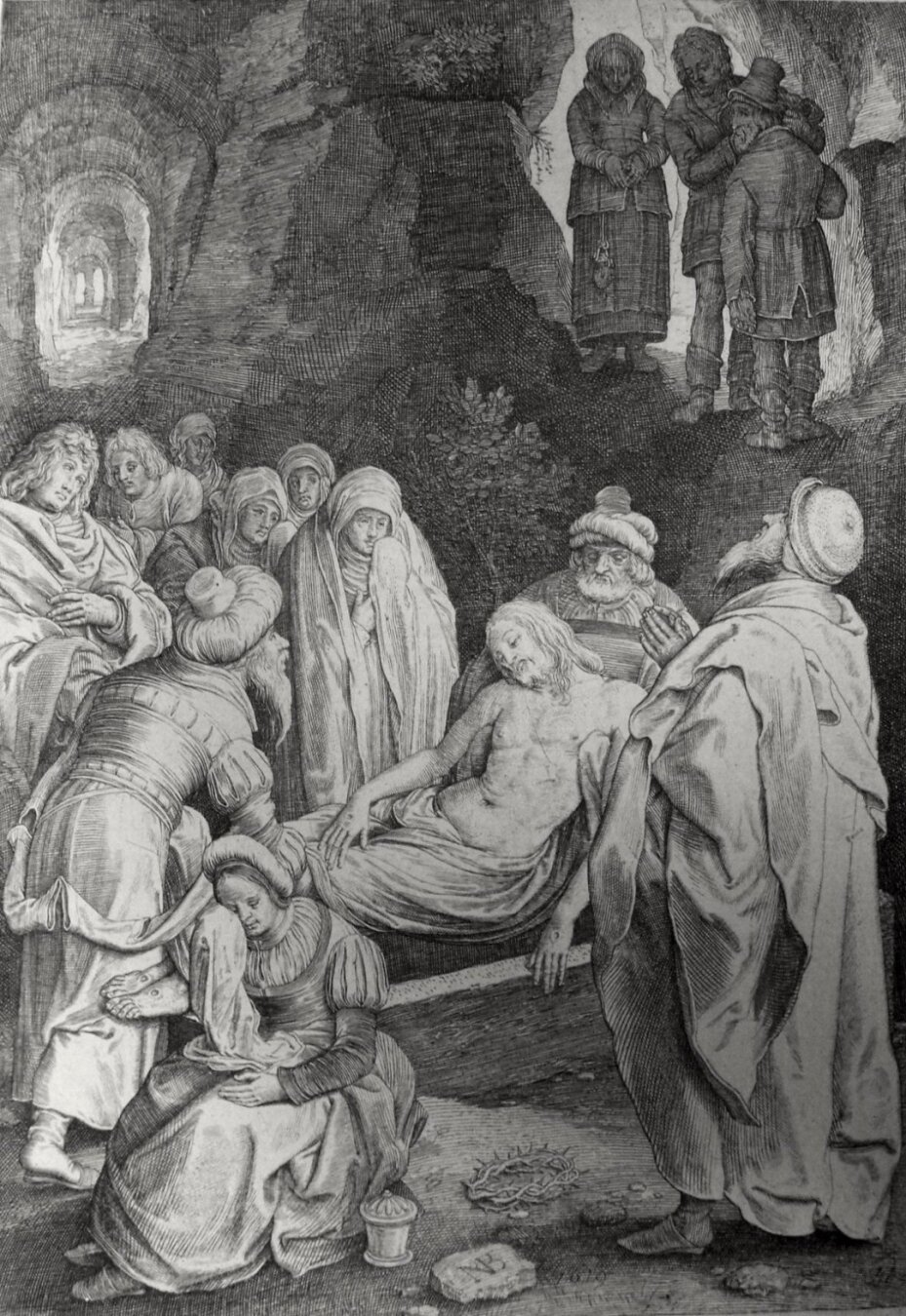
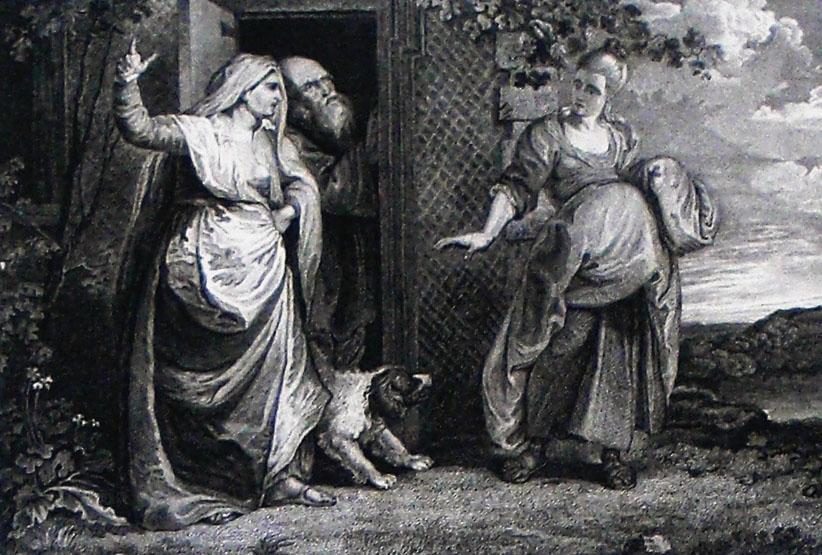
Bowyer Bible print 0299 Hagar flees away. Genesis cap 16 v 6. Rubens. Robert Bowyer (d.1834) expanded his copy of the Macklin Bible by inserting over 6200 different prints. The Bowyer Bible is now housed in Bolton Museum. For these prints see https://archive.org/details/bowyer-bible
where Philip De Vere has created flip-books from Phillip Medhurst's photo-collection.
#BoltonMuseum #bible #extraillustration #grangerisation #print #engraving #etching #Bibleillustration #Bibleart #Christianart #christianartwork
![[?]](https://s3.us-west-1.wasabisys.com/thereslife/accounts/avatars/111/618/763/150/342/279/original/e6ece1386ae8817d.png)
“I consider that our present sufferings are not worth comparing with the glory that will be revealed in us.”
Romans 8:18 (NIV)
https://bible.com/bible/compare/ROM.8.18
#Bible #VerseOfTheDay

Alt...
"I consider that our present sufferings are not worth comparing with the glory that will be revealed in us." - Romans 8:18 (NIV)
where Philip De Vere has created flip-books from Phillip Medhurst's photo-collection.
#BoltonMuseum #bible #extraillustration #grangerisation #MacklinBible #interleaved #print #engraving #etching #Bibleillustration #Bibleart #Christianart #christianartwork
![[?]](https://friendica.world/photo/profile/wistquotes.png?ts=1766199542)
No one can stand a person who talks too long and will not give others a chance to speak.
ὁ πλεονάζων λόγῳ βδελυχθήσεται,
καὶ ὁ ἐνεξουσιαζόμενος μισηθήσεται.
The Bible (The Old Testament) (14th - 2nd C BC) Judeo-Christian sacred scripture [Tanakh, Hebrew Bible], incl. the Apocrypha (Deuterocanonicals)
Book 22b. Sirach (Ecclesiasticus) 20: 8ff (Sir 20:8) [tr. GNT (1992 ed.)]
More about (and translations of) this quote: wist.info/bible-ot/84583/
#quote #quotes #quotation #qotd #bible #oldtestament #apocrypha #baruch #ecclesiasticus #authority #chatter #loquaciousness #pretending #pretense #speaking #talking #usurpation #wordiness
Bowyer Bible print 0300 God talks with Abraham. Genesis cap 17 v 22. Kraussen. Robert Bowyer (d.1834) expanded his copy of the Macklin Bible by inserting 6200+ different prints. The Bowyer Bible is now housed in Bolton Museum. For these prints see https://archive.org/details/bowyer-bible
where Philip De Vere has created flip-books from Phillip Medhurst's photo-collection.
#BoltonMuseum #bible #extraillustration #grangerisation #MacklinBible #etching #Bibleillustration #Bibleart #Christianart #christianartwork
where Philip De Vere has created flip-books from Phillip Medhurst's photo-collection.
#BoltonMuseum #bible #extraillustration #grangerisation #MacklinBible #interleaved #print #engraving #etching #Bibleillustration #Bibleart #Christianart #christianartwork
Producing Fruit
🚣 What if the problem isn't that you're not working hard enough? What if you're rowing in the wrong direction? During prayer, the Lord whispered: 💎 *"If you want your efforts to produce, then make sure it is aligned with Me and what I already have planned for you."* Not all effort produces fruit. Sometimes the answer isn't more striving. Sometimes it's better alignment. Click here to read the full devotional. ✨ [SENSITIVE CONTENT]
Today’s One Year Bible Verses: 2 Kings 4:18–5:27, Acts 15:1–35, Psalm 141:1–10, Proverbs 17:23
Living Aligned with God
Have you ever worked hard at something only to discover later that all your effort was pointed in the wrong direction?
Most of us have.
We make plans, set goals, invest time, spend energy, and pour our hearts into projects, ministries, relationships, or pursuits that seem right at the time. Yet sometimes, despite our best efforts, the results never quite materialize the way we hoped.
The Lord addressed this very thing this morning when he whispered this Gem of Knowledge to my mind:
“If you want your efforts to produce, then make sure it is aligned with Me and what I already have planned for you. Amen.”
As I reflected on those words, I thought about the difference between rowing with a current and rowing against it.
Both require effort.
Both involve movement.
Both may even look similar from a distance.
But one works with the flow of the river while the other constantly fights against it.
One will reaches its destination much faster and with far less struggle. While the other may not ever get there at all…and if they do the person is utterly exhausted.
I think many believers spend years asking God to bless plans that He never asked them to pursue in the first place. We want Him to multiply our efforts, but sometimes He is more interested in redirecting them.
God is not opposed to hard work. Scripture consistently praises diligence. The question is not whether we are working hard. The question is whether our efforts are aligned with His will.
In today’s Scriptures we see several powerful examples.
In 2 Kings 5, Naaman desperately wanted healing from leprosy. When Elisha instructed him to wash seven times in the Jordan River, Naaman initially resisted. The instruction seemed too simple and too ordinary for the miracle he desired. He had his own ideas about how God should work.
Yet healing came only when he aligned himself with God’s instructions rather than his own expectations.
His breakthrough was waiting on the other side of obedience.
Later in the same chapter, Gehazi pursued something God had not given him permission to pursue. Motivated by personal gain, he ran after Naaman and deceitfully obtained gifts that had been refused by Elisha.
His efforts produced results – Just not the results he wanted.
He gained silver and clothing, but he also inherited consequences.
The story reminds us that not everything that produces immediate results produces lasting fruit.
Sometimes the most fruitful thing we can do is stop asking God to join our plans and start asking how we can join His.
That perspective changes everything.
God sees the end from the beginning. He knows the people we will meet, the opportunities we will encounter, the doors that should open, and the ones that should remain closed. What appears to us as a good idea may not be part of His best plan.
That is why prayer is so important.
Not merely asking God to bless our efforts, but learning His heart so our efforts become aligned with His.
When that happens, our work begins to carry a different kind of fruitfulness.
Burdens become light and fruit becomes abundant.
God has already gone before us – He already knows the plans He has for us.
Our greatest success will never come from forcing our own agenda but from walking in step with His.
When we align ourselves with God’s purposes, we stop fighting the current and begin moving with it.
And that is where ease and lasting fruit is found. 💎
Action (5 Minutes with God)
Take at least 5 minutes to be with the Lord today. Ask Him:
- “Lord, what do You want me to know about this personally?”
- Journal what He gives you through His Holy Spirit.
- Then ask, “What do You want me to do?”
- Journal what He reveals – then do it!
Move in to a place of surrender and alignment with Him today.
Prayer
Father, thank You for seeing the end from the beginning. Forgive me for the times I have pursued my own plans without first seeking Your direction. Help me align my heart, my goals, and my efforts with Your will. Give me wisdom to recognize where You are leading and courage to follow, even when Your path looks different from my own. Let my life produce fruit that brings glory to You and advances Your purposes. In Jesus’ name I pray, Amen.
To read more 5 Minutes with God devotionals click here.
If Gems of Knowledge has blessed your walk with Christ, please subscribe or consider partnering with us today. Your gift helps keep these devotionals free for everyone and carries God’s Word to more hearts. Every seed matters—thank you for sowing into this work! 💛
Test everything by the Word and the Spirit (John 16:13)

Alt...
A person rows peacefully down a river toward Jesus standing in the distance at sunrise, while an abandoned boat sits stranded against the current, symbolizing alignment with God's will.
Abimelech's campaign was abruptly halted by an unnamed woman on a rooftop, proving that human arrogance can be easily undone (Judges 9:53 NKJV).
#Christian #Christianmemes #Biblememes
https://ko-fi.com/veggietalesgang
https://www.patreon.com/cw/veggietalesgang
https://linktr.ee/veggietalesgang
https://discord.gg/Knk4bCXKwG
https://youtube.com/shorts/WTuCYy9E38U?feature=share
![[?]](https://choosejoyadventure.wordpress.com/wp-content/uploads/2025/11/cropped-choose-joy-6.png)
Don’t Put a Period Where God Puts a Comma
Have you ever reached a place in life where it felt like the story was over? The diagnosis came. The relationship ended. The door closed. The dream seemed lost. You looked at the situation and thought, This is the end. But often what looks like a period to us is only a comma to God. Throughout Scripture, we see moments when people believed the story was finished, only to discover that God was still writing. Joseph was sold into slavery...and then God. The Israelites were trapped between […] [SENSITIVE CONTENT]
Have you ever reached a place in life where it felt like the story was over?
The diagnosis came. The relationship ended. The door closed. The dream seemed lost. You looked at the situation and thought, This is the end.
But often what looks like a period to us is only a comma to God.
Throughout Scripture, we see moments when people believed the story was finished, only to discover that God was still writing.
Joseph was sold into slavery…and then God.
The Israelites were trapped between Pharaoh’s army and the Red Sea…and then God.
Lazarus was in the tomb for four days…and then God.
Jesus was crucified and buried…and then God.
God specializes in writing “and then God” moments into stories that appear hopeless.
That doesn’t mean every outcome changes the way we want it to. God’s sovereignty does not guarantee that life will unfold according to our plans. But His sovereignty does guarantee that He remains in control even when circumstances seem out of control.
Yet God’s sovereignty does not negate our responsibility.
Sometimes Christians use God’s sovereignty as an excuse for passivity. We tell ourselves, “If God wants it to happen, it will happen,” and then do nothing. But Scripture consistently calls us to trust God while also taking responsibility for our choices.
You may not be able to control the outcome, but you can control your response.
You may not be able to choose your circumstances, but you can choose faith over fear.
You may not be able to change what happened, but you can choose forgiveness instead of bitterness.
You may not be able to stop the storm, but you can decide where you anchor your heart.
Our responsibility is obedience. God’s responsibility is the outcome.
Many of us spend so much energy trying to control things we cannot control that we neglect the things God has placed within our hands.
One of those things is people.
How often have we exhausted ourselves trying to change someone else’s heart?
A spouse.
A child.
A coworker.
A friend.
The truth is, you can often influence the ending of a situation, but you cannot change another person. Only God can do that.
You can pray.
You can encourage.
You can set healthy boundaries.
You can speak truth in love.
But you cannot force transformation in another human being.
Trying to do so will leave you frustrated, exhausted, and discouraged.
Sometimes the most faithful thing you can do is entrust that person to God and focus on your own obedience.
And while we’re waiting for God to work, we need to remember another important truth: with blessings often come battles.
The enemy rarely fights over territory he already owns.
When God begins opening doors, growing your faith, healing your heart, strengthening your ministry, restoring your family, or leading you into a new season, resistance often follows.
The enemy will attempt to distract, discourage, divide, and derail.
Not because the blessing isn’t from God, but because it is.
The battle doesn’t always mean you’re going the wrong way. Sometimes it is confirmation that you’re moving in the right direction.
Don’t be surprised when opposition appears. Instead, put on the armor of God and keep walking.
And that leads to one final thought.
Don’t get out.
Too many people leave too soon.
They leave the marriage before God finishes His work.
They leave the ministry before the harvest.
They leave the church because of conflict.
They leave the calling because of hardship.
They leave the process because it feels uncomfortable.
Now, there are certainly situations where someone else should leave—when there is abuse, danger, or unrepentant sin. Wisdom and discernment matter.
But many times, the person who is ready to quit is actually standing on the edge of breakthrough.
The enemy whispers, “Get out.”
God whispers, “Hold on.”
The enemy says, “It’s over.”
God says, “I’m not finished.”
The enemy points to the period.
God points to the comma.
If you’re in a difficult season today, remember this:
God’s sovereignty does not eliminate your responsibility.
You may not control the outcome, but you can control your response.
You cannot change another person, but God can.
Blessings often come with battles.
And what feels like the end may simply be the place where God is preparing an “and then God” moment.
So don’t put a period where God puts a comma.
Keep trusting.
Keep praying.
Keep obeying.
Keep believing.
The Author is still writing your story.
With love and joy,
Laura

Alt...
Don’t Put a Period Where God Puts a Comma
Bowyer Bible print 0275 Abraham & Lot. Genesis cap 13 vv 8, 11. Perelle. Robert Bowyer (d.1834) expanded his copy of the Macklin Bible by inserting over 6200 different prints. The Bowyer Bible is now housed in Bolton Museum. For these prints see https://archive.org/details/bowyer-bible
where Philip De Vere has created flip-books from Phillip Medhurst's photo-collection.
#BoltonMuseum #bible #extraillustration #MacklinBible #print #engraving #etching #Bibleillustration #Bibleart #Christianart #christianartwork
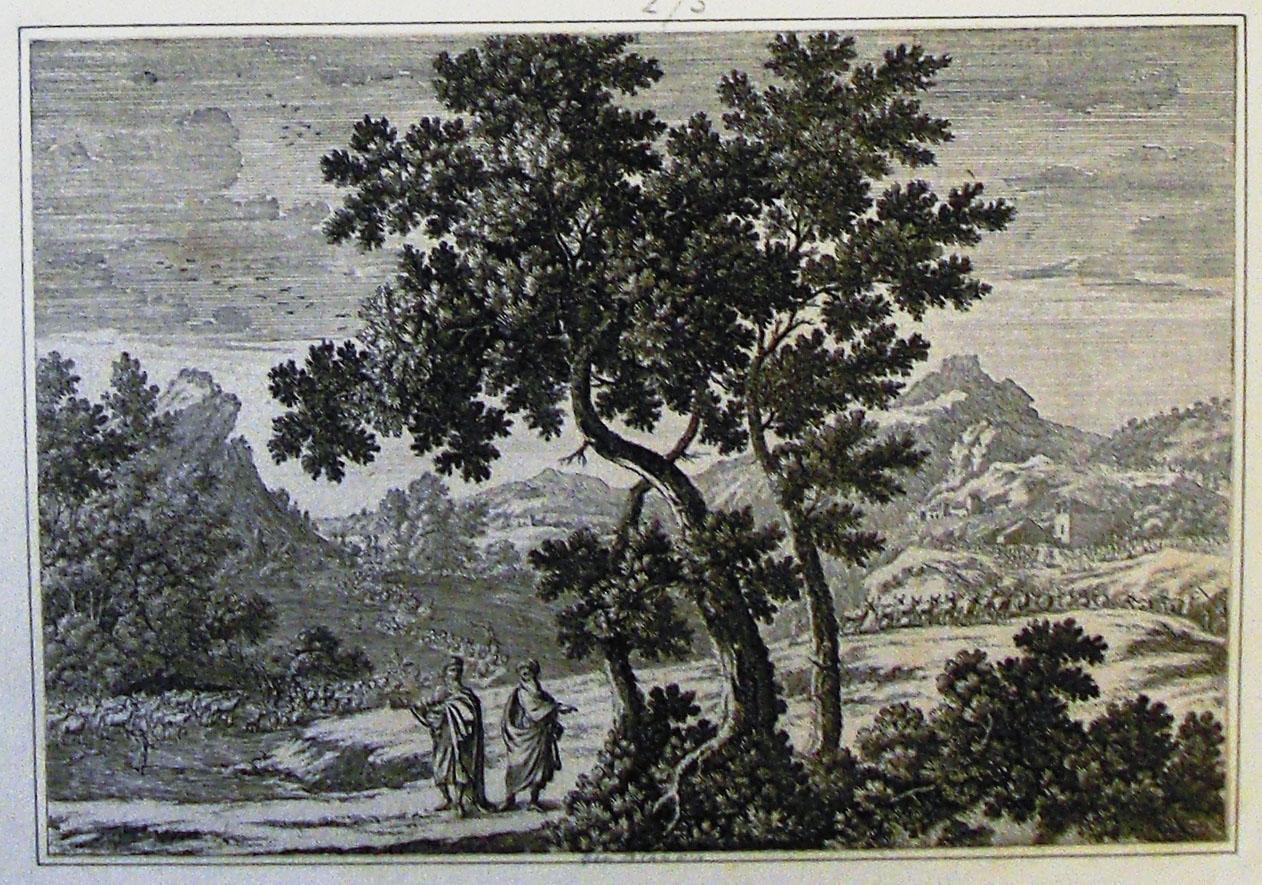
where Philip De Vere has created flip-books from Phillip Medhurst's photo-collection.
#BoltonMuseum #bible #extraillustration #grangerisation #MacklinBible #interleaved #print #engraving #etching #Bibleillustration #Bibleart #Christianart #christianartwork
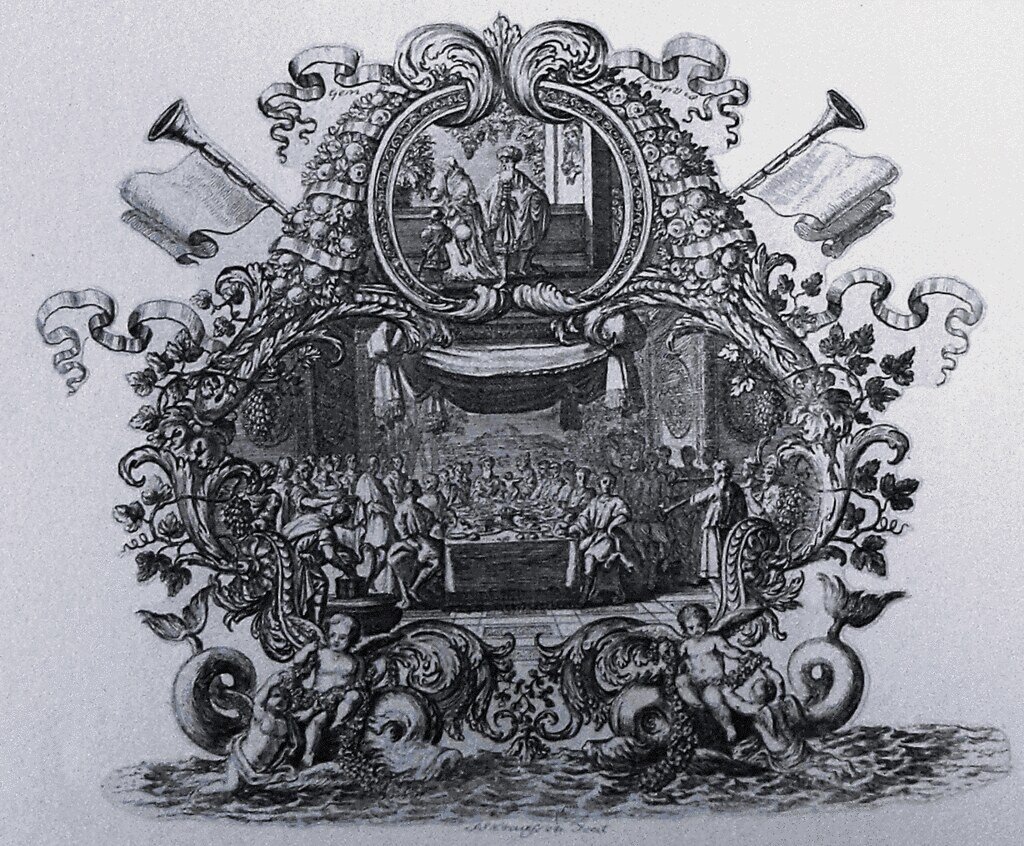
where Philip De Vere has created flip-books from Phillip Medhurst's photo-collection.
#BoltonMuseum #bible #extraillustration #grangerisation #MacklinBible #interleaved #print #engraving #etching #Bibleillustration #Bibleart #Christianart #christianartwork
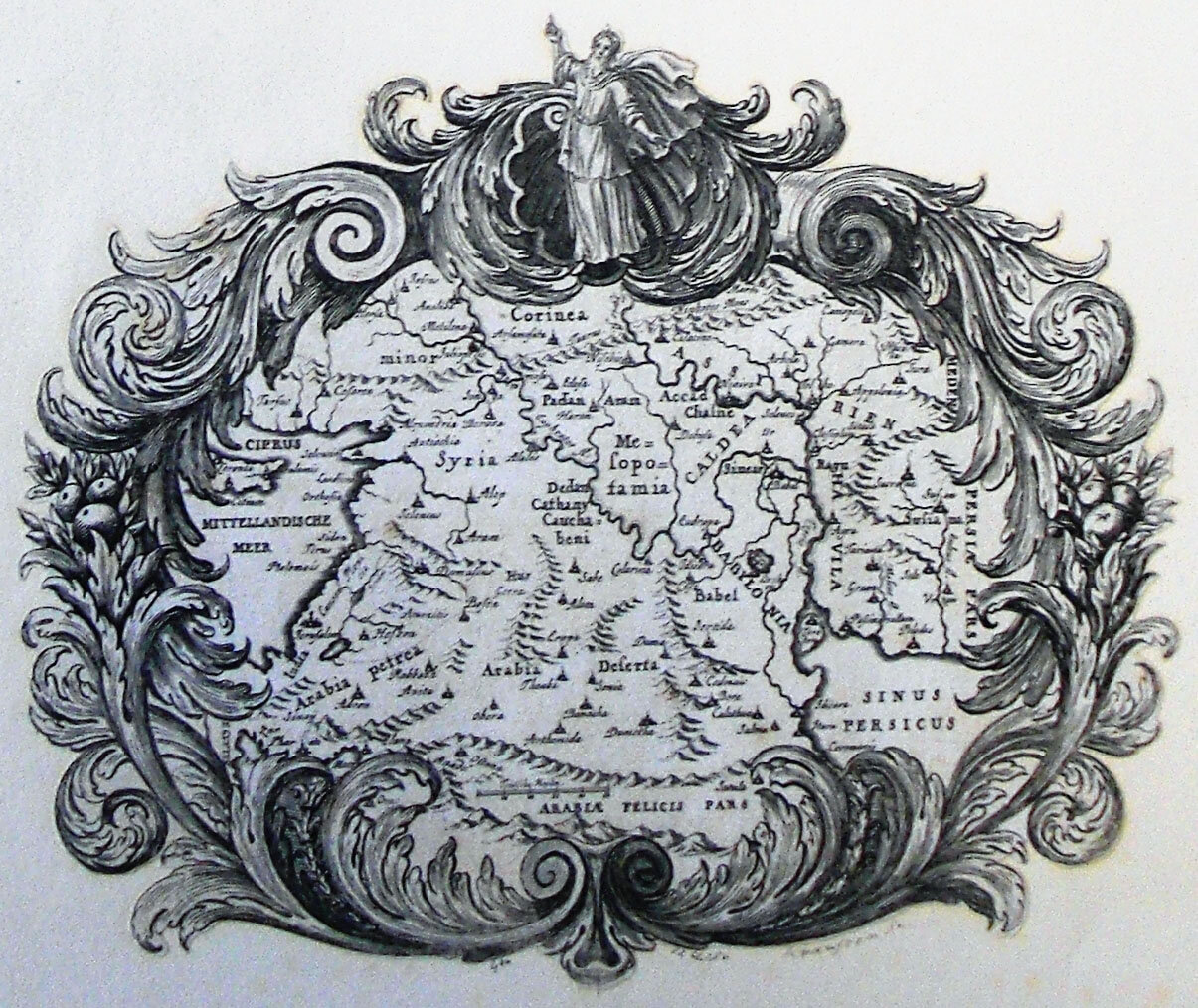
where Philip De Vere has created flip-books from Phillip Medhurst's photo-collection.
#BoltonMuseum #bible #extraillustration #grangerisation #MacklinBible #interleaved #print #engraving #etching #Bibleillustration #Bibleart #Christianart #christianartwork
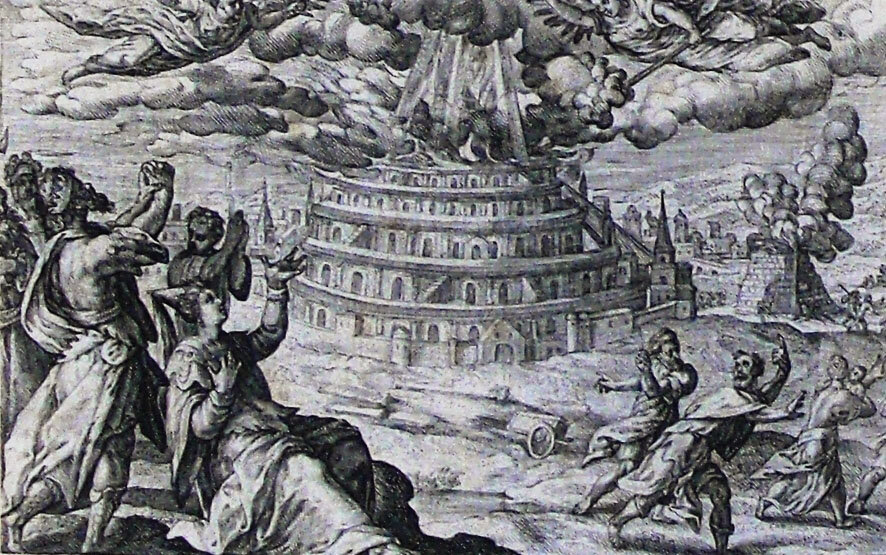
where Philip De Vere has created flip-books from Phillip Medhurst's photo-collection.
#BoltonMuseum #bible #extraillustration #grangerisation #MacklinBible #interleaved #print #engraving #etching #Bibleillustration #Bibleart #Christianart #christianartwork
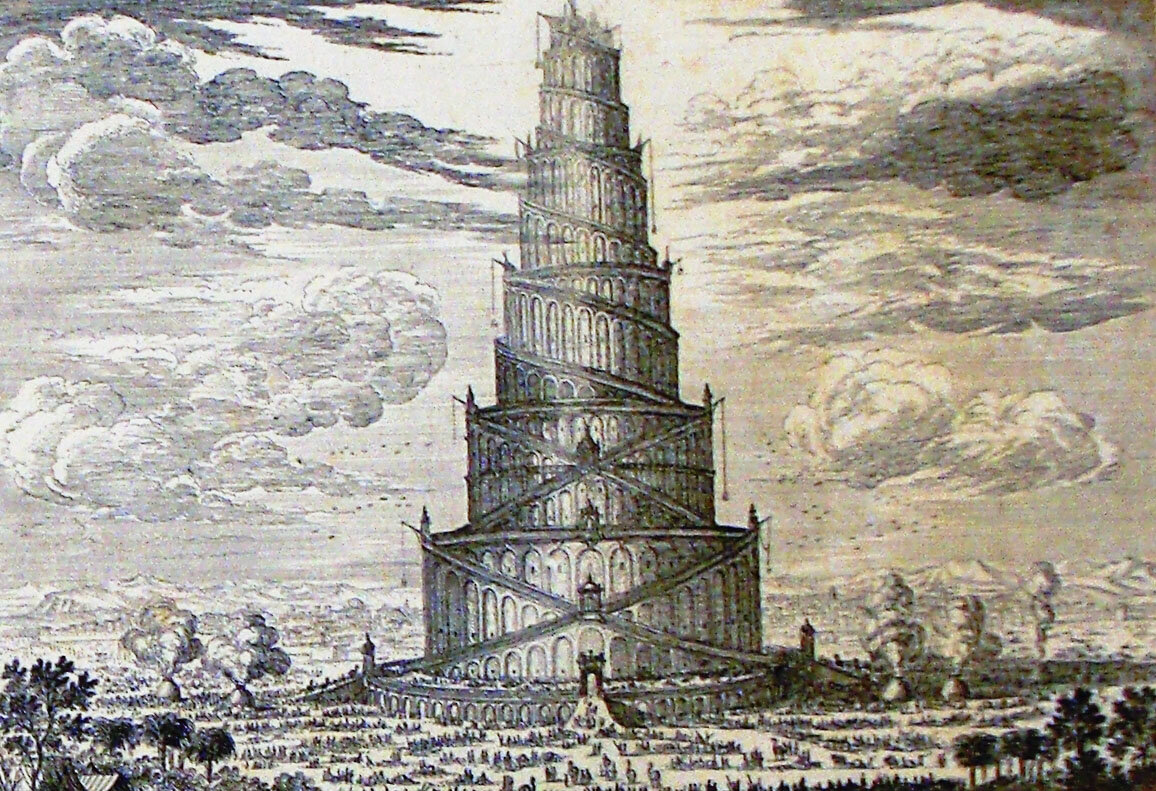
where Philip De Vere has created flip-books from Phillip Medhurst's photo-collection.
#BoltonMuseum #bible #extraillustration #grangerisation #MacklinBible #interleaved #print #engraving #etching #Bibleillustration #Bibleart #Christianart #christianartwork
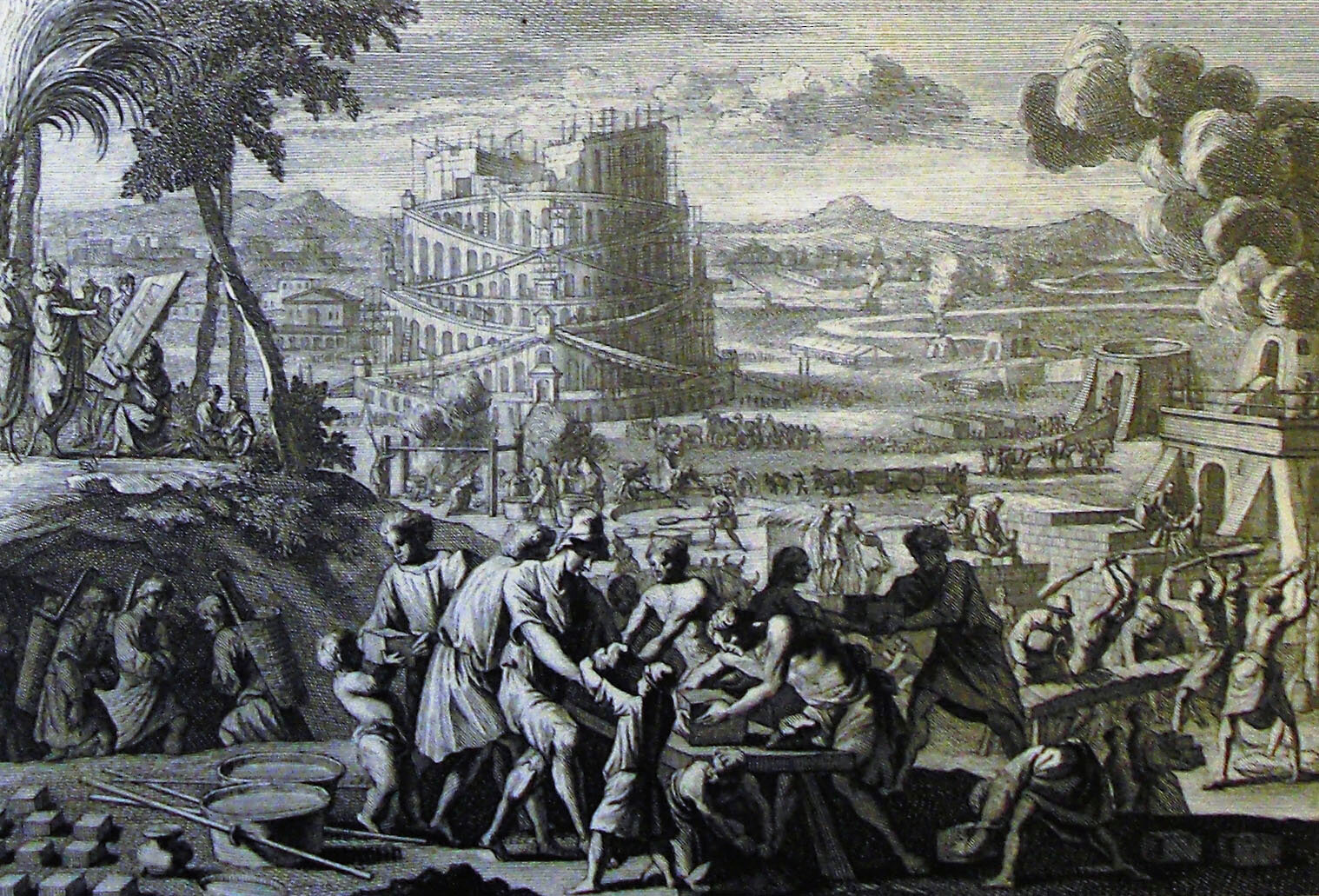
“As a father has compassion on his children, so the Lord has compassion on those who fear him;
for he knows how we are formed, he remembers that we are dust.
The life of mortals is like grass, they flourish like a flower of the field; the wind blows over it and it is gone, and its place remembers it no more.
But from everlasting to everlasting the Lord’s love is with those who fear him, and his righteousness with their children’s children –”
Psalms 103:13-17 NIVUK
#bible #prayer
where Philip De Vere has created flip-books from Phillip Medhurst's photo-collection.
#BoltonMuseum #bible #extraillustration #grangerisation #MacklinBible #interleaved #print #engraving #etching #Bibleillustration #Bibleart #Christianart #christianartwork
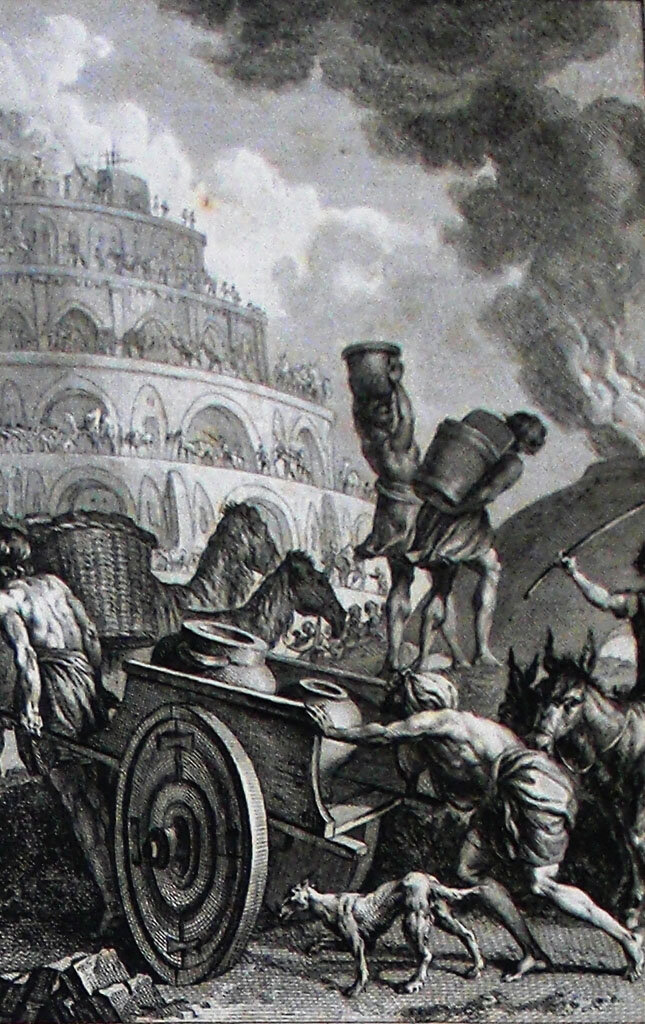
“and he (Jesus) began to teach them. He said:
“‘You have heard that it was said, “Love your neighbour and hate your enemy.” But I tell you, love your enemies and pray for those who persecute you, that you may be children of your Father in heaven...”
Matthew 5:2,43-45 NIVUK
#bible #beatitudes #loveistheanswer
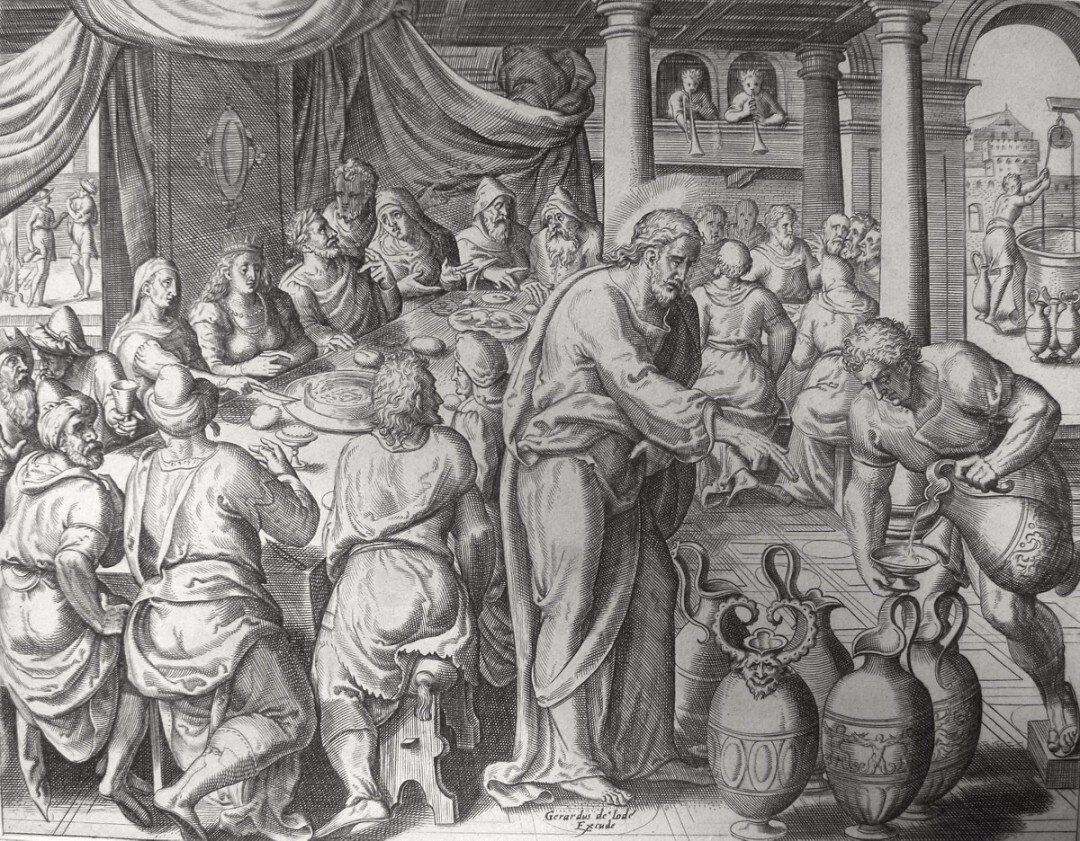
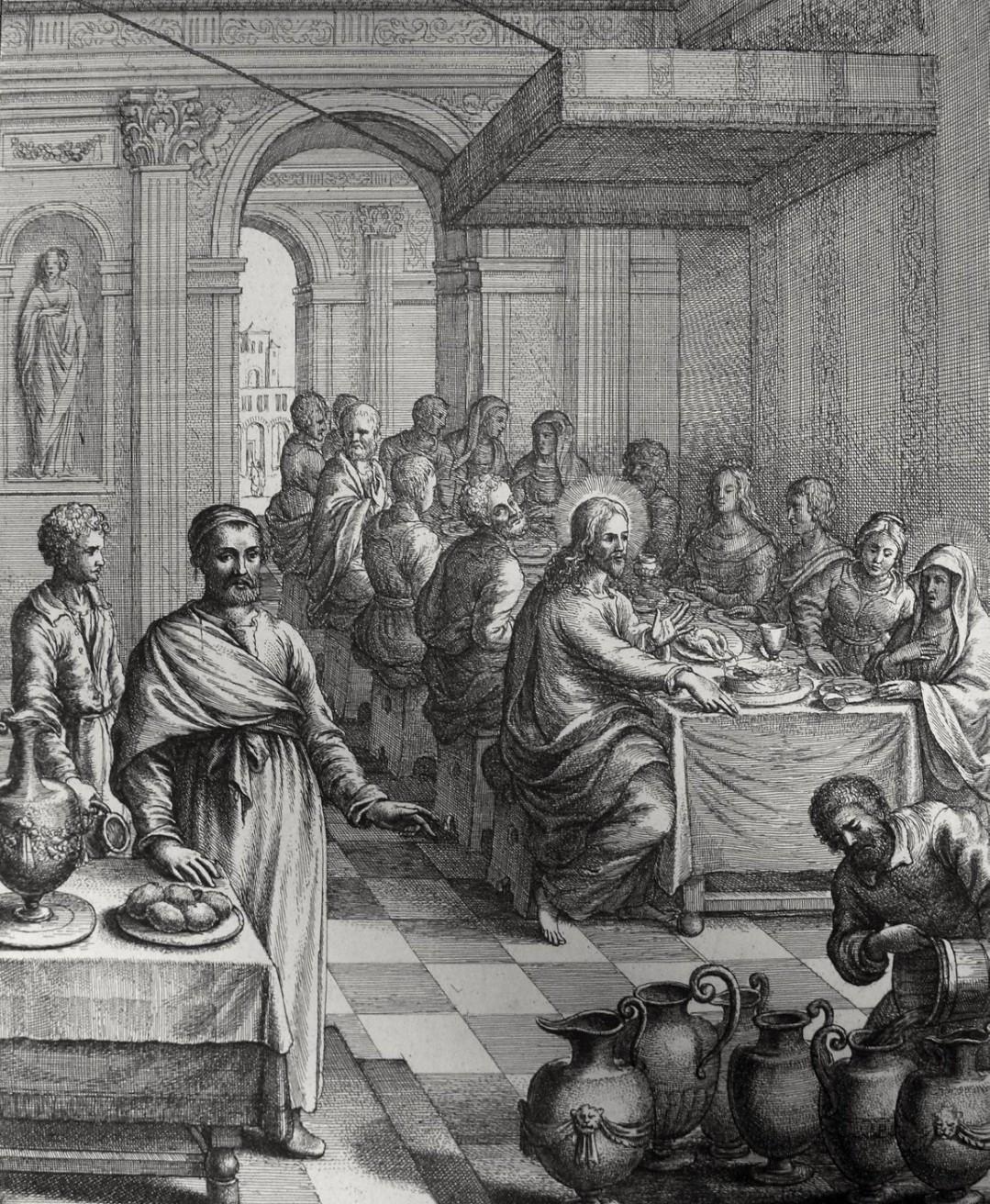
Bowyer Bible print 5293 Christ turns water into wine John 2:6-10 after Titian. Robert Bowyer (d.1834) expanded his copy of the Macklin Bible by inserting over 6200 prints. The Bowyer Bible is now housed in Bolton Museum. For these prints see https://archive.org/details/bowyer-bible
where Philip De Vere has created flip-books from Phillip Medhurst's photo-collection.
#BoltonMuseum #bible #extraillustration #grangerisation #print #engraving #etching #Bibleillustration #Bibleart #Christianart #christianartwork
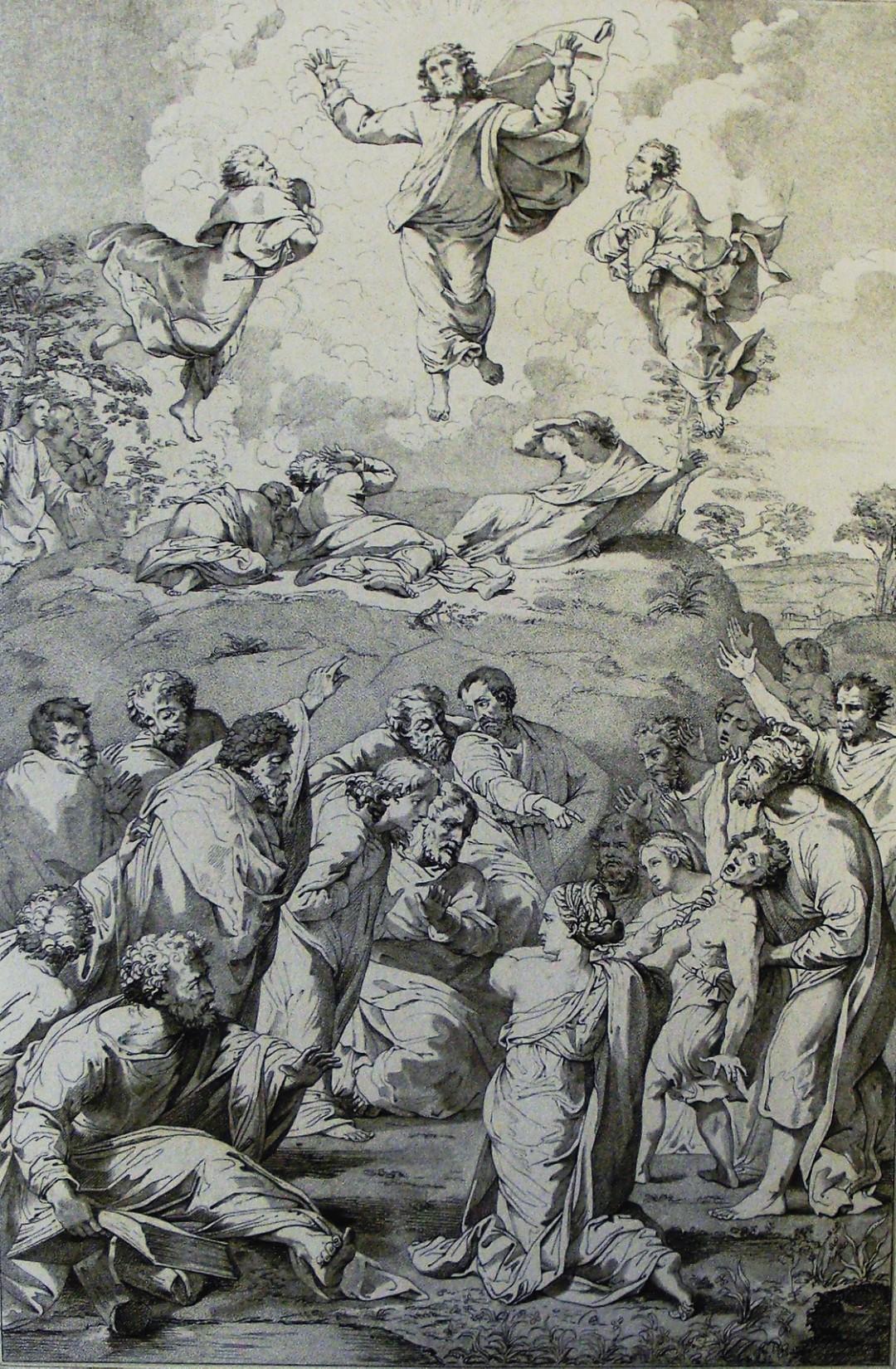
Bowyer Bible print 4399 The Transfiguration Mark 9:2-27 Raphael. Robert Bowyer (d1834) expanded his copy of the Macklin Bible by inserting over 6200 different prints. The Bowyer Bible is now housed in Bolton Museum. For these prints see https://archive.org/details/bowyer-bible
where Philip De Vere has created flip-books from Phillip Medhurst's photo-collection.
#BoltonMuseum #bible #extraillustration #grangerisation #MacklinBible #interleaved #print #engraving #etching #Bibleillustration #Bibleart #Christianart