Search results for tag #freebsd


 🍵
 [
I have to preface this to say that it's not my main OS, so I have limited time with it. For example here's my total usage per OS per year:
2023:
Linux: 49 d, 14 h, 57 min

2024:
Linux: 191 d, 18 h, 55 min
OpenBSD: 4 d, 7 h, 59 min

2025:
Linux: 175 d, 1 h, 41 min
FreeBSD: 23 d, 17 h, 54 min
OpenBSD: 3 d, 8 h, 19 min
(actually most of the time labeled "FreeBSD" for 2025 was actually Linux. I only converted that one box to #FreeBSD in November)
That said, notwithstanding how "primitive" #OpenBSD's FFS is, I have yet to lose any data with it, even taking into account a basically ornamental battery 😆 and occasional kernel crashes from me mucking about with buggy sysctls.
All that to say, I wouldn't doubt that ext4 is actually more robust than btrfs, even though it's more "basic."
LOL NOPE. There was a ticksy '^M' / '\r' hiding in the text, Precious!!! Tricksy carriage return, we hates them, Precious!!!
P.S. using the "l" command could have saved me a few minutes of consternation 😅 —
rld@prometheus:~$ echo -e 'sneaky\rhello there'
hello there
rld@prometheus:~$ echo -e 'sneaky\rhello there' |snarfi
rld@prometheus:~$ ed
P
*H
*r !snarfo
19
*,n
hello thereaky
*,p
hello there
*,l
sneaky\rhello there
*
GUYS,
I think I just found a bug in #FreeBSD's #ed(1):
*,n
1	a 1-bit bi-level (#425477
2	 and
3	#9fabcd
*1
a 1-bit bi-level (#425477
*j
*p
 and it bi-level (#425477
*WHAT??!?
?
unexpected command suffix
*,n
 and    a 1-bit bi-level (#425477
2	#9fabcd
*
*,p
 and it bi-level (#425477
#9fabcd
*u
*,n
1	a 1-bit bi-level (#425477
2	 and
3	#9fabcd
*,p
a 1-bit bi-level (#425477
 and
#9fabcd
*
I think it's in the 'sysstat' package in #Debian, but I don't see it in #FreeBSD ports/pkg.
rld@Intrepid:~$ pkg search -i sysstat
libsysstat-0.4.6               Library used to query system info and statistics
libsysstat-qt6-1.1.0_3         Library used to query system info and statistics ported to qt6
xsysstats-1.51_6               System information display tool
rld@Intrepid:~$

It's 2026, and we still don't know what the ELI in GELI stands for 😂
I've emailed the author. He was very cordial, but kept his cards close to his chest. 😄
cc: @RadioAzureus
👿 FreeBSD 15.1 Released With Updated WiFi Drivers, Better C23 Support & Other Improvements https://www.phoronix.com/news/FreeBSD-15.1-Released
Sorry, I got distracted, but I've now posted the FreeBSD 15.1-R magnet links at their usual place:
https://wiki.freebsd.org/Torrents
I'm seeding them all now, and as usual DHT will take a while to find the new torrents.
Step 1: Open terminal
Step 2: Type `alias nano='vim -c "smile"'`
Step 3: Enjoy this whenever someone type `nano`!
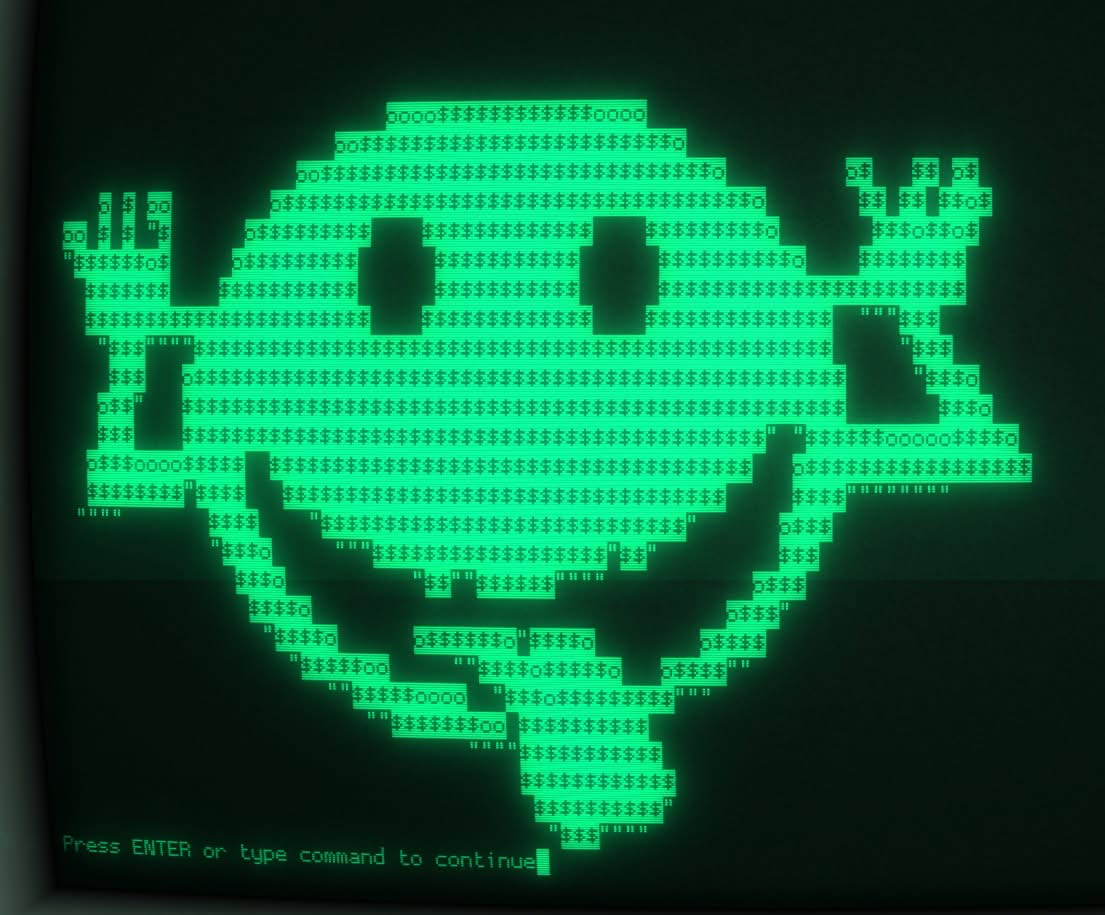
Alt...
This screenshot shows green ASCII art of the Vim ester eggs on a dark retro terminal screen, with the "Press ENTER or type command to continue" prompt displayed at the bottom when you type nano at the cli via bash alias: alias nano='vim -c "smile"'
Sorry I missed the release of FreeBSD 15.1 that happened yesterday. I'm downloading the release now to prepare the magnet links. They should be ready in the next hour.

For #FreeBSD (on that same box), I found a shell script that uses sysctl to get the ACPI name for the battery, and runs acpi_call from ports to set the thresholds, which survives a reboot.
On #OpenBSD, I believe you set the thresholds directly through sysctl.
On #Linux, you set it with something like echo 80 > /sys/class/power_supply/BAT0/charge_stop_threshold

RE: https://mastodon.bsd.cafe/@stefano/116702145454686241
The world-wide #chatmail relay network is growing in various wonderful ways. #freebsd joined the world-wide federated secure communication party and BSD cafe offers a public relay at https://chatmail.bsd.cafe :) Thanks @stefano @feld and @outofcreativity !
Couldn't seem to get #VimClassic to compile on #FreeBSD.
But then I realized the only thing I used it for is sncli, because it does something funny with the terminal when it hands it off to nvi, such that the cursor becomes invisible. But then, it's just a !reset to fix it, so I might as well just stick with nvi. ;)