soc.octade.net is a Fediverse instance that uses the ActivityPub protocol. In other words, users at this host can communicate with people that use software like Mastodon, Pleroma, Friendica, etc. all around the world.

This server runs the snac software and there is no automatic sign-up process.

Admin email
social@octade.net

Search results for tag #christianity

[?]A Faithful Sower Publishing » 🌐
@afaithfulsower@mastodon.social

There are days, and then there are days, but no day compares to Jesus's second coming. Click or tap the link to read more.

afaithfulsower.org/2026/07/14/

    [?]A Faithful Sower Publishing » 🌐
    @afaithfulsower@mastodon.social

    As a born-again follower of Jesus Christ, what are your spiritual gifts, and do you use them to glorify God? Click or tap the link to learn more.

    afaithfulsower.org/2026/07/13/

      [?]Gems of Knowledge » 🌐
      @gemsofknowledge.com@gemsofknowledge.com

      How Can I Make A Difference?

      It's easy to think we need to do something extraordinary to make a difference. But God often uses the smallest acts of kindness to create life-changing and eternal impact. In today's Gem of Knowledge, the Lord reminds us, "Giant impacts can come from small things. Think of a meteor. They are fairly small compared to the impact they make. Your loving kindness can be like that to a hurting heart. Amen." What a beautiful picture. A meteor is tiny compared to a planet, yet when it collides with the earth, its impact can be enormous. In much the same way, a simple act of kindness may seem insignificant to us, but we rarely see the lasting effect it has on another person's heart. Do something loving today. 💎 [SENSITIVE CONTENT]

      Today’s One Year Bible Verses: 1 Chronicles 15:1–16:36, Romans 1:18–32, Psalm 10:1–15, Proverbs 19:6–7


      Small Acts. Eternal Impact.

      It’s easy to believe that making a difference requires doing something big.

      We imagine changing someone’s life by giving a large gift, leading a ministry, or accomplishing something extraordinary. Yet God often works in exactly the opposite way. Throughout Scripture, He delights in using what seems small to accomplish what seems impossible.

      In today’s Gem of Knowledge, the Lord reminds us,

      “Giant impacts can come from small things. Think of a meteor. They are fairly small compared to the impact they make. Your loving kindness can be like that to a hurting heart. Amen.”

      What a beautiful picture.

      A meteor is tiny compared to a planet, yet when it collides with the earth, its impact can be enormous. In much the same way, a simple act of kindness may seem insignificant to us, but we rarely see the lasting effect it has on another person’s heart.

      As I read today’s passages, I was drawn to David’s celebration as the Ark of the Covenant was finally brought to Jerusalem. It was a day filled with worship, rejoicing, music, and thanksgiving. But one detail especially stood out to me. After the celebration, David blessed the people in the name of the Lord, and then he gave every man and woman a loaf of bread, a cake of dates, and a cake of raisins.

      At first glance, it doesn’t seem like much.

      It wasn’t a fortune. It wasn’t a grand display of wealth.

      It was a simple gift.

      Yet it communicated something far greater. David wasn’t simply feeding people. He was reminding every person that they were seen, valued, included, and cared for. Sometimes love is expressed through remarkably ordinary acts of generosity.

      Isn’t that how God often works in our lives?

      A timely phone call.

      An encouraging text.

      A warm smile.

      A handwritten note.

      A sincere prayer.

      A meal delivered to someone who is overwhelmed.

      None of those things seem particularly large on their own. Yet at just the right moment, they can become the very evidence someone needed to believe that God still sees them.

      Paul reminds us in Romans that our world desperately needs God because without Him, hearts become darkened and people drift farther from His truth. In a culture that often chooses selfishness over compassion, every act of Christlike kindness becomes a light pointing people back to the heart of God.

      David declared in today’s psalm, “Lord, you know the hopes of the helpless. Surely you will hear their cries and comfort them” (Psalm 10:17, NLT). What an incredible thought. God hears the cries no one else hears. And sometimes He answers those prayers by sending one of His children to offer a simple act of love.

      Even Proverbs reminds us how lonely life can become for those who are struggling. It says, “The poor are avoided even by their own neighbors—while the rich have many ‘friends'” (Proverbs 19:7, NLT). The world is often drawn to people who have something to offer, but Jesus was drawn to those everyone else overlooked.

      As His followers, we are called to do the same.

      Never underestimate the power of your kindness.

      You may think it’s only a conversation.

      Only a hug.

      Only a prayer.

      Only an invitation.

      Only a few encouraging words.

      But God specializes in taking what seems small and using it to accomplish something eternal.

      You may never know this side of Heaven how one simple act of loving kindness changed the course of someone’s life.

      So don’t wait until you think you can do something great.

      Do something loving today.

      God can make the impact far greater than you ever imagined. 💎


      Action (5 Minutes with God)

      Take 5 minutes to be with the Lord today. Ask Him:

      • Lord, what do You want me to know about this personally?”
        • Journal what He gives you through His Holy Spirit.
      • Then ask, “What do You want me to do?”
        • Journal what He reveals – then do it!

      Allow the Lord to direct you to someone who may need your loving kindness today. Trust Him to use your obedience in ways you may never see.


      Prayer

      Dear Lord,, thank You for showing me kindness over and over again, even in the smallest ways. Help me never overlook the opportunities You place before me to encourage someone else. Fill my heart with compassion and open my eyes to those who are hurting. Teach me to be faithful in the little things, trusting that You can use even the smallest act of love to make an eternal difference. May my words, my actions, and my kindness always point others to You. In Your mighty name I pray, amen.

      To read more 5 Minutes with God devotionals click here.


      If Gems of Knowledge has blessed your walk with Christ, please subscribe or consider partnering with us today. Your gift helps keep these devotionals free for everyone and carries God’s Word to more hearts. Every seed matters—thank you for sowing into this work! 💛

      Test everything by the Word and the Spirit (John 16:13)

      Subscribe

      Partner/Donate

      A tiny meteor strikes the earth, creating a massive impact crater and brilliant explosion, illustrating how small acts of kindness can create life-changing and eternal impact through God's power.

      Alt...A tiny meteor strikes the earth, creating a massive impact crater and brilliant explosion, illustrating how small acts of kindness can create life-changing and eternal impact through God's power.

      [?]Gems of Knowledge » 🌐
      @gemsofknowledge.com@gemsofknowledge.com

      Love from a Soft Heart

      Have you ever noticed how easy it is for our hearts to become a little harder with each disappointment? In today's Gem of Knowledge, the Lord lovingly says, "Soften your heart towards all people, specially those who are struggling. Find it within yourself to help them and love them as you rely on Me as your Source. Amen." Perhaps today you'll encounter someone who is struggling, or maybe you struggle with them. Instead of allowing your heart to harden, ask the Lord to soften it. Ask Him to let you see that person through His eyes and love them with His love. When we rely on God as our Source, our compassion doesn't run out. Because His never does. 💎 [SENSITIVE CONTENT]

      Today’s One Year Bible Verses: 1 Chronicles 12:19–14:17, Romans 1:1–17, Psalm 9:13–20, Proverbs 19:4–5


      A Soft Heart Begins with God

      Have you ever noticed how easy it is for our hearts to become a little harder with each disappointment?

      Someone betrays our trust. Another person takes advantage of our kindness. We help someone who never says thank you. Before long, we begin protecting ourselves. We become more cautious, less patient, and a little slower to show compassion because we don’t want to be hurt again.

      While those feelings are understandable, they are not where God wants us to remain.

      In today’s Gem of Knowledge, the Lord lovingly says,

      “Soften your heart towards all people, specially those who are struggling. Find it within yourself to help them and love them as you rely on Me as your Source. Amen.”

      I love that last phrase: “as you rely on Me as your Source.

      God never asks us to love others out of our own limited strength. If He did, we would eventually run dry. Instead, He invites us to receive His love first, then allow it to overflow into the lives of others. The more we draw from Him, the more compassion we have to give.

      1 Chronicles 12-14 gives us a beautiful picture of this. As David’s kingdom grew stronger, people from every tribe continued coming to him. Some had once stood on the opposite side. Others came from different backgrounds, experiences, and loyalties. Yet David welcomed those whom God was bringing to him. He wasn’t building a kingdom based on favoritism or past mistakes. He was allowing God to unite people with different stories into one purpose.

      That is still how God works today.

      The church is filled with people from different walks of life. Some are mature in their faith. Others have only recently come to know Christ. Some are overcoming addiction. Others are healing from deep wounds, broken relationships, or years of guilt and shame. None of us arrive without scars.

      Instead of asking, “Why are they like that?” perhaps we should begin asking, “Lord, what have they walked through?”

      That simple change in perspective softens our hearts.

      Paul understood this as well. As he opened his letter to the Romans, he declared that he was “not ashamed of the Good News about Christ, for it is the power of God at work, saving everyone who believes” (Romans 1:16, NLT). The gospel is for everyone—the wealthy and the poor, the religious and the rebellious, the successful and the struggling. If God’s grace is offered so freely to all, then our hearts should never become selective in who we choose to love.

      David also reminds us in today’s Psalm that God sees those who suffer. He prays, “LORD, have mercy on me. See how my enemies torment me” (Psalm 9:13, NLT). God hears the cries that no one else hears. He notices the pain that others overlook. When we choose compassion, we begin reflecting the very heart of our Father.

      Proverbs warns us that “Wealth makes many ‘friends’; poverty drives them all away” (Proverbs 19:4, NLT). Sadly, the world often values people for what they can offer instead of simply loving them because they bear God’s image. As followers of Christ, we are called to be different. We don’t love people because they can benefit us. We love them because Christ first loved us.

      Perhaps today you’ll encounter someone who is struggling, or maybe you struggle with them.

      Maybe they’re discouraged.

      Maybe they’re lonely.

      Maybe they’re difficult to love.

      Instead of allowing your heart to harden, ask the Lord to soften it. Ask Him to let you see that person through His eyes and love them with His love. You may not be able to solve every problem they face, but you can offer kindness, encouragement, a listening ear, or a sincere prayer.

      Sometimes the best thing we can do for someone is simply reminding them they are seen, valued, and loved.

      When we rely on God as our Source, our compassion doesn’t run out.

      Because His never does. 💎


      Action (5 Minutes with God)

      Take 5 minutes to be with the Lord today. Ask Him:

      • Lord, what do You want me to know about this personally?”
        • Journal what He gives you through His Holy Spirit.
      • Then ask, “What do You want me to do?”
        • Journal what He reveals – then do it!

      Let God soften your heart today and deepen your love and understanding towards all people.


      Prayer

      Dear Lord, thank You for loving me with patience, mercy, and grace. Forgive me for the times my heart has become hardened by disappointment or hurt. Fill me again with Your love and help me rely on You as my Source so I never grow weary of loving others. Open my eyes to those who are struggling and give me the courage to encourage them, serve them, and point them to You. May my heart reflect the compassion of Jesus in every conversation and every opportunity You place before me. In Your precious name I pray, amen.

      To read more 5 Minutes with God devotionals click here.


      If Gems of Knowledge has blessed your walk with Christ, please subscribe or consider partnering with us today. Your gift helps keep these devotionals free for everyone and carries God’s Word to more hearts. Every seed matters—thank you for sowing into this work! 💛

      Test everything by the Word and the Spirit (John 16:13)
      Subscribe

      Partner/Donate

      Jesus stands beside an overflowing stone fountain in a peaceful garden while a believer fills a clay pitcher with water to carry to weary, hurting people, symbolizing Christ as the endless source of love, compassion, and spiritual strength.

      Alt...Jesus stands beside an overflowing stone fountain in a peaceful garden while a believer fills a clay pitcher with water to carry to weary, hurting people, symbolizing Christ as the endless source of love, compassion, and spiritual strength.

      [?]chrissbiblenewsletter » 🌐
      @chrissbiblenewsletter@mastodon.social

      Biblical ethics are derived from teachings in the Bible, emphasizing principles like love, justice, and mercy.

      These ethical guidelines influence moral decision-making among believers

        [?]chrissbiblenewsletter » 🌐
        @chrissbiblenewsletter@mastodon.social

        The Millennial Kingdom is a prophesied 1,000-year reign of Christ on Earth after His return.

        It’s a time of peace and righteousness before the final judgment

        reign #1000 years

          [?]chrissbiblenewsletter » 🌐
          @chrissbiblenewsletter@mastodon.social

          Biblical morality emphasizes love, justice, and compassion.

          It provides ethical guidelines through commandments and teachings

            [?]chrissbiblenewsletter » 🌐
            @chrissbiblenewsletter@mastodon.social

            Biblical morality involves abiding by principles found in the Bible, focusing on the Ten Commandments.

            It emphasizes love, justice, and compassion as taught by figures like Jesus

              [?]chrissbiblenewsletter » 🌐
              @chrissbiblenewsletter@mastodon.social

              Biblical morality is rooted in principles from scriptures like the Ten Commandments.

              These teachings emphasize love, compassion, and justice as central virtues

                [?]chrissbiblenewsletter » 🌐
                @chrissbiblenewsletter@mastodon.social

                The Millennial Kingdom is a 1,000-year reign of Christ on Earth.

                It is discussed in Revelation 20 as a time of peace and righteousness

                  [?]Gems of Knowledge » 🌐
                  @gemsofknowledge.com@gemsofknowledge.com

                  Learning To Love The Unlovable

                  It's easy to make assumptions about people. But what if we're only seeing the surface? In today's Gem of Knowledge, the Lord gently reminds us, "Be compassionate and loving to everyone. You don't know all they battle, the enemy that torments them, and the pain they carry. Always show loving kindness, mercy, and grace. Like Me. Amen." Those words invite us to pause before we judge and to remember that every person we encounter is fighting battles we may never see. Sometimes the greatest sermon we preach is simply the way we love people. 💎 [SENSITIVE CONTENT]

                  Today’s One Year Bible Verses: 1 Chronicles 11:1–12:18, Acts 28:1–31, Psalm 9:1–12, Proverbs 19:1–3


                  See Beyond the Surface

                  How quickly we can make assumptions about people.

                  We see someone who is impatient and think they’re rude. We meet someone who seems distant and assume they don’t care. Someone lashes out, and we conclude they’re simply mean or difficult.

                  But what if we’re only seeing the surface?

                  In today’s Gem of Knowledge, the Lord gently reminds us,

                  “Be compassionate and loving to everyone. You don’t know all they battle, the enemy that torments them, and the pain they carry. Always show loving kindness, mercy, and grace. Like Me. Amen.”

                  Those words invite us to pause before we judge and to remember that every person we encounter is fighting battles we may never see.

                  Today’s reading in Acts gives us a beautiful picture of this kind of compassion. After surviving a terrifying shipwreck, Paul and the others washed ashore on the island of Malta. The people there could have viewed these strangers with suspicion or ignored their needs altogether. Instead, Scripture tells us they “showed us unusual kindness.” They welcomed them, built a fire because of the cold and rain, and cared for complete strangers in their time of need.

                  That simple act of compassion became the beginning of a testimony. Paul would go on to heal many who were sick on the island, and the people who had shown kindness were themselves greatly blessed. Their mercy opened the door for God to work in powerful ways.

                  How often does God do the same through us?

                  A smile may brighten someone’s darkest day. A listening ear may become the answer to a prayer. A simple act of kindness may be the very thing that reminds someone God has not forgotten them.

                  Proverbs reminds us, 

                  “Better to be poor and honest than a fool who speaks dishonestly” (Proverbs 19:1, NLT).

                  True wisdom isn’t measured only by what we know but also by how we treat people. A gracious heart reflects the character of Christ far more than clever words ever could.

                  David understood God’s character well. In Psalm 9 he declares, 

                  “The LORD is a shelter for the oppressed, a refuge in times of trouble” (Psalm 9:9, NLT).

                  If God is a refuge for the hurting, shouldn’t His children become places of refuge too? We are called to reflect His heart by extending mercy instead of condemnation, patience instead of irritation, and compassion instead of criticism.

                  Imagine if every person you met today was carrying an invisible backpack filled with grief, fear, anxiety, disappointment, or a spiritual enemy that oppressed them.

                  Would you speak differently?

                  Would you be slower to judge?

                  Would you offer more grace?

                  Jesus did.

                  He saw beyond people’s behavior and into their hearts. He noticed the overlooked, welcomed the rejected, touched the untouchable, forgave the guilty, and loved those everyone else had written off.

                  He calls us to do the same.

                  You may never fully know what someone is carrying. But you can choose to lighten their load instead of adding to it. Let your words heal instead of wound. Let your actions reflect the kindness of Christ.

                  Because sometimes the greatest sermon we preach is simply the way we love people. 💎


                  Action (5 Minutes with God)

                  Take 5 minutes to be with the Lord today. Ask Him:

                  • Lord, what do You want me to know about this personally?”
                    • Journal what He gives you through His Holy Spirit.
                  • Then ask, “What do You want me to do?”
                    • Journal what He reveals – then do it!

                  Let the Lord reveal your own personal revelation on this today. Then as you walk throughout your day, before reacting to someone’s words or actions today, pause and ask yourself, “What battle might they be fighting that I cannot see?” Then choose to respond with the same compassion, mercy, and grace that Jesus continually shows you.


                  Prayer

                  Heavenly Father, thank You for the endless mercy and grace You have shown me. Forgive me for the times I have judged others without knowing their struggles. Help me to see people through Your eyes. Fill my heart with compassion, my words with kindness, and my actions with love. Make me a refuge for the hurting and a reflection of Your grace wherever I go. May others experience Your love through me today. In Jesus’ name I pray, amen.

                  To read more 5 Minutes with God devotionals click here.


                  If Gems of Knowledge has blessed your walk with Christ, please subscribe or consider partnering with us today. Your gift helps keep these devotionals free for everyone and carries God’s Word to more hearts. Every seed matters—thank you for sowing into this work! 💛

                  Test everything by the Word and the Spirit (John 16:13)

                  Subscribe

                  Partner/Donate

                  A believer looks compassionately at a weary stranger. The image reveals the contrast between the man's outward appearance and the hidden spiritual battle Jesus sees, as chains around his wounded heart begin to break in Christ's healing light.

                  Alt...A believer looks compassionately at a weary stranger. The image reveals the contrast between the man's outward appearance and the hidden spiritual battle Jesus sees, as chains around his wounded heart begin to break in Christ's healing light.

                  [?]A Faithful Sower Publishing » 🌐
                  @afaithfulsower@mastodon.social

                  Is there a limit to what I can do? How does the Bible answer that question? Click or tap the link to read more.

                  afaithfulsower.org/2026/07/11/

                    [?]WIST Quotations » 🌐
                    @wistquotes@friendica.world

                    A quotation from Robert Green Ingersoll

                       Is it necessary that Heaven should borrow its light from the glare of Hell?
                       Infinite punishment is infinite cruelty, endless injustice, immortal meanness. To worship an eternal gaoler hardens, debases, and pollutes even the vilest soul. While there is one sad and breaking heart in the universe, no good being can be perfectly happy.

                    Robert Green Ingersoll (1833-1899) American lawyer, freethinker, orator
                    Lecture (1881-05-01) “The Great Infidels,” Booth’s Theater, New York


                    More about this quote: wist.info/ingersoll-robert-gre…

                      [?]Archaeology News :verified: » 🌐
                      @archaeology@mstdn.social

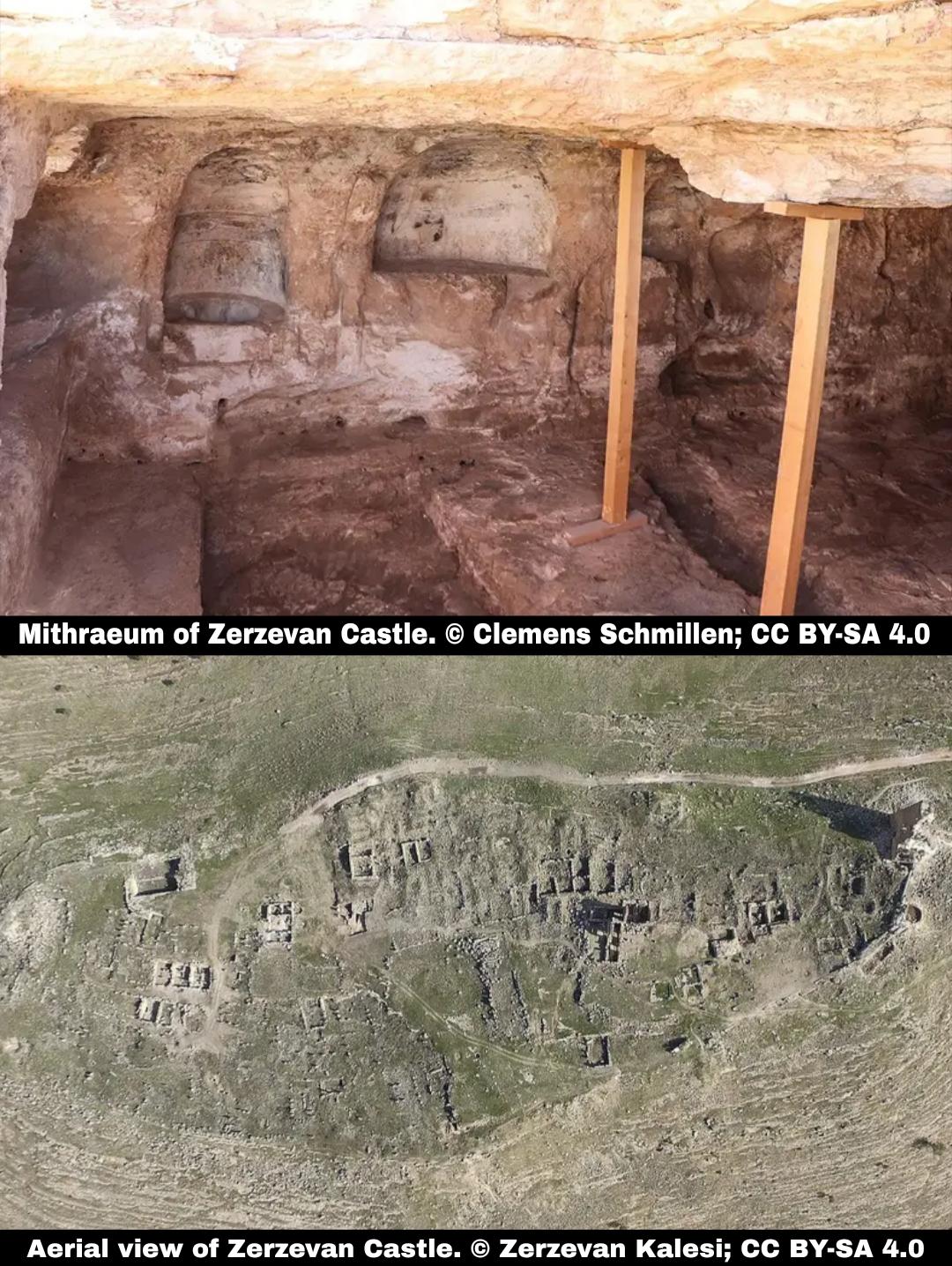
                      Aramaic inscription reveals Christians sealed a Roman Mithras Temple 1,700 years ago

                      A newly decoded Aramaic inscription at Zerzevan Castle in southeastern Türkiye has answered a long-standing question about an underground Mithras Temple. The text shows early Christians formally sealed the sanctuary about 1,700 years ago after Christianity became the leading religion of the Roman Empire...

                      More info: archaeologymag.com/2026/06/anc

                      @archaeology

                      Aramaic inscription reveals Christians sealed a Roman Mithras Temple 1,700 years ago

                      Alt...Aramaic inscription reveals Christians sealed a Roman Mithras Temple 1,700 years ago

                        [?]Gems of Knowledge » 🌐
                        @gemsofknowledge.com@gemsofknowledge.com

                        Hope For Those Hurting and Struggling

                        There are people all around us who are quietly hurting. The greatest gift we can offer them is simply pointing them to Jesus. What a beautiful calling. Our world doesn't need more people pointing out how dark things are. It needs believers who gently point hurting hearts toward the Light. Reach out. Love them. Bring them hope. God doesn't ask us to save people—that's His work. He simply asks us to help them find the One who can. 💎 [SENSITIVE CONTENT]

                        Today’s One Year Bible Verses: 1 Chronicles 9:1–10:14, Acts 27:21–44, Psalm 8:1–9, Proverbs 18:23–24


                        Help Them Find Me

                        There are people all around us who are quietly hurting.

                        Some are carrying grief they have never spoken aloud. Others are drowning in anxiety, overwhelmed by loneliness, weighed down by guilt, or searching desperately for hope. They smile on the outside while silently wondering if anyone notices their pain.

                        In today’s Gem of Knowledge, the Lord lovingly reminds us,

                        “There are so many hurting and struggling. Help them find Me for help and peace.”

                        What a beautiful calling.

                        Sometimes we think helping someone means having all the answers or knowing exactly what to say. But often, the greatest gift we can offer is simply pointing them to Jesus—the One who does have every answer.

                        Today’s reading in Acts paints a powerful picture. Paul and everyone aboard the ship found themselves in the middle of a violent storm. The crew had lost hope. They had gone many days without food. Fear had settled over every heart.

                        Then Paul stood up with confidence—not because the storm had ended, but because he knew God was in control and watched over them. He reminded them what God had spoken, that their lives would be spared, and that they could take courage because God always keeps His promises. Paul became a messenger of hope in the middle of despair.

                        That is exactly what Jesus calls us to be.

                        Our world doesn’t need more people pointing out how dark things are. It needs believers who gently point hurting hearts toward the Light.

                        Sometimes that looks like sharing a Bible verse with a friend. Sometimes it’s praying with someone who is overwhelmed. Sometimes it’s listening without judgment or offering a word of encouragement when everyone else has remained silent. You don’t have to rescue people—Jesus is the Savior. But you can lovingly introduce people to Him.

                        Proverbs tells us, 

                        There are ‘friends’ who destroy each other, but a real friend sticks closer than a brother” (Proverbs 18:24, NLT).

                        Jesus is that Friend. He never abandons those who come to Him, and when we point someone toward Christ, we are introducing them to the truest Friend they will ever know.

                        David understood this as well. Looking at the majesty of creation, he declared, 

                        O LORD, our Lord, your majestic name fills the earth! Your glory is higher than the heavens” (Psalm 8:1, NLT).

                        The God who created the vast heavens is also the God who sees every hurting heart. No burden is too small for Him, and no storm is beyond His control.

                        Perhaps today God will bring someone to your mind. Don’t dismiss that gentle prompting. Reach out. Send the text. Make the phone call. Pray with them. Share the hope you’ve found in Christ.

                        You may never fully know how much someone needed to hear about Jesus on the very day you chose to obey. God doesn’t ask us to save people—that’s His work. He simply asks us to help them find the One who can. 💎


                        Action (5 Minutes with God)

                        Take 5 minutes to be with the Lord today. Ask Him:

                        • Lord, what do You want me to know about this personally?”
                          • Journal what He gives you through His Holy Spirit.
                        • Then ask, “What do You want me to do?”
                          • Journal what He reveals – then do it!

                        Allow the Lord to speak to you about this and show you who you can help today.


                        Prayer

                        Heavenly Father, thank You for being my refuge and peace when life feels overwhelming. Open my eyes to those around me who are hurting and searching for hope. Give me compassion, courage, and wisdom to point them to You. Help me to be an instrument of Your love, never drawing attention to myself but always leading others to Jesus, the only One who can truly heal, save, and bring lasting peace. Use my words, my prayers, and my life to help others find You. In Jesus’ name I pray, amen.

                        To read more 5 Minutes with God devotionals click here.


                        If Gems of Knowledge has blessed your walk with Christ, please subscribe or consider partnering with us today. Your gift helps keep these devotionals free for everyone and carries God’s Word to more hearts. Every seed matters—thank you for sowing into this work! 💛

                        Test everything by the Word and the Spirit (John 16:13)

                        Subscribe

                        Partner/Donate

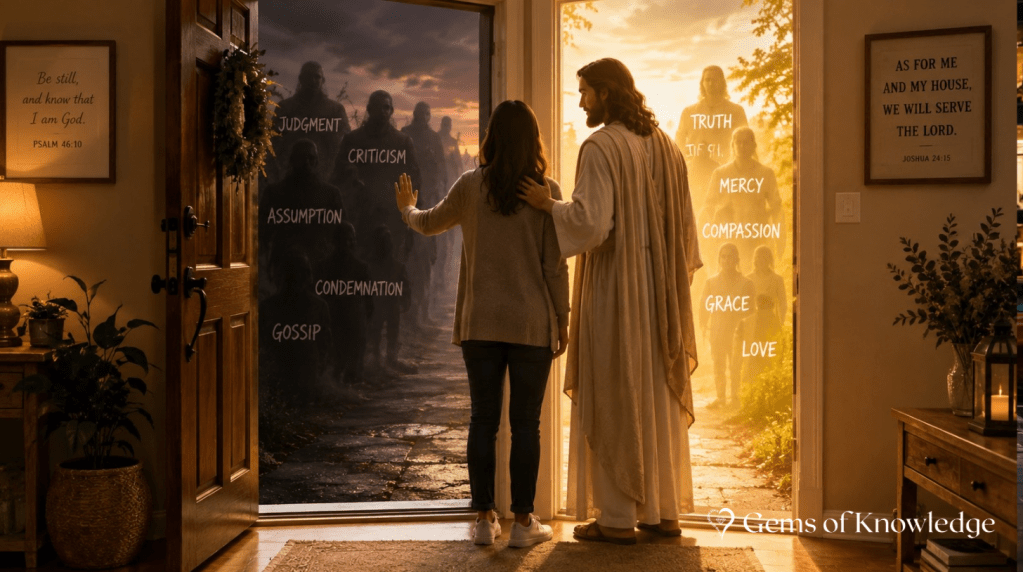
                        Jesus stands with open arms in a warmly lit doorway while a believer gently invites a hurting person out of a dark, rainy street, symbolizing Christ's invitation to find hope, peace, and rest.

                        Alt...Jesus stands with open arms in a warmly lit doorway while a believer gently invites a hurting person out of a dark, rainy street, symbolizing Christ's invitation to find hope, peace, and rest.

                        [?]A Faithful Sower Publishing » 🌐
                        @afaithfulsower@mastodon.social

                        The world is quick to attach our weaknesses and drag us down. How do we cope with the world's relentless, unwavering attacks? Click or tap the link to read more.

                        afaithfulsower.org/2026/07/10/

                          [?]Gems of Knowledge » 🌐
                          @gemsofknowledge.com@gemsofknowledge.com

                          Stand in the Gap

                          Someone around you is fighting a battle you'll never see. Behind many smiles are hidden struggles, fear, anxiety, and despair. As followers of Christ, we're called to do more than notice—we're called to pray, encourage, and lovingly point people to Jesus. You may never know how God uses your kindness or your prayers to change someone's life. Stand in the gap today. ✨Click to read the full devotional [SENSITIVE CONTENT]

                          Today’s One Year Bible Verses: 1 Chronicles 7:1–8:40, Acts 27:1–20, Psalm 7:1–17, Proverbs 18:22


                          There are battles taking place all around us that we cannot see.

                          People smile while carrying crushing anxiety. They laugh while quietly fighting depression. They appear strong while living in fear, addiction, guilt, or despair. Many are tormented in ways those around them never recognize. Some know where to turn for help. Others don’t.

                          The Lord drew my attention to this reality in today’s Gem of Knowledge:

                          “Torment is real. For those who don’t have Me to help them, they have no escape or defense. Be their defense today. Intercede. Intercess. Intervene between them and the enemy, to try and bring them peace. Then bring them to Me so I can help them. Amen.”

                          What a beautiful picture of God’s heart.

                          He isn’t asking us to become someone’s Savior. Only Jesus can do that. But He does invite us to stand in the gap. Through prayer, encouragement, compassion, and the truth of His Word, we can become instruments of His peace while pointing people to the One who is able to truly rescue them.

                          Acts 27 gives us a remarkable example of this. Paul was a prisoner aboard a ship caught in a violent storm. Everyone on board was terrified. The sailors had lost hope, the passengers expected to die, and fear had overtaken the entire ship. Yet Paul remained anchored in God. Because he knew the Lord, he became a source of peace for everyone around him. He encouraged them, reminded them of God’s promise, and urged them not to give up.

                          Paul couldn’t calm the storm.

                          But he could calm frightened hearts by pointing them to the God who rules over every storm.

                          Isn’t that exactly what God asks us to do?

                          We may not be able to remove someone’s pain, erase their circumstances, or instantly break every chain they carry. But we can pray for them. We can stand beside them. We can speak hope when they have none. We can remind them that they are not alone. And most importantly, we can lead them to Jesus, the only One who can bring lasting peace and true freedom.

                          David understood this as well. In Psalm 7 he cries out,

                          “I come to you for protection, O Lord my God. Save me from my persecutors—rescue me!” (Psalm 7:1, NLT)

                          David knew exactly where his refuge was found. When life became overwhelming, he ran toward God, not away from Him. That is the refuge every hurting person needs, and that is why our role is so important. We may be the very person God uses to pray for someone, encourage them, or lovingly point them toward the Savior they have yet to know.

                          Today’s Gem reminds us that torment is real, but so is hope.

                          There are people in your life who desperately need someone to stand beside them today. Your prayers may be the very thing that strengthens them. Your kindness may be the encouragement that keeps them going. Your willingness to share Christ may become the doorway through which they discover the peace they’ve been searching for all along.

                          You may never know this side of heaven how God uses your faithfulness.

                          But He does.

                          So today, stand in the gap. Intercede for someone who is struggling. Intervene with love, compassion, and truth where God gives you opportunity. Then gently lead them to Jesus—the only One who can become their refuge, their defender, and their lasting peace. 💎


                          Action (5 Minutes with God)

                          Take 5 minutes to be with the Lord today. Ask Him:

                          • Lord, what do You want me to know about this personally?”
                            • Journal what He gives you through His Holy Spirit.
                          • Then ask, “What do You want me to do?”
                            • Journal what He reveals – then do it!

                          Allow the Holy Spirit to place one person on your heart today. Pray specifically for them then do what the Lord shows you to do.


                          Prayer

                          Dear Father, thank You for being my refuge and my defender. Open my eyes to the people around me who are quietly struggling. Give me compassion to see them, courage to pray for them, and wisdom to encourage them with Your truth. Help me stand in the gap for those who are hurting, always pointing them to Jesus, who alone can rescue, heal, and give lasting peace. In Jesus’ mighty name I pray, amen.

                          To read more 5 Minutes with God devotionals click here.


                          If Gems of Knowledge has blessed your walk with Christ, please subscribe or consider partnering with us today. Your gift helps keep these devotionals free for everyone and carries God’s Word to more hearts. Every seed matters—thank you for sowing into this work! 💛

                          Test everything by the Word and the Spirit (John 16:13)

                          Subscribe

                          Partner/Donate

                          A believer gently comforts a frightened person while pointing them toward Jesus, who stands in radiant light as dark storm clouds and shadowy figures loom behind them.

                          Alt...A believer gently comforts a frightened person while pointing them toward Jesus, who stands in radiant light as dark storm clouds and shadowy figures loom behind them.

                          [?]Gems of Knowledge » 🌐
                          @gemsofknowledge.com@gemsofknowledge.com

                          The Source of True Honor

                          What if honor isn't something you earn... but someone you become? The world teaches us to chase recognition, success, and respect. But God teaches us to pursue His character instead. True honor isn't found in status or accomplishments. It is found in Christ. The more we seek Him, the more His character becomes our own. Honor is not something we chase. It is someone we follow. And as we follow Him, His honor becomes evident in our lives. 💎 [SENSITIVE CONTENT]

                          Today’s One Year Bible Verses: 1 Chronicles 5:18–6:81, Acts 26:1–32, Psalm 6:1–10, Proverbs 18:20–21


                          Honor Begins with God

                          Honor is a word that has lost much of its meaning in our culture. It is often associated with titles, accomplishments, influence, or the respect of others. But God’s definition of honor is very different. Honor is not something we achieve on our own—it is something we reflect as we become more like Him.

                          The Lord reminds us today in this Gem of Knowledge:

                          “I am honor. Honor is found in Me. If you want to be honorable, seek Me and My character. Only I, Honor, can make you honorable. Amen.”

                          What a profound truth. We cannot manufacture honor by trying harder or polishing our reputation. True honor flows from the One who is honorable in every way. The more we seek His heart, the more His character begins to shape ours.

                          In Acts 26, Paul stands before King Agrippa to give an account of his faith. Though he is the one wearing chains, he is actually the freest man in the room. Paul understood that honor is not found in earthly position, wealth, influence, or power. It is found in God alone. Because Paul had sought Christ and allowed Him to transform his heart, godly character had become evident in his life. His unwavering faith, humility, courage, and love for the truth made him more honorable than the kings and governors sitting in judgment over him.

                          This becomes beautifully clear near the end of his testimony. After boldly sharing the gospel, Paul says,

                          “I pray to God that whether quickly or eventually, not only you but everyone here in this courtroom today will become the same as I am—except for these chains.” (Acts 26:29, NLT)

                          What an incredible statement. Paul wasn’t wishing imprisonment on them; he was wishing salvation upon them. He understood that knowing Christ was worth far more than earthly freedom, status, or approval. Though physically bound in chains, Paul possessed something his audience did not—the transforming power of a relationship with Jesus Christ. That is true honor. It is the character of God being formed within a person until they begin reflecting Christ Himself.

                          The long lists of priests and Levites in 1 Chronicles may seem like little more than names, but they remind us that generations of people were set apart to faithfully serve the Lord. Many of them lived lives that history scarcely remembers, yet God remembered them. Honor in God’s Kingdom is not measured by fame but by faithfulness.

                          David echoes this dependence on God in Psalm 6. In his distress, he doesn’t pretend to be strong. He cries out for mercy and places his hope entirely in the Lord. There is honor in humility because humility recognizes that we need God.

                          Proverbs 18 reminds us that our words reveal what is happening in our hearts:

                          “Wise words satisfy like a good meal; the right words bring satisfaction.” (Proverbs 18:20, NLT)

                          Then Solomon adds,

                          “The tongue can bring death or life; those who love to talk will reap the consequences.” (Proverbs 18:21, NLT)

                          Honorable people speak honorably because honorable words flow from a heart that has been transformed by God.

                          This is why the Lord says, “Only I, Honor, can make you honorable.”

                          We don’t become honorable by trying to impress others. We become honorable by spending time with the One who is Honor itself. As we seek His presence, study His Word, and allow His Holy Spirit to shape us, His character begins to replace our own. Our speech changes. Our motives become purer. Our actions become more loving. Gradually, people no longer see our old nature—they begin to see Christ reflected in us.

                          Honor is not something we chase.

                          It is someone we follow.

                          And as we follow Him, His honor becomes evident in our lives. 💎


                          Action (5 Minutes with God)

                          Take 5 minutes to be with the Lord today. Ask Him:

                          • Lord, what do You want me to know about this personally?”
                            • Journal what He gives you through His Holy Spirit.
                          • Then ask, “What do You want me to do?”
                            • Journal what He reveals – then do it!

                          Allow Honor, Jesus, to bring you closer to Him so you may walk more honorably each day.


                          Prayer

                          Dear Lord, Tthank You for showing me that true honor is found in You alone. I don’t want to pursue recognition or the approval of people. I want to pursue Your heart and reflect Your character. Transform my thoughts, my words, and my actions until they honor You in every area of my life. May others see You in me and give glory to You. In your mighty name I pray, Jesus, amen.

                          To read more 5 Minutes with God devotionals click here.


                          If Gems of Knowledge has blessed your walk with Christ, please subscribe or consider partnering with us today. Your gift helps keep these devotionals free for everyone and carries God’s Word to more hearts. Every seed matters—thank you for sowing into this work! 💛

                          Test everything by the Word and the Spirit (John 16:13)

                          Subscribe

                          Partner/Donate

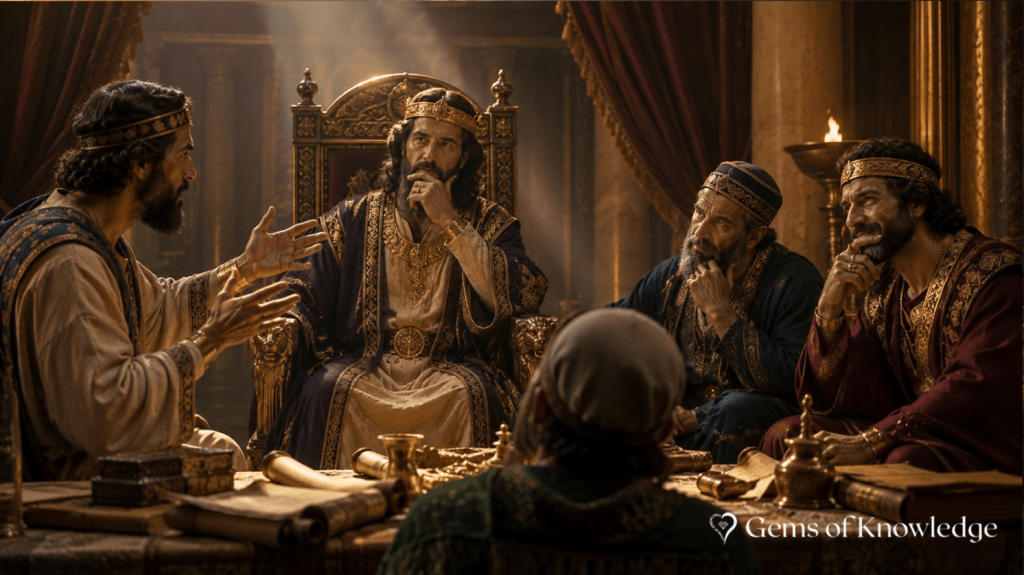
                          The Apostle Paul stands in chains before King Agrippa, speaking boldly with a radiant countenance as he shares his testimony and proclaims the gospel of Jesus Christ.

                          Alt...The Apostle Paul stands in chains before King Agrippa, speaking boldly with a radiant countenance as he shares his testimony and proclaims the gospel of Jesus Christ.

                          [?]A Faithful Sower Publishing » 🌐
                          @afaithfulsower@mastodon.social

                          What guides your daily lifestyle? Do the world's ways guide you, or does God's word guide you? Click or tap the link to learn more.

                          afaithfulsower.org/2026/07/08/

                            [?]Gems of Knowledge » 🌐
                            @gemsofknowledge.com@gemsofknowledge.com

                            God Is Calling You Closer

                            It's easy to drift from God without even realizing it. One distraction, one compromise, one neglected prayer at a time, distance begins to grow. But God isn't waiting to push you away—He's waiting to welcome you back.Take a moment today to ask yourself: "Is there anything I've allowed to come between me and the Lord?" His invitation is always open. [SENSITIVE CONTENT]

                            Today’s One Year Bible Verses: 1 Chronicles 4:5–5:17, Acts 25:1–27, Psalm 5:1–12, Proverbs 18:19


                            Which Direction Are You Facing?

                            One of the hardest things for us to do is honestly examine our own hearts. It’s much easier to recognize where someone else is wrong than to ask God to reveal where we have drifted ourselves. Yet that is exactly what the Lord invites us to do in today’s Gem of Knowledge:

                            “I am only against you if you are against me. Look honestly within to see where you stand, then choose which way you want to go, closer to me or not. Amen.”

                            Notice that God doesn’t begin with condemnation—He begins with an invitation to examine our hearts. Before we can move closer to Him, we have to be honest about where we are.

                            Throughout Scripture, we see that God is continually calling His people back to Himself. He isn’t looking for reasons to reject us. Rather, He desires relationship. But relationships require two willing hearts. God will never force us to walk with Him. He invites us to choose Him.

                            In Acts 25, Paul stands before Festus and King Agrippa after years of false accusations and imprisonment. His circumstances had changed dramatically, but one thing never did—his allegiance to Christ. Paul had already chosen which direction he was going. No amount of opposition, injustice, or pressure could persuade him to turn away from the One he loved.

                            David expresses that same desire in Psalm 5 when he prays,

                            “Lead me in the right path, O Lord… Make your way plain for me to follow.” (Psalm 5:8, NLT)

                            David understood something many of us forget: following God isn’t a single decision we make once in our lives. It’s a daily choice to keep turning our hearts toward Him. Every morning we choose where our attention, our affection, and our trust will rest.

                            Even the genealogies in 1 Chronicles quietly reinforce this truth. Generation after generation, people made choices that shaped not only their own lives but the legacy they left behind. Every life moved in one direction or another—either toward God or away from Him. The same is true for us today. The small decisions we make each day slowly determine the direction of our lives.

                            Then Proverbs 18:19 reminds us how difficult broken relationships can become. How much wiser it is to guard our relationship with the Lord before distance has an opportunity to grow.

                            This is why today’s Gem is so important.

                            When God says,

                            “I am only against you if you are against Me,”

                            He isn’t threatening us. He’s revealing a spiritual reality. God never changes His character. He is always holy, always righteous, and always loving. If we find ourselves resisting Him, walking contrary to His ways, or choosing our own path over His, we are placing ourselves in opposition to the very One who is trying to lead us into life.

                            But the beautiful truth is that we don’t have to stay there.

                            The Lord immediately follows His warning with an invitation:

                            “Look honestly within… then choose which way you want to go, closer to Me or not.”

                            What a merciful God.

                            He gives us the opportunity to stop, examine our hearts, and change direction before we wander farther away. He isn’t standing with folded arms waiting for us to fail. He’s standing with open arms, inviting us to come closer.

                            Today, ask yourself honestly: Is there anything I’ve allowed to come between me and the Lord? If there is, don’t respond with shame. Respond with repentance. Turn back toward Him, because every step you take in His direction is met by the faithful love of a Father who has been waiting for you all along. 💎

                            “So the LORD must wait for you to come to him so he can show you his love and compassion. For the LORD is a faithful God. Blessed are those who wait for his help.” -Isaiah 30:18 (NLT)


                            Action (5 Minutes with God)

                            Take at least 5 minutes to be with the Lord today. Ask Him:

                            • Lord, what do You want me to know about this personally?”
                              • Journal what He gives you through His Holy Spirit.
                            • Then ask, “What do You want me to do?”
                              • Journal what He reveals – then do it!

                            Let today be a day of turning back to the Lord and drawing closer.


                            Prayer

                            Dear Lord, search my heart and reveal anything that has come between us. Thank You for loving me enough to correct me and for always inviting me back into close relationship with You. Help me to choose You each day and to walk faithfully in Your ways. Draw me nearer to You, and let my life reflect a heart that delights in following You. In Your name I pray, even Jesus Christ, amen.

                            To read more 5 Minutes with God devotionals click here.


                            If Gems of Knowledge has blessed your walk with Christ, please subscribe or consider partnering with us today. Your gift helps keep these devotionals free for everyone and carries God’s Word to more hearts. Every seed matters—thank you for sowing into this work! 💛

                            Test everything by the Word and the Spirit (John 16:13)
                            Subscribe

                            Partner/Donate

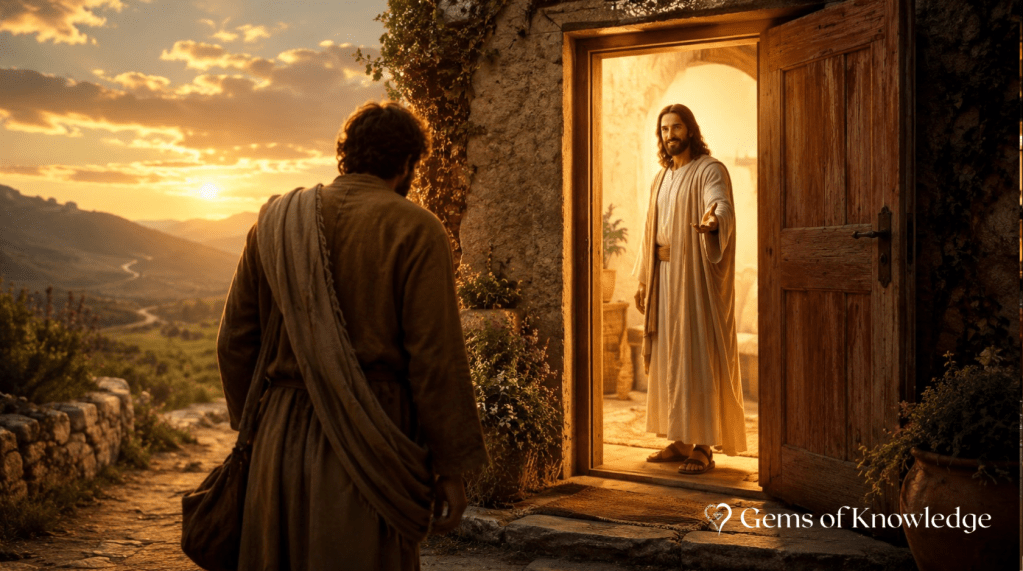
                            A man standing before an open wooden gate at sunrise, contemplating the path ahead as warm golden light fills the countryside, symbolizing the choice to draw closer to God.

                            Alt...A man standing before an open wooden gate at sunrise, contemplating the path ahead as warm golden light fills the countryside, symbolizing the choice to draw closer to God.

                            [?]A Faithful Sower Publishing » 🌐
                            @afaithfulsower@mastodon.social

                            When others discourage you, saying that's impossible, Jesus said, all you need is faith the size of a mustard seed. Click or tap the link to read more.

                            afaithfulsower.org/2026/07/07/

                              [?]Jasper » 🌐
                              @jonathannnnn@mastodon.social

                              How did Pope Leo III shape the relationship between church authority and political power? Explore a pivotal chapter in Christian history and its lasting influence.

                              Read more: kithcartcodeofsilence.com/pope

                                [?]Gems of Knowledge » 🌐
                                @gemsofknowledge.com@gemsofknowledge.com

                                Loved Beyond Measure

                                The world may question your worth, but God never does. You are His beloved child, deeply known and deeply loved. Rest securely in the unchanging love of your Heavenly Father. You are His child. He loves you. Never think anything different. [SENSITIVE CONTENT]

                                Today’s One Year Bible Verses: 1 Chronicles 2:18–4:4, Acts 24:1–27, Psalm 4:1–8, Proverbs 18:16–18


                                Rest in the Father’s Love

                                There are many voices in this world that try to tell us who we are.

                                Some remind us of our failures. Others point to our weaknesses, our past mistakes, or the ways we don’t measure up. Over time, if we’re not careful, we begin believing those voices more than the One who created us.

                                But today, God speaks something far greater in the cherished Gem of Knowledge:

                                “You are My child and I love you. Never think anything different.”

                                That truth is not based on your performance. It isn’t earned when you have a good day or lost when you have a bad one. It is rooted in His character as a loving Father.

                                As we read through the opening chapters of 1 Chronicles, we encounter page after page of names. At first glance they may seem unimportant, but every one of those names mattered to God. Every family, every generation, every life was remembered because each person belonged within God’s unfolding plan. The same is true for you. You are not forgotten or overlooked. Your Heavenly Father knows your name and delights in calling you His own.

                                In Acts 24, Paul stands before Felix, falsely accused and under constant pressure. Yet he remains calm because his identity is not determined by the opinions of others. He knows who he belongs to. Even while imprisoned, Paul’s confidence rests in the Lord, not in his circumstances.

                                David expresses that same confidence in Psalm 4:

                                “In peace I will lie down and sleep, for you alone, O Lord, will keep me safe.” (Psalm 4:8, NLT)

                                What a beautiful picture of a child resting securely in the care of a loving Father.

                                When we truly believe we are loved by God, fear begins to lose its grip. We no longer have to chase the approval of people or prove our worth through achievement. We can rest in the unchanging truth that we belong to Him.

                                Proverbs 18 reminds us that God is wise in all His ways. His guidance is trustworthy, and His wisdom is available to those who seek Him. When we remember whose we are, we become more willing to trust where He is leading us.

                                The enemy would love nothing more than for you to question God’s love. If he can make you doubt your identity, he can weaken your confidence. But God settles the matter once and for all:

                                You are His child.

                                He loves you.

                                Never think anything different.

                                Let that truth become the foundation beneath every thought, every decision, and every circumstance you face today. 💎


                                Action (5 Minutes with God)

                                Take 5 minutes to be with Father God today. Ask Him:

                                • Father, what do You want me to know about this personally?”
                                  • Journal what He gives you through His Holy Spirit.
                                • Then ask, “What do You want me to do?”
                                  • Journal what He reveals – then do it!

                                Allow His voice to become louder than every other voice competing for your attention.


                                Prayer

                                Dear Father, thank You for calling me Your child. Thank You that Your love for me is not based on my performance but on Your unchanging character. Help me to reject every lie that tells me I am unloved, forgotten, or not enough. Let my identity be firmly rooted in Your love so I can walk each day with confidence, peace, and joy, knowing I belong to You. In Jesus’ beautiful name, amen.

                                To read more 5 Minutes with God devotionals click here.


                                If Gems of Knowledge has blessed your walk with Christ, please subscribe or consider partnering with us today. Your gift helps keep these devotionals free for everyone and carries God’s Word to more hearts. Every seed matters—thank you for sowing into this work! 💛

                                Test everything by the Word and the Spirit (John 16:13)

                                Subscribe

                                Partner/Donate

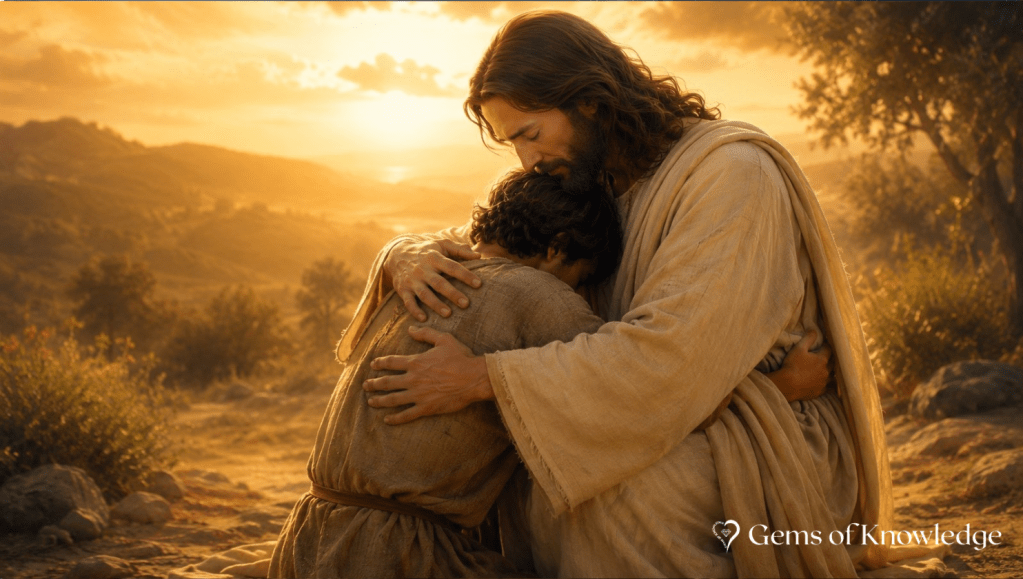
                                A loving father figure embracing his weary adult child at sunset, symbolizing God's unconditional love, acceptance, and the security of belonging to Him.

                                Alt...A loving father figure embracing his weary adult child at sunset, symbolizing God's unconditional love, acceptance, and the security of belonging to Him.

                                [?]Gems of Knowledge » 🌐
                                @gemsofknowledge.com@gemsofknowledge.com

                                What Matters Most?

                                We all make time for what matters most. When something is truly important to us, we usually find a way to make time for it. Yet somehow, spending time with God is often the first thing to disappear when life gets busy. That's the danger of busyness. Rarely does it pull us away from God all at once. It happens one day at a time, one skipped prayer, one missed time in His Word, one evening when we're simply too tired. Maybe today is simply an opportunity to ask ourselves one honest question: Does the way I spend my time reflect what I say is most important? If the answer is no, don't be discouraged. His invitation is still the same. Come closer. 💎 [SENSITIVE CONTENT]

                                Today’s One Year Bible Verses: 1 Chronicles 1:1–2:17, Acts 23:11–35, Psalm 3:1–8, Proverbs 18:14–15


                                Making God Your Greatest Priority

                                The business of life has a way of filling every corner of our days. Between family responsibilities, work demands, and holiday celebrations, our schedules can quickly become crowded. Before we realize it, we’re moving from one thing to the next, trying to keep up with everything that needs our attention.

                                In the middle of all that busyness, something subtle can begin to happen. Our closeness with God, our time in worship, our moments in His Word, and those quiet times spent with Him can slowly start to slip away.

                                As I thought about it later, though, I realized something.

                                When something is truly important to me, I usually find a way to make time for it.

                                If one of my children or grandchildren needed me, I’d rearrange my schedule. If there were an emergency, everything else would suddenly become less important. If I had an appointment I absolutely couldn’t miss, somehow I’d make it there.

                                The problem wasn’t really a lack of time.

                                It was a matter of priority.

                                As I prayed about that, the Lord gently spoke this Gem of Knowledge to my heart:

                                You can always do better if it is important to you…if I am important to you.

                                Those words weren’t spoken with condemnation. They were spoken with love. I could almost hear the Father’s heart behind them. He wasn’t trying to make me feel guilty. He was inviting me to honestly examine my priorities.

                                The truth is, we all make time for the things we value most. We schedule vacations months in advance. We make appointments, watch our favorite television shows, scroll social media, and find time for hobbies we enjoy. Yet somehow, spending time with God is often the first thing to disappear when life gets busy.

                                I’ve certainly been guilty of that.

                                In fact, just a few devotionals ago I shared how my evening worship had quietly disappeared without me even realizing it. It wasn’t because I loved God less. It wasn’t because I had stopped wanting to spend time with Him. I had simply allowed other things to crowd Him out.

                                That’s the danger of busyness. Rarely does it pull us away from God all at once. It happens one day at a time, one skipped prayer, one missed time in His Word, one evening when we’re simply too tired.

                                Before long, weeks or even months have passed, and we wonder why we don’t feel as close to Him as we once did.

                                Today’s reading reminded me that relationships aren’t built during occasional moments of crisis. They’re built through consistent time together.

                                When Paul found himself imprisoned in Acts 23, the Lord stood beside him and encouraged him. I couldn’t help but think how comforting that must have been. Paul recognized the Lord’s voice because he had spent years walking closely with Him. That relationship had been cultivated long before the prison cell.

                                David expressed that same confidence in Psalm 3. Even while surrounded by enemies, he was able to lie down and sleep because he knew the Lord was watching over him. That kind of trust isn’t developed overnight. It grows one day at a time as we continue choosing God’s presence over the distractions of life.

                                I think that’s what the Lord was really showing me through today’s Gem.

                                He isn’t asking us to perform better – He’s inviting us into a deeper relationship with Him

                                After all, every healthy relationship requires time. A marriage doesn’t flourish without conversation. Friendships don’t grow without spending time together. The same is true with God. The more time we spend with Him, the more we recognize His voice, trust His heart, and become like Him.

                                Maybe today is simply an opportunity to ask ourselves one honest question:

                                Does the way I spend my time reflect what I say is most important?

                                If the answer is no, don’t be discouraged.

                                His invitation is still the same.

                                Come closer. 💎


                                Action (5 Minutes with God)

                                Who doesn’t have 5 minutes for the King? Take at least 5 minutes to be with the Lord today. Ask Him:

                                • Lord, what do You want me to know about this personally?”
                                  • Journal what He gives you through His Holy Spirit.
                                • Then ask, “What do You want me to do?”
                                  • Journal what He reveals – then do it!

                                Let today be a day of honest evaluation with the Lord and realign where needed, because we love Him and He loves us.


                                Prayer

                                Dear Lord, thank You for gently reminding me what truly matters. Forgive me for the times I’ve allowed busyness to crowd You out. Help me make You my greatest priority, not because I have to, but because I love You and want to know You more. Teach me to recognize Your voice as I spend time in Your presence each day. Draw me closer to You, and let my life reflect that You truly are what matters most. InYour beautiful name, I pray, Amen.

                                To read more 5 Minutes with God devotionals click here.


                                If Gems of Knowledge has blessed your walk with Christ, please subscribe or consider partnering with us today. Your gift helps keep these devotionals free for everyone and carries God’s Word to more hearts. Every seed matters—thank you for sowing into this work! 💛

                                Test everything by the Word and the Spirit (John 16:13)

                                Subscribe

                                Partner/Donate

                                Jesus writes "Time with God" into a busy weekly planner filled with appointments, responsibilities, and reminders, illustrating the importance of making God a daily priority.

                                Alt...Jesus writes "Time with God" into a busy weekly planner filled with appointments, responsibilities, and reminders, illustrating the importance of making God a daily priority.

                                [?]Gems of Knowledge » 🌐
                                @gemsofknowledge.com@gemsofknowledge.com

                                Freedom to Listen

                                On Independence Day, we celebrate the freedom to choose. But God has given us an even greater freedom—the choice to seek Him and listen for His voice. God values freedom, too. He could have created us as robots, programmed to obey Him without question.Instead, He gave us something remarkable—free will. Every day, we have the freedom to choose whether we will follow Him, trust Him, obey Him...or ignore Him. reedom is a tremendous gift—but every freedom comes with a choice. Today, may we choose not only to celebrate the freedoms we've been given as a nation, but also to exercise the freedom God has given each of us to draw near, quiet our hearts, and listen for His voice. Because He is speaking...He always has been. Will you listen?💎 [SENSITIVE CONTENT]

                                Today’s One Year Bible Verses: 2 Kings 23:31–25:30, Acts 22:17–23:10, Psalm 2:1–12, Proverbs 18:13


                                God Is Always Speaking

                                Today, many of us will celebrate Independence Day.

                                We’ll gather with family and friends, enjoy cookouts, watch fireworks, and reflect on the freedoms we enjoy as a nation. One of the greatest gifts we’ve been given is the freedom to make our own choices.

                                God values freedom, too.

                                He could have created us as robots, programmed to obey Him without question. Instead, He gave us something remarkable—free will. Every day, we have the freedom to choose whether we will follow Him, trust Him, obey Him…or ignore Him.

                                As I was spending time with the Lord recently, He impressed this simple but powerful Gem of Knowledge on my heart:

                                I’m always trying to speak to you. You just have to want to listen.

                                Those words made me stop and think – How often have I prayed, “Lord, why aren’t You speaking?” when the real question should have been, “Lord, have I truly been listening?”

                                Sometimes we expect God to interrupt our busy lives with dramatic signs or unmistakable miracles. Yet more often than not, He speaks through the quiet prompting of the Holy Spirit, a passage of Scripture that seems to leap off the page, wise counsel from another believer, or that gentle conviction in our hearts that nudges us in the right direction.

                                The problem usually isn’t that God has stopped speaking, it’s that life has become so noisy that His gentle voice is crowded out.

                                Distractions compete for our attention from the moment we wake up. Notifications, schedules, responsibilities, entertainment, and endless opinions constantly demand to be heard. Before we realize it, we’ve filled every quiet moment with something else.

                                Yet God is still speaking.

                                He’s speaking through His Word.

                                He’s speaking through His Spirit.

                                He’s speaking through circumstances.

                                He’s speaking through His people.

                                The question isn’t whether God wants to speak.

                                The question is whether we want to listen.

                                Today’s reading reminds us of that reality. In Acts 22, Paul faithfully shared the message God had given him, but many refused to hear it because they had already decided what they wanted to believe. Their ears were open, but their hearts were closed.

                                Proverbs 18:13 gives us a timeless warning: “Spouting off before listening to the facts is both shameful and foolish.” How often do we do the same thing with God? We rush ahead with our own plans, assumptions, and opinions before we’ve taken time to hear what He has to say.

                                One of the greatest freedoms God has given us is the freedom to choose whether we will listen.

                                Every day He gently invites us into conversation.

                                Every day He offers wisdom.

                                Every day He offers direction.

                                Every day He offers His peace.

                                But He won’t force us to hear Him.

                                He waits for willing hearts.

                                As I think about Independence Day, I’m reminded that freedom is a tremendous gift—but every freedom comes with a choice. Today, may we choose not only to celebrate the freedoms we’ve been given as a nation, but also to exercise the freedom God has given each of us to draw near, quiet our hearts, and listen for His voice.

                                Because He is speaking…He always has been.

                                Will you listen? 💎


                                Action (5 Minutes with God)

                                Today, intentionally create a few minutes of quiet. Set aside your phone, your schedule, and every distraction. Open God’s Word and simply ask:

                                • “Lord, what do You want to say to me today?”
                                  • Journal what He gives you through His Holy Spirit.
                                • Then ask, “What do You want me to do?”
                                  • Journal what He reveals – then do it!

                                You just have to want to listen.


                                Prayer

                                Father, thank You for the freedom You’ve given me—not only to choose, but to walk closely with You. Forgive me for the times I’ve been too busy, distracted, or unwilling to listen. Quiet my heart and help me recognize Your voice above every other voice competing for my attention. Give me ears that are eager to hear You and a heart that is willing to obey what You say. Thank You that You are always speaking because You love Your children. In Jesus’ name I pray, Amen.

                                To read more 5 Minutes with God devotionals click here.


                                If Gems of Knowledge has blessed your walk with Christ, please subscribe or consider partnering with us today. Your gift helps keep these devotionals free for everyone and carries God’s Word to more hearts. Every seed matters—thank you for sowing into this work! 💛

                                Test everything by the Word and the Spirit (John 16:13)

                                Subscribe

                                Partner/Donate

                                A young woman sits beneath a tree reading her Bible with Jesus beside her while fireworks light up the night sky in the distance on Independence Day.

                                Alt...A young woman sits beneath a tree reading her Bible with Jesus beside her while fireworks light up the night sky in the distance on Independence Day.

                                [?]Gems of Knowledge » 🌐
                                @gemsofknowledge.com@gemsofknowledge.com

                                More Than Just a Joke

                                Laughter is a gift from God, but not every joke is harmless. How often do we excuse hurtful words by saying, "I was only kidding," or "Can't you take a joke?" Sometimes we laugh because everyone else is laughing, never realizing our words have pierced someone's heart. This doesn't mean we should become joyless or afraid to laugh. It means we should invite the Holy Spirit into even our sense of humor. Humility is willing to let the Holy Spirit correct even the smallest areas of our lives. Sometimes the greatest acts of love are the words we choose not to say. May our mouths become instruments of grace rather than weapons of injury. Let our laughter bring healing instead of hurt, encouragement instead of embarrassment, and joy instead of regret. ✨Click here to read the full devotional. [SENSITIVE CONTENT]

                                Today’s One Year Bible Verses: 2 Kings 22:3–23:30 • Acts 21:37–22:16 • Psalm 1:1–6 • Proverbs 18:11–12


                                The Power of Our Words

                                Laughter is one of God’s wonderful gifts. It refreshes our hearts, strengthens relationships, and brings joy into everyday life. Jesus isn’t opposed to healthy humor.

                                But not every joke is harmless.

                                As I was praying this morning, the Lord impressed this Gem of Knowledge on my heart: 

                                “Jokes are fun, but be very careful. They can also be traps placed within you by the enemy to hurt people and cause great pain and damage. Amen.”

                                Those words made me stop and examine my own heart.

                                How often do we excuse hurtful words by saying, “I was only kidding,” or “Can’t you take a joke?” Sometimes we laugh because everyone else is laughing, never realizing our words have pierced someone’s heart.

                                The enemy rarely begins with something obvious. More often, he disguises sin as something small, harmless, or funny. A sarcastic remark. A cutting joke. A nickname that embarrasses someone. A story told at another person’s expense.

                                What begins as laughter can leave wounds that last for years.

                                In today’s reading, King Josiah responded very differently when he heard the Book of the Law. Instead of dismissing God’s Word or making light of it, he humbled himself before the Lord. His tender heart brought revival to an entire nation. Josiah understood that words matter because they reveal the condition of our hearts.

                                Paul demonstrated this same wisdom in Acts. Standing before an angry crowd that wanted to kill him, he didn’t respond with insults or mockery. He spoke with respect and humility, sharing the testimony of what Christ had done in his life. His goal wasn’t to win an argument—it was to win hearts.

                                Psalm 1 also reminds us to be careful about the influences we allow into our lives. It begins with walking, then standing, then sitting with those who reject God’s ways. That progression reminds us that compromise is often subtle. If we’re not careful, even humor can slowly shape our hearts until what once grieved us eventually makes us laugh.

                                This doesn’t mean we should become joyless or afraid to laugh. It means we should invite the Holy Spirit into even our sense of humor.

                                Before telling a joke, ask yourself:

                                Does this honor God?

                                Would I say this if Jesus were standing beside me?

                                Will this leave someone encouraged—or wounded?

                                Proverbs 18:12 reminds us, “Haughtiness goes before destruction; humility precedes honor.”

                                Humility is willing to let the Holy Spirit correct even the smallest areas of our lives. Sometimes the greatest acts of love are the words we choose not to say.

                                May our mouths become instruments of grace rather than weapons of injury. Let our laughter bring healing instead of hurt, encouragement instead of embarrassment, and joy instead of regret.

                                “Oh, the joys of those who do not follow the advice of the wicked… but they delight in the law of the Lord.” — Psalm 1:1–2 (NLT)

                                “Don’t use foul or abusive language. Let everything you say be good and helpful, so that your words will be a blessing to those who hear you.” — Ephesians 4:29 (NLT) 💎


                                Action (5 Minutes with God)

                                Take 5 minutes to be with the Lord today. Ask Him:

                                • Lord, what do You want me to know about this personally?”
                                  • Journal what He gives you through His Holy Spirit.
                                • Then ask, “What do You want me to do?”
                                  • Journal what He reveals – then do it!

                                Allow the Holy Spirit to examine your words before they leave your mouth. If you find yourself about to make a joke at someone else’s expense, pause and ask, “Will this build them up or tear them down?” Choose to be someone whose humor brings life, encouragement, and joy.


                                Prayer

                                Dear Lord, thank You for the gift of laughter. I know You delight in joy, but I also know You care deeply about the words I speak. Search my heart and reveal any habit, attitude, or joke that could wound someone You love. Forgive me for the times I’ve excused hurtful words by calling them “just a joke.” Remove every trap the enemy has planted in my heart or speech, and replace it with Your love and compassion. Fill my mouth with kindness, wisdom, and grace. Let my humor reflect Your heart and bring healing instead of pain. May my words always honor You and encourage those around me. In Your beautiful name I pray, Amen.

                                To read more 5 Minutes with God devotionals click here.


                                If Gems of Knowledge has blessed your walk with Christ, please subscribe or consider partnering with us today. Your gift helps keep these devotionals free for everyone and carries God’s Word to more hearts. Every seed matters—thank you for sowing into this work! 💛

                                Test everything by the Word and the Spirit (John 16:13)

                                Subscribe

                                Partner/Donate

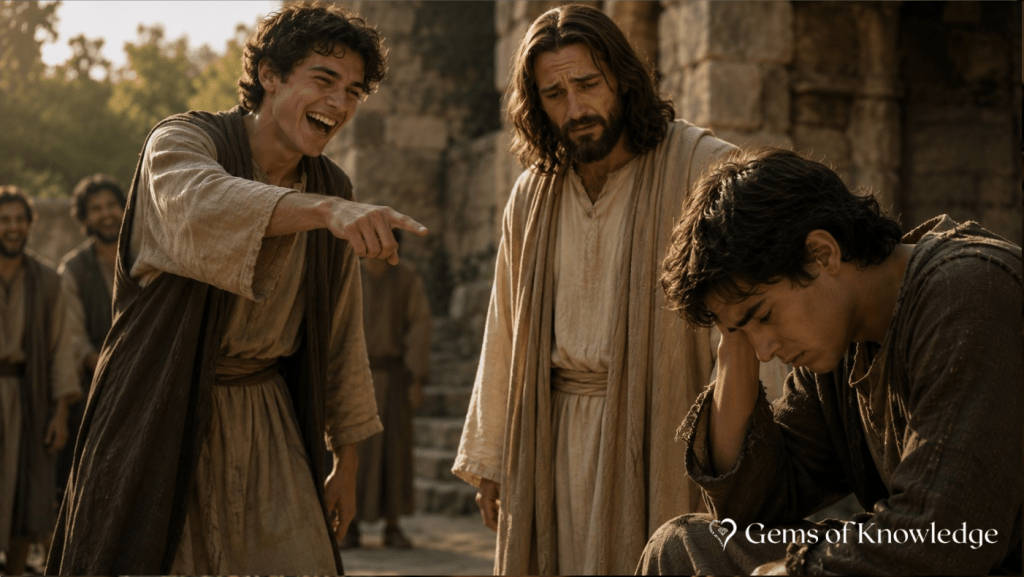
                                A young man is ridiculed by another while Jesus looks on with sorrow, illustrating how careless jokes and hurtful words can deeply wound others.

                                Alt...A young man is ridiculed by another while Jesus looks on with sorrow, illustrating how careless jokes and hurtful words can deeply wound others.

                                [?]A Faithful Sower Publishing » 🌐
                                @afaithfulsower@mastodon.social

                                Are God's laws restrictive, keeping us from enjoying all that life has to offer? Click or tap the link to read more.

                                afaithfulsower.org/2026/07/03/

                                  [?]Gems of Knowledge » 🌐
                                  @gemsofknowledge.com@gemsofknowledge.com

                                  Discover The Unknown

                                  Life is full of unknowns. Some of them are exciting. While others leave us anxious, frustrated, or afraid. But the Lord stands ready to give us wisdom we never thought to seek. Don't settle for walking through life with only your own perspective. There is a loving Father who sees every hidden detail and delights in sharing His wisdom with His children. ✨Click to read the full devotional [SENSITIVE CONTENT]

                                  Today’s One Year Bible Verses: 2 Kings 20:1–22:2 • Acts 21:18–36 • Psalm 150:1–6 • Proverbs 18:9–10


                                  God Reveals The Unseen

                                  Life is full of unknowns.

                                  Some of them are exciting. While others leave us anxious, frustrated, or afraid. We naturally want answers before we move forward. We want to know how things will turn out, why something happened, or what someone else is thinking.

                                  Yet I wonder how many things remain unknown simply because we never ask God.

                                  We often walk through life making assumptions, relying on our own understanding, and doing the best we know how, all while the Lord stands ready to give us wisdom we never thought to seek. There are treasures of insight, protection, understanding, and direction available to us that we simply miss because we don’t stop long enough to ask.

                                  As I was praying, the Lord impressed this Gem of Knowledge on my heart: 

                                  “It is likely there are many things unknown to you still. Come to Me every day and in every situation. Ask Me to reveal the unknown things that will help you. Amen.”

                                  Notice He doesn’t say He will reveal everything. Instead, He promises to reveal what will help us.

                                  God isn’t asking us to become detectives who figure everything out. He’s inviting us into a daily conversation. Imagine how different our lives would be if asking God became our first response instead of our last resort. How many misunderstandings could be avoided? How many wrong turns prevented? How much unnecessary worry would disappear if we simply paused and asked, “Lord, is there anything I’m missing? Is there something You want me to know?”

                                  In today’s reading, King Hezekiah experienced both blessing and heartbreak. God graciously healed him and added fifteen years to his life, yet Hezekiah couldn’t see what the Lord already knew—that his decision to proudly display his treasures to the Babylonian envoys would one day contribute to Judah’s downfall. Had he sought the Lord’s wisdom before acting, the outcome may have been very different.

                                  In Acts, Paul found himself surrounded by an angry mob. False accusations spread quickly, and the crowd reacted to rumors instead of truth. They didn’t know the whole story, yet they were convinced they did. How much heartache could be avoided if we paused to ask God for truth before believing what we hear or assuming we understand a situation?

                                  We often do the very same thing. We make decisions with incomplete information. We fill in the blanks with assumptions. We react before praying. Sometimes we don’t even realize there’s something we should be asking God about. Yet He isn’t offended by our questions—He welcomes them. He delights in revealing the wisdom, discernment, and perspective we need for each day.

                                  Proverbs tells us, 

                                  “The name of the Lord is a strong fortress; the godly run to Him and are safe.” (Proverbs 18:10, NLT)

                                  When you don’t know what to do, run to the One who does.

                                  You may not receive every answer you’re looking for because some things belong to the Lord alone. But you’ll be amazed how often He reveals exactly what you need when you simply ask. Sometimes it’s protection from a wrong decision. Sometimes it’s understanding another person’s heart. Sometimes it’s peace while you wait. And sometimes it’s a truth you never knew existed until He lovingly opened your eyes to it.

                                  Don’t settle for walking through life with only your own perspective. There is a loving Father who sees every hidden detail and delights in sharing His wisdom with His children. Come to Him every day and in every situation. Ask Him to reveal the unknown things that will help you. He is faithful to answer. 💎

                                  “If you need wisdom, ask our generous God, and He will give it to you. He will not rebuke you for asking.”
                                  — James 1:5 (NLT)

                                  “The name of the Lord is a strong fortress; the godly run to Him and are safe.” — Proverbs 18:10 (NLT)


                                  Action (5 Minutes with God)

                                  Take 5 minutes to be with the Lord today. Ask Him:

                                  • Lord, what do You want me to know about this personally?”
                                    • Journal what He gives you through His Holy Spirit.
                                  • Then ask, “What do You want me to do?”
                                    • Journal what He reveals – then do it!

                                  Before making a decision today—big or small—pause and ask the Lord for insight. Then trust Him to give you the wisdom you need, one faithful step at a time.


                                  Prayer

                                  Father, thank You for seeing what I cannot see. Forgive me for the times I’ve relied on my own understanding instead of seeking Yours. Teach me to come to You first—not only when I’m afraid or confused, but in every situation. Open my eyes to the things You want me to know. Protect me from deception, assumptions, and unnecessary worry. Fill me with Your wisdom, discernment, and peace as I walk with You each day. Thank You that You delight in guiding Your children. Help me to ask, to listen, and to trust Your answers. In Jesus’ mighty name I pray, Amen.

                                  To read more 5 Minutes with God devotionals click here.


                                  If Gems of Knowledge has blessed your walk with Christ, please subscribe or consider partnering with us today. Your gift helps keep these devotionals free for everyone and carries God’s Word to more hearts. Every seed matters—thank you for sowing into this work! 💛

                                  Test everything by the Word and the Spirit (John 16:13)
                                  Subscribe

                                  Partner/Donate

                                  Jesus gently places the final piece into an antique wooden puzzle while a person watches in amazement, symbolizing God's wisdom revealing what was previously unknown.

                                  Alt...Jesus gently places the final piece into an antique wooden puzzle while a person watches in amazement, symbolizing God's wisdom revealing what was previously unknown.

                                  [?]Faithful Steward Ministries and FSM Women's Outreach » 🌐
                                  @fsmandfsmwo.blog@fsmandfsmwo.blog

                                  “Faith and Assurance” – 07/01/2026

                                  2 Peter 1

                                  2 Peter 1:10

                                  Therefore, believers, be all the more diligent to make certain about His calling and choosing you [be sure that your behavior reflects and confirms your relationship with God]; for by doing these things [actively developing these virtues], you will never stumble [in your spiritual growth and will live a life that leads others away from sin]; (AMP)


                                  Key Bible Verses on Assurance of Salvation

                                  John 10:28-29 – “I give them eternal life, and they shall never perish; no one will snatch them out of my hand”

                                  emphasizes the eternal security of believers in Christ and God’s protective power over His children

                                  Romans 8:38-39 – “Neither death nor life…nor anything else in all creation, will be able to separate us from the love of God that is in Christ Jesus our Lord” highlights that nothing can sever the believer’s relationship with God

                                  1 John 5:13 – “These things I have written to you that believe in the name of the Son of God, that you may know that you have eternal life”

                                  affirms that believers can have confidence in their salvation

                                  Ephesians 1:13-14 – Believers are “sealed with the Holy Spirit of promise, which is the guarantee of our inheritance,” showing that salvation is a lasting, divinely secured gift

                                  2 Timothy 1:12 – “I know whom I have believed, and am convinced that he is able to guard what I have entrusted to him until that day” underscores God’s faithfulness in preserving our salvation

                                  Hebrews 10:23 – “Let us hold unswervingly to the hope we profess, for he who promised is faithful” encourages steadfast faith based on God’s unchanging promises

                                  Romans 6:23 – “The gift of God is eternal life in Christ Jesus our Lord” reminds believers that salvation is a gift, not earned by works

                                  Romans 10:9 – “If you declare with your mouth, ‘Jesus is Lord,’ and believe in your heart that God raised him from the dead, you will be saved” provides the practical step of faith for assurance

                                  AI-generated list from web Search


                                  COMMENTS

                                  Can one be assured of their salvation? The short answer is yes. In the main verse above, Peter encourages the audience to make every effort to ensure their calling and election are true. Do Christians struggle with this at times? Certainly.

                                  2 Peter 1 was most likely written to Christians who were under persecution. Peter reminds them that their efforts do not determine their place in the Kingdom of God, but that they should strive (be diligent, make every effort, work hard, etc.) to ensure we do not fall away because of life’s troubles.

                                  Is assurance of salvation possible? Yes, the list of verses reaffirms that we really can be assured of our salvation. That does not excuse our responsibility to work out our salvation (

                                  Sanctification

                                  ) daily. Paul addresses this in

                                  Philippians 2:12

                                  ;

                                  So then, my dear ones, just as you have always obeyed [my instructions with enthusiasm], not only in my presence, but now much more in my absence, continue to work out your salvation [that is, cultivate it, bring it to full effect, actively pursue spiritual maturity] with awe-inspired fear and trembling [using serious caution and critical self-evaluation to avoid anything that might offend God or discredit the name of Christ].


                                  MAIN ARTICLES

                                  Can a Christian struggle with doubt and still be saved? In this classic excerpt from Holiness, J. C. Ryle explains the difference between saving faith and full assurance, offering comfort to anxious believers.

                                  Read it here →


                                  ASSURANCE OF GRACE AND SALVATION – What It Is; How To Attain It; Why More Do Not Enjoy It – By William S. Plumer


                                  Q & A: Can I Have Assurance of Salvation?


                                  Evidences of Salvation – by James Smith

                                    [?]Gems of Knowledge » 🌐
                                    @gemsofknowledge.com@gemsofknowledge.com

                                    Episode 17: She Fell in Love with Jesus… Then Started a Children’s Church on Wheels with Adairia Watts

                                    What happens when children can't get to church? Adairia Watts, affectionately known as "The Church Lady," shares how falling in love with Jesus led her to bring church directly into neighborhoods, transforming lives one child at a time. [SENSITIVE CONTENT]

                                    https://www.youtube.com/watch?v=FWocBGJh7-c

                                    How Falling in Love with Jesus Led to Bringing Church to Children

                                    After falling in love with Jesus Christ, Adairia Watts said “yes” to an unexpected calling—to bring church directly to children who might never step inside a church building.

                                    In this inspiring conversation, you’ll hear how God turned one simple act of obedience into a ministry that has impacted countless children throughout North Tulsa.

                                    Discover why she’s affectionately known as “The Church Lady” and be encouraged to trust God with whatever He is calling you to do.

                                    Listen now! ✨

                                    Listen & Subscribe On:

                                    Featured Guest:

                                    Adairia Watts

                                    Adairia Watts, affectionately known throughout her community as “The Church Lady,” is the founder of Jesus Children’s Church International, Inc. For more than 11 years, she has faithfully served children and families throughout North Tulsa, bringing the love of Jesus Christ directly into neighborhoods through a unique mobile children’s ministry.

                                    With a heart for reaching children who may never step inside a church building, Adairia has dedicated her life to sharing the Gospel, building meaningful relationships, and reminding every child they are deeply loved by God. Her ministry was featured on KTUL Channel 8 News’ Oklahoma’s Own: Oklahoma Strong for its extraordinary impact on the community.

                                    To watch more episode click here.


                                    If Gems of Knowledge has blessed your walk with Christ, please subscribe or consider partnering with us today. Your gift helps keep these devotionals free for everyone and carries God’s Word to more hearts. Every seed matters—thank you for sowing into this work! 💛

                                    Test everything by the Word and the Spirit (John 16:13)
                                    Subscribe

                                    Partner/Donate

                                    Episode 17: She Fell in Love with Jesus… Then Started a Children’s Church on Wheels with Adairia Watts

                                    Alt...Episode 17: She Fell in Love with Jesus… Then Started a Children’s Church on Wheels with Adairia Watts

                                    Episode 17: She Fell in Love with Jesus… Then Started a Children’s Church on Wheels with Adairia Watts

                                    Alt...Episode 17: She Fell in Love with Jesus… Then Started a Children’s Church on Wheels with Adairia Watts

                                    [?]Gems of Knowledge » 🌐
                                    @gemsofknowledge.com@gemsofknowledge.com

                                    Sure-Footed with Christ

                                    There is a tremendous peace that comes from knowing where God is leading you. Sometimes the path God chooses for us is hard, but we can find peace in knowing He will show us the way and give us confidence and reassurance with every step. He delights in showing His children the way. When you're unsure, don't keep wandering. Ask. He will answer. As you continue walking with Him, you'll find your footing becoming steadier, your faith becoming stronger, and your heart will rest in the confidence that He truly is leading every step. 💎 ✨Click to read the full devotional. [SENSITIVE CONTENT]

                                    Today’s One Year Bible Verses: 2 Kings 18:13–19:37 • Acts 21:1–17 • Psalm 149:1–9 • Proverbs 18:8 (NLT)


                                    Following Jesus One Step At A Time

                                    There is a tremendous peace that comes from knowing where God is leading you.

                                    It doesn’t mean the road will be easy. In fact, sometimes the path God chooses is the hardest one you could imagine. But when you know He has spoken, uncertainty loses its grip. You stop second-guessing every step because your confidence is no longer in yourself—it is in the One leading you.

                                    The Lord reminded me of this truth today with this Gem of Knowledge: 

                                    “When you are sure of your path with Me, it becomes so much easier. If you don’t know your path with Me, ask. I will show you and you will be sure—sure-footed for the journey ahead.”

                                    How often do we make life harder simply because we are unsure? We wrestle with every decision, wondering if we’re missing God’s will. We replay conversations, overanalyze circumstances, and become exhausted trying to figure everything out ourselves.

                                    Yet God never intended for His children to walk in constant uncertainty. He invites us to ask Him. He promises to lead those whose hearts are willing to follow. While He may not reveal every mile of the journey, He faithfully illuminates the next step.

                                    King Hezekiah is a beautiful example of this. When the Assyrian army surrounded Jerusalem and mocked both him and the Lord, fear could have easily dictated his response. Instead, Hezekiah took the threatening letter into the temple, spread it before the Lord, and prayed. His confidence wasn’t in military strength or political strategy—it was in the God who had already proven Himself faithful. Because He knew where to turn, he stood firm.

                                    Paul demonstrated that same confidence in Acts. Believers pleaded with him not to continue to Jerusalem because suffering awaited him there. Yet Paul kept going because he knew the Lord had directed his steps. His path wasn’t easy, but it was certain.

                                    When we know God has spoken, obedience becomes simpler. It may still require courage, sacrifice, and perseverance, but we stop being tossed back and forth by every fearful thought or opposing opinion. We become sure-footed—not because we know what tomorrow holds, but because we know God is directing our path for His name’s sake (Psalm 23:3).

                                    Proverbs reminds us that words can sink deep into our hearts (Proverbs 18:8). If we continually feast on fear, gossip, or discouragement, we’ll soon begin doubting the very path God has shown us. Instead, keep bringing every question back to the Lord. His voice is the only one that can steady your feet.

                                    “Trust in the Lord with all your heart; do not depend on your own understanding. Seek His will in all you do, and He will show you which path to take.” — Proverbs 3:5–6 (NLT)

                                    “The Lord directs the steps of the godly. He delights in every detail of their lives.”— Psalm 37:23 (NLT)

                                    When you’re unsure, don’t keep wandering. Ask. He delights in showing His children the way. As you continue walking with Him, you’ll find your footing becoming steadier, your faith becoming stronger, and your heart will rest in the confidence that He truly is leading every step. 💎


                                    Action (5 Minutes with God)

                                    Take 5 minutes to be with the Lord today. Ask Him:

                                    • Lord, what do You want me to know about this personally?”
                                      • Journal what He gives you through His Holy Spirit.
                                    • Then ask, “What do You want me to do?”
                                      • Journal what He reveals – then do it!

                                    Let today be a day for trusting Him enough to lead the way..


                                    Prayer

                                    Dear Father, thank You for being my faithful Guide. Forgive me for the times I’ve relied on my own understanding or allowed fear to determine my direction. Teach me to seek You first in every decision. Quiet every voice that competes with Yours, and help me recognize Your leading with confidence. Make me sure-footed as I walk the path You have prepared for me. No matter what lies ahead, I choose to trust that You are already there. In Jesus’ name I pray, Amen.

                                    To read more 5 Minutes with God devotionals click here.


                                    If Gems of Knowledge has blessed your walk with Christ, please subscribe or consider partnering with us today. Your gift helps keep these devotionals free for everyone and carries God’s Word to more hearts. Every seed matters—thank you for sowing into this work! 💛

                                    Test everything by the Word and the Spirit (John 16:13)

                                    Subscribe

                                    Partner/Donate

                                    A hiker stands firmly on solid rock while footprints lead into dense fog, symbolizing following Jesus one faithful step at a time even when the path ahead cannot be seen.

                                    Alt...A hiker stands firmly on solid rock while footprints lead into dense fog, symbolizing following Jesus one faithful step at a time even when the path ahead cannot be seen.

                                    [?]Gems of Knowledge » 🌐
                                    @gemsofknowledge.com@gemsofknowledge.com

                                    Assumption or Truth?

                                    Have you ever been convinced you knew why someone did something... only to later discover you were completely wrong? We can experience real hurt over something that never actually happened. The enemy understands how powerful assumptions can be. He doesn't always have to tell an obvious lie to hurt or destroy. We must hold every thought captive and bring them to Christ because He alone knows the full truth. And His truth will set you free! ✨Click to read the full devotional. [SENSITIVE CONTENT]

                                    Today’s One Year Bible Verses: 2 Kings 17:1–18:12, Acts 20:1–38, Psalm 148:1–14, Proverbs 18:6–7


                                    Bring It to Me First

                                    Have you ever been absolutely convinced you knew why someone did something… only to later discover you were completely wrong?

                                    Maybe a friend didn’t return your call.
                                    Someone walked past without saying hello.
                                    A text message sounded cold.
                                    An invitation never came.

                                    Immediately our minds begin filling in the blanks.

                                    “They’re upset with me.”

                                    “They don’t value our friendship.”

                                    “I must have done something wrong.”

                                    The amazing thing is that we can experience real hurt over something that never actually happened.

                                    I’ve done it myself.

                                    I’ve assumed someone’s motives before ever asking them. I’ve believed a story my mind created, only to later discover there was an entirely different explanation. The pain I felt was real, but the conclusion I reached wasn’t.

                                    As I prayed about this recently, the Lord spoke this Gem of Knowledge to my heart:

                                    What you think is truth may not be, especially if it causes you pain. Keep every thought captive and bring it to Me. I will tell you truth and set you free. Amen.

                                    Hmmm… “Bring it to Me.”

                                    How often do we bring our conclusions to other people before we bring them to God?

                                    We replay conversations.
                                    We analyze facial expressions.
                                    We interpret silence.
                                    We assume motives.
                                    We create explanations.

                                    Yet we never stop to ask the One who knows the truth.

                                    Sometimes the greatest source of our heartache isn’t what actually happened—it’s the story we’ve told ourselves about what happened.

                                    The enemy understands how powerful assumptions can be. He doesn’t always have to tell an obvious lie. Sometimes he simply plants a question.

                                    “What if they don’t really care about you?”

                                    “What if they meant to hurt you?”

                                    “What if you’re being rejected?”

                                    If we accept those thoughts without questioning them, they begin producing real emotions. We feel hurt. We become offended. We withdraw from people. Relationships suffer—not because of the truth, but because of what we believed to be true.

                                    That is why today’s Gem is so important.

                                    God doesn’t tell us to trust every thought that enters our minds – He tells us to bring every thought to Him.

                                    In today’s reading from Acts 20, Paul gathered the Ephesian elders and spoke with sincerity and transparency. There was no manipulation or hidden agenda. His words remind us how important truth and integrity are. Healthy relationships are built on honesty, not assumptions.

                                    Proverbs 18 also reminds us that careless words and foolish reactions can bring destruction. How many arguments, broken friendships, and wounded hearts could be avoided if we paused long enough to ask God whether what we believe is actually true?

                                    The Lord has been teaching me that not every thought deserves my agreement.

                                    Some thoughts need to be questioned.
                                    Some need to be surrendered.
                                    Some need to be rejected altogether.

                                    And every one of them should be brought before Him. This is 2 Corinthians 10:5 in action:

                                    “We demolish arguments and every pretension that sets itself up against the knowledge of God, and we take captive every thought to make it obedient to Christ.”

                                    I’ve learned that God’s truth doesn’t simply change the way I think.

                                    It sets me free.

                                    Before I close, I want to leave you with a question that has become very helpful in my own walk.

                                    Have I asked God if this is true… or have I simply assumed it is?

                                    God is never threatened by our questions.

                                    In fact, He invites them.

                                    Bring your thoughts to Him.

                                    He already knows the truth. 💎


                                    Action (5 Minute with God)

                                    Take 5 minutes to be with the Lord today. Ask Him:

                                    • Lord, what do You want me to know about this personally?”
                                      • Journal what He gives you through His Holy Spirit.
                                    • Then ask, “What do You want me to do?”
                                      • Journal what He reveals – then do it!

                                    This process of asking will help us know His voice and know His truth. The next time a painful thought enters your mind about yourself, another person, or a situation, don’t immediately agree with it. Pause and ask the Lord, “Is this true?” Allow His Word and His Spirit—not your assumptions—to shape your response.


                                    Prayer

                                    Father, thank You for being the God of truth. Forgive me for the times I have believed assumptions, fears, or lies without bringing them before You first. Help me take every thought captive and place it into Your hands. Give me discernment to recognize what is true and what is not. Let Your truth guard my heart, protect my relationships, and bring freedom to my mind. In Jesus’ name, Amen.

                                    To read more 5 Minutes with God devotionals click here.


                                    If Gems of Knowledge has blessed your walk with Christ, please subscribe or consider partnering with us today. Your gift helps keep these devotionals free for everyone and carries God’s Word to more hearts. Every seed matters—thank you for sowing into this work! 💛

                                    Test everything by the Word and the Spirit (John 16:13)

                                    Subscribe

                                    Partner/Donate

                                    A grieving woman clutches a crumpled paper labeled "ASSUMPTION" while Jesus compassionately offers her a sealed envelope labeled "TRUTH" in a warmly lit room.

                                    Alt...A grieving woman clutches a crumpled paper labeled "ASSUMPTION" while Jesus compassionately offers her a sealed envelope labeled "TRUTH" in a warmly lit room.

                                    [?]Choose Joy Adventure » 🌐
                                    @choosejoyadventure.wordpress.com@choosejoyadventure.wordpress.com

                                    When Life Feels Like a Puzzle

                                    Have you ever dumped a puzzle out onto a table and wondered how all those random pieces could possibly fit together? At first, the pieces seem disconnected. Some are upside down. Some appear insignificant. Others look like they belong somewhere else entirely. Yet the person assembling the puzzle trusts that every piece has a purpose because they have seen the picture on the box. Life often feels the same way. There are seasons when we can only see a handful of pieces. We see the […] [SENSITIVE CONTENT]

                                    Have you ever dumped a puzzle out onto a table and wondered how all those random pieces could possibly fit together?

                                    At first, the pieces seem disconnected. Some are upside down. Some appear insignificant. Others look like they belong somewhere else entirely. Yet the person assembling the puzzle trusts that every piece has a purpose because they have seen the picture on the box.

                                    Life often feels the same way.

                                    There are seasons when we can only see a handful of pieces. We see the heartbreak, the disappointment, the unanswered prayer, the unexpected detour, or the dream that didn’t unfold the way we hoped. Looking at those individual moments, it is difficult to understand what God is doing.

                                    But God sees the finished picture.

                                    What feels random to us is not random to Him. What appears broken is not beyond His ability to restore. What seems out of place is often exactly where it belongs in His greater plan.

                                    Romans 8:28 reminds us:

                                    “And we know that in all things God works for the good of those who love him, who have been called according to his purpose.”

                                    Notice that Scripture does not say all things are good. It says God works through all things for good. Every piece matters.

                                    Some puzzle pieces are beautiful. They represent blessings, victories, answered prayers, and joyful moments. We gladly place those pieces into the picture.

                                    Other pieces are harder to accept. They represent grief, illness, loss, disappointment, and waiting. We may wish we could leave those pieces out altogether. Yet often those difficult pieces become the very places where God’s faithfulness shines brightest.

                                    If you’ve ever worked on a puzzle, you know that the edge pieces usually come first. They create a framework that helps everything else come together. In the same way, God’s Word provides the framework for our lives. When circumstances confuse us, His promises help us understand where the pieces belong.

                                    The truth is, we were never meant to assemble the puzzle alone.

                                    God is the Master Designer. He knows exactly where each piece fits. He knows why certain pieces arrived when they did. He knows why some pieces seem delayed. He knows how today’s confusion will connect to tomorrow’s purpose.

                                    Our responsibility is not to see the entire picture. Our responsibility is to trust the One who does.

                                    Maybe today you’re holding a piece of the puzzle that makes no sense. Perhaps you’re facing a situation that feels unfinished or unresolved. Remember that one piece is not the whole picture.

                                    Don’t judge God’s plan by the piece you’re holding today.

                                    Trust that the Author of your story is still working. Trust that He is placing each piece exactly where it belongs. Trust that one day you will look back and see how His grace, wisdom, and faithfulness were present all along.

                                    The puzzle isn’t finished yet.

                                    And that’s okay.

                                    God is still putting the pieces together.

                                    What piece of your life are you struggling to understand right now, and how can you choose to trust God with the bigger picture?

                                    Proverbs 3:5-6 — “Trust in the Lord with all your heart and lean not on your own understanding; in all your ways submit to him, and he will make your paths straight.”

                                    With love and joy,

                                    Laura

                                    When Life Feels Like a Puzzle

                                    Alt...When Life Feels Like a Puzzle

                                    [?]דער קערפער פֿון השם » 🌐
                                    @dukepaaron@babka.social

                                    Judeo-Christian :fozzie_wocka_wocka:

                                    "Among the many practiced by millions of , a new statewide required list that includes passages draws from just two traditions: and .

                                    Yet Texas say had no role in shaping how appears in the , and they disagree with how the lone text is presented. Rather than teaching about Judaism on its own terms, they argue, the lessons filter Jewish texts through a perspective.

                                    The , which is expected to go into effect in 2030, will have students across the state reading passages from the and mostly Christian of the Bible alongside classics. Of the curriculum’s six readings, just one uses a Jewish ."

                                    forward.com/news/834539/texas-

                                      [?]chrissbiblenewsletter » 🌐
                                      @chrissbiblenewsletter@mastodon.social

                                      [?]Gems of Knowledge » 🌐
                                      @gemsofknowledge.com@gemsofknowledge.com

                                      Don’t Let the Devil Steal Your Joy

                                      Have you ever had a thought enter your mind that instantly changed your entire outlook?In just a few seconds, your emotions begin to change. Your peace starts slipping away. You replay the thought over and over until it feels true. Yet nothing around you has actually changed. The only thing that changed was the thought you agreed with. As I was praying about this recently, the Lord spoke this Gem of Knowledge to my heart: Silence every lying spirit that whispers in your ear, in the name of Jesus. Do not let any more lies sway your walk with Me. I will tell you truth, and it will change everything. Amen. Learning to recognize the difference is one of the most important lessons we can learn as followers of Christ. The enemy whispers, "You're alone." Jesus says, "I am with you always." The enemy whispers, "You'll never change." Jesus says He is making you into a new creation. The enemy whispers, "God has forgotten you." Jesus reminds you that He will never leave you nor forsake you. The enemy whispers, "... [SENSITIVE CONTENT]

                                      Today’s One Year Bible Verses: 2 Kings 15:1–16:20, Acts 19:13–41, Psalm 147:1–20, Proverbs 18:4–5


                                      Silence the Enemy’s Lies

                                      Have you ever had a thought enter your mind that instantly changed your entire outlook?

                                      Perhaps everything was going well until suddenly a thought crossed your mind.

                                      “They probably don’t like me.”

                                      “I’m going to fail.”

                                      “Nobody understands what I’m going through.”

                                      “I’m not good enough.”

                                      “God can’t really use someone like me.”

                                      In just a few seconds, your emotions begin to change. Your peace starts slipping away. You replay the thought over and over until it feels true. Yet nothing around you has actually changed. The only thing that changed was the thought you agreed with.

                                      As I was praying about this recently, the Lord spoke this Gem of Knowledge to my heart:

                                      Silence every lying spirit that whispers in your ear, in the name of Jesus. Do not let any more lies sway your walk with Me. I will tell you truth, and it will change everything. Amen.

                                      The more I reflected on those words, the more I realized how subtle the enemy can be.

                                      He rarely begins with obvious lies. Instead, he whispers. Seeds of fear, insecurity, offense, doubt, condemnation, suspicion, and hopelessness quietly drift into our minds. If we don’t recognize where those thoughts are coming from, we begin to entertain them until they take root in our hearts.

                                      What begins as a passing thought can eventually shape the way we think, feel, respond, and even the direction of our lives. No wonder Scripture tells us to take our thoughts captive.

                                      I’ve learned that not every thought that enters my mind deserves a place in my heart. Some thoughts come from the Holy Spirit. Others are whispers from the enemy. Learning to recognize the difference is one of the most important lessons we can learn as followers of Christ.

                                      The enemy whispers, “You’re alone.”

                                      Jesus says, “I am with you always.”

                                      The enemy whispers, “You’ll never change.”

                                      Jesus says He is making you into a new creation.

                                      The enemy whispers, “God has forgotten you.”

                                      Jesus reminds you that He will never leave you nor forsake you.

                                      The enemy whispers, “Nobody loves you.”

                                      God says, “You are My beloved child.”

                                      Every one of those whispers has the power to shape the way we think, respond, and live if we allow it. But every one of them is silenced by the truth of God’s Word.

                                      In today’s reading from Acts 19, we see that the name of Jesus carries real authority over the powers of darkness. That same authority has been given to us. We do not have to quietly accept every lie that enters our minds. We can reject it in the name of Jesus and replace it with the truth of God’s Word.

                                      Psalm 147 reminds us that God heals the brokenhearted and binds up their wounds. He doesn’t simply expose the lies we’ve believed; He lovingly replaces them with His truth. As the Lord said in today’s Gem, “I will tell you truth, and it will change everything.”

                                      One final thought comes to mind.

                                      Several years ago, I was sitting in an airport waiting for my flight when I overheard a woman talking on the phone nearby. I don’t remember who she was talking to or even what the conversation was about, but one sentence has stayed with me ever since.

                                      She simply said,

                                      “Don’t let the devil steal your joy.”

                                      I’ve thought about those words many times over the years because I’ve realized that’s exactly how he does it.

                                      He whispers.

                                      He whispers lies that create fear, offense, insecurity, discouragement, suspicion, comparison, and hopelessness. If we believe those lies, they slowly rob us of the very peace and joy God wants us to have.

                                      Don’t let the enemy have another conversation with your mind.

                                      When the lies begin, silence them in the name of Jesus.

                                      Then listen for the voice of the One who always speaks truth.

                                      Because His truth really does change everything. 💎


                                      Action (5 Minutes with God)

                                      Take 5 minutes tote with the Lord today. The more time we spend with Him the more we learn His voice. Ask Him:

                                      • Lord, what do You want me to know about this personally?”
                                        • Journal what He gives you through His Holy Spirit.
                                      • Then ask, “What do You want me to do?”
                                        • Journal what He reveals – then do it!

                                      Let today be a day of holding every thought captive. Ask yourself, “Does this thought agree with what God says?” If it doesn’t, reject it in the name of Jesus and replace it with the truth of His Word.


                                      Prayer

                                      Father, thank You that Your voice always speaks truth. Forgive me for the times I have believed the lies of the enemy instead of believing what You say about me. Help me recognize every whisper that seeks to draw me away from You, and give me the wisdom and courage to silence it in the name of Jesus. Fill my heart and mind with Your truth until it becomes louder than every lie. Let Your Word shape my thoughts, my relationships, and my walk with You. In Jesus’ name, Amen.

                                      To read more 5 Minutes with God devotionals click here.


                                      If Gems of Knowledge has blessed your walk with Christ, please subscribe or consider partnering with us today. Your gift helps keep these devotionals free for everyone and carries God’s Word to more hearts. Every seed matters—thank you for sowing into this work! 💛

                                      Test everything by the Word and the Spirit (John 16:13)
                                      Subscribe

                                      Partner/Donate

                                      A woman stands in prayer as shadowy whispers filled with words like fear, rejection, failure, and shame swirl behind her while Jesus reaches toward her with healing light, silencing the lies with His truth.

                                      Alt...A woman stands in prayer as shadowy whispers filled with words like fear, rejection, failure, and shame swirl behind her while Jesus reaches toward her with healing light, silencing the lies with His truth.

                                      [?]MDMRN » 🌐
                                      @mdmrn@urusai.social

                                      How I described the last few chapters of Acts to a friend: "Paul is Suffering and Preaching Finale Arc."

                                        [?]A Faithful Sower Publishing » 🌐
                                        @afaithfulsower@mastodon.social

                                        You have a role in the Great Commission. Are you fulfilling that calling? Click or tap the link to read more.

                                        afaithfulsower.org/2026/06/29/

                                          [?]Gems of Knowledge » 🌐
                                          @gemsofknowledge.com@gemsofknowledge.com

                                          Lay It All Down

                                          What are you carrying that God has already offered to carry for you? Sometimes we pray about a burden, yet continue holding onto it. We ask God for help, but never truly release the weight into His hands. 💎 Gem of Knowledge Why are you still struggling? When will you give it to Me? I will take it from you. Amen. Perhaps the answer isn't figuring it out. Perhaps the answer is finally laying it all down. ✨Click to read the full devotional. [SENSITIVE CONTENT]

                                          Today’s One Year Bible Verses: 2 Kings 13:1–14:29, Acts 18:23–19:12, Psalm 146:1–10, Proverbs 18:2–3


                                          Let Go and Let God

                                          The other day I caught myself having a conversation in my head that I’ve had far too many times before.

                                          I was thinking about a situation I couldn’t fix. I replayed it from every angle, wondering what I should do, what I could have done differently, and how everything might unfold in the future. The strange thing was that nothing had changed. There was no new information, no new solution, and no new outcome. Yet there I was, carrying it again.

                                          As I sat quietly with the Lord, I felt Him gently ask me a question.

                                          Why are you still struggling? When will you give it to Me? I will take it from you. Amen.

                                          The question stopped me because I wasn’t sure how to answer.

                                          After all, I had already prayed about the situation. More than once. I had asked God for wisdom. I had asked Him for direction. I had even told Him I trusted Him. Yet if I was being honest, I was still carrying the weight of it everywhere I went.

                                          I was still thinking about it when I woke up in the morning. I was still revisiting it throughout the day. I was still trying to solve it in my own mind. Nothing had changed except that I was becoming more exhausted.

                                          That’s when I realized there is a difference between bringing a burden to God and actually surrendering it to Him.

                                          Sometimes we bring our struggles to the Lord, but we never really let them go. We pray about them, then quietly pick them back up again. We ask Him to take them, but continue carrying them because we are afraid of what might happen if we release control. We tell ourselves we are being responsible, when in reality we are simply worrying.

                                          I think that is why the Lord’s question struck me so hard.

                                          Why are you still struggling?

                                          Not because He was criticizing me, but because He was inviting me into something better.

                                          A loving Father does not enjoy watching His children carry burdens He never intended them to bear. He sees the anxiety, the fear, the constant mental wrestling, and He gently asks us to hand it over.

                                          Psalm 146 reminds us where our confidence belongs. The psalmist warns against placing our trust in human strength and human solutions because they are temporary. Instead, we are called to place our hope in the Lord, the One who remains faithful forever.

                                          That doesn’t mean our problems instantly disappear, every question is immediately answered, or situation changes overnight.

                                          What changes is who carries the burden.

                                          God never asked us to carry tomorrow. He never asked us to control outcomes we cannot control. He never asked us to solve every problem in our own strength. He simply asks us to trust Him enough to place those things into His hands.

                                          Perhaps there is something you’ve been carrying for so long that you don’t even realize you’re carrying it anymore. Maybe it’s a fear about the future, a disappointment you haven’t fully released, a relationship that weighs heavily on your heart, or a situation that refuses to resolve itself no matter how many times you’ve thought about it.

                                          Whatever it is, God already knows about it. He is not waiting for you to figure it out before He helps you. In fact, He may be asking the same question He asked me:

                                          Why are you still struggling? When will you give it to Me? I will take it from you.

                                          What a beautiful invitation – Not necessarily that we will understand everything or fix everything, but that we can finally stop carrying it all alone.


                                          Action (5 Minutes with God)

                                          Take 5 minutes to be with the Lord today. Ask Him:

                                          • Lord, what do You want me to know about this personally?”
                                            • Journal what He gives you through His Holy Spirit.
                                          • Then ask, “What do You want me to do?”
                                            • Journal what He reveals – then do it!

                                          Let Him show you if there are any burden, fear, or internal struggle that you have been carrying alone then intentionally place them into His hands. Allow Him to carry it for you.


                                          Prayer

                                          Father, thank You for caring about every burden I carry. Forgive me for the times I say I trust You while continuing to hold tightly to my worries, fears, and struggles. Help me truly surrender them to You. Teach me to trust Your wisdom, Your timing, and Your faithfulness. Thank You that I do not have to carry these burdens alone. In Jesus’ name, Amen.

                                          To read more 5 Minutes with God devotionals click here.


                                          If Gems of Knowledge has blessed your walk with Christ, please subscribe or consider partnering with us today. Your gift helps keep these devotionals free for everyone and carries God’s Word to more hearts. Every seed matters—thank you for sowing into this work! 💛

                                          Test everything by the Word and the Spirit (John 16:13)

                                          Subscribe

                                          Partner/Donate

                                          A weary traveler struggles beneath an enormous backpack filled with rocks labeled fear, worry, regret, anxiety, past mistakes, and "what if?" as Jesus reaches out with an open hand, inviting him to surrender the burden.

                                          Alt...A weary traveler struggles beneath an enormous backpack filled with rocks labeled fear, worry, regret, anxiety, past mistakes, and "what if?" as Jesus reaches out with an open hand, inviting him to surrender the burden.

                                          [?]Where Bread Is Found » 🌐
                                          @wherebreadisfound@theres.life

                                          You can watch the Citichurch service live from SM Seaside City Cebu here 👇

                                          📍SM Seaside, Cebu City
                                          🕛 16:28 PH time (09:28 BST)
                                          🖥 citichurch.ph

                                            [?]Where Bread Is Found » 🌐
                                            @wherebreadisfound@theres.life

                                            You can watch the Citichurch service live from SM Seaside City Cebu here 👇

                                            📍SM Seaside, Cebu City
                                            🕛 16:28 PH time (09:28 BST)
                                            🖥 citichurch.ph

                                              [?]WIST Quotations » 🌐
                                              @wistquotes@friendica.world

                                              A quotation from Vonnegut

                                              For some reason, the most vocal Christians among us never mention the Beatitudes. But, often with tears in their eyes, they demand that the Ten Commandments be posted in public buildings. And of course, that’s Moses, not Jesus. I haven’t heard one of them demand that the Sermon on the Mount, the Beatitudes, be posted anywhere. “Blessed are the merciful” in a courtroom? “Blessed are the peacemakers” in the Pentagon? Give me a break!

                                              Kurt Vonnegut, Jr. (1922-2007) American novelist, journalist
                                              A Man Without A Country, ch. 9 (2005)


                                              More about this quote: wist.info/vonnegut-kurt-jr/385…

                                                [?]Gems of Knowledge » 🌐
                                                @gemsofknowledge.com@gemsofknowledge.com

                                                Praise Him Forever

                                                What if the greatest testimony to God's goodness isn't a miracle? What if it's the fact that the sun came up again this morning? The birds still sing. The flowers still bloom. The stars still shine. And the God who created them is still on His throne...and we should give thanks! Let us not become so familiar with His gifts that we've forgotten to admire the Giver. ✨Click here to read the full devotional. [SENSITIVE CONTENT]

                                                Today’s One Year Bible Verses: 2 Kings 10:32–12:21, Acts 18:1–22, Psalm 145:1–21, Proverbs 18:1


                                                Start With Today

                                                A few weeks ago, my husband took me to Branson for my birthday. On the way there, we stopped at the Bass Pro Shops Museum in Springfield, Missouri. As we walked through the exhibits, I came across a quote that caught my attention. It said that we should thank our Creator for all of His creation—the earth, the stars, the plants, the animals, and everything He has made.

                                                The thought lingered with me long after we left.

                                                As I reflected on it, I realized that each morning I thank God for the new day, for His presence, and for the blessings in my life. Yet I rarely took time to thank Him for the incredible creation that surrounds me every day.

                                                This realization changed my perspective. It changed me.

                                                Since then, I have found myself becoming more intentional during my morning worship. Instead of simply thanking God for what He has done for me, I have begun thanking Him for the beauty of what He has made—the sunrise, the birds singing outside my window, the trees, the flowers, the stars, and the countless details of creation that quietly declare His glory.

                                                As I was thanking Him for these things one morning, the Lord spoke this Gem of Knowledge to my heart:

                                                “Praise be to God the Father, our Most High God. Praise Him forever and start with today. Day by day, acknowledge the source of everything good. Amen.”

                                                The more I thought about those words, the more I realized how easy it is to enjoy God’s gifts without intentionally acknowledging the Giver.

                                                Most of us remember to thank God when something extraordinary happens. We thank Him for answered prayers, unexpected blessings, healing, provision, and breakthroughs. Yet many of His gifts are so constant that we begin to overlook them. The warmth of the sun, the beauty of a sunset, the changing seasons, the food on our table, the people we love, and even the breath in our lungs quietly become part of the background of our lives.

                                                Psalm 145 beautifully calls us back to a heart of gratitude. Throughout the entire psalm, David praises God for His greatness, goodness, mercy, and mighty works. What stood out to me most was David’s commitment to make praise a daily practice, not an occasional response. He understood that worship is not reserved for special moments. It is the natural response of a heart that recognizes God’s hand in every part of life.

                                                That is what the Lord’s Gem reminded me of today.

                                                Praise is not just something we do when life is going well. It is something we choose because God is worthy. The more we intentionally acknowledge Him as the source of every good thing, the more we begin to see His fingerprints everywhere.

                                                I think that is why the Lord said, “Start with today.”

                                                Not tomorrow.
                                                Not when life slows down.
                                                Not after the next prayer is answered.

                                                Today.

                                                Today we can thank Him for His faithfulness, His provision, and His creation. Today, we can thank Him simply because He is God.

                                                When we develop a habit of daily gratitude, our perspective begins to change. Instead of focusing on what is missing, we become aware of how much we have already been given. Instead of becoming consumed with our problems, we begin to recognize the goodness of the One who has carried us through them all.

                                                Every good thing ultimately leads back to Him. Thank you, God! 💎


                                                Action (5 Minutes with God)

                                                Take 5 Minutes today to thank God for all He gives and does. Look around and thank God for things you normally take for granted. As you do, intentionally acknowledge Him as the source. Then ask Him:

                                                • Lord, what do You want me to know about this personally?”
                                                  • Journal what He gives you through His Holy Spirit.
                                                • Then ask, “What do You want me to do?”
                                                  • Journal what He reveals – then do it!

                                                Let today be a new day of gratitude and acknowledgement of the Giver of everything good.


                                                Prayer

                                                Dear Father, thank You for Your goodness, faithfulness, and countless blessings. Forgive me for the times I have enjoyed Your gifts without acknowledging You as the Giver. Open my eyes to the beauty of Your creation and the evidence of Your love that surrounds me every day. Help me develop a heart of gratitude that praises You not only for what You do, but for who You are. Help me to live a life of continual Gratitude and praise. In Jesus’ mighty name I pray, Amen.

                                                To read more 5 Minutes with God devotionals click here.


                                                If Gems of Knowledge has blessed your walk with Christ, please subscribe or consider partnering with us today. Your gift helps keep these devotionals free for everyone and carries God’s Word to more hearts. Every seed matters—thank you for sowing into this work! 💛

                                                Test everything by the Word and the Spirit (John 16:13)

                                                Subscribe

                                                Partner/Donate

                                                Jesus stands beside a woman overlooking a breathtaking landscape filled with mountains, waterfalls, forests, wildlife, flowers, and a sunset sky transitioning into stars.

                                                Alt...Jesus stands beside a woman overlooking a breathtaking landscape filled with mountains, waterfalls, forests, wildlife, flowers, and a sunset sky transitioning into stars.

                                                [?]A Faithful Sower Publishing » 🌐
                                                @afaithfulsower@mastodon.social

                                                Do you know of any spiritually thirsty souls? Have you told them about Jesus? Click or tap the link to read more.

                                                afaithfulsower.org/2026/06/27/

                                                  [?]Gems of Knowledge » 🌐
                                                  @gemsofknowledge.com@gemsofknowledge.com

                                                  The Difficult Path

                                                  ## Facebook Teaser Post Most of us spend our lives trying to avoid difficult people, difficult conversations, and difficult situations. Yet some of God's greatest lessons are learned in the very places we would rather avoid. The valley isn't where God abandons us. It's often where we learn to trust the Shepherd. ✨Click to read the full devotional. [SENSITIVE CONTENT]

                                                  Today’s One Year Bible Verses: 2 Kings 9:14–10:31, Acts 17:1–34, Psalm 144:1–15, Proverbs 17:27–28


                                                  Hard Things, Great Lessons

                                                  Have you ever struggled with someone in your life? Or maybe you’ve wondered why we have to go through hard things. I know I have… and the Lord in His grace for me whispered this beautiful Gem of Knowledge to help me:

                                                  “Don’t shy away from hard things or hard people. This is where you will find your greatest lessons and successes… if you do it with Me. Amen.”

                                                  If I’m being honest, there are certain situations I naturally avoid, like difficult conversations, challenging people, or tasks that seem overwhelming – Situations that require courage, patience, wisdom, or perseverance.

                                                  Most of us would rather choose the easier road if given the option. We prefer comfort over conflict, certainty over risk, and familiar territory over the unknown. I think it is natural.

                                                  No-one intentionally chooses hardship and hard people.

                                                  Yet as I reflected on today’s Gem, I realized that many of the greatest things God has done in my life came through circumstances I never would have chosen for myself.

                                                  The seasons that stretched my faith taught me to trust Him more deeply.

                                                  The difficult people taught me patience, humility, forgiveness, and grace as they forced me to go to the Lord for help and guidance.

                                                  The challenges I wanted to avoid often became the very places where God revealed His strength and faithfulness the most.

                                                  I am beginning to find gratefulness for the hard things because I realize they are what forced me to grow outside of myself.

                                                  Today’s Scriptures are filled with people facing difficult situations.

                                                  In Acts 17, Paul repeatedly entered hostile environments to share the Gospel. He faced opposition, criticism, and misunderstanding almost everywhere he went. It would have been much easier to avoid those uncomfortable situations and seek friendlier audiences. Yet because he remained faithful and endured the hard things and hard people, many came to know Christ.

                                                  Paul understood something important: sometimes the greatest opportunities for God to move are hidden inside the very situations we would prefer to avoid.

                                                  Psalm 144 reminds us where our confidence comes from during those moments.

                                                  David begins by declaring:

                                                  “Praise the Lord, who is my rock. He trains my hands for war and gives my fingers skill for battle.” (Psalm 144:1, NLT)

                                                  God never promised that life would be free of battles, but He does promise to prepare us for them.

                                                  The truth is, difficult circumstances often become God’s training ground.

                                                  Just as muscles grow stronger through resistance, our faith often grows stronger through challenges. The lessons we learn in easy seasons are valuable, but the lessons we learn while walking through hardship with God tend to stay with us for a lifetime.

                                                  That is why today’s Gem contains an important condition:

                                                  Don’t shy away from hard things or hard people. This is where you will find your greatest lessons and successes, if you do it with Me.

                                                  Those last words matter…”if you do it with Me.”

                                                  God is not asking us to face life’s difficulties alone. He is inviting us to walk through them with Him. And thank goodness for that! If I was left to myself, I would most likely make it worse or ruin it completely.

                                                  Im learning the goal is not simply enduring hardship. The goal is learning to depend upon Him in the middle of it.

                                                  When we keep God close, difficult people become opportunities to grow in grace.
                                                  Hard situations become opportunities to grow in faith.
                                                  Challenges become opportunities to witness God’s provision, wisdom, and power.
                                                  What once looked like an obstacle becomes part of God’s preparation.

                                                  Perhaps there is a difficult situation in your life right now that you wish you could avoid.

                                                  Maybe it is a conversation you need to have, a responsibility you have been postponing, a person who requires extra patience, or a challenge that just feels bigger than your ability.

                                                  Instead of asking God to remove it, ask Him what He wants to teach you through it.

                                                  You may discover that the very thing you have been trying to avoid is the place where He intends to do some of His greatest work and preparation. 💎


                                                  Action (5 Minutes with God)

                                                  Take 5 minutes to be with the Lord today. Ask Him:

                                                  • Lord, what do You want me to know about this personally?”
                                                    • Journal what He gives you through His Holy Spirit.
                                                  • Then ask, “What do You want me to do?”
                                                    • Journal what He reveals – then do it!

                                                  Invite God to show you how to walk through every situation with His wisdom, strength, and grace.


                                                  Prayer

                                                  Father God, thank You for being with me in every challenge I face. Forgive me for the times I have allowed fear, discomfort, or discouragement to keep me from what You are calling me to do. Help me not to shy away from hard things or difficult people. Instead, teach me to walk through them with You. Give me wisdom, patience, courage, and grace. Help me see opportunities for growth where I once saw obstacles. In Jesus’ name I pray, Amen.

                                                  To read more 5 Minutes with God devotionals click here.


                                                  If Gems of Knowledge has blessed your walk with Christ, please subscribe or consider partnering with us today. Your gift helps keep these devotionals free for everyone and carries God’s Word to more hearts. Every seed matters—thank you for sowing into this work! 💛

                                                  Test everything by the Word and the Spirit (John 16:13)

                                                  Subscribe

                                                  Partner/Donate

                                                  Jesus stands protectively between a lamb and an attacking wolf in a dark rocky valley, holding His shepherd's staff as He defends the sheep.

                                                  Alt...Jesus stands protectively between a lamb and an attacking wolf in a dark rocky valley, holding His shepherd's staff as He defends the sheep.

                                                  [?]Hebrew by Inbal » 🌐
                                                  @hebrewbyinbal@babka.social

                                                  People ask me all the time how do you know your program actually works? What is your success rate?

                                                  Here is my answer. Listen.

                                                  Every morning part of my routine is listening to speaking practices my students send me. Real sentences in Hebrew that they built entirely on their own. This morning I am sharing one with you, with her permission, because it says everything I never could in an ad.

                                                  This is a student enrolled in “Practically Speaking Hebrew” She created these sentences herself. And she speaks them beautifully.

                                                  That is my success rate. It is not a number I made up. It is her voice. It is the dozens of voices that land in my inbox every single week from people who were once certain they could never speak Hebrew, and now simply do.

                                                  When people ask if it works I do not have to convince them. I just let my students speak. 💙

                                                    [?]Gems of Knowledge » 🌐
                                                    @gemsofknowledge.com@gemsofknowledge.com

                                                    Stay the Course

                                                    Most ships don't get lost because of one wrong turn. They drift. A few degrees off course may not seem like much at first, but over time it can take you far from your destination. The same is true in our walk with God. 💎 "Stay the course. Walk it with Me. Don't waver or get distracted. Keep Me close and counsel with Me often. I will help you. Amen." ✨Click to read the full devotional. [SENSITIVE CONTENT]

                                                    Today’s One Year Bible Verses: 2 Kings 8:1–9:13, Acts 16:16–40, Psalm 143:1–12, Proverbs 17:26


                                                    Staying Close to God

                                                    About a year and a half ago, I felt convicted by the Lord to worship Him every morning and every evening. The pattern reminded me of the daily sacrifices that were offered before the Lord in the Old Testament. It wasn’t about ritual; it was about relationship. It was about intentionally beginning and ending each day in His presence.

                                                    For a while, I did fairly well. Every morning I would worship, read His Word, pray, and spend time with Him. Every evening I would return again, quiet my heart, and spend time in His presence before the day ended.

                                                    But this morning, the Lord reminded me of something.

                                                    Somewhere along the way, my evening worship had disappeared.

                                                    Not because I stopped loving Him. Not because I consciously chose to walk away from it. Life simply became busy. Responsibilities piled up, work demanded attention, and before I realized it, what had once been an important part of my relationship with God had quietly slipped away.

                                                    As I thought about it this morning, I was surprised to realize I hadn’t done my evening worship in months.

                                                    Months.

                                                    What startled me most was that I knew the fruit it produced. I knew how much peace, clarity, and intimacy with God came from those moments. Yet somehow, I had drifted far enough that it was no longer part of my routine.

                                                    As I prayed about it, I heard the Holy Spirit whisper this Gem of Knowledge to my heart:

                                                    “Stay the course. Walk it with Me. Don’t waver or get distracted. Keep Me close and counsel with Me often. I will help you. Amen.”

                                                    Those words reminded me that spiritual drift rarely happens all at once. Most people don’t wake up one morning and decide to abandon what God has called them to do. Instead, distractions slowly take priority and good things gradually crowd out the best things.

                                                    The same thing can happen in our walk with God. We begin with clear direction and strong conviction, but over time unexpected challenges, delays, disappointments, and responsibilities compete for our attention. Before long, we can find ourselves focusing more on our circumstances than on the One who called us.

                                                    That is why today’s Gem is so important. God does not simply tell us to stay the course. He tells us to stay the course with Him.

                                                    In Acts 16, Paul and Silas found themselves imprisoned for doing exactly what God had called them to do. They had obeyed Him, served Him faithfully, and yet found themselves beaten and locked in a prison cell. Many people would have questioned whether they had taken a wrong turn. Instead, they prayed and worshiped God in the middle of their circumstances. Their confidence was not rooted in what they could see but in the One who was walking with them through it. What appeared to be a setback ultimately became part of God’s plan to bring salvation to the jailer and his household.

                                                    Psalm 143 reveals a similar heart in David. Surrounded by difficulties, he cried out to God, saying, 

                                                    “Show me where to walk, for I give myself to You.” (Psalm 143:8, NLT)

                                                    David wasn’t merely asking for rescue. He was asking for direction. He wanted God’s counsel, God’s presence, and God’s help.

                                                    That is exactly what the Lord is inviting us to do.

                                                    When we keep Him close and counsel with Him often, we do not have to navigate life’s twists and turns alone and we will not drift or get lost. We have access to the wisdom of the One who sees the end from the beginning. The answer to distractions, discouragement, and uncertainty is not to abandon the journey. It is to draw closer to the Guide.

                                                    God is not asking us to figure everything out ourselves or walk it out perfectly. He is asking us to just walk with Him and stay close. And when we do, we can move forward with confidence knowing that even when we cannot see the destination, He can. 💎


                                                    Action (5 Minutes with God)

                                                    Take 5 minutes to get close to the Lord today. Ask Him:

                                                    • Lord, what do You want me to know about this personally?”
                                                      • Journal what He gives you through His Holy Spirit.
                                                    • Then ask, “What do You want me to do?”
                                                      • Journal what He reveals – then do it!

                                                    Let today be a day of intentionally walking closely with Him and allow Him to lead the way.


                                                    Prayer

                                                    Father, thank You for never asking me to walk alone. Help me stay the course You have set before me. Guard my heart from distractions, discouragement, and doubt. Teach me to seek Your counsel often and to keep You close in every decision I make. When the road becomes difficult, remind me that You are with me and that Your plans are good. Lead me, guide me, and help me trust You every step of the way. In Jesus’ mighty name I pray, Amen.

                                                    To read more 5 Minutes with God devotionals click here.


                                                    If Gems of Knowledge has blessed your walk with Christ, please subscribe or consider partnering with us today. Your gift helps keep these devotionals free for everyone and carries God’s Word to more hearts. Every seed matters—thank you for sowing into this work! 💛

                                                    Test everything by the Word and the Spirit (John 16:13)
                                                    Subscribe

                                                    Partner/Donate

                                                    A sailor steers a ship at sunrise while Jesus stands beside him with a reassuring hand on his shoulder, guiding him toward a lighthouse on the horizon.

                                                    Alt...A sailor steers a ship at sunrise while Jesus stands beside him with a reassuring hand on his shoulder, guiding him toward a lighthouse on the horizon.

                                                    [?]Faithful Steward Ministries and FSM Women's Outreach » 🌐
                                                    @fsmandfsmwo.blog@fsmandfsmwo.blog

                                                    “Christian Mythology”-06/24/2026


                                                    For as long as I can remember, even before my redemption by the Blood of Christ, I heard folks say, Christianity is based upon pagan or some other ancient beliefs. Why is that? What drives folks to have such an

                                                    unbelief

                                                    that they must not only hold fast to it, but can not contain the desire to speak out against it?

                                                    Like most “experts,” they seem to ignore the obvious. Why are so many of the myths Christianity supposedly copied from alike? Of course, they also fail to investigate any facts that could and would prove the Bible and Christianity true.

                                                    Below are two articles on this subject, along with some bonus study materials.


                                                    MAIN ARTICLES

                                                    .

                                                    The Myths of Christian History

                                                    By: John Stonestreet and Dr. Timothy D. Padgett


                                                    Did the Bible Copy Other Religious Myths and Legends?


                                                    Unbelief—A Marvel by J. C. Ryle


                                                    Why Men Cannot Believe in Christ – by Charles Spurgeon


                                                    How do I know the Bible is not just mythology? | GotQuestions.org


                                                    This Link leads to

                                                    88 resources on MYTHS

                                                    . I have listed two of my favorites below:


                                                    Do the Gospels Borrow from Pagan Myths?

                                                    Page by Dr Timothy Jones


                                                    “Can We Trust the Bible?”: The Bible is Full of Myths and Contradictions. It’s just a Fairy Tale

                                                    by R C Sproul

                                                    [?]Rev. Charles Browning » 🌐
                                                    @FrChazzz@mastodon.social

                                                    Today, on Saint Mary's live-stream, we'll take a look at the subject of Christian Contemplation and consider whether or not such a thing is accessible to average people. I'll be drawing from the 14th century spiritual classic *The Cloud of Unknowing*.

                                                    We go live at 2:30 Hawai'i time.

                                                    youtube.com/live/fEn_JMIAvOE

                                                      [?]Gems of Knowledge » 🌐
                                                      @gemsofknowledge.com@gemsofknowledge.com

                                                      Looking in the Mirror

                                                      Most of us spend far too much time focusing on the actions of others and not enough time examining our own hearts. But ultimately, we won't stand before God and answer for everyone else's choices. We'll answer for our own. Today's devotional is a reminder to release others into God's hands and focus on the work He is doing in us. ✨Click to read the full devotional. [SENSITIVE CONTENT]

                                                      Today’s One Year Bible Verses: 2 Kings 6:1–7:20, Acts 15:36–16:15, Psalm 142:1–7, Proverbs 17:24–25


                                                      Accountable Before God

                                                      After worship this morning I asked the Lord, “Is there anything you would like tot ell me today?” and this is what I heard the Holy Spirit whisper:

                                                      “Always stay accountable for your own actions with Me. Ultimately, that’s all that will matter. Amen.”

                                                      This is an excellent reminder and powerful Gem of Knowledge. It made me think about how much time we spend thinking about other people’s actions compared to our own.

                                                      It is incredibly easy to become focused on what someone else should have done differently. We notice their mistakes, question their motives, analyze their decisions, and sometimes even allow their actions to affect our peace. Before long, we can become so consumed with evaluating others that we neglect examining our own hearts.

                                                      Yet when I reflected on the Lord’s words, I realized something important. One day, when I stand before God, I will not answer for anyone else’s choices.

                                                      I will answer for mine.

                                                      That truth is woven throughout today’s Bible readings.

                                                      In Acts 15, Paul and Barnabas found themselves in a sharp disagreement over whether John Mark should accompany them on their next missionary journey. Both men loved God. Both wanted to serve Him faithfully. Yet they saw the situation differently. Scripture does not record a long battle over who was right. Instead, each man continued pursuing the ministry God had placed before him.

                                                      As I read that account, I couldn’t help but wonder how often we waste energy trying to manage someone else’s relationship with God rather than focusing on our own obedience.

                                                      The same thought came to mind when reading about the four lepers in 2 Kings 7. Their city was suffering through a devastating famine. They could have spent their days criticizing the king, blaming military leaders, or complaining about their circumstances. Instead, they made a decision to move forward with the small amount of responsibility they had been given. In doing so, they discovered the miracle God had already prepared.

                                                      Their breakthrough began when they stopped focusing on everything around them and acted on what was in front of them.

                                                      I think many of us struggle here.

                                                      When life becomes difficult, we often become experts at identifying what everyone else is doing wrong. We can easily explain why a family member should change, why a friend should act differently, or why someone else’s choices are causing problems. Yet God continually brings us back to the same place:

                                                      “What about your heart?”

                                                      That can be uncomfortable because personal accountability requires humility. It is much easier to focus on someone else’s shortcomings than to allow God to search our own.

                                                      David demonstrates this beautifully in Psalm 142. Surrounded by difficulties and feeling overwhelmed, he poured out his complaints—not to people—but to God. He brought his concerns before the One who could actually help him. Rather than becoming consumed with what others were doing, he focused on maintaining his relationship with the Lord.

                                                      Perhaps that is the wisdom hidden in today’s Gem.

                                                      God has not called us to carry responsibility for everyone else’s obedience. He has called us to walk faithfully in our own.

                                                      The enemy would love to keep us distracted by other people’s actions, offenses, and failures. God, however, continually invites us back to the mirror.

                                                      Back to our own hearts.

                                                      Back to our own relationship with Him.

                                                      Because when all is said and done, today’s Gem remains true:

                                                       “Always stay accountable for your own actions with Me. Ultimately, that’s all that will matter.”

                                                      There is tremendous freedom in that truth. We can release others into God’s hands, trust Him to work in their lives, and focus our energy on becoming the person He is calling us to be. 💎


                                                      Action (5 Minutes with God)

                                                      Will you take 5 minutes to be with God today? If so, ask Him:

                                                      • Lord, what do You want me to know about this personally?”
                                                        • Journal what He gives you through His Holy Spirit.
                                                      • Then ask, “What do You want me to do?”
                                                        • Journal what He reveals – then do it!

                                                      Let today be a Psalm 139:23-24 day, “Search me, O God, and know my heart; test me and know my anxious thoughts. Point out anything in me that offends you, and lead me along the path of everlasting life”


                                                      Prayer

                                                      Dear Lord, thank You for Your patience and mercy toward me. Help me to keep my eyes on You and my heart open to Your correction. Forgive me for the times I have focused more on the actions of others than on my own relationship with You. Teach me to walk in humility, accountability, and obedience. Help me trust You with the people around me while remaining faithful to the responsibilities You have given me. In Your mighty name I pray, Amen.

                                                      To read more 5 Minutes with God devotionals click here.


                                                      If Gems of Knowledge has blessed your walk with Christ, please subscribe or consider partnering with us today. Your gift helps keep these devotionals free for everyone and carries God’s Word to more hearts. Every seed matters—thank you for sowing into this work! 💛

                                                      Test everything by the Word and the Spirit (John 16:13)

                                                      Subscribe

                                                      Partner/Donate

                                                      A man stands before an ornate mirror where the reflection reveals Jesus standing behind him, symbolizing personal accountability, self-examination, and spiritual growth before God.

                                                      Alt...A man stands before an ornate mirror where the reflection reveals Jesus standing behind him, symbolizing personal accountability, self-examination, and spiritual growth before God.

                                                      [?]WIST Quotations » 🌐
                                                      @wistquotes@friendica.world

                                                      A quotation from John Adams

                                                      The substance and essence of Christianity as I understand it is eternal and unchangeable and will bear examination forever but it has been mixed with extraneous ingredients which I think will not bear examination and they ought to be separated

                                                      John Adams (1735–1826) American lawyer, Founding Father, statesman, US President (1797–1801)
                                                      Letter (1825-01-23) to Thomas Jefferson


                                                      More about this quote: wist.info/adams-john/84580/

                                                        [?]Gems of Knowledge » 🌐
                                                        @gemsofknowledge.com@gemsofknowledge.com

                                                        Producing Fruit

                                                        🚣 What if the problem isn't that you're not working hard enough? What if you're rowing in the wrong direction? During prayer, the Lord whispered: 💎 *"If you want your efforts to produce, then make sure it is aligned with Me and what I already have planned for you."* Not all effort produces fruit. Sometimes the answer isn't more striving. Sometimes it's better alignment. Click here to read the full devotional. ✨ [SENSITIVE CONTENT]

                                                        Today’s One Year Bible Verses: 2 Kings 4:18–5:27, Acts 15:1–35, Psalm 141:1–10, Proverbs 17:23


                                                        Living Aligned with God

                                                        Have you ever worked hard at something only to discover later that all your effort was pointed in the wrong direction?

                                                        Most of us have.

                                                        We make plans, set goals, invest time, spend energy, and pour our hearts into projects, ministries, relationships, or pursuits that seem right at the time. Yet sometimes, despite our best efforts, the results never quite materialize the way we hoped.

                                                        The Lord addressed this very thing this morning when he whispered this Gem of Knowledge to my mind:

                                                        “If you want your efforts to produce, then make sure it is aligned with Me and what I already have planned for you. Amen.”

                                                        As I reflected on those words, I thought about the difference between rowing with a current and rowing against it.

                                                        Both require effort.
                                                        Both involve movement.
                                                        Both may even look similar from a distance.

                                                        But one works with the flow of the river while the other constantly fights against it.

                                                        One will reaches its destination much faster and with far less struggle. While the other may not ever get there at all…and if they do the person is utterly exhausted.

                                                        I think many believers spend years asking God to bless plans that He never asked them to pursue in the first place. We want Him to multiply our efforts, but sometimes He is more interested in redirecting them.

                                                        God is not opposed to hard work. Scripture consistently praises diligence. The question is not whether we are working hard. The question is whether our efforts are aligned with His will.

                                                        In today’s Scriptures we see several powerful examples.

                                                        In 2 Kings 5, Naaman desperately wanted healing from leprosy. When Elisha instructed him to wash seven times in the Jordan River, Naaman initially resisted. The instruction seemed too simple and too ordinary for the miracle he desired. He had his own ideas about how God should work.

                                                        Yet healing came only when he aligned himself with God’s instructions rather than his own expectations.

                                                        His breakthrough was waiting on the other side of obedience.

                                                        Later in the same chapter, Gehazi pursued something God had not given him permission to pursue. Motivated by personal gain, he ran after Naaman and deceitfully obtained gifts that had been refused by Elisha.

                                                        His efforts produced results – Just not the results he wanted.

                                                        He gained silver and clothing, but he also inherited consequences.

                                                        The story reminds us that not everything that produces immediate results produces lasting fruit.

                                                        Sometimes the most fruitful thing we can do is stop asking God to join our plans and start asking how we can join His.

                                                        That perspective changes everything.

                                                        God sees the end from the beginning. He knows the people we will meet, the opportunities we will encounter, the doors that should open, and the ones that should remain closed. What appears to us as a good idea may not be part of His best plan.

                                                        That is why prayer is so important.

                                                        Not merely asking God to bless our efforts, but learning His heart so our efforts become aligned with His.

                                                        When that happens, our work begins to carry a different kind of fruitfulness.

                                                        Burdens become light and fruit becomes abundant.

                                                        God has already gone before us – He already knows the plans He has for us.

                                                        Our greatest success will never come from forcing our own agenda but from walking in step with His.

                                                        When we align ourselves with God’s purposes, we stop fighting the current and begin moving with it.

                                                        And that is where ease and lasting fruit is found. 💎


                                                        Action (5 Minutes with God)

                                                        Take at least 5 minutes to be with the Lord today. Ask Him:

                                                        • Lord, what do You want me to know about this personally?”
                                                          • Journal what He gives you through His Holy Spirit.
                                                        • Then ask, “What do You want me to do?”
                                                          • Journal what He reveals – then do it!

                                                        Move in to a place of surrender and alignment with Him today.


                                                        Prayer

                                                        Father, thank You for seeing the end from the beginning. Forgive me for the times I have pursued my own plans without first seeking Your direction. Help me align my heart, my goals, and my efforts with Your will. Give me wisdom to recognize where You are leading and courage to follow, even when Your path looks different from my own. Let my life produce fruit that brings glory to You and advances Your purposes. In Jesus’ name I pray, Amen.

                                                        To read more 5 Minutes with God devotionals click here.


                                                        If Gems of Knowledge has blessed your walk with Christ, please subscribe or consider partnering with us today. Your gift helps keep these devotionals free for everyone and carries God’s Word to more hearts. Every seed matters—thank you for sowing into this work! 💛

                                                        Test everything by the Word and the Spirit (John 16:13)

                                                        Subscribe

                                                        Partner/Donate

                                                        A person rows peacefully down a river toward Jesus standing in the distance at sunrise, while an abandoned boat sits stranded against the current, symbolizing alignment with God's will.

                                                        Alt...A person rows peacefully down a river toward Jesus standing in the distance at sunrise, while an abandoned boat sits stranded against the current, symbolizing alignment with God's will.

                                                        [?]Choose Joy Adventure » 🌐
                                                        @choosejoyadventure.wordpress.com@choosejoyadventure.wordpress.com

                                                        Don’t Put a Period Where God Puts a Comma

                                                        Have you ever reached a place in life where it felt like the story was over? The diagnosis came. The relationship ended. The door closed. The dream seemed lost. You looked at the situation and thought, This is the end. But often what looks like a period to us is only a comma to God. Throughout Scripture, we see moments when people believed the story was finished, only to discover that God was still writing. Joseph was sold into slavery...and then God. The Israelites were trapped between […] [SENSITIVE CONTENT]

                                                        Have you ever reached a place in life where it felt like the story was over?

                                                        The diagnosis came. The relationship ended. The door closed. The dream seemed lost. You looked at the situation and thought, This is the end.

                                                        But often what looks like a period to us is only a comma to God.

                                                        Throughout Scripture, we see moments when people believed the story was finished, only to discover that God was still writing.

                                                        Joseph was sold into slavery…and then God.

                                                        The Israelites were trapped between Pharaoh’s army and the Red Sea…and then God.

                                                        Lazarus was in the tomb for four days…and then God.

                                                        Jesus was crucified and buried…and then God.

                                                        God specializes in writing “and then God” moments into stories that appear hopeless.

                                                        That doesn’t mean every outcome changes the way we want it to. God’s sovereignty does not guarantee that life will unfold according to our plans. But His sovereignty does guarantee that He remains in control even when circumstances seem out of control.

                                                        Yet God’s sovereignty does not negate our responsibility.

                                                        Sometimes Christians use God’s sovereignty as an excuse for passivity. We tell ourselves, “If God wants it to happen, it will happen,” and then do nothing. But Scripture consistently calls us to trust God while also taking responsibility for our choices.

                                                        You may not be able to control the outcome, but you can control your response.

                                                        You may not be able to choose your circumstances, but you can choose faith over fear.

                                                        You may not be able to change what happened, but you can choose forgiveness instead of bitterness.

                                                        You may not be able to stop the storm, but you can decide where you anchor your heart.

                                                        Our responsibility is obedience. God’s responsibility is the outcome.

                                                        Many of us spend so much energy trying to control things we cannot control that we neglect the things God has placed within our hands.

                                                        One of those things is people.

                                                        How often have we exhausted ourselves trying to change someone else’s heart?

                                                        A spouse.

                                                        A child.

                                                        A coworker.

                                                        A friend.

                                                        The truth is, you can often influence the ending of a situation, but you cannot change another person. Only God can do that.

                                                        You can pray.

                                                        You can encourage.

                                                        You can set healthy boundaries.

                                                        You can speak truth in love.

                                                        But you cannot force transformation in another human being.

                                                        Trying to do so will leave you frustrated, exhausted, and discouraged.

                                                        Sometimes the most faithful thing you can do is entrust that person to God and focus on your own obedience.

                                                        And while we’re waiting for God to work, we need to remember another important truth: with blessings often come battles.

                                                        The enemy rarely fights over territory he already owns.

                                                        When God begins opening doors, growing your faith, healing your heart, strengthening your ministry, restoring your family, or leading you into a new season, resistance often follows.

                                                        The enemy will attempt to distract, discourage, divide, and derail.

                                                        Not because the blessing isn’t from God, but because it is.

                                                        The battle doesn’t always mean you’re going the wrong way. Sometimes it is confirmation that you’re moving in the right direction.

                                                        Don’t be surprised when opposition appears. Instead, put on the armor of God and keep walking.

                                                        And that leads to one final thought.

                                                        Don’t get out.

                                                        Too many people leave too soon.

                                                        They leave the marriage before God finishes His work.

                                                        They leave the ministry before the harvest.

                                                        They leave the church because of conflict.

                                                        They leave the calling because of hardship.

                                                        They leave the process because it feels uncomfortable.

                                                        Now, there are certainly situations where someone else should leave—when there is abuse, danger, or unrepentant sin. Wisdom and discernment matter.

                                                        But many times, the person who is ready to quit is actually standing on the edge of breakthrough.

                                                        The enemy whispers, “Get out.”

                                                        God whispers, “Hold on.”

                                                        The enemy says, “It’s over.”

                                                        God says, “I’m not finished.”

                                                        The enemy points to the period.

                                                        God points to the comma.

                                                        If you’re in a difficult season today, remember this:

                                                        God’s sovereignty does not eliminate your responsibility.

                                                        You may not control the outcome, but you can control your response.

                                                        You cannot change another person, but God can.

                                                        Blessings often come with battles.

                                                        And what feels like the end may simply be the place where God is preparing an “and then God” moment.

                                                        So don’t put a period where God puts a comma.

                                                        Keep trusting.

                                                        Keep praying.

                                                        Keep obeying.

                                                        Keep believing.

                                                        The Author is still writing your story.

                                                        With love and joy,

                                                        Laura

                                                        Don’t Put a Period Where God Puts a Comma

                                                        Alt...Don’t Put a Period Where God Puts a Comma

                                                        [?]Gems of Knowledge » 🌐
                                                        @gemsofknowledge.com@gemsofknowledge.com

                                                        The One Thing You Need

                                                        The Lord asked me a question this morning: "If you were stranded on a deserted island, what one thing would you bring?" My mind immediately went to survival. His mind went to relationship. 💎 "Nothing can give and produce like Me." What a powerful reminder that the greatest treasure isn't what He gives—it's Him. Click here to read the full devotional. ✨ [SENSITIVE CONTENT]

                                                        Today’s One Year Bible Verses: 2 Kings 3:1–4:17, Acts 14:8–28, Psalm 140:1–13, Proverbs 17:22


                                                        Jesus Is More Then Enough

                                                        I was amazed by what the Lord whispered to me this morning as I was spending time with Him.

                                                        He asked me a simple question:

                                                        “If you were stranded on a deserted island and could bring only one thing with you, what would it be?”

                                                        Immediately, my mind began thinking of practical things—food, water, shelter, tools, or some way to call for rescue. But before I could settle on an answer, I felt Him gently respond:

                                                        “The Producer of miracles… or anything else?”

                                                        That question stopped me in my tracks. I quickly realized we automatically go to things of this world and overlook Him as a valuable possession. Then He spoke this Gem of Knowledge to me through His Holy Spirit:

                                                        “Nothing can give and produce like Me. You are essentially on a desert island in this life. Make sure you have Me with you because I am the only one who can sustain, produce miracles, and ultimately save you. Amen.”

                                                        I then thought, “Yes! You, of course! What better thing then You! After all, You can do anything.”

                                                        Why would I choose provision if I could choose the Provider?
                                                        Why would I choose food when I could choose the One who fed thousands with a few loaves and fish?
                                                        Why would I choose water when I could choose the One who brought water from a rock?
                                                        Why would I choose rescue when I could choose the Savior?

                                                        In 2 Kings 3, three kings found themselves trapped in the wilderness without water. Their situation was desperate. Their armies and animals were facing certain death if God did not intervene. Yet God did what only He could do. Without rain and without natural explanation, He filled the dry valley with water and delivered His people.

                                                        The provision was miraculous because it came from the Provider. Hallelujah!

                                                        Then, in 2 Kings 4, we encounter a widow whose circumstances also appeared hopeless. She was burdened by debt and facing the loss of her sons. Yet God multiplied a small jar of oil into enough provision to meet every need. Shortly afterward, He also blessed the Shunammite woman with the child she had long desired.

                                                        Again and again, God demonstrated that He was not limited by human resources.

                                                        He was the source of them.

                                                        The Gem said, “You are essentially on a desert island in this life.”

                                                        Everything in this world is temporary. Possessions can be lost. Health can fail. Careers can change. People come and go. Even the strongest earthly foundations eventually pass away.

                                                        Only God remains through it all.

                                                        When we have Him, we possess the One who can provide whatever we need when we need it.

                                                        The greatest mistake we can make is becoming so focused on the gifts that we lose sight of the Giver.

                                                        Because at the end of the day, if I had to choose between all the provision in the world and the Provider Himself, I would choose the Provider every single time. 💎🙌


                                                        Action (5 Minutes with God)

                                                        Take at least 5 minutes to be with the Provider today, Jesus. Ask Him:

                                                        • Lord, what do You want me to know about this personally?”
                                                          • Journal what He gives you through His Holy Spirit.
                                                        • Then ask, “What do You want me to do?”
                                                          • Journal what He reveals – then do it!

                                                        Thank Him for His blessings and make a conscious decision to place your trust in the One who gives them.


                                                        Prayer

                                                        Father, thank You for being my Provider, Sustainer, Miracle Worker, and Savior. Forgive me for the times I have trusted more in Your gifts than in You. Help me keep my eyes fixed on the Giver rather than the gifts. Teach me to rely on Your wisdom, Your strength, and Your provision in every season of life. Thank You that You are more than enough for every need I will ever face. In Jesus’ name, Amen.

                                                        To read more 5 Minutes with God devotionals click here.


                                                        If Gems of Knowledge has blessed your walk with Christ, please subscribe or consider partnering with us today. Your gift helps keep these devotionals free for everyone and carries God’s Word to more hearts. Every seed matters—thank you for sowing into this work! 💛

                                                        Test everything by the Word and the Spirit (John 16:13)

                                                        Subscribe

                                                        Partner/Donate

                                                        A stranded man sits on a tropical beach at sunset reaching toward Jesus as He walks across the water toward him, symbolizing hope, rescue, salvation, and God's faithfulness.

                                                        Alt...A stranded man sits on a tropical beach at sunset reaching toward Jesus as He walks across the water toward him, symbolizing hope, rescue, salvation, and God's faithfulness.

                                                        [?]Gems of Knowledge » 🌐
                                                        @gemsofknowledge.com@gemsofknowledge.com

                                                        Cherish the Spring

                                                        Once we discover the Source of Living Water we must then choose to stay close to Him. If you were stranded in the desert and you found a spring you would not want to casually wander off in search of something else. You would stay close and return to it often. That is what the Lord hopes you will do with Him. Click here to read the full devotional. ✨ [SENSITIVE CONTENT]

                                                        Today’s One Year Bible Verses: 2 Kings 1:1–2:25, Acts 13:42–14:7, Psalm 139:1–24, Proverbs 17:19–21


                                                        Stay Close – Partake Often

                                                        Yesterday, the Lord showed me that He is the Source. Like a fresh spring to the thirsty, He alone can satisfy the deepest needs of our souls.

                                                        Today, He showed me something equally important: once you’ve found the Source, don’t wander away from it.

                                                        The Holy Spirit whispered this Gem of Knowledge to my heart:

                                                        “Cherish your time with Me. Do not let anything in this world take you away from it. It is your life’s spring, while anything leading you away is death. Amen.”

                                                        As I reflected on those words, I realized that finding a spring in the desert would change everything. A thirsty traveler wouldn’t discover life-giving water and then casually wander off in search of something else. They would stay close to it, return to it often, and protect access to it because their life depended on it.

                                                        That is what today’s Gem is really about.

                                                        We often think of our quiet time with God as just one more thing to do on our already long list of “Christian to-do’s” – We read our Bible, pray, worship, and then move on with the rest of our day. But God showed me something deeper through this Gem. Our time with Him is not simply another activity. It is the spring itself.

                                                        Everything else flows from it.

                                                        Our peace flows from it.
                                                        Our wisdom flows from it.
                                                        Our strength flows from it.
                                                        Our ability to love others flows from it.

                                                        When we stay connected to the Lord, His life continually refreshes ours. But when we allow distractions to pull us away from Him, we often wonder why we feel dry, weary, discouraged, or stagnant.

                                                        In 2 Kings 2 today, Elijah’s earthly ministry was coming to an end. As he prepared to be taken into heaven, Elisha refused to leave his side. Again and again Elijah told him to stay behind, but Elisha remained close. He understood that what he needed most was not a position, title, or opportunity. He needed proximity to the presence and power of God.

                                                        Because he stayed close, he received a double portion of Elijah’s spirit and stepped into the calling God had prepared for him.

                                                        His blessing flowed from connection.

                                                        We see something similar in Acts 13 and 14. Paul and Barnabas faced opposition, rejection, and persecution as they preached the Gospel. Yet they continued moving forward because they were drawing from a source greater than circumstances. Their strength was not coming from public approval or favorable conditions. It was coming from their relationship with God.

                                                        Psalm 139 takes us even deeper. David marvels at the fact that God knows him completely. He cannot escape God’s presence, nor does he want to. Instead, he invites the Lord to search his heart, reveal anything that is not pleasing to Him, and lead him in the everlasting way.

                                                        That is the language of someone who cherishes God’s presence.

                                                        Not someone checking a box or merely fulfilling an obligation, but someone who discovered the spring.

                                                        I think one of the enemy’s most effective strategies is not necessarily to get believers to abandon God altogether. Often he simply fills our lives with enough distractions that we gradually spend less and less time with Him. The result is the same. The further we move from the spring, the drier we become.

                                                        Every day we are moving toward life or away from it. Every choice either draws us closer to the Source or distracts us from Him.

                                                        The beautiful news is that God is always inviting us back.

                                                        Will you stay by the Source and drink from His spring of living waters? 💎


                                                        Action (5 Minutes with God)

                                                        Take 5 minutes drinking from the spring today. Ask the Lord:

                                                        • Lord, what do You want me to know about this personally?”
                                                          • Journal what He gives you through His Holy Spirit.
                                                        • Then ask, “What do You want me to do?”
                                                          • Journal what He reveals – then do it!

                                                        Allow today be a day of refreshing and renewal with the Lord then stay close so you can keep coming back for more.


                                                        Prayer

                                                        Dear Lord, thank You for the gift of Your presence. Forgive me for the times I have allowed distractions, busyness, or other priorities to pull me away from You. Help me cherish our time together and recognize that You are the source of my life, peace, strength, and joy. Draw me closer to You each day, and teach me to protect the time we share. Refresh my soul from Your living spring and lead me in the everlasting way. In Your beloved name I pray, Amen.

                                                        To read more 5 Minutes with God devotionals click here.


                                                        If Gems of Knowledge has blessed your walk with Christ, please subscribe or consider partnering with us today. Your gift helps keep these devotionals free for everyone and carries God’s Word to more hearts. Every seed matters—thank you for sowing into this work! 💛

                                                        Test everything by the Word and the Spirit (John 16:13)

                                                        Subscribe

                                                        Partner/Donate

                                                        A woman kneels beside a crystal-clear mountain spring drinking fresh water while Jesus sits beside her in a beautiful valley at sunrise, symbolizing spiritual refreshment and intimacy with God.

                                                        Alt...A woman kneels beside a crystal-clear mountain spring drinking fresh water while Jesus sits beside her in a beautiful valley at sunrise, symbolizing spiritual refreshment and intimacy with God.

                                                        [?]Where Bread Is Found » 🌐
                                                        @wherebreadisfound@theres.life

                                                        Join us live for our annual Sunday School prize-giving at Hamilton Baptist Church in the morning 👇

                                                        📍23 Kemp Street, Hamilton, ML3 6QL
                                                        🕛 10:45 GMT (17:45 PH time) and 18:00 GMT (01:00 PH time)
                                                        🖥 hamiltonbaptist.org.uk/

                                                          [?]A Faithful Sower Publishing » 🌐
                                                          @afaithfulsower@mastodon.social

                                                          Those who share in the unity of the Spirit will one day rise to meet Jesus in the clouds. Click or tap the link to hear more.

                                                          afaithfulsower.org/2026/06/21/

                                                            [?]Where Bread Is Found » 🌐
                                                            @wherebreadisfound@theres.life

                                                            Click below to watch Citichurch, live from a casino hotel 👇

                                                            📍Waterfront Hotel, Cebu City
                                                            🕛 16:28 PH time (09:28 BST)
                                                            🖥 citichurch.ph

                                                              [?]Church of Jeff » 🌐
                                                              @jeffowski@mastodon.world

                                                              The core text reads: "I am the Lord your GOD... You shall have no other gods before Me."

"THE FUNNIEST PART OF THE FIRST COMMANDMENT IS THAT IT ADMITS THE EXISTENCE OF OTHER GODS AND IMPLIES THAT GOD IS INSECURE ABOUT HIS STATUS AMONG THEM"

                                                              Alt...The core text reads: "I am the Lord your GOD... You shall have no other gods before Me." "THE FUNNIEST PART OF THE FIRST COMMANDMENT IS THAT IT ADMITS THE EXISTENCE OF OTHER GODS AND IMPLIES THAT GOD IS INSECURE ABOUT HIS STATUS AMONG THEM"

                                                                [?]Gems of Knowledge » 🌐
                                                                @gemsofknowledge.com@gemsofknowledge.com

                                                                The Key to Happiness

                                                                The pursuit of happiness is nothing new. People have been searching for it since the beginning of time. We try to produce it on our own with the things we do. Yet somehow, the satisfaction rarely lasts.Happiness that depends on circumstances is fragile - Joy that flows from Christ is enduring. Click here to read the full devotional. ✨ [SENSITIVE CONTENT]

                                                                Today’s One Year Bible Verses: 1 Kings 22:1–53, Acts 13:16–41, Psalm 138:1–8, Proverbs 17:17–18


                                                                Find the Source

                                                                The pursuit of happiness is nothing new. People have been searching for it since the beginning of time. We try to produce it on our own with the things we do.

                                                                Yet somehow, the satisfaction rarely lasts.

                                                                The Holy Spirit whispered this Gem of Knowledge to my heart about happiness:

                                                                “The key to happiness is finding the source and partaking of it. I am the Source. Like a fresh spring to the thirsty, I quench and refresh you, always leaving you satisfied. Amen.”

                                                                As I reflected on those words, I thought about the difference between a spring and a reservoir.

                                                                A reservoir eventually runs low if nothing replenishes it. It depends on outside sources to keep it full. A spring, however, flows from a source deep beneath the surface. It continually produces fresh water because it is connected to something greater than itself.

                                                                Many of us spend our lives drinking from reservoirs that eventually run dry. We place our hope in things that cannot continually sustain us. Success fades. Possessions wear out. People disappoint us. Circumstances change. Even good things were never designed to be our source.

                                                                Only God can fill that role.

                                                                In 1 Kings 22, King Ahab continued seeking answers from sources that told him what he wanted to hear rather than what he needed to hear. Hundreds of prophets gave him favorable messages, but only Micaiah spoke the truth from God. Ahab preferred the voices that pleased him, yet those voices could not provide the wisdom, guidance, or life he truly needed.

                                                                How often do we do the same?

                                                                We seek happiness from sources that promise satisfaction but leave us empty. We chase things that appeal to us in the moment while neglecting the One who alone can satisfy the deeper thirst of our souls.

                                                                In Acts 13 today, Paul stood before the people and proclaimed something entirely different. He pointed them not to themselves, their achievements, or their religious efforts, but to Jesus. Through Christ came forgiveness, salvation, and reconciliation with God. Paul understood that true life is not found in what we accomplish for God but in what God has accomplished for us through Christ.

                                                                Jesus Himself made a similar declaration when He said:

                                                                “Anyone who drinks this water will soon become thirsty again. But those who drink the water I give will never be thirsty again.” (John 4:13–14, NLT)

                                                                The woman at the well understood exactly what Jesus meant. She had spent years searching for fulfillment in all the wrong places. Yet when she encountered the true Source, everything changed.

                                                                Psalm 138 reflects the heart of someone who has discovered that Source. David praises God not because every circumstance is perfect, but because he knows where his help comes from. He understands that God’s faithful love, presence, and promises are greater than any temporary situation.

                                                                That is an important distinction.

                                                                Happiness that depends on circumstances is fragile – Joy that flows from Christ is enduring.

                                                                This does not mean believers never experience sorrow, disappointment, or hardship. Scripture is full of godly men and women who walked through painful seasons. What it does mean is that beneath those circumstances runs a deeper stream that never dries up.

                                                                When we learn to draw our life, peace, joy, strength, and purpose from Him, we discover that what our hearts have been seeking was never found in the gifts.

                                                                It was always found in the Giver…and he is inviting you to come and drink. 💎


                                                                Action (5 Minutes with God)

                                                                Take 5 minutes to be with the Giver today, Jesus. Ask Him:

                                                                • Lord, what do You want me to know about this personally?”
                                                                  • Journal what He gives you through His Holy Spirit.
                                                                • Then ask, “What do You want me to do?”
                                                                  • Journal what He reveals – then do it!

                                                                Allow Him to help you draw more deeply from His presence as your true Source.


                                                                Prayer

                                                                Dear Lord, thank You for being the Source of every good thing in my life. Forgive me for the times I have looked to other things for the happiness, peace, and satisfaction that can only be found in You. Help me drink deeply from Your presence and trust You to refresh my soul. Teach me to find my joy in Your unchanging love. Thank You for being the spring that never runs dry. In your beautiful name I pray, Amen.

                                                                To read more 5 Minutes with God devotionals click here.


                                                                If Gems of Knowledge has blessed your walk with Christ, please subscribe or consider partnering with us today. Your gift helps keep these devotionals free for everyone and carries God’s Word to more hearts. Every seed matters—thank you for sowing into this work! 💛

                                                                Test everything by the Word and the Spirit (John 16:13)

                                                                Subscribe

                                                                Partner/Donate

                                                                Jesus sitting beside a clear mountain spring flowing from a rocky hillside into a beautiful valley at sunrise, symbolizing Christ as the source of living water and spiritual refreshment.

                                                                Alt...Jesus sitting beside a clear mountain spring flowing from a rocky hillside into a beautiful valley at sunrise, symbolizing Christ as the source of living water and spiritual refreshment.

                                                                [?]Hebrew by Inbal » 🌐
                                                                @hebrewbyinbal@babka.social

                                                                Of all the father-related Hebrew I have taught this week, this is the most meaningful one to close with.

                                                                Our Father in Heaven. A phrase at the very heart of faith for so many, spoken in prayer across the world every single day. There is something powerful about hearing it in Hebrew, the language it has echoed in for thousands of years.

                                                                Watch the final lesson in my father series. 💙

                                                                  [?]amgbengaezekieloladosu » 🌐
                                                                  @megafeastamerica-dmgts.wordpress.com@megafeastamerica-dmgts.wordpress.com

                                                                  “The Religion”

                                                                  People group across the countries are subjected to certain purpose of worship as a way to give reference in the knowledge of deity among them. We created religion for our believe system toward reaching a goal in worship. The choices of who to give our confidential to in worship depends on the believes we have towards the deity. Religion is also part of the serious element of solution to Nation building without any omission of anything. A leader needs the understanding of the place of […] [SENSITIVE CONTENT]

                                                                  People group across the countries are subjected to certain purpose of worship as a way to give reference in the knowledge of deity among them. We created religion for our believe system toward reaching a goal in worship. The choices of who to give our confidential to in worship depends on the believes we have towards the deity. Religion is also part of the serious element of solution to Nation building without any omission of anything.

                                                                  A leader needs the understanding of the place of worship and respect within the people voted him or her into the office of leadership to give common aspect in worship beyond hatred to one another regardless of our faith. Every leaders needs to know the place of religion in the heart of the people leading without prejudices.

                                                                  Nation is build on religion tolerant for border open door towards investment opportunity from foreign partners as a way of respect to their faith and opportunity to worship without losing the value of their own faith.

                                                                  Any Nation building toward developmental goals ahead of time needs a leadership who can open doors for religion tolerant regardless of the faith the leader carried at heart in worship. Every leaders are the picture of excellence in the face of people group of the Nation given the privileged to lead.

                                                                  The religion battle can easily divide Nation economy and destroy the value which carried among other Nations.

                                                                  A Christian must not see the christian faith more important than Muslim, Hindu, Buddhist and Makubaro (traditional worship), Though the religion templates give us the reason of how important our faith is to God. The creator of the universe, plant, animals and human being

                                                                  Nation leaders should ascertained the common background in the place of worship to God not in creating battles that can set Nation apart and destroy the common interest towards Country growth

                                                                  Gbenga Ezekiel Oladosu

                                                                  American National Award Winning Author

                                                                  Mega Feast Bestselling Author

                                                                  Honored as(WordPress “World Famous Author” Receive views from 50+ Different Countries)

                                                                  [?]A Faithful Sower Publishing » 🌐
                                                                  @afaithfulsower@mastodon.social

                                                                  Do you have pesky ways of thinking that run long and deep, much like roots from a tough old tree?" If so, what can you do? Click or tap below to read more.

                                                                  afaithfulsower.org/2026/06/20/

                                                                    [?]Gems of Knowledge » 🌐
                                                                    @gemsofknowledge.com@gemsofknowledge.com

                                                                    Watch the Tides Turn

                                                                    Sometimes the greatest challenge of following God is trusting Him when His promises seem farther away than ever. Sometimes our lives feel like a low tide where everything is retreating from our grasp, But God promises His children that the tide will always return when you walk with HIm. Just as no one can stop the tide from returning, no force can permanently prevent God's plans for your life. Click here for the full devotional. ✨ [SENSITIVE CONTENT]

                                                                    Today’s One Year Bible Verses: 1 Kings 20:1–21:29, Acts 12:24–13:15, Psalm 137:1–9, Proverbs 17:16


                                                                    God Makes It Happen

                                                                    Sometimes the greatest challenge of following God is trusting Him when His promises seem farther away than ever. As I was praying for reassurance of my own path this morning the Holy Spirit reassured me with this amazing Gem of Knowledge:

                                                                    “Watch the tides turn as I move you forward in your true calling with Me. Everything you think is against you will begin to move towards you. Amen.”

                                                                    As I reflected on those words, I found myself thinking about the ocean and the remarkable power of the tides. When the tide moves out, it can feel as though the water is retreating farther and farther from shore. If you didn’t understand how tides work, you might assume the ocean was leaving and never coming back.

                                                                    Of course, we know that isn’t true.

                                                                    The tide always returns.

                                                                    But what struck me the most is that no one can stop it. No government can pass a law against it. No army can stand on the shoreline and command it to stay away. No human power can permanently hold it back. The tide answers only to the laws established by its Creator, and when it is time for the water to return, it returns.

                                                                    Wow! He is showing us that when we walk the path He lays before us nothing can stop the goodness He plans for us.

                                                                    How amazing!

                                                                    But it’s not always easy to feel assured in this…especially when our lives may feel like seasons of low tide.

                                                                    What we must remember is that what appear to be retreat is not always loss – Sometimes it is preparation.

                                                                    As I read today’s Scriptures, I noticed this pattern unfolding again and again.

                                                                    In 1 Kings 20, Israel faced circumstances that appeared impossible. King Ahab found himself confronted by an enemy force so large that victory seemed completely out of reach. From a human perspective, the situation looked hopeless. Yet God was not intimidated by the numbers, the threats, or the odds. What seemed destined for defeat became an opportunity for God to reveal His power and remind His people that He alone is Lord.

                                                                    The tide turned.

                                                                    We see something similar in Acts 13. For years, Barnabas and Saul had been serving faithfully wherever God placed them. They were learning, growing, ministering, and following the Lord one step at a time. Then, during a time of worship and fasting, the Holy Spirit spoke and set them apart for a greater assignment.

                                                                    What is easy to overlook is how much preparation had taken place before that moment.

                                                                    God had been working behind the scenes all along.

                                                                    Every challenge, every lesson, every delay, every step of obedience had been moving them toward the calling He had prepared for them. What may have looked like ordinary days were actually part of God’s process of positioning them for the future.

                                                                    The tide was turning.

                                                                    Even the exiles in Psalm 137 were not abandoned by God and were promised the tide would roll back in towards them eventually.

                                                                    I think many believers find themselves in a similar place as these exiles did. We look at our circumstances and assume they are permanent. We interpret delays as denials. We view opposition as proof that God is not moving.

                                                                    But Scripture repeatedly shows us the opposite.

                                                                    God is often doing His greatest work beneath the surface where we cannot yet see it.

                                                                    As we walk with Christ, He has a way of bringing the right people, opportunities, resources, and assignments into our lives at exactly the right time. Things that once appeared to be obstacles often become stepping stones. What looked like resistance becomes redirection. What felt like delay becomes preparation.

                                                                    And just as no one can stop the tide from returning when God has ordained it, no force can permanently prevent the plans He has established for His children. 💎


                                                                    Action (5 Minutes with God)

                                                                    Take 5 minutes to be with the Lord today. Ask Him:

                                                                    • Lord, what do You want me to know about this personally?”
                                                                      • Journal what He gives you through His Holy Spirit.
                                                                    • Then ask, “What do You want me to do?”
                                                                      • Journal what He reveals – then do it!

                                                                    Instead of focusing on what you cannot see, thank God for the work He is already doing beneath the surface. Ask Him to help you trust His timing and continue walking faithfully in the direction He has given you.


                                                                    Prayer

                                                                    Dear Lord, thank You that You are always working, even when I cannot see it. Forgive me for the times I have mistaken preparation for abandonment or delay for denial. Help me trust Your timing and Your purposes. Strengthen my faith when circumstances seem unchanged and remind me that You are moving beneath the surface in ways I may not yet understand. Lead me forward into the calling You have prepared for me, and help me walk with confidence knowing that what You have ordained cannot be stopped. In Your beloved name I pray, Amen.

                                                                    To read more 5 Minutes with God devotionals click here.


                                                                    If Gems of Knowledge has blessed your walk with Christ, please subscribe or consider partnering with us today. Your gift helps keep these devotionals free for everyone and carries God’s Word to more hearts. Every seed matters—thank you for sowing into this work! 💛

                                                                    Test everything by the Word and the Spirit (John 16:13)

                                                                    Subscribe

                                                                    Partner/Donate

                                                                    A woman stands on a beach at sunrise as a glowing tide rushes toward shore carrying symbols of God's promises, provision, healing, peace, and breakthrough.

                                                                    Alt...A woman stands on a beach at sunrise as a glowing tide rushes toward shore carrying symbols of God's promises, provision, healing, peace, and breakthrough.

                                                                    [?]Daily in the Word » 💔 🌐
                                                                    @dailyintheword.blog@dailyintheword.blog

                                                                    Wisdom, Faith, and the Undivided Heart

                                                                    A Theological Commentary on James 1:5-8 The opening chapter of the Epistle of James presents one of the New Testament's richest teachings on the nature of divine wisdom and the character of authentic faith. James 1:5-8 stands as a theological bridge between the discussion of trials in verses 2-4 and the practical ethical instructions that fill the remainder of the letter. The passage reads not merely as encouragement to pray for wisdom but as a profound exposition of God's generosity, the […] [SENSITIVE CONTENT]

                                                                    A Theological Commentary on James 1:5-8

                                                                    The opening chapter of the Epistle of James presents one of the New Testament’s richest teachings on the nature of divine wisdom and the character of authentic faith. James 1:5-8 stands as a theological bridge between the discussion of trials in verses 2-4 and the practical ethical instructions that fill the remainder of the letter. The passage reads not merely as encouragement to pray for wisdom but as a profound exposition of God’s generosity, the necessity of trusting faith, and the spiritual danger of divided allegiance.

                                                                    The text declares:

                                                                    “If any of you lacks wisdom, let him ask of God, who gives to all generously and without reproach, and it will be given him. But let him ask in faith, without doubting, for the one who doubts is like a wave of the sea driven and tossed by the wind. That person should not expect to receive anything from the Lord, being double-minded, unstable in all his ways.”

                                                                    This brief section contains deep theological themes that intersect with biblical wisdom literature, covenant theology, Christology, pneumatology, and practical discipleship. James presents wisdom not as intellectual achievement but as a divine gift that produces faithful endurance and righteous living.

                                                                    The immediate context of this passage is essential for proper interpretation. James has just exhorted believers to “count it all joy” when facing trials because suffering produces endurance, and endurance matures the believer into spiritual completeness. The transition into verse five is seamless. The wisdom that James references is not abstract philosophy but practical discernment for enduring suffering according to God’s will.

                                                                    The conditional phrase, “If any of you lacks wisdom,” assumes that believers recognize their inadequacy. Spiritual maturity begins with acknowledging one’s need. Throughout Scripture, wisdom is consistently portrayed as something humans do not naturally possess in its fullest form. Human knowledge may accumulate through education and experience, but heavenly wisdom originates with God alone.

                                                                    The Old Testament provides the theological background for James’s teaching. Proverbs repeatedly identifies the fear of the Lord as the beginning of wisdom. Wisdom literature portrays wisdom as more than intelligence; it is covenantal faithfulness expressed in righteous living. Solomon famously asked God for wisdom to govern Israel, demonstrating that wisdom is the capacity to apply divine truth rightly within life’s complexities.

                                                                    James follows this tradition but intensifies it through the lens of Christian discipleship. Wisdom is necessary because believers are pilgrims living amid suffering, temptation, and uncertainty. Trials often raise questions that human reason cannot answer. Why does God allow suffering? How should one respond to persecution? What is God’s purpose in hardship? Wisdom enables believers to navigate these questions with confidence rooted in divine revelation rather than human speculation.

                                                                    The command to ask God reveals the profoundly relational nature of biblical wisdom. Wisdom is not discovered merely through reflection but received through communion with God. Prayer becomes the ordained means through which divine insight is granted to God’s people.

                                                                    The theology of prayer in this passage deserves careful attention. James portrays God as the source of every good gift. This anticipates verse seventeen, where every good and perfect gift comes from above, descending from the Father of lights. The wisdom requested here therefore reflects God’s own character and purposes rather than merely human desires for success or comfort.

                                                                    Particularly striking is James’s description of God as the One who “gives generously and without reproach.” The Greek language emphasizes continual generosity. God is habitually giving. His giving is not reluctant, measured, or begrudging but abundant and free.

                                                                    This description reveals important aspects of divine character. God’s generosity flows from His own goodness rather than from human merit. The believer approaches God not as a reluctant judge but as a gracious Father. The language echoes Jesus’ teaching in the Gospels that earthly fathers know how to give good gifts to their children, and how much more will the heavenly Father give good things to those who ask Him.

                                                                    The phrase “without reproach” carries enormous theological significance. God does not shame those who seek His help. Human beings often grow impatient with repeated requests or remind others of previous failures. God does neither. He does not mock ignorance or humiliate weakness. Instead, He welcomes dependence.

                                                                    This truth reflects the broader biblical doctrine of grace. Divine generosity is rooted in God’s covenant love rather than human worthiness. James’s readers, many of whom endured poverty, persecution, and social marginalization, would have found tremendous encouragement in this portrayal of God’s gracious disposition.

                                                                    The promise attached to the request is remarkably straightforward: “It will be given him.” James offers confidence because God’s character guarantees His response. The certainty rests not upon human eloquence or spiritual achievement but upon God’s faithfulness.

                                                                    Yet James immediately introduces an important qualification: “Let him ask in faith, without doubting.”

                                                                    Faith throughout Scripture signifies trustful reliance upon God. James does not describe faith as intellectual certainty detached from relationship but as wholehearted dependence upon God’s promises and character.

                                                                    The doubt James condemns requires careful interpretation. Many sincere believers experience questions, fears, and emotional struggles while remaining faithful disciples. The Bible itself contains numerous examples of saints wrestling with uncertainty while clinging to God. Abraham, Moses, Elijah, Jeremiah, and even John the Baptist experienced moments of profound questioning.

                                                                    The doubt James addresses is not temporary emotional weakness but divided loyalty. This becomes evident through the concluding description of the “double-minded” person. The issue is not intellectual inquiry but spiritual instability.

                                                                    The Greek word translated “double-minded” literally means “double-souled.” It describes an individual attempting to live with divided allegiance between God and the world. Such a person seeks God’s wisdom while simultaneously refusing complete trust in God’s authority.

                                                                    This concept anticipates James 4:8, where sinners are called to purify their hearts because they are double-minded. The problem is fundamentally moral and spiritual rather than merely psychological.

                                                                    Faith, therefore, involves wholehearted surrender. To ask in faith means approaching God with confidence that His wisdom is superior to human wisdom and that His purposes are trustworthy even when difficult to understand.

                                                                    James illustrates doubt through the image of a wave driven and tossed by the sea. The metaphor vividly captures instability and external influence. Waves possess no independent direction. They are controlled by winds and currents beyond themselves.

                                                                    Similarly, the spiritually divided individual is constantly influenced by changing circumstances, public opinion, personal emotion, or worldly values. Such instability prevents consistent obedience because convictions shift with each new situation.

                                                                    The sea frequently symbolizes chaos and instability throughout biblical literature. In the Old Testament, the sea often represents disorder opposed to God’s sovereign rule. James employs this imagery to portray the internal turmoil produced by divided loyalty.

                                                                    The wave metaphor also contrasts sharply with biblical images of stability. Psalm 1 describes the righteous as trees planted by streams of water. Jesus speaks of houses built upon solid rock. Paul prays that believers would be rooted and grounded in love. Biblical maturity consistently emphasizes steadfastness rather than instability.

                                                                    James warns that the doubting person “should not expect to receive anything from the Lord.” These words have troubled many readers, but their meaning must be interpreted within the broader context of covenant relationship.

                                                                    James is not teaching that imperfect faith nullifies God’s grace. Nor is he presenting faith as a psychological force that manipulates divine action. Rather, he emphasizes the incompatibility between divided allegiance and receptive dependence upon God.

                                                                    The person who simultaneously trusts and distrusts God, submits and rebels, believes and refuses belief, cannot consistently receive divine wisdom because such wisdom demands obedience. God’s wisdom always calls for transformation. Those unwilling to surrender cannot truly receive what God gives.

                                                                    This principle reflects Jesus’ own teaching that no one can serve two masters. Divided allegiance inevitably produces spiritual paralysis.

                                                                    The concluding statement identifies the double-minded person as “unstable in all his ways.” The instability extends beyond prayer into every dimension of life. Spiritual division inevitably affects ethics, relationships, decision-making, worship, and perseverance.

                                                                    This holistic perspective reflects James’s broader theology. Throughout the epistle, genuine faith expresses itself through consistent obedience. Theology and ethics cannot be separated. Belief shapes conduct because faith involves the entire person.

                                                                    The double-minded individual experiences fragmentation of identity. Competing loyalties create internal conflict that eventually manifests externally. James therefore exposes instability not merely as emotional inconsistency but as evidence of deeper covenant unfaithfulness.

                                                                    From a theological perspective, James presents wisdom as fundamentally Christological. Although Christ is not explicitly mentioned within these verses, the New Testament identifies Him as the wisdom of God. Paul declares that Christ became wisdom from God for believers and that all treasures of wisdom and knowledge are hidden in Him.

                                                                    Therefore, the wisdom James encourages believers to seek ultimately finds its fullest expression in union with Christ. Christian wisdom is conformity to Christ’s character, values, and mission.

                                                                    The role of the Holy Spirit should also be considered. Throughout biblical theology, wisdom is associated with the Spirit’s activity. Isaiah describes the Messiah as possessing the Spirit of wisdom and understanding. Paul prays that believers receive the Spirit of wisdom and revelation in knowing God.

                                                                    The Spirit illumines Scripture, convicts of sin, guides obedience, and forms Christlike character. The wisdom requested in James is therefore intimately connected to the Spirit’s sanctifying work within the believer.

                                                                    Ecclesiologically, this passage speaks to the life of the Christian community. Churches facing conflict, suffering, or uncertainty require heavenly wisdom rather than merely organizational skill or cultural strategy. The history of the church demonstrates that divine wisdom often appears foolish according to worldly standards.

                                                                    James’s emphasis on prayer reminds believers that the church’s effectiveness depends ultimately upon God’s gracious provision rather than human ingenuity.

                                                                    The pastoral implications of this passage are immense. Believers facing illness, persecution, vocational decisions, family struggles, or theological confusion are invited to seek God confidently. They need not fear rejection or humiliation. God delights to give wisdom generously.

                                                                    At the same time, James challenges superficial religiosity. Genuine discipleship requires wholehearted devotion. Faith cannot remain compartmentalized. Christ demands complete allegiance because divided loyalty inevitably produces instability.

                                                                    The passage also offers profound encouragement for spiritual formation. Wisdom grows through continual dependence upon God. Christian maturity is not self-generated but divinely bestowed through prayerful communion and faithful obedience.

                                                                    Finally, James 1:5-8 reveals the beautiful harmony between divine sovereignty and human responsibility. God freely gives wisdom, yet believers must ask. God promises generosity, yet faith is required. God remains faithful, yet disciples are called to steadfast trust.

                                                                    This dynamic relationship between grace and response characterizes the entire Christian life. The believer continually approaches God as a dependent child, confident not in personal ability but in the inexhaustible generosity of the heavenly Father.

                                                                    In a world marked by confusion, competing ideologies, and moral instability, James directs the church toward its only secure foundation. Wisdom comes from God alone. It is received through believing prayer. It transforms the whole person. It produces steadfast endurance amid trials. And it belongs to those whose hearts are wholly devoted to the Lord who gives generously and without reproach.

                                                                    Wisdom, Faith, and the Undivided Heart

                                                                    Alt...Wisdom, Faith, and the Undivided Heart

                                                                    [?]Daily in the Word » 💔 🌐
                                                                    @dailyintheword.blog@dailyintheword.blog

                                                                    Asking God for Wisdom with an Undivided Heart

                                                                    A Bible Study Reflecting on James 1:5-8 The opening chapter of the Epistle of James presents one of the most practical and deeply theological invitations found in the New Testament. In the midst of speaking about trials, perseverance, and spiritual maturity, James turns his attention to wisdom. His words are simple enough for a child to understand and profound enough to occupy the minds of theologians for a lifetime. He writes that if anyone lacks wisdom, that person should ask God, who […] [SENSITIVE CONTENT]

                                                                    A Bible Study Reflecting on James 1:5-8

                                                                    The opening chapter of the Epistle of James presents one of the most practical and deeply theological invitations found in the New Testament. In the midst of speaking about trials, perseverance, and spiritual maturity, James turns his attention to wisdom. His words are simple enough for a child to understand and profound enough to occupy the minds of theologians for a lifetime. He writes that if anyone lacks wisdom, that person should ask God, who gives generously to all without reproach, and it will be given. Yet he immediately follows this invitation with a warning that the request must be made in faith, without doubting, because the one who doubts is like a wave driven and tossed by the sea. Such a person, James says, should not expect to receive anything from the Lord, being double-minded and unstable in all his ways.

                                                                    These verses reveal not merely a principle about prayer but a profound truth about the character of God and the condition of the human heart. James is not offering a formula for obtaining information but inviting believers into a trusting relationship with the God who delights to guide His children. Wisdom in Scripture is never merely intellectual knowledge; it is the God-given ability to see life from heaven’s perspective and to live in obedience to divine truth.

                                                                    The context of James 1 is essential for understanding these verses. James has just encouraged believers to count it all joy when they encounter various trials because such testing produces steadfastness, and steadfastness leads toward spiritual maturity. The discussion of wisdom is therefore not disconnected from suffering but flows naturally from it. Trials often leave people confused. They ask why hardship has come, what God is doing, and how they should respond. The wisdom James speaks of is the divine insight necessary to navigate seasons of suffering with faithfulness and hope.

                                                                    Human wisdom naturally seeks escape from difficulty. Divine wisdom seeks transformation through difficulty. Human wisdom asks how suffering can be avoided. God’s wisdom teaches how suffering can become a means of sanctification. James understands that believers need more than endurance; they need heavenly understanding to endure well.

                                                                    The Bible consistently presents wisdom as one of God’s greatest gifts. In the Old Testament, wisdom is closely associated with the fear of the Lord. Proverbs repeatedly teaches that true wisdom begins not with education or experience but with reverence for God. Wisdom is rooted in a right relationship with the Creator. It is the ability to recognize His authority, trust His goodness, and submit to His ways.

                                                                    James stands firmly within this biblical tradition while expanding it through the revelation of Jesus Christ. The wisdom he describes is not reserved for kings, prophets, or scholars. It is available to every believer who humbly asks God for it. This democratization of wisdom reflects the generosity of the new covenant. Under Christ, every child of God has direct access to the Father through prayer.

                                                                    The invitation itself is remarkable. James assumes that believers lack wisdom. This admission should produce humility rather than shame. Spiritual maturity begins by recognizing one’s own need. Pride assumes it already knows enough. Humility confesses dependence upon God.

                                                                    The Christian life is one of continual dependence. Believers never outgrow their need for divine guidance. Every decision, every trial, every opportunity to serve, and every temptation to sin demonstrates humanity’s inability to navigate life independently. James therefore points believers away from self-confidence and toward God-centered reliance.

                                                                    The description of God’s character is equally significant. James says that God gives generously to all without reproach. This statement reveals the heart of the Father. God is not reluctant to answer sincere prayer. He is not irritated by repeated requests for wisdom. He does not shame those who come confessing ignorance.

                                                                    Human beings often grow impatient when repeatedly asked for help. Their generosity has limits. They may give reluctantly or criticize the weakness of those seeking assistance. God’s generosity is entirely different. His giving flows from His gracious nature. He delights in providing what His children need for faithful living.

                                                                    The phrase without reproach carries tremendous comfort. God does not remind believers of past failures before granting present grace. He does not respond by saying that they should have known better. His generosity is free from condemnation. The throne of grace remains open because of Christ’s finished work.

                                                                    This truth harmonizes beautifully with the gospel itself. Salvation is received by grace through faith, and the ongoing resources needed for sanctification are likewise supplied through grace. The Christian life begins with dependence and continues in dependence. Every act of wisdom ultimately comes as a gift from above.

                                                                    James assures believers that wisdom will be given. The certainty of God’s promise encourages confidence in prayer. Yet this confidence is immediately qualified by another condition. The request must be made in faith, without doubting.

                                                                    This raises important theological questions. James is not teaching that sincere believers never experience intellectual questions or emotional struggles. Scripture contains many examples of faithful men and women wrestling honestly with God. Abraham questioned. Moses questioned. David poured out his confusion in the Psalms. Even John the Baptist sent messengers to Jesus seeking reassurance.

                                                                    The doubt James condemns is not honest inquiry but divided allegiance. It is the hesitation that arises from an unwillingness to entrust oneself completely to God’s wisdom. It is the instability of someone who asks for God’s direction while secretly reserving the right to reject it if it conflicts with personal desires.

                                                                    Faith is fundamentally trust. To ask in faith means approaching God with confidence in His goodness, His wisdom, and His sovereign care. It means believing that His answer is better than human understanding even when His guidance leads through hardship rather than around it.

                                                                    James illustrates doubt through the image of a wave driven and tossed by the wind. The sea was often associated with instability and chaos in biblical imagery. A wave has no independent direction. It is controlled entirely by external forces. Likewise, the doubting heart is continually influenced by changing emotions, circumstances, opinions, and fears.

                                                                    Such instability affects every dimension of life. One day confidence flourishes, the next day despair dominates. One moment God’s promises appear trustworthy, the next moment worldly solutions seem more attractive. James presents this condition not as a temporary weakness but as a dangerous spiritual inconsistency that undermines effective prayer.

                                                                    The double-minded person literally possesses two competing loyalties. One part desires God while another part clings to self-rule. This divided heart creates instability because it cannot rest fully upon God’s character. The problem is not intellectual uncertainty but spiritual indecision.

                                                                    Throughout Scripture God calls His people to wholehearted devotion. Israel was commanded to love the Lord with all the heart, soul, and strength. Jesus affirmed this as the greatest commandment. Divided loyalty has always been incompatible with covenant faithfulness.

                                                                    James therefore exposes a spiritual danger that remains highly relevant today. Modern culture celebrates independence and self-determination. People are encouraged to trust themselves above all else. Even within religious circles there is often a temptation to seek God’s approval for plans already determined rather than genuinely submitting to His will.

                                                                    True prayer reverses this pattern. It approaches God not to persuade Him to adopt human plans but to transform human hearts into willing participants in His purposes. Wisdom begins where surrender begins.

                                                                    This passage also teaches that God’s wisdom is relational rather than merely informational. God does not simply provide answers detached from Himself. He invites believers into deeper fellowship through prayer. Wisdom grows as believers learn His character through Scripture, worship, obedience, and dependence upon the Holy Spirit.

                                                                    The New Testament identifies Jesus Christ as the wisdom of God. In Him all the treasures of wisdom and knowledge are hidden. Therefore seeking wisdom ultimately means seeking Christ Himself. The believer grows wise not merely by acquiring biblical facts but by growing in communion with the living Savior.

                                                                    The Holy Spirit also plays a vital role in this process. He illuminates Scripture, convicts of sin, guides into truth, and produces spiritual discernment. The wisdom James describes is therefore Trinitarian in its operation, originating from the Father, revealed in the Son, and applied through the Spirit.

                                                                    Practical application naturally flows from these truths. Believers should approach every significant decision through prayerful dependence upon God. Whether considering family responsibilities, ministry opportunities, ethical dilemmas, financial choices, or responses to suffering, divine wisdom is needed. Prayer should not be reserved for crises alone but become the constant posture of daily life.

                                                                    Regular immersion in Scripture is equally essential because God ordinarily grants wisdom through His revealed Word. Prayer and Scripture belong together. Asking for wisdom while neglecting God’s revelation creates unnecessary spiritual confusion. The Holy Spirit uses biblical truth to shape wise judgment and holy living.

                                                                    Patience is another necessary application. God’s wisdom often unfolds gradually rather than instantly. He frequently guides through ordinary providence, mature counsel, faithful obedience, and growing discernment rather than dramatic experiences. Faith waits confidently because it trusts the Giver as much as the gift.

                                                                    Humility also remains indispensable. James begins with the assumption that everyone lacks wisdom. Pride closes the heart to instruction while humility welcomes correction. Wise believers remain teachable because they recognize that God often speaks through His Word, His people, and His providential circumstances.

                                                                    Finally, these verses encourage steadfast confidence in God’s generosity. The believer never approaches a reluctant Father. The invitation to ask remains continually open because God’s grace remains continually abundant. Every sincere request for wisdom ascends to the throne of One who delights to give good gifts to His children.

                                                                    James 1:5–8 therefore presents both invitation and challenge. The invitation is to seek divine wisdom from a generous God whose grace overflows without reproach. The challenge is to approach Him with an undivided heart that trusts His character above human understanding. Such faith produces stability amid uncertainty, confidence amid suffering, and maturity amid life’s many trials.

                                                                    The Christian who asks God for wisdom with wholehearted trust discovers that wisdom is more than the ability to solve problems. It becomes the ability to see every circumstance through the light of God’s eternal purposes, to walk faithfully even when answers remain incomplete, and to rest securely in the goodness of the One who gives generously to all who ask in faith.

                                                                    Asking God for Wisdom with an Undivided Heart

                                                                    Alt...Asking God for Wisdom with an Undivided Heart

                                                                    [?]A Faithful Sower Publishing » 🌐
                                                                    @afaithfulsower@mastodon.social

                                                                    Have you ever sought to get even with someone who hurt you? In life, it seems only fair, but what does God's word teach? Click or tap the link to learn more.

                                                                    afaithfulsower.org/2026/06/19/

                                                                      [?]amgbengaezekieloladosu » 🌐
                                                                      @megafeastamerica-dmgts.wordpress.com@megafeastamerica-dmgts.wordpress.com

                                                                      “The Citizen”

                                                                      The intelligence of a man is depend on the ability and capacity of his thinking faculty to express quality decision toward building purpose for living. As well to create family and to lead Nation starts from the intelligence of the home leader or Nation leader. individuals has collective roles to take responsibility in the decision making of a home creating a family of your dream and likewise the Nation leader who to lead the citizen of his or her country of influence. We can not see it has […] [SENSITIVE CONTENT]

                                                                      The intelligence of a man is depend on the ability and capacity of his thinking faculty to express quality decision toward building purpose for living. As well to create family and to lead Nation starts from the intelligence of the home leader or Nation leader.

                                                                      individuals has collective roles to take responsibility in the decision making of a home creating a family of your dream and likewise the Nation leader who to lead the citizen of his or her country of influence. We can not see it has a must do leading thing.

                                                                      A woman or man can be the leader of a home or Nation. It about the matter of gifting and talent in the administration of building opportunity that will enhance and support the basic need the people assigned to lead

                                                                      You got their vote, right and support by the contributions of the right and money they donated for your campaign to see democracy alive and respected. It a necessary thing for you to serve as a servant leader and not as an opportunity to abused and oppressed their right given to you.

                                                                      Some citizen prepared a communist system of government because that’s how they can find peace to their soul and respected as a citizen to their country because many time they tried democracy and it has failed them. The experience democracy and military government gave them instinct like trauma which makes unforgettable to them.

                                                                      People desire a leader with good leadership skills at home or in a country. A leader that can create innovations and ideas to growth economy and the pocket of very citizen. Some countries are poor as a result of bad leadership skills and countries are blessed from the “Father of creation” as a result of good management skills but bad leadership skills makes life worst.

                                                                      I was in a country in Europe before my Nationality as an American from my African background

                                                                      You see this country, they never got ocean or sea but river and lake generated from the cold water coming from the mountain by ice formed. And they still works on import and export of goods from their country to another countries that’s kind of innovations and ideas which generated incomes for the country. Also giving desire for farmers and how farmer managed their farm products which got me amazed and wondered of how the leadership of the country look likes and managed with excellence spirit of leadership.

                                                                      Gbenga Ezekiel Oladosu

                                                                      American National Award Winning Author

                                                                      Mega Feast Bestselling Author

                                                                      Honored as (WordPress “World Famous Author” Receive views from 50+ Different Countries)

                                                                      [?]Daily in the Word » 💔 🌐
                                                                      @dailyintheword.blog@dailyintheword.blog

                                                                      The God Who Gives Wisdom Without Reproach

                                                                      A Devotional Meditation on James 1:5-8 James 1:5-8 invites believers into one of the most comforting and profound promises found in Scripture. In the midst of trials, confusion, and spiritual uncertainty, God does not leave His children to navigate life by their own understanding. Instead, He extends an open invitation: "If any of you lacks wisdom, let him ask of God." This simple command reveals both humanity's great need and God's immeasurable generosity. The context of these verses is […] [SENSITIVE CONTENT]

                                                                      A Devotional Meditation on James 1:5-8

                                                                      James 1:5-8 invites believers into one of the most comforting and profound promises found in Scripture. In the midst of trials, confusion, and spiritual uncertainty, God does not leave His children to navigate life by their own understanding. Instead, He extends an open invitation: “If any of you lacks wisdom, let him ask of God.” This simple command reveals both humanity’s great need and God’s immeasurable generosity.

                                                                      The context of these verses is significant. James has just spoken about trials and the testing of faith, reminding believers that endurance produces maturity. It is precisely in seasons of suffering that wisdom becomes indispensable. Knowledge may explain facts, intelligence may solve problems, and experience may offer guidance, but divine wisdom sees life from God’s eternal perspective. Wisdom enables believers to recognize God’s purposes when circumstances appear confusing and His providence when His hand seems hidden.

                                                                      Scripture consistently distinguishes between earthly wisdom and heavenly wisdom. Human wisdom often measures success by comfort, wealth, influence, or immediate satisfaction. God’s wisdom measures life by holiness, faithfulness, humility, and eternal glory. The wisdom that James encourages believers to seek is not merely information about God but illumination from God. It is the gracious work of the Holy Spirit enabling the believer to think, choose, and live according to the mind of Christ.

                                                                      The invitation itself is astonishing. God does not reserve wisdom for scholars, theologians, pastors, or the spiritually elite. James says, “If any of you lacks wisdom.” The invitation extends to every believer, regardless of age, education, background, or maturity. The youngest Christian and the oldest saint stand equally dependent upon divine guidance.

                                                                      There is deep humility in admitting that wisdom is lacking. Fallen humanity naturally prefers self-sufficiency. Pride convinces the heart that it can manage life independently. Yet Scripture consistently teaches that dependence upon God is not weakness but strength. The Christian life begins with the confession of spiritual poverty and continues through continual reliance upon divine grace.

                                                                      James describes God as the One who “gives generously to all without reproach.” Every word in this description reveals the Father’s character. He gives generously because generosity belongs to His nature. He is not reluctant, hesitant, or miserly with His blessings. He delights in supplying the needs of His children.

                                                                      Unlike earthly relationships that sometimes grow weary of repeated requests, God never becomes impatient with sincere prayer. He never responds with annoyance or frustration. He does not remind believers of yesterday’s failures before granting today’s mercy. He gives “without reproach.” The believer approaches a throne of grace rather than a courtroom of condemnation.

                                                                      This truth reflects the very heart of the gospel. Through Jesus Christ, believers are welcomed into the presence of the Father with confidence. The cross has removed every barrier between God and those who trust in His Son. The One who spared not His own Son will certainly not withhold wisdom from those who ask in faith.

                                                                      The promise attached to this invitation is wonderfully straightforward: “It will be given him.” God’s answer may not always arrive in dramatic visions or audible voices, but He faithfully grants wisdom through His Word, through the work of His Spirit, through prayer, through the counsel of mature believers, and through the providential unfolding of circumstances. Divine wisdom often grows quietly within a heart that remains close to God.

                                                                      Yet James immediately addresses the posture with which believers are to pray. “But let him ask in faith, with no doubting.” Faith here is not confidence in one’s own ability to believe strongly enough. Rather, it is confidence in God’s character and promises. Genuine faith rests upon the reliability of God Himself.

                                                                      The believer asks because God has invited the request. Faith takes God at His word. It believes that the Father is good, that His wisdom is perfect, and that His timing is flawless. Such faith does not demand that God answer according to human expectations but trusts Him even when His answers unfold slowly or mysteriously.

                                                                      James uses the vivid image of a wave driven and tossed by the wind to describe the doubting person. The sea possesses no stability when storms arise, constantly changing direction according to external forces. So too the divided heart becomes unstable, pulled by conflicting loyalties and competing desires.

                                                                      The issue is not occasional questions or moments of weakness. Even faithful believers struggle with fear and uncertainty. Throughout Scripture, saints have cried out in confusion while still trusting God. Rather, James warns against divided allegiance—a heart that seeks God while simultaneously refusing to surrender fully to His authority. Such a person wants divine wisdom but remains committed to human independence.

                                                                      This divided heart reflects spiritual instability. James later calls such a person “double-minded,” literally possessing two souls moving in opposite directions. One heart cannot simultaneously trust God completely while clinging to self-rule. Wisdom requires surrender as much as understanding.

                                                                      The warning serves as both caution and invitation. God desires wholehearted trust because wholehearted trust leads to spiritual peace. The believer who rests securely in God’s faithfulness remains anchored even when life’s storms rage fiercely. External circumstances may shift, but confidence in God’s unchanging character provides inward stability.

                                                                      James teaches that prayer is not merely presenting requests but cultivating communion with God Himself. As believers draw near to the Father in humble dependence, wisdom grows through relationship. The more the heart knows God, the more clearly it recognizes His ways.

                                                                      This wisdom transforms every dimension of life. It shapes decisions, governs relationships, moderates speech, directs ambitions, and sustains hope through suffering. It teaches patience when immediate answers seem delayed and contentment when circumstances remain difficult. It produces gentleness instead of harshness, humility instead of pride, and trust instead of anxiety.

                                                                      In a world overflowing with information yet starving for wisdom, James calls believers back to the simple practice of asking God. The greatest resource available to the Christian is not personal insight but divine guidance. Every challenge, every crossroads, every sorrow, and every uncertainty becomes an opportunity to seek the wisdom that comes from above.

                                                                      The God who created all things possesses perfect knowledge of every path, every consequence, and every future event. Nothing surprises Him, confuses Him, or overwhelms Him. The believer who seeks His wisdom places confidence not in changing circumstances but in the eternal God whose understanding has no limits.

                                                                      Therefore, let every anxious heart become a praying heart. Let every uncertain mind become a trusting mind. Let every difficult season become another invitation to draw near to the Father who delights in giving generously. His wisdom is sufficient for every trial, His grace is sufficient for every weakness, and His faithfulness remains unshaken through every generation.

                                                                      Prayer

                                                                      Gracious Father, You are the source of all true wisdom and understanding. Teach Your people to seek You above all earthly counsel and to trust Your perfect ways even when they cannot fully see them. Give hearts that believe Your promises without wavering and spirits that rest securely in Your goodness. Lead every step according to Your truth, strengthen faith through every trial, and grant the wisdom that produces holiness, peace, and steadfast hope through Jesus Christ our Lord. Amen.

                                                                      The God Who Gives Wisdom Without Reproach

                                                                      Alt...The God Who Gives Wisdom Without Reproach

                                                                      [?]Daily in the Word » 💔 🌐
                                                                      @dailyintheword.blog@dailyintheword.blog

                                                                      The God Who Gives Wisdom Generously

                                                                      A Prayer Inspired by James 1:5-8 Gracious and everlasting Father, the fountain of all wisdom and truth, we come before You with humble hearts, acknowledging that apart from You we are unable to see clearly, to walk faithfully, or to understand the path that leads to life. You are the Creator of heaven and earth, the One whose knowledge is infinite and whose judgments are perfect. Before the foundations of the world were laid, You knew all things. Nothing surprises You, nothing confuses You, […] [SENSITIVE CONTENT]

                                                                      A Prayer Inspired by James 1:5-8

                                                                      Gracious and everlasting Father, the fountain of all wisdom and truth, we come before You with humble hearts, acknowledging that apart from You we are unable to see clearly, to walk faithfully, or to understand the path that leads to life. You are the Creator of heaven and earth, the One whose knowledge is infinite and whose judgments are perfect. Before the foundations of the world were laid, You knew all things. Nothing surprises You, nothing confuses You, and nothing lies beyond the reach of Your sovereign wisdom. We bow before You in reverence and gratitude, confessing that You alone are worthy of our complete trust.

                                                                      Lord, Your Word reminds us that if anyone lacks wisdom, they should ask You, because You give generously to all without finding fault. What a marvelous invitation You have extended to Your children. You do not hide Yourself from those who seek You. You do not mock our weakness or reject our questions. Instead, You welcome those who come with open hearts and empty hands, ready to receive what only You can provide. Your generosity is not measured by our worthiness but by Your unchanging goodness and grace.

                                                                      We confess that we often pursue our own understanding instead of seeking Yours. We rely upon our experience, our emotions, our opinions, and the voices of this world rather than listening carefully for Your voice. We become impatient when answers do not come quickly, and we often mistake activity for wisdom. Forgive us for the pride that assumes we know best. Forgive us for trusting ourselves more than we trust You. Cleanse our hearts from self-reliance and teach us to depend completely upon Your guidance.

                                                                      Father, grant us the wisdom that comes from above. Give us hearts that are pure before You, motives that are sincere, and minds that are renewed by Your truth. Teach us to see life through the light of eternity rather than through the changing shadows of this present age. Help us to discern truth from error, righteousness from compromise, and faithfulness from convenience. In a world filled with confusion and competing voices, make Your Word the steady lamp for our feet and the light for our path.

                                                                      We ask for wisdom in our families. Help husbands and wives to love with patience and humility. Teach parents to lead their children with grace and truth. Guide children to honor their parents and to grow in godly character. May our homes become places where Christ is honored, forgiveness is practiced, and love is freely given. Let wisdom govern our conversations, our decisions, and our relationships so that our households may reflect the peace of Your kingdom.

                                                                      We pray for wisdom in the church. Raise up pastors, elders, teachers, and servants who seek Your heart above human approval. Protect Your people from false teaching and empty philosophies that promise much but cannot save. Fill every congregation with the knowledge of Christ and with the power of the Holy Spirit. Let the church be known not merely for activity but for holiness, compassion, humility, and unwavering devotion to the truth of the gospel.

                                                                      Grant wisdom to those who govern nations and communities. May leaders pursue justice with integrity and humility. Restrain evil, defend the vulnerable, and establish peace where there is conflict. Remind those who possess earthly authority that all authority ultimately belongs to You and that every ruler will one day stand before Your throne to give an account. May Your righteousness influence every decision that affects the lives of others.

                                                                      Lord, we pray for those who face difficult choices today. Some stand at crossroads they never expected to reach. Some carry burdens too heavy for their own understanding. Some wrestle with uncertainty, grief, illness, financial hardship, broken relationships, or unanswered prayers. Draw near to them in mercy. Quiet the anxious heart. Strengthen weary hands. Illuminate the next faithful step, even when the entire journey cannot yet be seen. Give courage to trust Your leading even when the destination remains hidden.

                                                                      Teach us what it means to ask in faith without doubting. We confess that our hearts often become divided. We trust You one moment and fear the next. We believe Your promises yet quickly become discouraged when circumstances seem unchanged. We are easily shaken by trials and distracted by the voices of fear. Forgive our wavering hearts. Anchor our souls firmly in Your character, for You remain faithful when we struggle to believe.

                                                                      Help us understand that faith is not wishful thinking but confident dependence upon the God who cannot lie. Strengthen our confidence in Your goodness, Your timing, and Your perfect purposes. Even when answers seem delayed, remind us that You are still working. Even when doors remain closed, remind us that Your wisdom exceeds our understanding. Even when the road grows dark, remind us that Christ Himself is the Light who cannot be extinguished.

                                                                      Lord Jesus, You are the wisdom of God made flesh. In You are hidden all the treasures of wisdom and knowledge. You walked this earth in perfect obedience to the Father’s will, never wavering, never doubting, never turning aside from the path of righteousness. Thank You for becoming our Savior and our example. Thank You for bearing our sin upon the cross and rising again in victory so that we might become children of God and receive the gift of eternal life. Teach us to follow You daily with hearts that are surrendered and minds transformed by Your grace.

                                                                      Holy Spirit, dwell richly within us. Shape our thoughts according to the mind of Christ. Convict us when we wander and comfort us when we are afraid. Produce within us the fruit of patience, kindness, gentleness, self-control, and steadfast faith. Lead us away from double-mindedness and establish our hearts firmly upon the rock of God’s unchanging promises.

                                                                      May our faith become steadfast through every trial. When suffering comes, let us not abandon hope. When success comes, let us not become proud. When uncertainty comes, let us not become fearful. Instead, let every circumstance draw us nearer to You. Let every challenge become an opportunity to trust You more deeply and to experience Your sustaining grace.

                                                                      Keep us from becoming like waves tossed by every wind of opinion and every passing fear. Make us stable because You are stable. Make us faithful because You are faithful. Make us steadfast because Your covenant love endures forever. Let our confidence rest not in ourselves but in Christ alone, whose kingdom cannot be shaken.

                                                                      Finally, Father, fill us with gratitude for the immeasurable gift of Your wisdom. Thank You that You invite weak and needy people to come boldly before Your throne and ask for what they lack. Thank You that You delight to give generously. Thank You that Your grace is greater than our confusion and Your mercy is greater than our failures. We place our lives, our families, our churches, our futures, and our souls into Your loving hands.

                                                                      May every thought we think, every word we speak, and every step we take be directed by Your wisdom until the day faith becomes sight and we stand before You in everlasting joy. Until that glorious day, keep us trusting, keep us praying, and keep us walking faithfully with You.

                                                                      In the holy and precious name of Jesus Christ our Lord we pray.

                                                                      Amen.

                                                                      The God Who Gives Wisdom Generously

                                                                      Alt...The God Who Gives Wisdom Generously

                                                                      [?]Daily in the Word » 💔 🌐
                                                                      @dailyintheword.blog@dailyintheword.blog

                                                                      The Doorway to True Wisdom

                                                                      A Message to Those Who Have Not Yet Believed from Proverbs 15:33 "The fear of the Lord is the instruction of wisdom; and before honour is humility." The world offers countless voices claiming to possess the secret to a successful life. Some say wealth is the answer. Others point to education, power, influence, pleasure, or personal achievement. Every generation produces its own philosophers, celebrities, and experts who promise that fulfillment lies just beyond the next accomplishment or […] [SENSITIVE CONTENT]

                                                                      A Message to Those Who Have Not Yet Believed from Proverbs 15:33

                                                                      “The fear of the Lord is the instruction of wisdom; and before honour is humility.”

                                                                      The world offers countless voices claiming to possess the secret to a successful life. Some say wealth is the answer. Others point to education, power, influence, pleasure, or personal achievement. Every generation produces its own philosophers, celebrities, and experts who promise that fulfillment lies just beyond the next accomplishment or experience.

                                                                      Yet despite all humanity has built, many hearts remain restless. Anxiety grows, loneliness increases, relationships fracture, and death continues to remind every person that life is fragile and temporary. Humanity has learned to send machines into space, but it still struggles to answer the deepest questions of existence. Why are we here? What is the purpose of life? What happens after death? Is there a God who knows us?

                                                                      The Bible speaks into these questions with remarkable simplicity. Proverbs 15:33 says, “The fear of the Lord is the instruction of wisdom; and before honour is humility.”

                                                                      At first glance, these words may seem strange. Fear is usually considered something negative. Wisdom is often associated with intelligence or education. Humility is rarely celebrated in a culture that encourages self-promotion and personal branding.

                                                                      Yet this single verse quietly overturns many assumptions that modern society embraces. It declares that true wisdom begins with the fear of the Lord and that genuine honor is preceded by humility.

                                                                      The fear of the Lord does not mean terror like a criminal hiding from a judge. It means reverence, awe, and recognition that God is infinitely greater than ourselves. It means acknowledging that the Creator has authority over His creation and that humanity was made to know Him rather than replace Him.

                                                                      Many reject God because they assume belief requires abandoning reason. Yet the opposite is true. Wisdom begins not by pretending to know everything but by admitting that there are realities greater than human understanding.

                                                                      Every scientist knows that knowledge grows through humility. Discovery begins by admitting ignorance. No one learns by insisting they already possess every answer.

                                                                      The same principle applies spiritually.

                                                                      The first step toward knowing God is admitting that we do not know Him as we should.

                                                                      Many people spend their lives building identities upon careers, relationships, possessions, politics, or personal accomplishments. Yet none of these can carry the weight of eternity. Success cannot stop aging. Fame cannot prevent death. Money cannot purchase peace of conscience. Pleasure cannot erase guilt.

                                                                      The heart longs for something greater because it was created for Someone greater.

                                                                      The Bible reveals that every human being is made in the image of God. Every desire for justice, beauty, love, purpose, and truth points toward the One who created those desires.

                                                                      Yet something has gone terribly wrong.

                                                                      The Bible calls it sin.

                                                                      Sin is more than breaking religious rules. It is the deep rebellion of the human heart that chooses independence from God. It is the determination to live life on our own terms rather than His. It appears in pride, selfishness, dishonesty, greed, hatred, lust, envy, cruelty, and countless other forms.

                                                                      Every honest person knows this conflict exists within.

                                                                      We often know what is right yet fail to do it.

                                                                      We long for goodness yet repeatedly fall short.

                                                                      We desire lasting peace yet find ourselves trapped in cycles of regret.

                                                                      Human history is simply the story of this brokenness multiplied across nations and generations.

                                                                      The fear of the Lord begins when a person realizes that God is not merely an idea but the holy Creator before whom every life will one day stand.

                                                                      This realization is not intended to destroy hope but to awaken it.

                                                                      A patient who refuses a diagnosis cannot receive healing.

                                                                      A drowning person who refuses rescue cannot be saved.

                                                                      Likewise, a sinner who refuses to acknowledge God cannot experience His mercy.

                                                                      Many imagine God as distant and indifferent, but Scripture presents something entirely different.

                                                                      God is holy beyond imagination, yet His love is equally beyond comprehension.

                                                                      The greatest demonstration of that love is found in Jesus Christ.

                                                                      Jesus did not merely teach moral lessons or establish another religion. He came into the world because humanity could not save itself.

                                                                      The Son of God entered human history, lived without sin, healed the broken, welcomed sinners, confronted hypocrisy, and revealed the heart of the Father.

                                                                      Then He willingly went to the cross.

                                                                      There He bore the judgment that sinners deserved.

                                                                      His death was not an accident of history but the center of God’s plan for redemption.

                                                                      Three days later He rose from the dead, defeating sin and death forever.

                                                                      This is the heart of the Christian faith.

                                                                      Salvation is not earned through religious effort.

                                                                      It is received through faith in Christ.

                                                                      This is where humility enters.

                                                                      Proverbs says that before honor comes humility.

                                                                      Every person naturally wants to justify themselves. We compare ourselves with others and conclude that we are not so bad. We point to our kindness, generosity, or morality as evidence that we deserve acceptance.

                                                                      Yet humility abandons self-defense.

                                                                      Humility admits, “I cannot save myself.”

                                                                      Humility confesses, “I need mercy.”

                                                                      Humility recognizes that every breath is a gift from God and that eternal life cannot be earned.

                                                                      Ironically, this surrender becomes the beginning of freedom.

                                                                      The world teaches that independence is strength.

                                                                      God teaches that dependence upon Him is life.

                                                                      The world says to trust yourself.

                                                                      God says to trust Him.

                                                                      The world says to create your own truth.

                                                                      God reveals eternal truth.

                                                                      The world says that humility is weakness.

                                                                      Christ demonstrates that humility is greatness.

                                                                      Consider the life of Jesus Himself.

                                                                      Though He possessed all authority, He washed the feet of His disciples.

                                                                      Though He deserved worship, He accepted suffering.

                                                                      Though He was innocent, He died for the guilty.

                                                                      His humility became the pathway to eternal glory.

                                                                      Those who follow Him are called to walk the same path.

                                                                      Perhaps you have spent years resisting God.

                                                                      Perhaps religion disappointed you.

                                                                      Perhaps Christians failed you.

                                                                      Perhaps suffering made belief difficult.

                                                                      Perhaps intellectual questions remain unanswered.

                                                                      God is not threatened by honest questions.

                                                                      Throughout Scripture people wrestled with doubt, grief, fear, and confusion.

                                                                      What God opposes is not sincere questioning but hardened pride that refuses even to consider Him.

                                                                      The invitation of the gospel remains open.

                                                                      Jesus welcomed tax collectors, thieves, doubters, prostitutes, fishermen, scholars, and ordinary laborers.

                                                                      He welcomed the broken because they knew they needed healing.

                                                                      The only people who consistently rejected Him were those convinced they needed nothing from Him.

                                                                      Pride blinds.

                                                                      Humility opens the eyes.

                                                                      The fear of the Lord is not the end of joy but its beginning.

                                                                      When people reject God, they often imagine they are embracing freedom.

                                                                      Yet sin becomes a cruel master.

                                                                      Addictions enslave.

                                                                      Bitterness imprisons.

                                                                      Greed consumes.

                                                                      Lust degrades.

                                                                      Anger destroys.

                                                                      Self-centeredness isolates.

                                                                      The promises of the world repeatedly leave people empty because finite things cannot satisfy an eternal soul.

                                                                      Only the God who made you can truly fill the deepest hunger within you.

                                                                      This does not mean life suddenly becomes easy.

                                                                      Christ never promised a life without pain.

                                                                      He promised His presence through pain.

                                                                      He promised forgiveness that removes guilt.

                                                                      He promised peace that surpasses understanding.

                                                                      He promised eternal life to all who believe.

                                                                      One day every human achievement will disappear.

                                                                      Cities will crumble.

                                                                      Empires will fade.

                                                                      Technology will become obsolete.

                                                                      Fame will be forgotten.

                                                                      Money will lose its value.

                                                                      Only one kingdom will remain forever.

                                                                      Only one King will reign eternally.

                                                                      Every human life is moving toward that meeting.

                                                                      The question is not whether God exists.

                                                                      The question is whether we will humble ourselves before Him while mercy is still offered.

                                                                      Proverbs speaks of honor following humility.

                                                                      God honors those who come to Him with repentant hearts.

                                                                      He adopts them as His children.

                                                                      He forgives their sins.

                                                                      He gives them new life.

                                                                      He places His Spirit within them.

                                                                      He prepares an eternal inheritance beyond anything this world can offer.

                                                                      The greatest tragedy is not dying young or losing wealth or suffering hardship.

                                                                      The greatest tragedy is to spend an entire lifetime ignoring the God who lovingly calls people to Himself.

                                                                      Yet the greatest miracle is that no one is beyond His reach.

                                                                      The criminal can be forgiven.

                                                                      The skeptic can believe.

                                                                      The proud can become humble.

                                                                      The broken can be restored.

                                                                      The lonely can find family.

                                                                      The guilty can receive grace.

                                                                      The fearful can know peace.

                                                                      This invitation stands today exactly as it has for generations.

                                                                      Turn toward God.

                                                                      Seek Christ.

                                                                      Lay down your pride.

                                                                      Confess your need.

                                                                      Receive His mercy.

                                                                      The fear of the Lord is indeed the instruction of wisdom.

                                                                      It is not the wisdom of the classroom but the wisdom of eternity.

                                                                      It is the wisdom that recognizes God as Creator, Christ as Savior, sin as deadly, grace as undeserved, and eternal life as God’s free gift to all who believe.

                                                                      Before honor comes humility.

                                                                      May that humility lead many hearts to discover the immeasurable riches of God’s love through Jesus Christ, who still welcomes all who come to Him in faith.

                                                                      The Doorway to True Wisdom

                                                                      Alt...The Doorway to True Wisdom

                                                                      [?]Daily in the Word » 💔 🌐
                                                                      @dailyintheword.blog@dailyintheword.blog

                                                                      The First Steps on the Road of Wisdom

                                                                      A Message to New Believers from Proverbs 15:33 The fear of the Lord is instruction in wisdom, and humility comes before honor.Proverbs 15:33 To every new believer who has recently begun to follow Jesus Christ, there is a wonderful journey ahead. You have entered into a relationship with the living God through His Son, and your life has been forever changed. Though many questions may still remain and many struggles may lie before you, the Lord has promised to walk with you every step of the […] [SENSITIVE CONTENT]

                                                                      A Message to New Believers from Proverbs 15:33

                                                                      The fear of the Lord is instruction in wisdom, and humility comes before honor.
                                                                      Proverbs 15:33

                                                                      To every new believer who has recently begun to follow Jesus Christ, there is a wonderful journey ahead. You have entered into a relationship with the living God through His Son, and your life has been forever changed. Though many questions may still remain and many struggles may lie before you, the Lord has promised to walk with you every step of the way. He who began a good work in you will be faithful to complete it.

                                                                      As you begin this new life of faith, Scripture provides many treasures to guide your path. Among them is a simple yet profound proverb: “The fear of the Lord is instruction in wisdom, and humility comes before honor.” Though brief, these words contain a lifetime of spiritual truth. They describe the heart that God delights to shape and the path He calls His children to walk.

                                                                      Many people misunderstand the phrase “the fear of the Lord.” They imagine terror, uncertainty, or the expectation of punishment. But biblical fear is something far richer and more beautiful. It is reverence, awe, worship, love, and joyful submission before the majesty of God. It is recognizing that He is Creator while we are His creatures. It is acknowledging His holiness while confessing our need for His grace. It is delighting in His authority because His ways are always righteous and good.

                                                                      The Christian life does not begin by trusting in ourselves but by trusting in Christ. It does not begin with human achievement but with divine mercy. Every believer starts at the foot of the cross where pride dies and grace triumphs. There we discover that salvation is not earned through works, morality, or religious effort, but through the finished work of Jesus Christ.

                                                                      This understanding produces holy reverence. When we see the greatness of God and the depth of His love, our hearts naturally bow before Him. We no longer want to live according to our own wisdom. Instead, we desire to learn His ways, obey His commands, and walk in His truth.

                                                                      Proverbs tells us that this fear of the Lord is instruction in wisdom. Wisdom in Scripture is far more than knowledge. Many people possess information but lack wisdom. Wisdom is the ability to live according to God’s truth. It is seeing life through the eyes of the Creator instead of through the changing opinions of the world.

                                                                      As a new believer, you may wonder how to make wise decisions. You may ask how to navigate relationships, careers, family life, temptations, disappointments, and daily choices. The answer does not begin by searching for complicated formulas. It begins with learning to fear the Lord.

                                                                      Every time you open the Scriptures with a teachable heart, wisdom grows. Every time you pray for God’s guidance instead of relying solely upon your own understanding, wisdom grows. Every time you choose obedience over convenience, wisdom grows. Every act of surrender becomes another lesson in God’s school of grace.

                                                                      God often teaches His children slowly. Growth rarely happens overnight. Just as a tree develops one ring at a time and a child matures one day at a time, so believers grow through countless small acts of faithfulness. The Holy Spirit patiently shapes the heart through Scripture, prayer, worship, fellowship, repentance, and daily dependence upon Christ.

                                                                      Do not become discouraged if you feel immature or inexperienced. Every mature Christian was once a new believer. Every faithful servant of God once struggled with questions and weaknesses. Spiritual maturity is not measured by perfection but by perseverance and dependence upon God’s grace.

                                                                      The second half of Proverbs 15:33 says that humility comes before honor. This truth stands in sharp contrast to the values of the world. Society often teaches people to promote themselves, defend their reputation, seek recognition, and pursue status. Yet God’s kingdom operates differently.

                                                                      Jesus Himself demonstrated perfect humility. Though He possessed all authority and glory, He humbled Himself by taking on human flesh and becoming obedient even to death on a cross. The King of heaven washed the feet of His disciples. The Lord of creation became the suffering servant.

                                                                      If Christ chose humility, His followers should expect the same path.

                                                                      Humility is not weakness. It is strength submitted to God. It is the willingness to admit our need for grace. It is the freedom to confess sin without excuses. It is the ability to receive correction without resentment. It is the joy of serving others without seeking applause.

                                                                      For new believers, humility creates fertile soil where spiritual growth can flourish. A proud heart resists correction and believes it already knows enough. A humble heart eagerly receives God’s instruction.

                                                                      There will be times when you discover sins you never noticed before. As God’s light shines into your life, attitudes, habits, words, and motives that once seemed acceptable may suddenly trouble your conscience. Do not fear this process. This is evidence of God’s loving work within you.

                                                                      The Holy Spirit convicts not to condemn but to transform. He reveals sin so that grace may heal it. Every confession becomes another opportunity to experience God’s forgiveness and cleansing.

                                                                      Humility also teaches us to rely upon the body of Christ. Christianity was never intended to be a solitary journey. God places believers into a family where encouragement, accountability, teaching, and fellowship strengthen faith.

                                                                      Seek out mature Christians who love the Scriptures and live with integrity. Learn from their example. Ask questions without embarrassment. Listen carefully to wise counsel. God often uses older believers to encourage younger ones along the path of discipleship.

                                                                      Do not compare your spiritual journey to others. Some appear to grow quickly while others mature more slowly. God’s work in every life is unique. Instead of measuring yourself against other Christians, keep your eyes fixed upon Christ.

                                                                      You will also encounter trials. New believers sometimes assume that faith will remove hardship from life. The Bible teaches otherwise. Jesus promised that His followers would experience suffering in this fallen world. Yet He also promised His presence, His peace, and His victory.

                                                                      Difficulties often become God’s classroom for wisdom. Trials reveal what truly rules our hearts. They expose our idols, deepen our dependence, strengthen our faith, and teach us to trust God’s promises when circumstances seem uncertain.

                                                                      Do not interpret hardship as God’s absence. Often He is doing His deepest work precisely when His purposes seem hidden. The Lord who saved you is also sanctifying you, shaping you into the image of His Son.

                                                                      The fear of the Lord teaches us to trust His character even when we cannot understand His plan.

                                                                      Humility also protects believers from spiritual pride. Knowledge can become dangerous if it produces arrogance rather than worship. It is possible to know many theological truths while lacking love, patience, gentleness, and compassion.

                                                                      The goal of Christian growth is not merely to know more facts about God but to know God Himself more deeply. As love for Him increases, love for others naturally follows.

                                                                      Remember that every blessing comes from God’s grace. Your salvation is His gift. Your faith is sustained by His power. Your growth is produced by His Spirit. Your victories over temptation are His work within you. There is no room for boasting except in the cross of Christ.

                                                                      The proverb also reminds us that humility comes before honor. God’s timing often differs from ours. The world seeks immediate recognition, but God often develops hidden faithfulness before public usefulness.

                                                                      David spent years tending sheep before becoming king. Moses spent decades in the wilderness before leading Israel. Joseph endured slavery and prison before governing Egypt. Even Jesus spent many quiet years before beginning His public ministry.

                                                                      God values hidden obedience.

                                                                      The quiet prayer offered in secret, the unnoticed act of kindness, the patient endurance through suffering, the faithful reading of Scripture, the humble confession of sin, the willingness to forgive, and the daily choice to trust Christ all matter deeply to God.

                                                                      One day every believer will stand before Christ. On that day, earthly recognition will mean nothing compared to hearing His words of welcome. The honor that truly matters comes not from human applause but from God’s approval.

                                                                      Therefore, do not seek greatness according to worldly standards. Seek faithfulness. Seek holiness. Seek Christ Himself.

                                                                      As you begin your Christian walk, cultivate habits that strengthen your relationship with God. Read the Bible daily, not as a duty but as nourishment for your soul. Pray honestly and consistently, knowing your heavenly Father delights to hear His children. Worship with God’s people regularly. Serve others joyfully. Repent quickly when you sin. Forgive as you have been forgiven. Keep your eyes fixed upon Jesus.

                                                                      There will be days when your faith feels strong and days when it feels weak. There will be victories and failures, joy and sorrow, confidence and uncertainty. Through every season, remember that your security rests not in your performance but in God’s faithfulness.

                                                                      The God who called you will never abandon you. His grace is greater than your weakness. His mercy is new every morning. His promises cannot fail.

                                                                      Continue walking in the fear of the Lord. Continue embracing humility. Continue seeking wisdom from His Word.

                                                                      The road may sometimes be difficult, but it leads to eternal life. Every step taken with Christ is a step toward greater joy, deeper peace, richer wisdom, and everlasting glory.

                                                                      Walk that path with confidence, for the Savior who called you walks beside you, and the Father who adopted you delights to guide His beloved children until faith becomes sight and every promise finds its perfect fulfillment in His eternal kingdom.

                                                                      The First Steps on the Road of Wisdom

                                                                      Alt...The First Steps on the Road of Wisdom

                                                                      [?]lamp » 🌐
                                                                      @lamp@neon.nightbulb.net

                                                                      NightBulb Usenet Article Archive

                                                                      Lambasting trolls and zealots and zealot trolls.

                                                                      https://nightbulb.net/news_archive/nightbulb/parsed_subjects/


                                                                        [?]Daily in the Word » 💔 🌐
                                                                        @dailyintheword.blog@dailyintheword.blog

                                                                        The Gentle School of Wisdom

                                                                        A Letter to the Family of God Based on Proverbs 15:33 Beloved brothers and sisters in Christ, Grace and peace to you in the name of our Lord Jesus Christ, who is Himself the wisdom of God and the perfect revelation of the Father's heart. In a world filled with noise, ambition, competition, and endless opinions, the Word of God quietly speaks a truth that has never changed: "The fear of the Lord is instruction in wisdom, and humility comes before honor." These simple words from Proverbs […] [SENSITIVE CONTENT]

                                                                        A Letter to the Family of God Based on Proverbs 15:33

                                                                        Beloved brothers and sisters in Christ,

                                                                        Grace and peace to you in the name of our Lord Jesus Christ, who is Himself the wisdom of God and the perfect revelation of the Father’s heart. In a world filled with noise, ambition, competition, and endless opinions, the Word of God quietly speaks a truth that has never changed: “The fear of the Lord is instruction in wisdom, and humility comes before honor.”

                                                                        These simple words from Proverbs carry within them a lifetime of discipleship. They invite every believer, whether young or old, newly converted or mature in faith, into a deeper understanding of God’s kingdom. They remind us that heaven measures greatness differently than the world does, that wisdom begins not with intelligence but with reverence, and that true honor is not seized by human effort but received through humble obedience before God.

                                                                        Many seek wisdom because they desire success. Others seek knowledge because they desire influence. Still others pursue education, wealth, or reputation believing these things will provide security and meaning. Yet Scripture gently redirects our attention away from ourselves and toward the Lord. The beginning of wisdom is not self-confidence but holy reverence. It is not independence but surrender. It is not pride in our own understanding but trust in the One whose understanding is infinite.

                                                                        The fear of the Lord has often been misunderstood. Some imagine terror or dread, but the biblical meaning reaches much deeper. It is the reverent awareness that God is holy beyond comprehension and yet merciful beyond imagination. It is standing before His majesty while resting securely in His love. It is recognizing that He is Creator and we are creatures, that He is King and we are His servants, that He is Father and we are His beloved children through Christ.

                                                                        Such reverence transforms the heart. When believers live in the fear of the Lord, they begin to view every part of life differently. Decisions are no longer made merely for convenience but for faithfulness. Words are chosen carefully because every conversation takes place before God. Relationships become opportunities to demonstrate grace because every person bears His image. Even private moments become sacred because nothing is hidden from the eyes of the One who sees all things.

                                                                        This holy fear does not imprison the believer but liberates the soul. Those who fear God no longer need to fear the changing opinions of people. They no longer need to chase approval that fades as quickly as the seasons. The fear of the Lord anchors the heart in eternal realities while freeing it from temporary anxieties. There is profound peace in belonging completely to God.

                                                                        Proverbs tells us that this fear becomes instruction in wisdom. Wisdom in Scripture is not simply information stored in the mind. Wisdom is truth lived out in daily obedience. It is knowing the right path and walking in it. It is the ability to see life through the perspective of eternity rather than the moment. Wisdom shapes speech, relationships, finances, work, family life, worship, and service. It reaches into every corner of human existence.

                                                                        The Lord teaches His people wisdom through His Word, through prayer, through trials, through correction, and through the quiet work of the Holy Spirit. Sometimes His lessons come through joy, and sometimes through suffering. Sometimes they arrive through open doors, and sometimes through painful disappointments. Yet every circumstance can become a classroom where the Lord patiently forms the character of Christ within His children.

                                                                        Many believers ask God for wisdom but resist His instruction. They desire answers but avoid surrender. They seek blessings without transformation. Yet God’s wisdom cannot be separated from God’s lordship. He does not merely inform our minds; He changes our hearts. He does not simply explain truth; He shapes us into people who embody that truth.

                                                                        This process requires humility.

                                                                        The proverb continues by declaring that humility comes before honor. These words stand in sharp contrast to the values celebrated by much of society. The world encourages self-promotion, personal branding, constant recognition, and the pursuit of influence. Many are taught to build themselves up, defend every criticism, and seek visibility above all else.

                                                                        The kingdom of God follows another path.

                                                                        Jesus Himself walked the road of humility. Though He possessed all authority and glory, He took the form of a servant. He washed the feet of His disciples. He welcomed children, touched lepers, forgave sinners, and ultimately humbled Himself even to death on a cross. The One who deserved every crown accepted every humiliation so that sinners might receive eternal life.

                                                                        The cross forever changes our understanding of greatness.

                                                                        The Son of God did not conquer through pride but through sacrificial love. He did not demand honor before humility but embraced humility before receiving His exaltation. His resurrection and ascension reveal the eternal principle that God lifts up those who willingly bow before Him.

                                                                        Every believer is called to follow this same pattern.

                                                                        Humility is not weakness. It is strength surrendered to God. It is confidence rooted in His grace rather than personal achievement. It is the willingness to listen before speaking, to serve before being served, to forgive before demanding justice, and to love without expecting recognition.

                                                                        Humility allows believers to receive correction without bitterness. It opens the heart to spiritual growth because it acknowledges that there is always more to learn from God. Proud hearts resist conviction, but humble hearts welcome transformation.

                                                                        Humility also strengthens the unity of the church. Pride divides. Pride competes. Pride insists on its own way. Pride creates unnecessary conflicts and wounded relationships. Humility, however, seeks reconciliation. It chooses patience over argument and gentleness over harshness. It celebrates the gifts of others without jealousy and serves without demanding applause.

                                                                        Our churches desperately need this spirit. Congregations flourish when believers prefer one another in love, when leaders serve rather than dominate, when members forgive quickly, and when every ministry exists to glorify Christ instead of personalities. Humility creates fertile ground where grace can grow.

                                                                        The home also becomes a place of blessing when humility rules. Husbands and wives who practice repentance, kindness, and forgiveness reflect the gospel before their families. Parents who model humility teach their children far more than words alone ever could. Children who see genuine repentance and grace learn that faith is not performance but relationship with God.

                                                                        Humility transforms workplaces as well. Christians who labor honestly, treat others with dignity, avoid gossip, refuse dishonesty, and quietly serve demonstrate the character of Christ in places that often lack compassion. The fear of the Lord shapes even ordinary tasks into acts of worship.

                                                                        This wisdom becomes especially important during seasons of suffering.

                                                                        Trials often expose what lies hidden within the heart. Difficult circumstances reveal whether trust has been placed in personal strength or in the Lord. Yet suffering also becomes one of God’s greatest instruments for producing humility. When human resources fail, divine grace shines brighter. When self-sufficiency crumbles, dependence upon God grows stronger.

                                                                        Many saints throughout history discovered their deepest communion with God in valleys rather than mountaintops. Their trials became classrooms where wisdom matured and pride quietly disappeared. The Lord never wastes the tears of His children. He uses every hardship to shape eternal character.

                                                                        The promise of honor that follows humility should also be understood carefully. Scripture does not promise worldly fame or earthly wealth to every humble believer. The honor God gives is deeper and more lasting than temporary success. It is the honor of His presence, His approval, His fellowship, and His eternal reward.

                                                                        Some of God’s most honored servants remain largely unknown in this world. They quietly pray, faithfully serve, generously give, and steadfastly endure without public recognition. Heaven, however, knows their names. Their labor is not forgotten. Their hidden faithfulness is precious in the sight of God.

                                                                        The day is coming when Christ Himself will reveal what has been done in secret. Every unseen act of love, every quiet sacrifice, every humble prayer, every faithful service, every cup of cold water given in His name will be remembered by the King. The applause of heaven will far outweigh every earthly award.

                                                                        Therefore let no believer become discouraged by obscurity. Let no servant imagine that unnoticed faithfulness lacks significance. The Lord sees what others overlook. He honors what the world ignores.

                                                                        As God’s people journey through a rapidly changing culture, the call of Proverbs remains remarkably relevant. The church does not need more self-promotion. It needs more reverence. It does not need more celebrity but more holiness. It does not need louder voices but deeper humility. It does not need greater confidence in human ability but greater dependence upon divine grace.

                                                                        The fear of the Lord produces wisdom because it continually directs the eyes upward. Humility precedes honor because it continually bows the heart downward. Together they shape a life that reflects Jesus Christ.

                                                                        May believers seek this wisdom daily through Scripture, prayer, worship, fellowship, and obedience. May homes become places where the fear of the Lord is treasured. May churches become communities marked by humility and grace. May every conversation, every decision, every act of service, and every hidden sacrifice bear witness to the transforming power of God’s Spirit.

                                                                        The world is searching for meaning, stability, and hope. It often looks to power, wealth, influence, and achievement. Yet God’s kingdom points to another way. The path upward begins downward. The road to honor passes through humility. The school of wisdom begins with reverent worship before the Lord.

                                                                        May every believer embrace this holy path with joyful confidence, trusting that the God who calls His children to humility is also the God who exalts them in His perfect time. His wisdom never fails. His promises never change. His grace is always sufficient.

                                                                        Walk humbly before Him. Fear Him with joyful reverence. Receive His instruction with grateful hearts. Trust His timing above your own. In doing so, the quiet beauty of Christ will increasingly shine through your life until the day you stand before Him, hearing the words every faithful servant longs to hear: “Well done, good and faithful servant.”

                                                                        May the Lord grant His church hearts that are teachable, spirits that are humble, minds that are wise, and lives that bring glory to His holy name forever.

                                                                        Amen.

                                                                        The Gentle School of Wisdom

                                                                        Alt...The Gentle School of Wisdom

                                                                        [?]Daily in the Word » 💔 🌐
                                                                        @dailyintheword.blog@dailyintheword.blog

                                                                        The Fear of the Lord and the Path to True Honor

                                                                        A Message to Young People from Proverbs 15:33 “The fear of the Lord is the instruction of wisdom; and before honour is humility.” (Proverbs 15:33) Young people today are growing up in a world that constantly tells them to pursue recognition, popularity, influence, and success. Everywhere they turn, they are encouraged to build a name for themselves. Social media platforms reward visibility. Schools celebrate achievement. Culture often teaches that greatness belongs to those who attract […] [SENSITIVE CONTENT]

                                                                        A Message to Young People from Proverbs 15:33

                                                                        “The fear of the Lord is the instruction of wisdom; and before honour is humility.” (Proverbs 15:33)

                                                                        Young people today are growing up in a world that constantly tells them to pursue recognition, popularity, influence, and success. Everywhere they turn, they are encouraged to build a name for themselves. Social media platforms reward visibility. Schools celebrate achievement. Culture often teaches that greatness belongs to those who attract attention, gather followers, and rise above everyone else.

                                                                        While there is nothing wrong with working hard, developing gifts, or striving for excellence, Scripture presents a very different foundation for a meaningful life. Proverbs 15:33 offers a wisdom that stands in contrast to the wisdom of the world. It teaches that true wisdom begins with the fear of the Lord and that genuine honor is always preceded by humility.

                                                                        This verse reveals two profound truths that every young person needs to understand. First, wisdom comes through reverence for God. Second, honor comes through humility.

                                                                        These truths may seem simple, but they have the power to shape an entire life.

                                                                        The Fear of the Lord Is the Instruction of Wisdom

                                                                        The phrase “fear of the Lord” appears repeatedly throughout the book of Proverbs. It does not describe a terrified fear that causes someone to run from God. Rather, it describes a deep reverence, awe, respect, and submission toward Him.

                                                                        To fear the Lord is to recognize who He is.

                                                                        He is the Creator of heaven and earth.

                                                                        He is holy beyond all comparison.

                                                                        He is sovereign over history.

                                                                        He is righteous in all His ways.

                                                                        He is worthy of worship, obedience, and trust.

                                                                        The fear of the Lord begins when a person realizes that God is not merely an idea to be discussed but the living King before whom every human being stands accountable.

                                                                        Many young people spend tremendous energy trying to understand themselves. They ask important questions.

                                                                        Who am I?

                                                                        Why am I here?

                                                                        What should I do with my life?

                                                                        What is my purpose?

                                                                        These are good questions, but wisdom teaches that the first question is not about ourselves. The first question is about God.

                                                                        Who is God?

                                                                        Until that question is answered, every other question remains incomplete.

                                                                        When young people learn to fear the Lord, they begin to see life through the proper lens. They understand that their lives are not accidents. They understand that they were created intentionally. They discover that their identity is found not in popularity, appearance, athletic ability, academic success, or social status, but in their relationship with the God who made them.

                                                                        The fear of the Lord teaches wisdom because it places everything else in its proper place.

                                                                        It teaches young people how to make decisions.

                                                                        It teaches them how to choose friends.

                                                                        It teaches them how to handle success.

                                                                        It teaches them how to endure disappointment.

                                                                        It teaches them how to navigate temptation.

                                                                        It teaches them how to live for something greater than themselves.

                                                                        Without the fear of the Lord, intelligence alone is not enough. A person may possess remarkable academic knowledge and still make destructive choices. They may understand complex theories and yet lack wisdom for everyday life.

                                                                        Wisdom is more than information.

                                                                        Wisdom is the ability to live according to God’s truth.

                                                                        Wisdom sees life from God’s perspective.

                                                                        Wisdom understands consequences before they arrive.

                                                                        Wisdom chooses what is right even when it is difficult.

                                                                        Wisdom seeks God’s approval above human applause.

                                                                        This is why Proverbs declares that the fear of the Lord is the instruction of wisdom. It is the classroom where wisdom is learned.

                                                                        Learning to Listen to God

                                                                        One of the greatest challenges facing young people is the overwhelming number of voices competing for their attention.

                                                                        Friends offer opinions.

                                                                        Teachers offer advice.

                                                                        Influencers offer guidance.

                                                                        Celebrities offer examples.

                                                                        The internet provides endless information.

                                                                        Yet amidst all these voices, the most important voice is often the one most easily ignored: the voice of God.

                                                                        The fear of the Lord teaches a person to listen carefully to God’s Word.

                                                                        Wisdom grows when Scripture becomes more than a religious book sitting on a shelf. Wisdom develops when God’s truth begins shaping thoughts, attitudes, priorities, and decisions.

                                                                        Young people often stand at crossroads where they must make significant choices. Decisions about relationships, education, careers, morality, and future direction can have lifelong consequences.

                                                                        At those moments, wisdom asks not merely, “What do I want?”

                                                                        Wisdom asks, “What does God desire?”

                                                                        The fear of the Lord creates a heart that seeks God’s guidance before making important decisions.

                                                                        It teaches patience instead of impulsiveness.

                                                                        It teaches obedience instead of rebellion.

                                                                        It teaches trust instead of self-reliance.

                                                                        The Person God Uses

                                                                        The second half of Proverbs 15:33 contains a surprising truth.

                                                                        “Before honour is humility.”

                                                                        The world often says the opposite.

                                                                        The world says, “Promote yourself.”

                                                                        God says, “Humble yourself.”

                                                                        The world says, “Demand recognition.”

                                                                        God says, “Serve faithfully.”

                                                                        The world says, “Make sure everyone knows your accomplishments.”

                                                                        God says, “Walk humbly before Me.”

                                                                        Humility is one of the most misunderstood virtues.

                                                                        Humility does not mean believing you have no value.

                                                                        Humility does not mean denying your abilities.

                                                                        Humility does not mean pretending you have nothing to offer.

                                                                        Biblical humility means understanding who you are before God.

                                                                        It means recognizing that every gift, talent, opportunity, and blessing ultimately comes from Him.

                                                                        A humble person does not think less of themselves; they simply think of themselves less.

                                                                        Humility shifts attention away from self and toward God.

                                                                        This quality is precious in God’s sight because humility creates a heart that can be taught.

                                                                        Pride resists instruction.

                                                                        Humility welcomes it.

                                                                        Pride refuses correction.

                                                                        Humility receives it.

                                                                        Pride believes it already knows enough.

                                                                        Humility understands there is always more to learn.

                                                                        Young people who cultivate humility place themselves in a position where God can shape them into people of wisdom and influence.

                                                                        The Hidden Preparation

                                                                        One reason humility is difficult is that it often involves seasons of hidden preparation.

                                                                        Most young people dream about future achievements. They envision making an impact, serving God in meaningful ways, and accomplishing significant things.

                                                                        These desires can be good and honorable.

                                                                        However, Scripture repeatedly shows that before God elevates a person, He often prepares them in obscurity.

                                                                        Before Joseph governed Egypt, he spent years as a servant and prisoner.

                                                                        Before David sat on Israel’s throne, he spent years tending sheep and fleeing from enemies.

                                                                        Before Moses led Israel, he spent decades in the wilderness.

                                                                        Before the disciples preached to nations, they spent years learning from Jesus.

                                                                        God often works in private before He works in public.

                                                                        The world celebrates visible success, but God values hidden faithfulness.

                                                                        Young people must learn that the seasons no one notices may become the seasons that matter most.

                                                                        Every act of obedience matters.

                                                                        Every prayer matters.

                                                                        Every moment of integrity matters.

                                                                        Every quiet decision to honor God matters.

                                                                        Humility accepts God’s timing.

                                                                        Humility trusts God’s process.

                                                                        Humility believes that faithfulness is more important than recognition.

                                                                        When Honor Arrives

                                                                        Proverbs does not say that honor is wrong.

                                                                        In fact, it acknowledges that honor may come.

                                                                        The issue is not whether honor exists.

                                                                        The issue is how a person reaches it.

                                                                        The world often seeks honor through self-promotion.

                                                                        God leads His people toward honor through humility.

                                                                        There is a tremendous difference.

                                                                        Honor gained through pride is fragile.

                                                                        Honor received through humility is stable.

                                                                        When people build themselves up, they become dependent upon constant approval. Their identity rises and falls with public opinion.

                                                                        But when honor comes from God, it rests upon a stronger foundation.

                                                                        Young people should understand that true success is not measured merely by popularity, wealth, achievements, or influence.

                                                                        True success is measured by faithfulness.

                                                                        A life that pleases God is a successful life.

                                                                        A person who walks in obedience is successful.

                                                                        A young believer who honors Christ in school, at work, at home, and among friends is successful in God’s eyes.

                                                                        The honor that matters most is not the applause of crowds but the approval of God.

                                                                        The Example of Jesus

                                                                        No discussion of humility can be complete without looking at Jesus Christ.

                                                                        The Son of God possessed all glory, all authority, and all power.

                                                                        Yet He willingly humbled Himself.

                                                                        He entered the world as a servant.

                                                                        He lived among ordinary people.

                                                                        He endured rejection.

                                                                        He suffered misunderstanding.

                                                                        He submitted Himself to the Father’s will.

                                                                        Ultimately, He went to the cross.

                                                                        The pathway of Jesus demonstrates the truth of Proverbs 15:33 perfectly.

                                                                        Humility came before honor.

                                                                        The cross came before the crown.

                                                                        Suffering came before exaltation.

                                                                        Service came before glory.

                                                                        Because Christ humbled Himself, God highly exalted Him.

                                                                        Young people who follow Jesus are called to embrace that same spirit.

                                                                        The Christian life is not about self-exaltation.

                                                                        It is about faithful service.

                                                                        It is about loving others.

                                                                        It is about honoring God.

                                                                        It is about trusting that God’s way leads to lasting joy and eternal reward.

                                                                        Living This Wisdom Today

                                                                        What does Proverbs 15:33 look like in everyday life?

                                                                        It means choosing integrity when dishonesty would be easier.

                                                                        It means treating classmates with kindness instead of cruelty.

                                                                        It means respecting parents and authority figures.

                                                                        It means admitting mistakes instead of making excuses.

                                                                        It means accepting correction without resentment.

                                                                        It means resisting peer pressure when it conflicts with God’s truth.

                                                                        It means serving others without demanding recognition.

                                                                        It means seeking God’s approval above social acceptance.

                                                                        It means remaining faithful even when no one else notices.

                                                                        These choices may not always bring immediate rewards. In fact, they may sometimes make a young person feel different from those around them.

                                                                        Yet God’s wisdom has always required courage.

                                                                        Following Christ has never been about doing what is popular.

                                                                        It has always been about doing what is right.

                                                                        Young people who embrace the fear of the Lord and walk in humility are building their lives upon a foundation that will endure long after trends, fashions, and cultural opinions have disappeared.

                                                                        A Future Built on Wisdom

                                                                        The years of youth are often filled with dreams, possibilities, and important decisions. They are years of growth, discovery, and preparation.

                                                                        In these years, Proverbs 15:33 offers a guide that can shape an entire future.

                                                                        Learn to fear the Lord.

                                                                        Honor His Word.

                                                                        Trust His wisdom.

                                                                        Walk humbly before Him.

                                                                        Receive correction.

                                                                        Seek His guidance.

                                                                        Serve others faithfully.

                                                                        Let your identity be rooted in Christ rather than in the changing opinions of the world.

                                                                        A life built upon these principles will not be wasted.

                                                                        The fear of the Lord will provide wisdom for every season.

                                                                        Humility will protect the heart from pride.

                                                                        Faithfulness will bear fruit in God’s perfect time.

                                                                        And when honor comes, it will not be something grasped through self-promotion but something received as a gift from the gracious hand of God.

                                                                        The path may not always be easy, but it is the path of wisdom.

                                                                        It is the path that leads to maturity.

                                                                        It is the path that leads to usefulness in God’s kingdom.

                                                                        It is the path that leads to lasting joy.

                                                                        And according to the wisdom of Proverbs, it is the path that begins with reverence for the Lord and continues through a life marked by genuine humility.

                                                                        May every young person learn this timeless truth: the fear of the Lord is the instruction of wisdom, and before honor comes humility. Those who walk this path will discover that God’s wisdom is far greater than the world’s applause, and His approval is worth more than every earthly reward.

                                                                        The Fear of the Lord and the Path to True Honor

                                                                        Alt...The Fear of the Lord and the Path to True Honor

                                                                        [?]Daily in the Word » 💔 🌐
                                                                        @dailyintheword.blog@dailyintheword.blog

                                                                        The Quiet Promotion

                                                                        A Short Story Inspired by Proverbs 15:33 Ethan Mercer had spent fifteen years climbing. He climbed through internships and entry-level positions. He climbed through late nights, early mornings, endless meetings, and ambitious projects. He climbed through company restructures and economic downturns. Every year he set a new goal, and every year he reached it. By the age of thirty-eight, he had become one of the youngest department directors at Greenstone Technologies, a rapidly growing […] [SENSITIVE CONTENT]

                                                                        A Short Story Inspired by Proverbs 15:33

                                                                        Ethan Mercer had spent fifteen years climbing.

                                                                        He climbed through internships and entry-level positions. He climbed through late nights, early mornings, endless meetings, and ambitious projects. He climbed through company restructures and economic downturns. Every year he set a new goal, and every year he reached it.

                                                                        By the age of thirty-eight, he had become one of the youngest department directors at Greenstone Technologies, a rapidly growing software company in downtown Chicago.

                                                                        People admired him.

                                                                        At least, that was what he told himself.

                                                                        Yet the higher Ethan climbed, the lonelier he became.

                                                                        He noticed things that bothered him more than they should. When someone else received praise, he felt irritated. When another manager was invited to an executive meeting, he wondered why he had been overlooked. If a project succeeded, he quietly hoped people would remember his contribution. If it failed, he found subtle ways to distance himself from the blame.

                                                                        The strange thing was that no one around him seemed to notice.

                                                                        Outwardly he was polite, professional, and capable.

                                                                        Inwardly he was exhausted.

                                                                        One rainy Thursday afternoon, Ethan received an email from the CEO announcing a new Vice President position.

                                                                        His heart immediately accelerated.

                                                                        This was it.

                                                                        The next step.

                                                                        The position everyone knew he wanted.

                                                                        For weeks he prepared. He polished reports, strengthened relationships, and made sure senior leadership saw his accomplishments. Every conversation became an opportunity. Every meeting became a performance.

                                                                        Then came the announcement.

                                                                        The promotion went to someone else.

                                                                        A woman named Sarah Delgado.

                                                                        Sarah had been with the company fewer years than Ethan. She wasn’t flashy. She rarely spoke about her achievements. She wasn’t constantly networking with executives.

                                                                        Yet somehow she got the role.

                                                                        Ethan sat frozen at his desk after the company-wide announcement.

                                                                        Applause echoed through the conference room while a bitter silence settled inside him.

                                                                        That evening, he stayed late.

                                                                        Most of the building had emptied by the time he finally packed his bag.

                                                                        As he walked toward the elevator, he noticed a light on in one of the conference rooms.

                                                                        Inside sat Harold Bennett.

                                                                        Harold was nearing seventy and served as a senior advisor to the company. Most employees knew him only as a kind older man who seemed to appear everywhere. He had been one of the company’s earliest leaders before stepping away from executive responsibilities years ago.

                                                                        Harold looked up and smiled.

                                                                        “Tough day?”

                                                                        Ethan forced a laugh.

                                                                        “Is it that obvious?”

                                                                        “A little.”

                                                                        Ethan hesitated.

                                                                        Then something unexpected happened.

                                                                        All the frustration he had been carrying began pouring out.

                                                                        He talked about the promotion.

                                                                        About working harder than everyone else.

                                                                        About feeling overlooked.

                                                                        About wondering why people who seemed less qualified kept advancing.

                                                                        Harold listened without interrupting.

                                                                        When Ethan finally finished, the older man folded his hands.

                                                                        “Can I ask you a question?”

                                                                        “Sure.”

                                                                        “Why do you want the position?”

                                                                        Ethan answered immediately.

                                                                        “Because I can do it.”

                                                                        Harold nodded.

                                                                        “I believe you.”

                                                                        Ethan waited.

                                                                        “But that’s not what I asked.”

                                                                        The room grew quiet.

                                                                        Harold leaned back.

                                                                        “Why do you want it?”

                                                                        This time Ethan hesitated.

                                                                        He searched for an answer.

                                                                        Money?

                                                                        Partly.

                                                                        Influence?

                                                                        Certainly.

                                                                        Recognition?

                                                                        The thought landed harder than he expected.

                                                                        Recognition.

                                                                        The truth sat there, uncomfortable and exposed.

                                                                        Harold seemed to read his expression.

                                                                        “When I was younger,” he said, “I wanted every title available. Every promotion felt like proof that I mattered.”

                                                                        “What changed?”

                                                                        “I learned something.”

                                                                        Harold stood and walked toward the large conference room window.

                                                                        Rain streaked the glass.

                                                                        “The people who taught me the most were rarely the people seeking attention.”

                                                                        Ethan said nothing.

                                                                        Harold continued.

                                                                        “The strongest leaders I’ve known were humble enough to keep learning. Humble enough to admit mistakes. Humble enough to let others shine.”

                                                                        He turned back toward Ethan.

                                                                        “Pride makes us believe honor is something we seize.”

                                                                        “And humility?”

                                                                        Harold smiled.

                                                                        “Humility understands that honor is something we receive.”

                                                                        The words lingered.

                                                                        Ethan wasn’t sure he liked them.

                                                                        Because deep down he knew they were true.

                                                                        Over the next several months, something unusual happened.

                                                                        For the first time in his career, Ethan stopped focusing on advancement.

                                                                        Not completely.

                                                                        He still worked hard.

                                                                        He still cared about excellence.

                                                                        But he began asking different questions.

                                                                        Instead of wondering how meetings made him look, he wondered how he could help others succeed.

                                                                        Instead of protecting his reputation, he started admitting mistakes openly.

                                                                        Instead of competing with coworkers, he began mentoring younger employees.

                                                                        At first it felt unnatural.

                                                                        Humility seemed less like a virtue and more like a wound.

                                                                        Every act of service felt like surrendering something.

                                                                        Every act of listening required setting aside his need to be heard.

                                                                        Yet slowly, something changed.

                                                                        The constant pressure inside him began to ease.

                                                                        The anxiety that had followed him for years started fading.

                                                                        He found himself enjoying work again.

                                                                        Not because he was winning.

                                                                        Because he was growing.

                                                                        One afternoon a young analyst named Jordan stopped by Ethan’s office.

                                                                        “I wanted to thank you.”

                                                                        “For what?”

                                                                        “You spent hours helping me prepare for that presentation.”

                                                                        Ethan shrugged.

                                                                        “You did the hard work.”

                                                                        “Maybe,” Jordan said. “But most directors wouldn’t have given me their time.”

                                                                        After Jordan left, Ethan sat quietly.

                                                                        The compliment felt different than the praise he used to chase.

                                                                        It wasn’t feeding his ego.

                                                                        It was encouraging his heart.

                                                                        Months passed.

                                                                        Then years.

                                                                        Greenstone Technologies continued growing.

                                                                        New leaders emerged.

                                                                        Departments expanded.

                                                                        Challenges came and went.

                                                                        One spring morning, Sarah Delgado unexpectedly announced her retirement. Family health concerns were drawing her away from corporate life.

                                                                        The board began searching for a replacement.

                                                                        This time Ethan didn’t campaign.

                                                                        He didn’t advertise his accomplishments.

                                                                        He didn’t schedule strategic lunches or prepare subtle speeches about his qualifications.

                                                                        He simply continued doing his work.

                                                                        A few weeks later, the board requested a meeting.

                                                                        Ethan entered the conference room expecting a routine conversation.

                                                                        Instead, he found several executives waiting.

                                                                        One of them smiled.

                                                                        “We’d like you to become our next Vice President.”

                                                                        For a moment Ethan couldn’t speak.

                                                                        Not because he was excited.

                                                                        Because he was surprised.

                                                                        Years earlier he would have viewed the promotion as a trophy.

                                                                        Now it felt more like a responsibility.

                                                                        Finally he asked a question.

                                                                        “Why me?”

                                                                        The chairman chuckled.

                                                                        “We’ve been asking ourselves that question for months.”

                                                                        The room laughed.

                                                                        Then the chairman continued.

                                                                        “You’ve become someone people trust.”

                                                                        Another executive nodded.

                                                                        “Employees seek your guidance.”

                                                                        A third added, “You elevate everyone around you.”

                                                                        The chairman folded his hands.

                                                                        “You’ve become the kind of leader who doesn’t seem interested in promoting himself.”

                                                                        The irony struck Ethan immediately.

                                                                        The promotion arrived only after he stopped chasing it.

                                                                        That evening he walked through the nearly empty office building.

                                                                        The same rain that had fallen years earlier tapped softly against the windows.

                                                                        As he passed the old conference room, he noticed someone sitting inside.

                                                                        Harold.

                                                                        Still serving as an advisor.

                                                                        Still carrying the same gentle smile.

                                                                        Ethan stepped inside.

                                                                        “I got the position.”

                                                                        Harold grinned.

                                                                        “I heard.”

                                                                        They sat together for a moment.

                                                                        Then Ethan laughed softly.

                                                                        “You knew this would happen, didn’t you?”

                                                                        Harold shook his head.

                                                                        “No.”

                                                                        “But you weren’t surprised.”

                                                                        “Not particularly.”

                                                                        Ethan looked out at the city lights.

                                                                        For a long moment neither man spoke.

                                                                        Finally Harold said, “Do you remember our conversation years ago?”

                                                                        “I do.”

                                                                        “What do you remember most?”

                                                                        Ethan thought carefully.

                                                                        Then he smiled.

                                                                        “You said humility understands that honor is something we receive.”

                                                                        Harold nodded.

                                                                        “That’s still true.”

                                                                        Outside, the rain continued falling over the city.

                                                                        Inside, Ethan felt a peace he had never found through achievement.

                                                                        For years he had pursued honor and discovered only restlessness.

                                                                        But when he learned humility, honor arrived on its own schedule.

                                                                        And in that moment he finally understood the wisdom hidden in an ancient proverb:

                                                                        The fear of the Lord teaches wisdom, and humility comes before honor.

                                                                        The path upward had never begun with climbing.

                                                                        It had begun with kneeling.

                                                                        The Quiet Promotion

                                                                        Alt...The Quiet Promotion

                                                                        [?]Daily in the Word » 💔 🌐
                                                                        @dailyintheword.blog@dailyintheword.blog

                                                                        Walking the Path of Holy Humility

                                                                        A Message to Church Leaders from Proverbs 15:33 Proverbs 15:33 declares, “The fear of the Lord is instruction in wisdom, and humility comes before honor.” In a generation captivated by visibility, influence, and public recognition, this ancient proverb speaks with remarkable clarity to those entrusted with the care of Christ’s church. It reminds every pastor, elder, missionary, teacher, and servant of God that the kingdom of heaven follows a pattern very different from the kingdoms of […] [SENSITIVE CONTENT]

                                                                        A Message to Church Leaders from Proverbs 15:33

                                                                        Proverbs 15:33 declares, “The fear of the Lord is instruction in wisdom, and humility comes before honor.” In a generation captivated by visibility, influence, and public recognition, this ancient proverb speaks with remarkable clarity to those entrusted with the care of Christ’s church. It reminds every pastor, elder, missionary, teacher, and servant of God that the kingdom of heaven follows a pattern very different from the kingdoms of this world. God does not build greatness upon ambition but upon reverence. He does not establish enduring ministry through self-promotion but through surrender. Honor in God’s kingdom is never the product of human striving; it is the fruit that grows from a life rooted in humility before the Lord.

                                                                        Church leadership is one of the highest privileges entrusted to humanity, but it is also one of the greatest tests of character. Scripture consistently warns that spiritual authority can become dangerous when separated from godly humility. Throughout biblical history, some leaders rose because they feared God, while others fell because they feared losing their own position more than they feared offending the Lord.

                                                                        The proverb begins by identifying the fear of the Lord as instruction in wisdom. This fear is not terror that drives people away from God but holy reverence that draws them near with awe and submission. It is the recognition that God alone is sovereign, righteous, holy, and worthy of complete obedience. Leaders who possess this fear understand that they are shepherds under the authority of the Chief Shepherd. They are not owners of Christ’s flock but caretakers entrusted with souls that belong to God Himself.

                                                                        Without the fear of the Lord, ministry can easily become performance rather than worship. Sermons may become opportunities to impress rather than proclaim truth. Programs may become measures of success rather than instruments of discipleship. Churches may begin to value attendance over transformation and popularity over faithfulness. The fear of the Lord continually redirects the heart toward what matters eternally.

                                                                        Wisdom is inseparable from this holy fear because true wisdom begins with recognizing God’s rightful place above every human opinion and desire. Leaders who fear God seek His approval above public applause. They measure success not by numerical growth alone but by spiritual fruit, holiness, repentance, love, and obedience among God’s people.

                                                                        This fear creates dependence upon God. It drives leaders to prayer before planning, to Scripture before strategy, and to repentance before correction of others. It reminds every servant of Christ that ministry cannot be sustained through talent alone but only through continual reliance upon the Holy Spirit.

                                                                        The second half of the proverb contains a truth that contradicts human instinct: humility comes before honor. The world teaches people to climb, advertise, compete, and promote themselves. God’s kingdom teaches servants to kneel, to serve, to decrease, and to trust God with the outcome.

                                                                        Jesus Himself demonstrated this pattern perfectly. Though He possessed all authority in heaven and on earth, He humbled Himself by taking the form of a servant. He washed the feet of His disciples, welcomed children, touched lepers, embraced sinners, and ultimately laid down His life upon the cross. The highest honor in history came only after the deepest humility. Resurrection followed crucifixion. Exaltation followed obedience.

                                                                        Every church leader is called to follow that same path.

                                                                        Humility is not weakness. It is strength under God’s control. It is the willingness to place God’s glory above personal recognition. It is the quiet confidence that rests in God’s calling without seeking constant affirmation from others.

                                                                        Humble leaders are teachable. They understand that they have not mastered God’s truth but remain lifelong students of His Word. They welcome correction because they know that sanctification continues throughout life. Pride resists accountability, but humility embraces it.

                                                                        Healthy churches often reflect the humility of their leaders. When pastors confess mistakes, congregations learn honesty. When elders seek forgiveness, members learn reconciliation. When ministry leaders honor others above themselves, the entire body begins to reflect the servant-hearted nature of Christ.

                                                                        Conversely, pride in leadership spreads quickly throughout a congregation. Competition replaces cooperation. Comparison replaces contentment. Personal kingdoms replace kingdom ministry. Eventually division follows because pride always seeks supremacy.

                                                                        The enemy has long understood the destructive power of spiritual pride. It was pride that led to rebellion in heaven. It was pride that destroyed kings, divided nations, and corrupted religious leaders throughout Scripture. Pride convinces leaders that they are indispensable, beyond correction, or somehow entitled to special treatment. Yet Scripture consistently reminds God’s servants that He opposes the proud but gives grace to the humble.

                                                                        Church leaders must therefore cultivate deliberate habits of humility. This begins with remembering that every gift originates with God. The ability to preach, teach, counsel, lead, administrate, encourage, or shepherd is not self-produced. Every spiritual gift is a stewardship entrusted by divine grace.

                                                                        Humility also grows through private communion with God. Secret prayer has a way of exposing pride that public ministry can conceal. Before the throne of God every title disappears. Pastor, bishop, elder, missionary, professor, and evangelist all become simply children kneeling before their heavenly Father.

                                                                        Time spent in prayer reminds leaders that they remain utterly dependent upon divine mercy. No amount of theological education can replace the necessity of daily fellowship with Christ. No ministry experience can eliminate the need for fresh grace each morning.

                                                                        The fear of the Lord also produces integrity when no one is watching. Leaders who live before God’s face understand that hidden compromises are never truly hidden. Character matters more than charisma because God looks upon the heart.

                                                                        Modern ministry presents unique temptations. Technology provides unprecedented opportunities for influence, yet it also creates unprecedented opportunities for self-promotion. Social media can become a platform for gospel proclamation or a stage for personal branding. The difference often lies within the motives of the heart.

                                                                        Leaders should continually ask themselves whether they seek to make Christ famous or themselves visible. The answer to that question often reveals whether humility or pride is directing the ministry.

                                                                        The church desperately needs leaders who are more concerned with faithfulness than popularity. Congregations need shepherds who feed the sheep rather than entertain them. They need pastors who preach difficult truths with love instead of avoiding controversy for the sake of approval. They need elders who guard doctrine with courage while extending grace with compassion.

                                                                        Humility enables leaders to endure criticism without becoming bitter and to receive praise without becoming arrogant. It stabilizes the soul because identity rests in Christ rather than public opinion. Those who know they are secure in God’s love are free from the exhausting pursuit of human validation.

                                                                        Leadership also requires the humility to raise up others. Secure leaders do not fear gifted younger servants. Instead, they rejoice as God equips another generation. Moses invested in Joshua. Elijah prepared Elisha. Paul discipled Timothy and Titus. Barnabas encouraged John Mark after failure. Godly leaders understand that their greatest legacy may not be what they accomplish personally but whom they prepare for future ministry.

                                                                        Humility celebrates the success of others without jealousy. It gladly shares responsibility rather than hoarding authority. It recognizes that the kingdom of God is larger than any single congregation or denomination. Christ alone builds His church.

                                                                        Church leaders should also remember that suffering often becomes God’s classroom for humility. Trials expose self-sufficiency and deepen dependence upon divine grace. Seasons of disappointment, criticism, illness, loss, or apparent failure may become instruments through which God shapes His servants into the likeness of Christ.

                                                                        Many of history’s most influential pastors and missionaries emerged from seasons of deep brokenness. Their effectiveness flowed not from natural strength but from lives surrendered through suffering. God often accomplishes His greatest work through leaders who have learned their own weakness.

                                                                        The promise that humility comes before honor offers profound encouragement. God sees every hidden act of service. Every hospital visit, every counseling session, every prayer offered in secret, every unnoticed kindness, every faithful sermon preached to a small congregation, and every sacrifice made for Christ’s people is fully known by heaven.

                                                                        Human recognition is fleeting, but God’s honor is eternal. Some faithful pastors labor for decades in obscurity, yet heaven records every act of obedience. Others serve in difficult places where visible fruit seems scarce, but God measures faithfulness differently than the world measures success.

                                                                        The greatest commendation any leader can receive is not earthly applause but the words of the Master: “Well done, good and faithful servant.”

                                                                        Church leaders therefore must resist the temptation to compare ministries. Comparison breeds either pride or discouragement. Instead, every servant should seek only to be faithful with the assignment God has given. Some plant, others water, but God gives the increase.

                                                                        Humility frees leaders from competition because they recognize that every ministry belongs ultimately to Christ. There is no need to build personal empires when the kingdom already belongs to the King.

                                                                        As the church faces cultural uncertainty and increasing hostility toward biblical truth, the need for humble leaders becomes even greater. Boldness without humility becomes harshness. Humility without boldness becomes compromise. Biblical leadership holds both together through submission to Christ.

                                                                        The church’s witness before the world depends not merely upon doctrinal accuracy but also upon Christlike character. The watching world should see leaders marked by gentleness, patience, compassion, repentance, integrity, and sacrificial love. Such leadership reflects the heart of the Good Shepherd.

                                                                        Proverbs 15:33 stands as both warning and promise. It warns against pride that seeks honor before humility. It promises that God Himself will honor those who willingly humble themselves before Him.

                                                                        May every church leader embrace the instruction of wisdom that begins with the fear of the Lord. May every shepherd walk quietly before God, serving faithfully without seeking personal glory. May every minister remember that greatness in God’s kingdom is measured not by prominence but by obedience, not by applause but by faithfulness, not by earthly success but by Christlike humility.

                                                                        For the path to lasting honor has never changed. It still begins where wisdom begins—with reverent fear before the Lord and with a heart that willingly bows low before the One who alone deserves all glory forever.

                                                                        Walking the Path of Holy Humility

                                                                        Alt...Walking the Path of Holy Humility

                                                                        [?]Daily in the Word » 💔 🌐
                                                                        @dailyintheword.blog@dailyintheword.blog

                                                                        The Path to Honor Begins with the Fear of the Lord

                                                                        A Sermon Reflecting on Proverbs 15:33 Proverbs 15:33 declares, “The fear of the Lord is instruction in wisdom, and humility comes before honor.” In a single verse, God gathers together some of the most essential truths for the Christian life. He reveals where wisdom begins, how character is formed, and what true greatness looks like in His kingdom. In a world that celebrates self-promotion, independence, and personal achievement, this proverb offers a radically different vision. It tells […] [SENSITIVE CONTENT]

                                                                        A Sermon Reflecting on Proverbs 15:33

                                                                        Proverbs 15:33 declares, “The fear of the Lord is instruction in wisdom, and humility comes before honor.” In a single verse, God gathers together some of the most essential truths for the Christian life. He reveals where wisdom begins, how character is formed, and what true greatness looks like in His kingdom. In a world that celebrates self-promotion, independence, and personal achievement, this proverb offers a radically different vision. It tells us that genuine wisdom is learned in reverence before God, and lasting honor is found only through the pathway of humility.

                                                                        Human beings have always pursued wisdom. We seek knowledge through education, experience, observation, and research. We value intelligence and celebrate innovation. Yet Scripture continually reminds us that there is a wisdom greater than intellectual ability. There is a wisdom that comes from knowing God and living under His authority.

                                                                        The Bible does not separate wisdom from relationship with the Creator. Wisdom is not merely knowing facts or making clever decisions. Wisdom is seeing life from God’s perspective and ordering one’s life according to His truth. It is practical righteousness applied to daily living.

                                                                        This proverb begins by declaring that “the fear of the Lord is instruction in wisdom.” The fear of the Lord is not terror that drives people away from God but reverent awe that draws them into faithful obedience. It is the recognition that God is holy, sovereign, righteous, and worthy of complete trust. It is a humble acknowledgment that He alone is Lord and that every human life stands accountable before Him.

                                                                        Such fear produces obedience because it recognizes God’s goodness and authority. It understands that His commands are not burdensome restrictions but loving guidance from a perfect Father who knows what is best for His children. To fear the Lord is to surrender our own understanding and gladly receive His instruction.

                                                                        The world often believes wisdom comes through self-discovery and self-expression. Scripture teaches that wisdom begins with self-surrender. The truly wise person is not the one who trusts his own heart above all things but the one who submits his heart to God.

                                                                        Every page of Scripture reinforces this truth. Adam and Eve sought wisdom apart from God and brought death into the world. Solomon, though blessed with extraordinary wisdom, drifted into foolishness when his heart wandered from the Lord. The prophets repeatedly warned Israel that rejecting God’s instruction would lead to destruction. The apostles proclaimed that true wisdom is found in Christ, who is Himself the wisdom of God.

                                                                        The fear of the Lord therefore becomes the school in which believers are trained. God teaches His people through His Word, through His Spirit, through discipline, through worship, through prayer, and through the daily experiences of life. The Christian never graduates from this classroom because spiritual growth continues throughout life.

                                                                        Wisdom requires teachability. Pride refuses correction, but humility welcomes it. Pride assumes it already knows enough, while humility recognizes the need for continual learning. The fear of the Lord keeps the heart soft and receptive.

                                                                        This is why Scripture repeatedly connects wisdom with listening. God speaks, and His people hear. He instructs, and His children obey. He corrects, and His followers repent. Wisdom grows wherever God’s voice is honored above every competing voice.

                                                                        Modern culture often encourages people to become their own authority. Many are told to trust only themselves, define their own truth, and follow their own desires. Yet the Bible reveals the tragedy of such thinking. Human understanding is limited and often distorted by sin. Left to ourselves, we wander into darkness.

                                                                        The fear of the Lord anchors the believer in unchanging truth. It reminds us that God knows what we cannot know, sees what we cannot see, and understands what we cannot understand. His wisdom far exceeds ours. Therefore, trusting Him is not weakness but the highest expression of wisdom.

                                                                        The second half of the proverb declares that humility comes before honor. This principle appears throughout Scripture and reaches its fullest expression in the life of Jesus Christ.

                                                                        The Son of God humbled Himself by taking human flesh. He lived in obedience to the Father, served rather than demanded service, washed the feet of His disciples, endured rejection, suffered on the cross, and gave His life for sinners. Because He humbled Himself, the Father highly exalted Him and gave Him the name above every name.

                                                                        The cross itself reveals the paradox of God’s kingdom. What appeared to be shame became glory. What looked like defeat became victory. What seemed to be weakness displayed infinite power. God delights in exalting the humble.

                                                                        This pattern extends to every believer. The kingdom of God does not reward self-exaltation but self-denial. Jesus taught that whoever exalts himself will be humbled, but whoever humbles himself will be exalted. God’s economy is entirely different from the world’s economy.

                                                                        The world says that honor comes through ambition, competition, influence, wealth, and recognition. God says honor comes through humility, obedience, faithfulness, and dependence upon Him.

                                                                        Humility is often misunderstood. It is not weakness or insecurity. It is not pretending to have no gifts or abilities. Humility is simply seeing oneself rightly before God. It acknowledges that every good gift comes from Him. It understands that apart from His grace we possess nothing of eternal value.

                                                                        The humble person does not need constant praise because his identity rests in God rather than public approval. He can serve quietly because his reward comes from heaven rather than human applause. He can admit failure because his hope rests in divine mercy rather than personal perfection.

                                                                        Humility also transforms relationships. Pride creates division because it insists on being first. Pride refuses forgiveness, resists correction, and seeks recognition. Humility produces patience, gentleness, compassion, and peace because it places others before self.

                                                                        Many conflicts in families, churches, and communities can be traced to wounded pride. People demand their own way, insist on their own opinions, and defend their own reputations. Yet the gospel continually calls believers to imitate Christ, who humbled Himself for the salvation of others.

                                                                        Humility enables forgiveness because it remembers how much God has forgiven us. It enables generosity because it recognizes that everything belongs to God. It enables service because it sees every opportunity as an act of worship. It enables unity because it values God’s glory above personal preference.

                                                                        The promise that humility comes before honor also encourages perseverance. Faithful obedience may not always receive immediate recognition. The righteous may be overlooked, misunderstood, or even persecuted. Yet God sees every act of obedience.

                                                                        The honor promised by Scripture is ultimately God’s honor. It may include blessings in this life, but its fullest expression awaits eternity when Christ welcomes His faithful servants into His kingdom. On that day, worldly status will disappear, earthly trophies will fade, and human applause will be forgotten. Only what has been done for the glory of God will endure forever.

                                                                        This truth frees believers from the exhausting pursuit of self-promotion. They no longer need to compete for attention or strive for superiority. They are free to love, serve, encourage, forgive, and sacrifice because their future is secure in Christ.

                                                                        The church desperately needs this wisdom today. Congregations flourish when humility replaces pride and service replaces self-interest. Christian leaders lead well when they remember they are servants rather than masters. Families thrive when parents model humility and children learn reverence for God. Communities are transformed when believers quietly reflect the character of Christ.

                                                                        The fear of the Lord also guards against spiritual complacency. It reminds believers that holiness matters. Grace never eliminates reverence. Instead, grace deepens reverence because those who have been forgiven much understand more fully the greatness of God’s mercy.

                                                                        Christians approach God with confidence because of Christ’s finished work, yet they also approach Him with profound awe because He remains the holy Creator of heaven and earth. Reverence and intimacy are not enemies but companions. The child of God comes boldly because of grace and humbly because of God’s majesty.

                                                                        Every decision in life can be filtered through this proverb. Before speaking, ask whether the words reflect the fear of the Lord. Before making plans, ask whether they honor God’s wisdom above personal ambition. Before pursuing success, ask whether humility is guiding the heart. Before seeking recognition, ask whether God’s glory remains the highest goal.

                                                                        The fear of the Lord leads to wisdom because it places God at the center of life. Humility leads to honor because it allows God to receive the glory that belongs to Him. When these two truths shape the heart, life finds its proper order.

                                                                        The gospel itself calls every person to this posture. Salvation begins with humble repentance. No one enters God’s kingdom through self-confidence or personal merit. We come empty-handed, confessing our sin and trusting entirely in the grace of Jesus Christ. The same humility that brings us to the cross continues to shape our lives as disciples.

                                                                        As believers grow in grace, they become increasingly aware that every spiritual blessing is a gift. Every act of obedience is empowered by God’s Spirit. Every victory over temptation comes through His strength. Every opportunity for ministry is an expression of His kindness. Such awareness leaves no room for boasting except in the Lord.

                                                                        Proverbs 15:33 therefore invites every believer into a lifelong journey of reverent worship and humble obedience. It teaches that wisdom cannot be separated from the fear of God and that true honor can never be separated from humility.

                                                                        The pathway may appear slow and unnoticed by the standards of the world, but it is the pathway Christ Himself walked. It is the road marked by trust, obedience, repentance, service, and faithful perseverance. It is the road that leads not merely to earthly recognition but to eternal fellowship with the Lord who exalts the humble and gives grace to all who fear His name.

                                                                        May every heart seek the wisdom that comes from fearing the Lord, and may every life be clothed with the humility that prepares God’s people for the everlasting honor found in His glorious presence.

                                                                        The Path to Honor Begins with the Fear of the Lord

                                                                        Alt...The Path to Honor Begins with the Fear of the Lord

                                                                        [?]Gems of Knowledge » 🌐
                                                                        @gemsofknowledge.com@gemsofknowledge.com

                                                                        It Is Easy to Hear the One You Love

                                                                        Think about someone you love deeply.You recognize their voice instantly. You notice when something is wrong. You can often tell what they're thinking before they even say it. Why? Because you've spent time with them. You've listened to them. You care about what they think, feel, and want. The goal isn't merely hearing words - The goal is knowing the person. The same is true with God. Do we love Him enough to listen? Click here to read the full devotional. ✨ [SENSITIVE CONTENT]

                                                                        Today’s One Year Bible Verses: 1 Kings 19:1–21, Acts 12:1–23, Psalm 136:1–26, Proverbs 17:14–15


                                                                        Listening In Love

                                                                        After spending time with the Lord this morning, He whispered this Gem of Knowledge to my heart:

                                                                        “It is easy to hear Me when you love Me and listen – It’s easy to hear someone when you love them, listen, and care about what they think, feel, or want. You listen to know them. Amen.”

                                                                        As I thought about those words, I realized how true they are in our everyday relationships.

                                                                        Think about someone you love deeply.

                                                                        You recognize their voice instantly. You notice when something is wrong. You can often tell what they’re thinking before they even say it. Why? Because you’ve spent time with them. You’ve listened to them. You care about what they think, feel, and want.

                                                                        The goal isn’t merely hearing words – The goal is knowing the person.

                                                                        The same is true with God.

                                                                        Many people desperately want to hear God’s voice, but sometimes we approach it backward. We focus on techniques, methods, formulas, or signs. We search for ways to hear Him when what He really desires is relationship.

                                                                        We hear Him best when we love Him, spend time with Him, and genuinely care about what He wants to say.

                                                                        Today’s reading gives us one of the most beautiful examples of this truth in all of Scripture.

                                                                        Elijah had just experienced an incredible victory on Mount Carmel. Fire fell from heaven. The prophets of Baal were defeated. Yet shortly afterward, Elijah found himself discouraged, exhausted, and afraid.

                                                                        He fled into the wilderness and eventually found himself standing before the Lord on Mount Sinai.

                                                                        Then something remarkable happened.

                                                                        A mighty wind tore through the mountains, but God was not in the wind.
                                                                        An earthquake shook the ground, but God was not in the earthquake.
                                                                        A fire blazed, but God was not in the fire.

                                                                        Then came a gentle whisper…and Elijah heard Him.

                                                                        The whisper was not louder than the wind. It was not more powerful than the earthquake, nor was it more consuming than the fire.

                                                                        Elijah recognized it was God’s voice.

                                                                        Why?

                                                                        Because he knew the One who was speaking. The relationship had already been built, so the whisper was enough.

                                                                        How often are we waiting for the wind, the earthquake, or the fire while God is speaking in a whisper?

                                                                        The noise of life can make us think God must speak loudly to get our attention. Yet often He speaks most clearly in quiet moments when our hearts are turned toward Him.

                                                                        In Acts 12 Peter sat imprisoned, so the church gathered and prayed. They were seeking God because they loved Him and trusted Him. Their focus wasn’t on formulas. Their focus was on the Lord. Because of this, God moved powerfully on Peter’s behalf.

                                                                        Throughout Scripture, the people who heard God most clearly were not necessarily the most educated, gifted, or important. They were the ones who knew Him personally and intimately.

                                                                        Psalm 136 repeats the phrase:

                                                                        “His faithful love endures forever.” (NLT)

                                                                        Twenty-six times the psalmist reminds us of God’s enduring love.

                                                                        This is so important because love is the foundation of relationship and relationship is the foundation of hearing.

                                                                        The more we know Him, the more familiar His voice becomes.
                                                                        The more we love Him, the more we care about what He thinks, feels, and wants.
                                                                        The more we listen, the easier it becomes to recognize when He speaks.

                                                                        Perhaps hearing God is not as complicated as we sometimes make it.

                                                                        Perhaps it begins with loving Him enough to listen. 💎


                                                                        Action (5 Minutes with God)

                                                                        Do you love God enough to give Him 5 minutes of your time today? If so, ask Him:

                                                                        • Lord, what do You want me to know about this personally?”
                                                                          • Journal what He gives you through His Holy Spirit.
                                                                        • Then ask, “What do You want me to do?”
                                                                          • Journal what He reveals – then do it!

                                                                        Let today be a day of listening and observing Him. Focus on knowing Him rather than just getting answers.


                                                                        Prayer

                                                                        Dear Lord, thank You that You desire a relationship with me. Help me love You more deeply and care about what You think, feel, and want. Teach me to quiet the noise around me and spend time listening for Your voice. Help me recognize Your whisper because I know Your heart. Draw me closer to You and deepen our relationship each day. In your mighty name I pray, Amen.

                                                                        To read more 5 Minutes with God devotionals click here.


                                                                        If Gems of Knowledge has blessed your walk with Christ, please subscribe or consider partnering with us today. Your gift helps keep these devotionals free for everyone and carries God’s Word to more hearts. Every seed matters—thank you for sowing into this work! 💛

                                                                        Test everything by the Word and the Spirit (John 16:13)

                                                                        Subscribe

                                                                        Partner/Donate

                                                                        Elijah standing at the mouth of a cave as a gentle whisper of wind brushes past him while he listens for God's voice in a peaceful mountain landscape.

                                                                        Alt...Elijah standing at the mouth of a cave as a gentle whisper of wind brushes past him while he listens for God's voice in a peaceful mountain landscape.

                                                                        [?]Daily in the Word » 💔 🌐
                                                                        @dailyintheword.blog@dailyintheword.blog

                                                                        The Fear of the Lord: Wisdom’s Beginning and Humility’s Crown

                                                                        A Theological Commentary on Proverbs 15:33 Proverbs 15:33 declares, “The fear of the Lord is instruction in wisdom, and humility comes before honor.” Though brief, this proverb stands among the most profound theological summaries in the wisdom literature. It unites two central biblical themes that echo throughout both Testaments: the necessity of reverent submission before God and the paradoxical path by which true exaltation is attained. The verse presents a theology of discipleship in […] [SENSITIVE CONTENT]

                                                                        A Theological Commentary on Proverbs 15:33

                                                                        Proverbs 15:33 declares, “The fear of the Lord is instruction in wisdom, and humility comes before honor.” Though brief, this proverb stands among the most profound theological summaries in the wisdom literature. It unites two central biblical themes that echo throughout both Testaments: the necessity of reverent submission before God and the paradoxical path by which true exaltation is attained. The verse presents a theology of discipleship in miniature. It teaches that wisdom is inseparable from worship, that education begins with reverence rather than intellect, and that lasting honor is granted only through humility.

                                                                        The Book of Proverbs repeatedly portrays wisdom not as the accumulation of information but as the art of living rightly before God. Unlike the speculative philosophies of the ancient world, biblical wisdom is covenantal and relational. It begins with acknowledging God’s sovereign authority over creation and human existence. Proverbs 1:7 establishes the foundation of the entire book by proclaiming that “the fear of the Lord is the beginning of knowledge,” while Proverbs 9:10 similarly teaches that “the fear of the Lord is the beginning of wisdom.” Proverbs 15:33 deepens this theological vision by describing the fear of the Lord as instruction itself, suggesting that reverence toward God is not merely the entrance into wisdom but the ongoing school in which wisdom is continually learned.

                                                                        The Hebrew expression translated “fear of the Lord” is יִרְאַת יְהוָה (yirat Yahweh). This phrase has often been misunderstood as describing terror or dread. Yet within biblical theology it signifies reverence, awe, covenant loyalty, worshipful submission, and joyful obedience. The fear of the Lord recognizes both God’s infinite holiness and His covenant faithfulness. It acknowledges that God alone possesses absolute authority and therefore deserves complete trust and obedience.

                                                                        This fear is fundamentally theological because it is rooted in God’s character rather than in human emotion. The believer fears God because God is infinitely glorious, righteous, sovereign, and just. Such fear produces worship rather than paralysis. It creates dependence rather than despair. It leads not away from God but toward Him.

                                                                        The structure of Proverbs consistently presents wisdom as impossible apart from this reverent relationship. Human intellect alone cannot discover ultimate truth because wisdom originates in God’s own nature. Since God created the world through wisdom, only those who submit themselves to the Creator can truly understand the moral order embedded within creation.

                                                                        This theological principle distinguishes biblical wisdom from secular philosophy. Human reasoning may achieve remarkable scientific or philosophical accomplishments, yet without acknowledging God it remains fundamentally incomplete. Scripture consistently critiques autonomous human wisdom that seeks understanding apart from divine revelation. The Tower of Babel illustrates collective human intelligence detached from reverence, while Solomon’s own decline later demonstrates that intellectual brilliance cannot preserve a heart that has ceased fearing the Lord.

                                                                        The expression “instruction in wisdom” introduces another significant theological dimension. The Hebrew word translated “instruction” often carries the sense of discipline, correction, training, or moral formation. It implies that wisdom is acquired through a lifelong process of divine education. God teaches His people through Scripture, providence, correction, suffering, and obedience.

                                                                        Wisdom therefore cannot be reduced to academic study or intellectual achievement. It is spiritual formation. It shapes character before conduct and heart before action. The fear of the Lord becomes the classroom in which believers learn dependence upon God.

                                                                        This educational process frequently includes painful experiences. Throughout Scripture, God’s discipline functions not as punishment alone but as loving instruction. Trials expose pride, reveal weakness, and cultivate reliance upon divine grace. Theologically, suffering becomes one of God’s most effective instruments for teaching wisdom because it dismantles human self-sufficiency.

                                                                        This concept finds fulfillment in New Testament teaching, where endurance produces maturity and spiritual completeness. God’s instruction often arrives through circumstances that human wisdom would avoid but divine wisdom ordains for sanctification.

                                                                        The second half of the proverb states, “and humility comes before honor.” Here the wisdom tradition presents one of Scripture’s most enduring paradoxes. Human instinct seeks honor through self-promotion, status, achievement, and recognition. God’s kingdom reverses this pattern by establishing humility as the prerequisite for true exaltation.

                                                                        The Hebrew concept of humility encompasses lowliness, meekness, dependence, and submission before God. It is not self-hatred or false modesty but accurate self-understanding in light of God’s greatness. The humble person recognizes creaturely dependence and therefore rejects prideful autonomy.

                                                                        Throughout Scripture, pride consistently appears as humanity’s fundamental rebellion against God. The fall in Genesis may be understood as an act of pride in which humanity sought independence from divine authority. Pride refuses creaturely limitation and desires equality with God. Humility, conversely, embraces dependence and gladly submits to divine lordship.

                                                                        This theological framework explains why humility precedes honor. God opposes pride because it challenges His rightful sovereignty, but He exalts humility because it reflects truth. Humility aligns human beings with reality, acknowledging that every gift, achievement, ability, and blessing originates from God.

                                                                        The biblical narrative repeatedly demonstrates this principle. Joseph endured years of suffering before being elevated in Egypt. Moses spent decades in obscurity before leading Israel. David experienced exile before kingship. Esther approached the throne in humility before receiving influence. Daniel maintained faithful dependence upon God before receiving honor among pagan rulers.

                                                                        These narratives reveal that God’s kingdom consistently operates through unexpected reversals. Exaltation follows surrender. Leadership emerges from servanthood. Greatness arises through self-denial.

                                                                        This theme reaches its theological climax in the person of Jesus Christ. The incarnation itself reveals divine humility, as the eternal Son willingly assumed human nature and entered a fallen world in weakness. His earthly ministry consistently rejected worldly status and power, embracing service, sacrifice, and obedience.

                                                                        The cross represents the ultimate expression of humility preceding honor. Christ humbled Himself unto death, even death on a cross. Therefore God highly exalted Him and bestowed upon Him the name above every name. The resurrection and ascension demonstrate that divine honor follows perfect humility.

                                                                        Christ therefore becomes both the model and source of the humility described in Proverbs 15:33. Believers are called not merely to imitate humility externally but to participate in the humility of Christ through union with Him. Christian sanctification increasingly conforms believers to the character of the crucified and risen Lord.

                                                                        Within systematic theology, this proverb contributes significantly to the doctrine of sanctification. Spiritual growth is not measured primarily by intellectual knowledge or ministerial success but by increasing reverence toward God and increasing humility before others.

                                                                        Theological education itself must therefore remain rooted in the fear of the Lord. Seminaries, churches, and Christian institutions face continual temptation to substitute academic accomplishment for spiritual transformation. Proverbs 15:33 reminds scholars and ministers alike that wisdom begins not with scholarly credentials but with worship.

                                                                        History provides numerous examples of brilliant theological minds whose ministries collapsed because intellectual achievement outpaced spiritual humility. Conversely, many faithful servants with limited formal education profoundly influenced the Church through deep reverence for God and humble dependence upon His Spirit.

                                                                        The proverb also contributes to biblical anthropology by defining humanity’s proper relationship to God. Human beings flourish not through independence but through dependence. Modern culture often celebrates self-expression, self-determination, and self-sufficiency as ultimate virtues. Scripture offers a radically different vision in which true humanity emerges through submission to God.

                                                                        This theological anthropology challenges contemporary assumptions about identity and fulfillment. Freedom is not found in autonomy but in obedience. Greatness is not achieved through self-exaltation but through humble service. Human dignity arises not from self-definition but from being created and redeemed by God.

                                                                        Ecclesiologically, the proverb offers profound guidance for church leadership. Spiritual authority in Scripture consistently arises from humility rather than domination. Jesus warned His disciples against adopting worldly models of leadership based on power and status. Instead, greatness in His kingdom belongs to servants.

                                                                        Church leaders who lose the fear of the Lord inevitably become consumed by reputation, influence, and personal ambition. Ministry then becomes self-centered rather than Christ-centered. Humility protects leaders from this temptation by continually reminding them that all authority belongs ultimately to God.

                                                                        Likewise, congregations flourish when characterized by reverence and humility. Communities shaped by the fear of the Lord become places where correction is welcomed, forgiveness is practiced, and service is esteemed above recognition. Such churches display the character of Christ before a watching world.

                                                                        Eschatologically, the promise that humility comes before honor points beyond present experience toward God’s final vindication of His people. Many faithful believers experience obscurity, suffering, rejection, or persecution during their earthly lives. Scripture assures them that divine honor awaits those who remain humble before God.

                                                                        This future orientation protects believers from seeking immediate recognition. The New Testament repeatedly encourages perseverance by directing attention toward eternal reward rather than temporal acclaim. God’s judgment will reveal the true significance of lives hidden from worldly attention but precious in His sight.

                                                                        The paradox of humility preceding honor also reflects the already-but-not-yet nature of God’s kingdom. Believers presently embrace humility while anticipating future glorification. They follow a crucified Messiah while awaiting the fullness of His reign. Their present lowliness prepares them for future participation in His glory.

                                                                        Ultimately, Proverbs 15:33 presents a comprehensive theology of spiritual formation rooted in God’s character and fulfilled in Christ. The fear of the Lord provides the foundation upon which wisdom is built, while humility becomes the pathway leading to divine honor. These realities cannot be separated because genuine reverence inevitably produces humility, and authentic humility naturally reflects reverence toward God.

                                                                        The verse exposes the futility of self-made wisdom and self-exalting ambition while inviting believers into God’s gracious school of discipleship. It teaches that wisdom is learned through worship, maturity through submission, and greatness through service. The entire Christian life unfolds under this paradoxical principle.

                                                                        For the Church today, this ancient proverb remains profoundly relevant. In a culture captivated by visibility, influence, and self-promotion, Scripture calls believers back to reverent dependence upon God. In an age of information, it reminds us that wisdom cannot be downloaded but must be formed through lifelong communion with the Lord. In a society that prizes achievement above character, it declares that humility remains the indispensable preparation for lasting honor.

                                                                        Thus Proverbs 15:33 stands not merely as a practical saying but as a theological summary of the kingdom of God itself. Those who fear the Lord enter the true school of wisdom, and those who walk humbly before Him will one day receive honor from the only Judge whose approval endures forever.

                                                                        The Fear of the Lord: Wisdom’s Beginning and Humility’s Crown

                                                                        Alt...The Fear of the Lord: Wisdom’s Beginning and Humility’s Crown

                                                                        [?]A Faithful Sower Publishing » 🌐
                                                                        @afaithfulsower@mastodon.social

                                                                        Do believers have the power to heal others, as seen in Acts, where Peter heals a lame man? How does the Bible answer that question? Click or tap the link to read more.

                                                                        afaithfulsower.org/2026/06/17/

                                                                          [?]Where Bread Is Found » 🌐
                                                                          @wherebreadisfound@theres.life

                                                                          Feeling pressured? Lost someone dear to you?

                                                                          The latest Bible studies in my series point us to Biblical truths that help us in these difficult circumstances.

                                                                          Why not take a look 👇?
                                                                          downiefamily.wixsite.com/where

                                                                            [?]Daily in the Word » 💔 🌐
                                                                            @dailyintheword.blog@dailyintheword.blog

                                                                            The School of Holy Humility

                                                                            A Bible Study Reflecting on Proverbs 15:33 The wisdom literature of Scripture repeatedly reminds God's people that true wisdom is never merely intellectual achievement but a transformed way of living before the Lord. Proverbs does not simply teach skill for success or techniques for prosperity; it reveals the path of righteousness that flows from reverence for God. Among its many profound statements stands Proverbs 15:33: "The fear of the Lord is instruction in wisdom, and humility comes […] [SENSITIVE CONTENT]

                                                                            A Bible Study Reflecting on Proverbs 15:33

                                                                            The wisdom literature of Scripture repeatedly reminds God’s people that true wisdom is never merely intellectual achievement but a transformed way of living before the Lord. Proverbs does not simply teach skill for success or techniques for prosperity; it reveals the path of righteousness that flows from reverence for God. Among its many profound statements stands Proverbs 15:33:

                                                                            “The fear of the Lord is instruction in wisdom, and humility comes before honor.”

                                                                            This single verse captures the very heart of biblical discipleship. It presents a progression that is often contrary to human instinct. The world teaches that honor comes through self-promotion, confidence, achievement, and personal ambition. Scripture teaches that honor is preceded by humility and that wisdom begins not with self-confidence but with the fear of the Lord.

                                                                            The verse joins together three inseparable realities: reverence for God, the acquisition of wisdom, and the cultivation of humility. These are not isolated virtues but interconnected expressions of a heart transformed by God’s grace.

                                                                            The opening phrase declares that “the fear of the Lord is instruction in wisdom.” Throughout Proverbs, the fear of the Lord serves as the foundation of all genuine understanding. This fear is not the terror of a criminal before a judge but the reverent awe of a child before a loving Father whose holiness inspires worship, obedience, and trust.

                                                                            To fear God is to recognize His absolute sovereignty over creation. It is to acknowledge that He alone possesses perfect wisdom, perfect justice, perfect mercy, and perfect authority. Such fear does not drive believers away from God but draws them near in reverent dependence.

                                                                            Modern society often celebrates independence and self-sufficiency. The biblical worldview begins with dependence upon God. Human beings are creatures, not creators. They are finite, not infinite. They are recipients of grace, not masters of destiny.

                                                                            The fear of the Lord therefore becomes the classroom in which wisdom is taught. It is the environment where hearts are reshaped by divine truth. Wisdom is not merely accumulated information but rightly ordered living under God’s authority.

                                                                            This instruction is lifelong. No believer graduates from the school of God’s wisdom. Every season of life presents new lessons in trust, obedience, patience, and submission. The elderly saint and the young believer alike remain students under the instruction of their heavenly Teacher.

                                                                            The language of instruction suggests discipline and correction as well as education. God often teaches His children through experiences that expose weakness, pride, impatience, or misplaced confidence. Trials become classrooms where faith matures and wisdom deepens.

                                                                            This understanding prevents believers from interpreting hardship merely as punishment or misfortune. Instead, every circumstance becomes an opportunity for divine instruction. The God who disciplines His children is the God who loves them and desires their maturity.

                                                                            Wisdom gained apart from reverence for God is incomplete. Human intelligence can achieve remarkable scientific advancement, technological innovation, and philosophical insight, yet still fail to understand the deepest realities of existence. Scripture insists that true wisdom begins by placing God at the center of all thought and life.

                                                                            The second half of the verse presents an equally important truth: “humility comes before honor.”

                                                                            This principle appears throughout both Testaments. God consistently exalts the humble while opposing the proud. Pride seeks elevation through self-exaltation. Humility waits upon God’s timing and God’s approval.

                                                                            Humility is often misunderstood. It is not self-hatred or the denial of one’s gifts and abilities. Biblical humility is the accurate recognition of one’s place before God. It acknowledges that every ability, every opportunity, every blessing, and every accomplishment ultimately comes from His gracious hand.

                                                                            The humble person does not deny strength but understands its source. He does not refuse responsibility but carries it with gratitude and dependence. He does not seek applause because his identity rests securely in God’s acceptance rather than human recognition.

                                                                            Humility also produces teachability. Pride assumes it already knows enough. Humility remains eager to learn. Pride resists correction. Humility welcomes instruction. Pride protects reputation at all costs. Humility values truth above appearances.

                                                                            This explains why humility naturally follows the fear of the Lord. As God’s greatness becomes clearer, human pride loses its foundation. Standing before divine holiness exposes the limitations of human wisdom and power.

                                                                            The prophets experienced this repeatedly. Isaiah cried that he was undone when he beheld God’s glory. Job repented in dust and ashes after encountering the majesty of the Lord. Peter fell before Jesus confessing his own sinfulness. The closer believers come to God, the less room remains for pride.

                                                                            The promise that honor follows humility reveals one of God’s remarkable reversals. The kingdom of God operates according to values that frequently overturn worldly expectations.

                                                                            Jesus taught that those who exalt themselves will be humbled, while those who humble themselves will be exalted. His own life perfectly embodied this principle. Though possessing divine glory, He humbled Himself by taking human flesh, embracing servanthood, and submitting to death on a cross. Because of that humility, the Father highly exalted Him.

                                                                            The cross itself stands as history’s greatest demonstration that God’s pathway to glory passes through humility. The Savior’s humiliation became the means of humanity’s redemption and His own exaltation.

                                                                            For believers, this pattern continues. God often shapes servants through hidden seasons before public usefulness. Moses spent decades in the wilderness before leading Israel. David tended sheep and fled from Saul before ascending the throne. Joseph endured slavery and imprisonment before governing Egypt. Each learned humility before receiving honor.

                                                                            This divine pattern protects God’s servants from destruction. Leadership without humility becomes tyranny. Influence without humility becomes manipulation. Knowledge without humility becomes arrogance. Success without humility often leads to spiritual collapse.

                                                                            The church especially must recover this understanding. Ministry is not a platform for personal recognition but an opportunity for sacrificial service. Spiritual authority is exercised through love, gentleness, and faithful obedience rather than domination or self-promotion.

                                                                            Humility also transforms relationships within the body of Christ. Pride creates competition, jealousy, division, and resentment. Humility produces unity, patience, forgiveness, and mutual encouragement. A humble believer can rejoice in another’s success because personal identity is secure in Christ rather than dependent upon comparison.

                                                                            Families likewise flourish where humility governs daily interactions. Husbands and wives who willingly seek forgiveness preserve unity. Parents who admit mistakes teach integrity. Children who honor authority cultivate wisdom. Pride hardens hearts, but humility opens the way for reconciliation.

                                                                            In the workplace humility produces honesty, diligence, cooperation, and integrity. Rather than pursuing advancement through manipulation or selfish ambition, believers work faithfully as servants of Christ, trusting God with outcomes and recognition.

                                                                            The pursuit of humility, however, presents a paradox. Genuine humility cannot be manufactured through outward behavior while secretly seeking admiration for being humble. Such false humility remains another form of pride.

                                                                            Instead, true humility grows naturally through continual contemplation of God’s greatness and grace. As believers remember their sinfulness, Christ’s sacrifice, and God’s undeserved mercy, pride gradually loses its grip.

                                                                            Prayer cultivates humility because prayer acknowledges dependence. Worship cultivates humility because worship exalts God rather than self. Scripture cultivates humility because it confronts human assumptions with divine truth. Service cultivates humility because it redirects attention toward the needs of others.

                                                                            The gospel itself provides the deepest foundation for humility. Salvation is entirely by grace. No one earns forgiveness. No one deserves adoption into God’s family. No one contributes righteousness sufficient for acceptance before God. Every spiritual blessing comes through Christ alone.

                                                                            Therefore boasting has no place among God’s people except boasting in the Lord. The cross forever silences human pride because it reveals both the seriousness of sin and the immeasurable greatness of divine mercy.

                                                                            Honor, according to Proverbs, ultimately comes from God rather than humanity. Earthly recognition is temporary and often unreliable. Public opinion changes quickly. Human praise fades. Worldly success disappears with time.

                                                                            God’s honor is different. He sees hidden faithfulness that others overlook. He remembers acts of quiet obedience unknown to the world. He rewards perseverance that receives little earthly recognition.

                                                                            Many faithful servants labor for decades without public acclaim, yet heaven records every act of love, every prayer offered in secret, every sacrifice made for Christ’s kingdom. The honor God gives is eternal because it rests upon His perfect knowledge and righteous judgment.

                                                                            This truth liberates believers from the exhausting pursuit of human approval. They are free to serve quietly, love sacrificially, forgive generously, and obey faithfully because their ultimate audience is God Himself.

                                                                            Proverbs 15:33 therefore offers a complete vision for spiritual maturity. Wisdom begins with reverent fear of the Lord. That reverence produces humility. Humility prepares the way for honor bestowed by God. The entire process is one of grace transforming the human heart into the likeness of Christ.

                                                                            In a culture captivated by self-promotion and personal achievement, this verse calls believers back to the forgotten beauty of reverence and humility. It reminds the church that greatness in God’s kingdom is measured not by applause but by faithfulness, not by status but by service, not by power but by obedience.

                                                                            Those who bow low before God discover that they stand secure in His favor. Those who surrender pride receive wisdom that cannot be obtained through human effort alone. Those who seek God’s glory rather than their own find themselves honored by the One whose judgment alone endures forever.

                                                                            The path may appear hidden and difficult, but it leads toward eternal blessing. The fear of the Lord remains the beginning of wisdom, and humility still walks before honor. God’s order has never changed, and those who embrace it discover the joy, stability, and peace that belong to all who walk humbly with their God.

                                                                            The School of Holy Humility

                                                                            Alt...The School of Holy Humility

                                                                            [?]A Faithful Sower Publishing » 🌐
                                                                            @afaithfulsower@mastodon.social

                                                                            Have you ever been hurt by the words of others? Have you ever hurt others with your words? Kind words make a difference. Click or tap the link to read more.
                                                                            ,

                                                                            afaithfulsower.org/2026/06/18/

                                                                              [?]Daily in the Word » 💔 🌐
                                                                              @dailyintheword.blog@dailyintheword.blog

                                                                              A Life Crowned with Humility

                                                                              A Devotional Meditation on Proverbs 15:33 Proverbs 15:33 declares, “The fear of the Lord is instruction in wisdom, and humility comes before honor.” In a single sentence, the Holy Spirit weaves together four profound realities that shape the life of every believer: the fear of the Lord, wisdom, humility, and honor. These themes are not isolated virtues but are intimately connected, revealing the pathway by which God forms His people into vessels fit for His kingdom. The modern world […] [SENSITIVE CONTENT]

                                                                              A Devotional Meditation on Proverbs 15:33

                                                                              Proverbs 15:33 declares, “The fear of the Lord is instruction in wisdom, and humility comes before honor.” In a single sentence, the Holy Spirit weaves together four profound realities that shape the life of every believer: the fear of the Lord, wisdom, humility, and honor. These themes are not isolated virtues but are intimately connected, revealing the pathway by which God forms His people into vessels fit for His kingdom.

                                                                              The modern world often reverses this order. Society teaches that honor comes through self-promotion, wisdom through education alone, and influence through personal ambition. Success is measured by visibility, applause, and recognition. Yet Scripture consistently overturns human assumptions. The kingdom of God moves in the opposite direction. Heaven’s wisdom begins with reverence, and heaven’s honor follows humility rather than pride.

                                                                              The fear of the Lord is one of the richest concepts in Scripture. It is not a terror that drives sinners away from God but a reverent awe that draws believers near with holy respect. It is the recognition that God alone is sovereign, holy, righteous, and worthy of complete obedience. This fear acknowledges His majesty, His authority over creation, His perfect justice, and His immeasurable mercy. It is the attitude that bows the heart before the Creator while trusting fully in His goodness.

                                                                              Throughout Scripture, the fear of the Lord is described as the beginning of wisdom because wisdom cannot exist apart from knowing God rightly. Human knowledge may accumulate facts, skills, and information, but true wisdom understands life from God’s perspective. Wisdom discerns eternal realities beyond temporary circumstances. It recognizes that every decision is ultimately spiritual and that every path leads either toward God or away from Him.

                                                                              The fear of the Lord therefore becomes “instruction in wisdom.” It is the classroom where God Himself teaches His children. Every trial, every blessing, every disappointment, and every unexpected turn becomes part of His divine curriculum. The believer learns that God’s ways are higher than human reasoning and that surrender produces greater understanding than self-confidence.

                                                                              This instruction often comes through seasons that expose human weakness. God humbles His people not to destroy them but to refine them. Pride blinds the heart, while humility opens the eyes to divine truth. The Lord patiently removes illusions of self-sufficiency so that dependence upon Him becomes the believer’s greatest strength.

                                                                              Humility is one of the defining characteristics of genuine spirituality. It is not self-hatred or insecurity, nor is it the denial of God’s gifts and abilities. Biblical humility is the proper understanding of oneself before God. It recognizes that every breath, every talent, every opportunity, and every blessing flows from divine grace. Humility gladly acknowledges that apart from the Lord, humanity possesses nothing worthy of boasting.

                                                                              This humility stands in sharp contrast to the pride that entered the world through rebellion against God. Pride seeks independence, self-exaltation, and personal glory. It competes for attention and demands recognition. Humility, however, quietly serves, willingly submits, and joyfully gives glory to God alone.

                                                                              The Scriptures repeatedly demonstrate that God opposes the proud but gives grace to the humble. This is not because humility earns divine favor but because humble hearts are prepared to receive what proud hearts reject. Grace flows into empty hands, not clenched fists. God delights to fill those who know their need of Him.

                                                                              The second half of Proverbs 15:33 presents a timeless principle: “Humility comes before honor.” This divine sequence appears throughout biblical history. Joseph endured slavery and imprisonment before he ruled Egypt. Moses spent decades in obscurity before leading Israel. David shepherded sheep before wearing a crown. The prophets suffered rejection before their words were vindicated. Even the apostles learned servanthood before leading the early church.

                                                                              Above all, this pattern finds its perfect fulfillment in Jesus Christ. Though eternally equal with the Father, He humbled Himself by taking the form of a servant, entering human history, bearing the cross, and submitting Himself completely to the Father’s will. His path descended into suffering before ascending into glory. The resurrection and exaltation followed the humility of Calvary.

                                                                              The cross itself reveals the paradox of God’s kingdom. What appeared to be defeat became victory. What seemed to be weakness displayed infinite strength. What looked like shame became eternal honor. In Christ, believers see that God’s economy is entirely different from the world’s calculations.

                                                                              This truth provides great encouragement for those who labor faithfully without recognition. Much of God’s work is accomplished in hidden places where only heaven observes. Quiet acts of obedience, unseen prayers, unnoticed sacrifices, faithful service, and humble love are never overlooked by the Lord. While human applause fades quickly, God’s approval endures forever.

                                                                              The pursuit of earthly honor can become a dangerous temptation even within the church. Ministry itself can become corrupted when leaders seek prominence instead of faithfulness. Scripture consistently calls believers to lower themselves before God rather than elevate themselves before people. Christ taught that the greatest among His followers would be the servant of all. Greatness in God’s kingdom is measured not by influence but by surrender.

                                                                              Humility also transforms relationships among believers. It enables forgiveness instead of bitterness, patience instead of anger, gentleness instead of harshness, and unity instead of division. Pride builds walls while humility builds bridges. Pride insists on being right, while humility seeks reconciliation. Pride demands its own way, but humility considers others more important than itself.

                                                                              The promise of honor should not be misunderstood as earthly prosperity or public recognition. God’s honor often consists of something far greater: His presence, His approval, His eternal reward, and conformity to the image of Christ. Some saints receive little recognition during their earthly lives, yet they are honored greatly in heaven. Others may appear insignificant before the world while occupying places of tremendous significance in God’s eternal purposes.

                                                                              The believer therefore walks by faith rather than by visible reward. The fear of the Lord teaches wisdom because it directs the eyes beyond temporary success toward eternal glory. It reminds the heart that God’s timing is perfect and His purposes are always good. Every act of humble obedience becomes an investment in eternity.

                                                                              As believers meditate on Proverbs 15:33, they are invited into a lifelong journey of reverent worship and joyful surrender. Wisdom grows where the fear of the Lord is cultivated. Humility flourishes where grace is understood. Honor arrives not as something grasped by ambition but as a gift bestowed by the God who exalts the lowly.

                                                                              The pathway of Christ remains the pathway of His disciples. It is the road of humble service, quiet faithfulness, steadfast obedience, and unwavering trust. Though the world may overlook such lives, heaven does not. The Lord sees every hidden act of love, every silent prayer, every costly sacrifice, and every surrendered ambition. In His perfect time, He will honor those who have sought not their own glory but His alone.

                                                                              Prayer

                                                                              Heavenly Father, teach Your people to walk in the holy fear that leads to true wisdom. Deliver every heart from pride and self-reliance, and clothe Your servants with the humility that reflects the character of Christ. Grant grace to trust Your timing, to seek Your glory above all else, and to serve with joyful obedience whether seen or unseen. May every life become a testimony to Your transforming power until the day You welcome Your faithful children into eternal honor through Jesus Christ our Lord. Amen.

                                                                              A Life Crowned with Humility

                                                                              Alt...A Life Crowned with Humility

                                                                              [?]Daily in the Word » 💔 🌐
                                                                              @dailyintheword.blog@dailyintheword.blog

                                                                              The Fear of the Lord That Leads to Glory

                                                                              A Prayer Inspired by Proverbs 15:33 Gracious and Eternal Father, We come before You with reverence and thanksgiving, confessing that You alone are holy, righteous, and worthy of all honor and praise. Before the foundations of the earth were laid, You existed in perfect majesty, needing nothing from Your creation, yet in boundless mercy You chose to reveal Yourself to humanity through Your Word, Your providence, and ultimately through Your Son, our Lord Jesus Christ. You are the One whose […] [SENSITIVE CONTENT]

                                                                              A Prayer Inspired by Proverbs 15:33

                                                                              Gracious and Eternal Father,

                                                                              We come before You with reverence and thanksgiving, confessing that You alone are holy, righteous, and worthy of all honor and praise. Before the foundations of the earth were laid, You existed in perfect majesty, needing nothing from Your creation, yet in boundless mercy You chose to reveal Yourself to humanity through Your Word, Your providence, and ultimately through Your Son, our Lord Jesus Christ. You are the One whose wisdom established the heavens, whose power sustains every living thing, and whose steadfast love endures forever.

                                                                              Today we bow before You, mindful of the truth that the fear of the Lord is instruction in wisdom and that humility comes before honor. Teach our hearts to understand these sacred words, not merely as principles for successful living but as eternal realities that shape every aspect of discipleship. Deliver us from shallow religion that seeks blessings without surrender and recognition without repentance. Lead us instead into the deep and joyful reverence that delights in Your holiness and treasures Your presence above every earthly ambition.

                                                                              Lord, we confess that our generation often celebrates self-promotion while neglecting humility. We are tempted to measure greatness by influence, wealth, popularity, and achievement rather than by faithfulness and obedience. Forgive us for every proud thought, every selfish desire, every hidden arrogance, and every moment when we have sought our own glory instead of Yours. Search our hearts and expose every place where pride has quietly taken root. Remove every idol of self-sufficiency and replace it with dependence upon Your grace.

                                                                              Teach us the holy fear that Scripture describes—not the fear that drives us from You, but the fear that draws us nearer with awe and wonder. May we never become casual about Your holiness or indifferent toward Your commands. Let us remember that You are the Creator of heaven and earth, the Judge of all humanity, and yet also our loving Father through Christ. May this reverence produce obedience, worship, purity, and joyful submission in every part of our lives.

                                                                              Grant us wisdom, O God. We acknowledge that true wisdom cannot be purchased through education, discovered by human philosophy, or earned through experience alone. Wisdom begins with knowing You. It grows as we walk with You and submit ourselves to the transforming work of Your Spirit. Illuminate our minds with the truth of Your Word and guard us from the deception of worldly thinking that promises fulfillment while leading only to emptiness.

                                                                              When we are faced with difficult decisions, guide us by Your wisdom rather than our emotions. When confusion surrounds us, anchor us in Your truth. When temptation entices us with shortcuts and compromise, remind us that Your ways are higher than ours and Your purposes are always good. Let us become people who seek Your counsel before acting, Your approval before speaking, and Your kingdom before our own desires.

                                                                              Lord Jesus Christ, You demonstrated perfect humility by taking the form of a servant and becoming obedient unto death, even death on a cross. Though You possessed all glory from eternity, You willingly embraced suffering to redeem sinners like us. Shape our lives after Your example. Help us to serve without demanding recognition, to love without seeking repayment, and to sacrifice without expecting applause. Make us content to be hidden if only Your name is exalted.

                                                                              Teach Your Church to embrace humility once again. Let pastors lead with gentleness instead of pride. Let elders shepherd with compassion rather than authority alone. Let teachers instruct with patience instead of arrogance. Let every believer remember that every spiritual gift is a grace received rather than an achievement earned. Keep us from comparing ourselves with one another, for all that we possess has come from Your generous hand.

                                                                              We pray for those whose hearts are burdened with shame and failure. Remind them that true humility is not self-hatred but honest dependence upon God. Lift up those who have fallen into sin and restore them through repentance and grace. Let them discover that Your mercy is greater than their guilt and that Your forgiveness restores the brokenhearted. Teach them that those who humble themselves before You will never be cast away.

                                                                              We pray also for those who walk in success and prosperity. Guard them from the subtle poison of pride. Remind them that every blessing comes from above and that every talent, opportunity, and accomplishment is ultimately a gift entrusted by Your hand. May gratitude replace entitlement, and stewardship replace self-glorification.

                                                                              Strengthen families with the wisdom that comes from fearing You. Let parents teach their children not only through instruction but through faithful example. May husbands and wives model humility toward one another, seeking forgiveness quickly and extending grace generously. Let homes become places where Your Word is honored, Your name is praised, and Your peace reigns.

                                                                              We pray for leaders in every sphere of society. Give them humble hearts that recognize their accountability before You. Grant wisdom to govern with justice, integrity, and compassion. Restrain the arrogance that so often corrupts power and replace it with servant-hearted leadership that seeks the good of others above personal ambition.

                                                                              Lord, preserve us from chasing the empty honors of this passing world. The applause of people fades, earthly success disappears, and human reputation is fragile, but Your approval endures forever. Teach us to seek treasures that cannot be stolen, honors that cannot decay, and crowns that are laid at the feet of Christ. Let our greatest desire be to hear the words, “Well done, good and faithful servant.”

                                                                              As we walk through seasons of suffering, remind us that humility often grows in hidden valleys rather than on mountaintops. Use trials to refine our character, disappointments to deepen our faith, and weakness to reveal the sufficiency of Your strength. May every hardship become another lesson in trusting You rather than ourselves.

                                                                              Fill us afresh with the Holy Spirit, that our lives would reflect the beauty of Christlike humility. Let kindness replace harshness, patience replace irritation, generosity replace selfishness, and love replace indifference. May the fruit of the Spirit flourish within us until our lives become a testimony to the transforming power of the gospel.

                                                                              Above all, fix our eyes upon the coming kingdom where every knee shall bow before Jesus Christ and every tongue confess that He is Lord. On that day all human pride will vanish, and only Your glory will remain. Prepare us for that eternal kingdom by teaching us to walk humbly with You now, finding our identity not in worldly honor but in being children redeemed by grace.

                                                                              Receive our worship, strengthen our faith, deepen our wisdom, and keep us in holy reverence all the days of our lives. May our hearts delight in You alone, and may our lives bring honor to the One who humbled Himself to save us and now reigns forever in majesty.

                                                                              In the precious and glorious name of Jesus Christ our Lord we pray.

                                                                              Amen.

                                                                              The Fear of the Lord That Leads to Glory

                                                                              Alt...The Fear of the Lord That Leads to Glory

                                                                              [?]Daily in the Word » 💔 🌐
                                                                              @dailyintheword.blog@dailyintheword.blog

                                                                              The Secret Known to Heaven

                                                                              A Poem Inspired by Psalm 4:3 Before the dawn awakes the hills,Before the lark ascends the sky,Before the streams renew their songs,Or morning clouds are lifted high,The Lord has marked a chosen bandWhose names upon His heart remain,Whom mercy gathered by His handAnd love shall never lose again. The kingdoms rise with boastful pride,Their banners fade, their towers fall;The cedar bends before the storm,The mighty answer to the small.Yet one decree no age can break,No tyrant's hand can […] [SENSITIVE CONTENT]

                                                                              A Poem Inspired by Psalm 4:3

                                                                              Before the dawn awakes the hills,
                                                                              Before the lark ascends the sky,
                                                                              Before the streams renew their songs,
                                                                              Or morning clouds are lifted high,
                                                                              The Lord has marked a chosen band
                                                                              Whose names upon His heart remain,
                                                                              Whom mercy gathered by His hand
                                                                              And love shall never lose again.

                                                                              The kingdoms rise with boastful pride,
                                                                              Their banners fade, their towers fall;
                                                                              The cedar bends before the storm,
                                                                              The mighty answer to the small.
                                                                              Yet one decree no age can break,
                                                                              No tyrant’s hand can overturn:
                                                                              The Lord preserves His faithful ones,
                                                                              And keeps the lamps for which they burn.

                                                                              The world may count them poor and weak,
                                                                              Forgotten by the crowds that pass;
                                                                              It sees but dust upon their feet,
                                                                              And winter lying on the grass.
                                                                              It cannot read the hidden seal
                                                                              That Heaven’s own finger has impressed,
                                                                              The sacred mark no eye can steal,
                                                                              The quiet honor of the blessed.

                                                                              The Shepherd knows each wandering lamb
                                                                              Though cliffs divide and shadows grow;
                                                                              No desert wind can hide the voice
                                                                              That only faithful ears shall know.
                                                                              He calls them through the darkest vale,
                                                                              He gathers all the torn and worn,
                                                                              And every promise shall prevail
                                                                              Until eternal light is born.

                                                                              The sailor lost upon the sea,
                                                                              Who sees no star through driving rain,
                                                                              May think the heavens have turned away
                                                                              And left him to the waves again.
                                                                              Yet far above the rolling night,
                                                                              Beyond the thunder’s dreadful cry,
                                                                              The steadfast stars still keep their course
                                                                              Across the chambers of the sky.

                                                                              So saints who walk through grief and fire,
                                                                              Who wrestle doubt from breaking breath,
                                                                              May scarcely see the Father’s smile
                                                                              While passing through the gates of death.
                                                                              Yet hidden from the mortal eye
                                                                              The covenant remains the same;
                                                                              The Lord remembers every tear
                                                                              And calls His children each by name.

                                                                              The olive tree upon the hill
                                                                              Still drinks though roots are hid from sight;
                                                                              Its strength is secret in the earth,
                                                                              Its branches reach the open light.
                                                                              So grace descends in silent streams
                                                                              Where human wisdom cannot see,
                                                                              And souls made holy by the Lord
                                                                              Grow upward toward eternity.

                                                                              The proud pursue the empty wind,
                                                                              The applause of passing tongues and kings;
                                                                              They build their nests in brittle reeds
                                                                              And trust the frailty fortune brings.
                                                                              But blessed is the humble heart
                                                                              That waits upon the Lord alone,
                                                                              For Heaven has made its dwelling there
                                                                              And claimed that spirit as its own.

                                                                              The night is long for many souls
                                                                              Who seek the path with weary feet;
                                                                              Their prayers ascend through lonely hours
                                                                              Where silence and surrender meet.
                                                                              Yet every whispered cry is heard
                                                                              Before it leaves the trembling breast;
                                                                              The Father bends to hear His child,
                                                                              And grants the faithful heart its rest.

                                                                              No jewel kept in royal halls,
                                                                              No crown adorned with earthly gold,
                                                                              Can match the worth of one redeemed
                                                                              Whom everlasting arms enfold.
                                                                              The angels know the hidden worth
                                                                              Of those the Lamb has called His own,
                                                                              For Heaven counts by grace alone,
                                                                              Not by the splendor men have shown.

                                                                              The mountains weather into dust,
                                                                              The rivers change their ancient bed,
                                                                              The flowers bow to autumn’s hand,
                                                                              The living join the silent dead.
                                                                              Yet still the love that chose the saints
                                                                              Before the world’s foundations stood
                                                                              Will hold them fast through endless years,
                                                                              Secured by everlasting good.

                                                                              Therefore let anxious spirits cease
                                                                              Their endless search for mortal praise;
                                                                              Let every restless heart find peace
                                                                              Within the Ancient of all Days.
                                                                              The Judge of earth is also Friend,
                                                                              The King is Shepherd, strong and mild;
                                                                              He hears the prayer of those He loves,
                                                                              And welcomes every trusting child.

                                                                              When evening folds the fields in blue,
                                                                              And stars appear in silent grace,
                                                                              The faithful need not fear the dark
                                                                              Who walk beneath their Maker’s face.
                                                                              For every step through shadowed lands
                                                                              Is measured by His sovereign care,
                                                                              And every sigh that sorrow breathes
                                                                              Becomes a holy answered prayer.

                                                                              At last the eastern skies shall blaze
                                                                              With light no sunset shall remove;
                                                                              The gathered saints shall stand complete
                                                                              Within the everlasting love.
                                                                              Then every hidden thing shall shine,
                                                                              And every faithful soul shall see
                                                                              The God who set His people apart
                                                                              Has kept them through eternity.

                                                                              O blessed truth that still remains
                                                                              When every earthly comfort flies:
                                                                              The Lord who fashioned sea and star
                                                                              Still watches with unfailing eyes.
                                                                              His own are never lost or left,
                                                                              Though storms may veil the shining sun;
                                                                              For He who calls the righteous His
                                                                              Will keep them safely, every one.

                                                                              The Secret Known to Heaven

                                                                              Alt...The Secret Known to Heaven

                                                                              [?]Daily in the Word » 💔 🌐
                                                                              @dailyintheword.blog@dailyintheword.blog

                                                                              The One Who Knew Her Name

                                                                              A Short Story Inspired by Psalm 4:3 The waiting room at Mercy General Hospital was almost empty. It was nearly midnight, and the vending machines hummed louder than the conversations. Rain tapped softly against the windows while fluorescent lights painted everything in shades of pale gray. Emily sat alone in a plastic chair with a paper cup of cold coffee in her hands. She had worked at the hospital for nearly twelve years, cleaning hallways, emptying trash bins, and polishing floors […] [SENSITIVE CONTENT]

                                                                              A Short Story Inspired by Psalm 4:3

                                                                              The waiting room at Mercy General Hospital was almost empty.

                                                                              It was nearly midnight, and the vending machines hummed louder than the conversations. Rain tapped softly against the windows while fluorescent lights painted everything in shades of pale gray.

                                                                              Emily sat alone in a plastic chair with a paper cup of cold coffee in her hands.

                                                                              She had worked at the hospital for nearly twelve years, cleaning hallways, emptying trash bins, and polishing floors until they reflected the ceiling lights. Most people walked past her without looking up. Doctors hurried by discussing test results. Nurses rushed from room to room. Families stared at their phones or prayed silently.

                                                                              No one remembered the woman pushing the mop bucket.

                                                                              She did not mind, at least not most days.

                                                                              But tonight was different.

                                                                              Earlier that afternoon she had learned that the hospital was reducing staff. Budget cuts. Automation. Outsourcing.

                                                                              Her supervisor had smiled sadly as he handed her the envelope.

                                                                              “We appreciate everything you’ve done.”

                                                                              She had nodded politely.

                                                                              The words sounded kind enough, but they could not pay rent.

                                                                              Now she sat waiting while her elderly father underwent emergency surgery upstairs.

                                                                              Everything she had carefully held together for years seemed to be unraveling at once.

                                                                              She stared at the floor she had polished only hours before.

                                                                              No one noticed the work that made the hospital shine.

                                                                              Maybe no one noticed her either.

                                                                              The automatic doors slid open.

                                                                              An elderly janitor walked inside carrying another mop bucket. He worked the overnight shift in another building and often crossed over to help when needed.

                                                                              His name was Samuel.

                                                                              His back was bent with age, but his eyes always carried unusual peace.

                                                                              He saw Emily sitting alone and quietly took the chair beside her.

                                                                              “I heard about your father.”

                                                                              She nodded.

                                                                              “And your job.”

                                                                              Another nod.

                                                                              For several minutes they simply listened to the rain.

                                                                              Finally Samuel reached into his pocket and pulled out a small worn Bible held together with tape.

                                                                              Its pages looked as though they had survived decades of tears and prayers.

                                                                              He opened it without searching.

                                                                              “I read this every time I think nobody sees me.”

                                                                              He smiled and handed it to her.

                                                                              The verse was underlined many times.

                                                                              The Lord has set apart the godly for Himself; the Lord hears when I call to Him.

                                                                              Emily read it again.

                                                                              And again.

                                                                              She whispered the words slowly until they seemed to fill the empty waiting room.

                                                                              Samuel closed the Bible.

                                                                              “When I started here thirty years ago,” he said, “I thought I had failed God. I wanted to be a missionary. I wanted to preach. Instead I pushed a mop.”

                                                                              He chuckled softly.

                                                                              “I spent years believing my life was too small to matter.”

                                                                              Emily looked at him.

                                                                              “What changed?”

                                                                              “I realized I was measuring my importance by who noticed me instead of by who claimed me.”

                                                                              The words settled into the silence.

                                                                              Samuel continued.

                                                                              “The Lord never asked me to be famous. He only asked me to be faithful.”

                                                                              A nurse walked through the waiting room carrying paperwork.

                                                                              She smiled warmly at Samuel.

                                                                              “Mr. Harris?”

                                                                              He stood.

                                                                              She handed him a folded card.

                                                                              “My daughter wanted you to have this.”

                                                                              Samuel looked surprised.

                                                                              Inside was a handwritten note.

                                                                              Thank you for talking with me last winter when my mother died. I was ready to quit nursing that night. You prayed with me and reminded me that God had not abandoned me. I never forgot.

                                                                              Emily watched as tears quietly filled the old man’s eyes.

                                                                              “I hardly remember that conversation,” he whispered.

                                                                              The nurse smiled.

                                                                              “I do.”

                                                                              She disappeared down the hallway.

                                                                              Samuel folded the note carefully and placed it inside his Bible.

                                                                              “You never know,” he said, “what God is doing while you’re cleaning the floor.”

                                                                              The surgery lasted another three hours.

                                                                              Emily prayed more during those hours than she had prayed in months.

                                                                              Not elegant prayers.

                                                                              Simple ones.

                                                                              Lord, help.

                                                                              Lord, stay with us.

                                                                              Lord, don’t let me forget that You know my name.

                                                                              Just before dawn the surgeon appeared.

                                                                              The operation had gone well.

                                                                              Her father would recover.

                                                                              Emily closed her eyes and quietly thanked God.

                                                                              When she looked around to find Samuel, he was already gone.

                                                                              Only his mop bucket remained leaning against the wall.

                                                                              On top of it sat the little Bible.

                                                                              Inside was a note.

                                                                              Keep this until you no longer need the reminder.

                                                                              She smiled through fresh tears.

                                                                              The weeks that followed were difficult.

                                                                              The final paycheck came.

                                                                              Applications went unanswered.

                                                                              Savings disappeared faster than she imagined possible.

                                                                              Yet every morning before searching for work she opened the taped Bible and read the same verse.

                                                                              The Lord has set apart the godly for Himself.

                                                                              The Lord hears when I call to Him.

                                                                              She began volunteering at a neighborhood food pantry simply to stay busy.

                                                                              She organized shelves, swept floors, carried boxes, and listened to lonely people who mostly needed someone to hear them.

                                                                              Months later the director asked if she would consider becoming the pantry coordinator.

                                                                              The position paid less than her old hospital job but included housing assistance and health insurance.

                                                                              She accepted with gratitude.

                                                                              One afternoon she noticed an elderly man sitting outside the pantry.

                                                                              His clothes were worn, and his eyes carried quiet exhaustion.

                                                                              She handed him a meal and sat beside him.

                                                                              He began speaking about losing his wife, his work, and nearly all hope.

                                                                              Emily listened for over an hour.

                                                                              Before he left she reached into her bag and removed the small Bible.

                                                                              She opened to the familiar page.

                                                                              The verse was still underlined.

                                                                              The edges were still stained with years of use.

                                                                              She read it aloud.

                                                                              The old man wiped away tears.

                                                                              “I needed to hear that today.”

                                                                              Emily smiled.

                                                                              “So did I.”

                                                                              As she watched him walk away, she realized something beautiful.

                                                                              For years she had believed her greatest fear was being forgotten by the world.

                                                                              Instead, she discovered the greatest comfort was belonging to a God who never forgets His own.

                                                                              The applause of people fades.

                                                                              Job titles disappear.

                                                                              Buildings crumble.

                                                                              Names are eventually erased from plaques and office doors.

                                                                              But those whom the Lord has set apart remain forever known by Him.

                                                                              And there is no greater place to belong than in the memory, the love, and the faithful care of God Himself.

                                                                              The One Who Knew Her Name

                                                                              Alt...The One Who Knew Her Name

                                                                              [?]Daily in the Word » 💔 🌐
                                                                              @dailyintheword.blog@dailyintheword.blog

                                                                              The Shepherd Who Belongs to God

                                                                              A Message to Church Leaders from Psalm 4:3 "But know that the Lord has set apart the godly for himself; the Lord hears when I call to him." The work of shepherding God's people has never been easy. Every generation of spiritual leaders has faced opposition, misunderstanding, discouragement, and moments of deep loneliness. The demands of ministry often seem endless, while the visible results may appear painfully small. The heart of a pastor or church leader can become weary from carrying […] [SENSITIVE CONTENT]

                                                                              A Message to Church Leaders from Psalm 4:3

                                                                              “But know that the Lord has set apart the godly for himself; the Lord hears when I call to him.”

                                                                              The work of shepherding God’s people has never been easy. Every generation of spiritual leaders has faced opposition, misunderstanding, discouragement, and moments of deep loneliness. The demands of ministry often seem endless, while the visible results may appear painfully small. The heart of a pastor or church leader can become weary from carrying burdens that few people ever see. Yet in the midst of such pressures, Scripture offers a remarkable word of encouragement through the voice of David: “But know that the Lord has set apart the godly for himself; the Lord hears when I call to him.”

                                                                              This verse does not merely provide comfort for private devotion; it speaks directly to every servant entrusted with the care of God’s people. It reminds those who labor in Christ’s church that their identity is not determined by the approval of congregations, the size of ministries, the praise of peers, or the criticism of opponents. Their identity is grounded in the sovereign choice of God Himself.

                                                                              The opening words, “But know,” call for certainty. David does not offer a possibility or a hopeful wish. He declares a truth that must anchor the soul. Ministry requires conviction because the storms of leadership constantly tempt servants to doubt their calling. When criticism grows loud, when attendance declines, when conflict erupts, or when personal exhaustion settles over the heart, uncertainty becomes a dangerous companion.

                                                                              God answers uncertainty with certainty.

                                                                              “Know that the Lord has set apart the godly for himself.”

                                                                              Every faithful shepherd should meditate on those words until they become part of the foundation of ministry. God Himself sets apart His servants. Ministry is not merely a profession, a career path, or a collection of responsibilities. It is a sacred calling established by divine grace.

                                                                              Throughout Scripture, God continually separates people for His purposes. Abraham was called out from among the nations. Moses was called from the wilderness. Samuel was called while still a child. Jeremiah was consecrated before his birth. The apostles were chosen by Christ Himself. Paul described himself as one who had been set apart for the gospel.

                                                                              The pattern is unmistakable. God calls, God appoints, and God sanctifies His servants for His work.

                                                                              Church leaders therefore belong first to God before they belong to any congregation, denomination, or ministry organization. This truth guards the heart against two opposite dangers.

                                                                              The first danger is pride.

                                                                              When ministry flourishes, the temptation is to believe success belongs to human ability. Leadership skills, education, strategic planning, communication gifts, and organizational excellence all have value, but none of these explain the calling of God. The shepherd who remembers that he has been set apart by grace alone will walk humbly before the Lord. Every opportunity to preach, teach, counsel, or lead is a gift entrusted by divine mercy rather than earned by personal achievement.

                                                                              The second danger is despair.

                                                                              Many faithful leaders serve in obscurity. They labor in small churches, struggling congregations, difficult communities, or isolated mission fields. They may compare themselves to larger ministries and conclude that their work has little significance. Yet God’s measure of faithfulness has never depended upon public recognition.

                                                                              The God who called Elijah also called the widow who shared her last meal.

                                                                              The God who called Paul also called Ananias.

                                                                              The God who called Peter also called ordinary believers whose names remain unknown to history.

                                                                              Greatness in God’s kingdom is measured by obedience rather than visibility.

                                                                              The Lord who sets apart His servants also claims them for Himself. The verse does not simply say that God sets apart the godly for ministry. It says He sets them apart for Himself.

                                                                              This changes everything.

                                                                              The first calling of every pastor is not to preach.

                                                                              The first calling of every elder is not to govern.

                                                                              The first calling of every missionary is not to travel.

                                                                              The first calling of every ministry leader is to belong to God.

                                                                              Leadership can become dangerously occupied with activity while neglecting communion. Programs multiply while prayer diminishes. Meetings fill calendars while quiet fellowship with Christ disappears. Sermons are prepared while hearts become spiritually dry.

                                                                              Yet ministry without intimacy eventually becomes mechanical.

                                                                              The greatest need of the church is not merely capable leaders but holy leaders who live consciously before the face of God.

                                                                              The Lord desires shepherds whose hearts belong entirely to Him.

                                                                              This relationship sustains ministry through every changing season. Congregations change. Staff members come and go. Buildings age. Budgets fluctuate. Public opinion shifts. Physical strength declines.

                                                                              But the Lord remains unchanged.

                                                                              The leader who belongs to God possesses an unshakable foundation beneath every circumstance.

                                                                              Psalm 4 was written during a time of opposition and distress. David faced enemies who questioned his honor and challenged his leadership. Their accusations threatened both his reputation and his authority.

                                                                              Church leaders understand similar experiences.

                                                                              Misunderstandings spread quickly.

                                                                              Criticism often travels farther than encouragement.

                                                                              Faithful decisions may be unpopular.

                                                                              Biblical conviction may invite hostility.

                                                                              Even sincere efforts may be misinterpreted.

                                                                              The temptation is to spend enormous energy defending oneself.

                                                                              David chooses another path.

                                                                              He rests in God’s knowledge of him.

                                                                              The Lord knows those who belong to Him.

                                                                              Human judgment is often incomplete, but divine knowledge is perfect.

                                                                              The church leader does not ultimately answer to public opinion but to the Chief Shepherd who sees every hidden sacrifice, every quiet prayer, every unseen tear, every lonely hospital visit, every late-night counseling session, every sermon prepared in weakness, every faithful act of service that receives little earthly applause.

                                                                              Nothing escapes God’s attention.

                                                                              No labor done for Christ is forgotten.

                                                                              No act of faithful obedience is wasted.

                                                                              This confidence frees leaders from the exhausting pursuit of constant approval. While accountability and humility remain essential, the servant of God must ultimately find security in God’s acceptance rather than man’s applause.

                                                                              The verse concludes with another precious promise: “The Lord hears when I call to him.”

                                                                              Leadership often carries burdens that cannot be shared publicly.

                                                                              Some concerns involve confidential counseling.

                                                                              Some involve family struggles.

                                                                              Some involve financial pressures.

                                                                              Some involve discouragement over spiritual stagnation.

                                                                              Some involve fears about the future.

                                                                              Many leaders quietly carry these burdens while continuing to minister faithfully to others.

                                                                              Yet there is One who always listens.

                                                                              The Lord hears.

                                                                              This simple statement carries profound significance.

                                                                              God does not merely tolerate the prayers of His servants. He hears them.

                                                                              He hears prayers offered in crowded sanctuaries and empty offices.

                                                                              He hears prayers whispered while driving home after difficult meetings.

                                                                              He hears prayers spoken beside hospital beds.

                                                                              He hears prayers offered through tears after conflict.

                                                                              He hears prayers uttered in joy after witnessing repentance and salvation.

                                                                              The Shepherd of Israel never slumbers nor sleeps.

                                                                              His attention never wanders.

                                                                              His compassion never weakens.

                                                                              His faithfulness never fails.

                                                                              Prayer therefore remains the greatest resource of spiritual leadership.

                                                                              Many books are written about church growth, organizational development, communication strategies, and leadership principles. While such resources have their place, Scripture repeatedly points leaders toward dependence upon God through prayer.

                                                                              Prayer acknowledges that ministry belongs to God.

                                                                              Prayer confesses that wisdom comes from God.

                                                                              Prayer admits that strength comes from God.

                                                                              Prayer recognizes that fruit belongs to God.

                                                                              The greatest leaders throughout biblical history were not merely gifted speakers or skilled administrators. They were men and women who knew how to seek the face of God.

                                                                              The modern church desperately needs leaders who recover the priority of prayer.

                                                                              Not prayer as routine.

                                                                              Not prayer as ceremony.

                                                                              Not prayer as obligation.

                                                                              But prayer as dependence.

                                                                              The church has always advanced most powerfully when God’s servants have first knelt before His throne.

                                                                              Psalm 4:3 also invites leaders to cultivate quiet confidence instead of anxious striving.

                                                                              Much of contemporary ministry culture rewards visible productivity and measurable success. Leaders may feel pressure to constantly produce more programs, greater attendance, larger budgets, broader influence, or expanding platforms.

                                                                              Yet God’s kingdom often grows quietly.

                                                                              Seeds germinate beneath unseen soil.

                                                                              Roots develop before branches appear.

                                                                              Fruit matures slowly.

                                                                              The kingdom advances through patient faithfulness empowered by God’s Spirit.

                                                                              Church leaders should therefore resist the temptation to measure ministry solely by numerical success. Faithfulness remains heaven’s primary measure.

                                                                              The Lord who sets apart His servants is also the Lord who determines the harvest.

                                                                              Some plant.

                                                                              Some water.

                                                                              God gives the increase.

                                                                              This truth produces peace.

                                                                              It frees leaders from unhealthy comparison.

                                                                              It liberates them from impossible expectations.

                                                                              It allows them to labor diligently while trusting God’s sovereign purposes.

                                                                              The Lord who calls also sustains.

                                                                              The Lord who appoints also equips.

                                                                              The Lord who hears also answers according to His perfect wisdom.

                                                                              Therefore church leaders should not lose heart.

                                                                              Continue preaching Christ even when the culture rejects truth.

                                                                              Continue teaching Scripture when entertainment seems more attractive.

                                                                              Continue praying when results appear delayed.

                                                                              Continue loving difficult people.

                                                                              Continue serving unnoticed.

                                                                              Continue visiting the sick.

                                                                              Continue comforting the grieving.

                                                                              Continue discipling the young.

                                                                              Continue encouraging the weary.

                                                                              Continue standing upon God’s Word.

                                                                              Continue trusting the Lord who called you.

                                                                              The church does not ultimately belong to pastors, elders, boards, denominations, or movements.

                                                                              The church belongs to Christ.

                                                                              Its leaders belong to Christ.

                                                                              Its future belongs to Christ.

                                                                              Psalm 4:3 reminds every shepherd that before standing before people, he stands before God. Before hearing human opinions, he has been heard by heaven itself. Before receiving earthly assignments, he has been set apart by divine grace.

                                                                              May every church leader find renewed courage in this eternal truth: the Lord knows His own, the Lord claims His own, and the Lord hears the cries of His own servants. Such confidence is sufficient for every trial, every responsibility, every disappointment, and every opportunity that lies ahead until the Chief Shepherd appears in glory and says to every faithful servant, “Well done.”

                                                                              The Shepherd Who Belongs to God

                                                                              Alt...The Shepherd Who Belongs to God

                                                                              [?]Daily in the Word » 💔 🌐
                                                                              @dailyintheword.blog@dailyintheword.blog

                                                                              The Lord Knows Those Who Belong to Him

                                                                              A Sermon Reflecting on Psalm 4:3 The words of Psalm 4:3 shine like a bright light in the middle of uncertainty and opposition: “But know that the Lord has set apart the godly for himself; the Lord hears when I call to him.” In a world where identities are constantly questioned and where the approval of others often seems to determine a person's worth, this verse anchors the believer in the unchanging reality of God's covenant love. It is a declaration of divine election, intimate […] [SENSITIVE CONTENT]

                                                                              A Sermon Reflecting on Psalm 4:3

                                                                              The words of Psalm 4:3 shine like a bright light in the middle of uncertainty and opposition: “But know that the Lord has set apart the godly for himself; the Lord hears when I call to him.” In a world where identities are constantly questioned and where the approval of others often seems to determine a person’s worth, this verse anchors the believer in the unchanging reality of God’s covenant love. It is a declaration of divine election, intimate relationship, faithful protection, and confident prayer. It reminds God’s people that they are neither forgotten nor abandoned, but are known, treasured, and heard by the Lord Himself.

                                                                              David wrote this psalm during a time of distress. Enemies surrounded him, false accusations were spoken against him, and his honor was under attack. Yet instead of allowing fear to dominate his heart, he turned his attention toward the character of God. Rather than measuring his security by his circumstances, he measured it by the faithfulness of the One who had called him.

                                                                              This is a lesson every believer needs. The world measures success by popularity, wealth, influence, and recognition. God measures differently. His eyes look upon those who trust Him, who seek Him, and who walk with Him in humble obedience. The believer’s confidence rests not in human applause but in divine acceptance.

                                                                              The psalm begins this declaration with the words, “But know.” David speaks with certainty. This is not wishful thinking or emotional optimism. It is settled truth. The believer is invited to possess an assurance that is rooted in God’s revealed character rather than shifting human emotions. Faith rests upon what God has said, and God has spoken clearly.

                                                                              There are many voices in the world competing for attention. Some tell believers that they are insignificant. Others suggest that God is distant or indifferent. Still others insist that faith is irrelevant in a modern society. Against every competing voice stands the unchanging testimony of Scripture: the Lord knows His own.

                                                                              The phrase “the Lord has set apart the godly for himself” carries profound theological significance. To be set apart is to be distinguished, chosen, and consecrated for God’s own purposes. Throughout Scripture, holiness is fundamentally about belonging to God. The holy things in the tabernacle were separated unto Him. The priests were consecrated unto Him. Israel was called to be a holy nation because they belonged to Him. Likewise, every believer in Christ has been set apart by divine grace.

                                                                              This separation is not based upon human merit. David himself understood his own weakness and failures. The godly are not sinless people who have earned God’s favor through flawless obedience. They are those who trust in God’s mercy, walk in covenant fellowship with Him, and seek His righteousness. In the fullness of biblical revelation, believers understand that this standing comes through Jesus Christ, whose perfect righteousness is credited to all who believe.

                                                                              The gospel transforms this ancient psalm into an even greater promise. Through Christ, believers become God’s treasured possession. They are adopted into His family, justified by His grace, sanctified by His Spirit, and destined for eternal glory. They are no longer strangers but sons and daughters.

                                                                              This truth should reshape the way Christians understand themselves. Many struggle with insecurity because they seek their identity in unstable places. Careers change. Friendships disappoint. Health fades. Financial security disappears. Even earthly achievements eventually pass away. But the identity that God gives remains forever.

                                                                              The believer belongs to the Lord.

                                                                              Nothing could be more comforting than this reality. Before the foundation of the world, God knew His people. Through the work of Christ, He redeemed them. By the Holy Spirit He seals them. Through His providence He preserves them. One day He will glorify them. Every stage of salvation is held securely in His sovereign hands.

                                                                              To belong to God is not merely to possess a religious affiliation. It is to live under His loving authority and gracious care. Just as a shepherd watches over his sheep, so the Lord watches over His people. Just as a father cares for his children, so God cares for those who trust Him. His knowledge is not detached observation but covenant love expressed through faithful action.

                                                                              The second half of the verse declares, “The Lord hears when I call to him.”

                                                                              The God who sets His people apart also listens to their prayers.

                                                                              This truth is astonishing. The Creator of galaxies hears the whispered cries of His children. The King of heaven inclines His ear toward ordinary believers. The sovereign ruler over history receives the prayers offered in humble faith.

                                                                              Prayer is possible because relationship exists.

                                                                              Throughout Scripture, prayer is not presented as a mechanical formula but as the conversation of covenant fellowship. God’s people pray because they know the One to whom they speak. They approach Him not as distant strangers but as beloved children.

                                                                              This confidence should transform the believer’s prayer life. Too often prayer becomes weak because people imagine God as reluctant, distracted, or unconcerned. Yet Scripture repeatedly presents God as attentive to His children. He hears before words are fully spoken. He knows every burden before it is expressed. He understands every sorrow before tears begin to fall.

                                                                              This does not mean that God always answers exactly as expected. Divine wisdom often chooses a better path than human understanding. Sometimes He answers immediately. Sometimes He delays. Sometimes He redirects. Sometimes He says no because He intends something greater. Yet His hearing is never absent, and His love never fails.

                                                                              The believer can therefore pray with confidence even in silence, darkness, or uncertainty.

                                                                              David’s life demonstrates this repeatedly. He faced betrayal, warfare, exile, grief, and personal failure. Yet through every season he continued to seek the Lord because he trusted God’s faithfulness more than his own circumstances.

                                                                              The church today desperately needs this confidence. Many believers face opposition from an increasingly secular culture. Some experience ridicule for biblical convictions. Others endure loneliness because of their faith. Many struggle with anxiety about the future, broken relationships, financial pressures, illness, or disappointment.

                                                                              Psalm 4:3 speaks directly into every one of these situations.

                                                                              The Lord has not abandoned His people.

                                                                              He has set them apart for Himself.

                                                                              He hears when they call.

                                                                              These truths produce remarkable courage. When identity is secure in God, the fear of human opinion loses its power. When acceptance comes from heaven, rejection on earth becomes bearable. When divine love is certain, earthly disappointments no longer define life.

                                                                              This assurance also produces holiness. Those who belong to God should live as those who belong to God. Separation from the world is not isolation from people but dedication to God’s purposes. Christians are called to reflect God’s character in their speech, conduct, compassion, integrity, and worship.

                                                                              The church is meant to be visibly different because it belongs to a different kingdom.

                                                                              The world often celebrates pride, but believers pursue humility. The world rewards selfish ambition, but believers practice sacrificial love. The world seeks revenge, but believers extend forgiveness. The world builds identity around self-expression, but believers find identity in Christ.

                                                                              Such distinctiveness is not always easy. It may invite criticism or misunderstanding. Yet the Christian remembers that being set apart is a privilege rather than a burden. The believer’s greatest honor is not worldly success but belonging to the living God.

                                                                              This verse also teaches perseverance. Prayer often becomes difficult when answers seem delayed. Doubts arise. Questions multiply. Weariness settles into the heart.

                                                                              Psalm 4:3 reminds the weary believer to keep calling upon the Lord.

                                                                              The God who hears has not changed.

                                                                              His timing remains perfect.

                                                                              His wisdom remains flawless.

                                                                              His love remains steadfast.

                                                                              Even when heaven appears silent, God is still at work accomplishing His good purposes. Every unanswered prayer is held within the mystery of divine providence, where infinite wisdom governs every detail for eternal good.

                                                                              The greatest demonstration of this truth is found at the cross of Jesus Christ. On that dark day it appeared that evil had triumphed. Yet God was accomplishing redemption for the world. The apparent silence of heaven concealed the greatest act of grace in history. Through Christ’s suffering came humanity’s salvation.

                                                                              The same God continues to work through circumstances that believers cannot yet understand.

                                                                              Therefore the church should pray boldly.

                                                                              Families should pray together with confidence.

                                                                              Pastors should preach with confidence.

                                                                              Missionaries should serve with confidence.

                                                                              Saints should endure suffering with confidence.

                                                                              Not because circumstances are easy, but because God remains faithful.

                                                                              Psalm 4:3 ultimately directs the heart toward eternal security. God’s people are His forever. Nothing can separate them from His love. Death cannot sever the relationship He has established. Trials cannot cancel His promises. The powers of darkness cannot overcome His grace.

                                                                              The believer’s confidence rests not in personal strength but in divine faithfulness.

                                                                              The God who called His people will keep them.

                                                                              The God who hears their prayers will never ignore their cries.

                                                                              The God who set them apart will complete His saving work.

                                                                              Therefore Christians may walk through life with peaceful confidence. They may face uncertainty without despair, opposition without fear, suffering without hopelessness, and even death without terror, because they know to whom they belong.

                                                                              Psalm 4:3 calls every believer to rest in the certainty that God’s covenant love is stronger than every earthly trial. It invites the church to abandon anxious striving and to embrace joyful trust. The Lord has claimed His people as His own possession, and He remains attentive to every prayer that rises from hearts that seek Him.

                                                                              In every generation this truth remains unchanged: those who belong to the Lord are never forgotten, never abandoned, and never unheard. The God who sets apart His faithful ones continues to hold them securely in His everlasting love, and His ears remain open to every cry that ascends to His throne of grace.

                                                                              The Lord Knows Those Who Belong to Him

                                                                              Alt...The Lord Knows Those Who Belong to Him

                                                                              [?]Daily in the Word » 💔 🌐
                                                                              @dailyintheword.blog@dailyintheword.blog

                                                                              The God Who Knows His Own

                                                                              A Theological Commentary on Psalm 4:3 Psalm 4:3 declares, “But know that the LORD has set apart the godly for himself; the LORD hears when I call to him.” In this single verse, David condenses several of the most profound themes of biblical theology: divine election, covenant relationship, holiness, providence, prayer, and assurance. The verse functions as both a declaration to David’s opponents and a confession of faith before God. It stands at the center of Psalm 4, providing the […] [SENSITIVE CONTENT]

                                                                              A Theological Commentary on Psalm 4:3

                                                                              Psalm 4:3 declares, “But know that the LORD has set apart the godly for himself; the LORD hears when I call to him.” In this single verse, David condenses several of the most profound themes of biblical theology: divine election, covenant relationship, holiness, providence, prayer, and assurance. The verse functions as both a declaration to David’s opponents and a confession of faith before God. It stands at the center of Psalm 4, providing the theological foundation upon which the psalmist’s confidence rests amid hostility and uncertainty.

                                                                              The opening command, “But know,” carries significant rhetorical force. David contrasts the ignorance of the wicked with the certainty possessed by the faithful. The preceding verses address those who love vanity and pursue falsehood, while verse three introduces the decisive corrective: there is a reality established by God that cannot be overturned by human opposition. The Hebrew imperative conveys not merely intellectual awareness but settled recognition. David calls his hearers to acknowledge a divine truth that governs history regardless of appearances.

                                                                              This emphasis on knowledge reflects a recurring biblical pattern. Throughout Scripture, the knowledge of God is never merely speculative or philosophical but covenantal and relational. To know God is to recognize His sovereign authority and covenant faithfulness. Likewise, to know that God has set apart His faithful ones is to understand the nature of redemption itself.

                                                                              The phrase “the LORD has set apart” employs the covenant name Yahweh, emphasizing God’s personal relationship with His people. This is not the distant deity of philosophical abstraction but the God who revealed Himself to Moses, entered into covenant with Israel, and remains faithful to His promises throughout generations. The use of the covenant name grounds David’s confidence in the unchanging character of God rather than in his own circumstances.

                                                                              The Hebrew verb translated “set apart” carries the idea of separation for a sacred purpose. It appears throughout the Old Testament in contexts involving holiness and divine ownership. Something set apart belongs uniquely to God and is reserved for His service. The temple vessels were set apart. The priests were set apart. Israel as a nation was set apart among the peoples of the earth. Here David applies this covenantal language to the individual believer, declaring that God has personally distinguished His faithful servant for Himself.

                                                                              This concept reaches back to the earliest pages of Scripture. God separated light from darkness, land from sea, Israel from the nations, and eventually His church from the world. Divine separation is always purposeful rather than arbitrary. God distinguishes His people because He intends to display His glory through them and to draw them into fellowship with Himself.

                                                                              The phrase “for himself” deepens this theology significantly. God does not merely rescue believers from judgment; He claims them as His own possession. The ultimate purpose of redemption is communion with God. Salvation is not merely deliverance from danger but entrance into covenant fellowship with the Creator.

                                                                              This language echoes numerous passages throughout Scripture. God tells Israel that they are His treasured possession among all peoples. The prophets describe Israel as God’s inheritance and beloved vineyard. The New Testament develops the same idea by describing believers as purchased by Christ’s blood, adopted into God’s family, and called a people for His own possession. Redemption always moves toward relationship.

                                                                              This covenant ownership also establishes identity. Human identity is often sought through achievement, social status, ethnicity, nationality, or personal accomplishment. Biblical theology grounds identity elsewhere. The believer belongs to God because God has chosen, redeemed, and sanctified him. The faithful are defined not primarily by what they do but by whose they are.

                                                                              The expression “the godly” deserves careful theological attention. The Hebrew term has often been translated “saints,” “faithful ones,” or “godly.” It derives from the covenant concept of hesed, often translated steadfast love or covenant loyalty. The godly person is not sinless but one who lives within covenant relationship with God and responds to divine grace with faithfulness.

                                                                              This distinction guards against legalism. David is not teaching that God sets apart those who have achieved moral perfection. The Psalms repeatedly acknowledge human weakness, sin, and dependence upon divine mercy. Rather, the godly are those whose lives are marked by covenant trust, repentance, and devotion to God.

                                                                              Theologically, this points toward the doctrine of justification by faith. The righteous throughout Scripture stand before God not because of intrinsic merit but because of God’s gracious covenant acceptance. Abraham believed God, and it was counted to him as righteousness. David himself celebrates the blessedness of the one whose sins are forgiven. The godly are recipients of grace before they become practitioners of holiness.

                                                                              At the same time, the verse affirms the necessity of sanctification. Those whom God sets apart become increasingly separated from the patterns of worldly rebellion. Holiness is both positional and progressive. God declares His people holy because they belong to Him, and then He progressively transforms them into the likeness of His character.

                                                                              The second half of the verse shifts from divine election to divine communion: “The LORD hears when I call to him.” The connection between these clauses is vital. Because God has set apart His people, He hears their prayers. Divine hearing is presented as a covenant privilege arising from belonging to God.

                                                                              Throughout the Old Testament, hearing signifies more than auditory perception. When Scripture says that God hears, it implies attentive action, covenant concern, and saving intervention. God heard Israel’s cries in Egypt and delivered them. He heard Hannah’s prayer and gave her a son. He heard Elijah’s prayer and answered with fire from heaven. Divine hearing consistently leads toward divine action according to God’s wisdom.

                                                                              Prayer therefore rests upon relationship rather than ritual. David’s confidence does not arise from eloquence, sacrifice, or religious performance but from covenant belonging. God hears because David belongs to Him.

                                                                              This principle becomes foundational for biblical spirituality. Prayer is not an attempt to persuade an unwilling deity but communion between a Father and His children. The believer approaches God with confidence because reconciliation has already been established by divine grace.

                                                                              The New Testament expands this truth through the work of Christ. Jesus teaches His disciples to pray, “Our Father.” Paul describes believers as crying, “Abba, Father,” through the Spirit of adoption. The Epistle to the Hebrews invites Christians to approach the throne of grace with confidence because of the ministry of the great High Priest. The privilege anticipated in Psalm 4:3 finds its fullest realization in the mediatorial work of Jesus Christ.

                                                                              Christological interpretation enriches the verse further. Jesus Himself is the perfectly set apart One. He is the Holy One of God, consecrated by the Father before the foundation of the world. His entire earthly ministry demonstrates complete devotion to the Father’s will. In His high priestly prayer, Christ declares that He sanctifies Himself for His people so that they also may be sanctified in truth.

                                                                              Believers participate in this sanctification through union with Christ. They are set apart because they belong to the One who is perfectly holy. The church’s identity derives not from institutional existence but from participation in Christ’s own holiness through the Holy Spirit.

                                                                              Ecclesiologically, this verse contributes significantly to the doctrine of the church. The church is not merely a voluntary association of religious individuals but the community set apart by divine calling. Peter echoes this theology when he calls believers “a chosen race, a royal priesthood, a holy nation, a people for his own possession.” The church exists because God has separated a people unto Himself through the gospel.

                                                                              This separation, however, never implies withdrawal from the world. Israel was chosen to bless the nations. The church is called to be salt and light within society. Being set apart means distinctiveness of character while remaining engaged in God’s mission. Holiness is missional rather than isolationist.

                                                                              The verse also contributes to the doctrine of perseverance. David speaks confidently despite opposition because his security rests in God’s sovereign action. God has set apart His faithful servant; therefore enemies cannot ultimately prevail. This confidence anticipates the New Testament assurance that those whom God foreknew, He predestined, called, justified, and glorified.

                                                                              The believer’s assurance does not arise from personal consistency but from divine faithfulness. God’s covenant commitment secures His people through every trial. This does not eliminate suffering but transforms its meaning. The faithful may endure hardship while remaining secure within God’s sovereign love.

                                                                              From a pastoral perspective, Psalm 4:3 offers profound comfort for believers experiencing rejection, persecution, or uncertainty. Human opinion often fluctuates. Reputation may be damaged unjustly. Friends may disappoint. Institutions may fail. Yet the believer’s identity rests upon God’s irreversible declaration that He has set apart His people for Himself.

                                                                              This truth also corrects pride. Since separation originates in divine grace rather than human achievement, boasting is excluded. Election leads not to arrogance but to humility and gratitude. The believer recognizes that every spiritual blessing originates in God’s sovereign mercy.

                                                                              Furthermore, the certainty that God hears prayer encourages perseverance in communion with Him. Prayer becomes an act of covenant confidence rather than desperate uncertainty. The believer prays not to earn God’s attention but because God has already granted His attention through covenant grace.

                                                                              The psalm as a whole moves from distress to peace. David begins amid conflict and misunderstanding yet concludes by lying down in peace because God alone makes him dwell in safety. Verse three functions as the theological pivot enabling this transition. Divine election leads to divine hearing, which produces divine peace.

                                                                              This sequence reflects the broader movement of biblical redemption. God chooses a people for Himself, enters into covenant relationship with them, hears their cries, redeems them through His mighty acts, sanctifies them by His Spirit, and ultimately brings them into eternal communion with Himself. Psalm 4:3 encapsulates this redemptive trajectory in remarkably concise language.

                                                                              For systematic theology, the verse intersects with multiple doctrines simultaneously. It touches election through God’s sovereign setting apart, ecclesiology through the identity of God’s covenant people, sanctification through holiness, pneumatology through the transforming work implied in covenant faithfulness, Christology through ultimate fulfillment in Christ’s consecration, soteriology through divine grace, and practical theology through the assurance of answered prayer.

                                                                              In conclusion, Psalm 4:3 stands as one of the Psalter’s richest affirmations of covenant identity and divine faithfulness. It reminds believers that their security lies not in worldly success but in belonging to God. It teaches that holiness begins with divine calling before it becomes human conduct. It assures the faithful that the God who has claimed them as His own also listens attentively to their prayers. Above all, it reveals a God whose purpose is not merely to rescue sinners but to possess them as His treasured people, drawing them into eternal fellowship with Himself through His steadfast covenant love. In this brief verse, the heart of biblical redemption is proclaimed with remarkable clarity: God sets apart His people for Himself, and because they belong to Him, He never ceases to hear their cries.

                                                                              The God Who Knows His Own

                                                                              Alt...The God Who Knows His Own

                                                                              [?]Gems of Knowledge » 🌐
                                                                              @gemsofknowledge.com@gemsofknowledge.com

                                                                              Stop Striving and Start Trusting God

                                                                              Are you exhausted from trying to make everything happen? The world teaches us to strive, struggle, compete, and push harder. God's Kingdom operates differently. Through faith, trust, and simple obedience, we discover the freedom of letting God carry the results. Jesus has already overcome every opposing force. He has already won every battle. He has already secured every victory. There is no competition for His throne, no rival to His authority, and no obstacle beyond His power. Nothing can stand against Him! In God's Kingdom, we are not called to strive. We are called to trust. Click here to read the full devotional. ✨ [SENSITIVE CONTENT]

                                                                              Today’s One Year Bible Verses: 1 Kings 18:1–46, Acts 11:1–30, Psalm 135:1–21, Proverbs 17:12–13


                                                                              Nothing Stands Against Him

                                                                              After worship this morning, the Lord told me to look up the definition of striving when He whispered this Gem of Knowledge to me:

                                                                              “It’s silly to think about striving. Look up the definition. It doesn’t even exist in My Kingdom. Here it is simply doing or not doing. Period.”

                                                                              Well, that certainly got my attention.

                                                                              So I looked it up.

                                                                              Striving means to make great efforts, exert yourself vigorously, struggle to achieve a goal, contend against opposing forces, or compete for a prize or position.

                                                                              As I read those definitions, something immediately stood out to me.

                                                                              Vigorously. Strenuous. Struggle. Contending. Competing.

                                                                              The Lord was right.

                                                                              None of these things exist in His Kingdom. Jesus has already overcome every opposing force. He has already won every battle. He has already secured every victory. There is no competition for His throne, no rival to His authority, and no obstacle beyond His power.

                                                                              Nothing can stand against Him.

                                                                              In God’s Kingdom, we are not called to strive. We are called to trust. We are called to obey.

                                                                              As I continued reading today’s Scriptures, I noticed something fascinating: God wasn’t asking anyone to strive. He was simply asking them to do what He said.

                                                                              The contrast is especially clear on Mount Carmel. The prophets of Baal spent hours striving. They shouted louder. They danced harder. They cut themselves. They exhausted themselves trying to force a response from a god who could not answer.

                                                                              Everything about their actions was striving.

                                                                              Meanwhile, Elijah simply obeyed.

                                                                              He rebuilt the altar.
                                                                              He prepared the sacrifice.
                                                                              He drenched it with water.
                                                                              Then he prayed.

                                                                              That was it.

                                                                              Elijah did not strive to make fire fall from heaven. He did not manipulate the situation or manufacture a miracle. He simply did what God told him to do and trusted God with the outcome.

                                                                              And God responded.

                                                                              Fire fell from heaven, consumed the sacrifice, the altar, the stones, the dust, and even the water in the trench. The people fell on their faces declaring, “The Lord—he is God! Yes, the Lord is God!” (1 Kings 18:39, NLT).

                                                                              What a powerful reminder that God’s power is not released through our striving. It is released through our obedience.

                                                                              We see the same principle in Acts 11. Peter was criticized for entering the home of Gentiles. He could have argued, defended himself, or tried to convince everyone through his own efforts. Instead, he simply shared what God had shown him and what God had done.

                                                                              The believers recognized God’s hand in the situation and glorified Him.

                                                                              Again, we see the pattern:

                                                                              Not striving.
                                                                              Not forcing.
                                                                              Not manipulating.
                                                                              Simply obeying and allowing God to work.

                                                                              Psalm 135 declares:

                                                                              “The Lord does whatever pleases him throughout all heaven and earth.” (Psalm 135:6, NLT)

                                                                              What freedom there is in that truth. The success of God’s plans does not depend on our ability to strive harder. It depends on His power.

                                                                              So many of us are exhausted because we are trying to do God’s job. We are striving to change people, fix situations, control outcomes, and make things happen. Meanwhile, God is simply asking us to obey the next thing He has placed before us.

                                                                              The burden of producing results belongs to Him…The responsibility of obedience belongs to us. 💎


                                                                              Action (5 Minutes with God)

                                                                              Give 5 minutes of your day today and surrender to the Lord. Ask Him:

                                                                              • Lord, what do You want me to know about this personally?”
                                                                                • Journal what He gives you through His Holy Spirit.
                                                                              • Then ask, “What do You want me to do?”
                                                                                • Journal what He reveals – then do it!

                                                                              Ask the Lord to reveal an area where you have been striving instead of trusting. Surrender the outcome to Him and focus only on the next step of obedience He has placed before you.


                                                                              Prayer

                                                                              Father, thank You for reminding me that I do not have to carry burdens You never intended me to carry. Forgive me for the times I have tried to force outcomes, control circumstances, or accomplish things in my own strength. Help me trust You more fully. Teach me to walk in simple obedience and leave the results in Your hands. Thank You that You have already overcome every obstacle and secured every victory. In Jesus’ mighty name I pray, Amen.

                                                                              To read more 5 Minutes with God devotionals click here.


                                                                              If Gems of Knowledge has blessed your walk with Christ, please subscribe or consider partnering with us today. Your gift helps keep these devotionals free for everyone and carries God’s Word to more hearts. Every seed matters—thank you for sowing into this work! 💛

                                                                              Test everything by the Word and the Spirit (John 16:13)

                                                                              Subscribe

                                                                              Partner/Donate

                                                                              A dramatic Mount Carmel scene showing the frantic prophets of Baal beside their altar while Elijah stands peacefully as God's fire falls from heaven upon his altar.

                                                                              Alt...A dramatic Mount Carmel scene showing the frantic prophets of Baal beside their altar while Elijah stands peacefully as God's fire falls from heaven upon his altar.

                                                                              [?]Daily in the Word » 💔 🌐
                                                                              @dailyintheword.blog@dailyintheword.blog

                                                                              The God Who Sets Apart the Godly

                                                                              A Bible Study Reflecting on Psalm 4:3 Psalm 4:3 declares, “But know that the Lord has set apart the godly for himself; the Lord hears when I call to him.” Though brief, this verse contains profound theological truths about divine election, covenant relationship, God's intimate knowledge of His people, and the assurance of answered prayer. It stands as a declaration of confidence in the midst of opposition and uncertainty, reminding believers that their security is found not in […] [SENSITIVE CONTENT]

                                                                              A Bible Study Reflecting on Psalm 4:3

                                                                              Psalm 4:3 declares, “But know that the Lord has set apart the godly for himself; the Lord hears when I call to him.” Though brief, this verse contains profound theological truths about divine election, covenant relationship, God’s intimate knowledge of His people, and the assurance of answered prayer. It stands as a declaration of confidence in the midst of opposition and uncertainty, reminding believers that their security is found not in circumstances but in God’s sovereign grace.

                                                                              The context of Psalm 4 is one of distress. David is surrounded by adversaries who question his integrity and seek his downfall. Yet instead of allowing fear or resentment to dominate his heart, he directs his confidence toward God. The psalm moves from anxiety to peace because David knows something deeper than his circumstances. He knows the character of God.

                                                                              Verse three serves as the theological center of the psalm. It explains why David refuses to despair. His confidence is rooted in the truth that God has established a special covenant relationship with His people and that God faithfully responds when they seek Him.

                                                                              The opening words, “But know,” function as a command. David is calling both himself and his enemies to recognize a divine reality that transcends human opinion. God’s truth stands independent of public approval or earthly power. Human judgment fluctuates, but God’s purposes remain fixed forever.

                                                                              Throughout Scripture, knowledge of God is not merely intellectual information but covenant understanding. To know something in the biblical sense is to embrace it as reality that shapes one’s life. David insists that everyone recognize what God Himself has declared.

                                                                              The statement that “the Lord has set apart the godly for himself” introduces one of Scripture’s recurring themes: God distinguishes His people from the world for His own purposes.

                                                                              The phrase “set apart” carries the idea of separation, consecration, and ownership. It points toward holiness, not merely as moral purity but as belonging exclusively to God. In the Old Testament, priests were set apart, the temple was set apart, the Sabbath was set apart, and Israel itself was set apart from the nations. Holiness fundamentally means belonging to God before it means behaving differently.

                                                                              This understanding reaches back to God’s covenant with Abraham, where God sovereignly chose one man and one family through whom He would bless the nations. Israel did not become God’s people because of numerical strength or moral superiority but because of God’s gracious love and sovereign choice.

                                                                              David applies this covenant principle personally. He knows that his relationship with God is grounded in God’s initiative rather than human merit. This gives him tremendous confidence during times of attack.

                                                                              The term translated “godly” comes from a Hebrew word associated with covenant faithfulness, steadfast love, and devotion. It describes those who live within the covenant relationship established by God’s grace. The godly are not sinless individuals but people who belong to God and seek to walk faithfully before Him.

                                                                              This distinction is important because Scripture consistently teaches that righteousness is never self-generated. Even in the Old Testament, believers lived by faith in God’s promises. Their standing before God rested upon His mercy rather than their perfection.

                                                                              The New Testament expands this truth through Jesus Christ. Believers are called saints, literally “holy ones,” because they have been sanctified by God’s grace through faith. Their holiness is first positional before it becomes practical. God declares them His own and then progressively transforms them into Christ’s likeness.

                                                                              Psalm 4:3 therefore anticipates the New Testament doctrine of sanctification. God separates His people unto Himself and then works within them to produce lives that reflect His character.

                                                                              The words “for himself” deserve careful attention. God does not merely rescue people from judgment; He rescues them into relationship with Himself.

                                                                              The purpose of redemption has always been communion with God. Humanity was created to know God, worship Him, enjoy His fellowship, and reflect His glory. Sin shattered that fellowship, introducing alienation and spiritual death. Yet throughout redemptive history, God continually acts to restore His people to Himself.

                                                                              When Israel left Egypt, God’s repeated declaration through Moses was, “Let my people go, that they may serve me.” Deliverance was never an end in itself but the means by which God’s people entered deeper fellowship with Him.

                                                                              Likewise, Christ redeems believers so that they may become God’s treasured possession. Salvation is relational before it is merely judicial. Eternal life itself is defined as knowing God and Jesus Christ whom He has sent.

                                                                              David’s confidence rests in belonging to God. If God has claimed him as His own possession, then no earthly opposition can ultimately prevail against him.

                                                                              This truth offers profound comfort for believers today. Identity is one of the great struggles of modern culture. People seek significance through achievement, popularity, wealth, status, or personal success. Yet all such foundations are unstable.

                                                                              Scripture offers a different identity. Believers belong to God. They are His children, His workmanship, His inheritance, His temple, His bride, and His people. Their value comes not from what they accomplish but from the One who has claimed them as His own.

                                                                              The second half of the verse declares, “The Lord hears when I call to him.”

                                                                              This statement reveals another remarkable aspect of covenant relationship. The God who created the universe listens attentively to His people.

                                                                              Throughout pagan religions, gods were often viewed as distant, indifferent, or unpredictable. Worshippers attempted to manipulate them through rituals and sacrifices. Biblical faith presents an entirely different picture.

                                                                              The Lord is personal, attentive, compassionate, and faithful. He hears because He loves His people. Prayer is not an attempt to persuade an unwilling deity but communion with a loving Father who delights to hear His children.

                                                                              The assurance that God hears prayer appears repeatedly throughout Scripture. Abraham interceded for Sodom. Moses pleaded for Israel. Hannah cried out for a son. Elijah prayed for rain. Daniel prayed in exile. The prophets continually called God’s people to seek Him.

                                                                              Jesus elevated this confidence even further by teaching His disciples to pray, “Our Father in heaven.” The intimacy implied by that relationship transforms prayer from obligation into privilege.

                                                                              The promise that God hears does not imply that He always answers according to human expectations. Divine wisdom often leads to answers that differ from immediate desires. Yet God’s hearing always includes loving attention, perfect understanding, and sovereign action for His glory and His people’s ultimate good.

                                                                              David speaks with certainty rather than doubt. He does not say that perhaps God will hear or that he hopes God will listen. He declares confidently that the Lord hears.

                                                                              This confidence emerges from God’s covenant faithfulness. Since God has chosen His people and claimed them as His own, He remains attentive to their cries.

                                                                              The relationship between holiness and prayer is also significant. The one whom God has set apart enjoys fellowship with God through prayer. Communion with God naturally flows from belonging to Him.

                                                                              Prayer is therefore more than asking for blessings. It is the expression of covenant relationship. Children speak with their Father because they belong to Him. Citizens approach their king because they live under his authority. Sheep follow their shepherd because they know his voice.

                                                                              Likewise, believers pray because they belong to God and have been invited into His presence.

                                                                              This truth also encourages perseverance in difficult seasons. There are moments when God appears silent, circumstances remain unchanged, and suffering continues longer than expected. Psalm 4 reminds believers that apparent silence does not equal divine absence.

                                                                              God hears every prayer uttered in faith. He stores every tear, remembers every cry, and works through every circumstance according to His perfect wisdom. Faith rests not upon visible evidence but upon the trustworthy character of God.

                                                                              The practical implications of this verse extend into every area of Christian living.

                                                                              First, believers should live with confidence rather than insecurity. Their identity rests upon God’s gracious choice rather than human approval. Criticism, rejection, and misunderstanding cannot alter the fact that God has set apart His people for Himself.

                                                                              Second, believers should pursue holiness because they belong to God. Separation from sin is not legalistic obligation but grateful response to divine grace. Those who belong to God should increasingly reflect His character in their thoughts, words, and actions.

                                                                              Third, believers should cultivate a vibrant prayer life. Since God hears His people, prayer becomes one of the greatest privileges of the Christian life. The throne of grace remains continually open through Christ our High Priest.

                                                                              Fourth, believers should find peace amid adversity. David’s enemies surrounded him, yet his confidence remained unshaken because he knew who held his future. Likewise, Christians may face uncertainty, opposition, illness, or suffering while resting securely in God’s covenant love.

                                                                              Finally, this verse points ultimately to Jesus Christ. He is the perfectly Holy One, eternally set apart by the Father. Through His death and resurrection, sinners are brought into covenant relationship with God and become His holy people. In Christ, believers are chosen, sanctified, adopted, and welcomed into the Father’s presence.

                                                                              The certainty David experienced finds its fullest expression in the gospel. Those who trust Christ belong forever to God. Nothing can separate them from His love. Their prayers ascend before His throne, their lives remain under His sovereign care, and their future rests securely in His hands.

                                                                              Psalm 4:3 therefore stands as a timeless declaration of divine grace and covenant assurance. God sets apart His people for Himself, establishes them in His love, hears their cries, and faithfully preserves them through every trial. The believer’s confidence does not rest upon personal strength but upon the unchanging faithfulness of the Lord who knows His own, calls them by name, and invites them continually into His presence.

                                                                              The God Who Sets Apart the Godly

                                                                              Alt...The God Who Sets Apart the Godly

                                                                              [?]Daily in the Word » 💔 🌐
                                                                              @dailyintheword.blog@dailyintheword.blog

                                                                              The Lord Who Knows His Own

                                                                              A Devotional Meditation on Psalm 4:3 The words of Psalm 4:3 shine like a lamp in the darkness of uncertainty: "But know that the Lord has set apart the godly for himself; the Lord hears when I call to him." In a world where identities are often shaped by achievement, popularity, wealth, or influence, this verse reminds the people of God that their deepest identity rests not in what they accomplish but in whom they belong. David speaks with unwavering confidence, not because his circumstances […] [SENSITIVE CONTENT]

                                                                              A Devotional Meditation on Psalm 4:3

                                                                              The words of Psalm 4:3 shine like a lamp in the darkness of uncertainty: “But know that the Lord has set apart the godly for himself; the Lord hears when I call to him.” In a world where identities are often shaped by achievement, popularity, wealth, or influence, this verse reminds the people of God that their deepest identity rests not in what they accomplish but in whom they belong. David speaks with unwavering confidence, not because his circumstances are easy, but because God’s covenant love is certain.

                                                                              The psalm itself is born in the midst of conflict. David is surrounded by opposition, misunderstanding, and false accusations. Enemies seek to shame him and undermine his confidence. Yet instead of allowing fear to govern his heart, he anchors himself in the character of God. His certainty is expressed in a simple but profound declaration: the Lord has set apart the godly for Himself.

                                                                              The phrase “set apart” carries the idea of separation for a holy purpose. Throughout Scripture, God continually distinguishes a people for His own possession. Israel was chosen not because of greatness or superiority, but because of God’s gracious love and sovereign purpose. Likewise, the Church is described as a holy nation and a royal priesthood, called out of darkness into marvelous light. God’s people belong to Him because He has claimed them through His grace.

                                                                              This truth reaches its fullest expression in Christ. Through His death and resurrection, believers are redeemed from sin and brought into the family of God. They are no longer strangers and enemies but beloved children. Their standing before God is not established by personal merit but by divine mercy. The blood of Christ has marked them as His own, and nothing in heaven or earth can erase that seal.

                                                                              There is great comfort in knowing that God does not merely tolerate His people but treasures them. Human relationships often fluctuate with circumstances and emotions. Affection rises and falls, loyalty can weaken, and friendships sometimes fade. The love of God, however, remains steadfast. His covenant faithfulness never changes because it rests upon His own unchanging character.

                                                                              The psalmist does not simply say that God notices the righteous; he declares that God has set them apart for Himself. This language speaks of intimacy and possession. The believer belongs to the Lord. The Creator of heaven and earth delights in calling His redeemed people His inheritance, His treasured possession, His beloved flock. Such grace exceeds all human understanding.

                                                                              This reality also shapes the Christian life. Being set apart means being called into holiness. God does not separate His people merely for privilege but for transformation. Holiness is not simply the avoidance of sin but the joyful pursuit of conformity to Christ. Those whom God claims He also sanctifies. The Holy Spirit continually works within believers to shape their desires, renew their minds, and produce the fruit of righteousness.

                                                                              The doctrine of sanctification is therefore woven into the words of this psalm. God’s people are separated from the dominion of darkness and brought into His marvelous kingdom. They are called to reflect His character before the world. Their speech, conduct, relationships, and priorities are increasingly shaped by the One who has called them.

                                                                              The second half of the verse offers another remarkable promise: “The Lord hears when I call to him.” The God who sets apart His people also listens to them. Divine election is joined with divine communion. The God who claims His children invites them into continual fellowship through prayer.

                                                                              Prayer is one of the greatest privileges granted to believers. The sovereign King of the universe bends His ear toward His children. This is not because of eloquent words or perfect faith but because they approach Him through the righteousness of Christ. Jesus has opened the way into the Father’s presence, removing every barrier that sin erected.

                                                                              This promise does not imply that God grants every request exactly as desired, but it assures believers that every cry is heard by infinite wisdom and perfect love. The Father never ignores the prayers of His children. Sometimes He answers immediately. Sometimes He answers differently than expected. Sometimes He delays for purposes hidden from human understanding. Yet every prayer enters His presence and is received with fatherly care.

                                                                              This confidence transforms anxiety into trust. When troubles multiply and circumstances become overwhelming, believers need not wonder whether heaven is silent. The Lord hears. His attention never wanders. His compassion never fails. His wisdom never errs. The One who governs galaxies also attends to the whispered prayers of the weary saint.

                                                                              The psalm invites God’s people to rest in this certainty. The world may reject them, misunderstand them, or oppose them, but they remain known by God. Human approval cannot add to their value, nor can human criticism diminish it. Their identity is secure because it rests upon God’s eternal purpose.

                                                                              This truth also humbles the heart. There is no room for pride in belonging to God, for salvation is entirely a work of grace. The believer stands only because God has chosen, redeemed, justified, and sanctified through Christ. Every blessing flows from divine mercy rather than human achievement. Such grace produces worship rather than self-exaltation.

                                                                              The certainty of God’s hearing also encourages perseverance in prayer. Many believers grow discouraged when answers seem delayed or circumstances remain difficult. Yet Psalm 4:3 calls them to continue crying out to the Lord with confidence. Prayer is not merely asking for gifts but drawing near to the Giver Himself. Communion with God becomes both the means of grace and the source of peace.

                                                                              Ultimately this verse points beyond David to Jesus Christ, the perfectly righteous One who was eternally beloved by the Father. Through union with Christ, believers share in that covenant relationship. They are accepted because He is accepted, loved because He is loved, heard because He intercedes continually before the Father. The security celebrated in Psalm 4:3 rests upon the finished work of Christ and His ongoing ministry as the believer’s Advocate.

                                                                              Therefore, the church may live with quiet confidence in an unstable world. God’s people are never abandoned, never forgotten, and never outside His care. They have been set apart for Him, and their prayers ascend before His throne continually. Such truth steadies the soul amid trials and fills the heart with hope that cannot be shaken.

                                                                              Short Prayer

                                                                              Heavenly Father, thank You for setting apart Your people through Your grace and for making them Your own through Jesus Christ. Strengthen hearts to live in holiness, to rest in Your unfailing love, and to approach Your throne with confidence, knowing that You hear every prayer. May every life reflect the glory of the One who has called His people out of darkness into His marvelous light. In the name of Christ our Savior, Amen.

                                                                              The Lord Who Knows His Own

                                                                              Alt...The Lord Who Knows His Own

                                                                              [?]amgbengaezekieloladosu » 🌐
                                                                              @megafeastamerica-dmgts.wordpress.com@megafeastamerica-dmgts.wordpress.com

                                                                              ” Capacities Development”

                                                                              Everybody is looking for something special and unique in our world of influence to humanity. To lean on and build hope of a good day with current situations they might found themselves. Toward enrich themselves or Nation economy, citizens has an equal role of their own leadership capacities that is not only to be for government alone. In other to reduce more burden on government. Some Nations are developed today because of the contributions of their own citizens without laying heavy […] [SENSITIVE CONTENT]

                                                                              Everybody is looking for something special and unique in our world of influence to humanity. To lean on and build hope of a good day with current situations they might found themselves. Toward enrich themselves or Nation economy, citizens has an equal role of their own leadership capacities that is not only to be for government alone. In other to reduce more burden on government.

                                                                              Some Nations are developed today because of the contributions of their own citizens without laying heavy burden on the government of their nation.

                                                                              During my studying days, in one of the neighboring country then before changing my Nationality as an American citizen.

                                                                              In this country, every citizen has their own role to offer government the opportunity of their own leadership skills and capacities. One day we want to cook for lunch in the house. So I was thinking to myself that we have to go the nearby market place to get some food stuff as an African.

                                                                              To my surprised, we are asked to go the farm house garden where we can get what we needs for the lunch preparation. So we did that and the lunch was prepared.

                                                                              Then I said to one of my friend then,

                                                                              I thought we are going to the nearby market to get these food stuff and he said to me that, here in my country, home has small farm garden to support the family for family use alone and if it is for commercial value, we have to go the market to get that. This way is to support the income as a family in other to build dream and hope.

                                                                              Developing human capacities can not be given to government alone because citizens has their own contributions to the development.

                                                                              As I was saying about my experience toward Nation building purposes. I was in one of our University studying center to study in Europe before I became an American citizen.

                                                                              There come this day the students are watching TV NEWS, about an erosion that destroy the goiter in the community. I saw how erosion had damaged the road which makes me wonder how this will be fixed as I said to one of my friend with me there that day.

                                                                              That it will take a while before government we come fix this road and the goiter been damage by erosion.

                                                                              Quickly he replied me,

                                                                              No, the people in that community can wait for the government to come because its what they can do themselves without waiting for the government to do that for the community involved. They we have to contribute money to fixed the goiter and the road then forward the bills to the government to reduce it from the annual taxes.

                                                                              ” You can only start the journey with your contribution toward building a nation of your dream with your own little coins”

                                                                              Gbenga Ezekiel Oladosu

                                                                              American National Award Winning Author

                                                                              Mega Feast Bestselling Author

                                                                              Honored as(WordPress “World Famous Author” Receive views from 50+ Different Countries)

                                                                              [?]Daily in the Word » 💔 🌐
                                                                              @dailyintheword.blog@dailyintheword.blog

                                                                              The God Who Sets Apart His Faithful Ones

                                                                              A Prayer Inspired by Psalm 4:3 Gracious and everlasting Father, we come before You with humble hearts, acknowledging that You alone are the holy God who calls sinners into Your marvelous light. You are the Lord of covenant mercy, the Keeper of every promise, and the Shepherd who never abandons the flock You have gathered by Your own hand. Before the foundations of the world were laid, Your wisdom ordained a people for Yourself, not because of their merit, but because of the immeasurable […] [SENSITIVE CONTENT]

                                                                              A Prayer Inspired by Psalm 4:3

                                                                              Gracious and everlasting Father, we come before You with humble hearts, acknowledging that You alone are the holy God who calls sinners into Your marvelous light. You are the Lord of covenant mercy, the Keeper of every promise, and the Shepherd who never abandons the flock You have gathered by Your own hand. Before the foundations of the world were laid, Your wisdom ordained a people for Yourself, not because of their merit, but because of the immeasurable riches of Your grace. You have loved us with an everlasting love, and through Your Son, Jesus Christ, You have called us from darkness into the kingdom of Your beloved Son.

                                                                              We praise You for the glorious truth that You know those who belong to You. When the world misunderstands us, You understand. When our hearts condemn us, Your mercy is greater than our hearts. When fear whispers that we are forgotten, Your Word declares that You have set apart the godly for Yourself and that You hear when Your children call upon You. What comfort there is in belonging to You. What peace is found in resting beneath the shadow of Your faithfulness.

                                                                              Lord, we confess that we often seek acceptance from the voices around us more than from Your voice. We are tempted to measure our worth by earthly success, by the opinions of others, or by fleeting achievements that vanish like morning mist. Forgive us for forgetting that our true identity is found in Christ alone. Remind us that our lives are hidden with Him, secured by His finished work, and sustained by His intercession before Your throne.

                                                                              Teach us to treasure the privilege of being Your people. Let us never take lightly the grace that has redeemed us. You have called us not only out of sin but into communion with Yourself. You have invited us into fellowship with the Father through the Son by the power of the Holy Spirit. You have made us temples of Your presence and heirs of eternal glory. Such mercy is beyond our understanding, yet we receive it with grateful hearts.

                                                                              Father, strengthen every weary believer who feels isolated or overlooked today. Remind them that they are never alone. Though the world may reject them, they are embraced by the everlasting arms of God. Though trials surround them, they are kept by Your sovereign power. Though they walk through valleys of uncertainty, Your rod and Your staff continue to comfort them. May Your Spirit bear witness within them that they are Your beloved children, adopted through Christ and sealed for the day of redemption.

                                                                              We pray for those who labor in ministry, who pour themselves out for others while quietly carrying burdens that few can see. Renew their strength and fill them with fresh assurance that their work in the Lord is never in vain. Let them hear Your gentle voice reminding them that they have been set apart for holy service and that every act of faithfulness is precious in Your sight. Guard them from discouragement and protect them from pride, keeping their eyes fixed upon Christ alone.

                                                                              We pray for those who suffer persecution for the sake of the gospel. Grant them courage to stand firm, knowing that they belong to a kingdom that cannot be shaken. Let them find comfort in the certainty that You hear every whispered prayer, every cry of anguish, and every silent tear. May they know that their suffering is not hidden from Your eyes and that You are preparing an eternal weight of glory beyond all comparison.

                                                                              Lord, sanctify Your Church in every place. Make us a people who reflect Your holiness with humility and love. Help us to walk differently from the world, not because we seek to appear righteous, but because Your grace is transforming us into the image of Christ. May our words be marked by truth, our actions by compassion, our worship by sincerity, and our lives by joyful obedience. Let our communities become living testimonies that You are still calling people to Yourself and setting apart those who trust in Your name.

                                                                              We lift before You those who have wandered far from You. Draw them by Your irresistible grace. Break through hardened hearts with the gentle power of the gospel. Remove the blindness that sin has caused and awaken within them a longing for the Savior who alone can forgive and restore. Let prodigals return home and let skeptics become worshipers as they discover the beauty of Your mercy.

                                                                              Give us confidence in prayer, O Lord. Since You hear the cries of Your children, may we never hesitate to come before You. In moments of joy, let us praise You. In moments of grief, let us cling to You. In seasons of waiting, let us trust You. In times of uncertainty, let us rest in Your wisdom. Teach us that every prayer offered in faith ascends before Your throne through the mediation of Jesus Christ, our great High Priest, who ever lives to intercede for us.

                                                                              Help us to live each day with the quiet assurance that we belong to You. May that truth steady us when storms arise, humble us when blessings abound, and comfort us when loneliness presses in upon our souls. Let the certainty of Your covenant love cast out every fear and silence every accusation of the enemy. May we walk through this world as pilgrims whose citizenship is in heaven, awaiting the glorious appearing of our Savior.

                                                                              And when our earthly journey is complete, receive us into the fullness of Your presence, where faith will become sight and prayer will become endless praise. Until that day, keep our hearts steadfast, our hands faithful, and our eyes fixed upon Christ, who loved us and gave Himself for us. May all that we are and all that we do bring glory to Your holy name.

                                                                              We ask these things through Jesus Christ our Lord, who calls His own by name and keeps them forever.

                                                                              Amen.

                                                                              The God Who Sets Apart His Faithful Ones

                                                                              Alt...The God Who Sets Apart His Faithful Ones

                                                                              [?]Daily in the Word » 💔 🌐
                                                                              @dailyintheword.blog@dailyintheword.blog

                                                                              The Prayer for Heavenly Wisdom

                                                                              A Poem Inspired by Ephesians 1:15-17 When first the morning gilds the eastern sky,And silent fields awake beneath the light,The faithful soul may lift its inward cryBeyond the veil that hides eternal sight.Not seeking treasures fashioned here below,Nor crowns that wither in the passing years,But yearning still the deeper truth to know,The wisdom born beyond all mortal spheres. O Father high, whose glory none can dim,Whose endless ages neither fade nor cease,The saints have raised their […] [SENSITIVE CONTENT]

                                                                              A Poem Inspired by Ephesians 1:15-17

                                                                              When first the morning gilds the eastern sky,
                                                                              And silent fields awake beneath the light,
                                                                              The faithful soul may lift its inward cry
                                                                              Beyond the veil that hides eternal sight.
                                                                              Not seeking treasures fashioned here below,
                                                                              Nor crowns that wither in the passing years,
                                                                              But yearning still the deeper truth to know,
                                                                              The wisdom born beyond all mortal spheres.

                                                                              O Father high, whose glory none can dim,
                                                                              Whose endless ages neither fade nor cease,
                                                                              The saints have raised their songs and trust to Him,
                                                                              Whose sovereign hand commands both storm and peace.
                                                                              Before His throne the lowly heart appears,
                                                                              Not clothed in pride nor earthly strength displayed,
                                                                              But carrying hopes and consecrated tears,
                                                                              And all the longing faith itself has made.

                                                                              For love is seen where hidden roots have grown,
                                                                              Within the vineyard planted by His grace;
                                                                              Its fruit is known by gentleness alone,
                                                                              Reflecting something of the Master’s face.
                                                                              The hands that serve, the lips that softly bless,
                                                                              The feet that walk where sorrow’s burdens lie,
                                                                              Declare the riches of true righteousness
                                                                              More loud than all the wisdom earth can buy.

                                                                              Yet greater still the prayer the Spirit wakes:
                                                                              That hearts might know the Lord in deeper ways;
                                                                              That every veil which human blindness makes
                                                                              Might vanish in His everlasting blaze.
                                                                              For knowledge born of books may quickly fade,
                                                                              And reason falter at the edge of night,
                                                                              But heavenly wisdom grants the soul its aid,
                                                                              Illumined by the everlasting Light.

                                                                              Who can ascend the mountain of His mind?
                                                                              Who measures all the counsels of His will?
                                                                              The eagle leaves the valleys far behind,
                                                                              Yet Heaven’s vast heights rise infinitely still.
                                                                              The wisest sage who traced the stars above
                                                                              Stands silent where God’s mysteries unfold;
                                                                              For every secret hidden in His love
                                                                              Outshines the rarest gems and finest gold.

                                                                              The Spirit comes with quiet, gentle breath,
                                                                              No trumpet sounding through the crowded square,
                                                                              But enters hearts once shadowed unto death,
                                                                              To kindle holy understanding there.
                                                                              The weary eyes begin at last to see
                                                                              The hand unseen that governs every hour;
                                                                              The captive soul discovers it is free
                                                                              By grace alone and resurrection power.

                                                                              Then pride must fall like leaves in autumn’s wind,
                                                                              Its boasting scattered over barren ground.
                                                                              The humble child alone is fit to find
                                                                              The hidden spring where living joys abound.
                                                                              The scholar kneels beside the shepherd boy,
                                                                              The ruler bows beside the widow poor,
                                                                              For heaven’s wisdom grants the selfsame joy
                                                                              To all who seek the everlasting Door.

                                                                              The saints whose footsteps marked the ages past
                                                                              Walk still before us through the pages worn;
                                                                              Their witness shines though earthly breath has passed,
                                                                              Like stars that linger long before the morn.
                                                                              They trusted not in kingdoms built by men,
                                                                              Nor leaned upon the strength of sword or throne,
                                                                              But sought the face of God again and again,
                                                                              Content that Christ should claim them as His own.

                                                                              So let the Church in every age arise,
                                                                              Not drunk with earthly glory’s fading wine,
                                                                              But fixing all her hope beyond the skies
                                                                              Upon the grace of Majesty Divine.
                                                                              Let shepherds pray for wisdom from above,
                                                                              Let teachers seek the Spirit’s holy flame,
                                                                              Let every labor blossom into love
                                                                              That magnifies the Savior’s precious name.

                                                                              The poor in heart shall find abundant store,
                                                                              The broken shall discover healing streams,
                                                                              The faint shall walk with vigor evermore,
                                                                              The old shall dream God’s everlasting dreams.
                                                                              The child shall learn that Heaven’s richest art
                                                                              Is not in power nor wealth that rust destroys,
                                                                              But in the quiet, consecrated heart
                                                                              That treasures God above all earthly joys.

                                                                              There waits a kingdom hidden from the proud,
                                                                              Prepared before creation’s dawn began,
                                                                              Where saints shall gather as a countless crowd,
                                                                              The final harvest of redemption’s plan.
                                                                              There every question shall be answered clear,
                                                                              Each mystery unveiled before His face;
                                                                              The wisdom sought through faith and patient prayer
                                                                              Will bloom forever in unending grace.

                                                                              Until that dawn, O Lord of light, impart
                                                                              The gift no human intellect can raise.
                                                                              Plant holy knowledge deep within the heart,
                                                                              And teach Thy people all Thy wondrous ways.
                                                                              May faith increase and steadfast love endure,
                                                                              As rivers flowing from the throne above,
                                                                              Till every soul made holy, bright, and pure
                                                                              Is filled with wisdom, revelation, love.

                                                                              The Prayer for Heavenly Wisdom

                                                                              Alt...The Prayer for Heavenly Wisdom

                                                                              [?]Daily in the Word » 💔 🌐
                                                                              @dailyintheword.blog@dailyintheword.blog

                                                                              The Letter in the Drawer

                                                                              A Short Story Inspired by Ephesians 1:15-17 The old church building sat between a laundromat and a grocery store, its brick walls weathered by decades of rain and summer heat. Most people hurried past without noticing it, distracted by phones, schedules, and the endless demands of another ordinary day. Inside, however, life quietly continued. Every Tuesday afternoon, a small group gathered around a long wooden table in the fellowship hall. There were retirees, young parents, a mechanic who […] [SENSITIVE CONTENT]

                                                                              A Short Story Inspired by Ephesians 1:15-17

                                                                              The old church building sat between a laundromat and a grocery store, its brick walls weathered by decades of rain and summer heat. Most people hurried past without noticing it, distracted by phones, schedules, and the endless demands of another ordinary day.

                                                                              Inside, however, life quietly continued.

                                                                              Every Tuesday afternoon, a small group gathered around a long wooden table in the fellowship hall. There were retirees, young parents, a mechanic who always smelled faintly of engine oil, a nurse coming off the night shift, and a college student who never spoke much but never missed a meeting.

                                                                              Their pastor, Samuel, never began with announcements.

                                                                              He always began by asking the same question.

                                                                              “Who needs prayer this week?”

                                                                              At first people shared obvious requests: illness, employment, finances, struggling marriages. But after months together, something changed.

                                                                              They began praying for things no doctor could diagnose.

                                                                              Pray that my son would know God instead of merely knowing about Him.

                                                                              Pray that I would stop pretending everything is fine.

                                                                              Pray that I would have wisdom.

                                                                              Pray that I would understand why God has been so patient with me.

                                                                              The prayers became quieter and deeper.

                                                                              Samuel noticed.

                                                                              One rainy Tuesday he brought a stack of old envelopes.

                                                                              “I found these while cleaning my office,” he said. “They belonged to Pastor William, who served here forty years ago.”

                                                                              Everyone looked curiously at the faded handwriting.

                                                                              Samuel opened one carefully.

                                                                              Inside was a single page.

                                                                              It wasn’t a sermon outline or church budget or committee notes.

                                                                              It was a list of names.

                                                                              Beside every name were the same words.

                                                                              Lord, let them know You more deeply.

                                                                              Nothing else.

                                                                              Another envelope held another list.

                                                                              Again the same prayer.

                                                                              And another.

                                                                              For nearly twenty years, the old pastor had apparently kept writing the names of his congregation and praying that they would know God more fully.

                                                                              No requests for larger attendance.

                                                                              No petitions for bigger buildings.

                                                                              No dreams of influence.

                                                                              Only that people would know the Lord.

                                                                              The room grew silent.

                                                                              Even the rain outside seemed to pause.

                                                                              Emily, the youngest member of the group, finally asked, “Why would someone pray the same thing for twenty years?”

                                                                              Samuel smiled.

                                                                              “Maybe because he believed it was the greatest gift God could give.”

                                                                              That night everyone went home quietly.

                                                                              Emily lived alone in a tiny apartment above a coffee shop. She was twenty-three, studying business management while working evenings as a barista.

                                                                              Her life looked successful from the outside.

                                                                              Inside, she felt exhausted.

                                                                              She knew Bible verses.

                                                                              She attended church faithfully.

                                                                              She volunteered.

                                                                              But she secretly feared she knew Christianity better than she knew Christ.

                                                                              The old pastor’s prayer followed her home.

                                                                              Let them know You more deeply.

                                                                              She couldn’t stop thinking about it.

                                                                              The next morning she bought a journal.

                                                                              On the first page she wrote only four words.

                                                                              Teach me to know.

                                                                              Nothing more.

                                                                              Weeks passed.

                                                                              Her prayers changed.

                                                                              Instead of asking God to fix every problem, she began asking Him to reveal Himself.

                                                                              She started reading Scripture more slowly.

                                                                              Instead of racing through chapters, she would sit with a single sentence for an hour.

                                                                              Sometimes she closed the Bible without answers but with unexpected peace.

                                                                              At work customers came and went in endless streams.

                                                                              Most disappeared from memory before they reached the door.

                                                                              One afternoon an elderly woman ordered tea and sat alone for hours reading.

                                                                              Before leaving, she smiled at Emily.

                                                                              “You look tired.”

                                                                              Emily laughed politely.

                                                                              “I am.”

                                                                              The woman nodded knowingly.

                                                                              “Rest doesn’t always come from sleeping.”

                                                                              Then she left.

                                                                              The words lingered.

                                                                              Emily realized how desperately she had been chasing information while neglecting intimacy with God.

                                                                              She knew theology.

                                                                              She knew church history.

                                                                              She knew apologetics.

                                                                              But she had forgotten to simply sit with the One she claimed to love.

                                                                              Months later Samuel announced that the church basement needed cleaning before renovations.

                                                                              Everyone volunteered.

                                                                              Boxes filled with forgotten Sunday school materials and cracked folding chairs were hauled outside.

                                                                              In one dusty cabinet Emily discovered another envelope.

                                                                              Inside was another list from Pastor William.

                                                                              Most of the names belonged to people long gone.

                                                                              Some had died.

                                                                              Others had moved away decades before.

                                                                              At the bottom, written in shaky handwriting, were these words.

                                                                              If they know the Lord, everything else will find its proper place.

                                                                              Emily stared at the sentence until tears blurred the ink.

                                                                              It seemed so simple.

                                                                              The world taught people to seek success, certainty, security, influence, popularity, and comfort.

                                                                              The old pastor had spent years asking for something entirely different.

                                                                              That evening she walked through downtown as the city lights reflected across wet sidewalks.

                                                                              People rushed everywhere.

                                                                              Headphones covered ears.

                                                                              Conversations happened through screens.

                                                                              Everyone seemed connected and isolated at the same time.

                                                                              She wondered how many people had mistaken information for wisdom and activity for purpose.

                                                                              Passing a park bench, she noticed an elderly man feeding birds.

                                                                              Without knowing why, she sat beside him.

                                                                              They watched silently as sparrows hopped across the grass.

                                                                              After several minutes he spoke.

                                                                              “The birds always know where to find food.”

                                                                              She nodded politely.

                                                                              “They trust every morning that it will be there.”

                                                                              Another long silence.

                                                                              “People don’t seem to trust like that anymore.”

                                                                              Then he stood and walked away.

                                                                              Emily smiled to herself.

                                                                              The city suddenly felt less noisy.

                                                                              Not because the traffic had stopped but because her heart had slowed down.

                                                                              The next Tuesday the prayer group met again.

                                                                              Samuel asked his usual question.

                                                                              “Who needs prayer?”

                                                                              Emily surprised herself by speaking first.

                                                                              “I don’t need prayer for my circumstances.”

                                                                              Everyone looked up.

                                                                              “I need prayer that I would know God better.”

                                                                              The room remained quiet for a moment.

                                                                              Then the mechanic nodded.

                                                                              “So do I.”

                                                                              The nurse spoke next.

                                                                              “So do I.”

                                                                              The retired teacher whispered,

                                                                              “So do I.”

                                                                              One by one every person around the table asked for the same thing.

                                                                              No one mentioned promotions.

                                                                              No one mentioned possessions.

                                                                              No one asked for easier lives.

                                                                              Only deeper knowledge of the Father.

                                                                              Samuel looked around the room, unable to hide his smile.

                                                                              Without opening his notes, without planning a speech, he simply prayed.

                                                                              “Lord, give us wisdom that comes from You. Open the eyes of our hearts. Teach us not merely to speak about You but to walk with You. Let our faith become more than habit and our worship become more than routine. Let us know You.”

                                                                              Outside, the city remained busy.

                                                                              Cars hurried through intersections.

                                                                              Stores closed for the night.

                                                                              People chased tomorrow before finishing today.

                                                                              But inside the old brick church between the laundromat and the grocery store, something invisible was growing.

                                                                              Not larger crowds.

                                                                              Not greater influence.

                                                                              Not worldly success.

                                                                              Only hearts slowly learning that the greatest blessing God can give is Himself.

                                                                              The Letter in the Drawer

                                                                              Alt...The Letter in the Drawer

                                                                              [?]Daily in the Word » 💔 🌐
                                                                              @dailyintheword.blog@dailyintheword.blog

                                                                              Praying for Hearts to Know God

                                                                              A Message to Church Leaders from Ephesians 1:15-17 Church leadership has always required far more than organizational ability, persuasive speech, or strategic planning. The church of Jesus Christ is not sustained by human wisdom but by the power and presence of God. Every generation is tempted to believe that the next program, the next innovation, or the next charismatic personality will secure the future of the church, yet the apostle Paul points leaders in a very different direction. In […] [SENSITIVE CONTENT]

                                                                              A Message to Church Leaders from Ephesians 1:15-17

                                                                              Church leadership has always required far more than organizational ability, persuasive speech, or strategic planning. The church of Jesus Christ is not sustained by human wisdom but by the power and presence of God. Every generation is tempted to believe that the next program, the next innovation, or the next charismatic personality will secure the future of the church, yet the apostle Paul points leaders in a very different direction. In Ephesians 1:15-17, he demonstrates that the greatest ministry a shepherd can offer the flock is not merely instruction but intercession. He prays that believers would know God more deeply through the Spirit of wisdom and revelation.

                                                                              This passage speaks with particular force to pastors, elders, ministry directors, missionaries, teachers, and every servant entrusted with spiritual leadership. The health of God’s people depends not only upon faithful preaching and sound doctrine but also upon leaders who labor before the throne of grace on behalf of those they serve. Paul reminds us that ministry begins with prayer because spiritual understanding is always God’s gift before it becomes humanity’s possession.

                                                                              Paul begins by acknowledging the faith and love that he has heard about among the Ephesian believers. Their faith in the Lord Jesus and their love toward all the saints are evidence that God’s grace is already active among them. Yet Paul is not satisfied that they merely possess faith. He longs for maturity, depth, wisdom, and greater knowledge of God Himself.

                                                                              This should shape the priorities of every church leader. It is possible to rejoice over growing attendance while neglecting spiritual maturity. It is possible to celebrate financial stability while disciples remain spiritually immature. It is possible to have gifted volunteers, attractive facilities, and well-organized ministries while the people lack intimacy with Christ.

                                                                              Paul sees beyond outward success. He desires transformed hearts.

                                                                              Leaders today must ask whether they are measuring ministry according to heaven’s standards or according to the world’s standards. The kingdom of God cannot be measured by numbers alone. Its true evidence is growing holiness, increasing love, deeper faith, expanding wisdom, and an ever-increasing knowledge of God.

                                                                              Paul says that because of their faith and love, he does not cease giving thanks for them while remembering them in his prayers. There is profound encouragement here for every spiritual shepherd.

                                                                              Leadership often becomes consumed by meetings, administration, counseling, planning, and problem-solving. These responsibilities are necessary, but they must never replace prayer. The greatest work a leader accomplishes is often invisible. Congregations may never know the hours spent praying for their spiritual growth, but heaven records every petition.

                                                                              Prayer protects leaders from believing that transformation is ultimately their responsibility. Only God changes hearts. Only God opens blind eyes. Only God produces lasting fruit. Prayer acknowledges complete dependence upon divine grace.

                                                                              The greatest leaders throughout Scripture understood this truth. Moses interceded for Israel after their rebellion. Samuel declared that ceasing to pray for God’s people would itself be sin. David continually sought the Lord before acting. Elijah prayed until heaven responded. Daniel prayed despite persecution. Jesus Himself often withdrew to lonely places for communion with the Father. The apostles devoted themselves to prayer and the ministry of the Word.

                                                                              The church flourishes where its leaders pray.

                                                                              Paul’s prayer is remarkable because it is centered upon knowing God rather than merely receiving blessings from God. Modern believers often pray for health, provision, protection, success, and relief from hardship. While such prayers are appropriate, Paul’s deepest desire reaches beyond temporary needs toward eternal realities.

                                                                              He asks that “the God of our Lord Jesus Christ, the Father of glory, may give you the Spirit of wisdom and revelation in the knowledge of Him.”

                                                                              This is leadership at its highest level.

                                                                              The greatest gift leaders can desire for their congregations is not larger buildings, larger budgets, or larger ministries, but larger visions of God Himself.

                                                                              The Christian life is never merely about acquiring information. It is about knowing a Person. Theology serves doxology. Doctrine serves worship. Knowledge should produce awe, humility, obedience, and joy.

                                                                              Many churches struggle because people know about God but have not deeply encountered His majesty. They know Bible stories but not biblical intimacy. They know church traditions but not the living Christ. They know theological vocabulary but not communion with the Father.

                                                                              Paul’s prayer reminds leaders that their highest calling is to help people know God.

                                                                              The phrase “Father of glory” reveals the majesty of the One to whom Paul prays. God possesses infinite glory, eternal holiness, perfect wisdom, limitless power, and incomparable beauty. Every attribute of God surpasses human comprehension.

                                                                              Yet this glorious God invites His children into relationship.

                                                                              The church leader who regularly contemplates God’s glory will preach differently, counsel differently, lead differently, and endure suffering differently. Small frustrations lose their power when viewed against the greatness of God. Ministry disappointments cannot extinguish hope when leaders remember the sovereign Lord who rules over history.

                                                                              Church leadership becomes exhausting whenever leaders forget the greatness of God and begin relying upon their own strength.

                                                                              Paul’s prayer redirects our attention upward.

                                                                              The Spirit of wisdom and revelation does not imply new revelation that adds to God’s completed Word. Rather, Paul speaks of the Holy Spirit illuminating the truth already revealed so that believers understand and embrace it more fully.

                                                                              The Spirit opens minds that would otherwise remain blind.

                                                                              Church leaders teach Scripture faithfully, but illumination belongs to God alone. The most gifted preacher cannot produce repentance apart from the Spirit. The most eloquent sermon cannot regenerate hearts. The clearest exposition cannot create faith unless the Holy Spirit works within the hearer.

                                                                              This truth should produce both humility and confidence.

                                                                              Humility arises because leaders recognize that success does not depend upon personal brilliance.

                                                                              Confidence arises because God’s Spirit faithfully accomplishes what human effort never could.

                                                                              Every sermon preparation should begin with prayer for illumination. Every Bible study should depend upon the Spirit’s guidance. Every counseling session should seek divine wisdom. Every leadership decision should rest upon dependence rather than self-confidence.

                                                                              Paul prays specifically for wisdom.

                                                                              Wisdom differs from knowledge. Knowledge accumulates facts. Wisdom rightly applies truth. Knowledge understands Scripture intellectually. Wisdom lives Scripture faithfully.

                                                                              Churches today possess unprecedented access to information. Books, podcasts, seminars, conferences, online resources, and theological libraries abound. Yet information alone cannot produce spiritual maturity.

                                                                              Many know much while understanding little.

                                                                              True wisdom comes from God and produces holiness.

                                                                              Church leaders must therefore pursue wisdom above popularity, influence, or innovation. Wise leadership discerns eternal priorities amid temporary distractions. Wise leadership shepherds patiently instead of reacting impulsively. Wise leadership speaks truth with grace and confronts error with humility.

                                                                              Wisdom sees ministry through the lens of eternity.

                                                                              Paul also prays for revelation in the knowledge of God.

                                                                              The Christian life is a lifelong journey into the inexhaustible riches of God’s character. No believer ever graduates from knowing God. The oldest saint continues discovering fresh dimensions of divine mercy, holiness, faithfulness, justice, and love.

                                                                              Likewise, leaders never outgrow the need to know Christ more deeply.

                                                                              The greatest danger in ministry is becoming professionally familiar with sacred things while personally distant from God. It is possible to prepare sermons without worship, lead meetings without prayer, explain doctrine without adoration, and organize ministries without dependence upon the Spirit.

                                                                              Paul’s prayer calls leaders back to first love.

                                                                              Ministry cannot substitute for communion with God.

                                                                              Church leaders must guard private devotion with extraordinary care. Congregations often receive what their leaders cultivate. If shepherds pursue intimacy with God, that pursuit often spreads throughout the flock. If leaders become spiritually dry, churches eventually reflect the same condition.

                                                                              Leadership always reproduces itself.

                                                                              Paul’s prayer also reminds leaders that spiritual growth is progressive. The Ephesian believers already possessed genuine faith, yet Paul still prayed that they would know God more fully.

                                                                              Growth never ends.

                                                                              Church leaders should therefore remain patient with themselves and with others. Sanctification is God’s lifelong work. Maturity develops over years of faithful obedience, suffering, repentance, worship, and prayer.

                                                                              This perspective encourages perseverance.

                                                                              Many pastors become discouraged because transformation appears slow. They preach faithfully for years yet see only gradual change. They disciple individuals who struggle repeatedly. They labor through seasons that appear unfruitful.

                                                                              Paul’s prayer teaches leaders to keep praying.

                                                                              God works patiently.

                                                                              Seeds planted today may produce fruit decades later.

                                                                              No faithful prayer is wasted.

                                                                              No faithful sermon is forgotten.

                                                                              No faithful act of love escapes God’s notice.

                                                                              Leaders should therefore labor without despair, trusting that the Spirit continues working even when visible results seem absent.

                                                                              This passage also reveals the beautiful relationship between theology and pastoral care. Paul’s theology is profound, yet it never becomes detached from people. His understanding of God’s sovereignty does not lessen prayer but intensifies it. His doctrinal depth fuels pastoral compassion.

                                                                              Church leaders should reject the false choice between theological depth and practical ministry.

                                                                              The deepest theology produces the strongest shepherding.

                                                                              People hunger for truth that nourishes their souls. They need more than motivational speeches or cultural commentary. They need leaders who have stood in God’s presence and who faithfully proclaim His Word.

                                                                              Paul’s prayer demonstrates that leaders serve best when their hearts overflow with gratitude, humility, dependence, and love.

                                                                              The contemporary church faces countless challenges: secularism, division, moral confusion, declining biblical literacy, consumerism, and cultural hostility toward the gospel. Yet the answer remains what it has always been.

                                                                              The church needs leaders who pray.

                                                                              The church needs leaders who long for people to know God.

                                                                              The church needs leaders who rely upon the Holy Spirit rather than human ingenuity.

                                                                              The church needs leaders whose ministries flow from worship rather than ambition.

                                                                              The church needs leaders whose greatest desire is not earthly success but eternal transformation.

                                                                              May every pastor preach so that people know God more deeply.

                                                                              May every elder shepherd with wisdom from above.

                                                                              May every teacher seek illumination from the Holy Spirit.

                                                                              May every missionary proclaim Christ in dependence upon divine power.

                                                                              May every ministry leader remember that lasting fruit grows from prayerful dependence rather than human effort.

                                                                              The God whom Paul calls the Father of glory still delights to answer such prayers. He continues giving wisdom to those who ask. He continues revealing the riches of His grace through His Spirit. He continues drawing His people into deeper fellowship with Himself.

                                                                              Therefore, let church leaders never become satisfied with outward success while neglecting inward transformation. Let them pray continually that the people entrusted to their care would receive spiritual wisdom, heavenly insight, and ever-growing knowledge of the living God.

                                                                              For when God’s people truly know Him, they will worship with greater joy, serve with greater faithfulness, endure with greater hope, love with greater sincerity, and proclaim Christ with greater boldness until the whole earth is filled with the knowledge of the glory of the Lord.

                                                                              Praying for Hearts to Know God

                                                                              Alt...Praying for Hearts to Know God

                                                                              [?]Daily in the Word » 💔 🌐
                                                                              @dailyintheword.blog@dailyintheword.blog

                                                                              The Prayer That Leads to Knowing God

                                                                              A Sermon Reflecting on Ephesians 1:15–17 The Christian life is not merely about beginning well; it is about growing continually in the knowledge of God. Many people long for greater peace, greater joy, greater confidence, and greater purpose, yet they seek these things through circumstances, possessions, achievements, or experiences. The Apostle Paul reminds the church that the deepest need of every believer is not first a change in outward circumstances but a deeper understanding of the […] [SENSITIVE CONTENT]

                                                                              A Sermon Reflecting on Ephesians 1:15–17

                                                                              The Christian life is not merely about beginning well; it is about growing continually in the knowledge of God. Many people long for greater peace, greater joy, greater confidence, and greater purpose, yet they seek these things through circumstances, possessions, achievements, or experiences. The Apostle Paul reminds the church that the deepest need of every believer is not first a change in outward circumstances but a deeper understanding of the God who has already revealed Himself through Jesus Christ.

                                                                              In Ephesians 1:15–17, Paul writes:

                                                                              “For this reason, ever since I heard about your faith in the Lord Jesus and your love for all God’s people, I have not stopped giving thanks for you, remembering you in my prayers. I keep asking that the God of our Lord Jesus Christ, the glorious Father, may give you the Spirit of wisdom and revelation, so that you may know him better.”

                                                                              These verses reveal one of the greatest prayers ever recorded in Scripture. It is not a prayer for wealth, safety, success, or earthly comfort. It is a prayer that believers would know God more deeply.

                                                                              This prayer remains desperately needed today.

                                                                              The church often measures spiritual maturity by activity. We count attendance, ministries, programs, and accomplishments. Yet Paul measures maturity differently. He begins by recognizing two visible evidences of genuine faith: faith in the Lord Jesus and love for all God’s people.

                                                                              Faith and love always belong together.

                                                                              True faith does not remain hidden inside the heart. It produces love toward others. A person cannot claim to love Christ while refusing to love His church. The vertical relationship with God transforms the horizontal relationships with others.

                                                                              Paul had heard about the Ephesian believers. Their faith had become known. Their love had become evident. Their lives demonstrated the reality of the gospel.

                                                                              This reminds every believer that Christianity is never merely intellectual agreement with doctrine. It is a transformed life. Saving faith produces visible fruit. It changes attitudes, priorities, relationships, and character.

                                                                              Jesus Himself declared that the world would recognize His disciples by their love for one another. Love is the evidence that grace has entered the heart.

                                                                              Yet even though the Ephesian church displayed remarkable maturity, Paul does not assume they have reached the end of their spiritual journey. Instead, he prays for even greater growth.

                                                                              This should encourage every believer.

                                                                              No matter how long someone has walked with Christ, there is always more of God to know. Infinite wisdom cannot be exhausted by finite minds. Throughout eternity believers will continue discovering new depths of God’s glory, holiness, mercy, justice, grace, and love.

                                                                              The Christian life is a lifelong pursuit of knowing God.

                                                                              Paul says that he never stopped giving thanks for them and remembering them in prayer.

                                                                              The heart of a pastor is revealed here.

                                                                              Spiritual leadership is not merely preaching sermons or organizing ministries. It is carrying God’s people before the throne of grace. Paul understood that spiritual transformation is ultimately the work of God, not human effort.

                                                                              Every church needs leaders who pray.

                                                                              Every family needs parents who pray.

                                                                              Every believer needs friends who pray.

                                                                              Prayer acknowledges our dependence upon God. It confesses that only the Holy Spirit can change hearts, enlighten minds, and transform lives.

                                                                              The greatest ministry often happens unseen when believers faithfully intercede for one another before God.

                                                                              Paul’s thanksgiving is equally significant. Gratitude recognizes God’s work wherever it appears. Instead of focusing on problems, Paul celebrates God’s grace already evident in the Ephesian believers.

                                                                              Thanksgiving strengthens faith because it reminds us that God is actively working among His people.

                                                                              Then Paul reveals the central request of his prayer.

                                                                              He asks that “the God of our Lord Jesus Christ, the glorious Father, may give you the Spirit of wisdom and revelation.”

                                                                              This phrase has generated much discussion, but its meaning is profoundly beautiful.

                                                                              Paul is not praying for secret knowledge available only to a select few. He is praying that the Holy Spirit would illuminate the truth God has already revealed in Christ.

                                                                              Wisdom in Scripture is more than information. It is the ability to see life from God’s perspective.

                                                                              Many people possess knowledge but lack wisdom.

                                                                              Knowledge tells us facts.

                                                                              Wisdom teaches us how to live.

                                                                              Knowledge can fill the mind.

                                                                              Wisdom transforms the heart.

                                                                              The Holy Spirit enables believers to understand spiritual realities that human reasoning alone cannot comprehend. Through Scripture He opens blind eyes, convicts hearts, strengthens faith, and reveals the beauty of Christ.

                                                                              Revelation here is not new doctrine beyond Scripture but spiritual illumination. The same Bible that once appeared ordinary suddenly comes alive through the Spirit’s work. Familiar verses speak with fresh power. Old truths become new discoveries. The character of God shines with increasing clarity.

                                                                              This is why believers should approach Scripture prayerfully.

                                                                              The Bible is not merely literature to be analyzed but divine revelation to be received.

                                                                              Academic study has value, but spiritual understanding comes through the illumination of the Holy Spirit.

                                                                              The goal of Paul’s prayer is simple yet profound: “that you may know him better.”

                                                                              This is the center of the Christian life.

                                                                              God does not merely invite people to know about Him.

                                                                              He invites them to know Him personally.

                                                                              There is a vast difference between information and relationship.

                                                                              A person may memorize theological systems and historical facts while remaining spiritually distant from God.

                                                                              Conversely, even a simple believer with limited education may possess deep intimacy with Christ through humble faith and obedience.

                                                                              Christianity is fundamentally relational.

                                                                              Eternal life itself is defined by Jesus in these terms: that they may know the only true God and Jesus Christ whom He has sent.

                                                                              Everything else flows from this relationship.

                                                                              Holiness grows from knowing God.

                                                                              Joy grows from knowing God.

                                                                              Peace grows from knowing God.

                                                                              Hope grows from knowing God.

                                                                              Assurance grows from knowing God.

                                                                              Love grows from knowing God.

                                                                              The more believers understand God’s character, the more their own lives are transformed into His likeness.

                                                                              This knowledge is never merely intellectual.

                                                                              It changes behavior.

                                                                              A person who truly knows God’s holiness cannot casually embrace sin.

                                                                              A person who knows God’s mercy learns to forgive.

                                                                              A person who knows God’s patience becomes patient.

                                                                              A person who knows God’s generosity becomes generous.

                                                                              A person who knows God’s love begins loving others sacrificially.

                                                                              Doctrine always leads to discipleship.

                                                                              Theology always shapes practice.

                                                                              Paul’s prayer also reminds the church that spiritual growth is supernatural.

                                                                              Modern culture emphasizes self-improvement through discipline, education, and motivation. While these have value, Scripture teaches that genuine spiritual transformation is accomplished by the Holy Spirit.

                                                                              Human effort alone cannot produce spiritual sight.

                                                                              The Spirit opens blind eyes.

                                                                              The Spirit softens hard hearts.

                                                                              The Spirit convicts of sin.

                                                                              The Spirit reveals Christ.

                                                                              The Spirit grants wisdom.

                                                                              The Spirit produces holiness.

                                                                              Therefore believers should pray constantly for His illuminating work.

                                                                              Reading Scripture should begin with humble dependence.

                                                                              Worship should begin with humble dependence.

                                                                              Preaching should begin with humble dependence.

                                                                              Every decision should begin with humble dependence.

                                                                              Without God’s Spirit, human wisdom remains insufficient.

                                                                              This passage also teaches the importance of continual growth.

                                                                              Paul writes to believers who already possess faith and love, yet he prays they will know God better.

                                                                              No Christian should ever become spiritually complacent.

                                                                              There is no graduation ceremony in discipleship.

                                                                              The oldest saint and the newest convert both stand as learners before the infinite majesty of God.

                                                                              Every season of life provides new opportunities to know Him.

                                                                              In joy we discover His goodness.

                                                                              In suffering we discover His faithfulness.

                                                                              In weakness we discover His strength.

                                                                              In failure we discover His mercy.

                                                                              In uncertainty we discover His sovereignty.

                                                                              In waiting we discover His patience.

                                                                              Every circumstance becomes a classroom where God reveals more of Himself.

                                                                              This truth also reshapes our prayers.

                                                                              Many prayers focus almost entirely upon physical needs. Scripture certainly invites believers to bring every concern before God, yet Paul’s example challenges the church to pray more deeply.

                                                                              Pray that families would know God better.

                                                                              Pray that children would know God better.

                                                                              Pray that churches would know God better.

                                                                              Pray that missionaries would know God better.

                                                                              Pray that leaders would know God better.

                                                                              Pray that suffering believers would know God better.

                                                                              Pray that new believers would know God better.

                                                                              The greatest blessing anyone can receive is not temporary success but increasing intimacy with the living God.

                                                                              Such knowledge produces lasting stability.

                                                                              Cultures change.

                                                                              Governments change.

                                                                              Economies change.

                                                                              Health changes.

                                                                              Relationships change.

                                                                              But the believer anchored in the knowledge of God remains secure because God’s character never changes.

                                                                              He is eternally faithful.

                                                                              He is eternally holy.

                                                                              He is eternally merciful.

                                                                              He is eternally just.

                                                                              He is eternally loving.

                                                                              He is eternally sovereign.

                                                                              The storms of life cannot overthrow the soul that knows its God.

                                                                              The church today needs this prayer more than ever. Information has never been more accessible, yet spiritual wisdom often seems increasingly rare. Technology fills minds with endless data while many hearts remain spiritually empty.

                                                                              The answer is not more information but deeper revelation of God through His Spirit and His Word.

                                                                              Believers should never settle for shallow Christianity.

                                                                              God calls His people into ever-deepening fellowship with Himself.

                                                                              Every page of Scripture invites them closer.

                                                                              Every act of worship invites them closer.

                                                                              Every prayer invites them closer.

                                                                              Every trial invites them closer.

                                                                              Every act of obedience invites them closer.

                                                                              The Christian journey is ultimately the journey of knowing God.

                                                                              Paul’s prayer remains the prayer of every faithful church and every faithful believer.

                                                                              May God grant His people wisdom that sees His truth clearly.

                                                                              May He grant revelation that opens hearts to His glory.

                                                                              May He deepen faith that trusts Him completely.

                                                                              May He enlarge love that reflects His own heart.

                                                                              May every believer grow continually in the knowledge of the Father of glory through Jesus Christ our Lord.

                                                                              For there is no greater treasure than knowing Him, no greater wisdom than walking with Him, and no greater joy than being transformed into the likeness of the One who loved us before the foundation of the world and who calls His people into everlasting fellowship with Himself.

                                                                              The Prayer That Leads to Knowing God

                                                                              Alt...The Prayer That Leads to Knowing God

                                                                              [?]Daily in the Word » 💔 🌐
                                                                              @dailyintheword.blog@dailyintheword.blog

                                                                              The Prayer for Wisdom and Revelation

                                                                              A Theological Commentary on Ephesians 1:15-17 Ephesians 1:15–17 stands as one of the most profound apostolic prayers in the New Testament. Rather than merely introducing the theological arguments that follow, these verses reveal the pastoral heart of Paul and establish a framework for understanding Christian knowledge, spiritual growth, and divine revelation. The apostle's prayer is not primarily concerned with external prosperity, physical safety, or even ministerial success. Instead, he […] [SENSITIVE CONTENT]

                                                                              A Theological Commentary on Ephesians 1:15-17

                                                                              Ephesians 1:15–17 stands as one of the most profound apostolic prayers in the New Testament. Rather than merely introducing the theological arguments that follow, these verses reveal the pastoral heart of Paul and establish a framework for understanding Christian knowledge, spiritual growth, and divine revelation. The apostle’s prayer is not primarily concerned with external prosperity, physical safety, or even ministerial success. Instead, he prays that believers might know God more deeply through the gracious work of the Holy Spirit. In these few verses, Paul unites doctrine, worship, and prayer into a single theological vision that continues to shape Christian understanding of sanctification and spiritual maturity.

                                                                              The passage reads:

                                                                              “For this reason, ever since I heard about your faith in the Lord Jesus and your love for all God’s people, I have not stopped giving thanks for you, remembering you in my prayers. I keep asking that the God of our Lord Jesus Christ, the glorious Father, may give you the Spirit of wisdom and revelation, so that you may know him better.”

                                                                              These verses appear immediately after Paul’s magnificent blessing in Ephesians 1:3–14, where he celebrates God’s eternal plan of redemption through election, adoption, redemption through Christ’s blood, forgiveness of sins, and the sealing ministry of the Holy Spirit. The prayer naturally arises from the theology that precedes it. Doctrine leads to doxology, and doxology leads to intercession.

                                                                              Paul begins with the words, “For this reason.” The phrase connects the prayer with everything that has already been proclaimed regarding God’s saving work. Because God has chosen, redeemed, forgiven, and sealed His people, Paul is compelled to pray that believers would increasingly understand the riches they already possess in Christ. The prayer therefore is not for new salvation but for deeper comprehension of existing salvation.

                                                                              This distinction is critically important for Pauline theology. The Christian life does not begin with human understanding and then proceed toward salvation. Rather, salvation is God’s gracious gift, and spiritual understanding follows as believers grow into the knowledge of what God has already accomplished. The prayer is therefore rooted in grace from beginning to end.

                                                                              Paul next refers to hearing about the faith and love of the Ephesian believers. Faith toward Christ and love toward fellow believers form the two great evidences of authentic Christianity. Throughout the New Testament these two virtues appear together repeatedly because they summarize the believer’s relationship both vertically and horizontally. Faith unites the believer to Christ, while love expresses that union within the community of believers.

                                                                              The sequence is equally significant. Faith produces love. Love does not create faith; rather, genuine trust in Christ transforms the heart and manifests itself through sacrificial concern for others. This reflects Jesus’ own teaching that love for God and neighbor summarize the entire Law.

                                                                              Paul’s thanksgiving demonstrates another important theological principle. Gratitude is the natural response to evidence of God’s grace. He does not congratulate the Ephesians primarily for their achievement but thanks God for His work within them. The emphasis remains consistently on divine initiative rather than human accomplishment.

                                                                              The apostle then says, “I have not stopped giving thanks for you, remembering you in my prayers.” The present tense suggests ongoing action rather than occasional remembrance. Prayer characterizes Paul’s ministry. His letters repeatedly reveal that intercession was not peripheral but central to his apostolic calling.

                                                                              This persistent prayer reflects Paul’s understanding of sanctification. Spiritual growth depends upon God’s continued activity just as much as initial conversion does. The same grace that saves also enlightens, strengthens, and transforms believers throughout their lives.

                                                                              The content of Paul’s prayer reveals his deepest pastoral concern. He prays that “the God of our Lord Jesus Christ, the glorious Father, may give you the Spirit of wisdom and revelation.”

                                                                              The expression “the God of our Lord Jesus Christ” emphasizes Christ’s incarnational role within redemption history. According to His divine nature, the Son shares equality with the Father, but according to His incarnate humanity, Christ worships and obeys the Father as the representative Head of redeemed humanity. Paul’s language therefore reflects the mystery of the incarnation rather than any denial of Christ’s deity.

                                                                              The title “the glorious Father” literally means “the Father of glory.” Glory throughout Scripture represents the visible manifestation of God’s infinite holiness, majesty, and perfection. God is not merely glorious; He is the source from whom all glory proceeds. Every created beauty, every display of divine power, every revelation of holiness originates in Him.

                                                                              By invoking God under this title, Paul reminds believers that true wisdom originates only from God’s own self-disclosure. Human reason, while valuable, cannot ascend into divine truth apart from revelation. Theology therefore begins not with human speculation but with God’s gracious unveiling of Himself.

                                                                              The phrase “the Spirit of wisdom and revelation” has generated considerable theological discussion. Some interpreters understand “Spirit” to refer to the Holy Spirit Himself, while others suggest it describes a disposition or attitude produced by God.

                                                                              The broader context strongly favors understanding this as a reference to the Holy Spirit. Throughout Ephesians the Holy Spirit occupies a central role in salvation and sanctification. Earlier in the chapter believers have been sealed by the Holy Spirit of promise, and later Paul will describe the Spirit’s indwelling ministry and His role in uniting the church.

                                                                              If this interpretation is correct, Paul prays not for a different Spirit but for the fuller ministry of the Holy Spirit already dwelling within believers. The Spirit who regenerates also illumines. The Spirit who seals also teaches. The Spirit who unites believers to Christ also opens their understanding to perceive divine realities.

                                                                              The word “wisdom” carries rich biblical significance. In Scripture wisdom is never merely intellectual knowledge or philosophical sophistication. Rather, wisdom is the God-given ability to perceive reality from God’s perspective and to live accordingly.

                                                                              The wisdom literature of the Old Testament repeatedly declares that “the fear of the Lord is the beginning of wisdom.” Wisdom therefore begins with reverence, humility, and submission to divine authority. It is practical, moral, and theological simultaneously.

                                                                              Within Paul’s theology, Christ Himself embodies divine wisdom. In Him “are hidden all the treasures of wisdom and knowledge.” Consequently, the Spirit’s ministry of wisdom is fundamentally Christ-centered. The Spirit does not direct attention toward Himself but reveals the beauty, sufficiency, and glory of Christ.

                                                                              The companion term “revelation” likewise deserves careful consideration. Revelation here should not necessarily be understood as new canonical revelation equivalent to Scripture. Rather, it refers to God’s ongoing illumination of truths already revealed in Christ and recorded in the apostolic witness.

                                                                              The distinction between revelation and illumination is helpful. Objective revelation has been given through God’s redemptive acts and apostolic testimony. Subjective illumination occurs as the Holy Spirit enables believers to understand, embrace, and apply that revelation personally.

                                                                              The Spirit therefore functions as the divine Teacher who opens the eyes of the heart to perceive realities that would otherwise remain spiritually hidden.

                                                                              This understanding harmonizes with Paul’s teaching elsewhere that natural humanity cannot receive the things of the Spirit because they are spiritually discerned. Spiritual understanding requires supernatural illumination.

                                                                              Paul identifies the ultimate purpose of this wisdom and revelation with remarkable simplicity: “that you may know him better.”

                                                                              This statement forms the theological center of the passage. Christianity is fundamentally relational before it is informational. Eternal life itself is defined by Jesus as knowing the only true God and Jesus Christ whom He has sent.

                                                                              Knowledge in biblical thought extends far beyond intellectual accumulation. The Hebrew concept underlying biblical knowledge involves personal relationship, covenant fellowship, experiential intimacy, and faithful obedience. To know God is to live in communion with Him.

                                                                              Paul therefore does not pray that believers merely acquire theological information, although sound doctrine remains essential. Rather, he prays that theological truth would deepen personal fellowship with the living God.

                                                                              This emphasis distinguishes biblical theology from abstract philosophy. The goal of theology is worship. The goal of doctrine is communion. The goal of revelation is relationship.

                                                                              The paradox is striking. Paul writes to Christians whose faith and love are already exemplary, yet he prays that they may know God better. Spiritual maturity never exhausts the possibility of further growth. The infinite God can never be fully comprehended by finite creatures.

                                                                              Consequently, the Christian life involves perpetual movement into deeper knowledge of God’s character and grace. Every new insight into divine truth leads to greater worship, greater humility, and greater love.

                                                                              This dynamic reflects the doctrine of sanctification. Growth in holiness is inseparable from growth in the knowledge of God. As believers behold God’s glory, they are transformed into His image by the Spirit.

                                                                              The passage also challenges contemporary assumptions regarding spiritual maturity. Modern culture often equates knowledge with information acquisition or academic achievement. Paul’s prayer points toward a richer understanding. Genuine knowledge involves transformation of the whole person through encounter with divine reality.

                                                                              Likewise, spiritual maturity cannot be reduced to emotional experience or external activity. It consists fundamentally in progressively knowing God through the ministry of the Holy Spirit as revealed in Jesus Christ.

                                                                              The Trinitarian structure of the passage deserves special attention. Paul addresses the Father, through the mediation of the Lord Jesus Christ, requesting the ministry of the Holy Spirit. The entire Trinity participates in the believer’s growth in knowledge.

                                                                              The Father is the source of wisdom, the Son is the object through whom God is known, and the Spirit is the agent who grants illumination. The prayer therefore reflects the cooperative work of the triune God in redemption and sanctification.

                                                                              From a pastoral perspective, these verses also redefine Christian priorities. Paul’s greatest concern is not worldly success but spiritual perception. He does not ask primarily for easier circumstances but for deeper understanding. Such priorities challenge contemporary ministry to value spiritual formation above external achievement.

                                                                              The prayer also affirms the necessity of dependence upon divine grace in theological study. Human scholarship, historical research, and linguistic expertise all possess genuine value, yet without the Spirit’s illumination they remain insufficient for true knowledge of God. Academic theology and spiritual devotion must therefore remain inseparably united.

                                                                              For seminary education especially, this passage provides a corrective against reducing theology to intellectual exercise alone. Theological reflection should always culminate in worship, obedience, and communion with God. The greatest theologians in Christian history have consistently been those who combined rigorous intellectual engagement with profound spiritual devotion.

                                                                              Finally, Ephesians 1:15–17 reminds believers that prayer itself is an instrument of theological formation. Paul teaches doctrine by praying doctrine. His intercession shapes the church’s understanding of God even as it seeks God’s blessing. Prayer and theology therefore belong together, each enriching the other.

                                                                              The apostle’s words continue to summon the church toward a deeper pursuit of God Himself. Faith and love mark the beginning of the Christian journey, but wisdom and revelation draw believers ever more deeply into the inexhaustible riches of divine fellowship. The highest blessing for which the church can pray is not merely greater knowledge about God but greater knowledge of God. Such knowledge comes only through the gracious ministry of the Holy Spirit, who continually opens the eyes of believers to behold the glory of the Father revealed in Jesus Christ. In that knowledge the church finds both its greatest privilege and its eternal destiny.

                                                                              The Prayer for Wisdom and Revelation

                                                                              Alt...The Prayer for Wisdom and Revelation

                                                                              [?]Gems of Knowledge » 🌐
                                                                              @gemsofknowledge.com@gemsofknowledge.com

                                                                              The God Who Fights for You

                                                                              We often ask God to help us fight our battles, but how often do we stop to realize He already has? The cross was not simply an act of love. It was an act of war. Jesus stepped onto a battlefield we could never win. He took on sin, death, hell, and the grave itself. He willingly put His life on the line so that we could have life and life more abundant (John 10:10). No one has ever fought for us the way Jesus has. Click here to read the full devotional. ✨ [SENSITIVE CONTENT]

                                                                              Today’s One Year Bible Verses: 1 Kings 15:25–17:24, Acts 10:24–48, Psalm 134:1–3, Proverbs 17:9–11


                                                                              You’re Not Fighting Alone

                                                                              Have you ever felt like you were fighting a battle completely alone?

                                                                              Maybe it was a financial struggle, a health issue, a broken relationship, or a season filled with uncertainty. You prayed. You worried. You searched for answers. Yet the burden still felt heavy on your shoulders.

                                                                              As I prayed about today’s Scriptures, the Lord spoke these words to my heart:

                                                                              “I am the one fighting for you. I put My life on the line for you. No one or nothing else will love you like I do or do the things I am willing to do for you. Amen.”

                                                                              I paused and thought about that for a moment.

                                                                              We often ask God to help us fight our battles, but how often do we stop to realize He already has?

                                                                              The cross was not simply an act of love. It was an act of war.

                                                                              Jesus stepped onto a battlefield we could never win. He took on sin, death, hell, and the grave itself. He willingly put His life on the line so that we could have life and life more abundant (John 10:10).

                                                                              No one has ever fought for us the way Jesus has.

                                                                              And as I continued reading today’s Scriptures, I realized that truth was woven throughout every story.

                                                                              Consider Elijah.

                                                                              A famine had gripped the land. Resources were scarce. The future looked uncertain. Yet while Elijah could only see the drought around him, God was already fighting for him.

                                                                              God commanded ravens to bring food.
                                                                              God prepared a widow to provide shelter.
                                                                              God multiplied flour and oil when there was none left.

                                                                              At every turn, God was already one step ahead.

                                                                              Elijah wasn’t sustaining himself – God was sustaining him.

                                                                              Then came perhaps the widow’s greatest battle. Her son became sick and died. There was nothing she could do to save him. No amount of effort, money, or determination could change the situation.

                                                                              But God could.

                                                                              Through Elijah, the Lord restored the boy’s life and turned hopelessness into rejoicing.

                                                                              The battle belonged to God all along.

                                                                              We see the same truth in Acts. Cornelius was seeking God. Peter was seeking God. Neither man knew what the Lord was doing behind the scenes.

                                                                              Cornelius didn’t know God was preparing Peter- Peter didn’t know God was preparing Cornelius. Yet God was orchestrating every detail.

                                                                              While they were simply being obedient, God was fighting for something far greater than either of them could see. He was opening the door of salvation to the Gentiles and changing the course of history.

                                                                              How often does God do the same for us?
                                                                              How many times has He protected us from dangers we never knew existed?
                                                                              How many prayers has He answered before we even thought to ask?
                                                                              How many doors has He opened or closed for our good?

                                                                              Sometimes we imagine God’s protection only looks like dramatic miracles or giving us what we want in the moment, but often it looks like provision we didn’t expect.

                                                                              A closed door that keeps us from the wrong path.
                                                                              A conversation at just the right moment.
                                                                              Strength when we should have fallen apart.
                                                                              Peace when there should have been none.

                                                                              The truth is, God is fighting battles for us every day that we never even know existed.

                                                                              The Creator of heaven and earth is some unknown, far-distant God. He is near you, involved, watching, protecting, and fighting for you.

                                                                              And if we ever question His love, we need only look at the cross. After all, as today’s Gem reminds us: “I put My life on the line for you.”

                                                                              No one has ever loved us like that.

                                                                              No one ever will. 💎


                                                                              Action (5 Minutes with God)

                                                                              Give at least 5 minutes of your time today to be with the One who loves beyond measure, Jesus. Ask Him:

                                                                              • Lord, what do You want me to know about this personally?”
                                                                                • Journal what He gives you through His Holy Spirit.
                                                                              • Then ask, “What do You want me to do?”
                                                                                • Journal what He reveals – then do it!

                                                                              Give Him your battles, burdens, worries, and stress – just surrender it all at His feet. Then thank Him for the ways He is already working behind the scenes for you, even when you cannot yet see it.


                                                                              Prayer

                                                                              Father, thank You for loving me enough to fight for me. Thank You for sending Jesus to do what I could never do for myself. Forgive me for the times I try to carry battles You never intended me to carry alone. Help me trust You more deeply and remember that You are always working, always providing, always protecting, and always loving me. Thank You for being my Defender, my Provider, and my Savior. In Jesus’ name I pray, Amen.

                                                                              To read more 5 Minutes with God devotionals click here.


                                                                              If Gems of Knowledge has blessed your walk with Christ, please subscribe or consider partnering with us today. Your gift helps keep these devotionals free for everyone and carries God’s Word to more hearts. Every seed matters—thank you for sowing into this work! 💛

                                                                              Test everything by the Word and the Spirit (John 16:13)

                                                                              Subscribe

                                                                              Partner/Donate

                                                                              A discouraged woman sits on a park bench while Jesus stands behind her protecting her from unseen spiritual attacks and darkness.

                                                                              Alt...A discouraged woman sits on a park bench while Jesus stands behind her protecting her from unseen spiritual attacks and darkness.

                                                                              [?]Daily in the Word » 💔 🌐
                                                                              @dailyintheword.blog@dailyintheword.blog

                                                                              The Spirit of Wisdom and Revelation

                                                                              A Bible Study Reflecting on Ephesians 1:15–17 The opening chapter of Ephesians is one of the richest theological passages in the New Testament. The apostle Paul begins by lifting the eyes of believers to the eternal purposes of God, praising the Father for choosing His people before the foundation of the world, celebrating the redeeming work of Christ, and rejoicing in the sealing ministry of the Holy Spirit. The passage overflows with worship because salvation is entirely the work of […] [SENSITIVE CONTENT]

                                                                              A Bible Study Reflecting on Ephesians 1:15–17

                                                                              The opening chapter of Ephesians is one of the richest theological passages in the New Testament. The apostle Paul begins by lifting the eyes of believers to the eternal purposes of God, praising the Father for choosing His people before the foundation of the world, celebrating the redeeming work of Christ, and rejoicing in the sealing ministry of the Holy Spirit. The passage overflows with worship because salvation is entirely the work of God’s grace from beginning to end. After celebrating these magnificent truths, Paul immediately turns to prayer. His response to doctrine is devotion, and his response to theology is intercession.

                                                                              Ephesians 1:15–17 reads:

                                                                              “For this reason, because I have heard of your faith in the Lord Jesus and your love toward all the saints, I do not cease to give thanks for you, remembering you in my prayers, that the God of our Lord Jesus Christ, the Father of glory, may give you the Spirit of wisdom and of revelation in the knowledge of him.”

                                                                              These verses reveal the heart of a faithful pastor and apostle. Paul does not merely teach truth; he prays that believers will experience its transforming power. He understands that spiritual maturity is not simply the accumulation of information but the gracious work of God opening hearts and minds to know Him more deeply.

                                                                              The phrase “for this reason” points back to everything Paul has already written. Because God has blessed His people with every spiritual blessing in Christ, chosen them before creation, adopted them into His family, redeemed them through Christ’s blood, forgiven their sins, revealed His will, and sealed them with the Holy Spirit, Paul cannot help but pray for them. Theology naturally leads to prayer because the greatness of God’s grace creates dependence rather than pride.

                                                                              Paul says that he has heard of their faith in the Lord Jesus and their love toward all the saints. These two qualities have always been distinguishing marks of genuine Christianity. Faith reaches upward toward Christ while love reaches outward toward His people. One demonstrates trust in the Savior, while the other demonstrates the transforming power of salvation within the believer’s life.

                                                                              Faith in Christ is never merely intellectual agreement with facts about Jesus. Biblical faith is wholehearted reliance upon His person and work. It embraces Him as Lord and Savior and rests entirely upon His finished work on the cross. Such faith produces visible fruit, and among the clearest evidences of authentic faith is love for fellow believers.

                                                                              Love for the saints reflects the character of Christ Himself. Jesus declared that the world would know His disciples by their love for one another. The church is not simply an organization but a family united by grace. Every believer has been redeemed by the same blood, adopted into the same family, and indwelt by the same Holy Spirit. Love within the church therefore becomes a testimony to the reality of the gospel.

                                                                              Paul’s encouragement reminds believers that true spirituality cannot be separated from relationships. It is possible to possess great theological knowledge while lacking genuine love, but such religion contradicts the very nature of Christ. The gospel that reconciles sinners to God also reconciles believers to one another.

                                                                              The apostle then says, “I do not cease to give thanks for you.” Gratitude fills Paul’s prayers. He thanks God because every evidence of spiritual life originates in divine grace. Faith is God’s gift. Love is God’s work. Spiritual growth is God’s accomplishment.

                                                                              Paul’s example teaches that prayer should include thanksgiving as much as petition. The believer who constantly remembers God’s work in others develops a spirit of encouragement rather than criticism. Instead of focusing on failures, Paul rejoices over the evidence of grace already visible within the church.

                                                                              His thanksgiving also demonstrates confidence in God’s continuing work. The God who began the work of salvation will continue to complete it. Every evidence of grace becomes a reason for praise because it reveals God’s faithfulness.

                                                                              Paul also says that he remembers them in his prayers. His concern extends beyond physical needs into the deepest realities of spiritual life. He prays not primarily for prosperity, comfort, or success but for greater knowledge of God.

                                                                              This emphasis challenges many modern assumptions about prayer. Much contemporary praying centers upon circumstances, yet Paul focuses upon transformation. He understands that changed hearts are more important than changed situations. A believer who knows God deeply can endure suffering with hope, face opposition with courage, and serve faithfully through every season of life.

                                                                              The central request of Paul’s prayer appears in verse seventeen: “that the God of our Lord Jesus Christ, the Father of glory, may give you the Spirit of wisdom and of revelation in the knowledge of him.”

                                                                              This statement contains profound theological significance. Paul addresses God as “the God of our Lord Jesus Christ,” emphasizing the incarnate humanity of Christ while maintaining His divine nature. Jesus, in His humanity, perfectly worshiped and obeyed the Father. The phrase highlights the beautiful relationship within the Trinity and reminds believers that Christ’s mediatorial work brings them into fellowship with God.

                                                                              Paul also calls Him “the Father of glory.” Glory throughout Scripture refers to the fullness of God’s majesty, holiness, beauty, and infinite perfection. He is the source of all glory because all excellence originates in Him. Every display of divine power, mercy, wisdom, justice, and love reflects His glorious character.

                                                                              When believers approach God in prayer, they come before the Father of glory. This reality transforms prayer from routine religious activity into worshipful communion with the infinitely majestic Creator and Redeemer.

                                                                              Paul asks that God would give “the Spirit of wisdom and revelation.” Scholars have discussed whether this refers directly to the Holy Spirit or to a spirit of wisdom produced by Him. The broader context strongly supports understanding this as the ministry of the Holy Spirit Himself, who illuminates the hearts of believers so they may understand divine truth.

                                                                              This does not imply new revelation beyond Scripture. Rather, the Holy Spirit opens the believer’s understanding to grasp the truths already revealed by God. Scripture itself remains complete, sufficient, and authoritative. Yet fallen human understanding cannot fully appreciate spiritual realities without divine illumination.

                                                                              Wisdom in Scripture is more than intelligence. It is the ability to see reality from God’s perspective and to live accordingly. Biblical wisdom joins truth with obedience and knowledge with godliness. It transforms doctrine into daily living.

                                                                              Revelation here refers to God’s gracious unveiling of spiritual truth to the believer’s heart. The Holy Spirit removes blindness and enables believers to see the beauty and significance of Christ. He causes Scripture to come alive, not by changing its meaning but by changing the reader’s understanding.

                                                                              Paul’s ultimate goal is expressed in the final phrase: “in the knowledge of him.” Everything centers upon knowing God Himself.

                                                                              The Greek word used here suggests deep, personal, experiential knowledge rather than superficial acquaintance. Christianity is fundamentally relational rather than merely informational. Eternal life itself is described by Jesus as knowing the only true God and Jesus Christ whom He has sent.

                                                                              Many people seek knowledge about God while neglecting knowledge of God. They may master theological systems, historical facts, or doctrinal formulations without cultivating intimacy with the Lord. Paul desires something deeper. He longs for believers to know God’s character, His heart, His purposes, His holiness, His mercy, His faithfulness, and His love.

                                                                              Such knowledge changes every aspect of life.

                                                                              Knowing God produces humility because His greatness exposes human weakness. Pride cannot survive prolonged contemplation of divine majesty.

                                                                              Knowing God produces worship because the soul naturally delights in the beauty of His holiness. True worship flows from seeing God as He truly is.

                                                                              Knowing God produces obedience because love always seeks to please its beloved. Obedience becomes joyful rather than burdensome when it arises from knowing God’s goodness.

                                                                              Knowing God produces endurance because His promises become anchors for the soul during suffering. Circumstances may change, but God’s character never changes.

                                                                              Knowing God produces hope because His sovereign purposes extend beyond present difficulties into eternal glory.

                                                                              The practical implications of Paul’s prayer remain deeply relevant for believers today. Churches often pursue growth through better programs, stronger leadership, or more effective strategies. While these have their place, Paul’s greatest concern is spiritual illumination. The church needs people whose hearts are captivated by the knowledge of God.

                                                                              Individual believers likewise need more than information. The modern world provides unprecedented access to biblical resources, sermons, books, podcasts, and theological education. Yet spiritual maturity requires more than accumulated content. It requires the Holy Spirit opening the heart to see the glory of God revealed in Christ.

                                                                              This passage also reminds believers that spiritual growth depends upon divine grace. No one can force spiritual understanding through intellectual effort alone. Study is essential, but illumination comes from God. Prayer therefore becomes indispensable. Christians should regularly ask the Father of glory to deepen their understanding of His Word and enlarge their vision of His Son.

                                                                              Paul’s prayer encourages believers to prioritize eternal realities above temporary concerns. Physical needs matter, but spiritual knowledge matters even more. Material blessings fade, but knowing God grows richer throughout eternity.

                                                                              The Christian life is not a journey away from theology into practical experience. Rather, it is a journey in which theology becomes increasingly practical because knowing God reshapes every thought, desire, decision, and relationship. The deepest need of every believer is not merely more activity but greater intimacy with the living God.

                                                                              Ephesians 1:15–17 therefore stands as both a prayer and an invitation. It calls believers to thank God for His grace, to pray continually for one another, to seek wisdom from the Holy Spirit, and above all to pursue an ever-deepening knowledge of the Father of glory through Jesus Christ. Such knowledge is inexhaustible because God Himself is infinite. Throughout this life and into eternity, the redeemed will continue discovering the immeasurable riches of His grace, the beauty of His holiness, the greatness of His wisdom, and the endless depths of His love. The more believers know Him, the more they will worship Him, trust Him, serve Him, and reflect His glory to a watching world.

                                                                              The Spirit of Wisdom and Revelation

                                                                              Alt...The Spirit of Wisdom and Revelation

                                                                              [?]amgbengaezekieloladosu » 🌐
                                                                              @megafeastamerica-dmgts.wordpress.com@megafeastamerica-dmgts.wordpress.com

                                                                              “The Strategy”

                                                                              Focus indicates the movement and the path to growth which illustrate the opportunity it might give to us as individuals or Nation for the national interest to grow Nation economy and human capacity. Life gives warrant to strategies that we might win someday and we might lose someday. Each football player has the trained strategies to better the position been given to him in a football matches for a good result for the team. The leadership of every co-operation needs a team building as a […] [SENSITIVE CONTENT]

                                                                              Focus indicates the movement and the path to growth which illustrate the opportunity it might give to us as individuals or Nation for the national interest to grow Nation economy and human capacity. Life gives warrant to strategies that we might win someday and we might lose someday. Each football player has the trained strategies to better the position been given to him in a football matches for a good result for the team.

                                                                              The leadership of every co-operation needs a team building as a brilliant strategies to growth. Self-centered leading can never gives a better result or desire want of opportunity we long for in every organization. Even to the creation of a family we kind of desire to live for.

                                                                              Success require strategies that can be attributed to the instrument of enhance capacities involved. At the same time to associate with the growth of national interest of Nations. Creating capacity in human work force as leader of a Nation needs adequate strategies to succeed beyond the former administration to reach out to the heart of citizens. Everybody can not be a born leader, and each born leader needs to be trained as a unique strategies to bring out the inner abilities to a better governance of people group.

                                                                              In as much, each trained leaders need a strategies toward mentorship process from past successful leaders as way of submissions to learn out the classroom phase of life and thinking outside the box.

                                                                              Army does not go to a war without a strategical plans to win the battle of defending the national interest and value of their Nation or win the coupe of overthrowing the government of their own country if their desire is not met.

                                                                              “So the co-existent of every individualism is depend in the strategies been given for living purposes”

                                                                              Gbenga Ezekiel Oladosu

                                                                              American National Award Winning Author

                                                                              Mega Feast Bestselling Author

                                                                              Honored as(WordPress “World Famous Author” Receive views from 50+ Different Countries)

                                                                              [?]Choose Joy Adventure » 🌐
                                                                              @choosejoyadventure.wordpress.com@choosejoyadventure.wordpress.com

                                                                              Doing More or Becoming More?

                                                                              The Choice Every Christian Must Make In today's world, we are constantly encouraged to pursue our dreams, follow our passions, and do what makes us happy. While there is nothing inherently wrong with pursuing goals and ambitions, followers of Jesus must ask a deeper question: Am I becoming who God created me to be? There is a significant difference between doing what you want and becoming who God wants you to become. The Christian life requires both. God has given us gifts, talents, […] [SENSITIVE CONTENT]

                                                                              The Choice Every Christian Must Make

                                                                              In today’s world, we are constantly encouraged to pursue our dreams, follow our passions, and do what makes us happy. While there is nothing inherently wrong with pursuing goals and ambitions, followers of Jesus must ask a deeper question:

                                                                              Am I becoming who God created me to be?

                                                                              There is a significant difference between doing what you want and becoming who God wants you to become. The Christian life requires both. God has given us gifts, talents, desires, and opportunities to steward. But He is far more concerned with our character than our accomplishments.

                                                                              Too often, we measure success by what we achieve. God measures success by who we are becoming.

                                                                              The reality is that many people can build successful careers, lead ministries, grow businesses, and accomplish impressive things while neglecting the condition of their hearts. Yet Scripture repeatedly reminds us that character matters.

                                                                              Your character is not separate from your destiny.

                                                                              It is your destiny.

                                                                              The person you are becoming determines how you will handle influence, relationships, challenges, victories, and disappointments. God is not simply preparing a destination for you; He is preparing you for the destination.

                                                                              This raises another important question:

                                                                              Are you working to win, or are you working to build your identity?

                                                                              Many of us spend enormous amounts of energy trying to prove ourselves. We want to win the approval of others, win the promotion, win the recognition, or win the argument. But followers of Christ do not work from a place of insecurity. We work from a place of identity.

                                                                              Our identity is not something we create.

                                                                              It is something we receive.

                                                                              Because of Christ, we are already loved, chosen, forgiven, and accepted. When we truly understand who we are in Him, we stop striving to earn what has already been given through grace.

                                                                              The goal is no longer to build an identity through performance.

                                                                              The goal is to live out the identity God has already spoken over us.

                                                                              This is why what captures our attention matters so much.

                                                                              Where your attention goes, your energy flows.

                                                                              Whatever consistently occupies your mind will eventually shape your heart. Whatever shapes your heart will influence your decisions. And your decisions will determine the direction of your life.

                                                                              If our attention is consumed by social media, comparison, achievement, entertainment, or the opinions of others, our spiritual growth will suffer. But when our attention is fixed on Christ, our hearts begin to reflect His character.

                                                                              Jesus gave us the picture in John 15 when He described Himself as the vine and His followers as the branches.

                                                                              A branch does not strain to produce fruit.

                                                                              It remains connected to the vine.

                                                                              The fruit is the natural result of the connection.

                                                                              The same is true for us.

                                                                              The question is not merely what are you doing for God.

                                                                              The question is: What are you building into your life to stay connected to Him?

                                                                              Are you creating space for prayer?

                                                                              Are you spending time in God’s Word?

                                                                              Are you worshiping beyond Sunday mornings?

                                                                              Are you surrounding yourself with people who challenge you to grow spiritually?

                                                                              Are you creating rhythms that draw you closer to Jesus?

                                                                              Connection to the vine does not happen accidentally. It happens intentionally.

                                                                              Every day, we are becoming someone. We are either being shaped by the world around us or transformed by the Spirit within us.

                                                                              The life God desires for us is not simply about accomplishing more.

                                                                              It is about becoming more like Christ.

                                                                              So today, pause and ask yourself:

                                                                              Am I only doing what I want to do?

                                                                              Or am I becoming who God created me to become?

                                                                              Because at the end of the day, success is not measured by what you built, earned, or achieved.

                                                                              It is measured by whether you faithfully became the person God called you to be.

                                                                              Stay connected to the Vine.

                                                                              The fruit will follow.

                                                                              With love and joy,

                                                                              Laura

                                                                              Doing More or Becoming More?

                                                                              Alt...Doing More or Becoming More?

                                                                              [?]Daily in the Word » 💔 🌐
                                                                              @dailyintheword.blog@dailyintheword.blog

                                                                              The God Who Gives the Spirit of Wisdom

                                                                              A Devotional Meditation on Ephesians 1:15-17 The opening chapter of Ephesians lifts the heart toward the eternal purposes of God. Before Paul ever addresses the practical life of the church, he begins with worship, thanksgiving, and prayer. After celebrating the immeasurable blessings believers possess in Christ, he turns his attention to intercession, praying that God's people would grow deeper in their understanding of the One who has redeemed them. Ephesians 1:15-17 reveals that […] [SENSITIVE CONTENT]

                                                                              A Devotional Meditation on Ephesians 1:15-17

                                                                              The opening chapter of Ephesians lifts the heart toward the eternal purposes of God. Before Paul ever addresses the practical life of the church, he begins with worship, thanksgiving, and prayer. After celebrating the immeasurable blessings believers possess in Christ, he turns his attention to intercession, praying that God’s people would grow deeper in their understanding of the One who has redeemed them.

                                                                              Ephesians 1:15-17 reveals that Christian maturity is not measured merely by outward activity or religious knowledge, but by an ever-increasing knowledge of God Himself. Paul writes:

                                                                              “Wherefore I also, after I heard of your faith in the Lord Jesus, and love unto all the saints, cease not to give thanks for you, making mention of you in my prayers; That the God of our Lord Jesus Christ, the Father of glory, may give unto you the spirit of wisdom and revelation in the knowledge of him.”

                                                                              The apostle begins with gratitude. He rejoices because he has heard of the believers’ faith in Christ and their love for all the saints. These two qualities belong together. Faith reaches upward toward Christ while love reaches outward toward His people. Genuine conversion produces both. One cannot claim to know Christ while refusing to love His church, for the grace that unites believers to the Savior also unites them to one another.

                                                                              Paul does not merely congratulate them for their spiritual progress. Instead, he continues praying for them. This teaches an important truth: no believer ever graduates from needing prayer. Even faithful Christians require continual growth in grace and understanding. The Christian life is not static but dynamic, drawing ever closer to the infinite riches of God.

                                                                              His prayer centers upon the character of God Himself. He addresses “the God of our Lord Jesus Christ, the Father of glory.” This magnificent title reminds us that all glory originates with God. He is the source of every perfect gift, every ray of truth, every act of redemption, and every expression of divine majesty. His glory is not borrowed or acquired; it is His eternal nature. The splendor of heaven reflects only a small measure of His infinite holiness and beauty.

                                                                              Paul asks that God would grant “the spirit of wisdom and revelation in the knowledge of him.” This request deserves careful reflection. The apostle is not praying for secret information unavailable to ordinary believers, nor is he seeking mystical experiences detached from Scripture. Rather, he prays that through the work of the Holy Spirit, believers would increasingly understand the God who has already revealed Himself through Christ and His Word.

                                                                              Biblical wisdom is far more than intelligence or education. It is the God-given ability to see reality from heaven’s perspective. It recognizes God’s hand in history, His sovereignty over circumstances, and His purposes in both joy and suffering. Wisdom enables believers to interpret life through the lens of divine truth rather than human opinion.

                                                                              Revelation here points to spiritual illumination. The truths of Scripture may be read with the eyes, but they must also be opened by the Spirit to the heart. The same words that appear ordinary to one person become life-giving treasures to another because the Spirit enlightens the mind to behold the glory of God in Christ.

                                                                              The ultimate goal of Paul’s prayer is not merely greater theological knowledge but greater knowledge of God Himself. Christianity is fundamentally relational before it is informational. Eternal life, according to Jesus, consists in knowing the only true God and Jesus Christ whom He has sent. The Christian faith invites believers into an ever-deepening fellowship with the Creator and Redeemer of all things.

                                                                              This knowledge is inexhaustible. The finite mind can never fully comprehend the infinite God, yet throughout eternity His people will continually discover new depths of His mercy, wisdom, holiness, justice, and love. Every page of Scripture, every act of providence, every answer to prayer, and every display of grace becomes another opportunity to know Him more fully.

                                                                              Many pursue knowledge that perishes. They devote themselves to mastering countless subjects while neglecting the knowledge that gives eternal life. The greatest education is the knowledge of God. Every other discipline finds its proper place only when understood in relation to Him who created all things.

                                                                              Paul’s prayer also teaches that spiritual growth is ultimately a gift from God. Human effort alone cannot produce divine wisdom. Study, discipline, and meditation are valuable, but illumination comes from above. The Spirit opens blind eyes, softens hardened hearts, and makes eternal truths living realities within the soul.

                                                                              This should encourage every believer who desires deeper communion with God. Growth is not reserved for scholars or pastors but is available to every child of God who humbly seeks Him. The Father delights to reveal Himself to those who hunger for His presence. The Spirit patiently teaches, convicts, comforts, and transforms as believers abide in Christ and dwell upon His Word.

                                                                              The prayer of Ephesians also reminds the church that its greatest need is not worldly success, influence, or recognition. The church’s greatest need is to know God more deeply. Programs may organize, strategies may assist, and resources may expand ministry, but only the knowledge of God produces lasting transformation. Hearts captivated by His glory become instruments through which His grace is displayed to the world.

                                                                              As believers behold more of God’s majesty, they become increasingly conformed to the image of Christ. Worship grows richer, obedience becomes more joyful, suffering is endured with greater hope, and love for others deepens. The knowledge of God is never merely intellectual; it shapes every aspect of life.

                                                                              Paul’s ancient prayer remains profoundly relevant today. In a world overflowing with information yet starving for wisdom, believers are called to seek the One who alone satisfies the deepest longings of the human soul. To know God is to possess a treasure beyond measure, a hope beyond disappointment, and a joy beyond circumstance.

                                                                              May every heart continually seek the wisdom that comes from above, the revelation that comes through the Holy Spirit, and the knowledge that leads into ever greater worship of the Father of glory, whose grace has been fully revealed in Jesus Christ.

                                                                              Prayer

                                                                              Father of glory, grant to Your people the spirit of wisdom and revelation that we may know You more fully through Your Son. Open our minds to understand Your truth, soften our hearts to receive Your grace, and shape our lives according to Your holy will. Let the knowledge of Christ fill us with worship, strengthen us in faith, and lead us into deeper love for Your church and for the world You have called us to serve. Through Jesus Christ our Lord. Amen.

                                                                              The God Who Gives the Spirit of Wisdom

                                                                              Alt...The God Who Gives the Spirit of Wisdom

                                                                              [?]Daily in the Word » 💔 🌐
                                                                              @dailyintheword.blog@dailyintheword.blog

                                                                              The Prayer That Knows the Father of Glory

                                                                              A Prayer Inspired by Ephesians 1:15-17 Gracious and eternal Father, the God of our Lord Jesus Christ, the Father of glory, we come before You with humble hearts, filled with gratitude that You have made Yourself known through Your Son and have called us into the fellowship of Your everlasting kingdom. Before the foundations of the world were laid, You purposed to redeem a people for Yourself, and in the fullness of time You revealed Your grace through Jesus Christ, who died and rose again so […] [SENSITIVE CONTENT]

                                                                              A Prayer Inspired by Ephesians 1:15-17

                                                                              Gracious and eternal Father, the God of our Lord Jesus Christ, the Father of glory, we come before You with humble hearts, filled with gratitude that You have made Yourself known through Your Son and have called us into the fellowship of Your everlasting kingdom. Before the foundations of the world were laid, You purposed to redeem a people for Yourself, and in the fullness of time You revealed Your grace through Jesus Christ, who died and rose again so that sinners might become sons and daughters by adoption. Every blessing we possess flows from Your sovereign mercy, and every hope we cherish rests securely upon Your unchanging promises.

                                                                              We worship You because You are infinitely wise, holy, righteous, and good. Your wisdom established the heavens, Your power sustains every star in its place, and Your providence governs every detail of history according to Your perfect will. Nothing escapes Your notice, and nothing can frustrate Your eternal purpose. You are the God who speaks light into darkness, life into death, and hope into despair. Your faithfulness has never failed, and Your covenant love endures forever.

                                                                              Lord, we thank You for the faith that You have planted in the hearts of Your people through the gospel of Jesus Christ. We praise You that You have drawn us from spiritual blindness into marvelous light and have opened our hearts to trust in the Savior who loved us and gave Himself for us. We thank You that faith is not merely the work of human effort but the gracious gift of Your Spirit, awakening dead hearts to believe and rejoice in the glory of Christ.

                                                                              We thank You also for the love that You produce among Your saints. Left to ourselves, our hearts are selfish and divided, but by Your transforming grace You teach us to bear one another’s burdens, to forgive as we have been forgiven, and to seek the good of others above ourselves. Thank You for every act of kindness that reflects the character of Christ, for every quiet sacrifice made in obedience to Your Word, and for every unseen work of compassion that glorifies Your name. May the Church continue to be known not merely by its words but by its Christlike love, demonstrating to a broken world that the gospel truly changes lives.

                                                                              Father, we pray that You would give Your people the Spirit of wisdom and revelation in the knowledge of You. Though we have believed, we confess that we still know You imperfectly. Too often our understanding is shallow, our worship distracted, and our vision clouded by earthly concerns. Draw us deeper into the knowledge of Your holiness and grace. Teach us to treasure Your character above every earthly possession and to delight ourselves in Your presence above every temporary pleasure.

                                                                              Grant us wisdom that comes from above, pure and peaceable, full of mercy and good fruit. Give us discernment to recognize truth in an age of confusion and courage to stand upon Your Word when the culture rejects it. Keep us from being captivated by empty philosophies or distracted by passing trends that cannot satisfy the soul. Anchor our minds in the truth of Scripture and shape our thinking by the mind of Christ, so that every decision, every ambition, and every relationship may reflect Your kingdom.

                                                                              Lord, grant us revelation through the illumination of Your Holy Spirit as we open the Scriptures. We ask not for new truth beyond what You have spoken but for clearer sight of the truth You have already revealed. Open the eyes of our hearts to behold the beauty of Christ in every page of Your Word. Let us see His majesty in the promises, His mercy in the sacrifices, His righteousness in the law fulfilled, and His victory in the resurrection. May our understanding move beyond information into transformation, producing lives marked by holiness and joyful obedience.

                                                                              Teach us to know You personally and intimately. Guard us from reducing Christianity to mere religious habit or intellectual exercise. May our relationship with You grow daily through prayer, worship, repentance, and meditation upon Your Word. Let our hearts become increasingly sensitive to the leading of Your Spirit, eager to obey Your commands and quick to confess our sins when we fall short. May our fellowship with You become our greatest delight and our deepest source of strength.

                                                                              Strengthen those who are weary in faith today. Some struggle beneath heavy burdens of grief, illness, disappointment, loneliness, or uncertainty. Remind them that You are near to the brokenhearted and that Your grace is sufficient for every weakness. Lift their eyes beyond present circumstances to the eternal inheritance that awaits all who belong to Christ. Let hope arise where despair has lingered, and let confidence return where fear has taken root.

                                                                              We pray for Your Church throughout the world. Unite believers in truth and love. Protect pastors, elders, missionaries, teachers, and servants of the gospel who labor faithfully in difficult places. Fill them with wisdom from above and sustain them with joy that cannot be extinguished by opposition or hardship. May the proclamation of Christ continue to spread among every nation, tribe, language, and people until the earth is filled with the knowledge of the glory of the Lord.

                                                                              Father, protect us from spiritual complacency. Do not allow us to settle for shallow faith or comfortable religion. Awaken within us a greater hunger for Your presence and a deeper longing for holiness. May we seek first Your kingdom and Your righteousness, trusting that You will provide everything necessary for life and godliness. Teach us to value eternal treasures above temporary success and to measure our lives not by worldly achievement but by faithful obedience to Christ.

                                                                              Give us hearts that continually overflow with thanksgiving. In seasons of abundance and in seasons of hardship, remind us that every good gift comes from Your hand. Even when we cannot understand Your providence, help us to trust Your goodness. Even when the path is difficult, help us to remember that You are conforming us to the image of Your beloved Son. Let gratitude replace complaint, worship overcome anxiety, and hope triumph over discouragement.

                                                                              May our lives become living testimonies of Your grace. Let our speech reflect the gentleness of Christ, our actions display His compassion, and our decisions reveal His wisdom. May our homes become places where Your Word is honored, our churches become communities marked by love and truth, and our daily work become an offering of worship to Your glory.

                                                                              Above all, deepen our knowledge of You until every lesser affection fades beside the surpassing worth of knowing Christ Jesus our Lord. Let our hearts rest securely in Your sovereign love, our minds be renewed by Your truth, and our souls be satisfied in Your presence until the day when faith becomes sight and we stand before Your throne in everlasting joy.

                                                                              We ask these things through Jesus Christ our Savior and Lord, who lives and reigns with You and the Holy Spirit, one God forever and ever.

                                                                              Amen.

                                                                              The Prayer That Knows the Father of Glory

                                                                              Alt...The Prayer That Knows the Father of Glory

                                                                              [?]Daily in the Word » 💔 🌐
                                                                              @dailyintheword.blog@dailyintheword.blog

                                                                              The Voice That Would Not Wear a Crown

                                                                              A Poem Inspired by John 1:21 They asked him by the river's winding side,Where desert winds through silent cedars sighed,"Art thou the prophet? Art thou heaven's flame?Art thou the one foretold with ancient name?" The waters paused beneath the morning light,The reeds stood still as though they sensed the sight,And all creation seemed to hold its breathBefore the answer born of truth and faith. He wore no jewel upon his weathered brow,No royal garment clothed his shoulders now,No scepter […] [SENSITIVE CONTENT]

                                                                              A Poem Inspired by John 1:21

                                                                              They asked him by the river’s winding side,
                                                                              Where desert winds through silent cedars sighed,
                                                                              “Art thou the prophet? Art thou heaven’s flame?
                                                                              Art thou the one foretold with ancient name?”

                                                                              The waters paused beneath the morning light,
                                                                              The reeds stood still as though they sensed the sight,
                                                                              And all creation seemed to hold its breath
                                                                              Before the answer born of truth and faith.

                                                                              He wore no jewel upon his weathered brow,
                                                                              No royal garment clothed his shoulders now,
                                                                              No scepter gleamed within his calloused hand,
                                                                              No armies waited at his stern command.

                                                                              The dust of wilderness adorned his feet,
                                                                              The stones had heard his lonely prayers repeat,
                                                                              The stars had watched him through the midnight cold,
                                                                              Yet none had taught his heart to cherish gold.

                                                                              He answered not with riddles darkly spun,
                                                                              Nor sought to hide beneath another sun;
                                                                              The words were plain as streams that downward run:
                                                                              “I am not he. The promised One will come.”

                                                                              How strange the world that hungers after praise,
                                                                              That builds its towers from another’s gaze,
                                                                              That crowns itself with leaves that quickly die
                                                                              And trades the truth to hear the crowd reply.

                                                                              But he whose soul before his Maker bends
                                                                              Needs not the applause that swiftly ends;
                                                                              The humble know what proud hearts seldom see:
                                                                              The greatest strength is honest clarity.

                                                                              He would not steal what heaven had not given,
                                                                              Nor seize the titles written down in heaven;
                                                                              His glory rested not in what men heard,
                                                                              But in obedience to the Father’s word.

                                                                              The eagle need not claim the lion’s throne,
                                                                              Nor cedar boast of harvest not its own;
                                                                              The moon reflects a light not born within,
                                                                              Yet fills the dark with silver over sin.

                                                                              So stood the herald by the Jordan’s shore,
                                                                              Content to be no less and nothing more;
                                                                              A voice that echoed through the barren land,
                                                                              Preparing hearts by God’s eternal hand.

                                                                              He knew the Lamb would soon appear at last,
                                                                              The shadows flee, the ancient waiting past;
                                                                              Why grasp a crown that time would soon remove,
                                                                              When greater joy was found in faithful love?

                                                                              The mountains never envy stars above,
                                                                              The rivers do not covet soaring doves;
                                                                              Each finds its purpose where the Maker wills,
                                                                              Among the valleys or the silent hills.

                                                                              How many souls have wandered from the way,
                                                                              Desiring fame that fades like autumn day?
                                                                              How many hands have reached for borrowed light
                                                                              And lost the peace that walks with what is right?

                                                                              The desert preacher teaches still today,
                                                                              Though centuries have worn his bones away;
                                                                              His simple answer thunders through the years
                                                                              To quiet pride and calm ambitious fears.

                                                                              The world says climb until thy name is known,
                                                                              Build monuments of polished marble stone;
                                                                              But heaven whispers through the sacred page,
                                                                              “Be faithful in thy humble pilgrimage.”

                                                                              For every prophet has his measured hour,
                                                                              And every servant has appointed power;
                                                                              The highest honor granted mortal clay
                                                                              Is simply to obey from day to day.

                                                                              The dawn requires the darkness to depart,
                                                                              Yet first the smallest rays awake the heart;
                                                                              So every witness pointing toward the Son
                                                                              Prepares the world until His work is done.

                                                                              Blessed are those who gladly stand aside
                                                                              When Christ appears in majesty and pride,
                                                                              Who find no grief when all eyes turn above,
                                                                              But rejoice to magnify redeeming love.

                                                                              The Baptist’s answer lingers like a psalm
                                                                              Across the restless generations’ storm:
                                                                              “I am not he,” the faithful still may sing,
                                                                              And lose themselves to find the coming King.

                                                                              When all the borrowed honors fade like mist,
                                                                              When every earthly crown no longer exists,
                                                                              The truest greatness ever earth shall know
                                                                              Is found in hearts content to simply show

                                                                              The path that leads beyond themselves alone,
                                                                              Beyond the fading kingdoms men have known,
                                                                              Until the Lamb whom prophets long foretold
                                                                              Receives the worship worth far more than gold.

                                                                              Then every voice that pointed toward His face,
                                                                              However hidden in its little place,
                                                                              Shall find eternal joy beyond all worth,
                                                                              For heaven remembers faithful souls on earth.

                                                                              Not every star is called to rule the night,
                                                                              Yet every star reflects the Maker’s light;
                                                                              And every humble witness, true and small,
                                                                              Has served the Lord who reigns above them all.

                                                                              The Voice That Would Not Wear a Crown

                                                                              Alt...The Voice That Would Not Wear a Crown

                                                                              [?]Daily in the Word » 💔 🌐
                                                                              @dailyintheword.blog@dailyintheword.blog

                                                                              The Name He Would Not Wear

                                                                              A Short Story Inspired by John 1:21 The email arrived at 5:42 on a rainy Tuesday morning. Ethan Sawyer stared at the subject line for nearly a minute before opening it. WE'D LIKE YOU TO LEAD. He rubbed his eyes, leaned back in his chair, and sighed. Outside his apartment window, traffic crawled through the gray streets while people hurried beneath umbrellas, each carrying invisible burdens. The invitation came from a rapidly growing online ministry that had become famous for charismatic […] [SENSITIVE CONTENT]

                                                                              A Short Story Inspired by John 1:21

                                                                              The email arrived at 5:42 on a rainy Tuesday morning.

                                                                              Ethan Sawyer stared at the subject line for nearly a minute before opening it.

                                                                              WE’D LIKE YOU TO LEAD.

                                                                              He rubbed his eyes, leaned back in his chair, and sighed. Outside his apartment window, traffic crawled through the gray streets while people hurried beneath umbrellas, each carrying invisible burdens.

                                                                              The invitation came from a rapidly growing online ministry that had become famous for charismatic personalities and viral videos. Millions followed its content. Their current host had resigned, and someone had recommended Ethan.

                                                                              He wasn’t famous. He pastored a small neighborhood church squeezed between a laundromat and a tire shop. Attendance hovered around sixty on a good Sunday. Most of his congregation were elderly, immigrants, recovering addicts, or exhausted parents trying to survive another week.

                                                                              He loved them.

                                                                              The ministry’s message was flattering.

                                                                              You have the authenticity people are looking for. We believe you could become one of the defining Christian voices of your generation.

                                                                              His phone buzzed almost immediately.

                                                                              It was from his friend Caleb.

                                                                              “DID YOU SEE IT?? CALL ME!!”

                                                                              Within an hour they were sitting in a coffee shop downtown.

                                                                              Caleb nearly spilled his drink in excitement.

                                                                              “This is huge! Do you realize what this means? Conferences. Books. Podcasts. Television. Millions of people.”

                                                                              Ethan smiled politely.

                                                                              “I know.”

                                                                              “You’d finally have influence.”

                                                                              The word lingered in the air.

                                                                              Influence.

                                                                              It sounded noble.

                                                                              Almost holy.

                                                                              Caleb leaned closer.

                                                                              “This could change everything.”

                                                                              Ethan looked through the window where a janitor was sweeping rainwater away from the entrance of the subway station. No one noticed him. He simply kept pushing water toward the drain.

                                                                              “I wonder,” Ethan quietly said, “whether everything needs changing.”

                                                                              Caleb laughed.

                                                                              “You sound like an old monk.”

                                                                              Maybe he did.

                                                                              But the conversation haunted him.

                                                                              That night he reread the Gospel of John before bed.

                                                                              He reached the passage where religious leaders questioned John the Baptist.

                                                                              “Are you Elijah?”

                                                                              “I am not.”

                                                                              “Are you the Prophet?”

                                                                              “No.”

                                                                              John refused every title people tried to place upon him.

                                                                              He accepted only one description.

                                                                              A voice.

                                                                              Not the Messiah.

                                                                              Not Elijah.

                                                                              Not the Prophet.

                                                                              Just a voice pointing somewhere else.

                                                                              Ethan closed his Bible and turned off the lamp.

                                                                              Sleep did not come easily.

                                                                              The following weeks became strangely complicated.

                                                                              Word leaked out about the invitation.

                                                                              Church members congratulated him.

                                                                              Neighbors suddenly wanted coffee.

                                                                              Old classmates resurfaced online.

                                                                              Journalists emailed.

                                                                              A publisher asked whether he had considered writing a book.

                                                                              His inbox filled faster than he could answer.

                                                                              People began introducing him differently.

                                                                              “This is Pastor Ethan. You’ve probably heard of him.”

                                                                              One evening after Bible study, Mrs. Rodriguez, an eighty-year-old widow with failing eyesight, asked him to walk her home.

                                                                              She shuffled beside him slowly, leaning on her cane.

                                                                              Halfway there she asked, “Pastor, are you leaving us?”

                                                                              He hesitated.

                                                                              “I don’t know.”

                                                                              She nodded.

                                                                              “I’ve been praying.”

                                                                              “What are you praying?”

                                                                              “That God won’t let the world steal our shepherd.”

                                                                              The words landed heavily.

                                                                              They reached her apartment building.

                                                                              Before going inside she took his hand.

                                                                              “When my husband died, you came every Tuesday for months.”

                                                                              Ethan remembered.

                                                                              She continued.

                                                                              “When my son stopped speaking to me, you listened.”

                                                                              He remembered that too.

                                                                              “When I had surgery, you sat with me until midnight.”

                                                                              She smiled.

                                                                              “You’ve already reached millions.”

                                                                              He looked confused.

                                                                              She tapped her chest.

                                                                              “You reached mine.”

                                                                              She disappeared into the building.

                                                                              Ethan stood alone on the sidewalk while rain began falling again.

                                                                              The next Sunday attendance was unusually low.

                                                                              A flu virus had spread through the neighborhood.

                                                                              Only thirty-four people came.

                                                                              The livestream camera malfunctioned.

                                                                              The microphone failed halfway through the sermon.

                                                                              Children cried.

                                                                              Someone dropped a tray of coffee cups in the fellowship hall.

                                                                              Nothing looked impressive.

                                                                              Afterward Ethan helped stack folding chairs.

                                                                              As he carried the last one into storage, a teenage boy named Marcus approached.

                                                                              Marcus had spent years bouncing between foster homes before finding stability with his aunt.

                                                                              He rarely spoke.

                                                                              That morning he handed Ethan a folded piece of notebook paper.

                                                                              It simply read:

                                                                              “I think I believe now.

                                                                              Thank you for not giving up on me.”

                                                                              No signature.

                                                                              No explanation.

                                                                              Just those words.

                                                                              Ethan sat alone in the empty sanctuary long after everyone left.

                                                                              The room was silent except for the hum of the air conditioner.

                                                                              He looked at the cross above the platform.

                                                                              Not once in the Gospels did Jesus ask His followers to become celebrities.

                                                                              He called them servants.

                                                                              Witnesses.

                                                                              Lights.

                                                                              Salt.

                                                                              Seeds.

                                                                              Voices.

                                                                              Always pointing beyond themselves.

                                                                              Never drawing attention to themselves.

                                                                              His phone rang.

                                                                              The ministry director.

                                                                              He answered.

                                                                              “We’re excited,” the voice said. “We’ve prepared contracts and announcements. We just need your answer.”

                                                                              Ethan closed his eyes.

                                                                              For several seconds neither spoke.

                                                                              Finally he said, “Thank you for believing in me.”

                                                                              “We do.”

                                                                              “But I think you’ve mistaken who I am.”

                                                                              Silence.

                                                                              He continued.

                                                                              “I don’t think I’m supposed to become the message.”

                                                                              Another pause.

                                                                              “So you’re declining?”

                                                                              “Yes.”

                                                                              “You’d have extraordinary influence.”

                                                                              “I already have influence.”

                                                                              “You realize what you’re giving up?”

                                                                              Ethan smiled.

                                                                              “I hope so.”

                                                                              After hanging up he felt unexpectedly peaceful.

                                                                              Weeks passed.

                                                                              Life returned to normal.

                                                                              The leaking roof still leaked.

                                                                              The copier still jammed every Thursday.

                                                                              The church sign still flickered because nobody could afford to replace the wiring.

                                                                              The homeless shelter still needed volunteers.

                                                                              The youth group still ate too much pizza.

                                                                              The elderly still needed rides to doctor’s appointments.

                                                                              The city hardly noticed the little church.

                                                                              He was content.

                                                                              Months later Ethan visited the city park one afternoon.

                                                                              A festival had filled the sidewalks with music and food trucks.

                                                                              Near the entrance stood a young street musician playing acoustic guitar.

                                                                              People stopped briefly, listened, smiled, and continued walking.

                                                                              Behind the musician stood an enormous fountain, sparkling in the sunlight.

                                                                              Children laughed around it.

                                                                              Tourists photographed it.

                                                                              No one photographed the musician.

                                                                              Yet his melody filled the entire square.

                                                                              Ethan stood listening for several minutes.

                                                                              The musician never looked disappointed.

                                                                              He simply played.

                                                                              His song pointed everyone toward joy without demanding attention for himself.

                                                                              Ethan walked away quietly.

                                                                              For the first time in years he understood that greatness in the kingdom of God often sounds like background music—heard by many, noticed by few, yet changing the atmosphere wherever it is played.

                                                                              Some people spend their lives trying to become someone extraordinary.

                                                                              Others discover the deeper miracle of becoming exactly who God intended them to be.

                                                                              One seeks applause.

                                                                              The other becomes a faithful voice.

                                                                              And a faithful voice, though it may never make headlines, can still prepare hearts for the coming of the King.

                                                                              The Name He Would Not Wear

                                                                              Alt...The Name He Would Not Wear

                                                                              [?]Daily in the Word » 💔 🌐
                                                                              @dailyintheword.blog@dailyintheword.blog

                                                                              The Courage to Remain Only a Voice

                                                                              A Message to Church Leaders from John 1:21 John 1:21 records a remarkable exchange between John the Baptist and those sent to question him: “And they asked him, ‘What then? Are you Elijah?’ He said, ‘I am not.’ ‘Are you the Prophet?’ And he answered, ‘No.’” Few passages in Scripture reveal the heart of faithful ministry more clearly than this simple conversation. John the Baptist stood at the center of one of history’s greatest spiritual awakenings. Crowds traveled […] [SENSITIVE CONTENT]

                                                                              A Message to Church Leaders from John 1:21

                                                                              John 1:21 records a remarkable exchange between John the Baptist and those sent to question him: “And they asked him, ‘What then? Are you Elijah?’ He said, ‘I am not.’ ‘Are you the Prophet?’ And he answered, ‘No.’”

                                                                              Few passages in Scripture reveal the heart of faithful ministry more clearly than this simple conversation. John the Baptist stood at the center of one of history’s greatest spiritual awakenings. Crowds traveled into the wilderness to hear him preach. Religious leaders investigated him. Ordinary people confessed their sins and sought baptism. Yet when questioned about his identity, John refused every title that might elevate himself above the role God had assigned him.

                                                                              His greatness was found not in what he claimed but in what he denied.

                                                                              For every pastor, elder, missionary, evangelist, teacher, and ministry leader, John’s answer remains profoundly relevant. Ministry in every generation carries with it the temptation to seek significance through reputation rather than obedience. The world measures influence through visibility, popularity, and recognition. The kingdom of God measures faithfulness by humility, surrender, and steadfast obedience to Christ.

                                                                              John could have allowed misunderstandings to flourish. He could have accepted the admiration of the crowds. He could have welcomed the speculation that surrounded his ministry. Instead, he consistently redirected every question away from himself and toward the coming Messiah.

                                                                              Church leaders today must embrace the same posture.

                                                                              Modern ministry often exists within a culture that prizes personality over character and celebrity over servanthood. Churches can unintentionally build ministries around gifted individuals instead of the glory of Christ. Technology allows messages to spread instantly across the world, but it also creates opportunities for pride, comparison, and self-promotion.

                                                                              The question is not whether leaders possess gifts. God delights in giving gifts to His church. The question is whether those gifts ultimately point people toward Christ or toward the one exercising them.

                                                                              John understood that every calling has boundaries established by God Himself. He knew exactly who he was, but perhaps even more importantly, he knew who he was not.

                                                                              There is remarkable freedom in knowing one’s God-given identity.

                                                                              Many leaders become exhausted because they are trying to become someone else. They compare themselves with larger churches, more gifted preachers, more successful ministries, or more influential leaders. They feel pressure to become innovators, visionaries, entrepreneurs, celebrities, counselors, administrators, scholars, and public personalities all at once.

                                                                              Yet God never asks His servants to become someone else.

                                                                              He calls each servant to faithfulness within the assignment He has given.

                                                                              John did not need to become Elijah because God had called him to be John.

                                                                              He did not need to become the Prophet because God had already given him a unique mission.

                                                                              His contentment rested in obedience rather than comparison.

                                                                              The same truth liberates church leaders today.

                                                                              The shepherd of a small rural congregation is no less valuable than the pastor of a large metropolitan church. The missionary laboring quietly among an unreached people is no less significant than the internationally known evangelist. The faithful Sunday school teacher who serves for decades without public recognition is equally precious in the sight of God.

                                                                              Kingdom value is never measured by public visibility.

                                                                              It is measured by faithful obedience.

                                                                              John’s refusal also teaches leaders the importance of theological clarity. He did not allow confusion to linger. He answered plainly and honestly. His “I am not” was as important as his later declaration, “Behold, the Lamb of God.”

                                                                              Church leaders today live in an age filled with confusion. False doctrine spreads rapidly. Cultural pressures constantly attempt to redefine biblical truth. The temptation exists to soften difficult doctrines in order to gain acceptance or avoid controversy.

                                                                              But faithful shepherds must speak with clarity.

                                                                              Truth requires courage.

                                                                              Humility does not mean uncertainty.

                                                                              Gentleness does not require compromise.

                                                                              John’s confidence rested not in himself but in the Word of God. Because he knew God’s truth, he could answer boldly without fear of human opinion.

                                                                              Leaders must cultivate this same confidence through diligent study of Scripture, continual prayer, and dependence upon the Holy Spirit. Congregations do not primarily need creative personalities or entertaining communicators. They need shepherds who know God’s Word and proclaim it faithfully.

                                                                              John’s example also exposes the danger of identity becoming attached to ministry success.

                                                                              Many leaders subconsciously define themselves by attendance numbers, budgets, building projects, social media influence, or denominational recognition. When ministry appears successful, their confidence rises. When difficulties emerge, their sense of worth collapses.

                                                                              John demonstrates another way.

                                                                              His identity rested entirely in God’s calling.

                                                                              Later in his ministry, when crowds began leaving him to follow Jesus, John did not panic. He did not launch a campaign to retain followers. He did not criticize Christ’s growing popularity.

                                                                              Instead, he declared that Jesus must increase while he himself must decrease.

                                                                              Such words reveal a heart fully surrendered to God’s purposes.

                                                                              Healthy leadership rejoices when Christ becomes more visible, even if the leader becomes less visible.

                                                                              This attitude requires continual surrender.

                                                                              The human heart naturally desires appreciation and recognition. Pastors often labor tirelessly with little encouragement. Missionaries sacrifice comforts for years without visible fruit. Elders carry burdens that few people understand.

                                                                              The desire for affirmation is understandable.

                                                                              Yet ultimate satisfaction must come from the approval of God rather than the applause of people.

                                                                              When leaders know they are loved by Christ, accepted through grace, and called according to His purposes, they are freed from the exhausting pursuit of human recognition.

                                                                              John’s ministry further reminds church leaders that preparation is often hidden.

                                                                              Before the multitudes gathered around him, John spent years in the wilderness.

                                                                              God shaped his character before expanding his influence.

                                                                              Modern ministry often reverses this order. Public platforms are built rapidly while private character remains undeveloped. The result can be spiritual collapse under the weight of influence.

                                                                              God’s kingdom operates differently.

                                                                              Character precedes credibility.

                                                                              Holiness precedes usefulness.

                                                                              Private faithfulness prepares servants for public responsibility.

                                                                              Church leaders must therefore guard their personal walk with God above every other ministry activity.

                                                                              Prayer cannot become secondary.

                                                                              Scripture cannot become merely material for sermons.

                                                                              Worship cannot become simply preparation for leading others.

                                                                              The soul of the shepherd must remain nourished by personal communion with Christ.

                                                                              Otherwise ministry gradually becomes performance rather than worship.

                                                                              John’s humility also illustrates the necessity of surrendering personal ambition.

                                                                              Every leader possesses dreams and expectations regarding ministry. Some desire growth, influence, publications, conferences, or expanded opportunities.

                                                                              There is nothing inherently wrong with large visions when they arise from submission to God.

                                                                              The danger appears when ambition becomes more important than obedience.

                                                                              John never sought prominence.

                                                                              He sought faithfulness.

                                                                              He did not seek followers.

                                                                              He sought repentance.

                                                                              He did not seek personal honor.

                                                                              He sought God’s glory.

                                                                              His ministry succeeded precisely because it pointed away from himself.

                                                                              The church desperately needs this kind of leadership.

                                                                              Congregations are strengthened when pastors consistently direct attention toward Christ instead of themselves.

                                                                              Churches flourish when elders lead through servant-hearted humility rather than personal authority.

                                                                              Ministries become spiritually healthy when leaders celebrate Christ’s kingdom instead of their own accomplishments.

                                                                              John’s answer also reminds leaders that saying “no” is sometimes an act of faithfulness.

                                                                              He refused identities that did not belong to him.

                                                                              Likewise, church leaders must sometimes decline opportunities, expectations, and demands that fall outside God’s calling.

                                                                              Not every invitation should be accepted.

                                                                              Not every program should be implemented.

                                                                              Not every criticism should be answered.

                                                                              Not every comparison deserves attention.

                                                                              Discernment often requires the courage to say, “This is not my assignment.”

                                                                              Healthy boundaries protect long-term ministry.

                                                                              Leaders who attempt to meet every expectation eventually become ineffective in the work God actually entrusted to them.

                                                                              John knew his lane.

                                                                              He remained within it.

                                                                              His obedience prepared the way for the Savior.

                                                                              Finally, John 1:21 reminds every church leader that ministry exists for one supreme purpose: to make Christ known.

                                                                              Every sermon should lead people toward Christ.

                                                                              Every Bible study should magnify Christ.

                                                                              Every counseling session should point hearts toward Christ.

                                                                              Every ministry program should serve Christ’s mission.

                                                                              Every act of leadership should exalt Christ above all else.

                                                                              The church has never needed impressive personalities as much as it needs faithful witnesses.

                                                                              It has never needed celebrity pastors as much as holy shepherds.

                                                                              It has never needed larger platforms as much as deeper humility.

                                                                              John stood before the religious authorities and simply confessed who he was not.

                                                                              His refusal became part of his testimony.

                                                                              His humility became part of his authority.

                                                                              His honesty became part of his influence.

                                                                              May every church leader possess the same quiet confidence.

                                                                              May every pastor find joy not in titles but in obedience.

                                                                              May every elder embrace servanthood rather than status.

                                                                              May every missionary labor without seeking applause.

                                                                              May every teacher delight in making Christ more visible than themselves.

                                                                              And may the church once again be led by men and women who understand that the greatest privilege of ministry is not to be admired, but to faithfully point others to the Lamb of God.

                                                                              For when Christ alone is exalted, His church is strengthened, His gospel advances, and His name receives the glory that belongs to Him alone.

                                                                              The Courage to Remain Only a Voice

                                                                              Alt...The Courage to Remain Only a Voice

                                                                              [?]Daily in the Word » 💔 🌐
                                                                              @dailyintheword.blog@dailyintheword.blog

                                                                              The Freedom of Knowing Who We Are

                                                                              A Sermon Reflecting on John 1:21 John 1:21 says, “And they asked him, ‘What then? Are you Elijah?’ He said, ‘I am not.’ ‘Are you the Prophet?’ And he answered, ‘No.’” There is remarkable power in simple words spoken with complete certainty. When the religious leaders questioned John the Baptist, they were attempting to fit him into categories they already understood. They knew the prophecies concerning Elijah’s return. They anticipated the coming of the great Prophet […] [SENSITIVE CONTENT]

                                                                              A Sermon Reflecting on John 1:21

                                                                              John 1:21 says, “And they asked him, ‘What then? Are you Elijah?’ He said, ‘I am not.’ ‘Are you the Prophet?’ And he answered, ‘No.’”

                                                                              There is remarkable power in simple words spoken with complete certainty. When the religious leaders questioned John the Baptist, they were attempting to fit him into categories they already understood. They knew the prophecies concerning Elijah’s return. They anticipated the coming of the great Prophet like Moses. They expected dramatic figures who would usher in the age of God’s salvation. Standing before them was a man whose ministry was shaking the nation, calling sinners to repentance and preparing hearts for the coming Messiah.

                                                                              Naturally they wanted to know who he was.

                                                                              John answered with astonishing simplicity.

                                                                              “I am not.”

                                                                              He denied being Elijah in the literal sense they imagined. He denied being the expected Prophet. He refused titles that would have elevated his reputation and increased his influence. Instead, he embraced the role God had actually given him, even if it appeared smaller than the expectations of others.

                                                                              This brief exchange reveals one of the great spiritual lessons of Scripture. The greatest servants of God are not those who seek greatness for themselves but those who gladly accept the place God has assigned to them.

                                                                              The world is obsessed with identity. Every generation asks, “Who am I?” People search through careers, relationships, possessions, achievements, popularity, political movements, philosophies, and endless forms of self-expression trying to answer that question. Many spend their entire lives attempting to become someone impressive in the eyes of others.

                                                                              The kingdom of God offers an entirely different answer.

                                                                              Identity is not discovered through self-exaltation but through submission to God. Our worth is not established by what others think about us but by what God says about us. Our significance comes not from standing in the spotlight but from faithfully carrying out His purpose.

                                                                              John understood this.

                                                                              His ministry was enormously successful by earthly standards. Crowds gathered from every direction. Religious leaders came to investigate him. Ordinary people confessed their sins and were baptized. Soldiers, tax collectors, and citizens alike sought his counsel. His influence spread throughout Judea.

                                                                              Yet he never confused popularity with purpose.

                                                                              Many people lose themselves when success arrives. Recognition becomes addictive. Praise becomes necessary. Applause becomes the measure of faithfulness. Pride quietly grows where humility once flourished.

                                                                              John resisted all of these temptations.

                                                                              He understood that he was only a voice crying in the wilderness.

                                                                              He was never the message.

                                                                              He was never the Savior.

                                                                              He was never the Light.

                                                                              He simply pointed to Christ.

                                                                              This is one of the greatest challenges facing the modern church. There is tremendous pressure to build personalities rather than proclaim Christ. Ministries are often measured by numbers, influence, and visibility rather than faithfulness and holiness. Leaders may become celebrities instead of servants. Churches may seek entertainment instead of repentance.

                                                                              John’s example stands in sharp contrast to these tendencies.

                                                                              He did not seek followers for himself.

                                                                              He sought disciples for Jesus.

                                                                              He did not gather attention around his own ministry.

                                                                              He directed every eye toward the Lamb of God.

                                                                              His greatness was found in his willingness to disappear so that Christ might be seen more clearly.

                                                                              This is the pattern established throughout Scripture.

                                                                              The greatest leader in Israel was Moses, yet Moses repeatedly fell on his face before God in humility.

                                                                              David was Israel’s greatest king, yet he confessed himself to be nothing without the Lord.

                                                                              The Apostle Paul counted all his accomplishments as loss compared to knowing Christ.

                                                                              Most importantly, Jesus Himself humbled Himself, taking the form of a servant and becoming obedient unto death, even death on a cross.

                                                                              The path upward in God’s kingdom is always downward through humility.

                                                                              John demonstrates that humility is not weakness.

                                                                              Humility is strength under submission to God.

                                                                              Only secure people can honestly say, “I am not.”

                                                                              Insecure people constantly seek affirmation because they fear insignificance.

                                                                              Secure believers rest in God’s calling and do not need to pretend to be more than they are.

                                                                              John did not need borrowed titles.

                                                                              He did not need exaggerated credentials.

                                                                              He did not need religious prestige.

                                                                              He simply needed to obey God.

                                                                              That freedom is available to every believer today.

                                                                              Many Christians exhaust themselves trying to become someone else. They compare themselves with pastors, teachers, authors, musicians, missionaries, and leaders. Social media intensifies these comparisons until people begin believing that ordinary faithfulness has little value.

                                                                              But Scripture tells a different story.

                                                                              God delights in quiet obedience.

                                                                              The widow who gives two coins pleases Him.

                                                                              The servant who remains faithful with little receives His reward.

                                                                              The unknown believer who prays faithfully matters in His kingdom.

                                                                              The elderly saint who quietly encourages others fulfills an important ministry.

                                                                              The parent who teaches children about Christ serves an eternal purpose.

                                                                              The church member who never stands behind a pulpit but faithfully loves others reflects the heart of Christ.

                                                                              God never asks His children to become someone else.

                                                                              He asks them to be faithful where He has placed them.

                                                                              John knew exactly who he was because he knew exactly whose he was.

                                                                              That certainty gave him remarkable courage.

                                                                              He could confront kings.

                                                                              He could rebuke sin.

                                                                              He could preach repentance without compromise.

                                                                              He could endure rejection.

                                                                              He could eventually face imprisonment and death.

                                                                              His confidence did not come from public opinion but from divine calling.

                                                                              There is tremendous peace in accepting God’s assignment.

                                                                              Much anxiety comes from trying to control how others perceive us. We want respect, admiration, influence, and recognition. We fear being overlooked. We fear insignificance. We fear that our lives will not matter.

                                                                              John’s example reminds us that faithfulness matters more than fame.

                                                                              God does not evaluate ministry according to popularity.

                                                                              He evaluates according to obedience.

                                                                              Many of heaven’s greatest heroes remain unknown on earth.

                                                                              Many whose names fill history books may receive little reward in eternity.

                                                                              Jesus Himself warned that those who exalt themselves will be humbled, while those who humble themselves will be exalted.

                                                                              John lived this truth long before Jesus publicly taught it.

                                                                              His refusal to claim greatness became the very evidence of his greatness.

                                                                              His denial of glory became his glory.

                                                                              His humility became his strength.

                                                                              There is another lesson hidden within John’s response.

                                                                              He knew the importance of truth.

                                                                              He refused to manipulate people’s expectations for personal advantage.

                                                                              Many could have benefited from allowing the rumors to continue. Claiming to be Elijah or the expected Prophet would have increased his authority overnight.

                                                                              Instead, he simply answered truthfully.

                                                                              Integrity always values truth above opportunity.

                                                                              Followers of Christ are called to the same standard.

                                                                              We must resist exaggeration.

                                                                              We must reject false appearances.

                                                                              We must avoid creating images that are inconsistent with reality.

                                                                              Authenticity honors God.

                                                                              Our culture often rewards image over substance, appearance over character, and branding over integrity. Yet God still looks upon the heart.

                                                                              John’s honest confession points believers back toward sincerity before God.

                                                                              The Christian life is not about becoming impressive.

                                                                              It is about becoming holy.

                                                                              It is not about gaining followers.

                                                                              It is about following Christ.

                                                                              It is not about constructing an identity.

                                                                              It is about receiving one from the Father.

                                                                              John’s ministry also teaches that every servant has a unique assignment.

                                                                              He was not Elijah.

                                                                              He was not the Prophet.

                                                                              He was not the Messiah.

                                                                              He was John.

                                                                              He was God’s appointed messenger.

                                                                              Nothing more.

                                                                              Nothing less.

                                                                              This is enough.

                                                                              God has never intended every believer to fulfill the same role.

                                                                              The church is described as a body precisely because every member has a different function. Eyes cannot become hands. Hands cannot become feet. Every member contributes uniquely to the whole.

                                                                              Problems arise when believers envy someone else’s calling instead of embracing their own.

                                                                              The enemy delights in comparison because comparison produces discouragement, jealousy, pride, and division.

                                                                              The Holy Spirit produces gratitude for God’s individual calling.

                                                                              When we accept the place God has assigned us, joy replaces envy.

                                                                              Peace replaces striving.

                                                                              Contentment replaces competition.

                                                                              The church flourishes when every believer serves faithfully according to God’s design.

                                                                              John understood that his ministry was temporary.

                                                                              He came to prepare the way.

                                                                              His mission would eventually end.

                                                                              He even declared that Christ must increase while he must decrease.

                                                                              What remarkable spiritual maturity.

                                                                              The world teaches us to hold onto influence as long as possible.

                                                                              John willingly stepped aside when Jesus arrived.

                                                                              He celebrated becoming smaller because Christ was becoming greater.

                                                                              This remains the ultimate purpose of every Christian life.

                                                                              Every sermon should point to Christ.

                                                                              Every ministry should point to Christ.

                                                                              Every act of kindness should point to Christ.

                                                                              Every conversation should point to Christ.

                                                                              Every spiritual gift should point to Christ.

                                                                              Our lives become most beautiful when they become signposts directing people toward Jesus rather than mirrors reflecting ourselves.

                                                                              John 1:21 challenges every believer to examine the heart.

                                                                              Are we seeking titles or truth?

                                                                              Recognition or faithfulness?

                                                                              Promotion or obedience?

                                                                              Popularity or holiness?

                                                                              The kingdom of God is filled with ordinary people who perform extraordinary acts of faithfulness through the power of God’s Spirit. They may never become famous. Their names may never appear in books. Their accomplishments may never receive public applause.

                                                                              Yet heaven knows them.

                                                                              God sees every hidden act of obedience.

                                                                              Every unseen sacrifice.

                                                                              Every quiet prayer.

                                                                              Every unnoticed kindness.

                                                                              Every faithful witness.

                                                                              Every humble servant.

                                                                              And on the day Christ returns, many who seemed small in this world will shine with eternal glory.

                                                                              John the Baptist teaches us that true greatness is found not in claiming honor but in surrendering it. True identity is not found by asking the world who we are but by listening to the voice of God. Real freedom comes when we stop trying to become someone impressive and simply become someone faithful.

                                                                              The church today desperately needs believers who are content to be voices that point beyond themselves. It needs disciples who find joy in making Christ visible rather than making themselves visible. It needs servants who gladly say, “I am not the Savior,” because they know the One who is.

                                                                              May our lives, like John’s, become faithful witnesses that direct every searching heart to Jesus Christ, the Lamb of God who takes away the sin of the world. And may our greatest ambition never be that people remember our names, but that through our witness they come to know His.

                                                                              The Freedom of Knowing Who We Are

                                                                              Alt...The Freedom of Knowing Who We Are

                                                                              [?]Daily in the Word » 💔 🌐
                                                                              @dailyintheword.blog@dailyintheword.blog

                                                                              The Question That Clarified the Mission

                                                                              A Theological Commentary on John 1:21 John 1:21 stands as one of the most fascinating moments in the opening chapter of John's Gospel. The verse reads: "And they asked him, 'What then? Are you Elijah?' He said, 'I am not.' 'Are you the Prophet?' And he answered, 'No.'" Though brief, this exchange reveals profound theological truths concerning messianic expectation, prophetic identity, biblical fulfillment, and the humility of authentic ministry. The verse occurs during the interrogation of […] [SENSITIVE CONTENT]

                                                                              A Theological Commentary on John 1:21

                                                                              John 1:21 stands as one of the most fascinating moments in the opening chapter of John’s Gospel. The verse reads:

                                                                              “And they asked him, ‘What then? Are you Elijah?’ He said, ‘I am not.’ ‘Are you the Prophet?’ And he answered, ‘No.'”

                                                                              Though brief, this exchange reveals profound theological truths concerning messianic expectation, prophetic identity, biblical fulfillment, and the humility of authentic ministry. The verse occurs during the interrogation of John the Baptist by priests and Levites sent from Jerusalem to determine his identity and authority. Their questions expose the hopes and misunderstandings of first-century Judaism, while John’s answers direct attention away from himself and toward Christ.

                                                                              This passage is not merely historical dialogue; it is theological proclamation. It demonstrates that God’s redemptive plan unfolds according to divine revelation rather than human expectation. John’s refusal to claim titles that were not his reveals a servant whose entire existence was defined by pointing others to Jesus rather than promoting himself.

                                                                              The Context of the Inquiry

                                                                              The Gospel of John opens with an exalted presentation of Christ as the eternal Word who was with God and was God. The majestic prologue culminates in the declaration that the Word became flesh and dwelt among humanity. Before Jesus begins His public ministry, however, the Gospel introduces John the Baptist as the divinely appointed witness.

                                                                              John 1:6-8 emphasizes that John “was not that Light, but was sent to bear witness of that Light.” This distinction becomes essential throughout the chapter. John’s role is significant but secondary. He occupies a unique position in redemptive history as the final Old Testament prophet and the first herald of the Messiah.

                                                                              The religious authorities were accustomed to evaluating prophetic claims carefully. Israel had experienced centuries without prophetic voices after Malachi, making John’s appearance in the wilderness especially remarkable. His clothing resembled Elijah’s. His message called for repentance. His baptism attracted enormous crowds. Naturally, many wondered whether he was one of the anticipated eschatological figures.

                                                                              The questions in verse 21 therefore arise from genuine messianic expectation rooted in Scripture.

                                                                              Messianic Expectations in First-Century Judaism

                                                                              The Jewish people anticipated several figures associated with the coming kingdom of God.

                                                                              First, they awaited the Messiah, the promised son of David who would restore Israel and establish God’s reign.

                                                                              Second, they expected Elijah to return before the Day of the Lord, based upon the prophecy of Malachi 4:5-6. Elijah’s departure into heaven without experiencing death contributed to the expectation of his literal return.

                                                                              Third, many anticipated “the Prophet,” based upon Moses’ prophecy in Deuteronomy 18:15 concerning a prophet like himself whom God would raise up.

                                                                              Some Jewish traditions distinguished these figures from one another, expecting separate individuals who would appear during the final days. Others blended these expectations together in various combinations.

                                                                              The delegation’s questions therefore reflect serious theological investigation rather than idle curiosity. They seek to determine whether John’s remarkable ministry fulfills one of these ancient promises.

                                                                              The Question Concerning Elijah

                                                                              The first question concerns Elijah.

                                                                              “Are you Elijah?”

                                                                              The significance of Elijah cannot be overstated. Elijah represented prophetic courage, covenant faithfulness, and divine confrontation against idolatry. His ministry challenged kings, called Israel back to God, and culminated in his mysterious ascension into heaven.

                                                                              Malachi’s prophecy promised that Elijah would come before the great Day of the Lord. Consequently, many expected the historical Elijah himself to return.

                                                                              John’s answer appears straightforward.

                                                                              “I am not.”

                                                                              At first glance, this creates tension with Jesus’ later statement that John was indeed Elijah who was to come if the people would receive him (Matthew 11:14). Jesus also declared that Elijah had already come, referring to John the Baptist (Matthew 17:12-13).

                                                                              This apparent contradiction has generated extensive theological discussion.

                                                                              The resolution lies in understanding that John denied being Elijah literally or personally. He was not the historical prophet returned from heaven. Rather, according to Jesus, he fulfilled Elijah’s prophetic role and ministry.

                                                                              The angel Gabriel had already explained this before John’s birth, declaring that he would go before the Lord “in the spirit and power of Elijah” (Luke 1:17).

                                                                              John therefore denies literal identity while Jesus affirms typological fulfillment.

                                                                              This distinction illustrates an important principle of biblical interpretation. Prophetic fulfillment often transcends literalistic expectation while perfectly accomplishing divine intention. John is Elijah not by reincarnation or physical return but by prophetic office and covenant mission.

                                                                              The Spirit and Power of Elijah

                                                                              Luke’s description provides significant theological insight.

                                                                              The spirit and power of Elijah refers not to personal identity but to prophetic function. John embodies Elijah’s courage, message, and ministry.

                                                                              Like Elijah, John ministers in the wilderness.

                                                                              Like Elijah, he confronts corrupt leadership.

                                                                              Like Elijah, he calls Israel to repentance.

                                                                              Like Elijah, he prepares the people for divine visitation.

                                                                              The continuity lies in mission rather than personhood.

                                                                              This demonstrates God’s pattern of raising faithful servants throughout history who continue previous prophetic traditions without becoming identical to their predecessors. God’s work advances through continuity of revelation and covenant purpose rather than mere repetition.

                                                                              The Question Concerning the Prophet

                                                                              The delegation then asks another question.

                                                                              “Are you the Prophet?”

                                                                              This reference almost certainly alludes to Deuteronomy 18:15, where Moses prophesied:

                                                                              “The Lord your God will raise up for you a prophet like me from among your brethren.”

                                                                              Jewish interpretation often regarded this coming prophet as a distinct eschatological figure.

                                                                              Again John answers simply:

                                                                              “No.”

                                                                              His denial is significant because it preserves the uniqueness of Jesus Christ.

                                                                              The New Testament repeatedly identifies Jesus Himself as the fulfillment of Moses’ prophecy. Peter explicitly applies Deuteronomy 18 to Christ in Acts 3:22-23. Stephen likewise identifies Jesus as the promised Prophet in Acts 7:37.

                                                                              John refuses titles that belong exclusively to Christ.

                                                                              His humility preserves theological truth.

                                                                              His ministry gains credibility precisely because he declines honors that would obscure the Messiah’s identity.

                                                                              The Theology of Witness

                                                                              One of the central themes of John’s Gospel is witness.

                                                                              The Gospel repeatedly presents testimony from various witnesses:

                                                                              John the Baptist

                                                                              The Father

                                                                              The Scriptures

                                                                              The miracles

                                                                              The disciples

                                                                              The Holy Spirit

                                                                              Each witness points beyond itself to Jesus Christ.

                                                                              John the Baptist serves as the first human witness introduced in the Gospel narrative.

                                                                              Witnesses do not become the subject of their testimony.

                                                                              Their credibility depends upon directing attention elsewhere.

                                                                              This theological principle defines authentic Christian ministry.

                                                                              The preacher points to Christ.

                                                                              The church points to Christ.

                                                                              The Scriptures point to Christ.

                                                                              The Holy Spirit points to Christ.

                                                                              Whenever ministry becomes self-promoting rather than Christ-exalting, it departs from the pattern established by John the Baptist.

                                                                              His repeated denials emphasize this truth.

                                                                              “I am not the Christ.”

                                                                              “I am not Elijah.”

                                                                              “I am not the Prophet.”

                                                                              His greatness consists partly in knowing precisely who he is not.

                                                                              The Humility of John

                                                                              John’s humility deserves careful theological reflection.

                                                                              In a culture that prized honor and recognition, John consistently rejects opportunities for self-exaltation.

                                                                              Crowds gather around him.

                                                                              Religious leaders investigate him.

                                                                              National attention focuses upon him.

                                                                              Yet he continually redirects attention toward another.

                                                                              Later he declares:

                                                                              “He must increase, but I must decrease.”

                                                                              This humility reflects profound theological understanding.

                                                                              John recognizes that God’s kingdom centers upon Christ rather than human servants.

                                                                              The greatest ministry is not one that attracts followers to itself but one that leads people away from itself toward Jesus.

                                                                              Such humility arises from genuine knowledge of God.

                                                                              Those who behold divine glory become less concerned with personal status.

                                                                              John’s self-understanding emerges from his understanding of God’s redemptive plan.

                                                                              The Identity of the Forerunner

                                                                              John’s refusals lead naturally to his positive identification in the following verse.

                                                                              He declares himself to be “the voice of one crying in the wilderness.”

                                                                              This quotation from Isaiah 40:3 shifts emphasis from identity to function.

                                                                              He is not primarily someone important.

                                                                              He is someone sent.

                                                                              His significance derives entirely from his mission.

                                                                              This represents a profound biblical theology of vocation.

                                                                              God calls individuals not primarily to status but to service.

                                                                              Calling is defined by obedience rather than prominence.

                                                                              John finds satisfaction in fulfilling God’s assignment rather than acquiring impressive titles.

                                                                              His identity rests in divine commission.

                                                                              This remains true for Christian ministry today.

                                                                              Pastors, teachers, missionaries, and believers derive identity from union with Christ and obedience to His calling rather than ecclesiastical position or public recognition.

                                                                              Prophetic Fulfillment and Divine Sovereignty

                                                                              John 1:21 also illustrates the complexity of biblical prophecy.

                                                                              God’s promises find fulfillment in ways that often exceed human expectation.

                                                                              Many anticipated Elijah literally.

                                                                              God provided one who ministered in Elijah’s spirit and power.

                                                                              Many expected a political deliverer.

                                                                              God sent a suffering Savior.

                                                                              Many sought earthly revolution.

                                                                              God established a spiritual kingdom.

                                                                              Divine fulfillment proves richer and deeper than literalistic anticipation.

                                                                              This pattern teaches careful humility in prophetic interpretation.

                                                                              Scripture remains completely trustworthy.

                                                                              Its fulfillment, however, often unfolds according to divine wisdom rather than human assumption.

                                                                              John’s ministry illustrates both continuity and discontinuity between the Old and New Covenants.

                                                                              He stands at the threshold between promise and fulfillment.

                                                                              His ministry concludes one era while inaugurating another.

                                                                              Christological Significance

                                                                              Although Jesus is not explicitly mentioned in this verse, He remains its theological center.

                                                                              Every denial by John magnifies Christ.

                                                                              John is not Elijah literally.

                                                                              John is not the Prophet.

                                                                              John is not the Messiah.

                                                                              The questions eliminate alternatives until attention rests solely upon Jesus.

                                                                              This negative testimony serves positive Christology.

                                                                              The uniqueness of Christ emerges more clearly as every competing identity disappears.

                                                                              Jesus alone fulfills every office completely.

                                                                              He is the true Prophet greater than Moses.

                                                                              He is the royal Son of David.

                                                                              He is the suffering Servant.

                                                                              He is the eternal Word.

                                                                              He is the Lamb of God.

                                                                              He is the Light of the world.

                                                                              John’s ministry exists to illuminate this uniqueness.

                                                                              The Ecclesiological Implications

                                                                              The church likewise exists as witness rather than destination.

                                                                              Just as John pointed beyond himself, so the church points beyond itself.

                                                                              Its purpose is not institutional self-preservation but proclamation of Christ.

                                                                              Its success cannot be measured merely by numbers, influence, or cultural acceptance.

                                                                              Faithfulness consists in bearing true witness.

                                                                              Whenever churches cultivate celebrity personalities or organizational self-glorification, they risk repeating the very misunderstandings John rejected.

                                                                              The Baptist reminds the church that greatness lies in transparency to Christ.

                                                                              The best witness is one through whom Christ becomes more visible.

                                                                              The greatest preacher disappears behind the gospel he proclaims.

                                                                              The greatest theologian magnifies Scripture rather than personal originality.

                                                                              The greatest servant seeks God’s glory above personal reputation.

                                                                              Practical Theological Reflections

                                                                              John 1:21 offers enduring lessons for theological education and ministry.

                                                                              First, identity must arise from divine calling rather than public expectation. The crowds attempted to define John according to their own categories, but John accepted only God’s definition of his ministry.

                                                                              Second, humility protects theological integrity. By refusing inappropriate titles, John preserved the uniqueness of Christ.

                                                                              Third, prophetic ministry requires clarity concerning one’s limitations. John understood both his authority and his boundaries.

                                                                              Fourth, faithful witness always directs attention toward Jesus rather than the witness.

                                                                              Finally, God’s kingdom advances through servants who gladly occupy supporting roles while Christ receives center stage.

                                                                              These principles remain essential for pastors, professors, missionaries, and every believer entrusted with gospel witness.

                                                                              Conclusion

                                                                              John 1:21 captures a remarkable moment of theological clarity. Faced with public curiosity and religious investigation, John the Baptist refuses every title that does not belong to him. His answers appear negative, yet they serve the highest positive purpose by preserving the unique identity of Jesus Christ.

                                                                              His refusal to claim Elijah’s literal identity demonstrates the richness of prophetic fulfillment. His rejection of the title “the Prophet” protects the exclusive messianic role of Christ. His humility models authentic discipleship. His witness establishes the pattern for Christian ministry throughout the ages.

                                                                              In an age captivated by influence, reputation, and recognition, John the Baptist offers a radically different vision of greatness. The greatest servant is not the one who attracts attention but the one who faithfully directs all attention to Christ. The greatest theologian is not the one who constructs an impressive identity but the one who, like John, knows that every true ministry exists only to prepare the way for the Lord.

                                                                              Thus John 1:21 is far more than an exchange of questions and answers. It is a theological declaration that every authentic servant of God must decrease so that the glory of the Son of God may increase, for only Christ fulfills every promise, satisfies every expectation, and stands as the sole hope of redemption for the world.

                                                                              The Question That Clarified the Mission

                                                                              Alt...The Question That Clarified the Mission

                                                                              [?]amgbengaezekieloladosu » 🌐
                                                                              @megafeastamerica-dmgts.wordpress.com@megafeastamerica-dmgts.wordpress.com

                                                                              ” The Structure”

                                                                              Every day things never be the same as Lorena is working hard to support her family after the death of her husband James. She understood the place of hope and a better day has well, she can't just stop dreaming to see her children Katy and John have good education in the absent of their father. Her working hard makes the kids knows the value of their mother and this gave the kids they same reason too, to support her. Has they also have the knowledge of the absence of their father […] [SENSITIVE CONTENT]

                                                                              Every day things never be the same as Lorena is working hard to support her family after the death of her husband James. She understood the place of hope and a better day has well, she can’t just stop dreaming to see her children Katy and John have good education in the absent of their father. Her working hard makes the kids knows the value of their mother and this gave the kids they same reason too, to support her. Has they also have the knowledge of the absence of their father James.

                                                                              Lorena believes of a better day and a better opportunity. As she save to own a house someday to better support her children. Then she start to save every little coins towards a goal of owning a house to move out of a rental apartment.

                                                                              In the same way, like of every government of every countries depends on structure because every failed governments lack structure for their government and her citizen. That’s while some people believes that democracy had failed them and they will rather look for another system of government like military or communist

                                                                              Today, some countries leaders are leading their countries in communist disguised system of government because the past administration lack structures to value every citizens toward a developmental goal of their countries.

                                                                              For a good governance to citizen of every countries there should be adequate structure which supported the interest of citizens

                                                                              Lorena had a determination toward success in the absent of her husband James and she also makes her children believes they can make it, to move out of a rental apartment to their own house.

                                                                              People needs a leader who can make them believe even though they don’t want to believe or gives a try for another day of dreaming.

                                                                              Gbenga Ezekiel Oladosu

                                                                              American National Award Winning Author

                                                                              Mega Feast Bestselling Author

                                                                              Honored as (WordPress “World Famous Author” Receive views from 50+ Different Countries)

                                                                              [?]Daily in the Word » 💔 🌐
                                                                              @dailyintheword.blog@dailyintheword.blog

                                                                              The Courage to Be Only a Witness

                                                                              A Bible Study Reflecting on John 1:21 John 1:21 records a remarkable exchange between John the Baptist and the religious leaders who came to question him: “And they asked him, ‘What then? Are you Elijah?’ He said, ‘I am not.’ ‘Are you the Prophet?’ And he answered, ‘No.’ Though the verse contains only a handful of words, it reveals profound truths about identity, humility, prophecy, and the nature of faithful ministry. In a world that often seeks recognition, status, and […] [SENSITIVE CONTENT]

                                                                              A Bible Study Reflecting on John 1:21

                                                                              John 1:21 records a remarkable exchange between John the Baptist and the religious leaders who came to question him: “And they asked him, ‘What then? Are you Elijah?’ He said, ‘I am not.’ ‘Are you the Prophet?’ And he answered, ‘No.’ Though the verse contains only a handful of words, it reveals profound truths about identity, humility, prophecy, and the nature of faithful ministry. In a world that often seeks recognition, status, and influence, John stands as a servant who refuses titles that do not belong to him. His brief answers become a testimony to the holiness of truthfulness and the beauty of pointing beyond oneself to Christ.

                                                                              The setting of this passage is important. Jerusalem’s religious authorities had sent priests and Levites to investigate John because his ministry had become impossible to ignore. Crowds were flocking to him in the wilderness. His preaching carried unusual authority, and many wondered whether he was the long-awaited Messiah. Israel had lived under centuries of foreign domination and prophetic silence, nurturing expectations that God would soon send His promised Deliverer. Every unusual preacher became the object of speculation.

                                                                              John had already denied being the Christ. Yet the investigators continued questioning him. If he was not the Messiah, perhaps he was Elijah returned from heaven. If not Elijah, perhaps he was the Prophet promised by Moses. Their questions reveal the messianic expectations that surrounded first-century Judaism and demonstrate how deeply the people longed for God’s intervention.

                                                                              The question concerning Elijah comes from the prophecy of Malachi, which declared that Elijah would come before the great and dreadful day of the Lord. Since Elijah had been taken into heaven without experiencing death, many expected his literal return. The people therefore wondered if John might be that ancient prophet reappearing to prepare Israel.

                                                                              John’s answer is immediate and unambiguous: “I am not.”

                                                                              At first glance, this response creates a puzzle because Jesus later declared that John came in the spirit and power of Elijah and fulfilled Elijah’s prophetic role. The key lies in understanding the difference between literal identity and prophetic ministry. John was not Elijah reincarnated or physically returned from heaven. He was not the historical prophet himself. Rather, he ministered with Elijah’s boldness, courage, simplicity, and call to repentance. Jesus affirmed John’s prophetic function while John himself denied being Elijah in a literal sense.

                                                                              This distinction teaches an important principle about biblical prophecy. God’s promises often find fulfillment in ways that transcend popular expectations. The people anticipated one form of fulfillment while God accomplished something greater through typology and divine purpose. John’s ministry mirrored Elijah’s ministry without requiring Elijah’s literal return.

                                                                              The second question asked whether John was “the Prophet.” This title refers back to Moses’ promise in Deuteronomy that God would raise up a prophet like Moses from among His people. Many Jewish interpreters expected this figure to appear as a separate eschatological leader. John again answers with a simple and decisive “No.”

                                                                              Once again John refuses to claim a role that belongs to another. He will not enlarge his ministry through exaggeration. He will not manipulate public expectation for greater influence. He will not accept honors that God has not given him.

                                                                              There is something profoundly refreshing about such honesty. Human nature often seeks to enlarge personal significance. People naturally desire admiration, authority, and prestige. Ministries, careers, and reputations can become vehicles for self-promotion. John represents the opposite spirit. He understands that greatness in God’s kingdom is found not in attracting attention to oneself but in directing attention toward Christ.

                                                                              The Gospel of John consistently presents John the Baptist as the witness rather than the Light. Earlier in the chapter we read that he came to testify concerning the Light but was not himself the Light. His entire identity is rooted in witness rather than prominence. He exists not to become the center but to point to the true center.

                                                                              This theme runs throughout John’s ministry. Later he will say that Jesus must increase while he must decrease. Few statements summarize Christian discipleship more completely. The goal of faithful ministry is never personal elevation but the exaltation of Christ.

                                                                              John’s refusal to claim false identities also demonstrates the importance of contentment with God’s calling. Every servant of God has a unique assignment. Moses was not Joshua. David was not Isaiah. Peter was not Paul. Each fulfilled a distinct role within God’s redemptive plan. Confusion and disappointment often arise when people attempt to become what God never intended them to be.

                                                                              John accepted the ministry God had given him. He was the voice crying in the wilderness, preparing the way of the Lord. That calling was sufficient. He needed nothing more because obedience itself was enough.

                                                                              Modern culture often pressures individuals to create larger identities than reality permits. Social media encourages the cultivation of image over substance. Professional life rewards branding and self-promotion. Success is often measured by visibility rather than faithfulness. Against this background, John the Baptist appears almost shocking. He rejects every opportunity for self-exaltation and instead embraces simplicity, truthfulness, and humility.

                                                                              Theologically, this passage also reveals the relationship between revelation and expectation. The religious leaders possessed Scripture, yet their understanding remained incomplete. They recognized promises about Elijah and the Prophet, but they struggled to interpret how God’s purposes would unfold. This pattern appears repeatedly throughout Scripture. Human expectations often differ from divine fulfillment because God consistently acts with wisdom beyond human imagination.

                                                                              The same principle remains true today. Believers may formulate expectations about how God should work in history, in the church, or in personal circumstances. Yet God’s sovereign purposes often unfold differently than anticipated. Faith requires trust not only in God’s promises but also in God’s methods.

                                                                              John’s negative answers also display remarkable confidence. His identity is secure enough that he does not need borrowed significance. He does not fear becoming less important because his confidence rests in God’s assignment rather than public opinion.

                                                                              This confidence stands in contrast to the insecurity that frequently characterizes human relationships. Insecurity seeks validation through comparison, competition, and recognition. Secure identity allows service without envy and obedience without applause. John’s ministry demonstrates such security. His joy comes from preparing the way for another.

                                                                              The simplicity of his answers also reflects integrity. He speaks only what is true. He does not shade the truth for strategic advantage. He does not exploit ambiguity. In an age where public figures often manipulate language for personal benefit, John’s straightforward honesty shines brightly.

                                                                              Integrity has always been central to biblical faithfulness. God desires truth in the inward being. The ninth commandment prohibits false witness because truth reflects God’s own character. Jesus Himself is the Truth. Therefore every disciple is called to truthful speech, transparent motives, and honest representation.

                                                                              John’s example invites believers to examine their own identities. Much human anxiety arises from misplaced identity. People define themselves by occupation, achievements, popularity, possessions, education, or influence. When these temporary realities change, identity collapses. Scripture instead locates identity in relationship with God and participation in His redemptive purposes.

                                                                              John understood who he was because he understood who he was not. He was not the Christ. He was not Elijah in the literal sense. He was not the Prophet. By rejecting false identities, he embraced his true identity as God’s messenger.

                                                                              There is wisdom in this pattern. Spiritual maturity often requires learning to say no to identities that God has not assigned. Envy begins when people covet another person’s calling. Pride emerges when people seek titles they have not earned. Contentment grows when believers embrace God’s unique purpose for their own lives.

                                                                              The passage also points toward Christ by contrast. Every denial by John creates anticipation for the One who truly fulfills God’s promises. John is not Elijah returned, yet he prepares the way. John is not the Prophet, yet he announces the One greater than Moses. John is not the Messiah, yet he identifies the Lamb of God who takes away the sin of the world.

                                                                              Thus John’s ministry functions like an arrow pointing away from himself toward Jesus. His greatness lies precisely in his refusal to occupy the place that belongs to Christ alone.

                                                                              This principle remains essential for Christian ministry today. Churches exist not to glorify personalities but to proclaim Christ. Preaching exists not to entertain audiences but to reveal the gospel. Leadership exists not to build celebrity but to cultivate faithful disciples. Every authentic ministry echoes John’s confession by directing attention beyond itself.

                                                                              Practical application emerges naturally from these truths. Believers are called to embrace humility without insecurity. Humility is not self-hatred or denial of God’s gifts. Rather, humility recognizes that every gift exists for God’s glory and the service of others. John possessed extraordinary gifts, yet he refused to use them for self-exaltation.

                                                                              The passage also encourages discernment regarding expectations. God’s work may not always match human assumptions. His timing, methods, and instruments frequently surprise those who think they understand His plans. Faith remains open to God’s wisdom even when divine fulfillment differs from human prediction.

                                                                              Furthermore, John’s honesty challenges the church to recover simplicity and integrity. Christian witness loses credibility when exaggerated claims replace truthful testimony. The power of the gospel rests not in manufactured spectacle but in faithful proclamation of Christ crucified and risen.

                                                                              John’s example further reminds believers that obscurity is not failure. Much of God’s work occurs through hidden faithfulness rather than public recognition. The kingdom advances through quiet obedience as well as visible leadership. The greatest measure of success is not influence but faithfulness to God’s calling.

                                                                              In the end, John 1:21 teaches that knowing one’s place before God is a profound act of worship. John could deny false honors because he delighted in God’s true purpose for his life. He found joy not in becoming famous but in becoming faithful. His refusal to claim greatness became one of the greatest testimonies ever spoken.

                                                                              The world continually asks people to define themselves through achievement, status, and recognition. The gospel offers another way. Identity is found not in becoming extraordinary by human standards but in belonging to Christ and serving His kingdom with humility and truth. Like John the Baptist, every believer is ultimately called to be a witness—a voice that points beyond itself to the Savior.

                                                                              John’s simple words, “I am not,” prepare the way for the greater confession that dominates the rest of the Gospel: Jesus alone is the Christ, the Son of God, and the Savior of the world. Every faithful disciple finds freedom not by claiming His place but by joyfully pointing others to Him.

                                                                              The Courage to Be Only a Witness

                                                                              Alt...The Courage to Be Only a Witness

                                                                              [?]Gems of Knowledge » 🌐
                                                                              @gemsofknowledge.com@gemsofknowledge.com

                                                                              A Christ-Centered Life

                                                                              What's at the center of your life? Whatever sits at the center of your heart will eventually shape your thoughts, decisions, priorities, and direction. When Christ is at the center, everything else begins to find its proper place. 💎 *"Everything is filtered through Me and revolves around Me."* Click here to read the full devotional.✨ [SENSITIVE CONTENT]

                                                                              Today’s One Year Bible Verses: 1 Kings 14:1–15:24, Acts 10:1–23, Psalm 133:1–3, Proverbs 17:7–8


                                                                              He Lives In Your Heart

                                                                              Many of us would quickly say Jesus is important to us. We attend church, read our Bibles, pray, and seek to follow Him. But is he really the center of our lives?

                                                                              After the Holy Spirit whispered this Gem of knowledge to me this morning, I found myself really questioning my life and positioning of Him:

                                                                              “To be centered in Christ means I live in your center—your heart. Every beat of your life is from Me and with Me. Everything is filtered through Me and revolves around Me.”

                                                                              I sat with those words for a moment and began to wonder, “Is Christ truly at my center? Do I love a Christ-centered life?”

                                                                              The center is the place from which everything else flows…so what is at my center?

                                                                              When Christ lives at the center of our hearts, every decision is filtered through Him. Every relationship is influenced by Him. Every plan, desire, concern, and priority revolves around Him. He is no longer simply part of our lives—He becomes the foundation of our lives.

                                                                              We see a beautiful example of this in today’s reading from Acts.

                                                                              Cornelius was a respected Roman officer, yet his life revolved around God. He prayed, gave generously, and sought the Lord with sincerity. At the same time, Peter was spending time in prayer, allowing God to prepare his heart for something entirely new.

                                                                              What strikes me is that both men had Christ at their center. Because of that, they were able to hear His voice, they were willing to obey His leading, and God was able to orchestrate a divine appointment neither of them could have planned on their own.

                                                                              When Christ is truly at the center, our lives become less about our plans and more about His purposes

                                                                              The 1 Kings today we see the opposite.

                                                                              Some allowed God to remain at the center of their hearts, while others slowly replaced Him with other priorities, desires, and influences.

                                                                              The problem was not merely their actions – The problem was what occupied their center. Whatever sits at the center of our hearts will ultimately direct the course of our lives.

                                                                              That is why this Gem is so powerful:

                                                                              “Every beat of your life is from Me and with Me. Everything is filtered through Me and revolves around Me.”

                                                                              God never intended to simply occupy a corner of our lives. He desires to be the center of them. 💎


                                                                              Action (5 Minutes with God)

                                                                              Take 5 minutes to be with the Lord today. Ask Him:

                                                                              • Lord, what do You want me to know about this personally?”
                                                                                • Journal what He gives you through His Holy Spirit.
                                                                              • Then ask, “What do You want me to do?”
                                                                                • Journal what He reveals – then do it!

                                                                              Invite Jesus to be the center of your life and surrender all things to Him> There you will find rest and joy.


                                                                              Prayer

                                                                              Father, thank You for reminding me that You desire more than a place in my life—you desire to be at the center of it. Forgive me for the times I allow worries, ambitions, distractions, or even good things to take Your place. Help me filter every decision, relationship, and priority through You. Let every beat of my life be from You and with You. Teach me to keep my heart centered on Christ so that everything I do brings glory to You. In Jesus’ name I pray, Amen.

                                                                              To read more 5 Minutes with God devotionals click here.


                                                                              If Gems of Knowledge has blessed your walk with Christ, please subscribe or consider partnering with us today. Your gift helps keep these devotionals free for everyone and carries God’s Word to more hearts. Every seed matters—thank you for sowing into this work! 💛

                                                                              Test everything by the Word and the Spirit (John 16:13)
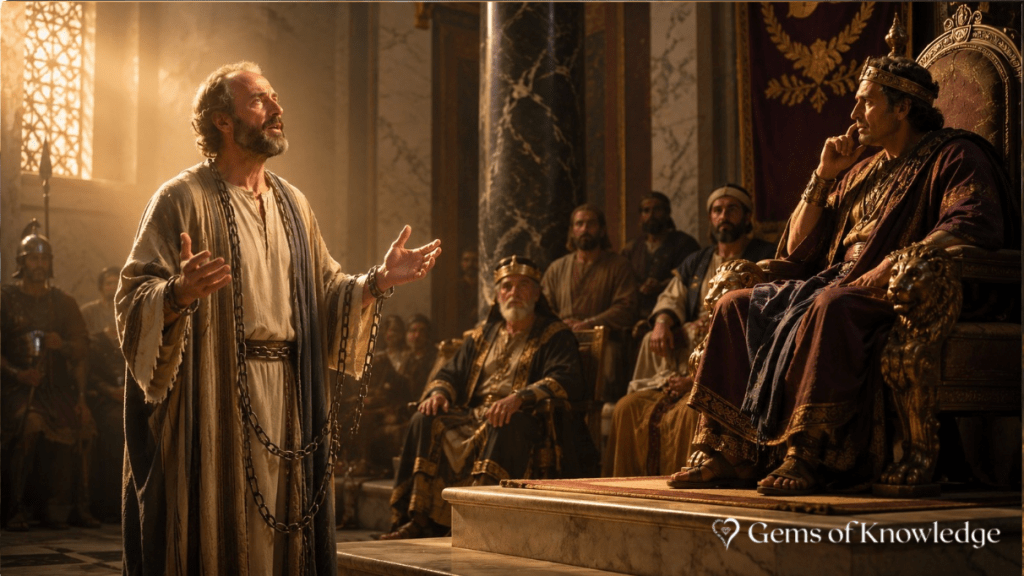
                                                                              Subscribe

                                                                              Partner/Donate

                                                                              A heart-shaped wheel with spokes leading to Jesus at the center, symbolizing every area of life revolving around Christ.

                                                                              Alt...A heart-shaped wheel with spokes leading to Jesus at the center, symbolizing every area of life revolving around Christ.

                                                                              [?]Daily in the Word » 💔 🌐
                                                                              @dailyintheword.blog@dailyintheword.blog

                                                                              The Freedom of Knowing Who We Are

                                                                              A Devotional Meditation on John 1:21 John 1:21 presents one of the most remarkable moments of humility in all of Scripture. The religious leaders questioned John the Baptist, asking, “What then? Are you Elijah?” He answered, “I am not.” “Are you the Prophet?” And he answered, “No.” Their questions reveal humanity’s persistent desire to define people by titles, expectations, and earthly categories. John’s answers reveal something far greater: a life that is secure in the […] [SENSITIVE CONTENT]

                                                                              A Devotional Meditation on John 1:21

                                                                              John 1:21 presents one of the most remarkable moments of humility in all of Scripture. The religious leaders questioned John the Baptist, asking, “What then? Are you Elijah?” He answered, “I am not.” “Are you the Prophet?” And he answered, “No.” Their questions reveal humanity’s persistent desire to define people by titles, expectations, and earthly categories. John’s answers reveal something far greater: a life that is secure in the calling of God and free from the need for self-exaltation.

                                                                              The delegation from Jerusalem was searching for someone extraordinary. Israel longed for the fulfillment of ancient promises. Malachi had spoken of Elijah’s coming before the great day of the Lord, and Moses had foretold the coming of a great Prophet whom God would raise up. The religious leaders wanted to know whether John claimed to be one of these expected figures.

                                                                              John answered with remarkable simplicity. He denied every opportunity to elevate himself. He refused to become more than what God had called him to be.

                                                                              His words expose one of the deepest struggles of the human heart. People often seek identity through recognition, status, reputation, or comparison with others. They desire titles that command respect and positions that bring admiration. Even within the life of faith there can be a temptation to measure spiritual worth by visibility, influence, or prominence.

                                                                              John rejected all of these temptations.

                                                                              He understood that true greatness is not found in becoming someone impressive before others but in faithfully fulfilling the purpose assigned by God. His confidence did not come from public opinion but from divine calling. He was content to be exactly what God intended him to be.

                                                                              There is profound theological significance in this exchange. Throughout Scripture, God often works through those who willingly decrease so that His glory may increase. Abraham left his homeland without knowing where he would go. Moses protested his own inadequacy. David was overlooked among his brothers. The prophets often labored without earthly success. The apostles described themselves as servants rather than celebrities.

                                                                              The kingdom of God operates by different standards than the kingdoms of the world. Heaven values faithfulness over fame, obedience over applause, humility over ambition. John embodies this kingdom principle before the ministry of Jesus even fully begins.

                                                                              His refusal also demonstrates remarkable theological clarity. John knew that he was not the fulfillment of Israel’s hope. He was merely preparing the way for the One who was. Every denial pointed beyond himself toward Christ. His ministry was never about gathering followers for his own sake but directing all attention toward the Lamb of God.

                                                                              The greatest servants of God understand that they are signposts rather than destinations. They point beyond themselves toward the Savior. Their lives become instruments through which others encounter Christ rather than monuments built for personal honor.

                                                                              John’s humility also protects him from the subtle danger of spiritual pride. Religious influence can become intoxicating. Crowds gathered around John. People traveled into the wilderness to hear him preach. Many wondered whether he himself might be the Messiah. Yet he consistently refused every false identity.

                                                                              This unwavering honesty teaches that humility is not self-hatred but truthful self-understanding. John neither exaggerated nor diminished his role. He simply accepted God’s assignment with joyful obedience. He knew both his limitations and his purpose.

                                                                              Such humility flows from a proper understanding of God’s sovereignty. If God appoints every calling, every gift, every opportunity, and every season of ministry, then comparison becomes unnecessary. The Creator distributes His grace according to His wisdom. One plants while another waters, but God gives the increase. Some labor in public while others serve unseen. Every faithful act offered to God possesses eternal value regardless of human recognition.

                                                                              John’s example challenges the modern desire for visibility. Contemporary culture often encourages constant self-promotion, measuring success by followers, influence, popularity, or applause. Even spiritual service can become vulnerable to these pressures.

                                                                              Yet the kingdom of Christ invites believers into another way. It invites contentment in hidden obedience. It celebrates quiet faithfulness. It honors those who simply fulfill the work entrusted to them without seeking personal glory.

                                                                              The questions directed at John continue to echo throughout every generation. People ask, “Who are you?” Society defines identity through achievement, occupation, wealth, education, politics, or social status. Scripture answers differently. The believer’s identity is found in belonging to Christ and serving His purposes.

                                                                              John knew exactly who he was because he knew exactly whose servant he was.

                                                                              There is deep freedom in such certainty. When identity rests upon God’s calling rather than human approval, criticism loses its power to destroy and praise loses its power to corrupt. The servant stands secure because the Master is pleased.

                                                                              John’s repeated denials also reveal a heart fully satisfied with Christ’s coming glory. He did not envy the One who would eclipse his ministry. Instead, he rejoiced that his own influence would diminish if Jesus would be exalted. His ministry was successful precisely because it prepared others to leave him and follow Christ.

                                                                              Such joyful self-forgetfulness reflects the very heart of Christian discipleship. Every ministry, every sermon, every act of service, every expression of compassion ultimately exists for one purpose: to direct people toward Jesus Christ.

                                                                              The church today desperately needs the spirit of John the Baptist. It needs leaders who seek faithfulness rather than fame, servants who rejoice when Christ receives the glory, believers who embrace obscurity if Christ is honored, and disciples who understand that their highest privilege is not to be admired but to point others to the Savior.

                                                                              John’s simple answers, “I am not,” become profound declarations of theological wisdom. They clear away every distraction until only Christ remains at the center. In denying false identities, John prepared the world to recognize the true Redeemer.

                                                                              The same calling remains for every believer today. The goal is not to become indispensable, unforgettable, or celebrated. The goal is to become faithful witnesses whose lives consistently direct attention away from themselves and toward the Son of God who alone is worthy of worship.

                                                                              May every heart learn the quiet joy of knowing its God-given place, embracing its God-given calling, and finding complete satisfaction in making much of Christ rather than self.

                                                                              Prayer

                                                                              Heavenly Father, teach Your people the beauty of humility and the joy of faithful obedience. Guard every heart from pride, comparison, and the desire for human applause. Grant grace to serve with contentment wherever You have placed us, pointing always to Jesus Christ and seeking only His glory. May our lives become faithful witnesses that lead others to the Savior, and may Your name alone be exalted in all we do. Amen.

                                                                              The Freedom of Knowing Who We Are

                                                                              Alt...The Freedom of Knowing Who We Are

                                                                              [?]A Faithful Sower Publishing » 🌐
                                                                              @afaithfulsower@mastodon.social

                                                                              The Bible says you can be transformed through Christ; you become a new creation! Click or tap the link to read more.

                                                                              afaithfulsower.org/2026/06/15/

                                                                                Back to top - More...